DE102011106552B4 - Method of controlling a vehicle - Google Patents
Method of controlling a vehicle Download PDFInfo
- Publication number
- DE102011106552B4 DE102011106552B4 DE102011106552.4A DE102011106552A DE102011106552B4 DE 102011106552 B4 DE102011106552 B4 DE 102011106552B4 DE 102011106552 A DE102011106552 A DE 102011106552A DE 102011106552 B4 DE102011106552 B4 DE 102011106552B4
- Authority
- DE
- Germany
- Prior art keywords
- def
- diesel emission
- emission fluid
- fluid
- vehicle
- Prior art date
- Legal status (The legal status is an assumption and is not a legal conclusion. Google has not performed a legal analysis and makes no representation as to the accuracy of the status listed.)
- Expired - Fee Related
Links
Images
Classifications
-
- F—MECHANICAL ENGINEERING; LIGHTING; HEATING; WEAPONS; BLASTING
- F01—MACHINES OR ENGINES IN GENERAL; ENGINE PLANTS IN GENERAL; STEAM ENGINES
- F01N—GAS-FLOW SILENCERS OR EXHAUST APPARATUS FOR MACHINES OR ENGINES IN GENERAL; GAS-FLOW SILENCERS OR EXHAUST APPARATUS FOR INTERNAL-COMBUSTION ENGINES
- F01N3/00—Exhaust or silencing apparatus having means for purifying, rendering innocuous, or otherwise treating exhaust
- F01N3/08—Exhaust or silencing apparatus having means for purifying, rendering innocuous, or otherwise treating exhaust for rendering innocuous
- F01N3/10—Exhaust or silencing apparatus having means for purifying, rendering innocuous, or otherwise treating exhaust for rendering innocuous by thermal or catalytic conversion of noxious components of exhaust
- F01N3/18—Exhaust or silencing apparatus having means for purifying, rendering innocuous, or otherwise treating exhaust for rendering innocuous by thermal or catalytic conversion of noxious components of exhaust characterised by methods of operation; Control
- F01N3/20—Exhaust or silencing apparatus having means for purifying, rendering innocuous, or otherwise treating exhaust for rendering innocuous by thermal or catalytic conversion of noxious components of exhaust characterised by methods of operation; Control specially adapted for catalytic conversion
- F01N3/206—Adding periodically or continuously substances to exhaust gases for promoting purification, e.g. catalytic material in liquid form, NOx reducing agents
- F01N3/208—Control of selective catalytic reduction [SCR], e.g. by adjusting the dosing of reducing agent
-
- F—MECHANICAL ENGINEERING; LIGHTING; HEATING; WEAPONS; BLASTING
- F01—MACHINES OR ENGINES IN GENERAL; ENGINE PLANTS IN GENERAL; STEAM ENGINES
- F01N—GAS-FLOW SILENCERS OR EXHAUST APPARATUS FOR MACHINES OR ENGINES IN GENERAL; GAS-FLOW SILENCERS OR EXHAUST APPARATUS FOR INTERNAL-COMBUSTION ENGINES
- F01N2610/00—Adding substances to exhaust gases
- F01N2610/02—Adding substances to exhaust gases the substance being ammonia or urea
-
- F—MECHANICAL ENGINEERING; LIGHTING; HEATING; WEAPONS; BLASTING
- F01—MACHINES OR ENGINES IN GENERAL; ENGINE PLANTS IN GENERAL; STEAM ENGINES
- F01N—GAS-FLOW SILENCERS OR EXHAUST APPARATUS FOR MACHINES OR ENGINES IN GENERAL; GAS-FLOW SILENCERS OR EXHAUST APPARATUS FOR INTERNAL-COMBUSTION ENGINES
- F01N2610/00—Adding substances to exhaust gases
- F01N2610/10—Adding substances to exhaust gases the substance being heated, e.g. by heating tank or supply line of the added substance
- F01N2610/105—Control thereof
-
- F—MECHANICAL ENGINEERING; LIGHTING; HEATING; WEAPONS; BLASTING
- F01—MACHINES OR ENGINES IN GENERAL; ENGINE PLANTS IN GENERAL; STEAM ENGINES
- F01N—GAS-FLOW SILENCERS OR EXHAUST APPARATUS FOR MACHINES OR ENGINES IN GENERAL; GAS-FLOW SILENCERS OR EXHAUST APPARATUS FOR INTERNAL-COMBUSTION ENGINES
- F01N2900/00—Details of electrical control or of the monitoring of the exhaust gas treating apparatus
- F01N2900/04—Methods of control or diagnosing
- F01N2900/0422—Methods of control or diagnosing measuring the elapsed time
-
- F—MECHANICAL ENGINEERING; LIGHTING; HEATING; WEAPONS; BLASTING
- F01—MACHINES OR ENGINES IN GENERAL; ENGINE PLANTS IN GENERAL; STEAM ENGINES
- F01N—GAS-FLOW SILENCERS OR EXHAUST APPARATUS FOR MACHINES OR ENGINES IN GENERAL; GAS-FLOW SILENCERS OR EXHAUST APPARATUS FOR INTERNAL-COMBUSTION ENGINES
- F01N2900/00—Details of electrical control or of the monitoring of the exhaust gas treating apparatus
- F01N2900/06—Parameters used for exhaust control or diagnosing
- F01N2900/08—Parameters used for exhaust control or diagnosing said parameters being related to the engine
-
- F—MECHANICAL ENGINEERING; LIGHTING; HEATING; WEAPONS; BLASTING
- F01—MACHINES OR ENGINES IN GENERAL; ENGINE PLANTS IN GENERAL; STEAM ENGINES
- F01N—GAS-FLOW SILENCERS OR EXHAUST APPARATUS FOR MACHINES OR ENGINES IN GENERAL; GAS-FLOW SILENCERS OR EXHAUST APPARATUS FOR INTERNAL-COMBUSTION ENGINES
- F01N2900/00—Details of electrical control or of the monitoring of the exhaust gas treating apparatus
- F01N2900/06—Parameters used for exhaust control or diagnosing
- F01N2900/18—Parameters used for exhaust control or diagnosing said parameters being related to the system for adding a substance into the exhaust
- F01N2900/1806—Properties of reducing agent or dosing system
- F01N2900/1811—Temperature
-
- F—MECHANICAL ENGINEERING; LIGHTING; HEATING; WEAPONS; BLASTING
- F01—MACHINES OR ENGINES IN GENERAL; ENGINE PLANTS IN GENERAL; STEAM ENGINES
- F01N—GAS-FLOW SILENCERS OR EXHAUST APPARATUS FOR MACHINES OR ENGINES IN GENERAL; GAS-FLOW SILENCERS OR EXHAUST APPARATUS FOR INTERNAL-COMBUSTION ENGINES
- F01N2900/00—Details of electrical control or of the monitoring of the exhaust gas treating apparatus
- F01N2900/06—Parameters used for exhaust control or diagnosing
- F01N2900/18—Parameters used for exhaust control or diagnosing said parameters being related to the system for adding a substance into the exhaust
- F01N2900/1806—Properties of reducing agent or dosing system
- F01N2900/1814—Tank level
-
- Y—GENERAL TAGGING OF NEW TECHNOLOGICAL DEVELOPMENTS; GENERAL TAGGING OF CROSS-SECTIONAL TECHNOLOGIES SPANNING OVER SEVERAL SECTIONS OF THE IPC; TECHNICAL SUBJECTS COVERED BY FORMER USPC CROSS-REFERENCE ART COLLECTIONS [XRACs] AND DIGESTS
- Y02—TECHNOLOGIES OR APPLICATIONS FOR MITIGATION OR ADAPTATION AGAINST CLIMATE CHANGE
- Y02A—TECHNOLOGIES FOR ADAPTATION TO CLIMATE CHANGE
- Y02A50/00—TECHNOLOGIES FOR ADAPTATION TO CLIMATE CHANGE in human health protection, e.g. against extreme weather
- Y02A50/20—Air quality improvement or preservation, e.g. vehicle emission control or emission reduction by using catalytic converters
-
- Y—GENERAL TAGGING OF NEW TECHNOLOGICAL DEVELOPMENTS; GENERAL TAGGING OF CROSS-SECTIONAL TECHNOLOGIES SPANNING OVER SEVERAL SECTIONS OF THE IPC; TECHNICAL SUBJECTS COVERED BY FORMER USPC CROSS-REFERENCE ART COLLECTIONS [XRACs] AND DIGESTS
- Y02—TECHNOLOGIES OR APPLICATIONS FOR MITIGATION OR ADAPTATION AGAINST CLIMATE CHANGE
- Y02T—CLIMATE CHANGE MITIGATION TECHNOLOGIES RELATED TO TRANSPORTATION
- Y02T10/00—Road transport of goods or passengers
- Y02T10/10—Internal combustion engine [ICE] based vehicles
- Y02T10/12—Improving ICE efficiencies
Landscapes
- Chemical & Material Sciences (AREA)
- Engineering & Computer Science (AREA)
- Chemical Kinetics & Catalysis (AREA)
- Health & Medical Sciences (AREA)
- Toxicology (AREA)
- Combustion & Propulsion (AREA)
- Mechanical Engineering (AREA)
- General Engineering & Computer Science (AREA)
- Exhaust Gas After Treatment (AREA)
- Measurement Of Levels Of Liquids Or Fluent Solid Materials (AREA)
Abstract
Verfahren (20) zum Steuern eines Fahrzeugs, das ein in einem Tank gespeichertes Dieselemissionsfluid verwendet, wobei das Verfahren umfasst:Bestimmen, ob das Dieselemissionsfluid zumindest teilweise gefroren ist;Bestimmen (54), ob das Fahrzeug derzeit in einem Protokoll für geringe Dieselemissionsfluidveranlassung arbeitet, in dem ein Bediener des Fahrzeugs zum Nachfüllen des Tanks veranlasst wird; undDefinieren (58) einer temporären minimalen Dieselemissionsfluidmasse, um eine Auslösung des Protokolls für geringe Dieselemissionsfluidveranlassung zu verhindern, wenn das Fahrzeug gegenwärtig nicht in dem Protokoll für geringe Dieselemissionsfluidveranlassung arbeitet und wenn das Dieselemissionsfluid zumindest teilweise gefroren ist, wobei die temporäre minimale Dieselemissionsfluidmasse berechnet wird, indem eine dosierte Masse des Dieselemissionsfluids von einer initialisierten Masse des Dieselemissionsfluids subtrahiert wird.A method (20) for controlling a vehicle using a diesel emission fluid stored in a tank, the method comprising: determining whether the diesel emission fluid is at least partially frozen; determining (54) whether the vehicle is currently operating in a low diesel emission fluid inducement protocol; in which an operator of the vehicle is caused to refill the tank; anddefining (58) a temporary minimum diesel emission fluid mass to prevent triggering the protocol for low diesel emission fluid inducement if the vehicle is not currently operating in the protocol for low diesel emission fluid inducement and if the diesel emission fluid is at least partially frozen, the temporary minimum diesel emission fluid mass being calculated by a metered mass of the diesel emission fluid is subtracted from an initialized mass of the diesel emission fluid.
Description
TECHNISCHES GEBIETTECHNICAL AREA
Die Erfindung betrifft allgemein ein Verfahren zum Steuern eines Fahrzeugs, das ein in einem Tank gespeichertes Dieselemissionsfluid verwendet.The invention relates generally to a method of controlling a vehicle using a diesel emission fluid stored in a tank.
HINTERGRUNDBACKGROUND
In der
Die
Die
Die
In der
Ein Dieselemissionsfluid wird in Verbindung mit einem Katalysator für selektive katalytische Reduktion verwendet, um Stickoxide in dem Abgas des Fahrzeugs zu reduzieren. Das Dieselemissionsfluid ist in einem an dem Fahrzeug angeordneten Tank gespeichert. Der Tank kann drei diskrete Pegelsensoren aufweisen, um den Pegel des Dieselemissionsfluids in dem Tank, d.h. die Masse des in dem Tank verbleibenden Dieselemissionsfluids zu bestimmen. Zusätzlich können die diskreten Pegelsensoren zur Nachfülldetektion verwendet werden, wenn dem Tank neues Dieselemissionsfluid hinzugefügt wird. Wenn das Dieselemissionsfluid aufgetaut ist, d.h. in einem flüssigen Zustand ist, arbeitet das Fahrzeug in einem Protokoll für nicht gefrorenes Dieselemissionsfluid. In dem Protokoll für nicht gefrorenes Dieselemissionsfluid wird die Masse des Dieselemissionsfluids durch einen Algorithmus, d.h. Software, berechnet, der den Pegel des Dieselemissionsfluids in dem Tank auf Grundlage gefilterter Signale von den drei diskreten Pegelsensoren bewertet. Jedoch muss das Dieselemissionsfluid zur richtigen Funktion der Massenbestimmung des Dieselemissionsfluids in dem Tank herum schwappen. Demgemäß ist, wenn das Dieselemissionsfluid gefroren ist und nicht in dem Tank herumschwappt, die Massenbestimmung des Dieselemissionsfluids nicht genau und reflektiert nicht genau den Pegel und/oder die Masse des Dieselemissionsfluids in dem Tank. Zusätzlich können, wenn das Dieselemissionsfluid in dem gefrorenen Zustand ist, die diskreten Pegelsensoren möglicherweise nicht funktionieren und erkennen möglicherweise nicht, dass sich das Dieselemissionsfluid bei oder oberhalb der diskreten Pegelsensoren befindet.A diesel emission fluid is used in conjunction with a selective catalytic reduction catalyst to reduce nitrogen oxides in the vehicle's exhaust. The diesel emission fluid is stored in a tank arranged on the vehicle. The tank may have three discrete level sensors to determine the level of diesel emission fluid in the tank, i.e. the mass of diesel emission fluid remaining in the tank. In addition, the discrete level sensors can be used for refill detection when new diesel emission fluid is added to the tank. When the diesel emission fluid is thawed, i.e. in a liquid state, the vehicle operates in a protocol for unfrozen diesel emission fluid. In the unfrozen diesel emission fluid protocol, the mass of the diesel emission fluid is calculated by an algorithm, i.e. software, which evaluates the level of the diesel emission fluid in the tank based on filtered signals from the three discrete level sensors. However, the diesel emission fluid must slosh around in the tank for the proper function of mass determination of the diesel emission fluid. Accordingly, if the diesel emission fluid is frozen and not sloshing around in the tank, the mass determination of the diesel emission fluid will not be accurate and will not accurately reflect the level and / or mass of the diesel emission fluid in the tank. Additionally, when the diesel emissions fluid is in the frozen state, the discrete level sensors may not function and may not detect that the diesel emissions fluid is at or above the discrete level sensors.
Das Dieselemissionsfluid gefriert bei etwa negativen elf Grad Celsius (-11 °C). Der Tank umfasst eine Heizung, die das Dieselemissionsfluid aufgetaut hält oder das Dieselemissionsfluid, wenn es gefroren ist, auftaut. Jedoch kann unter gewissen Umgebungsbedingungen das Dieselemissionsfluid dennoch gefrieren.The diesel emission fluid freezes at a negative eleven degrees Celsius (-11 ° C). The tank includes a heater that keeps the diesel emission fluid thawed or, if frozen, thaws the diesel emission fluid. However, under certain environmental conditions, the diesel emission fluid can still freeze.
Wenn der Pegel und/oder die Masse des Dieselemissionsfluids in dem Tank unter einen vorbestimmten Pegel fällt, kann bei Betrachtung der durchschnittlichen Verbrauchsrate des Dieselemissionsfluids durch das Fahrzeug das Fahrzeug auf einen Betrieb in einem Protokoll für geringe Dieselemissionsfluidveranlassung beschränkt werden. Bei Betrieb mit dem Protokoll für geringe Dieselemissionsfluidveranlassung ist die Geschwindigkeit des Fahrzeugs beschränkt, um einen Bediener des Fahrzeugs zum Nachfüllen des Tanks zu veranlassen. Sobald die Software bestimmt, dass der Tank mit dem Dieselemissionsfluid nachgefüllt worden ist, unterbricht das Fahrzeug das Protokoll für geringe Dieselemissionsfluidveranlassung, und es wird ein Normalbetrieb zugelassen. Wenn jedoch das Dieselemissionsfluid gefriert, bevor das Nachfüllen des Tanks detektiert ist, kann das Fahrzeug weiterhin auf das Protokoll für geringe Dieselemissionsfluidveranlassung beschränkt sein.If the level and / or mass of diesel emission fluid in the tank falls below a predetermined level, considering the average rate of consumption of diesel emission fluid by the vehicle, the vehicle may be restricted to operate in a low diesel emission fluid inducement protocol. When operating with the low diesel emission fluid inducement protocol, the vehicle is speed limited to cause an operator of the vehicle to refill the tank. Once the software determines that the tank has been refilled with the diesel emission fluid, the vehicle will suspend the low diesel emission fluid inducement protocol and allow normal operation. However, if the diesel emission fluid freezes before refilling the tank is detected, the vehicle may still be limited to the low diesel emission fluid inducement protocol.
Es ist eine Aufgabe der Erfindung, eine Veranlassung eines Bedieners eines Fahrzeugs zum Nachfüllen von Dieselemissionsfluid zuverlässiger zu gestalten.It is an object of the invention to make inducing an operator of a vehicle to refill diesel emission fluid more reliable.
ZUSAMMENFASSUNGSUMMARY
Es ist ein Verfahren zum Steuern eines Fahrzeugs vorgesehen, das ein in einem Tank gespeichertes Dieselemissionsfluid verwendet. Das Verfahren umfasst ein Bestimmen, ob das Dieselemissionsfluid zumindest teilweise gefroren ist, ein Bestimmen, ob das Fahrzeug gegenwärtig in einem Protokoll für geringe Dieselemissionsfluidveranlassung arbeitet, und ein Definieren einer temporären minimalen Dieselemissionsfluidmasse, die dazu verwendet werden kann, eine Auslösung des Protokolls für geringe Dieselemissionsfluidveranlassung zu verhindern. Eine temporäre minimale Dieselemissionsfluidmasse ist definiert, wenn das Fahrzeug nicht gegenwärtig in dem Protokoll für geringe Dieselemissionsfluidveranlassung arbeitet und wenn das Dieselemissionsfluid zumindest teilweise gefroren ist.A method of controlling a vehicle using a diesel emission fluid stored in a tank is provided. The method includes determining whether the diesel emission fluid is at least partially frozen, determining whether the vehicle is currently operating in a low diesel emission fluid inducement protocol, and defining a temporary one minimum diesel emission fluid mass that can be used to prevent triggering of the low diesel emission fluid inducement protocol. A temporary minimum diesel emission fluid mass is defined when the vehicle is not currently operating in the low diesel emission fluid inducement protocol and when the diesel emission fluid is at least partially frozen.
Demgemäß kann das Definieren der temporären minimalen Dieselemissionsfluidmasse dazu verwendet werden, einen Eintritt des Fahrzeugs in das Protokoll für geringe Dieselemissionsfluidveranlassung zu verhindern, wenn das Dieselemissionsfluid gefroren ist und das Fahrzeug ansonsten nicht in der Lage wäre, den tatsächlichen Pegel von Dieselemissionsfluid in dem Tank richtig zu erfassen.Accordingly, defining the temporary minimum diesel emission fluid mass can be used to prevent the vehicle from entering the low diesel emission fluid inducement protocol if the diesel emission fluid is frozen and the vehicle would otherwise not be able to correctly get the actual level of diesel emission fluid in the tank capture.
FigurenlisteFigure list
-
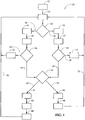
1 ist ein Flussdiagramm, das ein Verfahren zum Steuern eines Fahrzeugs zeigt, das ein in einem Tank gespeichertes Dieselemissionsfluid verwendet.1 Fig. 13 is a flowchart showing a method of controlling a vehicle using a diesel emission fluid stored in a tank.
DETAILLIERTE BESCHREIBUNGDETAILED DESCRIPTION
Bezug nehmend auf
Die Masse des DEF wird dazu verwendet, die Distanz zu berechnen, die das Fahrzeug gefahren werden kann, bevor das DEF ausgeht. Diese Berechnung basiert auf einem gleitenden Mittelwert der Verbrauchsrate des DEF und der Masse des in dem Tank verbleibenden DEF.The mass of the DEF is used to calculate the distance the vehicle can be driven before the DEF runs out. This calculation is based on a moving average of the rate of consumption of DEF and the mass of DEF remaining in the tank.
Wenn das DEF aufgetaut wird, d.h. in einem flüssigen Zustand ist, arbeitet das Fahrzeug in einem Protokoll für nicht gefrorenes DEF. In dem Protokoll für nicht gefrorenes DEF wird die Masse des DEF durch einen Algorithmus berechnet, der den Pegel des DEF in dem Tank auf Grundlage gefilterter Signale von den drei diskreten Pegelsensoren bewertet. Jedoch muss das DEF in dem Tank herumschwappen, damit das Filterverfahren mit diskretem Pegelsensor richtig funktioniert. Zusätzlich können, wenn sich das DEF in dem gefrorenen Zustand befindet, die diskreten Pegelsensoren möglicherweise nicht funktionieren, und erkennen nicht, dass der DEF-Pegel bei oder oberhalb der diskreten Pegelsensoren liegt. Wenn demgemäß das DEF gefroren ist und nicht in dem Tank herumschwappt, ist die Massenbestimmung des DEF nicht genau und reflektiert den Pegel und/oder die Masse des DEF in dem Tank nicht genau. Wenn beispielsweise das DEF vollständig gefroren ist, kann die Massenbestimmung des DEF auf Grundlage der gefilterten Signale von den drei diskreten Pegelsensoren angeben, dass der Tank leer ist, d.h. kein DEF, und kann bewirken, dass das Fahrzeug in einem Protokoll für geringe DEF-Veranlassung arbeitet, wodurch die Geschwindigkeit des Fahrzeugs beschränkt ist, um einen Bediener des Fahrzeugs zum Hinzusetzen von DEF zu veranlassen. Daher arbeitet, wenn das DEF gefroren oder zumindest teilweise gefroren ist, das Fahrzeug in einem Protokoll für gefrorenes DEF. In dem Protokoll für gefrorenes DEF umgeht das Fahrzeug die Massenbestimmung auf Grundlage der gefilterten Signale von den drei diskreten Pegelsensoren und initialisiert stattdessen die DEF-Masse mit dem letzten bekannten Wert der in dem Tank verbleibenden DEF-Masse. Die Strategie berechnet dann die DEF-Masse, die verbleibt, durch Subtraktion der Masse des DEF, die dosiert worden ist, von dem initialisierten Wert. Zusätzlich darf in dem Protokoll für gefrorenes DEF die DEF-Tankmasse, die berechnet wird, wie vorher beschrieben wurde, nicht unter eine kalibrierbare minimale Massenschwelle fallen, die dazu verwendet werden kann, um zu verhindern, dass das Fahrzeug in das Protokoll für geringe DEF-Veranlassung eintritt, wodurch ein Normalbetrieb des Fahrzeugs zugelassen wird, wenn das DEF gefroren ist.When the DEF is thawed, i.e. in a liquid state, the vehicle operates in a protocol for unfrozen DEF. In the protocol for unfrozen DEF, the mass of DEF is calculated by an algorithm that evaluates the level of DEF in the tank based on filtered signals from the three discrete level sensors. However, the DEF has to slosh around in the tank for the discrete level sensor filtering method to work properly. Additionally, when the DEF is in the frozen state, the discrete level sensors may not function and will not recognize that the DEF level is at or above the discrete level sensors. Accordingly, if the DEF is frozen and not sloshing around in the tank, the mass determination of the DEF will not be accurate and will not accurately reflect the level and / or mass of the DEF in the tank. For example, if the DEF is completely frozen, the mass determination of the DEF based on the filtered signals from the three discrete level sensors can indicate that the tank is empty, i.e. no DEF, and can cause the vehicle to be in a low DEF inducement log operates, thereby limiting the speed of the vehicle to cause an operator of the vehicle to add DEF. Therefore, if the DEF is frozen, or at least partially frozen, the vehicle will operate in a frozen DEF protocol. In the frozen DEF protocol, the vehicle bypasses the mass determination based on the filtered signals from the three discrete level sensors and instead initializes the DEF mass with the last known value of the DEF mass remaining in the tank. The strategy then calculates the DEF mass that remains by subtracting the mass of DEF that has been dosed from the initialized value. Additionally, in the frozen DEF log, the DEF tank mass, calculated as previously described, must not fall below a calibratable minimum mass threshold that can be used to prevent the vehicle from entering the low DEF log. Occurrence occurs, allowing normal operation of the vehicle when the DEF is frozen.
Das Fahrzeug kann einen Controller, wie einen Computer und/oder eine Maschinensteuereinheit aufweisen, die zur Steuerung des Betriebs des Fahrzeugs konfiguriert ist. Der Controller kann, ist jedoch nicht darauf beschränkt, insgesamt Software, Hardware, Speicher, Sensoren und Algorithmen umfassen, die erforderlich sind, um alle Aspekte des Fahrzeugs, das dem bereitgestellten Verfahren
Das Verfahren
Das Verfahren
Die Bestimmung, ob das DEF zumindest teilweise gefroren ist, umfasst ferner eine Bestimmung, ob die Maschine des Fahrzeugs arbeitet oder nicht arbeitet, Block
Wenn die Maschine nicht arbeitet, dann umfasst das Bestimmen, ob das DEF zumindest teilweise gefroren ist, ferner ein Bestimmen, ob die erfasste Temperatur des DEF in dem Tank geringer als die Temperatur für gefrorenes DEF oder größer als die Temperatur für gefrorenes DEF ist und ob die gemessene Maschinenabschaltzeitperiode kleiner als die minimale Maschinenabschaltzeit oder größer als die minimale Maschinenabschaltzeit ist, Block
Wenn bestimmt wird, dass das Fahrzeug arbeitet, was bei
Wenn das Fahrzeug arbeitet, umfasst eine Bestimmung, ob das DEF zumindest teilweise gefroren ist, ferner eine Bestimmung, ob die erfasste Temperatur des DEF in dem Tank geringer als die Temperatur für gefrorenes DEF oder größer als die Temperatur für gefrorenes DEF ist und ob die erfasste Umgebungslufttemperatur kleiner als die minimale Umgebungslufttemperaturgrenze oder größer als die Umgebungslufttemperaturgrenze ist, Block
Wenn bestimmt wird, dass das DEF nicht gefroren ist, was bei
Das Verfahren
Wenn bestimmt wird, dass das DEF zumindest teilweise gefroren ist und das Fahrzeug derzeit nicht in dem Protokoll für geringe DEF-Veranlassung arbeitet, wie bei 56 angegeben ist, kann das Verfahren
Wenn bestimmt wird, dass das DEF zumindest teilweise gefroren ist und das Fahrzeug derzeit nicht in dem Protokoll für geringe DEF-Veranlassung arbeitet, dann umfasst das Verfahren
Wenn bestimmt wird, dass das Fahrzeug gegenwärtig in dem Protokoll für geringe DEF-Veranlassung arbeitet und das DEF zumindest teilweise gefroren ist, wie bei 62 angegeben ist, dann umfasst das Verfahren
Das Verfahren
Claims (10)
Applications Claiming Priority (2)
| Application Number | Priority Date | Filing Date | Title |
|---|---|---|---|
| US12/832,431 | 2010-07-08 | ||
| US12/832,431 US9797288B2 (en) | 2010-07-08 | 2010-07-08 | Method of operating a vehicle under frozen diesel emission fluid conditions |
Publications (2)
| Publication Number | Publication Date |
|---|---|
| DE102011106552A1 DE102011106552A1 (en) | 2012-01-12 |
| DE102011106552B4 true DE102011106552B4 (en) | 2021-05-06 |
Family
ID=45372785
Family Applications (1)
| Application Number | Title | Priority Date | Filing Date |
|---|---|---|---|
| DE102011106552.4A Expired - Fee Related DE102011106552B4 (en) | 2010-07-08 | 2011-07-04 | Method of controlling a vehicle |
Country Status (3)
| Country | Link |
|---|---|
| US (1) | US9797288B2 (en) |
| CN (1) | CN102312708B (en) |
| DE (1) | DE102011106552B4 (en) |
Families Citing this family (12)
| Publication number | Priority date | Publication date | Assignee | Title |
|---|---|---|---|---|
| DE102012004269A1 (en) * | 2012-03-02 | 2013-09-05 | Emitec Gesellschaft Für Emissionstechnologie Mbh | Feed unit for a liquid additive for exhaust aftertreatment |
| DE102013001894B4 (en) * | 2013-02-02 | 2020-06-04 | Volkswagen Aktiengesellschaft | Method and device for determining an available amount of a substance in a container |
| JP6062771B2 (en) * | 2013-03-07 | 2017-01-18 | トヨタ自動車株式会社 | Exhaust gas purification device for internal combustion engine |
| GB2516245A (en) | 2013-07-15 | 2015-01-21 | Gm Global Tech Operations Inc | Method of determining the thermal state of a substance in cold condition |
| US9664083B2 (en) * | 2015-08-14 | 2017-05-30 | Cummins Emission Solutions Inc. | Virtual reductant level sensor |
| JP6729291B2 (en) * | 2016-10-25 | 2020-07-22 | いすゞ自動車株式会社 | Urea water supply system and control method thereof |
| FR3071013B1 (en) | 2017-09-12 | 2019-08-30 | Continental Automotive France | METHOD FOR PREVENTING A RISK OF FREEZING IN A REDUCING AGENT FEEDING DEVICE OF A SELECTIVE CATALYTIC REDUCTION SYSTEM |
| WO2020186152A1 (en) | 2019-03-14 | 2020-09-17 | Cummins Inc. | Diesel exhaust fluid doser protection during cold ambient temperature conditions using cylinder cutout methods |
| US11635015B2 (en) | 2019-11-05 | 2023-04-25 | Norgren Gt Development Llc | Coolant control valve |
| US11391307B2 (en) | 2020-01-21 | 2022-07-19 | Caterpillar Paving Products Inc. | Hydraulic tank protection system |
| US11506100B2 (en) * | 2020-10-23 | 2022-11-22 | Cummins Power Generation Inc. | Diesel exhaust fluid tank heating system |
| CN114922721B (en) * | 2022-06-13 | 2023-12-29 | 一汽解放汽车有限公司 | Exhaust gas heating control device and method for hybrid diesel engine |
Citations (5)
| Publication number | Priority date | Publication date | Assignee | Title |
|---|---|---|---|---|
| US6363771B1 (en) * | 1999-11-24 | 2002-04-02 | Caterpillar Inc. | Emissions diagnostic system |
| DE10112139A1 (en) * | 2001-03-14 | 2002-09-19 | Bosch Gmbh Robert | Method and device for monitoring a sensor |
| US20080306631A1 (en) * | 2007-06-11 | 2008-12-11 | Southwest Research Institute | Adaptive Reductant Dosing And Emission Control Strategies |
| US7574900B2 (en) * | 2005-07-08 | 2009-08-18 | Ngk Spark Plug Co., Ltd. | Liquid state detection sensor |
| DE102008001919A1 (en) * | 2008-05-21 | 2009-11-26 | Robert Bosch Gmbh | Method for checking the plausibility of a temperature sensor |
Family Cites Families (13)
| Publication number | Priority date | Publication date | Assignee | Title |
|---|---|---|---|---|
| EP0974002B1 (en) * | 1997-04-09 | 2002-09-04 | Emitec Gesellschaft für Emissionstechnologie mbH | PROCESS FOR MONITORING A NOx ACCUMULATOR |
| US6810661B2 (en) * | 2002-08-09 | 2004-11-02 | Ford Global Technologies, Llc | Method and system for freeze protecting liquid NOx reductants for vehicle application |
| US20050252201A1 (en) * | 2004-05-17 | 2005-11-17 | Lecea Oscar A | Method and apparatus for reducing NOx emissions |
| WO2007139177A1 (en) * | 2006-06-01 | 2007-12-06 | Hitachi Construction Machinery Co., Ltd. | Exhaust gas purifier of construction machine |
| US8574776B2 (en) * | 2006-06-27 | 2013-11-05 | GM Global Technology Operations LLC | Fuel cell system water management strategy for freeze capability |
| US7434566B2 (en) * | 2006-10-31 | 2008-10-14 | Delphi Technologies, Inc. | ETC control system and method |
| US9249752B2 (en) * | 2006-10-31 | 2016-02-02 | Caterpillar Inc. | System implementing low-reductant engine operation mode |
| US8141346B2 (en) * | 2007-01-31 | 2012-03-27 | Ford Global Technologies, Llc | System and method for monitoring reductant quality |
| DE102007017459B4 (en) * | 2007-04-03 | 2018-06-14 | Robert Bosch Gmbh | Method for metering reducing agent to the exhaust gas of an internal combustion engine and control unit |
| US7954312B2 (en) * | 2007-05-09 | 2011-06-07 | Ford Global Technologies, Llc | Approach for detecting reductant availability and make-up |
| JP2008286096A (en) * | 2007-05-17 | 2008-11-27 | Denso Corp | Exhaust aftertreatment device for internal combustion engine |
| JP5152912B2 (en) * | 2008-06-27 | 2013-02-27 | ボッシュ株式会社 | Rationality diagnosis method and rationality diagnosis device for sensor in tank |
| US8122710B2 (en) * | 2008-12-01 | 2012-02-28 | International Engine Intellectual Property Company, Llc | Thermal management of urea dosing components in an engine exhaust after-treatment system |
-
2010
- 2010-07-08 US US12/832,431 patent/US9797288B2/en not_active Expired - Fee Related
-
2011
- 2011-07-04 DE DE102011106552.4A patent/DE102011106552B4/en not_active Expired - Fee Related
- 2011-07-08 CN CN201110190701.2A patent/CN102312708B/en not_active Expired - Fee Related
Patent Citations (5)
| Publication number | Priority date | Publication date | Assignee | Title |
|---|---|---|---|---|
| US6363771B1 (en) * | 1999-11-24 | 2002-04-02 | Caterpillar Inc. | Emissions diagnostic system |
| DE10112139A1 (en) * | 2001-03-14 | 2002-09-19 | Bosch Gmbh Robert | Method and device for monitoring a sensor |
| US7574900B2 (en) * | 2005-07-08 | 2009-08-18 | Ngk Spark Plug Co., Ltd. | Liquid state detection sensor |
| US20080306631A1 (en) * | 2007-06-11 | 2008-12-11 | Southwest Research Institute | Adaptive Reductant Dosing And Emission Control Strategies |
| DE102008001919A1 (en) * | 2008-05-21 | 2009-11-26 | Robert Bosch Gmbh | Method for checking the plausibility of a temperature sensor |
Also Published As
| Publication number | Publication date |
|---|---|
| US9797288B2 (en) | 2017-10-24 |
| CN102312708B (en) | 2016-08-17 |
| US20120006003A1 (en) | 2012-01-12 |
| DE102011106552A1 (en) | 2012-01-12 |
| CN102312708A (en) | 2012-01-11 |
Similar Documents
| Publication | Publication Date | Title |
|---|---|---|
| DE102011106552A1 (en) | A method of operating a vehicle under frozen diesel emission fluid conditions | |
| CN101688454B (en) | Reducing agent injection valve clogging judgment device and reducing agent injection valve clogging judgment method | |
| RU2752523C2 (en) | System and method for cleaning exhaust system liquid injector of diesel engine | |
| JP4165896B2 (en) | Reducing agent path clogging determination device and reducing agent path clogging determination method | |
| CN111677575B (en) | Combustion system, method of operating the system, and control module for the system | |
| JP5789925B2 (en) | NOx sensor diagnostic device and SCR system | |
| DE102013226796B4 (en) | A method of testing a temperature sensor in an SCR exhaust aftertreatment system | |
| CN103375235B (en) | NH3 is utilized to exhaust exhaust diagnostic control system and the method for purification | |
| JP6508475B2 (en) | Diagnostic device | |
| JP3552653B2 (en) | Diagnosis processing device for reducing agent supply device of internal combustion engine | |
| CN109944666A (en) | A Model-Based Adaptive Correction Method for Reductant Supply in SCR System | |
| US20100011748A1 (en) | Particulate filter regeneration apparatus and method of operating the same | |
| CN110645076A (en) | NH based on model3Leak diagnosis method | |
| US20120000187A1 (en) | Particulate filter regeneration interruption systems and methods | |
| EP2905441B1 (en) | Control device for additive supply systems | |
| DE102018129351B4 (en) | Anomaly detection device | |
| CN111295501B (en) | Method for preventing the risk of freezing in a reducing agent supply device of a selective catalytic reduction system | |
| JP6228159B2 (en) | Urea water supply device for internal combustion engine | |
| DE112011101005T5 (en) | Control strategy for heated fluid lines | |
| CN103982278B (en) | Method and apparatus for determining the amount for being available for domination of material in a reservoir | |
| JP5671839B2 (en) | Urea quality diagnostic system | |
| CN103388519A (en) | Exhaust diagnostic control system and method with selective disablement of NOx reduction efficiency diagnostic | |
| DE102014107457B4 (en) | Leakage detection method of a reducing agent pump system | |
| EP3025036B1 (en) | Scr exhaust emission control system and method therefore, for filling the urea reducing agent after returning to the tank | |
| WO2004089516A1 (en) | Method for dosing a reagent in the waste gas flow of an internal combustion engine |
Legal Events
| Date | Code | Title | Description |
|---|---|---|---|
| R012 | Request for examination validly filed | ||
| R083 | Amendment of/additions to inventor(s) | ||
| R016 | Response to examination communication | ||
| R016 | Response to examination communication | ||
| R018 | Grant decision by examination section/examining division | ||
| R020 | Patent grant now final | ||
| R119 | Application deemed withdrawn, or ip right lapsed, due to non-payment of renewal fee |