CN1754375A - A mobile terminal and a method of operating it - Google Patents
A mobile terminal and a method of operating it Download PDFInfo
- Publication number
- CN1754375A CN1754375A CNA2003801098558A CN200380109855A CN1754375A CN 1754375 A CN1754375 A CN 1754375A CN A2003801098558 A CNA2003801098558 A CN A2003801098558A CN 200380109855 A CN200380109855 A CN 200380109855A CN 1754375 A CN1754375 A CN 1754375A
- Authority
- CN
- China
- Prior art keywords
- hinge
- terminal
- parts
- angle
- spring
- Prior art date
- Legal status (The legal status is an assumption and is not a legal conclusion. Google has not performed a legal analysis and makes no representation as to the accuracy of the status listed.)
- Granted
Links
Images




Classifications
-
- H—ELECTRICITY
- H04—ELECTRIC COMMUNICATION TECHNIQUE
- H04B—TRANSMISSION
- H04B1/00—Details of transmission systems, not covered by a single one of groups H04B3/00 - H04B13/00; Details of transmission systems not characterised by the medium used for transmission
- H04B1/38—Transceivers, i.e. devices in which transmitter and receiver form a structural unit and in which at least one part is used for functions of transmitting and receiving
-
- H—ELECTRICITY
- H04—ELECTRIC COMMUNICATION TECHNIQUE
- H04M—TELEPHONIC COMMUNICATION
- H04M1/00—Substation equipment, e.g. for use by subscribers
- H04M1/02—Constructional features of telephone sets
- H04M1/0202—Portable telephone sets, e.g. cordless phones, mobile phones or bar type handsets
- H04M1/0206—Portable telephones comprising a plurality of mechanically joined movable body parts, e.g. hinged housings
- H04M1/0247—Portable telephones comprising a plurality of mechanically joined movable body parts, e.g. hinged housings comprising more than two body parts
-
- G—PHYSICS
- G06—COMPUTING OR CALCULATING; COUNTING
- G06F—ELECTRIC DIGITAL DATA PROCESSING
- G06F1/00—Details not covered by groups G06F3/00 - G06F13/00 and G06F21/00
- G06F1/16—Constructional details or arrangements
- G06F1/1613—Constructional details or arrangements for portable computers
- G06F1/163—Wearable computers, e.g. on a belt
-
- H—ELECTRICITY
- H04—ELECTRIC COMMUNICATION TECHNIQUE
- H04M—TELEPHONIC COMMUNICATION
- H04M1/00—Substation equipment, e.g. for use by subscribers
- H04M1/02—Constructional features of telephone sets
-
- E—FIXED CONSTRUCTIONS
- E05—LOCKS; KEYS; WINDOW OR DOOR FITTINGS; SAFES
- E05D—HINGES OR SUSPENSION DEVICES FOR DOORS, WINDOWS OR WINGS
- E05D11/00—Additional features or accessories of hinges
- E05D11/08—Friction devices between relatively-movable hinge parts
- E05D11/082—Friction devices between relatively-movable hinge parts with substantially radial friction, e.g. cylindrical friction surfaces
-
- E—FIXED CONSTRUCTIONS
- E05—LOCKS; KEYS; WINDOW OR DOOR FITTINGS; SAFES
- E05Y—INDEXING SCHEME ASSOCIATED WITH SUBCLASSES E05D AND E05F, RELATING TO CONSTRUCTION ELEMENTS, ELECTRIC CONTROL, POWER SUPPLY, POWER SIGNAL OR TRANSMISSION, USER INTERFACES, MOUNTING OR COUPLING, DETAILS, ACCESSORIES, AUXILIARY OPERATIONS NOT OTHERWISE PROVIDED FOR, APPLICATION THEREOF
- E05Y2201/00—Constructional elements; Accessories therefor
- E05Y2201/40—Motors; Magnets; Springs; Weights; Accessories therefor
- E05Y2201/47—Springs
- E05Y2201/49—Wrap springs
-
- E—FIXED CONSTRUCTIONS
- E05—LOCKS; KEYS; WINDOW OR DOOR FITTINGS; SAFES
- E05Y—INDEXING SCHEME ASSOCIATED WITH SUBCLASSES E05D AND E05F, RELATING TO CONSTRUCTION ELEMENTS, ELECTRIC CONTROL, POWER SUPPLY, POWER SIGNAL OR TRANSMISSION, USER INTERFACES, MOUNTING OR COUPLING, DETAILS, ACCESSORIES, AUXILIARY OPERATIONS NOT OTHERWISE PROVIDED FOR, APPLICATION THEREOF
- E05Y2999/00—Subject-matter not otherwise provided for in this subclass
-
- H—ELECTRICITY
- H04—ELECTRIC COMMUNICATION TECHNIQUE
- H04B—TRANSMISSION
- H04B1/00—Details of transmission systems, not covered by a single one of groups H04B3/00 - H04B13/00; Details of transmission systems not characterised by the medium used for transmission
- H04B1/38—Transceivers, i.e. devices in which transmitter and receiver form a structural unit and in which at least one part is used for functions of transmitting and receiving
- H04B1/3827—Portable transceivers
- H04B1/385—Transceivers carried on the body, e.g. in helmets
-
- H—ELECTRICITY
- H04—ELECTRIC COMMUNICATION TECHNIQUE
- H04M—TELEPHONIC COMMUNICATION
- H04M1/00—Substation equipment, e.g. for use by subscribers
- H04M1/02—Constructional features of telephone sets
- H04M1/0202—Portable telephone sets, e.g. cordless phones, mobile phones or bar type handsets
- H04M1/0206—Portable telephones comprising a plurality of mechanically joined movable body parts, e.g. hinged housings
- H04M1/0208—Portable telephones comprising a plurality of mechanically joined movable body parts, e.g. hinged housings characterized by the relative motions of the body parts
- H04M1/0214—Foldable telephones, i.e. with body parts pivoting to an open position around an axis parallel to the plane they define in closed position
-
- H—ELECTRICITY
- H04—ELECTRIC COMMUNICATION TECHNIQUE
- H04M—TELEPHONIC COMMUNICATION
- H04M1/00—Substation equipment, e.g. for use by subscribers
- H04M1/02—Constructional features of telephone sets
- H04M1/0202—Portable telephone sets, e.g. cordless phones, mobile phones or bar type handsets
- H04M1/0206—Portable telephones comprising a plurality of mechanically joined movable body parts, e.g. hinged housings
- H04M1/0208—Portable telephones comprising a plurality of mechanically joined movable body parts, e.g. hinged housings characterized by the relative motions of the body parts
- H04M1/0214—Foldable telephones, i.e. with body parts pivoting to an open position around an axis parallel to the plane they define in closed position
- H04M1/0216—Foldable in one direction, i.e. using a one degree of freedom hinge
Landscapes
- Engineering & Computer Science (AREA)
- Computer Hardware Design (AREA)
- Theoretical Computer Science (AREA)
- Signal Processing (AREA)
- Human Computer Interaction (AREA)
- Physics & Mathematics (AREA)
- General Engineering & Computer Science (AREA)
- General Physics & Mathematics (AREA)
- Computer Networks & Wireless Communication (AREA)
- Telephone Set Structure (AREA)
- Pivots And Pivotal Connections (AREA)
Abstract
Description
技术领域technical field
本发明涉及移动终端和操作移动终端的方法,更加具体地说,本发明涉及具有3个可转动地相互连接的部件的移动终端,所说的移动终端可以获得许多位置,并且可以例如佩戴在人的手腕上。The present invention relates to a mobile terminal and a method of operating a mobile terminal, and more particularly to a mobile terminal having three rotatably interconnected parts, said mobile terminal being able to acquire many positions and being able to be worn, for example, on a person's on the wrist.
背景技术Background technique
已经描述过敞开的或展开可折叠式移动终端的许多不同方式。这些方式中的大多数都是加入一个偏置装置,使所说终端从便于携带的不可操作位置到可操作位置快速(snap)打开。然而,这种偏置自动地使电话不可能获得在不可操作位置和可操作位置之间的其他的位置。这将使终端的定位等等发生困难。Many different ways of opening or unfolding a foldable mobile terminal have been described. Most of these methods incorporate a biasing means to allow the terminal to snap open from an inoperable position for portability to an operative position. However, this bias automatically makes it impossible for the phone to acquire other positions between the inoperable position and the operative position. This will make positioning of the terminal etc. difficult.
还有,当在移动终端的铰链中有意地提供摩擦力的时候,提供正常的离合作用,从而在两个转动方向上产生相同的摩擦力。Also, when a friction force is intentionally provided in the hinge of the mobile terminal, a normal clutch action is provided so that the same friction force is generated in both rotational directions.
此外,移动终端的携带存在一个问题,即,这些移动终端相当小,可能会找不到或者难以找到,尤其是由例如终端以可听的方式提醒人们用户处于受力状态时,这个问题更为突出。Furthermore, there is a problem with the portability of mobile terminals that they are rather small and may be lost or difficult to find, especially if, for example, the terminal alerts people audibly that the user is under stress. protrude.
发明内容Contents of the invention
本发明旨在解决这两个问题,本发明一方面涉及一个移动终端,所说的移动终端包括第一、第二、和第三部件,可枢轴转动地相互连接第一和第二部件的第一铰链,和可枢轴转动地相互连接第二和第三部件的第二铰链,第一和第二铰链中的每一个都包括:The present invention aims to solve these two problems. In one aspect, the present invention relates to a mobile terminal, said mobile terminal comprising first, second, and third parts, pivotably connecting the first and second parts to each other. a first hinge, and a second hinge pivotably interconnecting the second and third members, each of the first and second hinges comprising:
具有纵向轴的一个螺旋弹簧,所说的弹簧包括一个或多个卷绕的材料股线,每一材料股线都有两个端部;a helical spring having a longitudinal axis, said spring comprising one or more coiled strands of material each having two ends;
伸入螺旋弹簧内部的第一铰链部分,第一铰链部分在沿纵向轴的第一位置或区域与螺旋弹簧的内部接触,和a first hinge portion extending into the interior of the coil spring, the first hinge portion being in contact with the interior of the coil spring at a first location or region along the longitudinal axis, and
在与第一位置或区域不同的一个位置或区域与螺旋弹簧的一个或多个股线接触的第二铰链部分;a second hinge portion in contact with one or more strands of the coil spring at a location or region different from the first location or region;
在每个铰链中,所说的弹簧促进:In each hinge, said spring facilitates:
第一铰链部分沿第一方向围绕纵向轴并且相对于第二铰链部分的转动,将会在第一铰链部分和螺旋弹簧之间提供第一较低的摩擦力;rotation of the first hinge part about the longitudinal axis in a first direction relative to the second hinge part provides a first lower frictional force between the first hinge part and the coil spring;
第一铰链部分沿与第一方向相反的第二方向围绕纵向轴并且相对于第二铰链部分的转动,将会在第一铰链部分和螺旋弹簧之间提供第二较大的摩擦力,rotation of the first hinge part about the longitudinal axis and relative to the second hinge part in a second direction opposite to the first direction provides a second greater frictional force between the first hinge part and the coil spring,
其中:in:
在第一铰链中,第一铰链部分连接到或者固定到终端的第一或第二部件之一上,第二铰链部分连接到或者固定到终端的第一和第二部件的另一个上;In the first hinge, the first hinge part is connected or fixed to one of the first or second parts of the terminal, and the second hinge part is connected or fixed to the other of the first and second parts of the terminal;
在第二铰链中,第一铰链部分连接到或者固定到终端的第二或第三部件之一上,第二铰链部分连接到或者固定到终端的第二和第三部件的另一个上;In the second hinge, the first hinge part is connected or fixed to one of the second or third parts of the terminal, and the second hinge part is connected or fixed to the other of the second and third parts of the terminal;
所说的终端对于每个铰链进一步还包括释放装置,用于在第一位置或区域增加螺旋弹簧的直径,以便减小在第一铰链部分和螺旋弹簧之间的第二较大的摩擦力,使其达到第一铰链部分沿第二方向转动期间的第三摩擦力。said terminal further comprising release means for each hinge for increasing the diameter of the coil spring at a first location or region to reduce a second greater frictional force between the first hinge portion and the coil spring, This results in a third frictional force during rotation of the first hinge portion in the second direction.
在本文中,应当说明的是,铰链可以具有其它的、更加标准的铰链装置,由此,本发明的螺旋弹簧组件在大多数情况下可用作铰链的可转动的离合器。In this context, it should be noted that the hinge can have other, more standard hinge arrangements, whereby the helical spring assembly according to the invention can in most cases be used as a rotatable clutch for the hinge.
第一铰链部分在伸入弹簧的部分最好具有与弹簧内部横截面对应的一个至少大体上圆形的横截面。按照这种方式,在弹簧内部的触点可能是沿弹簧的内部周边的触点。The first hinge part preferably has an at least substantially circular cross section corresponding to the internal cross section of the spring at the part protruding into the spring. In this way, the contacts inside the spring may be contacts along the inner perimeter of the spring.
根据第二铰链部分要阻止的或要制动的弹簧运动的类型,第二铰链部分和弹簧的触点可以是固定的或者可以是偏置的。Depending on the type of spring movement that is to be prevented or braked by the second hinge part, the contacts of the second hinge part and the spring may be fixed or may be biased.
标准的螺旋弹簧通常只是单股的或者是细长的材料块(在一般情况下是金属块的,或者是其他的刚性材料)。然而,设想弹簧是由多股形成的,弹簧的各个圈是沿弹簧的纵向轴一圈接一圈地定位的。A standard coil spring is usually just a single strand or elongated block of material (usually a block of metal, or some other rigid material). However, it is envisaged that the spring is formed from multiple strands, with the individual turns of the spring being positioned one turn after the other along the longitudinal axis of the spring.
还有,螺旋弹簧只需要由股线(一股或多股)的一部分形成。股线(一股或多股)的两个端部不必是螺旋弹簧的一部分。这些端部可用于不同的目的,例如定位或实际移动。Also, the helical spring need only be formed from a portion of the strand (or strands). The ends of the strand (or strands) need not be part of the coil spring. These ends can be used for different purposes, such as positioning or actual movement.
提供缠绕(wrap)弹簧离合器的正常方式是使两个铰接的或者离合的元件伸入弹簧内并且由此啮合弹簧内部。然而,应当说明的是,通过反向所说的操作,并且在其外侧啮合弹簧,也可获得相同的效果。于是,为了松开啮合,不是要松开弹簧(直径增加),而是要收紧弹簧(直径减小)。The normal way of providing a wrap spring clutch is to have two articulating or clutching elements project into the spring and thereby engage the interior of the spring. It should be noted, however, that the same effect can also be obtained by reversing said operation and engaging the spring on its outside. Thus, to loosen the engagement, instead of loosening the spring (increase in diameter), the spring is tightened (decrease in diameter).
在本文中,第一铰链部分通常会从弹簧的一端伸入弹簧内,并且从这一端开始沿一个位置和区域啮合弹簧的内侧(至少在离合操作中),并且沿所说的轴进入弹簧一个预先确定的距离。然而,这一部分不必在这一端与弹簧接触,而是在其任何位置都可以与弹簧接触。In this context, the first hinge part will generally extend into the spring from one end of the spring and engage the inside of the spring from this end along a position and area (at least in clutch operation) and into the spring one along said axis. predetermined distance. However, this part does not have to be in contact with the spring at this end, but can be in contact with the spring at any position.
如果第一和第二铰链部分这两者都伸入弹簧内,第一和第二铰链部分沿弹簧的纵向轴在不同的位置和区域啮合或接触弹簧。第一铰链部分伸入弹簧,而第二铰链部分可以啮合弹簧的外部表面,这时的弹簧内部表面(或者说是股线(一股或多股)的一部分)并不是弹簧的实际螺旋形状的一部分。这种情况在下面将变得更加清楚些。If both the first and second hinge portions extend into the spring, the first and second hinge portions engage or contact the spring at different locations and areas along the longitudinal axis of the spring. The first hinge part protrudes into the spring, while the second hinge part engages the outer surface of the spring, when the inner surface of the spring (or part of the strand (or strands)) is not the actual coil of the spring part. This situation will become clearer below.
显然,摩擦力是保持两个元件在预定位置的方式之一,一直到承受的作用力足够地大以致于可以克服这个摩擦力时为止,其中所说的作用力是在转动之后获得的。Evidently, friction is one of the means of keeping two elements in a predetermined position until a force is applied, obtained after rotation, which is sufficiently great to overcome this friction.
优选地,第一和第二铰链中的至少一个包括一个偏置装置,用于当操作可释放装置时使第一铰链部分沿第二方向转动,偏置装置适于提供大于克服第三摩擦力所需的作用力但小于克服第二摩擦力所需的作用力的一个作用力。Preferably, at least one of the first and second hinges comprises a biasing means for rotating the first hinge part in the second direction when the releasable means is operated, the biasing means being adapted to provide a force greater than that which overcomes the third frictional force. A force that is required but less than the force required to overcome the second friction force.
以此方式,一直到操作铰链的释放装置,偏置装置才能实际转动这些部件,借此将第二摩擦力减小到第三摩擦力。可以看出,这种释放可使终端的相关部件快速/自动的移动。然而,铰链同时提供两个部件的自由选择的转动位置,以使只在操作可释放装置的时候才提供偏置的或快速接合的动作。In this way, the biasing means cannot actually rotate the parts until the release means of the hinge is operated, thereby reducing the second frictional force to the third frictional force. It can be seen that this release allows rapid/automatic movement of the relevant parts of the terminal. However, the hinge simultaneously provides a freely selectable rotational position of the two parts so that a biased or snap-engagement action is only provided when the releasable means is operated.
一个特别优选的实施例是如下的一个实施例,其中:A particularly preferred embodiment is one in which:
第一铰链的第一铰链部分连接到或者固定到终端的第一部件上;the first hinge portion of the first hinge is connected or fixed to the first part of the terminal;
第二铰链的第一铰链部分连接到或者固定到终端的第三部件上;the first hinge part of the second hinge is connected or fixed to the third part of the terminal;
第一和第二铰链的释放装置定位在终端的第二部件上。The release means of the first and second hinges are positioned on the second part of the terminal.
于是,当出现上述的这种情况的时候,终端的第一和第三部件可以相对于弹簧、可释放装置、和第二部件转动,终端的第一和第三部件这时全都定位在第二部件内。这使释放装置的定位和形成都容易得多。Thus, when this situation occurs, the first and third parts of the terminal can rotate relative to the spring, the releasable means, and the second part, with the first and third parts of the terminal now all positioned on the second part. within the component. This makes positioning and forming the release means much easier.
实际上,在这种情况下,释放装置最好适合于由单个操作装置如单个按钮操作。于是,通过操作单个按钮并且使用例如人的单根手指就可以释放两个铰链。Indeed, in this case the release means are preferably adapted to be operated by a single operating means, such as a single button. Both hinges can then be released by operating a single button and using, for example, a single human finger.
对于实际的、缠绕弹簧离合器或者弹簧相对于第一铰链部分脱开或松开的方式,都可以有一系列不同的实施例。A number of different embodiments are possible as to the actual, wrap spring clutch, or the manner in which the spring disengages or releases relative to the first hinge part.
在一个实施例中,弹簧在一股或多股中的每一股的端部包括一个非螺旋部分,第二铰链部分只接触这个非螺旋部分。于是,第二铰链部分实际上并不伸入弹簧内和/或不啮合弹簧内部。在这个实施例中,在第二铰链部分和弹簧的非螺旋部分之间的接触可以是固定的。优选地,第一铰链部件接触弹簧的至少大体上整个内部表面和/或延伸弹簧的螺旋部分的整个长度(在轴向)。In one embodiment, the spring includes a non-helical portion at the end of each of the one or more strands, and the second hinge portion contacts only this non-helical portion. Thus, the second hinge part does not actually protrude into the spring and/or does not engage the interior of the spring. In this embodiment, the contact between the second hinge part and the non-helical part of the spring may be fixed. Preferably, the first hinge member contacts at least substantially the entire inner surface of the spring and/or extends the entire length (in the axial direction) of the helical portion of the spring.
在另一个实施例中,弹簧的每一股的一端相对于第二铰链部分是固定的,释放装置适合于移动股线(一个或多个)的另一端(一个或多个),从第一位置移动到第二位置。In another embodiment, one end of each strand of the spring is fixed relative to the second hinge part, and the release means is adapted to move the other end(s) of the strand(s) from the first The position moves to the second position.
获得位移的一种方式是:对于每个铰链,释放装置都包括一个楔形元件,楔形元件适合于平移,由此可移动端部(一个或多个)。One way of obtaining displacement is that, for each hinge, the release means comprise a wedge element adapted to translate, thereby displacing the end(s).
另一种方式是,对于每个铰链,释放装置都包括一个与端部(一个或多个)啮合的柔性元件,所说的端部(一个或多个)适合于偏置柔性元件,使柔性元件当处在第一位置时进入第一变形的状态;并且,释放装置还包括促使柔性元件进入第一常规状态并因此促使端部(一个或多个)进入第二位置的装置。这个结果是当柔性元件是中空的、并且其中的促使装置(bringiag means)包括适合平移进入柔性元件的中空部分内的一个装置时获得的。这些促使装置可以平移进入和离开柔性元件,并且可以沿离开中空部分的方向偏置,从而可以保证端部返回到第一位置,并且可以保证在第一铰链部分和弹簧之间获得啮合。Alternatively, for each hinge, the release means includes a flexible element engaged with the end(s) adapted to bias the flexible element such that the flexible The element enters a first deformed state when in the first position; and, the release means further includes means for urging the flexible element into the first normal state and thereby urging the end(s) into the second position. This result is obtained when the flexible element is hollow and the bringing means therein comprise a means adapted to translate into the hollow portion of the flexible element. These urging means are translatable into and out of the flexible member and biased in a direction away from the hollow portion to ensure that the end portion returns to the first position and that engagement is achieved between the first hinge portion and the spring.
在两个铰链中上述的可自由选择的转动位置可能是不期望的。还有,可能期望,在实际上能够保证释放装置的偶然操作不会引起转动。于是,所说的终端进一步还可能包括锁定装置,即使当释放装置操作时,也能维持终端在预定的转动角度。The above-mentioned freely selectable swivel positions may not be desirable in both hinges. Also, it may be desirable to be able to virtually insure that accidental operation of the release means will not cause rotation. Thus, said terminal may further comprise locking means for maintaining the terminal at a predetermined angle of rotation even when the release means is operated.
当移动终端是移动电话时,期望第一、第二、和第三部件之一具有一个声音产生器,并且第一、第二、和第三部件之一具有一个麦克风。When the mobile terminal is a mobile phone, it is desirable that one of the first, second, and third components has a sound generator, and one of the first, second, and third components has a microphone.
这样一种电话的一个优选实施例是,第一和第二铰链都包括偏置装置,用于相对于终端的第二部件向预先确定的转动位置分别偏置终端的第一和第三部件,并且当终端的第一和第三部件处在相对于终端的第二部件的预先确定的转动位置的时候,所说的声音产生器和麦克风是可以在终端的一个预定侧接近的。A preferred embodiment of such a phone is that the first and second hinges each comprise biasing means for biasing the first and third parts of the terminal, respectively, towards a predetermined rotational position relative to the second part of the terminal, And said sound generator and microphone are accessible from a predetermined side of the terminal when the first and third parts of the terminal are in predetermined rotational positions relative to the second part of the terminal.
在一般情况下,终端的第一、第二、和第三部件具有至少相对平直的形状,在这里,铰链的转动轴在所说的平直形状的一个平面内。以此方式,通常,所说的预定侧将是具有终端的这些部件的平直侧面的一侧。In general, the first, second, and third parts of the terminal have at least a relatively flat shape, where the axis of rotation of the hinge lies in a plane of said flat shape. In this way, generally, said predetermined side will be the side with the straight sides of these parts that terminate.
在另一方面,本发明涉及一种移动终端,包括:In another aspect, the present invention relates to a mobile terminal comprising:
第一、第二、和第三部件;first, second, and third components;
第一铰链,它枢轴转动地相互连接第一和第二部件,以使第一和第二部件适合于在第一较小的角度和第二较大角度之间的转动,所说的第一较小角度是在第一和第二部件之间的角度;和a first hinge which pivotally interconnects the first and second parts so that the first and second parts are adapted to rotate between a first smaller angle and a second larger angle, said first a smaller angle is the angle between the first and second components; and
第二铰链,它枢轴转动地相互连接第二和第三部件,以使第二和第三部件适合于在第三较小的角度和第四较大角度之间的转动,所说的第三较小角度是在第二和第三部件之间的角度;a second hinge which pivotally interconnects the second and third members so that the second and third members are adapted to rotate between a third smaller angle and a fourth larger angle, said first The third minor angle is the angle between the second and third components;
其中:in:
终端的第一、第二、和第三部件之一具有一个麦克风;one of the first, second, and third parts of the terminal has a microphone;
终端的第一、第二、和第三部件之一具有一个声音产生器;one of the first, second, and third parts of the terminal has a sound generator;
终端具有一个可操作位置,其中:A terminal has an operable position where:
第一部件转动到第一较小的角度;the first member is rotated to a first smaller angle;
第三部件转动到第四较大的角度;和the third member is rotated to a fourth greater angle; and
所说的声音产生器和麦克风是可以从终端的一个预定侧接近的。Said sound generator and microphone are accessible from a predetermined side of the terminal.
在本文中,在两个部件之间的角度是在垂直转动轴的平面内并且在围绕转动轴的预定方向(顺时针或者逆时针)确定的。一种方式是确定部件的两个预定点或者部分之间的角度。Herein, an angle between two components is determined in a plane perpendicular to the axis of rotation and in a predetermined direction (clockwise or counterclockwise) around the axis of rotation. One way is to determine the angle between two predetermined points or portions of the part.
还有,所说的可操作位置最好是终端可在其中用于进行电话对话的位置。另外的一些位置可能对于数据传输/接收/输入或者数据向用户的输出更加合适。Also, said operable location is preferably a location in which the terminal can be used to conduct a telephone conversation. Other locations may be more suitable for data transmission/reception/import or output of data to the user.
在一个优选实施例中,第一、第二、和第三部件在垂直纵向轴的方向的组合的最大长度超过了终端用户手腕的周长的一半。然而,在这种情况下,在具有最大直线长度的位置并且在垂直于轴的平面内,对于作为例如移动电话的用途而言,终端似乎是没有必要那么长。因此,优选地,在可操作位置的终端还是要具有最大的直线长度,在垂直纵向轴的平面内它的长度可小于这个最大的组合长度。于是,终端是可以折叠的。在这个实施例中,第一和第三部件中的每一个的长度至少基本上与手腕的最宽部分一样长,以使终端当定位在这里时能够由手腕恰当地抓紧。In a preferred embodiment, the combined maximum length of the first, second, and third members in a direction perpendicular to the longitudinal axis exceeds half the circumference of the end user's wrist. In this case, however, the terminal does not appear to be as long as necessary for use as, for example, a mobile phone, in a position having a maximum linear length and in a plane perpendicular to the axis. Thus, preferably, the terminal end in the operable position also has a maximum linear length, and its length in a plane perpendicular to the longitudinal axis may be less than this maximum combined length. Thus, the terminal is foldable. In this embodiment, the length of each of the first and third members is at least substantially as long as the widest part of the wrist to enable the terminal to be properly grasped by the wrist when positioned there.
为了获得合适的可操作位置并由手腕抓紧,优选的作法是:In order to obtain a proper maneuverable position and grasp by the wrist, it is preferred to:
较小的第一角度小于45度;The smaller first angle is less than 45 degrees;
较大的第二角度大于90度;The larger second angle is greater than 90 degrees;
较小的第三角度小于110度;The smaller third angle is less than 110 degrees;
较大的第四角度大于110度。The larger fourth angle is greater than 110 degrees.
事实上,优选地,第一和第二部件相互靠近地定位在可操作位置。所说的靠近意味着,在考虑到第一和第二部件的形状的情况下优选角度尽可能地小。In fact, it is preferred that the first and second parts are positioned close to each other in the operative position. The term close means that the angle is preferably as small as possible, taking into account the shape of the first and second parts.
优选地,麦克风定位在第三部件上,声音产生器定位在第一部件上。Preferably, the microphone is positioned on the third part and the sound generator is positioned on the first part.
在高度优选的实施例中:In a highly preferred embodiment:
第一铰链具有一个偏置装置,偏置装置适合于沿朝向较小的第一角度的方向相对于第二部件偏置第一部件;the first hinge has a biasing means adapted to bias the first part relative to the second part in a direction towards the smaller first angle;
第二铰链具有一个偏置装置,偏置装置适合于沿朝向较大的第四角度的方向相对于第二部件偏置第三部件。The second hinge has a biasing means adapted to bias the third part relative to the second part in a direction towards the greater fourth angle.
终端进一步还包括可释放装置,用于维持第一和第三部件相对于第二部件在至少一个位置,这个位置从某个角度分别转动到第一和第四角度。The terminal further includes releasable means for maintaining the first and third members in at least one position relative to the second member, the position being rotated from an angle to a first and fourth angle, respectively.
于是,以此方式,为终端或电话提供上述的快速移动,所说快速移动是在操作可释放装置时实现的。Thus, in this way, the terminal or the telephone is provided with the above-mentioned fast movement, which is realized when operating the releasable means.
优选地,第一和第二铰链中的每一个都包括:Preferably, each of the first and second hinges comprises:
具有一个纵向轴的螺旋弹簧,该弹簧包括一个或多个卷绕的材料股线,每个股线都有两个端部;a helical spring having a longitudinal axis comprising one or more coiled strands of material each having two ends;
第一铰链部分,第一铰链部分伸入螺旋弹簧内,在沿纵向轴的第一位置或区域接触螺旋弹簧的内部;a first hinge portion extending into the coil spring to contact the interior of the coil spring at a first location or region along the longitudinal axis;
第二铰链部分,第二铰链部分在不同于第一位置或区域的一个位置或区域接触螺旋弹簧的一个或多个股线。The second hinge portion contacts the one or more strands of the coil spring at a location or region different from the first location or region.
在每个铰链内,弹簧促进:Within each hinge, a spring facilitates:
第一铰链部分在围绕纵向轴的第一方向并且相对于第二铰链部分的转动将在第一铰链部分和螺旋弹簧之间提供第一较小的摩擦力;和rotation of the first hinge part in a first direction about the longitudinal axis and relative to the second hinge part will provide a first lower frictional force between the first hinge part and the coil spring; and
第一铰链部分在围绕纵向轴的与第一方向相反的第二方向并且相对于第二铰链部分的转动将在第一铰链部分和螺旋弹簧之间提供第二较大的摩擦力;rotation of the first hinge portion in a second direction about the longitudinal axis opposite the first direction and relative to the second hinge portion provides a second greater frictional force between the first hinge portion and the coil spring;
其中:in:
可释放的维持装置对于每个铰链来说都包括释放装置,用于增加在第一位置或区域的螺旋弹簧的直径,以便在第一铰链部分在第二方向转动期间将第一铰链部分和螺旋弹簧之间的第二较大的摩擦力减小到第三摩擦力;The releasable maintaining means includes release means for each hinge for increasing the diameter of the helical spring in the first position or region to connect the first hinge part and the helical spring during rotation of the first hinge part in the second direction. The second largest friction force between the springs is reduced to the third friction force;
在第一铰链中:In the first hinge:
第一铰链部分连接到或者固定到终端的第一或第二部件之一上,第二铰链部分连接到或者固定到终端的第一和第二部件中的另一个上;the first hinge part is connected or fixed to one of the first or second parts of the terminal, and the second hinge part is connected or fixed to the other of the first and second parts of the terminal;
适合于沿第二方向转动的螺旋弹簧从第一较小的角度转动到第二较大的角度;a coil spring adapted to rotate in a second direction from a first smaller angle to a second larger angle;
偏置装置适合于提供大于第一较小的摩擦力的作用力;并且the biasing means is adapted to provide a force greater than the first smaller frictional force; and
在第二铰链中:In the second hinge:
第一铰链部分连接到或者固定到终端的第二或第三部件之一上,第二铰链部分连接到或者固定到终端的第二和第三部件中的另一个上;the first hinge part is connected or fixed to one of the second or third parts of the terminal, and the second hinge part is connected or fixed to the other of the second and third parts of the terminal;
适合于在沿第二方向转动的螺旋弹簧从第三较小的角度转动到第四较大的角度;a coil spring adapted to rotate in a second direction from a third smaller angle to a fourth larger angle;
偏置装置适合于提供大于第三摩擦力但小于克服第二摩擦力所需的力的作用力。The biasing means is adapted to provide a force greater than the third friction force but less than the force required to overcome the second friction force.
以此方式,铰链的这个优点带进了终端中,因而既获得了有益的可操作位置,又获得了有益的快速操作,而且可以获得用户可选择的定位。In this way, this advantage of the hinge is brought into the terminal, whereby both a beneficial operable position and a beneficial quick operation are obtained, and a user-selectable positioning is obtained.
在本发明的第三方面可以看到上述的高度优选实施例的优点,本发明的第三方面涉及的是操作这个实施例的方法,所说方法依次包括:The advantages of the highly preferred embodiment described above can be seen in a third aspect of the present invention, which relates to a method of operating this embodiment, said method comprising in turn:
1.启动(activating)维持装置,以使偏置装置相对于第二部件转动第一和第三部件,从而使终端获得可操作位置;1. activating the maintaining means so that the biasing means rotates the first and third parts relative to the second part so that the terminal obtains an operable position;
2.操作所说的终端;2. Operate said terminal;
3.在启动维持装置时,定位在人的手腕上的终端的3个部件。3. Position the 3 parts of the terminal on the person's wrist when the maintenance device is activated.
于是,在操作后,可将终端放在人的手腕上。事实上,优选地,所说方法的步骤1包括:在启动维持装置时,从人的手腕上取下终端。还有,在步骤3之后,所说方法最好还包括释放所说维持装置,并且在手腕上夹紧第一和第三部件。Then, after operation, the terminal can be placed on a person's wrist. In fact, preferably, step 1 of said method comprises, upon activation of the holding means, removing the terminal from the person's wrist. Also, after step 3, said method preferably further comprises releasing said retaining means and clamping the first and third members on the wrist.
终端的操作可以是移动终端的任何操作,例如电话对话、玩游戏、日历查找、SMS/MMS、记录图像、音响、发送或接收数据,如图像、文本和/或音响等。The operation of the terminal can be any operation of the mobile terminal, such as telephone conversation, game playing, calendar lookup, SMS/MMS, recording image, sound, sending or receiving data, such as image, text and/or sound, etc.
可以看出,弹簧的方向提供了终端,所说的终端按一种方式夹紧在手腕上,以使拆除或者需要克服第二摩擦力(安全措施),或者需要操作释放装置。由于存在偏置装置,可以自动地操作释放装置,这种操作产生了终端的可操作位置,例如当接收电话呼叫时或者当希望接收电话呼叫时就是这种情况。It can be seen that the orientation of the spring provides the terminal, which grips on the wrist in such a way that removal either requires overcoming a second friction force (safety measure), or requires manipulation of the release means. Due to the presence of the biasing means, the release means can be operated automatically, which operation produces an operable position of the terminal, such as is the case when receiving a telephone call or when it is desired to receive a telephone call.
附图说明Description of drawings
下面,参照附图描述本发明,其中:In the following, the present invention is described with reference to the accompanying drawings, in which:
图1表示离合器/铰链的第一实施例的各个零件;Figure 1 shows the individual parts of a first embodiment of the clutch/hinge;
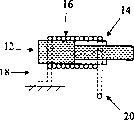
图2表示组装成铰链的图1的各个零件;Fig. 2 represents the parts of Fig. 1 assembled into a hinge;
图3表示铰链的不同的实施例;Figure 3 shows different embodiments of the hinge;
图4是铰链的下一个实施例的剖面图;Figure 4 is a sectional view of the next embodiment of the hinge;
图5是图4的铰链的剖面图,但现在还有一个偏置弹簧;Figure 5 is a cross-sectional view of the hinge of Figure 4, but now with a bias spring;
图6表示松开螺旋弹簧的一种方式;Fig. 6 represents a kind of mode of unclamping helical spring;
图7表示松开螺旋弹簧的一种方式的另一个实施例;Fig. 7 shows another embodiment of a mode of unclamping helical spring;
图8表示具有3个部件的一个系统、如图5所示的两个铰链、和一个中央弹簧松开装置;Figure 8 shows a system with 3 parts, two hinges as shown in Figure 5, and a central spring release;
图9表示处在第一位置的一个3部件的系统;Figure 9 shows a 3-component system in a first position;
图10表示处在另一个位置的图9的系统;和Figure 10 shows the system of Figure 9 in another position; and
图11-14表示不同于图9和图10的实施例的一个实施例的不同的位置。11-14 show a different position of an embodiment different from that of FIGS. 9 and 10 .
具体实施方式Detailed ways
图1表示一个已知的缠绕弹簧离合器/铰链的基本元件。这个铰链10包括两个杆状元件12、14和一个螺旋弹簧16,螺旋弹簧16具有内部表面17和两个股线端部18、20。杆状元件12、14的直径大于弹簧16的内径。Figure 1 shows the basic elements of a known wrap spring clutch/hinge. This
这个铰链在图2中是组装起来的,杆状元件接触弹簧16的内侧。显然,如果端部18相对于杆状元件12保持固定,则杆状元件14按箭头方向的转动将要紧固弹簧16,于是相互锁紧两个杆状元件12和14,从而获得最大的扭矩。以此方式,将扭矩或者转动能量从杆状元件14传递到杆状元件12。另一方面,如果杆状元件14沿另一个方向(与箭头方向相反)转动,这种移动将只使弹簧松开,由此,几乎没有任何扭矩传送。This hinge is assembled in FIG. 2 , with the rod-shaped element contacting the inner side of the
在图2中还表示出一个楔形元件15,可用于移动弹簧16的端部20。如果楔形元件的移动可以升高(在附图中)端部20,则弹簧16将要“松开”,这就意味着,弹簧的内径增加,因此杆状元件14现在可以沿粗箭头的方向移动,但没有夹紧弹簧16,也没有将扭矩传送到杆状元件12。Also shown in FIG. 2 is a
以此方式,杆状元件14沿粗箭头的方向围绕纵向轴A转动,虽然没有操作释放楔形元件15,但由于弹簧16将要压紧的事实,可以获得一个很大的摩擦力。另一方面,杆状元件14沿相反方向的转动,由于弹簧16松开将产生一个低得多的摩擦力。还有,当操作楔形元件15时,并且当沿粗箭头的方向转动杆状元件14时,将承受很低的第三摩擦力。In this way, the rod-
在图3中,表示一个不同的实施例,这个实施例也有杆状元件14和具有端部18和20的弹簧16,但没有杆状元件12,取而代之地,将连接到杆状元件12的元件固定到端部18。如以上所述,这个实施例相对于杆状元件邻接弹簧16的实施例来说具有某些优点。优选地,杆状元件14现在穿过整个螺旋弹簧16。In Fig. 3, represent a different embodiment, this embodiment also has rod-shaped
图4表示具有相同功能的铰链的另一个实施例。这个铰链还具有第一杆状元件12、第二杆状元件14,但现在第二杆状元件14是在部分杆状元件12上延伸的管状元件的形式。弹簧16具有“未锁紧端”20和端部18,端部18现在固定到一个固定元件上。Figure 4 shows another embodiment of a hinge having the same function. This hinge also has a
在图5中,图4的铰链已经附加了元件30(固定到杆状元件12并且其中端部18是固定的)和元件32(固定到杆状元件14)以及锁紧元件42,锁紧元件42用于在这个系统内防止弹簧16移动进入杆状元件12和14之间的空间并产生无效行程(backlash)等。可以看出,如果不固定端部18,还可以固定元件30。还有,增加一个偏置弹簧44,它的一端固定到元件32上,它的另一端(未示出)固定到杆状元件12上。于是,显然可以看出,元件32和杆状元件14可以在杆状元件12上转动,这种移动是由偏置弹簧44偏置的。In Fig. 5, the hinge of Fig. 4 has been supplemented with element 30 (fixed to rod-
在这一方面,优选的作法是,固定端部18和楔形元件15(还可参照附图6和7)存在在同一个系统内,这就意味着,这些元件相对于杆状元件12或者元件30是不可转动的(但可以平移)。这种情况从图8变得很清楚。In this respect, it is preferred that the
当装配本发明的铰链的时候,存在一系列选择。或者,将弹簧16略微打开,而后引入杆状元件12和14(当杆状元件的外径大于弹簧的内径时),从而可以在未操作的情况下在它们之间获得啮合或者获得摩擦力,因而这个操作可以是弹簧16的松开。按照另一种方式,可能期望在未操作情况下实际就可偏置端部20(当杆状元件的外径小于弹簧的内径时),因而操作可以是弹簧16的压紧。无论在哪种情况下,都可以期望在未操作情况下沿“压紧”方向偏置端部20。There are a range of options when assembling the hinge of the present invention. Alternatively, the
图6和7表示弹簧16实际放松的不同方式。在图6中,所示的是楔形元件15与弹簧16的端部20的两个不同的位置。根据楔形元件15和弹簧16的螺旋部分之间的距离,端部20的这种移动将提供弹簧16的或多或少的放松。Figures 6 and 7 show the different ways in which the
在图6中,另一个元件15`是楔形元件15的补充,元件15`与楔形元件15一起形成一个端部20可在其中运行的轨道。这个轨道可用于在压紧方向实际偏置所说的端部20。当用虚线的端部20`表示所说的端部20的一个未曾偏置的位置的时候,可以观察到这一操作。于是,向上移动端部20将使弹簧放松,并且,在未曾操作的位置,所示的端部20在较下的位置,这个位置低于未加偏置的位置20`。In FIG. 6 , a
在图7中可以看到另一种方式,在这里,端部20靠在柔性元件24上,一个细长的、刚性元件26可以在柔性元件24内滑动。可以看见,端部20事实上是依靠柔性元件24偏置的,因此当元件26缩回时,端部20使元件24变形,借此使弹簧16压紧。An alternative can be seen in FIG. 7 , where the
元件26通过偏置弹簧27偏离开,离开元件24,并且元件26、24、和20都由保持装置22控制。
现在回到图2,显然可以看出,通过许多方式,例如沿粗箭头的方向或者沿端部20指向弹簧16的方向移动弹簧端部20,可以实现弹簧16的放松。Returning now to FIG. 2 , it is evident that relaxation of the
图8表示的是一个3部件的系统,它的第二部件30经过第一铰链52连接到第三部件32,并且经过第二铰链50连接到第一部件34。为了保持附图的简洁,省去了来自图5的标号。FIG. 8 shows a 3-part system in which the
下面参照附图9和10描述铰链的实际”方向”(即,大摩擦力和小摩擦力的转动方向以及偏置弹簧的方向)。The actual "orientation" of the hinge (ie, the direction of high and low friction rotation and the direction of the biasing spring) is described below with reference to Figures 9 and 10 .
图8中的系统的部件30具有一个弹簧放松机构,弹簧放松机构具有按钮28,按钮28连接到两个放松机构36,如楔形元件15,并且所说的弹簧放松机构通过啮合部件30中的固定元件40的两个偏置弹簧偏置。The
可以看出,这个放松机构同时放松两个弹簧16。按照另一种方式,可以为每个铰链设置单独的放松机构。It can be seen that this release mechanism releases both
第一和第三部件这两者都通过元件42按照可转动方式固定到第二部件。这只是为了稳定部件的转动。Both the first and the third part are rotatably fixed to the second part by means of
在图9和10中表示的是一个特定的、优选的3元件系统,用于移动电话48。这个系统具有通过第一和第二铰链52、50连接的部件30、部件32、和部件34,如图8所示。Shown in FIGS. 9 and 10 is a specific, preferred 3-element system for use with a
本发明的移动电话48具有定位在部件34内的扬声器58和定位在部件32内的麦克风60。第二部件30具有一个释放按钮54,适合于在铰链50、52中放松两个弹簧16。The
第一部件34最好还具有一个显示器(未示出)、键盘(未示出)、以及电话的处理器(未示出)等。第三部件32具有电池(未示出),并且在这个铰链上提供弯曲的印制品(未示出)以便在部件32和34之间提供功率和信息。The
确定弹簧16和44的方向以便实现电话48的下述操作。
电话48适合于佩戴在手腕Q上。当电话48定位在手腕上时,通过沿粗箭头X和Y的方向移动部件34和32,使部件34和32轻微地压紧在手腕Q上。The
确定在铰链50和52中弹簧16的方向,以使大摩擦力(没有放松时)的方向与粗箭头的方向相反。以此方式,使电话48在手腕Q移动期间停止就位。The
然后,用户可以使用另一只手来操作按钮54,以便能够从手腕拆下所说的电话48。当然,通过强力也可以克服在铰链50和52中的较大的摩擦力把电话48拆下来而不用操作按钮。这可能是紧急情况要作的,或者电话48偶然接触外来物体的条件下(防御措施等)要作的。The user can then use the other hand to operate the
当操作释放按钮54的时候,确定了偏置弹簧的方向,以便电话48获得如图10所示的位置。在此位置定位麦克风60和扬声器58,使它们可以用于电话对话。When the
于是,可以看出,铰链50和52不只是镜像的,铰链50使偏置弹簧沿弹簧16的大摩擦力方向操作,而铰链52使偏置弹簧沿弹簧16的小摩擦力方向操作。Thus, it can be seen that hinges 50 and 52 are not merely mirror images, that hinge 50 operates the bias spring in the direction of high friction for
对于铰链50,优选的作法是,偏置弹簧提供的偏置作用力足够大,可以克服为克服铰链的第三较小的摩擦力所需的作用力。一旦不操作按钮54,这个偏置力不得超过为克服铰链的较大的摩擦力所需的作用力,以致现在使部件32沿与箭头Y相反的方向可以转动,因此部件32可以停留在用户希望的任何指定的位置。For
在铰链52中,情况与偏置弹簧沿小摩擦力方向操作的情况不同。于是,按钮54的操作与沿粗箭头X的方向转动第三部件54的动作是不相关的。然而,当将电话48戴回手腕Q上的时候,为了与箭头X的方向相反地转动部件34,需要操作按钮54。In the
在操作电话以后,再一次地将它定位在手腕上。这将要求:再一次操作按钮54,使其沿与箭头X相反的方向转动部件34。当电话定位在手腕Q上时,脱开按钮54,并且通过简单地一起压迫部件32和34,可将部件32和34进一步地压紧到手腕Q上。这一移动是沿箭头X和Y的方向,因此不需要操作按钮54。After operating the phone, it is again positioned on the wrist. This will require that
在图10中,可以看出,第一部件34应该能够至少在最小角度A和最大角度B之间转动,第二部件32应该能够至少在最小角度C和最大角度D之间转动。在图10中,还表示出一个显示器56,它定位在第一部件34中。In FIG. 10 it can be seen that the
图11-14表示移动电话的不同实施例,它们还是分别具有第一部件34、第二部件30、和第三部件32。还有,还表示出麦克风60、扬声器58、以及释放按钮54。Figures 11-14 show different embodiments of mobile phones, again having a
为了保持附图简单,没有表示出在第一、第二、和第三部件之间的铰链。In order to keep the drawing simple, the hinges between the first, second and third parts are not shown.
在图11中可以看到电话的传输位置,在这里,通过使部件30、32、34相互靠近,使电话尽可能地紧凑。The transport position of the phone can be seen in FIG. 11 , where the phone is made as compact as possible by bringing the
铰链具有以上所述的类型,确定铰链的方向以使转动的第二方向离开图11的位置到图12所示的位置,这个位置是电话的可操作位置。铰链的偏置装置适合于转动部件32和34,使它们从图11的位置到图12的位置。The hinge is of the type described above and is oriented so that the second direction of rotation is away from the position of Figure 11 to the position shown in Figure 12, which is the operative position of the phone. The hinge biasing means are adapted to rotate
于是,按钮54的操作将使电话从任何位置到达图12的位置,借此使麦克风和扬声器可用于电话对话。Operation of the
还有,由于铰链的操作,还可以获得其它的位置,例如图13和14中所示的位置,可以期望这些位置能够例如看见电话的显示器,显示器定位在部件30和32之一上。Also, due to the operation of the hinge, other positions are also available, such as those shown in FIGS.
Claims (16)
Applications Claiming Priority (2)
| Application Number | Priority Date | Filing Date | Title |
|---|---|---|---|
| US10/323,822 US7353048B2 (en) | 2002-12-20 | 2002-12-20 | Transformer hinge design |
| US10/323,822 | 2002-12-20 |
Publications (2)
| Publication Number | Publication Date |
|---|---|
| CN1754375A true CN1754375A (en) | 2006-03-29 |
| CN100433757C CN100433757C (en) | 2008-11-12 |
Family
ID=32680718
Family Applications (1)
| Application Number | Title | Priority Date | Filing Date |
|---|---|---|---|
| CNB2003801098558A Expired - Fee Related CN100433757C (en) | 2002-12-20 | 2003-12-15 | Mobile terminal and method of operating the mobile terminal |
Country Status (6)
| Country | Link |
|---|---|
| US (2) | US7353048B2 (en) |
| EP (1) | EP1574019A2 (en) |
| KR (1) | KR100804225B1 (en) |
| CN (1) | CN100433757C (en) |
| AU (1) | AU2003287899A1 (en) |
| WO (1) | WO2004057841A2 (en) |
Cited By (1)
| Publication number | Priority date | Publication date | Assignee | Title |
|---|---|---|---|---|
| CN105005357A (en) * | 2014-04-16 | 2015-10-28 | 纬创资通股份有限公司 | Transformable wearable electronics |
Families Citing this family (8)
| Publication number | Priority date | Publication date | Assignee | Title |
|---|---|---|---|---|
| KR101024410B1 (en) * | 2004-06-18 | 2011-03-23 | 엘지전자 주식회사 | Slide switch of portable terminal |
| US8363012B2 (en) | 2007-07-31 | 2013-01-29 | Microsoft Corporation | Pointing device for interface with a graphical display |
| US20100053084A1 (en) * | 2008-08-27 | 2010-03-04 | Microsoft Corporation | Collapsible mouse with pinch-risk solution |
| US9360889B2 (en) * | 2013-12-27 | 2016-06-07 | Intel Corporation | Routing signals via hinge assemblies for mobile computing devices |
| US9256253B2 (en) | 2013-12-28 | 2016-02-09 | Intel Corporation | Clasp assembly and data interconnection for wearable computing devices |
| US9703322B2 (en) | 2014-04-01 | 2017-07-11 | Htc Corporation | Wearable device |
| US9775414B2 (en) * | 2014-11-05 | 2017-10-03 | Htc Corporation | Portable electronic device |
| KR20240122682A (en) * | 2021-12-09 | 2024-08-13 | 너먼 엔터프라이지스 엘티디 | Self-deforming wearable smartphone |
Family Cites Families (13)
| Publication number | Priority date | Publication date | Assignee | Title |
|---|---|---|---|---|
| JPH0250215A (en) | 1988-08-12 | 1990-02-20 | Canon Inc | coordinate input device |
| JP3255995B2 (en) | 1992-10-23 | 2002-02-12 | 株式会社日立製作所 | Videophone equipment |
| SE507149C2 (en) | 1996-08-29 | 1998-04-06 | Ericsson Telefon Ab L M | Hinge device |
| US5966776A (en) * | 1997-05-07 | 1999-10-19 | Strawberry Corporation | Hinge device |
| US6681014B1 (en) * | 1997-06-02 | 2004-01-20 | Firooz Ghassabian | Wrist-mounted telephone device |
| FI104927B (en) | 1997-10-02 | 2000-04-28 | Nokia Mobile Phones Ltd | Mobile station |
| US5936530A (en) * | 1998-04-02 | 1999-08-10 | Meinhold; Robert C. | Child protection device |
| GB2337790B (en) | 1998-05-29 | 2002-12-31 | Nokia Mobile Phones Ltd | Hinge mechanism |
| JP2001345907A (en) * | 2000-03-28 | 2001-12-14 | Seiko Instruments Inc | Watch type radio telephone set |
| TW507979U (en) | 2001-04-04 | 2002-10-21 | Benq Corp | magnetic hinge apparatus |
| KR20040061041A (en) | 2001-12-20 | 2004-07-06 | 노키아 코포레이션 | Mobile terminal device having foldable functional cover |
| CN1229920C (en) * | 2002-07-24 | 2005-11-30 | 明基电通股份有限公司 | portable communication device |
| US20040098834A1 (en) * | 2002-11-27 | 2004-05-27 | Shin Zu Shing Co., Ltd. | Hinge for a mobile phone |
-
2002
- 2002-12-20 US US10/323,822 patent/US7353048B2/en not_active Expired - Fee Related
-
2003
- 2003-12-15 EP EP03779739A patent/EP1574019A2/en not_active Withdrawn
- 2003-12-15 WO PCT/DK2003/000881 patent/WO2004057841A2/en not_active Ceased
- 2003-12-15 US US10/539,173 patent/US20060140396A1/en not_active Abandoned
- 2003-12-15 CN CNB2003801098558A patent/CN100433757C/en not_active Expired - Fee Related
- 2003-12-15 KR KR1020057011490A patent/KR100804225B1/en not_active Expired - Fee Related
- 2003-12-15 AU AU2003287899A patent/AU2003287899A1/en not_active Abandoned
Cited By (1)
| Publication number | Priority date | Publication date | Assignee | Title |
|---|---|---|---|---|
| CN105005357A (en) * | 2014-04-16 | 2015-10-28 | 纬创资通股份有限公司 | Transformable wearable electronics |
Also Published As
| Publication number | Publication date |
|---|---|
| US7353048B2 (en) | 2008-04-01 |
| WO2004057841A3 (en) | 2004-08-12 |
| AU2003287899A1 (en) | 2004-07-14 |
| HK1087870A1 (en) | 2006-10-20 |
| US20060140396A1 (en) | 2006-06-29 |
| KR100804225B1 (en) | 2008-02-18 |
| WO2004057841A2 (en) | 2004-07-08 |
| CN100433757C (en) | 2008-11-12 |
| EP1574019A2 (en) | 2005-09-14 |
| US20040203519A1 (en) | 2004-10-14 |
| KR20050088129A (en) | 2005-09-01 |
Similar Documents
| Publication | Publication Date | Title |
|---|---|---|
| CN1224233C (en) | Sliding Portable Communication Device | |
| CN1219317A (en) | Telephone handset that converts into a headset | |
| CN1242600C (en) | mobile terminal | |
| CN1507736A (en) | Portable terminal equipment with shooting function | |
| CN1620795A (en) | Foldable communication terminal device | |
| CN1577046A (en) | Hinge structure and photographic apparatus using the same hinge structure and portable electronic device | |
| CN1177473A (en) | Massage device | |
| CN1502204A (en) | Information terminal device with camera having rotation function | |
| CN1701184A (en) | Hinge device | |
| CN1577036A (en) | portable information terminal with camera | |
| CN1507244A (en) | Hinge device for mobile cell mounted with camera and mobile cell with the same device | |
| CN1406065A (en) | Electronic apparatus | |
| CN1685165A (en) | Electronic apparatus and its opening/closing mechanism | |
| CN1750743A (en) | The slideable rotatable mechaninism of portable set | |
| CN100350162C (en) | Electronic device | |
| CN2729763Y (en) | Movable screen apparatus | |
| CN1713650A (en) | Automatic/semi-automatic/manual sliding type mobile communication terminal | |
| CN1471295A (en) | Foldable portable information device provided with image capture function | |
| CN1897603A (en) | Mobile communication terminal having rotatable camera | |
| CN1829242A (en) | Folding cellular phone with open/close restriction means | |
| CN1754035A (en) | Mobile terminal with hinge and method of operating mobile terminal and hinge | |
| CN100433757C (en) | Mobile terminal and method of operating the mobile terminal | |
| CN1625188A (en) | Portable communication apparatus and method thereof | |
| CN1134116C (en) | Device and method for opening cover of mobile phone | |
| CN1926978A (en) | Rotary spinning reel rotor braking device |
Legal Events
| Date | Code | Title | Description |
|---|---|---|---|
| C06 | Publication | ||
| PB01 | Publication | ||
| C10 | Entry into substantive examination | ||
| SE01 | Entry into force of request for substantive examination | ||
| REG | Reference to a national code |
Ref country code: HK Ref legal event code: DE Ref document number: 1087870 Country of ref document: HK |
|
| C14 | Grant of patent or utility model | ||
| GR01 | Patent grant | ||
| REG | Reference to a national code |
Ref country code: HK Ref legal event code: GR Ref document number: 1087870 Country of ref document: HK |
|
| C41 | Transfer of patent application or patent right or utility model | ||
| TR01 | Transfer of patent right |
Effective date of registration: 20160118 Address after: Espoo, Finland Patentee after: Technology Co., Ltd. of Nokia Address before: Espoo, Finland Patentee before: Nokia Oyj |
|
| CF01 | Termination of patent right due to non-payment of annual fee |
Granted publication date: 20081112 Termination date: 20161215 |
|
| CF01 | Termination of patent right due to non-payment of annual fee |