CN1242503C - Batteries with nonaqueous electrolyte - Google Patents
Batteries with nonaqueous electrolyte Download PDFInfo
- Publication number
- CN1242503C CN1242503C CNB011114789A CN01111478A CN1242503C CN 1242503 C CN1242503 C CN 1242503C CN B011114789 A CNB011114789 A CN B011114789A CN 01111478 A CN01111478 A CN 01111478A CN 1242503 C CN1242503 C CN 1242503C
- Authority
- CN
- China
- Prior art keywords
- negative electrode
- active material
- group
- electrode active
- nonaqueous electrolyte
- Prior art date
- Legal status (The legal status is an assumption and is not a legal conclusion. Google has not performed a legal analysis and makes no representation as to the accuracy of the status listed.)
- Expired - Fee Related
Links
Images

Classifications
-
- H—ELECTRICITY
- H01—ELECTRIC ELEMENTS
- H01M—PROCESSES OR MEANS, e.g. BATTERIES, FOR THE DIRECT CONVERSION OF CHEMICAL ENERGY INTO ELECTRICAL ENERGY
- H01M10/00—Secondary cells; Manufacture thereof
- H01M10/34—Gastight accumulators
-
- H—ELECTRICITY
- H01—ELECTRIC ELEMENTS
- H01M—PROCESSES OR MEANS, e.g. BATTERIES, FOR THE DIRECT CONVERSION OF CHEMICAL ENERGY INTO ELECTRICAL ENERGY
- H01M4/00—Electrodes
- H01M4/02—Electrodes composed of, or comprising, active material
- H01M4/13—Electrodes for accumulators with non-aqueous electrolyte, e.g. for lithium-accumulators; Processes of manufacture thereof
- H01M4/134—Electrodes based on metals, Si or alloys
-
- H—ELECTRICITY
- H01—ELECTRIC ELEMENTS
- H01M—PROCESSES OR MEANS, e.g. BATTERIES, FOR THE DIRECT CONVERSION OF CHEMICAL ENERGY INTO ELECTRICAL ENERGY
- H01M4/00—Electrodes
- H01M4/02—Electrodes composed of, or comprising, active material
- H01M4/36—Selection of substances as active materials, active masses, active liquids
- H01M4/38—Selection of substances as active materials, active masses, active liquids of elements or alloys
-
- H—ELECTRICITY
- H01—ELECTRIC ELEMENTS
- H01M—PROCESSES OR MEANS, e.g. BATTERIES, FOR THE DIRECT CONVERSION OF CHEMICAL ENERGY INTO ELECTRICAL ENERGY
- H01M4/00—Electrodes
- H01M4/02—Electrodes composed of, or comprising, active material
- H01M4/36—Selection of substances as active materials, active masses, active liquids
- H01M4/38—Selection of substances as active materials, active masses, active liquids of elements or alloys
- H01M4/46—Alloys based on magnesium or aluminium
-
- H—ELECTRICITY
- H01—ELECTRIC ELEMENTS
- H01M—PROCESSES OR MEANS, e.g. BATTERIES, FOR THE DIRECT CONVERSION OF CHEMICAL ENERGY INTO ELECTRICAL ENERGY
- H01M10/00—Secondary cells; Manufacture thereof
- H01M10/05—Accumulators with non-aqueous electrolyte
- H01M10/052—Li-accumulators
-
- H—ELECTRICITY
- H01—ELECTRIC ELEMENTS
- H01M—PROCESSES OR MEANS, e.g. BATTERIES, FOR THE DIRECT CONVERSION OF CHEMICAL ENERGY INTO ELECTRICAL ENERGY
- H01M4/00—Electrodes
- H01M4/02—Electrodes composed of, or comprising, active material
- H01M4/13—Electrodes for accumulators with non-aqueous electrolyte, e.g. for lithium-accumulators; Processes of manufacture thereof
- H01M4/131—Electrodes based on mixed oxides or hydroxides, or on mixtures of oxides or hydroxides, e.g. LiCoOx
-
- Y—GENERAL TAGGING OF NEW TECHNOLOGICAL DEVELOPMENTS; GENERAL TAGGING OF CROSS-SECTIONAL TECHNOLOGIES SPANNING OVER SEVERAL SECTIONS OF THE IPC; TECHNICAL SUBJECTS COVERED BY FORMER USPC CROSS-REFERENCE ART COLLECTIONS [XRACs] AND DIGESTS
- Y02—TECHNOLOGIES OR APPLICATIONS FOR MITIGATION OR ADAPTATION AGAINST CLIMATE CHANGE
- Y02E—REDUCTION OF GREENHOUSE GAS [GHG] EMISSIONS, RELATED TO ENERGY GENERATION, TRANSMISSION OR DISTRIBUTION
- Y02E60/00—Enabling technologies; Technologies with a potential or indirect contribution to GHG emissions mitigation
- Y02E60/10—Energy storage using batteries
Landscapes
- Chemical & Material Sciences (AREA)
- Chemical Kinetics & Catalysis (AREA)
- Electrochemistry (AREA)
- General Chemical & Material Sciences (AREA)
- Engineering & Computer Science (AREA)
- Materials Engineering (AREA)
- Manufacturing & Machinery (AREA)
- Secondary Cells (AREA)
- Battery Electrode And Active Subsutance (AREA)
Abstract
Description
本发明涉及具有非水电解质的电池,尤其涉及使用改进的负极活性材料的非水电解质电池。The present invention relates to batteries having nonaqueous electrolytes, and more particularly to nonaqueous electrolyte batteries using improved negative electrode active materials.
近年,期望使用锂金属、锂合金、锂化合物、碳材料等作为负极活性材料的可充电非水电解质电池成为高能量密度的电池,并且目前正积极进行这些电池的研究和开发。迄今为止,使用LiCoO2、LiMn2O4等作为正极活性材料并且使用能嵌入和释放锂的碳材料作为负极活性材料的锂离子电池已广泛投入实际使用。In recent years, rechargeable nonaqueous electrolyte batteries using lithium metal, lithium alloys, lithium compounds, carbon materials, etc. as negative electrode active materials are expected to be high energy density batteries, and research and development of these batteries are currently being actively conducted. So far, lithium ion batteries using LiCoO 2 , LiMn 2 O 4 , etc. as positive electrode active materials and carbon materials capable of intercalating and releasing lithium as negative electrode active materials have been widely put into practical use.
另一方面,期望使用锂金属、锂合金或锂化合物作为负极活性材料的可充电电池具有高容量。然而,它们还未投入实际使用。其原因主要是由于非水电解溶液与锂金属反应并且此外由于重复放电和充电时形成枝晶锂而引起的锂消除,结果锂金属的使用导致锂的退化,并且因此存在内部短路和循环寿命短的问题。为解决这些问题,已进行了使用锂合金或锂化合物作为负极的研究。尤其是在锂-铝或其它合金中,能降低其与非水电解溶液的反应性,提高充电和放电效率。然而,在这种情况下,重复的高电平放电和高电平充电导致电极破碎。因此,循环寿命特性的改进不令人满意。On the other hand, a rechargeable battery using lithium metal, lithium alloy, or lithium compound as an anode active material is expected to have a high capacity. However, they have not yet been put into practical use. The reason for this is mainly the elimination of lithium due to the reaction of the non-aqueous electrolytic solution with lithium metal and in addition due to the formation of dendrite lithium upon repeated discharge and charge, as a result the use of lithium metal leads to the degradation of lithium, and thus there is an internal short circuit and a short cycle life The problem. To solve these problems, studies using lithium alloys or lithium compounds as negative electrodes have been conducted. Especially in lithium-aluminum or other alloys, it can reduce its reactivity with non-aqueous electrolytic solutions, and improve charging and discharging efficiency. However, in this case, repeated high-level discharge and high-level charge lead to broken electrodes. Therefore, improvement in cycle life characteristics is not satisfactory.
而且,从提高负极容量的观点,已提出使用硫族化合物例如氧化物作为负极活性材料(例如,SnO和SnO2;见日本专利公开公报No:122274/1995)。而且,已提出使用非晶氧化物例如SnSiO3或SnSi1-XPXO3来改善循环特性(见日本专利公开公报No.288123/1995)。然而,目前甚至这些硫族化合物也不能同时提高循环寿命特性和容量到满意程度。Also, from the viewpoint of improving the capacity of the negative electrode, it has been proposed to use chalcogenide compounds such as oxides as the negative electrode active material (for example, SnO and SnO 2 ; see Japanese Patent Laid-Open Publication No: 122274/1995). Also, the use of amorphous oxides such as SnSiO 3 or SnSi 1-X P X O 3 has been proposed to improve cycle characteristics (see Japanese Patent Laid-Open Publication No. 288123/1995). However, at present even these chalcogenides cannot simultaneously improve cycle life characteristics and capacity to a satisfactory level.
为了解决现有技术的上述问题而完成本发明,本发明的目的是提供一种非水电解质电池,通过使用具有高容量和优良充电-放电循环特性的负极活性材料,该电池具有高容量与优良循环寿命的组合。The present invention has been accomplished in order to solve the above-mentioned problems of the prior art, and an object of the present invention is to provide a nonaqueous electrolyte battery having a high capacity and an excellent combination of cycle life.
根据本发明的一个方面,提供一种非水电解质电池,包括:正极;具有能嵌入和释放碱金属的负极活性材料的负极;和非水电解质,所述负极活性材料包含从4B族元素和5B族元素构成的组中选择的至少一种元素并且具有从BiF3结构、Cu2MnAl结构和AgAsMg结构构成的组中选择的至少一种晶体结构。上述4B族元素和5B族元素从Si、Ge、Sn、P、Sb和Bi构成的组中选择。因为Al与Sb的作用相同,Al能用Sb替代和用作Sb。这样负极含有该活性材料,该活性材料包含从Al、Si、Ge、Sn、P、Sb和Bi构成的组中选择的至少一种元素,并且该活性材料具有从BiF3结构、Cu2MnAl结构和AgAsMg结构构成的组中选择的至少一种晶体结构。According to one aspect of the present invention, there is provided a nonaqueous electrolyte battery, comprising: a positive electrode; a negative electrode having a negative electrode active material capable of intercalating and releasing an alkali metal; and a nonaqueous electrolyte, the negative electrode active material comprising elements from group 4B and 5B at least one element selected from the group consisting of BiF 3 structure, Cu 2 MnAl structure and AgAsMg structure and at least one crystal structure selected from the group consisting of BiF 3 structure,
根据本发明的一个实施例,负极活性材料还包含碱金属。According to an embodiment of the present invention, the negative electrode active material further includes alkali metal.
上述负极活性材料能嵌入大量碱金属(如锂),同时在嵌入反应和释放反应之间具有高的可逆性,并且能够解决充电-放电循环所涉及的粉碎问题。因此,该负极活性材料能够实现具有长寿命和高容量的负极。这些有利的特性源于本发明的负极活性材料是结构稳定的材料,甚至在嵌入大量碱金属后,该材料也能保持基本的晶体结构。The above-mentioned negative electrode active material can intercalate a large amount of alkali metals such as lithium, while having high reversibility between intercalation reaction and release reaction, and can solve the pulverization problem involved in charge-discharge cycle. Therefore, the anode active material can realize an anode having a long life and a high capacity. These favorable properties stem from the fact that the negative active material of the present invention is a structurally stable material that maintains a basic crystalline structure even after intercalation of a large amount of alkali metal.
特别是从高容量和长寿命的观点,该晶体结构优选包括从BiF3结构、Cu2MnAl结构和AgAsMg结构构成的组中选择的至少一种,并且从长使用寿命的观点,该负极活性材料更优选地还含有碱金属。Especially from the viewpoint of high capacity and long life, the crystal structure preferably includes at least one selected from the group consisting of BiF 3 structure, Cu 2 MnAl structure and AgAsMg structure, and from the viewpoint of long service life, the negative electrode active material More preferably, an alkali metal is also contained.
而且,从高容量的观点,最好包含从Al、Si、Ge、Sn、P、Sb和Bi构成的组中选择的至少一种元素。特别地,该负极活性材料最好包含锑来作为必不可少的成分。Furthermore, from the viewpoint of high capacity, it is preferable to contain at least one element selected from the group consisting of Al, Si, Ge, Sn, P, Sb, and Bi. In particular, the negative electrode active material preferably contains antimony as an essential component.
图1是表示根据本发明的可充电锂电池(圆柱形可充电锂电池)的一个实施例的部分横截面图;以及1 is a partial cross-sectional view showing one embodiment of a rechargeable lithium battery (cylindrical rechargeable lithium battery) according to the present invention; and
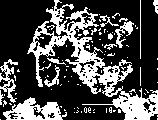
图2和3是负极活性材料(Ni2MnSb)颗粒的显微照片(放大倍数:3000倍)。2 and 3 are photomicrographs (magnification: 3000 times) of negative electrode active material (Ni 2 MnSb) particles.
参照图1将描述根据本发明的可充电非水电解质电池(例如,圆柱形可充电非水电解质电池)。A rechargeable nonaqueous electrolyte battery (for example, a cylindrical rechargeable nonaqueous electrolyte battery) according to the present invention will be described with reference to FIG. 1 .
图1表示根据本发明的可充电非水电解质电池的实施例。例如,在该电池中,绝缘体2设置在不锈钢制成的、一端封闭的圆柱形外壳1的底部。电极组3装在外壳1中。电极组3具有的结构为:将正极4、隔板5、负极6和隔板5按一个位于另一个上的顺序层叠而形成的带以隔板5位于最外面的方式螺旋卷绕。Fig. 1 shows an embodiment of a rechargeable non-aqueous electrolyte battery according to the present invention. For example, in this battery, an
电解液放置在外壳1内。中心有开口的绝缘纸7位于外壳1内的电极组3之上。绝缘密封板8位于外壳1的上开口,并且通过围绕上开口向内卷曲一部分来固定到外壳1。正极端子9与绝缘密封板8的中心配合。正极引线10的一端连接到正极4,另一端连接到正极端子9。负极6通过负极引线(未示出)连接到作为负极端子的外壳1。Electrolyte is placed inside the case 1 . The insulating paper 7 with an opening in the center is located on the electrode group 3 in the casing 1 . The insulating
接着,将更详细描述正极4、隔板5、负极6和非水电解质。Next, the
1)正极41)
通过使正极活性材料、导电剂和粘合剂悬浮在适当的溶剂中,涂覆该悬浮液在集电体例如铝箔上,干燥该涂覆过的集电体,并且将已干燥、涂覆过的集电体挤压成片状电极来制备正极4。By suspending the positive electrode active material, conductive agent and binder in a suitable solvent, coating the suspension on a collector such as aluminum foil, drying the coated collector, and the dried, coated The current collector is extruded into a sheet electrode to prepare the
各种氧化物和硫化物可用作正极活性材料,其例子包括:二氧化锰(MnO2)、锂锰复合氧化物(例如,LiMn2O4或LiMnO2)、锂镍复合氧化物(例如,LiNiO2)、锂钴复合氧化物(例如,LiCoO2)、锂镍钴复合氧化物(例如,LiNi1-xCoxO2)、锂锰钴复合氧化物(例如,LiMnxCo1-xO2)、和钒氧化物(例如,V2O5)。而且,也能使用例如导电聚合物材料和二硫化物聚合物材料的有机材料。从高电池电压的观点,锂锰复合氧化物(LiMn2O4)、锂镍复合氧化物(LiNiO2)、锂钴复合氧化物(LiCoO2)、锂镍钴复合氧化物(LiNi0.8Co0.2O2)、锂锰钴复合氧化物(LiMnxCo1-xO2)等是更优选的正极。Various oxides and sulfides can be used as positive electrode active materials, and examples thereof include manganese dioxide (MnO 2 ), lithium manganese composite oxides (for example, LiMn 2 O 4 or LiMnO 2 ), lithium nickel composite oxides (for example, , LiNiO 2 ), lithium cobalt composite oxide (for example, LiCoO 2 ), lithium nickel cobalt composite oxide (for example, LiNi 1-x Co x O 2 ), lithium manganese cobalt composite oxide (for example, LiMn x Co 1- x O 2 ), and vanadium oxides (eg, V 2 O 5 ). Furthermore, organic materials such as conductive polymer materials and disulfide polymer materials can also be used. From the viewpoint of high battery voltage, lithium manganese composite oxide (LiMn 2 O 4 ), lithium nickel composite oxide (LiNiO 2 ), lithium cobalt composite oxide (LiCoO 2 ), lithium nickel cobalt composite oxide (LiNi 0.8 Co 0.2 O 2 ), lithium manganese cobalt composite oxide (LiMn x Co 1-x O 2 ), and the like are more preferable positive electrodes.
在此可使用的导电剂的例子包括乙炔黑、碳黑和石墨。Examples of conductive agents usable here include acetylene black, carbon black and graphite.
在此可使用的粘合剂的例子包括聚四氟乙烯(PTFE)、聚偏二氟乙烯(PVdF)和氟橡胶。Examples of the binder usable here include polytetrafluoroethylene (PTFE), polyvinylidene fluoride (PVdF), and fluororubber.
正极活性材料、导电剂和粘合剂的混合比率优选是80-95wt%的正极活性材料:3-20wt%的导电剂:2-7wt%的粘合剂。The mixing ratio of the positive active material, the conductive agent and the binder is preferably 80-95 wt% positive active material: 3-20 wt% conductive agent: 2-7 wt% binder.
2)隔板52) Partition 5
隔板5可以由例如合成树脂的无纺织物、聚乙烯多孔膜或聚丙烯多孔膜形成。The separator 5 may be formed of, for example, a nonwoven fabric of synthetic resin, a polyethylene porous film, or a polypropylene porous film.
3)负极63)
通过使负极活性材料导电剂和粘合剂悬浮在适当的溶剂中,涂覆该悬浮液在金属箔例如铜箔上,干燥该涂覆过的箔,并且挤压已干燥、涂覆过的箔,从而形成片状电极来制备负极6。By suspending the negative electrode active material conductive agent and binder in a suitable solvent, coating the suspension on a metal foil such as copper foil, drying the coated foil, and pressing the dried, coated foil , thereby forming a sheet electrode to prepare the
通过包括从Al、Si、Ge、Sn、P、Sb和Bi构成的组中选择的至少一种元素并且具有从BiF3结构、Cu2MnAl结构和AgAsMg结构构成的组中选择的至少一种晶体结构的材料来构成一部分负极活性材料。By including at least one element selected from the group consisting of Al, Si, Ge, Sn, P, Sb and Bi and having at least one crystal selected from the group consisting of BiF3 structure, Cu2MnAl structure and AgAsMg structure The material of the structure constitutes a part of the negative electrode active material.
从长寿命和高容量的观点,最好使用从Al、Si、Ge、Sn、P、Sb和Bi构成的组中选择的至少一种元素。特别地,该负极活性材料最好包含锑来作为必不可少的成分。就此而论,应当注意,由于不能形成任何需要的晶体结构,碳是不适宜的。From the viewpoint of long life and high capacity, it is preferable to use at least one element selected from the group consisting of Al, Si, Ge, Sn, P, Sb, and Bi. In particular, the negative electrode active material preferably contains antimony as an essential component. In this connection, it should be noted that carbon is unsuitable since it cannot form any desired crystal structure.
具有Cu2MnAl结构的负极活性材料优选是从Ni2MnSb、Co2MnSb、Ni2MgSb和Co2MgSb构成的组中选择的至少一种。The negative electrode active material having a Cu 2 MnAl structure is preferably at least one selected from the group consisting of Ni 2 MnSb, Co 2 MnSb, Ni 2 MgSb, and Co 2 MgSb.
具有AgAsMg结构的负极活性材料的优选特定例子是从FeVSb、CoTiSb、NiTiSb、NiNbSb、CoNbSb、NiVSb、CoVSb、CuMgSb、NiMnSb、CoMnSb、NiMgSb和CoMgSb构成的组中选择的至少一种。A preferred specific example of the negative electrode active material having the AgAsMg structure is at least one selected from the group consisting of FeVSb, CoTiSb, NiTiSb, NiNbSb, CoNbSb, NiVSb, CoVSb, CuMgSb, NiMnSb, CoMnSb, NiMgSb, and CoMgSb.
而且,具有BiF3结构的负极活性材料的优选特定例子是从Ni3Sn、Co3Sn、Fe3Al和Fe3Si构成的组中选择的至少一种。Also, a preferred specific example of the negative electrode active material having a BiF 3 structure is at least one selected from the group consisting of Ni 3 Sn, Co 3 Sn, Fe 3 Al, and Fe 3 Si.
上述负极活性材料能嵌入大量碱金属如锂,同时在嵌入反应和释放反应之间具有高的可逆性,并且能够解决充电-放电循环所涉及的粉碎问题。因此,该负极活性材料能够实现具有长寿命和高容量的负极。这些有利的特性可能源于本发明的负极活性材料是结构稳定的材料,甚至在嵌入大量碱金属后,该材料也能保持基本的晶体结构。The above-mentioned negative electrode active material can intercalate a large amount of alkali metal such as lithium while having high reversibility between intercalation reaction and release reaction, and can solve the pulverization problem involved in charge-discharge cycle. Therefore, the anode active material can realize an anode having a long life and a high capacity. These favorable properties may originate from the fact that the anode active material of the present invention is a structurally stable material that maintains the basic crystalline structure even after intercalation of a large amount of alkali metal.
特别是从高容量和长寿命的观点,该晶体结构优选包括从BiF3结构、Cu2MnAl结构和AgAsMg结构构成的组中选择的至少一种,并且从长使用寿命的观点,该负极活性材料更优选地还含有碱金属。Especially from the viewpoint of high capacity and long life, the crystal structure preferably includes at least one selected from the group consisting of BiF 3 structure, Cu 2 MnAl structure and AgAsMg structure, and from the viewpoint of long service life, the negative electrode active material More preferably, an alkali metal is also contained.
AgAsMg结构是属于Pearson Symbol的cF12结构。CaF2也属于cF12。具有CaF2结构的化合物例如CoSi2、NiSi2、Mg2Si和Mg2Sn能嵌入碱金属例如锂,并且像按照本发明具有AgAsMg结构的化合物一样,能用作高容量负极活性材料。相反地,具有CaF2结构的许多化合物比按照本发明具有AgAsMg结构的化合物有更高的容量。然而,在具有CaF2结构的化合物的情况下,在锂的嵌入和释放时,晶格体积发生显著变化,并且重复的充电和放电导致晶体分解,从而导致循环寿命极大退化。这使实际使用它们变得困难。另一方面,按照本发明具有AgAsMg结构的化合物具有的有利特征是:它们能适当地嵌入锂并且没有体积的明显变化,因而具有优良的循环寿命特性。The AgAsMg structure is a cF12 structure belonging to Pearson Symbol. CaF 2 also belongs to cF12. Compounds having a CaF 2 structure such as CoSi 2 , NiSi 2 , Mg 2 Si and Mg 2 Sn can intercalate alkali metals such as lithium and, like compounds having an AgAsMg structure according to the present invention, can be used as high-capacity negative electrode active materials. Conversely, many compounds having the CaF2 structure have a higher capacity than compounds having the AgAsMg structure according to the present invention. However, in the case of compounds with a CaF2 structure, upon intercalation and release of lithium, the lattice volume changes significantly, and repeated charge and discharge lead to crystal decomposition, resulting in a greatly degraded cycle life. This makes it difficult to actually use them. On the other hand, the compounds having the AgAsMg structure according to the present invention have an advantageous feature that they intercalate lithium appropriately without significant change in volume, and thus have excellent cycle life characteristics.
BiF3结构和Cu2MnAl结构属于Pearson Symbol的cF16。NaTl结构也属于cF16。具有NaTl结构的化合物包括锂合金,例如AlLi、CdLi和GaLi。如上所述,这些锂合金认为是具有很高容量的负极活性材料。然而,与具有CaF2结构的化合物一样,这些化合物具有的问题是在充电和放电时晶体体积变化太大,以致于循环寿命特性退化。相反地,根据本发明具有BiF3结构和Cu2MnAl结构的化合物能嵌入适当数量的锂并且没有体积的明显变化,因而有利地具有优良的循环寿命特性。BiF 3 structure and Cu 2 MnAl structure belong to cF16 of Pearson Symbol. The NaTl structure also belongs to cF16. Compounds having a NaTl structure include lithium alloys such as AlLi, CdLi, and GaLi. As mentioned above, these lithium alloys are considered as negative electrode active materials with very high capacity. However, these compounds have a problem that the crystal volume changes so much upon charge and discharge that the cycle life characteristics degrade, like the compounds having the CaF 2 structure. On the contrary, the compound having the BiF 3 structure and the Cu 2 MnAl structure according to the present invention can intercalate an appropriate amount of lithium without significant change in volume, and thus advantageously has excellent cycle life characteristics.
而且,从高容量的观点,最好含有从Al、Si、Ge、Sn、P、Sb和Bi构成的组中选择的至少一种元素。特别是最好包含锑来作为必不可少的成分。Furthermore, from the viewpoint of high capacity, it is preferable to contain at least one element selected from the group consisting of Al, Si, Ge, Sn, P, Sb, and Bi. In particular, it is preferable to contain antimony as an essential component.
在负极活性材料中存在锑来作为必不可少成分是有利的,其原因如下。The presence of antimony as an essential component in the negative electrode active material is advantageous for the following reasons.
例如通过电弧熔化、高频熔化、机械合金化、CVD和溅射都能形成本发明的负极活性材料,并且形成负极活性材料的方法没有特别限制。在那些方法中,使用固相反应制造负极活性材料的优点在于能够简单地制造高性能的负极活性材料。该方法包括步骤:把构成化合物的元素粉末混合在一起,并且热处理该混合粉末以产生固相反应,由此得到预期的化合物。For example, the negative active material of the present invention can be formed by arc melting, high frequency melting, mechanical alloying, CVD, and sputtering, and the method of forming the negative active material is not particularly limited. Among those methods, the use of a solid-phase reaction to produce an anode active material has an advantage in that a high-performance anode active material can be simply produced. The method includes the steps of mixing together powders of elements constituting a compound, and heat-treating the mixed powder to cause a solid-phase reaction, thereby obtaining a desired compound.
在这种情况下,热处理温度最好低于构成该化合物的元素的熔点。根据本发明人的发现,在所述组成元素的熔点温度之上进行热处理的担心在于,在熔化和固化步骤之后含有除预期的化合物之外的作为杂质相的第二化合物。而且,在这种情况下,合成的化合物可能是大块的。因此,在使用该化合物作为负极活性材料中,要把该化合物研磨成分。然而,发现由研磨制造的粉末颗粒是具有光滑表面的颗粒,具有小的比表面积,并且在体积变化时较难释放应变。图2是在组成元素的熔点或更高温度制造的并且如上所述已进行研磨而得到的化合物(Ni2MnSb)颗粒的显微照片(放大倍数:3000)。In this case, the heat treatment temperature is preferably lower than the melting point of the elements constituting the compound. According to the findings of the present inventors, there is a concern in performing heat treatment above the melting point temperature of the constituent elements in that a second compound other than the intended compound is contained as an impurity phase after the melting and solidification step. Also, in this case, the compound synthesized can be bulky. Therefore, in using the compound as a negative electrode active material, the compound is ground into a component. However, it was found that the powder particles produced by grinding are particles with a smooth surface, have a small specific surface area, and are less likely to release strain upon volume change. Fig. 2 is a photomicrograph (magnification: 3000) of compound (Ni 2 MnSb) particles produced at the melting point of constituent elements or higher and ground as described above.
另一方面,已发现当在不熔化组成元素的温度下,即在低于组成元素中具有最低熔点的元素的熔点的温度下,进行热处理时,通过完全固相反应合成化合物,导致形成好的细颗粒化合物。图3是在低于组成元素熔点的温度下制造的化合物(Ni2MnSb)颗粒的显微照片(放大倍数:3000)。正如图3所见,得到包括像一串葡萄那样相互连接的0.05-2μm一次颗粒的粉末。该形式的化合物具有高的比表面积并且能够有效释放体积变化产生的应变。好处还在于能防止颗粒形式的分解。On the other hand, it has been found that when heat treatment is performed at a temperature that does not melt the constituent elements, that is, at a temperature lower than the melting point of the element having the lowest melting point among the constituent elements, the compound is synthesized by a complete solid-state reaction, resulting in the formation of a good fine particle compounds. Fig. 3 is a photomicrograph (magnification: 3000) of compound (Ni 2 MnSb) particles produced at a temperature lower than the melting point of constituent elements. As seen in Figure 3, a powder comprising 0.05-2 μm primary particles interconnected like a bunch of grapes was obtained. This form of the compound has a high specific surface area and is capable of effectively releasing the strain generated by the volume change. The benefit is also that it prevents decomposition of the granular form.
为此,最好在不熔化组成元素的合成温度范围内制造本发明的负极活性材料。当对此加以考虑时,在Al、Si、Ge、Sn、P、Sb和Bi中,Si具有过分高的熔点,导致以相对高的反应速率合成,因此这又难以合成图3所示形式的化合物。另一方面,锡、铋和磷等具有过分低的熔点,导致以低反应速率合成,因此这又难以合成图3所示形式的化合物。另一方面,锑具有约630℃的熔点,能实现理想的反应速率并且很好地使图3所示形式的化合物容易合成。因此,从上述制造方法的技术观点,根据本发明把锑作为必不可少的成分加入负极活性材料是特别优选的。For this reason, it is preferable to manufacture the negative electrode active material of the present invention within a synthesis temperature range in which constituent elements are not melted. When this is considered, among Al, Si, Ge, Sn, P, Sb, and Bi, Si has an excessively high melting point, resulting in synthesis at a relatively high reaction rate, which in turn makes it difficult to synthesize compound. On the other hand, tin, bismuth, phosphorus, and the like have excessively low melting points, resulting in synthesis at a low reaction rate, and thus it is difficult to synthesize compounds of the form shown in FIG. 3 . Antimony, on the other hand, has a melting point of about 630° C., which enables a desirable reaction rate and well facilitates the synthesis of compounds of the form shown in FIG. 3 . Therefore, adding antimony as an essential component to the negative electrode active material according to the present invention is particularly preferable from the technical viewpoint of the above-mentioned production method.
图2和3都表示Ni2MnSb合成的结果。然而,图2和3相互不同在于,图2表示在850℃下,即在高于锑的熔点的温度下合成的产物;同时图3表示在550℃下,即在低于锑的熔点的温度下合成的产物。正如从图2和3所见,在850℃下合成的颗粒表面光滑并且具有小的比表面积,而在550℃下合成的颗粒由小的一次颗粒的聚集体(二次颗粒)构成并且具有大的比表面积。Both Figures 2 and 3 show the results of Ni 2 MnSb synthesis. However, Figures 2 and 3 differ from each other in that Figure 2 represents the product synthesized at 850°C, i.e. at a temperature higher than the melting point of antimony; while Figure 3 represents the product at 550°C, i.e. at a temperature lower than the melting point of antimony The product synthesized below. As can be seen from Figures 2 and 3, the particles synthesized at 850°C have a smooth surface and a small specific surface area, while the particles synthesized at 550°C consist of aggregates of small primary particles (secondary particles) and have large specific surface area.
根据本发明,当电池是可充电非水电解质电池时,使用碱金属(例如锂)预先包含在其中的材料例如LiCoO2、LiMnO2或LiNiO2作为正极,可允许在电池的初始充电时碱金属(例如锂)能够从正极迁移到本发明的材料,并且此后使本发明的材料能够可逆地嵌入和释放碱金属,从而起可充电电池的负极的作用。而且,为了稳定充电-放电循环,甚至在含碱金属的材料用作正极时,也优选使用含碱金属的材料作为负极活性材料。当预先没有包含碱金属的材料例如CoO2、MnO2或NiO2用作正极活性材料时,可以采用一种方法:预先包含碱金属的材料用作负极活性材料,或另一方面,使用根据本发明的无碱金属的材料和碱金属材料的层叠体来电化学地制造含碱金属的材料。According to the present invention, when the battery is a rechargeable non-aqueous electrolyte battery, using a material such as LiCoO 2 , LiMnO 2 or LiNiO 2 in which an alkali metal (such as lithium) is preliminarily contained therein as the positive electrode allows (eg lithium) can migrate from the positive electrode to the material of the invention and thereafter enable the material of the invention to reversibly intercalate and release alkali metal, thereby functioning as the negative electrode of a rechargeable battery. Also, in order to stabilize the charge-discharge cycle, even when an alkali metal-containing material is used as a positive electrode, it is preferable to use an alkali metal-containing material as the negative electrode active material. When a material that does not contain an alkali metal such as CoO 2 , MnO 2 or NiO 2 is used as the positive electrode active material, a method can be adopted: a material that contains an alkali metal in advance is used as the negative electrode active material, or on the other hand, using the The inventive alkali metal-free material and the laminate of the alkali metal material are used to electrochemically produce the alkali metal-containing material.
当该电池是具有非水电解质的原电池时,优选使用预先不包含碱金属的材料作为正极,同时使用含碱金属的材料用作负极。When the battery is a primary battery having a nonaqueous electrolyte, it is preferable to use a material not containing an alkali metal beforehand as a positive electrode, while using a material containing an alkali metal as a negative electrode.
负极活性材料优选具有在0.1-100μm范围内的平均粒径(二次颗粒的平均粒径)。The negative electrode active material preferably has an average particle diameter (average particle diameter of secondary particles) in the range of 0.1 to 100 μm.
通过把原材料粉末混合在一起来提供预定化学计量数量比,并且在400-1200℃的温度下在惰性气氛、还原气氛或真空中热处理该混合物,来制备负极活性材料。当在低于400℃的温度下进行热处理时,用于反应制造化合物所需的时间长,生产率差。另一方面,高于1200℃的高温由于具有高蒸气压的成分例如锑的蒸发而导致极大散失,结果与粉末混合在一起时相比组成发生明显变化。The negative active material is prepared by mixing raw material powders together to provide a predetermined stoichiometric quantity ratio, and heat-treating the mixture at a temperature of 400-1200° C. in an inert atmosphere, a reducing atmosphere, or a vacuum. When the heat treatment is performed at a temperature lower than 400° C., the time required for the reaction to produce the compound is long and the productivity is poor. On the other hand, high temperature above 1200° C. leads to great loss due to evaporation of components with high vapor pressure such as antimony, resulting in a significant change in composition compared to when powders are mixed together.
在此可使用的导电剂包括例如乙炔黑、碳黑和石墨。Conductive agents usable here include, for example, acetylene black, carbon black, and graphite.
在此可使用的粘合剂包括聚四氟乙烯(PTFE)、聚偏二氟乙烯(PVdF)、氟橡胶、乙烯-丁二烯橡胶(SBR)和羧甲基纤维素(CMC)。Binders usable here include polytetrafluoroethylene (PTFE), polyvinylidene fluoride (PVdF), fluororubber, ethylene-butadiene rubber (SBR), and carboxymethylcellulose (CMC).
负极活性材料、导电剂和粘合剂的混合比率优选是70-95wt%的负极活性材料:0-25wt%的导电剂:2-10wt%的粘合剂。The mixing ratio of the negative active material, the conductive agent, and the binder is preferably 70-95 wt% of the negative active material: 0-25 wt% of the conductive agent: 2-10 wt% of the binder.
4)非水电解质4) Non-aqueous electrolyte
在此可使用的非水电解质包括将电解质溶解在非水溶剂中制备的液体电解质,通过把非水溶剂和电解质引入到聚合物材料中制备的聚合物凝胶状电解质,只含有电解质的聚合物固体电解质和锂离子传导无机固体电解质。The nonaqueous electrolyte usable here includes a liquid electrolyte prepared by dissolving an electrolyte in a nonaqueous solvent, a polymer gel-like electrolyte prepared by introducing a nonaqueous solvent and an electrolyte into a polymer material, a polymer containing only an electrolyte Solid electrolyte and lithium ion conducting inorganic solid electrolyte.
在锂电池中通过把作为电解质的锂盐溶解在非水溶剂中制备的非水电解质可以用作液体电解质。在这种情况下,优选选择主要由环状碳酸酯例如碳酸亚乙酯(EC)或碳酸亚丙酯(PC)组成的非水溶剂,或主要由环状碳酸酯和粘度小于环状碳酸酯的非水溶剂(此后称为“第二溶剂”)构成的混合溶剂所组成的非水溶剂。A nonaqueous electrolyte prepared by dissolving a lithium salt as an electrolyte in a nonaqueous solvent can be used as a liquid electrolyte in a lithium battery. In this case, it is preferable to select a non-aqueous solvent mainly composed of cyclic carbonates such as ethylene carbonate (EC) or propylene carbonate (PC), or mainly composed of cyclic carbonates and less viscous than cyclic carbonates. A non-aqueous solvent composed of a mixed solvent composed of a non-aqueous solvent (hereinafter referred to as "second solvent").
第二溶剂的例子包括:直链碳酸酯例如碳酸二甲酯、碳酸甲乙酯和碳酸二乙酯;γ-丁内酯;乙腈;丙酸甲酯;丙酸乙酯;环醚例如四氢呋喃和2-甲基四氢呋喃;直链醚例如二甲氧基乙烷和二乙氧基乙烷。Examples of the second solvent include: linear carbonates such as dimethyl carbonate, ethyl methyl carbonate, and diethyl carbonate; γ-butyrolactone; acetonitrile; methyl propionate; ethyl propionate; cyclic ethers such as tetrahydrofuran and 2-Methyltetrahydrofuran; linear ethers such as dimethoxyethane and diethoxyethane.
碱金属盐,特别是锂盐可用作电解质。锂盐包括六氟磷酸锂(LiPF6)、氟硼酸锂(LiBF4)、六氟砷酸锂(LiAsF6)、高氯酸锂(LiClO4)和三氟甲烷磺酸锂(LiCF3SO3)。在它们当中,特别优选六氟磷酸锂(LiPF6)和氟硼酸锂(LiBF4)。电解质在非水溶剂中的溶解度最好是0.5-2.0摩尔/升。Alkali metal salts, especially lithium salts, can be used as electrolytes. Lithium salts include lithium hexafluorophosphate (LiPF 6 ), lithium fluoroborate (LiBF 4 ), lithium hexafluoroarsenate (LiAsF 6 ), lithium perchlorate (LiClO 4 ), and lithium trifluoromethanesulfonate (LiCF 3 SO 3 ). Among them, lithium hexafluorophosphate (LiPF 6 ) and lithium fluoroborate (LiBF 4 ) are particularly preferred. The solubility of the electrolyte in the non-aqueous solvent is preferably 0.5-2.0 mol/liter.
通过把溶剂和电解质溶解在聚合物材料中以形成凝胶来制备凝胶状电解质。在此可使用的聚合物材料包括聚丙烯腈、聚丙烯酸酯、聚偏二氟乙烯(PVdF)和聚环氧乙烷(PEO),或构成上述聚合物的单体与其它单体的共聚物。Gel-like electrolytes are prepared by dissolving solvents and electrolytes in polymer materials to form gels. Polymer materials that can be used here include polyacrylonitrile, polyacrylate, polyvinylidene fluoride (PVdF), and polyethylene oxide (PEO), or copolymers of the monomers that make up the above polymers with other monomers .
通过把电解质溶解在聚合物材料中形成固体来制备固体电解质。在此可使用的聚合物材料包括聚丙烯腈、聚偏二氟乙烯(PVdF)和聚环氧乙烷(PEO),或构成上述聚合物的单体与其它单体的共聚物。无机固体电解质包括含锂的陶瓷材料。其中,Li3N、Li3PO4-Li2S玻璃等可称为无机固体电解质。Solid electrolytes are prepared by dissolving the electrolyte in a polymer material to form a solid. Polymer materials usable herein include polyacrylonitrile, polyvinylidene fluoride (PVdF), and polyethylene oxide (PEO), or copolymers of monomers constituting the above polymers with other monomers. Inorganic solid electrolytes include lithium-containing ceramic materials. Among them, Li 3 N, Li 3 PO 4 —Li 2 S glass, etc. can be called inorganic solid electrolytes.
在图1中,表示本发明的一个实施例,其中本发明应用于圆柱形非水电解质电池。类似地,本发明还能应用于其它形状的电池,例如,具有非水电解质的多边形电池和具有非水电解质的钮扣电池。容纳在电池外壳中的电极组不限于螺旋形,并且可以是通过把一个放在另一个上来层叠多个单元而制备的层叠体形式,每个单元由依次层叠的正极、隔板和负极组成。In Fig. 1, an embodiment of the present invention is shown, in which the present invention is applied to a cylindrical nonaqueous electrolyte battery. Similarly, the present invention can also be applied to batteries of other shapes, for example, a polygonal battery with a nonaqueous electrolyte and a button battery with a nonaqueous electrolyte. The electrode group accommodated in the battery case is not limited to a spiral shape, and may be in the form of a stack prepared by stacking a plurality of units each consisting of a positive electrode, a separator, and a negative electrode stacked in sequence, one on top of the other.
例子example
将参照图1描述本发明的例子。然而,应当注意,本发明不限于这些例子,各种变形和改变都将落在本发明的范围内。An example of the present invention will be described with reference to FIG. 1 . It should be noted, however, that the present invention is not limited to these examples, and various modifications and changes will fall within the scope of the present invention.
例子1Example 1
<正极的制备><Preparation of positive electrode>
把作为正极活性材料的91wt%锂钴氧化物(LiCoO2)粉末、2.5wt%乙炔黑、3wt%石墨和4wt%聚偏二氟乙烯(PVdF)加入N-甲基吡咯烷酮(NMP)溶液中并且混合。该混合物涂覆在作为集电体的15μm厚的铝箔上。干燥已涂覆过的铝箔,接着挤压制备成电极密度3.0g/cm3的正极。91wt% lithium cobalt oxide (LiCoO 2 ) powder, 2.5wt% acetylene black, 3wt% graphite and 4wt% polyvinylidene fluoride (PVdF) as positive electrode active materials were added to N-methylpyrrolidone (NMP) solution and mix. This mixture was coated on a 15 μm thick aluminum foil as a current collector. The coated aluminum foil was dried, and then extruded to prepare a positive electrode with an electrode density of 3.0 g/cm 3 .
<负极的制备><Preparation of Negative Electrode>
把纯度99%、平均粒径20μm的镍粉,纯度99%、平均粒径20μm的锰粉和纯度99.9%、平均粒径20μm的锑粉混合在一起,提供2∶1∶1的原子当量比。用V混合器彻底搅拌该混合物。把彻底搅拌过的混合粉末充填到氧化铝坩埚内,然后在600℃下在氩气流中热处理120小时,从而使这些粉末相互反应。用XRD分析热处理得到的材料。结果,仅观察到属于Cu2MnAl结构的Ni2MnSb相的峰,表明该材料由单相Ni2MnSb构成。在玛瑙研钵中研磨作为聚集体的反应产物以制备平均粒径20μm的Ni2MnSb粉末。把5wt%石墨、3wt%乙炔黑、7wt%PVdF和NMP溶液加入85wt%Ni2MnSb粉末中并混合。把该混合物涂覆在12μm厚铜箔的集电体上。干燥已涂覆过的铜箔,接着挤压制备成负极。Mix nickel powder with a purity of 99% and an average particle size of 20 μm, manganese powder with a purity of 99% and an average particle size of 20 μm, and antimony powder with a purity of 99.9% and an average particle size of 20 μm to provide an atomic equivalent ratio of 2:1:1 . The mixture was stirred thoroughly with a V-blender. The thoroughly stirred mixed powders were filled into an alumina crucible, and then heat-treated at 600° C. for 120 hours in an argon stream, thereby causing the powders to react with each other. The heat-treated material was analyzed by XRD. As a result, only peaks belonging to the Ni 2 MnSb phase of the Cu 2 MnAl structure were observed, indicating that the material was composed of a single-phase Ni 2 MnSb. The reaction product as an aggregate was ground in an agate mortar to prepare Ni 2 MnSb powder having an average particle diameter of 20 μm. 5wt% graphite, 3wt% acetylene black, 7wt% PVdF and NMP solutions were added to 85wt% Ni2MnSb powder and mixed. The mixture was coated on a current collector of 12 µm thick copper foil. The coated copper foil was dried and then extruded to prepare a negative electrode.
<电极组的制备><Preparation of Electrode Group>
以一个在另一个上面的次序层叠正极、聚乙烯多孔膜形成的隔板、负极和隔板,螺旋卷绕该层叠体,使负极位于最外面。由此制备一组电极。A positive electrode, a separator formed of a polyethylene porous film, a negative electrode, and a separator were laminated in this order one on top of the other, and the laminate was wound spirally so that the negative electrode was located on the outermost side. A set of electrodes was thus prepared.
<非水电解溶液的制备><Preparation of non-aqueous electrolytic solution>
把六氟磷酸锂(LiPF6)溶解在碳酸亚乙酯(EC)和碳酸甲乙酯(MEC)组成的混合溶剂(混合体积比1∶2)中成为浓度1.0摩尔/升,制备得非水电解质。A non-aqueous electrolyte was prepared by dissolving lithium hexafluorophosphate (LiPF 6 ) in a mixed solvent (mixing volume ratio 1:2) composed of ethylene carbonate (EC) and ethylmethyl carbonate (MEC) to a concentration of 1.0 mol/liter.
把电极组和电解溶液容纳在端部封闭的圆柱形不锈钢外壳中,装配成具有非水电解质的圆柱形可充电电池,如图1所示。The electrode group and electrolytic solution are housed in a cylindrical stainless steel case with closed ends, assembled into a cylindrical rechargeable battery with a non-aqueous electrolyte, as shown in Figure 1.
例子2-35和比较例子1-12Example 2-35 and Comparative Example 1-12
除了使用表1中描述的负极活性材料代替例子1中的负极活性材料外,重复例子1的步骤。这样,装配例子2-35和比较例子1-12的可充电非水电解质电池。The procedure of Example 1 was repeated except that the negative active material described in Table 1 was used instead of the negative active material in Example 1. In this way, the rechargeable nonaqueous electrolyte batteries of Examples 2-35 and Comparative Examples 1-12 were assembled.
对于例子1-35和比较例子1-12的电池进行0.5C恒电压(3.5V)充电3小时,然后测定在0.5C放电下的容量(放电截止电压=2.0V)。容量降低到第一循环容量的80%所需的循环次数确定为循环寿命。结果总结在表1中。The batteries of Examples 1-35 and Comparative Examples 1-12 were charged at a constant voltage (3.5V) at 0.5C for 3 hours, and then the capacity at 0.5C discharge was measured (discharge cut-off voltage = 2.0V). The number of cycles required for the capacity to decrease to 80% of the first cycle capacity was determined as the cycle life. The results are summarized in Table 1.
表1
Ex.=例子;Comp.Ex.=比较例Ex. = example; Comp.Ex. = comparative example
从结果显而易见,根据本发明的负极活性材料能提供具有高容量并且同时具有优良的充电-放电循环寿命特性的可充电非水电解质电池。As apparent from the results, the negative electrode active material according to the present invention can provide a rechargeable non-aqueous electrolyte battery having a high capacity while having excellent charge-discharge cycle life characteristics.
如上所述,本发明能够提供在放电容量和使用寿命两方面改进,即具有高的放电容量且同时具有延长的使用寿命的非水电解质电池。As described above, the present invention can provide a non-aqueous electrolyte battery improved in both discharge capacity and service life, ie, having a high discharge capacity while having an extended service life.
Claims (34)
Applications Claiming Priority (2)
| Application Number | Priority Date | Filing Date | Title |
|---|---|---|---|
| JP72377/2000 | 2000-03-15 | ||
| JP2000072377 | 2000-03-15 |
Publications (2)
| Publication Number | Publication Date |
|---|---|
| CN1313645A CN1313645A (en) | 2001-09-19 |
| CN1242503C true CN1242503C (en) | 2006-02-15 |
Family
ID=18590801
Family Applications (1)
| Application Number | Title | Priority Date | Filing Date |
|---|---|---|---|
| CNB011114789A Expired - Fee Related CN1242503C (en) | 2000-03-15 | 2001-03-15 | Batteries with nonaqueous electrolyte |
Country Status (4)
| Country | Link |
|---|---|
| US (1) | US6686090B2 (en) |
| EP (1) | EP1134824A3 (en) |
| KR (1) | KR100541896B1 (en) |
| CN (1) | CN1242503C (en) |
Families Citing this family (17)
| Publication number | Priority date | Publication date | Assignee | Title |
|---|---|---|---|---|
| JP3471244B2 (en) * | 1999-03-15 | 2003-12-02 | 株式会社東芝 | Manufacturing method of non-aqueous electrolyte secondary battery |
| KR100382767B1 (en) * | 2001-08-25 | 2003-05-09 | 삼성에스디아이 주식회사 | Anode thin film for Lithium secondary battery and manufacturing method thereof |
| CN100347885C (en) * | 2003-05-22 | 2007-11-07 | 松下电器产业株式会社 | Nonaqueous electrolyte secondary battery and method for producing same |
| KR101378303B1 (en) | 2004-10-01 | 2014-03-27 | 룻거스, 더 스테이트 유니버시티 오브 뉴저지 | Bismuth fluoride based nanocomposites as electrode materials |
| US8039149B2 (en) * | 2004-10-01 | 2011-10-18 | Rutgers, The State University | Bismuth oxyfluoride based nanocomposites as electrode materials |
| DE102005020719B3 (en) * | 2005-05-04 | 2006-09-14 | Drägerwerk AG | Electrochemical sensor, e.g. for gas detection, has several working electrodes with an active surface greater than the electrode geometrical surface and with an electrolytic layer that does not cover the electrode surface entirely |
| KR100874387B1 (en) * | 2006-06-13 | 2008-12-18 | 주식회사 엘지화학 | Overlapping secondary cells provide more than one operating voltage |
| KR101670912B1 (en) * | 2008-12-11 | 2016-10-31 | 푸투레 카르본 게엠베하 | Conductive preparation and method for the production thereof |
| CN104081568B (en) * | 2012-02-16 | 2017-03-08 | 株式会社Lg 化学 | Lithium secondary battery comprising negative electrode containing aqueous binder |
| CN104685699A (en) * | 2012-05-01 | 2015-06-03 | 爱尔达纳米公司 | Improved lithium titanate cell |
| US9692039B2 (en) | 2012-07-24 | 2017-06-27 | Quantumscape Corporation | Nanostructured materials for electrochemical conversion reactions |
| TWI504048B (en) * | 2013-10-08 | 2015-10-11 | Christine Jill Lee | Method for manufacturing lithium battery electrode |
| US20150243974A1 (en) | 2014-02-25 | 2015-08-27 | Quantumscape Corporation | Hybrid electrodes with both intercalation and conversion materials |
| WO2016025866A1 (en) | 2014-08-15 | 2016-02-18 | Quantumscape Corporation | Doped conversion materials for secondary battery cathodes |
| JPWO2017213057A1 (en) * | 2016-06-06 | 2019-04-04 | 住友電気工業株式会社 | Porous carbon material for electric double layer capacitor electrode, its production method and electric double layer capacitor electrode |
| CN108675404B (en) * | 2018-05-17 | 2020-08-18 | 华南师范大学 | Method for continuous low-energy-consumption desalting by using redox reaction of fluid battery and application of method |
| US12384701B2 (en) | 2018-03-28 | 2025-08-12 | South China Normal University | Ion removal devices based on electrochemistry and photo-electrochemistry, and preparation method and application |
Family Cites Families (8)
| Publication number | Priority date | Publication date | Assignee | Title |
|---|---|---|---|---|
| JPH07122274A (en) | 1993-10-22 | 1995-05-12 | Fuji Photo Film Co Ltd | Nonaqueous secondary battery |
| JP3498380B2 (en) | 1994-02-28 | 2004-02-16 | 宇部興産株式会社 | Non-aqueous secondary battery |
| US5807646A (en) * | 1995-02-23 | 1998-09-15 | Tosoh Corporation | Spinel type lithium-mangenese oxide material, process for preparing the same and use thereof |
| JPH0963651A (en) | 1995-06-12 | 1997-03-07 | Hitachi Ltd | Non-aqueous secondary battery and negative electrode material thereof |
| JP3805053B2 (en) * | 1997-02-10 | 2006-08-02 | 旭化成エレクトロニクス株式会社 | Lithium secondary battery |
| WO2000003443A1 (en) * | 1998-07-09 | 2000-01-20 | The University Of Chicago | Novel anodes for rechargeable lithium batteries |
| JP2001015102A (en) * | 1999-07-01 | 2001-01-19 | Matsushita Electric Ind Co Ltd | Non-aqueous electrolyte secondary battery and manufacturing method thereof |
| JP2001345098A (en) * | 1999-08-09 | 2001-12-14 | Toshiba Corp | Non-aqueous electrolyte battery |
-
2001
- 2001-03-05 US US09/797,883 patent/US6686090B2/en not_active Expired - Lifetime
- 2001-03-07 EP EP01302081A patent/EP1134824A3/en not_active Withdrawn
- 2001-03-14 KR KR1020010013092A patent/KR100541896B1/en not_active Expired - Fee Related
- 2001-03-15 CN CNB011114789A patent/CN1242503C/en not_active Expired - Fee Related
Also Published As
| Publication number | Publication date |
|---|---|
| US6686090B2 (en) | 2004-02-03 |
| KR20010092311A (en) | 2001-10-24 |
| KR100541896B1 (en) | 2006-01-10 |
| EP1134824A3 (en) | 2003-10-29 |
| EP1134824A2 (en) | 2001-09-19 |
| US20010046629A1 (en) | 2001-11-29 |
| CN1313645A (en) | 2001-09-19 |
Similar Documents
| Publication | Publication Date | Title |
|---|---|---|
| CN104143625B (en) | Negative material, negative pole and battery and their manufacture method | |
| US8785049B2 (en) | Negative active material for rechargeable lithium battery and rechargeable lithium battery including same | |
| US8808920B2 (en) | Positive electrode active material, positive electrode, nonaqueous electrolyte cell, and method of preparing positive electrode active material | |
| US20110318637A1 (en) | Lithium secondary battery | |
| JP7672170B2 (en) | Positive electrode active material, its manufacturing method, and lithium secondary battery including positive electrode containing the same | |
| CN1242503C (en) | Batteries with nonaqueous electrolyte | |
| JP2004139743A (en) | Nonaqueous electrolyte secondary battery | |
| JP2003303585A (en) | Battery | |
| JP2006210348A (en) | Negative electrode active material, production method thereof, and negative electrode and lithium battery employing the same | |
| JP7712028B2 (en) | Positive electrode additive for lithium secondary battery, its manufacturing method, positive electrode and lithium secondary battery including the additive | |
| JP5145994B2 (en) | Cathode active material for non-aqueous electrolyte secondary battery and method for producing the same | |
| JP2011249293A (en) | Lithium transition metal compound and its manufacturing method, and lithium ion battery | |
| JP2003317705A (en) | Battery | |
| US9153842B2 (en) | Rechargeable lithium battery including positive electrode including activated carbon and electrolyte containing propylene carbonate | |
| JP5141356B2 (en) | Cathode active material for non-aqueous electrolyte secondary battery, method for producing the same, and non-aqueous electrolyte secondary battery using the same | |
| KR101135491B1 (en) | Positive electrode for rechargeable lithium and rechargeable lithium battery comprising same | |
| EP1076373A2 (en) | Nonaqueous electrolyte secondary battery | |
| CN115119528A (en) | Lithium transition metal oxide, positive electrode additive for lithium secondary battery, and lithium secondary battery comprising same | |
| JP5176317B2 (en) | Cathode active material for non-aqueous electrolyte secondary battery, method for producing the same, and non-aqueous electrolyte secondary battery using the same | |
| JP5181455B2 (en) | Cathode active material for non-aqueous electrolyte secondary battery, method for producing the same, and non-aqueous electrolyte secondary battery using the same | |
| KR100786779B1 (en) | Cathode active material for lithium secondary battery, preparation method thereof, and lithium secondary battery comprising same | |
| JP2001052691A (en) | Non-aqueous electrolyte secondary battery | |
| KR20120100740A (en) | Positive electrode active material for lithium secondary battery, method of preparing the same and lithium secondary battery including the same | |
| JP7363846B2 (en) | Carbon material particles, electrodes, secondary batteries, and how to use secondary batteries | |
| JP2001185150A (en) | Non-aqueous electrolyte secondary battery |
Legal Events
| Date | Code | Title | Description |
|---|---|---|---|
| C10 | Entry into substantive examination | ||
| SE01 | Entry into force of request for substantive examination | ||
| C06 | Publication | ||
| PB01 | Publication | ||
| C14 | Grant of patent or utility model | ||
| GR01 | Patent grant | ||
| CF01 | Termination of patent right due to non-payment of annual fee | ||
| CF01 | Termination of patent right due to non-payment of annual fee |
Granted publication date: 20060215 Termination date: 20170315 |