CN115073781A - Edible vegetable oil body-starch film and preparation method thereof - Google Patents
Edible vegetable oil body-starch film and preparation method thereof Download PDFInfo
- Publication number
- CN115073781A CN115073781A CN202210784549.9A CN202210784549A CN115073781A CN 115073781 A CN115073781 A CN 115073781A CN 202210784549 A CN202210784549 A CN 202210784549A CN 115073781 A CN115073781 A CN 115073781A
- Authority
- CN
- China
- Prior art keywords
- oil body
- edible film
- vegetable oil
- rice starch
- starch
- Prior art date
- Legal status (The legal status is an assumption and is not a legal conclusion. Google has not performed a legal analysis and makes no representation as to the accuracy of the status listed.)
- Granted
Links
Images


Classifications
-
- C—CHEMISTRY; METALLURGY
- C08—ORGANIC MACROMOLECULAR COMPOUNDS; THEIR PREPARATION OR CHEMICAL WORKING-UP; COMPOSITIONS BASED THEREON
- C08J—WORKING-UP; GENERAL PROCESSES OF COMPOUNDING; AFTER-TREATMENT NOT COVERED BY SUBCLASSES C08B, C08C, C08F, C08G or C08H
- C08J5/00—Manufacture of articles or shaped materials containing macromolecular substances
- C08J5/18—Manufacture of films or sheets
-
- B—PERFORMING OPERATIONS; TRANSPORTING
- B65—CONVEYING; PACKING; STORING; HANDLING THIN OR FILAMENTARY MATERIAL
- B65D—CONTAINERS FOR STORAGE OR TRANSPORT OF ARTICLES OR MATERIALS, e.g. BAGS, BARRELS, BOTTLES, BOXES, CANS, CARTONS, CRATES, DRUMS, JARS, TANKS, HOPPERS, FORWARDING CONTAINERS; ACCESSORIES, CLOSURES, OR FITTINGS THEREFOR; PACKAGING ELEMENTS; PACKAGES
- B65D65/00—Wrappers or flexible covers; Packaging materials of special type or form
- B65D65/38—Packaging materials of special type or form
- B65D65/46—Applications of disintegrable, dissolvable or edible materials
- B65D65/463—Edible packaging materials
-
- C—CHEMISTRY; METALLURGY
- C11—ANIMAL OR VEGETABLE OILS, FATS, FATTY SUBSTANCES OR WAXES; FATTY ACIDS THEREFROM; DETERGENTS; CANDLES
- C11B—PRODUCING, e.g. BY PRESSING RAW MATERIALS OR BY EXTRACTION FROM WASTE MATERIALS, REFINING OR PRESERVING FATS, FATTY SUBSTANCES, e.g. LANOLIN, FATTY OILS OR WAXES; ESSENTIAL OILS; PERFUMES
- C11B1/00—Production of fats or fatty oils from raw materials
- C11B1/02—Pretreatment
- C11B1/04—Pretreatment of vegetable raw material
-
- C—CHEMISTRY; METALLURGY
- C11—ANIMAL OR VEGETABLE OILS, FATS, FATTY SUBSTANCES OR WAXES; FATTY ACIDS THEREFROM; DETERGENTS; CANDLES
- C11B—PRODUCING, e.g. BY PRESSING RAW MATERIALS OR BY EXTRACTION FROM WASTE MATERIALS, REFINING OR PRESERVING FATS, FATTY SUBSTANCES, e.g. LANOLIN, FATTY OILS OR WAXES; ESSENTIAL OILS; PERFUMES
- C11B1/00—Production of fats or fatty oils from raw materials
- C11B1/10—Production of fats or fatty oils from raw materials by extracting
-
- C—CHEMISTRY; METALLURGY
- C08—ORGANIC MACROMOLECULAR COMPOUNDS; THEIR PREPARATION OR CHEMICAL WORKING-UP; COMPOSITIONS BASED THEREON
- C08J—WORKING-UP; GENERAL PROCESSES OF COMPOUNDING; AFTER-TREATMENT NOT COVERED BY SUBCLASSES C08B, C08C, C08F, C08G or C08H
- C08J2303/00—Characterised by the use of starch, amylose or amylopectin or of their derivatives or degradation products
- C08J2303/02—Starch; Degradation products thereof, e.g. dextrin
-
- C—CHEMISTRY; METALLURGY
- C08—ORGANIC MACROMOLECULAR COMPOUNDS; THEIR PREPARATION OR CHEMICAL WORKING-UP; COMPOSITIONS BASED THEREON
- C08J—WORKING-UP; GENERAL PROCESSES OF COMPOUNDING; AFTER-TREATMENT NOT COVERED BY SUBCLASSES C08B, C08C, C08F, C08G or C08H
- C08J2491/00—Characterised by the use of oils, fats or waxes; Derivatives thereof
-
- C—CHEMISTRY; METALLURGY
- C08—ORGANIC MACROMOLECULAR COMPOUNDS; THEIR PREPARATION OR CHEMICAL WORKING-UP; COMPOSITIONS BASED THEREON
- C08K—Use of inorganic or non-macromolecular organic substances as compounding ingredients
- C08K5/00—Use of organic ingredients
- C08K5/04—Oxygen-containing compounds
- C08K5/05—Alcohols; Metal alcoholates
- C08K5/053—Polyhydroxylic alcohols
-
- Y—GENERAL TAGGING OF NEW TECHNOLOGICAL DEVELOPMENTS; GENERAL TAGGING OF CROSS-SECTIONAL TECHNOLOGIES SPANNING OVER SEVERAL SECTIONS OF THE IPC; TECHNICAL SUBJECTS COVERED BY FORMER USPC CROSS-REFERENCE ART COLLECTIONS [XRACs] AND DIGESTS
- Y02—TECHNOLOGIES OR APPLICATIONS FOR MITIGATION OR ADAPTATION AGAINST CLIMATE CHANGE
- Y02W—CLIMATE CHANGE MITIGATION TECHNOLOGIES RELATED TO WASTEWATER TREATMENT OR WASTE MANAGEMENT
- Y02W90/00—Enabling technologies or technologies with a potential or indirect contribution to greenhouse gas [GHG] emissions mitigation
- Y02W90/10—Bio-packaging, e.g. packing containers made from renewable resources or bio-plastics
Landscapes
- Chemical & Material Sciences (AREA)
- Engineering & Computer Science (AREA)
- Organic Chemistry (AREA)
- Chemical Kinetics & Catalysis (AREA)
- Oil, Petroleum & Natural Gas (AREA)
- Wood Science & Technology (AREA)
- Life Sciences & Earth Sciences (AREA)
- Manufacturing & Machinery (AREA)
- Materials Engineering (AREA)
- Health & Medical Sciences (AREA)
- Medicinal Chemistry (AREA)
- Polymers & Plastics (AREA)
- Mechanical Engineering (AREA)
- Edible Oils And Fats (AREA)
Abstract
本发明涉及食品可食膜包装技术领域,特别涉及一种植物油体的复合可食膜及其制备方法。从植物种子中提取油体的过程工艺简单,不涉及有机试剂,能耗低,无毒无污染,且油体的提取率可达60%。将提取的油体分散在水溶液中可形成稳定、均一的天然乳液,无需均质过程。另外,天然植物油体的营养成分与精炼油脂相比更为丰富,含有更多的植物甾醇、生育酚、类胡萝卜素等。而且,油体膜的存在对氧气和脂肪氧合酶都有一定的阻挡作用,所以其抗氧化能力远远大于精炼油脂。
The invention relates to the technical field of food edible film packaging, in particular to a composite edible film of vegetable oil and a preparation method thereof. The process of extracting oil bodies from plant seeds is simple, does not involve organic reagents, has low energy consumption, is non-toxic and pollution-free, and the extraction rate of oil bodies can reach 60%. Dispersing the extracted oil bodies in an aqueous solution results in stable, homogeneous natural emulsions without the need for a homogenization process. In addition, natural vegetable oil is richer in nutrients than refined oil, and contains more phytosterols, tocopherols, carotenoids, etc. Moreover, the existence of the oil body film has a certain blocking effect on oxygen and lipoxygenase, so its antioxidant capacity is far greater than that of refined oils.
Description
技术领域technical field
本发明涉及食品可食膜包装技术领域,特别涉及一种植物油体的复合可食膜及其制备方法。The invention relates to the technical field of food edible film packaging, in particular to a composite edible film of vegetable oil and a preparation method thereof.
背景技术Background technique
可食膜,又称为可食性保鲜膜,主要包括蛋白质、多糖、脂质和复合薄膜四类,具有可食用、可降解、阻隔性能好、机械强度高、无污染和成本低等优点,不仅可用于改善食品的感官特性,如颜色、风味等,而且可以对食品起到抗氧化和抗菌的功能,其在食品行业中的应用受到越来越多的关注。Edible film, also known as edible fresh-keeping film, mainly includes four types of protein, polysaccharide, lipid and composite film. It has the advantages of edible, degradable, good barrier performance, high mechanical strength, no pollution and low cost, not only It can be used to improve the sensory properties of food, such as color, flavor, etc., and can play an antioxidant and antibacterial function on food, and its application in the food industry has received more and more attention.
近些年,大米淀粉制成的可食膜受到广泛关注,因为它们无色无味,成本低,原料易得,并且由于其有序的氢键网络形状,而具有良好的氧气和二氧化碳阻隔性能,但是由于淀粉的亲水性,所制的可食膜阻水性能较差,且可食膜具有吸湿性,增加了微生物的生长。目前已有研究将一些疏水性物质如植物油、精油或蜡加入制膜液中,以提高阻水性能。但是这需要对植物油/淀粉混合物进行均质处理,以获得均匀的液滴分布,而均质对于工业生产是一个能耗大、成本高的过程。In recent years, edible films made from rice starch have received extensive attention because they are colorless, odorless, low-cost, readily available raw materials, and have good oxygen and carbon dioxide barrier properties due to their ordered hydrogen-bonded network shapes. However, due to the hydrophilicity of starch, the prepared edible film has poor water-blocking performance, and the edible film has hygroscopicity, which increases the growth of microorganisms. At present, some hydrophobic substances such as vegetable oils, essential oils or waxes have been added to the film-forming liquid to improve the water-blocking properties. But this requires homogenization of the vegetable oil/starch mixture to obtain a uniform droplet distribution, which is an energy-intensive and costly process for industrial production.
综上,亟待开发可替代形成脂质-多糖成膜液所需的植物油,可以省略均质过程,同时可解决目前淀粉基可食膜阻水性能低的问题,并有望实现工业化生产,在坚果仁、烘焙食品和糖果等食品包装方面具有良好的应用前景。To sum up, it is urgent to develop the vegetable oil that can replace the lipid-polysaccharide film-forming liquid, which can omit the homogenization process, and can solve the problem of low water-blocking performance of the current starch-based edible film, and is expected to realize industrial production. It has good application prospects in food packaging such as kernels, baked goods and candy.
发明内容SUMMARY OF THE INVENTION
本发明的目的在于提供一种天然植物油体代替植物油作为可食膜主要成分的思路,同时克服现有淀粉基可食膜技术的不足,从而得到一种工艺简便、价格便宜、原料简单、机械性能强、抗氧化能力和抗菌能力强、阻隔能力好的植物油体-淀粉可食膜,同时也提供了该可食膜的制备方法。The object of the present invention is to provide a natural vegetable oil body instead of vegetable oil as the main component of the edible film, and simultaneously overcome the deficiencies of the existing starch-based edible film technology, thereby obtaining a simple process, low price, simple raw materials, and mechanical properties. The vegetable oil body-starch edible film has strong antioxidant capacity, strong antibacterial capacity and good barrier capacity, and also provides a preparation method of the edible film.
为了实现以上目的,本发明提供植物油体-淀粉可食膜的制备工艺,包括如下步骤:In order to achieve the above purpose, the present invention provides a preparation process of vegetable oil body-starch edible film, comprising the following steps:
S1.植物油体的提取:将植物种子加入水中,研磨,去渣,在滤液中加入蔗糖,混匀,调节pH,离心取上层白色漂浮物,然后将白色漂浮物添加到PBS溶液中,搅拌,调节pH,离心,取上层即得油体;S1. Extraction of vegetable oil bodies: add the plant seeds to water, grind, remove the residue, add sucrose to the filtrate, mix well, adjust the pH, centrifuge to take the upper white float, then add the white float to the PBS solution, stir, Adjust pH, centrifuge, and take the upper layer to get oil body;
S2.大米淀粉溶液的制备:将大米淀粉和甘油加入水中,加热搅拌形成淀粉溶液;S2. the preparation of rice starch solution: adding rice starch and glycerin to water, heating and stirring to form a starch solution;
S3.油体-大米淀粉溶液的制备:将油体加入大米淀粉溶液中,搅拌得到混合溶液,然后放置消泡;S3. Preparation of oil body-rice starch solution: adding oil body to the rice starch solution, stirring to obtain a mixed solution, and then placing to defoaming;
S4.油体-大米淀粉溶液可食膜的制备:采用流延法制备薄膜,将油体-大米淀粉溶液均匀流延在玻璃培养皿上,干燥,冷却后揭膜,从而制得可食膜。S4. Preparation of edible film of oil body-rice starch solution: the film is prepared by casting method, the oil body-rice starch solution is uniformly cast on a glass petri dish, dried, cooled and then peeled off to obtain an edible film .
在本发明一种实施方式中,所述植物种子选自:碧根果、花生、核桃、大豆。In one embodiment of the present invention, the plant seeds are selected from the group consisting of pecans, peanuts, walnuts, and soybeans.
在本发明一种实施方式中,所述步骤S1中是使用料理机进行研磨,研磨的转速为15000rpm~20000rpm。In an embodiment of the present invention, in the step S1, a food processor is used for grinding, and the grinding speed is 15,000 rpm to 20,000 rpm.
在本发明一种实施方式中,所述步骤S1中研磨时间为2min。In an embodiment of the present invention, the grinding time in the step S1 is 2 min.
在本发明一种实施方式中,所述步骤S1中研磨是在料理机中,水被分成三等份,第一份与植物种子研磨1min,浆液通过三层脱脂纱布过滤;然后将滤渣与第二份去离子水混合,在料理机中研磨30s并过滤,重复一次。In an embodiment of the present invention, the grinding in the step S1 is in a food processor, the water is divided into three equal parts, the first part is ground with plant seeds for 1 min, and the slurry is filtered through three layers of degreased gauze; Mix two parts deionized water, grind in food processor for 30 seconds and filter, repeat once.
在本发明一种实施方式中,所述步骤S1中使用纱布进行过滤除去滤渣,纱布的层数为3~5层。In an embodiment of the present invention, in the step S1, gauze is used to filter and remove the filter residue, and the number of layers of the gauze is 3 to 5 layers.
在本发明一种实施方式中,所述步骤S1中使用1M NaOH调节pH。In an embodiment of the present invention, in the step S1, 1M NaOH is used to adjust the pH.
在本发明一种实施方式中,所述步骤S1中离心的转速为5000~10000rpm。In an embodiment of the present invention, the rotational speed of the centrifugation in the step S1 is 5000-10000 rpm.
在本发明一种实施方式中,所述步骤S1中离心时间为10~30min。In an embodiment of the present invention, the centrifugation time in the step S1 is 10-30 min.
在本发明一种实施方式中,所述步骤S1中植物种子和水的料液比为1:6~10(w/v,g/mL)。In an embodiment of the present invention, the solid-liquid ratio of plant seeds and water in the step S1 is 1:6-10 (w/v, g/mL).
在本发明一种实施方式中,所述步骤S1中蔗糖和滤液的比例为1:8~10(w/v,g/mL)。In an embodiment of the present invention, the ratio of sucrose to filtrate in the step S1 is 1:8-10 (w/v, g/mL).
在本发明一种实施方式中,所述步骤S1中调节pH为6-11。In an embodiment of the present invention, in the step S1, the pH is adjusted to 6-11.
在本发明一种实施方式中,所述步骤S1中白色漂浮物添加到PBS溶液的质量体积比为1:6(w/v,g/mL)。In an embodiment of the present invention, in the step S1, the mass-to-volume ratio of the white floaters added to the PBS solution is 1:6 (w/v, g/mL).
在本发明一种实施方式中,所述步骤S1中植物油体的提取具体为:将植物种子加入4℃去离子水中,以18000rpm的转速研磨样品2min,用3层脱脂纱布过滤除去滤渣,在滤液中加入蔗糖,混匀,用1M NaOH调节pH,在6000rpm条件下离心25min,取上层白色漂浮物,然后将漂浮物添加到PBS溶液中,600rpm搅拌15min,调节pH,在6000rpm条件下离心25min,取上层即得油体。In one embodiment of the present invention, the extraction of the vegetable oil body in the step S1 is specifically as follows: adding the plant seeds to deionized water at 4°C, grinding the sample at a rotational speed of 18,000 rpm for 2 min, filtering with 3 layers of degreased gauze to remove the filter residue, and adding the filtrate to the filtrate. Add sucrose, mix well, adjust pH with 1M NaOH, centrifuge at 6000rpm for 25min, take the upper white float, add the float to PBS solution, stir at 600rpm for 15min, adjust pH, centrifuge at 6000rpm for 25min, Take the upper layer to get the oil body.
在本发明一种实施方式中,所述步骤S2中加热的温度为80~90℃。In an embodiment of the present invention, the heating temperature in the step S2 is 80-90°C.
在本发明一种实施方式中,所述步骤S2中搅拌的转速为200~500rpm。In an embodiment of the present invention, the rotational speed of the stirring in the step S2 is 200-500 rpm.
在本发明一种实施方式中,所述步骤S2中搅拌的时间为30~40min。In an embodiment of the present invention, the stirring time in the step S2 is 30-40 min.
在本发明一种实施方式中,所述步骤S2中大米淀粉溶液的淀粉浓度为3%~5%(w/v,g/mL)。In an embodiment of the present invention, the starch concentration of the rice starch solution in the step S2 is 3% to 5% (w/v, g/mL).
在本发明一种实施方式中,所述步骤S2中大米淀粉和甘油的质量比为1:0.25~0.35(w/w)。In an embodiment of the present invention, the mass ratio of rice starch and glycerol in the step S2 is 1:0.25-0.35 (w/w).
在本发明一种实施方式中,所述步骤S2中大米淀粉溶液的制备具体步骤为:将大米淀粉和甘油加入去离子水中,在90℃,300rpm条件下搅拌30~40min形成淀粉溶液。In one embodiment of the present invention, the specific steps for preparing the rice starch solution in step S2 are: adding rice starch and glycerol into deionized water, and stirring at 90° C. and 300 rpm for 30-40 min to form a starch solution.
在本发明一种实施方式中,所述步骤S3中搅拌的转速为800~1000rpm。In an embodiment of the present invention, the rotational speed of the stirring in the step S3 is 800-1000 rpm.
在本发明一种实施方式中,所述步骤S3中搅拌的时间为30~60min。In an embodiment of the present invention, the stirring time in the step S3 is 30-60 min.
在本发明一种实施方式中,所述步骤S3中油体的含水量为50%,添加量为2%~6%(w/v,g/mL)。In an embodiment of the present invention, the water content of the oil body in the step S3 is 50%, and the addition amount is 2% to 6% (w/v, g/mL).
在本发明一种实施方式中,所述步骤S3中油体-大米淀粉溶液的制备具体为:将油体加入大米淀粉溶液中,在磁力搅拌器1000rpm条件下搅拌30~60min,得到混合溶液,放置4℃冰箱内进行消泡处理。In an embodiment of the present invention, the preparation of the oil body-rice starch solution in the step S3 is as follows: adding the oil body to the rice starch solution, stirring for 30-60 min under the condition of a magnetic stirrer at 1000 rpm, to obtain a mixed solution, and placing Defoamer in a 4°C refrigerator.
在本发明一种实施方式中,所述步骤S4中干燥的温度为25~40℃,湿度为45~60%,时间为20-30h。In an embodiment of the present invention, the drying temperature in step S4 is 25-40° C., the humidity is 45-60%, and the time is 20-30 h.
在本发明一种实施方式中,所述步骤S4中所述油体-大米淀粉溶液的用量为0.1~0.2g/m2。In an embodiment of the present invention, the amount of the oil body-rice starch solution in the step S4 is 0.1-0.2 g/m 2 .
在本发明一种实施方式中,所述步骤S4中油体-大米淀粉溶液可食膜的制备:采用流延法制备薄膜,将油体-大米淀粉溶液均匀流延在玻璃培养皿上,干燥,冷却后揭膜,从而制得可食膜。In one embodiment of the present invention, the preparation of the edible film of the oil body-rice starch solution in the step S4: the film is prepared by a casting method, the oil body-rice starch solution is uniformly cast on a glass petri dish, dried, After cooling, the film is peeled off to obtain an edible film.
本发明利用上述方法制备得到的一种植物油体-淀粉可食膜。The present invention utilizes the vegetable oil body-starch edible film prepared by the above method.
本发明利用上述植物油体-淀粉可食膜在食品包装领域的应用。The present invention utilizes the application of the vegetable oil body-starch edible film in the field of food packaging.
有益效果:Beneficial effects:
1、油体膜可以抵抗种子失水、复水、冷冻和解冻等各种环境压力对油体的破坏性影响(如油体融合和破乳等);并且由于空间位阻和静电排斥作用,油体膜可以抵抗pH、温度、盐和一些化学试剂(如尿素、吐温-20)的影响;这种稳定性为油体作为可食膜主要成分提供了强有力的支撑。1. The oil body film can resist the destructive effects of various environmental pressures such as seed dehydration, rehydration, freezing and thawing on the oil body (such as oil body fusion and demulsification, etc.); and due to steric hindrance and electrostatic repulsion, Oil body films are resistant to pH, temperature, salt, and some chemical agents (eg, urea, Tween-20); this stability provides strong support for oil bodies as the main component of edible films.
2、制备的植物油体-淀粉基可食膜外观光滑细腻,厚度薄,可食用,阻水和阻氧性能好,抗氧化和抗菌能力强,机械性能高,可降解,环保无污染。2. The prepared vegetable oil body-starch-based edible film has smooth and delicate appearance, thin thickness, edible, good water and oxygen barrier properties, strong antioxidant and antibacterial properties, high mechanical properties, degradable, environmentally friendly and pollution-free.
3、从植物种子中提取油体的过程工艺简单,不涉及有机试剂,能耗低,无毒无污染,且油体的提取率可达60%。将提取的油体分散在水溶液中可形成稳定、均一的天然乳液,无需均质过程。3. The process of extracting oil bodies from plant seeds is simple, does not involve organic reagents, has low energy consumption, is non-toxic and non-polluting, and the extraction rate of oil bodies can reach 60%. Dispersing the extracted oil bodies in an aqueous solution results in stable, homogeneous natural emulsions without the need for a homogenization process.
4、制备的植物油体-淀粉基可食膜的主要原料均为天然可食用物质,原料易得,营养价值高,其中油体中的植物甾醇、生育酚、类胡萝卜素等,具有抗氧化和抗衰老的作用,而且可食膜工艺流程简单,能耗低,对环境无污染,价格便宜。4. The main raw materials of the prepared vegetable oil body-starch-based edible film are natural edible substances, which are easy to obtain and have high nutritional value, among which phytosterols, tocopherols, carotenoids, etc. Anti-aging effect, and the edible film has simple technological process, low energy consumption, no pollution to the environment, and low price.
附图说明Description of drawings
图1为本发明制备过程中涉及到的提取的植物油体。Fig. 1 is the extracted vegetable oil body involved in the preparation process of the present invention.
图2为本发明制备过程中涉及到的成膜液。Fig. 2 is the film-forming liquid involved in the preparation process of the present invention.
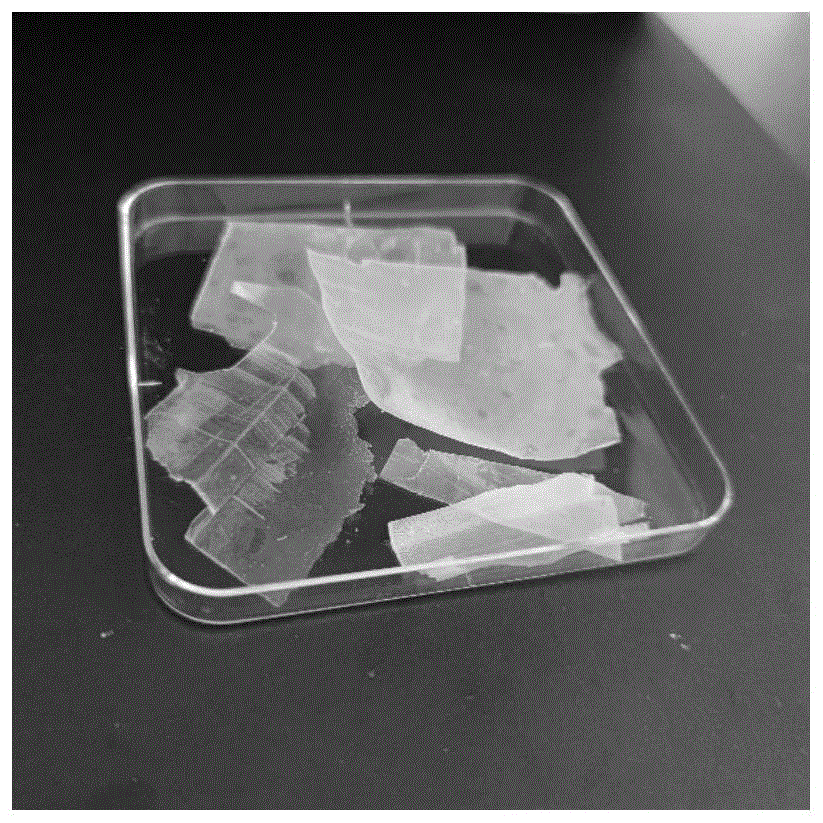
图3为本发明制备过程中涉及到的制成的膜。Fig. 3 is the produced film involved in the preparation process of the present invention.
图4为实施例(A)和对比例中(B)可食膜的DPPH自由基清除能力。Figure 4 shows the DPPH radical scavenging ability of the edible films in Example (A) and Comparative Example (B).
图5为不同pH条件下提取的碧根果油体的成分,深色曲线为油脂的含量,浅色曲线为蛋白质的含量。Figure 5 shows the composition of pecan oil extracted under different pH conditions, the dark curve is the oil content, and the light curve is the protein content.
具体实施方式Detailed ways
下面通过实施例进一步描述本发明的技术方案,但本发明的保护范围不限于以下The technical solutions of the present invention are further described below through examples, but the protection scope of the present invention is not limited to the following
实施例1Example 1
一种植物油体-淀粉可食膜的制备方法,其特征在于,它包括如下操作步:A kind of preparation method of vegetable oil body-starch edible film, is characterized in that, it comprises the following operation steps:
S1.植物油体的提取:碧根果仁和去离子水的比例为1:9(w/v),去离子水被等分为3份,将碧根果仁加入第一份4℃去离子水中,研磨1min,浆液通过三层脱脂纱布过滤;然后将滤渣与第二份去离子水混合,在料理机中研磨30s并过滤,重复一次;将三份滤液合并后加入10%蔗糖(w/v,g/mL),混匀。用1M NaOH调节pH为9,在6000rpm条件下离心25min,取上层白色漂浮物(粗油体)于PBS溶液中,粗油体与PBS溶液质量体积比为1:6(w/v,g/mL),600rpm搅拌15min,调节pH为9,接着在6000rpm条件下离心25min,上层白色悬浮物即为油体,油体的含水率为50%。S1. Extraction of vegetable oil body: The ratio of pecans to deionized water is 1:9 (w/v), the deionized water is divided into 3 equal parts, and the pecans are added to the first part of 4°C deionized water , grind for 1 min, and the slurry is filtered through three layers of degreased gauze; then the filter residue is mixed with the second part of deionized water, ground in a food processor for 30 s and filtered, and repeated once; after the three filtrates are combined, add 10% sucrose (w/v , g/mL), and mix. Adjust pH to 9 with 1M NaOH, centrifuge at 6000 rpm for 25 min, take the upper white float (crude oil body) in PBS solution, and the mass-volume ratio of crude oil body to PBS solution is 1:6 (w/v, g/ mL), stirred at 600 rpm for 15 min, adjusted pH to 9, then centrifuged at 6000 rpm for 25 min, the upper white suspension was the oil body, and the water content of the oil body was 50%.
S2.大米淀粉溶液的制备:将4g大米淀粉和1.2g甘油按照1:0.3(w/w)的比例加入去离子水中,大米淀粉溶液的淀粉浓度为4%(w/v,g/mL),在90℃,300rpm条件下搅拌35min形成淀粉溶液。S2. Preparation of rice starch solution: 4g rice starch and 1.2g glycerol were added to deionized water at a ratio of 1:0.3 (w/w), and the starch concentration of the rice starch solution was 4% (w/v, g/mL) , at 90 ° C, 300 rpm stirring for 35 min to form a starch solution.
S3.油体-大米淀粉溶液的制备:将油体加入大米淀粉溶液中,油体的添加量为3%(w/v,g/mL),在磁力搅拌器1000rpm条件下搅拌45min,得到混合溶液,放置4℃冰箱内进行消泡处理。S3. the preparation of oil body-rice starch solution: add oil body to the rice starch solution, the addition amount of oil body is 3% (w/v, g/mL), stir 45min under the condition of magnetic stirrer 1000rpm, obtain mixing The solution was placed in a 4°C refrigerator for defoaming treatment.
S4.油体-大米淀粉溶液可食膜的制备:采用流延法制备薄膜,将油体-大米淀粉溶液均匀流延在玻璃培养皿上,添加量为0.2g/m2,干燥,冷却后揭膜,从而制得可食膜。S4. Preparation of edible film of oil body-rice starch solution: the film is prepared by casting method, the oil body-rice starch solution is uniformly cast on a glass petri dish, the addition amount is 0.2g/m 2 , dried, and after cooling The film is peeled off to obtain an edible film.
实施例2Example 2
本实例提供一种植物油体-淀粉可食膜,它与实例1中的基本一致,不同的是,步骤S2中所述大米淀粉与甘油的质量比为1:0.3,步骤S3中所述油体的添加量为2%(w/v,g/mL)。This example provides a vegetable oil body-starch edible film, which is basically the same as that in Example 1, except that the mass ratio of rice starch and glycerol described in step S2 is 1:0.3, and the oil body described in step S3 is in a mass ratio of 1:0.3. The amount of addition was 2% (w/v, g/mL).
实施例3Example 3
本实例提供一种植物油体-淀粉可食膜,它与实例1中的基本一致,不同的是,步骤S2中所述大米淀粉与甘油的质量比为1:0.35,步骤S3中所述油体的添加量为4%(w/v,g/mL)。This example provides a vegetable oil body-starch edible film, which is basically the same as that in Example 1, except that the mass ratio of rice starch and glycerol described in step S2 is 1:0.35, and the oil body described in step S3 is in a mass ratio of 1:0.35. The amount of addition was 4% (w/v, g/mL).
实施例4Example 4
本实例提供一种植物油体-淀粉可食膜,它与实例1中的基本一致,不同的是,步骤S2中所述大米淀粉与甘油的质量比为1:0.3,步骤S3中所述油体的添加量为5%(w/v,g/mL)。This example provides a vegetable oil body-starch edible film, which is basically the same as that in Example 1, except that the mass ratio of rice starch and glycerol described in step S2 is 1:0.3, and the oil body described in step S3 is in a mass ratio of 1:0.3. The addition amount of 5% (w/v, g/mL).
实施例5Example 5
本实例提供一种植物油体-淀粉可食膜,它与实例1中的基本一致,不同的是,步骤S2中所述大米淀粉与甘油的质量比为1:0.25,步骤S3中所述油体的添加量为6%(w/v,g/mL)。This example provides a vegetable oil body-starch edible film, which is basically the same as that in Example 1, except that the mass ratio of rice starch and glycerol described in step S2 is 1:0.25, and the oil body described in step S3 is in a mass ratio of 1:0.25. The addition amount was 6% (w/v, g/mL).
实施例6Example 6
本实例提供一种植物油体-淀粉可食膜,它与实例1中的基本一致,不同的是,步骤S1中的pH9调整为pH7。This example provides a vegetable oil body-starch edible film, which is basically the same as that in Example 1, except that pH9 in step S1 is adjusted to pH7.
实施例7Example 7
本实例提供一种植物油体-淀粉可食膜,它与实例1中的基本一致,不同的是,步骤S1中的pH9调整为pH 11。This example provides a vegetable oil body-starch edible film, which is basically the same as that in Example 1, except that
对比例1Comparative Example 1
本实例提供一种植物油体-淀粉可食膜,它与实例1中的基本一致,不同的是:步骤S1中用花生代替碧根果提取油体。This example provides a vegetable oil body-starch edible film, which is basically the same as that in Example 1, except that in step S1, peanuts are used instead of pecans to extract oil bodies.
对比例2Comparative Example 2
本实例提供一种植物油体-淀粉可食膜,它与实例1中的基本一致,不同的是:步骤S1中用核桃代替碧根果提取油体。This example provides a vegetable oil body-starch edible film, which is basically the same as that in Example 1, except that in step S1, walnuts are used instead of pecans to extract oil bodies.
对比例3Comparative Example 3
本实例提供一种植物油体-淀粉可食膜,它与实例1中的基本一致,不同的是:步骤S1中用大豆代替碧根果提取油体。This example provides a vegetable oil body-starch edible film, which is basically the same as that in Example 1, except that in step S1, soybeans are used instead of pecans to extract oil bodies.
对比例4Comparative Example 4
本实例提供一种植物油体-淀粉可食膜,它与实例1中的基本一致,不同的是:步骤S1中用油茶籽代替碧根果提取油体。This example provides a vegetable oil body-starch edible film, which is basically the same as that in Example 1, except that in step S1, camellia seeds are used instead of pecans to extract oil bodies.
对比例5Comparative Example 5
本实例提供一种植物油体-淀粉可食膜,它与实例1中的基本一致,不同的是:步骤S1中用芝麻代替碧根果提取油体。This example provides a vegetable oil body-starch edible film, which is basically the same as that in Example 1, except that in step S1, sesame is used instead of pecan to extract oil body.
对比例6Comparative Example 6
本实例提供一种植物油体-淀粉可食膜,它与实例1中的基本一致,不同的是:步骤S1中用葵花籽代替碧根果提取油体。This example provides a vegetable oil body-starch edible film, which is basically the same as that in Example 1, except that in step S1, sunflower seeds are used instead of pecans to extract oil bodies.
对比例7Comparative Example 7
本实例提供一种植物油体-淀粉可食膜,它与实例1中的基本一致,不同的是:省略步骤S1,步骤S3中没有添加油体。This example provides a vegetable oil body-starch edible film, which is basically the same as that in Example 1, except that step S1 is omitted, and no oil body is added in step S3.
对比例8Comparative Example 8
本实例提供一种植物油体-淀粉可食膜,它与实例1中的基本一致,不同的是:省略步骤S1,将步骤S3中的油体改为碧根果精炼油,碧根果精炼油的添加量为1.5%(w/v,g/mL)。This example provides a vegetable oil body-starch edible film, which is basically the same as that in Example 1, except that step S1 is omitted, and the oil body in step S3 is changed to pecan fruit refined oil, pecan fruit refined oil The added amount was 1.5% (w/v, g/mL).
测试例test case
(1):植物油体-淀粉可食膜的厚度和透明度:使用千分尺测量可食膜厚度,随机选取可食膜上8个不同的位置进行测量,然后取其平均值为可食膜的厚度。对于透明度,相应大小的可食膜置于比色皿中进行波长测定(600nm),透明度按下面公式计算:透明度=-logT600/L,其中T表示600nm下的透射率,L为可食膜厚度,结果如表1所示。(1): Thickness and transparency of vegetable oil body-starch edible film: use a micrometer to measure the thickness of the edible film, randomly select 8 different positions on the edible film for measurement, and then take the average value as the thickness of the edible film. For transparency, the edible film of the corresponding size is placed in a cuvette for wavelength measurement (600 nm), and the transparency is calculated according to the following formula: transparency=-logT 600 /L, where T represents the transmittance at 600 nm, and L is the edible film thickness, and the results are shown in Table 1.
(2):植物油体-淀粉可食膜的水蒸气渗透性(WVP):使用重量杯法测定可食膜的WVP,并进行了一些修改。向干燥坩埚(直径在60至61mm之间)中填充20g无水硅胶,在距离硅胶表面约2cm处,将可食膜覆盖坩埚顶部,将坩埚放置在干燥器(相对湿度为60%,温度为25.8℃)中,保持膜内外两侧有一定的蒸气压差,连续7天称量坩埚的重量。通过以下公式计算WVP(g mm/m2 d kPa):WVTR=△m/(A×△t),WVP=WVTR(L/△p),△p=Ps(RHo-RHi),其中△m是硅胶的增重(g),A是可食膜面积,△t是时间差,L是可食膜平均厚度(mm),△p是可食膜两个表面之间的部分水蒸汽压差,Ps是25℃时的部分水蒸汽压,RHo是坩埚外部的相对湿度,RHi是坩埚内部的相对湿度。结果如表1所示。(2): Water Vapor Permeability (WVP) of Vegetable Oil Body-Starch Edible Films: The WVP of edible films was determined using the gravimetric cup method, with some modifications. Fill a drying crucible (between 60 and 61 mm in diameter) with 20 g of anhydrous silica gel, cover the top of the crucible with an edible film at a distance of about 2 cm from the surface of the silica gel, and place the crucible in a desiccator (relative humidity of 60%, temperature of 25.8°C), maintaining a certain vapor pressure difference between the inner and outer sides of the membrane, and weighing the crucible for 7 consecutive days. Calculate WVP (g mm/m 2 d kPa) by the following formula: WVTR=Δm/(A×Δt), WVP=WVTR(L/Δp), Δp=P s (RH o −RH i ), where Δm is the weight gain of the silica gel (g), A is the area of the edible film, Δt is the time difference, L is the average thickness of the edible film (mm), and Δp is the partial water vapor between the two surfaces of the edible film Differential pressure, P s is the partial water vapor pressure at 25°C, RH o is the relative humidity outside the crucible, and RH i is the relative humidity inside the crucible. The results are shown in Table 1.
(3):植物油体-淀粉可食膜的氧气渗透性(OP):使用气体渗透测试仪测定可食膜的氧气透过率(OTR)。在23℃、0%相对湿度下,每隔5min测量OTR。将可食膜放入氧气测试池中,膜的上部暴露于1atm分压下的纯氧中,而膜的另一侧用纯氮冲洗。可食膜的OP(cc mm/m2 d kPa)由以下公式计算得出:OP=OTR×L/△PO2,式中,△PO2是膜两侧的氧分压差(1atm),L是膜厚度(mm)。结果如表1所示。(3): Oxygen permeability (OP) of vegetable oil body-starch edible film: The oxygen transmission rate (OTR) of the edible film was measured using an air permeability tester. OTR was measured every 5 min at 23°C, 0% relative humidity. The edible membrane was placed in an oxygen test cell, the upper part of the membrane was exposed to pure oxygen at a partial pressure of 1 atm, while the other side of the membrane was flushed with pure nitrogen. The OP (cc mm/m 2 d kPa) of the edible film is calculated by the following formula: OP=OTR×L/△PO 2 , where △PO2 is the oxygen partial pressure difference on both sides of the film (1atm), L is the film thickness (mm). The results are shown in Table 1.
(4):植物油体-淀粉可食膜的机械性能:将膜样品裁成25mm×80mm条带放置在自紧式辊夹具中,初始夹具间距为20mm,测试速度为2mm/s,称重传感器质量为5kg,使用物性测定仪进行拉伸试验,测量相关指标,拉伸强度及断裂伸长率根据以下公式进行计算。拉伸强度/MPa=N/(a×b),断裂伸长率/%=(L-L0)/L0×100。式中,N为破坏所需的最大力,N;a为样品的宽度,mm;b为样品的厚度,mm;L0为样品的初始长度,mm;L为样品的最终长度,mm。结果如表1所示。(4): Mechanical properties of vegetable oil body-starch edible film: The film sample was cut into 25mm × 80mm strips and placed in a self-tightening roller jig, the initial jig spacing was 20mm, the test speed was 2mm/s, and the load cell The mass is 5kg, and the tensile test is carried out using a physical property analyzer to measure the relevant indicators. The tensile strength and elongation at break are calculated according to the following formulas. Tensile strength/MPa=N/(a×b), elongation at break/%=(L-L0)/L0×100. In the formula, N is the maximum force required to break, N; a is the width of the sample, mm; b is the thickness of the sample, mm; L0 is the initial length of the sample, mm; L is the final length of the sample, mm. The results are shown in Table 1.
(5):植物油体-淀粉可食膜的抗氧化能力:将40mg膜样品置于10mL甲醇中,在25℃条件下静置12h,取400μL膜提取液与10mL DPPH-甲醇混合液(0.025g/L)混合,在室温下避光保存30min,测量其在517nm处的吸光度。采用以下公式计算DPPH自由基清除活性:DPPH自由基清除活性/%=(ADPPH-Aextract)/ADPPH;式中,ADPPH为DPPH-甲醇溶液在517nm处的吸光值,Aextract为样品在517nm处的吸光值。结果如图4所示。(5): Antioxidative ability of vegetable oil body-starch edible film: put 40 mg of film sample in 10 mL of methanol, stand at 25 °C for 12 h, take 400 μL of film extract and 10 mL of DPPH-methanol mixture (0.025 g /L) mixed, stored in the dark for 30 min at room temperature, and measured its absorbance at 517 nm. The DPPH radical scavenging activity was calculated by the following formula: DPPH radical scavenging activity/%=(ADPPH-Aextract)/ADPPH; in the formula, ADPPH is the absorbance of DPPH-methanol solution at 517 nm, and Aextract is the absorbance of the sample at 517 nm value. The results are shown in Figure 4.
表1Table 1

从表1可以看出,本发明实施例公开的所有植物油体-大米蛋白可食膜具有较薄的厚度,机械性能、阻水阻氧能力强。As can be seen from Table 1, all the vegetable oil body-rice protein edible films disclosed in the embodiments of the present invention have relatively thin thickness, strong mechanical properties, and strong water and oxygen resistance.
在对比例1-6中,发现碧根果、花生、核桃、大豆、油茶籽、芝麻、葵花籽油体均可与淀粉形成稳定的可食膜,这表明植物油体作为可食膜主要成分之一,具有普遍性和可行性。且不同的植物种子的抗氧化能力存在一定差异,这可能与植物种子中固有的生育酚含量有关。In Comparative Examples 1-6, it was found that pecan, peanut, walnut, soybean, camellia, sesame, and sunflower oil bodies can form stable edible films with starch, which indicates that vegetable oil bodies are one of the main components of edible films. First, it is universal and feasible. And there are certain differences in the antioxidant capacity of different plant seeds, which may be related to the inherent tocopherol content in plant seeds.
通过比较实施例1、实施例6和实施例7,发现油体提取工艺对可食膜的透明度和水蒸气渗透性有一定的影响。从图5可以看出,pH为11时,提取的碧根果油体油脂和蛋白质含量分别为99.37%和0.22%;pH为9时,提取的碧根果油体油脂和蛋白质含量分别97.37%和1.74%;pH为7时,提取的碧根果油体的油脂和蛋白质含量分别98.69%和0.72%。随着提取pH的增加,油脂含量逐渐增加,蛋白质含量逐渐减少。从表1可以看出,pH越大,可食膜的透明度就越大,水蒸气透过性越小。表明油体的成分比例对可食膜的透明度和水蒸气透过性起重要作用。By comparing Example 1, Example 6 and Example 7, it is found that the oil body extraction process has a certain influence on the transparency and water vapor permeability of the edible film. It can be seen from Figure 5 that when the pH is 11, the oil and protein contents of the extracted pecan fruit oil body are 99.37% and 0.22%, respectively; when the pH is 9, the oil and protein content of the extracted pecan fruit oil body are 97.37%, respectively and 1.74%; when the pH was 7, the oil and protein contents of the extracted pecan oil body were 98.69% and 0.72%, respectively. With the increase of extraction pH, the oil content gradually increased, and the protein content gradually decreased. As can be seen from Table 1, the higher the pH, the greater the transparency of the edible film and the lower the water vapor permeability. It was shown that the composition ratio of the oil body plays an important role in the transparency and water vapor permeability of the edible film.
通过比较对比例1-6(添加植物油体)和对比例7(未添加油体),从表1可以看出所有添加了油体的可食膜的透明度更低,且机械性能明显增加,尤其是添加油体之后,可食膜的水蒸气渗透性能明显变低,这克服了传统淀粉可食膜阻水性能差的缺点,对淀粉可食膜的工业加工具有一定的指导意义。从图4(B)可以看出添加油体的可食膜的抗氧化能力明显增强,且从图4(A)可以看出油体添加含量越高,DPPH自由基清除能力越强。这是因为油体中含有丰富的酚类物质及其他抗氧化物质。By comparing Comparative Examples 1-6 (with vegetable oil bodies added) and Comparative Example 7 (without oil bodies added), it can be seen from Table 1 that all edible films with oil bodies added have lower transparency and significantly increased mechanical properties, especially After adding the oil body, the water vapor permeability of the edible film became significantly lower, which overcomes the disadvantage of poor water-blocking performance of the traditional starch edible film, and has certain guiding significance for the industrial processing of the starch edible film. It can be seen from Figure 4(B) that the antioxidant capacity of the edible film added with oil bodies is significantly enhanced, and it can be seen from Figure 4(A) that the higher the oil body added content, the stronger the DPPH free radical scavenging ability. This is because oil bodies are rich in phenolics and other antioxidants.
通过比较实施例1(添加碧根果油体)和对比例8(添加碧根果精炼油),可以发现添加碧根果油体的可食膜的DPPH清除能力远大于添加碧根果精炼油的可食膜。这是由于植物精炼油在提取和精炼过程中损失掉了部分生育酚,导致其生育酚含量低于天然植物油体的生育酚含量,抗氧化能力也不如添加植物油体的可食膜。By comparing Example 1 (with addition of pecan fruit oil body) and Comparative Example 8 (with addition of pecan fruit refined oil), it can be found that the DPPH scavenging ability of the edible film with pecan fruit oil body is much greater than that with the addition of pecan fruit refined oil edible film. This is because the vegetable refined oil loses some tocopherols during the extraction and refining process, resulting in its content of tocopherols is lower than that of natural vegetable oil bodies, and its antioxidant capacity is not as good as that of edible films added with vegetable oil bodies.
尽管以上描述了本发明的具体实施方式,但是上述实施例是示范性的,任何相关研究者都可以在不违背本发明的宗旨和原理的情况下,对该发明进行更改、完善。Although the specific embodiments of the present invention are described above, the above-mentioned embodiments are exemplary, and any relevant researchers can modify and perfect the present invention without departing from the spirit and principle of the present invention.
Claims (10)
Priority Applications (1)
| Application Number | Priority Date | Filing Date | Title |
|---|---|---|---|
| CN202210784549.9A CN115073781B (en) | 2022-06-29 | 2022-06-29 | Vegetable oil body-starch edible film and preparation method thereof |
Applications Claiming Priority (1)
| Application Number | Priority Date | Filing Date | Title |
|---|---|---|---|
| CN202210784549.9A CN115073781B (en) | 2022-06-29 | 2022-06-29 | Vegetable oil body-starch edible film and preparation method thereof |
Publications (2)
| Publication Number | Publication Date |
|---|---|
| CN115073781A true CN115073781A (en) | 2022-09-20 |
| CN115073781B CN115073781B (en) | 2023-10-27 |
Family
ID=83258600
Family Applications (1)
| Application Number | Title | Priority Date | Filing Date |
|---|---|---|---|
| CN202210784549.9A Active CN115073781B (en) | 2022-06-29 | 2022-06-29 | Vegetable oil body-starch edible film and preparation method thereof |
Country Status (1)
| Country | Link |
|---|---|
| CN (1) | CN115073781B (en) |
Cited By (2)
| Publication number | Priority date | Publication date | Assignee | Title |
|---|---|---|---|---|
| CN117016633A (en) * | 2023-06-07 | 2023-11-10 | 中国农业大学 | Method for preparing edible film from oil body and obtained product |
| CN120818401A (en) * | 2024-04-03 | 2025-10-21 | 吉林农业大学 | A method for preparing soybean oil body composite particles with antioxidant effect |
Citations (4)
| Publication number | Priority date | Publication date | Assignee | Title |
|---|---|---|---|---|
| WO2008003165A1 (en) * | 2006-07-06 | 2008-01-10 | University Of Manitoba | Physical and mechanical properties of pea starch edible films containing beeswax emulsions |
| CN105237814A (en) * | 2015-11-12 | 2016-01-13 | 东北农业大学 | Novel preparation method of edible composite film |
| CN105802725A (en) * | 2015-12-29 | 2016-07-27 | 中华全国供销合作总社南京野生植物综合利用研究所 | Preparation method and application of novel functional plant powdered oil |
| CN111423628A (en) * | 2020-03-06 | 2020-07-17 | 华南农业大学 | Cinnamon essential oil edible film and preparation method thereof |
-
2022
- 2022-06-29 CN CN202210784549.9A patent/CN115073781B/en active Active
Patent Citations (4)
| Publication number | Priority date | Publication date | Assignee | Title |
|---|---|---|---|---|
| WO2008003165A1 (en) * | 2006-07-06 | 2008-01-10 | University Of Manitoba | Physical and mechanical properties of pea starch edible films containing beeswax emulsions |
| CN105237814A (en) * | 2015-11-12 | 2016-01-13 | 东北农业大学 | Novel preparation method of edible composite film |
| CN105802725A (en) * | 2015-12-29 | 2016-07-27 | 中华全国供销合作总社南京野生植物综合利用研究所 | Preparation method and application of novel functional plant powdered oil |
| CN111423628A (en) * | 2020-03-06 | 2020-07-17 | 华南农业大学 | Cinnamon essential oil edible film and preparation method thereof |
Non-Patent Citations (1)
| Title |
|---|
| 孟令伟等: "玉米淀粉基可食包装薄膜透气性能的试验研究", 《包装与食品机械》 * |
Cited By (3)
| Publication number | Priority date | Publication date | Assignee | Title |
|---|---|---|---|---|
| CN117016633A (en) * | 2023-06-07 | 2023-11-10 | 中国农业大学 | Method for preparing edible film from oil body and obtained product |
| CN117016633B (en) * | 2023-06-07 | 2025-07-11 | 中国农业大学 | Method for preparing edible film from oil body and obtained product |
| CN120818401A (en) * | 2024-04-03 | 2025-10-21 | 吉林农业大学 | A method for preparing soybean oil body composite particles with antioxidant effect |
Also Published As
| Publication number | Publication date |
|---|---|
| CN115073781B (en) | 2023-10-27 |
Similar Documents
| Publication | Publication Date | Title |
|---|---|---|
| CN108070103B (en) | Degradable antibacterial composite preservative film and preparation method thereof | |
| CN109454945B (en) | A double-layer bidirectional controlled-release anti-oxidative and antibacterial film and its preparation method and application | |
| CN102002172A (en) | Method for preparing okra polysaccharide and pectin as well as pill preparation thereof | |
| CN114377428A (en) | A kind of method for extracting flavonoids in Polygonatum chinensis with green and high-efficiency eutectic solvent | |
| CN114831238B (en) | Method for improving high anthocyanin retention rate of freeze-dried fruit and vegetable solid beverage | |
| CN115109421B (en) | Functional composite film containing roxburgh rose leaf extract, and preparation method and application thereof | |
| CN102719104B (en) | Biodegradable composite film and preparation method thereof | |
| CN114409975A (en) | A kind of preparation method of chitosan-blueberry anthocyanin edible film | |
| CN115073781A (en) | Edible vegetable oil body-starch film and preparation method thereof | |
| CN116355251B (en) | A lignin micro-nanosphere/PVA composite film material and its preparation method and application | |
| CN114907623B (en) | A protein hydrolyzate-polyphenol-esterified polysaccharide non-covalently cross-linked edible film and its preparation method | |
| CN110804218A (en) | Preparation method of copper alga dietary fiber edible film | |
| CN117362710A (en) | Method for preparing double-layer bio-based composite edible film by secondary casting method | |
| CN108374030A (en) | A kind of preparation method and application of Fusarium oxysporum exocellular polysaccharide | |
| CN114736563A (en) | Edible antioxidant protective film on bezoar surface and preparation method thereof | |
| CN120305198A (en) | A thermosensitive hydrogel containing Chinese herbal medicine vesicles for regulating immunity and preparation method thereof | |
| CN119978473A (en) | Preparation method and application of oregano essential oil-MOF modified alcohol-soluble protein fresh-keeping film | |
| CN106750429A (en) | A kind of preparation technology of Onion Polysaccharide synthesized thin film | |
| CN117586564A (en) | Anthocyanin smart cling film and preparation method thereof | |
| CN107970263B (en) | A kind of method for extracting flavonoids from Coriander | |
| CN104710638B (en) | Method for improving oil resistance of isolated soy protein film | |
| CN115246995B (en) | Preparation method of high gel strength fish scale gelatin-sodium alginate-raspberry extract composite cling film | |
| CN111423628B (en) | A kind of cinnamon essential oil edible film and preparation method thereof | |
| CN115678070A (en) | Preparation and application of AgNPs composite film | |
| CN115678113B (en) | Cane shoot polysaccharide composite preservative film and preparation method and application thereof |
Legal Events
| Date | Code | Title | Description |
|---|---|---|---|
| PB01 | Publication | ||
| PB01 | Publication | ||
| SE01 | Entry into force of request for substantive examination | ||
| SE01 | Entry into force of request for substantive examination | ||
| GR01 | Patent grant | ||
| GR01 | Patent grant |