Disclosure of Invention
The invention aims to provide a method for quickly and effectively identifying detritus quartz and biogenesis quartz in shale, and solves the problems that the conventional sample treatment and analysis period is long and the sample analysis quantity is large.
In view of the above, the invention provides a method and a device for rapidly identifying crumbled quartz and biogenetic quartz in shale, which at least solve the problems of long sample treatment and analysis period and large sample analysis quantity.
In a first aspect, the present invention provides a method for rapidly identifying crumbled quartz and biogenic quartz in shale, comprising: respectively obtaining the diffraction intensity of a quartz 100 crystal plane diffraction peak and the diffraction intensity of a quartz 101 crystal plane diffraction peak in a shale sample; calculating the ratio of the diffraction intensity of the quartz 100 crystal plane diffraction peak to the diffraction intensity of the quartz 101 crystal plane diffraction peak; comparing the ratio with a preset threshold; and identifying the quartz in the shale sample as clastic quartz or biogenic quartz according to the comparison result.
Optionally, the identifying, according to the comparison result, that the quartz in the shale sample is clastic quartz or biogenetic quartz includes: if the ratio is smaller than the preset threshold value, the quartz in the shale sample is clastic quartz; if the ratio is larger than the preset threshold value, the quartz in the shale sample is biogenetic quartz; and if the ratio is equal to the preset threshold value, the quartz in the shale sample is a mixture of clastic quartz and biogenic quartz.
Optionally, an X-ray diffractometer is used for performing powder diffraction analysis on the shale sample to obtain the diffraction intensity of a quartz 100 crystal plane diffraction peak and the diffraction intensity of a quartz 101 crystal plane diffraction peak in the shale sample.
Optionally, the crystal plane of the quartz 100 is a crystal plane with the highest diffraction intensity of diffraction peaks in all crystal planes after diffraction analysis, and the crystal plane of the quartz 101 is a crystal plane with the second highest diffraction intensity of diffraction peaks in all crystal planes after diffraction analysis.
Optionally, the shale sample is a sample crushed by a rock crusher.
Optionally, the shale sample is loaded in the X-ray diffractometer by a sampling normal loading method.
Optionally, the preset threshold is in a range of 0.2 to 0.3.
In a second aspect, the present invention further provides an apparatus for rapidly identifying crumbled quartz and biogenetic quartz in shale, comprising: the diffraction intensity acquisition equipment is used for respectively acquiring the diffraction intensity of a quartz 100 crystal plane diffraction peak and the diffraction intensity of a quartz 101 crystal plane diffraction peak in the shale sample; a processor connected to the diffraction intensity acquisition device, the processor performing the steps of: calculating the ratio of the diffraction intensity of the quartz 100 crystal plane diffraction peak to the diffraction intensity of the quartz 101 crystal plane diffraction peak; comparing the ratio with a preset threshold; and identifying the quartz in the shale sample as clastic quartz or biogenic quartz according to the comparison result.
Optionally, the identifying, according to the comparison result, that the quartz in the shale sample is clastic quartz or biogenetic quartz includes: if the ratio is smaller than the preset threshold value, the quartz in the shale sample is clastic quartz; if the ratio is larger than the preset threshold value, the quartz in the shale sample is biogenetic quartz; and if the ratio is equal to the preset threshold value, the quartz in the shale sample is a mixture of clastic quartz and biogenic quartz.
Optionally, the diffraction intensity obtaining device is an X-ray diffractometer, and the X-ray diffractometer is used for performing powder diffraction analysis on the shale sample to obtain the diffraction intensity of a quartz 100 crystal plane diffraction peak and the diffraction intensity of a quartz 101 crystal plane diffraction peak in the shale sample.
Optionally, the crystal plane of the quartz 100 is a crystal plane with the highest diffraction intensity of diffraction peaks in all crystal planes after diffraction analysis, and the crystal plane of the quartz 101 is a crystal plane with the second highest diffraction intensity of diffraction peaks in all crystal planes after diffraction analysis.
Optionally, the shale sample is a sample crushed by a rock crusher.
Optionally, the shale sample is loaded in the X-ray diffractometer by a sampling normal loading method.
Optionally, the preset threshold is in a range of 0.2 to 0.3.
The invention has the beneficial effects that: the method for rapidly identifying the crumbled quartz and the biogenetic quartz in the shale respectively obtains the diffraction intensity of a quartz 100 crystal plane diffraction peak and the diffraction intensity of a quartz 101 crystal plane diffraction peak through the X-ray diffraction analysis of a shale sample, comparing the ratio of the diffraction intensity of the quartz 100 crystal plane diffraction peak to the diffraction intensity of the quartz 101 crystal plane diffraction peak with a preset threshold value according to the difference of crystal habits and preferred orientation characteristics of quartz with different causes, according to the comparison result, the fact that the quartz in the shale is the fragment quartz or the biogenetic quartz is judged efficiently, quickly and accurately, the tedious and inefficient analysis process of the traditional method is avoided, the test period is shortened, the working efficiency is improved, the dosage of the drilling rock core sample is obviously saved, the sample processing period is greatly shortened, the use and the loss of chemical reagents are avoided, the environment is protected, and the labor intensity of workers is also obviously reduced.
The present invention has other features and advantages which will be apparent from or are set forth in detail in the accompanying drawings and the following detailed description, which are incorporated herein, and which together serve to explain certain principles of the invention.
Detailed Description
Preferred embodiments of the present invention will be described in more detail below. While the following describes preferred embodiments of the present invention, it should be understood that the present invention may be embodied in various forms and should not be limited by the embodiments set forth herein.
The invention provides a method for rapidly identifying detritus quartz and biogenesis quartz in shale, which comprises the following steps: respectively obtaining the diffraction intensity of a quartz 100 crystal plane diffraction peak and the diffraction intensity of a quartz 101 crystal plane diffraction peak in a shale sample; calculating the ratio of the diffraction intensity of the quartz 100 crystal plane diffraction peak to the diffraction intensity of the quartz 101 crystal plane diffraction peak; comparing the ratio with a preset threshold; and identifying the quartz in the shale sample as scrap quartz or biogenic quartz according to the comparison result.
Specifically, the crystal plane of quartz 100 in the invention represents the crystal plane of quartz (100) in the field, the crystal plane of quartz 101 represents the crystal plane of quartz (101) in the field, and according to the difference of crystal habits and preferred orientation characteristics of quartz with different causes, powder diffraction analysis is carried out on a shale sample by adopting an X-ray diffraction technology to obtain the diffraction intensity I of the diffraction peak of the crystal plane of quartz 100 in shale100And diffraction intensity I of diffraction peak of quartz 101 crystal plane101. Because the biogenic quartz has no obvious crystal form after recrystallization, the degree of self-formation is low, the particles are not easy to have preferred orientation, the relative intensity of diffraction peaks of two crystal faces of the biogenic quartz is good with the crystal form, and the clastic quartz which is easy to have preferred orientation is different, and further the diffraction intensity I of the diffraction peak of 100 crystal faces of the quartz with known causes is different100And diffraction intensity I of diffraction peak of quartz 101 crystal plane101The statistics of the ratio determines the preset threshold value of the relative intensity ratio of the diffraction intensities of the two cause quartz diffraction peaks, and the diffraction intensity I of the quartz 100 crystal plane diffraction peak is measured100And diffraction intensity I of diffraction peak of quartz 101 crystal plane101And comparing the ratio with a preset threshold value, thereby realizing the effective and rapid identification of the detritus quartz and the biogenesis quartz in the shale.
According to an exemplary embodiment, the method for rapidly identifying clastic quartz and biogenetic quartz in shale respectively obtains the diffraction intensity of a quartz 100 crystal plane diffraction peak and the diffraction intensity of a quartz 101 crystal plane diffraction peak through X-ray diffraction analysis of a shale sample, compares the ratio of the diffraction intensity of the quartz 100 crystal plane diffraction peak to the diffraction intensity of the quartz 101 crystal plane diffraction peak with a preset threshold value according to the difference of crystal habits and preferred orientation characteristics of different biogenetic quartz, efficiently, rapidly and accurately identifies that the quartz in shale is clastic quartz or biogenetic quartz according to the comparison result, avoids the tedious and inefficient analysis process of the traditional method, shortens the test period, improves the working efficiency, obviously saves the usage amount of a drilling core sample, greatly shortens the sample processing period, avoids the use and loss of chemical reagents, protects the environment, and the labor intensity of workers is obviously reduced.
Alternatively, identifying the quartz in the shale sample as clastic quartz or biogenic quartz based on the comparison comprises: if the ratio is smaller than a preset threshold value, the quartz in the shale sample is clastic quartz; if the ratio is larger than a preset threshold value, the quartz in the shale sample is biogenetic quartz; if the ratio is equal to the preset threshold value, the quartz in the shale sample is a mixture of clastic quartz and biogenic quartz.
Specifically, the diffraction intensity I of the diffraction peak of the 100 crystal plane of quartz100And diffraction intensity I of diffraction peak of quartz 101 crystal plane101When the ratio of (A) to (B) is less than a preset threshold value, the quartz in the shale sample is clastic quartz; diffraction intensity I of diffraction peak of 100 crystal planes of quartz100And diffraction intensity I of diffraction peak of quartz 101 crystal plane101When the ratio of the quartz crystal face diffraction peak to the 100 crystal face diffraction peak is larger than a preset threshold value, the quartz in the shale sample is biogenetic quartz, and when the diffraction intensity I of the quartz crystal face diffraction peak is larger than the preset threshold value, the diffraction intensity I of the quartz crystal face diffraction peak is larger than the preset threshold value100And diffraction intensity I of diffraction peak of quartz 101 crystal plane101The ratio is equal to a preset threshold value, and the quartz in the shale sample is a mixture of clastic quartz and biogenic quartz.
As an alternative scheme, an X-ray diffractometer is used for carrying out powder diffraction analysis on the shale sample to obtain the diffraction intensity of a quartz 100 crystal plane diffraction peak and the diffraction intensity of a quartz 101 crystal plane diffraction peak in the shale sample.
Alternatively, the crystal plane of quartz 100 is a crystal plane having the highest diffraction intensity of diffraction peaks among all crystal planes after diffraction analysis, and the crystal plane of quartz 101 is a crystal plane having the second highest diffraction intensity of diffraction peaks among all crystal planes after diffraction analysis.
Specifically, powder crystal diffraction analysis is carried out on shale by adopting an X-ray diffraction technology, a plurality of crystal faces of the shale are analyzed by the diffraction analysis, a crystal face with the highest diffraction intensity of a diffraction peak is selected from analysis results of all crystal faces as a quartz 100 crystal face, and a crystal face with the second highest diffraction intensity of the diffraction peak is selected as a quartz 101 crystal face.
Alternatively, the shale sample is a sample crushed by a rock crusher.
For example, about 5g of a small sample is selected, crushed to 200 mesh with a rock crusher, and the crushed sample is used as a shale sample.
Alternatively, the shale sample is loaded into the X-ray diffractometer by a sampling normal loading method.
Specifically, the sample is loaded in a sample clamp of the X-ray diffractometer by adopting a normal loading method. And (3) testing according to SY/T5163-2010 standard, setting instrument conditions as a Cu target, setting the voltage of an X-ray tube to be 40kV, the current to be 100mA, the scanning speed to be 4 degrees (2 theta)/min and the scanning step width to be 0.02 degrees (2 theta) and carrying out diffraction analysis.
Alternatively, the preset threshold value ranges from 0.2 to 0.3.
In particular, the relative intensity I of the diffraction peaks of the quartz 100 crystal planes from a large number of known causative shales100Relative intensity I of diffraction peak of crystal plane of quartz 101101And (4) counting the ratio to determine the range limit value (preset threshold value) of the relative intensity ratio of the diffraction peaks of the crystal faces of the two cause quartz to be 0.2-0.3.
Diffraction intensity I of diffraction peak of 100 crystal planes of quartz100And diffraction intensity I of diffraction peak of quartz 101 crystal plane101When the ratio of (A) to (B) is less than a preset threshold range, the quartz in the shale sample is clastic quartz; diffraction intensity I of diffraction peak of 100 crystal planes of quartz100And diffraction intensity I of diffraction peak of quartz 101 crystal plane101When the ratio of (A) to (B) is larger than a preset threshold range, the quartz in the shale sample is biogenetic quartz, and when the diffraction intensity I of a quartz 100 crystal plane diffraction peak is larger than the preset threshold range, the quartz is a biogenetic quartz100And diffraction intensity I of diffraction peak of quartz 101 crystal plane101The ratio being at a predetermined thresholdWithin the range of values, the quartz in the shale sample is a mixture of clastic and biogenic quartz, with clastic quartz being predominant near 0.2 and biogenic quartz being predominant near 0.3.
For example, when the diffraction intensity I of the diffraction peak of the 100 crystal plane of quartz100And diffraction intensity I of diffraction peak of quartz 101 crystal plane101When the ratio of (A) is less than the preset threshold range, I100/I101When the quartz is less than 0.2, the quartz in the shale sample is clastic quartz; diffraction intensity I of diffraction peak of 100 crystal planes of quartz100And diffraction intensity I of diffraction peak of quartz 101 crystal plane101When the ratio of (A) is greater than a preset threshold range, I100/I101More than 0.3, the quartz in the shale sample is biogenetic quartz; diffraction intensity I of diffraction peak of 100 crystal planes of quartz100And diffraction intensity I of diffraction peak of quartz 101 crystal plane101When the ratio of (A) is within a preset threshold range, I100/I101When the value is 0.23, the quartz in the shale sample is a mixture of biogenic quartz and clastic quartz, and the clastic quartz is mainly used.
The invention also provides a device for rapidly identifying the crumbled quartz and the biogenetic quartz in the shale, which comprises the following components: the diffraction intensity acquisition equipment is used for respectively acquiring the diffraction intensity of a quartz 100 crystal plane diffraction peak and the diffraction intensity of a quartz 101 crystal plane diffraction peak in the shale sample; a processor connected to the diffraction intensity acquisition device, the processor performing the steps of: calculating the ratio of the diffraction intensity of the quartz 100 crystal plane diffraction peak to the diffraction intensity of the quartz 101 crystal plane diffraction peak; comparing the ratio with a preset threshold; and identifying the quartz in the shale sample as scrap quartz or biogenic quartz according to the comparison result.
Specifically, the crystal plane of quartz 100 in the invention represents the crystal plane of quartz (100) in the field, the crystal plane of quartz 101 represents the crystal plane of quartz (101) in the field, and according to the difference of crystal habits and preferred orientation characteristics of quartz with different causes, powder diffraction analysis is carried out on a shale sample by adopting an X-ray diffraction technology to obtain the diffraction intensity I of the diffraction peak of the crystal plane of quartz 100 in shale100And diffraction intensity I of diffraction peak of quartz 101 crystal plane101. Recrystallizing quartz due to biological originNo obvious crystal form exists, the degree of self-formation is low, the particles are not easy to have preferred orientation, the relative intensities of diffraction peaks of two crystal faces of the biogenic stone are good with the crystal form, the chipped quartz which is easy to have preferred orientation is different, and then the diffraction intensity I of the diffraction peak of the 100 crystal face of the quartz with a large number of known causes is used100And diffraction intensity I of diffraction peak of quartz 101 crystal plane101The statistics of the ratio determines the preset threshold value of the relative intensity ratio of the diffraction intensities of the two cause quartz diffraction peaks, and the diffraction intensity I of the 100 crystal plane diffraction peak of the quartz is determined according to the diffraction intensity I of the quartz crystal100And diffraction intensity I of diffraction peak of quartz 101 crystal plane101And comparing the ratio with a preset threshold value, thereby realizing the effective and rapid identification of the detritus quartz and the biogenesis quartz in the shale.
According to an exemplary embodiment, the device for rapidly identifying clastic quartz and biogenetic quartz in shale respectively obtains the diffraction intensity of a quartz 100 crystal plane diffraction peak and the diffraction intensity of a quartz 101 crystal plane diffraction peak through X-ray diffraction analysis of a shale sample, compares the ratio of the diffraction intensity of the quartz 100 crystal plane diffraction peak to the diffraction intensity of the quartz 101 crystal plane diffraction peak with a preset threshold value according to the difference of crystal habits and preferred orientation characteristics of different biogenetic quartz, efficiently, rapidly and accurately identifies that the quartz in the shale is clastic quartz or biogenetic quartz according to the comparison result, avoids the tedious and inefficient analysis process of the traditional method, shortens the test period, improves the working efficiency, obviously saves the usage amount of a drilling core sample, greatly shortens the sample processing period, avoids the use and loss of chemical reagents, protects the environment, and the labor intensity of workers is obviously reduced.
Alternatively, identifying the quartz in the shale sample as clastic quartz or biogenic quartz based on the comparison comprises: if the ratio is smaller than a preset threshold value, the quartz in the shale sample is clastic quartz; and if the ratio is greater than or equal to the preset threshold value, the quartz in the shale sample is biogenic quartz.
Specifically, the diffraction intensity I of the diffraction peak of the 100 crystal plane of quartz100And diffraction intensity I of diffraction peak of quartz 101 crystal plane101Is less than a preset thresholdThe quartz in the shale sample is clastic quartz; diffraction intensity I of diffraction peak of 100 crystal planes of quartz100And diffraction intensity I of diffraction peak of quartz 101 crystal plane101The ratio of (A) to (B) is greater than a preset threshold value, and the quartz in the shale sample is biogenetic quartz; if the ratio is equal to the preset threshold value, the quartz in the shale sample is a mixture of clastic quartz and biogenic quartz.
Alternatively, the diffraction intensity obtaining device is an X-ray diffractometer, and the X-ray diffractometer is used for carrying out powder diffraction analysis on the shale sample to obtain the diffraction intensity of the quartz 100 crystal plane diffraction peak and the diffraction intensity of the quartz 101 crystal plane diffraction peak in the shale sample.
Alternatively, the crystal plane of quartz 100 is a crystal plane having the highest diffraction intensity of diffraction peaks among all crystal planes after diffraction analysis, and the crystal plane of quartz 101 is a crystal plane having the second highest diffraction intensity of diffraction peaks among all crystal planes after diffraction analysis.
Specifically, powder crystal diffraction analysis is carried out on shale by adopting an X-ray diffraction technology, a plurality of crystal faces of the shale are analyzed by the diffraction analysis, a crystal face with the highest diffraction intensity of a diffraction peak is selected from analysis results of all crystal faces as a quartz 100 crystal face, and a crystal face with the second highest diffraction intensity of the diffraction peak is selected as a quartz 101 crystal face.
Alternatively, the shale sample is a sample crushed by a rock crusher.
For example, about 5g of a small sample is selected, crushed to 200 mesh with a rock crusher, and the crushed sample is used as a shale sample.
Alternatively, the shale sample is loaded into the X-ray diffractometer by a sampling normal loading method.
Specifically, the sample is loaded in a sample clamp of the X-ray diffractometer by adopting a normal loading method. And (3) testing according to SY/T5163-2010 standard, setting instrument conditions as a Cu target, setting the voltage of an X-ray tube to be 40kV, the current to be 100mA, the scanning speed to be 4 degrees (2 theta)/min and the scanning step width to be 0.02 degrees (2 theta) and carrying out diffraction analysis.
Alternatively, the preset threshold value ranges from 0.2 to 0.3.
Diffraction intensity I of diffraction peak of 100 crystal planes of quartz100And diffraction intensity I of diffraction peak of quartz 101 crystal plane101When the ratio of (A) to (B) is less than a preset threshold range, the quartz in the shale sample is clastic quartz; diffraction intensity I of diffraction peak of 100 crystal planes of quartz100And diffraction intensity I of diffraction peak of quartz 101 crystal plane101When the ratio of (A) to (B) is larger than a preset threshold range, the quartz in the shale sample is biogenetic quartz, and when the diffraction intensity I of a quartz 100 crystal plane diffraction peak is larger than the preset threshold range, the quartz is a biogenetic quartz100And diffraction intensity I of diffraction peak of quartz 101 crystal plane101When the ratio is within a preset threshold range, the quartz in the shale sample is a mixture of clastic quartz and biogenic quartz, when the ratio is close to 0.2, the clastic quartz is mainly used, and when the ratio is close to 0.3, the biogenic quartz is mainly used.
For example, when the diffraction intensity I of the diffraction peak of the 100 crystal plane of quartz100And diffraction intensity I of diffraction peak of quartz 101 crystal plane101When the ratio of (A) is less than the preset threshold range, I100/I101When the quartz is less than 0.2, the quartz in the shale sample is clastic quartz; diffraction intensity I of diffraction peak of 100 crystal planes of quartz100And diffraction intensity I of diffraction peak of quartz 101 crystal plane101When the ratio of (A) is greater than a preset threshold range, I100/I101More than 0.3, the quartz in the shale sample is biogenetic quartz; diffraction intensity I of diffraction peak of 100 crystal planes of quartz100And diffraction intensity I of diffraction peak of quartz 101 crystal plane101When the ratio of (A) is within a preset threshold range, I100/I101When the value is 0.23, the quartz in the shale sample is a mixture of biogenic quartz and clastic quartz, and the clastic quartz is mainly used.
Example one
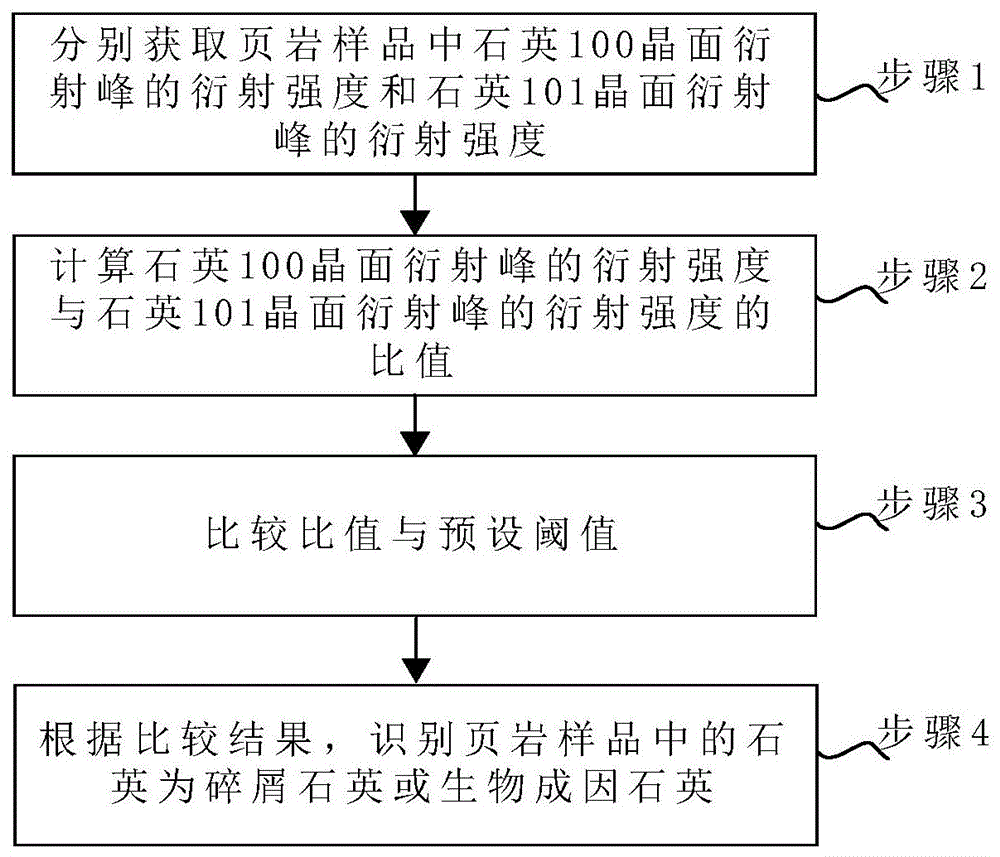
Fig. 1 shows a flow chart of a method for rapidly identifying detritus quartz from biogenic quartz in shale according to an embodiment of the invention.
As shown in fig. 1, the method for rapidly identifying detritus quartz and biogenic quartz in shale comprises the following steps:
step 1: respectively obtaining the diffraction intensity of a quartz 100 crystal plane diffraction peak and the diffraction intensity of a quartz 101 crystal plane diffraction peak in a shale sample;
and performing powder crystal diffraction analysis on the shale sample by using an X-ray diffractometer to obtain the diffraction intensity of a quartz 100 crystal plane diffraction peak and the diffraction intensity of a quartz 101 crystal plane diffraction peak in the shale sample.
Wherein, the crystal plane of quartz 100 is the crystal plane with the highest diffraction intensity of diffraction peaks in all crystal planes after diffraction analysis, and the crystal plane of quartz 101 is the crystal plane with the second highest diffraction intensity of diffraction peaks in all crystal planes after diffraction analysis.
Wherein, the shale sample is a sample crushed by a rock crusher.
Wherein, the shale sample is loaded in an X-ray diffractometer by a sampling normal loading method.
For example, a small sample of about 5g is selected and crushed to 200 mesh with a rock crusher. And loading in a sample clamp of the X-ray diffractometer by adopting a normal loading method. The test is carried out according to the SY/T5163-2010 standard, and the instrument conditions are as follows: diffraction analysis was performed on a Cu target at an X-ray tube voltage of 40kV, a current of 100mA, a scanning speed of 4 ° (2 θ)/min, and a scanning step width of 0.02 ° (2 θ).
Step 2: calculating the ratio of the diffraction intensity of the quartz 100 crystal plane diffraction peak to the diffraction intensity of the quartz 101 crystal plane diffraction peak;
and step 3: comparing the ratio with a preset threshold;
wherein the preset threshold is in the range of 0.2 to 0.3.
And 4, step 4: and identifying the quartz in the shale sample as scrap quartz or biogenic quartz according to the comparison result.
Wherein identifying the quartz in the shale sample as clastic quartz or biogenetic quartz according to the comparison comprises: if the ratio is smaller than a preset threshold value, the quartz in the shale sample is clastic quartz; if the ratio is larger than a preset threshold value, the quartz in the shale sample is biogenetic quartz; if the ratio is equal to the preset threshold value, the quartz in the shale sample is a mixture of clastic quartz and biogenic quartz.
For example, when the diffraction intensity I of the diffraction peak of the 100 crystal plane of quartz100And diffraction intensity I of diffraction peak of quartz 101 crystal plane101When the ratio of (A) is less than the preset threshold range, I100/I101Below 0.2, the quartz in the shale sample is finesQuartz; diffraction intensity I of diffraction peak of 100 crystal planes of quartz100And diffraction intensity I of diffraction peak of quartz 101 crystal plane101When the ratio of (A) is greater than a preset threshold range, I100/I101More than 0.3, the quartz in the shale sample is biogenetic quartz; diffraction intensity I of diffraction peak of 100 crystal planes of quartz100And diffraction intensity I of diffraction peak of quartz 101 crystal plane101When the ratio of (A) is within a preset threshold range, I100/I101When the value is 0.23, the quartz in the shale sample is a mixture of biogenic quartz and clastic quartz, and the clastic quartz is mainly used.
Example two
Fig. 2 is a block diagram illustrating an apparatus for rapidly identifying detritus quartz from biogenic quartz in shale according to an embodiment of the present invention.
As shown in fig. 2, the apparatus for rapidly identifying crumble quartz and biogenic quartz in shale comprises:
the diffraction intensity obtaining device 102 is used for respectively obtaining the diffraction intensity of a quartz 100 crystal plane diffraction peak and the diffraction intensity of a quartz 101 crystal plane diffraction peak in the shale sample;
a processor 104, the processor 104 being connected to the diffraction intensity acquisition device 102, the processor 104 performing the following steps: calculating the ratio of the diffraction intensity of the quartz 100 crystal plane diffraction peak to the diffraction intensity of the quartz 101 crystal plane diffraction peak; comparing the ratio with a preset threshold; and identifying the quartz in the shale sample as scrap quartz or biogenic quartz according to the comparison result.
Wherein identifying the quartz in the shale sample as clastic quartz or biogenetic quartz according to the comparison comprises: if the ratio is smaller than a preset threshold value, the quartz in the shale sample is clastic quartz; if the ratio is larger than a preset threshold value, the quartz in the shale sample is biogenetic quartz; if the ratio is equal to the preset threshold value, the quartz in the shale sample is a mixture of clastic quartz and biogenic quartz.
Wherein the preset threshold is in the range of 0.2 to 0.3.
For example, when the diffraction intensity I of the diffraction peak of the 100 crystal plane of quartz100And diffraction intensity I of diffraction peak of quartz 101 crystal plane101When the ratio of (A) is less than the preset threshold range, I100/I101When the quartz is less than 0.2, the quartz in the shale sample is clastic quartz; diffraction intensity I of diffraction peak of 100 crystal planes of quartz100And diffraction intensity I of diffraction peak of quartz 101 crystal plane101When the ratio of (A) is greater than a preset threshold range, I100/I101More than 0.3, the quartz in the shale sample is biogenetic quartz; diffraction intensity I of diffraction peak of 100 crystal planes of quartz100And diffraction intensity I of diffraction peak of quartz 101 crystal plane101When the ratio of (A) is within a preset threshold range, I100/I101When the value is 0.23, the quartz in the shale sample is a mixture of biogenic quartz and clastic quartz, and the clastic quartz is mainly used.
The diffraction intensity obtaining device 102 is an X-ray diffractometer, and performs powder diffraction analysis on the shale sample by using the X-ray diffractometer to obtain the diffraction intensity of a quartz 100 crystal plane diffraction peak and the diffraction intensity of a quartz 101 crystal plane diffraction peak in the shale sample.
Wherein, the crystal plane of quartz 100 is the crystal plane with the highest diffraction intensity of diffraction peaks in all crystal planes after diffraction analysis, and the crystal plane of quartz 101 is the crystal plane with the second highest diffraction intensity of diffraction peaks in all crystal planes after diffraction analysis.
Wherein, the shale sample is a sample crushed by a rock crusher.
Wherein, the shale sample is loaded in an X-ray diffractometer by a sampling normal loading method.
Having described embodiments of the present invention, the foregoing description is intended to be exemplary, not exhaustive, and not limited to the embodiments disclosed. Many modifications and variations will be apparent to those of ordinary skill in the art without departing from the scope and spirit of the described embodiments.