CN110879110A - Indoor simulation method for temperature field and cooling durability of thermochromic asphalt pavement - Google Patents
Indoor simulation method for temperature field and cooling durability of thermochromic asphalt pavement Download PDFInfo
- Publication number
- CN110879110A CN110879110A CN201911126772.9A CN201911126772A CN110879110A CN 110879110 A CN110879110 A CN 110879110A CN 201911126772 A CN201911126772 A CN 201911126772A CN 110879110 A CN110879110 A CN 110879110A
- Authority
- CN
- China
- Prior art keywords
- thermochromic
- asphalt
- test piece
- aging
- surface layer
- Prior art date
- Legal status (The legal status is an assumption and is not a legal conclusion. Google has not performed a legal analysis and makes no representation as to the accuracy of the status listed.)
- Pending
Links
Images

Classifications
-
- G—PHYSICS
- G01—MEASURING; TESTING
- G01K—MEASURING TEMPERATURE; MEASURING QUANTITY OF HEAT; THERMALLY-SENSITIVE ELEMENTS NOT OTHERWISE PROVIDED FOR
- G01K13/00—Thermometers specially adapted for specific purposes
- G01K13/10—Thermometers specially adapted for specific purposes for measuring temperature within piled or stacked materials
-
- E—FIXED CONSTRUCTIONS
- E01—CONSTRUCTION OF ROADS, RAILWAYS, OR BRIDGES
- E01C—CONSTRUCTION OF, OR SURFACES FOR, ROADS, SPORTS GROUNDS, OR THE LIKE; MACHINES OR AUXILIARY TOOLS FOR CONSTRUCTION OR REPAIR
- E01C7/00—Coherent pavings made in situ
- E01C7/08—Coherent pavings made in situ made of road-metal and binders
- E01C7/18—Coherent pavings made in situ made of road-metal and binders of road-metal and bituminous binders
-
- E—FIXED CONSTRUCTIONS
- E01—CONSTRUCTION OF ROADS, RAILWAYS, OR BRIDGES
- E01C—CONSTRUCTION OF, OR SURFACES FOR, ROADS, SPORTS GROUNDS, OR THE LIKE; MACHINES OR AUXILIARY TOOLS FOR CONSTRUCTION OR REPAIR
- E01C7/00—Coherent pavings made in situ
- E01C7/08—Coherent pavings made in situ made of road-metal and binders
- E01C7/18—Coherent pavings made in situ made of road-metal and binders of road-metal and bituminous binders
- E01C7/185—Isolating, separating or connecting intermediate layers, e.g. adhesive layers; Transmission of shearing force in horizontal intermediate planes, e.g. by protrusions
-
- E—FIXED CONSTRUCTIONS
- E01—CONSTRUCTION OF ROADS, RAILWAYS, OR BRIDGES
- E01C—CONSTRUCTION OF, OR SURFACES FOR, ROADS, SPORTS GROUNDS, OR THE LIKE; MACHINES OR AUXILIARY TOOLS FOR CONSTRUCTION OR REPAIR
- E01C7/00—Coherent pavings made in situ
- E01C7/08—Coherent pavings made in situ made of road-metal and binders
- E01C7/18—Coherent pavings made in situ made of road-metal and binders of road-metal and bituminous binders
- E01C7/24—Binder incorporated as an emulsion or solution
-
- G—PHYSICS
- G01—MEASURING; TESTING
- G01N—INVESTIGATING OR ANALYSING MATERIALS BY DETERMINING THEIR CHEMICAL OR PHYSICAL PROPERTIES
- G01N17/00—Investigating resistance of materials to the weather, to corrosion, or to light
-
- G—PHYSICS
- G01—MEASURING; TESTING
- G01N—INVESTIGATING OR ANALYSING MATERIALS BY DETERMINING THEIR CHEMICAL OR PHYSICAL PROPERTIES
- G01N17/00—Investigating resistance of materials to the weather, to corrosion, or to light
- G01N17/004—Investigating resistance of materials to the weather, to corrosion, or to light to light
-
- G—PHYSICS
- G01—MEASURING; TESTING
- G01N—INVESTIGATING OR ANALYSING MATERIALS BY DETERMINING THEIR CHEMICAL OR PHYSICAL PROPERTIES
- G01N25/00—Investigating or analyzing materials by the use of thermal means
Landscapes
- Life Sciences & Earth Sciences (AREA)
- Physics & Mathematics (AREA)
- Chemical & Material Sciences (AREA)
- General Physics & Mathematics (AREA)
- Biochemistry (AREA)
- Analytical Chemistry (AREA)
- Civil Engineering (AREA)
- Architecture (AREA)
- Engineering & Computer Science (AREA)
- Pathology (AREA)
- Immunology (AREA)
- General Health & Medical Sciences (AREA)
- Structural Engineering (AREA)
- Health & Medical Sciences (AREA)
- Environmental Sciences (AREA)
- Environmental & Geological Engineering (AREA)
- Ecology (AREA)
- Biodiversity & Conservation Biology (AREA)
- Dispersion Chemistry (AREA)
- Road Paving Structures (AREA)
Abstract
本发明公开了一种热致变色沥青路面及温度场降温耐久性能的室内模拟方法,该方法包括以下步骤:(1)制备热致变色沥青路面试件;(2)将成型的三层路面结构需在周围及底部包裹隔温隔热材料;(3)分别在试件不同深度打孔作为传感器预留孔洞,在打好的传感器预留孔洞中装入六路传感器头,连接配备的传感器处理器,通过电脑导出各深度的温度变化趋势,即为温度场;(4)采用步骤(1)中制备的热致变色沥青路面试件进行降温耐久性能试验,所述的耐久性包括冻融循环老化,热老化、紫外老化。本发明做到了方便、控制精准和可重复性。
The invention discloses an indoor simulation method of thermochromic asphalt pavement and temperature field cooling durability. The method comprises the following steps: (1) preparing a thermochromic asphalt pavement specimen; (2) forming a three-layer pavement structure It is necessary to wrap the thermal insulation material around and at the bottom; (3) Punch holes at different depths of the test piece as the reserved holes for the sensor, and install the six-way sensor head in the prepared holes for the sensor, and connect the equipped sensor processor. , the temperature change trend of each depth is derived through the computer, that is, the temperature field; (4) The thermally induced discoloration asphalt pavement specimen prepared in step (1) is used to conduct a cooling durability performance test, and the durability includes freeze-thaw cycle aging. , thermal aging, UV aging. The present invention achieves convenience, precise control and repeatability.
Description
技术领域:Technical field:
本发明涉及沥青路面温度场测定与降温性能耐久性领域,具体涉及一种热致变色沥青路面温度场及降温耐久性能的室内模拟方法。The invention relates to the field of asphalt pavement temperature field measurement and cooling performance durability, in particular to an indoor simulation method of thermochromic asphalt pavement temperature field and cooling durability performance.
背景技术:Background technique:
沥青路面作为我国高等级路面的主要面层形式,优点良多。但由于沥青面层的黑色铺装,在夏季时,路面温度过高,由于沥青粘弹塑特性,在重载的反复作用下,极易发生车辙等病害。因此在夏季降低路面温度就可以主动地避免沥青路面高温病害的发生。热致变色沥青作为一种可降低路面温度的材料具有很大的前景。但由于降温需要实际的降温性能验证,仅靠试验路和实际环境很难做到可重复性和控制变量。As the main surface layer of high-grade pavement in my country, asphalt pavement has many advantages. However, due to the black pavement of the asphalt surface layer, in summer, the temperature of the road surface is too high, and due to the viscoelastic-plastic characteristics of asphalt, under the repeated action of heavy loads, diseases such as rutting are very likely to occur. Therefore, reducing the temperature of the pavement in summer can actively avoid the occurrence of high temperature diseases on the asphalt pavement. Thermochromic asphalt holds great promise as a material that can reduce the temperature of pavement. However, since cooling requires actual cooling performance verification, it is difficult to achieve repeatability and control variables only by the test road and the actual environment.
发明内容SUMMARY OF THE INVENTION
针对上述问题,本发明提出了一种热致变色沥青路面温度场及降温耐久性能的室内模拟方法,不仅可以在室内环境中测定热致变变色沥青路面结构个深度的温度场,同时也可以重复性的探究冻融循环、热老化和紫外老化对热致变色沥青路面结构降温性能的影响,做到了方便、控制精准和可重复性。In view of the above problems, the present invention proposes an indoor simulation method for the temperature field and cooling durability performance of thermochromic asphalt pavement. The effects of freeze-thaw cycles, thermal aging and UV aging on the cooling performance of thermochromic asphalt pavement structures were investigated in a unique manner, which achieved convenience, precise control and repeatability.
上述的目的通过以下技术方案实现:The above purpose is achieved through the following technical solutions:
热致变色沥青路面及温度场降温耐久性能的室内模拟方法,包括以下步骤:The indoor simulation method of thermochromic asphalt pavement and temperature field cooling durability, including the following steps:
(1)制备热致变色沥青路面试件,包括上面层,中面层和下面层,其中上面层采用热致变色沥青,中面层和下面层均采用普通SBS沥青,分别成型后通过切割形成上面层厚度4cm、中面层厚度6cm、下面层厚度8cm,将层间利用乳化沥青粘结成三层路面结构;(1) Preparation of thermochromic asphalt pavement test pieces, including upper layer, middle surface layer and lower layer, of which the upper layer is made of thermochromic asphalt, and the middle surface layer and lower layer are made of ordinary SBS asphalt, which are formed by cutting after molding respectively. The thickness of the upper layer is 4cm, the thickness of the middle layer is 6cm, and the thickness of the lower layer is 8cm, and the layers are bonded by emulsified asphalt to form a three-layer pavement structure;
(2)将成型的三层路面结构需在周围及底部包裹隔温隔热材料;(2) The three-layer pavement structure to be formed needs to be wrapped with thermal insulation materials around and at the bottom;
(3)分别在试件不同深度打孔作为传感器预留孔洞,在打好的传感器预留孔洞中装入六路传感器头,连接配备的传感器处理器,通过电脑导出各深度的温度变化趋势,即为温度场;(3) Drill holes at different depths of the specimen as reserved holes for sensors, install six sensor heads in the reserved holes for sensors, connect the equipped sensor processor, and derive the temperature change trend of each depth through the computer, that is, is the temperature field;
(4)采用步骤(1)中制备的热致变色沥青路面试件进行降温耐久性能试验,所述的耐久性包括冻融循环老化,热老化、紫外老化。(4) Using the thermochromic asphalt pavement test piece prepared in step (1) to conduct a cooling durability performance test, the durability includes freeze-thaw cycle aging, thermal aging, and ultraviolet aging.
所述的热致变色沥青路面及温度场降温耐久性能的室内模拟方法,步骤(4)中所述的冻融循环老化试验方法是将上面层根据《公路工程沥青及沥青混合料实验规程》(JTGE20—2011)进行冻融循环,冻融循环后粘结成型,成为冻融循环老化试验件;所述的热老化,是利用碘钨灯模拟太阳光照射步骤(1)中已成型的热致变色沥青路面试件,其中的照射时间由碘钨灯功率、成型试件截面面积和道路使用地区的年太阳辐射量三个因素确定,经碘钨灯照射后形成热老化试件;所述的紫外老化,是利用紫外线灯模拟真实情况下紫外线照射步骤(1)中已成型的路面结构试件,其中的照射时间由紫外线灯功率、成型试件截面面积和道路使用地区的年紫外线辐射量三个因素确定,经紫外线灯照射后形成紫外老化试件;将步骤(1)中制备的热致变色沥青路面试件作为对照组;然后分别将冻融循环老化试验件、热老化试件、紫外老化与对照组进行比较,获得热致变色沥青混合料的降温性能耐久性。The indoor simulation method of the thermally induced discoloration asphalt pavement and the temperature field cooling durability performance, the freeze-thaw cycle aging test method described in step (4) is to make the upper layer according to the "Highway Engineering Asphalt and Asphalt Mixture Experimental Regulations" ( JTGE20-2011) is subjected to freeze-thaw cycles, and after freeze-thaw cycles, it is bonded and formed to become a freeze-thaw cycle aging test piece; the thermal aging is to use an iodine tungsten lamp to simulate the formed thermally induced in step (1) of sunlight irradiation. For the discolored asphalt road test specimen, the irradiation time is determined by three factors: the power of the iodine-tungsten lamp, the cross-sectional area of the molded specimen, and the annual solar radiation in the area where the road is used; Ultraviolet aging is to use an ultraviolet lamp to simulate the formed pavement structure test piece in the ultraviolet irradiation step (1) under real conditions. Determined by several factors, UV-aging specimens were formed after being irradiated by an ultraviolet lamp; the thermochromic asphalt pavement specimens prepared in step (1) were used as the control group; The aging is compared with the control group to obtain the cooling performance durability of the thermochromic asphalt mixture.
所述的热致变色沥青路面及温度场降温耐久性能的室内模拟方法,步骤(1)中所述上面层的热致变色沥青的制备方法如下:In the indoor simulation method of the thermally-induced discoloration asphalt pavement and the temperature field cooling durability performance, the preparation method of the thermally-induced discolored asphalt on the upper layer described in step (1) is as follows:
①将SBS沥青放入烘箱中加热至完全融化,烘箱温度为160℃;①Put the SBS asphalt into the oven and heat it until it is completely melted, and the oven temperature is 160℃;
②热致变色粉末加入SBS沥青中,在高温条件下连续剪切,高温的温度为140℃~145℃,剪切的速度为400~500r/min,剪切的时长为15min~20min;②The thermochromic powder is added to the SBS asphalt, and it is continuously sheared under high temperature conditions.
③在烘箱160℃条件下,将混合沥青放入烘箱中保存1h得到热致变色沥青。③ Under the condition of 160℃ in the oven, put the mixed asphalt in the oven for 1 hour to obtain the thermochromic asphalt.
④室温冷却后获得热致变色沥青。④The thermochromic asphalt is obtained after cooling at room temperature.
所述的热致变色沥青路面及温度场降温耐久性能的室内模拟方法,步骤(3)中所述在试件不同深度打孔是分别在试件深度2cm、4cm、6cm、8cm、10cm、12cm处打孔,作为传感器预留孔洞。In the indoor simulation method of thermochromic asphalt pavement and temperature field cooling durability performance, in step (3), drilling holes at different depths of the test piece are respectively 2cm, 4cm, 6cm, 8cm, 10cm, 12cm at the depth of the test piece Punch holes at the place to reserve holes for sensors.
有益效果:Beneficial effects:
与现有技术相比,本发明具有以下有益效果:Compared with the prior art, the present invention has the following beneficial effects:
1.相比于路面温度场的实际环境观测,本发明降低了人工浪费,且提高了观测的精度和时效性;1. Compared with the actual environmental observation of the road surface temperature field, the present invention reduces labor waste and improves the accuracy and timeliness of observation;
2.与现有的沥青路面降温耐久性实验相比,本发明缩短了实验周期,且模拟方法更加灵活;2. Compared with the existing asphalt pavement cooling durability test, the present invention shortens the test period, and the simulation method is more flexible;
3.沥青路面降温耐久性的观测,可以有效预测缓解城市热岛效应,同时减少沥青路面高温病害。3. The observation of the cooling durability of the asphalt pavement can effectively predict and alleviate the urban heat island effect, and at the same time reduce the high temperature disease of the asphalt pavement.
附图说明Description of drawings
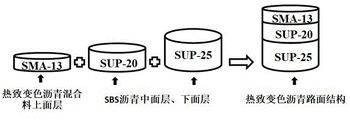
图1为本发明的热致变色沥青路面结构的组成与成型结构;Fig. 1 is the composition and molding structure of the thermochromic asphalt pavement structure of the present invention;
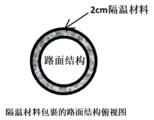
图2为成型后包裹隔温材料后的俯视图;Fig. 2 is the top view after wrapping thermal insulation material after molding;
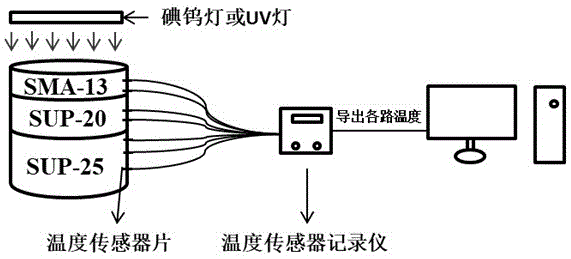
图3为热致变色沥青路面结构的温度测定方法示意图。FIG. 3 is a schematic diagram of a temperature measurement method for a thermochromic asphalt pavement structure.
具体实施方式Detailed ways
下面结合附图对本发明做更进一步的解释。The present invention will be further explained below in conjunction with the accompanying drawings.
请参阅图1,本发明的热致变色沥青路面及温度场降温耐久性能的室内模拟方法,包括以下步骤:Please refer to Fig. 1, the indoor simulation method of thermochromic asphalt pavement and temperature field cooling durability performance of the present invention includes the following steps:
(1)制备热致变色沥青路面试件,上面层(SMA-13)使用的是黑色热致变色沥青,中面层(SUP-20)和下面层(SUP-25)使用的是SBS沥青。热致变色沥青由热致变色粉末和SBS制备。制备方法如下:(1) Prepare thermochromic asphalt pavement test pieces. The upper layer (SMA-13) uses black thermochromic asphalt, and the middle surface layer (SUP-20) and the lower layer (SUP-25) use SBS asphalt. Thermochromic pitch is prepared from thermochromic powder and SBS. The preparation method is as follows:
1)将SBS沥青放入烘箱中加热至完全融化,烘箱温度为160℃;1) Put the SBS asphalt in an oven and heat it until it is completely melted, and the oven temperature is 160℃;
2)黑色热致变色粉末加入SBS沥青中,在高温条件下连续剪切,高温的温度为140℃~145℃,剪切的速度为500r/min,剪切的时长为20min;2) The black thermochromic powder is added to the SBS asphalt, and it is continuously sheared under high temperature conditions.
3)在烘箱160℃条件下,将混合沥青放入烘箱中保存1h得到黑色热致变色沥青。3) Under the condition of oven 160℃, put the mixed asphalt in the oven for 1 hour to obtain black thermochromic asphalt.
4)室温冷却后获得黑色热致变色沥青4) After cooling at room temperature, black thermochromic asphalt is obtained
所述的热致变色粉末,是一种有机化合物,在温度大于31℃时,颜色变浅以反射更多太阳光,在温度低于31℃时,变为深色,从而实现根据环境温度改变自身反射率,实现降温。The thermochromic powder is an organic compound. When the temperature is higher than 31°C, the color becomes lighter to reflect more sunlight, and when the temperature is lower than 31°C, the color becomes darker, so as to realize the change according to the ambient temperature. Self-reflectivity to achieve cooling.
沥青路面结构包括上面层(SMA-13),中面层(SUP-20)和下面层(SUP-25),上面层沥青为黑色热致变色沥青,中面层和下面层沥青为SBS沥青。分别成型上面层、中面层和下面层,通过切割,将上面层(4cm)、中面层(6cm)、下面层(8cm)层间利用乳化沥青粘结成三层路面结构。The asphalt pavement structure includes upper layer (SMA-13), middle surface layer (SUP-20) and lower layer (SUP-25). The upper layer asphalt is black thermochromic asphalt, and the middle surface layer and the lower layer asphalt are SBS asphalt. The upper layer, the middle surface layer and the lower layer are respectively formed, and by cutting, the upper layer (4cm), the middle surface layer (6cm) and the lower layer (8cm) are bonded by emulsified asphalt to form a three-layer pavement structure.
为了模拟真实路面的受热情况,仅保留上面层与外界发生热交换。因此,成型的三层路面结构需在周围及底部2cm厚的包裹隔温隔热材料,包裹的隔温材料为志盛ZS-1091型隔温涂料。In order to simulate the heating situation of the real road, only the upper layer is kept for heat exchange with the outside world. Therefore, the formed three-layer pavement structure needs to be wrapped with thermal insulation material with a thickness of 2cm around and at the bottom, and the wrapped thermal insulation material is Zhisheng ZS-1091 type thermal insulation coating.
三层路面结构目的是获得路面结构的温度场,因此在包裹志盛ZS-1091型隔温涂料之后,需要在试件2cm、4cm、6cm、8cm、10cm、12cm处打孔,为传感器预留孔洞。The purpose of the three-layer pavement structure is to obtain the temperature field of the pavement structure. Therefore, after wrapping the Zhisheng ZS-1091 thermal insulation coating, it is necessary to punch holes at 2cm, 4cm, 6cm, 8cm, 10cm, and 12cm of the specimen to reserve for the sensor. holes.
成型的热致变色路面结构,利用六路传感器头,分别插入2cm、4cm、6cm、8cm、10cm、12cm预留孔洞中,并连接配备的杭州路格科技有限公司生产的LGR-WD61传感器,通过电脑导出各深度的温度变化趋势。The formed thermochromic pavement structure is inserted into the reserved holes of 2cm, 4cm, 6cm, 8cm, 10cm and 12cm by using six sensor heads, and connected to the equipped LGR-WD61 sensor produced by Hangzhou Luge Technology Co., Ltd. The temperature trend of each depth is derived.
探究的热致变色沥青路面降温性能耐久性方法,所述的耐久性包括冻融循环老化,热老化、紫外老化。To explore the durability method of cooling performance of thermochromic asphalt pavement, the durability includes freeze-thaw cycle aging, thermal aging and ultraviolet aging.
冻融循环老化方法是将上面层根据《公路工程沥青及沥青混合料实验规程》(JTGE20—2011)进行冻融循环,冻融循环后粘结成型。热老化是利用碘钨灯模拟太阳光照射按照已成型的路面结构,其中的照射时间由碘钨灯功率、成型试件截面面积和道路使用地区的年太阳辐射量三个因素确定,经碘钨灯照射后备用。紫外老化是利用紫外线灯模拟真实情况下紫外线照射按照已成型的路面结构,其中的照射时间由紫外线灯功率、成型试件截面面积和道路使用地区的年紫外线辐射量三个因素确定,经紫外线灯照射后备用。The freeze-thaw cycle aging method is to freeze and thaw the upper layer according to the "Highway Engineering Asphalt and Asphalt Mixture Experimental Regulations" (JTGE20-2011), and then bond and form after the freeze-thaw cycle. Thermal aging is to use iodine and tungsten lamps to simulate sunlight irradiation according to the formed pavement structure. The irradiation time is determined by three factors: the power of the iodine and tungsten lamps, the cross-sectional area of the formed specimen and the annual solar radiation in the area where the road is used. Ready for use after lighting. Ultraviolet aging is to use ultraviolet lamps to simulate the ultraviolet irradiation under real conditions according to the formed pavement structure. The irradiation time is determined by three factors: the power of the ultraviolet lamp, the cross-sectional area of the formed specimen and the annual amount of ultraviolet radiation in the area where the road is used. Reserve after irradiation.
获得冻融循环老化后的路面结构、热老化后的路面结构和紫外线老化后的路面结构,同时还有未老化处理的路面结构作为对照组。所述的四种路面结构,利用六路传感器头,分别插入2cm、4cm、6cm、8cm、10cm、12cm预留孔洞中,并连接配备的传感器处理器,通过电脑导出各深度的温度变化趋势。The pavement structure after freeze-thaw cycle aging, the pavement structure after heat aging, and the pavement structure after ultraviolet aging were obtained, and the pavement structure without aging treatment was used as a control group. The four types of pavement structures described above use six sensor heads, which are inserted into 2cm, 4cm, 6cm, 8cm, 10cm, and 12cm reserved holes, respectively, and connected to the equipped sensor processor to derive the temperature change trend of each depth through a computer.
通过与对照组的各厚度温度比较和不同冻融循环老化次数,不同碘钨灯照射时间,不同紫外线灯照射时间各厚度温度的比较,可获得各种老化方式下的热致变色沥青混合料的降温性能耐久性。By comparing the temperature of each thickness with the control group, the aging times of different freeze-thaw cycles, the irradiation time of different iodine and tungsten lamps, and the comparison of the thickness and temperature of different ultraviolet lamps, the thermochromic asphalt mixture under various aging methods can be obtained. Cooling performance durability.
Claims (4)
Priority Applications (1)
| Application Number | Priority Date | Filing Date | Title |
|---|---|---|---|
| CN201911126772.9A CN110879110A (en) | 2019-11-18 | 2019-11-18 | Indoor simulation method for temperature field and cooling durability of thermochromic asphalt pavement |
Applications Claiming Priority (1)
| Application Number | Priority Date | Filing Date | Title |
|---|---|---|---|
| CN201911126772.9A CN110879110A (en) | 2019-11-18 | 2019-11-18 | Indoor simulation method for temperature field and cooling durability of thermochromic asphalt pavement |
Publications (1)
| Publication Number | Publication Date |
|---|---|
| CN110879110A true CN110879110A (en) | 2020-03-13 |
Family
ID=69730454
Family Applications (1)
| Application Number | Title | Priority Date | Filing Date |
|---|---|---|---|
| CN201911126772.9A Pending CN110879110A (en) | 2019-11-18 | 2019-11-18 | Indoor simulation method for temperature field and cooling durability of thermochromic asphalt pavement |
Country Status (1)
| Country | Link |
|---|---|
| CN (1) | CN110879110A (en) |
Cited By (1)
| Publication number | Priority date | Publication date | Assignee | Title |
|---|---|---|---|---|
| CN115479884A (en) * | 2022-09-01 | 2022-12-16 | 哈尔滨工业大学 | Test and evaluation method considering influence of freeze thawing and aging on asphalt mixture performance |
Citations (6)
| Publication number | Priority date | Publication date | Assignee | Title |
|---|---|---|---|---|
| US4653857A (en) * | 1984-02-07 | 1987-03-31 | Standard Telephones And Cables, Plc | Dynamic hologram recording |
| US20160076242A1 (en) * | 2009-11-24 | 2016-03-17 | Swift River Properties Llc | Thermochromic coating and method of manufacturing thereof |
| CN207143635U (en) * | 2017-08-31 | 2018-03-27 | 苏交科集团股份有限公司 | A kind of asphalt pavement structure of energy-saving and emission-reduction |
| CN109233307A (en) * | 2018-07-16 | 2019-01-18 | 湖南大学 | Temperature self adjusting road asphalt material and preparation method thereof |
| CN109971190A (en) * | 2019-03-18 | 2019-07-05 | 东南大学 | Thermochromic asphalt with reversible temperature regulation and preparation method thereof |
| CN110006946A (en) * | 2019-05-07 | 2019-07-12 | 南京林业大学 | An indoor simulation test system and method for temperature field of asphalt pavement |
-
2019
- 2019-11-18 CN CN201911126772.9A patent/CN110879110A/en active Pending
Patent Citations (6)
| Publication number | Priority date | Publication date | Assignee | Title |
|---|---|---|---|---|
| US4653857A (en) * | 1984-02-07 | 1987-03-31 | Standard Telephones And Cables, Plc | Dynamic hologram recording |
| US20160076242A1 (en) * | 2009-11-24 | 2016-03-17 | Swift River Properties Llc | Thermochromic coating and method of manufacturing thereof |
| CN207143635U (en) * | 2017-08-31 | 2018-03-27 | 苏交科集团股份有限公司 | A kind of asphalt pavement structure of energy-saving and emission-reduction |
| CN109233307A (en) * | 2018-07-16 | 2019-01-18 | 湖南大学 | Temperature self adjusting road asphalt material and preparation method thereof |
| CN109971190A (en) * | 2019-03-18 | 2019-07-05 | 东南大学 | Thermochromic asphalt with reversible temperature regulation and preparation method thereof |
| CN110006946A (en) * | 2019-05-07 | 2019-07-12 | 南京林业大学 | An indoor simulation test system and method for temperature field of asphalt pavement |
Non-Patent Citations (2)
| Title |
|---|
| 吴渝玲: "基于有限元温致变色沥青路面路表热特性研究", 《重庆交通大学学报(自然科学版)》 * |
| 廖公云 等: "《Abaqus有限元软件在道路工程中的应用》", 31 December 2014 * |
Cited By (1)
| Publication number | Priority date | Publication date | Assignee | Title |
|---|---|---|---|---|
| CN115479884A (en) * | 2022-09-01 | 2022-12-16 | 哈尔滨工业大学 | Test and evaluation method considering influence of freeze thawing and aging on asphalt mixture performance |
Similar Documents
| Publication | Publication Date | Title |
|---|---|---|
| CN105445173B (en) | Simulated marine atmosphere environment automatically speeds up corrosion testing apparatus and test method | |
| Jiang et al. | Optimization of PCM coating and its influence on the temperature field of CRTSII ballastless track slab | |
| Rodrigues et al. | How reliable are geometry-based building indices as thermal performance indicators? | |
| CN104652835A (en) | Electric-tracing heat preservation method for winter construction of wet joint of composite beam | |
| CN114720406A (en) | Method for evaluating laser damage threshold of optical material based on multi-scale calculation damage precursor | |
| CN106271461B (en) | A kind of steel plate shear force wall packaging technology | |
| CN110006946A (en) | An indoor simulation test system and method for temperature field of asphalt pavement | |
| CN104402315A (en) | Material used for rapid pavement repair and performance testing method thereof | |
| CN103195248B (en) | A kind of construction method for building high altitudes and cold area concrete winter | |
| CN104326701A (en) | Preparation method and performance evaluation method of ultraviolet aging resistant asphalt mixture | |
| CN102661965A (en) | Comprehensive indoor solar photo-thermal environment simulator for pavements | |
| CN105352795B (en) | The method for determining bituminous paving sealing material influence depth based on uniaxial penetration test | |
| CN100535055C (en) | Fire-retardant modified asphalt material and preparing method | |
| CN106485034A (en) | Analysis method for fire-receiving temperature field of laminated wood member considering glue seam heat conduction effect and application of analysis method | |
| Liu et al. | Synergistic improvement on temperature and moisture stability of asphalt mixture with steel slag aggregate coated by waterborne polyurethane | |
| CN101967046B (en) | Formula of external thermal insulation layer coating for natural color jade outer wall and production method | |
| CN206840852U (en) | Phase-change accumulation energy composite heat supply wallboard | |
| CN205531052U (en) | Waterproof application system of non - hot melt of roofing plants | |
| CN205740782U (en) | A kind of concrete heating system | |
| CN106153446A (en) | A kind of method of testing of permanent deformation for asphalt pavement | |
| Wu et al. | Analysis of long-term performance and snowmelt capacity of anti-freezing asphalt pavement | |
| CN114527065B (en) | Pavement heating type sealant adhesive property evaluation method based on dissipation energy | |
| CN209620426U (en) | A kind of Asia rigid roofing structure plate structure | |
| Wang et al. | Bidirectional self-regulating temperature asphalt pavement: Evaluation of gradient synergistic temperature regulation effect and durability performance between surface layer and bonding layer | |
| CN204676418U (en) | Deck paving composite water-proof structure |
Legal Events
| Date | Code | Title | Description |
|---|---|---|---|
| PB01 | Publication | ||
| SE01 | Entry into force of request for substantive examination | ||
| SE01 | Entry into force of request for substantive examination | ||
| RJ01 | Rejection of invention patent application after publication | ||
| RJ01 | Rejection of invention patent application after publication |
Application publication date: 20200313 |