Disclosure of Invention
The invention aims to provide macadamia nut cookies with natural faint scent milk flavor produced by a three-step mixing method and a preparation method thereof.
In order to solve the technical problems, the macadamia cookie with natural faint scent milk flavor produced by the three-step mixing method in the technical scheme of the invention has three flavors, namely milk flavor, original flavor and sea salt flavor.
The macadamia nut cookies with milk fragrance or original taste are prepared from the following raw materials in parts by weight: 43-55 parts of wheat flour, 40-55 parts of macadamia nut, 35-45 parts of porous starch, 13-15 parts of high gluten flour, 85-110 parts of egg white liquid, 45-75 parts of butter, 15-20 parts of shortening, 4-20 parts of coconut oil, 20-55 parts of unsalted butter and 45-75 parts of powdered sugar.
The sea salt flavored macadamia nut cookies are prepared from the following raw materials in parts by weight: 43-55 parts of wheat flour, 13-15 parts of high gluten flour, 40-55 parts of macadamia nut, 35-45 parts of porous starch, 85-110 parts of egg white liquid, 45-75 parts of butter, 4-20 parts of coconut oil, 15-20 parts of shortening, 20-55 parts of light cream, 45-75 parts of powdered sugar and 1.5-1.8 parts of sea salt.
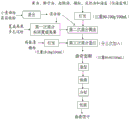
A three-step mixing method for producing macadamia nut cookies with original taste or milk flavor comprises the following steps:
(1) butter frothing: softening butter, mixing with shortening, oleum Cocois, light butter and part of sugar powder, and whipping uniformly for use;
(2) protein beating: mixing the rest sugar powder and egg white liquid, beating and stirring uniformly for later use;
(3) firstly, mixing and crushing macadamia nuts: firstly, uniformly mixing wheat flour and high gluten flour to form mixed flour for later use, mixing porous starch and part of the mixed flour with macadamia nut, crushing, adsorbing oil generated in the crushing process of the macadamia nut into a hollow structure of the porous starch to obtain powdered macadamia nut oil, and sieving;
(4) the second step is mixing butter: adding the powdered macadamia nut oil and the rest of mixed flour prepared in the step (3) into the whipping butter prepared in the step (1), whipping and stirring uniformly to obtain macadamia nut oil microcapsules taking the powdered macadamia nut oil as a core material and the butter as a wall material;
(5) step three, mixing protein: adding the protein beaten in the step (2) into the ingredients prepared in the step (4) for a plurality of times, adding the beaten protein each time while stirring, and finally stirring and beating uniformly to obtain the cookie batter with fluffy texture;
(6) molding and baking: putting the cookie batter obtained in the step (5) into a die, demolding and forming to obtain a corresponding cookie dough, putting the cookie dough into an oven for baking, and baking for 20-35 min at the temperature of 140-155 ℃ with upper and lower fire;
(7) and finally cooling to obtain a finished product.
The method for producing the sea salt flavored macadamia nut cookies comprises the following steps:
(1) butter frothing: softening butter, mixing with shortening, oleum Cocois, light butter, part of sugar powder and sea salt, and beating;
(2) protein beating: mixing the rest sugar powder and egg white liquid, beating and stirring uniformly for later use;
(3) firstly, mixing and crushing macadamia nuts: firstly, uniformly mixing wheat flour and high gluten flour to form mixed flour for later use, mixing porous starch and part of the mixed flour with macadamia nut, crushing, adsorbing oil generated in the crushing process of the macadamia nut into a hollow structure of the porous starch to obtain powdered macadamia nut oil, and sieving;
(4) the second step is mixing butter: adding the powdered macadamia nut oil and the rest of mixed flour prepared in the step (3) into the whipping butter prepared in the step (1), whipping and stirring uniformly to obtain macadamia nut oil microcapsules taking the powdered macadamia nut oil as a core material and the butter as a wall material;
(5) step three, mixing protein: adding the protein beaten in the step (2) into the ingredients prepared in the step (4) for a plurality of times, adding the beaten protein each time while stirring, and finally stirring and beating uniformly to obtain the cookie batter with fluffy texture;
(6) molding and baking: putting the cookie batter obtained in the step (5) into a die, demolding and forming to obtain a corresponding cookie dough, and baking the cookie dough in an oven;
(7) and finally cooling to obtain a finished product.
In the preferred technical scheme of the invention, in the step (1), after the butter and the components are uniformly mixed, the mixture is beaten at a high speed, then beaten at a medium speed to feather-like and slightly whitish, and the specific gravity is 90-100 g/100 mL.
In the preferable technical scheme of the invention, the weight ratio of the sugar powder added in the step (1) to the sugar powder added in the step (2) is 2-4: 1.
in the preferable technical scheme of the invention, in the step (2), the specific gravity of the protein after being beaten, dried and foamed is 18-26 g/100 mL.
In the preferred technical scheme of the invention, in the step (3), the wheat flour and the high gluten flour are mixed into mixed flour for later use, the porous starch and part of the mixed flour are mixed with the macadamia nut, and the mixture is crushed and sieved by a sieve of 100-140 meshes; the weight ratio of the total amount of the porous starch and the partial mixed flour to the macadamia nut is 1.0-1.2: 1.0.
In the preferable technical scheme of the invention, in the step (5), the mixture is stirred and uniformly stirred to reach the specific gravity of 80-90 g/100 mL.
In the preferable technical scheme of the invention, in the step (6), the thickness of the die is 3-6 mm.
In the preferable technical scheme of the invention, in the step (6), the baking is carried out for 20-35 min at the temperature of 140-155 ℃ with upper and lower fire; preferably, baking at 155 deg.C on the upper fire and 140 deg.C on the lower fire for 20 min.
The porous starch is a hollow starch granule, the diameter of a micropore is about 0.5-1.5 mu m, and the porous starch has the greatest characteristic of good adsorption performance on water or oil. The porous starch is a natural organic matter, is mixed in the macadamia nut for crushing, can adsorb oil released when the macadamia nut is crushed, and is beneficial to forming powder oil; meanwhile, the oil generated by crushing the macadamia nuts is effectively dispersed, and the delicate texture and the crispness of the cookie are improved; when the biscuit is eaten, due to the slow release effect of the porous starch on adsorbates, the macadamia nut powder adsorbed in the pores of the porous starch can continuously present the unique fresh milk fragrance of macadamia nuts in the later chewing period, so that the cookie biscuit is more continuous in flavor and thicker in aftertaste and has a certain antioxidation effect.
The macadamia nut oil is produced by a three-step mixing method, and the macadamia nut is mixed and crushed in the first step, so that the macadamia nut oil is absorbed into the hollow structure of the porous starch while being crushed, the powdered macadamia nut oil is obtained, and a material basis is provided for maintaining the faint scent aftertaste of the macadamia nut; the second step is to mix butter and skillfully use the powdered macadamia nut grease as a core material and the butter as a wall material, so that the in-situ microencapsulation process of the macadamia grease is realized on the basis of not additionally increasing the process; the third mixed protein effectively improves the filling power of the macadamia nut cookies and provides a process foundation for the soft and crisp characteristics of the macadamia nut cookies.
In addition, coconut oil has a variety of health-care functions of antioxidation, hypolipidemia, capacity and the like, and the functional parts are proved to be possibly related to special fatty acid compositions and other functional active ingredients in the coconut oil. The use of coconut oil can reduce the use amount of butter. The shortening provides fat, improves the content proportion of the fat in the macadamia nut biscuit, is beneficial to increasing the plasticity of biscuit dough, and facilitates the biscuit forming. The powdered sugar provides a small amount of sweet taste, increases the extensibility of the dough, and facilitates the shaping of the biscuit.
The macadamia cookie is crispy, soft and soft, can be instantly melted in the mouth, has a porous and fine section, is more crispy than common cookies, and has more unique aftertaste of faint scent milk flavor of macadamia nuts.
Detailed Description
For the sake of understanding, the present invention will be described in detail below by way of specific examples. It is to be expressly understood that the description is illustrative only and is not intended as a definition of the limits of the invention. Many variations and modifications of the present invention will be apparent to those skilled in the art in light of the teachings of this specification.
Butter, coconut oil, shortening, powdered sugar, whipped cream, macadamia nut, porous starch, wheat flour, hard flour in the following examples are all commercially available materials.
Comparative example 1
Milk-flavored macadamia nut cookies produced by using prior art
(1) And (3) butter frothing: weighing 71 parts by weight of butter, 5 parts by weight of coconut oil, 17.5 parts by weight of shortening, 53 parts by weight of light cream and 50 parts by weight of powdered sugar, softening the butter, uniformly mixing the components, beating for 5min at a high speed by a beater, beating for 8min at a medium speed to feather-like state, slightly whitening, and enabling the specific gravity to reach 99g/100 mL;
(2) crushing macadamia nuts: crushing 50 parts by weight of macadamia nuts by using a crusher to obtain macadamia nut pulp;
(3) mixing the beaten butter, macadamia nut pulp, 43 parts by weight of wheat flour, 40 parts by weight of porous starch, 13 parts by weight of high gluten flour, 21 parts by weight of sugar powder and 88.5 parts by weight of egg white together, and stirring at a medium speed for 1min by a whipper until the specific gravity reaches 90g/100mL to obtain cookie batter;
(4) modeling: putting the obtained cookie batter into an oval mold with the thickness of 6mm by a scraping and stirring method, and demolding to obtain the corresponding cookie shape;
(5) baking: placing the baking tray in a wind-heat baking oven, baking with upper and lower fire at 145 deg.C for 35 min;
(6) and (3) cooling: taking out from the oven, and naturally cooling at room temperature;
(7) packaging: and (4) packaging each piece of the paper by using aluminum foil.
Comparative example 2
Production of original flavor Hawaii fruit cookies by using prior art
(1) And (3) butter frothing: weighing 55 parts by weight of butter, 18.1 parts by weight of coconut oil, 17.5 parts by weight of shortening, 23.9 parts by weight of unsalted butter and 38.5 parts by weight of powdered sugar, softening the butter, uniformly mixing the components, beating at a high speed for 5min by a beater, beating at a medium speed for 8min to feather-like state, slightly whitening, and enabling the specific gravity to reach 99g/100 mL;
(2) crushing macadamia nuts: crushing 50 parts by weight of macadamia nuts by using a crusher to obtain macadamia nut pulp;
(3) mixing whipped butter, macadamia nut pulp, 40 parts by weight of porous starch, 45 parts by weight of wheat flour, 15 parts by weight of high gluten flour, 10 parts by weight of sugar powder and 107.9 parts by weight of egg white together, stirring at medium speed for 1min by a whipper until the specific gravity reaches 90g100mL to obtain cookie batter;
(4) modeling: scraping and stirring the obtained cookie batter into an oval mold with the thickness of 6mm, and demolding to obtain the corresponding cookie shape;
(5) baking: placing the baking tray into a wind-heat baking oven, baking with a fire of 150 deg.C for 25 min;
(6) and (3) cooling: taking out from the oven, and naturally cooling at room temperature;
(7) packaging: and (4) packaging each piece of the paper by using aluminum foil.
Comparative example 3
Sea salt flavored macadamia nut cookies produced by prior art
(1) And (3) butter frothing: weighing 65 parts by weight of butter, 18.1 parts by weight of coconut oil, 17.5 parts by weight of shortening, 23.9 parts by weight of unsalted butter, 38.5 parts by weight of powdered sugar and 1.6 parts by weight of sea salt, uniformly mixing the components after the butter is softened, beating at a high speed for 5min by a beater, beating at a medium speed for 8min to feather-like state, slightly whitening, and enabling the specific gravity to reach 99g/100 mL;
(2) crushing Hawaii: crushing 50 parts by weight of macadamia nuts by using a crusher to obtain macadamia nut pulp;
(3) mixing the beaten butter, macadamia nut pulp, 40 parts by weight of porous starch, 45 parts by weight of wheat flour, 15 parts by weight of high gluten flour, 10 parts by weight of sugar powder and 108 parts by weight of egg white together, and stirring at a medium speed for 1min by a beater until the specific gravity reaches 90g/100mL to obtain cookie batter;
(4) modeling: scraping and stirring the obtained cookie batter into an oval mold with the thickness of 6mm, and demolding to obtain the corresponding cookie shape;
(8) baking: placing the baking tray into a wind-heat baking oven, baking with a fire of 150 deg.C for 25 min;
(9) and (3) cooling: taking out from the oven, and naturally cooling at room temperature;
(10) packaging: and (4) packaging each piece of the paper by using aluminum foil.
Example 1
Milk-flavored macadamia nut cookie biscuit prepared by three-step mixing method
(1) Respectively weighing 71 parts by weight of butter, 5 parts by weight of coconut oil, 17.5 parts by weight of shortening, 53 parts by weight of unsalted butter and 50 parts by weight of powdered sugar for later use;
(2) softening the butter weighed in the step (1), uniformly mixing the softened butter with the coconut oil, the shortening, the sugar powder and the light butter weighed in the step (1), and then beating for 5min at a high speed by a beater and 10min at a medium speed until the butter is feather-like and slightly white, wherein the specific gravity reaches 99g/100mL;
(3) Firstly, mixing and crushing macadamia nuts: firstly, uniformly mixing 43 parts of wheat flour and 13 parts of high-gluten flour to form mixed flour for later use; mixing 40 parts by weight of porous starch, 13 parts by weight of mixed flour and 50 parts by weight of macadamia nut, crushing by using a crusher, and sieving by using a 100-mesh sieve after crushing;
(4) protein beating: mixing 21 parts by weight of weighed powdered sugar and 88.5 parts by weight of egg white liquid, beating at a high speed for 1min by using a beating machine, adjusting to the medium speed, beating for 15min, and finally beating to dry foam, wherein the specific gravity reaches 18g/100 mL;
(5) the second step is mixing butter: adding the macadamia nut powder prepared in the step (3) and the remaining 43 parts by weight of mixed flour into the whipping butter prepared in the step (2), and stirring at a moderate speed for 1min by using a whipper;
(6) step three, mixing protein: adding beaten protein into the ingredients in the step (5) for three times, wherein the protein is added each time and is uniformly stirred, and then stirring at medium speed for 1min by a beater until the specific gravity reaches 90g/100 mL;
(7) modeling: putting the cookie batter obtained in the step (6) into an oval mould with the thickness of 6mm by a scraping and stirring method, and demoulding to obtain the corresponding cookie shape;
(8) baking: placing the baking tray in a wind-heat baking oven, baking with upper and lower fire at 145 deg.C for 35 min;
(9) and (3) cooling: taking out from the oven, and naturally cooling at room temperature;
(10) packaging: and (4) packaging each piece of the paper by using aluminum foil.
Example 2
Three-step mixing method original macadamia nut cookies
(1) Weighing 55 parts by weight of butter, 18.1 parts by weight of coconut oil, 17.5 parts by weight of shortening, 23.9 parts by weight of unsalted butter and 38.5 parts by weight of powdered sugar for later use;
(2) and (3) butter frothing: softening the weighed butter, uniformly mixing the softened butter with the coconut oil, the shortening, the powdered sugar and the light butter weighed in the step (1), and beating with a beater at a high speed for 5min and at a medium speed for 8min until the butter is feather-like and slightly white, wherein the specific gravity reaches 99g/100 mL;
(3) firstly, mixing and crushing macadamia nuts: mixing 47 parts by weight of wheat flour and 15 parts by weight of high gluten flour to form mixed flour, taking 15 parts by weight of mixed flour, taking 40 parts by weight of porous starch to mix with 50 parts by weight of macadamia nut, crushing by using a crusher, and sieving by using a 100-mesh sieve after crushing;
(4) protein beating: mixing weighed 10 parts of powdered sugar and 107.9 parts of egg white, beating at a high speed for 1min by using a beating machine, adjusting to a medium speed, beating for 12min, and finally beating to dry foam, wherein the specific gravity reaches 20g/100 mL;
(5) the second step is mixing butter: adding the macadamia nut powder prepared in the step (3) and the remaining 47 parts by weight of mixed flour into the whipping butter prepared in the step (2), and stirring at a medium speed for 1min by using a whipper;
(6) step three, mixing protein: adding beaten protein into the step (5) for three times, wherein the protein is added into the protein each time and is stirred uniformly, and then stirring the mixture at a medium speed for 1min by using a beater until the specific gravity reaches 90g/100 mL;
(7) modeling: putting the cookie batter obtained in the step (6) into an oval mold with the thickness of 6mm by a scraping and stirring method, and demolding to obtain the corresponding cookie shape;
(8) baking: placing the baking tray into a wind-heat baking oven, baking with a fire of 150 deg.C for 25 min;
(9) and (3) cooling: taking out from the oven, and naturally cooling at room temperature;
(10) packaging: and (4) packaging each piece of the paper by using aluminum foil.
Example 3
Three-step mixing method sea salt taste macadamia nut cookies
(1) Weighing 65 parts by weight of butter, 18.1 parts by weight of coconut oil, 17.5 parts by weight of shortening, 23.9 parts by weight of whipped cream, 38.5 parts by weight of powdered sugar and 1.6 parts by weight of sea salt for later use;
(2) and (3) butter frothing: softening the weighed butter, uniformly mixing the softened butter with the coconut oil, the shortening, the sugar powder, the sea salt and the light butter weighed in the step (1), and beating with a beater at a high speed for 5min and at a medium speed for 8min until the butter is feather-like and slightly white, wherein the specific gravity reaches 99g/100 mL;
(3) firstly, mixing and crushing macadamia nuts: uniformly mixing 45 parts by weight of wheat flour and 15 parts by weight of high gluten flour to obtain mixed flour for later use, taking 12 parts by weight of the mixed flour, taking 35 parts by weight of porous starch to mix with 45 parts by weight of macadamia nut, crushing by using a crusher, and sieving by using a 100-mesh sieve after crushing;
(4) protein beating: mixing weighed 10 parts of powdered sugar and 108 parts of egg white, beating at a high speed for 1min by using a beating machine, adjusting to a medium speed, beating for 12min, and finally beating to dry foam with the specific gravity of 20g/100 mL;
(5) the second step is mixing butter: adding the macadamia nut powder prepared in the step (3) and the rest 48 parts by weight of mixed flour into the whipping butter prepared in the step (2), and stirring at a moderate speed for 1min by using a whipper;
(6) step three, mixing protein: adding beaten protein into the ingredient prepared in the step (5) for three times, wherein the protein is added each time and is uniformly stirred, and then stirring at medium speed for 1min by using a beater until the specific gravity reaches 90g/100 mL;
(7) modeling: putting the cookie batter obtained in the step (6) into an oval mold with the thickness of 6mm by a scraping and stirring method, and demolding to obtain the corresponding cookie shape;
(8) baking: placing the baking tray into a wind-heat baking oven, baking with a fire of 150 deg.C for 25 min;
(9) and (3) cooling: taking out from the oven, and naturally cooling at room temperature;
(10) packaging: and (4) packaging each piece of the paper by using aluminum foil.
Hardness measurements and sensory evaluations were performed on the products provided in examples 1 to 3 of the present invention and comparative examples 1 to 3 as follows:
1. the biscuit hardness determination method comprises the following steps:
the macadamia nut cookies are measured by a TA-XT PLUS type texture analyzer, and a probe P/25 is adopted. The measurement conditions were: speed before measurement: 2 mm/s; measuring speed: 2 mm/s; speed after measurement: 10 mm/s; the residence time between two compressions is 5 s; the compression ratio is 60%, each sample is measured for 8 times, the average value is taken, and the hardness index is read.
2. Sensory evaluation:
the evaluation method comprises the following steps of (1) forming an evaluation group by 20 persons (20 boys and 20 girls with professional backgrounds after relevant training), respectively taking crispness and aftertaste persistence of biscuits as indexes, respectively taking "excellent", "good", "medium" and "poor" as quality characteristics of products to be evaluated, considering evaluation results of all testers, and obtaining a comprehensive evaluation result, wherein the calculation method comprises the following steps: the total content is 40% of mouth feel, 40% of aftertaste and 20% of section shape.
TABLE 1 sensory evaluation index
The results of the above performance tests are shown in table 1 below:
TABLE 2 hardness-by-factor and sensory evaluation of the products of examples 1 to 3 and comparative examples 1 to 3
The above examples are only for illustrating the technical idea and features of the present invention, and the purpose thereof is to enable those skilled in the art to understand the content of the present invention and implement the present invention, and not to limit the protection scope of the present invention. All equivalent changes and modifications made according to the spirit of the present invention should be covered within the protection scope of the present invention.