Intelligent vehicle turning angle control method based on active disturbance rejection control
Technical Field
The invention relates to the field of intelligent vehicle control, in particular to an intelligent vehicle corner control method based on active disturbance rejection control.
Background
In recent years, the technology of intelligent vehicles at home and abroad is rapidly developed, but the intelligent vehicles are required to realize SAE automatic driving 5-level standard, namely completely autonomous driving, and a long time is required. At present, most of unmanned researches are still in a test stage, the technology is still immature and incomplete, the cost is high, and the difference between the domestic technology and the foreign technology is large. The motion control system of the intelligent vehicle is a foundation stone for automatic driving and one of the most important links, and aims to realize the tracking control of the intelligent vehicle on an expected path and a track through controlling a vehicle actuator. The control of the steering wheel controls the steering system of the vehicle, which affects the lateral movement of the vehicle. Vehicle steering system is a nonlinear system, how to design steering controller to realize the lateral control of high precision, realize the corner tracking control of high precision promptly, be the key problem that the intelligent vehicle research institute must solve.
In the conventional steering system control method, a vehicle steering system is generally used as a simple system, and in practical application, real vehicle debugging application is performed through PID control, sliding mode variable structure control and the like, so that a richer and more effective control method is lacked, which is one of bottlenecks restricting the development of intelligent vehicles. PID control is a common control strategy as error feedback control and is widely used in engineering practice. The PID control is simple and directly effective for the feedback control of a linear system, but has a plurality of defects for the accurate steering angle tracking control of a steering system, such as the nonlinear characteristic of the steering system, the susceptibility of differential term feedback to noise, the incapability of being suitable for various working conditions and the like. The sliding mode variable structure control has robustness to external interference and internal perturbation of the system, and is suitable for steering system corner tracking control with nonlinear characteristics, but the system is easy to generate buffeting due to switching control of a control law. The steering system sensor has noise, the system has unknown modeling dynamics, part of interference terms are unknown, and the steering resistance moment is nonlinear, so that the design of the intelligent vehicle steering system control method suitable for various working conditions has higher difficulty.
Therefore, how to provide an intelligent vehicle turning angle control strategy for solving the turning angle tracking control problem is a problem to be urgently solved by the technical personnel in the field.
Disclosure of Invention
The invention aims to overcome the defects of the prior art and provide an intelligent turning angle control method based on active disturbance rejection control.
The purpose of the invention can be realized by the following technical scheme:
an intelligent turning angle control method based on active disturbance rejection control comprises the following steps:
1) establishing a vehicle steering system model and generating a dynamic characteristic expression of a steering system;
2) constructing a steering resistance torque estimator, wherein the steering resistance torque estimator takes a real turning angle value obtained by a turning angle sensor of a vehicle steering system and an output torque instruction value of a steering execution motor as input, and takes an estimated value of steering resistance torque in the steering system, an estimated value of the real turning angle value and an estimated value of a differential quantity thereof obtained by calculation as output;
3) and constructing a corner tracking controller, wherein the corner tracking controller takes the output result of the steering resistance moment estimator and the expected corner value as input, takes the calculated output control quantity as output, and sends an output control quantity instruction to a steering execution motor to realize the corner tracking control of the intelligent vehicle.
The expression of the vehicle steering system model is as follows:
wherein, J
w、B
wThe rotational inertia and the damping coefficient, delta, respectively, equivalent to the steering column of the steering system
sThe turning angle of the steering shaft at the pipe column,
for the angular speed of a steering shaft in a vehicle steering system at the location of the steering column
Associated friction torque, T
saMoment, k, generated at the kingpin for the action of the tyre road surface
iFor steering gear ratio of steering system, k
rReduction ratio of reduction mechanism for steering actuator motor, T
mThe output torque of the electric motor is executed for steering.
In said step 2), defining
The expression for the steering resistive torque estimator is then:
wherein (k) and (k-1) respectively represent the values at the k-th time and the k-1-th time, e is the estimation error, z3、z2、z1Respectively, a relative term x to the steering resistance torque3True angle value x1And the differential x of the true angle value2Estimate of beta3、β2、β1Respectively, estimator gain parameter, h discrete step size, fal nonlinear constructor, alpha3、α2、α1δ are estimator tuning parameters, respectively, and f (·) is defined as for argument x, f (x) ═ Bwx+Tfr(x)]/JwAnd u (k-1) is the system input at time k-1.
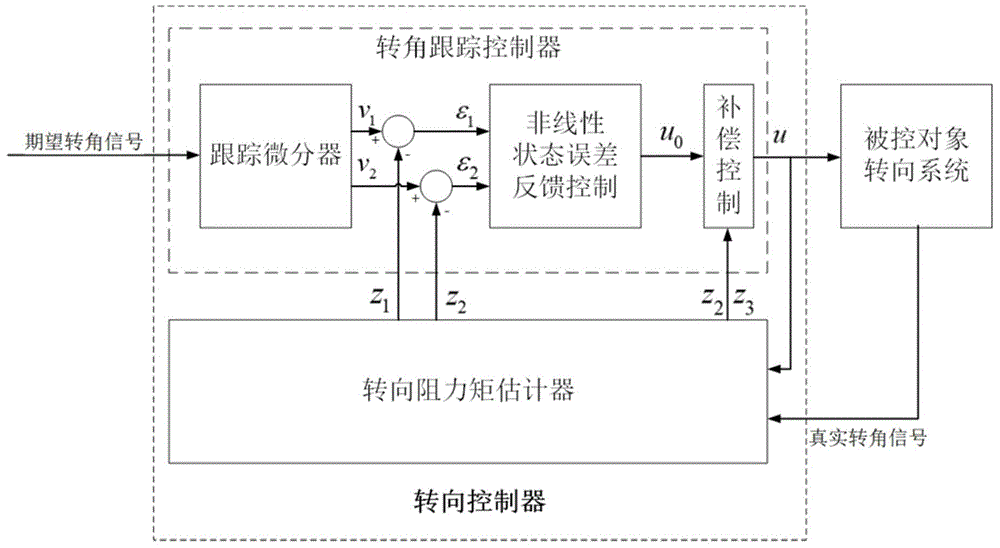
In the step 3), the corner tracking controller comprises a tracking differentiator, a nonlinear state error feedback controller and a compensation controller.
The expression of the tracking differentiator is as follows:
wherein, deltadesFor a desired steering column angle, v1、v2For tracking the state quantity of the differentiator, which corresponds to the transition filter value of the angle value and its derivative term, respectively, fhan is the nonlinear steepest control function, h0、r0For tracking the differentiator adjustable parameter, h is a discrete step size.
The expression of the nonlinear state error feedback controller is as follows:
wherein epsilon1、ε2Is a state error of epsilon0Is a state error epsilon1Integral of u0For output non-linear state error feedback control quantity, c0、r1Respectively, an adjustable parameter of the nonlinear state error feedback control, h1Are controller parameters.
The expression of the compensation controller is as follows:
u(k)=u0(k)-{f[z2(k)]+z3(k)}/b0
wherein, b0And u is the final control quantity after feedforward compensation.
Compared with the prior art, the invention has the following advantages:
the intelligent vehicle steering angle tracking control method starts from a model of a steering system, establishes a steering resistance torque estimator, can estimate and output the steering resistance torque existing in the steering system in real time by taking a real steering angle signal and the final control quantity of a steering controller as input, can obtain an estimated value of the real steering angle signal and a differential signal thereof, plays a role in filtering the real steering angle signal to different degrees by adjusting the parameters of the estimator, and can reduce the influence of noise in the real steering angle signal on the differential term. The designed corner tracking controller can carry out transition arrangement on an expected corner value, prevents different expected signals from influencing the feedback control effect, and can well deal with the characteristics of unknown partial interference terms, nonlinear steering resistance torque and the like in a steering system by utilizing nonlinear state error feedback and compensation control, thereby improving the applicability of the control method.
Drawings
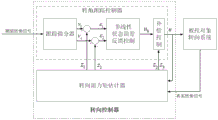
FIG. 1 is a block diagram of a controller of the present invention.
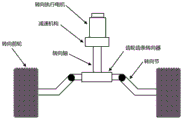
FIG. 2 is a simplified model diagram of an intelligent vehicle steering system including a column-type electric power steering system and a steer-by-wire system.
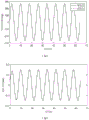
Fig. 3 is a simulation test result diagram of the steering control algorithm, in which fig. 3a is a result diagram of an angle step simulation test steering wheel angle, fig. 3b is a result diagram of an angle step simulation test steering angle tracking error, fig. 3c is a result diagram of an angle step simulation test output torque, fig. 3d is a result diagram of a sinusoidal simulation test steering wheel angle, and fig. 3e is a result diagram of a sinusoidal simulation test output torque.
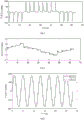
Fig. 4 is a graph of results of actual vehicle tests of the steering control algorithm, where fig. 4a is a graph of results of an angle step actual vehicle test steering wheel angle, fig. 4b is a graph of results of an angle step actual vehicle test steering angle tracking error, fig. 4c is a graph of results of an angle step actual vehicle test output torque, fig. 4d is a graph of results of a sinusoidal actual vehicle test steering wheel angle, and fig. 4e is a graph of results of a sinusoidal actual vehicle test output torque.
Detailed Description
The invention is described in detail below with reference to the figures and specific embodiments.
Examples
The invention provides a control method based on a steering system model, which comprises a control strategy including a steering resistance moment estimator and a corner tracking controller, wherein the corner tracking controller comprises a tracking differentiator, a nonlinear state error feedback control part, a compensation control part and the like, and the control strategy and the tracking differentiator and the nonlinear state error feedback control part together form an intelligent vehicle steering controller, so that the corner tracking control of an intelligent vehicle suitable for various working conditions is effectively realized.
As shown in fig. 1, the structure diagram of the intelligent turning angle control method of the present invention includes the following steps:
step 1, establishing a model of an intelligent vehicle steering system aiming at a controlled object steering system, wherein a simplified model diagram of the steering system is shown in figure 2. The dynamic model equation of the steering system can be generated by analyzing the relevant characteristics of the steering system; this equation can be expressed as:
wherein, J
w、B
wThe rotational inertia and the damping coefficient, delta, respectively, at the steering column equivalent to the steering system
sIs the steering shaft angle at the column of the steering system,
is in a steering system
Associated friction torque, T
saIs the moment, k, generated at the kingpin by the action of the tyre road surface
iIs the steering gear ratio of the steering system, k
rIs the reduction ratio of the reduction mechanism at the steering actuator motor, T
mIs steering executionThe output torque of the motor.
And 2, designing a steering resisting moment estimator according to the model equation established in the step 1, taking a real turning angle value obtained by a turning angle sensor of a vehicle steering system and an output torque instruction value of a steering execution motor as input, and calculating and obtaining an estimated value of the steering resisting moment in the steering system, an estimated value of the real turning angle value and a differential value thereof through the estimator.
The steering resistance torque estimator is in the specific form:
wherein (k) and (k-1) respectively represent values at the k-th time and the k-1-th time, e is an estimation error, z3、z2、z1Respectively, the term x related to the steering resistance torque3True angle value x1And differential amount x thereof2Estimate of beta3、β2、β1Respectively, estimator gain parameter, h is discrete step size, fal is nonlinear constructor, alpha3、α2、α1δ is the tuning parameter of the estimator. The nonlinear constructor fal expression is:
the function is a linear segment near the origin and a power function outside the interval. The mapping relation of the function to e can be changed by adjusting the parameters alpha and delta in the function.
And 3, calculating an output control quantity through a corner tracking controller according to the estimation value result and the expected corner value obtained in the step 2, and providing a control quantity instruction to a steering execution motor by the steering controller to realize the corner tracking control of the intelligent vehicle.
The tracking differentiator is in the specific form:
wherein, deltadesIs the desired steering column angle, v1、v2Is the state quantity of the tracker; a transition filtered value corresponding to the rotation angle value and a derivative thereof; r is0、h0Is the adjustable parameter of the tracking differentiator, fhan is the nonlinear steepest control function, and the expression is as follows:
u=fhan(x1,x2,r,h)
the function form is observed, the value range of the absolute value of the function value is limited to be less than the range of r, and the function can be changed for x by adjusting the values of r and h1、x2The mapping relationship of (2). Thus, r in the tracking differentiator0Depends on the second order derivative term for the desired angular value, i.e. the limit value for the desired angular acceleration value, and h0The value of (a) can be selected with reference to the control step length h of the controller.
The nonlinear state error feedback control utilizes the output results of a steering resistance moment estimator and a tracking differentiator, and the specific form is as follows:
wherein epsilon1、ε2Is a state error term, ε0Is to the state error epsilon1Integral of u0Is the output nonlinear state error feedback control quantity, c0、r1、h1Is an adjustable parameter for nonlinear state error feedback control. Nonlinear state error feedback control1Is dependent on the output torque limit of the steering actuator motor, and h1The value of (b) determines the influence of the feedback error term on the feedback control quantity.
The compensation control utilizes the output results of the steering resisting moment estimator and the nonlinear state error feedback control, and the specific form is as follows:
u(k)=u0(k)-{f[z2(k)]+z3(k)}/b0
wherein b is0Is a feedforward compensation gain coefficient, and u is a final control quantity after compensation control. b0As the gain factor, the degree of compensation of the steering resistance torque estimation value for the final control amount is affected. The steering controller outputs the final control quantity to the steering execution motor, and the corner tracking control of the intelligent vehicle is realized.
In order to verify the effectiveness of the intelligent vehicle corner tracking control method, a simulation experiment platform is established, wherein the experiment platform is a simulation platform which is established based on Matlab/Simulink and Carsim software in a combined mode. And combining the calculation result of the steering resistance moment in Carsim with a corresponding model of a steering system in Matlab/Simulink to jointly form a research object for simulation verification.
Fig. 3 is a diagram of simulation test results of a steering control algorithm. The vehicle speed is set to about 20km/h in the simulation process, and the expected rotation angle values are set to a step rotation angle value and a sine rotation angle value, respectively. The step angle value is increased and decreased from 0 degree to plus and minus 360 degrees in turn according to the rotation angle values with the step period of 5 seconds and the step amplitude of 90 degrees. The expected value is set to cover the condition that the step amplitude of the rotation angle value between plus and minus 360 degrees is 90 degrees, and the steady-state tracking control performance of the controller is verified. The sine angle value was varied with a sine amplitude of 270 degrees for a sine cycle of 4 seconds and was set to verify the transient tracking control performance of the controller. It can be seen from fig. 3 that the actual turning angle value of the steering system can track the expected turning angle value command well, and the controller has good control effect, stable control quantity, high control precision, fast control responsiveness and better tracking capability.
In order to further verify the effectiveness of the intelligent vehicle corner tracking control method, a real vehicle experiment platform is established, the experiment platform is an unmanned electric vehicle, and the control of a steering system is realized by sending a control torque instruction to a steering execution motor of the steering system, so that the verification of a real vehicle experiment is carried out.
Fig. 4 is a diagram showing the results of a real vehicle test of the steering control algorithm. The desired angle of rotation is set similarly to the simulation test. In the real vehicle test process, the vehicle speed is set to be about 20km/h, the expected step angle value is increased and decreased from 0 degree to plus and minus 360 degrees in turn according to the rotation angle values with the step period of 4 seconds and the step amplitude of 90 degrees. The desired sine angle value varies with a sine amplitude of 180 degrees for a sine period of 4 seconds. It can be seen from fig. 4 that the actual turning angle value of the steering system can still track the expected turning angle value command well, and in the real vehicle test, the controller keeps a good control effect, and has the advantages of stable control quantity, high control precision, fast control responsiveness and good tracking capability.
Simulation and real vehicle test results show that the designed intelligent vehicle corner tracking controller can be suitable for intelligent vehicles and achieves good corner tracking performance, and has beneficial engineering practical value.
The above description is only a preferred embodiment of the present invention, and it should be noted that: it will be apparent to those skilled in the art that various modifications and adaptations can be made without departing from the principles of the invention and these are intended to be within the scope of the invention.