This application claims benefit to U.S. provisional application No. 62/415,332, entitled "Product Recommendations Based on Augmented Reality views," filed 10/31/2016, which is incorporated herein by reference in its entirety.
Detailed Description
SUMMARY
As described herein, techniques are provided for providing product recommendations to users using augmented reality. For example, a product recommendation system determines a viewpoint of augmented reality created by a user. The viewpoint includes an image of the augmented product positioned in a camera image of the user's surroundings. Based on the viewpoint, the product recommendation system determines a location of the enhanced product in the viewpoint. The product recommendation system also determines a similarity between the enhanced product and one or more candidate products that the product recommendation system may recommend to the user. Based on the similarity, the product recommendation system creates a set of recommendation images that can be provided to the user as product recommendations. The recommended image includes, for example, a candidate product image of the candidate product that replaces the enhanced product in the recommended image. In some examples, prior to providing the product recommendation images to the user, the product recommendation system evaluates the recommendation images based on the overall color compatibility of the colors within each image. Based on the evaluation, the product recommendation system then selects a recommendation image to provide to the user.
In one example, a user selects an augmented product for viewing in an augmented reality application on the user's user device. Using a camera application on the user device, the user then views on the display of the user device the area of the user's surroundings in which the user wishes to place the enhanced product. The user then places the enhanced product within the camera image display of the user device, thus allowing the user to view the image of the enhanced product in the user device display of the user device. Thus, the user may view on the display of the user device an enhanced product located among actual objects in the user's surroundings as captured in a camera image on the display of the user device.
Once the user can view the enhanced product in the camera image on the display of the user device, the user then provides input for positioning the enhanced product in the camera image in various locations. The system identifies a desired location of the enhanced product based on the user's interaction with the object. For example, product recommendation systems differentiate between a temporary location of a product and a desired location of the product based on user interaction. As a specific example, when the user stops moving a product in the camera image for more than a threshold amount of time, such that the product remains in position for more than a threshold amount of time, the product recommendation system may identify the position as a desired product position. Upon detecting the desired product location, the product recommendation system captures a viewpoint. For example, the product recommendation system captures a screenshot of the display on the user device when the user has completed the process of positioning the image of the enhanced product within the display image provided by the camera. The screenshot then serves as the viewpoint.
In some examples, the product recommendation system captures the viewpoint when the user spends a threshold amount of time without moving or reorienting the enhanced product within the camera image. For example, if the user spends more than about 1 second in the same location of the image of the enhanced product in the camera image, the product recommendation system determines that the viewpoint corresponds to the displayed image during the one second time frame. The product recommendation system then captures the viewpoint.
After the product recommendation system captures the viewpoint, the product recommendation system determines the location of the enhanced product within the viewpoint. In some examples, the product recommendation system uses a relevance filter to determine the orientation of the enhanced product in the viewpoint. For example, the product recommendation system may use a set of training images that contain images of real objects that are similar to the enhanced product, where each of the real object images is positioned in a number of different ways. The correlation filter determined based on this training information is then used to determine the location of the enhanced product within the viewpoint. Alternatively, the product recommendation system may capture the location and orientation of the augmented product in the viewpoint based on information tracked by the augmented reality application. In one example, the augmented reality application tracks the position, rotation, and scale of the augmented product throughout the augmented reality session of the user. The product recommendation system receives the position, rotation, and scale for the viewpoint. This information is used as the location and orientation of the enhanced product in the viewpoint.
In addition to determining the location of the enhanced product in the viewpoint, the product recommendation system also determines the style in which the enhanced product is compared to other candidate products. For example, the product recommendation system compares three-dimensional features of the enhanced product to the candidate products to determine a style similarity between the enhanced product and the candidate products that the product recommendation system may recommend to the user. If the enhanced product is a chair with armrests, chair legs, and an arched back, then a candidate product with the same attributes will have a higher similarity than a candidate product without armrests but with a flat back. In some examples, the product recommendation system calculates a distance measure that quantifies style similarity between the candidate product and the enhanced product. For example, elements are analyzed along with the prevalence of matching elements on product pairings. Based on the style and prevalence analyses, the product recommendation system generates a score, such as a style similarity score. For example, the higher the style similarity score, the more similar the enhanced product and the candidate product are.
Based on the enhanced similarity of the product to the candidate product, the product recommendation system creates a set of recommended images. For example, for a given candidate product that exceeds a style similarity threshold with the enhanced product, the product recommendation system replaces the image of the enhanced product with the candidate product image of the candidate product in the viewpoint. In other words, the product recommendation system adds the candidate product image to the camera image in the same location and orientation in which the user placed the enhanced product in the viewpoint. Each recommended image thus includes a candidate product embedded within the actual object of the camera image. In some examples, the recommended images are normalized so that they have the same reference in terms of rotation, translation, and scale. In some examples, the recommended image with the highest similarity score is provided to the user as the product recommendation. For example, the product recommendation system may provide the user with the highest ranked recommended image (or set of images), thereby recommending to the user a particular product that fits within the ambient environment in which the user will use the product and that is similar to the enhanced product selected by the user.
After creation of the recommended image, in some examples, the product recommendation system determines color compatibility of the recommended image. For example, the product recommendation system determines a color theme within each recommended image, such as a set of dominant colors that may draw the user's attention. The product recommendation system then compares the color theme with known color compatibility color themes. In some examples, the product recommendation system determines a color score for the color compatibility determination based on the comparison. For example, a recommended image with a higher color score may have better overall color compatibility as compared to a recommended image with a fewer color score.
In some examples, the product recommendation system uses both the color score and the similarity score to determine a total score for recommending images. In one example, the product recommendation system weights the style similarity score and the color score, then combines the scores to determine an overall score. In some examples, the weights in the total score are based at least in part on survey data in which survey participants provide opinions about recommended images. The total score is then used, for example, to select one or more of the recommended images to be provided to the user. For example, if there are sixty recommended images, the user may be provided with five having the highest total scores. In some embodiments, the selected recommendation image is provided to the user in a catalog (such as a product recommendation catalog).
As will be appreciated by those skilled in the art, the techniques described herein provide numerous advantages over conventional product recommendation systems. For example, unlike conventional web-based recommendations that rely on user browser data, the techniques provided herein provide product recommendations for products that are highly similar to products that are known to be of interest to users for use in a particular environment. The recommended product is selected based on information about the user's product interests, such as the size, shape, and other style attributes of the chair, and/or information about the user's surroundings, such as the color of the floor, walls, and other furniture that will surround the product in the environment in which the user will use the recommended product. Conventional web-based recommendations do not take into account how the recommended products actually fit in the user's surrounding environment and do not recommend products using images of the actual environment in which the recommended products will be used by the user. These advantages and others also increase the likelihood that the user will purchase the product presented to the user.
Main terms
As used herein, the phrase "augmented reality" refers to a technique that superimposes a computer-generated image on a user's view of the real world, thus providing a composite image to the user. For example, an image of the augmented product may be superimposed on the user's view of the real world, such as in a camera image captured by the user on the user's mobile phone or other user device. An "augmented object" generally refers to a computer-generated image superimposed on a user's view of the real world.
As used herein, the phrase "camera image" refers to an image captured by a camera of a user device, such as when the user opens a camera application on the user device and takes video of the user's surroundings. A view on a display screen of a user device provides a camera image to a user. The user may, for example, move the user device, thereby changing the camera image displayed on the user device. The camera image for example comprises a view of the actual objects in the user's surroundings, which view is displayed on the display of the user device.
As used herein, the phrase "enhanced product" refers to a product that uses an enhanced display or that may be superimposed on and/or integrated into a camera image using an enhanced display. The enhanced product may be, for example, a digitized image of the actual product or other rendering of the actual product. In some examples, the enhanced product may have three-dimensional properties and thus be viewed and analyzed as a three-dimensional enhanced object. The image of the enhanced product may be viewed on a display screen of the user device, for example, when the user utilizes a camera application on the user device to generate a camera image and places the image of the enhanced product in the camera image. Thus, the image of the enhanced product appears on the display of the user device as an enhanced object and may be positioned in the display relative to the actual object in the user's surroundings that is also presented to the user on the display of the user device.
As used herein, the phrase "viewpoint" refers to a composite image generated when an image of an enhanced product is superimposed on a camera image of a user device at a particular time. The viewpoint may be determined, for example, by detecting that the user interaction indicates that the user has completed positioning the enhanced product at a desired location within the actual object in the user's surroundings as viewed in the camera image. For example, the viewpoint may be determined when the user stops moving the enhanced product for more than a threshold amount of time.
As used herein, the phrase "physical object" refers to a physical, tangible item that is present in the user's surroundings/environment. The actual object comprises, for example, a table, a desk, a chair, a lamp, a floor, a painted wall, a wall hangar, a carpet, an electronic device, etc., i.e. generally anything in the room of the user. The actual object may also be outside, such as on a patio or in the garden of the user. For example, the actual object may be an outdoor chair, a back-rest chair, a dining table, a patio sculpture, a landscape, a tree, a creek, etc., i.e., anything commonly found outside of a user's home or office. The real object appears on the user device of the user, for example, when the user utilizes the camera of the device to view the real object.
As used herein, the phrase "candidate product" refers to a product that is different from the enhanced product, but is otherwise of interest to the user. For example, if the enhanced product is a chair selected by the user, the candidate product may be a similar chair. The candidate product may be, for example, a digital model of the actual product or other rendering of the actual product. In some examples, the candidate product has three-dimensional features, and thus may be manipulated, such as by rotating the candidate product and/or moving the candidate product, for comparison with a comparison candidate product and an enhanced product as described herein to determine a similarity between the candidate product and the enhanced product.
As used herein, the phrase "candidate product image" refers to a digital image of a candidate product. The candidate product image may be inserted into the camera image, for example, as an enhanced product. For example, if the user is interested in a chair and selects a chair as the enhanced product, the candidate product image will be one or more images of a chair that is different from, but still similar to, the chair selected by the user. In some examples, the chairs may be the same chair selected by the user, but with more pleasing different colors based on the color patterns, colors, and hues present in the camera image. The candidate product images may be stored, for example, in an image repository and may therefore be selected for inclusion in the recommended image as described herein.
As used herein, the phrase "recommended image" refers to a camera image from a user that includes a candidate product image. The recommended image is based on, for example, the user's viewpoint and thus includes the actual objects in the camera image that are present from the user's surroundings. In the recommended image, the candidate product images are placed in the same or similar position and orientation of the user-selected augmented product present in the viewpoint.
As used herein, the phrase "pattern similarity" refers to a measure of the likeness between two products (e.g., likeness of product shapes, patterns, or features). Various techniques may be used to measure the pattern similarity of products. The style similarity may be determined quantitatively, such as by using a style similarity metric for a three-dimensional product. For example, style similarity between products may be determined based on the level of match between two products and the prevalence of similar regions. The pattern similarity may be assessed using machine learning techniques trained based on a training set of images of similar objects. Such techniques generally identify the similarity of features in three-dimensional models of two products, and determine how similar the two products are based on the number of matching features in the two products.
As used herein, the phrase "color similarity" refers to a measure of how well the colors in a color theme are together. Color similarity may be measured using various techniques. Color compatibility may be determined quantitatively, such as by sampling colors in the recommended image and comparing the sampled colors to known color compatibility themes. An exemplary technique determines a set of harmonious color topics by receiving ranks or other evaluations of color topics from a plurality of users and identifying the color topic with the highest average rank or evaluation. The color compatibility of the other color theme is then determined by determining how similar the other color theme is to the known harmonic color theme. If the color theme has a color similar to the harmonic color theme, the color theme is given a relatively high color compatibility score. A relatively low color compatibility score is given to a color theme if the color theme has a color similar to any of the harmonious color themes. In one example, the color theme of the recommended image is determined to contain harmonious colors.
Example System architecture
Referring now to the drawings, in which like numerals indicate like (but not necessarily identical) elements throughout the various views, example embodiments are specifically described.
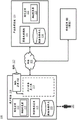
FIG. 1A is a block diagram of a computer network environment and system for providing product recommendations to users using augmented reality, according to some example embodiments.
As depicted in fig. 1A, the exemplary operating environment 100 includes a user device 110, a product recommendation system 120 ("product recommendation system"), and a marketing device 130 configured to interact with each other via a network 105.
Network 105 includes wired or wireless telecommunication means by which network devices 110, 120, and 130 interact. For example, the network 105 may include a local area network ("LAN"), a wide area network ("WAN"), an intranet, the internet, a storage area network ("SAN"), a private network ("PAN"), a metropolitan area network ("MAN"), a wireless local area network ("WLAN"), a virtual private network ("VPAN"), a cellular or other mobile communication network, bluetooth low energy, near field communication ("NFC"), Wi-Fi, or any combination thereof, or any other suitable architecture or system that facilitates communication of signals, data, and/or messages.
Each network device 110, 120, and 130 includes a communication module (not shown) having the ability to transmit and receive data over the network 105. For example, each network device 110, 120, and 130 may include a server, desktop computer, laptop computer, tablet computer, television having one or more processors embedded therein and/or coupled thereto, smart phone, handheld computer, personal digital assistant ("PDA"), or any other wired or wireless, processor-driven device. In the example environment depicted in FIG. 1A, network devices 110, 120, and 130 are operated by end users or consumers, recommendation system operators, and marketing operators, or other end user operators, respectively.
The user device 110 may include, for example, a communication application 111 and an associated web browser 118 that may interact with a web server or other computing device connected to the network 105. For example, the user 101 may use a communication application 111 (such as a web browser 118 application) or a separate application of the user device 110 to view, download, upload, or otherwise access documents, web pages, or digital images via the distributed network 105. For example, the user 101 may use the communication application 111 and the web browser 118 to identify images of products on the internet that the user wishes to use, such as in conjunction with the augmented reality application 115, to augment a camera image displayed on the user device display 113 of the user device 110 with the products.
As shown, the user device also includes a camera application 112 configured to interact with a camera 117 of the user device 110 and a user device display 113 of the user device 110. The camera application, for example, represents software and/or other components of the user device 110 that run and operate the camera 117 associated with the user device 110. For example, the user 101 may click on or otherwise operate a user control option on the user device 110 that accesses the camera 117. Using the camera application 112, the user 101 may, for example, zoom in, zoom out, and perform other features commonly associated with using the camera 117 on the user device 110. The camera application 112 is also connected to a user device display 113, for example, the user device display 113 representing a video screen on which the user views the output of the camera 117 as processed by the camera application 112. For example, if the user 101 points the camera of the user device 110 at a chair, the chair and its surroundings are visible to the user as an image in the user device display 113.
The user device 110 also includes an augmented reality application 115. An augmented reality application 115 ("AR application") represents a component of the user device 110 that, in some example embodiments, allows the user 101 to augment the camera image on the user device display 113 with augmented objects. For example, if the user 101 uses the communication application 111 to select an image of a product from the internet, the AR application 115 allows the user 101 to insert the product in the camera image of the display 113, thereby allowing the user 101 to view the augmented object as an augmented product on the user device display 113. Accordingly, the AR application is configured to interact with the camera 117, the camera application 112, and the camera image display 113 of the user device 110 in order to generate an augmented reality image (including an augmented product).
In some example embodiments, the user device 110 may include a data storage unit 116 for use in storing retrievable information, such as product images that the user 101 has collected using the AR application 115. For example, the user 101 may use a data storage unit to store product images of products that the user 101 may be interested in purchasing. The user 101 may then use the AR application 115 to, for example, later retrieve the product image and superimpose the product image as an enhanced object on the camera image generated via the camera 117, the camera application 112, and the camera image display 113. The example data storage unit 116 may include one or more tangible computer-readable media and may be stored on the user device 110 or logically coupled to the user device 110. Data storage unit 116 may include on-board flash memory and/or one or more removable memory cards or removable flash memory. Other customized electronic components (not shown) may be associated with the user device, as will be appreciated by those skilled in the art.
The product recommendation system 120 represents a component of the exemplary operating system 100 responsible for determining a user viewpoint of an augmented reality image, determining a location of an augmented product in a camera image, creating and evaluating a recommendation image, and providing the recommendation image (and thus the product recommendation) to the user 101. The product recommendation system 120 includes, for example, an image processing module 121 that performs analysis functions of the product recommendation system 120. For example, the image processing module 121 reviews the enhanced images and/or data received from the user device 110 to determine a time instant for selecting the viewpoint. The image processing module 121 also processes the received images and/or data to create and evaluate recommended images as described herein.
As shown, the product recommendation system 120 also includes a communication application 122 and an associated web browser 123. The communication application 122, for example, allows a system operator (such as a product recommendation system 120 operator) to interact with the product recommendation system 120. For example, a system operator may use the web browser 123 to identify and create a repository of candidate products, such as by searching the web or using a web crawler to identify candidate products that may be used in accordance with the methods and systems described herein. The repository of candidate products may be stored, for example, on the data storage unit 124 of the product recommendation system 120. The data storage unit 124 may also store, for example, recommendation images that may be retrieved, such as by the image processing module 121, and used to create product recommendations as described herein. The example data storage unit 124 may include one or more tangible computer-readable media and may be stored on the product recommendation system 120 or logically coupled to the product recommendation system 120. Data storage unit 124 may include on-board flash memory and/or one or more removable memory cards or removable flash memory.
As will be appreciated by those skilled in the art having the benefit of this disclosure, all of the functionality of the product recommendation system 120 described may be performed on the user device 110 in some example embodiments, such as in conjunction with (or as an integrated part of) an AR application. In certain other example embodiments, one or more of the functions of the product recommendation system 120 may be performed separately and independently from the user device 110. For example, the product recommendation system 120 may receive augmented reality images and/or data from the user device 110 via the network 105, such as from the AR application 115 and a communication module (not shown). The product recommendation system 120 then processes the received images and/or data as described herein and then returns product recommendations to the user 101, for example, over the network 105 and via the user device 110. In another example, the determination of the point of sight as described herein may occur via the AR application 115, the product recommendation system 120, or a combination thereof.
In addition to the components described herein, the exemplary operating environment 100 may also include an optional marketing device 130. The marketing device 130 is responsible, for example, for providing marketing information to the user 101, such as compiling recommended images or other advertising material (including a catalog of one or more recommended images provided to the user 101). The product recommendation system 120 may also be implemented as part of the marketing device 120. Details of marketing device 130 are depicted in FIG. 1B.
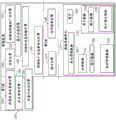
FIG. 1B is a block diagram of a marketing device 130 for use in connection with the methods and systems described herein, according to some example embodiments. As shown, selectable marketing device 130 includes one or more engines for providing one or more digital experiences to user 101. Marketing device 130 may be implemented using one or more servers, one or more platforms with corresponding application programming interfaces, cloud infrastructure, and the like. Further, each engine may also be implemented using one or more servers, one or more platforms with corresponding application programming interfaces, cloud infrastructure, and the like. Marketing device 130 also includes data storage unit 114. Data store 114, like data stores 116 and 124 (FIG. 1A), may be implemented as one or more databases or one or more data servers. Data storage unit 114 includes data used by the engine of marketing device 130.
In one embodiment, marketing device 130 may be divided into two layers of engines, namely, layer 1, which includes a core engine that provides workflow to user 101, and layer 2, which includes a shared engine that is shared among the core engines. Any core engine may invoke any of the sharing engines for execution of the corresponding task. In another embodiment, the marketing device has no layers and each core engine may have an instance of a shared engine. In either embodiment, each core engine may access the data storage unit 114 directly or through a shared engine.
A user 101 of a user device (not shown) accesses a web page or application repository to explore applications supported by marketing apparatus 130. The marketing appliance 130 provides applications as software as a service (SaaS) or as a separate application or as a combination that may be installed on user equipment. The user 101 creates an account with the marketing device 130 by providing user details and also by creating login details. Alternatively, marketing device 130 may automatically create login details for user 101 in response to receiving the user details. The user 101 may also contact the entity that provides the service of the marketing device 130 and may obtain an account that is created by the entity. The user details are received by the booking engine 174 and stored as user data 176 times in the data storage unit 114. In some embodiments, the user data 114 also includes account data 178 under which user details are stored.
User 101 may select one or more engines that subscribe to marketing device 130. Based on the subscription details of the user 101, a user subscription profile 180 is generated by the subscription engine 174 and stored. The user 101 subscription profile 180 is stored in the data storage unit 114 and indicates the rights of the user 101 to various products or services. The user 101 subscription profile 180 also indicates the type of subscription, i.e. a premium subscription or a general subscription.
Marketing device 130 includes a content publication and management engine 182 that enables users 101 to create websites and other content. The content publication and management engine 182 provides the user 101 with an end-to-end workflow just from creation of content, to hosting of content, to publication of content, and finally to management (i.e., editing and republication of content). The content publication and management engine 182 also includes one or more engines (not shown in FIG. 1B) for implementing one or more workflows, such as an asset management engine, a website management engine, a mobile content management engine, a forms management engine, a search engine, and a community management engine. The user 101 may use the content publication and management 182 to create content, such as forms, mobile applications, or web page content. The user 101 may complete the creation or may send it to a third party for creation via a workflow provided through the content publication and management engine 182. The user 101 then publishes the content and manages it through the content publication and management engine 182. The user 101 may also create a community or forum for discussion with customers and manage the community through the content publication and management engine 182. The content publication and management engine 182 also provides asset management capabilities, including asset searching using various tags and metadata. The content publication and management engine 182 stores assets 184 in the data storage unit 114. Examples of assets 182 include, but are not limited to, images, text, documents, video, audio, fonts, and metadata. In addition, the content publication and management engine 182 also enables multi-site (i.e., multiple websites and mobile content, managing workflows) and commerce (i.e., personalized shopping experience incorporating video, social and other dynamic media, related workflows). For some of the functions (such as asset management), the content publication and management engine 182 may work in conjunction with the creative device 108 and access data from the data store 112.
Each engine of marketing device 130 also stores customer data 186 for user 101 in data storage unit 114. User 101, or an entity of user 101, may have one or more customers (including potential customers), and thus one or more engines of marketing device 130 store customer data 186. Customer data 186 may be shared across these engines or may be specific to each engine. In some embodiments, access data 184 is part of customer data 186. Access to customer data 186 is controlled by access control engines 188 that may be shared across the engines of marketing device 130 or each engine may have an instance of access control engine 188. The access control engine 188 determines whether the user 101 has access to particular customer data 186 based on the subscription of the user 101 and the access rights of the user 101.
Marketing device 130 also includes an analysis engine 190. The user 101 may enable tracking of the content while the content is being created or at any other point. Various tracking methods may be used. For example, tracking code may be embedded in the content for tracking and sending the tracked data to the analysis engine 190. The analysis engine 190 tracks the data and stores the tracked data as analysis data 192. The analysis engine 190 tracks the data and performs meaningful processing of the analysis data 192 to provide various reports to the user 101. Further, in one embodiment, the analysis engine 190 also acts as a sharing engine and is accessible by other engines to obtain meaningful analysis based on which other engines can provide various functionality to the user 101. In another embodiment, each engine may have an instance of the analysis engine 190 customized to the needs of that engine. The analytics engine 190 is used to track all types of content (such as mobile applications, videos, images, websites, documents, advertisements) and also to track the assets 184. The analytics engine 190 also supports predictive intelligence to provide predictions based on the analytics data 192. The analysis engine 190 also splices information tracked from various sources where content is consumed and provides a full disk view, i.e., a 360 degree view of the analysis data 192.
Marketing device 130 also includes a social marketing engine 194 for providing social marketing-related workflows. Social marketing engine 194 allows users 101 to share content on a social network and then manage content sharing and associated information, such as posts and comments. For example, social marketing engine 194 provides recommendations to user 101 to determine when to post which content and how the audience will react to the post, to assist user 101 in responding to queries from viewers of the post, and to perform other management related to the post. In addition to social networks, social marketing engine 194 also provides workflows for managing content on blogs and other communities. The social marketing engine 194 provides recommendations by tracking data on the social network and storing the data as social marketing data 195. The social marketing data 195 is then processed by the social marketing engine 194 to determine recommendations. Social marketing engine 194 may automate many manual workflows. For example, social marketing engine 194 may perform automatic posting of posts, automatically responding to queries from post viewers, and the like at appropriate times. The social marketing engine 194 uses the analysis engine 190 for tracking data on the social network or may serve data from the social network. Social marketing engine 194 may also be a sharing engine accessible by various entities of marketing device 130. Alternatively, the engine may have an instance of social marketing engine 194 and may access social marketing data 195 directly.
Marketing device 130 also includes a content personalization engine 196. The content personalization engine 196 enables the user 101 to provide different digital experiences to customers when the different customers access the same web page or the same application of the user 101. The content personalization engine 196 provides various workflows to the user 101 to create different versions of web pages or applications or content and perform A/B testing. Based on the testing, the user 101 may choose to provide different personalization for different sets of customers. The content personalization engine 196 also uses customer data 186, which in one embodiment may be part of the analysis data 192 or may be stored separately in another embodiment. Customer data 186 includes customer profiles. The client, as described herein, also includes a visitor only who is not yet a client. The profile includes one or more attributes of the customer. Attributes are concepts that may be used to segment a client as described herein. Examples of attributes include, but are not limited to, geographic location, age, gender, purchasing power, language, habits, browsing trends, or any other attribute that may be used to cap a customer. Customer data 186 is generated by a customer segmentation engine 197 by collecting data from various sources, including electronic sources (such as the analysis engine 190, online forms, customer online submission data, and other online sources) and non-electronic sources (including paper forms and other offline sources). Customer data 186 may be shared among users, and some of the customer data 186 may be specific to each user and inaccessible to other users. The customer segments are used by the content personalization engine 196 to personalize content and show relevant content to the customer. In addition, the content personalization engine provides automated workflows to achieve personalization, including providing recommendations for content that should be shown to a particular customer segment.
Marketing device 130 also includes a campaign and message transmission engine 198 that implements a workflow for user 101 to perform marketing campaigns, including sending marketing emails. The campaign and message transmission engine 198 uses the customer data 186 and generates customer segments for executing the marketing campaign. Alternatively, the activity and messaging engine 198 uses a client segmentation engine 197 for generating client segments. The marketing campaign, as defined herein, includes sending marketing messages to customers. The message may be sent as an email, a mobile message, a pushed text, a social network, an advertisement, or as any other type of message. The activity and message transfer engine 198 customizes messages before sending out a message. For customization, the activity and message transfer engine 198 provides automated workflows to users. The user 101 may specify attributes for the client segment and the activity and messaging engine 198 automatically picks the client to which the message is to be sent and also personalizes the message based on the attributes of the client segment. The activity and message transfer engine 198 also provides the user 101 with an a/B test option to test which of the two messages are sent out. The activity and messaging engine 198 also stores different client segments for each user 101 in the client data 186. In addition, the content used to create the personalized message, email identifier, and other data is stored as part of customer data 186, which may be specific to user 101 and not accessible by other users.
Marketing device 130 also includes a marketing and advertising spend optimization engine 199. Marketing and advertising spend optimization engine 199 helps budget management for users 101 for developing marketing campaigns, showing advertisements on websites as search results, social advertising, and other forms of advertising. Marketing and advertising spend optimization engine 199 tracks the budget spend and remaining budget of user 101 and performs analysis based thereon to recommend advertising channels for maximizing revenue. Further, marketing and advertising spend optimization engine 199 uses customer data 186 and analytics data 192 and concatenates the data to generate recommendations. The analysis data 192 includes information about how to execute the marketing content. Customer data 186 also indicates what types of customers access marketing content, and analysis data 192 further indicates who ends up performing transactions among those customers.
In various embodiments, customer data 186 also includes data about the devices used by the customer. The device data is used to splice the customer data. For example, customer 1 may use device 1 to access website a. Customer 1 may use device 2 to access website B. Website a and website B may belong to the same user. Thus, instead of treating customer 1 as two different customers, data comprising at least one common identifier (such as an email id) helps user 101 identify that two different accesses are made by the same customer 1. By also analyzing customer data 186 and analysis data 192, richer customer profiles or segments can be generated. Devices corresponding to the same customer may also be identified, resulting in a more targeted digital experience being provided to the customer and revenue being generated for the user 101.
Marketing device 130 also includes a video streaming and advertising engine 191 that assists users 101 (such as broadcasters, cable television networks, and service providers) in creating and monetizing attractive and personalized viewing experiences. The video streaming and advertising engine 191 may be implemented to provide a software development kit to the user 101 to build and deliver videos to customers. In addition, the video streaming and ad engine 191 provides a workflow to the user 101 to insert ads within the video and provides recommendations to the user 101 for locations for ad insertion. Recommendations are generated using analytics data 192, which includes information about what video portions are viewed most and other video analytics data, and also using customer data, which includes customer segments viewing videos and corresponding advertisements. The video streaming and advertising engine 191 also stores rights management data 193 for different videos for the customers of the user 101. For example, if the video is paid for, the video streaming and advertising engine 191 does not provide access to the customer based on the rights management data 193. Using rights management data 193, video streaming and advertising engine 191 protects content rights across various devices of a customer. The video streaming and advertising engine 191 also includes an authentication engine for authenticating the customer. Customer authentication data may also be stored as part of the customer data 186. The client authentication data includes login details or other identifiers for the client.
As those skilled in the art will appreciate, the network connections shown in FIGS. 1A and 1B are merely examples, as other means of establishing a communications link between a computer and a device may be used. Additionally, devices/systems 110, 120, 130 and components thereof may have any of a number of other suitable computer system configurations. In some example embodiments, one or more of the several components presented herein may be any type of computing device, including, for example, the computing devices discussed in more detail with respect to fig. 6. Similarly, any module or application discussed herein or any other module may be executed or implemented by any module or application specifically described in fig. 6.
Example procedure
The components of the example operating environment 100 are described below with reference to the example methods and figures illustrated in fig. 2-4. The example methods of fig. 2-4 may also be performed with other systems and in other environments.
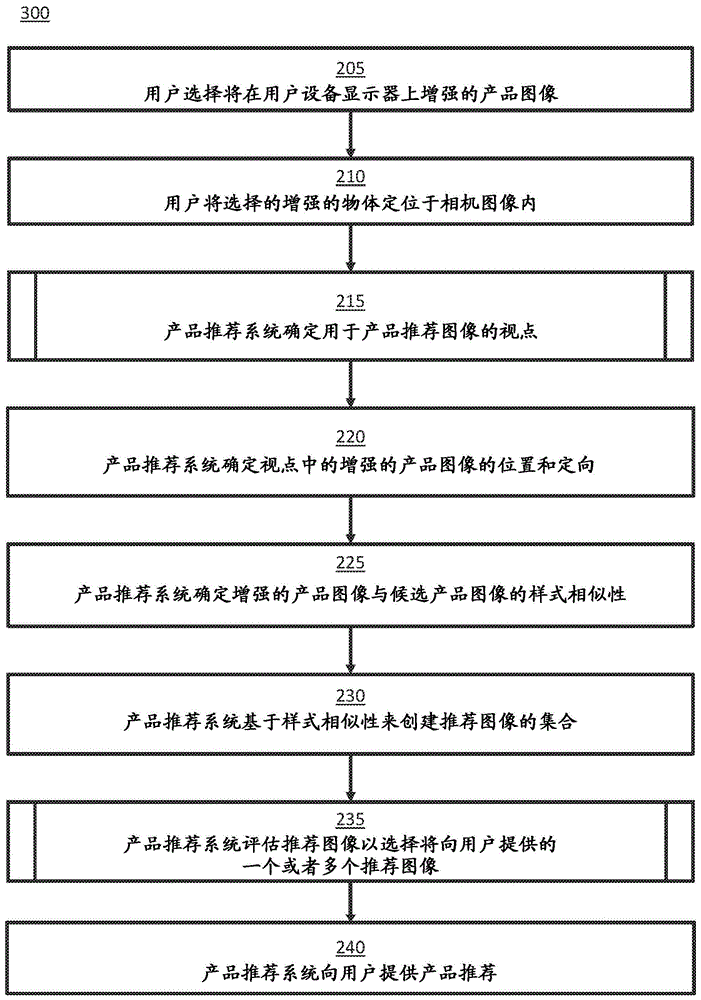
FIG. 2 is a flow diagram depicting a method for providing product recommendations to a user 101 using augmented reality, according to some example embodiments.
Referring to fig. 1A-1B and 2, in block 205 of fig. 2, the user 101 selects a product to be enhanced on the user device 110. That is, the user selects a product image that includes a product that the user 101 wishes to view an augmented reality image. The user 101 then uses the AR application 115, for example, with the camera 117 and camera application 112 to insert the product image into the camera image, thus generating an enhanced product in the camera image. For example, the user 101 selects a product from a digital product catalog. The product may be any product that the user may be interested in, such as a chair, desk, light, or other object that the user 101 intends to place in his or her surroundings. The user then selects a product image of the product and uses the AR application 115 to insert the product image into the camera image, for example. Thus, the resulting augmented reality image includes the augmented product (i.e., the user-selected product image) superimposed on and/or within the camera image generated via the camera 117 and camera image application 112 on the camera image display.
In some example embodiments, the user 101 may scan or take an image of a product, such as from a paper catalog. In some other example embodiments, the user 101 may select a digital photograph, such as a photograph of a product stored in a photo library on the data storage unit 116 of the user device 110. For example, the user 101 may take a picture of a chair that the user is interested in purchasing, but the user 101 has concerns about how the chair will look in the user's office. The image is then used in AR applications. In one example, an AR application is automatically launched with an image used to generate an augmented reality image. In another example, the user 101 retrieves a product image from a photo library and then uses the product image with the AR application 115 to generate an augmented reality image on the user device display 113 of the user device 110 — including a photo as an augmented product.
In block 210, the user 101 positions the enhanced product within the camera image. That is, after the user 101 selects a product to be enhanced on the user device 110, the user 101 utilizes the AR application 115 (along with the camera 117 and camera application 112) to move the enhanced product around within the camera image. For example, after inserting the augmented product in the camera image, the user 101 may move the user device 110 to position the augmented product in a desired position, orientation, and scale in the camera image. The desired position corresponds to, for example, a position, orientation, and scale in the user's surroundings in which the user 101 wishes to place the actual product corresponding to the enhanced product. If the camera image includes, for example, a desk in the user's office (and the enhanced product belongs to a chair that the user 101 is interested in purchasing) the user 101 may move the user device 110 (and thus the associated camera 117) in order to position the enhanced chair near the desk, i.e., the desired position is near the desk.
In some example embodiments, in addition to moving the user device 110 to locate the enhanced product, the user may drag the enhanced product to a specific location within the camera image, such as on the top, bottom, left side, right side, or center of the camera image. For example, the user 101 may touch the enhanced product in the user device display 113 and reposition the enhanced product within the camera image via the capacitive touch functionality of the user device. For example, if the enhanced product is an image of a chair, the user may drag the enhanced product around within the camera image to a desired location.
In some example embodiments, the user additionally or alternatively provides input for changing the orientation of the augmented product in the AR image. In one example, the user 101 flips the enhanced product in a horizontal or vertical axis. For example, the user input may rotate the orientation of the chair in a direction determined based on the user input. In some example embodiments, the user additionally or alternatively provides input for changing the scale of the enhanced product in the AR image. For example, the user input may zoom in or out on the enhanced product relative to the actual object in the camera image.
In block 215, the product recommendation system 120 determines a viewpoint for the product recommendation image. That is, the product recommendation system 120 determines the time instant during use of the AR application 115, for example, when the augmented product may be in a position where the user will use the product. In one example, this includes assessing user interaction to determine when the user 101 has stayed in position for the enhanced product. For example, a lack of change to the camera image and/or the enhanced product location for a threshold period of time may serve as an indication that the user has stayed on the current location of the enhanced product. Details of block 215 are described in further detail below with reference to fig. 3.
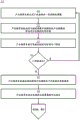
FIG. 3 is a flow diagram depicting a method 215 for determining a point of view for product recommendation, according to some example embodiments. In block 305 of FIG. 3, the product recommendation system 120 receives a series of camera images from the user device 110. That is, as the user 101 positions the enhanced product within the camera frame, the product recommendation system 120 receives, for example, a streaming video feed (and any associated data) via the network 105, showing the user 101 to place the enhanced product in a desired location and orientation in the camera image. The received data may include, for example, coordinate data of user device 110 in space, such as the angle and direction at which user 101 moved the user device. The coordinate data may also include information about the user 101 repositioning the enhanced product on the screen via capacitive touch interaction. In some example embodiments, the AR application 115 is used to receive images as streaming video throughout the user's application session.
As an example, if the enhanced product is a chair and the user 101 is using the camera 117 and AR application 115 to position a chair image near a desk, the product recommendation system 120 may receive a series of images (i.e., a video stream), such as from the time when the user 101 first begins to position the chair image in the camera image to the time when the user has positioned the chair image in a desired location. Thus, the received images may include a continuous set of augmented reality images in which the chair initially incorrectly overlays the desk to the point when the user 101 places the chair in a desired position near the desk.
At block 310, the product recommendation system identifies a time instant associated with proper positioning of the enhanced product in the camera image. That is, the product recommendation system 120 reads the received image and/or any received data, such as via the image processing module 121, to determine when and how long the user moved the user device 110. If the user 101 has located the enhanced product by touching and dragging the image via capacitive touch interaction, the product recommendation system 120 may determine when the user 101 stops moving the image and thus place the enhanced product in a fixed position and orientation in the camera image. The time point when the user 101 significantly reduces the movement of the user device 110 and/or the enhanced product corresponds to this time instant. Thus, the time instant corresponds to the time when the user 101 has presumably positioned the enhanced product in the camera image at the desired location.
To better ensure that the user 101 has in fact positioned the enhanced product in the camera image at the desired location, in some example embodiments, the product recommendation system 120 determines the time instant as a length of time. That is, the product recommendation system 120 determines, from the received images and/or associated data, a length of time that approximately the same positioning of the user device 110 and/or the enhanced product in space is maintained (i.e., the user 101 significantly reduces movement of the user device 110 and/or the enhanced product). Without wishing to be bound by any particular theory, it is believed that the longer the user is not moving the user device 110 in the camera image and/or repositioning the enhanced product, the more likely the user has properly positioned the enhanced product at the desired location of the camera image. For example, the product recommendation system 120 may determine that after first moving the user device 110 and/or enhanced product erratically around, the user 101 then holds the user device 110 and/or enhanced product about 0.2, 0.3, 0.4, 0.5, 0.6, 0.7, 0.8, 0.9, 1.0, 1.1, 1.2, 1.3, 1.4, 1.5, 1.6, 1.7, 1.8, 1.9, 2.0, 2.5, 3.0, 3.5, or more seconds in the same place.
In block 315, the product recommendation system 120 optionally compares the time of day to a threshold value. That is, upon determining the time instant as the length of time that the user 101 holds the user device 110 and/or the enhanced product relatively still and in place, the image processing module 121 of the product recommendation system 120 compares the determined length of time to the threshold time value. For example, if the image processing module 121 of the product recommendation system 120 determines that the user 101 is holding the user device 110 and/or the enhanced product relatively stationary for 1.0 second, the image processing module 121 compares the 1.0 second to a threshold value. The threshold value may be, for example, any length of time, such as about 0.2, 0.3, 0.4, 0.5, 0.6, 0.7, 0.8, 0.9, 1.0, 1.1, 1.2, 1.3, 1.4, 1.5, 1.6, 1.7, 1.8, 1.9, 2.0, 2.5, 3.0, 3.5, or more seconds.
In some example embodiments, the threshold time may be selected by an operator of the product recommendation system 120. For example, the operator may configure the threshold time longer via the communication application 122 and the web browser 123 when the operator wishes to more accurately determine that the user 101 has suspended the mobile user device 110 and/or the enhanced product. Such a longer threshold time may be useful, for example, when the received image is an outdoor image and thus the outdoor settings may include wind, rain, or other elements that affect the user's ability to hold user device 110 and/or enhanced product still. Conversely, a shorter threshold time may be preferred when the user 101 is indoors. In some example embodiments, the user 101 may configure the threshold time, such as via the AR application 115.
If the product recommendation system 120 determines that the time instant (measured as the length of time for the user 101 to reduce the user device 110 and/or enhance the product) exceeds the threshold time, the method continues from block 315 via the YES branch of block 320 to block 325. For example, if the time instant is 1 second and the threshold is 0.5 seconds, the threshold is satisfied and the method proceeds to block 325 of FIG. 3. If the product recommendation system 120 determines that the threshold time has not been met, the method continues from block 315 via the "No" branch of block 320 back to block 305. That is, if the threshold is not met, the product recommendation system 120 continues to receive images from the user device 110 and attempts to identify time instants from those images that exceed the threshold.
In block 325, the product recommendation system 120 captures a screenshot of the enhanced product in the camera image, such as via the image processing module 121. That is, the product recommendation system 120 obtains a screen image of the user device display 113 during that time instant (i.e., when the user 101 has positioned the user device 110 and/or the enhanced product at a desired location). For example, if the 1.0 second time instant exceeds the 0.5 second threshold, the product recommendation system 120 selects the time during the 1.0 second period to capture the image depicted on the screen of the user device display 113. If the enhanced product is a chair, the captured screenshots during this 1.0 second, for example, would show an image of the chair positioned at the desired location of the camera image. In some example embodiments and as noted elsewhere herein, the AR application 115 on the user device 110 may perform one or more functions of the product recommendation system 120, such as determining a point of view and/or capturing a screenshot for the point of view.
In block 330, the product recommendation system 120 records the captured screenshot as a point of view. That is, the product recommendation system 120 determines that the screenshot captured during that time instant is the user's point of view to be used in the product recommendation. The product recommendation system 120 then records the point of view, for example, in the data storage unit 124 of the product recommendation system 120. In embodiments where the AR application 115 performs one or more of the functions of the product recommendation system 120, such as capturing a screenshot during that time instance, the screenshot may be recorded in a data storage unit of the user device 116.
Referring back to FIG. 2, in block 220 of FIG. 2, the product recommendation system determines the location and orientation of the enhanced product in the viewpoint. That is, the product recommendation system 120 determines, such as via the image processing module 121, the location of the user to place the enhanced product within the camera image of the viewpoint. For example, if the enhanced product is a chair, and the user 101 has positioned the chair near a desk, the viewpoint will show the chair image positioned beside the desk at the desired location of the user 101. Based on this desired position, the product recommendation system 120 determines, such as via the image processing module 121, a position and orientation of the enhanced chair, such as a direction, angle, and/or coordinates of the enhanced chair in the viewpoint. As discussed herein, this enhanced product location corresponds to a desired position of the user for the product depicted in the enhanced product at the viewpoint. Thus, the enhanced product location may be used as a basis for placing similar product images (such as candidate product images).
The location and orientation of the enhanced product in the viewpoint may be determined by various techniques. For example, the AR application 115 may capture coordinates of the camera 117 of the user device 110 throughout the user's application session. The AR application 115 may then store the location and orientation only at the point in time when the viewpoint was selected in the data storage unit 116 of the user device 110, thus providing a deterministic solution for identifying the location and orientation of the enhanced product. In embodiments where the product recommendation system 120 operates at least partially separately from the AR application 115, the AR application 115 may then send the stored information to the product recommendation system 120 via the network 105.
In some example embodiments, example images of the same type of object with known positions and/or orientations may be used to determine the position, orientation, and/or scale of the enhanced product. For example, the product recommendation system 120 may use a set of training images that contain images of objects, where each of the object images is located in a number of different ways. The product recommendation system 120 may create a model from the training images or otherwise learn from the training images. For example, it may determine characteristics of an image of a chair that indicate that the chair is in a particular orientation. The product recommendation system 120 may create different models for different product types, e.g., one model for a chair, one model for a table, one model for a desk, etc. As a specific example, if the enhanced product is a particular chair, the training image class may include images of the chair on a single color background, with the chair in different orientations.
One exemplary technique uses a correlation filter to determine the location, orientation, and/or proportion of the enhanced product. The relevance filter identifies features of the training images that correspond to different positions and/or orientations. The enhanced product is compared to the correlation filter to identify possible locations, orientations, and/or proportions of the enhanced image based on similarities to the correlation filter. In one example, this includes minimizing the Mean Square Error (MSE) between the cross-correlation output (the enhanced image to be filtered) and the ideal desired correlation output. For N training images, for example, a correlation filter design problem is generated as an optimization problem,
wherein
Representing a convolution operation, x
iRepresenting the ith image, f is a correlation filter template, g
iIs the desired correlation output for the ith image, and λ is the regularization parameter. The main idea is to control the shape of the cross-correlation output between the image and the filter. It is a space-frequency array (the equivalent of a correlation filter template in the image domain). The main idea is to control the shape of the cross-correlation output between the image and the filter. Solving the above optimization problem yields the following closed form expression for the correlation filter,
wherein
Denotes x
iFourier transform of (A), and
represents a diagonal matrix whose diagonal entries are
And denotes the conjugate transpose, and I is an identity matrix of the appropriate dimension. Using the correlation filter method, the product recommendation system 120 may determine an approximate pose of a 3D object in a 2D image (such as a 2D viewpoint image).
In block 225, after determining the location and orientation of the enhanced product in the viewpoint, the product recommendation system 120 determines a style similarity of the enhanced product to the candidate product. That is, the product recommendation system 120 compares the appearance and design of the enhanced product to the appearance and design of one or more candidate products, such as via the image processing module 121. For example, if the enhanced product is a chair with armrests, chair legs, and an arched back, the product recommendation system 120 compares such features to candidate product chairs.
The set of candidate products may be stored, for example, on a repository of candidate products, such as the data storage unit 124 of the product recommendation system 120. In certain example embodiments, an operator of the product recommendation system 120 may use the web browser 123 of the product recommendation system 120 to search for candidate products that may be used as described herein. In other example embodiments, the image processing module 121 may search the web for candidate products, such as via a web crawling module (not shown) of the communication application 122 of the product recommendation system 120.
As one of ordinary skill in the art will recognize based on the present disclosure, a variety of methods may be used to compare the similarity of an enhanced product to a candidate product image. For example, in a qualitative manner, one or more operators of the product recommendation system 120 may compare the enhanced product to one or more of the candidate product images by visual images. Additionally or alternatively, survey data may be used to determine similarity between the enhanced product and the candidate product image. Thus, the determination of style similarity may be determined on an individual basis, individually or in combination.
In some embodiments, the product recommendation system 120 may use the pattern similarity metric to determine pattern similarity. See Elements of Style, Learing Percental Shape library, ACM Transactions on Graphics (Proc. ACM SIGTRAPH 2015) by Zhaoliang Lun et al, which is expressly incorporated herein in its entirety. For example, style similarity between two products (such as an enhanced product and a candidate product) may be determined based on a level of match between a three-dimensional product rendering of the product and a prevalence of similar regions (see fig. 9A-9C). Given an input pair of products, the product recommendation system 120, such as via the image processing module 121, may determine a distance measure that quantifies the style similarity between the given products. The measurement is calculated via a two-step process. Given the pair of products entered, the product recommendation system 120 first identifies matching elements on the pair. In the subsequent example where the input pair is, for example, a spoon and knife, the matching element may be a blue colored handle or ribbon (fig. 9A). The product recommendation system 120 then determines the pattern dissimilarity or distance of all pairs of matching elements by considering geometric features related to element shapes, proportions, lines, etc.
But not all pairwise matching elements are equally important. Thus, in certain example embodiments, the product recommendation system 120 weights their distances according to the elemental saliency (the property of a component that stands out relative to its neighbors), which is also formulated as a weighted combination of geometric features measured for all surface points, including surface curvature, ambient lighting exposure, and so forth. The resulting summation is scaled non-linearly by the summation function illustrated in fig. 9B.
After aggregating the resulting distances between all pairs of elements, the product recommendation system 120 may add another item that measures element prevalence (FIG. 9C). This term penalizes areas of the two shapes that are not covered by any matching element. The product recommendation system 120 measures the percentage of areas on the two models that are not covered by any matching elements, weighted by their significance. Unmatched regions are penalized with penalty parameters (FIG. 9C).
All parameters of the style measure, including the weight used in the element similarity term, the weight of the element significance term, and the penalty parameter of the prevalence term, may be learned from crowd-sourced training data obtained from a large-scale Amazon Mechanical turn study. Thus, the product recommendation system 120, such as via the image processing module 121, can determine dissimilarity between any pair of shapes. The product recommendation system 120 may use this determination, for example, for each candidate product image to calculate its dissimilarity to the style of the enhanced product.
For the ith candidate, if diIs its distance from the starting model, the technique correlates the normalized fraction α as followsiThe score represents its pattern similarity on a scale of 0-1:
thus, the style similarity metric may be used to determine a style similarity score when comparing the enhanced product to the candidate product. For example, a comparison chair having armrests that are continuous with the base and back of the chair may have a similarity score closer to 1.0, such as from about 0.7 to about 1.0. In contrast, two less similar chairs (such as a recliner with armrests continuous with the base and backrest and a wheeled office-type chair) will have a lower similarity score, such as a score between 0.3 and 0.6 (such as about 0.4). An example of determining a pattern similarity score is provided in example 1 below.
In block 230, the product recommendation system 120 creates a set of recommended images based on the style similarities. That is, based on the determined similarity of the enhanced product to one or more candidate products, the product recommendation system 120 creates a set of images, such as via the image processing module 121, in which the candidate product images of the candidate products replace the enhanced product in the viewpoint. For example, the product recommendation system 120 retrieves a copy of the viewpoint from the data storage unit 124, removes the image of the enhanced product from the viewpoint, and embeds a candidate product image in place of the enhanced product in the viewpoint.
For example, when embedding a candidate product image in a viewpoint, the product recommendation system 120 places the image in a similar orientation and location as the enhanced product previously in the viewpoint. For example, the candidate product may have a different orientation than the enhanced product. Thus, in certain example embodiments, the product recommendation system 120 uses the determined position, orientation, and/or scale of the enhanced product to embed the candidate product image within the viewpoint. For example, the product recommendation system 120 may redirect the candidate products to match or approximate the orientation of the enhanced product. In some example embodiments, the product recommendation system 120 may embed the candidate product image in a camera image in which the user places the enhanced product. For example, the product recommendation system 120 uses the determined position and orientation of the enhanced product in the viewpoint to position an image of the candidate product in a camera image that corresponds to the background of the viewpoint.
In some example embodiments, the recommendation images may be normalized such that they have the same reference in terms of rotation, translation, and scale. For example, known applications and image enhancement programs may be used to normalize the position/orientation/scale of a candidate product in a camera image. Thus, in replacing an enhanced product with a candidate product image in a given set of recommended images, the same coordinates (position and scale) may be used to embed (among the set of recommended images) a different candidate product image. An example of embedding candidate product images in a viewpoint to create a recommended image is provided below in example 2.
In block 235 of FIG. 2, the product recommendation system 120 evaluates the recommended images to select one or more recommended images to be provided to the user 101. That is, the product recommendation system 120 determines which recommended images among the set of created recommended images should be provided to the user 101 as product recommendations, such as via the image processing module 121. The recommended image may be selected, for example, based on color compatibility. Details of block 235 are further described below with reference to fig. 4.
FIG. 4 is a flow diagram depicting a method for evaluating a recommended image, according to some example embodiments. In block 405 of FIG. 4, the product recommendation system 120 extracts a dominant color theme from each recommended image. That is, the product recommendation system 120 determines the color theme within each recommended image. For example, the product recommendation system 120 determines a set of dominant colors that may attract the attention of the user 191. As one skilled in the art will recognize, certain colors or color templates may be preferred by the user 101 when viewing candidate product images, and thus affect the aesthetic preferences of the user 101. Thus, incorporating color compatibility of the candidate product image in terms of its background is advantageous.
In block 410, the product recommendation system 120 compares the extracted color theme with a set of color themes of compatible colors to determine color compatibility. That is, for each of the recommended images, the product recommendation system 120 evaluates whether the extracted color theme is acceptable in terms of the color theme determined to have a compatible color. In some example embodiments, an operator (such as an operator of the product recommendation system 120) compares the extracted color theme with known color themes to qualitatively determine whether the color theme in a given recommended image is pleasing.
Alternatively, it is qualitatively determined whether the extracted color theme has a compatible color according to a known compatible color theme. For example, the product recommendation system 120 determines a color compatibility score for a recommended image, such as via the image processing module 121. In some example embodiments, to determine the color compatibility score, the product recommendation system 120 may use a quantitative model that rates the quality of the color theme of the image. For example, the product recommendation system 120 may extract a set of five dominant colors in the recommended image and then assess the compatibility of the color theme. Since one or more of the colors in the extracted color theme are from the candidate product image, this technique determines the color compatibility of the candidate product image with the background real object in the viewpoint.
In some example embodiments, the product recommendation system 120 may rely on a model that attempts to represent or prompt each recommended image with a set of five colors:
equation 4 above identifies a set of 5 dominant colors as a topic, where r (t) is the rating of topic t (obtained as a ground truth by MTurk research where one rates different topics of 5 colors for a given image), ciIs the pixel color, tkIs the subject color, N is the number of pixels, σ is the threshold for allowable distance, and α and τ are the learning rate parameters. The first measures the nature of the extracted subject. The second penalty is at each image pixel ciMost similar color t to in the themekThe dissimilarity between them. Norms are used because the colors may not be exactly the same. The product recommendation system 120 is configured to find the closest color. The third penalty is at the subject color tkDissimilarity with the M most similar image pixels n (t) to prevent subject color drift from the image. The constants are derived based on empirical observations. Each theme of the five colors was then scored using a regression model. The five color theme is used to create a vector of 326 features y (t). Feature selection is performed to determine the most relevant features.
Given the ground truth ratings from MTurk and the 5-color theme converted to 326 features y (t), the regression model is learned to obtain an assessment for any new image. Two models may be used. One is linear, represented by equation (5):
r(t)=wTy(t)+b (5)
the second term is the LASSO regression, which is a linear function of the features that penalize the magnitude of the weights:
here, r (t) is the predicted rating of the input topic and w, b are the learned parameters.
Both equations 5 and 6 provide weights that may be used to derive the rating of any new recommended image. For each embedded image corresponding to a candidate product image, the product recommendation system 120 processes the image, such as via image processingThe model 121 may extract the topic and pass it through this regression model. For the ith candidate, if tiIs an extracted topic, the product recommendation system 120 may represent its normalized score of color compatibility β on the scale 0-1 as followsiAssociated with the viewpoint:
since the user's rating ranges from 1 to 5, β i ═ r (t) — (r)i)-1)/(5-1). That is, (r (t)i)–min(r))/(max(r)–min(r))。
In block 415, the product recommendation system 120 determines an overall score for recommending images when the product recommendation system 120 relies on a quantitative evaluation of the recommended images. That is, the product recommendation system 120 relies on a combination of the style search score and the color compatibility score to determine a total score to use to judge the set of recommended images. For example, after designing the two normalized scores associated with each possible recommendation to be the following scores:
alpha-indicates its similarity to the style of the enhanced product, and
beta-denotes its color compatibility with the user's viewpoint.
The product recommendation system 120 then determines, such as via the image processing module 121, a total score γ associated with the ith candidateiLet it be a linear combination of the above two fractions, i.e.:
γi=w1αi+w2βi (8)
to determine the weight w1And w2The product recommendation system 120 may use a Rank-SVM algorithm that employs a pair-wise ranking method. The input to this algorithm is a ground truth ranking of objects with certain scores, and it determines weights corresponding to the scores, each weight representing their importance in the ranking. Determining weights w is provided below in example 31And w2Examples of (2).
In block 420, the product recommendation system 120 selects one or more of the recommended images based on the total score ranking. That is, the product recommendation system 120 ranks all of the product recommendation images according to the determined total score, such as via the image processing module 121. The product recommendation system 120 then determines which recommended images in the set of recommended images have the highest total score by examining the ranks. A system operator, such as an operator of the product recommendation system 120, may configure the product recommendation system 120 to select a given number of ranked product recommendation images. For example, if 50 product recommendation images are generated, the system operator may access the product recommendation system 120, such as via the communication application 122, and configure the product recommendation system 120 to select the top 5 or 10 images for provision to the user 101. In some example embodiments, the product recommendation system 120 may be configured to select only a single highest ranked recommended image.
Referring back to FIG. 2, in block 240, the product recommendation system 120 provides a product recommendation to the user 101. That is, in some example embodiments, the product recommendation system 120 transmits the ranked selected product recommendation images to the user device 110 of the user 101 via the network. For example, the recommended images may be provided to the user 101 via email, text message, push notification, or any other form of communication. The user device 110 then receives the recommendation image and presents the recommendation image to the user 101 as a product recommendation, such as on a display on the user device 110.
As will be appreciated by those skilled in the art, the selected recommended images may be presented to the user 101 for viewing in a variety of ways. For example, the AR application 115 may present the selected and received recommendation image directly to the user 101 via the user device display 113 of the user device 110. For example, if five recommended images are transmitted to the user device 110 and presented directly to the user 101, the user 101 may sweep through the five images, thereby viewing each image on the device display 113 of the user device 110. Additionally or alternatively, the product recommendation system 120 may upload the selected recommendation image to the website via the communication application 122 so that the user 101 may log into the website and view the recommendation image. Additionally or alternatively, the AR application 115 on the user device 110 may present one or more of the selected recommended images to the user 101 while the user is searching online, such as in response to a product search.
In some example embodiments, the selected recommended image may be accompanied by an offer for a product depicted in the candidate image. For example, marketing device 130 may provide text, images, or other data/information that may be provided with the recommended image, such as to advertise to further advertise the product identified in the candidate product image of the recommended image. For example, if the recommended image includes a table as the candidate product image, marketing device 130 may provide a banner stating "6.7 folds of the furniture, ottles for John Doe," which product recommendation system 120 and/or AR application 115 may associate with the recommended image prior to presenting the recommended image to user 101.
In some example embodiments, marketing device 130 may associate a data tag/cookie with one or more of the recommended images, such that the recommended images may be presented to user 101 at a particular time (such as when user 101 searches for a product). For example, the marketing device 130, in conjunction with the product recommendation system 120 and/or the AR application 115, may rely on data tags/cookies to trigger display of a particular recommended image showing a table in response to the user 101 searching the web for the table.
In some example embodiments, the user 101 may receive the selected recommended images in a catalog (such as a paper or digital catalog). For example, instead of transmitting a recommendation image to the user 101 via a network, the product recommendation system 120 may provide the selected recommendation image to the marketing device 130, which the marketing device 130 compiles the recommendation image in a catalog sent to the user 101 through a common mail route, either as a paper catalog or electronically (such as a catalog of products sent by email). For example, where the user 101 has used the methods and systems described herein to create several viewpoints with different products, the catalog may include recommended images of different rooms of the user's residence, thereby making multiple product recommendations to the user 101 based on the user's actual surroundings.
In some example embodiments, the image is enhanced prior to presenting the recommended image to the user 101. The recommended image may be manipulated in a variety of ways. For example, the product recommendation system 120, such as via the image processing module 121, may adjust the color, hue, brightness, shading, contrast, or other characteristics of the recommended image. In some circumstances, for example, the user device 110 may not have a quality camera or the viewpoint may include irrelevant background. For example, the final image in the catalog can thus be enhanced by contrasting, sharpening, and cropping the extraneous background image. For example, the product recommendation system 120 may manipulate the contrast of the images in order to make the candidate product images distinguishable relative to other actual objects in the received user viewpoint. For example, a user's dog may accidentally enter the field of view of the camera 117 while capturing the viewpoint, in which case the dog may be cropped from the viewpoint. Additionally or alternatively, the product recommendation system 120 may sharpen the candidate product image for emphasizing the intersection of the texture and the drawing user. Sharpening may be required, for example, when the camera 117 lens obscures the image to some extent.
Fig. 5A-5C represent a series of images that appear during creation of a recommended image, according to some example embodiments. More specifically, fig. 5A is an illustration depicting a camera image, according to some example embodiments. For example, the camera image is created when the user 101 points the camera 117 of the user device 110 at the user's surroundings (such as towards a room of the user's office). In the example camera image of fig. 5A, the depicted room includes various physical objects, such as desks, trash cans, clocks, and wall art. An image of the room and the actual objects contained therein appears on the user device display 113 of the user device 110 when the user 101 points the camera 117 of the user device 110 at the user's office.
Fig. 5B is a diagram depicting a viewpoint according to some example embodiments. In comparison to FIG. 5A, an image of an enhanced product 501 (i.e., office chair) that the user 101 has selected and inserted into the camera image according to the method described in block 205-215 of FIG. 2 is shown. When the user 101 positions the enhanced chair 501 in a desired position, an image on the user device display 113 is captured as a viewpoint (fig. 5B). As shown, the user 101 has positioned the enhanced product 501 of a chair beside a desk, where the chair faces outward from the user device display 113 of the user device 110 toward the user 101 in the viewpoint image. The enhanced product 501 of the chair is thus positioned in the camera image of the real objects in the user's surroundings, i.e. in the image of the desk, the dustbin, the clock and the wall art.
FIG. 5C is an illustration depicting a recommended image with an associated product offer, according to some example embodiments. As shown, a candidate product image 502 of a chair similar to the chair's enhanced product 501 of fig. 5B replaces the chair image of fig. 5B in the viewpoint. As described herein, the replacement of the enhanced product 501 by the candidate product image 502 is based on, for example, the similarity of the enhanced product to the candidate product. As shown in fig. 5C, the enhanced product 501 of the chair image shown in fig. 5B does not have chair armrests, but it is otherwise relatively similar to the candidate chair image shown in fig. 5C. In the recommended image of fig. 5C, the candidate product image 502 is shown in the same position as the enhanced product 501 from the viewpoint image of fig. 5B, i.e., the candidate product image 502 chair image is facing outward from the user device display 113 of the user device 110 toward the user 101. As the recommended image, the image shown in fig. 5C may be provided to the user 101 as described herein. As shown and in accordance with some example embodiments described herein, the recommendation image may be associated with an offer (such as the "office chair fold five!" flashing banner offer shown in FIG. 5).
Example computing Environment
Any suitable computing system or group of computing systems may be used to implement the techniques and methods disclosed herein. For example, fig. 6 is a block diagram depicting an example of an implementation of such components. Computing device 60 may include a processor 61, processor 61 communicatively coupled to memory 62 and executing computer-executable program code stored in memory 62 or storage 63 and/or accessing information stored in memory 62 or storage 63. Processor 61 may include a microprocessor, an application specific integrated circuit ("ASIC"), a state machine, or other processing device. The processor 61 may comprise one processing device or more than one processing device. Such a processor may include or may be in communication with a computer-readable medium that stores instructions that, when executed by the processor 61, cause the processor to perform the operations described herein.
Memory 62 and storage 63 may include any suitable non-transitory computer-readable media. The computer readable medium may include any electronic, optical, magnetic, or other storage device capable of providing a processor with computer readable instructions or other program code. Non-limiting examples of computer readable media include magnetic disks, memory chips, ROMs, RAMs, ASICs, configured processors, optical storage, magnetic tape or other magnetic storage devices, or any other medium from which a computer processor can read instructions. The instructions may include processor-specific instructions generated by a compiler and/or interpreter from code written in any suitable computer programming language (e.g., including C, C + +, C #, Visual Basic, Java, Python, Perl, JavaScript, and ActionScript).
Computing device 60 may also include a number of external or internal devices such as input or output devices. For example, the computing device is shown with an input/output ("I/O") interface 64 that can receive input from an input device or provide output to an output device. Communication interface 65 may also be included in computing device 60 and may include any device or group of devices suitable for establishing a wired or wireless data connection to one or more data networks. Non-limiting examples of communication interface 65 include an ethernet network adapter, modem, and the like. Computing device 60 may transmit messages as electronic or optical signals via communication interface 65. Bus 66 may also be included to communicatively couple one or more components of computing device 60.
Computing device 60 may execute program code that configures processor 61 to perform one or more of the operations described above. The program code may include one or more modules. The program code may reside in memory 62, storage 63, or any suitable computer readable medium and may be executed by processor 61 or any other suitable processor. In some embodiments, the modules may reside in memory 62. In additional or alternative embodiments, one or more modules may reside in memory accessible via a data network (such as memory accessible by a cloud service).
Numerous specific details are set forth herein to provide a thorough understanding of the claimed subject matter. However, it will be understood by those skilled in the art that claimed subject matter may be practiced without these specific details. In other instances, methods, devices, or systems that would be known by one of ordinary skill have not been described in detail so as not to obscure claimed subject matter.
Unless specifically stated otherwise, it is appreciated that throughout the description, discussions utilizing terms such as "processing," "computing," "calculating," "determining," and "identifying," or the like, refer to the action and processes of a computing device, such as one or more computers or one or more similar electronic computing devices, that manipulate or transform data represented as physical, electronic, or magnetic quantities within the computing platform's memories, registers, or other information storage devices, transmission devices, or display devices.
The system or systems discussed herein are not limited to any particular hardware architecture or configuration. The computing device may include any suitable arrangement of components that provide results conditioned on one or more inputs. Suitable computing devices include a multipurpose, microprocessor-based computer system that accesses stored software that programs or configures the computing device from a general-purpose computing device to a specialized computing device that implements one or more embodiments of the present subject matter. Any suitable programming, scripting, or other type of language or combination of languages may be used to implement the teachings contained herein in software to be used in programming or configuring a computing device.
Embodiments of the methods disclosed herein may be performed in the operation of such computing devices. The order of the blocks presented in the above examples may be varied-e.g., the blocks may be reordered, combined, and/or broken into sub-blocks. Some blocks or processes may be performed in parallel.
The use of "adapted to" or "configured to" herein is as open and inclusive language and does not exclude devices adapted to or configured to perform additional tasks or steps. Additionally, use of "based on" is meant to be open ended and inclusive in that a process, step, calculation, or other action that is "based on" one or more recited conditions or values may be based in practice on additional conditions or values beyond or beyond those recited. The headings, lists, and numbers included herein are for ease of description only and are not intended to be limiting.
Examples of the invention
The following examples are provided to illustrate, but not to limit, the claimed invention. It is understood that the examples and embodiments described herein are for illustrative purposes only and that various modifications or changes in light thereof will be suggested to persons skilled in the art and are to be included within the spirit and purview of this application and scope of the appended claims.
Example 1-determination of a Pattern similarity score
Using the pattern similarity metric, a pattern similarity score between the product pairs is determined as described herein at block 225 (and equation 3). More specifically, three-dimensional features are compared to candidate products for chairs having armrests that are continuous with the base and back of the chair (fig. 7A). As shown in fig. 7A, one chair (blue chair) has four column style legs and the other chair (orange chair) has tube type legs. Both chairs also have armrests that are continuous with the base and back of the chair (fig. 7A). Using the pattern similarity metric as described at block 225 (and equation 3), the pattern similarity score for the chair depicted by the two images is 0.76.
In another determination, comparing two less similar chairs results in a lower similarity score. More specifically, a chair having armrests continuous with the base and backrest of the chair (orange chair of fig. 7B) is compared with an office-style rolling desk chair (purple chair). Office style chairs, for example, do not have armrests that are continuous with the base and back of the chair (fig. 7B). The determined pattern similarity score was 0.46 for comparison.
Example 2-creation of creating a recommendation image
A series of recommended images are created as described herein in block 235. Briefly, a camera image is captured via an augmented reality application. A camera image is shown in fig. 8A. The actual objects (e.g., vase, sofa, and chair) are positioned in the camera image. The enhanced product (in this example, a red chair) is inserted into the camera image and the viewpoint is captured (fig. 8B). Fig. 8C shows a recommended image. That is, based on the similarity between the enhanced product and the candidate product, the orange chair (as the candidate product image in fig. 8C) replaces the red chair of the viewpoint (compare fig. 8C with fig. 8B). In fig. 8D, a different candidate product image (i.e., a less similar brown chair) replaces the enhanced product (compare fig. 8C with fig. 8D). As shown, the actual object captured in the camera image (fig. 8A) appears in all the images.
Example 3-determination of weighting for Total score (equation 3)
The weighting of equation 3 (w) is determined as follows from block 4151And w2) (i.e.,. gamma.)i=w1αi+w2βi). A collection of 6 image lists with 6 unique starting products is generated, each image list capturing a different viewpoint. For each product, 9 candidate product images are embedded with local orientations similar to the starting, enhanced product. The scores α, β are then calculated for the 6 by 9 — 54 candidate recommendations with respect to their given initial product. A survey was then conducted in which participants were asked to rank the recommendations for each of the 6 lists of 9 images. Collect 10 responses for each list. These are a ranked list relative to the starting model. Any standard Rank Aggregation approach can be used to derive the ground truth. The "average rank, then rank average" method is used here to obtain the substantially true rank. In this algorithm, the model is determined from a different ranked list of annotations by the participantsThe average of the ranks, and then the average is ranked to obtain a final substantially true rank.
This algorithm proved to be effective here because the Kendall-Tau ranking correlation (including the flat hand) obtained among "average ranking" and "individual ranking" has an approximate value of 0.71, which is quite high. This suggests that people are, on average, used to suggest similar ranks in this scenario.
After obtaining the basic true ranks for each list by the above rank aggregation method, there is a total of results
And comparing the models. By performing 4 on this data set: 1: 1 split for training, validation and testing, Rank-SVM ranking the training data. The validation data is used to achieve the optimal cost parameters needed in rank-SVM. And the test set is used to report the accuracy of the model.
| Cost of
|
Inner core
|
w1 |
w2 |
Accuracy of
|
| 1
|
Linearity
|
0.15
|
1.56
|
61.11
|
| 1.5
|
Linearity
|
0.16
|
1.65
|
63.88
|
| 2
|
Linearity
|
0.18
|
1.69
|
66.67
|
| 2.5
|
Linearity
|
0.18
|
1.54
|
69.44
|
| 3
|
Linearity
|
0.19
|
1.66
|
72.22
|
| 3.5
|
Linearity
|
0.21
|
1.66
|
72.22
|
| 4
|
Linearity
|
0.21
|
1.66
|
72.22
|
| 4.5
|
Linearity
|
0.21
|
1.66
|
72.22
|
| 5
|
Linearity
|
0.21
|
1.66
|
72.22 |
Table 1: weight and accuracy of the validation set
Finally, determine w10.19 and w21.66, where the cost is 3, the accuracy for the validation set is about 72.22% and the accuracy for the test set is about 55.56%.
The magnitude of the weight represents the importance (preference) of the feature in the ranking. This also indicates that color compatibility is preferred by users over style similarity.
While the present subject matter has been described in detail with respect to specific embodiments thereof, it will be appreciated that those skilled in the art, upon attaining an understanding of the foregoing may readily produce alterations to, variations of, and equivalents to such embodiments. Thus, it should be understood that the present disclosure has been presented for purposes of example rather than limitation, and does not preclude inclusion of such modifications, variations and/or additions to the present subject matter as would be readily apparent to one of ordinary skill in the art.