CN107975552B - Operating controller for actuating a brake and mobile unit, in particular a chair - Google Patents
Operating controller for actuating a brake and mobile unit, in particular a chair Download PDFInfo
- Publication number
- CN107975552B CN107975552B CN201711003778.8A CN201711003778A CN107975552B CN 107975552 B CN107975552 B CN 107975552B CN 201711003778 A CN201711003778 A CN 201711003778A CN 107975552 B CN107975552 B CN 107975552B
- Authority
- CN
- China
- Prior art keywords
- brake
- control element
- braking
- chair
- control
- Prior art date
- Legal status (The legal status is an assumption and is not a legal conclusion. Google has not performed a legal analysis and makes no representation as to the accuracy of the status listed.)
- Expired - Fee Related
Links
Images


Classifications
-
- F—MECHANICAL ENGINEERING; LIGHTING; HEATING; WEAPONS; BLASTING
- F16—ENGINEERING ELEMENTS AND UNITS; GENERAL MEASURES FOR PRODUCING AND MAINTAINING EFFECTIVE FUNCTIONING OF MACHINES OR INSTALLATIONS; THERMAL INSULATION IN GENERAL
- F16D—COUPLINGS FOR TRANSMITTING ROTATION; CLUTCHES; BRAKES
- F16D65/00—Parts or details
- F16D65/14—Actuating mechanisms for brakes; Means for initiating operation at a predetermined position
-
- B—PERFORMING OPERATIONS; TRANSPORTING
- B60—VEHICLES IN GENERAL
- B60B—VEHICLE WHEELS; CASTORS; AXLES FOR WHEELS OR CASTORS; INCREASING WHEEL ADHESION
- B60B33/00—Castors in general ; Anti-clogging castors
- B60B33/0078—Castors in general ; Anti-clogging castors characterised by details of the wheel braking mechanism
- B60B33/0089—Castors in general ; Anti-clogging castors characterised by details of the wheel braking mechanism acting on the floor
-
- A—HUMAN NECESSITIES
- A47—FURNITURE; DOMESTIC ARTICLES OR APPLIANCES; COFFEE MILLS; SPICE MILLS; SUCTION CLEANERS IN GENERAL
- A47C—CHAIRS; SOFAS; BEDS
- A47C7/00—Parts, details, or accessories of chairs or stools
- A47C7/002—Chair or stool bases
- A47C7/006—Chair or stool bases with castors
-
- F—MECHANICAL ENGINEERING; LIGHTING; HEATING; WEAPONS; BLASTING
- F16—ENGINEERING ELEMENTS AND UNITS; GENERAL MEASURES FOR PRODUCING AND MAINTAINING EFFECTIVE FUNCTIONING OF MACHINES OR INSTALLATIONS; THERMAL INSULATION IN GENERAL
- F16C—SHAFTS; FLEXIBLE SHAFTS; ELEMENTS OR CRANKSHAFT MECHANISMS; ROTARY BODIES OTHER THAN GEARING ELEMENTS; BEARINGS
- F16C1/00—Flexible shafts; Mechanical means for transmitting movement in a flexible sheathing
- F16C1/10—Means for transmitting linear movement in a flexible sheathing, e.g. "Bowden-mechanisms"
-
- B—PERFORMING OPERATIONS; TRANSPORTING
- B60—VEHICLES IN GENERAL
- B60B—VEHICLE WHEELS; CASTORS; AXLES FOR WHEELS OR CASTORS; INCREASING WHEEL ADHESION
- B60B2200/00—Type of product being used or applied
- B60B2200/20—Furniture or medical appliances
- B60B2200/22—Chairs
- B60B2200/222—Office chairs
-
- B—PERFORMING OPERATIONS; TRANSPORTING
- B60—VEHICLES IN GENERAL
- B60B—VEHICLE WHEELS; CASTORS; AXLES FOR WHEELS OR CASTORS; INCREASING WHEEL ADHESION
- B60B33/00—Castors in general ; Anti-clogging castors
- B60B33/0036—Castors in general ; Anti-clogging castors characterised by type of wheels
- B60B33/0042—Double or twin wheels
Landscapes
- Engineering & Computer Science (AREA)
- General Engineering & Computer Science (AREA)
- Mechanical Engineering (AREA)
- Health & Medical Sciences (AREA)
- Oral & Maxillofacial Surgery (AREA)
- Braking Arrangements (AREA)
- Chairs Characterized By Structure (AREA)
- Chair Legs, Seat Parts, And Backrests (AREA)
Abstract
An operating control for actuating the brake and a movable unit, in particular a chair. The present invention provides an operation controller (28) comprising: a braking body (26) adjustable between a braking position, in which the braking body (26) is in frictional contact with a braking surface (U), and a release position, in which the braking body (26) is pulled back from the braking surface (U); a load input (22) configured to receive a loading force from a user; and a load triggering mechanism (42; 46) which converts a loading force acting on the load input part (22) into an adjusting movement of the brake body (26) from the release position to the brake position.
Description
Technical Field
The present invention relates to an operation controller, comprising: a braking body adjustable between a braking position in which the braking body is in frictional contact with a braking surface and a release position in which the braking body is drawn back from the braking surface; a load input configured to receive a loading force from a user; and a load triggering mechanism that converts a loading force acting on the load input portion into an adjusting movement of the brake body from the release position to the braking position. The invention also relates to a mobile unit comprising an operating control of this type, by means of which the movement of the mobile unit along the ground can be braked.
Background
Operating controls of the above-mentioned type are known from the prior art, for example in the form of foot-actuatable brakes on rollable carriages or other furniture. Since the load input is loaded by the foot of the user, the brake can be adjusted from the release position to the braking position to prevent accidental rolling of the unit. A disadvantage of this type of braking device is that the user must separately perform actuation of the brakes, which in some cases is quite complex, to ensure that the unit is secured against accidental movement. If the user forgets to activate the brake, for example if the user leans or sits on a piece of furniture that is not sufficiently secured against rolling, accidental results or even accidents cannot be ruled out. On the other hand, in some cases, a rolling motion or a sliding motion of the movable unit is essentially desirable. For example, in office chairs provided with rollers, the chair should be able to move along the ground in a controlled manner even when the unit is loaded. In this case, there should essentially be the possibility of unbraked movement of units of this type.
Disclosure of Invention
Against this background, it is an object of the present invention to provide an operating controller which is able to brake or prevent unintentional movement of the unit in the movable unit, but which at the same time is able to achieve a controlled movement of the movable unit when desired by the user.
According to the invention, this object is achieved by an operation controller comprising: a brake body adjustable between a braking position in which the brake body is in frictional contact with a braking surface and a release position in which the brake body is drawn back from the braking surface; a load input configured to receive a loading force from a user, and a load trigger mechanism that converts the loading force acting on the load input into an adjusting movement of the brake body from the release position to the braking position; and a brake release mechanism configured to be capable of adjusting the brake body from the braking position to the release position in a state where the biasing force acts on the load input portion.
The operating controller according to the invention therefore comprises on the one hand a load triggering mechanism which ensures that the brake reaches the braking position when a load is applied by the user to prevent accidental movement. In another aspect, the invention provides a brake release mechanism that can be actuated by a user to control the release of the brake, even during continuous application of a loading force, thus enabling movement of the movable unit when desired. If the operating control is installed in a rollable furniture piece, such as an office chair, the vertically acting loading force from the user can be converted into a movement of the brake body into the braking position, in such a way that the brake is automatically effective as soon as the user exerts a load downwards on the furniture piece, for example sitting on the chair or leaning obliquely downwards against the chair. Thus, when the loading force acts, the brake automatically actuates and prevents the furniture from accidentally rolling. If the user then sits or leans on the piece of furniture and then decides to allow a rolling movement of the piece of furniture, the brake release mechanism according to the invention can adjust the brake body into the release position, in such a way that the desired movement along the ground can take place.
In a preferred embodiment of the invention, the operating controller further comprises a retraction mechanism which returns the load trigger mechanism to the initial state if the loading force is removed, in such a way that the load trigger mechanism in this case converts the loading force newly acting on the load input into an adjusting movement of the brake body from the release position into the braking position. This variant represents a further security measure. Due to the retraction mechanism, it can be ensured that the load triggering mechanism reliably moves the brake body back into the braking position after removal of the load and new application of the load, even after the brake release mechanism is actuated and the brake body is adjusted to the release position. For example, if the user decides to use the brake release mechanism to release the brake and make a controlled rolling or sliding movement along the ground when a load is applied, for example when the user is sitting on a piece of furniture, and if the user subsequently leaves the piece of furniture so that the load force is removed, the retraction mechanism returns the operating controller reliably and automatically to the initial state, in such a way that the load trigger mechanism always automatically sets the brake body to the braking position when a load is newly applied, for example if the user or another user is newly sitting or leaning on the piece of furniture, to ensure that the movable unit does not roll or slide accidentally.
Preferably, the load receiving portion and the load trigger mechanism are set to receive a loading force acting substantially vertically downward. In this case, in particular, the braking operation can be initiated at least partially by the force of the weight of the user. The braking body can also be moved downwards when moving from the release position to the braking position, so that a simple construction and reliable operation are possible. In particular, in this case, the downwardly acting loading force from the weight of the user can be converted into a braking force in a simple manner.
In a preferred embodiment, the load trigger mechanism comprises a first control element which is movable, for example vertically downwards, along the control axis by the action of the loading force. In this way, the loading force can be directly used as a control force for moving the control element. Thus, the first control element can be forced by the first elastic component in the direction opposite to the loading force, in such a way that the removal of the loading force can be automatically converted into a corresponding opposite movement of the control element and a return of the corresponding operating control is made possible.
Preferably, the control element transmits the loading force to the brake control element to achieve the actual braking movement of the brake body. In this case, the brake body may be formed on the brake control element (or even on the brake control element itself), or the brake body may be moved by the brake control element. Since the first control element and the brake control element are provided as separate components, a corresponding force transmission from the load receiver to the brake body for the braking process can be established, and conversely, such a force transmission can be partially or completely interrupted in order to release the brake, despite the continuous application of the loading force.
In particular, the brake release mechanism may be configured to adjust the brake control element during movement of the brake control element from the braking position to the release position in such a way that the distance between the brake body and the first control element becomes smaller. Thus, the brake release mechanism is capable of adjusting the brake body from the braking position to the release position even if the first control element is held in the loaded position, when the brake body is moved from the release position to the braking position by the user having moved the first control element from the unloaded position to the loaded position by applying the loading force. In other words, the braking body is moved in the force transmission chain towards the first control element.
In order to facilitate the adjustment of the brake body into the release position, a second elastic member may be provided which forces the brake body towards the first control element. This may be useful in particular if the brake body is located directly below the first control element, in such a way that the second elastic member can be selected to overcome the force of the weight of the brake body or the brake control element.
In order to set the brake body into the release position, in particular to establish and interrupt a force transmission between the first control element and the brake control element, the brake release mechanism can cause a relative rotation between the brake control element and the first control element, in particular a relative rotation about the control axis. In particular, this type of brake release mechanism can be of a particularly compact construction.
In another embodiment of the present invention, the brake release mechanism may further include: an actuation portion for manual actuation by a user, a second control element movable along the control axis by the actuation portion, and a control portion converting a displacement motion of the second control element into a rotational motion of the first control element. In particular, this embodiment is advantageous if said rotational movement of the first control element changes the coupling between the first control element and the brake control element, for example between a state for transmitting a movement force from the first control element to the brake control element towards the braking position and a state for eliminating the force transmission, in such a way that the brake control element can access the first control element.
Another embodiment of the present invention provides: the operating controller further includes a foot, the load input being rotatably mounted relative to the foot, and the brake release mechanism includes an actuating portion for manual actuation by a user, the actuating portion being rotatable with the load input relative to the foot. In this way, it is possible for a person sitting on or supported on the load input to always find the actuating portion in the same position, which is independent of the current rotational position of the load input and optionally also independent of the vertical adjustment of the load input with respect to the foot. If, for example, a seat of an office chair is provided at the load input portion, the actuating portion rotates together with the seat and the load input portion and ascends/descends together, and the actuating portion is always located at the same position with respect to the person sitting thereon, in such a way that the actuating portion can be reliably actuated.
For simplicity of operation, the actuating part may be a lever, the lever pivot point of which is in this case able to rotate together with the load input relative to the foot part. The axis of rotation of the lever can extend parallel to the axis of rotation of the load input relative to the foot. Alternatively, the actuating portion may have a cable pulling mechanism comprising a pulling cable guided in a cable guide, in which case the cable guide may be rotated together with the load input relative to the foot. The cable pulling mechanism can increase the degree of freedom of the structure in selecting the movement path of the actuator. As another alternative, an electromechanical actuator of a sensing device or the like can be conceived as the actuation portion.
The load input may be rotatable relative to the foot about a control axis, and in this case the operating controller may have a control element rotatable about the control axis for adjusting the brake body from the braking position to the release position in a state in which the actuating element is actuated by a user. Selecting the same axis for rotational movement of the load input, foot and control element can simplify the construction of the operating control.
In another preferred embodiment of the invention, the operation controller further comprises a length adjustment mechanism having a first part and a second part which can be selectively moved or locked relative to each other for the purpose of adjusting the length, the first part receiving the loading force of the load input and the second part transmitting the loading force forwards towards the brake body when locked. In this way, the position of the load input portion can be set, and the height of the seat, for example, can be set. In particular, the length adjustment mechanism can be operated independently of the load trigger mechanism or the brake release mechanism. Thus, the automatic brake operation and the above-described operation of the brake release mechanism are independent of the current set position of the length adjustment mechanism. In the example case of a rollable chair, the brake operation is therefore independent of the set seat height of the chair.
Preferably, in the embodiment just described, the actuating element is fixed to the first part or is held in rotational engagement relative to the first part, in such a way that the actuating element is dragged and thus can move together with the load input when the first part moves. In this case, the person sitting on or supported on the load input can always find the actuator in the same position independently of the current position of the load input relative to the foot.
The length adjustment mechanism may comprise a pneumatic piston/cylinder unit or a hydraulic piston/cylinder unit, in particular a lockable pneumatic spring.
Another aspect of the present invention provides a mobile unit having at least one ground engaging member supporting the mobile unit for rolling or sliding on a ground surface in a manner that the mobile unit is movable along the ground surface, the mobile unit having an operation controller according to any one of the aforementioned types of inventions configured to brake movement of the mobile unit relative to the ground surface. By means of a mobile unit of this type, the above-mentioned effects and advantages are achieved in connection with controlling the movement of the mobile unit along the ground. It should be noted that braking in the meaning of this disclosure includes both slowing down the motion and stopping the movable unit completely.
In a preferred embodiment of the invention, the movable unit is a roller-traveling chair, in particular an office chair, comprising a seat for receiving a loading force, a foot provided with at least one roller as a grounding component, a load triggering mechanism and other functional elements of the operation controller preferably integrated in a center column of the chair, wherein the center column of the chair provides a supporting connection between the seat and the foot. In this way, the operating controller can be mounted to the chair in a visually unobtrusive manner, and an efficient introduction of the loading force into the load triggering mechanism can be ensured by the central column.
In another preferred embodiment of the invention, the chair is adjustable between a first configuration as a chair and a second configuration as a standing aid. The standing aid is loaded obliquely downwards when used by the user. This causes a horizontal load component that leads to the risk of rolling or slipping of the standing aid when the user leans against the standing aid. Therefore, an unsafe standing assistance of this type, in other words without braking, can lead to accidents. According to the present invention, the operation controller can be set in such a manner that the downward-acting load component is sufficient for the brake body to be automatically adjusted from the release position to the braking position by the load trigger mechanism. Thus, once the user leans against the standing aid, the furniture is automatically braked and secured against rolling.
Drawings
The invention is explained in more detail below by way of embodiments with reference to the accompanying drawings, in which:
figure 1 is a diagram of a chair as a mobile unit according to a first embodiment of the invention,
fig. 2 is a cross-sectional view of the central column of the chair of fig. 1 in an unloaded state of the chair, the cross-section containing the central axis of the central column,
figure 3 is a perspective view of a first control element of the chair according to a first embodiment,
figure 4 is a perspective view of a second control element of the chair according to the first embodiment,
figure 5 is a perspective view of a brake control element of a chair according to a first embodiment,
figure 6 is a view corresponding to figure 2 but in the braking condition of the chair,
figure 7 is a diagram corresponding to figure 2 but in an intermediate state during the movement from the braking position into the release position,
figure 8 is a diagram corresponding to figure 2 but in the loaded state after the brake body has been adjusted to the release position,
figure 9 is a diagram corresponding to figure 2 but in an intermediate state after the loading force has been removed and before the initial state according to figure 2 has been reached again,
figure 10 is a detailed view of a chair as a mobile unit according to a second embodiment of the invention,
figure 11 is a cross-sectional view along a section XI-XI extending orthogonally to the control axis H in figure 10,
figure 12 shows a perspective view of a first control element and a second control element according to a second embodiment,
FIG. 13 is a cross-sectional view of a third embodiment of the present invention corresponding to FIG. 11, but in a non-actuated position, an
Fig. 14 is a view corresponding to fig. 13, but in an actuated position.
Detailed Description
A chair, which is a movable unit according to an embodiment of the present invention, is indicated as a whole by 10 in fig. 1, and comprises a seat 12 for receiving a force of a user's weight as a loading force K, a foot 14 having a plurality of rollers 16 as ground engaging members for rolling support of the chair 10 on a ground surface U, and a central column 18 extending vertically between the seat 12 and the foot 14. In a known manner, the seat 12 can rotate with respect to the foot 14 about a vertical main axis H of the central column 18 (central axis of the central column 18). Furthermore, a height adjustment mechanism 20 may be provided to set the height of the seat 12 above the ground U. The height adjustment can be carried out by means of a known pneumatic spring 22 which extends along the main axis H and is actuated in a known manner by means of a first actuating rod 24.
According to the invention, the chair 10 also comprises a braking body 26 movable between a braking position, in which the braking body 26 contacts the ground U and thus prevents, by friction effect, the movement of the chair 10 with respect to the ground U, in particular the rolling of the chair 10; in the release position, the braking body 26 does not contact the ground surface U or does not effectively contact the ground surface U, in other words, the braking body 26 is sufficiently retreated to a predetermined distance from the ground surface U.
The brake body 26 is part of an operating control 28, the operating control 28 being largely integrated in the center post 18 and the operating control 28 controlling the adjustment of the brake body 26 between the braking position and the release position. The structure and operation of the operation controller 28 will be described below with reference to fig. 2 to 9.
Part of the operating controller 28 is a pneumatic spring 22, the pneumatic spring 22 comprising a first part 30 and a second part 32 which are axially displaceable relative to each other and lockable in a selected displaced position. The first portion 30 and the second portion 32 are locked and unlocked in a known manner by actuating a triggering element 34, in particular a pneumatic valve for opening and closing the pneumatic spring 22. The trigger element 34 is preferably actuated in a known similar manner by the first actuating lever 24 being moved by the user to set the height of the chair 10.
The first portion 30 of the pneumatic spring 22 (in this example the cylinder of the pneumatic spring 22) receives the seat 12 at its upper end, in such a way that a loading force K acting on the seat 12 from above due to the force of the weight of the user acts downwards on the first portion 30 (see also fig. 6 showing the loaded state).
The pneumatic spring 22 is inserted into a cylindrical housing 38 of the central column, the first portion 30 preferably being able to rotate about the main axis H and to be displaced along the main axis H relative to the housing 38. The second portion 32 is coupled to the first control element 42 at the bearing 40 in the following manner: second portion 32 is held on first control element 42 so as to be rotatable about main axis H, but axially non-displaceably relative to first control element 42. The first control element 42 is accordingly held axially displaceably in the housing 38 and can be rotated about the main axis H. The first control element 42 may be received as a sleeve in the following manner: the first control element 42 also displaceably and rotatably receives the first portion 30 of the pneumatic spring 22 when the pneumatic spring 22 contracts.
The first control element 42 can be urged axially upward by a first spring 44. In this case, it can be seen that when the loading force K acts and the pneumatic spring 22 is locked, the second part 32 moves downwards against the force of the first spring 44 and the first control element 42 moves downwards against the force of the first spring 44.
To adjust the brake body 26 from the release position to the braking position, the first control element 42 can transmit a movement force downwards to the brake control element 46. The brake body 26 is fixed to the brake control element 46 or formed to the brake control element 46. The brake control element 46 is preferably also axially displaceably held in the housing 38 of the center post 18. A second spring 48 is preferably provided which urges the brake control member 46 axially upwardly, thus pressing the brake body 26 to the release position.
In the illustrated embodiment, the axial bearing of the brake control element 46 is achieved, for example, by introducing the lower end of the second portion 32 of the pneumatic spring 22 into a central opening 50 of the brake control element 46. Inside the brake control element 46, the opening 50 is widened to form a spring chamber 52 which receives the second spring 48. In this case, the second spring 48 is supported on the one hand on an inner wall of the spring chamber 52 adjacent to the edge of the opening 50 and on the other hand on a spring stop, for example a retaining disk 54, which is axially fixed to the end of the second section 32. The axial upward movement of the brake control element 46 can be limited by stopping the brake control element 46 at a stop 56 fixed relative to the housing.
Depending on the rotational position of the first control element 42 about the main axis H relative to the brake control element 46, the first control element 42 can transmit a movement force to the brake control element 46 towards the braking position, or the transmission of force is eliminated. Examples of possible implementations of this functionality are explained with reference to fig. 2, 3 and 5. The first toothing 58 can be seen at the lower end of the first control element 42 facing the brake control element 46, and the second toothing 60 can be seen at the upper end of the brake control element 46 facing the first control element 42. If the first control element 42 is set to a rotational position in which the teeth of the first toothing 58 are opposite teeth (opposing teeth) of the second toothing 60, in other words the first toothing 58 and the second toothing 60 do not mesh, the first control element 42 can transmit the loading force K down to the brake control element 46 by contact between the axial end faces of the toothings 58, 60, thus pressing the brake body 26 onto the ground U. In contrast, if the first control element 42 is in a rotational position in which the teeth of the first toothing 58 can engage in the tooth gaps of the second toothing 60, the first control element 42 and the brake control element 46 can continue to approach one another. This means that the first control element 42 can be moved downwards under the influence of the loading force K independently of the position of the brake control element 46 until the first control element 42 stops at a stop fixed relative to the housing (for example a stop 56 fixed relative to the housing), whereupon the loading force K is introduced into the housing and via the housing into the foot 14 and the roller 16. On the other hand, as a result of the force transmission between the first control element 42 and the brake control element 46 being eliminated, the brake control element 46 can be moved upwards by the force of the second spring 48, in such a way that the brake body 26 is lifted off the ground U. Subsequently, the actuator is in the release position despite the continued application of the loading force K (see also fig. 8).
Thus, the brake release mechanism is implemented as: the first control element 42 can be adjusted by rotation about the main axis H to a position in which the teeth 58, 60 can engage with each other, and the brake control element 46 is moved upwards to release the brake. Rotation of first control element 42 can be triggered by a user by actuating second actuation lever 62, for example, using an actuation mechanism described below. In this embodiment, an operating actuation of the actuating rod 62 is converted into an axial displacement of a second control element 64, the second control element 64 extending in the form of a sleeve around the main axis H and being arranged above the first control element 42. Thus, actuating the actuation lever 62 axially displaces the second control element 64 toward the first control element 42. Since the longitudinal toothing (not shown) fixed relative to the housing engages in the corresponding longitudinal toothing 66 of the second control element 64, an axially displaceable but non-rotatable guide can be implemented using simple components.
The axial downward movement of the second control element 64 is converted into a forced rotational movement of the first control element 42. This motion conversion occurs because the first control cam 68 at the lower end of the second control member 64 engages the second control cam 70 at the upper end of the first control member 42 (see fig. 3 and 4). The control cams 68, 70, which may be formed, for example, as steep threads (steep threads), may be formed as follows: during the axial movement of the second control element 64 as a result of the actuation of the second actuation lever 62, the control cams 68, 70 are caused to rotate by a tooth pitch (angular distance between two adjacent teeth) of approximately half of the teeth 58 and 60.
After actuation of second actuation lever 62 is terminated and second actuation lever 62 is released, second actuation lever 62 returns to its initial position. This can be done by the force of the weight of the second actuating lever 62 or optionally with the aid of a further spring (not shown). The return of the second actuating rod 62 is accompanied by the second control element 64 being pulled back vertically upwards.
Finally, if the loading force K is also removed, the return mechanism ensures that the operating controller 28 returns to the initial configuration according to fig. 2. Thus, the first spring 44, which is part of the return mechanism, lifts the first control member 42 back to the upper position of the first control member. Furthermore, the return mechanism rotates the first control element 42 about the main axis H (counter-rotation) back to an initial position in which the teeth 58, 60 do not engage with each other, in such a way that if a loading force K is newly applied, this force is transmitted from the first control element 42 to the brake control element 46. Different variants of this counter-rotation of the first control element 42 are also conceivable. Thus, as shown in the specific embodiment, a torsion spring 72 may be provided, the torsion spring 72 acting on the first control element 42 on the one hand and remaining in rotational engagement with respect to the housing 38 on the other hand. Alternatively or additionally, the reverse rotation may also be performed by the first spring 44 if one end of the first spring 44 remains rotationally engaged with the first control element 42 and the other end of the first spring 44 remains rotationally engaged with respect to the housing 38. In this case, the additional torsion spring can be omitted, and the first spring 44 functions as both the compression spring and the torsion spring. In a further variant, the opposite rotation can be ensured by configuring the control cams 68, 70 respectively on the first control element 42 and on the second control element 64, for example in the form of a large-pitch thread and engaging by mating with one another in order to transmit force to the other in both directions of rotation.
Next, an operation mode of the chair 10 according to the embodiment will be described in more detail with reference to fig. 2 and 6 to 9. Fig. 2 shows the operating control of the chair 10 in an unloaded state, in other words when no loading force K is acting on the seat 12. In this case, the first spring 44 holds the first control element 42 in the upper position and the brake control element 46 is likewise pulled back into the upper position, in such a way that the brake body 26 does not contact the ground U in an effective braking manner. In this unloaded state, the office chair 10 can, for example, be freely displaced. As shown in fig. 6, once the user sits on the office chair 10 or supports himself diagonally downward on the office chair 10, the loading force K acts downward on the pneumatic spring 22 via the seat 12. The pneumatic spring 22, which is normally kept in a locked state (the first actuating rod 36 is not actuated; the first part 30 and the second part 32 are kept immovable relative to each other), then transmits a loading force K via the bearing 40 to the first control element 42, in such a way that the first control element 42 is moved downwards. In this position, the teeth of the first toothed segment 58 of the first control element 42 are positioned opposite and in force-transmitting contact with the teeth of the second toothed segment 60 of the brake control element 46, in such a way that the first control element 42 presses the brake control element 46 downwards. Thus, the loading force K is transmitted to the braking body 26 and presses the braking body 26 against the ground U (fig. 6). The greater the charging force K, the greater the braking force via the braking body 26.
If the user is sitting in the chair 10 or leaning down on the chair 10, it may be desirable to release the brake so that the rolling of the chair 10 is controlled. To do so, the user simply actuates the second actuation lever 62 upward, sliding the second control element 64 downward. This displacement causes, by means of the engagement between the first control cam 68 and the second control cam 70, a forced rotation of the first control element 42 about the main axis H until the teeth of the first toothed portion 58 of the first control element 42 are exactly opposite the backlash in the second toothed portion 60 of the brake control element 46. Fig. 7 shows an intermediate position of this movement, in which the first control element 42 has not yet been fully rotated. However, once the tooth fit has been achieved, as shown in fig. 8, contact between the first control element 42 and the brake control element 46 is eliminated and the first control element 42 can move further downwardly until or by stopping at a stop 56 fixed relative to the housing such that further downward movement of the first control element 42 is resisted. The loading force K is then introduced into the housing 38 via the stop 56, which is fixed relative to the housing, and from there into the foot 14 and the roller 16 of the chair 10. At the same time, the above-mentioned toothing co-operates to enable the upward movement of the brake control element 46, and therefore of the brake body 26, due to the action of the second spring 48, until the braking contact with the ground U is eliminated. The brake is thus released and the chair 10 can be moved along the ground U by means of the rollers 16 (fig. 8).
If the user subsequently rises from the chair 10 and/or mostly removes the loading force K, the first spring 44 axially sets the first control element 42 to the upper position. The intermediate state of this upward movement is shown in fig. 9. At the same time, in any case during the last part of this upward movement, the return mechanism (for example the torsion spring 72 or the first spring 44) rotates the first control element 42 back into its initial position in which the teeth of the first toothed segment 58 are opposite teeth of the second toothed segment 60, in such a way that the configuration shown in fig. 2 is set again. Thus, the chair 10 is again in the initial position and ready for braking, in which way the braking body 26 is immediately set again to the braking position by the first control element 42 if the loading force K is newly applied.
The present invention is not limited to the above-described embodiments. Thus, instead of the pneumatic spring 22, a rigid transmission from the seat 12 to the first control element 42 can take place, or any other length adjustment mechanism can be used. The mechanism of the first control element 42 for establishing or releasing the force transmission between the first control element 42 and the brake control element 46 is also listed above by way of example, but it is also possible to use different mechanisms for this. It is also contemplated that electronic adjustment of both the coupling between the first control element 42 and the brake control element 46 and the height of the chair 10 may be provided.
Furthermore, the braking body 26 need not be supported directly on the ground U, but may instead brake one or more of the rollers 16.
The chair 10 may be constructed in the following manner: on the one hand, can be used as a seat so that the user sits on the seat 12 and, on the other hand, can be used as a standing aid so that the user can lean against the chair 10 while standing. For this purpose, a reclining part (not shown) capable of supporting a standing person in the back region may be mounted on the chair. The recline is adjustable between a sitting configuration in which a person sitting on the seat 12 can recline his back against the recline and a standing configuration in which the recline can support a user standing beside the chair 10 in the back area. Thus, the chair 10 is adjustable between the sitting and standing configurations without adjusting the height of the chair 10.
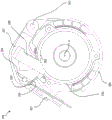
Fig. 10 shows a control element 128 of a chair as a movable unit according to a second embodiment of the invention. The second embodiment is identical to the first embodiment in many respects, and similar or corresponding elements or features are identified by reference numerals increased by 100. Only the differences from the first embodiment will be described below, and other elements and features will be described with reference to the first embodiment.
In the second embodiment, the actuating lever 162 provided for actuating the brake release mechanism, in particular for releasing a brake element of the type described in the first embodiment, is not held in a housing fixed relative to the foot 114, but is rotatable relative to the foot 114. For this purpose, the actuating lever 162 is held pivotably on a lever shaft 163 of a switching ring (switching ring)180, which switching ring 180 is mounted rotatably about a main axis H of the control element 128 on an actuating housing 182. The lever axis 163 and the main axis H extend parallel to each other at a distance. The actuation housing 182 may accordingly be connected to the first portion 130 of the pneumatic spring 122 in a rotational engagement; in particular, an inner surface 184 of the actuation rod housing 182 may be secured to an outer surface 186 of the first portion 130 of the pneumatic spring 122 via a press fit.
As fig. 11 also shows, during the pivoting movement of the actuating lever 162 about the lever shaft 163, the actuating lever 162 moves a pawl body 187 which is provided on the actuating lever 162 and has a toothed pawl 188 into or out of engagement with the outer toothing of the switching sleeve 189. If the pawl 188 and the shift sleeve 189 are engaged, forward movement of the actuating lever 162 in a counterclockwise direction in FIG. 11 subsequently causes a common rotational movement of the actuating lever 162, the shift ring 180, and the shift sleeve 189 about the primary axis H. The first spring 190 is capable of forcing the actuation lever towards the snap fit between the release pawl 188 and the switch sleeve 189 in accordance with its pivotal movement about the lever axis 163, in such a way that the user removes the actuation force pivoting the actuation lever 162 about the lever axis 163.
The pawl 188 may be rigidly configured to the pawl body 187, or alternatively coupled to the pawl body 187 via an overload feature as shown in fig. 11. The overload component is implemented as: the pawl 188 is movably mounted to the pawl body 187 with limited play and is biased toward the switch sleeve 189 by a second spring 191. If an abnormally large force exceeding a predetermined overload force acts between the switch sleeve 189 and the actuating lever 162 in a state where the actuating lever 162 has been pivoted counterclockwise in fig. 11 and the engagement between the pawl 188 and the switch sleeve 189 has been established (for example, if the user causes the actuating lever 162 to hit an obstacle), the play is large enough to resist the force of the second spring 191 to disengage the pawl 188 and the toothed portion of the switch sleeve 189. In this way, damage to the teeth or other parts of the brake release mechanism can be prevented.
The rotational movement of the switching sleeve 189 is converted into a rotational movement of the first control element 142, the first control element 142 being part of a brake release mechanism responsible for releasing the brake by lifting the brake control element in a manner corresponding to the first embodiment described above. In the second embodiment, a second control element 164 is provided, the second control element 164 being configured coaxially with the first control element 142, and the second control element 164 being coupled to the first control element 142 in a rotationally engaged but axially displaceable manner, for example by engaging an axial rib 168 of the second control element 164 in an axially longitudinal opening 170 of the first control element 142. The second control element 164 is in rotational engagement with the switching sleeve 189 or is formed integrally with the switching sleeve 189, respectively.
The mode of operation of the control element 128 differs substantially from that of the first embodiment, in particular in that the actuating lever 162 in the initial position (without actuation) remains stationary relative to the seat (load input), in other words the actuating lever 162 is dragged in rotation when the seat rotates and moves vertically with the seat during the height adjustment of the seat. In particular, this is achieved by the actuating housing 182 carrying the actuating rod 162 being in rotational engagement with the first portion 130 of the pneumatic spring 122, the first portion 130 of the pneumatic spring 122 also being fixed by a seat (although a seat is not shown in fig. 10, reference is made in this regard to, for example, fig. 1 and 2 and also to the seat 12 which can be used analogously to the second embodiment). As is known, the first portion 130 of the pneumatic spring 122 is guided in such a way that it can be displaced and rotated longitudinally in the guide sleeve, in order to be able to adjust the seat height and the possible rotation of the seat. The actuation lever 162 rotates and thus rises with the seat and enables the user to always access the actuation lever 162 at the same position.
Fig. 13 and 14 show a third embodiment of the present invention constituting a modification of the second embodiment. Elements and features that are the same as or correspond to the first or second embodiment are indicated by reference numerals increased by 200 or 100, respectively. Only the differences from the first embodiment or the second embodiment will be described below, and other elements and features will be referred to in the description of the first embodiment or the second embodiment.
In the third embodiment, a Bowden cable arrangement (Bowden cable arrangement) including a traction cable 292 guided in a cable guide 293 replaces the actuation lever 162 of the second embodiment. The cable guide 293 is rigidly provided to the actuation housing 282, the actuation housing 282 being correspondingly formable and fixed to the first part of the pneumatic spring in the manner described above for the second embodiment, in such a way that the actuation housing 282 is rotatable together with the seat. The end 294 of the pull cable 292 is hooked into the claw body 287, and the remaining construction and operation of the claw body 287 corresponds to the claw body 187 of the second embodiment, and in particular the claw body 287 is pivotable about the spindle 263 provided at the switching ring 280. The switching ring 280 is again mounted rotatably about the control axis H to the actuating housing 282 in the manner described for the second embodiment.
A claw 288 mounted to the claw body 287, which is preferably coupled to the claw body 287 via an overload member of the type described in the second embodiment, engages with a snap-in toothing (not shown in fig. 13 and 14) of the switching sleeve 289, in order to finally drag the claw 288 into the continuous pulling movement of the bowden cable. In the actuated position shown in fig. 14, the pull cable 292 then pulls the pawl body 287 forwardly and causes a collective rotational movement of the pawl body 287, the pawl 288, the switching ring 280 and the switching sleeve 289 about the control axis H to release the brake. After the bowden cable arrangement is released, the return spring 295 rotates the shift ring 280 and the pawl body back to their initial positions again.
In a third embodiment, the flexibility of the length and the extension path of the bowden cable can be exploited in order to position an actuating element (not shown) via which the bowden cable arrangement can be actuated, at a suitable position of the chair, which can be easily accessed by the user. For example, the actuating element may be arranged on a seat part.
Otherwise, the operation of the control device of the third embodiment is the same as that of the first embodiment or the second embodiment.
Claims (21)
1. An operational controller, comprising:
a braking body (26) adjustable between a braking position, in which the braking body (26) is in frictional contact with a braking surface (U), and a release position, in which the braking body (26) is pulled back from the braking surface (U);
a load input (22; 122) configured to receive a loading force (K) from a user; and
a load triggering mechanism (42; 142) which converts a loading force (K) acting on the load input (22; 122) into an adjusting movement of the brake body (26) from the release position into the braking position,
characterized in that the operating control further comprises a brake release mechanism which is set to be able to adjust the brake body (26) from the braking position to the release position in a state in which the loading force (K) acts on the load input (22; 122),
the load triggering mechanism comprises a first control element which is movable along a control axis (H) by the action of the loading force (K),
the brake release mechanism further includes: an actuation portion for manual actuation by a user, a second control element (64) movable along the control axis (H) by the actuation portion, and a control portion (68, 70) converting a displacement movement of the second control element into a rotational movement of the first control element.
2. An operating control according to claim 1, characterized in that the operating control further comprises a retraction mechanism (44, 72), which retraction mechanism (44, 72) returns the load triggering mechanism (42; 142) to an initial state if the loading force (K) is removed, in such a way that the load triggering mechanism (42; 142) subsequently converts a loading force (K) newly acting on the load input (22; 122) into an adjusting movement of the brake body (26) from the release position to the braking position.
3. An operation controller according to claim 1 or 2, characterized in that the brake body (26) is moved downwards when moving from the release position to the braking position.
4. An operation controller according to claim 1, characterized in that the first control element is forced in a direction opposite to the loading force (K) by a first elastic member (44).
5. The operating control according to claim 1, characterized in that the first control element transmits the loading force (K) to a brake control element (46), the brake body (26) being formed at the brake control element (46) or the brake body (26) being moved by the brake control element (46).
6. An operation control according to claim 5, characterized in that the brake release mechanism is set to regulate the movement of the brake control element (46) from the braking position to the release position in such a way that the distance between the brake body (26) and the first control element becomes smaller.
7. An operation control according to claim 1, characterized in that the brake body (26) is forced towards the first control element by a second elastic member (48).
8. The operating control of claim 5, wherein the brake release mechanism causes relative rotation between the brake control element (46) and the first control element.
9. The operating controller according to claim 1 or 2, characterized in that the operating controller further comprises a foot, the load input being rotatably mounted with respect to the foot, and the brake release mechanism comprises an actuating portion for manual actuation by a user, the actuating portion (162) being rotatable with the load input with respect to the foot.
10. The operation controller according to claim 9, wherein the actuating portion is a lever, a lever pivot point of which is rotatable with the load input portion relative to the foot portion.
11. An operating controller according to claim 9, characterised in that the actuating part has a cable pulling mechanism comprising a pulling cable guided in a cable guide, in which case the cable guide can be turned together with the load input relative to the foot.
12. An operating control as claimed in claim 9, characterised in that the load input is rotatable relative to the foot about a control axis (H), the operating control having a control element (142) rotatable about the control axis (H) to adjust the brake body from the braking position to the release position when the actuating element is actuated by a user.
13. The operating controller according to claim 1 or 2, characterized in that the operating controller further comprises a length adjustment mechanism having a first part (30; 130) and a second part (32) which can be selectively moved or locked relative to each other for the purpose of adjusting the length, the first part (30; 130) receiving or forming a loading force (K) of the load input and the second part (32) transmitting the loading force (K) forward towards the brake body when locked.
14. Operating control according to claim 13, characterized in that the actuating element is fixed to the first part (30; 130) or that the actuating element is held in rotatable engagement relative to the first part (30; 130).
15. The operation controller according to claim 13, wherein the length adjustment mechanism is a pneumatic piston and cylinder unit or a hydraulic piston and cylinder unit.
16. The operational controller of claim 15, wherein the length adjustment mechanism is a lockable pneumatic spring.
17. Mobile unit (10) having at least one ground engaging member (16) supporting the mobile unit (10) to roll or slide on a ground surface (U), in such a way that the mobile unit (10) can move along the ground surface (U), the mobile unit (10) having an operating control according to any of the preceding claims, set for braking the movement of the mobile unit (10) with respect to the ground surface (U).
18. Mobile unit (10) according to claim 17, characterized in that the mobile unit (10) is a chair traveling with rollers (16), the chair comprising a seat (12) for receiving a loading force (K), a foot (14; 114) provided with at least one roller (16) as a ground engaging component and a load triggering mechanism (42; 142).
19. The mobile unit (10) according to claim 18, characterised in that the chair is an office chair.
20. The mobile unit (10) according to claim 18, wherein the chair further comprises a brake body, brake control elements, brake release mechanism, load input, bearings, retraction mechanism, stops integrated to the operating controller of the chair center post (18), wherein the chair center post (18) provides a supporting connection between the seat (12) and the foot (14; 114).
21. Mobile unit (10) according to any of claims 18 to 20, characterised in that the chair is adjustable between a first configuration as chair and a second configuration as standing aid.
Applications Claiming Priority (4)
| Application Number | Priority Date | Filing Date | Title |
|---|---|---|---|
| DE102016220881 | 2016-10-24 | ||
| DE102016220881.0 | 2016-10-24 | ||
| DE102017208151.1 | 2017-05-15 | ||
| DE102017208151.1A DE102017208151A1 (en) | 2016-10-24 | 2017-05-15 | Adjustment device for actuating a brake and mobile unit, in particular chair |
Publications (2)
| Publication Number | Publication Date |
|---|---|
| CN107975552A CN107975552A (en) | 2018-05-01 |
| CN107975552B true CN107975552B (en) | 2020-12-04 |
Family
ID=61866046
Family Applications (1)
| Application Number | Title | Priority Date | Filing Date |
|---|---|---|---|
| CN201711003778.8A Expired - Fee Related CN107975552B (en) | 2016-10-24 | 2017-10-24 | Operating controller for actuating a brake and mobile unit, in particular a chair |
Country Status (4)
| Country | Link |
|---|---|
| US (1) | US10399383B2 (en) |
| JP (1) | JP7264586B2 (en) |
| CN (1) | CN107975552B (en) |
| DE (1) | DE102017208151A1 (en) |
Families Citing this family (4)
| Publication number | Priority date | Publication date | Assignee | Title |
|---|---|---|---|---|
| DE202018100807U1 (en) | 2018-02-14 | 2018-04-03 | Kinema Gmbh | Seating and support furniture |
| CN109663300A (en) * | 2018-12-11 | 2019-04-23 | 刘风怡 | A kind of sport chest exercise instrument |
| DE102019113240A1 (en) * | 2019-05-20 | 2020-11-26 | Bock 1 Gmbh & Co. Kg | Support component for a seat device |
| US11833105B1 (en) * | 2021-01-24 | 2023-12-05 | Jeffrey C. Roach LLC | Omnidirectional safety walker |
Family Cites Families (18)
| Publication number | Priority date | Publication date | Assignee | Title |
|---|---|---|---|---|
| DE2256336A1 (en) * | 1972-11-16 | 1974-05-22 | Siemens Ag | MOBILE WORK CHAIR, IN PARTICULAR FOR DENTISTS |
| US4434808A (en) * | 1982-06-18 | 1984-03-06 | Burak Mark G | Anti-skid device for a cane, crutch, or the like |
| JPS59150345U (en) * | 1983-03-29 | 1984-10-08 | 朝比奈 冨士男 | Chair |
| US4977914A (en) * | 1989-07-20 | 1990-12-18 | Smerker Charles W | Slip resistent apparatus for canes, crutches and walkers |
| US5392800A (en) * | 1992-09-09 | 1995-02-28 | Sergi; Michael V. | Multi-purpose cane device |
| US5640985A (en) * | 1994-09-21 | 1997-06-24 | Profit Building Services, Inc. | Cane with grasping apparatus |
| JPH09276069A (en) * | 1996-04-17 | 1997-10-28 | Nobuyuki Suzuki | Chair with caster provided with spring |
| JP3037464U (en) * | 1996-11-05 | 1997-05-16 | タカラベルモント株式会社 | Fixing device for surgeon's chair |
| US5740825A (en) * | 1997-02-12 | 1998-04-21 | Brunengo; P. J. | Articulated stair walker |
| US6244656B1 (en) * | 1997-11-21 | 2001-06-12 | Inova Gmbh Technische Entwicklung | Vehicle seat and operation method of such a vehicle seat |
| IT1320403B1 (en) * | 2000-06-06 | 2003-11-26 | Pro Cord Srl | CHAIR WITH SEAT AND BACKREST OSCILLATING IN A SYNCHRONIZED WAY. |
| US7234775B2 (en) * | 2002-06-18 | 2007-06-26 | Hector Serber | Dynamically balanced seat assembly having independently and arcuately movable seat and backrest and method |
| KR100510099B1 (en) * | 2003-05-23 | 2005-08-23 | 주식회사 맨플러스 | Chair enabling to control back side of chair |
| KR100640779B1 (en) * | 2005-06-28 | 2006-11-01 | 주식회사 한국가스스프링 | Gas cylinder for chair with anti-moving function |
| US7552970B2 (en) * | 2006-07-11 | 2009-06-30 | La-Z-Boy Incorporated | Furniture mechanism with tilt cam for multiple position tilt |
| CN201051917Y (en) * | 2007-07-12 | 2008-04-30 | 大连北柳咨询服务有限公司 | Skidproof walking stick |
| IT1400224B1 (en) * | 2010-04-15 | 2013-05-24 | Brevi Srl | CHAIR TRANSFORMABLE IN CHAIR FOR CHILDREN |
| KR20140075536A (en) * | 2012-12-11 | 2014-06-19 | 손하누리 | Crutches to be capable of using indoor and outdoor |
-
2017
- 2017-05-15 DE DE102017208151.1A patent/DE102017208151A1/en active Pending
- 2017-10-23 JP JP2017204231A patent/JP7264586B2/en active Active
- 2017-10-23 US US15/791,215 patent/US10399383B2/en not_active Expired - Fee Related
- 2017-10-24 CN CN201711003778.8A patent/CN107975552B/en not_active Expired - Fee Related
Also Published As
| Publication number | Publication date |
|---|---|
| CN107975552A (en) | 2018-05-01 |
| US20180111417A1 (en) | 2018-04-26 |
| US10399383B2 (en) | 2019-09-03 |
| JP7264586B2 (en) | 2023-04-25 |
| JP2018069058A (en) | 2018-05-10 |
| DE102017208151A1 (en) | 2018-04-26 |
Similar Documents
| Publication | Publication Date | Title |
|---|---|---|
| US8025334B2 (en) | Piece of furniture | |
| US6631952B1 (en) | Automobile seat | |
| JP7264586B2 (en) | Motion control devices for actuating the brakes and movable units, specifically chairs | |
| US8789662B2 (en) | Wheeled carriage with brake lock system | |
| US9913769B2 (en) | Item of seating furniture | |
| US5992815A (en) | Height-adjustable column with a transmitting mechanism | |
| JP7677788B2 (en) | Seats, especially high chairs | |
| US10266270B2 (en) | Locking system for articulating aircraft seat | |
| AU2019336344B2 (en) | A tilt lock mechanism for a tilting wheelchair seat | |
| US11937708B2 (en) | Seating and support furniture | |
| EP3311703A1 (en) | Actuating device for operating a brake and mobile unit, in particular a chair | |
| KR20180125809A (en) | Brake unit for wheelchair | |
| WO2011004178A1 (en) | Braking system for transportation device | |
| WO2013018869A1 (en) | Vehicle seat | |
| US7419219B2 (en) | Adjustable arm assembly for a chair | |
| US20260130509A1 (en) | Chair mechanism | |
| GB2346082A (en) | Height-adjustable seat for a vehicle | |
| KR101982321B1 (en) | Brake unit mounting kit for wheelchair | |
| NL1037497C2 (en) | CHAIR. | |
| KR200426374Y1 (en) | Chair tilt angle adjuster of wheelchair | |
| WO2026105064A1 (en) | Chair mechanism | |
| NL1026111C1 (en) | Trip chair undercarriage with electric seat height adjustment and electric braking device. | |
| EP1980445B1 (en) | Height-adjustable footrest | |
| US20070095612A1 (en) | Child safety stool | |
| JP2006198238A (en) | Braking apparatus for wheelchair |
Legal Events
| Date | Code | Title | Description |
|---|---|---|---|
| PB01 | Publication | ||
| PB01 | Publication | ||
| SE01 | Entry into force of request for substantive examination | ||
| SE01 | Entry into force of request for substantive examination | ||
| GR01 | Patent grant | ||
| GR01 | Patent grant | ||
| CF01 | Termination of patent right due to non-payment of annual fee | ||
| CF01 | Termination of patent right due to non-payment of annual fee |
Granted publication date: 20201204 |