CN1056373C - Preparation method of fluoroalkoxybenzylamino derivatives of nitrogen-containing heterocyclic compounds - Google Patents
Preparation method of fluoroalkoxybenzylamino derivatives of nitrogen-containing heterocyclic compounds Download PDFInfo
- Publication number
- CN1056373C CN1056373C CN92104778A CN92104778A CN1056373C CN 1056373 C CN1056373 C CN 1056373C CN 92104778 A CN92104778 A CN 92104778A CN 92104778 A CN92104778 A CN 92104778A CN 1056373 C CN1056373 C CN 1056373C
- Authority
- CN
- China
- Prior art keywords
- formula
- compound
- group
- phenyl
- trifluoro
- Prior art date
- Legal status (The legal status is an assumption and is not a legal conclusion. Google has not performed a legal analysis and makes no representation as to the accuracy of the status listed.)
- Expired - Fee Related
Links
Classifications
-
- C—CHEMISTRY; METALLURGY
- C07—ORGANIC CHEMISTRY
- C07D—HETEROCYCLIC COMPOUNDS
- C07D453/00—Heterocyclic compounds containing quinuclidine or iso-quinuclidine ring systems, e.g. quinine alkaloids
- C07D453/02—Heterocyclic compounds containing quinuclidine or iso-quinuclidine ring systems, e.g. quinine alkaloids containing not further condensed quinuclidine ring systems
-
- C—CHEMISTRY; METALLURGY
- C07—ORGANIC CHEMISTRY
- C07D—HETEROCYCLIC COMPOUNDS
- C07D205/00—Heterocyclic compounds containing four-membered rings with one nitrogen atom as the only ring hetero atom
- C07D205/02—Heterocyclic compounds containing four-membered rings with one nitrogen atom as the only ring hetero atom not condensed with other rings
-
- A—HUMAN NECESSITIES
- A61—MEDICAL OR VETERINARY SCIENCE; HYGIENE
- A61P—SPECIFIC THERAPEUTIC ACTIVITY OF CHEMICAL COMPOUNDS OR MEDICINAL PREPARATIONS
- A61P1/00—Drugs for disorders of the alimentary tract or the digestive system
-
- A—HUMAN NECESSITIES
- A61—MEDICAL OR VETERINARY SCIENCE; HYGIENE
- A61P—SPECIFIC THERAPEUTIC ACTIVITY OF CHEMICAL COMPOUNDS OR MEDICINAL PREPARATIONS
- A61P11/00—Drugs for disorders of the respiratory system
-
- A—HUMAN NECESSITIES
- A61—MEDICAL OR VETERINARY SCIENCE; HYGIENE
- A61P—SPECIFIC THERAPEUTIC ACTIVITY OF CHEMICAL COMPOUNDS OR MEDICINAL PREPARATIONS
- A61P19/00—Drugs for skeletal disorders
-
- A—HUMAN NECESSITIES
- A61—MEDICAL OR VETERINARY SCIENCE; HYGIENE
- A61P—SPECIFIC THERAPEUTIC ACTIVITY OF CHEMICAL COMPOUNDS OR MEDICINAL PREPARATIONS
- A61P21/00—Drugs for disorders of the muscular or neuromuscular system
-
- A—HUMAN NECESSITIES
- A61—MEDICAL OR VETERINARY SCIENCE; HYGIENE
- A61P—SPECIFIC THERAPEUTIC ACTIVITY OF CHEMICAL COMPOUNDS OR MEDICINAL PREPARATIONS
- A61P25/00—Drugs for disorders of the nervous system
-
- A—HUMAN NECESSITIES
- A61—MEDICAL OR VETERINARY SCIENCE; HYGIENE
- A61P—SPECIFIC THERAPEUTIC ACTIVITY OF CHEMICAL COMPOUNDS OR MEDICINAL PREPARATIONS
- A61P25/00—Drugs for disorders of the nervous system
- A61P25/18—Antipsychotics, i.e. neuroleptics; Drugs for mania or schizophrenia
-
- A—HUMAN NECESSITIES
- A61—MEDICAL OR VETERINARY SCIENCE; HYGIENE
- A61P—SPECIFIC THERAPEUTIC ACTIVITY OF CHEMICAL COMPOUNDS OR MEDICINAL PREPARATIONS
- A61P25/00—Drugs for disorders of the nervous system
- A61P25/20—Hypnotics; Sedatives
-
- A—HUMAN NECESSITIES
- A61—MEDICAL OR VETERINARY SCIENCE; HYGIENE
- A61P—SPECIFIC THERAPEUTIC ACTIVITY OF CHEMICAL COMPOUNDS OR MEDICINAL PREPARATIONS
- A61P25/00—Drugs for disorders of the nervous system
- A61P25/24—Antidepressants
-
- A—HUMAN NECESSITIES
- A61—MEDICAL OR VETERINARY SCIENCE; HYGIENE
- A61P—SPECIFIC THERAPEUTIC ACTIVITY OF CHEMICAL COMPOUNDS OR MEDICINAL PREPARATIONS
- A61P25/00—Drugs for disorders of the nervous system
- A61P25/26—Psychostimulants, e.g. nicotine, cocaine
-
- A—HUMAN NECESSITIES
- A61—MEDICAL OR VETERINARY SCIENCE; HYGIENE
- A61P—SPECIFIC THERAPEUTIC ACTIVITY OF CHEMICAL COMPOUNDS OR MEDICINAL PREPARATIONS
- A61P29/00—Non-central analgesic, antipyretic or antiinflammatory agents, e.g. antirheumatic agents; Non-steroidal antiinflammatory drugs [NSAID]
-
- A—HUMAN NECESSITIES
- A61—MEDICAL OR VETERINARY SCIENCE; HYGIENE
- A61P—SPECIFIC THERAPEUTIC ACTIVITY OF CHEMICAL COMPOUNDS OR MEDICINAL PREPARATIONS
- A61P37/00—Drugs for immunological or allergic disorders
-
- A—HUMAN NECESSITIES
- A61—MEDICAL OR VETERINARY SCIENCE; HYGIENE
- A61P—SPECIFIC THERAPEUTIC ACTIVITY OF CHEMICAL COMPOUNDS OR MEDICINAL PREPARATIONS
- A61P37/00—Drugs for immunological or allergic disorders
- A61P37/08—Antiallergic agents
-
- A—HUMAN NECESSITIES
- A61—MEDICAL OR VETERINARY SCIENCE; HYGIENE
- A61P—SPECIFIC THERAPEUTIC ACTIVITY OF CHEMICAL COMPOUNDS OR MEDICINAL PREPARATIONS
- A61P9/00—Drugs for disorders of the cardiovascular system
-
- C—CHEMISTRY; METALLURGY
- C07—ORGANIC CHEMISTRY
- C07C—ACYCLIC OR CARBOCYCLIC COMPOUNDS
- C07C45/00—Preparation of compounds having >C = O groups bound only to carbon or hydrogen atoms; Preparation of chelates of such compounds
- C07C45/44—Preparation of compounds having >C = O groups bound only to carbon or hydrogen atoms; Preparation of chelates of such compounds by reduction and hydrolysis of nitriles
-
- C—CHEMISTRY; METALLURGY
- C07—ORGANIC CHEMISTRY
- C07C—ACYCLIC OR CARBOCYCLIC COMPOUNDS
- C07C45/00—Preparation of compounds having >C = O groups bound only to carbon or hydrogen atoms; Preparation of chelates of such compounds
- C07C45/51—Preparation of compounds having >C = O groups bound only to carbon or hydrogen atoms; Preparation of chelates of such compounds by pyrolysis, rearrangement or decomposition
- C07C45/511—Preparation of compounds having >C = O groups bound only to carbon or hydrogen atoms; Preparation of chelates of such compounds by pyrolysis, rearrangement or decomposition involving transformation of singly bound oxygen functional groups to >C = O groups
- C07C45/513—Preparation of compounds having >C = O groups bound only to carbon or hydrogen atoms; Preparation of chelates of such compounds by pyrolysis, rearrangement or decomposition involving transformation of singly bound oxygen functional groups to >C = O groups the singly bound functional group being an etherified hydroxyl group
-
- C—CHEMISTRY; METALLURGY
- C07—ORGANIC CHEMISTRY
- C07C—ACYCLIC OR CARBOCYCLIC COMPOUNDS
- C07C45/00—Preparation of compounds having >C = O groups bound only to carbon or hydrogen atoms; Preparation of chelates of such compounds
- C07C45/61—Preparation of compounds having >C = O groups bound only to carbon or hydrogen atoms; Preparation of chelates of such compounds by reactions not involving the formation of >C = O groups
- C07C45/67—Preparation of compounds having >C = O groups bound only to carbon or hydrogen atoms; Preparation of chelates of such compounds by reactions not involving the formation of >C = O groups by isomerisation; by change of size of the carbon skeleton
- C07C45/673—Preparation of compounds having >C = O groups bound only to carbon or hydrogen atoms; Preparation of chelates of such compounds by reactions not involving the formation of >C = O groups by isomerisation; by change of size of the carbon skeleton by change of size of the carbon skeleton
-
- C—CHEMISTRY; METALLURGY
- C07—ORGANIC CHEMISTRY
- C07C—ACYCLIC OR CARBOCYCLIC COMPOUNDS
- C07C45/00—Preparation of compounds having >C = O groups bound only to carbon or hydrogen atoms; Preparation of chelates of such compounds
- C07C45/61—Preparation of compounds having >C = O groups bound only to carbon or hydrogen atoms; Preparation of chelates of such compounds by reactions not involving the formation of >C = O groups
- C07C45/67—Preparation of compounds having >C = O groups bound only to carbon or hydrogen atoms; Preparation of chelates of such compounds by reactions not involving the formation of >C = O groups by isomerisation; by change of size of the carbon skeleton
- C07C45/68—Preparation of compounds having >C = O groups bound only to carbon or hydrogen atoms; Preparation of chelates of such compounds by reactions not involving the formation of >C = O groups by isomerisation; by change of size of the carbon skeleton by increase in the number of carbon atoms
- C07C45/70—Preparation of compounds having >C = O groups bound only to carbon or hydrogen atoms; Preparation of chelates of such compounds by reactions not involving the formation of >C = O groups by isomerisation; by change of size of the carbon skeleton by increase in the number of carbon atoms by reaction with functional groups containing oxygen only in singly bound form
- C07C45/71—Preparation of compounds having >C = O groups bound only to carbon or hydrogen atoms; Preparation of chelates of such compounds by reactions not involving the formation of >C = O groups by isomerisation; by change of size of the carbon skeleton by increase in the number of carbon atoms by reaction with functional groups containing oxygen only in singly bound form being hydroxy groups
-
- C—CHEMISTRY; METALLURGY
- C07—ORGANIC CHEMISTRY
- C07C—ACYCLIC OR CARBOCYCLIC COMPOUNDS
- C07C47/00—Compounds having —CHO groups
- C07C47/52—Compounds having —CHO groups bound to carbon atoms of six—membered aromatic rings
- C07C47/575—Compounds having —CHO groups bound to carbon atoms of six—membered aromatic rings containing ether groups, groups, groups, or groups
-
- C—CHEMISTRY; METALLURGY
- C07—ORGANIC CHEMISTRY
- C07D—HETEROCYCLIC COMPOUNDS
- C07D211/00—Heterocyclic compounds containing hydrogenated pyridine rings, not condensed with other rings
- C07D211/04—Heterocyclic compounds containing hydrogenated pyridine rings, not condensed with other rings with only hydrogen or carbon atoms directly attached to the ring nitrogen atom
- C07D211/06—Heterocyclic compounds containing hydrogenated pyridine rings, not condensed with other rings with only hydrogen or carbon atoms directly attached to the ring nitrogen atom having no double bonds between ring members or between ring members and non-ring members
- C07D211/36—Heterocyclic compounds containing hydrogenated pyridine rings, not condensed with other rings with only hydrogen or carbon atoms directly attached to the ring nitrogen atom having no double bonds between ring members or between ring members and non-ring members with hetero atoms or with carbon atoms having three bonds to hetero atoms with at the most one bond to halogen, e.g. ester or nitrile radicals, directly attached to ring carbon atoms
- C07D211/56—Nitrogen atoms
Landscapes
- Chemical & Material Sciences (AREA)
- Organic Chemistry (AREA)
- Health & Medical Sciences (AREA)
- Chemical Kinetics & Catalysis (AREA)
- Veterinary Medicine (AREA)
- Bioinformatics & Cheminformatics (AREA)
- Public Health (AREA)
- General Chemical & Material Sciences (AREA)
- Medicinal Chemistry (AREA)
- Nuclear Medicine, Radiotherapy & Molecular Imaging (AREA)
- Engineering & Computer Science (AREA)
- Pharmacology & Pharmacy (AREA)
- Life Sciences & Earth Sciences (AREA)
- Animal Behavior & Ethology (AREA)
- General Health & Medical Sciences (AREA)
- Neurology (AREA)
- Biomedical Technology (AREA)
- Neurosurgery (AREA)
- Psychiatry (AREA)
- Pulmonology (AREA)
- Immunology (AREA)
- Pain & Pain Management (AREA)
- Physical Education & Sports Medicine (AREA)
- Heart & Thoracic Surgery (AREA)
- Cardiology (AREA)
- Rheumatology (AREA)
- Anesthesiology (AREA)
- Orthopedic Medicine & Surgery (AREA)
- Pharmaceuticals Containing Other Organic And Inorganic Compounds (AREA)
- Hydrogenated Pyridines (AREA)
- Organic Low-Molecular-Weight Compounds And Preparation Thereof (AREA)
- Nitrogen Condensed Heterocyclic Rings (AREA)
- Pyridine Compounds (AREA)
- Acyclic And Carbocyclic Compounds In Medicinal Compositions (AREA)
- Indole Compounds (AREA)
- Plural Heterocyclic Compounds (AREA)
- Nitrogen And Oxygen Or Sulfur-Condensed Heterocyclic Ring Systems (AREA)
- Quinoline Compounds (AREA)
- Other In-Based Heterocyclic Compounds (AREA)
- Pyrrole Compounds (AREA)
Abstract
The present invention relates to novel fluoroalkoxybenzylamino derivatives of nitrogen-containing heterocyclic compounds, and more particularly to compounds of formula I, wherein Q, X1、X2And X3The definition of (A) is as described in the specification. The novel compounds of the present invention are useful in the treatment of inflammatory and central nervous system diseases and other disorders.
Description
The present invention relates to the fluorinated alkoxy-amino-benzyl derivative of new nitrogen heterocyclic ring compounds, comprise the pharmaceutical composition of this compounds, this compounds is in treatment and preventing inflammation and central nervous system disease, and the application in the multiple other diseases.Pharmaceutical active compounds of the present invention is a P material receptor antagonist.The invention still further relates to the new intermediate that is used for synthetic this class P material acceptor anti-antagonistic agent.
The P material is naturally occurring 11 peptides that belong to tachykinin family in the peptide class; The name of tachykinin comes from their rapid hormesiss to smooth muscle tissue.More particularly, the P material is a kind of neuropeptide with pharmacologically active, and it results from (separate at first and obtain) in the mammalian body from intestines, and characteristic amino-acid sequence, and this order is described in United States Patent (USP) 4,680 by people such as D.F.Veber, in No. 283.The physiopathology that has fully confirmed P material and other tachykinins and numerous disease in the present technique field has widely gets in touch.For example, confirmation P material participation pain or migrainous mediation recently (referring to: B.E.B.Sandberg et al., Journal of MedicinalChemistry, Vol.25, P.1009 (1982)), and central nervous system disease (as: anxiety and schizophrenia), respiratory tract disease and inflammation (as: asthma and rheumatoid arthritis), rheumatosis (as: muscular rheumatism), and gastrointestinal dysfunction and gastrointestinal tract disease (as: ulcerative colitis and Crohn disease) etc. (referring to: D.Regoli in " Trends in Oluster Headache; " volumes such as F.Sicuteri, Elsevier Scientific Publishers, Amsterdam, 1987, PP.85-95).
In order more effectively to treat above-mentioned disease, people have made some effort so that the antagonist of P material and other tachykinins to be provided recently.Therefore, several these class antagonists of up to the present being narrated generally all have the character that is similar to peptide, and therefore, from metabolic viewpoint, they are too unstable when it specifically is used as the agent of treatment treatment of diseases.In other words, non-peptide antagonist of the present invention does not have this shortcoming, and they are stablized more than said medicine from metabolic viewpoint.
The quinuclidine derivatives and the allied compound that present P material receptor antagonist activity range PCT patent application PCT/US 89/05338 that submitted on November 20th, 1989 and the U.S. Patent application of submitting to July 23 nineteen ninety 557,442, above-mentioned two applications are transferred the possession of with the application.Similar compounds ranges PCT patent application PCT/US 91/02853 that submitted on April 25th, 1991 and the PCT patent application PCT/US 91/03369 that submitted on May 14th, 1991.These two applications are also transferred the possession of with the application.
Piperidine derivative as the P substance antagonist ranges the U.S. Patent application of submitting to November 28 nineteen ninety 619 with relevant nitrogen-containing heterocycle compound, 361 and the U.S. Patent application 590 submitted to September 28 nineteen ninety, 423, these two applications are transferred the possession of with the application.
The present invention relates to the following formula I compound:
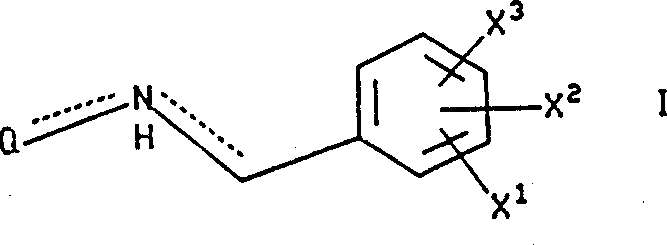 X in the formula
1Be hydrogen, by any (C that replaces of 1 to 3 fluorine atom
1-10) alkoxyl group or the (C that replaces arbitrarily by 1 to 3 fluorine atom
1-10) alkyl;
X in the formula
1Be hydrogen, by any (C that replaces of 1 to 3 fluorine atom
1-10) alkoxyl group or the (C that replaces arbitrarily by 1 to 3 fluorine atom
1-10) alkyl;
X
2And X
3Be independently selected from hydrogen, halogen, nitro is by any (C that replaces of 1 to 3 fluorine atom
1-10) alkyl, by any (C that replaces of 1 to 3 fluorine atom
1-10) alkoxyl group, trifluoromethyl, hydroxyl, phenyl, cyano group, amino, (C
1-6) alkylamino, two-(C
1-C
6) alkylamino,
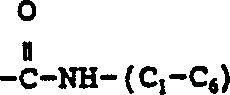 Alkyl, (C
1-C
6) alkyl
Alkyl, (C
1-C
6) alkyl
 Alkyl, hydroxyl (C
1-C
4) alkyl, (C
1-C
4) alkoxyl group (C
1-C
4) alkyl,
Alkyl, hydroxyl (C
1-C
4) alkyl, (C
1-C
4) alkoxyl group (C
1-C
4) alkyl,
 With
Alkyl; Q is the following formula group:
With
Alkyl; Q is the following formula group:
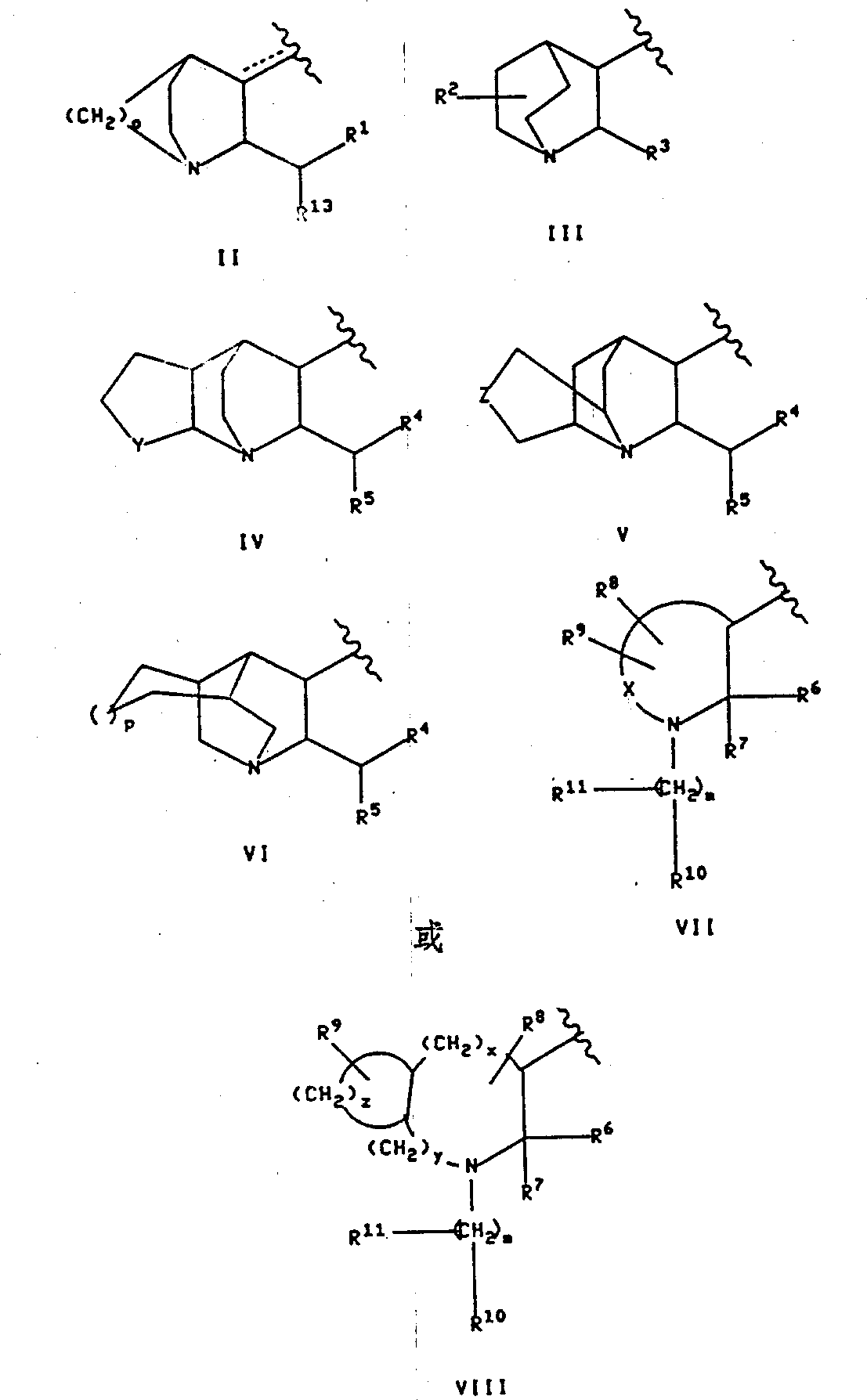 R in the formula
1Be to be selected from furyl, thienyl, pyridyl, indyl, xenyl and phenyl groups, these groups can at random be replaced by 1 or 2 substituting group, and described substituting group is independently selected from halogen, by any (C that replaces of 1 to 3 fluorine atom
1-10) alkyl, by any (C that replaces of 1 to 3 fluorine atom
1-10) alkoxyl group, carboxyl, carbobenzoxy-(Cbz) and (C
1-3) alkoxy carbonyl;
R in the formula
1Be to be selected from furyl, thienyl, pyridyl, indyl, xenyl and phenyl groups, these groups can at random be replaced by 1 or 2 substituting group, and described substituting group is independently selected from halogen, by any (C that replaces of 1 to 3 fluorine atom
1-10) alkyl, by any (C that replaces of 1 to 3 fluorine atom
1-10) alkoxyl group, carboxyl, carbobenzoxy-(Cbz) and (C
1-3) alkoxy carbonyl;
R
13Be selected from (C
3-4) branched-chain alkyl, (C
5-6) branched-chain alkenyl, (C
5-7) cycloalkyl and aforementioned R
1Definition in the group enumerated;
R
2Be hydrogen or (C
1-6) alkyl;
R
3Be phenyl, xenyl, naphthyl, pyridyl, diphenyl-methyl, thienyl or furyl, and R
3Can at random be replaced by 1 to 3 substituting group, described substituting group is independently selected from halogen, by any (C that replaces of 1 to 3 fluorine atom
1-10) alkyl and the (C that replaces arbitrarily by 1 to 3 fluorine atom
1-10) alkoxyl group;
Y is (CH
2)
l, wherein l is 1 to 3 integer, perhaps Y is the following formula group

Z is an oxygen, sulphur, amino, (C
1-3) alkylamino or (CH
2)
n, wherein n is 0,1 or 2;
O is 2 or 3;
P is 0 or 1;
R
4Be furyl, thienyl, pyridyl, indyl, xenyl, or phenyl, they can at random be replaced by 1 or 2 substituting group, and described substituting group is independently selected from halogen, by 1 to 3 (C that fluorine atom at random replaces
1-10) alkyl, by 1 to 3 (C that fluorine atom at random replaces
1-10) alkoxyl group, carboxyl, (C
1-3) carbalkoxy and carbobenzoxy-(Cbz);
R
5Be the thienyl that replaces arbitrarily by 1 or 2 substituting group, xenyl or phenyl, described substituting group is independently selected from halogen, by 1 to 3 (C that fluorine atom at random replaces
1-10) alkyl and by 1 to 3 (C that fluorine atom at random replaces
1-10) alkoxyl group;
Dotted line among in two dotted lines in the formula 1 each and the formula II is represented a two arbitrarily key, and this pair key can at random exist when Q is formula II group;
X is (OH
2)
q, wherein q is 1 to 6 integer, and, wherein at (CH
2)
qIn any one carbon-to-carbon singly-bound can be at random substitute by carbon-to-carbon double bond, wherein, said (CH
2)
qIn any one carbon atom can be at random by R
8Replace, wherein, said (CH
2)
qIn any one carbon atom can be at random by R
9Replace;
M is 0 to 8 integer, (CH
2)
mIn any one carbon-to-carbon singly-bound can be at random substitute said (CH by carbon-to-carbon double bond or carbon-to-carbon three key
2)
mIn any one carbon atom can be by R
11Replace arbitrarily;
R
6Be to be selected from hydrogen, (C
1-6) the straight or branched alkyl, one of them carbon atom can be at random by nitrogen, oxygen or sulphur alternate (C
3-7) cycloalkyl; Be selected from xenyl, phenyl, the aryl of indanyl and naphthyl; Be selected from thienyl, furyl, pyridyl, thiazolyl, isothiazolyl , oxazolyl , isoxazolyl, triazolyl, the heteroaryl of tetrazyl and quinolyl; Phenyl (C
2-6) alkyl, diphenyl-methyl and benzyl, wherein, each described aryl and heteroaryl, and said benzyl, phenyl (C
2-6) phenyl moiety in alkyl and the diphenyl-methyl can at random replace by one or more substituting groups, described substituting group is independently selected from halogen, the nitro, (C that is replaced arbitrarily by 1 to 3 fluorine atom
1-10) alkyl, by any (C that replaces of 1 to 3 fluorine atom
1-10) alkoxyl group, amino, hydroxyl-(C
1-6) alkyl, (C
1-6) alkoxyl group-(C
1-6) alkyl, (C
1-C
6)-alkoxyl group, (C
1-C
6) alkyl
 (C
1-C
6) alkyl
(C
1-C
6) alkyl
 (C
1-C
6) alkyl, (C
1-C
6) alkyl
(C
1-C
6) alkyl, (C
1-C
6) alkyl
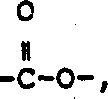 (C
1-C
6) alkyl
(C
1-C
6) alkyl
 (C
1-C
6) alkyl-O-, (C
1-C
6) alkyl
(C
1-C
6) alkyl-O-, (C
1-C
6) alkyl
 Alkyl
Alkyl
 (C
1-C
6) alkyl-, two-(C
1-C
6) alkylamino,
(C
1-C
6) alkyl-, two-(C
1-C
6) alkylamino,
 Alkyl, (C
1-C
6)-alkyl
Alkyl, (C
1-C
6)-alkyl
 Alkyl,
With
Alkyl,
With
 Alkyl; Wherein, a phenyl in the described diphenyl-methyl can be at random by naphthyl, thienyl, and furyl or pyridyl substitute;
R
7Be hydrogen, phenyl or (C
1-6) alkyl;
Perhaps R
6And R
7Form the saturated carbon ring that contains 3 to 7 carbon atoms with the carbon that is connected with them, wherein, one of said carbon atom can be at random by oxygen, and nitrogen or sulphur substitute;
R
8And R
9Be selected from hydrogen independently of one another, hydroxyl, halogen, amino, oxo (=O), cyano group, hydroxyl-(C
1-6) alkyl, (C
1-6) alkoxyl group-(C
1-6) alkyl, (C
1-6) alkylamino, two-(C
1-6) alkylamino, (C
1-6) alkoxyl group, (C
1-C
6) alkyl
 , (C
1-C
6) alkyl
Alkyl, (C
1-C
6) alkyl
, (C
1-C
6) alkyl
Alkyl, (C
1-C
6) alkyl
 , (C
1-C
6) alkyl
, (C
1-C
6) alkyl
 Alkyl-O-, (C
1-C
6) alkyl
, (C
1-C
6) alkyl
Alkyl-and preamble at R
6Definition in the group that provides; R
10Be
Alkyl-O-, (C
1-C
6) alkyl
, (C
1-C
6) alkyl
Alkyl-and preamble at R
6Definition in the group that provides; R
10Be
 , NHOH
2R
12, NHSO
2R
12Perhaps preamble is at R
6, R
8And R
9One of group that provides in the definition of any one;
, NHOH
2R
12, NHSO
2R
12Perhaps preamble is at R
6, R
8And R
9One of group that provides in the definition of any one;
R
11Be oximido (=NOH) or preamble at R
6, R
8And R
9One of group that provides in the definition of any one;
R
12Be (C
1-6) alkyl, hydrogen, phenyl (C
1-6) alkyl, or by (C
1-6) any phenyl that replaces of alkyl;
The prerequisite of above-mentioned definition is: (a) when m is 0, and R
11Do not exist, (b) R
8, R
9, R
10Or R
11All cannot be with the carbon atom and R that it connected
7Form ring, (c) when Q is formula VIII group, R
8And R
9Cannot be connected on the same carbon atom, (d) work as R
8And R
9When being connected on the same carbon atom, so or R
8And R
9Be selected from hydrogen independently of one another, fluorine, (C
1-6) alkyl, hydroxyl-(C
1-6) alkyl and (C
1-6) alkoxyl group-(C
1-6) alkyl, perhaps R
8And R
9Form (C with the carbon that is connected with them
3-6) saturated carbon ring, the nitrogenous ring that this ring is connected with them forms spirocyclic compound, (e) nitrogen among the formula I cannot be connected with substituted benzyl with the Q that is connected with it by double-stranded simultaneously, (f) when Q be formula VII group, q is 2, R
8And R
9In careless which be 5-hydroxyl-(C
1-6) alkyl or 5-(C
1-6) alkoxyl group-(C
1-6) during alkyl, R so
8And R
9In another then be 5-(C
1-3) alkyl or hydrogen; (g) when Q be formula VII group, q is 2 o'clock, R
8Or R
9All not 4-hydroxyl (C
1-6) alkyl or 4-(C
1-6) alkoxyl group-(C
1-6) alkyl, if (h) X
1, X
2And X
3All not fluoroalkyl, so, R
1, R
3, R
4, R
5, R
6, R
7And R
13In have at least one to be the aryl that replaces by fluoroalkyl.
The invention still further relates to the pharmaceutically acceptable acid additive salt and the alkali salt of formula I compound.The acid that is used to prepare the pharmaceutically acceptable acid additive salt of the aforementioned basic cpd of the present invention is those acid that can form the non-toxic acid additive salt, and so-called non-toxic acid additive salt is and contains pharmacology and can accept anionic salt, for example, hydrochloride, hydrobromate, hydriodate, nitrate, vitriol, hydrosulfate, phosphoric acid salt, acid phosphate, acetate, lactic acid salt, Citrate trianion, citric acid hydrogen salt, tartrate, bitartrate, succinate, maleate, fumarate, gluconate, saccharate, benzoate, mesylate, esilate, benzene sulfonate, tosilate and pamoate are (promptly, 1,1 '-methylene radical two-(2-hydroxyl-3-naphthoic acid) salt).
The term " halogen " that this paper adopts except that specializing, comprises chlorine, fluorine, bromine and iodine.
The term that this paper adopted " alkyl " except that specializing, comprises having straight chain, the saturated monovalence alkyl of side chain or cyclisation part or its combination.
The term " one or more substituting groups " that this paper adopts calculates with the number that can become key position, comprises 1 to most probable number MPN purpose substituting group.
In preferred formula I compound, R
1, R
4, R
5And R
7Be phenyl, R
2Be hydrogen; R
3By chlorine, fluorine, replace (C arbitrarily by 1 to 3 fluorine atom
1-6) alkyl or the (C that replaces arbitrarily by 1 to 3 fluorine atom
1-6) any phenyl that replaces of alkoxyl group, m is 0, n is 3 or 4.
Concrete preferred formula I compound is:
(2S, 3S)-3-(the 5-tertiary butyl-2-methoxy-benzyl) amino-2-(3-Trifluoromethoxyphen-l) piperidines;
(2S, 3S)-3-(2-isopropoxy-5-trifluoro-methoxybenzyl) amino-2-Phenylpiperidine;
(2S, 3S)-3-(2-oxyethyl group-5-trifluoro-methoxybenzyl) amino-2-Phenylpiperidine;
(2S, 3S)-3-(2-methoxyl group-5-trifluoro-methoxybenzyl) amino-2-Phenylpiperidine;
(2S, 3S)-3-(the 5-tertiary butyl-2-trifluoro-methoxybenzyl) amino-2-Phenylpiperidine;
2-(diphenyl-methyl)-N-(2-methoxyl group-5-Trifluoromethoxyphen-l) methyl isophthalic acid-azabicyclo (2.2.2.) octane-3-amine;
(2S, 3S)-3-(5-chloro-2-(2,2, the 2-trifluoro ethoxy) benzyl) amino-2-Phenylpiperidine;
(2S, 3S)-3-(the 5-tertiary butyl-2-trifluoro-methoxybenzyl) amino-2-Phenylpiperidine;
(2S, 3S)-3-(2-isopropoxy-5-trifluoro-methoxybenzyl) amino-2-Phenylpiperidine;
(2S, 3S)-3-(2-difluoro-methoxy-5-trifluoro-methoxybenzyl) amino-2-Phenylpiperidine;
(2S, 3S)-2-phenyl-3-2-(2,2,2-trifluoro ethoxy benzyl) amino piperidine;
(2S, 3S)-2-phenyl-3-(2-trifluoro-methoxybenzyl)) amino piperidine.
Other formulas I compound is:
3-(N-(2-methoxyl group-5-trifluoro-methoxybenzyl) amino)-5,5-dimethyl-2-Phenylpyrrolidine;
3-(N-(2-methoxyl group-5-trifluoro-methoxybenzyl) amino)-4,5-dimethyl-2-Phenylpyrrolidine;
3-(2-encircles propoxy--5-trifluoro-methoxybenzyl) amino-2-Phenylpiperidine;
3-(2-cyclo propyl methoxy-5-trifluoro-methoxybenzyl) amino-2-Phenylpiperidine;
3-(2-difluoro-methoxy-5-phenylbenzyl) amino-2-Phenylpiperidine;
3-(5-cyclo propyl methoxy-2-difluoro-methoxy benzyl) amino-2-Phenylpiperidine;
3-(2-methoxy-benzyl) amino-2-(3-Trifluoromethoxyphen-l) piperidines;
3-(2-methoxyl group-5-trifluoro-methoxybenzyl) amino-2-(3-Trifluoromethoxyphen-l) piperidines;
2-phenyl-3-(5-n-propyl-2-trifluoro-methoxybenzyl) amino piperidine;
3-(5-sec.-propyl-2-trifluoro-methoxybenzyl) amino-2-Phenylpiperidine;
3-(5-ethyl-2-trifluoro-methoxybenzyl) amino-2-Phenylpiperidine;
3-(5-sec-butyl-2-trifluoro-methoxybenzyl) hydrogen base-2-Phenylpiperidine;
3-(5-difluoro-methoxy-2-methoxy-benzyl) amino-2-Phenylpiperidine;
3-(2-methoxyl group-5-trifluoro-methoxybenzyl) amino-2-Phenylpyrrolidine;
3-(2-methoxyl group-5-trifluoro-methoxybenzyl) amino-high piperidines of 2-phenyl;
2-diphenyl-methyl-3-(2-methoxyl group-5-trifluoro-methoxybenzyl) amino-pyrrolidine;
The amino high piperidines of 2-diphenyl-methyl-3-(2-methoxyl group-5-trifluoro-methoxybenzyl);
3-(2,5-two-(2,2, the 2-trifluoro ethoxy) benzyl) amino-2-Phenylpiperidine;
2-phenyl-3-(3-trifluoro-methoxybenzyl) amino piperidine;
2-diphenyl-methyl-3-(2-methoxyl group-5-trifluoro-methoxybenzyl) amino piperidine;
1-(5,6-difluoro hexyl)-3-(2-methoxyl group-5-trifluoro-methoxybenzyl) amino-2-Phenylpiperidine;
1-(6-hydroxyl hexyl)-3-(2-methoxyl group-5-trifluoro-methoxybenzyl) amino-2-Phenylpiperidine;
3-phenyl-4-(2-methoxyl group-5-trifluoro-methoxybenzyl) amino-2-azabicyclo (3.3.0) octane;
4-diphenyl-methyl-5-(2-methoxyl group-5-trifluoro-methoxybenzyl) amino-3-azabicyclo (4.1.0) heptane;
4-(2-methoxyl group-5-trifluoro-methoxybenzyl) amino-3-phenyl-2-azabicyclo (4.4.0) decane;
2-phenyl-3-(2-methoxyl group-5-trifluoro-methoxybenzyl) amino quinine ring;
8-diphenyl-methyl-N-(2-methoxyl group-5-trifluoro-methoxybenzyl)-9-aza-tricycle (4.3.1.0
4,9) decane-7-amine;
9-diphenyl-methyl-N-(2-methoxyl group-5-trifluoro-methoxybenzyl)-10-aza-tricycle (4.4.1.0
5,10) undecane-8-amine;
9-diphenyl-methyl-N-(2-methoxyl group-5-trifluoro-methoxybenzyl)-3-thia-10-aza-tricycle (4.4.1.0
5,10) undecane-8-amine;
8-diphenyl-methyl-N-(2-methoxyl group-5-trifluoro-methoxybenzyl)-9-aza-tricycle (4.3.1.0
4,9) decane-7-amine;
5,6-pentamethylene-2-diphenyl-methyl-3-(2-methoxyl group-5-trifluoro-methoxybenzyl) amino quinine ring;
5,6-trimethylene-2-diphenyl-methyl-3-(2-methoxyl group-5-trifluoro-methoxybenzyl) amino quinine ring;
9-diphenyl-methyl-N-((2-methoxyl group-5-Trifluoromethoxyphen-l) methyl)-3-oxa--10-aza-tricycle (4.4.1.0
5,10) undecane-3-amine;
8-diphenyl-methyl-N-((2-methoxyl group-5-Trifluoromethoxyphen-l) methyl)-7-aza-tricycle (4.4.1.0
5,10) undecane-9-amine; With
2-diphenyl-methyl-N-((2-methoxyl group-5-Trifluoromethoxyphen-l) methyl)-1-azabicyclo (3.2.2) nonane-3-amine.
The invention still further relates to following formula: compound
 R in the formula
14Be trifluoromethoxy or difluoro-methoxy, R
15Be (C
1-4) alkyl, R
16Be difluoro-methoxy or (C
1-4) alkyl, R
17Be trifluoromethoxy, difluoro-methoxy, (C
1-4) alkyl or (C
1-4) alkoxyl group.
R in the formula
14Be trifluoromethoxy or difluoro-methoxy, R
15Be (C
1-4) alkyl, R
16Be difluoro-methoxy or (C
1-4) alkyl, R
17Be trifluoromethoxy, difluoro-methoxy, (C
1-4) alkyl or (C
1-4) alkoxyl group.
The invention still further relates to the pharmaceutical composition of the following disease of treatment or prevention Mammals (comprising the people), these diseases comprise: inflammation is (as sacroiliitis, psoriasis, asthma and inflammatory bowel), anxiety, depressed or dysthymia, colitis, psychosis, pain, gastroesophageal reflux disease, allergic effect reaction (as eczema and rhinitis), the chronic obstructive tracheal disease, hyperreaction disease (as toxicodendron), vasospasm disease is (as angina, migraine and ReynaudShi disease), fibrosis and collagenosis (as scleroderma and acidophilia fascioliasis), sympathetic reflex dystrophy (as shoulder-hand syndrome), addiction disease (as alcoholism), the physical disease relevant with stress reaction, peripheral neurophaty, neurodynia, neuropathic disease is (as presenile dementia, the dementia relevant with AIDS, diabetic neuropathy and multiple sclerosis), with immunostimulant or inhibition diseases associated (as systemic lupus erythematous), and rheumatosis (as muscular rheumatism), described composition comprises treatment or prevents formula I compound or its pharmaceutically useful salt and the pharmaceutically useful carrier of this class disease significant quantity.
The invention still further relates to the method for the following disease of treatment or prevention Mammals (comprising the people), these diseases comprise: inflammation is (as sacroiliitis, the ox-hide addiction, asthma and inflammatory bowel), anxiety, depressed or dysthymia, colitis, psychosis, pain, gastroesophageal reflux disease, allergic effect reaction (as eczema and rhinitis), the chronic obstructive tracheal disease, hyperreaction disease (as toxicodendron), vasospasm disease is (as angina, migraine and ReynaudShi disease), fibrosis and collagenosis (as scleroderma and acidophilia fascioliasis), sympathetic reflex dystrophy (as shoulder-hand syndrome), addiction disease (as alcoholism), the physical disease relevant with stress reaction, peripheral neurophaty, neurodynia, neuropathic disease is (as presenile dementia, the dementia relevant with AIDS, diabetic neuropathy and multiple sclerosis), with immunostimulant or inhibition diseases associated (as systemic lupus erythematous), and rheumatosis (as muscular rheumatism).Described method comprises: will treat or prevent the formula I compound of this class disease significant quantity or its pharmaceutically useful salt to give described Mammals.
The invention still further relates to the pharmaceutical composition of the effect of P material in antagonism Mammals (the comprising the people) body, said composition comprises formula I compound or its pharmaceutically useful salt and the pharmaceutically useful carrier of antagonism P material significant quantity.
The invention still further relates to the method for the effect of P material in antagonism Mammals (the comprising the people) body, this method comprises and gives described Mammals with the formula I compound of antagonism P material significant quantity or its pharmaceutically useful salt.
The invention still further relates to and be used for the treatment of or prevent pharmaceutical composition owing to the excessive Mammals that causes of P material (comprising the people) disease, said composition comprises formula I compound or its pharmaceutically useful salt and the pharmaceutically useful carrier of antagonism P material significant quantity.
The invention still further relates to treatment or the prevention method owing to the excessive Mammals that causes of P material (comprising the people) disease, this method comprises formula I compound or its pharmaceutically useful salt of taking antagonism P material significant quantity to described Mammals.
The invention still further relates to the pharmaceutical composition of the following disease of treatment or prevention Mammals (comprising the people), these diseases comprise: inflammation is (as sacroiliitis, psoriasis, asthma and inflammatory bowel), anxiety, depressed or dysthymia, colitis, psychosis, pain, gastroesophageal reflux disease, allergic effect reaction (as eczema and rhinitis), the chronic obstructive tracheal disease, hyperreaction disease (as toxicodendron), vasospasm disease is (as angina, migraine and ReynaudShi disease), fibrosis and collagenosis (as scleroderma and acidophilia fascioliasis), sympathetic reflex dystrophy (as shoulder-hand syndrome), addiction disease (as alcoholism), the physical disease relevant with stress reaction, peripheral neuralgia, neuropathy, neuropathic disease is (as presenile dementia, the dementia relevant with AIDS, diabetic neuropathy and multiple sclerosis), with immunostimulant or inhibition diseases associated (as systemic lupus erythematous), and rheumatosis (as muscular rheumatism), described pharmaceutical composition is included in formula I compound or its pharmaceutically useful salt and the pharmaceutically useful carrier of P material receptor site antagonism P material effect significant quantity.
The invention still further relates to the method for the following disease of treatment or prevention Mammals (comprising the people), these diseases comprise: inflammation is (as sacroiliitis, psoriasis, asthma and inflammatory bowel), anxiety, depressed or dysthymia, colitis, psychosis, pain, gastroesophageal reflux disease, allergic effect reaction (as eczema and rhinitis), the chronic obstructive tracheal disease, hyperreaction disease (as toxicodendron), vasospasm disease is (as angina, migraine and ReynaudShi disease), fibrosis and collagenosis (as scleroderma and acidophilia fascioliasis), sympathetic reflex dystrophy (as shoulder-hand syndrome), addiction disease (as alcoholism), the physical disease relevant with stress reaction, peripheral neurophaty, neurodynia, neuropathic disease is (as presenile dementia, the dementia relevant with AIDS, diabetic neuropathy and multiple sclerosis), with immunostimulant or inhibition diseases associated (as systemic lupus erythematous), and rheumatosis (as muscular rheumatism).Described method comprises: will give described Mammals at formula I compound or its pharmaceutically useful salt of P material receptor site antagonism P material effect significant quantity.
The invention still further relates to the pharmaceutical composition of treatment or prevention Mammals (comprising the people) disease, described treatment of diseases or prevention are to have an effect or reinforced effects by the nerve conduction that reduces the mediation of P material, described composition comprise can be in P material receptor site a certain amount of formula I compound of antagonism P material effect or its pharmaceutically useful salt and pharmaceutically useful carrier effectively.
The invention still further relates to the method for treatment or prevention Mammals (comprising the people) disease, described treatment of diseases or prevention are to have an effect or reinforced effects by the nerve conduction that reduces the mediation of P material, and described method comprises can a certain amount of formula I compound of antagonism P material effect or its pharmaceutically useful salt give described Mammals effectively in P material receptor site.
The invention still further relates to the pharmaceutical composition that is used for the treatment of or prevents Mammals (comprising the people) disease, described treatment of diseases or prevention are to have an effect or reinforced effects by the nerve conduction that reduces the mediation of P material, and said composition comprises treatment or prevent formula I compound or its pharmaceutically useful salt and the pharmaceutically useful carrier of described disease significant quantity.
The invention still further relates to the method for treatment or prevention Mammals (comprising the people) disease, described treatment of diseases or prevention are to work or reinforced effects by the nerve conduction that reduces the mediation of P material, and this method comprises and gives described Mammals treatment or prevent formula I compound or its pharmaceutically useful salt of this disease significant quantity.
The compounds of this invention has chiral centre, therefore, can exist with different enantiomeric forms.The present invention relates to all optical isomers and all steric isomers of formula I compound, and their mixture.
Above-mentioned formula I compound comprises described identical with preamble, but is replaced those compounds of wherein one or more hydrogen atoms or carbon atom by its radio isotope.These isotope-labeled compounds can be used as the instrument of studying and diagnosing in dynamic metabolism research and in conjunction with test.Concrete application in these researchs comprises: radioligand-binding assay test, combination research in radioautograph research and the body; And comprise in the concrete application of diagnostic field: to keying action research in the body of P material acceptor in inflammation related tissue in the human brain, the example of these tissues comprises immunologic pattern cell or cell directly relevant with inflammatory bowel or the like.The tritium and the C that in the radioactively labelled substance of formula I compound, comprise them
14Tagged compound.
According to reaction formula hereinafter and the method for describing in discussing can make formula I compound.Except that specializing, hereinafter reaction formula and in question R
1, R
2, R
3, R
4, R
5, R
6, R
7, R
8, R
9, R
10, R
11, R
12, R
13, X, Z, Q, Y, m, n, o, p, q, x, y and z such as preamble limit.Reaction formula 1
 Reaction formula 2
 Reaction formula 3
Formula I compound can prepare by method shown in reaction formula 1 and 2.
Referring to reaction formula 1, use strong mineral acid, example hydrochloric acid, Hydrogen bromide or hydroiodic acid HI, the reflux temperature in about room temperature to acid makes formula X compound hydrolysis slough methoxybenzyl.The most handy Hydrogen bromide carries out this reaction under reflux temperature.The above-mentioned reaction that obtains corresponding formula XI compound was carried out about 2 hours usually.
Being preferably in the catalyzer (as platinum or palladium) that contains metal and existing down, is that the formula X compound of formula VII or VIII group is handled to remove methoxy-benzyl with hydrogen with Q wherein.This reaction is usually in being inert solvent (as acetate or lower alcohol) to reaction, carry out (in addition in about 0 ℃~50 ℃, can also with above-claimed cpd in approximately-30 ℃~-78 ℃ handle with being dissolved in metal in the ammonia such as lithium or sodium, perhaps in the presence of palladium, handle, perhaps in the presence of palladium, handle) with hexanaphthene with formate.Be preferably in palladium-charcoal and exist down, in the water mixed liquid of methanol/ethanol or contain in the methanol/ethanol mixed solution of hydrochloric acid, above-claimed cpd is handled with hydrogen in about 25 ℃.
By with the reaction of suitable formula XII compound, the formula XI compound that obtains can be transformed into corresponding formula I compound (seeing reaction formula 1).This reaction generally in the presence of reductive agent (as sodium cyanoborohydride, sodium triacetoxy borohydride, sodium borohydride, hydrogen and metal catalyst zinc and hydrochloric acid, borane dimethyl sulfide or formic acid), is carried out in about-60 ℃~50 ℃.The suitable reaction-inert solvent of this reaction comprises lower alcohol (as methyl alcohol, ethanol and Virahol), acetate and tetrahydrofuran (THF) (THF).Preferred solvent is an acetate, and temperature is about 25 ℃, and reductive agent is a sodium triacetoxy borohydride.
In addition, the reaction of formula XI compound and formula XII compound can be carried out in the presence of siccative, or uses through azeotropic in reaction and remove the instrument that generates water, and the result obtains the imines of following formula,
 Itself and above-mentioned reductive agent (preferably sodium triacetoxy borohydride) are reacted.The preparation of above-mentioned imines reaction being in the inert solvent (as benzene, dimethylbenzene or toluene, being preferably toluene), is carried out under about 25~110 ℃ (reflux temperatures that are better than solvent most) usually.Suitable siccative/solvent system comprises titanium tetrachloride/methylene dichloride, titanium isopropoxide/methylene dichloride and molecular sieve/THF.Best is titanium tetrachloride/methylene dichloride.
Make formula XI compound and suitable following formula: compound (XII ') reaction, also formula XI compound can be transformed into corresponding formula I compound,
Wherein L is leavings group (as chlorine, bromine, iodine, tosylate or a methanesulfonates).This reaction is being reaction in the inert solvent (as methylene dichloride or THF, being preferably methylene dichloride) usually, carries out in about 0 ℃~60 ℃ (being better than about 25 ℃ most).
Make formula XI compound and suitable following formula: compound reaction, the acid amides of reduction generation also can be transformed into formula XI compound corresponding formula I compound then,
Wherein the definition of L is the same, perhaps is imidazoles.This reaction in inert solvent (as THF or methylene dichloride), is carried out in making an appointment with-20 ℃~60 ℃ usually, is preferably in the methylene dichloride and carries out in about 0 ℃.The reduction reaction of the acid amides that generates is finished in inert solvent (as ether or THF) with reductive agent (as borane dimethyl sulfide title complex, lithium aluminum hydride or diisobutylaluminium hydride).The scope of temperature of reaction is about 0 ℃ of reflux temperature to solvent.Reduction reaction is preferably finished at about 60 ℃ in THF with borane dimethyl sulfide title complex.
When Q was formula II group, formula X starting raw material can be prepared by method described in the U.S. Patent Application Serial 566,338 (July 20 nineteen ninety submission date, and transfer Pfizer company).This application is incorporated into own forces in the present invention as a reference.
When Q is the formula III group, formula X starting raw material can be by U.S. Patent Application Serial 532,525 (June 1 nineteen ninety submission date) and requirement are prepared method described in its PCT patent application as right of priority (submission date is on April 25th, 1991, and its exercise question is " a 3-amino-2-aryl quinine ring class ").Above-mentioned two patent applications all transfer Pfizer company, and it is incorporated into own forces in the present invention as a reference.
When Q is formula IV, V or VI group, formula X starting raw material can be by U.S. Patent Application Serial 557,442 (July 23 nineteen ninety submission date) and requirement are prepared method described in its PCT patent application as right of priority (submission date is on May 15th, 1991, and its exercise question is " a quinine ring class derivative ").Above-mentioned binomial application all transfers Pfizer company, and they are incorporated into own forces in the present invention as a reference.
When Q is formula VII group, formula X starting raw material can be prepared by method described in the following patent application, all applications have all transferred Pfizer company: U.S. Patent Application Serial: 619,361 (November 28 nineteen ninety submission date), 675,244 (March 26 1991 submission date), 800,667 (November 27 1991 submission date); PCT patent application series number PCT/US92/00065 (specifying the U.S., January 4 1992 submission date).Above four applications incorporate into own forces in the present invention as a reference.
When Q was formula VII group, formula X starting raw material can be prepared by method described in the U.S. Patent Application Serial 590,423 (September 28 nineteen ninety submission date, and transfer Pfizer company).This application is incorporated into own forces in the present invention as a reference.
Reaction formula 2 has listed and has prepared wherein that Q is the other method of the formula I compound of formula VII group.
Shown in reaction formula 2, make formula XII compound carry out reductive amination with sodium cyanoborohydride or sodium triacetoxy borohydride and formula XIII compound, obtain formula XIV compound.This reaction is carried out in about 0~50 ℃ in polar solvent (as acetate or low-level chain triacontanol) usually.Methyl alcohol is preferred solvent, and temperature is preferably about 25 ℃.The pH value of reaction mixture also is preferred for about 4~5.
Reduction-type XIV compound obtains wherein that Q is a formula VII group, and m is zero formula I compound.Appropriate reductant comprises borane dimethyl sulfide (in THF), lithium aluminum hydride, borane (in THF) and sodium borohydride-titanium chloride (IV).Use borane dimethyl sulfide (in THF) and obtained best result.This reaction can be carried out room temperature~about 150 ℃, is preferably under the reflux temperature of solvent to carry out.
The formula I compound that obtains can be changed wherein into Q is a formula VII group, m is not zero and has the formula I compound of identical stereochemical structure that its method is: make itself and suitable formula R
10-(CH
2)
m-L ' compound reaction, wherein L ' is halogen, methanesulfonates or tosylate, and (CH wherein
2)
mA carbon-to-carbon singly-bound can be at random substitute by carbon-to-carbon double bond or carbon-to-carbon three key, and wherein should (CH
2)
mA carbon can at random use R
11Replace.This reaction in polar solvent (as methylene dichloride or ethylene dichloride), is carried out room temperature~about 150 ℃ generally in the presence of alkali (as triethylamine or potassium tert.-butoxide).Preferably make to be reflected under the methylene chloride reflux temperature, under triethylamine exists, carry out.
Formula XIII starting raw material can be by U.S. Patent Application Serial 619,361 (November 28 nineteen ninety submission date, and transfer Pfizer company).This application is incorporated into own forces in the present invention as a reference.
Reaction formula 3 has listed and has prepared wherein that Q is the other method of the formula I compound of formula VIII group.
Shown in reaction formula 3, in the presence of formula XV compound, formula XII compound is carried out reductive amination, obtain formula XVI compound.The example of adaptable reductive agent has hydrogen, sodium borohydride, sodium cyanoborohydride and the sodium triacetoxy borohydride under the metal catalyst existence.This reaction in polar solvent (as acetate or low-level chain triacontanol), exists down in dewatering agent (as molecular sieve) usually, carries out at about 0 ℃~50 ℃.Methyl alcohol is preferred solvent, and 25 ℃ is preferred temperature.The pH value of reaction mixture is preferably about 4~5.
In addition, make formula XV compound acylation with following formula: compound, the acid amides of reduction generation can make formula XVI compound then,
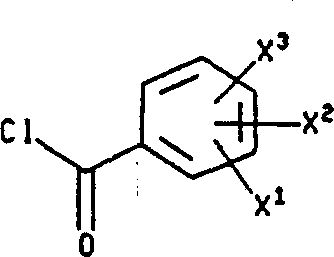 Acylation reaction in polar solvent (as methylene dichloride, THF or ether), is carried out in about 0 ℃~60 ℃ usually.Preferred solvent is a methylene dichloride, and preferred temperature is about 25 ℃.The example of the reductive agent of adaptable this acid amides of reduction has lithium aluminum hydride and borane dimethyl sulfide.Reduction reaction generally in polar solvent (as ether, THF or DMF), is carried out under the reflux temperature (being preferably about room temperature) of about 0 ℃~solvent.
Exist down in palladium-charcoal (as 10% palladium-charcoal), make the reaction of formula XVI compound and ammonium formiate, formula XVI compound can be transformed into accordingly wherein that Q is a formula VIII group, m is zero formula I compound.Usually use polar solvent such as ethyl acetate or low-level chain triacontanol, and this reacts on about room temperature~150 and ℃ carried out about 0.5~24 hour.This is reacted at room temperature carried out in the ethanol about 3~24 hours.
Use above-mentioned preparation wherein Q be formula VII group, the method for the formula I compound that m is non-vanishing can be transformed into the formula I compound that makes with preceding method identical but the non-vanishing compound of m.
Formula XV starting raw material can be by the preparation of method described in the U.S. Patent Application Serial 590,423 (September 28 nineteen ninety submission date, and transfer Pfizer company).This application is incorporated into own forces in the present invention as a reference.
Make Q=0 (Q of formula II) and suitable benzylamine condensation, can make wherein that Q is a formula II group, and the formula I compound (as follows) of a pair of key is arranged between Q and adjacent nitrogen.Condensation reaction in the solvent (as benzene, toluene or THF) of no hydroxyl, is used acid (as methylsulfonic acid or tosic acid) usually, carries out under the reflux temperature of about 20~solvent.This reaction preferably in toluene, is used camphorsulfonic acid and is carried out under reflux temperature.

In front experimental section not specifically the preparation of other formulas I compound of narration can to use present technique field professional be that combination of conspicuous above-mentioned each reaction is finished.
In each reaction shown in the above reaction formula 1~3, pressure requires not strict, except as otherwise noted.About 0.5~5 normal atmosphere is normally suitable, and for convenience, usually preferred normal pressure (i.e. 1 normal atmosphere).
The new compound of formula I and pharmaceutically useful salt thereof can be used as the P substance antagonist, and promptly they have the ability of the P material effect at antagonism mammalian receptors position, so they can suffer from the mammiferous therapeutical agent of above-mentioned disease as treatment.
Can generate various salt with various mineral acids or organic acid for alkaline formula I compound in nature.Though this salt must be the pharmaceutically useful salt of taking to animal, but preferably at first from reaction mixture, isolate formula I compound in fact usually as inapplicable salt pharmaceutically, handle with alkaline reagents then, this pharmaceutically inapplicable salt is gone back to into free alkali compound, then again free alkali is transformed into pharmaceutically useful acid salt.The acid salt of base compound of the present invention can easily make by laxative remedy: in water-containing solvent or appropriate organic solvent (as methyl alcohol or ethanol), with base the compound mineral acid through selecting or the organic acid processing of equivalent in fact.Boil off solvent carefully, easily obtain required salt.
Be tart formula I compound (R wherein for example in nature
1Formula I compound for carboxyl phenyl) can form alkali salt with acceptable positively charged ion on the various pharmacology.The example of such salt comprises basic metal or alkaline earth salt, especially sodium salt and sylvite.Above-mentioned salt all can make with general technology.Reagent as the pharmaceutically useful alkali salt of preparation the present invention is the chemical bases that generates nontoxic alkali salt with acid formula I compound.Described nontoxic alkali salt comprises by the resulting alkali salt of acceptable positively charged ion on the above-mentioned pharmacology (as sodium, potassium, calcium, magnesium etc.).These salt can easily prepare by laxative remedy: with containing the cationic aqueous solution processing of acceptable on the required pharmacology, make the gained solution evaporation to doing (preferably under reduced pressure) then corresponding acidic cpd.In addition, also can press the method preparation: the lower alkane alcoholic solution of acidic cpd is mixed with required alkali metal alcoholates, by above-mentioned identical method the gained solution evaporation is extremely done then.In either case, the reagent of advantageous applications stoichiometric quantity is so that it is the highest with the productive rate of required final product to guarantee to react completely.
Formula I compound and pharmaceutically useful salt thereof have the activity in conjunction with P material acceptor, therefore be valuable treating and preventing in the various clinical diseases, they can reduce the neurotransmission of P material mediation, are effectively maybe to promote recovery from illness in treatment and prevention therefore.Described disease comprises that inflammation is (as sacroiliitis, psoriasis, asthma and inflammatory bowel), anxiety, depressed or dysthymia, colitis, psychosis, pain, gastroesophageal reflux disease, allergic effect reaction (as eczema and rhinitis), the chronic obstructive tracheal disease, hyperreaction disease (as toxicodendron), vasospasm disease is (as angina, migraine and ReynaudShi disease), fibrosis and collagen diseases (as scleroderma and acidophilia fascioliasis), sympathetic reflex dystrophy (as shoulder-hand syndrome), addiction disease (as alcoholism), the physical disease relevant with stress reaction, peripheral neuropathy, neurodynia, neuropathic disease is (as presenile dementia, the dementia relevant with AIDS, diabetic neuropathy and multiple sclerosis), with immunostimulant or inhibition diseases associated (as systemic lupus erythematosus), and rheumatosis (as muscular rheumatism).Therefore, can adopt The compounds of this invention to use and treat, with the arbitrary above-mentioned clinical disease of control and/or treatment Mammals (comprising the people) as the P substance antagonist.
Formula I compound of the present invention and pharmaceutically useful salt thereof can oral administration, non-through gi tract or topical routes.In general, be bound to take place though change dosage according to body weight, the situation that needs the treatment disease and selected concrete route of administration, The compounds of this invention preferably by every day about 5.0 milligrams up to about 1500 milligrams dosage range administration.Every kg body weight is optimal by about 0.07 milligram~21 milligrams but the dosage level of using is every day.According to the kind of the animal of need treatments, to the individual reaction of used medicine and the selected pharmaceutical dosage form and the time of dosing interval, change dosage and remain and to take place.In some cases, the lower limit that dosage is lower than above-mentioned dosage range is more suitable, and in other cases, can use bigger dosage and can not cause any deleterious side effect, condition is that these heavy doses at first will be divided into several low doses and take in whole one day.
The compounds of this invention can be taken individually by one of former described three approach, perhaps forms composition with carrier that pharmaceutically is suitable for or thinner and takes, and can or press the multidose administration by single dose.Especially the new therapeutical agent of the present invention can be with multiple different formulation administration, and promptly The compounds of this invention can be formed tablets, capsule, lozenge, lozenge, boiled sweet agent, pulvis, sprays, creme, salve, suppository, gelifying agent, gelatina, paste, lotion, ointment, water suspension, injection solution, the agent of speeding, syrup etc. with the various inert supports that pharmaceutically are suitable for.Described carrier comprises solid diluent or weighting agent, sterile aqueous media and various nontoxic organic solvents etc.In addition, combination of oral medication can suitably be increased sweet and/or aromatize.In general, the present invention treats the concentration range of compounds effective in above-mentioned formulation and is about 5.0%~70% (weight).
For oral administration, tablet contains various vehicle such as Microcrystalline Cellulose, Trisodium Citrate, lime carbonate, Lin Suanergai and glycine, various disintegrating agents such as starch (preferably W-Gum, yam starch or tapioca (flour)), alginic acid and some compound silicate, and particle binders such as polyvinylpyrrolidone, sucrose, gelatin and Sudan Gum-arabic.In addition, for compressing tablet, lubricant (as Magnesium Stearate, sodium lauryl sulphate and talcum) is normally very useful.In the gelatine capsule agent, also can use the solids composition of same type as weighting agent; Material also comprises lactose and high-molecular weight polyoxyethylene glycol preferably in this respect.When oral administration requires to use water suspension and/or speeds agent, can with effective constituent and various sweeting agent or perfume compound, coloring matter or dyestuff and as need, also have emulsifying agent and/or suspension agent, and such thinner such as water, ethanol, propylene glycol, glycerine and the mixing of its composition.
For non-through gastrointestinal administration, can use have therapeutic action The compounds of this invention at sesame oil, peanut oil or the solution in aqueous propylene glycol.If desired, aqueous pharmaceutical should cushion with suitable reducing, and liquid diluent etc. is oozed.Described aqueous pharmaceutical is suitable for intravenous injection.Oily solution is suitable for intraarticular, intramuscular and subcutaneous injection.According to the general pharmaceutical technology that present technique field professional knows, under aseptic condition, can easily finish the preparation of above-mentioned all solutions.
In addition, when the inflammatory disease of treatment skin, can also local use The compounds of this invention, and preferably use the creme that makes according to general pharmaceutical methods, gelifying agent, gelatina, paste, ointment etc.
The compounds of this invention can be by autoradiographic method as the activity of P substance antagonist, and the binding ability of receptor site P material is proved conclusively in the inhibition oxtail tissue that the application of radiation ligand develops tachykinin receptor to record.Compound described here can be used (Journal of BiologicalChemistry, Vol.258, P.5158 (1983)) described ordinary test methods such as M.A.Cascieri and measure to the antagonistic activity of P material.This method mainly comprise be determined at the receptor site of isolating ox tissue reduce required each compound concentrations of P material ligand of 50% labelled with radioisotope, therefore obtained showing the IC of each test-compound feature
50Value.
In described method, the oxtail tissue is taken out from-70 ℃ of refrigerated tanks, and place 50 times (w/v) ice-cold 50mM Tris (being Basionic, 2-amino-2-methylol-1, ammediol) hydrochloride damping fluid to carry out homogenate in (pH 7.7).Homogenate centrifugal 20 minutes with 30,000 * G rotating speed.Sediment is suspended in again in the Tris damping fluid of 50 times of volumes, homogenate once more, and then with 30,000 * G rotating speed centrifugal 20 minutes.Then sediment is suspended in again in the 50MM Tris damping fluid (pH 7.7) that contains 2mM calcium chloride, 2mM magnesium chloride, 40g/ml bacitracin, 4 μ g/ml leupeptins, 2 μ g chymostatins and 200g/ml bSA of 40 times of ice-cooled volumes.This step has been finished the preparation of tissue sample.
Carry out radioactivity ligand integrating step then as follows, promptly by adding the test-compound provocative reaction of 100 μ l, 1 μ M concentration, then adding 100 μ l ultimate densities is the radioactivity ligand of 0.5mM, adds the tissue sample of the above-mentioned preparation of 800 μ l at last again.Therefore, final volume is 1.0ml, and next step rotates reaction mixture, and places room temperature (about 20 ℃) incubation 20 minutes.Before filtration step, filter was soaked 2 hours in advance, each test tube filters with cell harvestor, and glass fibre filter (WhatmanGF/B) washs 4 times with 50mM Tris damping fluid (pH 7.7).Measure radioactivity with the β counter with 53% counting efficiency then, and the statistical method of application standard calculates IC
50Value.
By studying the ability that The compounds of this invention suppresses P material inductive or suppresses the cavy hypermotility of P material agonist induction, can measure The compounds of this invention and control various psychotic antipsycholic actions as Antipsychotic drug.A kind of like this research can be undertaken by laxative remedy: at first give cavy control compound or the suitable test-compound of the present invention, inject P material or P material agonist to cavy then in intubate is passed through brain, measure their each motion responses to this stimulation thereafter.
By following embodiment the present invention is described.But should be understood that the detail that the invention is not restricted to these embodiment.
Embodiment 1
2-(diphenyl methyl)-N-((2-difluoro-methoxy) phenyl) methyl isophthalic acid-azabicyclo (2.2.2) suffering-3-amine
A.2-(difluoro-methoxy) phenyl aldehyde
In the 500ml three neck round-bottomed flasks that are equipped with prolong and gas inlet pipe, add 5.0 gram (40.98 mmole) salicylic aldehyde, 150ml diox and 150ml (164 mmole) 1.1N aqueous sodium hydroxide solutions.Be heated to 60 ℃, chloro methylene fluoride gas is blasted reaction mixture, and reaction mixture was stirred 2 hours under this temperature.Cool off then and use extracted with diethyl ether.The organic layer dried over sodium sulfate is filtered and evaporation.Resistates is made eluent through silica gel column chromatography with hexane/ethyl acetate, obtains 1.63 gram (23%) faint yellow oily things.
1H NMR(δ,CDCl
3):6.64(t,J=72.7(H-F),1H),7.16(d,J=7,1H),7.24(t,J=7,1H),7.53(m,1H),7.81(m,1H),10.29(s,1H)。
13C-NMR(CDCl
3):112.2,115.6,115.645,115.7,119.1,119.2,119.5,125.6,125.7,125.8,125.9,127.5,128.8,128.9,135.7,152.71,152.73,188.4。
IR (cm
-1, clean attitude): 1700 (C=O).
MS(%):172(100,M),171(48),122(45),121(82),120(69),104(37),95(40),92(55),91(49),76(39),65(49),63(76),51(81)。Ultimate analysis, C
8H
6F
2O
2I/4 H
2O: calculated value: C 54.50, H 3.71 measured values: C 54.68, and H 3.33
B.2-(diphenyl methyl)-N-((2-difluoro-methoxy) phenyl) methyl isophthalic acid-azabicyclo (2.2.2) suffering-3-amine
(method of press Warawa etc. prepares to add 500 milligrams of (1.71 mmole) 2-diphenyl methyl-1-azabicyclo (2.2.2) suffering-3-amine in the 25ml round-bottomed flask that is equipped with nitrogen inlet tube, J.Med.Chem., 17,497 (1974)), 8.5ml methyl alcohol, 383 milligrams of (2.23 mmole) 2-(difluoro-methoxy) phenyl aldehydes and 216 milligrams of (3.42 mmole) sodium cyanoborohydrides.Reaction solution stirred under room temperature 30 hours, distributed between ethyl acetate and water.Tell organic layer, use the salt water washing, through dried over sodium sulfate and evaporation.In order to remove last unreacted micro-amine, at room temperature mixture was handled 16 hours with the acetic acid solution of sodium triacetoxy borohydride, handle with aqueous sodium hydroxide solution and methylene dichloride then.Resistates Virahol crystallization obtains 206 milligrams of (27%) white solids, m.p.144~147 ℃.
1H NMR(δ,CDCl
3):1.27(m,1H),1.4-1.8(m,2H),1.90(m,1H),2.05(m,1H),2.63(m,1H),2.78(m,2H),2.88(m,1H),3.19(m,1H),3.45(AB
q,J
AB=13.5,Δν=105.5,2H),3.72(dd,J=8,12,1H),4.43(d,J=12,1H),6.31(t,J=74(H-F),1H),6.55 and 7.0-7.4(m,14H)。
13C-NMR(CDCl
3):20.0,24.9,25.4,42.0,45.8,49.4,49.5,55.0,61.8,116.3,119.0,125.4,126.0,126.5,127.5,127.8,127.9,128.0,128.4,128.5,128.6,129.1,129.2,130.0,131.6,143.2,145.2,149.3。
IR (cm
-1, clean attitude): 2940 (C-H), 1599 (C=C).
MS(%):449(<1,M+1),291(51),281(100),84(66),49(69)。Ultimate analysis, C
28H
30F
2N
2O: calculated value: C 74.98, H 6.74, and N 6.25 measured values: C 74.72, and H 6.70, and N 6.23
Embodiment 2
(2S, 3S)-N-(2-methoxyl group-5-Trifluoromethoxyphen-l) methyl-2-diphenyl methyl-1-azabicyclo (2.2.2) suffering-3-amine mesylate
By similar embodiment 1 described method, replace 2-(trifluoromethoxy) phenyl aldehyde among the step B to prepare title compound with 2-methoxyl group-5-trifluoro-methoxybenzaldehyde.
M.p.135℃。
1H NMR(CDCl
3)δ1.8-2.3(m,2H),2.2-2.8(m,6H),2.66(s,6H),3.56(s,3H),3.3-3.7(m,3H),3.90(m,3H),4.16(m,2H),5.06(m,1H),5.20(br,1H),5.50(m,1H),5.60(br,1H),6.77(d,1H,J=9.2),7.02(m,1H),7.2-7.8(m,11H),8.00(br,1H),10.8(br,1H).
IR(cm
-1,KBr):3180,3140,3000,1500,1200,1062,782.
Embodiment 3
(2S, 3S)-2-phenyl-3-(2-(2,2, the 2-trifluoro ethoxy) benzyl) amido piperidine hydrochlorate
A.2-(2,2, the 2-trifluoro ethoxy) phenyl aldehyde
Under nitrogen atmosphere, in the round-bottomed flask that is equipped with reflux condensing tube, add 0.2 gram (1 mmole) 2-(2,2, the 2-trifluoro ethoxy) benzonitrile (J.Org.Chem., 377 (1983)) and 5ml formic acid.In this solution, add about 0.2 gram Raney nickel, mixture heating up was refluxed 90 minutes.Mixture is by diatomite filtration, and water and chloroform (CHCl
3) washing leaching cake.Tell organic layer, water chloroform extraction 3 times.The organic phase that merges is with saturated sodium bicarbonate aqueous solution and water washing, through sodium sulfate (Na
2SO
4) dry and concentrate (rotatory evaporator), obtain 176 milligrams of title compounds, be yellow solid, m.p.33~34 ℃.
B. (2S, 3S)-2-phenyl-3-(2-(2,2, the 2-trifluoro ethoxy) benzyl) amido piperidine hydrochlorate
(2S, 3S)-aldehyde and about 2ml acetate that 3-amino-2-Phenylpiperidine, 155 milligrams (0.76 mmole) are made by top steps A, solution stirred under room temperature 1 hour to add 112 milligrams (0.63 mmoles) under nitrogen atmosphere in round-bottomed flask.Gradation adds 294 milligrams of (1.39 mmole) sodium triacetoxy borohydrides in this system, and mixture stirs under room temperature and spends the night.Concentrate with rotatory evaporator, and at 1M sodium hydroxide (NaOH) aqueous solution and methylene dichloride (CH
2Cl
2) between distribute.Tell organic layer, water CH
2Cl
2Extract 3 times.The organic phase that merges alkalizes mixture CH with 2N aqueous hydrochloric acid extraction 3 times, extraction liquid with the 2N NaOH aqueous solution
2Cl
2Extract 4 times.CH
2Cl
2Extraction liquid is through Na
2SO
4Dry and concentrated.The oily matter of gained is dissolved in about 2ml ethyl acetate, handles with saturated hydrogenchloride (HCl) diethyl ether solution.The white solid that collect to produce (73 milligrams, m.p.>275 ℃).This material is at the 1NNaOH aqueous solution and CH
2Cl
2Between distribute and make it be transformed into free alkali.Free alkali (58 milligrams) is used chloroform (CHCl successively through dodging the formula column chromatography purification
3) and 1: 19 methyl alcohol/CHCl
3Eluant solution obtains 32 milligrams of oily matter.As stated above free alkali is transformed into corresponding hydrochloride, obtains 17 milligrams of title compounds, m.p.>275 ℃.
1H NMR (free alkali, CDCl
3) δ 1.44 (m, 1H), 1.63 (m, 1H), 1.88 (m, 1H), 2.1 (m, 1H), 2.80 (m, 2H), 3.26 (m, 1H), 3.38 (d, 1H, J=15), 3.66 (d, 1H, J=15), 3.88 (s, 1H), 4.08 (m, 2H), 6.68 (d, 1H, J=6), 6.90 (m, 1H), 6.98 (d, 1H, J=6), 7.16 (m, 1H), 7.26 (m, 5H).
HRMS, C
20H
24F
3N
2O (M+1): calculated value: 365.1835.Measured value: 365.1980.Ultimate analysis, C
20H
23F
3N
2O2HCl1/3H
2O: calculated value: C 54.19, H 5.84, and N 6.32 measured values: C 54.22, and H 5.57, and N 6.28
Embodiment 4
(2S, 3S)-3-(2-methoxyl group-5-trifluoro-methoxybenzyl) amino-2-Phenylpiperidine hydrochloride
A.2-methoxyl group-5-trifluoro-methoxybenzaldehyde
Under nitrogen atmosphere, in round-bottomed flask, add 3.63ml (28 mmole) 4-trifluoro-methoxy-phenol and 25ml acetone.Stir adding 7.75 gram (56 mmole) salt of wormwood and 3.48ml (56 mmole) methyl-iodides in the liquid to this, reaction mixture stirs under room temperature and spends the night.Suction filtration is told solid, the filter cake washing with acetone.Filtrate is concentrated, obtain 6.5 gram solid/oil mixts.This mixture CHCl
3Dilution is also filtered, and concentrated filtrate obtains 5.5 gram 1-methoxyl group-4-Trifluoromethyl phenyl ethers, is yellow oil.
1H NMR(CDCl
3)δ3.78(s,3H),6.83(d,1H,J=12),7.10(d,1H,J=12).
MS m/z:192(M)
Under nitrogen atmosphere, in round-bottomed flask, add 1-methoxyl group-4-Trifluoromethyl phenyl ether (5.5 grams, 29 mmoles) and 110ml CH
2Cl
2Under the cooling of ice/acetone bath, added 3.77ml (34 mmole) titanium tetrachloride (TiCl in introversive this system in about 1 minute
4).Reaction mixture was stirred 30 minutes, to wherein adding 5.69ml (63 mmole) α, α-dichloromethyl methyl ether.Remove ice bath, mixture stirs under room temperature and spends the night.Carefully this mixture is poured in the water, and used CH
2Cl
2Extract 3 times.The extraction liquid water and the salt water washing that merge are through Na
2SO
4Dry and concentrated, obtain 6.06 gram oily matter.This crude product as eluent, obtains the title compound of 920 milligrams of band small amount of impurities with 1: 9 ethyl acetate/hexane through dodging formula column chromatography (250 gram silica gel) purifying, and the pure title compound of 3.27 grams.
1H NMR(CDCl
3)δ3.94(s,3H),7.00(d,1H,J=9),7.38(dd,1H,J=3,9),7.66(d,1H,J=3),10.4(s,1H)。Mass spectrum m/z:220 (parent peak).
B. (2S, 3S)-3-(2-methoxyl group-5-trifluoro-methoxybenzyl) amino-2-Phenylpiperidine hydrochloride
Under nitrogen atmosphere, in round-bottomed flask, add 525 milligrams of (2.4 mmole) 2-methoxyl group-5-trifluoro-methoxybenzaldehydes, 350 milligrams (2.0 mmole) (2S, 3S)-3-amino-2-Phenylpiperidine and 5ml acetate.Reaction mixture stirred under room temperature 3 days, and concentrated with rotatory evaporator.Resistates is at 1N aqueous sodium hydroxide solution and chloroform (CHCl
3) between distribute, mixture is with chloroform extraction 3 times.The chloroform extraction liquid that merges extracts 3 times with the 1N aqueous hydrochloric acid.The hcl as extraction agent liquid that merges is with the alkalization of the concentrated sodium hydroxide aqueous solution, and with chloroform extraction 4 times.Chloroform extraction liquid is through Na
2SO
4Drying concentrates with rotatory evaporator, obtains 760 milligrams of oily matter.This oily matter is dissolved in the ethyl acetate, in solution, adds saturated hydrogenchloride (HCl) diethyl ether solution.The white solid that suction filtration collect to produce with the ether washing, obtains 600 milligrams of title compounds, m.p.>250 ℃.
1H NMR (free alkali, CDCl
3) δ 1.36 (s, 1H), 1.54 (m, 1H), 1.86 (m, 1H), 2.06 (m, 1H), 2.76 (m, 2H), 3.22 (m, 1H), 3.32 (d, 1H, J=15), 3.48 (s, 3H), 3.58 (d, 1H, J=15), 3.85 (d, 1H, J=3), 6.57 (d, 1H, J=9), 6.80 (d, 1H, J=3), 6.92 (dd, 1H, J=3,9), 7.22 (m, 5H).
HRMS, C
20H
23F
3N
2O
2: calculated value: 380.1711, measured value: 380.1704.
Ultimate analysis, C
20H
23F
3N
2O
22HCl0.2H
2O:
Calculated value: C 52.57, H 5.60, and N 6.13
Measured value: C 52.58, H 5.40, and N 5.97
Embodiment 5
(2S, 3S)-1-(5,6-dimethoxy hexyl)-3-(2-methoxyl group-5-trifluoro-methoxybenzyl) amino-2-Phenylpiperidine hydrochloride
Under nitrogen atmosphere, in round-bottomed flask, add 250 milligrams (0.66 mmoles) (2S, 3S)-3-(2-methoxyl group-5-trifluoro-methoxybenzyl) amino-2-Phenylpiperidine, 2ml tetrahydrofuran (THF) (THF) and 0.28ml (2.0 mmole) triethylamine.In this system, add 475 milligrams of (2.0 mmoles) 5; 6-dimethoxy-1-mesyloxy hexane is (with 1; 5; the preparation of 6-hexanetriol is in succession by forming acetonide (acetone, tosic acid); acetylizing (Acetyl Chloride 98Min.; triethylamine, THF), acetonide cracking (60% acetic acid/water); dimethylation (sodium hydride; methyl-iodide, THF), deacetylation (sodium methylate; methyl alcohol) and form methanesulfonates (methylsulfonyl chloride; triethylamine, THF)), mixture was in 50~60 ℃ of heating 4 days.Reaction mixture is at CHCl
3And distribute between saturated sodium bicarbonate aqueous solution, and use CHCl
3Extract 3 times.The organic layer that merges is through Na
2SO
4Dry, filtration and concentrated obtain 853 milligrams of orange.Crude product as eluent, obtains 185 milligrams of yellow oil with 1: 19 methyl alcohol/chloroform through dodging formula column chromatography (35 gram silica gel) purifying.This oily matter is dissolved in the ethyl acetate, in solution, adds saturated ether solution of hydrogen chloride.Enriched mixture, resistates and ether grind together, obtain 190 milligrams of title compounds.
1H NMR (free alkali, CDCl
3) δ 1.15 (m, 2H), 1.38 (m, 6H), 1.76 (m, 2H), 1.96 (m, 3H), 2.50 (m, 2H), 3.16 (m, 2H), 3.26 (m, 9H), 3.46 (s, 3H), 3.58 (d, 1H, J=15), 6.52 (d, 1H, J=9), 6.69 (m, 1H), 6.86 (m, 1H), 7.22 (m, 5H).
HRMS, C
28H
39F
3N
2O
4: calculated value: 524.28616, measured value: 524.28634.Ultimate analysis, C
28H
39F
3N
2O
42HCl0.75H
2O: calculated value: C 55.03, H 7.00, and N 4.58 measured values: C 55.04, and H 7.12, and N 4.51
Embodiment 6
(2S, 3S)-2-phenyl-3-(2-trifluoro-methoxybenzyl) amido piperidine hydrochlorate
Under nitrogen atmosphere, in round-bottomed flask, add 3.0ml (23 mmole) Trifluoromethyl phenyl ether and 25ml benzene.Be placed in ice/acetone bath and cool off, in stirred solution, add 4.1ml (45 mmole) α, α-dichloromethyl methyl ether.Gradation adds 6.13 gram (46 mmole) aluminum chloride (AlCl in this system
3).After adding, reaction mixture is warmed to room temperature gradually, and under room temperature, stirs and spend the night.Reaction mixture is poured in the water lentamente, and with dichloromethane extraction 3 times.The organic layer that merges washes with water, through Na
2SO
4Dry and concentrated with rotatory evaporator, obtain 3.7 gram oily matter.This material contains the mixture of 4-and 2-trifluoro-methoxybenzaldehyde, through dodging formula column chromatography (160 gram silica gel) purifying, as eluent, obtains the product of 500 milligrams of enrichment 2-trifluoromethoxy-phenyl aldehydes with 1: 49 ethyl acetate/hexane.
Under nitrogen atmosphere, in round-bottomed flask, add 155 milligrams (0.88 mmoles) (2S, 3S)-3-amino-2-Phenylpiperidine, the aldehyde that makes above and 2ml acetate.To wherein adding 370 milligrams of (1.8 mmole) sodium triacetoxy borohydrides, mixture is in stirred overnight at room temperature.Mixture is concentrated, and resistates distributes between 1N aqueous sodium hydroxide solution and methylene dichloride, and with dichloromethane extraction 3 times.The organic layer that merges extracts 3 times with 1N HCl.Acid extraction liquid is with the alkalization of the 1N NaOH aqueous solution, and with dichloromethane extraction 3 times.Dichloromethane extraction liquid drying and concentrated obtains 190 milligrams of oily matter, and this oily matter as eluent, obtains the free alkali of 95 milligrams of title compounds with 1: 9 methyl alcohol/chloroform through dodging formula column chromatography (5 gram silica gel) purifying.Free alkali is dissolved in the ethyl acetate, in solution, adds saturated ether solution of hydrogen chloride.The white solid that suction filtration collect to generate with the ether washing, obtains 72 milligrams of title compounds, m.p.231~233 ℃.
1H NMR (free alkali, CDCl
3) δ 1.40 (m, 1H), 1.60 (m, 1H), 1.84 (m, 1H), 2.05 (m, 1H), 2.78 (m, 2H), 3.22 (m, 1H), 3.42 (d, 1H, J=15), 3.56 (d, 1H, J=15), 3.86 (d, 1H, J=3), 7.08 (m, 4H), 7.24 (m, 5H).Mass spectrum: m/z 350 (parent peak). ultimate analysis, C
19H
21F
3N
2O2HCl0.25 H
2O: calculated value: C 53.34, H 5.54, and N 6.54 measured values: C 53.19, and H 5.40, and N 6.54
Embodiment 7
(2S, 3S)-3-(2-hydroxyl-5-trifluoro-methoxybenzyl) amino-2-Phenylpiperidine hydrochloride
A.2-hydroxyl-5-trifluoro-methoxybenzaldehyde
Under nitrogen atmosphere, in round-bottomed flask, add 300 milligrams of (1.4 mmole) 2-methoxyl group-5-trifluoro-methoxybenzaldehyde and 30ml methylene dichloride.Place dry ice acetone bath to cool off, in about 1 minute to wherein adding 0.26ml (2.7 mmole) boron tribromide (BBr
3).Reaction mixture was stirred 1 hour, replace dry ice/acetone batch with ice bath, mixture restir 1 hour.To wherein adding the 10ml saturated sodium bicarbonate aqueous solution lentamente, add 10ml water then, mixture is warmed to room temperature.Mixture dichloromethane extraction 2 times, extraction liquid is through Na
2SO
4Dry and concentrated.The oily matter (280 milligrams) that generates is dissolved in CH
2Cl
2In, 1M NaOH aqueous solution extraction 2 times of this solution.The water extract that merges is with 2M HCl acidified aqueous solution, and with dichloromethane extraction 3 times.Dichloromethane extraction liquid is through Na
2SO
4Dry and concentrated, obtain 200 milligrams of title compounds.
1H NMR(CDCl
3)δ6.96(d,1H,J=9),7.36(m,2H),9.84(s,1H),10.9(s,1H)。
B. (2S, 3S)-3-(2-hydroxyl-5-trifluoro-methoxybenzyl) amino-2-Phenylpiperidine hydrochloride
By the preparation method of similar embodiment 4 compounds, replace 2-methoxyl group-5-trifluoro-methoxybenzaldehyde to prepare title compound with 2-hydroxyl-5-trifluoro-methoxybenzaldehyde.
1H NMR (free alkali, CDCl
3) δ 1.60 (m, 3H), 2.04 (m, 1H), 2.76 (m, 1H), 2.88 (m, 1H), 3.18 (m, 1H), 3.42 (s, 2H), 3.90 (m, 1H), 6.52 (m, 1H), 6.64 (d, 1H, J=9), 6.89 (m, 1H), 7.30 (m, 5H).
HRMS, C
19H
21F
3N
2O
2: calculated value: 366.1545, measured value: 366.1562.Ultimate analysis, C
19H
21F
3N
2O
22HCl1/3 H
2O: calculated value: C 51.25, H 4.90, and N 6.29 measured values: C 51.30, and H 4.75, and N 6.22
Embodiment 8
(2S, 3S)-3-(5-chloro-2-(2,2, the 2-trifluoro ethoxy) benzyl)-amino-2-Phenylpiperidine hydrochloride
A.5-chloro-2-(2,2, the 2-trifluoro ethoxy) phenyl aldehyde
Under nitrogen atmosphere, in round-bottomed flask, add 880 milligrams of (22 mmole) 60% sodium hydrides (NaH) and 12ml N, dinethylformamide.In 15 minutes by syringe to wherein adding 2.9ml (4 gram, 40 mmoles) 2,2,2 tfifluoroethyl alcohol, mixture was in stirring at room 20 minutes.In this system, add 1.72 gram (10 mmoles) 2, the 5-dichloro-benzonitrile, mixture was in 90 ℃ of heating 3 days.Mixture is cooled to room temperature, and pours in the 50ml 2M HCl aqueous solution, use extracted with diethyl ether 3 times.The organic layer that merges is through Na
2SO
4Dry and concentrated, obtain 2.5 gram solids.Crude product as eluent, obtains 1.4 gram 5-chloro-2-(2,2, the 2-trifluoro ethoxy) benzonitriles with 1: 49 ethyl acetate/hexane through dodging the formula column chromatography purification, is white solid.m.p.61~62℃。
Under nitrogen atmosphere, in the round-bottomed flask that is equipped with reflux condensing tube, add nitrile and the 10ml formic acid that makes above 400 milligrams (1.7 mmoles).To wherein adding about 500 milligrams of Raney nickels, mixture heating up was refluxed 6 hours, and under room temperature, stir and spend the night.Mixture filters by Celite pad, pad water and CHCl
3Washing.Tell organic phase, water CHCl
3Extract 3 times.The organic phase drying that merges and concentrated obtains 270 milligrams of title compounds.
1H NMR(CDCl
3)δ4.42(m,2H),6.86(d,1H,J=10),7.46(m,1H),7.80(d,1H,J=3),10.3(s,1H)。
Mass spectrum: m/z 238 (M).
B. (2S, 3S)-3-(5-chloro-2-(2,2, the 2-trifluoro ethoxy) benzyl) amino-2-Phenylpiperidine hydrochloride
By similar embodiment 4 described methods, replace 2-methoxyl group-5-trifluoro-methoxybenzaldehyde to prepare title compound with 5-chloro-2-(2,2, the 2-trifluoro ethoxy) phenyl aldehyde.
M.p.267-269℃。
1H NMR (free alkali, CDCl
3) δ 1.4 (m, 1H), 1.6 (m, 1H), 1.82 (m, 1H), 2.02 (m, 1H), 2.78 (m, 2H), 3.2 (m, 1H), 3.3 (d, 1H, J=15), 3.54 (d, 1H, J=15), 3.84 (d, 1H, J=3), 4.0 (m, 2H), 6.54 (d, 1H, J=10), 6.92 (d, 1H, J=3), 7.04 (m, 1H), 7.24 (m, 5H).
Ultimate analysis, C
20H
22ClF
3N
2O2HCl:
Calculated value: C 50.91, H 5.13, and N 5.94
Measured value: C 50.89, H 4.84, and N 5.93
Embodiment 9
(2S, 3S)-2-phenyl-3-(3-trifluoro-methoxybenzyl) amido piperidine hydrochlorate
By similar embodiment 4 described methods, replace 2-methoxyl group-5-trifluoro-methoxybenzaldehyde to prepare title compound with the 3-trifluoro-methoxybenzaldehyde.
M.p.>275℃。
1H NMR (free alkali, CDCl
3) δ 1.4 (m, 1H), 1.56 (m, 1H), 1.78 (m, 1H), 1.96 (m, 1H), 2.76 (m, 2H), 3.18 (m, 1H), 3.30 (d, 1H, J=15), 3.46 (d, 1H, J=15), 3.84 (d, 1H, J=3), 6.79 (s, 1H), 6.85 (d, 1H, J=6), 6.94 (m, 1H), 7.12 (m, 1H), 7.24 (m, 5H). ultimate analysis, C
19H
21F
3N
2O2HCl: calculated value: C 53.91, H 5.48, and N 6.62 measured values: C 53.84, and H 5.07, and N 6.59
By similar embodiment 4 described methods, replace 2-methoxyl group-5-trifluoro-methoxybenzaldehyde to prepare the title compound of embodiment 10~23 and 26 with suitable aldehyde.
The reaction result for preparing required aldehyde is listed in the table below in 1.
| Table 1 | ||
| Preparation formula XII compound | ||
| -C 6H 2X 1X 2X 3 | Starting raw material | React required reagent * |
| 2-(2,2, the 2-trifluoro ethoxy) phenyl | 2-benzyl chloride nitrile | d,e |
| 2-hydroxyl-5-Trifluoromethoxyphen-l | 2-methoxyl group-5-trifluoro-methoxybenzaldehyde | f |
| The 3-Trifluoromethoxyphen-l | - | Commercial |
| 5-chloro-2-(2,2, the 2-trifluoro ethoxy) phenyl | 2, the 5-dichloro-benzonitrile | d,e |
| The 5-tertiary butyl-2-Trifluoromethoxyphen-l | Trifluoromethyl phenyl ether | g,h |
| 2-oxyethyl group-5-Trifluoromethoxyphen-l | The 4-trifluoro-methoxy-phenol | i,a |
| 2-difluoro-methoxy-5-Trifluoromethoxyphen-l | 2-hydroxyl-5-trifluoro-methoxybenzaldehyde | j |
| 5-sec.-propyl-2-(2,2, the 2-trifluoro ethoxy) phenyl | 4-sec.-propyl-phenyl-iodide | d,a |
| 2-isopropoxy-5-Trifluoromethoxyphen-l | The 4-trifluoro-methoxy-phenol | k,a |
| Table 1 | ||
| Preparation formula XII compound | ||
| -C 6H 2X 1X 2X 3 | Starting raw material | React required reagent * |
| The 5-tertiary butyl-2-difluoro-methoxy phenyl | The 4-tert.-butyl phenol | a,j |
| 2, two (difluoro-methoxy) phenyl of 5- | 2, the 5-Dihydroxy benzaldehyde | j |
| 2-difluoro-methoxy-5-dimethylamino phenyl | 5-amino-2-hydroxy benzaldehyde | l,j |
| 2-difluoro-methoxy-5-isopropyl phenyl | The 4-isopropyl-phenol | a,j |
| 2-difluoro-methoxy-5-nitrophenyl | 2-hydroxyl-5-nitrobenzaldehyde | j |
| 5-dimethylamino-2-(2,2, the 2-trifluoro ethoxy) phenyl | 2-chloro-5-nitrobenzonitrile | d,l,e |
| 5-acetylaminohydroxyphenylarsonic acid 2-(2,2, the 2-trifluoro ethoxy) phenyl | 5-nitro-2-(2,2, the 2-trifluoro ethoxy) benzonitrile | m,c,e |
| 2-difluoro-methoxy-5-ethylphenyl | 4-ethyl-anisole | a,f,j |
| Table 1 | ||
| Preparation formula XII compound | ||
| -C 6H 2X 1X 2X 3 | Starting raw material | React required reagent * |
| 5-chloro-2-difluoro-methoxy phenyl | 5-chloro-2-hydroxy benzaldehyde | j |
| The 2-Trifluoromethoxyphen-l | - | Commercial |
| 2-methoxyl group-5-Trifluoromethoxyphen-l | The 4-trifluoro-methoxy-phenol | b,a |
| 2-difluoro-methoxy-5-aminomethyl phenyl | 5-methyl-2-methoxybenzaldehyde | f,j |
*With the required reagent of standard method preparation formula XIV compound.
a) Cl
2CHOCH
3,TiCl
4
B) methyl-iodide
C) Acetyl Chloride 98Min.
d) NaOCH
2CF
3
E) Raney nickel, HCO
2H
f) BBr
3
G) tertiary butyl chloride/AlCl
3
h) Cl
2CHOCH
3/AlC1
3
I) iodoethane
j) ClF
2CH
K) isopropyl bromide
l) H
2,Pd/C,HCHO
m) H
2-Pd/BaSO
4
Embodiment 10
(2S, 3S)-3-(5-chloro-2-(2,2, the 2-trifluoro ethoxy) benzyl) amino-2-Phenylpiperidine hydrochloride
M.P.267-269℃。
1H NMR (free alkali; CDCl
3) δ 1.40 (m, 1H), 1.60 (m, 1H), 1.82 (m, 1H), 2.02 (m, 1H), 2.76 (m, 2H), 3.20 (m, 1H), 3.28 (d, 1H, J=15), 3.52 (d, 1H, J=15), 3.84 (d, 1H, J=3), 4.00 (m, 2H), 6.54 (d, 1H, J=10), 6.92 (d, 1H, J=3), 7.04. (m, 1H), 7.24 (m, 5H).
HRMS, C
20H
22ClF
3N
2O: calculated value: 398.1368, measured value: 398.1352.Ultimate analysis, C
20H
22ClF
3N
2O2HCl: calculated value: C 50.91, H 5.13, and N 5.94 measured values: C 50.89, and H 4.84, and N 5.93
Embodiment 11
(2S, 3S)-3-(the 5-tertiary butyl-2-trifluoro-methoxybenzyl) amino-2-Phenylpiperidine hydrochloride
M.P.262-264℃。
1H NMR (free alkali; CDCl
3) δ 1.20 (s, 9H), 1.40 (m, 1H), 1.52 (m, 1H), 1.84 (m, 1H), 2.06 (m, 1H), 2.80 (m, 2H), 3.22 (m, 1H), 3.38 (d, 1H, J=15), 3.58 (d, 1H, J=15), 3.86 (d, 1H, J=3), 6.98 (m, 1H), 7.12 (m, 2H), 7.26 (m, 5H).
HRMS, C
23H
29F
3N
2O: calculated value: 406.2225, measured value: 406.2271.Ultimate analysis, C
23H
29F
3N
2O2HCl1/3 H
2O: calculated value: C 56.92, H 6.56, and N 5.77 measured values: C 56.99, and H 6.41, and N 6.03
Embodiment 12
(2S, 3S)-3-(5-sec.-propyl-2-(2,2, the 2-trifluoro ethoxy) benzyl) amino-2-Phenylpiperidine hydrochloride
M.P.>280℃。
1H NMR (free alkali; CDCl
3) δ 1.12 (m, 6H), 1.4 (m, 1H), 1.62 (m, 1H), 1.82 (m, 1H), 2.08 (m, 1H), 2.76 (m, 3H), 3.22 (m, 1H), 3.30 (d, 1H, J=15), 3.38 (d, 1H, J=15), 3.82 (d, 1H, J=3), 4.02 (m, 2H), 6.56 (d, 1H, J=10), 6.78 (d, 1H, J=3), 6.94 (m, 1H), 7.24 (m, 5H).
HRMS, C
23H
30F
3N
2O (M+1): calculated value: 407.2303, measured value: 407.2287.Ultimate analysis, C
22H
29F
3N
2O2HCl1/2 H
2O: calculated value: C 56.55, H 6.60, and N 5.70 measured values: C 56.17, and H 6.39, and N 5.77
Embodiment 13
(2S, 3S)-3-(5-dimethylamino-2-(2,2, the 2-trifluoro ethoxy) benzyl) amino-2-Phenylpiperidine hydrochloride
M.P.250-252℃。
1H NMR (free alkali; CDCl
3) δ 1.40 (m, 1H), 1.60 (m, 1H), 1.86 (m, 1H), 2.10 (m, 1H), 2.82 (m, 8H), 3.22 (m, 1H), 3.34 (d, 1H, J=15), 3.58 (d, 1H, J=15), 3.88 (d, 1H, J=3), 4.00 (m, 2H), 6.42 (d, 1H, J=3), 6.50 (m, 1H), 6.64 (d, 1H, J=10), 7.30 (m, 5H).
HRMS, C
22H
28F
3N
3O: calculated value: 407.2178, measured value: 407.2179.
Embodiment 14
(2S, 3S)-3-(2-difluoro-methoxy-5-N, N-dimethylamino benzyl) amino-2-Phenylpiperidine hydrochloride
M.P.243-245 ℃ (decomposition)
1H NMR (free alkali: CDCl
3) δ 1.44 (m, 1H), 1.72 (m, 2H), 2.10 (m, 1H), 2.84 (m, 8H), 3.21 (m, 1H), 3.28 (d, 1H, J=15), 3.55 (d, 1H, J=15), 3.88 (d, 1H, J=3), 6.08 (t, 1H, J=72), 6.36 (d, 1H, J=3), 6.46 (dd, 1H, J=3,9), 6.86 (d, 1H, J=9), 7.28 (m, 5H).
HRMS, C
21H
27F
2N
3O: calculated value: 375.2122, measured value: 375.2138.Ultimate analysis, C
21H
27F
2N
3O3HCl1/2H
2O: calculated value: C 51.07, H 6.44, and N 8.51 measured values: C 50.17, and H 6.08, and N 8.28
Embodiment 15
(2S, 3S)-3-(2, two (difluoro-methoxy) benzyls of 5-) amino-2-Phenylpiperidine hydrochloride
M.P.238-239℃。
1H NMR (free alkali; CDCl
3) δ 1.64 (m, 3H), 2.04 (m, 1H), 2.76 (m, 2H), 3.18 (m, 1H), 3.28 (d, 1H, J=12), 3.52 (d, 1H, J=12), 3.84 (d, 1H, J=3), 6.12 (t, 1H, J=75), 6.40 (t, 1H, J=75), 6.75 (m, 2H), 6.94 (d, 1H, J=9), 7.24 (m, 5H).
HRMS, C
20H
22F
4N
2O
2: calculated value: 398.1612, measured value:
398.1591。
Embodiment 16
(2S, 3S)-3-(the 5-tertiary butyl-2-difluoro-methoxy benzyl) amino-2-Phenylpiperidine hydrochloride
M.P.263-264 ℃ (decomposition).
1H NMR (free alkali; CDCl
3) δ 1.24 (s, 9H), 1.42 (m, 1H), 1.62 (m, 1H), 1.80 (m, 1H), 2.10 (m, 1H), 2.80 (m, 2H), 3.24 (m, 2H), 3.58 (d, 1H, J=12), 3.87 (brs, 1H), 6.18 (t, 1H, J=72), 6.86 (d, 1H, J=6), 7.00 (brs, 1H), 7.12 (m, 1H), 7.24 (m, 5H).
HRMS, C
23H
30F
2N
2O: calculated value: 388.2321, measured value:
388.2336。
Embodiment 17
(2S, 3S)-3-(2-isopropoxy-5-trifluoro-methoxybenzyl) amino-2-Phenylpiperidine hydrochloride
M.P.245-246 ℃ (decomposition).
1H NMR (free alkali: CDCl
3) δ 1.08 (d, 3H, J=6), 1.12 (d, 3H, J=6), 1.40 (m, 1H), 1.64 (m, 1H), 1.87 (m, 1H), 2.08 (m, 1H), 2.78 (m, 2H), 3.02 (m, 1H), 3.34 (d, 1H, J=15), 3.51 (d, 1H, J=15), 3.85 (d, 1H, J=2), 4.28 (m, 1H), 6.01 (d, 1H, J=9), 6.82 (m, 1H), 6.91 (m, 1H), 7.24 (m, 5H).
HRMS, C
22H
27F
3N
2O
2: calculated value: 408.2024, measured value: 408.2019.Ultimate analysis, C
22H
27F
3N
2O
22HCl: calculated value: C 54.89, H 6.07, and N 5.82 measured values: C 54.50, and H 6.24, and N 5.78
Embodiment 18
(2S, 3S)-3-(2-difluoro-methoxy-5-trifluoro-methoxybenzyl) amino-2-Phenylpiperidine hydrochloride
M.P.257-259 ℃ (decomposition).
1H NMR (free alkali; CDCl
3) δ 1.44 (m, 1H), 1.58 (m, 1H), 1.78 (m, 1H), 2.03 (m, 1H), 2.78 (m, 2H), 3.20 (m, 1H), 3.32 (d, 1H, J=15), 3.54 (d, 1H, J=15), 3.87 (d, 1H, J=2), 6.15 (t, 1H, J=72), 6.94 (m, 3H), 7.26 (m, 5H).
HRMS, C
20H
21F
5N
2O
2: calculated value: 416.1523, measured value: 416.1501.Ultimate analysis, C
20H
21F
5N
2O
22HCl1/3H
2O: calculated value: C 48.50, H 4.81, and N 5.65 measured values: C 48.45, and H 4.57, and N 5.66
Embodiment 19
(2S, 3S)-3-(2-oxyethyl group-5-trifluoro-methoxybenzyl) amino-2-Phenylpiperidine hydrochloride
M.P.>275 ℃ (decomposition).
1H NMR (free alkali; CDCl
3) δ 1.13 (t, 3H, J=6), 1.38 (m, 1H), 1.70 (m, 2H), 2.06 (m, 1H), 2.74 (m, 2H), 3.22 (m, 1H), 3.30 (d, 1H, J=15), 3.68 (m, 3H), 3.84 (br s, 1H), 6.55 (d, 1H, J=9), 6.79 (br s, 1H), 6.90 (m, 1H), 7.2 (m, 5H).
HRMS, C
21H
25F
3N
2O
2: calculated value: 394.1868, measured value: 394.1875.Ultimate analysis, C
21H
25F
3N
2O
22HCl: calculated value: C 53.97, H 5.82, and N 6.00 measured values: C 53.85, and H 5.79, and N 5.95
Embodiment 20
(2S, 3S)-3-(2-difluoro-methoxy-5-nitrobenzyl) amino-2-Phenylpiperidine hydrochloride
1H NMR (free alkali; CDCl
3) δ 1.50 (m, 1H), 1.66 (m, 1H), 1.98 (m, 2H), 2.82 (m, 2H), 3.28 (m, 1H), 3.42 (d, 1H, J=15), 3.64 (d, 1H, J=15), 3.95 (d, 1H, J=2), 6.30 (t, 1H, J=72), 7.08 (d, 1H, J=8), 7.30 (m, 5H), 8.04 (m, 2H) .FAB HRMS, C
19H
21F
2N
3O
3(M+1): calculated value: 378.1629, measured value: 378.1597.
Embodiment 21
(2S, 3S)-3-(2-difluoro-methoxy-5-isopropyl benzyl) amino-2-Phenylpiperidine hydrochloride
M.P.245-247 ℃ (decomposition).
1H NMR (free alkali; CDCl
3) δ 1.19 (2d, 6H, J=7), 1.50 (m, 1H), 1.75 (m, 2H), 2.12 (m, 1H), 2.83 (m, 3H), 3.25 (m, 1H), 3.35 (d, 1H, J=14), 3.60 (d, 1H, J=14), 3.90 (d, 1H, J=3), 6.20 (t, 1H, J=75), 6.90 (m, 2H), 7.00 (m, 1H), 7.30 (m, 5H).
HRMS, C
22H
28F
2N
2O: calculated value: 374.2170, measured value: 374.2207.Ultimate analysis, C
22H
28F
2N
2O2HCl1/3H
2O: calculated value: C 58.28, H 6.67, and N 6.18 measured values: C 58.17, and H 6.52, and N 6.17
Embodiment 22
(2S, 3S)-3-(5-acetylaminohydroxyphenylarsonic acid 2-(2,2, the 2-trifluoro ethoxy)-benzyl) amino-2-Phenylpiperidine hydrochloride
M.P.>270℃。
1H NMR (free alkali; CDCl
3) δ 1.46 (m, 1H), 1.82 (m, 1H), 2.08 (m, 1H), 2.12 (s, 3H), 2.76 (m, 2H), 3.20 (m, 1H), 3.48 (d, 1H, J=15), 3.58 (d, 1H, J=15), 3.82 (m, 1H), 4.08 (m, 2H), 6.44 (m, 1H), 6.58 (d, 1H, J=10), 6.78 (m, 1H), 7.26 (m, 5H), 7.58 (m, 1H).
Embodiment 23
(2S, 3S)-3-(2-difluoro-methoxy-5-Ethylbenzyl) amino-2-Phenylpiperidine hydrochloride
M.P.254-255℃。
1H NMR (free alkali; CDCl
3) δ 1.12 (t, 3H, J=10), 1.36 (m, 1H), 1.44 (m, 1H), 1.82 (m, 1H), 2.10 (m, 1H), 2.48 (q, 2H, J=10), 2.8 (m, 1H), 3.10 (m, 1H), 3.34 (d, 1H, J=15), 3.58 (d, 1H, J=15), 3.9 (d, 1H, J=3), 6.12 (t, 1H, J=85), 6.78 (s, 1H), 6.90 (m, 2H), 7.28 (m, 5H). ultimate analysis, C
21H
26F
2N
2O2HCl: calculated value: C 58.19, H 6.51, and N 6.47 measured values: C 57.90, and H 6.52, and N 6.64
Embodiment 24
Cis-3-(the 5-tertiary butyl-2-methoxy-benzyl) amino-2-(3-Trifluoromethoxyphen-l) piperidine hydrochlorate
A. cis-5-nitro-6-(Trifluoromethoxyphen-l) piperidines-2-ketone
Under nitrogen atmosphere, in round-bottomed flask, add 15 gram (79 mmole) 3-trifluoro-methoxybenzaldehydes, 80ml ethanol, 11 gram (0.26 mole) ammonium acetate and 12.6ml (79 mmole) 4-nitro methyl-butyrates, mixture heating up was refluxed 6 hours.After being cooled to room temperature, enriched mixture.Resistates and about 200ml CHCl
3Stirred together 30 minutes, and filtered and concentrate.Resistates with 1: 49 methyl alcohol/chloroform wash-out, is used 1: 19 methyl alcohol/chloroform wash-out through dodging the formula column chromatography purification again, obtains 24 gram 5-nitro-6-(3-Trifluoromethoxyphen-l) piperidines-2-ketone.
Add the product, 13 gram KOH and the 100ml ethanol that make above 20 grams (66 mmole) in round-bottomed flask, mixture was in stirring at room 90 minutes.To wherein adding about 35ml 33% sulfuric acid/ethanolic soln.Mixture is poured in the 150ml water, used 100ml CHCl
3Extract 3 times.The extraction liquid that merges washes with water, through Na
2SO
4Dry and concentrated.Crude product uses ethyl acetate and 1: 99 methanol/ethyl acetate as eluent through column chromatography (300 gram silica gel) purifying successively, obtains 5.8 gram cis-5-nitro-6-(3-Trifluoromethoxyphen-l) piperidines-2-ketone, contains about 12% corresponding trans-isomer(ide).This thing is through the 2nd chromatography purifying.Obtain 4.6 gram cis-products.
B. cis-5-amino-6-(3-Trifluoromethoxyphen-l) piperidines-2-ketone
The mixed solution that under nitrogen atmosphere, in the three neck round-bottomed flasks that are equipped with thermometer and mechanical stirrer, adds above-mentioned cis material and THF (200ml), methyl alcohol (50ml) and water (5ml).Adding aluminium amalgam in this stirred solution (restrains aluminum foil strips by washing 4.1 with ether, and is immersed in 2%HgCl
2In the aqueous solution 30~45 seconds, make with the ether washing again), mixture stirs under room temperature and spends the night.Mixture filters by Celite pad, and pad washs with THF.Concentrated filtrate is dissolved in the ethyl acetate, and handles with the saturated ether solution of hydrogen chloride of 30ml.Obtain 3.7 gram cis-5-amino-6-(3-Trifluoromethoxyphen-l) piperidines-2-ketone crude products through concentrating, to be waxy solid, m, p.126~130 ℃.
C. cis-3-(the 5-tertiary butyl-2-methoxy-benzyl) amino-2-(3-Trifluoromethoxyphen-l) piperidine hydrochlorate
Under nitrogen atmosphere, in round-bottomed flask, add the amine, 6ml acetate and 0.32 gram (1.66 mmole) 5-tertiary butyl-2-methoxybenzaldehyde that make above 0.38 gram (1.4 mmole).Mixture stirred 45 minutes.Add 0.65 gram (3.0 mmole) triacetyl oxygen base sodium hydride to gradation wherein, mixture is in stirred overnight at room temperature.Enriched mixture, and between chloroform and water, distribute, with the alkalization of the 1N NaOH aqueous solution.Tell organic phase, water CHCl
3Extract 2 times.The organic phase that merges washes with water, and is dry and concentrated.Crude product obtains 0.4 gram cis-5-(the 5-tertiary butyl-2-methoxy-benzyl) amino-6-(3-Trifluoromethoxyphen-l) piperidines-2-ketone through dodging the formula column chromatography purification.
Under nitrogen atmosphere, in round-bottomed flask, add product and the 10ml THF that makes above 0.4 gram (0.9 mmole).To the THF solution that wherein adds 2.2ml (4.4 mmole) 2M borane dimethyl sulfide title complex, mixture progressively heated and make and refluxed 4 hours.Mixture is cooled to room temperature, to wherein adding 2ml methyl alcohol, enriched mixture.In this system, add 5ml ethanol and 2.45 K
2CO
3, mixture heating up was refluxed 8 hours, and under room temperature, stirs and spend the night.Enriched mixture and at water and CH
2Cl
2Between distribute.Separate organic phase, water CHCl
3Extract 3 times.The organic phase drying that merges also concentrates, and obtains oily matter.This oily matter is dissolved in the ethyl acetate, and solution is handled with saturated ether solution of hydrogen chloride.Obtain 70 milligrams of title compounds after concentrating, be waxy solid.
M.P.247℃-249℃。
1H NMR (free alkali, CDCl
3) δ 1.26 (s, 9H), 1.6 (m, 1H), 1.90 (m, 2H), 2.12 (m, 1H), 2.80 (m, 2H), 3.24 (m, 1H), 3.35 (d, 1H, J=15), 3.48 (s, 3H), 3.64 (d, 1H, J=15), 3.86 (m, 1H), 6.60 (d, 1H, J=10), 7.18 (m, 6H).
HRMS, C
24H
31N
2O
2F
3: calculated value: 436.2330, measured value: 436.2326.
Embodiment 25
Cis-2-(3, the 5-dibromo phenyl)-3-(2-methoxyl group-5-trifluoro-methoxybenzyl) amino piperidine
Prepare title compound by similar embodiment 24 described methods, but the nitro substituent of initial action product (6-(3, the 5-dibromo phenyl)-5-nitro piperidines-2-ketone) is by successive oxicracking (O
3, KO
+Bu), form oxime (H
2NOH) and carry out catalytic reduction with Raney nickel and be transformed into amino.Final product can be by splitting with (R)-(-)-amygdalic acid processing in Virahol.From this method isolated solid recrystallization 2 times (Virahol), handle with saturated sodium bicarbonate aqueous solution subsequently, obtain (2S, 3S)-enantiomorph; (α)
D(mandelate) :+4.11 ° (MeOH, c=0.51).
1H NMR(CDCl
3)δ1.36(m,1H),1.50(m,1H),1.80(m,1H),2.04(m,1H),2.70(m,2H),3.18(m,1H),3.30(d,1H,J=18),3.57(s,3H),3.66(d,1H,J=18),3.75(m,1H),6.63(d,1H,J=9),6.86(d,1H,J=3),6.97(dd,1H,J=6,9),7.32(m,2H),7.48(s,1H).
Embodiment 26
(2S, 3S)-3-(2-difluoro-methoxy-5-methyl-benzyl) amino-2-Phenylpiperidine hydrochloride
Prepare title compound by similar embodiment 4 described methods.
M.P.>275℃。
1H NMR (free alkali, CDCl
3) δ 1.44 (m, 1H), 1.6 (m, 1H), 1.84 (m, 1H), 2.10 (m, 1H), 2.20 (s, 3H), 2.80 (m, 2H), 3.22 (m, 1H), 3.34 (d, 1H, J=15), 3.58 (d, 1H, J=15), 3.90 (d, 1H, J=3), 6.10 (t, 1H, J=72), 6.84 (m, 2H), 7.26 (m, 5H).
HRMS, C
20H
24F
2N
2O: calculated value: 347.1929 (M+1), measured value: 347.1911.Ultimate analysis, C
20H
24F
2N
2O2HCl0.25H
2O: calculated value: C 56.67, H 6.30, and N 6.61 measured values: C 56.81, and H 6.16, and N 6.50
Claims (7)


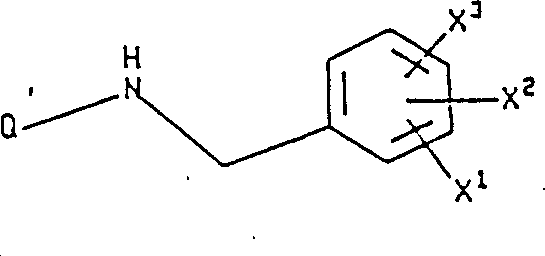

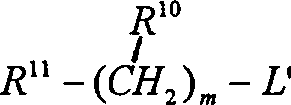
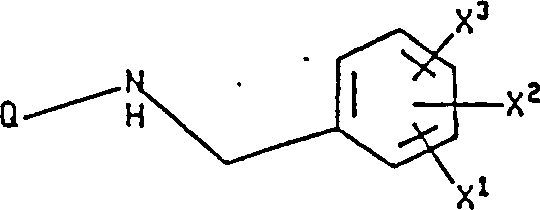

Applications Claiming Priority (2)
| Application Number | Priority Date | Filing Date | Title |
|---|---|---|---|
| US71794391A | 1991-06-20 | 1991-06-20 | |
| US717,943 | 1991-06-20 |
Publications (2)
| Publication Number | Publication Date |
|---|---|
| CN1067655A CN1067655A (en) | 1993-01-06 |
| CN1056373C true CN1056373C (en) | 2000-09-13 |
Family
ID=24884155
Family Applications (1)
| Application Number | Title | Priority Date | Filing Date |
|---|---|---|---|
| CN92104778A Expired - Fee Related CN1056373C (en) | 1991-06-20 | 1992-06-19 | Preparation method of fluoroalkoxybenzylamino derivatives of nitrogen-containing heterocyclic compounds |
Country Status (32)
| Country | Link |
|---|---|
| US (3) | US5773450A (en) |
| EP (1) | EP0589924B1 (en) |
| JP (1) | JPH07110850B2 (en) |
| KR (1) | KR0154882B1 (en) |
| CN (1) | CN1056373C (en) |
| AT (1) | ATE142199T1 (en) |
| AU (1) | AU657967B2 (en) |
| BR (2) | BR9206161A (en) |
| CA (1) | CA2109613C (en) |
| CZ (1) | CZ290475B6 (en) |
| DE (2) | DE69213451T2 (en) |
| DK (1) | DK0589924T3 (en) |
| EG (1) | EG20280A (en) |
| ES (1) | ES2092113T3 (en) |
| FI (3) | FI990419A0 (en) |
| GR (1) | GR3021411T3 (en) |
| HK (1) | HK1000247A1 (en) |
| HU (2) | HU221634B1 (en) |
| IE (1) | IE921986A1 (en) |
| IL (1) | IL102188A (en) |
| MX (1) | MX9203018A (en) |
| NO (1) | NO180715C (en) |
| NZ (1) | NZ243230A (en) |
| PL (2) | PL172054B1 (en) |
| PT (1) | PT100606B (en) |
| RU (1) | RU2114848C1 (en) |
| SK (1) | SK282203B6 (en) |
| TW (1) | TW201301B (en) |
| UA (1) | UA39168C2 (en) |
| WO (1) | WO1993000331A1 (en) |
| YU (1) | YU48997B (en) |
| ZA (1) | ZA924528B (en) |
Families Citing this family (89)
| Publication number | Priority date | Publication date | Assignee | Title |
|---|---|---|---|---|
| US5364943A (en) * | 1991-11-27 | 1994-11-15 | Pfizer Inc. | Preparation of substituted piperidines |
| SK282203B6 (en) * | 1991-06-20 | 2001-12-03 | Pfizer Inc. | FLUOROALCOXYBENZYLAMINE DERIVATIVES OF HETEROCYCLES CONTAINING NITROGEN, METHODS OF PREPARATION, INTERMEDIATE, METHOD OF PREPARATION OF PRODUCTS, USE AND PHARMACEUTICAL PRODUCT |
| ES2149767T5 (en) | 1991-09-20 | 2005-06-16 | Glaxo Group Limited | NEW MEDICAL USE FOR TAQUIQUININE ANTAGONISTS. |
| DE69331190T2 (en) * | 1992-05-18 | 2002-04-18 | Pfizer Inc., New York | BRIDGED AZABICYCLIC DERIVATIVES AS SUBSTANCE P ANTAGONISTS |
| AU4396193A (en) * | 1992-08-04 | 1994-03-03 | Pfizer Inc. | 3-benzylamino-2-phenyl-piperidine derivatives as substance p receptor antagonists |
| JP2909214B2 (en) * | 1992-08-19 | 1999-06-23 | フアイザー・インコーポレイテツド | Non-aromatic heterocyclic compounds containing substituted benzylamino nitrogen |
| FR2700472B1 (en) | 1993-01-19 | 1995-02-17 | Rhone Poulenc Rorer Sa | Synergizing association having an antagonistic effect on the NK1 and NK2 receptors. |
| GB9305718D0 (en) | 1993-03-19 | 1993-05-05 | Glaxo Group Ltd | Medicaments |
| IL109646A0 (en) * | 1993-05-19 | 1994-08-26 | Pfizer | Heteroatom substituted alkyl benzylamino-quinuclidines |
| JP2822274B2 (en) * | 1993-05-19 | 1998-11-11 | ファイザー製薬株式会社 | Heteroatom-substituted alkylbenzylaminoquinuclidines as substance P antagonists |
| DE69404306T2 (en) * | 1993-05-28 | 1997-10-30 | Pfizer | METHOD FOR THE PRODUCTION AND OPTICAL RESOLUTION OF 2-PHENYL-3-AMINOPIPERIDINE |
| US5393762A (en) * | 1993-06-04 | 1995-02-28 | Pfizer Inc. | Pharmaceutical agents for treatment of emesis |
| DE69433744T2 (en) * | 1993-09-17 | 2004-10-14 | Pfizer Inc. | 3-AMINO-5-CARBOXY-SUBSTITUTED PIPERIDINE AND 3-AMINO-4-CARBOXY-SUBSTITUTED PYRROLIDINE AS TACHYKININ ANTAGONISTS |
| US5703065A (en) * | 1993-09-17 | 1997-12-30 | Pfizer Inc. | Heteroarylamino and heteroarylsulfonamido substituted 3-benyzlaminomethyl piperidines and related compounds |
| US6083943A (en) * | 1993-09-17 | 2000-07-04 | Pfizer Inc | Substituted azaheterocyclecarboxylic acid |
| IS4208A (en) * | 1993-09-22 | 1995-03-23 | Glaxo Group Limited | 3- (tetrazolyl-benzyl) amino-piperadidine derivatives |
| EP0653208A3 (en) * | 1993-11-17 | 1995-10-11 | Pfizer | Substance P antagonists for the treatment and prevention of solar erythema. |
| EP0659409A3 (en) * | 1993-11-23 | 1995-08-09 | Pfizer | Substance P antagonists for the inhibition of angiogenesis. |
| EP0655246A1 (en) * | 1993-11-30 | 1995-05-31 | Pfizer Inc. | Substance P antagonists for the treatment of disorders caused by helicobacter pylori or other spiral urease-positive gram-negative bacteria |
| FR2728166A1 (en) | 1994-12-19 | 1996-06-21 | Oreal | TOPICAL COMPOSITION CONTAINING AN ANTAGONIST OF SUBSTANCE P |
| FR2728169A1 (en) | 1994-12-19 | 1996-06-21 | Oreal | USE OF A SUBSTANCE P ANTAGONIST FOR THE TREATMENT OF PRURITUS AND EYE OR PALPEBRAL DYSESTHESIA |
| FR2728165A1 (en) | 1994-12-19 | 1996-06-21 | Oreal | USE OF AN ANTAGONIST OF SUBSTANCE P FOR THE TREATMENT OF SKIN REDNESS OF NEUROGENIC ORIGIN |
| ES2229259T3 (en) * | 1995-01-12 | 2005-04-16 | Glaxo Group Limited | PIPERIDINE DERIVATIVES WITH TAQUIQUININA ANTAGONIST ACTIVITY. |
| GB9505692D0 (en) * | 1995-03-21 | 1995-05-10 | Glaxo Group Ltd | Chemical compounds |
| TW340842B (en) * | 1995-08-24 | 1998-09-21 | Pfizer | Substituted benzylaminopiperidine compounds |
| JP3041051B2 (en) | 1995-10-10 | 2000-05-15 | ファイザー・インコーポレーテッド | NK-1 receptor antagonist for prevention of neurogenic inflammation in gene therapy |
| TW458774B (en) | 1995-10-20 | 2001-10-11 | Pfizer | Antiemetic pharmaceutical compositions |
| FR2741262B1 (en) | 1995-11-20 | 1999-03-05 | Oreal | USE OF A TNF-ALPHA ANTAGONIST FOR THE TREATMENT OF CUTANEOUS REDNESS OF NEUROGENIC ORIGIN |
| PT780375E (en) | 1995-12-21 | 2002-12-31 | Pfizer | 3-¬ (BENZYL SUBSTITUTED IN 5) AMINO | -2-PHENYLPIPERIDINES AS ANTAGONISTS OF THE SUBSTANCE P |
| US6329396B1 (en) | 1996-06-10 | 2001-12-11 | Pfizer Inc. | Substituted benzylaminopiperidine compounds |
| MX9706196A (en) * | 1996-08-14 | 1998-02-28 | Pfizer | Piperidinylamino tricyclic compounds as substance p antagonists. |
| US5750549A (en) * | 1996-10-15 | 1998-05-12 | Merck & Co., Inc. | Cycloalkyl tachykinin receptor antagonists |
| NZ329807A (en) * | 1997-04-23 | 2000-07-28 | Pfizer | NK-1 receptor antagonists and P receptor antagonists 2-Diarylmethyl-3-amino-1-azabicyclo[2.2.2]octane derivatives and amino substituted N-containing rings as agents for treating irritable bowel syndrome |
| KR19990030614A (en) * | 1997-10-02 | 1999-05-06 | 성재갑 | Novel compounds having squalene synthetase inhibitory activity, preparation methods thereof, and compositions comprising the same |
| RS49964B (en) | 1999-05-17 | 2008-09-29 | Pfizer Products Inc., | A process for the preparation of 2-phenyl-3-aminopyridine, its substituted phenyl derivatives, and its salts |
| CA2324116A1 (en) * | 1999-10-25 | 2001-04-25 | Susan Beth Sobolov-Jaynes | Nk-1 receptor antagonists and eletriptan for the treatment of migraine |
| US7163949B1 (en) | 1999-11-03 | 2007-01-16 | Amr Technology, Inc. | 4-phenyl substituted tetrahydroisoquinolines and use thereof |
| DK1246806T3 (en) | 1999-11-03 | 2008-06-16 | Amr Technology Inc | Aryl and heteroaryl-substituted tetrahydroisoquinolines and their use in blocking the reuptake of norepinephrine, dopsmin and serotonin |
| MXPA03000275A (en) | 2000-07-11 | 2004-12-13 | Albany Molecular Res Inc | Novel 4-phenyl substituted tetrahydroisoquinolines and therapeutic use thereof. |
| US20020049211A1 (en) * | 2000-09-06 | 2002-04-25 | Sobolov-Jaynes Susan Beth | Combination treatment for depression and anxiety |
| EP1192952A3 (en) * | 2000-09-28 | 2003-03-26 | Pfizer Products Inc. | Combination, for treating depression and anxiety, containing an NK-3 receptor antagonist and a CNS penetrant NK-1 receptor antagonist |
| EP1411946A1 (en) * | 2001-07-20 | 2004-04-28 | Pfizer Products Inc. | Use of nk-1 receptor antagonists to modify unwanted behavior in dogs, cats and horses |
| US6686507B2 (en) | 2002-03-06 | 2004-02-03 | Pfizer Inc | Purification of 2-methoxy-5-trifluoromethoxybenzaldehyde |
| US6911544B2 (en) | 2002-10-23 | 2005-06-28 | Pfizer Inc. | Process for the preparation of (S,S)-cis-2-phenyl-3-aminopiperidine |
| US20040204455A1 (en) * | 2003-04-10 | 2004-10-14 | Cody Wayne Livingston | Piperidine derivative rennin inhibitors |
| CA2547283C (en) * | 2003-11-26 | 2010-11-09 | Pfizer Products Inc. | Aminopyrazole derivatives as gsk-3 inhibitors |
| UA91341C2 (en) | 2004-07-15 | 2010-07-26 | Амр Текнолоджи, Інк. | Aryl-and heteroaryl-substituted tetrahydroisoquinolines and use thereof to block reuptake of norepinephrine, dopamine, and serotonin |
| ATE550019T1 (en) | 2005-05-17 | 2012-04-15 | Merck Sharp & Dohme | CIS-4-Ä(4-CHLOROPHENYL)SULFONYLÜ-4-(2,5-DIFLUOROPHENYL)CYCLOHEXANEPROPANE ACID FOR THE TREATMENT OF CANCER |
| US7956050B2 (en) | 2005-07-15 | 2011-06-07 | Albany Molecular Research, Inc. | Aryl- and heteroaryl-substituted tetrahydrobenzazepines and use thereof to block reuptake of norepinephrine, dopamine, and serotonin |
| KR20080048502A (en) | 2005-09-29 | 2008-06-02 | 머크 앤드 캄파니 인코포레이티드 | Acylated spiropiperidine derivatives as melanocortin-4 receptor modulators |
| GB0603041D0 (en) | 2006-02-15 | 2006-03-29 | Angeletti P Ist Richerche Bio | Therapeutic compounds |
| AU2007300627B2 (en) | 2006-09-22 | 2012-02-16 | Merck Sharp & Dohme Corp. | Method of treatment using fatty acid synthesis inhibitors |
| US20110218176A1 (en) | 2006-11-01 | 2011-09-08 | Barbara Brooke Jennings-Spring | Compounds, methods, and treatments for abnormal signaling pathways for prenatal and postnatal development |
| BRPI0806245B1 (en) | 2007-01-10 | 2022-01-25 | Msd Italia S.R.L. | Compounds of formula i and their uses |
| US8093268B2 (en) | 2007-01-24 | 2012-01-10 | Glaxo Group Limited | Pharmaceutical compositions comprising 2-methoxy-5-(5-trifluoromethyl-tetrazol-1-yl-benzyl)-(2S-phenylpiperidin-3S-yl-) |
| AU2008233662B2 (en) | 2007-04-02 | 2012-08-23 | Msd K.K. | Indoledione derivative |
| WO2009002495A1 (en) | 2007-06-27 | 2008-12-31 | Merck & Co., Inc. | 4-carboxybenzylamino derivatives as histone deacetylase inhibitors |
| TWI410650B (en) * | 2007-11-09 | 2013-10-01 | Hon Hai Prec Ind Co Ltd | Adapter board |
| US8598184B2 (en) | 2008-03-03 | 2013-12-03 | Tiger Pharmatech | Protein kinase inhibitors |
| US9156812B2 (en) | 2008-06-04 | 2015-10-13 | Bristol-Myers Squibb Company | Crystalline form of 6-[(4S)-2-methyl-4-(2-naphthyl)-1,2,3,4-tetrahydroisoquinolin-7-yl]pyridazin-3-amine |
| UA105182C2 (en) | 2008-07-03 | 2014-04-25 | Ньюрексон, Інк. | Benzoxazines, benzothiazines, and related compounds having nos inhibitory activity |
| EP2413932A4 (en) | 2009-04-01 | 2012-09-19 | Merck Sharp & Dohme | INHIBITORS OF AKT ACTIVITY |
| ES2446971T3 (en) | 2009-05-12 | 2014-03-11 | Albany Molecular Research, Inc. | Tetrahydroisoquinolines substituted with aryl, heteroaryl, and heterocycle and their use |
| CN102595902B (en) | 2009-05-12 | 2015-04-29 | 阿尔巴尼分子研究公司 | 7-([1,2,4]triazolo[1,5-a]pyridin-6-yl)-4-(3,4-dichlorophenyl)-1,2,3,4-tetrahydro Isoquinolines and their uses |
| JP5739415B2 (en) | 2009-05-12 | 2015-06-24 | ブリストル−マイヤーズ スクウィブ カンパニー | (S) -7-([1,2,4] triazolo [1,5-a] pyridin-6-yl) -4- (3,4-dichlorophenyl) -1,2,3,4-tetrahydroisoquinoline Crystal forms and uses thereof |
| CA2777043C (en) | 2009-10-14 | 2015-12-15 | Schering Corporation | Substituted piperidines that increase p53 activity and the uses thereof |
| EP2584903B1 (en) | 2010-06-24 | 2018-10-24 | Merck Sharp & Dohme Corp. | Novel heterocyclic compounds as erk inhibitors |
| CN103068980B (en) | 2010-08-02 | 2017-04-05 | 瑟纳治疗公司 | RNA Interference-Mediated Inhibition of Catenin (Cadherin-Associated Protein), β1 (CTNNB1) Gene Expression Using Short Interfering Nucleic Acids (siNA) |
| RU2745848C2 (en) | 2010-08-17 | 2021-04-01 | Сирна Терапьютикс, Инк. | RNA INTERFERENCE-MEDIATED INHIBITION OF HEPATITIS B VIRUS (HBV) GENE EXPRESSION WITH THE USE OF A SMALL INTERFERING NUCLEIC ACID (siNA) |
| US8883801B2 (en) | 2010-08-23 | 2014-11-11 | Merck Sharp & Dohme Corp. | Substituted pyrazolo[1,5-a]pyrimidines as mTOR inhibitors |
| EP2613782B1 (en) | 2010-09-01 | 2016-11-02 | Merck Sharp & Dohme Corp. | Indazole derivatives useful as erk inhibitors |
| US9242981B2 (en) | 2010-09-16 | 2016-01-26 | Merck Sharp & Dohme Corp. | Fused pyrazole derivatives as novel ERK inhibitors |
| WO2012058210A1 (en) | 2010-10-29 | 2012-05-03 | Merck Sharp & Dohme Corp. | RNA INTERFERENCE MEDIATED INHIBITION OF GENE EXPRESSION USING SHORT INTERFERING NUCLEIC ACIDS (siNA) |
| WO2012087772A1 (en) | 2010-12-21 | 2012-06-28 | Schering Corporation | Indazole derivatives useful as erk inhibitors |
| WO2012143879A1 (en) | 2011-04-21 | 2012-10-26 | Piramal Healthcare Limited | A crystalline form of a salt of a morpholino sulfonyl indole derivative and a process for its preparation |
| EP2770987B1 (en) | 2011-10-27 | 2018-04-04 | Merck Sharp & Dohme Corp. | Novel compounds that are erk inhibitors |
| EP3919620A1 (en) | 2012-05-02 | 2021-12-08 | Sirna Therapeutics, Inc. | Short interfering nucleic acid (sina) compositions |
| CA2882950A1 (en) | 2012-09-28 | 2014-04-03 | Merck Sharp & Dohme Corp. | Novel compounds that are erk inhibitors |
| US10154988B2 (en) | 2012-11-14 | 2018-12-18 | The Johns Hopkins University | Methods and compositions for treating schizophrenia |
| SMT201700595T1 (en) | 2012-11-28 | 2018-03-08 | Merck Sharp & Dohme | Compositions and methods for treating cancer |
| WO2014100065A1 (en) | 2012-12-20 | 2014-06-26 | Merck Sharp & Dohme Corp. | Substituted imidazopyridines as hdm2 inhibitors |
| WO2014120748A1 (en) | 2013-01-30 | 2014-08-07 | Merck Sharp & Dohme Corp. | 2,6,7,8 substituted purines as hdm2 inhibitors |
| WO2015034925A1 (en) | 2013-09-03 | 2015-03-12 | Moderna Therapeutics, Inc. | Circular polynucleotides |
| US10975084B2 (en) | 2016-10-12 | 2021-04-13 | Merck Sharp & Dohme Corp. | KDM5 inhibitors |
| WO2019094312A1 (en) | 2017-11-08 | 2019-05-16 | Merck Sharp & Dohme Corp. | Prmt5 inhibitors |
| EP3706742B1 (en) | 2017-11-08 | 2023-03-15 | Merck Sharp & Dohme LLC | Prmt5 inhibitors |
| EP3833667B1 (en) | 2018-08-07 | 2024-03-13 | Merck Sharp & Dohme LLC | Prmt5 inhibitors |
| CA3108388A1 (en) | 2018-08-07 | 2020-02-13 | Merck Sharp & Dohme Corp. | Prmt5 inhibitors |
| WO2020033282A1 (en) | 2018-08-07 | 2020-02-13 | Merck Sharp & Dohme Corp. | Prmt5 inhibitors |
Citations (3)
| Publication number | Priority date | Publication date | Assignee | Title |
|---|---|---|---|---|
| WO1990005729A1 (en) * | 1988-11-23 | 1990-05-31 | Pfizer Inc. | Quinuclidine therapeutic agents |
| WO1991018899A1 (en) * | 1990-06-01 | 1991-12-12 | Pfizer Inc. | 3-amino-2-aryl quinuclidines, process for their preparation and pharmaceutical compositions containing them |
| WO1992001688A1 (en) * | 1990-07-23 | 1992-02-06 | Pfizer Inc. | Quinuclidine derivatives |
Family Cites Families (14)
| Publication number | Priority date | Publication date | Assignee | Title |
|---|---|---|---|---|
| US3452026A (en) * | 1966-03-15 | 1969-06-24 | Bristol Myers Co | Substituted 1,2,3,4-tetrahydroquinolines |
| US3560510A (en) * | 1969-03-05 | 1971-02-02 | Aldrich Chem Co Inc | 2-benzhydrylquinuclidines |
| US5232929A (en) * | 1990-11-28 | 1993-08-03 | Pfizer Inc. | 3-aminopiperidine derivatives and related nitrogen containing heterocycles and pharmaceutical compositions and use |
| UA41251C2 (en) * | 1990-01-04 | 2001-09-17 | Пфайзер, Інк. | Hydrogenated nitrogen-containing heterocyclic substances, piperidine derivatives, pharmaceutical composition and method for inhibiting activity of p substance |
| ATE121389T1 (en) * | 1990-09-28 | 1995-05-15 | Pfizer | RING-LINKED ANALOGUE OF NITROGEN-CONTAINING NON-AROMATIC HETEROCYCLES. |
| NZ240089A (en) * | 1990-10-03 | 1993-04-28 | Commw Scient Ind Res Org | Diaminobisimide compounds and compositions comprising such compounds for curing epoxy resins |
| US5138060A (en) * | 1991-01-03 | 1992-08-11 | Pfizer Inc. | Process and intermediates for preparing azabicyclo(2.2.2)octan-3-imines |
| AU647592B2 (en) * | 1991-03-26 | 1994-03-24 | Pfizer Inc. | Stereoselective preparation of substituted piperidines |
| RU2092486C1 (en) * | 1991-05-22 | 1997-10-10 | Пфайзер Инк. | Substituted 3-aminoquinuclidines |
| BR9206073A (en) * | 1991-05-31 | 1994-12-06 | Pfizer | Quinuclidine derivatives |
| SK282203B6 (en) * | 1991-06-20 | 2001-12-03 | Pfizer Inc. | FLUOROALCOXYBENZYLAMINE DERIVATIVES OF HETEROCYCLES CONTAINING NITROGEN, METHODS OF PREPARATION, INTERMEDIATE, METHOD OF PREPARATION OF PRODUCTS, USE AND PHARMACEUTICAL PRODUCT |
| AU4396193A (en) * | 1992-08-04 | 1994-03-03 | Pfizer Inc. | 3-benzylamino-2-phenyl-piperidine derivatives as substance p receptor antagonists |
| US5393762A (en) * | 1993-06-04 | 1995-02-28 | Pfizer Inc. | Pharmaceutical agents for treatment of emesis |
| US5576317A (en) * | 1994-12-09 | 1996-11-19 | Pfizer Inc. | NK-1 receptor antagonists and 5HT3 receptor antagonists for the treatment of emesis |
-
1992
- 1992-05-05 SK SK3908-92A patent/SK282203B6/en not_active IP Right Cessation
- 1992-05-05 CZ CS19923908A patent/CZ290475B6/en not_active IP Right Cessation
- 1992-05-05 RU RU93058531A patent/RU2114848C1/en not_active IP Right Cessation
- 1992-05-05 PL PL92301884A patent/PL172054B1/en not_active IP Right Cessation
- 1992-05-05 EP EP92911210A patent/EP0589924B1/en not_active Expired - Lifetime
- 1992-05-05 FI FI990419A patent/FI990419A0/en unknown
- 1992-05-05 JP JP4510950A patent/JPH07110850B2/en not_active Expired - Fee Related
- 1992-05-05 PL PL92310851A patent/PL170516B1/en not_active IP Right Cessation
- 1992-05-05 DE DE69213451T patent/DE69213451T2/en not_active Expired - Fee Related
- 1992-05-05 KR KR1019930703935A patent/KR0154882B1/en not_active Expired - Fee Related
- 1992-05-05 AT AT92911210T patent/ATE142199T1/en not_active IP Right Cessation
- 1992-05-05 DE DE9290083U patent/DE9290083U1/en not_active Expired - Lifetime
- 1992-05-05 DK DK92911210.0T patent/DK0589924T3/en active
- 1992-05-05 HK HK97101788A patent/HK1000247A1/en not_active IP Right Cessation
- 1992-05-05 BR BR9206161A patent/BR9206161A/en not_active Application Discontinuation
- 1992-05-05 ES ES92911210T patent/ES2092113T3/en not_active Expired - Lifetime
- 1992-05-05 UA UA93004396A patent/UA39168C2/en unknown
- 1992-05-05 WO PCT/US1992/003571 patent/WO1993000331A1/en not_active Ceased
- 1992-05-05 HU HU9303668A patent/HU221634B1/en not_active IP Right Cessation
- 1992-05-05 US US08/167,881 patent/US5773450A/en not_active Expired - Fee Related
- 1992-05-05 AU AU18893/92A patent/AU657967B2/en not_active Ceased
- 1992-05-05 CA CA002109613A patent/CA2109613C/en not_active Expired - Fee Related
- 1992-05-05 HU HU9500836A patent/HU224443B1/en not_active IP Right Cessation
- 1992-05-12 TW TW081103685A patent/TW201301B/zh active
- 1992-06-12 IL IL10218892A patent/IL102188A/en not_active IP Right Cessation
- 1992-06-17 EG EG31892A patent/EG20280A/en active
- 1992-06-19 CN CN92104778A patent/CN1056373C/en not_active Expired - Fee Related
- 1992-06-19 ZA ZA924528A patent/ZA924528B/en unknown
- 1992-06-19 NZ NZ243230A patent/NZ243230A/en not_active IP Right Cessation
- 1992-06-19 MX MX9203018A patent/MX9203018A/en not_active IP Right Cessation
- 1992-06-19 PT PT100606A patent/PT100606B/en not_active IP Right Cessation
- 1992-06-19 YU YU64092A patent/YU48997B/en unknown
- 1992-07-01 IE IE198692A patent/IE921986A1/en not_active IP Right Cessation
-
1993
- 1993-12-17 FI FI935701A patent/FI108794B/en active
- 1993-12-17 NO NO934691A patent/NO180715C/en unknown
-
1995
- 1995-05-22 US US08/443,418 patent/US5744480A/en not_active Expired - Fee Related
-
1996
- 1996-10-23 GR GR960402782T patent/GR3021411T3/en unknown
- 1996-11-18 BR BR1100086-4A patent/BR1100086A/en active IP Right Grant
-
1999
- 1999-02-26 FI FI990418A patent/FI110686B/en active
-
2003
- 2003-03-04 US US10/379,198 patent/US20030199540A1/en not_active Abandoned
Patent Citations (3)
| Publication number | Priority date | Publication date | Assignee | Title |
|---|---|---|---|---|
| WO1990005729A1 (en) * | 1988-11-23 | 1990-05-31 | Pfizer Inc. | Quinuclidine therapeutic agents |
| WO1991018899A1 (en) * | 1990-06-01 | 1991-12-12 | Pfizer Inc. | 3-amino-2-aryl quinuclidines, process for their preparation and pharmaceutical compositions containing them |
| WO1992001688A1 (en) * | 1990-07-23 | 1992-02-06 | Pfizer Inc. | Quinuclidine derivatives |
Also Published As
Similar Documents
| Publication | Publication Date | Title |
|---|---|---|
| CN1067655A (en) | Fluoroalkoxybenzylamino Derivatives of Nitrogen-Containing Heterocyclic Compounds | |
| CN1090188C (en) | New Benzonaphthyridines | |
| CN1064356C (en) | New Piperazine, piperidine and 1,2,5,6-tetrahydropyridine compounds, process for preparation thereof and pharmaceutical compositions containing them | |
| CN1088582A (en) | Alkali formula season acid amides, its preparation method and pharmaceutical composition thereof | |
| CN1060285A (en) | Fused ring analogues of nitrogen-containing non-aromatic heterocycles | |
| CN1191862A (en) | 8-substituted-1,3,8-triaza-spiro [4,5] decan-4-on derivatives | |
| CN1092771A (en) | The non-aromatic heterocycles that aminomethylene replaces | |
| CN1294577A (en) | Potassium channel inhibitors | |
| CN1058405A (en) | Quinucidine derivatives | |
| CN1018614B (en) | Process for preparing antihistaminic compositions containing N-heterocyclyl-4-piperidinamines | |
| CN1042133C (en) | N-substituted azabicycloheptane derivatives, the preparation and use thereof | |
| CN1043130A (en) | quinucline therapeutic agent | |
| CN1222521A (en) | 1,3,8-Triazaspiro[4,5]dec-4-one derivatives | |
| CN1226825A (en) | Use of amines to produce drugs for preventing tumour cell proliferation | |
| CN1071755C (en) | Heterocyclylcarboxamide derivatives and their use as therapeutic agents | |
| CN1745069A (en) | Mercaptoimidazoles as CCR2 receptor antagonists | |
| CN100338074C (en) | Heterocyclic compounds and cerebral function improvers containing same as active | |
| CN1049658C (en) | Pyrazolo[4,3-c]pyridines, a process for their preparation and their use as serotonin reuptake inhibitors | |
| CN1166833A (en) | Pyrimidinylpyrazole derivative | |
| CN1024663C (en) | Preparation method of substituted tetrahydronaphthalene compounds for treating asthma | |
| CN1041088C (en) | Optically active imidazolidinone derivatives and anti-dementia pharmaceutical composition | |
| CN1179962C (en) | Azaindorazinone derivatives and brain function improving agents containing them as active ingredients | |
| CN87104641A (en) | 4-(Aroylamino)piperidine butyramide derivatives | |
| CN1281607C (en) | Novel monopiperazine quaternary ammonium compounds with analgesic effect | |
| CN1135215A (en) | Imidazolinone derivatives, acid addition salts thereof, and drugs for treating senile dementia |
Legal Events
| Date | Code | Title | Description |
|---|---|---|---|
| C10 | Entry into substantive examination | ||
| SE01 | Entry into force of request for substantive examination | ||
| C06 | Publication | ||
| PB01 | Publication | ||
| C14 | Grant of patent or utility model | ||
| GR01 | Patent grant | ||
| C17 | Cessation of patent right | ||
| CF01 | Termination of patent right due to non-payment of annual fee |
Granted publication date: 20000913 |