CN103607222A - Self-learning method for cross-frequency-band power line communication frequency - Google Patents
Self-learning method for cross-frequency-band power line communication frequency Download PDFInfo
- Publication number
- CN103607222A CN103607222A CN201310616416.1A CN201310616416A CN103607222A CN 103607222 A CN103607222 A CN 103607222A CN 201310616416 A CN201310616416 A CN 201310616416A CN 103607222 A CN103607222 A CN 103607222A
- Authority
- CN
- China
- Prior art keywords
- frequency
- prmbl
- time slot
- operating frequency
- slave station
- Prior art date
- Legal status (The legal status is an assumption and is not a legal conclusion. Google has not performed a legal analysis and makes no representation as to the accuracy of the status listed.)
- Granted
Links
Images


Classifications
-
- H—ELECTRICITY
- H04—ELECTRIC COMMUNICATION TECHNIQUE
- H04B—TRANSMISSION
- H04B3/00—Line transmission systems
- H04B3/54—Systems for transmission via power distribution lines
- H04B3/544—Setting up communications; Call and signalling arrangements
Landscapes
- Engineering & Computer Science (AREA)
- Power Engineering (AREA)
- Computer Networks & Wireless Communication (AREA)
- Signal Processing (AREA)
- Cable Transmission Systems, Equalization Of Radio And Reduction Of Echo (AREA)
Abstract
本发明涉及跨频带电力线通信的方法,具体涉及一种跨频带电力线通信频率的自学习方法。该方法应用的频率范围为150kHz-12MHz,所述方法包括下述步骤:(1)确定默认工作频率组;(2)采用前导序列对默认工作频率组进行预选择,将无法正确检测到前导序列的默认工作频率筛除,正确检测到前导序列的默认工作频率作为潜在工作频率;(3)在潜在工作频率上,主站与从站间传输控制包,确定最佳工作频率。本发明的方法能够在很宽的频谱范围内自学习最佳频率(中心频点与带宽),因此能够根据实际的信道条件自适应其频率和数据速率,从而提高有效性、扩大覆盖范围,并减少人为干预。
The invention relates to a method for cross-band power line communication, in particular to a self-learning method for frequency of cross-band power line communication. The frequency range applied by this method is 150kHz-12MHz, and the method includes the following steps: (1) Determine the default working frequency group; (2) Pre-select the default working frequency group by using the preamble sequence, and the preamble sequence cannot be detected correctly The default operating frequency of the preamble is screened out, and the default operating frequency of the preamble sequence is correctly detected as the potential operating frequency; (3) On the potential operating frequency, the master station and the slave station transmit control packets to determine the optimal operating frequency. The method of the present invention can self-learn the optimal frequency (center frequency point and bandwidth) in a wide spectrum range, so it can adapt its frequency and data rate according to actual channel conditions, thereby improving effectiveness, expanding coverage, and Reduce human intervention.
Description
技术领域technical field
本发明涉及跨频带电力线通信的方法,具体涉及一种跨频带电力线通信频率的自学习方法。The invention relates to a method for cross-band power line communication, in particular to a self-learning method for frequency of cross-band power line communication.
背景技术Background technique
电力线通信(PLC)信道复杂多变。不同于无线通信系统,在电力线信道上,衰减、干扰等主要电力线信道特性与频率密切相关,具体的,如衰减与电网拓扑、线缆材质、链路距离等密切相关。这种与频率相关的信道特性往往不会随时间快速变化,其仅随网络拓扑等变化而变化,如地埋电力线的衰减随频率与距离增加而变大,这也限制了宽带PLC(BPL)的可传输距离。窄带PLC(NPLC)通常具有较低的衰减,可以传输较远的距离,然而窄带PLC受噪声影响严重(噪声通常随频率增加而指数减少)。单纯的架空电力线即使在较高的频率也具有非常低的衰减;然而,如果架空线连接了一段即便很短的地埋线时,由于反射造成的频率选择性衰减将变得显而易见。通常一个可以用来通信的较小频率窗口是存在的,但这一频率窗口可能与电网结构和线缆材质密切相关。Power line communication (PLC) channels are complex and changeable. Different from wireless communication systems, on power line channels, the main power line channel characteristics such as attenuation and interference are closely related to frequency. Specifically, attenuation is closely related to power grid topology, cable material, and link distance. This frequency-dependent channel characteristic often does not change rapidly over time, it only changes with changes in network topology, such as the attenuation of buried power lines increases with frequency and distance, which also limits broadband PLC (BPL) transmittable distance. Narrowband PLC (NPLC) usually has lower attenuation and can transmit longer distances, however narrowband PLC is severely affected by noise (noise usually decreases exponentially with frequency). Pure overhead power lines have very low attenuation even at higher frequencies; however, frequency selective attenuation due to reflections becomes apparent when the overhead line is connected to even a short length of buried wire. Usually there is a small frequency window that can be used for communication, but this frequency window may be closely related to the grid structure and cable material.
因此,由于网络拓扑与部署的差异巨大,我们通常无法预先得知哪个频段是最佳的。所以,真正的最佳频段需要“在线自学习”。As a result, it is often not possible to know in advance which frequency band will be optimal due to the huge variance in network topologies and deployments. Therefore, the real optimal frequency band requires "online self-learning".
前沿的PLC技术可以分为使用2兆赫兹以上频段的宽带PLC(BPL)和使用500千赫兹以下的窄带PLC(NPLC)。宽带PLC的代表有OPERA(开放电力线通信研究联盟)和Home-Plug。ITU-T.G.hn与OPERA技术相似,IEEE1901.1则采用了Home-Plug的大部分技术。窄带PLC系统的代表有PRIME和G3。所有这些系统都使用了预先定义的频段。有些系统仅使用单一的频段,如PRIME;而有些系统虽然具有多个工作频段,但需要预先定义工作频段。在工作频段内也具有一些自适应技术,如根据OFDM子载波的信噪比进行自适应比特加载,从而自适应的调整数据速率。Leading-edge PLC technology can be divided into broadband PLC (BPL) that uses frequency bands above 2 MHz and narrowband PLC (NPLC) that uses frequency bands below 500 kHz. Representatives of broadband PLC are OPERA (Open Power Line Communication Research Alliance) and Home-Plug. ITU-T.G.hn is similar to OPERA technology, and IEEE1901.1 adopts most of Home-Plug technologies. Representatives of narrowband PLC systems include PRIME and G3. All of these systems use predefined frequency bands. Some systems only use a single frequency band, such as PRIME; while some systems have multiple working frequency bands, but need to pre-define the working frequency bands. There are also some adaptive technologies in the working frequency band, such as adaptive bit loading according to the signal-to-noise ratio of OFDM subcarriers, so as to adaptively adjust the data rate.
OPERA在2-34兆赫兹的范围内使用OFDM技术,工作频率带宽为10兆赫兹、20兆赫兹和30兆赫兹,也可通过陷波技术实现5兆赫兹的带宽。然而,对于低压地埋电力线网络,由于在分支节点处的阻抗不匹配引起的电缆衰减和反射可能导致严重的频率选择性衰减,使得只有一个小的频率窗口(如小于1兆赫兹)可以用于通信。在这种情况下,最小可配置带宽为5兆赫兹的OPERA可能无法工作。除了需要一个频率自学习的机制来识别这个可用于通信的小频率窗口,OPERA只能使用2兆赫兹以上的频率也严重的限制了在长距离网络中的应用。PRIME使用从47千赫兹和89千赫兹的固定频段。对于低压网络,在低频频段的接入阻抗通常非常小,同时,由于家用电器引起的噪声非常高。因此,无法将工作频段移至较高频率是目前PRIME设计的重要缺陷。G3在10千赫兹至500千赫兹之间支持多种频段,然而同样需要预先定义需要使用的工作频段,无法使系统自适应工作频率。同样,由于G3的频率限制在500千赫兹以内,在一些噪声较大的信道环境下,高频频段的优势无法得到发挥。另外,在衰减较小、但对系统延时和系统带宽要求较高的应用场景下,只有支持工作频率在2兆赫兹以上的PLC系统才能够满足要求。OPERA uses OFDM technology in the range of 2-34 MHz, the operating frequency bandwidth is 10 MHz, 20 MHz and 30 MHz, and the bandwidth of 5 MHz can also be realized through notch wave technology. However, for low-voltage buried power line networks, cable attenuation and reflections due to impedance mismatch at branch nodes may cause severe frequency-selective attenuation, so that only a small frequency window (such as less than 1 MHz) can be used for communication. In this case, OPERA with a minimum configurable bandwidth of 5 MHz may not work. In addition to requiring a frequency self-learning mechanism to identify this small frequency window that can be used for communication, OPERA can only use frequencies above 2 MHz, which severely limits its application in long-distance networks. PRIME uses fixed frequency bands from 47 kHz and 89 kHz. For low-voltage networks, the access impedance at low frequencies is usually very small, and at the same time, the noise due to household appliances is very high. Therefore, the inability to shift the operating band to higher frequencies is an important flaw in the current PRIME design. G3 supports multiple frequency bands between 10 kHz and 500 kHz. However, it is also necessary to pre-define the working frequency band to be used, which cannot make the system adaptive to the working frequency. Also, because the frequency of G3 is limited within 500 kHz, in some noisy channel environments, the advantages of the high-frequency band cannot be brought into play. In addition, in application scenarios with small attenuation but high requirements on system delay and system bandwidth, only PLC systems that support operating frequencies above 2 MHz can meet the requirements.
几乎所有的PLC系统都工作在预先设定的频率下。通常一个主站节点在每个频率上发送信标,使从站在其频率上实现同步并注册到网络。然而,由于复杂度的原因,系统往往同时只使用一个频率,如PRIME、G3、OPERA、HOMEPUG等。绝大部分PLC系统属于异步包交换网络中。在异步包交换网络中,通常需要在物理层突发的开始位置增加参考信号,用于检测突发数据包的出现和起始位置。PRIME使用一个chirp信号作为前导序列使用[7],Chirp信号具有很好的自相关函数。其他PLC系统,如OPERA、HOMEPLUG和G3使用已知的OFDM符号作为前导序列使用,进行定时和突发数据同步。以上所有PLC系统均在一个已知的工作频率上使用前导序列进行同步,没有一个PLC系统使用前导序列进行多种工作频率的评估和预选择。Almost all PLC systems work at a preset frequency. Typically a master node sends beacons on each frequency, allowing the slaves to synchronize and register with the network on their frequencies. However, due to the complexity, the system often uses only one frequency at the same time, such as PRIME, G3, OPERA, HOMEPUG, etc. Most PLC systems belong to asynchronous packet switching network. In an asynchronous packet switching network, it is usually necessary to add a reference signal at the start position of a physical layer burst to detect the appearance and start position of a burst data packet. PRIME uses a chirp signal as the leading sequence [7], and the chirp signal has a good autocorrelation function. Other PLC systems, such as OPERA, HOMEPLUG, and G3 use known OFDM symbols as preambles for timing and burst data synchronization. All of the above PLC systems use preambles for synchronization at a known operating frequency, none of the PLC systems use preambles for evaluation and pre-selection of multiple operating frequencies.
发明内容Contents of the invention
针对现有技术的不足,本发明的目的是提供一种跨频带电力线通信频率的自学习方法,本发明的方法能够在很宽的频谱范围内自学习最佳频率(中心频点与带宽),因此能够根据实际的信道条件自适应其频率和数据速率,从而提高有效性、扩大覆盖范围,并减少人为干预。In view of the deficiencies in the prior art, the purpose of the present invention is to provide a self-learning method for cross-band power line communication frequency. The method of the present invention can self-learn the best frequency (center frequency point and bandwidth) in a wide spectrum range. Therefore, it can adapt its frequency and data rate according to actual channel conditions, thereby improving effectiveness, extending coverage, and reducing human intervention.
本发明的目的是采用下述技术方案实现的:The object of the present invention is to adopt following technical scheme to realize:
本发明提供一种跨频带电力线通信频率的自学习方法,其改进之处在于,所述方法应用的频率范围为150kHz-12MHz,所述方法包括下述步骤:The present invention provides a self-learning method for cross-band power line communication frequency. The improvement is that the frequency range of the method is 150kHz-12MHz, and the method includes the following steps:
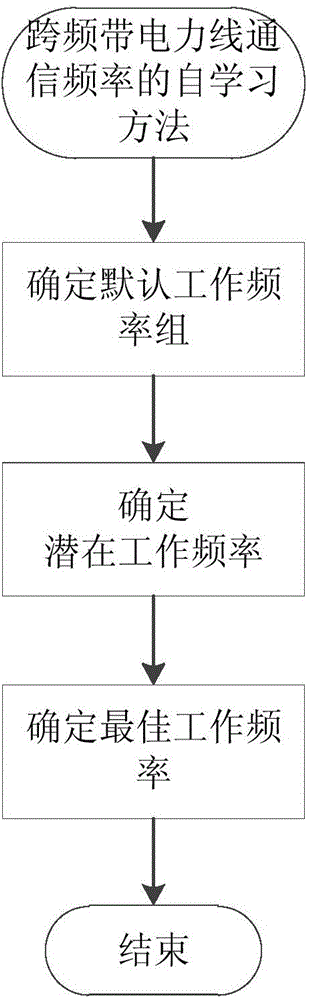
(1)确定默认工作频率组;(1) Determine the default working frequency group;
(2)采用前导序列对默认工作频率组进行预选择,将无法正确检测到前导序列的默认工作频率筛除,正确检测到前导序列的默认工作频率作为潜在工作频率;(2) Use the leading sequence to pre-select the default working frequency group, filter out the default working frequency that cannot correctly detect the leading sequence, and correctly detect the default working frequency of the leading sequence as the potential working frequency;
(3)在潜在工作频率上,主站与从站间传输控制包,确定最佳工作频率。(3) On the potential working frequency, transmit control packets between the master station and the slave station to determine the best working frequency.
进一步地,所述步骤(1)中,默认工作频率组从以下三个频段中选择:150kHz至500kHz的低频频段、500kHz至1.6MHz的中频频段以及1.6MHz至12MHz的高频频段;低频频段选出的默认频率带宽小于高频频段中选出的默认频率带宽;默认频率带宽选定为互为倍数。Further, in the step (1), the default working frequency group is selected from the following three frequency bands: low frequency band from 150kHz to 500kHz, intermediate frequency band from 500kHz to 1.6MHz, and high frequency band from 1.6MHz to 12MHz; low frequency band The selected default frequency bandwidth is smaller than the selected default frequency bandwidth in the high-frequency band; the default frequency bandwidth is selected as a multiple of each other.
进一步地,所述步骤(2)中,搜索电力线网络上的两个电力线通信PLC节点间的最佳频率;发送参考信号的节点称为主站,将另一节点称为从站;将主站到从站的链路称为下行链路,将从站到主站的链路称为上行链路;Further, in the step (2), search for the optimal frequency between two PLC nodes for power line communication on the power line network; the node sending the reference signal is called the master station, and the other node is called the slave station; the master station The link to the slave station is called the downlink, and the link from the slave station to the master station is called the uplink;
在每个默认频率上使用电力线通信的定时方法中定义的前导信号,用于潜在工作频率的初始同步和预选择;Use the preamble defined in the timing method for power line communication on each default frequency for initial synchronization and pre-selection of potential operating frequencies;
定义一个包括所有默认频率组前导信号的前导时隙,即PRMBL时隙;其中包括所有默认频率的前导序列,所有前导序列在PRMBL时隙中均位于确定的时间位置,并且无重叠;根据预定的规则排列PRMBL时隙中的前导序列。Define a preamble time slot that includes all default frequency group preamble signals, that is, a PRMBL time slot; it includes preamble sequences of all default frequencies, and all preamble sequences are located in a certain time position in the PRMBL time slot, and there is no overlap; according to a predetermined The preamble sequences in the PRMBL slots are regularly arranged.
进一步地,根据预定的规则排列PRMBL时隙中的前导序列包括:首先排列带宽相对小和频率相对低的前导序列,将带宽相对大和频率相对高的前导序列排在之后的时间位置上;Further, arranging the preamble sequences in the PRMBL time slot according to a predetermined rule includes: first arranging the preamble sequences with relatively small bandwidth and relatively low frequency, and arranging the preamble sequences with relatively large bandwidth and relatively high frequency at a later time position;
对于给定的频率,下行链路和上行链路采用不同的前导序列用于初始化信令,所述不同的前导序列时间长度相等,自相关特性相同。For a given frequency, the downlink and the uplink use different preamble sequences for initialization signaling, and the different preamble sequences have equal time lengths and the same autocorrelation characteristics.
进一步地,所述步骤(2)中,所述潜在工作频率包括潜在下行工作频率和潜在上行工作频率。Further, in the step (2), the potential working frequency includes a potential downlink working frequency and a potential uplink working frequency.
进一步地,确定潜在的下行工作频率包括:主站在下行链路以固定的时间间隔发送PRMBL时隙,从站则开始在某一默认工作频率上扫描前导序列,当经过一定时间(由系统帧结构决定,如100毫秒左右)后,如无法在当前频率上检测到前导序列,则切换至下一个默认频率进行检测;当所有默认工作频率被扫描之后,如果仍然无法检测到前导序列,且未收到除扫描前导序列操作的其他操作命令,从站继续循环开始扫描过程;Further, determining the potential downlink working frequency includes: the master station sends the PRMBL time slot at a fixed time interval in the downlink, and the slave station starts to scan the preamble sequence on a certain default working frequency, and when a certain time (determined by the system frame structure decision, such as about 100 milliseconds), if the preamble sequence cannot be detected on the current frequency, then switch to the next default frequency for detection; after all default operating frequencies are scanned, if the preamble sequence cannot be detected and the After receiving other operation commands except scanning the leading sequence operation, the slave station continues to cycle and start the scanning process;
如果从站成功的在某一默认工作频率上检测到前导序列,则与下行链路的PRMBL时隙取得同步,获得全部默认工作频率出现的定时信息,根据定时信息,从站将继续评估之后N个连续的PRMBL时隙,用以确定潜在下行工作频率;If the slave station successfully detects the preamble sequence on a certain default operating frequency, it will synchronize with the PRMBL time slot of the downlink and obtain the timing information of all default operating frequencies. According to the timing information, the slave station will continue to evaluate the next N consecutive PRMBL time slots to determine the potential downlink operating frequency;
确定潜在的上行工作频率包括:当从站检测到下行PRMBL时隙后,发送上行PRMBL时隙,在时间上,上行PRMBL时隙的位置与下行PRMBL时隙的位置相连;主站已知可能的上行PRMBL时隙的出现时间;主站在已知的时间位置扫描上行PRMBL时隙;同时主站评估N个上行PRMBL时隙以确定潜在上行工作频率。Determining the potential uplink operating frequency includes: when the slave station detects the downlink PRMBL time slot, it sends the uplink PRMBL time slot. In terms of time, the position of the uplink PRMBL time slot is connected to the position of the downlink PRMBL time slot; the master station knows the possible The occurrence time of the uplink PRMBL time slot; the master station scans the uplink PRMBL time slot at a known time position; at the same time, the master station evaluates the N uplink PRMBL time slots to determine the potential uplink operating frequency.
进一步地,所述步骤(3)中,上行链路与下行链路使用同一潜在的工作频率,主站与从站协商并最终确定最佳工作频率;Further, in the step (3), the uplink and the downlink use the same potential working frequency, and the master station negotiates with the slave station to finally determine the best working frequency;
从站预选择并将潜在工作频率排序后,在上行链路PRMBL时隙中发送选定的潜在工作频率的前导序列,随后在选定的潜在工作频率上向主站发送控制包;After the slave station pre-selects and sorts the potential operating frequencies, it sends the preamble sequence of the selected potential operating frequencies in the uplink PRMBL time slot, and then sends a control packet to the master station on the selected potential operating frequencies;
在传输下行链路PRMBL时隙后传输上行链路PRMBL时隙;在上行链路PRMBL时隙中检测到前导序列后,主站在所检测到的前导序列的频率上顺序接收控制包,成功接收到从站发送的控制包后,主站以原有的相应频率回复确认接收。After transmitting the downlink PRMBL time slot, the uplink PRMBL time slot is transmitted; after the preamble sequence is detected in the uplink PRMBL time slot, the master station receives the control packet sequentially on the frequency of the detected preamble sequence, and successfully receives After receiving the control packet sent by the slave station, the master station will reply with the original corresponding frequency to confirm the receipt.
进一步地,由从站排序最优的潜在工作频率上发送控制包,如果从站未能接收到主站以该频率发送的接收确认,则切换到下一个排序次优的频率,直到从站收到主站以与从站相同潜在工作频率上回复确认接收的信号时,停止切换;所述主站与从站传输控制包时相同的潜在工作频率即为最终的最佳工作频率。Further, the control packet is sent on the potential working frequency with the optimal sorting by the slave station. If the slave station fails to receive the reception confirmation sent by the master station at this frequency, it will switch to the next suboptimal frequency until the slave station receives When the master station replies with a signal confirming reception at the same potential working frequency as the slave station, the switching is stopped; the same potential working frequency when the master station and the slave station transmit control packets is the final optimal working frequency.
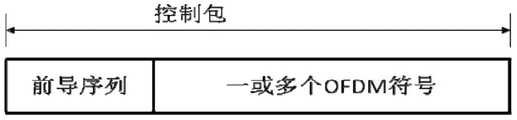
进一步地,所述控制包包括前导序列和控制数据;所述前导序列为一个前导信号,所述控制数据为一个或一个以上的OFDM符号。Further, the control packet includes a preamble sequence and control data; the preamble sequence is a preamble signal, and the control data is one or more OFDM symbols.
进一步地,主站不必在PRMBL时隙上发送全部前导序列,即发送部分默认工作频率的前导序列,且将不使用的默认工作频率位置留空;Further, the master station does not need to send all the preamble sequences on the PRMBL time slot, that is, to send part of the preamble sequences of the default operating frequency, and leave the unused default operating frequency positions blank;
所述自学习方法采用PRMBL时隙降低相邻电力线通信网络之间的潜在干扰,将默认频率分为不同的子集,不同子集之间的频率没有交集;不同电力线通信网络的主站在相应的PRMBL时隙中使用不重叠的频率子集,用于避免干扰的产生;The self-learning method uses PRMBL time slots to reduce potential interference between adjacent power line communication networks, divides default frequencies into different subsets, and the frequencies between different subsets do not overlap; master stations of different power line communication networks correspond to Non-overlapping frequency subsets are used in the PRMBL time slots to avoid interference;
主站选择发送所有默认工作频率子集的前导序列,用于控制实际使用的默认工作频率,优化网络的运行。The master station chooses to send the preamble sequence of all default operating frequency subsets, which is used to control the actually used default operating frequency and optimize the operation of the network.
与现有技术比,本发明达到的有益效果是:Compared with prior art, the beneficial effect that the present invention reaches is:
本发明提供的跨频带电力线通信频率的自学习方法,能够在很宽的频谱范围内自学习最佳频率(中心频点与带宽),因此能够根据实际的信道条件自适应其频率和数据速率,从而提高有效性、扩大覆盖范围,并减少人为干预。本发明提出采用默认频率来进行频率自学习进程。考虑到电力线的信道特性,对于中低压接入网,默认频率一个优选的范围为150kHz至12MHz,覆盖低、中、高频率。此外,默认频率的带宽随频率增加而增加。通过使用默认频率,一方面能够为大多数实际情况提供满意的工作频率,另一方面能够降低频率优化的复杂程度。所提出用于初始频率预选择的PRMBL时隙概念具有以下优点:The self-learning method of cross-band power line communication frequency provided by the present invention can self-learn the optimal frequency (center frequency point and bandwidth) in a wide spectrum range, so it can adapt its frequency and data rate according to actual channel conditions, This increases effectiveness, extends coverage, and reduces human intervention. The present invention proposes to use the default frequency to carry out the frequency self-learning process. Considering the channel characteristics of power lines, for medium and low voltage access networks, a preferred default frequency range is 150kHz to 12MHz, covering low, medium and high frequencies. Also, the bandwidth of the default frequency increases with frequency. By using the default frequency, on the one hand, it can provide a satisfactory operating frequency for most practical situations, and on the other hand, it can reduce the complexity of frequency optimization. The proposed PRMBL slot concept for initial frequency preselection has the following advantages:
1、如果未能成功检测到某一频率的前导序列,则该频率不适用于通信。因此,基于前导序列的评估,足以排除那些不合格的频率。本发明提出的PLC系统中,默认频率可能选自很宽的频率范围,如150kHz到12MHz之间;同时,电力线信道的特点随频率变化显著,因此,使用短前导信号能够快速筛除那些不适用的频率,不再进行下一步处理。这将显著提高频率搜索处理的速度。前导序列检测所需处理量很小,在降低功耗方面优势明显。1. If the preamble sequence of a certain frequency cannot be successfully detected, the frequency is not suitable for communication. Therefore, evaluation based on the leader sequence is sufficient to exclude those frequencies that do not qualify. In the PLC system proposed by the present invention, the default frequency may be selected from a very wide frequency range, such as between 150kHz and 12MHz; at the same time, the characteristics of the power line channel change significantly with frequency, therefore, using the short preamble can quickly screen out those inapplicable frequency, no further processing will be performed. This will significantly increase the speed of the frequency search process. Preamble detection requires very little processing, which has obvious advantages in reducing power consumption.
2、具有固定前导序列位置的PRMBL时隙将提供有效的默认频率定时信息。如果一个PLC节点检测到某一频率的前导序列,则其将获得其余所有频率的前导序列的定时信息。使用一个PRMBL时隙便可以处理所有默认频率的前导序列,从而实现高效的频率搜索处理。2. PRMBL slots with fixed preamble positions will provide valid default frequency timing information. If a PLC node detects the preamble of a certain frequency, it will obtain the timing information of the preambles of all other frequencies. Preambles for all default frequencies can be processed using one PRMBL slot, enabling efficient frequency search processing.
3、在PRMBL时隙内以特定频率发送前导序列可以用于传递信令。举例来说,从站在向主站进行初始化注册时将用到这一特性。选定工作频率后,从站可以在上行链路PRMBL时隙中仅发送该频率的前导序列,然后在同一频率上发送控制包。一旦主站检测到了某一特定频率的前导序列,则将其视作从站发出的信令,并将进一步在该频率上检测后续控制包。3. Sending the preamble sequence at a specific frequency in the PRMBL time slot can be used to transmit signaling. This feature is used, for example, by slaves for initial registration with the master. After the working frequency is selected, the slave station can only send the preamble sequence of this frequency in the uplink PRMBL time slot, and then send the control packet on the same frequency. Once the master station detects the preamble sequence of a specific frequency, it regards it as a signaling sent by the slave station, and will further detect subsequent control packets on this frequency.
4、主站在PRMBL时隙内以特定频率组发送前导序列可进一步用于控制收敛时间。主站首先发送一小部分默认频率的前导序列,以便网络快速收敛。如果仍存在这些频率未覆盖的PLC节点,主站能够依次向PRMBL时隙添加其他频率,从而在网络中覆盖余下的PLC节点。在大多数情况下,使用一部分频率足以覆盖一个PLC网络。仅有个别PLC节点可能出现较差的链路状况,从而需要额外的频率。4. The master station sends the preamble sequence with a specific frequency group in the PRMBL time slot, which can be further used to control the convergence time. The master station first sends a preamble sequence of a small part of the default frequency so that the network can converge quickly. If there are still PLC nodes not covered by these frequencies, the master station can in turn add other frequencies to the PRMBL slots, thereby covering the remaining PLC nodes in the network. In most cases, using a fraction of the frequencies is sufficient to cover a PLC network. Only individual PLC nodes may experience poor link conditions requiring additional frequencies.
5、在PRMBL时隙内以特定频率发送前导序列可进一步用于降低相邻PLC网络之间的潜在干扰。相邻PLC网络的主站可选择在PRMBL时隙内在相互正交的频率上发送前导序列,从而避免网络之间可能的干扰。5. Sending the preamble at a specific frequency within the PRMBL time slot can further be used to reduce potential interference between adjacent PLC networks. Master stations of adjacent PLC networks can choose to transmit preamble sequences on mutually orthogonal frequencies in PRMBL time slots, thereby avoiding possible interference between networks.
附图说明Description of drawings
图1是本发明提供的自学习方法PLC系统的频率覆盖范围图;Fig. 1 is the frequency coverage figure of the self-learning method PLC system provided by the present invention;
图2是本发明提供的一种从站用于在选择频率上进行初始注册的控制包结构示意图;FIG. 2 is a schematic structural diagram of a control packet used by a slave station for initial registration on a selected frequency provided by the present invention;
图3是本发明提供的默认频率的前导(PRMBL)时隙结构示意图;其中每个前导序列在PRMBL时隙中位置固定;Fig. 3 is a schematic diagram of the preamble (PRMBL) time slot structure of the default frequency provided by the present invention; wherein each preamble sequence has a fixed position in the PRMBL time slot;
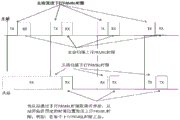
图4是本发明提供的基于前导序列的上下行初始频率选择过程示意图;Fig. 4 is a schematic diagram of the uplink and downlink initial frequency selection process based on the preamble sequence provided by the present invention;
图5是本发明提供的上下行链路使用同一频率时的频率搜索过程图;FIG. 5 is a frequency search process diagram when the same frequency is used for uplink and downlink provided by the present invention;
图6是本发明提供的跨频带电力线通信频率的自学习方法的流程图。Fig. 6 is a flow chart of the self-learning method for cross-band power line communication frequency provided by the present invention.
具体实施方式Detailed ways
下面结合附图对本发明的具体实施方式作进一步的详细说明。The specific implementation manners of the present invention will be further described in detail below in conjunction with the accompanying drawings.
本发明提供一种具有根据信道条件自学习并自选择工作频率的自学习方法,由于PLC系统的工作频率(中心频点与带宽)可以在很宽的频谱范围内选择,因此PLC系统具备在各种不同的网络环境与信道条件下调整工作频率以保证正常工作的可能性。不失一般性,通常用于中低压接入网的频率范围为150kHz至12MHz,其中覆盖了150-500kHz的低频频段、500kHz-1.6MHz的中频频段以及1.6MHz-12MHz的高频频段(即跨频段)。The invention provides a self-learning method with self-learning and self-selecting working frequency according to channel conditions. Since the working frequency (center frequency point and bandwidth) of the PLC system can be selected in a wide spectrum range, the PLC system has It is possible to adjust the operating frequency under different network environments and channel conditions to ensure normal operation. Without loss of generality, the frequency range usually used for medium and low voltage access networks is 150kHz to 12MHz, which covers the low frequency band of 150-500kHz, the intermediate frequency band of 500kHz-1.6MHz and the high frequency band of 1.6MHz-12MHz (ie across frequency bands).
对于在优选的频率范围内(如150kHz-12MHz)的PLC接入网络,本发明采用了一种新型的数字前端(DFE)设计,其具有很高的动态范围、带外干扰抑制能力,并且支持在如150kHz至12MHz的宽频带范围内进行不同带宽(如从7.8kHz至10MHz)的OFDM信号配置。本发明使用前导序列相关/同步方法在较多可能的工作频率中进行预选择,进一步缩小可使用的工作频率范围。本发明对前导序列和与其相关的同步方法具有较高要求。前导序列和同步方法可作为一个优选,其采用多种专门技术用于减少强脉冲噪声、窄带干扰以及多径传输的影响。For the PLC access network in the preferred frequency range (such as 150kHz-12MHz), the present invention adopts a novel digital front-end (DFE) design, which has a high dynamic range, out-of-band interference suppression capability, and supports OFDM signal configurations with different bandwidths (such as from 7.8kHz to 10MHz) are performed within a wide frequency range such as 150kHz to 12MHz. The present invention uses a preamble sequence correlation/synchronization method to pre-select among more possible working frequencies, and further narrows the usable working frequency range. The present invention has higher requirements on the preamble and its related synchronization method. The preamble and synchronization method can be used as a preferred method, which uses a variety of special techniques to reduce the impact of strong impulse noise, narrowband interference and multipath transmission.
本发明基于一组从宽频带范围内选择的具有不同带宽的默认频率,对最佳工作频率的自学习过程分为两个步骤。第一步的目的是快速的在宽频带范围内的较多指定频率中识别出一些可能的工作频率。这是基于对相应的前导序列的检测实现的。这种方法包括一个接收信号与前导序列的相关操作,以及一系列用于对抗电力线信道中的如脉冲噪声、窄带干扰以及多径传输等特殊现象所进行的信号处理操作。只有成功经过前导检测的频率才可以进行第二步。在第二步中,PLC节点间在选中的频率上进行控制数据交换,并最终确定工作频率。The present invention is based on a group of default frequencies with different bandwidths selected from a wide frequency range, and the self-learning process of the optimal operating frequency is divided into two steps. The purpose of the first step is to quickly identify some possible operating frequencies among a large number of specified frequencies in a wide frequency band. This is achieved based on the detection of the corresponding leader sequence. This method includes a correlation operation between the received signal and the preamble sequence, and a series of signal processing operations to counteract special phenomena in the power line channel, such as impulse noise, narrowband interference, and multipath transmission. Only the frequencies that have successfully passed the preamble detection can proceed to the second step. In the second step, PLC nodes exchange control data on the selected frequency, and finally determine the working frequency.
为了快速有效的进行潜在工作频率预选择,本发明提出一种称为前导时隙或PRMBL时隙的概念。PRMBL时隙包括全部默认频率的前导序列,并且每个前导序列在时隙中均位于指定的固定位置。主站有规律的发送PRMBL时隙,使得从站可以同步并检测不同频率的前导序列。由于时间位置固定,一旦从站检测到某一频率的前导序列,便可以得到所有其他前导序列出现的定时信息,从而可以非常高效的在需进行频率预选择的所有频率上进行操作。In order to quickly and effectively pre-select potential operating frequencies, the present invention proposes a concept called preamble time slot or PRMBL time slot. The PRMBL time slot includes preamble sequences of all default frequencies, and each preamble sequence is located at a designated fixed position in the time slot. The master station regularly sends PRMBL time slots, so that the slave station can synchronize and detect preamble sequences of different frequencies. Since the time position is fixed, once the secondary station detects the preamble of a certain frequency, it can obtain the timing information of all other preambles, so that it can operate on all frequencies that need to be pre-selected very efficiently.
在主站与从站建立数据通信连接前,PRMBL时隙也可以用于初始化信令。从站可以在上行链路的PRMBL时隙发送所选频率的前导序列,以通知主站在下一个时间间隔内在该频率上接收控制包。为了使其工作,上行PRMBL时隙应在主站已知的一个时间点上发送。当主站检测到从站发送的这一前导序列时,主站将接收机切换至相应频率,用于接收从站的控制包。从站通过这种方法在优选的频率上向主站发送首次注册请求。Before the master station establishes a data communication connection with the slave station, the PRMBL time slot can also be used for initializing signaling. The secondary station can send the preamble sequence of the selected frequency in the uplink PRMBL time slot to inform the primary station to receive control packets on this frequency in the next time interval. In order for this to work, the uplink PRMBL slots should be sent at a point in time known to the master. When the master station detects the preamble sequence sent by the slave station, the master station switches the receiver to the corresponding frequency for receiving the control packet of the slave station. In this way, the slave station sends the first registration request to the master station on the preferred frequency.
本发明提供的跨频带电力线通信频率的自学习方法的流程图如图6所示,包括下述步骤:The flow chart of the self-learning method of the cross-band power line communication frequency provided by the present invention is shown in Figure 6, including the following steps:
(1)确定默认工作频率组;(1) Determine the default working frequency group;
最佳工作频率从默认工作频率组中选择。默认工作频率也可以进行更新。对服务于智能电网的PLC接入网,默认工作频率组可以从以下三个频段中选择:150kHz至500kHz的低频频段、500kHz至1.6MHz的中频频段以及1.6MHz至12MHz的高频频段。表1给出了一组默认工作频率的例子,分别表示为f1、f2、f3……,其工作带宽依次递减,即f1具有最大的带宽,f2的带宽小于f1,以此类推。同时,低频频段选出的默认频率带宽小于高频频段中选出的默认频率带宽。作为例子,表1给出了各种默认频率下的前导序列时间长度,同样,表1也给出了包含前导序列与一个OFDM符号的控制包的时间长度。The optimal operating frequency is selected from the set of default operating frequencies. The default operating frequency can also be updated. For the PLC access network serving the smart grid, the default working frequency group can be selected from the following three frequency bands: the low frequency band from 150kHz to 500kHz, the intermediate frequency band from 500kHz to 1.6MHz, and the high frequency band from 1.6MHz to 12MHz. Table 1 gives an example of a group of default operating frequencies, respectively denoted as f1, f2, f3..., and their operating bandwidths decrease in turn, that is, f1 has the largest bandwidth, f2 has a smaller bandwidth than f1, and so on. Meanwhile, the default frequency bandwidth selected in the low frequency band is smaller than the default frequency bandwidth selected in the high frequency band. As an example, Table 1 shows the time length of the preamble sequence at various default frequencies. Similarly, Table 1 also shows the time length of a control packet including the preamble sequence and one OFDM symbol.
表1:默认频率组示例Table 1: Default frequency group example

(2)采用前导序列对默认工作频率组进行预选择,将无法正确检测到前导序列的默认工作频率筛除,正确检测到前导序列的默认工作频率作为潜在工作频率;(2) Use the leading sequence to pre-select the default working frequency group, filter out the default working frequency that cannot correctly detect the leading sequence, and correctly detect the default working frequency of the leading sequence as the potential working frequency;
本发明采用前导序列以及前导序列处理方法进行初始定时同步和频率预选择。The present invention adopts the preamble sequence and the preamble sequence processing method to carry out initial timing synchronization and frequency preselection.
本发明描述电力线网络上的两个PLC节点间的最佳频率搜索。首先,两个PLC节点必需在一个或多个频率上相互建立时间同步,因此,一个节点需要在一个或多个频率上发送参考信号,而另一个节点进行扫描检测这一参考信号。为了便于描述,本发明将发送参考信号的节点称为主站,将另一节点称为从站,同时,将主站到从站的链路称为下行链路,将从站到主站的链路称为上行链路。The present invention describes an optimal frequency search between two PLC nodes on a power line network. First, two PLC nodes must establish time synchronization with each other on one or more frequencies. Therefore, one node needs to send a reference signal on one or more frequencies, and the other node scans to detect this reference signal. For the convenience of description, in the present invention, the node sending the reference signal is called the master station, and the other node is called the slave station. Meanwhile, the link from the master station to the slave station is called a downlink, and the link from the slave station to the master station is called a downlink. The link is called an uplink.
主站与从站需要在默认工作频率组中搜索并选择最佳工作频率。由于默认工作频率组是在一个较宽的频率范围内选出的,而电力线信道的信道特性又随频率而变化显著,因此,在通常情况下,并不是默认频率组中的所有频率均可用于通信。例如,对于采用地埋电缆且距离超过250米的低压电力线网络,4MHz以上的频率极可能无法使用。因此,为了优化频率搜索过程,首选需要在默认频率组中识别潜在工作频率,筛除无法使用的频率。The master station and the slave station need to search and select the best working frequency in the default working frequency group. Since the default operating frequency group is selected within a wide frequency range, and the channel characteristics of the power line channel vary significantly with frequency, in general, not all frequencies in the default frequency group can be used communication. For example, for low-voltage power line networks with buried cables and distances of more than 250 meters, frequencies above 4 MHz are most likely not usable. Therefore, in order to optimize the frequency search process, it is first necessary to identify potential operating frequencies in the default frequency group and filter out unusable frequencies.
主站与从站均已知默认工作频率组。我们定义一个包括所有默认频率的前导信号的时隙,各个频率的前导序列前后相连且没有重叠,这个时隙称为PRMBL时隙。原则上,在PRMBL中,不同频率的前导序列可以按任意顺序排列;然而,考虑到快速同步并收敛的需要,PRMBL时隙可以从检测概率较大的频率的前导序列开始排列。不失一般性,优选的,较低频的较小带宽的前导序列排列于较高频的较大带宽的前导序列之前。图3给出了PRMBL时隙中前导序列排列的一个例子,其中默认工作频率组使用了表1中的默认频率。本发明的一个重要规则是,一旦PRMBL时隙中的某一前导序列的排列位置被定义,无论其他频率的前导序列是否真正发送,这一位置都不可改变。Both the master and the slaves know the default set of operating frequencies. We define a time slot including preamble signals of all default frequencies, and the preamble sequences of each frequency are connected one after another without overlapping. This time slot is called a PRMBL time slot. In principle, in PRMBL, preambles of different frequencies can be arranged in any order; however, considering the need for fast synchronization and convergence, PRMBL time slots can be arranged starting from the preamble of a frequency with a higher detection probability. Without loss of generality, preferably, the lower frequency preamble with smaller bandwidth is arranged before the higher frequency preamble with larger bandwidth. Figure 3 shows an example of the preamble arrangement in the PRMBL time slot, where the default operating frequency group uses the default frequencies in Table 1. An important rule of the present invention is that once the arrangement position of a certain preamble sequence in the PRMBL time slot is defined, no matter whether the preamble sequences of other frequencies are actually transmitted or not, this position cannot be changed.
本发明在下行链路和上行链路可以采用不同的前导序列用于初始化信令,但不同的前导序列必须具有相同的长度和相同的自相关特性。In the present invention, different preamble sequences can be used for initialization signaling in the downlink and uplink, but the different preamble sequences must have the same length and the same autocorrelation characteristics.
潜在工作频率包括潜在下行工作频率和潜在上行工作频率。The potential working frequency includes a potential downlink working frequency and a potential uplink working frequency.
①确定潜在下行工作频率包括:① Determining the potential downlink operating frequency includes:
主站在下行链路以固定的时间间隔发送PRMBL时隙,如图4所示。从站则开始在某一默认工作频率上扫描前导序列,当经过一定时间(由系统帧结构决定,如100毫秒左右)后,如无法在当前频率上检测到前导序列,则切换至下一个默认频率进行检测,以此类推。当所有默认工作频率被扫描之后,如果仍然无法检测到前导序列,如果没有收到其他操作的命令,从站继续循环开始扫描过程。The master station sends PRMBL time slots at fixed time intervals in the downlink, as shown in Figure 4. The slave station starts to scan the preamble sequence on a certain default working frequency. After a certain period of time (determined by the system frame structure, such as about 100 milliseconds), if the preamble sequence cannot be detected on the current frequency, it will switch to the next default frequency. Frequency is detected, and so on. After all the default operating frequencies are scanned, if the preamble sequence cannot be detected, and if no other operation commands are received, the slave station continues to cycle and start the scanning process.
如果从站成功的在某一频率上检测到前导序列,便与下行链路的PRMBL时隙取得同步,从而获得了全部默认频率出现的定时信息。根据这一定时信息,从站将继续评估之后N个连续的PRMBL时隙,用以确定潜在的下行工作频率。If the secondary station successfully detects the preamble sequence on a certain frequency, it will synchronize with the PRMBL time slot of the downlink, thus obtaining the timing information of all default frequencies. According to this timing information, the secondary station will continue to evaluate the next N consecutive PRMBL time slots to determine the potential downlink operating frequency.
②由于电力线信道不一定是对称的信道,下行的最佳工作频率可能与上行的最佳工作频率不同。本发明也提出了主站选择上行链路潜在工作频率的方法。当从站检测到下行PRMBL时隙后,发送上行PRMBL时隙。在时间上,上行PRMBL时隙的位置与下行PRMBL时隙的位置相连。因此,主站已知可能的上行PRMBL时隙的出现时间。图4给出了上行PRMBL时隙接连下行PRMBL时隙发送的示意图。主站在已知的时间位置扫描上行PRMBL时隙。同样,主站也评估N个上行PRMBL时隙以确定上行的潜在工作频率。②Because the power line channel is not necessarily a symmetrical channel, the optimal operating frequency of the downlink may be different from the optimal operating frequency of the uplink. The invention also proposes a method for the master station to select the potential operating frequency of the uplink. After the secondary station detects the downlink PRMBL time slot, it sends the uplink PRMBL time slot. In time, the position of the uplink PRMBL time slot is connected to the position of the downlink PRMBL time slot. Therefore, the primary station knows the occurrence times of possible uplink PRMBL time slots. FIG. 4 shows a schematic diagram of sending successive downlink PRMBL time slots in an uplink PRMBL time slot. The master station scans uplink PRMBL time slots at known time positions. Similarly, the master station also evaluates the N uplink PRMBL time slots to determine the potential uplink operating frequency.
(3)在潜在工作频率上,主站与从站间传输控制包,确定最佳工作频率:针对上行链路与下行链路使用同一频率的情况,进一步提出主站与从站协商并最终确定工作频率的方案,具体包括:(3) On the potential working frequency, transmit control packets between the master station and the slave station to determine the best working frequency: for the case where the uplink and downlink use the same frequency, it is further proposed that the master station negotiates with the slave station and finally determines The scheme of working frequency, including:
设K代表从站经过评估N个下行PRMBL时隙后得到的潜在工作频率数,K个频率根据预先定义的标准进行排序。从站在排位最优的频率上发送控制包向主站进行注册请求,控制包由一个前导序列和承载控制数据的OFDM符号组成。控制包结构示意图如图2所示,主站一旦成功检测到控制包,则向从站发送确认包信号,用于确认从站请求的频率可以使用。为了告知主站在哪一频率上检测控制包,从站需要在上行PRMBL时隙在选择的频率上发送前导序列。当主站在已知的上行PRMBL时隙位置进行扫描并成功检测到从站所选择的频率上的前导序列时,主站将在上行PRMBL时隙之后,在该频率上扫描控制包。如果主站以满意的信号质量检测到控制包,则其在下一个时间间隔内向从站发送反馈确认包。从站方面,当在某一频率上发送了控制包后,将在该频率上扫描主站发送的确认包,若其成功接收到确认包,再向主站发送确认信息。至此,该链路的频率扫描过程完成。Let K represent the number of potential operating frequencies obtained by the secondary station after evaluating N downlink PRMBL time slots, and the K frequencies are sorted according to a predefined standard. The slave station sends a control packet to register with the master station on the frequency with the best ranking. The control packet is composed of a preamble sequence and OFDM symbols carrying control data. The schematic diagram of the control packet structure is shown in Figure 2. Once the master station successfully detects the control packet, it will send a confirmation packet signal to the slave station to confirm that the frequency requested by the slave station can be used. In order to inform the master station on which frequency to detect the control packet, the slave station needs to send a preamble sequence on the selected frequency in the uplink PRMBL time slot. When the master station scans the known uplink PRMBL time slot position and successfully detects the preamble sequence on the frequency selected by the slave station, the master station will scan the control packet on the frequency after the uplink PRMBL time slot. If the master station detects the control packet with satisfactory signal quality, it sends a feedback acknowledgment packet to the slave station in the next time interval. As for the slave station, when a control packet is sent on a certain frequency, it will scan the confirmation packet sent by the master station on this frequency, and if it successfully receives the confirmation packet, it will send a confirmation message to the master station. So far, the frequency scanning process of the link is completed.
经过预先定义的时间间隔后,如果主站与从站在排序最优的频率上同步失败,从站将使用排序次优的频率向主站发送控制包,以此类推。After a pre-defined time interval, if the master fails to synchronize with the slave on the best-ranked frequency, the slave will send control packets to the master on the next-best sorted frequency, and so on.
本发明中,主站不必在PRMBL时隙上发送全部前导序列。根据需要,主站可以只发送部分默认工作频率,并且将其他不使用的频率位置留空。此时,从站将无法在这些不使用的频率位置上成功检测前导序列。事实上,从站也无需了解主站在哪些默认频率上发送前导序列,而只需将无法检测到前导序列的频率归结为信道条件较差即可。值得注意的是,无论主站实际发送了哪些前导序列,PRMBL时隙的长度与所有相应的默认频率的前导序列位置应保持不变。In the present invention, the master station does not need to send all the preamble sequences on the PRMBL time slot. According to needs, the master station can only send part of the default working frequency, and leave other unused frequency positions blank. At this time, the secondary station will not be able to successfully detect the preamble on these unused frequency positions. In fact, the slave station does not need to know the default frequencies on which the master station sends the preamble, but only needs to attribute the frequency where the preamble cannot be detected to poor channel conditions. It is worth noting that no matter which preambles are actually sent by the master station, the length of the PRMBL slot and the preamble positions of all corresponding default frequencies shall remain unchanged.
主站能够选择发送所有默认频率一个子集的前导序列,可以简单有效的控制实际使用的工作频率,从而优化网络的运行。例如,对于信道条件较好的小型网络,主站可首先发送宽带频率的前导序列,如10MHz,使大多数节点可以与网络快速同步。如果并非所有从站均能够接入网络,则主站将依次向PRMBL时隙添加其他默认频率的前导序列,使那些从站能够在新频率中寻找到主站。The master station can choose to send a preamble sequence of a subset of all default frequencies, which can simply and effectively control the actual working frequency, thereby optimizing the operation of the network. For example, for a small network with better channel conditions, the master station can first send a preamble sequence of broadband frequency, such as 10MHz, so that most nodes can quickly synchronize with the network. If not all slave stations are able to access the network, the master station will sequentially add preamble sequences of other default frequencies to the PRMBL time slot, so that those slave stations can find the master station in the new frequency.
本发明采用PRMBL时隙概念降低相邻PLC网络之间的潜在干扰。将默认频率分为不同的子集,不同子集之间的频率没有交集。不同PLC网络的主站在相应的PRMBL时隙中使用不重叠的频率子集,从而避免干扰的产生。The invention adopts the concept of PRMBL time slot to reduce potential interference between adjacent PLC networks. Divide default frequencies into different subsets with no intersection of frequencies between different subsets. Master stations of different PLC networks use non-overlapping frequency subsets in corresponding PRMBL time slots, thereby avoiding interference.
本发明是关于在宽频带/跨频带范围内(如适用于绝大部分中低压接入网的150千赫兹至12兆赫兹频率范围)最佳频率自学习的一种方法,主要应用于对无人干预系统的可靠性、有效性、即插即用等需求要求较高的控制和管理应用,如智能电网应用等。The present invention relates to a method for self-studying the best frequency in the broadband/cross-band range (such as the 150 kHz to 12 MHz frequency range applicable to most medium and low voltage access networks), and is mainly used for wireless The reliability, effectiveness, and plug-and-play requirements of human intervention systems require high control and management applications, such as smart grid applications.
最后应当说明的是:以上实施例仅用以说明本发明的技术方案而非对其限制,尽管参照上述实施例对本发明进行了详细的说明,所属领域的普通技术人员应当理解:依然可以对本发明的具体实施方式进行修改或者等同替换,而未脱离本发明精神和范围的任何修改或者等同替换,其均应涵盖在本发明的权利要求范围当中。Finally, it should be noted that the above embodiments are only used to illustrate the technical solutions of the present invention and not to limit them. Although the present invention has been described in detail with reference to the above embodiments, those of ordinary skill in the art should understand that: the present invention can still be Any modification or equivalent replacement that does not depart from the spirit and scope of the present invention shall be covered by the scope of the claims of the present invention.
Claims (10)
Priority Applications (2)
| Application Number | Priority Date | Filing Date | Title |
|---|---|---|---|
| CN201310616416.1A CN103607222B (en) | 2013-11-27 | 2013-11-27 | A kind of self-learning method across frequency band power line communication frequency |
| PCT/CN2013/088644 WO2015078035A1 (en) | 2013-11-27 | 2013-12-05 | Method for self-learning of cross-frequency band power line communication frequency |
Applications Claiming Priority (1)
| Application Number | Priority Date | Filing Date | Title |
|---|---|---|---|
| CN201310616416.1A CN103607222B (en) | 2013-11-27 | 2013-11-27 | A kind of self-learning method across frequency band power line communication frequency |
Publications (2)
| Publication Number | Publication Date |
|---|---|
| CN103607222A true CN103607222A (en) | 2014-02-26 |
| CN103607222B CN103607222B (en) | 2016-01-20 |
Family
ID=50125425
Family Applications (1)
| Application Number | Title | Priority Date | Filing Date |
|---|---|---|---|
| CN201310616416.1A Active CN103607222B (en) | 2013-11-27 | 2013-11-27 | A kind of self-learning method across frequency band power line communication frequency |
Country Status (2)
| Country | Link |
|---|---|
| CN (1) | CN103607222B (en) |
| WO (1) | WO2015078035A1 (en) |
Cited By (11)
| Publication number | Priority date | Publication date | Assignee | Title |
|---|---|---|---|---|
| CN103607224A (en) * | 2013-12-02 | 2014-02-26 | 国家电网公司 | Method for building two-way link of power-line carrier communication system |
| CN104617986A (en) * | 2015-02-05 | 2015-05-13 | 南京工程学院 | Detection device of power line carrier communication channel |
| CN104954112A (en) * | 2015-06-29 | 2015-09-30 | 国网智能电网研究院 | Cross-band power line carrier frequency cognitive method based on fine-frequency granularity |
| WO2016169265A1 (en) * | 2015-04-21 | 2016-10-27 | 华为技术有限公司 | Method and device for performing coordination among a plurality of power-line networks |
| WO2017024853A1 (en) * | 2015-08-07 | 2017-02-16 | 全球能源互联网研究院 | Frequency-based online auto-defined multi-frequency power line carrier communication network |
| CN108696296A (en) * | 2017-04-10 | 2018-10-23 | 华为技术有限公司 | Band Selection Methods and End Sites |
| CN112994747A (en) * | 2021-02-03 | 2021-06-18 | 青岛鼎信通讯股份有限公司 | Frequency band negotiation method applied to medium-voltage carrier communication system |
| US11588565B2 (en) * | 2019-03-29 | 2023-02-21 | Daikin Industries, Ltd. | Network system that facilitates device recognition in a high-frequency communication environment |
| CN116032322A (en) * | 2022-12-13 | 2023-04-28 | 上海东软载波微电子有限公司 | Power line communication frequency band detection method and device, receiver |
| CN116388801A (en) * | 2023-04-12 | 2023-07-04 | 青岛鼎信通讯股份有限公司 | A fast-acting distributed FA information interaction method suitable for medium-voltage carrier systems |
| CN118590944A (en) * | 2024-07-31 | 2024-09-03 | 江苏同步软件技术有限公司 | Power grid data interaction system based on radio communication technology |
Citations (4)
| Publication number | Priority date | Publication date | Assignee | Title |
|---|---|---|---|---|
| CN1588937A (en) * | 2004-08-26 | 2005-03-02 | 浙江大学 | Self adaption orthogonal frequency division multiplexing transmitting method and system variable subcarrier number |
| CN101394200A (en) * | 2008-11-11 | 2009-03-25 | 国网电力科学研究院 | A power line carrier data transmission method with zero frequency conversion and adaptive frequency selection |
| CN102546514A (en) * | 2012-01-21 | 2012-07-04 | 北京邮电大学 | Frequency synchronization method and equipment for OFDM system |
| CN202872827U (en) * | 2012-06-21 | 2013-04-10 | 深圳市金正方科技有限公司 | Self-adaptive power line carrier communication apparatus |
Family Cites Families (7)
| Publication number | Priority date | Publication date | Assignee | Title |
|---|---|---|---|---|
| CN100576765C (en) * | 2004-07-30 | 2009-12-30 | 深圳市力合微电子有限公司 | A power line carrier communication method |
| WO2006024420A1 (en) * | 2004-08-31 | 2006-03-09 | Telefonaktiebolaget Lm Ericsson | Providing robustness in fading radio channels |
| CN1956358B (en) * | 2005-10-28 | 2010-11-17 | 北京三星通信技术研究有限公司 | Cell Synchronization Method Based on Access Preamble |
| CN101102298B (en) * | 2006-07-06 | 2011-07-27 | 华为技术有限公司 | Use method and system of partial bandwidth in multi-carrier transmission system |
| CN102316061B (en) * | 2010-07-07 | 2013-09-25 | 中国科学院微电子研究所 | Time synchronization method and device for frequency hopping orthogonal frequency division multiplexing system |
| KR101229225B1 (en) * | 2010-09-28 | 2013-02-01 | 서울대학교산학협력단 | method for communication in the presence of co-channel interference in star-topology network |
| CN102143497A (en) * | 2010-12-29 | 2011-08-03 | 中国船舶重工集团公司第七研究院 | Method for establishing communication data link |
-
2013
- 2013-11-27 CN CN201310616416.1A patent/CN103607222B/en active Active
- 2013-12-05 WO PCT/CN2013/088644 patent/WO2015078035A1/en not_active Ceased
Patent Citations (4)
| Publication number | Priority date | Publication date | Assignee | Title |
|---|---|---|---|---|
| CN1588937A (en) * | 2004-08-26 | 2005-03-02 | 浙江大学 | Self adaption orthogonal frequency division multiplexing transmitting method and system variable subcarrier number |
| CN101394200A (en) * | 2008-11-11 | 2009-03-25 | 国网电力科学研究院 | A power line carrier data transmission method with zero frequency conversion and adaptive frequency selection |
| CN102546514A (en) * | 2012-01-21 | 2012-07-04 | 北京邮电大学 | Frequency synchronization method and equipment for OFDM system |
| CN202872827U (en) * | 2012-06-21 | 2013-04-10 | 深圳市金正方科技有限公司 | Self-adaptive power line carrier communication apparatus |
Cited By (16)
| Publication number | Priority date | Publication date | Assignee | Title |
|---|---|---|---|---|
| CN103607224A (en) * | 2013-12-02 | 2014-02-26 | 国家电网公司 | Method for building two-way link of power-line carrier communication system |
| CN104617986A (en) * | 2015-02-05 | 2015-05-13 | 南京工程学院 | Detection device of power line carrier communication channel |
| CN106161166B (en) * | 2015-04-21 | 2019-07-23 | 华为技术有限公司 | A method and device for coordination among multiple power line networks |
| WO2016169265A1 (en) * | 2015-04-21 | 2016-10-27 | 华为技术有限公司 | Method and device for performing coordination among a plurality of power-line networks |
| CN106161166A (en) * | 2015-04-21 | 2016-11-23 | 华为技术有限公司 | Coordination approach and device between a kind of multiple power line networks |
| US9985689B2 (en) | 2015-04-21 | 2018-05-29 | Huawei Technologies Co., Ltd. | Method and apparatus for coordinating multiple power line networks |
| CN104954112A (en) * | 2015-06-29 | 2015-09-30 | 国网智能电网研究院 | Cross-band power line carrier frequency cognitive method based on fine-frequency granularity |
| CN104954112B (en) * | 2015-06-29 | 2018-05-29 | 国网智能电网研究院 | A kind of across frequency band power line carrier frequencies cognitive approach based on thin frequency granularity |
| WO2017024853A1 (en) * | 2015-08-07 | 2017-02-16 | 全球能源互联网研究院 | Frequency-based online auto-defined multi-frequency power line carrier communication network |
| CN108696296A (en) * | 2017-04-10 | 2018-10-23 | 华为技术有限公司 | Band Selection Methods and End Sites |
| US11588565B2 (en) * | 2019-03-29 | 2023-02-21 | Daikin Industries, Ltd. | Network system that facilitates device recognition in a high-frequency communication environment |
| CN112994747A (en) * | 2021-02-03 | 2021-06-18 | 青岛鼎信通讯股份有限公司 | Frequency band negotiation method applied to medium-voltage carrier communication system |
| CN116032322A (en) * | 2022-12-13 | 2023-04-28 | 上海东软载波微电子有限公司 | Power line communication frequency band detection method and device, receiver |
| CN116388801A (en) * | 2023-04-12 | 2023-07-04 | 青岛鼎信通讯股份有限公司 | A fast-acting distributed FA information interaction method suitable for medium-voltage carrier systems |
| CN116388801B (en) * | 2023-04-12 | 2026-07-03 | 青岛鼎信通讯股份有限公司 | Quick-acting distributed FA information interaction method suitable for medium-voltage carrier system |
| CN118590944A (en) * | 2024-07-31 | 2024-09-03 | 江苏同步软件技术有限公司 | Power grid data interaction system based on radio communication technology |
Also Published As
| Publication number | Publication date |
|---|---|
| WO2015078035A1 (en) | 2015-06-04 |
| CN103607222B (en) | 2016-01-20 |
Similar Documents
| Publication | Publication Date | Title |
|---|---|---|
| CN103607222B (en) | A kind of self-learning method across frequency band power line communication frequency | |
| CN111465068B (en) | A communication method for power line carrier and wireless dual-mode fusion | |
| JP4181093B2 (en) | Wireless communication system | |
| US8942301B2 (en) | Dynamic subcarrier utilization and intelligent transmission scheduling | |
| JP5758360B2 (en) | Communication method and power line communication system | |
| JP5106394B2 (en) | Transmission of schedule and network information in power line networks | |
| WO2016026215A1 (en) | Multi-frequency flooding power-line carrier communication method | |
| Yau et al. | A context-aware and intelligent dynamic channel selection scheme for cognitive radio networks | |
| WO2010118558A1 (en) | Method, apparatus and device for selecting relay user and allocating downlink resource | |
| US20100302994A1 (en) | Channel switching in a communication network | |
| US20130070790A1 (en) | Superframe format for mv-lv communication in multi tone-mask plc networks | |
| Latchman et al. | High speed multimedia and smart energy PLC applications based on adaptations of HomePlug AV | |
| CN120785372B (en) | Multi-band adaptive communication method, apparatus and equipment based on power line carrier | |
| WO2017024853A1 (en) | Frequency-based online auto-defined multi-frequency power line carrier communication network | |
| WO2008074263A1 (en) | Transmission method, system, transmitter, receiver and method fro realizing information transmission | |
| Liu et al. | On (power-) line defined PLC system | |
| JP2008125110A (en) | Wireless communication apparatus and wireless communication system | |
| KR20100018777A (en) | Method and system for allocating a resource in hierarchy cellular network | |
| JP2009515470A (en) | Method and apparatus for transmitting data from a first communication device to a second communication device | |
| CN115474260A (en) | Starting-up self-adaptive frequency selection method for wireless Mesh ad hoc network | |
| Stoynov et al. | An investigation of flexible waveform numerologies for 5G V2I cellular networks from a physical layer perspective | |
| CN108401258B (en) | Network optimization method and device | |
| Ghallab et al. | Cognitive radio networks with best relay selection method | |
| Choe et al. | Cluster-based MAC and resource management for quasi-stationary broadband power line communication networks | |
| Ohta et al. | Intra-system interference avoidance for packet-level index modulation in Internet of Things |
Legal Events
| Date | Code | Title | Description |
|---|---|---|---|
| C06 | Publication | ||
| PB01 | Publication | ||
| C10 | Entry into substantive examination | ||
| SE01 | Entry into force of request for substantive examination | ||
| C14 | Grant of patent or utility model | ||
| GR01 | Patent grant | ||
| C41 | Transfer of patent application or patent right or utility model | ||
| TR01 | Transfer of patent right |
Effective date of registration: 20160425 Address after: 100031 Xicheng District West Chang'an Avenue, No. 86, Beijing Patentee after: State Grid Corporation of China Patentee after: China Electric Power Research Institute Patentee after: State Grid Smart Grid Institute Address before: 100031 Xicheng District West Chang'an Avenue, No. 86, Beijing Patentee before: State Grid Corporation of China Patentee before: China Electric Power Research Institute |
|
| C56 | Change in the name or address of the patentee | ||
| CP01 | Change in the name or title of a patent holder |
Address after: 100031 Xicheng District West Chang'an Avenue, No. 86, Beijing Patentee after: State Grid Corporation of China Patentee after: China Electric Power Research Institute Patentee after: GLOBAL ENERGY INTERCONNECTION RESEARCH INSTITUTE Address before: 100031 Xicheng District West Chang'an Avenue, No. 86, Beijing Patentee before: State Grid Corporation of China Patentee before: China Electric Power Research Institute Patentee before: State Grid Smart Grid Institute |
|
| C41 | Transfer of patent application or patent right or utility model | ||
| TR01 | Transfer of patent right |
Effective date of registration: 20170124 Address after: 100031 Xicheng District West Chang'an Avenue, No. 86, Beijing Patentee after: State Grid Corporation of China Patentee after: China Electric Power Research Institute Patentee after: GLOBAL ENERGY INTERCONNECTION RESEARCH INSTITUTE Patentee after: State Grid Zhejiang Electric Power Company Address before: 100031 Xicheng District West Chang'an Avenue, No. 86, Beijing Patentee before: State Grid Corporation of China Patentee before: China Electric Power Research Institute Patentee before: GLOBAL ENERGY INTERCONNECTION RESEARCH INSTITUTE |