CN102516552B - A kind of degradable acid-sensitive polymer amphiphilic cationic block copolymer and micelle particle and preparation method thereof - Google Patents
A kind of degradable acid-sensitive polymer amphiphilic cationic block copolymer and micelle particle and preparation method thereof Download PDFInfo
- Publication number
- CN102516552B CN102516552B CN201110367602.7A CN201110367602A CN102516552B CN 102516552 B CN102516552 B CN 102516552B CN 201110367602 A CN201110367602 A CN 201110367602A CN 102516552 B CN102516552 B CN 102516552B
- Authority
- CN
- China
- Prior art keywords
- acid
- block copolymer
- sensitive
- preparation
- cationic block
- Prior art date
- Legal status (The legal status is an assumption and is not a legal conclusion. Google has not performed a legal analysis and makes no representation as to the accuracy of the status listed.)
- Expired - Fee Related
Links
Images




Landscapes
- Medicinal Preparation (AREA)
Abstract
本发明公开了一种可降解的酸敏感高分子两亲性阳离子嵌段共聚物与胶束粒子及其制备方法。本发明高分子两亲性嵌段共聚物的亲疏水段分别由聚赖氨酸和带有酸敏基团的聚天冬氨酸衍生物组成。本发明高分子两亲性嵌段共聚物的制备方法是以小分子胺引发剂引发带有活性侧基的L型氨基酸苄酯的N-羧酸酐开环聚合,经点击化学将亲疏水段连接起来,通过进一步的氨解反应引入酸敏基团,最后通过酸性条件下脱苄基保护基团后得到目标产品。本发明共聚物具有良好的酸敏感性、生物相容性和生物可降解性,可在水溶液中自组装并形成纳米级的胶束,该胶束能够同时负载抗癌药物如阿霉素和基因如BCL-2siRNA,且能够在肿瘤部位实现对负载物的智能控释。
The invention discloses a degradable acid-sensitive polymer amphiphilic cationic block copolymer and micellar particles and a preparation method thereof. The hydrophilic and hydrophobic segments of the polymer amphiphilic block copolymer of the present invention are respectively composed of polylysine and polyaspartic acid derivatives with acid sensitive groups. The preparation method of the polymer amphiphilic block copolymer of the present invention is to initiate the ring-opening polymerization of N-carboxylic acid anhydride of L-type amino acid benzyl ester with active side groups by a small molecule amine initiator, and connect the hydrophilic and hydrophobic segments through click chemistry. In conclusion, the acid-sensitive group was introduced through further aminolysis reaction, and finally the target product was obtained after debenzylation of the protecting group under acidic conditions. The copolymer of the present invention has good acid sensitivity, biocompatibility and biodegradability, and can self-assemble in aqueous solution to form nanoscale micelles, which can simultaneously load anticancer drugs such as doxorubicin and gene Such as BCL-2 siRNA, and can realize the intelligent controlled release of the load at the tumor site.
Description
技术领域 technical field
本发明涉及高分子化学、药学和生物医学工程领域,具体地说,涉及一种可降解的酸敏感高分子两亲性阳离子嵌段共聚物与胶束粒子及其制备方法。 The invention relates to the fields of polymer chemistry, pharmacy and biomedical engineering, in particular to a degradable acid-sensitive polymer amphiphilic cationic block copolymer and micellar particles and a preparation method thereof.
背景技术 Background technique
多药耐药 (multidrug resistance, MDR) 是目前癌症治疗中化疗失败的主要原因之一。多药耐药是指肿瘤细胞对一种药物产生耐药性的同时也对与之结构无关、作用机制完全不同的药物产生交叉性耐药的广谱耐药现象。 Multidrug resistance (MDR) is one of the main causes of chemotherapy failure in current cancer treatment. Multidrug resistance refers to the phenomenon of broad-spectrum drug resistance in which tumor cells develop cross-resistance to a drug that has nothing to do with it and has a completely different mechanism of action.
由于肿瘤细胞的多药耐药性产生的原因较复杂, 通常涉及多种因素, 多种基因的异常, 若只使用单一模式的多药耐药调节剂或者免疫治疗方法很难有效的逆转肿瘤细胞的多药耐药性。为了提高化疗效果, 亟需发展有效的逆转肿瘤细胞多药耐药性的方法。 Because the causes of multidrug resistance of tumor cells are complex, usually involving multiple factors and abnormalities of multiple genes, it is difficult to effectively reverse tumor cell resistance if only a single mode of multidrug resistance regulator or immunotherapy is used. multidrug resistance. In order to improve the efficacy of chemotherapy, it is urgent to develop effective methods to reverse the multidrug resistance of tumor cells.
RNA干扰(RNA interference,RNAi)是近些年来发现的一种基因沉默现象。通常是指内源或外源RNA(double-stranded RNA, dsRNA)分子高效而特异地阻断体内特定基因表达,使目标mRNA特异性降解,诱使细胞表现出特定的基因缺失的现象。RNA 干扰技术的出现, 能够针对多个基因或基因族的共同序列来同时抑制多个基因的表达, 有望从根本上逆转肿瘤细胞的多药耐药性。 RNA interference (RNA interference, RNAi) is a gene silencing phenomenon discovered in recent years. It usually refers to the phenomenon that endogenous or exogenous RNA (double-stranded RNA, dsRNA) molecules efficiently and specifically block the expression of specific genes in vivo, degrade target mRNA specifically, and induce cells to show specific gene deletion. The emergence of RNA interference technology can target the common sequences of multiple genes or gene families to simultaneously inhibit the expression of multiple genes, which is expected to fundamentally reverse the multidrug resistance of tumor cells.
具有酸敏响应性的阳离子聚合物载体有着特殊的功能, 其疏水的内核能够负载疏水性的抗癌药物, 表面的阳离子能够有效的复合基因。该载体复合物能够同时将抗癌药物和siRNA 联合传输到肿瘤病灶部位, 且能够实现智能控释。在抗肿瘤药物进行化疗的同时通过 siRNA 技术阻断抗凋亡基因 BCl-2 及其蛋白的表达,有望同时发挥化疗治疗 和 siRNA的作用而提高化疗效果。此类酸敏响应性的阳离子双载体目前没有文献报道, 作为新型的生物医用高分子载体材料具有重要的研究价值和广阔的应用前景。 The cationic polymer carrier with acid-sensitive responsiveness has special functions. Its hydrophobic core can load hydrophobic anticancer drugs, and the cations on the surface can effectively complex genes. The carrier complex can simultaneously deliver anticancer drugs and siRNA to tumor lesions, and can realize intelligent controlled release. When anti-tumor drugs are used for chemotherapy, siRNA technology is used to block the expression of anti-apoptotic gene BCl-2 and its protein, which is expected to play the role of chemotherapy and siRNA at the same time and improve the effect of chemotherapy. This kind of acid-responsive cationic dual carrier has not been reported in the literature, and it has important research value and broad application prospects as a new type of biomedical polymer carrier material.
发明内容 Contents of the invention
本发明的目的在于提供一种可降解的酸敏感高分子两亲性阳离子嵌段共聚物与胶束粒子及其制备方法。 The object of the present invention is to provide a degradable acid-sensitive polymer amphiphilic cationic block copolymer and micellar particles and a preparation method thereof.
本发明上述目的通过以下技术方案予以实现: The above-mentioned purpose of the present invention is achieved through the following technical solutions:
一种可降解的酸敏感高分子两亲性阳离子嵌段共聚物,包括亲疏水段,所述亲疏水段分别由聚赖氨酸和酸敏基团修饰的聚天冬氨酸衍生物组成。 A degradable acid-sensitive macromolecular amphiphilic cationic block copolymer comprises hydrophilic and hydrophobic segments, and the hydrophilic and hydrophobic segments are respectively composed of polylysine and polyaspartic acid derivatives modified by acid-sensitive groups.
在上述高分子两亲性阳离子嵌段共聚物中,所述酸敏基团为二异丙基乙二胺基。所述酸敏基团在 pH 6.4-8.0 之间表现出很强的酸敏响应性。 In the above polymer amphiphilic cationic block copolymer, the acid sensitive group is diisopropylethylenediamine group. The acid-sensitive group showed strong acid-sensitive responsiveness between pH 6.4-8.0.
上述高分子两亲性阳离子嵌段共聚物的制备方法,包括如下步骤: 正丁胺引发L型赖氨基酸苄酯N-羧酸酐开环聚合, 丙炔胺引发L型天冬氨基酸苄酯N-羧酸酐开环聚合, 通过点击化学反应将两个嵌段连接起来, 再通过氨解反应引入酸敏基因, 最后酸性条件下脱保护得到目标产品。 The preparation method of the above-mentioned macromolecular amphiphilic cationic block copolymer comprises the following steps: N-butylamine initiates ring-opening polymerization of L-type lysamino acid benzyl ester N-carboxylic acid anhydride, propargyl amine initiates L-type aspartic acid benzyl ester N- Carboxylic anhydride ring-opening polymerization, the two blocks are connected by click chemical reaction, and then the acid-sensitive gene is introduced by aminolysis reaction, and finally the target product is obtained by deprotection under acidic conditions.
上述高分子两亲性阳离子嵌段共聚物的胶束粒子的制备方法,包括如下步骤: 将5~10 mg共聚物与1 mg疏水性药物共溶于1 ml的二甲基亚砜溶液中,在超声作用下于冰浴中滴加到2.5~10 ml的水中,然后将该混合液装入Mcro 14000的透析袋中在水中透析一至三天即得;对于酸敏感药物需在溶解时加1 ml三乙胺保证其疏水性。 The preparation method of the micelle particles of the above-mentioned polymer amphiphilic cationic block copolymer comprises the steps of: 5 ~ 10 mg copolymer and 1 mg hydrophobic drug are co-dissolved in 1 ml of dimethyl sulfoxide solution, Add it dropwise to 2.5~10 ml of water in an ice bath under the action of ultrasound, then put the mixture into the dialysis bag of Micro 14000 and dialyze in water for one to three days; for acid-sensitive drugs, add 1 ml triethylamine guarantees its hydrophobicity.
上述高分子两亲性阳离子嵌段共聚物负载药物和基因的胶束粒子的制备方法,其特征在于包括如下步骤:抗凋亡基因 BCL-2 siRNA 被加入到已知量的负载了DOX的阳离子胶束溶液中,接着该混合体系被强烈涡旋15s后在室温下静置 30 min,得到一系列不同N/P比的同时负载了DOX和siRNA的胶束。 The preparation method of the above-mentioned polymer amphiphilic cationic block copolymer loaded drug and gene micellar particles is characterized in that it includes the following steps: the anti-apoptotic gene BCL-2 siRNA is added to a known amount of DOX-loaded cations In the micellar solution, the mixed system was vigorously vortexed for 15 s and then allowed to stand at room temperature for 30 min to obtain a series of micelles loaded with DOX and siRNA at the same time with different N/P ratios.
上述阳离子嵌段共聚物在 pH 7.4 时能够自组装形成稳定的胶束粒子。 The above cationic block copolymers can self-assemble into stable micellar particles at pH 7.4. the
上述高分子两亲性阳离子嵌段共聚物胶束粒子能够同时负载抗癌药物和基因,胶束粒子能够将负载的抗癌药物和基因靶向传输到肿瘤病灶部位,胶束粒子能够在肿瘤病灶部位实现对负载物的智能控释。 The above polymeric amphiphilic cationic block copolymer micelle particles can simultaneously load anticancer drugs and genes, and the micelle particles can deliver the loaded anticancer drugs and genes to tumor lesions, and the micelle particles can deliver anticancer drugs and genes to tumor lesions. Parts realize intelligent controlled release of loads.
作为联合传输药物和 BCL-2 siRNA 的双载体, 药物的负载量和 BCl-2 siRNA 的负载量相匹配才能产生良好的协同作用, 最大程度地提高化疗效果, 因此嵌段聚合物载体的结构调控非常关键。 As a dual carrier for the combined delivery of drugs and BCL-2 siRNA, only when the load of the drug matches the load of BCl-2 siRNA can a good synergistic effect be produced and the chemotherapy effect can be maximized. Therefore, the structural regulation of the block polymer carrier very critical.
为了控制共聚物两嵌段的比例, 我们分别使用小分子的引发剂正丁胺和丙炔胺来引发 Lys-NCA 和 BLA-NCA 的开环聚合反应, 通过控制引发剂和单体的比例、反应温度、反应时间等来实现对预聚物分子量的控制。两种预聚物通过高效的点击化学反应连接起来。 具有酸敏响应性小分子二异丙基乙二胺通过氨解反应来实现。聚苄基-L 赖氨酸中的苄基的脱保护反应在 33% 乙酸/氢溴酸条件下进行。 In order to control the ratio of the two blocks of the copolymer, we used small molecule initiators n-butylamine and propargylamine to initiate the ring-opening polymerization of Lys-NCA and BLA-NCA respectively. By controlling the ratio of initiator and monomer, The reaction temperature, reaction time, etc. are used to control the molecular weight of the prepolymer. The two prepolymers are connected through an efficient click chemistry reaction. The small molecule diisopropylethylenediamine with acid sensitive responsiveness is realized by ammonolysis reaction. The deprotection reaction of the benzyl group in polybenzyl-L-lysine was carried out under the condition of 33% acetic acid/hydrogen bromide.
作为一种优选方案,上述制备方法包括如下步骤:将1摩尔份数三光气与2.5摩尔份数带有活性侧基的L型赖氨酸苄酯在干燥无水的四氢呋喃中反应制得相应的N-羧酸酐,然后根据预期均聚物的分子量计算所用的小分子引发剂正丁胺的用量来引发L型赖氨酸苄酯N-羧酸酐的开环聚合得到均聚物 PLLm-NH2, 端胺基再分别与溴代乙酰溴和叠氮钠反应生成含有叠氮根基团的均聚物 PLLm-N3。用小分子引发剂丙炔胺引发 L 型天冬氨酸苄酯N-羧酸酐的开环聚合得到均聚物 PBLAn-NH2, 用乙酸酐封端得到带有炔基基团的均聚物alkyne-PBLAn-Ac。两种均聚物通过点击化学连接起来, 然后再通过氨解反应将酸敏基团二乙丙基乙二胺引入, 最后通过酸性条件下的水解反应除去聚赖氨酸苄酯中的保护基团, 最终得到具有 pH 敏感性的两亲性阳离子嵌段共聚物。 As a preferred version, the above preparation method comprises the following steps: reacting 1 mole fraction of triphosgene with 2.5 mole fractions of L-lysine benzyl ester with active side groups in dry anhydrous tetrahydrofuran to prepare the corresponding N-carboxylic acid anhydride, and then according to the expected molecular weight of the homopolymer, the amount of the small molecule initiator n-butylamine used to initiate the ring-opening polymerization of the L-type lysine benzyl ester N-carboxylic acid anhydride to obtain the homopolymer PLL m - NH 2 , terminal amine groups reacted with bromoacetyl bromide and sodium azide respectively to generate homopolymer PLL m -N 3 containing azide groups. Ring-opening polymerization of L-aspartic acid benzyl ester N-carboxylic anhydride initiated by small molecule initiator propargylamine to obtain homopolymer PBLA n -NH 2 , which was capped with acetic anhydride to obtain homopolymer with alkyne groups substance alkyne-PBLA n -Ac. The two homopolymers were connected by click chemistry, and then the acid-sensitive group diethylpropylethylenediamine was introduced by aminolysis reaction, and finally the protective group in polylysine benzyl ester was removed by hydrolysis reaction under acidic conditions. Finally, a pH-sensitive amphiphilic cationic block copolymer was obtained.
与现有技术相比,本发明具有以下有益效果: Compared with the prior art, the present invention has the following beneficial effects:
(1)本发明的可降解的酸敏感高分子两亲性阳离子嵌段共聚物载体材料是由聚赖氨酸与聚天冬氨酸衍生物组成,无毒且具有优良的生物相容性和生物可降解性; (1) The degradable acid-sensitive polymer amphiphilic cationic block copolymer carrier material of the present invention is composed of polylysine and polyaspartic acid derivatives, which is non-toxic and has excellent biocompatibility and biodegradability;
(2)本发明可降解的酸敏感高分子两亲性阳离子嵌段共聚物载体材料具有显著的质子响应性,其pKa值(约6.3)处于体内弱酸性生理环境的pH值范围内,适用于大部分有低pH值要求的部位或组织; (2) The degradable acid-sensitive polymer amphiphilic cationic block copolymer carrier material of the present invention has significant proton responsiveness, and its pKa value (about 6.3) is within the pH range of the weakly acidic physiological environment in the body, and is suitable for Most parts or tissues with low pH requirements;
(3)本发明的可降解的酸敏感高分子两亲性嵌段共聚物载体材料所形成的纳米结构可以在质子浓度(即pH值)的影响下实现对负载药物和基因的智能控释; (3) The nanostructure formed by the degradable acid-sensitive polymer amphiphilic block copolymer carrier material of the present invention can realize intelligent controlled release of loaded drugs and genes under the influence of proton concentration (ie, pH value);
(4)本发明的可降解的酸敏感高分子两亲性阳离子嵌段共聚物载体材料的独特结构使其能够同时负载抗肿瘤药物和基因, 从而使得药物疗法和基因治疗产生很好的协同作用, 促进化疗技术的进步。 (4) The unique structure of the degradable acid-sensitive macromolecular amphiphilic cationic block copolymer carrier material of the present invention enables it to simultaneously load anti-tumor drugs and genes, so that drug therapy and gene therapy have a good synergistic effect , to promote the progress of chemotherapy technology.
附图说明 Description of drawings
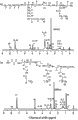
图1 是均聚物 PLL10-N3 (a) 和 alkyne-PBLA32-Ac (b) 在 DMSO-d 6 中的 1H NMR 谱图。 Figure 1 is the 1 H NMR spectra of homopolymer PLL 10 -N 3 (a) and alkyne-PBLA 32 -Ac (b) in DMSO-d 6 .
图2 均聚物 alkyne-PBLA11-Ac 、alkyne-PBLA14-Ac和alkyne-PBLA32-Ac 以 DMF 为流动相的凝胶渗透色谱图 (a); 均聚物 PLL(z)10-N3 以 DMF为流动相的凝胶渗透色谱图 (b); 均聚物 PLL10 与嵌段共聚物 PLL10-b-PAsp(DIP)11 以水为流动相的凝胶渗透色谱图 (c)。 Fig.2 Gel permeation chromatograms of homopolymer alkyne-PBLA 11 -Ac , alkyne-PBLA 14 -Ac and alkyne-PBLA 32 -Ac with DMF as mobile phase (a); homopolymer PLL(z) 10 -N 3 Gel permeation chromatogram (b) using DMF as mobile phase; Gel permeation chromatogram (c) of homopolymer PLL 10 and block copolymer PLL 10 - b -PAsp(DIP) 11 using water as mobile phase .
图 3 是点击化学反应后的嵌段共聚物 PLL(z)10-b-PBLA32 (a); 氨解之后的嵌段共聚物 PLL(z)10-b-PAsp(DIP)32 在 DMSO-d 6 中的 1H NMR 谱图 (b)。 Figure 3 is the block copolymer PLL(z) 10 - b -PBLA 32 after click chemistry reaction (a); the block copolymer PLL(z) 10 - b -PAsp(DIP) 32 after ammonolysis in DMSO- 1 H NMR spectrum in d 6 (b).
图 4 是聚合物 PLL(z)10-N3、PLL(z)10-b-PBLA32-Ac、 PLL(z)10-b-PAsp(DIP)32-Ac和PLL10-b-PAsp(DIP)32-Ac 的红外光谱对比图。 Figure 4 is the polymers PLL(z) 10 -N 3 , PLL(z) 10 - b -PBLA 32 -Ac, PLL(z) 10 - b -PAsp(DIP) 32 -Ac and PLL 10 - b -PAsp( DIP) 32 -Ac infrared spectrum comparison chart.
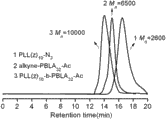
图 5 均聚物 PLL(z)10-N3、 alkyne-PBLA32-Ac及点击化学反应后生成的嵌段共聚物 PLL(z)10-b-PBLA32-Ac 的凝胶渗透色谱对比图。 Fig. 5 Gel permeation chromatogram comparison of homopolymer PLL(z) 10 -N 3 , alkyne-PBLA 32 -Ac and block copolymer PLL(z) 10 - b -PBLA 32 -Ac produced by click chemistry .
图 6 是目标产品 PLL10-b-PAsp(DIP)32-Ac 在 D2O 中的 1H NMR 谱图。 Figure 6 is the 1 H NMR spectrum of the target product PLL 10 - b -PAsp(DIP) 32 -Ac in D 2 O.
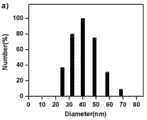
图 7 是聚合物 PLL34-b-PAsp(DIP)12的动态光散射谱图。 Figure 7 is the dynamic light scattering spectrum of polymer PLL34 - b -PAsp(DIP) 12 .
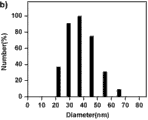
图8是聚合物PLL10-b-PAsp(DIP)11 的动态光散射谱图。 Fig. 8 is a dynamic light scattering spectrum of polymer PLL 10 - b -PAsp(DIP) 11 .
图9是聚合物 PLL10-b-PAsp(DIP)32-Ac 在 pH 7.4 时的临界胶束浓度图。 Figure 9 is a diagram of the critical micelle concentration of the polymer PLL 10 - b -PAsp(DIP) 32 -Ac at pH 7.4.
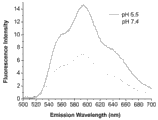
图10是负载阿霉素的聚合物 PLL10-b-PAsp(DIP)32-Ac 胶束在 pH 5.5 和 7.4 时的荧光光谱对比图。 Figure 10 is a graph comparing the fluorescence spectra of polymer PLL 10 - b -PAsp(DIP) 32 -Ac micelles loaded with doxorubicin at pH 5.5 and 7.4.
表1是均聚物 PLL(z)m-N3、alkyne-PBLAn-Ac 及嵌段共聚物PLL34-b-PAsp(DIP)12、PLL10-b-PAsp(DIP)11、PLL10-b-PAsp(DIP)14和PLL10-b-PAsp(DIP)32 的凝胶渗透色谱对比数据。 Table 1 is homopolymer PLL(z) m -N 3 , alkyne-PBLA n -Ac and block copolymer PLL 34 - b -PAsp(DIP) 12 , PLL 10 - b -PAsp(DIP) 11 , PLL10- Gel permeation chromatography comparative data of b -PAsp(DIP) 14 and PLL 10 - b -PAsp(DIP) 32 .
表2是聚合物PLL10-b-PAsp(DIP)11-Ac、 PLL10-b-PAsp(DIP)14-Ac、PLL10-b-PAsp(DIP)32-Ac 和PLL34-b-PAsp(DIP)12-Ac 的粒径与电位数据对比图。 Table 2 is the polymer PLL10 - b -PAsp(DIP) 11 -Ac, PLL10 - b -PAsp(DIP) 14 -Ac, PLL10 - b -PAsp(DIP) 32 -Ac and PLL34 - b -PAsp (DIP) 12 -Ac particle size versus potential data plot.
具体实施方式 Detailed ways
以下通过具体的实施例进一步说明本发明的技术方案,但实施例并不对本发明做任何形式的限定。 The technical solution of the present invention is further described through specific examples below, but the examples do not limit the present invention in any form.
实施例1 Example 1
可生物降解的酸敏感的两亲性阳离子嵌段共聚物的制备 Preparation of Biodegradable Acid Sensitive Amphiphilic Cationic Block Copolymers
1.两亲性嵌段共聚物的制备: 1. Preparation of amphiphilic block copolymers:
1.1 L型氨基酸苄酯N-羧酸酐的制备以天冬氨酸苄酯N-羧酸酐 为例 (BLA-NCA): 1.1 Preparation of L-type amino acid benzyl ester N-carboxylic acid anhydride Take benzyl aspartate N-carboxylic acid anhydride as an example (BLA-NCA):
25.0 g (0.11 mol) β-天冬氨酸苄酯悬浮在 150 mL 干燥的 THF 中, 氩气保护, 加热到 40 °C. 13.5 g (0.045 mol) 三聚光气在 25 mL 的 THF 中溶解后慢慢滴加到反应瓶中。反应溶液变澄清后, 再继续反应 1 小时. 通入氩气流鼓泡 30 min 以除去生成的 HCl。反应溶液过滤除去少量没有反应的苄酯, 而后减压浓缩到 50 mL, 沉淀到大量正己烷中(THF/ hexane 为 1/3),把初产品 BLA-NCA 在THF/ hexane 混合溶剂中重结晶三次除去生成的盐。产品氩气保护,-18 ℃ 保存。 25.0 g (0.11 mol) benzyl β-aspartate was suspended in 150 mL dry THF, under argon protection, and heated to 40 °C. 13.5 g (0.045 mol) trimeric phosgene was dissolved in 25 mL THF Then slowly add it dropwise into the reaction flask. After the reaction solution became clear, the reaction was continued for 1 hour. Argon flow was bubbled for 30 minutes to remove the generated HCl. The reaction solution was filtered to remove a small amount of unreacted benzyl ester, then concentrated under reduced pressure to 50 mL, precipitated into a large amount of n-hexane (THF/ hexane is 1/3), and recrystallized the initial product BLA-NCA in THF/ hexane mixed solvent The salt formed was removed three times. The product is protected under argon gas and stored at -18°C.
1.2 聚赖氨酸苄酯均聚物 (PLL(z)10-N3) 的合成 1.2 Synthesis of polylysine benzyl ester homopolymer (PLL(z) 10 -N 3 )
1.2.1 PLL(z)10-NH2 的合成 1.2.1 Synthesis of PLL(z) 10 -NH 2
5.0 g (0.016 mol) Lys-NCA 在氩气保护下溶解在 100 mL DMF 中, 充分搅拌, 加热到 40 °C,0.16 mL (0.0017 mol) 小分子引发剂正丁胺 (n-Butylamine) 溶解在 5.0 mL DMF中, 氩气保护下转移到Lys-NCA 的DMF 溶液中。大量气泡冒出,反应 72 小时停止。 5.0 g (0.016 mol) Lys-NCA was dissolved in 100 mL DMF under the protection of argon, stirred well, and heated to 40 °C, 0.16 mL (0.0017 mol) small molecule initiator n-Butylamine ( n -Butylamine) was dissolved in 5.0 mL of DMF, transferred to the DMF solution of Lys-NCA under the protection of argon. A large number of bubbles came out, and the reaction was stopped after 72 hours.
1.2. 2 PLL(z)10-Br 的合成 1.2.2 Synthesis of PLL(z) 10 -Br
接着上步反应进行端氨基与溴代乙酰溴的反应. 将反应瓶放置在冰水浴中, 1.45 mL (0.017 mol) 溴代乙酰溴 (bromoacetyl bromide) 用 2 mL DMF稀释, 慢慢滴加到反应瓶中, 30 min 后滴加完毕。室温下反应 3 小时。 反应溶剂 DMF 减压浓缩为 15 mL, 沉淀到冷的乙醚中, 乙醚洗数次, 抽干。 Follow the previous step to react the terminal amino group with bromoacetyl bromide. Place the reaction bottle in an ice-water bath, dilute 1.45 mL (0.017 mol) of bromoacetyl bromide with 2 mL of DMF, and slowly add it dropwise to the reaction In the bottle, the dropwise addition was completed after 30 min. React for 3 hours at room temperature. The reaction solvent DMF was concentrated under reduced pressure to 15 mL, precipitated into cold diethyl ether, washed several times with diethyl ether, and sucked dry.
1.2. 3 PLL(z)10-N3 的合成 1.2.3 Synthesis of PLL(z) 10 -N 3
4.0 g (0.0013 mol) PLL(z)m-Br 溶解在 50 mL DMF 中, 0.88 g (0.013 mol) NaN3 加入反应瓶中。常温反应 48 h。减压蒸馏除去大部分 DMF, 将浓缩后的溶液沉淀到冷的乙醚中。产品水洗数次除去过量的 NaN3, 冻干, -18 °C 保存。 4.0 g (0.0013 mol) of PLL(z) m -Br was dissolved in 50 mL of DMF, and 0.88 g (0.013 mol) of NaN was added to the reaction flask. React at room temperature for 48 h. Most of the DMF was distilled off under reduced pressure, and the concentrated solution was precipitated into cold diethyl ether. The product was washed several times with water to remove excess NaN 3 , freeze-dried, and stored at -18 °C.
1.3聚天冬氨酸苄酯均聚物 (alkyne-PBLA32-Ac) 的合成 1.3 Synthesis of polybenzyl aspartate homopolymer (alkyne-PBLA 32 -Ac)
3.0 g (0.012 mol) BLA-NCA 溶解在DMF (40 mL) 中, 加热到 40 °C。 将溶解在 5.0 mL DMF中的 0.029 mL (0.0004 mol) 小分子引发剂丙炔胺 (propargylamine) 加入到反应瓶中。大量气泡冒出。反应 72 h。然后将0.11 mL (0.0012 mol) 乙酸酐 (acetic anhydride ) 加入到反应瓶中将端氨基封端, 35 °C 反应 1 小时。将反应液沉淀到冷的乙醚中, 乙醚洗数次, 抽干。 3.0 g (0.012 mol) of BLA-NCA was dissolved in DMF (40 mL) and heated to 40 °C. Add 0.029 mL (0.0004 mol) of the small molecule initiator propargylamine dissolved in 5.0 mL of DMF to the reaction flask. A lot of air bubbles came out. The reaction time is 72 h. Then 0.11 mL (0.0012 mol) of acetic anhydride (acetic anhydride) was added into the reaction flask to cap the terminal amino group, and reacted at 35 °C for 1 hour. The reaction solution was precipitated into cold diethyl ether, washed several times with diethyl ether, and drained.
1.4通过点击化学反应合成两嵌段聚合物 PLL(z)10-b-PBLA32-Ac 1.4 Synthesis of diblock polymer PLL(z) 10 - b -PBLA 32 -Ac by click chemistry
此反应在手套箱中操作以防其中的催化剂体系暴露空气中的氧气而失活. 带有炔基基团的alkyne-PBLA32-Ac 2.0 g (0.28 mmol, 1 equivalent) 和带有叠氮根的PLL(z)10-N3 1.7 g (0.56 mmol, 2 equivalents) 一起溶解在 20 mL 的 DMF 中。 催化剂体系溴化亚铜/五甲基二乙烯三胺即CuBr/PMDTA CuBr为0.04 g (0.28 mmol, 1 equivalent), PMDTA为 0.05 g (0.28 mmol, 1 equivalent) 加入到反应瓶中. 氩气保护, 80 °C 下反应 48 h. 反应溶液沉淀到冷的乙醚中, 乙醚洗数次。沉淀分级, 除去过量的PLL(z)10-N3。 The reaction was performed in a glove box to prevent the catalyst system from being deactivated by exposure to oxygen in the air. Alkyne-PBLA 32 -Ac 2.0 g (0.28 mmol, 1 equivalent) with alkynyl groups and azide Dissolve together 1.7 g (0.56 mmol, 2 equivalents) of PLL(z) 10 -N 3 in 20 mL of DMF. Catalyst system CuBr/PMDTA CuBr 0.04 g (0.28 mmol, 1 equivalent) and PMDTA 0.05 g (0.28 mmol, 1 equivalent) were added to the reaction flask. Argon protection , reacted at 80 °C for 48 h. The reaction solution was precipitated into cold diethyl ether, and washed several times with diethyl ether. Precipitate and fractionate to remove excess PLL(z) 10 -N 3 .
1.5通过氨解反应合成两嵌段聚合物 PLL(z)10-b-PAsp(DIP)32-Ac 1.5 Synthesis of Diblock Polymer PLL(z) 10 - b -PAsp(DIP) 32 -Ac by Ammonolysis Reaction
2.5 g (0.25 mmol) 嵌段共聚物PLL(z)10-b-PBLA32-Ac 溶解在 15 mL DMF 中, 加热到 40 °C,二异丙基乙二胺即DIP 42 mL (20 eq to the benzyl group of PBLA) 加入到反应瓶中。反应24 h. 沉淀到冷的乙醚中, 乙醚洗数次, 抽干。 2.5 g (0.25 mmol) of block copolymer PLL(z) 10 - b -PBLA 32 -Ac was dissolved in 15 mL of DMF, heated to 40 °C, diisopropylethylenediamine (DIP) 42 mL (20 eq to the benzyl group of PBLA) into the reaction flask. React for 24 h. Precipitate into cold ether, wash with ether several times, and drain.
实施例2Example 2
聚合物纳米载体的制备 Preparation of polymeric nanocarriers
2.1 PLL(z)10-b-PAsp(DIP)32-Ac聚合物空白胶束的制备 2.1 Preparation of PLL(z) 10 - b -PAsp(DIP) 32 -Ac polymer blank micelles
10 mg 聚合物溶解在 1 ml DMSO/THF 混合溶剂中, 充分搅拌, 加入 0.5 mL 三乙胺使聚赖氨酸嵌段中的伯胺基去质子化, 在超声作用下缓慢滴到 10 mL pH 7.4 PBS 溶液中。胶束溶液用PBS透析 12 h, 冻干。 0.45 μm 水相过滤头过滤, 超滤离心管浓缩为10 mL即聚合物浓度为 1 mg/mL, 4 °C 冰箱保存备用。 10 mg of polymer was dissolved in 1 ml of DMSO/THF mixed solvent, stirred thoroughly, and 0.5 mL of triethylamine was added to deprotonate the primary amino groups in the polylysine block, slowly dropped to 10 mL of pH under the action of ultrasound. 7.4 In PBS solution. The micellar solution was dialyzed against PBS for 12 h and freeze-dried. Filter through a 0.45 μm aqueous filter head, concentrate in an ultrafiltration centrifuge tube to 10 mL, that is, the polymer concentration is 1 mg/mL, and store in a refrigerator at 4 °C for later use.
2.2负载DOX聚合物 PLL(z)10-b-P Asp(DIP)32-Ac 胶束的制备 2.2 Preparation of DOX-loaded polymer PLL(z) 10 - b -P Asp(DIP) 32 -Ac micelles
2 mg水溶性 DOX 溶解在 1 mL DMSO/THF混合溶剂中, 加入0.5 mL 三乙胺使 DOX 去质子化由亲水性转变为疏水性; 10 mg 聚合物溶解在 1 mL DMSO/THF混合溶剂中, 加入0.5 mL 三乙胺充分搅拌. 将两者混合, 充分搅拌后在超声作用下滴到 20 mL pH 7.4 PBS 溶液中。微碱性透析 12 h除去有机溶剂和没有被负载的DOX,0.45 μm 水相过滤头过滤, 超滤离心管浓缩为 10 mL 聚合物浓度为 1 mg/mL, 4 °C 冰箱保存备用。 2 mg water-soluble DOX was dissolved in 1 mL DMSO/THF mixed solvent, and 0.5 mL triethylamine was added to make DOX deprotonated from hydrophilic to hydrophobic; 10 mg polymer was dissolved in 1 mL DMSO/THF mixed solvent , add 0.5 mL triethylamine and stir thoroughly. Mix the two, stir well and drop into 20 mL pH 7.4 PBS solution under the action of ultrasound. Slightly alkaline dialysis for 12 hours to remove organic solvents and unloaded DOX, filter through a 0.45 μm aqueous phase filter, concentrate in an ultrafiltration centrifuge tube to 10 mL with a polymer concentration of 1 mg/mL, and store in a refrigerator at 4 °C for later use.
2.3 同时负载 DOX 以及 siRNA 的聚合物胶束的制备 2.3 Preparation of polymer micelles loaded with DOX and siRNA simultaneously
一定量(e.g. 0.1 μg)的 BCL-2 siRNA 被加入到已知量的负载了DOX的 PLL(z)10-b-PAsp(DIP)32-Ac 阳离子胶束溶液中,接着该混合体系被强烈涡旋15s后在室温下静置 30 min。得到一系列不同N/P比的同时负载了DOX和siRNA的胶束。 A certain amount (eg 0.1 μg) of BCL-2 siRNA was added to a known amount of DOX-loaded PLL(z) 10 - b -PAsp(DIP) 32 -Ac cationic micellar solution, and then the mixed system was strongly Vortex for 15 s and let stand at room temperature for 30 min. A series of micelles loaded with DOX and siRNA with different N/P ratios were obtained.
实施例3Example 3
3.1纳米载药胶束粒径的测试 3.1 Measurement of nanometer drug-loaded micelles particle size
分别将所得的 1 mg/mL 聚合物空白胶束溶液采用动态光散射法对其粒径进行测量PLL34-b-PAsp(DIP)12 和PLL10-b-PAsp(DIP)11制成的胶束的平均粒径分别为38.0 nm、40.0 nm。 The obtained 1 mg / mL polymer blank micelle solution was measured by dynamic light scattering method to measure its particle size . The average particle diameters of the beams were 38.0 nm and 40.0 nm, respectively.
3.2 临界胶束浓度的测定 3.2 Determination of critical micelle concentration
将芘配成 3.0×10⁻⁴ M 的苯溶液, 待苯挥发完后称取一定量的聚合物, 用 pH 7.4 PBS 溶液定容, 依次配成 0.1-1000 ug/ml 的聚合物及芘的水溶液。每个样品低强度超声 30 分钟以促使芘被包到疏水的胶束中, 然后检测其荧光强度。 Prepare pyrene into a benzene solution of 3.0×10⁻⁴ M, weigh a certain amount of polymer after the benzene volatilizes, use pH 7.4 PBS solution to constant volume, and then prepare 0.1-1000 ug/ml polymer and pyrene aqueous solution. Each sample was sonicated for 30 minutes at low intensity to promote the inclusion of pyrene into hydrophobic micelles, and then its fluorescence intensity was detected. the
3.3荧光光谱的测定 3.3 Measurement of fluorescence spectrum
将负载 DOX 的聚合物 PLL(z)10-b-PAsp(DIP)32-Ac 胶束溶液分别调节 pH 为5.5 和 7.4, 检测其荧光强度。其中激发波长为 490 nm, 发射波长为 510 nm 至 700 nm, 狭缝宽度为 12 nm。 Adjust the pH of DOX-loaded polymer PLL(z) 10 - b -PAsp(DIP) 32 -Ac micellar solutions to 5.5 and 7.4, respectively, and detect the fluorescence intensity. The excitation wavelength is 490 nm, the emission wavelength is 510 nm to 700 nm, and the slit width is 12 nm.
表1 Table 1
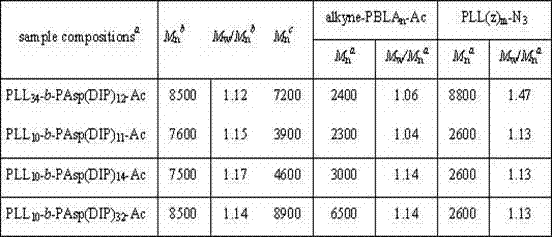
表2 Table 2
Claims (4)
Priority Applications (1)
| Application Number | Priority Date | Filing Date | Title |
|---|---|---|---|
| CN201110367602.7A CN102516552B (en) | 2011-11-18 | 2011-11-18 | A kind of degradable acid-sensitive polymer amphiphilic cationic block copolymer and micelle particle and preparation method thereof |
Applications Claiming Priority (1)
| Application Number | Priority Date | Filing Date | Title |
|---|---|---|---|
| CN201110367602.7A CN102516552B (en) | 2011-11-18 | 2011-11-18 | A kind of degradable acid-sensitive polymer amphiphilic cationic block copolymer and micelle particle and preparation method thereof |
Publications (2)
| Publication Number | Publication Date |
|---|---|
| CN102516552A CN102516552A (en) | 2012-06-27 |
| CN102516552B true CN102516552B (en) | 2014-01-15 |
Family
ID=46287648
Family Applications (1)
| Application Number | Title | Priority Date | Filing Date |
|---|---|---|---|
| CN201110367602.7A Expired - Fee Related CN102516552B (en) | 2011-11-18 | 2011-11-18 | A kind of degradable acid-sensitive polymer amphiphilic cationic block copolymer and micelle particle and preparation method thereof |
Country Status (1)
| Country | Link |
|---|---|
| CN (1) | CN102516552B (en) |
Families Citing this family (10)
| Publication number | Priority date | Publication date | Assignee | Title |
|---|---|---|---|---|
| CN103656652B (en) * | 2013-12-10 | 2015-09-09 | 深圳先进技术研究院 | A kind of sensitive response type polymer nano-micelle and its preparation method and application |
| CN104592522B (en) * | 2014-10-30 | 2018-02-06 | 中山大学 | A kind of degradable acid-sensitive type poly-asparagine copolymer and its preparation method and application |
| CN105153412B (en) * | 2015-07-15 | 2017-04-05 | 河南省眼科研究所 | A kind of polypeptide block polymer and preparation method thereof, purposes |
| CN105997879B (en) * | 2016-07-12 | 2019-02-05 | 中山大学 | A kind of nanovesicle with dual sensitivity of pH and temperature, its preparation method and application |
| CN107233581A (en) * | 2017-06-15 | 2017-10-10 | 中山大学 | One kind can carry out the imaging of MR fluorescent dual module states lymph, degradable small particle nano-micelle and its preparation method and application |
| CN110179749B (en) * | 2018-04-27 | 2020-09-01 | 中山大学 | Polymer nanoparticles for the treatment of rheumatoid arthritis |
| CN113004515B (en) * | 2021-03-02 | 2023-02-24 | 厦门大学附属中山医院 | Hyaluronic acid-like polyamino acid derivative, and preparation method and application thereof |
| CN114437357B (en) * | 2021-11-22 | 2022-10-18 | 中山大学 | A kind of tumor hyperpermeable polymer with graded drug release and its preparation method and application |
| CN116003792B (en) * | 2022-12-15 | 2024-12-13 | 中山大学 | A polymer for treating cancer metastasis and its preparation method and application |
| CN118005913B (en) * | 2024-04-10 | 2024-08-06 | 四川大学 | Block copolymer with cell membrane pore-forming property and preparation method and application thereof |
Family Cites Families (1)
| Publication number | Priority date | Publication date | Assignee | Title |
|---|---|---|---|---|
| FR2822834B1 (en) * | 2001-04-02 | 2005-02-25 | Flamel Tech Sa | COLLOIDAL SUSPENSION OF NANOPARTICLES BASED ON AMPHIPHILIC COPOLYMERS FOR VECTORIZATION OF ACTIVE INGREDIENTS AND THEIR METHOD OF PREPARATION |
-
2011
- 2011-11-18 CN CN201110367602.7A patent/CN102516552B/en not_active Expired - Fee Related
Also Published As
| Publication number | Publication date |
|---|---|
| CN102516552A (en) | 2012-06-27 |
Similar Documents
| Publication | Publication Date | Title |
|---|---|---|
| CN102516552A (en) | Degradable acid-sensitive macromolecular amphipathic cationic block copolymers and micellar particles and preparation method thereof | |
| Sun et al. | Self-assembled biodegradable micellar nanoparticles of amphiphilic and cationic block copolymer for siRNA delivery | |
| Xu et al. | Pulmonary delivery by exploiting doxorubicin and cisplatin co-loaded nanoparticles for metastatic lung cancer therapy | |
| Yang et al. | The role of non-covalent interactions in anticancer drug loading and kinetic stability of polymeric micelles | |
| Shrestha et al. | Endosomal escape and siRNA delivery with cationic shell crosslinked knedel-like nanoparticles with tunable buffering capacities | |
| Lee et al. | Poly (l-histidine)–PEG block copolymer micelles and pH-induced destabilization | |
| CN101970541B (en) | Copolymer comprising an uncharged hydrophilic block and a cationic polyamino acid block in which a hydrophobic group is introduced into a part of the side chain, and use thereof | |
| Wei et al. | Dual-drug delivery system based on hydrogel/micelle composites | |
| Du et al. | pH-sensitive block copolymer vesicles with variable trigger points for drug delivery | |
| Malhotra et al. | Glycine-terminated dendritic amphiphiles for nonviral gene delivery | |
| JP5271715B2 (en) | Environmentally responsive siRNA carrier using disulfide crosslinked polymer micelle | |
| Liu et al. | A pH-and thermo-responsive poly (amino acid)-based drug delivery system | |
| CN107281497B (en) | Functional nucleic acid protective carrier based on DNA hydrogel and preparation method and application thereof | |
| Zhu et al. | Novel polycationic micelles for drug delivery and gene transfer | |
| San Miguel et al. | Biodegradable and thermoresponsive micelles of triblock copolymers based on 2-(N, N-dimethylamino) ethyl methacrylate and ε-caprolactone for controlled drug delivery | |
| CN104958258A (en) | Substance-encapsulating vesicle and process for producing the same | |
| CN102911326B (en) | Acid-sensitive degradable polymer vesicle and preparation and application thereof | |
| Hao et al. | Synthesis of an acid-cleavable and fluorescent amphiphilic block copolymer as a combined delivery vector of DNA and doxorubicin | |
| Li et al. | Dual pH-responsive micelles with both charge-conversional property and hydrophobic–hydrophilic transition for effective cellular uptake and intracellular drug release | |
| Wu et al. | Novel hydroxyl-containing reduction-responsive pseudo-poly (aminoacid) via click polymerization as an efficient drug carrier | |
| CN117777378A (en) | Preparation method and application of a polymer carrier with dual stimulation response of pH and redox | |
| Liu et al. | zwitterionic Pluronic analog-coated PLGA nanoparticles for oral insulin delivery | |
| CN105131182B (en) | Poly- (β amino esters) polymer of pluronic and its synthesis and methods for using them | |
| US20180312617A1 (en) | A cation polymer capable of removing positive charges through oxidative response, a preparation method and application | |
| CN111632153A (en) | A targeted nano-drug delivery system co-loaded with chemical gene drugs and preparation method thereof |
Legal Events
| Date | Code | Title | Description |
|---|---|---|---|
| C06 | Publication | ||
| PB01 | Publication | ||
| C10 | Entry into substantive examination | ||
| SE01 | Entry into force of request for substantive examination | ||
| C14 | Grant of patent or utility model | ||
| GR01 | Patent grant | ||
| CF01 | Termination of patent right due to non-payment of annual fee |
Granted publication date: 20140115 Termination date: 20211118 |
|
| CF01 | Termination of patent right due to non-payment of annual fee |