CN100405373C - A method for organizing directory entries in a file system - Google Patents
A method for organizing directory entries in a file system Download PDFInfo
- Publication number
- CN100405373C CN100405373C CNB2006101441952A CN200610144195A CN100405373C CN 100405373 C CN100405373 C CN 100405373C CN B2006101441952 A CNB2006101441952 A CN B2006101441952A CN 200610144195 A CN200610144195 A CN 200610144195A CN 100405373 C CN100405373 C CN 100405373C
- Authority
- CN
- China
- Prior art keywords
- directory
- cluster
- bunch
- directory entry
- target
- Prior art date
- Legal status (The legal status is an assumption and is not a legal conclusion. Google has not performed a legal analysis and makes no representation as to the accuracy of the status listed.)
- Expired - Fee Related
Links
Images

Landscapes
- Information Retrieval, Db Structures And Fs Structures Therefor (AREA)
Abstract
一种文件系统的目录项整理方法,包括:确定目标目录并进入该目标目录区开始检查目录项;逐个判断目标目录区中未检查的目录项为有效目录项还是已删除目录项,当找到的已删除目录项够装满一个簇时,将找到的已删除目录项的位置调换到当前簇里,所述当前簇为目前查到的最后一个簇;调换完成后将该簇中所有目录项的首字节置0,然后将该簇从目标目录区的簇链中删除;如果目标目录区中目录项未检查完则继续检查,否则结束整理。采用本发明的技术方案后,可以根据需要指定目录进行目录项的整理,通过清理已删除目录项,使有效目录项可以连续存放,从而减少需要比较的目录项数目,提高嵌入式系统中FAT文件系统的操作效率,最终提升嵌入式系统的性能。
A method for sorting directory items in a file system, comprising: determining a target directory and entering the target directory area to start checking directory items; judging one by one whether unchecked directory items in the target directory area are valid directory items or deleted directory items, and when found When the deleted directory entries are enough to fill a cluster, the position of the found deleted directory entries is replaced to the current cluster, and the current cluster is the last cluster found so far; after the replacement is completed, the positions of all directory entries in the cluster Set the first byte to 0, and then delete the cluster from the cluster chain in the target directory area; if the directory items in the target directory area have not been checked, continue to check, otherwise end the sorting. After adopting the technical scheme of the present invention, a directory can be specified according to needs to carry out directory entry arrangement, and by clearing deleted directory entries, effective directory entries can be stored continuously, thereby reducing the number of directory entries that need to be compared, and improving the efficiency of FAT files in embedded systems. The operating efficiency of the system ultimately improves the performance of the embedded system.
Description
技术领域 technical field
本发明涉及文件系统,特别涉及文件系统的目录项整理。The invention relates to a file system, in particular to directory item arrangement of the file system.
背景技术 Background technique
现在很多嵌入式手持设备如手机,MP3/MP4播放器等都开始支持外部存储器接口,如SD卡标准接口,NandFlash接口等。这些嵌入式手持设备都使用FAT(file allocation table文件分配表)文件系统作为访问外部存储器的接口,根据外部存储器容量不同使用FAT12/FAT16/FAT32文件系统进行文件读写等操作。Now many embedded handheld devices such as mobile phones, MP3/MP4 players, etc. begin to support external memory interfaces, such as SD card standard interface, NandFlash interface and so on. These embedded handheld devices all use the FAT (file allocation table) file system as the interface to access the external memory, and use the FAT12/FAT16/FAT32 file system to perform file reading and writing operations according to the capacity of the external memory.
非易失性存储器上的文件系统一般具有BIOS(基本输入输出系统)参数块、文件分配表(FAT表)、根目录和数据区,这样的文件系统一般称为FAT文件系统,目前包括FAT12、FAT16和FAT32三种,文件系统中以簇作为基本的储存单位。其中:The file system on the non-volatile memory generally has a BIOS (basic input and output system) parameter block, a file allocation table (FAT table), a root directory, and a data area. Such a file system is generally called a FAT file system, and currently includes FAT12, There are three types of FAT16 and FAT32, and clusters are used as the basic storage unit in the file system. in:
数据区用于存放文件内容的数据。The data area is used to store the data of the file content.
BIOS参数块记录了每扇区字节数、每簇扇区数、每个FAT的扇区数、扇区总数、根目录项数等等参数。The BIOS parameter block records parameters such as the number of bytes per sector, the number of sectors per cluster, the number of sectors per FAT, the total number of sectors, and the number of root directory entries.
根目录里记录着每个文件及目录的目录项,也称为目录登记项或表项;目录项中记录着文件或目录名、文件或目录的首簇号,文件大小、文件创建的日期等描述逻辑文件数据结构的数据。根目录和各层子目录都有自己的FDT(文件目录表)用于存放本目录下各文件及目录的目录项。The directory entry of each file and directory is recorded in the root directory, also known as directory entry or table entry; the directory entry records the file or directory name, the first cluster number of the file or directory, the file size, the date of file creation, etc. Data describing the logical file data structure. The root directory and subdirectories of each layer have their own FDT (file directory table) for storing the directory entries of each file and directory under this directory.
FAT表是记录每个逻辑文件在数据区的物理存储位置的链表,一般以簇为单位;这里的逻辑文件包括文件及目录。FAT表区按1个半字节(FAT12)、2个字节(FAT16)、4个字节(FAT32)划分为多个区间(也可称之为单元、元素),每一区间对应于数据区的一个簇,按顺序为这些区间编号,称为簇号,该簇号除了是一个数据外,还对应于FAT表区的某一区间及数据区的一个簇。The FAT table is a linked list that records the physical storage location of each logical file in the data area, generally in units of clusters; the logical files here include files and directories. The FAT table area is divided into multiple intervals (also called units, elements) by 1 nibble (FAT12), 2 bytes (FAT16), and 4 bytes (FAT32), and each interval corresponds to the data A cluster in the area, numbers these intervals in order, called the cluster number, the cluster number is not only a data, but also corresponds to a certain interval in the FAT table area and a cluster in the data area.
一个逻辑文件会占用一个或以上的簇,,文件存放在数据区的簇中的是数据;而目录存放在数据区的簇中的是目录项,这些目录项记录着该目录下所有子目录及文件的信息。当占用一个以上的簇时,逻辑文件是装满一个簇后,再往下一个簇里装。由于簇的存放顺序在物理地址上未必连续,因此在逻辑文件的FAT表中,每个簇号对应的区间都存放有该逻辑文件数据所在的下一个簇的簇号,即每个簇号都有一个链表指针指向该逻辑文件数据所在的下一个簇,从而构成一个链表,称为簇链;如果一个簇号的区间中存放的不是下一个簇号而是FF,则表示这个簇是逻辑文件的最后一个簇。这样,只要知道逻辑文件首簇号,即可找到一个簇链,进而得到该逻辑文件所有数据的存储位置。根目录和各层子目录都有各自独立的簇链。A logical file will occupy one or more clusters, and the files stored in the clusters in the data area are data; while the directories stored in the clusters in the data area are directory entries, which record all subdirectories and file information. When more than one cluster is occupied, the logical file is loaded into the next cluster after filling one cluster. Since the storage order of the clusters may not be continuous on the physical address, in the FAT table of the logical file, the section corresponding to each cluster number stores the cluster number of the next cluster where the data of the logical file is located, that is, each cluster number is There is a linked list pointer pointing to the next cluster where the logical file data is located, thus forming a linked list, called a cluster chain; if the next cluster number is not stored in the interval of a cluster number but FF, it means that this cluster is a logical file the last cluster of . In this way, as long as the first cluster number of the logical file is known, a cluster chain can be found, and then the storage location of all data of the logical file can be obtained. The root directory and subdirectories of each layer have their own independent cluster chains.
随着用户进行创建文件、删除文件操作的增多,外部存储器中文件系统的目录项--包括文件和目录的--也会不断的增加,直到达到一个目录下的最大目录项数目。一个目录在数据区中对应的存储空间即该目录的目录区,目录中的目录项即存放在其目录区里。在文件系统的目录区中,随着已删除目录项和新目录项的增加,目录区的结构会越来越庞大,当删除一个文件或目录时,除了将其在数据区的数据删除以外,还会将其目录项更改,一般是将其目录项的首字节改为E5,这时其目录项就成为一个已删除目录项,但这个已删除目录项实际上还存在于目录区的原来位置。在进行文件或目录的查找或创建操作时,需要将目标文件或目录的名字与目录区中的各目录项进行比较,由于目录项连续存放,比较就是按物理地址依次去比较,因此也会对已删除目录项进行比较,如果已删除目录项很多,这种无用的查找操作就会越多,造成更多的资源浪费。例如:在某个嵌入式系统中的外部存储设备文件系统中,在一个有用目录项数目为100,已删除目录项数目为0的目录,创建一个新文件的时间大约是150毫秒;但在一个有用目录项数目为100,已删除目录项数目为6000的目录,创建一个新文件的时间大约为1400毫秒,所用时间大约相差10倍,在已删除目录项上浪费的时间占用了系统90%的资源。As the number of user operations to create and delete files increases, the directory entries of the file system in the external storage—including files and directories—will also increase continuously until the maximum number of directory entries under a directory is reached. The storage space corresponding to a directory in the data area is the directory area of the directory, and the directory items in the directory are stored in the directory area. In the directory area of the file system, with the increase of deleted directory entries and new directory entries, the structure of the directory area will become larger and larger. When deleting a file or directory, in addition to deleting its data in the data area, It will also change its directory entry, generally change the first byte of its directory entry to E5, then its directory entry will become a deleted directory entry, but this deleted directory entry actually still exists in the original directory area. Location. When searching or creating a file or directory, it is necessary to compare the name of the target file or directory with each directory item in the directory area. Since the directory items are stored continuously, the comparison is to compare in order according to the physical address, so it will also be compared. Compared with deleted directory entries, if there are many deleted directory entries, there will be more useless search operations, resulting in more waste of resources. For example: in an external storage device file system in an embedded system, in a directory whose number of useful directory entries is 100 and the number of deleted directory entries is 0, the time to create a new file is about 150 milliseconds; but in a The number of useful directory entries is 100, and the number of deleted directory entries is 6000. The time to create a new file is about 1400 milliseconds, and the time spent is about 10 times different. The time wasted on deleted directory entries takes up 90% of the system. resource.
嵌入式系统的资源和性能都比较有限,这种情况下,在进行文件操作如创建、删除、查找等操作时会非常耗时,导致产品整体性能下降,无法满足客户需求。The resources and performance of the embedded system are relatively limited. In this case, it will be very time-consuming to perform file operations such as creating, deleting, and searching, which will lead to a decline in the overall performance of the product and cannot meet customer needs.
发明内容 Contents of the invention
针对上述不足,本发明提出了一种文件系统的目录项整理方法,该方法可以清除指定目录区里的已删除目录项,使有效目录项集中存放。Aiming at the above disadvantages, the present invention proposes a method for organizing directory items in a file system. The method can clear deleted directory items in a specified directory area, so that valid directory items can be stored in a centralized manner.
本发明采用的技术方案是:The technical scheme adopted in the present invention is:
一种文件系统的目录项整理方法,其特征在于,包括:A method for organizing directory entries in a file system, comprising:
(a)确定目标目录并进入该目标目录区开始检查目录项;(a) Determine the target directory and enter the target directory area to start checking directory items;
(b)逐个判断目标目录区中未检查的目录项为有效目录项还是已删除目录项,当找到的已删除目录项够装满一个簇时执行(c);(b) judging one by one whether the unchecked directory entry in the target directory area is a valid directory entry or a deleted directory entry, and execute (c) when the deleted directory entry found is enough to fill a cluster;
(c)将找到的已删除目录项的位置调换到当前簇里,所述当前簇为目前查到的最后一个簇;调换完成后将该簇中所有目录项的首字节置0,然后将该簇从目标目录区的簇链中删除;执行(d);(c) exchange the position of the deleted directory entry found in the current cluster, and the current cluster is the last cluster found at present; after the exchange is completed, the first byte of all directory entries in the cluster is set to 0, and then The cluster is deleted from the cluster chain in the target directory area; execute (d);
(d)如目标目录区中目录项未检查完则返回(b),否则结束整理。(d) Return to (b) if the directory items in the target directory area have not been checked, otherwise finish sorting.
进一步地,步骤(b)中,用计数器记录找到的已删除目录项的个数,当该个数与目录项空间大小的乘积大于或等于一个簇的空间大小时,认为找到的已删除目录项够装满一个簇。Further, in step (b), the number of the deleted directory entry found is recorded with a counter, and when the product of the number and the space size of the directory entry is greater than or equal to the space size of a cluster, it is considered that the deleted directory entry found Enough to fill a cluster.
进一步地,步骤(b)进一步细化为:Further, step (b) is further refined as:
(b1)判断所检查的目录项是否为已删除目录项,执行(b2);(b1) judging whether the checked directory item is a deleted directory item, and execute (b2);
(b2)判断所检查的目录项是否为当前簇中的最后一个目录项,如果是则执行(b3);否则检查当前簇里的下一个目录项并执行(b1);(b2) judge whether the checked directory entry is the last directory entry in the current cluster, if so, execute (b3); otherwise check the next directory entry in the current cluster and execute (b1);
(b3)判断找到的已删除目录项是否够装满一个簇,够则执行(c),不够则执行(d)。(b3) Judging whether the found deleted directory entries are enough to fill a cluster, if it is enough, execute (c), if it is not enough, execute (d).
进一步地,步骤(c)中,将找到的已删除目录项的位置调换到当前簇里,实现方法是:将当前簇及目标目录区的簇链中在其之前的簇里的有效目录项依次上移,与找到的已删除目录项对调位置;当前簇及其之前的簇里的有效目录项都上移后,移动完成。Further, in step (c), the position of the deleted directory entry found is changed to the current cluster, and the implementation method is: the effective directory entries in the cluster chain before it in the current cluster and the target directory area are sequentially Move up, and swap the position with the found deleted directory entry; after all valid directory entries in the current cluster and the previous cluster are moved up, the move is complete.
进一步地,步骤(c)中,将所述簇从目标目录区的簇链中删除,其实现方法是:在文件分配表中,用所述簇的链表指针取代前一个簇的链表指针,并将当前簇的链表指针置0;所述前一个簇为目标目录区的簇链中在所述簇之前的一个簇。Further, in step (c), the cluster is deleted from the cluster chain of the target directory area, and its implementation method is: in the file allocation table, replace the linked list pointer of the previous cluster with the linked list pointer of the cluster, and Set the linked list pointer of the current cluster to 0; the previous cluster is a cluster before the cluster in the cluster chain of the target directory area.
进一步地,步骤(d)中,判断当前簇是否为目标目录区的最后一个簇,如果是则目标目录区中目录项已检查完,结束整理;否则目标目录区中目录项未检查完,进入目标目录区的下一个簇并检查其中的第一个目录项,返回(b1)。Further, in the step (d), it is judged whether the current cluster is the last cluster of the target directory area, if so, the directory entry in the target directory area has been checked, and finishing is finished; otherwise, the directory entry in the target directory area has not been checked, and enters The next cluster in the target directory area and check the first directory entry in it, return (b1).
进一步地,目标目录区中各目录项按其在整个目标目录区中的排列次序有相应的逻辑编号;当所检查的目录项为已删除目录项时,使用数组记录找到的已删除目录项的位置,将数组元素依次赋值为每个找到的已删除目录项的编号;在有效目录项依次上移,与找到的已删除目录项对调位置时,将数组中相应元素的值由已删除目录项的编号更改为所上移的有效目录项上移前的编号。Further, each directory item in the target directory area has a corresponding logical number according to its arrangement order in the entire target directory area; when the checked directory item is a deleted directory item, use an array to record the position of the deleted directory item , assign the array elements in turn to the number of each found deleted directory entry; when the valid directory entry moves up in turn and swaps positions with the found deleted directory entry, the value of the corresponding element in the array is changed from the deleted directory entry The numbering changes to the number before the active directory entry being moved up.
进一步地,确定目标目录的方法包括:由使用者输入目录名或预设在系统中。Further, the method for determining the target directory includes: the user inputs the directory name or presets it in the system.
采用本发明的技术方案后,可以根据需要指定目录区进行目录项的整理,通过清除该目录区里的已删除目录项,使有效目录项可以连续存放,从而减少需要比较的目录项数目,提高嵌入式系统中FAT文件系统的操作效率,最终提升嵌入式系统的性能;同时还可以将已删除目录项所占用的存储空间释放,提高了系统资源的利用率。After adopting the technical scheme of the present invention, the directory area can be designated according to needs to carry out the arrangement of directory items, and by clearing the deleted directory items in the directory area, effective directory items can be continuously stored, thereby reducing the number of directory items that need to be compared and improving The operating efficiency of the FAT file system in the embedded system ultimately improves the performance of the embedded system; at the same time, it can also release the storage space occupied by the deleted directory items, improving the utilization of system resources.
附图说明 Description of drawings
图1是本发明的应用实例中目标目录区的结构示意图。Fig. 1 is a schematic structural diagram of a target directory area in an application example of the present invention.
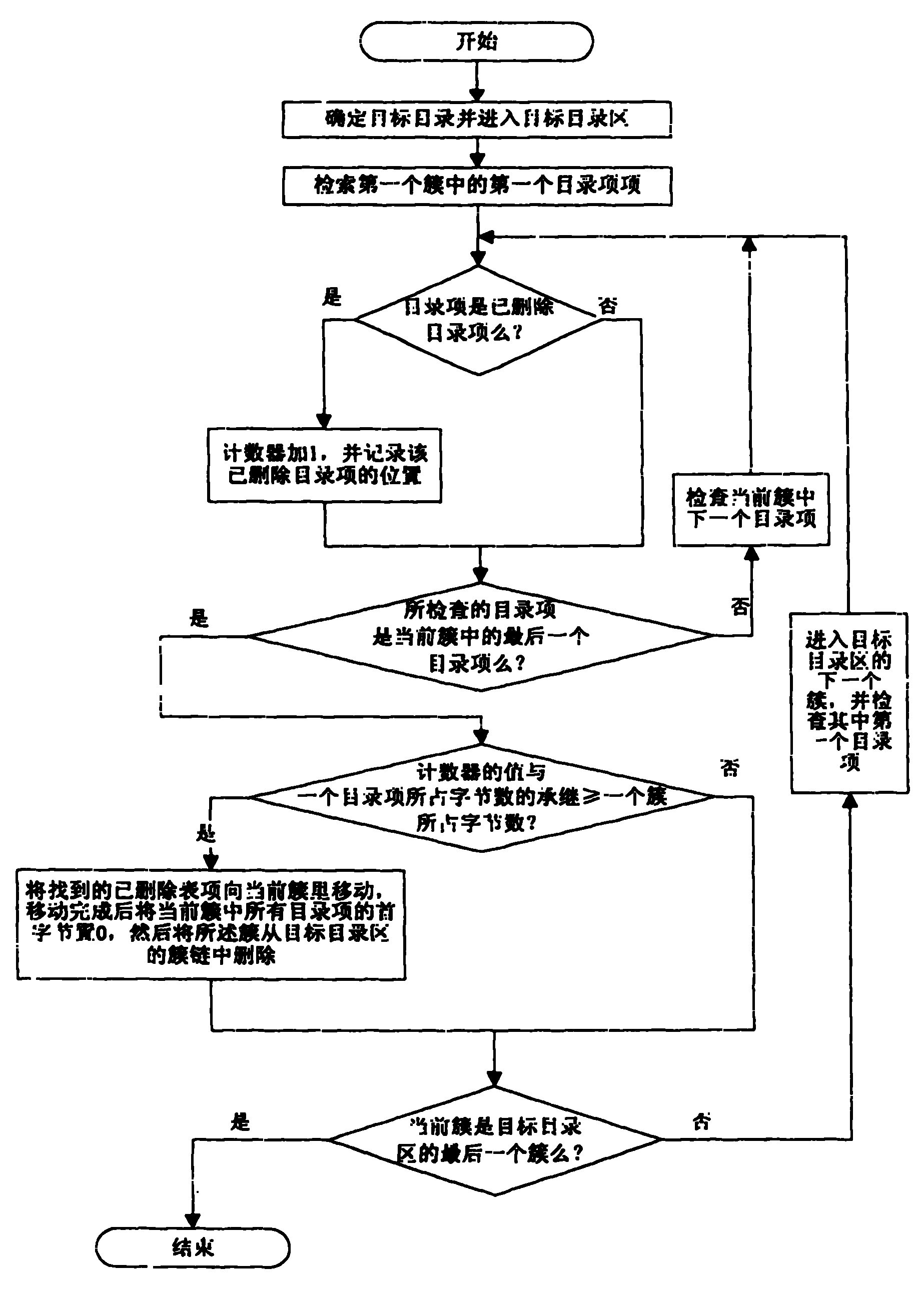
图2是本发明的文件系统目录项整理方法具体实施的流程图;Fig. 2 is the flow chart of the specific implementation of the file system directory entry sorting method of the present invention;
具体实施方式 Detailed ways
下面将结合附图和实施例对本发明的技术方案进行更详细的说明。The technical solution of the present invention will be described in more detail below with reference to the drawings and embodiments.
为了方便后面的说明,下面再简单介绍一下目录区的结构,如图1所示。一个目录区占用一个或以上的簇,这些簇的物理地址不一定连续,簇之间的联系及先后顺序是根据目录区在FAT表中的簇链决定的,比如该目录区共占3个簇:1、2和3;蔟链里1的下一个簇是2,即1的链表指针指向2;2的下一个簇是3,即2的链表指针指向3。In order to facilitate the following description, the structure of the directory area is briefly introduced below, as shown in FIG. 1 . A directory area occupies one or more clusters. The physical addresses of these clusters are not necessarily continuous. The connection and sequence between clusters are determined according to the cluster chain of the directory area in the FAT table. For example, the directory area occupies 3 clusters in total. : 1, 2 and 3; the next cluster of 1 in the chain is 2, that is, the linked list pointer of 1 points to 2; the next cluster of 2 is 3, that is, the linked list pointer of 2 points to 3.
根目录的首簇号记录在BIOS参数块中。而子目录的首簇号记录在该子目录的上一层目录的FDT中。知道了首簇号就等于知道了目录的入口地址。The cluster number of the root directory is recorded in the BIOS parameter block. The first cluster number of the subdirectory is recorded in the FDT of the upper directory of the subdirectory. Knowing the first cluster number is equivalent to knowing the entry address of the directory.
每个簇里存放了多个目录项,簇空间的大小是目录项空间大小的整数倍,对于同个系统而言,簇和目录项的大小都是固定值,因此一个系统中,每个簇能装多少个目录项也是固定的。除了最后一个簇以外,目录区中其它簇都是装满目录项的;簇内各目录项的存放在物理地址上是连续的,对于同一个簇中的目录项而言,将前面的目录项的地址直接物理地址累加后就可以得到后面的目录项的地址。如果目录项的空间大小为32字节,则簇中的第一个目录项就是该簇所对应的数据区的第一个32字节。由于目录区所占空间的大小未必是簇的整数倍,因此最后一个簇中往往留有一些未使用的目录项,其首字节为0,当遇到这样的目录项时,文件系统程序会认为这是目录区中最后一个目录项。Multiple directory entries are stored in each cluster, and the size of the cluster space is an integer multiple of the size of the directory entry space. For the same system, the sizes of clusters and directory entries are fixed values. Therefore, in a system, each cluster The number of directory entries that can be loaded is also fixed. Except for the last cluster, the other clusters in the directory area are full of directory entries; the storage of each directory entry in the cluster is continuous on the physical address, and for the directory entries in the same cluster, the previous directory entries The address of the following directory entry can be obtained after the direct physical address of the address is accumulated. If the size of the directory entry is 32 bytes, the first directory entry in the cluster is the first 32 bytes of the data area corresponding to the cluster. Since the space occupied by the directory area may not be an integer multiple of the cluster, there are often some unused directory entries in the last cluster, the first byte of which is 0. When encountering such directory entries, the file system program will Consider this the last directory entry in the directory area.
本发明提供了一种文件系统目录项的整理方法,应用于嵌入式系统,这里的FAT文件系统包括FAT12、FAT16和FAT32文件系统;由于实际应用中目录项的空间大小通常为32字节,所以本文中均按一个目录项占32字节的情况来说明本发明的技术方案;如果出现目录项的空间大小不为32字节的情况,则将表述中的32字节更改为目录项的空间大小即可。The present invention provides a method for organizing file system directory items, which is applied to embedded systems, where the FAT file system includes FAT12, FAT16 and FAT32 file systems; because the space size of directory items in practical applications is usually 32 bytes, so In this paper, the technical scheme of the present invention is explained by the situation that a directory entry accounts for 32 bytes; if the space size of the directory entry is not 32 bytes, then 32 bytes in the expression are changed to the space of the directory entry Size is fine.
所述方法包括以下步骤,如图2所示:Described method comprises the following steps, as shown in Figure 2:
a0:确定目标目录--即需要对其中的目录项进行整理的目录;a0: Determine the target directory—that is, the directory in which the directory items need to be sorted;
确定的方式可以根据需要设定,比如由使用者在需要时输入想整理的目录的名称;这里的目录指的是存储器文件系统中的目录,可以是根目录,也可以是各层子目录;再比如,还可以预设在系统的定时任务中,让系统在到达预定时间后,对预定的目录进行整理。The determination method can be set according to needs, for example, the user inputs the name of the directory to be sorted when needed; the directory here refers to the directory in the storage file system, which can be the root directory or each layer of subdirectories; For another example, it can also be preset in the scheduled task of the system, so that the system can sort out the scheduled directory after the scheduled time is reached.
确定后进入目标目录区中的第一个簇,同时设置一个计数器并将其初始数值设为0。After confirmation, enter the first cluster in the target directory area, set a counter and set its initial value to 0 at the same time.
a1:开始检查目标目录区里第一个簇中的第一个目录项;a1: start checking the first directory entry in the first cluster in the target directory area;
b1:当所检查的目录项的首字节为E5时,表示该目录项为已删除目录项,将计数器的值加1,执行b2。否则该目录项为有效目录项--即已经使用还未删除的目录项,也执行b2。b1: When the first byte of the checked directory entry is E5, it means that the directory entry is a deleted directory entry, add 1 to the value of the counter, and execute b2. Otherwise, the directory entry is a valid directory entry—that is, the directory entry has been used but not deleted, and b2 is also executed.
在该步中,可以记录每个找到的已删除目录项。为方便后面的说明,在这里假设一个簇能装N个目录项。In this step, you can record every deleted directory entry found. For the convenience of the following description, it is assumed here that a cluster can hold N directory entries.
簇中目录项按其在整个目标目录区中的排列次序有相应的逻辑编号,这里的逻辑编号实际上是一种虚拟的编号,只为了方便记录而设定,比如第一个簇中目录项编号为0,1,...N-1,第二个簇中目录项编号为N,N+2,...2N-1,以此类推。然后定义一个有2N-1个元素的数组变量来记录所发现的已删除目录项的位置,每找到一个已删除目录项,就依次将这个数组的一个元素的赋值为所述已删除目录项的编号,从而记录所发现的已删除目录项的位置。The directory entries in the cluster have corresponding logical numbers according to their arrangement order in the entire target directory area. The logical number here is actually a virtual number, which is only set for the convenience of recording. For example, the directory entry in the first cluster The numbers are 0, 1, ... N-1, the directory entries in the second cluster are numbered N, N+2, ... 2N-1, and so on. Then define an array variable with 2N-1 elements to record the position of the deleted directory entry found, and whenever a deleted directory entry is found, the assignment of an element of this array to the value of the deleted directory entry number, recording the location of the deleted directory entry found.
b2:判断所检查的目录项是否为当前簇中的最后一个目录项,根据a0中的计算,一个簇中能装N个簇,则每个簇中的第N个目录项就是该簇的最后一个目录项;如检查的是当前簇中第N个目录项时,执行b3;如果不是则检查下一个目录项并返回b1b2: Determine whether the checked directory entry is the last directory entry in the current cluster. According to the calculation in a0, a cluster can contain N clusters, and the Nth directory entry in each cluster is the last of the cluster. A directory entry; if the Nth directory entry in the current cluster is checked, execute b3; if not, check the next directory entry and return b1
b3:判断找到的已删除目录项是否能装满一个簇;当计数器的数值大于或等于N时,或是当目录项的空间大小--即32字节与计数器的值的乘积大于或等于一个簇的空间大小时,表示找到的已删除目录项已经够装满一个簇了,执行c,在这里或在步骤c里将计数器的值减去N,所述计数器的值即代表找到的已删除目录项的个数;否则执行d。b3: Determine whether the found deleted directory entry can fill a cluster; when the value of the counter is greater than or equal to N, or when the space size of the directory entry—that is, the product of 32 bytes and the value of the counter is greater than or equal to one When the size of the cluster is large, it means that the deleted directory entry found is enough to fill a cluster. Execute c, here or in step c, the value of the counter is subtracted by N, and the value of the counter represents the deleted one found. The number of directory entries; otherwise execute d.
c:首先将找到的已删除目录项向当前簇里移动,实现方法是将目标目录区中当前簇--即目前查到的最后一个簇--及目标目录区的簇链中在其之前的各簇中的全部有效目录项依次上移。所述“依次”是指上移是按有效目录项在簇中的排列顺序一个个进行的,因为有的长文件名的目录项不止一个,而是连在一起的两个或几个,所以有效目录项之间的顺序不能改变。c: first move the found deleted directory item to the current cluster, the implementation method is to move the current cluster in the target directory area—that is, the last cluster found so far—and the previous cluster chain in the target directory area All valid directory entries in each cluster are moved up sequentially. The "in order" means that the upward movement is carried out one by one according to the arrangement order of the effective directory entries in the cluster, because some directory entries with long file names are more than one, but two or several connected together, so The order among valid directory entries cannot be changed.
上移的实际操作是:每次用一个有效目录项取代或者说覆盖其前面第一个已删除目录项--这里寻找“前面第一个已删除目录项”的范围,是从目标目录区第一个簇的第一个目录项到该有效目录项,也就是说有效目录项覆盖的也可能是其它簇里的已删除目录项。如果没有采用数组记录,则需要边移动边判断哪些目录项是已删除的;如果采用了数组记录,则在移动时可以直接使用数组中的信息对目录项进行移动。The actual operation of moving up is: each time a valid directory entry is used to replace or overwrite the first deleted directory entry in front of it--here, the scope of looking for "the first deleted directory entry in front" is from the first directory entry in the target directory area. The first directory entry of a cluster to the effective directory entry, that is to say, the valid directory entry may cover deleted directory entries in other clusters. If the array record is not used, it is necessary to judge which directory items are deleted while moving; if the array record is used, the information in the array can be directly used to move the directory items when moving.
覆盖后,如未采用数组记录则将原有效目录项的首字节改为E5,如采用了数组记录,则将数组中相应元素的值由被覆盖的已删除目录项的编号改为所上移的有效目录项上移前的编号。从效果上可以把每个有效目录项上移的过程看作是有效目录项与已删除目录项对调位置;接着再对下一个有效目录项进行相同操作;如果一个有效目录项前没有已删除目录项时则去对下一个有效目录项操作,直到将当前簇及其之前各簇中的有效目录项都上移完。从效果上看,上移的过程就相当于把已删除目录项向当前簇里移动。After overwriting, if the array record is not used, change the first byte of the original effective directory entry to E5; if the array record is used, change the value of the corresponding element in the array from the number of the overwritten deleted directory entry to the above The number of valid directory entries that are shifted up. In effect, the process of moving up each valid directory entry can be regarded as the exchange of positions between the valid directory entry and the deleted directory entry; then perform the same operation on the next valid directory entry; if there is no deleted directory before a valid directory entry When there is no entry, go to the next valid directory entry until all valid directory entries in the current cluster and previous clusters are moved up. In effect, the process of moving up is equivalent to moving the deleted directory entry to the current cluster.
移动完成后,当前簇中存放就都是已删除目录项了,装不下的已删除目录项这时存放在当前簇的前一个簇的最后。当前簇为目标目录区中的最后一簇并且其存放有未使用目录项时,情况会有一点不同,因为未使用目录项不上移,因此移动完成时,该簇中存放的是已删除目录项和未使用目录项。当然,在实际应用中也可以让未使用目录项一起上移。After the move is completed, all deleted directory entries are stored in the current cluster, and the deleted directory entries that cannot fit are stored at the end of the previous cluster of the current cluster. When the current cluster is the last cluster in the target directory area and it stores unused directory entries, the situation will be a little different, because the unused directory entries will not be moved up, so when the move is completed, the deleted directory will be stored in this cluster entries and unused directory entries. Of course, in practical applications, unused directory items can also be moved up together.
这时,对当前簇中所有目录项进行清0操作,即将它们的首字节置0;清0的结果就是在数据区里彻底清除这些目录项,或者说是释放了这些目录项所占用的存储空间,使其原来的存储空间可再被利用。At this time, all directory entries in the current cluster are cleared, that is, their first bytes are set to 0; the result of clearing is to completely clear these directory entries in the data area, or to release the space occupied by these directory entries. Storage space, so that the original storage space can be reused.
然后更新目标目录区在FAT表中的链表指针,将当前簇的簇号从目标目录区的簇链中删除,步骤是用当前簇在FAT表中对应区间的内容覆盖前一个簇对应区间的内容,并将当前簇的对应区间置0,或者说是用当前簇的链表指针取代前一个簇的链表指针,并将当前簇的链表指针置0。前一个簇即目标目录区的簇链中在当前簇之前的一个簇。比如原先目标目录的簇链是:1的下一个簇为2,2的下一个簇为3,此时2已装满已删除目录项,那么改变目标目录区在FAT表中的链表指针,将2对应区间中原本所存的簇号3放进1对应的区间,即将1由指向2改为指向3,其实质就是将2屏蔽。Then update the linked list pointer of the target directory area in the FAT table, and delete the cluster number of the current cluster from the cluster chain of the target directory area. , and set the corresponding section of the current cluster to 0, or replace the linked list pointer of the previous cluster with the linked list pointer of the current cluster, and set the linked list pointer of the current cluster to 0. The previous cluster is the cluster before the current cluster in the cluster chain of the target directory area. For example, the cluster chain of the original target directory is: the next cluster of 1 is 2, and the next cluster of 2 is 3. At this time, 2 has been filled with deleted directory entries, so change the linked list pointer of the target directory area in the FAT table, and the The cluster number 3 originally stored in the section corresponding to 2 is put into the section corresponding to 1, that is, 1 is changed from pointing to 2 to pointing to 3, and the essence is to shield 2.
如果不进行屏蔽的话,当文件系统程序遇到该簇中的目录项时,会误以为后面没有其它目录项,从而造成错误操作;屏蔽后当前簇重新成为一个可用簇,也就是说文件系统将可以把新的数据存储在该簇里。而且此后当在目标目录中创建或查找文件需要对目录项进行比较时,就不会再查找到该簇,从而也就无须对该簇里的已删除目录项再进行比较了。If it is not shielded, when the file system program encounters a directory entry in the cluster, it will mistakenly think that there are no other directory entries behind it, resulting in an erroneous operation; after shielding, the current cluster becomes an available cluster again, that is to say, the file system will New data can be stored in the cluster. And after this, when creating or searching for files in the target directory and needing to compare the directory entries, the cluster will not be found again, so there is no need to compare the deleted directory entries in the cluster again.
执行d。Execute d.
d:如果当前簇是目标目录区中的最后一个,那么该簇所对应的区间中存放的不是下个簇的簇号,而是FF,此时结束整理任务;如果不是FF则进入下一个簇开始检查第一个目录项,返回b1。d: If the current cluster is the last one in the target directory area, then the section corresponding to this cluster does not store the cluster number of the next cluster, but FF, and the sorting task ends at this time; if it is not FF, enter the next cluster Start checking the first directory entry, return b1.
结束整理任务后,目标目录中或许还存在有若干已删除目录项,这些目录项由于不能或不够装满一个簇,所以没能被删除;如果有计数器的话,这时计数器的值不为0。但是,这些剩余的已删除目录项已经对系统的影响非常小,基本可以忽略。After finishing the sorting task, there may still be some deleted directory entries in the target directory. These directory entries cannot be deleted because they cannot or are not enough to fill a cluster; if there is a counter, the value of the counter is not 0 at this time. However, the impact of these remaining deleted directory entries on the system is so small that it can be ignored.
上述为本发明的最优实施方式,在不背离本发明精神及其实质的情况下,熟悉本领域的技术人员可根据本发明作出各种相应的变形,但这些相应的变形都应属于本发明所附权利要求及其等效物所保护的范围内,比如可以每检查到一个已删除目录项就去判断找到的已删除目录项是否够装满一个簇;再比如可以每检查到一个已删除目录项就将其后面所有未检查的目录项依次上移;再比如上移时可以除了当前簇及其之前的簇里的有效目录项,还把当前簇之后的簇里的所有目录项都上移,移完后屏蔽目标目录区里的最后一个簇。The above is the best implementation mode of the present invention. Without departing from the spirit and essence of the present invention, those skilled in the art can make various corresponding deformations according to the present invention, but these corresponding deformations should all belong to the present invention Within the scope protected by the appended claims and their equivalents, for example, each time a deleted directory entry is checked, it can be judged whether the found deleted directory entry is enough to fill a cluster; The directory entry will move up all the unchecked directory entries in turn; for another example, when moving up, you can remove all directory entries in the cluster after the current cluster in addition to the valid directory entries in the current cluster and the previous cluster. After moving, mask the last cluster in the target directory area.
下面用本发明的一个应用实例进一步加以说明。An application example of the present invention will be further described below.
本实例采用由用户输入目录名的方式来确定目标目录。在本实例中,实现本发明技术方案的软件系统包括以下软件组件:In this example, the user enters the directory name to determine the target directory. In this example, the software system realizing the technical solution of the present invention includes the following software components:
组件1,用户接口应用程序,为用户提供应用接口,用户输入目录名来指定文件系统中的一个目标目录区;Component 1, the user interface application program, provides an application interface for the user, and the user inputs a directory name to specify a target directory area in the file system;
组件2,目录清理组件,接收用户输入的目录名,对目标目录区中的目录项进行检查,如果发现已删除目录项并积累到目录项数目之和等于一个簇的大小,就会对这部分相关目录项进行整理,删除这些已删除目录项,整理其他有用目录项;Component 2, the directory cleaning component, receives the directory name input by the user, and checks the directory entries in the target directory area. If it is found that the directory entries have been deleted and the sum of the directory entries is equal to the size of a cluster, this part will be deleted. Organize relevant directory items, delete these deleted directory items, and organize other useful directory items;
组件3,FAT文件系统组件,提供对FAT文件系统的基本操作软件接口,如目录访问接口,文件访问接口等;及Component 3, the FAT file system component, provides the basic operating software interface to the FAT file system, such as directory access interface, file access interface, etc.; and
组件4, 存储器控制驱动程序,用于控制存储器,提供对存储器进行复位、读扇区、写扇区等操作的软件接口。Component 4, the memory control driver, is used to control the memory and provide a software interface for operations such as resetting the memory, reading sectors, and writing sectors.
其中,组件1是面对用户的应用层面的接口;组件2为组件1服务,提供了具体程序;而组件3为组件2提供了对FAT文件系统操作的接口;组件4是最底层的功能模块,它为组件3提供了操作物理层的接口。在进行清理目录项时,上述4个组件作为一个整体,在不同层面共同实现了这一操作。Among them, Component 1 is the user-facing application-level interface; Component 2 serves Component 1 and provides specific programs; Component 3 provides an interface for Component 2 to operate on the FAT file system; Component 4 is the lowest-level functional module , which provides component 3 with an interface to operate the physical layer. When cleaning directory items, the above four components as a whole realize this operation at different levels.
本应用实例中,需要清理的目录区结构如图2所示,其中簇1为该目录区的首簇,簇2是该目录区的第二个簇,以此类推,簇m是目录区的最后一个簇;在每个簇里有若干目录项,以簇1为例,目录项1是簇1中的第一个簇,以此类推,目录项n是簇1中的最后一个簇,即一个簇能存放n个目录项;假设目录项1、目录项2、目录项3、目录项6为有效目录项,目录项4和目录项5为已删除目录项。In this application example, the structure of the directory area to be cleaned is shown in Figure 2, where cluster 1 is the first cluster of the directory area, cluster 2 is the second cluster of the directory area, and so on, cluster m is the The last cluster; there are several directory entries in each cluster, taking cluster 1 as an example, directory entry 1 is the first cluster in cluster 1, and so on, directory entry n is the last cluster in cluster 1, that is A cluster can store n directory entries; assuming directory entry 1, directory entry 2, directory entry 3, and directory entry 6 are valid directory entries, and directory entry 4 and directory entry 5 are deleted directory entries.
在上述目录区中清理目录项的步骤如下:The steps to clear directory items in the above directory area are as follows:
首先,用户输入目录名,确定要清理的目标目录区,这部分工作由组件1完成。First, the user inputs a directory name to determine the target directory area to be cleaned, and this part of the work is completed by component 1.
组件2接收该目录名,并从BIOS块中查找到根目录的首簇号,进入根目录;如果目标目录不是根目录则在根目录的FDT中查找目标目录的目录项,得到目标目录区的首簇号。在本应用实例中采用数组记录找到的已删除目录项的位置,各目录项的逻辑编号为:簇1中目录项1的编号为0,以此类推,目录项n的编号为n-1;簇2中第一个目录项的编号为n,以此类推,簇m中最后一个簇的编号为m×n-1;然后定义一个有2n-1个元素的数组用来记录。Component 2 receives the directory name, and finds the first cluster number of the root directory from the BIOS block, and enters the root directory; if the target directory is not the root directory, then searches for the directory entry of the target directory in the FDT of the root directory, and obtains the target directory area. first cluster number. In this application example, an array is used to record the position of the deleted directory entry, and the logical number of each directory entry is: the number of directory entry 1 in cluster 1 is 0, and so on, the number of directory entry n is n-1; The number of the first directory entry in cluster 2 is n, and so on, the number of the last cluster in cluster m is m×n-1; then define an array with 2n-1 elements for recording.
进入目标目录区中的首簇,即簇1,开始检查第一个目录项,即目录项1,同时设置一个数值为0的计数器;每检查一个目录项后即判断其是否为簇1中的最后一个目录项,不是则检查下一个目录项。目录项1为有效目录项;接着检查目录项2;以此类推。当检查到目录项4时,发现该目录项的首字节为E5,这意味着目录项4为已删除目录项;将计数器的值加1并在数组里记录目录项4的位置,记录方法是将数组中第一个元素赋值为目录项4的编号3。Enter the first cluster in the target directory area, that is, cluster 1, start to check the first directory entry, that is, directory entry 1, and set a counter with a value of 0; The last directory entry, if not the next directory entry is checked. Directory entry 1 is a valid directory entry; then directory entry 2 is checked; and so on. When the directory entry 4 is checked, it is found that the first byte of the directory entry is E5, which means that the directory entry 4 is a deleted directory entry; add 1 to the value of the counter and record the position of the directory entry 4 in the array, the recording method It is to assign the first element in the array to the number 3 of the directory item 4.
然后检查目录项5;目录项5也是已删除目录项,将计数器的值再加1并记录目录项5的位置,即将数组中第二个元素赋值为目录项5的编号4;接着检查目录项6;以此类推,直到检查完簇1中最后一个目录项,即目录项n。Then check directory item 5; directory item 5 is also a deleted directory item, add 1 to the value of the counter and record the position of directory item 5, that is, assign the second element in the array to the number 4 of directory item 5; then check the directory item 6; and so on, until the last directory entry in cluster 1, namely directory entry n, is checked.
这时,判断找到的已删除目录项是否够装满一个簇;如果计数器中的值乘以32字节的乘积小于一个簇的空间大小,则说明不够装满一个簇,那么就对簇1是不是目标目录区的最后一个簇进行判断,不是则进入簇2检查第一个目录项,并重复上述步骤。每检查完一个簇里的目录项,就判断一次已删除目录项是否够装满一个簇,不够就继续检查下面的簇。假设检查完簇x后,共发现了n+y个已删除目录项,即计数器的值为n+y,已经够装满一个簇了,这时执行下面的步骤。At this time, judge whether the deleted directory entry found is enough to fill a cluster; if the product of the value in the counter multiplied by 32 bytes is less than the space size of a cluster, it means that it is not enough to fill a cluster, so cluster 1 is If it is not the last cluster in the target directory area, it is judged, if not, it enters cluster 2 to check the first directory entry, and repeats the above steps. Every time the directory entry in a cluster is checked, it is judged whether the deleted directory entry is enough to fill a cluster, and if it is not enough, continue to check the following clusters. Assume that after checking the cluster x, a total of n+y deleted directory entries are found, that is, the value of the counter is n+y, which is enough to fill a cluster, and then perform the following steps.
将簇1到簇x中的有效目录项依次上移,根据数组的记录,第一个找到的已删除目录项为目录项4,则目录项1、目录项2和目录项3不用移动;用下一个有效目录项,即目录项6的内容覆盖目录项4,然后将数组中第一个元素的值由目录项4的编号3改为目录项6的编号5,使原先的目录项6成为将来准备被覆盖的“已删除目录项”;以此类推,直到将簇x中的有效目录项都上移完。此时,簇x中就都是已删除目录项了,并且簇x-1里还有y个已删除目录项。Move up the effective directory entries from cluster 1 to cluster x sequentially. According to the records of the array, the first deleted directory entry found is directory entry 4, then directory entry 1, directory entry 2 and directory entry 3 do not need to be moved; use The next effective directory entry, that is, the content of directory entry 6 covers directory entry 4, and then the value of the first element in the array is changed from the number 3 of directory entry 4 to the number 5 of directory entry 6, so that the original directory entry 6 becomes The "deleted directory entries" that will be overwritten in the future; and so on, until all valid directory entries in cluster x are moved up. At this point, there are all deleted directory entries in cluster x, and there are still y deleted directory entries in cluster x-1.
此时,对簇x进行清0操作,即将其中所有目录项的首字节置0;然后更改目标目录区中FAT表中的链表指针,将簇x从目标目录区的簇链中删除,这里即在蔟链中让簇x-1指向簇x+1,并把簇x的链表指针置0。还要将计数器的值减去n,即变为y。At this time, clear the cluster x, that is, set the first byte of all directory entries to 0; then change the linked list pointer in the FAT table in the target directory area, and delete cluster x from the cluster chain in the target directory area, here That is, let cluster x-1 point to cluster x+1 in the cluster chain, and set the linked list pointer of cluster x to 0. Also subtract n from the value of the counter, which becomes y.
由于FAT表中簇x的区间中是下一个簇的簇号,而不是FF,因此按照前面的步骤继续检查下一个簇里的目录项。如果是FF,则表示已经检查到了最后一个簇,在本应用实例里是簇m,这时清理任务完成。此时,可以设定反馈一个“完成”的提示。Because the interval of cluster x in the FAT table is the cluster number of the next cluster, rather than FF, so continue to check the directory entry in the next cluster according to the previous steps. If it is FF, it means that the last cluster has been checked, which is cluster m in this application example, and the cleaning task is completed at this time. At this point, a "Complete" prompt can be set to be fed back.
组件2利用组件3所提供的接口--比如目录访问接口等--来完成以上操作;而组件3对存储器等的操作则通过组件4提供的接口来完成。Component 2 uses the interface provided by Component 3—such as the directory access interface, etc.—to complete the above operations; and the operation of Component 3 on storage and the like is completed through the interface provided by Component 4.
Claims (8)
Priority Applications (1)
| Application Number | Priority Date | Filing Date | Title |
|---|---|---|---|
| CNB2006101441952A CN100405373C (en) | 2006-11-29 | 2006-11-29 | A method for organizing directory entries in a file system |
Applications Claiming Priority (1)
| Application Number | Priority Date | Filing Date | Title |
|---|---|---|---|
| CNB2006101441952A CN100405373C (en) | 2006-11-29 | 2006-11-29 | A method for organizing directory entries in a file system |
Publications (2)
| Publication Number | Publication Date |
|---|---|
| CN1959677A CN1959677A (en) | 2007-05-09 |
| CN100405373C true CN100405373C (en) | 2008-07-23 |
Family
ID=38071375
Family Applications (1)
| Application Number | Title | Priority Date | Filing Date |
|---|---|---|---|
| CNB2006101441952A Expired - Fee Related CN100405373C (en) | 2006-11-29 | 2006-11-29 | A method for organizing directory entries in a file system |
Country Status (1)
| Country | Link |
|---|---|
| CN (1) | CN100405373C (en) |
Families Citing this family (5)
| Publication number | Priority date | Publication date | Assignee | Title |
|---|---|---|---|---|
| CN101729671A (en) * | 2009-12-31 | 2010-06-09 | 宇龙计算机通信科技(深圳)有限公司 | Method for managing backup file, terminal thereof and system thereof |
| CN102024060B (en) * | 2010-12-31 | 2012-10-24 | 山西奥克斯电子系统工程中心 | Method for memorizing files and restoring error deleted files |
| CN102426586B (en) * | 2011-10-25 | 2017-02-08 | 厦门雅迅网络股份有限公司 | FAT (file allocation table) file storage method in embedded system |
| CN102968597B (en) * | 2012-11-05 | 2015-06-24 | 中国电力科学研究院 | Disk data connection chain-based file crushing method |
| CN117453632B (en) * | 2023-12-25 | 2024-04-12 | 杭州计算机外部设备研究所(中国电子科技集团公司第五十二研究所) | Data storage method and device |
Citations (5)
| Publication number | Priority date | Publication date | Assignee | Title |
|---|---|---|---|---|
| CN1555532A (en) * | 2000-08-30 | 2004-12-15 | �Ҵ���˾ | Temp directory management |
| US20050010610A1 (en) * | 2003-07-08 | 2005-01-13 | Konica Minolta Business Technologies, Inc. | File management system, file management apparatus and image forming apparatus |
| CN1766845A (en) * | 2005-11-30 | 2006-05-03 | 吴晓栋 | Method for realizing high security and recoverable file system |
| CN1773509A (en) * | 2004-11-12 | 2006-05-17 | 微软公司 | Computer file system |
| JP2006309536A (en) * | 2005-04-28 | 2006-11-09 | Seiko Epson Corp | Program and device for managing file |
-
2006
- 2006-11-29 CN CNB2006101441952A patent/CN100405373C/en not_active Expired - Fee Related
Patent Citations (5)
| Publication number | Priority date | Publication date | Assignee | Title |
|---|---|---|---|---|
| CN1555532A (en) * | 2000-08-30 | 2004-12-15 | �Ҵ���˾ | Temp directory management |
| US20050010610A1 (en) * | 2003-07-08 | 2005-01-13 | Konica Minolta Business Technologies, Inc. | File management system, file management apparatus and image forming apparatus |
| CN1773509A (en) * | 2004-11-12 | 2006-05-17 | 微软公司 | Computer file system |
| JP2006309536A (en) * | 2005-04-28 | 2006-11-09 | Seiko Epson Corp | Program and device for managing file |
| CN1766845A (en) * | 2005-11-30 | 2006-05-03 | 吴晓栋 | Method for realizing high security and recoverable file system |
Also Published As
| Publication number | Publication date |
|---|---|
| CN1959677A (en) | 2007-05-09 |
Similar Documents
| Publication | Publication Date | Title |
|---|---|---|
| CN110678836B (en) | Persistent memory for key value storage | |
| US6587915B1 (en) | Flash memory having data blocks, spare blocks, a map block and a header block and a method for controlling the same | |
| US10445022B1 (en) | Optimization of log-structured merge (LSM) tree-based databases using object solid state drive (SSD) devices | |
| US7747837B2 (en) | Method and system for accessing non-volatile storage devices | |
| US7769978B2 (en) | Method and system for accessing non-volatile storage devices | |
| US7793068B2 (en) | Dual mode access for non-volatile storage devices | |
| JP5709814B2 (en) | Fast tree flattening for systems with non-volatile memory | |
| CN101183383A (en) | A kind of snapshot system and using method thereof | |
| CN107256196A (en) | The caching system and method for support zero-copy based on flash array | |
| CN106708968A (en) | Distributed database system and data processing method in distributed database system | |
| JP2003030025A (en) | Virtual file system for dynamically generated web pages | |
| US20170046100A1 (en) | Selecting first data sets in a first storage group to swap with second data sets in a second storage group | |
| US20060218347A1 (en) | Memory card | |
| HK1200554A1 (en) | Method and apparatus for content derived data placement in memory | |
| CN102253985A (en) | File system data management method and system | |
| JPH04213129A (en) | Memory control system and memory control method | |
| Tsao et al. | Performance enhancement of garbage collection for flash storage devices: An efficient victim block selection design | |
| Park et al. | Anti-aging lfs: Self-defragmentation with fragmentation-aware cleaning | |
| Hwang et al. | {Z-LFS}: A Zoned Namespace-tailored Log-structured File System for Commodity Small-zone {ZNS}{SSDs} | |
| KR101026634B1 (en) | How to store data in hybrid flash memory | |
| Bender et al. | Cost-oblivious storage reallocation | |
| CN108804571B (en) | Data storage method, device and equipment | |
| US7386692B1 (en) | Method and apparatus for quantized deadline I/O scheduling | |
| KR100994052B1 (en) | Data management method in flash translation layer and flash memory apparatus performing the same | |
| Hudson et al. | Adaptive garbage collection for Modula-3 and Smalltalk |
Legal Events
| Date | Code | Title | Description |
|---|---|---|---|
| C06 | Publication | ||
| PB01 | Publication | ||
| C10 | Entry into substantive examination | ||
| SE01 | Entry into force of request for substantive examination | ||
| C14 | Grant of patent or utility model | ||
| GR01 | Patent grant | ||
| C17 | Cessation of patent right | ||
| CF01 | Termination of patent right due to non-payment of annual fee |
Granted publication date: 20080723 Termination date: 20121129 |