WO2025134244A1 - 端末及び通信方法 - Google Patents
端末及び通信方法 Download PDFInfo
- Publication number
- WO2025134244A1 WO2025134244A1 PCT/JP2023/045581 JP2023045581W WO2025134244A1 WO 2025134244 A1 WO2025134244 A1 WO 2025134244A1 JP 2023045581 W JP2023045581 W JP 2023045581W WO 2025134244 A1 WO2025134244 A1 WO 2025134244A1
- Authority
- WO
- WIPO (PCT)
- Prior art keywords
- signal
- notification
- base station
- information
- terminal
- Prior art date
- Legal status (The legal status is an assumption and is not a legal conclusion. Google has not performed a legal analysis and makes no representation as to the accuracy of the status listed.)
- Pending
Links
Images




Classifications
-
- H—ELECTRICITY
- H04—ELECTRIC COMMUNICATION TECHNIQUE
- H04W—WIRELESS COMMUNICATION NETWORKS
- H04W68/00—User notification, e.g. alerting and paging, for incoming communication, change of service or the like
- H04W68/02—Arrangements for increasing efficiency of notification or paging channel
-
- H—ELECTRICITY
- H04—ELECTRIC COMMUNICATION TECHNIQUE
- H04W—WIRELESS COMMUNICATION NETWORKS
- H04W84/00—Network topologies
- H04W84/02—Hierarchically pre-organised networks, e.g. paging networks, cellular networks, WLAN [Wireless Local Area Network] or WLL [Wireless Local Loop]
- H04W84/04—Large scale networks; Deep hierarchical networks
- H04W84/06—Airborne or Satellite Networks
Definitions
- the present invention relates to a terminal and a communication method in a wireless communication system.
- Non-Patent Document 1 For NR (New Radio) (also known as “5G”), the successor system to LTE (Long Term Evolution), technologies are being considered that meet the requirements of a large-capacity system, high data transmission speed, low latency, simultaneous connection of many terminals, low cost, and low power consumption (for example, Non-Patent Document 1).
- NTNs non-terrestrial networks
- satellites to provide services to areas that cannot be covered by terrestrial 5G networks, mainly due to cost issues (for example, non-patent literature 2 and non-patent literature 3).
- 3GPP TS 38.300 V17.6.0 (2023-09) 3GPP TR 38.821 V16.2.0 (2023-03) Konishi et al., "A Study on Downlink Frequency Sharing in HAPS Mobile Communication Systems," Institute of Electronics, Information and Communication Engineers General Conference, B-17-1, 2020
- NTN NTN
- the distance between the base station in the sky and the terminal is very large, and signal strength is significantly lower in a NLOS (Non Line of Sight) environment compared to a LOS (Line of Sight) environment.
- NLOS Non Line of Sight
- LOS Line of Sight
- the present invention has been made in consideration of the above points, and aims to improve reception performance in wireless communication systems when the communication environment is not good.
- a terminal has a receiving unit that receives notifications from base stations that make up a non-terrestrial network (NTN) and a transmitting unit that transmits signals to the base station, and after the transmitting unit transmits the signal to the base station, the receiving unit receives information addressed to the terminal from the base station, and the notification is a signal that is easier to receive than a normal downlink signal.
- NTN non-terrestrial network
- the disclosed technology can improve reception performance in a wireless communication system when the communication environment is not good.
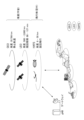
- FIG. 1 is a diagram showing an example of NTN (1).
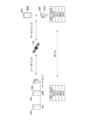
- FIG. 13 is a diagram showing an example (2) of NTN.
- FIG. 11 is a sequence diagram showing an example (1) of a notification in an NTN.
- FIG. 11 is a sequence diagram showing an example (2) of a notification in NTN.
- FIG. 11 is a sequence diagram showing an example (3) of a notification in NTN.
- FIG. 2 is a diagram illustrating an example of a functional configuration of a base station 10 according to an embodiment of the present invention.
- FIG. 2 is a diagram illustrating an example of a functional configuration of a terminal 20 according to an embodiment of the present invention.
- 2 is a diagram illustrating an example of a hardware configuration of a base station 10 or a terminal 20 according to an embodiment of the present invention.
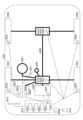
- FIG. 2 is a diagram showing an example of the configuration of a vehicle 2001 according to an embodiment of the present invention.
- LTE Long Term Evolution
- NR NR
- SS Synchronization signal
- PSS Primary SS
- SSS Secondary SS
- PBCH Physical broadcast channel
- PRACH Physical random access channel
- PDCCH Physical Downlink Control Channel
- PDSCH Physical Downlink Shared Channel
- PUCCH Physical Uplink Control Channel
- PUSCH Physical Uplink Shared Channel
- NR corresponds to NR-SS, NR-PSS, NR-SSS, NR-PBCH, NR-PRACH, NR-PDCCH, NR-PDSCH, NR-PUCCH, NR-PUSCH, etc.
- NR- even if a signal is used for NR, it is not necessarily stated as "NR-".
- the duplex method may be a TDD (Time Division Duplex) method, an FDD (Frequency Division Duplex) method, or another method (e.g., Flexible Duplex, etc.).
- TDD Time Division Duplex
- FDD Frequency Division Duplex
- another method e.g., Flexible Duplex, etc.
- radio parameters and the like when radio parameters and the like are “configured,” it may mean that predetermined values are pre-configured, or that radio parameters notified from the base station 10 or the terminal 20 are configured.
- NTN Non-Terrestrial Network
- uses non-terrestrial devices such as satellites to provide services to areas that cannot be covered by terrestrial 5G networks, mainly due to cost.
- NTN can also provide more reliable services. For example, it is expected to be applied to IoT (Inter of things), ships, buses, trains, and critical communications.
- IoT Inter of things
- NTN also has scalability through efficient multicast or broadcast.
- a satellite 10A can retransmit signals transmitted from a terrestrial base station 10B to provide service to areas where no terrestrial base stations are located, such as mountainous regions.
- the ground-based 5G network may have the following configuration.
- the ground-based 5G network includes one or more base stations 10 and terminals 20.
- the base station 10 is a communication device that provides one or more cells and performs wireless communication with the terminals 20.
- the physical resources of the wireless signal are defined in the time domain and the frequency domain, and the time domain may be defined by the number of OFDM symbols, and the frequency domain may be defined by the number of subcarriers or the number of resource blocks.
- the base station 10 transmits a synchronization signal and system information to the terminals 20.
- the synchronization signal is, for example, NR-PSS and NR-SSS.
- the system information is transmitted, for example, by NR-PBCH, and is also called broadcast information.
- the base station 10 transmits control signals or data to the terminal 20 via DL (Downlink) and receives control signals or data from the terminal 20 via UL (Uplink). Both the base station 10 and the terminal 20 are capable of transmitting and receiving signals by performing beamforming. In addition, both the base station 10 and the terminal 20 are capable of applying MIMO (Multiple Input Multiple Output) communication to DL or UL. In addition, both the base station 10 and the terminal 20 may communicate via an SCell (Secondary Cell) and a PCell (Primary Cell) using CA (Carrier Aggregation).
- SCell Secondary Cell
- PCell Primary Cell
- CA Carrier Aggregation
- the terminal 20 is a communication device equipped with a wireless communication function, such as a smartphone, a mobile phone, a tablet, a wearable terminal, or a communication module for M2M (Machine-to-Machine).
- the terminal 20 receives control signals or data from the base station 10 via DL and transmits control signals or data to the base station 10 via UL, thereby utilizing various communication services provided by the wireless communication system.
- Figure 2 shows an example of an NTN (2).
- the area of each cell or beam in an NTN is much larger than that of a terrestrial network (Terrestrial Network, TN).
- Figure 2 shows an example of an NTN configured with retransmission by satellite.
- the connection between the satellite 10A and the NTN gateway 10B is called the feeder link, and the connection between the satellite 10A and the UE 20 is called the service link.
- the delay difference between the near side UE 20A and the far side UE 20B is, for example, 10.3 ms in the case of GEO (Geosynchronous orbit) and 3.2 ms in the case of LEO (Low Earth orbit).
- the beam size in NTN is, for example, 3,500 km in the case of GEO and 1,000 km in the case of LEO.
- FIG 3 is a diagram showing an example (3) of NTN.
- NTN is realized by a satellite in space or a flying object in the air.
- a GEO satellite may be a satellite located at an altitude of 35,786 km and having a geostationary orbit.
- a LEO satellite may be a satellite located at an altitude of 500-2000 km and orbiting with a period of 88-127 minutes.
- a HAPS High Altitude Platform Station
- GEO satellites, LEO satellites, and HAPS aircraft may be connected to the ground station gNB via a gateway.
- the service areas may be larger in the order of HAPS, LEO, and GEO.
- NTN can extend the coverage of the 5G network to unserved or served areas.
- NTN can improve the continuity, availability and reliability of services on ships, buses, trains or other critical communications.
- the NTN status may be notified by transmitting dedicated parameters to the terminal 20, and the dedicated parameters may be parameters related to determining the TA (Timing Advance) based on information related to the satellite or air vehicle.
- TA Triming Advance
- Figure 4 shows an example of an NTN (4).
- Figure 4 shows an example of an NTN network architecture assumed in the case of a transparent payload.
- a CN (Core Network) 10D a gNB 10C and a gateway 10B are connected.
- the gateway 10B is connected to a satellite 10A via a feeder link.
- the satellite 10A is connected to a terminal 20A or a VSAT (Very small aperture terminal) 20B via a service link.
- An NR Uu is established between the gNB 10C and the terminal 20A or the VSAT 20B.
- the assumed network architecture of the NTN may adopt FDD or may be capable of TDD.
- the terrestrial cells may be fixed or mobile.
- the terminal 20 may have the capability of supporting the Global Navigation Satellite System (GNSS).
- GNSS Global Navigation Satellite System
- a power class 3 handheld device may be assumed in FR1.
- a VSAT device may be assumed at least in FR2.
- the NTN network architecture may also assume regenerative payloads.
- gNB functionality may be mounted on a satellite or an air vehicle.
- a gNB-DU may be mounted on a satellite or an air vehicle, and a gNB-CU may be deployed as a ground station.
- NTN Non-Terrestrial Network
- signal strength can drop by about 18 dB in a Non-Line of Sight (NLOS) environment compared to a Line of Sight (LOS) environment.
- NLOS Non-Line of Sight
- the probability of NLOS is estimated to be about 10% in suburban and rural environments and about 50% in urban environments.
- paging may not be received in an NLOS environment.
- ETWS Earthquake and Tsunami Warning System
- VoIP Voice over Internet Protocol
- paging may also refer to a signal that calls a terminal when the need arises on the network side to communicate with the terminal.
- a notification channel or notification signal may be used as a signal requesting the user to change location to a LOS environment. For example, when paging related to ETWS or VoIP cannot be received in a NLOS environment, the user may receive the notification and then move to a new location to receive paging related to ETWS or VoIP. The configuration of the notification channel or notification signal and the procedure related to the notification may be determined.
- FIG. 5 is a sequence diagram showing an example (1) of a notification in an NTN.
- BS 10 transmits a cell-common notification to UE 20.
- UE 20 executes reception of the cell-common notification if the conditions are met.
- the monitoring resources related to the reception may be cell-common between UEs.
- the monitoring resources may be set for each cell. Note that cell-common may mean common between UEs in the same cell. The same applies below.
- step S103 UE 20 transmits a specific channel or signal to BS 10.
- step S104 BS 10 transmits information corresponding to the UE or information indicating that there is no transmission data to UE 20.
- the conditions in step S102 may be any one or more of the conditions listed below in 1)-4).
- Conditions related to RSRP Reference signal received power
- RSRP Reference signal received power
- UE 20 may receive a notification common to the cell.
- RSRP measurement may be performed based on signals other than SSB and/or CSI-RS. The same applies below.
- Conditions related to the setting or notification For example, if the BS 10 sets or notifies the UE 20 to perform reception, the UE 20 may receive a notification common to the cell.
- Conditions related to the timer For example, if the timer expires, the UE 20 may perform reception of a notification common to the cell. When any signal (e.g., notification, paging, SIB, PDCCH, etc.) is received, the timer may be initialized and started or restarted.
- notification e.g., notification, paging, SIB, PDCCH, etc.
- Conditions related to reception For example, if reception of any signal (e.g., paging, SIB, PDCCH, etc.) fails X times in a row, UE 20 may execute reception of a notification common to the cell. When any signal (e.g., notification, paging, SIB, PDCCH, etc.) is received, the counter indicating the number of receptions may be initialized and start counting again.
- any signal e.g., notification, paging, SIB, PDCCH, etc.
- the conditions are not limited to 1)-4) above, and may be conditions related to communication conditions (e.g., conditions or notifications related to LOS/NLOS, conditions or notifications related to Doppler), or conditions related to NTN (e.g., conditions related to timing advance errors, conditions related to UE position within the cell).
- conditions related to communication conditions e.g., conditions or notifications related to LOS/NLOS, conditions or notifications related to Doppler
- conditions related to NTN e.g., conditions related to timing advance errors, conditions related to UE position within the cell.
- the UE 20 may transmit a specific channel or signal to the BS 10 if, for example, any one or more of the conditions shown in 1)-4) below are satisfied. Note that when the condition is satisfied, the channel conditions may have improved from before.
- Conditions related to RSRP For example, if the RSRP of the SSB and/or CSI-RS exceeds a defined, configured, or notified RSRP threshold, the UE 20 may transmit the specific channel or signal to the BS 10.
- the RSRP threshold may be the same as or different from the RSRP threshold of the condition in step S102.
- Conditions related to settings or notifications For example, when the BS 10 sets or notifies the UE 20 to perform reception, i.e., when the UE 20 receives the setting or notification, the UE 20 may transmit the specific channel or signal to the BS 10.
- a timer may be initialized and started when the notification is received in step S102, and when the timer expires, the UE 20 may transmit the particular channel or signal to the BS 10.
- Transmission of the particular channel or signal may be performed as shown in 1) or 2) below.
- UE 20 may transmit one bit of information indicating improvement of channel conditions for data reception via a periodic transmission opportunity (e.g., PRACH, configured PUCCH such as SR, configured SRS, configured PUSCH such as CG, etc.).
- a periodic transmission opportunity e.g., PRACH, configured PUCCH such as SR, configured SRS, configured PUSCH such as CG, etc.
- UE 20 may transmit multiple bits of information indicating channel conditions, UE speed, UE-ID (C-RNTI) and/or UE location, etc.
- C-RNTI UE-ID
- step S103 may not be executed. Any of the steps may be replaced with a different operation, for example, step S103 may be replaced with the following operation.
- a timer may be initialized and started in BS10 and UE20. After the timer expires, UE20 may be expected to attempt to receive the corresponding information transmitted from BS10.
- BS10 may periodically transmit the information, such as ETWS or VoIP paging, regardless of whether UE20 receives it or not.
- the DRX ON period and/or sleep state of UE 20 may be changed based on the receipt of the notification and the corresponding transmission/reception.
- DRX may mean discontinuous reception
- the sleep state may mean that UE 20 does not receive a particular signal (e.g., PDCCH for data scheduling).
- the information indicating that there is no data to be transmitted in step S104 may be 1-bit information via the DCI field or MAC-CE.
- FIG. 6 is a sequence diagram showing an example (2) of a notification in an NTN.
- BS 10 transmits a group-wide notification to UE 20.
- UE 20 executes reception of the group-wide notification if the conditions are met.
- the monitoring resources related to the reception may be cell-wide or group-wide between UEs.
- the monitoring resources may be set for each cell or for each UE group. Note that group-wide may mean common between UEs in the same UE group in the same cell. The same applies below.
- step S203 UE 20 transmits a specific channel or signal to BS 10.
- step S204 BS 10 transmits information corresponding to the UE or information indicating that there is no data to transmit to UE 20.
- the conditions in step S202 may be any one or more of the conditions listed below in 1)-4).
- Conditions related to RSRP For example, if the RSRP of the SSB and/or CSI-RS is lower than a defined, configured, or notified RSRP threshold, the UE 20 may receive a notification common to the group.
- Conditions related to settings or notifications For example, if BS 10 sets or notifies UE 20 to perform reception, UE 20 may receive notifications common to the group.
- Conditions related to the timer For example, if the timer expires, the UE 20 may execute reception of a notification common to the group. When any signal (e.g., notification, paging, SIB, PDCCH, etc.) is received, the timer may be initialized and started or restarted.
- a notification common to the group e.g., notification, paging, SIB, PDCCH, etc.
- Conditions related to reception For example, if reception of any signal (e.g., paging, SIB, PDCCH, etc.) fails X times in a row, UE 20 may execute reception of a notification common to the group. When any signal (e.g., notification, paging, SIB, PDCCH, etc.) is received, the counter indicating the number of receptions may be initialized and start counting again.
- any signal e.g., notification, paging, SIB, PDCCH, etc.
- the conditions are not limited to 1)-4) above, and may be conditions related to communication conditions (e.g., conditions or notifications related to LOS/NLOS, conditions or notifications related to Doppler), or conditions related to NTN (e.g., conditions related to timing advance errors, conditions related to UE position within the cell).
- conditions related to communication conditions e.g., conditions or notifications related to LOS/NLOS, conditions or notifications related to Doppler
- conditions related to NTN e.g., conditions related to timing advance errors, conditions related to UE position within the cell.
- the UE 20 may transmit a specific channel or signal to the BS 10 if, for example, any one or more of the conditions shown in 1)-4) below are satisfied. Note that when the condition is satisfied, the channel conditions may have improved from before.
- Conditions related to RSRP For example, if the RSRP of the SSB and/or CSI-RS exceeds a defined, configured, or notified RSRP threshold, the UE 20 may transmit the particular channel or signal to the BS 10.
- the RSRP threshold may be the same as or different from the RSRP threshold of the condition in step S202.
- Conditions related to settings or notifications For example, when the BS 10 sets or notifies the UE 20 to perform reception, i.e., when the UE 20 receives the setting or notification, the UE 20 may transmit the specific channel or signal to the BS 10.
- a timer may be initialized and started when the notification is received in step S202, and when the timer expires, the UE 20 may transmit the particular channel or signal to the BS 10.
- Conditions related to reception For example, if some signal is successfully received (e.g., notification, paging, SIB, PDCCH, etc. are successfully received X times in a row), the UE 20 may transmit the particular channel or signal to the BS 10.
- some signal e.g., notification, paging, SIB, PDCCH, etc. are successfully received X times in a row
- the UE 20 may transmit the particular channel or signal to the BS 10.
- Transmission of the particular channel or signal may be performed as shown in 1) or 2) below.
- UE 20 may transmit one bit of information indicating improvement of channel conditions for data reception via a periodic transmission opportunity (e.g., PRACH, configured PUCCH such as SR, configured SRS, configured PUSCH such as CG, etc.).
- a periodic transmission opportunity e.g., PRACH, configured PUCCH such as SR, configured SRS, configured PUSCH such as CG, etc.
- UE 20 may transmit multiple bits of information indicating channel conditions, UE speed, UE-ID (C-RNTI) and/or UE location, etc.
- C-RNTI UE-ID
- step S203 may not be executed. Any of the steps may be replaced with a different operation, for example, step S203 may be replaced with the following operation.
- a timer may be initialized and started in BS 10 and UE 20. After the timer expires, UE 20 may be expected to attempt to receive the corresponding information transmitted from BS 10.
- BS 10 may periodically transmit the information, such as ETWS or VoIP paging, regardless of whether UE 20 receives it or not.
- the DRX ON period and/or sleep state of UE 20 may be changed based on receipt of the notification and the corresponding transmission/reception.
- the information indicating that there is no data to be transmitted in step S204 may be 1-bit information via the DCI field or MAC-CE.
- FIG. 7 is a sequence diagram showing an example (3) of notification in an NTN.
- BS 10 transmits a UE-specific notification to UE 20.
- UE 20 executes reception of the UE-specific notification if the conditions are met.
- the monitoring resources related to the reception may be common to the cells between UEs, common to the group, or individual to the UE.
- the monitoring resources may be set for each cell, for each UE group, or for each UE.
- step S303 UE 20 transmits a specific channel or signal to BS 10.
- step S304 BS 10 transmits information corresponding to the UE to UE 20.
- Conditions related to settings or notifications For example, if the BS 10 sets or notifies the UE 20 to perform reception, the UE 20 may receive a notification for that UE.
- Conditions related to RSRP For example, if the RSRP of the SSB and/or CSI-RS exceeds a defined, configured, or notified RSRP threshold, the UE 20 may transmit the specific channel or signal to the BS 10.
- the RSRP threshold may be the same as or different from the RSRP threshold of the condition in step S302.
- Conditions related to settings or notifications For example, when the BS 10 sets or notifies the UE 20 to perform reception, i.e., when the UE 20 receives the setting or notification, the UE 20 may transmit the specific channel or signal to the BS 10.
- a timer may be initialized and started when the notification is received in step S302, and when the timer expires, the UE 20 may transmit the particular channel or signal to the BS 10.
- Conditions related to reception For example, if some signal is successfully received (e.g., notification, paging, SIB, PDCCH, etc. are successfully received X times in a row), the UE 20 may transmit the particular channel or signal to the BS 10.
- some signal e.g., notification, paging, SIB, PDCCH, etc. are successfully received X times in a row
- the UE 20 may transmit the particular channel or signal to the BS 10.
- Transmission of the particular channel or signal may be performed as shown in 1) or 2) below.
- UE 20 may transmit one bit of information indicating improvement of channel conditions for data reception via a periodic transmission opportunity (e.g., PRACH, configured PUCCH such as SR, configured SRS, configured PUSCH such as CG, etc.).
- a periodic transmission opportunity e.g., PRACH, configured PUCCH such as SR, configured SRS, configured PUSCH such as CG, etc.
- UE 20 may transmit multiple bits of information indicating channel conditions, UE speed, UE-ID (C-RNTI) and/or UE location, etc.
- C-RNTI UE-ID
- step S303 may not be executed. Any of the steps may be replaced with a different operation, for example, step S303 may be replaced with the following operation.
- a timer may be initialized and started in the BS 10 and the UE 20. After the timer expires, the UE 20 may be expected to attempt to receive the corresponding information transmitted from the BS 10.
- the BS 10 may periodically transmit the information, such as ETWS or VoIP paging, regardless of whether the UE 20 receives it or not.
- the DRX ON period and/or sleep state of UE 20 may be changed based on receipt of the notification and the corresponding transmission/reception.
- the notification or notification information transmitted from BS 10 to UE 20 in step S101, step S201, or step S301 may be a channel and/or signal having the configuration shown in 1)-4) below.
- the channel and/or signal having the configuration may be a signal that is easier to receive in UE 20 than a normal downlink signal.
- a signal having a configuration similar to PUCCH For example, periodic opportunities may be set, and the notification signal may be transmitted at any of the opportunities.
- the UE may monitor the opportunities in step S102, step S202, or step S302.
- Information specifying resources in a slot and a period may be set.
- the format of the signal may be the same as or similar to PUCCH format 0, 1, or 3.
- the signal format is the same as or similar to PUCCH format 0, a base sequence and cyclic shift may be used and a specific cyclic shift may be used for the signaling.
- the format may signal 1 or 2 bits. No channel coding may be applied.
- a base sequence for example, in the case of a signal format identical or similar to PUCCH format 1, a base sequence, a BPSK (Binary phase shift keying) or QPSK (Quadrature phase shift keying) modulated signal and a DMRS may be used.
- the notification may be carried by multiple symbols that are copies of the BPSK or QPSK modulated symbols of the base sequence.
- the DMRS and the notification information may be mapped alternately in the time domain.
- the format may signal one or two bits. No channel coding may be applied.
- the signal format is the same as or similar to PUCCH format 3, BPSK, QPSK or 16QAM (Quadrature amplitude modulation) modulated signals and DMRS may be used.
- the format may carry more than two bits.
- Channel coding may be applied.
- Sequence-based signaling For example, periodic opportunities may be set and the notification signal may be transmitted at any of the opportunities.
- the UE may monitor the opportunities in step S102, step S202 or step S302.
- Information specifying resources within a slot and the period may be set.
- a sequence may be transmitted from the BS 10, and which sequence the UE 20 detects may be mapped to which notification information is received.
- the mapping may be configured via a common signal or a UE-specific signal.
- an RS may be defined, configured, or notified in the notification information.
- one or more bits may be carried by the sequence-based signal.
- a new DCI format may be defined or configured for the notification information.
- the new DCI format may or may not be accompanied by other information.
- USS UE specific search space
- CSS Common search space
- another specific PDCCH and DCI may not be monitored.
- the other specific PDCCH may be a DCI with a CRC scrambled with the P-RNTI.
- step S101 It may be a 1-bit notification.
- the same notification may be received by all UEs in a certain cell.
- the transmission resources may be divided between UE groups.
- step S301 the transmission resources may be divided between UEs.
- Information may be transmitted indicating which channels and/or signals are to be received.
- a specific SIB for reception may be explicitly notified.
- a specific SIB for reception may be associated with a notification resource.
- Information related to the subsequent reception operation may be transmitted. For example, information indicating when the corresponding information is to be transmitted, such as timing, periodicity, etc., may be transmitted. For example, information indicating when the UE has completed the improvement of the channel condition and should transmit information indicating the completion of the improvement of the channel condition and/or receive the corresponding information (ETWS, VoIP paging, etc.) may be transmitted, and a timer for performing the operation may be notified.
- ETWS voice paging, etc.
- the UE capabilities listed below are defined and may be reported from the UE 20 to the BS 10 . - Whether or not you support receiving such notifications. Whether or not one or more particular conditions in step S102, step S202 or step S302 are supported. Whether or not one or more particular conditions in step S103, step S203 or step S303 are supported. Whether reporting in step S103, step S203 or step S303 is supported. What types of channels and/or signals are supported for receiving such notifications?
- the above embodiment allows the terminal 20 to receive important messages based on the notification message.
- the sequence shown in FIG. 5 allows performance to be improved with a simple notification message.
- the sequence shown in FIG. 7 allows the notification message to be sent only to the target UE, thereby avoiding unnecessary or undesired reception.
- the sequence shown in FIG. 6 allows a balance to be set regarding the performance of the sequences shown in FIG. 5 and FIG. 7.
- Subsequent actions can be triggered based on the improvement of the channel conditions.
- the base station 10 can decide whether to perform the subsequent actions. Implementation can be facilitated by using existing channels and/or signals for the notification.
- the base station 10 and the terminal 20 include functions for implementing the above-mentioned embodiments. However, the base station 10 and the terminal 20 may each include only a part of the functions in the embodiments.
- Fig. 8 is a diagram showing an example of the functional configuration of the base station 10 in the embodiment of the present invention.
- the base station 10 has a transmitting unit 110, a receiving unit 120, a setting unit 130, and a control unit 140.
- the functional configuration shown in Fig. 8 is merely an example.
- the names of the functional divisions and functional units may be any as long as they can execute the operations related to the embodiment of the present invention.
- the transmitting unit 110 has a function of generating a signal to be transmitted to the terminal 20 side and transmitting the signal wirelessly.
- the transmitting unit 110 also transmits inter-network node messages to other network nodes.
- the receiving unit 120 has a function of receiving various signals transmitted from the terminal 20 and acquiring, for example, information of a higher layer from the received signals.
- the transmitting unit 110 also has a function of transmitting NR-PSS, NR-SSS, NR-PBCH, DL/UL control signals, etc. to the terminal 20.
- the receiving unit 120 also receives inter-network node messages from other network nodes.
- the setting unit 130 stores preset setting information and various setting information to be transmitted to the terminal 20.
- the contents of the setting information include, for example, information related to communication in the NTN.
- the control unit 140 performs control related to communications in the NTN as described in the embodiment.
- the control unit 140 also controls communications with the terminal 20 based on a UE capability report related to radio parameters received from the terminal 20.
- the functional unit related to signal transmission in the control unit 140 may be included in the transmitting unit 110, and the functional unit related to signal reception in the control unit 140 may be included in the receiving unit 120.
- the microprocessor 2031 may control the drive unit 2002, steering unit 2003, accelerator pedal 2004, brake pedal 2005, shift lever 2006, front wheels 2007, rear wheels 2008, axles 2009, sensors 2021 to 2029, etc. provided in the vehicle 2001.
- certain operations that are described as being performed by the base station 10 may in some cases be performed by its upper node.
- various operations performed for communication with a terminal 20 may be performed by at least one of the base station 10 and other network nodes other than the base station 10 (such as, but not limited to, an MME or S-GW).
- the base station 10 may be a combination of multiple other network nodes (such as an MME and an S-GW).
- the determination in this disclosure may be based on a value represented by one bit (0 or 1), a Boolean (true or false) value, or a comparison of numerical values (e.g., a comparison with a predetermined value).
- system and “network” are used interchangeably.
- radio resources may be indicated by an index.
- base station BS
- wireless base station base station
- base station device fixed station
- NodeB nodeB
- eNodeB eNodeB
- gNodeB gNodeB
- access point e.g., "transmission point”
- gNodeB gNodeB
- a base station may also be referred to by terms such as macrocell, small cell, femtocell, and picocell.
- a base station can accommodate one or more (e.g., three) cells.
- a base station accommodates multiple cells, the entire coverage area of the base station can be divided into multiple smaller areas, and each smaller area can also provide communication services by a base station subsystem (e.g., a small indoor base station (RRH: Remote Radio Head)).
- RRH Remote Radio Head
- the term "cell” or “sector” refers to a part or the entire coverage area of at least one of the base station and base station subsystems that provide communication services in this coverage.
- a base station transmitting information to a terminal may be interpreted as the base station instructing the terminal to control or operate based on the information.
- MS Mobile Station
- UE User Equipment
- a mobile station may also be referred to by those skilled in the art as a subscriber station, mobile unit, subscriber unit, wireless unit, remote unit, mobile device, wireless device, wireless communication device, remote device, mobile subscriber station, access terminal, mobile terminal, wireless terminal, remote terminal, handset, user agent, mobile client, client, or some other suitable terminology.
- At least one of the base station and the mobile station may be called a transmitting device, a receiving device, a communication device, etc.
- At least one of the base station and the mobile station may be a device mounted on a moving object, the moving object itself, etc.
- the moving object is a movable object, and the moving speed is arbitrary. It also includes the case where the moving object is stopped.
- the moving object includes, but is not limited to, for example, a vehicle, a transport vehicle, an automobile, a motorcycle, a bicycle, a connected car, an excavator, a bulldozer, a wheel loader, a dump truck, a forklift, a train, a bus, a handcar, a rickshaw, a ship and other watercraft, an airplane, a rocket, an artificial satellite, a drone (registered trademark), a multicopter, a quadcopter, a balloon, and objects mounted thereon.
- the moving object may also be a moving object that travels autonomously based on an operation command.
- At least one of the base station and the mobile station may be a device that does not necessarily move during communication operations.
- at least one of the base station and the mobile station may be an IoT (Internet of Things) device such as a sensor.
- IoT Internet of Things
- the base station in the present disclosure may be read as a user terminal.
- each aspect/embodiment of the present disclosure may be applied to a configuration in which communication between a base station and a user terminal is replaced with communication between multiple terminals 20 (which may be called, for example, D2D (Device-to-Device) or V2X (Vehicle-to-Everything)).
- the terminal 20 may be configured to have the functions of the base station 10 described above.
- terms such as "uplink” and "downlink” may be read as terms corresponding to terminal-to-terminal communication (for example, "side").
- the uplink channel, downlink channel, etc. may be read as a side channel.
- the user terminal in this disclosure may be interpreted as a base station.
- the base station may be configured to have the functions of the user terminal described above.
- determining may encompass a wide variety of actions.
- Determining and “determining” may include, for example, judging, calculating, computing, processing, deriving, investigating, looking up, search, inquiry (e.g., searching in a table, database, or other data structure), and considering ascertaining as “judging” or “determining.”
- determining and “determining” may include receiving (e.g., receiving information), transmitting (e.g., sending information), input, output, accessing (e.g., accessing data in memory), and considering ascertaining as “judging” or “determining.”
- judgment” and “decision” can include considering resolving, selecting, choosing, establishing, comparing, etc., to have been “judged” or “decided.” In other words, “judgment” and “decision” can include considering some action to have been “judged” or “decided.” Additionally, “judgment (decision)” can be interpreted as “assuming,” “ex
- connection refers to any direct or indirect connection or coupling between two or more elements, and may include the presence of one or more intermediate elements between two elements that are “connected” or “coupled” to each other.
- the coupling or connection between elements may be physical, logical, or a combination thereof.
- “connected” may be read as "access.”
- two elements may be considered to be “connected” or “coupled” to each other using at least one of one or more wires, cables, and printed electrical connections, as well as electromagnetic energy having wavelengths in the radio frequency range, microwave range, and optical (both visible and invisible) range, as some non-limiting and non-exhaustive examples.
- the reference signal may also be abbreviated as RS (Reference Signal) or may be called a pilot depending on the applicable standard.
- the phrase “based on” does not mean “based only on,” unless expressly stated otherwise. In other words, the phrase “based on” means both “based only on” and “based at least on.”
- a radio frame may be composed of one or more frames in the time domain. Each of the one or more frames in the time domain may be called a subframe. A subframe may further be composed of one or more slots in the time domain. A subframe may have a fixed time length (e.g., 1 ms) that is independent of numerology.
- Numerology may be a communication parameter that applies to at least one of the transmission and reception of a signal or channel. Numerology may indicate, for example, at least one of the following: Subcarrier Spacing (SCS), bandwidth, symbol length, cyclic prefix length, Transmission Time Interval (TTI), number of symbols per TTI, radio frame structure, a particular filtering operation performed by the transceiver in the frequency domain, a particular windowing operation performed by the transceiver in the time domain, etc.
- SCS Subcarrier Spacing
- TTI Transmission Time Interval
- radio frame structure a particular filtering operation performed by the transceiver in the frequency domain, a particular windowing operation performed by the transceiver in the time domain, etc.
- a slot may consist of one or more symbols in the time domain (such as Orthogonal Frequency Division Multiplexing (OFDM) symbols, Single Carrier Frequency Division Multiple Access (SC-FDMA) symbols, etc.).
- OFDM Orthogonal Frequency Division Multiplexing
- SC-FDMA Single Carrier Frequency Division Multiple Access
- a slot may be a time unit based on numerology.
- a slot may include multiple minislots. Each minislot may consist of one or multiple symbols in the time domain. A minislot may also be called a subslot. A minislot may consist of fewer symbols than a slot.
- a PDSCH (or PUSCH) transmitted in a time unit larger than a minislot may be called PDSCH (or PUSCH) mapping type A.
- a PDSCH (or PUSCH) transmitted using a minislot may be called PDSCH (or PUSCH) mapping type B.
- Radio frame, subframe, slot, minislot, and symbol all represent time units for transmitting signals. Radio frame, subframe, slot, minislot, and symbol may each be referred to by a different name that corresponds to the radio frame, subframe, slot, minislot, and symbol.
- TTI refers to, for example, the smallest time unit for scheduling in wireless communication.
- a base station performs scheduling to allocate wireless resources (such as frequency bandwidth and transmission power that can be used by each terminal 20) to each terminal 20 in TTI units.
- wireless resources such as frequency bandwidth and transmission power that can be used by each terminal 20
- TTI is not limited to this.
- the TTI may be a transmission time unit for a channel-coded data packet (transport block), a code block, a code word, etc., or may be a processing unit for scheduling, link adaptation, etc.
- the time interval e.g., the number of symbols
- the time interval in which a transport block, a code block, a code word, etc. is actually mapped may be shorter than the TTI.
- one or more TTIs may be the minimum time unit of scheduling.
- the number of slots (minislots) that constitute the minimum time unit of scheduling may be controlled.
- a long TTI (e.g., a normal TTI, a subframe, etc.) may be interpreted as a TTI having a time length of more than 1 ms
- a short TTI e.g., a shortened TTI, etc.
- TTI length shorter than the TTI length of a long TTI and equal to or greater than 1 ms.
- a resource block is a resource allocation unit in the time domain and frequency domain, and may include one or more consecutive subcarriers in the frequency domain.
- the number of subcarriers included in an RB may be the same regardless of the numerology, and may be, for example, 12.
- the number of subcarriers included in an RB may be determined based on the numerology.
- the time domain of an RB may include one or more symbols and may be one slot, one minislot, one subframe, or one TTI in length.
- One TTI, one subframe, etc. may each be composed of one or more resource blocks.
- one or more RBs may be referred to as a physical resource block (PRB), a sub-carrier group (SCG), a resource element group (REG), a PRB pair, an RB pair, etc.
- PRB physical resource block
- SCG sub-carrier group
- REG resource element group
- PRB pair an RB pair, etc.
- a resource block may be composed of one or more resource elements (REs).
- REs resource elements
- one RE may be a radio resource area of one subcarrier and one symbol.
- a bandwidth part which may also be referred to as a partial bandwidth, may represent a subset of contiguous common resource blocks (RBs) for a given numerology on a given carrier, where the common RBs may be identified by an index of the RB relative to a common reference point of the carrier.
- PRBs may be defined in a BWP and numbered within the BWP.
- the BWP may include a BWP for UL (UL BWP) and a BWP for DL (DL BWP).
- UL BWP UL BWP
- DL BWP DL BWP
- One or more BWPs may be configured for a UE within one carrier.
- At least one of the configured BWPs may be active, and the UE may not expect to transmit or receive a given signal/channel outside the active BWP.
- BWP bitmap
- radio frames, subframes, slots, minislots, and symbols are merely examples.
- the number of subframes included in a radio frame, the number of slots per subframe or radio frame, the number of minislots included in a slot, the number of symbols and RBs included in a slot or minislot, the number of subcarriers included in an RB, as well as the number of symbols in a TTI, the symbol length, and the cyclic prefix (CP) length can be changed in various ways.
- a and B are different may mean “A and B are different from each other.”
- the term may also mean “A and B are each different from C.”
- Terms such as “separate” and “combined” may also be interpreted in the same way as “different.”
- notification of specific information is not limited to being done explicitly, but may be done implicitly (e.g., not notifying the specific information).
Landscapes
- Engineering & Computer Science (AREA)
- Computer Networks & Wireless Communication (AREA)
- Signal Processing (AREA)
- Physics & Mathematics (AREA)
- Astronomy & Astrophysics (AREA)
- General Physics & Mathematics (AREA)
- Mobile Radio Communication Systems (AREA)
Abstract
端末は、NTN(Non-Terrestrial Network)を構成する基地局から通知を受信する受信部と、前記基地局に信号を送信する送信部とを有し、前記送信部が前記基地局に前記信号を送信した後、前記受信部は、前記基地局から自装置宛ての情報を受信し、前記通知は、通常の下り信号よりも受信が容易な信号である。
Description
本発明は、無線通信システムにおける端末及び通信方法に関する。
LTE(Long Term Evolution)の後継システムであるNR(New Radio)(「5G」ともいう。)においては、要求条件として、大容量のシステム、高速なデータ伝送速度、低遅延、多数の端末の同時接続、低コスト、省電力等を満たす技術が検討されている(例えば非特許文献1)。
また現在、NTN(Non-Terrestrial Network)が検討されている。NTNとは、衛星等の非地上型ネットワークを使用して、地上型5Gネットワークでは主にコスト面でカバーできないエリアにサービスを提供するものである(例えば非特許文献2及び非特許文献3)。
3GPP TS 38.300 V17.6.0 (2023-09)
3GPP TR 38.821 V16.2.0 (2023-03)
小西 他,"HAPS移動通信システムにおける下りリンク周波数共用に関する一検討",電子情報通信学会総合大会,B-17-1,2020年
NTNでは、上空の基地局と端末間の距離が非常に大きく、LOS(Line of sight)環境と比較してNLOS(Non Line of sight)環境での信号強度は大きく低下する。そのためNLOS環境では重要なページング情報が受信できない可能性がある。
本発明は上記の点に鑑みてなされたものであり、無線通信システムにおいて、通信環境が良好でない場合に受信性能を向上させることを目的とする。
開示の技術によれば、NTN(Non-Terrestrial Network)を構成する基地局から通知を受信する受信部と、前記基地局に信号を送信する送信部とを有し、前記送信部が前記基地局に前記信号を送信した後、前記受信部は、前記基地局から自装置宛ての情報を受信し、前記通知は、通常の下り信号よりも受信が容易な信号である端末が提供される。
開示の技術によれば、無線通信システムにおいて、通信環境が良好でない場合に受信性能を向上させることができる。
以下、図面を参照して本発明の実施の形態を説明する。なお、以下で説明する実施の形態は一例であり、本発明が適用される実施の形態は、以下の実施の形態に限られない。
本発明の実施の形態の無線通信システムの動作にあたっては、適宜、既存技術が使用される。ただし、当該既存技術は、例えば既存のLTEであるが、既存のLTEに限られない。また、本明細書で使用する用語「LTE」は、特に断らない限り、LTE-Advanced、及び、LTE-Advanced以降の方式(例:NR)を含む広い意味を有するものとする。
また、以下で説明する本発明の実施の形態では、既存のLTEで使用されているSS(Synchronization signal)、PSS(Primary SS)、SSS(Secondary SS)、PBCH(Physical broadcast channel)、PRACH(Physical random access channel)、PDCCH(Physical Downlink Control Channel)、PDSCH(Physical Downlink Shared Channel)、PUCCH(Physical Uplink Control Channel)、PUSCH(Physical Uplink Shared Channel)等の用語を使用する。これは記載の便宜上のためであり、これらと同様の信号、機能等が他の名称で呼ばれてもよい。また、NRにおける上述の用語は、NR-SS、NR-PSS、NR-SSS、NR-PBCH、NR-PRACH、NR-PDCCH、NR-PDSCH、NR-PUCCH、NR-PUSCH等に対応する。ただし、NRに使用される信号であっても、必ずしも「NR-」と明記しない。
また、本発明の実施の形態において、複信(Duplex)方式は、TDD(Time Division Duplex)方式でもよいし、FDD(Frequency Division Duplex)方式でもよいし、又はそれ以外(例えば、Flexible Duplex等)の方式でもよい。
また、本発明の実施の形態において、無線パラメータ等が「設定される(Configure)」とは、所定の値が予め設定(Pre-configure)されることであってもよいし、基地局10又は端末20から通知される無線パラメータが設定されることであってもよい。
図1は、NTNの例(1)を示す図である。NTN(Non-Terrestrial Network)とは、衛星等の非地上に存在する装置を使用して、地上型5Gネットワークでは主にコスト面でカバーできないエリアにサービスを提供するものである。また、NTNによって、より信頼性の高いサービスを供給することができる。例えば、IoT(Inter of things)、船舶、バス、列車、クリティカルな通信に適用することが想定される。また、NTNは、効率的なマルチキャスト又はブロードキャストによるスケーラビリティを有する。
NTNの例として、図1に示されるように、衛星10Aは、地上基地局10Bから送信される信号を再送信して、例えば山岳地帯等の地上基地局が配置されないエリアにサービスを提供することができる。
なお、地上型5Gネットワークは、以下に記載するような構成であってもよい。地上型5Gネットワークは、1又は複数の基地局10及び端末20を含む。基地局10は、1つ以上のセルを提供し、端末20と無線通信を行う通信装置である。無線信号の物理リソースは、時間領域及び周波数領域で定義され、時間領域はOFDMシンボル数で定義されてもよいし、周波数領域はサブキャリア数又はリソースブロック数で定義されてもよい。基地局10は、同期信号及びシステム情報を端末20に送信する。同期信号は、例えば、NR-PSS及びNR-SSSである。システム情報は、例えば、NR-PBCHにて送信され、報知情報ともいう。
基地局10は、DL(Downlink)で制御信号又はデータを端末20に送信し、UL(Uplink)で制御信号又はデータを端末20から受信する。基地局10及び端末20はいずれも、ビームフォーミングを行って信号の送受信を行うことが可能である。また、基地局10及び端末20はいずれも、MIMO(Multiple Input Multiple Output)による通信をDL又はULに適用することが可能である。また、基地局10及び端末20はいずれも、CA(Carrier Aggregation)によるSCell(Secondary Cell)及びPCell(Primary Cell)を介して通信を行ってもよい。
端末20は、スマートフォン、携帯電話機、タブレット、ウェアラブル端末、M2M(Machine-to-Machine)用通信モジュール等の無線通信機能を備えた通信装置である。端末20は、DLで制御信号又はデータを基地局10から受信し、ULで制御信号又はデータを基地局10に送信することで、無線通信システムにより提供される各種通信サービスを利用する。
図2は、NTNの例(2)を示す図である。NTNにおけるセル又はビームごとのエリアは地上型ネットワーク(Terrestrial Network, TN)と比較して非常に広い。図2は、衛星による再送信により構成されるNTNの例を示す。衛星10AとNTNゲートウェイ10B間の接続を、フィーダリンクといい、また衛星10AとUE20間の接続を、サービスリンクという。
図2に示されるように、近端(near side)のUE20Aと遠端(far side)のUE20B間の遅延の差分は、例えば、GEO(Geosynchronous orbit, 静止軌道)の場合、10.3msとなる、LEO(Low Earth orbit,地球低軌道)の場合、3.2msとなる。また、NTNにおけるビームサイズは、例えば、GEOの場合3500km、LEOの場合1000kmとなる。
図3は、NTNの例(3)を示す図である。図3に示されるように、NTNは、宇宙における衛星又は空中における飛行体によって実現される。例えばGEOの衛星は、高度35,786kmに位置し、静止軌道を有する衛星であってもよい。例えばLEOの衛星は、高度500-2000kmに位置し、周期88-127分で周回する衛星であってもよい。例えば、HAPS(High Altitude Platform Station)は、高度8-50kmに位置し、旋回飛行を行う飛行体であってもよい。
図3に示されるように、GEO衛星、LEOの衛星及びHAPSの飛行体は、ゲートウェイを介し、地上局gNBと接続されてもよい。また、サービスエリアは、HAPS、LEO、GEOの順に大きくなってもよい。
例えば、NTNにより、5Gネットワークのカバレッジを、サービスされていない領域又はサービスされている領域に対して拡張することができる。また、例えば、NTNにより、船、バス、列車又は他の重要通信におけるサービスの継続性、可用性及び信頼性を向上させることができる。なお、NTNであることは、専用のパラメータが端末20に送信されることで通知されてもよく、専用のパラメータは、例えば衛星又は飛行体に係る情報に基づくTA(Timing Advance)の決定に係るパラメータであってもよい。
図4は、NTNの例(4)を示す図である。図4は、トランペアレントペイロードの場合に想定されるNTNのネットワークアーキテクチャの例を示す。図4に示されるように、CN(Core Network)10D、gNB10C及びゲートウェイ10Bが接続される。ゲートウェイ10Bは、フィーダリンクを介し衛星10Aと接続される。衛星10Aは、サービスリンクを介し端末20A又はVSAT(Very small aperture terminal)20Bと接続される。NR Uuは、gNB10Cと、端末20A又はVSAT20Bとの間に確立される。
また、NTNのネットワークアーキテクチャの想定として、FDDが採用されてもよいし、TDDが可能であってもよい。また、地上のセルは固定されていてもよいし移動してもよい。また、端末20はGNSS(Global Navigation Satellite System)をサポートする能力を有してもよい。例えば、FR1ではパワークラス3のハンドヘルドデバイスが想定されてもよい。また、少なくともFR2ではVSATデバイスが想定されてもよい。
また、NTNのネットワークアーキテクチャは、リジェネレイティブペイロードを想定してもよい。例えば、gNB機能が、衛星又は飛行体に搭載されてもよい。また、gNB-DUが衛星又は飛行体に搭載され、gNB-CUは地上局として配置されてもよい。
NTN(Non-Terrestrial Network)では、LOS(Line of sight)環境と比較した場合、NLOS(Non Line of sight)環境では、信号強度が18dB程度低下し得る。また、NLOSとなる確率は、郊外・農村環境(rural)で10%程度、都市環境(urban)で50%程度と見積もられる。
したがって、例えばETWS(Earthquake and Tsunami Warning System)、VoIP(Voice over Internet Protocol)のような重要な情報の送信に関連付けられたページングが、NLOS環境では受信できないおそれがある。なお、ページングとはネットワーク側において端末との通信の必要性が生じた場合に、当該端末の呼び出しを行う信号を意味してもよい。
そこで、ページング受信を可能とするため、ユーザにLOS環境への位置の変更を要求する信号として、通知チャネル又は通知信号が使用されてもよい。例えば、NLOS環境においてETWS又はVoIPに係るページング等が受信できないとき、ユーザが当該通知を受信した後、新たな位置に移動してETWS又はVoIPに係るページング等を受信してもよい。当該通知チャネル又は当該通知信号の構成及び通知に係る手順を決定してもよい。
当該通知に係る手順又はフロー、当該通知チャネル又は当該通知信号の構成、当該通知により送信される情報について説明する。なお、本発明の実施の形態は、NTNへの適用に限定されず、通常のネットワーク等に適用されてもよい。
図5は、NTNにおける通知の例(1)を示すシーケンス図である。ステップS101において、BS10は、セル共通の通知をUE20に送信する。ステップS102において、UE20は、条件が満たされる場合、当該セル共通の通知の受信を実行する。当該受信に係るモニタリングリソースは、UE間でセル共通であってもよい。当該モニタリングリソースは、セルごとに設定されてもよい。なお、セル共通とは同一セル内のUE間で共通であることを意味してもよい。以下同様とする。
ステップS103において、UE20は、特定のチャネル又は信号をBS10に送信する。ステップS104において、BS10は、当該UEに対応する情報又は送信データなしを示す情報をUE20に送信する。
ステップS102における条件は、以下1)-4)に示されるいずれか又は複数であってもよい。
1)RSRP(Reference signal received power)に係る条件。例えば、定義、設定又は通知されるRSRP閾値よりも、SSB及び/又はCSI-RSのRSRPが下回る場合、UE20は当該セル共通の通知の受信を実行してもよい。なお、RSRPの測定はSSB及び/又はCSI-RS以外の信号に基づいて実行されてもよい。以下同様とする。
2)設定又は通知に係る条件。例えばBS10が受信を実行するようにUE20に設定又は通知した場合、UE20は当該セル共通の通知の受信を実行してもよい。
3)タイマに係る条件。例えば、タイマが満了した場合、UE20は当該セル共通の通知の受信を実行してもよい。何らかの信号(例えば通知、ページング、SIB、PDCCH等)を受信したとき、タイマは初期化され、スタート又は再スタートされてもよい。
4)受信に係る条件。例えば、何らかの信号(例えばページング、SIB、PDCCH等)の受信に連続してX回失敗した場合、UE20は当該セル共通の通知の受信を実行してもよい。何らかの信号(例えば通知、ページング、SIB、PDCCH等)を受信したとき、受信回数を示すカウンタは初期化されて再度計数を開始してもよい。
なお、条件は上記1)-4)に限定されず、例えば通信状況に係る条件であってもよく(例えば、LOS/NLOSに係る条件又は通知、ドップラに係る条件又は通知)、例えばNTNに係る条件であってもよい(例えば、タイミングアドバンスの誤りに係る条件、セル内のUE位置に係る条件)。
また、ステップS103において、UE20は、例えば、以下1)-4)に示されるいずれか又は複数の条件が満たされる場合、UE20は、特定のチャネル又は信号をBS10に送信してもよい。なお、当該条件が満たされる場合に、チャネル状況が以前より改善されていてもよい。
1)RSRPに係る条件。例えば、定義、設定又は通知されるRSRP閾値よりも、SSB及び/又はCSI-RSのRSRPが上回る場合、UE20は当該特定のチャネル又は信号をBS10に送信してもよい。当該RSRP閾値は、ステップS102における条件のRSRP閾値と共通であってもよいし、異なっていてもよい。
2)設定又は通知に係る条件。例えばBS10が受信を実行するようにUE20に設定又は通知した場合、すなわちUE20が当該設定又は通知を受信した場合、UE20は当該特定のチャネル又は信号をBS10に送信してもよい。
3)タイマに係る条件。例えば、ステップS102において通知を受信したときタイマが初期化及び開始され、タイマが満了した場合、UE20は当該特定のチャネル又は信号をBS10に送信してもよい。
4)受信に係る条件。例えば、何らかの信号の受信に成功した場合、(例えば通知、ページング、SIB、PDCCH等の受信に連続してX回成功した場合)、UE20は当該特定のチャネル又は信号をBS10に送信してもよい。
当該特定のチャネル又は信号の送信は以下1)又は2)に示されるように実行されてもよい。
1)例えば、UE20は、周期的な送信機会(例えば、PRACH、SRのような設定済PUCCH、設定済SRS、CGのような設定済PUSCH等)を介して、データ受信のためのチャネル状況の改善を示す1ビットの情報を送信してもよい。
2)例えば、BS10から設定又は動的に通知されたPUCCH又はPUSCHリソースを介して、UE20は、チャネル状況、UE速度、UE-ID(C-RNTI)及び/又はUE位置等を示す複数ビットの情報を送信してもよい。
なお、いずれかのステップは実行されなくてもよく、例えばステップS103は実行されなくてもよい。また、いずれかのステップは異なる動作に置換されてもよく、例えばステップS103は、以下の動作に置換されてもよい。当該セル共通の通知が送信又は受信されたとき、BS10及びUE20においてタイマを初期化してスタートしてもよい。タイマが満了した以降、UE20は、BS10から送信される対応する情報の受信を試行することを想定してもよい。BS10は、ETWS又はVoIP向けページング等の当該情報をUE20が受信するか否かによらず周期的に送信してもよい。
また、UE20におけるDRXのON期間及び/又はスリープ状態は、通知の受信及び対応する送受信に基づいて変更されてもよい。なお、DRXは間欠受信を意味してもよく、スリープ状態は、UE20は特定の信号(例えばデータスケジューリングのためのPDCCH)を受信しないことを意味してもよい。
なお、ステップS104における送信データなしを示す情報は、DCIフィールド又はMAC-CEを介する1ビットの情報であってもよい。
図6は、NTNにおける通知の例(2)を示すシーケンス図である。ステップS201において、BS10は、グループ共通の通知をUE20に送信する。ステップS202において、UE20は、条件が満たされる場合、当該グループ共通の通知の受信を実行する。当該受信に係るモニタリングリソースは、UE間においてセル共通であってもよいし、グループ共通であってもよい。当該モニタリングリソースは、セルごと又はUEグループごとに設定されてもよい。なお、グループ共通とは同一セル内の同一UEグループ内のUE間で共通であることを意味してもよい。以下同様とする。
ステップS203において、UE20は、特定のチャネル又は信号をBS10に送信する。ステップS204において、BS10は、当該UEに対応する情報又は送信データなしを示す情報をUE20に送信する。
ステップS202における条件は、以下1)-4)に示されるいずれか又は複数であってもよい。
1)RSRPに係る条件。例えば、定義、設定又は通知されるRSRP閾値よりも、SSB及び/又はCSI-RSのRSRPが下回る場合、UE20は当該グループ共通の通知の受信を実行してもよい。
2)設定又は通知に係る条件。例えばBS10が受信を実行するようにUE20に設定又は通知した場合、UE20は当該グループ共通の通知の受信を実行してもよい。
3)タイマに係る条件。例えば、タイマが満了した場合、UE20は当該グループ共通の通知の受信を実行してもよい。何らかの信号(例えば通知、ページング、SIB、PDCCH等)を受信したとき、タイマは初期化され、スタート又は再スタートされてもよい。
4)受信に係る条件。例えば、何らかの信号(例えばページング、SIB、PDCCH等)の受信に連続してX回失敗した場合、UE20は当該グループ共通の通知の受信を実行してもよい。何らかの信号(例えば通知、ページング、SIB、PDCCH等)を受信したとき、受信回数を示すカウンタは初期化されて再度計数を開始してもよい。
なお、条件は上記1)-4)に限定されず、例えば通信状況に係る条件であってもよく(例えば、LOS/NLOSに係る条件又は通知、ドップラに係る条件又は通知)、例えばNTNに係る条件であってもよい(例えば、タイミングアドバンスの誤りに係る条件、セル内のUE位置に係る条件)。
また、ステップS203において、UE20は、例えば、以下1)-4)に示されるいずれか又は複数の条件が満たされる場合、UE20は、特定のチャネル又は信号をBS10に送信してもよい。なお、当該条件が満たされる場合に、チャネル状況が以前より改善されていてもよい。
1)RSRPに係る条件。例えば、定義、設定又は通知されるRSRP閾値よりも、SSB及び/又はCSI-RSのRSRPが上回る場合、UE20は当該特定のチャネル又は信号をBS10に送信してもよい。当該RSRP閾値は、ステップS202における条件のRSRP閾値と共通であってもよいし、異なっていてもよい。
2)設定又は通知に係る条件。例えばBS10が受信を実行するようにUE20に設定又は通知した場合、すなわちUE20が当該設定又は通知を受信した場合、UE20は当該特定のチャネル又は信号をBS10に送信してもよい。
3)タイマに係る条件。例えば、ステップS202において通知を受信したときタイマが初期化及び開始され、タイマが満了した場合、UE20は当該特定のチャネル又は信号をBS10に送信してもよい。
4)受信に係る条件。例えば、何らかの信号の受信に成功した場合、(例えば通知、ページング、SIB、PDCCH等の受信に連続してX回成功した場合)、UE20は当該特定のチャネル又は信号をBS10に送信してもよい。
当該特定のチャネル又は信号の送信は以下1)又は2)に示されるように実行されてもよい。
1)例えば、UE20は、周期的な送信機会(例えば、PRACH、SRのような設定済PUCCH、設定済SRS、CGのような設定済PUSCH等)を介して、データ受信のためのチャネル状況の改善を示す1ビットの情報を送信してもよい。
2)例えば、BS10から設定又は動的に通知されたPUCCH又はPUSCHリソースを介して、UE20は、チャネル状況、UE速度、UE-ID(C-RNTI)及び/又はUE位置等を示す複数ビットの情報を送信してもよい。
なお、いずれかのステップは実行されなくてもよく、例えばステップS203は実行されなくてもよい。また、いずれかのステップは異なる動作に置換されてもよく、例えばステップS203は、以下の動作に置換されてもよい。当該グループ共通の通知が送信又は受信されたとき、BS10及びUE20においてタイマを初期化してスタートしてもよい。タイマが満了した以降、UE20は、BS10から送信される対応する情報の受信を試行することを想定してもよい。BS10は、ETWS又はVoIP向けページング等の当該情報をUE20が受信するか否かによらず周期的に送信してもよい。
また、UE20におけるDRXのON期間及び/又はスリープ状態は、通知の受信及び対応する送受信に基づいて変更されてもよい。
なお、ステップS204における送信データなしを示す情報は、DCIフィールド又はMAC-CEを介する1ビットの情報であってもよい。
図7は、NTNにおける通知の例(3)を示すシーケンス図である。ステップS301において、BS10は、UE個別の通知をUE20に送信する。ステップS302において、UE20は、条件が満たされる場合、当該UE個別の通知の受信を実行する。当該受信に係るモニタリングリソースは、UE間においてセル共通であってもよいし、グループ共通であってもよいし、UE個別であってもよい。当該モニタリングリソースは、セルごと、UEグループごと又はUEごとに設定されてもよい。
ステップS303において、UE20は、特定のチャネル又は信号をBS10に送信する。ステップS304において、BS10は、当該UEに対応する情報をUE20に送信する。
ステップS302における条件は、以下1)-4)に示されるいずれか又は複数であってもよい。
1)RSRPに係る条件。例えば、定義、設定又は通知されるRSRP閾値よりも、SSB及び/又はCSI-RSのRSRPが下回る場合、UE20は当該UE個別の通知の受信を実行してもよい。
2)設定又は通知に係る条件。例えばBS10が受信を実行するようにUE20に設定又は通知した場合、UE20は当該UE個別の通知の受信を実行してもよい。
3)タイマに係る条件。例えば、タイマが満了した場合、UE20は当該UE個別の通知の受信を実行してもよい。何らかの信号(例えば通知、ページング、SIB、PDCCH等)を受信したとき、タイマは初期化され、スタート又は再スタートされてもよい。
4)受信に係る条件。例えば、何らかの信号(例えばページング、SIB、PDCCH等)の受信に連続してX回失敗した場合、UE20は当該UE個別の通知の受信を実行してもよい。何らかの信号(例えば通知、ページング、SIB、PDCCH等)を受信したとき、受信回数を示すカウンタは初期化されて再度計数を開始してもよい。
なお、条件は上記1)-4)に限定されず、例えば通信状況に係る条件であってもよく(例えば、LOS/NLOSに係る条件又は通知、ドップラに係る条件又は通知)、例えばNTNに係る条件であってもよい(例えば、タイミングアドバンスの誤りに係る条件、セル内のUE位置に係る条件)。
また、ステップS303において、UE20は、例えば、以下1)-4)に示されるいずれか又は複数の条件が満たされる場合、UE20は、特定のチャネル又は信号をBS10に送信してもよい。なお、当該条件が満たされる場合に、チャネル状況が以前より改善されていてもよい。
1)RSRPに係る条件。例えば、定義、設定又は通知されるRSRP閾値よりも、SSB及び/又はCSI-RSのRSRPが上回る場合、UE20は当該特定のチャネル又は信号をBS10に送信してもよい。当該RSRP閾値は、ステップS302における条件のRSRP閾値と共通であってもよいし、異なっていてもよい。
2)設定又は通知に係る条件。例えばBS10が受信を実行するようにUE20に設定又は通知した場合、すなわちUE20が当該設定又は通知を受信した場合、UE20は当該特定のチャネル又は信号をBS10に送信してもよい。
3)タイマに係る条件。例えば、ステップS302において通知を受信したときタイマが初期化及び開始され、タイマが満了した場合、UE20は当該特定のチャネル又は信号をBS10に送信してもよい。
4)受信に係る条件。例えば、何らかの信号の受信に成功した場合、(例えば通知、ページング、SIB、PDCCH等の受信に連続してX回成功した場合)、UE20は当該特定のチャネル又は信号をBS10に送信してもよい。
当該特定のチャネル又は信号の送信は以下1)又は2)に示されるように実行されてもよい。
1)例えば、UE20は、周期的な送信機会(例えば、PRACH、SRのような設定済PUCCH、設定済SRS、CGのような設定済PUSCH等)を介して、データ受信のためのチャネル状況の改善を示す1ビットの情報を送信してもよい。
2)例えば、BS10から設定又は動的に通知されたPUCCH又はPUSCHリソースを介して、UE20は、チャネル状況、UE速度、UE-ID(C-RNTI)及び/又はUE位置等を示す複数ビットの情報を送信してもよい。
なお、いずれかのステップは実行されなくてもよく、例えばステップS303は実行されなくてもよい。また、いずれかのステップは異なる動作に置換されてもよく、例えばステップS303は、以下の動作に置換されてもよい。当該UE個別の通知が送信又は受信されたとき、BS10及びUE20においてタイマを初期化してスタートしてもよい。タイマが満了した以降、UE20は、BS10から送信される対応する情報の受信を試行することを想定してもよい。BS10は、ETWS又はVoIP向けページング等の当該情報をUE20が受信するか否かによらず周期的に送信してもよい。
また、UE20におけるDRXのON期間及び/又はスリープ状態は、通知の受信及び対応する送受信に基づいて変更されてもよい。
ステップS101、ステップS201又はステップS301でBS10からUE20に送信される通知又は通知情報は、以下1)-4)に示される構成のチャネル及び/又は信号であってもよい。なお、当該構成のチャネル及び/又は信号は、通常の下り信号よりもUE20において受信が容易な信号であってもよい。
1)PUCCHに類似する構成の信号。例えば、周期的な機会が設定され、通知信号はいかなる当該機会において送信されてもよい。UEは、当該機会をステップS102、ステップS202又はステップS302においてモニタリングしてもよい。スロット内のリソースを指定する情報及び周期が設定されてもよい。また例えば、信号のフォーマットは、PUCCHフォーマット0、1又は3と同一又は類似していてもよい。
例えばPUCCHフォーマット0と同一である又は類似する信号のフォーマットとする場合、ベースシーケンス及びサイクリックシフトが使用され、特定のサイクリックシフトが当該通知に使用されてもよい。当該フォーマットは1ビット又は2ビットを通知してもよい。チャネルコーディングは適用されなくてもよい。
例えばPUCCHフォーマット1と同一である又は類似する信号のフォーマットとする場合、ベースシーケンス、BPSK(Binary phase shift keying)又はQPSK(Quadrature phase shift keying)による変調信号及びDMRSが使用されてもよい。当該通知は、ベースシーケンスによるBPSK又はQPSK変調されたシンボルをコピーした複数シンボルで運ばれてもよい。DMRS及び当該通知の情報は、時間領域において交互にマッピングされてもよい。当該フォーマットは1ビット又は2ビットを通知してもよい。チャネルコーディングは適用されなくてもよい。
例えば、PUCCHフォーマット3と同一である又は類似する信号のフォーマットとする場合、BPSK、QPSK又は16QAM(Quadrature amplitude modulation)による変調信号及びDMRSが使用されてもよい。当該フォーマットは3ビット以上を運んでもよい。チャネルコーディングは適用されてもよい。
2)シーケンスベースの信号。例えば、周期的な機会が設定され、通知信号はいかなる当該機会において送信されてもよい。UEは、当該機会をステップS102、ステップS202又はステップS302においてモニタリングしてもよい。スロット内のリソースを指定する情報及び周期が設定されてもよい。
例えば、シーケンスがBS10から送信され、いずれのシーケンスをUE20が検出したかが、いずれの通知情報が受信されたかにマッピングされてもよい。当該マッピングは、共通信号又はUE個別信号を介して設定されてもよい。例えば、当該通知情報に、RSが定義されてもよいし、設定されてもよいし、通知されてもよい。例えば、当該シーケンスベースの信号により、1又は複数のビットが運ばれてもよい。シーケンス長はN(例えばN=12)であってもよく、Nは定義されてもよいし設定されてもよい。チャネルコーディングは適用されなくてもよい。
3)よりビット数の少ないPDCCH及びDCIであってもよい。例えば、新たなDCIフォーマットが当該通知情報向けに定義されてもよいし設定されてもよい。当該新たなDCIフォーマットは、他の情報を伴ってもよいし伴わなくてもよい。例えば、ステップS301ではUSS(UE specific search space)が使用されてもよいし、ステップS101ではCSS(Common search space)が使用されてもよい。
例えば、PDCCH及びDCIがモニタリングされるとき、他の特定のPDCCH及びDCIはモニタリングされなくてもよい。例えば当該他の特定のPDCCHとは、P-RNTIでスクランブリングされたCRCを伴うDCIであってもよい。
個別のRNTIが、当該通知情報向けに定義されてもよいし設定されてもよい。サーチスペース、CORESET等のモニタリングするための設定は、ネットワークから与えられてもよい。例えば11ビットまでのような、小さいペイロードサイズのチャネルコーディング(例えばReed-Mullerコード)が適用されてもよいし、CRCビットは付加されなくてもよい。DCIサイズの調整は、当該新たなDCIフォーマットには適用されなくてもよい。DCIサイズバジェット(4個(C-RNTI向けに3個+非C-RNTI向けに1個)まで)の制限は当該新たなDCIフォーマットには適用されなくてもよい。
4)MIBに含まれるspareビットを使用して、当該通知情報を1ビットで通知してもよい。
ステップS101、ステップS201又はステップS301でBS10からUE20に送信される通知又は通知情報は、以下1)-4)に示される情報を含んでもよい。
1)1ビットの通知であってもよい。例えば、ステップS101では、あるセルに在圏するすべてのUEに同一の通知が受信されてもよい。例えば、ステップS201では、送信リソースがUEグループ間で分離されていてもよい。例えば、ステップS301では、送信リソースがUE間で分離されていてもよい。
2)ターゲット識別情報を含む通知であってもよい。例えば、ステップS201では、いずれのUEグループをターゲットとする通知であるかを示す情報が当該通知に含まれてもよい。例えば、ステップS301では、いずれのUEをターゲットとする通知であるかを示す情報が当該通知に含まれてもよい。UEグループの識別のため、UEグループIDが各UEに設定され、当該通知を介して通知されてもよい。また、UEグループの識別のため、C-RNTIの一部が当該通知を介して通知されてもよい。また、UEの識別のため、UE-IDが設定され、当該通知を介して通知されてもよい。また、UEの識別のため、C-RNTIが当該通知を介して通知されてもよい。
3)いずれのチャネル及び/又は信号が受信されるかを示す情報が送信されてもよい。例えば、受信向けの特定のSIBが明示的に通知されてもよい。また、例えば、受信向けの特定のSIBが通知リソースに関連付けられてもよい。
4)後続する受信動作に係る情報が送信されてもよい。例えば、タイミング、周期等のいつ対応する情報が送信されるかを示す情報が送信されてもよい。例えば、いつUEがチャネル状況の改善を完了し、当該チャネル状況の改善完了を示す情報の送信を実行、及び/又は対応する情報(ETWS、VoIP向けページング等)の受信を実行すべきかを示す情報が送信されてもよく、当該動作を実行するためのタイマが通知されてもよい。
以下に示されるUE能力が定義され、UE20からBS10に報告されてもよい。
・当該通知の受信をサポートするか否か。
・ステップS102、ステップS202又はステップS302における1又は複数の特定の条件をサポートするか否か。
・ステップS103、ステップS203又はステップS303における1又は複数の特定の条件をサポートするか否か。
・ステップS103、ステップS203又はステップS303における報告をサポートするか否か。
・当該通知を受信するために、いずれの種別のチャネル及び/信号をサポートするか。
・当該通知の受信をサポートするか否か。
・ステップS102、ステップS202又はステップS302における1又は複数の特定の条件をサポートするか否か。
・ステップS103、ステップS203又はステップS303における1又は複数の特定の条件をサポートするか否か。
・ステップS103、ステップS203又はステップS303における報告をサポートするか否か。
・当該通知を受信するために、いずれの種別のチャネル及び/信号をサポートするか。
上述の実施例により、端末20は、当該通知メッセージに基づいて重要なメッセージを受信することができる。図5に示されるシーケンスにより、シンプルな通知メッセージによりパフォーマンスを向上させることができる。図7に示されるシーケンスによりターゲットUEのみに当該通知メッセージを送信することで、不要な又は所望でない受信を回避することができる。図6に示されるシーケンスにより、図5及び図7に示されるシーケンスのパフォーマンスに係るバランスを設定することができる。チャネル状況の改善に基づいて後続する動作をトリガすることができる。基地局10は、後続する動作を実行するか否かを決定することができる。当該通知に既存のチャネル及び/又は信号を使用することで実装を容易にすることができる。
また、上述の実施例により、基地局10は、NLOS環境時であっても受信成功確率が高い通知信号を端末20に送信することで、端末20に受信環境改善を促し、重要なデータを端末20に送信することができる。
すなわち、無線通信システムにおいて、通信環境が良好でない場合に受信性能を向上させることができる。
(装置構成)
次に、これまでに説明した処理及び動作を実行する基地局10及び端末20の機能構成例を説明する。基地局10及び端末20は上述した実施例を実施する機能を含む。ただし、基地局10及び端末20はそれぞれ、実施例の中の一部の機能のみを備えることとしてもよい。
次に、これまでに説明した処理及び動作を実行する基地局10及び端末20の機能構成例を説明する。基地局10及び端末20は上述した実施例を実施する機能を含む。ただし、基地局10及び端末20はそれぞれ、実施例の中の一部の機能のみを備えることとしてもよい。
<基地局10>
図8は、本発明の実施の形態における基地局10の機能構成の一例を示す図である。図8に示されるように、基地局10は、送信部110と、受信部120と、設定部130と、制御部140とを有する。図8に示される機能構成は一例に過ぎない。本発明の実施の形態に係る動作を実行できるのであれば、機能区分及び機能部の名称はどのようなものでもよい。
図8は、本発明の実施の形態における基地局10の機能構成の一例を示す図である。図8に示されるように、基地局10は、送信部110と、受信部120と、設定部130と、制御部140とを有する。図8に示される機能構成は一例に過ぎない。本発明の実施の形態に係る動作を実行できるのであれば、機能区分及び機能部の名称はどのようなものでもよい。
送信部110は、端末20側に送信する信号を生成し、当該信号を無線で送信する機能を含む。また、送信部110は、ネットワークノード間メッセージを他のネットワークノードに送信する。受信部120は、端末20から送信された各種の信号を受信し、受信した信号から、例えばより上位のレイヤの情報を取得する機能を含む。また、送信部110は、端末20へNR-PSS、NR-SSS、NR-PBCH、DL/UL制御信号等を送信する機能を有する。また、受信部120は、ネットワークノード間メッセージを他のネットワークノードから受信する。
設定部130は、予め設定される設定情報、及び、端末20に送信する各種の設定情報を格納する。設定情報の内容は、例えば、NTNにおける通信に係る情報等である。
制御部140は、実施例において説明したように、NTNにおける通信に係る制御を行う。また、制御部140は、端末20から受信した無線パラメータに関するUE能力報告に基づいて、端末20との通信を制御する。制御部140における信号送信に関する機能部を送信部110に含め、制御部140における信号受信に関する機能部を受信部120に含めてもよい。
<端末20>
図9は、本発明の実施の形態における端末20の機能構成の一例を示す図である。図9に示されるように、端末20は、送信部210と、受信部220と、設定部230と、制御部240とを有する。図9に示される機能構成は一例に過ぎない。本発明の実施の形態に係る動作を実行できるのであれば、機能区分及び機能部の名称はどのようなものでもよい。
図9は、本発明の実施の形態における端末20の機能構成の一例を示す図である。図9に示されるように、端末20は、送信部210と、受信部220と、設定部230と、制御部240とを有する。図9に示される機能構成は一例に過ぎない。本発明の実施の形態に係る動作を実行できるのであれば、機能区分及び機能部の名称はどのようなものでもよい。
送信部210は、送信データから送信信号を作成し、当該送信信号を無線で送信する。受信部220は、各種の信号を無線受信し、受信した物理レイヤの信号からより上位のレイヤの信号を取得する。また、受信部220は、基地局10から送信されるNR-PSS、NR-SSS、NR-PBCH、DL/UL/SL制御信号等を受信する機能を有する。また、例えば、送信部210は、D2D通信として、他の端末20に、PSCCH(Physical Sidelink Control Channel)、PSSCH(Physical Sidelink Shared Channel)、PSDCH(Physical Sidelink Discovery Channel)、PSBCH(Physical Sidelink Broadcast Channel)等を送信し、受信部120は、他の端末20から、PSCCH、PSSCH、PSDCH又はPSBCH等を受信する。
設定部230は、受信部220により基地局10から受信した各種の設定情報を格納する。また、設定部230は、予め設定される設定情報も格納する。設定情報の内容は、例えば、NTNにおける通信に係る情報等である。
制御部240は、実施例において説明したように、NTNにおける通信に係る制御を行う。制御部240における信号送信に関する機能部を送信部210に含め、制御部240における信号受信に関する機能部を受信部220に含めてもよい。
(ハードウェア構成)
上記実施形態の説明に用いたブロック図(図8及び図9)は、機能単位のブロックを示している。これらの機能ブロック(構成部)は、ハードウェア及びソフトウェアの少なくとも一方の任意の組み合わせによって実現される。また、各機能ブロックの実現方法は特に限定されない。すなわち、各機能ブロックは、物理的又は論理的に結合した1つの装置を用いて実現されてもよいし、物理的又は論理的に分離した2つ以上の装置を直接的又は間接的に(例えば、有線、無線などを用いて)接続し、これら複数の装置を用いて実現されてもよい。機能ブロックは、上記1つの装置又は上記複数の装置にソフトウェアを組み合わせて実現されてもよい。
上記実施形態の説明に用いたブロック図(図8及び図9)は、機能単位のブロックを示している。これらの機能ブロック(構成部)は、ハードウェア及びソフトウェアの少なくとも一方の任意の組み合わせによって実現される。また、各機能ブロックの実現方法は特に限定されない。すなわち、各機能ブロックは、物理的又は論理的に結合した1つの装置を用いて実現されてもよいし、物理的又は論理的に分離した2つ以上の装置を直接的又は間接的に(例えば、有線、無線などを用いて)接続し、これら複数の装置を用いて実現されてもよい。機能ブロックは、上記1つの装置又は上記複数の装置にソフトウェアを組み合わせて実現されてもよい。
機能には、判断、決定、判定、計算、算出、処理、導出、調査、探索、確認、受信、送信、出力、アクセス、解決、選択、選定、確立、比較、想定、期待、見做し、報知(broadcasting)、通知(notifying)、通信(communicating)、転送(forwarding)、構成(configuring)、再構成(reconfiguring)、割り当て(allocating、mapping)、割り振り(assigning)などがあるが、これらに限られない。たとえば、送信を機能させる機能ブロック(構成部)は、送信部(transmitting unit)や送信機(transmitter)と呼称される。いずれも、上述したとおり、実現方法は特に限定されない。
例えば、本開示の一実施の形態における基地局10、端末20等は、本開示の無線通信方法の処理を行うコンピュータとして機能してもよい。図10は、本開示の一実施の形態に係る基地局10及び端末20のハードウェア構成の一例を示す図である。上述の基地局10及び端末20は、物理的には、プロセッサ1001、記憶装置1002、補助記憶装置1003、通信装置1004、入力装置1005、出力装置1006、バス1007などを含むコンピュータ装置として構成されてもよい。
なお、以下の説明では、「装置」という文言は、回路、デバイス、ユニット等に読み替えることができる。基地局10及び端末20のハードウェア構成は、図に示した各装置を1つ又は複数含むように構成されてもよいし、一部の装置を含まずに構成されてもよい。
基地局10及び端末20における各機能は、プロセッサ1001、記憶装置1002等のハードウェア上に所定のソフトウェア(プログラム)を読み込ませることによって、プロセッサ1001が演算を行い、通信装置1004による通信を制御したり、記憶装置1002及び補助記憶装置1003におけるデータの読み出し及び書き込みの少なくとも一方を制御したりすることによって実現される。
プロセッサ1001は、例えば、オペレーティングシステムを動作させてコンピュータ全体を制御する。プロセッサ1001は、周辺装置とのインタフェース、制御装置、演算装置、レジスタ等を含む中央処理装置(CPU:Central Processing Unit)で構成されてもよい。例えば、上述の制御部140、制御部240等は、プロセッサ1001によって実現されてもよい。
また、プロセッサ1001は、プログラム(プログラムコード)、ソフトウェアモジュール又はデータ等を、補助記憶装置1003及び通信装置1004の少なくとも一方から記憶装置1002に読み出し、これらに従って各種の処理を実行する。プログラムとしては、上述の実施の形態において説明した動作の少なくとも一部をコンピュータに実行させるプログラムが用いられる。例えば、図8に示した基地局10の制御部140は、記憶装置1002に格納され、プロセッサ1001で動作する制御プログラムによって実現されてもよい。また、例えば、図9に示した端末20の制御部240は、記憶装置1002に格納され、プロセッサ1001で動作する制御プログラムによって実現されてもよい。上述の各種処理は、1つのプロセッサ1001によって実行される旨を説明してきたが、2以上のプロセッサ1001により同時又は逐次に実行されてもよい。プロセッサ1001は、1以上のチップによって実装されてもよい。なお、プログラムは、電気通信回線を介してネットワークから送信されてもよい。
記憶装置1002は、コンピュータ読み取り可能な記録媒体であり、例えば、ROM(Read Only Memory)、EPROM(Erasable Programmable ROM)、EEPROM(Electrically Erasable Programmable ROM)、RAM(Random Access Memory)等の少なくとも1つによって構成されてもよい。記憶装置1002は、レジスタ、キャッシュ、メインメモリ(主記憶装置)等と呼ばれてもよい。記憶装置1002は、本開示の一実施の形態に係る通信方法を実施するために実行可能なプログラム(プログラムコード)、ソフトウェアモジュール等を保存することができる。
補助記憶装置1003は、コンピュータ読み取り可能な記録媒体であり、例えば、CD-ROM(Compact Disc ROM)等の光ディスク、ハードディスクドライブ、フレキシブルディスク、光磁気ディスク(例えば、コンパクトディスク、デジタル多用途ディスク、Blu-ray(登録商標)ディスク)、スマートカード、フラッシュメモリ(例えば、カード、スティック、キードライブ)、フロッピー(登録商標)ディスク、磁気ストリップ等の少なくとも1つによって構成されてもよい。上述の記憶媒体は、例えば、記憶装置1002及び補助記憶装置1003の少なくとも一方を含むデータベース、サーバその他の適切な媒体であってもよい。
通信装置1004は、有線ネットワーク及び無線ネットワークの少なくとも一方を介してコンピュータ間の通信を行うためのハードウェア(送受信デバイス)であり、例えばネットワークデバイス、ネットワークコントローラ、ネットワークカード、通信モジュールなどともいう。通信装置1004は、例えば周波数分割複信(FDD:Frequency Division Duplex)及び時分割複信(TDD:Time Division Duplex)の少なくとも一方を実現するために、高周波スイッチ、デュプレクサ、フィルタ、周波数シンセサイザなどを含んで構成されてもよい。例えば、送受信アンテナ、アンプ部、送受信部、伝送路インタフェース等は、通信装置1004によって実現されてもよい。送受信部は、送信部と受信部とで、物理的に、または論理的に分離された実装がなされてもよい。
入力装置1005は、外部からの入力を受け付ける入力デバイス(例えば、キーボード、マウス、マイクロフォン、スイッチ、ボタン、センサ等)である。出力装置1006は、外部への出力を実施する出力デバイス(例えば、ディスプレイ、スピーカー、LEDランプ等)である。なお、入力装置1005及び出力装置1006は、一体となった構成(例えば、タッチパネル)であってもよい。
また、プロセッサ1001及び記憶装置1002等の各装置は、情報を通信するためのバス1007によって接続される。バス1007は、単一のバスを用いて構成されてもよいし、装置間ごとに異なるバスを用いて構成されてもよい。
また、基地局10及び端末20は、マイクロプロセッサ、デジタル信号プロセッサ(DSP:Digital Signal Processor)、ASIC(Application Specific Integrated Circuit)、PLD(Programmable Logic Device)、FPGA(Field Programmable Gate Array)等のハードウェアを含んで構成されてもよく、当該ハードウェアにより、各機能ブロックの一部又は全てが実現されてもよい。例えば、プロセッサ1001は、これらのハードウェアの少なくとも1つを用いて実装されてもよい。
図11に車両2001の構成例を示す。図11に示すように、車両2001は駆動部2002、操舵部2003、アクセルペダル2004、ブレーキペダル2005、シフトレバー2006、前輪2007、後輪2008、車軸2009、電子制御部2010、各種センサ2021~2029、情報サービス部2012と通信モジュール2013を備える。本開示において説明した各態様/実施形態は、車両2001に搭載される通信装置に適用されてもよく、例えば、通信モジュール2013に適用されてもよい。
駆動部2002は例えば、エンジン、モータ、エンジンとモータのハイブリッドで構成される。操舵部2003は、少なくともステアリングホイール(ハンドルとも呼ぶ)を含み、ユーザによって操作されるステアリングホイールの操作に基づいて前輪及び後輪の少なくとも一方を操舵するように構成される。
電子制御部2010は、マイクロプロセッサ2031、メモリ(ROM、RAM)2032、通信ポート(IOポート)2033で構成される。電子制御部2010には、車両2001に備えられた各種センサ2021~2029からの信号が入力される。電子制御部2010は、ECU(Electronic Control Unit)と呼んでも良い。
各種センサ2021~2029からの信号としては、モータの電流をセンシングする電流センサ2021からの電流信号、回転数センサ2022によって取得された前輪又は後輪の回転数信号、空気圧センサ2023によって取得された前輪又は後輪の空気圧信号、車速センサ2024によって取得された車速信号、加速度センサ2025によって取得された加速度信号、アクセルペダルセンサ2029によって取得されたアクセルペダルの踏み込み量信号、ブレーキペダルセンサ2026によって取得されたブレーキペダルの踏み込み量信号、シフトレバーセンサ2027によって取得されたシフトレバーの操作信号、物体検知センサ2028によって取得された障害物、車両、歩行者等を検出するための検出信号等がある。
情報サービス部2012は、カーナビゲーションシステム、オーディオシステム、スピーカ、テレビ、ラジオといった、運転情報、交通情報、エンターテイメント情報等の各種情報を提供(出力)するための各種機器と、これらの機器を制御する1つ以上のECUとから構成される。情報サービス部2012は、外部装置から通信モジュール2013等を介して取得した情報を利用して、車両2001の乗員に各種マルチメディア情報及びマルチメディアサービスを提供する。情報サービス部2012は、外部からの入力を受け付ける入力デバイス(例えば、キーボード、マウス、マイクロフォン、スイッチ、ボタン、センサ、タッチパネルなど)を含んでもよいし、外部への出力を実施する出力デバイス(例えば、ディスプレイ、スピーカー、LEDランプ、タッチパネルなど)を含んでもよい。
運転支援システム部2030は、ミリ波レーダ、LiDAR(Light Detection and Ranging)、カメラ、測位ロケータ(例えば、GNSS等)、地図情報(例えば、高精細(HD)マップ、自動運転車(AV)マップ等)、ジャイロシステム(例えば、IMU(Inertial Measurement Unit)、INS(Inertial Navigation System)等)、AI(Artificial Intelligence)チップ、AIプロセッサといった、事故を未然に防止したりドライバの運転負荷を軽減したりするための機能を提供するための各種機器と、これらの機器を制御する1つ以上のECUとから構成される。また、運転支援システム部2030は、通信モジュール2013を介して各種情報を送受信し、運転支援機能又は自動運転機能を実現する。
通信モジュール2013は通信ポートを介して、マイクロプロセッサ2031及び車両2001の構成要素と通信することができる。例えば、通信モジュール2013は通信ポート2033を介して、車両2001に備えられた駆動部2002、操舵部2003、アクセルペダル2004、ブレーキペダル2005、シフトレバー2006、前輪2007、後輪2008、車軸2009、電子制御部2010内のマイクロプロセッサ2031及びメモリ(ROM、RAM)2032、センサ2021~29との間でデータを送受信する。
通信モジュール2013は、電子制御部2010のマイクロプロセッサ2031によって制御可能であり、外部装置と通信を行うことが可能な通信デバイスである。例えば、外部装置との間で無線通信を介して各種情報の送受信を行う。通信モジュール2013は、電子制御部2010の内部と外部のどちらにあってもよい。外部装置は、例えば、基地局、移動局等であってもよい。
通信モジュール2013は、電子制御部2010に入力された上述の各種センサ2021-2028からの信号、当該信号に基づいて得られる情報、及び情報サービス部2012を介して得られる外部(ユーザ)からの入力に基づく情報、の少なくとも1つを、無線通信を介して外部装置へ送信してもよい。電子制御部2010、各種センサ2021-2028、情報サービス部2012などは、入力を受け付ける入力部と呼ばれてもよい。例えば、通信モジュール2013によって送信されるPUSCHは、上記入力に基づく情報を含んでもよい。
通信モジュール2013は、外部装置から送信されてきた種々の情報(交通情報、信号情報、車間情報等)を受信し、車両2001に備えられた情報サービス部2012へ表示する。情報サービス部2012は、情報を出力する(例えば、通信モジュール2013によって受信されるPDSCH(又は当該PDSCHから復号されるデータ/情報)に基づいてディスプレイ、スピーカーなどの機器に情報を出力する)出力部と呼ばれてもよい。また、通信モジュール2013は、外部装置から受信した種々の情報をマイクロプロセッサ2031によって利用可能なメモリ2032へ記憶する。メモリ2032に記憶された情報に基づいて、マイクロプロセッサ2031が車両2001に備えられた駆動部2002、操舵部2003、アクセルペダル2004、ブレーキペダル2005、シフトレバー2006、前輪2007、後輪2008、車軸2009、センサ2021~2029等の制御を行ってもよい。
(実施の形態のまとめ)
以上、説明したように、本発明の実施の形態によれば、NTN(Non-Terrestrial Network)を構成する基地局から通知を受信する受信部と、前記基地局に信号を送信する送信部とを有し、前記送信部が前記基地局に前記信号を送信した後、前記受信部は、前記基地局から自装置宛ての情報を受信し、前記通知は、通常の下り信号よりも受信が容易な信号である端末が提供される。
以上、説明したように、本発明の実施の形態によれば、NTN(Non-Terrestrial Network)を構成する基地局から通知を受信する受信部と、前記基地局に信号を送信する送信部とを有し、前記送信部が前記基地局に前記信号を送信した後、前記受信部は、前記基地局から自装置宛ての情報を受信し、前記通知は、通常の下り信号よりも受信が容易な信号である端末が提供される。
上記の構成により、基地局10は、NLOS環境時であっても受信成功確率が高い通知信号を端末20に送信することで、端末20に受信環境改善を促し、重要なデータを端末20に送信することができる。すなわち、無線通信システムにおいて、通信環境が良好でない場合に受信性能を向上させることができる。
前記受信部は、前記通知を、周期的な機会においてモニタリングしてもよい。当該構成により、基地局10は、NLOS環境時であっても受信成功確率が高い通知信号を端末20に送信することで、端末20に受信環境改善を促し、重要なデータを端末20に送信することができる。
前記受信部は、前記通知を、系列信号又は、少ないペイロードサイズ向けのチャネル符号化を適用した下りリンク制御信号を介して受信してもよい。当該構成により、基地局10は、NLOS環境時であっても受信成功確率が高い通知信号を端末20に送信することで、端末20に受信環境改善を促し、重要なデータを端末20に送信することができる。
前記受信部は、前記通知の受信を介して、前記基地局から自装置宛ての情報がいずれの情報であるかを判断してもよい。当該構成により、基地局10は、NLOS環境時であっても受信成功確率が高い通知信号を端末20に送信することで、端末20に受信環境改善を促し、重要なデータを端末20に送信することができる。
前記受信部は、前記通知の受信を介して、前記基地局から自装置宛ての情報の受信動作に係る情報を受信してもよい。当該構成により、基地局10は、NLOS環境時であっても受信成功確率が高い通知信号を端末20に送信することで、端末20に受信環境改善を促し、重要なデータを端末20に送信することができる。
また、本発明の実施の形態によれば、NTN(Non-Terrestrial Network)を構成する基地局から通知を受信する手順と、前記基地局に信号を送信する手順と、前記基地局に前記信号を送信した後、前記基地局から自装置宛ての情報を受信する手順とを端末が実行し、前記通知は、通常の下り信号よりも受信が容易な信号である通信方法が提供される。
上記の構成により、基地局10は、NLOS環境時であっても受信成功確率が高い通知信号を端末20に送信することで、端末20に受信環境改善を促し、重要なデータを端末20に送信することができる。すなわち、無線通信システムにおいて、通信環境が良好でない場合に受信性能を向上させることができる。
(実施形態の補足)
以上、本発明の実施の形態を説明してきたが、開示される発明はそのような実施形態に限定されず、当業者は様々な変形例、修正例、代替例、置換例等を理解するであろう。発明の理解を促すため具体的な数値例を用いて説明がなされたが、特に断りのない限り、それらの数値は単なる一例に過ぎず適切な如何なる値が使用されてもよい。上記の説明における項目の区分けは本発明に本質的ではなく、2以上の項目に記載された事項が必要に応じて組み合わせて使用されてよいし、ある項目に記載された事項が、別の項目に記載された事項に(矛盾しない限り)適用されてよい。機能ブロック図における機能部又は処理部の境界は必ずしも物理的な部品の境界に対応するとは限らない。複数の機能部の動作が物理的には1つの部品で行われてもよいし、あるいは1つの機能部の動作が物理的には複数の部品により行われてもよい。実施の形態で述べた処理手順については、矛盾の無い限り処理の順序を入れ替えてもよい。処理説明の便宜上、基地局10及び端末20は機能的なブロック図を用いて説明されたが、そのような装置はハードウェアで、ソフトウェアで又はそれらの組み合わせで実現されてもよい。本発明の実施の形態に従って基地局10が有するプロセッサにより動作するソフトウェア及び本発明の実施の形態に従って端末20が有するプロセッサにより動作するソフトウェアはそれぞれ、ランダムアクセスメモリ(RAM)、フラッシュメモリ、読み取り専用メモリ(ROM)、EPROM、EEPROM、レジスタ、ハードディスク(HDD)、リムーバブルディスク、CD-ROM、データベース、サーバその他の適切な如何なる記憶媒体に保存されてもよい。
以上、本発明の実施の形態を説明してきたが、開示される発明はそのような実施形態に限定されず、当業者は様々な変形例、修正例、代替例、置換例等を理解するであろう。発明の理解を促すため具体的な数値例を用いて説明がなされたが、特に断りのない限り、それらの数値は単なる一例に過ぎず適切な如何なる値が使用されてもよい。上記の説明における項目の区分けは本発明に本質的ではなく、2以上の項目に記載された事項が必要に応じて組み合わせて使用されてよいし、ある項目に記載された事項が、別の項目に記載された事項に(矛盾しない限り)適用されてよい。機能ブロック図における機能部又は処理部の境界は必ずしも物理的な部品の境界に対応するとは限らない。複数の機能部の動作が物理的には1つの部品で行われてもよいし、あるいは1つの機能部の動作が物理的には複数の部品により行われてもよい。実施の形態で述べた処理手順については、矛盾の無い限り処理の順序を入れ替えてもよい。処理説明の便宜上、基地局10及び端末20は機能的なブロック図を用いて説明されたが、そのような装置はハードウェアで、ソフトウェアで又はそれらの組み合わせで実現されてもよい。本発明の実施の形態に従って基地局10が有するプロセッサにより動作するソフトウェア及び本発明の実施の形態に従って端末20が有するプロセッサにより動作するソフトウェアはそれぞれ、ランダムアクセスメモリ(RAM)、フラッシュメモリ、読み取り専用メモリ(ROM)、EPROM、EEPROM、レジスタ、ハードディスク(HDD)、リムーバブルディスク、CD-ROM、データベース、サーバその他の適切な如何なる記憶媒体に保存されてもよい。
また、情報の通知は、本開示で説明した態様/実施形態に限られず、他の方法を用いて行われてもよい。例えば、情報の通知は、物理レイヤシグナリング(例えば、DCI(Downlink Control Information)、UCI(Uplink Control Information))、上位レイヤシグナリング(例えば、RRC(Radio Resource Control)シグナリング、MAC(Medium Access Control)シグナリング)、報知情報(MIB(Master Information Block)、SIB(System Information Block))、その他の信号又はこれらの組み合わせによって実施されてもよい。また、RRCシグナリングは、RRCメッセージと呼ばれてもよく、例えば、RRC接続セットアップ(RRC Connection Setup)メッセージ、RRC接続再構成(RRC Connection Reconfiguration)メッセージ等であってもよい。
本開示において説明した各態様/実施形態は、LTE(Long Term Evolution)、LTE-A(LTE-Advanced)、SUPER 3G、IMT-Advanced、4G(4th generation mobile communication system)、5G(5th generation mobile communication system)、FRA(Future Radio Access)、NR(new Radio)、W-CDMA(登録商標)、GSM(登録商標)、CDMA2000、UMB(Ultra Mobile Broadband)、IEEE 802.11(Wi-Fi(登録商標))、IEEE 802.16(WiMAX(登録商標))、IEEE 802.20、UWB(Ultra-WideBand)、Bluetooth(登録商標)、その他の適切なシステムを利用するシステム及びこれらに基づいて拡張された次世代システムの少なくとも一つに適用されてもよい。また、複数のシステムが組み合わされて(例えば、LTE及びLTE-Aの少なくとも一方と5Gとの組み合わせ等)適用されてもよい。
本明細書で説明した各態様/実施形態の処理手順、シーケンス、フローチャート等は、矛盾の無い限り、順序を入れ替えてもよい。例えば、本開示において説明した方法については、例示的な順序を用いて様々なステップの要素を提示しており、提示した特定の順序に限定されない。
本明細書において基地局10によって行われるとした特定動作は、場合によってはその上位ノード(upper node)によって行われることもある。基地局10を有する1つ又は複数のネットワークノード(network nodes)からなるネットワークにおいて、端末20との通信のために行われる様々な動作は、基地局10及び基地局10以外の他のネットワークノード(例えば、MME又はS-GW等が考えられるが、これらに限られない)の少なくとも1つによって行われ得ることは明らかである。上記において基地局10以外の他のネットワークノードが1つである場合を例示したが、他のネットワークノードは、複数の他のネットワークノードの組み合わせ(例えば、MME及びS-GW)であってもよい。
本開示において説明した情報又は信号等は、上位レイヤ(又は下位レイヤ)から下位レイヤ(又は上位レイヤ)へ出力され得る。複数のネットワークノードを介して入出力されてもよい。
入出力された情報等は特定の場所(例えば、メモリ)に保存されてもよいし、管理テーブルを用いて管理してもよい。入出力される情報等は、上書き、更新、又は追記され得る。出力された情報等は削除されてもよい。入力された情報等は他の装置へ送信されてもよい。
本開示における判定は、1ビットで表される値(0か1か)によって行われてもよいし、真偽値(Boolean:true又はfalse)によって行われてもよいし、数値の比較(例えば、所定の値との比較)によって行われてもよい。
ソフトウェアは、ソフトウェア、ファームウェア、ミドルウェア、マイクロコード、ハードウェア記述言語と呼ばれるか、他の名称で呼ばれるかを問わず、命令、命令セット、コード、コードセグメント、プログラムコード、プログラム、サブプログラム、ソフトウェアモジュール、アプリケーション、ソフトウェアアプリケーション、ソフトウェアパッケージ、ルーチン、サブルーチン、オブジェクト、実行可能ファイル、実行スレッド、手順、機能などを意味するよう広く解釈されるべきである。
また、ソフトウェア、命令、情報などは、伝送媒体を介して送受信されてもよい。例えば、ソフトウェアが、有線技術(同軸ケーブル、光ファイバケーブル、ツイストペア、デジタル加入者回線(DSL:Digital Subscriber Line)など)及び無線技術(赤外線、マイクロ波など)の少なくとも一方を使用してウェブサイト、サーバ、又は他のリモートソースから送信される場合、これらの有線技術及び無線技術の少なくとも一方は、伝送媒体の定義内に含まれる。
本開示において説明した情報、信号などは、様々な異なる技術のいずれかを使用して表されてもよい。例えば、上記の説明全体に渡って言及され得るデータ、命令、コマンド、情報、信号、ビット、シンボル、チップなどは、電圧、電流、電磁波、磁界若しくは磁性粒子、光場若しくは光子、又はこれらの任意の組み合わせによって表されてもよい。
なお、本開示において説明した用語及び本開示の理解に必要な用語については、同一の又は類似する意味を有する用語と置き換えてもよい。例えば、チャネル及びシンボルの少なくとも一方は信号(シグナリング)であってもよい。また、信号はメッセージであってもよい。また、コンポーネントキャリア(CC:Component Carrier)は、キャリア周波数、セル、周波数キャリアなどと呼ばれてもよい。
本開示において使用する「システム」及び「ネットワーク」という用語は、互換的に使用される。
また、本開示において説明した情報、パラメータなどは、絶対値を用いて表されてもよいし、所定の値からの相対値を用いて表されてもよいし、対応する別の情報を用いて表されてもよい。例えば、無線リソースはインデックスによって指示されるものであってもよい。
上述したパラメータに使用する名称はいかなる点においても限定的な名称ではない。さらに、これらのパラメータを使用する数式等は、本開示で明示的に開示したものと異なる場合もある。様々なチャネル(例えば、PUCCH、PDCCHなど)及び情報要素は、あらゆる好適な名称によって識別できるので、これらの様々なチャネル及び情報要素に割り当てている様々な名称は、いかなる点においても限定的な名称ではない。
本開示においては、「基地局(BS:Base Station)」、「無線基地局」、「基地局装置」、「固定局(fixed station)」、「NodeB」、「eNodeB(eNB)」、「gNodeB(gNB)」、「アクセスポイント(access point)」、「送信ポイント(transmission point)」、「受信ポイント(reception point)」、「送受信ポイント(transmission/reception point)」、「セル」、「セクタ」、「セルグループ」、「キャリア」、「コンポーネントキャリア」などの用語は、互換的に使用され得る。基地局は、マクロセル、スモールセル、フェムトセル、ピコセルなどの用語で呼ばれる場合もある。
基地局は、1つ又は複数(例えば、3つ)のセルを収容することができる。基地局が複数のセルを収容する場合、基地局のカバレッジエリア全体は複数のより小さいエリアに区分でき、各々のより小さいエリアは、基地局サブシステム(例えば、屋内用の小型基地局(RRH:Remote Radio Head))によって通信サービスを提供することもできる。「セル」又は「セクタ」という用語は、このカバレッジにおいて通信サービスを行う基地局及び基地局サブシステムの少なくとも一方のカバレッジエリアの一部又は全体を指す。
本開示において、基地局が端末に情報を送信することは、基地局が端末に対して、情報に基づく制御・動作を指示することと読み替えられてもよい。
本開示においては、「移動局(MS:Mobile Station)」、「ユーザ端末(user terminal)」、「ユーザ装置(UE:User Equipment)」、「端末」などの用語は、互換的に使用され得る。
移動局は、当業者によって、加入者局、モバイルユニット、加入者ユニット、ワイヤレスユニット、リモートユニット、モバイルデバイス、ワイヤレスデバイス、ワイヤレス通信デバイス、リモートデバイス、モバイル加入者局、アクセス端末、モバイル端末、ワイヤレス端末、リモート端末、ハンドセット、ユーザエージェント、モバイルクライアント、クライアント、又はいくつかの他の適切な用語で呼ばれる場合もある。
基地局及び移動局の少なくとも一方は、送信装置、受信装置、通信装置などと呼ばれてもよい。なお、基地局及び移動局の少なくとも一方は、移動体に搭載されたデバイス、移動体自体などであってもよい。当該移動体は、移動可能な物体をいい、移動速度は任意である。また移動体が停止している場合も当然含む。当該移動体は、例えば、車両、輸送車両、自動車、自動二輪車、自転車、コネクテッドカー、ショベルカー、ブルドーザー、ホイールローダー、ダンプトラック、フォークリフト、列車、バス、リヤカー、人力車、船舶(ship and other watercraft)、飛行機、ロケット、人工衛星、ドローン(登録商標)、マルチコプター、クアッドコプター、気球、及びこれらに搭載される物を含み、またこれらに限らない。また、当該移動体は、運行指令に基づいて自律走行する移動体であってもよい。乗り物(例えば、車、飛行機など)であってもよいし、無人で動く移動体(例えば、ドローン、自動運転車など)であってもよいし、ロボット(有人型又は無人型)であってもよい。なお、基地局及び移動局の少なくとも一方は、必ずしも通信動作時に移動しない装置も含む。例えば、基地局及び移動局の少なくとも一方は、センサなどのIoT(Internet of Things)機器であってもよい。
また、本開示における基地局は、ユーザ端末で読み替えてもよい。例えば、基地局及びユーザ端末間の通信を、複数の端末20間の通信(例えば、D2D(Device-to-Device)、V2X(Vehicle-to-Everything)などと呼ばれてもよい)に置き換えた構成について、本開示の各態様/実施形態を適用してもよい。この場合、上述の基地局10が有する機能を端末20が有する構成としてもよい。また、「上り」及び「下り」などの文言は、端末間通信に対応する文言(例えば、「サイド(side)」)で読み替えられてもよい。例えば、上りチャネル、下りチャネルなどは、サイドチャネルで読み替えられてもよい。
同様に、本開示におけるユーザ端末は、基地局で読み替えてもよい。この場合、上述のユーザ端末が有する機能を基地局が有する構成としてもよい。
本開示で使用する「判断(determining)」、「決定(determining)」という用語は、多種多様な動作を包含する場合がある。「判断」、「決定」は、例えば、判定(judging)、計算(calculating)、算出(computing)、処理(processing)、導出(deriving)、調査(investigating)、探索(looking up、search、inquiry)(例えば、テーブル、データベース又は別のデータ構造での探索)、確認(ascertaining)した事を「判断」「決定」したとみなす事などを含み得る。また、「判断」、「決定」は、受信(receiving)(例えば、情報を受信すること)、送信(transmitting)(例えば、情報を送信すること)、入力(input)、出力(output)、アクセス(accessing)(例えば、メモリ中のデータにアクセスすること)した事を「判断」「決定」したとみなす事などを含み得る。また、「判断」、「決定」は、解決(resolving)、選択(selecting)、選定(choosing)、確立(establishing)、比較(comparing)などした事を「判断」「決定」したとみなす事を含み得る。つまり、「判断」「決定」は、何らかの動作を「判断」「決定」したとみなす事を含み得る。また、「判断(決定)」は、「想定する(assuming)」、「期待する(expecting)」、「みなす(considering)」などで読み替えられてもよい。
「接続された(connected)」、「結合された(coupled)」という用語、又はこれらのあらゆる変形は、2又はそれ以上の要素間の直接的又は間接的なあらゆる接続又は結合を意味し、互いに「接続」又は「結合」された2つの要素間に1又はそれ以上の中間要素が存在することを含むことができる。要素間の結合又は接続は、物理的なものであっても、論理的なものであっても、或いはこれらの組み合わせであってもよい。例えば、「接続」は「アクセス」で読み替えられてもよい。本開示で使用する場合、2つの要素は、1又はそれ以上の電線、ケーブル及びプリント電気接続の少なくとも一つを用いて、並びにいくつかの非限定的かつ非包括的な例として、無線周波数領域、マイクロ波領域及び光(可視及び不可視の両方)領域の波長を有する電磁エネルギーなどを用いて、互いに「接続」又は「結合」されると考えることができる。
参照信号は、RS(Reference Signal)と略称することもでき、適用される標準によってパイロット(Pilot)と呼ばれてもよい。
本開示において使用する「に基づいて」という記載は、別段に明記されていない限り、「のみに基づいて」を意味しない。言い換えれば、「に基づいて」という記載は、「のみに基づいて」と「に少なくとも基づいて」の両方を意味する。
本開示において使用する「第1の」、「第2の」などの呼称を使用した要素へのいかなる参照も、それらの要素の量又は順序を全般的に限定しない。これらの呼称は、2つ以上の要素間を区別する便利な方法として本開示において使用され得る。したがって、第1及び第2の要素への参照は、2つの要素のみが採用され得ること、又は何らかの形で第1の要素が第2の要素に先行しなければならないことを意味しない。
上記の各装置の構成における「手段」を、「部」、「回路」、「デバイス」等に置き換えてもよい。
本開示において、「含む(include)」、「含んでいる(including)」及びそれらの変形が使用されている場合、これらの用語は、用語「備える(comprising)」と同様に、包括的であることが意図される。さらに、本開示において使用されている用語「又は(or)」は、排他的論理和ではないことが意図される。
無線フレームは時間領域において1つ又は複数のフレームによって構成されてもよい。時間領域において1つ又は複数の各フレームはサブフレームと呼ばれてもよい。サブフレームは更に時間領域において1つ又は複数のスロットによって構成されてもよい。サブフレームは、ニューメロロジ(numerology)に依存しない固定の時間長(例えば、1ms)であってもよい。
ニューメロロジは、ある信号又はチャネルの送信及び受信の少なくとも一方に適用される通信パラメータであってもよい。ニューメロロジは、例えば、サブキャリア間隔(SCS:SubCarrier Spacing)、帯域幅、シンボル長、サイクリックプレフィックス長、送信時間間隔(TTI:Transmission Time Interval)、TTIあたりのシンボル数、無線フレーム構成、送受信機が周波数領域において行う特定のフィルタリング処理、送受信機が時間領域において行う特定のウィンドウイング処理などの少なくとも1つを示してもよい。
スロットは、時間領域において1つ又は複数のシンボル(OFDM(Orthogonal Frequency Division Multiplexing)シンボル、SC-FDMA(Single Carrier Frequency Division Multiple Access)シンボル等)で構成されてもよい。スロットは、ニューメロロジに基づく時間単位であってもよい。
スロットは、複数のミニスロットを含んでもよい。各ミニスロットは、時間領域において1つ又は複数のシンボルによって構成されてもよい。また、ミニスロットは、サブスロットと呼ばれてもよい。ミニスロットは、スロットよりも少ない数のシンボルによって構成されてもよい。ミニスロットより大きい時間単位で送信されるPDSCH(又はPUSCH)は、PDSCH(又はPUSCH)マッピングタイプAと呼ばれてもよい。ミニスロットを用いて送信されるPDSCH(又はPUSCH)は、PDSCH(又はPUSCH)マッピングタイプBと呼ばれてもよい。
無線フレーム、サブフレーム、スロット、ミニスロット及びシンボルは、いずれも信号を伝送する際の時間単位を表す。無線フレーム、サブフレーム、スロット、ミニスロット及びシンボルは、それぞれに対応する別の呼称が用いられてもよい。
例えば、1サブフレームは送信時間間隔(TTI:Transmission Time Interval)と呼ばれてもよいし、複数の連続したサブフレームがTTIと呼ばれてよいし、1スロット又は1ミニスロットがTTIと呼ばれてもよい。つまり、サブフレーム及びTTIの少なくとも一方は、既存のLTEにおけるサブフレーム(1ms)であってもよいし、1msより短い期間(例えば、1-13シンボル)であってもよいし、1msより長い期間であってもよい。なお、TTIを表す単位は、サブフレームではなくスロット、ミニスロットなどと呼ばれてもよい。
ここで、TTIは、例えば、無線通信におけるスケジューリングの最小時間単位のことをいう。例えば、LTEシステムでは、基地局が各端末20に対して、無線リソース(各端末20において使用することが可能な周波数帯域幅、送信電力など)を、TTI単位で割り当てるスケジューリングを行う。なお、TTIの定義はこれに限られない。
TTIは、チャネル符号化されたデータパケット(トランスポートブロック)、コードブロック、コードワードなどの送信時間単位であってもよいし、スケジューリング、リンクアダプテーションなどの処理単位となってもよい。なお、TTIが与えられたとき、実際にトランスポートブロック、コードブロック、コードワードなどがマッピングされる時間区間(例えば、シンボル数)は、当該TTIよりも短くてもよい。
なお、1スロット又は1ミニスロットがTTIと呼ばれる場合、1以上のTTI(すなわち、1以上のスロット又は1以上のミニスロット)が、スケジューリングの最小時間単位となってもよい。また、当該スケジューリングの最小時間単位を構成するスロット数(ミニスロット数)は制御されてもよい。
1msの時間長を有するTTIは、通常TTI(LTE Rel.8-12におけるTTI)、ノーマルTTI、ロングTTI、通常サブフレーム、ノーマルサブフレーム、ロングサブフレーム、スロットなどと呼ばれてもよい。通常TTIより短いTTIは、短縮TTI、ショートTTI、部分TTI(partial又はfractional TTI)、短縮サブフレーム、ショートサブフレーム、ミニスロット、サブスロット、スロットなどと呼ばれてもよい。
なお、ロングTTI(例えば、通常TTI、サブフレームなど)は、1msを超える時間長を有するTTIで読み替えてもよいし、ショートTTI(例えば、短縮TTIなど)は、ロングTTIのTTI長未満かつ1ms以上のTTI長を有するTTIで読み替えてもよい。
リソースブロック(RB)は、時間領域及び周波数領域のリソース割当単位であり、周波数領域において、1つ又は複数個の連続した副搬送波(subcarrier)を含んでもよい。RBに含まれるサブキャリアの数は、ニューメロロジに関わらず同じであってもよく、例えば12であってもよい。RBに含まれるサブキャリアの数は、ニューメロロジに基づいて決定されてもよい。
また、RBの時間領域は、1つ又は複数個のシンボルを含んでもよく、1スロット、1ミニスロット、1サブフレーム、又は1TTIの長さであってもよい。1TTI、1サブフレームなどは、それぞれ1つ又は複数のリソースブロックで構成されてもよい。
なお、1つ又は複数のRBは、物理リソースブロック(PRB:Physical RB)、サブキャリアグループ(SCG:Sub-Carrier Group)、リソースエレメントグループ(REG:Resource Element Group)、PRBペア、RBペアなどと呼ばれてもよい。
また、リソースブロックは、1つ又は複数のリソースエレメント(RE:Resource Element)によって構成されてもよい。例えば、1REは、1サブキャリア及び1シンボルの無線リソース領域であってもよい。
帯域幅部分(BWP:Bandwidth Part)(部分帯域幅などと呼ばれてもよい)は、あるキャリアにおいて、あるニューメロロジ用の連続する共通RB(common resource blocks)のサブセットのことを表してもよい。ここで、共通RBは、当該キャリアの共通参照ポイントを基準としたRBのインデックスによって特定されてもよい。PRBは、あるBWPで定義され、当該BWP内で番号付けされてもよい。
BWPには、UL用のBWP(UL BWP)と、DL用のBWP(DL BWP)とが含まれてもよい。UEに対して、1キャリア内に1つ又は複数のBWPが設定されてもよい。
設定されたBWPの少なくとも1つがアクティブであってもよく、UEは、アクティブなBWPの外で所定の信号/チャネルを送受信することを想定しなくてもよい。なお、本開示における「セル」、「キャリア」などは、「BWP」で読み替えられてもよい。
上述した無線フレーム、サブフレーム、スロット、ミニスロット及びシンボルなどの構造は例示に過ぎない。例えば、無線フレームに含まれるサブフレームの数、サブフレーム又は無線フレームあたりのスロットの数、スロット内に含まれるミニスロットの数、スロット又はミニスロットに含まれるシンボル及びRBの数、RBに含まれるサブキャリアの数、並びにTTI内のシンボル数、シンボル長、サイクリックプレフィックス(CP:Cyclic Prefix)長などの構成は、様々に変更することができる。
本開示において、例えば、英語でのa, an及びtheのように、翻訳により冠詞が追加された場合、本開示は、これらの冠詞の後に続く名詞が複数形であることを含んでもよい。
本開示において、「AとBが異なる」という用語は、「AとBが互いに異なる」ことを意味してもよい。なお、当該用語は、「AとBがそれぞれCと異なる」ことを意味してもよい。「離れる」、「結合される」などの用語も、「異なる」と同様に解釈されてもよい。
本開示において説明した各態様/実施形態は単独で用いてもよいし、組み合わせて用いてもよいし、実行に伴って切り替えて用いてもよい。また、所定の情報の通知(例えば、「Xであること」の通知)は、明示的に行うものに限られず、暗黙的(例えば、当該所定の情報の通知を行わない)ことによって行われてもよい。
以上、本開示について詳細に説明したが、当業者にとっては、本開示が本開示中に説明した実施形態に限定されるものではないということは明らかである。本開示は、請求の範囲の記載により定まる本開示の趣旨及び範囲を逸脱することなく修正及び変更態様として実施することができる。したがって、本開示の記載は、例示説明を目的とするものであり、本開示に対して何ら制限的な意味を有するものではない。
10 基地局
110 送信部
120 受信部
130 設定部
140 制御部
20 端末
210 送信部
220 受信部
230 設定部
240 制御部
1001 プロセッサ
1002 記憶装置
1003 補助記憶装置
1004 通信装置
1005 入力装置
1006 出力装置
2001 車両
2002 駆動部
2003 操舵部
2004 アクセルペダル
2005 ブレーキペダル
2006 シフトレバー
2007 前輪
2008 後輪
2009 車軸
2010 電子制御部
2012 情報サービス部
2013 通信モジュール
2021 電流センサ
2022 回転数センサ
2023 空気圧センサ
2024 車速センサ
2025 加速度センサ
2026 ブレーキペダルセンサ
2027 シフトレバーセンサ
2028 物体検出センサ
2029 アクセルペダルセンサ
2030 運転支援システム部
2031 マイクロプロセッサ
2032 メモリ(ROM,RAM)
2033 通信ポート(IOポート)
110 送信部
120 受信部
130 設定部
140 制御部
20 端末
210 送信部
220 受信部
230 設定部
240 制御部
1001 プロセッサ
1002 記憶装置
1003 補助記憶装置
1004 通信装置
1005 入力装置
1006 出力装置
2001 車両
2002 駆動部
2003 操舵部
2004 アクセルペダル
2005 ブレーキペダル
2006 シフトレバー
2007 前輪
2008 後輪
2009 車軸
2010 電子制御部
2012 情報サービス部
2013 通信モジュール
2021 電流センサ
2022 回転数センサ
2023 空気圧センサ
2024 車速センサ
2025 加速度センサ
2026 ブレーキペダルセンサ
2027 シフトレバーセンサ
2028 物体検出センサ
2029 アクセルペダルセンサ
2030 運転支援システム部
2031 マイクロプロセッサ
2032 メモリ(ROM,RAM)
2033 通信ポート(IOポート)
Claims (6)
- NTN(Non-Terrestrial Network)を構成する基地局から通知を受信する受信部と、
前記基地局に信号を送信する送信部とを有し、
前記送信部が前記基地局に前記信号を送信した後、前記受信部は、前記基地局から自装置宛ての情報を受信し、
前記通知は、通常の下り信号よりも受信が容易な信号である端末。 - 前記受信部は、前記通知を、周期的な機会においてモニタリングする請求項1記載の端末。
- 前記受信部は、前記通知を、系列信号又は、少ないペイロードサイズ向けのチャネル符号化を適用した下りリンク制御信号を介して受信する請求項1記載の端末。
- 前記受信部は、前記通知の受信を介して、前記基地局から自装置宛ての情報がいずれの情報であるかを判断する請求項1記載の端末。
- 前記受信部は、前記通知の受信を介して、前記基地局から自装置宛ての情報の受信動作に係る情報を受信する請求項1記載の端末。
- NTN(Non-Terrestrial Network)を構成する基地局から通知を受信する手順と、
前記基地局に信号を送信する手順と、
前記基地局に前記信号を送信した後、前記基地局から自装置宛ての情報を受信する手順とを端末が実行し、
前記通知は、通常の下り信号よりも受信が容易な信号である通信方法。
Priority Applications (2)
| Application Number | Priority Date | Filing Date | Title |
|---|---|---|---|
| CN202380102278.7A CN121844672A (zh) | 2023-12-19 | 2023-12-19 | 终端和通信方法 |
| PCT/JP2023/045581 WO2025134244A1 (ja) | 2023-12-19 | 2023-12-19 | 端末及び通信方法 |
Applications Claiming Priority (1)
| Application Number | Priority Date | Filing Date | Title |
|---|---|---|---|
| PCT/JP2023/045581 WO2025134244A1 (ja) | 2023-12-19 | 2023-12-19 | 端末及び通信方法 |
Publications (1)
| Publication Number | Publication Date |
|---|---|
| WO2025134244A1 true WO2025134244A1 (ja) | 2025-06-26 |
Family
ID=96137769
Family Applications (1)
| Application Number | Title | Priority Date | Filing Date |
|---|---|---|---|
| PCT/JP2023/045581 Pending WO2025134244A1 (ja) | 2023-12-19 | 2023-12-19 | 端末及び通信方法 |
Country Status (2)
| Country | Link |
|---|---|
| CN (1) | CN121844672A (ja) |
| WO (1) | WO2025134244A1 (ja) |
-
2023
- 2023-12-19 WO PCT/JP2023/045581 patent/WO2025134244A1/ja active Pending
- 2023-12-19 CN CN202380102278.7A patent/CN121844672A/zh active Pending
Non-Patent Citations (2)
| Title |
|---|
| LIPING CHEN, HUGHES NETWORK SYSTEMS: "Procedure for Robust Notification Alert Delivery.", 3GPP DRAFT; S2-2311988; TYPE DISCUSSION, 3RD GENERATION PARTNERSHIP PROJECT (3GPP), MOBILE COMPETENCE CENTRE ; 650, ROUTE DES LUCIOLES ; F-06921 SOPHIA-ANTIPOLIS CEDEX ; FRANCE, vol. SA WG2, no. Chicago, US; 20231113 - 20231117, 31 October 2023 (2023-10-31), Mobile Competence Centre ; 650, route des Lucioles ; F-06921 Sophia-Antipolis Cedex ; France, XP052538081 * |
| THALES, ETRI, TELIT, CEWIT, SES, FRAUNHOFER IIS, FRAUNHOFER HHI, LOCKHEED MARTIN, NEC, GATEHOUSE SATCOM, AIRBUS, NOVAMINT, SATELIO: "Candidate topics for a RAN2 led Rel-19 NR-NTN-evolution Work Item", 3GPP DRAFT; RP-232860, 3RD GENERATION PARTNERSHIP PROJECT (3GPP), MOBILE COMPETENCE CENTRE ; 650, ROUTE DES LUCIOLES ; F-06921 SOPHIA-ANTIPOLIS CEDEX ; FRANCE, vol. RAN WG1, no. Edinburgh; 20231211 - 20231215, 4 December 2023 (2023-12-04), Mobile Competence Centre ; 650, route des Lucioles ; F-06921 Sophia-Antipolis Cedex ; France, XP052557453 * |
Also Published As
| Publication number | Publication date |
|---|---|
| CN121844672A (zh) | 2026-04-10 |
Similar Documents
| Publication | Publication Date | Title |
|---|---|---|
| WO2023079663A1 (ja) | 端末及び通信方法 | |
| WO2023053298A1 (ja) | 端末及び通信方法 | |
| WO2023053297A1 (ja) | 端末及び通信方法 | |
| WO2025134244A1 (ja) | 端末及び通信方法 | |
| WO2025134243A1 (ja) | 端末及び通信方法 | |
| JP7761345B2 (ja) | 端末及び通信方法 | |
| WO2025215840A1 (ja) | 端末及び通信方法 | |
| JP2025157057A (ja) | 端末及び通信方法 | |
| JP2026001121A (ja) | 端末及び通信方法 | |
| JP2025157091A (ja) | 端末及び通信方法 | |
| WO2025215718A1 (ja) | 基地局及び通信方法 | |
| JP2025157089A (ja) | 端末及び通信方法 | |
| JP2025155705A (ja) | 端末及び通信方法 | |
| WO2025234071A1 (ja) | 端末及び通信方法 | |
| WO2025120755A1 (ja) | 端末及び通信方法 | |
| JP2025044302A (ja) | 端末、基地局及び通信方法 | |
| WO2025120754A1 (ja) | 端末及び通信方法 | |
| WO2025120756A1 (ja) | 端末及び通信方法 | |
| JP2025155600A (ja) | 端末及び通信方法 | |
| JP2025159348A (ja) | 端末及び通信方法 | |
| JP2025155618A (ja) | 端末及び通信方法 | |
| WO2026003938A1 (ja) | 端末及び通信方法 | |
| JP2025155742A (ja) | 端末及び通信方法 | |
| WO2026028269A1 (ja) | 端末及び通信方法 | |
| JP2025155923A (ja) | 端末及び通信方法 |
Legal Events
| Date | Code | Title | Description |
|---|---|---|---|
| 121 | Ep: the epo has been informed by wipo that ep was designated in this application |
Ref document number: 23962165 Country of ref document: EP Kind code of ref document: A1 |