WO2025115758A1 - 情報処理装置、解析方法及び解析プログラム - Google Patents
情報処理装置、解析方法及び解析プログラム Download PDFInfo
- Publication number
- WO2025115758A1 WO2025115758A1 PCT/JP2024/041337 JP2024041337W WO2025115758A1 WO 2025115758 A1 WO2025115758 A1 WO 2025115758A1 JP 2024041337 W JP2024041337 W JP 2024041337W WO 2025115758 A1 WO2025115758 A1 WO 2025115758A1
- Authority
- WO
- WIPO (PCT)
- Prior art keywords
- magnetic
- atoms
- exchange interaction
- curie temperature
- processing device
- Prior art date
- Legal status (The legal status is an assumption and is not a legal conclusion. Google has not performed a legal analysis and makes no representation as to the accuracy of the status listed.)
- Pending
Links
Images





Classifications
-
- G—PHYSICS
- G11—INFORMATION STORAGE
- G11B—INFORMATION STORAGE BASED ON RELATIVE MOVEMENT BETWEEN RECORD CARRIER AND TRANSDUCER
- G11B5/00—Recording by magnetisation or demagnetisation of a record carrier; Reproducing by magnetic means; Record carriers therefor
- G11B5/02—Recording, reproducing, or erasing methods; Read, write or erase circuits therefor
-
- G—PHYSICS
- G11—INFORMATION STORAGE
- G11B—INFORMATION STORAGE BASED ON RELATIVE MOVEMENT BETWEEN RECORD CARRIER AND TRANSDUCER
- G11B5/00—Recording by magnetisation or demagnetisation of a record carrier; Reproducing by magnetic means; Record carriers therefor
- G11B5/62—Record carriers characterised by the selection of the material
- G11B5/64—Record carriers characterised by the selection of the material comprising only the magnetic material without bonding agent
-
- G—PHYSICS
- G11—INFORMATION STORAGE
- G11B—INFORMATION STORAGE BASED ON RELATIVE MOVEMENT BETWEEN RECORD CARRIER AND TRANSDUCER
- G11B5/00—Recording by magnetisation or demagnetisation of a record carrier; Reproducing by magnetic means; Record carriers therefor
- G11B5/84—Processes or apparatus specially adapted for manufacturing record carriers
Definitions
- This disclosure relates to an information processing device, an analysis method, and an analysis program.
- the recording layer is heated to the Curie temperature of the magnetic nanoparticles that form the recording layer during recording.
- the Curie temperature varies depending on the particle size of the magnetic nanoparticles. Therefore, if there is a large variation in the particle size of the magnetic nanoparticles that form the recording layer, there will also be a large variation in the Curie temperature, resulting in reduced recording quality.
- the Curie temperature for each particle size of magnetic nanoparticles can be calculated using magnetic simulation software, but conventional magnetic simulation software does not have sufficient calculation accuracy to strictly control the range of Curie temperatures.
- This disclosure improves the accuracy of calculations when calculating the Curie temperature for each particle size.
- An information processing device includes: A setting unit that acquires particle structure information indicating the structure of a magnetic nanoparticle, a first exchange interaction acting between adjacent atoms of the same type within the magnetic nanoparticle, and a second exchange interaction acting between atoms of the same type in a state in which atoms of different types are arranged between the atoms within the magnetic nanoparticle, and sets a magnetic calculation model; a calculation unit that calculates the Curie temperature by calculating the magnetization at each temperature using the set magnetic calculation model; The particle size of the magnetic nanoparticles included in the particle structure information is output in association with the calculated Curie temperature.
- a second aspect of the present disclosure is the information processing device according to the first aspect,
- the particle structure information further includes atomic arrangement information that indicates the arrangement of atoms contained in the magnetic nanoparticles.
- a third aspect of the present disclosure is the information processing device according to the second aspect,
- the setting unit is As the first exchange interaction, an exchange interaction acting between adjacent atoms on the same plane among the atoms arranged based on the atomic arrangement information is obtained; As the second exchange interaction, an exchange interaction acting between atoms of the same type in a direction perpendicular to the same plane among the atoms arranged based on the atomic arrangement information is acquired.
- a fourth aspect of the present disclosure is the information processing device according to the first aspect,
- the setting unit sequentially sets multiple magnetic calculation models in which the particle sizes of the magnetic nanoparticles are different from each other, and the calculation unit sequentially calculates the Curie temperatures
- the output unit calculates a range of Curie temperatures corresponding to a specified particle size range.
- a fifth aspect of the present disclosure is the information processing device according to the fourth aspect,
- the output section outputs a graph showing the relationship between the particle sizes of the magnetic nanoparticles and the calculated Curie temperatures.
- a sixth aspect of the present disclosure is the information processing device according to the fifth aspect,
- the output unit outputs the particle size range and the Curie temperature range in a superimposed manner on the graph.
- a seventh aspect of the present disclosure is the information processing device according to the fourth aspect,
- the particle size range is specified based on a median particle size and a variance.
- An eighth aspect of the present disclosure is an information processing device according to any one of the first to seventh aspects,
- the magnetic nanoparticles are FePt magnetic nanoparticles.
- a ninth aspect of the present disclosure is the information processing device according to the eighth aspect,
- the first exchange interaction is an exchange interaction acting between Fe atoms
- the second exchange interaction is an exchange interaction acting between Fe atoms with Pt atoms interposed therebetween.
- a tenth aspect of the present disclosure is an information processing device according to any one of the first to ninth aspects,
- the first exchange interaction and the second exchange interaction are calculated by first-principles calculation.
- An analysis method includes: The computer A process of acquiring particle structure information indicating the structure of a magnetic nanoparticle, a first exchange interaction acting between adjacent atoms of the same type within the magnetic nanoparticle, and a second exchange interaction acting between atoms of the same type in a state in which atoms of different types are arranged between them within the magnetic nanoparticle, and setting up a magnetic calculation model; calculating the Curie temperature by calculating the magnetization at each temperature using the set magnetic calculation model; and outputting the particle size of the magnetic nanoparticles included in the particle structure information in association with the calculated Curie temperature.
- An analysis program On the computer, A process of acquiring particle structure information indicating the structure of a magnetic nanoparticle, a first exchange interaction acting between adjacent atoms of the same type within the magnetic nanoparticle, and a second exchange interaction acting between atoms of the same type in a state in which atoms of different types are arranged between them within the magnetic nanoparticle, and setting up a magnetic calculation model; calculating the Curie temperature by calculating the magnetization at each temperature using the set magnetic calculation model; and outputting the particle size of the magnetic nanoparticles included in the particle structure information in association with the calculated Curie temperature.
- FIG. 1 is a first diagram illustrating an example of a system configuration of an analysis system.
- FIG. 2A is a diagram showing the relationship between temperature and magnetization.
- FIG. 2B is a diagram showing an example of a method for calculating the Curie temperature.
- FIG. 3 is a diagram for explaining an outline of the magnetic calculation model.
- FIG. 4 is a diagram illustrating an example of a hardware configuration of an information processing device.
- FIG. 5 is a diagram illustrating an example of a functional configuration of the information processing device.
- FIG. 6 is a first flowchart showing the flow of the Curie temperature range calculation process.
- FIG. 7 is a diagram illustrating an example of stored data.
- FIG. 1 is a first diagram illustrating an example of a system configuration of an analysis system.
- FIG. 2A is a diagram showing the relationship between temperature and magnetization.
- FIG. 2B is a diagram showing an example of a method for calculating the Curie temperature.
- FIG. 3 is a diagram for explaining an
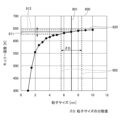
- FIG. 8 is a diagram showing a graph showing the relationship between particle size and Curie temperature, in which the range of particle size and the range of Curie temperature are superimposed.
- FIG. 9A is a first diagram showing a difference in calculation accuracy caused by a difference in the magnetic calculation model.
- FIG. 9B is a second diagram showing the difference in calculation accuracy due to the difference in the magnetic calculation model.
- FIG. 10 is a second diagram illustrating an example of the system configuration of the analysis system.
- FIG. 11 is a second flowchart showing the flow of the Curie temperature range calculation process.
- FIG. 1 is a first diagram showing an example of the system configuration of an analysis system.
- a target device in which an analysis target to be analyzed by an analysis system 100 is disposed is a magnetic storage device 130.
- the magnetic storage device 130 has a thermally assisted magnetic recording medium 131, a magnetic recording medium driving unit 132 for rotating the thermally assisted magnetic recording medium 131, and a recording head 133.
- Reference numeral 140 indicates the positional relationship of each part around the recording head 133.
- the recording head 133 has a laser element 141, and irradiates the recording layer 143 with near-field light 142. This heats the recording layer 143 to the Curie temperature, making it possible to record data at a high recording density in the thermally assisted magnetic recording medium 131.
- the recording layer 143 is formed from FePt magnetic nanoparticles.
- Reference numeral 150 shows an enlarged view of the surface of the recording layer 143, with each particle separated by a white line indicating an FePt magnetic nanoparticle.
- the double-headed arrow in reference numeral 150 indicates the particle size of one FePt magnetic nanoparticle.
- the analysis system 100 calculates the range of the Curie temperature of the FePt magnetic nanoparticles that form the recording layer 143 of the thermally assisted magnetic recording medium 131 used in the magnetic storage device 130. This makes it possible to quantitatively indicate the recording quality of the recording layer 143.
- the measuring device 110 of the analysis system 100 measures in advance the particle size of a sample of FePt magnetic nanoparticles that form the recording layer 143 of the thermally assisted magnetic recording medium 131 used in the magnetic storage device 130.
- the measuring device 110 of the analysis system 100 calculates the median and variance of the particle size as information indicating the variation in the particle size of the sample measurement, and notifies the information processing device 120.
- An analysis program is installed in the information processing device 120 of the analysis system 100, and by executing the analysis program, the information processing device 120 functions as a setting unit 121, a Curie temperature calculation unit 122, and an output unit 123.
- the setting unit 121 acquires the setting information required to set up a magnetic calculation model for one FePt magnetic nanoparticle, and sets up the magnetic calculation model.
- the Curie temperature calculation unit 122 performs magnetic simulation processing using the set magnetic calculation model, and calculates the average magnetization of the entire magnetic calculation model at each temperature to calculate the Curie temperature.
- the output unit 123 outputs the particle size of the magnetic calculation model included in the setting information in association with the calculated Curie temperature.
- the output unit 123 outputs a graph showing the relationship between the plurality of particle sizes and the plurality of Curie temperatures.
- the output unit 123 calculates the particle size range based on the information indicating the variation in particle size. Next, the output unit 123 calculates the Curie temperature range corresponding to the particle size range based on the above graph. This allows the output unit 123 to output the particle size range and the Curie temperature range by superimposing them on the above graph.
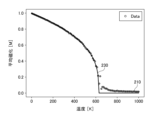
- Fig. 2A is a diagram showing the relationship between temperature and magnetization.
- the horizontal axis represents temperature [K]
- the vertical axis represents average magnetization [M].
- Graph 210 shows the average magnetization at each temperature of the magnetic calculation model.
- reference numeral 223 indicates the magnetism of each atom in the magnetic calculation model at temperature 620 [K].
- the spheres arranged within reference numerals 221 to 223 each indicate a single atom, and dark-colored atoms indicate that the magnetic force is oriented in a specific direction. Light-colored atoms indicate that the magnetic force is oriented in multiple directions.
- FIG. 2B is a diagram showing an example of a method for calculating the Curie temperature.
- graph 230 shows the result of fitting a formula (described later) to graph 210.
- the Curie temperature calculation unit 122 calculates the Curie temperature by fitting the relationship between temperature and average magnetization.
- FIG. 3 is a diagram for explaining an overview of the magnetic calculation model. Of these, FIG. 3A shows the process flow up to setting up the magnetic calculation model of the comparative example.
- reference numeral 310 indicates the arrangement of Fe atoms and Pt atoms in an FePt magnetic nanoparticle.
- reference numeral 320 indicates the simplified arrangement within the FePt magnetic nanoparticle in order to reduce calculation costs when setting up a magnetic calculation model for the FePt magnetic nanoparticle. Specifically, the example in FIG. 3A shows the arrangement of only Fe atoms on a simple cubic lattice.
- reference numeral 330 indicates a magnetic calculation model for one particle of FePt magnetic nanoparticles of a given particle size, in which only Fe atoms are arranged on a simple cubic lattice.
- the particle size of the magnetic calculation model is set to 3 x 3 x 3 particles due to space limitations.
- reference numeral 340 indicates that "J" has been set as the exchange interaction acting between adjacent Fe atoms in the set magnetic calculation model.
- the software creator has published a paper described in the reference document below. Referring to this paper, it is described that for a magnetic calculation model of FePt magnetic nanoparticles, only one type of value is set as the exchange interaction acting between atoms. Therefore, according to this paper, as shown by reference numeral 340, in the case of the magnetic calculation model of the comparative example, only one type of value is set as the exchange interaction acting between atoms, regardless of the direction in which the adjacent atoms are located.
- FIG. 3b shows the flow up to setting up a magnetic calculation model that can achieve sufficient calculation accuracy by the Curie temperature calculation unit 122.
- reference numerals 310 to 330 are the same as reference numerals 310 to 330 in FIG. 3a, so a description thereof will be omitted here.
- At least two different values can be set as the exchange interaction acting between atoms, depending on the direction in which the adjacent atoms are located.
- reference numeral 350 denotes a magnetic calculation model
- Set “J'” as the first exchange interaction acting between adjacent Fe atoms (reference numbers 342 to 345) in the same plane 351
- "J” is set as the second exchange interaction acting between the Fe atoms (reference numerals 346 and 347) arranged at adjacent positions in a direction perpendicular to the same plane 351.
- 3 shows a state where the relationship is "J'">"J".
- the reason for "J'">"J" is that, for the sake of simplification, when setting up the magnetic calculation model, only Fe atoms are arranged, but in reality, a Pt atom is arranged between the Fe atom shown by reference numeral 341 and the Fe atom shown by reference numeral 346.
- the exchange interaction acting between the Fe atoms (reference numerals 346 and 347) with a Pt atom, which is a different type of atom, arranged therebetween is smaller than the exchange interaction acting between the Fe atoms (reference numerals 342 to 345) without a Pt atom arranged therebetween.
- the information processing device 120 sets the magnetic calculation model as follows: - By arranging only Fe atoms on a simple cubic lattice, the computational cost is reduced, while By making the exchange interaction acting between atoms of the same type (Fe atoms) different between the case in the same plane 351 and the case in the case of a direction perpendicular to the same plane 351, an effect similar to that of arranging Pt atoms can be obtained. As a result, the information processing device 120 according to the first embodiment can improve the calculation accuracy in calculating the Curie temperature.
- FIG. 4 is a diagram showing an example of the hardware configuration of the information processing device.
- the information processing device 120 has a processor 401, a memory 402, an auxiliary storage device 403, an I/F (Interface) device 404, a communication device 405, and a drive device 406.
- the hardware components of the information processing device 120 are connected to each other via a bus 407.
- the processor 401 has various computing devices such as a CPU (Central Processing Unit) and a GPU (Graphics Processing Unit).
- the processor 401 executes various programs (e.g., an analysis program, etc.) by reading them onto the memory 402.
- Memory 402 has a primary storage device such as a ROM (Read Only Memory) or a RAM (Random Access Memory).
- the processor 401 and memory 402 form what is known as a computer, and the computer realizes various functions by the processor 401 executing various programs read onto memory 402.
- the auxiliary storage device 403 stores various programs and various data used when the programs are executed by the processor 401.
- the data storage unit 535 described below is realized in the auxiliary storage device 403.
- the I/F device 404 is a connection device for connecting an operation device 411, which is an example of a user interface device, and a display device 412.
- the communication device 405 is a communication device for communicating with an external device via a network (not shown).
- the drive unit 406 is a device for setting the recording medium 413.
- the recording medium 413 here includes media that record information optically, electrically, or magnetically, such as CD-ROMs, flexible disks, and magneto-optical disks.
- the recording medium 413 may also include semiconductor memories that record information electrically, such as ROMs and flash memories.
- the various programs to be installed in the auxiliary storage device 403 are installed, for example, by setting the distributed recording medium 413 in the drive device 406 and reading the various programs recorded on the recording medium 413 by the drive device 406.
- the various programs to be installed in the auxiliary storage device 403 may be installed when downloaded from a network via the communication device 405.
- Fig. 5 is a diagram showing an example of the functional configuration of the information processing device.
- the setting unit 121 further includes a particle structure information acquisition unit 511, an exchange interaction information acquisition unit 512, and a magnetic calculation model setting unit 513.
- the particle structure information acquisition unit 511 and the exchange interaction information acquisition unit 512 acquire the setting information required to specify a magnetic calculation model for one FePt magnetic nanoparticle particle that is the subject of magnetic simulation.
- the setting information acquired by the information processing device 120 includes at least atomic arrangement information, particle size, particle shape, first exchange interaction, and second exchange interaction.
- the particle structure information acquisition unit 511 acquires the atomic arrangement information, particle size, and particle shape of the FePt magnetic nanoparticles from the above setting information.
- the information processing device 120 sets the simplified magnetic calculation model shown in 3b of FIG. 3 and executes the magnetic simulation process. For this reason, the particle structure information acquisition unit 511, for example, Atomic arrangement information: N2 Fe atoms alone are arranged on a simple cubic lattice with an interatomic distance of L. Particle size and particle shape: A cubic shape with one side measuring (N-1) x L is obtained.
- the magnetic calculation model setting unit 513 identifies a magnetic calculation model based on the setting information acquired by the particle structure information acquisition unit 511 and the exchange interaction information acquisition unit 512, and sets it in the Curie temperature calculation unit 122.
- the Curie temperature calculation unit 122 further includes a temperature control unit 521, a magnetic calculation model 522, an average magnetization calculation unit 523, and a determination unit 524.
- the temperature control unit 521 controls the temperature value added to the magnetic calculation model 522 during the magnetic simulation process.
- the magnetic calculation model 522 is a magnetic calculation model set by the magnetic calculation model setting unit 513, and calculates the magnetism of each atom (the direction of the magnetic moment of each atom, the direction of magnetization of each atom) at each temperature controlled by the temperature control unit 521.
- the average magnetization calculation unit 523 calculates the average magnetization of the entire magnetic calculation model at each temperature, that is, the average magnetization of the entire particle, from the magnetization of each atom calculated by performing a magnetic simulation process using the magnetic calculation model 522.
- the determination unit 524 calculates the Curie temperature by fitting the plot of average magnetization versus temperature using the following formula 1.
- T temperature
- T C is the Curie temperature
- the output unit 123 further includes a Curie temperature acquisition unit 531, a particle size acquisition unit 532, a temperature range calculation unit 533, and a graphing unit 534.
- the Curie temperature acquisition unit 531 acquires the Curie temperature from the Curie temperature calculation unit 122 and stores it in the data storage unit 535.
- the Curie temperature acquisition unit 531 acquires the Curie temperatures for multiple magnetic calculation models 522 with different particle sizes as targets for magnetic simulation, and stores them in the data storage unit 535 as storage data.
- the particle size acquisition unit 532 acquires the particle size of the magnetic calculation model 522, associates it with the Curie temperature, and stores it as storage data in the data storage unit 535.
- the particle size acquisition unit 532 sequentially acquires the particle size of each of the multiple magnetic calculation models 522, which have different particle sizes, during the magnetic simulation process. Each time a Curie temperature is acquired by the Curie temperature acquisition unit 531, the particle size acquisition unit 532 associates the sequentially acquired particle size with the acquired Curie temperature and stores it as storage data in the data storage unit 535.
- the temperature range calculation unit 533 calculates the particle size range based on the information indicating the variation in particle size notified by the measurement device 110. Specifically, the temperature range calculation unit 533 calculates the particle size range using the median and variance included in the information indicating the variation in particle size.
- the particle size range calculated by the temperature range calculation unit 533 includes the median, median - variance/2, and median + variance/2.
- the temperature range calculation unit 533 calculates a range of Curie temperatures corresponding to a range of particle sizes based on a plurality of combinations of Curie temperatures and particle sizes stored in the data storage unit 535.
- the range of Curie temperatures calculated by the temperature range calculation unit 533 includes: - Curie temperature corresponding to the median of the particle size - Curie temperature corresponding to the median of the particle size - variance value / 2 Curie temperature corresponding to the median particle size + variance/2,
- the temperature range calculation unit 533 notifies the graphing unit 534 of the particle size range and the Curie temperature range.
- Graphing unit 534 reads out multiple combinations of Curie temperature and particle size stored in data storage unit 535 and generates a graph. Graphing unit 534 outputs the particle size range and Curie temperature range notified by temperature range calculation unit 533 by superimposing them on the generated graph.
- Fig. 6 is a first flowchart showing the flow of the Curie temperature range calculation process.
- step S601 the measurement device 110 performs sample measurement of the particle size of the FePt magnetic nanoparticles to be applied to the target device, and calculates information indicating the variation in particle size.
- the information processing device 120 acquires the calculated information indicating the variation in particle size, and calculates the range of particle sizes.
- step S602 the information processing device 120 receives input of the first exchange interaction and the second exchange interaction of the FePt magnetic nanoparticles from the user, thereby acquiring the first exchange interaction and the second exchange interaction of the FePt magnetic nanoparticles.
- step S603 the information processing device 120 acquires from the user atomic arrangement information, particle size, particle shape, etc. as particle structure information of the magnetic calculation model for one FePt magnetic nanoparticle.
- step S604 the information processing device 120 The first and second exchange interactions obtained in step S602; and The particle structure information acquired in step S603; A magnetic calculation model for one FePt magnetic nanoparticle is set based on the setting information including the above.
- step S605 the information processing device 120 executes a magnetic simulation process using the set magnetic calculation model and calculates the average magnetization at each temperature.
- step S606 the information processing device 120 calculates the Curie temperature based on the calculated average magnetization.
- step S607 the information processing device 120 determines whether or not to execute magnetic simulation processing for other particle sizes. If it is determined in step S607 that magnetic simulation processing is to be executed for other particle sizes (YES in step S607), the process returns to step S603. In this case, in step S603, the information processing device 120 acquires particle structure information including the other particle sizes, and executes the processing of steps S604 to S607 by sequentially setting multiple magnetic calculation models with different particle sizes. This allows the information processing device 120 to sequentially calculate the Curie temperature corresponding to each particle size.
- step S607 determines whether magnetic simulation processing will not be performed for other particle sizes (NO in step S607). If it is determined in step S607 that magnetic simulation processing will not be performed for other particle sizes (NO in step S607), proceed to step S608.
- step S608 the information processing device 120 calculates the range of Curie temperatures that corresponds to the range of particle sizes calculated in step S601.
- step S609 the information processing device 120 repeats the processes of steps S603 to S607 to obtain multiple combinations of particle sizes and Curie temperatures generated by performing magnetic simulation processing for different particle sizes.
- the information processing device 120 generates a graph based on the multiple combinations of particle sizes and Curie temperatures obtained.
- the information processing device 120 outputs the generated graph by superimposing the particle size range calculated in step S601 and the Curie temperature range calculated in step S608 on it.
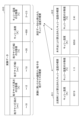
- Fig. 7 is a diagram showing an example of the stored data.
- the stored data 700 includes information items such as "particle size [nm]” and “Curie temperature [K].”
- particle size [nm] the particle size included in the particle structure information sequentially acquired by the particle structure information acquisition unit 511 is stored.
- Curie temperature [K] the Curie temperature sequentially calculated by the Curie temperature calculation unit 122 is stored in correspondence with the particle size.
- Fig. 8 shows a graph showing the relationship between particle size and Curie temperature, in which the particle size range and the Curie temperature range are superimposed.
- reference numeral 801 in graph 800 represents the median particle size of FePt magnetic nanoparticles measured by measurement device 110.
- Reference numeral 802 in graph 800 represents the particle size obtained by adding or subtracting 1/2 of the variance value ⁇ D of the particle size of FePt magnetic nanoparticles measured by measurement device 110 to or from the median.
- Reference numeral 811 in graph 800 represents the Curie temperature at the intersection of the straight line 801, which represents the median particle size, and curve 820, which represents the Curie temperature.
- Reference numeral 812 in graph 800 represents the Curie temperature at the intersection of the straight line 802, which represents the particle size obtained by adding 1/2 the particle size variance value ⁇ D to or subtracting it from the median, and curve 820, which represents the Curie temperature.
- the range enclosed by the lines of reference numeral 802 represents the range of particle sizes
- the range enclosed by the lines of reference numeral 812 represents the range of Curie temperatures
- Fig. 9A is a first diagram showing the difference in calculation accuracy due to the difference in the magnetic calculation model.
- the horizontal axis represents the particle size [nm] and the vertical axis represents the Curie temperature [K].
- the reference numerals 901 and 902 in the graph 800 indicate - Magnetic calculation model of simple cubic lattice, A magnetic calculation model in which the Curie temperature is 750 [K] when the particle size is 12 [nm].
- 3A and 3B show the state in which a magnetic simulation process was performed using the magnetic calculation model in which "J” is set as the exchange interaction acting between adjacent Fe atoms, as shown in FIG. 3A (comparative example).
- reference numeral 902 shows the case in which a magnetic simulation process was performed using a magnetic calculation model in which "J'" is set as the first exchange interaction and "J" is set as the second exchange interaction, as shown in FIG. 3B (this method).
- FIG. 9B is a second diagram showing a difference in calculation accuracy due to a difference in the magnetic calculation model;
- reference numeral 910 indicates "summary of particle size of FePt magnetic nanoparticles used in the experiment," which is a summary of the particle sizes in the planar and cross-sectional directions of the FePt magnetic nanoparticles used in the experiment, analyzed using a TEM.
- TEM is an abbreviation for Transmission Electron Microscope, which refers to a transmission type electron microscope.
- reference numeral 910 indicates "summary of Curie temperature obtained from measurement data" which refers to the Curie temperature calculated from the average magnetization measured when FePt magnetic nanoparticles are actually heated, and the variance of the Curie temperature.
- reference numeral 911 in FIG. 9B shows an overview of the Curie temperature when a magnetic simulation process is performed using a magnetic calculation model in which "J" is set as the exchange interaction acting between adjacent Fe atoms (comparative example).
- reference numeral 912 in FIG. 9B shows an overview of the Curie temperature when a magnetic simulation process is performed (this method) using a magnetic calculation model in which "J'" is set as the first exchange interaction and "J"" is set as the second exchange interaction.
- the variance of the Curie temperature of code 911 deviates from the variance of the Curie temperature of code 910, whereas the variance of the Curie temperature of code 912 is included in the variance of the Curie temperature of code 910.
- the information processing device 120 - Obtain particle structure information indicating the structure of the FePt magnetic nanoparticle, a first exchange interaction acting between Fe atoms contained in the FePt magnetic nanoparticle, and a second exchange interaction acting between Fe atoms with Pt disposed between them within the FePt magnetic nanoparticle.
- a magnetic calculation model is set up using the acquired grain structure information, the first exchange interaction, and the second exchange interaction.
- a magnetic simulation process is performed, and the average magnetization at each temperature is calculated to thereby calculate the Curie temperature.
- a graph showing the relationship between the particle size of the magnetic nanoparticles contained in the particle structure information and the calculated Curie temperature is generated and output.
- Fig. 10 is a second diagram showing an example of the system configuration of the analysis system. The difference from the system configuration described in Fig. 1 in the first embodiment is that the analysis system 1000 includes an information processing device 1010.
- a first-principles calculation program is installed in the information processing device 1010, and the information processing device 1010 functions as a first-principles calculation unit 1011 by executing the program.
- the first-principles calculation unit 1011 Information about the FePt magnetic particle crystal is input to the first-principles calculation unit 1011. This enables the first-principles calculation unit 1011 to calculate the first and second exchange interactions of the FePt magnetic nanoparticles by first-principles calculation.
- the first and second exchange interactions calculated by the first-principles calculation unit 1011 are used as part of the setting information input to the information processing device 120.
- Fig. 11 is a second flowchart showing the flow of the Curie temperature range calculation process. The difference from the flowchart described with reference to Fig. 5 in the first embodiment is steps S1101 to S1103.
- step S1101 the information processing device 1010 accepts input of information related to FePt magnetic particle crystals.
- step S1102 the information processing device 1010 optimizes the crystal structure using first-principles calculations.
- step S1103 the information processing device 1010 calculates the first exchange interaction and the second exchange interaction of the FePt magnetic nanoparticles by first-principles calculation.
- the information processing device 120 according to the second embodiment -Has the same functions as the information processing device 120 according to the first embodiment.
- the first exchange interaction and the second exchange interaction calculated by first-principles calculation are acquired using the information processing device 1010.
- the information processing device 120 can further improve the calculation accuracy in calculating the Curie temperature for each particle size.
- the Curie temperature calculation unit 122 is configured to calculate the Curie temperature each time the user changes the particle size.
- the method of setting the particle size is not limited to this, and for example, a configuration may be made in which a plurality of particle sizes are set together as the particle size of the magnetic calculation model to be subjected to magnetic simulation.
- the Curie temperature calculation unit 122 may be configured to calculate the Curie temperature for the plurality of set particle sizes in sequence.
- the setting unit 121 may be configured to receive input for each of a plurality of particle sizes, or may be configured to receive input for the maximum and minimum values and interval widths of a plurality of particle sizes.
- the maximum and minimum values of the particle sizes may be determined based on, for example, the range of particle sizes.
- the information processing device 120 has been described as outputting a range of Curie temperatures in order to quantitatively indicate the recording quality of the recording layer 143.
- the method of using the range of Curie temperatures output by the information processing device 120 is not limited to this.
- the particle shape included in the setting information may be changed and the range of Curie temperatures for each particle shape may be calculated to search for the optimal particle shape of FePt magnetic nanoparticles.
- Particle shapes here include, for example, square prisms, cylinders, hexagonal prisms, etc.
- it may be used to search for optimal magnetic nanoparticles by inputting setting information that identifies magnetic nanoparticles other than FePt magnetic nanoparticles and calculating the range of Curie temperatures for each type of magnetic nanoparticle.
- the information processing device 1010 and the information processing device 120 are configured as separate entities, but the information processing device 1010 and the information processing device 120 may be configured as an integrated entity.
- Analysis system 110 Measurement device 120: Information processing device 121: Setting section 122: Curie temperature calculation section 123: Output section 511: Grain structure information acquisition section 512: Exchange interaction information acquisition section 513: Magnetic calculation model setting section 521: Temperature control section 522: Magnetic calculation model 523: Average magnetization calculation section 531: Curie temperature acquisition section 532: Grain size acquisition section 533: Temperature range calculation section 534: Graphing section 800: Graph 1010: Information processing device 1011: First principles calculation section
Landscapes
- Management, Administration, Business Operations System, And Electronic Commerce (AREA)
Abstract
粒子サイズごとのキュリー温度の算出において、算出精度を向上させる。情報処理装置は、磁性ナノ粒子の構造を示す粒子構造情報と、前記磁性ナノ粒子内において隣接する同一種類の原子間に働く第1交換相互作用と、前記磁性ナノ粒子内において異なる種類の原子が間に配置された状態での同一種類の原子間に働く第2交換相互作用とを取得し、磁気計算モデルを設定する設定部と、設定された前記磁気計算モデルを用いて、各温度における磁化を算出することによって、キュリー温度を算出する算出部と、前記粒子構造情報に含まれる前記磁性ナノ粒子の粒子サイズと、算出された前記キュリー温度とを対応付けて出力する出力部とを有する。
Description
本開示は、情報処理装置、解析方法及び解析プログラムに関する。
熱アシスト磁気記録方式(HAMR:Heat Assisted Magnetic Recording)によってデータを記録する記録媒体においては、記録時に、記録層が、該記録層を形成する磁性ナノ粒子のキュリー温度まで加熱される。
一般に、キュリー温度は磁性ナノ粒子の粒子サイズに応じて変動する。このため、記録層を形成する磁性ナノ粒子の粒子サイズのばらつきが大きいと、キュリー温度のばらつきも大きくなり、記録品質が低下する。
このようなことから、記録層を形成する磁性ナノ粒子の粒子サイズのばらつきを予め測定し、当該記録層を形成する磁性ナノ粒子のキュリー温度の範囲を管理しておくことは、記録品質を定量的に示すうえで重要である。
N.T.Binh, R.W.Chantrell, et al. "Influence of finite-size effects on the Curie temperature of L10-FePt.", Physical Review B 106.5(2022):054421
ここで、磁性ナノ粒子の粒子サイズごとのキュリー温度は、磁性シミュレーション用のソフトウェアを用いて算出することができるが、従来の磁性シミュレーション用のソフトウェアは、キュリー温度の範囲を厳格に管理するのに十分な算出精度を有していなかった。
本開示は、粒子サイズごとのキュリー温度を算出する際の算出精度を向上させる。
本開示の第1の態様に係る情報処理装置は、
磁性ナノ粒子の構造を示す粒子構造情報と、前記磁性ナノ粒子内において隣接する同一種類の原子間に働く第1交換相互作用と、前記磁性ナノ粒子内において異なる種類の原子が間に配置された状態での同一種類の原子間に働く第2交換相互作用とを取得し、磁気計算モデルを設定する設定部と、
設定された前記磁気計算モデルを用いて、各温度における磁化を算出することによって、キュリー温度を算出する算出部と、
前記粒子構造情報に含まれる前記磁性ナノ粒子の粒子サイズと、算出された前記キュリー温度とを対応付けて出力する出力部とを有する。
磁性ナノ粒子の構造を示す粒子構造情報と、前記磁性ナノ粒子内において隣接する同一種類の原子間に働く第1交換相互作用と、前記磁性ナノ粒子内において異なる種類の原子が間に配置された状態での同一種類の原子間に働く第2交換相互作用とを取得し、磁気計算モデルを設定する設定部と、
設定された前記磁気計算モデルを用いて、各温度における磁化を算出することによって、キュリー温度を算出する算出部と、
前記粒子構造情報に含まれる前記磁性ナノ粒子の粒子サイズと、算出された前記キュリー温度とを対応付けて出力する出力部とを有する。
本開示の第2の態様は、第1の態様に記載の情報処理装置であって、
前記粒子構造情報には、更に、前記磁性ナノ粒子に含まれる原子の配列を示す原子配列情報が含まれる。
前記粒子構造情報には、更に、前記磁性ナノ粒子に含まれる原子の配列を示す原子配列情報が含まれる。
本開示の第3の態様は、第2の態様に記載の情報処理装置であって、
前記設定部は、
前記第1交換相互作用として、前記原子配列情報に基づいて配列される原子のうち、同一平面において隣接する原子との間に働く交換相互作用を取得し、
前記第2交換相互作用として、前記原子配列情報に基づいて配列される原子のうち、前記同一平面に直交する方向において同一種類の原子間に働く交換相互作用を取得する。
前記設定部は、
前記第1交換相互作用として、前記原子配列情報に基づいて配列される原子のうち、同一平面において隣接する原子との間に働く交換相互作用を取得し、
前記第2交換相互作用として、前記原子配列情報に基づいて配列される原子のうち、前記同一平面に直交する方向において同一種類の原子間に働く交換相互作用を取得する。
本開示の第4の態様は、第1の態様に記載の情報処理装置であって、
前記設定部によって、前記磁性ナノ粒子の粒子サイズが互いに異なる複数の前記磁気計算モデルが順次設定され、前記算出部によって、キュリー温度が順次算出された場合、前記出力部は、所定の粒子サイズの範囲に対応するキュリー温度の範囲を算出する。
前記設定部によって、前記磁性ナノ粒子の粒子サイズが互いに異なる複数の前記磁気計算モデルが順次設定され、前記算出部によって、キュリー温度が順次算出された場合、前記出力部は、所定の粒子サイズの範囲に対応するキュリー温度の範囲を算出する。
本開示の第5の態様は、第4の態様に記載の情報処理装置であって、
前記出力部は、複数の前記磁性ナノ粒子の粒子サイズと、算出された複数の前記キュリー温度との関係を示すグラフを出力する。
前記出力部は、複数の前記磁性ナノ粒子の粒子サイズと、算出された複数の前記キュリー温度との関係を示すグラフを出力する。
本開示の第6の態様は、第5の態様に記載の情報処理装置であって、
前記出力部は、前記グラフに、前記粒子サイズの範囲と、前記キュリー温度の範囲とを重畳して出力する。
前記出力部は、前記グラフに、前記粒子サイズの範囲と、前記キュリー温度の範囲とを重畳して出力する。
本開示の第7の態様は、第4の態様に記載の情報処理装置であって、
前記粒子サイズの範囲は、粒子サイズの中央値と、分散値とに基づいて特定される。
前記粒子サイズの範囲は、粒子サイズの中央値と、分散値とに基づいて特定される。
本開示の第8の態様は、第1乃至第7のいずれかの態様に記載の情報処理装置であって、
前記磁性ナノ粒子は、FePt磁性ナノ粒子である。
前記磁性ナノ粒子は、FePt磁性ナノ粒子である。
本開示の第9の態様は、第8の態様に記載の情報処理装置であって、
前記第1交換相互作用は、Fe原子間に働く交換相互作用であり、前記第2交換相互作用は、Pt原子が間に配置された状態でのFe原子間に働く交換相互作用である。
前記第1交換相互作用は、Fe原子間に働く交換相互作用であり、前記第2交換相互作用は、Pt原子が間に配置された状態でのFe原子間に働く交換相互作用である。
本開示の第10の態様は、第1乃至第9のいずれかの態様に記載の情報処理装置であって、
前記第1交換相互作用及び前記第2交換相互作用は、第一原理計算により算出される。
前記第1交換相互作用及び前記第2交換相互作用は、第一原理計算により算出される。
本開示の第11の態様に係る解析方法は、
コンピュータが、
磁性ナノ粒子の構造を示す粒子構造情報と、前記磁性ナノ粒子内において隣接する同一種類の原子間に働く第1交換相互作用と、前記磁性ナノ粒子内において異なる種類の原子が間に配置された状態での同一種類の原子間に働く第2交換相互作用とを取得し、磁気計算モデルを設定する工程と、
設定された前記磁気計算モデルを用いて、各温度における磁化を算出することによって、キュリー温度を算出する工程と、
前記粒子構造情報に含まれる前記磁性ナノ粒子の粒子サイズと、算出された前記キュリー温度とを対応付けて出力する工程とを実行する。
コンピュータが、
磁性ナノ粒子の構造を示す粒子構造情報と、前記磁性ナノ粒子内において隣接する同一種類の原子間に働く第1交換相互作用と、前記磁性ナノ粒子内において異なる種類の原子が間に配置された状態での同一種類の原子間に働く第2交換相互作用とを取得し、磁気計算モデルを設定する工程と、
設定された前記磁気計算モデルを用いて、各温度における磁化を算出することによって、キュリー温度を算出する工程と、
前記粒子構造情報に含まれる前記磁性ナノ粒子の粒子サイズと、算出された前記キュリー温度とを対応付けて出力する工程とを実行する。
本開示の第12の態様に係る解析プログラムは、
コンピュータに、
磁性ナノ粒子の構造を示す粒子構造情報と、前記磁性ナノ粒子内において隣接する同一種類の原子間に働く第1交換相互作用と、前記磁性ナノ粒子内において異なる種類の原子が間に配置された状態での同一種類の原子間に働く第2交換相互作用とを取得し、磁気計算モデルを設定する工程と、
設定された前記磁気計算モデルを用いて、各温度における磁化を算出することによって、キュリー温度を算出する工程と、
前記粒子構造情報に含まれる前記磁性ナノ粒子の粒子サイズと、算出された前記キュリー温度とを対応付けて出力する工程とを実行させる。
コンピュータに、
磁性ナノ粒子の構造を示す粒子構造情報と、前記磁性ナノ粒子内において隣接する同一種類の原子間に働く第1交換相互作用と、前記磁性ナノ粒子内において異なる種類の原子が間に配置された状態での同一種類の原子間に働く第2交換相互作用とを取得し、磁気計算モデルを設定する工程と、
設定された前記磁気計算モデルを用いて、各温度における磁化を算出することによって、キュリー温度を算出する工程と、
前記粒子構造情報に含まれる前記磁性ナノ粒子の粒子サイズと、算出された前記キュリー温度とを対応付けて出力する工程とを実行させる。
本開示によれば、粒子サイズごとのキュリー温度を算出する際の算出精度を向上させることができる。
以下、各実施形態について添付の図面を参照しながら説明する。なお、本明細書及び図面において、実質的に同一の機能構成を有する構成要素については、同一の符号を付することにより重複した説明を省略する。
[第1の実施形態]
<解析システムのシステム構成>
はじめに、第1の実施形態に係る情報処理装置を含む解析システムのシステム構成について説明する。図1は、解析システムのシステム構成の一例を示す第1の図である。図1に示すように、解析システム100によって解析される解析対象が配される対象機器は、磁気記憶装置130である。磁気記憶装置130は、熱アシスト磁気記録媒体131と、熱アシスト磁気記録媒体131を回転させるための磁気記録媒体駆動部132と、記録ヘッド133とを有する。
<解析システムのシステム構成>
はじめに、第1の実施形態に係る情報処理装置を含む解析システムのシステム構成について説明する。図1は、解析システムのシステム構成の一例を示す第1の図である。図1に示すように、解析システム100によって解析される解析対象が配される対象機器は、磁気記憶装置130である。磁気記憶装置130は、熱アシスト磁気記録媒体131と、熱アシスト磁気記録媒体131を回転させるための磁気記録媒体駆動部132と、記録ヘッド133とを有する。
符号140は、記録ヘッド133周辺の各部の位置関係を示している。符号140に示すように、記録ヘッド133は、レーザ素子141を有し、記録層143に対して近接場光142を照射する。これにより、記録層143がキュリー温度まで加熱されるため、熱アシスト磁気記録媒体131では、高い記録密度でデータを記録することが可能になる。第1の実施形態において、記録層143は、FePt磁性ナノ粒子により形成される。
符号150は、記録層143の表面を拡大して示したものであり、白色の線で区切られた各粒子は、それぞれ、FePt磁性ナノ粒子を示している。符号150内の両矢印は、FePt磁性ナノ粒子1粒子分の粒子サイズを表している。
解析システム100は、磁気記憶装置130に用いられる熱アシスト磁気記録媒体131の記録層143を形成するFePt磁性ナノ粒子のキュリー温度の範囲を算出する。これにより、当該記録層143の記録品質を定量的に示すことができる。
具体的には、解析システム100の測定装置110が、磁気記憶装置130に用いられる熱アシスト磁気記録媒体131の記録層143を形成するFePt磁性ナノ粒子の粒子サイズを予めサンプル測定する。解析システム100の測定装置110は、サンプル測定した粒子サイズのばらつきを示す情報として、粒子サイズの中央値及び分散値を算出し、情報処理装置120に通知する。
解析システム100の情報処理装置120には、解析プログラムがインストールされており、当該解析プログラムが実行されることによって、情報処理装置120は、設定部121、キュリー温度算出部122、出力部123として機能する。
設定部121は、FePt磁性ナノ粒子1粒子分の磁気計算モデルを設定するのに必要な設定情報を取得し、磁気計算モデルを設定する。
キュリー温度算出部122は、設定された磁気計算モデルを用いて、磁性シミュレーション処理を行い、各温度における磁気計算モデル全体の平均磁化を算出することによって、キュリー温度を算出する。
出力部123は、設定情報に含まれる、磁気計算モデルの粒子サイズと、算出されたキュリー温度とを対応付けて出力する。
具体的には、出力部123は、キュリー温度算出部122によって、粒子サイズが互いに異なる複数の磁気計算モデルそれぞれについて、キュリー温度が順次算出された場合、複数の粒子サイズと、複数のキュリー温度との関係を示すグラフを出力する。
また、測定装置110によって、粒子サイズのばらつきを示す情報が通知されていた場合、出力部123は、粒子サイズのばらつきを示す情報に基づいて、粒子サイズの範囲を算出する。続いて、出力部123は、上記グラフに基づいて粒子サイズの範囲に対応するキュリー温度の範囲を算出する。これにより、出力部123は、粒子サイズの範囲及びキュリー温度の範囲を、上記グラフに重畳して出力することができる。
<温度と磁化との関係>
次に、磁気計算モデルを用いて算出される磁化と、温度との関係について説明する。図2Aは、温度と磁化との関係を示す図である。図2Aにおいて、横軸は温度[K]を、縦軸は平均磁化[M]を表している。グラフ210は、磁気計算モデルの各温度における平均磁化を示している。
次に、磁気計算モデルを用いて算出される磁化と、温度との関係について説明する。図2Aは、温度と磁化との関係を示す図である。図2Aにおいて、横軸は温度[K]を、縦軸は平均磁化[M]を表している。グラフ210は、磁気計算モデルの各温度における平均磁化を示している。
符号221は、温度=0[K]における磁気計算モデルの各原子の磁性を、符号222は、温度=500[K]における磁気計算モデルの各原子の磁性を、符号223は、温度620[K]における磁気計算モデルの各原子の磁性を、それぞれ示している。なお、符号221~符号223内にそれぞれ配列された球体は、1つの原子を示しており、濃色の原子は、磁力が所定の一方向を向いていることを表している。また、淡色の原子は、磁力が多方向を向いていることを表している。
図2Bは、キュリー温度の算出方法の一例を示す図である。図2Bにおいて、グラフ230は、グラフ210に対して、後述する数式をフィッティングした結果を示す。キュリー温度算出部122は、温度と平均磁化との関係をフィッティングすることによりキュリー温度を算出する。
<磁気計算モデルの概要>
次に、磁気計算モデルの概要について説明する。ここでは、まず、比較例として、キュリー温度算出部122によって十分な算出精度を実現することが困難な磁気計算モデルの概要について説明する。続いて、キュリー温度算出部122によって十分な算出精度を実現することが可能な磁気計算モデルの概要について説明する。
次に、磁気計算モデルの概要について説明する。ここでは、まず、比較例として、キュリー温度算出部122によって十分な算出精度を実現することが困難な磁気計算モデルの概要について説明する。続いて、キュリー温度算出部122によって十分な算出精度を実現することが可能な磁気計算モデルの概要について説明する。
図3は、磁気計算モデルの概要を説明するための図である。このうち、図3の3aは、比較例の磁気計算モデルを設定するまでの処理の流れを示している。
図3の3aにおいて、符号310は、FePt磁性ナノ粒子におけるFe原子と、Pt原子の配列を示している。図3の3aにおいて、符号320は、FePt磁性ナノ粒子の磁気計算モデルを設定するにあたり、計算コストを下げるために、FePt磁性ナノ粒子内の配列を簡略化して設定した様子を示している。具体的には、図3の3aの例では、単純立方格子上にFe原子のみを配列した様子を示している。
図3の3aにおいて、符号330は、単純立方格子上にFe原子のみが配列された、所定の粒子サイズのFePt磁性ナノ粒子1粒子分の磁気計算モデルを示している。なお、図3の3aの例では、紙面の都合上、磁気計算モデルの粒子サイズを、3×3×3個の粒子サイズとしている。
図3の3aにおいて、符号340は、設定した磁気計算モデルにおいて、隣接するFe原子間に働く交換相互作用として「J」が設定された様子を示している。ここで、従来からある磁性シミュレーション用のソフトウェアについては、例えば、ソフトウェア製作者によって下記参考文献に記載の論文が発表されている。当該論文を参照すると、FePt磁性ナノ粒子の磁気計算モデルに対しては、原子間に働く交換相互作用として、1種類の値のみが設定されることが記載されている。このため、当該論文に従えば、符号340に示すように、比較例の磁気計算モデルの場合、隣接する原子が位置する方向によらず、原子間に働く交換相互作用として、1種類の値のみが設定されることになる。
[参考文献]Binh Thanh Nguyen, Sergiu Ruta, Ondrej Hovorka, Richard. F. L. Evans, Roy. W. Chantrell, "Influence of finite-size effects on the Curie temperature of L10-FePt", Phys. Rev,B106, 054421-Publishied 17, August 2022
<https://doi.org/10.48550/arXiv.2207.11831>
なお、符号340の例は、紙面の都合上、
・磁気計算モデルに含まれるFe原子のうち、符号341で示すFe原子と、符号341で示すFe原子に隣接するFe原子(符号342~符号347)のみを示し、
・交換相互作用として、符号341で示すFe原子と、符号341で示すFe原子に隣接するFe原子(符号342~符号347)との間に働く交換相互作用のみを示した。
<https://doi.org/10.48550/arXiv.2207.11831>
なお、符号340の例は、紙面の都合上、
・磁気計算モデルに含まれるFe原子のうち、符号341で示すFe原子と、符号341で示すFe原子に隣接するFe原子(符号342~符号347)のみを示し、
・交換相互作用として、符号341で示すFe原子と、符号341で示すFe原子に隣接するFe原子(符号342~符号347)との間に働く交換相互作用のみを示した。
しかしながら、符号341で示すFe原子以外のFe原子についても、符号340の例と同様に、隣接するFe原子との間に働く交換相互作用として「J」が設定されるものとする。
これに対して、図3の3bは、キュリー温度算出部122によって十分な算出精度を実現することが可能な磁気計算モデルを設定するまでの流れを示している。
図3の3bにおいて、符号310~符号330までは、図3の3aの符号310~符号330までと同じであるため、ここでは説明を省略する。
第1の実施形態に係る情報処理装置120の設定部121の場合、原子間に働く交換相互作用として、隣接する原子が位置する方向に応じて、少なくとも2種類の異なる値を設定することができる。
図3の3bにおいて、符号350は、磁気計算モデルにおいて、
・同一平面351内の隣接するFe原子(符号342~符号345)との間に働く第1交換相互作用として「J'」を設定し、
・同一平面351に直交する方向の隣接する位置に配列されたFe原子(符号346、符号347)との間に働く第2交換相互作用として「J"」を設定した、
様子を示している。ただし、「J'」>「J"」の関係にあるものとする。ここで、「J'」>「J"」としたのは、磁気計算モデルを設定するにあたり、簡略化のためにFe原子のみを配列する構成としたが、符号341に示すFe原子と、符号346に示すFe原子との間には、実際には、Pt原子が配置されているからである。つまり、異なる種類の原子であるPt原子が間に配置された状態でFe原子(符号346、347)との間に働く交換相互作用は、Pt原子が間に配置されていないFe原子(符号342~符号345)との間に働く交換相互作用よりも小さくなるからである。
・同一平面351内の隣接するFe原子(符号342~符号345)との間に働く第1交換相互作用として「J'」を設定し、
・同一平面351に直交する方向の隣接する位置に配列されたFe原子(符号346、符号347)との間に働く第2交換相互作用として「J"」を設定した、
様子を示している。ただし、「J'」>「J"」の関係にあるものとする。ここで、「J'」>「J"」としたのは、磁気計算モデルを設定するにあたり、簡略化のためにFe原子のみを配列する構成としたが、符号341に示すFe原子と、符号346に示すFe原子との間には、実際には、Pt原子が配置されているからである。つまり、異なる種類の原子であるPt原子が間に配置された状態でFe原子(符号346、347)との間に働く交換相互作用は、Pt原子が間に配置されていないFe原子(符号342~符号345)との間に働く交換相互作用よりも小さくなるからである。
このように、第1の実施形態に係る情報処理装置120は、磁気計算モデルを設定するにあたり、
・単純立方格子上にFe原子のみを配列することによって計算コストを削減する一方で、
・同一種類の原子間(Fe原子間)に働く交換相互作用を、同一平面351内の場合と、同一平面351と直交する方向の場合とで差を付けることによって、Pt原子を配列したのと同様の効果を持たせる、
構成とした。これにより、第1の実施形態に係る情報処理装置120によれば、キュリー温度の算出において、算出精度を向上させることが可能となった。
・単純立方格子上にFe原子のみを配列することによって計算コストを削減する一方で、
・同一種類の原子間(Fe原子間)に働く交換相互作用を、同一平面351内の場合と、同一平面351と直交する方向の場合とで差を付けることによって、Pt原子を配列したのと同様の効果を持たせる、
構成とした。これにより、第1の実施形態に係る情報処理装置120によれば、キュリー温度の算出において、算出精度を向上させることが可能となった。
<情報処理装置のハードウェア構成>
次に、情報処理装置120のハードウェア構成について説明する。図4は、情報処理装置のハードウェア構成の一例を示す図である。図4に示すように、情報処理装置120は、プロセッサ401、メモリ402、補助記憶装置403、I/F(Interface)装置404、通信装置405、ドライブ装置406を有する。なお、情報処理装置120の各ハードウェアは、バス407を経由することによって相互に接続される。
次に、情報処理装置120のハードウェア構成について説明する。図4は、情報処理装置のハードウェア構成の一例を示す図である。図4に示すように、情報処理装置120は、プロセッサ401、メモリ402、補助記憶装置403、I/F(Interface)装置404、通信装置405、ドライブ装置406を有する。なお、情報処理装置120の各ハードウェアは、バス407を経由することによって相互に接続される。
プロセッサ401は、CPU(Central Processing Unit)、GPU(Graphics Processing Unit)等の各種演算デバイスを有する。プロセッサ401は、各種プログラム(例えば、解析プログラム等)をメモリ402上に読み出すことによって各種プログラムを実行する。
メモリ402は、ROM(Read Only Memory)、RAM(Random Access Memory)等の主記憶デバイスを有する。プロセッサ401とメモリ402とは、いわゆるコンピュータを形成し、プロセッサ401が、メモリ402上に読み出した各種プログラムを実行することによって、当該コンピュータは各種機能を実現する。
補助記憶装置403は、各種プログラムや、各種プログラムがプロセッサ401によって実行される際に用いられる各種データを格納する。例えば、後述するデータ格納部535は、補助記憶装置403において実現される。
I/F装置404は、ユーザインタフェース装置の一例である操作装置411及び表示装置412を接続するための接続デバイスである。通信装置405は、不図示のネットワークを経由することによって外部装置と通信するための通信デバイスである。
ドライブ装置406は記録媒体413をセットするためのデバイスである。ここでいう記録媒体413には、CD-ROM、フレキシブルディスク、光磁気ディスク等のように情報を光学的、電気的あるいは磁気的に記録する媒体が含まれる。記録媒体413には、ROM、フラッシュメモリ等のように情報を電気的に記録する半導体メモリ等が含まれていてもよい。
なお、補助記憶装置403にインストールされる各種プログラムは、例えば、配布された記録媒体413がドライブ装置406にセットされ、該記録媒体413に記録された各種プログラムがドライブ装置406により読み出されることによってインストールされる。あるいは、補助記憶装置403にインストールされる各種プログラムは、通信装置405を経由することによってネットワークからダウンロードされた場合に、インストールされてもよい。
<情報処理装置の機能構成>
次に、情報処理装置120の機能構成の詳細について説明する。図5は、情報処理装置の機能構成の一例を示す図である。
次に、情報処理装置120の機能構成の詳細について説明する。図5は、情報処理装置の機能構成の一例を示す図である。
図5に示すように、設定部121は、更に、粒子構造情報取得部511、交換相互作用情報取得部512、磁気計算モデル設定部513を有する。
粒子構造情報取得部511及び交換相互作用情報取得部512は、磁性シミュレーション対象のFePt磁性ナノ粒子1粒子分の磁気計算モデルを特定するのに必要な設定情報を取得する。情報処理装置120が取得する設定情報には、少なくとも、原子配列情報、粒子サイズ、粒子形状、第1交換相互作用、第2交換相互作用が含まれる。
粒子構造情報取得部511は、上記設定情報のうち、FePt磁性ナノ粒子の原子配列情報、粒子サイズ、粒子形状を取得する。第1の実施形態に係る情報処理装置120は、図3の3bに示した簡略化した磁気計算モデルを設定して磁性シミュレーション処理を実行する。このため、粒子構造情報取得部511は、例えば、
・原子配列情報:単純立方格子上に、原子間距離Lで、Fe原子のみをN2個配列
・粒子サイズ、粒子形状:1辺が(N-1)×Lの立方体形状
を取得する。
・原子配列情報:単純立方格子上に、原子間距離Lで、Fe原子のみをN2個配列
・粒子サイズ、粒子形状:1辺が(N-1)×Lの立方体形状
を取得する。
交換相互作用情報取得部512は、上記設定情報のうちの第1交換相互作用及び第2交換相互作用を取得する。図3の3bにおいて説明したとおり、第1の実施形態に係る情報処理装置120の場合、交換相互作用情報取得部512は、第1交換相互作用=J'、第2交換相互作用=J"(ただし、J'>J")を取得する。
磁気計算モデル設定部513は、粒子構造情報取得部511及び交換相互作用情報取得部512が取得した各設定情報に基づいて、磁気計算モデルを特定し、キュリー温度算出部122に設定する。
図5に示すように、キュリー温度算出部122は、更に、温度制御部521、磁気計算モデル522、平均磁化算出部523、判定部524を有する。
温度制御部521は、磁性シミュレーション処理中に磁気計算モデル522に付加する温度値を制御する。
磁気計算モデル522は、磁気計算モデル設定部513によって設定された磁気計算モデルであり、温度制御部521により制御された各温度における各原子の磁性(各原子の磁気モーメントの向き、各原子の磁化の向き)を算出する。
平均磁化算出部523は、磁気計算モデル522を用いて磁性シミュレーション処理を行うことで算出された各原子の磁化から、各温度における磁気計算モデル全体の平均磁化、つまり、粒子全体の平均磁化を算出する。
判定部524は、平均磁化と温度のプロットを、下式1を用いてフィッティングすることによって、キュリー温度を算出する。

図5に示すように、出力部123は、更に、キュリー温度取得部531、粒子サイズ取得部532、温度範囲算出部533、グラフ化部534を有する。
キュリー温度取得部531は、キュリー温度算出部122が磁性シミュレーション処理を完了した場合に、キュリー温度算出部122からキュリー温度を取得し、データ格納部535に格納する。なお、キュリー温度取得部531は、磁性シミュレーション対象として、互いに粒子サイズの異なる複数の磁気計算モデル522について、キュリー温度を取得し、格納データとしてデータ格納部535に格納する。
粒子サイズ取得部532は、磁気計算モデル522の粒子サイズを取得し、キュリー温度と対応付けて、格納データとしてデータ格納部535に格納する。なお、粒子サイズ取得部532は、互いに粒子サイズの異なる複数の磁気計算モデル522それぞれの粒子サイズを、磁性シミュレーション処理時に順次取得する。粒子サイズ取得部532は、キュリー温度取得部531によってキュリー温度が取得されるごとに、当該順次取得した粒子サイズを、取得されたキュリー温度と対応付けて、格納データとしてデータ格納部535に格納する。
温度範囲算出部533は、測定装置110から通知された粒子サイズのばらつきを示す情報に基づいて、粒子サイズの範囲を算出する。具体的には、温度範囲算出部533は、粒子サイズのばらつきを示す情報に含まれる中央値及び分散値を用いて、粒子サイズの範囲を算出する。温度範囲算出部533により算出される粒子サイズの範囲には、中央値、中央値-分散値/2、中央値+分散値/2が含まれる。
温度範囲算出部533は、データ格納部535に格納された、キュリー温度と粒子サイズとの複数の組み合わせに基づいて、粒子サイズの範囲に対応するキュリー温度の範囲を算出する。温度範囲算出部533により算出されるキュリー温度の範囲には、
・粒子サイズの中央値に対応するキュリー温度
・粒子サイズの中央値-分散値/2に対応するキュリー温度、
・粒子サイズの中央値+分散値/2に対応するキュリー温度、
が含まれる。温度範囲算出部533は、粒子サイズの範囲と、キュリー温度の範囲とを、グラフ化部534に通知する。
・粒子サイズの中央値に対応するキュリー温度
・粒子サイズの中央値-分散値/2に対応するキュリー温度、
・粒子サイズの中央値+分散値/2に対応するキュリー温度、
が含まれる。温度範囲算出部533は、粒子サイズの範囲と、キュリー温度の範囲とを、グラフ化部534に通知する。
グラフ化部534は、データ格納部535に格納された、キュリー温度と粒子サイズとの複数の組み合わせを読み出し、グラフを生成する。グラフ化部534は、温度範囲算出部533から通知された、粒子サイズの範囲と、キュリー温度の範囲とを、生成したグラフに重畳して出力する。
<キュリー温度範囲算出処理の流れ>
次に、解析システム100によるキュリー温度範囲算出処理の流れについて説明する。図6は、キュリー温度範囲算出処理の流れを示す第1のフローチャートである。
次に、解析システム100によるキュリー温度範囲算出処理の流れについて説明する。図6は、キュリー温度範囲算出処理の流れを示す第1のフローチャートである。
ステップS601において、測定装置110は、対象機器に適用されるFePt磁性ナノ粒子の粒子サイズをサンプル測定し、粒子サイズのばらつきを示す情報を算出する。情報処理装置120は、算出された粒子サイズのばらつきを示す情報を取得し、粒子サイズの範囲を算出する。
ステップS602において、情報処理装置120は、ユーザから、FePt磁性ナノ粒子の第1交換相互作用及び第2交換相互作用の入力を受け付けることによって、FePt磁性ナノ粒子の第1交換相互作用及び第2交換相互作用を取得する。
ステップS603において、情報処理装置120は、ユーザから、FePt磁性ナノ粒子1粒子分の磁気計算モデルの粒子構造情報として、原子配列情報、粒子サイズ、粒子形状等を取得する。
ステップS604において、情報処理装置120は、
・ステップS602において取得した第1交換相互作用及び第2交換相互作用と、
・ステップS603において取得した粒子構造情報と、
を含む設定情報に基づいて特定されるFePt磁性ナノ粒子1粒子分の磁気計算モデルを設定する。
・ステップS602において取得した第1交換相互作用及び第2交換相互作用と、
・ステップS603において取得した粒子構造情報と、
を含む設定情報に基づいて特定されるFePt磁性ナノ粒子1粒子分の磁気計算モデルを設定する。
ステップS605において、情報処理装置120は、設定された磁気計算モデルを用いて、磁性シミュレーション処理を実行し、各温度における平均磁化を算出する。
ステップS606において、情報処理装置120は、算出した平均磁化に基づいて、キュリー温度を算出する。
ステップS607において、情報処理装置120は、他の粒子サイズについても磁性シミュレーション処理を実行するか否かを判定する。ステップS607において、他の粒子サイズについても磁性シミュレーション処理を実行すると判定した場合には(ステップS607においてYESの場合には)、ステップS603に戻る。この場合、情報処理装置120は、ステップS603において、他の粒子サイズを含む粒子構造情報を取得し、粒子サイズが互いに異なる複数の磁気計算モデルを順次設定することによって、ステップS604~ステップS607の処理を実行する。これにより、情報処理装置120は、各粒子サイズに対応するキュリー温度を順次算出することができる。
一方、ステップS607において、他の粒子サイズについて磁性シミュレーション処理を実行しないと判定した場合には(ステップS607においてNOの場合には)、ステップS608に進む。
ステップS608において、情報処理装置120は、ステップS601において算出した粒子サイズの範囲に対応するキュリー温度の範囲を算出する。
ステップS609において、情報処理装置120は、ステップS603~S607の処理を繰り返し、互いに異なる粒子サイズについて磁性シミュレーション処理を実行したことで生成された、粒子サイズとキュリー温度との組み合わせを複数取得する。情報処理装置120は、取得した粒子サイズとキュリー温度との複数の組み合わせに基づき、グラフを生成する。情報処理装置120は、生成したグラフに、ステップS601において算出した粒子サイズの範囲と、ステップS608において算出したキュリー温度の範囲とを重畳して出力する。
<格納データの具体例>
次に、データ格納部535に格納される格納データの具体例について説明する。図7は、格納データの一例を示す図である。
次に、データ格納部535に格納される格納データの具体例について説明する。図7は、格納データの一例を示す図である。
図7に示すように、格納データ700には、情報の項目として、"粒子サイズ[nm]"と、"キュリー温度[K]"とが含まれる。"粒子サイズ[nm]"には、粒子構造情報取得部511により順次取得された粒子構造情報に含まれる粒子サイズが格納される。"キュリー温度[K]には、キュリー温度算出部122により順次算出されたキュリー温度が、粒子サイズと対応付けて格納される。
<グラフの具体例>
次に、グラフ化部534により生成されるグラフの具体例について説明する。図8は、粒子サイズとキュリー温度との関係を示すグラフに、粒子サイズの範囲と、キュリー温度の範囲とを重畳した様子を示している。
次に、グラフ化部534により生成されるグラフの具体例について説明する。図8は、粒子サイズとキュリー温度との関係を示すグラフに、粒子サイズの範囲と、キュリー温度の範囲とを重畳した様子を示している。
図8に示すグラフ800において、横軸は粒子サイズ[nm]を、縦軸はキュリー温度[K]を表している。グラフ800内の符号801は、測定装置110により測定されたFePt磁性ナノ粒子の粒子サイズの中央値を表す。グラフ800内の符号802は、測定装置110により測定されたFePt磁性ナノ粒子の粒子サイズの分散値δDの1/2を、中央値に加算または中央値から減算することによって得られた粒子サイズを表している。
グラフ800内の符号811は、粒子サイズの中央値を表す符号801の直線と、キュリー温度を表す曲線820との交点のキュリー温度を表す。グラフ800内の符号812は、粒子サイズの分散値δDの1/2を、中央値に加算または中央値から減算することによって得られた粒子サイズを表す符号802の直線と、キュリー温度を表す曲線820との交点のキュリー温度を表す。
つまり、符号802の直線によって囲まれた範囲は、粒子サイズの範囲を表し、符号812の直線によって囲まれた範囲は、キュリー温度の範囲を表す。
<算出精度の説明>
次に、設定される磁気計算モデルの違いに伴う、キュリー温度の算出精度の違いについて説明する。図9Aは、磁気計算モデルの違いに伴う算出精度の違いを示す第1の図である。図9Aに示すグラフ900において、横軸は粒子サイズ[nm]を、縦軸はキュリー温度[K]を表している。
次に、設定される磁気計算モデルの違いに伴う、キュリー温度の算出精度の違いについて説明する。図9Aは、磁気計算モデルの違いに伴う算出精度の違いを示す第1の図である。図9Aに示すグラフ900において、横軸は粒子サイズ[nm]を、縦軸はキュリー温度[K]を表している。
グラフ800内の符号901及び符号902は、
・単純立方格子の磁気計算モデル、
・粒子サイズを12[nm]とした場合のキュリー温度が、いずれも750[K]となる磁気計算モデル、
を用いて磁性シミュレーション処理を行い、各粒子サイズでのキュリー温度を算出した様子を示している。ただし、符号901は、図3の3aに示したように、隣接するFe原子間に働く交換相互作用として「J」を設定した磁気計算モデルを用いて磁性シミュレーション処理を行った場合(比較例)を示している。一方、符号902は、図3の3bに示したように、第1交換相互作用として「J'」を、第2交換相互作用として「J"」をそれぞれ設定した磁気計算モデルを用いて磁性シミュレーション処理を行った場合(本手法)を示している。
・単純立方格子の磁気計算モデル、
・粒子サイズを12[nm]とした場合のキュリー温度が、いずれも750[K]となる磁気計算モデル、
を用いて磁性シミュレーション処理を行い、各粒子サイズでのキュリー温度を算出した様子を示している。ただし、符号901は、図3の3aに示したように、隣接するFe原子間に働く交換相互作用として「J」を設定した磁気計算モデルを用いて磁性シミュレーション処理を行った場合(比較例)を示している。一方、符号902は、図3の3bに示したように、第1交換相互作用として「J'」を、第2交換相互作用として「J"」をそれぞれ設定した磁気計算モデルを用いて磁性シミュレーション処理を行った場合(本手法)を示している。
符号901と符号902とを比較すると、粒子サイズが小さくなるほど、符号902の方が、キュリー温度の低下が大きく、符号901の方が、キュリー温度の低下が小さい。なお、各粒子サイズにおけるキュリー温度の実験値は、粒子サイズが小さくなった際のキュリー温度の低下が大きく、符号902に近い値となる。
図9Bは、磁気計算モデルの違いに伴う算出精度の違いを示す第2の図であり、
・FePt磁性ナノ粒子を実際に加熱した際に測定された平均磁化から算出されたキュリー温度と、
・当該FePt磁性ナノ粒子を再現した磁気計算モデルを用いて磁性シミュレーションを行うことにより算出された平均磁化から算出されたキュリー温度と、
を対比して示したものである。
・FePt磁性ナノ粒子を実際に加熱した際に測定された平均磁化から算出されたキュリー温度と、
・当該FePt磁性ナノ粒子を再現した磁気計算モデルを用いて磁性シミュレーションを行うことにより算出された平均磁化から算出されたキュリー温度と、
を対比して示したものである。
図9Bの符号910において、"実験に用いたFePt磁性ナノ粒子の粒子サイズの概要"とは、実験に用いたFePt磁性ナノ粒子を、TEMを用いて解析し、平面方向及び断面方向の粒子サイズを集計したものである。なお、TEMとは、Transmission Electron Microscopeの略称であり、透過型電子顕微鏡のことを指す。
また、図9Bの符号910において、"測定データから得られたキュリー温度の概要"とは、FePt磁性ナノ粒子を実際に加熱した際に測定された平均磁化から算出されるキュリー温度と、キュリー温度の分散値とを指す。
一方、図9Bの符号911は、隣接するFe原子間に働く交換相互作用として「J」を設定した磁気計算モデルを用いて磁性シミュレーション処理を行った場合(比較例)のキュリー温度の概要を示したものである。
また、図9Bの符号912は、第1交換相互作用として「J'」を、第2交換相互作用として「J"」をそれぞれ設定した磁気計算モデルを用いて磁性シミュレーション処理を行った場合(本手法)のキュリー温度の概要を示したものである。
符号911と符号912とを比較すると、符号911は、キュリー温度の分散値が、符号910のキュリー温度の分散値から外れているのに対して、符号912は、キュリー温度の分散値が、符号910のキュリー温度の分散値に含まれている。
このように、
・第1交換相互作用として「J'」が設定され、第2交換相互作用として「J"」が設定された磁気計算モデルを用いた場合と、
・交換相互作用として「J」が設定された磁気計算モデルを用いた場合と、
を比較すると、前者の場合の方が、キュリー温度の算出において高い算出精度を得ることができることが、図9A及び図9Bから検証された。
・第1交換相互作用として「J'」が設定され、第2交換相互作用として「J"」が設定された磁気計算モデルを用いた場合と、
・交換相互作用として「J」が設定された磁気計算モデルを用いた場合と、
を比較すると、前者の場合の方が、キュリー温度の算出において高い算出精度を得ることができることが、図9A及び図9Bから検証された。
<まとめ>
以上の説明から明らかなように、第1の実施形態に係る情報処理装置120は、
・FePt磁性ナノ粒子の構造を示す粒子構造情報と、FePt磁性ナノ粒子に含まれるFeの原子間に働く第1交換相互作用と、FePt磁性ナノ粒子内においてPtが間に配置された状態でのFeの原子間に働く第2交換相互作用とを取得する。
・取得した粒子構造情報と、第1交換相互作用と、第2交換相互作用とを用いて磁気計算モデルを設定する。
・設定した磁気計算モデルを用いて、磁性シミュレーション処理を行い、各温度における平均磁化を算出することによってキュリー温度を算出する。
・粒子構造情報に含まれる磁性ナノ粒子の粒子サイズと、算出されたキュリー温度との関係を示すグラフを生成し、出力する。
以上の説明から明らかなように、第1の実施形態に係る情報処理装置120は、
・FePt磁性ナノ粒子の構造を示す粒子構造情報と、FePt磁性ナノ粒子に含まれるFeの原子間に働く第1交換相互作用と、FePt磁性ナノ粒子内においてPtが間に配置された状態でのFeの原子間に働く第2交換相互作用とを取得する。
・取得した粒子構造情報と、第1交換相互作用と、第2交換相互作用とを用いて磁気計算モデルを設定する。
・設定した磁気計算モデルを用いて、磁性シミュレーション処理を行い、各温度における平均磁化を算出することによってキュリー温度を算出する。
・粒子構造情報に含まれる磁性ナノ粒子の粒子サイズと、算出されたキュリー温度との関係を示すグラフを生成し、出力する。
このように、第1交換相互作用と第2交換相互作用とが設定された磁気計算モデルを用いて磁性シミュレーション処理を行うことによって、高い算出精度のキュリー温度を算出することができる。つまり、第1の実施形態によれば、粒子サイズごとのキュリー温度の算出において、算出精度を向上させることができる。
[第2の実施形態]
上記第1の実施形態では、第1交換相互作用である「J'」及び第2交換相互作用である「J"」の計算方法について言及しなかったが、第1交換相互作用及び第2交換相互作用は、第一原理計算により計算されてもよい。以下、第2の実施形態について、上記第1の実施形態との相違点を中心に説明する。
上記第1の実施形態では、第1交換相互作用である「J'」及び第2交換相互作用である「J"」の計算方法について言及しなかったが、第1交換相互作用及び第2交換相互作用は、第一原理計算により計算されてもよい。以下、第2の実施形態について、上記第1の実施形態との相違点を中心に説明する。
<解析システムのシステム構成>
はじめに、第2の実施形態に係る情報処理装置を含む解析システムのシステム構成について説明する。図10は、解析システムのシステム構成の一例を示す第2の図である。上記第1の実施形態において図1を用いて説明したシステム構成との相違点は、解析システム1000の場合、情報処理装置1010を備える点である。
はじめに、第2の実施形態に係る情報処理装置を含む解析システムのシステム構成について説明する。図10は、解析システムのシステム構成の一例を示す第2の図である。上記第1の実施形態において図1を用いて説明したシステム構成との相違点は、解析システム1000の場合、情報処理装置1010を備える点である。
情報処理装置1010には、第一原理計算プログラムがインストールされており、当該プログラムが実行されることによって、情報処理装置1010は、第一原理計算部1011として機能する。
第一原理計算部1011には、FePt磁性粒子結晶に関する情報が入力される。これにより、第一原理計算部1011は、第一原理計算によって、FePt磁性ナノ粒子の第1交換相互作用及び第2交換相互作用を計算することができる。
例えば、第一原理計算部1011は、第1交換相互作用として、J'=9.54×10⁻²¹[J/link]を、第2交換相互作用として、J"=0.90×10-21[J/link]を計算することができる。
なお、第一原理計算部1011により計算された第1交換相互作用及び第2交換相互作用は、情報処理装置120に入力される設定情報の一部として用いられる。
<キュリー温度範囲算出処理の流れ>
次に、解析システム1000によるキュリー温度範囲算出処理の流れについて説明する。図11は、キュリー温度範囲算出処理の流れを示す第2のフローチャートである。上記第1の実施形態において、図5を用いて説明したフローチャートとの相違点は、ステップS1101~S1103である。
次に、解析システム1000によるキュリー温度範囲算出処理の流れについて説明する。図11は、キュリー温度範囲算出処理の流れを示す第2のフローチャートである。上記第1の実施形態において、図5を用いて説明したフローチャートとの相違点は、ステップS1101~S1103である。
ステップS1101において、情報処理装置1010は、FePt磁性粒子結晶に関する情報の入力を受け付ける。
ステップS1102において、情報処理装置1010は、第一原理計算によって、結晶構造を最適化する。
ステップS1103において、情報処理装置1010は、第一原理計算によって、FePt磁性ナノ粒子の第1交換相互作用及び第2交換相互作用を算出する。
<まとめ>
以上の説明から明らかなように、第2の実施形態に係る情報処理装置120は、
・第1の実施形態に係る情報処理装置120と同様の機能を有する。
・第1交換相互作用と第2交換相互作用とを取得する際、情報処理装置1010を用いて第一原理計算により計算された第1交換相互作用及び第2交換相互作用を取得する。
以上の説明から明らかなように、第2の実施形態に係る情報処理装置120は、
・第1の実施形態に係る情報処理装置120と同様の機能を有する。
・第1交換相互作用と第2交換相互作用とを取得する際、情報処理装置1010を用いて第一原理計算により計算された第1交換相互作用及び第2交換相互作用を取得する。
これにより、第2の実施形態に係る情報処理装置120によれば、粒子サイズごとのキュリー温度の算出において、算出精度を更に向上させることができる。
[その他の実施形態]
上記各実施形態では、ユーザが粒子サイズを変更するごとに、キュリー温度算出部122がキュリー温度を算出する構成とした。しかしながら、粒子サイズの設定方法はこれに限定されず、例えば、磁性シミュレーション対象となる磁気計算モデルの粒子サイズとして、複数の粒子サイズをまとめて設定するように構成してもよい。このとき、キュリー温度算出部122は、設定された複数の粒子サイズについて、順次、キュリー温度を算出するように構成してもよい。
上記各実施形態では、ユーザが粒子サイズを変更するごとに、キュリー温度算出部122がキュリー温度を算出する構成とした。しかしながら、粒子サイズの設定方法はこれに限定されず、例えば、磁性シミュレーション対象となる磁気計算モデルの粒子サイズとして、複数の粒子サイズをまとめて設定するように構成してもよい。このとき、キュリー温度算出部122は、設定された複数の粒子サイズについて、順次、キュリー温度を算出するように構成してもよい。
なお、設定部121は、複数の粒子サイズそれぞれの入力を受け付けるように構成されていてもよいし、複数の粒子サイズの最大値と、最小値と、刻み幅の入力を受け付けるように構成されていてもよい。このときの粒子サイズの最大値と最小値は、例えば、粒子サイズの範囲に基づいて決定されてもよい。
また、上記各実施形態において、情報処理装置120は、記録層143の記録品質を定量的に示すことを目的として、キュリー温度の範囲を出力するものとして説明した。しかしながら、情報処理装置120によって出力されるキュリー温度の範囲の利用方法はこれに限定されない。
例えば、設定情報に含まれる粒子形状を変更し、それぞれの粒子形状におけるキュリー温度の範囲を算出することによって、FePt磁性ナノ粒子の最適な粒子形状を探索するのに用いてもよい。ここでいう粒子形状には、例えば、四角柱、円柱、六角柱などが含まれる。
あるいは、FePt磁性ナノ粒子以外の磁性ナノ粒子を特定する設定情報を入力し、それぞれの種類の磁性ナノ粒子のキュリー温度の範囲を算出することによって、最適な磁性ナノ粒子を探索するのに用いてもよい。
また、上記第2の実施形態では、情報処理装置1010と情報処理装置120とを別体として構成したが、情報処理装置1010と情報処理装置120とは、一体として構成されてもよい。
なお、上記実施形態に挙げた構成等に、その他の要素との組み合わせ等、ここで示した構成に本発明が限定されるものではない。これらの点に関しては、本発明の趣旨を逸脱しない範囲で変更することが可能であり、その応用形態に応じて適切に定めることができる。
本出願は、2023年11月28日に出願された日本国特許出願第2023-200999号に基づきその優先権を主張するものであり、同日本国特許出願の全内容を参照することにより本願に援用する。
100 :解析システム
110 :測定装置
120 :情報処理装置
121 :設定部
122 :キュリー温度算出部
123 :出力部
511 :粒子構造情報取得部
512 :交換相互作用情報取得部
513 :磁気計算モデル設定部
521 :温度制御部
522 :磁気計算モデル
523 :平均磁化算出部
531 :キュリー温度取得部
532 :粒子サイズ取得部
533 :温度範囲算出部
534 :グラフ化部
800 :グラフ
1010 :情報処理装置
1011 :第一原理計算部
110 :測定装置
120 :情報処理装置
121 :設定部
122 :キュリー温度算出部
123 :出力部
511 :粒子構造情報取得部
512 :交換相互作用情報取得部
513 :磁気計算モデル設定部
521 :温度制御部
522 :磁気計算モデル
523 :平均磁化算出部
531 :キュリー温度取得部
532 :粒子サイズ取得部
533 :温度範囲算出部
534 :グラフ化部
800 :グラフ
1010 :情報処理装置
1011 :第一原理計算部
Claims (12)
- 磁性ナノ粒子の構造を示す粒子構造情報と、前記磁性ナノ粒子内において隣接する同一種類の原子間に働く第1交換相互作用と、前記磁性ナノ粒子内において異なる種類の原子が間に配置された状態での同一種類の原子間に働く第2交換相互作用とを取得し、磁気計算モデルを設定する設定部と、
設定された前記磁気計算モデルを用いて、各温度における磁化を算出することによって、キュリー温度を算出する算出部と、
前記粒子構造情報に含まれる前記磁性ナノ粒子の粒子サイズと、算出された前記キュリー温度とを対応付けて出力する出力部と
を有する情報処理装置。 - 前記粒子構造情報には、更に、前記磁性ナノ粒子に含まれる原子の配列を示す原子配列情報が含まれる、請求項1に記載の情報処理装置。
- 前記設定部は、
前記第1交換相互作用として、前記原子配列情報に基づいて配列される原子のうち、同一平面において隣接する原子との間に働く交換相互作用を取得し、
前記第2交換相互作用として、前記原子配列情報に基づいて配列される原子のうち、前記同一平面に直交する方向において同一種類の原子間に働く交換相互作用を取得する、請求項2に記載の情報処理装置。 - 前記設定部によって、前記磁性ナノ粒子の粒子サイズが互いに異なる複数の前記磁気計算モデルが順次設定され、前記算出部によって、キュリー温度が順次算出された場合、前記出力部は、所定の粒子サイズの範囲に対応するキュリー温度の範囲を算出する、
請求項1に記載の情報処理装置。 - 前記出力部は、複数の前記磁性ナノ粒子の粒子サイズと、算出された複数の前記キュリー温度との関係を示すグラフを出力する、請求項4に記載の情報処理装置。
- 前記出力部は、前記グラフに、前記粒子サイズの範囲と、前記キュリー温度の範囲とを重畳して出力する、請求項5に記載の情報処理装置。
- 前記粒子サイズの範囲は、粒子サイズの中央値と、分散値とに基づいて特定される、請求項4に記載の情報処理装置。
- 前記磁性ナノ粒子は、FePt磁性ナノ粒子である、請求項1乃至7のいずれか1項に記載の情報処理装置。
- 前記第1交換相互作用は、Fe原子間に働く交換相互作用であり、前記第2交換相互作用は、Pt原子が間に配置された状態でのFe原子間に働く交換相互作用である、請求項8に記載の情報処理装置。
- 前記第1交換相互作用及び前記第2交換相互作用は、第一原理計算により算出される、請求項1乃至9のいずれか1項に記載の情報処理装置。
- コンピュータが、
磁性ナノ粒子の構造を示す粒子構造情報と、前記磁性ナノ粒子内において隣接する同一種類の原子間に働く第1交換相互作用と、前記磁性ナノ粒子内において異なる種類の原子が間に配置された状態での同一種類の原子間に働く第2交換相互作用とを取得し、磁気計算モデルを設定する工程と、
設定された前記磁気計算モデルを用いて、各温度における磁化を算出することによって、キュリー温度を算出する工程と、
前記粒子構造情報に含まれる前記磁性ナノ粒子の粒子サイズと、算出された前記キュリー温度とを対応付けて出力する工程と
を実行する解析方法。 - コンピュータに、
磁性ナノ粒子の構造を示す粒子構造情報と、前記磁性ナノ粒子内において隣接する同一種類の原子間に働く第1交換相互作用と、前記磁性ナノ粒子内において異なる種類の原子が間に配置された状態での同一種類の原子間に働く第2交換相互作用とを取得し、磁気計算モデルを設定する工程と、
設定された前記磁気計算モデルを用いて、各温度における磁化を算出することによって、キュリー温度を算出する工程と、
前記粒子構造情報に含まれる前記磁性ナノ粒子の粒子サイズと、算出された前記キュリー温度とを対応付けて出力する工程と
を実行させる解析プログラム。
Priority Applications (2)
| Application Number | Priority Date | Filing Date | Title |
|---|---|---|---|
| JP2025561064A JP7852812B2 (ja) | 2023-11-28 | 2024-11-21 | 情報処理装置、解析方法及び解析プログラム |
| CN202480036282.2A CN121620799A (zh) | 2023-11-28 | 2024-11-21 | 信息处理装置、分析方法及分析程序 |
Applications Claiming Priority (2)
| Application Number | Priority Date | Filing Date | Title |
|---|---|---|---|
| JP2023200999 | 2023-11-28 | ||
| JP2023-200999 | 2023-11-28 |
Publications (1)
| Publication Number | Publication Date |
|---|---|
| WO2025115758A1 true WO2025115758A1 (ja) | 2025-06-05 |
Family
ID=95897824
Family Applications (1)
| Application Number | Title | Priority Date | Filing Date |
|---|---|---|---|
| PCT/JP2024/041337 Pending WO2025115758A1 (ja) | 2023-11-28 | 2024-11-21 | 情報処理装置、解析方法及び解析プログラム |
Country Status (3)
| Country | Link |
|---|---|
| JP (1) | JP7852812B2 (ja) |
| CN (1) | CN121620799A (ja) |
| WO (1) | WO2025115758A1 (ja) |
Citations (2)
| Publication number | Priority date | Publication date | Assignee | Title |
|---|---|---|---|---|
| US20160358622A1 (en) * | 2015-06-02 | 2016-12-08 | HGST Netherlands B.V. | Structures and methods for templated growth of high areal density heat assisted magnetic recording media |
| JP2022112850A (ja) * | 2021-01-22 | 2022-08-03 | 住友重機械工業株式会社 | シミュレーション方法、シミュレーション装置、及びプログラム |
Family Cites Families (2)
| Publication number | Priority date | Publication date | Assignee | Title |
|---|---|---|---|---|
| US7158346B2 (en) | 2003-12-23 | 2007-01-02 | Seagate Technology Llc | Heat assisted magnetic recording film including superparamagnetic nanoparticles dispersed in an antiferromagnetic or ferrimagnetic matrix |
| JP2021110997A (ja) | 2020-01-07 | 2021-08-02 | 住友重機械工業株式会社 | シミュレーション方法、シミュレーション装置、及びプログラム |
-
2024
- 2024-11-21 WO PCT/JP2024/041337 patent/WO2025115758A1/ja active Pending
- 2024-11-21 JP JP2025561064A patent/JP7852812B2/ja active Active
- 2024-11-21 CN CN202480036282.2A patent/CN121620799A/zh active Pending
Patent Citations (2)
| Publication number | Priority date | Publication date | Assignee | Title |
|---|---|---|---|---|
| US20160358622A1 (en) * | 2015-06-02 | 2016-12-08 | HGST Netherlands B.V. | Structures and methods for templated growth of high areal density heat assisted magnetic recording media |
| JP2022112850A (ja) * | 2021-01-22 | 2022-08-03 | 住友重機械工業株式会社 | シミュレーション方法、シミュレーション装置、及びプログラム |
Non-Patent Citations (1)
| Title |
|---|
| NGUYEN THANH, BINH, RUTA SERGIU, HOVORKA ONDREJ, EVANS RICHARD F L, CHANTRELL ROY W: "The Influence of Finite-size Effects on the Curie Temperature of L1 0 -FePt", RESEARCHGATE, 1 July 2022 (2022-07-01), XP093319377, DOI: 10.48550/arXiv.2207.11831 * |
Also Published As
| Publication number | Publication date |
|---|---|
| CN121620799A (zh) | 2026-03-06 |
| JP7852812B2 (ja) | 2026-04-28 |
| JPWO2025115758A1 (ja) | 2025-06-05 |
Similar Documents
| Publication | Publication Date | Title |
|---|---|---|
| Reichlova et al. | Imaging and writing magnetic domains in the non-collinear antiferromagnet Mn3Sn | |
| Roccati et al. | Hermitian and non-Hermitian topology from photon-mediated interactions | |
| Hovorka et al. | The Curie temperature distribution of FePt granular magnetic recording media | |
| Jorge-Peñas et al. | Free form deformation–based image registration improves accuracy of traction force microscopy | |
| Frank et al. | Autonomous calibration of single spin qubit operations | |
| Brearton et al. | Deriving the skyrmion Hall angle from skyrmion lattice dynamics | |
| Zhang et al. | Phase field modeling with large driving forces | |
| Shiogai et al. | Three-dimensional sensing of the magnetic-field vector by a compact planar-type Hall device | |
| Mathews et al. | Hysteresis branch crossing and the Stoner–Wohlfarth model | |
| Pfaff et al. | Top-down fabrication of plasmonic nanostructures for deterministic coupling to single quantum emitters | |
| JP5412982B2 (ja) | 磁界解析装置および磁界解析プログラム | |
| Zidan et al. | Quantum Fisher information of atomic system interacting with a single cavity mode in the presence of Kerr medium | |
| Rzepkowski et al. | A scheme for direct detection of qubit–environment entanglement generated during qubit pure dephasing: B. Rzepkowski, K. Roszak | |
| Cheng et al. | Precise nanoscale temperature mapping in operational microelectronic devices by use of a phase change material | |
| Denneulin et al. | Geometric phase analysis of magnetic skyrmion lattices in Lorentz transmission electron microscopy images | |
| Rose et al. | Identification of thermal material parameters for thermo-mechanically coupled material models: verification and model dependency | |
| JP7852812B2 (ja) | 情報処理装置、解析方法及び解析プログラム | |
| Maddali et al. | Concurrent multi-peak Bragg coherent x-ray diffraction imaging of 3D nanocrystal lattice displacement via global optimization | |
| Manickathan et al. | A lightweight neural network designed for fluid velocimetry: L. Manickathan et al. | |
| Urazaliev et al. | Structure and energy of symmetric tilt boundaries with the< 110> axis in Ni and the energy of formation of vacancies in grain boundaries | |
| Do et al. | A comprehensive analysis of the impacts of Image Resolution and Scanning Times on the quality of MPI-reconstructed images | |
| US20220237346A1 (en) | Simulation method, simulation apparatus, and non-transitory computer readable medium storing program | |
| Medina-Vázquez et al. | Weak and strong coupling regimes in a topological photonic crystal bowtie cavity | |
| Cavicchi et al. | Optical properties, plasmons, and orbital Skyrme textures in twisted TMDs | |
| Junginger et al. | Quantitative determination of vortex core dimensions in head-to-head domain walls using off-axis electron holography |
Legal Events
| Date | Code | Title | Description |
|---|---|---|---|
| 121 | Ep: the epo has been informed by wipo that ep was designated in this application |
Ref document number: 24897444 Country of ref document: EP Kind code of ref document: A1 |
|
| ENP | Entry into the national phase |
Ref document number: 2025561064 Country of ref document: JP Kind code of ref document: A |
|
| WWE | Wipo information: entry into national phase |
Ref document number: 2025561064 Country of ref document: JP |