WO2025115751A1 - 情報処理方法、コンピュータプログラム及び情報処理装置 - Google Patents
情報処理方法、コンピュータプログラム及び情報処理装置 Download PDFInfo
- Publication number
- WO2025115751A1 WO2025115751A1 PCT/JP2024/041279 JP2024041279W WO2025115751A1 WO 2025115751 A1 WO2025115751 A1 WO 2025115751A1 JP 2024041279 W JP2024041279 W JP 2024041279W WO 2025115751 A1 WO2025115751 A1 WO 2025115751A1
- Authority
- WO
- WIPO (PCT)
- Prior art keywords
- data
- target data
- question
- generation model
- information processing
- Prior art date
- Legal status (The legal status is an assumption and is not a legal conclusion. Google has not performed a legal analysis and makes no representation as to the accuracy of the status listed.)
- Pending
Links
Images




Classifications
-
- G—PHYSICS
- G06—COMPUTING OR CALCULATING; COUNTING
- G06F—ELECTRIC DIGITAL DATA PROCESSING
- G06F16/00—Information retrieval; Database structures therefor; File system structures therefor
- G06F16/30—Information retrieval; Database structures therefor; File system structures therefor of unstructured textual data
- G06F16/38—Retrieval characterised by using metadata, e.g. metadata not derived from the content or metadata generated manually
-
- G—PHYSICS
- G06—COMPUTING OR CALCULATING; COUNTING
- G06F—ELECTRIC DIGITAL DATA PROCESSING
- G06F16/00—Information retrieval; Database structures therefor; File system structures therefor
- G06F16/90—Details of database functions independent of the retrieved data types
-
- G—PHYSICS
- G06—COMPUTING OR CALCULATING; COUNTING
- G06N—COMPUTING ARRANGEMENTS BASED ON SPECIFIC COMPUTATIONAL MODELS
- G06N5/00—Computing arrangements using knowledge-based models
Definitions
- This disclosure relates to an information processing method, a computer program, and an information processing device.
- Patent Document 1 discloses a technology that displays information useful for work related to a substrate processing device that performs processes such as etching or film formation on substrates such as semiconductor wafers or glass substrates.
- Information about a device or system is contained in data that contains a large amount of information, such as manuals. Users can search for and use the desired information from the data. However, with conventional search methods such as using keywords, it can sometimes be difficult for users to find the information they want.
- This disclosure provides an information processing method, a computer program, and an information processing device that allow a user to obtain desired information.
- An information processing method inputs a question for target data related to a specific device or system, a summary of the target data, or a request to create associated data consisting of a question for the summary into a language generation model, obtains the associated data output by the language generation model, associates the target data and the associated data with each other and stores them in a database, obtains a question related to the device or system, searches the database for associated data based on the question, extracts target data associated with the searched associated data from the database, inputs the question and the extracted target data into a language generation model, obtains an answer to the question output by the language generation model, and outputs the obtained answer.
- FIG. 1 is a conceptual diagram showing an overview of an information processing method according to an embodiment of the present invention.
- 1 is a block diagram showing an example of the internal configuration of an information processing device;
- 11 is a flowchart illustrating an example of a procedure for a process executed by an information processing device to store target data and related data in a database.
- FIG. 2 is a schematic diagram showing an example of original data and target data.
- 13 is a table showing another example of target data.
- FIG. 2 is a schematic diagram showing an example of the contents stored in a database;
- 10 is a flowchart illustrating an example of a procedure for a process executed by an information processing device to output an answer to a question from a user.
- FIG. 13 is a schematic diagram showing an example of an output answer.
- the device is a substrate processing apparatus that performs etching or film formation on a substrate such as a semiconductor wafer or a glass substrate.
- the system is a system including various devices used in association with the substrate processing apparatus.
- the system may include devices that manage the substrate processing apparatus, such as a device that stores a recipe that specifies the content of a process performed in the substrate processing apparatus or performs input/output to the substrate processing apparatus, and a device that acquires and accumulates log data that records the operation content of the substrate processing apparatus.
- the system may also include a group controller that manages a plurality of substrate processing apparatuses.
- a user when operating the substrate processing apparatus or system, or performing work on the substrate processing apparatus or system such as maintenance, a user may want to refer to information regarding the operation or work, such as an operation method, a work procedure, or precautions. Since data such as a manual regarding the substrate processing apparatus or system contains a large amount of information, the information desired by the user may not be obtained by a conventional search method such as using keywords. For example, when information regarding cleaning of the piping of the substrate processing apparatus is required, information regarding cleaning of parts other than the piping may be searched. In this embodiment, an information processing method is performed to obtain the information desired by the user.
- the raw data 11 is a manual for the device or system, log data recording the operation details, alarm information recording the alarm history, a trouble response record, or a maintenance record.
- the trouble response record includes a record of the work performed in response to the alarm, and may include the contents of the work performed to recover the device or system in response to the occurrence of an alarm, such as accepting the alarm, replacing parts, reassembling parts, cleaning parts, or calibrating sensors.
- the target data 12 is data that is the subject of reference by the user.
- the target data 12 is generated by dividing the raw data 11 or by extracting a part of the raw data 11.
- the target data 12 may be generated by combining multiple elements extracted from the raw data 11.
- Target data 12 is input to the language generation model 21, and associated data 13 related to the target data 12 is output from the language generation model 21.
- the associated data 13 consists of a question for the target data 12, a summary of the target data 12, or a question for the summary.
- multiple associated data 13 are generated for one piece of target data 12.
- the target data 12 and the associated data 13 related to the target data 12 are associated with each other and stored in the database 22.
- a question from a user regarding the substrate processing apparatus or system is acquired.
- the related data 13 is searched for in the database 22 based on the question, and the target data 12 associated with the searched related data 13 is extracted from the database 22.
- the question and the extracted target data 12 are input to the language generation model 21, and an answer to the question is output from the language generation model 21.
- the answer corresponds to information regarding the substrate processing apparatus or system.
- the answer is information regarding the operation of the substrate processing apparatus or system, or information regarding work on the substrate processing apparatus or system.
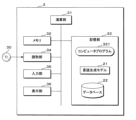
- FIG. 2 is a block diagram showing an example of the internal configuration of the information processing device 3.
- the information processing device 3 executes the information processing method.
- the information processing device 3 is configured using a computer such as a personal computer or a server device.
- the information processing device 3 includes a calculation unit 31, a memory 32, a storage unit 33, a reading unit 34, an input unit 35, and a display unit 36.
- the calculation unit 31 is, for example, a processor, and is configured using a CPU (Central Processing Unit), a GPU (Graphics Processing Unit), or a multi-core CPU.
- the calculation unit 31 may be configured using a quantum computer.
- the memory 32 stores temporary data generated in association with the calculation.
- the memory 32 is, for example, a RAM (Random Access Memory).
- the storage unit 33 is non-volatile, and is, for example, a hard disk or a non-volatile semiconductor memory.
- the reading unit 34 reads information from a recording medium 30 such as an optical disk or a portable memory.
- the input unit 35 accepts data input.
- the input unit 35 includes an operation unit that accepts input of information such as text by accepting operations from the user.
- the operation unit is, for example, a touch panel, a keyboard, or a pointing device.
- the input unit 35 may include an input interface that accepts various data input from outside the information processing device 3.
- the display unit 36 displays images.
- the display unit 36 is, for example, a liquid crystal display or an EL display (Electroluminescent Display).
- the calculation unit 31 causes the reading unit 34 to read the computer program 331 recorded on the recording medium 30, and stores the read computer program 331 in the memory unit 33.
- the calculation unit 31 executes processing to realize the functions of the information processing device 3 in accordance with the computer program 331.
- the computer program 331 may be a program product.
- the computer program 331 may be stored in advance in the memory unit 33, or may be downloaded from outside the information processing device 3. In this case, the information processing device 3 does not need to be equipped with the reading unit 34.
- the computer program 331 can be deployed to run on a single computer, or on multiple computers located at one site, or distributed across multiple sites and interconnected by a communications network. That is, the information processing device 3 may be composed of multiple computers, and the computer program 331 may be executed on multiple computers connected via a communications network.
- the information processing device 3 may be configured using a cloud server.
- the processing of each step described below for executing the information processing method can be executed by multiple computers.
- the processing of each step can also be executed by different computers.
- the processing of each step can also be executed using a virtual machine.
- the processing of each step may be executed by multiple calculation units.
- the processing of each step may be executed by different calculation units.
- the information processing device 3 is equipped with a language generation model 21.
- the language generation model 21 is a trained model that has been trained to output a sentence corresponding to the input prompt and information when a prompt consisting of an instruction sentence requesting some kind of answer and information accompanying the prompt are input.
- the language generation model 21 is a large-scale language model. More specifically, the language generation model 21 is BERT, GPT-4, Bard, LLaMA, or the like. The language generation model 21 has been trained in advance.
- the language generation model 21 is realized by the calculation unit 31 executing information processing according to the computer program 331.
- the storage unit 33 stores data for realizing the language generation model 21.
- the language generation model 21 may be configured with hardware.
- the language generation model 21 may be realized using a quantum computer.
- the language generation model 21 may be provided outside the information processing device 3, and the information processing device 3 may execute processing using the external language generation model 21.
- the language generation model 21 may be realized using multiple computers connected via a communication network, or may be realized using the cloud.
- the information processing device 3 includes a database 22.
- the database 22 is for storing the target data 12 and the related data 13.
- the database 22 is realized by the storage unit 33 storing the necessary data.
- the database 22 may be configured using hardware other than the storage unit 33.
- the database 22 may be configured using multiple computers. For example, the data stored in the database 22 may be distributed and stored in multiple computers. Alternatively, the database 22 may be provided outside the information processing device 3, and the information processing device 3 may execute processing using the external database 22.
- the information processing device 3 performs a process of storing the target data 12 and related data 13 in the database 22.
- FIG. 3 is a flowchart showing an example of the procedure of the process executed by the information processing device 3 to store the target data 12 and related data 13 in the database 22.
- steps are abbreviated as S.
- the calculation unit 31 executes information processing according to the computer program 331, causing the information processing device 3 to execute the following processes.
- the information processing device 3 acquires the target data 12 (S11).
- the original data 11 is input to the information processing device 3 through the input unit 35 and stored in the memory unit 33, or the original data 11 is pre-stored in the memory unit 33, and multiple target data 12 are generated from the original data 11.
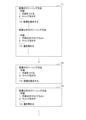
- FIG. 4 is a schematic diagram showing examples of the original data 11 and the target data 12.
- the original data 11 is a manual for a substrate processing device, and includes text relating to a method for cleaning piping and a method for cleaning other than piping.
- the original data 11 is divided to generate multiple target data 12.
- target data 12 including only text relating to a method for cleaning piping and target data 12 including only text relating to a method for cleaning other than piping are generated from the original data 11.
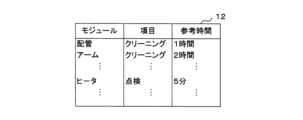
- FIG. 5 is a chart showing another example of target data 12.
- the target data 12 shown in FIG. 5 is data in a table format.
- a task item such as cleaning and a reference time that is a reference value for the task time are recorded.
- target data 12 consisting of text or target data 12 in a table format is generated from the original data 11.
- Target data 12 in a graph format may also be generated.
- the calculation unit 31 generates target data 12 consisting of sentences, for example, by dividing the original data 11 by chapter, item, page, or paragraph.
- the calculation unit 31 generates target data 12 in tabular form, for example, by extracting a table included in the original data 11.
- the calculation unit 31 may display the contents of the original data 11 on the display unit 36 and generate target data 12 according to an instruction input by a user who has confirmed the contents of the original data 11.
- the calculation unit 31 receives an instruction specifying a position to divide the original data 11 or a part to be extracted from the original data 11 by the user operating an operation unit included in the input unit 35.
- the calculation unit 31 generates target data 12 by dividing the original data 11 or extracting a part from the original data 11 according to the received instruction.
- the calculation unit 31 may receive a specification of multiple contents to be extracted from the original data 11, extract the specified multiple contents from the original data 11, and combine the extracted multiple contents to generate target data 12 consisting of sentences or target data 12 in tabular form. In this way, multiple target data 12 are generated, each of which contains only a portion of the information contained in the original data 11.
- the information processing device 3 may receive multiple pieces of target data 12 that have already been generated through the input unit 35.
- the calculation unit 31 stores the multiple pieces of target data 12 that have been generated or the multiple pieces of target data 12 that have been input in the storage unit 33.
- the calculation unit 31 acquires the target data 12 by reading the target data 12 from the storage unit 33.
- the information processing device 3 inputs a request to generate related data 13 related to the target data 12 to the language generation model 21 (S12).
- the related data 13 is a question for the target data 12, a summary of the target data 12, or a question for the summary.
- the calculation unit 31 generates a prompt including the target data 12 and a request to generate the related data 13, and inputs the generated prompt to the language generation model 21.
- the calculation unit 31 may input to the language generation model 21 a prompt that includes, instead of the target data 12, information for referencing the target data 12, such as an address where the target data 12 is stored.
- the calculation unit 31 may use a prompt including the summary of the target data 12 generated using the language generation model 21, instead of the target data 12.
- a prompt including the summary of the target data 12 generated using the language generation model 21, instead of the target data 12.
- An example of the prompt is shown below. "Please create a question that can be answered using only the following summary: ⁇ Summary ⁇ "
- the position of ⁇ summary ⁇ in the example prompt includes a summary of the target data 12 generated using the language generation model 21.
- the prompt may include information for referring to the summary instead of the summary.
- the calculation unit 31 may create text data representing the contents of the tabular target data 12, such as data in which the contents of the tabular target data 12 are written down in text, an explanatory sentence explaining the contents of the target data 12, or data in which the target data 12 is converted into a Markdown format, and include the text data in the prompt.
- the language generation model 21 performs calculations and outputs sentences in response to the input of a prompt.
- the prompt input to the language generation model 21 includes a request to generate associated data 13 related to the target data 12, so the language generation model 21 outputs associated data 13 corresponding to the target data 12.
- the output associated data 13 is a question for the target data 12, a summary of the target data 12, or a question for the summary.
- the information processing device 3 acquires the associated data 13 related to the target data 12 (S13).
- the calculation unit 31 acquires the associated data 13 output by the language generation model 21.
- the calculation unit 31 repeats the processes of S12 and S13 for one target data 12 and acquires multiple associated data 13 related to one target data 12.
- the calculation unit 31 causes the language generation model 21 to generate multiple associated data 13 using multiple types of prompts as described above.
- the calculation unit 31 also repeats the processes of S12 and S13 for each of the multiple target data 12 and acquires multiple associated data 13 related to each of the multiple target data 12.
- the calculation unit 31 may select the type of the associated data 13 to be acquired from among a question sentence for the target data 12, a summary of the target data 12, and a question sentence for the summary.
- the calculation unit 31 may select the type of associated data 13 to be acquired or a combination of multiple types, or acquire all types of associated data 13, according to an instruction from the user.
- the information processing device 3 stores the target data 12 and the related data 13 in the database 22 (S14).
- the calculation unit 31 associates the target data 12 with the related data 13 related to the target data 12 and stores them in the database 22. At this time, the calculation unit 31 associates the multiple related data 13 acquired for one piece of target data 12 with the one piece of target data 12.
- FIG. 6 is a schematic diagram showing an example of the contents stored in the database 22.
- a plurality of target data 12 are stored, and a plurality of related data 13 are associated with each of the target data 12.
- the target data 12 including information on a method for cleaning pipes is associated with a plurality of related data 13 that are questions for the target data 12, such as "How do you clean pipes?" or "Do you wear gloves when cleaning pipes?".
- the target data 12 may be associated with a summary of the target data 12 or a question for the summary as the related data 13.
- the calculation unit 31 for example, vectorizes the target data 12 and related data 13 and stores them in the database 22.
- the calculation unit 31 may select the type of related data 13 to be stored in the database 22 from among a question for the target data 12, a summary of the target data 12, and a question for the summary.
- the calculation unit 31 may select a type or a combination of multiple types of related data 13 to be stored in the database 22 in accordance with instructions from the user, or may store all types of related data 13 in the database 22.
- the information processing device 3 ends the process of storing the target data 12 and related data 13 in the database 22.
- the processes of S11 to S14 are executed as needed.
- FIG. 7 is a flowchart showing an example of the procedure of a process executed by the information processing device 3 to output an answer to a question from a user.
- the calculation unit 31 executes information processing according to the computer program 331, causing the information processing device 3 to execute the following process.
- the information processing device 3 acquires a question from the user (S21).
- the user operates an operation unit included in the input unit 35 to input a question from the user to the information processing device 3, and the calculation unit 31 acquires the input question.
- the question may be input by voice input.
- the question from the user is a question about the substrate processing device or system. In other words, the question from the user is a question about the information included in the original data 11.
- the calculation unit 31 stores the acquired question in the memory unit 33.
- the information processing device 3 searches the database 22 for related data 13 based on the acquired question (S22).
- the calculation unit 31 searches for related data 13 that is highly similar to the acquired question from among the multiple related data 13 stored in the database 22.
- the calculation unit 31 vectorizes the acquired question, calculates the similarity between the vectorized question and the multiple vectorized related data 13, and searches for related data 13 with the maximum similarity.
- the calculation unit 31 calculates similarity based on cosine similarity or Euclidean distance as the similarity. By using the similarity, it is possible to search for related data 13 that is similar to the acquired question.
- the calculation unit 31 may search for related data 13 using a method other than the method of calculating similarity, such as performing morphological analysis to search for related data 13 that has the closest meaning to the question.
- the calculation unit 31 may select, as the related data 13 to search, a type from among a question for the target data 12, a summary of the target data 12, and a question for the summary. For example, the calculation unit 31 may select a type or a combination of multiple types of related data 13 to search, or may search for all types of related data 13, according to instructions from the user.
- the information processing device 3 extracts the target data 12 associated with the searched related data 13 from the database 22 (S23).
- the calculation unit 31 extracts the target data 12 stored in the database 22 in association with the related data 13 obtained by the search. That is, the target data 12 is extracted according to the question. For example, the question "Do I not need to wear gloves when cleaning pipes?" is acquired in S21, and in S22, the related data 13 "Do I wear gloves when cleaning pipes?" included in the example shown in FIG. 6 is searched for.
- the target data 12 including information on the method of cleaning pipes, included in the example shown in FIG. 6, is extracted.
- the calculation unit 31 may search the database 22 for target data 12 based on the question, and extract the searched target data 12 from the database 22. For example, the calculation unit 31 searches the database 22 for target data 12 that is highly similar to the question. Even when performing this process, the information processing device 3 can obtain appropriate target data 12 as the basis for an answer to the question from the user.
- the information processing device 3 inputs the question from the user and the extracted target data 12 to the language generation model 21 (S24).
- the calculation unit 31 generates a prompt including a request to answer the question based on the extracted target data 12, and inputs the generated prompt to the language generation model 21.
- the position of ⁇ question ⁇ in the example prompt includes the question acquired in S21, and the position of ⁇ target data ⁇ includes the target data 12 extracted in S23.
- the calculation unit 31 may input to the language generation model 21 a prompt that includes, instead of the target data 12, information for referencing the target data 12, such as an address in the database 22 where the target data 12 is stored.
- the language generation model 21 performs calculations in response to the input of a prompt and outputs an answer to the question. Since the prompt input to the language generation model 21 includes a request to answer the question based on the target data 12, the language generation model 21 outputs an answer based on the target data 12. For example, in response to the question “Do I need to wear gloves when cleaning pipes?", the answer "You need to wear gloves” is output based on the target data 12, which includes information on how to clean pipes, as included in the example shown in Figure 6.
- the information processing device 3 acquires an answer to the question from the user (S25). In S25, the calculation unit 31 acquires the answer output by the language generation model 21. The calculation unit 31 stores the acquired answer in the memory unit 33. The information processing device 3 outputs the acquired answer (S26). In S26, the calculation unit 31 outputs the answer by displaying an image including the acquired answer on the display unit 36.
- the calculation unit 31 may output the related data 13 searched for in S22 in addition to the answer by displaying on the display unit 36 an image including the related data 13 searched for in S22.
- the user can determine whether the searched related data 13 is data that is far removed from the question. If the searched related data 13 is data that is far removed from the question, there is a high possibility that the answer to the question is incorrect.
- the calculation unit 31 may output the target data 12 extracted in S23 in addition to the answer by displaying on the display unit 36 an image including the target data 12 extracted in S23. By outputting the extracted target data 12, the user can confirm the information on which the answer is based.
- the calculation unit 31 may output information for referencing the target data 12 extracted in S23, such as a link to the target data 12 stored in the database 22. Even in this case, the user can confirm the information on which the answer is based.
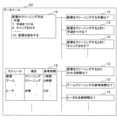
- FIG. 8 is a schematic diagram showing an example of an output answer.
- FIG. 8 shows an example of an image including an answer displayed on the display unit 36.
- the image includes a field for inputting a question, and the question "Do I need to wear gloves when cleaning pipes?" is input.
- the image includes the answer "You need to wear gloves” in response to the question, and further includes the contents of the searched related data 13 and a link to reference the extracted target data 12.
- the answer, the searched related data 13, and the link to the extracted target data 12 are output.
- the user can confirm the desired answer in response to the question by visually checking the image displayed on the display unit 36.
- the user can also confirm the contents of the searched related data 13, and can also confirm the contents of the target data 12 by using the link to the target data 12.
- the calculation unit 31 may output the original data 11 on which the target data 12 extracted in S23 was based.
- the memory unit 33 stores the original data 11, and the calculation unit 31 displays an image including the original data 11 on which the target data 12 was based on the display unit 36.
- a portion of the original data 11 on which the target data 12 is based may be output.
- a page of the original data 11, which is a manual, that corresponds to the contents of the target data 12 may be displayed, or the original data 11 may be displayed with the portion that corresponds to the contents of the target data 12 highlighted.
- the calculation unit 31 may output information for referencing the original data 11, such as a link to the original data 11 stored in the memory unit 33. In these forms, the user can confirm the original source of the information on which the answer was based.
- the information processing device 3 ends the process of outputting a response to the question from the user.
- the processes of S21 to S26 are executed as needed. For example, each time the user needs information about the substrate processing device or the system, the user inputs a question into the information processing device 3, and the processes of S21 to S26 are executed. For example, the processes of S21 to S26 are repeated in response to the user's operation.
- the information processing device 3 may perform a process to acquire a response from the user to the output answer.
- the response is, for example, information indicating that the user is satisfied with the answer.
- the user operates an operation unit included in the input unit 35, whereby the response from the user is input to the information processing device 3, and the information processing device 3 acquires the response.
- the calculation unit 31 may store the question in the database 22 in association with the target data 12 extracted in S23. Thereafter, the question stored in the database 22 is used as one of the related data 13 related to the target data 12. This process increases the related data 13 related to the target data 12, making it easier to extract appropriate target data 12 according to the question.
- the information processing device 3 creates associated data 13 related to the target data 12 that is created from the original data 11 and is the subject of reference by the user, and stores the target data 12 and the associated data 13 in a database 22 in association with each other.
- the associated data 13 consists of a question for the target data 12, a summary of the target data 12, or a question for the summary, and is generated using a language generation model 21.
- the language generation model 21 it is possible to easily generate associated data 13 that reflects the contents of the target data 12.
- the information processing device 3 acquires a question from a user, searches the database 22 for related data 13 based on the question, and extracts target data 12 associated with the searched related data 13.
- the information processing device 3 acquires an answer to the question using the language generation model 21 based on the extracted target data 12.
- the question sentence for the target data 12 to be referred to in order to answer the user's question, the summary of the target data 12, or the question sentence for the summary may contain content similar to the question from the user. Therefore, by extracting from the database 22 the target data 12 associated with related data 13 similar to the question, it is possible to select the target data 12 to be referred to in order to answer the question. Since an answer is obtained using the language generation model 21 based on the target data 12 to be referred to in order to answer the question, an appropriate answer according to the question is obtained.
- the user can obtain the necessary information by inputting questions about the substrate processing apparatus or system and obtaining answers. For example, if information about a pipe cleaning method is to be obtained from the original data 11 shown in FIG. 4, a conventional search method using keywords may result in information about cleaning methods other than those for pipes being searched for.
- target data 12 about the pipe cleaning method is extracted from multiple target data 12, and an answer about the pipe cleaning method is obtained based on the extracted target data 12. In this way, the user can easily obtain the desired information about the substrate processing apparatus or system.
- the original data 11 and the target data 12 are data containing information about the substrate processing apparatus or a system related to the substrate processing apparatus.
- the original data 11 and the target data 12 may be data containing information about an apparatus other than the substrate processing apparatus, such as a machine tool, or a system related to the apparatus.
- an example has been shown in which the same language generation model 21 is used in the processes of S11 to S14 and S21 to S26, but different language generation models may be used in the processes of S11 to S14 and S21 to S26.
- the process of S11 to S14 and the process of S21 to S26 are executed on the same information processing device 3, but the process of S11 to S14 and the process of S21 to S26 may be executed by different information processing devices.
- one information processing device may execute the processes of S11 to S14 to create the database 22, and another information processing device may execute the processes of S21 to S26 using the created database 22.
- an information processing device used by a business providing an information search service may execute the processes of S11 to S14 to create the database 22, and an information processing device used by a user of the service may execute the processes of S21 to S26 using the database 22.
Landscapes
- Engineering & Computer Science (AREA)
- Theoretical Computer Science (AREA)
- Databases & Information Systems (AREA)
- Physics & Mathematics (AREA)
- General Engineering & Computer Science (AREA)
- General Physics & Mathematics (AREA)
- Data Mining & Analysis (AREA)
- Computational Linguistics (AREA)
- Mathematical Physics (AREA)
- Artificial Intelligence (AREA)
- Software Systems (AREA)
- Evolutionary Computation (AREA)
- Computing Systems (AREA)
- Library & Information Science (AREA)
- Information Retrieval, Db Structures And Fs Structures Therefor (AREA)
Abstract
使用者が所望する情報を得るための情報処理方法、コンピュータプログラム及び情報処理装置を提供する。 特定の装置又はシステムに関する対象データに対する質問文、該対象データの要約又は該要約に対する質問文からなる関連データを作成する要求を、言語生成モデルへ入力し、該言語生成モデルが出力する関連データを取得し、対象データと関連データとを互いに関連付けてデータベースに記憶し、前記装置又は前記システムに関する質問を取得し、前記質問に基づいて関連データを前記データベースから検索し、検索した関連データに関連付けられた対象データを前記データベースから抽出し、前記質問と、抽出した対象データとを言語生成モデルへ入力し、該言語生成モデルが出力する前記質問に対する回答を取得し、取得した回答を出力する。
Description
本開示は、情報処理方法、コンピュータプログラム及び情報処理装置に関する。
工作機械等の何らかの装置に関して、操作又はメンテナンス等の何らかの作業を行う際には、装置に関する情報を参照したいことがある。例えば、装置の清掃を行う際には、清掃の手順を説明した情報を参照することが望ましい。複数の装置を含んでなるシステムに関しても、同様に、システムに関する情報を参照したいことがある。特許文献1には、半導体ウエハ又はガラス基板等の基板に対してエッチング又は成膜等の処理を行う基板処理装置に関して、作業のために有用な情報を表示する技術が開示されている。
装置又はシステムに関する情報は、マニュアル等の多量の情報を含むデータに含まれている。使用者は、データから所望の情報を検索し、利用することができる。しかしながら、キーワードを用いる等の従来の検索方法では、使用者が所望する情報を探し出すことが困難なことがある。
本開示は、使用者が所望する情報を得るための情報処理方法、コンピュータプログラム及び情報処理装置を提供する。
本開示の一態様による情報処理方法は、特定の装置又はシステムに関する対象データに対する質問文、該対象データの要約又は該要約に対する質問文からなる関連データを作成する要求を、言語生成モデルへ入力し、該言語生成モデルが出力する関連データを取得し、対象データと関連データとを互いに関連付けてデータベースに記憶し、前記装置又は前記システムに関する質問を取得し、前記質問に基づいて関連データを前記データベースから検索し、検索した関連データに関連付けられた対象データを前記データベースから抽出し、前記質問と、抽出した対象データとを言語生成モデルへ入力し、該言語生成モデルが出力する前記質問に対する回答を取得し、取得した回答を出力する。
本開示によれば、使用者が所望する情報を得るための情報処理方法、コンピュータプログラム及び情報処理装置を提供することができる。
以下本開示をその実施の形態を示す図面に基づき具体的に説明する。
特定の装置又はシステムに関して、種々の情報を参照したいことがある。例えば、装置は、半導体ウエハ又はガラス基板等の基板に対してエッチング又は成膜等の処理を行う基板処理装置である。例えば、システムは、基板処理装置に関連して使用される種々の機器を含んだシステムである。システムには、例えば、基板処理装置で行われるプロセスの内容を規定したレシピの保存若しくは基板処理装置に対する入出力を行う装置、基板処理装置の動作内容を記録したログデータの取得及び蓄積を行う装置等、基板処理装置の管理を行う機器が含まれ得る。システムには、複数の基板処理装置に対して管理を行うグループコントローラも含まれ得る。例えば、基板処理装置若しくはシステムの操作、又はメンテナンス等の基板処理装置又はシステムに対する作業を行う際には、使用者は、操作方法、作業の手順又は注意事項等、操作又は作業に関する情報を参照したいことがある。基板処理装置又はシステムに関するマニュアル等のデータには、多量の情報が含まれているので、キーワードを用いる等の従来の検索方法では、使用者が所望する情報が得られないことがある。例えば、基板処理装置の配管の清掃に関する情報が必要な場合に、配管以外の部分の清掃に関する情報が検索されてしまうことがある。本実施形態では、使用者が所望する情報を得るための情報処理方法が行われる。
特定の装置又はシステムに関して、種々の情報を参照したいことがある。例えば、装置は、半導体ウエハ又はガラス基板等の基板に対してエッチング又は成膜等の処理を行う基板処理装置である。例えば、システムは、基板処理装置に関連して使用される種々の機器を含んだシステムである。システムには、例えば、基板処理装置で行われるプロセスの内容を規定したレシピの保存若しくは基板処理装置に対する入出力を行う装置、基板処理装置の動作内容を記録したログデータの取得及び蓄積を行う装置等、基板処理装置の管理を行う機器が含まれ得る。システムには、複数の基板処理装置に対して管理を行うグループコントローラも含まれ得る。例えば、基板処理装置若しくはシステムの操作、又はメンテナンス等の基板処理装置又はシステムに対する作業を行う際には、使用者は、操作方法、作業の手順又は注意事項等、操作又は作業に関する情報を参照したいことがある。基板処理装置又はシステムに関するマニュアル等のデータには、多量の情報が含まれているので、キーワードを用いる等の従来の検索方法では、使用者が所望する情報が得られないことがある。例えば、基板処理装置の配管の清掃に関する情報が必要な場合に、配管以外の部分の清掃に関する情報が検索されてしまうことがある。本実施形態では、使用者が所望する情報を得るための情報処理方法が行われる。
図1は、本実施形態に係る情報処理方法の概要を示す概念図である。特定の装置又はシステムに関する原データ11が存在する。例えば、原データ11は、装置若しくはシステムのマニュアル、動作内容を記録したログデータ、アラームの履歴を記録したアラーム情報、トラブル対応の記録又はメンテナンスの記録等である。トラブル対応の記録は、アラームに対応した作業の記録を含み、例えば、アラームの受け付け、部品の交換、部品の組付け直し、部品の洗浄又はセンサの較正等、アラームの発生に応じて装置又はシステムを復旧させる作業の内容を含み得る。原データ11から、複数の対象データ12が生成される。対象データ12は、使用者からの参照の対象となるデータである。対象データ12は、原データ11を分割するか、又は原データ11の一部を抽出することによって生成される。対象データ12は、原データ11から抽出された複数の要素を組み合わせることによって生成されてもよい。
対象データ12は言語生成モデル21へ入力され、言語生成モデル21から対象データ12に関連する関連データ13が出力される。関連データ13は、対象データ12に対する質問文、対象データ12の要約、又は要約に対する質問文からなる。言語生成モデル21を用いて、一つの対象データ12について複数の関連データ13が生成される。対象データ12と、当該対象データ12に関連する関連データ13とは、互いに関連付けけられてデータベース22に記憶される。
対象データ12及び関連データ13がデータベース22に記憶されている状態で、基板処理装置又はシステムに対する使用者からの質問が取得される。質問に基づいて関連データ13がデータベース22から検索され、検索された関連データ13に関連付けられた対象データ12がデータベース22から抽出される。質問と、抽出された対象データ12とが言語生成モデル21へ入力され、言語生成モデル21から質問に対する回答が出力される。回答は、基板処理装置又はシステムに関する情報に対応する。例えば、回答は、基板処理装置若しくはシステムの操作に関する情報、又は基板処理装置若しくはシステムに対する作業に関する情報となる。
情報処理方法は、情報処理装置によって実行される。図2は、情報処理装置3の内部の構成例を示すブロック図である。情報処理装置3は、情報処理方法を実行する。情報処理装置3は、パーソナルコンピュータ又はサーバ装置等のコンピュータを用いて構成されている。情報処理装置3は、演算部31と、メモリ32と、記憶部33と、読取部34と、入力部35と、表示部36とを備えている。演算部31は、例えば、プロセッサであり、CPU(Central Processing Unit )、GPU(Graphics Processing Unit)、又はマルチコアCPUを用いて構成されている。演算部31は、量子コンピュータを用いて構成されていてもよい。メモリ32は、演算に伴って発生する一時的なデータを記憶する。メモリ32は、例えばRAM(Random Access Memory)である。記憶部33は、不揮発性であり、例えばハードディスク又は不揮発性半導体メモリである。読取部34は、光ディスク又は可搬型メモリ等の記録媒体30から情報を読み取る。
入力部35は、データの入力を受け付ける。入力部35は、使用者からの操作を受け付けることにより、テキスト等の情報の入力を受け付ける操作部を含む。操作部は、例えばタッチパネル、キーボード又はポインティングデバイスである。入力部35は、情報処理装置3の外部から種々のデータを入力される入力インタフェースを含んでいてもよい。表示部36は、画像を表示する。表示部36は、例えば液晶ディスプレイ又はELディスプレイ(Electroluminescent Display)である。
演算部31は、記録媒体30に記録されたコンピュータプログラム331を読取部34に読み取らせ、読み取ったコンピュータプログラム331を記憶部33に記憶させる。演算部31は、コンピュータプログラム331に従って、情報処理装置3の機能を実現するための処理を実行する。コンピュータプログラム331はプログラム製品であってもよい。コンピュータプログラム331は、予め記憶部33に記憶されているか、又は情報処理装置3の外部からダウンロードされてもよい。この場合は、情報処理装置3は読取部34を備えていなくてもよい。
コンピュータプログラム331は、単一のコンピュータ上で、又は一つのサイトにおいて配置されるか、若しくは複数のサイトにわたって分散され、通信ネットワークによって相互接続された複数のコンピュータ上で実行されるように展開することができる。即ち、情報処理装置3は、複数のコンピュータで構成されてもよく、コンピュータプログラム331は、通信ネットワークを介して接続された複数のコンピュータ上で実行されてもよい。情報処理装置3は、クラウドサーバを用いて構成されていてもよい。
情報処理方法を実行するための後述する各ステップの処理は、複数のコンピュータで実行することが可能である。各ステップの処理は、互いに異なるコンピュータで実行することも可能である。各ステップの処理は、仮想マシンを用いて実行することも可能である。各ステップの処理は、複数の演算部が実行してもよい。各ステップの処理は、互いに異なる演算部が実行してもよい。
情報処理装置3は、言語生成モデル21を備えている。言語生成モデル21は、何らかの回答を要求する命令文からなるプロンプトとプロンプトに付属する情報とを入力された場合に、入力されたプロンプト及び情報に応じた文章を出力するように学習された学習済モデルである。例えば、言語生成モデル21は、大規模言語モデルである。より具体的には、言語生成モデル21は、BERT、GPT-4、Bard、又はLLaMA等である。言語生成モデル21は予め学習されている。
言語生成モデル21は、コンピュータプログラム331に従って演算部31が情報処理を実行することにより実現される。記憶部33は、言語生成モデル21を実現するためのデータを記憶している。なお、言語生成モデル21は、ハードウェアにより構成されていてもよい。言語生成モデル21は、量子コンピュータを用いて実現されてもよい。或いは、言語生成モデル21は情報処理装置3の外部に設けられ、情報処理装置3は、外部の言語生成モデル21を利用して処理を実行する形態であってもよい。言語生成モデル21は、通信ネットワークを介して接続された複数のコンピュータを用いて実現されていてもよく、クラウドを利用して実現されていてもよい。
情報処理装置3は、データベース22を備えている。データベース22は、前述したように、対象データ12及び関連データ13を記憶するためのものである。データベース22は、記憶部33が必要なデータを記憶することにより実現される。データベース22は、記憶部33以外のハードウェアを用いて構成されていてもよい。データベース22は、複数のコンピュータを用いて構成されていてもよい。例えば、データベース22に記憶されるデータは複数のコンピュータに分散して記憶されてもよい。或いは、データベース22は情報処理装置3の外部に設けられ、情報処理装置3は、外部のデータベース22を利用して処理を実行する形態であってもよい。
情報処理装置3は、対象データ12及び関連データ13をデータベース22に記憶する処理を行う。図3は、情報処理装置3が実行する対象データ12及び関連データ13をデータベース22に記憶する処理の手順の例を示すフローチャートである。以下、ステップをSと略す。演算部31がコンピュータプログラム331に従って情報処理を実行することにより、情報処理装置3は以下の処理を実行する。
情報処理装置3は、対象データ12を取得する(S11)。入力部35を通じて原データ11が情報処理装置3へ入力され、記憶部33に記憶され、又は原データ11が記憶部33に予め記憶されており、原データ11から複数の対象データ12が生成される。図4は、原データ11及び対象データ12の例を示す模式図である。図4に示す例では、原データ11は基板処理装置のマニュアルであり、配管のクリーニング方法と、配管以外のクリーニング方法とに関する文章が含まれている。原データ11が分割されることにより、複数の対象データ12が生成される。図4に示す例では、配管のクリーニング方法に関する文章のみを含む対象データ12と、配管以外のクリーニング方法に関する文章のみを含む対象データ12とが、原データ11から生成される。
図5は、対象データ12の他の例を示す図表である。図5に示す対象データ12は表形式のデータである。基板処理装置の配管等の各モジュールについて、クリーニング等の作業項目と、作業時間の参考値である参考時間とが記録されている。このように、原データ11から、文章からなる対象データ12、又は表形式の対象データ12が生成される。グラフ形式の対象データ12が生成されてもよい。
演算部31は、例えば、原データ11を、章別、項目別、ページ別又は段落別に分割することにより、文章からなる対象データ12を生成する。演算部31は、例えば、原データ11に含まれる表を抽出することにより、表形式の対象データ12を生成する。演算部31は、原データ11の内容を表示部36に表示し、原データ11の内容を確認した使用者から入力された指示に応じて、対象データ12を生成してもよい。例えば、演算部31は、入力部35に含まれる操作部を使用者が操作することにより、原データ11を分割する位置又は原データ11から抽出すべき部分を指定する指示を受け付ける。演算部31は、受け付けた指示に従って、原データ11を分割するか、又は原データ11から一部を抽出することによって、対象データ12を生成する。演算部31は、原データ11から抽出すべき複数の内容の指定を受け付け、指定された複数の内容を原データ11から抽出し、抽出した複数の内容を組み合わせて文章からなる対象データ12又は表形式の対象データ12を生成してもよい。このようにして、原データ11に含まれる情報の一部のみを夫々に含んだ複数の対象データ12が生成される。
情報処理装置3は、入力部35を通じて、既に生成された複数の対象データ12を入力されてもよい。演算部31は、生成した複数の対象データ12又は入力された複数の対象データ12を記憶部33に記憶する。S11では、演算部31は、記憶部33から対象データ12を読み出すことにより、対象データ12を取得する。
情報処理装置3は、対象データ12に関する関連データ13を生成する要求を言語生成モデル21へ入力する(S12)。関連データ13は、対象データ12に対する質問文、対象データ12の要約、又は要約に対する質問文である。S12では、演算部31は、対象データ12と関連データ13を生成する要求とを含むプロンプトを生成し、生成したプロンプトを言語生成モデル21へ入力する。
S12で演算部31が言語生成モデル21へ入力するプロンプトの例を以下に示す。
「以下の対象データのみから回答できる質問文を作成して下さい。{対象データ}」
「以下の対象データの要約を、元の文章の1/10以下の文章で作成して下さい。{対象データ}」
「以下の対象データの要約を、元の文章の1/10以下の文章で作成し、作成した要約のみから回答できる質問文を作成して下さい。{対象データ}」
プロンプトの例に含まれる{対象データ}の位置には、対象データ12が含まれる。演算部31は、対象データ12の代わりに、対象データ12が記憶されているアドレス等の対象データ12を参照するための情報を含ませたプロンプトを言語生成モデル21へ入力してもよい。
「以下の対象データのみから回答できる質問文を作成して下さい。{対象データ}」
「以下の対象データの要約を、元の文章の1/10以下の文章で作成して下さい。{対象データ}」
「以下の対象データの要約を、元の文章の1/10以下の文章で作成し、作成した要約のみから回答できる質問文を作成して下さい。{対象データ}」
プロンプトの例に含まれる{対象データ}の位置には、対象データ12が含まれる。演算部31は、対象データ12の代わりに、対象データ12が記憶されているアドレス等の対象データ12を参照するための情報を含ませたプロンプトを言語生成モデル21へ入力してもよい。
関連データ13として対象データ12の要約に対する質問文を生成する際には、演算部31は、対象データ12の代わりに、言語生成モデル21を用いて生成された対象データ12の要約を含んだプロンプトを用いてもよい。プロンプトの例を以下に示す。
「以下の要約のみから回答できる質問文を作成して下さい。{要約}」
プロンプトの例に含まれる{要約}の位置には、言語生成モデル21を用いて生成された対象データ12の要約が含まれる。プロンプトには、要約の代わりに、要約を参照するための情報が含まれていてもよい。対象データ12が表形式のデータである場合は、演算部31は、表形式の対象データ12の内容をテキストで書き下したデータ、対象データ12の内容を説明する説明文、又は対象データ12をマークダウン形式に変換したデータ等、表形式の対象データ12の内容を表したテキストデータを作成し、プロンプトに含ませてもよい。
「以下の要約のみから回答できる質問文を作成して下さい。{要約}」
プロンプトの例に含まれる{要約}の位置には、言語生成モデル21を用いて生成された対象データ12の要約が含まれる。プロンプトには、要約の代わりに、要約を参照するための情報が含まれていてもよい。対象データ12が表形式のデータである場合は、演算部31は、表形式の対象データ12の内容をテキストで書き下したデータ、対象データ12の内容を説明する説明文、又は対象データ12をマークダウン形式に変換したデータ等、表形式の対象データ12の内容を表したテキストデータを作成し、プロンプトに含ませてもよい。
言語生成モデル21は、プロンプトの入力に応じて、演算を行い、文章を出力する。言語生成モデル21へ入力されるプロンプトは、対象データ12に関する関連データ13を生成する要求を含んでいるので、言語生成モデル21は、対象データ12に応じた関連データ13を出力する。出力される関連データ13は、対象データ12に対する質問文、対象データ12の要約、又は要約に対する質問文である。
情報処理装置3は、対象データ12に関する関連データ13を取得する(S13)。S13では、演算部31は、言語生成モデル21が出力した関連データ13を取得する。演算部31は、一つの対象データ12についてS12及びS13の処理を繰り返し、一つの対象データ12に関する複数の関連データ13を取得する。例えば、演算部31は、前述したような複数種類のプロンプトを用いて、言語生成モデル21に複数の関連データ13を生成させる。また、演算部31は、複数の対象データ12の夫々についてS12及びS13の処理を繰り返し、複数の対象データ12の夫々に関する複数の関連データ13を取得する。演算部31は、取得する関連データ13として、対象データ12に対する質問文、対象データ12の要約、及び要約に対する質問文の内の種類を選択してもよい。例えば、演算部31は、使用者からの指示に従って、取得する関連データ13の種類若しくは複数の種類の組み合わせを選択するか、又は全ての種類の関連データ13を取得するようにしてもよい。
情報処理装置3は、対象データ12及び関連データ13をデータベース22に記憶する(S14)。S14では、演算部31は、対象データ12と対象データ12に関する関連データ13とを互いに関連付けてデータベース22に記憶させる。このとき、演算部31は、一つの対象データ12について取得した複数の関連データ13を、当該一つの対象データ12に関連付ける。
図6は、データベース22の記憶内容の例を示す模式図である。データベース22では、複数の対象データ12が記憶され、夫々の対象データ12に複数の関連データ13が関連付けられている。例えば、配管のクリーニング方法に関する情報を含む対象データ12には、「配管をクリーニングする方法は?」又は「配管をクリーニングするときに手袋をつける?」等、当該対象データ12に対する質問である複数の関連データ13が関連付けられている。対象データ12には、関連データ13として、対象データ12の要約又は要約に対する質問文が関連付けられてもよい。
S14では、演算部31は、例えば、対象データ12及び関連データ13をベクトル化してデータベース22に記憶させる。演算部31は、データベース22に記憶させる関連データ13として、対象データ12に対する質問文、対象データ12の要約、及び要約に対する質問文の内の種類を選択してもよい。例えば、演算部31は、使用者からの指示に従って、データベース22に記憶させる関連データ13の種類若しくは複数の種類の組み合わせを選択するか、又は全ての種類の関連データ13をデータベース22に記憶させるようにしてもよい。S14が終了した後、情報処理装置3は、対象データ12及び関連データ13をデータベース22に記憶する処理を終了する。S11~S14の処理は、随時実行される。
データベース22に対象データ12及び関連データ13が記憶されている状態で、情報処理装置3は、データベース22に基づき、使用者からの質問に対する回答を出力する処理を行う。図7は、情報処理装置3が実行する使用者からの質問に対する回答を出力する処理の手順の例を示すフローチャートである。演算部31がコンピュータプログラム331に従って情報処理を実行することにより、情報処理装置3は以下の処理を実行する。
情報処理装置3は、使用者からの質問を取得する(S21)。S21では、入力部35に含まれる操作部を使用者が操作することにより、使用者からの質問が情報処理装置3へ入力され、演算部31は、入力された質問を取得する。質問は音声入力によって入力されてもよい。使用者からの質問は、基板処理装置又はシステムに対する質問である。即ち、使用者からの質問は、原データ11に含まれる情報に関する質問である。演算部31は、取得した質問を記憶部33に記憶する。
情報処理装置3は、取得した質問に基づいて関連データ13をデータベース22から検索する(S22)。S22では、演算部31は、データベース22に記憶している複数の関連データ13の中から、取得した質問と類似度の高い関連データ13を検索する。例えば、演算部31は、取得した質問をベクトル化し、ベクトル化した質問とベクトル化した複数の関連データ13との類似度を計算し、類似度が最大になる関連データ13を検索する。演算部31は、例えば、類似度として、コサイン類似度、又はユークリッド距離に基づいた類似度を計算する。類似度を用いることにより、取得した質問に類似する関連データ13を探索することができる。演算部31は、形態素解析を行って質問に最も近い意味を持つ関連データ13を検索する等、類似度を計算する方法以外の方法を用いて関連データ13を検索してもよい。
演算部31は、検索する関連データ13として、対象データ12に対する質問文、対象データ12の要約、及び要約に対する質問文の内の種類を選択してもよい。例えば、演算部31は、使用者からの指示に従って、検索する関連データ13の種類若しくは複数の種類の組み合わせを選択するか、又は全ての種類の関連データ13を検索するようにしてもよい。
情報処理装置3は、検索した関連データ13に関連付けられた対象データ12をデータベース22から抽出する(S23)。S23では、演算部31は、検索によって得られた関連データ13に関連付けてデータベース22に記憶されている対象データ12を抽出する。即ち、質問に応じて対象データ12が抽出される。例えば、「配管をクリーニングするときに手袋はつけなくても良いですか?」という質問がS21で取得され、S22では、図6に示す例に含まれる「配管をクリーニングするときに手袋をつける?」という関連データ13が検索される。S23では、図6に示す例に含まれる、配管のクリーニング方法に関する情報を含む対象データ12が抽出される。
S22及びS23では、演算部31は、質問に基づいて対象データ12をデータベース22から検索し、検索した対象データ12をデータベース22から抽出してもよい。例えば、演算部31は、質問との類似度の高い対象データ12をデータベース22から検索する。この処理を行う場合においても、情報処理装置3は、使用者からの質問に対する回答の根拠として適切な対象データ12を取得することができる。
情報処理装置3は、使用者からの質問及び抽出した対象データ12を言語生成モデル21へ入力する(S24)。S12では、演算部31は、抽出した対象データ12に基づいて質問に対して回答する要求を含むプロンプトを生成し、生成したプロンプトを言語生成モデル21へ入力する。
S24で演算部31が言語生成モデル21へ入力するプロンプトの例を以下に示す。
「以下の質問に、以下の対象データを基に回答して下さい。{質問}{対象データ}」
プロンプトの例に含まれる{質問}の位置には、S21で取得した質問が含まれ、{対象データ}の位置には、S23で抽出した対象データ12が含まれる。演算部31は、対象データ12の代わりに、対象データ12が記憶されているデータベース22内のアドレス等の対象データ12を参照するための情報を含ませたプロンプトを言語生成モデル21へ入力してもよい。
「以下の質問に、以下の対象データを基に回答して下さい。{質問}{対象データ}」
プロンプトの例に含まれる{質問}の位置には、S21で取得した質問が含まれ、{対象データ}の位置には、S23で抽出した対象データ12が含まれる。演算部31は、対象データ12の代わりに、対象データ12が記憶されているデータベース22内のアドレス等の対象データ12を参照するための情報を含ませたプロンプトを言語生成モデル21へ入力してもよい。
言語生成モデル21は、プロンプトの入力に応じて、演算を行い、質問に対する回答を出力する。言語生成モデル21へ入力されるプロンプトは、対象データ12に基づいて質問に回答する要求を含んでいるので、言語生成モデル21は、対象データ12に基づいた回答を出力する。例えば、「配管をクリーニングするときに手袋はつけなくても良いですか?」という質問に対して、図6に示す例に含まれる、配管のクリーニング方法に関する情報を含む対象データ12に基づいて、「手袋をつける必要があります。」という回答が出力される。
情報処理装置3は、使用者からの質問に対する回答を取得する(S25)。S25では、演算部31は、言語生成モデル21が出力した回答を取得する。演算部31は、取得した回答を記憶部33に記憶する。情報処理装置3は、取得した回答を出力する(S26)。S26では、演算部31は、取得した回答を含む画像を表示部36に表示することにより、回答を出力する。
演算部31は、S22で検索した関連データ13をも含む画像を表示部36に表示することにより、回答に加えて、S22で検索した関連データ13を出力してもよい。検索した関連データ13を出力することにより、検索した関連データ13が質問とはかけ離れたデータになっていないかを使用者が判断することができる。検索した関連データ13が質問とはかけ離れたデータである場合は、質問に対する回答が誤りである可能性が高くなる。
演算部31は、S23で抽出した対象データ12をも含む画像を表示部36に表示することにより、回答に加えて、S23で抽出した対象データ12を出力してもよい。抽出した対象データ12が出力されることにより、使用者は、回答の根拠になった情報を確認することができる。演算部31は、データベース22に記憶されている対象データ12へのリンク等のS23で抽出した対象データ12を参照するための情報を出力してもよい。この場合でも、使用者は、回答の根拠になった情報を確認することができる。
図8は、出力された回答の例を示す模式図である。図8には、表示部36に表示された回答を含む画像の例を示す。画像には、質問を入力する欄が含まれており、「配管をクリーニングするときに手袋はつけなくても良いですか?」という質問が入力されている。質問に応じた「手袋をつける必要があります。」という回答が画像に含まれている更に、検索された関連データ13の内容と、抽出された対象データ12を参照するためのリンクとが画像に含まれている。このように、回答と、検索された関連データ13と、抽出された対象データ12のリンクとが出力される。使用者は、表示部36に表示された画像を視認することにより、質問に応じた所望の回答を確認することができる。また、使用者は、検索された関連データ13の内容を確認することができ、対象データ12のリンクを利用して対象データ12の内容を確認することもできる。
演算部31は、回答に加えて、S23で抽出した対象データ12の元となった原データ11を出力してもよい。例えば、記憶部33は原データ11を記憶しており、演算部31は、対象データ12の元となった原データ11を含む画像を表示部36に表示する。原データ11の中で対象データ12の根拠となる部分が出力されてもよい。例えば、マニュアルである原データ11の中で対象データ12の内容に該当するページが表示されてもよく、対象データ12の内容に該当する部分がハイライトされた状態で原データ11が表示されてもよい。演算部31は、記憶部33に記憶されている原データ11へのリンク等の原データ11を参照するための情報を出力してもよい。これらの形態では、使用者は、回答の根拠になった情報の原典を確認することができる。
S26が終了した後は、情報処理装置3は、使用者からの質問に対する回答を出力する処理を終了する。S21~S26の処理は、随時実行される。例えば、基板処理装置又はシステムに関する情報を使用者が必要になる都度、使用者が質問を情報処理装置3へ入力し、S21~S26の処理が実行される。例えば、使用者による操作に応じて、S21~S26の処理が繰り返される。
なお、S26が終了した後、情報処理装置3は、出力した回答に対する使用者からの応答を取得する処理を行ってもよい。応答は、例えば、使用者が回答に満足したことを示す情報である。入力部35に含まれる操作部を使用者が操作することにより、使用者からの応答が情報処理装置3へ入力され、情報処理装置3は、応答を取得する。演算部31は、質問に対する回答を出力し、使用者が回答に満足したことを示す応答を取得した場合に、S23で抽出した対象データ12に関連付けて当該質問をデータベース22に記憶してもよい。以後、データベース22に記憶された質問は、対象データ12に関連する関連データ13の一つとして利用される。この処理により、対象データ12に関連する関連データ13が増加し、質問に応じた適切な対象データ12がより抽出されやすくなる。
以上詳述した如く、情報処理装置3は、原データ11から作成された使用者からの参照の対象となる対象データ12に関する関連データ13を作成し、対象データ12と関連データ13とを互いに関連付けてデータベース22に記憶する。関連データ13は、対象データ12に対する質問文、対象データ12の要約、又は要約に対する質問文からなり、言語生成モデル21を用いて生成される。言語生成モデル21を用いることにより、対象データ12の内容を反映した関連データ13を容易に生成することができる。
情報処理装置3は、使用者からの質問を取得し、質問に基づいて関連データ13をデータベース22から検索し、検索した関連データ13に関連付けられた対象データ12を抽出する。情報処理装置3は、抽出した対象データ12を基に、言語生成モデル21を用いて質問に対する回答を取得する。使用者からの質問へ回答するために参照すべき対象データ12に対する質問文、当該対象データ12の要約、又は要約に対する質問文は、使用者からの質問に類似する内容を含み得る。このため、質問に類似する関連データ13に関連付けられた対象データ12をデータベース22から抽出することにより、質問へ回答するために参照すべき対象データ12を選択し得る。質問へ回答するために参照すべき対象データ12を基に言語生成モデル21を用いて回答が得られるので、質問に応じた適切な回答が得られる。
使用者からの質問に対して適切な回答が得られるので、使用者は、基板処理装置又はシステムに関する質問を入力して回答を得ることにより、必要な情報を得ることができるようになる。例えば、図4に示す原データ11から配管のクリーニング方法に関する情報を取得したい場合には、従来のキーワードを用いた検索方法では、配管以外のクリーニング方法に関する情報が検索される可能性がある。本実施形態では、配管のクリーニング方法に関する質問に応じて、複数の対象データ12の中から配管のクリーニング方法に関する対象データ12が抽出され、抽出された対象データ12に基づいて、配管のクリーニング方法に関する回答が得られる。このように、使用者は、基板処理装置又はシステムに関して所望する情報を容易に得ることができる。
本実施形態においては、原データ11及び対象データ12が、基板処理装置又は基板処理装置に関連したシステムに関する情報を含んだデータである例を主に示した。代替的に、原データ11及び対象データ12は、工作機械等、基板処理装置以外の装置又は当該装置に関連したシステムに関する情報を含んだデータであってもよい。本実施形態においては、S11~S14の処理とS21~S26の処理とで同一の言語生成モデル21が使用される例を示したが、S11~S14の処理とS21~S26の処理とで異なる言語生成モデルが使用されてもよい。
本実施形態においては、同一の情報処理装置3においてS11~S14の処理とS21~S26の処理とを実行する形態を示したが、S11~S14の処理とS21~S26の処理とは別々の情報処理装置によって実行されてもよい。例えば、一の情報処理装置がS11~S14の処理を実行することによってデータベース22が作成され、作成されたデータベース22を利用して他の情報処理装置がS21~S26の処理を実行してもよい。例えば、情報検索のサービスを提供する事業者が使用する情報処理装置がS11~S14の処理を実行することによってデータベース22が作成され、サービスの利用者が使用する情報処理装置がデータベース22を利用してS21~S26の処理を実行してもよい。
本発明は上述した実施の形態の内容に限定されるものではなく、請求項に示した範囲で種々の変更が可能である。即ち、請求項に示した範囲で適宜変更した技術的手段を組み合わせて得られる実施形態も本発明の技術的範囲に含まれる。
各実施形態に記載した事項は相互に組み合わせることが可能である。また、請求の範囲に記載した独立請求項及び従属請求項は、引用形式に関わらず全てのあらゆる組み合わせにおいて、相互に組み合わせることが可能である。さらに、請求の範囲には他の2以上のクレームを引用するクレームを記載する形式(マルチクレーム形式)を用いていないが、これに限るものではない。マルチクレーム形式、又はマルチクレームを少なくとも一つ引用するマルチクレーム(マルチマルチクレーム)を記載する形式を用いて記載してもよい。
11 原データ
12 対象データ
13 関連データ
21 言語生成モデル
22 データベース
3 情報処理装置
30 記録媒体
31 演算部
33 記憶部
331 コンピュータプログラム
12 対象データ
13 関連データ
21 言語生成モデル
22 データベース
3 情報処理装置
30 記録媒体
31 演算部
33 記憶部
331 コンピュータプログラム
Claims (12)
- 特定の装置又はシステムに関する対象データに対する質問文、該対象データの要約又は該要約に対する質問文からなる関連データを作成する要求を、言語生成モデルへ入力し、該言語生成モデルが出力する関連データを取得し、
対象データと関連データとを互いに関連付けてデータベースに記憶し、
前記装置又は前記システムに関する質問を取得し、
前記質問に基づいて関連データを前記データベースから検索し、
検索した関連データに関連付けられた対象データを前記データベースから抽出し、
前記質問と、抽出した対象データとを言語生成モデルへ入力し、該言語生成モデルが出力する前記質問に対する回答を取得し、
取得した回答を出力する
情報処理方法。 - 複数の対象データに関する複数の関連データを取得し、
夫々の対象データと夫々の対象データに関する関連データとを互いに関連付けて前記データベースに記憶する
請求項1に記載の情報処理方法。 - 関連データを検索する際に、前記質問との類似度が高い関連データを検索する
請求項1に記載の情報処理方法。 - 前記質問に基づいて対象データを前記データベースから検索し、
前記質問と検索した対象データとを言語生成モデルへ入力し、該言語生成モデルが出力する前記質問に対する回答を取得する
請求項1に記載の情報処理方法。 - 出力した回答に対する応答を取得し、
前記質問に対する回答に満足したことを示す応答を取得した場合に、抽出した対象データに関連付けて前記質問を前記データベースに記憶する
請求項1に記載の情報処理方法。 - 取得した回答と共に、検索した関連データを出力する
請求項1に記載の情報処理方法。 - 取得した回答と共に、抽出した対象データ、該対象データへのリンク、前記対象データを作成する元となった原データ、又は該原データへのリンクを出力する
請求項1に記載の情報処理方法。 - 対象データは、前記装置若しくは前記システムのマニュアルから作成されたデータ、又は前記装置若しくは前記システムに関する表形式のデータである
請求項1に記載の情報処理方法。 - 前記装置は、基板処理装置であり、前記システムは、基板処理装置に関連して使用される機器を含んだシステムであり、
前記装置若しくは前記システムの操作に関する情報、又は前記装置若しくは前記システムに対する作業に関する情報を、回答として出力する
請求項1に記載の情報処理方法。 - 特定の装置又はシステムに関する対象データに対する質問文、該対象データの要約又は該要約に対する質問文からなる関連データを作成する要求を、言語生成モデルへ入力し、該言語生成モデルが出力する関連データを取得し、
対象データと関連データとを互いに関連付けてデータベースに記憶し、
前記装置又は前記システムに関する質問を取得し、
前記質問に基づいて関連データを前記データベースから検索し、
検索した関連データに関連付けられた対象データを前記データベースから抽出し、
前記質問と、抽出した対象データとを言語生成モデルへ入力し、該言語生成モデルが出力する前記質問に対する回答を取得し、
取得した回答を出力する
処理をコンピュータに実行させる、コンピュータプログラム。 - 特定の装置又はシステムに関する質問を取得し、
前記装置又は前記システムに関する対象データと、該対象データに対する質問文、該対象データの要約又は該要約に対する質問文からなる関連データとを互いに関連付けて記憶してあるデータベースから、前記質問に基づいて関連データを前記データベースから検索し、
検索した関連データに関連付けられた対象データを前記データベースから抽出し、
前記質問と、抽出した対象データとを言語生成モデルへ入力し、該言語生成モデルが出力する前記質問に対する回答を取得し、
取得した回答を出力する
処理をコンピュータに実行させる、コンピュータプログラム。 - 演算部を備え、
前記演算部は、
特定の装置又はシステムに関する対象データに対する質問文、該対象データの要約又は該要約に対する質問文からなる関連データを作成する要求を、言語生成モデルへ入力し、該言語生成モデルが出力する関連データを取得し、
対象データと関連データとを互いに関連付けてデータベースに記憶し、
前記装置又は前記システムに関する質問を取得し、
前記質問に基づいて関連データを前記データベースから検索し、
検索した関連データに関連付けられた対象データを前記データベースから抽出し、
前記質問と、抽出した対象データとを言語生成モデルへ入力し、該言語生成モデルが出力する前記質問に対する回答を取得し、
取得した回答を出力する
情報処理装置。
Priority Applications (2)
| Application Number | Priority Date | Filing Date | Title |
|---|---|---|---|
| KR1020267019148A KR20260115655A (ko) | 2023-11-27 | 2024-11-21 | 정보 처리 방법, 컴퓨터 프로그램 및 정보 처리 장치 |
| CN202480072155.8A CN122207025A (zh) | 2023-11-27 | 2024-11-21 | 信息处理方法、计算机程序以及信息处理装置 |
Applications Claiming Priority (2)
| Application Number | Priority Date | Filing Date | Title |
|---|---|---|---|
| JP2023-200129 | 2023-11-27 | ||
| JP2023200129 | 2023-11-27 |
Publications (1)
| Publication Number | Publication Date |
|---|---|
| WO2025115751A1 true WO2025115751A1 (ja) | 2025-06-05 |
Family
ID=95896588
Family Applications (1)
| Application Number | Title | Priority Date | Filing Date |
|---|---|---|---|
| PCT/JP2024/041279 Pending WO2025115751A1 (ja) | 2023-11-27 | 2024-11-21 | 情報処理方法、コンピュータプログラム及び情報処理装置 |
Country Status (4)
| Country | Link |
|---|---|
| KR (1) | KR20260115655A (ja) |
| CN (1) | CN122207025A (ja) |
| TW (1) | TW202526801A (ja) |
| WO (1) | WO2025115751A1 (ja) |
Citations (2)
| Publication number | Priority date | Publication date | Assignee | Title |
|---|---|---|---|---|
| WO2021079414A1 (ja) * | 2019-10-21 | 2021-04-29 | 株式会社日立システムズ | ナレッジ情報抽出システムおよびナレッジ情報抽出方法 |
| JP2023076413A (ja) * | 2021-11-22 | 2023-06-01 | ネイバー コーポレーション | 言語モデルを利用してドメインに特化した対話を提供する方法、コンピュータ装置、およびコンピュータプログラム |
-
2024
- 2024-11-13 TW TW113143476A patent/TW202526801A/zh unknown
- 2024-11-21 KR KR1020267019148A patent/KR20260115655A/ko active Pending
- 2024-11-21 CN CN202480072155.8A patent/CN122207025A/zh active Pending
- 2024-11-21 WO PCT/JP2024/041279 patent/WO2025115751A1/ja active Pending
Patent Citations (2)
| Publication number | Priority date | Publication date | Assignee | Title |
|---|---|---|---|---|
| WO2021079414A1 (ja) * | 2019-10-21 | 2021-04-29 | 株式会社日立システムズ | ナレッジ情報抽出システムおよびナレッジ情報抽出方法 |
| JP2023076413A (ja) * | 2021-11-22 | 2023-06-01 | ネイバー コーポレーション | 言語モデルを利用してドメインに特化した対話を提供する方法、コンピュータ装置、およびコンピュータプログラム |
Also Published As
| Publication number | Publication date |
|---|---|
| CN122207025A (zh) | 2026-06-12 |
| TW202526801A (zh) | 2025-07-01 |
| KR20260115655A (ko) | 2026-07-24 |
Similar Documents
| Publication | Publication Date | Title |
|---|---|---|
| EP3567494A1 (en) | Methods and systems for identifying, selecting, and presenting media-content items related to a common story | |
| US11651015B2 (en) | Method and apparatus for presenting information | |
| US20080319936A1 (en) | Engineering expert system | |
| JP2025068567A (ja) | プログラム、方法、情報処理装置、システム | |
| WO2024262290A1 (ja) | プログラム、方法、情報処理装置、システム | |
| CN120430786A (zh) | 工业设备售后智能辅助方法、装置、设备及存储介质 | |
| CN121866562A (zh) | 具有白板的生成式模型 | |
| US20220398524A1 (en) | Consumer interaction agent management platform | |
| JP5600826B1 (ja) | 非構造化データ処理システム、非構造化データ処理方法およびプログラム | |
| US20260111467A1 (en) | Enterprise retrieval-augmented generation system | |
| JP7688440B2 (ja) | プログラム、方法、情報処理装置、システム | |
| US20250239334A1 (en) | Generative ai systems for generating content using large language models | |
| EP4264503A1 (en) | Self-learning analytical solution core | |
| TW202526801A (zh) | 資訊處理方法、電腦程式及資訊處理裝置 | |
| JP6944114B2 (ja) | 質問提示制御プログラム、検索方法、および検索装置 | |
| JP2008129692A (ja) | 回答支援装置、回答支援システム、回答支援方法および回答支援プログラム | |
| WO2019148115A1 (en) | Reducing latency and improving accuracy of work estimates utilizing natural language processing | |
| US7783588B2 (en) | Context modeling architecture and framework | |
| JP2024089449A (ja) | 検索装置、及び検索方法 | |
| JP2812357B2 (ja) | データベース検索システム | |
| CN114237588A (zh) | 一种代码仓库选择方法、装置、设备及存储介质 | |
| JP2018190030A (ja) | 情報処理サーバ、その制御方法、及びプログラム、並びに、情報処理システム、その制御方法、及びプログラム | |
| JP2007080040A (ja) | ヘルプデスク支援方法及び装置並びにヘルプデスク支援プログラム | |
| US20260044543A1 (en) | Computer system and information processing method | |
| CN120181204A (zh) | 基于大模型的信息处理方法、信息交互方法、装置 |
Legal Events
| Date | Code | Title | Description |
|---|---|---|---|
| 121 | Ep: the epo has been informed by wipo that ep was designated in this application |
Ref document number: 24897437 Country of ref document: EP Kind code of ref document: A1 |
|
| ENP | Entry into the national phase |
Ref document number: 2025561061 Country of ref document: JP Kind code of ref document: A |
|
| WWE | Wipo information: entry into national phase |
Ref document number: 2025561061 Country of ref document: JP |
|
| NENP | Non-entry into the national phase |
Ref country code: DE |