WO2025115331A1 - 実験条件の探索方法、および実験システム - Google Patents
実験条件の探索方法、および実験システム Download PDFInfo
- Publication number
- WO2025115331A1 WO2025115331A1 PCT/JP2024/030926 JP2024030926W WO2025115331A1 WO 2025115331 A1 WO2025115331 A1 WO 2025115331A1 JP 2024030926 W JP2024030926 W JP 2024030926W WO 2025115331 A1 WO2025115331 A1 WO 2025115331A1
- Authority
- WO
- WIPO (PCT)
- Prior art keywords
- experimental
- conditions
- acquisition function
- experimental conditions
- bayesian optimization
- Prior art date
- Legal status (The legal status is an assumption and is not a legal conclusion. Google has not performed a legal analysis and makes no representation as to the accuracy of the status listed.)
- Pending
Links
Images




Classifications
-
- G—PHYSICS
- G06—COMPUTING OR CALCULATING; COUNTING
- G06Q—INFORMATION AND COMMUNICATION TECHNOLOGY [ICT] SPECIALLY ADAPTED FOR ADMINISTRATIVE, COMMERCIAL, FINANCIAL, MANAGERIAL OR SUPERVISORY PURPOSES; SYSTEMS OR METHODS SPECIALLY ADAPTED FOR ADMINISTRATIVE, COMMERCIAL, FINANCIAL, MANAGERIAL OR SUPERVISORY PURPOSES, NOT OTHERWISE PROVIDED FOR
- G06Q50/00—Information and communication technology [ICT] specially adapted for implementation of business processes of specific business sectors, e.g. utilities or tourism
- G06Q50/10—Services
Definitions
- This disclosure relates to a method for searching experimental conditions and an experimental system.
- Non-Patent Document 1 Multi-Information Source Bayesian Optimization of Culture Media for Cellular Agriculture
- Bayesian optimization is a method for searching for optimal input conditions that maximize (or minimize) output when the relationship between the input and output is unknown. Therefore, by performing Bayesian optimization with the experimental conditions and experimental results as the input and output, respectively, it is possible to search for optimal experimental conditions.
- the optimal input conditions are searched for using an "acquisition function" that represents the likelihood of the next input condition.
- the acquisition function must be determined by the user. However, it is difficult for the user to select an appropriate acquisition function to realize optimal experimental conditions.
- the present disclosure has been made to solve these problems, and its purpose is to provide a method for exploring optimal experimental conditions with a small number of experiments.
- the search method is a search method for experimental conditions used in an experimental device capable of executing a plurality of experiments with mutually different experimental conditions, and includes the steps of setting first experimental conditions using a first experimental design method, causing the experimental device to execute a first experiment based on the first experimental conditions, and setting second experimental conditions using a second experimental design method based on the results of the first experiment.
- the first experimental design method includes at least two of an experimental design method by a Bayesian optimization method using a first acquisition function, an experimental design by a Bayesian optimization method using a second acquisition function different from the first acquisition function, and an experimental design method different from the Bayesian optimization method.
- the second experimental design method includes an experimental design by a Bayesian optimization method using an acquisition function that is the same as or different from the acquisition function used in the first experimental design method.
- the experimental system includes an experimental device capable of executing a plurality of experiments with mutually different experimental conditions, and a search device that searches for experimental conditions to be used in the experimental device.
- the search device sets first experimental conditions using a first experimental design method, causes the experimental device to execute a first experiment based on the first experimental conditions, and sets second experimental conditions using a second experimental design method based on the results of the first experiment.
- the first experimental design method includes at least two of an experimental design method by a Bayesian optimization method using a first acquisition function, an experimental design by a Bayesian optimization method using a second acquisition function different from the first acquisition function, and an experimental design method different from the Bayesian optimization method.
- the second experimental design method includes an experimental design by a Bayesian optimization method using an acquisition function that is the same as or different from the acquisition function used in the first experimental design method.
- This disclosure makes it possible to find optimal experimental conditions with a small number of experiments.
- FIG. 1 is a diagram illustrating an example of the overall configuration of an experimental system.
- FIG. 1 is a diagram showing an example of experimental data and a flow of batch Bayesian optimization.
- FIG. 13 is a schematic diagram illustrating an image of next experimental conditions searched for by exploitation-focused batch Bayesian optimization.
- FIG. 13 is a schematic diagram illustrating an image of next experimental conditions searched for by search-focused batch Bayesian optimization.
- FIG. 13 is a schematic diagram illustrating an image of next experimental conditions searched for by a hybrid batch Bayesian optimization method that combines an exploitation-oriented method and an exploration-oriented method.
- FIG. 13 is a diagram showing an example of the results of searching for optimal input conditions for maximizing the output of the Ackley function using hybrid batch Bayesian optimization.
- 11 is a flowchart (part 1) illustrating an example of a processing procedure of a searching device.
- 13 is a flowchart (part 2) illustrating an example of a processing procedure of the searching device.
- [Experimental system configuration] 1 is a diagram showing a schematic example of the overall configuration of an experimental system 1 according to the present embodiment.
- the experimental system 1 is a system capable of searching for experimental conditions that optimize experimental results by conducting an experiment in a situation in which the relationship between the experimental conditions and the experimental results (such as the productivity of the experiment or the quality of the product of the experiment) is unknown.
- the experimental system 1 includes a searching device 100 and an experimental device 200.
- the experimental apparatus 200 is an apparatus that automatically performs scientific experiments in response to a control signal.
- FIG. 1 shows an example of an experiment in which the experimental apparatus 200 performs a cell culture experiment.
- the cell culture conditions used in an experiment using the experimental apparatus 200 are an example of the "experimental conditions" of the present disclosure, and the cell culture volume measured by an experiment using the experimental apparatus 200 is an example of the "experimental results" of the present disclosure.
- the cells cultured in the experimental apparatus 200 are not particularly limited, and may be, for example, cells that have a useful effect in medicine, or cells that produce substances that have a useful effect in various industrial fields.
- the subject cultured in the experimental apparatus 200 is not limited to cells, and may be microorganisms or bacteria (such as E. coli).
- experiments performed in the experimental apparatus 200 may be experiments other than cell culture (such as synthetic chemistry experiments).
- the experimental device 200 is configured to be able to simultaneously perform multiple cell culture experiments with different culture conditions in a single process.
- the experimental device 200 includes a medium preparation device 210, a culture device 220, and a measurement device 230.
- the culture device 220 cultures the cells in each well 212 in the environment (temperature, time, etc.) instructed by the search device 100. This allows n cell culture experiments with different culture conditions (culture medium conditions) to be performed simultaneously in a single process.
- the measuring device 230 measures the results of the cell culture experiment performed by the culture device 220.
- the measuring device 230 measures the cell culture volume in each of the n wells 212 as the result of the cell culture experiment.
- the measuring device 230 transmits experimental data combining the culture conditions and cell culture volume of each well 212 to the searching device 100 as the experiment result.
- the search device 100 is configured, for example, by a general-purpose computer.
- the search device 100 includes a processor 101, a memory 102, an input/output interface (I/F) 103, and a communication I/F 104.
- I/F input/output interface
- the processor 101 executes various programs so that the search device 100 can carry out various processes.
- the memory 102 stores the programs executed by the processor 101 and various data required for the execution of the programs.
- the input/output I/F 103 is an interface that allows the processor 101 to communicate with the experimental device 200.
- the communication I/F 104 is an interface that allows the processor 101 to communicate with devices outside the experimental system 1 via a network.
- the memory 102 stores a database 130 in which experimental data received from the experimental device 200 is stored.
- the structure of the database 130 will be described later.
- the search device 100 further includes a display 110 and an input device 120.
- the display 110 displays the results of the calculations performed by the processor 101 to the user.
- the input device 120 (mouse, keyboard, touch sensor, etc.) accepts data input operations to the processor 101.
- the searching device 100 searches for optimal experimental conditions that maximize (or minimize) the experimental results of the experimental device 200 based on experimental data obtained by the experimental device 200 .
- the search device 100 searches for optimal experimental conditions using a Bayesian optimization method.
- the experimental device 200 can simultaneously perform multiple (n) cell culture experiments with different culture conditions in a single process.
- the searching device 100 uses "batch Bayesian optimization", which is a type of Bayesian optimization, to search for multiple (n) experimental conditions at once. Whereas normal Bayesian optimization searches for one condition as the next experimental condition based on experimental data, batch Bayesian optimization can search for multiple conditions as the next experimental condition based on experimental data. Note that the experimental data includes combinations of experimental conditions and experimental results obtained from one or more experiments.
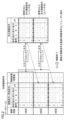
- Figure 2 shows an example of experimental data stored in the database 130 of the search device 100 and the flow of batch Bayesian optimization.
- Figure 2 shows an example in which the medium conditions (contents of components A, B, and C, and pH value) of n wells 212 are searched for as the next experimental conditions each time an experiment is completed, and three experiments are ultimately performed.
- cells are cultured under initial experimental conditions in the experimental device 200.
- the initial experimental conditions are arbitrarily set by the user, for example, and stored in the database 130.
- the cell culture volume in n wells 212 is measured. Data from the first experiment (n combinations of medium conditions and culture volumes) is sent to the search device 100 and stored in the database 130.
- the processor 101 of the search device 100 searches for n medium conditions that are optimal for the next experiment (second experiment) by performing batch Bayesian optimization for the first batch based on the first experimental data stored in the database 130, and transmits the searched n medium conditions to the experimental device 200 as the next experimental conditions.
- the processor 101 searches for n optimal medium conditions for the next experiment (third experiment) by performing a second batch of batch Bayesian optimization based on the first and second experimental data stored in the database 130, and transmits the searched n medium conditions to the experimental device 200 as the next experimental conditions.
- the third experiment cell culture is performed under the n medium conditions searched for by the second batch of batch Bayesian optimization.
- the data from the third experiment is sent to the search device 100 and added to the database 130. Therefore, at this point, the data from the first to third experiments (3n combinations of medium conditions and culture volumes) are stored in the database 130.
- the experiment and batch Bayesian optimization are repeated until the experiment termination condition is met.
- the experiment termination condition is set, for example, to at least one of the following conditions being met: the latest experiment result has reached the target value, and the number of times batch Bayesian optimization processing has been performed (the number of batches) has exceeded a reference value.
- the third culture medium conditions are displayed on the display 110 as the optimal culture conditions and presented to the user.
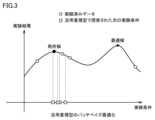
- Figure 3 is a schematic diagram showing the next experimental conditions searched for by exploitation-oriented batch Bayesian optimization. Exploitation-oriented means that the search focuses on input conditions (experimental conditions) that result in high output (experimental results).
- Figure 3 and Figure 4, which will be described later, show an example in which four experimental conditions are searched for per batch as the next experimental conditions.
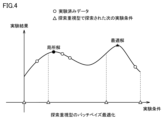
- Figure 4 is a schematic diagram showing the next experimental conditions to be searched for using search-oriented batch Bayesian optimization.
- Search-oriented means that the search focuses on experimental conditions for which no experimental data has been used.
- the search device 100 searches for the next experimental conditions by hybrid batch Bayesian optimization using multiple acquisition functions.
- Figure 5 is a schematic diagram showing the next experimental conditions that are searched for by hybrid batch Bayesian optimization that combines exploitation-oriented and exploration-oriented methods.
- Figure 5 shows an example in which a total of four experimental conditions are searched for per batch, two each for exploitation-oriented and exploration-oriented methods.
- an acquisition function is exploitation-oriented or exploration-oriented is determined relatively based on the results of a search using that acquisition function, and it is difficult to determine in advance before conducting a search.
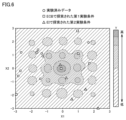
- Figure 6 shows an example of the results of searching for 10 optimal input conditions in one batch using hybrid batch Bayesian optimization to maximize the output of the Ackley function for two-dimensional input (X1, X2) and one-dimensional output (Y).
- the upper confidence bound function UCB Upper Confidence Bound
- EI Exected Improvement
- UCB acquisition functions
- ⁇ (x) is a function that represents the expectation of the posterior distribution of a Gaussian process
- ⁇ (x) is a function that represents the uncertainty (variance) of the expectation
- "k” is a hyperparameter determined by the user.
- UCB is expressed using the expectation and uncertainty (variance) of the posterior distribution of a Gaussian process, as well as hyperparameters.
- EI is also expressed using the expectation and uncertainty of the posterior distribution of a Gaussian process, but does not include hyperparameters.
- circles ( ⁇ ) indicate experimental data used as input for batch Bayesian optimization
- squares ( ⁇ ) indicate first experimental conditions searched for using the first acquisition function UCB
- triangles ( ⁇ ) indicate second experimental conditions searched for using the second acquisition function EI. From the results shown in Figure 6, it can be seen that by using the first acquisition function UCB and the second acquisition function EI, a balanced search is performed for input coordinates close to the experimental data and input coordinates far from the experimental data in the two-dimensional coordinate system of inputs X1 and X2.
- [flowchart] 7 is a flowchart showing an example of a processing procedure of the searching device 100. The processing shown in this flowchart is started when a start command is input to the input device 120 by the user, for example.
- the processor 101 of the search device 100 retrieves the experimental data from the database 130 (step S10).
- the processor 101 sets the experimental data acquired in step S10 as input data for batch Bayesian optimization (step S11).
- UMB first acquisition function
- EI second acquisition function
- the processor 101 controls the experimental device 200 to perform a cell culture experiment under the next n experimental conditions by outputting the control signal generated in step S21 to the experimental device 200 (step S24).
- the processor 101 acquires experimental data including the next experimental result from the experimental device 200 (step S25).
- the processor 101 adds the experimental data acquired in step S25 to the database 130 (step S26).
- the processor 101 determines whether or not an experiment end condition is satisfied (step S27).
- the experiment end condition is set to, for example, as described above, at least one of the following conditions is satisfied: the latest experiment result has reached the target value; and the number of batches in the batch Bayesian optimization has exceeded a reference value.
- step S27 the processor 101 returns the process to step S10 and repeats the batch processing of steps S10 to S26 until the experiment end condition is met.
- the processor 101 displays the most recent experimental conditions among the experimental conditions stored in the database 130 on the display 110 as the optimal experimental conditions to be presented to the user (step S30). Note that the experimental conditions that produced the best experimental results among the most recent experimental conditions may be set as the optimal experimental conditions.
- the search device 100 sets the next experimental conditions as a combination of m experimental conditions searched by batch Bayes optimization using the first acquisition function UCB and (n-m) experimental conditions searched by batch Bayes optimization using the second acquisition function EI. Therefore, compared to when all of the next experimental conditions are searched by batch Bayes optimization using only one acquisition function (for example, only UCB or EI), it is possible to avoid the risk that the next experimental conditions will be biased toward experimental conditions close to the experimental data or toward experimental conditions far from the optimal solution. As a result, the experimental conditions to be used in the experimental device 200 can be appropriately searched for with a small number of experiments.
- batch Bayesian optimization using the first acquisition function and the batch Bayesian optimization using the second acquisition function may be performed in separate batch processes.
- FIG. 8 is a flowchart showing an example of a processing procedure of the search device 100 according to this modified example 1.
- the flowchart in FIG. 8 is obtained by adding step S20 to the flowchart in FIG. 7 described above, and by changing step S21 in the flowchart in FIG. 7 described above to steps S22 and S23.
- the other steps in FIG. 8 (steps numbered the same as the steps shown in FIG. 7 described above) have already been described, so detailed description will not be repeated here.
- the processor 101 determines whether the previous experimental conditions are the conditions searched for by batch Bayesian optimization using the first acquisition function (UCB) (step S20).
- step S20 If the previous experimental conditions are not conditions searched for by batch Bayesian optimization using the first acquisition function (UCB) (NO in step S20), the processor 101 sets the next n first experimental conditions by batch Bayesian optimization using the first acquisition function (UCB) (step S22). After that, the processor 101 executes the process from step S24 onwards.
- step S20 the processor 101 sets n second experimental conditions by batch Bayesian optimization using the second acquisition function (EI) (step S23). After that, the processor 101 executes the processes from step S24 onwards.
- FIG. 8 shows an example in which the first acquisition function and the second acquisition function are used alternately to set the next experimental conditions
- the first acquisition function and the second acquisition function may be used irregularly to set the next experimental conditions, rather than alternately.
- the first acquisition function, the second acquisition function, the second acquisition function, the first acquisition function, and so on may be used in this order to set the next experimental conditions.
- the experimental design used in the above-described embodiment and modified example 1 is not limited to the batch Bayesian optimization method.
- all or part of the experimental design used in the above-described embodiment and modified example 1 may be a normal Bayesian optimization method.
- part of the experimental design used in the above-mentioned embodiment and modification 1 may be an experimental design other than Bayesian optimization.
- part of the experimental design used in the above-mentioned embodiment and modification 1 may be an experimental design (grid search, random search, etc.) that comprehensively sets experimental conditions without using experimental data.
- the search method according to the present disclosure is a search method for experimental conditions used in an experimental apparatus capable of executing a plurality of experiments with mutually different experimental conditions, and includes the steps of setting first experimental conditions using a first experimental design method, controlling the experimental apparatus to execute a first experiment based on the first experimental conditions, and setting second experimental conditions using a second experimental design method based on the results of the first experiment.
- the first experimental design method includes at least two of an experimental design by a Bayesian optimization method using a first acquisition function, an experimental design by a Bayesian optimization method using a second acquisition function different from the first acquisition function, and an experimental design different from the Bayesian optimization method.
- the second experimental design method includes an experimental design by a Bayesian optimization method using an acquisition function that is the same as or different from the acquisition function used in the first experimental design method.
- the first experimental conditions are set using at least two of an experimental design by a Bayesian optimization method using a first acquisition function, an experimental design by a Bayesian optimization method using a second acquisition function different from the first acquisition function, and an experimental design different from the Bayesian optimization method, and a first experiment based on the set one experimental condition is executed. Therefore, compared to when the first experimental conditions are set using one experimental design method, it is possible to avoid the risk that the first experimental conditions are searched for biased toward experimental conditions close to the experimental data or biased toward experimental conditions far from the optimal solution. As a result, it is possible to search for optimal experimental conditions with a small number of experiments.
- the experimental conditions set by Bayesian optimization using UCB and the experimental conditions set by batch Bayesian optimization using EI can be searched for as the first experimental conditions.
- the experimental design method that differs from the Bayesian optimization method is an experimental design method that comprehensively sets experimental conditions without using experimental data.
- the experimental apparatus is configured to be capable of culturing cells in multiple wells in a single process.
- the experimental design method for setting the culture conditions for some of the multiple wells can be made different from the experimental design method for setting the culture conditions for the remaining wells. Therefore, compared to when all culture conditions for multiple wells are set using a single experimental design method, it is possible to avoid the risk of the culture conditions being searched for in a biased way toward culture conditions close to the experimental data or culture conditions far from the optimal solution.
- the experimental device is configured to automatically execute an experiment upon receiving a control signal.
- the step of setting the first experimental conditions includes a step of generating a control signal for causing the experimental device to execute the first experiment.
- the step of setting the second experimental conditions includes a step of generating a control signal for causing the experimental device to execute a second experiment based on the second experimental conditions.
- the experimental system includes an experimental device capable of executing a plurality of experiments with different experimental conditions, and a search device that searches for experimental conditions to be used in the experimental device.
- the search device sets first experimental conditions using a first experimental design method, controls the experimental device to execute a first experiment based on the first experimental conditions, and sets second experimental conditions using a second experimental design method based on the results of the first experiment.
- the first experimental design method includes at least two of an experimental design by a Bayesian optimization method using a first acquisition function, an experimental design by a Bayesian optimization method using a second acquisition function different from the first acquisition function, and an experimental design different from the Bayesian optimization method.
- the second experimental design method includes an experimental design by a Bayesian optimization method using an acquisition function that is the same as or different from the acquisition function used in the first experimental design method.
- Experimental system 100 Search device, 101 Processor, 102 Memory, 110 Display, 120 Input device, 130 Database, 200 Experimental device, 210 Culture medium preparation device, 211 Well plate, 212 Well, 220 Culture device, 230 Measurement device.
Landscapes
- Business, Economics & Management (AREA)
- Tourism & Hospitality (AREA)
- Health & Medical Sciences (AREA)
- Economics (AREA)
- General Health & Medical Sciences (AREA)
- Human Resources & Organizations (AREA)
- Marketing (AREA)
- Primary Health Care (AREA)
- Strategic Management (AREA)
- Physics & Mathematics (AREA)
- General Business, Economics & Management (AREA)
- General Physics & Mathematics (AREA)
- Engineering & Computer Science (AREA)
- Theoretical Computer Science (AREA)
- Management, Administration, Business Operations System, And Electronic Commerce (AREA)
Abstract
実験システムは、互いに実験条件の異なる複数の実験を同時に実行可能な実験装置と、実験装置に用いられる実験条件を探索する探索装置とを備える。探索装置は、第1実験計画法を用いて第1実験条件を設定し、第1実験条件に基づく第1実験を実行するように実験装置を制御し、第1実験の結果に基づき第2実験計画法を用いて第2実験条件を設定する。第1実験計画法および第2実験計画法の各々は、第1獲得関数を用いたベイズ最適化手法、第1獲得関数とは異なる第2獲得関数を用いたベイズ最適化手法を含む。
Description
本開示は、実験条件の探索方法、および実験システムに関する。
最適な実験条件を探索する際、検討すべき実験条件には多数のパラメータが存在し、それらのパラメータの組合せによる実験条件の数は膨大となる。従って、本来、最適な実験条件を探索するためには非常に多くの実験を要する。しかしながら、実験回数が多いと膨大な時間とコストを要するため、できる限り少ない実験回数で最適な実験条件を探索することが望まれる。
たとえば、非特許文献1("Multi-Information Source Bayesian Optimization of Culture Media for Cellular Agriculture")には、細胞培養条件のスクリーニングのための実験を行う際に、最適な実験条件(細胞培養条件)をベイズ最適化を用いて探索する手法が記載されている。
"Multi-Information Source Bayesian Optimization of Culture Media for Cellular Agriculture", May 2022 Biotechnology and Bioengineering 119 (2009), Zachary Cosenza, Raul Astudillo, Peter I. Frazier, Keith Baar, David E. Block, インターネット<URL:http://www.researchgate.net/publication/360546529>
ベイズ最適化は、入力と出力との関係が未知である状況で、出力を最大化(あるいは最小化)する最適な入力条件を探索する手法である。したがって、実験条件および実験結果をそれぞれ入力および出力としてベイズ最適化を行うことによって、最適な実験条件を探索することが可能である。
ベイズ最適化では、次の入力条件としての有望さを表わす「獲得関数」を利用して、最適な入力条件を探索する。獲得関数はユーザが決める必要がある。しかし、ユーザにとって、最適な実験条件を実現するために適切な獲得関数を選択することは困難である。
本開示はこのような課題を解決するためになされたものであって、その目的は、少ない実験回数で最適な実験条件を探索するための方法を提供することである。
本開示による探索方法は、互いに実験条件の異なる複数の実験を実行可能な実験装置に用いられる、実験条件の探索方法であって、第1実験計画法を用いて第1実験条件を設定するステップと、第1実験条件に基づく第1実験を実験装置に実行させるステップと、第1実験の結果に基づき第2実験計画法を用いて第2実験条件を設定するステップとを含む。第1実験計画法は、第1獲得関数を用いたベイズ最適化手法による実験計画法、第1獲得関数とは異なる第2獲得関数を用いたベイズ最適化手法による実験計画法、およびベイズ最適化手法とは異なる実験計画法のうちの少なくとも2つを含む。第2実験計画法は、第1実験計画法で用いられる獲得関数と同じまたは異なる獲得関数を用いたベイズ最適化手法による実験計画法を含む。
本開示による実験システムは、互いに実験条件の異なる複数の実験を実行可能な実験装置と、実験装置に用いられる実験条件を探索する探索装置とを備える。探索装置は、第1実験計画法を用いて第1実験条件を設定し、第1実験条件に基づく第1実験を実験装置に実行させ、第1実験の結果に基づき第2実験計画法を用いて第2実験条件を設定する。第1実験計画法は、第1獲得関数を用いたベイズ最適化手法による実験計画法、第1獲得関数とは異なる第2獲得関数を用いたベイズ最適化手法による実験計画法、およびベイズ最適化手法とは異なる実験計画法のうちの少なくとも2つを含む。第2実験計画法は、第1実験計画法で用いられる獲得関数と同じまたは異なる獲得関数を用いたベイズ最適化手法による実験計画法を含む。
本開示によれば、少ない実験回数で最適な実験条件を探索することができる。
以下、本開示の実施の形態について、図面を参照しながら詳細に説明する。なお、図中同一または相当部分には同一符号を付してその説明は繰り返さない。
[実験システムの構成]
図1は、本実施の形態による実験システム1の全体構成の一例を模式的に示す図である。実験システム1は、実験条件と実験結果(実験による生産性あるいは実験による生産物の品質など)との関係が未知である状況で実験を行うことによって、実験結果が最適となる実験条件を探索することができるシステムである。実験システム1は、探索装置100と、実験装置200とを備える。
図1は、本実施の形態による実験システム1の全体構成の一例を模式的に示す図である。実験システム1は、実験条件と実験結果(実験による生産性あるいは実験による生産物の品質など)との関係が未知である状況で実験を行うことによって、実験結果が最適となる実験条件を探索することができるシステムである。実験システム1は、探索装置100と、実験装置200とを備える。
実験装置200は、制御信号を受けて科学的な実験を自動的に行う装置である。図1では、実験装置200が実験の一例として細胞培養の実験を行う例が示されている。実験装置200による実験に用いられる細胞培養条件は、本開示の「実験条件」の一例であり、実験装置200による実験によって計測される細胞培養量は本開示の「実験結果」の一例である。
なお、実験装置200で培養される細胞は、特に限定されるものではなく、たとえば、医療等において有用に作用する細胞であってもよいし、様々な産業分野において有用に作用する物質を産生する細胞であってもよい。また、実験装置200で培養される対象は、細胞に限定されるものではなく、微生物あるいは菌(大腸菌など)であってもよい。また、実験装置200で行われる実験は、細胞培養以外の実験(たとえば合成化学実験など)であってもよい。
実験装置200は、互いに培養条件の異なる複数の細胞培養実験を1回の処理で同時に実行可能に構成される。具体的には、実験装置200は、培地作成装置210と、培養装置220と、計測装置230とを備える。
培地作成装置210は、ウェルプレート211に配置されるn個(nは2以上の整数、図1の例ではn=12×8=96)のウェル212に、探索装置100によって指示された培地条件(培地の成分量、pH等)の培地および培養対象となる細胞株をそれぞれ自動的に投入するように構成される。なお、各ウェル212への培地および細胞株の投入は、必ずしも培地作成装置210で自動的に行うことに限定されるものではなく、ユーザによる手作業で行うようにしてもよい。
各ウェル212に培地および細胞株が投入されたウェルプレート211が培養装置220にセットされると、培養装置220は、探索装置100によって指示された環境(温度、時間など)で各ウェル212の細胞培養を行う。これにより、互いに培養条件(培地条件)の異なるn個分の細胞培養実験が1回の処理で同時に行われることになる。
計測装置230は、培養装置220による細胞培養実験の結果を計測する。本実施の形態による計測装置230は、細胞培養実験の結果として、n個のウェル212内の細胞培養量をそれぞれ計測する。計測装置230は、各ウェル212の培養条件と細胞培養量ととを組合せた実験済みデータを実験結果として探索装置100に送信する。
探索装置100は、たとえば汎用のコンピュータによって構成される。図1の例では、探索装置100は、プロセッサ101と、メモリ102と、入出力インターフェース(I/F)103と、通信I/F104とを含む。
プロセッサ101は、探索装置100が種々の処理を実施するために、各種のプログラムを実行する。メモリ102は、プロセッサ101によって実行されるプログラム、および、プログラムの実行に必要な各種のデータを格納する。入出力I/F103は、プロセッサ101を、実験装置200と通信させるためのインターフェースである。通信I/F104は、プロセッサ101を、実験システム1外の装置とネットワークを通じて通信させるためのインターフェースである。
メモリ102には、実験装置200から受信した実験済みデータが格納されるデータベース130が記憶されている。なお、データベース130の構造については後述する。
探索装置100は、さらにディスプレイ110および入力装置120を含む。ディスプレイ110は、プロセッサ101の演算処理の結果をユーザに表示する。入力装置120(マウス、キーボード、タッチセンサ、等)は、プロセッサ101へのデータの入力操作を受け付ける。
[ベイズ最適化およびバッチベイズ最適化]
探索装置100は、実験装置200による実験済みデータに基づいて、実験装置200の実験結果を最大化(又は最小化)する最適な実験条件を探索する。
探索装置100は、実験装置200による実験済みデータに基づいて、実験装置200の実験結果を最大化(又は最小化)する最適な実験条件を探索する。
探索装置100は、最適な実験条件をベイズ最適化手法を用いて探索する。ベイズ最適化は、入力と出力との関係が未知である状況で、出力を最大化(あるいは最小化)する最適な入力条件を探索する手法である。より具体的には、ベイズ最適化は、目的変数yを出力とし、n次元の説明変数xi(i=1、2、…n)を入力とした場合、y=f(xi)の関数fが未知である状況で、関数fがガウス過程(Gaussian Process)に従うと仮定し、目的変数yを最大化(または最小化)する説明変数xiを探索する方法である。未知の関数fがガウス過程に従うと仮定することで、目的変数yおよび説明変数xiが他の分布に従うと仮定する場合に比べて、簡易な処理で様々な目的変数yを高度に最適化することができる。なお、ベイズ最適化自体は公知の手法であるため、本明細書ではこれ以上の詳細な説明を省略する。
本実施の形態による実験装置200は、上述したように、互いに培養条件の異なる複数(n個分)の細胞培養実験を1回の処理で同時に行なうことができる。この点に鑑み、本実施の形態による探索装置100は、ベイズ最適化の1つである「バッチベイズ最適化」を用いて、1度に複数(n個分)の実験条件を探索する。通常のベイズ最適化は、実験済みデータに基づいて次の実験条件として1つの条件を探索するのに対し、バッチベイズ最適化は、実験済みデータに基づいて次の実験条件として複数の条件を探索することができる。なお、実験済みデータには、1回以上の実験によって得られた実験条件と実験結果との組合せが含まれる。
図2は、探索装置100のデータベース130に格納されている実験済みデータと、バッチベイズ最適化の流れとの一例を示す図である。図2には、実験が終了する毎に次の実験条件としてn個のウェル212の培地条件(成分A、成分B、成分Cの含有量、pH値)が探索され、最終的に3回の実験が行われた例が示されている。
1回目の実験では、実験装置200において初期実験条件での細胞培養が行われる。初期実験条件は、たとえばユーザによって任意に設定されてデータベース130に格納されている。1回目の実験でn個のウェル212内の細胞培養量が計測される。1回目の実験済みデータ(培地条件と培養量とのn個の組合せ)は、探索装置100に送られてデータベース130に格納される。
探索装置100のプロセッサ101は、データベース130に格納されている1回目の実験済みデータに基づいて1バッチ目のバッチベイズ最適化を実行することによって、次の実験(2回目の実験)に最適なn個の培地条件を探索し、探索されたn個の培地条件を次の実験条件として実験装置200に送信する。
2回目の実験では、1バッチ目のバッチベイズ最適化で探索されたn個の培地条件で細胞培養が行われる。2回目の実験済みデータは、探索装置100に送られてデータベース130に追加される。したがって、この時点では、データベース130には1回目および2回目の実験済みデータ(培地条件と培養量との2n個の組合せ)が格納されている。
プロセッサ101は、データベース130に格納されている1回目および2回目の実験済みデータに基づいて2バッチ目のバッチベイズ最適化を実行することによって、次の実験(3回目の実験)に最適なn個の培地条件を探索し、探索されたn個の培地条件を次の実験条件として実験装置200に送信する。
3回目の実験では、2バッチ目のバッチベイズ最適化で探索されたn個の培地条件で細胞培養が行われる。3回目の実験済みデータが探索装置100に送られてデータベース130に追加される。したがって、この時点では、データベース130に1回目~3回目の実験済みデータ(培地条件と培養量との3n個の組合せ)が格納されている。
実験およびバッチベイズ最適化は、実験終了条件が成立するまで、繰り返される。なお、実験終了条件は、たとえば、最新の実験結果が目標値に達したという条件、およびバッチベイズ最適化の処理を行った回数(バッチ数)が基準値を超えたという条件の少なくとも一方が成立したという条件に設定される。図2の例では、3回目の実験結果が目標値に達していると判定されて、3回目の培地条件が最適な培養条件としてディスプレイ110に表示されてユーザに提示される。
[複数の獲得関数を用いたバッチベイズ最適化]
上述のバッチベイズ最適化では、通常のベイズ最適化と同様、次の入力条件としての有望さの指標である「獲得関数」を利用する。従来、互いに特徴の異なる数多くの獲得関数が提案されており、ユーザは、数多くの獲得関数の中からいずれか1つを選択する必要があった。しかしながら、選択された1つの獲得関数が対象の実験にあまり適合していない場合、少ない実験回数で最適な実験条件を探索できないことが懸念される。
上述のバッチベイズ最適化では、通常のベイズ最適化と同様、次の入力条件としての有望さの指標である「獲得関数」を利用する。従来、互いに特徴の異なる数多くの獲得関数が提案されており、ユーザは、数多くの獲得関数の中からいずれか1つを選択する必要があった。しかしながら、選択された1つの獲得関数が対象の実験にあまり適合していない場合、少ない実験回数で最適な実験条件を探索できないことが懸念される。
図3は、活用重視型のバッチベイズ最適化によって探索される次の実験条件のイメージを模式的に示す図である。活用重視型とは、高い出力(実験結果)となる入力条件(実験条件)付近を重点的に探索することを意味する。なお、図3および後述する図4には、次の実験条件として、1バッチあたり4つの実験条件が探索される例が示されている。
1つの獲得関数のみが選択された場合、その1つの獲得関数が対象の実験に対して「活用重視型」として作用してしまうと、図3に示すように、実験済みデータと近い実験条件ばかりが偏って探索される結果、局所解に陥ってしまい、最適解を探索できなくなることが懸念される。
図4は、探索重視型のバッチベイズ最適化によって探索される次の実験条件のイメージを模式的に示す図である。探索重視型とは、実験済みデータのない実験条件を重点的に探索することを意味する。
1つの獲得関数のみが選択された場合、その1つの獲得関数が対象の実験に対して「探索重視型」として作用してしまうと、図4に示すように、最適解から離れた実験条件ばかりが偏って探索されてしまい、少ない実験回数では最適解を探索できなくなることが懸念される。
以上のように、1つの獲得関数のみが選択された場合には、実験済みデータと近い実験条件ばかりが偏って探索されたり(活用重視型)、最適解から離れた実験条件ばかりが偏って探索されたり(探索重視型)することが懸念される。このような問題に鑑み、本実施の形態による探索装置100は、複数の獲得関数を用いたハイブリッド型のバッチベイズ最適化によって次の実験条件を探索する。
図5は、活用重視型と探索重視型とを組合わせたハイブリッド型のバッチベイズ最適化によって探索される次の実験条件のイメージを模式的に示す図である。図5には、1バッチあたり、活用重視型および探索重視型によってそれぞれ2つずつ合計4つの実験条件が探索される例が示されている。
ハイブリッド型のバッチベイズ最適化によって次の実験条件を探索することによって、図5に示されるように、実験済みデータと近い実験条件ばかりが偏って探索されたり、最適解から離れた実験条件ばかりが偏って探索されたりするリスクを回避することができる。これにより、「探索」と「活用」とをバランスよく考慮して最適な実験条件を効率的に探索することができる。その結果、互いに実験条件の異なる複数の実験を同時に実行可能な実験装置200に用いられる最適な実験条件を、少ない実験回数で適切に探索することができる。
なお、獲得関数が活用重視型であるのか探索重視型であるのかは、当該獲得関数を用いて探索した結果で相対的に決まるものであり、探索を行う前に予め判別することは難しい。しかしながら、少なくとも複数の獲得関数を用いることによって、1つの獲得関数を用いる場合に比べて、活用重視型および探索重視型のどちらか一方に陥るリスクを回避することができる。その結果、「探索」と「活用」とをバランスよく考慮して最適な実験条件を効率的に探索することができる。
図6は、2次元入力(X1,X2)・1次元出力(Y)のackley関数の出力を最大化するのに最適な10個の入力条件を、ハイブリッド型のバッチベイズ最適化によって1バッチで探索した結果の一例を示す図である。図6の例では、信頼性上限関数UCB(Upper Confidence Bound)を第1獲得関数とし、期待改善度EI(Expected Improvement)を第2獲得関数として、探索される10個の入力条件のうち、5つの条件を第1獲得関数である「UCB」で導出し、残り5つの条件を第2獲得関数である「EI」で導出している。
なお、「UCB」および「EI」は、どちらも代表的な獲得関数の1つである。たとえば、入力xに対するUCBは、UCB(x)=μ(x)+k・σ(x)で表わされる。μ(x)はガウス過程の事後分布の期待値を表わす関数であり、σ(x)は期待値の不確かさ(分散)を表わす関数であり、「k」はユーザによって決められるハイパーパラメータである。このように、UCBは、ガウス過程の事後分布の期待値および不確かさ(分散)、並びにハイパーパラメータを用いて表現される。「EI」も、「UCB」と同様、ガウス過程の事後分布の期待値および不確かさを用いて表現されるが、ハイパーパラメータは含まれない。
図6において、丸(○)印がバッチベイズ最適化の入力として用いられる実験済みデータを示し、四角(□)印が第1獲得関数UCBを利用して探索された第1実験条件を示し、三角(△)印が第2獲得関数EIを利用して探索された第2実験条件を示す。図6に示される結果から、第1獲得関数UCBおよび第2獲得関数EIを利用することによって、入力X1,X2の2次元座標系において、実験済みデータと近い入力座標と、実験済みデータから離れた入力座標とがバランスよく探索されていることが理解できる。
[フローチャート]
図7は、探索装置100の処理手順の一例を示すフローチャートである。このフローチャートに示される処理は、たとえばユーザによる開始指令が入力装置120に入力されたときに開始される。
図7は、探索装置100の処理手順の一例を示すフローチャートである。このフローチャートに示される処理は、たとえばユーザによる開始指令が入力装置120に入力されたときに開始される。
探索装置100のプロセッサ101は、データベース130から実験済みデータを取得する(ステップS10)。
次いで、プロセッサ101は、ステップS10で取得された実験済みデータをバッチベイズ最適化の入力データに設定する(ステップS11)。
次いで、プロセッサ101は、ステップS11で設定された入力データに基づき、バッチベイズ最適化を行うことによって、次のn個の実験条件を設定する(ステップS21)。具体的には、プロセッサ101は、ステップS11で設定された入力データを用いて第1獲得関数(UCB)を利用したバッチベイズ最適化を行うことによって、m個の実験条件を設定する。「m」は、1~(n-1)までの整数であって、たとえばm=n/2である。さらに、プロセッサ101は、ステップS11で設定された入力データを用いて第2獲得関数(EI)を利用したバッチベイズ最適化を行うことによって、(n-m)個の実験条件を設定する。そして、プロセッサ101は、第1獲得関数(UCB)を利用して導出されたm個の実験条件と、第2獲得関数(EI)を利用して導出された(n-m)個の実験条件との組合せを、次のn個の実験条件に設定する。具体的には、プロセッサ101は、n個の次の実験条件にそれぞれ基づく細胞培養実験を実験装置200に実行させるための制御信号を生成する。
次いで、プロセッサ101は、ステップS21で生成された制御信号を実験装置200に出力することによって、次のn個の実験条件で細胞培養実験を行うように実験装置200を制御する(ステップS24)。
次いで、プロセッサ101は、次の実験結果を含む実験済みデータを実験装置200から取得する(ステップS25)。
次いで、プロセッサ101は、ステップS25で取得した実験済みデータをデータベース130に追加する(ステップS26)。
次いで、プロセッサ101は、実験終了条件が成立しているか否かを判定する(ステップS27)。実験終了条件は、たとえば、上述のように、最新の実験結果が目標値に達したという条件、およびバッチベイズ最適化のバッチ数が基準値を超えたという条件の少なくとも一方が成立したという条件に設定される。
実験終了条件が成立していない場合(ステップS27においてNO)、プロセッサ101は、処理をステップS10に戻し、ステップS10~S26のバッチ処理を実験終了条件が成立するまで繰り返す。
実験終了条件が成立している場合(ステップS27においてYES)、プロセッサ101は、データベース130に格納されている実験条件のうちの最新の実験条件を、ユーザに提示する最適な実験条件としてディスプレイ110に表示させる(ステップS30)。なお、最新の実験条件のうちの実験結果が最も良好となった実験条件を、最適な実験条件としてもよい。
以上のように、本実施の形態による探索装置100は、第1獲得関数UCBを利用したバッチベイズ最適化によって探索されたm個の実験条件と、第2獲得関数EIを利用したバッチベイズ最適化によって探索された(n-m)個の実験条件との組合せを、次の実験条件に設定する。そのため、次の実験条件のすべてが1つの獲得関数のみ(たとえばUCBあるいはEIのみ)を利用したバッチベイズ最適化で探索される場合に比べて、次の実験条件が、実験済みデータと近い実験条件に偏って探索されたり、最適解から離れた実験条件に偏って探索されたりするリスクを回避することができる。その結果、実験装置200に用いられる実験条件を、少ない実験回数で適切に探索することができる。
[変形例1]
上述の図7のフローチャートにおいては、第1獲得関数を利用したバッチベイズ最適化と第2獲得関数を利用したバッチベイズ最適化とが1回のバッチ処理内で行われることを前提として、第1獲得関数を利用したバッチベイズ最適化によって探索された実験条件と、第2獲得関数を利用したバッチベイズ最適化によって探索された実験条件との組合せが、次の実験条件に設定される(図7のステップS21参照)。
上述の図7のフローチャートにおいては、第1獲得関数を利用したバッチベイズ最適化と第2獲得関数を利用したバッチベイズ最適化とが1回のバッチ処理内で行われることを前提として、第1獲得関数を利用したバッチベイズ最適化によって探索された実験条件と、第2獲得関数を利用したバッチベイズ最適化によって探索された実験条件との組合せが、次の実験条件に設定される(図7のステップS21参照)。
これに対し、第1獲得関数を利用したバッチベイズ最適化と第2獲得関数を利用したバッチベイズ最適化とを、別々のバッチ処理で行うようにしてもよい。
図8は、本変形例1による探索装置100の処理手順の一例を示すフローチャートである。図8のフローチャートは、上述の図7のフローチャートに対してステップS20を追加し、さらに上述の図7のフローチャートのステップS21をステップS22,S23に変更したものである。図8のその他のステップ(上述の図7に示したステップと同じ番号を付しているステップ)については、既に説明したため詳細な説明はここでは繰り返さない。
プロセッサ101は、ステップS11で実験済みデータが設定された後、前回の実験条件が、第1獲得関数(UCB)を利用したバッチベイズ最適化で探索された条件であるか否かを判定する(ステップS20)。
前回の実験条件が第1獲得関数(UCB)を利用したバッチベイズ最適化で探索された条件でない場合(ステップS20においてNO)、プロセッサ101は、第1獲得関数(UCB)を利用したバッチベイズ最適化により次のn個の第1実験条件を設定する(ステップS22)。その後、プロセッサ101は、ステップS24以降の処理を実行する。
一方、前回の実験条件が第1獲得関数(UCB)を利用したバッチベイズ最適化で探索された条件である場合(ステップS20においてYES)、プロセッサ101は、第2獲得関数(EI)を利用したバッチベイズ最適化によりn個の第2実験条件を設定する(ステップS23)。その後、プロセッサ101は、ステップS24以降の処理を実行する。
このようにすることによって、本変形例1においては、第1獲得関数を利用して探索されたn個の実験条件による実験と、第2獲得関数を利用して探索されたn個の実験条件による実験とが、交互に実行されることになる。そのため、次の実験条件の1つの獲得関数のみを利用して探索される場合に比べて、次の実験条件が、実験済みデータと近い実験条件に偏って探索されたり、最適解から離れた実験条件に偏って探索されたりするリスクを回避することができる。
なお、図8には次の実験条件の設定に第1獲得関数と第2獲得関数とが交互に用いられる例が示されるが、次の実験条件の設定に第1獲得関数と第2獲得関数とが交互ではなく不規則的に用いられてもよい。たとえば、次の実験条件の設定に、第1獲得関数、第2獲得関数、第2獲得関数、第1獲得関数…の順に用いられてもよい。
[変形例2]
上述の実施の形態および変形例1で用いられる実験計画法は、バッチベイズ最適化手法に限定されない。たとえば、上述の実施の形態および変形例1で用いられる実験計画法の全部または一部が、通常のベイズ最適化手法であってもよい。
上述の実施の形態および変形例1で用いられる実験計画法は、バッチベイズ最適化手法に限定されない。たとえば、上述の実施の形態および変形例1で用いられる実験計画法の全部または一部が、通常のベイズ最適化手法であってもよい。
また、上述の実施の形態および変形例1で用いられる実験計画法の一部が、ベイズ最適化とは異なる実験計画法であってもよい。たとえば、上述の実施の形態および変形例1で用いられる実験計画法の一部が、実験済みのデータを用いることなく実験条件を網羅的に設定する実験計画法(グリッドサーチ、ランダムサーチ等)であってもよい。
また、UCBのようなハイパーパラメータを持つ獲得関数を利用したベイズ最適化手法を用いる場合には、たとえば、ハイパーパラメータkを「k1」とするUCBを利用したベイズ最適化手法と、ハイパーパラメータkをk1とは異なる「k2」とするUCBを利用したベイズ最適化手法とを併用するようにしてもよい。
[態様]
上述した実施の形態およびその変形例は、以下の態様の具体例であることが当業者により理解される。
上述した実施の形態およびその変形例は、以下の態様の具体例であることが当業者により理解される。
(第1項) 本開示による探索方法は、互いに実験条件の異なる複数の実験を実行可能な実験装置に用いられる、実験条件の探索方法であって、第1実験計画法を用いて第1実験条件を設定するステップと、第1実験条件に基づく第1実験を実行するように実験装置を制御するステップと、第1実験の結果に基づき第2実験計画法を用いて第2実験条件を設定するステップとを含む。第1実験計画法は、第1獲得関数を用いたベイズ最適化手法による実験計画法、第1獲得関数とは異なる第2獲得関数を用いたベイズ最適化手法による実験計画法、およびベイズ最適化手法とは異なる実験計画法のうちの少なくとも2つを含む。第2実験計画法は、第1実験計画法で用いられる獲得関数と同じまたは異なる獲得関数を用いたベイズ最適化手法による実験計画法を含む。
第1項に記載の探索方法においては、第1獲得関数を用いたベイズ最適化手法による実験計画法、第1獲得関数とは異なる第2獲得関数を用いたベイズ最適化手法による実験計画法、およびベイズ最適化手法とは異なる実験計画法のうちの少なくとも2つを用いて第1実験条件が設定され、設定された1実験条件に基づく第1実験が実行される。そのため、第1実験条件が1つの実験計画法を用いて設定される場合に比べて、第1実験条件が、実験済みデータと近い実験条件に偏って探索されたり、最適解から離れた実験条件に偏って探索されたりするリスクを回避することができる。その結果、少ない実験回数で最適な実験条件を探索することができる。
(第2項) 第1項に記載の探索方法において、第1獲得関数はUCB(Upper Confidence Bound)であり、第2獲得関数はEI(Expected Improvement)である。
第2項に記載の探索方法においては、UCBを利用したベイズ最適化によって設定された実験条件と、EIを利用したバッチベイズ最適化によって設定された実験条件とを、第1実験条件として探索することができる。
(第3項) 第1項に記載の探索方法において、ベイズ最適化手法とは異なる実験計画法は、実験済みのデータを用いることなく実験条件を網羅的に設定する実験計画法である。
第3項に記載の探索方法においては、実験済みのデータを用いるベイズ最適化によって設定された実験条件と、実験済みのデータを用いることなく網羅的に設定された第2実験条件とを、第1実験条件として探索することができる。
(第4項) 第1~3項のいずれかに記載の実験条件の探索方法において、実験装置は、1回の処理で複数のウェル内で細胞を培養可能に構成される。
第4項に記載の探索方法においては、1回の処理で複数のウェル内で細胞を培養可能に構成される実験装置に対して、複数のウェルの一部の培養条件を設定する実験計画法と、残部の培養条件を設定する実験計画法とを異ならせることができる。そのため、複数のウェルの全部の培養条件が1つの実験計画法を用いて設定される場合に比べて、培養条件が、実験済みデータと近い培養条件に偏って探索されたり、最適解から離れた培養条件に偏って探索されたりするリスクを回避することができる。
(第5項) 第1項に記載の実験条件の探索方法において、実験装置は、制御信号を受けて自動で実験を実行するように構成される。第1実験条件を設定するステップは、第1実験を実験装置に実行させるための制御信号を生成するステップを含む。第2実験条件を設定するステップは、第2実験条件に基づく第2実験を実験装置に実行させるための制御信号を生成するステップを含む。
(第6項) 本開示による実験システムは、互いに実験条件の異なる複数の実験を実行可能な実験装置と、実験装置に用いられる実験条件を探索する探索装置とを備える。探索装置は、第1実験計画法を用いて第1実験条件を設定し、第1実験条件に基づく第1実験を実行するように実験装置を制御し、第1実験の結果に基づき第2実験計画法を用いて第2実験条件を設定する。第1実験計画法は、第1獲得関数を用いたベイズ最適化手法による実験計画法、第1獲得関数とは異なる第2獲得関数を用いたベイズ最適化手法による実験計画法、およびベイズ最適化手法とは異なる実験計画法のうちの少なくとも2つを含む。第2実験計画法は、第1実験計画法で用いられる獲得関数と同じまたは異なる獲得関数を用いたベイズ最適化手法による実験計画法を含む。
第6項に記載の実験システムにおいては、第1項に記載の探索方法と同様の作用効果を奏することができる。
今回開示された実施の形態は、全ての点で例示であって制限的なものではないと考えられるべきである。本発明の範囲は、上記した実施の形態の説明ではなくて請求の範囲によって示され、請求の範囲と均等の意味および範囲内での全ての変更が含まれることが意図される。
1 実験システム、100 探索装置、101 プロセッサ、102 メモリ、110 ディスプレイ、120 入力装置、130 データベース、200 実験装置、210 培地作成装置、211 ウェルプレート、212 ウェル、220 培養装置、230 計測装置。
Claims (6)
- 互いに実験条件の異なる複数の実験を実行可能な実験装置に用いられる、実験条件の探索方法であって、
第1実験計画法を用いて第1実験条件を設定するステップと、
前記第1実験条件に基づく第1実験を実行するように前記実験装置を制御するステップと、
前記第1実験の結果に基づき第2実験計画法を用いて第2実験条件を設定するステップとを含み、
前記第1実験計画法は、第1獲得関数を用いたベイズ最適化手法による実験計画法、前記第1獲得関数とは異なる第2獲得関数を用いたベイズ最適化手法による実験計画法、およびベイズ最適化手法とは異なる実験計画法のうちの少なくとも2つを含み、
前記第2実験計画法は、前記第1実験計画法で用いられる獲得関数と同じまたは異なる獲得関数を用いたベイズ最適化手法による実験計画法を含む、
実験条件の探索方法。 - 前記第1獲得関数はUCB(Upper Confidence Bound)であり、
前記第2獲得関数はEI(Expected Improvement)である、請求項1に記載の実験条件の探索方法。 - 前記ベイズ最適化手法とは異なる実験計画法は、実験済みのデータを用いることなく実験条件を網羅的に設定する実験計画法である、請求項1に記載の実験条件の探索方法。
- 前記実験装置は、1回の処理で複数のウェル内で細胞を培養可能に構成される、請求項1に記載の実験条件の探索方法。
- 前記実験装置は、制御信号を受けて自動で実験を実行するように構成され、
前記第1実験条件を設定するステップは、前記第1実験を前記実験装置に実行させるための制御信号を生成するステップを含み、
前記第2実験条件を設定するステップは、前記第2実験条件に基づく第2実験を前記実験装置に実行させるための制御信号を生成するステップを含む、請求項1に記載の実験条件の探索方法。 - 互いに実験条件の異なる複数の実験を実行可能な実験装置と、
前記実験装置に用いられる実験条件を探索する探索装置とを備え、
前記探索装置は、
第1実験計画法を用いて第1実験条件を設定し、
前記第1実験条件に基づく第1実験を実行するように前記実験装置を制御し、
前記第1実験の結果に基づき第2実験計画法を用いて第2実験条件を設定し、
前記第1実験計画法は、第1獲得関数を用いたベイズ最適化手法による実験計画法、前記第1獲得関数とは異なる第2獲得関数を用いたベイズ最適化手法による実験計画法、およびベイズ最適化手法とは異なる実験計画法のうちの少なくとも2つを含み、
前記第2実験計画法は、前記第1実験計画法で用いられる獲得関数と同じまたは異なる獲得関数を用いたベイズ最適化手法による実験計画法を含む、実験システム。
Applications Claiming Priority (2)
| Application Number | Priority Date | Filing Date | Title |
|---|---|---|---|
| JP2023201765 | 2023-11-29 | ||
| JP2023-201765 | 2023-11-29 |
Publications (1)
| Publication Number | Publication Date |
|---|---|
| WO2025115331A1 true WO2025115331A1 (ja) | 2025-06-05 |
Family
ID=95897568
Family Applications (1)
| Application Number | Title | Priority Date | Filing Date |
|---|---|---|---|
| PCT/JP2024/030926 Pending WO2025115331A1 (ja) | 2023-11-29 | 2024-08-29 | 実験条件の探索方法、および実験システム |
Country Status (1)
| Country | Link |
|---|---|
| WO (1) | WO2025115331A1 (ja) |
Citations (3)
| Publication number | Priority date | Publication date | Assignee | Title |
|---|---|---|---|---|
| JP2022128960A (ja) * | 2021-02-24 | 2022-09-05 | 富士通株式会社 | 情報処理方法、情報処理装置、及び情報処理プログラム |
| WO2023008450A1 (ja) * | 2021-07-28 | 2023-02-02 | パナソニックIpマネジメント株式会社 | 情報表示方法、情報表示装置およびプログラム |
| JP7302075B1 (ja) * | 2022-07-06 | 2023-07-03 | 日本曹達株式会社 | 反応条件を推定する推定モデルの生成方法/生成装置、反応条件の提供方法/提供装置、並びにプログラム |
-
2024
- 2024-08-29 WO PCT/JP2024/030926 patent/WO2025115331A1/ja active Pending
Patent Citations (3)
| Publication number | Priority date | Publication date | Assignee | Title |
|---|---|---|---|---|
| JP2022128960A (ja) * | 2021-02-24 | 2022-09-05 | 富士通株式会社 | 情報処理方法、情報処理装置、及び情報処理プログラム |
| WO2023008450A1 (ja) * | 2021-07-28 | 2023-02-02 | パナソニックIpマネジメント株式会社 | 情報表示方法、情報表示装置およびプログラム |
| JP7302075B1 (ja) * | 2022-07-06 | 2023-07-03 | 日本曹達株式会社 | 反応条件を推定する推定モデルの生成方法/生成装置、反応条件の提供方法/提供装置、並びにプログラム |
Non-Patent Citations (1)
| Title |
|---|
| "What acquisition function should I use in Bayesian optimization?", 18 June 2023 (2023-06-18), XP009563336, Retrieved from the Internet <URL:https://web.archive.org/web/20230930164924/https://datachemeng.com/acquisition_function_selection_in_bayesian_optimization/> * |
Similar Documents
| Publication | Publication Date | Title |
|---|---|---|
| HamediRad et al. | Towards a fully automated algorithm driven platform for biosystems design | |
| Nisthal et al. | Protein stability engineering insights revealed by domain-wide comprehensive mutagenesis | |
| JP2020149663A (ja) | ニューラルネットワーク生成用の方法及び装置 | |
| Jaszkiewicz et al. | The ‘Light Beam Search’approach–an overview of methodology applications | |
| CN112396191B (zh) | 一种基于联邦学习进行模型参数更新的方法、系统及装置 | |
| JP6956884B2 (ja) | 細胞培養支援装置の作動プログラム、細胞培養支援装置、細胞培養支援装置の作動方法 | |
| WO2021003391A1 (en) | Machine learning systems and methods for evaluating sampling bias in deep active classification | |
| Billings et al. | ProSPr: democratized implementation of alphafold protein distance prediction network | |
| WO2020026741A1 (ja) | 情報処理方法、情報処理装置及び情報処理プログラム | |
| KR20210124402A (ko) | 역합성 처리 방법 및 장치, 전자 디바이스, 및 컴퓨터 판독가능 저장 매체 | |
| Moon et al. | Using design of experiments to guide genetic optimization of engineered metabolic pathways | |
| Alijah et al. | Non-adiabatic coupling in the ozone molecule | |
| Zheng et al. | An ensemble method to reconstruct gene regulatory networks based on multivariate adaptive regression splines | |
| CN110837567A (zh) | 实现知识图谱嵌入的方法和系统 | |
| KR101560802B1 (ko) | 임의 수학 문제를 제공하는 클라우드 컴퓨팅 서버, 방법 및 기록매체 | |
| Hans et al. | Automated conditional screening of multiple escherichia coli strains in parallel adaptive fed-batch cultivations | |
| Avula et al. | Building robust machine learning models for small chemical science data: the case of shear viscosity of fluids | |
| Wu et al. | Exact reaction coordinates for flap opening in HIV-1 protease | |
| Ricci et al. | Haptic-driven applications to molecular modeling: state-of-the-art and perspectives | |
| Ding et al. | EcoSynther: a customized platform to explore the biosynthetic potential in E. coli | |
| Desper et al. | Getting a tree fast: Neighbor joining, FastME, and distance‐based methods | |
| Hernandez-Romero et al. | Exploring hybrid quantum-classical algorithms for multiscale bioprocess optimization | |
| Yang et al. | STAR: A web server for assisting directed protein evolution with machine learning | |
| Shenfield et al. | Computational steering of a multi-objective evolutionary algorithm for engineering design | |
| Lee et al. | Development of a simulation result management and prediction system using machine learning techniques |
Legal Events
| Date | Code | Title | Description |
|---|---|---|---|
| 121 | Ep: the epo has been informed by wipo that ep was designated in this application |
Ref document number: 24897022 Country of ref document: EP Kind code of ref document: A1 |
|
| ENP | Entry into the national phase |
Ref document number: 2025560835 Country of ref document: JP Kind code of ref document: A |