WO2025074665A1 - 点群復号装置、点群復号方法及びプログラム - Google Patents
点群復号装置、点群復号方法及びプログラム Download PDFInfo
- Publication number
- WO2025074665A1 WO2025074665A1 PCT/JP2024/008608 JP2024008608W WO2025074665A1 WO 2025074665 A1 WO2025074665 A1 WO 2025074665A1 JP 2024008608 W JP2024008608 W JP 2024008608W WO 2025074665 A1 WO2025074665 A1 WO 2025074665A1
- Authority
- WO
- WIPO (PCT)
- Prior art keywords
- raht
- unit
- node
- prediction
- value
- Prior art date
- Legal status (The legal status is an assumption and is not a legal conclusion. Google has not performed a legal analysis and makes no representation as to the accuracy of the status listed.)
- Pending
Links
Images














Classifications
-
- G—PHYSICS
- G06—COMPUTING OR CALCULATING; COUNTING
- G06T—IMAGE DATA PROCESSING OR GENERATION, IN GENERAL
- G06T9/00—Image coding
- G06T9/40—Tree coding, e.g. quadtree, octree
-
- H—ELECTRICITY
- H04—ELECTRIC COMMUNICATION TECHNIQUE
- H04N—PICTORIAL COMMUNICATION, e.g. TELEVISION
- H04N19/00—Methods or arrangements for coding, decoding, compressing or decompressing digital video signals
- H04N19/50—Methods or arrangements for coding, decoding, compressing or decompressing digital video signals using predictive coding
- H04N19/503—Methods or arrangements for coding, decoding, compressing or decompressing digital video signals using predictive coding involving temporal prediction
-
- H—ELECTRICITY
- H04—ELECTRIC COMMUNICATION TECHNIQUE
- H04N—PICTORIAL COMMUNICATION, e.g. TELEVISION
- H04N19/00—Methods or arrangements for coding, decoding, compressing or decompressing digital video signals
- H04N19/50—Methods or arrangements for coding, decoding, compressing or decompressing digital video signals using predictive coding
- H04N19/597—Methods or arrangements for coding, decoding, compressing or decompressing digital video signals using predictive coding specially adapted for multi-view video sequence encoding
-
- H—ELECTRICITY
- H04—ELECTRIC COMMUNICATION TECHNIQUE
- H04N—PICTORIAL COMMUNICATION, e.g. TELEVISION
- H04N19/00—Methods or arrangements for coding, decoding, compressing or decompressing digital video signals
- H04N19/70—Methods or arrangements for coding, decoding, compressing or decompressing digital video signals characterised by syntax aspects related to video coding, e.g. related to compression standards
Definitions
- the present invention relates to a point cloud decoding device, a point cloud decoding method, and a program.
- G-PCC codec description ISO/IEC JTC1/SC29/WG7 N00271
- G-PCC 2nd Edition codec description ISO/IEC JTC1/SC29/WG7 N00506
- the present invention has been made in consideration of the above-mentioned problems, and aims to provide a point cloud decoding device, a point cloud decoding method, and a program that can improve the coding efficiency of attribute information coding.
- the first feature of the present invention is that it is a point cloud decoding device that includes a RAHT unit that performs scaling on intra-predicted values of AC coefficients using different scaling factors for each Octree layer and for each frequency index of the AC coefficients.
- the second feature of the present invention is a point cloud decoding method that includes a step of scaling intra-predicted values of AC coefficients using different scaling factors for each Octree layer and for each frequency index of the AC coefficients.
- the third feature of the present invention is a program for causing a computer to function as a point cloud decoding device, the point cloud decoding device being provided with a RAHT unit that performs scaling on intra-predicted values of AC coefficients using different scaling factors for each Octree layer and for each frequency index of the AC coefficients.
- the fourth feature of the present invention is that the point cloud decoding device includes an attribute information decoding unit that derives the number of scaling factors in inter prediction based on a syntax that specifies the layer to which the decoded inter prediction is applied.
- the present invention provides a point cloud decoding device, a point cloud decoding method, and a program that can improve the coding efficiency of attribute information coding.
- FIG. 1 is a diagram illustrating an example of the configuration of a point cloud processing system 10 according to an embodiment.
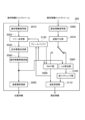
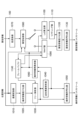
- FIG. 2 is a diagram illustrating an example of functional blocks of a point group decoding device 200 according to an embodiment.
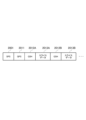
- FIG. 3 is a diagram showing an example of the configuration of encoded data (bit stream) received by the geometric information decoding unit 2010 of the point cloud decoding device 200 according to an embodiment.
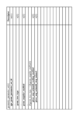
- FIG. 4 is a diagram showing an example of the syntax configuration of GPS2011.
- FIG. 5 shows an example of the configuration of encoded data (bit stream) received by the attribute information decoding unit 2060 of the point cloud decoding device 200 according to an embodiment.
- FIG. 6 shows an example of the syntax configuration of the APS 2611 shown in FIG. FIG.
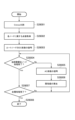
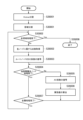
- FIG. 7 is a flowchart showing an example of the process of the RAHT unit 2080.
- FIG. 8 is a flowchart showing an example of the process in step S28004.
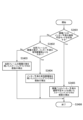
- FIG. 9 is a flowchart showing an example of the process of step S28104.
- FIG. 10 is a flowchart showing an example of the intra prediction process in step S28112.
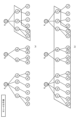
- FIG. 11 is a diagram showing the relationship between a decoding target node and adjacent nodes in a higher layer.
- FIG. 12 is a diagram showing the relationship between a decoding target node and adjacent nodes in the subnode hierarchy.
- FIG. 13 is a flowchart showing an example of the intra prediction process in step S28112.
- FIG. 14 is a flowchart showing an example of the process of the RAHT unit 2080.
- FIG. 15 is a diagram showing an example of the inter prediction process in step S28111.
- FIG. 16 is a flowchart showing an example of the operation of the tree synthesis unit 2020 of the point group decoding device 200 according to an embodiment.
- FIG. 17 is a flowchart showing an example of the process of decoding the predictor information and the spherical coordinate residual in step S1604.
- FIG. 18 is a diagram showing an example of functional blocks of a point group encoding device 100 according to an embodiment.
- FIG. 19 is a diagram for explaining the first modification.
- FIG. 20 is a diagram for explaining the second modification.
- FIG. 21 is a diagram for explaining the second modification.
- FIG. 22 is a diagram for explaining the second modification.
- FIG. 23 is a diagram for explaining the second modification.
- FIG. 20 is a diagram for explaining the second modification.
- FIG. 24 is a diagram for explaining the second modification.
- FIG. 25 is a diagram for explaining the second modification.
- FIG. 26 is a diagram for explaining the third modification.
- FIG. 27 is a diagram for explaining the third modification.
- FIG. 28 is a diagram for explaining the third modification.
- FIG. 29 is a diagram for explaining the third modification.
- FIG. 30 is a diagram for explaining the third modification.
- FIG. 31 is a diagram for explaining the third modification.
- FIG. 32 is a diagram for explaining the third modification.
- FIG. 33 is a diagram for explaining the third modification.
- FIG. 34 is a diagram for explaining the third modification.
- FIG. 1 is a diagram showing a point cloud processing system 10 according to the present embodiment.
- the point cloud processing system 10 includes a point cloud encoding device 100 and a point cloud decoding device 200.
- the point cloud encoding device 100 is configured to generate encoded data (bit stream) by encoding an input point cloud signal.
- the point cloud decoding device 200 is configured to generate an output point cloud signal by decoding the bit stream.
- the input point cloud signal and the output point cloud signal are composed of position information and attribute information of each point in the point cloud.
- the attribute information is, for example, color information and reflectance of each point.
- such a bit stream may be transmitted from the point cloud encoding device 100 to the point cloud decoding device 200 via a transmission path.
- the bit stream may be stored in a storage medium and then provided from the point cloud encoding device 100 to the point cloud decoding device 200.
- FIG. 2 is a diagram showing an example of functional blocks of the point group decoding device 200 according to this embodiment.
- the point cloud decoding device 200 has a geometric information decoding unit 2010, a tree synthesis unit 2020, an approximate surface synthesis unit 2030, a geometric information reconstruction unit 2040, an inverse coordinate transformation unit 2050, an attribute information decoding unit 2060, an inverse quantization unit 2070, a RAHT unit 2080, an LoD calculation unit 2090, an inverse lifting unit 2100, an inverse color transformation unit 2110, and a frame buffer 2120.
- the geometric information decoding unit 2010 is configured to receive as input a bit stream related to geometric information (geometric information bit stream) from the bit streams output from the point cloud encoding device 100, and to decode the syntax.
- the decoding process is, for example, a context-adaptive binary arithmetic decoding process.
- the syntax includes control data (flags and parameters) for controlling the decoding process of the position information.
- the tree synthesis unit 2020 is configured to receive as input the control data decoded by the geometric information decoding unit 2010 and an occurrence code indicating at which node in the tree (described later) the point group exists, and generate tree information indicating in which area in the decoding target space the point exists.
- the decoding process of the occasion code may be configured to be performed within the tree synthesis unit 2020.
- This process divides the space to be decoded into rectangular parallelepipeds, refers to the occupancy code to determine whether a point exists in each rectangular parallelepiped, divides the rectangular parallelepiped that contains the point into multiple rectangular parallelepipeds, and then refers to the occupancy code.
- tree information can be generated.
- inter prediction when decoding such an occasion code, inter prediction, which will be described later, may be used.
- a method called "Octree” can be used, which recursively performs octree division on the above-mentioned rectangular parallelepiped, always treating it as a cube, and a method called “QtBt” can be used, which performs quadtree division and binary tree division in addition to octree division. Whether or not to use "QtBt" is transmitted as control data from the point cloud encoding device 100.
- the tree synthesis unit 2020 is configured to decode the coordinates of each point based on an arbitrary tree configuration determined by the point cloud encoding device 100.
- the approximate surface synthesis unit 2030 is configured to generate approximate surface information using the tree information generated by the tree synthesis unit 2020, and to decode the point cloud based on the approximate surface information.
- Approximate surface information is used to represent the area where the points are densely distributed on the object's surface, for example when decoding three-dimensional point cloud data of an object, by approximating the area where the points are present using a small plane, rather than decoding each point individually.
- the approximate surface synthesis unit 2030 can generate approximate surface information and decode the point cloud using a method called "Trisoup", for example.
- Trisoup a method called "Trisoup"
- a specific processing example of "Trisoup” will be described later.
- this processing can be omitted.
- the geometric information reconstruction unit 2040 is configured to reconstruct the geometric information (position information in the coordinate system assumed by the decoding process) of each point of the point cloud data to be decoded, based on the tree information generated by the tree synthesis unit 2020 and the approximate surface information generated by the approximate surface synthesis unit 2030.
- the inverse coordinate transformation unit 2050 is configured to receive the geometric information reconstructed by the geometric information reconstruction unit 2040 as input, transform it from the coordinate system assumed by the decoding process to the coordinate system of the output point cloud signal, and output position information.
- the frame buffer 2120 is configured to receive the geometric information reconstructed by the geometric information reconstruction unit 2040 as an input and store it as a reference frame.
- the stored reference frame is read from the frame buffer 2130 and used as a reference frame when the tree synthesis unit 2020 performs inter-prediction of temporally different frames.
- the time at which the reference frame is to be used for each frame may be determined based on, for example, control data transmitted as a bit stream from the point cloud encoding device 100.
- the attribute information decoding unit 2060 is configured to receive as input a bit stream related to attribute information (attribute information bit stream) from the bit streams output from the point cloud encoding device 100, and to decode the syntax.
- the decoding process is, for example, a context-adaptive binary arithmetic decoding process.
- the syntax includes control data (flags and parameters) for controlling the decoding process of the attribute information.
- the attribute information decoding unit 2060 is also configured to decode the quantized residual information from the decoded syntax.
- the inverse quantization unit 2070 is configured to perform an inverse quantization process based on the quantized residual information decoded by the attribute information decoding unit 2060 and the quantization parameter, which is one of the control data decoded by the attribute information decoding unit 2060, to generate inverse quantized residual information.
- the dequantized residual information is output to either the RAHT unit 2080 or the LoD calculation unit 2090 depending on the characteristics of the point group to be decoded.
- the control data decoded by the attribute information decoding unit 2060 specifies which unit the information is output to.
- the RAHT unit 2080 is configured to receive the inverse quantized residual information generated by the inverse quantization unit 2070 and the geometric information generated by the geometric information reconstruction unit 2040 as input, and to decode the attribute information of each point using a type of Haar transform (inverse Haar transform in the decoding process) called RAHT (Region Adaptive Hierarchical Transform).
- the decoded information is the direct current component (DC coefficient) and alternating current component (AC coefficient) of the attribute information generated by using the RAHT in the encoding process, and is converted into attribute information by using the inverse transform of the RAHT in the decoding process.
- the method described in Non-Patent Document 1 can be used.
- the LoD calculation unit 2090 is configured to receive the geometric information generated by the geometric information reconstruction unit 2040 and generate the LoD (Level of Detail).
- LoD is information for defining the reference relationship (the referencing point and the referenced point) to realize predictive coding, such as predicting attribute information of a certain point from attribute information of another point and encoding or decoding the prediction residual.
- LoD is information that defines a hierarchical structure in which each point contained in the geometric information is classified into multiple levels, and the attributes of points belonging to lower levels are encoded or decoded using attribute information of points belonging to higher levels.
- the inverse lifting unit 2100 is configured to decode attribute information of each point based on the hierarchical structure defined by the LoD, using the LoD generated by the LoD calculation unit 2090 and the inverse quantized residual information generated by the inverse quantization unit 2070.
- the method described in the above-mentioned non-patent document 1 can be used.
- the inverse color conversion unit 2110 is configured to perform inverse color conversion processing on the attribute information output from the RAHT unit 2080 or the inverse lifting unit 2100 when the attribute information to be decoded is color information and color conversion has been performed on the point cloud encoding device 100 side. Whether or not such inverse color conversion processing is performed is determined by the control data decoded by the attribute information decoding unit 2060.
- the point cloud decoding device 200 is configured to decode and output attribute information of each point in the point cloud through the above processing.
- geometric information decoding unit 2010 The control data decoded by the geometric information decoding unit 2010 will be described below with reference to FIGS.
- FIG. 3 shows an example of the structure of the encoded data (bit stream) received by the geometric information decoding unit 2010.
- the bit stream may include a GPS2011.
- a GPS2011 is also called a geometry parameter set, and is a collection of control data related to decoding of geometric information. A specific example will be described later.
- Each GPS2011 includes at least GPS id information for identifying each GPS2011 when multiple GPS2011 exist.
- the bit stream may include GSH2012A/2012B.
- GSH2012A/2012B is also called a geometry slice header or geometry data unit header, and is a collection of control data corresponding to a slice, which will be described later.
- slice will be used, but slice can also be read as data unit. Specific examples will be described later.
- GSH2012A/2012B includes at least GPS id information for specifying the GPS2011 corresponding to each GSH2012A/2012B.
- the bitstream may include slice data 2013A/2013B following GSH 2012A/2012B.
- Slice data 2013A/2013B includes data that encodes geometric information.
- bit stream is structured so that each slice data 2013A/2013B corresponds to one GSH 2012A/2012B and one GPS 2011.
- the GPS ID information is used to specify which GPS 2011 to refer to in GSH 2012A/2012B, so a common GPS 2011 can be used for multiple slice data 2013A/2013B.
- GPS2011 does not necessarily have to be transmitted for each slice.
- the bit stream can be configured so that GPS2011 is not encoded immediately before GSH2012B and slice data 2013B.
- FIG. 3 is merely an example. As long as GSH 2012A/2012B and GPS 2011 correspond to each slice data 2013A/2013B, elements other than those described above may be added as components of the bit stream.
- the bitstream may include a sequence parameter set (SPS) 2001.
- SPS sequence parameter set
- the bitstream when transmitted, may be shaped into a configuration different from that shown in FIG. 3.
- the bitstream may be combined with a bitstream decoded by an attribute information decoding unit 2060 (described later) and transmitted as a single bitstream.
- Figure 4 shows an example of the syntax configuration of GPS2011.
- syntax names explained below are merely examples. If the syntax functions explained below are similar, the syntax names may be different.
- Descriptor column in Figure 4 indicates how each syntax is coded.
- ue(v) means that it is an unsigned zeroth-order exponential Golomb code, and u(1) means that it is a 1-bit flag.
- GPS2011 may include a flag (geom_tree_type) for controlling the tree type in the tree synthesis unit 2020.
- geom_tree_type For example, if the value of geom_tree_type is "1", it may be defined that predictive geometry coding is used, and if the value of geom_tree_type is "0", it may be defined that Octree is used.
- GPS2011 may include a flag (geom_angular_enabled) for controlling whether processing is performed in angular mode in the tree synthesis unit 2020.
- GPS2011 may include a flag (ptree_ang_azimuth_scaling_enabled) in the tree synthesis unit 2020 for controlling whether the adaptive azimuth quantization mode is in angular mode.
- the adaptive azimuth quantization mode is a mode that performs adaptive quantization of the azimuth angle according to the radius.
- ptree_ang_azimuth_scaling_enabled when the value of ptree_ang_azimuth_scaling_enabled is "1", it may be defined that adaptive quantization of the azimuth angle according to the radius is performed, and when the value of ptree_ang_azimuth_scaling_enabled is "0", it may be defined that adaptive quantization of the azimuth angle according to the radius is not performed.
- ptree_azimuth_scaling_enabled For example, if the value of ptree_azimuth_scaling_enabled is "1", it may be defined that the predictor list is used in the calculation of the predictor, and if the value of ptree_ang_azimuth_scaling_enabled is "0", it may be defined that the predictor list is not used in the calculation of the predictor.
- GPS2011 may include a value (ptree_ang_azimuth_step_minus1) related to the laser rotation speed for use in calculating the predicted azimuth angle in the tree synthesis unit 2020 in angular mode.
- ptree_ang_azimuth_step_minus1 a value related to the laser rotation speed for use in calculating the predicted azimuth angle in the tree synthesis unit 2020 in angular mode.
- Tree synthesis unit 2020 An example of the operation of the tree synthesis unit 2020 will be described below with reference to FIGS.
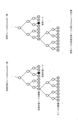
- FIG. 16 is a flowchart showing an example of processing in the tree synthesis unit 2020. Note that the following describes an example of synthesizing trees using "Predictive geometry coding.”
- Predictive geometry coding is also called predictive tree.
- Predictive geometry coding is a method of decoding the residual of the position information of the point cloud data and the predicted position information based on an arbitrary tree structure determined by the point cloud encoding device 100, and adding the two together to decode the position information of the point cloud data.
- step S1601 the tree synthesis unit 2020 determines whether decoding of position information of all point cloud data contained in the slice has been completed.
- This process for example, transmits information indicating the number of point cloud data contained in the slice to the GSH, and by comparing this number of point cloud data with the number of data already processed, it can be determined whether processing of all points has been completed.
- step S1613 If decoding of position information for all point cloud data has been completed, this operation proceeds to step S1613 and ends the process. If decoding of position information for all point cloud data has not been completed, this operation proceeds to step S1602.
- step S1602 the tree synthesis unit 2020 sets the parent node of the node to be decoded (node to be processed) in the point cloud data.
- the tree synthesis unit 2020 decodes the number of child nodes of each node to be decoded, and stores the indexes of the nodes to be decoded for the number of child nodes.
- the tree synthesis unit 2020 may refer to the array of indexes of the node, obtain one index stored at the end of the array, and set the node of the obtained index as the parent node of the node to be decoded.
- step S1603 the tree synthesis unit 2020 determines whether to perform processing in angular mode.
- the tree synthesis unit 2020 can refer to the value of the above-mentioned geom_angular_enabled to determine whether to perform processing in angular mode.
- step S1604 If processing is to be performed in angular mode, the operation proceeds to step S1604; if processing is not to be performed in angular mode, the operation proceeds to step S1610.
- step S1604 the tree synthesis unit 2020 decodes the predictor information and spherical coordinate residuals to be used in step S1605.
- the spherical coordinate residuals indicate the residuals of the radius, azimuth angle, and laser ID.
- step S1605 the tree synthesis unit 2020 predicts the position information based on the predictor information decoded in step S1604.
- the predictor information is a predictor index or a prediction mode.
- the tree synthesis unit 2020 first determines the type of predictor to use for prediction.
- the tree synthesis unit 2020 may determine whether to perform processing in adaptive azimuth angle quantization mode based on the value of ptree_ang_azimuth_scaling_enabled, and may determine the type of predictor to use based on the result of such determination.
- the tree synthesis unit 2020 may select a predictor to be used based on the decoded prediction mode from among multiple predictors calculated using a tree structure.
- the tree synthesis unit 2020 may store the position information of the decoded node as a predictor in a list, refer to the list for the predictor assigned to the decoded predictor index, and select the predictor type to be used.
- the tree synthesis unit 2020 uses that predictor as the predicted value of the position information.
- step S1606 the tree synthesis unit 2020 reconstructs the spherical coordinates.
- the tree synthesis unit 2020 reconstructs the spherical coordinates by adding the decoded spherical coordinate residual and the predictor.
- step S1607 the tree synthesis unit 2020 reconstructs the orthogonal integer coordinates.
- the tree synthesis unit 2020 can convert the spherical coordinates to orthogonal integer coordinates based on the reconstructed spherical coordinates.
- a specific method for this can be achieved, for example, by the method described in Non-Patent Document 1.
- step S1608 After the reconstruction of the orthogonal integer coordinates is complete, the operation proceeds to step S1608.
- step S1608 the tree synthesis unit 2020 decodes the orthogonal integer coordinate residual.
- step S1609 the tree synthesis unit 2020 reconstructs the original coordinates.
- the tree synthesis unit 2020 reconstructs the original coordinates by adding the decoded orthogonal integer coordinate residual and the reconstructed orthogonal integer coordinates.
- step S1610 the tree synthesis unit 2020 predicts the location information. Specifically, the tree synthesis unit 2020 selects a predictor and sets the predictor as the predicted value of the location information.
- the tree synthesis unit 2020 may select a predictor based on the decoded predictor mode from among multiple predictors calculated based on a tree structure.
- step S1611 the tree synthesis unit 2020 decodes the orthogonal integer coordinate residual.
- step S1612 the tree synthesis unit 2020 reconstructs the original coordinates.
- the tree synthesis unit 2020 reconstructs the original coordinates by adding the residual of the orthogonal integer coordinates decoded in step S1611 to the position information predicted in step S1610.
- FIG. 17 is a flowchart showing an example of the process of decoding predictor information and spherical coordinate residuals in step S1604.
- step S1701 the tree synthesis unit 2020 determines whether or not the adaptive azimuth angle quantization mode is selected based on the value of ptree_ang_azimuth_scaling_enabled.
- step S1702. If the mode is adaptive azimuth angle quantization, the operation proceeds to step S1702. On the other hand, if the mode is not adaptive azimuth angle quantization, the operation proceeds to step S1703.
- step S1702 the tree synthesis unit 2020 decodes the predictor index. After the decoding of the predictor index is completed, the operation proceeds to step S1704.
- step S1703 the tree synthesis unit 2020 decodes the prediction mode. After the prediction mode has been decoded, the operation proceeds to step S1704.
- step S1704 the tree synthesis unit 2020 decodes the number of azimuth angle steps. After the decoding of the number of azimuth angle steps is completed, the operation proceeds to step S1705.
- step S1705 the tree synthesis unit 2020 decodes the spherical coordinate residual.
- the tree synthesis unit 2020 may perform such decoding using the method described in Non-Patent Document 2. After the decoding is complete, the operation proceeds to step S1706, where the processing ends.
- attribute information decoding unit 2060 The control data decoded by the attribute information decoding unit 2060 will be described below with reference to FIGS.
- FIG. 5 shows an example of the structure of the encoded data (bit stream) received by the attribute information decoding unit 2060
- FIG. 6 shows an example of the syntax structure of the APS 2611 shown in FIG. 5.
- syntax names explained below are merely examples. If the syntax functions explained below are similar, the syntax names may be different.
- APS2611 may include APS id information (aps_geom_parameter_set_id) for identifying each APS2611.
- Descriptor column in Figure 4 indicates how each syntax is coded.
- ue(v) means that it is an unsigned zeroth-order exponential Golomb code, and u(1) means that it is a 1-bit flag.
- the APS2611 may include a flag (attr_coding_type) for controlling whether the inverse quantization unit 2070 outputs the inverse quantized residual information to the RAHT unit 2080 or the LoD calculation unit 2090.
- Attr_coding_type when the value of attr_coding_type is "1", it may be defined to be output to the LoD calculation unit 2090, and when the value of attr_coding_type is "0", it may be defined to be output to the RAHT unit 2080.
- the APS2611 may include a flag (raht_prediction_enabled) for controlling whether or not to predict attribute information in the RAHT section 2080.
- raht_prediction_enabled when the value of raht_prediction_enabled is "1", it may be defined that attribute information is predicted, and when the value of raht_prediction_enabled is "0", it may be defined that attribute information is not predicted.
- the APS2611 may include a flag (raht_subnode_prediction_enable_flag) that controls whether or not subnodes are used to predict attribute information in the RAHT section 2080.
- raht_subnode_prediction_enable_flag when the value of raht_subnode_prediction_enable_flag is "1", it may be defined that subnodes are used to predict attribute information, and when the value of raht_subnode_prediction_enable_flag is "0", it may be defined that subnodes are not used to predict attribute information.
- the APS2611 may include weight parameters (raht_prediction_weights) used when performing intra-prediction of attribute information in the RAHT unit 2080.
- raht_smoothing_enable_flag when the value of raht_smoothing_enable_flag is "1", it may be defined that smoothing is performed after predicting the attribute information, and when the value of raht_smoothing_enable_flag is "0", it may be defined that smoothing is not performed.
- the APS2611 may include a weighting parameter (raht_smoothing_weighted_average_weights) for performing weighted average smoothing after intra prediction of attribute information is performed in the RAHT unit 2080.
- a weighting parameter (raht_smoothing_weighted_average_weights) for performing weighted average smoothing after intra prediction of attribute information is performed in the RAHT unit 2080.
- the APS2611 may include a weighting parameter (raht_smoothing_clipping_weights) for performing smoothing by clipping after intra-prediction of attribute information is performed in the RAHT unit 2080.
- a weighting parameter (raht_smoothing_clipping_weights) for performing smoothing by clipping after intra-prediction of attribute information is performed in the RAHT unit 2080.
- the APS2611 may include a threshold (raht_smoothing_clipping_threshold) for performing clipping smoothing after intra-prediction of attribute information is performed in the RAHT unit 2080.
- a threshold praht_smoothing_clipping_threshold
- the APS2611 may include a flag (raht_inter_prediction_enabled) for controlling whether or not inter-prediction of attribute information is performed in the RAHT unit 2080.
- raht_inter_prediction_enabled when the value of raht_inter_prediction_enabled is "1", it may be defined that attribute information is predicted, and when the value of raht_inter_prediction_enabled is "0", it may be defined that attribute information is not predicted.
- APS2611 may include a value (raht_inter_prediction_depth_minus1) indicating the layer at which inter prediction of attribute information is enabled in the RAHT unit 2080.
- inter prediction may be enabled up to the top N layers of the Octree structure.
- RAHT section 2080 An example of the process of the RAHT unit 2080 will be described with reference to FIGS.
- FIG. 7 is a flowchart showing an example of processing by the RAHT unit 2080.
- step S28001 the RAHT unit 2080 recursively divides the nodes into octrees until a predetermined size is reached, using a technique called Octree. After this division is complete, the operation proceeds to step S28002.
- step S28002 the RAHT unit 2080 counts the total number of points that belong to the lower hierarchical level of each node divided by the Octree.
- the RAHT unit 2080 scans the nodes of a certain hierarchy in order and records the number of points belonging to each node. Next, the RAHT unit 2080 adds up the number of points recorded in the child nodes of each node in the node one hierarchy higher, and calculates the number of points belonging to each node.
- the RAHT unit 2080 repeats the above scanning from the bottom layer to the top layer.
- the total number of acquired points is used as the weight for the inverse transformation of the RAHT in step S28005 described below. After this calculation is completed, the operation proceeds to step S28003.
- the RAHT unit 2080 decodes the DC coefficients of the nodes belonging to the highest hierarchy of the Octree.
- the RAHT unit 2080 may predict the DC coefficients using intra prediction, and calculate the DC coefficients by decoding and adding up the prediction residuals of the DC coefficients.
- the RAHT unit 2080 calculates the attribute value Aroot of the root node using the total number of points belonging to the root node acquired in step S28002, wroot, and the decoded DC coefficient DCroot, using the following formula:
- step S28004 the RAHT unit 2080 determines whether the decoding of the attribute information of all nodes contained in the hierarchy has been completed.
- step S28005 If not completed, the operation proceeds to step S28005; if completed, the operation proceeds to step S28007.
- step S28005 the RAHT unit 2080 decodes the AC coefficients. Details will be described later. After the decoding is completed, the operation proceeds to step S28006.
- step S28006 the RAHT unit 2080 calculates attribute values using the inverse transform of the RAHT based on the total number of points belonging to the lower hierarchical layer of each node, the decoded AC coefficients, and the DC coefficients calculated from the nodes in the higher hierarchical layer using a method described below.
- T(w) ⁇ 1 is a matrix used for the inverse transformation of the RAHT, and can be generated by the method described in Non-Patent Document 1, for example.
- step S28004 is used as a DC coefficient in the inverse transform of the RAHT of each subnode. After this transform process is completed, the operation proceeds to step S28004.
- step S28007 the RAHT unit 2080 determines whether decoding of nodes at all hierarchical levels has been completed.
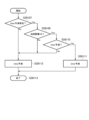
- FIG. 8 is a flowchart showing an example of the processing of step S28004.
- the flag may be decoded for each node or for each layer.
- the flag may be decoded only if the value of raht_prediction_enabled is "1", which indicates that prediction is enabled.
- the flag may be included in the slice data.
- step S28102 If the result of the determination is that AC coefficients are not to be predicted, the operation proceeds to step S28102; if AC coefficients are to be predicted, the operation proceeds to steps S28103 and S28104.
- step S28102 the RAHT unit 2080 decodes the AC coefficients. After the decoding is completed, the operation proceeds to step S28106, where the processing ends.
- step S28103 the RAHT2080 decodes the AC coefficient residuals. After such decoding is completed, the operation proceeds to step S28105.
- step S28104 the RAHT unit 2080 predicts AC coefficients. Inter prediction or intra prediction may be used to predict the AC coefficients.
- the RAHT unit 2080 may first predict the attribute values, and then calculate the predicted values of the AC coefficients by RAHT. This will be described in detail later. After the prediction of the AC coefficients is completed, the operation proceeds to step S28105.
- step S28105 the RAHT unit 2080 adds the residual of the decoded AC coefficients to the predicted AC coefficients to reconstruct the AC coefficients. After the reconstruction is completed, the operation proceeds to step S28106, and the process ends.
- FIG. 9 is a flowchart showing an example of the processing of step S28104.
- step S28107 the RAHT unit 2080 determines whether inter prediction is enabled.
- the RAHT unit 2080 may refer to raht_inter_prediction_enabled and use the value thereof for the determination. If the result of the determination is that inter prediction is enabled, the operation proceeds to step S28109, and if inter prediction is disabled, the operation proceeds to step S28112.
- the RAHT unit 2080 determines whether the depth of the hierarchy in which the node to be processed is included is equal to or less than a threshold.
- the RAHT unit 2080 may refer to raht_inter_prediction_depth_minus1 as the threshold and use that value.
- step S28110 If the result of the determination is that the depth is equal to or less than the threshold, the operation proceeds to step S28110; if the depth is greater than the threshold, the operation proceeds to step S28112.
- step S28110 the RAHT unit 2080 determines whether to inter-predict the AC coefficients of the node to be processed.
- the RAHT unit 2080 may make this determination by checking whether inter prediction is possible, and performing inter prediction if possible, and not performing inter prediction if not possible. This will be described in detail later.
- the RAHT unit 2080 may make the determination by decoding a flag indicating whether or not to inter-predict the AC coefficients of the node to be processed, and using the value of the flag.
- the flag may be decoded for each node, or may be decoded for each layer.
- the flag may be decoded and a determination made only when it is determined that inter-prediction is possible.
- the flag may be included in the slice data.
- step S28112 the RAHT unit 2080 performs intra prediction of the AC coefficients of the node to be processed. The details will be described later.
- step S28111 a process equivalent to the intra prediction process in step S28112 may also be performed, and prediction may be performed by combining the results of inter prediction and intra prediction. This will be described in detail later.
- FIG. 10 is a flowchart showing an example of the intra prediction process in step S28112.
- the RAHT unit 2080 determines whether or not to perform intra prediction using adjacent nodes in the subnode hierarchy.
- the RAHT unit 2080 may refer to raht_subnode_prediction_enable_flag and use the value thereof to make the determination.
- the RAHT unit 2080 If the RAHT unit 2080 does not use adjacent nodes in the subnode hierarchy, it performs intra prediction using only adjacent nodes in the higher hierarchy.
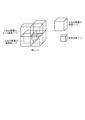
- the adjacent nodes in the higher hierarchy refer to the six nodes adjacent to the parent node of the node to be decoded that are adjacent to the face, the 12 nodes adjacent to the edge, and the parent node itself that are adjacent to the face of the node to be decoded, out of a total of 19 nodes, three nodes adjacent to the face of the node to be decoded, three nodes adjacent to the edge, and the seven nodes of the parent node itself.
- Figure 11 shows the relationship between the node to be decoded and adjacent nodes in the higher hierarchy.
- the RAHT unit 2080 When using adjacent nodes in the subnode hierarchy, the RAHT unit 2080 performs intra prediction using adjacent nodes in the higher hierarchy and adjacent nodes in the subnode hierarchy.
- an adjacent node in the subnode hierarchy is a subnode of an adjacent node in a higher hierarchy that has a face or edge adjacent to the node to be decoded and has already been decoded.
- Figure 12 shows the relationship between the node to be decoded and adjacent nodes in the subnode hierarchy.
- step S28202 If the determination result is that intra prediction is to be performed without using adjacent nodes in the subnode hierarchy, the operation proceeds to step S28202; if the determination result is that intra prediction is to be performed using adjacent nodes in the subnode hierarchy, the operation proceeds to step S28204.
- step S28202 the RAHT unit 2080 acquires the attribute values of the adjacent nodes in the higher hierarchy. After acquiring the attribute values of the adjacent nodes in the higher hierarchy, the operation proceeds to step S28203.
- step S28203 the RAHT unit 2080 predicts the attribute value of the node to be decoded.
- the RAHT unit 2080 may predict the attribute value attr using the acquired attribute values attr i of the k adjacent nodes in the higher hierarchy and weights w i according to the type of adjacent node i, using the following formula:
- the RAHT unit 2080 may use a hard-coded value as the weight w i depending on whether the adjacent node i is a face adjacent node of a higher hierarchy, an edge adjacent node of a higher hierarchy, or a parent node, or may refer to raht_prediction_weights and calculate the weight w i from that value.
- step S28204 the RAHT unit 2080 obtains the attribute values of adjacent nodes in the upper hierarchy.
- the targets for which attribute values are obtained are adjacent nodes in a higher hierarchy whose subnodes have not yet been decoded, or adjacent nodes in a higher hierarchy whose subnodes have been decoded but whose subnodes do not share faces or edges with the node to be decoded.
- step S28205 the RAHT unit 2080 acquires the attribute values of the adjacent nodes in the subnode hierarchy. After acquiring the attribute values of the adjacent nodes in the subnode hierarchy, the operation proceeds to step S28206.
- step S28206 the RAHT unit 2080 predicts the attribute value of the node to be decoded.
- the RAHT unit 2080 may predict the attribute value attr using the attribute values attr i of the k adjacent nodes in the higher hierarchy and the adjacent nodes in the subnode hierarchy that have been obtained, and the weights w i according to the type i of the adjacent node, using the following formula.
- the RAHT unit 2080 may use a hard-coded value as the weight w i depending on whether the adjacent node i is a face adjacent node of a higher hierarchy, an edge adjacent node of a higher hierarchy, a parent node, a face adjacent node of a subnode hierarchy, or an edge adjacent node of a subnode hierarchy, or may refer to raht_prediction_weights and calculate the weight w i from that value.
- the RAHT unit 2080 converts the predicted attribute values into AC coefficients.
- the AC coefficients are generated by RAHTing the predicted attribute values.
- the RAHT unit 2080 may use the method described in Non-Patent Document 1 as the conversion method.
- the RAHT unit 2080 uses the attribute values predicted in step S28206 directly to convert the AC coefficients in step S28207, but the RAHT unit 2080 may also smooth the predicted attribute values before converting the AC coefficients.
- the RAHT unit 2080 may determine whether or not to perform smoothing in step S1301.
- the RAHT unit 2080 may refer to raht_smoothing_enable_flag and use its value when making such a determination.
- step S1302 the RAHT unit 2080 may smooth the attribute values.
- the RAHT unit 2080 may obtain a weighted average of the smoothed attribute value Attrsmoothing of the node to be decoded by using the attribute value Attri i predicted at a subnode i in the same parent node as the node to be decoded and a weight ⁇ i as follows:
- the RAHT unit 2080 may treat the decoded node as a face-adjacent node for the subnode i being the target, or may treat all subnodes within the same parent node.
- the RAHT unit 2080 may use a hard-coded value as the weight ⁇ i , or may refer to raht_smoothing_weighted_average_weights and use the value.
- the RAHT unit 2080 may, for example, perform clipping to determine the smoothed attribute value Attr smoothing of the node to be decoded using the predicted value Attr 0 of the node to be decoded itself, the attribute value Attr i predicted at a subnode i other than the node to be decoded among subnodes within the same parent node as the node to be decoded, a weight ⁇ i , and a threshold value Thr r as follows:
- clipping refers to a process in which if the input value is greater than a predetermined maximum value, the maximum value is output, if the input value is less than a predetermined minimum value, the minimum value is output, and in all other cases the input value is used as is as the output value.
- the function Clip3 that performs clipping is:
- the RAHT unit 2080 may determine that the decoded node for the target subnode i is a face-adjacent node, a face-adjacent node and an edge-adjacent node, or all subnodes within the same parent node.
- the RAHT unit 2080 may use a hard-coded value as the weight ⁇ i , or may refer to raht_smoothing_clipping_weights and use the value.
- the RAHT unit 2080 may use a hard-coded value as the threshold value Thr , or may refer to raht_smoothing_clipping_threshold and use that value.
- the RAHT unit 2080 decodes AC coefficients for both the color difference signal and the luminance signal, but the RAHT unit 2080 may skip decoding AC coefficients for the color difference signal only for the bottom layer of the Octree.
- the RAHT unit 2080 may determine whether to skip decoding of AC coefficients of color difference signals only in the bottom layer of the Octree.
- FIG. 15 shows an example of the inter prediction process in step S28111.
- the RAHT unit 2080 predicts the AC coefficients of the node to be processed using information about the reference node, which is the corresponding node in the reference frame.
- the information about the reference node may be its attribute value or AC coefficients.
- the reference frame may also refer to another decoded frame, and the information about the reference frame may be included in the previous frame buffer 2120.
- the RAHT unit 2080 may apply the same Octree structure to the reference frame as to the frame to be processed. In such a case, a node may be set at a position where there is no point. Such a node is called an empty node. If the reference node is an empty node, the RAHT unit 2080 may disable inter prediction in step S28110.
- the RAHT unit 2080 may apply an Octree to the reference frame independently of the frame to be processed, and set an Octree structure different from that of the frame to be processed. In such a case, a node may not necessarily exist in the same position as in the frame to be processed. If a reference node is not found in a position corresponding to the node to be processed, the RAHT unit 2080 may disable inter prediction in step S28143.
- the RAHT unit 2080 may estimate and interpolate the information of the reference node using information of nodes in nearby positions within the reference frame.
- the RAHT unit 2080 may estimate and interpolate the average value of the attribute values or AC coefficients of adjacent nodes, nearest nodes, or k nearest nodes relative to the reference node position as the attribute value or AC coefficient of the reference node, respectively.
- the RAHT unit 2080 may predict the AC coefficients of the node to be processed, for example, from the attribute values of the reference node.
- the RAHT unit 2080 may use the value Attr inter of the decoded attribute value of the reference node to calculate a predicted value Attr pred of the attribute value of the node to be processed, and apply RAHT to the predicted value Attr pred of the attribute value of the node to be processed to calculate a predicted value AC pred of the AC coefficient of the node to be processed.
- the RAHT unit 2080 may predict the AC coefficients of the node to be processed directly from the AC coefficients of the reference node, for example.
- the RAHT unit 2080 may calculate the value AC inter of the AC coefficient of the reference node using the RAHT in the reference frame, and set the value as the predicted value AC pred of the AC coefficient of the node to be processed.
- the RAHT unit 2080 may obtain the AC coefficients of the reference node by recording the AC coefficients of each node of the reference frame in the frame buffer 2120 and referring to the values in the frame buffer 2120. In this case, when there is no AC coefficient of the reference node in the frame buffer 2120, the RAHT unit 2080 may determine in step S28110 that inter prediction is not executable.
- the RAHT unit 2080 may multiply Attr inter and AC inter by a scaling factor ⁇ .
- Attr pred ⁇ Attr inter
- AC pred ⁇ AC inter
- the coefficient ⁇ may be any real number.
- the coefficient ⁇ may be decoded for each node or for each layer.
- the coefficient ⁇ may be included in the slice data.
- the integer ⁇ may be defined as an integer ranging from integer a to integer b, and ⁇ may be decoded.
- the coefficient ⁇ may be calculated by adding an integer c to the decoded ⁇ and then dividing the result by the integer c, as follows:
- ⁇ ( ⁇ + c)/c
- the integer ⁇ may be decoded using an exponential-Golomb code.
- the coefficient ⁇ may be derived at the decoder.
- the AC coefficient AC parent of the parent node of the node to be decoded and the inter predicted value AC parent_inter when the parent node is decoded may be used to perform the following calculation.
- the RAHT unit 2080 may calculate ⁇ so as to minimize the cost using AC coefficients AC neighbor1 , AC neighbor2 , ..., AC neighborN of N adjacent nodes of the node to be decoded and inter-predicted values AC neighbor_inter1 , AC neighbor_inter2 , ..., AC neighbor_interN when each adjacent node is decoded.
- the cost may be, for example, the sum of the AC coefficients of each adjacent node and the squared error of the predictor of the AC coefficients.
- the adjacent nodes may, for example, include only the nodes adjacent to the faces, or may include the nodes adjacent to the faces and the nodes adjacent to the edges.
- the RAHT unit 2080 may perform a similar operation in inter-prediction of DC coefficients in step S28003.
- DC pred ⁇ DC inter
- DC inter the DC coefficient of the reference node
- DC pred the predicted value of the DC coefficient of the root node
- the RAHT unit 2080 may also calculate predicted values of attribute values or AC coefficients by combining inter prediction and intra prediction.
- the following shows an example in which the RAHT unit 2080 requests a prediction of an attribute value.
- Attr pred W inter ⁇ Attr inter +W intra ⁇ Attr intra
- Attr inter and Attr intra are the inter prediction and intra prediction of the attribute value, respectively.
- W inter and W intra are the weights of the inter prediction and intra prediction, respectively.
- the combination of inter prediction and intra prediction may be effective only in a specific layer. For example, the combination of inter prediction and intra prediction may be effective only when M ⁇ depth ⁇ N. M may be any real number less than N, and may be decoded as header information such as APS.
- the tree analysis unit 1030 is configured to use position information of the quantized point cloud as input, and to generate an occurrence code that indicates at which node in the encoding target space the point exists, based on the tree structure described below.
- the tree analysis unit 1030 is configured to generate an occupancy code while recursively dividing the node until it reaches a predetermined size.
- a method called "Octree” can be used that recursively divides the above-mentioned rectangular parallelepiped into octrees, always treating the rectangular parallelepiped as a cube, and a method called “QtBt” can be used that divides the rectangular parallelepiped into quadtrees and binary trees in addition to the octree division.
- the tree analysis unit 1030 determines the tree structure, and the determined tree structure is transmitted to the point cloud decoding device 200 as control data.
- the approximate surface analysis unit 1040 may be configured to generate approximate surface information using, for example, a method called "Trisoup.” Furthermore, when decoding a sparse point cloud acquired by Lidar or the like, this process can be omitted.
- the geometric information encoding unit 1050 is configured to generate a bit stream (geometric information bit stream) by encoding syntax such as the occupancy code generated by the tree analysis unit 1030 and the approximate surface information generated by the approximate surface analysis unit 1040.
- the bit stream may include, for example, the syntax described in FIG. 4.
- the encoding process is, for example, a context-adaptive binary arithmetic encoding process.
- the syntax includes control data (flags and parameters) for controlling the decoding process of the position information.
- the geometric information reconstruction unit 1060 is configured to reconstruct the geometric information of each point of the point cloud data to be encoded (the coordinate system assumed by the encoding process, i.e., the position information after the coordinate transformation in the coordinate transformation unit 1010) based on the tree information generated by the tree analysis unit 1030 and the approximate surface information generated by the approximate surface analysis unit 1040.
- the frame buffer 1140 is configured to receive the geometric information reconstructed by the geometric information reconstruction unit 1060 and store it as a reference frame.
- the stored reference frame is read from the frame buffer 1140 and used as the reference frame when the tree analysis unit 1030 performs inter-prediction of temporally different frames.
- which reference frame to use for each frame may be determined based on, for example, the value of a cost function representing the encoding efficiency, and information on the reference frame to be used may be transmitted to the point cloud decoding device 200 as control data.
- the color conversion unit 1070 is configured to perform color conversion when the input attribute information is color information. It is not necessary to perform color conversion, and whether or not to perform color conversion processing is coded as part of the control data and transmitted to the point cloud decoding device 200.
- the attribute transfer unit 1080 is configured to correct the attribute values so as to minimize distortion of the attribute information, based on the position information of the input point cloud, the position information of the point cloud after reconstruction in the geometric information reconstruction unit 1060, and the attribute information after color change in the color conversion unit 1070.
- a specific correction method for example, the method described in Non-Patent Document 1 can be applied.
- the RAHT unit 1090 is configured to receive as input the attribute information transferred by the attribute transfer unit 1080 and the geometric information generated by the geometric information reconstruction unit 1060, and to generate residual information for each point using a type of Haar transform called RAHT (Region Adaptive Hierarchical Transform).
- RAHT Regular Adaptive Hierarchical Transform
- the information to be decoded is the direct current component (DC coefficient) and alternating current component (AC coefficient) of the attribute information generated by using RAHT in the encoding process, and in the decoding process, it is converted into attribute information by using the inverse transform of RAHT.
- DC coefficient direct current component
- AC coefficient alternating current component
- RAHT RAHT Specific processing of RAHT can be performed, for example, using the method described in the above-mentioned non-patent document 1.
- the LoD calculation unit 1100 is configured to receive the geometric information generated by the geometric information reconstruction unit 1060 and generate the LoD (Level of Detail).
- LoD is information for defining the reference relationship (the referencing point and the referenced point) to realize predictive coding, such as predicting attribute information of a certain point from attribute information of another point and encoding or decoding the prediction residual.
- LoD is information that defines a hierarchical structure in which each point contained in the geometric information is classified into multiple levels, and the attributes of points belonging to lower levels are encoded or decoded using attribute information of points belonging to higher levels.
- the method described in the above-mentioned non-patent document 1 may be used.
- the attribute information quantization unit 1120 is configured to quantize the residual information output from the RAHT unit 1090 or the lifting unit 1110.
- a quantization step size of 1 is equivalent to no quantization being performed.
- the attribute information encoding unit 1130 is configured to perform encoding processing using the quantized residual information output from the attribute information quantization unit 1120 as syntax, and generate a bit stream related to the attribute information (attribute information bit stream).
- the encoding process is, for example, a context-adaptive binary arithmetic encoding process.
- the syntax includes control data (flags and parameters) for controlling the decoding process of the attribute information.
- the point cloud encoding device 100 is configured to perform encoding processing using the position information and attribute information of each point in the point cloud as input through the above processing, and to output a geometric information bit stream and an attribute information bit stream.
- modification example 1 illustrates a case in which the RAHT unit 2080 scales using different scaling factors for each Octree layer and for each frequency index of the AC coefficients.
- the scaling factor may also be decoded as syntax included in APS2611 or ASH2612.
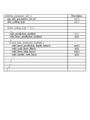
- FIGS. 19 and 33 show an example of the syntax configuration of APS2611 and ASH2612 when a scaling factor is transmitted by ASH2612. Note that only the differences between the syntax configuration shown in FIG. 33 and the syntax configuration explained in FIG. 6 will be explained below.
- APS2611 may include a value (raht_send_inter_filters) indicating whether to transmit a scaling factor in inter prediction of attribute information.
- raht_send_inter_filters when raht_send_inter_filters is "1", it may be defined that the scaling factor in the inter prediction of the attribute information is transmitted, and when raht_send_inter_filters is "0", it may be defined that the scaling factor in the inter prediction of the attribute information is not transmitted.
- APS2611 may include a value (raht_inter_skip_layers) indicating how many layers above the Octree root node hierarchy are exempt from inter prediction scaling for inter prediction of attribute information.
- raht_inter_skip_layers is "3"
- APS2611 may include a value (raht_enable_code_layer) indicating whether or not to transmit the applicability mode of inter prediction for each layer.
- APS2611 may include raht_enable_code_layer when raht_prediction_enable is "1" and raht_inter_prediction_enable is "1".
- raht_enable_code_layer when raht_enable_code_layer is "1", it may be defined that the inter prediction applicability mode for each layer is transmitted, and when raht_enable_code_layer is "0", it may be defined that the inter prediction applicability mode for each layer is not transmitted.
- ASH2612 may include a value (raht_attr_layer_depth_num) indicating the number of layers of the frame if either raht_enable_code_layer or raht_send_inter_filters is "1".
- ASH2612 may include raht_attr_layer_depth_num when only raht_send_inter_filters is "1".
- raht_attr_layer_depth_num may be defined as the number of layers of the frame minus 1, and may be used by adding 1 after decoding.
- raht_attr_layer_depth_num is “0”
- raht_attr_layer_depth_num may be used as “0”
- 1 may be subtracted from it after decoding.
- ASH2612 may include the inter prediction applicability mode (raht_attr_layer_code_mode) for each layer, the number of which is equal to raht_attr_layer_depth_num.
- inter prediction if inter prediction is applied, it may be defined as "1", and if inter prediction is not applied, it may be defined as "0".
- the number of effective hierarchical layers for inter prediction is a numerical value indicating the threshold value of the layer to which inter prediction is applied.
- the number of effective hierarchical layers for inter prediction may be a value obtained by adding 1 to raht_inter_prediction_depth_minus1, and when raht_inter_prediction_depth_minus1 is "N-1", the number of effective hierarchical layers for inter prediction may be defined as "N”.
- num_filter_taps may be calculated by subtracting a value indicating how many top layers are not to be applied to inter prediction scaling from the number of effective layers for inter prediction, or when the number of layers of the frame is less than the number of effective layers for inter prediction, num_filter_taps may be calculated by subtracting a value indicating how many top layers are not to be applied to inter prediction scaling from the number of layers of the frame.
- num_filter_taps may be derived as follows:
- num_filter_taps may be derived based on a value indicating how many top layers are exempt from inter prediction scaling (raht_inter_skip_layers), a value indicating the number of effective layers for inter prediction (raht_inter_prediction_depth_minus1), a value indicating the number of layers for the frame (raht_attr_layer_depth_num), and the mode indicating whether inter prediction is applicable for each layer (raht_attr_layer_code_mode).
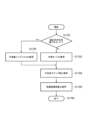
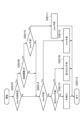
- FIG. 34 is a flowchart showing an example of a process for deriving num_filter_taps based on a value indicating how many top layers are exempt from inter prediction scaling, a value indicating the number of effective layers for inter prediction, the number of layers for the frame, and the applicability mode for inter prediction for each layer.
- step S3401 the attribute information decoding unit 2060 determines whether or not to transmit the applicability mode of inter prediction for each layer. The determination may be made using the raht_enable_code_layer.
- step S3405 If it is determined that the inter prediction applicability mode for each layer is to be transmitted, the operation proceeds to step S3405, and if it is determined that the inter prediction applicability mode for each layer is not to be transmitted, the operation proceeds to step S3402.
- step S3402 the attribute information decoding unit 2060 determines whether the number of layers of the frame is greater than the number of effective layers of inter prediction. The determination may be made using, for example, the above-mentioned raht_attr_layer_depth_num and raht_inter_prediction_depth_minus1.
- step S3403 If it is determined that the number of layers of the frame is smaller than the number of effective layers of inter prediction, the operation proceeds to step S3403; if it is determined that the number of layers of the frame is greater than the number of effective layers of inter prediction, the operation proceeds to step S3404.
- step S3403 the attribute information decoding unit 2060 derives the number of scaling factors using the number of layers of the frame. Specifically, the attribute information decoding unit 2060 may determine the number of scaling factors by subtracting a value indicating up to which upper layers inter prediction scaling should not be applied from the number of layers of the frame. Once the number of scaling factors has been derived, this operation proceeds to step S3406, and processing ends.
- step S3404 the attribute information decoding unit 2060 derives the number of scaling factors using the number of effective layers of inter prediction. Specifically, the attribute information decoding unit 2060 may determine the number of scaling factors by subtracting a value indicating up to which upper layers inter prediction scaling is not applied from the number of effective layers of inter prediction. Once the number of scaling factors has been derived, this operation proceeds to step S3406, and processing ends.
- the number of scaling factors in steps S3402 to S3404 can be derived using the following formula:
- step S3405 the attribute information decoding unit 2060 derives the number of scaling factors using the inter prediction applicability mode for each layer. Specifically, the attribute information decoding unit 2060 may, for example, count the layers to which inter prediction is applied based on the inter prediction applicability mode for each layer. However, the attribute information decoding unit 2060 may exclude from the count layers to which inter prediction scaling is not applicable based on a value indicating up to which upper layers inter prediction scaling is not applicable. Once the number of scaling factors has been derived, this operation proceeds to step S3406, and processing ends.
- the RAHT unit 2080 may subtract X from 128, shift the result to the right by 7 bits, and use the result as the scaling factor ⁇ for inter prediction.
- the value of the scaling factor ⁇ in inter prediction of the attribute information may be defined as "1", which is calculated by subtracting 0 from 128 and shifting the result 7 bits to the right.
- the RAHT unit 2080 may determine whether to apply inter prediction based on, for example, syntax that specifies the layer to which inter prediction is applied, and may scale the inter prediction value using the decoded raht_filter_taps if it is determined that inter prediction is to be applied to the layer. If it is determined that inter prediction is not to be applied to the layer, it is not necessary to scale the inter prediction.
- the RAHT unit 2080 may determine to scale the inter prediction value if the depth of the hierarchy in which the node to be processed is included is equal to or less than the number of effective hierarchical layers for inter prediction, and the depth of the hierarchy in which the node to be processed is equal to or greater than a value indicating how many upper layers are exempt from inter prediction scaling.
- the RAHT unit 2080 may refer to raht_inter_prediction_depth_minus1 and use the value for the number of effective hierarchical layers for inter prediction.
- the RAHT unit 2080 may also refer to raht_inter_skip_layers to determine the number of top layers to which inter prediction scaling should not be applied, and use that value.
- the RAHT unit 2080 may determine to scale the inter prediction value.
- the RAHT unit 2080 may refer to raht_attr_layer_code_mode and determine whether inter prediction is applied to the layer that contains the node to be processed, based on the value thereof.
- the number of scaling factors to be decoded can be derived by multiplying the number of scaling factors calculated above by the number of scaling factors for each layer.
- the number of scaling factors may be, for example, 7.
- the scaling factor ⁇ _(depth_idx), which differs for each layer and for each frequency index idx of the AC coefficient, may refer to raht_filter_taps and use that value.
- the scaling factor ⁇ _(depth_idx) may be set to an arbitrary hard-coded value.
- the RAHT unit 2080 may also group the frequency indexes of the AC coefficients, assign a group to each frequency index, and use the scaling factor of the corresponding group as the scaling factor for each frequency index.
- the RAHT unit 2080 may also be configured to derive other scaling factors based on some of the decoded scaling factors.
- the scaling factor may be derived based on a scaling factor of another layer that has already been decoded.
- the RAHT unit 2080 may determine the scaling factor ⁇ _(d2_idx) for each frequency index idx of layer d2 based on the scaling factor ⁇ _(d1_idx) for each frequency index idx of the decoded layer d1.
- the scaling factor may be derived based on a scaling factor for another frequency index that has already been decoded.
- the RAHT unit 2080 may determine the scaling factor ⁇ _(depth_i2) for the frequency index i2 of each layer based on the scaling factor ⁇ _(depth_i1) for the frequency index i1 of each decoded layer.
- the scaling factor may be derived based on the scaling factor of another layer that has already been decoded and another frequency index that has already been decoded.
- the RAHT unit 2080 may determine the scaling factor ⁇ _(d2_i2) for frequency index i2 of layer d2 based on the scaling factor ⁇ _(d1_i1) for frequency index i1 of the decoded layer d1.
- the RAHT unit 2080 may rearrange the order of the frequency indexes in any order after decoding the scaling factors.
- Modification 2 a second modification of the first embodiment will be described with reference to FIGS. 20 to 25, focusing on the differences from the first embodiment.
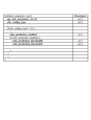
- FIG. 20 shows an example of the syntax configuration of APS2611 in this modified example. Note that only the differences from the syntax configuration explained in FIG. 6 will be explained.
- the APS2611 may include values (raht_prediction_threshold0, raht_prediction_threshold1) indicating the thresholds for the number of adjacent nodes of the grandparent node and parent node of the node to be processed as conditions for determining whether to predict attribute information in the RAHT unit 2080.
- intra prediction of attribute information may not be performed, and in other cases, intra prediction of attribute information may be performed.
- FIG. 21 is a flowchart showing an example of the processing of step S28104. Note that only the differences from the flowchart explained using FIG. 9 will be explained below, and parts that have not changed from FIG. 9 will be assigned the same reference numerals and explanations will be omitted.
- step S28114 the RAHT unit 2080 determines whether to intra-predict the AC coefficients of the node being processed.
- the RAHT unit 2080 may check whether intra prediction is possible, and if intra prediction is possible, perform intra prediction, and if intra prediction is not possible, not perform intra prediction.
- the RAHT unit 2080 may determine that intra prediction is executable when the number of adjacent nodes of the grandparent node and parent node of the processing target node is equal to or greater than raht_prediction_threshold0 and raht_prediction_threshold1, respectively.
- the RAHT unit 2080 may determine that intra prediction is executable if the number of adjacent nodes of the parent node of the processing target node is equal to or greater than raht_prediction_threshold1.
- the RAHT unit 2080 may use the value of a flag indicating whether or not to intra-predict the AC coefficients of the node being processed in such a determination.
- the flag may be decoded for each node or for each layer.
- the flag may be decoded and the above-mentioned determination may be made only if it is determined that intra prediction is possible using the above-mentioned method.
- the flag may be included in the slice data.
- step S28112 If intra prediction is possible, the operation proceeds to step S28112; if intra prediction is not possible, the operation proceeds to step S28115.
- step S28115 the RAHT unit 2080 skips prediction of the AC coefficients of the node being processed. For example, the RAHT unit 2080 may not perform prediction, and input the predicted value as 0 to the subsequent processing.
- step S28115 the operation proceeds to step S28113 and ends the processing of step S28104.
- step S28109 may be replaced with a determination based on syntax (flags, etc.) included in the bitstream.
- syntax may be decoded for each layer of the RAHT.
- Such syntax may be included in APS2611, ASH2612A/2612B, or slice data 2613A/2613B.
- FIGS. 22 and 23 are flowcharts showing an example of the processing of step S28104. Note that only the differences from the flowchart explained using FIG. 21 will be explained below, and parts that have not changed from FIG. 21 will be assigned the same reference numerals and explanations will be omitted.
- the operation proceeds to the intra-priority flow in FIG. 23.
- step S28116 the RAHT unit 2080 determines whether intra prediction is possible using a method similar to that used in step S28114.
- step S28112 If intra prediction is possible, the operation proceeds to step S28112; if intra prediction is not possible, the operation proceeds to step S28117.
- the RAHT unit 2080 determines whether inter prediction is possible.
- the RAHT unit 2080 may decode a flag indicating the presence or absence of a reference node or whether inter prediction is to be performed, and make a determination based on the value.
- Such a flag may be decoded for each node at a certain layer or above, and the same flag as that of the parent node of the processing node may be used at a layer lower than the certain layer.
- the "certain layer" may be specified by syntax included in a header such as APS2611 or ASH2612A/2612B, or may be specified by a fixed value set in advance.
- step S28118 If inter prediction is possible, the operation proceeds to step S28118; if inter prediction is not possible, the operation proceeds to step S28115.
- step S28118 the RAHT unit 2080 performs inter prediction of the AC coefficients of the node being processed.
- the RAHT unit 2080 may inter-predict the AC coefficients of the node to be processed using the AC coefficients or attribute values of the reference node or the adjacent nodes of the reference node, similar to the method described in FIG. 15.
- the RAHT unit 2080 may predict the AC coefficients of the node to be processed by applying RAHT using the weights of the frame to be processed to the attribute values.
- the RAHT unit 2080 may use the weighted average of the AC coefficients of the reference node and the adjacent nodes of the reference node as the predicted value of the AC coefficient of the node to be processed.
- the RAHT unit 2080 may also use the AC coefficients obtained by applying RAHT using the weights of the frame to be processed to the weighted average of the attribute values of the reference node and the adjacent nodes of the reference node as the predicted values of the AC coefficients of the node to be processed.
- the RAHT unit 2080 may set the weights of the weighted average to be large for the reference node and small for the adjacent nodes of the reference node.
- the RAHT unit 2080 may set the weights of the weighted average to be large for face adjacent nodes and small for edge adjacent nodes among the adjacent nodes of the reference node.
- the RAHT unit 2080 may calculate the weighted average using the values of nodes other than the empty node.
- step S28113 ends the processing of step S28104.
- FIG. 24 is a flowchart showing an example of the processing of step S28104. Note that only the differences from the flowchart explained using FIG. 22 will be explained below, and the same reference numerals will be used for parts that have not been changed from FIG. 22, and explanations will be omitted.
- step S28114 determines whether intra prediction cannot be performed. If it is determined in step S28114 that intra prediction cannot be performed, the operation proceeds to step S28119.
- step S28119 the RAHT unit 2080 determines whether to predict the AC coefficients of the node to be processed by the extended intra prediction.
- the extended intra prediction will be described later.
- the RAHT unit 2080 may determine that the expanded intra prediction is executable, for example, when the number of adjacent nodes of the grandparent node and parent node of the node to be processed is equal to or greater than the respective thresholds.
- the thresholds may be decoded as header information such as APS.
- the RAHT unit 2080 may decode and determine a flag indicating whether or not to predict the AC coefficients of the node to be processed by the enhanced intra prediction. Such a flag may be included in the slice data. Such a flag may be decoded for each node, or may be decoded for each layer. Such a flag may be decoded and determined only when it is determined that the enhanced intra prediction is executable by the above-mentioned method. Such a flag may be decoded for each node at a certain layer or higher, and the same flag as that of the parent node of the processing node may be used at a layer lower than the certain layer.
- the "certain layer" may be specified by syntax included in the header of APS2611, ASH2612A/2612B, etc., or may be specified by a fixed value set in advance.
- step S28120 If it is determined that the expanded intra prediction is executable, the operation proceeds to step S28120; if it is determined that the expanded intra prediction is not executable, the operation proceeds to step S28115.
- step S28120 the RAHT unit 2080 predicts the AC coefficients of the node to be processed using extended intra prediction.
- the expanded intra prediction predicts the attribute value of the node to be decoded by referring to the values of neighboring nodes of the node to be processed as well as the values of nearby nodes that are not directly adjacent to the node to be processed.
- the neighboring nodes used in the scaled intra prediction may be, as shown in FIG. 25, nodes that are adjacent to the parent node of the node to be decoded but are not directly adjacent to the node to be decoded.
- the prediction of the attribute value of the node to be decoded is calculated by taking the weighted average of the attribute values of the adjacent nodes in the higher hierarchy of the node to be processed, the adjacent nodes in the subnode hierarchy, and the nearby nodes, as in steps S28203 and S28206.
- the conversion from the predicted attribute values to the predicted AC coefficient values is performed in the same manner as in step S28207.
- FIG. 26 is a diagram explaining the processing flow of the RAHT in this modified example 3. Note that only the differences from the points explained using FIG. 7 will be explained below, and the points that have not changed from FIG. 7 will be assigned the same reference numerals and explanations will be omitted.
- the RAHT unit 2080 performs region division processing.
- FIG. 27(a) is an example of an Octree constructed in step S28001.
- the RAHT unit 2080 performs subsequent processing on the Octree in FIG. 27(a).
- the RAHT unit 2080 divides the above-mentioned Octree into a predetermined hierarchy (in the example of FIG. 27(b), a hierarchy in which the node size is 2N).
- step S30001 can be said to be a process of dividing one tree, as shown in FIG. 27(a), into multiple trees. Dividing the tree for each node of a given size can also be said to be a process of dividing the space to be decoded into areas corresponding to each root node.
- the RAHT unit 2080 performs RAHT processing on the multiple trees divided as described above.
- the RAHT unit 2080 first performs the Octree processing in step S28001, and then performs the region division processing in step S30001. However, this order may be reversed, and the region division processing in step S30001 may be performed first, and then the Octree processing in step S28001 may be performed for each region.
- step S30001 If the region division process in step S30001 is performed first, this can be achieved by classifying each point belonging to the same root node based on the coordinate information of each point to be decoded and a specified node size.
- the RAHT unit 2080 may first sort the points to be decoded in Morton code order, and then divide them into regions for each root node.
- the specified node size may also be decoded as syntax included in APS2611 or ASH2612.
- Figure 28 shows an example of a syntax table when transmitting the information using APS2611.
- the attribute information decoding unit 2060 may decode a flag (raht_split_enabled) that controls whether or not to execute the above-mentioned region splitting process. If the value of this flag is "1", the RAHT unit 2080 may be specified to execute the splitting process and perform processing according to the flow of FIG. 26. On the other hand, if the value of this flag is "0", the RAHT unit 2080 may be specified to not perform the splitting process and to perform processing, for example, according to the flow of FIG. 7.
- the attribute information decoding unit 2060 may decode syntax (raht_split_nodesize_log2) that specifies the root node size when splitting the region.
- the attribute information decoding unit 2060 may decode, as such syntax, a value converted to the logarithm with base 2 for the root node size.
- the attribute information decoding unit 2060 may decode a value obtained by subtracting the minimum value in advance as the syntax.
- the attribute information decoding unit 2060 may first add 2 to the value decoded as raht_split_nodesize_log2, and then convert it into a power of 2 to calculate the final root node size.
- attribute information decoding unit 2060 may decode at which level of the Octree the area division should be performed, instead of the root node size.
- the attribute information decoding unit 2060 may decode a value indicating at what level the tree is to be divided, where the densest hierarchy of the Octree is defined as level 0, and each level is successively sparser as level 1, level 2, etc.
- step S30002 the RAHT unit 2080 checks whether processing has been completed for all areas (trees). If such processing has been completed, the operation proceeds to step S28008 and ends. On the other hand, if such processing has not been completed, the operation proceeds to step S28002.
- step S30003 and step S28003 in the DC coefficient decoding process will be explained.
- step S28003 there was only one root node, but in this modified example 3, as described above, there are multiple root nodes and corresponding DC coefficients.
- 29(a) shows an example in which there are four root nodes (R a , R b , R c , and R d ).
- the decoding order is R a tree ⁇ R b tree ⁇ R c tree ⁇ R d tree.
- the DC coefficients of each root node may be decoded independently. This configuration allows the decoding process of the DC coefficients of each root node to be executed in parallel, thereby reducing the processing time.
- the RAHT unit 2080 may generate a predicted value of the DC coefficient of the root node of the tree to be decoded using the DC coefficient of the root node that has already been decoded, and may decode the DC coefficient of the root node of the tree to be decoded by adding the predicted value to the decoded DC coefficient value (residual of the DC coefficient).
- the RAHT unit 2080 may use the DC coefficient decoded immediately before in the decoding order as the above-mentioned predicted value.
- the RAHT unit 2080 uses the DC coefficient of the root node of the tree of R a to predict the DC coefficient of the root node of the tree of R b , and uses the DC coefficient of the root node of the tree of R b to predict the DC coefficient of the root node of the tree of R c.
- the RAHT unit 2080 may perform intra prediction as described in FIG. 10 using the DC coefficient of the already decoded root node.
- the root nodes (R a , R b , R c , R d ) may be spatially adjacent, so in this case, intra prediction as described in FIG. 10 can be performed.
- step S28206 since there are no nodes at a higher level than the root node, the process of generating predicted values in step S28206 is executed based only on the attribute values of the subnode hierarchy in step S28205 in FIG. 10.
- the RAHT unit 2080 may also perform inter prediction using DC coefficients of other frames that have already been decoded.
- step S30005 is basically the same as the processing in step S28005 and described in FIG. 10.
- the difference is the search range when obtaining the attribute values of adjacent nodes or subnodes, as described in steps S28202, S28204, and S28205 in FIG. 10.
- the RAHT unit 2080 may set the search range to only nodes that belong to the same root node.
- the RAHT unit 2080 may use the area surrounded by the dotted line as the search range.
- the RAHT unit 2080 may set the search range to nodes C1 to C3 in steps S28202 and S28204, and may set the search range to nodes C4 and C5 in step S28205.
- This configuration makes it possible to decode AC coefficients independently for each tree, enabling parallel processing on a tree-by-tree basis.
- the search range may include all decoded nodes, including nodes belonging to other root nodes.
- the RAHT unit 2080 may use the area surrounded by the dotted line as the search range.
- the RAHT unit 2080 may set the search range to nodes A1 to A3, B1, B2, and C1 to C3, and in step S28205, the search range to nodes A4 to A10, B3 to B6, C4, and C5.
- the arrows in the figure indicate the order in which the context update process is performed for coefficient decoding.
- the RAHT unit 2080 first decodes the DC coefficients and then the AC coefficients in each root node, and then decodes the AC coefficients one-dimensionally in breadth-first search order and updates the context.
- the context (probability distribution used for arithmetic decoding) used when decoding coefficients may be initialized only once before decoding the first root node, as shown in FIG. 31(b), and then updated sequentially in the order of the decoding process.
- the context (probability distribution used for arithmetic decoding) used when decoding coefficients may be initialized and updated at the same level between different trees, as shown in FIG. 32(a).
- the context (probability distribution used for arithmetic decoding) used when decoding coefficients may be initialized and updated separately for the root node and other nodes, as shown in FIG. 32(b).
- the RAHT unit 2080 may initialize and update the context by separating the DC coefficient of the root node from other coefficients (the AC coefficient of the root node and the AC coefficients of other nodes).
- the absolute value of the DC coefficient tends to be very large compared to the absolute value of the AC coefficient, by separating the contexts (probability distributions) of the DC and AC coefficients, they can be converged to appropriate probability distributions, improving coding efficiency.
- point cloud encoding device 100 and point cloud decoding device 200 may be realized as a program that causes a computer to execute each function (each process).
- the present invention has been described using the point cloud encoding device 100 and the point cloud decoding device 200 as examples, but the present invention is not limited to such examples and can be similarly applied to a point cloud encoding/decoding system having the functions of the point cloud encoding device 100 and the point cloud decoding device 200.
- Point cloud processing system 100 Point cloud encoding device 1010. Coordinate transformation unit 1020... Geometric information quantization unit 1030... Tree analysis unit 1040... Approximate surface analysis unit 1050... Geometric information encoding unit 1060. Geometric information reconstruction unit 1070... Color conversion unit 1080... Attribute transfer unit 1090... RAHT unit 1100... LoD calculation unit 1110... Lifting unit 1120...
- Attribute Information quantization unit 1130 ...attribute information encoding unit 200...point cloud decoding device 2010...geometric information decoding unit 2020...tree synthesis unit 2030...approximate surface synthesis unit 2040...geometric information reconstruction unit 2050...inverse coordinate transformation unit 2060...attribute information decoding unit 2070...inverse quantization unit 2080...RAHT unit 2090...LoD calculation unit 2100...inverse lifting unit 2110...inverse color transformation unit
Landscapes
- Engineering & Computer Science (AREA)
- Multimedia (AREA)
- Signal Processing (AREA)
- Physics & Mathematics (AREA)
- General Physics & Mathematics (AREA)
- Theoretical Computer Science (AREA)
- Compression Or Coding Systems Of Tv Signals (AREA)
Applications Claiming Priority (2)
| Application Number | Priority Date | Filing Date | Title |
|---|---|---|---|
| JP2023-173790 | 2023-10-05 | ||
| JP2023173790A JP2025064213A (ja) | 2023-10-05 | 2023-10-05 | 点群復号装置、点群復号方法及びプログラム |
Publications (1)
| Publication Number | Publication Date |
|---|---|
| WO2025074665A1 true WO2025074665A1 (ja) | 2025-04-10 |
Family
ID=95283010
Family Applications (1)
| Application Number | Title | Priority Date | Filing Date |
|---|---|---|---|
| PCT/JP2024/008608 Pending WO2025074665A1 (ja) | 2023-10-05 | 2024-03-06 | 点群復号装置、点群復号方法及びプログラム |
Country Status (2)
| Country | Link |
|---|---|
| JP (1) | JP2025064213A (https=) |
| WO (1) | WO2025074665A1 (https=) |
-
2023
- 2023-10-05 JP JP2023173790A patent/JP2025064213A/ja active Pending
-
2024
- 2024-03-06 WO PCT/JP2024/008608 patent/WO2025074665A1/ja active Pending
Non-Patent Citations (2)
| Title |
|---|
| "G-PCC 2nd edition codec description", 142. MPEG MEETING; 20230424 - 20230428; ANTALYA; (MOTION PICTURE EXPERT GROUP OR ISO/IEC JTC1/SC29/WG11), 16 July 2023 (2023-07-16), XP030311093 * |
| MILANI SIMONE; POLO ENRICO; LIMUTI SIMONE: "A Transform Coding Strategy for Dynamic Point Clouds", IEEE TRANSACTIONS ON IMAGE PROCESSING, IEEE, USA, vol. 29, 1 August 2020 (2020-08-01), USA, pages 8213 - 8225, XP011804164, ISSN: 1057-7149, DOI: 10.1109/TIP.2020.3011811 * |
Also Published As
| Publication number | Publication date |
|---|---|
| JP2025064213A (ja) | 2025-04-17 |
Similar Documents
| Publication | Publication Date | Title |
|---|---|---|
| US12231684B2 (en) | Information processing device and method | |
| WO2024014045A1 (ja) | メッシュ復号装置、メッシュ符号化装置、メッシュ復号方法及びプログラム | |
| JP7544049B2 (ja) | 情報処理装置および方法 | |
| US20260039849A1 (en) | Point cloud decoding device, point cloud decoding method, and program | |
| WO2024014043A1 (ja) | メッシュ復号装置、メッシュ符号化装置、メッシュ復号方法及びプログラム | |
| WO2025074665A1 (ja) | 点群復号装置、点群復号方法及びプログラム | |
| WO2025074660A1 (ja) | 点群復号装置、点群復号方法及びプログラム | |
| WO2025074661A1 (ja) | 点群復号装置、点群復号方法及びプログラム | |
| CN121399919A (zh) | 编码方法、解码方法、编码装置及解码装置 | |
| WO2025150309A1 (ja) | 点群復号装置、点群復号方法及びプログラム | |
| WO2025150310A1 (ja) | 点群復号装置、点群復号方法及びプログラム | |
| WO2025150285A1 (ja) | 点群復号装置、点群復号方法及びプログラム | |
| WO2025150284A1 (ja) | 点群復号装置、点群復号方法及びプログラム | |
| JP7851868B2 (ja) | 点群復号装置、点群復号方法及びプログラム | |
| JP2025009504A (ja) | 点群復号装置、点群復号方法及びプログラム | |
| JP2025009505A (ja) | 点群復号装置、点群復号方法及びプログラム | |
| JP2025009525A (ja) | 点群復号装置、点群復号方法及びプログラム | |
| JP2025009524A (ja) | 点群復号装置、点群復号方法及びプログラム | |
| JP7773961B2 (ja) | 点群復号装置、点群復号方法及びプログラム | |
| US20250193427A1 (en) | Point cloud decoding device, point cloud decoding method, and program | |
| JP7829505B2 (ja) | 点群復号装置、点群復号方法及びプログラム | |
| JP2024152417A (ja) | 点群復号装置、点群復号方法及びプログラム | |
| JP2024152169A (ja) | 点群復号装置、点群復号方法及びプログラム | |
| CN121311920A (zh) | 编码方法、解码方法、编码装置及解码装置 | |
| WO2025216171A1 (ja) | 符号化方法、復号方法、符号化装置及び復号装置 |
Legal Events
| Date | Code | Title | Description |
|---|---|---|---|
| 121 | Ep: the epo has been informed by wipo that ep was designated in this application |
Ref document number: 24874285 Country of ref document: EP Kind code of ref document: A1 |