WO2025074631A1 - 分散シミュレーション装置 - Google Patents
分散シミュレーション装置 Download PDFInfo
- Publication number
- WO2025074631A1 WO2025074631A1 PCT/JP2023/036590 JP2023036590W WO2025074631A1 WO 2025074631 A1 WO2025074631 A1 WO 2025074631A1 JP 2023036590 W JP2023036590 W JP 2023036590W WO 2025074631 A1 WO2025074631 A1 WO 2025074631A1
- Authority
- WO
- WIPO (PCT)
- Prior art keywords
- simulation
- data
- difference
- unit
- model
- Prior art date
- Legal status (The legal status is an assumption and is not a legal conclusion. Google has not performed a legal analysis and makes no representation as to the accuracy of the status listed.)
- Pending
Links
Images














Classifications
-
- G—PHYSICS
- G06—COMPUTING OR CALCULATING; COUNTING
- G06F—ELECTRIC DIGITAL DATA PROCESSING
- G06F30/00—Computer-aided design [CAD]
- G06F30/20—Design optimisation, verification or simulation
-
- G—PHYSICS
- G06—COMPUTING OR CALCULATING; COUNTING
- G06F—ELECTRIC DIGITAL DATA PROCESSING
- G06F2111/00—Details relating to CAD techniques
- G06F2111/02—CAD in a network environment, e.g. collaborative CAD or distributed simulation
Definitions
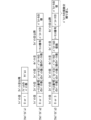
- FIG. 1 is a configuration diagram of a distributed simulation device.
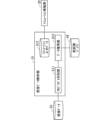
- 1 is a configuration diagram of a simulation device according to a first embodiment
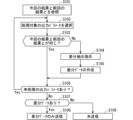
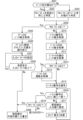
- 5 is a flowchart showing a process of a transmission buffer control unit according to the first embodiment
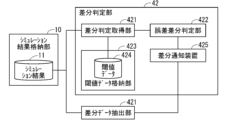
- FIG. 2 is a diagram illustrating a first exemplary configuration of a difference determination unit according to the first embodiment
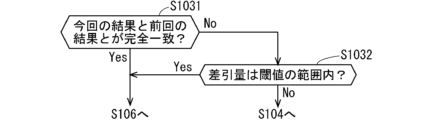
- 5 is a flowchart showing a process of a first configuration example of a difference determination unit according to the first embodiment
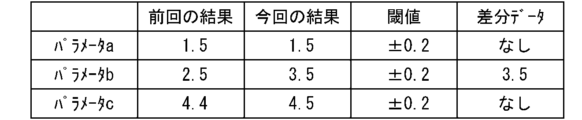
- 13 is a diagram showing a first example of parameter processing by a first configuration example of a difference determination unit according to embodiment 1
- FIG. 13 is a diagram illustrating a second example of processing of parameters by the first configuration example of the difference determination unit according to the first embodiment.
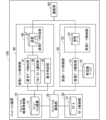
- the simulation device 101 includes a simulation result storage unit 10, a simulation implementation unit 20, a model storage unit 30, a transmission buffer control unit 40, a reception buffer control unit 50, and a communication unit 60.
- the simulation implementation unit 20 implements a simulation using the model 31 stored in the model storage unit 30 and the simulation input data created by the received data analysis unit 51, and sequentially stores the resulting simulation results 11 in the simulation result storage unit 10. Therefore, the simulation result storage unit 10 includes multiple simulation results 11.
- the most recent simulation result 11, i.e., the current simulation result 11, is also referred to as the "current result”
- the previous simulation result 11, i.e., the previous simulation result 11 is also referred to as the "previous result”.
- step S107 determines whether or not there is difference data 44. If there is difference data 44 in step S107, the difference determination unit 42 transmits the difference data 44 to the other simulation devices 200, 300, 400 via the communication unit 60 in step S108. Here, since the difference data 44 is the current value of a specific output parameter for which a difference exists, the amount of communication is reduced compared to the case of transmitting the current values of all output parameters. If there is no difference data 44 in step S107, the difference determination unit 42 postpones the process of transmitting the difference data 44 to the other simulation devices 200, 300, 400 in step S109.
- the error difference determination unit 422 determines in step S1032 whether the subtraction amount obtained by subtracting the previous result from the current result is within a predetermined threshold range.
- the threshold is the allowable error between the current result and the previous result, and is defined by the threshold data 424 stored in the threshold data storage unit 423. If the subtraction amount is within the threshold range in step S1032, the error difference determination unit 422 determines that the current result and the previous result are the same, and the processing of the difference determination unit 42 proceeds to step S106 in FIG. 4. If the subtraction amount is outside the threshold range in step S1032, the error difference determination unit 422 determines that the current result and the previous result are different, and the processing proceeds to step S104 in FIG. 4.
- the difference amount obtained by subtracting the previous result from the current result of output parameter b is 1.0, which is outside the range of the threshold value ⁇ 0.2. Therefore, the difference determination unit 42 instructs the difference data extraction unit 41 to extract the difference (step S104).
- the difference data extraction unit 41 extracts the current value of the output parameter b, 3.5, as the difference, and creates difference data representing the difference (step S105).
- step S101 it is assumed that the output parameters shown in FIG. 7 are output.
- the process of the transmission buffer control unit 40 proceeds from step S103 to step S106, and then to step S107, following the same procedure as in the case of the first output parameter a shown in FIG. 6, and proceeds to step S109 because no difference data 44 exists.
- the time series difference determination unit 426 compares the current result with the previous result over a certain time interval and determines the degree of similarity between them.
- the specified time determination unit 427 determines the time interval used for the determination by the time series difference determination unit 426.
- step S1034 the time series difference determination unit 426 creates a current data waveform (first time series data) and a previous data waveform (second time series data). Then, in step S1035, the time series difference determination unit 426 calculates the similarity between these two data waveforms using DTW (Dynamic Time Warping) and determines whether the similarity is equal to or greater than a threshold value.
- DTW Dynamic Time Warping
- the threshold value for the similarity of the data waveforms is included in the threshold data 424.
- step S1035 If the similarity of the data waveforms is equal to or greater than the threshold in step S1035, the process of the difference determination unit 42 proceeds to step S106 in FIG. 3. If the similarity of the data waveforms is less than the threshold in step S1035, the process of the difference determination unit 42 proceeds to step S104 in FIG. 3.
- the receive buffer control unit 50 includes a receive data analysis unit 51, a receive data storage unit 52, and a previous value buffer 54.
- the receive data storage unit 52 stores receive data 53, which is difference data 44 received by the communication unit 60 from the other simulation devices 200, 300, and 400.
- the previous value buffer 54 stores a list of input parameters used in the previous simulation by the simulation implementation unit 20 and their values (previous values).
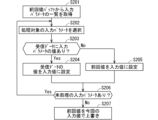
- step S201 the received data analysis unit 51 obtains a list of input parameters from the previous value buffer 54.
- step S202 the received data analysis unit 51 selects an input parameter to be processed from the input parameters obtained in step S201.
- step S203 the received data analysis unit 51 determines whether or not the received data 53 contains an input parameter value. If the received data 53 contains an input parameter value in step S203, the received data analysis unit 51 sets the input value of the parameter to the value described in the received data 53 in step S204. If the received data 53 does not contain a parameter value in step S203, the received data analysis unit 51 sets the previous value in the previous value buffer 54 to the input value of the input parameter in step S205. In this way, the received data analysis unit 51 complements the value of the received data 53 with the previous value.
- FIG. 13 shows a specific example of input parameters and an example of how the received data analysis unit 51 processes the input parameters.
- the first input parameter a is 1.5
- the second input parameter b is 2.5
- the input parameter a does not exist
- the input parameter b is 3.5.
- the communication unit 60 transmits the differential data 44 created by its own simulation device 101 to the other simulation devices 200, 300, 400, and receives the differential data 44 created by those simulation devices 200, 300, 400 from the other simulation devices 200, 300, 400 as received data 53.
- the simulation device 101 does not transmit the simulation result 11 to the other simulation devices 200, 300, and 400. This reduces the amount of communication.
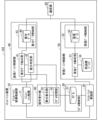
- Fig. 14 is a configuration example of a simulation apparatus 102 according to the second embodiment.
- the simulation apparatus 102 corresponds to the simulation apparatus 100 in Fig. 1.
- the simulation apparatus 102 includes a model switching determination unit 70 and a model switching unit 80 in addition to the configuration of the simulation apparatus 101 according to the first embodiment.
- the simulation implementation unit 20 performs a simulation using one model 31 selected by the model switching unit 80 from among the multiple models 31 stored in the model storage unit 30.
- the model switching determination unit 70 determines whether to switch the model 31 to be used in the simulation.
- FIG. 15 is a flowchart showing the operation of the model switching determination unit 70 and the model switching unit 80 in the simulation device 102. Below, the operation of the model switching determination unit 70 and the model switching unit 80 will be explained according to the flow of FIG. 15.
- step S302 the model switching determination unit 70 determines whether the current model 31 is a 1D data model.
- step S302 If in step S302 the current model 31 is not a 1D data model, i.e., is a 3D model, the model switching determination unit 70 determines that there is no need to change the model 31 used in the simulation. Therefore, in step S305, the model switching unit 80 does not change the model 31 used in the simulation.
- the model switching determination unit 70 determines that the model 31 used in the simulation should be switched from the 3D model to a 1D data model. Then, in step S306, the model switching unit 80 switches the model 31 used in the simulation from the 3D model to a 1D data model.
- the simulation device 101 performs a simulation, creates differential data 44 from the simulation result 11 and transmits it to the other simulation devices 200, 300, 400, the other simulation devices 200, 300, 400 receive the differential data 44 from the simulation device 101, decodes the data, and performs a simulation.
- This flow is defined as one step.
- a three-step simulation is performed, and in the first step, there is no differential data and a 3D model is used, and in the second and third steps, there is differential data.
- the process of the model switching determination unit 70 is as follows.
- the model switching determination unit 70 determines that there is a difference (Yes in step S301) and determines that the current model is a 3D model (No in step S302). As a result, the model switching determination unit 70 determines that there is no change in the model used in the simulation (step S305).
- the simulation implementation unit 20 performs a simulation using one of the multiple models 31 stored in the model storage unit 30.
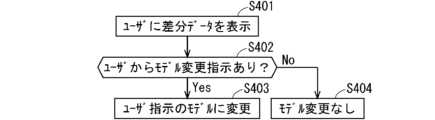
- FIG. 17 is a flowchart showing the operation of the operation reception unit 90 in the simulation device 103. The operation of the operation reception unit 90 will be explained below according to the flow of FIG. 17.
- step S401 the difference display unit 91 displays the difference data 44 to the user.
- step S402 the model switching unit 92 determines whether the difference display unit 91 has received a model change instruction from the user. If there is no model change instruction from the user in step S402, the model switching unit 92 does not change the model 31 used in the simulation (step S404). On the other hand, if there is a model change instruction from the user in step S402, the model switching unit 92 changes the model 31 used in the simulation in accordance with the model change instruction from the user (step S403).
- the simulation device 103 includes, in addition to the configuration of the simulation device 101 according to the first embodiment, a difference display unit 91 that displays difference data 44 to the user, and a model switching unit 92 that receives an operation from the user regarding switching of the model 31 to be used in the simulation, and switches the model 31 to another model with different simulation accuracy in response to the operation.
- This configuration allows the user to select the optimal model 31 depending on whether they want to prioritize reducing communication traffic or simulation accuracy.
- the model switching unit 80 automatically switches from a 3D model to a 1D data model, if the user places importance on simulation accuracy, the user can manually switch back from the 1D data model to the 3D model. In this way, the user can adjust the balance between communication volume and simulation accuracy.
- Fig. 19 shows an example of the configuration of a simulation device 104 according to the fourth embodiment.
- the simulation device 104 corresponds to the simulation device 100 in Fig. 1.
- the simulation device 104 differs from the simulation device 101 according to the first embodiment in that the transmission buffer control unit 40 includes an algorithm selection unit 45 and a transmission data creation unit 46.
- the transmission data creation unit 46 includes a transmission buffer 47.
- the algorithm selection unit 45 displays the simulation result 11 and the difference between the previous result and the current result to the user, and also accepts user input specifying the algorithm to be used to create the transmission data, and selects an algorithm according to the user's input.
- algorithms that the algorithm selection unit 45 can select include “send the entire memory area without a sequence number” (hereinafter “algorithm 1"), “send only changed data individually with a sequence number” (hereinafter “algorithm 2”), and “send changed data collectively with an index” (hereinafter “algorithm 3").
- the transmission data creation unit 46 creates transmission data by encrypting the differential data 44 using the algorithm selected by the algorithm selection unit 45.
- the transmission data creation unit 46 includes a transmission buffer 47.
- the transmission buffer 47 stores data created based on the algorithm selected by the algorithm selection unit 45.
- the contents of the transmission buffer 47 are only the address number of the differential data for algorithm 1, the sequence number and differential data of one parameter for algorithm 2, and the sequence number and differential data of all parameters where differences occurred for algorithm 3.
- the transmission data creation unit 46 creates transmission data based on the transmission buffer 47.
- the transmission data is binary data.
- the first byte of the transmission data indicates the change status of the algorithm used to create the transmission data.
- the first byte of the transmission data will be 1 if the algorithm has been changed to 1, 2 if the algorithm has been changed to 2, 3 if the algorithm has been changed to 3, and 0 if the algorithm has not been changed.
- the number of bytes of the sequence number is input in the second byte, the number of bytes of the parameter ID in the third byte, the number of bytes of the parameter value in the fourth byte, and the number of parameters in the fifth byte. From the sixth byte onwards, the sequence number is input for the number of bytes specified in the second byte, and then the parameter ID and parameter value are input repeatedly for the number of parameters input in the fifth byte.
- Figure 21 shows an example of a five-step simulation.
- Algorithm 1 is used in the first step, changes to algorithm 2 in the third step, and changes to algorithm 3 in the fourth step.
- Output parameter b is 4.5 in all steps.
- Output parameters a and c are 1.5 in the first, third, and fourth steps, and 101.5 in the second and fifth steps.
- the addresses of the data in the first and second steps are C240 and C480.
- the IDs of output parameters a, b, and c are 0, 1, and 2.
- the number of bytes of the sequence number and the number of bytes of the parameter ID is 1, and the number of bytes of the parameter value and the number of bytes of the address is 2.
- the contents of the transmitted data are as shown in Figure 22.
- algorithm 1 is specified, so 1 is input into the first byte.
- the number of bytes in the address is two, so 2 is input into the second byte, and C240 is input into the third and fourth bytes.
- the same algorithm 1 as in the first step is specified, so 0 is input into the first byte.
- Bytes 2 to 4 are the same as in the first step.
- algorithm 2 In the first transmission of the third step, algorithm 2 is specified, so 2 is input into the first byte.
- 1 is input, which is the number of bytes of the sequence number.
- 1 is input, which is the number of bytes of the parameter ID.
- 2 is input, which is the number of bytes of the parameter value. Since the sequence number is 1 byte, 3, the sequence number (step number), is input into the fifth byte. Since the parameter ID is 1 byte, 0, which is the parameter ID of parameter a, which has a difference from the second step, is input into the sixth byte. Since the parameter value is 2 bytes, 1.5, which is the value of parameter a, is input into the seventh and eighth bytes.
- a second transmission is performed in the third step.
- the algorithm is the same as in the first transmission of the third step, so 0 is input into the first byte.
- the subsequent flow is the same as in the first transmission of the third step, so it will be omitted.
- FIG. 23 shows the configuration of the received data analysis unit 51 in the simulation device 104.
- the received data analysis unit 51 includes an algorithm determination unit 511 and a data decoding unit 512.
- the algorithm determination unit 511 determines the algorithm used to create the received data 53 from the received data.
- the data decoding unit 512 decodes the received data 53 based on the algorithm determined by the algorithm determination unit 511, creates simulation input data 513 using the decoded result of the received data 53 and the previous value buffer 54, and transmits the simulation input data 513 to the simulation implementation unit 20.
- step S501 since the value of the first byte of the received data 53 is 3, the result of step S501 is No, and in step S503, the algorithm determination unit 511 determines that the algorithm used to create the received data 53 is algorithm 3. Subsequent steps S504 to S512 are the same as those in the third step.
- the result of step S513 is Yes, and the data decryption unit 512 obtains the number of parameters, 2, from the value of the fifth byte (step S514).
- step S513 decrypts the sequence number 5 from the value of the sixth byte (step S515).
- the simulation device 104 includes an algorithm selection unit 45 that displays differential data to the user, accepts an operation from the user, and selects one algorithm from among a plurality of algorithms in response to the operation, and a transmission data creation unit 46 that creates transmission data by encrypting the differential data 44 using the selected algorithm, and the communication unit 60 transmits the transmission data to the other simulation devices 200, 300, and 400.
- an algorithm selection unit 45 that displays differential data to the user, accepts an operation from the user, and selects one algorithm from among a plurality of algorithms in response to the operation
- a transmission data creation unit 46 that creates transmission data by encrypting the differential data 44 using the selected algorithm
- the communication unit 60 transmits the transmission data to the other simulation devices 200, 300, and 400.
- the algorithm selection unit 45 compares the communication volumes estimated by the communication volume estimation unit 48 and selects the algorithm that will result in the smallest communication volume.
- the rest of the configuration and examples are the same as those in the fourth embodiment, so a description thereof will be omitted.
- the processing circuit 81 When the processing circuit 81 is dedicated hardware, the processing circuit 81 corresponds to, for example, a single circuit, a composite circuit, a programmed processor, a parallel programmed processor, an ASIC (Application Specific Integrated Circuit), an FPGA (Field-Programmable Gate Array), or a combination of these.
- Each function of each part such as ⁇ part may be realized by multiple processing circuits 81, or the functions of each part may be combined and realized by a single processing circuit.
- the processing circuit 81 When the processing circuit 81 is a processor, the functions of the simulation implementation unit 20 etc. are realized by a combination of software etc. (software, firmware, or software and firmware).
- the software etc. is written as a program and stored in memory.
- the processor 82 applied to the processing circuit 81 realizes the functions of each unit by reading and executing a program stored in memory 83.
- the simulation device has a memory 83 for storing a program which, when executed by the processing circuit 81, will result in the function of the simulation implementation unit 20 etc. being executed.
- this program can be said to cause a computer to execute a procedure or method of the simulation implementation unit 20 etc.
- memory 83 may be, for example, non-volatile or volatile semiconductor memory such as RAM (Random Access Memory), ROM (Read Only Memory), flash memory, EPROM (Erasable Programmable Read Only Memory), EEPROM (Electrically Erasable Programmable Read Only Memory), HDD (Hard Disk Drive), magnetic disk, flexible disk, optical disk, compact disk, mini disk, DVD (Digital Versatile Disk) and its drive device, or any storage medium to be used in the future.
- RAM Random Access Memory
- ROM Read Only Memory
- flash memory EPROM (Erasable Programmable Read Only Memory), EEPROM (Electrically Erasable Programmable Read Only Memory), HDD (Hard Disk Drive), magnetic disk, flexible disk, optical disk, compact disk, mini disk, DVD (Digital Versatile Disk) and its drive device, or any storage medium to be used in the future.
- EPROM Erasable Programmable Read Only Memory
- EEPROM Electrically Erasable Programmable Read Only Memory
- HDD Hard Disk Drive
- magnetic disk
Landscapes
- Engineering & Computer Science (AREA)
- Physics & Mathematics (AREA)
- Theoretical Computer Science (AREA)
- Computer Hardware Design (AREA)
- Evolutionary Computation (AREA)
- Geometry (AREA)
- General Engineering & Computer Science (AREA)
- General Physics & Mathematics (AREA)
- Management, Administration, Business Operations System, And Electronic Commerce (AREA)
Priority Applications (2)
| Application Number | Priority Date | Filing Date | Title |
|---|---|---|---|
| PCT/JP2023/036590 WO2025074631A1 (ja) | 2023-10-06 | 2023-10-06 | 分散シミュレーション装置 |
| JP2025550719A JPWO2025074631A1 (https=) | 2023-10-06 | 2023-10-06 |
Applications Claiming Priority (1)
| Application Number | Priority Date | Filing Date | Title |
|---|---|---|---|
| PCT/JP2023/036590 WO2025074631A1 (ja) | 2023-10-06 | 2023-10-06 | 分散シミュレーション装置 |
Publications (1)
| Publication Number | Publication Date |
|---|---|
| WO2025074631A1 true WO2025074631A1 (ja) | 2025-04-10 |
Family
ID=95283056
Family Applications (1)
| Application Number | Title | Priority Date | Filing Date |
|---|---|---|---|
| PCT/JP2023/036590 Pending WO2025074631A1 (ja) | 2023-10-06 | 2023-10-06 | 分散シミュレーション装置 |
Country Status (2)
| Country | Link |
|---|---|
| JP (1) | JPWO2025074631A1 (https=) |
| WO (1) | WO2025074631A1 (https=) |
Citations (4)
| Publication number | Priority date | Publication date | Assignee | Title |
|---|---|---|---|---|
| JP2008197785A (ja) * | 2007-02-09 | 2008-08-28 | Nec Corp | シミュレーション装置、モデルデータ更新方法およびプログラム |
| JP2018025840A (ja) * | 2016-08-08 | 2018-02-15 | 日立オートモティブシステムズ株式会社 | 分散シミュレーションシステム、分散シミュレーション手法 |
| JP2018151088A (ja) * | 2017-03-10 | 2018-09-27 | 三菱電機株式会社 | 分散シミュレーションシステム |
| JP2019095983A (ja) * | 2017-11-21 | 2019-06-20 | 株式会社キーエンス | 設定サポートシステム、データサーバ、制御方法およびプログラム |
-
2023
- 2023-10-06 JP JP2025550719A patent/JPWO2025074631A1/ja active Pending
- 2023-10-06 WO PCT/JP2023/036590 patent/WO2025074631A1/ja active Pending
Patent Citations (4)
| Publication number | Priority date | Publication date | Assignee | Title |
|---|---|---|---|---|
| JP2008197785A (ja) * | 2007-02-09 | 2008-08-28 | Nec Corp | シミュレーション装置、モデルデータ更新方法およびプログラム |
| JP2018025840A (ja) * | 2016-08-08 | 2018-02-15 | 日立オートモティブシステムズ株式会社 | 分散シミュレーションシステム、分散シミュレーション手法 |
| JP2018151088A (ja) * | 2017-03-10 | 2018-09-27 | 三菱電機株式会社 | 分散シミュレーションシステム |
| JP2019095983A (ja) * | 2017-11-21 | 2019-06-20 | 株式会社キーエンス | 設定サポートシステム、データサーバ、制御方法およびプログラム |
Also Published As
| Publication number | Publication date |
|---|---|
| JPWO2025074631A1 (https=) | 2025-04-10 |
Similar Documents
| Publication | Publication Date | Title |
|---|---|---|
| JP4015898B2 (ja) | プログラム実行装置 | |
| CN108733508B (zh) | 用于控制数据备份的方法和系统 | |
| CN110986307B (zh) | 用于空调的控制方法及装置、空调 | |
| US9294412B2 (en) | Controller area network (CAN) worst-case message latency with priority inversion | |
| CN111190689B (zh) | 数字孪生系统仿真方法及装置 | |
| CN109324902B (zh) | 一种调整移动终端工作频率的方法、移动终端及存储介质 | |
| CN115730333A (zh) | 基于秘密分享和同态加密的安全树模型构建方法和装置 | |
| CN107817947B (zh) | 一种数据存储方法、装置及系统 | |
| EP4083872A1 (en) | Intention feature value extraction device, learning device, method, and program | |
| CN107305350A (zh) | 智能家居系统的控制方法及其智能家居系统 | |
| WO2015145997A1 (ja) | 属性変換装置、属性変換方法、学習装置、及び、記録媒体 | |
| WO2025074631A1 (ja) | 分散シミュレーション装置 | |
| US11080471B2 (en) | Rules-based automated chart description system | |
| CN117010272A (zh) | 基于强化学习的决策生成方法、装置、计算机设备和介质 | |
| CN114513380B (zh) | 用于控制家电设备的方法及装置、家电设备、存储介质 | |
| EP3021234A1 (en) | Conceptualization and search of block diagram based models | |
| CN115542755A (zh) | 用于预测设备控制命令的方法及装置、电子设备、存储介质 | |
| CN110727783B (zh) | 一种基于对话系统对用户问句提出反问的方法和装置 | |
| JP2022016031A (ja) | 共有メモリの設定方法及び計算機 | |
| CN118487738A (zh) | 一种基于中心聚类的区块链节点分组方法及系统 | |
| CN111816304A (zh) | 一种遗传性疾病辅助决策的建立方法和系统 | |
| CN107832623B (zh) | 坐标轨迹加密和解密的方法及系统 | |
| WO2021014551A1 (ja) | 学習システム、学習方法、収集装置および収集プログラム | |
| CN104317565A (zh) | 一种轮麦指令的处理方法及客户端 | |
| CN114724233B (zh) | 用于终端设备姿势控制的方法及装置、终端设备 |
Legal Events
| Date | Code | Title | Description |
|---|---|---|---|
| 121 | Ep: the epo has been informed by wipo that ep was designated in this application |
Ref document number: 23954837 Country of ref document: EP Kind code of ref document: A1 |
|
| ENP | Entry into the national phase |
Ref document number: 2025550719 Country of ref document: JP Kind code of ref document: A |
|
| WWE | Wipo information: entry into national phase |
Ref document number: 2025550719 Country of ref document: JP |