WO2025069920A1 - 機械学習装置、機械学習方法、及びプログラム - Google Patents
機械学習装置、機械学習方法、及びプログラム Download PDFInfo
- Publication number
- WO2025069920A1 WO2025069920A1 PCT/JP2024/031146 JP2024031146W WO2025069920A1 WO 2025069920 A1 WO2025069920 A1 WO 2025069920A1 JP 2024031146 W JP2024031146 W JP 2024031146W WO 2025069920 A1 WO2025069920 A1 WO 2025069920A1
- Authority
- WO
- WIPO (PCT)
- Prior art keywords
- data set
- data
- machine learning
- learning device
- unit
- Prior art date
- Legal status (The legal status is an assumption and is not a legal conclusion. Google has not performed a legal analysis and makes no representation as to the accuracy of the status listed.)
- Pending
Links
Images


Classifications
-
- G—PHYSICS
- G16—INFORMATION AND COMMUNICATION TECHNOLOGY [ICT] SPECIALLY ADAPTED FOR SPECIFIC APPLICATION FIELDS
- G16C—COMPUTATIONAL CHEMISTRY; CHEMOINFORMATICS; COMPUTATIONAL MATERIALS SCIENCE
- G16C20/00—Chemoinformatics, i.e. ICT specially adapted for the handling of physicochemical or structural data of chemical particles, elements, compounds or mixtures
- G16C20/70—Machine learning, data mining or chemometrics
-
- G—PHYSICS
- G16—INFORMATION AND COMMUNICATION TECHNOLOGY [ICT] SPECIALLY ADAPTED FOR SPECIFIC APPLICATION FIELDS
- G16C—COMPUTATIONAL CHEMISTRY; CHEMOINFORMATICS; COMPUTATIONAL MATERIALS SCIENCE
- G16C60/00—Computational materials science, i.e. ICT specially adapted for investigating the physical or chemical properties of materials or phenomena associated with their design, synthesis, processing, characterisation or utilisation
Definitions
- This disclosure relates to a machine learning device, a machine learning method, and a program, and in particular to a machine learning device, a machine learning method, and a program that predicts material performance.
- Patent Document 1 discloses a machine learning method that creates a prediction module that predicts values related to feature quantities from an original data set that includes experimental data and calculation data obtained through simulation.
- Patent Document 1 also discloses a machine learning method that creates a prediction module from an original data set that includes experimental data and calculation data obtained by simulation.
- the machine learning method disclosed in Patent Document 1 is based on the premise that experimental data corresponding to the calculation data exists, and is not an effective means for predicting unknown materials.
- This disclosure has been made in light of these issues, and aims to provide a machine learning device, a machine learning method, and a program that can perform machine learning by combining experimental data and computational data.
- the machine learning device includes an input unit that acquires a first data set and a second data set that differs from the first data set in at least one of structure, object, and generation means, a conversion unit that converts the second data set into a data space to which the first data set belongs, a learning unit that uses the converted second data set and the first data set to learn a predictive model that predicts material performance, and an output unit that outputs a learning result using the predictive model.
- the machine learning method disclosed herein acquires a first data set and a second data set that differs from the first data set in at least one of structure, object, and generation means, transforms the second data set into a data space to which the first data set belongs, learns a predictive model that predicts material performance using the transformed second data set and the first data set, and outputs the learning results using the predictive model.
- the program disclosed herein causes a computer equipped with a machine learning device to execute the steps of acquiring a first data set and a second data set that differs from the first data set in at least one of structure, object, and generation means, converting the second data set into a data space to which the first data set belongs, learning a predictive model that predicts material performance using the converted second data set and the first data set, and outputting the learning results using the predictive model.
- This disclosure provides a machine learning device, a machine learning method, and a program that can perform machine learning by combining experimental data and computational data.
- FIG. 1 is a configuration diagram of a machine learning device according to the present disclosure. 1 is a flowchart showing the processing of a machine learning device according to the present disclosure. FIG. 1 is a configuration diagram of a machine learning device according to the present disclosure. 1 is a flowchart showing the processing of a machine learning device according to the present disclosure.
- the machine learning device 10 shown in FIG. 1 predicts material performance and includes an input unit 101, a conversion unit 102, a learning unit 103, and an output unit 104.
- the input unit 101 inputs a first data set including desired input information and a second data set including input information different from the desired information (S101).
- the second data set differs from the first data set in at least one of the structure, the object, and the generation means, and details will be described in the second embodiment and onward.
- the conversion unit 102 converts the second data set input by the input unit 101 into a data space to which the first data set belongs (S102). Details of the data space conversion will be explained in the second embodiment and onwards.
- the learning unit 103 uses the first data set and the second data set converted by the conversion unit 102 to create and learn a prediction model that predicts material performance, and outputs the learning results using the prediction model at the output unit 104 (S103). At this time, transfer learning is performed using the first data set as target data and the converted second data set as source data.
- source data which is highly common input information
- target data which is the desired input information
- machine learning and deep learning can be performed effectively even when there is no explicit correspondence between the source data and the target data. Therefore, the machine learning device disclosed herein can perform machine learning by combining a first data set that includes the desired input information and a second data set that includes input information different from the target.
- the machine learning device 10 shown in FIG. 3 predicts material performance, and includes an input unit 101, a conversion unit 102, a learning unit 103, and an output unit 104. Furthermore, the machine learning device 10 may include an estimation unit 105.
- the input unit 101 acquires and inputs data from the server 100 that stores the first data set and the second data set (S201).
- the acquisition of the first data set and the second data set is not limited to this, and for example, a data storage unit (not shown) that stores the data sets may be provided within the machine learning device 10, and the input unit 101 may acquire data from the data storage unit.
- the first data set may be acquired from the data storage unit within the machine learning device 10, and the second data set may be acquired from the server 100.
- the second data set differs from the first data set in at least one of the structure, the object, and the generation means, i.e., the features in machine learning are different.
- the first data set includes experimental data T
- the second data set includes calculation data S.
- the calculation data S included in the second data set is obtained by simulation using various parameters, and three or more heterogeneous data may be used.
- the structure includes at least one of the following: chemical formula, reaction formula, composition formula, structural formula, element type, atomic arrangement, molecular graph, SMILES (simplified molecular input line entry system) character string, and a descriptor created using a part of these as input.
- the objects include at least one of the following: energy, wave function, band structure, density of states, spectral density, density matrix, energy difference between two states, free energy, or a quantity obtained as a function of these.
- the experimental data T input to the input unit 101 is measurement data (data group T ⁇ t) related to a chemical reaction R expressed by a chemical formula that shows the relationship between the target reactants, products, and catalysts.
- m is the type of metallic element under consideration.
- the activation energy ⁇ i which is the output of the model learned by transfer learning, is related to the magnitude of the energy barrier in the elementary reaction, that is, the ease with which the reaction proceeds, and is expressed by the following formula (2). ... (2)
- R is a real number.
- the experimental data T input by the input unit 101 can be expressed as a pair of data that is the input of the model trained by transfer learning and data that is the output.
- the alloy composition is c ⁇ i and the activation energy is ⁇ i , it is expressed as (c ⁇ i , ⁇ i ).
- the calculation data S inputted in the input unit 101 is calculation data (data group S ⁇ s) corresponding to the elementary process of the m catalytic reaction.
- the input structure s i is data consisting of the arrangement and elemental species of all atoms (atomic number N a ) contained in the unit structure of the catalyst surface.
- the arrangement is the spatial coordinate s expressed by a three-dimensional real vector
- the elemental species is the label r ⁇ j expressed by the atomic number, and is expressed by the following formulas (3) and (4). ...(3) ...(4)
- e j is the atomic number of the jth atom.
- the calculation data S is, for example, the adsorption energy Ei obtained by performing a simulation based on the first-principles calculation.
- the adsorption energy Ei is related to the energy gain when the target molecule is adsorbed on the surface, that is, the ease of adsorption of the molecule, and is expressed by the following formula (5). ...(5)
- the calculation data S input by the input unit 101 is expressed as (s i , E i ) since, in the above example, it is structure s i and adsorption energy E i .
- the input unit 101 may input the calculation data S obtained in advance by a simulation, or may obtain the calculation data S by executing a simulation in the machine learning device 10.
- the input unit 101 may input parameters for the simulation, and execute the simulation in a calculation unit (not shown) provided in the machine learning device 10.
- Parameters for the simulation include parameters necessary to execute a simulation based on first-principles calculation.
- the estimation unit 105 creates a function (F(S) ⁇ t) that converts the calculation data S inputted in the input unit 101 into a format that can be interpreted by the machine learning model (S202).
- the function is preferably configured by the machine learning model. This enables data conversion without explicitly giving the specific form of the function. In the case of the above example, it can be formulated as a black-box optimization problem between the calculation data S and the experimental data T.
- the conversion unit 102 applies the function obtained by the estimation unit 105 to the calculation data S, and performs conversion of the calculation data S (S203). This allows the calculation data obtained by the simulation to be effectively used for machine learning.
- the conversion unit 102 has a mechanism for projecting multiple data in the first data set and the second data set into a common data space, and in the above example, converts the calculation data S into the format of the experimental data T.
- Conversion (h:s ⁇ c) from structure s i in calculation data S to composition c ⁇ i in experimental data T can be carried out using the following formula (6). ...(6)
- the conversion is performed by omitting coordinate information from the structure s i and counting the numbers for each element label.
- the conversion performed by the conversion unit 102 is not limited to the above-mentioned method.
- data conversion may be made possible by configuring a function that converts the calculation data S to the experimental data T using a machine learning model.
- the conversion performed by the conversion unit 102 does not necessarily have to be applied to the calculation data S, and the experimental data T may be converted in a manner that makes it compatible with the calculation data S.
- a method may be adopted in which both the experimental data T and the calculation data S are converted and projected into a common space.
- the learning unit 103 creates a prediction model that predicts material performance using the first data set input from the input unit 101 as target data and the second data set converted by the conversion unit 102 as source data, and performs learning (S204). After that, the output unit 104 outputs the learning results using the prediction model. This makes it possible to share knowledge between different data sets or tasks, such as experimental data and calculation data, and improve learning efficiency and performance.
- the output from the output unit 104 is the predicted activation energy value for an unknown composition of a given alloy, based on the knowledge, prediction model, and learning results stored in the learning unit 103.
- the machine learning device 10 may also include a feedback mechanism that proposes promising compositions for new measurements based on the model obtained by transfer learning in the learning unit 103 or the results implemented by the predictive model (S205).
- the feedback mechanism preferably performs active learning, and preferably proposes an optimal execution policy using, for example, a Bayesian optimization method such as a differential Gaussian process model, thereby making it possible to improve the accuracy of learning the predictive model.
- the machine learning device disclosed herein can use large-scale computational data created using relatively low-cost methods such as density functional theory as source data in transfer learning, efficiently improving the predictive performance for small data such as experimental data. This leads to accelerated material development and cost reduction.
- the predictive model includes experimental data, it is possible to reflect information not included in the calculated data, such as electronic correlation, disturbances, and device characteristics, in the predictions, resulting in prediction results with higher fidelity than models created from calculated data alone.
- the first data set is a data set based on experimental data; 2. The machine learning device of claim 1, wherein the second data set is a data set based on calculation data.
- the structure includes at least one of a chemical formula, a reaction formula, a composition formula, a structural formula, an element type, an atomic arrangement, a molecular graph, a SMILES (simplified molecular input line entry system) character string, and a descriptor created by inputting a part of these,
- the object includes at least one of energy, wave function, band structure, density of states, spectral density, density matrix, energy difference between two states, free energy, or a quantity obtained as a function thereof;
- the learning result output from the output unit is a result of aligning at least one of the structure, the target, and the generating means in the second data set with the first data set.
- the machine learning device of claim 2 wherein the second data set utilizes three or more heterogeneous data.
- the machine learning device according to claim 2 further comprising an estimation unit that configures a function used in the conversion unit by a machine learning model and converts data.
- the machine learning device of claim 2 further comprising a feedback mechanism that proposes promising compositions in new measurements based on the results performed by the predictive model.
- (Appendix 8) Obtaining a first data set and a second data set that differs from the first data set in at least one of structure, expression format, object, and generation means; Transforming the second data set into a data space to which the first data set belongs; training a predictive model using the transformed second data set and the first data set to predict material performance; and outputting a learning result using the predictive model.
- the first data set is a data set based on experimental data; 9. The machine learning method of claim 8, wherein the second data set is a data set based on computational data.
- (Appendix 10) obtaining a first data set and a second data set that differs from the first data set in at least one of structure, object, and production means; transforming the second data set into a data space to which the first data set belongs; training a predictive model using the transformed second data set and the first data set to predict material performance; and outputting a learning result using the predictive model.
- the first data set is a data set based on experimental data; 11. The program of claim 10, wherein the second data set is a data set based on calculation data.
- Machine learning device 100 Server 101 Input unit 102 Conversion unit 103 Learning unit 104 Output unit 105 Estimation unit
Landscapes
- Engineering & Computer Science (AREA)
- Computing Systems (AREA)
- Theoretical Computer Science (AREA)
- Life Sciences & Earth Sciences (AREA)
- Bioinformatics & Cheminformatics (AREA)
- Bioinformatics & Computational Biology (AREA)
- Health & Medical Sciences (AREA)
- Artificial Intelligence (AREA)
- Computer Vision & Pattern Recognition (AREA)
- Data Mining & Analysis (AREA)
- Databases & Information Systems (AREA)
- Evolutionary Computation (AREA)
- General Health & Medical Sciences (AREA)
- Medical Informatics (AREA)
- Software Systems (AREA)
- Chemical & Material Sciences (AREA)
- Crystallography & Structural Chemistry (AREA)
- Feedback Control In General (AREA)
Abstract
実験データと計算データとを組み合わせて機械学習を行うことができる機械学習装置、機械学習方法、及びプログラムを提供すること。 本開示に係る機械学習装置は、第1データ集合、及び第1データ集合に対して構造、対象、及び生成手段の少なくとも一つにおいて異なる第2データ集合とを取得する入力部と、第2データ集合を第1データ集合が属するデータ空間に変換する変換部と、変換された第2データ集合と第1データ集合とを用いて、材料性能を予測する予測モデルを学習する学習部と、予測モデルを使用した学習結果を出力する出力部と、を備えるものである。
Description
本開示は、機械学習装置、機械学習方法、及びプログラムに関し、特に材料性能の予測を行う機械学習装置、機械学習方法、及びプログラムに関する。
特許文献1には、特徴量に関する値を予測する予測モジュールを、実験データとシミュレーションによる計算データとを含むオリジナルデータセットから作成する機械学習方法が開示されている。
材料開発には、実験からのアプローチと理論計算からのアプローチの二つがあり、それぞれにおいてデータの収集と、AI(Artificial Intelligence)の利活用が進められている。さらに、理論計算には基礎物理定数以外の実験値に依存しない量子力学に基づいた計算手法である第一原理計算と、実験値をパラメータとして用いる経験的手法に大別され、未知材料の予測は前者によってのみ行われる。
材料開発においてAIを活用するためには、対象系に関する十分な量のサンプルが必要であるが、実験データに関して、新たに探索したい領域のデータはそもそも少なく、かつデータ収集のコストが高いという問題を有する。一方、第一原理計算による計算データは、実験データに比べて低コストでデータを生成できるものの、材料の微視的な情報しか提供することができない。したがって、計算データを実験データと比較することや、計算データを直接的に実験データに組み込んで転移学習に用いることは困難である。
また、特許文献1は、予測モジュールを、実験データとシミュレーションによる計算データとを含むオリジナルデータセットから作成する機械学習方法が開示している。しかしながら、特許文献1に開示される機械学習方法は、計算データと対応する実験データが存在することを前提としており、未知材料の予測においては有効な手段とは言えない。
本開示は、これらを鑑みてなされたものであり、実験データと計算データとを組み合わせて機械学習を行うことができる機械学習装置、機械学習方法、及びプログラムを提供することを目的とする。
本開示に係る機械学習装置は、第1データ集合、及び前記第1データ集合に対して構造、対象、及び生成手段の少なくとも一つにおいて異なる第2データ集合とを取得する入力部と、前記第2データ集合を前記第1データ集合が属するデータ空間に変換する変換部と、変換された前記第2データ集合と前記第1データ集合とを用いて、材料性能を予測する予測モデルを学習する学習部と、前記予測モデルを使用した学習結果を出力する出力部と、を備えるものである。
本開示に係る機械学習方法は、第1データ集合、及び前記第1データ集合に対して構造、対象、及び生成手段の少なくとも一つにおいて異なる第2データ集合とを取得し、前記第2データ集合を前記第1データ集合が属するデータ空間に変換し、変換された前記第2データ集合と前記第1データ集合とを用いて、材料性能を予測する予測モデルを学習し、前記予測モデルを使用した学習結果を出力するものである。
本開示に係るプログラムは、第1データ集合、及び前記第1データ集合に対して構造、対象、及び生成手段の少なくとも一つにおいて異なる第2データ集合とを取得するステップと、前記第2データ集合を前記第1データ集合が属するデータ空間に変換するステップと、変換された前記第2データ集合と前記第1データ集合とを用いて、材料性能を予測する予測モデルを学習するステップと、前記予測モデルを使用した学習結果を出力するステップと、を機械学習装置が備えるコンピュータに対して実行させるものである。
本開示により、実験データと計算データとを組み合わせて機械学習を行うことができる機械学習装置、機械学習方法、及びプログラムを提供することができる。
<実施の形態1>
以下、本開示に係る機械学習装置10の構成例について、図1を用いて説明する。また、本開示に係る機械学習装置10が行う処理例について、図2に示されるフローチャートを用いて説明する。
以下、本開示に係る機械学習装置10の構成例について、図1を用いて説明する。また、本開示に係る機械学習装置10が行う処理例について、図2に示されるフローチャートを用いて説明する。
図1に示される機械学習装置10は、材料性能の予測を行うものであり、入力部101、変換部102、学習部103、出力部104を備える。
入力部101は、目的とする入力情報を含む第1データ集合と、目的と異なる入力情報を含む第2データ集合とを入力する(S101)。第2データ集合は、第1データ集合に対して、構造、対象、及び生成手段の少なくとも一つにおいて異なるものであり、詳細については、実施の形態2以降において説明する。
変換部102は、入力部101が入力した第2データ集合を、第1データ集合が属するデータ空間に変換する(S102)。データ空間の変換についての詳細は、実施の形態2以降において説明する。
学習部103は、第1データ集合と、変換部102において変換された第2データ集合とを用いて、材料性能を予測する予測モデルを作製、学習し、出力部104において予測モデルを使用した学習結果を出力する(S103)。この時、第1データ集合をターゲットデータとし、変換された第2データ集合をソースデータとして、転移学習を行う。
これにより、目的とする入力情報であるターゲットデータに対して、共通性の高い入力情報であるソースデータを転移学習に用いることができるため、ソースデータとターゲットデータに明示的な対応関係が存在しない場合であっても効果的に機械学習、深層学習を行うことができる。したがって、本開示に係る機械学習装置は、目的とする入力情報を含む第1データ集合と、目的と異なる入力情報を含む第2データ集合とを組み合わせて機械学習を行うことができる。
<実施の形態2>
以下、本開示に係る機械学習装置10の構成例について、図3を用いて詳細に説明する。また、本開示に係る機械学習装置10が行う処理例について、図4に示されるフローチャートを用いて詳細に説明する。なお、実施の形態1に記載の構成例又は処理例と同様であるものについては、繰り返しの説明を避けるため、割愛する場合がある。
以下、本開示に係る機械学習装置10の構成例について、図3を用いて詳細に説明する。また、本開示に係る機械学習装置10が行う処理例について、図4に示されるフローチャートを用いて詳細に説明する。なお、実施の形態1に記載の構成例又は処理例と同様であるものについては、繰り返しの説明を避けるため、割愛する場合がある。
図3に示される機械学習装置10は、材料性能の予測を行うものであり、入力部101、変換部102、学習部103、出力部104を備える。更に、機械学習装置10は、推定部105を備えてもよい。
入力部101は、第1データ集合及び第2データ集合を格納するサーバ100からデータを取得し、入力する(S201)。なお、第1データ集合及び第2データ集合の取得はこれに限定されず、例えば、機械学習装置10内にデータ集合を格納するデータ格納部(図示なし)を設け、入力部101が当該データ格納部からデータを取得する構成としてもよい。また、第1データ集合を機械学習装置10内のデータ格納部から、第2データ集合をサーバ100からそれぞれ取得する構成としてもよい。
第2データ集合は、第1データ集合に対して、構造、対象、及び生成手段の少なくとも一つにおいて異なるものであり、即ち、機械学習における特徴量が異なるものである。本実施の形態において、第1データ集合は実験データTを含み、第2データ集合は計算データSを含む。また、第2データ集合が含む計算データSは、種々のパラメータからシミュレーションによって得られたものであり、3つ以上の異種データを利用してもよい。
構造は、化学式、反応式、組成式、構造式、元素種、原子配置、分子グラフ、SMILES(simplified molecular input line entry system)文字列、及びこれらの一部を入力として作成された記述子のうち少なくとも一つを含む。対象は、エネルギー、波動関数、バンド構造、状態密度、スペクトル密度、密度行列、2状態間におけるエネルギー差、自由エネルギー、またはそれらの関数として得られる量のうち少なくとも一つを含む。
入力部101において入力する実験データTは、目的とする反応物、生成物、触媒の関係からなる化学式で表される化学反応Rに関する測定データ(データ群T∈t)である。
例として、触媒反応に用いる合金について、未知の組成に対する活性化エネルギーを取得する系を想定する。後述する転移学習によって学習されるモデルの入力となる合金組成は、ノルム(絶対値)が1であるm次元実数ベクトルc→
i=(p1,p2,…,pm)で表現でき、下記式(1)で表される。
 ・・・(1)
ここで、mは考慮する金属元素の種類である。
ここで、mは考慮する金属元素の種類である。
転移学習によって学習されるモデルの出力となる活性化エネルギーεiは、素反応におけるエネルギー障壁の大きさ、即ち、反応の進みやすさに関係し、下記式(2)で表される。
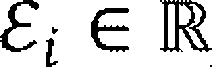 ・・・(2)
ここで、Rは実数である。
ここで、Rは実数である。
このように入力部101が入力する実験データTは、転移学習によって学習されるモデルの入力となるデータと、出力となるデータとの対によって表現できる。上述の例の場合においては、合金組成c→
i及び活性化エネルギーεiであるため、(c→
i,εi)と表現される。
入力部101において入力する計算データSは、m触媒反応の素過程に対応する計算データ(データ群S∈s)である。上述の合金組成c→
iの活性化エネルギーεiを取得する系において、入力となる構造siは、触媒表面の単位構造に含まれる全原子(原子数Na)の配置と元素種からなるデータである。ここで、配置は3次元実数ベクトルで表される空間座標sであり、元素種は原子番号で表されるラベルr→
jであり、下記式(3)(4)で表される。
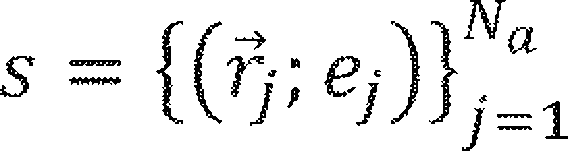 ・・・(3)
 ・・・(4)
ここで、ejはj番目の原子の原子番号である。
ここで、ejはj番目の原子の原子番号である。
計算データSは、例えば、第一原理計算によるシミュレーションを実行して得られる吸着エネルギーEiである。吸着エネルギーEiは、対象となる分子が表面に吸着した際のエネルギー利得、即ち、分子の吸着しやすさに関係し、下記式(5)で表される。
 ・・・(5)
このように入力部101が入力する計算データSは、上述の例の場合においては、構造si及び吸着エネルギーEiであるため、(si,Ei)と表現される。
また、入力部101は、予めシミュレーションによって得られた計算データSを入力してもよいし、機械学習装置10においてシミュレーションを実行して計算データSを取得してもよい。この場合は、入力部101は、シミュレーションのためのパラメータを入力し、機械学習装置10内に備えられた計算部(図示なし)においてシミュレーションを実行すればよい。シミュレーションのためのパラメータとして、第一原理計算に基づくシミュレーションを実行するために必要なパラメータが挙げられる。
推定部105は、入力部101において入力された計算データSを、機械学習モデルが解釈できる形式に変換する関数(F(S)∈t)を作成する(S202)。関数は、機械学習モデルによって構成されるとよい。これにより、関数の具体系を明示的に与えることなく、データ変換を可能にする。上述の例の場合には、計算データSと実験データTとの間のブラックボックス最適化問題として、定式化が可能となる。
変換部102は、推定部105によって得られた関数を計算データSに適用し、計算データSの変換を実行する(S203)。これにより、シミュレーションによって得られた計算データを、効果的に機械学習に活用することができる。
変換部102は、第1データ集合及び第2データ集合において複数のデータを共通のデータ空間に射影する機構を有し、上述の例の場合には、計算データSを実験データTの形式に変換している。
計算データSにおける構造siから、実験データTにおける組成c→
iへの変換(h:s→c)として、下記式(6)を用いる変換が挙げられる。
 ・・・(6)
式(6)では、構造siから座標の情報を捨象し、元素ラベル毎に数の計上を行うことによって変換を行っている。
式(6)では、構造siから座標の情報を捨象し、元素ラベル毎に数の計上を行うことによって変換を行っている。
計算データSにおける吸着エネルギーEiから、実験データTにおける活性化エネルギーεiへの変換(f:sn×Rn→R)として、下記式(7)を用いる変換が挙げられる。
 ・・・(7)
式(7)では、エネルギーに関する線形関係式(Bronsted-Evans-Polanyi則)を使用して、(εi~aEi+b)変形を行っている。ここで、a、bは定数であり、p(Ei)は重みである。
式(7)では、エネルギーに関する線形関係式(Bronsted-Evans-Polanyi則)を使用して、(εi~aEi+b)変形を行っている。ここで、a、bは定数であり、p(Ei)は重みである。
変換部102において行われる変換は、上述の方法に限定されない。例えば、計算データSから実験データTへ変換する関数を、機械学習モデルによって構成することによりデータ変換を可能にしてもよい。また、変換部102において行われる変換は、必ずしも計算データSに変換を適用する必要はなく、実験データTを計算データSに適合させる形で変換してもよい。また、実験データT及び計算データSの双方をそれぞれ変換し、共通の空間に射影する方式をとってもよい。
学習部103は、入力部101から入力された第1データ集合をターゲットデータとし、変換部102によって変換された第2データ集合をソースデータとして、材料性能を予測する予測モデルを作製し、学習を行う(S204)。その後、出力部104において予測モデルを使用した学習結果を出力する。これにより、実験データと計算データのような異なるデータセットやタスク間における知識を共有し、学習効率と性能を向上させることができる。
上述の触媒反応の例において、出力部104が出力する内容は、学習部103に蓄えられた知識、予測モデル、学習結果を元に、与えられた合金の未知の組成に対して予測された活性化エネルギーの値である。
なお、本開示に係る機械学習装置10は、学習部103において転移学習にて得られたモデルや、予測モデルによって施行された結果を、新たな測定において有望な組成を提案するフィードバック機構を備えてもよい(S205)。フィードバック機構は、能動学習を行うことが好ましく、例えば、差分ガウス過程モデルなどのベイズ最適化手法を用いて、最適な実行方針を提案することが好ましく、これにより、予測モデルの学習の精度を向上させることが可能となる。
このようにして、実験データと計算データとを組み合わせて機械学習を行うことができる機械学習装置、機械学習方法、及びプログラムを提供することができる。
本開示に係る機械学習装置によって、密度汎関数理論のような比較的低コストの手法で作られた大規模な計算データを、転移学習におけるソースデータに用いて、実験データのようなスモールデータに対する予測性能を効率的に向上させることができる。したがって、材料開発の加速およびコスト低減につながる。
また、予測モデルには実験データが含まれるため、電子相関や外乱、装置の特性など計算データに含まれていない情報を予測に反映させることができるため、計算データのみから作られたモデルよりも忠実度(Fidelity)の高い予測結果が得られる。
更に、フィードバック機構による能動学習を組み込むことにより、実験データが少ない状況でも効率的にサンプリングができ、所望の特性を持った触媒の開発に係る実験回数を最小化できる。その結果、触媒開発の加速およびコスト低減につながる。
以上、実施の形態を参照して本開示を説明したが、本開示は上述の実施の形態に限定されるものではない。本開示の構成や詳細には、本開示のスコープ内で当業者が理解し得る様々な変更をすることができる。そして、各実施の形態は、適宜他の実施の形態と組み合わせることができる。
各図面は、1又はそれ以上の実施形態を説明するための単なる例示である。各図面は、1つの特定の実施形態のみに関連付けられるのではなく、1又はそれ以上の他の実施形態に関連付けられてもよい。当業者であれば理解できるように、いずれか1つの図面を参照して説明される様々な特徴又はステップは、例えば明示的に図示または説明されていない実施形態を作り出すために、1又はそれ以上の他の図に示された特徴又はステップと組み合わせることができる。例示的な実施形態を説明するためにいずれか1つの図に示された特徴またはステップのすべてが必ずしも必須ではなく、一部の特徴またはステップが省略されてもよい。いずれかの図に記載されたステップの順序は、適宜変更されてもよい。
上記の実施形態の一部又は全部は、以下の付記のようにも記載されうるが、以下には限られない。
(付記1)
第1データ集合、及び前記第1データ集合に対して構造、対象、及び生成手段の少なくとも一つにおいて異なる第2データ集合とを取得する入力部と、
前記第2データ集合を前記第1データ集合が属するデータ空間に変換する変換部と、
変換された前記第2データ集合と前記第1データ集合とを用いて、材料性能を予測する予測モデルを学習する学習部と、
前記予測モデルを使用した学習結果を出力する出力部と、を備える
機械学習装置。
(付記2)
前記第1データ集合は、実験データに基づくデータ集合であり、
前記第2データ集合は、計算データに基づくデータ集合である
付記1に記載の機械学習装置。
(付記3)
前記構造は、化学式、反応式、組成式、構造式、元素種、原子配置、分子グラフ、SMILES(simplified molecular input line entry system)文字列、及びこれらの一部を入力として作成された記述子のうち少なくとも一つを含み、
前記対象は、エネルギー、波動関数、バンド構造、状態密度、スペクトル密度、密度行列、2状態間におけるエネルギー差、自由エネルギー、またはそれらの関数として得られる量のうち少なくとも一つを含み、
前記出力部から出力される前記学習結果は、前記第2データ集合において、前記構造、前記対象、及び前記生成手段の少なくとも一つを前記第1データ集合に揃えたものである
付記2に記載の機械学習装置。
(付記4)
前記第2データ集合は、3つ以上の異種データを利用する
付記2に記載の機械学習装置。
(付記5)
前記変換部は、前記第1データ集合及び前記第2データ集合において複数のデータを共通のデータ空間に射影する機構を有する
付記2に記載の機械学習装置。
(付記6)
さらに、前記変換部で用いる関数を機械学習モデルによって構成してデータの変換を行う推定部を備える
付記2に記載の機械学習装置。
(付記7)
さらに、前記予測モデルによって施行された結果を、新たな測定において有望な組成を提案するフィードバック機構を備える
付記2に記載の機械学習装置。
(付記8)
第1データ集合、及び前記第1データ集合に対して構造、表現形式、対象、及び生成手段の少なくとも一つにおいて異なる第2データ集合とを取得し、
前記第2データ集合を前記第1データ集合が属するデータ空間に変換し、
変換された前記第2データ集合と前記第1データ集合とを用いて、材料性能を予測する予測モデルを学習し、
前記予測モデルを使用した学習結果を出力する
機械学習方法。
(付記9)
前記第1データ集合は、実験データに基づくデータ集合であり、
前記第2データ集合は、計算データに基づくデータ集合である
付記8に記載の機械学習方法。
(付記10)
第1データ集合、及び前記第1データ集合に対して構造、対象、及び生成手段の少なくとも一つにおいて異なる第2データ集合とを取得するステップと、
前記第2データ集合を前記第1データ集合が属するデータ空間に変換するステップと、
変換された前記第2データ集合と前記第1データ集合とを用いて、材料性能を予測する予測モデルを学習するステップと、
前記予測モデルを使用した学習結果を出力するステップと、を機械学習装置が備えるコンピュータに対して実行させる
プログラム。
(付記11)
前記第1データ集合は、実験データに基づくデータ集合であり、
前記第2データ集合は、計算データに基づくデータ集合である
付記10に記載のプログラム。
(付記1)
第1データ集合、及び前記第1データ集合に対して構造、対象、及び生成手段の少なくとも一つにおいて異なる第2データ集合とを取得する入力部と、
前記第2データ集合を前記第1データ集合が属するデータ空間に変換する変換部と、
変換された前記第2データ集合と前記第1データ集合とを用いて、材料性能を予測する予測モデルを学習する学習部と、
前記予測モデルを使用した学習結果を出力する出力部と、を備える
機械学習装置。
(付記2)
前記第1データ集合は、実験データに基づくデータ集合であり、
前記第2データ集合は、計算データに基づくデータ集合である
付記1に記載の機械学習装置。
(付記3)
前記構造は、化学式、反応式、組成式、構造式、元素種、原子配置、分子グラフ、SMILES(simplified molecular input line entry system)文字列、及びこれらの一部を入力として作成された記述子のうち少なくとも一つを含み、
前記対象は、エネルギー、波動関数、バンド構造、状態密度、スペクトル密度、密度行列、2状態間におけるエネルギー差、自由エネルギー、またはそれらの関数として得られる量のうち少なくとも一つを含み、
前記出力部から出力される前記学習結果は、前記第2データ集合において、前記構造、前記対象、及び前記生成手段の少なくとも一つを前記第1データ集合に揃えたものである
付記2に記載の機械学習装置。
(付記4)
前記第2データ集合は、3つ以上の異種データを利用する
付記2に記載の機械学習装置。
(付記5)
前記変換部は、前記第1データ集合及び前記第2データ集合において複数のデータを共通のデータ空間に射影する機構を有する
付記2に記載の機械学習装置。
(付記6)
さらに、前記変換部で用いる関数を機械学習モデルによって構成してデータの変換を行う推定部を備える
付記2に記載の機械学習装置。
(付記7)
さらに、前記予測モデルによって施行された結果を、新たな測定において有望な組成を提案するフィードバック機構を備える
付記2に記載の機械学習装置。
(付記8)
第1データ集合、及び前記第1データ集合に対して構造、表現形式、対象、及び生成手段の少なくとも一つにおいて異なる第2データ集合とを取得し、
前記第2データ集合を前記第1データ集合が属するデータ空間に変換し、
変換された前記第2データ集合と前記第1データ集合とを用いて、材料性能を予測する予測モデルを学習し、
前記予測モデルを使用した学習結果を出力する
機械学習方法。
(付記9)
前記第1データ集合は、実験データに基づくデータ集合であり、
前記第2データ集合は、計算データに基づくデータ集合である
付記8に記載の機械学習方法。
(付記10)
第1データ集合、及び前記第1データ集合に対して構造、対象、及び生成手段の少なくとも一つにおいて異なる第2データ集合とを取得するステップと、
前記第2データ集合を前記第1データ集合が属するデータ空間に変換するステップと、
変換された前記第2データ集合と前記第1データ集合とを用いて、材料性能を予測する予測モデルを学習するステップと、
前記予測モデルを使用した学習結果を出力するステップと、を機械学習装置が備えるコンピュータに対して実行させる
プログラム。
(付記11)
前記第1データ集合は、実験データに基づくデータ集合であり、
前記第2データ集合は、計算データに基づくデータ集合である
付記10に記載のプログラム。
付記1に記載の機械学習装置に従属する付記2~7に記載した要素(例えば構成及び機能)の一部または全ては、付記8に記載の機械学習方法、付記10に記載のプログラムに対しても、同様の従属関係により従属し得る。任意の付記に記載された要素の一部または全ては、様々なハードウェア、ソフトウェア、ソフトウェアを記録するための記録手段、システム、及び方法に適用され得る。
以上、実施の形態を参照して本願発明を説明したが、本願発明は上記によって限定されるものではない。本願発明の構成や詳細には、発明のスコープ内で当業者が理解し得る様々な変更をすることができる。
この出願は、2023年9月29日に出願された日本出願特願2023-170239を基礎とする優先権を主張し、その開示の全てをここに取り込む。
10 機械学習装置
100 サーバ
101 入力部
102 変換部
103 学習部
104 出力部
105 推定部
100 サーバ
101 入力部
102 変換部
103 学習部
104 出力部
105 推定部
Claims (11)
- 第1データ集合、及び前記第1データ集合に対して構造、対象、及び生成手段の少なくとも一つにおいて異なる第2データ集合とを取得する入力部と、
前記第2データ集合を前記第1データ集合が属するデータ空間に変換する変換部と、
変換された前記第2データ集合と前記第1データ集合とを用いて、材料性能を予測する予測モデルを学習する学習部と、
前記予測モデルを使用した学習結果を出力する出力部と、を備える
機械学習装置。 - 前記第1データ集合は、実験データに基づくデータ集合であり、
前記第2データ集合は、計算データに基づくデータ集合である
請求項1に記載の機械学習装置。 - 前記構造は、化学式、反応式、組成式、構造式、元素種、原子配置、分子グラフ、SMILES(simplified molecular input line entry system)文字列、及びこれらの一部を入力として作成された記述子のうち少なくとも一つを含み、
前記対象は、エネルギー、波動関数、バンド構造、状態密度、スペクトル密度、密度行列、2状態間におけるエネルギー差、自由エネルギー、またはそれらの関数として得られる量のうち少なくとも一つを含み、
前記出力部から出力される前記学習結果は、前記第2データ集合において、前記構造、前記対象、及び前記生成手段の少なくとも一つを前記第1データ集合に揃えたものである
請求項2に記載の機械学習装置。 - 前記第2データ集合は、3つ以上の異種データを利用する
請求項2に記載の機械学習装置。 - 前記変換部は、前記第1データ集合及び前記第2データ集合において複数のデータを共通のデータ空間に射影する機構を有する
請求項2に記載の機械学習装置。 - さらに、前記変換部で用いる関数を機械学習モデルによって構成してデータの変換を行う推定部を備える
請求項2に記載の機械学習装置。 - さらに、前記予測モデルによって施行された結果を、新たな測定において有望な組成を提案するフィードバック機構を備える
請求項2に記載の機械学習装置。 - 第1データ集合、及び前記第1データ集合に対して構造、対象、及び生成手段の少なくとも一つにおいて異なる第2データ集合とを取得し、
前記第2データ集合を前記第1データ集合が属するデータ空間に変換し、
変換された前記第2データ集合と前記第1データ集合とを用いて、材料性能を予測する予測モデルを学習し、
前記予測モデルを使用した学習結果を出力する
機械学習方法。 - 前記第1データ集合は、実験データに基づくデータ集合であり、
前記第2データ集合は、計算データに基づくデータ集合である
請求項8に記載の機械学習方法。 - 第1データ集合、及び前記第1データ集合に対して構造、対象、及び生成手段の少なくとも一つにおいて異なる第2データ集合とを取得するステップと、
前記第2データ集合を前記第1データ集合が属するデータ空間に変換するステップと、
変換された前記第2データ集合と前記第1データ集合とを用いて、材料性能を予測する予測モデルを学習するステップと、
前記予測モデルを使用した学習結果を出力するステップと、を機械学習装置が備えるコンピュータに対して実行させる
プログラム。 - 前記第1データ集合は、実験データに基づくデータ集合であり、
前記第2データ集合は、計算データに基づくデータ集合である
請求項10に記載のプログラム。
Applications Claiming Priority (2)
| Application Number | Priority Date | Filing Date | Title |
|---|---|---|---|
| JP2023170239 | 2023-09-29 | ||
| JP2023-170239 | 2023-09-29 |
Publications (1)
| Publication Number | Publication Date |
|---|---|
| WO2025069920A1 true WO2025069920A1 (ja) | 2025-04-03 |
Family
ID=95203798
Family Applications (1)
| Application Number | Title | Priority Date | Filing Date |
|---|---|---|---|
| PCT/JP2024/031146 Pending WO2025069920A1 (ja) | 2023-09-29 | 2024-08-30 | 機械学習装置、機械学習方法、及びプログラム |
Country Status (1)
| Country | Link |
|---|---|
| WO (1) | WO2025069920A1 (ja) |
Citations (2)
| Publication number | Priority date | Publication date | Assignee | Title |
|---|---|---|---|---|
| WO2018168580A1 (ja) * | 2017-03-13 | 2018-09-20 | 日本電気株式会社 | 関係性探索システム、情報処理装置、方法およびプログラム |
| WO2023171774A1 (ja) * | 2022-03-10 | 2023-09-14 | 日本碍子株式会社 | 材料創出を支援するシステム及び方法、プログラム |
-
2024
- 2024-08-30 WO PCT/JP2024/031146 patent/WO2025069920A1/ja active Pending
Patent Citations (2)
| Publication number | Priority date | Publication date | Assignee | Title |
|---|---|---|---|---|
| WO2018168580A1 (ja) * | 2017-03-13 | 2018-09-20 | 日本電気株式会社 | 関係性探索システム、情報処理装置、方法およびプログラム |
| WO2023171774A1 (ja) * | 2022-03-10 | 2023-09-14 | 日本碍子株式会社 | 材料創出を支援するシステム及び方法、プログラム |
Non-Patent Citations (2)
| Title |
|---|
| "Innovative AI Drug Development: The Impact of Medical Big Data and Artificial Intelligence on the Future of Drug Development Research", 22 July 2022, NTS INC, JP, ISBN: 978-4-86043-788-6, article KONAGAYA, AKIHIKO: "4.1 Fragment-Based Generative Models // 4.2 Improving Prediction for Small Datasets // 5. Increasing Dataset Size and Access // 5.1 Active Learning", pages: 327, XP009562685 * |
| YOSHIDA, RYO: "DI-2-2 Integration of statistical machine learning and simulation in data-driven materials science: Overcoming the obstacle of limited data", PROCEEDINGS OF THE 2023 GENERAL CONFERENCE OF IEICE; MARCH 7-10, 2023, vol. 2023, no. 2, 1 March 2023 (2023-03-01) - 10 March 2023 (2023-03-10), pages SS - SS-33, XP009562488 * |
Similar Documents
| Publication | Publication Date | Title |
|---|---|---|
| Pablo-García et al. | Fast evaluation of the adsorption energy of organic molecules on metals via graph neural networks | |
| JP7471736B2 (ja) | 量子系の基底状態エネルギーの推定方法、およびシステム | |
| US12412637B2 (en) | Embedding-based generative model for protein design | |
| Makoś et al. | Generative adversarial networks for transition state geometry prediction | |
| Wang et al. | Exploring the mathematic equations behind the materials science data using interpretable symbolic regression | |
| Yu et al. | Large-language models: The game-changers for materials science research | |
| Owens et al. | Multivariable norm optimal iterative learning control with auxiliary optimisation | |
| Catak et al. | CloudSVM: training an SVM classifier in cloud computing systems | |
| Ye et al. | Harnessing the Materials Project for machine-learning and accelerated discovery | |
| Innan et al. | Quantum computing for electronic structure analysis: Ground state energy and molecular properties calculations | |
| CN114334028A (zh) | 基于图神经网络的不定3d结构生成方法、系统及存储介质 | |
| Ocampo et al. | Adaptive loss weighting for machine learning interatomic potentials | |
| Shang et al. | Solving the many-electron Schrödinger equation with a transformer-based framework | |
| Ming et al. | DMP-ELMs: Data and model parallel extreme learning machines for large-scale learning tasks | |
| Zeng et al. | A nearsighted force-training approach to systematically generate training data for the machine learning of large atomic structures | |
| Imachi et al. | Hybrid numerical solvers for massively parallel eigenvalue computations and their benchmark with electronic structure calculations | |
| US20260073143A1 (en) | Multi-modal hierarchical tokenization deep neural network | |
| Choi et al. | Synthesis-Aware Materials Redesign via Large Language Models | |
| Zheng et al. | EdgeNetLLM: Cloud-Edge Collaborative Adaptation of Large Language Models for Mobile Networking | |
| Khatib et al. | Ml4chem: A machine learning package for chemistry and materials science | |
| Mahmoudi et al. | A brief review on mathematical tools applicable to quantum computing for modelling and optimization problems in engineering | |
| Si et al. | Transition state structure detection with machine learningś | |
| EP4506862A1 (en) | Method for solving an optimization problem in adiabatic quantum computing | |
| Liu et al. | Diff-PIC: Revolutionizing particle-in-cell nuclear fusion simulation with diffusion models | |
| Vital‐José et al. | Machine Learned Force Fields: Fundamentals, Their Reach, and Challenges |
Legal Events
| Date | Code | Title | Description |
|---|---|---|---|
| 121 | Ep: the epo has been informed by wipo that ep was designated in this application |
Ref document number: 24871721 Country of ref document: EP Kind code of ref document: A1 |
|
| ENP | Entry into the national phase |
Ref document number: 2025548651 Country of ref document: JP Kind code of ref document: A |
|
| WWE | Wipo information: entry into national phase |
Ref document number: 2025548651 Country of ref document: JP |