WO2025053107A1 - アイテム提供システム - Google Patents
アイテム提供システム Download PDFInfo
- Publication number
- WO2025053107A1 WO2025053107A1 PCT/JP2024/031476 JP2024031476W WO2025053107A1 WO 2025053107 A1 WO2025053107 A1 WO 2025053107A1 JP 2024031476 W JP2024031476 W JP 2024031476W WO 2025053107 A1 WO2025053107 A1 WO 2025053107A1
- Authority
- WO
- WIPO (PCT)
- Prior art keywords
- item
- user
- information
- standard data
- generated
- Prior art date
- Legal status (The legal status is an assumption and is not a legal conclusion. Google has not performed a legal analysis and makes no representation as to the accuracy of the status listed.)
- Pending
Links
Images






Classifications
-
- G—PHYSICS
- G06—COMPUTING OR CALCULATING; COUNTING
- G06T—IMAGE DATA PROCESSING OR GENERATION, IN GENERAL
- G06T13/00—Animation
- G06T13/80—Two-dimensional [2D] animation, e.g. using sprites
-
- H—ELECTRICITY
- H04—ELECTRIC COMMUNICATION TECHNIQUE
- H04L—TRANSMISSION OF DIGITAL INFORMATION, e.g. TELEGRAPHIC COMMUNICATION
- H04L67/00—Network arrangements or protocols for supporting network services or applications
- H04L67/01—Protocols
- H04L67/131—Protocols for games, networked simulations or virtual reality
Definitions
- the present invention relates to an item provision system.
- the present invention aims to provide unique items for the avatars of users who are active in a virtual space.
- an item provision system that provides an item to be possessed, used, and/or utilized by a user in a virtual space, and includes an instruction acquisition unit that acquires an instruction to create an item from a user, the creation instruction including type information indicating the type of item, a standard data acquisition unit that acquires pre-stored standard data constituting the item indicated by the type information, an input information generation unit that generates input information including information extracted from user information specific to the user associated with the user using given extraction criteria, a prompt output unit that outputs the standard data and the input information as prompt information for input to the item generation system, the item generation system generating a generated item, which is an item configured based on the standard data in response to the input information in response to the input of the prompt information, and an item holding unit that associates the generated item generated by the item generation system with the user.
- input information for input to an item generation system is generated based on user information. Since the user information is information specific to a user, the input information is information specific to the user.
- the generated input information and standard data are output as prompt information to be input to the item generation system, so that the item generation system can generate a generated item. Associating the generated item with the user makes it possible to provide a generated item specific to the user to the user's avatar.
- FIG. 1 is a block diagram showing a functional configuration of a virtual space management system and a virtual space management device including an item provision system of the present embodiment.
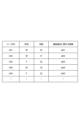
- FIG. 4 is a diagram illustrating an example of standard data stored in a standard data storage unit. 4 is a diagram showing an example of user attribute information stored in a user attribute information storage unit; FIG. 4 is a diagram illustrating an example of utterance history information stored in an utterance history information storage unit; FIG. FIG. 13 is a diagram showing an example of generating input information to be included in prompt information.
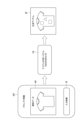
- FIG. 2 is a diagram illustrating the generation of a generated item by the item generation system. 2 is a diagram illustrating a configuration of a creation item storage unit and stored creation items; FIG. 11 is a flowchart showing the processing steps of an item providing method in the item providing system.
- FIG. 2 is a diagram showing a configuration of an item providing program.
- FIG. 2 is a hardware block diagram of an item providing device (virtual space management device).
- FIG. 1 is a block diagram showing the functional configuration of a virtual space management system and a virtual space management device including an item provision system according to this embodiment.
- the virtual space management system 1 is a system for managing a virtual space, for example, called a metaverse, constructed on a network, and is configured to include a virtual space management device 10 as an example.
- the virtual space management system 1 includes the virtual space management device 10 and a user's terminal T. The user can make the user's avatar active in the virtual space by accessing the item provision system 10A via the network N using the terminal T.
- the item provision system 10A of this embodiment is a system that provides items that the user possesses, uses and/or utilizes in the virtual space, and is configured as, for example, a part of the function of the virtual space management system 1.
- the virtual space management device 10 functionally comprises a virtual space control unit 11, an instruction acquisition unit 12, a standard data acquisition unit 13, an input information generation unit 14, a prompt output unit 15, and an item holding unit 16.
- the item provision system 10A is composed of the instruction acquisition unit 12, the standard data acquisition unit 13, the input information generation unit 14, the prompt output unit 15, and the item holding unit 16.
- the prompt output unit 15 and the item holding unit 16 are configured to be accessible to an item generation system 19.
- the item generation system 19 is included in the item provision system 10A, but it may be configured outside the item provision system 10A.
- Each functional unit 11 to 16 may be configured in a single device as exemplified in FIG. 1, or may be distributed across multiple devices.
- Each functional unit of the item provision system 10A is configured to be able to access the standard data storage unit 21, the user attribute information storage unit 22, the speech history information storage unit 23, and the generated item storage unit 24.
- the standard data storage unit 21 is a storage means (storage) that stores standard data.
- the user attribute information storage unit 22 is a storage means that stores user attribute information.
- the speech history information storage unit 23 is a storage means that stores speech history information.
- the generated item storage unit 24 is a storage means for storing generated items.
- the standard data storage unit 21, the user attribute information storage unit 22, the speech history information storage unit 23, and the generated item storage unit 24 may be configured in the same device as the device in which the item provision system 10A is configured, as illustrated in FIG. 1, or may be configured in a separate device that is configured to be accessible from the item provision system 10A.
- the virtual space control unit 11 manages the virtual space. Specifically, the virtual space control unit 11 defines and models a three-dimensional virtual space, and places various objects and user avatars in the virtual space based on their respective control information. The virtual space control unit 11 also provides terminal T with an image rendered based on the viewpoint of the avatar (virtual camera).
- the instruction acquisition unit 12 acquires an instruction to generate an item from a user.
- the generation instruction indicates a request from the user to the virtual space management system to generate an item.
- An item is an object that is possessed, used, and/or utilized by a user or the user's avatar in a virtual space.
- An item is not limited to any object as long as it is of this nature, but in this embodiment, the item is, for example, clothing. Below, in this embodiment, an example in which the item is clothing will be described.
- the instruction acquisition unit 12 receives and acquires a generation instruction based on, for example, a user's input on the terminal T.
- the generation instruction may be issued by the user's avatar in a virtual space.
- the generation instruction includes type information indicating the type of item. If the item is clothing, the type information may be information indicating one of the types of clothing, such as a shirt, pants, or hat.
- the standard data acquiring unit 13 acquires pre-stored standard data constituting an item indicated by the type information. Specifically, the standard data acquiring unit 13 may acquire the standard data from the standard data storage unit 21.
- Fig. 2 is a diagram showing an example of the configuration and stored data of the standard data storage unit 21. As shown in Fig. 2, the standard data storage unit 21 stores standard data associated with each item type indicating the type of clothing, such as a shirt, pants, and hat.
- the standard data may be data that configures the shape of an item.
- the standard data "data_s_h” associated with the item type "shirt” may be data that configures the shape of the shirt, or may be point cloud data that configures the shape of the shirt.
- the standard data may be data that does not include information such as color or pattern.
- the standard data may also be associated with each region in the virtual space.
- the standard data storage unit 21 stores standard data for each item type for each region, such as Hokkaido, Tokyo, and Okinawa.
- the standard data acquisition unit 13 acquires the location of the user's avatar in the virtual space and acquires standard data associated with the region to which the location belongs.
- the standard data storage unit 21 in FIG. 2 shows the standard data for each region stored in a single database, the standard data for each region may also be stored in a database separated for each region.
- the standard data acquisition unit 13 acquires standard data "data_s_t” associated with the item type "shirt” in the area "Tokyo” from the standard data storage unit 21.
- the input information generation unit 14 generates input information including information extracted from user information specific to the user associated with the user using given extraction criteria.
- the input information is information to be input to the item generation system, as described in detail later.
- the user information may be user attribute information indicating the attributes of a user.
- FIG. 3 is a diagram showing an example of user attribute information stored in the user attribute information storage unit 22. As illustrated in FIG. 3, the user attribute information storage unit 22 stores information indicating the gender, age, hobbies, and interests of each user as user attribute information in association with a user ID that identifies the user.
- the user attribute information storage unit 22 may be configured as one function of a so-called city OS.
- the city OS is the basic software for a city, and is the software platform for running application software in fields such as administration, logistics, and transportation.
- the city OS enables the sharing of information with other municipalities, companies, research institutes, etc., and realizes the provision of services optimized for residents, etc.
- the user attribute information storage unit 22 may also acquire and store user attribute information managed by the city OS. In this way, by referencing and acquiring user attribute information managed by the city OS, the item provision system 10A of this embodiment can acquire appropriate user attribute information even when the user moves between cities.
- the input information generating unit 14 may generate input information including attribute information extracted from the user attribute information, using as an extraction criterion the extraction of attribute information of a predetermined attribute item from among multiple attribute items included in the user attribute information. For example, if the extraction criterion is the extraction of information related to hobbies and interests from the user attribute information, the input information generating unit 14 extracts and acquires information "at01" related to hobbies and interests from the attribute information associated with user ID "U01" in response to a generation instruction from the user with user ID "U01", and generates input information including the acquired information "at01".
- the user information may be speech history information, which is a history of speech made by the user's avatar in the virtual space.
- FIG. 4 is a diagram showing a schematic example of speech history information stored in the speech history information storage unit 23. As illustrated in FIG. 4, the speech history information storage unit 23 stores, as speech history information, speech content associated with a user ID that identifies the user and an utterance ID that identifies the speech history.
- the input information generating unit 14 may generate input information based on speech history information, with the extraction criterion being to extract related words and phrases that are preset as words and phrases related to the item.
- the extraction criterion may be to extract a keyword related to the item, "clothes," from the speech history, obtain a given amount of text around the keyword (e.g., a preset number of characters or number of sentences before and after the keyword, etc.) from the speech history as the input unit, and extract words, excluding particles, auxiliary verbs, etc., from the words obtained by morphological analysis of the obtained input text, as information to be included in the input information.
- FIG. 5 is a diagram showing an example of a portion of the input information generation process.
- the input information generation unit 14 extracts "clothes", which is a keyword kw representing an item, from the target user's speech history information stored in the speech history information storage unit 23, and obtains, for example, a sentence sp containing the keyword kw "clothes".
- the input information generation unit 14 then performs a morphological analysis on the sentence sp, and obtains a predetermined independent word other than particles and auxiliary verbs as a word wd to be included in the input information.
- the input information generating unit 14 may construct the input information from the words wd acquired from the speech history.
- the input information generating unit 14 may also acquire words from each of a predetermined amount of speech histories that contain a keyword kw related to the item by the method described with reference to FIG. 5, and construct the input information based on a predetermined number of words that appear most frequently among the acquired words.
- the method of generating the input information is not limited to the example described above, and the input information generating unit 14 may generate the input information based on, for example, behavior history information indicating the behavior history of the user's avatar in the virtual space.
- the input information generating unit 14 may extract information related to items from the behavior history information according to a predetermined extraction criterion, and generate the input information based on the extracted information.
- the prompt output unit 15 outputs the standard data and the input information as prompt information for inputting into the item generation system.
- FIG. 6 is a diagram that shows a schematic diagram of the generation of a generated item by the item generation system. Specifically, as shown in FIG. 6, the prompt output unit 15 constructs prompt information pd based on the standard data sd acquired by the standard data acquisition unit 13 and the input information id generated by the input information generation unit 14, and inputs the constructed prompt information pd into the item generation system 19.
- the item generation system 19 generates a generated item gi in response to the input of prompt information pd.
- the generated item gi is an item configured based on standard data in response to the input information.
- the item generation system 19 may be configured by so-called Generative AI.
- Generative AI is generally a large-scale machine learning model constructed by deep learning using large amounts of data and content, etc., and outputs images, text, etc. based on the input prompt.
- the item generation system 19 in this embodiment In response to input of prompt information composed of standard data constituting the shape of an item and input information specific to a user, the item generation system 19 in this embodiment outputs a generated item in which features corresponding to the input information have been applied to the item represented by the standard data. More specifically, as shown in Fig. 6, the item generation system 19 in this embodiment outputs as a generated item gi clothing in which elements such as color and pattern corresponding to the input information id have been applied to clothing whose shape is defined by the standard data sd.
- the generated item gi output by the item generation system 19 in this manner may have at least a part of a color that is not included as an item configuration in the standard data sd input to the item generation system 19. Note that the generated item may be configured by point cloud data, similar to the standard data.
- the item holding unit 16 associates the generated item generated by the item generation system 19 with the user. Specifically, the item holding unit 16 acquires the generated item from the item generation system 19, associates the acquired generated item with the user, and stores it in the generated item storage unit 24.
- the item holding unit 16 may store the prompt information on which the generated item is based.
- the prompt output unit 15 inputs the prompt information stored in the generated item storage unit 24 as one aspect of the generated item to the item generation system 19 configured as the latest Generative AI, thereby generating a generated item each time.
- the item holding unit 16 may accept a sharing designation from a first user of the multiple users for a generated item associated with a second user different from the first user, and may associate the generated item designated for sharing with the first user as a shared item.
- the item possession unit 16 can receive a sharing specification from the terminal T of the user with user ID "U01” (or the avatar of that user) for the generated item "item_s_o_021", for example, from among the generated items associated with user ID "U02".
- the item holding unit 16 may associate the generated item "item_s_o_021" with the user ID "U01" as a shared item. This allows the avatar of the user with user ID “U01” to use the generated item “item_s_o_021” generated in the virtual space according to the unique information of the user with user ID "U02".
- FIG. 8 is a flowchart showing the processing steps of the item provision method in the item provision system 10A.
- step S1 the instruction acquisition unit 12 acquires an instruction to create an item from a user.
- step S2 the standard data acquisition unit 13 acquires, from the standard data storage unit 21, standard data constituting the item indicated in the item type information included in the creation instruction.
- step S3 the input information generation unit 14 generates input information including information extracted from the user information specific to the user using given extraction criteria.
- step S4 the prompt output unit 15 outputs the standard data and the input information as prompt information for inputting to the item generation system 19. In other words, the prompt output unit 15 inputs the prompt information to the item generation system 19.
- step S5 the item holding unit 16 acquires the generated item generated by the item generation system 19. Then, in step S6, the item holding unit 16 associates the generated item with the user and stores it in the generated item storage unit 24.
- FIG. 9 is a diagram showing the configuration of the item provision program.
- the item provision program P1 is configured with a main module m10 that provides overall control of the item provision process in the item provision system 10A, an instruction acquisition module m12, a standard data acquisition module m13, an input information generation module m14, a prompt output module m15, and an item possession module m16.
- Each of the modules m12 to m16 realizes a function for each of the functional units 12 to 16.
- the item provision program P1 may be transmitted via a transmission medium such as a communication line, or may be stored in a recording medium M1 as shown in FIG. 9.
- input information id for input to the item generation system 19 is generated based on user information. Since user information is information specific to a user, the input information id is information specific to a user.
- the generated input information id and standard data sd are output as prompt information pd to be input to the item generation system 19, so that the item generation system 19 can generate a generated item gi.
- By associating the generated item gi with the user it becomes possible to provide a generated item gi specific to the user to the user's avatar.
- the item provision system according to the present disclosure may have the following configuration.
- the actions and effects of each configuration are described as follows.
- An item provision system is an item provision system that provides an item to be possessed, used, and/or utilized by a user in a virtual space, and includes an instruction acquisition unit that acquires an instruction to create an item from a user, the instruction acquisition unit acquiring the instruction to create an item including type information indicating the type of the item, a standard data acquisition unit that acquires pre-stored standard data constituting the item indicated by the type information, an input information generation unit that generates input information including information extracted from user information specific to the user associated with the user using given extraction criteria, a prompt output unit that outputs the standard data and the input information as prompt information for input to the item creation system, the item creation system generating a created item, which is an item configured based on the standard data in response to the input information in response to the input of the prompt information, and an item holding unit that associates the created item generated by the item creation system with the user.
- input information for input to an item generation system is generated based on user information. Since the user information is information specific to a user, the input information is information specific to the user.
- the generated input information and standard data are output as prompt information to be input to the item generation system, so that the item generation system can generate a generated item. Associating the generated item with the user makes it possible to provide a generated item specific to the user to the user's avatar.
- the standard data may be associated with each region in the virtual space, and the standard data acquisition unit may acquire standard data associated with the user's location in the virtual space.
- standard data previously associated with the region in which the user is located is output as prompt information to be input to the item generation system. Therefore, a generated item specific to the region in which the user is located can be provided to the user.
- the user information may include speech history information, which is a history of the user's speech in the virtual space
- the input information generating unit may generate the input information based on the speech history information, with the extraction criterion being to extract related phrases that are preset as phrases related to the item.
- the input information is composed of words and phrases contained in the user's speech history, it is possible to output information specific to the user as prompt information.
- the user information may include user attribute information indicating attributes of the user
- the input information generation unit may generate input information including attribute information extracted from the user attribute information, using as an extraction criterion the extraction of attribute information of a predetermined attribute item from among a plurality of attribute items included in the user attribute information.
- the input information is composed of specific attribute information from among the user attribute information, it is possible to output information specific to the user as prompt information.
- the item holding unit may receive a sharing designation from a first user of the multiple users for a generated item associated with a second user different from the first user, and associate the shared generated item with the first user as a shared item.
- the generated item when a sharing designation from a first user for a generated item that is generated and owned by a second user is accepted, the generated item is associated with the first user.
- This allows the system to be configured so that the first user can use the generated item on an equal basis with the second user. Therefore, it becomes possible for the second user's generated item to be shared with the first user.
- the standard data is data that constitutes the shape of the item
- the generated item may have at least a portion of a color that is not included in the standard data input to the item generation system as part of the item configuration.
- the above aspect makes it possible to obtain a generated item that represents a user's unique characteristics in an item represented by standard data.
- the item may be clothing that can be worn by the user's avatar in the virtual space.
- the above aspect makes it possible to provide users with unique clothing items to wear on their avatars.
- each functional block may be realized using one device that is physically or logically coupled, or may be realized using two or more devices that are physically or logically separated and connected directly or indirectly (for example, using wires, wirelessly, etc.) and these multiple devices.
- a functional block may be realized by combining software with the one device or the multiple devices.
- Functions include, but are not limited to, judgement, determination, judgment, calculation, computation, processing, derivation, investigation, search, confirmation, reception, transmission, output, access, resolution, selection, selection, establishment, comparison, assumption, expectation, regarding, broadcasting, notifying, communicating, forwarding, configuring, reconfiguring, allocating, mapping, and assignment.
- a functional block (component) that performs the transmission function is called a transmitting unit or transmitter.
- the item provision system 10A in one embodiment of the present invention may function as a computer.
- FIG. 10 is a diagram showing an example of the hardware configuration of the item provision system 10A according to this embodiment.
- the item provision system 10A may be physically configured as a computer device including a processor 1001, memory 1002, storage 1003, a communication device 1004, an input device 1005, an output device 1006, a bus 1007, etc.
- the term "apparatus” may be interpreted as a circuit, device, unit, etc.
- the hardware configuration of the item delivery system 10A may be configured to include one or more of the devices shown in FIG. 9, or may be configured to exclude some of the devices.
- Each function in the item provision system 10A is realized by loading specific software (programs) onto hardware such as the processor 1001 and memory 1002, causing the processor 1001 to perform calculations and control communications via the communication device 1004 and the reading and/or writing of data in the memory 1002 and storage 1003.
- the processor 1001 for example, runs an operating system to control the entire computer.
- the processor 1001 may be configured as a central processing unit (CPU) that includes an interface with peripheral devices, a control device, an arithmetic unit, registers, etc.
- CPU central processing unit
- each of the functional units 12 to 16 shown in FIG. 1 may be realized by the processor 1001.
- the processor 1001 also reads out programs (program codes), software modules, and data from the storage 1003 and/or the communication device 1004 into the memory 1002, and executes various processes according to these.
- the programs used are those that cause a computer to execute at least some of the operations described in the above-mentioned embodiments.
- the functional units 12-16 of the item providing system 10A may be realized by a control program stored in the memory 1002 and operated by the processor 1001.
- the above-mentioned various processes have been described as being executed by one processor 1001, they may be executed simultaneously or sequentially by two or more processors 1001.
- the processor 1001 may be implemented in one or more chips.
- the programs may be transmitted from a network via a telecommunications line.
- Memory 1002 is a computer-readable recording medium, and may be composed of at least one of, for example, ROM (Read Only Memory), EPROM (Erasable Programmable ROM), EEPROM (Electrically Erasable Programmable ROM), RAM (Random Access Memory), etc. Memory 1002 may also be called a register, cache, main memory, etc. Memory 1002 can store executable programs (program codes), software modules, etc. for implementing an item providing method according to one embodiment of the present invention.
- ROM Read Only Memory
- EPROM Erasable Programmable ROM
- EEPROM Electrical Erasable Programmable ROM
- RAM Random Access Memory
- Memory 1002 may also be called a register, cache, main memory, etc.
- Memory 1002 can store executable programs (program codes), software modules, etc. for implementing an item providing method according to one embodiment of the present invention.
- Storage 1003 is a computer-readable recording medium, and may be, for example, at least one of an optical disk such as a CD-ROM (Compact Disc ROM), a hard disk drive, a flexible disk, a magneto-optical disk (e.g., a compact disk, a digital versatile disk, a Blu-ray (registered trademark) disk), a smart card, a flash memory (e.g., a card, a stick, a key drive), a floppy (registered trademark) disk, a magnetic strip, etc.
- Storage 1003 may also be referred to as an auxiliary storage device.
- the above-mentioned storage medium may be, for example, a database, a server, or other suitable medium including memory 1002 and/or storage 1003.
- the communication device 1004 is hardware (transmitting/receiving device) for communicating between computers via a wired and/or wireless network, and is also called, for example, a network device, a network controller, a network card, a communication module, etc.
- the input device 1005 is an input device (e.g., a keyboard, a mouse, a microphone, a switch, a button, a sensor, etc.) that accepts input from the outside.
- the output device 1006 is an output device (e.g., a display, a speaker, an LED lamp, etc.) that performs output to the outside. Note that the input device 1005 and the output device 1006 may be integrated into one structure (e.g., a touch panel).
- each device such as the processor 1001 and memory 1002 is connected by a bus 1007 for communicating information.
- the bus 1007 may be configured as a single bus, or may be configured as different buses between the devices.
- the item provision system 10A may be configured to include hardware such as a microprocessor, a digital signal processor (DSP), an application specific integrated circuit (ASIC), a programmable logic device (PLD), or a field programmable gate array (FPGA), and some or all of the functional blocks may be realized by the hardware.
- the processor 1001 may be implemented by at least one of these pieces of hardware.
- the notification of information is not limited to the aspects/embodiments described in this disclosure, and may be performed using other methods.
- the notification of information may be performed by physical layer signaling (e.g., DCI (Downlink Control Information), UCI (Uplink Control Information)), higher layer signaling (e.g., RRC (Radio Resource Control) signaling, MAC (Medium Access Control) signaling, broadcast information (MIB (Master Information Block), SIB (System Information Block))), other signals, or a combination of these.
- RRC signaling may be referred to as an RRC message, and may be, for example, an RRC Connection Setup message, an RRC Connection Reconfiguration message, etc.
- Each aspect/embodiment described in this disclosure may be applied to at least one of systems utilizing LTE (Long Term Evolution), LTE-Advanced (LTE-A), SUPER 3G, IMT-Advanced, 4G (4th generation mobile communication system), 5G (5th generation mobile communication system), FRA (Future Radio Access), NR (new Radio), W-CDMA (registered trademark), GSM (registered trademark), CDMA2000, UMB (Ultra Mobile Broadband), IEEE 802.11 (Wi-Fi (registered trademark)), IEEE 802.16 (WiMAX (registered trademark)), IEEE 802.20, UWB (Ultra-Wide Band), Bluetooth (registered trademark), or other suitable systems, and next generation systems enhanced based on these. Additionally, multiple systems may be combined (for example, a combination of at least one of LTE and LTE-A with 5G, etc.).
- certain operations that are described as being performed by a base station may in some cases be performed by its upper node.
- various operations performed for communication with a terminal may be performed by at least one of the base station and other network nodes other than the base station (e.g., MME or S-GW, etc., but are not limited to these).
- MME Mobility Management Entity
- S-GW Serving GPRS Support Node
- Information, etc. can be output from a higher layer (or a lower layer) to a lower layer (or a higher layer). It may also be input/output via multiple network nodes.
- the input and output information may be stored in a specific location (e.g., memory) or may be managed in a management table.
- the input and output information may be overwritten, updated, or added to.
- the output information may be deleted.
- the input information may be sent to another device.
- the determination may be based on a value represented by one bit (0 or 1), a Boolean (true or false) value, or a numerical comparison (e.g., with a predetermined value).
- notification of specific information is not limited to being done explicitly, but may be done implicitly (e.g., not notifying the specific information).
- Software shall be construed broadly to mean instructions, instruction sets, code, code segments, program code, programs, subprograms, software modules, applications, software applications, software packages, routines, subroutines, objects, executable files, threads of execution, procedures, functions, etc., whether referred to as software, firmware, middleware, microcode, hardware description language, or otherwise.
- Software, instructions, etc. may also be transmitted and received over a transmission medium.
- a transmission medium For example, if the software is transmitted from a website, server, or other remote source using wired technologies, such as coaxial cable, fiber optic cable, twisted pair, and digital subscriber line (DSL), and/or wireless technologies, such as infrared, radio, and microwave, these wired and/or wireless technologies are included within the definition of transmission media.
- wired technologies such as coaxial cable, fiber optic cable, twisted pair, and digital subscriber line (DSL)
- DSL digital subscriber line
- wireless technologies such as infrared, radio, and microwave
- the information, signals, etc. described in this disclosure may be represented using any of a variety of different technologies.
- the data, instructions, commands, information, signals, bits, symbols, chips, etc. that may be referred to throughout the above description may be represented by voltages, currents, electromagnetic waves, magnetic fields or magnetic particles, optical fields or photons, or any combination thereof.
- system and “network” are used interchangeably.
- radio resources may be indicated by an index.
- the names used for the parameters described above are not intended to be limiting in any way. Furthermore, the formulas etc. using these parameters may differ from those explicitly disclosed in this disclosure.
- the various channels (e.g., PUCCH, PDCCH, etc.) and information elements may be identified by any suitable names, and therefore the various names assigned to these various channels and information elements are not intended to be limiting in any way.
- determining may encompass a wide variety of actions.
- Determining and “determining” may include, for example, judging, calculating, computing, processing, deriving, investigating, looking up, search, inquiry (e.g., searching in a table, database, or other data structure), and considering ascertaining as “judging” or “determining.”
- determining and “determining” may include receiving (e.g., receiving information), transmitting (e.g., sending information), input, output, accessing (e.g., accessing data in memory), and considering ascertaining as “judging” or “determining.”
- judgment” and “decision” can include considering resolving, selecting, choosing, establishing, comparing, etc., to have been “judged” or “decided.” In other words, “judgment” and “decision” can include considering some action to have been “judged” or “decided.” Additionally, “judgment (decision)” can be interpreted as “assuming,” “ex
- the phrase “based on” does not mean “based only on,” unless expressly stated otherwise. In other words, the phrase “based on” means both “based only on” and “based at least on.”
- any reference to an element is not intended to generally limit the quantity or order of those elements. These designations may be used herein as a convenient method of distinguishing between two or more elements. Thus, a reference to a first and a second element does not imply that only two elements may be employed therein or that the first element must precede the second element in some way.
- a and B are different may mean “A and B are different from each other.”
- the term may also mean “A and B are each different from C.”
- Terms such as “separate” and “combined” may also be interpreted in the same way as “different.”
- the item delivery system 10A of the present disclosure may have the following configuration.
- An item provision system that provides an item to be possessed, used, and/or utilized by a user in a virtual space, An instruction acquisition unit that acquires an instruction to generate the item from a user, the instruction including type information indicating a type of the item; a standard data acquisition unit that acquires standard data constituting an item indicated by the type information, the standard data being stored in advance; an input information generating unit configured to generate input information including information extracted from user information specific to the user associated with the user according to a given extraction criterion; a prompt output unit that outputs the standard data and the input information as prompt information for inputting the standard data and the input information into an item generation system, the item generation system generating a generated item, which is an item configured based on the standard data in response to the input of the prompt information; an item holding unit that associates the generated item generated by the item generation system with the user;
- An item providing system comprising: [2] the standard data is associated with each region in the virtual space
- the item provision system includes speech history information that is a history of speech of the user in the virtual space, the input information generation unit generates the input information based on the utterance history information, with a purpose of extracting related terms that are preset as terms related to the item as the extraction criterion.
- the item providing system according to [1] or [2].
- the user information includes user attribute information indicating attributes of the user, the input information generating unit generates the input information including the attribute information extracted from the user attribute information, using as the extraction criterion the extraction of attribute information of a predetermined attribute item among a plurality of attribute items included in the user attribute information.
- the item providing system according to any one of [1] to [3].
- the item holding unit receives, from a first user among a plurality of users, a sharing designation for the generated item associated with a second user different from the first user, and associates the generated item designated for sharing with the first user as a shared item;
- the item providing system according to any one of [1] to [4].
- the standard data is data constituting a shape of the item,
- the generated item has at least a part of a color that is not included in the configuration of the item in the standard data input to the item generation system.
- the item providing system according to any one of [1] to [5].
- the item is clothing that can be worn by the user's avatar in the virtual space.
- the item providing system according to any one of [1] to [6].
Landscapes
- Engineering & Computer Science (AREA)
- Physics & Mathematics (AREA)
- General Physics & Mathematics (AREA)
- Theoretical Computer Science (AREA)
- Computer Networks & Wireless Communication (AREA)
- Signal Processing (AREA)
- Management, Administration, Business Operations System, And Electronic Commerce (AREA)
Priority Applications (1)
| Application Number | Priority Date | Filing Date | Title |
|---|---|---|---|
| JP2025544513A JPWO2025053107A1 (https=) | 2023-09-04 | 2024-09-02 |
Applications Claiming Priority (2)
| Application Number | Priority Date | Filing Date | Title |
|---|---|---|---|
| JP2023-143049 | 2023-09-04 | ||
| JP2023143049 | 2023-09-04 |
Publications (1)
| Publication Number | Publication Date |
|---|---|
| WO2025053107A1 true WO2025053107A1 (ja) | 2025-03-13 |
Family
ID=94924039
Family Applications (1)
| Application Number | Title | Priority Date | Filing Date |
|---|---|---|---|
| PCT/JP2024/031476 Pending WO2025053107A1 (ja) | 2023-09-04 | 2024-09-02 | アイテム提供システム |
Country Status (2)
| Country | Link |
|---|---|
| JP (1) | JPWO2025053107A1 (https=) |
| WO (1) | WO2025053107A1 (https=) |
Citations (2)
| Publication number | Priority date | Publication date | Assignee | Title |
|---|---|---|---|---|
| KR20210019185A (ko) * | 2019-08-12 | 2021-02-22 | 엘지전자 주식회사 | 멀티미디어 디바이스 및 그 제어 방법 |
| CN115801410A (zh) * | 2022-11-17 | 2023-03-14 | 湖南快乐阳光互动娱乐传媒有限公司 | 数字资产头像的生成方法及装置、存储介质及电子设备 |
-
2024
- 2024-09-02 JP JP2025544513A patent/JPWO2025053107A1/ja active Pending
- 2024-09-02 WO PCT/JP2024/031476 patent/WO2025053107A1/ja active Pending
Patent Citations (2)
| Publication number | Priority date | Publication date | Assignee | Title |
|---|---|---|---|---|
| KR20210019185A (ko) * | 2019-08-12 | 2021-02-22 | 엘지전자 주식회사 | 멀티미디어 디바이스 및 그 제어 방법 |
| CN115801410A (zh) * | 2022-11-17 | 2023-03-14 | 湖南快乐阳光互动娱乐传媒有限公司 | 数字资产头像的生成方法及装置、存储介质及电子设备 |
Non-Patent Citations (1)
| Title |
|---|
| KEDZKIEST: "Let AI decide the fashion for 3D avatar", KEDZKIEST'S DIARY, 16 February 2023 (2023-02-16), pages 1 - 7, XP093289460, Retrieved from the Internet <URL:https://kedzkiest.hatenablog.com/entry/AI_Fashion_Coordination> * |
Also Published As
| Publication number | Publication date |
|---|---|
| JPWO2025053107A1 (https=) | 2025-03-13 |
Similar Documents
| Publication | Publication Date | Title |
|---|---|---|
| CN112019820B (zh) | 界面生成方法和装置 | |
| JP7323370B2 (ja) | 審査装置 | |
| JPWO2020054451A1 (ja) | 対話装置 | |
| CN108319377A (zh) | 场景化文字输入的方法及系统、终端以及计算机可读存储介质 | |
| JP7054731B2 (ja) | 対話システム | |
| JPWO2019187463A1 (ja) | 対話サーバ | |
| WO2025053107A1 (ja) | アイテム提供システム | |
| JP7033195B2 (ja) | 対話装置 | |
| US11914601B2 (en) | Re-ranking device | |
| JP2025086754A (ja) | 会議生成装置 | |
| JP6960049B2 (ja) | 対話装置 | |
| WO2020235136A1 (ja) | 対話システム | |
| CN112181391B (zh) | 一种可动态扩展数据的方法及系统 | |
| JP2025095744A (ja) | 画像生成システムおよび画像生成方法 | |
| CN107168978B (zh) | 消息展示的方法和装置 | |
| CN115695191B (zh) | 终端网络的切换方法及装置、电子设备 | |
| WO2025234102A1 (ja) | 情報出力装置および情報出力方法 | |
| WO2026042209A1 (ja) | 装置および方法 | |
| JP2025110175A (ja) | 情報処理装置及び情報処理方法 | |
| WO2026047915A1 (ja) | 装置および方法 | |
| WO2025163713A1 (ja) | 情報処理装置及び情報処理方法 | |
| WO2025238753A1 (ja) | 装置、および方法 | |
| WO2026009289A1 (ja) | 情報処理装置および情報処理方法 | |
| WO2025150160A1 (ja) | 装置および方法 | |
| WO2025169471A1 (ja) | 装置および方法 |
Legal Events
| Date | Code | Title | Description |
|---|---|---|---|
| 121 | Ep: the epo has been informed by wipo that ep was designated in this application |
Ref document number: 24862759 Country of ref document: EP Kind code of ref document: A1 |
|
| ENP | Entry into the national phase |
Ref document number: 2025544513 Country of ref document: JP Kind code of ref document: A |