WO2025045346A1 - A method of assessing weight of an infant and the device thereof - Google Patents
A method of assessing weight of an infant and the device thereof Download PDFInfo
- Publication number
- WO2025045346A1 WO2025045346A1 PCT/EP2023/073528 EP2023073528W WO2025045346A1 WO 2025045346 A1 WO2025045346 A1 WO 2025045346A1 EP 2023073528 W EP2023073528 W EP 2023073528W WO 2025045346 A1 WO2025045346 A1 WO 2025045346A1
- Authority
- WO
- WIPO (PCT)
- Prior art keywords
- infant
- information
- growth
- weight
- determining
- Prior art date
- Legal status (The legal status is an assumption and is not a legal conclusion. Google has not performed a legal analysis and makes no representation as to the accuracy of the status listed.)
- Ceased
Links
Classifications
-
- A—HUMAN NECESSITIES
- A61—MEDICAL OR VETERINARY SCIENCE; HYGIENE
- A61B—DIAGNOSIS; SURGERY; IDENTIFICATION
- A61B5/00—Measuring for diagnostic purposes; Identification of persons
- A61B5/103—Measuring devices for testing the shape, pattern, colour, size or movement of the body or parts thereof, for diagnostic purposes
- A61B5/107—Measuring physical dimensions, e.g. size of the entire body or parts thereof
- A61B5/1072—Measuring physical dimensions, e.g. size of the entire body or parts thereof measuring distances on the body, e.g. measuring length, height or thickness
-
- A—HUMAN NECESSITIES
- A61—MEDICAL OR VETERINARY SCIENCE; HYGIENE
- A61B—DIAGNOSIS; SURGERY; IDENTIFICATION
- A61B5/00—Measuring for diagnostic purposes; Identification of persons
- A61B5/0059—Measuring for diagnostic purposes; Identification of persons using light, e.g. diagnosis by transillumination, diascopy, fluorescence
- A61B5/0077—Devices for viewing the surface of the body, e.g. camera, magnifying lens
-
- A—HUMAN NECESSITIES
- A61—MEDICAL OR VETERINARY SCIENCE; HYGIENE
- A61B—DIAGNOSIS; SURGERY; IDENTIFICATION
- A61B5/00—Measuring for diagnostic purposes; Identification of persons
- A61B5/103—Measuring devices for testing the shape, pattern, colour, size or movement of the body or parts thereof, for diagnostic purposes
- A61B5/107—Measuring physical dimensions, e.g. size of the entire body or parts thereof
- A61B5/1079—Measuring physical dimensions, e.g. size of the entire body or parts thereof using optical or photographic means
-
- A—HUMAN NECESSITIES
- A61—MEDICAL OR VETERINARY SCIENCE; HYGIENE
- A61B—DIAGNOSIS; SURGERY; IDENTIFICATION
- A61B5/00—Measuring for diagnostic purposes; Identification of persons
- A61B5/72—Signal processing specially adapted for physiological signals or for diagnostic purposes
- A61B5/7271—Specific aspects of physiological measurement analysis
- A61B5/7275—Determining trends in physiological measurement data; Predicting development of a medical condition based on physiological measurements, e.g. determining a risk factor
-
- G—PHYSICS
- G01—MEASURING; TESTING
- G01G—WEIGHING
- G01G19/00—Weighing apparatus or methods adapted for special purposes not provided for in the preceding groups
- G01G19/44—Weighing apparatus or methods adapted for special purposes not provided for in the preceding groups for weighing persons
-
- G—PHYSICS
- G01—MEASURING; TESTING
- G01G—WEIGHING
- G01G23/00—Auxiliary devices for weighing apparatus
- G01G23/18—Indicating devices, e.g. for remote indication; Recording devices; Scales, e.g. graduated
- G01G23/35—Indicating the weight by photographic recording
-
- G—PHYSICS
- G06—COMPUTING OR CALCULATING; COUNTING
- G06T—IMAGE DATA PROCESSING OR GENERATION, IN GENERAL
- G06T7/00—Image analysis
- G06T7/0002—Inspection of images, e.g. flaw detection
- G06T7/0012—Biomedical image inspection
-
- G—PHYSICS
- G16—INFORMATION AND COMMUNICATION TECHNOLOGY [ICT] SPECIALLY ADAPTED FOR SPECIFIC APPLICATION FIELDS
- G16H—HEALTHCARE INFORMATICS, i.e. INFORMATION AND COMMUNICATION TECHNOLOGY [ICT] SPECIALLY ADAPTED FOR THE HANDLING OR PROCESSING OF MEDICAL OR HEALTHCARE DATA
- G16H50/00—ICT specially adapted for medical diagnosis, medical simulation or medical data mining; ICT specially adapted for detecting, monitoring or modelling epidemics or pandemics
- G16H50/20—ICT specially adapted for medical diagnosis, medical simulation or medical data mining; ICT specially adapted for detecting, monitoring or modelling epidemics or pandemics for computer-aided diagnosis, e.g. based on medical expert systems
-
- G—PHYSICS
- G16—INFORMATION AND COMMUNICATION TECHNOLOGY [ICT] SPECIALLY ADAPTED FOR SPECIFIC APPLICATION FIELDS
- G16H—HEALTHCARE INFORMATICS, i.e. INFORMATION AND COMMUNICATION TECHNOLOGY [ICT] SPECIALLY ADAPTED FOR THE HANDLING OR PROCESSING OF MEDICAL OR HEALTHCARE DATA
- G16H50/00—ICT specially adapted for medical diagnosis, medical simulation or medical data mining; ICT specially adapted for detecting, monitoring or modelling epidemics or pandemics
- G16H50/30—ICT specially adapted for medical diagnosis, medical simulation or medical data mining; ICT specially adapted for detecting, monitoring or modelling epidemics or pandemics for calculating health indices; for individual health risk assessment
-
- A—HUMAN NECESSITIES
- A61—MEDICAL OR VETERINARY SCIENCE; HYGIENE
- A61B—DIAGNOSIS; SURGERY; IDENTIFICATION
- A61B2503/00—Evaluating a particular growth phase or type of persons or animals
- A61B2503/04—Babies, e.g. for SIDS detection
-
- A—HUMAN NECESSITIES
- A61—MEDICAL OR VETERINARY SCIENCE; HYGIENE
- A61B—DIAGNOSIS; SURGERY; IDENTIFICATION
- A61B2503/00—Evaluating a particular growth phase or type of persons or animals
- A61B2503/04—Babies, e.g. for SIDS detection
- A61B2503/045—Newborns, e.g. premature baby monitoring
-
- A—HUMAN NECESSITIES
- A61—MEDICAL OR VETERINARY SCIENCE; HYGIENE
- A61B—DIAGNOSIS; SURGERY; IDENTIFICATION
- A61B2576/00—Medical imaging apparatus involving image processing or analysis
-
- G—PHYSICS
- G06—COMPUTING OR CALCULATING; COUNTING
- G06T—IMAGE DATA PROCESSING OR GENERATION, IN GENERAL
- G06T2207/00—Indexing scheme for image analysis or image enhancement
- G06T2207/20—Special algorithmic details
- G06T2207/20081—Training; Learning
-
- G—PHYSICS
- G06—COMPUTING OR CALCULATING; COUNTING
- G06T—IMAGE DATA PROCESSING OR GENERATION, IN GENERAL
- G06T2207/00—Indexing scheme for image analysis or image enhancement
- G06T2207/20—Special algorithmic details
- G06T2207/20084—Artificial neural networks [ANN]
-
- G—PHYSICS
- G06—COMPUTING OR CALCULATING; COUNTING
- G06T—IMAGE DATA PROCESSING OR GENERATION, IN GENERAL
- G06T2207/00—Indexing scheme for image analysis or image enhancement
- G06T2207/30—Subject of image; Context of image processing
- G06T2207/30196—Human being; Person
Definitions
- the present invention relates to a method of assessing weight of an infant, and an apparatus and a computer-implemented algorithm thereof. More specifically, the method of assessing weight of an infant may be based on visual information of the infant and a reference object. In addition, the present invention relates to a method of comparing the growth trajectory of an infant fed with one or more nutritional compositions, with the growth trajectory of an infant fed with one or more other nutritional compositions, e.g., human milk.
- WO201 7/099580 A1 discloses a system for tracking infant development by using infant weight information provided by measuring devices such as a weighing scale and information derived from a camera image of the infant captured by a portable device.
- measuring devices such as a weighing scale and information derived from a camera image of the infant captured by a portable device.
- BMI body mass index
- the present invention further aims to: lower the effort from the parents/caregivers to enter the weight of a baby on a regular basis, allowing apps to capture regular measurements of the weight of the baby; allow downstream processing of weights for a baby allowing for early detection of whether a baby is over/underweight or on track on their growth trajectories; and allow early intervention in case of babies with abnormal growth trajectories.
- the present invention provides a method for comparing the growth trajectory of an infant fed with one nutritional composition, e.g., an infant formula, with the growth trajectory of an infant fed with another nutritional composition, e.g., human milk or another infant formula.
- one nutritional composition e.g., an infant formula
- another nutritional composition e.g., human milk or another infant formula.
- the present invention can also provide an easy way of monitoring populationbased improvements in its early-life milk products and providing suggestions for early nutritional supplemental interventions to individuals in need. This is especially true in some less developed countries, where the medical system has a paucity of doctors, and nutritional knowledge for early life is lacking.
- the determining of the size information and the determining of the weight are based on trained Al models or mapping tables.
- Data for these trained Al models or mapping tables may be obtained from hospitals and research institutions for the measurement of both weight and length.
- Fig. 1 shows a method of determining weight of an infant.
- Fig. 2 shows an example of visual information including an infant.
- Fig. 4 shows an example of pose information.
- Fig. 6 shows an example of a growth trajectory of an infant based on the weight and basic information.
- Fig. 8 shows an example of a comparison of the growth trajectory of an infant fed by an infant formula with a growth trajectory of another infant fed by human milk.
- the present invention preferably provides a method and a device thereof to assess weight of an infant based on visual information of an infant.
- the expressions “A or B”, “at least one of A or/and B”, “A, B, or C” or “one or more of A, B, or/and C”, and the like used herein may include any and all combinations of one or more of the associated listed items.
- the term “module” used herein may represent, for example, a unit including one or more combinations of hardware, software and firmware.
- the term “module” may be interchangeably used with the term “unit”.
- the “module” may be a minimum unit of an integrated part or may be a part thereof.
- the “module” may be a minimum unit for performing one or more functions or a part thereof.
- the present application provides a method performed by an electronic device for assessing weight of an infant.
- the method may comprise: obtaining visual information including the infant; obtaining basic information of the infant; determining size information of the infant based on the visual information; and determining the weight of the infant based on the size information and the basic information.
- the size information may comprise at least one of length information of the infant, face information of the infant, pose information of the infant, body shape information of the infant, and chubbiness information of the infant.
- the determining of the size information of the infant may be based on a reference object in the visual information, and the reference object may be a card or a ruler.
- the basic information may comprise at least one of gender, birth weight, and age of the infant.
- the chubbiness features may include at least one of head circumference, skinfold thickness, and a size of waist and bust of the infant.
- the skinfold thickness may include at least one of thickness of, bicep folds, triceps folds, suprailiac folds and scapular lower folds, of the infant.
- the face information may include at least one of left eyebrow width, right eyebrow width, left eye width, right eye width, nose width, nose length, outer lid width, inner lip width, face height, and face width.
- the pose information may include at least one of: the length of left-shoulder to left-hip; the length of right-should to right-hip; the length of left-hip to right-hip; the length of left-shoulder to right-hip; the length of right-shoulder to left-hip; the length of left-shoulder to left-elbow; the length of left-elbow to left-wrist; the length of rightshoulder to right-elbow; and the length of right-elbow to right-wrist.
- the body shape information of the infant may be determined based on at least one of waist width, hip width, and thigh width.
- Each of the size information may be determined in a separate Al model.
- the method may further include determining the growth trajectory of the infant based on the weight and the basic information.
- the determined growth trajectory may comprise a growth score, and the growth score may be obtained by a comparison of the determined growth trajectory with a reference growth trajectory.
- the method may further include comparing the growth trajectory of the infant fed by a nutritional composition with another growth trajectory of another infant fed by another nutritional composition and determining a similarity level between the two growth trajectories.
- the determining of the growth trajectory may further be based on face expression of the infant, and the face expression may be determined based on the visual information.
- the nutritional composition may be an infant formula or follow-on formula and the another nutritional composition may be human milk.
- the infant may be between 0 and 2 years old.
- the present application provides an electronic device for assessing weight of an infant.
- the electronic device may comprise: an input module and a processor.
- the electronic device may be configured to: obtain visual information of the infant; obtain, by the input module, basic information of the infant; determine, by the processor, size information of the infant based on the visual information, and determine, by the processor, the weight of the infant based on the size information and the basic information.
- the size information may comprise at least one of length information of the infant, face information of the infant, pose information of the infant, body shape information of the infant, and chubbiness information of the infant.
- the electronic device may further be configured to determine, by the processor, a growth trajectory of the infant based on the weight and the basic information.
- the electronic device may further be configured to: compare, by the processor, the growth trajectory of the infant fed by a nutritional composition to another growth trajectory of another infant fed by another nutritional composition; and determine, by the processor, a similarity level between the two growth trajectories.
- the electronic device may further comprise a storage unit, and the storage unit may be configured to store the basic information of the infant and programs and/or instructions for the determining of the size information of the infant and the determining of the weight of the infant.
- the storage unit may further be configured to store programs and/or instructions for the determining of the growth trajectory of the infant, the comparing of the growth trajectory of the infant fed by the nutritional composition to the another growth trajectory of the another infant fed by the another nutritional composition; and the determining of the similarity level between the two growth trajectories.
- the electronic device may comprise a display.
- the display may be configured to display the visual information and the growth trajectory.
- the present application provides a storage medium.
- the storage medium may comprise program instructions which, when executed on an electronic device, cause the electronic device to perform the method mentioned above for assessing weight of an infant.
- Fig. 1 shows a method of determining weight of an infant.
- step 101 visual information including the infant is obtained.
- the visual information may be two-dimensional or three-dimensional visual information, e.g., images captured by a camera, three-dimensional visual information obtained by a 3D scanner, depth information from a Light Detection and Ranging (liDAR) system or sensors, etc.
- the visual information may also be received from an external device or server, or prestored in a database.
- image is used interchangeably with the term “visual information”.
- the camera may be a camera of an electronic device, such as a mobile phone, a tablet, a laptop, etc.
- Fig. 2 shows an example of obtained visual information.
- a reference object may be included in the same image.
- the infant is facing the camera. More preferably, the infant is wearing tight-fitting clothes such as onesies instead of loose-fitting clothes such as loose dresses and wraps.
- the reference object in the image may be clearly visible and close to the infant.
- the reference object is not partially or wholly covered by the infant.
- the reference object may be a ruler or a card, such as a credit card or a debit card, which may be used to determine the size information of the infant in step 103 which will be explained later in this document, based on size information of the reference object.
- the size information of reference object may be inputted by the user or prestored in a memory or a database locally or remotely.
- the size information of the reference object may be inputted via an input device, such as a keyboard, a microphone, or part of the display of a mobile phone, a tablet, or a laptop, etc.
- the prestored size information of the reference object may be stored in a storage unit in the electronic device or may be stored in a database on a remote server.
- step 102 basic information of the infant is obtained.
- the basic information of the infant may comprise at least one of gender, birth weight, and age of the infant.
- the basic information may be inputted by the user or prestored in a memory or a database.
- the basic information may be inputted via an input device, such as a keyboard, a microphone, or part of the display of a mobile phone, a tablet, or a laptop, etc.
- the prestored basic information may be stored in a storage unit in the electronic device or may be stored in a database on a remote server.
- step 103 the size information of the infant is determined based on the visual information.
- the size information of the infant may comprise at least one of length information of the infant, face information of the infant, pose information of the infant, body shape information of the infant, and chubbiness information of the infant.
- the length information of the infant may comprise at least one of the height of the infant and the width of the infant.
- the width of the infant is the distance between the two hands when the arms are fully outstretched at the sides.
- the face information may include at least one of left eyebrow width (18-22), right eyebrow width (23-27), left eye width (37-40), right eye width (43-46), nose width (32-36), nose length (28-34), outer lid width (49-55), inner lip width (61 -65), face height (28-9), and face width (1 -17), as shown in Fig. 3.
- the pose information of the infant may include the lengths of body parts of the infant.
- the lengths of the body parts may include at least one of: the length of left-shoulder to left-hip (11 -23); the length of right-should to right-hip (12-24); the length of left-hip to right-hip (23-24); the length of left-shoulder to right-hip (11 -24); the length of right-shoulder to left-hip (12-23); the length of left-shoulder to left-elbow (11 -13); the length of left-elbow to left-wrist (13-15); the length of rightshoulder to right-elbow (12-14); and the length of right-elbow to right-wrist (14-16).
- the body shape information of an infant may include the area of body segmentation of the infant in the image, the ratio of waist width to hip width, the ratio of hip width to face width, the ratio of waist width to thigh width, and the ratio of waist width to face width.
- the area of the body segmentation of the infant is determined based on the above various widths of the body parts of the infant in the pose information. For example, the area of the body segmentation of the infant may be determined based on the waist width and thigh width of the infant.
- Fig. 5 shows an example of an image of an lying down infant.
- the area of body segmentation can be determined according to Equation 1 , as mentioned below:
- the ratio of waist width to hip width is determined according to Equation 2, as mentioned below. waist width whr Equation 2 hip width
- the ratio of hip width to face width is determined according to Equation 3, as mentioned below.
- waist width wtr Equation 4 thigh width
- waist width wtr Equation 5 thigh width
- the chubbiness information of the infant may comprise at least one of head circumference, skinfold thickness, and a size of waist and bust of the infant.
- the head circumference also referred to as OFC (occipital frontal circumference) may be measured over the most prominent part of the back of the head, known as the occiput, and above the eyebrows, known as the supraorbital ridges, conforming the largest circumference of the head.
- the head circumference may be determined by using image processing techniques by a processor based on the visual information. For example, to determine the head circumference, at least two images or a movie may be taken of the infant from different positions, such as from the front of the baby's head, from a side, and from the backside.
- the skinfold thickness is a non-invasive measurement of the body fat of an infant and is indicative of physical development.
- the skinfold thickness comprises at least one of bicep folds thickness, triceps folds thickness, suprailiac folds thickness, and scapular lower folds thickness.
- the skinfold thickness is subscapular skinfold thickness and/or triceps skinfold thickness.
- the determining of the size information of the infant may be performed by at least one first trained Al model.
- the at least one first trained Al model has been trained with available infant data.
- the infant data may be obtained from hospitals and research institutions for the measurement of both weight and length.
- the first trained Al model may output size information based on the input of visual information of the infant (e.g., infant images).
- the first trained Al model may be a model that is able to identify an object length in an image based on the reference object.
- the first trained Al model may comprise at least one of an analytic reconstruction model, an iterative reconstruction model, a lidar reconstruction model, a three-dimensional reconstruction model, preferably the at least one reconstruction model is the lidar reconstruction model.
- each of the size information may be determined in a separate Al model, or all the size information may be determined in the same Al model, or some of the size information of the infant may be determined in different Al models and some of the size information of the infant may be determined in one same Al model.
- step 104 weight of the infant is determined based on the size information and the basic information of the infant.
- the determining of weight of the infant may be performed by a second trained Al model or via a pre-determined mapping table.
- the at least one second trained Al model may be a deep learning model that maps the size information and the basic information of an infant to the weight of the infant.
- the second Al model may be trained on available infant data.
- the infant data may be obtained from hospitals and research institutions for the measurement of both weight and length.
- the second trained Al model may output the weight of the infant with inputs of the size information of the infant (e.g., at least one of length information of the infant, face information of the infant, pose information of the infant, body shape information of the infant, and chubbiness information of the infant) and the basic information of the infant (e.g., at least one of gender, birth weight, and age of the infant).
- the size information of the infant e.g., at least one of length information of the infant, face information of the infant, pose information of the infant, body shape information of the infant, and chubbiness information of the infant
- the basic information of the infant e.g., at least one of gender, birth weight, and age of the infant.
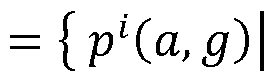
- Equation 6 An example of calculating the weight of an infant is as follows. First, the length of an infant may be calculated by using the Length Al algorithm, l LAI . Then, the age of the infant may be converted into days if the age of the infant provided is counted by weeks or months. The months may be converted into days by Equation 6 and the weeks may be converted into days by Equation 7, as mentioned below. Equation 6
- Avtd(w) (w + 0.5) x 7 Equation 7 wherein w represents the age in weeks and m represents the age in months, f mtd (m) represents the age in days converted from months, and f wtd (w represents the age in days converted from weeks.
- the weight of the infant may be calculated by Equation 8, as mentioned below.
- w(a, g f(p a, g l LAI
- a represents the age of an infant in days
- g represents the gender of the infant, either male or female
- ⁇ represents a vector or interpolated percentiles
- the function f is a learnable parametric model (e.g., a neural network) whose parameters (w ww ) learned from training data.
- p a, g) may be obtained from data charts provided by at least one authority, e.g., The World Health Organization (WHO).
- WHO World Health Organization
- the predetermined mapping table may be constructed with multiple entries, and each of the entries includes the weight of infants, size information of infants, and basic information of infants.
- the size information of an infant e.g., at least one of length information of the infant, face information of the infant, pose information of the infant, body shape information of the infant, and chubbiness information of the infant
- the basic information of the infant e.g., at least one of nationality, gender, birth weight, and age of the infant
- the first trained Al model and the second trained Al model may be retrained when new data is available to obtain more accurate information.
- the method of assessing weight of an infant further may comprise determining the growth trajectory of the infant based on the weight and the basic information.
- the growth trajectory may indicate, but is not limited to, the weight variation as an infant’s age changes, the average weight variation of infants as the infants’ age change, etc.
- the method of assessing weight of an infant further comprises determining a growth score of the growth trajectory.
- the growth score may be obtained a comparison of the determined growth trajectory with a reference growth trajectory. In case the growth score is equal to or greater than a threshold, the growth of the infant is similar to the reference growth trajectory, which indicates the infant is healthy. Otherwise, the growth of the infant is not similar to the reference growth trajectory, which indicates the infant is unhealthy.
- the determining of the growth trajectory may be further based on face expression of the infant.
- the determining of the growth trajectory may be further based on whether the infant has face expressions such as smiling, laughing, surprising, etc, because the advances in face expressions can give indications for infant growth as well.
- the face expression is determined based on the visual information.
- Fig. 6 shows an example of a growth trajectory of an infant determined based on the weight and the basic information.
- the X-axis represents the age (month) of the infant and the Y-axis represents the weight (kg) determined in step 104.
- the growth score of the growth trajectory is 98 and the threshold is 90. Since the growth score of the growth trajectory is greater than the threshold, the infant is healthy.
- the growth trajectories may be used to evaluate the development of infants. For example, a growth trajectory of an infant fed by a nutritional composition may be compared with a growth trajectory of another infant fed by another nutritional composition (e.g., the nutritional composition is an infant formula or follow-on formula and the another nutritional composition is human milk).
- a growth trajectory of an infant may be compared with an average growth trajectory of infants (e.g., compared with an average growth trajectory of infants from the same country where the infant is born).
- an average growth trajectory of infants from one geographic region may be compared with an average growth trajectory of infants from another geographic region.
- Fig. 7 shows a method of comparing a growth trajectory of an infant fed by a nutritional composition with a growth trajectory of another infant fed by another nutritional composition.
- step 201 determining a growth trajectory of an infant fed by a nutritional composition and a growth trajectory of another infant fed by another nutritional composition respectively.
- Fig. 8 shows an example of a comparison of the growth trajectory of an infant fed by an infant formula with a growth trajectory of another infant fed by human milk.
- the X-axis represents the age (month) of the infant and the Y-axis represents the weight (kg).
- step 202 comparing the growth trajectory of an infant fed by a nutritional composition with the growth trajectory of another infant fed by another nutritional composition.
- the comparing of the two growth trajectories may include determining a similarity level between the two growth trajectories.
- the similarity level may be determined based on the at least one result of the comparison and at least one corresponding predetermined threshold. If the at least one result of the comparison is greater than or equal to at least one corresponding predetermined threshold, the two growth trajectories have a high similarity level, which means the two growth trajectories are similar to each other. If the at least one result of the comparison is smaller than at least one corresponding predetermined threshold, the two growth trajectories have a low similarity level, which means the two growth trajectories are not similar to each other.
- growth trajectories there are only two growth trajectories in the examples, more growth trajectories may be included, e.g., based on a third nutritional composition fed to a third infant.
- the present invention further provides an electronic device to perform the method above.
- Fig. 9 shows a block diagram of an example electronic device according to the embodiment of the present invention.
- the electronic device 900 comprises a camera 901 , an input module 902, a storage unit 903, a processor 904, and a display 905.
- the electronic device 900 may be a mobile phone, a tablet, a laptop, etc.
- the camera 901 may be used to capture a still image or a video of an object.
- the camera 901 may be used to obtain visual information in which an infant and a reference object may be included.
- the input module 902 may be used to input basic information of infants by users.
- the input module 902 may be a keyboard, a microphone, a touch screen, etc.
- the storage unit 903 may store basic information of infants including gender, and age, etc., and programs and/or instructions for determining the size information of the infant and determining the weight of the infant.
- the storage unit 903 may further store programs and/or instructions for determining the growth trajectory of the infant, comparing the growth trajectory of the infant fed by a nutritional composition to another growth trajectory of another infant fed by another nutritional composition; and determining a similarity level between the two growth trajectories.
- the storage unit 903 may include a volatile memory, a non-volatile memory, or a combination of a volatile memory and a non-volatile memory.
- the storage unit 903 may be provided in the electronic device.
- the storage unit 903 may be provided on a server connected via a network such as the Internet (e.g. cloud storage).
- the storage unit 903 may be a cumulative storage, where data is added with each new measurement.
- the storage unit 903 thus may include all measurements data.
- the processor 904 may determine the size information of the infant based on the visual information obtained by the camera 901 .
- the processor may determine the weight of the infant based on the size information and the basic information inputted from the input module 902 or stored in the storage unit 903.
- the processor may determine the growth trajectory of the infant based on the weight and the basic information and control a display 905 to display the determined growth trajectory.
- the input module 902 and the display 905 may be separate components of the electronic device.
- the input module 902 and the display 905 may be integrated.
- the input module 902 may be part of the display 905.
- the present invention relates to a storage medium comprising program instructions to instruct an electronic device to perform any of the methods mentioned above.
Landscapes
- Health & Medical Sciences (AREA)
- Life Sciences & Earth Sciences (AREA)
- Engineering & Computer Science (AREA)
- Medical Informatics (AREA)
- Public Health (AREA)
- Physics & Mathematics (AREA)
- General Health & Medical Sciences (AREA)
- Biomedical Technology (AREA)
- Pathology (AREA)
- Biophysics (AREA)
- Veterinary Medicine (AREA)
- Heart & Thoracic Surgery (AREA)
- Animal Behavior & Ethology (AREA)
- Molecular Biology (AREA)
- Surgery (AREA)
- Oral & Maxillofacial Surgery (AREA)
- Dentistry (AREA)
- General Physics & Mathematics (AREA)
- Computer Vision & Pattern Recognition (AREA)
- Epidemiology (AREA)
- Primary Health Care (AREA)
- Data Mining & Analysis (AREA)
- Databases & Information Systems (AREA)
- Physiology (AREA)
- Psychiatry (AREA)
- Signal Processing (AREA)
- Artificial Intelligence (AREA)
- Nuclear Medicine, Radiotherapy & Molecular Imaging (AREA)
- Radiology & Medical Imaging (AREA)
- Quality & Reliability (AREA)
- Theoretical Computer Science (AREA)
- Image Analysis (AREA)
- Measurement Of The Respiration, Hearing Ability, Form, And Blood Characteristics Of Living Organisms (AREA)
Abstract
Description


Claims
Priority Applications (5)
| Application Number | Priority Date | Filing Date | Title |
|---|---|---|---|
| CN202380102442.4A CN121969305A (en) | 2023-08-28 | 2023-08-28 | Method and apparatus for assessing infant weight |
| EP23762216.2A EP4770516A1 (en) | 2023-08-28 | 2023-08-28 | A method of assessing weight of an infant and the device thereof |
| AU2023463622A AU2023463622A1 (en) | 2023-08-28 | 2023-08-28 | A method of assessing weight of an infant and the device thereof |
| PCT/EP2023/073528 WO2025045346A1 (en) | 2023-08-28 | 2023-08-28 | A method of assessing weight of an infant and the device thereof |
| US19/543,947 US20260232200A1 (en) | 2023-08-28 | 2026-02-19 | Method of assessing weight of an infant and the device thereof |
Applications Claiming Priority (1)
| Application Number | Priority Date | Filing Date | Title |
|---|---|---|---|
| PCT/EP2023/073528 WO2025045346A1 (en) | 2023-08-28 | 2023-08-28 | A method of assessing weight of an infant and the device thereof |
Related Child Applications (1)
| Application Number | Title | Priority Date | Filing Date |
|---|---|---|---|
| US19/543,947 Continuation US20260232200A1 (en) | 2023-08-28 | 2026-02-19 | Method of assessing weight of an infant and the device thereof |
Publications (1)
| Publication Number | Publication Date |
|---|---|
| WO2025045346A1 true WO2025045346A1 (en) | 2025-03-06 |
Family
ID=87863116
Family Applications (1)
| Application Number | Title | Priority Date | Filing Date |
|---|---|---|---|
| PCT/EP2023/073528 Ceased WO2025045346A1 (en) | 2023-08-28 | 2023-08-28 | A method of assessing weight of an infant and the device thereof |
Country Status (5)
| Country | Link |
|---|---|
| US (1) | US20260232200A1 (en) |
| EP (1) | EP4770516A1 (en) |
| CN (1) | CN121969305A (en) |
| AU (1) | AU2023463622A1 (en) |
| WO (1) | WO2025045346A1 (en) |
Citations (1)
| Publication number | Priority date | Publication date | Assignee | Title |
|---|---|---|---|---|
| WO2017099580A1 (en) | 2015-12-11 | 2017-06-15 | N.V. Nutricia | Baby tracker |
-
2023
- 2023-08-28 AU AU2023463622A patent/AU2023463622A1/en active Pending
- 2023-08-28 CN CN202380102442.4A patent/CN121969305A/en active Pending
- 2023-08-28 WO PCT/EP2023/073528 patent/WO2025045346A1/en not_active Ceased
- 2023-08-28 EP EP23762216.2A patent/EP4770516A1/en active Pending
-
2026
- 2026-02-19 US US19/543,947 patent/US20260232200A1/en active Pending
Patent Citations (1)
| Publication number | Priority date | Publication date | Assignee | Title |
|---|---|---|---|---|
| WO2017099580A1 (en) | 2015-12-11 | 2017-06-15 | N.V. Nutricia | Baby tracker |
Non-Patent Citations (6)
| Title |
|---|
| ALTINIGNE CAN YILMAZ ET AL: "Height and Weight Estimation from Unconstrained Images", ICASSP 2020 - 2020 IEEE INTERNATIONAL CONFERENCE ON ACOUSTICS, SPEECH AND SIGNAL PROCESSING (ICASSP), IEEE, 4 May 2020 (2020-05-04), pages 2298 - 2302, XP033793034, [retrieved on 20200401], DOI: 10.1109/ICASSP40776.2020.9053363 * |
| DANTCHEVA ANTITZA ET AL: "Show me your face and I will tell you your height, weight and body mass index", 2018 24TH INTERNATIONAL CONFERENCE ON PATTERN RECOGNITION (ICPR), IEEE, 20 August 2018 (2018-08-20), pages 3555 - 3560, XP033459866, [retrieved on 20181126], DOI: 10.1109/ICPR.2018.8546159 * |
| HERA SIDDIQUI ET AL., AL-BASED BMI INFERENCE FROM FACIAL IMAGES: AN APPLICATION TO WEIGHT MONITORING |
| KOCABEY ENES ET AL: "Face-to-BMI: Using Computer Vision to Infer Body Mass Index on Social Media", PROCEEDINGS OF THE INTERNATIONAL AAAI CONFERENCE ON WEB AND SOCIAL MEDIA, 3 May 2017 (2017-05-03), pages 572 - 575, XP093138559, Retrieved from the Internet <URL:https://ojs.aaai.org/index.php/ICWSM/article/view/14923> [retrieved on 20240306], DOI: 10.1609/icwsm.v11i1.14923 * |
| SHU HUAIJING ET AL: "Single Image based Infant Body Height and Weight Estimation", 2023 IEEE/CVF CONFERENCE ON COMPUTER VISION AND PATTERN RECOGNITION WORKSHOPS (CVPRW), IEEE, 17 June 2023 (2023-06-17), pages 6052 - 6059, XP034398379, [retrieved on 20230815], DOI: 10.1109/CVPRW59228.2023.00644 * |
| SIDDIQUI HERA ET AL: "AI-based BMI Inference from Facial Images: An Application to Weight Monitoring", ARXIV (CORNELL UNIVERSITY), 14 October 2020 (2020-10-14), Ithaca, pages 1 - 5, XP093138569, Retrieved from the Internet <URL:https://arxiv.org/pdf/2010.07442.pdf> [retrieved on 20240306], DOI: 10.48550/arxiv.2010.07442 * |
Also Published As
| Publication number | Publication date |
|---|---|
| EP4770516A1 (en) | 2026-07-08 |
| AU2023463622A1 (en) | 2026-03-05 |
| US20260232200A1 (en) | 2026-08-13 |
| CN121969305A (en) | 2026-05-01 |
Similar Documents
| Publication | Publication Date | Title |
|---|---|---|
| Maskeliūnas et al. | BiomacVR: A virtual reality-based system for precise human posture and motion analysis in rehabilitation exercises using depth sensors | |
| CA3042819C (en) | Method and system for postural analysis and measuring anatomical dimensions from a digital image using machine learning | |
| US20210049353A1 (en) | Ai-based physical function assessment system | |
| JP2022516586A (en) | Body analysis | |
| US12125582B2 (en) | Predicting user body volume to manage medical treatment and medication | |
| Mothes et al. | Automated objective and marker-free facial grading using photographs of patients with facial palsy | |
| US20120086793A1 (en) | Video image information processing apparatus and video image information processing method | |
| US20250095862A1 (en) | Assessing disease risks from user captured images | |
| Farina et al. | Digital single-image smartphone assessment of total body fat and abdominal fat using machine learning | |
| Yin et al. | Accessible health screening using body fat estimation by image segmentation | |
| Wichum et al. | Depth-based measurement of respiratory volumes: A review | |
| JP2016194821A (en) | Insurance contract support device, insurance contract support method and insurance contract support program | |
| Poltronieri et al. | Using mobile applications for body composition analysis: a technical review of an artificial intelligence-based tool: technical review of a body composition assessment mobile app | |
| KR20170095086A (en) | Method, apparatus, recording medium and application for providing customized exercise information for pregnant woman | |
| AU2023463622A1 (en) | A method of assessing weight of an infant and the device thereof | |
| Işik et al. | Analysis of anthropometric measurements in U-15 female weightlifters using Kinect camera and comparison with traditional methods | |
| EP4487789A1 (en) | Computer program, information processing method, and information processing device | |
| Sujithra et al. | An IoT System for Sitting Posture Detection Using Ultrasonic Sensor and Web Application | |
| Nahavandi et al. | A low cost anthropometric body scanning system using depth cameras | |
| Mabvuure et al. | A simple computerised technique for estimating resting lip position and symmetry | |
| Klíma et al. | GROWTH: Functional Data Analysis of the human height postnatal growth in an on-line application | |
| Nasution et al. | Calibrating a non-contact and low-cost respiratory monitoring system based on Digital Correlation Technique | |
| Suresh et al. | Development and validation of a digital twin for the analog scoliometer | |
| KR20210025846A (en) | Method, apparatus and application for providing health care follow-up solutions | |
| Chinthala et al. | An internet of medical things (IoMT) approach for remote assessment of head and neck cancer patients |
Legal Events
| Date | Code | Title | Description |
|---|---|---|---|
| 121 | Ep: the epo has been informed by wipo that ep was designated in this application |
Ref document number: 23762216 Country of ref document: EP Kind code of ref document: A1 |
|
| DPE1 | Request for preliminary examination filed after expiration of 19th month from priority date (pct application filed from 20040101) | ||
| WWE | Wipo information: entry into national phase |
Ref document number: AU2023463622 Country of ref document: AU Ref document number: 830254 Country of ref document: NZ |
|
| WWE | Wipo information: entry into national phase |
Ref document number: 2601001239 Country of ref document: TH |
|
| WWP | Wipo information: published in national office |
Ref document number: 830254 Country of ref document: NZ |
|
| ENP | Entry into the national phase |
Ref document number: 2023463622 Country of ref document: AU Date of ref document: 20230828 Kind code of ref document: A |
|
| REG | Reference to national code |
Ref country code: BR Ref legal event code: B01A Ref document number: 112026004552 Country of ref document: BR |
|
| WWE | Wipo information: entry into national phase |
Ref document number: 202617034146 Country of ref document: IN |
|
| WWE | Wipo information: entry into national phase |
Ref document number: 2023762216 Country of ref document: EP |
|
| NENP | Non-entry into the national phase |
Ref country code: DE |
|
| WWE | Wipo information: entry into national phase |
Ref document number: 11202601080U Country of ref document: SG |
|
| WWP | Wipo information: published in national office |
Ref document number: 11202601080U Country of ref document: SG |
|
| WWP | Wipo information: published in national office |
Ref document number: 202617034146 Country of ref document: IN |