WO2025041235A1 - Dispositif de présentation d'intervention optimale, procédé de présentation d'intervention optimale et programme - Google Patents
Dispositif de présentation d'intervention optimale, procédé de présentation d'intervention optimale et programme Download PDFInfo
- Publication number
- WO2025041235A1 WO2025041235A1 PCT/JP2023/030048 JP2023030048W WO2025041235A1 WO 2025041235 A1 WO2025041235 A1 WO 2025041235A1 JP 2023030048 W JP2023030048 W JP 2023030048W WO 2025041235 A1 WO2025041235 A1 WO 2025041235A1
- Authority
- WO
- WIPO (PCT)
- Prior art keywords
- intervention
- characteristic
- optimal
- static
- user
- Prior art date
- Legal status (The legal status is an assumption and is not a legal conclusion. Google has not performed a legal analysis and makes no representation as to the accuracy of the status listed.)
- Pending
Links
Images


Classifications
-
- G—PHYSICS
- G16—INFORMATION AND COMMUNICATION TECHNOLOGY [ICT] SPECIALLY ADAPTED FOR SPECIFIC APPLICATION FIELDS
- G16H—HEALTHCARE INFORMATICS, i.e. INFORMATION AND COMMUNICATION TECHNOLOGY [ICT] SPECIALLY ADAPTED FOR THE HANDLING OR PROCESSING OF MEDICAL OR HEALTHCARE DATA
- G16H20/00—ICT specially adapted for therapies or health-improving plans, e.g. for handling prescriptions, for steering therapy or for monitoring patient compliance
Definitions
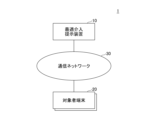
- the optimal intervention presentation device 10 is a computer or computer system, such as a general-purpose server, that selects the optimal intervention using the proposed method described above and presents it on the subject terminal 20.
- the optimal intervention presentation device 10 may be, for example, configured with multiple general-purpose servers, may be realized by a virtual machine, or may be a PC (personal computer), etc.
- the subject terminal 20 is various information terminals such as a smartphone, a tablet terminal, a wearable device, etc., used by the subject.
- the subject terminal 20 may be, for example, a PC (personal computer), etc., or various devices such as a weight scale.
- the subject terminal 20 used by subject i will be represented as "subject terminal 20 i .”
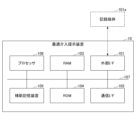
- the optimal intervention presentation device 10 has an external I/F 101, a communication I/F 102, a RAM (Random Access Memory) 103, a ROM (Read Only Memory) 104, an auxiliary storage device 105, and a processor 106.
- a bus 107 Each of these pieces of hardware is connected to each other so as to be able to communicate with each other via a bus 107.
- the external I/F 101 is an interface with external devices such as a recording medium 101a.
- recording media 101a include a CD (Compact Disc), a DVD (Digital Versatile Disk), an SD memory card (Secure Digital memory card), and a USB (Universal Serial Bus) memory card.
- the communication I/F 102 is an interface for connecting to the communication network 30.
- the RAM 103 is a volatile semiconductor memory (storage device) that temporarily stores programs and data.
- the ROM 104 is a non-volatile semiconductor memory (storage device) that can store programs and data even when the power is turned off.
- the auxiliary storage device 105 is a non-volatile storage device (storage device) such as a HDD (Hard Disk Drive), SSD (Solid State Drive), flash memory, etc.
- the processor 106 is an arithmetic device such as a CPU (Central Processing Unit) or GPU (Graphics Processing Unit).
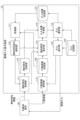
- Fig. 5 is a diagram showing an example of the functional configuration of the optimal intervention presentation device 10 according to the present embodiment.
- the optimal intervention presentation device 10 has a static characteristic acquisition unit 111, a behavioral performance acquisition unit 112, a dynamic characteristic estimation unit 113, an intervention effect prediction unit 114, an intervention selection unit 115, an intervention presentation unit 116, an evaluation unit 117, and a static characteristic change detection unit 118.
- Each of these units is realized, for example, by a process in which one or more programs installed in the optimal intervention presentation device 10 are executed by the processor 106 or the like.
- the optimal intervention presentation device 10 according to this embodiment also has a static characteristic storage unit 119, a behavioral performance storage unit 120, an intervention effect storage unit 121, and an intervention storage unit 122.
- the static characteristic acquisition unit 111 acquires the static characteristic information o i s from the subject terminal 20 i .
- the static characteristic acquisition unit 111 stores the static characteristic information o i s acquired from the subject terminal 20 i in the static characteristic storage unit 119. Note that what kind of personal characteristic is to be the static characteristic is set in advance.
- the dynamic characteristic estimation unit 113 estimates dynamic characteristic information o id from the history of the behavioral record R it stored in the behavioral record storage unit 120 (i.e., the sequence data of the behavioral record R it ) for each time t .
- the dynamic characteristic is, for example, a psychological characteristic such as motivation for behavioral change, or an individual characteristic that may change frequently, such as a schedule of a subject, but the dynamic characteristic is not explicitly set, and an individual characteristic that is not set as a static characteristic becomes the dynamic characteristic.
- a specific example of a method for estimating the dynamic characteristic information o id will be described later.
- the intervention effect prediction unit 114 predicts, for each intervention I n , a conditional average treatment effect (CATE), which is a conditional causal effect of the intervention I n , as the intervention effect.
- CATE conditional average treatment effect
- the conditional average treatment effect CATE in when the intervention I n is presented to the subject i is given by the following.
- conditional average treatment effect CATE in E(R it
- o i s , o i d , do (I I n )) - E(R it
- CATE in E (R it
- z i , do (I I n )) - E (R it
- the intervention selection unit 115 does not select the optimal intervention I for the subject i.
- the optimal intervention I is not presented to the subject i.
- the optimal intervention for subject i at time t will also be represented as I (i,t) .
- the intervention effect CATE in' assigned time t will be represented as T it .
- This intervention effect T it represents the intervention effect (conditional average treatment effect) predicted when the optimal intervention I (i, t) at time t is presented to the subject i.
- the intervention presentation unit 116 presents the optimal intervention I (i,t) selected by the intervention selection unit 115 to the subject terminal 20i . That is, the intervention presentation unit 116 transmits the optimal intervention I (i,t) to the subject terminal 20i . As a result, a message or the like representing the optimal intervention I (i,t) is displayed on a display or the like provided on the subject terminal 20i .
- the evaluation unit 117 evaluates whether or not a discrepancy occurs between the behavioral performance of the subject i and the intervention effect, using the behavioral performance R it in the most recent predetermined period and the intervention effect T it in the same period. That is, the evaluation unit 117 evaluates whether or not a discrepancy occurs between the behavioral performance of the subject i and the intervention effect, using the series of behavioral performance ⁇ R it
- the length of the period ⁇ is set in advance.
- the static characteristic change detection unit 118 detects that a change has occurred in the static characteristics of the subject i when the evaluation unit 117 evaluates that a discrepancy has occurred between the behavioral performance of the subject i and the intervention effect. On the other hand, the static characteristic change detection unit 118 determines that no change has occurred in the static characteristics of the subject i when the evaluation unit 117 does not evaluate that a discrepancy has occurred between the behavioral performance of the subject i and the intervention effect.
- the static characteristic storage unit 119 stores, for each subject i, the static characteristic information o i s of the subject i.
- the behavior record storage unit 120 stores, for each subject i, the behavior record R it of the subject i at each time t.
- the intervention effect storage unit 121 stores, for each subject i, the intervention effect information T it at each time t for that subject i.
- Typical examples of each intervention I n ⁇ L include data for displaying on the subject terminal 20 text (message), images, videos, etc., that encourage the subject to change their behavior.
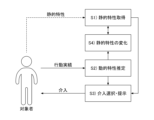
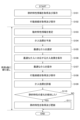
- Fig. 6 is a flowchart showing an example of the optimal intervention suggestion process according to this embodiment. In the following, a case where an optimal intervention is suggested for a certain subject i will be described.
- the static characteristic acquisition unit 111 acquires static characteristic information o i s from the subject terminal 20 i and stores it in the static characteristic storage unit 119 (step S101). This step is executed, for example, when the subject i starts using the subject terminal 20 i to use the behavior change support service provided by the behavior change support system 1. Note that the static characteristics are input by the subject i on the subject terminal 20 i , for example.
- the behavior record acquiring unit 112 acquires the behavior record R it from the subject terminal 20 i and stores it in the behavior record storage unit 120 (Step S102).
- steps S103 to S110 are repeatedly executed for each time t. For example, typically, when the unit of time t is "days," steps S103 to S110 are executed every day.
- the dynamic characteristic estimation unit 113 estimates dynamic characteristic information o i d from the history of the behavior record R it stored in the behavior record storage unit 120 (sequence data of the behavior record R it ) (step S103).
- the dynamic characteristic estimation unit 113 can realize a variational autoencoder using a recurrent neural network (RNN) or the like, and use an intermediate representation vector h t of a model in which the input and output of the variational autoencoder are extended to sequence data as the dynamic characteristic information o i d .
- RNN recurrent neural network
- the dynamic characteristic information o i d can be estimated by an encoder ( RNN) of a variational autoencoder as shown in Fig. 7. That is, the sequence data ⁇ R it
- t t c -3, t c -2, t c -1 ⁇ of behavior record R it is input to an encoder of a variational autoencoder realized by an RNN, and the mean ⁇ and covariance ⁇ are obtained as the output.
- an intermediate representation vector h t is sampled from a multivariate normal distribution N ( ⁇ , ⁇ ) of mean ⁇ and covariance ⁇ , and this intermediate representation vector h t is set as dynamic characteristic information o i d .
- N ⁇ , ⁇
- ⁇ mean ⁇
- ⁇ covariance
- the parameters of the encoder and the decoder of the variational autoencoder may be updated so as to minimize a known predetermined loss function using sequence data of the behavioral performance R it in a certain predetermined period in the past.
- the variational autoencoder may be trained for each subject i, may be trained commonly for a plurality of subjects i, or may be trained commonly for a plurality of subjects i and then retrained for each subject i.
- the loss function may be, for example, a function consisting of a term representing the error (prediction error) between the sequence data input to the encoder and the sequence data output from the decoder, and a regularization term representing the Kullback-Leibler divergence between the multivariate normal distribution N( ⁇ , ⁇ ) of mean ⁇ and covariance ⁇ output from the encoder and the standard normal distribution.
- the dynamic characteristic information o id is estimated by a model in which the input and output of the variational autoencoder is extended to sequence data, but this is only one example, and the dynamic characteristic information o id may be estimated by other methods.
- the sequence data of the behavioral record R it may be clustered by time-series clustering, and a vector representing the cluster to which the sequence data belongs may be used as the dynamic characteristic information o id .
- the intervention presenting unit 116 presents the optimal intervention I (i,t) to the subject terminal 20i (step S107).
- the behavioral record acquiring unit 112 acquires the behavioral record R it representing the behavioral record after the optimal intervention I (i, t) was presented to the subject i from the subject terminal 20 i and stores it in the behavioral record storage unit 120 (step S108).
- the evaluation unit 117 may evaluate whether or not a discrepancy occurs by, for example, the following steps 1 to 3.
- t p t c -M+1, and the number of times included in the period ⁇ is M.
- Step 1 The evaluation unit 117 calculates, for each t ⁇ , the number m that satisfies
- Step 2 The evaluation unit 117 uses the number m calculated in the above step 1 to determine whether m/M is equal to or greater than th2 .
- th2 is a threshold value that satisfies 0 ⁇ th2 ⁇ 1, and its value is set in advance.
- Step 3 If the evaluation unit 117 determines that m/M is greater than or equal to th 2 , it evaluates that a discrepancy has occurred between the behavioral performance of the subject i and the intervention effect, and if not, it evaluates that no discrepancy has occurred between the behavioral performance of the subject i and the intervention effect.
- M ⁇ 2 the number of days
- the static characteristic change detection unit 118 determines whether or not a change in the static characteristics of the subject i has been detected (step S110). If it is assessed in step S109 above that a discrepancy has occurred between the behavioral performance of the subject i and the intervention effect, the static characteristic change detection unit 118 detects that a change has occurred in the static characteristics of the subject i. On the other hand, if it is not assessed in step S109 above that a discrepancy has occurred between the behavioral performance of the subject i and the intervention effect, the static characteristic change detection unit 118 determines that no change has occurred in the static characteristics of the subject i.
- the static characteristic acquisition unit 111 acquires the static characteristic information o i s from the subject terminal 20 i , and updates the static characteristic information o i s stored in the static characteristic memory unit 119 with the acquired static characteristic information o i s (step S111).
- step S103 above is executed at the next time t+1.
- Example 1 In the first embodiment, a health care service is assumed as the behavior change support service provided by the behavior change support system 1, and a case will be described in which a message for encouraging a subject i to walk is personalized.
- the static characteristics are set as health check results at the time of using the healthcare service, past exercise experience, personality diagnosis results, and working style.
- dynamic characteristics are not explicitly set, but are assumed to be schedules, frequency of laundry, physical strength, etc.
- the unit of time t is "days"
- the behavioral record R it of the subject i is the number of steps of the previous day obtained at midnight every day. Furthermore, the behavioral record of the most recent three days is used to estimate the dynamic characteristics and predict the intervention effect.
- the static characteristic information o i s is acquired from the subject terminal 20 i by the static characteristic acquisition unit 111 and stored in the static characteristic storage unit 119 (step S101).
- the first element of o i s represents the "health check result”, and takes "0” if there is no abnormality, and "1” if there is an abnormality.
- the second element represents the "exercise experience”, and takes “1” if there is an exercise experience, and takes "0” if there is no exercise experience.
- the third element represents the "personality diagnosis result”, and takes a value determined in advance according to the diagnosis result.
- the fourth element represents the "work style”, and takes "0” if there is telecommuting, and takes "1” if there is not.
- the behavioral record acquisition unit 112 acquires the most recent number of steps as the behavioral record R it , and stores it in the behavioral record storage unit 120 (step S102).
- steps S103 to S111 are executed every day while the health care service is being used. That is, first, the dynamic characteristic estimation unit 113 estimates dynamic characteristic information o i d from the series data of the behavioral performance R it for the past three days (step S103). Since the most recent number of steps of the subject i is on the rise, a vector expression representing the change in dynamic characteristic "return of physical strength" that influences the rising trend is estimated as dynamic characteristic information o i d .
- the intervention effect T it corresponding to the optimal intervention I (i, t) is stored in the intervention effect storage unit 121 by the intervention selection unit 115 (step S106), and the optimal intervention I (i, t) is presented to the subject terminal 20 i by the intervention presentation unit 116 (step S107).
- a message such as "Why don't you walk farther today?" is displayed on the display of the subject terminal 20 i .
- the behavioral record acquisition unit 112 acquires the number of steps for the previous day as the behavioral record Rit , and stores it in the behavioral record storage unit 120 (step S108).
- step S104 For example, if the number of steps of a subject i is decreasing every 2 or 3 days, a vector expression representing "the frequency of washing is every 2 or 3 days" is estimated as the dynamic characteristic information o i d in step S103. Therefore, for example, "Even just cleaning the room is a good exercise” is selected as the optimal intervention I (i,t) in step S104.
- Example 2 when subject i logs in to a system for using a behavior change support service and when he or she finishes watching a video of a learning material, the next learning material is presented as an intervention.
- the learning materials are assumed to be diverse in terms of field, subject, difficulty level, instructor, etc.
- mock test scores whether or not the student participates in club activities, and preferred schools at the time of using the video learning service are set.
- dynamic characteristics are not explicitly set, schedules, viewing environments, etc. are assumed.
- the unit of time t is the "number of times a video has been viewed," and each time a subject i finishes viewing a video of a learning material, the time t of the subject i advances. Furthermore, the behavioral record R it of the subject i is set to indicate whether or not the learning material presented as the intervention has been viewed after the intervention is presented. The most recent 10 behavioral records are used to estimate the dynamic characteristics and predict the intervention effect.
- the static characteristic information o i s is acquired from the subject terminal 20 i by the static characteristic acquisition unit 111 and stored in the static characteristic storage unit 119 (step S101).
- the first element of o i s represents "score of mock exam” and takes a numerical value representing a deviation value.
- the second element represents "whether or not club activities are held", taking "1” if club activities are being held and "0” if not.
- the third element represents "desired school” and takes a numerical value representing the desired school.
- the behavioral record acquisition unit 112 acquires whether or not the learning material presented at the start of use has been viewed as a behavioral record R it , and stores it in the behavioral record storage unit 120 (step S102).
- steps S103 to S111 are executed. That is, first, the dynamic characteristic estimation unit 113 estimates dynamic characteristic information o i d from the sequence data of the most recent 10 past behavioral results R it (step S103). Since the sequence data of the most recent 10 past behavioral results R it of the subject i is [1, 0, 0, 1, 0, 0, 0, 1, 0, 0], a vector expression representing the change in dynamic characteristic that influences it, "cannot secure enough schedule", is estimated as dynamic characteristic information o i d .
- the intervention effect prediction unit 114 predicts the intervention effect from the static characteristic information o i s and the dynamic characteristic information o i d (step S104), and then the intervention selection unit 115 selects "learning material in which the main points are summarized in a short time" as the optimal intervention I (i, t) (step S105).
- the intervention effect T it corresponding to the optimal intervention I (i, t) is stored in the intervention effect storage unit 121 by the intervention selection unit 115 (step S106), and the optimal intervention I (i, t) is presented to the subject terminal 20 i by the intervention presentation unit 116 (step S107).
- learning materials in which the main points are summarized in a short time are presented as the next learning materials on the display of the subject terminal 20 i .
- the behavioral record acquisition unit 112 acquires the presence or absence of viewing of the learning material presented in the intervention I (i,t) as the behavioral record Rit , and stores it in the behavioral record storage unit 120 (step S108).
- the evaluation unit 117 also determines whether or not there is a discrepancy between the most recent past 10 behavioral results R it and the intervention effect T it (step S109).
- the most recent past 10 behavioral results R it are [0,0,1,0,0,0,1,0,0,1]
- the most recent past 10 intervention effects T it are [0.7,0.4,0.7,0.3,0.6,0.7,0.6,0.4,0.6,0.6]
- the most recent past 10 behavioral results R it are [1, 0, 0, 0, 0, 1, 1, 0, 0, 0] and the most recent past 10 intervention effects T it are [0.7, 0.4, 0.5, 0.5, 0.4, 0.6, 0.6, 0.5, 0.5, 0.6].
- m/M 5/10. This is, for example, when the static characteristics of the subject i, such as the school of choice, have changed. For this reason, the static characteristic change detection unit 118 detects that a discrepancy has occurred between the behavioral results of the subject i and the intervention effect (step S110), and the static characteristic acquisition unit 111 acquires and updates the static characteristic information o i s (step S111).
- the problem setting for selecting an intervention in behavior change is formulated by the causal relationships among "personal characteristics,””intervention,” and “behavioral performance,” and the causal relationships among various factors that change the personal characteristics.
- the personal characteristics are separated into static characteristics and dynamic characteristics, and the dynamic characteristics enable intervention selection that explicitly takes into account changes in the subject's state.
- the optimal intervention presentation device 10 that realizes the above proposed method can estimate dynamic characteristic information o id from the sequence data of the behavioral performance R it for each time t, and then select and present the optimal intervention I (i, t) from the dynamic characteristic information o id and the static characteristic information o id s acquired in advance.
- the optimal intervention I i, t
- the dynamic characteristic information o id which can change frequently, changes, it is not necessary for the subject i to input the dynamic characteristic information o id , and therefore the load on the user can be reduced.
- the optimal intervention presentation device 10 can predict the intervention effect when the optimal intervention I (i,t) is presented to the subject i, and detect a change in the static characteristic information ois from the deviation between the intervention effect Tit and the actual behavioral performance Rit . Therefore, when a change in the static characteristic information ois is detected, it is possible to have the subject i input the change, and it is possible to prevent a decrease in the intervention effect due to a change in the static characteristic information ois .
- Behavioral change support system 10
- Optimal intervention presentation device 20
- Subject terminal 30
- Communication network 101
- External I/F 101a Recording medium
- Communication I/F 103
- RAM 104
- ROM 105
- Auxiliary storage device 106
- Processor 107
- Bus 111
- Static characteristic acquisition unit 112
- Behavioral performance acquisition unit 113
- Dynamic characteristic estimation unit 114
- Intervention effect prediction unit 115
- Intervention selection unit 116 Intervention presentation unit
- Evaluation unit 118
- Static characteristic change detection unit 119
- Static characteristic storage unit 120
- Behavioral performance storage unit 121
- Intervention effect storage unit 122 Intervention storage unit
Landscapes
- Health & Medical Sciences (AREA)
- Engineering & Computer Science (AREA)
- Epidemiology (AREA)
- General Health & Medical Sciences (AREA)
- Medical Informatics (AREA)
- Primary Health Care (AREA)
- Public Health (AREA)
- Management, Administration, Business Operations System, And Electronic Commerce (AREA)
Abstract
Un dispositif de présentation d'intervention optimale selon un aspect de la présente divulgation comprend : une unité d'acquisition de caractéristique statique qui acquiert des informations de caractéristique statique représentant une caractéristique statique qui est une caractéristique personnelle ayant une faible fréquence d'apparition d'un changement parmi des caractéristiques personnelles d'un utilisateur ; une unité d'estimation de caractéristique dynamique qui, à l'aide des informations sur des enregistrements d'action de l'utilisateur, estime des informations de caractéristique dynamique représentant une caractéristique dynamique qui est une caractéristique personnelle ayant une fréquence élevée d'apparition d'un changement par rapport à la caractéristique statique parmi les caractéristiques personnelles ; une unité de prédiction d'effet d'intervention qui, à l'aide des informations de caractéristique statique et des informations de caractéristique dynamique, prédit un effet d'intervention représentant un effet attendu lorsque et chaque fois qu'une intervention prédéterminée est présentée à l'utilisateur ; une unité de sélection qui sélectionne une intervention ayant l'effet d'intervention le plus élevé en tant qu'intervention optimale ; et une unité de présentation d'intervention qui présente l'intervention optimale à l'utilisateur.
Priority Applications (1)
| Application Number | Priority Date | Filing Date | Title |
|---|---|---|---|
| PCT/JP2023/030048 WO2025041235A1 (fr) | 2023-08-21 | 2023-08-21 | Dispositif de présentation d'intervention optimale, procédé de présentation d'intervention optimale et programme |
Applications Claiming Priority (1)
| Application Number | Priority Date | Filing Date | Title |
|---|---|---|---|
| PCT/JP2023/030048 WO2025041235A1 (fr) | 2023-08-21 | 2023-08-21 | Dispositif de présentation d'intervention optimale, procédé de présentation d'intervention optimale et programme |
Publications (1)
| Publication Number | Publication Date |
|---|---|
| WO2025041235A1 true WO2025041235A1 (fr) | 2025-02-27 |
Family
ID=94731844
Family Applications (1)
| Application Number | Title | Priority Date | Filing Date |
|---|---|---|---|
| PCT/JP2023/030048 Pending WO2025041235A1 (fr) | 2023-08-21 | 2023-08-21 | Dispositif de présentation d'intervention optimale, procédé de présentation d'intervention optimale et programme |
Country Status (1)
| Country | Link |
|---|---|
| WO (1) | WO2025041235A1 (fr) |
Cited By (1)
| Publication number | Priority date | Publication date | Assignee | Title |
|---|---|---|---|---|
| CN121667652A (zh) * | 2026-02-06 | 2026-03-17 | 浙江大学温州研究院 | 基于数字孪生的智能枕睡眠监测与个性化改善方法 |
Citations (4)
| Publication number | Priority date | Publication date | Assignee | Title |
|---|---|---|---|---|
| JP2021033466A (ja) * | 2019-08-20 | 2021-03-01 | 国立大学法人電気通信大学 | 符号化装置、復号装置、パラメータ学習装置、およびプログラム |
| JP2022031617A (ja) * | 2020-08-09 | 2022-02-22 | オリンパス株式会社 | アドバイスシステムおよびアドバイス方法 |
| JP2022059547A (ja) * | 2020-10-01 | 2022-04-13 | 株式会社World Life Mapping | メンタル改善支援装置 |
| JP2022124967A (ja) * | 2021-02-16 | 2022-08-26 | 株式会社World Life Mapping | サーバ装置、システム、およびプログラム |
-
2023
- 2023-08-21 WO PCT/JP2023/030048 patent/WO2025041235A1/fr active Pending
Patent Citations (4)
| Publication number | Priority date | Publication date | Assignee | Title |
|---|---|---|---|---|
| JP2021033466A (ja) * | 2019-08-20 | 2021-03-01 | 国立大学法人電気通信大学 | 符号化装置、復号装置、パラメータ学習装置、およびプログラム |
| JP2022031617A (ja) * | 2020-08-09 | 2022-02-22 | オリンパス株式会社 | アドバイスシステムおよびアドバイス方法 |
| JP2022059547A (ja) * | 2020-10-01 | 2022-04-13 | 株式会社World Life Mapping | メンタル改善支援装置 |
| JP2022124967A (ja) * | 2021-02-16 | 2022-08-26 | 株式会社World Life Mapping | サーバ装置、システム、およびプログラム |
Cited By (1)
| Publication number | Priority date | Publication date | Assignee | Title |
|---|---|---|---|---|
| CN121667652A (zh) * | 2026-02-06 | 2026-03-17 | 浙江大学温州研究院 | 基于数字孪生的智能枕睡眠监测与个性化改善方法 |
Similar Documents
| Publication | Publication Date | Title |
|---|---|---|
| Lugtig | Panel attrition: Separating stayers, fast attriters, gradual attriters, and lurkers | |
| Willems et al. | Correcting for dependent censoring in routine outcome monitoring data by applying the inverse probability censoring weighted estimator | |
| Korpershoek et al. | Determinants of activation for self-management in patients with COPD | |
| Baesens et al. | Neural network survival analysis for personal loan data | |
| Coe et al. | Long-term care insurance: Does experience matter? | |
| Mood | Logistic regression: Why we cannot do what we think we can do, and what we can do about it | |
| Nandi et al. | Explaining personality pay gaps in the UK | |
| Barrett et al. | Changes in subjective well-being with retirement: assessing savings adequacy | |
| Titman et al. | General tests of the Markov property in multi-state models | |
| Cole et al. | A note on the use of mixture models for individual prediction | |
| Early et al. | Dynamic question ordering in online surveys | |
| KR20160043777A (ko) | 질환 발병 예측 방법 및 그 장치 | |
| Dudel | Expanding the Markov chain toolbox: Distributions of occupation times and waiting times | |
| Frochen et al. | Functional status and adaptation: measuring activities of daily living and device use in the National Health and aging trends study | |
| CN113990506B (zh) | 一种健康状态评估方法、装置、存储介质及计算机系统 | |
| Waddimba et al. | The moderating effect of job satisfaction on physicians’ motivation to adhere to financially incentivized clinical practice guidelines | |
| Browning et al. | Heterogeneity in the dynamics of labor earnings | |
| US20240290499A1 (en) | Method and System for Predicting Medical Diagnoses Using Machine Learning without Patient Intervention | |
| Heinesen et al. | Return to work after cancer and pre-cancer job dissatisfaction | |
| Mukamel et al. | Changes in clinical and hotel expenditures following publication of the nursing home compare report card | |
| Lorenz et al. | Inferring marginal association with paired and unpaired clustered data | |
| Masresha et al. | Determinant factors of leprosy-related disability; comparison of acceleration failure time and parametric shared frailty models | |
| Schneider et al. | The physician-patient relationship revisited: the patient’s view | |
| Kim et al. | Temporal generative models for learning heterogeneous group dynamics of ecological momentary assessment data | |
| Tran et al. | Modeling local dependence in latent vector autoregressive models |
Legal Events
| Date | Code | Title | Description |
|---|---|---|---|
| 121 | Ep: the epo has been informed by wipo that ep was designated in this application |
Ref document number: 23949696 Country of ref document: EP Kind code of ref document: A1 |
|
| NENP | Non-entry into the national phase |
Ref country code: DE |