WO2025018409A1 - 支援システム、プログラム、薬剤払出システム - Google Patents
支援システム、プログラム、薬剤払出システム Download PDFInfo
- Publication number
- WO2025018409A1 WO2025018409A1 PCT/JP2024/025874 JP2024025874W WO2025018409A1 WO 2025018409 A1 WO2025018409 A1 WO 2025018409A1 JP 2024025874 W JP2024025874 W JP 2024025874W WO 2025018409 A1 WO2025018409 A1 WO 2025018409A1
- Authority
- WO
- WIPO (PCT)
- Prior art keywords
- drug dispensing
- drug
- data
- dispensing
- processing unit
- Prior art date
- Legal status (The legal status is an assumption and is not a legal conclusion. Google has not performed a legal analysis and makes no representation as to the accuracy of the status listed.)
- Pending
Links
Images




Classifications
-
- A—HUMAN NECESSITIES
- A61—MEDICAL OR VETERINARY SCIENCE; HYGIENE
- A61J—CONTAINERS SPECIALLY ADAPTED FOR MEDICAL OR PHARMACEUTICAL PURPOSES; DEVICES OR METHODS SPECIALLY ADAPTED FOR BRINGING PHARMACEUTICAL PRODUCTS INTO PARTICULAR PHYSICAL OR ADMINISTERING FORMS; DEVICES FOR ADMINISTERING FOOD OR MEDICINES ORALLY; BABY COMFORTERS; DEVICES FOR RECEIVING SPITTLE
- A61J3/00—Devices or methods specially adapted for bringing pharmaceutical products into particular physical or administering forms
Definitions
- the present invention relates to a support system that assists in the dispensing of medicines.
- a system includes multiple drug dispensing systems that execute the process of dispensing drugs based on prescription information (see Patent Document 1).
- Patent Document 1 A system is known that includes multiple drug dispensing systems that execute the process of dispensing drugs based on prescription information.
- a technique is also known in which the prescription information input into the one drug dispensing system is transferred to the other drug dispensing system.
- drugs dispensed based on prescription information for multiple patients belonging to a preset group may be handled on a group basis.
- drugs dispensed based on prescription information for multiple patients hospitalized in the same ward may be transported to that ward together. Therefore, if prescription information for multiple patients belonging to the same group is input separately into multiple drug dispensing systems, problems may arise, such as the task of consolidating drugs dispensed from the multiple drug dispensing systems being a burden on the user and the risk of human error occurring in this task.
- the object of the present invention is to provide a support system, program, and drug dispensing system that can efficiently utilize multiple drug dispensing systems while minimizing the increase in the user's workload.
- the support system includes an allocation processing unit that allocates drug dispensing data to one of a plurality of drug dispensing systems, and a transfer processing unit that transfers the unprocessed drug dispensing data allocated to one of the drug dispensing systems to another of the drug dispensing systems on a group basis to which the drug dispensing data belongs when a preset transfer condition is satisfied.
- the program of the present invention is a program for causing one or more processors to execute the steps of assigning drug dispensing data to one of multiple drug dispensing systems, and, when a preset transfer condition is satisfied, transferring the unprocessed drug dispensing data assigned to one of the drug dispensing systems to another of the drug dispensing systems on a group basis to which the drug dispensing data belongs.
- the drug dispensing system is a drug dispensing system that includes a dispensing processing unit that dispenses drugs based on drug dispensing data, and includes a transfer processing unit that transfers the unprocessed drug dispensing data assigned to one of the drug dispensing systems to another of the drug dispensing systems in units of the group to which the drug dispensing data belongs when a preset transfer condition is satisfied.
- the present invention provides a support system, program, and drug dispensing system that can efficiently utilize multiple drug dispensing systems while minimizing the increase in the user's workload.
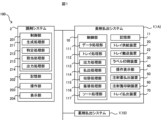
- FIG. 1 is a block diagram showing the configuration of a support system according to an embodiment of the present invention.
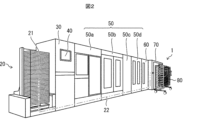
- FIG. 2 is a diagram showing the external appearance of the medicine dispensing system according to the embodiment of the present invention.
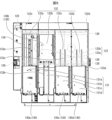
- FIG. 3 is a diagram showing a configuration of a first medicine dispensing device of the medicine dispensing system according to the embodiment of the present invention.
- FIG. 4 is a diagram showing a configuration of a first medicine dispensing device of the medicine dispensing system according to the embodiment of the present invention.
- FIG. 5 is a diagram showing a configuration of a first medicine dispensing device of the medicine dispensing system according to the embodiment of the present invention.
- FIG. 6 is a diagram showing an example of a cart used in the assistance system according to the embodiment of the present invention.
- FIG. 1 is a block diagram showing the configuration of a support system according to an embodiment of the present invention.
- FIG. 2 is a diagram showing the external appearance of the medicine dispensing system according to the embodiment of the present invention.
- FIG. 7 is a diagram showing an example of a cart used in the assistance system according to the embodiment of the present invention.
- FIG. 8 is a flowchart showing an example of a medicine dispensing data allocation process executed in the support system according to the embodiment of the present invention.
- FIG. 9 is a flowchart showing an example of a dispensing control process executed in the medicine dispensing system according to the embodiment of the present invention.
- FIG. 10 is a flowchart showing an example of an automatic load balancing process executed in the medicine dispensing system according to the embodiment of the present invention.
- FIG. 11 is a diagram showing an example of a result of the processing executed in the support system according to the embodiment of the present invention.
- FIG. 12 is a diagram showing an example of a result of the processing executed in the support system according to the embodiment of the present invention.
- the support system 100 includes a plurality of drug dispensing systems 1 and a dispensing system 2.
- the users of the support system 100 according to this embodiment are medical personnel such as doctors, pharmacists, technicians, and nurses.
- drugs such as injection drugs before being injected into an infusion bag are dispensed in a state where they are contained in a drug container such as an ampule or a vial.
- the drugs handled by the support system 100 are not limited to injection drugs, and may be tablets or powders.
- each drug dispensing system 1 and the dispensing system 2 are connected to be able to communicate wirelessly or wired.
- each drug dispensing system 1 is also connected to be able to communicate wirelessly or wired.
- each drug dispensing system 1 is identified by identification information such as a serial number assigned in advance to the drug dispensing system 1. Note that the execution entity of various processes in the support system 100 described below is merely an example, and it is sufficient that the various processes are executed by the support system 100 as a whole, and the execution entity of the various processes can be changed.
- the process executed by the control unit 201 described later in this embodiment may be executed by the control unit 10 described later, and the process executed by the control unit 10 described later may be executed by the control unit 201 described later.
- the various processes executed in the support system 100 may be executed by one or more processors.
- the dispensing system 2 is a computer including a control unit 201, a storage unit 202, an operation unit 203, and a display unit 204.
- the operation unit 203 is an operation means such as a keyboard, a mouse, and a touch panel for the control unit 201 to receive user operations.
- the display unit 204 is a display means such as a liquid crystal display or an organic EL display for presenting information to a user.
- the control unit 201 has one or more processors and memories that execute various processes according to various programs.
- the storage unit 202 is a storage means such as a hard disk that stores various programs and various information for causing the control unit 201 to execute various processes. Specifically, the storage unit 202 stores prescription data and drug dispensing data, which will be described later.
- the prescription data is registered in another system, such as an electronic medical record, and input to the dispensing system 2.
- the prescription data may also be input to the dispensing system 2 in response to a user operation using the operation unit 203 and the display unit 204 in the dispensing system 2.
- the control unit 201 stores the prescription data input to the dispensing system 2 in the memory unit 202.
- Prescription data includes information such as prescription number, patient name, ward name, drug name, number of doses, dosage, usage, administration time, and administration method.
- Drug dispensing data includes information such as prescription number, patient name, ward name, drug name, dispensed amount, administration time, and administration method.
- Prescription number is prescription identification information for identifying prescription data.
- Patient name is patient identification information for identifying the patient (the person taking the drug).
- Ward name is ward identification information for identifying the ward in which the patient is hospitalized.
- Drug name is drug identification information for identifying a drug such as an injection drug.
- Number of doses is the number of times a drug is administered to a patient in a preset unit period such as one day.
- Dispensed amount is information indicating the required amount of drug.
- Administration time is information including either or both of the date and time the drug is administered to the patient.
- Administration method is information indicating the method of administering the drug to the patient, such as infusion or injection.
- the control unit 201 includes various processing units such as a generation processing unit 211, a specific processing unit 212, an allocation processing unit 213, and an output processing unit 214.
- the control unit 201 functions as various processing units by executing various processes according to the programs stored in the storage unit 202 using a processor.
- the generation processing unit 211 When the current time reaches a preset closing time, the generation processing unit 211 completes the acceptance of prescription data.
- the generation processing unit 211 may also complete the acceptance of prescription data when a specific user operation is performed to start closing processing at any timing. In this case, the timing at which the user operation is performed is the closing processing time.
- the generation processing unit 211 selects some or all of the prescription data accepted during a preset period as the target for closing processing.
- the preset period is the period from the previous closing processing time to the current closing processing time.
- the selection of prescription data to be the target for the closing processing may be performed on a prescription data basis, or may be performed on a group basis such as a ward basis.
- the generation processing unit 211 selects prescription data corresponding to one or more wards selected by a user operation as the target for the closing processing.
- the generation processing unit 211 may also select prescription data corresponding to wards that are preset for each closing processing time as the target for the closing processing.
- the generation processing unit 211 then generates drug dispensing data corresponding to each prescription data based on each prescription data selected as the target of the closing process, and stores the prescription data and the drug dispensing data in association with each other in the storage unit 202.
- the identification processing unit 212 identifies the group to which the drug dispensing data belongs based on ward identification information such as the ward name included in the drug dispensing data.
- the ward name included in the drug dispensing data is group identification information indicating the group to which the drug dispensing data belongs, and drug dispensing data corresponding to the same ward name belongs to the same group. Two or more wards may be collectively classified into one group.
- the identification processing unit 212 may execute a process of classifying the drug dispensing data by the ward name included in the drug dispensing data, and may store each of the drug dispensing data in the storage unit 202 in association with group identification information such as a group number indicating the group to which the drug dispensing data is classified.
- the ward name indicates the name of a building, floor, or area to which the drug corresponding to the drug dispensing data is delivered.
- the ward name may also be the name of a building, floor, or area in a nursing home where the patient resides.
- the ward name may also be the name of the patient's home address or area.
- the allocation processing unit 213 allocates the drug dispensing data to one of the multiple drug dispensing systems 1 on a group basis. Specifically, in the dispensing system 2, allocation information indicating the correspondence between each ward name and identification information such as a unit number for identifying each drug dispensing system 1 is stored in the storage unit 202. Then, based on the allocation information, the allocation processing unit 213 allocates the drug dispensing data to the drug dispensing system 1 corresponding to the ward name included in the drug dispensing data, and stores in the storage unit 202 allocation correspondence information indicating the correspondence between the drug dispensing data and the unit number of the drug dispensing system 1 to which the drug dispensing data is allocated.
- the output processing unit 214 outputs the drug dispensing data stored in the memory unit 202 to one of the drug dispensing systems 1 in groups. Specifically, the output processing unit 214 outputs the drug dispensing data in groups to the drug dispensing system 1 to which the drug dispensing data is assigned based on the allocation correspondence information. In this embodiment, a case will be described in which the drug dispensing data is generated based on the prescription data in the dispensing system 2 and the drug dispensing data is output to the drug dispensing system 1. Meanwhile, in another embodiment, the prescription data input to the dispensing system 2 may be output to the drug dispensing system 1 as drug dispensing data.
- both the prescription data and the drug dispensing data may be output from the dispensing system 2 to the drug dispensing system 1.
- the output processing unit 214 may output data identification information such as a prescription ID for identifying the drug dispensing data to the drug dispensing system 1 to which the drug dispensing data is assigned, and the drug dispensing system 1 may acquire the drug dispensing data corresponding to the data identification information from the memory unit 202 of the dispensing system 2.
- the support system 100 is provided with two drug dispensing systems 1, but the support system 100 may be provided with three or more drug dispensing systems 1.
- the two drug dispensing systems 1 may be referred to below as drug dispensing systems 1A and 1B.
- the drug dispensing system 1 is a system that automatically dispenses drugs such as injections based on drug dispensing data acquired from the dispensing system 2.
- the drug dispensing system 1 may be a tablet dispensing device that dispenses tablets, a powder dispensing device that packages and dispenses powdered medicine, or a packaging device that packages and dispenses either or both of tablets and powdered medicine, etc.
- the drug dispensing system 1 includes a control unit 10, a memory unit 11, a tray supply device 20, a tray transport device 22, a label printing device 30, an operation display unit 40, an injection drug dispensing device 50, an injection prescription printing device 60, and a tray dispensing device 70.
- a cart 80 used to transport drugs and the like dispensed from the drug dispensing system 1 to a hospital ward is detachable from the tray dispensing device 70.
- the tray supply device 20 supplies trays 21 that contain the medicines, etc., dispensed by the medicine dispensing system 1 to the tray transport device 22.
- the trays 21 are an example of medicine containing members that contain medicines, etc., corresponding to each patient.
- the tray conveying device 22 has a conveying path that conveys the tray 21 supplied from the tray supplying device 20 to the tray dispensing device 70 via the label printing device 30, the injection drug dispensing device 50, and the injection prescription printing device 60. Then, on the tray 21 conveyed by the tray conveying device 22, labels, medicines, injection prescriptions, etc. dispensed from the label printing device 30, the injection drug dispensing device 50, and the injection prescription printing device 60 are placed while moving on the conveying path.
- the label printing device 30 prints preset label printing information on a label based on the drug dispensing data, and dispenses the label onto a tray 21 on the transport path of the tray transport device 22.
- the label printing information includes information such as the prescription number, patient name, ward name, drug name, dosage, usage, and administration method.
- the label is affixed to an infusion container such as an infusion bag into which the drug dispensed from the drug dispensing system 1 has been injected.
- the operation display unit 40 is a touch panel or the like that displays various information and accepts various user operations.
- the operation display unit 40 displays information such as the operating status of the medicine dispensing system 1.
- the operation display unit 40 also accepts user operations such as starting or stopping the operation of the medicine dispensing system 1.
- the injection drug dispensing device 50 dispenses drugs such as injection drugs corresponding to each patient onto a tray 21 on the transport path of the tray transport device 22 based on the drug dispensing data.
- the injection drug dispensing device 50 includes a returned drug dispensing device 50a, a first drug dispensing device 50b, a second drug dispensing device 50c, and a bottle dispensing device 50d.
- the returned drug dispensing device 50a stores drugs (returned drugs) returned from hospital wards, etc., after identifying the expiration date, and dispenses the returned drugs to the tray 21 if they can be reused.
- the first drug dispensing device 50b dispenses a first type of drug stored in advance by a user to the tray 21.
- the second drug dispensing device 50c dispenses a second type of drug, such as drugs that cannot be managed by the first drug dispensing device 50b (e.g. drugs with non-standard shapes), drugs used for complicated diseases, or relatively expensive drugs, to the tray 21.
- the bottle dispensing device 50d dispenses bottles that contain liquid drugs to the tray 21.
- the drug dispensing system 1 may be equipped with at least one of these injection drug dispensing devices 50.
- FIG. 3 is a diagram showing the state in which the exterior shown in FIG. 2 has been removed in order to visualize the inside of the first drug dispensing device 50b.
- the first drug dispensing device 50b is equipped with a drug cassette handling device 200 that dispenses drugs contained in drug cassettes Ca.
- the drug cassette handling device 200 is equipped with a cassette shelf 110, a specific processing unit 120, a cassette holding unit 130, a cassette transport unit 140, and a drug moving unit 150.
- FIG. 4 is a front view showing the configuration of the cassette shelf 110, the specific processing unit 120, and the cassette holding unit 130.
- the cassette shelf 110 is a shelf that stores m cassettes Ca that contain medicines. m is an integer of 2 or 3 or more.
- the direction in which the cassettes Ca are inserted into the cassette shelf 110 may be referred to as the depth direction.
- the direction perpendicular to the depth direction in a plane parallel to the horizontal plane may be referred to as the width direction.
- the cassette shelf 110 stores the cassettes Ca in a matrix in a vertical plane.
- Each of the m cassettes Ca contains medicines by medicine type in advance.
- at least two cassettes Ca contain medicines of different medicine types.
- multiple cassettes Ca may contain medicines of the same medicine type.
- the medicines contained in the cassettes Ca are medicines contained in containers such as ampoules or vials.
- the memory unit 11 also stores correspondence data indicating the relationship between cassette-specific information for identifying the cassette Ca and the type of drug contained in the cassette Ca.
- the correspondence data also stores the storage position of the cassette Ca on the cassette shelf 110 and the expiration date of the drug contained in the cassette Ca, in correspondence with each cassette-specific information for identifying the cassette Ca.
- the expiration date is information that is read from a barcode or the like attached to the drug, or is input by user operation.
- FIG. 5 is a plan view of the cassette holding section 130.
- the specific processing section 120 includes a drug transport section 121 and a specific camera 122.
- lighting members 128 and 129 are provided near the specific camera 122 to illuminate the cassette Ca when the cassette Ca is photographed by the specific camera 122.
- the drug delivery unit 121 has an adsorption mechanism 121a, a moving mechanism 121b, and a slider 121c.
- the adsorption mechanism 121a is an adsorption mechanism that adsorbs the injection drug and can be extended vertically downward.
- the moving mechanism 121b is a mechanism that moves the adsorption mechanism 121a in the depth direction and is capable of reciprocating in the width direction.
- the moving mechanism 121b moves reciprocating in the width direction along the slider 121c.
- the identification camera 122 is a camera provided below the cassette shelf 110.
- the identification camera 122 takes images to identify the position of the medicine to be removed from the cassette Ca.
- the first medicine dispensing device 50b is provided with two identification cameras 122a and 122b as the identification camera 122.
- the identification camera 122a is provided directly above the center of the boundary line between the processing positions 132a and 132b described below, and takes an image of the imaging area 122c including the processing positions 132a and 132b.
- the identification camera 122b is provided directly above the center of the boundary line between the processing positions 132c and 132d described below, and takes an image of the imaging area 122d including the processing positions 132c and 132d. Therefore, in the first medicine dispensing device 50b, the two identification cameras 122a and 122b can capture images of the inside of the cassettes Ca located at the four processing positions 132a to 132d.
- the specific processing unit 120 performs specific processing on the medicine contained in the cassette Ca by controlling the specific processing unit 120 by the control unit 10.
- the specific processing includes at least a process of taking out the cassette Ca containing the medicine to be dispensed from the cassette shelf 110 and identifying the position of the medicine in the cassette Ca based on the image captured by the identification camera 122.
- the specific processing unit 120 is also provided with a reading camera (not shown) that captures the expiration date of the medicine written on the medicine, and the specific processing also includes a process of identifying the expiration date and type of the medicine based on the image captured by the reading camera (not shown).
- the specific processing unit 120 stores the image captured by the reading camera (not shown) in the memory unit 11, and the control unit 10 can execute an image output process that displays the captured image stored in the memory unit 11 on the operation display unit 40, etc.
- the identification processing unit 120 stores the captured image in the storage unit 11 in association with the drug dispensing data or prescription data that is to be dispensed when the captured image is captured.
- the control unit 10 displays the captured image corresponding to any drug dispensing data or prescription data selected as a display target, for example, in response to a user operation, on a display device such as the operation display unit 40.
- the control unit 10 may also display, on a display device such as the operation display unit 40, a list of identification information such as prescription ID of the drug dispensing data or prescription data that is to be dispensed on any date or period, the captured image, and a drug dispensing history such as the number of drugs dispensed. This allows the user to check the drug that has actually been dispensed based on the drug dispensing data or prescription data by the captured image.
- the type of drug in the identification process may be identified based on drug identification information read from the drug by a barcode reader (not shown).
- the cassette holding unit 130 can temporarily hold up to n cassettes Ca that are to undergo specific processing by the specific processing unit 120, among the cassettes Ca stored in the cassette shelf 110.
- the value of n may be 2 or more and less than m (m>n ⁇ 2), and in this embodiment, the value of n is 4.
- the cassette holding unit 130 is a collection of four cassette holding units 130a to 130d. Note that the number of cassette holding units 130 is not limited to four, but is equal to the value of n described above, that is, the number of cassettes Ca that the cassette holding unit 130 can hold.
- the cassette Ca is held by being placed on one of the cassette holding units 130a to 130d.
- drive mechanisms 133a to 133d that reciprocate the cassette holding units 130a to 130d in the depth direction are provided below the cassette holding units 130a to 130d, respectively.
- the cassette holding unit 130 has a cassette receiving position 131 that receives the cassette Ca from the cassette transfer unit 140, and a processing position 132 where the cassette Ca undergoes a specific process by the specific processing unit 120.
- each of the cassette holding units 130a to 130d has a cassette receiving position 131a to 131d and a processing position 132a to 132d.
- the cassette holding units 130a to 130d reciprocate in the depth direction by the drive mechanisms 133a to 133d, thereby reciprocating the cassette Ca between the cassette receiving positions 131a to 131d and the processing positions 132a to 132d. In other words, the cassette holding unit 130 moves the cassette Ca horizontally toward the processing position 132.
- cassette holding unit 130b is located at processing position 132b, and the other cassette holding units 130a, 130c, and 130d are located at cassette receiving positions 131a, 131c, and 131d, respectively.
- each of cassette holding units 130a to 130d can reciprocate cassette Ca independently of the others.
- two or more of cassette holding units 130a to 130d may be located at the corresponding processing positions 132a to 132d.
- the cassette holding unit 130a is provided with a load cell 134 for measuring the weight of the cassette Ca.
- the weight of the cassette Ca itself i.e., not including the weight of the drug
- the control unit 10 can execute a calculation process to calculate the number of drugs contained in the cassette Ca, i.e., the drug inventory in the first drug dispensing device 50b, by measuring the weight of the entire cassette Ca using the load cell 134.
- the calculation process is executed, for example, in the evening of a certain day, after all the drug dispensing processes for the day's drugs are completed and each cassette Ca is filled with drugs, until the drug dispensing process for the drugs is started the next morning.
- control unit 10 stores the drug inventory in each cassette Ca calculated by the calculation process in the correspondence data stored in the memory unit 11. Furthermore, even if the drug is returned to the cassette Ca, the control unit 10 executes the calculation process for that cassette Ca and stores the drug inventory in that cassette Ca in the correspondence data stored in the storage unit 11.
- the load cell 134 may be provided not only in the cassette holding unit 130a, but also in each of the cassette holding units 130b to 130d.
- the cassette transfer unit 140 transfers the cassette Ca between the cassette shelf 110 and the cassette holding unit 130 in order to replace the cassette Ca held in the cassette holding unit 130.
- the cassette transfer unit 140 pulls out the cassette Ca from the cassette shelf 110, transfers it vertically, and places it on the cassette holding unit 130 at the cassette receiving position 131.
- the cassette transfer unit 140 transfers the cassette Ca containing the drug to the cassette holding unit 130 based on the drug dispensing data and the correspondence data.
- the drug dispensing data related to administration to one patient may include multiple drug recipes (combinations).
- the cassette transfer unit 140 may transfer each cassette Ca containing the drugs to the cassette holding unit 130.
- the drug moving unit 150 moves drugs contained in cassettes Ca located at processing positions 132a to 132d in the cassette holding unit 130, which have undergone specific processing by the specific processing unit 120, to the tray 21.
- the drug moving unit 150 adsorbs the drugs contained in the cassette Ca and moves the drugs to the tray 21.
- the configuration of the drug moving unit 150 is not limited to that described here, as long as it is capable of moving drugs from cassette Ca to the tray 21.
- the injection prescription printing device 60 prints preset injection prescription printing information on an injection prescription based on the drug dispensing data, and dispenses the injection prescription onto a tray 21 on the transport path of the tray transport device 22.
- the injection prescription printing information includes information such as the patient's name, ward name, room number, drug name, administration method, administration route or site, dosage, administration time, and administration speed, and the injection prescription printing information is information included in the drug dispensing data.
- the tray dispensing device 70 dispenses the tray 21 after one or more of the labels, injection drugs (medicines), and injection prescriptions have been stored therein, to the cart 80 attached to the tray dispensing device 70.
- the tray 21 may be provided with multiple divided trays as storage sections for storing medicines. In this case, it is also possible to store multiple medicines indicated in the medicine dispensing data for a certain patient in divided trays divided according to the administration time of the medicine. Specifically, it is possible to store medicines administered in the morning of the day in the first divided tray, medicines administered in the afternoon in the second divided tray, and medicines administered in the evening in the third divided tray. In other words, it is possible to store each administration amount of medicine, etc. in each divided tray provided on the tray 21.
- the cart 80 is a portable storage shelf equipped with multiple tray placement sections 81 on which multiple trays 21 can be placed.
- the cart 80 is attached to the tray dispensing device 70 by inserting at least a portion of it into the tray dispensing device 70.
- the control unit 10 controls the tray dispensing device 70 to dispense each of the trays 21 onto each of the tray placement sections 81 of the cart 80 so that one tray 21 is placed on each tray placement section 81.
- the cart 80 with at least one tray 21 placed on it is then removed from the tray dispensing device 70 by the user and transported to the destination hospital ward, etc.
- the control unit 10 has one or more processors and memories that execute various processes according to various programs.
- the storage unit 11 is a storage means such as a hard disk that stores various programs and various information for causing the control unit 10 to execute various processes.
- the storage unit 11 also stores a drug master that includes drug identification information such as the drug name of each drug and information such as the weight per unit amount of the drug.
- the drug master includes not only information on drugs that are stored in a cassette Ca provided in the drug dispensing system 1 and can be dispensed from the drug dispensing system 1, but also information on drugs that are not stored in the cassette Ca provided in the drug dispensing system 1 but can be handled by the drug dispensing system 1.
- the drug master also includes injection drug shape information corresponding to each drug.
- the injection drug shape information is data on the shape of a packaging container that contains the drug, and is data indicating the size, diameter, volume, etc. of the packaging container.
- the control unit 10 includes various processing units such as a data processing unit 111, a tray processing unit 112, an output processing unit 113, a dispensing processing unit 114, a storage processing unit 115, a transfer processing unit 116, and a sorting processing unit 117.
- the control unit 10 functions as the various processing units by executing various processes according to the programs stored in the memory unit 11 using a processor.
- the data processing unit 111 acquires drug dispensing data from the dispensing system 2 and stores it in the storage unit 11. Specifically, in the support system 100, the drug dispensing data stored in the storage unit 202 in the dispensing system 2 is assigned to one of the drug dispensing systems 1 in units of groups such as wards, and output to the drug dispensing system 1. Therefore, in each drug dispensing system 1, the data processing unit 111 acquires from the dispensing system 2 the drug dispensing data stored in the storage unit 202 of the dispensing system 2 that is assigned to the drug dispensing system 1, and stores it in the storage unit 11.
- each drug dispensing system 1 when the drug dispensing data stored in the storage unit 11 is released from being assigned to the drug dispensing system 1, the data processing unit 111 removes the drug dispensing data from the storage unit 11, for example, to exclude the drug dispensing data from being subjected to drug dispensing processing in the drug dispensing system 1.
- the tray processing unit 112 acquires placement order information (described later) from the memory unit 11 and determines the position for each tray 21 on the cart 80. For example, the tray processing unit 112 specifically determines the placement position for each tray 21 from the top to the bottom of the cart 80, and from the right to the left as viewed from the tray dispensing device 70.
- the drug dispensing system 1 can be set so that trays 21 corresponding to multiple groups are not placed on the same cart 80.
- the drug dispensing system 1 has a group-based exchange function that sets the timing of changing the group to which the drug dispensing data to be executed belongs as the timing of exchanging the cart 80.
- the control unit 10 can switch between enabling and disabling the group-based exchange function in response to a user operation.
- the tray processing unit 112 determines the placement position of each of the trays 21 so that only the trays 21 of the drug dispensing data belonging to the same group are placed on the same cart 80.
- the tray processing unit 112 determines the placement position of each of the trays 21 so that the trays 21 of the drug dispensing data belonging to different groups are not placed on the same cart 80.
- the tray processing unit 112 stores the determined placement position of the tray 21 in the memory unit 11 as tray position information.
- the tray processing unit 112 determines the placement position of the tray 21 for each cart 80 and stores this as tray position information in the memory unit 11.
- the memory unit 11 In addition to the aforementioned drug dispensing data and tray position information, the memory unit 11 also stores tray shape information, tray placement section information, placement order information, and free space information.
- Tray shape information is data about the shape of the storage section of the tray 21, and indicates the number, size, and volume of the divided trays, etc.
- the tray loading section information is data about the tray loading section 81 of the cart 80, and indicates the number of trays that can be loaded on the cart 80, the number of tiers, the number of rows, etc.
- the number of trays that can be loaded essentially means the maximum number of trays 21 that can be loaded on one cart 80, but it may be a number that is arbitrarily set by the user.
- the number of trays that can be loaded indicates the number of trays 21 that can be loaded on the cart 80, which is set for the cart 80 on which the trays 21 are to be loaded.
- the "number of trays that can be loaded” may be referred to as the "maximum number of trays that can be loaded.”
- the loading order information is data that specifies which tray loading section 81 out of the multiple tray loading sections 81 provided on the cart 80 to start loading the trays 21 on and in what order the trays 21 are loaded on the tray loading sections 81.
- the order in which the trays 21 are loaded is specified such that the trays 21 are loaded from the top to the bottom of the cart 80 and from the right to the left as viewed from the tray dispensing device 70.
- the loading order information is preset and can be changed as desired by the user.
- the free space information is data that indicates the tray loading sections 81 (hereinafter referred to as "free space 82") on which the trays 21 are not loaded in the cart 80 attached to the tray dispensing device 70.
- the tray processing unit 112 calculates the number of trays 21 corresponding to each group based on one or more drug dispensing data belonging to each group, and stores the calculated number of trays 21 in the memory unit 11.
- the tray processing unit 112 also calculates the number of carts 80 required for storing all the trays 21 corresponding to each group based on the calculated number of trays 21 and the maximum number of trays that can be loaded on the cart 80, and stores the calculated number in the memory unit 11. For example, if the maximum number of trays that can be loaded on the cart 80 is 48, and the number of trays 21 corresponding to a certain group is 42, the number of trays 21 corresponding to the certain group is equal to or less than the maximum number of trays that can be loaded.
- one cart 80 can load all the trays 21 of one group, so the number of carts 80 required for the certain group is calculated as 1.
- the maximum number of trays that can be loaded on the cart 80 is 48, and the number of trays 21 corresponding to a certain group is 70, the number of trays 21 corresponding to the certain group is greater than the maximum number of trays that can be loaded.
- one cart 80 cannot hold all the trays 21 of one group, but two carts 80 can hold all the trays 21 of one group, so the number of carts 80 required for that group is calculated as two.
- the tray processing unit 112 determines that the cart 80 has at least one or more free areas 82 in which no tray 21 is placed. Therefore, the tray processing unit 112 determines the loading position of the tray 21 based on the calculated number of trays 21, the number of carts 80, and the maximum number of trays that can be loaded. However, when determining the loading position of the tray 21 in the cart 80 in which the number of trays 21 loaded is less than the maximum number of trays that can be loaded, the tray processing unit 112 also determines the free area 82 in which no tray 21 is placed.
- the tray processing unit 112 stores the determined free area 82 in the storage unit 11 as free area information.
- the free area information is not limited to the area determined as the free area 82, and may include an area in the cart 80 that has not yet been assigned as a loading position for the tray 21.
- the dispensing processing unit 114 controls the operation of the tray supply device 20, tray transport device 22, label printing device 30, injection drug dispensing device 50, injection prescription printing device 60, and tray dispensing device 70 based on the unprocessed drug dispensing data stored in the memory unit 11, and dispenses drugs, labels, injection prescriptions, etc. corresponding to the drug dispensing data onto the tray 21.
- unprocessed drug dispensing data refers to a state in which the drug dispensing data has not been processed as a target for drug dispensing processing in the drug dispensing system 1.
- the storage processing unit 115 stores the tray 21 that contains the medicines, etc., dispensed based on the medicine dispensing data in the cart 80 corresponding to the group to which the medicine dispensing data belongs. Specifically, the storage processing unit 115 specifies the tray placement unit 81 on which the tray 21 containing the medicines, etc. should be placed, based on the tray position information stored in the memory unit 11. The storage processing unit 115 then controls the operation of the tray dispensing device 70 to move the tray 21 to a position facing the tray placement unit 81 on which the tray 21 should be placed, and places the tray 21 on the tray placement unit 81.
- the storage processing unit 115 waits for the cart 80 to be exchanged at the timing when the group of the medicine dispensing data to be subjected to the medicine dispensing process is switched, and after the cart 80 is exchanged, the tray 21 corresponding to the switched group is placed on the exchanged cart 80.
- the output processing unit 113 executes a notification process that outputs a message or a warning sound to prompt the user to replace the cart 80. Specifically, when two carts 80 are required to dispense the trays 21 corresponding to one group, the output processing unit 113 executes the notification process when the dispensing of the trays 21 to the first cart 80 is completed. In addition, when the group-based exchange function is enabled, the output processing unit 113 executes the notification process when the group corresponding to the trays 21 dispensed to the cart 80 by the dispensing processing unit 114 is switched.
- the output processing unit 113 determines the timing of switching the group of the drug dispensing data that is the target of the drug dispensing process as the timing of replacing the cart 80. In this way, the output processing unit 113 executes the notification process, so that the user can replace the cart 80 at an appropriate timing, and the carts 80 corresponding to each group can be transported to the destination of the group, such as a hospital ward.
- the storage processing unit 115 can place trays 21 corresponding to multiple groups on the same cart 80.
- the tray processing unit 112 may determine the placement positions of the trays 21 so that, in one cart 80, the trays 21 corresponding to the group of Ward A are placed on seven levels from level A to level G, and the trays 21 corresponding to the group of Ward B are placed on four levels from level H to level K, as shown in FIG. 7, and store the tray placement positions in the storage unit 11 as the tray position information.
- the output processing unit 113 determines whether all of the trays 21 corresponding to the next group can be placed on the same cart 80 based on the tray position information or the free space information.
- the output processing unit 113 does not determine the timing at which the group corresponding to the trays 21 placed on the cart 80 is switched as the timing to replace the cart 80.
- the output processing unit 113 does not execute the notification process at the timing of the group switch. Note that even in this case, the output processing unit 113 only needs to execute the notification processing when the number of trays 21 placed on the cart 80 reaches the upper limit number of trays that can be placed.
- the tray processing unit 112 before the tray processing unit 112 starts storing the trays 21 corresponding to a certain group in the cart 80, the number of carts 80 required to store the trays 21 corresponding to the certain group is calculated, and the placement positions of each tray 21 in the cart 80 are also determined.
- the placement positions of each tray 21 may not be determined in advance.
- the storage processing unit 115 sequentially stores the trays 21 in a certain cart 80 until the number of free spaces 82 in the cart 80 reaches a predetermined number or less.
- the storage processing unit 115 waits for the cart 80 to be replaced, and resumes placing the trays 21 on the cart 80 after the cart 80 is replaced.
- the output processing unit 113 determines the timing when the trays 21 are sequentially placed on the cart 80 and the number of trays 21 placed on the cart 80 reaches the tray placement upper limit number as the timing to replace the cart 80, and executes the notification process.
- the output processing unit 113 judges not only the timing when the number of free areas 82 in the cart 80 reaches a preset number or less, but also the timing when the group corresponding to the trays 21 sequentially placed on the cart 80 is switched as the timing to exchange the cart 80, and executes the notification process.
- the output processing unit 113 may not execute the notification process if the number of free areas 82 is greater than a preset value, even if the timing arrives when the group corresponding to the trays 21 sequentially placed on the cart 80 is switched.
- the default value is the number of trays 21 corresponding to the group after switching. As a result, when the trays 21 corresponding to multiple groups can fit in one cart 80, it is possible to accommodate and transport the trays 21 corresponding to the multiple groups in one cart 80.
- the default value may be a fixed value set in advance.
- the transfer processing unit 116 transfers unprocessed drug dispensing data assigned to one drug dispensing system 1 to another drug dispensing system 1 in units of groups when a preset transfer condition is satisfied.
- the transfer condition includes that when the drug dispensing data belonging to the group to be transferred among the unprocessed drug dispensing data assigned to the one drug dispensing system 1 is transferred to the other drug dispensing system 1, the relationship between the number of the unprocessed drug dispensing data assigned to the one drug dispensing system 1 and the number of the unprocessed drug dispensing data assigned to the other drug dispensing system 1 satisfies a preset first condition.
- the first condition is that the number of the unprocessed drug dispensing data assigned to the other drug dispensing system 1 is equal to or less than the number of the unprocessed drug dispensing data assigned to the one drug dispensing system 1.
- the first condition may be that the difference between the number of unprocessed drug dispensing data assigned to the one drug dispensing system and the number of unprocessed drug dispensing data assigned to the other drug dispensing system is equal to or less than a predetermined specific value.
- whether or not the transfer condition is satisfied is determined based on the number of drug dispensing data, but in another embodiment, whether or not the transfer condition is satisfied may be determined based on the time required for drug dispensing processing based on the drug dispensing data.
- the sorting processing unit 117 executes a sorting process for sorting the order of execution of the drug dispensing process based on the unprocessed drug dispensing data assigned to the drug dispensing system 1 (hereinafter referred to as the "execution order") by the group according to a first sorting rule set in advance.
- the first sorting rule is set so that the higher the group priority set in advance for each group, the earlier the execution order.
- the group priority may be set in advance for each ward corresponding to the group, or group priority information may be added to the drug dispensing data input from the dispensing system 2.
- the sorting processing unit 117 may also sort the execution order of the drug dispensing data by group based on the administration time included in the drug dispensing data.
- the sorting processing unit 117 sorts the execution order of the drug dispensing process based on the unprocessed drug dispensing data assigned to the other drug dispensing system 1, including the transferred unprocessed drug dispensing data, by the group according to the first sorting rule. At this time, the sorting processing unit 117 excludes from the sorting target the group to which the drug dispensing data for which the drug dispensing process is currently being performed belongs.
- the sorting processing unit 117 also sorts the execution order of drug dispensing processes based on drug dispensing data belonging to the same group according to a second sorting rule that has been set in advance. For example, the second sorting rule is set so that the earlier the administration time included in the drug dispensing data, the earlier the execution order.
- the sorting processing unit 117 sorts the execution order of the transferred drug dispensing data within the same group according to the second sorting rule. At this time, the sorting processing unit 117 excludes drug dispensing data for which drug dispensing processes are currently being performed from the sorting targets.
- Support System 100 it is also possible to transfer drug dispensing data once assigned to one drug dispensing system 1 to another drug dispensing system 1.
- problems such as the burden on the user of consolidating the drugs dispensed from the multiple drug dispensing systems 1 and the possibility of human error occurring in the work arise.
- various processes are executed by the drug dispensing system 1 and the dispensing system 2, and the transfer of drug dispensing data assigned to multiple drug dispensing systems 1 is performed in units of groups to which the drug dispensing data belongs. This makes it possible to efficiently use multiple drug dispensing systems while suppressing an increase in the user's workload.
- step S1 the generation processing unit 211 of the control unit 201 judges whether or not the timing to execute the closing process has arrived. Specifically, the generation processing unit 211 judges that the timing to execute the closing process has arrived when the current time reaches a preset closing process time, or when a user operation is performed to start the closing process. Then, if it is judged that the timing to execute the closing process has arrived (S1: Yes), the process proceeds to step S2. On the other hand, if it is judged that the timing to execute the closing process has not arrived (S1: No), the process proceeds to step S7.
- step S2 the generation processing unit 211 of the control unit 201 identifies prescription data to be subject to the closing process. For example, the generation processing unit 211 identifies prescription data corresponding to one or more wards selected by a user operation as the target of the closing process. The generation processing unit 211 may also identify prescription data corresponding to a ward that is preset for each closing process time as the target of the closing process.
- step S3 the generation processing unit 211 of the control unit 201 generates medicine dispensing data based on the prescription data specified as the target of the closing process in step S2, and stores the data in the storage unit 202.
- step S4 the identification processing unit 212 of the control unit 201 identifies a group to which each of the medicine dispensing data belongs based on the information of the ward name included in each of the medicine dispensing data generated in step S3.
- the identification processing unit 212 may store in the storage unit 11 a group number for identifying a group to which each of the medicine dispensing data belongs in association with the medicine dispensing data.
- step S5 the allocation processing unit 213 of the control unit 201 allocates each of the drug dispensing data to any one of the drug dispensing systems 1 in units of the group specified in step S4. That is, the allocation processing unit 213 collectively allocates the drug dispensing data belonging to the same group to the same drug dispensing system 1. As a result, the drug dispensing data belonging to the same group is not input separately to the multiple drug dispensing systems 1, and the drugs etc. corresponding to the multiple drug dispensing data are dispensed from the same drug dispensing system 1.
- Step S6 the output processing unit 214 of the control unit 201 outputs the medicine dispensing data assigned to each medicine dispensing system 1 in step S5 to the medicine dispensing system 1 in group units.
- step S7 the allocation processing unit 213 of the control unit 201 judges whether or not a transfer instruction described later has been received from any of the medicine dispensing systems 1.
- the transfer instruction is transmitted from the medicine dispensing system 1 to the dispensing system 2 in step S29 of the automatic load balancing process (see FIG. 10) described later.
- the transfer instruction includes identification information such as the prescription number of the medicine dispensing data to be transferred, identification information such as the machine number of the medicine dispensing system 1 to which the medicine dispensing data is to be transferred, and identification information such as the machine number of the medicine dispensing system 1 from which the medicine dispensing data is to be transferred. If it is judged that the transfer instruction has been received (S7: Yes), the process proceeds to step S8, and if it is judged that the transfer instruction has not been received (S7: No), the process proceeds to step S1.
- step S8 the allocation processing unit 213 of the control unit 201 executes a transfer process based on the transfer instruction to reallocate the drug dispensing data to be transferred among the drug dispensing data assigned to the drug dispensing system 1 of the transfer source to the drug dispensing system 1 of the transfer destination.
- the control unit 201 when executing the transfer process to transfer the drug dispensing data to be transferred among the drug dispensing data assigned to the drug dispensing system 1 of the transfer source to the drug dispensing system 1 of the transfer destination may be regarded as an example of a transfer processing unit according to the present invention, and in that case, the dispensing system 2 may be regarded as an example of a support system according to the present invention.
- step S9 the output processing unit 214 of the control unit 201 outputs the drug dispensing data assigned to the destination drug dispensing system 1 in the transfer process in step S8 to the destination drug dispensing system 1.
- the drug dispensing data once assigned to the source drug dispensing system 1 is input to the destination drug dispensing system 1, and the destination drug dispensing system 1 executes the drug dispensing process based on the drug dispensing data.
- Step S10 the output processing unit 214 of the control unit 201 notifies the user of the contents of the transfer process in step S8 by displaying them on the display unit 204 or the like.
- the output processing unit 214 may also notify the user of the contents of the transfer process in step S8 by displaying them on the operation display unit 40 or the like of either or both of the source drug dispensing system 1 and the destination drug dispensing system 1.
- the contents of the transfer process in step S8 notified in step S10 include identification information such as the unit number of the source drug dispensing system 1, identification information such as the unit number of the destination drug dispensing system 1, and identification information of the group of the drug dispensing data to be transferred (such as the ward name and group number).
- step S11 the data processing unit 111 of the control unit 10 judges whether or not the drug dispensing data has been acquired from the dispensing system 2. As described above, the drug dispensing data is input from the dispensing system 2 to the drug dispensing system 1A in groups and stored in the storage unit 11. If it is judged that the drug dispensing data has been acquired (S11: Yes), the process proceeds to step S12, and if the drug dispensing data has not been acquired (S11: No), the process proceeds to step S15.
- step S12 the data processing unit 111 of the control unit 10 identifies a group of the medicine dispensing data determined to have been acquired in step S11. Specifically, the data processing unit 111 identifies a group to which the medicine dispensing data belongs based on information on a ward name included in the medicine dispensing data. For example, the data processing unit 111 identifies medicine dispensing data having the same information on a ward name as medicine dispensing data belonging to the same group.
- step S13 the sorting processing unit 117 of the control unit 10 sorts the execution order of the drug dispensing process in the drug dispensing system 1A for the unprocessed drug dispensing data stored in the memory unit 11 of the drug dispensing system 1A by group in accordance with the first sorting rule, and stores it in the memory unit 11.
- the control unit 10 of the other drug dispensing system 1 acquires the drug dispensing data to be transferred (S11: Yes). Therefore, in step S13 in the other drug dispensing system 1, the sorting processing unit 117 of the control unit 10 sorts the execution order of all drug dispensing data, including the unprocessed drug dispensing data stored in the memory unit 11 and the drug dispensing data to be transferred, on a group basis according to the first sorting rule. At this time, the sorting processing unit 117 excludes the group to which the drug dispensing data for which drug dispensing processing is currently being performed belongs from the sorting target.
- step S14 the sorting processing unit 117 of the control unit 10 sorts the execution order of the unprocessed drug dispensing data stored in the memory unit 11 of the drug dispensing system 1A within the same group according to the second sorting rule, and stores the order in the memory unit 11. At this time, the sorting processing unit 117 excludes the drug dispensing data for which the drug dispensing process is currently being executed from the sorting target.
- the cassette Ca containing various drugs is moved between the cassette shelf 110 and the cassette holding section 130 as necessary.
- the cassette Ca held in the cassette holding section 130 is also moved between the cassette receiving position 131 and the processing position 132 as necessary.
- the cassette Ca is moved from the cassette shelf 110 to the cassette receiving position 131 of the cassette holding section 130, and then moved from the cassette receiving position 131 to the processing position 132.
- the number of cassette holding units 130 is smaller than the number of cassettes Ca, the number of cassettes Ca that can be continuously held in the cassette holding unit 130 without being returned to the cassette shelf 110 is limited to the number of the cassette holding units 130. Therefore, for example, in a drug dispensing process based on the drug dispensing data to be executed next to the specific drug dispensing data, if a drug different from the specific drug dispensing data is dispensed, the cassette Ca moved to the processing position 132 in the drug dispensing process based on the specific drug dispensing data is moved from the processing position 132 to the cassette receiving position 131 and then returned to the cassette shelf 110.
- the cassette Ca moved to the processing position 132 in the drug dispensing process based on the specific drug dispensing data can be used as it is. Therefore, in the second sorting rule, in the drug dispensing system 1A, it is set that drug dispensing data of the same type of drug to be dispensed is made as continuous as possible. That is, the data processing unit 11 sorts the execution order of the drug dispensing data so that drug dispensing data of the same type of drug to be dispensed is made as continuous as possible.
- the dispensing processing unit 114 maintains the cassette Ca containing the drug held by the cassette holding unit 130 at the processing position 132. That is, when drug dispensing data of the same type of drug to be dispensed is continuous, the cassette Ca is not moved from the processing position 132 to the cassette receiving position 131.
- the drug in the drug dispensing system 1, in the drug dispensing process based on a plurality of drug dispensing data to be executed continuously, the drug can be dispensed from the same cassette Ca continuously held by the cassette holding unit 130 located at the processing position 132, thereby reducing the number of times the cassette Ca is moved in the drug dispensing system 1 and shortening the time required for the drug dispensing process.
- step S15 the data processing unit 111 of the control unit 10 judges whether or not there is unprocessed drug dispensing data in the storage unit 11, which is drug dispensing data for which the execution timing of the drug dispensing process has already arrived. Specifically, in the drug dispensing system 1A, when drug dispensing data is input from the dispensing system 2, the data processing unit 111 judges that the execution timing of the drug dispensing process for the drug dispensing data has arrived. In addition, in the drug dispensing system 1A, when a user operation is performed on the unprocessed drug dispensing data stored in the storage unit 11, the data processing unit 111 may judge that the execution timing of the drug dispensing process for the drug dispensing data has arrived.
- step S15: Yes if it is judged that there is drug dispensing data for which the execution timing of the drug dispensing process has arrived (S15: Yes), the process proceeds to step S16. On the other hand, if it is judged that there is no drug dispensing data for which the execution timing of the drug dispensing process has arrived (S15: No), the dispensing control process is terminated, and the process is executed again from step S11.
- step S16 the output processing unit 113 of the control unit 10 judges whether or not the timing for replacing the cart 80 has arrived. Specifically, the output processing unit 113 judges that the timing for replacing the cart 80 has arrived when there is no free space in the cart 80. In addition, the output processing unit 113 judges that the timing for replacing the cart 80 has arrived when the group to be subjected to the execution of the medicine dispensing process has been switched. Here, if it is judged that the timing for replacing the cart 80 has arrived (S16: Yes), the process proceeds to step S17, and if it is judged that the timing for replacing the cart 80 has not arrived (S16: No), the process proceeds to step S18.
- step S17 the output processing unit 113 of the control unit 10 executes a notification process to output a message or a warning sound to prompt the user to replace the cart 80. This allows the user to replace the cart 80 at an appropriate timing. Note that the control unit 10 may put the process on hold until a user operation to the effect that the cart 80 has been replaced is performed.
- step S18 the transfer processing unit 116 of the control unit 10 executes an automatic load balancing process, which will be described later, for automatically balancing the load of the medicine dispensing system 1A to another medicine dispensing system 1B as necessary. After that, when the automatic load balancing process is completed, the process proceeds to step S19.
- step S19 the dispensing processing unit 114 and the storing processing unit 115 of the control unit 10 execute a medicine dispensing process to dispense medicines, labels, injection prescriptions, etc. onto the tray 21 based on the medicine dispensing data to be executed. Thereafter, the control unit 10 ends the dispensing control process and executes the next dispensing control process again from step S11.
- the dispensing processing unit 114 supplies an empty tray 21 from the tray supplying device 20 to the tray transporting device 22.
- the dispensing processing unit 114 transports the tray 21 to the label printing device 30, the injection drug dispensing device 50, and the injection prescription printing device 60 in that order by means of the tray transporting device 22.
- the dispensing processing unit 114 controls the label printing device 30 to print a label based on the drug dispensing data and store it in the tray 21 transported to the label printing device 30.
- the dispensing processing unit 114 also controls the injection drug dispensing device 50 to dispense drugs based on the drug dispensing data and store it in the tray 21 transported to the injection drug dispensing device 50.
- the dispensing processing unit 114 then controls the injection prescription printing device 60 to print an injection prescription based on the drug dispensing data and store it in the tray 21 transported to the injection prescription printing device 60.
- the dispensing processing unit 114 then transports the tray 21 containing the medicine, labels, injection prescription, etc. to the tray dispensing device 70, and the storage processing unit 115 controls the tray dispensing device 70 to place the tray 21 on the cart 80.
- the dispensing processing unit 114 controls the first drug dispensing device 50b to dispense a drug
- the dispensing processing unit 114 controls the cassette holding unit 130 to move the cassette Ca held by the cassette holding unit 130 from the cassette receiving position 131 to the processing position 132.
- the dispensing processing unit 114 controls the drug moving unit 150 to dispense the drug from the cassette Ca located at the processing position 132 to the tray 21.
- the dispensing processing unit 114 controls the cassette holding unit 130 to move the cassette Ca from the processing position 132 to the cassette receiving position 131, and then controls the cassette transport unit 140 to move the cassette Ca from the cassette holding unit 130 to the cassette shelf 110.
- the dispensing processing unit 114 does not move the cassette Ca from the processing position 132 to the cassette receiving position 131, but makes the cassette Ca wait at the processing position 132.
- the dispensing processing unit 114 dispenses the medicine to be dispensed from the cassette Ca waiting at the processing position 132 in the medicine dispensing process based on the medicine dispensing data to be executed next.
- step S21 the transfer processing unit 116 judges whether or not another drug dispensing system 1B exists in the support system 100. Specifically, the transfer processing unit 116 searches whether or not another drug dispensing system 1B having a machine number different from the machine number assigned to the system itself exists in the support system 100. In addition, even if another drug dispensing system 1B exists, the transfer processing unit 116 judges that the other drug dispensing system 1B does not exist when the other drug dispensing system 1B is not started or is not in a startable state, or the other drug dispensing system 1B is in a state in which the drug dispensing process cannot be executed.
- step S21: Yes if it is judged that the other drug dispensing system 1B exists (S21: Yes), the process proceeds to step S22, and if it is judged that the other drug dispensing system 1B does not exist (S21: No), the automatic load distribution process is terminated.
- step S22 the transfer processing unit 116 judges whether or not the group unit exchange function is enabled in the medicine dispensing system 1 A. If it is judged that the group unit exchange function is enabled (S22: Yes), the process proceeds to step S23, and if it is judged that the group unit exchange function is not enabled (S22: No), the automatic load distribution process is terminated.
- step S23 the transfer processing unit 116 judges whether the number of unprocessed cases among the medicine dispensing data stored in the memory unit 11 of the medicine dispensing system 1A is equal to or greater than a first predetermined value. If it is judged that the number of unprocessed cases is equal to or greater than the first predetermined value (S23: Yes), the process proceeds to step S23. If it is judged that the number of unprocessed cases is less than the first predetermined value (S23: No), the automatic load balancing process ends.
- the transfer processing unit 116 determines whether or not to execute a transfer process (step S29) for transferring the drug dispensing data assigned to the drug dispensing system 1A to another drug dispensing system 1B as necessary. In other words, the transfer processing unit 116 restricts the execution of the transfer process when it is determined that the conditions are not met in any of steps S21 to S23. Note that in other embodiments, any one or more of steps S21 to S23 may be omitted.
- step S24 the transfer processing unit 116 checks the processing status of the medicine dispensing data in the other medicine dispensing system 1B provided in the support system 100. Specifically, the transfer processing unit 116 acquires the number of unprocessed medicine dispensing data stored in the memory unit 11 of the other medicine dispensing system 1B provided in the support system 100.
- the transfer processing unit 116 of the drug dispensing system 1A refers to the unprocessed drug dispensing data stored in the memory unit 11 of the drug dispensing system 1A and acquires the number of the drug dispensing data.
- the transfer processing unit 116 of the drug dispensing system 1A may be configured to be able to refer to the unprocessed drug dispensing data stored in the memory unit 11 of the other drug dispensing system 1B.
- the transfer processing unit 116 can acquire the number of unprocessed drug dispensing data in the other drug dispensing system 1B by referring to the unprocessed drug dispensing data stored in the memory unit 11 of the other drug dispensing system B.
- the transfer processing unit 116 may also transmit an inquiry about the number of unprocessed drug dispensing data to the control unit 10 of the other drug dispensing system 1B, and acquire the number of unprocessed drug dispensing data in the other drug dispensing system 1B from the response of the number of unprocessed drug dispensing data from the control unit 10 of the other drug dispensing system 1B.
- control unit 10 of each drug dispensing system 1 may notify the control unit 201 of the dispensing system 2 of the end of the drug dispensing process when the drug dispensing process based on the drug dispensing data assigned to the drug dispensing system 1 is completed.
- the control unit 201 of the dispensing system 2 stores the notification of the end of each drug dispensing data in the storage unit 202. This allows the control unit 201 of the dispensing system 2 to grasp the number of unprocessed drug dispensing data items among the drug dispensing data assigned to each drug dispensing system 1.
- the transfer processing unit 116 of the drug dispensing system 1 may obtain the number of unprocessed drug dispensing data items in each drug support system 1 from the control unit 201 of the dispensing system 2. Also, the transfer processing unit 116 of the drug dispensing system 1 may access the storage unit 202 of the dispensing system 2 to obtain the number of unprocessed drug dispensing data items in each drug support system 1.
- step S25 the transfer processing unit 116 judges whether the unprocessed drug dispensing data in the other drug dispensing system 1B is less than a preset second predetermined value. That is, the transfer processing unit 116 acquires the magnitude of the current processing load in the other drug dispensing system 1B depending on whether the unprocessed drug dispensing data in the other drug dispensing system 1B is less than a preset second predetermined value.
- the first predetermined value and the second predetermined value may be the same value or different values.
- step S25: Yes if it is judged that the unprocessed drug dispensing data in the other drug dispensing system 1B is less than the second predetermined value (S25: Yes), the process proceeds to step S26, and if it is judged that the unprocessed drug dispensing data in the other drug dispensing system 1B is not less than the second predetermined value (S25: No), the automatic load distribution process is terminated.
- the transfer processing unit 116 specifies a transferable group that satisfies a first transfer condition set in advance among groups to which unprocessed drug dispensing data in the drug dispensing system 1A belongs.
- the first transfer condition is that, when the first predetermined value is X, the group is a group to which drug dispensing data belongs that is executed later than the group to which the drug dispensing data that will be "X-1" in the execution order of the drug dispensing process in the drug dispensing system 1A belongs.
- the transfer processing unit 116 restricts the transfer of the drug dispensing data for a group in which drug dispensing process based on at least a part of the drug dispensing data has been started in the one drug dispensing system.
- the first transfer condition may be a group to which the execution order is later than the group to which the drug dispensing data that is being executed in the drug dispensing system 1A belongs.
- FIG. 11 is a diagram showing the status of unprocessed drug dispensing data assigned to each of drug dispensing systems 1A and 1B. Note that "G1" to “G7” shown in FIG. 11 are group numbers for identifying groups. Consider a case where 15 pieces of drug dispensing data "D1" to "D15" with drug dispensing process execution orders of "1" to "15” are assigned to drug dispensing system 1A as shown in FIG. 11 (A).
- drug dispensing data "D1" to “D3” are classified into group “G1", drug dispensing data “D4" to “D8” into group “G2”, drug dispensing data “D9” to “D12” into group “G3”, and drug dispensing data "D13” to "D15” into group “G4".
- the first predetermined value is set to "7”.
- the transfer processing unit 116 identifies the groups “G3” to "G4" to which drug dispensing data that are executed later than the group "G2” to which the drug dispensing data "D6” that is the sixth or later in the execution order of the drug dispensing process in the drug dispensing system 1A belongs as the transferable groups.
- the transfer processing unit 116 excludes the groups "G1" to "G2" to which the drug dispensing data "D1 to D5" that are the fifth or earlier in the execution order of the drug dispensing process in the drug dispensing system 1A belong from the transferable groups.
- step S27 the transfer processing unit 116 selects the transferable groups as candidates for transfer in order of the execution order of the drug dispensing process in the drug dispensing system 1A. For example, when step S26 is executed first in the automatic load balancing process, the transfer processing unit 116 selects the transferable group that has the latest execution order of the drug dispensing process in the drug dispensing system 1A as a candidate for transfer. After that, when step S26 is executed next in the same automatic load balancing process, the transfer processing unit 116 selects the transferable group that has the second latest execution order of the drug dispensing process in the drug dispensing system 1A as a candidate for transfer.
- step S28 the transfer processing unit 116 judges whether the transferable group selected as a candidate for transfer in step S27 satisfies a second transfer condition set in advance.
- the second transfer condition is that when the transfer process of the drug dispensing data belonging to the transferable group selected as a candidate for transfer is performed, the number of unprocessed drug dispensing data in the other drug dispensing system 1B that is the transfer destination is equal to or less than the number of unprocessed drug dispensing data in the drug dispensing system 1A that is the transfer source.
- step S28: Yes if it is determined that the second transfer condition is satisfied (S28: Yes), the process proceeds to step S29, and if it is determined that the second transfer condition is not satisfied (S28: No), the process proceeds to step S281. That is, for the transferable group that does not satisfy the second transfer condition, the transfer processing unit 116 restricts the execution of the transfer process of transferring the drug dispensing data of the transferable group to the other drug dispensing system 1B.
- step S28 it is determined that the second transfer condition is satisfied.
- the control unit 10 sorts the execution order of the drug dispensing data, including the unprocessed drug dispensing data stored in the storage unit 11 and the drug dispensing data to be transferred, by group in accordance with the first sorting rule.
- the sorting processing unit 117 excludes the group to which the drug dispensing data currently being processed belongs from the sorting target. For example, if the priority of group "G4" of the drug dispensing data "D13" to "D15" to be transferred is higher than the priority of group "G7", as shown in FIG. 11(C), the execution order of the drug dispensing data belonging to group "G4" is sorted by group "G4" so that it is earlier than the execution order of the drug dispensing data belonging to group "G7".
- Figure 12 is a diagram showing another example of the status of unprocessed drug dispensing data assigned to each of drug dispensing systems 1A and 1B.
- eleven pieces of drug dispensing data "D1" to “D11” whose drug dispensing process execution orders are “1" to "11” are assigned to drug dispensing system 1A
- six pieces of drug dispensing data "D21" to “D26” whose drug dispensing process execution orders are “1" to "6” are assigned to drug dispensing system 1B.
- the drug dispensing data "D1" to “D3” are classified into group “G1", the drug dispensing data “D4" to “D8” into group “G2”, and the drug dispensing data “D9” to “D11” into group “G3”.
- the drug dispensing data "D21” to “D22” are classified into group “G5", the drug dispensing data “D23” to “D24” into group “G6”, and the drug dispensing data "D25” to "D26” into group “G7”.
- step S28 it is determined that the second transfer condition is not met.
- step S281 the transfer processing unit 116 judges whether or not there are any transferable groups other than the transferable groups selected as candidates for transfer in step S27. If it is judged that there are any transferable groups (S281: Yes), the process proceeds to step S27, and if it is judged that there are no transferable groups (S281: No), the automatic load balancing process ends.
- step S29 the transfer processing unit 116 executes a process for transferring the drug dispensing data of the transferable group selected as a candidate for transfer in step S26 to another drug dispensing system 1B. Specifically, the transfer processing unit 116 transmits a transfer instruction to the dispensing system 2 for transferring the drug dispensing data of the group selected as a candidate for transfer in step S26 to another drug dispensing system 1B. As a result, as described above, in the dispensing system 2, the control unit 201 transfers the drug dispensing data assigned to the drug dispensing system 1A to another drug dispensing system 1B based on the transfer instruction (S7 to S8).
- the transfer processing unit 116 may execute a transfer process for transferring the drug dispensing data by transmitting the drug dispensing data of the transferable group to another drug dispensing system 1B, and notify the dispensing system 2 of the result of the transfer process.
- drug dispensing data assigned to a drug dispensing system 1 by the dispensing system 2 may be transferred to another drug dispensing system 1 based on the processing load of each drug dispensing system 1. Therefore, in the support system 100, it is possible to efficiently use multiple drug dispensing systems 1 while suppressing an increase in the user's workload.
- step S26 may be omitted, that is, the transfer process may be executed for a group that satisfies the second transfer condition without determining whether the first transfer condition is satisfied.
- the support system 100 may be provided with three or more drug dispensing systems 1.
- the automatic load distribution process may be executed in each of the multiple drug support systems 1, so that the drug dispensing data assigned to the drug dispensing system 1 may be transferred to another drug dispensing system 1 in group units.
- the automatic load distribution process in step S24, the drug dispensing data processing status in the multiple drug dispensing systems 1 is confirmed, and a transfer destination of the drug dispensing data is selected.
- the transfer processing unit 116 of the control unit 10 selects the drug dispensing system 1 with the least amount of unprocessed drug dispensing data among the multiple drug dispensing systems 1 as the transfer destination of the drug dispensing data. This makes it possible to distribute the processing load of the drug dispensing system 1 as evenly as possible throughout the support system 100.
- other drug dispensing systems 1 that are candidates for transfer destinations may be set in advance for each drug dispensing system 1.
- the transfer destination of the drug dispensing systems 1A and 1B may be set to drug dispensing system 1C
- the transfer destination of the drug dispensing system 1C may be set to drug dispensing system 1B.
- the priority of other drug dispensing systems 1 that are candidates for transfer destinations may be set in advance for each drug dispensing system 1.
- the priority of the transfer destination of the drug dispensing system 1A may be set to drug dispensing system 1B higher than drug dispensing system 1C
- the priority of the transfer destination candidate of the drug dispensing system 1B may be set to drug dispensing system 1C higher than drug dispensing system 1A.
- control unit 10 of each of the drug dispensing systems 1A, 1B executes the automatic load balancing process in the dispensing control process.
- control unit 10 of one preset drug dispensing system 1 among the multiple drug dispensing systems 1A, 1B may execute the automatic load balancing process in the dispensing control process.
- control unit 10 of one of the multiple drug dispensing systems 1A, 1B that has been preset may execute an automatic load balancing process to transfer drug dispensing data on a group basis between both drug dispensing systems 1A, 1B as necessary.
- the control unit 10 acquires the status of the drug dispensing process based on the drug dispensing data in each of the multiple drug dispensing systems 1A, 1B, and transfers the drug dispensing data on a group basis between the drug dispensing systems 1A, 1B in both directions based on the status.
- the automatic load balancing process see FIG.
- the control unit 10 determines whether multiple drug dispensing systems 1 exist (S21), and determines whether the group-based exchange function is enabled in the multiple drug dispensing systems 1 (S22). Then, if the number of unprocessed drug dispensing data in drug dispensing system 1A is greater than or equal to a first predetermined value (S23: Yes), the number of unprocessed drug dispensing data in drug dispensing system 1B is less than a second predetermined value (S25: Yes), and even if some of the unprocessed drug dispensing data in drug dispensing system 1A is transferred to drug dispensing system 1B, the number of unprocessed drug dispensing data in drug dispensing system 1B does not become greater than that in drug dispensing system 1A (S27: No), the control unit 10 sends a transfer instruction to the dispensing system 2 to transfer the part of the drug dispensing data from drug dispensing system 1A to drug dispensing system 1B (S29).
- the control unit 10 transmits a transfer instruction to the dispensing system 2 to transfer the part of the drug dispensing data from the drug dispensing system 1B to the drug dispensing system 1A (S29).
- control unit 201 of the dispensing system 2 may execute an automatic load balancing process for transferring drug dispensing data between the drug dispensing systems 1A and 1B as necessary in groups as described above.
- the control unit 10 of the drug dispensing system 1 or the control unit 201 of the dispensing system 2 may be able to calculate or estimate the required time for drug dispensing processing based on each drug dispensing data in the drug dispensing system 1.
- the drug dispensing data may be transferred to another drug dispensing system 1 based on the required time for drug dispensing processing for the unprocessed drug dispensing data assigned to the drug dispensing system 1.
- the transfer processing unit 116 transfers the drug dispensing data belonging to the group to be transferred among the unprocessed drug dispensing data assigned to one drug dispensing system 1 to another drug dispensing system 1, if the relationship between the required time for the drug dispensing process based on the unprocessed drug dispensing data assigned to the one drug dispensing system 1 and the required time for the drug dispensing process based on the unprocessed drug dispensing data assigned to the other drug dispensing system 1 satisfies a preset second condition, the transfer processing unit 116 transfers the drug dispensing data belonging to the group from the one drug dispensing system 1 to the other drug dispensing system 1.
- the second condition is that the required time for the drug dispensing process based on the unprocessed drug dispensing data assigned to the other drug dispensing system is equal to or less than the required time for the drug dispensing process based on the unprocessed drug dispensing data assigned to the one drug dispensing system.
- the support system 100 may have the following functions.
- the support system 100 may have an exceptional dispensing function that enables an arbitrary amount of any drug to be dispensed from the drug dispensing system 1.
- a co-infusion device may be provided that automatically performs a co-infusion process based on prescription data to inject a drug stored in the device into an infusion container such as an infusion bag.
- the drug used in the co-infusion process is stored in the co-infusion device before the prescription data to be used in the co-infusion process is input.
- the control unit 201 of the dispensing system 2 may be able to accept input of the type of drug to be dispensed for filling the co-infusion device and the amount of the drug to be dispensed by a user operation.
- the control unit 201 generates drug dispensing data including the input type of drug and the amount of the drug to be dispensed, and outputs the data to the drug dispensing system 1.
- the control unit 10 executes a drug dispensing process to dispense the drug to be dispensed in the amount based on the drug dispensing data. Therefore, in the support system 100, any drug can be dispensed from the drug dispensing system 1 before prescription data is input to the dispensing system 2, and the user can fill the co-infusion device with the drug dispensed from the drug dispensing system 1.
- a fixed number of drugs of a specific type that is set in advance may be placed in a specific location such as a hospital ward or a pharmacy.
- the drug placed as a fixed number of drugs may be used exceptionally, for example, in an emergency.
- the specific number of drugs of the specific type are required for placement as the fixed number of drugs in a situation where prescription data is not input to the dispensing system 2. Therefore, in the support system 100, the control unit 201 of the dispensing system 2 may be able to accept input of the type of drug to be dispensed for use as the fixed number of drugs and the amount of drug dispensed by a user operation.
- the control unit 201 generates drug dispensing data including the input type of drug and the amount of drug dispensed, and outputs it to the drug dispensing system 1.
- the control unit 10 executes a drug dispensing process for dispensing the drug to be dispensed in the amount based on the drug dispensing data. Therefore, in the support system 100, any drug can be dispensed from the drug dispensing system 1 before the prescription data is input to the dispensing system 2, and the user can place the drug dispensed from the drug dispensing system 1 in the specific location as the fixed placement drug.
- the data processing unit 111 may have a sorting function for changing the execution order of drug dispensing in the drug dispensing system 1 for a plurality of drug dispensing data belonging to a group corresponding to the same ward.
- the cassette Ca can be moved between a cassette receiving position 131 (131a-131d) for receiving the cassette Ca from the cassette transport unit 140 and a processing position 132 (132a-132d) for the cassette Ca to undergo a specific process by the specific processing unit 120.
- the cassette Ca that was moved to the processing position 132 of the cassette holding unit 130 when dispensing the drug based on the drug dispensing data that was executed first among the multiple drug dispensing data can be used as is for dispensing the drug based on the drug dispensing data to be executed next.
- the second sorting rule is therefore considered to be set to sort the execution order of the drug dispensing process based on multiple drug dispensing data belonging to a group corresponding to the same ward so as to minimize the number of times the cassette Ca is moved between the cassette shelf 110 and the cassette holding unit 130.
- the data processing unit 111 sorts the execution order of multiple drug dispensing data belonging to the same group so that multiple drug dispensing data containing the same type of drug to be dispensed are consecutive.
- step S19 which is executed for multiple drug dispensing data in which the same type of drug is included as a dispensing target and the execution order is consecutive
- the cassette Ca containing the drug in the drug dispensing process based on the first drug dispensing data is moved to the processing position 132.
- the dispensing processing unit 114 keeps the cassette Ca waiting at the processing position 132 until the drug dispensing process for the multiple drug dispensing data in which the same type of drug is included as a dispensing target and the execution order is consecutive is completed.
- the cassette Ca containing the drug may be moved from the processing position 132 to the cassette receiving position 131.
- the dispensing processing unit 114 may repeatedly move the cassette Ca between the cassette receiving position 131 and the processing position 132 until the drug dispensing process for multiple drug dispensing data in which the same type of drug is included as a dispensing target and the execution order is consecutive is completed. Even in such a case, the time required for dispensing the drug is shortened compared to repeatedly moving the cassette Ca between the cassette shelf 110 and the cassette holding unit 130.
- the data processing unit 111 may change the dispensing order of the multiple drugs in the drug dispensing data.
- the control unit 10 can register the cassette-specific information of the cassette Ca and the medicine identification information of the medicine contained in the cassette Ca in the correspondence data according to a user input. At this time, the control unit 10 is considered to have a parent-child cassette function that can associate the medicine identification information of the same type of medicine with multiple cassettes Ca.
- multiple cassettes Ca associated with the medicine identification information of the same type of medicine are referred to as parent-child cassettes.
- the correspondence data also stores the number of medicines in stock contained in each cassette Ca and the expiration date of the medicine.
- step S19 it is determined based on the correspondence data whether or not there are multiple cassettes Ca corresponding to the drug to be dispensed in the drug dispensing process.
- the dispensing processing unit 114 moves the cassette Ca with the drug stored therein having the closest expiration date from the cassette shelf 110 to the cassette holding unit 130.
- the dispensing processing unit 114 identifies, from the parent-child cassette, a cassette Ca that contains more drugs than the number of drugs to be dispensed based on the drug dispensing data. Then, of the identified cassettes Ca, the cassette Ca with the drug's expiration date that is closest is moved from the cassette shelf 110 to the cassette holding unit 130, and the drug is dispensed from that cassette Ca. As a result, when dispensing the number of drugs to be dispensed that corresponds to the drug dispensing data, there is no need to move multiple cassettes Ca registered as the parent-child cassettes in sequence to the cassette holding unit 130, and the time required to dispense the drug can be shortened.
- the dispensing processing unit 114 may move multiple cassettes Ca, including the cassette Ca with the shortest drug expiration date among the multiple cassettes Ca registered as the parent-child cassettes, from the cassette shelf 110 to multiple cassette holding units 130. This makes it possible to dispense drugs from cassettes Ca held in multiple cassette holding units 130, thereby shortening the time required to dispense the drugs.
- the user of the drug dispensing system 1 performs a filling operation of filling a cassette Ca provided in the first drug dispensing device 50b with drugs as necessary.
- the filling operation also includes the user of the drug dispensing system 1 returning a drug (returned drug) that has been once dispensed from the drug dispensing system 1 and then returned to the cassette Ca corresponding to the type of drug.
- the control unit 10 manages the drug inventory in each cassette Ca using the correspondence data in the storage unit 11.
- the control unit 10 may accept the selection of a cassette Ca filled with drugs by a user operation and update the drug inventory in the cassette Ca.
- a user operation is required to select the cassette Ca.
- the control unit 10 may be provided with a filled cassette identification function that automatically identifies the cassette Ca filled with drugs.
- each cassette Ca is configured to be detachable from the cassette shelf 110, and a user fills the cassette Ca with drugs by inserting and removing the cassette Ca from the cassette shelf 110. Therefore, the first drug dispensing device 50b may be provided with a detection device (not shown) capable of individually detecting the cassette Ca inserted and removed from the cassette shelf 110.
- the detection device is an area sensor capable of individually detecting the passage of the cassette Ca in the direction in which the cassette Ca is pulled out of the cassette shelf 110.
- the detection device may be capable of individually detecting the insertion and removal of the cassette Ca by a switch that is brought into contact with and separated from the cassette Ca when the cassette Ca is inserted or removed.
- the control unit 10 determines that the cassette Ca whose removal was detected by the detection device is the target of the refilling operation. Then, when the cassette Ca is returned to the cassette shelf 110, the control unit 10 moves the cassette Ca to the cassette holding unit 130a, measures the weight of the cassette Ca with the load cell 134, executes the calculation process of calculating the number of drugs contained in the cassette Ca, and updates the inventory of drugs corresponding to the cassette Ca in the correspondence data based on the result of the calculation process.
- the control unit 10 may also specify the number of drugs filled into the cassette Ca based on the difference between the weight of the cassette Ca after the cassette Ca is inserted or removed and the weight of the cassette Ca last measured before the cassette Ca was inserted or removed, and store the determined number of drugs filled into the cassette Ca in the memory unit 11 as a refilling history.
- a user operation may be performed that can identify whether the refill into the cassette Ca is a new refill or a return, in which case information on whether the refill into the cassette Ca is a new refill or a return is also stored as the refill history.
- the control unit 201 of the dispensing system 2 executes a provisional closing process to identify the type of medicine to be dispensed by the medicine dispensing system 1 based on the prescription data already inputted to the dispensing system 2 before the closing process, and transmits the result of the provisional closing process to the medicine dispensing system 1.
- the medicine dispensing system 1 does not have cassettes Ca corresponding to all types of medicine registered in the medicine master, the medicine dispensing system 1 cannot dispense medicines that do not have corresponding cassettes Ca (hereinafter referred to as "non-implemented medicines").
- the control unit 10 may execute a medicine allocation process to allocate a non-implemented medicine to one of the cassettes Ca provided in the first medicine dispensing device 50b when the medicines to be dispensed include a non-implemented medicine based on the result of the provisional fastening process. Specifically, when an unused cassette Ca to which no medicine is currently allocated is present in the first medicine dispensing device 50b, the control unit 10 allocates a non-implemented medicine to the cassette Ca. The control unit 10 may also allocate a non-implemented medicine to one of the assigned cassettes Ca provided in the first medicine dispensing device 50b to which other medicines are currently allocated. The control unit 10 may automatically select the unused cassette Ca to which the non-implemented medicine is to be allocated or the assigned cassette Ca to which the non-implemented medicine is to be allocated, or may select the cassette Ca in response to a user operation.
- the control unit 10 causes the operation display unit 40 to display the identification information or mounting location of the cassette Ca to which the non-installed drug is assigned, and causes the operation display unit 40 to display information such as a message to encourage the loading of the non-installed drug into the cassette Ca.
- the control unit 10 manages the inventory of the non-installed drug using the correspondence data stored in the memory unit 11, in the same way as other drugs.
- the control unit 10 may have a refill notification function of outputting first information, such as a preset message, to a user when the difference between the stock number of the drug stored in the cassette shelf 110 of the first drug dispensing device 50b and the required number of drugs to be dispensed based on the drug dispensing data assigned to the drug dispensing system 1 is equal to or less than a first predetermined number.
- the first information is one or more of a message encouraging the user to refill the drug whose difference is equal to or less than the first predetermined number, a preset recommended refill number, or a current stock number.
- the recommended refill number may be, for example, the same number as the difference, or may be a number calculated based on the drug dispensing history and a preset arithmetic expression.
- the user will fill the first drug dispensing device 50b with drugs based on the first information notified by the notification process.
- the control unit 10 may also output second information, such as a message that is preset in the same manner as the first information, for other drugs contained in a cassette Ca different from the drug that is the target of the notification process, if the difference is equal to or less than a second predetermined number that is greater than the first predetermined number. This allows the user to simultaneously fill multiple drugs, improving work efficiency.
- the medicine dispensing system 1 is provided with various devices that use recording media such as labels and sheets to be printed, and consumables such as ink or toner used for printing, such as the label printing device 30 and the injection prescription printing device 60.
- consumables such as ink or toner used for printing, such as the label printing device 30 and the injection prescription printing device 60.
- the user needs to replace or replenish the consumables for the various devices as necessary.
- the control unit 10 may have a consumables notification function that predicts the timing of replacement or replenishment of the consumables based on preset prediction information and notifies the user.
- control unit 10 stores the usage history of each of the consumables of the label printing device 30 and the injection prescription printing device 60 for each predetermined period such as one day or one week in the storage unit 11 as the prediction information. Then, the control unit 10 predicts the timing of replacement or replenishment of each consumable in the label printing device 30 and the injection prescription printing device 60 based on the usage history and the current remaining amount or number of times that each consumable can be used. For example, the control unit 10 predicts the timing of replacement or replenishment of each consumable when the remaining amount or number of times that each consumable can be used reaches or falls below a first threshold value that is preset for each consumable.
- the control unit 10 can manage the current remaining amount or number of times that each consumable can be used by setting the current remaining amount or number of times that each consumable can be used to an initial value that is preset for each consumable at the time when the consumable in the label printing device 30 and the injection prescription printing device 60 is replaced or replenished, and subtracting it according to the use of the consumable.
- the prediction information may also include the number of drug dispensing data input to the drug dispensing system 1 for each season, day of the week, or time period, or the number of drugs to be dispensed.
- the control unit 10 notifies the user of the predicted timing for replacing or replenishing the consumable by outputting the timing for replacing or replenishing the consumable to the operation display unit 40 or the like.
- control unit 10 may be capable of storing and managing in the memory unit 11 the inventory of each consumable that is not filled in the drug dispensing system 1 in the facility where the drug dispensing system 1 is used (hereinafter referred to as "facility inventory").
- the control unit 10 may predict the timing when the facility inventory of each consumable will run short based on the facility inventory of each consumable and the predicted timing of replacement or replenishment for each consumable, and notify the user of the timing when the facility inventory of each consumable will run short by outputting to the operation display unit 40, etc. at a preset notification timing prior to the timing.
- the notification timing is a preset time of day, when the drug dispensing system 1 is started, or at the closing processing time.
Landscapes
- Health & Medical Sciences (AREA)
- Chemical & Material Sciences (AREA)
- Medicinal Chemistry (AREA)
- Pharmacology & Pharmacy (AREA)
- Life Sciences & Earth Sciences (AREA)
- Animal Behavior & Ethology (AREA)
- General Health & Medical Sciences (AREA)
- Public Health (AREA)
- Veterinary Medicine (AREA)
- Medical Treatment And Welfare Office Work (AREA)
- Medical Preparation Storing Or Oral Administration Devices (AREA)
Abstract
【課題】ユーザの作業負担の増加を抑制しつつ複数の薬剤払出システムを効率的に利用することが可能な支援システム、プログラム、薬剤払出システムを提供すること。 【解決手段】支援システム(100)は、薬剤払出データ各々を当該薬剤払出データが属するグループに基づいて複数の薬剤払出システムのいずれかに割り当てる割当処理部(213)と、予め設定された振替条件を満たす場合に、一の前記薬剤払出システムに割り当てられている未処理の前記薬剤払出データを前記グループの単位で他の前記薬剤払出システムに振り替える振替処理部(116)と、を備える。
Description
本発明は、薬剤の払い出しを支援する支援システムに関する。
処方情報に基づいて薬剤を払い出す処理を実行する薬剤払出システムを複数備えるシステムが知られている(特許文献1参照)。特に、この種のシステムにおいて、一の薬剤払出システムにおける処理が渋滞している場合であって、未処理件数がない他の薬剤払出システムがある場合に、前記一の薬剤払出システムに取り込まれた処方情報を前記他の薬剤払出システムに振り替える技術も知られている。
ところで、予め設定されるグループに属する複数の患者の処方情報に基づいて払い出される薬剤は、当該グループの単位で取り扱われることがある。例えば、同じ病棟に入院している複数の患者の処方情報に基づいて払い出される薬剤が纏めて当該病棟に搬送されることがある。そのため、同じグループに属する複数の患者の処方情報が複数の薬剤払出システムに分けて入力されることになると、複数の薬剤払出システムから払い出される薬剤を纏める作業がユーザの負担になることや当該作業で人的ミスが発生するおそれがあること等の問題が生じる。
本発明の目的は、ユーザの作業負担の増加を抑制しつつ複数の薬剤払出システムを効率的に利用することが可能な支援システム、プログラム、薬剤払出システムを提供することにある。
本発明に係る支援システムは、薬剤払出データを複数の薬剤払出システムのいずれかに割り当てる割当処理部と、予め設定された振替条件を満たす場合に、一の前記薬剤払出システムに割り当てられている未処理の前記薬剤払出データを当該薬剤払出データが属するグループの単位で他の前記薬剤払出システムに振り替える振替処理部と、を備える。
本発明に係るプログラムは、一又は複数のプロセッサに、薬剤払出データを複数の薬剤払出システムのいずれかに割り当てるステップと、予め設定された振替条件を満たす場合に、一の前記薬剤払出システムに割り当てられている未処理の前記薬剤払出データを当該薬剤払出データが属するグループの単位で他の前記薬剤払出システムに振り替えるステップと、を実行させるためのプログラムである。
本発明に係る薬剤払出システムは、薬剤払出データに基づいて薬剤を払い出す払出処理部を備える薬剤払出システムであって、予め設定された振替条件を満たす場合に、一の前記薬剤払出システムに割り当てられている未処理の前記薬剤払出データを当該薬剤払出データが属するグループの単位で他の前記薬剤払出システムに振り替える振替処理部を備える。
本発明によれば、ユーザの作業負担の増加を抑制しつつ複数の薬剤払出システムを効率的に利用することが可能な支援システム、プログラム、薬剤払出システムを提供することができる。
[支援システム100の構成]
図1に示されるように、支援システム100は、複数の薬剤払出システム1及び調剤システム2を備える。本実施形態に係る支援システム100のユーザは、医師、薬剤師、テクニシャン、看護師などの医療関係者などである。また、本実施形態に係る薬剤払出システム1では、輸液バッグに注入される前の注射薬のような薬剤がアンプル又はバイアルなどの薬剤容器に収容された状態で払い出される。なお、支援システム100で扱われる薬剤は注射薬に限らず錠剤又は散薬などであってもよい。
図1に示されるように、支援システム100は、複数の薬剤払出システム1及び調剤システム2を備える。本実施形態に係る支援システム100のユーザは、医師、薬剤師、テクニシャン、看護師などの医療関係者などである。また、本実施形態に係る薬剤払出システム1では、輸液バッグに注入される前の注射薬のような薬剤がアンプル又はバイアルなどの薬剤容器に収容された状態で払い出される。なお、支援システム100で扱われる薬剤は注射薬に限らず錠剤又は散薬などであってもよい。
支援システム100では、薬剤払出システム1各々と調剤システム2とが無線又は有線で通信可能に接続される。また、薬剤払出システム1各々も、無線又は有線で通信可能に接続される。支援システム100において、薬剤払出システム1各々は当該薬剤払出システム1に予め割り当てられる号機番号などの識別情報によって識別される。なお、以下で説明する支援システム100における各種の処理の実行主体は単なる一例であって、支援システム100の全体として当該各種の処理が実行されればよく、当該各種の処理の実行主体は変更可能である。例えば、本実施形態で説明する後述の制御部201が実行する処理が後述の制御部10によって実行されてもよく、後述の制御部10が実行する処理が後述の制御部201によって実行されてもよい。即ち、支援システム100で実行される各種の処理は、一又は複数のプロセッサによって実行されてもよい。
[調剤システム2の構成]
図1に示されるように、調剤システム2は、制御部201、記憶部202、操作部203、表示部204などを備えるコンピュータである。操作部203は、制御部201がユーザ操作を受け付けるためのキーボード、マウス、及びタッチパネルなどの操作手段である。表示部204は、ユーザに情報を提示するための液晶ディスプレイ又は有機ELディスプレイなどの表示手段である。
図1に示されるように、調剤システム2は、制御部201、記憶部202、操作部203、表示部204などを備えるコンピュータである。操作部203は、制御部201がユーザ操作を受け付けるためのキーボード、マウス、及びタッチパネルなどの操作手段である。表示部204は、ユーザに情報を提示するための液晶ディスプレイ又は有機ELディスプレイなどの表示手段である。
制御部201は、各種のプログラムに従って各種の処理を実行する一又は複数のプロセッサ及びメモリ等を有する。記憶部202は、制御部201に各種の処理を実行させるための各種のプログラム及び各種の情報を記憶するハードディスク等の記憶手段である。具体的に、記憶部202には、後述の処方データ及び薬剤払出データなどが記憶される。
処方データは、電子カルテなどの他のシステムで登録され、調剤システム2に入力される。また、処方データは、調剤システム2における操作部203及び表示部204を用いたユーザ操作に応じて調剤システム2に入力されてもよい。なお、制御部201は、調剤システム2に入力される処方データを記憶部202に記憶する。
処方データには、処方番号、患者名、病棟名、薬剤名、施用数、用量、用法、投与時間、及び投与方法などの情報が含まれる。薬剤払出データには、処方番号、患者名、病棟名、薬剤名、払出量、投与時間、及び投与方法などの情報が含まれる。処方番号は、処方データを識別するための処方識別情報である。患者名は、患者(服用者)を識別するための患者識別情報である。病棟名は、患者が入院する病棟を識別するための病棟識別情報である。薬剤名は、注射薬のような薬剤を識別するための薬剤識別情報である。施用数は、予め設定された1日のような単位期間に患者に薬剤が投与される投与回数である。払出量は、薬剤の必要量を示す情報である。投与時間は、薬剤が患者に投与される日付及び時刻のいずれか一方又は両方を含む情報である。投与方法は、点滴又は注射のように患者に薬剤を投与する方法を示す情報である。
制御部201は、生成処理部211、特定処理部212、割当処理部213、出力処理部214などの各種の処理部を含む。なお、制御部201は、記憶部202に記憶されているプログラムに従った各種の処理をプロセッサで実行することにより各種の処理部として機能する。
生成処理部211は、現在時刻が予め設定された締め処理時刻に達すると、処方データの受け付けを一旦完了する。また、生成処理部211は、任意のタイミングで締め処理を開始するための特定のユーザ操作が行われた場合に、処方データの受け付けを一旦完了してもよく、この場合、ユーザ操作が行われたタイミングが締め処理時刻である。そして、生成処理部211は、予め設定される所定期間の間に受け付けた処方データの一部又は全部を締め処理の対象として選択する。例えば、前記所定期間は、前回の締め処理時刻から今回の締め処理時刻までの期間である。また、前記締め処理の対象となる処方データの選択は、処方データの単位で行われてもよく、病棟のようなグループの単位で行われてもよい。例えば、生成処理部211は、ユーザ操作によって選択される一又は複数の病棟に対応する処方データを前記締め処理の対象として選択する。また、生成処理部211は、前記締め処理時刻ごとに予め設定されている病棟に対応する処方データを、前記締め処理の対象として選択してもよい。その後、生成処理部211は、前記締め処理の対象として選択された処方データ各々に基づいて当該処方データ各々に対応する薬剤払出データを生成し、当該処方データと当該薬剤払出データとを対応付けて記憶部202に記憶する。
特定処理部212は、薬剤払出データが属するグループを当該薬剤払出データに含まれる病棟名のような病棟識別情報に基づいて特定する。本実施形態では、薬剤払出データに含まれる病棟名が、薬剤払出データが属するグループを示すグループ識別情報であり、同じ病棟名に対応する薬剤払出データは同じグループに属する。また、二つ以上の複数の病棟が纏めて一つのグループに分類されてもよい。なお、特定処理部212は、薬剤払出データに含まれる病棟名ごとに当該薬剤払出データを分類する処理を実行し、当該薬剤払出データ各々と当該薬剤払出データが分類されたグループを示すグループ番号などのグループ識別情報とを対応付けて記憶部202に記憶してもよい。なお、病棟名は、薬剤払出データに対応する薬剤の搬送先となる建物、フロア、又はエリアなどの名称を示すものである。また、病棟名は、患者が入居する介護老人保健施設における建物、フロア、又はエリアなどの名称であってもよい。さらに、病棟名は、患者の自宅の住所又はエリアなどの名称であってもよい。
割当処理部213は、薬剤払出データをグループの単位で複数の薬剤払出システム1のいずれかに割り当てる。具体的に、調剤システム2では、病棟名各々と薬剤払出システム1各々を識別するための号機番号のような識別情報との対応関係を示す割当情報が記憶部202記憶されている。そして、割当処理部213は、前記割当情報に基づいて、薬剤払出データに含まれる病棟名に対応する薬剤払出システム1に当該薬剤払出データを割り当て、薬剤払出データと当該薬剤払出データが割り当てられた薬剤払出システム1の号機番号との対応関係を示す割当対応情報を記憶部202に記憶する。
出力処理部214は、記憶部202に記憶されている薬剤払出データをグループの単位で薬剤払出システム1のいずれかに出力する。具体的に、出力処理部214は、前記割当対応情報に基づいて、薬剤払出データを当該薬剤払出データが割り当てられた薬剤払出システム1にグループの単位で出力する。なお、本実施形態では、調剤システム2で処方データに基づいて薬剤払出データが生成され、当該薬剤払出データが薬剤払出システム1に出力される場合を例に挙げて説明する。一方、他の実施形態では、調剤システム2に入力される処方データが薬剤払出データとして薬剤払出システム1に出力されてもよい。また、処方データ及び薬剤払出データが共に調剤システム2から薬剤払出システム1に出力されてもよい。なお、他の実施形態では、出力処理部214が、薬剤払出データを識別するための処方IDのようなデータ識別情報を、当該薬剤払出データが割り当てられた薬剤払出システム1に出力し、当該薬剤払出システム1が当該データ識別情報に対応する薬剤払出データを調剤システム2の記憶部202から取得してもよい。
[薬剤払出システム1の構成]
続いて、薬剤払出システム1の構成について説明する。なお、薬剤払出システム1の基本的な構成は、例えば特開2021-171330号公報及び国際公開第2019/093413号などの公知技術にも開示されており、本実施形態で説明されない構成については、前記公知技術の構成を採用し得る。
続いて、薬剤払出システム1の構成について説明する。なお、薬剤払出システム1の基本的な構成は、例えば特開2021-171330号公報及び国際公開第2019/093413号などの公知技術にも開示されており、本実施形態で説明されない構成については、前記公知技術の構成を採用し得る。
本実施形態では、支援システム100に二つの薬剤払出システム1が設けられている場合を例に挙げて説明するが、支援システム100に三つ以上の薬剤払出システム1が設けられてもよい。以下では、説明の便宜上、二つの薬剤払出システム1を薬剤払出システム1A、1Bと称することがある。
薬剤払出システム1は、調剤システム2から取得する薬剤払出データに基づいて注射薬のような薬剤を自動的に払い出すシステムである。なお、他の実施形態では、薬剤払出システム1が、錠剤を払い出す錠剤払出装置、散薬を分包して払い出す散薬払出装置、錠剤及び散薬のいずれか一方又は両方を分包して払い出す分包装置などであってもよい。
図1及び図2に示されるように、薬剤払出システム1は、制御部10、記憶部11、トレイ供給装置20、トレイ搬送装置22、ラベル印刷装置30、操作表示部40、注射薬払出装置50、注射箋印刷装置60、及びトレイ払出装置70などを備える。また、薬剤払出システム1では、当該薬剤払出システム1から払い出される薬剤等を病棟に運搬するために用いられるカート80がトレイ払出装置70に対して着脱可能である。
トレイ供給装置20は、薬剤払出システム1により払い出される薬剤等が収容されるトレイ21をトレイ搬送装置22に供給する。なお、トレイ21は、患者ごとに対応する薬剤等が収容される薬剤収容部材の一例である。
トレイ搬送装置22は、トレイ供給装置20から供給されるトレイ21を、ラベル印刷装置30、注射薬払出装置50、及び注射箋印刷装置60を経由して、トレイ払出装置70まで搬送する搬送路を有する。そして、トレイ搬送装置22によって搬送されるトレイ21には、前記搬送路上を移動する途中で、ラベル印刷装置30、注射薬払出装置50、及び注射箋印刷装置60から払い出されるラベル、薬剤、注射箋などが載置される。
ラベル印刷装置30は、薬剤払出データに基づいて、予め設定されたラベル印刷情報をラベルに印刷し、当該ラベルをトレイ搬送装置22の搬送路上にあるトレイ21に払い出す。例えば、前記ラベル印刷情報には、処方番号、患者名、病棟名、薬剤名、用量、用法、投与方法等の情報が含まれる。例えば、前記ラベルは、薬剤払出システム1から払い出される薬剤が注入された輸液バッグなどの輸液容器に貼付される。
操作表示部40は、各種の情報を表示し、各種のユーザ操作を受け付けるタッチパネルなどである。例えば、操作表示部40には、薬剤払出システム1の動作状況等の情報が表示される。また、操作表示部40は、薬剤払出システム1の動作開始又は停止などのユーザ操作を受け付ける。
注射薬払出装置50は、薬剤払出データに基づいて、患者ごとに対応する注射薬のような薬剤をトレイ搬送装置22の搬送路上にあるトレイ21に払い出す。注射薬払出装置50は、返品薬払出装置50a、第1薬剤払出装置50b、第2薬剤払出装置50c、及びボトル払出装置50dなどを備える。
返品薬払出装置50aは、病棟等から返品された薬剤(返品薬)を、有効期限を特定した上で保管し、再利用できる場合に当該返品薬をトレイ21に払い出す。第1薬剤払出装置50bは、ユーザによって予め収容された第1の種類の薬剤をトレイ21に払い出す。第2薬剤払出装置50cは、第1薬剤払出装置50bで管理できない薬剤(例:標準形状ではない薬剤)、複雑な疾患に対して用いられる薬剤、又は比較的高額な薬剤等の第2の種類の薬剤をトレイ21に払い出す。ボトル払出装置50dは、液体薬剤が収容されるボトルをトレイ21に払い出す。薬剤払出システム1は、これらの注射薬払出装置50のうち、少なくとも1種類を備えていればよい。
ここで、図3~図5を参照しつつ、第1薬剤払出装置50bの構成について説明する。
図3は、第1薬剤払出装置50bの内部を可視化するため、図2において示されていた外装が取り外された状態を示す図である。図3に示されるように、第1薬剤払出装置50bは、薬剤カセットCaに収容されている薬剤を払い出す薬剤カセット取扱装置200を備える。具体的に、薬剤カセット取扱装置200は、カセット棚110と、特定処理部120と、カセット保持部130と、カセット移送部140と、薬剤移動部150とを備える。
図4は、カセット棚110、特定処理部120及びカセット保持部130の構成を示す正面図である。図4に示されるように、カセット棚110は、薬剤を収容するm個のカセットCaを保管する棚である。mは2又は3以上の整数である。以下では、カセットCaがカセット棚110に挿入される方向を奥行き方向と称することがある。また、水平面に平行な面において奥行き方向に垂直な方向を幅方向と称することがある。本実施形態では、カセット棚110には、鉛直面内で行列状にカセットCaが保管される。m個のカセットCaのそれぞれには、予め薬種ごとに薬剤が収容される。また、少なくとも2つのカセットCaには互いに異なる薬種の薬剤が収容されている。一方、複数のカセットCaに同一の薬種の薬剤が収容されてもよい。なお、カセットCaに収容される薬剤は、アンプル又はバイアルのように容器に収容されている薬剤である。
また、記憶部11には、カセットCaを識別するためのカセット固有情報と当該カセットCaに収容されている薬剤の種類との関係を示す対応関係データが記憶されている。また、前記対応関係データには、カセットCaを識別するためのカセット固有情報ごとに対応付けて、当該カセットCaのカセット棚110における収容位置と、当該カセットCaに収容されている薬剤の有効期限とが記憶される。前記有効期限は、薬剤に付されているバーコードなどから読み取られ、又は、ユーザ操作によって入力される情報である。また、m個のカセットの全てがカセットCaである必要はなく、図4に示されるように、m個のカセットの一部には、返品薬を取り扱うためのカセット161~165が含まれてもよい。
図5は、カセット保持部130の平面図である。図4及び図5に示されるように、特定処理部120は、薬剤搬送部121と、特定用カメラ122とを含む。また、特定用カメラ122の近傍には、特定用カメラ122によってカセットCaが撮影される際に当該カセットCaに光を照明する照明部材128及び129が設けられている。
薬剤搬送部121は、吸着機構121aと、移動機構121bと、スライダ121cとを有する。吸着機構121aは、注射薬を吸着する吸着機構であり、鉛直下方に延伸可能である。移動機構121bは、吸着機構121aを奥行き方向に移動させ、かつ自身が幅方向に往復移動することが可能な機構である。移動機構121bは、スライダ121cに沿って幅方向に往復移動する。
特定用カメラ122は、カセット棚110の下側に設けられたカメラである。特定用カメラ122は、カセットCaから取り出す薬剤の位置などを特定するための撮影を行う。図4及び図5に示されるように、第1薬剤払出装置50bでは、特定用カメラ122として、2つの特定用カメラ122a及び122bが設けられている。図5に示されるように、特定用カメラ122aは、後述の処理位置132a及び132bの境界線の中央付近の直上に設けられ、処理位置132a及び132bを含む撮影領域122cを撮影する。また、特定用カメラ122bは、後述の処理位置132c及び132dの境界線の中央付近の直上に設けられ、処理位置132c及び132dを含む撮影領域122dを撮影する。したがって、第1薬剤払出装置50bでは、2つの特定用カメラ122a及び122bにより、4つの処理位置132a~132dに位置するカセットCaの内部を撮影することができる。
そして、特定処理部120では、制御部10によって特定処理部120が制御されることにより、カセットCaに収容された薬剤に対して特定処理が行われる。本実施形態において、前記特定処理は、払出対象となる薬剤が収容されたカセットCaをカセット棚110から取り出し、特定用カメラ122の撮影画像に基づいてカセットCa内の薬剤の位置を特定する処理を少なくとも含む。また、特定処理部120には、薬剤に記されている当該薬剤の有効期限を撮影する読取用カメラ(不図示)が設けられており、前記特定処理には、前記読取用カメラ(不図示)による撮影画像に基づいて薬剤の有効期限及び薬剤の種類を特定する処理も含まれる。さらに、特定処理部120は、前記読取用カメラ(不図示)によって撮影された撮影画像を記憶部11に記憶し、制御部10は、記憶部11に記憶されている前記撮影画像を操作表示部40などに表示させる画像出力処理を実行することが可能である。具体的に、特定処理部120は、前記撮影画像を当該撮影画像が撮影されたときに払出対象となっている薬剤払出データ又は処方データに対応付けて記憶部11に記憶する。そして、制御部10は、例えばユーザ操作に応じて、表示対象として選択される任意の薬剤払出データ又は処方データに対応する前記撮影画像を操作表示部40などの表示装置に表示させる。また、制御部10は、任意の日付又は期間に払出対象となった薬剤払出データ又は処方データの処方IDなどの識別情報、前記撮影画像、薬剤の払出数などの薬剤の払出履歴の一覧を操作表示部40などの表示装置に表示させてもよい。これにより、ユーザは、薬剤払出データ又は処方データに基づいて実際に払い出された薬剤を前記撮影画像によって確認することが可能である。なお、前記特定処理における薬剤の種類の特定は、不図示のバーコードリーダーによって薬剤から読み取られる薬剤識別情報に基づいて行われてもよい。
図5に示されるように、カセット保持部130は、カセット棚110に保管されているカセットCaのうち、特定処理部120による特定処理を受けるカセットCaをn個まで一時的に保持可能である。nの値は2以上かつm未満(m>n≧2)であってよく、本実施形態ではnの値は4である。本実施形態において、カセット保持部130は、4つのカセット保持部130a~130dの集合である。なお、カセット保持部130の数は、4つに限定されず、上述したnの値、すなわちカセット保持部130が保持可能なカセットCaの数に等しい。カセットCaは、カセット保持部130a~130dのいずれかに載置されることで保持される。また、カセット保持部130a~130dのそれぞれの下側には、カセット保持部130a~130dを奥行き方向に往復運動させる駆動機構133a~133dが設けられている。
カセット保持部130には、カセット移送部140からカセットCaを受け入れるカセット受入位置131と、カセットCaが特定処理部120による特定処理を受けるための処理位置132とが存在する。詳細には、カセット保持部130a~130dのそれぞれについて、カセット受入位置131a~131dと、処理位置132a~132dとが存在する。カセット保持部130a~130dは、駆動機構133a~133dにより奥行き方向に往復運動することで、カセット受入位置131a~131dと処理位置132a~132dとの間でカセットCaを往復移動させる。換言すれば、カセット保持部130は、カセットCaを処理位置132へ向けて水平方向に移動させる。図5では、カセット保持部130bが処理位置132bに位置し、他のカセット保持部130a、130c及び130dがそれぞれカセット受入位置131a、131c及び131dに位置する状態が示されている。このように、カセット保持部130a~130dのそれぞれは、互いに独立してカセットCaを往復移動させることができる。なお、カセット保持部130a~130dのうちの、2以上のカセット保持部130が、対応する処理位置132a~132dに位置してもよい。
また、カセット保持部130aには、カセットCaの重量を計測するためのロードセル134が設けられている。カセットCa自体の(すなわち薬剤の重量を含まない)重量、及びカセットCaに収容されている薬剤の単位量当たりの重量は既知である。このため、制御部10は、ロードセル134によりカセットCa全体の重量を計測することで、カセットCaに収容されている薬剤の数、すなわち第1薬剤払出装置50bにおける薬剤の在庫を算出する算出処理を実行することができる。前記算出処理は、例えばある日の夕方にその日の薬剤について薬剤払出処理がすべて完了し、各カセットCaに薬剤が充填された後、翌朝に薬剤について薬剤払出処理が開始されるまでの間に実行される。そして、制御部10は、前記算出処理によって算出される各カセットCaにおける薬剤各々の在庫を記憶部11に記憶されている前記対応関係データに記憶させる。また、制御部10は、カセットCaに薬剤が返品された場合にも、当該カセットCaについて前記算出処理を実行し、当該カセットCaにおける薬剤の在庫を記憶部11に記憶されている前記対応関係データに記憶させる。なお、カセット保持部130aに限らず、カセット保持部130b~130d各々にもロードセル134が設けられていてもよい。
カセット移送部140は、カセット保持部130に保持されるカセットCaを差し替えるために、カセット棚110とカセット保持部130との間でカセットCaを移送する。本実施形態において、カセット移送部140は、カセットCaをカセット棚110から引き出し、鉛直方向に移送してカセット受入位置131にあるカセット保持部130に載置する。特に、カセット移送部140は、受信した薬剤払出データのうち、1患者への投与に係る薬剤払出データに2種以上の薬剤が含まれている場合に、当該薬剤払出データ、及び前記対応関係データに基づいて、当該薬剤が収容されたカセットCaをそれぞれカセット保持部130へと移送する。なお、1患者への投与に係る薬剤払出データには、薬剤のレシピ(組み合わせ)が複数含まれる場合がある。この場合には、薬剤をレシピごとに払い出し、複数回の払い出しで払い出された複数の上記レシピの薬剤をまとめて患者に投与することも考えられる。そのため、カセット移送部140は、1つのレシピに2種以上の薬剤が含まれている場合に、当該薬剤が収容されたカセットCaをそれぞれカセット保持部130へと移送するものであってもよい。
薬剤移動部150は、カセット保持部130において処理位置132a~132dに位置するカセットCaに収容されている薬剤であって、特定処理部120による特定処理が終了した薬剤をトレイ21に移動させる。例えば、薬剤移動部150は、カセットCaに収容されている薬剤を吸着し、当該薬剤をトレイ21に移動させる。なお、薬剤移動部150は、薬剤をカセットCaからトレイ21に移動させることが可能な構成であれば、その構成はここで説明するものに限らない。
注射箋印刷装置60は、薬剤払出データに基づいて、予め設定された注射箋印刷情報を注射箋に印刷し、当該注射箋をトレイ搬送装置22の搬送路上にあるトレイ21に払い出す。例えば、前記注射箋印刷情報には、患者名、病棟名、部屋番号、薬剤名、投与方法、投与ルート又は部位、投与量、投与時間、投与速度等の情報が含まれ、当該注射箋印刷情報は前記薬剤払出データに含まれる情報である。
トレイ払出装置70は、ラベル、注射薬(薬剤)、及び注射箋のいずれか一つ又は複数が収容された後のトレイ21を、トレイ払出装置70に装着されているカート80へ払い出す。なお、トレイ21は、薬剤を収容する収容部として、複数の分割トレイを備えていてもよい。この場合、ある患者の薬剤払出データに示される複数の薬剤を、当該薬剤の投与時間ごとに分割した分割トレイに収容することも可能となる。具体的には、1日のうちの朝に投与される薬剤を一つ目の分割トレイに、昼に投与される薬剤を二つ目の分割トレイに収容し、夕に投与される薬剤を三つ目の分割トレイに収容することが可能となる。即ち、トレイ21に設けられる各分割トレイに各施用分の薬剤等を収容することが可能となる。
図6に示されるように、カート80は、複数のトレイ21が載置可能な複数のトレイ載置部81を備える可搬型の収容棚である。カート80は、少なくともその一部がトレイ払出装置70に挿入されることにより当該トレイ払出装置70に装着される。そして、制御部10は、トレイ払出装置70を制御することにより、1つのトレイ載置部81に対して1つのトレイ21が載置されるようにトレイ21各々をカート80のトレイ載置部81各々に払い出す。その後、少なくとも1つのトレイ21が載置されたカート80は、ユーザによってトレイ払出装置70から取り外されて搬送先の病棟等へ運ばれる。
制御部10は、各種のプログラムに従って各種の処理を実行する一又は複数のプロセッサ及びメモリ等を有する。記憶部11は、制御部10に各種の処理を実行させるための各種のプログラム及び各種の情報を記憶するハードディスク等の記憶手段である。記憶部11には、前記対応関係データの他に、各種の薬剤の薬剤名などの薬剤識別情報及び薬剤の単位量当たりの重量などの情報を含む薬剤マスターも記憶されている。前記薬剤マスターは、薬剤払出システム1に設けられているカセットCaに収容されており当該薬剤払出システム1から払い出し可能な薬剤の情報だけでなく、当該薬剤払出システム1に設けられているカセットCaには収容されていないが当該薬剤払出システム1で取り扱うことが可能な薬剤の情報を含む。また、前記薬剤マスターには、薬剤各々に対応する注射薬形状情報も含まれる。注射薬形状情報は、薬剤を収容する包装容器等の形状についてのデータであって、包装容器の大きさ、直径及び容積等を示すデータである。
そして、制御部10は、データ処理部111、トレイ処理部112、出力処理部113、払出処理部114、収容処理部115、振替処理部116、ソート処理部117などの各種の処理部を含む。なお、制御部10は、記憶部11に記憶されているプログラムに従った各種の処理をプロセッサで実行することにより前記各種の処理部として機能する。
データ処理部111は、調剤システム2から薬剤払出データを取得し、記憶部11に記憶する。具体的に、支援システム100では、調剤システム2において、記憶部202に記憶されている薬剤払出データが病棟等のグループの単位で薬剤払出システム1のいずれかに割り当てられて当該薬剤払出システム1に出力される。そのため、薬剤払出システム1各々では、データ処理部111が、調剤システム2の記憶部202に記憶されている薬剤払出データのうち当該薬剤払出システム1に割り当てられている薬剤払出データを調剤システム2から取得して記憶部11に記憶する。また、薬剤払出システム1各々において、データ処理部111は、記憶部11に記憶されている薬剤払出データについて、当該薬剤払出システム1への割り当てが解除された場合には、当該薬剤払出データを記憶部11から削除することなどによって当該薬剤払出システム1における薬剤払出処理の実行対象から除外する。
トレイ処理部112は、記憶部11から後述の載置順序情報を取得して、各トレイ21についてカート80に載置する位置を決定する。例えば、トレイ処理部112は、カート80の上段から下段へ、トレイ払出装置70から見て右側から左側へと、各トレイ21の載置位置を具体的に決定していく。
特に、薬剤払出システム1では、複数のグループに対応するトレイ21を同じカート80に載置させない設定が可能である。具体的に、薬剤払出システム1は、薬剤払出処理の実行対象の薬剤払出データが属するグループの切り替わりのタイミングをカート80の交換タイミングとするグループ単位交換機能を有する。制御部10は、ユーザ操作に応じて前記グループ単位交換機能の有効及び無効を切り替えることが可能である。そして、前記グループ単位交換機能が有効に設定されている場合、トレイ処理部112は、同じグループに属する薬剤払出データのトレイ21のみを同じカート80に載置するように当該トレイ21各々の載置位置を決定する。即ち、トレイ処理部112は、異なるグループに属する薬剤払出データのトレイ21が同じカート80に載置されないように当該トレイ21各々の載置位置を決定する。なお、トレイ処理部112は、決定したトレイ21の載置位置を、トレイ位置情報として記憶部11に記憶する。トレイ処理部112は、トレイ21の載置対象となるカート80が複数存在する場合には、カート80ごとに、トレイ21の載置位置を決定し、トレイ位置情報として記憶部11に記憶する。
また、記憶部11には、前述の薬剤払出データ及びトレイ位置情報の他に、トレイ形状情報、トレイ載置部情報、載置順序情報、及び空き領域情報なども記憶される。
トレイ形状情報は、トレイ21の収容部の形状についてのデータであって、分割トレイの数、大きさ及び容積等を示すデータである。
トレイ載置部情報は、カート80のトレイ載置部81についてのデータであって、カート80のトレイ載置可能数、段数及び列数等を示すデータである。なお、トレイ載置可能数は、原則として、1台のカート80に載置可能なトレイ21の最大載置数を意味するが、ユーザにより任意に設定された載置数であってもよい。つまり、トレイ載置可能数は、トレイ21の載置対象となるカート80に対して設定された、カート80に載置可能なトレイ21の数を示すものである。以下では、「トレイ載置可能数」を「トレイ載置上限数」と称することがある。
載置順序情報は、カート80に複数設けられたトレイ載置部81のうち、どのトレイ載置部81からトレイ21を載置し始め、どのような順序でトレイ21をトレイ載置部81に載置していくのかを規定するデータである。例えば、カート80の上段から下段へ、トレイ払出装置70から見て右側から左側へトレイ21を載置するというように、トレイ21を載置する順序が規定されている。載置順序情報は、予め設定されており、ユーザにより任意に変更される。空き領域情報は、トレイ払出装置70に装着されたカート80においてトレイ21が載置されないトレイ載置部81(以下、「空き領域82」と称する)を示すデータである。
そして、トレイ処理部112は、各グループに属する一又は複数の薬剤払出データに基づいて、グループごとに対応するトレイ21の数を算出して記憶部11に記憶する。また、トレイ処理部112は、算出されたトレイ21の数とカート80のトレイ載置上限数とに基づいて、グループごとに、当該グループに対応する全てのトレイ21を収容するために必要なカート80の数を算出して記憶部11に記憶する。例えば、カート80のトレイ載置上限数が48個であって、あるグループに対応するトレイ21の数が42個である場合、当該グループに対応するトレイ21の数はトレイ載置上限数以下である。この場合、1台のカート80に一つのグループのトレイ21を全て載置できるため当該グループに必要なカート80の数として1が算出される。一方、カート80のトレイ載置上限数が48個であって、あるグループに対応するトレイ21の数が70個である場合、当該グループに対応するトレイ21の数はトレイ載置上限数より多い。この場合、1台のカート80に一つのグループのトレイ21を全て載置することができず、2台のカート80で一つのグループのトレイ21を全て載置できるため、当該グループに必要なカート80の数として2が算出される。
また、トレイ処理部112は、トレイ払出装置70に装着されたカート80におけるトレイ載置上限数より、当該カート80に収容されるトレイ21の数が少ない場合、当該カート80には、トレイ21が載置されない空き領域82が少なくとも1つ以上存在することになる。そのため、トレイ処理部112は、算出したトレイ21の数とカート80の数とトレイ載置上限数とに基づいてトレイ21の載置位置を決定するが、トレイ21の載置数がトレイ載置上限数未満となるカート80においてトレイ21の載置位置を決定するときには、トレイ21が載置されない空き領域82もあわせて決定する。そして、トレイ処理部112は、決定した空き領域82を、空き領域情報として記憶部11に記憶する。なお、空き領域情報は、空き領域82として決定された領域に限らず、カート80においてまだトレイ21の載置位置として割り当てられていない領域を含むものであってもよい。
払出処理部114は、記憶部11に記憶されている未処理の薬剤払出データに基づいて、トレイ供給装置20、トレイ搬送装置22、ラベル印刷装置30、注射薬払出装置50、注射箋印刷装置60、及びトレイ払出装置70などの動作を制御し、当該薬剤払出データに対応する薬剤、ラベル、注射箋などをトレイ21に払い出させる。なお、本実施形態において、「未処理の薬剤払出データ」とは、当該薬剤払出データが薬剤払出システム1における薬剤払出処理の実行対象として処理されていない状態をいう。
収容処理部115は、薬剤払出データに基づいて払い出される薬剤等が収容されるトレイ21を、当該薬剤払出データが属するグループに対応するカート80に収容する。具体的に、収容処理部115は、記憶部11に記憶されているトレイ位置情報に基づいて、薬剤等が収容されたトレイ21を載置するべきトレイ載置部81を特定する。そして、収容処理部115は、トレイ払出装置70の動作を制御し、トレイ21を当該トレイ21が載置されるべきトレイ載置部81と対向する位置に移動させ、当該トレイ21を当該トレイ載置部81に載置させる。なお、前記グループ単位交換機能が有効に設定されている場合、収容処理部115は、薬剤払出処理の実行対象となる薬剤払出データのグループが切り替わるタイミングで、カート80の交換を待ち受け、当該カート80の交換後に、切り替わった後のグループに対応するトレイ21を、当該交換後のカート80に載置させる。
出力処理部113は、例えばカート80の交換タイミングが到来した場合に、当該カート80の交換を促すメッセージや警告音などを出力する報知処理を実行する。具体的に、一つのグループに対応するトレイ21を払い出すために2台のカート80が必要である場合、出力処理部113は、1台目のカート80へのトレイ21の払い出しが終了した場合に前記報知処理を実行する。また、前記グループ単位交換機能が有効に設定されている場合、出力処理部113は、払出処理部114によってカート80に払い出されるトレイ21に対応するグループが切り替わった場合に前記報知処理を実行する。即ち、前記グループ単位交換機能が有効に設定されている場合、出力処理部113は、薬剤払出処理の実行対象となっている薬剤払出データのグループが切り替わるタイミングをカート80の交換タイミングとして判断する。このように、出力処理部113によって前記報知処理が実行されることにより、ユーザは、適切なタイミングでカート80を交換することが可能であり、当該グループごとに対応するカート80を当該グループの搬送先である病棟などに搬送することが可能である。
なお、前記グループ単位交換機能が無効に設定されている場合、収容処理部115は、同じカート80に複数のグループに対応するトレイ21を載置することが可能である。例えば、前記グループ単位交換機能が無効に設定されている場合、トレイ処理部112は、図7に示されるように、1台のカート80において、A段からG段までの7段にA病棟のグループに対応するトレイ21を載置し、H段からK段までの4段にB病棟のグループに対応するトレイ21を載置するようにトレイ21の載置位置を決定し、前記トレイ位置情報として記憶部11に記憶することがある。そして、出力処理部113は、カート80に払い出されるトレイ21に対応する薬剤払出データのグループが次のグループに切り替わった場合に、当該次のグループに対応するトレイ21の全てが同一のカート80に載置可能であるか否かを前記トレイ位置情報又は前記空き領域情報に基づいて判断する。ここで、同一のカート80に載置可能であると判断される場合には、カート80を交換する必要がないため、出力処理部113は、カート80に載置されるトレイ21に対応するグループが切り替わるタイミングをカート80の交換タイミングとして判断しない。即ち、複数のグループに対応するトレイ21がカート80に載置される場合、出力処理部113は、当該グループの切り替わりのタイミングでは前記報知処理を実行しない。なお、この場合でも、出力処理部113は、カート80に載置されるトレイ21の数がトレイ載置上限数に達した場合には前記報知処理部を実行すればよい。
また、本実施形態では、トレイ処理部112が、あるグループに対応するトレイ21のカート80への収容が開始されるよりも前に、当該グループに対応するトレイ21の収容に必要なカート80の数が算出され、当該カート80におけるトレイ21各々の載置位置も決定される。一方、他の実施形態では、トレイ21各々の載置位置が予め決定されなくてもよい。この場合、収容処理部115は、あるカート80における空き領域82の数が予め設定される数以下に達するまで、トレイ21を当該カート80に順次収容する。その後、収容処理部115は、カート80における空き領域82が予め設定される数以下に達すると、カート80の交換を待ち受け、当該カート80の交換後に、トレイ21のカート80への載置を再開する。このような場合、出力処理部113は、トレイ21がカート80に順に載置され、当該カート80に載置されるトレイ21の数がトレイ載置上限数に達するタイミングをカート80の交換タイミングとして判断して前記報知処理を実行する。さらに、前記グループ単位交換機能が有効に設定されている場合、出力処理部113は、カート80における空き領域82の数が予め設定される数以下に達するタイミングだけでなく、カート80に順に載置されるトレイ21に対応するグループが切り替わるタイミングもカート80の交換タイミングとして判断して前記報知処理を実行する。一方、前記グループ単位交換機能が無効に設定されている場合、出力処理部113は、カート80に順に載置されるトレイ21に対応するグループが切り替わるタイミングが到来しても、空き領域82の数が予め設定される規定値よりも多い場合には前記報知処理を実行しなくてもよい。具体的に、前記既定値は、切り替わった後のグループに対応するトレイ21の数である。これにより、複数のグループに対応するトレイ21が一つのカート80に収まる場合には、当該複数のグループに対応するトレイ21を一つのカート80に収容して搬送することが可能である。なお、前記既定値は、予め設定された固定値であってもよい。
振替処理部116は、予め設定された振替条件を満たす場合に、一の薬剤払出システム1に割り当てられている未処理の薬剤払出データをグループの単位で他の薬剤払出システム1に振り替える。具体的に、前記振替条件には、前記一の薬剤払出システム1に割り当てられている未処理の前記薬剤払出データのうち振替対象となる前記グループに属する前記薬剤払出データが前記他の薬剤払出システム1に振り替えられた場合に、前記一の薬剤払出システム1に割り当てられている未処理の前記薬剤払出データの数と前記他の薬剤払出システム1に割り当てられている未処理の前記薬剤払出データの数との関係が予め設定された第1条件を満たすことが含まれる。例えば、前記第1条件は、前記他の薬剤払出システム1に割り当てられている未処理の前記薬剤払出データの数が、前記一の薬剤払出システム1に割り当てられている未処理の前記薬剤払出データの数以下になることである。なお、他の実施形態では、前記第1条件が、前記一の薬剤払出システムに割り当てられている未処理の前記薬剤払出データの数と、前記他の薬剤払出システムに割り当てられている未処理の前記薬剤払出データの数との差が予め設定された特定値以下となることであってもよい。さらに、本実施形態では、薬剤払出データの数に基づいて前記振替条件の充足の有無が判断されるが、他の実施形態では、薬剤払出データに基づく薬剤払出処理の所要時間に基づいて前記振替条件の充足の有無が判断されてもよい。
ソート処理部117は、薬剤払出システム1に割り当てられている未処理の前記薬剤払出データに基づく薬剤払出処理の実行対象となる順序(以下、「実行順序」と称する)を、予め設定された第1並替規則に従って、前記グループの単位でソートするソート処理を実行する。例えば、前記第1並替規則では、グループごとに予め設定されるグループ優先順位が高いほど実行順序を早くすることが設定されている。前記グループ優先順位は、グループに対応する病棟ごとに予め設定されていてもよく、調剤システム2から入力される薬剤払出データにグループ優先順位の情報が付されていてもよい。また、ソート処理部117は、薬剤払出データに含まれる投与時間などに基づいて薬剤払出データの実行順序をグループの単位でソートしてもよい。さらに、ソート処理部117は、薬剤払出システム1に割り当てられている未処理の薬剤払出データが他の薬剤払出システム1に振り替えられた場合には、その後、当該振り替えられた未処理の薬剤払出データを含み、当該他の薬剤払出システム1に割り当てられている未処理の薬剤払出データに基づく薬剤払出処理の実行順序を、前記第1並替規則に従って前記グループの単位でソートする。このとき、ソート処理部117は、現在、薬剤払出処理が実行されている薬剤払出データが属するグループについてはソートの対象から除外する。
また、ソート処理部117は、同一グループ内に属する薬剤払出データに基づく薬剤払出処理の実行順序を、予め設定された第2並替規則に従ってソートする。例えば、前記第2並替規則では、薬剤払出データに含まれる投与時間が早いほど実行順序を早くすることが設定されている。なお、ソート処理部117は、薬剤払出システム1に割り当てられている未処理の薬剤払出データが他の薬剤払出システム1に振り替えられた場合には、当該振り替えられた薬剤払出データの同一グループ内における実行順序を、前記第2並替規則に従ってソートする。このとき、ソート処理部117は、現在、薬剤払出処理が実行されている薬剤払出データについてはソートの対象から除外する。
[支援システム100の処理]
ところで、支援システム100において、一の薬剤払出システム1に一度割り当てられた薬剤払出データを他の薬剤払出システム1に振り替えることも考えられる。しかしながら、この際に、同じグループに属する複数の患者の薬剤払出データが複数の薬剤払出システム1に分けて入力されることになると、複数の薬剤払出システム1から払い出される薬剤を纏める作業がユーザの負担になることや、当該作業で人的ミスが発生するおそれがあること等の問題が生じる。これに対し、支援システム100では、以下に説明するように、薬剤払出システム1及び調剤システム2によって各種の処理が実行されることにより、複数の薬剤払出システム1に割り当てられる薬剤払出データの振り替えは、当該薬剤払出データが属するグループの単位で行われる。これにより、ユーザの作業負担の増加を抑制しつつ複数の薬剤払出システムを効率的に利用することが可能である。
ところで、支援システム100において、一の薬剤払出システム1に一度割り当てられた薬剤払出データを他の薬剤払出システム1に振り替えることも考えられる。しかしながら、この際に、同じグループに属する複数の患者の薬剤払出データが複数の薬剤払出システム1に分けて入力されることになると、複数の薬剤払出システム1から払い出される薬剤を纏める作業がユーザの負担になることや、当該作業で人的ミスが発生するおそれがあること等の問題が生じる。これに対し、支援システム100では、以下に説明するように、薬剤払出システム1及び調剤システム2によって各種の処理が実行されることにより、複数の薬剤払出システム1に割り当てられる薬剤払出データの振り替えは、当該薬剤払出データが属するグループの単位で行われる。これにより、ユーザの作業負担の増加を抑制しつつ複数の薬剤払出システムを効率的に利用することが可能である。
[調剤システム2の薬剤払出データ割当処理]
まず、図8を参照しつつ、調剤システム2において制御部201が実行する薬剤払出データ割当処理の一例について説明する。
まず、図8を参照しつつ、調剤システム2において制御部201が実行する薬剤払出データ割当処理の一例について説明する。
<ステップS1>
ステップS1において、制御部201の生成処理部211は、締め処理の実行タイミングが到来したか否かを判断する。具体的に、生成処理部211は、現在時刻が予め設定された締め処理時刻に達した場合、又は、ユーザ操作により締め処理の開始操作が行われた場合に、締め処理の実行タイミングが到来したと判定する。そして、締め処理の実行タイミングが到来したと判定された場合(S1:Yes)、処理がステップS2に移行する。一方、締め処理の実行タイミングが到来していないと判定された場合(S1:No)、処理がステップS7に移行する。
ステップS1において、制御部201の生成処理部211は、締め処理の実行タイミングが到来したか否かを判断する。具体的に、生成処理部211は、現在時刻が予め設定された締め処理時刻に達した場合、又は、ユーザ操作により締め処理の開始操作が行われた場合に、締め処理の実行タイミングが到来したと判定する。そして、締め処理の実行タイミングが到来したと判定された場合(S1:Yes)、処理がステップS2に移行する。一方、締め処理の実行タイミングが到来していないと判定された場合(S1:No)、処理がステップS7に移行する。
<ステップS2>
ステップS2において、制御部201の生成処理部211は、前記締め処理の対象となる処方データを特定する。例えば、生成処理部211は、ユーザ操作によって選択される一又は複数の病棟に対応する処方データを前記締め処理の対象として特定する。また、生成処理部211は、前記締め処理時刻ごとに予め設定されている病棟に対応する処方データを、前記締め処理の対象として特定してもよい。
ステップS2において、制御部201の生成処理部211は、前記締め処理の対象となる処方データを特定する。例えば、生成処理部211は、ユーザ操作によって選択される一又は複数の病棟に対応する処方データを前記締め処理の対象として特定する。また、生成処理部211は、前記締め処理時刻ごとに予め設定されている病棟に対応する処方データを、前記締め処理の対象として特定してもよい。
<ステップS3>
ステップS3において、制御部201の生成処理部211は、ステップS2で前記締め処理の対象として特定された処方データに基づいて薬剤払出データを生成し、記憶部202に記憶する。
ステップS3において、制御部201の生成処理部211は、ステップS2で前記締め処理の対象として特定された処方データに基づいて薬剤払出データを生成し、記憶部202に記憶する。
<ステップS4>
ステップS4において、制御部201の特定処理部212は、ステップS3で生成された薬剤払出データ各々に含まれる病棟名の情報に基づいて、当該薬剤払出データ各々が属するグループを特定する。ここで、特定処理部212は、薬剤払出データ各々が属するグループを識別するためのグループ番号を当該薬剤払出データに対応付けて記憶部11に記憶してもよい。
ステップS4において、制御部201の特定処理部212は、ステップS3で生成された薬剤払出データ各々に含まれる病棟名の情報に基づいて、当該薬剤払出データ各々が属するグループを特定する。ここで、特定処理部212は、薬剤払出データ各々が属するグループを識別するためのグループ番号を当該薬剤払出データに対応付けて記憶部11に記憶してもよい。
<ステップS5>
ステップS5において、制御部201の割当処理部213は、薬剤払出データ各々を、ステップS4で特定されたグループの単位で薬剤払出システム1のいずれかに割り当てる。即ち、割当処理部213は、同じグループに属する薬剤払出データを纏めて同じ薬剤払出システム1に割り当てる。これにより、同じグループに属する複数の薬剤払出データが複数の薬剤払出システム1に分けて入力されることなく、当該複数の薬剤払出データに対応する薬剤等が同じ薬剤払出システム1から払い出されることになる。
ステップS5において、制御部201の割当処理部213は、薬剤払出データ各々を、ステップS4で特定されたグループの単位で薬剤払出システム1のいずれかに割り当てる。即ち、割当処理部213は、同じグループに属する薬剤払出データを纏めて同じ薬剤払出システム1に割り当てる。これにより、同じグループに属する複数の薬剤払出データが複数の薬剤払出システム1に分けて入力されることなく、当該複数の薬剤払出データに対応する薬剤等が同じ薬剤払出システム1から払い出されることになる。
<ステップS6>
ステップS6において、制御部201の出力処理部214は、ステップS5で薬剤払出システム1各々に割り当てられた薬剤払出データをグループの単位で当該薬剤払出システム1に出力する。
ステップS6において、制御部201の出力処理部214は、ステップS5で薬剤払出システム1各々に割り当てられた薬剤払出データをグループの単位で当該薬剤払出システム1に出力する。
<ステップS7>
ステップS7において、制御部201の割当処理部213は、薬剤払出システム1のいずれかから後述の振替指示を受信したか否かを判断する。前記振替指示は、後述の自動負荷分散処理(図10参照)のステップS29で薬剤払出システム1から調剤システム2に送信される。前記振替指示には、振替対象の薬剤払出データの処方番号などの識別情報と、薬剤払出データの振替先の薬剤払出システム1の号機番号などの識別情報と、薬剤払出データの振替元の薬剤払出システム1の号機番号などの識別情報とが含まれる。そして、振替指示を受信したと判断されると(S7:Yes)、処理がステップS8に移行し、振替指示を受信していないと判断されると(S7:No)、処理がステップS1に移行する。
ステップS7において、制御部201の割当処理部213は、薬剤払出システム1のいずれかから後述の振替指示を受信したか否かを判断する。前記振替指示は、後述の自動負荷分散処理(図10参照)のステップS29で薬剤払出システム1から調剤システム2に送信される。前記振替指示には、振替対象の薬剤払出データの処方番号などの識別情報と、薬剤払出データの振替先の薬剤払出システム1の号機番号などの識別情報と、薬剤払出データの振替元の薬剤払出システム1の号機番号などの識別情報とが含まれる。そして、振替指示を受信したと判断されると(S7:Yes)、処理がステップS8に移行し、振替指示を受信していないと判断されると(S7:No)、処理がステップS1に移行する。
<ステップS8>
ステップS8において、制御部201の割当処理部213は、前記振替指示に基づいて、振替元の薬剤払出システム1に割り当てられている薬剤払出データのうち振替対象の薬剤払出データを、振替先の薬剤払出システム1に再度割り当てる振替処理を実行する。なお、このように振替元の薬剤払出システム1に割り当てられている薬剤払出データのうち振替対象の薬剤払出データを、振替先の薬剤払出システム1に振り替える振替処理を実行するときの制御部201を本発明に係る振替処理部の一例として捉えてもよく、その場合には、調剤システム2を本発明に係る支援システムの一例として捉えてもよい。
ステップS8において、制御部201の割当処理部213は、前記振替指示に基づいて、振替元の薬剤払出システム1に割り当てられている薬剤払出データのうち振替対象の薬剤払出データを、振替先の薬剤払出システム1に再度割り当てる振替処理を実行する。なお、このように振替元の薬剤払出システム1に割り当てられている薬剤払出データのうち振替対象の薬剤払出データを、振替先の薬剤払出システム1に振り替える振替処理を実行するときの制御部201を本発明に係る振替処理部の一例として捉えてもよく、その場合には、調剤システム2を本発明に係る支援システムの一例として捉えてもよい。
<ステップS9>
ステップS9において、制御部201の出力処理部214は、前記ステップS8の振替処理において振替先の薬剤払出システム1に割り当てられた薬剤払出データを当該振替先の薬剤払出システム1に出力する。これにより、支援システム100において、振替元の薬剤払出システム1に一度割り当てられていた薬剤払出データが、振替先の薬剤払出システム1に入力され、当該振替先の薬剤払出システム1において当該薬剤払出データに基づく薬剤払出処理が実行されることになる。
ステップS9において、制御部201の出力処理部214は、前記ステップS8の振替処理において振替先の薬剤払出システム1に割り当てられた薬剤払出データを当該振替先の薬剤払出システム1に出力する。これにより、支援システム100において、振替元の薬剤払出システム1に一度割り当てられていた薬剤払出データが、振替先の薬剤払出システム1に入力され、当該振替先の薬剤払出システム1において当該薬剤払出データに基づく薬剤払出処理が実行されることになる。
<ステップS10>
ステップS10において、制御部201の出力処理部214は、前記ステップS8の振替処理の内容を表示部204などに表示することによりユーザに報知する。また、出力処理部214は、前記ステップS8の振替処理の内容を、振替元の薬剤払出システム1及び振替先の薬剤払出システム1のいずれか一方又は両方の操作表示部40などに表示させることによりユーザに報知してもよい。なお、例えば、ステップS10で報知される前記ステップS8の振替処理の内容には、振替元の薬剤払出システム1の号機番号などの識別情報、振替先の薬剤払出システム1の号機番号などの識別情報、及び振替対象の薬剤払出データのグループの識別情報(病棟名、グループ番号など)が含まれる。
ステップS10において、制御部201の出力処理部214は、前記ステップS8の振替処理の内容を表示部204などに表示することによりユーザに報知する。また、出力処理部214は、前記ステップS8の振替処理の内容を、振替元の薬剤払出システム1及び振替先の薬剤払出システム1のいずれか一方又は両方の操作表示部40などに表示させることによりユーザに報知してもよい。なお、例えば、ステップS10で報知される前記ステップS8の振替処理の内容には、振替元の薬剤払出システム1の号機番号などの識別情報、振替先の薬剤払出システム1の号機番号などの識別情報、及び振替対象の薬剤払出データのグループの識別情報(病棟名、グループ番号など)が含まれる。
[薬剤払出システム1の払出制御処理]
続いて、図9に基づいて、薬剤払出システム1において制御部10が実行する払出制御処理の一例について説明する。なお、ここでは、複数の薬剤払出システム1のうち薬剤払出システム1Aの制御部10によって実行される払出制御処理について説明するが、薬剤払出システム1Bにおいても同様に制御部10によって払出制御処理が実行される。
続いて、図9に基づいて、薬剤払出システム1において制御部10が実行する払出制御処理の一例について説明する。なお、ここでは、複数の薬剤払出システム1のうち薬剤払出システム1Aの制御部10によって実行される払出制御処理について説明するが、薬剤払出システム1Bにおいても同様に制御部10によって払出制御処理が実行される。
<ステップS11>
ステップS11において、制御部10のデータ処理部111は、調剤システム2から薬剤払出データを取得したか否かを判断する。なお、前述したように、薬剤払出データは、グループの単位で纏めて調剤システム2から薬剤払出システム1Aに入力されて記憶部11に記憶される。ここで、薬剤払出データを取得したと判断されると(S11:Yes)、処理がステップS12に移行し、薬剤払出データを取得していなければ(S11:No)、処理がステップS15に移行する。
ステップS11において、制御部10のデータ処理部111は、調剤システム2から薬剤払出データを取得したか否かを判断する。なお、前述したように、薬剤払出データは、グループの単位で纏めて調剤システム2から薬剤払出システム1Aに入力されて記憶部11に記憶される。ここで、薬剤払出データを取得したと判断されると(S11:Yes)、処理がステップS12に移行し、薬剤払出データを取得していなければ(S11:No)、処理がステップS15に移行する。
<ステップS12>
ステップS12において、制御部10のデータ処理部111は、ステップS11で取得されたと判断された薬剤払出データのグループを特定する。具体的に、データ処理部111は、薬剤払出データに含まれる病棟名の情報に基づいて当該薬剤払出データが属するグループを特定する。例えば、データ処理部111は、病棟名の情報が同じ薬剤払出データを同じグループに属する薬剤払出データとして特定する。
ステップS12において、制御部10のデータ処理部111は、ステップS11で取得されたと判断された薬剤払出データのグループを特定する。具体的に、データ処理部111は、薬剤払出データに含まれる病棟名の情報に基づいて当該薬剤払出データが属するグループを特定する。例えば、データ処理部111は、病棟名の情報が同じ薬剤払出データを同じグループに属する薬剤払出データとして特定する。
<ステップS13>
ステップS13において、制御部10のソート処理部117は、薬剤払出システム1Aの記憶部11に記憶されている未処理の薬剤払出データについて、薬剤払出システム1Aにおける薬剤払出処理の実行順序を、前記第1並替規則に従ってグループの単位でソートし、記憶部11に記憶する。
ステップS13において、制御部10のソート処理部117は、薬剤払出システム1Aの記憶部11に記憶されている未処理の薬剤払出データについて、薬剤払出システム1Aにおける薬剤払出処理の実行順序を、前記第1並替規則に従ってグループの単位でソートし、記憶部11に記憶する。
また、本実施形態に係る支援システム100では、薬剤払出システム1に割り当てられている薬剤払出データがグループの単位で他の薬剤払出システム1に振り替えられた場合には、当該他の薬剤払出システム1の制御部10が振替対象の薬剤払出データを取得することになる(S11:Yes)。そのため、前記他の薬剤払出システム1では、ステップS13において、制御部10のソート処理部117が、記憶部11に記憶されている未処理の薬剤払出データであって前記振替対象であった薬剤払出データを含む全ての薬剤払出データの実行順序を前記第1並替規則に従って前記グループの単位でソートする。このとき、ソート処理部117は、現在、薬剤払出処理が実行されている薬剤払出データが属するグループについてはソートの対象から除外する。
<ステップS14>
ステップS14において、制御部10のソート処理部117は、薬剤払出システム1Aの記憶部11に記憶されている未処理の薬剤払出データについて、同一グループ内における当該薬剤払出データの実行順序を、前記第2並替規則に従ってソートし、記憶部11に記憶する。このとき、ソート処理部117は、現在、薬剤払出処理が実行されている薬剤払出データについてはソートの対象から除外する。
ステップS14において、制御部10のソート処理部117は、薬剤払出システム1Aの記憶部11に記憶されている未処理の薬剤払出データについて、同一グループ内における当該薬剤払出データの実行順序を、前記第2並替規則に従ってソートし、記憶部11に記憶する。このとき、ソート処理部117は、現在、薬剤払出処理が実行されている薬剤払出データについてはソートの対象から除外する。
ところで、薬剤払出システム1では、第1薬剤払出装置50bにおいて、各種の薬剤が収容されているカセットCaは、必要に応じてカセット棚110とカセット保持部130との間で移動されることになる。また、カセット保持部130で保持されるカセットCaは、必要に応じてカセット受入位置131と処理位置132との間でも移動されることになる。具体的に、第1薬剤払出装置50bにおいて、特定の薬剤払出データに基づいて払い出される薬剤が収容されたカセットCaから薬剤が払い出される場合には、当該カセットCaが、カセット棚110からカセット保持部130のカセット受入位置131に移動した後、当該カセット受入位置131から処理位置132に移動することになる。ここで、薬剤払出システム1では、カセット保持部130の数がカセットCaの数よりも少ないため、カセット棚110に戻さずにカセット保持部130で継続して保持することが可能なカセットCaの数は、当該カセット保持部130の数に限定される。そのため、例えば、前記特定の薬剤払出データの次の実行対象の薬剤払出データに基づく薬剤払出処理において、当該特定の薬剤払出データとは異なる薬剤が払い出される場合には、当該特定の薬剤払出データに基づく薬剤払出処理で処理位置132に移動したカセットCaは、処理位置132からカセット受入位置131に移動した後、カセット棚110に戻される。一方、前記特定の薬剤払出データの次の実行対象の薬剤払出データに基づく薬剤払出処理において、当該特定の薬剤払出データとは同種の薬剤が払い出される場合には、当該特定の薬剤払出データに基づく薬剤払出処理で処理位置132に移動したカセットCaをそのまま利用することが可能である。そこで、前記第2並替規則では、薬剤払出システム1Aにおいて、払出対象の薬剤の種類が同じ薬剤払出データをできるだけ連続させることが設定される。即ち、データ処理部11は、払出対象の薬剤の種類が同じ薬剤払出データができるだけ連続するように薬剤払出データの実行順序をソートする。そして、払出処理部114は、払出対象の薬剤の種類が同じ薬剤払出データが連続する場合には、当該薬剤が収容されているカセットCaを処理位置132でカセット保持部130によって保持させた状態を維持する。即ち、払出対象の薬剤の種類が同じ薬剤払出データが連続する場合には、カセットCaが、処理位置132からカセット受入位置131に移動されない。これにより、薬剤払出システム1では、連続して実行対象となる複数の薬剤払出データに基づく薬剤払出処理において、処理位置132に位置するカセット保持部130で継続して保持されている同一のカセットCaから薬剤を払い出すことができ、薬剤払出システム1におけるカセットCaの移動回数を減少させ、薬剤払出処理の所要時間を短縮することができる。
<ステップS15>
ステップS15において、制御部10のデータ処理部111は、記憶部11に、未処理の薬剤払出データであって、既に薬剤払出処理の実行タイミングが到来している薬剤払出データが存在するか否かを判断する。具体的に、薬剤払出システム1Aでは、データ処理部111が、調剤システム2から薬剤払出データが入力された場合に、当該薬剤払出データについての薬剤払出処理の実行タイミングが到来したと判断する。また、薬剤払出システム1Aでは、データ処理部111が、記憶部11に記憶されている未処理の薬剤払出データについてのユーザ操作が行われた場合に、当該薬剤払出データについての薬剤払出処理の実行タイミングが到来したと判断してもよい。ここで、薬剤払出処理の実行タイミングが到来している薬剤払出データが存在すると判断された場合(S15:Yes)、処理はステップS16に移行する。一方、薬剤払出処理の実行タイミングが到来している薬剤払出データが存在しないと判断された場合は(S15:No)、当該払出制御処理が終了し、処理がステップS11から再度実行される。
ステップS15において、制御部10のデータ処理部111は、記憶部11に、未処理の薬剤払出データであって、既に薬剤払出処理の実行タイミングが到来している薬剤払出データが存在するか否かを判断する。具体的に、薬剤払出システム1Aでは、データ処理部111が、調剤システム2から薬剤払出データが入力された場合に、当該薬剤払出データについての薬剤払出処理の実行タイミングが到来したと判断する。また、薬剤払出システム1Aでは、データ処理部111が、記憶部11に記憶されている未処理の薬剤払出データについてのユーザ操作が行われた場合に、当該薬剤払出データについての薬剤払出処理の実行タイミングが到来したと判断してもよい。ここで、薬剤払出処理の実行タイミングが到来している薬剤払出データが存在すると判断された場合(S15:Yes)、処理はステップS16に移行する。一方、薬剤払出処理の実行タイミングが到来している薬剤払出データが存在しないと判断された場合は(S15:No)、当該払出制御処理が終了し、処理がステップS11から再度実行される。
<ステップS16>
ステップS16において、制御部10の出力処理部113は、カート80の交換タイミングが到来したか否かを判断する。具体的に、出力処理部113は、カート80の空き領域がなくなった場合にカート80の交換タイミングが到来したと判断する。また、出力処理部113は、薬剤払出処理の実行対象となるグループが切り替わった場合にカート80の交換タイミングが到来したと判断する。ここで、カート80の交換タイミングが到来したと判断された場合(S16:Yes)、処理はステップS17に移行し、カート80の交換タイミングが到来していないと判断された場合は(S16:No)、処理がステップS18に移行する。
ステップS16において、制御部10の出力処理部113は、カート80の交換タイミングが到来したか否かを判断する。具体的に、出力処理部113は、カート80の空き領域がなくなった場合にカート80の交換タイミングが到来したと判断する。また、出力処理部113は、薬剤払出処理の実行対象となるグループが切り替わった場合にカート80の交換タイミングが到来したと判断する。ここで、カート80の交換タイミングが到来したと判断された場合(S16:Yes)、処理はステップS17に移行し、カート80の交換タイミングが到来していないと判断された場合は(S16:No)、処理がステップS18に移行する。
<ステップS17>
ステップS17において、制御部10の出力処理部113は、カート80の交換を促すメッセージや警告音などを出力する報知処理を実行する。これにより、ユーザは、適切なタイミングでカート80を交換することが可能である。なお、制御部10は、カート80を交換した旨のユーザ操作などが行われるまでの間、処理を待機させてもよい。
ステップS17において、制御部10の出力処理部113は、カート80の交換を促すメッセージや警告音などを出力する報知処理を実行する。これにより、ユーザは、適切なタイミングでカート80を交換することが可能である。なお、制御部10は、カート80を交換した旨のユーザ操作などが行われるまでの間、処理を待機させてもよい。
<ステップS18>
ステップS18において、制御部10の振替処理部116は、必要に応じて薬剤払出システム1Aの負荷を他の薬剤払出システム1Bに自動的に分散する後述の自動負荷分散処理を実行する。その後、自動負荷分散処理が終了すると、処理がステップS19に移行する。
ステップS18において、制御部10の振替処理部116は、必要に応じて薬剤払出システム1Aの負荷を他の薬剤払出システム1Bに自動的に分散する後述の自動負荷分散処理を実行する。その後、自動負荷分散処理が終了すると、処理がステップS19に移行する。
<ステップS19>
ステップS19において、制御部10の払出処理部114及び収容処理部115は、実行対象の薬剤払出データに基づいて、薬剤、ラベル、注射箋などをトレイ21に払い出す薬剤払出処理を実行する。その後、制御部10は、当該払出制御処理を終了し、次の払出制御処理をステップS11から再度実行する。
ステップS19において、制御部10の払出処理部114及び収容処理部115は、実行対象の薬剤払出データに基づいて、薬剤、ラベル、注射箋などをトレイ21に払い出す薬剤払出処理を実行する。その後、制御部10は、当該払出制御処理を終了し、次の払出制御処理をステップS11から再度実行する。
ここで、払出処理部114が薬剤払出データに基づいて実行する薬剤払出処理の一例について説明する。払出処理部114は、トレイ供給装置20から空のトレイ21をトレイ搬送装置22に供給する。払出処理部114は、トレイ搬送装置22によって、トレイ21を、ラベル印刷装置30、注射薬払出装置50、注射箋印刷装置60に順に搬送する。このとき、払出処理部114は、ラベル印刷装置30を制御し、薬剤払出データに基づいてラベルを印刷し、当該ラベル印刷装置30に搬送されたトレイ21に収容する。また、払出処理部114は、注射薬払出装置50を制御し、薬剤払出データに基づいて薬剤を払い出し、当該注射薬払出装置50に搬送されたトレイ21に収容する。そして、払出処理部114は、注射箋印刷装置60を制御し、薬剤払出データに基づいて注射箋を印刷し、当該注射箋印刷装置60に搬送されたトレイ21に収容する。その後、払出処理部114は、薬剤、ラベル、注射箋などが収容されたトレイ21をトレイ払出装置70に搬送し、収容処理部115は、トレイ払出装置70を制御してトレイ21をカート80に載置させる。
特に、払出処理部114は、第1薬剤払出装置50bを制御して薬剤を払い出させる場合には、カセット移送部140を制御し、薬剤払出データに基づく薬剤払出処理における払出対象の薬剤が収容されているカセットCaを、前記対応関係データに基づいて特定し、当該カセットCaをカセット棚110からカセット保持部130に移動させる。次に、払出処理部114は、カセット保持部130を制御し、当該カセット保持部130で保持されたカセットCaをカセット受入位置131から処理位置132に移動させる。その後、払出処理部114は、薬剤移動部150を制御して、処理位置132に位置するカセットCaから薬剤をトレイ21に払い出す。そして、払出処理部114は、カセット保持部130を制御して、カセットCaを処理位置132からカセット受入位置131に移動させた後、カセット移送部140を制御して、当該カセットCaをカセット保持部130からカセット棚110に移動させる。但し、カセットCaから薬剤をトレイ21に払い出された後、払出処理部114は、前記薬剤払出データに基づく薬剤払出処理における払出対象の薬剤と、次に実行対象となる薬剤払出データに基づく薬剤払出処理における払出対象の薬剤とが同じ種類である場合には、カセットCaを処理位置132からカセット受入位置131に移動させることなく、当該処理位置132の位置で待機させる。そして、払出処理部114は、次に実行対象となる薬剤払出データに基づく薬剤払出処理において、処理位置132に待機しているカセットCaから払出対象の薬剤を払い出す。
[自動負荷分散処理]
以下、図10を参照しつつ、前記ステップS18で実行される自動負荷分散処理の一例について説明する。
以下、図10を参照しつつ、前記ステップS18で実行される自動負荷分散処理の一例について説明する。
<ステップS21>
ステップS21において、振替処理部116は、支援システム100に、他の薬剤払出システム1Bが存在するか否かを判断する。具体的に、振替処理部116は、支援システム100において自システムに付されている号機番号とは異なる号機番号が付されている他の薬剤払出システム1Bが存在するか否かを検索する。また、振替処理部116は、他の薬剤払出システム1Bが存在していても、当該他の薬剤払出システム1Bが起動していない場合又は起動可能な状態でない場合など、当該他の薬剤払出システム1Bが薬剤払出処理の実行が不可な状態である場合には、当該他の薬剤払出システム1Bが存在しないと判断する。ここで、他の薬剤払出システム1Bが存在すると判断されると(S21:Yes)、処理がステップS22に移行し、他の薬剤払出システム1Bが存在しないと判断されると(S21:No)、当該自動負荷分散処理が終了する。
ステップS21において、振替処理部116は、支援システム100に、他の薬剤払出システム1Bが存在するか否かを判断する。具体的に、振替処理部116は、支援システム100において自システムに付されている号機番号とは異なる号機番号が付されている他の薬剤払出システム1Bが存在するか否かを検索する。また、振替処理部116は、他の薬剤払出システム1Bが存在していても、当該他の薬剤払出システム1Bが起動していない場合又は起動可能な状態でない場合など、当該他の薬剤払出システム1Bが薬剤払出処理の実行が不可な状態である場合には、当該他の薬剤払出システム1Bが存在しないと判断する。ここで、他の薬剤払出システム1Bが存在すると判断されると(S21:Yes)、処理がステップS22に移行し、他の薬剤払出システム1Bが存在しないと判断されると(S21:No)、当該自動負荷分散処理が終了する。
<ステップS22>
ステップS22において、振替処理部116は、薬剤払出システム1Aにおいて前記グループ単位交換機能が有効に設定されているか否かを判断する。ここで、前記グループ単位交換機能が有効に設定されていると判断されると(S22:Yes)、処理がステップS23に移行し、前記グループ単位交換機能が有効に設定されていないと判断されると(S22:No)、当該自動負荷分散処理が終了する。
ステップS22において、振替処理部116は、薬剤払出システム1Aにおいて前記グループ単位交換機能が有効に設定されているか否かを判断する。ここで、前記グループ単位交換機能が有効に設定されていると判断されると(S22:Yes)、処理がステップS23に移行し、前記グループ単位交換機能が有効に設定されていないと判断されると(S22:No)、当該自動負荷分散処理が終了する。
<ステップS23>
ステップS23において、振替処理部116は、薬剤払出システム1Aの記憶部11に記憶されている薬剤払出データのうち未処理の件数が、予め設定される第1所定値以上であるか否かを判断する。ここで、未処理の件数が第1所定値以上であると判断されると(S23:Yes)、処理がステップS23に移行し、未処理の件数が第1所定値未満であると判断されると(S23:No)、当該自動負荷分散処理が終了する。
ステップS23において、振替処理部116は、薬剤払出システム1Aの記憶部11に記憶されている薬剤払出データのうち未処理の件数が、予め設定される第1所定値以上であるか否かを判断する。ここで、未処理の件数が第1所定値以上であると判断されると(S23:Yes)、処理がステップS23に移行し、未処理の件数が第1所定値未満であると判断されると(S23:No)、当該自動負荷分散処理が終了する。
即ち、ステップS21~S23において、振替処理部116は、薬剤払出システム1Aに割り当てられている薬剤払出データを必要に応じて他の薬剤払出システム1Bに振り替えるための振替処理(ステップS29)の実行要否を判定する。即ち、振替処理部116は、ステップS21~S23のいずれかで条件を満たしていないと判断された場合に前記振替処理の実行を制限する。なお、他の実施形態では、ステップS21~S23のいずれか一又は複数が省略されてもよい。
<ステップS24>
ステップS24において、振替処理部116は、支援システム100に設けられている他の薬剤払出システム1Bにおける薬剤払出データの処理状況を確認する。具体的に、振替処理部116は、支援システム100に設けられている他の薬剤払出システム1Bの記憶部11に記憶されている未処理の薬剤払出データの件数を取得する。
ステップS24において、振替処理部116は、支援システム100に設けられている他の薬剤払出システム1Bにおける薬剤払出データの処理状況を確認する。具体的に、振替処理部116は、支援システム100に設けられている他の薬剤払出システム1Bの記憶部11に記憶されている未処理の薬剤払出データの件数を取得する。
具体的に、薬剤払出システム1Aの振替処理部116は、当該薬剤払出システム1Aの記憶部11に記憶されている未処理の薬剤払出データを参照し、当該薬剤払出データの件数を取得する。また、薬剤払出システム1Aの振替処理部116が、他の薬剤払出システム1Bの記憶部11に記憶されている未処理の薬剤払出データを参照可能に構成されていることがある。この場合、振替処理部116は、他の薬剤払出システムBの記憶部11に記憶されている未処理の薬剤払出データを参照することにより、当該他の薬剤払出システム1Bにおける未処理の薬剤払出データの件数を取得することが可能である。また、振替処理部116が、他の薬剤払出システム1Bの制御部10に、未処理の薬剤払出データの件数の問い合わせを送信することにより、当該他の薬剤払出システム1Bの制御部10からの未処理の薬剤払出データの件数の返信により、当該他の薬剤払出システム1Bにおける未処理の薬剤払出データの件数を取得してもよい。
なお、薬剤払出システム1各々の制御部10が、当該薬剤払出システム1に割り当てられた薬剤払出データ各々について、当該薬剤払出データに基づく薬剤払出処理が終了した場合に、当該薬剤払出処理の終了を調剤システム2の制御部201に通知することがある。この場合、調剤システム2の制御部201は、薬剤払出データ各々の終了の通知を記憶部202に記憶する。これにより、調剤システム2の制御部201は、薬剤払出システム1各々に割り当てられた薬剤払出データのうち未処理の薬剤払出データの件数を把握することが可能である。そこで、薬剤払出システム1の振替処理部116は、調剤システム2の制御部201から薬剤支援システム1各々における未処理の薬剤払出データの件数を取得してもよい。また、薬剤払出システム1の振替処理部116は、調剤システム2の記憶部202にアクセスして薬剤支援システム1各々における未処理の薬剤払出データの件数を取得してもよい。
<ステップS25>
ステップS25において、振替処理部116は、他の薬剤払出システム1Bにおける未処理の薬剤払出データが予め設定された第2所定値未満であるか否かを判断する。即ち、振替処理部116は、他の薬剤払出システム1Bにおける未処理の薬剤払出データが予め設定された第2所定値未満であるか否かによって当該他の薬剤払出システム1Bにおける現在の処理負荷の大きさを取得する。なお、前記第1所定値及び前記第2所定値は同じ値であってもよく、異なる値であってもよい。ここで、他の薬剤払出システム1Bにおける未処理の薬剤払出データが前記第2所定値未満であると判断された場合(S25:Yes)、処理がステップS26に移行し、他の薬剤払出システム1Bにおける未処理の薬剤払出データが前記第2所定値未満ではないと判断された場合(S25:No)、当該自動負荷分散処理が終了する。
ステップS25において、振替処理部116は、他の薬剤払出システム1Bにおける未処理の薬剤払出データが予め設定された第2所定値未満であるか否かを判断する。即ち、振替処理部116は、他の薬剤払出システム1Bにおける未処理の薬剤払出データが予め設定された第2所定値未満であるか否かによって当該他の薬剤払出システム1Bにおける現在の処理負荷の大きさを取得する。なお、前記第1所定値及び前記第2所定値は同じ値であってもよく、異なる値であってもよい。ここで、他の薬剤払出システム1Bにおける未処理の薬剤払出データが前記第2所定値未満であると判断された場合(S25:Yes)、処理がステップS26に移行し、他の薬剤払出システム1Bにおける未処理の薬剤払出データが前記第2所定値未満ではないと判断された場合(S25:No)、当該自動負荷分散処理が終了する。
<ステップS26>
ステップS26において、振替処理部116は、薬剤払出システム1Aにおける未処理の薬剤払出データが属するグループのうち予め設定された第1振替条件を満たす振替可能グループを特定する。具体的に、前記第1振替条件は、前記第1所定値をXとしたとき、薬剤払出システム1Aにおける薬剤払出処理の実行順番が「X-1」番目となる薬剤払出データが属するグループよりも実行順序が遅い薬剤払出データが属するグループであることである。即ち、振替処理部116は、少なくとも一部の前記薬剤払出データに基づく薬剤の払出処理が前記一の薬剤払出システムで開始されているグループについては前記薬剤払出データの振り替えを制限する。なお、前記第1振替条件は、薬剤払出システム1Aにおいて薬剤払出処理が実行されている薬剤払出データが属するグループよりも実行順序が遅いグループであることであってもよい。
ステップS26において、振替処理部116は、薬剤払出システム1Aにおける未処理の薬剤払出データが属するグループのうち予め設定された第1振替条件を満たす振替可能グループを特定する。具体的に、前記第1振替条件は、前記第1所定値をXとしたとき、薬剤払出システム1Aにおける薬剤払出処理の実行順番が「X-1」番目となる薬剤払出データが属するグループよりも実行順序が遅い薬剤払出データが属するグループであることである。即ち、振替処理部116は、少なくとも一部の前記薬剤払出データに基づく薬剤の払出処理が前記一の薬剤払出システムで開始されているグループについては前記薬剤払出データの振り替えを制限する。なお、前記第1振替条件は、薬剤払出システム1Aにおいて薬剤払出処理が実行されている薬剤払出データが属するグループよりも実行順序が遅いグループであることであってもよい。
例えば、図11は、薬剤払出システム1A及び1B各々に割り当てられている未処理の薬剤払出データの状況を示す図である。なお、図11に示される「G1」~「G7」はグループを識別するためのグループ番号である。図11(A)に示されるように、薬剤払出システム1Aに薬剤払出処理の実行順序が「1」~「15」である15件の薬剤払出データ「D1」~「D15」が割り当てられている場合を考える。また、薬剤払出データ「D1」~「D3」がグループ「G1」、薬剤払出データ「D4」~「D8」がグループ「G2」、薬剤払出データ「D9」~「D12」がグループ「G3」、薬剤払出データ「D13」~「D15」がグループ「G4」に分類されているとする。そして、前記第1所定値が「7」に設定されているとする。この場合、振替処理部116は、薬剤払出システム1Aにおける薬剤払出処理の実行順番が「6」番目以降の薬剤払出データ「D6」が属するグループ「G2」よりも実行順序が遅い薬剤払出データが属するグループ「G3」~「G4」を前記振替可能グループとして特定する。一方、振替処理部116は、薬剤払出システム1Aにおける薬剤払出処理の実行順番が「5」番目以前の薬剤払出データ「D1~D5」が属するグループ「G1」~「G2」は前記振替可能グループから除外する。
<ステップS27>
ステップS27において、振替処理部116は、前記振替可能グループを薬剤払出システム1Aにおける薬剤払出処理の実行順序が遅い方から順に振替対象の候補として選択する。例えば、自動負荷分散処理において最初にステップS26が実行される場合、振替処理部116は、前記振替可能グループのうち、薬剤払出システム1Aにおける薬剤払出処理の実行順序が最も遅い前記振替可能グループを振替対象の候補として選択する。その後、同じ自動負荷分散処理において、次にステップS26が実行される場合、振替処理部116は、前記振替可能グループのうち、薬剤払出システム1Aにおける薬剤払出処理の実行順序が2番目に遅い前記振替可能グループを振替対象の候補として選択する。
ステップS27において、振替処理部116は、前記振替可能グループを薬剤払出システム1Aにおける薬剤払出処理の実行順序が遅い方から順に振替対象の候補として選択する。例えば、自動負荷分散処理において最初にステップS26が実行される場合、振替処理部116は、前記振替可能グループのうち、薬剤払出システム1Aにおける薬剤払出処理の実行順序が最も遅い前記振替可能グループを振替対象の候補として選択する。その後、同じ自動負荷分散処理において、次にステップS26が実行される場合、振替処理部116は、前記振替可能グループのうち、薬剤払出システム1Aにおける薬剤払出処理の実行順序が2番目に遅い前記振替可能グループを振替対象の候補として選択する。
<ステップS28>
ステップS28において、振替処理部116は、ステップS27で振替対象の候補として選択された前記振替可能グループが予め設定された第2振替条件を満たすか否かを判断する。具体的に、前記第2振替条件は、振替対象の候補として選択された前記振替可能グループに属する薬剤払出データの振替処理が行われた場合に、振替先である他の薬剤払出システム1Bにおける未処理の薬剤払出データの件数が、振替元の薬剤払出システム1Aにおける未処理の薬剤払出データの件数以下になることである。ここで、前記第2振替条件を満たすと判断された場合(S28:Yes)、処理がステップS29に移行し、前記第2振替条件を満たさないと判断された場合(S28:No)、処理がステップS281に移行する。即ち、振替処理部116は、前記第2振替条件を満たさない前記振替可能グループについては、当該振替可能グループの薬剤払出データを他の薬剤払出システム1Bに振り替える振替処理の実行を制限する。
ステップS28において、振替処理部116は、ステップS27で振替対象の候補として選択された前記振替可能グループが予め設定された第2振替条件を満たすか否かを判断する。具体的に、前記第2振替条件は、振替対象の候補として選択された前記振替可能グループに属する薬剤払出データの振替処理が行われた場合に、振替先である他の薬剤払出システム1Bにおける未処理の薬剤払出データの件数が、振替元の薬剤払出システム1Aにおける未処理の薬剤払出データの件数以下になることである。ここで、前記第2振替条件を満たすと判断された場合(S28:Yes)、処理がステップS29に移行し、前記第2振替条件を満たさないと判断された場合(S28:No)、処理がステップS281に移行する。即ち、振替処理部116は、前記第2振替条件を満たさない前記振替可能グループについては、当該振替可能グループの薬剤払出データを他の薬剤払出システム1Bに振り替える振替処理の実行を制限する。
例えば、図11(A)に示される例では、薬剤払出システム1Bに薬剤払出処理の実行順序が「1」~「6」である6件の薬剤払出データ「D21」~「D26」が割り当てられている。また、薬剤払出データ「D21」~「D22」がグループ「G5」、薬剤払出データ「D23」~「D24」がグループ「G6」、薬剤払出データ「D25」~「D26」がグループ「G6」に分類されているとする。ここで、図11(B)に示されるように、薬剤払出システム1Aにおいて、最初に振替対象の候補となるグループ「G4」に属する薬剤払出データ「D13」~「D15」の振替処理が行われた場合を考える。この場合には、図11(C)に示されるように、前記振替処理の実行後は、振替先である他の薬剤払出システム1Bにおける未処理の薬剤払出データの件数が9件となり、振替元の薬剤払出システム1Aにおける未処理の薬剤払出データの件数が12件になる。即ち、振替先である他の薬剤払出システム1Bにおける未処理の薬剤払出データの件数が、振替元の薬剤払出システム1Aにおける未処理の薬剤払出データの件数以下になる。そのため、この場合には、ステップS28において、前記第2振替条件が満たされると判断されることになる。
なお、図11(C)に示されるように、前記振替処理の実行後には、前記ステップS13において、制御部10によって、記憶部11に記憶されている未処理の薬剤払出データであって前記振替対象であった薬剤払出データを含む薬剤払出データの実行順序が、前記第1並替規則に従って前記グループの単位でソートされる。このとき、ソート処理部117は、現在、薬剤払出処理が実行されている薬剤払出データが属するグループについてはソートの対象から除外する。例えば、振替対象であった薬剤払出データ「D13」~「D15」のグループ「G4」の優先順位が、グループ「G7」の優先順位よりも高い場合には、図11(C)に示されるように、グループ「G4」に属する薬剤払出データの実行順序が当該グループ「G4」の単位で纏めて、グループ「G7」に属する薬剤払出データの実行順序よりも早くなるようにソートされる。
また、例えば、図12は、薬剤払出システム1A及び1B各々に割り当てられている未処理の薬剤払出データの状況の他の例を示す図である。図12(A)に示される例では、薬剤払出システム1Aに薬剤払出処理の実行順序が「1」~「11」である11件の薬剤払出データ「D1」~「D11」が割り当てられており、薬剤払出システム1Bに薬剤払出処理の実行順序が「1」~「6」である6件の薬剤払出データ「D21」~「D26」が割り当てられている。また、薬剤払出データ「D1」~「D3」がグループ「G1」、薬剤払出データ「D4」~「D8」がグループ「G2」、薬剤払出データ「D9」~「D11」がグループ「G3」に分類されている。また、薬剤払出データ「D21」~「D22」がグループ「G5」、薬剤払出データ「D23」~「D24」がグループ「G6」、薬剤払出データ「D25」~「D26」がグループ「G7」に分類されている。ここで、図12(B)に示されるように、薬剤払出システム1Aにおいて、最初に振替対象の候補となるグループ「G3」に属する薬剤払出データ「D9」~「D11」の振替処理が行われた場合を考える。この場合には、図12(C)に示されるように、前記振替処理の実行後は、振替先である他の薬剤払出システム1Bにおける未処理の薬剤払出データの件数が8件となり、振替元の薬剤払出システム1Aにおける未処理の薬剤払出データの件数が9件になる。即ち、振替先である他の薬剤払出システム1Bにおける未処理の薬剤払出データの件数が、振替元の薬剤払出システム1Aにおける未処理の薬剤払出データの件数よりも多くなる。そのため、この場合には、ステップS28において、前記第2振替条件が満たされないと判断されることになる。
<ステップS281>
ステップS281において、振替処理部116は、ステップS27で振替対象の候補として選択されていた前記振替可能グループの他に前記振替可能グループが存在するか否かを判断する。ここで、他に前記振替可能グループが存在すると判断された場合(S281:Yes)、処理がステップS27に移行し、他に前記振替可能グループが存在しないと判断された場合(S281:No)、当該自動負荷分散処理が終了する。
ステップS281において、振替処理部116は、ステップS27で振替対象の候補として選択されていた前記振替可能グループの他に前記振替可能グループが存在するか否かを判断する。ここで、他に前記振替可能グループが存在すると判断された場合(S281:Yes)、処理がステップS27に移行し、他に前記振替可能グループが存在しないと判断された場合(S281:No)、当該自動負荷分散処理が終了する。
<ステップS29>
ステップS29において、振替処理部116は、ステップS26で振替対象の候補として選択された前記振替可能グループの薬剤払出データを他の薬剤払出システム1Bに振り替えるための処理を実行する。具体的に、振替処理部116は、ステップS26で振替対象の候補として選択されたグループの薬剤払出データを他の薬剤払出システム1Bに振り替えるための振替指示を調剤システム2に送信する。これにより、前述したように、調剤システム2では、制御部201が、前記振替指示に基づいて、薬剤払出システム1Aに割り当てられている薬剤払出データを他の薬剤払出システム1Bに振り替える(S7~S8)。なお、他の実施形態では、振替処理部116が前記振替可能グループの薬剤払出データを他の薬剤払出システム1Bに送信することによって当該薬剤払出データを振り替える振替処理を実行し、当該振替処理の結果を調剤システム2に通知してもよい。
ステップS29において、振替処理部116は、ステップS26で振替対象の候補として選択された前記振替可能グループの薬剤払出データを他の薬剤払出システム1Bに振り替えるための処理を実行する。具体的に、振替処理部116は、ステップS26で振替対象の候補として選択されたグループの薬剤払出データを他の薬剤払出システム1Bに振り替えるための振替指示を調剤システム2に送信する。これにより、前述したように、調剤システム2では、制御部201が、前記振替指示に基づいて、薬剤払出システム1Aに割り当てられている薬剤払出データを他の薬剤払出システム1Bに振り替える(S7~S8)。なお、他の実施形態では、振替処理部116が前記振替可能グループの薬剤払出データを他の薬剤払出システム1Bに送信することによって当該薬剤払出データを振り替える振替処理を実行し、当該振替処理の結果を調剤システム2に通知してもよい。
以上説明したように、支援システム100では、調剤システム2によって薬剤払出システム1に割り当てられた薬剤払出データが、薬剤払出システム1各々の処理負荷に基づいて、他の薬剤払出システム1に振り替えられることがある。したがって、支援システム100では、ユーザの作業負担の増加を抑制しつつ、複数の薬剤払出システム1を効率的に利用することが可能である。
また、本実施形態では、前記第1振替条件及び前記第2振替条件を満たすグループについて前記振替処理が実行される場合を例に挙げて説明した。一方、他の実施形態では、前記ステップS26が省略されてよく、即ち前記第1振替条件の充足を判断することなく、前記第2振替条件を充足するグループについて前記振替処理が実行されてもよい。
ところで、本実施形態では、支援システム100に、薬剤払出システム1として二つの薬剤払出システム1A、1Bが設けられている場合について説明したが、支援システム100には、三つ以上の薬剤払出システム1が設けられていてもよい。この場合、複数の薬剤支援システム1のそれぞれにおいて前記自動負荷分散処理が実行されることにより、当該薬剤払出システム1に割り当てられた薬剤払出データがグループの単位で他の薬剤払出システム1に振り替えられてもよい。また、この場合、前記自動負荷分散処理では、ステップS24において、複数の薬剤払出システム1における薬剤払出データの処理状況を確認して、薬剤払出データの振替先が選択される。具体的に、制御部10の振替処理部116は、複数の薬剤払出システム1のうち未処理の薬剤払出データが最も少ない薬剤払出システム1を薬剤払出データの振替先として選択する。これにより、支援システム100の全体として薬剤払出システム1の処理負荷をできるだけ均等に分散することが可能である。
また、制御部10の振替処理部116では、薬剤払出システム1ごとに振替先の候補となる他の薬剤払出システム1が予め設定されていてもよい。例えば、薬剤払出システム1として、薬剤払出システム1A、1B、1Cが設けられている場合、当該薬剤払出システム1A及び1Bの振替先が薬剤払出システム1Cに設定されており、当該薬剤払出システム1Cの振替先が薬剤払出システム1Bに設定されていることが考えられる。さらに、制御部10の振替処理部116では、薬剤払出システム1ごとに振替先の候補となる他の薬剤払出システム1の優先順位が予め設定されていてもよい。例えば、薬剤払出システム1として、薬剤払出システム1A、1B、1Cが設けられている場合、当該薬剤払出システム1Aの振替先の優先順位は、薬剤払出システム1Bが薬剤払出システム1Cよりも高く設定されており、当該薬剤払出システム1Bの振替先の候補の優先順位は、薬剤払出システム1Cが薬剤払出システム1Aよりも高く設定されていることが考えられる。
なお、本実施形態では、薬剤払出システム1A、1B各々の制御部10が、払出制御処理において自動負荷分散処理を実行する場合を例に挙げて説明した。一方、複数の薬剤払出システム1A、1Bのうち予め設定された一つの薬剤払出システム1の制御部10のみが払出制御処理において自動負荷分散処理を実行してもよい。例えば、複数の薬剤払出システム1のうち一の薬剤払出システム1Aが他の薬剤払出システム1Bに比べて負荷が高くなりやすいことが既知である場合には、当該薬剤払出システム1Aの制御部10のみが払出制御処理において自動負荷分散処理を実行し、薬剤払出システム1Bの制御部10は自動負荷分散処理を実行しないことが考えられる。
また、複数の薬剤払出システム1A、1Bのうち予め設定された一つの薬剤払出システム1の制御部10が、薬剤払出システム1A、1Bの双方間で必要に応じて薬剤払出データをグループの単位で振り替える自動負荷分散処理を実行してもよい。この場合、制御部10は、複数の薬剤払出システム1A、1B各々における薬剤払出データに基づく薬剤払出処理の状況を取得し、当該状況に基づいて、薬剤払出システム1A、1Bの双方向で薬剤払出データをグループの単位で振り替える。具体的に、制御部10は、自動負荷分散処理(図10参照)において、複数の薬剤払出システム1が存在するか否かを判断し(S21)、複数の薬剤払出システム1でグループ単位交換機能が有効であるか否かを判断する(S22)。そして、制御部10は、薬剤払出システム1Aで未処理の薬剤払出データの数が第1所定値以上であり(S23:Yes)、薬剤払出システム1Bで未処理の薬剤払出データの件数が第2所定値未満であって(S25:Yes)、薬剤払出システム1Aで未処理の薬剤払出データの一部を薬剤払出システム1Bに振り替えても、薬剤払出システム1Bの未処理の薬剤払出データの件数が薬剤払出システム1Aよりも多くならない場合に(S27:No)、当該一部の薬剤払出データを薬剤払出システム1Aから薬剤払出システム1Bに振り替えるための振替指示を調剤システム2に送信する(S29)。同様に、制御部10は、薬剤払出システム1Bで未処理の薬剤払出データの数が第1所定値以上であり(S23:Yes)、薬剤払出システム1Aで未処理の薬剤払出データの件数が第2所定値未満であって(S25:Yes)、薬剤払出システム1Bで未処理の薬剤払出データの一部を薬剤払出システム1Aに振り替えても、薬剤払出システム1Bの未処理の薬剤払出データの件数が薬剤払出システム1Bよりも多くならない場合に(S27:No)、当該一部の薬剤払出データを薬剤払出システム1Bから薬剤払出システム1Aに振り替えるための振替指示を調剤システム2に送信する(S29)。さらに、薬剤払出システム1の制御部10に代えて、調剤システム2の制御部201が、前述のように薬剤払出システム1A、1Bの双方間で必要に応じて薬剤払出データをグループの単位で振り替える自動負荷分散処理を実行してもよい。
また、本実施形態では、薬剤払出システム1に割り当てられている未処理の薬剤払出データの件数に基づいて、当該薬剤払出データが他の薬剤払出システム1に振り替えられる場合について説明した。一方、他の実施形態では、薬剤払出システム1の制御部10又は調剤システム2の制御部201が、薬剤払出システム1における薬剤払出データ各々に基づく薬剤払出処理の所要時間が算出又は推測可能であってもよい。この場合には、薬剤払出システム1に割り当てられている未処理の薬剤払出データについての薬剤払出処理の所要時間に基づいて、当該薬剤払出データが他の薬剤払出システム1に振り替えられてもよい。即ち、振替処理部116が、一の薬剤払出システム1に割り当てられている未処理の薬剤払出データのうち振替対象となるグループに属する薬剤払出データが他の薬剤払出システム1に振り替えられた場合に、前記一の薬剤払出システム1に割り当てられている未処理の前記薬剤払出データに基づく薬剤の払出処理の所要時間と前記他の薬剤払出システム1に割り当てられている未処理の前記薬剤払出データに基づく薬剤の払出処理の所要時間との関係が予め設定された第2条件を満たす場合に、当該グループに属する薬剤払出データを前記一の薬剤払出システム1から前記他の薬剤払出システム1に振り替える。なお、前記第2条件は、前記他の薬剤払出システムに割り当てられている未処理の前記薬剤払出データに基づく薬剤払出処理の所要時間が、前記一の薬剤払出システムに割り当てられている未処理の前記薬剤払出データに基づく薬剤払出処理の所要時間以下になることである。
[その他の機能]
また、支援システム100は、前述した機能の他に下記の機能を有していてもよい。
また、支援システム100は、前述した機能の他に下記の機能を有していてもよい。
[例外払出機能]
前述の実施形態に係る支援システム100では、調剤システム2から薬剤払出システム1に入力される薬剤払出データが、薬剤の投与対象となる患者が特定された薬剤払出データである場合について説明した。一方、支援システム100では、薬剤払出システム1から任意の薬剤を任意の量だけ払い出すことが可能な例外払出機能を有していてもよい。
前述の実施形態に係る支援システム100では、調剤システム2から薬剤払出システム1に入力される薬剤払出データが、薬剤の投与対象となる患者が特定された薬剤払出データである場合について説明した。一方、支援システム100では、薬剤払出システム1から任意の薬剤を任意の量だけ払い出すことが可能な例外払出機能を有していてもよい。
例えば、支援システム100が使用される病院又は薬局などの医療機関では、装置内に予め収容されている薬剤を輸液バッグなどの輸液容器に注入する混注処理を処方データに基づいて自動的に実行する混注装置が設けられることがある。この場合、前記混注装置には、前記混注処理の対象となる処方データが入力される前に、前記混注処理で使用される薬剤が予め収容されていることが望ましい。そこで、支援システム100では、調剤システム2の制御部201が、ユーザ操作によって、前記混注装置に充填する目的で払い出すべき薬剤の種類及び当該薬剤の払出量の入力を受け付けることが可能であってもよい。そして、制御部201は、入力された薬剤の種類及び当該薬剤の払出量を含む薬剤払出データを生成して薬剤払出システム1に出力する。これにより、薬剤払出システム1では、制御部10が、前記薬剤払出データに基づいて払出対象の前記薬剤を前記払出量だけ払い出す薬剤払出処理を実行する。したがって、支援システム100では、調剤システム2に処方データが入力されるよりも前に、薬剤払出システム1から任意の薬剤を払い出すことが可能となり、ユーザは、薬剤払出システム1から払い出される薬剤を前記混注装置に充填することが可能になる。
また、例えば、支援システム100が使用される病院又は薬局などの医療施設では、病棟又は薬剤部などの特定の場所に予め設定された特定種類の薬剤を特定数だけ予め配置しておく定数配置薬の運用が採用されることがある。なお、前記定数配置薬として配置された薬剤は、例えば緊急時などに例外的に使用されることがある。このような場合にも、調剤システム2に処方データが入力されていない状況で、前記定数配置薬として配置する目的で前記特定種類の薬剤が前記特定数だけ必要となる。そこで、支援システム100では、調剤システム2の制御部201が、ユーザ操作によって、前記定数配置薬に使用する目的で払い出すべき薬剤の種類及び当該薬剤の払出量の入力を受け付けることが可能であってもよい。そして、制御部201は、入力された薬剤の種類及び当該薬剤の払出量を含む薬剤払出データを生成して薬剤払出システム1に出力する。これにより、薬剤払出システム1では、制御部10が、前記薬剤払出データに基づいて払出対象の前記薬剤を前記払出量だけ払い出す薬剤払出処理を実行する。したがって、支援システム100では、調剤システム2に処方データが入力されるよりも前に、薬剤払出システム1から任意の薬剤を払い出すことが可能となり、ユーザは、薬剤払出システム1から払い出される薬剤を前記定数配置薬として前記特定の場所に配置することが可能になる。
[薬剤払出データのソート機能]
前述したように、データ処理部111は、同一の病棟に対応するグループに属する複数の薬剤払出データについて、薬剤払出システム1における薬剤の払い出しの実行順序を変更するソート機能を有することがある。具体的に、薬剤払出システム1では、n個(本実施形態ではn=4)のカセットCaがカセット保持部130(130a~130d)で保持可能である。また、カセット保持部130(130a~130d)では、カセット移送部140からカセットCaを受け入れるカセット受入位置131(131a~131d)と、カセットCaが特定処理部120による特定処理を受けるための処理位置132(132a~132d)との間でカセットCaが移動可能である。一方、薬剤払出システム1において払い出し対象の薬剤が同じである複数の薬剤払出データが連続して実行対象となる場合には、当該複数の薬剤払出データのうち先に実行対象となった薬剤払出データに基づく薬剤の払い出し時にカセット保持部130の処理位置132に移動したカセットCaを、そのまま次に実行対象となる薬剤払出データに基づく薬剤の払い出しに使用することができる。
前述したように、データ処理部111は、同一の病棟に対応するグループに属する複数の薬剤払出データについて、薬剤払出システム1における薬剤の払い出しの実行順序を変更するソート機能を有することがある。具体的に、薬剤払出システム1では、n個(本実施形態ではn=4)のカセットCaがカセット保持部130(130a~130d)で保持可能である。また、カセット保持部130(130a~130d)では、カセット移送部140からカセットCaを受け入れるカセット受入位置131(131a~131d)と、カセットCaが特定処理部120による特定処理を受けるための処理位置132(132a~132d)との間でカセットCaが移動可能である。一方、薬剤払出システム1において払い出し対象の薬剤が同じである複数の薬剤払出データが連続して実行対象となる場合には、当該複数の薬剤払出データのうち先に実行対象となった薬剤払出データに基づく薬剤の払い出し時にカセット保持部130の処理位置132に移動したカセットCaを、そのまま次に実行対象となる薬剤払出データに基づく薬剤の払い出しに使用することができる。
そこで、前記第2並替規則では、同一の病棟に対応するグループに属する複数の薬剤払出データに基づく薬剤の払い出しの処理において、カセット棚110とカセット保持部130との間のカセットCaの移動回数が最も少なくなるように、当該複数の薬剤払出データに基づく薬剤払出処理の実行順序をソートすることが設定されていることが考えられる。これにより、データ処理部111は、前記ステップS14において、同じグループに属する複数の薬剤払出データの実行順序を、同じ種類の薬剤が払出対象に含まれる複数の薬剤払出データが連続するようにソート処理を実行することになる。
そして、同じ種類の薬剤が払出対象に含まれており実行順序が連続する複数の薬剤払出データについて実行される後述のステップS19の薬剤払出処理では、最初の薬剤払出データに基づく薬剤払出処理で当該薬剤が収容されたカセットCaが処理位置132に移動される。その後、払出処理部114は、同じ種類の薬剤が払出対象に含まれており実行順序が連続する複数の薬剤払出データについての薬剤の払出処理が終了するまで、当該カセットCaを当該処理位置132で待機させる。これにより、同一のカセットCaが処理位置132に繰り返し移送される必要がなく、薬剤払出システム1において払い出し対象の薬剤が同じである複数の薬剤払出データが連続していない場合に比べて、当該薬剤の払い出しの所要時間を短縮することができる。
なお、他の実施形態では、同じ種類の薬剤が払出対象に含まれており実行順序が連続する複数の薬剤払出データのうち最初の薬剤払出データに基づく薬剤の払出処理が終了した場合に、当該薬剤が収容されたカセットCaが処理位置132からカセット受入位置131に移動されてもよい。この場合、払出処理部114は、同じ種類の薬剤が払出対象に含まれており実行順序が連続する複数の薬剤払出データについての薬剤の払出処理が終了するまで、当該カセットCaを当該カセット受入位置131と処理位置132との間で繰り返し移動させることも考えられる。このような場合であっても、カセットCaをカセット棚110とカセット保持部130との間で繰り返し移動する場合に比べれば、薬剤の払い出しの所要時間は短縮される。また、データ処理部111は、一つの薬剤払出データ内に複数の薬剤が払出対象として含まれる場合であって、当該薬剤払出データについての複数の薬剤の払出順序を変更することにより、当該薬剤払出データと実行順序が連続する他の薬剤払出データと同じカセットCaを連続して使用することができる場合には、当該薬剤払出データ内における複数の薬剤の払出順序を変更してもよい。
[親子カセット機能]
ところで、薬剤払出システム1では、制御部10が、ユーザ入力に従って、カセットCaのカセット固有情報とカセットCaに収容される薬剤の薬剤識別情報とを対応付けて前記対応関係データに登録することが可能である。このとき、制御部10は、複数のカセットCaに、同一の種類の薬剤の薬剤識別情報を対応付けることが可能な親子カセット機能を有することが考えられる。以下、同一の種類の薬剤の薬剤識別情報に対応付けられた複数のカセットCaを親子カセットと称する。なお、前述したように、記憶部11では、前記対応関係データには、カセットCa各々に収容されている薬剤の在庫数、及び当該薬剤の有効期限なども記憶されている。
ところで、薬剤払出システム1では、制御部10が、ユーザ入力に従って、カセットCaのカセット固有情報とカセットCaに収容される薬剤の薬剤識別情報とを対応付けて前記対応関係データに登録することが可能である。このとき、制御部10は、複数のカセットCaに、同一の種類の薬剤の薬剤識別情報を対応付けることが可能な親子カセット機能を有することが考えられる。以下、同一の種類の薬剤の薬剤識別情報に対応付けられた複数のカセットCaを親子カセットと称する。なお、前述したように、記憶部11では、前記対応関係データには、カセットCa各々に収容されている薬剤の在庫数、及び当該薬剤の有効期限なども記憶されている。
そして、薬剤払出システム1において払出処理部114によって実行される薬剤払出データに基づく薬剤払出処理(ステップS19)では、当該薬剤払出処理における払出対象の薬剤に対応付けられたカセットCaが複数存在するか否かを前記対応関係データに基づいて判定する。ここで、払出対象の薬剤に対応するカセットCaが複数存在する場合、即ち当該薬剤の種類について前記親子カセットが登録されている場合には、払出処理部114は、前記親子カセットとして登録されている複数のカセットCaのうち収容されている薬剤の有効期限が最も近いカセットCaを、カセット棚110からカセット保持部130に移動させる。但し、前記親子カセットのうち有効期限が最も近いカセットCaに収容されている薬剤の数が、薬剤払出処理の実行対象となっている薬剤払出データに基づく薬剤の払出数よりも少ない場合には、当該カセットCaから薬剤を払い出した後に前記親子カセットとして登録された他のカセットCaをカセット保持部130に再度移動して、当該カセットCaから薬剤の払い出しを行う必要がある。
そのため、払出処理部114は、払出対象の薬剤について前記親子カセットが登録されている場合には、当該親子カセットのうち、薬剤払出データに基づく薬剤の払出数以上の薬剤が収容されているカセットCaを特定する。そして、特定されたカセットCaの中で薬剤の有効期限が最も近いカセットCaを、カセット棚110からカセット保持部130に移動させて、当該カセットCaから薬剤を払い出す。これにより、薬剤払出データに対応する払出数の薬剤を払い出す際に、前記親子カセットとして登録されている複数のカセットCaを順にカセット保持部130に移動させる必要がなく、当該薬剤の払い出しの所要時間を短縮することができる。
また、他の実施形態では、前記親子カセットのうち有効期限が最も近いカセットCaに収容されている薬剤の数が、薬剤払出処理の実行対象となっている薬剤払出データに基づく薬剤の払出数よりも少ない場合に、払出処理部114が、前記親子カセットとして登録されている複数のカセットCaのうち、薬剤の有効期限が最も近いカセットCaを含む複数のカセットCaをカセット棚110から複数のカセット保持部130に移動させてもよい。これにより、複数のカセット保持部130で保持されているカセットCaから薬剤を払い出すことが可能であるため、当該薬剤の払い出しの所要時間を短縮することができる。
[充填カセット特定機能]
薬剤払出システム1のユーザは、必要に応じて第1薬剤払出装置50bに設けられているカセットCaに薬剤を充填する充填作業を行う。なお、前記充填作業には、薬剤払出システム1のユーザは、薬剤払出システム1から一旦払い出された後で返品された薬剤(返品薬)を当該薬剤の種類に対応するカセットCaに戻す作業も含まれる。一方、前述したように、薬剤払出システム1では、制御部10によって、カセットCa各々における薬剤の在庫が記憶部11の対応関係データで管理される。ここで、例えば、制御部10は、薬剤が充填されたカセットCaの選択をユーザ操作によって受け付け、当該カセットCaにおける薬剤の在庫を更新することが考えられる。しかしながら、この場合には、カセットCaを選択するためのユーザ操作が必要となる。これに対し、制御部10は、薬剤が充填されたカセットCaを自動的に特定する充填カセット特定機能を備えることが考えられる。
薬剤払出システム1のユーザは、必要に応じて第1薬剤払出装置50bに設けられているカセットCaに薬剤を充填する充填作業を行う。なお、前記充填作業には、薬剤払出システム1のユーザは、薬剤払出システム1から一旦払い出された後で返品された薬剤(返品薬)を当該薬剤の種類に対応するカセットCaに戻す作業も含まれる。一方、前述したように、薬剤払出システム1では、制御部10によって、カセットCa各々における薬剤の在庫が記憶部11の対応関係データで管理される。ここで、例えば、制御部10は、薬剤が充填されたカセットCaの選択をユーザ操作によって受け付け、当該カセットCaにおける薬剤の在庫を更新することが考えられる。しかしながら、この場合には、カセットCaを選択するためのユーザ操作が必要となる。これに対し、制御部10は、薬剤が充填されたカセットCaを自動的に特定する充填カセット特定機能を備えることが考えられる。
具体的に、第1薬剤払出装置50bでは、カセットCa各々がカセット棚110に対して着脱可能に構成されており、ユーザは、当該カセット棚110からカセットCaを抜き差しすることにより当該カセットCaへの薬剤の充填作業を行う。そこで、第1薬剤払出装置50bは、カセット棚110に対して抜き差しされたカセットCaを個別に検出することが可能な不図示の検出装置を備えることが考えられる。例えば、前記検出装置(不図示)は、カセット棚110のカセットCaの引き出し方向において、当該カセットCaの通過を個別に検出可能なエリアセンサである。また、他の実施形態では、前記検出装置が、カセットCa各々の着脱時に当該カセットCaに接離するスイッチにより当該カセットCaの着脱を個別に検出可能なものであってもよい。
そして、制御部10は、第1薬剤払出装置50bにおいて、カセット棚110においてカセットCaが引き出されたことが前記検出装置によって検出された場合には、当該検出装置によって引き出しが検出されたカセットCaを充填作業の対象として判断する。そして、制御部10は、カセットCaがカセット棚110に戻されると、当該カセットCaをカセット保持部130aに移動させて、当該カセットCaの重量をロードセル134で計測し、当該カセットCaに収容されている薬剤の数を算出する前記算出処理を実行し、当該算出処理の結果に基づいて前記対応関係データにおける当該カセットCaに対応する薬剤の在庫を更新する。また、制御部10は、カセットCaの抜き差し後の当該カセットCaの重量と、当該カセットCaが抜き差しされる前に最後に計測された当該カセットCaの重量との差に基づいて、当該カセットCaに対する薬剤の充填数を特定して充填履歴として記憶部11に記憶してもよい。なお、カセットCaへの充填作業の開始時に、当該カセットCaへの充填が新規の充填又は返品のいずれであるかを特定可能なユーザ操作が行われてもよく、この場合には、充填履歴として、カセットCaへの充填が新規の充填又は返品のいずれであるかの情報も記憶される。
[薬剤割当機能]
調剤システム2の制御部201は、前記締め処理よりも前に、既に調剤システム2に入力されている処方データに基づいて、薬剤払出システム1で払い出しが必要な薬品の種類を特定する仮締め処理を実行し、当該仮締め処理の結果を薬剤払出システム1に送信することが考えられる。ところで、薬剤払出システム1では、前記薬剤マスターに登録されている全ての種類の薬剤に対応するカセットCaが設けられる訳ではないため、対応するカセットCaが設けられていない薬剤(以下、「非実装薬剤」と称する)については、薬剤払出システム1で払い出すことができない。
調剤システム2の制御部201は、前記締め処理よりも前に、既に調剤システム2に入力されている処方データに基づいて、薬剤払出システム1で払い出しが必要な薬品の種類を特定する仮締め処理を実行し、当該仮締め処理の結果を薬剤払出システム1に送信することが考えられる。ところで、薬剤払出システム1では、前記薬剤マスターに登録されている全ての種類の薬剤に対応するカセットCaが設けられる訳ではないため、対応するカセットCaが設けられていない薬剤(以下、「非実装薬剤」と称する)については、薬剤払出システム1で払い出すことができない。
そこで、薬剤払出システム1では、制御部10が、前記仮締め処理の結果に基づいて、払出対象の薬剤に非実装薬剤が含まれる場合には、当該非実装薬剤を第1薬剤払出装置50bに設けられているカセットCaのいずれかに割り当てる薬剤割当処理を実行することが考えられる。具体的に、制御部10は、第1薬剤払出装置50bに、現在収容する薬剤が割り当てられていない不使用のカセットCaが存在する場合には、当該カセットCaに非実装薬剤を割り当てる。また、制御部10は、第1薬剤払出装置50bに設けられているカセットCaであって現在他の薬剤が割り当てられている割当済のカセットCaのいずれかを当該カセットCaに非実装薬剤を割り当ててもよい。なお、制御部10は、非実装薬剤を割り当てる前記不使用のカセットCa、又は、非実装薬剤を割り当てる前記割当済のカセットCaを、自動的に選択してもよいが、ユーザ操作に応じて選択してもよい。
そして、制御部10は、非実装薬剤を割り当てたカセットCaの識別情報又は装着場所などを操作表示部40に表示させ、当該カセットCaへの非実装薬剤の充填を促すためのメッセージなどの情報を操作表示部40に表示させる。これにより、非実装薬剤が割り当てられたカセットCaに、ユーザによって前記非実装薬剤が充填されることにより、第1薬剤払出装置50bでは、前記非実装薬剤をカセットCaから払い出すことが可能になる。なお、制御部10は、カセットCaに非実装薬剤が割り当てられた場合には、当該非実装薬剤の在庫についても他の薬剤と同様に、記憶部11に記憶される前記対応関係データで管理する。
[充填報知機能]
第1薬剤払出装置50bにおいて、制御部10は、当該第1薬剤払出装置50bのカセット棚110に収容されている当該薬剤の在庫数と、当該薬剤払出システム1に割り当てられている薬剤払出データに基づく薬剤の払い出しの必要数との差が予め設定された第1所定数以下である場合に、ユーザに予め設定されるメッセージなどの第1情報を出力する充填報知機能を有してもよい。例えば、前記第1情報は、前記差が前記第1所定数以下である薬剤の充填を促すメッセージ、予め設定される充填推奨数、又は現在の在庫数のいずれか一つ又は複数である。前記充填推奨数は、例えば前記差と同じ数であってもよく、前記薬剤の払出履歴及び予め設定された演算式に基づいて算出される数などであってもよい。
第1薬剤払出装置50bにおいて、制御部10は、当該第1薬剤払出装置50bのカセット棚110に収容されている当該薬剤の在庫数と、当該薬剤払出システム1に割り当てられている薬剤払出データに基づく薬剤の払い出しの必要数との差が予め設定された第1所定数以下である場合に、ユーザに予め設定されるメッセージなどの第1情報を出力する充填報知機能を有してもよい。例えば、前記第1情報は、前記差が前記第1所定数以下である薬剤の充填を促すメッセージ、予め設定される充填推奨数、又は現在の在庫数のいずれか一つ又は複数である。前記充填推奨数は、例えば前記差と同じ数であってもよく、前記薬剤の払出履歴及び予め設定された演算式に基づいて算出される数などであってもよい。
ところで、ユーザは、前記報知処理によって報知される前記第1情報に基づいて第1薬剤払出装置50bに薬剤を充填する作業を行うことになるが、前記差が前記第1所定数以下である薬剤の他にも、当該差が前記第1所定数に近づいている薬剤が存在することがある。この場合には、ユーザが、ある薬剤を充填した後すぐに他の薬剤を充填する必要が生じる可能性がある。そこで、制御部10は、ある薬剤について前記差が前記第1所定数以下に達した場合に実行する前記報知処理において、当該報知処理の対象となる薬剤とは異なるカセットCaに収容されている他の薬剤についても、前記差が前記第1所定数よりも大きい第2所定数以下である場合には、当該他の薬剤についても、前記第1情報と同様に予め設定されるメッセージなどの第2情報を出力してもよい。これにより、ユーザは、複数の薬剤の充填作業を併せて行うことができるため作業効率が向上する。
[消耗品報知機能]
薬剤払出システム1には、ラベル印刷装置30及び注射箋印刷装置60のように、印刷対象となるラベル及びシートなどの記録媒体や、印刷に用いられるインク又はトナーなどの消耗品が使用される各種の装置が設けられる。そして、ユーザは、前記各種の装置について消耗品を必要に応じて交換又は補充する必要がある。これに対し、制御部10は、前記消耗品の交換又は補充のタイミングを予め設定される予測情報に基づいて予測してユーザに報知する消耗品報知機能を有することが考えられる。
薬剤払出システム1には、ラベル印刷装置30及び注射箋印刷装置60のように、印刷対象となるラベル及びシートなどの記録媒体や、印刷に用いられるインク又はトナーなどの消耗品が使用される各種の装置が設けられる。そして、ユーザは、前記各種の装置について消耗品を必要に応じて交換又は補充する必要がある。これに対し、制御部10は、前記消耗品の交換又は補充のタイミングを予め設定される予測情報に基づいて予測してユーザに報知する消耗品報知機能を有することが考えられる。
具体的に、制御部10は、1日又は1週間のような所定期間ごとにおけるラベル印刷装置30及び注射箋印刷装置60の消耗品各々の使用実績を前記予測情報として記憶部11に記憶する。そして、制御部10は、前記使用実績と各消耗品の現在の残量又は使用可能回数とに基づいてラベル印刷装置30及び注射箋印刷装置60における各消耗品の交換又は補充のタイミングを予測する。例えば、制御部10は、各消耗品の残量又は使用可能回数が当該消耗品ごとに予め設定された第1閾値以下に達するタイミングを、当該消耗品の交換又は補充のタイミングとして予測する。なお、制御部10は、各消耗品の現在の残量又は使用可能回数を、ラベル印刷装置30及び注射箋印刷装置60における消耗品が交換又は補充されたタイミングで当該消耗品ごとに予め設定された初期値に設定し、当該消耗品の使用に応じて減算することによって管理することが可能である。また、前記予測情報には、季節、曜日、又は時間帯ごとの薬剤払出システム1に入力された薬剤払出データの数又は払出対象となった薬剤の数などが含まれてもよい。そして、制御部10は、予測した各消耗品の交換又は補充のタイミングを、当該消耗品の残量又は使用可能回数が当該消耗品ごとに対応する前記第1閾値以上の値として予め設定された第2閾値以下に達した場合に、当該消耗品の交換又は補充のタイミングを操作表示部40などに出力することによりユーザに報知する。
さらに、制御部10は、薬剤払出システム1が使用される施設において薬剤払出システム1には充填されていない消耗品各々の在庫(以下、「施設在庫」と称する)を記憶部11に記憶して管理可能であってもよい。この場合、制御部10は、消耗品各々の施設在庫と当該消耗品各々について予測した交換又は補充のタイミングとに基づいて、当該消耗品各々の施設在庫が不足するタイミングを予測し、当該消耗品各々の施設在庫が不足するタイミングを、当該タイミングよりも前の予め設定された報知タイミングで操作表示部40などに出力することによりユーザに報知してもよい。例えば、前記報知タイミングは、1日のうち予め設定された所定時刻、薬剤払出システム1の起動時、又は前記締め処理時刻などである。
Claims (13)
- 薬剤払出データを複数の薬剤払出システムのいずれかに割り当てる割当処理部と、
予め設定された振替条件を満たす場合に、一の前記薬剤払出システムに割り当てられている未処理の前記薬剤払出データを当該薬剤払出データが属するグループの単位で他の前記薬剤払出システムに振り替える振替処理部と、
を備える支援システム。 - 前記薬剤払出データは、少なくとも前記薬剤払出システムにより払い出される注射薬の情報を含む、
請求項1に記載の支援システム。 - 前記支援システムは、前記複数の薬剤払出システムを備え、
前記薬剤払出システム各々は、前記薬剤払出データに示される薬剤が収容されるトレイを当該薬剤払出データが属する前記グループに対応する収容棚に収容する収容処理部を備える、
請求項2に記載の支援システム。 - 前記振替条件には、前記一の薬剤払出システムに割り当てられている未処理の前記薬剤払出データのうち振替対象となる前記グループに属する前記薬剤払出データが前記他の薬剤払出システムに振り替えられた場合に、前記一の薬剤払出システムに割り当てられている未処理の前記薬剤払出データの数と前記他の薬剤払出システムに割り当てられている未処理の前記薬剤払出データの数との関係が予め設定された第1条件を満たすことが含まれ、
前記振替処理部は、前記振替条件を満たす場合に、前記振替対象となる前記グループに属する前記薬剤払出データを前記他の薬剤払出システムに振り替える、
請求項1~3のいずれかに記載の支援システム。 - 前記第1条件は、前記他の薬剤払出システムに割り当てられている未処理の前記薬剤払出データの数が、前記一の薬剤払出システムに割り当てられている未処理の前記薬剤払出データの数以下になることである、
請求項4に記載の支援システム。 - 前記第1条件は、前記一の薬剤払出システムに割り当てられている未処理の前記薬剤払出データの数と、前記他の薬剤払出システムに割り当てられている未処理の前記薬剤払出データの数との差が予め設定された特定値以下になることである、
請求項4に記載の支援システム。 - 前記振替処理部は、前記一の薬剤払出システムに割り当てられている未処理の前記薬剤払出データが予め設定された第1所定値未満である場合に前記薬剤払出データの振り替えを制限する、
請求項4に記載の支援システム。 - 前記振替処理部は、少なくとも一部の前記薬剤払出データに基づく薬剤の払出処理が前記一の薬剤払出システムで開始されているグループについては前記薬剤払出データの振り替えを制限する、
請求項1~3のいずれかに記載の支援システム。 - 前記振替処理部は、前記一の薬剤払出システムにおける薬剤払出処理の実行順序が遅いグループから順に振替対象の候補として選択する、
請求項1~3のいずれかに記載の支援システム。 - 前記一の薬剤払出システムに割り当てられている未処理の前記薬剤払出データが前記他の薬剤払出システムに振り替えられた後、当該他の薬剤払出システムに割り当てられている未処理の前記薬剤払出データに基づく薬剤払出処理の実行順序を、予め設定された並替規則に従って、前記グループの単位でソートするソート処理部を備える、
請求項1~3のいずれかに記載の支援システム。 - 前記振替条件は、前記一の薬剤払出システムに割り当てられている未処理の前記薬剤払出データのうち振替対象となる前記グループに属する前記薬剤払出データが前記他の薬剤払出システムに振り替えられた場合に、前記一の薬剤払出システムに割り当てられている未処理の前記薬剤払出データに基づく薬剤の払出処理の所要時間と前記他の薬剤払出システムに割り当てられている未処理の前記薬剤払出データに基づく薬剤の払出処理の所要時間との関係が予め設定された第2条件を満たすことが含まれ、
前記振替処理部は、前記振替条件を満たす場合に、前記振替対象となる前記グループに属する前記薬剤払出データを前記他の薬剤払出システムに振り替える、
請求項1~3のいずれかに記載の支援システム。 - 一又は複数のプロセッサに、
薬剤払出データを複数の薬剤払出システムのいずれかに割り当てるステップと、
予め設定された振替条件を満たす場合に、一の前記薬剤払出システムに割り当てられている未処理の前記薬剤払出データを当該薬剤払出データが属するグループの単位で他の前記薬剤払出システムに振り替えるステップと、
を実行させるためのプログラム。 - 薬剤払出データに基づいて薬剤を払い出す払出処理部を備える薬剤払出システムであって、
予め設定された振替条件を満たす場合に、一の前記薬剤払出システムに割り当てられている未処理の前記薬剤払出データを当該薬剤払出データが属するグループの単位で他の前記薬剤払出システムに振り替える振替処理部を備える薬剤払出システム。
Priority Applications (1)
| Application Number | Priority Date | Filing Date | Title |
|---|---|---|---|
| JP2025534109A JPWO2025018409A1 (ja) | 2023-07-20 | 2024-07-19 |
Applications Claiming Priority (2)
| Application Number | Priority Date | Filing Date | Title |
|---|---|---|---|
| JP2023-118309 | 2023-07-20 | ||
| JP2023118309 | 2023-07-20 |
Publications (1)
| Publication Number | Publication Date |
|---|---|
| WO2025018409A1 true WO2025018409A1 (ja) | 2025-01-23 |
Family
ID=94282130
Family Applications (1)
| Application Number | Title | Priority Date | Filing Date |
|---|---|---|---|
| PCT/JP2024/025874 Pending WO2025018409A1 (ja) | 2023-07-20 | 2024-07-19 | 支援システム、プログラム、薬剤払出システム |
Country Status (2)
| Country | Link |
|---|---|
| JP (1) | JPWO2025018409A1 (ja) |
| WO (1) | WO2025018409A1 (ja) |
Citations (4)
| Publication number | Priority date | Publication date | Assignee | Title |
|---|---|---|---|---|
| JP2018200726A (ja) * | 2018-09-13 | 2018-12-20 | 株式会社タカゾノテクノロジー | 調剤装置 |
| JP2020069273A (ja) * | 2018-11-01 | 2020-05-07 | 株式会社湯山製作所 | 薬剤分包システム |
| JP2021069914A (ja) * | 2019-10-28 | 2021-05-06 | 株式会社湯山製作所 | 調剤支援システム |
| JP2021171330A (ja) * | 2020-04-26 | 2021-11-01 | 株式会社湯山製作所 | 制御装置 |
-
2024
- 2024-07-19 JP JP2025534109A patent/JPWO2025018409A1/ja active Pending
- 2024-07-19 WO PCT/JP2024/025874 patent/WO2025018409A1/ja active Pending
Patent Citations (4)
| Publication number | Priority date | Publication date | Assignee | Title |
|---|---|---|---|---|
| JP2018200726A (ja) * | 2018-09-13 | 2018-12-20 | 株式会社タカゾノテクノロジー | 調剤装置 |
| JP2020069273A (ja) * | 2018-11-01 | 2020-05-07 | 株式会社湯山製作所 | 薬剤分包システム |
| JP2021069914A (ja) * | 2019-10-28 | 2021-05-06 | 株式会社湯山製作所 | 調剤支援システム |
| JP2021171330A (ja) * | 2020-04-26 | 2021-11-01 | 株式会社湯山製作所 | 制御装置 |
Also Published As
| Publication number | Publication date |
|---|---|
| JPWO2025018409A1 (ja) | 2025-01-23 |
Similar Documents
| Publication | Publication Date | Title |
|---|---|---|
| JP7667505B2 (ja) | 薬品払出装置、薬品払出プログラム | |
| CA2410397C (en) | System and method for management of pharmacy workflow | |
| KR101345543B1 (ko) | 약제 불출 장치 | |
| EP2896572B1 (en) | Medical pill dispensing system | |
| JP7578889B2 (ja) | 薬品払出装置、制御方法、制御プログラム | |
| JP6717292B2 (ja) | 薬品払出システム | |
| JP2023017100A (ja) | 調剤支援システム、調剤支援方法、及び調剤支援プログラム | |
| JPH06312010A (ja) | 調剤システム制御装置 | |
| WO2025018409A1 (ja) | 支援システム、プログラム、薬剤払出システム | |
| JP2022123798A (ja) | 薬剤払出システム、薬剤払出装置、情報処理装置、及び薬剤取扱装置 | |
| JP2025065446A (ja) | 秤量装置 | |
| JP7372552B2 (ja) | 制御装置 | |
| JP4432717B2 (ja) | 注射薬自動払出装置 | |
| JP7565638B2 (ja) | 散剤払出装置及び散剤払出装置と分包装置を組み合わせた装置 | |
| JP7779577B2 (ja) | 散剤払出装置 | |
| JP7818846B2 (ja) | 調剤方法 | |
| JP2023043187A (ja) | 制御装置、管理装置、表示制御装置、制御プログラム及び管理プログラム | |
| JP2025105140A (ja) | 制御装置 | |
| JP2022141563A (ja) | 薬剤取扱装置、及び薬剤払出装置 |
Legal Events
| Date | Code | Title | Description |
|---|---|---|---|
| 121 | Ep: the epo has been informed by wipo that ep was designated in this application |
Ref document number: 24843197 Country of ref document: EP Kind code of ref document: A1 |
|
| ENP | Entry into the national phase |
Ref document number: 2025534109 Country of ref document: JP Kind code of ref document: A |
|
| WWE | Wipo information: entry into national phase |
Ref document number: 2025534109 Country of ref document: JP |
|
| NENP | Non-entry into the national phase |
Ref country code: DE |