WO2025018043A1 - サーマルプリントヘッド - Google Patents
サーマルプリントヘッド Download PDFInfo
- Publication number
- WO2025018043A1 WO2025018043A1 PCT/JP2024/020147 JP2024020147W WO2025018043A1 WO 2025018043 A1 WO2025018043 A1 WO 2025018043A1 JP 2024020147 W JP2024020147 W JP 2024020147W WO 2025018043 A1 WO2025018043 A1 WO 2025018043A1
- Authority
- WO
- WIPO (PCT)
- Prior art keywords
- layer
- thermal printhead
- glaze
- main surface
- glaze layer
- Prior art date
- Legal status (The legal status is an assumption and is not a legal conclusion. Google has not performed a legal analysis and makes no representation as to the accuracy of the status listed.)
- Pending
Links
Images







Classifications
-
- B—PERFORMING OPERATIONS; TRANSPORTING
- B41—PRINTING; LINING MACHINES; TYPEWRITERS; STAMPS
- B41J—TYPEWRITERS; SELECTIVE PRINTING MECHANISMS, i.e. MECHANISMS PRINTING OTHERWISE THAN FROM A FORME; CORRECTION OF TYPOGRAPHICAL ERRORS
- B41J2/00—Typewriters or selective printing mechanisms characterised by the printing or marking process for which they are designed
- B41J2/315—Typewriters or selective printing mechanisms characterised by the printing or marking process for which they are designed characterised by selective application of heat to a heat sensitive printing or impression-transfer material
- B41J2/32—Typewriters or selective printing mechanisms characterised by the printing or marking process for which they are designed characterised by selective application of heat to a heat sensitive printing or impression-transfer material using thermal heads
- B41J2/335—Structure of thermal heads
Definitions
- This disclosure relates to a thermal printhead.
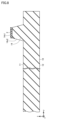
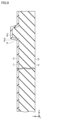
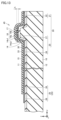
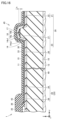
- FIG. 16 is a schematic partial enlarged cross-sectional view of a thermal printhead according to the second embodiment.
- FIG. 17 is a schematic partial enlarged sectional view showing a step subsequent to the step shown in FIG. 8 in the method of manufacturing the thermal printhead according to the second embodiment.
- FIG. 18 is a schematic, partially enlarged sectional view showing a step subsequent to the step shown in FIG. 17 in the method of manufacturing the thermal printhead according to the second embodiment.
- Fig. 1 is a schematic cross-sectional view of a thermal printhead 1 according to a first embodiment.
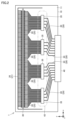
- Fig. 2 is a schematic plan view of the thermal printhead 1 according to a first embodiment.
- Fig. 3 is a schematic partial enlarged plan view of the thermal printhead 1 according to a first embodiment.
- Fig. 4 is a schematic partial enlarged cross-sectional view of the thermal printhead 1 according to a first embodiment.
- the thermal printhead 1 is an electronic device that prints on a print medium 47 such as thermal paper by selectively heating a number of heat generating elements 31 (see FIG. 3).
- the thermal printhead 1 mainly comprises a substrate 10, an insulating layer 15, a wiring layer 20, a resistor layer 30, a protective layer 33, a drive circuit 35, conductive wires 36 and 37, a connector 40, a sealing member 43, and a heat sink 49.
- the substrate 10 has a principal surface 11 and a rear surface 12 opposite the principal surface 11.
- the principal surface 11 and the rear surface 12 each extend in the x direction and the y direction perpendicular to the x direction.
- the x direction is the longitudinal direction of the substrate 10 and the main scanning direction of the thermal printhead 1.
- the y direction is the lateral direction of the substrate 10 and the sub-scanning direction of the thermal printhead 1.
- the z direction is the thickness direction of the substrate 10.
- the normal direction of the principal surface 11 is the z direction perpendicular to the x and y directions.
- the principal surface 11 faces the +z direction.
- the rear surface 12 faces the -z direction.
- the material constituting the substrate 10 is silicon.
- the substrate 10 has a protrusion 14 on the main surface 11.
- the protrusion 14 is formed by wet etching, for example, with an aqueous solution of potassium hydroxide (KOH), as described below.
- KOH potassium hydroxide
- the material constituting the substrate 10 is preferably silicon.
- the longitudinal direction of the protrusion 14 is the x-direction
- the lateral direction of the protrusion 14 is the y-direction.
- the height direction of the protrusion 14 is the z-direction.
- the protrusion 14 has a top surface 14s1 and a pair of inclined surfaces 14s2.
- the top surface 14s1 is the surface furthest from the main surface 11 in the z direction.
- the top surface 14s1 may extend in the x direction and the y direction.
- the pair of inclined surfaces 14s2 are disposed apart from each other in the y direction.
- the pair of inclined surfaces 14s2 connect the main surface 11 and the top surface 14s1.
- the pair of inclined surfaces 14s2 are inclined with respect to the main surface 11 so as to approach each other from the main surface 11 to the top surface 14s1.
- the inclination angle ⁇ of each of the pair of inclined surfaces 14s2 with respect to the main surface 11 is, for example, 54.7°.
- the substrate 10 having the protrusions 14 includes a single crystal of silicon (Si).
- the plane orientation of the main surface 11 and the back surface 12 is the (100) plane.
- the plane orientation of the pair of inclined surfaces 14s2 is the (111) plane.
- the insulating layer 15 is disposed on at least a portion of the main surface 11 and the convex portion 14, and covers at least a portion of the main surface 11 and the convex portion 14.
- the insulating layer 15 may cover the entire main surface 11.
- the material constituting the insulating layer 15 is an oxide film such as silicon dioxide (SiO 2 ).
- the oxide film such as silicon dioxide is formed by, for example, thermal oxidation.
- An oxide film (TEOS oxide film) formed using, for example, tetraethyl orthosilicate (TEOS) may be disposed on the oxide film formed by thermal oxidation.
- the TEOS oxide film is formed by stacking thin films of silicon dioxide multiple times using the plasma CVD method.
- the silicon dioxide is formed using tetraethyl orthosilicate as the raw material gas.
- the thickness of the TEOS oxide film in the z direction is, for example, 2.5 ⁇ m.
- the wiring layer 20 is connected to the resistor layer 30.
- the wiring layer 20 forms a conductive path for passing electricity to the multiple heat generating portions 31 of the resistor layer 30.
- the wiring layer 20 is electrically connected to the multiple heat generating portions 31.
- the wiring layer 20 may be, for example, a conductive material containing at least one of titanium (Ti) and copper (Cu).
- the wiring layer 20 may be aluminum (Al).
- the wiring layer 20 includes a common wiring 21, a plurality of individual wirings 25, and a plurality of lead-out wirings 29.
- the plurality of individual wirings 25 are separated from the common wiring 21 and the plurality of lead-out wirings 29.
- a current flows from the common wiring 21 toward the plurality of individual wirings 25 via the plurality of heat generating portions 31.
- the terminal portion 28 is disposed on the other side in the y direction (-y side) with respect to the resistor layer 30.
- the terminal portion 28 is disposed on the opposite side of the resistor layer 30 from the base portion 22 of the common wiring 21 in the y direction.
- the conductive wire 36 is bonded to the terminal portion 28 and the drive circuit 35.
- the terminal portion 28 is electrically connected to the drive circuit 35 through the conductive wire 36.
- the extension 26 is connected to the terminal portion 28.
- An end 27 of the extension 26 opposite the terminal portion 28 is in contact with the resistor layer 30.
- the end 27 of the extension 26 overlaps the protrusion 14.
- the resistor layer 30 includes a plurality of heat generating portions 31.
- a region of the resistor layer 30 sandwiched between a portion covered by one of the extension portions 26 of the common wiring 21 and a portion covered by one of the ends 27 of the individual wirings 25 adjacent to that portion in the x direction is one of the heat generating portions 31.
- the heat generating portions 31 are connected to the insulating layer 15.
- the heat generating portions 31 are arranged along the x direction. In a plan view of the main surface 11, the heat generating portions 31 overlap the protrusions 14. In a plan view of the main surface 11, the heat generating portions 31 are arranged inside the protrusions 14 in the short-side direction (y direction) of the resistor layer 30.
- the protective layer 33 covers the resistor layer 30, the wiring layer 20, and the multiple heat generating parts 31.
- the protective layer 33 is connected to the resistor layer 30, the wiring layer 20, and the multiple heat generating parts 31.
- the parts of the wiring layer 20 to which the conductive wires 36, 37 are bonded are exposed from the protective layer 33.
- the material constituting the protective layer 33 may be, for example, at least one of silicon dioxide, silicon nitride (SiN), and silicon carbide (SiC).
- the protective layer 33 may be formed by a CVD method.
- the thickness of the protective layer 33 in the z direction may be, for example, 3.2 ⁇ m.
- the drive circuit 35 is mounted on the main surface 11.
- the drive circuit 35 is fixed to the insulating layer 15 using a bonding material (not shown) such as an adhesive.
- the drive circuit 35 may be mounted on a wiring board (not shown) separated from the substrate 10.
- the wiring board is, for example, a printed circuit board (PCB).
- the drive circuit 35 is electrically connected to the wiring layer 20 (specifically, the multiple individual wirings 25 and the multiple lead-out wirings 29).
- the drive circuit 35 applies current individually to the multiple heat generating parts 31 through the multiple individual wirings 25.
- the heat generating parts 31 to which the current is applied selectively generate heat.
- the material constituting the hollow filler 16c is preferably one that has low thermal conductivity and ensures strength. Furthermore, in order to avoid melting due to heat during the manufacture of the thermal printhead 1, which will be described later, the material constituting the hollow filler 16c is preferably one that has a high melting point. In particular, the melting point of the material constituting the hollow filler 16c is preferably 800°C or higher. As such a material, the material constituting the hollow filler 16c is preferably glass, and in particular, quartz glass is more preferable.
- the glaze layer 16 is disposed between the resistor layer 30 and the insulating layer 15.
- the glaze layer 16 is disposed between the resistor layer 30 and the substrate 10.
- the glaze layer 16 may be disposed directly on the substrate 10.
- the glaze layer 16 may be disposed between the insulating layer 15 and the main surface 11 (see FIG. 15).
- the glaze layer 16 is disposed so as to cover the top surface 14s1 of the convex portion 14 of the main surface 11. As shown in FIG. 4, the glaze layer 16 is disposed so as to be sandwiched between a pair of inclined surfaces 14s2 in the y direction.
- the second glaze layer 16b is formed on the first glaze layer 16a.
- the second glaze layer 16b is formed by glaze printing.
- the glaze layer 16 is then formed by baking.
- the glaze layer 16 thus formed has a curved portion 17.
- the curved portion 17 is the surface of the glaze layer 16 that is the furthest from the substrate 10 in the z direction.
- the curved portion 17 is the surface that is connected to the resistor layer 30. In a plan view seen from the z direction, the curved portion 17 overlaps the convex portion 14.
- a step (S1a) of preparing a wafer 10a is carried out.
- a wafer 10a is prepared as a silicon substrate, which is a semiconductor material.
- the wafer 10a includes a single crystal of silicon.
- a step (S2a) of forming a mask layer 2 is performed.
- the mask layer 2 is formed in an area of the main surface 11a where the protrusions 14 are to be formed.
- the material constituting the mask layer 2 is, for example, silicon nitride (SiN) or silicon dioxide ( SiO2 ).
- the mask layer 2 is formed by using a CVD method or sputtering.
- a step (S4a) of forming an insulating layer 15 is carried out.
- an insulating layer 15 is formed to cover at least a portion of the main surface 11 and the protrusions 14.
- the insulating layer 15 is formed by thermal oxidation.
- a TEOS oxide film may be formed by stacking thin films of silicon dioxide multiple times using a plasma CVD method on an oxide film formed by thermal oxidation.
- a step (S7a) of forming the wiring layer 20 is performed.
- the wiring layer 20 is formed on the resistor layer 30.
- the wiring layer 20 is formed by sputtering.
- the wiring layer 20 may be formed, for example, by laminating a thin copper film multiple times using sputtering.
- the wiring layer 20 may be formed by laminating a thin titanium film on the resistor layer 30 using sputtering, and then laminating a thin copper film multiple times.
- the wiring layer 20 does not have to be formed by laminating a thin titanium film and a thin copper film, and the wiring layer 20 may be formed by laminating a thin aluminum film.
- lithography patterning is performed to remove a part of the wiring layer 20.
- a mask layer is formed on the wiring layer 20 by photolithography.
- the mask layer is used as a mask to partially remove the wiring layer 20 by etching.
- Wet etching can be used for the wiring layer 20.
- a mixed solution of sulfuric acid (H 2 SO 4 ) and hydrogen peroxide (H 2 O 2 ) is used.
- H 2 SO 4 sulfuric acid
- H 2 O 2 hydrogen peroxide
- a step (S9a) of mounting the drive circuit 35 is performed.
- the drive circuit 35 is mounted on the main surface 11 as shown in FIG. 14.
- the drive circuit 35 is fixed to the insulating layer 15 using a bonding member (not shown) such as an adhesive.
- the conductive wires 36, 37 are bonded.
- the conductive wire 36 is bonded to the drive circuit 35 and the terminal portions 28 of the multiple individual wirings 25 using a wire bonder (not shown).
- the conductive wire 37 is bonded to the drive circuit 35 and the multiple lead-out wirings 29 using a wire bonder (not shown).
- a sealing step (S10a) is performed.
- the drive circuit 35 is sealed with a sealing member 43.
- a sealing resin material is potted onto the drive circuit 35.
- the sealing resin material is then cured. In this manner, the sealing member 43 is formed.
- the connector 40 is attached to the substrate 10.
- the connector 40 includes a number of pins (not shown). Some of the pins are conductive to the number of lead-out wirings 29. Another number of the pins are conductive to a wiring (not shown) that is conductive to the base 22 of the common wiring 21.
- the heat sink 49 is attached to the substrate 10. Specifically, the heat sink 49 is attached to the rear surface 12 of the substrate 10 by a fastening member such as a screw or a joining member (not shown). In this way, the thermal printhead 1 of this embodiment shown in Figures 1 to 4 is obtained.
- the protrusion 45 faces a platen roller 46 included in the thermal printer.
- the platen roller 46 feeds the print medium 47 towards the thermal printhead 1.
- the print medium 47 is fed in the +y direction.
- the print medium 47 is sandwiched between the protrusion 45 and the platen roller 46.
- the drive circuit 35 applies current to the heat generating parts 31 individually through the individual wirings 25.
- the heat generating parts 31 to which the current is applied selectively generate heat.
- the heat generated in the heat generating parts 31 is transferred to the print medium 47. In this manner, printing is performed on the print medium 47 using the thermal print head 1.
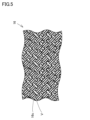
- the glaze layer 16 includes hollow fillers 16c.
- the hollow fillers 16c include a vacuum region V with a low thermal conductivity. Therefore, the dissipation of some of the heat generated in the heat generating parts 31 is suppressed by the glaze layer 16.
- the remainder of the heat generated in the heat generating parts 31 is dissipated to the outside of the thermal print head 1 through the substrate 10 and the heat sink 49.
- a thermal printhead 1 according to the present disclosure comprises a substrate 10 and a glaze layer 16.
- the substrate 10 has a major surface 11.
- the glaze layer 16 is disposed on the major surface 11.
- the glaze layer 16 includes hollow fillers 16c.
- the glaze layer 16 contains hollow fillers 16c, improving the heat storage capacity of the thermal print head 1.
- the improved heat storage capacity reduces the amount of current that flows when printing on the print medium 47.
- the volume content of the hollow filler 16c in the glaze layer 16 is 50% or more. In this way, a thermal printhead 1 with sufficiently improved heat storage properties can be obtained. By improving the heat storage properties, the amount of current that flows when printing on the print medium 47 can be reduced.
- the hollow filler 16c contains glass. This ensures the strength and heat storage properties of the glaze layer 16. It also prevents the hollow filler 16c from melting due to heat during the manufacture of the thermal printhead 1.
- the material constituting the substrate 10 is silicon.
- the convex portions 14 are formed by wet etching with an aqueous potassium hydroxide (KOH) solution, the convex portions 14 are configured as straight lines in a cross-sectional view.
- KOH potassium hydroxide
- convex portions 14 are formed on the main surface 11.
- the glaze layer 16 covers the top surfaces 14s1 of the convex portions 14. In this manner, the heat generated in the heat generating portion 31 is prevented from being dissipated to the substrate 10. As a result, the heat storage capacity of the thermal printhead 1 is improved.
- the glaze layer 16 has a curved portion 17.
- the direction perpendicular to the main surface 11 is the z direction.
- the curved portion 17 overlaps the convex portion 14. In this way, the surface of the heating portion 31 can be made curved by forming the heating portion 31 on the convex portion 14.
- the thickness h of the glaze layer 16 in the z direction is 20 ⁇ m or more and 250 ⁇ m or less. This improves the heat storage capacity of the thermal printhead 1. In particular, the greater the thickness h, the better the heat storage capacity of the thermal printhead 1.
- the glaze layer 16 is disposed between the resistor layer 30 and the insulating layer 15. This prevents the heat generated in the resistor layer 30 from being dissipated to the substrate 10. In particular, it prevents the heat generated in the heat generating portion 31 from being dissipated.
- Fig. 16 is a schematic partially enlarged cross-sectional view of the thermal printhead 1 of the second embodiment.
- Fig. 16 corresponds to Fig. 4.
- the thermal printhead 1 shown in Fig. 16 basically has the same configuration as the thermal printhead 1 shown in Figs. 1 to 4 and can obtain the same effects, but differs from the thermal printhead 1 shown in Figs. 1 to 4 in that the glaze layer 16 is disposed directly on the substrate 10.
- the glaze layer 16 may be disposed between the insulating layer 15 and the main surface 11. Even with such a configuration, a thermal printhead 1 with sufficiently improved heat storage properties can be obtained. By improving the heat storage properties, the amount of current flowing when printing on the print medium 47 can be reduced.
- a step (S1b) of preparing a wafer 10a is carried out first.
- a wafer 10a is prepared as a silicon substrate, which is a semiconductor material.
- the wafer 10a includes a single crystal of silicon.
- a step (S2b) of forming a mask layer 2 is performed.
- the mask layer 2 is formed in an area of the main surface 11a where the protrusions 14 are to be formed.
- the material constituting the mask layer 2 is, for example, silicon nitride (SiN) or silicon dioxide ( SiO2 ).
- the mask layer 2 is formed by using a CVD method or sputtering.
- an etching step (S3b) is performed.
- the wafer 10a is wet-etched using the mask layer 2 as a mask.
- the wafer 10a is etched in the -z direction in the areas where the mask layer 2 is not arranged.
- wet etching is performed using an aqueous potassium hydroxide (KOH) solution as an etching solution.
- KOH aqueous potassium hydroxide
- the substrate 10 is formed.
- the wafer 10a is not etched in the areas where the mask layer 2 is formed.
- a protrusion 14 is formed on the main surface 11 of the substrate 10.
- the wafer 10a is etched so that the inclination angle ⁇ of the inclined surface 14s2 with respect to the main surface 11 is 54.7°.
- the mask layer 2 is removed by wet etching using hydrofluoric acid (HF).
- a step (S4b) of forming a glaze layer 16 is carried out.
- a glaze layer 16 is formed on the top surface 14s1 of the substrate 10.
- a glaze containing hollow fillers 16c is applied to the top surface 14s1 of the convex portion 14.
- the glaze is then dried. In this manner, a first glaze layer 16a containing hollow fillers 16c is formed.
- glaze is applied onto the first glaze layer 16a by glaze printing. In this way, the second glaze layer 16b is formed. Then, the glaze layer 16 is formed by firing.
- a step (S5b) of forming an insulating layer 15 is carried out.
- an insulating layer 15 is formed to cover at least a portion of the main surface 11, at least a portion of the protrusions 14, and the glaze layer 16.
- the insulating layer 15 is formed by thermal oxidation.
- a TEOS oxide film may be formed by stacking thin films of silicon dioxide multiple times using a plasma CVD method on the oxide film formed by thermal oxidation.
- the steps (S6a) of forming the resistor layer 30 and the sealing step (S10a) shown in Figures 11 to 15 are carried out in sequence. In this manner, the thermal printhead 1 according to the second embodiment is manufactured.
- the glaze layer 16 is disposed between the insulating layer 15 and the main surface 11. In this manner, a thermal printhead 1 with improved heat storage properties can be obtained.
- the improved heat storage properties make it possible to reduce the amount of current that flows when printing on the print medium 47.
- appendix 1 A substrate having a major surface; a glaze layer disposed on the main surface; The glaze layer comprises hollow fillers.
- Appendix 2 2.
- Appendix 3 3.
- Appendix 4 A convex portion is formed on the main surface, 4.
- Appendix 5 The glaze layer has a curved surface portion, If the direction perpendicular to the main surface is the z direction, 5.
- the thermal printhead of claim 4 wherein the curved portion overlaps the convex portion in a plan view seen from the z direction.
- Appendix 6 6.
- Appendix 7 An insulating layer; A resistor layer is further provided, the insulating layer is disposed on the major surface; the resistor layer is disposed on the insulating layer; 7.
- Appendix 8) 8.
- Appendix 9) 8.
- 1 thermal print head 2 mask layer, 10 substrate, 10a wafer, 11, 11a main surface, 12, 12a back surface, 14 convex portion, 14s1 top surface, 14s2 inclined surface, 15 insulating layer, 16 metal layer, 16a first glaze layer, 16b second glaze layer, 16c hollow filler, 17 curved surface portion, 20 wiring layer, 21 common wiring, 22 base portion, 23, 26 extension portion, 25 individual wiring, 27 end portion, 28 terminal portion, 29 lead wiring, 30 resistor layer, 31 heat generating portion, 33 protective layer, 35 drive circuit, 36, 37 conductive wire, 40 connector, 43 sealing member, 45 protrusion, 46 platen roller, 47 printing medium, 49 heat sink, h thickness, V area.
Landscapes
- Electronic Switches (AREA)
Priority Applications (1)
| Application Number | Priority Date | Filing Date | Title |
|---|---|---|---|
| JP2025533897A JPWO2025018043A1 (https=) | 2023-07-14 | 2024-06-03 |
Applications Claiming Priority (2)
| Application Number | Priority Date | Filing Date | Title |
|---|---|---|---|
| JP2023-115786 | 2023-07-14 | ||
| JP2023115786 | 2023-07-14 |
Publications (1)
| Publication Number | Publication Date |
|---|---|
| WO2025018043A1 true WO2025018043A1 (ja) | 2025-01-23 |
Family
ID=94281737
Family Applications (1)
| Application Number | Title | Priority Date | Filing Date |
|---|---|---|---|
| PCT/JP2024/020147 Pending WO2025018043A1 (ja) | 2023-07-14 | 2024-06-03 | サーマルプリントヘッド |
Country Status (2)
| Country | Link |
|---|---|
| JP (1) | JPWO2025018043A1 (https=) |
| WO (1) | WO2025018043A1 (https=) |
Citations (3)
| Publication number | Priority date | Publication date | Assignee | Title |
|---|---|---|---|---|
| JPH08192526A (ja) * | 1994-11-18 | 1996-07-30 | Fuji Photo Film Co Ltd | サーマルヘッド及びその製造方法 |
| JP2021011021A (ja) * | 2019-07-03 | 2021-02-04 | ローム株式会社 | サーマルプリントヘッドおよびその製造方法 |
| JP2022125740A (ja) * | 2021-02-17 | 2022-08-29 | ローム株式会社 | 蓄熱層の形成方法、サーマルプリントヘッド及びその製造方法、並びにサーマルプリンタ |
-
2024
- 2024-06-03 JP JP2025533897A patent/JPWO2025018043A1/ja active Pending
- 2024-06-03 WO PCT/JP2024/020147 patent/WO2025018043A1/ja active Pending
Patent Citations (3)
| Publication number | Priority date | Publication date | Assignee | Title |
|---|---|---|---|---|
| JPH08192526A (ja) * | 1994-11-18 | 1996-07-30 | Fuji Photo Film Co Ltd | サーマルヘッド及びその製造方法 |
| JP2021011021A (ja) * | 2019-07-03 | 2021-02-04 | ローム株式会社 | サーマルプリントヘッドおよびその製造方法 |
| JP2022125740A (ja) * | 2021-02-17 | 2022-08-29 | ローム株式会社 | 蓄熱層の形成方法、サーマルプリントヘッド及びその製造方法、並びにサーマルプリンタ |
Also Published As
| Publication number | Publication date |
|---|---|
| JPWO2025018043A1 (https=) | 2025-01-23 |
Similar Documents
| Publication | Publication Date | Title |
|---|---|---|
| US11458739B2 (en) | Thermal print head, manufacturing method of thermal print head, and thermal printer | |
| CN110509672B (zh) | 热敏打印头 | |
| WO2025018043A1 (ja) | サーマルプリントヘッド | |
| US11850870B2 (en) | Thermal print head and manufacturing method thereof | |
| US20220063292A1 (en) | Thermal print head, manufacturing method of thermal print head, and thermal printer | |
| JP2024154531A (ja) | サーマルプリントヘッド | |
| US11926156B2 (en) | Thermal print head and method of fabricating thereof | |
| JP2023072582A (ja) | サーマルプリントヘッド、およびサーマルプリントヘッドの製造方法 | |
| WO2021200401A1 (ja) | サーマルプリントヘッド、およびサーマルプリントヘッドの製造方法 | |
| JP2024024913A (ja) | サーマルプリントヘッドおよびサーマルプリンタ | |
| JP2023165460A (ja) | サーマルプリントヘッド | |
| JP2023167832A (ja) | サーマルプリントヘッド、およびサーマルプリントヘッドの製造方法 | |
| JP2025187072A (ja) | サーマルプリントヘッド | |
| JP7569680B2 (ja) | サーマルプリントヘッド、およびサーマルプリントヘッドの製造方法 | |
| WO2024014066A1 (ja) | サーマルプリントヘッド | |
| JP2024009481A (ja) | サーマルプリントヘッドおよびサーマルプリントヘッドの製造方法 | |
| JP7557320B2 (ja) | サーマルプリントヘッド | |
| JP2023121929A (ja) | サーマルプリントヘッド | |
| US11633959B2 (en) | Thermal print head | |
| JP2023128840A (ja) | サーマルプリントヘッド | |
| JP2023072897A (ja) | サーマルプリントヘッド、およびサーマルプリントヘッドの製造方法 | |
| JP2023109032A (ja) | サーマルプリントヘッド、およびサーマルプリントヘッドの製造方法 | |
| JP2024009569A (ja) | サーマルプリントヘッド及びその製造方法 | |
| CN114728523B (zh) | 热敏打印头及其制造方法 | |
| JP2025065724A (ja) | サーマルプリントヘッド |
Legal Events
| Date | Code | Title | Description |
|---|---|---|---|
| 121 | Ep: the epo has been informed by wipo that ep was designated in this application |
Ref document number: 24842839 Country of ref document: EP Kind code of ref document: A1 |
|
| ENP | Entry into the national phase |
Ref document number: 2025533897 Country of ref document: JP Kind code of ref document: A |
|
| WWE | Wipo information: entry into national phase |
Ref document number: 2025533897 Country of ref document: JP |
|
| NENP | Non-entry into the national phase |
Ref country code: DE |