WO2025013278A1 - 情報処理装置、支援方法、および支援プログラム - Google Patents
情報処理装置、支援方法、および支援プログラム Download PDFInfo
- Publication number
- WO2025013278A1 WO2025013278A1 PCT/JP2023/025860 JP2023025860W WO2025013278A1 WO 2025013278 A1 WO2025013278 A1 WO 2025013278A1 JP 2023025860 W JP2023025860 W JP 2023025860W WO 2025013278 A1 WO2025013278 A1 WO 2025013278A1
- Authority
- WO
- WIPO (PCT)
- Prior art keywords
- prompt
- input
- information processing
- content
- processing device
- Prior art date
- Legal status (The legal status is an assumption and is not a legal conclusion. Google has not performed a legal analysis and makes no representation as to the accuracy of the status listed.)
- Pending
Links
Images




Classifications
-
- G—PHYSICS
- G06—COMPUTING OR CALCULATING; COUNTING
- G06F—ELECTRIC DIGITAL DATA PROCESSING
- G06F16/00—Information retrieval; Database structures therefor; File system structures therefor
- G06F16/90—Details of database functions independent of the retrieved data types
-
- G—PHYSICS
- G06—COMPUTING OR CALCULATING; COUNTING
- G06F—ELECTRIC DIGITAL DATA PROCESSING
- G06F16/00—Information retrieval; Database structures therefor; File system structures therefor
- G06F16/90—Details of database functions independent of the retrieved data types
- G06F16/903—Querying
Definitions
- This disclosure relates to an information processing device, a support method, and a support program.
- One example of a technology for automatically generating content is the answer generation device described in Patent Document 1. More specifically, the answer generation device described in Patent Document 1 accepts text data of a question from a user, and generates answer output information for the question.
- the present disclosure has been made in consideration of the above problems, and an exemplary objective thereof is to provide a technology that assists a user in inputting appropriate prompts into a generative model.
- An information processing device includes a receiving means for receiving an input of a prompt for generating a predetermined content in a generative model constructed by machine learning, an acquiring means for acquiring a related prompt related to the input prompt that is the prompt that is accepted as input by the receiving means from a database in which prompts previously input to the generative model are recorded, and a presenting means for presenting the related prompt to a person inputting the input prompt.
- At least one processor executes a reception process for receiving an input of a prompt for causing a generative model constructed by machine learning to generate a predetermined content, an acquisition process for acquiring a related prompt related to the input prompt, which is a prompt whose input was accepted in the reception process, from a database in which prompts previously input to the generative model are recorded, and a presentation process for presenting the related prompt to the person inputting the input prompt.
- An assistance program causes a computer to function as: a receiving means for receiving an input of a prompt for generating a predetermined content in a generative model constructed by machine learning; an acquiring means for acquiring, from a database in which prompts previously input to the generative model are recorded, a related prompt related to the input prompt for which the receiving means has accepted the input; and a presenting means for presenting the related prompt to a person inputting the input prompt.
- An exemplary aspect of the present disclosure has the exemplary effect of providing a technology that assists a prompt inputter in inputting appropriate prompts into a generative model.
- FIG. 1 is a block diagram showing a configuration of an information processing device according to the present disclosure.
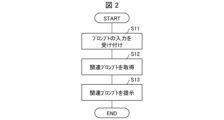
- FIG. 1 is a flow diagram showing the flow of a support method according to the present disclosure.
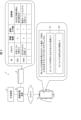
- 1 is a diagram illustrating an overview of an information processing system according to the present disclosure.
- FIG. 13 is a block diagram showing a configuration of another information processing device according to the present disclosure.
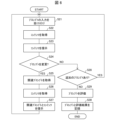
- FIG. 11 is a flowchart showing a flow of a process executed by the other information processing device.
- FIG. 1 is a block diagram showing a configuration of a computer that functions as an information processing device according to the present disclosure.
- a first exemplary embodiment which is an example of an embodiment of the present invention, will be described in detail with reference to the drawings.
- This exemplary embodiment is the basic form of each exemplary embodiment described later.
- the scope of application of each technical means adopted in this exemplary embodiment is not limited to this exemplary embodiment. That is, each technical means adopted in this exemplary embodiment can be adopted in other exemplary embodiments included in this disclosure to the extent that no particular technical obstacle occurs.
- each technical means shown in the drawings referred to for explaining this exemplary embodiment can also be adopted in other exemplary embodiments included in this disclosure to the extent that no particular technical obstacle occurs.
- Fig. 1 is a block diagram showing the configuration of the information processing device 1. As shown in Fig. 1, the information processing device 1 includes a receiving unit 11, an acquiring unit 12, and a presenting unit 13.
- the reception unit 11 receives the input of a prompt for causing a generative model constructed by machine learning to generate a specific content.
- a prompt refers to an instruction or command to generate content for the generative model. Therefore, the "prompt” in the following description can be replaced with a "generation instruction” or a "generation command.”
- the format of the input prompt is not particularly limited.
- the input prompt may be in text format, or in other formats such as audio format, or may include multiple formats of data, such as a combination of text and images.
- the content generated by the generative model may be a sentence or text, a table, an image, a program code, an audio, or a piece of music.
- the format of the content is also not particularly limited.
- the content may be in text format, image format, or audio format.
- the acquisition unit 12 acquires, from the database 2 in which prompts previously input to the generative model are recorded, a related prompt that is related to the input prompt that is the prompt that the reception unit 11 has accepted as input.
- FIG. 1 shows an example in which the database 2 external to the information processing device 1 is referenced, the database 2 may also be recorded inside the information processing device 1.
- the presentation unit 13 presents the related prompt to the person inputting the input prompt.
- the manner in which the related prompt is presented is not particularly limited.
- the presentation unit 13 may present the related prompt by displaying it on a display device, by outputting it as sound on an audio output device, or by printing it on a printing device.
- the device that presents the related prompt (for example, the above-mentioned display device, audio output device, or printing device) may be included in the information processing device 1, or may be an external device to the information processing device 1.
- the information processing device 1 includes a reception unit 11 that receives input of a prompt for generating specified content in a generative model constructed by machine learning, an acquisition unit 12 that acquires related prompts related to the input prompt that is the prompt accepted by the reception unit 11 from a database 2 in which prompts previously input to the generative model are recorded, and a presentation unit 13 that presents the related prompt to the person inputting the input prompt.
- the above configuration presents the user with a related prompt that is related to the input prompt, thereby supporting the user in inputting an appropriate prompt into the generative model.
- the above configuration also makes it possible to support the user in making decisions when inputting a prompt.
- the user can refer to the presented related prompt to revise the input prompt.
- the user can also reuse the presented related prompt as is or after revising it. This makes it possible for the user to input a more appropriate prompt into the generative model than the input prompt originally entered, thereby generating content.
- the above-described functions of the information processing device 1 can also be realized by a program.
- the assistance program according to the present exemplary embodiment causes a computer to function as a reception unit that receives an input of a prompt for generating a predetermined content in a generation model constructed by machine learning, an acquisition unit that acquires a related prompt related to the input prompt that is the prompt that the reception unit has received from a database in which prompts previously input to the generation model are recorded, and a presentation unit that presents the related prompt to a person inputting the input prompt. Therefore, according to the assistance program according to the present exemplary embodiment, it is possible to obtain an effect that it is possible to support a person inputting an input prompt to input an appropriate prompt to the generation model.
- Fig. 2 is a flow diagram showing the flow of the support method. Note that the execution subject of each step in this support method may be a processor provided in the information processing device 1, or a processor provided in another device, or each step may be a processor provided in a different device.
- At least one processor accepts input of a prompt to cause the generative model constructed by machine learning to generate specified content.
- At least one processor retrieves related prompts related to the input prompt that was accepted in S11 from a database that records prompts previously input to the generative model.
- At least one processor presents the relevant prompts obtained in S12 to the person entering the input prompt.
- Fig. 3 is a diagram showing an overview of the information processing system 7.
- the information processing system 7 is a system having a function of accepting the input of a prompt and causing a generative model to generate content using the prompt.
- the information processing system 7 also has a function of supporting a prompt inputter to input an appropriate prompt to the generative model.
- the information processing system 7 has an information processing device 1A, a database 2, a generation device 3, and a terminal device 4.
- the generation device 3 uses a generation model constructed by machine learning to generate content corresponding to the input prompt.
- a user of the information processing system 7 can input a prompt and view the generated content using a terminal device 4.
- FIG. 3 shows an example in which the terminal device 4 is a smartphone.
- the terminal device 4 is not limited to a smartphone as long as it is a device capable of inputting a prompt and viewing the generated content.
- FIG. 3 shows only one terminal device 4, the information processing system 7 can be used by multiple users using their own terminal devices.
- the information processing device 1A acquires a prompt input to the terminal device 4 and transmits the prompt to the generation device 3 to generate content.
- the information processing device 1A then acquires the content generated by the generation device 3 and transmits it to the terminal device 4. This allows the user to view the content corresponding to the input prompt on the terminal device 4.
- the format of the prompt and content is not particularly limited.
- an example will be described in which the input of a text prompt (e.g., a question) is accepted and text content (e.g., an answer to the question) is presented in response to the prompt.
- the generative model can be, for example, a language model or a large-scale language model that uses machine learning to learn the arrangement of components (such as words) in a sentence or the arrangement of sentences in a piece of text. This makes it possible to generate text-format content from a text-format prompt.
- the generative model used can be appropriate depending on the format of the input prompt and the content to be output. For example, various generative AI (Generative Artificial Intelligence) can be applied as the generative model.
- the content generated by the generation device 3 may not be in line with the user's intentions.
- the information processing system 7 allows the user to have a related prompt presented that is related to the prompt that the user input. This allows the user to re-input the prompt by referring to the related prompt, and generate content in line with the user's intentions.
- the process of presenting related prompts is performed by information processing device 1A. Specifically, information processing device 1A obtains related prompts related to the prompt input by the user from database 2, and presents the obtained related prompts to the user.
- Database 2 is a database that records prompts previously input into a generation model used by generation device 3 to generate content.
- prompts may be managed in a table format, for example as shown in FIG. 3. Specifically, in the database 2 shown in FIG. 3, a unique ID (Identification) is assigned to each prompt for management. Also, in the database 2 shown in FIG. 3, an "answer,” an “evaluation result,” and a “number of additional inputs" are recorded in association with each prompt.
- a unique ID Identity
- an "answer,” an "evaluation result,” and a "number of additional inputs” are recorded in association with each prompt.
- “Answer” is a response to a prompt, i.e., the content generated by the generation device 3 from that prompt.
- “Evaluation result” is the user's evaluation result for that prompt or the above-mentioned “Answer”.
- “Number of additional inputs” is the number of additional prompts input in relation to a prompt after the prompt is input. For example, the prompt with ID 0001 shown in FIG. 3 is "Tell me about the weather.” The answer to this prompt is "Today's forecast is sunny. The probability of precipitation is", and the numerical value indicating the evaluation result is 5. Furthermore, the number of additional prompts input in relation to this prompt after the prompt is input is "0.”
- the information processing device 1A acquires a related prompt related to the prompt input by the user from among the prompts recorded in the database 2, and presents it to the user. For example, in the example of FIG. 3, the information processing device 1A causes the terminal device 4 to display a related prompt A1 saying "Explain X in a way that a junior high school student can understand” and a related prompt A2 saying “Explain X in 100 characters or less.” For example, if the user feels that the content presented initially is too difficult, the user can re-input the prompt with the "X" part of the related prompt A1 replaced with the content the user wants to know.
- the user can re-input the prompt with the "X" part of the related prompt A2 replaced with the content the user wants to know and "100 characters" replaced with the desired volume. This enables the user to generate content that meets his or her intention.
- Fig. 4 is a block diagram showing the configuration of the information processing device 1A.
- the information processing device 1A includes a control unit 10A that controls each unit of the information processing device 1A, and a storage unit 17A that stores various data used by the information processing device 1A.
- the information processing device 1A also includes a communication unit 18A for the information processing device 1A to communicate with other devices (e.g., the generating device 3 and the terminal device 4), an input unit 19A that accepts input of various data to the information processing device 1A, and an output unit 20A for the information processing device 1A to output various data.
- the control unit 10A of the information processing device 1A includes a content acquisition unit 14A, an evaluation unit 15A, and a recording unit 16A in addition to the acceptance unit 11, acquisition unit 12, and presentation unit 13 that the information processing device 1 includes.
- the content acquisition unit 14A sends the prompt received by the reception unit 11 to the generation device 3 to generate content, and acquires the generated content from the generation device 3.
- the content acquired by the content acquisition unit 14A is presented to the user by the presentation unit 13.
- the content acquisition unit 14A may acquire the content by generating the content using a generative model.
- the information processing device 1A will also have the functions of the generation device 3, so that the generation device 3 can be omitted from the information processing system 7.
- the evaluation unit 15A evaluates the appropriateness of the prompt that the reception unit 11 has received as input.
- the method of evaluating the prompt is not particularly limited.
- the evaluation unit 15A may receive feedback from the user regarding the appropriateness of the generated content, and evaluate the prompt according to the content of that feedback.
- the evaluation unit 15A may give a high rating to a prompt used to generate content for which the user's feedback was positive, and give a low rating to a prompt used to generate content for which the user's feedback was negative.
- the evaluation unit 15A may also evaluate the appropriateness of a prompt based on the number of additional prompts input in relation to the prompt after the reception unit 11 receives the input of the prompt. If the initially input prompt is appropriate, the user can generate the desired content without having to input additional prompts multiple times. On the other hand, if the initially input prompt is not appropriate, the user may need to input additional prompts multiple times until the desired content is generated. For this reason, the number of additional prompts input is useful as an index for evaluating the appropriateness of a prompt.
- the evaluation unit 15A may determine whether an additionally input prompt is related to a previously input prompt by analyzing the content of each prompt. Furthermore, the evaluation unit 15A may consider one or more prompts input within a predetermined time after the previous prompt is input as prompts related to the previously input prompt, without considering the content of the prompt. Furthermore, the evaluation unit 15A may consider one or more prompts input during the period after the previous prompt is input and before an operation to end the input of the prompt is performed as prompts related to the previously input prompt.
- the evaluation unit 15A may take the number of additionally input prompts as the evaluation result directly, or may determine the evaluation result from the number of additionally input prompts. In the latter case, the correspondence between the number of additionally input prompts and the evaluation result may be defined in advance. For example, the evaluation unit 15A may determine the evaluation as "good” if the number of additionally input prompts is 2 or less, "average” if it is 3 to 5, and “poor” if it is 6 or more.
- the method by which the evaluation unit 15A evaluates a prompt is not limited to the above-mentioned methods.
- the evaluation unit 15A may evaluate the prompt based on the user's reaction to the prompt.
- the method for evaluating the user's reaction is arbitrary.
- the evaluation unit 15A may evaluate the prompt using at least one of the following: the time until the same user next uses the information processing device 1A, the frequency with which the user shares the output of the information processing device 1A with others, or the user's reaction speed (how quickly they respond to an answer).
- the recording unit 16A records in the database 2 the prompts received by the reception unit 11 and the evaluation results of the prompts by the evaluation unit 15A in association with each other. If the evaluation unit 15A obtains multiple evaluation results by applying multiple evaluation methods, the recording unit 16A may record the multiple evaluation results in the database 2. For example, the database 2 shown in FIG. 3 records an "evaluation result" based on user feedback and a "number of additional inputs” indicating the number of additional prompts input, both of which are the evaluation results recorded by the evaluation unit 15A.
- the database 2 may include prompts not recorded by the recording unit 16A (e.g., prompts input by the creator or administrator of the information processing system 7). Furthermore, it is not necessary for the prompts recorded in the database 2 to be associated with their evaluation results.
- the information processing device 1A includes an evaluation unit 15A that evaluates the validity of a prompt received by the reception unit 11, and a recording unit 16A that records the prompt in the database 2 in association with the evaluation result of the prompt by the evaluation unit 15A. Therefore, in addition to the effects of the information processing device 1, the information processing device 1A has the effect of making it possible to present prompts input by a user that have a good evaluation result for validity as related prompts to the user or other users.
- the evaluation unit 15A may evaluate the appropriateness of the prompt based on the number of additional prompts that are input in relation to the prompt. This provides the effect of being able to obtain an appropriate evaluation result for the prompt even in the absence of user feedback, in addition to the effect provided by the information processing device 1.
- the evaluation result of each prompt can be used as one of the criteria when the acquisition unit 12 acquires related prompts from the database 2.
- Another criterion when the acquisition unit 12 acquires related prompts from the database 2 is the similarity of the content with the prompt accepted by the acceptance unit 11. Any method can be used to calculate the similarity between prompts. For example, if the prompt is in text format, the acquisition unit 12 may generate a feature vector representing the characteristics of the text from each text and calculate the similarity (for example, cosine similarity) between the generated feature vectors.
- the acquisition unit 12 may acquire as a related prompt a prompt selected from the prompts recorded in the database 2 based on the degree of similarity between the content of the prompt and the prompt received by the reception unit 11 and the evaluation result of the validity of each prompt recorded in the database 2. This provides the effect of making it possible to select as a related prompt a prompt whose content is similar to the input prompt and whose validity has been evaluated favorably, in addition to the effect provided by the information processing device 1.
- FIG. 5 is a diagram showing an example of a UI (User Interface) screen displayed by information processing device 1A. More specifically, A3 in Fig. 5 is an example of a UI screen that accepts an input of a question and displays an answer to the question. A4 in Fig. 5 is an example of a UI screen that displays related questions. These UI screens are displayed by presentation unit 13 on, for example, the display unit of terminal device 4.
- the UI screen A3 includes a question input field A31, an answer field A32 that displays the answer to that question, and objects A33 to A35 that accept feedback on the answer.
- the UI screen A3 also includes an object A36 for asking a follow-up question related to the question entered in A31, and an object A37 for entering a question different from the one entered in A31.
- the user inputs any question into the input field A31, and the terminal device 4 transmits the input question to the information processing device 1A.
- the reception unit 11 acquires the question transmitted from the terminal device 4.
- the content acquisition unit 14A transmits the acquired question to the generation device 3 to generate an answer to the question, and acquires the generated answer from the generation device 3.
- the presentation unit 13 displays the acquired answer in the answer field A32, and also displays objects A33 to A35 that receive feedback on the answer. Note that objects A33 to A35 may be displayed before the answer is displayed (for example, when the input field A31 and answer field A32 are displayed).
- evaluation unit 15A evaluates the question entered by the user. For example, if an evaluation value is set in advance for each of objects A33 to A35, evaluation unit 15A can set the evaluation value set for the selected object as the evaluation result for the question. For example, if the evaluation values for objects A33 to A35 are set to "5,” “3,” and "1," respectively, when object A33 is selected, evaluation unit A15 can set the evaluation result for the question to "5.”
- the evaluation unit 15A can clearly grasp the number of additional questions, which is one of the evaluation criteria for evaluating questions.
- the presentation unit 13 displays on the terminal device 4 a screen for accepting input of an additional question.
- the presentation unit 13 may display a new input field for accepting input of the additional question below the answer field A32.
- the presentation unit 13 may then display the answer to the additional question below the new input field. This causes the initial question and its answer, and the additional question and its answer to be displayed in chronological order, allowing the user to check the new answer while referring to past events.
- the presentation unit 13 causes the terminal device 4 to display a screen for accepting input of a new question.
- This screen may be, for example, something like the UI screen A4 shown in FIG. 5.
- the UI screen A4 includes a related question display field A41 for displaying related questions, and answer example display fields A42 and A43 for displaying answers generated from the related questions.
- the UI screen A4 also includes an object A44 for using the related question displayed in the related question display field A41 as a template, and an input field A45 for a new question.
- the related questions to be displayed in the related question display field A41 are acquired from the database 2 by the acquisition unit 12.
- a question "Outdoors in the daytime...please tell me what to do” is displayed, which is similar in content to the question "I think I have a fever. What should I do?" entered in the input field A31 in the UI screen example A3.
- the answers "It may be heat stroke" and "It may be a viral infection" are displayed as answer examples to this question.
- These answers are generated by inputting the related questions displayed in the related question display field A41 into a generation model provided in the generation device 3.
- a generation model whose output changes probabilistically, such as a language model or a large-scale language model
- the answers output when the same question is input multiple times may be different.
- the content acquisition unit 14A can cause the generation device 3 to repeat the process of inputting the related questions into the generation model and generating answers multiple times. In this way, the content acquisition unit 14A can acquire multiple different answers for one related question.
- the presentation unit 13 can then display each acquired answer together with the related question.
- the user can check the displayed related questions and their answers, and use them as reference to input a new question in input field A45. At this time, the user may select object A44. This copies the related question displayed in related question display field A41 to input field A45, and the user can use the copied related question as is or modify it as appropriate to create a new question.
- the information processing device 1A can also be applied to the field of healthcare.
- the information processing device 1A displays related questions to a question about physical condition input by the user, which clearly indicate the time when symptoms appeared, details of the symptoms, and the perspective from which the user would like an answer. Displaying such related questions is useful for improving the accuracy of self-diagnosis.
- the answers to the related questions can serve as a second opinion to the answer to the first question. Therefore, the information processing device 1A can also be used for diagnostic support by medical professionals.
- the presentation unit 13 may present the user who input the question with a related question, i.e., a related prompt, together with an answer, i.e., content, generated by inputting the related question into the generative model.
- a related question i.e., a related prompt
- an answer i.e., content
- the content generated by inputting a related prompt into a generative model is useful for understanding the characteristics of the related prompt and predicting the content that will be generated when a question similar to the related prompt is input. Therefore, according to the above configuration, in addition to the effects of the information processing device 1, it is possible to obtain the effect of presenting the user with information that is useful for inputting an appropriate prompt. Furthermore, according to the above configuration, it is possible to increase the likelihood that an appropriate prompt will be input.
- the presentation unit 13 may present each piece of content obtained by repeating the process of generating an answer, i.e., content, by inputting the related prompt into a generative model multiple times together with the related question, i.e., the related prompt, to the user who input the prompt.
- Fig. 6 is a flow diagram showing the flow of the process executed by the information processing device 1A.
- the presentation unit 13 may display a UI screen (e.g., UI screen A3 shown in Fig. 5) for accepting input of a prompt on a device (e.g., terminal device 4) used by the user to input the prompt.
- a UI screen e.g., UI screen A3 shown in Fig. 5
- the reception unit 11 receives the input of a prompt.
- the reception unit 11 may receive the input of a prompt via another device such as the terminal device 4.
- the reception unit 11 may also receive the input of a prompt via the input unit 19A.
- the content acquisition unit 14A acquires the content generated using the prompt received in S21. As described above, the content acquisition unit 14A may send the prompt to the generation device 3 to generate content, and acquire the generated content from the generation device 3. In addition, if the information processing device 1A stores a generation model, the content acquisition unit 14A may generate content using the generation model.
- the presentation unit 13 presents the content acquired in S22 to the user. As described above, the presentation unit 13 may present the acquired content to the user by displaying the content on the terminal device 4. The presentation unit 13 may also output the content via the output unit 20A. After the content is presented in S23, the reception unit 11 may also receive feedback from the user regarding the presented content.
- the reception unit 11 determines whether or not to change the prompt whose input was received in S21 to another prompt. For example, when the presentation unit 13 displays the UI screen A3 shown in FIG. 5, the reception unit 11 may determine that the prompt is to be changed when the object A37 is selected. If the determination in S24 is YES, the process proceeds to S25, and if the determination in S24 is NO, the process proceeds to S28.
- the acquisition unit 12 acquires from the database 2 a related prompt of the prompt whose input was accepted in S21.
- the acquisition unit 12 may calculate a similarity between the prompt whose input was accepted in S21 and each prompt recorded in the database 2. The acquisition unit 12 may then select a related prompt based on the calculated similarity and an evaluation result of each prompt recorded in the database 2. Note that the acquisition unit 12 may acquire multiple related prompts.
- the content acquisition unit 14A acquires the content generated by inputting the related prompt acquired in S25 into the generation model.
- the process of S26 is the same as the process of S22, except that the prompt used is changed to the related prompt.
- the content acquisition unit 14A may cause the generation device 3 to generate multiple pieces of content from one related prompt and acquire the multiple pieces of content.
- the presentation unit 13 presents the related prompt acquired in S25 and the content acquired in S26 to the user.
- the presentation unit 13 may present the related prompt and the content to the user by displaying the UI screen A4 shown in FIG. 5 on the terminal device 4. Note that if multiple related prompts are acquired in S25, the presentation unit 13 may present the multiple related prompts in S27.
- the processing returns to S21.
- the user can input a new prompt by referring to the related prompt and the content generated using it.
- the reception unit 11 determines whether or not there is an additional prompt related to the prompt whose input was accepted in S21. For example, when the presentation unit 13 displays the UI screen A3 shown in FIG. 5, the reception unit 11 may determine that there is an additional prompt when object A36 is selected. On the other hand, the reception unit 11 may determine that there is no additional prompt when an operation to end the input of the prompt is accepted. If the judgment in S28 is YES, the process returns to S21, and the input of the additional prompt is accepted. On the other hand, if the judgment in S28 is NO, the process proceeds to S29.
- the evaluation unit 15A evaluates the appropriateness of the prompt input received in S21. For example, the evaluation unit 15A may evaluate the appropriateness of the prompt based on the results of the user's feedback regarding the quality of the content presented in S23. Furthermore, the evaluation unit 15A may evaluate the appropriateness of the prompt based on the number of additional prompts input after receiving the prompt input in S21.
- the recording unit 16A records in the database 2 the prompt received in S21 and the evaluation result of that prompt in S29 in association with each other. This ends the processing in FIG. 6. Note that the processing in S29 and S30 may also be performed when the determination in S24 is YES. In other words, the evaluation unit 15A may evaluate the prompt that has been changed. Furthermore, the recording unit 16A may record the prompt that has been changed in the database 2.
- the execution subject of each process described in the above embodiment is arbitrary and is not limited to the above example.
- the functions of the information processing device 1 and 1A can be realized by multiple devices (which can also be called processors) that can communicate with each other.
- processors which can also be called processors
- each process described in the flow charts of Figures 2 and 6 can be shared and executed by multiple processors.
- the execution subject of the support method in the above embodiment may be one processor or multiple processors.
- An information processing device includes an evaluation means for evaluating the validity of a prompt input to a generative model constructed by machine learning in order to cause the generative model to generate a predetermined content, and a recording means for recording the prompt and an evaluation result of the prompt by the evaluation means in the database in association with each other.
- This configuration has the effect of making it possible to present, as a related prompt, an input prompt input by a user that has a good evaluation result for validity to the user or another user.
- the information processing device may or may not have a function of acquiring and presenting a related prompt.
- Some or all of the functions of the information processing device 1, 1A may be realized by hardware such as an integrated circuit (IC chip), or may be realized by software.
- the information processing device 1, 1A is realized, for example, by a computer that executes instructions of a program, which is software that realizes each function.
- a computer that executes instructions of a program, which is software that realizes each function.
- FIG. 7 is a block diagram showing the hardware configuration of computer C that functions as information processing device 1 or 1A.
- Computer C has at least one processor C1 and at least one memory C2.
- Memory C2 stores a program P (support program) for operating computer C as information processing device 1 or 1A.
- processor C1 reads and executes program P from memory C2 to realize each function of information processing device 1 or 1A.
- the processor C1 may be, for example, a CPU (Central Processing Unit), GPU (Graphic Processing Unit), DSP (Digital Signal Processor), MPU (Micro Processing Unit), FPU (Floating point number Processing Unit), PPU (Physics Processing Unit), TPU (Tensor Processing Unit), quantum processor, microcontroller, or a combination of these.
- the memory C2 may be, for example, a flash memory, HDD (Hard Disk Drive), SSD (Solid State Drive), or a combination of these.
- Computer C may further include a RAM (Random Access Memory) for expanding program P during execution and for temporarily storing various data.
- Computer C may further include a communications interface for sending and receiving data to and from other devices.
- Computer C may further include an input/output interface for connecting input/output devices such as a keyboard, mouse, display, and printer.
- the program P can also be recorded on a non-transitory, tangible recording medium M that can be read by the computer C.
- a recording medium M can be, for example, a tape, a disk, a card, a semiconductor memory, or a programmable logic circuit.
- the computer C can obtain the program P via such a recording medium M.
- the program P can also be transmitted via a transmission medium.
- a transmission medium can be, for example, a communications network or broadcast waves.
- the computer C can also obtain the program P via such a transmission medium.
- An information processing device comprising: a receiving means for receiving input of a prompt for generating specified content in a generative model constructed by machine learning; an acquisition means for acquiring a related prompt related to an input prompt whose input has been accepted by the receiving means from a database in which prompts previously input to the generative model are recorded; and a presentation means for presenting the related prompt to a person inputting the input prompt.
- Appendix A4 The information processing device according to any one of appendices A1 to A3, further comprising: an evaluation means for evaluating the validity of the input prompt; and a recording means for recording the input prompt and a result of the evaluation of the input prompt by the evaluation means in the database in association with each other.
- Appendix A6 The information processing device described in any of Appendices A1 to A5, wherein the acquisition means acquires as the related prompt a prompt selected from the prompts recorded in the database based on the similarity between the content of the prompt and the input prompt and an evaluation result of the validity of each prompt recorded in the database.
- Appendix B1 An assistance method in which at least one processor executes a reception process in which it receives input of a prompt for causing a generative model constructed by machine learning to generate specified content, an acquisition process in which it acquires a related prompt related to an input prompt, which is a prompt whose input was accepted in the reception process, from a database in which prompts previously input to the generative model are recorded, and a presentation process in which it presents the related prompt to a person who inputs the input prompt.
- Appendix B2 The support method described in Appendix B1, wherein, in the presentation process, the at least one processor presents to the inputter content generated by inputting the related prompt into the generative model together with the related prompt.
- Appendix B3 The support method described in Appendix B2, wherein, in the presentation process, the at least one processor presents to the inputter each piece of content obtained by repeating the process of generating content by inputting the related prompt into the generative model multiple times, together with the related prompt.
- Appendix B4 The support method according to any one of appendices B1 to B3, comprising a process in which the at least one processor evaluates the validity of the input prompt, and a process in which the input prompt and an evaluation result of the input prompt in the evaluation are associated with each other and recorded in the database.
- Appendix B5 The support method described in Appendix B4, wherein, in the evaluation, the at least one processor evaluates the validity of the input prompt based on the number of additional prompts entered in relation to the input prompt after accepting input of the input prompt in the reception process.
- Appendix B6 An assistance method described in any of Appendices B1 to B5, wherein in the acquisition process, the at least one processor acquires as the related prompt a prompt selected from the prompts recorded in the database based on the similarity in content between the prompt and the input prompt and the evaluation result of the validity of each prompt recorded in the database.
- An assistance program that causes a computer to function as: a receiving means for receiving input of a prompt for generating specified content in a generative model constructed by machine learning; an acquisition means for acquiring a related prompt related to the input prompt that is the prompt accepted by the receiving means from a database in which prompts previously input into the generative model are recorded; and a presentation means for presenting the related prompt to a person inputting the input prompt.
- Appendix C3 The assistance program described in Appendix C2, wherein the presentation means presents to the inputter each piece of content obtained by repeating the process of generating content by inputting the related prompts into the generation model multiple times, together with the related prompts.
- Appendix C4 An assistance program as described in any of appendices C1 to C3, which causes the computer to function as an evaluation means for evaluating the validity of the input prompt, and a recording means for recording the input prompt and an evaluation result of the input prompt by the evaluation means in the database in association with each other.
- Appendix C6 The assistance program according to any one of appendices C1 to C5, wherein the acquisition means acquires as the related prompt a prompt selected from the prompts recorded in the database based on the similarity in content between the prompt and the input prompt and an evaluation result of the validity of each prompt recorded in the database.
- An information processing device that includes at least one processor, the at least one processor executing a reception process that receives input of a prompt for generating a predetermined content in a generative model constructed by machine learning, an acquisition process that acquires related prompts related to the input prompt that is the prompt that the reception process has accepted from a database that records prompts that have been input in the past to the generative model, and a presentation process that presents the related prompts to a person inputting the input prompt.
- Appendix D3 The information processing device described in Appendix D2, wherein in the presentation process, the at least one processor presents to the inputter each piece of content obtained by repeating the process of generating content by inputting the related prompt into the generative model multiple times, together with the related prompt.
- Appendix D4 An information processing device described in any of Appendix D1 to D3, wherein the at least one processor executes an evaluation process for evaluating the validity of the input prompt, and a recording process for correlating the input prompt with an evaluation result of the input prompt by the evaluation process and recording the result in the database.
- Appendix D5 The information processing device described in Appendix D4, wherein, in the evaluation process, the at least one processor evaluates the validity of the input prompt based on the number of additional prompts entered in relation to the input prompt after accepting input of the input prompt in the reception process.
- Appendix D6 An information processing device described in any of Appendices D1 to D5, wherein in the acquisition process, the at least one processor acquires as the related prompt a prompt selected from the prompts recorded in the database based on the similarity in content between the prompt and the input prompt and the evaluation result of the validity of each prompt recorded in the database.
- Appendix E1 A non-transient recording medium having a program recorded thereon, the non-transient recording medium having an assistance program recorded thereon that causes a computer to execute a reception process for receiving input of a prompt for generating specified content in a generative model constructed by machine learning, an acquisition process for acquiring a related prompt related to the input prompt that was accepted by the reception process from a database in which prompts previously input into the generative model are recorded, and a presentation process for presenting the related prompt to a person inputting the input prompt.
Landscapes
- Engineering & Computer Science (AREA)
- Databases & Information Systems (AREA)
- Theoretical Computer Science (AREA)
- Data Mining & Analysis (AREA)
- Physics & Mathematics (AREA)
- General Engineering & Computer Science (AREA)
- General Physics & Mathematics (AREA)
- Computational Linguistics (AREA)
- Information Retrieval, Db Structures And Fs Structures Therefor (AREA)
Priority Applications (2)
| Application Number | Priority Date | Filing Date | Title |
|---|---|---|---|
| PCT/JP2023/025860 WO2025013278A1 (ja) | 2023-07-13 | 2023-07-13 | 情報処理装置、支援方法、および支援プログラム |
| JP2025532344A JPWO2025013278A1 (https=) | 2023-07-13 | 2023-07-13 |
Applications Claiming Priority (1)
| Application Number | Priority Date | Filing Date | Title |
|---|---|---|---|
| PCT/JP2023/025860 WO2025013278A1 (ja) | 2023-07-13 | 2023-07-13 | 情報処理装置、支援方法、および支援プログラム |
Publications (1)
| Publication Number | Publication Date |
|---|---|
| WO2025013278A1 true WO2025013278A1 (ja) | 2025-01-16 |
Family
ID=94215003
Family Applications (1)
| Application Number | Title | Priority Date | Filing Date |
|---|---|---|---|
| PCT/JP2023/025860 Pending WO2025013278A1 (ja) | 2023-07-13 | 2023-07-13 | 情報処理装置、支援方法、および支援プログラム |
Country Status (2)
| Country | Link |
|---|---|
| JP (1) | JPWO2025013278A1 (https=) |
| WO (1) | WO2025013278A1 (https=) |
Citations (4)
| Publication number | Priority date | Publication date | Assignee | Title |
|---|---|---|---|---|
| US8484190B1 (en) * | 2007-12-18 | 2013-07-09 | Google Inc. | Prompt for query clarification |
| JP2017509049A (ja) * | 2014-01-14 | 2017-03-30 | マイクロソフト テクノロジー ライセンシング,エルエルシー | 検索結果におけるコヒーレントな質問回答 |
| JP2021108033A (ja) * | 2019-12-27 | 2021-07-29 | カラクリ株式会社 | 質問回答表示サーバ、質問回答表示方法及び質問回答表示プログラム |
| KR20220037064A (ko) * | 2020-09-17 | 2022-03-24 | 주식회사 포티투마루 | 페러프레이저 모델을 이용한 질의 응답 검색 방법 및 검색 장치 |
-
2023
- 2023-07-13 JP JP2025532344A patent/JPWO2025013278A1/ja active Pending
- 2023-07-13 WO PCT/JP2023/025860 patent/WO2025013278A1/ja active Pending
Patent Citations (4)
| Publication number | Priority date | Publication date | Assignee | Title |
|---|---|---|---|---|
| US8484190B1 (en) * | 2007-12-18 | 2013-07-09 | Google Inc. | Prompt for query clarification |
| JP2017509049A (ja) * | 2014-01-14 | 2017-03-30 | マイクロソフト テクノロジー ライセンシング,エルエルシー | 検索結果におけるコヒーレントな質問回答 |
| JP2021108033A (ja) * | 2019-12-27 | 2021-07-29 | カラクリ株式会社 | 質問回答表示サーバ、質問回答表示方法及び質問回答表示プログラム |
| KR20220037064A (ko) * | 2020-09-17 | 2022-03-24 | 주식회사 포티투마루 | 페러프레이저 모델을 이용한 질의 응답 검색 방법 및 검색 장치 |
Also Published As
| Publication number | Publication date |
|---|---|
| JPWO2025013278A1 (https=) | 2025-01-16 |
Similar Documents
| Publication | Publication Date | Title |
|---|---|---|
| CN111737434B (zh) | 直接从对话历史和资源中生成自动化助理响应和/或动作 | |
| JP7486863B1 (ja) | プログラム、方法、情報処理装置、システム | |
| US20240378394A1 (en) | Reducing computational resource usage via training and/or utilizing large language models | |
| US20200104681A1 (en) | Neural Networks with Area Attention | |
| CN113268597B (zh) | 文本分类方法、装置、设备及存储介质 | |
| JP7530134B1 (ja) | 情報処理装置、プログラム及び情報処理方法 | |
| JP7641032B2 (ja) | 生成ai管理システム、生成ai管理方法、及び生成ai管理プログラム | |
| US20220318077A1 (en) | Data engine | |
| WO2024229472A1 (en) | Recursive data analysis through automated database query generation | |
| JP2022088586A (ja) | 音声認識方法、音声認識装置、電子機器、記憶媒体コンピュータプログラム製品及びコンピュータプログラム | |
| CN121039654A (zh) | 语言模型的企业应用查询丰富 | |
| US20250258723A1 (en) | Generating synthetic data for training llms with tool use capabilities | |
| KR20250174947A (ko) | 태스크(들)의 자동화를 위한 컴퓨터 기반 상호작용(들)의 추상화 | |
| US20250390518A1 (en) | Evaluating context-specific content generated by a generative artificial intelligence model | |
| WO2025013278A1 (ja) | 情報処理装置、支援方法、および支援プログラム | |
| CN119202155A (zh) | 基于人工智能的问题处理方法、装置、计算机设备及介质 | |
| JP2025524734A (ja) | Hciをナビゲートするためのクロスドメインガイダンスの生成 | |
| Lommatzsch et al. | Combining Information Retrieval and Large Language Models for a Chatbot that Generates Reliable, Natural-style Answers. | |
| JP7589387B1 (ja) | 文章作成支援システム、文章作成支援方法及びプログラム | |
| TWI919423B (zh) | 資訊處理方法、資訊處理裝置以及電腦程式 | |
| US12399887B1 (en) | Merging of dissimilar data structures having dissimilar data for generation of machine learning input | |
| JP7375096B2 (ja) | 分散表現生成システム、分散表現生成方法及び分散表現生成プログラム | |
| US20260119203A1 (en) | User interface element level context population for large language models insight generation | |
| US20250299202A1 (en) | Systems and methods for evaluating interface content using a machine learning framework | |
| JP2026056084A (ja) | 情報処理システム、プログラム及び情報処理方法 |
Legal Events
| Date | Code | Title | Description |
|---|---|---|---|
| 121 | Ep: the epo has been informed by wipo that ep was designated in this application |
Ref document number: 23945151 Country of ref document: EP Kind code of ref document: A1 |
|
| ENP | Entry into the national phase |
Ref document number: 2025532344 Country of ref document: JP Kind code of ref document: A |
|
| WWE | Wipo information: entry into national phase |
Ref document number: 2025532344 Country of ref document: JP |
|
| NENP | Non-entry into the national phase |
Ref country code: DE |