WO2025006949A2 - Fluorescent probes - Google Patents
Fluorescent probes Download PDFInfo
- Publication number
- WO2025006949A2 WO2025006949A2 PCT/US2024/036108 US2024036108W WO2025006949A2 WO 2025006949 A2 WO2025006949 A2 WO 2025006949A2 US 2024036108 W US2024036108 W US 2024036108W WO 2025006949 A2 WO2025006949 A2 WO 2025006949A2
- Authority
- WO
- WIPO (PCT)
- Prior art keywords
- group
- compound
- formula
- hydrogen
- sila
- Prior art date
- Legal status (The legal status is an assumption and is not a legal conclusion. Google has not performed a legal analysis and makes no representation as to the accuracy of the status listed.)
- Ceased
Links
Classifications
-
- C—CHEMISTRY; METALLURGY
- C07—ORGANIC CHEMISTRY
- C07F—ACYCLIC, CARBOCYCLIC OR HETEROCYCLIC COMPOUNDS CONTAINING ELEMENTS OTHER THAN CARBON, HYDROGEN, HALOGEN, OXYGEN, NITROGEN, SULFUR, SELENIUM OR TELLURIUM
- C07F7/00—Compounds containing elements of Groups 4 or 14 of the Periodic Table
- C07F7/30—Germanium compounds
-
- C—CHEMISTRY; METALLURGY
- C07—ORGANIC CHEMISTRY
- C07F—ACYCLIC, CARBOCYCLIC OR HETEROCYCLIC COMPOUNDS CONTAINING ELEMENTS OTHER THAN CARBON, HYDROGEN, HALOGEN, OXYGEN, NITROGEN, SULFUR, SELENIUM OR TELLURIUM
- C07F7/00—Compounds containing elements of Groups 4 or 14 of the Periodic Table
- C07F7/02—Silicon compounds
- C07F7/08—Compounds having one or more C—Si linkages
- C07F7/0803—Compounds with Si-C or Si-Si linkages
- C07F7/081—Compounds with Si-C or Si-Si linkages comprising at least one atom selected from the elements N, O, halogen, S, Se or Te
- C07F7/0812—Compounds with Si-C or Si-Si linkages comprising at least one atom selected from the elements N, O, halogen, S, Se or Te comprising a heterocyclic ring
- C07F7/0816—Compounds with Si-C or Si-Si linkages comprising at least one atom selected from the elements N, O, halogen, S, Se or Te comprising a heterocyclic ring said ring comprising Si as a ring atom
-
- C—CHEMISTRY; METALLURGY
- C09—DYES; PAINTS; POLISHES; NATURAL RESINS; ADHESIVES; COMPOSITIONS NOT OTHERWISE PROVIDED FOR; APPLICATIONS OF MATERIALS NOT OTHERWISE PROVIDED FOR
- C09K—MATERIALS FOR MISCELLANEOUS APPLICATIONS, NOT PROVIDED FOR ELSEWHERE
- C09K11/00—Luminescent materials, e.g. electroluminescent or chemiluminescent
- C09K11/06—Luminescent materials, e.g. electroluminescent or chemiluminescent containing organic luminescent materials
Definitions
- Described herein are luminescent sila- and germafluorenes.
- the position and the type of substituent impact the absorption and emission properties in solution and in the solid-state and subsequently influence the role of sila- and germafluorenes as biosensors.
- a compound of Formula I (Formula I) wherein X is Si or Ge; wherein Ri and R2 are each independently selected from the group consisting of hydrogen, alkyl, and aryl; wherein R3, R4, Rs, and Re are each independently selected from the group consisting of hydrogen, alkoxy, Y, , with the proviso that at least two of R3, R4, Rs, and
- Re are selected from the group consisting of Y and ; and wherein Y is selected from the group consisting of
- Formula I (Formula I) wherein X is Si or Ge; wherein Ri and R2 are each independently selected from the group consisting of hydrogen, alkyl, and aryl; wherein R3, R4, Rs, and Re are each independently selected from the group consisting of hydrogen, alkoxy, Y, w ith the proviso that at least two of R3, R4, Rs, and
- Re are selected from the group consisting of Y and e ; and wherein Y is selected from the group consisting of
- the method comprising: forming a mixture comprising a compound of Formula II, (Formula II) wherein X is Si or Ge; wherein Xi and X2 are each independently selected from the group consisting of hydrogen, alkyl, and aryl; and wherein X3, X4, X5, and Xe are each independently selected from the group consisting of hydrogen, alkoxy, and halogen with the proviso that at least two of X3, X4, X5, and Xe are halogen; a compound of Formula III, R Y (Formula III) wherein R is selected from the group consisting of hydrogen, alkynyl, and borono; a noble metal catalyst; a base; and optionally a co-catalyst comprising a metal; and reacting the mixture.
- a compound of Formula II (Formula II) wherein X is Si or Ge; wherein Xi and X2 are each independently selected from the group consisting of hydrogen, alkyl, and ary
- Formula I (Formula I) wherein X is Si or Ge; wherein Ri and R2 are each independently selected from the group consisting of hydrogen, alkyl, and aryl; wherein R3, R4, Rs, and Re are each independently selected from the group consisting of hydrogen, alkoxy, Y, with the proviso that at least two of R3, R4, Rs, and
- Re are selected from the group consisting of Y and e ; and wherein Y is selected from the group consisting of
- the method comprising using the compound of Formula I for a purpose selected from the group consisting of measuring luminescence, measuring fluorescence, solvatochromic probing, imaging lipid domains, imaging live cells, providing fluorescence in a polymer light emitting diode, providing fluorescence in an organic light emitting diode, and combinations thereof.
- Figure 1 is a diagram depicting ordered and disordered membrane domains in accordance with the present disclosure.
- Figure 2 is a diagram depicting basic designs of suitable probes in accordance with the present disclosure.
- Figure 3 is a fluorescent image in accordance with the present disclosure.
- the fluorescent image shows a giant unilamellar vesicle (GUV) showing Lo and Ld domains.
- Figure 4 is a fluorescent image in accordance with the present disclosure. The fluorescent image shows that Compound 1 of Example 1 colocalizes in yeast with Nile Red. Nile Red is shown in the top left, the fluorescence of Compound 1 of Example 1 is shown in the bottom left, transmitted light is shown in the top right, and yellow indicates colocalization in the bottom right. 15 mM probe, 63x magnification.
- Figure 5 depicts a metallafluorene (MF) with different labeled substituents in accordance with the present disclosure.
- Figure 6 shows the HOMO (left) and LUMO (right) for ground state 5 of Compound 5 of Example 1 in accordance with the present disclosure.
- Figure 7 depicts emission of Compound 14 of Example 1 in various organic solvents in accordance with the present disclosure.
- Figure 8 depicts a Lippert-Mataga plot for Compound 14 of Example 1 in accordance with the present disclosure.
- the Lippert-Mataga plot quantifies solvatochromism.
- the slope (17,000) is comparable to that of the commercial lipid probe Nile Red (14,000).
- FIG. 9 is a photograph illustrating color changes in emission for Compound 14 of Example 1 as a function of solvent in accordance with the present disclosure.
- the depicted solvents are, from left to right: cyclohexane, toluene, dioxane, chloroform, diethyl either, diethyl acetate, dichloromethane, dimethyl sulfoxide, acetone, ethanol, acetonitrile, methanol, and water.
- Figure 10 depicts that the emission of Compound 14 of Example 1 in accordance with the present disclosure is sensitive to viscosity in a water-methanol system.
- Figure 11 depicts that Compound 14 of Example 1 in accordance with the present disclosure can be used to stain yeast cells and it co-localizes with the lipid probe Nile Red. Top left: Nile Red; Bottom left: 14; Top right, transmitted light. Bottom right: superposition of Nile Red and compound 14.
- Figure 12 depicts solid state fluorescence (left to right) of Compounds 2, 3 and 4 of Example 2 in accordance with the present disclosure.
- Figure 13 depicts the crystal structure of Compound 2 of Example 2 showing the displacement ellipsoid drawn at 50 % probability level in accordance with the present disclosure. Atomic labels for the asymmetric component alone are shown here. The hydrogen atoms are omitted for clarity.
- the hydrogen atoms not involved in the intermolecular interactions are omitted for clarity.
- Figure 15A depicts absorbance spectra for Compounds 2-4 of Example 2 in dichloromethane in accordance with the present disclosure.
- Figure 15B depicts normalized fluorescence spectra for Compounds 2-4 of Example 2 in dichloromethane in accordance with the present disclosure.
- the excitation wavelength is at the respective absorbance maximum.
- Figure 15C depicts solid state emission spectra of Compounds 2-4 of Example 2 in dichloromethane in accordance with the present disclosure, following excitation at the respective absorbance maximum.
- Figure 16 depicts the molecular structure of Compound 5 of Example 2 in accordance with the present disclosure.
- Figure 17 depicts the molecular structure of the parent compound 5 of Example 2 showing the displacement ellipsoid drawn at 50% probability level in accordance with the present disclosure. The hydrogen atoms are omitted for clarity.
- the hydrogen atoms not involved in the intermolecular interactions are omitted for clarity.
- Figure 21 depicts HOMO (middle)-LUMO (top) orbital diagrams and electrostatic potential diagrams for Compounds 2-4 of Example 2 in accordance with the present disclosure in the ground state in DMF.
- luminescent sila- and germafluorenes Described herein are luminescent sila- and germafluorenes. The position and the type of substituent impact the absorption and emission properties in solution and in the solid-state and for the role of these compounds as biosensors.
- the luminescent sila- and germafluorenes compounds of Formula I (Formula I) wherein X is Si or Ge; wherein Ri and R2 are each independently selected from the group consisting of hydrogen, alkyl, and aryl; wherein R3, R4, Rs, and Re are each independently selected from the group consisting of hydrogen, alkoxy, Y, w ith the proviso that at least two of R3, R4, Rs, and
- Re are selected from the group consisting of Y and e ; and wherein Y is selected from the group consisting of
- the luminescent sila- and germafluorenes contain alkynyl(aryl) substituents at either the 2,7- or the 3,6- positions. In some embodiments, the luminescent sila- and germafluorenes contain alkynyl(aryl) substituents at the 2,7- positions. In some embodiments, the luminescent sila- and germafluorenes contain alkynyl(aryl) substituents at the 3,6- positions.
- the luminescent sila- and germafluorenes contain aryl substituents at either the 2,7- or the 3,6- positions. In some embodiments, the luminescent sila- and germafluorenes contain aryl substituents at the 2,7- positions. In some embodiments, the luminescent sila- and germafluorenes contain aryl substituents at the 3,6- positions.
- the luminescent sila- and germafluorenes contain alkoxy substituents at the 2,7- positions. In some embodiments, the luminescent sila- and germafluorenes contain alkoxy substituents at the 3,6- positions.
- the luminescent sila- and germafluorenes when the luminescent sila- and germafluorenes contain alkynyl(aryl) substituents at the 2,7- positions, the luminescent sila- and germafluorenes contain alkoxy substituents at the 3,6- positions. In some embodiments, when the luminescent sila- and germafluorenes contain alkynyl(aryl) substituents at the 3,6- positions, the luminescent sila- and germafluorenes contain alkoxy substituents at the 2,7- positions.
- the luminescent sila- and germafluorenes when the luminescent sila- and germafluorenes contain aryl substituents at the 2,7- positions, the luminescent sila- and germafluorenes contain alkoxy substituents at the 3,6- positions. In some embodiments, when the luminescent sila- and germafluorenes contain aryl substituents at the 3,6- positions, the luminescent sila- and germafluorenes contain alkoxy substituents at the 2,7- positions.
- the luminescent sila- and germafluorenes contain at least one alkynyl(aryl) substituent at either the 2,7- or the 3,6- positions comprising a
- the luminescent sila- and germafluorenes are selected from
- the luminescent sila- and germafluorenes contain at least one aryl substituent bound to the silicon or the germanium atom. In some embodiments, the luminescent sila- and germafluorenes contain two aryl substituents bound to the silicon or the germanium atom. In some embodiments, the luminescent sila- and germafluorenes contain two phenyl substituents bound to the silicon or the germanium atom. [0041] In some embodiments, a plurality of individual luminescent sila- and germafluorenes are bonded together by their substituents.
- a plurality of individual luminescent sila- and germafluorenes are bonded together by their substituents that are identical. In some embodiments, a plurality of individual luminescent sila- and germafluorenes are bonded together by their substituents that are different.
- the luminescent sila- and germafluorene is solvatochromic.
- the luminescent sila- and germafluorenes are produced according to a method comprising a reaction selected from an organometallic reaction, a metalation reaction, a coupling reaction, a boron-based coupling reaction, a Suzuki coupling reaction, a Sonogashira coupling reaction, a Negishi coupling reaction, a Heck coupling reaction, a Stille coupling reaction, a Kumada coupling reaction, a Schiff base reaction, and combinations thereof.
- the luminescent sila- and germafluorenes are produced according to a method comprising a Sonogashira coupling reaction.
- the luminescent sila- and germafluorenes are produced according to a method comprising a Sonogashira coupling reaction of a compound of Formula II, (Formula II) wherein X is Si or Ge; wherein Xi and X2 are each independently selected from the group consisting of hydrogen, alkyl, and aryl; and wherein X3, X4, X5, and Xe are each independently selected from the group consisting of hydrogen, alkoxy, and halogen with the proviso that at least two of X3, X4, X5, and Xe are halogen; and a compound of Formula III,
- R _ Y (Formula III) wherein R is selected from the group consisting of hydrogen, alkynyl, and b orono.
- the luminescent sila- and germafluorenes are produced according to a method comprising a Sonogashira coupling reaction that utilizes a mixture comprising a noble metal catalyst, a base, and optionally a metal catalyst.
- the noble metal catalyst is selected from palladium, Pd(PPh3)4, [Pd(PPh 3 ) 2 C12], palladium complexes comprising phosphine ligands, gold, silver, ruthenium, rhodium, osmium, iridium, platinum, and combinations thereof.
- the base is selected from amines, secondary amines, piperidine, morpholine, diisopropylamine, and combinations thereof.
- the metal catalyst is selected from copper, silver, nickel, gold, palladium, dendrimeric palladium complexes, nitrogen ligands, N-heterocyclic carbene palladium complexes, and combinations thereof.
- the luminescent sila- and germafluorenes are produced according to a method comprising heating a reaction mixture to a temperature in the range of about 60 °C to about 100 °C. In some embodiments the luminescent sila- and germafluorenes are produced according to a method comprising heating a reaction mixture to a temperature in the range of about 70 °C to about 90 °C. In some embodiments the luminescent sila- and germafluorenes are produced according to a method comprising heating a reaction mixture to a temperature of about 80 °C.
- the luminescent sila- and germafluorenes are used for a purpose selected from the group consisting of measuring luminescence, measuring fluorescence, solvatochromic probing, imaging lipid domains, imaging live cells, providing fluorescence in a polymer light emitting diode, providing fluorescence in an organic light emitting diode, and combinations thereof.
- Example 1 Chimeric Environment Sensitive Fluorescent Probes.
- Biological membranes are dynamic in their composition and properties, and local differences participate in cellular processes in a profound way and have been linked to apoptosis, viral entry, and cellular stress. It is now understood that there are ordered (Lo) regions of membranes, which are tightly packed and composed of saturated lipids and cholesterol. Other regions containing (more) unsaturated lipids are more fluid and more disordered (Ld) ( Figure 1). These differences result in detectable differences in polarity and viscosity.
- Solvatochromic probes which respond to differences in polarity and/or viscosity by emitting light of different wavelengths as a function of molecular environment, are especially advantageous for imaging lipid domains.
- Figure 3 illustrates how Nile Red can be used to detect lipid phases in giant unilamellar vesicles (GUVs).
- Metallafluorenes are Group 14-centered aromatic polycyclic compounds (Scheme 1) that exhibit impressive luminescent properties that are tunable via the 2,7 substituent.
- Metallafluorenes show promise as being more desirable solvatochromic dyes than Nile Red. It has been shown: [0058] 1. While Nile Red and MF’s have similar quantum yields, MFs have higher extinction coefficients, often over 50,000 M ⁇ cm' 1 relative to 38,000 M ⁇ cm' 1 for Nile Red. This contributes to increased sensitivity.
- MFs Due to their amenable photophysical properties and synthetically advantageous scaffolding, the MFs represent a unique opportunity to add meaningfully to the current repertoire of lipophilic probes.
- New chimeric MFs that combine features of known 2,7 substituted MFs with known lipophilic probes have been designed to create hybrid molecules that combines the tunability, high absorbance, solvatochromism, high quantum yield (i.e. sensitivity) of an MF with advantageous features of known fluorescent probes.
- Scheme 2 describes the preparation of solvatochromic metallafluorenes. To generate the same core structure as in 1-4, 6 is reacted with 2 eq.
- Table 1 summarizes the properties of new chimeric solvatochromic metallafluorenes. These compounds exhibit the highest dipole moments observed in the above MFs and their corresponding H0M0-LUM0 maps show classic ICT behavior similar to that shown in Figure 6. These features are consistent with a high degree of solvatochromism and increased likelihood that these designs will result in higher performance fluorescent probes.
- a 2, 7-di substituted MF can be prepared with the indole group of the fluorescent probes DiD (15Si, 15Ge, 16Si) and DiO (17Si, 17Ge, 18Si).
- DiD 15Si, 15Ge, 16Si
- DiO 17Si, 17Ge, 18Si
- a brominated indole, the sidechain of the fluorescent amino acid tryptophan, will be modified to form an ethynyl group at the C2 position (9) as per Scheme 2; 10 is a commercially available ethynyl benzoxazole.
- the benzylidene malononitrile substituent (14) is common to molecular rotors that are specifically sensitive to viscosity. In viscous environments, rotation about bonds is slowed and quantum yield increased. In this way, they can report on the viscosity of microenvironments in lipid structures, which are correlated with Lo and Ld. 25Si, which has already been synthesized, shows promising characteristics as lipid structure probes such as red-shifted excitation and emission maxima relative to compounds 1-4. While compounds 1-4 are a yellow powder in the solid state with bright blue emission, 25Si is red in the solid state with a solvatochromic emission from orange to pale yellow.
- Compound 14 has been demonstrated to be solvatochromic ( Figures 7-9). It has also been demonstrated that the emission of Compound 14 is sensitive to viscosity in a water-methanol system ( Figure 10). Finally, Compound 14 has been used to stain yeast cells and co localizes with the lipid probe Nile Red ( Figure 11).
- the compounds of this example are useful as chimeric environment sensitive fluorescent probes.
- Example 2 Tuning Emission of Luminescent 2-7 Disubstituted Sila-and Germafluorenes with -(trifluoromethyl)phenyl, -(malononitrile)phenyl, and -nitrobenzene substituents. [0075] Introduction.
- Group 14 metalloles which include Si-, Ge-, or Sn-based conjugated molecules with a fluorene core (metallafluorenes (or MFs), Scheme 3), offer desirable emission properties both in solid state and in solution.
- the extended conjugation afforded by these structures provide the potential for push-pull behavior.
- fluorenes, sila- and germafluorenes have been applied in OLEDs of varying wavelengths and colors. Since they are structurally related to well-known biological dyes such as prodan and Nile Red, fluorenes, and metallafluorenes are being explored for their potential as probes of membranes and their interactions, including live cell and two photon imaging.
- fluorophores in stimulated emission depletion spectroscopy (STED) and applications in imaging has been recently reviewed.
- STED stimulated emission depletion spectroscopy
- linker type between the polycyclic core and substituents which is either a conjugated alkene or the more rigid alkyne to serve as a bridge to more extended structures.
- linker type between the polycyclic core and substituents, which is either a conjugated alkene or the more rigid alkyne to serve as a bridge to more extended structures.
- silafluorenes containing 2,7- or 3,6- divinylpyridinium substituents with small HOMO LUMO gaps have been prepared and applied as two-photon probes for live cell imaging. More recently, strongly electron accepting tetracyanobutadiene and tetracyanoquinodimethane moieties were incorporated at the 2,7-position between the aryl conjugated groups to tune the H0M0-LUM0 gap.
- H0M0-LUM0 orbital diagrams for these compounds are shown in Figure 19, which shows movement of electrons located on the fluorene core out towards the substituents. This is most modest for 2 but quite dramatic for 3 and 4.
- the electrostatic potential diagrams show significantly more electron withdrawing to the phenyl substituents at the 2,7-position (red) for 3 and 4 relative to 2.
- the weakly fluorescent core silole or germole (2,7-dibromo-3,6- dimethoxy-9,9-diphenyl- sila- or germafluorene) was prepared in good yield following previously published methods.
- the synthetic route for modification at the 2,7-position is shown in Scheme 4.
- 2 and 3 were synthesized via a palladium-catalyzed Sonagashira cross-coupling reaction.
- the substituted phenyl planes deviate significantly from the central molecular moiety showing a dihedral angle of 71.63(2)°.
- the geometry around the central Ge atom is tetrahedral, with this atom coordinated to four aromatic carbon atoms.
- the endocyclic C-Ge-C bond angle is observed to be 89.00(9)°, which is significantly smaller than the other exocyclic C-Ge-C angles which range from 106.71(9)° to 116.02(6)°, respectively.
- the variation in the endocyclic angle is not the same as for all other previously reported germafluorene molecular structures. This indicates that the substituted phenyl moieties are flexible to move, which may be attributed to the nature of the substitutions at the 2,7-positions of the germafluorene molecular core.
- Emission spectra for 2-4 in di chloromethane appear in Figure 15B with intensities normalized for easy comparison.
- Compound 2 (dashed trace) has an emission spectrum similar to those of previously published MFs with the dominant peak at 426 nm.
- Emission spectra of 3 (dotted trace) and 4 (solid trace) are significantly red shifted relative to this position, with major peaks at 434 and 557 nm, respectively.
- the intensity ratio of the peaks at 440 and 557 nm in the spectrum of 4 varies with the age of the sample. This suggests excimers, formed by the association of excited and unexcited molecules.
- Reactions were carried out under argon atmosphere using standard Schlenk techniques with solvents dried and purified by standard methods. Chloroform, dichloromethane, pentane, ethanol, and hexane were purchased from Millipore Sigma and used as received.
- the compounds palladium(II)bis(triphenylphosphine) dichloride, tetrakis(triphenylphosphine)palladium(0), ethynyl-a,a,a-trifluorotoluene, and 1-ethynyl- 4-nitrobenzene were purchased from Millipore Sigma, and malononitrile was purchased from TCI America. All were used without further purification.
- Emission spectra were measured on a Fluorolog 3 fluorimeter (Horiba) using the absorbance kmax as the excitation wavelength unless otherwise specified.
- a dichloromethane solution was deposited on a quartz slide and dried. The slide was positioned in the fluorimeter sample holder at 5cdan angle that optimized exposure to both excitation and emission paths.
- Mass spectral data (ESI) were collected on a Bruker Maxis Plus (maXis HD) quadrupole time-of- flight mass spectrometer or on a QTOF Orbitrap ESI instrument at Washington University. Elemental analyses were conducted by Atlantic Microlab, Inc., Norcross, GA. Elemental analysis was also conducted on a Thermofisher Scientific Apreo 2 HV scanning electron microscope with energy dispersive (elemental) analysis capability (SEM EDA).
- Quantum yields were measured using the comparative (relative) method. Absorbances were kept below 0.1 to reduce inner filter effects. The same slit widths were used on both instruments (1.0 nm). Refractive indices of organic solvents were obtained from the CRC Handbook, 87 th edition. Metallafluorene quantum yields of 2, 3, and 4 were measured using coumarin 102 (ethanol, 350 nm), coumarin 343 (ethanol, 300 nm) and 1 -aminonaphthalene (cyclohexane, 400 nm) as standards, respectively.
- Quantum yields were calculated using Eq. 1: is the quantum yield (x, unknown fluorophore; s, reference standard), m is the slope of the integrated fluorescence emission intensity as a function of absorbance, and r/ is the refractive index of the solvent, the quantum yield of metallafluorenes were calculated. These measurements were performed at least twice times and the results averaged.
- the weakly fluorescent core silole or germole (2,7-dibromo-3,6- dimethoxy-9,9-diphenyl- sila- or germafluorene) 5 was prepared in good yield as previously described.
- the reaction mixture was stirred at 80 °C overnight. After cooling to room temperature, the crude product was filtered through a silica plug. The crude product was further purified by chromatography (silica gel, hexane /ethyl acetate 8/1) to yield the product 2 as a yellow solid (148 mmol, 0.155 g, 37 %). mpt 307 °C, decomp 412 °C.
- [0122] 4 was prepared by refluxing 0.84 mmol (0.55 g) of 6 and 0.92 mmol (0.061 g) of malononitrile under argon in the presence of aluminum hydroxide (0.2 mmol, 0.016 g) in 5 mL of dichloromethane overnight. The product was then purified using silica gel chromatography with a mobile phase of 1 : 1 dichloromethane and ethyl acetate in 49 % yield (0.307 g, 0.41 mmol).
- the molecular structure of 5 is shown in Figure 16.
- the compound crystallized in monoclinic spacegroup P2i/c with four molecules in the unit-cell is shown in Figure 17.
- the data collection and refinement procedures are same as for 2 and the structure refinement details are summarized in Tables 4.
- the finalized molecular structures for 2 and 5 are deposited in Cambridge Crystallographic Data Centre (ID: CCDC 2264641 and 2268554, respectively).
- the germafluorene molecular structure is almost planar except the phenyl rings which are coordinated to the central Ge atom, the substituted phenyl planes deviate significantly from the central molecular moiety with a calculated dihedral angles of 78.05(12)° and 54.79(12)° respectively, the calculated dihedral angle between the phenyl planes was found to be 73.66(16)°.
- the central Ge atom forms a distorted tetrahedral geometry coordinated to four aromatic carbon atoms.
- the endocyclic C-Ge-C bond angle is observed to be 88.46(12)° [Cl-Gel-C12] which is significantly smaller compared to other exocyclic C-Ge-C angles which ranges from 107.46(12)° to 118.48(12)° respectively.
- Approximating language may be applied to modify any quantitative representation that could permissibly vary without resulting in a change in the basic function to which it is related. Accordingly, a value modified by a term or terms, such as “about,” “approximately,” and “substantially,” are not to be limited to the precise value specified. In at least some instances, the approximating language may correspond to the precision of an instrument for measuring the value.
- range limitations may be combined and/or interchanged; such ranges are identified and include all the sub-ranges contained therein unless context or language indicates otherwise.
- aryl refers to a radical of a monocyclic or poly cyclic (e.g., bicyclic or tricyclic) 4n+2 aromatic ring system (e.g., having 6, 10, or 14 electrons shared in a cyclic array) having 6-14 ring carbon atoms and zero heteroatoms provided in the aromatic ring system ("C6-14 aryl”).
- an aryl group has 6 ring carbon atoms (“C6 aryl”; e.g., phenyl).
- an aryl group has 10 ring carbon atoms ("CIO aryl”; e.g., naphthyl such as 1-naphthyl and 2-naphthyl). In some embodiments, an aryl group has 14 ring carbon atoms ("C14 aryl”; e.g., anthracyl).
- heteroaryl refers to aryl groups that contain at least one heteroatom (such as nitrogen, oxygen, silicon, phosphorous, boron, sulfur, or a halogen atom).
- alkyl refers to a radical of a straight-chain or branched saturated hydrocarbon group having from, in some embodiments, 1 to 4 carbon atoms (“Cl- 4 alkyl”), and in other embodiments 1 to 22 carbon atoms (“Cl-22 alkyl”). In some embodiments, an alkyl group has 1 to 3 carbon atoms (“Cl-3 alkyl”). In some embodiments, an alkyl group has 1 to 2 carbon atoms (“Cl-2 alkyl”). In some embodiments, an alkyl group has 1 carbon atom (“Cl alkyl”). In some embodiments, an alkyl group has 2 to 4 carbon atom (“C2-4 alkyl").
- an alkyl group has 1 to 21 carbon atoms (“Cl-21 alkyl”), 1 to 20 carbon atoms (“Cl-20 alkyl”), 1 to 15 carbon atoms (“Cl-15 alkyl”), 1 to 10 carbon atoms (“Cl-10 alkyl”), etc.
- alkyl groups include methyl (Cl), ethyl (C2), n-propyl (C3), isopropyl (C3), n-butyl (C4), tert-butyl (C4), secbutyl (C4), iso-butyl (C4), pentyl (C5), and the like.
- alkynyl or “alkyne” refers to a radical of a straight- chain or branched hydrocarbon group having from 2 to 4 carbon atoms and one or more carboncarbon triple bonds ("C2-10 alkynyl”). In some embodiments, an alkynyl group has 2 to 3 carbon atoms ("C2-3 alkynyl”). In some embodiments, an alkynyl group has 2 carbon atoms ("C2 alkynyl”). The one or more carbon-carbon triple bonds can be internal (such as in 2-butynyl) or terminal (such as in 1-butynyl).
- C2-4 alkynyl groups include, without limitation, ethynyl (C2), 1-propynyl (C3), 2-propynyl (C3), 1- butynyl (C4), 2- butynyl (C4), and the like.
- Alkyl, alkynyl, and aryl groups, as defined herein, are substituted or nonsubstituted, also referred to herein as “optionally substituted”.
- substituted whether preceded by the term “optionally” or not, means that at least one hydrogen present on a group (e.g., a carbon or nitrogen atom) is replaced with a permissible substituent, e.g., a substituent which upon substitution results in a stable compound, e.g., a compound which does not spontaneously undergo transformation such as by rearrangement, cyclization, elimination, or other reaction.
- a “substituted” group has a substituent at one or more substitutable positions of the group, and when more than one position in any given structure is substituted, the substituent is either the same or different at each position.
- substituted is contemplated to include substitution with all permissible substituents of organic compounds, any of the substituents described herein that result in the formation of a stable compound.
- the present disclosure contemplates any and all such combinations in order to arrive at a stable compound.
- heteroatoms such as nitrogen may have hydrogen substituents and/or any suitable substituent as described herein which satisfy the valencies of the heteroatoms and results in the formation of a stable moiety.
- alkoxy refers to a radical of an oxygen atom bonded to an alkyl group.
- the alkyl group has 1-6 carbon atoms.
- the alkyl group has 1-5 carbon atoms.
- the alkyl group has 1-4 carbon atoms.
- the alkyl group has 1-3 carbon atoms.
- the alkyl group has 1-2 carbon atoms.
- the alkyl group has 1 carbon atom.
- borono refers to a radical of a boron atom bonded to at least one oxygen atom.
- the borono group comprises an aryl group.
- the borono group is selected from Ar(B)(OH)2, Ph(B)(OH)2.
- the borono group is Ph(B)(OH)2.
- halogen refers to a radical of a halogen atom.
- the halogen atom is selected from fluorine, chlorine, bromine, and iodine.
- a reference to a number on its own refers the compound number of the present disclosure (e.g., “Compound 5”).
- the definitions for these compounds are found within the examples in which they are defined.
Landscapes
- Chemical & Material Sciences (AREA)
- Organic Chemistry (AREA)
- Engineering & Computer Science (AREA)
- Materials Engineering (AREA)
- Luminescent Compositions (AREA)
- Investigating, Analyzing Materials By Fluorescence Or Luminescence (AREA)
Abstract
Described herein are luminescent sila- and germafluorenes. Also described herein are methods of making and using sila- and germafluorenes. The position and the type of substituent impact the absorption and emission properties in solution and in the solid-state and subsequently influence the role of sila- and germafluorenes as biosensors.
Description
FLUORESCENT PROBES
CROSS-REFERENCE TO RELATED APPLICATIONS
[0001] This application claims priority to U.S. Provisional Application No. 63/511,403 filed June 30, 2023, the contents of which are incorporated herein by reference in their entirety.
FIELD OF DISCLOSURE
[0002] Described herein are luminescent sila- and germafluorenes. The position and the type of substituent impact the absorption and emission properties in solution and in the solid-state and subsequently influence the role of sila- and germafluorenes as biosensors.
BACKGROUND OF THE DISCLOSURE
[0003] Compounds with desirable fluorescent properties have the potential for a wide range of applications. Highly efficient polymer light emitting diodes (PLEDs) and organic light emitting diodes (OLEDs) that have high current, power, and external quantum efficiency have been of recent interest for solid state applications. In the solution realm, there is ongoing demand for well-behaved compounds to serve as fluorescent probes of biological behavior. This can be as probes of specific molecular interactions in vitro as well as probes of cellular structures and behavior via confocal microscopy. Those with intramolecular charge transfer (ICT) behavior are sensitive to their environment, or more specifically, are solvatochromic.
[0004] In addition, biological membranes are dynamic in their composition and properties, and local differences participate in cellular processes in a profound way and have been linked to apoptosis, viral entry, and cellular stress. There is a continuing demand for dyes that are water soluble, sensitive (as gauged by extinction coefficient and quantum yield), and that have excellent photostability and favorable excitation and emission wavelengths, that is, those that do not interfere with common chromophores in cells or other dyes when used with them.
[0005] Thus, there is a need in the art for improved fluorescent probes.
BRIEF DESCRIPTION OF THE DISCLOSURE
[0006] In one aspect, disclosed herein is a compound of Formula I,
 (Formula I) wherein X is Si or Ge; wherein Ri and R2 are each independently selected from the group consisting of hydrogen, alkyl, and aryl; wherein R3, R4, Rs, and Re are each independently selected from the group consisting of hydrogen, alkoxy, Y,
 , with the proviso that at least two of R3, R4, Rs, and
4-^^Y
Re are selected from the group consisting of Y and ; and wherein Y is selected from the group consisting of

[0007] In another aspect, disclosed herein is a method of producing a compound of
Formula I,
 (Formula I) wherein X is Si or Ge; wherein Ri and R2 are each independently selected from the group consisting of hydrogen, alkyl, and aryl; wherein R3, R4, Rs, and Re are each independently selected from the group consisting of hydrogen, alkoxy, Y,
 with the proviso that at least two of R3, R4, Rs, and

Re are selected from the group consisting of Y and e ; and wherein Y is selected from the group consisting of


[0008] In another aspect, disclosed herein is a method of using a compound of
Formula I,
 (Formula I) wherein X is Si or Ge; wherein Ri and R2 are each independently selected from the group consisting of hydrogen, alkyl, and aryl; wherein R3, R4, Rs, and Re are each independently selected from the group consisting of hydrogen, alkoxy, Y,
 with the proviso that at least two of R3, R4, Rs, and

Re are selected from the group consisting of Y and e ; and wherein Y is selected from the group consisting of

BRIEF DESCRIPTION OF THE DRAWINGS
[0009] The file of this patent contains at least one drawing/photograph executed in color. Copies of this patent with color drawing(s)/photograph(s) will be provided by the Office upon request and payment of the necessary fee.
[0010] Figure 1 is a diagram depicting ordered and disordered membrane domains in accordance with the present disclosure.
[0011] Figure 2 is a diagram depicting basic designs of suitable probes in accordance with the present disclosure.
[0012] Figure 3 is a fluorescent image in accordance with the present disclosure. The fluorescent image shows a giant unilamellar vesicle (GUV) showing Lo and Ld domains.
[0013] Figure 4 is a fluorescent image in accordance with the present disclosure. The fluorescent image shows that Compound 1 of Example 1 colocalizes in yeast with Nile Red. Nile Red is shown in the top left, the fluorescence of Compound 1 of Example 1 is shown in the bottom left, transmitted light is shown in the top right, and yellow indicates colocalization in the bottom right. 15 mM probe, 63x magnification.
[0014] Figure 5 depicts a metallafluorene (MF) with different labeled substituents in accordance with the present disclosure.
[0015] Figure 6 shows the HOMO (left) and LUMO (right) for ground state 5 of Compound 5 of Example 1 in accordance with the present disclosure.
[0016] Figure 7 depicts emission of Compound 14 of Example 1 in various organic solvents in accordance with the present disclosure.
[0017] Figure 8 depicts a Lippert-Mataga plot for Compound 14 of Example 1 in accordance with the present disclosure. The Lippert-Mataga plot quantifies solvatochromism. The slope (17,000) is comparable to that of the commercial lipid probe Nile Red (14,000).
[0018] Figure 9 is a photograph illustrating color changes in emission for Compound 14 of Example 1 as a function of solvent in accordance with the present disclosure. The depicted solvents are, from left to right: cyclohexane, toluene, dioxane, chloroform, diethyl either, diethyl acetate, dichloromethane, dimethyl sulfoxide, acetone, ethanol, acetonitrile, methanol, and water.
[0019] Figure 10 depicts that the emission of Compound 14 of Example 1 in accordance with the present disclosure is sensitive to viscosity in a water-methanol system.
[0020] Figure 11 depicts that Compound 14 of Example 1 in accordance with the present disclosure can be used to stain yeast cells and it co-localizes with the lipid probe Nile Red. Top left: Nile Red; Bottom left: 14; Top right, transmitted light. Bottom right: superposition of Nile Red and compound 14.
[0021] Figure 12 depicts solid state fluorescence (left to right) of Compounds 2, 3 and 4 of Example 2 in accordance with the present disclosure.
[0022] Figure 13 depicts the crystal structure of Compound 2 of Example 2 showing the displacement ellipsoid drawn at 50 % probability level in accordance with the present disclosure. Atomic labels for the asymmetric component alone are shown here. The hydrogen atoms are omitted for clarity.
[0023] Figure 14 depicts a part of the crystal structure of 2 of Example 2 showing the molecular offset stacking via TI. . .TI and C-H...7t interactions in accordance with the present disclosure, where 7ti=Cg(Cl/C2/C3/C4/C5/C6), 7t2= Cg(C9/C10/Cl l/C12/C13/C14) and 713= Cg(C 17/CI 8/C 19/C20/C21/C22). The hydrogen atoms not involved in the intermolecular interactions are omitted for clarity.
[0024] Figure 15A depicts absorbance spectra for Compounds 2-4 of Example 2 in dichloromethane in accordance with the present disclosure.
[0025] Figure 15B depicts normalized fluorescence spectra for Compounds 2-4 of Example 2 in dichloromethane in accordance with the present disclosure. The excitation wavelength is at the respective absorbance maximum.
[0026] Figure 15C depicts solid state emission spectra of Compounds 2-4 of Example 2 in dichloromethane in accordance with the present disclosure, following excitation at the respective absorbance maximum.
[0027] Figure 16 depicts the molecular structure of Compound 5 of Example 2 in accordance with the present disclosure.
[0028] Figure 17 depicts the molecular structure of the parent compound 5 of Example 2 showing the displacement ellipsoid drawn at 50% probability level in accordance with the present disclosure. The hydrogen atoms are omitted for clarity.
[0029] Figure 19 depicts part of the crystal structure of Compound 5 of Example 2 in accordance with the present disclosure showing the formation of C-H...Br and C-H...7t interactions, which constitute the molecular packing in the crystalline solid, where 7tl =
Cg(Cl/C2/C3/C4/C5/C6). The hydrogen atoms not involved in the intermolecular interactions are omitted for clarity.
[0030] Figure 21 depicts HOMO (middle)-LUMO (top) orbital diagrams and electrostatic potential diagrams for Compounds 2-4 of Example 2 in accordance with the present disclosure in the ground state in DMF.
DETAILED DESCRIPTION OF THE DISCLOSURE
[0031] Described herein are luminescent sila- and germafluorenes. The position and the type of substituent impact the absorption and emission properties in solution and in the solid-state and for the role of these compounds as biosensors.
[0032] The luminescent sila- and germafluorenes compounds of Formula I:
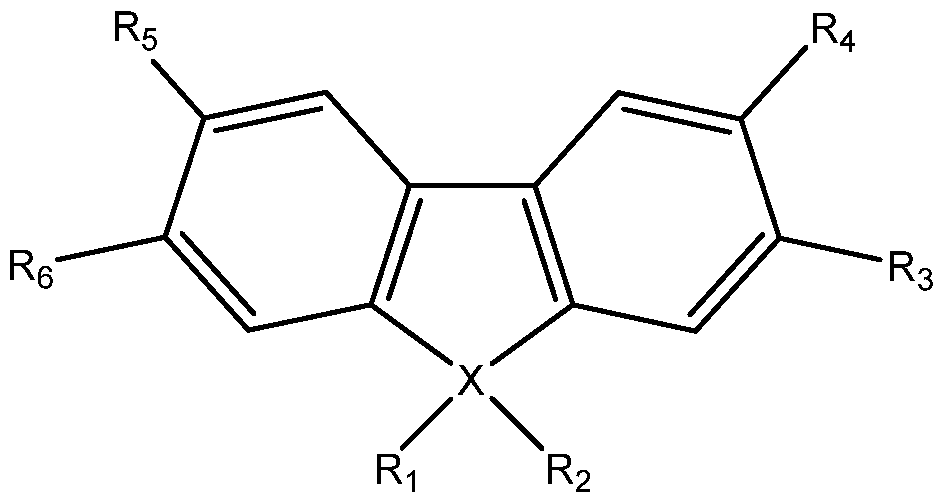 (Formula I) wherein X is Si or Ge; wherein Ri and R2 are each independently selected from the group consisting of hydrogen, alkyl, and aryl; wherein R3, R4, Rs, and Re are each independently selected from the group consisting of hydrogen, alkoxy, Y,
 with the proviso that at least two of R3, R4, Rs, and

Re are selected from the group consisting of Y and e ; and wherein Y is selected from the group consisting of

[0033] In some embodiments, the luminescent sila- and germafluorenes contain alkynyl(aryl) substituents at either the 2,7- or the 3,6- positions. In some embodiments, the luminescent sila- and germafluorenes contain alkynyl(aryl) substituents at the 2,7- positions. In some embodiments, the luminescent sila- and germafluorenes contain alkynyl(aryl) substituents at the 3,6- positions.
[0034] In some embodiments, the luminescent sila- and germafluorenes contain aryl substituents at either the 2,7- or the 3,6- positions. In some embodiments, the luminescent sila- and germafluorenes contain aryl substituents at the 2,7- positions. In some embodiments, the luminescent sila- and germafluorenes contain aryl substituents at the 3,6- positions.
[0035] In some embodiments, the luminescent sila- and germafluorenes contain alkoxy substituents at the 2,7- positions. In some embodiments, the luminescent sila- and germafluorenes contain alkoxy substituents at the 3,6- positions.
[0036] In some embodiments, when the luminescent sila- and germafluorenes contain alkynyl(aryl) substituents at the 2,7- positions, the luminescent sila- and germafluorenes contain alkoxy substituents at the 3,6- positions. In some embodiments, when the luminescent sila- and germafluorenes contain alkynyl(aryl) substituents at the 3,6-
positions, the luminescent sila- and germafluorenes contain alkoxy substituents at the 2,7- positions.
[0037] In some embodiments, when the luminescent sila- and germafluorenes contain aryl substituents at the 2,7- positions, the luminescent sila- and germafluorenes contain alkoxy substituents at the 3,6- positions. In some embodiments, when the luminescent sila- and germafluorenes contain aryl substituents at the 3,6- positions, the luminescent sila- and germafluorenes contain alkoxy substituents at the 2,7- positions.
[0038] In some embodiments, the luminescent sila- and germafluorenes contain at least one alkynyl(aryl) substituent at either the 2,7- or the 3,6- positions comprising a

[0039] In some embodiments, the luminescent sila- and germafluorenes are selected from

[0040] In some embodiments, the luminescent sila- and germafluorenes contain at least one aryl substituent bound to the silicon or the germanium atom. In some embodiments, the luminescent sila- and germafluorenes contain two aryl substituents bound to the silicon or the germanium atom. In some embodiments, the luminescent sila- and germafluorenes contain two phenyl substituents bound to the silicon or the germanium atom.
[0041] In some embodiments, a plurality of individual luminescent sila- and germafluorenes are bonded together by their substituents. In some embodiments, a plurality of individual luminescent sila- and germafluorenes are bonded together by their substituents that are identical. In some embodiments, a plurality of individual luminescent sila- and germafluorenes are bonded together by their substituents that are different.
[0042] In some embodiments, the luminescent sila- and germafluorene is solvatochromic.
[0043] In some embodiments, the luminescent sila- and germafluorenes are produced according to a method comprising a reaction selected from an organometallic reaction, a metalation reaction, a coupling reaction, a boron-based coupling reaction, a Suzuki coupling reaction, a Sonogashira coupling reaction, a Negishi coupling reaction, a Heck coupling reaction, a Stille coupling reaction, a Kumada coupling reaction, a Schiff base reaction, and combinations thereof. In some embodiments, the luminescent sila- and germafluorenes are produced according to a method comprising a Sonogashira coupling reaction.
[0044] In some embodiments, the luminescent sila- and germafluorenes are produced according to a method comprising a Sonogashira coupling reaction of a compound of Formula II,
 (Formula II) wherein X is Si or Ge; wherein Xi and X2 are each independently selected from the group consisting of hydrogen, alkyl, and aryl; and
wherein X3, X4, X5, and Xe are each independently selected from the group consisting of hydrogen, alkoxy, and halogen with the proviso that at least two of X3, X4, X5, and Xe are halogen; and a compound of Formula III,
(Formula II) wherein X is Si or Ge; wherein Xi and X2 are each independently selected from the group consisting of hydrogen, alkyl, and aryl; and
wherein X3, X4, X5, and Xe are each independently selected from the group consisting of hydrogen, alkoxy, and halogen with the proviso that at least two of X3, X4, X5, and Xe are halogen; and a compound of Formula III,
R_Y (Formula III) wherein R is selected from the group consisting of hydrogen, alkynyl, and b orono.
[0045] In some embodiments, the luminescent sila- and germafluorenes are produced according to a method comprising a Sonogashira coupling reaction that utilizes a mixture comprising a noble metal catalyst, a base, and optionally a metal catalyst. In some embodiments, the noble metal catalyst is selected from palladium, Pd(PPh3)4, [Pd(PPh3)2C12], palladium complexes comprising phosphine ligands, gold, silver, ruthenium, rhodium, osmium, iridium, platinum, and combinations thereof. In some embodiments, the base is selected from amines, secondary amines, piperidine, morpholine, diisopropylamine, and combinations thereof. In some embodiments, the metal catalyst is selected from copper, silver, nickel, gold, palladium, dendrimeric palladium complexes, nitrogen ligands, N-heterocyclic carbene palladium complexes, and combinations thereof.
[0046] In some embodiments the luminescent sila- and germafluorenes are produced according to a method comprising heating a reaction mixture to a temperature in the range of about 60 °C to about 100 °C. In some embodiments the luminescent sila- and germafluorenes are produced according to a method comprising heating a reaction mixture to a temperature in the range of about 70 °C to about 90 °C. In some embodiments the luminescent sila- and germafluorenes are produced according to a method comprising heating a reaction mixture to a temperature of about 80 °C.
[0047] In some embodiments, the luminescent sila- and germafluorenes are used for a purpose selected from the group consisting of measuring luminescence, measuring fluorescence, solvatochromic probing, imaging lipid domains, imaging live cells, providing
fluorescence in a polymer light emitting diode, providing fluorescence in an organic light emitting diode, and combinations thereof.
EXAMPLES
[0048] Example 1. Chimeric Environment Sensitive Fluorescent Probes.
[0049] Background.
[0050] Biological membranes are dynamic in their composition and properties, and local differences participate in cellular processes in a profound way and have been linked to apoptosis, viral entry, and cellular stress. It is now understood that there are ordered (Lo) regions of membranes, which are tightly packed and composed of saturated lipids and cholesterol. Other regions containing (more) unsaturated lipids are more fluid and more disordered (Ld) (Figure 1). These differences result in detectable differences in polarity and viscosity.
[0051] Fluorescence spectroscopy is an ideal tool for observing these differences. This technique relies on the development of suitable probes. As summarized in Figure 2, there are two basic designs: 1, lipid conjugates in which a probe is attached to a lipid, most commonly NBD and BODIPY. 2, inherently lipophilic molecules that are either dyes linked to L(ong) C(hain) H(ydrocarbons) (LCH), of which c-laurdan and Dil/DiO are examples; or inherently planar, extensively conjugated and hydrophobic in character (P(olycyclic) A(romatic) H(ydrocarbons)), of which naphthopyrene is an example. Still others combine features LCH and PAH, of which NR12S and c-laurdan are examples.
[0052] Solvatochromic probes, which respond to differences in polarity and/or viscosity by emitting light of different wavelengths as a function of molecular environment, are especially advantageous for imaging lipid domains. Figure 3 illustrates how Nile Red can be used to detect lipid phases in giant unilamellar vesicles (GUVs).
[0053] While there are a number of dyes on the market, there is a continuing demand for dyes that are water soluble; sensitive (as gauged by extinction coefficient and quantum yield), and have excellent photostability and favorable excitation and emission wavelengths, that is, those that do not interfere with common chromophores in cells or other
dyes when used with them. When this is coupled with the rapidly expanding research area, it is no surprise that a call for more probes to meet expanding needs is prominently articulated.
[0054] Metallafluorenes.
[0055] Metallafluorenes are Group 14-centered aromatic polycyclic compounds (Scheme 1) that exhibit impressive luminescent properties that are tunable via the 2,7 substituent.

Scheme 1. Small Metallafluorene Library.
[0056] With this small library, it has already been demonstrated that these compounds are soluble and luminescent in aqueous solution at biologically relevant concentrations. They interact with membrane-mimicking surfactants and small unilamellar vesicles, as evidenced by impressive luminescence enhancements and quantum yield. Lastly, they can enter cells and localize to lipid droplets in yeast cells with good photostability.
[0057] Metallafluorenes show promise as being more desirable solvatochromic dyes than Nile Red. It has been shown:
[0058] 1. While Nile Red and MF’s have similar quantum yields, MFs have higher extinction coefficients, often over 50,000 M^cm'1 relative to 38,000 M^cm'1 for Nile Red. This contributes to increased sensitivity.
[0059] 2. They have good photostability. Nile Red has limited photostability.
[0060] 3. They result in more punctate in vivo images than Nile Red (Figure 4).
[0061] 4. A MF with a benzaldehyde substituent (5) is clearly solvatochromic (Figure 5).
[0062] Design and preparation of Chimeric Metallafluorenes.
[0063] DFT Calculations Guide Design of New Class of Chimeric Solvatochromic MFs.
[0064] In Density Functional Theory (DFT) calculations using Spartan software with a density functional B3LYP-6-31G*, the solvatochromic 5 has a high dipole moment and a small H0M0-LUM0 gap (Table 1). A map of HOMO (highest unoccupied molecular orbital) and LUMO (lowest unoccupied molecular orbital) for 5 clearly shows that upon excitation, electrons move from the MF core into the 2,7 substituents, indicating a charge transfer mechanism (ICT) characteristic of many successful fluorescent lipid probes (Figure 6).
[0065] These features could indicate strong potential for solvatochromic behavior and could serve as a guide in the design of a new class of MFs.
[0066] Due to their amenable photophysical properties and synthetically advantageous scaffolding, the MFs represent a unique opportunity to add meaningfully to the current repertoire of lipophilic probes. New chimeric MFs that combine features of known 2,7 substituted MFs with known lipophilic probes have been designed to create hybrid molecules that combines the tunability, high absorbance, solvatochromism, high quantum yield (i.e. sensitivity) of an MF with advantageous features of known fluorescent probes. Scheme 2 describes the preparation of solvatochromic metallafluorenes. To generate the same core structure as in 1-4, 6 is reacted with 2 eq. of n-BuLi and ECI2PI12
(where E is either Si or Ge) to yield 7, which when reacted with (9-14) yields (15Si, 15Ge, 17Si, 17Ge, 19Si, 19Ge, 21Si, 21Ge, 23Si, 23Ge, 25Si, 25Ge)
[0067] To add an acyl chain to each of the silafluorenes, 4,4’-dibromo-2,2’-diiodo- 5, 5 ’-dimethoxy- 1,1 -biphenyl mixed with dodecylmethyldi chlorosilane in the presence of n- butyl lithium and tetrahydrofuran as a solvent will yield an alkyl silafluorene core (8) which can be used form MFs with a long chain extending from the core (16Si, 18Si, 20Si, 22Si, 24Si, 26Si)

Scheme 2. Synthesis of 2,7-disubstituted metallafluorenes.
[0068] Table 1 summarizes the properties of new chimeric solvatochromic metallafluorenes. These compounds exhibit the highest dipole moments observed in the above MFs and their corresponding H0M0-LUM0 maps show classic ICT behavior similar to that shown in Figure 6. These features are consistent with a high degree of solvatochromism and increased likelihood that these designs will result in higher performance fluorescent probes.
[0069] Table 1. Summary of Metallafluorenes and Properties21.
Compound Comment Dipole moment
Si Phenyl fluorine 3.4 Ge Methoxy-naphthyl 6.9 Si Tolyl 2.1 Si Biphenyl 3.1 Si benzaldehyde 8.8
X Y R Si, 15Ge ECl2Ph2, where E = Ph 9 indole 4.3/6.9b
Si or Ge Si CxHyCl2Si CxHy 9 indole 6.5Si, 17Ge ECl2Ph2, where E = Ph 10 benzoxazole 15/16
Si or Ge Si CxHyChSi CxHy 10 benzoxazole Si, 19Ge ECl2Ph2, where E = Ph 11 benzimidazole 13
Si or Ge Si CxHyChSi CxHy 11 benzimidazole Si, 21Ge ECl2Ph2, where E = Ph 12 thiazole 6.4
Si or Ge Si CxHyChSi CxHy 12 thiazole Si, 23Ge ECl2Ph2, where E = Ph 13 pyrazolo-pyrimidine 8.4
Si or Ge Si CxHyChSi CxHy 13 pyrazolo-pyrimidine Si, 25Ge ECl2Ph2, where E = Ph 14 malononitrile 5.4
Si or Ge
26Si CxHyChSi CxHy 14 malononitrile aComputed using Spartan in the ground state under polar conditions (DMF). bSi/Ge.
[0070] A 2, 7-di substituted MF can be prepared with the indole group of the fluorescent probes DiD (15Si, 15Ge, 16Si) and DiO (17Si, 17Ge, 18Si). A brominated indole, the sidechain of the fluorescent amino acid tryptophan, will be modified to form an ethynyl group at the C2 position (9) as per Scheme 2; 10 is a commercially available ethynyl benzoxazole. MFs with the remaining R groups (12-14, to make 21Si, 21Ge, 22Si, 23Si, 23Ge, 24Si, 25Si, 25Ge, 26Si) also have high computed dipole moments and H0M0- LUMO maps that show ICT behavior. Thus, there is a high probability that they will be solvatochromic. These latter R groups (12-14) can be easily prepared.
[0071] The benzylidene malononitrile substituent (14) is common to molecular rotors that are specifically sensitive to viscosity. In viscous environments, rotation about bonds is slowed and quantum yield increased. In this way, they can report on the viscosity of microenvironments in lipid structures, which are correlated with Lo and Ld. 25Si, which has already been synthesized, shows promising characteristics as lipid structure probes such as red-shifted excitation and emission maxima relative to compounds 1-4. While compounds 1-4 are a yellow powder in the solid state with bright blue emission, 25Si is red in the solid state with a solvatochromic emission from orange to pale yellow.
[0072] Compound 14 has been demonstrated to be solvatochromic (Figures 7-9). It has also been demonstrated that the emission of Compound 14 is sensitive to viscosity in a water-methanol system (Figure 10). Finally, Compound 14 has been used to stain yeast cells and co localizes with the lipid probe Nile Red (Figure 11).
[0073] Thus, the compounds of this example are useful as chimeric environment sensitive fluorescent probes.
[0074] Example 2. Tuning Emission of Luminescent 2-7 Disubstituted Sila-and Germafluorenes with -(trifluoromethyl)phenyl, -(malononitrile)phenyl, and -nitrobenzene substituents.
[0075] Introduction.
[0076] Compounds with desirable fluorescent properties have the potential for a wide range of applications. Highly efficient polymer light emitting diodes (PLEDs) and organic light emitting diodes (OLEDs) that have high current, power, and external quantum efficiency have been of recent interest for solid state applications.
In the solution realm, there is ongoing demand for well-behaved compounds to serve as fluorescent probes of biological behavior. This can be as probes of specific molecular interactions in vitro as well as probes of cellular structures and behavior via confocal microscopy. Those with push-pull, intramolecular charge transfer (ICT) behavior are sensitive to environment (more specifically, solvatochromic) and therefore of particular interest. The magnitudes of H0M0-LUM0 gaps and evidence of intramolecular charge transfer characteristics can be correlated with promising probe behavior. Due to the demand to find molecules that balance a complex mixture of desirable properties such as emission wavelength range, sensitivity and photostability, there is ongoing demand for well-behaved compounds to serve as fluorescent probes.
[0077] Group 14 metalloles, which include Si-, Ge-, or Sn-based conjugated molecules with a fluorene core (metallafluorenes (or MFs), Scheme 3), offer desirable emission properties both in solid state and in solution. The extended conjugation afforded by these structures provide the potential for push-pull behavior.
[0078] Indeed, fluorenes, sila- and germafluorenes have been applied in OLEDs of varying wavelengths and colors. Since they are structurally related to well-known biological dyes such as prodan and Nile Red, fluorenes, and metallafluorenes are being explored for their potential as probes of membranes and their interactions, including live cell and two photon imaging. The use of fluorophores in stimulated emission depletion spectroscopy (STED) and applications in imaging has been recently reviewed. Here there is also ongoing interest in developing probes that are suitable for this technique.
[0079] With an eye toward the development of useful new compounds, two basic structural themes have emerged in the recent MF literature: one is incorporating another bridge at the MF core. Arsenic bridged sila- and germafluorene with high phosphorescence
capability have been recently reported. Another theme is new substitutions at either the 2,7- or 3,6-positions. Hybrid spirocyclic germafluorene-germoles have been prepared in which the substituents are used to tune emission behavior. Dithiene silole and germoles with di thienylborane substituents have been used to make macrocycles.
[0080] Another structural variation is linker type between the polycyclic core and substituents, which is either a conjugated alkene or the more rigid alkyne to serve as a bridge to more extended structures. Recently, silafluorenes containing 2,7- or 3,6- divinylpyridinium substituents with small HOMO LUMO gaps have been prepared and applied as two-photon probes for live cell imaging. More recently, strongly electron accepting tetracyanobutadiene and tetracyanoquinodimethane moieties were incorporated at the 2,7-position between the aryl conjugated groups to tune the H0M0-LUM0 gap.
Fluorene:

Scheme 3.
[0081] 2,7-disubstitution via an alkynyl linkage offers more rigidity and provides facile emission wavelength tunability via a wide array of commercially available building blocks. This was demonstrated earlier by preparation of a small library of these compounds via Sonagashira coupling. More complexity has been explored with dithienogermoles that
self assemble into helices. This was followed by more recent reports, which also includes Ge centered compounds. More recently, a large library of 2,7-alkynyl di substituted silafluorenes with dimethylthio groups at the 3,6-position were reported. These compounds have good photostability and are solvatochromic.
[0082] Recently investigation of the potential of these compounds for solution applications has begun. A small library of MFs has significant sensitivity to a variety of surfactants, exhibiting high emission fold enhancements and high quantum yields, both of which indicate possible uses in wastewater treatment. These results illustrate their potential as probes of biological membranes and in confocal microscopy. In the most recent exploration, it is shown that this same library interacts with small unilamellar vesicles, has excellent photostability, and can be applied in cellular imaging.
[0083] Here the design, preparation, and characterization of unique 2,7- disubstituted metallafluorenes, which show distinctly different Xmax that are conferred by the corresponding substituent, is reported. In the design of these molecules, DFT calculations are used to predict push-pull properties. The preparation of additional germafluorenes brings additional breadth to this emerging class of compounds.
[0084] Results and Discussion.
[0085] Synthesis and Characterization.
[0086] Good push-pull compounds have small HOMO LUMO energy gaps and both electron donating and accepting groups separated by extended conjugation. A small library of 2, 7-di substituted metallafluorenes demonstrated H0M0-LUM0 gaps of 3.22- 3.41 eV. These data provide a baseline of these characteristics and a basis upon which new metallafluorenes can be designed and prepared.
[0087] It is hypothesized that 2,7-substituents that are more electron withdrawing, such as electron withdrawing 2,7 substituents extending from a core with dimethoxy groups, could exhibit desirable push-pull emission characteristics. To that end, commercially available alkynyl building blocks have been surveyed for potentially desirable substituents (Scheme 3). A Ge-centered MF with a trifluoromethyl group (2) adds to electron
withdrawing nature of the phenyl substituent and is structurally related to a previously prepared silole. Compound 3, which contains a nitrobenzene group at the 2,7-position, introduces the potential for applications that involve sensitivity to pH. Finally, 4, which features a malononitrile phenyl substituent at the 2,7-positions, should provide red-shifted UV-Vis and fluorescence spectra relative to the current library of metallafluorenes.
[0088] DFT calculations were conducted on 2-4, and the below table summarizes the above parameters. The H0M0-LUM0 gap for 2 is similar to what has been observed with previous MFs. In contrast, the H0M0-LUM0 gap for 3 and 4 is narrower.
[0089] Theoretical ground state energies (eV) of metallafluorenes?
Compound HOMO LUMO HOMO-LUMO Gap
2 -5.51 -2.14 3.37
3 -5.51 -2.99 2.52
4 -6.11 -4.52 1.59 ain DMF.
[0090] The H0M0-LUM0 orbital diagrams for these compounds are shown in Figure 19, which shows movement of electrons located on the fluorene core out towards the substituents. This is most modest for 2 but quite dramatic for 3 and 4. The electrostatic potential diagrams show significantly more electron withdrawing to the phenyl substituents at the 2,7-position (red) for 3 and 4 relative to 2.
[0091] The weakly fluorescent core silole or germole (2,7-dibromo-3,6- dimethoxy-9,9-diphenyl- sila- or germafluorene) was prepared in good yield following previously published methods. The synthetic route for modification at the 2,7-position is shown in Scheme 4. Using commercially available alkynyl(aryl) precursors, 2 and 3 were synthesized via a palladium-catalyzed Sonagashira cross-coupling reaction.

Scheme 4. Synthesis of 2 and 3.
[0092] Both 2 and 3 were characterized by JH and 13C f 1!!} NMR spectroscopy. IR for both showed no alkynyl proton-carbon stretch, consistent with successful coupling. Both are pale yellow in color and under UV irradiation demonstrate weak fluorescence in the solid state (Figure 12). Compound 2 was obtained in 37% yield and gave a correct elemental analysis. Compound 3 was obtained in 49% yield. Despite multiple attempts using elemental analysis, mass spectrometry and scanning electron microscope with energy dispersive composition (elemental) analysis (SEM EDA), neither molecular formula nor mass could be obtained for 3 that corresponds to the NMR and IR spectra, but the compound shows baseline purity via NMR spectroscopy.
[0093] The synthesis of 4 was performed using a Knoevenagel condensation (Scheme 5), with a yield of 49 %. The absence of the C=O stretch in the IR and aldehyde proton in the JH NMR spectrum are consistent with a complete reaction of 6, and the product shows a nitrile stretch in the IR spectrum at 1577 cm'1 and a methine proton in the JH NMR spectrum at 7.93 ppm. The compound is a red-orange color and also fluoresces in the solid state (Figure 12). Despite multiple approaches, 4 was also resistant to elemental and mass spectrometric analysis that matched clean NMR and IR spectra.

[0094] X-Ray Crystal Structures.
[0095] Single crystals of 2 and 5 were grown by the slow solvent diffusion method. Compounds 2 and 5 were dissolved in dichloromethane and allowed to diffuse with pentane solvent in a 2: 1 ratio. Good diffraction quality crystals of clear yellow color were obtained for 2 and 5 after a few days. Despite the application of multiple crystallization techniques, 3 and 4 did not produce crystals of sufficient quality for X-ray analysis. Intensity data collection and refinement procedure is given in the experimental section. The structure refinement details of compounds 2 and 5 are summarized in Table 2.
[0096] Compound 2 crystallized in a monoclinic spacegroup C2/c with half a molecule in the asymmetric unit (Ge-atom lies on the special position) whose corresponding equivalent component has been generated through the symmetry operation (lOx, y, A-z). The molecular structure of 2 is shown in Figure 13, and refinement details are summarized in Table 2. The germafluorene molecular structure is almost planar except for the phenyl rings that are coordinated to the central Ge atom.
[0097] Table 2. Crystal Structure Refinement Details of 2.


[0098] The substituted phenyl planes deviate significantly from the central molecular moiety showing a dihedral angle of 71.63(2)°. The geometry around the central Ge atom is tetrahedral, with this atom coordinated to four aromatic carbon atoms. In the molecular structure, the endocyclic C-Ge-C bond angle is observed to be 89.00(9)°, which is significantly smaller than the other exocyclic C-Ge-C angles which range from 106.71(9)° to 116.02(6)°, respectively. Interestingly, the exocyclic angle formed between the two phenyl moieties is observed to be smaller compared to all other exocyclic angles (e.g., C17-Gel-C17* = 106.71(9)°). However, the variation in the endocyclic angle is not the same as for all other previously reported germafluorene molecular structures. This indicates that the substituted phenyl moieties are flexible to move, which may be attributed to the nature of the substitutions at the 2,7-positions of the germafluorene molecular core. In the molecular structure, both the endocyclic and exocyclic Ge-C bond lengths are similar, with an observed Gel-Cl value of 1.9382(14) A and a Gel-C17 value of 1.9402(15) A, respectively. These values are in agreement with the previously reported structures. The terminal trifluoromethyl phenyl rings (PF1F3) moieties experiences a slight twist around the conjugated triple bond C1=C8 with a deviation of 6.67(9)° with respect to the core germafluorene molecule.
[0099] In the three-dimensional crystal structure, the adjacent molecules are stacked parallelly along the crystallographic [2 0 1] direction through n. ..n (TTI ...7T2 = 4.014 A) and C-H. . ,7t (C16. . . 7t3 = 3.615 A and H16. . . 713 = 2.700 A) interactions, respectively, in an offset manner (Figure 14). The adjacent [2 0 1] stacking of 2 molecules are further interlinked through a weak C-H...F interaction such as C13-H13...F2 (where C13...F2 =
3.453 A, H...F = 2.603 A and angle C-H...F = 149.21°), which constitute the molecular packing in the crystalline solid.
[0100] From the above crystallographic discussion, compounds 2 and 5 can be compared, that is, when the Br substitution in 5 is replaced by 4-trifluoromethyl -phenyl ethynyl moiety in 2. It is observed that the Ge-C bond lengths in 2 are comparatively shorter that the Ge-C bond lengths observed in 2. Similarly, the exocyclic C-Ge-C bond angles in 5 experiences more deviation when compared to the exocyclic C-Ge-C bond angles observed in 2. Interestingly, the C-C bond lengths of the aromatic carbon atom at
2.7-positions of the molecule 2 are observed to be C-C = 1.376(4) A to 1.400(4) A, which is shorter when compared to the C-C bond lengths of 5 (C-C = 1.400(2) A to 1.405(2) A). Moreover, the C-C-C bond angle at the 2,7-position is observed to be 121.4(3)° and 121.52(3)° in the molecular structure 5, which is slightly elongated when compared to C-C- C bond angle observed in the molecular structure 2 (118.96(14)°). These deviations in the molecular structures are attributed to the steric effect caused by the nature of substitution at the 2,7-positions of the core molecule.
[0101] Spectral Behavior.
[0102] Absorbance spectra of compounds 2-4 in di chloromethane appear in Figure 15A. Spectral data for 5 in DCM has been previously reported, and this compound luminesces far more weakly than 2-4. This observation, combined with the maps of HOMO and LUMO for 2-4, are consistent with intramolecular charge transfer behavior afforded by
2.7-di substitution.
[0103] The spectral features of 2 are typical of those of 2,7-disubstituted MFs reported earlier, with a major peak between 350 and 400 nm. However, 4 (solid trace) has a significantly red shifted peak (442 nm) relative to this position. The absorbance spectrum of 3 (dotted trace) is very distinct in its fine structure and blue shifted features. Compound 2 absorbs most strongly in this small group. The e values for 3 and 4 (Table 3) are modest for this class of compounds, with 2 absorbing most strongly. Collectively, this demonstrates how 2,7-disubstitution can dramatically alter absorbance spectral properties to a degree that is uncommon in similar structures.
[0104] Table 3. UV-Visible and Spectra Data for Metallafluorenes 2-4.
 nM.
nM.
[0105] Emission spectra for 2-4 in di chloromethane appear in Figure 15B with intensities normalized for easy comparison. Compound 2 (dashed trace) has an emission spectrum similar to those of previously published MFs with the dominant peak at 426 nm. Emission spectra of 3 (dotted trace) and 4 (solid trace) are significantly red shifted relative to this position, with major peaks at 434 and 557 nm, respectively. Interestingly, the intensity ratio of the peaks at 440 and 557 nm in the spectrum of 4 varies with the age of the sample. This suggests excimers, formed by the association of excited and unexcited molecules.
[0106] Solid state emission spectra of 2-4 following excitation at the respective absorbance maximum in dichloromethane appear in Figure 15C. Under UV irradiation, all the compounds demonstrate emission. Solid state emission spectra are red shifted but otherwise similar to the solution emission spectra. This further demonstrates the ability of the 2,7-substituents to tune the emission behavior.
[0107] As summarized in Table 3, the quantum yield of 2 in di chloromethane is high, comparable to those published previously for other 2, 7-di substituted silafluorenes. That of 3 is very small in dichloromethane. Due to the instability of the monomer form of 4 in dichloromethane, quantum yield measurements with 4 were performed on samples in predominantly the excimer form. Quantum yields follow the trend 2 > 4 > 3, with the red shifted compounds displaying lower values, which is expected of red shifted dyes.
[0108] Experimental.
[0109] General Procedures.
[0110] Reactions were carried out under argon atmosphere using standard Schlenk techniques with solvents dried and purified by standard methods. Chloroform, dichloromethane, pentane, ethanol, and hexane were purchased from Millipore Sigma and used as received. The compounds palladium(II)bis(triphenylphosphine) dichloride, tetrakis(triphenylphosphine)palladium(0), ethynyl-a,a,a-trifluorotoluene, and 1-ethynyl- 4-nitrobenzene were purchased from Millipore Sigma, and malononitrile was purchased from TCI America. All were used without further purification.
[0111] All NMR spectra were collected on an Agilent 600 MHz (XH recorded at 600 MHz, 13C at 151 MHz), Bruker ARX 500 (XH recorded at 500 MHz, 13C at 126 MHz) or on a Bruker Avance 300 MHz (XH recorded at 300 MHz and 13C at 75 MHz) at ambient temperature unless otherwise noted. Chloroform-d was purchased from Cambridge Isotopes, Inc. Melting point determinations were obtained on a Mel-Temp melting point apparatus and are uncorrected. UV-vis spectra were measured on a Shimadzu UV-1800 spectrometer. Emission spectra were measured on a Fluorolog 3 fluorimeter (Horiba) using the absorbance kmax as the excitation wavelength unless otherwise specified. For solid state emission spectra, a dichloromethane solution was deposited on a quartz slide and dried. The slide was positioned in the fluorimeter sample holder at 5cdan angle that optimized exposure to both excitation and emission paths. Mass spectral data (ESI) were collected on a Bruker Maxis Plus (maXis HD) quadrupole time-of- flight mass spectrometer or on a QTOF Orbitrap ESI instrument at Washington University. Elemental analyses were conducted by Atlantic Microlab, Inc., Norcross, GA. Elemental analysis was also conducted on a Thermofisher Scientific Apreo 2 HV scanning electron microscope with energy dispersive (elemental) analysis capability (SEM EDA).
[0112] Quantum yields
 were measured using the comparative (relative) method. Absorbances were kept below 0.1 to reduce inner filter effects. The same slit widths were used on both instruments (1.0 nm). Refractive indices of organic solvents were obtained from the CRC Handbook, 87th edition. Metallafluorene quantum yields of 2, 3,
and 4 were measured using coumarin 102 (ethanol, 350 nm), coumarin 343 (ethanol, 300 nm) and 1 -aminonaphthalene (cyclohexane, 400 nm) as standards, respectively.
were measured using the comparative (relative) method. Absorbances were kept below 0.1 to reduce inner filter effects. The same slit widths were used on both instruments (1.0 nm). Refractive indices of organic solvents were obtained from the CRC Handbook, 87th edition. Metallafluorene quantum yields of 2, 3,
and 4 were measured using coumarin 102 (ethanol, 350 nm), coumarin 343 (ethanol, 300 nm) and 1 -aminonaphthalene (cyclohexane, 400 nm) as standards, respectively.
[0113] Quantum yields were calculated using Eq. 1:

 is the quantum yield (x, unknown fluorophore; s, reference standard), m is the slope of the integrated fluorescence emission intensity as a function of absorbance, and r/ is the refractive index of the solvent, the quantum yield of metallafluorenes were calculated. These measurements were performed at least twice times and the results averaged.
[0114] The weakly fluorescent core silole or germole (2,7-dibromo-3,6- dimethoxy-9,9-diphenyl- sila- or germafluorene) 5 was prepared in good yield as previously described.
[0115] Preparation of 2,8-dimethoxy-5,5-diphenyl-3, 7-bis((4-
( trijluoromethyl)phenyl)ethynyl)-5H-dibenzo[b, d] germole 2.
[0116] 2,7-Dibromo-3,6-dimethoxy-9,9-diphenylgermafluorene (5, 0.32 g, 0.54 mmol), tetrakis(triphenylphosphine)palladium(0) (0.062 g, 0.054 mmol), and copper (I) iodide (0.021 g, 0.11 mmol) were added to a flask and purged under argon. Then degassed distilled piperidine (6.2 mL, 63 mmol), followed by degassed 4-ethynyltrifluorotoluene (0.26 mL, 1.6 mmol) were added by syringe. The reaction mixture was stirred at 80 °C overnight. After cooling to room temperature, the crude product was filtered through a silica plug. The crude product was further purified by chromatography (silica gel, hexane /ethyl acetate 8/1) to yield the product 2 as a yellow solid (148 mmol, 0.155 g, 37 %). mpt 307 °C, decomp 412 °C.
[0117] 1 H NMR (500 MHz, CDC13): 8 7.87 (s, 2H, aromatic), 7.65 (d, J = 8.2 Hz, 4H, aromatic), 7.61 - 7.57 (m, 9H, aromatic), 7.44 -7.36 (m, 9H, aromatic), 4.10 (s, 6H). 13C{JH} NMR (126 MHz, CDCI3): 6 162.4, 148.9, 138.7, 134.8, 134.5, 131.9, 130.5, 130.0, 129.9 (q, J= 32.5 Hz), 128.8, 127.5, 125.4 (dd, J = 7.4, 3.6 Hz), 123.0, 112.6, 104.8, (93.6, 88.8, alkyne) 56.2 (OCH3). 19F{JH} NMR (282 MHz, CDCI3): 6 62.8. E 1 emental analysis
calculated for C44H28F6GeO2: C, 68.16; H, 3.64; F, 14.70; Ge, 9.37; O, 4.13. Found: C, 67.70; H, 3.71; F, 14.85.
[0118] General Procedure for Preparation of 2,8-dimethoxy-3, 7-bis((4- nitrophenyl)ethynyl)-5, 5-diphenyl-5H-dibenzo [b, d]germole. 3
[0119] Compound 3 was synthesized using a Sonagashira coupling reaction. 2,7- Dibromo-3,6-dimethoxy-9,9-diphenylgermafluorene (5, 0.27 g, 0.45 mmol), 1-ethynyl 4- nitrobenzene (1.3 mmol, 0.19 g), palladium(II)bis(triphenylphosphine) dichloride (Pd(PPh3)2C12, 3.1 mg, 4.4 pmol), and copper (I) iodide (18 mg, 0.94 mmol) were added to 5.2 mL (53 mmol) of piperidine and stirred continuously overnight at 80 °C. Product was purified by silica gel chromatography in 75% dichloromethane/25% hexane at 47 % yield (0.153 g, 0.21 mmol).
[0120] ' H NMR (300 MHz, CDC13): 8 8.25-8.19 (d, J= 9 Hz, 2H, aromatic), 7.83 (s, 2H, aromatic), 7.71-7.68 (d, J= 9 Hz, 4H, aromatic), 7.56-7.52 (d, J= 12 Hz, 2H, aromatic), 7.44-7.35 (m, 10H, aromatic), 7.25 (s, 2H, aromatic), 4.0 (s, 6H). The 13C{JH} NMR (75.4 MHz, CDCI3): 6 158.2, 147.8, 138.4, 135.2, 134.6, 131.9, 129.2, 113.3. IR (neat, cm’1): 3051 (w), 2996 (w), 2960 (w), 2842 (w), 1574 (m). The melting point is 255 °C.
[0121] General Procedure for Preparation of 2,2'-((((2, 8-dimethoxy-5, 5-diphenyl- 5H-dibenzo [b,d] silole-3, 7-diyl)bis(ethyne-2, l-diyl))bis(4, 1- phenylene))bis(methanylylidene))dimalononitrile. 4
[0122] 4 was prepared by refluxing 0.84 mmol (0.55 g) of 6 and 0.92 mmol (0.061 g) of malononitrile under argon in the presence of aluminum hydroxide (0.2 mmol, 0.016 g) in 5 mL of dichloromethane overnight. The product was then purified using silica gel chromatography with a mobile phase of 1 : 1 dichloromethane and ethyl acetate in 49 % yield (0.307 g, 0.41 mmol).
[0123] 1 H NMR (300 MHz, DMSO-d6): 8 8.55 (s, 2H, aromatic), 8.07-7.98 (dd, J = 7 Hz, 4H, aromatic), 7.93 (s, 2H, aromatic), 7.78-7.65 (dd, J= 9 Hz, 6H, aromatic), 7.48- 7.40 (m, J= 14 Hz, 10H, aromatic), 4.09 (s, 6H). 13C{ 1H} NMR (151 MHz, DMSO-D6): 8
162.9, 160.0, 135.1, 134.8, 131.9, 130.8, 128.5, 128.1, 127.5, 118.5, 114.2, 113.2, 93.8 (alkyne), 56.4 (OCH3). IR (neat, cm’1): 2849 (w), 2192 (w), 2120 (w), 1577 (m). The melting point is 308 °C (decomp).
[0124] X-ray Structure Determinations of 2 and 5.
[0125] X-Ray intensity data collection of 2 and 5 were performed using Bruker D8 Venture Photon II Diffractometer equipped with MoKa (X=0.71073 A) microfocus X-ray source. Suitable crystal of size 0.1 x 0.1 x 0.07 mm was chosen for data collection experiment. Data collection, data reduction and absorption correction were carried out using APEX3, SAINT -plus and SADABS program. The crystal structures were solved by direct methods and refined by the method of least squares on F2 using SHELX-2018 program.
[0126] In the molecular structure of 2, the carbon atoms Cl 8 and C19 associated with the phenyl moiety experiences a positional disorder with refined site occupancies of 0.616(11) and 0.384(11) respectively. All hydrogen atoms associated with the C-atoms are optimized to a riding atom model with a C-H distance of 0.95 A (for aromatic C-H), Uiso(H) = 1.2 Ueq(C) and 0.98 A (for methyl C-H), UiS0(H) = 1.5 Ueq(C) respectively. The molecular structure refinement details are summarized in Table 4. The molecular graphics were prepared using OLEX2 and mercury software. The final molecular structure for 2 was deposited in Cambridge Crystallographic Data Centre, and the data can be accessed via CCDC ID 2264641.
[0127] The molecular structure of 5 is shown in Figure 16. The compound crystallized in monoclinic spacegroup P2i/c with four molecules in the unit-cell is shown in Figure 17. The data collection and refinement procedures are same as for 2 and the structure refinement details are summarized in Tables 4. The finalized molecular structures for 2 and 5 are deposited in Cambridge Crystallographic Data Centre (ID: CCDC 2264641 and 2268554, respectively).
[0128] The germafluorene molecular structure is almost planar except the phenyl rings which are coordinated to the central Ge atom, the substituted phenyl planes deviate significantly from the central molecular moiety with a calculated dihedral angles of 78.05(12)° and 54.79(12)° respectively, the calculated dihedral angle between the phenyl
planes was found to be 73.66(16)°. The central Ge atom forms a distorted tetrahedral geometry coordinated to four aromatic carbon atoms. In the molecular structure, the endocyclic C-Ge-C bond angle is observed to be 88.46(12)° [Cl-Gel-C12] which is significantly smaller compared to other exocyclic C-Ge-C angles which ranges from 107.46(12)° to 118.48(12)° respectively. Interestingly the exocyclic angle formed between the two phenyl moieties such as C15-Gel-C21 = 107.46(12)° is smaller relative to all other exocyclic angles. In the molecular structure both the endocyclic and exocyclic bond Ge-C bond lengths are observed to be Gel-Cl=l.946(3) A, Gel-C12=l.941(3) A and Gel- C15=l.946(3) A, Gel-C21=l.949(3) respectively. In the crystal structure, the molecular packing is mainly stabilized by the formation of weak C-H...Br interactions such as C14- H14C...Brl (where C14...Brl = 4.056 A, H14...Brl = 3.079 A and angle C14- H14C...Brl = 175.13°) and C- H. . .it interaction such as C13-H13A. . ,7tl (where C13...7tl = 3.647 A, H13A...7tl = 2.804 A and angle C13-H13A. . ,7tl = 144.61°), respectively (Figure 18), no significant strong contact is observed between the molecules.
[0129] Table 4: Crystal Structure Refinement Details for 5 and 2.


[0130] Summary.
[0131] 2,7-disubstitution and DFT guided design have been used to tune emission wavelengths for three new fluorescent 2,7-alkynyl(aryl)-3,6-dimethoxy-9,9-diphenyl-sila- and germafluorenes have been synthesized. Two germafluorenes with trifluoromethyl phenyl and nitrobenzene substituents were prepared using a Pd-catalyzed Sonogashira coupling reaction to incorporate alkynyl(aryl) groups at the 2,7-positions of the ring. Another new silafluorene was prepared by modifying a benzaldehyde-substituted silafluorene to incorporate a malononitrile group. These compounds were characterized utilizing multinuclear NMR, UV-Vis, and fluorescence spectroscopic techniques. The germafluorene with the trifluoromethyl phenyl substituent was also characterized via elemental analysis and X-ray crystallography. These metallafluorenes, which are yellow or red-orange crystals in the solid state, showed a wide range of quantum yields and spectroscopic features, with the malononitrile-containing MF exhibiting significantly red- shifted emission relative to other MFs. These data demonstrate the value in applying DFT to MF design and the dramatic impact the 2,7 substituent has on the optical properties of this class of compounds.
[0132] Although specific features and applications of various embodiments of the disclosure may be shown in some drawings and not in others, this is for convenience only. In accordance with the principles of the disclosure, any feature illustrated herein may be referenced and/or claimed in combination with any feature.
[0133] In the specification and the claims, reference is made to a number of terms, which shall be defined to have the following meanings. The singular forms “a,” “an,” and
“the” include plural references unless the context clearly dictates otherwise. The terms “comprising,” “including,” and “having” are intended to be inclusive and mean that there may be additional elements other than the listed elements. “Optional” or “optionally” means that the subsequently described event or circumstance may or may not occur, and that the description includes instances where the event occurs and instances where it does not.
[0134] Approximating language, as used herein throughout the specification and claims, may be applied to modify any quantitative representation that could permissibly vary without resulting in a change in the basic function to which it is related. Accordingly, a value modified by a term or terms, such as “about,” “approximately,” and “substantially,” are not to be limited to the precise value specified. In at least some instances, the approximating language may correspond to the precision of an instrument for measuring the value. Here and throughout the specification and claims, range limitations may be combined and/or interchanged; such ranges are identified and include all the sub-ranges contained therein unless context or language indicates otherwise.
[0135] As used herein, "aryl" refers to a radical of a monocyclic or poly cyclic (e.g., bicyclic or tricyclic) 4n+2 aromatic ring system (e.g., having 6, 10, or 14 electrons shared in a cyclic array) having 6-14 ring carbon atoms and zero heteroatoms provided in the aromatic ring system ("C6-14 aryl"). In some embodiments, an aryl group has 6 ring carbon atoms ("C6 aryl"; e.g., phenyl). In some embodiments, an aryl group has 10 ring carbon atoms ("CIO aryl"; e.g., naphthyl such as 1-naphthyl and 2-naphthyl). In some embodiments, an aryl group has 14 ring carbon atoms ("C14 aryl"; e.g., anthracyl).
[0136] As used herein, “heteroaryl” refers to aryl groups that contain at least one heteroatom (such as nitrogen, oxygen, silicon, phosphorous, boron, sulfur, or a halogen atom).
[0137] As used herein, "alkyl" refers to a radical of a straight-chain or branched saturated hydrocarbon group having from, in some embodiments, 1 to 4 carbon atoms ("Cl- 4 alkyl"), and in other embodiments 1 to 22 carbon atoms ("Cl-22 alkyl"). In some embodiments, an alkyl group has 1 to 3 carbon atoms ("Cl-3 alkyl"). In some embodiments, an alkyl group has 1 to 2 carbon atoms ("Cl-2 alkyl"). In some embodiments, an alkyl
group has 1 carbon atom ("Cl alkyl"). In some embodiments, an alkyl group has 2 to 4 carbon atom ("C2-4 alkyl"). In yet other embodiments, an alkyl group has 1 to 21 carbon atoms ("Cl-21 alkyl"), 1 to 20 carbon atoms ("Cl-20 alkyl"), 1 to 15 carbon atoms ("Cl-15 alkyl"), 1 to 10 carbon atoms ("Cl-10 alkyl"), etc. Examples of such alkyl groups include methyl (Cl), ethyl (C2), n-propyl (C3), isopropyl (C3), n-butyl (C4), tert-butyl (C4), secbutyl (C4), iso-butyl (C4), pentyl (C5), and the like.
[0138] As used herein, "alkynyl" or "alkyne" refers to a radical of a straight- chain or branched hydrocarbon group having from 2 to 4 carbon atoms and one or more carboncarbon triple bonds ("C2-10 alkynyl"). In some embodiments, an alkynyl group has 2 to 3 carbon atoms ("C2-3 alkynyl"). In some embodiments, an alkynyl group has 2 carbon atoms ("C2 alkynyl"). The one or more carbon-carbon triple bonds can be internal (such as in 2-butynyl) or terminal (such as in 1-butynyl). Examples of C2-4 alkynyl groups include, without limitation, ethynyl (C2), 1-propynyl (C3), 2-propynyl (C3), 1- butynyl (C4), 2- butynyl (C4), and the like.
[0139] Alkyl, alkynyl, and aryl groups, as defined herein, are substituted or nonsubstituted, also referred to herein as "optionally substituted". In general, the term "substituted", whether preceded by the term "optionally" or not, means that at least one hydrogen present on a group (e.g., a carbon or nitrogen atom) is replaced with a permissible substituent, e.g., a substituent which upon substitution results in a stable compound, e.g., a compound which does not spontaneously undergo transformation such as by rearrangement, cyclization, elimination, or other reaction. Unless otherwise indicated, a "substituted" group has a substituent at one or more substitutable positions of the group, and when more than one position in any given structure is substituted, the substituent is either the same or different at each position. The term "substituted" is contemplated to include substitution with all permissible substituents of organic compounds, any of the substituents described herein that result in the formation of a stable compound. The present disclosure contemplates any and all such combinations in order to arrive at a stable compound. For purposes of this disclosure, heteroatoms such as nitrogen may have hydrogen substituents and/or any suitable substituent as described herein which satisfy the valencies of the heteroatoms and results in the formation of a stable moiety.
[0140] As used herein, “alkoxy” refers to a radical of an oxygen atom bonded to an alkyl group. In some embodiments, the alkyl group has 1-6 carbon atoms. In some embodiments, the alkyl group has 1-5 carbon atoms. In some embodiments, the alkyl group has 1-4 carbon atoms. In some embodiments, the alkyl group has 1-3 carbon atoms. In some embodiments, the alkyl group has 1-2 carbon atoms. In some embodiments, the alkyl group has 1 carbon atom.
[0141] As used herein, “borono” refers to a radical of a boron atom bonded to at least one oxygen atom. In some embodiments, the borono group comprises an aryl group. In some embodiments, the borono group is selected from Ar(B)(OH)2, Ph(B)(OH)2. In some embodiments, the borono group is Ph(B)(OH)2.
[0142] As used herein, “halogen” refers to a radical of a halogen atom. In some embodiments, the halogen atom is selected from fluorine, chlorine, bromine, and iodine.
[0143] As used herein, a reference to a number on its own (e.g., “5”), refers the compound number of the present disclosure (e.g., “Compound 5”). The definitions for these compounds are found within the examples in which they are defined.
Claims
1. A compound of Formula I,
 (Formula I) wherein X is Si or Ge; wherein Ri and R2 are each independently selected from the group consisting of hydrogen, alkyl, and aryl; wherein R3, R4, Rs, and Re are each independently selected from the group consisting of hydrogen, alkoxy, Y,
 with the proviso that at least two of R3, R4, Rs, and

Re are selected from the group consisting of Y and e ; and wherein Y is selected from the group consisting of

2. The compound according to claim 1, wherein R4 and R5 are selected from the group

3. The compound according to claim 1, wherein R4 and R5 are
 or R3 and Re are

4. The compound according to claim 1, wherein R3 and Re are

5. The compound according to claim 1, wherein X is Si.
6. The compound according to claim 1, wherein X is Ge.
7. The compound according to claim 1, wherein the compound is selected from the group consisting of


8. The compound according to claim 1, wherein the compound is solvatochromic.
9. A method of producing a compound of Formula I,
 (Formula I) wherein X is Si or Ge; wherein Ri and R2 are each independently selected from the group consisting of hydrogen, alkyl, and aryl;
wherein R3, R4, Rs, and Re are each independently selected from the group consisting of hydrogen, alkoxy, Y,
(Formula I) wherein X is Si or Ge; wherein Ri and R2 are each independently selected from the group consisting of hydrogen, alkyl, and aryl;
wherein R3, R4, Rs, and Re are each independently selected from the group consisting of hydrogen, alkoxy, Y,
 with ^e proviso that at least two of R3, R4, Rs, and

Re are selected from the group consisting of Y and e ; and wherein Y is selected from the group consisting of
 the method comprising: forming a mixture comprising a compound of F ormula II,
 (Formula II) wherein X is Si or Ge;
wherein Xi and X2 are each independently selected from the group consisting of hydrogen, alkyl, and aryl; and wherein X3, X4, X5, and Xe are each independently selected from the group consisting of hydrogen, alkoxy, and halogen with the proviso that at least two of X3, X4, X5, and Xe are halogen; a compound of Formula III,
(Formula II) wherein X is Si or Ge;
wherein Xi and X2 are each independently selected from the group consisting of hydrogen, alkyl, and aryl; and wherein X3, X4, X5, and Xe are each independently selected from the group consisting of hydrogen, alkoxy, and halogen with the proviso that at least two of X3, X4, X5, and Xe are halogen; a compound of Formula III,
R-Y (Formula III) wherein R is selected from the group consisting of hydrogen, alkynyl, and borono; a noble metal catalyst; a base; and optionally a co-catalyst comprising a metal; and reacting the mixture.
10. The method according to claim 9, wherein X4 and X5 are selected from the group consisting of halogen or X3 and Xe are selected from the group consisting of halogen.
11. The method according to claim 9, wherein R4 and Rs are selected from the group j Y consisting of Y and or R3 and Re are selected from the group consisting of Y
 -^^— Y
12. The method according to claim 9, wherein R4 and R5 are e or R3 and Re are

13. The method according to claim 9, wherein Rs and Re are

14. The method according to claim 9, wherein the compound of Formula I is selected from the group consisting of

15. A method of using a compound of Formula I,


4-^^Y
Re are selected from the group consisting of Y and ; and wherein Y is selected from the group consisting of
 the method comprising using the compound of Formula I for a purpose selected from the group consisting of measuring luminescence, measuring fluorescence, solvatochromic probing, imaging lipid domains, imaging live cells, providing fluorescence in a polymer
light emitting diode, providing fluorescence in an organic light emitting diode, and combinations thereof.
the method comprising using the compound of Formula I for a purpose selected from the group consisting of measuring luminescence, measuring fluorescence, solvatochromic probing, imaging lipid domains, imaging live cells, providing fluorescence in a polymer
light emitting diode, providing fluorescence in an organic light emitting diode, and combinations thereof.
16. The method according to claim 15, wherein R4 and Rs are selected from the group

17. The method according to claim 15, wherein R4 and R5 are
 or R3 and Re are

18. The method according to claim 15, wherein R3 and Re are

19. The method according to claim 15, wherein the compound of Formula I is selected from the group consisting of


20. The method according to claim 15, wherein the compound of Formula I is solvatochromic.
Applications Claiming Priority (2)
| Application Number | Priority Date | Filing Date | Title |
|---|---|---|---|
| US202363511403P | 2023-06-30 | 2023-06-30 | |
| US63/511,403 | 2023-06-30 |
Publications (2)
| Publication Number | Publication Date |
|---|---|
| WO2025006949A2 true WO2025006949A2 (en) | 2025-01-02 |
| WO2025006949A3 WO2025006949A3 (en) | 2025-03-06 |
Family
ID=93940057
Family Applications (1)
| Application Number | Title | Priority Date | Filing Date |
|---|---|---|---|
| PCT/US2024/036108 Ceased WO2025006949A2 (en) | 2023-06-30 | 2024-06-28 | Fluorescent probes |
Country Status (1)
| Country | Link |
|---|---|
| WO (1) | WO2025006949A2 (en) |
Family Cites Families (3)
| Publication number | Priority date | Publication date | Assignee | Title |
|---|---|---|---|---|
| JP5677306B2 (en) * | 2009-09-25 | 2015-02-25 | 出光興産株式会社 | Organic thin film transistor |
| WO2013188421A1 (en) * | 2012-06-11 | 2013-12-19 | The Curators Of The University Of Missouri | Cyclic germanium compounds and applications thereof |
| US12473308B2 (en) * | 2019-04-10 | 2025-11-18 | The Curators Of The University Of Missouri | Luminescent silafluorene and germafluorene compounds |
-
2024
- 2024-06-28 WO PCT/US2024/036108 patent/WO2025006949A2/en not_active Ceased
Also Published As
| Publication number | Publication date |
|---|---|
| WO2025006949A3 (en) | 2025-03-06 |
Similar Documents
| Publication | Publication Date | Title |
|---|---|---|
| Artem'ev et al. | Alkyl-dependent self-assembly of the first red-emitting zwitterionic {Cu 4 I 6} clusters from [alkyl-P (2-Py) 3]+ salts and CuI: when size matters | |
| Sinha et al. | NIR-emissive iridium (III) corrole complexes as efficient singlet oxygen sensitizers | |
| CN110218220B (en) | Functionalized metal-organic framework compound, complex formed by functionalized metal-organic framework compound, and preparation method and application of functionalized metal-organic framework compound | |
| Campagna et al. | Syntheses, absorption spectra, luminescence properties, and electrochemical behavior of mono-and binuclear ruthenium (II) complexes of isomeric bis (2-pyridyl) pyrazines | |
| US20260001896A1 (en) | Luminescent silafluorene and germafluorene compounds | |
| Lentijo et al. | Highly fluorescent complexes with gold, palladium or platinum linked to perylene through a tetrafluorophenyl group | |
| WO2014153648A1 (en) | Organoboron compounds and methods of making same | |
| Rajamouli et al. | Carbazole functionalized new bipolar ligand for monochromatic red light-emitting europium (III) Complex: combined experimental and theoretical study | |
| Poirot et al. | Phenyl-pyta-tricarbonylrhenium (I) complexes: combining a simplified structure and steric hindrance to modulate the photoluminescence properties | |
| Boddula et al. | Bi-nuclear luminescent europium (III) molecular complexes for white light emitting diodes: Experimental and theoretical study | |
| Gong et al. | A Carbazole-bridged biscyclometalated diplatinum complex: synthesis, characterization, and dual-mode aggregation-enhanced phosphorescence | |
| Liras et al. | New BODIPY chromophores bound to polyhedral oligomeric silsesquioxanes (POSS) with improved thermo-and photostability | |
| Liu et al. | Cyano and isocyano-substituted tetraphenylethylene with AIE behavior and mechanoresponsive behavior | |
| Jarrett-Noland et al. | Tuning emission of luminescent 2-7 disubstituted sila-and germafluorenes with–(trifluoromethyl) phenyl,-(malononitrile) phenyl, and-nitrobenzene substituents | |
| Anderson et al. | Biscyclometalated platinum complexes with thiophene ligands | |
| Lai et al. | Luminescent metal complexes derived from carbene and related ligands: tuning excited-state properties with metal–carbon multiple bonds | |
| WO2016050204A1 (en) | Aggregation-induced emission and aggregation-promoted photochromism of bis(diarylmethylene) -dihydroacenes | |
| Graczyk et al. | Terpyridine-fused polyaromatic hydrocarbons generated via cyclodehydrogenation and used as ligands in Ru (II) complexes | |
| WO2025006949A2 (en) | Fluorescent probes | |
| Baker et al. | The influence of phenylethynyl linkers on the photo-physical properties of metal-free porphyrins | |
| Rabiei et al. | Light-emitting electrochemical cells based on mechanochromic, thermally activated delayed fluorescence fish-shaped structures consisting of carbazole derivatives as emitters in the active layer | |
| Jacobsen et al. | Hydrogen-bond rigidified BODIPY dyes | |
| CN115093572B (en) | Polypyridine ring metal iridium supermolecular material, preparation method and application | |
| Bremond et al. | 2-Phenylbenzoxazole derivatives as solid-state fluorescence emitters: Influence of steric hindrance and hydrogen bonding on the optical properties | |
| CN104761578B (en) | Based on rhodium tetraphenylporphyrin azepine fluorine boron two pyrroles's near infrared absorption phosphor material and its preparation method and purposes |
Legal Events
| Date | Code | Title | Description |
|---|---|---|---|
| NENP | Non-entry into the national phase |
Ref country code: DE |