WO2025006575A1 - Process for preparing 4-(3,3-difluoro-2,2-dimethyl-propanoyl)-3,5-dihydro-2h-pyrido[3,4-f][l,4]oxazepine-9-carbonitrile - Google Patents
Process for preparing 4-(3,3-difluoro-2,2-dimethyl-propanoyl)-3,5-dihydro-2h-pyrido[3,4-f][l,4]oxazepine-9-carbonitrile Download PDFInfo
- Publication number
- WO2025006575A1 WO2025006575A1 PCT/US2024/035577 US2024035577W WO2025006575A1 WO 2025006575 A1 WO2025006575 A1 WO 2025006575A1 US 2024035577 W US2024035577 W US 2024035577W WO 2025006575 A1 WO2025006575 A1 WO 2025006575A1
- Authority
- WO
- WIPO (PCT)
- Prior art keywords
- compound
- formula
- organic solvent
- reacting
- optionally
- Prior art date
- Legal status (The legal status is an assumption and is not a legal conclusion. Google has not performed a legal analysis and makes no representation as to the accuracy of the status listed.)
- Ceased
Links
Classifications
-
- C—CHEMISTRY; METALLURGY
- C07—ORGANIC CHEMISTRY
- C07D—HETEROCYCLIC COMPOUNDS
- C07D498/00—Heterocyclic compounds containing in the condensed system at least one hetero ring having nitrogen and oxygen atoms as the only ring hetero atoms
- C07D498/02—Heterocyclic compounds containing in the condensed system at least one hetero ring having nitrogen and oxygen atoms as the only ring hetero atoms in which the condensed system contains two hetero rings
- C07D498/04—Ortho-condensed systems
Definitions
- the present disclosure relates generally to methods for preparing 4-(3,3-difluoro-2,2- dimethyl-propanoyl)-3,5-dihydro-2H-pyrido[3,4-F][l,4]oxazepine-9-carbonitrile and intermediates useful therein.
- Receptor-interacting protein kinase 1 (RIPK1) is a key regulator of inflammation, apoptosis, and necroptosis.
- RIPK1 has an important role in modulating inflammatory responses mediated by nuclear-factor kappa-light chain enhancer of activated B cells (NF-kB). More recent research has shown that its kinase activity controls necroptosis, a form of necrotic cell death. Further, RIPK1 is part of a pro-apoptotic complex indicating its activity in regulating apoptosis. Dysregulation of receptor-interacting protein kinase 1 signaling can lead to excessive inflammation or cell death. Research suggests that inhibition of RIPK1 is a potential clinical target for diseases involving inflammation or cell death. RIPK1 kinase has emerged as a promising therapeutic target for the treatment of a wide range of human neurodegenerative, autoimmune, and inflammatory diseases.
- Compound (1) 4-(3,3-difluoro-2,2-dimethyl-propanoyl)-3,5-dihydro- 2H-pyrido[3,4-f][l,4]oxazepine-9-carbonitrile, (hereinafter also referred as “Compound (1)”), depicted below, is a RIPK1 inhibitor:
- U.S. Application No. 63/259,921 discloses the compound 4-(3,3-difluoro-2,2-dimethyl- propanoyl)-3,5-dihydro-2H-pyrido[3,4-F][l,4]oxazepine-9-carbonitrile (referred to in the present disclosure as the “compound of Formula (1)” or “Compound (1)”) and its solid forms
- the synthesis of Compound (1) disclosed in U.S. Application No. 63/259,921 involves an amide coupling reaction of an acidic salt and all the steps are performed at a small scale. Accordingly, there is a need for a chemical process for the synthesis of Compound (1) that is scalable, safe, cost and labor efficient, environmentally friendly, reproducible, and that allows improved purity, among other considerations.
- the compound of Formula (1) (also referred to in the present disclosure as “Compound (1)” and the chemical structure of which is shown below) is prepared in kilogram scale a more efficient process.
- the present disclosure relates to a method of preparing a compound of Formula (1):
- the present disclosure also relates to a method of preparing a compound of Formula (1), comprising the following steps:
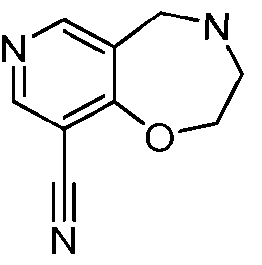
- the present disclosure still further relates to a method of preparing a compound of Formula (1-d) :
- the present disclosure further relates to a method of preparing a compound of Formula
- BB-e comprising: reacting a compound of Formula (BB-d):
- the present disclosure also relates to a method of preparing a compound of Formula
- BB-f comprising: reacting a compound of Formula (BB-e):
- the present disclosure further relates to a method of preparing a compound of Formula
- BB-2 comprising: reacting a compound of Formula (BB-f):
- ranges and amounts can be expressed as “about” a particular value or range. About also includes the exact amount. Hence “about 0 °C” means “about 0 °C” and also “0 °C.” Generally, the term “about” includes an amount that would be expected to be within experimental error, such as for example, within 15%, 10%, or 5%.
- salt refers to an acid or base salt of a compound disclosed herein.
- the salt is a “pharmaceutically acceptable salt”, which is understood to be non-toxic.
- Non-limiting examples of salts include mineral acid (hydrochloric acid, hydrobromic acid, phosphoric acid, and the like) salts, organic acid (acetic acid, propionic acid, glutamic acid, citric acid, methanesulfonic acid, /?-toluenesulfonic acid, and the like) salts, and quaternary ammonium (methyl iodide, ethyl iodide, and the like) salts.
- the present disclosure relates to methods of preparing a compound of Formula (1).
- the present disclosure also relates intermediate compounds useful for the preparation of a compound of Formula (1), as well as the synthesis of such intermediates.
- An overview of a synthesis of a compound of Formula (1) of the present disclosure is shown in Scheme 1.
- a method of preparing a compound of Formula (1) comprising reacting a compound of Formula (1-d):
- provided herein is a method of preparing a compound of Formula (1): comprising reacting a compound of Formula (BB-1): with Grignard reagent and N, 7V-di substituted formamide in organic solvent to form a compound of Formula (1-a) [0028] In some embodiments, provided herein is a method of preparing a compound of Formula (1): comprising reacting a compound of Formula (BB-f):
- a method of preparing a compound of Formula (1) comprising reacting a compound of Formula (BB-e): BB-e with aminosulfurane in organic solvent followed by base in a mixture of water and organic solvent to form a compound of Formula (BB-f)
- a method of preparing a compound of Formula (1) comprising reacting a compound of Formula (BB-d):
- provided herein is a method of preparing a compound of
- Formula (1) comprising reacting a compound of Formula (BB-a):
- BB-b In some embodiments, provided herein is a method of preparing a compound of Formula (1) comprising reacting a compound of Formula (1-c) in the presence of a buffer solution-forming salt in water to form a compound of Formula ( 1-d) and reacting the compound of Formula (1-d) with a compound of Formula (BB-2) with amide coupling reagent in organic solvent to form a compound of Formula (1).
- a method of preparing a compound of Formula (1) comprising reacting a compound of Formula (BB-e) with aminosulfurane in organic solvent followed by base in a mixture of water and organic solvent to form a compound of Formula (BB-f), reacting the compound of Formula (BB-f) with hydroxide salt in a mixture of water and organic solvent followed by acidification to form a compound of Formula (BB-2), and reacting the compound of Formula (BB-2) with a compound of Formula (1-d) with amide coupling reagent in organic solvent to form a compound of Formula (1).
- a method of preparing a compound of Formula (1) comprising reacting a compound of Formula (BB-e) with aminosulfurane in organic solvent followed by base in a mixture of water and organic solvent to form a compound of Formula (BB-f), reacting the compound of Formula (BB-f) with hydroxide salt in a mixture of water and organic solvent followed by acidification to form a compound of Formula (BB-2), reacting a compound of Formula (1-c) in the presence of a buffer solution-forming salt in water to form a compound of Formula (1-d), and reacting the compound of Formula (BB-2) with the compound of Formula (1-d) with amide coupling reagent in organic solvent to form a compound of Formula (1).
- a method of preparing a compound of Formula (1) comprising reacting a compound of Formula (BB-d) with catalyst, cocatalyst, base, and oxidation reagent in organic solvent to form a compound of Formula (BB-e), reacting the compound of Formula (BB-e) with aminosulfurane in organic solvent followed by base in a mixture of water and organic solvent to form a compound of Formula (BB-f), reacting the compound of Formula (BB-f) with hydroxide salt in a mixture of water and organic solvent followed by acidification to form a compound of Formula (BB-2), and reacting the compound of Formula (BB-2) with a compound of Formula (1-d) with amide coupling reagent in organic solvent to form a compound of Formula (1).
- a method of preparing a compound of Formula (1) comprising reacting a compound of Formula (BB-d) with catalyst, cocatalyst, base, and oxidation reagent in organic solvent to form a compound of Formula (BB-e), reacting the compound of Formula (BB-e) with aminosulfurane in organic solvent followed by base in a mixture of water and organic solvent to form a compound of Formula (BB-f), reacting the compound of Formula (BB-f) with hydroxide salt in a mixture of water and organic solvent followed by acidification to form a compound of Formula (BB-2), reacting a compound of Formula (1-c) in the presence of a buffer solution-forming salt in water to form a compound of Formula (1-d), and reacting the compound of Formula (BB-2) with the compound of Formula (1- d) with amide coupling reagent in organic solvent to form a compound of Formula (1).
- a method of preparing a compound of Formula (1) comprising reacting a compound of Formula (BB-d) with catalyst, cocatalyst, base, and oxidation reagent in organic solvent to form a compound of Formula (BB-e), reacting the compound of Formula (BB-e) with aminosulfurane in organic solvent followed by base in a mixture of water and organic solvent to form a compound of Formula (BB-f), reacting the compound of Formula (BB-f) with hydroxide salt in a mixture of water and organic solvent followed by acidification to form a compound of Formula (BB-2), reacting a compound of Formula (1-b) with acetyl chloride and alcohol in organic solvent to form a compound of Formula (1-c), reacting the compound of Formula (1-c) in the presence of a buffer solutionforming salt in water to form a compound of Formula (1-d), and reacting the compound of Formula (BB-2) with the compound of Formula (1-d) with amide coupling reagent in
- a method of preparing a compound of Formula (1) comprising reacting a compound of Formula (BB-d) with catalyst, cocatalyst, base, and oxidation reagent in organic solvent to form a compound of Formula (BB-e), reacting the compound of Formula (BB-e) with aminosulfurane in organic solvent followed by base in a mixture of water and organic solvent to form a compound of Formula (BB-f), reacting the compound of Formula (BB-f) with hydroxide salt in a mixture of water and organic solvent followed by acidification to form a compound of Formula (BB-2), reacting a compound of Formula (1-a) with hydroxylamine hydrochloride and base followed by propylphosphonic anhydride and base in a mixture of two organic solvents to form a compound of Formula (1-b), reacting the compound of Formula (1-b) with acetyl chloride and alcohol in organic solvent to form a compound of Formula (1-c), reacting the compound of Formula (1-c
- a method of preparing a compound of Formula (1) comprising reacting a compound of Formula (BB-d) with catalyst, cocatalyst, base, and oxidation reagent in organic solvent to form a compound of Formula (BB-e), reacting the compound of Formula (BB-e) with aminosulfurane in organic solvent followed by base in a mixture of water and organic solvent to form a compound of Formula (BB-f), reacting the compound of Formula (BB-f) with hydroxide salt in a mixture of water and organic solvent followed by acidification to form a compound of Formula (BB-2), reacting a compound of Formula (BB-1) with Grignard reagent and A',/V-di substituted formamide in organic solvent to form a compound of Formula (1-a), reacting the compound of Formula (1-a) with hydroxylamine hydrochloride and base followed by propylphosphonic anhydride and base in a mixture of two organic solvents to form a compound of Formula (1-b
- a method of preparing a compound of Formula (1) comprising reacting a compound of Formula (BB-d) with catalyst, cocatalyst, base, and oxidation reagent in organic solvent to form a compound of Formula (BB-e), reacting the compound of Formula (BB-e) with aminosulfurane in organic solvent followed by base in a mixture of water and organic solvent to form a compound of Formula (BB-f), reacting the compound of Formula (BB-f) with hydroxide salt in a mixture of water and organic solvent followed by acidification to form a compound of Formula (BB-2), reacting a compound of Formula (BB-a) with organolithium reagent and dimethylformamide in an organic solvent mixture to form a compound of Formula (BB-b), reacting the compound of Formula (BB-b) with ethanolamine in the presence of reducing agent and acid in organic solvent to form a compound of Formula (BB-c), reacting the compound of Formula (BB-c) with tert-
- a method of preparing a compound of Formula (1) comprising: reacting a compound of Formula (1-d):
- the amide coupling reagent comprises 1 -methylimidazole and methanesulfonyl chloride.
- the organic solvent comprises acetonitrile, dichloromethane, di chloroethane, tetrahydrofuran, or chloroform. In some embodiments, the organic solvent comprises acetonitrile, dichloromethane, and tetrahydrofuran. In some embodiments, the organic solvent comprises acetonitrile and dichloromethane. In some embodiments, the organic solvent is a mixture of acetonitrile and dichloromethane.
- the reaction is carried out at a temperature ranging from about 10 to about 70 °C. In some embodiments, the reaction is carried out at a temperature ranging from about 20 to about 55 °C.
- the compound of Formula (1) is purified by spontaneous crystallization after conventional work-up. In some embodiments, the spontaneous crystallization of the compound of Formula (1) allows for removal of unreacted starting materials and impurities generated in the synthesis. In some embodiments, the compound of Formula (1) is purified by crystallization induced by seeding. In some embodiments, the seeding-induced crystallization is performed at a defined range of concentration and temperature. In some embodiments, the seeding-induced crystallization requires a post-cooling ramp. In some embodiments, the seeding-induced crystallization of the compound of Formula (1) allows for removal of unreacted starting materials and impurities generated in the synthesis.
- the seeding-induced crystallization of the compound of Formula (1) allows the obtainment of the desired polymorph of the compound of Formula (1). In some embodiments, the seeding-induced crystallization of the compound of Formula (1) allows the obtainment the desired particle size distribution of the compound of Formula (1).
- the compound of Formula (1) is isolated as a solid with high chemical purity. In some embodiments, the compound of Formula (1) is isolated as a solid with greater than about 90% chemical purity, such as about 90%, 91%, 92%, 93%, 94%, 95%, 96%, F/o, 98%, 99%, or 100% chemical purity. In some embodiments, the compound of Formula (1) is isolated as a solid with greater than about 99% chemical purity, such as about 99.1%, 99.2%, 99.3%, 99.4%, 99.5%, 99.6%, 99.7%, 99.8%, or 99.9% chemical purity. In some embodiments, the compound of Formula (1) is isolated as a solid with about 99% chemical purity.
- the buffer solution-forming salt is monosodium phosphate, di sodium phosphate, sodium citrate, monopotassium phosphate, dipotassium phosphate, or potassium citrate.
- the buffer solution-forming salt is monosodium phosphate, disodium phosphate, or sodium citrate.
- the buffer solutionforming salt is monopotassium phosphate, dipotassium phosphate, or potassium citrate.
- the buffer solution-forming salt is monosodium phosphate or monopotassium phosphate.
- the buffer solution -forming salt is disodium phosphate or dipotassium phosphate. In some embodiments, the buffer solution-forming salt is sodium citrate or potassium citrate. In some embodiments, the buffer solution-forming salt is dipotassium phosphate.
- the reaction is carried out at a temperature ranging from about 0 to about 35 °C. In some embodiments, the reaction is carried out at a temperature ranging from about 5 to about 30 °C. In some embodiments, the reaction is carried out at a temperature ranging from about 10 to about 25 °C.
- BB-e comprising: reacting a compound of Formula (BB-d):
- the catalyst is 2-azaadamantane N-oxyl, 9- azabicyclo[3.3.1]nonane N-oxyl, or (2,2,6,6-tetramethylpiperidin-l-yl)oxyl. In some embodiments, the catalyst is 2-azaadamantane N-oxyl. In some embodiments, the catalyst is 9- azabicyclo[3.3.1]nonane N-oxyl. In some embodiments, the catalyst is (2, 2,6,6- tetramethylpiperidin- 1 -yl)oxyl . [0056] In some embodiments, the cocatalyst is sodium bromide or potassium bromide. In some embodiments, the cocatalyst is potassium bromide. In some embodiments, the cocatalyst is sodium bromide.
- the base is sodium bicarbonate.
- the organic solvent comprises dichloromethane, dichloroethane, acetonitrile, or chloroform. In some embodiments, the organic solvent is dichloromethane, di chloroethane, acetonitrile, or chloroform. In some embodiments, the organic solvent is di chi oromethane.
- the reaction is carried out at a temperature ranging from about -5 to about 20 °C. In some embodiments, the reaction is carried out at a temperature ranging from about -5 to about 15 °C. In some embodiments, the reaction is carried out at a temperature ranging from about 0 to about 10 °C.
- BB-f comprising: reacting a compound of Formula (BB-e):
- the aminosulfurane is (diethylamino)difhiorosulfonium tetrafluoroborate, bis(2-methoxyethyl)aminosulfur trifluoride, difluoro-4-morpholinyl sulfonium tetrafluoroborate, or diethylaminosulfur trifluoride.
- the aminosulfurane is (diethylamino)difluorosulfonium tetrafluorob orate.
- the aminosulfurane is bis(2-methoxyethyl)aminosulfur trifluoride.
- the aminosulfurane is difluoro-4-morpholinylsulfonium tetrafluoroborate.
- the aminosulfurane is diethylaminosulfur trifluoride.
- the base is pyridine, sodium hydroxide, or tri ethylamine. In some embodiments, the base is pyridine. In some embodiments, the base is sodium hydroxide. In some embodiments, the base is triethylamine.
- the organic solvent comprises dichloromethane, di chloroethane, or acetonitrile. In some embodiments, the organic solvent is dichloromethane, di chloroethane, or acetonitrile. In some embodiments, the organic solvent is dichloromethane.
- BB-2 comprising: reacting a compound of Formula (BB-f):
- the hydroxide salt is sodium hydroxide, potassium hydroxide, or lithium hydroxide monohydrate. In some embodiments, the hydroxide salt is sodium hydroxide. In some embodiments, the hydroxide salt is potassium hydroxide. In some embodiments, the hydroxide salt is lithium hydroxide monohydrate.
- the organic solvent comprises toluene, tetrahydrofuran, dioxane, or dichloromethane. In some embodiments, the organic solvent is toluene, tetrahydrofuran, dioxane, or dichloromethane. In some embodiments, the organic solvent is dichloromethane.
- the acidification is carried out with HC1 aqueous solution. In some embodiments, the acidification is carried out with about 30 to 40 w/w% HC1 aqueous solution. In some embodiments, the acidification is carried out with about 35 w/w% HC1 aqueous solution.
- the acidification is carried out to a pH of about 0.5 to 3. In some embodiments, the acidification is carried out to a pH of about 1 to 2. In some embodiments, the acidification is carried out with about 30 to 40 w/w% HC1 aqueous solution to a pH of about 0.5 to 3. In some embodiments, the acidification is carried out with about 35 w/w% HC1 aqueous solution to a pH of about 0.5 to 3. In some embodiments, the acidification is carried out with about 35 w/w% HC1 aqueous solution to a pH of about 0.5 to 3. In some embodiments, the acidification is carried out with about 35 w/w% HC1 aqueous solution to a pH of about 1 to 2.
- the reaction is carried out at a temperature ranging from about -5 to about 60 °C. In some embodiments, the reaction is carried out at a temperature ranging from about 0 to about 50 °C.
- Salts of the compounds described herein can be prepared by standard methods, such as stirring the products, with a solution of an acid (for example, aqueous HC1).
- an acid for example, aqueous HC1.
- EtsN tri ethylamine h or hr: hour(s)
- T3P 1-propanephosphonic t-BuOK: potassium tert-butoxide
- Dehydration of the solution was performed by solvent swap with THF (340 L, 5*5.4 V) and then the THF was removed by solvent swap with MTBE (670 L, 6*11 V) by vacuum distillation at a maximum temperature of 45 °C at a final volume between 315 and 441 L.
- the solution was diluted with 792 L of MTBE, cooled at 20-30 °C, and filtered on celite and decolored using a charcoal cartridge.
- the solution was vacuum concentrated at a maximum temperature of 45 °C. 274.0 kg of solution of BB-b in MTBE (19.5 w/w% ) was obtained with 74 % yield.
- H2O (270 kg) and DCM (708 kg) were added to the mixture.
- 18 w/w% HC1 aqueous solution (50 kg) was added to adjust the pH to 1-2.
- the two phases were then separated.
- the organic layer was further extracted twice with 1.5 w/w% HC1 aq. solution (first 543 kg, 0.9 eq and then 272 kg, 0.5 eq), which was combined with the aqueous phase of the first phase separation.
- the combined aqueous acidic phases were washed with DCM (533 kg). All DCM washing phases were then discarded.
- the pH of the rich aqueous phase was then adjusted to pH 9 ⁇ 10 at 10-20 °C with 30 w% NaOH aq. solution (583 kg).
- the aqueous layer was further extracted firstly with DCM (722 kg) and secondly with DCM (354 kg). The organic layers were then combined and washed with 10 w% brine (536 kg). The organic layer was then vacuum concentrated to 106-160 L at a temperature below 40 °C and swapped with MTBE (2*212 kg). The suspension in MTBE was diluted with MTBE (120 kg) and warmed at 45-55 °C. After cooling to 40-50 °C, 270 g of seed of BB-c was charged and the suspension was stirred for 3 h at 40-50°C. Then the suspension was cooled to -5 to 5 °C within 6-10 h and stirred at -5 to 5 °C for 4-6 h. After filtration and washing the wet cake with MTBE (33 kg), the product was vacuum dried at a temperature up to 45 °C.
- BB-d 100 kg, 1.0 eq.
- DCM 1000 L, 10 V
- NaHCCE 58.0 kg, 0.91 eq.
- NaBr 4.0 kg, 0.05 eq.
- TEMPO 6.0 kg, 0.05 eq.
- the reaction mixture was cooled to 0-10 °C, to which 12.1 w% aq. NaClO (604 kg, 1.3 eq.) was added slowly at 0-10 °C.
- the reaction mixture was stirred for 1-3 h at 0-10 °C.
- the reaction mixture was filtered through a diatomite pad (11.45 kg), and the resulting wet cake was rinsed with DCM (113 L, 1.1 V).
- the two phases in the filtrate were separated and the aqueous layer was extracted with DCM (339 L, 3.4 V).
- the combined organic layers were dried with Na2SO4 (28.2 kg) and concentrated to 700-800 L at a temperature below 50 °C.
- the BB-e in DCM solution (953 kg, 7.6 w/w%) was obtained in 73.6% yield.
- the resulting DCM solution containing product was used in the next step directly without further purification.
- the BB-e (72.4 kg, 1.0 eq.) solution in DCM (952 kg, 7.6 w/w%) was charged in a dry reactor and cooled to a temperature between -5 to 5 °C. After slowly adding DAST (174 kg, 1.9 eq.), the reaction mixture was heated to 20-30 °C and stirred for 20-40 h. The reaction mixture was then slowly added to a stirring cold (0-10 °C) solution comprising H2O (1014 kg, 14 V) and EtiN (253 kg, 4.5 eq). After phase separation, the aqueous phase was extracted with 245 L of DCM (3.4 V). The BB-f solution in DCM (1338 kg) was obtained in 95% yield. This DCM solution containing product was used in the next step directly without further purification.
- reaction mixture was adjusted to 0-10 °C and was transferred to another reactor containing tri ethylamine (623.4 g, 8 eq) and water (17 V) maintained at 0-10 °C, and the pH of the combined mixture was adjusted to 7-9 with triethyl amine.
- the mixture was then left still at 20- 30 °C for 0.5-2 h, and the DCM layer was separated.
- the aqueous layer was extracted with DCM (4-6 V) for 0.5-2 h, and the medium was left still for 0.5-2 h at 20-30 °C.
- the DCM layer was separated and combined with the first DCM layer.
- the combined DCM phase was homogenized at 20-30 °C for 10 min, which gave a BB-f solution in DCM in 65-95% yield.
- aqueous layers were then combined (first aqueous phase and aqeous extraction), to which was added MTBE (592 kg).
- the mixture was cooled to 0-10 °C and the pH was adjusted to 1-2 by adding 441 kg of 35 w/w% HC1 aqueous solution.
- the aqueous layer was further extracted with MTBE (316 kg, 4 V).
- the combined MTBE layer was vacuum concentrated to a final volume of 160-240 L at a temperature below 40 °C.
- Methylcyclohexane (395 kg) was added to the mixture, which was concentrated in vacuo to a final volume of 144-215 L at a temperature below 40 °C.
- Methyl cyclohexane (394 kg) was added again and the solution was discolored on an activated charcoal cartridge for 10-14 h.
- the solution was concentrated in vacuo to a final volume of 144-215 L at a temperature below 40 °C to remove MTBE.
- the temperature of the mixture was reduced from 30 °C to -18 to -10 °C in 14 h and maintained at this range of temperature for 4 h.
- the product was washed with methylcyclohexane cooled at -18 to -10°C (50.8 kg) and vacuum dried at a temperature between 20 and 30 °C. 53.25 kg of the final product BB-2 was obtained as a white solid with 99.7% purity in 73% yield.
- BB-1 (90 kg) was dissolved in anhydrous tetrahydrofuran (320 kg), to which 1.3 M isopropylmagnesium chloride - lithium chloride in THF (258 kg, 1.3 eq.) was added at 0-10 °C. The mixture was stirred at 15-25 °C for 1-2 h.
- N, N- dimethylformamide (30 kg, 1.5 eq.) at 5-15 °C, the reaction mixture was stirred at 15-25 °C for 1 h.
- the reaction mixture was heated to 80-91 °C and stirred for 10-18 h, which was then cooled to 10-20 °C before being slowly transferred to 460 kg of 5 w% K2CO3 aqueous solution.
- the organic layer was washed first with 360 kg of 10 w/w% aq. K2CO3 solution and secondly with 376 kg of 5 w/w% aq. KH2PO4 solution.
- the washed organic phase was concentrated to 8-10 V in vacuo at a temperature below 45 °C to remove EtOAc. 758.4 kg of a toluene solution of 1-b (8.2 w/w%) was obtained in 86 w/w% yield, which was used directly in the next step without purification.
- the reaction was quenched by adding a 10 w/w% potassium carbonate aqueous solution (165.5 kg, 4.5 V). After phase separation, the organic phase was first washed with a 10 w/w% potassium carbonate aqueous solution (165.5 kg, 4.5V), then with pure water (4*99 L, 4*3 V). Acetonitrile and dichloromethane were removed by solvent swap with isopropanol (3*198 L, 3*6 V) at a temperature below 55 °C under vacuum.
- the residual DCM was replaced with 3.5 V isopropanol by performing solvent swap with isopropanol (228 L, 9.5 V) at a temperature below 60 °C under vacuum.
- the volume of the solution was adjusted to 92 L (3.83 V) by adding isopropanol (7 L, 0.3 V).
- n-butyl acetate (19 L, 0.8 V) was then added.
- the mixture was warmed to 79 °C until the product was completely dissolved, cooled to 70 °C, and seeded with 1 (0.48 kg, 2 w/w%) that was prepared by taking a small portion of the mixture and separately cooling it to 10 °C over 6 h to yield crystals.
- the seeded solution was then cooled to 10 °C over 6 h and stirred at 10 °C for a minimum of 2 h.
- the solid from the resulting solution was fdtered, and the fdtrate was washed twice with cold isopropanol (2*48 L, 2*2 V) and dried under vacuum at a temperature below 60 °C. 22.4kg of 1 was obtained as a dried white powder with 99.9% purity, 99.7 w/w% in 93.4% yield.
- the mixture warmed to 79 °C and then cooled to 10 °C over 6 h for the crystallization to proceed, without the use of seeds. This led to spontaneous crystallization of 1.
- Non-limiting embodiments of the disclosure include:
- Embodiment 1 A method of preparing a compound of Formula (1): comprising: reacting a compound of Formula (1-d):
- Embodiment 2 The method of embodiment 1, wherein the amide coupling reagent comprises 1 -methylimidazole and methanesulfonyl chloride.
- Embodiment 3 The method of embodiment 1, wherein the organic solvent comprises acetonitrile, dichloromethane, dichloroethane, tetrahydrofuran, or chloroform.
- Embodiment 4 The method of embodiment 1, wherein the organic solvent is a mixture of acetonitrile and dichloromethane.
- Embodiment 5 The method of any one of embodiments 1-4, wherein the compound of Formula (1-d) is prepared by reacting the compound of Formula (1-c):
- Embodiment 6 The method of embodiment 5, wherein the buffer solution-forming salt is monosodium phosphate, di sodium phosphate, sodium citrate, monopotassium phosphate, dipotassium phosphate, or potassium citrate.
- Embodiment 7 The method of embodiment 5, wherein the buffer solution-forming salt is dipotassium phosphate.
- Embodiment 8 The method of any one of embodiments 5-7, wherein the compound of Formula (1-c) is prepared by reacting the compound of Formula (1-b):
- Embodiment 9 The method of embodiment 8, wherein the alcohol is methanol, ethanol, n-propanol, or isopropanol.
- Embodiment 10 The method of embodiment 8, wherein the alcohol is isopropanol.
- Embodiment 11 The method of embodiment 8, wherein the organic solvent comprises benzene, toluene, or xylene.
- Embodiment 12 The method of embodiment 8, wherein the organic solvent is toluene.
- Embodiment 13 The method of any one of embodiments 8-12, wherein the compound of Formula (1-b) is prepared by reacting the compound of Formula (1-a):
- Embodiment 14 The method of embodiment 13, wherein the base is triethylamine, sodium acetate, or sodium sulphate.
- Embodiment 15 The method of embodiment 13, wherein the base is tri ethyl amine.
- Embodiment 16 The method of embodiment 13, wherein the first organic solvent comprises toluene, benzene, or xylene.
- Embodiment 17 The method of embodiment 13, wherein the first organic solvent is toluene.
- Embodiment 18 The method of embodiment 13, wherein the second organic solvent is ethyl acetate, 2-methyltetrahydrofuran, or dimethyl formamide.
- Embodiment 19 The method of embodiment 13, wherein the second organic solvent is ethyl acetate.
- Embodiment 20 The method of any one of embodiments 13-19, wherein the compound of Formula (1-a) is prepared by reacting the compound of Formula (BB-1):
- Embodiment 21 The method of embodiment 20, wherein the Grignard reagent is methylmagnesium chloride, phenylmagnesium bromide, or isopropylmagnesium chloride - lithium chloride.
- Embodiment 22 The method of embodiment 20, wherein the Grignard reagent is isopropylmagnesium chloride - lithium chloride.
- Embodiment 23 The method of embodiment 20, wherein the MA'-di substituted formamide is diethyl formamide, diisopropyl formamide, or dimethylformamide.
- Embodiment 24 The method of embodiment 20, wherein the ,V,A-di substituted formamide is dimethylformamide.
- Embodiment 25 The method of embodiment 20, wherein the organic solvent comprises 2-methyl tetrahydrofuran, tetrahydrofuran, diethyl ether, or methyl-tert-butyl ether.
- Embodiment 26 The method of embodiment 20, wherein the organic solvent is tetrahydrofuran.
- Embodiment 27 The method of any one of embodiments 1-4, wherein the compound of Formula (BB-2) is prepared by reacting the compound of Formula (BB-f): with hydroxide salt in a mixture of water and organic solvent followed by acidification to form the compound of Formula (BB-2).
- Embodiment 28 The method of embodiment 27, wherein the hydroxide salt is sodium hydroxide, potassium hydroxide, or lithium hydroxide monohydrate.
- Embodiment 29 The method of embodiment 27, wherein the hydroxide salt is lithium hydroxide monohydrate.
- Embodiment 30 The method of embodiment 27, wherein the organic solvent comprises toluene, tetrahydrofuran, dioxane, or dichloromethane.
- Embodiment 31 The method of embodiment 27, wherein the organic solvent is di chi oromethane.
- Embodiment 32 The method of embodiment 27, wherein the acidification is carried out with about 35 w/w% HC1 aqueous solution to a pH of about 1 to 2.
- Embodiment 33 The method of any one of embodiments 27-32, wherein the compound of Formula (BB-f) is prepared by reacting the compound of Formula (BB-e):
- Embodiment 34 The method of embodiment 33, wherein the aminosulfurane is (diethylamino)difluorosulfonium tetrafluoroborate, bis(2-methoxyethyl)aminosulfur trifluoride, difluoro-4-morpholinylsulfonium tetrafluoroborate, or diethylaminosulfur trifluoride.
- Embodiment 35 The method of embodiment 33, wherein the aminosulfurane is di ethylaminosulfur trifluoride
- Embodiment 36 The method of embodiment 33, wherein the base is pyridine, sodium hydroxide, or triethylamine.
- Embodiment 37 The method of embodiment 33, wherein the base is tri ethyl amine.
- Embodiment 38 The method of embodiment 33, wherein the organic solvent comprises dichloromethane, dichloroethane, or acetonitrile.
- Embodiment 39 The method of embodiment 33, wherein the organic solvent is dichloromethane.
- Embodiment 40 The method of any one of embodiments 27-32, wherein the compound of Formula (BB-f) is prepared by reacting the compound of Formula (BB-e):
- Embodiment 41 The method of any one of embodiments 33-40, wherein the compound of Formula (BB-e) is prepared by reacting the compound of Formula (BB-d):
- Embodiment 42 The method of embodiment 41, wherein the catalyst is 2- azaadamantane N-oxyl, 9-azabicyclo[3.3. l]nonane N-oxyl, or (2,2,6,6-tetramethylpiperidin-l- yl)oxyl.
- Embodiment 43 The method of embodiment 41, wherein the catalyst is (2, 2,6,6- tetramethylpiperi din- 1 -yl)oxyl .
- Embodiment 44 The method of embodiment 41, wherein the cocatalyst is sodium bromide or potassium bromide.
- Embodiment 45 The method of embodiment 41, wherein the cocatalyst is sodium bromide.
- Embodiment 46 The method of embodiment 41, wherein the base is sodium bicarbonate.
- Embodiment 47 The method of embodiment 41, wherein the oxidation reagent is sodium hypochlorite.
- Embodiment 48 The method of embodiment 41, wherein the organic solvent comprises dichloromethane, dichloroethane, acetonitrile, or chloroform.
- Embodiment 49 The method of embodiment 41, wherein the organic solvent is di chi oromethane.
- Embodiment 50 The method of any one of embodiments 20-26, wherein the compound of Formula (BB-1) is prepared by reacting the compound of Formula (BB-c):
- Embodiment 51 The method of embodiment 50, wherein the tert-butoxide salt is lithium tert-butoxide, sodium tert-butoxide, or potassium tert-butoxide.
- Embodiment 52 The method of embodiment 50, wherein the tert-butoxide salt is potassium tert-butoxide.
- Embodiment 53 The method of embodiment 50, wherein the organic solvent comprises tetrahydrofuran or 2-m ethyltetrahydrofuran.
- Embodiment 54 The method of embodiment 50, wherein the organic solvent is 2- methyltetrahydrofuran.
- Embodiment 55 The method of any one of embodiments 50-54, wherein the compound of Formula (BB-c) is prepared by reacting the compound of Formula (BB-b):
- Embodiment 56 The method of embodiment 55, wherein the reducing agent is sodium borohydride, lithium borohydride, sodium cyanoborohydride, or sodium triacetoxyborohydride.
- Embodiment 57 The method of embodiment 55, wherein the reducing agent is sodium triacetoxyborohydride.
- Embodiment 58 The method of embodiment 55, wherein the acid is formic acid, propionic acid, ctiric acid, or acetic acid.
- Embodiment 59 The method of embodiment 55, wherein the acid is acetic acid.
- Embodiment 60 The method of embodiment 55, wherein the organic solvent comprises dichloromethane, di chloroethane, acetonitrile, or tetrahydrofuran.
- Embodiment 61 The method of embodiment 55, wherein the solvent is tetrahydrofuran.
- Embodiment 62 The method of any one of embodiments 55-61, wherein the compound of Formula (BB-b) is prepared by reacting the compound of Formula (BB-a):
- Embodiment 63 The method of embodiment 62, wherein the organolithium reagent is lithium diisopropylamine commercial or in situ formed with n-butyllithium and diisopropylamine.
- Embodiment 64 The method of embodiment 62, wherein the organic solvent mixture comprises hexanes, tetrahydrofuran, diethyl ether, or methyl-tert-butyl ether.
- Embodiment 65 The method of embodiment 62, wherein the organic solvent mixture is hexanes and tetrahydrofuran.
- Embodiment 66 A method of preparing a compound of Formula (1), comprising the following steps:
- Embodiment 67 A method of preparing a compound of Formula (1-d):
- Embodiment 68 comprising: reacting a compound of Formula (1-c): in the presence of buffer solution-forming salt in water to form the compound of Formula (1-d).
- the buffer solution-forming salt is monosodium phosphate, disodium phosphate, sodium citrate, monopotassium phosphate, dipotassium phosphate, or potassium citrate.
- Embodiment 69 The method of embodiment 67, wherein the buffer solution-forming salt is dipotassium phosphate.
- Embodiment 70 A method of preparing a compound of Formula (BB-e):
- BB-e comprising: reacting a compound of Formula (BB-d):
- Embodiment 71 The method of embodiment 70, wherein the catalyst is 2- azaadamantane N-oxyl, 9-azabicyclo[3.3. l]nonane N-oxyl, or (2,2,6,6-tetramethylpiperidin-l- yl)oxyl.
- Embodiment 72 The method of embodiment 70, wherein the catalyst is (2, 2,6,6- tetramethylpiperidin- 1 -yl)oxyl .
- Embodiment 73 The method of embodiment 70, wherein the cocatalyst is sodium bromide or potassium bromide.
- Embodiment 74 The method of embodiment 70, wherein the cocatalyst is sodium bromide.
- Embodiment 75 The method of embodiment 70, wherein the base is sodium bicarbonate.
- Embodiment 76 The method of embodiment 70, wherein the organic solvent comprises dichloromethane, di chloroethane, acetonitrile, or chloroform.
- Embodiment 77 The method of embodiment 70, wherein the organic solvent comprises di chi oromethane.
- Embodiment 78 A method of preparing a compound of Formula (BB-f):
- BB-f comprising: reacting a compound of Formula (BB-e):
- Embodiment 79 The method of embodiment 78, wherein the aminosulfurane is (diethylamino)difluorosulfonium tetrafluoroborate, bi s(2-m ethoxy ethyl)aminosulfur trifluoride, difluoro-4-morpholinylsulfonium tetrafluoroborate, or diethylaminosulfur trifluoride.
- Embodiment 80 The method of embodiment 78, wherein the aminosulfurane is diethylaminosulfur trifluoride.
- Embodiment 8E The method of embodiment 78, wherein the base is pyridine, sodium hydroxide, or triethylamine.
- Embodiment 82 The method of embodiment 78, wherein the base is tri ethyl amine.
- Embodiment 83 The method of embodiment 78, wherein the organic solvent comprises dichloromethane, di chloroethane, or acetonitrile.
- Embodiment 84 The method of embodiment 78, wherein the organic solvent is di chi oromethane.
- Embodiment 85 A method of preparing a compound of Formula (BB-2):
- BB-2 comprising: reacting a compound of Formula (BB-f):
- Embodiment 86 The method of embodiment 85, wherein the hydroxide salt is sodium hydroxide, potassium hydroxide, or lithium hydroxide monohydrate.
- Embodiment 87 The method of embodiment 85, wherein the hydroxide salt is lithium hydroxide monohydrate.
- Embodiment 88 The method of embodiment 85, wherein the organic solvent comprises toluene, tetrahydrofuran, dioxane, or dichloromethane.
- Embodiment 89 The method of embodiment 85, wherein the organic solvent is di chi oromethane.
- Embodiment 90 The method of embodiment 85, wherein the acidification is carried out with about 35 w/w% HC1 aqueous solution to a pH of about 1 to 2.
- Embodiment 9E A compound of Formula (1-d): 1-d
- Claims or descriptions that include “or” or “and/or” between at least one members of a group are considered satisfied if one, more than one, or all of the group members are present in, employed in, or otherwise relevant to a given product or process unless indicated to the contrary or otherwise evident from the context.
- the disclosure includes embodiments in which exactly one member of the group is present in, employed in, or otherwise relevant to a given product or process.
- the disclosure includes embodiments in which more than one, or all the group members are present in, employed in, or otherwise relevant to a given product or process.
Landscapes
- Chemical & Material Sciences (AREA)
- Organic Chemistry (AREA)
- Pharmaceuticals Containing Other Organic And Inorganic Compounds (AREA)
- Nitrogen And Oxygen Or Sulfur-Condensed Heterocyclic Ring Systems (AREA)
Abstract
Provided herein are methods for preparing 4-(3,3-difluoro-2,2-dimethyl-propanoyl)-3,5-dihydro-2H-pyrido[3,4-F][1,4]oxazepine-9-carbonitrile and intermediates useful therein.
Description
PROCESS FOR PREPARING 4-(3,3-DIFLUORO-2,2-DIMETHYL-PROPANOYL)- 3,5-DIHYDRO-2H-PYRIDO[3,4-F][l,4]OXAZEPINE-9-CARBONITRILE
CROSS-REFERENCE TO RELATED APPLICATIONS
[0001] This application claims the benefit of priority to U.S. Provisional Application No. 63/523,428, filed June 27, 2023, which is incorporated by reference herein in its entirety for any purpose.
FIELD OF THE DISCLOSURE
[0002] The present disclosure relates generally to methods for preparing 4-(3,3-difluoro-2,2- dimethyl-propanoyl)-3,5-dihydro-2H-pyrido[3,4-F][l,4]oxazepine-9-carbonitrile and intermediates useful therein.
BACKGROUND OF THE DISCLOSURE
[0003] Receptor-interacting protein kinase 1 (RIPK1) is a key regulator of inflammation, apoptosis, and necroptosis. RIPK1 has an important role in modulating inflammatory responses mediated by nuclear-factor kappa-light chain enhancer of activated B cells (NF-kB). More recent research has shown that its kinase activity controls necroptosis, a form of necrotic cell death. Further, RIPK1 is part of a pro-apoptotic complex indicating its activity in regulating apoptosis. Dysregulation of receptor-interacting protein kinase 1 signaling can lead to excessive inflammation or cell death. Research suggests that inhibition of RIPK1 is a potential clinical target for diseases involving inflammation or cell death. RIPK1 kinase has emerged as a promising therapeutic target for the treatment of a wide range of human neurodegenerative, autoimmune, and inflammatory diseases.
[0004] The compound of Formula (1), 4-(3,3-difluoro-2,2-dimethyl-propanoyl)-3,5-dihydro- 2H-pyrido[3,4-f][l,4]oxazepine-9-carbonitrile, (hereinafter also referred as “Compound (1)”), depicted below, is a RIPK1 inhibitor:

[0005] U.S. Application No. 63/259,921 discloses the compound 4-(3,3-difluoro-2,2-dimethyl- propanoyl)-3,5-dihydro-2H-pyrido[3,4-F][l,4]oxazepine-9-carbonitrile (referred to in the present disclosure as the “compound of Formula (1)” or “Compound (1)”) and its solid forms The synthesis of Compound (1) disclosed in U.S. Application No. 63/259,921 involves an amide coupling reaction of an acidic salt and all the steps are performed at a small scale. Accordingly, there is a need for a chemical process for the synthesis of Compound (1) that is scalable, safe, cost and labor efficient, environmentally friendly, reproducible, and that allows improved purity, among other considerations.
[0006] Accordingly, provided herein are improved methods for preparing a compound of Formula (1) and intermediates useful therein. In some embodiments, the compound of Formula (1) (also referred to in the present disclosure as “Compound (1)” and the chemical structure of which is shown below) is prepared in kilogram scale a more efficient process.

SUMMARY OF THE DISCLOSURE
[0007] Described herein, in certain embodiments, are methods for preparing Compound (1) and intermediates useful therein, such as Compound (1-d).
[0008] The present disclosure relates to a method of preparing a compound of Formula (1):


BB-2 with amide coupling reagent in organic solvent to form the compound of Formula (1).
[0009] The present disclosure also relates to a method of preparing a compound of Formula (1), comprising the following steps:

[0010] The present disclosure still further relates to a method of preparing a compound of Formula (1-d) :
1-d
comprising: reacting a compound of Formula (1-c):

1-c in the presence of buffer solution-forming salt in water to form the compound of Formula (1-d). [0011] The present disclosure further relates to a method of preparing a compound of Formula
(BB-e)

BB-e comprising: reacting a compound of Formula (BB-d):

BB-d with catalyst, cocatalyst, base, and the oxidation reagent sodium hypochlorite in organic solvent to form the compound of Formula (BB-e).
[0012] The present disclosure also relates to a method of preparing a compound of Formula
(BB-f):

BB-f comprising: reacting a compound of Formula (BB-e):

BB-e with aminosulfurane in organic solvent followed by base in a mixture of water and organic solvent to form the compound of Formula (BB-f).
[0013] The present disclosure further relates to a method of preparing a compound of Formula
(BB-2)

BB-2 comprising: reacting a compound of Formula (BB-f):

BB-f with hydroxide salt in a mixture of water and organic solvent followed by acidification to form the compound of Formula (BB-2).
[0014] The present disclosure further relates to a compound of Formula (1-d):

1-d
DETAILED DESCRIPTION OF THE DISCLOSURE
Definitions
[0015] Unless defined otherwise, all technical and scientific terms used herein have the same meaning as is commonly understood by one of skill in the art to which the claimed subject matter belongs. It is to be understood that the detailed descriptions are exemplary and explanatory only and are not restrictive of any subject matter claimed. In this application, the use of the singular
includes the plural unless specifically stated otherwise. It must be noted that, as used in the specification, the singular forms “a,” “an” and “the” include plural referents unless the context clearly dictates otherwise. In this application, the use of “or” means “and/or” unless stated otherwise. Furthermore, use of the term “including” as well as other forms, such as “include”, “includes,” and “included,” is not limiting.
[0016] Although various features of the invention may be described in the context of a single embodiment, the features may also be provided separately or in any suitable combination. Conversely, although the invention may be described herein in the context of separate embodiments for clarity, the invention may also be implemented in a single embodiment.
[0017] Reference in the specification to “some embodiments”, “an embodiment”, “one embodiment” or “other embodiments” means that a particular feature, structure, or characteristic described in connection with the embodiments is included in at least some embodiments, but not necessarily all embodiments, of the present disclosure.
[0018] As used herein, ranges and amounts can be expressed as “about” a particular value or range. About also includes the exact amount. Hence “about 0 °C” means “about 0 °C” and also “0 °C.” Generally, the term “about” includes an amount that would be expected to be within experimental error, such as for example, within 15%, 10%, or 5%.
[0019] As used herein, the term “salt” refers to an acid or base salt of a compound disclosed herein. In some instances, the salt is a “pharmaceutically acceptable salt”, which is understood to be non-toxic. Non-limiting examples of salts include mineral acid (hydrochloric acid, hydrobromic acid, phosphoric acid, and the like) salts, organic acid (acetic acid, propionic acid, glutamic acid, citric acid, methanesulfonic acid, /?-toluenesulfonic acid, and the like) salts, and quaternary ammonium (methyl iodide, ethyl iodide, and the like) salts.
[0020] As used herein, reference to a “compound of Formula (X)” is also meant to refer to “Compound (X)”. For example, “a compound of Formula (1)” is used interchangeably with “Compound (1)”.
Synthesis of Compounds
[0021] The present disclosure relates to methods of preparing a compound of Formula (1). The present disclosure also relates intermediate compounds useful for the preparation of a
compound of Formula (1), as well as the synthesis of such intermediates. An overview of a synthesis of a compound of Formula (1) of the present disclosure is shown in Scheme 1.
Scheme 1.

BB-f BB-e BB-d
[0022] In some embodiments, provided herein are methods of preparing a compound of Formula (1):

[0023] In some embodiments, provided herein is a method of preparing a compound of Formula (1):
 comprising reacting a compound of Formula (1-d):

1-d with a compound of Formula (BB-2):

BB-2 with amide coupling reagent in organic solvent.
[0024] In some embodiments, provided herein is a method of preparing a compound of Formula (1):


1-c in the presence of a buffer solution-forming salt in water to form a compound of Formula (1-d)

1-d
[0025] In some embodiments, provided herein is a method of preparing a compound of Formula (1):

1 comprising reacting a compound of Formula (1-b):

1-b with acetyl chloride and alcohol in organic solvent to form a compound of Formula (1-c)

[0026] In some embodiments, provided herein is a method of preparing a compound of Formula (1):

1 comprising reacting a compound of Fo

 with hydroxylamine hydrochloride and base followed by propylphosphonic anhydride and base in a mixture of two organic solvents to form a compound of Formula (1-b)

1-b
[0027] In some embodiments, provided herein is a method of preparing a compound of Formula (1):
 comprising reacting a compound of Formula (BB-1):
 with Grignard reagent and N, 7V-di substituted formamide in organic solvent to form a compound of Formula (1-a)
 [0028] In some embodiments, provided herein is a method of preparing a compound of Formula (1):
 comprising reacting a compound of Formula (BB-f):

BB-f with hydroxide salt in a mixture of water and organic solvent followed by acidification to form a compound of Formula (BB-2)

BB-2
[0029] In some embodiments, provided herein is a method of preparing a compound of Formula (1):
 comprising reacting a compound of Formula (BB-e):
 BB-e with aminosulfurane in organic solvent followed by base in a mixture of water and organic solvent to form a compound of Formula (BB-f)

BB-f
[0030] In some embodiments, provided herein is a method of preparing a compound of Formula (1):
 comprising reacting a compound of Formula (BB-d):

BB-d with catalyst, cocatalyst, base, and oxidation reagent in organic solvent to form a compound of Formula (BB-e)


[0031] In some embodiments, provided herein is a method of preparing a compound of Formula (1):

1 comprising reacting a compound of Formula (BB-c):

BB-c with tert-butoxide salt followed by di-tert-butyl dicarbonate in organic solvent to form a compound of Formula (BB-1)

BB-1
[0032] In some embodiments, provided herein is a method of preparing a compound of Formula (1):

1 comprising reacting a compound of Formula (BB-b):

BB-b with ethanolamine in the presence of reducing agent and acid in organic solvent to form a compound of Formula (BB-c)

BB-c
[0033] In some embodiments, provided herein is a method of preparing a compound of
Formula (1):
 comprising reacting a compound of Formula (BB-a):

BB-a with organolithium reagent and dimethylformamide in an organic solvent mixture to form a compound of Formula (BB-b)

BB-b
[0034] In some embodiments, provided herein is a method of preparing a compound of Formula (1) comprising reacting a compound of Formula (1-c) in the presence of a buffer solution-forming salt in water to form a compound of Formula ( 1-d) and reacting the compound of Formula (1-d) with a compound of Formula (BB-2) with amide coupling reagent in organic solvent to form a compound of Formula (1).
[0035] In some embodiments, provided herein is a method of preparing a compound of Formula (1) comprising reacting a compound of Formula (BB-e) with aminosulfurane in organic solvent followed by base in a mixture of water and organic solvent to form a compound of Formula (BB-f), reacting the compound of Formula (BB-f) with hydroxide salt in a mixture of water and organic solvent followed by acidification to form a compound of Formula (BB-2), and reacting the compound of Formula (BB-2) with a compound of Formula (1-d) with amide coupling reagent in organic solvent to form a compound of Formula (1).
[0036] In some embodiments, provided herein is a method of preparing a compound of Formula (1) comprising reacting a compound of Formula (BB-e) with aminosulfurane in organic solvent followed by base in a mixture of water and organic solvent to form a compound of Formula (BB-f), reacting the compound of Formula (BB-f) with hydroxide salt in a mixture of water and organic solvent followed by acidification to form a compound of Formula (BB-2), reacting a compound of Formula (1-c) in the presence of a buffer solution-forming salt in water to form a compound of Formula (1-d), and reacting the compound of Formula (BB-2) with the compound of Formula (1-d) with amide coupling reagent in organic solvent to form a compound of Formula (1).
[0037] In some embodiments, provided herein is a method of preparing a compound of Formula (1) comprising reacting a compound of Formula (BB-d) with catalyst, cocatalyst, base, and oxidation reagent in organic solvent to form a compound of Formula (BB-e), reacting the compound of Formula (BB-e) with aminosulfurane in organic solvent followed by base in a mixture of water and organic solvent to form a compound of Formula (BB-f), reacting the compound of Formula (BB-f) with hydroxide salt in a mixture of water and organic solvent followed by acidification to form a compound of Formula (BB-2), and reacting the compound of Formula (BB-2) with a compound of Formula (1-d) with amide coupling reagent in organic solvent to form a compound of Formula (1).
[0038] In some embodiments, provided herein is a method of preparing a compound of Formula (1) comprising reacting a compound of Formula (BB-d) with catalyst, cocatalyst, base, and oxidation reagent in organic solvent to form a compound of Formula (BB-e), reacting the compound of Formula (BB-e) with aminosulfurane in organic solvent followed by base in a mixture of water and organic solvent to form a compound of Formula (BB-f), reacting the compound of Formula (BB-f) with hydroxide salt in a mixture of water and organic solvent followed by acidification to form a compound of Formula (BB-2), reacting a compound of Formula (1-c) in the presence of a buffer solution-forming salt in water to form a compound of Formula (1-d), and reacting the compound of Formula (BB-2) with the compound of Formula (1- d) with amide coupling reagent in organic solvent to form a compound of Formula (1).
[0039] In some embodiments, provided herein is a method of preparing a compound of Formula (1) comprising reacting a compound of Formula (BB-d) with catalyst, cocatalyst, base, and oxidation reagent in organic solvent to form a compound of Formula (BB-e), reacting the compound of Formula (BB-e) with aminosulfurane in organic solvent followed by base in a mixture of water and organic solvent to form a compound of Formula (BB-f), reacting the compound of Formula (BB-f) with hydroxide salt in a mixture of water and organic solvent followed by acidification to form a compound of Formula (BB-2), reacting a compound of Formula (1-b) with acetyl chloride and alcohol in organic solvent to form a compound of Formula (1-c), reacting the compound of Formula (1-c) in the presence of a buffer solutionforming salt in water to form a compound of Formula (1-d), and reacting the compound of Formula (BB-2) with the compound of Formula (1-d) with amide coupling reagent in organic solvent to form a compound of Formula (1).
[0040] In some embodiments, provided herein is a method of preparing a compound of Formula (1) comprising reacting a compound of Formula (BB-d) with catalyst, cocatalyst, base, and oxidation reagent in organic solvent to form a compound of Formula (BB-e), reacting the compound of Formula (BB-e) with aminosulfurane in organic solvent followed by base in a mixture of water and organic solvent to form a compound of Formula (BB-f), reacting the compound of Formula (BB-f) with hydroxide salt in a mixture of water and organic solvent followed by acidification to form a compound of Formula (BB-2), reacting a compound of Formula (1-a) with hydroxylamine hydrochloride and base followed by propylphosphonic
anhydride and base in a mixture of two organic solvents to form a compound of Formula (1-b), reacting the compound of Formula (1-b) with acetyl chloride and alcohol in organic solvent to form a compound of Formula (1-c), reacting the compound of Formula (1-c) in the presence of a buffer solution-forming salt in water to form a compound of Formula (1-d), and reacting the compound of Formula (BB-2) with the compound of Formula (1-d) with amide coupling reagent in organic solvent to form a compound of Formula (1).
[0041] In some embodiments, provided herein is a method of preparing a compound of Formula (1) comprising reacting a compound of Formula (BB-d) with catalyst, cocatalyst, base, and oxidation reagent in organic solvent to form a compound of Formula (BB-e), reacting the compound of Formula (BB-e) with aminosulfurane in organic solvent followed by base in a mixture of water and organic solvent to form a compound of Formula (BB-f), reacting the compound of Formula (BB-f) with hydroxide salt in a mixture of water and organic solvent followed by acidification to form a compound of Formula (BB-2), reacting a compound of Formula (BB-1) with Grignard reagent and A',/V-di substituted formamide in organic solvent to form a compound of Formula (1-a), reacting the compound of Formula (1-a) with hydroxylamine hydrochloride and base followed by propylphosphonic anhydride and base in a mixture of two organic solvents to form a compound of Formula (1-b), reacting the compound of Formula (1-b) with acetyl chloride and alcohol in organic solvent to form a compound of Formula (1-c), reacting the compound of Formula (1-c) in the presence of a buffer solutionforming salt in water to form a compound of Formula (1-d), and reacting the compound of Formula (BB-2) with the compound of Formula (1-d) with amide coupling reagent in organic solvent to form a compound of Formula (1).
[0042] In some embodiments, provided herein is a method of preparing a compound of Formula (1) comprising reacting a compound of Formula (BB-d) with catalyst, cocatalyst, base, and oxidation reagent in organic solvent to form a compound of Formula (BB-e), reacting the compound of Formula (BB-e) with aminosulfurane in organic solvent followed by base in a mixture of water and organic solvent to form a compound of Formula (BB-f), reacting the compound of Formula (BB-f) with hydroxide salt in a mixture of water and organic solvent followed by acidification to form a compound of Formula (BB-2), reacting a compound of Formula (BB-a) with organolithium reagent and dimethylformamide in an organic solvent
mixture to form a compound of Formula (BB-b), reacting the compound of Formula (BB-b) with ethanolamine in the presence of reducing agent and acid in organic solvent to form a compound of Formula (BB-c), reacting the compound of Formula (BB-c) with tert-butoxide salt followed by di-tert-butyl dicarbonate in organic solvent to form a compound of Formula (BB-1), reacting the compound of Formula (BB-1) with Grignard reagent and /V, A -di substituted formamide in organic solvent to form a compound of Formula (1-a), reacting the compound of Formula (1-a) with hydroxylamine hydrochloride and base followed by propylphosphonic anhydride and base in a mixture of two organic solvents to form a compound of Formula (1-b), reacting the compound of Formula (1-b) with acetyl chloride and alcohol in organic solvent to form a compound of Formula (1-c), reacting the compound of Formula (1-c) in the presence of a buffer solution-forming salt in water to form a compound of Formula (1-d), and reacting the compound of Formula (BB-2) with the compound of Formula (1-d) with amide coupling reagent in organic solvent to form a compound of Formula (1).
Compound of Formula (1)
[0043] In one aspect, provided herein is a method of preparing a compound of Formula (1):
 comprising: reacting a compound of Formula (1-d):

1-d with the compound of Formula (BB-2):

BB-2 with amide coupling reagent in organic solvent to form the compound of Formula (1).
[0044] In some embodiments, the amide coupling reagent comprises 1 -methylimidazole and methanesulfonyl chloride.
[0045] In some embodiments, the organic solvent comprises acetonitrile, dichloromethane, di chloroethane, tetrahydrofuran, or chloroform. In some embodiments, the organic solvent comprises acetonitrile, dichloromethane, and tetrahydrofuran. In some embodiments, the organic solvent comprises acetonitrile and dichloromethane. In some embodiments, the organic solvent is a mixture of acetonitrile and dichloromethane.
[0046] In some embodiments, the reaction is carried out at a temperature ranging from about 10 to about 70 °C. In some embodiments, the reaction is carried out at a temperature ranging from about 20 to about 55 °C.
[0047] In some embodiments, the compound of Formula (1) is purified by spontaneous crystallization after conventional work-up. In some embodiments, the spontaneous crystallization of the compound of Formula (1) allows for removal of unreacted starting materials and impurities generated in the synthesis. In some embodiments, the compound of Formula (1) is purified by crystallization induced by seeding. In some embodiments, the seeding-induced crystallization is performed at a defined range of concentration and temperature. In some embodiments, the seeding-induced crystallization requires a post-cooling ramp. In some embodiments, the seeding-induced crystallization of the compound of Formula (1) allows for removal of unreacted starting materials and impurities generated in the synthesis. In some embodiments, the seeding-induced crystallization of the compound of Formula (1) allows the obtainment of the desired polymorph of the compound of Formula (1). In some embodiments, the seeding-induced crystallization of the compound of Formula (1) allows the obtainment the desired particle size distribution of the compound of Formula (1).
[0048] In some embodiments, the compound of Formula (1) is isolated as a solid with high chemical purity. In some embodiments, the compound of Formula (1) is isolated as a solid with greater than about 90% chemical purity, such as about 90%, 91%, 92%, 93%, 94%, 95%, 96%,
F/o, 98%, 99%, or 100% chemical purity. In some embodiments, the compound of Formula (1) is isolated as a solid with greater than about 99% chemical purity, such as about 99.1%, 99.2%, 99.3%, 99.4%, 99.5%, 99.6%, 99.7%, 99.8%, or 99.9% chemical purity. In some embodiments, the compound of Formula (1) is isolated as a solid with about 99% chemical purity.
Compound of Formula (1-d)
[0049] In another aspect, provided herein is a compound of Formula (1-d):

1-d
[0050] In another aspect, provided herein is a method of preparing a compound of Formula (1- d):

1-d comprising: reacting a compound of Formula (1-c):
 in the presence of buffer solution-forming salt in water to form the compound of Formula (1-d). [0051] In some embodiments, the buffer solution-forming salt is monosodium phosphate, di sodium phosphate, sodium citrate, monopotassium phosphate, dipotassium phosphate, or potassium citrate. In some embodiments, the buffer solution-forming salt is monosodium phosphate, disodium phosphate, or sodium citrate. In some embodiments, the buffer solutionforming salt is monopotassium phosphate, dipotassium phosphate, or potassium citrate. In some embodiments, the buffer solution-forming salt is monosodium phosphate or monopotassium
phosphate. Tn some embodiments, the buffer solution -forming salt is disodium phosphate or dipotassium phosphate. In some embodiments, the buffer solution-forming salt is sodium citrate or potassium citrate. In some embodiments, the buffer solution-forming salt is dipotassium phosphate.
in the presence of buffer solution-forming salt in water to form the compound of Formula (1-d). [0051] In some embodiments, the buffer solution-forming salt is monosodium phosphate, di sodium phosphate, sodium citrate, monopotassium phosphate, dipotassium phosphate, or potassium citrate. In some embodiments, the buffer solution-forming salt is monosodium phosphate, disodium phosphate, or sodium citrate. In some embodiments, the buffer solutionforming salt is monopotassium phosphate, dipotassium phosphate, or potassium citrate. In some embodiments, the buffer solution-forming salt is monosodium phosphate or monopotassium
phosphate. Tn some embodiments, the buffer solution -forming salt is disodium phosphate or dipotassium phosphate. In some embodiments, the buffer solution-forming salt is sodium citrate or potassium citrate. In some embodiments, the buffer solution-forming salt is dipotassium phosphate.
[0052] In some embodiments, the reaction is carried out at a temperature ranging from about 0 to about 35 °C. In some embodiments, the reaction is carried out at a temperature ranging from about 5 to about 30 °C. In some embodiments, the reaction is carried out at a temperature ranging from about 10 to about 25 °C.
[0053]
Compound of Formula (BB-e)
[0054] In another aspect, provided herein is a method of preparing a compound of Formula (BB-e)

BB-e comprising: reacting a compound of Formula (BB-d):

BB-d with catalyst, cocatalyst, base, and the oxidation reagent sodium hypochlorite in organic solvent to form the compound of Formula (BB-e).
[0055] In some embodiments, the catalyst is 2-azaadamantane N-oxyl, 9- azabicyclo[3.3.1]nonane N-oxyl, or (2,2,6,6-tetramethylpiperidin-l-yl)oxyl. In some embodiments, the catalyst is 2-azaadamantane N-oxyl. In some embodiments, the catalyst is 9- azabicyclo[3.3.1]nonane N-oxyl. In some embodiments, the catalyst is (2, 2,6,6- tetramethylpiperidin- 1 -yl)oxyl .
[0056] In some embodiments, the cocatalyst is sodium bromide or potassium bromide. In some embodiments, the cocatalyst is potassium bromide. In some embodiments, the cocatalyst is sodium bromide.
[0057] In some embodiments, the base is sodium bicarbonate.
[0058] In some embodiments, the organic solvent comprises dichloromethane, dichloroethane, acetonitrile, or chloroform. In some embodiments, the organic solvent is dichloromethane, di chloroethane, acetonitrile, or chloroform. In some embodiments, the organic solvent is di chi oromethane.
[0059] In some embodiments, the reaction is carried out at a temperature ranging from about -5 to about 20 °C. In some embodiments, the reaction is carried out at a temperature ranging from about -5 to about 15 °C. In some embodiments, the reaction is carried out at a temperature ranging from about 0 to about 10 °C.
Compound of Formula (BB-f)
[0060] In another aspect, provided herein is a method of preparing a compound of Formula (BB-f):

BB-f comprising: reacting a compound of Formula (BB-e):

BB-e with aminosulfurane in organic solvent followed by base in a mixture of water and organic solvent to form the compound of Formula (BB-f).
[0061] In some embodiments, the aminosulfurane is (diethylamino)difhiorosulfonium tetrafluoroborate, bis(2-methoxyethyl)aminosulfur trifluoride, difluoro-4-morpholinyl sulfonium tetrafluoroborate, or diethylaminosulfur trifluoride. In some embodiments, the aminosulfurane is (diethylamino)difluorosulfonium tetrafluorob orate. In some embodiments, the aminosulfurane is
bis(2-methoxyethyl)aminosulfur trifluoride. In some embodiments, the aminosulfurane is difluoro-4-morpholinylsulfonium tetrafluoroborate. In some embodiments, the aminosulfurane is diethylaminosulfur trifluoride.
[0062] In some embodiments, the base is pyridine, sodium hydroxide, or tri ethylamine. In some embodiments, the base is pyridine. In some embodiments, the base is sodium hydroxide. In some embodiments, the base is triethylamine.
[0063] In some embodiments, the organic solvent comprises dichloromethane, di chloroethane, or acetonitrile. In some embodiments, the organic solvent is dichloromethane, di chloroethane, or acetonitrile. In some embodiments, the organic solvent is dichloromethane.
Compound of Formula (BB-2)
[0064] In another aspect, provided herein is method of preparing a compound of Formula (BB- 2):

BB-2 comprising: reacting a compound of Formula (BB-f):

BB-f with hydroxide salt in a mixture of water and organic solvent followed by acidification to form the compound of Formula (BB-2).
[0065] In some embodiments, the hydroxide salt is sodium hydroxide, potassium hydroxide, or lithium hydroxide monohydrate. In some embodiments, the hydroxide salt is sodium hydroxide. In some embodiments, the hydroxide salt is potassium hydroxide. In some embodiments, the hydroxide salt is lithium hydroxide monohydrate.
[0066] In some embodiments, the organic solvent comprises toluene, tetrahydrofuran, dioxane, or dichloromethane. In some embodiments, the organic solvent is toluene, tetrahydrofuran, dioxane, or dichloromethane. In some embodiments, the organic solvent is dichloromethane.
[0067] In some embodiments, the acidification is carried out with HC1 aqueous solution. In some embodiments, the acidification is carried out with about 30 to 40 w/w% HC1 aqueous solution. In some embodiments, the acidification is carried out with about 35 w/w% HC1 aqueous solution. In some embodiments, the acidification is carried out to a pH of about 0.5 to 3. In some embodiments, the acidification is carried out to a pH of about 1 to 2. In some embodiments, the acidification is carried out with about 30 to 40 w/w% HC1 aqueous solution to a pH of about 0.5 to 3. In some embodiments, the acidification is carried out with about 35 w/w% HC1 aqueous solution to a pH of about 0.5 to 3. In some embodiments, the acidification is carried out with about 35 w/w% HC1 aqueous solution to a pH of about 0.5 to 3. In some embodiments, the acidification is carried out with about 35 w/w% HC1 aqueous solution to a pH of about 1 to 2.
[0068] In some embodiments, the reaction is carried out at a temperature ranging from about -5 to about 60 °C. In some embodiments, the reaction is carried out at a temperature ranging from about 0 to about 50 °C.
EXAMPLES
[0069] The examples and preparations provided below further illustrate and exemplify the compounds and synthetic methods of the present disclosure. It is to be understood that the scope of the present disclosure is not limited in any way by the scope of the following examples.
[0070] Salts of the compounds described herein can be prepared by standard methods, such as stirring the products, with a solution of an acid (for example, aqueous HC1).
[0071] The w/w%, % yield, and purity of the compounds described herein were obtained using HPLC methods unless otherwise described.
[0072] The following abbreviations may be relevant for the application.
Abbreviations
2-Me-THF : 2-m ethyltetrahydrofuran
AcOH or HO Ac: acetic acid aq. : aqueous
Boc: tert-butyloxycarbonyl d: day(s)
DAST : diethylaminosulfur trifluoride
DCM: dichloromethane
DMF: dimethylformamide
DMSO: dimethyl sulfoxide
EA, EtOAc, or AcOEt: ethyl acetate eq, eq., or equiv.: equivalents
EtsN: tri ethylamine h or hr: hour(s)
MsCl: methanesulfonyl chloride
MTBE: methyl tert-butyl ether
NMI: 1 -methylimidazole
NMR: nuclear magnetic resonance
T3P: 1-propanephosphonic t-BuOK: potassium tert-butoxide
THF: tetrahydrofuran
V : volume
Example 1. Synthesis of Tert-butyl 9-bromo-2,3-dihydropyrido[3,4-f][l,4]oxazepine-4(5H)- carboxylate (Building Block 1)
diisopropylamine (1 .5 eq.) ethanolamine(2.2 eq.) nBuLi in hexane (1 .3 eq) NaBH(OAc) 3(3.0 eq.) THF
DMF(2.5 eq.) AcOH(3.0 eq.)
AcOH(5.4 eq.) THF
DCM

BB-1
Example Sl.l 5-bromo-4-chloronicotinaldehyde (BB-b) diisopropylamine (1.5 eq.) nBuLi in hexane (1.3 eq) THF
DMF(2.5 eq.)
AcOH(5.4 eq.) °

BB-a BB-b
[0073] To a solution of diisopropylamine (48 kg, 474 mol, 1.5 eq.) in THF (560 kg) at -85 to - 60 °C was added n-BuLi (2.5 M in n-hexane, 115 kg, 411 mol, 1.3 eq.). The reaction mixture was stirred for 3 h then cooled to -85 to -70 °C. A solution of BB-a (63 kg, 327 mol, 1.0 eq.) in THF (446 kg) was added dropwise to the reaction mixture for about 5 h. Then the reaction mixture was stirred at a temperature between -85 and -70 °C for 4 h. DMF (61 kg, 834 mol, 2.5 eq.) in THF (260 kg) was added dropwise to the reaction mixture over 3 h, and the mixture was stirred at a temperature between -85 to -70 °C for about 4 h. The reaction was warmed to 10-20
°C and stirred for 4 h. The reaction mixture was cooled to a temperature between -20 to -3 °C and quenched with 25% aqueous acetic acid solution (420 kg, 5.4 eq). After phase separation, the organic layer was washed with 10% NaCl solution (312 kg) and concentrated in vacuo below 45 °C to a final volume between 7 and 10 V (441 to 630 L). 437 kg of BB-b in THF solution was obtained. Dehydration of the solution was performed by solvent swap with THF (340 L, 5*5.4 V) and then the THF was removed by solvent swap with MTBE (670 L, 6*11 V) by vacuum distillation at a maximum temperature of 45 °C at a final volume between 315 and 441 L. The solution was diluted with 792 L of MTBE, cooled at 20-30 °C, and filtered on celite and decolored using a charcoal cartridge. The solution was vacuum concentrated at a maximum temperature of 45 °C. 274.0 kg of solution of BB-b in MTBE (19.5 w/w% ) was obtained with 74 % yield.
[0074] ‘H NMR (400 MHz, DMSO-de): 5 ppm 8.90 (s, 1 H), 9.08 - 9.12 (m, 1 H), 10.27 - 10.31 (m, 1 H).
Example S1.2 2-(((5-bromo-4-chloropyridin-3-yl)methyl)amino)ethan-l-ol (BB-c) ethanolamine(2.2 eq.)

[0075] The solution of BB-b (53.3 kg, 242 mol, 1.0 eq.) in MTBE was charged in a reactor. MTBE was replaced by vacuum distillation with THF (3 times 503 kg) at a temperature below 40 °C and concentrated to a final volume of 276- 332 L. The mixture was cooled to 0-10 °C, to which ethanolamine (32 kg, 524 mol, 2.2 eq) was added over 1 h and stirred for 2 h. A solution of AcOH (44 kg, 736 mol, 3.0 eq.) in THF (64 L, 1.2 V) was added dropwise over 2 h to the reaction mixture, and the temperature of the mixture was adjusted to 10-20 °C and stirred for 2 h before being transferred to a suspension of NaBH(OAc)s (155 kg, 731 mol, 3.0 eq.) in THF (478 kg). The reaction mixture was stirred for 6 h and quenched by addition of H2O (534 L, 10 V), and 18 w/w% HC1 solution was added to adjust the pH to 4-5 (259 kg in this case). The solution
was vacuum concentrated at a temperature below 40 °C to a final volume of 800-850 L. H2O (270 kg) and DCM (708 kg) were added to the mixture. 18 w/w% HC1 aqueous solution (50 kg) was added to adjust the pH to 1-2. The two phases were then separated. The organic layer was further extracted twice with 1.5 w/w% HC1 aq. solution (first 543 kg, 0.9 eq and then 272 kg, 0.5 eq), which was combined with the aqueous phase of the first phase separation. The combined aqueous acidic phases were washed with DCM (533 kg). All DCM washing phases were then discarded. The pH of the rich aqueous phase was then adjusted to pH 9~10 at 10-20 °C with 30 w% NaOH aq. solution (583 kg). The aqueous layer was further extracted firstly with DCM (722 kg) and secondly with DCM (354 kg). The organic layers were then combined and washed with 10 w% brine (536 kg). The organic layer was then vacuum concentrated to 106-160 L at a temperature below 40 °C and swapped with MTBE (2*212 kg). The suspension in MTBE was diluted with MTBE (120 kg) and warmed at 45-55 °C. After cooling to 40-50 °C, 270 g of seed of BB-c was charged and the suspension was stirred for 3 h at 40-50°C. Then the suspension was cooled to -5 to 5 °C within 6-10 h and stirred at -5 to 5 °C for 4-6 h. After filtration and washing the wet cake with MTBE (33 kg), the product was vacuum dried at a temperature up to 45 °C.
60.7 kg of BB-c (94.2 w/w%) was obtained (89% yield). Alternatively, the suspension in MTBE could be subjected to cooling and stirring at -5 to 5 °C until spontaneous crystallization without the use of seeds to obtain BB-c.
[0076] 'H NMR (400 MHz, DMSO-t/d): 5 ppm 2.60 (t, J=5.69 Hz, 2 H), 3.48 (br s, 2 H), 3.87 (s, 2 H), 4.53 (br s, 1 H), 8.58 - 8.62 (m, 1 H), 8.73 (s, 1 H).
Example S1.3 Tert-butyl 9-bromo-2,3-dihydropyrido[3,4-f][l,4]oxazepine-4(5H)- carboxylate (BB-1)
AcOH (2.1 eq.) t-BuOK(3 0 eq )

BB-c BB-1
[0077] t-BuOK (58.5 kg, 521 mol, 3.0 eq.) was added to 2-MeTHF (320 L) and the resulting mixture was cooled to 8-17 °C. To this mixture, a solution BB-c (45.6 kg pure/48.4 kg as is, 172 mol, 1.0 eq.) in 2-MeTHF (460 L) was added dropwise over 5 h at 8-17 °C. The resulting
mixture was stirred for 24 h, then quenched by adding a solution composed of HOAc (21 .5 kg, 358 mol, 2.1 eq.) in 2-MeTHF (212 kg) dropwise over 1 h at 8—17 °C, and finally stirred for 1 h. A solution of (Boc)2O (41.8 kg, 192 mol, 1.1 eq.) in 2-MeTHF (394 kg) was added into the reaction mixture dropwise over 6 h and the reaction mixture was stirred for 16 h. The reaction was quenched with H2O (685 kg). After phase separation, the aqueous layer was further extracted with 2-MeTHF (201 kg). The organic 2-MeTHF layers were combined and then washed with 25 w% brine (684 L). The 2-MeTHF solution containing the product was filtered, discolored on a charcoal cartridge, and concentrated to a final volume of 50-100 L. To this solution, DMSO (292 kg) was added, and the residual 2-MeTHF was removed in vacuo at a temperature below 45 °C. After cooling the DMSO solution to 20 °C, water (47 kg) was added for over 1 h. 0.4 w/w% of BB-1 (0.2 kg) was added to the solution to initiate the crystallization and the mixture was stirred for 20 h. After adding water (216 kg) for over 6 h, the mixture was stirred for 2 h, cooled to 0 °C, and stirred for another 6~10 h. After filtration, the product was washed with DMSO/water 50/50% V/V (191 kg) and three times with water (3*110 kg) and vacuum dried at 40-50 °C. 48.9 kg of BB-1 was obtained in 87.4% yield.
[0078] Alternatively, 50.00 g of BB-c was reacted with 3.0 eq. of t-BuOK and 1.08 eq. of BOC2O. After work-up, 1832.86 g of a solution of BB-1 in 2-MeTHF was obtained. The organic layer was divided in half into two portions. For one of the two portions, solvent was removed in one of the crude product solutions, and the residue was dissolved in 5V DMSO and charged with 0.1V H2O. After stirring for 1 h, no solid was observed. After stirring for another 16 h, the mixture became cloudy. After cooling and filtration, 25.57 g of BB-1 was obtained with 99.2% purity and 82.3 % yield.
[0079] LH NMR (400 MHz, DMSO-de) 5 ppm 1.26 - 1.43 (m, 9 H), 3.77 (br s, 2 H), 4.45 (br d, J=17.76 Hz, 2 H), 4.54 - 4.69 (m, 2 H), 8.30 (br s, 1 H), 8.54 (br s, 1 H).
Example 2. Synthesis of 3,3-difluoro-2,2-dimethyl-propanoic acid (Building Block 2)
0 05 eq TEMPO, 0.91 eq NaHCO3,

BB-d BB-e
[0080] BB-d (100 kg, 1.0 eq.), DCM (1000 L, 10 V), NaHCCE (58.0 kg, 0.91 eq.), NaBr (4.0 kg, 0.05 eq.) and TEMPO (6.0 kg, 0.05 eq.) were charged into a reactor. The reaction mixture was cooled to 0-10 °C, to which 12.1 w% aq. NaClO (604 kg, 1.3 eq.) was added slowly at 0-10 °C. The reaction mixture was stirred for 1-3 h at 0-10 °C. The reaction mixture was filtered through a diatomite pad (11.45 kg), and the resulting wet cake was rinsed with DCM (113 L, 1.1 V). The two phases in the filtrate were separated and the aqueous layer was extracted with DCM (339 L, 3.4 V). The combined organic layers were dried with Na2SO4 (28.2 kg) and concentrated to 700-800 L at a temperature below 50 °C. The BB-e in DCM solution (953 kg, 7.6 w/w%) was obtained in 73.6% yield. The resulting DCM solution containing product was used in the next step directly without further purification.
[0081] 'H-NMR (400 MHz, DMSO-d6): 5 9.55-9.64 (m, 1H), 3.67 (s, 3H), 1.27 (s, 6H).
Example S2.2 Methyl 3,3-difluoro-2,2-dimethyl-propanoate (BB-f)

[0082] The BB-e (72.4 kg, 1.0 eq.) solution in DCM (952 kg, 7.6 w/w%) was charged in a dry reactor and cooled to a temperature between -5 to 5 °C. After slowly adding DAST (174 kg, 1.9 eq.), the reaction mixture was heated to 20-30 °C and stirred for 20-40 h. The reaction mixture was then slowly added to a stirring cold (0-10 °C) solution comprising H2O (1014 kg, 14 V) and EtiN (253 kg, 4.5 eq). After phase separation, the aqueous phase was extracted with 245 L of DCM (3.4 V). The BB-f solution in DCM (1338 kg) was obtained in 95% yield. This DCM solution containing product was used in the next step directly without further purification.
2 1 e Xtalfluor-E

[0083] Alternatively, to a solution of triethylamine trihydrofluoride (248.3 g, 2.0 eq ), triethylamine (77.9 g, 1.0 eq ), and (diethylamino)difluorosulfonium tetrafluoroborate (371.0 g, 2.1 eq.) in DCM (3 V) at 0-10 °C was added BB-e (100 g, 1.0 eq.) solution in DCM (2.5 V). The temperature of the reaction mixture was adjusted to 10-20 °C and stirred for 16-20 h. Then, the reaction mixture was adjusted to 0-10 °C and was transferred to another reactor containing tri ethylamine (623.4 g, 8 eq) and water (17 V) maintained at 0-10 °C, and the pH of the combined mixture was adjusted to 7-9 with triethyl amine. The mixture was then left still at 20- 30 °C for 0.5-2 h, and the DCM layer was separated. Subsequently, the aqueous layer was extracted with DCM (4-6 V) for 0.5-2 h, and the medium was left still for 0.5-2 h at 20-30 °C. The DCM layer was separated and combined with the first DCM layer. The combined DCM phase was homogenized at 20-30 °C for 10 min, which gave a BB-f solution in DCM in 65-95% yield.
[0084] ‘H-NMR (400 MHz, CDC13): 8 5.73-6.13 (m, 1H), 3.64-3.77 (m, 3H), 1.24 (s, 6H). Example S2.3 3,3-difluoro-2,2-dimethyl-propanoic acid (BB-2)
1 ) LiOH H2O 5.7 eq., H2O DCM, 40- 50°C, 31 h

BB-f BB-2
[0085] L1OH.H2O (125 kg, 5.7 eq.) and H2O (376 kg, 4.7 V) were charged in a reaction vessel and the temperature of the solution was adjusted to 25 °C. A BB-f solution in DCM (79.8 kg, 1.0 eq., total weight 1023kg, 7.8 w/w%) was added to the reaction vessel, and the reaction mixture was heated to 40-50 °C and stirred for 31 h. After cooling the reaction mixture to 25 °C and performing phase separation, the aqueous layer was further washed with DCM (244 L, 3.1 V). The DCM organic layers were combined (first DCM phase and DCM washing) and extracted with water (377L, 4.7 V). The aqueous layers were then combined (first aqueous phase and aqeous extraction), to which was added MTBE (592 kg). The mixture was cooled to 0-10 °C and the pH was adjusted to 1-2 by adding 441 kg of 35 w/w% HC1 aqueous solution. After phase separation, the aqueous layer was further extracted with MTBE (316 kg, 4 V). The combined MTBE layer was vacuum concentrated to a final volume of 160-240 L at a temperature below 40 °C. Methylcyclohexane (395 kg) was added to the mixture, which was concentrated in vacuo to a final volume of 144-215 L at a temperature below 40 °C. Methyl cyclohexane (394 kg) was added again and the solution was discolored on an activated charcoal cartridge for 10-14 h. The solution was concentrated in vacuo to a final volume of 144-215 L at a temperature below 40 °C to remove MTBE. After adding 3 kg of MTBE, the temperature of the mixture was reduced from 30 °C to -18 to -10 °C in 14 h and maintained at this range of temperature for 4 h. After filtration, the product was washed with methylcyclohexane cooled at -18 to -10°C (50.8 kg) and vacuum dried at a temperature between 20 and 30 °C. 53.25 kg of the final product BB-2 was obtained as a white solid with 99.7% purity in 73% yield.
[0086] 'H-NMR (400 MHz, DMSO-t/6): 5 12.81-13.16 (m, 1H), 5.80-6.37 (m, 3H), 1.16 (s, 6H).
Example 3. Synthesis of 2,3,4,5-tetrahydropyrido[3,4-f|[l,4]oxazepine-9-carbonitrile (1)

Example S3.1 tert-butyl 9-formyl-2,3-dihydropyrido[3,4-f][l,4]oxazepine-4(5H)- carboxylate (1-a)

[0087] BB-1 (90 kg) was dissolved in anhydrous tetrahydrofuran (320 kg), to which 1.3 M isopropylmagnesium chloride - lithium chloride in THF (258 kg, 1.3 eq.) was added at 0-10 °C. The mixture was stirred at 15-25 °C for 1-2 h. Followed by the addition N, N- dimethylformamide (30 kg, 1.5 eq.) at 5-15 °C, the reaction mixture was stirred at 15-25 °C for 1 h. After concentration in vacuo to remove most of THF, the residue was diluted with EtOAc (810 kg, 10 V) and quenched with 450 kg of 10 w/w% acetic acid aqueous solution at a temperature
below 25 °C. The obtained mixture was diluted with 452 kg (5 V) of water. After mixing the solution by stirring and then performing phase separation, the organic layer was washed first with 451 kg of 7 w/w% NaHCOi aqueous solution and secondly with 184 kg of water. The organic phase was vacuum concentrated to 1-2 V at a temperature below 35 °C, and the residual water was removed by charging the product with EtOAc and drying in vacuo 3 times. The dried residue was charged with 751 kg toluene to yield 915.2 kg of 1-a solution in toluene (7.4 w/w%), which was used directly in the next step without purification (yield: 89%).
Example S3.2 tert-butyl 9-cyano-2,3-dihydropyrido[3,4-f|[l,4]oxazepine-4(5H)-carboxylate

[0088] To a solution of 1-a in toluene (910 kg, 7.4 w/w%) was added hydroxylamine hydrochloride (21.7 kg, 1.1 eq.) and EtsN (57.2 kg, 2 eq.) at 20 °C. The reaction mixture was heated to 80-91 °C and stirred for 1 h, which was then cooled to 5-30 °C before adding Et N (57.2 kg, 2 eq.) and 50 w/w% T3P solution in EtOAc (357 kg, 2.1 eq.). The reaction mixture was heated to 80-91 °C and stirred for 10-18 h, which was then cooled to 10-20 °C before being slowly transferred to 460 kg of 5 w% K2CO3 aqueous solution. After phase separation, the organic layer was washed first with 360 kg of 10 w/w% aq. K2CO3 solution and secondly with 376 kg of 5 w/w% aq. KH2PO4 solution. The washed organic phase was concentrated to 8-10 V in vacuo at a temperature below 45 °C to remove EtOAc. 758.4 kg of a toluene solution of 1-b (8.2 w/w%) was obtained in 86 w/w% yield, which was used directly in the next step without purification.
[0089] ’H-NMR (400MHz, DMSO-de): 1.28 - 1.38 (m, 9 H), 3.80 (s, 2 H), 4.65 - 4.72 (m, 4 H), 8.57 - 8.59 (m, 1 H), 8.74 (s, 1 H).
Example S3.32,3,4,5-tetrahydropyrido[3,4-f|[l,4]oxazepine-9-carbonitrile dihydrochloride (1-c)

[0090] A solution of 1-b (64.6 kg) in 692 kg of toluene was concentrated in vacuo under 45 °C to 1-2 V. Followed by the dropewise addition of acetyl chloride (129 kg, 7.0 eq.) at 10-20 °C, 194 kg of toluene and 192 kg of isopropanol were added to the reaction mixture, which was stirred at 10-20 °C for 16-24 h. The suspension was fdtered, and the obtained cake was slurried with 116 kg MTBE. After filtration and washing twice with MTBE (2*60 kg), the wet cake was vacuum dried at a temperature below 25 °C. 1-c (61.2 kg) was obtained as a white solid (90 w/w%).
[0091] ‘H-NMR (400MHz, DMSO-d6): 8 3.61-3.65 (m, 9H), 4.55 (s, 2H), 4.74-4.76 (m, 2H), 8.75 (s, 1H), 8.90 (s, 1H), 10.24 (s, 2H).
Example S3.4 2,3,4,5-tetrahydropyrido[3,4-f|[l,4]oxazepine-9-carbonitrile (1-d)

[0092] To a solution of K2HPO4 (138 kg, 3.5 eq.) in 384 kg of water was added 1-c (60.4 kg, 90 w/w%, 54.4 kg Net) below 10 °C. The mixture was stirred for 2 h, then extracted with DCM (610 L, 10 V). Then 19.9 kg of K2HPO4 was added to the aqueous phase, which was extracted with 610 L (10 V) of DCM. 19.9 kg of K2HPO4 was again added to the aqueous phase, which was then extracted twice, firstly with 611 L (10 V) of DCM and secondly with 306 L (5 V) of DCM, respectively. The combined organic layers were passed through an activated charcoal cartridge and concentrated to a final volume of 1-2 V. To this residue was added 70 kg of DCM at 35 °C, followed by the addition of n-heptane (300 kg) at 35 °C over 2 h. The suspension was then cooled to 15 °C and filtered, and the filtrate washed twice with 39 kg of n-heptane (2x1 V). After vacuum drying at a maximum of 55 °C, 34.85 kg 1-d was obtained in 89.4 w/w%.
[0093] 'H-NMR (400MHz, DMSO-de): 8 2.82 (s, 1H), 3.08-3.33 (m, 2H), 3.93 (s, 2H), 4.37-
4.39 (m, 2H), 8.54 (s, 2H), 8.71 (s, 2H).
Example S3.54-(3,3-difluoro-2,2-dimethyl-propanoyl)-3,5-dihydro-2H-pyrido[3,4-

[0094] In a reactor containing BB-2 (31.2 kg, 1.2 eq) and acetonitrile (107 L, 3.25 V) was added 1-methyl imidazole (NMI) (61.7 kg, 4 eq) at 20 °C. The reaction mixture was warmed to 55 °C, followed by the addition of methane sulfonyl chloride (MsCl) (25.9 kg, 1.2 eq), which was then maintained at 55 °C for 1 h before being cooled down to 20 °C. The reaction mixture was then transferred to another reactor containing kg 1-d (33 kg) and dichloromethane (165 L, 5 V) at 20 °C. After a minimum of 1 h at 20 °C, the reaction was quenched by adding a 10 w/w% potassium carbonate aqueous solution (165.5 kg, 4.5 V). After phase separation, the organic phase was first washed with a 10 w/w% potassium carbonate aqueous solution (165.5 kg, 4.5V), then with pure water (4*99 L, 4*3 V). Acetonitrile and dichloromethane were removed by solvent swap with isopropanol (3*198 L, 3*6 V) at a temperature below 55 °C under vacuum. The solution volume was adjusted to 6 V by adding isopropanol, which was warmed to 76 °C, cooled to 10 °C over 7 h, and stirred at 10 °C for a minimum of 3 h. The suspension was filtered, washed with 10 °C isopropanol (66 L, 3 V), and solvent was removed in vacuo at a temperature below 60 °C. 48.7 kg of crude 1 was obtained as a white powder (87.5% yield) and engaged as-is without purification in the final purification step. Crude 1 (24 kg) was dissolved in di chloromethane (96 L, 4 V) at 20 °C, which was filtered and concentrated to a residual volume of 85 L (3.5 V) under atmospheric pressure. Then, the residual DCM was replaced with 3.5 V isopropanol by performing solvent swap with isopropanol (228 L, 9.5 V) at a temperature below 60 °C under vacuum. The volume of the solution was adjusted to 92 L (3.83 V) by adding isopropanol (7 L, 0.3 V). n-butyl acetate (19 L, 0.8 V) was then added. The mixture was warmed
to 79 °C until the product was completely dissolved, cooled to 70 °C, and seeded with 1 (0.48 kg, 2 w/w%) that was prepared by taking a small portion of the mixture and separately cooling it to 10 °C over 6 h to yield crystals. The seeded solution was then cooled to 10 °C over 6 h and stirred at 10 °C for a minimum of 2 h. The solid from the resulting solution was fdtered, and the fdtrate was washed twice with cold isopropanol (2*48 L, 2*2 V) and dried under vacuum at a temperature below 60 °C. 22.4kg of 1 was obtained as a dried white powder with 99.9% purity, 99.7 w/w% in 93.4% yield. Alternatively, following the addition of n-butyl acetate, the mixture warmed to 79 °C and then cooled to 10 °C over 6 h for the crystallization to proceed, without the use of seeds. This led to spontaneous crystallization of 1.
[0095] 'H-NMR (400 MHz, DMSO-t/6): 8 8.72 (s, 1H), 8.67 (br, 1H), 6.23 (t, J=56.46Hz, 1H), 4.85 (br, 2H), 4.73 (m, 2H), 4.02 (m, 2H), 1.26 (s, 6H).
[0096] While preferred embodiments of the present disclosure have been shown and described herein, it will be obvious to those skilled in the art that such embodiments are provided by way of example only. Numerous variations, changes, and substitutions will now occur to those skilled in the art without departing from the disclosure. It should be understood that various alternatives to the embodiments of the disclosure described herein may be employed in practicing the disclosure. It is intended that the following claims define the scope of the disclosure and that methods and structures within the scope of these claims and their equivalents be covered thereby. The disclosures of all patent and scientific literature cited herein are expressly incorporated herein in their entirety by reference. To the extent that any incorporated material is inconsistent with the express content of this disclosure, the express content controls. [0097] Embodiments:
[0098] Non-limiting embodiments of the disclosure include:
[0099] Embodiment 1. A method of preparing a compound of Formula (1):
 comprising: reacting a compound of Formula (1-d):

1-d with a compound of Formula (BB-2):

BB-2 with amide coupling reagent in organic solvent to form the compound of Formula (1).
[0100] Embodiment 2. The method of embodiment 1, wherein the amide coupling reagent comprises 1 -methylimidazole and methanesulfonyl chloride.
[0101] Embodiment 3. The method of embodiment 1, wherein the organic solvent comprises acetonitrile, dichloromethane, dichloroethane, tetrahydrofuran, or chloroform.
[0102] Embodiment 4. The method of embodiment 1, wherein the organic solvent is a mixture of acetonitrile and dichloromethane.
[0103] Embodiment 5. The method of any one of embodiments 1-4, wherein the compound of Formula (1-d) is prepared by reacting the compound of Formula (1-c):

1-c in the presence of buffer solution-forming salt in water to form the compound of Formula (1-d). [0104] Embodiment 6. The method of embodiment 5, wherein the buffer solution-forming salt is monosodium phosphate, di sodium phosphate, sodium citrate, monopotassium phosphate, dipotassium phosphate, or potassium citrate.
[0105] Embodiment 7. The method of embodiment 5, wherein the buffer solution-forming salt is dipotassium phosphate.
[0106] Embodiment 8. The method of any one of embodiments 5-7, wherein the compound of Formula (1-c) is prepared by reacting the compound of Formula (1-b):

1-b with acetyl chloride and alcohol in organic solvent to form the compound of Formula (1-c). [0107] Embodiment 9. The method of embodiment 8, wherein the alcohol is methanol, ethanol, n-propanol, or isopropanol.
[0108] Embodiment 10. The method of embodiment 8, wherein the alcohol is isopropanol.
[0109] Embodiment 11. The method of embodiment 8, wherein the organic solvent comprises benzene, toluene, or xylene.
[0110] Embodiment 12. The method of embodiment 8, wherein the organic solvent is toluene. [0111] Embodiment 13. The method of any one of embodiments 8-12, wherein the compound of Formula (1-b) is prepared by reacting the compound of Formula (1-a):

1-a with hydroxylamine hydrochloride and base followed by propylphosphonic anhydride and base in a mixture of two organic solvents to form the compound of Formula (1-b).
[0112] Embodiment 14. The method of embodiment 13, wherein the base is triethylamine, sodium acetate, or sodium sulphate.
[0113] Embodiment 15. The method of embodiment 13, wherein the base is tri ethyl amine.
[0114] Embodiment 16. The method of embodiment 13, wherein the first organic solvent comprises toluene, benzene, or xylene.
[0115] Embodiment 17. The method of embodiment 13, wherein the first organic solvent is toluene.
[0116] Embodiment 18. The method of embodiment 13, wherein the second organic solvent is ethyl acetate, 2-methyltetrahydrofuran, or dimethyl formamide.
[0117] Embodiment 19. The method of embodiment 13, wherein the second organic solvent is ethyl acetate.
[0118] Embodiment 20. The method of any one of embodiments 13-19, wherein the compound of Formula (1-a) is prepared by reacting the compound of Formula (BB-1):

BB-1 with Grignard reagent and AAV-disubstituted formamide in organic solvent to form the compound of Formula (1-a).
[0119] Embodiment 21. The method of embodiment 20, wherein the Grignard reagent is methylmagnesium chloride, phenylmagnesium bromide, or isopropylmagnesium chloride - lithium chloride.
[0120] Embodiment 22. The method of embodiment 20, wherein the Grignard reagent is isopropylmagnesium chloride - lithium chloride.
[0121] Embodiment 23. The method of embodiment 20, wherein the MA'-di substituted formamide is diethyl formamide, diisopropyl formamide, or dimethylformamide.
[0122] Embodiment 24. The method of embodiment 20, wherein the ,V,A-di substituted formamide is dimethylformamide.
[0123] Embodiment 25. The method of embodiment 20, wherein the organic solvent comprises 2-methyl tetrahydrofuran, tetrahydrofuran, diethyl ether, or methyl-tert-butyl ether.
[0124] Embodiment 26. The method of embodiment 20, wherein the organic solvent is tetrahydrofuran.
[0125] Embodiment 27. The method of any one of embodiments 1-4, wherein the compound of Formula (BB-2) is prepared by reacting the compound of Formula (BB-f):
 with hydroxide salt in a mixture of water and organic solvent followed by acidification to form the compound of Formula (BB-2).
[0126] Embodiment 28. The method of embodiment 27, wherein the hydroxide salt is sodium hydroxide, potassium hydroxide, or lithium hydroxide monohydrate.
[0127] Embodiment 29. The method of embodiment 27, wherein the hydroxide salt is lithium hydroxide monohydrate.
[0128] Embodiment 30. The method of embodiment 27, wherein the organic solvent comprises toluene, tetrahydrofuran, dioxane, or dichloromethane.
[0129] Embodiment 31. The method of embodiment 27, wherein the organic solvent is di chi oromethane.
[0130] Embodiment 32. The method of embodiment 27, wherein the acidification is carried out with about 35 w/w% HC1 aqueous solution to a pH of about 1 to 2.
[0131] Embodiment 33. The method of any one of embodiments 27-32, wherein the compound of Formula (BB-f) is prepared by reacting the compound of Formula (BB-e):

BB-e with aminosulfurane in organic solvent followed by base in a mixture of water and organic solvent to form the compound of Formula (BB-f).
[0132] Embodiment 34. The method of embodiment 33, wherein the aminosulfurane is (diethylamino)difluorosulfonium tetrafluoroborate, bis(2-methoxyethyl)aminosulfur trifluoride, difluoro-4-morpholinylsulfonium tetrafluoroborate, or diethylaminosulfur trifluoride.
[0133] Embodiment 35. The method of embodiment 33, wherein the aminosulfurane is di ethylaminosulfur trifluoride
[0134] Embodiment 36. The method of embodiment 33, wherein the base is pyridine, sodium hydroxide, or triethylamine.
[0135] Embodiment 37. The method of embodiment 33, wherein the base is tri ethyl amine.
[0136] Embodiment 38. The method of embodiment 33, wherein the organic solvent comprises dichloromethane, dichloroethane, or acetonitrile.
[0137] Embodiment 39. The method of embodiment 33, wherein the organic solvent is dichloromethane.
[0138] Embodiment 40. The method of any one of embodiments 27-32, wherein the compound of Formula (BB-f) is prepared by reacting the compound of Formula (BB-e):

BB-e with (diethylamino)difluorosulfonium tetrafluoroborate, triethylamine trihydrofluoride, and triethylamine in dichloromethane followed by lithium hydroxide in water to form the compound of Formula (BB-f).
[0139] Embodiment 41. The method of any one of embodiments 33-40, wherein the compound of Formula (BB-e) is prepared by reacting the compound of Formula (BB-d):

BB-d with catalyst, cocatalyst, base, and oxidation reagent in organic solvent to form the compound of Formula (BB-e).
[0140] Embodiment 42. The method of embodiment 41, wherein the catalyst is 2- azaadamantane N-oxyl, 9-azabicyclo[3.3. l]nonane N-oxyl, or (2,2,6,6-tetramethylpiperidin-l- yl)oxyl.
[0141] Embodiment 43. The method of embodiment 41, wherein the catalyst is (2, 2,6,6- tetramethylpiperi din- 1 -yl)oxyl .
[0142] Embodiment 44. The method of embodiment 41, wherein the cocatalyst is sodium bromide or potassium bromide.
[0143] Embodiment 45. The method of embodiment 41, wherein the cocatalyst is sodium bromide.
[0144] Embodiment 46. The method of embodiment 41, wherein the base is sodium bicarbonate.
[0145] Embodiment 47. The method of embodiment 41, wherein the oxidation reagent is sodium hypochlorite.
[0146] Embodiment 48. The method of embodiment 41, wherein the organic solvent comprises dichloromethane, dichloroethane, acetonitrile, or chloroform.
[0147] Embodiment 49. The method of embodiment 41, wherein the organic solvent is di chi oromethane.
[0148] Embodiment 50. The method of any one of embodiments 20-26, wherein the compound of Formula (BB-1) is prepared by reacting the compound of Formula (BB-c):

BB-c with tert-butoxide salt followed by di-tert-butyl dicarbonate in organic solvent to form the compound of Formula (BB-1).
[0149] Embodiment 51. The method of embodiment 50, wherein the tert-butoxide salt is lithium tert-butoxide, sodium tert-butoxide, or potassium tert-butoxide.
[0150] Embodiment 52. The method of embodiment 50, wherein the tert-butoxide salt is potassium tert-butoxide.
[0151] Embodiment 53. The method of embodiment 50, wherein the organic solvent comprises tetrahydrofuran or 2-m ethyltetrahydrofuran.
[0152] Embodiment 54. The method of embodiment 50, wherein the organic solvent is 2- methyltetrahydrofuran.
[0153] Embodiment 55. The method of any one of embodiments 50-54, wherein the compound of Formula (BB-c) is prepared by reacting the compound of Formula (BB-b):

BB-b
with ethanolamine in the presence of reducing agent and acid in organic solvent to form the compound of Formula (BB-c).
[0154] Embodiment 56. The method of embodiment 55, wherein the reducing agent is sodium borohydride, lithium borohydride, sodium cyanoborohydride, or sodium triacetoxyborohydride.
[0155] Embodiment 57. The method of embodiment 55, wherein the reducing agent is sodium triacetoxyborohydride.
[0156] Embodiment 58. The method of embodiment 55, wherein the acid is formic acid, propionic acid, ctiric acid, or acetic acid.
[0157] Embodiment 59. The method of embodiment 55, wherein the acid is acetic acid.
[0158] Embodiment 60. The method of embodiment 55, wherein the organic solvent comprises dichloromethane, di chloroethane, acetonitrile, or tetrahydrofuran.
[0159] Embodiment 61. The method of embodiment 55, wherein the solvent is tetrahydrofuran.
[0160] Embodiment 62. The method of any one of embodiments 55-61, wherein the compound of Formula (BB-b) is prepared by reacting the compound of Formula (BB-a):

BB-a with organolithium reagent and dimethylformamide in an organic solvent mixture to form the compound of Formula (BB-b).
[0161] Embodiment 63. The method of embodiment 62, wherein the organolithium reagent is lithium diisopropylamine commercial or in situ formed with n-butyllithium and diisopropylamine.
[0162] Embodiment 64. The method of embodiment 62, wherein the organic solvent mixture comprises hexanes, tetrahydrofuran, diethyl ether, or methyl-tert-butyl ether.
[0163] Embodiment 65. The method of embodiment 62, wherein the organic solvent mixture is hexanes and tetrahydrofuran.
[0164] Embodiment 66. A method of preparing a compound of Formula (1), comprising the following steps:

[0165] Embodiment 67. A method of preparing a compound of Formula (1-d):

1-d comprising:
reacting a compound of Formula (1-c):
 in the presence of buffer solution-forming salt in water to form the compound of Formula (1-d). [0166] Embodiment 68. The method of embodiment 67, wherein the buffer solution-forming salt is monosodium phosphate, disodium phosphate, sodium citrate, monopotassium phosphate, dipotassium phosphate, or potassium citrate.
[0167] Embodiment 69. The method of embodiment 67, wherein the buffer solution-forming salt is dipotassium phosphate.
[0168] Embodiment 70. A method of preparing a compound of Formula (BB-e):

BB-e comprising: reacting a compound of Formula (BB-d):

BB-d with catalyst, cocatalyst, base, and the oxidation reagent sodium hypochlorite in organic solvent to form the compound of Formula (BB-e).
[0169] Embodiment 71. The method of embodiment 70, wherein the catalyst is 2- azaadamantane N-oxyl, 9-azabicyclo[3.3. l]nonane N-oxyl, or (2,2,6,6-tetramethylpiperidin-l- yl)oxyl.
[0170] Embodiment 72. The method of embodiment 70, wherein the catalyst is (2, 2,6,6- tetramethylpiperidin- 1 -yl)oxyl .
[0171] Embodiment 73. The method of embodiment 70, wherein the cocatalyst is sodium bromide or potassium bromide.
[0172] Embodiment 74. The method of embodiment 70, wherein the cocatalyst is sodium bromide.
[0173] Embodiment 75. The method of embodiment 70, wherein the base is sodium bicarbonate.
[0174] Embodiment 76. The method of embodiment 70, wherein the organic solvent comprises dichloromethane, di chloroethane, acetonitrile, or chloroform.
[0175] Embodiment 77. The method of embodiment 70, wherein the organic solvent comprises di chi oromethane.
[0176] Embodiment 78. A method of preparing a compound of Formula (BB-f):

BB-f comprising: reacting a compound of Formula (BB-e):

BB-e with aminosulfurane in organic solvent followed by base in a mixture of water and organic solvent to form the compound of Formula (BB-f).
[0177] Embodiment 79. The method of embodiment 78, wherein the aminosulfurane is (diethylamino)difluorosulfonium tetrafluoroborate, bi s(2-m ethoxy ethyl)aminosulfur trifluoride, difluoro-4-morpholinylsulfonium tetrafluoroborate, or diethylaminosulfur trifluoride.
[0178] Embodiment 80. The method of embodiment 78, wherein the aminosulfurane is diethylaminosulfur trifluoride.
[0179] Embodiment 8E The method of embodiment 78, wherein the base is pyridine, sodium hydroxide, or triethylamine.
[0180] Embodiment 82. The method of embodiment 78, wherein the base is tri ethyl amine.
[0181] Embodiment 83. The method of embodiment 78, wherein the organic solvent comprises dichloromethane, di chloroethane, or acetonitrile.
[0182] Embodiment 84. The method of embodiment 78, wherein the organic solvent is di chi oromethane.
[0183] Embodiment 85. A method of preparing a compound of Formula (BB-2):
HO^><^F
O F
BB-2 comprising: reacting a compound of Formula (BB-f):

BB-f with hydroxide salt in a mixture of water and organic solvent followed by acidification to form the compound of Formula (BB-2).
[0184] Embodiment 86. The method of embodiment 85, wherein the hydroxide salt is sodium hydroxide, potassium hydroxide, or lithium hydroxide monohydrate.
[0185] Embodiment 87. The method of embodiment 85, wherein the hydroxide salt is lithium hydroxide monohydrate.
[0186] Embodiment 88. The method of embodiment 85, wherein the organic solvent comprises toluene, tetrahydrofuran, dioxane, or dichloromethane.
[0187] Embodiment 89. The method of embodiment 85, wherein the organic solvent is di chi oromethane.
[0188] Embodiment 90. The method of embodiment 85, wherein the acidification is carried out with about 35 w/w% HC1 aqueous solution to a pH of about 1 to 2.
[0189] Embodiment 9E A compound of Formula (1-d):
 1-d
1-d
[0190] Claims or descriptions that include “or” or “and/or” between at least one members of a group are considered satisfied if one, more than one, or all of the group members are present in, employed in, or otherwise relevant to a given product or process unless indicated to the contrary or otherwise evident from the context. The disclosure includes embodiments in which exactly one member of the group is present in, employed in, or otherwise relevant to a given product or process. The disclosure includes embodiments in which more than one, or all the group members are present in, employed in, or otherwise relevant to a given product or process.
[0191] Where ranges are given, endpoints are included. Furthermore, unless otherwise indicated or otherwise evident from the context and understanding of one of ordinary skill in the art, values that are expressed as ranges can assume any specific value or sub-range within the stated ranges in different embodiments of the disclosure, to the tenth of the unit of the lower limit of the range, unless the context clearly dictates otherwise.
[0192] The foregoing disclosure has been described in some detail by way of illustration and example, for purposes of clarity and understanding. Therefore, it is to be understood that the above description is intended to be illustrative and not restrictive. The scope of the disclosure should, therefore, be determined not with reference to the above description, but should instead be determined with reference to the following appended claims, along with the full scope of equivalents to which such claims are entitled.
Claims
1. A method of preparing a compound of Formula (1):
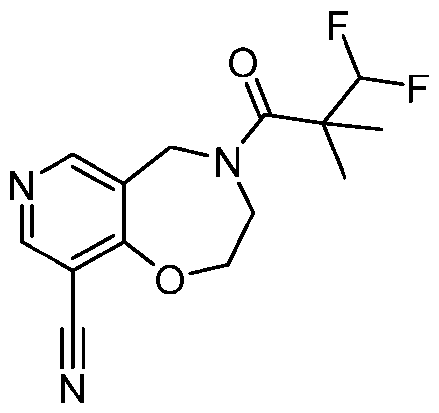
1 comprising: reacting a compound of Formula (1-d):
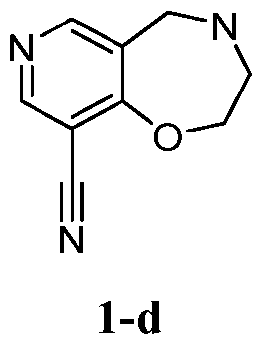 with a compound of Formula (BB-2):
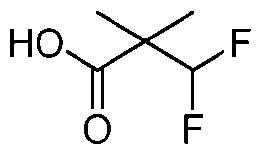
BB-2 with an amide coupling reagent in an organic solvent to form the compound of Formula (1).
2. The method of claim 1, wherein the amide coupling reagent comprises 1- methylimidazole and methanesulfonyl chloride.
3. The method of claim 1, wherein the organic solvent is acetonitrile, di chloromethane, di chloroethane, tetrahydrofuran, or chloroform; optionally wherein the organic solvent is acetonitrile or dichloromethane.
4. The method of any one of claims 1-3, wherein the compound of Formula (1-d) is prepared by reacting a compound of Formula (1-c):
 in the presence of a buffer solution-forming salt in water to form the compound of Formula (1-
A method of preparing a compound of Formula (1-d):
 compnsing: reacting a compound of Formula (1-c):
 in the presence of a buffer solution-forming salt in water to form the compound of Formula (1-
The method of claim 4 or 5, wherein the buffer solution-forming salt is monosodium phosphate, disodium phosphate, sodium citrate, monopotassium phosphate, dipotassium phosphate, or potassium citrate; optionally wherein the buffer solution-forming salt is dipotassium phosphate.
7. The method of any one of claims 4-6, wherein the compound of Formula (1-c) is prepared by reacting a compound of Formula (1-b):
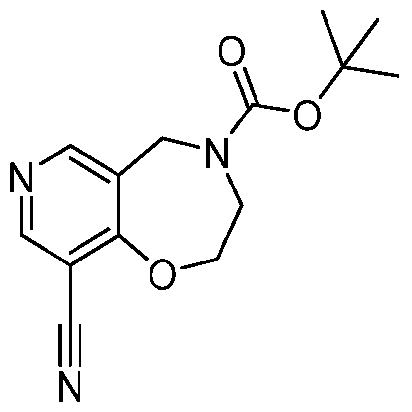
1-b with acetyl chloride and an alcohol in an organic solvent to form the compound of Formula (1-c), wherein: the alcohol is methanol, ethanol, n-propanol, or isopropanol; optionally wherein the alcohol is isopropanol, and/or the organic solvent is benzene, toluene, or xylene; optionally wherein the organic solvent is toluene.
8. The method of claim 7, wherein the compound of Formula ( 1-b) is prepared by reacting a compound of Formula (1-a):

1-a with hydroxylamine hydrochloride and a base, followed by propylphosphonic anhydride and a base, in a mixture of two organic solvents to form the compound of Formula (1-b), wherein: the base is triethylamine, sodium acetate, or sodium sulphate; optionally wherein the base is triethylamine, the first organic solvent is toluene, benzene, or xylene; optionally wherein the first organic solvent is toluene, and/or the second organic solvent is ethyl acetate, 2-methyltetrahydrofuran, or dimethyl formamide; optionally wherein the second organic solvent is ethyl acetate.
9. The method of claim 8, wherein the compound of Formula (1-a) is prepared by reacting a compound of Formula (BB-1):

10. The method of any one of claims 1-3, wherein the compound of Formula (BB-2) is prepared by reacting a compound of Formula (BB-f):
 with a hydroxide salt in a mixture of water and an organic solvent followed by acidification to form the compound of Formula (BB-2).
11. A method of preparing a compound of Formula (BB-2):

BB-2 comprising: reacting a compound of Formula (BB-f):

BB-f with a hydroxide salt in a mixture of water and an organic solvent followed by acidification to form the compound of Formula (BB-2), wherein: the hydroxide salt is sodium hydroxide, potassium hydroxide, or lithium hydroxide monohydrate; optionally wherein the hydroxide salt is lithium hydroxide monohydrate, and/or the organic solvent is toluene, tetrahydrofuran, dioxane, or dichloromethane; optionally wherein the organic solvent is dichloromethane.
12. The method of claim 10 or 11, wherein the compound of Formula (BB-f) is prepared by: i) reacting a compound of Formula (BB-d):

BB-d with a catalyst, a cocatalyst, a base, and an oxidation reagent in a first organic solvent to form a compound of Formula (BB-e):

BB-e, ii) reacting the compound of Formula (BB-e) with an aminosulfurane in an organic solvent followed by a base in a mixture of water and a second organic solvent to form the compound of Formula (BB-f), wherein: the aminosulfurane is (diethylamino)difluorosulfonium tetrafluorob orate, bis(2- methoxyethyl)aminosulfur trifluoride, difluoro-4-morpholinylsulfonium tetrafluoroborate, or diethylaminosulfur trifluoride; optionally wherein the aminosulfurane is diethylaminosulfur tri fluoride,
the base is pyridine, sodium hydroxide, or triethylamine; optionally wherein the base is triethylamine, the first organic solvent is dichloromethane, di chloroethane, or acetonitrile; optionally wherein the first organic solvent is dichloromethane, and/or the second organic solvent is dichloromethane, di chloroethane, or acetonitrile; optionally wherein the second organic solvent is di chloromethane.
13. The method of claim 10 or 11, wherein the compound of Formula (BB-f) is prepared by: i) reacting a compound of Formula (BB-d):

BB-d with a catalyst, a cocatalyst, a base, and an oxidation reagent in an organic solvent to form a compound of Formula (BB-e):

BB-e ii) reacting the compound of Formula (BB-e) with (diethylamino)difluorosulfonium tetrafluoroborate, triethylamine trihydrofluoride, and triethylamine in dichloromethane followed by lithium hydroxide in water to form the compound of Formula (BB-f): wherein: the catalyst is 2-azaadamantane N-oxyl, 9-azabicyclo[3.3.1]nonane N-oxyl, or (2, 2,6,6- tetramethylpiperidin-l-yl)oxyl; optionally wherein the catalyst is (2,2,6,6-tetramethylpiperidin-l- yl)oxyl, the cocatalyst is sodium bromide or potassium bromide; optionally wherein the cocatalyst is sodium bromide, the base is sodium bicarbonate, the oxidation reagent is sodium hypochlorite, and/or the organic solvent is dichloromethane, di chloroethane, acetonitrile, or chloroform; optionally wherein the organic solvent is dichloromethane.
14. A method of preparing a compound of Formula (1), comprising the following steps:

BB-f BB-e BB-d
15. A compound of Formula (1-d):

1-d
Applications Claiming Priority (2)
| Application Number | Priority Date | Filing Date | Title |
|---|---|---|---|
| US202363523428P | 2023-06-27 | 2023-06-27 | |
| US63/523,428 | 2023-06-27 |
Publications (1)
| Publication Number | Publication Date |
|---|---|
| WO2025006575A1 true WO2025006575A1 (en) | 2025-01-02 |
Family
ID=91953812
Family Applications (1)
| Application Number | Title | Priority Date | Filing Date |
|---|---|---|---|
| PCT/US2024/035577 Ceased WO2025006575A1 (en) | 2023-06-27 | 2024-06-26 | Process for preparing 4-(3,3-difluoro-2,2-dimethyl-propanoyl)-3,5-dihydro-2h-pyrido[3,4-f][l,4]oxazepine-9-carbonitrile |
Country Status (2)
| Country | Link |
|---|---|
| TW (1) | TW202515552A (en) |
| WO (1) | WO2025006575A1 (en) |
Citations (1)
| Publication number | Priority date | Publication date | Assignee | Title |
|---|---|---|---|---|
| WO2018213632A1 (en) * | 2017-05-17 | 2018-11-22 | Denali Therapeutics Inc. | Kinase inhibitors and uses thereof |
-
2024
- 2024-06-26 TW TW113123840A patent/TW202515552A/en unknown
- 2024-06-26 WO PCT/US2024/035577 patent/WO2025006575A1/en not_active Ceased
Patent Citations (1)
| Publication number | Priority date | Publication date | Assignee | Title |
|---|---|---|---|---|
| WO2018213632A1 (en) * | 2017-05-17 | 2018-11-22 | Denali Therapeutics Inc. | Kinase inhibitors and uses thereof |
Also Published As
| Publication number | Publication date |
|---|---|
| TW202515552A (en) | 2025-04-16 |
Similar Documents
| Publication | Publication Date | Title |
|---|---|---|
| AU2022204648B2 (en) | Synthesis of omecamtiv mecarbil | |
| CN117362315A (en) | Penta heterocyclic compound, intermediate thereof and preparation method thereof | |
| CN111770917A (en) | Two 4-{[(2S)-2-{4-[5-chloro-2-(1H-1,2,3-triazol-1-yl)phenyl]-5-methoxy-2- Preparation method of oxopyridin-1(2H)-yl}butyryl]amino}-2-fluorobenzamide derivatives | |
| CN102985416B (en) | Process for preparing thrombin-specific inhibitors | |
| JP2020512370A (en) | 6- (Cyclopropanamide) -4-((2-methoxy-3- (1-methyl-1H-1,2,4-triazol-3-yl) phenyl) amino) -N- (methyl-D3) pyridazine -3-Method for producing carboxamide | |
| RU2388753C2 (en) | Method of obtaining intermediate product taking part in irbesartan synthesis | |
| CN101939289A (en) | New method for the preparation of vorinostat | |
| WO2025006575A1 (en) | Process for preparing 4-(3,3-difluoro-2,2-dimethyl-propanoyl)-3,5-dihydro-2h-pyrido[3,4-f][l,4]oxazepine-9-carbonitrile | |
| EP0983249A1 (en) | Processes and intermediates for preparing substituted indazole derivatives | |
| CN104781244A (en) | Process for the preparation of (1S,4S,5S)-4-bromo-6-oxabicyclo[3.2.1]octan-7-one | |
| WO2013062294A2 (en) | Improved preparation method for mitiglinide calcium | |
| CN101573034A (en) | Method for synthesizing (+) and (-) -1- (3, 4-dichlorophenyl) -3-azabicyclo [3.1.0] hexane | |
| WO2007084882A2 (en) | Process for the preparation of 6,7-dihydro-5h-imidazo[1,2-a]imidazole-3-sulfonic acid amides and intermediates used therein | |
| JP2015533142A (en) | Production of ertapenem intermediate | |
| EP1489091A1 (en) | Process for producing triterpene derivative | |
| JP2000281676A (en) | New production method of ampa antagonistic compound | |
| EP2812300B1 (en) | Process for preparing carboxamidine compounds | |
| EP4725944A1 (en) | New method for preparing oxopyridine compound, and key intermediate and use | |
| JPH05221947A (en) | Production of cyclopropane derivative | |
| HK40103722A (en) | Synthesis of omecamtiv mecarbil | |
| EP0396014A2 (en) | Substituted biphenylcarboxylic acids, process for their preparation and new intermediates | |
| HK40068051A (en) | Synthesis of omecamtiv mecarbil | |
| HK40068051B (en) | Synthesis of omecamtiv mecarbil | |
| HK40035144B (en) | Preparation process of two compounds | |
| JP2023532014A (en) | Method for synthesizing cationic lipids |
Legal Events
| Date | Code | Title | Description |
|---|---|---|---|
| 121 | Ep: the epo has been informed by wipo that ep was designated in this application |
Ref document number: 24743589 Country of ref document: EP Kind code of ref document: A1 |
|
| NENP | Non-entry into the national phase |
Ref country code: DE |