WO2025004533A1 - 職務経歴情報収集装置および職務経歴情報を収集する方法 - Google Patents
職務経歴情報収集装置および職務経歴情報を収集する方法 Download PDFInfo
- Publication number
- WO2025004533A1 WO2025004533A1 PCT/JP2024/016937 JP2024016937W WO2025004533A1 WO 2025004533 A1 WO2025004533 A1 WO 2025004533A1 JP 2024016937 W JP2024016937 W JP 2024016937W WO 2025004533 A1 WO2025004533 A1 WO 2025004533A1
- Authority
- WO
- WIPO (PCT)
- Prior art keywords
- user
- work history
- information
- history information
- unit
- Prior art date
- Legal status (The legal status is an assumption and is not a legal conclusion. Google has not performed a legal analysis and makes no representation as to the accuracy of the status listed.)
- Ceased
Links
Images











Classifications
-
- G—PHYSICS
- G06—COMPUTING OR CALCULATING; COUNTING
- G06F—ELECTRIC DIGITAL DATA PROCESSING
- G06F16/00—Information retrieval; Database structures therefor; File system structures therefor
- G06F16/30—Information retrieval; Database structures therefor; File system structures therefor of unstructured textual data
- G06F16/35—Clustering; Classification
- G06F16/353—Clustering; Classification into predefined classes
-
- G—PHYSICS
- G06—COMPUTING OR CALCULATING; COUNTING
- G06F—ELECTRIC DIGITAL DATA PROCESSING
- G06F40/00—Handling natural language data
- G06F40/10—Text processing
- G06F40/166—Editing, e.g. inserting or deleting
- G06F40/186—Templates
-
- G—PHYSICS
- G06—COMPUTING OR CALCULATING; COUNTING
- G06F—ELECTRIC DIGITAL DATA PROCESSING
- G06F40/00—Handling natural language data
- G06F40/20—Natural language analysis
-
- G—PHYSICS
- G06—COMPUTING OR CALCULATING; COUNTING
- G06F—ELECTRIC DIGITAL DATA PROCESSING
- G06F40/00—Handling natural language data
- G06F40/20—Natural language analysis
- G06F40/237—Lexical tools
- G06F40/242—Dictionaries
-
- G—PHYSICS
- G06—COMPUTING OR CALCULATING; COUNTING
- G06F—ELECTRIC DIGITAL DATA PROCESSING
- G06F40/00—Handling natural language data
- G06F40/20—Natural language analysis
- G06F40/279—Recognition of textual entities
-
- G—PHYSICS
- G06—COMPUTING OR CALCULATING; COUNTING
- G06F—ELECTRIC DIGITAL DATA PROCESSING
- G06F40/00—Handling natural language data
- G06F40/20—Natural language analysis
- G06F40/279—Recognition of textual entities
- G06F40/284—Lexical analysis, e.g. tokenisation or collocates
-
- G—PHYSICS
- G06—COMPUTING OR CALCULATING; COUNTING
- G06F—ELECTRIC DIGITAL DATA PROCESSING
- G06F40/00—Handling natural language data
- G06F40/20—Natural language analysis
- G06F40/279—Recognition of textual entities
- G06F40/289—Phrasal analysis, e.g. finite state techniques or chunking
-
- G—PHYSICS
- G06—COMPUTING OR CALCULATING; COUNTING
- G06F—ELECTRIC DIGITAL DATA PROCESSING
- G06F40/00—Handling natural language data
- G06F40/30—Semantic analysis
-
- G—PHYSICS
- G06—COMPUTING OR CALCULATING; COUNTING
- G06F—ELECTRIC DIGITAL DATA PROCESSING
- G06F40/00—Handling natural language data
- G06F40/40—Processing or translation of natural language
- G06F40/55—Rule-based translation
- G06F40/56—Natural language generation
-
- G—PHYSICS
- G06—COMPUTING OR CALCULATING; COUNTING
- G06Q—INFORMATION AND COMMUNICATION TECHNOLOGY [ICT] SPECIALLY ADAPTED FOR ADMINISTRATIVE, COMMERCIAL, FINANCIAL, MANAGERIAL OR SUPERVISORY PURPOSES; SYSTEMS OR METHODS SPECIALLY ADAPTED FOR ADMINISTRATIVE, COMMERCIAL, FINANCIAL, MANAGERIAL OR SUPERVISORY PURPOSES, NOT OTHERWISE PROVIDED FOR
- G06Q10/00—Administration; Management
- G06Q10/10—Office automation; Time management
- G06Q10/105—Human resources
- G06Q10/1053—Employment or hiring
Definitions
- This disclosure relates to a work history information collection device and a method for collecting work history information.
- the resume plays a very important role as one of the factors that a hiring company uses to determine whether a job seeker meets the hiring requirements. For this reason, it is necessary that the resume contains all the information required of a job seeker.
- Patent document 1 JP Patent Publication 2016-212533 A describes a document analysis device that acquires criteria data regarding the presence or absence of required information corresponding to the type of document to be analyzed, such as a resume, and uses the analyzed data and the criteria data to determine whether required data related to the required information is present in the analyzed document.
- Patent Document 1 The document analysis device described in Patent Document 1 is unable to check for the presence of duplicate information regarding required information when such information exists.
- This disclosure has been made to solve the problems mentioned above, and its purpose is to collect work history information so that all required information is included without omission or duplication.
- the work history information collection device includes an acquisition unit that acquires format information including necessary information to be included in a work history document, a collection unit that collects work history information related to a user's work history, and a storage unit that stores a natural language processing algorithm, and the collection unit collects work history information corresponding to the necessary information by interacting with the user using the natural language processing algorithm stored in the storage unit.
- a method is a method for collecting work history information, the method comprising: causing a computer to execute a step of acquiring format information including required information to be included in a work history document; and a step of collecting work history information related to a user's work history, the step of collecting including a step of collecting work history information corresponding to the required information by interacting with the user using a natural language processing algorithm.
- This disclosure makes it possible to collect work history information without missing any required information and without duplication.
- FIG. 1 is a block diagram showing an overview of a matching system.
- 2 is a block diagram showing the configurations of a sharing server, a recruiter device, and an applicant device.
- FIG. FIG. 2 is a block diagram showing a configuration of a generation server.
- FIG. 2 is a diagram illustrating an example of a company database.
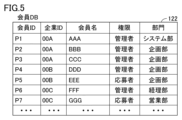
- FIG. 4 is a diagram illustrating an example of a member database.
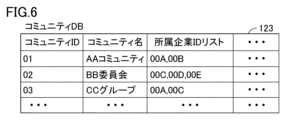
- FIG. 4 is a diagram illustrating an example of a community database.
- FIG. 2 is a diagram illustrating an example of a recruitment request database.
- FIG. 4 is a diagram illustrating an example of a user database.
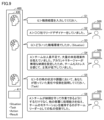
- FIG. 2 is a diagram showing an example of a dialogue between a production server and a user.
- FIG. 2 is a diagram showing an example of a dialogue between a production server and a user.
- FIG. 13 is a diagram showing an example of a dialogue between a generation server and a user (with dictionary registration);
- FIG. 13 is a diagram showing an example of a dialogue between a generation server and a user (with dictionary registration);
- FIG. 1 is a diagram for explaining the function of a generation server in terms of a divergence phase and a convergence phase.
- FIG. 2 is a diagram illustrating a functional configuration of a generation server.
- 13 is a flowchart showing a processing procedure of a data import unit.
- 13 is a flowchart showing a processing procedure of an information acquisition unit.
- FIG. 13 is a flowchart showing a processing procedure of a dictionary information registration unit; 13 is a flowchart showing a processing procedure of a dictionary information display unit. 13 is a flowchart showing a processing procedure of an information organizing unit. 13 is a flowchart showing a processing procedure of a resume registration unit. 10 is a timing chart showing the processing procedures of the sharing server, the recruiter device, the applicant device, and the generation server regarding a resume.
- FIG. 13 is a diagram illustrating a functional configuration of a generation server according to a modified example.
- FIG. 13 is a diagram showing another example of a dialogue between the generation server and the user.
- FIG. 13 is a diagram showing another example of a dialogue between the generation server and the user.
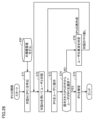
- FIG. 13 is a flowchart showing a processing procedure of an IPC classification unit.
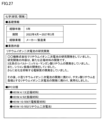
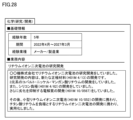
- FIG. 13 is a diagram showing an example of a resume including an IPC.
- FIG. 13 is a diagram showing an example of a resume including an IPC.
- FIG. 13 is a diagram showing an example of a resume including an IPC.
- FIG. 13 is a diagram showing an example of a resume including an IPC.
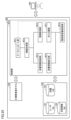
- [Overall configuration] 1 is a block diagram showing an overview of a matching system 1.
- the matching system 1 is used, for example, for crowdsourcing between companies. Crowdsourcing is generally a process of soliciting contributions from an unspecified number of people to obtain needed services, ideas, or content.
- the matching system 1 includes a sharing server 100, recruiter devices 200A, 200B, 200C, etc., applicant devices 300A, 300B, 300C, etc., and a generation server 400.
- the sharing server 100 provides a matching service to many companies that matches business orders and receipts between companies.
- Figure 1 shows company A, company B, company C, etc. as examples of companies that use the matching service.
- Company A, company B, company C, etc. are registered as corporate members of the matching system 1.
- Employees of company A, company B, company C, etc. who use the matching system 1 are also individually registered as members of the matching system 1.
- the work arranged by the matching system 1 is, for example, temporary work that is expected to be completed in a predetermined period of time. Therefore, a person who accepts a work arranged by the matching system 1 will work in the specific department to which they belong within the company as their main job, and will be engaged in each of the jobs arranged by the matching system 1 as a side job.
- an applicant from company A can also accept work from company A. Therefore, in the matching system 1, an applicant from a different department Y of company A is also permitted to accept work from department X of company A.
- a job for which contractors are being recruited in matching system 1 may be referred to as a "recruited job” or a "recruited case”
- a person providing a recruited case may be referred to as a “recruiter”
- a person applying to receive a recruited case may be referred to as an "applicant.”
- Applying for a recruited job may be referred to as an "application for the recruited job” or an "application for the recruited case.”
- a database 120 necessary for the matching service is constructed.
- the database 120 includes various databases in which information necessary for providing the matching service is registered. For example, information on members and recruitment operations is registered in the database 120.
- the sharing server 100 is managed and operated by a company separate from the companies that use the matching service. Any of the companies that use the matching service may manage and operate the sharing server 100.
- recruiter device 200A is operated by an administrator of company A.
- recruiter device 200B is operated by an administrator of company B.
- recruiter device 200C is operated by an administrator of company C.
- recruiter devices 200A, 200B, 200C... may be collectively referred to as "recruiter device 200.”
- Applicant device 300A is operated by an applicant from company A.
- Applicant device 300B is operated by an applicant from company B.
- Applicant device 300C is operated by an applicant from company C.
- applicant devices 300A, 300B, 300C... may be collectively referred to as "applicant device 300.”
- FIG. 1 shows two applicants for each company, the number of applicants is not limited to this. There may be more applicants for each company, or a company may have only one applicant. Sharing server 100 may also accept applicants who do not belong to a company, such as freelancers.
- recruiters can also act as applicants for jobs being recruited by other recruiters.
- the recruiter device 200 functions as the applicant device 300.
- the device that the manager uses to use the matching service is referred to as the recruiter device 200.
- Company A may have one or more managers. When company A has managers, each manager may be given a recruiter device 200, or one recruiter device 200 may be shared by multiple managers. The same applies to companies B, C, etc.
- the sharing server 100 and the recruiter device 200 are configured to be able to communicate with each other via the Internet 50, which is an example of a communication line network.
- the sharing server 100 and the applicant device 300 are configured to be able to communicate with each other via the Internet 50.
- the sharing server 100 When accepting access from the recruiter device 200, the sharing server 100 requests sign-in with the input of a member ID and password. Similarly, when accepting access from the applicant device 300, the sharing server 100 requests sign-in with the input of a member ID and password. The sharing server 100 identifies each recruiter and applicant by the member ID notified at the time of sign-in.
- the recruiter device 200 accepts various operations by the recruiter.
- the recruiter device 200 accepts operations such as inputting a recruitment case (requested work), inputting an evaluation of a contractor who has completed a job, and searching for members of the matching service.
- the recruiter device 200 communicates with the sharing server 100 in response to each operation on the recruiter device 200.
- the sharing server 100 registers a recruitment request (requested work) in the database 120 in response to an operation of inputting the recruitment request, registers the evaluation of the target applicant (contractor) in the database 120 in response to an operation of inputting an evaluation, and provides member information to the recruiter device 200 in response to an operation of searching for members.
- the applicant device 300 accepts various operations by the applicant.
- the applicant device 300 accepts operations such as searching for job openings, applying for job openings, inputting work results, and inputting an evaluation of the recruiter (client).
- the applicant device 300 communicates with the sharing server 100 in response to each operation on the applicant device 300.
- the sharing server 100 provides the applicant device 300 with appropriate recruitment requests in response to an operation to search for recruitment requests, issues a notice of acceptance or rejection to the applicant device 300 in response to an operation to apply for a recruitment request, registers the work results in the database 120 in response to an operation to input the work results, and registers an evaluation of the target recruiter (client) in the database 120 in response to an operation to input an evaluation.
- a recruiter belonging to one department of company A can hire an applicant belonging to another department of company A as a contractor for a job.
- a recruiter belonging to company A can hire an applicant belonging to company B as a contractor for a job.
- Members who use the matching system 1 access the sharing server 100 as recruiters or applicants.
- members of the matching system 1 may be referred to as "users.”
- the recruiter device 200 and applicant device 300 operated by members may be collectively referred to as "user device 500.”
- the sharing server 100 is connected to the generation server 400 so that it can communicate with it.
- the generation server 400 provides the user with an interface to assist in creating a resume.
- the generation server 400 has a database 420 built therein that is necessary for providing such an interface to the user.
- the generation server 400 may be managed by the company that manages the sharing server 100, or may be managed by a company different from the company that manages the sharing server 100.
- the sharing server 100 may include the functions of the generation server 400.
- the generation server 400 is communicatively connected to the user device 500 via the Internet 50.
- the user device 500 includes a recruiter device 200 and an applicant device 300. The user accesses the generation server 400 using the user device 500.
- the generation server 400 requests sign-in involving input of a member ID and password when accepting access from the user device 500.
- the generation server 400 identifies the user by the member ID notified at the time of sign-in.
- the generation server 400 provides the user with an interface to assist in creating a career history. As a result, a career history creation tool is displayed on the screen 550 of the user device 500.
- the generation server 400 is an example of a career history information collection device.
- the generation server 400 has the function of collecting all the work history information necessary for creating a career history from the user while interacting with the user by displaying a question box 551 and an answer box 552 on the screen 550.
- the generation server 400 creates a career history in a standardized format based on the collected work history information.
- the generation server 400 displays the created career history on the screen 550, giving the user an opportunity to check the career history.
- the generation server 400 saves the career history that has been checked by the user in the generation server 400.
- the generation server 400 cooperates with the sharing server 100 and transmits the career history to the recruiter device 200.
- resumes are generally written in a free format, so the style of the resume varies depending on the writer. Even if writers are required to write in a uniform format, it is difficult to make the accuracy of resumes uniform because each person has a different document writing ability. There is also a risk that duplicate entries will be mixed into the resume due to the writer's carelessness. For this reason, evaluators need time to evaluate each person's work history based on the resume. Also, it is difficult for companies to group each person's work history based on the resume.
- the generation server 400 is introduced into the matching system 1 based on the above-described background.
- the generation server 400 collects work history information from the user in an interactive format without omission, and creates a resume in a standardized format.
- the created resume contains work history related to the required items without omission or duplication.
- this embodiment it is possible to assist the user in creating a career history in which all required information is included without omission and there is no overlapping information.
- FIG. 2 is a block diagram showing the configuration of the sharing server 100, the recruiter device 200, and the applicant device 300.
- the sharing server 100 includes a processor 101 , a memory 102 , a storage 103 , and a communication interface 104 .
- Memory 102 may include a RAM (Random Access Memory), a ROM (Read Only Memory), flash memory, or any other suitable memory system. Memory 102 stores programs necessary for the arithmetic processing of processor 101, temporary data calculated in the arithmetic processing, etc.
- RAM Random Access Memory
- ROM Read Only Memory
- flash memory or any other suitable memory system. Memory 102 stores programs necessary for the arithmetic processing of processor 101, temporary data calculated in the arithmetic processing, etc.
- Storage 103 is composed of a hard disk drive, a solid state drive, etc.
- Database 120 is stored in storage 103.
- Database 120 includes multiple types of databases.
- the multiple types of databases include a company database (company DB) 121, a member database (member DB) 122, a community database (community DB) 123, and a job posting database (job posting DB) 124.
- Some of these multiple types of databases may be stored in storage provided separately from the sharing server 100.
- the sharing server 100 may be connected to a cloud service separate from the sharing server 100, and some of the multiple types of databases shown in FIG. 2 may be stored on that cloud.
- the sharing server 100 can access the necessary databases by communicating with that cloud via the Internet 50.
- the processor 101 connects to the Internet 50 via the communication interface 104 in accordance with the program stored in the memory 102.
- the processor 101 connects to the Internet 50 and communicates with the recruiter device 200 and the applicant device 300.
- the processor 101 accesses the database 120 and executes processes such as extracting necessary data, registering new data in the database 120, and updating data registered in the database 120.
- the recruiter device 200 includes a processor 201, a memory 202, a communication interface 203, an input/output interface 204, a display 205, and an operation unit 206.
- the operation unit 206 is composed of a mouse, a keyboard, and the like.
- Memory 202 includes a RAM (Random Access Memory), a ROM (Read Only Memory), flash memory, or any other suitable memory system. Memory 202 stores programs necessary for the arithmetic processing of processor 201, temporary data calculated in the arithmetic processing, etc.
- RAM Random Access Memory
- ROM Read Only Memory
- flash memory or any other suitable memory system. Memory 202 stores programs necessary for the arithmetic processing of processor 201, temporary data calculated in the arithmetic processing, etc.
- the processor 201 connects to the Internet 50 via the communication interface 203 in accordance with the program stored in the memory 202.
- the processor 201 connects to the Internet 50 and communicates with the sharing server 100.
- the processor 201 communicates with the sharing server 100 and executes processes such as sending recruitment requests, displaying information on applicant members on the display 205, ordering work from a contractor selected from the applicants, and sending the contents of the evaluation of the contractor entered by the recruiter to the sharing server 100.
- Information entered by operating the operation unit 206 is notified to the processor 201 via the input/output interface 204.
- the applicant device 300 comprises a processor 301, a memory 302, a communication interface 303, an input/output interface 304, a display 305, and an operation unit 306.
- the operation unit 306 is made up of a mouse, a keyboard, and the like.
- Memory 302 includes a RAM (Random Access Memory), a ROM (Read Only Memory), a flash memory, or any other suitable memory system. Memory 302 stores programs necessary for the arithmetic processing of processor 301, temporary data calculated in the arithmetic processing, etc.
- the processor 301 connects to the Internet 50 via the communication interface 303 in accordance with the program stored in the memory 302.
- the processor 301 connects to the Internet 50 and communicates with the sharing server 100.
- the processor 301 communicates with the sharing server 100 and executes processes such as applying for a job posting, displaying a notice of acceptance or rejection of the job posting on the display 305, transmitting the performance of the job posting to the sharing server 100, and transmitting the contents of the evaluation of the recruiter entered by the applicant to the sharing server 100.
- Information entered by operating the operation unit 306 is notified to the processor 301 via the input/output interface 304.
- the database 120 will now be described.
- the company database 121 stores information on companies affiliated with the matching system 1.
- the member database 122 stores information on members who use the matching system 1. Many of the members are employees of companies affiliated with the matching system 1.
- Members registered in the member database 122 can act as recruiters (orderers) or applicants (recipients) by using the matching system 1.
- Members may include employees of companies registered in the company database 121 as well as individuals (freelancers) not affiliated with a company.
- the community database 123 stores information for identifying companies that belong to a community.
- a community is formed by agreement between companies. Therefore, multiple communities can be formed depending on how the agreement is reached between the companies.
- the number of companies that belong to one community can also be set in various ways.
- a relationship of trust is formed between companies that have a community relationship to the extent determined by the manner of agreement when forming the community.
- Information for identifying companies that belong to the community is registered for each community in the community database 123.
- the job posting database 124 stores jobs (job postings) for which contractors are being recruited.
- employees of each company can work in their own department as a main business within the company, and as members of the matching system 1, they can accept jobs from other departments of their own company or jobs from other companies that are registered in the job posting database 124. In this case, members accept jobs from other departments of their own company or jobs from other companies as a side job.
- [Configuration of generation server 400] 3 is a block diagram showing the configuration of the generation server 400.
- the generation server 400 includes a processor 401, a memory 402, a storage 403, and a communication interface 404.
- Memory 402 includes a RAM (Random Access Memory), a ROM (Read Only Memory), flash memory, or any other suitable memory system. Memory 402 stores programs necessary for the arithmetic processing of processor 401, temporary data calculated in the arithmetic processing, etc.
- RAM Random Access Memory
- ROM Read Only Memory
- flash memory or any other suitable memory system. Memory 402 stores programs necessary for the arithmetic processing of processor 401, temporary data calculated in the arithmetic processing, etc.
- Storage 403 is composed of a hard disk drive, a solid state drive, etc.
- a database 420 and a large language model (LLM) 430 are stored in storage 403.
- the large language model 430 is an example of a natural language processing algorithm.
- Storage 403 is an example of a memory unit in which a natural language processing algorithm is stored.
- Large-scale language model 430 is a language model (trained language model) that has been pre-trained by machine learning. A huge amount of text data is used to train large-scale language model 430.
- Large-scale language model 430 is formed as an autoregressive model that uses a transformer such as GPT (Generative Pre-trained Transformer).
- GPT Generic Pre-trained Transformer
- Large-scale language model 430 in this embodiment may include Bard, etc., in addition to GPT (GPT-2, GPT-3, GPT-4).
- the database 420 includes multiple types of databases.
- the multiple types of databases include a user database (user DB) 421, a dialogue information database (dialogue information DB) 422, and a dictionary database (dictionary DB) 423.
- the memory 402 stores a program (algorithm) 410.
- the processor 401 executes the program (algorithm) 410 to use a large-scale language model 430 to create a resume.
- the program 410 includes an interaction program 411, a confirmation program 412, and a creation program 413.
- the processor 401 executes the interaction program 411 to use the large-scale language model 430 to interact with the user. This allows the processor 401 to obtain a large amount of work history information from the user.
- the processor 401 executes the confirmation program 412 to use the large-scale language model 430 to verify that all work history information required to create a career history has been obtained.
- the processor 401 executes the creation program 413 to use the large-scale language model 430 to create a career history that conforms to a predefined format.
- the database 420 will be described below.
- "work history information” and "work history” are registered for each user's membership ID.
- "work history information” refers to information used to create a "work history.”
- the generation server 400 can receive work history information in file format from the user via the user device 500 before interacting with the user. When the generation server 400 receives work history information from the user, it registers the work history information in the user database 421 for each user's membership ID.
- the generation server 400 creates the work history without interacting with the user.
- the generation server 400 interacts with the user to obtain work history information from the user.
- the "work history information” obtained through the interaction is registered by member ID in the interaction information database 422.
- the generation server 400 creates a "work history” using the "work history information” registered in the interaction information database 422. If "work history information" is registered in the user database 421, the generation server 400 creates a "work history” using the "work history information” registered in the user database 421 and the "work history information” registered in the interaction information database 422.
- the generation server 400 registers the created “work history” in the user database 421.
- the configuration of the user database 421 will be described in detail later with reference to FIG. 8.
- the dictionary database 423 stores terms and their meanings extracted during the dialogue between the generation server 400 and the user.
- the generation server 400 associates terms in the resume that are registered in the dictionary with the dictionary database 423.
- the generation server 400 (or the sharing server 100) displays the resume on the user device 500.
- the generation server 400 (or the sharing server 100) displays the meaning of the term on the user device 500.
- the large-scale language model 430 or a portion of the multiple types of databases may be stored in storage provided separately from the generation server 400.
- the generation server 400 may be connected to a cloud service separate from the generation server 400, and a portion of the multiple types of databases shown in FIG. 3 or the large-scale language model 430 may be stored on that cloud.
- the generation server 400 can access the necessary database or large-scale language model 430 by communicating with that cloud via the Internet 50.
- the processor 401 connects to the Internet 50 via the communication interface 404 in accordance with the program stored in the memory 402.
- the processor 401 connects to the Internet 50 and communicates with the user device 500 (see FIG. 1).
- the processor 401 accesses the database 420 and executes processes such as extracting necessary data, registering new data in the database 420, and updating data registered in the database 420.
- the processor 401 communicates with the sharing server 100. For example, in response to a request from the sharing server 100, the processor 401 transmits the resume of the member (user) registered in the user database 421 to the sharing server 100.
- [Company Database 121] 4 is a diagram showing an example of the company database 121.
- a company ID for identifying the company, a company name, a company address, etc. are registered for each company.
- members are permitted to apply for jobs recruited by various companies and departments and to receive orders for those jobs.
- [Member database 122] 5 is a diagram showing an example of the member database 122.
- Various information about members is registered in the member database 122.
- the various information about members includes a member ID for identifying the member, the ID of the company to which the member belongs, the member's name, the member's authority, and the department to which the member belongs.
- Types of member authority include administrator and applicant.
- a member with administrator authority is given the authority to use the matching system 1 as a recruiter and an applicant.
- a member with applicant authority is given the authority to use the matching system 1 as an applicant, but is not given the authority to use the matching system 1 as a recruiter.
- Department heads within a company are given administrator authority to manage the side jobs of their subordinates within their departments.
- Managers with administrator authority are given the authority to approve applications from their subordinate applicants. Thus, managers function as approvers.
- [Community Database 123] 6 is a diagram showing an example of the community database 123.
- Information on communities formed between companies is registered in the community database 123.
- the community information includes a community ID for identifying the community, a community name, and a list of IDs of companies belonging to the community.
- Each company can form various communities by reaching an agreement with other companies.
- a company belonging to a community can change the companies that belong to the community by reaching an agreement with the other companies.
- the solicited request information includes a request ID for identifying the solicited request, the ID of the company to which the recruiter who registered the solicited request belongs, a list of non-disclosure company IDs, a disclosure level, a request title, an estimated number of man-hours, an estimated period, and a request content.
- the non-disclosure company ID list contains the IDs of companies that are prohibited from disclosing recruitment information.
- the disclosure level is set to one of three levels: “Company”, “Within the community”, or “All”. If the disclosure level is set to "All", applicants outside the community will also be disclosed.
- the IDs of the companies that can view the recruitment requests are shown on the right side of the recruitment request database 124 in Figure 7.
- the recruitment cases corresponding to each case ID may be referred to as case 001, case 002, case 003, etc., using the case ID.
- the communities corresponding to each community ID may be referred to as community 01, community 02, community 03, etc., using the community ID
- the members corresponding to each member ID may be referred to as member P1, member P2, member P3, etc., using the member ID.
- the companies corresponding to each company ID may be referred to as company A, company B, company C, etc., using part of the company ID.
- case 002 the disclosure level is set to "within the community.”
- the companies that have a community relationship with company A, which registered case 002 are company B and company C. Therefore, as shown in FIG. 7, only members belonging to company A, company B, or company C can view case 002.
- Case 003 has the same registered companies and disclosure level as case 002. However, for case 003, "00B" is registered in the non-disclosure company ID list. Therefore, as shown in Figure 7, only members belonging to either company A or company C can view case 003, and members belonging to company B are not authorized to view case 003.
- the estimated man-hours and estimated period are used by applicants and matching system 1 to estimate the time it will take to process a recruitment request.
- each of the company database 121, the member database 122, and the community database 123 may be shared between the sharing server 100 and the generating server 400.
- the member ID of the recruiter corresponding to the recruitment request may be registered in the recruitment request database 124.
- FIG. 8 is a diagram showing an example of the user database 421.
- the "work history information” and “work history” of the member (user) are registered by member ID.
- the "work history information” refers to information used to create the "work history.”
- the "work history” is created based on the "work history information.” Note that in this embodiment, the "work history information" may be acquired in advance before the interaction between the generation server 400 and the user, or may be acquired through the interaction between the generation server 400 and the user.
- the format of the resume is specified in advance by the designer.
- the format of the resume includes the types of information that need to be included and the order in which the information should be included.
- the items required to be included in a career history include “formal items” and “substantive items.”
- formal items include “name,” “age,” “gender,” “work history summary,” “work history (period and content),” “qualifications and skills,” and “self-promotion.”
- these formal items are arranged in the career history in the following order: “name,” “age,” “gender,” “work history summary,” “work history (period and content),” “qualifications and skills,” and “self-promotion.”
- the "formal items” shown in FIG. 8 are listed in the order shown in FIG. 8. Note that the types and order of the "formal items” shown in FIG. 8 are merely examples.
- a resume contains content that corresponds to each of the "formal items.”
- the content that should be included in a resume includes “substantial items” that are determined in advance. As an example of a "substantial item,” this embodiment introduces an item called "STAR.”
- STAR is generally known as one of the methods used by interviewers to effectively interview job seekers.
- "STAR” is a coined word created by combining the initials of "S (Situation),” “T (Task),” “A (Action),” and “R (Result).”
- the generation server 400 acquires work history information from the user so that the user's work history items related to each of the four items intended by "STAR" are included, and creates a work history using the acquired work history information.
- format information for the resume is registered.
- This format information includes the necessary information (formal and substantive information) to be included in the resume.
- the generation server 400 refers to the format registered in the user database 421 and executes processing related to supporting the creation of a resume.
- the work history information registered in the user database 421 is the basis for creating a work history, similar to the work history information obtained by the dialogue between the generation server 400 and the user. If no work history information is registered in the user database 421, the generation server 400 creates a work history based on the "work history information" obtained by the dialogue with the user. Therefore, in this disclosure, it is not essential that work history information is registered in the user database 421.
- the user database 421 is an example of a work history database in which work history information already collected before the dialogue by the collection unit is registered.
- Work history information is, for example, information about the names, departments, job content, work experience, and employment periods of companies where the user has previously worked, and includes information about the "STAR" mentioned above.
- work history information is information about qualifications held by the user.
- Work history information includes fragmentary information about the user's work history. Fragmentary information is, for example, information about one of the multiple required items included in a work history. One of the multiple required items is, for example, information about a qualification held by the user. Alternatively, fragmentary information is information that constitutes part of the required items. For example, if a user holds three qualifications, the fragmentary information is information about one of the three qualifications.
- the user database 421 has been explained in detail using drawings.
- the dialogue information database 422 and the dictionary database 423 have already been explained in a manner that allows the reader to understand their respective configurations, so the explanations of the dialogue information database 422 and the dictionary database 423 will not be repeated here.
- Example of dialogue 9 and 10 are diagrams showing an example of a dialogue between the generation server 400 and a user.
- the user accesses the generation server 400 using a user device 500.
- the generation server 400 uses the large-scale language model 430 to dialogue with the user in the following procedure.
- the generation server 400 diverges the dialogue with the user so that all of the user's work history is acquired without omission from the viewpoint of STAR (Situation, Task, Action, Result) related to the necessary description items.
- STAR Ses, Task, Action, Result
- the generation server 400 interacts with the user using the screen of the user device 500. That is, the generation server 400 inquires of the user about their work history by displaying a request or question on the screen of the user device 500. The user answers the inquiry by inputting text using a keyboard or the like of the user device 500. The generation server 400 may also interact with the user by voice.
- the generation server 400 displays a request message on the screen saying, "Please enter your work history” (step S1).
- the user responds to the request in step S1 by saying, "I was a lead designer at XX Company” (step S2).
- the generation server 400 displays the inquiry "What was the work environment like?" on the screen (step S3).
- the user responds to the inquiry in step S3 by saying "The team was short-staffed and had a large number of backlogged cases.
- the account manager set an unreasonable deadline, which caused stress for the team and led to low morale" (step S4).
- the generating server 400 displays the inquiry "Please explain the responsibilities and roles you played in the situation and task at that time” on the screen (step S5).
- the user responds to the inquiry in step S5 by saying "My role as a team leader was not only to ensure that the team worked within the deadline, but also to communicate the processing capabilities to other departments and maintain the motivation of the team” (step S6).
- the generation server 400 continues in a similar manner, by interacting with the user in chat format to obtain all of the work history information necessary to create a career history from the user.
- the generation server 400 then creates a career history based on the work history information.
- the generation server 400 displays a request message on the screen stating, "I have created a career history. Please check it.” (Step S7).
- the generation server 400 then presents the created career history to the user (Step S8).
- the user checks the career history on the screen of the user device 500.
- the generation server 400 diverges the dialogue between the generation server 400 and the user so that the user's entire work history is acquired without omission from the STAR (Situation, Task, Action, Result) perspective.
- Step S3 is an example of an inquiry for obtaining work history information corresponding to a "Situation" from a user.
- Step S5 is an example of an inquiry for obtaining work history information corresponding to a "Task” from a user.
- an “Action” relates to the method by which the user overcame a "Situation” or a "Task.”
- a “Result” relates to the outcome obtained by the user's "Action.”
- the dialogue program 411 includes parameters for allowing the dialogue to diverge in terms of STAR (Situation, Task, Action, Result). Such parameters are designed, for example, by the system administrator of the generation server 400.
- the generation server 400 may allow the user to send a CSV (Comma Separated Value) file or the like related to work history information from the user device 500 to the generation server 400.
- CSV Common Separated Value
- venting are as follows: For example, when information obtained from a user is expanded into a sentence, a situation may arise in which the number of characters in the sentence does not meet the number of characters specified in the required information. More specifically, when asking the question "What is the work environment like?", the answer obtained may not reach the specified number of characters (e.g., 100 characters or more). In such a case, the generation server 400 asks the user an additional question such as "How was your relationship with your direct supervisor?" or "How was your relationship with your colleagues?".
- the generation server 400 asks the user additional questions. For example, if the reason is not clear from the user's answer, the generation server 400 asks the user additional questions. For example, if the user answers "The team was short-staffed" but the user's answer does not contain any "keywords" indicating the reason for the shortfall, the generation server 400 asks the user additional questions such as "Why were there a shortage of staff?".
- the generation server 400 may use the large-scale language model 430 to organize the information and present the user with a selection of reasons. For example, assume that the answer obtained from the user is, "The team was short-staffed and had a large number of backlogged cases. The account manager set an unreasonable deadline, which caused stress for the team and low morale.”
- the generation server 400 determines that, for example, (a) the reason for the shortage of personnel and (b) the reason for the user having a large number of unprocessed cases are insufficient, and presents the user with options to obtain each reason.
- the generating server 400 may, for example, ask the user, "I understand that there was a personnel shortage. Can the reason be one of the following? (Multiple choices possible),” and present the user with the following options: “A: We can't find enough people even after hiring,” “B: There has been a sudden increase in orders,” “C: Many people are quitting,” and “D: Other (free description).”
- the generation server 400 may, for example, ask, "I understand that you had a large number of unprocessed cases. Can the reason be one of the following? (Multiple choices possible),” and may present the user with the following options: "A: There was a lack of information sharing between sales and development, and too many cases were accepted compared to the number of developers," "B: The account manager lacked management skills,” “C: The development staff lacked skills,” and “D: Other (free description).”
- the user might select three options, A, B, and C, in response to (a) above, and two options, A and B, in response to (b) above.
- the generation server 400 can elicit more detailed information from the user regarding the reasons for (a) and (b) above. For example, before asking the user additional questions, the information obtained from the user is, "The team was understaffed and had a large backlog of cases. The account manager had set unreasonable deadlines, which caused stress for the team and low morale.”
- the generation server 400 can extract information from the user such as, for example, "There was a lack of information sharing between sales and development, the number of cases was excessive and too rapid compared to the number of developers, and the account managers lacked the management skills to handle all the cases. There were many cases and working hours were somewhat excessive, so people were quitting one after another, and the staffing shortage was worsening. Furthermore, we were looking to hire mid-career employees who could contribute immediately, but we could't find anyone.”
- FIGS. 9 and 10 are diagrams showing an example of a dialogue (with dictionary registration) between the generation server 400 and the user.
- the operation of the generation server 400 when the generation server 400 detects a term to be registered in the dictionary database 423 in the dialogue shown in Figs. 9 and 10 already described will be described.
- the generation server 400 detects "lead designer” from the input in step S2 as a term that is likely to be misunderstood. In this case, the generation server 400 displays the inquiry sentence "Does lead designer mean XXXXX?" on the screen (step S2a).
- step S2a The user responds to the inquiry in step S2a by saying, "No, I mean XXXXX.” (step S2b). Based on the response in step S2b, the generation server 400 displays the sentence "I understand” on the screen (step S2c). Furthermore, in step S2c, the generation server 400 registers the term "lead designer" and its meaning as a set in the dictionary database 423.
- the generation server 400 continues to interact with the user, and acquires all of the work history information necessary to create the career history from the user.
- the generation server 400 then creates the career history based on the work history information.
- the generation server 400 displays a request message on the screen stating, "Your work history has been created. Please confirm it.” (Step S7).
- the generation server 400 presents the created career history to the user (Step S8).
- the term "lead designer" is underlined in the resume.
- the user understands that the underlined term is linked to the dictionary.
- the meaning of the term registered in the dictionary database 423 is displayed on the screen.
- the user checks the resume, which includes a link to the dictionary, on the screen of the user device 500.
- the generation server 400 registers the resume approved by the user in the user database 421, linking it to the user's membership ID.
- the resume registered in the user database 421 is sent to the recruiter device 200 at the user's request.
- the recruiter device 200 displays the resume, including a link to the dictionary, on the recruiter device 200.
- the recruiter clicks on a term displayed on the screen with a mouse or the like the meaning of the term registered in the dictionary database 423 is displayed on the screen. This allows the recruiter to accurately understand the terms written in the resume.
- FIG. 13 is a diagram for explaining the contents of the processing executed by the generating server 400 from the viewpoint of a divergence phase and a convergence phase.
- the generation server 400 has a large-scale language model 430 and a program 410 (a dialogue program 411, a confirmation program 412, and a creation program) that executes processing to support the creation of a resume using the large-scale language model 430.
- the processing to support the creation of a resume is divided into a divergence phase and a convergence phase, as shown in FIG. 13.
- the "Dialogue AI (Artificial Intelligence) 4110" is configured by combining the dialogue program 411 and the large-scale language model 430.
- the dialogue AI 4110 obtains a large amount of work history information required to create a resume from the user. Furthermore, the dialogue AI 4110 asks the user whether the created resume meets the user's intentions.
- the "confirmation AI 4120” is configured by combining the confirmation program 412 and the large-scale language model 430.
- the confirmation AI 4120 confirms that all work history information corresponding to the necessary items to be written in the creation of a work history record has been obtained without omission.
- the "creation (summarization) AI 4130” is configured by combining the creation program 413 and the large-scale language model 430.
- the creation (summarization) AI 4130 creates a resume that conforms to a predefined resume format.
- the dialogue AI 4110 chats with the user and obtains from the user work history information related to the necessary items to be included in the resume.
- the dialogue AI 4110 controls the dialogue so that it diverges from the perspective of "STAR (Situation, Task, Action, Result)" according to parameters designed by the system administrator.
- the confirmation AI 4120 reads the resume format.
- the resume format contains the necessary information required to create a resume.
- the confirmation AI 4120 verifies that all work history information corresponding to the necessary information required to create a resume has been obtained without omission. If there is insufficient work history information, the confirmation AI 4120 instructs the dialogue AI 4110 to continue the dialogue regarding the missing work history information.
- the dialogue AI 4110 stores the dialogue history. Therefore, when the dialogue AI 4110 is instructed by the confirmation AI 4120 to continue the dialogue, it can continue the dialogue from where it left off, without having to restart a dialogue that has already been completed.
- divergent dialogue by the dialogue AI 4110 and confirmation by the confirmation AI 4120 are repeated until all work history information corresponding to the necessary items to be included in the creation of a resume is obtained without omission.
- the generation server 400 moves to the convergence phase.
- the creation AI (summarization AI) 4130 has the function of arranging the acquired information into a specified format. More specifically, the creation AI 4130 creates a resume that conforms to a predefined resume format.
- the dialogue AI 4110 presents the created resume to the user. The user checks the resume. If the user determines that the resume does not meet the user's intentions, the user instructs the dialogue AI 4110 to make corrections. In this case, the creation AI 4130 corrects the resume based on the user's correction instructions.
- the dialogue AI 4110 presents the corrected resume to the user. The user checks the resume.
- the creation AI 4130 creates (modifies) the resume and the dialogue between the dialogue AI 4110 and the user is repeated until the resume that the user intended is created.
- FIG. 14 is a diagram showing the functional configuration of the generation server 400.
- the generation server 400 includes a control unit 4010.
- the control unit 4010 is realized by the processor 401, memory 402, and communication interface 404 shown in FIG. 3.
- the control unit 4010 can function as the dialogue AI 4110, the confirmation AI 4120, and the creation AI 4130 shown in FIG. 13 by utilizing the large-scale language model 430.
- the control unit 4010 executes processing related to the support for creating a resume by accessing the database 420.
- the control unit 4010 includes a data import unit 4011, an information acquisition unit 4012, a dictionary information registration unit 4013, a dictionary information display unit 4014, an information organization unit 4015, and a resume registration unit 4016.
- the data import unit 4011 imports work history information that the user already possesses into the dialogue AI 4110.
- the data import unit 4011 can receive work history information in a specified file format from the user via the user device 500.
- the control unit 4010 uses the imported work history information to create a resume. In this way, by utilizing work history information that the user already possesses, the dialogue cost of the dialogue AI 4110 can be reduced.
- the information acquisition unit 4012 acquires work history information from the user using the dialogue AI 4110.
- the information acquisition unit 4012 uses the confirmation AI 4120 to confirm that all work history information corresponding to the necessary items to be written in the creation of the work history has been acquired without omission.
- the dictionary information registration unit 4013 registers in the dictionary database 423 unique terms obtained during a dialogue between the user and the dialogue AI 4110.
- the unique terms may be, for example, information unique to an organization such as a company.
- the dictionary information display unit 4014 displays the term in the resume in the form of a link.
- the information sorting unit 4015 uses the creation AI 4130 to create the resume in a specified format.
- the career history registration unit 4016 stores the created career history in the user database 421.
- the career history registration unit 4016 generates a link that associates the term written in the career history with the meaning of the term registered in the dictionary database 423, and then stores the career history information in the user database 421.
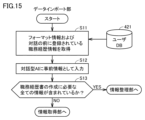
- FIG. 15 is a flowchart showing the processing steps of the data import unit 4011.
- the data import unit 4011 acquires, from the user database 421, format information for the resume and work history information registered before the dialogue between the dialogue AI 4110 and the user (step S11).
- Step S11 is an example of a collection unit that collects work history information related to the user's work history.
- step S11 is an example of an acquisition unit that acquires format information including necessary information to be written in the resume.
- the "work history information registered before the dialogue between the dialogue AI 4110 and the user” refers to the "work history information" shown in FIG. 8.
- the data import unit 4011 may read the user's work history information from a specified local file.
- the format information for the work history includes the necessary information to be included in the work history, the order in which the necessary information is to be included, etc.
- the data import unit 4011 inputs the work history information acquired in step S11 to the dialogue AI 4110 as advance information (step S12).
- the data import unit 4011 determines whether the work history information acquired in step S11 includes all the information necessary to create a resume (step S13).
- the data import unit 4011 makes the determination in step S13 by calling the confirmation AI 4120 and referring to the format information of the resume.
- step S11 If the work history information acquired in step S11 contains all the information necessary to create a resume, no dialogue is required between the dialogue AI 4110 and the user. Therefore, if the work history information acquired in step S11 contains all the information necessary to create a resume, the data import unit 4011 passes the process to the information sorting unit 4015. The information sorting unit 4015 creates the resume.
- step S11 If the work history information acquired in step S11 does not include all the information necessary to create a work history, the data import unit 4011 passes the process to the information acquisition unit 4012.
- FIG. 16 is a flowchart showing the processing steps of the information acquisition unit 4012.
- the information acquisition unit 4012 calls the dialogue AI 4110 and the confirmation AI 4120 using the large-scale language model 430 (step S21).
- the information acquisition unit 4012 uses the dialogue AI 4110 to dialogue with the user (step S22). As a result, the information acquisition unit 4012 acquires dialogue information (including work history information) from the user.
- Step S22 is an example of a collection unit that collects work history information related to the user's work history. Furthermore, step S22 is an example of a dialogue unit that collects work history information by dialogue with the user.
- the information acquisition unit 4012 stores the dialogue information in the dialogue information database 422 (step S23).
- the dialogue information is information that indicates the history of dialogue with the user.
- the information acquisition unit 4012 determines whether all work history information corresponding to the necessary items required for creating a resume has been acquired without omission, based on the dialogue information (step S24). At this time, the information acquisition unit 4012 makes the determination of step S24 by referring to the format information acquired in step S11. Note that the information acquisition unit 4012 may acquire format information from the user database 421 in a step separate from step S11. If all work history information corresponding to the necessary items has not been acquired without omission, the information acquisition unit 4012 returns the process to step S22.
- the information acquisition unit 4012 checks with the user whether there is other work history information (step S25). If there is other work history information, the information acquisition unit 4012 returns the process to step S22. If there is no other work history information, the information acquisition unit 4012 passes the process to the information sorting unit 4015. The information sorting unit 4015 creates a work history.
- FIG. 17 is a flowchart showing the processing steps of the dictionary information registration unit 4013.
- the dictionary information registration unit 4013 detects words to be registered in the dictionary during a dialogue between the dialogue AI 4110 and the user (step S31). Words to be registered in the dictionary include proper nouns and polysemous word information. Words to be registered in the dictionary may be information specific to an organization such as a company, for example.
- the dictionary information registration unit 4013 confirms the meaning of the word with the user (step S32).
- Step S33 the dictionary information registration unit 4013 acquires the user's answer.
- the dictionary information registration unit 4013 registers the word detected in step S31 and its meaning based on the user's answer as dictionary information in the dictionary database 423 (step S34), and ends the processing based on this flowchart.
- Step S34 is an example of a registration unit that registers the meaning of the term included in the work history information in the dictionary database.
- FIG. 18 is a flowchart showing the processing steps of the dictionary information display unit 4014.
- the dictionary information display unit 4014 acquires the user's career history from the user database 421 (step S41).
- the dictionary information display unit 4014 acquires terms present in the career history from the dictionary database 423 (step S42).
- the dictionary information display unit 4014 displays the career history with a link on the screen of the user device 500 (step S43).
- the dictionary information display unit 4014 displays the dictionary information corresponding to the link on the screen of the user device 500 in response to the user's operation (step S44), and ends the processing based on this flowchart.
- the dictionary information display unit 4014 is an example of a display unit that displays the resume on a display device.
- the user device 500 is an example of a display device. Note that the dictionary information display unit 4014 may display the resume on a display device equipped in the generation server 400 instead of or in addition to the user device 500.
- FIG. 19 is a flowchart showing the processing steps of the information organizing unit 4015.
- the information organizing unit 4015 calls the creation AI 4130 using the large-scale language model 430 (step S51).
- the information sorting unit 4015 reads the dialogue information from the dialogue information database 422 (step S52). Furthermore, if pre-registered work history information exists in the user database 421, the information sorting unit 4015 reads the work history information from the user database 421 in step S52.
- the information sorting unit 4015 creates a career history from the dialogue information (step S53). Furthermore, if the information sorting unit 4015 has read the career history information from the user database 421, in step S53, the information sorting unit 4015 creates a career history from the career history information and the dialogue information. Step S53 is an example of a creation unit that creates a career history.
- the information sorting unit 4015 refers to the format information acquired in step S11 and creates a resume in a format that conforms to the format information.
- the information acquisition unit 4012 may acquire the format information from the user database 421 in a step separate from step S11. Next, the information sorting unit 4015 displays the resume on the screen of the user device 500 (step S54).
- the information sorting unit 4015 determines whether or not an approval operation from the user has been received (step S55). If an approval operation from the user has been received, the information sorting unit 4015 ends the processing based on this flowchart.
- the information sorting unit 4015 determines whether or not a non-approval operation from the user has been received (step S56). If the information sorting unit 4015 has not received a non-approval operation from the user, it returns the process to step S55. If the information sorting unit 4015 has received a non-approval operation from the user, it passes the process to the information acquisition unit 4012. The information acquisition unit 4012 calls the dialogue AI 4110 again and acquires new dialogue information from the user by dialogue with the user.
- the information organizing unit 4015 may not only obtain new dialogue information from the user, but may also dialogue with the user again without changing the conditions before the dialogue. This is because, in general, a large-scale language model may generate multiple answers (sentences) with different nuances for the same question and conditions.
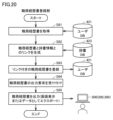
- FIG 20 is a flowchart showing the processing steps of the resume registration unit 4016.
- the resume registration unit 4016 acquires the user's resume from the user database 421 (step S61).
- the resume registration unit 4016 references the dictionary database 423 to generate a link between the resume and dictionary information (step S62).
- the resume registration unit 4016 stores the linked resume in the user database 421 (step S63).
- the resume registration unit 4016 receives a resume output request from the user (step S64).
- the resume registration unit 4016 outputs the resume to the user device 500 (step S65), and ends the processing based on this flowchart.
- the user device 500 may display the resume on the screen of the user device 500.
- the user device 500 may store the resume data in memory until instructed by the user.
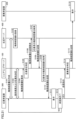
- [Processing sequence executed by matching system 1] 21 is a timing chart showing the processing procedures of the sharing server 100, the recruiter device 200, the applicant device 300, and the generating server 400 regarding the resume. The flow of processing of the matching system 1 regarding the resume will be described using the timing chart shown in FIG.
- step S101 the applicant accesses the generation server using the applicant device 300 and creates a resume (step S101).
- the generation server 400 registers the created resume in the user database 421 (step S102).
- steps S101 and S102 have already been explained using Figures 15 to 20, so the explanation will not be repeated here.
- the applicant accesses the sharing server 100 with the applicant device 300, searches for recruitment jobs, and decides to which job to apply (step S103).
- the applicant operates the applicant device 300 to send a command requesting the applicant's resume from the applicant device 300 to the sharing server 100 (step S104).
- the sharing server 100 identifies the applicant (step S105). More specifically, the sharing server 100 identifies the applicant's member ID.
- the sharing server 100 sends a command to the generation server 400 requesting the transmission of the resume (step S106).
- This command includes the applicant's membership ID.
- the generation server 400 searches the user database 421 for the applicant's resume based on the membership ID included in the command (step S107).
- the generation server 400 transmits the resume found as a result of the search to the sharing server 100 (step S108).
- the sharing server 100 acquires the applicant's resume (step S109).
- the sharing server 100 transmits the acquired resume to the applicant device 300 (step S110).
- the applicant device 300 displays the received resume on the screen of the applicant device 300 (step S111). If the resume contains a term registered in the dictionary database 423, the resume including a link to the dictionary is displayed on the screen.
- the applicant device 300 determines whether an approval operation has been detected (step S112). If the applicant device 300 detects a non-approval operation rather than an approval operation, it returns the process to step S101. In this case, the process of creating a resume is executed again. However, it is preferable that the generation server 400 does not execute the process of creating a resume from the beginning, but rather communicates with the applicant regarding the items that need to be corrected and corrects the description of the resume.
- the applicant device 300 When the applicant device 300 detects the approval operation, it transmits a command to the sharing server 100 to instruct the sending of the resume (step S113).
- the sharing server 100 identifies the recruiter to whom the resume should be sent (step S114). For example, the sharing server 100 identifies the recruiter to whom the resume should be sent based on the application destination determined in step S103.
- the sharing server 100 transmits the resume to the recruiter device 200 (step S115).
- the recruiter device 200 displays the received resume on the screen of the recruiter device 200 (step S116). If the resume contains a term registered in the dictionary database 423, the resume including a link to the dictionary is displayed on the screen.
- the recruiter uses the resume to understand the applicant's work history. When the applicant clicks with the mouse on a term registered in the dictionary in the resume, the meaning of the term is displayed on the recruiter device 200. Therefore, if the resume contains a term that the applicant does not understand, such as an internal company term used by the applicant, the recruiter can understand the meaning of the term.
- the sharing server 100 and the generation server 400 may be configured as a single server. That is, the sharing server 100 may be provided with the functions of the generation server 400, and the generation server 400 may be provided with the functions of the sharing server 100.
- Steps S110 and S115 are an example of an output unit configured to output the resume created by the creation unit to a user device.
- resumes are created in a standardized format, it is possible to improve efficiency in managing and searching a large number of resumes.
- the resume will be displayed on the screen with a link to the dictionary, so that if the resume contains a term that the recruiter does not understand, he or she can understand the meaning of the term.
- part of the configuration of the generation server 400 may be configured by a device separate from the generation server 400.
- a device separate from the generation server 400.
- at least one of the multiple databases included in the database 420 and the large-scale language model 430 may be placed on a cloud separate from the generation server 400.
- the generation server 400 and the cloud are connected so as to be able to communicate with each other via a network.
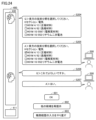
- FIG. 22 is a diagram showing the functional configuration of a generation server 400A relating to a modified example. Similar to the generation server 400, the generation server 400A has a processor, memory, a communication interface, storage, and the like, and includes a control unit 4010A realized by these configurations.
- the generation server 400A is communicatively connected to a user device 500A used by a user via the Internet or the like.
- the generation server 400A includes a satisfying requirement database (satisfying requirement DB) 426, a raw information storage database (raw information storage DB) 427, a generating format database (generating format DB) 428, and large-scale language models 430A and 430B. These databases and large-scale language models are configured in the storage of the generation server 400A.
- Large-scale language models 430A and 430B are natural language processing models trained using large amounts of text data, similar to large-scale language model 430.
- BERT registered trademark
- LaMBDA registered trademark
- GPT-4 by OpenAI, etc.
- the large-scale language model is an example of a natural language processing algorithm.
- a language model other than the large-scale language model may be adopted as the natural language processing algorithm.
- a model generated by machine learning such as pattern matching may be adopted as the natural language processing algorithm.
- large-scale language models 430A and 430B one large-scale language model may be used as the large-scale model.
- large-scale language model 430 may be used instead of using two models.
- control unit 4010A includes an input unit 4021, a content sufficiency determination unit 4022, an input request unit 4023, a raw information storage unit 4024, a generation unit 4025, a confirmation request unit 4026, and an output unit 4027.
- the input unit 4021 accepts information input by the user using the user device 500.
- the information input by the user includes work history information.
- the input unit 4021 may accept work history information in chat format, for example.
- the input unit 4021 may also accept work history information in audio file format and other file formats.
- GPT-3 or the like as a large-scale language model and using a chat format UI such as ChatGPT
- a file may be attached to the chat.
- the generation server 400 may be provided with a function for converting the file into a chat format document.
- the output unit 4027 outputs various information to the user device 500.
- the output unit 4027 may output not only chat-format information but also other files such as audio to the user device 500.
- the control unit 4010A interacts with the user in chat format, the input of information to the input unit 4021 and the output of information from the output unit 4027 are repeatedly executed.
- the requirements fulfillment database 426 stores information about the requirements (requirements fulfillment) that the large-scale language model 430A uses to determine whether all work history information corresponding to the necessary items to be included in the creation of a resume has been acquired without omission.
- control unit 4010A may transmit multiple types of requirements to the user device 500A and allow the user to select the requirements that suit his or her preference.
- control unit 4010A may accept requirements set by the user via the user device 500A.
- the control unit 4010A may also generate a trained model that functions as an AI, using the contents of a large number of requirements as training data. In that case, the generated trained model may be used instead of the large-scale language model.
- the requirements may also be used in the prompts of the already existing large-scale language model 430A.
- the requirements may include specific information, such as the number of companies that the user wants to include in their resume.
- the content sufficiency determination unit 4022 uses the large-scale language model 430 to determine whether the information obtained by the input unit 4021 satisfies the sufficiency requirements. If the content sufficiency determination unit 4022 determines that the information obtained by the input unit 4021 does not satisfy the sufficiency requirements, it instructs the input request unit 4023 to obtain additional information. If the content sufficiency determination unit 4022 determines that the information obtained by the input unit 4021 satisfies the sufficiency requirements, it outputs the information obtained by the input unit 4021 to the original information storage unit 4024.
- the input request unit 4023 instructs the large-scale language model 430A to continue the dialogue with the user so that additional information (missing information) is obtained from the user. If multiple pieces of additional information are required, the large-scale language model 430A may dialogue with the user so that the multiple pieces of additional information are obtained all at once, or may dialogue with the user so that each piece of additional information is obtained sequentially. For example, if information A, B, and C are missing, the large-scale language model 430A may first inquire of the user about information A.
- the large-scale language model 430A may automatically generate dialogue rules to prompt the user to input additional information, or may select dialogue rules from preset options.
- the raw information storage unit 4024 temporarily stores the work history information that is the basis for generating a career history.
- the raw information storage unit 4024 outputs the temporarily stored work history information to the raw information storage database 427.
- the raw information storage database 427 registers the work history information.
- the generation unit 4025 creates a career history using the work history information registered in the raw information storage database 427.
- the generation unit 4025 may have a function of creating a career history without waiting for a determination by the content satisfaction determination unit 4022.
- the input unit 4021 may accept draft data of the resume from the user via the user device 500. Furthermore, the input unit 4021 may register the accepted data in the raw information storage database 427. The generation unit 4025 may create the resume based on the draft data registered in the raw information storage database 427.
- the generation format database 428 stores the formats required for the large-scale language model 430B to generate work histories.
- control unit 4010A may transmit multiple types of formats to the user device 500A and allow the user to select the format of his/her preference.
- control unit 4010A may accept a format set by the user via the user device 500A.
- the control unit 4010A may also generate a trained model that functions as an AI using multiple formats as training data. In that case, the generated trained model may be used instead of the large-scale language model. Also, a format may be used for the prompt of an already existing large-scale language model 430A.
- the generation unit 4025 generates a resume using the large-scale language model 430B.
- the format registered in the generation format database 428 is input to the large-scale language model 430B.
- the generation unit 4025 references the raw information storage database 427 and creates a resume that reflects the career history information in a predefined format. Note that instead of the generation unit 4025, the large-scale language model 430B may create the resume.
- the resume generated by the generation unit 4025 is output to the confirmation request unit 4026.
- the confirmation request unit 4026 requests the user to confirm the career history.
- the confirmation request unit 4026 transmits the career history to the user device 500 via the output unit 4027.
- the user confirms the contents of the career history displayed on the user device 500.
- the confirmation request unit 4026 may divide the contents of the career history into multiple items and have the user confirm the contents of the career history for each item.
- the confirmation request unit 4026 may have the user confirm the entries for Company A, and then have the user confirm the entries for Company B.
- the confirmation request unit 4026 may have the user confirm all of the contents of the resume at once.
- the large-scale language model 430B may automatically generate a dialogue rule for when the user is asked to confirm the resume, or may select a dialogue rule from preset options.
- the configuration of the generation server 400A may be configured separately from the generation server 400A.
- at least one of the satisfying requirement database 426, the raw information storage database 427, the generation format database 428, the large-scale language model 430A, and the large-scale language model 430B may be configured separately from the generation server 400A.
- the device configured separately from the generation server 400A and the generation server 400A are connected so as to be able to communicate with each other via a network.
- IPC International Patent Classification
- IPC is originally an index used to classify patent documents. However, by using IPC as an index to classify the skills of engineers, it is thought that it will be possible to classify a wide variety of engineer skills, including the latest technologies, using uniform standards. However, because IPC is a highly specialized classification index used in the patent industry, it is difficult for users who are unfamiliar with IPC to accurately select an IPC that corresponds to their own skills from the many IPC options.
- the generation server 400 collects the user's work history information required to obtain an IPC by dialogue with the user using a natural language processing algorithm.
- FIG. 23 and 24 are diagrams showing other examples of dialogue between the generation server 400 and a user.
- Fig. 23 and Fig. 24 an example is shown in which the generation server 400 acquires an appropriate IPC corresponding to the user's skills through dialogue with the user.
- the generation server 400 displays a request message on the screen stating, "Please enter your work history.” (Step S201).
- the user responds to the request in Step S1 by providing his/her work history (Step S202).
- Step S202 for example, the work history related to the development of lithium ion secondary batteries is provided.
- the generation server 400 organizes the information using the large-scale language model 430 and presents to the user IPCs that may correspond to the user's skills (step S203).
- step S203 for example, one or more "IPCs" corresponding to each of the information obtained through the dialogue, such as “research and development of lithium-ion secondary batteries,” “development of new positive electrode materials,” “development of lithium cobalt nickel manganese oxide,” “development of silicon negative electrodes,” “development of electrolytes that suppress degradation,” and “development and practical application of lithium-ion secondary batteries with lithium titanate negative electrodes,” are presented to the user.
- the generation server 400 presents some IPCs from among the IPCs presented in step S203 to the user as selection candidates (step S204).
- the generation server 400 may present the selection candidates together with check boxes as shown in FIG. 24.
- the user considers whether or not there is an IPC that seems appropriate among the options. If there is an IPC that seems appropriate among the options, the user responds by checking the check box corresponding to that IPC.
- a button 601 as shown in FIG. 24 may be displayed on the screen of the user device 500. After checking the check box, the user clicks the button 601.
- the generation server 400 detects the click of the button 601, it determines the IPC to be included in the user's resume based on the user's response.
- the generation server 400 suggests to the user IPCs that are considered relevant from among a large number of IPCs, based on the work history acquired through correspondence. Therefore, even if the user does not have specialized knowledge of IPC, they can select IPCs that are relevant to their own skills.
- IPCs that are relevant to their own skills.
- an example is shown in which "subgroup” is used, but higher-level symbols such as “subclass” or “group” may be used depending on the granularity desired for classification.
- descriptions such as “subclass”, “group”, and “main group” may be added to the explanatory text for "subgroup” and displayed, and buttons such as question marks may be added so that the contents of the higher levels can be confirmed as necessary.
- the IPC presented to the user may be any of "section”, “subsection”, “class”, “subclass”, “main group”, and “subgroup”.
- a subclass may be presented to the user, such as "H01: Electrical element”.
- the name of the technical field classified by that classification symbol may also be presented to the user.
- buttons 602 and 603 as shown in FIG. 24 may be displayed on the screen of the user device 500.
- the generation server 400 detects a click on the button 602, it selects an IPC from the IPCs presented in step S203 that is different from the options presented in step S204, and presents the selected IPC to the user. If the generation server 400 detects a click on the button 603, it returns the process to step S204 and prompts the user to input work experience.
- IPC candidate generation may be performed automatically multiple times.
- the generation server 400 may generate different answers to the same sentence (or the same question). For this reason, before proposing IPC candidates in step S204, IPC generation from step S202 may be performed automatically multiple times to widen the range of IPC candidates. This increases the likelihood that the user will be able to select an IPC that is suitable for them.
- the generation server 400 supports the user's actions to identify IPCs that correspond to the user's skills through a dialogue between the generation server 400 and the user.
- the processing of step S203 is not essential in this embodiment.
- the generation server 400 may detect multiple IPCs that are thought to correspond to the user's skills through the dialogue, and then present some of the detected multiple IPCs to the user in step S204 without executing the processing of step S203.
- the generation server 400 may present other candidates to the user autonomously, not only when a request to present other candidates again is received from the user.
- the generation server 400 may execute the process of creating option candidates multiple times and present multiple candidates to the user.
- the answer obtained from a large-scale language model in response to a query may differ even if the content of the first query is the same as the content of the second query. Therefore, by having the generation server 400 execute the process of creating option candidates multiple times, multiple candidates with different perspectives may be derived from the generation server 400. If the generation server 400 can obtain the user's selection for each of these multiple candidates, the generation server 400 can obtain a wider range of answers regarding IPC from the user.
- the IPC classification unit 4017 determines the IPC of the user to be written in the career history.
- the IPC classification unit 4017 can present the user with an IPC that is considered to correspond to the user's skills, using the user's career information obtained through dialogue.
- the IPC classification unit 4017 can also present the user with an IPC that is considered to correspond to the user's skills, using the career history information imported by the data import unit 4011.
- the IPC classification unit 4017 presents multiple IPCs to the user, and then determines an IPC that is appropriate for the user's skills through dialogue.
- the determined IPC is imported into the information organization unit 4015.
- the information organization unit 4015 uses the creation AI 4130 to create a career history including the IPC in a specified format.
- the career history registration unit 4016 stores the created career history in the user database 421.
- FIG. 26 is a flowchart showing the processing steps of the IPC classification unit 4017.
- the IPC classification unit 4017 calls the dialogue AI 4110 using the large-scale language model 430 (step S71).
- the IPC classification unit 4017 uses the dialogue AI 4110 to dialogue with the user (step S72).
- the IPC classification unit 4017 acquires dialogue information (including work history information) from the user.
- Step S72 is an example of a collection unit that collects work history information related to the user's work history.
- step S72 is an example of a dialogue unit that collects work history information by dialogue with the user.
- information related to the IPC may be stored in the dictionary database 423.
- the IPC classification unit 4017 may refer to the dictionary database 423 to determine the IPC to be presented to the user.
- the IPC classification unit 4017 then presents to the user several IPCs that are considered to correspond to the user's skills (step S73). The IPC classification unit 4017 then determines whether the user has performed an operation to select an IPC from the presented IPCs (step S74).
- the IPC classification unit 4017 determines the user's request (step S76). More specifically, if the user has requested the recreation of an IPC, the IPC classification unit 4017 returns the process to step S73, changes the IPC to be presented, and presents some IPCs to the user again. This process is executed, for example, when a click on the button 602 shown in FIG. 24 is detected. If the user has requested to redo the dialogue, the IPC classification unit 4017 returns the process to step S72 and dialogues with the user again. This process is executed, for example, when a click on the button 603 shown in FIG. 24 is detected.
- steps S72 to S75 are an example of a collection unit that collects patent classification information related to the user's work based on information acquired from the user through dialogue. As in steps S72 to S75, the collection unit presents the user with multiple IPCs related to the user's work based on information acquired from the user through dialogue, and then confirms the IPC selected by the user as the user's work history information.
- Figs. 27 to 30 are diagrams showing examples of resumes including IPC classifications.
- the resumes shown in Figs. 27 to 30 include basic information, job content, and IPCs related to the job content.
- Fig. 27 shows a resume in a format in which IPC items are listed separately from job content items.
- Fig. 28 shows a resume in a format in which the corresponding IPCs are incorporated into the description of job content.
- Figure 29 shows an example of a resume created using such a format.
- a patent section may be added to the resume, as shown in FIG. 30.
- the patent section may include the corresponding IPC along with the patent information. In this way, by listing the user's patent information along with the IPC on the resume, the user can more strongly highlight their expertise.
- the generation server 400 stores information regarding the job content, work experience, and employment period as work history information in the user database 421, linking the information with the IPC.
- the generation server 400 acquires information regarding the user's patents as shown in FIG. 30, the generation server 400 stores the patent information as work history information in the user database 421, linking the information with the IPC.
- the generation server 400 stores the resumes illustrated in FIGS. 27 to 30 in the user database 421.
- the generation server 400 may allow the user to select the format of the resume through dialogue.
- dialogue is a concept that includes expressions of intent (such as questions and answers) exchanged between the generation server 400 and the user.
- Patent classification has been explained as an example of format information that contains the necessary information to be included in a resume.
- Patent classification is not limited to IPC, and F-terms, FI-terms, and CPC (Cooperative Patent Classification), etc. may also be used.
- FIG. 31 is a diagram showing an example of utilizing RAG (Retrieval-Augmented Generation) technology in the functional configuration of the generation server 400.
- RAG is a technology in which a large-scale language model is configured to access a knowledge source containing the latest accurate information, and the large-scale language model generates an answer based on the knowledge source.
- a large-scale language model may sometimes output inaccurate or misleading information, which is called hallucination.
- RAG can complement such incomplete operation of the large-scale language model and improve the quality of the answer generated by the large-scale language model.
- an IPC database 429 storing IPCs and patent information, etc. may be provided in the generation server 400, as shown in FIG. 31.
- the large-scale language model 430 acquires the IPC from the IPC database 429, and identifies IPC candidates that are considered to correspond to the user's skills based on the acquired IPC.
- Prompt engineering is known as a technique for improving the quality of such prompts.
- Prompt engineering is a technique for developing and optimizing prompts to be given to large-scale language models in order to use them efficiently.
- Prompt engineering is a method for optimizing output for specific tasks, assuming the use of existing models.
- Fine-tuning is a method of improving the performance for a specific task by additionally training an existing model.
- fine-tuning at least a part of a trained model generated based on one dataset is additionally trained based on another dataset. This fine-tunes the parameters of the machine learning model for a specific task.
- fine-tuning can also be interpreted as a type of transfer learning.
- the two differ in that fine-tuning is a method of fine-tuning the weights of all layers of a trained model, while transfer learning is a method of fixing the weights of a trained model and training using only the added layers.
- Fine tuning has the problem that it requires additional training of a large-scale language model with many parameters, which requires huge computational resources.
- Prompt tuning solves this problem by taking a different approach from fine tuning.
- the prompt itself is the learning target.
- the parameters corresponding to the prompt are the targets for optimization.
- RLHF Reinforcement Learning from Human Feedback
- RLHF is a model learning method that combines "supervised learning,” “reinforcement learning,” and “inverse reinforcement learning.”
- RLHF allows AI to learn difficult tasks such as natural language processing while minimizing the elements that require human involvement, such as supervised learning. Therefore, large-scale language models 430 may be trained using such RLHF.
- a large-scale language model is given as an example of a natural language processing algorithm.
- algorithms that can be adopted as natural language processing algorithms are not limited to large-scale language models.
- algorithms generated by rule-based techniques such as pattern matching may be adopted.
- the user device 500 may not only be equipped with all of the processor, memory, communication interface, and input/output interface shown in FIG. 2, but may also be a thin client system that uses a VDI (Virtual Desktop Infrastructure).
- a thin client system that uses a VDI is a system in which a desktop environment on a server is transferred to a terminal in a remote location for use.
- the user device 500 (recruiter device 200, applicant device 300), sharing server 100, and generation server 400 do not necessarily need to be independent devices.
- the functions of the user device 500, sharing server 100, and generation server 400 can be provided on the same aggregation server.
- Databases 120 and 420 are not limited to relational databases, and object-type or NoSQL-type databases may also be used.
- Each of the sharing server 100 and the generation server 400 is an example of a computing device.
- a computing device may be configured by a server (on-premise server, cloud server, etc.) or a serverless system.
- an on-premise server is a server that is installed and managed in facilities managed within a company.
- a cloud server is a server (rented server) provided by another business operator via a network.
- a serverless system is a system in which computing and memory functions can be used only when necessary, without being aware of the existence of a server.
- Computing devices include servers and serverless systems. Servers include on-premise servers and cloud servers.
- the work history information collection device (generation server 400, 400A) described in paragraph 1 includes an acquisition unit (step S11) that acquires format information including necessary information to be included in a work history record, a collection unit (steps S11, S22) that collects work history information related to the user's work history, and a memory unit (storage 403) that stores a natural language processing algorithm, and the collection unit collects work history information corresponding to the necessary information by interacting with the user using the natural language processing algorithm stored in the memory unit (step S22).
- the work history information collection device described in Section 1 further includes a creation unit (step S53) that creates a work history using the work history information collected by the collection unit, and when the collection unit has completed collection of work history information related to required information, the creation unit creates the work history in accordance with the format information using a natural language processing algorithm stored in the memory unit (step S53).
- the work history information collection device described in Section 3 further includes a work history database (user database 421) in which work history information collected before the dialogue by the collection unit is registered, and the creation unit creates a work history based on the work history information registered in the work history database if the work history information registered in the work history database contains information corresponding to the required information (step S13).
- a work history database user database 4211 in which work history information collected before the dialogue by the collection unit is registered
- the work history information collection device described in Section 4 includes, in addition to the work history information collection device described in Section 2 or 3, an output unit configured to output the work history created by the creation unit to a user device (step S110, step S115: the generation server 400 may have the functions of the sharing server 100), and the user device is a recruiter device (200) operated by a recruiter or an applicant device (300) operated by an applicant in a matching system that matches a recruiter who is recruiting contractors with an applicant.
- the work history information collection device described in any one of Sections 1 to 4 further includes a dictionary database (dictionary database 423), a registration unit (step S34) that registers the meanings of terms included in the work history information in the dictionary database, and a display unit (step S43) that displays the work history on a display device (user device 500), and when a term registered in the dictionary database is included in the work history, the display unit displays the meaning of the term on the display device (step S44).
- a dictionary database dictionary database 423
- a registration unit step S34
- step S43 that displays the work history on a display device (user device 500)
- the display unit displays the meaning of the term on the display device (step S44).
- the work history information collection device described in Section 6 includes the same functions as the work history information collection device described in Section 5, except that the collection unit queries the user about the meaning of terms while interacting with the user (Step S32).
- the work history information collection device described in Section 7 includes the work history information collection device described in any one of Sections 1 to 6, and the natural language processing algorithm includes a large-scale language model (large-scale language models 430, 430A, 430B).
- the work history information collection device described in Section 8 includes the work history information collection device described in any one of Sections 1 to 7, in addition to the collection unit collecting patent classification information related to the user's work based on information acquired from the user through dialogue (Step S75), and the work history information includes the patent classification information.
- the collection unit presents the user with multiple patent classification information related to the user's work based on information acquired from the user through dialogue, and then determines the patent classification information selected by the user as work history information (steps S72 to S75).
- the method according to Section 10 is a method for creating a work history information collection, the method including a step of acquiring format information including required information for a work history document, and a step of collecting work history information related to a user's work history, the step of collecting including a step of collecting work history information corresponding to the required information by interacting with the user using a natural language processing algorithm.
- Generation server 401. Processor, 402. Memory, 403. Storage, 404. Communication interface, 410. Program, 411. Dialogue program, 412. Confirmation program RAM, 413 Creation program, 420 Database (DB), 421 User database (User DB), 422 Dialogue information database (Dialogue information DB), 423 Dictionary database (Dictionary DB), 426 Requirement satisfaction database (Requirement satisfaction DB), 427 Original information storage database (Original information storage DB), 428 Generative format database (Generative format DB), 429 IPC database, 430, 430A, 430B Large-scale language model, 500, 500A User device, 550 Screen, 551 Question frame , 552 answer box, 601-603 buttons, 4010, 4010A control unit, 4011 data import unit, 4012 information acquisition unit, 4013 dictionary information registration unit, 4014 dictionary information display unit, 4015 information organization unit, 4016 resume registration unit, 4017 IPC classification unit, 4021 input unit, 4022 content sufficiency determination unit, 4023
Landscapes
- Engineering & Computer Science (AREA)
- Theoretical Computer Science (AREA)
- Physics & Mathematics (AREA)
- General Physics & Mathematics (AREA)
- General Engineering & Computer Science (AREA)
- Health & Medical Sciences (AREA)
- Artificial Intelligence (AREA)
- Audiology, Speech & Language Pathology (AREA)
- Computational Linguistics (AREA)
- General Health & Medical Sciences (AREA)
- Business, Economics & Management (AREA)
- Human Resources & Organizations (AREA)
- Strategic Management (AREA)
- Data Mining & Analysis (AREA)
- Entrepreneurship & Innovation (AREA)
- Marketing (AREA)
- Economics (AREA)
- Databases & Information Systems (AREA)
- Operations Research (AREA)
- Quality & Reliability (AREA)
- Tourism & Hospitality (AREA)
- General Business, Economics & Management (AREA)
- Management, Administration, Business Operations System, And Electronic Commerce (AREA)
- Information Retrieval, Db Structures And Fs Structures Therefor (AREA)
Abstract
Description
図1は、マッチングシステム1の概要を示すブロック図である。マッチングシステム1は、たとえば、企業間のクラウドソーシングに活用される。クラウドソーシングは、一般には、不特定多数の人の寄与を募り、必要とするサービス、アイデア、またはコンテンツを取得するプロセスである。
社内の人材を効率よく活用するためには、個人の保有スキルおよび職務経験を明確化することが効果的である。個人の保有スキルおよび職務経験を明確化するためには、できるだけ多くの個人の情報を、漏れなく収集し、画一的な文書形式にまとめることが必要である。
職務経歴書の精度を揃えることができれば、評価者は、各人の職務経歴を評価し易い。また、職務経歴書の精度を揃えることができれば、企業は、社員の職務経歴書をグループ化することによって、効果的なタレントマネジメントをすることができる。しかし、一般的には、職務経歴書はフリーフォーマットで記載されるため、作成者によって職務経歴書のスタイルが異なる。画一的な形式で記載することを作成者に要求したとしても、各人の書類作成能力に差があるため、職務経歴書の精度を揃えることは難しい。作成者の不注意によって、重複する記載が職務経歴書に紛れ込んでしまうおそれもある。このため、評価者は、職務経歴書に基づいて各人の職務経歴を評価するために時間を要する。また、企業は、職務経歴書に基づいて各人の職務経歴をグループ化することが困難である。
シェアリングサーバ100は、プロセッサ101と、メモリ102と、ストレージ103と、通信インターフェイス104とを備える。
募集者装置200は、プロセッサ201と、メモリ202と、通信インターフェイス203と、入出力インターフェイス204と、ディスプレイ205と、操作部206とを備える。操作部206は、マウスおよびキーボード等により構成される。
応募者装置300は、プロセッサ301と、メモリ302と、通信インターフェイス303と、入出力インターフェイス304と、ディスプレイ305と、操作部306とを備える。操作部306は、マウスおよびキーボード等により構成される。
以下、データベース120について説明する。企業データベース121には、マッチングシステム1に加盟する企業の情報が登録されている。会員データベース122には、マッチングシステム1を利用する会員の情報が登録されている。多くの会員は、マッチングシステム1に加盟する企業の従業員である。
図3は、生成サーバ400の構成を示すブロック図である。生成サーバ400は、プロセッサ401と、メモリ402と、ストレージ403と、通信インターフェイス404とを備える。
以下、データベース420について説明する。ユーザデータベース421には、「職務経歴情報」および「職務経歴書」がユーザの会員ID別に登録される。本開示において「職務経歴情報」は、「職務経歴書」の作成に用いられる情報を意味するものとする。生成サーバ400は、たとえば、ユーザと対話する前に、ユーザ装置500を介してユーザからファイル形式の職務経歴情報を受信することができる。生成サーバ400は、ユーザから職務経歴情報を受信した場合、職務経歴情報をユーザの会員ID別にユーザデータベース421に登録する。
図4は、企業データベース121の一例を示す図である。企業データベース121には、企業を識別するための企業ID、企業名、および企業の住所等が企業別に登録されている。本実施の形態において、会員は、様々な企業および部門が募集する業務に応募し、その業務を受注することが許される。
図5は、会員データベース122の一例を示す図である。会員データベース122には、会員の各種の情報が登録されている。会員の各種の情報には、会員を識別するための会員ID、会員が所属する企業のID、会員名、会員の権限、および会員が所属する部門が含まれる。
図6は、コミュニティデータベース123の一例を示す図である。コミュニティデータベース123には、企業間で形成されるコミュニティの情報が登録されている。コミュニティの情報には、コミュニティを識別するためのコミュニティID、コミュニティ名、およびコミュニティに所属する企業のIDリストが含まれる。各企業は、他の企業と合意することによって様々なコミュニティを形成することができる。コミュニティに所属する企業は、他の企業との合意によって、コミュニティに所属する対象とする企業を変更することができる。
図7は、募集案件データベース124の一例を示す図である。募集案件データベース124には、募集案件の情報が登録されている。募集案件の情報には、募集案件を識別するための案件ID、募集案件を登録した募集者が所属する企業のID、非開示企業IDリスト、開示レベル、案件タイトル、想定工数、想定期間、および案件内容が含まれる。
図8は、ユーザデータベース421の一例を示す図である。図8に示されるように、ユーザデータベース421には、会員(ユーザ)の「職務経歴情報」および「職務経歴書」が会員ID別に登録される。上述のとおり、「職務経歴情報」は、「職務経歴書」の作成に用いられる情報を意味する。「職務経歴書」は、「職務経歴情報」に基づいて作成される。なお、本実施の形態において、「職務経歴情報」は、生成サーバ400とユーザとの対話の前に予め取得されるケースと、生成サーバ400とユーザとの対話によって取得されるケースとがある。
図9および図10は、生成サーバ400とユーザとの間で行なわれる対話の一例を示す図である。ユーザはユーザ装置500を用いて生成サーバ400にアクセスする。生成サーバ400は、大規模言語モデル430を利用して、以下に例示するような手順でユーザと対話する。特に、生成サーバ400は、必要記載事項に関連するSTAR(Situation,Task, Action, Result)の観点から、ユーザのすべての職務経歴が漏れなく取得されるように、ユーザとの対話を発散させる。これにより、生成サーバ400は、職務経歴書の作成に必要なユーザの職務経歴情報を漏れなく取得する。
図11および図12は、生成サーバ400とユーザとの間で行なわれる対話の一例(辞書登録有り)を示す図である。ここでは、既に説明した図9および図10に示される対話において、生成サーバ400が辞書データベース423に登録すべき用語を検出したときの生成サーバ400の動作を説明する。
図13は、生成サーバ400によって実行される処理の内容を発散フェーズおよび収束フェーズの観点から説明するための図である。
次に、図15~図20を参照して、生成サーバ400に含まれる制御部4010の処理手順の一例を説明する。ここでは、制御部4010の処理手順として、データインポート部4011、情報取得部4012、辞書情報登録部4013、辞書情報表示部4014、情報整理部4015、および職務経歴書登録部4016の各々の処理手順を説明する。
図21は、職務経歴書に関する、シェアリングサーバ100、募集者装置200、応募者装置300、および生成サーバ400の各々の処理手順を示すタイミングチャートである。図21に示されるタイミングチャートを用いて、職務経歴書に関するマッチングシステム1の処理の流れを説明する。
c.対話形式のインターフェイスをユーザに提供することによって、職務経歴情報を適切に抽出すためのユーザの負担を軽減することができる。
e.画一化されたフォーマットで職務経歴書が作成されるため、多数の職務経歴書を管理および検索性する際の効率を高めることができる。
本実施の形態においては、マッチングシステム1に生成サーバ400が配置される例を示した。しかしながら、マッチングシステム1とは独立して、職務経歴書を作成する生成サーバを構築してもよい。マッチングシステム1とは独立して職務経歴書を作成する生成サーバの例を説明する。
一般に、技術者の職務経歴書には、技術者の保有するスキルが詳細に記載される。ところで、IT関連技術の急速な発展に伴い、これまでにあまり知られていない新分野の技術が次々と誕生する中、技術の多様化が急速に進んでいる。一方で、ユーザの保有するスキルは分野ごとに粒度が異なる。このため、職務経歴書におけるスキルの記述に統一性が失われつつある。このことは、募集者が応募者の職務経歴書を解析する際の足かせとなっている。
図31は、生成サーバ400の機能的構成にRAG(Retrieval-Augmented Generation)の技術を活用する例を示す図である。RAGは、最新の正確な情報が含まれる知識ソースへ大規模言語モデルがアクセスするように構成し、知識ソースに基づいて大規模言語モデルに回答を生成させる技術である。周知のとおり、大規模言語モデルは、時折、不正確あるいは誤解を招く情報を出力する場合があり、これらはハルシネーション(Hallucination)と称される。RAGは、大規模言語モデルのこのような不完全な動作を補完し、大規模言語モデルが生成する回答の質を向上させることができる。
以下、本開示の態様を列挙する。
Claims (10)
- 職務経歴情報収集装置であって、
職務経歴書の必要記載事項が含まれるフォーマット情報を取得する取得部と、
ユーザの職務経歴に関する職務経歴情報を収集する収集部と、
自然言語処理アルゴリズムが格納された記憶部とを備え、
前記収集部は、前記記憶部に格納された自然言語処理アルゴリズムを用いてユーザと対話することによって、前記必要記載事項に対応する職務経歴情報を収集する、職務経歴情報収集装置。 - 前記収集部によって収集された職務経歴情報を用いて職務経歴書を作成する作成部をさらに備え、
前記作成部は、前記収集部が前記必要記載事項に関する職務経歴情報の収集を完了した場合に、前記記憶部に格納された自然言語処理アルゴリズムを用いて、職務経歴書を前記フォーマット情報に従って作成する、請求項1に記載の職務経歴情報収集装置。 - 前記収集部による対話の前に収集済の職務経歴情報が登録される職務経歴データベースをさらに備え、
前記作成部は、前記職務経歴データベースに登録されている職務経歴情報に、前記必要記載事項に対応する情報が含まれる場合、前記職務経歴データベースに登録されている職務経歴情報に基づいて職務経歴書を作成する、請求項2に記載の職務経歴情報収集装置。 - 前記作成部によって作成された職務経歴書を、ユーザ装置へ出力するように構成される出力部をさらに備え、
前記ユーザ装置は、業務の受注者を募集する募集者と応募者とをマッチングするマッチングシステムにおいて、募集者によって操作される募集者装置、または応募者によって操作される応募者装置である、請求項2または請求項3に記載の職務経歴情報収集装置。 - 辞書データベースと、
前記職務経歴情報に含まれる用語の意味を辞書データベースに登録する登録部と、
前記職務経歴書を表示装置に表示する表示部とをさらに備え、
前記表示部は、前記辞書データベースに登録されている用語が前記職務経歴書に含まれる場合、前記用語の意味を前記表示装置に表示する、請求項1から請求項4のいずれか1項に記載の職務経歴情報収集装置。 - 前記収集部は、ユーザと対話する間に、前記用語の意味を前記ユーザに問い合わせる、請求項5に記載の職務経歴情報収集装置。
- 前記自然言語処理アルゴリズムは、大規模言語モデルを含む、請求項1から請求項6のいずれか1項に記載の職務経歴情報収集装置。
- 前記収集部は、前記対話によってユーザから取得された情報に基づいてユーザの職務に関連する特許分類情報を収集し、
前記職務経歴情報は、前記特許分類情報を含む、請求項1~請求項7のいずれか1項に記載の職務経歴情報収集装置。 - 前記収集部は、前記対話によってユーザから取得された情報に基づいてユーザの職務に関連する複数の前記特許分類情報をユーザに提示した後、ユーザの選択に応じた前記特許分類情報を前記職務経歴情報として確定させる、請求項8に記載の職務経歴情報収集装置。
- 職務経歴情報を収集する方法であって、
前記方法は、コンピュータに、
職務経歴書の必要記載事項が含まれるフォーマット情報を取得するステップと、
ユーザの職務経歴に関する職務経歴情報を収集するステップとを実行させ、
前記収集するステップは、自然言語処理アルゴリズムを用いてユーザと対話することによって、前記必要記載事項に対応する職務経歴情報を収集するステップを含む、方法。
Priority Applications (5)
| Application Number | Priority Date | Filing Date | Title |
|---|---|---|---|
| DE112024001958.7T DE112024001958T5 (de) | 2023-06-29 | 2024-05-07 | Berufslaufbahninformationssammelvorrichtung und Verfahren zur Sammlung von Berufslaufbahninformationen |
| CN202480042996.4A CN121420317A (zh) | 2023-06-29 | 2024-05-07 | 职务履历信息收集装置和收集职务履历信息的方法 |
| JP2025529477A JPWO2025004533A1 (ja) | 2023-06-29 | 2024-05-07 | |
| PCT/JP2024/022516 WO2025004983A1 (ja) | 2023-06-29 | 2024-06-21 | 分類システムおよび分類対象を分類する方法 |
| JP2025530081A JP7831698B2 (ja) | 2023-06-29 | 2024-06-21 | 分類システムおよび分類対象を分類する方法 |
Applications Claiming Priority (4)
| Application Number | Priority Date | Filing Date | Title |
|---|---|---|---|
| JP2023107107 | 2023-06-29 | ||
| JP2023-107107 | 2023-06-29 | ||
| JP2023-214925 | 2023-12-20 | ||
| JP2023214925 | 2023-12-20 |
Related Child Applications (1)
| Application Number | Title | Priority Date | Filing Date |
|---|---|---|---|
| US19/428,361 Continuation US20260134399A1 (en) | 2023-06-29 | 2025-12-22 | Job history information collection apparatus and method of collecting job history information |
Publications (1)
| Publication Number | Publication Date |
|---|---|
| WO2025004533A1 true WO2025004533A1 (ja) | 2025-01-02 |
Family
ID=93938164
Family Applications (2)
| Application Number | Title | Priority Date | Filing Date |
|---|---|---|---|
| PCT/JP2024/016937 Ceased WO2025004533A1 (ja) | 2023-06-29 | 2024-05-07 | 職務経歴情報収集装置および職務経歴情報を収集する方法 |
| PCT/JP2024/022516 Ceased WO2025004983A1 (ja) | 2023-06-29 | 2024-06-21 | 分類システムおよび分類対象を分類する方法 |
Family Applications After (1)
| Application Number | Title | Priority Date | Filing Date |
|---|---|---|---|
| PCT/JP2024/022516 Ceased WO2025004983A1 (ja) | 2023-06-29 | 2024-06-21 | 分類システムおよび分類対象を分類する方法 |
Country Status (4)
| Country | Link |
|---|---|
| JP (2) | JPWO2025004533A1 (ja) |
| CN (1) | CN121420317A (ja) |
| DE (1) | DE112024001958T5 (ja) |
| WO (2) | WO2025004533A1 (ja) |
Families Citing this family (1)
| Publication number | Priority date | Publication date | Assignee | Title |
|---|---|---|---|---|
| WO2025263427A1 (ja) * | 2024-06-21 | 2025-12-26 | 株式会社村田製作所 | 技術情報分類システムおよび技術情報を分類する方法 |
Citations (1)
| Publication number | Priority date | Publication date | Assignee | Title |
|---|---|---|---|---|
| JPH10320416A (ja) * | 1997-05-14 | 1998-12-04 | Nec Corp | 情報配信システム及びプログラムを記録した機械読み取り可能な記録媒体 |
Family Cites Families (3)
| Publication number | Priority date | Publication date | Assignee | Title |
|---|---|---|---|---|
| JP2007156833A (ja) * | 2005-12-05 | 2007-06-21 | Fuji Xerox Co Ltd | 情報処理装置及び情報処理方法、並びにコンピュータ・プログラム |
| US20130275193A1 (en) * | 2011-10-05 | 2013-10-17 | John H. Chuang | System and method for managing a talent platform |
| JP2024008344A (ja) * | 2022-07-08 | 2024-01-19 | Lapras株式会社 | 情報処理装置、情報処理方法、情報処理プログラム |
-
2024
- 2024-05-07 CN CN202480042996.4A patent/CN121420317A/zh active Pending
- 2024-05-07 DE DE112024001958.7T patent/DE112024001958T5/de active Pending
- 2024-05-07 JP JP2025529477A patent/JPWO2025004533A1/ja active Pending
- 2024-05-07 WO PCT/JP2024/016937 patent/WO2025004533A1/ja not_active Ceased
- 2024-06-21 WO PCT/JP2024/022516 patent/WO2025004983A1/ja not_active Ceased
- 2024-06-21 JP JP2025530081A patent/JP7831698B2/ja active Active
Patent Citations (1)
| Publication number | Priority date | Publication date | Assignee | Title |
|---|---|---|---|---|
| JPH10320416A (ja) * | 1997-05-14 | 1998-12-04 | Nec Corp | 情報配信システム及びプログラムを記録した機械読み取り可能な記録媒体 |
Non-Patent Citations (2)
| Title |
|---|
| ANONYMOUS: "ChatGPT in your job search! ~Resume creation edition~. ", EDITORIAL DEPARTMENT OF HATARAKU RECIPE - HATARAKU RECIPE., 26 June 2023 (2023-06-26), XP093253906, Retrieved from the Internet <URL:https://www.hataraku-recipe.jp/_ct/17637974> * |
| MORITA KODAI, SUMI KAORU: "Looking for a Job to System for Automatically Generating a Resume with the Agent", PROCEEDINGS OF 2015 (29TH) ANNUAL CONFERENCE OF THE JAPANESE SOCIETY FOR ARTIFICIAL INTELLIGENCE [CD-ROM], 1 January 2015 (2015-01-01), XP093253896, Retrieved from the Internet <URL:https://www.ai-gakkai.or.jp/jsai2015/webprogram/2015/pdf/1I3-OS-10b-3.pdf> * |
Also Published As
| Publication number | Publication date |
|---|---|
| JPWO2025004983A1 (ja) | 2025-01-02 |
| DE112024001958T5 (de) | 2026-02-19 |
| CN121420317A (zh) | 2026-01-27 |
| JPWO2025004533A1 (ja) | 2025-01-02 |
| JP7831698B2 (ja) | 2026-03-17 |
| WO2025004983A1 (ja) | 2025-01-02 |
Similar Documents
| Publication | Publication Date | Title |
|---|---|---|
| Shou et al. | Value adding and non-value adding activities in turnaround maintenance process: classification, validation, and benefits | |
| Prencipe et al. | Inter-project learning: processes and outcomes of knowledge codification in project-based firms | |
| Pathak et al. | Impact of internet of things and artificial intelligence on human resource development | |
| Yimam-Seid et al. | Expert-finding systems for organizations: Problem and domain analysis and the DEMOIR approach | |
| JP7671403B1 (ja) | 情報処理システム、情報処理方法及びプログラム | |
| US11615377B2 (en) | Predicting hiring priorities | |
| AU2010286432A1 (en) | System and method for managing workforce transitions between public and private sector employment | |
| Fung et al. | A fuzzy expected value-based goal programing model for product planning using quality function deployment | |
| US11941500B2 (en) | System for engagement of human agents for decision-making in a dynamically changing environment | |
| JP7831698B2 (ja) | 分類システムおよび分類対象を分類する方法 | |
| US20100169960A1 (en) | Job Search and Coaching System & Process | |
| Zhang et al. | An intelligent scheduling model of computer human resources in complex scenarios based on artificial intelligence | |
| Frey | Small business knowledge management success story—this stuff really works! | |
| US20240370831A1 (en) | System and method of automating the recruitment process between employment candidates and recruiting entities | |
| US11531501B1 (en) | Collaborative decision making in dynamically changing environment | |
| US20260134399A1 (en) | Job history information collection apparatus and method of collecting job history information | |
| Gurram et al. | Teamwork in distributed agile software development | |
| JP7813442B1 (ja) | バックオフィス業務の支援装置 | |
| Salameh | Digital transformation: Readiness of the Lebanese manufacturing industry | |
| JP7724994B1 (ja) | 情報処理システム、情報処理方法及びプログラム | |
| JP7842512B1 (ja) | 情報処理システム、情報処理方法及びプログラム | |
| JP7822510B1 (ja) | 情報処理システム、情報処理方法及びプログラム | |
| JP7860318B1 (ja) | 情報処理システム、情報処理方法及びプログラム | |
| Panchyrz et al. | Challenges with Organizing for Digital Transformation in International Manufacturing Networks | |
| US20250131384A1 (en) | System and method for instantaneous hiring of job applicants |
Legal Events
| Date | Code | Title | Description |
|---|---|---|---|
| 121 | Ep: the epo has been informed by wipo that ep was designated in this application |
Ref document number: 24831406 Country of ref document: EP Kind code of ref document: A1 |
|
| ENP | Entry into the national phase |
Ref document number: 2025529477 Country of ref document: JP Kind code of ref document: A |
|
| WWE | Wipo information: entry into national phase |
Ref document number: 2025529477 Country of ref document: JP |
|
| WWE | Wipo information: entry into national phase |
Ref document number: 112024001958 Country of ref document: DE |
|
| WWP | Wipo information: published in national office |
Ref document number: 112024001958 Country of ref document: DE |