WO2024261847A1 - プログラム可能機器、バージョン管理システム、バージョン管理方法及びプログラム - Google Patents
プログラム可能機器、バージョン管理システム、バージョン管理方法及びプログラム Download PDFInfo
- Publication number
- WO2024261847A1 WO2024261847A1 PCT/JP2023/022705 JP2023022705W WO2024261847A1 WO 2024261847 A1 WO2024261847 A1 WO 2024261847A1 JP 2023022705 W JP2023022705 W JP 2023022705W WO 2024261847 A1 WO2024261847 A1 WO 2024261847A1
- Authority
- WO
- WIPO (PCT)
- Prior art keywords
- user
- data set
- dataset
- version management
- area
- Prior art date
- Legal status (The legal status is an assumption and is not a legal conclusion. Google has not performed a legal analysis and makes no representation as to the accuracy of the status listed.)
- Ceased
Links
Images





Classifications
-
- H—ELECTRICITY
- H04—ELECTRIC COMMUNICATION TECHNIQUE
- H04L—TRANSMISSION OF DIGITAL INFORMATION, e.g. TELEGRAPHIC COMMUNICATION
- H04L63/00—Network architectures or network communication protocols for network security
- H04L63/08—Network architectures or network communication protocols for network security for authentication of entities
-
- G—PHYSICS
- G06—COMPUTING OR CALCULATING; COUNTING
- G06F—ELECTRIC DIGITAL DATA PROCESSING
- G06F8/00—Arrangements for software engineering
- G06F8/70—Software maintenance or management
- G06F8/71—Version control; Configuration management
-
- G—PHYSICS
- G06—COMPUTING OR CALCULATING; COUNTING
- G06F—ELECTRIC DIGITAL DATA PROCESSING
- G06F11/00—Error detection; Error correction; Monitoring
- G06F11/07—Responding to the occurrence of a fault, e.g. fault tolerance
- G06F11/14—Error detection or correction of the data by redundancy in operations
- G06F11/1446—Point-in-time backing up or restoration of persistent data
- G06F11/1458—Management of the backup or restore process
-
- G—PHYSICS
- G06—COMPUTING OR CALCULATING; COUNTING
- G06F—ELECTRIC DIGITAL DATA PROCESSING
- G06F21/00—Security arrangements for protecting computers, components thereof, programs or data against unauthorised activity
- G06F21/30—Authentication, i.e. establishing the identity or authorisation of security principals
- G06F21/31—User authentication
-
- G—PHYSICS
- G06—COMPUTING OR CALCULATING; COUNTING
- G06F—ELECTRIC DIGITAL DATA PROCESSING
- G06F21/00—Security arrangements for protecting computers, components thereof, programs or data against unauthorised activity
- G06F21/60—Protecting data
- G06F21/62—Protecting access to data via a platform, e.g. using keys or access control rules
- G06F21/6218—Protecting access to data via a platform, e.g. using keys or access control rules to a system of files or objects, e.g. local or distributed file system or database
-
- G—PHYSICS
- G06—COMPUTING OR CALCULATING; COUNTING
- G06F—ELECTRIC DIGITAL DATA PROCESSING
- G06F21/00—Security arrangements for protecting computers, components thereof, programs or data against unauthorised activity
- G06F21/70—Protecting specific internal or peripheral components, in which the protection of a component leads to protection of the entire computer
- G06F21/78—Protecting specific internal or peripheral components, in which the protection of a component leads to protection of the entire computer to assure secure storage of data
-
- G—PHYSICS
- G06—COMPUTING OR CALCULATING; COUNTING
- G06F—ELECTRIC DIGITAL DATA PROCESSING
- G06F2201/00—Indexing scheme relating to error detection, to error correction, and to monitoring
- G06F2201/805—Real-time
Definitions
- the present disclosure relates to a programmable device, a version control system, a version control method, and a program.
- Programmable devices for FA such as programmable logic controllers and motion units, execute programs developed by users to control controlled devices.
- FA Vectory Automation
- Patent Document 1 discloses a programmable logic controller that has its own version management function.
- the programmable logic controller in Patent Document 1 does not assume development by multiple people, so there is a problem in that version management cannot be performed for each user. Therefore, when multiple users individually carry out program development work, it is necessary to determine operational rules in advance between the users, such as the order in which to update programs in the programmable logic controller, which may lead to operational errors.
- the purpose of this disclosure is to provide a programmable device etc. that allows for easy version control in an environment where multiple people are developing.
- the programmable device comprises: A storage means including a master area and a plurality of user areas corresponding to a plurality of users; a user authentication means for authenticating each of the plurality of users; a version management means for storing in the storage means a first data set created by a user authenticated by the user authentication means and managing the version of the first data set; Equipped with The version management means associates the first dataset with a second dataset that is already stored in the storage means and is the immediate parent of the first dataset, and stores the first dataset in the master area or a user area among the multiple user areas corresponding to a user authenticated by the user authentication means.
- This disclosure makes it easy to manage versions in a multi-developer environment.
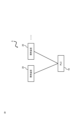
- FIG. 1 is a diagram showing an overall configuration of a version control system according to a first embodiment of the present disclosure.
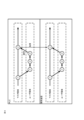
- FIG. 1 is a diagram showing an example of version management by a version management system according to a first embodiment of the present disclosure.
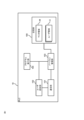
- FIG. 1 is a block diagram showing a functional configuration of a PLC according to a first embodiment of the present disclosure.
- FIG. 1 is a diagram illustrating an example of a hardware configuration of a PLC according to a first embodiment of the present disclosure and a development device according to a second embodiment of the present disclosure.
- a flowchart showing an example of a version management operation by the PLC according to the first embodiment of the present disclosure.
- FIG. 1 is a diagram showing an overall configuration of a version control system according to a first embodiment of the present disclosure.
- FIG. 1 is a diagram showing an example of version management by a version management system according to a first embodiment of the present disclosure.
- FIG. 1 is a block diagram showing a functional configuration of a PLC according to
- FIG. 1 is a diagram showing an overall configuration of a version control system according to a modified example of the first embodiment of the present disclosure.
- FIG. 13 is a block diagram showing a functional configuration of a development device according to a second embodiment of the present disclosure.
- FIG. 1 is a diagram for explaining an example of distributed version management by a version management system according to a second embodiment of the present disclosure.
- FIG. 1 is a diagram for explaining an example of distributed version management by a version management system according to a second embodiment of the present disclosure.
- FIG. 1 is a diagram for explaining an example of distributed version management by a version management system according to a second embodiment of the present disclosure.
- FIG. 1 is a diagram for explaining an example of distributed version management by a version management system according to a second embodiment of the present disclosure.
- FIG. 1 is a diagram for explaining an example of distributed version management by a version management system according to a second embodiment of the present disclosure.
- FIG. 1 is a diagram for explaining an example of distributed version management by a version management system according to a second embodiment of the present disclosure.
- FIG. 13 is a diagram for explaining an example of distributed version management by a version management system according to a modification of the second embodiment of the present disclosure.
- FIG. 13 is a diagram for explaining an example of distributed version management by a version management system according to a modification of the second embodiment of the present disclosure.
- the version control system 1 includes a PLC (Programmable Logic Controller) 10 and a plurality of development devices 20.
- the version control system 1 is an example of a version control system according to the present disclosure.
- the version control system 1 multiple users develop programs to be executed on the PLC 10 using their respective development devices 20.
- the users send to the PLC 10 a data set that combines the program developed using the development device 20 and data related to the program.
- the data related to the program includes, for example, the source code that is the basis of the program, configuration files and resource files required for the program, and document files that explain the program specifications.
- a user sends a dataset to PLC 10 each time a program change is completed.
- PLC 10 executes the program contained in the dataset while managing the version of the received dataset. If a user sends a dataset to PLC 10 each time a change is completed, PLC 10 will manage the version of the dataset for each completed change.
- PLC 10 executes programs developed by the user and controls controlled devices (not shown). In addition to executing programs, PLC 10 also performs version management of data sets as described above. The functional configuration of PLC 10 will be described later.
- PLC 10 is an example of a programmable device according to the present disclosure.
- the development device 20 is used to develop a program to be executed by the PLC 10.
- the development device 20 is, for example, a personal computer on which an engineering tool program is installed.
- a user creates a data set including a program to be executed by the PLC 10 using the development device 20, and transmits the created data set to the PLC 10.
- the development device 20 is an example of a development device related to the present disclosure.
- program development is generally carried out according to the following flow.
- a user creates a dataset including a program through development work.
- PLC 10 authenticates the user.
- the user sends a data set to the PLC 10.
- the PLC 10 performs version control on the received data set.
- the user executes the program contained in the data set transmitted to the PLC 10 on the PLC 10 to perform debugging work.
- (6) Make any necessary corrections and repeat the steps from (1).
- the program is executed on the PLC 10 and multiple users check its operation.
- the user repeats the steps from (1).
- the PLC 10 manages datasets by dividing them into a master area and a user area for each user.
- the master area is an area accessible to any user, while the user area is an area accessible only to that user and not to other users.
- Datasets created by users are in principle stored in the user area, but datasets that should be shared among all users are stored in the master area based on the user's operation. Saving a dataset to the master area based on the user's operation will be referred to as "applying a dataset to the master area" below.
- datasets that should be shared among all users include a dataset that contains an executable file that has been modified by the user and should be tested by all users in common, and a dataset that contains an executable file that has reached a level that is suitable for shipping as a product.
- the circle in Figure 2 represents one dataset.
- the arrow in Figure 2 indicates that a child dataset is created with a certain dataset as the immediate parent.
- dataset x1 which is the "first dataset”
- PLC 10 receives a dataset for the first time, by saving that dataset in the master area.
- user A makes changes based on dataset x1 in the master area and sends the changed dataset to PLC 10.
- making changes based on a dataset and sending the changed dataset to PLC 10 will be referred to as "updating.”
- dataset y1 which branches off from dataset x1 in the master area, is saved in the user A area rather than the master area.
- Dataset x1 becomes the immediate parent of dataset y1.
- dataset y1 which has dataset y1 as its immediate parent
- dataset y2 which has dataset y1 as its immediate parent
- dataset y3 which has dataset y2 as its immediate parent
- dataset y3 which has the same contents as dataset y3, is saved in the master area with datasets x1 and y3 as its immediate parents.
- This dataset x2 has the changes made by user A between datasets y1 and y3 applied to it. Since the ancestor of dataset y3 is dataset x1, and the latest dataset in the master area at this point is dataset x1, dataset y3 can be applied to the master area without any problems.
- the "ancestral parent” here refers to a dataset that can be traced back one or more generations from the parent of a dataset. In the example shown in Figure 2, dataset x1 is the "ancestral parent" of datasets y1, y2, and y3.
- user B also updates dataset x1 in the master area, which causes dataset z1, which branches off from dataset x1 in the master area and has dataset x1 as its immediate parent, to be saved in the user B area.
- User B then performs two updates, which causes dataset z2, which has dataset z1 as its immediate parent, to be saved in the user B area, and dataset z3, which has dataset z2 as its immediate parent, to be saved in the user B area. Note that it is assumed that user B's work up to this point was done before dataset x2 was saved in the master area.
- dataset z4 is saved in the master area with dataset x2 and dataset z4 as its immediate parents.
- This dataset x3 is a merge of the changes made by user B between datasets z1 to z3 and the contents of dataset x2.
- the PLC 10 manages datasets by dividing them into a master area and a user area, allowing the datasets to be managed on a per-user basis. This allows users to focus only on the datasets in the master area and the datasets in the user area that correspond to them when developing a program, making it easier to manage version control in an environment where multiple people are developing.
- the PLC 10 includes a memory unit 100, a communication unit 101, a user authentication unit 102, a version management unit 103, and a program execution unit 104.
- the storage unit 100 stores the data set based on version management by the version management unit 103 described below.
- the storage unit 100 includes a master area M and multiple user areas U provided for each user.
- the storage unit 100 is an example of a storage means according to the present disclosure.
- the master area M is an example of a master area according to the present disclosure.
- the user area U is an example of a user area according to the present disclosure.
- the communication unit 101 communicates with the development device 20.
- the communication unit 101 is, for example, a network interface.
- the communication unit 101 is an example of a communication means related to the present disclosure.
- the user authentication unit 102 authenticates a user corresponding to the development device 20 that is the communication destination of the communication unit 101.
- the user authentication unit 102 authenticates the user by, for example, password authentication.
- the administrator of the PLC 10 may register in advance in the PLC 10 a user corresponding to each development device 20, and the user authentication unit 102 may automatically authenticate the user by identifying the development device 20.
- the user authentication unit 102 is an example of a user authentication means according to the present disclosure.
- the version management unit 103 performs version management on the datasets received by the communication unit 101.
- the version management unit 103 stores and manages the datasets separately in a master area M and each user area U.
- the version management unit 103 stores a dataset whose immediate parent is a dataset stored in the master area M in the user area U corresponding to the user who performed the update. Therefore, the dataset stored is one that has "branched" from the dataset in the master area M.
- the version management unit 103 generally stores in the user area U a dataset whose immediate parent is a dataset stored in the user area U. Therefore, as a general rule, a dataset sent by a user is stored in the user area U.
- the version management unit 103 stores that dataset in the master area M. Note that if the ancestor of the dataset that the user is attempting to apply to the master area M is different from the latest dataset stored in the master area M, the version management unit 103 will reject the user's application. In this case, the user must merge the latest dataset stored in the master area M with their own dataset.
- the version management unit 103 When the version management unit 103 saves a dataset in the master area M or the user area U, it saves not only the dataset itself but also metadata that individually identifies the dataset and metadata that indicates the immediate parent dataset of the dataset to be saved, in association with the dataset itself. For example, the hash value of the binary data when the dataset itself is treated as a single piece of binary data can be used as the metadata. This allows the dataset to be associated with the immediate parent dataset when saved, making it possible to manage the parent-child relationships between datasets and to perform version management of the dataset as a whole.
- the version management unit 103 is an example of a version management means according to the present disclosure.
- the program execution unit 104 reads out a program stored in the storage unit 100 via the version management unit 103, and executes the read out program.
- the program execution unit 104 reads out and executes, for example, a program contained in the latest data set stored in the storage unit 100.
- the program execution unit 104 may read out and execute a program contained in a data set specified by the user. For example, due to work processes, source code may temporarily become uncompileable, resulting in a state in which no executable file exists in the latest data set. In such a case, the user must specify a data set in which the executable file exists.
- the program execution unit 104 also stores a log of program execution in the storage unit 100 in association with the dataset corresponding to the executed program.
- the log of program execution includes, for example, information indicating the execution date and time, information regarding events and errors that occurred during program execution, and information indicating the dataset corresponding to the executed program. For example, a user can analyze this log to evaluate the quality of the program for each dataset.
- the PLC 10 is a programmable logic controller, and is therefore a type of computer.
- Memory 1002 is a main storage device that is constituted, for example, by RAM (Random Access Memory). Memory 1002 stores the operating program that processor 1001 reads from secondary storage device 1004. Memory 1002 also functions as a working memory when processor 1001 executes the operating program.
- RAM Random Access Memory
- the secondary storage device 1004 is, for example, a flash memory, a hard disk drive (HDD), or a solid state drive (SSD).
- the secondary storage device 1004 stores the operating programs executed by the processor 1001.
- the functions of the storage unit 100 are realized by the secondary storage device 1004.
- the operation shown in FIG. 5 is executed, for example, when a user operates the development device 20 and the development device 20 starts communication to transmit a data set to the PLC 10.
- the user authentication unit 102 of the PLC 10 communicates with the development device 20 and authenticates the user of the development device 20 (step S101). This operation identifies the user who sent the data set.
- the development device 20 transmits a data set to the PLC 10, and the communication unit 101 of the PLC 10 receives the transmitted data set (step S102).
- step S103 When the user is not attempting to apply a dataset to master area M (step S103: No), the version management unit 103 saves the dataset received in step S102 in the user area U corresponding to the user authenticated in step S101 (step S104). In this operation, if the immediate parent of the dataset to be saved is a dataset in master area M, the dataset to be saved becomes a "branch" from the dataset in master area M. Then, the PLC 10 ends the version management operation.
- step S103 When the user is attempting to apply a dataset to the master area M (step S103: Yes), the version management unit 103 determines whether the ancestor dataset of the dataset being applied matches the latest dataset in the master area M (step S105).
- step S105 If the parent dataset of the dataset to be applied does not match the latest dataset in master area M (step S105: No), the version management unit 103 rejects the application of the dataset to master area M (step S107). Then, the PLC 10 ends the version management operation.
- the PLC 10 may be communicably connected to the external system 30, and the version management unit 103 of the PLC 10 may transmit the data set stored in the storage unit 100 to the external system 30 at a predetermined timing to back up the data set.
- the backup may be performed when a new data set is added, or may be performed periodically.
- the development device 20, instead of the PLC 10, may be communicatively connected to the external system 30, and the development device 20 may read out the data set stored in the memory unit 100 of the PLC 10 and transmit it to the external device 30 to create a backup.
- this configuration can be used when the development device 20 can connect to the Internet but the PLC 10 cannot.
- each user can access the data set in the user area U corresponding to himself/herself, but cannot access the data sets in the user area U corresponding to other users.
- the data sets in each user area U may be encrypted with an encryption key corresponding to each user.
- the data set in master area M may also be encrypted with an encryption key unique to PLC 10. This prevents anyone who does not own PLC 10 from decrypting the data set in master area M, so that even if the data set stored in master area M is leaked for some reason, a third party cannot learn the contents of the data set.
- the user can apply a dataset in the user area U to the master area M at any time, as long as it does not conflict with the latest dataset in the master area M.
- the version management unit 103 may issue a warning to the user if the dataset is updated a certain number of times or more in the user area U.
- the version management unit 103 may transmit data indicating a warning to the development device 20 via the communication unit 101, and the development device 20 may notify the user of the warning.
- the version control system 1 according to the second embodiment will be described below.
- the overall configuration of the version control system 1 according to the second embodiment is similar to that of the first embodiment shown in Fig. 1.
- the second embodiment differs from the first embodiment in that the development device 20 also performs version management of the data set.
- the storage unit 200 stores the data set based on version management by the version management unit 203 described below.
- the storage unit 200 includes a master area M and a user area U.
- the user area U is only one area corresponding to the user of the development device 20.
- the communication unit 201 communicates with the PLC 10. Based on the control of the version management unit 203 described below, the communication unit 201 transmits a data set created by the user via the development device 20 to the PLC 10, and receives a data set stored in the storage unit 100 from the PLC 10.
- the communication unit 201 is realized, for example, by a network interface.
- the development device 20 according to the second embodiment can transmit multiple data sets to the PLC 10. Also, as described above, the development device 20 according to the second embodiment acquires a data set in the master area M from the PLC 10. Therefore, the version management unit 103 according to the second embodiment also corresponds to this.
- the version management unit 103 according to the second embodiment receives multiple data sets collectively from the development device 20 and stores the received data sets collectively in the user area U of the storage unit 100.
- the version management unit 103 according to the second embodiment transmits one or more data sets in the master area M to the development device 20 in response to a request from the development device 20.
- the version management unit 203 of the development device 20 acquires the data set x1 stored in the memory unit 100 from the PLC 10 and stores it in the master area M of the memory unit 200.
- the data set x1 is also stored in the master area M of the memory unit 200 of the development device 20, as shown in FIG. 8.
- the user of the development device 20 makes changes to the dataset x1.
- This causes the dataset creation unit 202 of the development device 20 to create a new dataset, and as shown in FIG. 9, the version management unit 203 saves the new dataset as dataset y1 in the user area U of the storage unit 200.
- the PLC 10 there is no communication between the PLC 10 and the development device 20, so there are no particular changes in the storage unit 100 of the PLC 10.
- the user performs an operation to apply dataset y3 to the master area M of the storage unit 100 of the PLC 10, whereby dataset x2, which has the same contents as dataset y3, is stored in the master area M of the storage unit 100.
- the version management unit 203 of the development device 20 then obtains dataset x2 stored in the master area M of the storage unit 100 from the PLC 10, and stores it in the master area M of the storage unit 200. This allows both the PLC 10 and the development device 20 to perform version management of datasets x1, x2, y1, y2, and y3, as shown in FIG. 12.
- the version management unit 203 of the development device 20 first obtains the data set stored in the master area M of the storage unit 100 from the PLC 10 and stores it in the master area M of the storage unit 200.
- the user performs a merge operation on the data set stored in the master area M of the storage unit 200
- the data set creation unit 202 creates a data set
- the version management unit 203 stores the data set in the user area U of the storage unit 200.
- the program execution unit 104 of the PLC 10 executes the program contained in the data set stored in the storage unit 100, as in the first embodiment. This allows the user to easily manage the consistency between the source code that is subject to version control and the program executed by the PLC 10.
- the version control system 1 according to the second embodiment the PLC 10 and the development device 20 can individually version-control data sets, while the PLC 10 and the development device 20 can be synchronized as necessary. Therefore, the version control system 1 according to the second embodiment can realize distributed version control.
- the PLC 10 executes a program included in a data set stored in the storage unit 100, so that the user can easily manage the consistency between the source code that is the subject of version control and the program executed by the PLC 10. Therefore, according to the version control system 1 according to the second embodiment, data related to a programmable device can be easily version-controlled in a distributed manner.
Landscapes
- Engineering & Computer Science (AREA)
- Theoretical Computer Science (AREA)
- General Engineering & Computer Science (AREA)
- Computer Security & Cryptography (AREA)
- Physics & Mathematics (AREA)
- General Physics & Mathematics (AREA)
- Computer Hardware Design (AREA)
- Software Systems (AREA)
- Computing Systems (AREA)
- Computer Networks & Wireless Communication (AREA)
- Signal Processing (AREA)
- Quality & Reliability (AREA)
- Databases & Information Systems (AREA)
- Health & Medical Sciences (AREA)
- Bioethics (AREA)
- General Health & Medical Sciences (AREA)
- Programmable Controllers (AREA)
- Stored Programmes (AREA)
Priority Applications (5)
| Application Number | Priority Date | Filing Date | Title |
|---|---|---|---|
| DE112023004280.2T DE112023004280T5 (de) | 2023-06-20 | 2023-06-20 | Programmierbare Vorrichtung, Versionsverwaltungssystem, Versionsverwaltungsverfahren und Programm |
| JP2023576431A JP7462860B1 (ja) | 2023-06-20 | 2023-06-20 | プログラム可能機器、バージョン管理システム、バージョン管理方法及びプログラム |
| CN202380090021.4A CN120569709A (zh) | 2023-06-20 | 2023-06-20 | 可编程设备、版本管理系统、版本管理方法及程序 |
| PCT/JP2023/022705 WO2024261847A1 (ja) | 2023-06-20 | 2023-06-20 | プログラム可能機器、バージョン管理システム、バージョン管理方法及びプログラム |
| US19/123,076 US20260012443A1 (en) | 2023-06-20 | 2023-06-20 | Programmable device, version control system, version control method, and program |
Applications Claiming Priority (1)
| Application Number | Priority Date | Filing Date | Title |
|---|---|---|---|
| PCT/JP2023/022705 WO2024261847A1 (ja) | 2023-06-20 | 2023-06-20 | プログラム可能機器、バージョン管理システム、バージョン管理方法及びプログラム |
Publications (1)
| Publication Number | Publication Date |
|---|---|
| WO2024261847A1 true WO2024261847A1 (ja) | 2024-12-26 |
Family
ID=90526550
Family Applications (1)
| Application Number | Title | Priority Date | Filing Date |
|---|---|---|---|
| PCT/JP2023/022705 Ceased WO2024261847A1 (ja) | 2023-06-20 | 2023-06-20 | プログラム可能機器、バージョン管理システム、バージョン管理方法及びプログラム |
Country Status (5)
| Country | Link |
|---|---|
| US (1) | US20260012443A1 (https=) |
| JP (1) | JP7462860B1 (https=) |
| CN (1) | CN120569709A (https=) |
| DE (1) | DE112023004280T5 (https=) |
| WO (1) | WO2024261847A1 (https=) |
Citations (2)
| Publication number | Priority date | Publication date | Assignee | Title |
|---|---|---|---|---|
| JP2022135464A (ja) * | 2021-03-05 | 2022-09-15 | オムロン株式会社 | 制御装置、ならびに制御装置の記憶部に保存されたデータの入出力を管理するプログラムおよび方法 |
| WO2022259374A1 (ja) * | 2021-06-08 | 2022-12-15 | 三菱電機株式会社 | プログラマブルロジックコントローラ、端末装置、プログラム管理システム、プログラム管理方法及びプログラム |
Family Cites Families (5)
| Publication number | Priority date | Publication date | Assignee | Title |
|---|---|---|---|---|
| US10243953B2 (en) * | 2014-05-20 | 2019-03-26 | Box, Inc. | Systems and methods for secure resource access and network communication |
| US9971655B1 (en) * | 2016-06-29 | 2018-05-15 | EMC IP Holding Company LLC | Primed application recovery |
| BE1029521B1 (nl) * | 2021-06-23 | 2023-01-30 | Loctax | Een collaboratief gegevensbeheersysteem en werkwijze voor meerdere gebruikers |
| CN114237561B (zh) * | 2021-12-09 | 2025-01-24 | 中信银行股份有限公司 | 一种基于流水线方式发布组件的设计方法及系统 |
| US12401662B2 (en) * | 2021-12-29 | 2025-08-26 | At&T Intellectual Property I, L.P. | Encrypted applications verification |
-
2023
- 2023-06-20 DE DE112023004280.2T patent/DE112023004280T5/de active Pending
- 2023-06-20 JP JP2023576431A patent/JP7462860B1/ja active Active
- 2023-06-20 CN CN202380090021.4A patent/CN120569709A/zh active Pending
- 2023-06-20 US US19/123,076 patent/US20260012443A1/en active Pending
- 2023-06-20 WO PCT/JP2023/022705 patent/WO2024261847A1/ja not_active Ceased
Patent Citations (2)
| Publication number | Priority date | Publication date | Assignee | Title |
|---|---|---|---|---|
| JP2022135464A (ja) * | 2021-03-05 | 2022-09-15 | オムロン株式会社 | 制御装置、ならびに制御装置の記憶部に保存されたデータの入出力を管理するプログラムおよび方法 |
| WO2022259374A1 (ja) * | 2021-06-08 | 2022-12-15 | 三菱電機株式会社 | プログラマブルロジックコントローラ、端末装置、プログラム管理システム、プログラム管理方法及びプログラム |
Also Published As
| Publication number | Publication date |
|---|---|
| DE112023004280T5 (de) | 2025-08-28 |
| CN120569709A (zh) | 2025-08-29 |
| JP7462860B1 (ja) | 2024-04-05 |
| US20260012443A1 (en) | 2026-01-08 |
| JPWO2024261847A1 (https=) | 2024-12-26 |
Similar Documents
| Publication | Publication Date | Title |
|---|---|---|
| JP7162677B2 (ja) | 特に適合性追跡用の、データを供給するためのコンピュータ実装方法 | |
| US11327745B2 (en) | Preventing falsification in version management | |
| EP3298757B1 (en) | Custom communication channels for application deployment | |
| JPWO2014199464A1 (ja) | 開発環境システム、開発環境装置、開発環境提供方法及びプログラム | |
| CN112506579B (zh) | 多服务多环境管理方法及系统 | |
| CN106575227A (zh) | 自动软件更新框架 | |
| JP2017120492A (ja) | 情報処理システム、及びその制御方法、プログラム | |
| JP2020197873A (ja) | 情報処理システム、及び情報処理システムの制御方法 | |
| US11363029B2 (en) | Big data distributed processing and secure data transferring with hyper fencing | |
| US12288082B2 (en) | Automatic machine deployment and configuration | |
| WO2024002105A1 (zh) | 一种数据资产的使用控制方法、客户端及中间服务平台 | |
| US20210209202A1 (en) | Big Data Distributed Processing and Secure Data Transferring with Obfuscation | |
| US20220317649A1 (en) | Control system, control device, and management method | |
| WO2024002102A1 (zh) | 一种数据资产主动管理系统、计算设备及存储介质 | |
| KR102602534B1 (ko) | 시스템 온 칩 설계 검증을 위한 테스트 자동화 시스템 및 방법 | |
| WO2020195348A1 (ja) | 制御システム、セキュリティ装置および方法 | |
| WO2020213678A1 (ja) | 制御方法、サーバ、及び、データ構造 | |
| CN115481421B (zh) | SELinux策略构建方法、装置、电子设备和可读存储介质 | |
| JP7462860B1 (ja) | プログラム可能機器、バージョン管理システム、バージョン管理方法及びプログラム | |
| JP7539593B1 (ja) | プログラム可能機器、バージョン管理方法及びプログラム | |
| CN111176677A (zh) | 服务器系统加固更新方法及装置 | |
| CN111542790A (zh) | 用于处理软件项目的方法 | |
| CN111597576B (zh) | 基于Android编译时的assets文件加密方法、及其相关设备 | |
| CN120569710B (zh) | 可编程设备、版本管理方法及记录介质 | |
| MVP et al. | Microsoft System Center 2012 R2 Operations Manager Cookbook |
Legal Events
| Date | Code | Title | Description |
|---|---|---|---|
| WWE | Wipo information: entry into national phase |
Ref document number: 2023576431 Country of ref document: JP |
|
| 121 | Ep: the epo has been informed by wipo that ep was designated in this application |
Ref document number: 23942285 Country of ref document: EP Kind code of ref document: A1 |
|
| WWE | Wipo information: entry into national phase |
Ref document number: 112023004280 Country of ref document: DE |
|
| WWE | Wipo information: entry into national phase |
Ref document number: 202380090021.4 Country of ref document: CN |
|
| WWP | Wipo information: published in national office |
Ref document number: 112023004280 Country of ref document: DE |
|
| WWP | Wipo information: published in national office |
Ref document number: 202380090021.4 Country of ref document: CN |