WO2024257162A1 - 画像分類装置、画像分類方法及びプログラム - Google Patents
画像分類装置、画像分類方法及びプログラム Download PDFInfo
- Publication number
- WO2024257162A1 WO2024257162A1 PCT/JP2023/021727 JP2023021727W WO2024257162A1 WO 2024257162 A1 WO2024257162 A1 WO 2024257162A1 JP 2023021727 W JP2023021727 W JP 2023021727W WO 2024257162 A1 WO2024257162 A1 WO 2024257162A1
- Authority
- WO
- WIPO (PCT)
- Prior art keywords
- image
- contribution
- partial
- learning
- unit
- Prior art date
- Legal status (The legal status is an assumption and is not a legal conclusion. Google has not performed a legal analysis and makes no representation as to the accuracy of the status listed.)
- Ceased
Links
Images


Classifications
-
- G—PHYSICS
- G06—COMPUTING OR CALCULATING; COUNTING
- G06V—IMAGE OR VIDEO RECOGNITION OR UNDERSTANDING
- G06V10/00—Arrangements for image or video recognition or understanding
- G06V10/70—Arrangements for image or video recognition or understanding using pattern recognition or machine learning
- G06V10/77—Processing image or video features in feature spaces; using data integration or data reduction, e.g. principal component analysis [PCA] or independent component analysis [ICA] or self-organising maps [SOM]; Blind source separation
- G06V10/774—Generating sets of training patterns; Bootstrap methods, e.g. bagging or boosting
Definitions
- the present invention relates to an image classification device, an image classification method, and a program.
- the captured images may be classified. For example, images of bone marrow biopsies may be classified using machine learning models to determine whether the person from whom the bone marrow tissue was taken has acute myeloid leukemia (AML) (see Non-Patent Document 1).
- AML acute myeloid leukemia
- training samples need to be prepared for each of the following: detection of components (e.g., blood cells) captured in the training images, estimation of the properties of the components detected in the training images, and final classification of the training images.
- components e.g., blood cells
- the task of detecting components captured in an image requires a very large cost (effort) to construct a learning sample.
- the required cost is proportional to the number of components captured in the learning image.
- the present invention aims to provide an image classification device, an image classification method, and a program that are capable of classifying input images while reducing the cost required to construct learning samples for machine learning.
- One aspect of the present invention is an image classification device that includes a contribution estimation unit that estimates the contribution of each partial image included in an input image to the classification of the input image, an image selection unit that preferentially selects the partial images with the high contribution, and an image classification unit that classifies the input image including the selected partial images by classifying the selected partial images.
- One aspect of the present invention is an image classification method executed by an image classification device, the image classification method including the steps of estimating the contribution of each partial image included in an input image to the classification of the input image, preferentially selecting the partial images having a high contribution, and classifying the input image including the selected partial images by classifying the selected partial images.
- One aspect of the present invention is a program for causing a computer to execute the steps of estimating the contribution of each partial image contained in an input image to the classification of the input image, preferentially selecting the partial images with the highest contribution, and classifying the input image including the selected partial images by classifying the selected partial images.
- the present invention makes it possible to classify input images while reducing the cost required to construct machine learning training samples.
- FIG. 1 is a diagram illustrating an example of the configuration of an image classification system according to an embodiment.
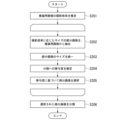
- 1 is a flowchart illustrating an example of the operation of the image classification device during a learning process in an embodiment.
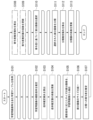
- 10 is a flowchart illustrating an example of the operation of the image classification device in an inference process in an embodiment.
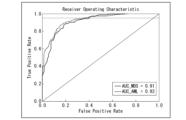
- FIG. 1 shows an example of a receiver operating characteristic curve for an image classification method according to the known art.
- FIG. 13 is a diagram illustrating an example of a receiver operating characteristic curve of an image classification method in an embodiment.
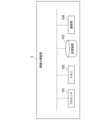
- FIG. 2 is a diagram illustrating an example of a hardware configuration of an image classification device according to an embodiment.
- the image classification system 1 is a system that executes machine learning of each model (magnification estimator, contribution estimator, and image classifier) using learning images.
- the image classification system 1 is a system that classifies an input image (inference image) using each trained model.
- the image classification system 1 includes a storage device 2 and an image classification device 3.
- the storage device 2 is, for example, a server device.
- the image classification device 3 includes an acquisition unit 31, a magnification estimation unit 32, an image extraction unit 33, a size unification unit 34, a contribution estimation unit 35, an image selection unit 36, and an image classification unit 37.
- the image classification device 3 may include the storage device 2.
- the storage device 2 stores learning samples.
- the learning samples include input images (learning images) in the learning process.
- the learning samples (teacher data) may further include learning labels (correct answer labels) that indicate correct answers.
- the learning samples may further include additional information such as information on the shooting magnification (lens magnification) of the learning images (hereinafter referred to as "learning shooting magnification information").
- the image classification device 3 during the learning process is a device that executes machine learning of each model (magnification estimator, contribution estimator, and image classifier).
- the acquisition unit 31 acquires learning samples from the storage device 2.
- the acquisition unit 31 outputs learning images to the magnification estimation unit 32, the image extraction unit 33, and the size unification unit 34.
- the acquisition unit 31 may output learning images to the image classification unit 37.
- the acquisition unit 31 may output shooting magnification information for learning to the magnification estimation unit 32.
- the magnification estimation unit 32 estimates the shooting magnification of the learning image (input image).
- the magnification estimation unit 32 estimates the shooting magnification of the learning image based on, for example, predetermined magnification visual estimation data. In a microscope, blood cells and the like are often photographed using a lens selected from lenses of various magnifications. For this reason, the magnification estimation unit 32 estimates which lens of magnification has been selected.
- the magnification estimation unit 32 compares the estimated shooting magnification with the accurate magnification indicated by the learning shooting magnification information. That is, the magnification estimation unit 32 calculates the difference (magnification estimation loss) between the estimated shooting magnification and a magnification that is predetermined in the learning label (correct label). The magnification estimation unit 32 updates the coefficients (model parameters) of the magnification estimator so as to reduce the magnification estimation loss. The learning (coefficient update) of the magnification estimation unit 32 is executed repeatedly.
- the image extraction unit 33 extracts one or more partial images from the learning image (input image) with a size (cropping size) according to the estimated shooting magnification.
- the estimated shooting magnification is, for example, 10x
- each partial image is extracted from random coordinates in the learning image with a size of, for example, "64 x 64".
- the estimated shooting magnification is, for example, 20x
- each partial image is extracted from random coordinates in the learning image with a size of, for example, "128 x 128”.
- the estimated shooting magnification is, for example, 40x
- each partial image is extracted from random coordinates in the learning image with a size of, for example, "256 x 256”.
- the estimated shooting magnification is, for example, 100x
- each partial image is extracted from random coordinates in the learning image with a size of, for example, "640 x 640".
- the size unification unit 34 unifies (resizes) the size of each partial image extracted from the training image to, for example, 64 x 64. This makes it easier to learn image features, as the apparent size of the components captured in each partial image is roughly uniform. Each partial image is labeled with its contribution to the classification of the training image.
- the contribution estimation unit 35 (contribution estimator) estimates the contribution of each partial image included in the learning image (input image) to the classification of the learning image.
- the contribution estimation unit 35 may estimate the average value of the contributions at multiple coordinates in the partial image as the contribution (average contribution) of that partial image.
- Partial images are labeled so that partial images that contribute more to the classification of the training image are preferentially extracted from the training image.
- important components in the image do not need to be explicitly detected, and the features of important components in the image do not need to be explicitly extracted. For this reason, labeling to assign a contribution level to each partial image can be performed at a lower cost than labeling to detect components in the training image. Note that such labeling may not be necessary.
- the contribution estimation unit 35 calculates the difference (contribution estimation loss) between the estimated contribution and a predetermined contribution (labeled contribution).
- the contribution estimation unit 35 updates the coefficients (model parameters) of the contribution estimator so as to reduce the contribution estimation loss.
- the learning (coefficient update) of the contribution estimation unit 35 is executed repeatedly.
- the learning of the contribution estimation unit 35 is executed. Furthermore, before each learning of the contribution estimation unit 35 is executed, the magnification estimation by the magnification estimation unit 32, the image extraction by the image extraction unit 33, and the size unification by the size unification unit 34 are executed as described above.
- the image selection unit 36 When learning by the contribution estimation unit 35 is completed, the image selection unit 36 focuses on partial images that are important for classification by the image classification unit 37 based on the estimated contribution. That is, the image selection unit 36 preferentially selects one or more partial images (important partial images) with a high estimated contribution from the learning images. For example, the image selection unit 36 determines that a partial image having a contribution equal to or greater than a predetermined contribution threshold is a partial image with a high contribution.
- the contribution threshold is, for example, predetermined randomly from real values between 0 and 1.
- the image classification unit 37 classifies the selected partial image, thereby classifying the learning images that include the selected partial image. For example, if the partial image is classified into a group of images for cases of acute myeloid leukemia, the learning image that includes that partial image is also classified into a group of images for cases of acute myeloid leukemia.
- the image classification unit 37 calculates the difference (classification estimation loss) between the classification result of the training image and the classification result predetermined for the training label (correct label).
- the image classification unit 37 updates the coefficients (model parameters) of the classification estimator so as to reduce the classification estimation loss.
- the learning (coefficient update) of the image classification unit 37 is executed repeatedly.
- the storage device 2 stores input images (images for inference) in the inference process.
- the storage device 2 may store information on the shooting magnification of the image for inference (hereinafter referred to as "shooting magnification information for inference”) for each image for inference.
- the image classification device 3 in the inference process is a device that classifies an input image using each trained model (magnification estimator, contribution estimator, and image classifier).
- the acquisition unit 31 acquires an input image (image for inference) in the inference process from the storage device 2.
- the acquisition unit 31 outputs the image for inference to the magnification estimation unit 32, the image extraction unit 33, and the size unification unit 34.
- the acquisition unit 31 may output the image for inference to the image classification unit 37.
- the acquisition unit 31 may output information on the shooting magnification of the image for inference (hereinafter referred to as "shooting magnification information for inference”) to the magnification estimation unit 32.
- the magnification estimation unit 32 (magnification estimator) estimates the shooting magnification of the image for inference (input image).
- the magnification estimation unit 32 estimates the shooting magnification of the image for inference based on, for example, predetermined magnification visual estimation data.
- the image extraction unit 33 extracts partial images from the image for inference (input image) at a size (cropping size) according to the estimated shooting magnification. If the estimated shooting magnification is, for example, 10x, each partial image is extracted from random coordinates in the image for inference at a size of, for example, "64x64". If the estimated shooting magnification is, for example, 20x, each partial image (each cropped image) is extracted from random coordinates in the image for inference at a size of, for example, "128x128”. If the estimated shooting magnification is, for example, 40x, each partial image is extracted from random coordinates in the image for inference at a size of, for example, "256x256". If the estimated shooting magnification is, for example, 100x, each partial image is extracted from random coordinates in the image for inference at a size of, for example, "640x640".
- the size unification unit 34 unifies (resizes) the size of each partial image extracted from the inference image to, for example, a size of "64 x 64". This makes it easier to infer image features, as the apparent size of the components captured in each partial image is roughly uniform.
- the contribution estimation unit 35 (contribution estimator) estimates the contribution of each partial image included in the image for inference (input image) to the classification of the image for inference.
- the contribution estimation unit 35 may estimate the average value of the contributions at multiple coordinates in the partial image as the contribution (average contribution) of that partial image.
- the image selection unit 36 focuses on partial images that are important for classification by the image classification unit 37 based on the estimated contribution degree. In other words, the image selection unit 36 preferentially selects partial images with a high estimated contribution degree (important partial images) from the images for inference. For example, the image selection unit 36 determines that a partial image with a contribution degree equal to or greater than a predetermined contribution degree threshold is a partial image with a high contribution degree.
- the image classification unit 37 (image classifier) classifies the selected partial image, thereby classifying the image for inference that includes the selected partial image. For example, if the partial image is classified into a group of images for cases of acute myeloid leukemia, the image for inference that includes that partial image is also classified into a group of images for cases of acute myeloid leukemia.
- the image classification unit 37 records the classification result of the image for inference in the storage device 2.
- FIG. 2 is a flowchart showing an example of the operation of the image classification device 3 during the learning process in this embodiment.
- the acquiring unit 31 acquires learning samples including learning images and the like from the storage device 2 (step S101).
- the acquisition unit 31 sets a set of learning samples “(x i , y i , s i ) ” each of which is a combination of a learning image “x i ”, a learning label (correct label) “y i ”, and learning shooting magnification information “s i ”, as a set of learning samples (teacher data).
- the acquisition unit 31 may set a set of learning samples "(x i , y i , s i , z i )" further including an important partial image for learning "z i " as the learning sample set.
- the important partial image for learning is a partial image (important partial image) that has a high degree of contribution to the classification of the learning image.
- Each pixel of the important partial image for learning is previously associated with a degree of contribution to the classification as a pixel value.
- the acquiring unit 31 may set a set of learning samples "( xi , yi , si , di )" further including learning numerical data "di " as the learning sample set.
- the acquiring unit 31 may set a set of learning samples "(xi , yi , si , di , zi )" further including learning important partial image “ zi " and learning numerical data "di " as the learning sample set.
- the learning magnification information is information that indicates the shooting magnification of the learning image (the magnification of the lens used for shooting).
- the learning numerical data is numerical data that can be used to infer the class label of the learning image, for example, peripheral blood test data.
- a set of learning samples including pairs of learning images and learning labels (correct labels) may be added to the learning sample set.
- the total number of learning samples is, for example, N.
- the number of learning labels (correct labels) is, for example, K.
- the "i ⁇ 1, ..., N ⁇ "-th learning image is represented as “x i ⁇ R H ⁇ W ".
- the learning label (correct label) is represented as "y i ⁇ 1, 2, ..., K ⁇ ”.
- the learning shooting magnification information is represented as "s i ⁇ R ⁇ ⁇ 1, ..., M ⁇ ”.
- the learning important partial image is represented as "z i ⁇ R H ⁇ W ".
- the learning numerical data is represented as "d i ⁇ R D ".
- the magnification estimation unit 32 estimates the shooting magnification of the learning image (step S102).
- Input learning image and coefficients of the magnification estimator
- Output information on estimated shooting magnification for learning (hereinafter referred to as "estimated magnification information for learning")
- the magnification estimation unit 32 may output the learning shooting magnification information (accurate magnification information) to the image extraction unit 33 instead of outputting the learning estimated magnification information to the image extraction unit 33.
- the magnification estimation unit 32 acquires a learning image from the acquisition unit 31.
- the magnification estimation unit 32 estimates the shooting magnification of the input learning image using a magnification estimator that has been trained in advance using the coefficients of the magnification estimator.
- the estimation of the shooting magnification can be formulated as a regression problem that estimates the shooting magnification based on the image.
- the estimation of the shooting magnification can also be formulated as an M-class classification problem. In either case, for example, a well-known image input neural network (for example, "ResNet” and "Vision Transformer”) can be used as the magnification estimator.
- the magnification estimation unit 32 outputs the numerical value of the shooting magnification to the image extraction unit 33.
- the magnification estimation unit 32 may output a class label corresponding to the shooting magnification to the image extraction unit 33.
- the magnification estimation unit 32 may output the confidence of the class label corresponding to the shooting magnification to the image extraction unit 33.
- magnification estimation unit 32 calculates a magnification estimation loss for learning (step S103).
- Input learning estimated magnification information and learning shooting magnification information
- Output learning magnification estimation loss The smaller the difference between the learning estimated magnification information and the learning shooting magnification information, the smaller the magnification estimation loss.
- the magnification estimation unit 32 calculates the learning magnification estimation loss based on the learning estimated magnification information and the learning shooting magnification information.
- the magnification estimation unit 32 calculates the difference (divergence) between the learning shooting magnification information "s i " and the learning estimated magnification information " ⁇ s i " as the learning magnification estimation loss.
- the magnification estimation unit 32 may calculate, for example, a mean square error as the learning magnification estimation loss.
- the magnification estimation unit 32 may calculate, for example, "cross entropy” or "Kullback-Leibler divergence" as the learning magnification estimation loss.
- Input The training loss and the current coefficients of the scale estimator.
- Output The updated coefficients of the scale estimator (model parameters).
- the magnification estimation unit 32 updates the coefficients of the magnification estimator based on the magnification estimation loss.
- the magnification estimation unit 32 may include a neural network.
- the learning magnification estimation loss is back-propagated to this neural network. This causes the magnification estimation unit 32 to update the coefficients of the magnification estimator.
- the image extracting unit 33 extracts partial images having a size corresponding to the shooting magnification from the learning image (step S105).
- the size unifying unit 34 unifies (resizes) the sizes of the partial images (step S106).
- Input A set of training subimages and the coefficients of the contribution estimator (model parameters)
- Output Estimated contribution for training (hereinafter referred to as “estimated contribution for training")
- the image classification unit 37 may classify the learning images from which the set of partial images for learning has been extracted, based on additional learning images input from the acquisition unit 31.
- the image classification unit 37 may classify the learning images from which the set of partial images for learning has been extracted, based on additional learning numerical data input from the acquisition unit 31.
- an image classifier for example, a publicly known image input neural network (e.g., "ResNet” and “Vision Transformer”, etc.) can be used.
- a publicly known image input neural network e.g., "ResNet” and “Vision Transformer”, etc.
- the image classification unit 37 partially uses the image input neural network for each partial image included in the set of partial images for training. In this way, the image classification unit 37 extracts the features of the partial image from that partial image. The image classification unit 37 converts all feature maps obtained by the feature extraction into one feature map. The image classification unit 37 classifies the partial images for training by inputting the feature maps to one or more fully connected layers in the image classifier.
- the image classification unit 37 when numerical data is used for classification, connects the numerical data converted using one or more fully connected layers to a feature map obtained from the partial image.
- the image classification unit 37 classifies the partial image for training using one or more fully connected layers in the image classifier.
- the image classifying unit 37 updates the coefficients of the classifier (step S113).
- Input Training classification loss and current coefficients of the image classifier.
- Output Updated coefficients (model parameters) of the image classifier.
- the image classifier 37 updates the coefficients of the image classifier based on the training classification loss.
- the image classification unit 37 may include a neural network.
- the training classification loss is back-propagated to this neural network. This causes the image classification unit 37 to update the coefficients of the image classifier.
- 3 is a flowchart showing an example of the operation of the image classification device 3 in the inference process according to the embodiment.
- the inference process is executed after the learning process is completed.
- the magnification estimation unit 32 estimates the shooting magnification of the inference-use image (step S201).
- Input Image for inference and coefficients of the magnification estimator
- Output Information on estimated shooting magnification for inference (hereinafter referred to as “estimated magnification information for inference")
- the magnification estimation unit 32 may output the obtained shooting magnification information for inference to the image extraction unit 33 instead of outputting the estimated magnification information for inference to the image extraction unit 33.
- the magnification estimation unit 32 acquires an image for inference from the acquisition unit 31.
- the magnification estimation unit 32 estimates the shooting magnification of the input image for inference using a magnification estimator that has been trained in advance using the coefficients of the magnification estimator.
- the estimation of the shooting magnification can be formulated as a regression problem that estimates the shooting magnification based on the image.
- the estimation of the shooting magnification can also be formulated as an M-class classification problem. In either case, for example, a well-known image input neural network (e.g., "ResNet” and "Vision Transformer”) can be used as the magnification estimator.
- a well-known image input neural network e.g., "ResNet” and "Vision Transformer
- the magnification estimation unit 32 outputs the numerical value of the shooting magnification to the image extraction unit 33.
- the magnification estimation unit 32 may output a class label corresponding to the shooting magnification to the image extraction unit 33.
- the magnification estimation unit 32 may output the confidence of the class label corresponding to the shooting magnification to the image extraction unit 33.
- the image extracting unit 33 extracts partial images having a size corresponding to the shooting magnification from the inference image (step S202).
- the size unifying unit 34 unifies (resizes) the sizes of the partial images (step S203).
- Input Image for inference and estimated magnification information for inference
- Output Set of partial images extracted from the image for inference (set of partial images for inference)
- the image extraction unit 33 extracts one or more partial images from the input image for inference.
- the image extraction unit 33 extracts partial images of a size determined according to the input estimated magnification information from the image for inference.
- the size unification unit 34 unifies (resizes) the sizes of the partial images so that the sizes of the extracted partial images are the same.
- the image extraction unit 33 extracts, for example, a partial image of "64x64" pixels from the image for inference. If the estimated magnification information for inference is 20x, the image extraction unit 33 extracts, for example, a partial image of "128x128" pixels from the image for inference.
- the contribution degree estimating unit 35 estimates the contribution degree (importance) to classification for each partial image included in the set of partial images for inference (step S204).
- Input A set of partial images for inference and coefficients of the contribution estimator (model parameters)
- Output Estimated contribution for inference (hereinafter referred to as “Estimated contribution for inference”)
- the contribution estimation unit 35 estimates the contribution to classification for each partial image included in the set of partial images for inference based on the coefficients of the contribution estimator.
- the estimated contribution for inference represents the degree to which each partial image, which is an element of the set of partial images for inference, contributes to classification.
- the contribution estimation can be formulated as a regression problem that estimates the contribution based on an image.
- a well-known image input neural network e.g., "ResNet” and "Vision Transformer” can be used as the contribution estimator.
- the image selection unit 36 selects a partial image based on the contribution degree (step S205).
- Input A set of partial images for inference and their estimated contribution to inference.
- Output A set of updated partial images. A partial image is more likely to be selected if it contributes more to classification.
- the image selection unit 36 calculates the contribution degree of each partial image included in the partial image set for inference based on the estimated contribution degree for inference.
- the image selection unit 36 updates the partial image set for inference by removing partial images with small contribution degrees from the partial image set for inference.
- the image selection unit 36 removes, for example, partial images with contribution degrees below a predetermined threshold from the partial image set for inference.
- the image selection unit 36 may also remove, for example, partial images with contribution degrees below a generated random number (random contribution degree threshold) from the partial image set for inference.
- the image classification unit 37 classifies the selected partial image, thereby classifying the inference image including the selected partial image (step S206).
- Input A set of partial images for inference and the coefficients (model parameters) of the image classifier Furthermore, inference images and inference numerical data may be additionally input to the image classification unit 37 .
- the image classification unit 37 may output the estimated class label as the classification result of the image for inference to the storage device 2.
- the image classification unit 37 may output the confidence level for each class label as the classification result of the image for inference to the storage device 2.
- the image classification unit 37 classifies the partial image set for inference using an image classifier that has been trained in advance using the coefficients of the image classifier. In this way, the image classification unit 37 classifies the image for inference from which the partial image set for inference has been extracted. In other words, the image classification unit 37 estimates the class label of the image for inference from which the partial image set for inference has been extracted.
- the image classification unit 37 may classify the image for inference from which a set of partial images for inference has been extracted, based on the image for inference additionally input from the acquisition unit 31.
- the image classification unit 37 may classify the image for inference from which a set of partial images for inference has been extracted, based on the numerical data for inference additionally input from the acquisition unit 31.
- an image classifier for example, a publicly known image input neural network (e.g., "ResNet” and “Vision Transformer”, etc.) can be used.
- a publicly known image input neural network e.g., "ResNet” and “Vision Transformer”, etc.
- the image classification unit 37 acquires a set of partial images (multiple partial images) for inference from the image selection unit 36. Furthermore, the image classification unit 37 may acquire images for inference from the acquisition unit 31 in a process prior to the process in which the partial images are extracted.
- the image classification unit 37 partially uses the image input neural network for each partial image included in the set of partial images for inference. In this way, the image classification unit 37 extracts the features of the partial image from that partial image. The image classification unit 37 converts all feature maps obtained by the feature extraction into one feature map. The image classification unit 37 classifies the partial images for inference by inputting the feature maps to one or more fully connected layers in the image classifier.
- the image classification unit 37 adjusts the size of the additionally input image for inference so that it is the same size as the partial image.
- the image classification unit 37 inputs the image for inference whose size has been adjusted to the image classifier.
- the image classification unit 37 may, for example, use one or more fully connected layers to convert the numerical data into numerical data, which may then be linked to a feature map obtained from the partial image.
- the image classification unit 37 may use one or more fully connected layers in the image classifier to classify the partial image for inference.
- the contribution estimation unit 35 estimates the contribution of each partial image included in the input image to the classification of the input image.
- the input image is an image for learning.
- the input image is an image for inference.
- the image selection unit 36 preferentially selects partial images with a high contribution. For example, the image selection unit 36 determines that a partial image having a contribution equal to or greater than a random contribution threshold, which is a real value between 0 and 1, is a partial image with a high contribution.
- the image classification unit 37 classifies the selected partial image, thereby classifying the input image including the selected partial image.
- the magnification estimation unit 32 estimates the shooting magnification of the input image.
- the image extraction unit 33 extracts partial images from the input image with a size according to the shooting magnification.
- the size unification unit 34 unifies the sizes of the partial images.
- the contribution degree estimation unit 35 estimates the contribution degree for each partial image with a unified size.
- Example of experimental results 472 inference samples including bone marrow biopsy inference images and peripheral blood test data were collected for the experiment of the image classification method.
- the bone marrow biopsy inference images include images of bone marrow aspirates aspirated from bone marrow fluid and images of hematopoietic tissues including bone tissue.
- Each inference sample was pre-labeled with a correct answer label indicating whether the person from whom the bone marrow tissue collected by bone marrow biopsy was collected suffered from acute myeloid leukemia (AML) or myelodysplastic syndrome (MDS).
- AML acute myeloid leukemia
- MDS myelodysplastic syndrome
Landscapes
- Engineering & Computer Science (AREA)
- Theoretical Computer Science (AREA)
- Medical Informatics (AREA)
- Software Systems (AREA)
- Computing Systems (AREA)
- Databases & Information Systems (AREA)
- Evolutionary Computation (AREA)
- General Health & Medical Sciences (AREA)
- Health & Medical Sciences (AREA)
- Computer Vision & Pattern Recognition (AREA)
- Artificial Intelligence (AREA)
- Physics & Mathematics (AREA)
- General Physics & Mathematics (AREA)
- Multimedia (AREA)
- Image Analysis (AREA)
- Image Processing (AREA)
Priority Applications (2)
| Application Number | Priority Date | Filing Date | Title |
|---|---|---|---|
| JP2025526911A JPWO2024257162A1 (https=) | 2023-06-12 | 2023-06-12 | |
| PCT/JP2023/021727 WO2024257162A1 (ja) | 2023-06-12 | 2023-06-12 | 画像分類装置、画像分類方法及びプログラム |
Applications Claiming Priority (1)
| Application Number | Priority Date | Filing Date | Title |
|---|---|---|---|
| PCT/JP2023/021727 WO2024257162A1 (ja) | 2023-06-12 | 2023-06-12 | 画像分類装置、画像分類方法及びプログラム |
Publications (1)
| Publication Number | Publication Date |
|---|---|
| WO2024257162A1 true WO2024257162A1 (ja) | 2024-12-19 |
Family
ID=93851671
Family Applications (1)
| Application Number | Title | Priority Date | Filing Date |
|---|---|---|---|
| PCT/JP2023/021727 Ceased WO2024257162A1 (ja) | 2023-06-12 | 2023-06-12 | 画像分類装置、画像分類方法及びプログラム |
Country Status (2)
| Country | Link |
|---|---|
| JP (1) | JPWO2024257162A1 (https=) |
| WO (1) | WO2024257162A1 (https=) |
Citations (4)
| Publication number | Priority date | Publication date | Assignee | Title |
|---|---|---|---|---|
| JP2004361987A (ja) * | 2003-05-30 | 2004-12-24 | Seiko Epson Corp | 画像検索システム、画像分類システム、画像検索プログラム及び画像分類プログラム、並びに画像検索方法及び画像分類方法 |
| JP2005348328A (ja) * | 2004-06-07 | 2005-12-15 | New Industry Research Organization | ビデオカメラの撮影支援プログラム及び編集支援プログラム |
| JP2006324867A (ja) * | 2005-05-18 | 2006-11-30 | Konica Minolta Photo Imaging Inc | 撮像装置、プリントシステムおよびプログラム |
| JP2021060692A (ja) * | 2019-10-03 | 2021-04-15 | 株式会社東芝 | 推論結果評価システム、推論結果評価装置及びその方法 |
-
2023
- 2023-06-12 WO PCT/JP2023/021727 patent/WO2024257162A1/ja not_active Ceased
- 2023-06-12 JP JP2025526911A patent/JPWO2024257162A1/ja active Pending
Patent Citations (4)
| Publication number | Priority date | Publication date | Assignee | Title |
|---|---|---|---|---|
| JP2004361987A (ja) * | 2003-05-30 | 2004-12-24 | Seiko Epson Corp | 画像検索システム、画像分類システム、画像検索プログラム及び画像分類プログラム、並びに画像検索方法及び画像分類方法 |
| JP2005348328A (ja) * | 2004-06-07 | 2005-12-15 | New Industry Research Organization | ビデオカメラの撮影支援プログラム及び編集支援プログラム |
| JP2006324867A (ja) * | 2005-05-18 | 2006-11-30 | Konica Minolta Photo Imaging Inc | 撮像装置、プリントシステムおよびプログラム |
| JP2021060692A (ja) * | 2019-10-03 | 2021-04-15 | 株式会社東芝 | 推論結果評価システム、推論結果評価装置及びその方法 |
Also Published As
| Publication number | Publication date |
|---|---|
| JPWO2024257162A1 (https=) | 2024-12-19 |
Similar Documents
| Publication | Publication Date | Title |
|---|---|---|
| US10910099B2 (en) | Segmentation, landmark detection and view classification using multi-task learning | |
| JP6900581B1 (ja) | 顕微鏡スライド画像のための焦点重み付き機械学習分類器誤り予測 | |
| CN111145209B (zh) | 一种医学图像分割方法、装置、设备及存储介质 | |
| CN111814902A (zh) | 目标检测模型训练方法、目标识别方法、装置和介质 | |
| CN106056595B (zh) | 基于深度卷积神经网络自动识别甲状腺结节良恶性的辅助诊断系统 | |
| KR101794578B1 (ko) | 질병 예측 방법, 이를 수행하기 위한 기록 매체 및 장치 | |
| CN112703531B (zh) | 生成组织图像的注释数据 | |
| CN114639101B (zh) | 一种乳状液液滴识别系统、方法、计算机设备及存储介质 | |
| CN114691912A (zh) | 图像处理的方法、设备和计算机可读存储介质 | |
| WO2018121567A1 (zh) | 用于检测物体关键点的方法、装置及电子设备 | |
| CN113344886A (zh) | 晶圆表面缺陷检测方法和设备 | |
| JP2015087903A (ja) | 情報処理装置及び情報処理方法 | |
| CN112819821B (zh) | 一种细胞核图像检测方法 | |
| CN112581483B (zh) | 基于自学习的植物叶片叶脉分割方法和装置 | |
| CN111382766A (zh) | 一种基于Faster R-CNN的设备故障检测方法 | |
| CN116012291A (zh) | 工业零件图像缺陷检测方法及系统、电子设备和存储介质 | |
| CN110796661B (zh) | 基于卷积神经网络的真菌显微图像分割检测方法及系统 | |
| CN119206305A (zh) | 识别医学图像中的目标的模型训练方法及电子设备 | |
| CN112991281B (zh) | 视觉检测方法、系统、电子设备及介质 | |
| JP2021165909A (ja) | 情報処理装置、情報処理装置の情報処理方法およびプログラム | |
| CN110084270A (zh) | 病理切片图像识别方法及设备 | |
| WO2021095509A1 (ja) | 推定システム、推定装置および推定方法 | |
| CN116629270B (zh) | 基于考试大数据以及文本语义的主观题评分方法和装置 | |
| CN114299040A (zh) | 瓷砖瑕疵检测方法、装置和电子设备 | |
| CN115917612A (zh) | 使用深度学习校正用于数字病理学图像的多扫描仪中的差异 |
Legal Events
| Date | Code | Title | Description |
|---|---|---|---|
| 121 | Ep: the epo has been informed by wipo that ep was designated in this application |
Ref document number: 23941473 Country of ref document: EP Kind code of ref document: A1 |
|
| ENP | Entry into the national phase |
Ref document number: 2025526911 Country of ref document: JP Kind code of ref document: A |
|
| NENP | Non-entry into the national phase |
Ref country code: DE |