WO2024254262A2 - Systems and methods for detection and quantification of double-stranded rna - Google Patents
Systems and methods for detection and quantification of double-stranded rna Download PDFInfo
- Publication number
- WO2024254262A2 WO2024254262A2 PCT/US2024/032742 US2024032742W WO2024254262A2 WO 2024254262 A2 WO2024254262 A2 WO 2024254262A2 US 2024032742 W US2024032742 W US 2024032742W WO 2024254262 A2 WO2024254262 A2 WO 2024254262A2
- Authority
- WO
- WIPO (PCT)
- Prior art keywords
- seq
- dsrna
- complex
- dsrna binding
- sequence identity
- Prior art date
- Legal status (The legal status is an assumption and is not a legal conclusion. Google has not performed a legal analysis and makes no representation as to the accuracy of the status listed.)
- Ceased
Links
Classifications
-
- G—PHYSICS
- G01—MEASURING; TESTING
- G01N—INVESTIGATING OR ANALYSING MATERIALS BY DETERMINING THEIR CHEMICAL OR PHYSICAL PROPERTIES
- G01N33/00—Investigating or analysing materials by specific methods not covered by groups G01N1/00 - G01N31/00
- G01N33/48—Biological material, e.g. blood, urine; Haemocytometers
- G01N33/50—Chemical analysis of biological material, e.g. blood, urine; Testing involving biospecific ligand binding methods; Immunological testing
- G01N33/53—Immunoassay; Biospecific binding assay; Materials therefor
- G01N33/5308—Immunoassay; Biospecific binding assay; Materials therefor for analytes not provided for elsewhere, e.g. nucleic acids, uric acid, worms, mites
-
- C—CHEMISTRY; METALLURGY
- C12—BIOCHEMISTRY; BEER; SPIRITS; WINE; VINEGAR; MICROBIOLOGY; ENZYMOLOGY; MUTATION OR GENETIC ENGINEERING
- C12Q—MEASURING OR TESTING PROCESSES INVOLVING ENZYMES, NUCLEIC ACIDS OR MICROORGANISMS; COMPOSITIONS OR TEST PAPERS THEREFOR; PROCESSES OF PREPARING SUCH COMPOSITIONS; CONDITION-RESPONSIVE CONTROL IN MICROBIOLOGICAL OR ENZYMOLOGICAL PROCESSES
- C12Q1/00—Measuring or testing processes involving enzymes, nucleic acids or microorganisms; Compositions therefor; Processes of preparing such compositions
- C12Q1/68—Measuring or testing processes involving enzymes, nucleic acids or microorganisms; Compositions therefor; Processes of preparing such compositions involving nucleic acids
- C12Q1/6813—Hybridisation assays
- C12Q1/6816—Hybridisation assays characterised by the detection means
-
- C—CHEMISTRY; METALLURGY
- C07—ORGANIC CHEMISTRY
- C07K—PEPTIDES
- C07K14/00—Peptides having more than 20 amino acids; Gastrins; Somatostatins; Melanotropins; Derivatives thereof
- C07K14/435—Peptides having more than 20 amino acids; Gastrins; Somatostatins; Melanotropins; Derivatives thereof from animals; from humans
- C07K14/43504—Peptides having more than 20 amino acids; Gastrins; Somatostatins; Melanotropins; Derivatives thereof from animals; from humans from invertebrates
- C07K14/43595—Peptides having more than 20 amino acids; Gastrins; Somatostatins; Melanotropins; Derivatives thereof from animals; from humans from invertebrates from coelenteratae, e.g. medusae
-
- C—CHEMISTRY; METALLURGY
- C12—BIOCHEMISTRY; BEER; SPIRITS; WINE; VINEGAR; MICROBIOLOGY; ENZYMOLOGY; MUTATION OR GENETIC ENGINEERING
- C12N—MICROORGANISMS OR ENZYMES; COMPOSITIONS THEREOF; PROPAGATING, PRESERVING, OR MAINTAINING MICROORGANISMS; MUTATION OR GENETIC ENGINEERING; CULTURE MEDIA
- C12N9/00—Enzymes; Proenzymes; Compositions thereof; Processes for preparing, activating, inhibiting, separating or purifying enzymes
- C12N9/0004—Oxidoreductases (1.)
- C12N9/0069—Oxidoreductases (1.) acting on single donors with incorporation of molecular oxygen, i.e. oxygenases (1.13)
-
- C—CHEMISTRY; METALLURGY
- C12—BIOCHEMISTRY; BEER; SPIRITS; WINE; VINEGAR; MICROBIOLOGY; ENZYMOLOGY; MUTATION OR GENETIC ENGINEERING
- C12N—MICROORGANISMS OR ENZYMES; COMPOSITIONS THEREOF; PROPAGATING, PRESERVING, OR MAINTAINING MICROORGANISMS; MUTATION OR GENETIC ENGINEERING; CULTURE MEDIA
- C12N9/00—Enzymes; Proenzymes; Compositions thereof; Processes for preparing, activating, inhibiting, separating or purifying enzymes
- C12N9/10—Transferases (2.)
- C12N9/12—Transferases (2.) transferring phosphorus containing groups, e.g. kinases (2.7)
-
- C—CHEMISTRY; METALLURGY
- C12—BIOCHEMISTRY; BEER; SPIRITS; WINE; VINEGAR; MICROBIOLOGY; ENZYMOLOGY; MUTATION OR GENETIC ENGINEERING
- C12Y—ENZYMES
- C12Y113/00—Oxidoreductases acting on single donors with incorporation of molecular oxygen (oxygenases) (1.13)
- C12Y113/12—Oxidoreductases acting on single donors with incorporation of molecular oxygen (oxygenases) (1.13) with incorporation of one atom of oxygen (internal monooxygenases or internal mixed function oxidases)(1.13.12)
- C12Y113/12013—Oplophorus-luciferin 2-monooxygenase (1.13.12.13)
-
- C—CHEMISTRY; METALLURGY
- C12—BIOCHEMISTRY; BEER; SPIRITS; WINE; VINEGAR; MICROBIOLOGY; ENZYMOLOGY; MUTATION OR GENETIC ENGINEERING
- C12Y—ENZYMES
- C12Y207/00—Transferases transferring phosphorus-containing groups (2.7)
- C12Y207/11—Protein-serine/threonine kinases (2.7.11)
- C12Y207/11001—Non-specific serine/threonine protein kinase (2.7.11.1), i.e. casein kinase or checkpoint kinase
-
- C—CHEMISTRY; METALLURGY
- C07—ORGANIC CHEMISTRY
- C07K—PEPTIDES
- C07K2319/00—Fusion polypeptide
- C07K2319/60—Fusion polypeptide containing spectroscopic/fluorescent detection, e.g. green fluorescent protein [GFP]
-
- C—CHEMISTRY; METALLURGY
- C07—ORGANIC CHEMISTRY
- C07K—PEPTIDES
- C07K2319/00—Fusion polypeptide
- C07K2319/61—Fusion polypeptide containing an enzyme fusion for detection (lacZ, luciferase)
-
- C—CHEMISTRY; METALLURGY
- C12—BIOCHEMISTRY; BEER; SPIRITS; WINE; VINEGAR; MICROBIOLOGY; ENZYMOLOGY; MUTATION OR GENETIC ENGINEERING
- C12Q—MEASURING OR TESTING PROCESSES INVOLVING ENZYMES, NUCLEIC ACIDS OR MICROORGANISMS; COMPOSITIONS OR TEST PAPERS THEREFOR; PROCESSES OF PREPARING SUCH COMPOSITIONS; CONDITION-RESPONSIVE CONTROL IN MICROBIOLOGICAL OR ENZYMOLOGICAL PROCESSES
- C12Q2522/00—Reaction characterised by the use of non-enzymatic proteins
- C12Q2522/10—Nucleic acid binding proteins
- C12Q2522/101—Single or double stranded nucleic acid binding proteins
-
- C—CHEMISTRY; METALLURGY
- C12—BIOCHEMISTRY; BEER; SPIRITS; WINE; VINEGAR; MICROBIOLOGY; ENZYMOLOGY; MUTATION OR GENETIC ENGINEERING
- C12Q—MEASURING OR TESTING PROCESSES INVOLVING ENZYMES, NUCLEIC ACIDS OR MICROORGANISMS; COMPOSITIONS OR TEST PAPERS THEREFOR; PROCESSES OF PREPARING SUCH COMPOSITIONS; CONDITION-RESPONSIVE CONTROL IN MICROBIOLOGICAL OR ENZYMOLOGICAL PROCESSES
- C12Q2525/00—Reactions involving modified oligonucleotides, nucleic acids, or nucleotides
- C12Q2525/10—Modifications characterised by
- C12Q2525/161—Modifications characterised by incorporating target specific and non-target specific sites
-
- G—PHYSICS
- G01—MEASURING; TESTING
- G01N—INVESTIGATING OR ANALYSING MATERIALS BY DETERMINING THEIR CHEMICAL OR PHYSICAL PROPERTIES
- G01N2470/00—Immunochemical assays or immunoassays characterised by the reaction format or reaction type
- G01N2470/04—Sandwich assay format
- G01N2470/06—Second binding partner specifically binding complex of analyte with first binding partner
Definitions
- compositions comprising a double- stranded RNA (dsRNA) binding domains linked to components of a complementation system.
- dsRNA double- stranded RNA
- Double-stranded RNA is a byproduct and contaminant of in vitro mRNA transcription during, for example, production of mRNA-based therapeutics (vaccines, gene therapy).
- dsRNA Double-stranded RNA
- CMC Choemistry, Manufacturing, and Control
- INDs Human Gene Therapy Investigational New Drug Applications
- dsRNA i.e., specific for dsRNA, not ssRNA or DNA
- ELISA Enzyme-linked immunosorbent assay
- Sensitivity may be an issue as commercially available ELTSA kits exhibit a sensitivity of 2-5 ng/ml.
- the accepted ELISA Ab clones arc J2, KI, K2.
- clone J2 exhibits preferred binding to the ends of dsRNA oligos as well as an internal binding site of A2N9A3N9A2 (where adenine is presented on one face of the helix, see Bonin et al., RNA, 2000). Therefore, this antibody is not sequence agnostic and does not represent accurate quantitation of dsRNA.
- the other clone, KI displays altered binding kinetics when testing dsRNA from different sources. Therefore, these clones do not provide true quantitation of dsRNA. Dot blots can be used for dsRNA detection although they are not as sensitive or quantitative as ELISA, and they rely on the same flawed antibody clones.
- compositions comprising a double- stranded RNA (dsRNA) binding domains linked to components of a complementation system.
- dsRNA double- stranded RNA
- dsRNA detection systems comprising: (a) a first fusion of (i) a first dsRNA binding domain and (ii) a first component of a detectable complex; and (b) a second fusion of (i) a second dsRNA binding domain and (ii) a second component of the detectable complex.
- the first and second components of the detectable complex upon binding of the first and second dsRNA binding domains to a dsRNA, the first and second components of the detectable complex associate to form the detectable complex.
- the first and second components of the detectable complex exhibit low affinity for one another in the absence of facilitation through the binding of the first and second dsRNA binding domains to the dsRNA.
- the first dsRNA binding domain and the second dsRNA binding domain comprise different amino acid sequences. In some embodiments, the first dsRNA binding domain and the second dsRNA binding domain comprise the same amino acid sequences. In some embodiments, a dsRNA binding domain comprises a dsRNA binding motif having at least 70% (e.g., 70%, 75%, 80%, 85%, 90%, 95%, 100%, or ranges therebetween) sequence similarity with SEQ ID NO: 3062 and/or SEQ ID NO: 3063.
- a dsRNA binding domain comprises a dsRNA binding motif having at least 70% (e.g., 70%, 75%, 80%, 85%, 90%, 95%, 100%, or ranges therebetween) sequence identity with SEQ ID NO: 3062 and/or SEQ ID NO: 3063.
- a dsRNA binding domain comprises a dsRNA binding motif of SEQ ID NO: 3062.
- a dsRNA binding domain comprises a dsRNA binding motif of SEQ ID NO: 3063.
- a dsRNA binding domain comprises dsRNA binding motifs having at least 70% (e.g., 70%, 75%, 80%, 85%, 90%, 95%, 100%, or ranges therebetween) sequence similarity with SEQ ID NO: 3062 and SEQ ID NO: 3063.
- a dsRNA binding domain comprises dsRNA binding motifs having at least 70% (e.g., 70%, 75%, 80%, 85%, 90%, 95%, 100%, or ranges therebetween) sequence identity with SEQ ID NO: 3062 and SEQ ID NO: 3063.
- a dsRNA binding domain comprises dsRNA binding motifs of SEQ ID NO: 3062 and SEQ ID NO: 3063.
- a dsRNA binding domain comprises at least 70% (e.g., 70%, 75%, 80%, 85%, 90%, 95%, 100%, or ranges therebetween) sequence similarity with SEQ ID NO: 3061. In some embodiments, a dsRNA binding domain comprises at least 70% (e.g., 70%, 75%, 80%, 85%, 90%, 95%, 100%, or ranges therebetween) sequence identity with SEQ ID NO: 3061. In some embodiments, a dsRNA binding domain comprises SEQ ID NO: 3061.
- the detectable complex is capable of generating a signal that can be detected.
- the amount of signal generated by the detectable complex can be correlated to the amount of dsRNA in a sample with the system.
- the signal comprises one or more of fluorescence, luminescence, enzymatic activity, and ligand binding.
- the first and second components of the detectable complex are fragments of a protein capable of generating a detectable signal, and wherein the detectable complex is capable of generating the detectable signal upon association of the first and second components of the detectable complex.
- the detectable signal is fluorescence.
- the first and second components of the detectable complex comprise at least 70% (e.g., 70%, 75%, 80%, 85%, 90%, 95%, 100%, or ranges therebetween) sequence identity with first and second fragments of a fluorescent protein.
- the fluorescent protein is selected from yellow fluorescent protein (YFP), green fluorescent protein (GFP), cyan fluorescent protein (CFP), red fluorescent protein (RFP), umbelliferone, fluorescein, fluorescein isothiocyanate, rhodamine, dichlorotriazinylaminc fluorescein, cyanines, dansyl chloride, phycocyanin, and phycoerythrin.
- the detectable signal is enzymatic activity.
- the first and second components of the detectable complex comprise at least 70% (e.g., 70%, 75%, 80%, 85%, 90%, 95%, 100%, or ranges therebetween) sequence identity with first and second fragments of an enzyme.
- the enzyme is selected from betalactamase, dihydrofolate reductase (DHFR), focal adhesion kinase (FAK), Gal4, and horseradish peroxidase.
- the detectable signal is luminescence in the presence of a substrate.
- the first and second components of the detectable complex comprise at least 70% (e.g., 70%, 75%, 80%, 85%, 90%, 95%, 100%, or ranges therebetween) sequence identity with first and second fragments of an luciferase.
- the luciferase is selected from an Oplophorus luciferase, a firefly luciferase, a click beetle luciferase, a Renilla luciferase, cypridina luciferase, an Aequorin photoprotein, and an obelin photoprotein.
- the first and second components of the detectable complex collectively comprise at least 70% (e.g., 70%, 75%, 80%, 85%, 90%, 95%, 100%, or ranges therebetween) sequence identity with SEQ ID NO: 3041.
- the first component of the detectable complex comprises at least 70% (e.g., 70%, 75%, 80%, 85%, 90%, 95%, 100%, or ranges therebetween) sequence identity with SEQ ID NO: 3042 and the first component of the detectable complex comprises at least 70% (e.g., 70%, 75%, 80%, 85%, 90%, 95%, 100%, or ranges therebetween) sequence identity with SEQ ID NO: 3050.
- the first component of the detectable complex comprises at least 70% (e.g., 70%, 75%, 80%, 85%, 90%, 95%, 100%, or ranges therebetween) sequence identity with SEQ ID NO: 3043 and the first component of the detectable complex comprises at least 70% (e.g., 70%, 75%, 80%, 85%, 90%, 95%, 100%, or ranges therebetween) sequence identity with SEQ ID NO: 3051.
- the first component of the detectable complex comprises at least 70% (e.g., 70%, 75%, 80%, 85%, 90%, 95%, 100%, or ranges therebetween) sequence identity with SEQ ID NO: 3044 and the first component of the detectable complex comprises at least 70% (e.g., 70%, 75%, 80%, 85%, 90%, 95%, 100%, or ranges therebetween) sequence identity with SEQ ID NO: 3052.
- the first component of the detectable complex comprises at least 70% (e.g., 70%, 75%, 80%, 85%, 90%, 95%, 100%, or ranges therebetween) sequence identity with SEQ TD NO: 3045 and the first component of the detectable complex comprises at least 70% (c.g., 70%, 75%, 80%, 85%, 90%, 95%, 100%, or ranges therebetween) sequence identity with SEQ ID NO: 3053.
- systems further comprise the substrate.
- the detectable signal is ligand binding.
- the detectable complex is a modified dehalogenase complex and wherein the first and second components of the modified dehalogenase complex comprise at least 70% (e.g., 70%, 75%, 80%, 85%, 90%, 95%, 100%, or ranges therebetween) sequence identity with first and second fragments of a modified dehalogenase.
- the modified dehalogenase comprises SEQ ID NO: 1.
- systems further comprise a haloalkyl ligand for the modified dehalogenase.
- the haloalkyl ligand comprises R-linker-A-X, wherein R is a detectable moiety, X is a halogen, and A-X is a substrate for a dehalogenase enzyme. In some embodiments, R is a fluorophore.
- dsRNA detection systems comprising: (a) a first fusion of (i) a PKR-derived dsRNA binding domain sequence, and (ii) a peptide component of a bioluminescent complex; and (b) a second fusion of (i) the PKR-derived dsRNA binding domain sequence, and (ii) a polypeptide component of a bioluminescent complex; wherein upon binding of the PKR-derived dsRNA binding domain sequences to a dsRNA a luminescent complex is formed by structural complementation of the peptide component and the polypeptide component; and wherein a luminescent signal produced by the luminescent complex in the presence of the dsRNA and a substrate for the luminescent complex is enhanced when compared to a luminescent signal produced in the absence of the dsRNA.
- dsRNA double-stranded RNA
- systems further comprise the substrate for the luminescent complex.
- the substrate for the luminescent complex is an imidazopyrazine luminophore.
- the imidazopyrazine luminophore is coelenterazine or furimazine.
- systems further comprise dsRNA.
- the dsRNA binding domain comprises dsRNA binding motifs having at least 70% (e.g., 70%, 75%, 80%, 85%, 90%, 95%, 100%, or ranges therebetween) sequence similarity with SEQ ID NO: 3062 and SEQ ID NO: 3063.
- the dsRNA binding domain comprises dsRNA binding motifs having at least 70% (e.g., 70%, 75%, 80%, 85%, 90%, 95%, 100%, or ranges therebetween) sequence identity with SEQ ID NO: 3062 and SEQ ID NO: 3063. In some embodiments, the dsRNA binding domain comprises at least 70% (e.g., 70%, 75%, 80%, 85%, 90%, 95%, 100%, or ranges therebetween) sequence similarity with SEQ ID NO: 3061. In some embodiments, the dsRNA binding domain comprises at least 70% (e.g., 70%, 75%, 80%, 85%, 90%, 95%, 100%, or ranges therebetween) sequence identity with SEQ ID NO: 3061.
- the dsRNA binding domain comprises SEQ ID NO: 3061.
- the peptide component has at least 70% (e.g., 70%, 75%, 80%, 85%, 90%, 95%, 100%, or ranges therebetween) sequence similarity with SEQ ID NO: 3038 and/or the polypeptide component has at least 70% (e.g., 70%, 75%, 80%, 85%, 90%, 95%, 100%, or ranges therebetween) sequence similarity with SEQ ID NO: 3037.
- the peptide component has at least 70% (e.g., 70%, 75%, 80%, 85%, 90%, 95%, 100%, or ranges therebetween) sequence identity with SEQ ID NO: 3038 and/or the polypeptide component has at least 70% (e.g., 70%, 75%, 80%, 85%, 90%, 95%, 100%, or ranges therebetween) sequence identity with SEQ ID NO: 3037.
- the peptide component comprises SEQ ID NO: 3038 and the polypeptide comprises SEQ ID NO: 3037.
- dsRNA in a sample comprising contacting the sample with a system described herein and detecting a signal from the detectable complex, wherein the amount of signal detected correlates with the amount of dsRNA in the sample.
- the sample comprises a single stranded RNA- based therapeutic.
- the sample further comprises a dsRNA (e.g., a contaminant).
- FIG. 1 Cartoon depicting the binding of protein kinase R (PKR) to a dsRNA and dimerization of two PKR.
- PPKR protein kinase R
- Figure 2 Cartoon depicting an exemplary embodiment of the present technology in which two components of a luminescent complex (LgBiT and SmBiT) are provided as fusions with the dsRNA binding domain of PKR; binding of the dsRNA binding domains to a dsRNA results in formation of the active luminescent complex.
- a luminescent complex LiBiT and SmBiT
- Figure 3 Graph depicting increasing luminescent signal with increasing dsRNA in the presence of an exemplary system of Figure 2.
- Figure 4. Graph depicting increasing fluorescent signal with increasing dsRNA in the presence of an exemplary system comprising fusions of a split GFP construct with the dsRNA binding domain of PKR (PKR-LgGFP and PKR-SmGFP).
- the term “and/or” includes any and all combinations of listed items, including any of the listed items individually.
- “A, B, and/or C” encompasses A, B, C, AB, AC, BC, and ABC, each of which is to be considered separately described by the statement “A, B, and/or C.”
- the term “comprise” and linguistic variations thereof denote the presence of recited feature(s), element(s), method step(s), etc., without the exclusion of the presence of additional feature(s), element(s), method step(s), etc.
- the term “consisting of’ and linguistic variations thereof denotes the presence of recited feature(s), element(s), method step(s), etc., and excludes any unrecited feature(s), element(s), method step(s), etc., except for ordinarily-associated impurities.
- phrases “consisting essentially of’ denotes the recited fcaturc(s), clcmcnt(s), method stcp(s), etc., and any additional fcaturc(s), clcmcnt(s), method step(s), etc., that do not materially affect the basic nature of the composition, system, or method.
- Many embodiments herein are described using open “comprising” language. Such embodiments encompass multiple closed “consisting of’ and/or “consisting essentially of” embodiments, which may alternatively be claimed or described using such language.
- the term “substantially” means that the recited characteristic, parameter, and/or value need not be achieved exactly, but that deviations or variations, including for example, tolerances, measurement error, measurement accuracy limitations and other factors known to skill in the art, may occur in amounts that do not preclude the effect the characteristic was intended to provide.
- a characteristic or feature that is substantially absent may be one that is within the noise, beneath background, below the detection capabilities of the assay being used, or a small fraction (e.g., ⁇ 1%, ⁇ 0.1%, ⁇ 0.01%, ⁇ 0.001%, ⁇ 0.00001%, ⁇ 0.000001%, ⁇ 0.0000001%) of the significant characteristic (e.g., fluorescent intensity of an active fluorophore).
- a “peptide corresponding to positions 36 through 48 of SEQ ID NO: 1” may comprise less than 100% sequence identity with positions 36 through 48 of SEQ ID NO: 1 (e.g., >70% sequence identity), but within the context of the composition or system being described the peptide relates to those positions.
- system refers to multiple components (e.g., devices, compositions, etc.) that find use for a particular purpose.
- components e.g., devices, compositions, etc.
- two separate biological molecules may comprise a system if they are useful together for a shared purpose.
- the term “complementary” refers to the characteristic of two or more structural elements (e.g., peptide, polypeptide, nucleic acid, small molecule, etc.) of being able to hybridize, dimerize, or otherwise form a complex with each other.
- a “complementary peptide and polypeptide” are capable of coming together to form a complex.
- Complementary elements may require assistance (facilitation) to form a complex (e.g., from interaction elements), for example, to place the elements in the proper conformation for complementarity, to place the elements in the proper proximity for complementarity, to colocalize complementary elements, to lower interaction energy for complementary, to overcome insufficient affinity for one another, etc.
- the term “complex” refers to an assemblage or aggregate of molecules (e.g., peptides, polypeptides, etc.) in direct and/or indirect contact with one another.
- “contact,” or more particularly “direct contact,” means two or more molecules are close enough so that attractive noncovalent interactions, such as Van der Waal forces, hydrogen bonding, ionic and hydrophobic interactions, and the like, dominate the interaction of the molecules.
- a complex of molecules e.g., peptides, polypeptides, etc.
- the complex is formed under assay conditions such that the complex is thermodynamically favored (e.g., compared to a non-aggregated, or non-complexed, state of its component molecules).
- complex refers to the assemblage of two or more molecules (e.g., peptides, polypeptides, etc.).
- the molecules that assemble to for a complex are referred to herein as “components” or linguistic variations thereof.
- the term “low affinity” describes an intermolecular interaction between two or more entities that is too weak to result in significant complex formation between the entities, except at concentrations substantially higher (e.g., 2-fold, 5-fold, 10-fold, 100-fold, 1000-fold, or more) than physiologic or assay conditions, or with facilitation from the formation of a second complex of attached elements (e.g., interaction elements).
- high affinity describes an intermolecular interaction between two or more (e.g., three) entities that is of sufficient strength to produce detectable complex formation under physiologic or assay conditions without facilitation from the formation of a second complex of attached elements (e.g., interaction elements).
- amino acid refers to natural amino acids, unnatural amino acids, and amino acid analogs, all in their D and L stereoisomers, unless otherwise indicated, if their structures allow such stereoisomeric forms.
- proteinogenic amino acids refers to the 20 amino acids coded for in the human genetic code, and includes alanine (Ala or A), arginine (Arg or R), asparagine (Asn or N), aspartic acid (Asp or D), cysteine (Cys or C), glutamine (Gin or Q), glutamic acid (Glu or E), glycine (Gly or G), histidine (His or H), isoleucine (Tie or I), leucine (Leu or L), Lysine (Lys or K), methionine (Met or M), phenylalanine (Phc or F), proline (Pro or P), serine (Ser or S), threonine (Thr or T), tryptophan (Trp or W), tyrosine (Tyr or Y) and valine (Vai or V). Selenocysteine and pyrrolysine may also be considered proteinogenic amino acids
- non-proteinogenic amino acid refers to an amino acid that is not naturally- encoded or found in the genetic code of any organism, and is not incorporated biosynthetically into proteins during translation.
- Non-proteinogenic amino acids may be “unnatural amino acids” (amino acids that do not occur in nature) or “naturally-occurring non-proteinogenic amino acids” (e.g., norvaline, ornithine, homocysteine, etc.).
- non-proteinogenic amino acids include, but are not limited to, azetidinecarboxylic acid, 2-aminoadipic acid, 3-aminoadipic acid, beta-alanine, naphthylalanine, aminopropionic acid, 2-aminobutyric acid, 4-aminobutyric acid, 6-aminocaproic acid, 2-aminoheptanoic acid, 2-aminoisobutyric acid, 3-aminoisbutyric acid, 2- aminopimelic acid, tertiary-butylglycine, 2,4-diaminoisobutyric acid, desmosine, 2,2’- diaminopimelic acid, 2,3-diaminopropionic acid, N-ethylglycine, N-ethylasparagine, homoproline, hydroxylysine, allo-hydroxylysine, 3-hydroxyproline, 4-hydroxyproline, isodesmosine, allo-isoleucine, N-methylalanine ,
- Non-proteinogenic also include D- amino acid forms of any of the amino acids herein, as well as non-alpha amino acid forms of any of the amino acids herein (beta-amino acids, gamma-amino acids, delta-amino acids, etc.), all of which are in the scope herein and may be included in peptides herein.
- amino acid analog refers to an amino acid (e.g., natural or unnatural, proteinogenic or non-proteinogenic) where one or more of the C-terminal carboxy group, the N- terminal amino group and side-chain bioactive group has been chemically blocked, reversibly or irreversibly, or otherwise modified to another bioactive group.
- aspartic acid-(beta- methyl ester) is an amino acid analog of aspartic acid
- N-ethylglycine is an amino acid analog of glycine
- alanine carboxamide is an amino acid analog of alanine.
- amino acid analogs include methionine sulfoxide, methionine sulfone, S-(carboxymethyl)-cysteine, S- (carboxymethyl)-cysteine sulfoxide, and S-(carboxymethyl)-cysteine sulfone.
- peptide and polypeptide refer to polymer compounds of two or more amino acids joined through the main chain by peptide amide bonds (— C(O)NH— ).
- the term “peptide” typically refers to short amino acid polymers (e.g., chains having fewer than 30 amino acids), whereas the term “polypeptide” typically refers to longer amino acid polymers (e.g., chains having more than 30 amino acids).
- a “conservative” amino acid substitution refers to the substitution of an amino acid in a peptide or polypeptide with another amino acid having similar chemical properties such as size or charge.
- each of the following eight groups contains amino acids that are conservative substitutions for one another:
- Amino acid residues may be divided into classes based on common side chain properties, for example: polar positive (or basic) (e.g., histidine (H), lysine (K), and arginine (R)); polar negative (or acidic) (e.g., aspartic acid (D), glutamic acid (E)); polar neutral (e.g., serine (S), threonine (T), asparagine (N), glutamine (Q)); non-polar aliphatic (e.g., alanine (A), valine (V), leucine (L), isoleucine (I), methionine (M)); non-polar aromatic (e.g., phenylalanine (F), tyrosine (Y), tryptophan (W)); proline and glycine; and cysteine.
- a “semi-conservative” amino acid substitution refers to the substitution of an amino acid in a peptide or polypeptide
- a conservative or semi-conservative amino acid substitution may also encompass non-naturally occurring amino acid residues that have similar chemical properties to the natural residue. These non-natural residues are typically incorporated by chemical peptide synthesis rather than by synthesis in biological systems. These include, but are not limited to, peptidomimetics and other reversed or inverted forms of amino acid moieties. Embodiments herein may, in some embodiments, be limited to natural amino acids, non-natural amino acids, and/or amino acid analogs.
- Non-conservative substitutions may involve the exchange of a member of one class for a member from another class.
- sequence identity refers to the degree two polymer sequences (e.g., peptide, polypeptide, nucleic acid, etc.) have the same sequential composition of monomer subunits.
- sequence similarity refers to the degree with which two polymer sequences (e.g., peptide, polypeptide, nucleic acid, etc.) have similar’ polymer sequences.
- similar amino acids are those that share the same biophysical characteristics and can be grouped into the families, e.g., acidic (e.g., aspartate, glutamate), basic (e.g., lysine, arginine, histidine), non-polar (e.g., alanine, valine, leucine, isoleucine, proline, phenylalanine, methionine, tryptophan) and uncharged polar (e.g., glycine, asparagine, glutamine, cysteine, serine, threonine, tyrosine).
- acidic e.g., aspartate, glutamate
- basic e.g., lysine, arginine, histidine
- non-polar e.g., alanine, valine, leucine, isoleucine, proline, phenylalanine, methionine, tryptophan
- uncharged polar e.g.
- the “percent sequence identity” is calculated by: (1) comparing two optimally aligned sequences over a window of comparison (e.g., the length of the longer sequence, the length of the shorter sequence, a specified window), (2) determining the number of positions containing identical (or similar) monomers (e.g., same amino acids occurs in both sequences, similar amino acid occurs in both sequences) to yield the number of matched positions, (3) dividing the number of matched positions by the total number of positions in the comparison window (e.g., the length of the longer sequence, the length of the shorter sequence, a specified window), and (4) multiplying the result by 100 to yield the percent sequence identity or percent sequence similarity.
- a window of comparison e.g., the length of the longer sequence, the length of the shorter sequence, a specified window
- peptides A and B are both 20 amino acids in length and have identical amino acids at all but 1 position, then peptide A and peptide B have 95% sequence identity. If the amino acids at the non-identical position shared the same biophysical characteristics (e.g., both were acidic), then peptide A and peptide B would have 100% sequence similarity. As another example, if peptide C is 20 amino acids in length and peptide D is 15 amino acids in length, and 14 out of 15 amino acids in peptide D are identical to those of a portion of peptide C, then peptides C and D have 70% sequence identity, but peptide D has 93.3% sequence identity to an optimal comparison window of peptide C.
- any gaps in aligned sequences are treated as mismatches at that position.
- Any peptide/polypeptides described herein as having a particular percent sequence identity or similarity (c.g., at least 70%) with a reference sequence ID number may also be expressed as having a maximum number of substitutions (or terminal deletions) with respect to that reference sequence.
- a sequence having at least Y% sequence identity (e.g., 90%) with SEQ ID NO:Z may have up to X substitutions (e.g., 10) relative to SEQ ID N0:Z, and may therefore also be expressed as “having X (e.g., 10) or fewer substitutions relative to SEQ ID NO:Z.”
- sample is used in its broadest sense. In one sense, it is meant to include a specimen or culture obtained from any source, as well as biological and environmental samples. Biological samples may be obtained from animals (including humans) and encompass fluids, solids, tissues, and gases. Biological samples include blood products, such as plasma, serum, and the like. Sample may also refer to cell lysates or purified forms of the enzymes, peptides, and/or polypeptides described herein. Cell lysates may include cells that have been lysed with a lysing agent or lysates such as rabbit reticulocyte or wheat germ lysates. Sample may also include cell-free expression systems.
- Environmental samples include environmental material such as surface matter, soil, water, crystals, and industrial samples. Such examples are not however to be construed as limiting the sample types applicable to the present invention.
- Pharmaceutical samples include any therapeutics that are to be tested for the presence and/or concentration of dsRNA, such as RNA-based therapeutics.
- fusion refers to a chimeric protein containing a first protein or polypeptide of interest joined to a second different peptide, polypeptide, or protein (e.g., interaction element).
- conjugation refers to the covalent attachment of two molecular entities (c.g., post-synthesis and/or during synthetic production).
- modified dehalogenase refers to a dehalogenase variant (artificial variant) that has one or more mutations that prevent the release of the substrate from the protein following removal of the halogen, resulting in a covalent bond between the substrate and the modified dehalogenase. Because the modified dehalogenase does not release the substrate, it is not capable of turnover, and is not a classical enzyme.
- the HALOTAG system (Promcga) is a commercially available modified dchalogcnasc and substrate system.
- bioluminescence refers to production and emission of light by a chemical reaction catalyzed by, or enabled by, an enzyme, protein, protein complex, or other biomolcculc (e.g., biolumincsccnt complex).
- a substrate for a bioluminescent entity e.g., bioluminescent protein or bioluminescent complex
- the substrate subsequently emits light.
- an Oplophorus luciferase refers to a luminescent polypeptide having significant sequence identity, structural conservation, and/or the functional activity of the luciferase produce by and derived from the deep-sea shrimp Oplophorus gracilirostris.
- an OgLuc polypeptide refers to a luminescent polypeptide having significant sequence identity, structural conservation, and/or the functional activity of the mature 19 kDa subunit of the Oplophorus luciferase protein complex (e.g., without a signal sequence) such as SEQ ID NOs: 3034 (NanoLuc), which comprises 10 strands (01, 02, 03, 04, 05, 06, 07, 08, 09, 010) and utilize substrates such as coelenterazine or a coelenterazine derivative or analog to produce luminescence.
- the term “09-like peptide” refers to a peptide (or peptide tag) comprising significant sequence identity, structural conservation, and/or the functional activity of the 0 (beta) 9 strand of an OgLuc polypeptide.
- a 09-like peptide is a peptide capable of structurally complementing an OgLuc polypeptide lacking a 09 strand resulting in enhanced luminescence of the complex compared to the OgLuc polypeptide in the absence of the 09-like peptide.
- Other “0X-like peptides” may be similarly named (e.g., 01-like, 02-like, 03-like, 04- like, 05-like, 06-like, 07-like, 08-like, 09-like).
- 010-like peptide refers to a peptide (or peptide tag) comprising significant sequence identity, structural conservation, and/or the functional activity of the 0 (beta) 10 strand of an OgLuc polypeptide.
- a 010-like peptide is a peptide capable of structurally complementing an OgLuc polypeptide lacking a 010 strand resulting in enhanced luminescence of the complex compared to the OgLuc polypeptide in the absence of the 010-like peptide.
- 0X-like peptides may be similarly named (e.g., 01-like, 02-like, 03- like, 04-like, 05-like, 06-like, 07-like, 08-like, 09-like).
- 0 i.g-like polypeptide refers to a polypeptide bearing sequence and structural similarity to 0 (beta) strands 1-8 of an OgLuc polypeptide, but lacking 0 (beta) strands 9 and 10.
- Other “0y-z-like polypeptides” may be similarly named (e.g., 0i-4-like polypeptide, 02-8-like polypeptide, 05-io-like polypeptide, etc.).
- NANOLUC refers to an artificial luciferase or bioluminescent polypeptide produced commercially by the Promega Corporation.
- LgBiT refers to a polypeptide corresponding to 0i-9-like polypeptide that finds use in, for example, binary complementation to form a bioluminescent complex and corresponds to SEQ ID NO: 3037.
- SmBiT refers to a peptide corresponding to 0io-like peptide that finds use in, for example, binary complementation to form a bioluminescent complex, but has low affinity for LgBiT (e.g., requires facilitation for complex formation) and corresponds to SEQ ID NO: 3039.
- HiBiT refers to a peptide corresponding to 0io-like peptide that finds use in, for example, binary complementation to form a bioluminescent complex, but has high affinity for LgBiT (e.g., does not require facilitation for complex formation).
- An exemplary HiBiT peptide corresponds to SEQ ID NO: 3038.
- LgTrip refers to a polypeptide corresponding to 0i-8-like polypeptide.
- An exemplary LgTrip corresponds to SEQ ID NO: 3045 and finds use in, for example, tripartite complementation with 09-like and io-like peptides to form a bioluminescent complex, or binary complementation, with a 09-io-like peptide to form a bioluminescent complex.
- SmTriplO refers to a peptide corresponding to 0io-like peptide that finds use in, for example, tripartite complementation to form a bioluminescent complex.
- SmTrip9 refers to a peptide corresponding to 09-likc peptide that finds use in, for example, tripartite complementation to form a bioluminescent complex.
- sp refers to refers to a polypeptide that has been divided into two fragments at an interior site of the original polypeptide.
- the fragments of a sp polypeptide may reconstitute activity of the original polypeptide if they are structurally complementary and able to form an active complex.
- compositions comprising a double- stranded RNA (dsRNA) binding domains linked to components of a complementation system.
- dsRNA double- stranded RNA
- Protein kinase R (PKR, Uniprot # P19525) is an intracellular dsRNA sensor that contains dsRNA binding domains ( Figure 1, blue and red). Upon dimerization of PKR on dsRNA, the kinase domains ( Figure 1, green) are activated, initiating downstream signaling pathways that activate inflammatory pathways and shut down protein translation.
- PKR binds dsRNA in manner that is independent of target sequence and requires only that the dsRNA be at least 30 base pairs in length (no upper limit). PKR binds the phosphate backbone of dsRNA and does not interact with the nucleotide bases (see, e.g., Nanduri et al., EMBO J, 1998; incorporated by reference in its entirety).
- polypeptide constructs that take advantage of the dsRNA binding functionality of PKR and use it to facilitate formation of a detectable complex in the presence of dsRNA.
- a pair of components of a detectable complex are fused to PKR dsRNA binding domains (or variants thereof).
- the detectable complex components Upon binding of the dsRNA binding domains to a dsRNA (but not in the absence of a dsRNA), the detectable complex components interact to form the detectable complex and an associated signal is generated.
- the presence and/or amount of dsRNA in a sample e.g., environmental, biological, pharmaceutical, etc.
- dsRNA binding domain of PKR can be used to facilitate structural complementation between complementary peptide(s)/polypeptide(s) and form detectable complexes and signal in a dsRNA concentration dependent manner.
- systems linking any suitable components of detectable complexes to dsRNA binding domains and the use of such systems for the detection of dsRNA in a sample.
- Interferon (IFN)-induced double- stranded RNA (dsRNA)-activated protein kinase R is an IFN-stimulated gene (Gale, M. Jr., and Katze, M. G. (1998). Pharmacol. Ther. 78, 29-46.; Peters, G. A., Hartmann, R., Qin, J., and Sen, G. C. (2001). Mol. Cell. Biol. 21, 1908- 1920.; Pindel, A., and Sadler, A. (2011). J. Interferon Cytokine Res. 31, 59-70.; incorporated by reference in their entireties) and acts as a pathogen recognition receptor (Gilfoy, F. D., and Mason, P.
- PKR consists of two functionally distinct domains: an N-terminal regulatory domain and a C-terminal catalytic kinase domain.
- the regulatory domain contains two dsRNA-binding motifs; binding of dsRNA induces PKR dimerization and allows the exposure of the catalytic site, autophosphorylation, and activation of the kinase (Wu, S., and Kaufman, R. J. (1997). J. Biol. Chem. 272, 1291-1296.; Nanduri, et al. (2000).
- Activated PKR catalyzes the phosphorylation of the regulatory a-subunit of the eukaryotic translation initiation factor 2 (eIF2a; Meurs, et al. (1992). J. Virol. 66, 5805-5814.; Clemens, M. J., and Elia, A. (1997). J. Interferon Cytokine Res.
- compositions comprising a fusion of a dsRNA binding domain and a component of a detectable complex.
- the dsRNA binding domain is capable of binding dsRNA in a sequence agnostic manner.
- the dsRNA binding domain does not bind preferentially to the ends of dsRNA or to specific RNA structures.
- the dsRNA binding domain binds to dsRNA, but not to single stranded RNA (ssRNA) or DNA (double or single stranded).
- the dsRNA binding domain binds to ssRNA and/or DNA at a low enough level that any signal produced from such binding is within the background of an assay herein.
- the dsRNA binding domain of a fusion or system herein corresponds to a PKR dsRNA binding domain.
- a dsRNA binding domain of a fusion herein comprises at least 70% (e.g., 70%, 75%, 80%, 85%, 90%, 95%, 100%, or ranges therebetween) sequence identity to SEQ ID NO: 3061 (PKR dsRNA binding domain).
- a dsRNA binding domain of a fusion herein comprises at least 70% (e.g., 70%, 75%, 80%, 85%, 90%, 95%, 100%, or ranges therebetween) sequence similarity to SEQ ID NO: 3061 (PKR dsRNA binding domain).
- the dsRNA binding domain of a fusion or system herein comprises a portion or portions that correspond to a portion of the PKR dsRNA binding domain. In some embodiments, the dsRNA binding domain of a fusion or system herein comprises a portion that correspond to the first dsRNA binding motif of the PKR dsRNA binding domain (SEQ ID NO: 3062). In some embodiments, all or a portion of a dsRNA binding domain of a fusion herein comprises at least 70% (e.g., 70%, 75%, 80%, 85%, 90%, 95%, 100%, or ranges therebetween) sequence identity to SEQ ID NO: 3062 (PKR dsRNA binding motif 1).
- all or a portion of a dsRNA binding domain of a fusion herein comprises at least 70% (e.g., 70%, 75%, 80%, 85%, 90%, 95%, 100%, or ranges therebetween) sequence similarity to SEQ ID NO: 3062 (PKR dsRNA binding motif 1).
- the dsRNA binding domain of a fusion or system herein comprises a portion that correspond to the second dsRNA binding motif of the PKR dsRNA binding domain (SEQ ID NO: 3063).
- all or a portion of a dsRNA binding domain of a fusion herein comprises at least 70% (e.g., 70%, 75%, 80%, 85%, 90%, 95%, 100%, or ranges therebetween) sequence identity to SEQ ID NO: 3063 (PKR dsRNA binding motif 2). In some embodiments, all or a portion of a dsRNA binding domain of a fusion herein comprises at least 70% (e.g., 70%, 75%, 80%, 85%, 90%, 95%, 100%, or ranges therebetween) sequence similarity to SEQ ID NO: 3063 (PKR dsRNA binding motif 2).
- a dsRNA binding domain of a fusion herein comprises a first segment with at least 70% (e.g., 70%, 75%, 80%, 85%, 90%, 95%, 100%, or ranges therebetween) sequence identity to SEQ ID NO: 3062 (PKR dsRNA binding motif 1) and a second segment with at least 70% (e.g., 70%, 75%, 80%, 85%, 90%, 95%, 100%, or ranges therebetween) sequence identity to SEQ ID NO: 3063 (PKR dsRNA binding motif 2).
- a dsRNA binding domain of a fusion herein comprises a first segment with at least 70% (e.g., 70%, 75%, 80%, 85%, 90%, 95%, 100%, or ranges therebetween) sequence similarity to SEQ ID NO: 3062 (PKR dsRNA binding motif 1 ) and a second segment with at least 70% (e.g., 70%, 75%, 80%, 85%, 90%, 95%, 100%, or ranges therebetween) sequence similarity to SEQ ID NO: 3063 (PKR dsRNA binding motif 2).
- segments corresponding to PKR dsRNA binding motif 1 and PKR dsRNA binding motif 2 are fused by a linker of 1-100 amino acids in length.
- the linker comprises the natural linker present in the PKR dsRNA binding domain.
- the systems herein comprise a pair of fusions: (1) a first fusion comprising a dsRNA binding domain linked to a first component of a detectable complex, and (2) a second fusion comprising a dsRNA binding domain linked to a second component of a detectable complex.
- the components of the complex have a sufficiently low enough affinity for one another that a facilitation is required in order to form a complex and produce a detectable signal (or the signal produced upon facilitation is significantly greater than the unfacilitated signal such that the unfacilitated signal resides in the background).
- the binding of the dsRNA binding domains linked to the components of the detectable complex provides facilitation to form the detectable complex and produce the detectable signal.
- the complex may produce any suitable signal that allows for detection of binding of a pair of complementary fusions herein to dsRNA.
- a detectable complex may produce any suitable signal, such as fluorescence, luminescence, enzymatic activity, ligand binding, etc.
- the components correspond to fragments of an enzyme or other protein capable of producing a detectable signal (or variants of such fragments).
- the components upon facilitation by binding of the dsRNA binding domains to a dsRNA, the components form a complex that is analogous to the enzyme or other protein, and a corresponding signal can be detected.
- the components may form a detectable complex that does not correspond to an existing enzyme or complex.
- the detectable complex corresponds to a protein that has been split into two fragments that are capable of non-covalently interacting to form a complex that exhibits the functional activity of the protein (See, e.g., Shekhawat & Ghosh. Curr Opin Chem Biol. 2011 Dec; 15(6): 789-797; incorporated by reference in its entirety).
- a suitable protein is one with a detectable activity that that is reversibly eliminated by fragmenting the protein into two separate components, wherein the activity is reconstituted when the fragments are non-covalently reassociated through the binding of dsRNA binding domains fused to the respective fragments to a dsRNA.
- Any protein that can be split into fragments that can associate (e.g., with facilitation) to reconstitute the activity of the parent protein could find use in embodiments herein.
- proteins include beta-lactamase (Galarneau et al. Nat. Biotech. 2002;20(6):619-622.; incorporated by reference in its entirety), ubiquitin (Johnsson & Varshavsky A. Proc Natl Acad Sci U SA. 1994;91:10340-13044; incorporated by reference in its entirety), dihydrofolate reductase (DHFR) (Pelletier et al. Proc Natl Acad Sci U S A.
- DHFR dihydrofolate reductase
- FAK focal adhesion kinase
- Gal4 GFP
- variants e.g., EGFP
- EGFP horseradish peroxidase
- infrared fluorescent protein various luciferases
- the components of a complex used in embodiments herein are variants of the fragments of a protein (e.g., less than 100% sequence identity) but are capable of producing activity similar to that of the protein upon complex formation.
- detectable complex components are described below.
- fusions of dsRNA bounding domains with complementary pairs of peptides/polypeptides capable of interacting with each other e.g., facilitated by binding of dsRNA binding domains to a dsRNA
- an active modified dehalogenase complex capable of forming a covalent bond to a haloalkane ligand.
- a first fusion comprising a first complementary peptide or polypeptide fragment of a modified dchalogcnasc
- a second fusion is provided comprising a second complementary peptide or polypeptide fragment of the modified dehalogenase, wherein upon interacting (e.g., facilitated by binding of the dsRNA bounding domains to a dsRNA), the complementary peptide(s)/polypeptide(s) form an active modified dehalogenase complex capable of forming a covalent bond to a haloalkane ligand.
- the complementary peptide(s)/polypeptide(s) are fragments of a split mutant dehalogenase.
- the peptide/polypeptide components capable of forming a modified dehalogenase complex are fragments of a split mutated dehalogenase, such as those derived from the commercially available HALOTAG protein (Promega) and/or mutated dehalogenases disclosed in U.S. published application 2006/0024808, the disclosure of which is incorporated by reference herein.
- a split mutated dehalogenase such as those derived from the commercially available HALOTAG protein (Promega) and/or mutated dehalogenases disclosed in U.S. published application 2006/0024808, the disclosure of which is incorporated by reference herein.
- a first fragment of a mutant dehalogenase is fused to a first dsRNA binding domain, and a second fragment of the mutant dehalogenase is fused to a second dsRNA binding domain.
- at least one of the mutant dehalogenase fragments has a substitution that if present in a full-length modified dehalogenase (or a corresponding complex), forms a covalent bond with a haloalkane ligand.
- the first fragment of the mutant dehalogenase and the second fragment of the mutant dehalogenase are capable of interacting (e.g., facilitated by binding of linked dsRNA binding domains to a dsRNA) to form an active modified dehalogenase complex.
- HALOTAG is a 297-residue self-labeling polypeptide (33 kDa) derived from a bacterial hydrolase (dehalogenase) enzyme, which has been modified to covalently bind to its ligand, a haloalkane moiety.
- the HALOTAG ligand can be linked to solid surfaces (e.g., beads) or functional groups (e.g., fluorophores), and the HALOTAG polypeptide can be fused to various proteins of interest, allowing covalent attachment of the protein of interest to the solid surface or functional group.
- the HALOTAG polypeptide is a modified dehalogenase with a genetically modified active site, which specifically binds to the haloalkane ligand chloroalkane linker with an enhanced and increased rate of ligand binding (Pries et al. The Journal of Biological Chemistry. 270(18):10405--I l; incorporated by reference in its entirety).
- the reaction that forms the bond between the protein tag and chloroalkane linker is fast and essentially irreversible under physiological conditions (Waugh DS (June 2005). Trends in Biotechnology. 23(6):316-20; incorporated by reference in its entirety).
- nucleophilic attack of the chloroalkane reactive linker causes displacement of the halogen with an amino acid residue, which results in the formation of a covalent alkyl-enzyme intermediate.
- This intermediate would then be hydrolyzed by an amino acid residue within the wild-type hydrolase (Chen et al.
- the fragments, complementary peptides, complementary polypeptides, etc., of a modified dehalogenase described herein are a HALOTAG-based complementation system.
- the fragments, complementary peptides, complementary polypeptides, etc., of a modified dehalogenase described herein correspond (e.g., sequence identity, sequence similarity, 3D structure, etc.) to sequences within the HALOTAG protein.
- a modified dehalogenase complex herein, comprising two or more peptide or polypeptide components corresponds to a HALOTAG protein and is capable of binding to a halkoalkyl ligand in a similar manner.
- compositions and systems comprising components of a split modified dehalogenase, such as a split HALOTAG (“spHT”) or variants thereof (e.g., as fusions with dsRNA binding domains).
- a split modified dehalogenase such as a split HALOTAG (“spHT”) or variants thereof (e.g., as fusions with dsRNA binding domains).
- systems and compositions herein comprise spHT peptides and polypeptides (e.g., as a portion of the fusions described herein).
- compositions e.g., fusions
- systems e.g., multiple fusions with appropriate ligands and substrates
- spHT peptides and polypeptides herein comprise at least 70% sequence identity with a portion of SEQ ID NO: 1 (e.g., >70% sequence identity, >75% sequence identity, >80% sequence identity, >85% sequence identity, >90% sequence identity, >95% sequence identity, >96% sequence identity, >97% sequence identity, >98% sequence identity, >99% sequence identity).
- spHT peptides and polypeptides e.g., as portions of fusions with dsRNA binding domains
- spHT peptides and polypeptides herein comprise at least 70% sequence similarity with all or a portion of SEQ ID NO: 1 (e.g., >70% sequence similarity, >75% sequence similarity, >80% sequence similarity, >85% sequence similarity, >90% sequence similarity, >95% sequence similarity, >96% sequence similarity, >97% sequence similarity, >98% sequence similarity, >99% sequence similarity).
- spHT peptides and polypeptides herein comprise 100% sequence similarity with all or a portion of SEQ ID NO: 1.
- spHT peptides or polypeptides herein comprise an A at a position corresponding to position 2 of SEQ ID NO: 1.
- spHT peptides or polypeptides herein comprise an S at a position corresponding to position 2 of SEQ ID NO: 1.
- spHT peptides or polypeptides herein comprise a V at a position corresponding to position 47 of SEQ ID NO: 1.
- spHT peptides or polypeptides herein comprise a T at a position corresponding to position 58 of SEQ ID NO: 1.
- spHT peptides or polypeptides herein comprise a G at a position corresponding to position 78 of SEQ ID NO: 1.
- spHT peptides or polypeptides herein comprise a F at a position corresponding to position 88 of SEQ ID NO: 1.
- spHT peptides or polypeptides herein comprise a M at a position corresponding to position 89 of SEQ ID NO: 1.
- spHT peptides or polypeptides herein comprise a F at a position corresponding to position 128 of SEQ ID NO: 1.
- spHT peptides or polypeptides herein comprise a T at a position corresponding to position 155 of SEQ ID NO: 1.
- spHT peptides or polypeptides herein comprise a K at a position corresponding to position 160 of SEQ ID NO: 1.
- spHT peptides or polypeptides herein comprise a V at a position corresponding to position 167 of SEQ ID NO: 1.
- spHT peptides or polypeptides herein comprise a T at a position corresponding to position 172 of SEQ ID NO: 1.
- spHT peptides or polypeptides herein comprise a M at a position corresponding to position 175 of SEQ ID NO: 1.
- spHT peptides or polypeptides herein comprise a G at a position corresponding to position 176 of SEQ ID NO: 1.
- spHT peptides or polypeptides herein comprise a N at a position corresponding to position 195 of SEQ ID NO: 1.
- spHT peptides or polypeptides herein comprise a E at a position corresponding to position 224 of SEQ ID NO: 1.
- spHT peptides or polypeptides herein comprise a D at a position corresponding to position 227 of SEQ ID NO: 1.
- spHT peptides or polypeptides herein comprise a K at a position corresponding to position 257 of SEQ ID NO: 1.
- spHT peptides or polypeptides herein comprise an A at a position corresponding to position 264 of SEQ ID NO: 1.
- peptides or polypeptides herein comprise a N at a position corresponding to position 272 of SEQ ID NO: 1.
- spHT peptides or polypeptides herein comprise a L at a position corresponding to position 273 of SEQ ID NO: 1.
- spHT peptides or polypeptides herein comprise a S at a position corresponding to position 291 of SEQ ID NO: 1.
- spHT peptides or polypeptides herein comprise a T at a position corresponding to position 292 of SEQ ID NO: 1.
- spHT peptides or polypeptides herein comprise a E at a position corresponding to position 294 of SEQ ID NO: 1.
- spHT peptides or polypeptides herein comprise a I at a position corresponding to position 295 of SEQ ID NO: 1.
- spHT peptides or polypeptides herein comprise a S at a position corresponding to position 296 of SEQ ID NO: 1.
- spHT peptides or polypeptides herein comprise a G at a position corresponding to position 297 of SEQ ID NO: 1.
- spHT peptides or polypeptides do not have an S at a position corresponding to position 2 of SEQ ID NO: 1. In some embodiments, spHT peptides or polypeptides (e.g., as portions of fusions with dsRNA binding domains) herein do not have a L at a position corresponding to position 47 of SEQ ID NO: 1 . In some embodiments, spHT peptides or polypeptides (e.g., as portions of fusions with dsRNA binding domains) herein do not have a S at a position corresponding to position 58 of SEQ ID NO: 1.
- spHT peptides or polypeptides do not have a D at a position corresponding to position 78 of SEQ ID NO: 1. In some embodiments, spHT peptides or polypeptides (e.g., as portions of fusions with dsRNA binding domains) herein do not have a Y at a position corresponding to position 88 of SEQ ID NO: 1.
- spHT peptides or polypeptides do not have a L at a position corresponding to position 89 of SEQ ID NO: 1. In some embodiments, spHT peptides or polypeptides (e.g., as portions of fusions with dsRNA binding domains) herein do not have a C at a position corresponding to position 128 of SEQ ID NO: 1. In some embodiments, spHT peptides or polypeptides (e.g., as portions of fusions with dsRNA binding domains) herein do not have an A at a position corresponding to position 155 of SEQ ID NO: 1.
- spHT peptides or polypeptides do not have a E at a position corresponding to position 160 of SEQ ID NO: 1. In some embodiments, spHT peptides or polypeptides (e.g., as portions of fusions with dsRNA binding domains) herein do not have an A at a position corresponding to position 167 of SEQ ID NO: 1. In some embodiments, spHT peptides or polypeptides (e.g., as portions of fusions with dsRNA binding domains) herein do not have an A at a position corresponding to position 172 of SEQ ID NO: 1.
- spHT peptides or polypeptides do not have a K at a position corresponding to position 175 of SEQ ID NO: 1. In some embodiments, spHT peptides or polypeptides (e.g., as portions of fusions with dsRNA binding domains) herein do not have a C at a position corresponding to position 176 of SEQ ID NO: 1. In some embodiments, spHT peptides or polypeptides (e.g., as portions of fusions with dsRNA binding domains) herein do not have a K at a position corresponding to position 195 of SEQ ID NO: 1.
- spHT peptides or polypeptides do not have an A at a position corresponding to position 224 of SEQ ID NO: 1. In some embodiments, spHT peptides or polypeptides (e.g., as portions of fusions with dsRNA binding domains) herein do not have a N at a position corresponding to position 227 of SEQ ID NO: 1. In some embodiments, spHT peptides or polypeptides (e.g., as portions of fusions with dsRNA binding domains) herein do not have a E at a position corresponding to position 257 of SEQ ID NO: 1.
- spHT peptides or polypeptides do not have a T at a position corresponding to position 264 of SEQ ID NO: 1. In some embodiments, spHT peptides or polypeptides (e.g., as portions of fusions with dsRNA binding domains) herein do not have a H at a position corresponding to position 272 of SEQ ID NO: 1.
- spHT peptides or polypeptides do not have a Y at a position corresponding to position 273 of SEQ ID NO: 1. In some embodiments, spHT peptides or polypeptides (e.g., as portions of fusions with dsRNA binding domains) herein do not have a P at a position corresponding to position 291 of SEQ ID NO: 1. In some embodiments, spHT peptides or polypeptides (e.g., as portions of fusions with dsRNA binding domains) herein do not have an A at a position corresponding to position 292 of SEQ ID NO: 1.
- spHT peptides or polypeptides do not have an amino acid at a position corresponding to position 294 of SEQ ID NO: 1. In some embodiments, spHT peptides or polypeptides (e.g., as portions of fusions with dsRNA binding domains) herein do not have an amino acid at a position corresponding to position 295 of SEQ ID NO: 1. In some embodiments, spHT peptides or polypeptides (e.g., as portions of fusions with dsRNA binding domains) herein do not have an amino acid at a position corresponding to position 296 of SEQ ID NO: 1.
- spHT peptides or polypeptides do not have an amino acid at a position corresponding to position 297 of SEQ ID NO: 1.
- a sp dehalogenase comprises two peptide and/or polypeptide components that collectively comprise at least 70% sequence similarity or identity with all or a portion of SEQ ID NO: 1 (e.g., >70% sequence similarity or identity, >75% sequence similarity or identity, >80% sequence similarity or identity, >85% sequence similarity or identity, >90% sequence similarity or identity, >95% sequence similarity or identity, >96% sequence similarity or identity, >97% sequence similarity or identity, >98% sequence similarity or identity, >99% sequence similarity or identity).
- SEQ ID NO: 1 e.g., >70% sequence similarity or identity, >75% sequence similarity or identity, >80% sequence similarity or identity, >85% sequence similarity or identity, >90% sequence similarity or identity, >95% sequence similarity or identity, >96% sequence similarity or identity, >97% sequence similarity or identity, >98% sequence similarity or identity, >99% sequence similarity or identity).
- the first peptide/polypeptide component of the sp polypeptide corresponds to a first portion of SEQ ID NO: 1 (e.g., at least 70% sequence similarity or identity to the first portion), and the second peptide/polypeptide component of the sp polypeptide corresponds to a second portion of SEQ ID NO: 1 (e.g., at least 70% sequence similarity or identity to the second portion).
- a sp dehalogenase e.g., spHT
- the first fragment of the sp polypeptide has 100% sequence similarity or identity to a first portion of SEQ ID NO: 1
- the second fragment of the sp polypeptide has 100% sequence similarity or identity to a second portion SEQ ID NO: 1.
- a sp dehalogenase (e.g., as portions of fusions with dsRNA binding domains) comprises a sp site.
- the sp site is an internal location in the parent sequence that defines the C-terminus of the first component or fragment and the N-terminus of the second component or fragment of the sp dehalogenase. For example, if a theoretical a 100 amino acid polypeptide were split with a sp site between residues 57 and 58 of the parent polypeptide (referred to herein as a sp site of 57), the first component polypeptide would correspond to positions 1-57, and the second component polypeptide would correspond to positions 58-100.
- a sp site within SEQ ID NO: 1 may occur at any position from position 5 of SEQ ID NO:1 to position 290 of SEQ ID NO: 1.
- SEQ ID NOS: 2-577 are exemplary components of spHT polypeptides having 100% sequence identity to SEQ ID NO: 1.
- an active spHT complex is formed between two fragments that collectively comprise amino acids corresponding to each position in SEQ ID NO: 1.
- a polypeptide having a sequence of SEQ ID NO: 26 and a peptide having a sequence of SEQ ID NO: 27 collectively comprise amino acids corresponding to each position in SEQ ID NO: 1.
- Any pairs of peptide and polypeptides (or two polypeptides) corresponding to two of SEQ ID NO:S 2-577 and together comprising amino acids corresponding to each position in SEQ ID NO: 1 (with or without deletion or duplication of positions) find use in embodiments herein.
- a spHT dehalogenase comprises any of the following pairs of fragments (e.g., fused to dsRNA binding domains): SEQ ID NOS: 2 and 3, 4 and 5, 6 and 7, 8 and 9, 10 and 11, 12 and 13, 14 and 15, 16 and 17, 18 and 19, 20 and 21, 22 and 23, 24 and 25, 26 and 27, 28 and 29, 30 and 31, 32 and 33, 34 and 35, 36 and 37, 38 and 39, 40 and 41, 42 and 43, 44 and 45, 46 and 47, 48 and 49, 50 and 51, 52 and 53, 54 and 55, 56 and 57, 58 and 59, 60 and 61, 62 and 63, 64 and 65, 66 and 67, 68 and 69, 70 and 71, 72 and 73, 74 and 75, 76 and 77, 78 and 79, 80 and 81, 82 and 83, 84 and 85, 86 and 87, 88 and 89, 90 and 91, 92 and 93, 94 and 95, 96 and
- a spHT comprises a peptide and polypeptide (or two polypeptides) pair corresponding to two of SEQ ID NOS: 2-577 together comprising amino acids corresponding to each position in SEQ ID NO: 1, but with a deletion of up to 40 amino acids in length (e.g., 1 , 2, 3, 4, 5, 6, 7, 8, 9, 10, 15, 20, 25, 30, 35, 40, or ranges therebetween) at the C- tcrminus or N-tcrminus of one or both of fragments.
- a pair corresponding to SEQ ID NOS: 7 and 28 together correspond to positions of SEQ ID NO: 1, but with an 11-residue deletion.
- any pairs of SEQ ID NOS: 2-577, together corresponding to the sequence of SEQ ID NO: 1, but with deletions of up to 40 amino acids, are within the scope of spHTs herein.
- the deletion is adjacent to the split site.
- the deletion corresponds to the N- or C-terminus of SEQ ID NO: 1.
- a spHT comprises a peptide and polypeptide (or two polypeptides) pair corresponding to two of SEQ ID NOS: 2-577 together comprising amino acids corresponding to each position in SEQ ID NO: 1, but with a duplication of up to 40 amino acids in length (e.g., 1, 2, 3, 4, 5, 6, 7, 8, 9, 10, 15, 20, 25, 30, 35, 40, or ranges therebetween) at the C- terminus or N-terminus of one or both of fragments.
- a pair corresponding to SEQ ID NOS: 6 and 29 together correspond to positions of SEQ ID NO: 1, but with an 11 residue duplication.
- any pairs of SEQ ID NOS: 2-577, together corresponding to the sequence of SEQ ID NO: 1, but with duplications of up to 40 amino acids, are within the scope of spHTs herein.
- the duplication is adjacent to the split site.
- the duplication corresponds to the N- or C-terminus of SEQ ID NO: 1.
- Fragments utilizing any sp sites are readily envisioned and within the scope herein.
- spHTs are provided with a sp site corresponding to position 5, 6,
- spHTs are provided with a sp site corresponding to a position between positions 5 and 13, 36 and 51, 63 and 72, 84 and 92, 104 and 130, 142 and 148, 160 and 174, 186 and 189, 311 and 313, 221 and 229, or 269 and 290 of SEQ ID NO: 1.
- the spHT peptides and polypeptides herein comprise one or more (e.g., 2, 3, 4, 5, 6, 7, 8, 9 10, 11, 12, 13, 14, 15, 16, 17, 18, 19m 20, 25, 30, 35, 40, 50, 75, or more) substitutions or deletions relative to one of SEQ ID NOS: 2-557.
- sp peptides and polypeptides are provided (e.g., fused to dsRNA binding domains) having 70%-100% sequence identity to one of SEQ ID NOS: 2-557 (e.g., >70% sequence identity, >75% sequence identity, >80% sequence identity, >85% sequence identity, >90% sequence identity, >95% sequence identity, >96% sequence identity, >97% sequence identity, >98% sequence identity, >99% sequence identity).
- sp peptides and polypeptides are provided (e.g., fused to dsRNA binding domains) having 70%- 100% sequence similarity to one of SEQ ID NOS: 2-557 (e.g., >70% sequence similarity, >75% sequence similarity, >80% sequence similarity, >85% sequence similarity, >90% sequence similarity, >95% sequence similarity, >96% sequence similarity, >97% sequence similarity, >98% sequence similarity, >99% sequence similarity).
- pairs of sp peptides and/or polypeptides are provided (e.g., fused to dsRNA binding domains) that are capable of forming active sp dehalogenase complexes (active spHT complexes).
- such pairs comprise at least 70% sequence identity or similarity to two of SEQ ID NOS: 2-557, and together comprise residues corresponding to 100% of the positions in SEQ ID NO: 1, allowing for up to 40 deletions or duplications at the C- or N-terminus of the peptides/polypeptides.
- the first fragment of a spHT complementary pair corresponds to position 1 through position 5, 6, 7, 8, 9, 10, 11, 12, 13, 14, 15, 16, 17, 18, 19, 31, 21, 22, 23, 24, 25, 26, 27, 28, 29, 30, 31, 32, 33, 34, 35, 36, 37, 38, 39, 40, 41, 42, 43, 44, 45, 46, 47, 48, 49, 50, 51, 52, 53, 54, 55, 56, 57, 58, 59, 60, 61, 62, 63, 64, 65, 66, 67, 68, 69, 70, 71, 72, 73, 74, 75, 76, 77, 78, 79, 80, 81, 82, 83, 84, 85, 86, 87, 88, 89, 90, 91, 92, 93, 94, 95, 96, 97, 98, 99, 100, 101, 102, 313, 104, 105, 106,
- the second fragment of a spHT complementary pair (e.g., fused to a dsRNA binding domain) corresponds to position 7, 8, 9, 10, 11, 12, 13, 14, 15, 16, 17, 18, 19, 31, 21, 22, 23, 24, 25, 26, 27, 28, 29, 30, 31, 32, 33, 34, 35, 36, 37, 38, 39, 40, 41, 42, 43, 44, 45,
- the duplicated portion of a spHT complementary pair is 1-40 amino acids in length (e.g., 1, 2, 3, 4, 5, 6, 7, 8, 9, 10, 11, 12, 13, 14, 15, 16, 17, 18, 19, 31, 21, 22, 23, 24, 25, 26, 27, 28, 29, 30, 31, 32, 33, 34, 35, 36, 37, 38, 39, 40, or ranges therebetween).
- the exemplary spHT fragment sequences of SEQ ID NOS: 2-577 comprise 100% sequence identity to portions of SEQ ID NO: 1; there are no portions of these sequences that do not align with 100% sequence identity to SEQ ID NO: 1.
- spHT peptides and polypeptides may have less than 100% sequence identity with SEQ ID NO: 1 (e.g., >70%, >75%, >80%, >85%, >90%, >95%, >96%, >97%, >98%, >99%, but less than 100% sequence identity).
- peptides and polypeptide having less than 100% sequence identity with one or SEQ ID NOS: 2-577 are provided herein and find use in the complementary pairs and complexes herein.
- a spHT complementary pair herein comprises a peptide corresponding to SEQ ID NO: 578 and a polypeptide corresponding to SEQ ID NO: 1188.
- SEQ NOS: 578 and 1188 are fragments of SEQ ID NO: 1 and have 100% sequence identity to portions of SEQ ID NO: 1.
- a spHT complementary pair comprises a peptide having 100% sequence identity to SEQ ID NO: 578; such a peptide is referred to herein as “SmHT.”
- a spHT complementary pair comprises a polypeptide having 100% sequence identity to SEQ ID NO: 1188; such a polypeptide is referred to herein as “LgHT.” Extensive experiments have been conducted to analyze variants of SmHT and LgHT. SEQ ID NOS: 579-1187 correspond to peptide variants having at least one and up to all positions of SEQ ID NO: 588 substituted.
- a peptide of each of SEQ ID NOS: 578-1187 was synthesized and tested for various characteristics, including the ability to form an active complex with a complementary LgHT variant polypeptide.
- SEQ ID NOS: 1189-3033 correspond to polypeptide variants having one or more substitutions relative to SEQ ID NO: 1188.
- a polypeptide of each of SEQ ID NOS: 1188-3033 was synthesized and tested for various characteristics, including the ability to form an active complex with a complementary SmHT variant peptide.
- a SmHT peptide or SmHT variant peptide e.g., fused to a dsRNA binding domain
- at least 70% e.g., 70%, 75%, 80%, 85%, 90%, 95%, 100%, or ranges therebetween
- sequence similarity e.g., conservative or semi-conservative similarity
- a peptide corresponds to SmHT (SEQ ID NO: 578), but with one or more (e.g., 2, 3, 4, 5, 6, 7, 8, 9, 10, 11, 12, 13, 14, 15, 16, 17, or ranges therebetween) of the substitutions of one or more of SEQ ID NOS: 588-1187 relative to SEQ ID NO: 578.
- a SmHT variant e.g., fused to a dsRNA binding domain
- has 1-8 e.g., 1, 2, 3, 4, 5, 6, 7, 8, or ranges therebetween
- a SmHT peptide or SmHT variant peptide (e.g., fused to a dsRNA binding domain) comprising:
- each X is any amino acid (e.g., proteinogenic amino acid).
- LgHT polypeptide or LgHT variant polypeptide e.g., fused to a dsRNA binding domain
- at least 70% e.g., 70%, 75%, 80%, 85%, 90%, 95%, 100%, or ranges therebetween
- sequence similarity e.g., conservative or semiconservative similarity
- a polypeptide (e.g., within a fusion herein or as a standalone reporter or tag, etc.) corresponds to LgHT (SEQ ID NO: 1188), but with one or more (e.g., 2, 3, 4, 5, 6, 7, 8, 9, 10, 11, 12, 13, 14, 15, 16, 17, 18, 19, 20, 25, 30, or more, or ranges therebetween) of the substitutions of one or more of SEQ ID NOS: 1189-3033 relative to SEQ ID NO: 1188.
- a LgHT variant (e.g., fused to a dsRNA binding domain) has at least 70% (e.g., 70%, 75%, 80%, 85%, 90%, 95%, 100%, or ranges therebetween) sequence identity with one of SEQ ID NOS: 1188-3033.
- fusions of dsRNA bounding domains with complementary pairs of peptides/polypeptides capable of interacting with each other e.g., facilitated by binding of dsRNA binding domains to a dsRNA
- the luminescent complex is capable of producing significantly enhanced luminescence upon interaction with the luminescent substrate than either of the complementary peptides/polypeptides alone or in the presence of the luminescent substrate without the other pcptidc/polypcptidc of the complementary pair.
- a first fusion comprising a first complementary peptide or polypeptide fragment of a luciferase
- a second fusion is provided comprising a second complementary peptide or polypeptide fragment of the luciferase, wherein upon interacting (e.g., facilitated by binding of the dsRNA bounding domains to a dsRNA), the complementary peptide(s)/polypeptide(s) form an active luciferase complex capable generating luminescence in the presence (upon contacting) a suitable substrate for the luciferase.
- the complementary peptide(s)/polypeptide(s) are fragments of a split luciferase.
- the peptide/polypeptide components capable of forming a luciferase complex are fragments of a split luciferase, such as those derived from the commercially available NANOLUC luciferase (Promega), including but not limited to the NANOBIT (Promega) SMBIT peptide (Promega) and the LGBIT polypeptide (Promega), which are capable of facilitated formation of a luminescent complex.
- the peptide/polypeptide components capable of forming a luciferase complex are any of the peptide and polypeptide components described in U.S. Pat. No. 9,797,889 and/or U.S. App. Ser. No. 16/439,565 (incorporated by reference in their entireties).
- compositions e.g., fusion polypeptides
- systems e.g., multiple complementary fusion polypeptides, substrates, etc.
- peptide/polypeptide fragments capable of interacting (e.g., facilitated by binding of dsRNA bounding domains fused thereto to a dsRNA) to form an active luminescent complex capable of utilizing an appropriate substrate to generate luminescence.
- fusion polypeptides and systems thereof comprising dsRNA bounding domains fused to complementary peptide/polypeptide fragments capable of interacting (e.g., facilitated by binding of dsRNA bounding domains fused thereto to a dsRNA) to form an active biolumincsccnt complex capable of generating luminescence upon interaction with an appropriate luminescent substrate.
- a first fusion comprising a peptide/polypeptide fragment of a luminescent protein
- a second fusion is provided comprising a complementary peptide/polypeptide fragment of the luminescent protein, wherein upon interacting (e.g., facilitated by binding of dsRNA bounding domains fused thereto to a dsRNA), the complementary pcptidc/polypcptidc fragments form an active biolumincsccnt complex capable of generating luminescence upon interaction with an appropriate luminescent substrate.
- the complementary peptide(s)/polypeptide(s) are fragments of a split luminescent protein (e.g., luciferase).
- pairs of fusions of dsRNA binding domains with the components of a binary complementation system capable of forming a luminescent complex are pairs of fusions of dsRNA binding domains with the components of a binary complementation system capable of forming a luminescent complex.
- a tertiary or multiplex complementation system e.g., 3 or more components finds use in the fusions with dsRNA binding domains and systems herein.
- fusions of dsRNA binding domains with three or more components of a system may be provided.
- a system may comprise two fusions of dsRNA binding domains with components of a luminescent complex, and one or more additional components of the luminescent complex as isolated components.
- U.S. Pat. No. 9,797,889 (herein incorporated by reference in its entirety) describes development and use of a complementation system comprising a P 1-9-like polypeptide and a piO-like peptide (certain OgLuc/NANOLUC -based polypeptide and peptide sequences in polypeptide and peptide sequences in U.S. Pat. No.
- a peptide component of a binary bioluminescent complex having greater than 40% (e.g., >40%, >45%, >50%, >55%, >60%, >65%, >70%, >75%, >80%, >85%, >90%, >95%, >98%, >99%, 100%) sequence identity with SEQ ID NO: 3036, wherein a detectable bioluminescent signal is produced when the peptide component of a binary bioluminescent complex contacts a polypeptide consisting of SEQ ID NO: 3037 (e.g., facilitated by binding of the dsRNA binding domain to a dsRNA) in the presence of a substrate for the bioluminescent complex (e.g., greater luminescence that the components of the complex in the presence of the substrate).
- a detectable bioluminescent signal is produced when the peptide component of a binary bioluminescent complex contacts a polypeptide consisting of SEQ ID NO: 3037 (e.g., facilitated by binding of the d
- the peptide (e.g., within a dsRNA binding domain fusion) has less than 100% sequence identity with SEQ ID NO: 3036.
- a detectable bioluminescent signal is produced when the peptide component of a binary bioluminescent complex contacts (e.g., facilitated by binding of dsRNA binding domains to a dsRNA) a polypeptide component of the binary bioluminescent complex having greater than 40% (e.g., >40%, >45%, >50%, >55%, >60%, >65%, >70%, >75%, >80%, >85%, >90%, >95%, >98%, >99%, 100%) sequence identity with SEQ ID NO: 3037.
- the detectable bioluminescent signal is produced, or is substantially increased, when the peptide associates with the polypeptide comprising or consisting of SEQ ID NO: 3037.
- the peptide exhibits alteration (e.g., enhancement) of one or more traits compared to a peptide of SEQ ID NO: 3038 or 3039, wherein the traits are selected from: affinity for the polypeptide consisting of SEQ ID NO: 3037, expression, intracellular solubility, intracellular stability, and bioluminescent activity when combined with the polypeptide consisting of SEQ ID NO: 3037 (e.g., within the context of the dsRNA binding domain fusions herein).
- peptide components of binary bioluminescent complexes that find use in the embodiments herein (e.g., as portions of fusions with dsRNA binding domain fusions) are described, for example, in U.S. Pat. No. 9,797,889 (incorporated by reference in its entirety).
- a peptide component of binary bioluminescent complexes e.g., within fusions herein
- a peptide component of a binary bioluminescent complex herein may be selected from amino acid sequences of SEQ ID NOS: 3-438 and 2162-2365 of U.S. Pat. No. 9,797,889 (incorporated by reference in its entirety).
- a peptide component of a binary bioluminescent complex (e.g., as a fusion with a dsRNA binding domain) having greater than 40% (e.g., >40%, >45%, >50%, >55%, >60%, >65%, >70%, >75%, >80%, >85%, >90%, >95%, >98%, >99%, 100%) sequence identity with SEQ ID NO: 3038, wherein a detectable bioluminescent signal is produced when the peptide component of the binary bioluminescent complex contacts (e.g., facilitated by binding of a dsRNA binding domain fused thereto to a dsRNA) a polypeptide consisting of SEQ ID NO: 3037 (e.g., fused to a dsRNA binding domain) in the presence of a substrate for the bioluminescent complex (e.g., greater luminescence that the components of the complex in the presence of the substrate).
- 40% e.g., >40%, >45%
- the peptide has less than 100% sequence identity with SEQ ID NO: 3036.
- a detectable bioluminescent signal is produced when the peptide component of a binary bioluminescent complex (e.g., fused to a dsRNA binding domain) contacts a polypeptide component of the binary bioluminescent complex (e.g., fused to a dsRNA binding domain) having greater than 40% (e.g., >40%, >45%, >50%, >55%, >60%, >65%, >70%, >75%, >80%, >85%, >90%, >95%, >98%, >99%, 100%) sequence identity with SEQ ID NO: 3037.
- the detectable bioluminescent signal is produced, or is substantially increased, when the peptide associates with the polypeptide comprising or consisting of SEQ ID NO: 3037.
- polypeptide components of binary bioluminescent complexes that find use in the embodiments herein (e.g., as fusions with a dsRNA binding domain) are described, for example, in U.S. Pat. No. 9,797,889 (incorporated by reference in its entirety).
- the peptide components of binary bioluminescent complexes herein are not limited to these sequences, in some embodiments, the polypeptide component of a binary bioluminescent complex herein may be selected from amino acid sequences of SEQ ID NOS: 441-2156 of U.S. Pat. No. 9,797,889 (incorporated by reference in its entirety).
- a fusion of a dsRNA binding domain and a polypeptide component of a binary bioluminescent complex having greater than 40% (e.g., >40%, >45%, >50%, >55%, >60%, >65%, >70%, >75%, >80%, >85%, >90%, >95%, >98%, >99%, 100%) sequence identity with SEQ ID NO: 3037, wherein a detectable bioluminescent signal is produced when the polypeptide contacts a peptide consisting of SEQ ID NO: 3036 or 3038 (e.g., within a fusion herein) in the presence of a substrate for the bioluminescent complex (e.g., greater luminescence that the components of the complex in the presence of the substrate).
- a detectable bioluminescent signal is produced when the polypeptide contacts a peptide consisting of SEQ ID NO: 3036 or 3038 (e.g., within a fusion herein) in the presence of a substrate for the biolumin
- pairs of fusions each comprising a dsRNA binding domain and the first fusion comprising a first component of a bioluminescent complex having 40% or greater (e.g., 40%, 45%, 50%, 55%, 60%, 65%, 70%, 75%, 80%, 85%, 90%, 95%, or more (e.g., 100%), or ranges therebetween) sequence identity to a first fragment of SEQ ID NO: 3041 and the second fusion comprising a second component of the bioluminescent complex comprising 40% or greater (e.g., 40%, 45%, 50%, 55%, 60%, 65%, 70%, 75%, 80%, 85%, 90%, 95%, or more (e.g., 100%), or ranges therebetween) sequence identity to the complementary portion of SEQ TD NO: 3041 .
- the first component comprises 40% or greater (e.g., 40%, 45%, 50%, 55%, 60%, 65%, 70%, 75%, 80%, 85%, 90%, 95%, or more (e.g., 100%), or ranges therebetween) sequence identity to SEQ ID NO: 3042
- the complementary component comprises 40% or greater (e.g., 40%, 45%, 50%, 55%, 60%, 65%, 70%, 75%, 80%, 85%, 90%, 95%, or more (e.g., 100%), or ranges therebetween) sequence identity to SEQ ID NO: 3050.
- the first component comprises 40% or greater (e.g., 40%, 45%, 50%, 55%, 60%, 65%, 70%, 75%, 80%, 85%, 90%, 95%, or more (e.g., 100%), or ranges therebetween) sequence identity to SEQ ID NO: 3043
- the complementary component comprises 40% or greater (e.g., 40%, 45%, 50%, 55%, 60%, 65%, 70%, 75%, 80%, 85%, 90%, 95%, or more (e.g., 100%), or ranges therebetween) sequence identity to SEQ ID NO: 3051.
- the first component comprises 40% or greater (e.g., 40%, 45%, 50%, 55%, 60%, 65%, 70%, 75%, 80%, 85%, 90%, 95%, or more (e.g., 100%), or ranges therebetween) sequence identity to SEQ ID NO: 3044
- the complementary component comprises 40% or greater (e.g., 40%, 45%, 50%, 55%, 60%, 65%, 70%, 75%, 80%, 85%, 90%, 95%, or more (e.g., 100%), or ranges therebetween) sequence identity to SEQ ID NO: 3052.
- the first component comprises 40% or greater (e.g., 40%, 45%, 50%, 55%, 60%, 65%, 70%, 75%, 80%, 85%, 90%, 95%, or more (e.g., 100%), or ranges therebetween) sequence identity to SEQ ID NO: 3045
- the complementary component comprises 40% or greater (e.g., 40%, 45%, 50%, 55%, 60%, 65%, 70%, 75%, 80%, 85%, 90%, 95%, or more (e.g., 100%), or ranges therebetween) sequence identity to SEQ ID NO: 3053.
- the bioluminescent signal is substantially increased when the first component associates with the complementary component (e.g., facilitated by the fused dsRNA binding domains binding to a dsRNA).
- peptide and polypeptide components of binary or multipartite bioluminescent complexes that find use in the fusions with dsRNA binding domains in embodiments herein are described, for example, in U.S. App. Ser. No. 16/439,565 (incorporated by reference in its entirety).
- peptide and polypeptide components of binary or multipartite bioluminescent complexes herein are not limited to these sequences, in some embodiments, a peptide or polypeptide component of a binary or multipartite bioluminescent complex herein may be selected from amino acid sequences of SEQ ID NOS: 1-804 of U.S. App. Ser. No. 16/439,565 (incorporated by reference in its entirety).
- a p6-7-like peptide (e.g., within a fusion described herein) comprising SEQ ID NOS: 3054 and 3055.
- a p6-7-like peptide having 40% or greater (e.g., 40%, 45%, 50%, 55%, 60%, 65%, 70%, 75%, 80%, 85%, 90%, 95%, or more (e.g., 100%), or ranges therebetween) sequence identity with SEQ ID NOS: 3054 and 3055.
- a p7-8-like peptide (e.g., within a fusion described herein) comprising SEQ ID NOS: 3055 and 3056.
- a p7-8-like peptide (e.g., within a fusion described herein) having 40% or greater (e.g., 40%, 45%, 50%, 55%, 60%, 65%, 70%, 75%, 80%, 85%, 90%, 95%, or more (e.g., 100%), or ranges therebetween) sequence identity with SEQ ID NOS: 3055 and 3056.
- a p8-9-like peptide (e.g., within a fusion described herein) comprising SEQ ID NOS: 3056/3059 or 3056/3060.
- a p8-9-like peptide (e.g., within a fusion described herein)having 40% or greater (e.g., 40%, 45%, 50%, 55%, 60%, 65%, 70%, 75%, 80%, 85%, 90%, 95%, or more (e.g., 100%), or ranges therebetween) sequence identity with NOS: 3056/3059 or 3056/3060.
- a p9-10-like peptide (e.g., within a fusion described herein)comprising SEQ ID NOS: 3059/3057, 3059/3058, 3060/3057, or 3060/3058.
- a p8-9-like peptide (e.g., within a fusion described herein) having 40% or greater (e.g., 40%, 45%, 50%, 55%, 60%, 65%, 70%, 75%, 80%, 85%, 90%, 95%, or more (e.g., 100%), or ranges therebetween) sequence identity with NOS: SEQ ID NOS: 3059/3057, 3059/3058, 3060/3057, or 3060/3058.
- a p6-8-like peptide or polypeptide comprising SEQ ID NOS: 3054-3056.
- a p6-8-like peptide or polypeptide e.g., within a fusion described herein having 40% or greater (e.g., 40%, 45%, 50%, 55%, 60%, 65%, 70%, 75%, 80%, 85%, 90%, 95%, or more (e.g., 100%), or ranges therebetween) sequence identity with NOS: SEQ ID NOS: 3054-3056.
- a p7-9-like peptide or polypeptide comprising SEQ ID NOS: 3055/3056/3059 or 3055/3056/3060.
- a p7-9-like peptide or polypeptide e.g., within a fusion described herein having 40% or greater (e.g., 40%, 45%, 50%, 55%, 60%, 65%, 70%, 75%, 80%, 85%, 90%, 95%, or more (e.g., 100%), or ranges therebetween) sequence identity with NOS: SEQ ID NOS: 3055/3056/3059 or 3055/3056/3060.
- a (38- 10-like peptide or polypeptide e.g., within a fusion described herein)comprising SEQ ID NOS: 3056/3059/3057, 3056/3059/3058, 3056/3060/3057, or 3056/3060/3058.
- a (37-9-like peptide or polypeptide e.g., within a fusion described herein) having 40% or greater (e.g., 40%, 45%, 50%, 55%, 60%, 65%, 70%, 75%, 80%, 85%, 90%, 95%, or more (e.g., 100%), or ranges therebetween) sequence identity with NOS: SEQ ID NOS: 3056/3059/3057, 3056/3059/3058, 3056/3060/3057, or 3056/3060/3058.
- fusions of dsRNA bounding domains with complementary pairs of peptides/polypeptides capable of interacting with each other e.g., facilitated by binding of dsRNA binding domains to a dsRNA
- a fluorescent complex capable emitting fluorescent light within a detectable range (emission spectra) upon excitation with appropriate wavelength(s) (excitation spectra).
- the fluorescent complex is capable of producing significantly enhanced fluorescence than either of the complementary peptides/polypeptides alone.
- a first fusion comprising a first complementary peptide or polypeptide fragment of a fluorescent protein
- a second fusion is provided comprising a second complementary peptide or polypeptide fragment of the fluorescent protein, wherein upon interacting (e.g., facilitated by binding of the dsRNA bounding domains to a dsRNA), the complementary peptide(s)/polypeptide(s) form an active fluorescent complex capable of emitting fluorescent light within a detectable range (emission spectra) upon excitation with appropriate wavelength(s) (excitation spectra).
- the complementary peptide(s)/polypeptide(s) are fragments of a fluorescent protein.
- fragments of a fluorescent protein arc provided for use in embodiments herein.
- Exemplary fluorescent proteins include, but are not limited to yellow fluorescent protein (YFP), green fluorescent protein (GFP), cyan fluorescent protein (CFP), red fluorescent protein (RFP), umbelliferone, fluorescein, fluorescein isothiocyanate, rhodamine, dichlorotriazinylamine fluorescein, cyanines, dansyl chloride, phycocyanin, and phycoerythrin.
- Table 1 provides examples of existing split fluorescent proteins that may find use (c.g., with the two components fused to dsRNA bounding domains) in embodiments herein.
- components of a split GFP (a peptide of SEQ ID NO: 3070 and a polypeptide of SEQ ID NO: 3068) were fused to dsRNA binding domains (SEQ ID NO: 3061) by linkers of SEQ ID NO: 3064.
- pairs of fusions each comprising a dsRNA binding domain and the first fusion comprising a first component of a fluorescent complex having 40% or greater (e.g., 40%, 45%, 50%, 55%, 60%, 65%, 70%, 75%, 80%, 85%, 90%, 95%, or more (e.g., 100%), or ranges therebetween) sequence identity to a first fragment of SEQ ID NO: 3068 and the second fusion comprising a second component of the bioluminescent complex comprising 40% or greater (e.g., 40%, 45%, 50%, 55%, 60%, 65%, 70%, 75%, 80%, 85%, 90%, 95%, or more (e.g., 100%), or ranges therebetween) sequence identity to the complementary portion of SEQ ID NO: 3070.
- the fusions herein comprise a dsRNA binding domain directly linked to a component of a detectable complex.
- a dsRNA binding domain comprises two directly linked dsRNA binding motifs.
- the dsRNA binding domain and component of the detectable complex, and/or two dsRNA binding motifs in a dsRNA binding domain are fused via a linker.
- linkers may be of any suitable sequence and up to 100 amino acids in length (e.g., 1, 2, 3, 4, 5, 6, 7, 8, 9, 10, 15, 20, 25, 30, 35, 40, 445, 50, 60, 70, 80, 90, 100, or ranges therebetween).
- the fusions herein comprise linkers to facilitate optimized geometries for complementation, ligand/substrate binding, dsRNA binding, etc.
- the components (e.g., dsRNA binding domain and/or motifs, detectable complex components, linkers, etc.) of a fusion herein may be arranged in any suitable orientation that allows for dsRNA binding, structural complementation to for a detectable complex, and detectable signal/activity from the detectable complex.
- the C-terminus of a dsRNA binding domain is fused (e.g., directly or via a linker) to the N-terminus of a component of a detectable complex.
- the N-terminus of a dsRNA binding domain is fused (e.g., directly or via a linker) to the C-terminus of a component of a detectable complex.
- the C-terminus of a first dsRNA binding motif is fused (e.g., directly or via a linker) to the N-terminus of a component of a detectable complex
- the N-terminus of a second dsRNA binding motif is fused (e.g., directly or via a linker) to the C-terminus of the component of the detectable complex.
- the detectable complexes that find use in embodiments herein utilize a substrate, ligand, cofactor, etc. to produce a detectable signal.
- systems and methods are provided comprising the appropriate substrate, cofactor, and/or ligand for the detectable complex and components thereof.
- ligands/substrates of the invention are permeable to the plasma membranes of cells (i.e., capable of passing from the exterior of a cell (e.g., eukaryotic, prokaryotic) to the cellular interior without chemical, enzymatic, or mechanical disruption of the cell membrane).
- a cell e.g., eukaryotic, prokaryotic
- ligands herein comprise a cleavable linker, for example, those described in U.S. Pat. No. 10,618,907; incorporated by reference in its entirety.
- the appropriate substrate and/or cofactor is provided for use with such systems. For example, dihydrofolate, ATP, tetramethylbenzidine, chorismite, etc. may be provided to generate a detectable signal with the assembled detectable complex.
- a detectable complex comprises a modified dehalogenase complex (e.g., a split HALOTAG)
- a modified dehalogenase complex e.g., a split HALOTAG
- systems and methods comprising a haloalkane ligand.
- the modified dehalogenase complex e.g., formed by structural complementation facilitated by binding of the fusions herein to dsRNA
- the haloalkane ligand is of formula (I): R-linker-A-X, wherein R is a detectable functional group, wherein the linker is a multiatom straight or branched chain including C, N, S, or O, or a group that comprises one or more rings, e.g., saturated or unsaturated rings, such as one or more aryl rings, heteroaryl rings, or any combination thereof, wherein A-X is a ligand for a modified dehalogenase (e.g., HALOTAG) (e.g., wherein A is (CH2)4-20 and X is a halide (e.g., Cl or Br)).
- R is a detectable functional group
- the linker is a multiatom straight or branched chain including C, N, S, or O, or a group that comprises one or more rings, e.g., saturated or unsaturated rings, such as one or more aryl rings, heteroaryl rings, or any combination thereof
- Suitable ligands are described, for example, in U.S. Pat. No. 11,072,812; U.S. Pat. No. 11,028,424; U.S. Pat. No. 10,618,907; and U.S. Pat. No. 10,101,332; incorporated by reference in their entireties.
- X of formula (I) is a methylsulfonamide or trifluoromethylsulfonamide, rather than a halide; such an embodiment results in an exchangeable ligand that reversibly binds to a modified dehalogenase (e.g., HALOTAG).
- a modified dehalogenase e.g., HALOTAG
- Such ligands are described in, for example, Kompa et al. J. Am. Chem. Soc. 2023, 145, 5, 3075-3083; incorporated by reference in its entirety.
- R is one or more functional groups (such as a fluorophore, biotin, luminophore, or a fluorogenic or luminogenic molecule).
- exemplary functional groups for use in the invention include, but are not limited to, an amino acid, protein, e.g., enzyme, antibody or other immunogenic protein, a radionuclide, a nucleic acid molecule, a drug, a lipid, biotin, avidin, streptavidin, a magnetic bead, a solid support, an electron opaque molecule, chromophore, MRI contrast agent, a dye, e.g., a xanthene dye, a calcium sensitive dye, e.g., l-[2- amino-5-(2,7-dichloro-6-hydroxy-3-oxy-9-xanthenyl)-phenoxy]-2-(2'-am- ino-5'- methylphenoxy)ethane-N,N,N',N'-tetraacetic acid
- a ligand comprises a fluorescent functional group (R).
- Suitable fluorescent functional groups include, but are not limited to: stilbazolium derivatives (Marquesa et al. Mechanism-Based Strategy for Optimizing HaloTag Protein Labeling. ChemRxiv.
- xanthene derivatives e.g., fluorescein, rhodamine, Oregon green, eosin, Texas red, etc.
- cyanine derivatives e.g., cyanine, indocarbocyanine, oxacarbocyanine, thiacarbocyanine, merocyanine, etc.
- naphthalene derivatives e.g., dansyl and prodan derivatives
- oxadiazole derivatives e.g., pyridyloxazole, nitrobenzoxadiazole, benzoxadiazole, etc.
- pyrene derivatives e.g., cascade blue
- oxazine derivatives e.g., Nile red, Nile blue, cresyl violet, oxazine 170, etc.
- acridine derivatives e.g., proflavin, acridine orange,
- a ligand comprises a Anorogenic functional group (R).
- a Anorogenic functional group is one that produces and enhanced Auorescent signal upon binding of the ligand to a target (e.g., binding of a haloalkane to a modified dehalogenase).
- a target e.g., binding of a haloalkane to a modified dehalogenase.
- Auorogenic dyes for use in embodiments herein include the JANELIA FLUOR family of fluorophores, such as: JANELIA FLUOR 549, SE:
- exemplary conjugates of JANELIA FLUOR 549 and JANELIA FLUOR 646 with haloalkane ligands for modified dehalogenase are commercially available (Promega Corp.).
- haloalkane ligands for modified dehalogenase e.g., HALOTAG
- the use and design of Anorogenic functional groups, dyes, probes, and ligands is described in, for example, Grimm et al. Nat Methods. 3117 Oct; 14(10) :987-994. ; Wang et al. Nat Chem. 3120 Feb; 12(2): 165-172; incorporated by reference in their entireties.
- systems and methods herein comprise a luminescent complex that utilizes a luminophore to generate a detectable luminescent signal.
- an appropriate luminophore is selected to pair with the luminescent complex.
- the systems and methods herein (comprising a bioluminescent complex and/or components thereof) utilize an imidazopyrazine luminophore substrate to generate bioluminescence.
- Such embodiments include those utilizing NANOLUC-based,
- the substrate is coelenterazine:
- the substrate is a coelenterazine derivative, such as, furimazine, furimazine analogs (e.g., fluorofurimazine) coelenterazine-n, coelenterazine-f, coelenterazine-h, coelenterazine-hcp, coelenterazine-cp, coelenterazine-c, coelenterazine-e, coelenterazine-fcp, bis-deoxycoelenterazine ("coelenterazine-hh"), coelenterazine-i, coelenterazine-icp, coelenterazine-v, and 2-methyl coelenterazine, in addition to those disclosed in WO 2003/040100; U.S.
- furimazine furimazine analogs (e.g., fluorofurimazine) coelenterazine-n, coelenterazine-f, coelenterazine-h, coelenterazine-h
- the substrate is furimazine:
- the substrate is fluorofurimazine:
- Suitable luminophores for the bioluminescent complexes used in the systems or methods herein will be understood.
- firefly luciferin with the structure: the luciferin found in many Lampyridae species and is the substrate of beetle luciferases.
- Latia luciferin with the structure: is from the freshwater snail Latia neritoides.
- Bacterial luciferin with the structure: , finds use as a su b s ra t e for many bacterial luciferases.
- Coelenterazine of the structure:
- SUBSTITUTE SHEET (RULE 26) is found in radiolarians, ctenophores, cnidarians, squid, brittle stars, copepods, chaetognaths, fish, and shrimp and is the luminophore substrate for the luciferases of those organisms.
- Other luminophore substrates include those of dinoflagellates:
- kits for detecting the presence of and/or quantifying the amount of dsRNA is a sample comprising: (a) contacting the sample with a sufficient concentration of a system described herein (e.g., fusions of dsRNA binding domains with a pair of components of a detectable complex) and any necessary substrates, ligands, cofactors, etc.; and (b) detecting and/or quantifying a signal produced by the detectable complex.
- the amount of signal e.g., intensity
- the signal is compared to a signal from a control sample with a known concentration of dsRNA.
- the signal is compared to an established value corresponding to a known concentration of dsRNA in a sample.
- the sample is a biological sample, an environmental sample, a pharmaceutical sample (e.g., containing an RNA (e.g., ssRNA) therapeutic), or any suitable sample type that may contain dsRNA (e.g., as a contaminant).
- a pharmaceutical sample e.g., containing an RNA (e.g., ssRNA) therapeutic
- any suitable sample type that may contain dsRNA e.g., as a contaminant.
- the sample comprises a therapeutic RNA and the method is performed as quality control testing to ensure a sufficiently low quantity of dsRNA in the sample.
Landscapes
- Health & Medical Sciences (AREA)
- Life Sciences & Earth Sciences (AREA)
- Chemical & Material Sciences (AREA)
- Organic Chemistry (AREA)
- Engineering & Computer Science (AREA)
- Zoology (AREA)
- Genetics & Genomics (AREA)
- Molecular Biology (AREA)
- Wood Science & Technology (AREA)
- General Health & Medical Sciences (AREA)
- Bioinformatics & Cheminformatics (AREA)
- Biochemistry (AREA)
- General Engineering & Computer Science (AREA)
- Medicinal Chemistry (AREA)
- Biomedical Technology (AREA)
- Microbiology (AREA)
- Immunology (AREA)
- Biotechnology (AREA)
- Proteomics, Peptides & Aminoacids (AREA)
- Tropical Medicine & Parasitology (AREA)
- Urology & Nephrology (AREA)
- Hematology (AREA)
- Biophysics (AREA)
- Physics & Mathematics (AREA)
- Analytical Chemistry (AREA)
- Cell Biology (AREA)
- Gastroenterology & Hepatology (AREA)
- Toxicology (AREA)
- Food Science & Technology (AREA)
- General Physics & Mathematics (AREA)
- Pathology (AREA)
- Measuring Or Testing Involving Enzymes Or Micro-Organisms (AREA)
- Peptides Or Proteins (AREA)
Abstract
Description


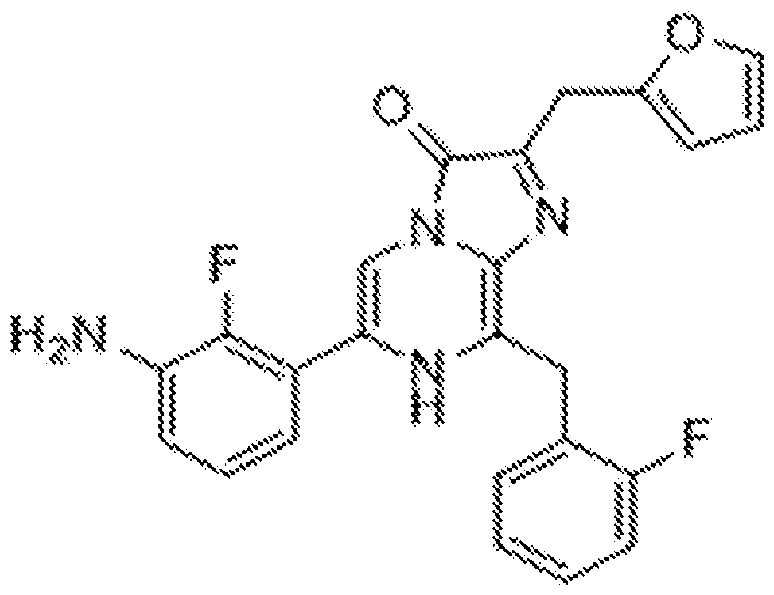
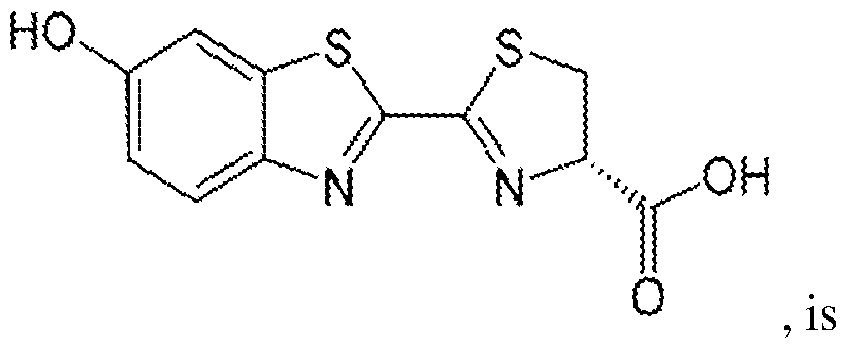


Claims
Priority Applications (1)
| Application Number | Priority Date | Filing Date | Title |
|---|---|---|---|
| EP24820008.1A EP4724075A2 (en) | 2023-06-06 | 2024-06-06 | Systems and methods for detection and quantification of double-stranded rna |
Applications Claiming Priority (2)
| Application Number | Priority Date | Filing Date | Title |
|---|---|---|---|
| US202363506502P | 2023-06-06 | 2023-06-06 | |
| US63/506,502 | 2023-06-06 |
Publications (2)
| Publication Number | Publication Date |
|---|---|
| WO2024254262A2 true WO2024254262A2 (en) | 2024-12-12 |
| WO2024254262A3 WO2024254262A3 (en) | 2025-05-30 |
Family
ID=93794559
Family Applications (1)
| Application Number | Title | Priority Date | Filing Date |
|---|---|---|---|
| PCT/US2024/032742 Ceased WO2024254262A2 (en) | 2023-06-06 | 2024-06-06 | Systems and methods for detection and quantification of double-stranded rna |
Country Status (3)
| Country | Link |
|---|---|
| US (1) | US20250012785A1 (en) |
| EP (1) | EP4724075A2 (en) |
| WO (1) | WO2024254262A2 (en) |
Families Citing this family (1)
| Publication number | Priority date | Publication date | Assignee | Title |
|---|---|---|---|---|
| CN120271685B (en) * | 2025-03-21 | 2026-03-20 | 中国医学科学院基础医学研究所 | A BiFC fluorescent complementary pair and its application |
Family Cites Families (4)
| Publication number | Priority date | Publication date | Assignee | Title |
|---|---|---|---|---|
| CN1278921A (en) * | 1997-09-12 | 2001-01-03 | 基因实验室公司 | dsRNA/dsRNA-Binding protein methods and compositions |
| WO2015061409A1 (en) * | 2013-10-23 | 2015-04-30 | University Of Washington Through Its Center For Commercialization | Universal protein tag for double stranded nucleic acid delivery |
| EP3823656A2 (en) * | 2018-07-19 | 2021-05-26 | University of Washington | De novo design of protein switches |
| US11300509B2 (en) * | 2020-06-17 | 2022-04-12 | 9412-1126 Québec Inc. | Cleavable linkers for protein translation reporting |
-
2024
- 2024-06-06 US US18/735,719 patent/US20250012785A1/en active Pending
- 2024-06-06 WO PCT/US2024/032742 patent/WO2024254262A2/en not_active Ceased
- 2024-06-06 EP EP24820008.1A patent/EP4724075A2/en active Pending
Also Published As
| Publication number | Publication date |
|---|---|
| EP4724075A2 (en) | 2026-04-15 |
| US20250012785A1 (en) | 2025-01-09 |
| WO2024254262A3 (en) | 2025-05-30 |
Similar Documents
| Publication | Publication Date | Title |
|---|---|---|
| JP7774084B2 (en) | Multimolecular luciferase | |
| US12241839B2 (en) | Multipartite luciferase peptides and polypeptides | |
| IL273989A (en) | Activation of biological light emission through structural completion | |
| US20090068732A1 (en) | Directed evolution methods for improving polypeptide folding and solubility and superfolder fluorescent proteins generated thereby | |
| Wang et al. | Engineered fluorescence tags for in vivo protein labelling | |
| US20220065786A1 (en) | Reactive peptide labeling | |
| US20250012785A1 (en) | Systems and methods for detection and quantification of double-stranded rna | |
| US7166475B2 (en) | Compositions and methods for monitoring the modification state of a pair of polypeptides | |
| Zhang et al. | Sortase A‐mediated synthesis of ligand‐grafted cyclized peptides for modulating a model protein‐protein interaction | |
| US20240132859A1 (en) | Modified dehalogenase with extended surface loop regions | |
| WO2003095610A2 (en) | Directed evolution method of generating enhanced folding polypeptide variants | |
| US20240174992A1 (en) | Split modified dehalogenase variants | |
| Strmiskova et al. | Rational design of a highly reactive dicysteine peptide tag for fluorogenic protein labelling | |
| US20240368565A1 (en) | Complementation-based tags and reporters for dual-modality labeling | |
| US20240060059A1 (en) | Circularly permuted dehalogenase variants | |
| Nelson | Engineering Split-Luciferase Assay Systems for Detection of Protein Solubility | |
| CN121586773A (en) | Engineered luciferases and a luciferin substrate |
Legal Events
| Date | Code | Title | Description |
|---|---|---|---|
| WWE | Wipo information: entry into national phase |
Ref document number: 202617001261 Country of ref document: IN |
|
| WWE | Wipo information: entry into national phase |
Ref document number: 2024820008 Country of ref document: EP |
|
| NENP | Non-entry into the national phase |
Ref country code: DE |
|
| ENP | Entry into the national phase |
Ref document number: 2024820008 Country of ref document: EP Effective date: 20260107 |
|
| ENP | Entry into the national phase |
Ref document number: 2024820008 Country of ref document: EP Effective date: 20260107 |
|
| ENP | Entry into the national phase |
Ref document number: 2024820008 Country of ref document: EP Effective date: 20260107 |
|
| ENP | Entry into the national phase |
Ref document number: 2024820008 Country of ref document: EP Effective date: 20260107 |
|
| 121 | Ep: the epo has been informed by wipo that ep was designated in this application |
Ref document number: 24820008 Country of ref document: EP Kind code of ref document: A2 |
|
| WWP | Wipo information: published in national office |
Ref document number: 202617001261 Country of ref document: IN |
|
| WWP | Wipo information: published in national office |
Ref document number: 2024820008 Country of ref document: EP |