WO2024252716A1 - 測定装置、情報端末、制御方法、及び制御プログラム - Google Patents
測定装置、情報端末、制御方法、及び制御プログラム Download PDFInfo
- Publication number
- WO2024252716A1 WO2024252716A1 PCT/JP2024/001172 JP2024001172W WO2024252716A1 WO 2024252716 A1 WO2024252716 A1 WO 2024252716A1 JP 2024001172 W JP2024001172 W JP 2024001172W WO 2024252716 A1 WO2024252716 A1 WO 2024252716A1
- Authority
- WO
- WIPO (PCT)
- Prior art keywords
- information terminal
- information
- measurement
- user
- measuring device
- Prior art date
- Legal status (The legal status is an assumption and is not a legal conclusion. Google has not performed a legal analysis and makes no representation as to the accuracy of the status listed.)
- Ceased
Links
Images





Classifications
-
- A—HUMAN NECESSITIES
- A61—MEDICAL OR VETERINARY SCIENCE; HYGIENE
- A61B—DIAGNOSIS; SURGERY; IDENTIFICATION
- A61B5/00—Measuring for diagnostic purposes; Identification of persons
- A61B5/0002—Remote monitoring of patients using telemetry, e.g. transmission of vital signals via a communication network
- A61B5/0015—Remote monitoring of patients using telemetry, e.g. transmission of vital signals via a communication network characterised by features of the telemetry system
-
- G—PHYSICS
- G16—INFORMATION AND COMMUNICATION TECHNOLOGY [ICT] SPECIALLY ADAPTED FOR SPECIFIC APPLICATION FIELDS
- G16H—HEALTHCARE INFORMATICS, i.e. INFORMATION AND COMMUNICATION TECHNOLOGY [ICT] SPECIALLY ADAPTED FOR THE HANDLING OR PROCESSING OF MEDICAL OR HEALTHCARE DATA
- G16H40/00—ICT specially adapted for the management or administration of healthcare resources or facilities; ICT specially adapted for the management or operation of medical equipment or devices
- G16H40/60—ICT specially adapted for the management or administration of healthcare resources or facilities; ICT specially adapted for the management or operation of medical equipment or devices for the operation of medical equipment or devices
- G16H40/63—ICT specially adapted for the management or administration of healthcare resources or facilities; ICT specially adapted for the management or operation of medical equipment or devices for the operation of medical equipment or devices for local operation
-
- G—PHYSICS
- G16—INFORMATION AND COMMUNICATION TECHNOLOGY [ICT] SPECIALLY ADAPTED FOR SPECIFIC APPLICATION FIELDS
- G16H—HEALTHCARE INFORMATICS, i.e. INFORMATION AND COMMUNICATION TECHNOLOGY [ICT] SPECIALLY ADAPTED FOR THE HANDLING OR PROCESSING OF MEDICAL OR HEALTHCARE DATA
- G16H40/00—ICT specially adapted for the management or administration of healthcare resources or facilities; ICT specially adapted for the management or operation of medical equipment or devices
- G16H40/60—ICT specially adapted for the management or administration of healthcare resources or facilities; ICT specially adapted for the management or operation of medical equipment or devices for the operation of medical equipment or devices
- G16H40/67—ICT specially adapted for the management or administration of healthcare resources or facilities; ICT specially adapted for the management or operation of medical equipment or devices for the operation of medical equipment or devices for remote operation
-
- H—ELECTRICITY
- H04—ELECTRIC COMMUNICATION TECHNIQUE
- H04W—WIRELESS COMMUNICATION NETWORKS
- H04W4/00—Services specially adapted for wireless communication networks; Facilities therefor
- H04W4/30—Services specially adapted for particular environments, situations or purposes
- H04W4/38—Services specially adapted for particular environments, situations or purposes for collecting sensor information
-
- H—ELECTRICITY
- H04—ELECTRIC COMMUNICATION TECHNIQUE
- H04W—WIRELESS COMMUNICATION NETWORKS
- H04W4/00—Services specially adapted for wireless communication networks; Facilities therefor
- H04W4/80—Services using short range communication, e.g. near-field communication [NFC], radio-frequency identification [RFID] or low energy communication
-
- H—ELECTRICITY
- H04—ELECTRIC COMMUNICATION TECHNIQUE
- H04W—WIRELESS COMMUNICATION NETWORKS
- H04W52/00—Power management, e.g. Transmission Power Control [TPC] or power classes
- H04W52/02—Power saving arrangements
- H04W52/0209—Power saving arrangements in terminal devices
- H04W52/0212—Power saving arrangements in terminal devices managed by the network, e.g. network or access point is leader and terminal is follower
- H04W52/0216—Power saving arrangements in terminal devices managed by the network, e.g. network or access point is leader and terminal is follower using a pre-established activity schedule, e.g. traffic indication frame
-
- H—ELECTRICITY
- H04—ELECTRIC COMMUNICATION TECHNIQUE
- H04W—WIRELESS COMMUNICATION NETWORKS
- H04W52/00—Power management, e.g. Transmission Power Control [TPC] or power classes
- H04W52/02—Power saving arrangements
- H04W52/0209—Power saving arrangements in terminal devices
- H04W52/0225—Power saving arrangements in terminal devices using monitoring of external events, e.g. the presence of a signal
- H04W52/0229—Power saving arrangements in terminal devices using monitoring of external events, e.g. the presence of a signal where the received signal is a wanted signal
- H04W52/0235—Power saving arrangements in terminal devices using monitoring of external events, e.g. the presence of a signal where the received signal is a wanted signal where the received signal is a power saving command
-
- H—ELECTRICITY
- H04—ELECTRIC COMMUNICATION TECHNIQUE
- H04W—WIRELESS COMMUNICATION NETWORKS
- H04W52/00—Power management, e.g. Transmission Power Control [TPC] or power classes
- H04W52/02—Power saving arrangements
- H04W52/0209—Power saving arrangements in terminal devices
- H04W52/0261—Power saving arrangements in terminal devices managing power supply demand, e.g. depending on battery level
- H04W52/0274—Power saving arrangements in terminal devices managing power supply demand, e.g. depending on battery level by switching on or off the equipment or parts thereof
- H04W52/028—Power saving arrangements in terminal devices managing power supply demand, e.g. depending on battery level by switching on or off the equipment or parts thereof switching on or off only a part of the equipment circuit blocks
-
- H—ELECTRICITY
- H04—ELECTRIC COMMUNICATION TECHNIQUE
- H04W—WIRELESS COMMUNICATION NETWORKS
- H04W76/00—Connection management
- H04W76/30—Connection release
-
- A—HUMAN NECESSITIES
- A61—MEDICAL OR VETERINARY SCIENCE; HYGIENE
- A61B—DIAGNOSIS; SURGERY; IDENTIFICATION
- A61B2560/00—Constructional details of operational features of apparatus; Accessories for medical measuring apparatus
- A61B2560/02—Operational features
- A61B2560/0204—Operational features of power management
- A61B2560/0209—Operational features of power management adapted for power saving
-
- G—PHYSICS
- G16—INFORMATION AND COMMUNICATION TECHNOLOGY [ICT] SPECIALLY ADAPTED FOR SPECIFIC APPLICATION FIELDS
- G16H—HEALTHCARE INFORMATICS, i.e. INFORMATION AND COMMUNICATION TECHNOLOGY [ICT] SPECIALLY ADAPTED FOR THE HANDLING OR PROCESSING OF MEDICAL OR HEALTHCARE DATA
- G16H10/00—ICT specially adapted for the handling or processing of patient-related medical or healthcare data
- G16H10/60—ICT specially adapted for the handling or processing of patient-related medical or healthcare data for patient-specific data, e.g. for electronic patient records
-
- H—ELECTRICITY
- H04—ELECTRIC COMMUNICATION TECHNIQUE
- H04M—TELEPHONIC COMMUNICATION
- H04M1/00—Substation equipment, e.g. for use by subscribers
- H04M1/72—Mobile telephones; Cordless telephones, i.e. devices for establishing wireless links to base stations without route selection
- H04M1/724—User interfaces specially adapted for cordless or mobile telephones
- H04M1/72403—User interfaces specially adapted for cordless or mobile telephones with means for local support of applications that increase the functionality
- H04M1/72409—User interfaces specially adapted for cordless or mobile telephones with means for local support of applications that increase the functionality by interfacing with external accessories
- H04M1/72412—User interfaces specially adapted for cordless or mobile telephones with means for local support of applications that increase the functionality by interfacing with external accessories using two-way short-range wireless interfaces
-
- H—ELECTRICITY
- H04—ELECTRIC COMMUNICATION TECHNIQUE
- H04W—WIRELESS COMMUNICATION NETWORKS
- H04W76/00—Connection management
- H04W76/10—Connection setup
- H04W76/14—Direct-mode setup
-
- H—ELECTRICITY
- H04—ELECTRIC COMMUNICATION TECHNIQUE
- H04W—WIRELESS COMMUNICATION NETWORKS
- H04W76/00—Connection management
- H04W76/30—Connection release
- H04W76/34—Selective release of ongoing connections
- H04W76/36—Selective release of ongoing connections for reassigning the resources associated with the released connections
Definitions
- the present invention relates to a measurement device, an information terminal, a control method, and a control program.
- Patent Document 1 Bluetooth Low Energy (registered trademark)
- Patent Document 2 Bluetooth Low Energy (registered trademark)
- Patent Document 3 an information processing system that includes an information processing device such as a smartphone and health equipment such as a pedometer, activity monitor, and heart rate monitor, and establishes a communication connection by exchanging addresses, authentication keys, encryption keys, and the like, and acquires measurement data via Bluetooth (registered trademark) or the like.
- the electronic terminal that sends the advertisement and the smartphone that receives the advertisement communicate with each other at predetermined times four times a day, transmit information measured by the electronic terminal to the smartphone, and then disconnect the communication.
- the number of times the two synchronize is not limited to four times a day, and the trigger for synchronization is not limited to the time of day.
- a normal operation mode and a power-saving operation mode are set as timing control information, and in each mode, the period and time for advertising and the period and time for measuring data can be set so that the power consumed for advertising in the power-saving operation mode is less than the power consumed in the normal operation mode.
- Patent Document 1 and Patent Document 2 do not describe how to deal with this limitation of connection opportunities. Therefore, there is room for further improvement in the transmission of advertisements and the reduction of power consumption.
- the present invention has been made in consideration of this situation, and its purpose is to provide a measurement device, an information terminal, a control method, and a control program that are capable of reducing power consumption.
- the present invention adopts the following configuration.
- a measurement device capable of measuring biological information, a wireless communication unit capable of transmitting the measurement data of the biological information to an information terminal;
- a control unit that controls the wireless communication unit, The control unit is wirelessly transmitting an advertising signal before instructing to measure the biological information, and performing control to wirelessly connect to a first information terminal that has made a connection request in response to the advertising signal;
- the biological information is measured, if the subject is different from the user of the first information terminal, the connection with the first information terminal is cut off, and a wireless connection with the second information terminal of the subject is established. Measuring equipment.
- the measurement data can be transferred via that wireless connection, improving convenience.
- the measurement data can be transferred by reconnecting wirelessly to the information terminal of the user who started the measurement, thereby reducing the decrease in convenience caused by having a wireless connection in advance.
- the control unit wirelessly transmits an advertising signal including information indicating the person being measured when wirelessly connecting to the second information terminal. Measuring equipment.
- an information terminal of a user other than the person being measured can recognize from the advertising signal that a user other than the user of that information terminal is performing a measurement, and can therefore perform control not to make a connection request even if it detects the advertising signal. This makes it possible to suppress conflicts between the information terminal of the person being measured and the information terminal of the user other than the person being measured.
- the measuring device is when wirelessly connecting to the first information terminal before measuring the biological information, a signal transmission interval with the first information terminal is set to a first interval; When wirelessly transmitting the measurement data of the biological information to the information terminal of the subject, a signal transmission interval with the information terminal of the subject is set to a second interval shorter than the first interval. Measuring equipment.
- the number of signal transmissions can be reduced, and power consumption can be suppressed.
- An information terminal capable of wireless communication with a measurement device capable of measuring biological information, a wireless communication unit capable of receiving the measurement data of the biological information from the measurement device;
- a control unit that controls the wireless communication unit, The control unit is when receiving an advertising signal wirelessly transmitted from the measuring device, making a connection request to the measuring device depending on whether or not information indicating a user different from the user of the information terminal is included in the advertising signal;
- Information terminal capable of wireless communication with a measurement device capable of measuring biological information, a wireless communication unit capable of receiving the measurement data of the biological information from the measurement device;
- a control unit that controls the wireless communication unit, The control unit is when receiving an advertising signal wirelessly transmitted from the measuring device, making a connection request to the measuring device depending on whether or not information indicating a user different from the user of the information terminal is included in the advertising signal;
- Information terminal is when receiving an advertising signal wirelessly transmitted from the measuring device, making a connection request to the measuring device depending on whether or not information indicating a user different from the user of the information terminal is included in
- a method for controlling a measurement device that is capable of measuring biological information and that includes a wireless communication unit that is capable of transmitting measurement data of the biological information to an information terminal, and a processor that controls the wireless communication unit, comprising: The processor, before issuing an instruction to measure the biological information, an advertising signal is wirelessly transmitted, and control is performed to wirelessly connect to a first information terminal that has made a connection request in response to the advertising signal; When the biological information is measured, if the subject is different from the user of the first information terminal, the connection with the first information terminal is cut off, and a wireless connection with the second information terminal of the subject is established. Control methods.
- the measurement data can be transferred by reconnecting wirelessly to the information terminal of the user who started the measurement, suppressing a decrease in convenience due to a wireless connection in advance.
- a control program for a measurement device including a wireless communication unit capable of measuring biological information and transmitting measurement data of the biological information to an information terminal, and a processor for controlling the wireless communication unit, The processor, before issuing an instruction to measure the biological information, an advertising signal is wirelessly transmitted, and control is performed to wirelessly connect to a first information terminal that has made a connection request in response to the advertising signal; When the biological information is measured, if the subject is different from the user of the first information terminal, the connection with the first information terminal is cut off, and a wireless connection with the second information terminal of the subject is established.
- a control program for executing processing when the biological information is measured, if the subject is different from the user of the first information terminal, the connection with the first information terminal is cut off, and a wireless connection with the second information terminal of the subject is established.
- (6) by transmitting an advertising signal before receiving an instruction to measure biometric information and establishing a wireless connection with the information terminal that made the connection request, it is possible to stop transmitting the advertising signal, which cannot be transmitted at a long interval due to its specifications, and suppress power consumption.
- packets in order to maintain the wireless connection, packets must be transmitted and received at an interval of the Connection Interval, but since the Connection Interval can be made longer than the advertising signal, it is possible to suppress total power consumption.
- the measurement data can be transferred via that wireless connection, improving convenience.
- the measurement data can be transferred by reconnecting wirelessly to the information terminal of the user who started the measurement, suppressing a decrease in convenience due to a wireless connection in advance.
- a method for controlling an information terminal including a wireless communication unit capable of receiving measurement data of biological information from a measurement device capable of measuring the biological information, and a processor for controlling the wireless communication unit, The processor, when receiving an advertising signal wirelessly transmitted from the measuring device, making a connection request to the measuring device depending on whether or not information indicating a user different from the user of the information terminal is included in the advertising signal; Control methods.
- a user other than the user of the information terminal is performing measurements based on the information indicating the user contained in the received advertising signal, and therefore, by detecting the advertising signal, it is possible to control the device so that a connection request is not made. This makes it possible to reduce unnecessary processing and suppress power consumption.
- a control program for an information terminal including a wireless communication unit capable of receiving measurement data of biological information from a measurement device capable of measuring the biological information, and a processor for controlling the wireless communication unit, The processor, when receiving an advertising signal wirelessly transmitted from the measuring device, making a connection request to the measuring device depending on whether or not information indicating a user different from the user of the information terminal is included in the advertising signal; A control program for executing processing.
- the present invention provides a measuring device, an information terminal, a control method, and a control program that can reduce power consumption.
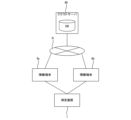
- FIG. 1 is a diagram showing an information management system 100 including a measuring device 1 of the present invention and information terminals 5a and 5b that perform wireless communication with the measuring device 1.
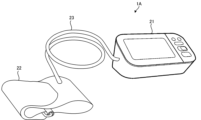
- FIG. 1 is a diagram showing a sphygmomanometer 1A which is an example of a measurement device 1.
- FIG. 2 is a diagram showing an example in which information terminals 5a and 5b are connected to a network.
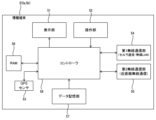
- FIG. 1 is a block diagram showing a configuration of a measuring device 1.
- 2 is a block diagram showing a configuration of an information terminal 5.
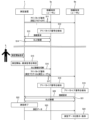
- FIG. 1 is a sequence diagram showing an example of the operation of the measuring device 1 and information terminals 5a and 5b in the information management system 100.
- FIG. 1 is a sequence diagram showing an example of the operation of the measuring device 1 and information terminals 5a and 5b in the information management system 100.
- FIG. 11 is a sequence diagram showing a modified example of the operation of the measuring device 1 and the information terminals 5a and 5b in the information management system 100.
- FIG. 4 is a flowchart showing an example of an operation of the measurement device 1.
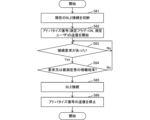
- 13 is a flowchart showing a connection switching process.
- 10 is a flowchart showing an example of the operation of the information terminals 5a and 5b.
- FIG. 1 shows an information management system 100 including a measuring device 1 of the present invention and information terminals 5 a and 5 b that communicate wirelessly with the measuring device 1 .
- the information terminals 5a and 5b store the measurement data received from the measuring device 1 in the data storage unit of the information terminals 5a and 5b.
- the information terminals 5a and 5b can also wirelessly communicate with external devices other than the measuring device 1, and store information acquired from the external devices in the data storage unit of the information terminals 5a and 5b.
- the information terminals 5a and 5b are information processing devices that analyze various information acquired from the measuring device 1 and other external devices.
- the information terminals 5a and 5b are, for example, smartphones, tablet terminals, laptops, desktop computers, wearable terminals, and other terminals with displays.
- the information terminals 5a and 5b may be set to acquire measurement data from a specific measuring device 1.
- the specific measuring device 1 from which the measurement data is acquired may be registered in advance in the data storage unit of the information terminals 5a and 5b. In this example, two information terminals are shown, but this is not limited to this, and two or more information terminals may be included.
- FIG. 3 is a diagram showing an example in which information terminals 5a and 5b are connected to a network.
- information terminals 5a and 5b may be connected to a cloud server 90 via a wide area network N such as the Internet.
- Information terminals 5a and 5b may transmit measurement data stored therein to cloud server 90 via the wide area network N, and the cloud server 90 may manage user measurement data as a database.
- Information terminals 5a and 5b may also acquire measurement data managed in cloud server 90 via the wide area network N, and use the acquired measurement data.
- the display unit 11 is composed of, for example, a liquid crystal display or an organic EL (Electro Luminescence) display.
- the operation unit 12 is a user interface that accepts user operations such as buttons and a touch panel.
- the buttons include buttons that are physically provided on the measurement device 1 and virtual buttons displayed on the display unit 11.
- the measurement unit 13 measures biological information such as weight, body composition, blood pressure, pulse rate, heart rate, body temperature, blood glucose, blood oxygen saturation, etc. What is measured varies depending on the measurement target of the measurement device 1.
- RAM 16 is composed of semiconductor devices such as DRAM or SRAM, and temporarily stores information and also functions as a working area for controller 18.
- the data storage unit 17 is a recording medium that stores parameters, control programs, measurement data, and the like required to realize a specified function.
- the data storage unit 17 is configured, for example, by a hard disk drive (HDD) or a semiconductor storage device (SSD).
- HDD hard disk drive
- SSD semiconductor storage device
- the controller 18 is a processor that realizes a predetermined function by executing a control program.
- health management application software for the measuring device is pre-installed as a control program in the data storage unit 17, and the controller 18 realizes a predetermined function by executing this health management application software.
- the controller 18 controls the wireless communication unit 14 to transmit an advertising signal for wireless communication (BLE communication) at a predetermined transmission cycle. Specifically, when the measurement device 1 is started, the controller 18 controls the wireless communication unit 14 to transmit an advertising signal. For example, when the power button of the main body unit 21 in the blood pressure monitor 1A shown in FIG. 2 is turned on, the controller 18 controls the wireless communication unit 14 to start transmitting an advertising signal.
- BLE communication wireless communication
- the controller 18 wirelessly transmits an advertising signal from the wireless communication unit 14 and controls wireless connection to a first information terminal (e.g., information terminal 5a) that has made a connection request in response to the advertising signal.
- the controller 18 controls the wireless communication unit 14 to stop transmitting the advertising signal while wireless communication between the measurement device 1 and the first information terminal is connected.
- the controller 18 When the controller 18 is performing a measurement in response to an instruction from a user to start measuring biological information, if the person being measured who instructed the measurement to start is different from user a of the first information terminal (e.g., information terminal 5a) to which the controller 58 is currently wirelessly connected, the controller 18 disconnects the wireless connection with the first information terminal and controls a wireless connection to the second information terminal (e.g., information terminal 5b) of the person being measured who instructed the measurement to start (e.g., user b). After disconnecting the wireless connection with the first information terminal, the controller 18 controls the wireless transmission of an advertising signal including information indicating the person being measured (user b) (e.g., "measurement user” information) when wirelessly connecting to the second information terminal. The controller 58 may further transmit information indicating that measurement is in progress (e.g., "measurement flag" information) by including it in the advertising signal.
- an advertising signal including information indicating the person being measured (user b) (e.g., "measurement user” information
- the controller 18 wirelessly connects to the first information terminal before receiving an instruction from the user to measure the vital information, it sets the signal transmission interval with the first information terminal to a first interval, and when wirelessly transmitting measurement data of the vital information to the information terminal of the person being measured, it performs control to set the signal transmission interval with the information terminal of the person being measured to a second interval shorter than the first interval.
- the "signal transmission interval” is the interval for transmitting data packets, i.e., the Connection Interval.
- the "second interval” is the interval for normal communication, for example, a 7.5 ms interval.
- the "first interval” is longer than the second interval and is the longest interval that can be set, for example, a 10 sec interval.
- the information terminal 5 includes a display unit 51 that displays various information, an operation unit 52 that is operated by a user, a GPS (Global Positioning System) sensor 53 for detecting a position, and a first wireless communication unit 54 and a second wireless communication unit 55 for communicating with an external device.
- the information terminal 5 also includes a RAM 56 that temporarily stores information, a data storage unit 57 that stores information and programs, and a controller 58 that controls the overall operation.
- the display unit 51 is configured, for example, by a liquid crystal display or an organic EL (Electro Luminescence) display.
- the operation unit 52 is a user interface that accepts user operations such as buttons and a touch panel.
- the buttons include buttons that are physically provided on the information terminal 5 and virtual buttons displayed on the display unit 51.
- the GPS sensor 53 is a sensor for detecting the current position of the information terminal 5.
- the first wireless communication unit 54 is a communication unit that performs cellular communication, for example a circuit (module) capable of performing communication according to standards such as 4G, 5G, and LTE (Long Term Evolution: registered trademark).
- the first wireless communication unit 54 is also a communication unit that performs wireless LAN communication, for example a circuit (module) capable of performing communication according to standards such as Wi-Fi (registered trademark).
- the second wireless communication unit 55 is a communication unit that performs short-range wireless communication, for example a circuit (module) capable of performing communication according to the BLE standard.
- the second wireless communication unit 55 performs BLE communication with the wireless communication unit 14 of the measuring device 1 to acquire measurement data of the user measured by the measuring device 1.
- the second wireless communication unit 55 receives the advertising signal transmitted from the wireless communication unit 14 of the measuring device 1 by scanning.
- the second wireless communication unit 55 recognizes the measuring device 1 from the received advertising signal, and transmits a connection request to the measuring device 1 when it wishes to establish a communication connection.
- the measuring device 1 waits for a connection request for a predetermined time, and if it receives a connection request within the predetermined time, it stops transmitting the advertising signal and switches to one-to-one connection communication with the other party of the connection request.
- RAM 56 is composed of semiconductor devices such as DRAM or SRAM, and temporarily stores information and also functions as a working area for controller 58.
- the data storage unit 57 is a recording medium that stores parameters necessary to realize a specified function, a control program, and measurement data acquired from the measuring device 1.
- the data storage unit 57 is configured, for example, by a hard disk drive (HDD) or a semiconductor storage device (SSD).
- the controller 58 is a processor that realizes a predetermined function by executing a control program.
- health management application software for information terminals is pre-installed as a control program in the data storage unit 57, and the controller 58 realizes a predetermined function by executing this health management application software.
- the controller 58 controls the second wireless communication unit 55 to receive an advertising signal by scanning.
- the controller 58 controls the second wireless communication unit 55 to transmit a connection request to the measuring device 1.
- the measuring device 1 receives the connection request, the communication of the measuring device 1 is switched to one-to-one connection communication with the information terminal 5, and the information terminal 5 and the measuring device 1 are in a BLE connected state.
- the controller 58 when the controller 58 receives an advertising signal wirelessly transmitted from the measuring device 1, it determines whether or not to send a connection request to the measuring device 1 depending on whether or not the advertising signal contains information indicating a user different from the user of the information terminal 5 (e.g., "measurement user" information).
- Fig. 6 is a sequence diagram showing an example of the operation of the measurement device 1 and the information terminals 5 (5a, 5b) in the information management system 100. It is assumed that the information terminal 5a is an information terminal owned by a user a, and the information terminal 5b is an information terminal owned by a user b. It is also assumed that the information terminals 5a and 5b have already been paired with the measurement device 1.
- the measuring device 1 executes a health management application and starts transmitting an advertising signal for wireless communication (BLE communication) (step S11).
- the information terminal 5a executes a health management application to scan and detect an advertising signal from the measurement device 1 (step S12).
- the information terminal 5a detects the advertising signal from the measurement device 1, it transmits a connection request signal to the measurement device 1 to request a communication connection (step S13).
- the measuring device 1 when the measuring device 1 receives a connection request from the information terminal 5a, it stops transmitting the advertising signal and starts one-to-one connection communication with the information terminal 5a. This puts the measuring device 1 and the information terminal 5a in a BLE-connected state (step S14).
- user b who is the owner of information terminal 5b, starts measuring user b's biometric information using measurement device 1.
- User b presses, for example, a measurement start button on measurement device 1 to give an instruction to start measurement.
- the measuring device 1 starts measuring the measurement data in response to the instruction to start the measurement, and identifies the person being measured (step S15).
- the person being measured may be identified based on a user selection made by the person being measured by operating a button, for example, or based on a measurement value (obtained in the first stage). "Based on a measurement value” includes, for example, a case where the person is identified by comparing the measurement value with a value stored as the person's past measurement value.
- the measuring device 1 determines whether the identified person being measured matches user a of the information terminal 5a with whom the BLE communication is currently being performed, and if, as in this example, the person being measured is user b and is different from user a of the information terminal 5a with whom the BLE communication is being performed, the measuring device 1 disconnects the BLE connection with the information terminal 5a (step S16).
- the measuring device 1 starts transmitting an advertising signal for wireless communication (BLE communication) (step S17).
- the information terminal 5a executes a health management application to scan and detect an advertising signal from the measurement device 1 (step S18). Similarly, the information terminal 5b also detects an advertising signal from the measurement device 1 (step S19).
- the measuring device 1 receives a connection request from the information terminal 5b, stops transmitting the advertising signal, and starts one-to-one connection communication with the information terminal 5b. This puts the measuring device 1 and the information terminal 5b in a BLE-connected state (step S21).
- the measurement device 1 finishes measuring the measurement data (step S22), it transmits the measured measurement data to the information terminal 5b via BLE communication (step S23).
- the information terminal 5b displays the measurement data received from the measurement device 1 on the display unit 51 and stores it in the data storage unit 57 (step S24).
- the BLE connection between the information terminal 5b and the measurement device 1 is maintained, for example, until a command to start the next measurement is issued and it is determined that the person being measured is different from user b of the information terminal 5b who is currently communicating via BLE.
- Fig. 7 is a sequence diagram showing a modified example of the operation of the measurement device 1 and the information terminals 5 (5a, 5b) in the information management system 100.
- Fig. 6 it is assumed that the information terminal 5a of user a and the information terminal 5b of user b have already been paired with the measurement device 1.
- user a who is the owner of information terminal 5a, starts measuring the biometric information of user a using measurement device 1.
- User a presses, for example, a measurement start button on measurement device 1 to give an instruction to start measurement.
- the measuring device 1 starts measuring the measurement data in response to the instruction to start measurement, and identifies the person being measured (step S35).
- the person being measured is identified in the same manner as in step S15 in the operation example of FIG. 6 above, and may be identified based on user selection by the person being measured operating a button, or based on the measured value (obtained in the first stage).
- the measuring device 1 determines whether the identified person being measured matches user a of the information terminal 5a currently performing BLE communication, and if, as in this example, the person being measured matches user a of the information terminal 5a performing BLE communication with user a, the state of the BLE connection with the information terminal 5a is maintained.
- step S36 when the measurement device 1 finishes measuring the measurement data (step S36), it transmits the measured measurement data to the information terminal 5a via BLE communication (step S37).
- the information terminal 5a displays the measurement data received from the measuring device 1 on the display unit 51 and stores it in the data storage unit 57 (step S38).
- the BLE connection between the information terminal 5a and the measuring device 1 is maintained, for example, until a command to start the next measurement is issued and it is determined that the person being measured is different from user a of the information terminal 5a who is currently communicating via BLE.
- the measuring device 1 when the measuring device 1 is powered on, it executes a health management application and starts transmitting an advertising signal for BLE communication (step S41).
- the measuring device 1 repeatedly transmits the advertising signal at a predetermined cycle.
- the measuring device 1 determines whether or not a connection request has been received from, for example, the paired information terminals 5a, 5b in response to the transmitted advertising signal (step S42). If there has been no connection request (step S42: No), the measuring device 1 repeats the process of step S42.
- step S42 If a connection request has been made in step S42 (step S42: Yes), the measurement device 1 starts communication with the information terminal 5a, 5b, etc. that has made the connection request via a BLE connection (step S43).
- the measuring device 1 stops transmitting the advertising signal that was started in step S41 (step S44).
- the measuring device 1 sets the connection interval with the information terminals 5a, 5b, etc. that started BLE communication in step S43 to "I1" (step S45).
- I1 is the transmission interval of data packets in BLE communication with the information terminals 5a, 5b, etc. when the measuring device 1 has not yet started measuring data (when the measurement flag is OFF).
- I1 is the longest interval that can be set in the measuring device 1.
- I1 is an example of the "first interval" of the present invention.
- the measuring device 1 determines whether or not an instruction to start measuring biological information by the measuring device 1 has been received from the user (step S46). If an instruction to start measurement has not been received from the user (step S46: No), the measuring device 1 repeats the process of step S46.
- step S46 If an instruction to start measurement is received from the user in step S46 (step S46: Yes), the measuring device 1 starts measuring the measurement data and identifies the user who instructed to start measurement, i.e., the person being measured in this measurement (step S47).
- the person being measured may be identified based on user selection by the subject's button operation, as in step S15 in FIG. 6 above, or based on the measurement value (obtained in the initial stage).
- the measurement device 1 determines whether the person being measured identified in step S47 is a user a, b, etc. of the information terminal 5a, 5b, etc. currently connected via BLE (step S48).
- step S48 the measurement device 1 proceeds to the "connection switching process” shown in FIG. 9 and switches the information terminal to be BLE connected (step S49). Then, the measurement device 1 sets the connection interval with the information terminal 5a, 5b, etc. that has switched the connection and started BLE communication to "I2" (step S50).
- I2 is the transmission interval of data packets in BLE communication with the information terminal 5a, 5b, etc., performed by the measurement device 1 during data measurement (when the measurement flag is ON). For example, I2 is the transmission interval used in normal BLE communication. I2 is an example of the "second interval" of the present invention.
- the measuring device 1 determines whether the measurement of the data started in step S46 has ended (step S51). If the measurement has not ended (step S51: No), the measuring device 1 repeats the process of step S51.
- step S51 If the measurement is completed in step S51 (step S51: Yes), the measurement device 1 transmits the measurement data to the information terminal in the BLE connection (step S52). After transmitting the measurement data to the information terminal, the measurement device 1 returns to step S45, sets the Connection Interval with the information terminals 5a, 5b, etc. in BLE communication to "I1", and repeats each process.
- the measuring device 1 sets the Connection Interval to "I2" before determining whether the measurement has ended (step S51), but this is not limited to the above.
- the measuring device 1 may set the Connection Interval to "I2" after determining whether the measurement has ended.
- Fig. 9 is a flowchart showing the "connection switching process" in step S49 in Fig. 8.
- the measurement device 1 first disconnects the BLE connection currently established with the information terminals 5a, 5b, etc. (step S61).
- the measuring device 1 starts transmitting an advertising signal for BLE communication (step S62).
- the measuring device 1 determines whether or not a connection request has been received from the information terminals 5a, 5b, etc. in response to the advertising signal transmitted in step S62 (step S63). If there has been no connection request (step S63: No), the measuring device 1 repeats the process of step S63.
- step S63 If a connection request has been made in step S63 (step S63: Yes), the measurement device 1 determines whether the connection request has come from the subject's information terminal 5a, 5b, etc. (step S64).
- step S64: No If the source of the connection request is not the subject's information terminal 5a, 5b, etc. in step S64 (step S64: No), the measurement device 1 returns to step S63 and repeats each process. If the source of the connection request is the subject's information terminal 5a, 5b, etc. in step S64 (step S64: Yes), the measurement device 1 starts communication with the information terminal 5a, 5b, etc. that made the connection request via a BLE connection (step S65).
- the measuring device 1 stops transmitting the advertising signal that was started in step S62 (step S66) and ends this connection switching process.
- the measuring device 1 wirelessly transmits an advertising signal before receiving an instruction to measure the bioinformation, and controls wireless connection with, for example, an information terminal 5a that has made a connection request in response to the advertising signal. Furthermore, when measuring the bioinformation, if the person to be measured whose bioinformation is to be measured is different from the user of the information terminal 5a that is wirelessly connected at that time, the measuring device 1 controls to disconnect the wireless connection with the information terminal 5a that has been wirelessly connected until then, and to wirelessly connect with the information terminal 5b of the person to be measured.
- the measurement data can be transferred by re-wirelessly connecting to information terminal 5b of user b who started the measurement, thereby preventing a decrease in convenience due to a wireless connection in advance.
- the information terminal 5a of user a who is different from the person being measured can recognize from the advertising signal that user b who is different from user a of the information terminal 5a is currently measuring, and can perform control not to make a connection request even if it detects the advertising signal. This makes it possible to suppress conflict between the information terminal 5b of the person being measured (user b) and the information terminal 5a of user a who is different from the person being measured.
- the measurement device 1 wirelessly connects to, for example, the information terminal 5a before measuring the bioinformation, it sets the Connection Interval with the information terminal 5a to a first interval, and when wirelessly transmitting the measurement data of the bioinformation to the information terminals 5a, 5b of the person being measured, it sets the Connection Interval with the information terminals 5a, 5b of the person being measured to a second interval shorter than the first interval.
- Fig. 10 is a flowchart showing an example of the operation of the information terminal 5 (5a, 5b). This operation starts when the health management application of the information terminal 5 (5a, 5b) is launched.
- the information terminal 5 determines whether or not an advertising signal from the measurement device 1 has been detected (step S71). If an advertising signal has not been detected (step S71: No), the information terminal 5 repeats the process of step S71.
- step S74 the information terminal 5 transmits a connection request to the measurement device 1 (step S73). If, in step S74, the "measurement user” information does not indicate the user of the information terminal itself (step S74: No), the information terminal 5 returns to step S71 and repeats each process.
- the information terminal 5 determines whether or not a BLE connection has been established with the measuring device 1 (step S75). If a BLE connection with the measuring device 1 has not been established (step S75: No), the information terminal 5 returns to step S71 and repeats each process.
- step S75 If a BLE connection with the measuring device 1 is established in step S75 (step S75: Yes), the information terminal 5 determines whether or not measurement data has been received from the measuring device 1 (step S76). The measurement data is transmitted when the measurement in the measuring device 1 is completed.
- step S76 determines whether the BLE connection with the measuring device 1 has been disconnected (step S77). If the BLE connection with the measuring device 1 has not been disconnected (step S77: No), the information terminal 5 returns to step S76 and repeats each process. If the BLE connection with the measuring device 1 has been disconnected (step S77: Yes), the information terminal 5 returns to step S71 and repeats each process.
- step S76 If measurement data is received from the measuring device 1 in step S76 (step S76: Yes), the information terminal 5 displays the received measurement data on the display unit 51 and stores it in the data storage unit 57 (step S78). After displaying and storing the measurement data, the information terminal 5 returns to step S76 and repeats each process.
- the measuring device 1 transmits an advertising signal including "measurement flag” information indicating that the measuring device 1 is measuring data, but this is not limiting.
- the measuring device 1 does not need to include “measurement flag” information in the advertising signal.
- the information terminal that receives the advertising signal may determine whether the measuring device 1 is measuring data or not, for example, based on the presence or absence of a "measurement user" included in the advertising signal.
- the control method of the measuring device 1 or the information terminal 5 described in the above embodiment can be realized by executing a control program prepared in advance on a computer.
- This control program is recorded in a computer-readable storage medium and is executed by reading it from the storage medium.
- this control program may be provided in a form stored in a non-transient storage medium such as a flash memory, or may be provided via a network such as the Internet.
- the computer that executes this control program may be included in the measuring device 1 or the information terminal 5, or may be included in an electronic device such as a smartphone, tablet terminal, or personal computer that can communicate with the measuring device 1 or the information terminal 5, or may be included in a server device that can communicate with these measuring device 1, information terminal 5, and electronic device.
- Measurement device 1A Sphygmomanometer 5, 5a, 5b Information terminal 11, 51 Display unit 12, 52 Operation unit 13 Measurement unit 14 Wireless communication unit 16, 56 RAM 17, 57 Data storage unit 18, 58 Controller 21 Main body unit 22 Cuff 23 Air tube 53 GPS sensor 54 First wireless communication unit 55 Second wireless communication unit 90 Cloud server 100 Information management system
Landscapes
- Engineering & Computer Science (AREA)
- Health & Medical Sciences (AREA)
- Computer Networks & Wireless Communication (AREA)
- Signal Processing (AREA)
- Biomedical Technology (AREA)
- General Health & Medical Sciences (AREA)
- Public Health (AREA)
- Medical Informatics (AREA)
- Primary Health Care (AREA)
- General Business, Economics & Management (AREA)
- Business, Economics & Management (AREA)
- Epidemiology (AREA)
- Life Sciences & Earth Sciences (AREA)
- Pathology (AREA)
- Biophysics (AREA)
- Physics & Mathematics (AREA)
- Heart & Thoracic Surgery (AREA)
- Molecular Biology (AREA)
- Surgery (AREA)
- Animal Behavior & Ethology (AREA)
- Veterinary Medicine (AREA)
- Measuring And Recording Apparatus For Diagnosis (AREA)
- Mobile Radio Communication Systems (AREA)
Priority Applications (3)
| Application Number | Priority Date | Filing Date | Title |
|---|---|---|---|
| DE112024000830.5T DE112024000830T5 (de) | 2023-06-07 | 2024-01-17 | Messvorrichtung, informationsendgerät, steuerverfahren und steuerprogramm |
| CN202480026659.6A CN121128158A (zh) | 2023-06-07 | 2024-01-17 | 测定装置、信息终端、控制方法以及控制程序 |
| US19/363,177 US20260046959A1 (en) | 2023-06-07 | 2025-10-20 | Measurement device, information terminal, control method, and control recording medium |
Applications Claiming Priority (2)
| Application Number | Priority Date | Filing Date | Title |
|---|---|---|---|
| JP2023093847A JP2024175815A (ja) | 2023-06-07 | 2023-06-07 | 測定装置、情報端末、制御方法、及び制御プログラム |
| JP2023-093847 | 2023-06-07 |
Related Child Applications (1)
| Application Number | Title | Priority Date | Filing Date |
|---|---|---|---|
| US19/363,177 Continuation US20260046959A1 (en) | 2023-06-07 | 2025-10-20 | Measurement device, information terminal, control method, and control recording medium |
Publications (1)
| Publication Number | Publication Date |
|---|---|
| WO2024252716A1 true WO2024252716A1 (ja) | 2024-12-12 |
Family
ID=93795266
Family Applications (1)
| Application Number | Title | Priority Date | Filing Date |
|---|---|---|---|
| PCT/JP2024/001172 Ceased WO2024252716A1 (ja) | 2023-06-07 | 2024-01-17 | 測定装置、情報端末、制御方法、及び制御プログラム |
Country Status (5)
| Country | Link |
|---|---|
| US (1) | US20260046959A1 (https=) |
| JP (1) | JP2024175815A (https=) |
| CN (1) | CN121128158A (https=) |
| DE (1) | DE112024000830T5 (https=) |
| WO (1) | WO2024252716A1 (https=) |
Citations (3)
| Publication number | Priority date | Publication date | Assignee | Title |
|---|---|---|---|---|
| US20160379463A1 (en) * | 2015-06-23 | 2016-12-29 | Motorola Mobility Llc | Method and apparatus for setting a notification readout mode based on proximity detection |
| JP2019057763A (ja) * | 2017-09-19 | 2019-04-11 | 株式会社東芝 | 無線通信装置および無線通信方法 |
| JP2022147466A (ja) * | 2021-03-23 | 2022-10-06 | セイコーエプソン株式会社 | 電子機器及び通信方法 |
-
2023
- 2023-06-07 JP JP2023093847A patent/JP2024175815A/ja active Pending
-
2024
- 2024-01-17 WO PCT/JP2024/001172 patent/WO2024252716A1/ja not_active Ceased
- 2024-01-17 DE DE112024000830.5T patent/DE112024000830T5/de active Pending
- 2024-01-17 CN CN202480026659.6A patent/CN121128158A/zh active Pending
-
2025
- 2025-10-20 US US19/363,177 patent/US20260046959A1/en active Pending
Patent Citations (3)
| Publication number | Priority date | Publication date | Assignee | Title |
|---|---|---|---|---|
| US20160379463A1 (en) * | 2015-06-23 | 2016-12-29 | Motorola Mobility Llc | Method and apparatus for setting a notification readout mode based on proximity detection |
| JP2019057763A (ja) * | 2017-09-19 | 2019-04-11 | 株式会社東芝 | 無線通信装置および無線通信方法 |
| JP2022147466A (ja) * | 2021-03-23 | 2022-10-06 | セイコーエプソン株式会社 | 電子機器及び通信方法 |
Also Published As
| Publication number | Publication date |
|---|---|
| DE112024000830T5 (de) | 2025-12-04 |
| US20260046959A1 (en) | 2026-02-12 |
| CN121128158A (zh) | 2025-12-12 |
| JP2024175815A (ja) | 2024-12-19 |
Similar Documents
| Publication | Publication Date | Title |
|---|---|---|
| EP3588264B1 (en) | Electronic device and screen sharing method of electronic device | |
| EP3106085A1 (en) | Method for measuring biometric information and electronic device performing the same | |
| EP3026667A1 (en) | Method and electronic device for voice recognition | |
| KR20180088020A (ko) | 전자 장치 및 그의 동작 방법 | |
| EP2879068A1 (en) | Biological information measuring apparatus, biological information measuring system, individual registration information registering method, and program | |
| US10390380B2 (en) | Electronic device, system, and method for connecting short-range communication | |
| US20170064754A1 (en) | Method and apparatus for connecting with external device | |
| US10702185B2 (en) | Electronic device and body composition analyzing method | |
| US10881296B2 (en) | Measuring device and transmission method | |
| US20250134373A1 (en) | Measurement device and control recording medium | |
| WO2018176611A1 (zh) | 一种显示方法和电子设备 | |
| US12589278B2 (en) | Measurement apparatus and storage medium | |
| WO2024252716A1 (ja) | 測定装置、情報端末、制御方法、及び制御プログラム | |
| US10687245B2 (en) | Apparatus and method for transmitting/receiving data in an electronic device | |
| CN203354532U (zh) | 利用行动装置主动取得生理参数的系统 | |
| JP2024031232A (ja) | 測定装置、情報端末、及び制御プログラム | |
| JP2024175812A (ja) | 情報端末、制御方法、及び制御プログラム | |
| US20240201006A1 (en) | Measurement apparatus and storage medium | |
| US20240205683A1 (en) | Measurement device | |
| WO2026042441A1 (ja) | 測定装置、制御プログラム及びシステム | |
| JP2026036774A (ja) | 情報端末、制御プログラム及びシステム | |
| JP2024043037A (ja) | システム、測定装置、及び制御プログラム | |
| JP2024112544A (ja) | 測定装置、制御方法、及び制御プログラム | |
| WO2024166442A1 (ja) | 測定装置、制御方法、及び制御プログラム | |
| CN112386239A (zh) | 检测方法、发送端、云端以及计算机可读存储介质 |
Legal Events
| Date | Code | Title | Description |
|---|---|---|---|
| 121 | Ep: the epo has been informed by wipo that ep was designated in this application |
Ref document number: 24817466 Country of ref document: EP Kind code of ref document: A1 |
|
| WWE | Wipo information: entry into national phase |
Ref document number: 202517092721 Country of ref document: IN |
|
| WWE | Wipo information: entry into national phase |
Ref document number: 112024000830 Country of ref document: DE |
|
| WWP | Wipo information: published in national office |
Ref document number: 202517092721 Country of ref document: IN |
|
| WWE | Wipo information: entry into national phase |
Ref document number: CN2024800266596 Country of ref document: CN |
|
| WWP | Wipo information: published in national office |
Ref document number: 112024000830 Country of ref document: DE |