WO2024252512A1 - 情報処理装置、構造化方法、および記録媒体 - Google Patents
情報処理装置、構造化方法、および記録媒体 Download PDFInfo
- Publication number
- WO2024252512A1 WO2024252512A1 PCT/JP2023/020951 JP2023020951W WO2024252512A1 WO 2024252512 A1 WO2024252512 A1 WO 2024252512A1 JP 2023020951 W JP2023020951 W JP 2023020951W WO 2024252512 A1 WO2024252512 A1 WO 2024252512A1
- Authority
- WO
- WIPO (PCT)
- Prior art keywords
- sentence
- sentences
- structuring
- unit
- classification
- Prior art date
- Legal status (The legal status is an assumption and is not a legal conclusion. Google has not performed a legal analysis and makes no representation as to the accuracy of the status listed.)
- Ceased
Links
Images





Classifications
-
- G—PHYSICS
- G06—COMPUTING OR CALCULATING; COUNTING
- G06F—ELECTRIC DIGITAL DATA PROCESSING
- G06F40/00—Handling natural language data
- G06F40/20—Natural language analysis
- G06F40/205—Parsing
- G06F40/211—Syntactic parsing, e.g. based on context-free grammar [CFG] or unification grammars
Definitions
- Patent Document 1 describes how predicates are extracted from source documents written in natural language, and phrases related to those terms are extracted to generate relationship information that indicates the relationships between them.
- Patent Document 1 The technology in Patent Document 1 is based on the premise that a sentence contains a predicate, as well as phrases such as a subject and object that are related to that term. However, in sentences written in natural language, some elements such as the subject or object may be omitted. And with the technology in Patent Document 1, it is difficult to obtain appropriate relationship information, i.e., structuring results, for sentences that are missing some elements.
- One aspect of the present invention has been made in consideration of the above problems, and one example of its objective is to provide an information processing device or the like that is capable of obtaining valid structuring results even for sentences that lack at least one of a subject and an object.
- An information processing device includes a classification means for classifying sentences according to their contents, an estimation means for estimating at least one of the subject and object of the sentence by applying an estimation method according to the result of the classification, and a structuring means for structuring the sentence based on the result of the estimation.
- a structuring method includes at least one processor classifying sentences according to their contents, applying a predetermined estimation method according to the results of the classification to estimate at least one of the subject and object of the sentences, and structuring the sentences based on the results of the estimation.
- a recording medium is a computer-readable recording medium that records a structuring program that causes a computer to function as a classification means for classifying sentences according to their contents, an estimation means for estimating at least one of the subject and object of the sentences by applying a predetermined estimation method according to the results of the classification, and a structuring means for structuring the sentences based on the results of the estimation.
- FIG. 1 is a block diagram showing a configuration of an information processing device according to a first exemplary embodiment of the present invention
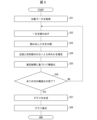
- 1 is a flow chart showing the flow of a structuring method according to an exemplary embodiment 1 of the present invention.
- FIG. 11 is a block diagram showing a configuration of an information processing device according to an exemplary embodiment 2 of the present invention. 11 is a diagram showing an example in which a sentence is structurized by an information processing device according to an exemplary embodiment 2 of the present invention, and the result is displayed as a graph.
- FIG. FIG. 11 is a flowchart showing a flow of processing executed by an information processing device according to a second exemplary embodiment of the present invention.
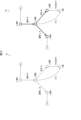
- FIG. 11A and 11B are diagrams showing an example of element extraction by an element string extraction unit and an example of displaying the extraction results.
- 11 is a diagram for explaining processing related to an element classification unit and an element extraction unit.
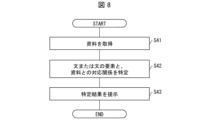
- FIG. 11 is a flow diagram showing the flow of a process for identifying a correspondence relationship with a document.
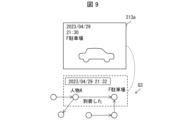
- FIG. 13 is a diagram showing an example display of the results of identifying the correspondence between structured sentences and research materials showing the detection results of a specific vehicle by a vehicle detection system.
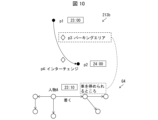
- FIG. 13 is a diagram showing an example display of the results of identifying the correspondence between elements of a structured sentence and places shown in research materials.
- FIG. 13 is a diagram showing an example display of the results of identifying the correspondence between structured sentences and call histories shown in the research materials.
- FIG. 13 is a diagram showing an example display of the results of identifying the correspondence between structured sentences and deposit/withdrawal histories shown in the research materials.
- FIG. 1 is a diagram showing an example of a computer that executes instructions of a program, which is software that realizes the functions of each device according to each exemplary embodiment of the present invention.
- Example embodiment 1 DETAILED DESCRIPTION OF THE PREFERRED EMBODIMENTS
- This exemplary embodiment is a basic form of the exemplary embodiments described below.
- Fig. 1 is a block diagram showing the configuration of the information processing device 1. As shown in the figure, the information processing device 1 includes a classification unit 11, an estimation unit 12, and a structuring unit 13.
- the classification unit 11 classifies sentences according to their contents. For example, as will be described with reference to FIG. 3, the classification unit 11 may classify sentences according to their contents into commands, questions, greetings, sentences expressing emotions such as gratitude or apologies, and so on.
- the estimation unit 12 applies an estimation method according to the result of classification by the classification unit 11 to estimate at least one of the subject and object of the sentence.
- the estimation unit 12 may perform at least one of the following processes for a sentence classified as an imperative sentence: a process of estimating the sender of the sentence as the subject of the sentence, and a process of estimating the receiver of the sentence as the object of the sentence.
- the estimation unit 12 may estimate at least one of the subject and object of a sentence classified as a sentence other than an imperative sentence, based on the sentences before and after the sentence.
- the structuring unit 13 structures the sentence based on the result of the estimation by the estimation unit 12. For example, as will be described with reference to FIG. 3, the structuring unit 13 may use preset sentence analysis rules or analysis models to extract a subject and an object and words indicating the relationship between them from the sentence to be structured. Also, for example, the structuring unit 13 may structure a sentence using a technology called OpenIE (Open Information Extraction).
- OpenIE Open Information Extraction
- the information processing device 1 includes a classification unit 11 that classifies sentences according to their contents, an estimation unit 12 that estimates at least one of the subject and object of the sentence by applying an estimation method according to the result of classification by the classification unit 11, and a structuring unit 13 that structures the sentence based on the result of estimation by the estimation unit 12. Therefore, the information processing device 1 according to this exemplary embodiment has the effect of being able to obtain a valid structuring result even for a sentence that is missing at least one of the subject and object.
- the functions of the information processing device 1 described above can also be realized by a program.
- the structuring program according to the present exemplary embodiment is configured to cause a computer to function as a classification means for classifying sentences according to their contents, an estimation means for estimating at least one of the subject and object of the sentence by applying a predetermined estimation method according to the result of the classification, and a structuring means for structuring the sentence based on the result of the estimation.
- the recording medium according to the present exemplary embodiment is a computer-readable recording medium, and records the structuring program. Therefore, the structuring program according to the present exemplary embodiment or the recording medium according to the present exemplary embodiment has the effect of making it possible to obtain a valid structuring result even for a sentence lacking at least one of the subject and the object.
- Fig. 2 is a flow diagram showing the flow of the structuring method. Note that the execution subject of each step in this structuring method may be a processor provided in the information processing device 1, a processor provided in another device, or a processor provided in a different device.
- At least one processor classifies the sentences according to their content.
- At least one processor applies a predetermined estimation method according to the result of the classification in S11 to estimate at least one of the subject and object of the sentence.
- At least one processor structures the sentence based on the results of the estimation in S12.
- the structuring method according to this exemplary embodiment includes at least one processor classifying sentences according to their contents, applying a predetermined estimation method according to the results of the classification to estimate at least one of the subject and object of the sentence, and structuring the sentence based on the result of the estimation. Therefore, the structuring method according to this exemplary embodiment has the effect of making it possible to obtain a valid structuring result even for a sentence that is missing at least one of the subject and object.
- Fig. 3 is a block diagram showing the configuration of the information processing device 2.
- the information processing device 2 is a device having a function of structuring sentences. Note that the information processing device 2 may be a device whose main function is to structure sentences, or may be a general-purpose device having other functions as well.
- the information processing device 2 includes a control unit 20 that controls each unit of the information processing device 2, and a storage unit 21 that stores various data used by the information processing device 2.
- the information processing device 2 also includes a communication unit 22 that enables the information processing device 2 to communicate with other devices, an input unit 23 that receives various data input to the information processing device 2, and an output unit 24 that enables the information processing device 2 to output various data.
- the control unit 20 of the information processing device 2 has a classification unit 201, an estimation unit 202, a structuring unit 203, a graph generation unit 204, an information presentation unit 205, an element sequence extraction unit 206, an element classification unit 207, an element extraction unit 208, and a relevance identification unit 209.
- the memory unit 21 also stores a classification model 211, target data 212, and materials 213.
- the element sequence extraction unit 206, element classification unit 207, element extraction unit 208, relevance identification unit 209, and document 213 will be described later with reference to Figures 6 to 12.
- the functions of each block from the memory unit 21 to the output unit 24 may be realized by a device built into the information processing device 2, or may be realized by a device external to the information processing device 2 that is attached to the information processing device 2.
- the information processing device 2 may have a function of associating each sentence included in the target data 212 with a label indicating its classification to create training data. Furthermore, the information processing device 2 may have a function of re-training the classification model 211 using new training data.
- the estimation unit 202 may estimate that the subject is "Person A” and the object is "Person B.”
- the structuring unit 203 may apply the estimation result as it is to generate a structured result of (subject: Person A, relationship: know, object: Person B).
- the structuring unit 203 may also add the estimated subject "Person A” before the sentence "I know,” and add the estimated object "Person B” after the sentence to generate the sentence "Person A, know, Person B.”
- the structuring unit 203 may then perform structuring on the sentence "Person A, know, Person B.”
- the structuring unit 203 may also add the estimated subject and object before the sentence "I know.”
- the structuring unit 203 may add particles according to the subject and object. This makes it possible to generate a natural sentence such as "Person A knows Person B.”
- structuring a sentence means breaking down the sentence into its components and clarifying the relationships between each of the elements.
- structuring unit 203 can also be described as an estimation means for estimating the relationships between each of the elements that make up a sentence, or an information generation means for generating information indicating the relationships between the elements contained in a sentence.
- the structuring method is not particularly limited.
- the structuring unit 203 may use preset sentence analysis rules or analysis models to extract a subject and an object and words indicating the relationship between them from a sentence to be structured.
- the word indicating the relationship between the subject and the object may be, for example, a predicate.
- the structuring unit 203 can structure a sentence using OpenIE. By using OpenIE, it is possible to extract a subject and an object and words indicating the relationship between them from a sentence.
- the graph generation unit 204 generates a graph showing the results of structuring by the structuring unit 203.
- the graph generation unit 204 may generate a graph in which each element constituting a sentence is represented by a node, and the relationships between the elements are represented by edges connecting the nodes.
- the estimation unit 202 estimates at least one of the subject and the object of a sentence by applying an estimation method according to the result of classification by the classification unit 201. It is only necessary to determine in advance which estimation method the estimation unit 202 applies depending on which classification result is obtained.
- the estimation unit 202 may perform at least one of the following processes: a process of estimating the sender of the sentence as the subject of the sentence, and a process of estimating the receiver of the sentence as the object of the sentence. This makes it possible to obtain a valid estimation result and a valid structuring result. Furthermore, with this configuration, a valid estimation result can be obtained even if there are no sentences before or after the target sentence, and the missing elements of the target sentence cannot be inferred from the sentences before and after. Note that directive sentences, threatening sentences, etc. are also included in the category of the above-mentioned "imperative sentences”.
- the estimation unit 202 may estimate at least one of the subject and object based on the sentences before and after the sentence.
- the method of estimating the subject and object based on the sentences before and after the sentence is not particularly limited.
- the estimation unit 202 may estimate the omitted subject and object using an estimation model that estimates at least one of the omitted subject and object.
- the estimation unit 202 may extract the subject and object from the sentence before or after the sentence in which at least one of the subject and object is omitted, and use the extracted subject and object as the estimation result. Note that when extracting the subject and object in a sentence, a technique such as NER may also be applied.
- Example of processing 4 is a diagram showing an example in which a sentence is structured by the information processing device 2 and the results are displayed as a graph.
- the sentence to be structured is a sentence sent from sender A to receiver B, and the text of the sentence is "Please submit it immediately.”
- This sentence does not include a subject, and does not state who it is to be submitted to, so it is difficult to structure this sentence as it is.
- the structuring unit 203 structures the above sentence based on the above estimation result.
- the structuring unit 203 may set the subject and object estimated by the estimation unit 202 as the subject and object of the above sentence.
- the structuring unit 203 then extracts the character string "Please submit", which is an element indicating the relationship between the subject and object supplemented by the estimation unit 202, from the above sentence. This results in a structured result of (subject: sender A, relationship: "Please submit", object: receiver B).
- Fig. 5 is a flow diagram showing an example of the process executed by the information processing device 2.
- the classification unit 201 acquires the target data 212.
- the target data 212 may include, for example, multiple sentences that are related to each other. For example, messages sent and received by a specific person may be the target data 212. In this case, multiple sentences related to the person become the target data 212.
- the classification unit 201 reads one sentence from the target data 212 acquired in S21. Then, in S23, the classification unit 201 classifies the sentence read in S22 according to its content. For example, as described above, the classification unit 201 may perform classification using the classification model 211.
- the estimation unit 202 applies a predetermined estimation method according to the result of the classification in S23 to the sentence read in S22, and estimates at least one of the subject and object.
- the structuring unit 203 structures the sentence read out in S22 based on the estimation result in S24.
- the structuring unit 203 may generate multiple structuring results from one sentence. For example, if the target sentence is "A Corporation is located in Tokyo, the capital of Japan," the structuring unit 203 may generate two structuring results: (subject: A Corporation, relationship: is, object: Tokyo) and (subject: capital of Japan, relationship: is, object: Tokyo).
- the classification unit 201 determines whether structuring has been completed for all sentences contained in the target data 212 acquired in S21. If the determination in S26 is NO, the process returns to S22, and a new sentence is read from the target data 212. On the other hand, if the determination in S26 is YES, the process proceeds to S27.
- the graph generation unit 204 generates a graph showing the structuring result of S25. Then, in S28, the information presentation unit 205 displays the graph generated in S27 on the display device. This ends the processing in FIG. 5.
- the graph generation unit 204 may link the multiple graphs via a node that is common to the multiple graphs. For example, suppose that the graph generation unit 204 generates a graph in which a node called "subject 1" is connected to a node called "object 1" via an edge, and a graph in which a node called “subject 1” is connected to a node called “object 2" via an edge. In this case, the graph generation unit 204 may link these graphs via the node called "subject 1" that is common to these graphs. As a result, a graph is generated in which a node called “object 1" is connected to a node called "object 2" via an edge to the node called "subject 1".
- the process of FIG. 5 described above includes a structuring method according to this exemplary embodiment. That is, the structuring method according to this exemplary embodiment includes classifying sentences according to their contents (S23), inferring at least one of the subject and object of the sentence by applying a predetermined inference method according to the result of the classification in S23 (S24), and structuring the sentence based on the inference result in S24 (S25).
- S23 contents
- S24 predetermined inference method according to the result of the classification in S23
- S25 structuring the sentence based on the inference result in S24
- the element string extraction unit 206 extracts a series of elements that are associated based on the structuring result and the classification result by the classification unit 201, from among the elements that constitute the multiple sentences that have been structured.
- the series of elements is represented as a series of nodes connected by edges in the graph generated by the graph generation unit 204. Therefore, it can be said that the element string extraction unit 206 extracts a series of nodes connected by edges.
- the element string extraction unit 206 may extract one edge corresponding to a sentence that the classification unit 201 has classified into a certain category (e.g., a command sentence), and extract each element connected by the extracted edge.
- the element string extraction unit 206 may repeat the process of extracting other elements connected to each extracted element by an edge of the certain category until no new elements are extracted. In this way, a series of elements that are associated based on the structuring result and the classification result are extracted.
- the information processing device 2 equipped with the element string extraction unit 206 has the effect of being able to extract a series of related elements using the classification results of each sentence.
- the classification results of a sentence can also be considered as the classification results of the edge corresponding to that sentence. Therefore, it can be said that the element string extraction unit 206 extracts a series of related elements using the classification results of the edge.
- the element string extraction unit 206 may accept specification of conditions for the extraction target.
- the element string extraction unit 206 may accept specification of a category of sentences classified by the classification unit 201.
- the element string extraction unit 206 extracts a series of elements connected by edges from among the sentence elements of the specified category.
- FIG. 6 shows an example of element extraction by the element string extraction unit 206 and an example of the display of the extraction results. More specifically, FIG. 6 shows graph G1 generated by the graph generation unit 204 and graph G1' showing the element extraction results by the element string extraction unit 206. A user can generate and display a graph like graph G1 by, for example, inputting messages exchanged by persons A to D into the information processing device 2 as target data 212.
- the classification unit 201 may classify command sentences into subcategories such as instructions, threats, and orders. This makes it possible to specify the extraction target on a subcategory basis. For example, it is possible to extract elements corresponding to sentences classified as orders.
- the designation may be received via the input unit 23 or the communication unit 22.
- the element string extraction unit 206 having received the above specification, extracts a series of elements connected by edges from among the nodes and edges corresponding to the sentences classified as imperative sentences by the classification unit 201, from the structuring results shown in graph G1. Specifically, in the example of FIG. 6, the element string extraction unit 206 extracts each of the elements "Person A" to "Person D" and the edges connecting them (edges corresponding to sentences classified as imperative sentences).
- Graph G1' shows the results of this extraction reflected on graph G1.
- the nodes of "Person A” to "Person D” and the edges of the command statements connecting them are highlighted with thicker lines than the other nodes and edges. In this way, the nodes corresponding to the extracted elements and the edges connecting these nodes are highlighted on the graph, allowing the user to recognize the results of the extraction.
- graph G1' shown in FIG. 6 it can be easily inferred that Person A is at the top of the chain of command, Persons C and D are at the bottom of the chain of command, and Person B is the intermediary between them. Note that the manner in which the results of the extraction are presented is not limited to this example, as long as it allows the user to recognize the results of the extraction.
- the element classification unit 207 classifies each element constituting a sentence into a plurality of categories. These plurality of categories may include a person category.
- the classification method is not particularly limited.
- the element classification unit 207 may classify each element constituting a sentence by applying a method such as NER (Name Entity Recognition).
- the information processing device 2 includes an element classification unit 207 that classifies each element constituting a sentence into a plurality of categories including at least a person category, and an element extraction unit 208 that extracts elements associated with the plurality of elements classified into the person category from among the elements constituting the plurality of sentences that have been structured.
- the above configuration makes it possible to extract elements mentioned by multiple people.
- Elements mentioned by multiple people are elements that should be focused on when investigating those people.
- the information processing device 2 has the effect of facilitating an investigation targeting multiple people.
- the classification of elements can be performed at any time after the sentences have been structured and the elements contained in the sentences have been extracted, and may be performed after S25 in FIG. 5, for example. If an input operation is performed to instruct the execution of element extraction when the elements have already been classified, S31 is omitted and the processes of S32 to S34 are performed.
- the association between vehicles and people can be performed in advance by a user of the information processing device 2, and the results of the association can be input to the information processing device 2 via the communication unit 22 or the input unit 23.
- the user can input the person to be investigated in advance to the information processing device 2, and can also input in advance to the information processing device 2 vehicles owned or used by that person, or vehicles suspected of being associated with that person.
- the relevance identification unit 209 which has identified the time period during which the person traveled along the travel route, extracts elements of sentences structured by the structuring unit 203 that were sent or received during the identified time period by the person being investigated or by people who were accompanying the person. The relevance identification unit 209 then identifies, from among the extracted elements, elements that indicate a location as elements related to the research material.
- the research materials may be, for example, a map including various information about locations such as place names, or materials showing various information about locations such as place names, store names, and addresses. Data detected using various search engines, etc. may also be used as the research materials.
- the relevance identification unit 209 may associate search results related to locations obtained by searching using the identified element as a keyword with the element.
- Figure 10 shows an example of the display of the results of identifying the correspondence between the elements of a structured sentence and the places shown in the research materials.
- FIG. 10 shows a graph G4 indicating the results of structuring by the structuring unit 203, as well as an image 213b indicating the vehicle's movement route and each location on that movement route.
- Image 213b is research material indicating each location on a specific vehicle's movement route detected by the vehicle detection system.
- Image 213b indicates that the vehicle was detected at point p1 at 23:00 and at point p2 at 24:00, and also indicates that a parking area p3 and an interchange p4 are located on the route connecting points p1 and p2.
- graph G4 the portion where the node for "Person A” and the node for "Place where you can park your car” are connected by an edge to "arrive” is generated from a sentence indicating that Person A will soon arrive at a place where he can park his car.
- the character string "Place where you can park your car” is highlighted by being enclosed in a dashed line, and is displayed in association with "p3: Parking area” in image 213b by being linked with a dashed line.
- the above portion of graph G4 also displays that the time when the above sentence was sent was 21:10. This allows the user to easily deduce that "Place where you can park your car” in the above sentence is parking area p3.
- the materials 213 may include research materials showing a call history of a specific person.
- the relation identification unit 209 may identify, as a sentence related to the call, a sentence sent or received by the person around the time when the research materials show that the person made a call.
- text messages related to the phone call may be sent and received.
- Such text messages may indicate the contents of the phone call either explicitly or implicitly. Therefore, according to the above configuration, in addition to the effects of the information processing device 1 according to the exemplary embodiment 1, the effect of facilitating the task of inferring the contents of the phone call from text messages in the research materials can be obtained.
- the relation identification unit 209 first acquires research materials showing the call history of a specific person, and identifies the time period during which the call was made by that person. Next, the relation identification unit 209 identifies sentences sent or received by the person before or after the identified time period from among the sentences included in the target data 212. This associates the call history of the specific person with the sentences sent or received by that person before or after the call time period.
- Figure 11 shows an example of the display of the results of identifying the correspondence between the structured sentences and the call history shown in the research materials.
- graph G5 the part where the node with "Person A” and the node with “Person F” are connected by an edge with “Deposit” is generated from the message "Deposit within three days" sent by Person A to Person F.
- This part is highlighted by being enclosed in a dashed line, and is displayed in association with the call history for April 30, 2023 in image 213c by being linked with a dashed line.
- the above part of graph G5 also shows that the date and time when the above message was sent was 21:40 on April 30, 2023. This makes it easy to deduce that the content of Person A's call on April 30, 2023 was about the transfer of money.
- the materials 213 may include investigation materials showing the deposit and withdrawal history of a specified account.
- the association identifying unit 209 may identify the correspondence between the sentences and the investigation materials by comparing the times of deposits and withdrawals shown in the investigation materials with the times when sentences related to monetary transactions among the multiple sentences included in the target data 212 were sent or received.
- Figure 12 shows an example of the display of the results of identifying the correspondence between the structured sentences and the deposit and withdrawal history shown in the research materials.
- graph G6 the portion where the node for "Person F" and the node for "Payment of Compensation” are connected by an edge with “Necessary” was generated from a statement to the effect that Person F needs to pay compensation. This portion is highlighted by being enclosed in a dashed line, and is displayed in association with the payment history for May 1, 2023 in image 213d by linking it with the said payment history by a dashed line.
- the above portion of graph G6 also shows that the date and time when the above statement was sent is 14:20 on May 1, 2023. This provides factual support that the payment on May 1, 2023 was prompted by the above statement sent at 14:20 on the same day.
- the information processing device 2 can operate in cooperation with various external systems, not limited to a vehicle detection system. By cooperating with an external system, the information processing device 2 can acquire materials 213 collected by the system to be coordinated, and associate the acquired materials 213 with sentences or elements thereof included in the target data 212. The information processing device 2 may also acquire all or a part of the target data 212 from the external system.
- the information processing device 2 that links with an external system can also be considered as part of that system, and various systems that include the information processing device 2 are included in the scope of the present invention.
- various systems that include the information processing device 2 are included in the scope of the present invention.
- a traffic control system that includes the information processing device 2 a monitoring system that includes the information processing device 2
- a security system that includes the information processing device 2 are also included in the scope of the present invention.
- the execution entity of each process described in the above embodiment is arbitrary and is not limited to the above example.
- the functions of information processing devices 1 and 2 can be realized by multiple devices (which can also be called processors) that can communicate with each other.
- processors which can also be called processors
- each process described in the flow charts of Figures 2, 5, 7, and 8 can be shared and executed by multiple processors.
- the execution entity of the structuring method in the above embodiment may be one processor or multiple processors.
- An information processing device includes an element classification means for classifying each element in a plurality of structured sentences into a plurality of categories including at least a person category, and an element extraction means for extracting an element associated with the plurality of elements classified into the person category from among the elements.
- This configuration has the effect of facilitating a survey targeting a plurality of people.
- the above structuring may be performed by any method. In addition, it is not essential to infer the subject or object of a sentence when performing the structuring.
- An information processing device includes a relationship identification means for identifying a correspondence between a plurality of sentences or elements thereof and a specified document based on the result of structuring the plurality of sentences, and an information presentation means for presenting information indicating the identification result of the relationship identification means.
- This configuration has the effect of making it possible to easily recognize the correspondence between the sentences and the document.
- the above structuring may be performed by any method. Furthermore, it is not essential to infer the subject or object of the sentence when performing the structuring.
- Some or all of the functions of the information processing devices 1 and 2 may be realized by hardware such as an integrated circuit (IC chip), or may be realized by software.
- the information processing devices 1 and 2 are realized, for example, by a computer that executes instructions of a program, which is software that realizes each function.
- a computer that executes instructions of a program, which is software that realizes each function.
- An example of such a computer (hereinafter referred to as computer C) is shown in Figure 13.
- Computer C has at least one processor C1 and at least one memory C2.
- Memory C2 stores a program (structured program) P for operating computer C as information processing device 1 or 2.
- processor C1 reads and executes program P from memory C2, thereby realizing each function of information processing device 1 or 2.
- the processor C1 may be, for example, a CPU (Central Processing Unit), GPU (Graphic Processing Unit), DSP (Digital Signal Processor), MPU (Micro Processing Unit), FPU (Floating point number Processing Unit), PPU (Physics Processing Unit), TPU (Tensor Processing Unit), quantum processor, microcontroller, or a combination of these.
- the memory C2 may be, for example, a flash memory, HDD (Hard Disk Drive), SSD (Solid State Drive), or a combination of these.
- Computer C may further include a RAM (Random Access Memory) for expanding program P during execution and for temporarily storing various data.
- Computer C may further include a communications interface for sending and receiving data to and from other devices.
- Computer C may further include an input/output interface for connecting input/output devices such as a keyboard, mouse, display, and printer.
- the program P can also be recorded on a non-transitory, tangible recording medium M that can be read by the computer C.
- a recording medium M can be, for example, a tape, a disk, a card, a semiconductor memory, or a programmable logic circuit.
- the computer C can obtain the program P via such a recording medium M.
- the program P can also be transmitted via a transmission medium.
- a transmission medium can be, for example, a communications network or broadcast waves.
- the computer C can also obtain the program P via such a transmission medium.
- An information processing device comprising: a classification means for classifying sentences according to their contents; an estimation means for estimating at least one of a subject and an object of the sentence by applying an estimation method according to a result of the classification; and a structuring means for structuring the sentence based on a result of the estimation.
- Appendix 2 The information processing device described in Appendix 1, wherein, for a sentence classified as an imperative sentence by the classification means, the estimation means performs at least one of a process of estimating a sender of the sentence to be a subject of the sentence and a process of estimating a recipient of the sentence to be an object of the sentence.
- (Appendix 3) The information processing device according to claim 1, further comprising an element sequence extraction means for extracting a series of elements that are associated based on the result of the structuring and the result of classification by the classification means, from among the elements that constitute the plurality of sentences that have been structured.
- Appendix 4 An information processing device as described in any one of appendices 1 to 3, comprising an element classification means for classifying each element constituting a sentence into a plurality of categories including at least a person category, and an element extraction means for extracting elements associated with the plurality of elements classified into the person category from among the elements constituting the plurality of sentences each of which has been structured.
- Appendix 5 An information processing device as described in any of appendices 1 to 4, comprising: a relationship identification means for identifying a correspondence between the plurality of sentences or their elements and a specified material based on the result of structuring the plurality of sentences by the structuring means; and an information presentation means for presenting information indicating the result of the identification by the relationship identification means.
- Appendix 6 The information processing device described in Appendix 5, wherein the specified materials include research materials showing the detection results of a specified vehicle by a vehicle detection system, and the relevance identification means identifies the correspondence between the sentences and the research materials by comparing the detection time of the vehicle shown in the research materials with the time when a person associated with the vehicle sent or received any of the sentences.
- Appendix 7 The information processing device described in Appendix 5 or 6, wherein the specified materials include research materials indicating locations around a specified vehicle detected by a vehicle detection system or locations on the vehicle's travel route, and the relevance identification means identifies a correspondence between an element indicating a location included in a sentence sent or received by a person associated with the vehicle during the time period when the vehicle moved on the travel route or the time period when the vehicle was detected by the vehicle detection system, and the locations indicated in the research materials.
- Appendix 8 An information processing device as described in any of Appendices 5 to 7, wherein the specified materials include investigation materials showing the call history of a specified person, and the relevance identification means identifies, as a sentence related to the call, a sentence sent or received by the person before or after a time period indicated in the investigation materials that the person made a call.
- Appendix 9 An information processing device as described in any of Appendices 5 to 8, wherein the specified materials include investigation materials showing the deposit and withdrawal history of a specified account, and the correlation identification means identifies the correspondence between the sentences and the investigation materials by comparing the times of deposits and withdrawals shown in the investigation materials with the times when sentences related to the transfer of money among the multiple sentences were sent or received.
- a structuring method comprising: at least one processor classifying sentences according to their contents; inferring at least one of a subject and an object of the sentences by applying a predetermined inference method according to a result of the classification; and structuring the sentences based on a result of the inference.
- a computer-readable recording medium having recorded thereon a structuring program that causes a computer to function as a classification means for classifying sentences according to their contents, an estimation means for estimating at least one of the subject and object of the sentences by applying a predetermined estimation method according to the results of the classification, and a structuring means for structuring the sentences based on the results of the estimation.
- the information processing device includes a relationship identification means for identifying a correspondence between a plurality of sentences or their elements and a specified material based on the result of structuring the plurality of sentences, and an information presentation means for presenting information indicating the identification result of the relationship identification means.
- An information processing device comprising at least one processor that executes a process of classifying a sentence according to its content, a process of inferring at least one of a subject and an object of the sentence by applying an inference method according to a result of the classification, and a process of structuring the sentence based on a result of the inference.
- the information processing device may further include a memory, and the memory may store a structuring program for causing the processor to execute the classification process, the estimation process, and the structuring process.
- the structuring program may also be recorded on a computer-readable, non-transitory, tangible recording medium.
- Appendix 2 The information processing device described in Appendix 1, wherein the at least one processor performs at least one of a process of inferring the sender of a sentence classified as an imperative sentence in the classification process as the subject of the sentence and a process of inferring the recipient of the sentence as the object of the sentence.
- Appendix 3 The information processing device described in Appendix 1 or 2, wherein the at least one processor further performs a process of extracting a series of elements that are associated based on the result of the structuring and the result of classification by the classification means, from among the elements that constitute the multiple sentences that have been structured.
- Appendix 4 An information processing device as described in any of appendices 1 to 3, wherein the at least one processor further executes an element classification means for classifying each element constituting a sentence into a plurality of categories including at least a person category, and a process for extracting elements associated with the plurality of elements classified into the person category from among the elements constituting the plurality of sentences each of which has been structured.
- Appendix 5 An information processing device described in any of Appendices 1 to 4, wherein the at least one processor further executes a process of identifying a correspondence between the multiple sentences or their elements and a specified material based on the result of structuring the multiple sentences by the structuring means, and a process of presenting information indicating the identification result of the process.
- Appendix 7 The information processing device described in Appendix 5 or 6, wherein the specified materials include research materials indicating locations around a specified vehicle detected by a vehicle detection system or locations on the vehicle's travel path, and the at least one processor identifies a correspondence between locations indicated in the research materials and elements included in a sentence sent or received by a person associated with the vehicle during the time period when the vehicle moved on the travel path or the time period when the vehicle was detected by the vehicle detection system.
- Appendix 8 An information processing device as described in any of Appendix 5 to 7, wherein the specified materials include research materials showing the call history of a specified person, and the at least one processor identifies sentences sent or received by the person before or after a time period during which the research materials show that the person made a call as sentences related to the call.
- Appendix 9 An information processing device as described in any of Appendices 5 to 8, wherein the specified materials include investigation materials showing the deposit and withdrawal history of a specified account, and the at least one processor identifies a correspondence between the sentences and the investigation materials by comparing the times of deposits and withdrawals shown in the investigation materials with the times when sentences related to the transfer of money among the multiple sentences were sent or received.
Landscapes
- Engineering & Computer Science (AREA)
- Theoretical Computer Science (AREA)
- Health & Medical Sciences (AREA)
- Artificial Intelligence (AREA)
- Audiology, Speech & Language Pathology (AREA)
- Computational Linguistics (AREA)
- General Health & Medical Sciences (AREA)
- Physics & Mathematics (AREA)
- General Engineering & Computer Science (AREA)
- General Physics & Mathematics (AREA)
- Information Retrieval, Db Structures And Fs Structures Therefor (AREA)
Abstract
主語および目的語の少なくとも何れかを欠いた文について妥当な構造化結果を得るために、情報処理装置(1)は、文をその内容に応じて分類する分類部(11)と、当該分類の結果に応じた推定方法を適用して、上記文の主語および目的語の少なくとも何れかを推定する推定部(12)と、当該推定の結果に基づいて前記文を構造化する構造化部(13)と、を備えている。
Description
自然言語処理を実施する情報処理装置等に関する。
自然言語処理の分野には、文を構成する要素間の関係を自動で分析する技術がある。例えば、下記の特許文献1には、自然言語で記載されたソース文書から述語を抽出すると共に、その術語と関係があるフレーズを抽出して、それらの関係を示す関係情報とすることが記載されている。
特許文献1の技術は、1つの文に述語が含まれていると共に、その術語と関係がある主語や目的語などのフレーズについても含まれていることを前提としたものである。しかしながら、自然言語で記載された文においては、主語あるいは目的語といった一部の要素が省略されることがある。そして、特許文献1の技術では、一部の要素を欠いた文について、妥当な関係情報すなわち構造化結果を得ることが難しい。
本発明の一態様は、上記の問題に鑑みてなされたものであり、その目的の一例は、主語および目的語の少なくとも何れかを欠いた文についても妥当な構造化結果を得ることが可能な情報処理装置等を提供することである。
本発明の一側面に係る情報処理装置は、文をその内容に応じて分類する分類手段と、前記分類の結果に応じた推定方法を適用して、前記文の主語および目的語の少なくとも何れかを推定する推定手段と、前記推定の結果に基づいて前記文を構造化する構造化手段と、を備える。
本発明の一側面に係る構造化方法は、少なくとも1つのプロセッサが、文をその内容に応じて分類することと、前記分類の結果に応じた所定の推定方法を適用して前記文の主語および目的語の少なくとも何れかを推定することと、前記推定の結果に基づいて前記文を構造化することと、を含む。
本発明の一側面に係る記録媒体は、コンピュータ読み取り可能な記録媒体であって、コンピュータを、文をその内容に応じて分類する分類手段、前記分類の結果に応じた所定の推定方法を適用して前記文の主語および目的語の少なくとも何れかを推定する推定手段、および前記推定の結果に基づいて前記文を構造化する構造化手段、として機能させる構造化プログラムを記録している。
本発明の一態様によれば、主語および目的語の少なくとも何れかを欠いた文についても妥当な構造化結果を得ることが可能になる。
〔例示的実施形態1〕
本発明の第1の例示的実施形態について、図面を参照して詳細に説明する。本例示的実施形態は、後述する例示的実施形態の基本となる形態である。
本発明の第1の例示的実施形態について、図面を参照して詳細に説明する。本例示的実施形態は、後述する例示的実施形態の基本となる形態である。
(情報処理装置の構成)
本例示的実施形態に係る情報処理装置1の構成について、図1を参照して説明する。図1は、情報処理装置1の構成を示すブロック図である。図示のように、情報処理装置1は、分類部11と推定部12と構造化部13とを備えている。
本例示的実施形態に係る情報処理装置1の構成について、図1を参照して説明する。図1は、情報処理装置1の構成を示すブロック図である。図示のように、情報処理装置1は、分類部11と推定部12と構造化部13とを備えている。
分類部11は、文をその内容に応じて分類する。例えば、図3を参照しながら説明するように、分類部11は、文をその内容に応じて、命令文、質問文、挨拶文、感謝や謝罪等の感情を表す文、等に分類してもよい。
推定部12は、分類部11による分類の結果に応じた推定方法を適用して、文の主語および目的語の少なくとも何れかを推定する。例えば、後記「分類結果に応じた推定方法について」の項目で説明するように、推定部12は、命令文に分類された文について、文の送信者を文の主語と推定する処理、および、文の受信者を文の目的語と推定する処理の少なくとも何れかを行ってもよい。また、推定部12は、命令文以外の文に分類された文について、当該文の前後の文に基づいて主語および目的語の少なくとも何れかを推定してもよい。
構造化部13は、推定部12による推定の結果に基づいて文を構造化する。例えば、図3を参照しながら説明するように、構造化部13は、予め設定された文章解析ルールや解析モデルを使用して、構造化の対象となる文から主語および目的語とそれらの関係を示す語とを抽出してもよい。また、例えば、構造化部13は、OpenIE(Open Information Extraction)という技術を使用して文を構造化することもできる。
以上のように、本例示的実施形態に係る情報処理装置1は、文をその内容に応じて分類する分類部11と、分類部11による分類の結果に応じた推定方法を適用して、文の主語および目的語の少なくとも何れかを推定する推定部12と、推定部12による推定の結果に基づいて文を構造化する構造化部13と、を備える。このため、本例示的実施形態に係る情報処理装置1によれば、主語および目的語の少なくとも何れかを欠いた文についても妥当な構造化結果を得ることが可能になるという効果が得られる。
(構造化プログラム)
上述の情報処理装置1の機能は、プログラムによって実現することもできる。本例示的実施形態に係る構造化プログラムは、コンピュータを、文をその内容に応じて分類する分類手段、当該分類の結果に応じた所定の推定方法を適用して上記文の主語および目的語の少なくとも何れかを推定する推定手段、および当該推定の結果に基づいて上記文を構造化する構造化手段、として機能させる、という構成が採用されている。また、本例示的実施形態に係る記録媒体は、コンピュータ読み取り可能な記録媒体であって、上記構造化プログラムを記録している。このため、本例示的実施形態に係る構造化プログラムまたは本例示的実施形態に係る記録媒体によれば、主語および目的語の少なくとも何れかを欠いた文についても妥当な構造化結果を得ることが可能になるという効果が得られる。
上述の情報処理装置1の機能は、プログラムによって実現することもできる。本例示的実施形態に係る構造化プログラムは、コンピュータを、文をその内容に応じて分類する分類手段、当該分類の結果に応じた所定の推定方法を適用して上記文の主語および目的語の少なくとも何れかを推定する推定手段、および当該推定の結果に基づいて上記文を構造化する構造化手段、として機能させる、という構成が採用されている。また、本例示的実施形態に係る記録媒体は、コンピュータ読み取り可能な記録媒体であって、上記構造化プログラムを記録している。このため、本例示的実施形態に係る構造化プログラムまたは本例示的実施形態に係る記録媒体によれば、主語および目的語の少なくとも何れかを欠いた文についても妥当な構造化結果を得ることが可能になるという効果が得られる。
(構造化方法の流れ)
本例示的実施形態に係る構造化方法の流れについて、図2を参照して説明する。図2は、構造化方法の流れを示すフロー図である。なお、この構造化方法における各ステップの実行主体は、情報処理装置1が備えるプロセッサであってもよいし、他の装置が備えるプロセッサであってもよく、各ステップの実行主体がそれぞれ異なる装置に設けられたプロセッサであってもよい。
本例示的実施形態に係る構造化方法の流れについて、図2を参照して説明する。図2は、構造化方法の流れを示すフロー図である。なお、この構造化方法における各ステップの実行主体は、情報処理装置1が備えるプロセッサであってもよいし、他の装置が備えるプロセッサであってもよく、各ステップの実行主体がそれぞれ異なる装置に設けられたプロセッサであってもよい。
S11では、少なくとも1つのプロセッサが、文をその内容に応じて分類する。
S12では、少なくとも1つのプロセッサが、S11の分類の結果に応じた所定の推定方法を適用して文の主語および目的語の少なくとも何れかを推定する。
S13では、少なくとも1つのプロセッサが、S12の推定の結果に基づいて文を構造化する。
以上のように、本例示的実施形態に係る構造化方法は、少なくとも1つのプロセッサが、文をその内容に応じて分類することと、当該分類の結果に応じた所定の推定方法を適用して文の主語および目的語の少なくとも何れかを推定することと、当該推定の結果に基づいて文を構造化することと、を含む。このため、本例示的実施形態に係る構造化方法によれば、主語および目的語の少なくとも何れかを欠いた文についても妥当な構造化結果を得ることが可能になるという効果が得られる。
〔例示的実施形態2〕
(情報処理装置の構成)
本例示的実施形態に係る情報処理装置2の構成について、図3を参照して説明する。図3は、情報処理装置2の構成を示すブロック図である。情報処理装置2は、文を構造化する機能を備えた装置である。なお、情報処理装置2は、文の構造化を主たる機能とする装置であってもよいし、他の機能も備えた汎用的な装置であってもよい。
(情報処理装置の構成)
本例示的実施形態に係る情報処理装置2の構成について、図3を参照して説明する。図3は、情報処理装置2の構成を示すブロック図である。情報処理装置2は、文を構造化する機能を備えた装置である。なお、情報処理装置2は、文の構造化を主たる機能とする装置であってもよいし、他の機能も備えた汎用的な装置であってもよい。
図示のように、情報処理装置2は、情報処理装置2の各部を統括して制御する制御部20と、情報処理装置2が使用する各種データを記憶する記憶部21を備えている。また、情報処理装置2は、情報処理装置2が他の装置と通信するための通信部22、情報処理装置2に対する各種データの入力を受け取る入力部23、および情報処理装置2が各種データを出力するための出力部24を備えている。
また、図示のように、情報処理装置2の制御部20は、分類部201、推定部202、構造化部203、グラフ生成部204、情報提示部205、要素列抽出部206、要素分類部207、要素抽出部208、および関連性特定部209を有する。また、記憶部21は、分類モデル211、対象データ212、および資料213を記憶している。
なお、要素列抽出部206、要素分類部207、要素抽出部208、関連性特定部209、および資料213については図6~図12に基づいて後述する。また、記憶部21から出力部24までの各ブロックの機能は、情報処理装置2に内蔵された装置により実現されてもよいし、情報処理装置2に外付けされた情報処理装置2の外部の装置により実現されてもよい。
分類部201は、対象データ212に含まれる文を、その内容に応じて分類する。分類部201の分類結果は、推定部202が適用する推定方法の決定に用いられる。このため、分類部201は、対象データ212に含まれる文を、推定部202が適用可能な推定方法に対応するカテゴリに分類する。例えば、推定部202が、命令文用の推定方法と、命令文以外の文用の推定方法との何れかを適用する場合、分類部201は、対象データ212に含まれる文を、命令文とそれ以外の文とに分類する。なお、命令文は分類カテゴリの一例に過ぎない。例えば、分類部201は、対象データ212に含まれる文を、質問文、挨拶文、感謝や謝罪等の感情を表す文、等に分類してもよい。また、分類部201の分類結果は、対象データ212に含まれる文またはそれを構造化した構造化結果についての検索または解析等に利用することもできる。
対象データ212は、構造化の対象となる文を含むデータである。対象データ212は、構造化の対象となる文(自然言語で表されたもの)を含むものであればよい。例えば、対象データ212は、電子メールあるいはSNS(Social Networking Service)等で送信または受信された文(メッセージと言い換えることもできる)を含んでいてもよい。送受信された文については、その送信者と受信者とを示すデータについても対象データ212に含めておく。
分類部201が適用する分類方法は特に限定されない。本例示的実施形態では、分類部201が、分類モデル211を用いて分類を行う例を説明する。分類モデル211は、文を分類するように機械学習することにより生成された学習済みモデルである。例えば、分類モデル211は、各種の文に対し、その内容に応じた分類カテゴリを示すラベルを対応付けた訓練データを用いた学習により生成されたものであってもよい。分類カテゴリには、推定部202が適用可能な各推定方法に対応する各カテゴリが少なくとも含まれていればよい。例えば、上述した命令文、質問文等の分類カテゴリを設定してもよい。なお、情報処理装置2は、新たな訓練データを生成する機能を備えていてもよい。例えば、情報処理装置2は、対象データ212に含まれる各文にそれらの分類を示すラベルを対応付けて訓練データとする機能を備えていてもよい。さらに、情報処理装置2は、新たな訓練データを用いて分類モデル211の再学習を行う機能を備えていてもよい。
推定部202は、分類部201による分類の結果に応じた推定方法を適用して文の主語および目的語の少なくとも何れかを推定する。推定部202による推定の詳細については後記「分類結果に応じた推定方法について」の項目で説明する。
構造化部203は、文を構造化する。構造化部203は、推定部202が主語および目的語の少なくとも何れかを推定した文については、その推定結果に基づいて構造化する。構造化部203は、推定部202が推定した主語および目的語をそのまま構造化結果の一部としてもよいし、推定部202が推定した主語および目的語を補った文を構造化してもよい。
例えば、「知っています」という文について、推定部202がその主語を「人物A」、目的語を「人物B」と推定したとする。この場合、構造化部203は、推定結果をそのまま適用して(主語:人物A,関係:知っています,目的語:人物B)との構造化結果を生成してもよい。また、構造化部203は、「知っています」との文の前に、推定された主語である「人物A」を補うと共に、推定された目的語である「人物B」を当該文の後に補って、「人物A、知っています、人物B」という文を生成してもよい。そして、構造化部203は、「人物A、知っています、人物B」との文を対象として構造化を行ってもよい。また、構造化部203は、「知っています」との文の前に、推定された主語と目的語を補ってもよい。さらに、構造化部203は、主語と目的語に応じた助詞を追加してもよい。これにより、「人物Aは人物Bを知っています」のような自然な文を生成することが可能になる。
なお、文の構造化とは、文をその構成要素に分けて、各要素間の関係を明らかにすることを意味する。このため、構造化部203は、文を構成する各要素間の関係を推定する推定手段、あるいは文に含まれる要素の関係を示す情報を生成する情報生成手段、と言い換えることもできる。
また、構造化の方法は特に限定されない。例えば、構造化部203は、予め設定された文章解析ルールや解析モデルを使用して、構造化の対象となる文から主語および目的語とそれらの関係を示す語とを抽出してもよい。主語と目的語との関係を示す語は、例えば述語であってもよい。また、例えば、構造化部203は、OpenIEにより文を構造化することもできる。OpenIEを用いることにより、文から主語および目的語とそれらの関係を示す語とを抽出することができる。
グラフ生成部204は、構造化部203による構造化の結果を示すグラフを生成する。例えば、グラフ生成部204は、文を構成する各要素をノードで表し、各要素間の関係を、ノード間を連結するエッジで表したグラフを生成してもよい。
情報提示部205は、構造化に関する各種情報を情報処理装置2のユーザに提示する。例えば、情報提示部205は、グラフ生成部204が生成するグラフを表示装置に表示させることにより、当該グラフに示される構造化の結果をユーザに提示する。なお、表示装置は、情報処理装置2が備えているものであってもよいし、情報処理装置2の外部に設けられたものであってもよい。また、情報提示部205による情報の提示態様は表示に限られない。情報提示部205は、提示する情報の種類および内容等に応じて、音声出力あるいは印字出力といった表示以外の提示態様で当該情報をユーザに提示してもよい。
以上のように、本例示的実施形態に係る情報処理装置2は、文をその内容に応じて分類する分類部201と、分類の結果に応じた推定方法を適用して文の主語および目的語の少なくとも何れかを推定する推定部202と、推定部202による推定の結果に基づいて上記文を構造化する構造化部203と、を備える。このため、本例示的実施形態に係る情報処理装置2によれば、主語および目的語の少なくとも何れかを欠いた文についても妥当な構造化結果を得ることが可能になるという効果が得られる。
(分類結果に応じた推定方法について)
上述のように、推定部202は、分類部201による分類の結果に応じた推定方法を適用して文の主語および目的語の少なくとも何れかを推定する。どのような分類の結果が得られたときに、推定部202がどのような推定方法を適用するかは予め定めておけばよい。
上述のように、推定部202は、分類部201による分類の結果に応じた推定方法を適用して文の主語および目的語の少なくとも何れかを推定する。どのような分類の結果が得られたときに、推定部202がどのような推定方法を適用するかは予め定めておけばよい。
例えば、一般に、送信者から受信者に対して送信された命令文においては、送信者がその命令を行った主体であり、受信者がその命令を受けた対象であることが多い。このため、分類部201によって命令文に分類された文について、推定部202は、文の送信者を文の主語と推定する処理、および、文の受信者を文の目的語と推定する処理の少なくとも何れかを行ってもよい。これにより、妥当な推定結果を得て、妥当な構造化結果を得ることができる。また、この構成によれば、対象となる文に前後の文がなく、前後の文から対象となる文に欠けた要素を推定することができない場合であっても、妥当な推定結果を得ることができる。なお、指示文や脅迫文等も上記「命令文」の範疇に含まれる。
一方、分類部201によって命令文以外の文に分類された文については、推定部202は、当該文の前後の文に基づいて主語および目的語の少なくとも何れかを推定してもよい。前後の文に基づいて主語および目的語を推定する方法は特に限定されない。例えば、推定部202は、省略されている主語および目的語の少なくとも何れかを推定する推定モデルを用いて、省略されている主語および目的語を推定してもよい。
省略されている主語を推定する推定モデルは、主語が省略されている文およびその前後の文に対し、省略されている主語を対応付けた訓練データを用いた機械学習により生成することができる。また、推定モデルへの入力データには、主語が省略されている文とその前後の文以外にも、省略されている主語に関連する各種データを含めることができる。例えば、電子メール等のメッセージが構造化の対象の文である場合には、その送信者および受信者等の情報を含むヘッダ情報を入力データに含めて学習した推定モデルを用いてもよい。また、同様にして、省略されている目的語を推定する推定モデルを生成することもできる。
また、連続する文においては、主語および目的語が同じであることも多い。このため、推定部202は、主語および目的語の少なくとも何れかが省略されている文の前または後の文から主語および目的語を抽出し、抽出した主語および目的語を推定結果としてもよい。なお、文における主語や目的語を抽出する際には、例えばNER等の技術を適用することもできる。
(処理の例)
図4は、情報処理装置2によって文を構造化し、その結果をグラフとして表示させた例を示す図である。図4の例において構造化の対象となる文は、送信者Aから受信者Bに対して送信された文であり、その本文は「すぐに提出して下さい」というものである。この文には主語が含まれておらず、また、誰に提出するかも記載されていないため、この文をこのまま構造化することは難しい。
図4は、情報処理装置2によって文を構造化し、その結果をグラフとして表示させた例を示す図である。図4の例において構造化の対象となる文は、送信者Aから受信者Bに対して送信された文であり、その本文は「すぐに提出して下さい」というものである。この文には主語が含まれておらず、また、誰に提出するかも記載されていないため、この文をこのまま構造化することは難しい。
上記の文が対象データ212として情報処理装置2に入力された場合、分類部201が上記の文の分類を行う。例えば、分類部201は、上記の文を分類モデル211に入力し、分類モデル211の出力値に基づいて当該文を分類する。図4の例において、分類部201は、上記の文を命令文に分類している。
次に、推定部202が、上記の文の主語と目的語を推定する。上記の文は命令文に分類されているから、推定部202は、送信者Aが文の主語であると推定し、受信者Bが文の目的語であると推定する。
そして、構造化部203が、上記の推定結果に基づいて上記の文を構造化する。例えば、構造化部203は、推定部202が推定した主語および目的語を、上記の文の主語および目的語としてもよい。そして、構造化部203は、推定部202が補った主語と目的語との関係を示す要素である「提出して下さい」との文字列を上記の文から抽出する。これにより、(主語:送信者A,関係:「提出して下さい」,目的語:受信者B)という構造化結果が得られる。
構造化部203による構造化が行われた後、グラフ生成部204が、構造化部203による構造化の結果を示すグラフを生成する。そして、情報提示部205が、生成されたグラフを表示させる。この場合、具体的には、図4に示すように、主語である送信者Aを示すノードと、目的語である受信者Bを示すノードとが、送信者Aから受信者Bに対して「提出して下さい」と命令されたことを示すエッジで接続されたグラフが生成され、表示される。
(処理の流れ)
情報処理装置2が実行する処理の流れを図5に基づいて説明する。図5は、情報処理装置2が実行する処理の一例を示すフロー図である。
情報処理装置2が実行する処理の流れを図5に基づいて説明する。図5は、情報処理装置2が実行する処理の一例を示すフロー図である。
S21では、分類部201が対象データ212を取得する。対象データ212には、例えば、互いに関連する複数の文が含まれていてもよい。例えば、所定の人物が送受信したメッセージを対象データ212としてもよい。この場合、当該人物に関連した複数の文が対象データ212となる。
S22では、分類部201は、S21で取得した対象データ212から一文を読み出す。続いて、S23では、分類部201は、S22で読み出した文をその内容に応じて分類する。例えば、上述のように、分類部201は、分類モデル211を用いて分類を行ってもよい。
S24では、推定部202が、S22で読み出された文について、S23の分類の結果に応じた所定の推定方法を適用して、その主語および目的語の少なくとも何れかを推定する。
S25では、構造化部203が、S24の推定結果に基づいて、S22で読み出された文を構造化する。なお、構造化部203は、1つの文から複数の構造化結果を生成してもよい。例えば、対象となる文が「株式会社Aは日本の首都である東京にあります」という文であった場合、構造化部203は、(主語:株式会社A,関係:あります,目的語:東京)および(主語:日本の首都,関係:である,目的語:東京)という2つの構造化結果を生成してもよい。
S26では、分類部201が、S21で取得した対象データ212に含まれる全ての文について構造化が完了しているか否かを判定する。S26でNOと判定された場合にはS22に戻り、新たな一文が対象データ212から読み出される。一方、S26でYESと判定された場合にはS27に進む。
S27では、グラフ生成部204が、S25の構造化の結果を示すグラフを生成する。そして、S28では、情報提示部205が、S27で生成されたグラフを表示装置に表示させる。これにより、図5の処理は終了する。
ここで、関連する複数の文について構造化が行われた場合、グラフ生成部204は、複数のグラフに共通して含まれるノードを介してそれら複数のグラフを連結してもよい。例えば、グラフ生成部204が、「主語1」というノードと「目的語1」というノードとがエッジで接続されたグラフと、「主語1」というノードと「目的語2」というノードとがエッジで接続されたグラフを生成したとする。この場合、グラフ生成部204は、これらのグラフに共通する「主語1」というノードを介してこれらのグラフを連結してもよい。これにより、「主語1」というノードに対し、「目的語1」というノードと「目的語2」というノードとがエッジを介して接続されたグラフが生成される。
以上説明した図5の処理には、本例示的実施形態に係る構造化方法が含まれている。すなわち、本例示的実施形態に係る構造化方法は、文をその内容に応じて分類すること(S23)と、S23の分類の結果に応じた所定の推定方法を適用して文の主語および目的語の少なくとも何れかを推定すること(S24)と、S24の推定結果に基づいて文を構造化すること(S25)と、を含む。よって、主語および目的語の少なくとも何れかを欠いた文についても妥当な構造化結果を得ることが可能になるという効果が得られる。
(要素列抽出部について)
本項目では要素列抽出部206について説明する。要素列抽出部206は、構造化がそれぞれ行われた複数の文を構成する各要素のうち、構造化の結果と分類部201による分類の結果とに基づいて関連付けられる一連の要素を抽出する。なお、一連の要素は、グラフ生成部204により生成されたグラフにおいては、エッジにより接続された一連のノードとして表される。このため、要素列抽出部206は、エッジにより接続された一連のノードを抽出しているともいえる。例えば、要素列抽出部206は、分類部201があるカテゴリ(例えば命令文)に分類した文に対応するエッジを1つ抽出し、抽出したエッジにより接続された各要素を抽出してもよい。そして、要素列抽出部206は、抽出した要素のそれぞれについて、当該要素と上記あるカテゴリのエッジで接続された他の要素を抽出する、という処理を、新たな要素が抽出されなくなるまで繰り返してもよい。これにより、構造化の結果と分類の結果とに基づいて関連付けられる一連の要素が抽出される。
本項目では要素列抽出部206について説明する。要素列抽出部206は、構造化がそれぞれ行われた複数の文を構成する各要素のうち、構造化の結果と分類部201による分類の結果とに基づいて関連付けられる一連の要素を抽出する。なお、一連の要素は、グラフ生成部204により生成されたグラフにおいては、エッジにより接続された一連のノードとして表される。このため、要素列抽出部206は、エッジにより接続された一連のノードを抽出しているともいえる。例えば、要素列抽出部206は、分類部201があるカテゴリ(例えば命令文)に分類した文に対応するエッジを1つ抽出し、抽出したエッジにより接続された各要素を抽出してもよい。そして、要素列抽出部206は、抽出した要素のそれぞれについて、当該要素と上記あるカテゴリのエッジで接続された他の要素を抽出する、という処理を、新たな要素が抽出されなくなるまで繰り返してもよい。これにより、構造化の結果と分類の結果とに基づいて関連付けられる一連の要素が抽出される。
要素列抽出部206を備えた情報処理装置2によれば、例示的実施形態1に係る情報処理装置1の奏する効果に加えて、各文の分類の結果を利用して関連する一連の要素を抽出することができるという効果が得られる。なお、文の分類結果は、その文に対応するエッジの分類結果とみなすこともできる。よって、要素列抽出部206は、エッジの分類結果を利用して関連する一連の要素を抽出しているともいえる。
一連の要素を抽出するにあたり、要素列抽出部206は、抽出対象についての条件の指定を受け付けてもよい。例えば、要素列抽出部206は、分類部201が分類した文のカテゴリの指定を受け付けてもよい。この場合、要素列抽出部206は、指定されたカテゴリの文の要素の中からエッジにより接続された一連の要素を抽出する。
図6は、要素列抽出部206による要素の抽出例と抽出結果の表示例を示す図である。より詳細には、図6には、グラフ生成部204により生成されたグラフG1と、要素列抽出部206による要素の抽出結果を示すグラフG1’を示している。ユーザは、例えば、人物A~Dによってやり取りされたメッセージを対象データ212として情報処理装置2に入力することにより、グラフG1のようなグラフを生成および表示させることができる。
図6の例では、グラフG1が表示された後、命令文に含まれる要素を抽出するように指定されたことを想定している。このような指定を行うことにより、人物間の命令系統を推測する作業を容易化することができる。また、分類部201は、命令文を、指示、脅迫、受発注等のサブカテゴリに分類してもよい。これにより、サブカテゴリ単位で抽出対象を指定させることが可能になる。例えば、受発注に分類された文に対応する要素を抽出させること等も可能になる。なお、指定は入力部23または通信部22を介して受け取ればよい。
上記の指定を受け取った要素列抽出部206は、グラフG1に示される構造化の結果のうち、分類部201が命令文に分類した文に対応するノードおよびエッジのうち、エッジにより接続された一連の要素を抽出する。具体的には、図6の例では、要素列抽出部206は、「人物A」~「人物D」の各要素とこれらを接続するエッジ(命令文と分類された文に対応するエッジ)を抽出している。
この抽出結果をグラフG1上に反映させたものがグラフG1’である。グラフG1’では、「人物A」~「人物D」の各ノードとこれらを接続する命令文のエッジが、他のノードおよびエッジよりも太い線でハイライトされている。このように、抽出された要素に対応するノードと、それらノードを接続するエッジをグラフ上でハイライトして表示することにより、抽出結果をユーザに認識させることができる。例えば、図6に示すグラフG1’からは、人物Aが命令系統におけるトップであり、人物C、Dは命令系統における末端であり、人物Bはそれらの仲介役であると容易に推測することができる。なお、抽出結果の提示態様は抽出結果をユーザに認識させることができるようなものであればよく、この例に限られない。
(要素分類部と要素抽出部について)
本項目では要素分類部207と要素抽出部208について説明する。要素分類部207は、文を構成する各要素を複数のカテゴリに分類する。これら複数のカテゴリには、人物カテゴリが含まれていてもよい。分類の方法は特に限定されない。例えば、要素分類部207は、NER(Name Entity Recognition)等の手法を適用して文を構成する各要素を分類してもよい。
本項目では要素分類部207と要素抽出部208について説明する。要素分類部207は、文を構成する各要素を複数のカテゴリに分類する。これら複数のカテゴリには、人物カテゴリが含まれていてもよい。分類の方法は特に限定されない。例えば、要素分類部207は、NER(Name Entity Recognition)等の手法を適用して文を構成する各要素を分類してもよい。
要素抽出部208は、構造化部203により構造化がそれぞれ行われた複数の文を構成する各要素のうち、人物カテゴリに分類された複数の要素に関連付けられた要素を抽出する。
このように、情報処理装置2は、文を構成する各要素を、人物カテゴリを少なくとも含む複数のカテゴリに分類する要素分類部207と、構造化がそれぞれ行われた複数の文を構成する各要素のうち、人物カテゴリに分類された複数の要素に関連付けられた要素を抽出する要素抽出部208と、を備える。
上記の構成によれば、複数の人物が言及した要素を抽出することができる。複数の人物が言及した要素は、それらの人物について調べる際に注目すべき要素である。よって、情報処理装置2によれば、例示的実施形態1に係る情報処理装置1の奏する効果に加えて、複数の人物を対象とした調査を容易化することができるという効果が得られる。
要素分類部207と要素抽出部208に関する処理の流れを図7に基づいて説明する。図7は、要素分類部207と要素抽出部208に関する処理を説明する図である。図7には、要素分類部207と要素抽出部208に関する処理の一例を示すフロー図と、要素抽出部208の抽出結果の表示例とを示している。なお、図7に示す処理は、複数の文について構造化部203による構造化が終了し、かつ、その構造化の結果に基づいてグラフ生成部204によるグラフの生成が終了した後で行われる。また、グラフについては、図5のS27で説明した連結、すなわち共通して含まれるノードを介した連結が行われているものとする。
図7に示すフロー図のS31では、要素分類部207が、構造化された複数の文を構成する各要素を、人物カテゴリを少なくとも含む複数のカテゴリに分類する。S31およびそれ以降の処理は、例えば、要素の抽出の実行を指示する入力操作が行われたことを契機として実行されてもよい。
なお、要素の分類は、文が構造化され、それにより文に含まれる各要素が抽出された後の任意のタイミングで行うことが可能であり、例えば図5のS25の後に行うようしてもよい。各要素が分類済みの状態で、要素の抽出の実行を指示する入力操作が行われた場合、S31は省略され、S32~S34の処理が行われる。
S32では、要素抽出部208が、S31の分類結果に基づいて、構造化部203により構造化された各文に含まれる要素のうち、人物カテゴリに分類された要素を特定する。そして、S33では、要素抽出部208は、特定した要素のうち複数に関連付けられた要素、すなわち特定した要素のうち複数とエッジで接続された要素を抽出する。
S34では、情報提示部205が、S33の抽出結果をユーザに提示する。例えば、情報提示部205は、グラフ生成部204が生成したグラフ上にS33の抽出結果を表示させることにより、当該抽出結果をユーザに提示してもよい。
図7に示すグラフG2は、要素抽出部208による抽出結果の例を示すものである。グラフG2に示される要素のうち、「人物A」~「人物C」のノードに対応する各要素は何れも人物カテゴリに分類された要素である。そして、「帳簿の改ざん」は、これらの要素とエッジで接続されたノードであるから要素抽出部208により抽出され、情報提示部205によりハイライトして表示されている。
このように、要素抽出部208により抽出されたノードをグラフ上でハイライトして表示することにより、要素抽出部208の抽出結果をユーザに認識させることができる。例えば、図7に示すグラフG2からは、人物A~人物Cが何れも帳簿の改ざんに関与したと容易に推測することができる。なお、抽出結果の提示態様は抽出結果をユーザに認識させることができるようなものであればよく、この例に限られない。
また、要素抽出部208は、人物カテゴリに分類された複数の要素に関連付けられた、という条件に加えて、他の条件についても満たすような要素を抽出してもよい。他の条件は任意に設定することが可能である。例えば、特定の人物に対応する要素を含む、という条件を設定してもよい。この場合、特定の人物が言及し、かつ他の人物も言及した要素が抽出される。
また、要素抽出部208は、人物カテゴリに分類された複数の要素に関連付けられた要素のうち、指定されたカテゴリの要素を抽出してもよい。これにより、複数の人物に関連し、かつ、ユーザが指定したカテゴリの要素を当該ユーザに提示することができる。例えば、ユーザは、場所カテゴリの要素(何らかの場所を示す要素)を指定することにより、複数の人物に関連する場所(例えばそれらの人物の密会場所など)の提示を受けることができる。
(関連性特定部について)
本項目では関連性特定部209について説明する。関連性特定部209は、複数の文の構造化部203による構造化の結果に基づき、複数の文またはそれらの要素と、資料213との対応関係を特定する。そして、情報提示部205は、関連性特定手段の特定結果を示す情報を提示する。
本項目では関連性特定部209について説明する。関連性特定部209は、複数の文の構造化部203による構造化の結果に基づき、複数の文またはそれらの要素と、資料213との対応関係を特定する。そして、情報提示部205は、関連性特定手段の特定結果を示す情報を提示する。
資料213は、構造化の対象となる各文を分析する材料となるものである。例えば、資料213は、事実を示すものであってもよいし、調査等を行うことによって作成された調査資料であってもよい。なお、上記「調査」には、捜査あるいは検査等も含まれる。また、対象データ212は調査資料の一部であってもよい。
このように、情報処理装置2は、複数の文の構造化部203による構造化の結果に基づき、複数の文またはそれらの要素と、所定の資料213との対応関係を特定する関連性特定部209と、関連性特定部209の特定結果を示す情報を提示する情報提示部205と、を備える。
よって、情報処理装置2によれば、例示的実施形態1に係る情報処理装置1の奏する効果に加えて、文と資料213との対応関係を容易に認識させることができるという効果が得られる。この構成は、特に大量の文を含む対象データ212について調査を行うときに有効である。
図8は、関連性特定部209によって実行される、文またはそれらの要素と資料213との対応関係を特定する処理の流れを示すフロー図である。なお、図8の処理は、複数の文について構造化部203による構造化が終了した後で行われる。
S41では、関連性特定部209は、対応関係を特定する対象となる資料213を取得する。例えば、関連性特定部209は、通信部22または入力部23を介して情報処理装置2に入力された資料213を取得してもよいし、予め記憶部21に記憶された資料213を取得してもよい。
S42では、関連性特定部209は、構造化部203により構造化された文またはその要素と、S41で取得した資料213との対応関係を特定する。そして、S43では、情報提示部205が、S42の特定結果を示す情報をユーザに提示する。
なお、S42における対応関係の特定は、資料213の内容等に応じた方法で行えばよい。以下、図9~図12に基づいて、複数の文またはそれらの要素と、資料213との対応関係を特定する例を説明する。
(車両の検出結果を示す調査資料を用いる例1)
資料213には、車両検出システムによる所定の車両の検出結果を示す調査資料が含まれていてもよい。この場合、関連性特定部209は、調査資料に示される車両の検出時刻と、当該車両に関連付けられた人物が対象データ212に含まれる文の何れかを送信または受信した時刻とを対照することにより、文と調査資料との対応関係を特定してもよい。
資料213には、車両検出システムによる所定の車両の検出結果を示す調査資料が含まれていてもよい。この場合、関連性特定部209は、調査資料に示される車両の検出時刻と、当該車両に関連付けられた人物が対象データ212に含まれる文の何れかを送信または受信した時刻とを対照することにより、文と調査資料との対応関係を特定してもよい。
これにより、例示的実施形態1に係る情報処理装置1の奏する効果に加えて、車両検出システムによる所定の車両の検出結果を示す調査資料と対象データ212に含まれる文とを照らし合わせて事実関係を推測する作業を容易化することができるという効果が得られる。
上記車両検出システムは、車両を検出可能なシステムであればよい。例えば、上記車両検出システムは、自動ナンバー読み取り装置により車両のナンバーを読み取ることにより車両を検出するシステムであってもよいし、監視カメラにより車両を検出するシステムであってもよい。
また、車両と人物の関連付けは、情報処理装置2のユーザ等により予め行っておき、通信部22または入力部23を介して関連付けの結果を情報処理装置2に入力しておけばよい。例えば、ユーザは、調査対象の人物を予め情報処理装置2に入力しておくと共に、その人物が所有または使用する車両、あるいはその人物との関連が疑われる車両についても予め情報処理装置2に入力しておいてもよい。
上述した対照の処理において、関連性特定部209は、まず、調査資料に示される所定の車両の検出時刻を特定し、次に、特定した検出時刻を基準として設定した時間帯に上記車両に関連付けられた人物が送信または受信した文を特定してもよい。また逆に、関連性特定部209は、まず、所定の車両に関連付けられた人物が送信または受信した文とその送信時刻または受信時刻を特定し、次に、調査資料に示される車両の検出結果のうち、特定した時刻を基準として設定した時間帯における検出結果を特定してもよい。
関連性特定部209による関連性の特定結果は、情報提示部205によりユーザに提示される。図9は、構造化された文と、車両検出システムによる所定の車両の検出結果を示す調査資料との対応関係の特定結果の表示例を示す図である。
図9には、構造化部203による構造化の結果を示すグラフG3と共に、車両の検出結果を示す画像213aが示されている。画像213aは、車両の検出結果を示す調査資料の一部である。具体的には、画像213aは、2023年4月29日の21:30にF駐車場で撮影された、人物Aの所有する車両の画像である。
グラフG3において、「人物A」とのノードと、「F駐車場」とのノードが、「到着した」とのエッジで接続された部分は、人物AがF駐車場に到着したことを示す文から生成されたものである。この部分は、破線で枠囲みされることによりハイライトされていると共に、画像213aと破線で結びつけられることにより画像213aと関連付けて表示されている。また、グラフG3の上記部分には、上記文が送信された日時が2023年4月29日の21:32であることも表示されている。これにより、2023年4月29日の21:32に送信された上記の文の内容が事実であることを裏付ける調査資料として画像213aを利用できることをユーザに容易に認識させることができる。
(車両の検出結果を示す調査資料を用いる例2)
資料213には、車両検出システムにより検出された所定の車両について、当該車両の周囲の場所、または当該車両の移動経路上の場所を示す調査資料が含まれていてもよい。この場合、関連性特定部209は、車両が上記移動経路上を移動した時間帯、または車両が車両検出システムにより検出された時間帯に、当該車両に関連付けられた人物が送信または受信した文に含まれる要素のうち場所を示す要素と、調査資料に示される場所との対応関係を特定してもよい。
資料213には、車両検出システムにより検出された所定の車両について、当該車両の周囲の場所、または当該車両の移動経路上の場所を示す調査資料が含まれていてもよい。この場合、関連性特定部209は、車両が上記移動経路上を移動した時間帯、または車両が車両検出システムにより検出された時間帯に、当該車両に関連付けられた人物が送信または受信した文に含まれる要素のうち場所を示す要素と、調査資料に示される場所との対応関係を特定してもよい。
これにより、例示的実施形態1に係る情報処理装置1の奏する効果に加えて、送受信された文で言及されている場所がどのような場所であるかを推測する作業を容易化することができるという効果が得られる。
例えば、調査対象の人物が所有する車両が、地点pの監視カメラにより12時に検出されたとする。この場合、地点p付近の様々な場所を示す調査資料を資料213として情報処理装置2に入力しておけばよい。この場合、関連性特定部209は、構造化部203により構造化された文のうち、調査対象の人物またはその人物と行動を共にしていた人物により、12時を基準として設定した所定の時間帯に送信または受信された文の要素を抽出する。そして、関連性特定部209は、抽出した要素のうち場所を示す要素を、調査資料に関連する要素として特定する。
なお、場所を示す要素は、例えば要素分類部207の分類結果に基づいて特定すればよい。つまり、要素分類部207は、場所カテゴリを含む複数のカテゴリに各要素を分類してもよい。この場合、関連性特定部209は、要素分類部207により場所カテゴリに分類された要素を特定すればよい。なお、関連性特定部209は、1つの要素に対して1つの場所を関連付けてもよいし、1つの要素に対して複数の場所を関連付けてもよい。
また、調査資料に複数の場所が示されている場合、関連性特定部209は、文の要素に関連付ける場所を絞り込んでもよい。例えば、要素分類部207は、場所カテゴリを複数のサブカテゴリに分類してもよい。そして、調査資料に示される場所にもサブカテゴリを設定しておく。これにより、関連性特定部209は、特定した要素とサブカテゴリが一致する場所を特定することができる。例えば、調査資料に、店舗a(サブカテゴリ:飲食店)と店舗b(サブカテゴリ:小売店)が含まれていたとする。この場合、関連性特定部209は、「食事ができるところ」という要素(サブカテゴリ:飲食店)に関連する調査資料を、店舗aとすることができる。
車両の移動経路上の場所を示す調査資料を用いる場合には、関連性特定部209は、車両の移動経路を特定すると共に、車両がその移動経路上を移動した時間帯を特定する。例えば、関連性特定部209は、GPS(Ground Positioning System)を利用して車両の移動経路を特定することもできる。また、関連性特定部209は、複数地点での車両の検出結果から当該車両の移動経路を特定することもできる。この場合、関連性特定部209は、車両が検出された各地点を結ぶ経路を移動経路と特定すればよい。
移動経路を移動した時間帯を特定した関連性特定部209は、構造化部203により構造化された文のうち、調査対象の人物またはその人物と行動を共にしていた人物により、上記特定した時間帯に送信または受信された文の要素を抽出する。そして、関連性特定部209は、抽出した要素のうち場所を示す要素を、調査資料に関連する要素として特定する。
調査資料は、例えば、地名等の場所に関する各種情報を含む地図であってもよいし、地名、店舗名、住所等の場所に関する各種情報を示す資料であってもよい。また、各種検索エンジン等を用いる等して検出したデータを調査資料としてもよい。例えば、関連性特定部209は、特定した要素をキーワードとして検索することによって得た検索結果のうち、場所に関するものを当該要素に関連付けてもよい。
関連性特定部209による関連性の特定結果は、情報提示部205によりユーザに提示される。図10は、構造化された文の要素と、調査資料に示される場所との対応関係の特定結果の表示例を示す図である。
図10には、構造化部203による構造化の結果を示すグラフG4と共に、車両の移動経路と、その移動経路上の各場所を示す画像213bが示されている。画像213bは、車両検出システムにより検出された所定の車両の移動経路上における各場所を示す調査資料である。画像213bには、車両が地点p1で23:00に検出され、地点p2で24:00に検出されたことが示されていると共に、地点p1とp2とを結ぶ経路上にはパーキングエリアp3と、インターチェンジp4が位置していることが示されている。
グラフG4において、「人物A」とのノードと、「車を停められるところ」とのノードが、「着く」とのエッジで接続された部分は、人物Aがじきに車を停められるところに着くことを示す文から生成されたものである。「車を停められるところ」との文字列は、破線で枠囲みされることによりハイライトされていると共に、画像213bにおける「p3:パーキングエリア」と破線で結びつけられることにより関連付けて表示されている。また、グラフG4の上記部分には、上記文が送信された時刻が21:10であることも表示されている。これにより、ユーザは、上記文における「車を停められるところ」が、パーキングエリアp3であると容易に推測することができる。
(通話履歴を示す調査資料を用いる例)
資料213には、所定の人物の通話履歴を示す調査資料が含まれていてもよい。この場合、関連性特定部209は、上記人物による通話が行われたことが調査資料に示されている時間帯の前後に、上記人物が送信または受信した文を、上記通話に関連する文として特定してもよい。
資料213には、所定の人物の通話履歴を示す調査資料が含まれていてもよい。この場合、関連性特定部209は、上記人物による通話が行われたことが調査資料に示されている時間帯の前後に、上記人物が送信または受信した文を、上記通話に関連する文として特定してもよい。
一般に、通話の前後において、その通話に関する文を送受信することがある。そして、そのような文は、通話の内容を明示的にあるいは暗示的に示す場合がある。よって、上記の構成によれば、例示的実施形態1に係る情報処理装置1の奏する効果に加えて、調査資料の文から通話内容を推測する作業を容易化することができるという効果が得られる。
具体的には、関連性特定部209は、まず、所定の人物の通話履歴を示す調査資料を取得し、当該人物による通話が行われた時間帯を特定する。次に、関連性特定部209は、対象データ212に含まれる文の中から、特定した上記の時間帯の前後に、上記人物により送信または受信された文を特定する。これにより、所定の人物の通話履歴と、その通話時間帯の前後に当該人物によって送信または受信された文とが関連付けられる。
そして、関連性特定部209による関連性の特定結果は、情報提示部205によりユーザに提示される。図11は、構造化された文と、調査資料に示される通話履歴との対応関係の特定結果の表示例を示す図である。
図11には、構造化部203による構造化の結果を示すグラフG5と共に、所定の人物Aの通話履歴を示す画像213cが示されている。画像213cは調査資料の一例である。画像213cには、人物Aが2023年4月30日の21:30から21:35まで通話していたことが示されている。
グラフG5において、「人物A」とのノードと、「人物F」とのノードが、「入金せよ」とのエッジで接続された部分は、人物Aが人物Fに対して送信した「3日以内に入金せよ」との文から生成されたものである。当該部分は、破線で枠囲みされることによりハイライトされていると共に、画像213cにおける2023年4月30日の通話履歴と破線で結びつけられることにより関連付けて表示されている。また、グラフG5の上記部分には、上記文が送信された日時が2023年4月30日の21:40であることも表示されている。これにより、人物Aによる2023年4月30日の通話の内容が金銭の授受に関するものであると容易に推測することができる。
(入出金履歴を示す調査資料を用いる例)
資料213には、所定の口座の入出金履歴を示す調査資料が含まれていてもよい。この場合、関連性特定部209は、調査資料に示される入金および出金の時刻と、対象データ212に含まれる複数の文のうち金銭の授受に関する文が送信または受信された時刻とを対照することにより、文と調査資料との対応関係を特定してもよい。
資料213には、所定の口座の入出金履歴を示す調査資料が含まれていてもよい。この場合、関連性特定部209は、調査資料に示される入金および出金の時刻と、対象データ212に含まれる複数の文のうち金銭の授受に関する文が送信または受信された時刻とを対照することにより、文と調査資料との対応関係を特定してもよい。
上記の構成によれば、例示的実施形態1に係る情報処理装置1の奏する効果に加えて、口座への入出金に関する事実関係の裏付けを取る作業を容易化することができるという効果が得られる。
具体的には、関連性特定部209は、まず、調査資料に示される入金および出金の時刻を特定し、次に、特定した時刻を基準として設定した時間帯に送信または受信された金銭の授受に関する文を特定してもよい。また逆に、関連性特定部209は、まず、金銭の授受に関する文とその文が送信または受信された時刻を特定してもよい。この場合、関連性特定部209は、調査資料に示される入金および出金の時刻のうち、特定した時刻を基準として設定した時間帯における入金または出金の履歴を特定する。
関連性特定部209による関連性の特定結果は、情報提示部205によりユーザに提示される。図12は、構造化された文と、調査資料に示される入出金履歴との対応関係の特定結果の表示例を示す図である。
図12には、構造化部203による構造化の結果を示すグラフG6と共に、入出金履歴を示す画像213dが示されている。画像213dは、入出金履歴を示す調査資料であり、2023年5月1日に入金があったことを示している。
グラフG6において、「人物F」とのノードと、「慰謝料の払い込み」とのノードが、「必要」とのエッジで接続された部分は、人物Fは慰謝料の払い込みが必要である旨の文から生成されたものである。この部分は、破線で枠囲みされることによりハイライトされていると共に、画像213dにおける2023年5月1日の入金履歴と破線で結びつけられることにより当該入金履歴と関連付けて表示されている。また、グラフG6の上記部分には、上記文が送信された日時が2023年5月1日の14:20であることも表示されている。これにより、2023年5月1日の入金が、同日の14:20に送信された上記の文によって促されたことによるものである、という事実関係の裏付けを取ることができる。
〔変形例〕
情報処理装置2は、車両検出システムに限られず、外部の各種システムと連携して動作することができる。外部のシステムと連携することにより、情報処理装置2は、連携対象のシステムにより収集された資料213を取得し、取得した資料213と、対象データ212に含まれる文またはその要素とを関連付けることができる。また、情報処理装置2は、対象データ212の全てまたは一部を外部のシステムから取得してもよい。
情報処理装置2は、車両検出システムに限られず、外部の各種システムと連携して動作することができる。外部のシステムと連携することにより、情報処理装置2は、連携対象のシステムにより収集された資料213を取得し、取得した資料213と、対象データ212に含まれる文またはその要素とを関連付けることができる。また、情報処理装置2は、対象データ212の全てまたは一部を外部のシステムから取得してもよい。
外部のシステムと連携する情報処理装置2は、当該システムの一部とみなすこともできる、情報処理装置2を含む各種システムは本発明の範疇に含まれる。例えば、情報処理装置2を含む車両検出システムの他、情報処理装置2を含む交通管制システム、情報処理装置2を含む監視システム、および情報処理装置2を含む警備システム等も本発明の範疇に含まれる。
上述の実施形態で説明した各処理の実行主体は任意であり、上述の例に限られない。つまり、相互に通信可能な複数の装置(プロセッサということもできる)により、情報処理装置1および2の機能を実現することができる。例えば、図2、図5、図7、および図8のフロー図に記載されている各処理を複数のプロセッサに分担で実行させることもできる。つまり、上述の実施形態における構造化方法の実行主体は、1つのプロセッサであってもよいし、複数のプロセッサであってもよい。
〔参考例〕
一参考例に係る情報処理装置は、構造化された複数の文における各要素を、人物カテゴリを少なくとも含む複数のカテゴリに分類する要素分類手段と、前記要素のうち、人物カテゴリに分類された複数の要素に関連付けられた要素を抽出する要素抽出手段と、を備える。この構成によれば、複数の人物を対象とした調査を容易化することができるという効果が得られる。なお、上記の構造化は任意の方法で行えばよい。また、構造化を行うにあたり、文の主語または目的語を推定することは必須ではない。
一参考例に係る情報処理装置は、構造化された複数の文における各要素を、人物カテゴリを少なくとも含む複数のカテゴリに分類する要素分類手段と、前記要素のうち、人物カテゴリに分類された複数の要素に関連付けられた要素を抽出する要素抽出手段と、を備える。この構成によれば、複数の人物を対象とした調査を容易化することができるという効果が得られる。なお、上記の構造化は任意の方法で行えばよい。また、構造化を行うにあたり、文の主語または目的語を推定することは必須ではない。
一参考例に係る情報処理装置は、複数の文を構造化した結果に基づき、前記複数の文またはそれらの要素と、所定の資料との対応関係を特定する関連性特定手段と、前記関連性特定手段の特定結果を示す情報を提示する情報提示手段と、を備える。この構成によれば、文と資料との対応関係を容易に認識させることができるという効果が得られる。なお、上記の構造化は任意の方法で行えばよい。また、構造化を行うにあたり、文の主語または目的語を推定することは必須ではない。
〔ソフトウェアによる実現例〕
情報処理装置1、2の一部又は全部の機能は、集積回路(ICチップ)等のハードウェアによって実現してもよいし、ソフトウェアによって実現してもよい。
情報処理装置1、2の一部又は全部の機能は、集積回路(ICチップ)等のハードウェアによって実現してもよいし、ソフトウェアによって実現してもよい。
後者の場合、情報処理装置1、2は、例えば、各機能を実現するソフトウェアであるプログラムの命令を実行するコンピュータによって実現される。このようなコンピュータの一例(以下、コンピュータCと記載する)を図13に示す。コンピュータCは、少なくとも1つのプロセッサC1と、少なくとも1つのメモリC2と、を備えている。メモリC2には、コンピュータCを情報処理装置1または2として動作させるためのプログラム(構造化プログラム)Pが記録されている。コンピュータCにおいて、プロセッサC1は、プログラムPをメモリC2から読み取って実行することにより、情報処理装置1または2の各機能が実現される。
プロセッサC1としては、例えば、CPU(Central Processing Unit)、GPU(Graphic Processing Unit)、DSP(Digital Signal Processor)、MPU(Micro Processing Unit)、FPU(Floating point number Processing Unit)、PPU(Physics Processing Unit)、TPU(Tensor Processing Unit)、量子プロセッサ、マイクロコントローラ、又は、これらの組み合わせなどを用いることができる。メモリC2としては、例えば、フラッシュメモリ、HDD(Hard Disk Drive)、SSD(Solid State Drive)、又は、これらの組み合わせなどを用いることができる。
なお、コンピュータCは、プログラムPを実行時に展開したり、各種データを一時的に記憶したりするためのRAM(Random Access Memory)を更に備えていてもよい。また、コンピュータCは、他の装置との間でデータを送受信するための通信インタフェースを更に備えていてもよい。また、コンピュータCは、キーボードやマウス、ディスプレイやプリンタなどの入出力機器を接続するための入出力インタフェースを更に備えていてもよい。
また、プログラムPは、コンピュータCが読み取り可能な、一時的でない有形の記録媒体Mに記録することができる。このような記録媒体Mとしては、例えば、テープ、ディスク、カード、半導体メモリ、又はプログラマブルな論理回路などを用いることができる。コンピュータCは、このような記録媒体Mを介してプログラムPを取得することができる。また、プログラムPは、伝送媒体を介して伝送することができる。このような伝送媒体としては、例えば、通信ネットワーク、又は放送波などを用いることができる。コンピュータCは、このような伝送媒体を介してプログラムPを取得することもできる。
〔付記事項1〕
本発明は、上述した実施形態に限定されるものでなく、請求項に示した範囲で種々の変更が可能である。例えば、上述した実施形態に開示された技術的手段を適宜組み合わせて得られる実施形態についても、本発明の技術的範囲に含まれる。
本発明は、上述した実施形態に限定されるものでなく、請求項に示した範囲で種々の変更が可能である。例えば、上述した実施形態に開示された技術的手段を適宜組み合わせて得られる実施形態についても、本発明の技術的範囲に含まれる。
〔付記事項2〕
上述した実施形態の一部又は全部は、以下のようにも記載され得る。ただし、本発明は、以下の記載する態様に限定されるものではない。
上述した実施形態の一部又は全部は、以下のようにも記載され得る。ただし、本発明は、以下の記載する態様に限定されるものではない。
(付記1)
文をその内容に応じて分類する分類手段と、前記分類の結果に応じた推定方法を適用して、前記文の主語および目的語の少なくとも何れかを推定する推定手段と、前記推定の結果に基づいて前記文を構造化する構造化手段と、を備える情報処理装置。
文をその内容に応じて分類する分類手段と、前記分類の結果に応じた推定方法を適用して、前記文の主語および目的語の少なくとも何れかを推定する推定手段と、前記推定の結果に基づいて前記文を構造化する構造化手段と、を備える情報処理装置。
(付記2)
前記分類手段によって命令文に分類された文について、前記推定手段は、前記文の送信者を前記文の主語と推定する処理、および、前記文の受信者を前記文の目的語と推定する処理の少なくとも何れかを行う、付記1に記載の情報処理装置。
前記分類手段によって命令文に分類された文について、前記推定手段は、前記文の送信者を前記文の主語と推定する処理、および、前記文の受信者を前記文の目的語と推定する処理の少なくとも何れかを行う、付記1に記載の情報処理装置。
(付記3)
前記構造化がそれぞれ行われた複数の文を構成する各要素のうち、前記構造化の結果と前記分類手段による分類の結果とに基づいて関連付けられる一連の要素を抽出する要素列抽出手段を備える、付記1または2に記載の情報処理装置。
前記構造化がそれぞれ行われた複数の文を構成する各要素のうち、前記構造化の結果と前記分類手段による分類の結果とに基づいて関連付けられる一連の要素を抽出する要素列抽出手段を備える、付記1または2に記載の情報処理装置。
(付記4)
文を構成する各要素を、人物カテゴリを少なくとも含む複数のカテゴリに分類する要素分類手段と、前記構造化がそれぞれ行われた複数の文を構成する各要素のうち、人物カテゴリに分類された複数の要素に関連付けられた要素を抽出する要素抽出手段と、を備える付記1から3の何れかに記載の情報処理装置。
文を構成する各要素を、人物カテゴリを少なくとも含む複数のカテゴリに分類する要素分類手段と、前記構造化がそれぞれ行われた複数の文を構成する各要素のうち、人物カテゴリに分類された複数の要素に関連付けられた要素を抽出する要素抽出手段と、を備える付記1から3の何れかに記載の情報処理装置。
(付記5)
複数の文の前記構造化手段による構造化の結果に基づき、前記複数の文またはそれらの要素と、所定の資料との対応関係を特定する関連性特定手段と、前記関連性特定手段の特定結果を示す情報を提示する情報提示手段と、を備える付記1から4の何れかに記載の情報処理装置。
複数の文の前記構造化手段による構造化の結果に基づき、前記複数の文またはそれらの要素と、所定の資料との対応関係を特定する関連性特定手段と、前記関連性特定手段の特定結果を示す情報を提示する情報提示手段と、を備える付記1から4の何れかに記載の情報処理装置。
(付記6)
前記所定の資料には、車両検出システムによる所定の車両の検出結果を示す調査資料が含まれ、前記関連性特定手段は、前記調査資料に示される前記車両の検出時刻と、当該車両に関連付けられた人物が前記文の何れかを送信または受信した時刻とを対照することにより、前記文と前記調査資料との対応関係を特定する、付記5に記載の情報処理装置。
前記所定の資料には、車両検出システムによる所定の車両の検出結果を示す調査資料が含まれ、前記関連性特定手段は、前記調査資料に示される前記車両の検出時刻と、当該車両に関連付けられた人物が前記文の何れかを送信または受信した時刻とを対照することにより、前記文と前記調査資料との対応関係を特定する、付記5に記載の情報処理装置。
(付記7)
前記所定の資料には、車両検出システムにより検出された所定の車両について、当該車両の周囲の場所、または当該車両の移動経路上の場所を示す調査資料が含まれ、前記関連性特定手段は、前記車両が前記移動経路上を移動した時間帯、または前記車両が前記車両検出システムにより検出された時間帯に、当該車両に関連付けられた人物が送信または受信した文に含まれる要素のうち場所を示す要素と、前記調査資料に示される場所との対応関係を特定する、付記5または6に記載の情報処理装置。
前記所定の資料には、車両検出システムにより検出された所定の車両について、当該車両の周囲の場所、または当該車両の移動経路上の場所を示す調査資料が含まれ、前記関連性特定手段は、前記車両が前記移動経路上を移動した時間帯、または前記車両が前記車両検出システムにより検出された時間帯に、当該車両に関連付けられた人物が送信または受信した文に含まれる要素のうち場所を示す要素と、前記調査資料に示される場所との対応関係を特定する、付記5または6に記載の情報処理装置。
(付記8)
前記所定の資料には、所定の人物の通話履歴を示す調査資料が含まれ、前記関連性特定手段は、前記人物による通話が行われたことが前記調査資料に示されている時間帯の前後に、前記人物が送信または受信した文を、前記通話に関連する文として特定する、付記5から7の何れかに記載の情報処理装置。
前記所定の資料には、所定の人物の通話履歴を示す調査資料が含まれ、前記関連性特定手段は、前記人物による通話が行われたことが前記調査資料に示されている時間帯の前後に、前記人物が送信または受信した文を、前記通話に関連する文として特定する、付記5から7の何れかに記載の情報処理装置。
(付記9)
前記所定の資料には、所定の口座の入出金履歴を示す調査資料が含まれ、前記関連性特定手段は、前記調査資料に示される入金および出金の時刻と、前記複数の文のうち金銭の授受に関する文が送信または受信された時刻とを対照することにより、前記文と前記調査資料との対応関係を特定する、付記5から8の何れかに記載の情報処理装置。
前記所定の資料には、所定の口座の入出金履歴を示す調査資料が含まれ、前記関連性特定手段は、前記調査資料に示される入金および出金の時刻と、前記複数の文のうち金銭の授受に関する文が送信または受信された時刻とを対照することにより、前記文と前記調査資料との対応関係を特定する、付記5から8の何れかに記載の情報処理装置。
(付記10)
少なくとも1つのプロセッサが、文をその内容に応じて分類することと、前記分類の結果に応じた所定の推定方法を適用して前記文の主語および目的語の少なくとも何れかを推定することと、前記推定の結果に基づいて前記文を構造化することと、を含む構造化方法。
少なくとも1つのプロセッサが、文をその内容に応じて分類することと、前記分類の結果に応じた所定の推定方法を適用して前記文の主語および目的語の少なくとも何れかを推定することと、前記推定の結果に基づいて前記文を構造化することと、を含む構造化方法。
(付記11)
コンピュータを、文をその内容に応じて分類する分類手段、前記分類の結果に応じた所定の推定方法を適用して前記文の主語および目的語の少なくとも何れかを推定する推定手段、および前記推定の結果に基づいて前記文を構造化する構造化手段、として機能させる構造化プログラムを記録したコンピュータ読み取り可能な記録媒体。
コンピュータを、文をその内容に応じて分類する分類手段、前記分類の結果に応じた所定の推定方法を適用して前記文の主語および目的語の少なくとも何れかを推定する推定手段、および前記推定の結果に基づいて前記文を構造化する構造化手段、として機能させる構造化プログラムを記録したコンピュータ読み取り可能な記録媒体。
(付記12)
情報処理装置は、複数の文を構造化した結果に基づき、前記複数の文またはそれらの要素と、所定の資料との対応関係を特定する関連性特定手段と、前記関連性特定手段の特定結果を示す情報を提示する情報提示手段と、を備える。
情報処理装置は、複数の文を構造化した結果に基づき、前記複数の文またはそれらの要素と、所定の資料との対応関係を特定する関連性特定手段と、前記関連性特定手段の特定結果を示す情報を提示する情報提示手段と、を備える。
〔付記事項3〕
上述した実施形態の一部又は全部は、更に、以下のように表現することもできる。
上述した実施形態の一部又は全部は、更に、以下のように表現することもできる。
(付記1)
少なくとも1つのプロセッサを備え、前記少なくとも1つのプロセッサは、文をその内容に応じて分類する処理と、前記分類の結果に応じた推定方法を適用して、前記文の主語および目的語の少なくとも何れかを推定する処理と、前記推定の結果に基づいて前記文を構造化する処理と、を実行する情報処理装置。
少なくとも1つのプロセッサを備え、前記少なくとも1つのプロセッサは、文をその内容に応じて分類する処理と、前記分類の結果に応じた推定方法を適用して、前記文の主語および目的語の少なくとも何れかを推定する処理と、前記推定の結果に基づいて前記文を構造化する処理と、を実行する情報処理装置。
なお、この情報処理装置は、更にメモリを備えていてもよく、このメモリには、前記分類する処理と、前記推定する処理と、前記構造化する処理とを前記プロセッサに実行させるための構造化プログラムが記憶されていてもよい。また、この構造化プログラムは、コンピュータ読み取り可能な一時的でない有形の記録媒体に記録されていてもよい。
(付記2)
前記少なくとも1つのプロセッサは、前記分類する処理にて命令文に分類された文について、前記文の送信者を前記文の主語と推定する処理、および、前記文の受信者を前記文の目的語と推定する処理の少なくとも何れかを行う、付記1に記載の情報処理装置。
前記少なくとも1つのプロセッサは、前記分類する処理にて命令文に分類された文について、前記文の送信者を前記文の主語と推定する処理、および、前記文の受信者を前記文の目的語と推定する処理の少なくとも何れかを行う、付記1に記載の情報処理装置。
(付記3)
前記少なくとも1つのプロセッサは、前記構造化がそれぞれ行われた複数の文を構成する各要素のうち、前記構造化の結果と前記分類手段による分類の結果とに基づいて関連付けられる一連の要素を抽出する処理をさらに実行する、付記1または2に記載の情報処理装置。
前記少なくとも1つのプロセッサは、前記構造化がそれぞれ行われた複数の文を構成する各要素のうち、前記構造化の結果と前記分類手段による分類の結果とに基づいて関連付けられる一連の要素を抽出する処理をさらに実行する、付記1または2に記載の情報処理装置。
(付記4)
前記少なくとも1つのプロセッサは、文を構成する各要素を、人物カテゴリを少なくとも含む複数のカテゴリに分類する要素分類手段と、前記構造化がそれぞれ行われた複数の文を構成する各要素のうち、人物カテゴリに分類された複数の要素に関連付けられた要素を抽出する処理をさらに実行する、付記1から3の何れかに記載の情報処理装置。
前記少なくとも1つのプロセッサは、文を構成する各要素を、人物カテゴリを少なくとも含む複数のカテゴリに分類する要素分類手段と、前記構造化がそれぞれ行われた複数の文を構成する各要素のうち、人物カテゴリに分類された複数の要素に関連付けられた要素を抽出する処理をさらに実行する、付記1から3の何れかに記載の情報処理装置。
(付記5)
前記少なくとも1つのプロセッサは、複数の文の前記構造化手段による構造化の結果に基づき、前記複数の文またはそれらの要素と、所定の資料との対応関係を特定する処理と、当該処理の特定結果を示す情報を提示する処理と、をさらに実行する、付記1から4の何れかに記載の情報処理装置。
前記少なくとも1つのプロセッサは、複数の文の前記構造化手段による構造化の結果に基づき、前記複数の文またはそれらの要素と、所定の資料との対応関係を特定する処理と、当該処理の特定結果を示す情報を提示する処理と、をさらに実行する、付記1から4の何れかに記載の情報処理装置。
(付記6)
前記所定の資料には、車両検出システムによる所定の車両の検出結果を示す調査資料が含まれ、前記少なくとも1つのプロセッサは、前記調査資料に示される前記車両の検出時刻と、当該車両に関連付けられた人物が前記文の何れかを送信または受信した時刻とを対照することにより、前記文と前記調査資料との対応関係を特定する、付記5に記載の情報処理装置。
前記所定の資料には、車両検出システムによる所定の車両の検出結果を示す調査資料が含まれ、前記少なくとも1つのプロセッサは、前記調査資料に示される前記車両の検出時刻と、当該車両に関連付けられた人物が前記文の何れかを送信または受信した時刻とを対照することにより、前記文と前記調査資料との対応関係を特定する、付記5に記載の情報処理装置。
(付記7)
前記所定の資料には、車両検出システムにより検出された所定の車両について、当該車両の周囲の場所、または当該車両の移動経路上の場所を示す調査資料が含まれ、前記少なくとも1つのプロセッサは、前記車両が前記移動経路上を移動した時間帯、または前記車両が前記車両検出システムにより検出された時間帯に、当該車両に関連付けられた人物が送信または受信した文に含まれる要素のうち場所を示す要素と、前記調査資料に示される場所との対応関係を特定する、付記5または6に記載の情報処理装置。
前記所定の資料には、車両検出システムにより検出された所定の車両について、当該車両の周囲の場所、または当該車両の移動経路上の場所を示す調査資料が含まれ、前記少なくとも1つのプロセッサは、前記車両が前記移動経路上を移動した時間帯、または前記車両が前記車両検出システムにより検出された時間帯に、当該車両に関連付けられた人物が送信または受信した文に含まれる要素のうち場所を示す要素と、前記調査資料に示される場所との対応関係を特定する、付記5または6に記載の情報処理装置。
(付記8)
前記所定の資料には、所定の人物の通話履歴を示す調査資料が含まれ、前記少なくとも1つのプロセッサは、前記人物による通話が行われたことが前記調査資料に示されている時間帯の前後に、前記人物が送信または受信した文を、前記通話に関連する文として特定する、付記5から7の何れかに記載の情報処理装置。
前記所定の資料には、所定の人物の通話履歴を示す調査資料が含まれ、前記少なくとも1つのプロセッサは、前記人物による通話が行われたことが前記調査資料に示されている時間帯の前後に、前記人物が送信または受信した文を、前記通話に関連する文として特定する、付記5から7の何れかに記載の情報処理装置。
(付記9)
前記所定の資料には、所定の口座の入出金履歴を示す調査資料が含まれ、前記少なくとも1つのプロセッサは、前記調査資料に示される入金および出金の時刻と、前記複数の文のうち金銭の授受に関する文が送信または受信された時刻とを対照することにより、前記文と前記調査資料との対応関係を特定する、付記5から8の何れかに記載の情報処理装置。
前記所定の資料には、所定の口座の入出金履歴を示す調査資料が含まれ、前記少なくとも1つのプロセッサは、前記調査資料に示される入金および出金の時刻と、前記複数の文のうち金銭の授受に関する文が送信または受信された時刻とを対照することにより、前記文と前記調査資料との対応関係を特定する、付記5から8の何れかに記載の情報処理装置。
(付記10)
少なくとも1つのプロセッサを備え、前記少なくとも1つのプロセッサは、複数の文を構造化した結果に基づき、前記複数の文またはそれらの要素と、所定の資料との対応関係を特定する処理と、前記関連性特定手段の特定結果を示す情報を提示する処理と、を実行する情報処理装置。
少なくとも1つのプロセッサを備え、前記少なくとも1つのプロセッサは、複数の文を構造化した結果に基づき、前記複数の文またはそれらの要素と、所定の資料との対応関係を特定する処理と、前記関連性特定手段の特定結果を示す情報を提示する処理と、を実行する情報処理装置。
1 情報処理装置
11 分類部(分類手段)
12 推定部(推定手段)
13 構造化部(構造化手段)
2 情報処理装置
201 分類部(分類手段)
202 推定部(推定手段)
203 構造化部(構造化手段)
205 情報提示部(情報提示手段)
206 要素列抽出部(要素列抽出手段)
207 要素分類部(要素分類手段)
208 要素抽出部(要素抽出手段)
209 関連性特定部(関連性特定手段)
11 分類部(分類手段)
12 推定部(推定手段)
13 構造化部(構造化手段)
2 情報処理装置
201 分類部(分類手段)
202 推定部(推定手段)
203 構造化部(構造化手段)
205 情報提示部(情報提示手段)
206 要素列抽出部(要素列抽出手段)
207 要素分類部(要素分類手段)
208 要素抽出部(要素抽出手段)
209 関連性特定部(関連性特定手段)
Claims (12)
- 文をその内容に応じて分類する分類手段と、
前記分類の結果に応じた推定方法を適用して、前記文の主語および目的語の少なくとも何れかを推定する推定手段と、
前記推定の結果に基づいて前記文を構造化する構造化手段と、を備える情報処理装置。 - 前記分類手段によって命令文に分類された文について、前記推定手段は、前記文の送信者を前記文の主語と推定する処理、および、前記文の受信者を前記文の目的語と推定する処理の少なくとも何れかを行う、請求項1に記載の情報処理装置。
- 前記構造化がそれぞれ行われた複数の文を構成する各要素のうち、前記構造化の結果と前記分類手段による分類の結果とに基づいて関連付けられる一連の要素を抽出する要素列抽出手段を備える、請求項1または2に記載の情報処理装置。
- 文を構成する各要素を、人物カテゴリを少なくとも含む複数のカテゴリに分類する要素分類手段と、
前記構造化がそれぞれ行われた複数の文を構成する各要素のうち、人物カテゴリに分類された複数の要素に関連付けられた要素を抽出する要素抽出手段と、を備える請求項1から3の何れか1項に記載の情報処理装置。 - 複数の文の前記構造化手段による構造化の結果に基づき、前記複数の文またはそれらの要素と、所定の資料との対応関係を特定する関連性特定手段と、
前記関連性特定手段の特定結果を示す情報を提示する情報提示手段と、を備える請求項1から4の何れか1項に記載の情報処理装置。 - 前記所定の資料には、車両検出システムによる所定の車両の検出結果を示す調査資料が含まれ、
前記関連性特定手段は、前記調査資料に示される前記車両の検出時刻と、当該車両に関連付けられた人物が前記文の何れかを送信または受信した時刻とを対照することにより、前記文と前記調査資料との対応関係を特定する、請求項5に記載の情報処理装置。 - 前記所定の資料には、車両検出システムにより検出された所定の車両について、当該車両の周囲の場所、または当該車両の移動経路上の場所を示す調査資料が含まれ、
前記関連性特定手段は、前記車両が前記移動経路上を移動した時間帯、または前記車両が前記車両検出システムにより検出された時間帯に、当該車両に関連付けられた人物が送信または受信した文に含まれる要素のうち場所を示す要素と、前記調査資料に示される場所との対応関係を特定する、請求項5または6に記載の情報処理装置。 - 前記所定の資料には、所定の人物の通話履歴を示す調査資料が含まれ、
前記関連性特定手段は、前記人物による通話が行われたことが前記調査資料に示されている時間帯の前後に、前記人物が送信または受信した文を、前記通話に関連する文として特定する、請求項5から7の何れか1項に記載の情報処理装置。 - 前記所定の資料には、所定の口座の入出金履歴を示す調査資料が含まれ、
前記関連性特定手段は、前記調査資料に示される入金および出金の時刻と、前記複数の文のうち金銭の授受に関する文が送信または受信された時刻とを対照することにより、前記文と前記調査資料との対応関係を特定する、請求項5から8の何れか1項に記載の情報処理装置。 - 少なくとも1つのプロセッサが、
文をその内容に応じて分類することと、
前記分類の結果に応じた所定の推定方法を適用して前記文の主語および目的語の少なくとも何れかを推定することと、
前記推定の結果に基づいて前記文を構造化することと、を含む構造化方法。 - コンピュータを、
文をその内容に応じて分類する分類手段、
前記分類の結果に応じた所定の推定方法を適用して前記文の主語および目的語の少なくとも何れかを推定する推定手段、および
前記推定の結果に基づいて前記文を構造化する構造化手段、として機能させる構造化プログラムを記録したコンピュータ読み取り可能な記録媒体。 - 複数の文を構造化した結果に基づき、前記複数の文またはそれらの要素と、所定の資料との対応関係を特定する関連性特定手段と、
前記関連性特定手段の特定結果を示す情報を提示する情報提示手段と、を備える情報処理装置。
Priority Applications (2)
| Application Number | Priority Date | Filing Date | Title |
|---|---|---|---|
| JP2025525486A JPWO2024252512A5 (ja) | 2023-06-06 | 情報処理装置、構造化方法、プログラム | |
| PCT/JP2023/020951 WO2024252512A1 (ja) | 2023-06-06 | 2023-06-06 | 情報処理装置、構造化方法、および記録媒体 |
Applications Claiming Priority (1)
| Application Number | Priority Date | Filing Date | Title |
|---|---|---|---|
| PCT/JP2023/020951 WO2024252512A1 (ja) | 2023-06-06 | 2023-06-06 | 情報処理装置、構造化方法、および記録媒体 |
Publications (1)
| Publication Number | Publication Date |
|---|---|
| WO2024252512A1 true WO2024252512A1 (ja) | 2024-12-12 |
Family
ID=93795353
Family Applications (1)
| Application Number | Title | Priority Date | Filing Date |
|---|---|---|---|
| PCT/JP2023/020951 Ceased WO2024252512A1 (ja) | 2023-06-06 | 2023-06-06 | 情報処理装置、構造化方法、および記録媒体 |
Country Status (1)
| Country | Link |
|---|---|
| WO (1) | WO2024252512A1 (ja) |
Citations (4)
| Publication number | Priority date | Publication date | Assignee | Title |
|---|---|---|---|---|
| JP2007287134A (ja) * | 2006-03-20 | 2007-11-01 | Ricoh Co Ltd | 情報抽出装置、及び情報抽出方法 |
| JP2008077250A (ja) * | 2006-09-19 | 2008-04-03 | Ricoh Co Ltd | 情報処理方法、情報処理装置、プログラム及びこれを記録した記録媒体 |
| JP2012181685A (ja) * | 2011-03-01 | 2012-09-20 | Toshiba Corp | 代表文抽出装置およびプログラム |
| WO2012127968A1 (ja) * | 2011-03-23 | 2012-09-27 | 日本電気株式会社 | イベント分析装置、イベント分析方法、およびコンピュータ読み取り可能な記録媒体 |
-
2023
- 2023-06-06 WO PCT/JP2023/020951 patent/WO2024252512A1/ja not_active Ceased
Patent Citations (4)
| Publication number | Priority date | Publication date | Assignee | Title |
|---|---|---|---|---|
| JP2007287134A (ja) * | 2006-03-20 | 2007-11-01 | Ricoh Co Ltd | 情報抽出装置、及び情報抽出方法 |
| JP2008077250A (ja) * | 2006-09-19 | 2008-04-03 | Ricoh Co Ltd | 情報処理方法、情報処理装置、プログラム及びこれを記録した記録媒体 |
| JP2012181685A (ja) * | 2011-03-01 | 2012-09-20 | Toshiba Corp | 代表文抽出装置およびプログラム |
| WO2012127968A1 (ja) * | 2011-03-23 | 2012-09-27 | 日本電気株式会社 | イベント分析装置、イベント分析方法、およびコンピュータ読み取り可能な記録媒体 |
Also Published As
| Publication number | Publication date |
|---|---|
| JPWO2024252512A1 (ja) | 2024-12-12 |
Similar Documents
| Publication | Publication Date | Title |
|---|---|---|
| US11954739B2 (en) | Methods and systems for automatically detecting fraud and compliance issues in expense reports and invoices | |
| US10586185B2 (en) | Machine learning artificial intelligence system for predicting popular hours | |
| US20230134796A1 (en) | Named entity recognition system for sentiment labeling | |
| CN110135901A (zh) | 一种企业用户画像构建方法、系统、介质和电子设备 | |
| WO2019196552A1 (zh) | 保险欺诈识别的数据处理方法、装置、设备及服务器 | |
| TW202001736A (zh) | 分類模型的訓練方法、店鋪分類的方法及裝置 | |
| JP5820504B1 (ja) | 分析装置および分析方法 | |
| US12333838B2 (en) | Machine learning based information extraction | |
| CN113094595A (zh) | 对象识别方法、装置、计算机系统及可读存储介质 | |
| Johansson et al. | Customer segmentation using machine learning | |
| CN109582788A (zh) | 垃圾评论训练、识别方法、装置、设备及可读存储介质 | |
| Averina et al. | Impact of digital technologies on the company’s business model | |
| US20190171977A1 (en) | Using Machine Learning System to Dynamically Process Events | |
| KR20220103015A (ko) | 창업을 위한 정보를 제공하기 위한 전자 장치 및 그 동작 방법 | |
| CN116843375A (zh) | 商户画像的刻画方法、装置、电子设备、验证方法及系统 | |
| CN111612284B (zh) | 数据的处理方法、装置及设备 | |
| US10762089B2 (en) | Open ended question identification for investigations | |
| US10755184B1 (en) | Predictive machine learning models | |
| US20230038645A1 (en) | Method, electronic device and storage medium for remote damage assessment of vehicle | |
| CN117435471A (zh) | 测试案例的推荐方法、装置、设备、存储介质和程序产品 | |
| CN113837772B (zh) | 一种对营销信息进行审核的方法、装置及设备 | |
| CN115617998A (zh) | 一种基于智能营销场景的文本分类方法及装置 | |
| CN114861680A (zh) | 对话处理方法及装置 | |
| US20240403604A1 (en) | Automatic Tokenization of Features Using Machine Learning | |
| CN118708808A (zh) | 基于大模型的推荐方法、装置、设备以及存储介质 |
Legal Events
| Date | Code | Title | Description |
|---|---|---|---|
| 121 | Ep: the epo has been informed by wipo that ep was designated in this application |
Ref document number: 23940618 Country of ref document: EP Kind code of ref document: A1 |
|
| ENP | Entry into the national phase |
Ref document number: 2025525486 Country of ref document: JP Kind code of ref document: A |
|
| NENP | Non-entry into the national phase |
Ref country code: DE |