WO2024252497A1 - 本人性スコア算出装置、本人性認証方法、本人性認証システム、および、プログラム - Google Patents
本人性スコア算出装置、本人性認証方法、本人性認証システム、および、プログラム Download PDFInfo
- Publication number
- WO2024252497A1 WO2024252497A1 PCT/JP2023/020879 JP2023020879W WO2024252497A1 WO 2024252497 A1 WO2024252497 A1 WO 2024252497A1 JP 2023020879 W JP2023020879 W JP 2023020879W WO 2024252497 A1 WO2024252497 A1 WO 2024252497A1
- Authority
- WO
- WIPO (PCT)
- Prior art keywords
- authentication
- user
- advanced
- information
- identity
- Prior art date
- Legal status (The legal status is an assumption and is not a legal conclusion. Google has not performed a legal analysis and makes no representation as to the accuracy of the status listed.)
- Ceased
Links
Images
















Classifications
-
- G—PHYSICS
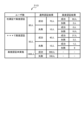
- G06—COMPUTING OR CALCULATING; COUNTING
- G06F—ELECTRIC DIGITAL DATA PROCESSING
- G06F21/00—Security arrangements for protecting computers, components thereof, programs or data against unauthorised activity
- G06F21/30—Authentication, i.e. establishing the identity or authorisation of security principals
- G06F21/31—User authentication
Definitions
- the present invention relates to an identity score calculation device, an identity authentication method, an identity authentication system, and a program that quantitatively estimates whether a user accessing a web service or an account in an online system is a legitimate user.
- the Single Sign-On (SSO) system is known as a convenient login method for users.
- Single sign-on refers to a mechanism that allows the use of multiple systems (web services, in-house systems, cloud services, etc.) with a single user authentication.
- an identity score calculation function calculates the identity score of the user.
- Information on user behavior includes the time of access to the user's account, the terminal or device used, location information at the time of access, etc.
- the authentication function of the single sign-on system 1a performs strict authentication such as two-step authentication for users with low identity (high score) based on the user's identity score calculated by the identity score calculation device 10a before allowing them to access their account.
- "authenticity” refers to the reliability that a user accessing an account is a true user (principal person) associated with the account.
- Step S1 First, in order to use a Web service using the user terminal 3, the user accesses the Web server 51 and makes a login request.
- Step S2 The Web server 51 redirects the user to the single sign-on system 1a via the user terminal 3 in order to authenticate the user.
- Step S3 The authentication device 20a of the single sign-on system 1a acquires, from the user terminal 3, location information and terminal type (device information) as user behavior information.
- Step S4 The authentication device 20a transmits the location information and the terminal type (device information) together with the access time to the identity score calculation device 10a.
- the identity score calculation device 10a stores the location information, terminal type (device information), and access time acquired from the authentication device 20a in a user behavior information table. The identity score calculation device 10a then calculates and records a score based on the difference between the location information, terminal type (device information), and information from past accesses for each access time.
- the identity score of a user calculated by this identity score calculation device 10a estimates whether the user attempting to access an account is the account owner based on the acquired user behavior information for each item of user behavior information, and evaluates it numerically. In calculating the identity score, the greater the difference from the information at the time of previous access, the higher the score value. For example, with regard to location information, the score value is increased if the connection is from an area different from usual. With regard to terminal type (device information), the score value is increased if the connection is made from a device different from usual. With regard to access time, the score value is increased if the access is made at a time different from usual. As shown in FIG. 40, the identity score calculation device 10a calculates and stores the sum of the numerical values evaluated for each item of user behavior information as the user's identity score.
- Step S6 The identity score calculation device 10a transmits the calculated identity score of the user to the authentication device 20a.
- Step S7 If the identity score exceeds a preset threshold, the authentication device 20a performs two-step authentication to authenticate the user, or if the identity score does not exceed the threshold, the authentication device 20a authenticates the user by a default authentication method. In this manner, the single sign-on system 1a can perform identity authentication using the identity score.
- Non-Patent Document 2 the technology described in Non-Patent Document 2 is known as a technology related to the identity of a user who accesses an account.
- ICS Industrial Control Systems
- a multilevel Bayes network is constructed to predict the probability of an incident (probability of an attack occurring: probability of an unauthorized person being involved).
- the multilevel Bayes network is then combined with multiple models to evaluate the amount of impact (damage) caused by the incident.
- the risk of an attack on a network is evaluated based on the probability of an incident occurring and the amount of impact.
- Non-Patent Document 3 describes a technology that estimates the percentage of users who are the correct person among those accessing an account for a web service, etc., calculates an identity score, and performs authentication. By combining this with authentication to estimate the percentage of non-correct users, it is possible to almost completely prevent successful authentication of non-correct users.
- Non-Patent Documents 1 and 2 the identity of each individual user is quantified (scored), making it difficult to perform authentication that optimizes security and convenience based on the operational status of the network or server (for example, changes in traffic volume that may indicate an attack on the network or server) (Challenge A).
- the score of the user's identity is calculated according to unique criteria for each product, so the account maintainer must acquire different know-how for each product in order to assess the impact and determine how to respond when a threat posed by a non-identifying user (non-account owner, spoofing, etc.) occurs (Issue B).
- the user's identity is quantified according to unique criteria, it is difficult to integrate the numerical values of multiple products to evaluate the identity (Issue C).
- Non-Patent Document 2 is based on the assumption that parameters related to user behavior and state transition probabilities have been extracted based on the advanced knowledge of the maintainer. Unless the probability of an attack occurring (probability that the user is not the actual user) and the probability that an incident will lead to other incidents are known, the user's identity cannot be quantified in terms of probability (issue D).
- Non-Patent Document 3 has the problem that it is not clear how reliable the estimated value of the proportion of real people is when calculating the user's identity score (problem E). Furthermore, in an operating environment where the proportion of real people changes dynamically, it is thought that optimal control of the sample size cannot be achieved.
- Non-Patent Document 3 observes the user's behavior and selects an authentication method (advanced authentication) that is likely to result in successful authentication if the user is the real person, and performs identity authentication. While this advanced authentication can prevent people who are not the real person (non-real people) from being successfully authenticated, there are cases where authentication fails even for the real person, depending on the user's usage environment (hereinafter referred to as "false negative"). As the number of false negatives increases, the accuracy of the estimated value for the proportion of real people decreases (challenge F).
- the present invention has been made in consideration of these points, and aims to quantitatively visualize users who fail authentication (false negative) when calculating the user's identity score.
- the identity score calculation device of the present invention is an identity score calculation device that is connected to an authentication device that performs user authentication and calculates a score indicating the identity of a user, the authentication device having multiple types of normal authentication means for normal authentication that performs authentication of standard authentication strength, and multiple types of advanced authentication means for advanced authentication that performs authentication of authentication strength that suppresses authentication failure below a first predetermined level if the user is the user himself and suppresses authentication success below a second predetermined level if the user is not the user himself, the identity score calculation device includes a behavior information collection unit that collects, as behavior information, the service usage environment in which the user accessed the account using the user terminal and the behavior history obtained from the user terminal, an authentication result collection unit that collects from the authentication device authentication results indicating the success or failure of the normal authentication and the advanced authentication of the user who accessed the account and stores the authentication result for each account in a memory unit as authentication result information, and a determination unit that determines whether to perform the advanced authentication in addition to the normal authentication for users who have accessed the account within
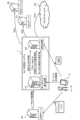
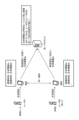
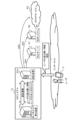
- FIG. 1 is a diagram showing the overall configuration of an identity authentication system according to an embodiment of the present invention.
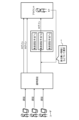
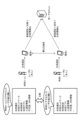
- FIG. 2 is a diagram for explaining an overview of the processing of the identity authentication system according to the present embodiment.
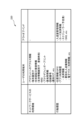
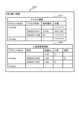
- 11A and 11B are diagrams for explaining authentication results of a person who is the same as the person in question and a non-personal person according to the present embodiment.
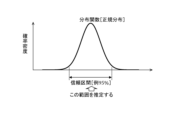
- 11A and 11B are diagrams illustrating a distribution function of a sample ratio and interval estimation of the identity score calculation device according to the present embodiment.
- 11A and 11B are diagrams illustrating a distribution function of a sample ratio and interval estimation of the identity score calculation device according to the present embodiment.
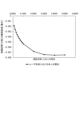
- FIG. 13 is a diagram showing the value of the correction term when the proportion of persons who fail advanced authentication of the identity score calculation device according to the present embodiment is changed from 0.01 to 0.5.
- FIG. 11 is a diagram illustrating dynamic control of the sampling rate and extraction period of the identity score calculation device according to the present embodiment.
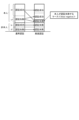
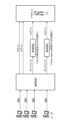
- FIG. This figure explains the estimated percentage of people who fail to be authenticated as the identity of the person (false negative) in advanced authentication. This is a diagram for explaining an overall overview of the identity authentication system of this embodiment, including advanced authentication for false negative evaluation.
- 1 is a diagram for explaining a user identity estimation policy 1 according to an identity score calculation device according to this embodiment.
- FIG. 13 is a diagram for explaining a user identity estimation policy 2 by the identity score calculation device according to the present embodiment.
- FIG. 1 is a diagram showing an assumed usage pattern of a user terminal.
- FIG. 2 is a diagram for explaining user identity estimation logic 1 according to the present embodiment.
- FIG. 11 is a diagram for explaining user identity estimation logic 2 according to the present embodiment.
- 11 is a diagram for explaining user identity estimation logic 3 according to the present embodiment.
- FIG. FIG. 11 is a diagram for explaining user identity estimation logic 4 according to the present embodiment.
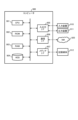
- 1 is a functional block diagram showing an example of the configuration of an identity score calculation device according to an embodiment of the present invention.
- 11 is a diagram illustrating an example of a data configuration of authentication result information stored in an authentication result DB according to the embodiment.
- FIG. 1 is a diagram for explaining behavior information (network service usage environment and behavior history) stored in a behavior information DB according to this embodiment.
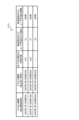
- FIG. 4 is a diagram showing an example of a data configuration of statistical information stored in a statistical information DB according to the embodiment
- FIG. 1 is a functional block diagram showing a configuration example of an authentication device according to an embodiment of the present invention
- 11 is a diagram for explaining a selection process of a normal authentication method by the authentication device according to the embodiment.
- FIG. 4 is a sequence diagram showing the flow of processing executed by the identity authentication system according to the embodiment.
- FIG. 4 is a sequence diagram showing the flow of processing executed by the identity authentication system according to the embodiment.
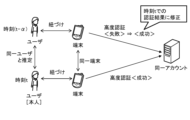
- FIG. 13 is a diagram illustrating the correction of authentication result information when the behaviors are determined to be similar by the user identity estimation process.
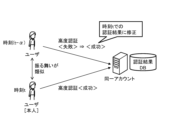
- FIG. 13 is a diagram illustrating authentication result information when the user's behavior is determined to be not similar by the user identity estimation process.
- FIG. 13 is a flowchart showing the flow of a user identity estimation process performed by the identity score calculation device according to the present embodiment.
- 11 is a diagram showing a specific example of a user identity estimation process performed by the identity score calculation device according to the present embodiment.
- FIG. 11 is a diagram showing a specific example of a user identity estimation process performed by the identity score calculation device according to the present embodiment.
- FIG. 11 is a diagram showing a specific example of a user identity estimation process performed by the identity score calculation device according to the present embodiment.
- FIG. 11 is a diagram showing a specific example of a user identity estimation process performed by the identity score calculation device according to the present embodiment.
- FIG. 13 is a flowchart showing the flow of a section estimation and sampling control process by the identity score calculation device according to the present embodiment.
- 4 is a diagram showing an example of a data configuration of statistical information stored in a statistical information DB according to the embodiment;
- FIG. 5 is a diagram showing an example of a data configuration of sampling history information stored in a sampling information DB according to the embodiment;
- FIG. 13 is a diagram showing an example of a data configuration of list information of extraction ratios and extraction periods for each difference of point estimates stored in a sampling information DB according to the embodiment.
- FIG. 11 is a diagram showing threshold information stored in a sampling information DB according to the embodiment.
- FIG. 1 is a hardware configuration diagram showing an example of a computer that realizes the functions of an identity score calculation device and an authentication device according to the present embodiment.
- FIG. FIG. 1 is a diagram for explaining a conventional single sign-on system.
- FIG. 13 is a diagram for explaining an example of calculation of a user's identity score in the prior art.
- FIG. 1 is a diagram showing the overall configuration of an identity authentication system 1 according to this embodiment.
- the identity authentication system 1 according to this embodiment is a single sign-on (SSO) system configured with an authentication device 20 and an identity score calculation device 10.
- the authentication device 20 of this identity authentication system 1 accepts authentication of a user, and centrally manages the user's account with respect to a web server 51 that provides a web service, an in-house system 52, a cloud service 53, etc., with a single authentication.
- SSO single sign-on
- the identity authentication system 1 also collects information about human behavior linked to the account from the service usage environment (location information, usage time, line information, ID information, etc.) and behavior history without any effort on the part of the user.
- information about the user's behavior history is obtained from an external server 40 (for example, an entrance/exit management server, etc.).
- information about human behavior linked to the account is obtained from equipment or systems on a channel other than the authentication channel of the account (out-of-band).
- terminal identifiers, biometric information registration and authentication result information for biometric authentication are obtained from the user's terminal (including information held by the network carrier). The obtained information about human behavior is then used to determine the selection of an authentication method (the "advanced authentication method" described below).
- the identity authentication system 1 performs advanced authentication to evaluate false negatives (the identity that failed advanced authentication) on users who accessed accounts that failed advanced authentication from among users who accessed within a specified period of time. Then, if the behavior (behavior information) of a user who failed advanced authentication in the past (last time) is similar to that of a user who succeeded in advanced authentication this time, it is estimated that there is a high possibility that these users are the same, and the past (last time) authentication result (authentication failure) is corrected to the current authentication result (authentication success). This enables the identity authentication system 1 to improve the accuracy of the estimate of the proportion of identity users.
- the identity authentication system 1 evaluates the tendency of the proportion of identities of all users who access the Web server 51, the in-house system 52, the cloud service 53, etc. during operation. In other words, the focus is not on the identity of each individual user, but on the proportion of identities of all users.
- the identity authentication system 1 (identity score calculation device 10) makes it possible to evaluate the identity of a user who accesses the Web server 51, the in-house system 52, the cloud service 53, etc.
- the identity authentication system 1 (identity score calculation device 10) makes it possible to score the identity of a user who accesses the Web server 51, etc., using observable information on human behavior linked to an account of the Web server 51, etc.
- an interval estimation is performed to evaluate the reliability of the identity estimate value.
- the identity authentication system 1 is then able to (automatically) select the normal authentication method with the optimal strength based on an estimate of the probability of identity among all users.
- the identity authentication system 1 performs advanced authentication for evaluating false negatives (individuals who fail advanced authentication) for users who access accounts that have failed advanced authentication, in order to further solve problem F. Then, depending on whether the behavior (behavior information) of a user who failed the previous advanced authentication is similar to that of a user who succeeded in the current advanced authentication, the identity of the users is estimated and a false negative evaluation (individuals who fail advanced authentication) is performed.
- the technical concept of the identity authentication system 1 according to this embodiment will be described in detail below.
- the identity authentication system 1 uses both normal authentication, which has been conventionally performed by the authentication device 20, and "advanced authentication" for estimating the proportion of non-identifying persons.
- normal authentication refers to authentication with standard authentication strength as a procedure for permitting a user to use an account, such as authentication using a user ID and password that is widely used around the world.
- the identity authentication system 1 performs user authentication (hereinafter referred to as "advanced authentication") on randomly sampled users to estimate the proportion of non-identifying users (non-identifying persons) among the group of users accessing an account.
- Advanced authentication refers to strong user authentication, and refers to a level of authentication that almost completely prevents authentication failure for the user himself/herself (prevents authentication failure to fall below a first specified level for the user himself/herself) and almost completely prevents authentication success for non-users (prevents authentication success to fall below a second specified level for non-users).
- Examples of advanced authentication include smart cards, SMS (Short Message Service) authentication, and out-of-band authentication methods that require unlocking and line usage at the time of use, and use authentication methods that are multi-factor and cryptographically sufficiently strong.
- multi-factor and cryptographically sufficiently strong is used to mean the same thing as “almost completely preventing authentication failure for the user (preventing authentication failure to fall below a first predetermined level for the user)" and “almost completely preventing authentication success for a non-user (preventing authentication success to fall below a second predetermined level for a non-user)."
- the identity authentication system 1 prepares a number of advanced authentication methods and selects an advanced authentication method that can prevent the user from failing authentication based on information about human behavior associated with the account being accessed.
- the identity authentication system 1 has multiple advanced authentication methods (advanced authentication methods "1" to “n”) in addition to normal authentication. Then, for randomly selected users who have requested access to an account, one of the multiple advanced authentication methods (advanced authentication methods "1" to “n”) is selected for advanced authentication in addition to normal authentication. This selection of the advanced authentication method is made based on information about the behavior of the person (user) linked to the account being accessed ("behavior information" described below) (symbol x in Figure 2).
- the advanced authentication method is selected, for example, as follows.
- Example 1 If a person associated with the account being accessed has recently successfully performed some kind of authentication using a My Number card for another ID-linked account, advanced authentication using a My Number card is selected.
- Example 2 If a person associated with the account accessing the network recently accessed the network from a pre-registered mobile device, advanced authentication using SMS is selected.
- Example 3 If a person associated with the account accessing the office has already entered the office and opens and closes the door using an employee ID card (smart card) with IC card functionality when entering or exiting, select advanced authentication using the smart card.
- Example 4 If the person associated with the accessing account plans to work from home, advanced authentication using a pre-registered home line ID is selected.
- the identity authentication system 1 stores human behavior information linked to the account being accessed, and selects advanced authentication based on the real-time behavior of the person accessing the account. By using the human behavior information, it is possible to prevent the person from failing authentication.
- the probability of identity of all users is estimated using the following premises.
- Premise 1 With the selected advanced authentication method, the identity of the user is almost always successfully authenticated (the probability of authentication failure for the identity of the user is below a first predetermined level), and authentication of non-identifiers is almost always unsuccessful (the probability of authentication success for non-identifiers is below a second predetermined level).
- Premise 2 Access to an account by a non-identifying person is not affected by the state of the account (whether the account is in use, or the user's location information, line type, and other environmental factors).
- a1 indicates the number of individuals in the user group ( N1 ) who have succeeded in normal authentication and also succeeded in the selected advanced authentication.
- c1 indicates the number of individuals in the user group ( N1 ) who have failed normal authentication and also succeeded in the selected advanced authentication.
- b1 indicates the number of non-identified individuals in the user group ( N1 ) who have succeeded in normal authentication and also failed in the selected advanced authentication.
- d1 indicates the number of non-identified individuals in the user group ( N1 ) who have failed normal authentication and also failed in the selected advanced authentication.
- a2 indicates the number of true persons who succeeded in normal authentication in the population ( N2 ).
- c2 indicates the number of true persons who failed normal authentication in the population ( N2 ).
- b2 indicates the number of non-true persons who succeeded in normal authentication in the population ( N2 ).
- d2 indicates the number of non-true persons who failed normal authentication in the population ( N2 ).
- the identity authentication system 1 collects the following observable information based on the selected advanced authentication method (see Figure 3).
- the identity authentication system 1 calculates the "proportion ⁇ 2 of non-identifiers who succeed in normal authentication" and the "proportion ⁇ 2 of non-identifiers to all users" in the population based on the following formulas (1) and (2).
- Equation (1) is the proportion of non-authorized users who successfully pass normal authentication among all accounts that accessed the account within a specified period. This indicates the proportion of accounts that were taken over (successfully authenticated) by non-authorized users. Furthermore, the "proportion of non-identical users to all users ⁇ 2 " (equation (2)) indicates the proportion of attacks per account.
- the identity authentication system 1 calculates the "number a2 of persons who succeed in normal authentication,”"the number b2 of non-persons who succeed in normal authentication,””the number c2 of persons who fail normal authentication,” and "the number d2 of non-persons who fail normal authentication” in the population using the following formulas.
- the identity authentication system 1 estimates the identity using the probability that the user is the actual user (P S P ) (equation (5)) and estimates the identity using the probability that the user is not the actual user (P S n ) (equation (6)).
- the identity authentication system 1 estimates the identity using the probability that the user is the actual user (P f P ) (equation (7)) and estimates the identity using the probability that the user is not the actual user (P f n ) (equation (8)).
- the identity authentication system 1 estimates the identity probability (P t ) of all users who have accessed the system during a predetermined period of time using the following equation (9).
- the probability that the user is the correct person can be estimated using equation (5).
- the probability (P t ) that a person is the same person, including cases where normal authentication has failed can be estimated by using equation (9). The above describes how to estimate the proportion of people who are the same as the person (point estimation).
- the above (b) is addressed by collecting samples over a limited period of time (a process of sampling users who perform advanced authentication) so that the estimated value can track changes in the proportion of users who are the same person.
- This sampling process optimizes the proportion of users who perform advanced authentication within the range of accuracy of the estimated value required during operation. When the proportion of users who perform advanced authentication is high, the accuracy of the estimated value is high, and when the proportion is low, the accuracy of the estimated value is low.
- the identity authentication system 1 performs a process of estimating the proportion of identity persons (point estimation) and then a process of performing interval estimation. Regarding interval estimation, it is characterized by combining the perspectives of the ratio of people who are the real person and the ratio of people who have been successfully authenticated, in conjunction with a function to estimate the ratio of people who are the real person (point estimation). Interval estimation makes it possible to evaluate the accuracy of identity estimation values and to take into account the impact of a person failing advanced authentication.
- FIG. 4 is a diagram for explaining the distribution function of the sample ratio and interval estimation, in which the horizontal axis indicates the sample ratio and the vertical axis indicates the probability density.
- the distribution of the sample ratio here, the proportion of true persons
- the range of the confidence interval e.g., 95%) shown in Fig. 4 is estimated.
- a process of performing interval estimation is added.
- a process is added in which, when the point estimate of the proportion of true users is equal to or less than a reference value, a reference value is set for the amount of change in the proportion of true users, and sampling is performed at a proportion and extraction period according to the reference value (FIG. 33).
- the reason for setting the reference value is to take user convenience into consideration.
- the above formula (10) will be described with reference to FIG. 5 is a diagram for explaining the distribution function of the sample ratio (here, the proportion p of true persons) and interval estimation.
- the horizontal axis indicates the sample ratio, and the vertical axis indicates the probability density.
- p ⁇ on the right and left sides of p is the "center value of the confidence interval (1- ⁇ )" of the distribution function shown in Figure 5.
- the value in ⁇ on the right and left sides of p in formula (10) is the "width value of the confidence interval (1- ⁇ )" of the distribution function shown in Figure 5.
- Interval estimation formula for the proportion p of true persons when no true persons fail advanced authentication The interval estimation formula for the proportion p of true persons when no true persons fail advanced authentication is expressed as formula (11) from formula (10), where p ⁇ x is the sample value of the proportion of true persons who succeed in advanced authentication.
- formula (12) is a formula obtained by adding a sample value p ⁇ y of the proportion of the persons who failed the advanced authentication to a sample value p ⁇ x of the proportion of the persons who succeeded in the advanced authentication, and specifically, p ⁇ x in formula (11) is replaced with (p ⁇ x + p ⁇ x ).
- Equation in which a correction term is added to the interval estimation formula for the proportion p of true persons when the true persons fail advanced authentication Equation (13) is an interval estimation formula that takes the safety side into consideration by adding a correction term (described later in FIG. 6) to the interval estimation formula of equation (12).
- a correction term (see equation (13)) is added to the center value of the confidence interval and the width value of the confidence interval.
- correction term for Central Value of Confidence Interval The correction term for the central value of the confidence interval (central value correction term) will be explained. (1) Without the correction term, an error occurs in the center value of the confidence interval, but the value is estimated to be small. This means that the ratio of real people is evaluated on the safe side in terms of network security.
- correction term for the width value of the confidence interval (width value correction term) will be explained. (1) If there is no correction term ( ⁇ 0), an error will occur in the value of the confidence interval width, but the value will be overestimated (the width will be widened). As a result, the evaluation will be on the safe side in terms of network security.
- Fig. 6 is a diagram showing the value of the correction term when the proportion of individuals who fail advanced authentication is changed from 0.01 to 0.5.
- the horizontal axis shows the proportion of individuals who fail advanced authentication, and the vertical axis shows the maximum value of the observation error in the confidence interval (one side of the distribution function in Fig. 5).
- the observation error in the confidence interval on the vertical axis is the value of the correction term.
- the value of the correction term in Fig. 6 was calculated under the condition that maximized its absolute value.
- the black circles ( ⁇ ) in Figure 6 indicate the observation points, and the solid line connecting them indicates the proportion of correct users among all users.
- the sum of the proportion of users who succeeded in advanced authentication and the proportion of correct users who failed authentication among all users was set to 1 (the condition that maximizes the absolute value).
- the correction term for the value of the width of the confidence interval the correction term values shown in FIG. 6 can be used.
- the identity authentication system 1 ensures the immediacy of the calculation of the estimate value in order to follow the change in the identity ratio during operation while maintaining the accuracy of the estimate value of the identity ratio.
- the identity authentication system 1 controls the ratio and extraction period for extracting samples (users performing advanced authentication). Specifically, the identity authentication system 1 dynamically sets the ratio and extraction period for extracting samples based on the difference between the estimate value of the identity ratio and the estimate value at the time of the previous measurement. For the estimate value, a point estimate value or an interval estimate value (e.g., the lower limit of the estimate value) is used.
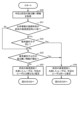
- step S101 an estimate of the proportion of persons who are the same as the person is input, and the difference between the estimate and the value of the previous measurement is calculated (step S101).
- step S102 the difference between the estimate and the value of the previous measurement is input, and the sampling extraction period is calculated.
- step S103 the sampling proportion is calculated based on the calculated sampling extraction period, and the sampling proportion and sampling extraction period are output as an estimate of the proportion of persons who are the same as the person.
- step S104 the output estimate of the proportion of persons who are the same as the person is saved as the previous estimate.
- the identity authentication system 1 sets a reference for the amount of change in the proportion of true persons and performs sampling at a proportion and extraction period according to the reference.
- the system is characterized by controlling the sample proportion and extraction period in cooperation with point estimation or interval estimation functions. By controlling the proportion of samples (users who perform advanced authentication) and the extraction period using the point estimate, it is possible to track changes in the proportion of correct individuals during operation.
- an IC card such as a My Number card
- the following cases can be considered: If the IC card reader is not at hand or is broken, the user information cannot be read from the IC card, and advanced authentication fails. If the PIN for the IC card is forgotten, advanced authentication also fails.
- the number of users who have accessed the site during a given period and failed advanced authentication (the number of false negative users) is estimated. It is assumed that a user who fails advanced authentication cannot log in to the account and will attempt to log in again, and in addition to conventional normal authentication, advanced authentication is performed on the user who attempts to log in to the same account to evaluate whether the user failed advanced authentication (false negative).
- the behavior (behavior information) of the user who succeeded in advanced authentication is compared with the behavior (behavior information) of a user who accessed the same account in the past (previous time) and failed advanced authentication going back a predetermined period of time, and the identity of these users is estimated depending on whether the behaviors are similar, and a false negative evaluation is performed.
- FIG. 9 is a diagram for explaining an overall overview including advanced authentication for false negative evaluation by the identity authentication system 1 according to this embodiment.
- Fig. 9 when a user attempts to log in to an account, normal authentication is performed, followed by sampling and advanced authentication for some users ( ⁇ Authentication for estimating the proportion of real users> in Fig. 9).
- the identity authentication system 1 also performs advanced authentication for users who access accounts that failed advanced authentication the previous time ( ⁇ Authentication for false negative evaluation> in Fig. 9).
- the identity of a user who fails advanced authentication and a user who succeeds in advanced authentication is estimated according to the following policy.
- Identity estimation policy 1 Estimation based on device information
- information linking a user with a user terminal for example, biometric information registered in a terminal through biometric authentication
- the terminal used in the past (last time) and the current advanced authentication are the same, it is estimated that there is a high possibility that the user is the same.
- Whether the terminal is the same can be determined, for example, by a terminal identifier, IMSI (International Mobile Subscription Identity), browser fingerprint, etc.
- IMSI International Mobile Subscription Identity
- the usage environment of the network service includes information about the user's terminal and information provided by the network carrier, such as account access information, biometric authentication registration information, base station information, line numbers, notification logs, and the like.
- the behavioral history includes location information (GPS) obtained from the user's terminal or network carrier, usage history of applications downloaded to the terminal (payment information, station ticket gate entrance/exit information, electronic money usage information), and entrance/exit management information, card payment information, scheduler (appointment book), SNS, etc. obtained out-of-band from external devices.
- out-of-band means that the information is managed by a means (system) different from the personal authentication system 1 .
- a usage pattern for linking a user with a user terminal a usage pattern of a terminal as shown in FIG. 12 is assumed.
- the number of terminals will be occupied by one user (exclusive terminal), some of the multiple terminals will be shared by multiple users (partial terminal sharing), or one or all of the terminals will be shared by multiple users (all terminal sharing).
- the above-mentioned identity estimation policy 1 or policy 2 is used.
- the outlines of the respective usage modes are outlines 1, 2, and 3 as shown in Fig. 12, and as a specific example, the logic for estimating the user identity will be described as a predetermined user identity estimation logic.
- user identity estimation logic 1 The logic corresponding to the overviews 1, 2, and 3 of the various modes in which the user terminal 3 uses "information linking a user with a user terminal" (hereinafter, "biometric information" obtained by a biometric authentication function will be taken as an example) will be referred to as user identity estimation logic 1, 2, and 3. Furthermore, the logic for a usage mode in which the user terminal 3 does not have a biometric authentication function will be described below as user identity estimation logic 4.
- FIG. 13 is a diagram for explaining the user identity estimation logic 1.
- biometric authentication such as face recognition
- the biometric information is registered in the terminal as an identifier.
- the user is identified by checking which biometric information registered in the terminal is matched. The same applies when only one user is registered.
- the time of registration is added to the biometric information registered in the terminal, and the duration of the link between the user and the biometric information is managed.
- FIG. 14 is a diagram for explaining the user identity estimation logic 2.
- the user identity estimation logic like the user identity estimation logic 1, confirms the link between the user and the terminal by biometric authentication (such as face authentication) and registers the biometric information as an identifier in the terminal.
- biometric authentication such as face authentication
- the difference from the user identity estimation logic 1 is that the biometric information registered in the terminal is updated between time (t- ⁇ ) and time t, and in this case, it may not be possible to estimate that the user is the same.
- FIG. 15 is a diagram for explaining the user identity estimation logic 3.
- User identity estimation logic 3 is used when a user uses multiple devices. In this case, even if biometric information (such as facial recognition) is confirmed on each device as information linking the user to the user device, if the device identifiers of the multiple devices are different, they may not be considered to be the same user.
- FIG. 16 is a diagram for explaining the user identity estimation logic 4.
- user identity estimation logic 4 estimates whether the user is the same using user behavior information (network service usage environment and behavior history) according to (identity estimation policy 2: estimation based on service environment and behavior history). If the terminal does not have a biometric authentication function, in addition to PIN or pattern authentication, a collection of user behavior information such as location information and schedule information for a specified period of time is used as a complement to estimate the identity of the user who accessed the terminal at time (t- ⁇ ) and the user who accessed the terminal at time t.
- This behavior information is also collected from out-of-band sources such as schedulers and entrance/exit management servers. From the terminal, communication usage status such as terminal identifiers and network types, as well as behavior information that can be collected from applications such as location information and station ticket gate passage history, are collected. By increasing the number of behavior information items and extending the time for collecting the history, the accuracy of user identity can be improved.
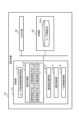
- FIG. 17 is a functional block diagram showing an example of the configuration of the identity score calculation device 10 according to this embodiment.
- the identity score calculation device 10 obtains the results of normal authentication and advanced authentication when a user accesses an account such as a Web server 51 from the authentication device 20 using the user terminal 3, and calculates the probability that the accessing user is the real person.
- the identity score calculation device 10 collects the service usage environment (location information, usage time, line information, ID information, etc.) and behavior history as "behavior information" as information on the behavior of a person (user) linked to the account being accessed, and selects a method of advanced authentication that can prevent the person from failing authentication.
- the identity score calculation device 10 performs advanced authentication to evaluate false negatives (the person who failed advanced authentication) for users who access accounts that have failed advanced authentication among users who have accessed within a predetermined period. Then, when the behavior (behavior information) of a user who failed the previous advanced authentication and a user who succeeded in the current advanced authentication are similar, it is estimated that these users are likely to be the same, and the previous authentication result (authentication failure) is corrected to the current authentication result (authentication success). This allows the identity authentication system 1 to improve the accuracy of the estimated value of the identity ratio.
- the identity score calculation device 10 is configured by a computer including a control unit 11, an input/output unit 12, and a memory unit 13.
- the input/output unit 12 inputs and outputs information between the authentication device 20 and the external server 40 for acquiring behavior information.
- This input/output unit 12 is composed of a communication interface that transmits and receives information via a communication line, and an input/output interface that inputs and outputs information between an input device such as a keyboard and an output device such as a monitor (not shown).
- the storage unit 13 is composed of a hard disk, a flash memory, a RAM (Random Access Memory), or the like.
- the memory unit 13 includes an authentication result DB 100 (see FIG. 18 for details) that stores the authentication results of normal authentication and advanced authentication, a behavior information DB 200 (see FIG. 19, FIG. 20, and FIG. 26 for details) that stores information related to user behavior (behavior information), a statistical information DB 300 (see FIG. 21 for details) that stores statistical information calculated using the results of normal authentication and advanced authentication, and a sampling information DB 400 (see FIG. 35 to FIG. 37 for details) that are described later.
- the storage unit 13 also temporarily stores programs for executing the various functions of the control unit 11 and information necessary for the processing of the control unit 11.
- the control unit 11 is responsible for all the processing executed by the identity score calculation device 10, and as shown in FIG. 17, includes an authentication result collection unit 111, a behavior information collection unit 112, an external server linkage unit 113, an advanced authentication control unit 114, an advanced authentication result evaluation unit 115, a statistical processing unit 116, a probability calculation unit 117, and a sampling control unit 118.
- the authentication result collection unit 111 obtains the results of normal authentication and, if advanced authentication is performed, the advanced authentication from the authentication device 20, and stores the authentication result information (authentication result information 110) in the authentication result DB 100.
- FIG. 18 is a diagram showing an example of the data configuration of the authentication result information 110 stored in the authentication result DB 100 according to this embodiment.
- the authentication result information 110 stores the time of access to the account, a normal authentication result indicating whether the normal authentication was successful or unsuccessful, and an advanced authentication result indicating the result of the advanced authentication, in association with an account name, which is an ID unique to each user.
- the advanced authentication result is stored as "success” or “failure” if advanced authentication is performed, and "not performed” is stored if advanced authentication was not performed.
- the behavior information collection unit 112 acquires information about the user's service usage environment (access information) and information about the user's behavior history (behavior history information), and stores this information in the behavior information DB 200 as behavior information 220.
- FIG. 19 is a diagram for explaining behavior information 220 (network service usage environment and behavior history) stored in the behavior information DB 200 according to this embodiment.
- the behavior information collection unit 122 collects information on the usage environment of the network service (service usage environment) and behavior history (behavior history information).
- the usage environment of the network service includes information on the user's terminal and information provided by the network carrier, and for example, information acquired from the user's terminal (user terminal related information) includes account access information 221 (FIG. 20 described later), a terminal identifier, biometric authentication registration information, base station information, line number, notification log, etc.
- behavior history acquired from the user's terminal includes location information (GPS) and usage history of applications (apps) downloaded to the terminal (payment information, station ticket gate entrance/exit information, electronic money usage information), etc.
- examples of behavioral history that can be obtained out-of-band from an external device include entrance/exit management information 222 (see FIG. 20, described later), card payment information, a scheduler (planning table), SNS, and the like.
- FIG. 20 is a diagram showing an example of the data configuration of the access information 221 and the entrance/exit management information 222 out of the behavior information 220 stored in the behavior information DB 200 according to this embodiment.
- the access information 221 stores information on the service usage environment when a user accesses an account, such as access time, terminal type, and location, in association with the account name, which is an ID unique to each user.
- the terminal type is "smartphone,” smartphone address information required for SMS authentication, and if the terminal type is "PC" and the user is working from home, line information, etc. are stored in association with the user's account name.
- the behavior information collection unit 112 acquires information (service usage environment and behavior history) from the user's terminal, including this access information 221, by receiving information (user terminal related information) collected by the authentication device 20 from the user terminal 3.
- the behavior information collection unit 112 also acquires information about the user's behavior history from an external server 40, which is an out-of-band system.
- an external server 40 which is an out-of-band system.
- the out-of-band system is an entry/exit management system for an office or the like, it acquires information on the entry and exit times of people linked to accounts (entry/exit management information 222) from the entry/exit management server, which is the external server 40, via the external server linkage unit 113, as shown in FIG. 20, and stores the information in the behavior information DB 200.
- the external server linking unit 113 performs linking processing (out-of-band linking processing) with various external servers 40 to acquire the user's behavior history from a channel other than the channel (information transmission path) with the user terminal 3. For example, as described above, it performs processing such as generating request messages and response messages to send and receive information such as the entry and exit times of people linked to accounts to and from the entry and exit management server.
- the advanced authentication control unit 114 determines whether to perform advanced authentication for users who have accessed the system within a specified period of time. In order to ensure (premise 2) of technical concept 3 described above, the advanced authentication control unit 114 randomly selects users who will undergo advanced authentication from among users who have undergone normal authentication.
- the advanced authentication control unit 114 uses behavior information 220 ( Figures 19, 20, and 26) to retain a correspondence between access information 221 and behavioral history (e.g., entry and exit management information 222), which are information about the service usage environment, and the advanced authentications that the user is successful in among multiple advanced authentications, as a profile (analysis result) based on a predetermined logic. For example, if there was an access from a smartphone immediately before, a profile is created to use SMS authentication as advanced authentication. If there is an entry/exit record for an office immediately before, a profile is created to use authentication by a smart card such as an employee ID card based on the entry/exit management information for the office building, etc.
- behavior information 220 Figures 19, 20, and 26
- the advanced authentication control unit 114 uses the profile to determine an advanced authentication method that will result in successful authentication if the user is a person (user) linked to the account. Then, the advanced authentication control unit 114 notifies the authentication device 20 of the advanced authentication method determined for the user associated with that account.
- the advanced authentication result evaluation unit 115 decides to perform advanced authentication (hereinafter referred to as "advanced authentication for false negative evaluation") on users who have accessed the account during a specified period and failed the advanced authentication to evaluate whether or not the user is the person who failed the advanced authentication.
- the advanced authentication result evaluation unit 115 compares the behavior information 220 of the user who succeeded in the advanced authentication for false negative evaluation with the behavior information 220 of the user who accessed the same account in the past and failed the advanced authentication, and estimates the identity of these users based on whether their behaviors are similar.
- the advanced authentication result evaluation unit 115 determines, based on the estimation of the user's identity, that there is a high possibility that the user is the same, it modifies the user's past (previous) advanced authentication result from ⁇ Failure> to ⁇ Success>. The details of the processing by the advanced authentication result evaluation unit 115 will be described later with reference to FIGS.
- the statistical processing unit 116 calculates statistical values (number of users) as a result of normal authentication and various types of advanced authentication for all users who have accessed the site during a specified period of time, and stores the calculated values in the statistical information DB 300 as statistical information 310.
- FIG. 21 is a diagram showing an example of the data configuration of the statistical information 310 stored in the statistical information DB 300 according to this embodiment.
- the statistical information 310 stores, for each advanced authentication method, the result of the advanced authentication (success/failure) and the result of normal authentication of the user who performed the advanced authentication in association with each other. Also, the number of users who have not undergone advanced authentication and have obtained the result of normal authentication (success/failure) is stored.
- the probability calculation unit 117 refers to the statistical information 310 stored in the statistical information DB 300 to make a point estimate of the percentage of users who have accessed the account who are genuine (probability of the users being genuine), and stores the estimate in the sampling information DB 400.
- the probability calculation unit 117 calculates the probability (P S P ) that a user who has been successfully authenticated in normal authentication within a predetermined period of time is the correct user, using the above-mentioned formula (5).
- the probability calculation unit 117 may use formula (9) to calculate the probability (P t ) that the person is the same person, including cases where normal authentication has failed.
- the probability calculation unit 117 It is determined in advance whether the probability calculation unit 117 will use formula (5) or formula (9) as the formula for calculating the probability that the user who accessed the account is the real person. The probability calculation unit 117 then transmits the calculated point estimate of the proportion of real people to the authentication device 20.
- the probability calculation unit 117 uses the point estimation results to perform interval estimation with a confidence interval that is preset at the start of operation (details are provided below).
- the sampling control unit 118 uses the point estimate or interval estimate (e.g., lower limit value) calculated by the probability calculation unit 117 to determine the ratio and extraction period for extracting users who perform advanced authentication.
- the sampling control unit 118 also stores the ratio and extraction period for extracting users who perform advanced authentication in the sampling information DB 400.
- FIG. 22 is a functional block diagram showing an example of the configuration of the authentication device 20 according to this embodiment.
- the authentication device 20 includes a plurality of types of normal authentication methods (normal authentication methods) with different strengths and a plurality of types of advanced authentication methods (advanced authentication methods).
- the authentication device 20 accepts an authentication request from the user terminal 3, performs a preset normal authentication, and acquires user terminal-related information including information on the user's service usage environment (e.g., access information 221, etc.) and behavior history from the user terminal 3 and the network carrier.
- the authentication device 20 transmits the information on the service usage environment and the behavior history (user terminal-related information) to the identity score calculation device 10.
- the authentication device 20 also receives information on the determined advanced authentication method from the identity score calculation device 10 for a user for whom advanced authentication has been determined, performs the advanced authentication method, and transmits the authentication result to the identity score calculation device 10. In addition, the authentication device 20 obtains information on the user's identity probability (estimated value) from the identity score calculation device 10, and selects the optimal normal authentication method that takes into account the threat posed by an increase in the proportion of non-identical people and user convenience.
- the identity score calculation device 10 is configured by a computer including a control unit 21, an input/output unit 22, and a storage unit 23.
- the input/output unit 22 inputs and outputs information between the identity score calculation device 10, the user terminal 3, the web server 51, the in-house system 52, the cloud service 53, etc.
- This input/output unit 22 is composed of a communication interface that transmits and receives information via a communication line, and an input/output interface that inputs and outputs information between an input device such as a keyboard and an output device such as a monitor (not shown).
- the storage unit 23 is composed of a hard disk, a flash memory, a RAM (Random Access Memory), or the like.
- information required for normal authentication of an accessing user is stored in a user information DB 500.
- information such as the account name (user ID) and password of the accessing user, and address information of the user terminal 3 are stored.
- information required for authentication when advanced authentication is performed is also stored in this user information DB 500.
- the information required for advanced authentication may be obtained from an external server 40 or the like via the external server linkage unit 113 ( FIG. 17 ) of the identity score calculation device 10 and stored in the user information DB 500.
- the storage unit 23 also temporarily stores programs for executing the various functions of the control unit 21 and information necessary for the processing of the control unit 21.
- the control unit 21 is responsible for all the processes executed by the authentication device 20, and as shown in FIG. 22, includes a user terminal related information acquisition unit 211, an authentication processing unit 212, a normal authentication selection unit 213, an authentication control unit 214, and a centralized information management unit 215.
- the user terminal related information acquisition unit 211 acquires access information 221 related to the user terminal 3 that has accepted the login request, and transmits it to the identity score calculation device 10.
- the access information 221 includes the time at which the login request was received as the access time.
- the user terminal related information acquisition unit 211 acquires information about the user's service usage environment (e.g., terminal identifier, biometric authentication registration information, etc.) and behavioral history (location information, app usage history, etc.) from the user terminal 3 or the network service carrier as user terminal related information. Then, the user terminal related information acquisition unit 211 transmits the acquired user terminal related information to the identity score calculation device 10.
- the user terminal related information including the access information 221 transmitted by the user terminal related information acquisition unit 211 to the identity score calculation device 10 becomes part of the information constituting the behavior information 220.
- the authentication processing unit 212 holds a plurality of types of normal authentication methods and a plurality of types of advanced authentication methods for users who access an account.
- the authentication processing unit 212 performs authentication of the accessing user by the set normal authentication method.
- the authentication processing unit 212 receives information on the determined advanced authentication method for the user for whom advanced authentication has been determined from the identity score calculation device 10, and selects the advanced authentication method from among a plurality of advanced authentication means to perform authentication.
- the authentication processing unit 212 transmits the results (success/failure) of the normal authentication and advanced authentication to the identity score calculation device 10 .
- the normal authentication selection unit 213 acquires the probability (estimated value) of the user's identity from the identity score calculation device 10 at predetermined intervals. Then, depending on the acquired probability of the user's identity, the normal authentication selection unit 213 selects the optimal normal authentication method from among multiple normal authentication methods, taking into consideration the threat of an increase in the proportion of non-identical users and user convenience.
- the normal authentication method is set in stages from a high-strength normal authentication method "1" to a low-strength (standard) normal authentication method "n".
- the normal authentication selection unit 213 acquires an estimate of the probability of the user's identity from the identity score calculation device 10, for example, if the estimate of the probability of the user's identity is equal to or greater than a predetermined threshold, the normal authentication selection unit 213 selects a standard normal authentication method (for example, normal authentication method "n") that takes user convenience into consideration.
- the standard normal authentication method "n" is, for example, authentication using a user ID and a password.
- the normal authentication selection unit 213 selects a relatively strong normal authentication method (for example, normal authentication method "1") at the expense of user convenience.
- the relatively strong normal authentication method "1" is, for example, biometric authentication or two-step authentication.
- the normal authentication selection unit 213 notifies the authentication processing unit 212 of information on the selected normal authentication method, thereby setting the normal authentication method.
- the authentication control unit 214 executes authentication processing with the user terminal 3 based on a user authentication protocol such as RADIUS (Remote Authentication Dial In User Service).
- RADIUS Remote Authentication Dial In User Service
- the centralized information management unit 215 uses, for example, LDAP (Lightweight Directory Access Protocol) to realize single sign-on (SSO), which enables multiple services to be used with a single ID and password.
- LDAP Lightweight Directory Access Protocol
- SSO single sign-on
- FIG. 24 and 25 are sequence diagrams showing the flow of processing executed by the identity authentication system 1.
- the behavior history is described as information obtained from an entry/exit management system such as an office, etc., as the behavior history obtained from the external server 40.
- the personality score calculation device 10 is described as obtaining information on the entry/exit times of people associated with accounts (entrance/exit management information 222) and schedule information from the entry/exit management server, which is the external server 40, as shown in FIG.
- the entrance/exit management system manages the entrance/exit of users, for example, as follows. When a person associated with an account comes to the office, they enter the office by passing through a flapper gate or the like using an employee ID card (smart card) with an IC card function.
- the entrance/exit management server obtains the ID and entry/exit time of the user who entered the office from the employee ID card and records them on its own server. In this way, the entrance/exit management server records the entrance/exit management information 222 of the user.
- a user uses a user terminal 3 (for example, a PC) to access the Web server 51 and make a login request in order to use a Web service.
- the Web server 51 redirects the user to the authentication device 20 via the user terminal 3 to authenticate the user.
- the user terminal related information acquisition unit 211 acquires access information 221 including the access time, and user terminal related information including the terminal identifier, terminal type, location information, etc. (step S11). Then, the user terminal related information acquisition unit 211 transmits the user terminal related information to the identity score calculation device 10.
- the authentication processing unit 212 of the authentication device 20 executes normal authentication of the accessing user by a predetermined (initial setting) normal authentication method (step S12). Then, the authentication processing unit 212 transmits the result of the normal authentication (success/failure) to the identity score calculation device 10.
- the authentication result collection unit 111 of the identity score calculation device 10 acquires the result of the normal authentication, it stores it in the authentication result DB 100 as authentication result information 110 (FIG. 18) (step S13).
- the advanced authentication control unit 114 of the identity score calculation device 10 determines whether to perform advanced authentication, in addition to normal authentication, for users who have accessed the device within a predetermined period of time. In other words, the advanced authentication control unit 114 samples users for which advanced authentication is to be performed (step S14). The advanced authentication control unit 114 determines, for example, randomly, whether or not a user should be subjected to advanced authentication.
- step S15 it is determined whether the user who made the login request has been extracted in the sampling of users who will perform advanced authentication. If the user has not been extracted in the sampling (step S15 ⁇ No), proceed to step S21 in FIG. 25. On the other hand, if the user has been extracted as a user who will perform advanced authentication (step S15 ⁇ Yes), proceed to step S16.
- step S16 the behavior information collection unit 112 of the identity score calculation device 10 acquires information on the behavior history from the external server, and stores it in the behavior information DB 200 (Fig. 17) as behavior information 220 (Figs. 19, 20, and 26) together with the user terminal-related information acquired from the authentication device 20.
- FIG. 26 shows an example of behavior information 220a based on user terminal related information acquired from the user terminal 3, and an example of behavior information 220b acquired from outbound.
- the behavior information 220a stores, for example, a terminal identifier, a biometric information identifier, the registration time of the biometric information, location information of the user terminal 3, and ticket gate entry/exit information that can be obtained from an application on the user terminal 3.
- the behavior information 220b stores, for example, information on the entry time acquired from the entry/exit management server, and information that can be obtained from a scheduler such as work plans and work reports.
- the advanced authentication control unit 114 of the identity score calculation device 10 refers to the behavior information 220 ( Figures 19, 20, and 26) for the user for whom advanced authentication has been determined, and determines a method of advanced authentication that will result in successful authentication for a person (user) linked to the account (step S17). The advanced authentication control unit 114 then notifies the authentication device 20 of whether advanced authentication is required for that user (here, "required") and the determined advanced authentication method.
- the advanced authentication control unit 114 refers to the behavior information 220 and uses a profile indicating the correspondence between each piece of information (service usage environment and behavioral history) indicated in the behavior information 220 and the advanced authentication that will successfully authenticate the user among multiple advanced authentications to determine a method of advanced authentication that will successfully authenticate a person (user) linked to the account. For example, as shown by symbol y in Figure 26, if there is a record of the entry time but no record of the exit time, that is, if it is presumed that the user is in the office, advanced authentication using an employee ID card (smart card) is decided upon as an advanced authentication method that will be successful for anyone linked to the account.
- employee ID card smart card
- the authentication processing unit 212 of the authentication device 20 performs advanced authentication for the relevant user using the notified advanced authentication method (step S18).
- the authentication processing unit 212 performs advanced authentication for the user using an employee ID card.
- the authentication control unit 214 and the centralized information management unit 215 control the web server 51 and allow them to log in to their account.
- the authentication processing unit 212 of the authentication device 20 transmits the result of the advanced authentication (success/failure) to the identity score calculation device 10. Then, when the authentication result collection unit 111 of the identity score calculation device 10 acquires the result of the advanced authentication, it stores it in the authentication result DB 100 as authentication result information 110 (FIG. 18) (step S19).
- the advanced authentication result evaluation unit 115 of the identity score calculation device 10 determines whether or not the advanced authentication for each user has been successful based on the acquired result of the advanced authentication (step S20). If the high level authentication has failed, the process proceeds to step S30, whereas if the high level authentication has succeeded, the process proceeds to the next step S21.
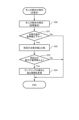
- step S21 the advanced authentication result evaluation unit 115 checks the results of advanced authentication of a user who has previously (previously) accessed the same account as this time by referring to the authentication result information 110 (FIG. 18) in the authentication result DB 100. The advanced authentication result evaluation unit 115 then determines whether the previous advanced authentication was successful (step S22). If the previous advanced authentication was successful (step S22 ⁇ Yes), the process proceeds to step S32 without performing advanced authentication for false negative evaluation. On the other hand, if the previous advanced authentication was unsuccessful (step S22 ⁇ No), the process proceeds to the next step S23.
- step S23 the advanced authentication result evaluation unit 115 determines whether the user who has accessed the account is a user who was sampled in step S14 for advanced authentication. If the user was sampled in step S14, the process proceeds to step S27. On the other hand, if the user was not sampled in step S14, the process proceeds to step S24.
- step S24 the advanced authentication result evaluation unit 115 acquires information on the behavior history from the external server via the behavior information collection unit 112, and stores it in the behavior information DB 200 (Fig. 17) as behavior information 220 (Figs. 19, 20, and 26) together with the user terminal-related information acquired from the authentication device 20.
- the advanced authentication result evaluation unit 115 via the advanced authentication control unit 114, refers to the behavior information 220 ( Figures 19, 20, and 26) for the user who has been selected for advanced authentication, and determines a method of advanced authentication that will result in successful authentication for a person (user) linked to the account (step S25).
- the advanced authentication control unit 114 refers to the behavior information 220 and uses a profile indicating the correspondence between each piece of information (service usage environment and behavioral history) indicated in the behavior information 220 and the advanced authentication that will successfully authenticate the user among multiple advanced authentications to determine a method of advanced authentication that will successfully authenticate a person (user) linked to the account. Then, the advanced authentication result evaluation unit 115 notifies the authentication device 20 of the determined advanced authentication method.
- the authentication processing unit 212 of the authentication device 20 performs high-level authentication on the relevant user using the notified high-level authentication method (step S26).
- the authentication processing unit 212 performs high-level authentication on the user using an employee ID card.
- the authentication processing unit 212 of the authentication device 20 transmits the result of the advanced authentication (success/failure) to the identity score calculation device 10.
- the advanced authentication result evaluation unit 115 determines whether or not the current advanced authentication for each user was successful based on the acquired result of the advanced authentication (step S27). If the high level authentication has failed (step S27 ⁇ No), the process proceeds to step S30. On the other hand, if the high level authentication has succeeded (step S27 ⁇ Yes), the process proceeds to the next step S28.
- the advanced authentication result evaluation unit 115 performs a user identity estimation process to compare the behavior information 220 of the current user who has succeeded in the advanced authentication with the behavior information 220 of the previous user who has failed the advanced authentication and determine whether the behaviors are similar (step S28). Details of this user identity estimation process will be described later with reference to FIG. 29.
- step S28 ⁇ No If the behavior is determined to be not similar in the user identity estimation process in step S28 (step S28 ⁇ No), proceed to step S30. On the other hand, if the behavior is determined to be similar (step S28 ⁇ Yes), proceed to step S29.
- step S29 if the behavior information 220 of each user is similar between the current and previous times, the advanced authentication result evaluation unit 115 evaluates the failure of the previous user's advanced authentication to be a false negative. Then, the advanced authentication result evaluation unit 115 overwrites the results of the current user's normal authentication and advanced authentication in the authentication result information 110 in the authentication result DB 100 with the authentication result of the previous user, and stores them in the authentication result DB 100.
- FIG. 27 is a diagram for explaining the correction of the authentication result information 110 when the user's behavior is determined to be similar by the user identity estimation process.
- the advanced authentication result evaluation unit 115 overwrites the previous authentication result information with the current normal authentication result of “success” and the current advanced authentication result of “success.”
- FIG. 28 is a diagram illustrating the authentication result information 110 when the user's behavior is determined to be not similar by the user identity estimation process. As shown in FIG. 28 , when the previous advanced authentication result was a “failure” but the current advanced authentication result is a “success,” for example, if it is determined that the results are not similar based on the user's entry/exit times and terminal information, the current normal authentication result and the advanced authentication result are additionally registered without being evaluated as a false negative.
- step S30 the statistical processing unit 116 of the identity score calculation device 10 calculates statistical values (number of users) as a result of normal authentication and various types of advanced authentication for all users who have accessed the system during a specified period of time, and stores the calculated values in the statistical information DB 300 as statistical information 310 (FIG. 21).
- the probability calculation unit 117 of the identity score calculation device 10 uses the statistical information 310 (FIG. 21) to estimate (point estimation) the proportion of identity among all users, including those who have not undergone advanced authentication (step S31).
- the estimation (point estimation) of the proportion of identity is a calculation of the probability of identity.
- the probability calculation unit 117 calculates the probability (P S P ) that a user who has been successfully authenticated in normal authentication during a predetermined period is the correct user, using the above-mentioned formula (5). 21, the probability calculation unit 117 calculates the probability that the person is the same person (P S P ) using equation (5), resulting in the following score (point estimate): For example, when multiple users who have accessed an account have succeeded in normal authentication, the probability calculation is performed using the statistical information DB 300 to estimate that the proportion of these users who are the same as the person linked to the account that has accessed them is approximately 0.96 (point estimate).
- the probability calculation unit 117 calculates the probability (P t ) that the person is the same person, including cases where normal authentication has failed, using equation (9).
- the probability calculation unit 117 refers to the statistical information 310 shown in FIG. 21 to calculate the probability (P t ) that the person is the same person using equation (9), resulting in the following score.
- we estimate that the percentage of all users who have accessed an account, including those who failed normal authentication, who are the same person associated with the account is approximately 0.82 ( 1-24/130) (point estimate).
- the probability calculation unit 117 transmits the calculated probability that the user accessing the account is the real person (an estimate of the proportion of real people (point estimate)) to the authentication device 20.
- step S32 the identity authentication system 1 performs interval estimation and sampling control. The detailed flow of step S32 will be described later with reference to FIG. 33.
- the normal authentication selection unit 213 of the authentication device 20 obtains an estimate of the probability of the user's identity from the identity score calculation device 10 at every predetermined period. Then, the normal authentication selection unit 213 selects the most appropriate normal authentication method from multiple types of normal authentication methods according to the obtained estimate of the probability of the user's identity (step S33).
- the normal authentication selection unit 213 selects a standard normal authentication method that takes user convenience into consideration (e.g., normal authentication method "n")
- a normal authentication method with a relatively high strength e.g., normal authentication method "1”
- the normal authentication selection unit 213 notifies the authentication processing unit 212 of information on the selected normal authentication method, thereby setting the normal authentication method (step S34).
- the normal authentication selection unit 213 uses an estimated value calculated using the "probability of identity of a user who has succeeded in normal authentication" (equation (5)), it evaluates threats based on the proportion of non-identical users among those who have succeeded in normal authentication and selects normal authentication.
- an estimated value calculated using the "probability of identity when users who have failed normal authentication are also included” equation (9)
- the proportion of actual users among those who have failed normal authentication is high, it switches from a normal authentication method with relatively high strength to a normal authentication method with standard strength, taking into account the above threats, from the perspective of user convenience.
- 29 is a flowchart showing the flow of the user identity estimation process.
- This user identity estimation process corresponds to the above-mentioned predetermined user identity estimation logic, and is the process executed in step S28 of FIG.
- the advanced authentication result evaluation unit 115 of the identity score calculation device 10 refers to the behavior information 220 stored in the behavior information DB 200, and obtains the behavior information 220 of the current user who has succeeded in advanced authentication and the behavior information 220 of the previous user who has failed advanced authentication (step S40).
- the advanced authentication result evaluation unit 115 determines whether the registration time of the biometric information included in the current user behavior information 220 is before the previous advanced authentication (step S41). If the biometric information was registered not before the previous high level authentication (step S41 ⁇ No), the process proceeds to step S43. Note that if the biometric information was registered not before the previous high level authentication, this also includes cases where the user terminal 3 does not support biometric authentication and does not store biometric authentication information. On the other hand, if the biometric information was registered before the previous high level authentication (step S41 ⁇ Yes), the process proceeds to the next step S42.
- step S42 the advanced authentication result evaluation unit 115 refers to the current and previous behavior information 220 and determines whether the current and previous terminal identifiers are the same. If the current and previous terminal identifiers are the same (step S42 ⁇ Yes), the process proceeds to step S44. On the other hand, if the current and previous terminal identifiers are not the same (step S42 ⁇ No), the process proceeds to step S43.
- step S43 the advanced authentication result evaluation unit 115 determines whether the behavior information 220 (network service usage environment and behavior history) other than the terminal identifier is similar between the current and previous times. Here, if it is determined that the behavior information 220 other than the terminal identifier is similar (step S43 ⁇ Yes), the process proceeds to step S44.
- the behavior information 220 network service usage environment and behavior history
- step S44 the advanced authentication result evaluation unit 115 estimates that the user who failed the previous advanced authentication is the same as the current user. In other words, the advanced authentication result evaluation unit 115 evaluates the result of the previous advanced authentication to be a false negative (the user failed to be authenticated).
- FIG. 30 shows a case where the device identifier (0x123abc) is the same in the current and previous behavior information, and the biometric information registration time (February 1, 2023, 13:00) is before the previous advanced authentication (March 1, 2023, 15:00).
- the advanced authentication result evaluation unit 115 presumes that the user who failed the previous advanced authentication is the same as the current user.
- the advanced authentication result evaluation unit 115 judges the similarity of the behavior information other than the terminal identifier.
- the location information obtained from the map application on the user terminal 3 shows that the location information in the morning (9:00 a.m.) has an error of about 10 meters between this time and the previous time, and the scheduler and the in-house SNS show that the user worked from home in the morning on both days, it is presumed that the user who accessed the site this time and the previous time worked from home in the same place (home), and is therefore the same user.
- the advanced authentication result evaluation unit 115 judges the similarity of the behavior information of the current and previous accessing users.
- the biometric information is linked to the user who accessed the train in the past, and it is presumed that the user who accessed the train this time and the previous time are the same.
- step S44 the advanced authentication result evaluation unit 115 estimates that the user who failed the previous advanced authentication is the same as the current user, it proceeds to step S29 in FIG. 25 and overwrites the authentication result of the current user with the authentication result of the previous user.
- step S43 determines whether the behavior information 220 other than the terminal identifier is similar (step S43 ⁇ No). If it is determined in step S43 that the behavior information 220 other than the terminal identifier is not similar (step S43 ⁇ No), proceed to step S45.
- step S45 the advanced authentication result evaluation unit 115 estimates that the user who failed the previous advanced authentication is different from the user who succeeded in the current advanced authentication. In other words, the advanced authentication result evaluation unit 115 evaluates it as a true negative (a non-principal user who failed authentication). Then, the process proceeds to step S30 in FIG. 25.
- the advanced authentication result evaluation unit 115 can estimate the identity of the user by referring to the current and past (previous) user behavior information 220.
- step S50 the probability calculation unit 117 uses the result of the point estimation of the proportion of identity of the user to perform interval estimation with a confidence interval that was preset at the start of operation. Note that this step S50 is a specific example of the above-mentioned [Technical Concept 4: Interval estimation to evaluate the accuracy of identity estimates]. By performing interval estimation, the accuracy of the estimates can be evaluated.
- FIG. 34 is a diagram showing an example of the data configuration of the statistical information 310 stored in the statistical information DB 300 (FIG. 17) according to this embodiment.
- the identity score calculation device 10 uses statistical information 310 ( Figure 34) to estimate the confidence interval of the proportion (let's call it p) of users who have accessed an account who are identical to the person associated with the account they accessed.
- T is the upper limit of the random variable in the confidence interval (1- ⁇ ) of the standard normal distribution.
- step S51 the sampling control unit 118 determines whether or not the point estimate is equal to or less than a reference value. If the point estimate is greater than the reference value (step S51 ⁇ No), the processing of this flow ends.
- step S52 the sampling control unit 118 compares it with the previous point estimate.
- step S53 the sampling control unit 118 determines whether the difference from the previous time is equal to or greater than a reference value (see step S101 in FIG. 7). If the difference from the previous time is smaller than the reference value (step S53 ⁇ No), the processing of this flow ends.
- step S54 the sampling control unit 118 changes the sampling rate and extraction period and ends the processing of this flow. Details of the sampling rate and extraction period will be described later with reference to Figures 35 to 37.
- steps S51 to S54 the estimated values are used to control the proportion of samples (users who perform advanced authentication) and the extraction period to track changes in the proportion of individuals during operation.
- Fig. 35 is a diagram showing an example of the data configuration of sampling history information 410 stored in the sampling information DB 400 (Fig. 17) according to this embodiment.
- Fig. 36 is a diagram showing an example of the data configuration of list information 420 of extraction ratios and extraction periods for each difference in point estimates stored in the sampling information DB 400 according to this embodiment.
- Fig. 37 is a diagram showing threshold information 430 stored in the sampling information DB 400 according to this embodiment.
- Step 1 When the point estimate of the proportion of authentic users among all users who accessed the site during a certain period of time is below a predetermined reference value (0.65 based on the threshold information 430 in FIG. 37), the authenticity score calculation device 10 (FIG. 17) compares it with the previous point estimate and calculates the difference.
- the identity score calculation device 10 obtains the ratio and extraction period for extracting users who perform advanced authentication, which correspond to the calculated difference, from the preset values (list information 420 of extraction ratios and extraction periods for each difference in point estimates in FIG. 36), and sets them as the next extraction ratio and extraction period. Note that the default in FIG. 36 is applied when the point estimate of the identity ratio does not fall below the lower limit (see threshold information 430 in FIG. 37).
- the identity score calculation device 10 stores the access period, extraction rate, and extraction period for which the identity rate is to be point-estimated next time in the sampling information DB 400 (FIG. 17) (sampling history information 410 in FIG. 35). After the next access period, the identity score calculation device 10 stores the point estimate of the identity rate for the corresponding access period calculated by the probability calculation unit 117 (FIG. 17) in the sampling information DB 400 (sampling history information 410 in FIG. 35).
- the values of the extraction ratio and extraction period may be dynamically changed according to the amount of access by the user. For example, when the amount of access is low, such as late at night, the default extraction period may be lengthened, and when the difference in point estimates is 0.3 or more, the extraction ratio may be increased.
- the identity score calculation device 10 and the authentication device 20 according to this embodiment are realized by a computer 900 having a configuration as shown in FIG. 38, for example.
- 38 is a hardware configuration diagram showing an example of a computer 900 that realizes the functions of the identity score calculation device 10 and the authentication device 20 according to this embodiment.
- the computer 900 has a CPU (Central Processing Unit) 901, a ROM (Read Only Memory) 902, a RAM 903, a HDD (Hard Disk Drive) 904, an input/output I/F (Interface) 905, a communication I/F 906, and a media I/F 907.
- the CPU 901 operates based on a program stored in the ROM 902 or HDD 904, and performs control by the control unit.
- the ROM 902 stores a boot program executed by the CPU 901 when the computer 900 is started, programs related to the hardware of the computer 900, etc.
- the CPU 901 controls an input device 910 such as a mouse or keyboard, and an output device 911 such as a display or printer, via an input/output I/F 905.
- the CPU 901 acquires data from the input device 910 via the input/output I/F 905, and outputs generated data to the output device 911.
- a GPU Graphics Processing Unit
- a processor may be used as a processor together with the CPU 901.
- the HDD 904 stores the programs executed by the CPU 901 and the data used by the programs.
- the communication I/F 906 receives data from other devices via a communication network (e.g., NW (Network) 920) and outputs the data to the CPU 901, and also transmits data generated by the CPU 901 to other devices via the communication network.
- NW Network
- the media I/F 907 reads the program or data stored in the recording medium 912 and outputs it to the CPU 901 via the RAM 903.
- the CPU 901 loads the program related to the target processing from the recording medium 912 onto the RAM 903 via the media I/F 907, and executes the loaded program.
- the recording medium 912 is an optical recording medium such as a DVD (Digital Versatile Disc) or a PD (Phase change rewritable Disk), a magneto-optical recording medium such as an MO (Magneto Optical disk), a magnetic recording medium, a semiconductor memory, etc.
- CPU 901 of computer 900 executes a program loaded onto RAM 903 to realize the functions of identity score calculation device 10 and authentication device 20.
- Data in RAM 903 is also stored in HDD 904.
- CPU 901 reads and executes a program related to a target process from recording medium 912. Additionally, CPU 901 may read a program related to a target process from another device via a communication network (NW 920).
- NW 920 a communication network
- the identity score calculation device 10 is an identity score calculation device 10 that is connected to an authentication device 20 that performs user authentication and calculates a score indicating the identity of a user, the authentication device 20 having a plurality of types of normal authentication means for normal authentication that performs authentication of a standard authentication strength, and a plurality of types of advanced authentication means for advanced authentication that performs authentication of an authentication strength that suppresses authentication failure below a first predetermined level if the user is the user himself/herself and suppresses authentication success below a second predetermined level if the user is not the user himself/herself, the identity score calculation device 10 includes a behavior information collection unit 112 that collects, as behavior information, the service usage environment in which the user accessed an account using a user terminal and a behavior history obtained from the user terminal, an authentication result collection unit 111 that collects from the authentication device 20 authentication results indicating success or failure of normal authentication and advanced authentication of
- an advanced authentication control unit that refers to behavior information to determine an advanced authentication means that suppresses authentication failure below a first predetermined level if the user is the real user, and notifies the authentication device of the determined advanced authentication means for the user for which it is determined that advanced authentication should be performed; an advanced authentication result evaluation unit that refers to authentication result information for users who have accessed the account within a predetermined period of time, extracts users who have accessed the same account in the past and for whom the advanced authentication result was unsuccessful, determines to execute advanced authentication to evaluate whether the user is the real user who failed the advanced authentication, and has the authentication device perform advanced authentication; and if the authentication result of the advanced authentication is successful, changes the past authentication result information when the account was accessed to authentication result information that was successful this time when it is estimated that the current and past users who accessed the account are the same based on a predetermined user identity estimation logic that compares user behavior information of the current and past users; and a probability calculation unit that calculates the probability that the user who accessed the account is the real user, based on statistics obtained
- the identity score calculation device 10 can visualize the false negative user. Specifically, even if the user has failed the advanced authentication in the past, the identity score calculation device executes the advanced authentication to evaluate whether the user is the same person who failed the advanced authentication, and if the advanced authentication is successful, it can estimate that the current user and the past user are the same based on a predetermined user identity estimation logic, and change the past authentication result information. Therefore, the accuracy of estimating the proportion of true persons can be further improved.
- the behavior information includes the terminal identifier of the user terminal at the time of access and information linking the user to the user terminal
- the advanced authentication result evaluation unit 115 is characterized by having a predetermined user identity estimation logic in which, if the terminal identifier is the same during the current and past accesses and the information linking the user to the user terminal is the same, it is estimated that the user during the current and past accesses is the same.
- the identity score calculation device 10 can make a false negative assessment without identifying the user who failed advanced authentication by inferring that the user who failed advanced authentication in the past is the same user who succeeded in advanced authentication this time.
- the information linking the user and the user terminal is an identifier of the biometric information registered in the user terminal and the registration time.
- the identity score calculation device 10 can identify a user based on biometric information and estimate that a user who previously failed advanced authentication is the same user who successfully passed advanced authentication this time.
- the behavior information further includes location information of the user terminal, user terminal related information including the usage history of applications provided in the user terminal, and behavior history acquired from an out-of-band external device
- the advanced authentication result evaluation unit 115 is characterized in that, as a predetermined user identity inference logic, if biometric information has been updated between the current access and a previous access, the behavior information during the current access and the previous access are compared, and if they are similar, it is inferred that the user is the same.
- the identity score calculation device 10 can compare the current and past user terminal-related information obtained from the user terminal and behavior information including behavior history obtained from an out-of-band external device, and if they are similar, can infer that the user is the same.
- the behavior information includes the terminal identifier of the user terminal at the time of access, the location information of the user terminal, user terminal-related information including the usage history of applications equipped in the user terminal, and behavior history acquired from an out-of-band external device
- the advanced authentication result evaluation unit 115 is characterized by comparing the behavior information at the time of current and past accesses as a predetermined user identity estimation logic, and estimating that the user is the same if the information is similar.
- the identity score calculation device 10 can infer that the user is the same if the current and past behavior information are similar.
Landscapes
- Engineering & Computer Science (AREA)
- Computer Security & Cryptography (AREA)
- Theoretical Computer Science (AREA)
- Computer Hardware Design (AREA)
- Software Systems (AREA)
- Physics & Mathematics (AREA)
- General Engineering & Computer Science (AREA)
- General Physics & Mathematics (AREA)
- Collating Specific Patterns (AREA)
Abstract
本人性スコア算出装置(10)は、認証装置(20)から通常認証および高度認証の認証結果を収集する認証結果収集部(111)と、ユーザの振る舞い情報を収集する振る舞い情報収集部(112)と、通常認証に加えて高度認証を実行すると判定したユーザについて、振る舞い情報に基づき高度認証手法を決定する高度認証制御部(114)と、過去の高度認証の結果が失敗であるユーザを抽出して高度認証を実行させ、認証成功の場合に、今回と過去の振る舞い情報を比較してユーザの同一性を推定する高度認証結果評価部(115)と、認証結果情報を用いて本人性の確率を算出する確率算出部(117)とを備える。
Description
本発明は、Webサービスやオンラインシステムのアカウントにアクセスするユーザが正規のユーザであるかを定量的に推定する、本人性スコア算出装置、本人性認証方法、本人性認証システム、および、プログラムに関する。
ユーザにとって、便利なログイン手法として、シングルサインオン(SSO:Single Sign On)システムが知られている。シングルサインオンとは、1度のユーザ認証によって複数のシステム(Webサービスや社内システム、クラウドサービス等)の利用が可能となる仕組みを意味する。
例えば、図39に示すような非特許文献1に記載のシングルサインオンシステム1aでは、ユーザの振る舞いに関する情報を収集して、本人性スコア算出機能(図39の本人性スコア算出装置10a)において、ユーザの本人性のスコアを算出する。ユーザの振る舞いに関する情報としては、ユーザのアカウントへのアクセス時刻、利用している端末やデバイス、アクセス時の位置情報などがある。
また、シングルサインオンシステム1aの認証機能(図39の認証装置20a)が、本人性スコア算出装置10aが算出した、ユーザの本人性のスコアに基づいて、本人性の低い(スコアの高い)ユーザに対しては、2段階認証などの厳格な認証を行ってから、アカウントへのアクセスを許可する。
なお、本明細書において「本人性」とは、アカウントにアクセスしてくるユーザが、そのアカウントに紐づく真のユーザ(本人)であることの信頼性を意味する。
また、シングルサインオンシステム1aの認証機能(図39の認証装置20a)が、本人性スコア算出装置10aが算出した、ユーザの本人性のスコアに基づいて、本人性の低い(スコアの高い)ユーザに対しては、2段階認証などの厳格な認証を行ってから、アカウントへのアクセスを許可する。
なお、本明細書において「本人性」とは、アカウントにアクセスしてくるユーザが、そのアカウントに紐づく真のユーザ(本人)であることの信頼性を意味する。
図39で示すシングルサインオンシステム1aにおける本人認証の処理の流れについて説明する。なお、ここでは、シングルサインオン(以下、「SSO」と記載することがある。各図も同様。)を利用するシステムとして、Webサーバ51、社内システム52、クラウドサービス53等をユーザが利用する環境において、Webサーバ51に対しアクセスする例として説明する。
(ステップS1)まず、ユーザはユーザ端末3を用いてWebサービスを利用するために、Webサーバ51にアクセスしてログイン要求する。
(ステップS2)Webサーバ51は、ユーザを認証するために、ユーザ端末3を経由して、シングルサインオンシステム1aにリダイレクトする。
(ステップS2)Webサーバ51は、ユーザを認証するために、ユーザ端末3を経由して、シングルサインオンシステム1aにリダイレクトする。
(ステップS3)シングルサインオンシステム1aの認証装置20aは、ユーザ端末3から、ユーザの振る舞い情報として、位置情報、端末種別(デバイス情報)を取得する。
(ステップS4)認証装置20aは、位置情報、端末種別(デバイス情報)を、アクセス時刻とともに、本人性スコア算出装置10aに送信する。
(ステップS4)認証装置20aは、位置情報、端末種別(デバイス情報)を、アクセス時刻とともに、本人性スコア算出装置10aに送信する。
(ステップS5)本人性スコア算出装置10aは、認証装置20aから取得した、位置情報、端末種別(デバイス情報)、アクセス時刻を、ユーザ振る舞い情報テーブルに格納する。そして、本人性スコア算出装置10aは、位置情報、端末種別(デバイス情報)、アクセス時刻ごとの過去のアクセス時の情報との差分に基づいてスコアを算出し記録する。
この本人性スコア算出装置10aが算出するユーザの本人性のスコアは、ユーザの振る舞い情報の項目ごとに、取得したユーザ振る舞い情報に基づきアカウントにアクセスしようとしているユーザがアカウントの所有者であるかを推定し、数値で評価するものである。そして、本人性のスコアの算出では、過去のアクセス時の情報との差分が大きいほど、スコアが大きい値とする。例えば、位置情報では、いつもと異なるエリアからの接続ほどスコアの値を大きくする。端末種別(デバイス情報)では、いつもと異なるデバイスでの接続ほど、スコアの値を大きくする。アクセス時刻では、いつもと異なる時刻にアクセスした場合ほど、スコアの値を大きくする。本人性スコア算出装置10aは、図40で示すように、ユーザの振る舞い情報の項目ごとに評価した数値を合算した値を、ユーザの本人性のスコアとして算出し記憶する。
(ステップS6)本人性スコア算出装置10aは、算出したユーザの本人性のスコアを、認証装置20aに送信する。
(ステップS7)認証装置20aは、本人性のスコアが、予め設定された閾値を超えている場合には、2段階認証を実行してユーザを認証する。また、閾値を超えていない場合、認証装置20aは、デフォルトの認証手法によりユーザを認証する。
このようにして、シングルサインオンシステム1aにより、本人性のスコアを用いて本人認証を行うことができる。
(ステップS7)認証装置20aは、本人性のスコアが、予め設定された閾値を超えている場合には、2段階認証を実行してユーザを認証する。また、閾値を超えていない場合、認証装置20aは、デフォルトの認証手法によりユーザを認証する。
このようにして、シングルサインオンシステム1aにより、本人性のスコアを用いて本人認証を行うことができる。
一方、アカウントにアクセスするユーザの本人性に関する技術として、非特許文献2に記載の技術が知られている。
非特許文献2に記載の技術では、ICS(Industrial Control Systems)に特徴的な高セキュリティなインシデント予測を行うために、マルチレベルベイズネットワークを構築して、インシデントの発生確率(攻撃が起こる確率:本人でない確率)を予測する。そして、マルチレベルベイズネットワークと、マルチモデルを組み合わせて、そのインシデントによりもたらされる影響(被害)の量を評価する。非特許文献2に記載の技術では、ネットワークに攻撃をもたらすリスクを、インシデントの発生確率と、もたらされる影響の量とに基づき評価する。
非特許文献2に記載の技術では、ICS(Industrial Control Systems)に特徴的な高セキュリティなインシデント予測を行うために、マルチレベルベイズネットワークを構築して、インシデントの発生確率(攻撃が起こる確率:本人でない確率)を予測する。そして、マルチレベルベイズネットワークと、マルチモデルを組み合わせて、そのインシデントによりもたらされる影響(被害)の量を評価する。非特許文献2に記載の技術では、ネットワークに攻撃をもたらすリスクを、インシデントの発生確率と、もたらされる影響の量とに基づき評価する。
また、非特許文献3に記載の技術には、Webサービスなどのアカウントにアクセスするユーザのうち本人である割合を推定して本人性スコアを算出し、認証する技術が記載されている。非本人の割合を推定するための認証を併用することで、非本人の認証成功をほぼ抑止できる。
"SmartFactor Authentication,"OneLogin, [online],[令和5年5月15日検索]、インターネット<URL:https://www.onelogin.com/product/smartfactor-authentication>
Q. Zhang, et.al.,"Multimodel-Based Incident Prediction and Risk Assessment in Dynamic Cybersecurity Protection for Industrial Control Systems,"IEEE Transactions on Systems, Man, and Cybernetics: Systems, vol. 46, no. 10, pp. 1429-1444, 2016.
大森芳彦, 山下高生, "アカウントにアクセスするユーザ群の信頼性確定技術に関する検討," マルチメディア,分散,協調とモバイルシンポジウム, 令和4年7月
しかしながら、非特許文献1および非特許文献2に記載の技術では、個々のユーザの本人性のスコアを数値化(スコア化)しているので、ネットワークやサーバの運用状態(例えば、ネットワークやサーバへの攻撃と思われるトラヒック量の変化)に基づいてセキュリティと利便性を最適化した認証を行うことは困難である(課題A)。
また、非特許文献1に記載の技術では、ユーザの本人性のスコアが、製品ごとに独自の基準でスコア化したものであるため、アカウントの保守者は、本人ではないユーザ(アカウントの所有者ではない、なりすまし等)がもたらす脅威が発生したときの影響評価と対応判断に、製品ごとに異なるノウハウの習得が必要になる(課題B)。さらに、独自の基準でユーザの本人性を数値化しているため、複数の製品の各数値を統合して本人性を評価することが難しい(課題C)。
一方、非特許文献2に記載の技術では、保守者の高度な知識に基づいて、ユーザの振る舞いに関するパラメータや状態遷移確率が抽出されていることが前提であり、攻撃が起こる確率(本人でない確率)や、インシデントが他のインシデントをもたらす確率などが、既知でないと、ユーザの本人性を確率で数値化できない(課題D)。
さらに、非特許文献3に記載の技術では、ユーザの本人性のスコアの算出において、本人の割合の推定値が、どの程度の確からしさなのかが分からない課題がある(課題E)。そして、本人の割合が動的に変化する運用環境では、標本数の最適な制御ができないことが考えられる。
また、非特許文献3に記載の技術では、ユーザの振る舞いを観察して、本人であれば認証成功する可能性の高い認証手段(高度認証)を選択して、本人認証を行っている。この高度認証では、本人でないヒト(非本人)が認証成功することを抑止できる一方で、ユーザの利用環境によっては、本人であっても認証失敗する場合(以下、「false negative」と称する。)がある。False negative が増えると、本人の割合の推定値の精度が低下してまう(課題F)。
このような点に鑑みて本発明がなされたのであり、本発明は、ユーザの本人性のスコアの算出において、本人が認証を失敗する場合(false negative)に該当するユーザを定量的に可視化することを課題とする。
本発明に係る本人性スコア算出装置は、ユーザ認証を行う認証装置に接続され、ユーザの本人性を示すスコアを算出する本人性スコア算出装置であって、前記認証装置が、標準的な認証強度の認証を行う通常認証について複数種類の通常認証手段を有するとともに、ユーザ本人であれば認証失敗することを第1の所定レベル以下に抑止し、ユーザ本人でない非本人であれば認証成功することを第2の所定レベル以下に抑止する認証強度の認証を行う高度認証について複数種類の高度認証手段を有しており、前記本人性スコア算出装置が、ユーザがユーザ端末によりアカウントにアクセスしたサービス利用環境および当該ユーザ端末から得られる行動履歴を、振る舞い情報として収集する振る舞い情報収集部と、前記認証装置から、前記アカウントにアクセスしたユーザの前記通常認証および前記高度認証の成功または失敗を示す認証結果を収集し、前記アカウント毎の認証結果を認証結果情報として記憶部に格納する認証結果収集部と、所定期間内にアカウントにアクセスしてきたユーザに対して、前記通常認証に加えて前記高度認証を実行するか否かを判定し、前記高度認証を実行すると判定したユーザに関し、前記複数種類の高度認証手段のうち、当該ユーザ本人であれば認証失敗することを第1の所定レベル以下に抑止する前記高度認証手段を、前記振る舞い情報を参照して決定し、前記高度認証を実行すると判定したユーザについて決定した高度認証手段を、前記認証装置に通知する高度認証制御部と、前記所定期間内にアカウントへアクセスしてきたユーザに対し、前記認証結果情報を参照して、過去に同一アカウントにアクセスして高度認証の結果が失敗であるユーザを抽出し、高度認証に失敗した本人であるかを評価するための高度認証を実行すると決定して前記認証装置による高度認証を行わせ、当該高度認証の認証結果が成功である場合に、今回と過去のユーザの前記振る舞い情報を比較する所定のユーザ同一性推定ロジックにより、当該アカウントへアクセスしてきた今回と過去のユーザが同一であると推定されるときに、前記アカウントにアクセスしてきた際の過去の認証結果情報を、今回成功した認証結果情報に変更する高度認証結果評価部と、前記認証結果情報から得られる、前記通常認証の成功および失敗のユーザ数、前記高度認証の成功および失敗のユーザ数を用いた統計値に基づき、アカウントにアクセスしてきたユーザの本人性の確率を算出する確率算出部と、を備えることを特徴とする。
本発明によれば、ユーザの本人性のスコアの算出において、本人が認証を失敗する場合(false negative)に該当するユーザを定量的に可視化することができる。
次に、本発明を実施するための形態(以下、「本実施形態」と称する。)について説明する。
図1は、本実施形態に係る本人性認証システム1の全体構成を示す図である。
本実施形態に係る本人性認証システム1は、認証装置20および本人性スコア算出装置10により構成されるシングルサインオン(SSO)システムである。この本人性認証システム1の認証装置20が、ユーザの認証を受け付けることにより、Webサービスを提供するWebサーバ51や、社内システム52、クラウドサービス53等について、1度の認証によりユーザのアカウントを一元的に管理する。
図1は、本実施形態に係る本人性認証システム1の全体構成を示す図である。
本実施形態に係る本人性認証システム1は、認証装置20および本人性スコア算出装置10により構成されるシングルサインオン(SSO)システムである。この本人性認証システム1の認証装置20が、ユーザの認証を受け付けることにより、Webサービスを提供するWebサーバ51や、社内システム52、クラウドサービス53等について、1度の認証によりユーザのアカウントを一元的に管理する。
また、本人性認証システム1は、アカウントに紐づくヒトの振る舞いに関する情報を、サービス利用環境(位置情報、利用時間、回線情報、ID情報など)および行動履歴からユーザの手間をかけずに収集する。例えば、ユーザの行動履歴の情報を、外部サーバ40(例えば、入退室管理サーバ等)から取得する。つまり、アカウントの認証チャネルとは別のチャネルの機器やシステム(アウトオブバンド)から、アカウントに紐づくヒトの振る舞いに関する情報を取得する。また、ユーザの利用端末(ネットワークキャリアが持つ情報を含む)から、端末識別子や生体認証での生体情報の登録や認証結果情報等を取得する。そして、取得したヒトの振る舞いに関する情報を、認証手法(後記する、「高度認証手法」)の選択の判断に利用する。
さらに、本人性認証システム1は、所定期間内にアクセスしてきたユーザの中から、高度認証に失敗したアカウントにアクセスするユーザを対象にして、false negative(高度認証に失敗した本人)の評価を行うための高度認証を行う。そして、過去(前回)の高度認証に失敗したユーザと、今回の高度認証に成功したユーザの振る舞い(振る舞い情報)が類似している場合に、これらのユーザは同一の可能性が高いと推定し、過去(前回)の認証結果(認証失敗)を今回の認証結果(認証成功)に修正する。これにより、本人性認証システム1は、本人の割合の推定値の精度を向上させることができる。
<概要および技術思想>
まず、本実施形態に係る本人性認証システム1の概要と、上記した課題A~Eを解決する技術思想について説明する。
本実施形態に係る本人性認証システム1は、上記した課題Aを解決するため、運用中にWebサーバ51や、社内システム52、クラウドサービス53等にアクセスするユーザ全体の本人性の割合の傾向を評価する。つまり、個々のユーザの本人性ではなく、ユーザ全体の本人性の割合に着目する。また、上記した課題B,Cを解決するため、本人性認証システム1(本人性スコア算出装置10)は、Webサーバ51や社内システム52、クラウドサービス53等にアクセスするユーザの本人性を、装置の独自基準によらず、客観的な数値として確率で評価することを可能にする。また、上記した課題Dを解決するため、本人性認証システム1(本人性スコア算出装置10)は、Webサーバ51等のアカウントに紐づくヒトの振る舞いに関する観測可能な情報を用いて、Webサーバ51等にアクセスするユーザの本人性をスコアリングすることを可能にする。さらに、上記した課題Eを解決するため、本人の割合を推定(点推定)した処理の後に、区間推定を行い、本人推定値の確からしさを評価する。そして、運用時の本人の割合の変化に追従するために、標本(高度認証を行うユーザ)を抽出する割合と抽出期間を制御する。そして、本人性認証システム1は、ユーザ全体における本人性の確率の推定値に基づいて、最適な強度の通常認証の手法を(自動的に)選択できるようにする。
まず、本実施形態に係る本人性認証システム1の概要と、上記した課題A~Eを解決する技術思想について説明する。
本実施形態に係る本人性認証システム1は、上記した課題Aを解決するため、運用中にWebサーバ51や、社内システム52、クラウドサービス53等にアクセスするユーザ全体の本人性の割合の傾向を評価する。つまり、個々のユーザの本人性ではなく、ユーザ全体の本人性の割合に着目する。また、上記した課題B,Cを解決するため、本人性認証システム1(本人性スコア算出装置10)は、Webサーバ51や社内システム52、クラウドサービス53等にアクセスするユーザの本人性を、装置の独自基準によらず、客観的な数値として確率で評価することを可能にする。また、上記した課題Dを解決するため、本人性認証システム1(本人性スコア算出装置10)は、Webサーバ51等のアカウントに紐づくヒトの振る舞いに関する観測可能な情報を用いて、Webサーバ51等にアクセスするユーザの本人性をスコアリングすることを可能にする。さらに、上記した課題Eを解決するため、本人の割合を推定(点推定)した処理の後に、区間推定を行い、本人推定値の確からしさを評価する。そして、運用時の本人の割合の変化に追従するために、標本(高度認証を行うユーザ)を抽出する割合と抽出期間を制御する。そして、本人性認証システム1は、ユーザ全体における本人性の確率の推定値に基づいて、最適な強度の通常認証の手法を(自動的に)選択できるようにする。
本人性認証システム1は、上記した課題A~Eを解決した上で、さらに課題Fを解決するために、高度認証に失敗したアカウントにアクセスするユーザを対象にして、false negative(高度認証に失敗した本人)の評価を行うための高度認証を行う。そして、前回の高度認証に失敗したユーザと、今回の高度認証に成功したユーザの振る舞い(振る舞い情報)が類似しているかによって、これらにユーザの同一性を推定してfalse negative(高度認証に失敗した本人)の評価を行う。
以下、本実施形態に係る本人性認証システム1における技術思想について、詳細に説明する。
以下、本実施形態に係る本人性認証システム1における技術思想について、詳細に説明する。
[技術思想1:非本人の割合を推定するための高度認証]
本人性認証システム1は、認証装置20が従来から行う通常認証と、非本人の割合を推定するための「高度認証」とを併用する。
ここで、通常認証とは、ユーザにアカウントの利用を許可するための手続きとして標準的な認証強度の認証であり、例えば、世の中で広く用いられている、ユーザIDとパスワードによる認証である。
本人性認証システム1では、通常認証の他に、ランダムにサンプリングしたユーザについて、アカウントにアクセスするユーザ群の中で本人でないユーザ(非本人)の割合を推定するためのユーザ認証(以下、「高度認証」と称する。)を行う。
本人性認証システム1は、認証装置20が従来から行う通常認証と、非本人の割合を推定するための「高度認証」とを併用する。
ここで、通常認証とは、ユーザにアカウントの利用を許可するための手続きとして標準的な認証強度の認証であり、例えば、世の中で広く用いられている、ユーザIDとパスワードによる認証である。
本人性認証システム1では、通常認証の他に、ランダムにサンプリングしたユーザについて、アカウントにアクセスするユーザ群の中で本人でないユーザ(非本人)の割合を推定するためのユーザ認証(以下、「高度認証」と称する。)を行う。
高度認証は、強度の高いユーザ認証を意味し、ユーザ本人であれば認証失敗することをほぼ抑止し(ユーザ本人であれば認証失敗することを第1の所定レベル以下に抑止し)、非本人であれば認証成功することほぼ抑止する(非本人であれば認証成功することを第2の所定レベル以下に抑止する)レベルの認証を意味する。
高度認証として、例えば、スマートカードや、SMS(Short Message Service)認証、利用時にロック解除や回線利用などを必要とするアウトオブバンドでの認証手法であり、多要素かつ暗号学的に十分な強度を持つ認証手法を用いる。
なお、本実施形態において、「多要素かつ暗号学的に十分な強度を持つ」という意味を、「ユーザ本人であれば認証失敗することをほぼ抑止する(ユーザ本人であれば認証失敗することを第1の所定レベル以下に抑止する)」、「非本人であれば認証成功することほぼ抑止する(非本人であれば認証成功することを第2の所定レベル以下に抑止する)」と同じ意味として用いる。
高度認証として、例えば、スマートカードや、SMS(Short Message Service)認証、利用時にロック解除や回線利用などを必要とするアウトオブバンドでの認証手法であり、多要素かつ暗号学的に十分な強度を持つ認証手法を用いる。
なお、本実施形態において、「多要素かつ暗号学的に十分な強度を持つ」という意味を、「ユーザ本人であれば認証失敗することをほぼ抑止する(ユーザ本人であれば認証失敗することを第1の所定レベル以下に抑止する)」、「非本人であれば認証成功することほぼ抑止する(非本人であれば認証成功することを第2の所定レベル以下に抑止する)」と同じ意味として用いる。
[技術思想2:複数の高度認証の中からユーザ本人が認証失敗することを抑止できる高度認証を選択]
本人性認証システム1は、高度認証の手法を複数用意しておき、アクセスするアカウントに紐づくヒトの振る舞いに関する情報に基づいて、ユーザ本人が認証失敗することを抑止できる高度認証を選択する。
本人性認証システム1は、高度認証の手法を複数用意しておき、アクセスするアカウントに紐づくヒトの振る舞いに関する情報に基づいて、ユーザ本人が認証失敗することを抑止できる高度認証を選択する。
図2で示すように、本人性認証システム1では、通常認証に加えて、複数の高度認証の手法(高度認証手法「1」~「n」)を備える。そして、アカウントにアクセス要求してきたユーザのうち、ランダムに選択したユーザについて、通常認証に加えて、複数の高度認証(高度認証手法「1」~「n」)のうちのいずれかの高度認証を選択して行う。この高度認証手法の選択は、アクセスするアカウントに紐づくヒト(ユーザ)の振る舞いに関する情報(後記する「振る舞い情報」)に基づき行われる(図2の符号x)。
高度認証手法の選択は、例えば、以下のように行われる。
(例1)アクセスするアカウントに紐づくヒトが、直近に、ID連携先の他のアカウントにマイナンバーカードを用いた何らかの認証を行いて成功していた場合、マイナンバーカードを用いた高度認証を選択する。
(例2)アクセスするアカウントに紐づくヒトが、直近に、予め登録済みの携帯端末からネットワークにアクセスしていた場合、SMSを用いた高度認証を選択する。
(例3)アクセスするアカウントに紐づくヒトが、オフィスに入室後であり、入出時にICカード機能を持つ社員証(スマートカード)でドア開閉を行った場合、スマートカードを用いた高度認証を選択する。
(例4)アクセスするアカウントに紐づくヒトが、在宅勤務を予定している場合、予め登録済みの自宅の回線IDを用いた高度認証を選択する。
(例1)アクセスするアカウントに紐づくヒトが、直近に、ID連携先の他のアカウントにマイナンバーカードを用いた何らかの認証を行いて成功していた場合、マイナンバーカードを用いた高度認証を選択する。
(例2)アクセスするアカウントに紐づくヒトが、直近に、予め登録済みの携帯端末からネットワークにアクセスしていた場合、SMSを用いた高度認証を選択する。
(例3)アクセスするアカウントに紐づくヒトが、オフィスに入室後であり、入出時にICカード機能を持つ社員証(スマートカード)でドア開閉を行った場合、スマートカードを用いた高度認証を選択する。
(例4)アクセスするアカウントに紐づくヒトが、在宅勤務を予定している場合、予め登録済みの自宅の回線IDを用いた高度認証を選択する。
このように、本人性認証システム1では、アクセスするアカウントに紐づいたヒトの振る舞い情報を記憶しておき、アクセスしてきたヒトのリアルタイムの振る舞いに基づいて、高度認証を選択する。ヒトの振る舞い情報を利用することで、本人が認証失敗することを抑止することができる。
[技術思想3:ユーザ全体における本人性の確率の推定値の算出手法]
本人性認証システム1では、以下に示す前提を用いて、ユーザ全体における本人性の確率の推定を行う。
(前提1)選択した高度認証手法では、本人はほぼ認証成功し(ユーザ本人であれば認証失敗することが第1の所定レベル以下であり)、非本人はほぼ認証を失敗する(非本人であれば認証成功することが第2の所定レベル以下である)。
(前提2)非本人によるアカウントへのアクセスは、アカウントの状態(利用中かどうか、利用しているユーザの位置情報や回線種別などの環境)には関わらない。つまり、技術思想2で示した高度認証手法の選択が、非本人の割合に関して恣意的にならないものとする。
(前提3)所定期間に認証要求してきた全ユーザ(母集団N2)から、ランダムにサンプリングしたユーザ群(N1)において、以下の割合は、母集団でのそれらの割合と近似できる。なお、(前提3)を実現するために(前提1)および(前提2)が必要となる。
本人性認証システム1では、以下に示す前提を用いて、ユーザ全体における本人性の確率の推定を行う。
(前提1)選択した高度認証手法では、本人はほぼ認証成功し(ユーザ本人であれば認証失敗することが第1の所定レベル以下であり)、非本人はほぼ認証を失敗する(非本人であれば認証成功することが第2の所定レベル以下である)。
(前提2)非本人によるアカウントへのアクセスは、アカウントの状態(利用中かどうか、利用しているユーザの位置情報や回線種別などの環境)には関わらない。つまり、技術思想2で示した高度認証手法の選択が、非本人の割合に関して恣意的にならないものとする。
(前提3)所定期間に認証要求してきた全ユーザ(母集団N2)から、ランダムにサンプリングしたユーザ群(N1)において、以下の割合は、母集団でのそれらの割合と近似できる。なお、(前提3)を実現するために(前提1)および(前提2)が必要となる。

ここで、図3で示すように、a1は、ユーザ群(N1)において、通常認証に成功し、選択した高度認証にも成功した本人の数を示す。c1は、ユーザ群(N1)において、通常認証に失敗し、選択した高度認証で成功した本人の数を示す。b1は、ユーザ群(N1)において、通常認証に成功し、選択した高度認証で失敗した非本人の数を示す。d1は、ユーザ群(N1)において、通常認証に失敗し、選択した高度認証でも失敗した非本人の数を示す。
また、a2は、母集団(N2)において、通常認証に成功した本人の数を示す。c2は、母集団(N2)において、通常認証に失敗した本人の数を示す。b2は、母集団(N2)において、通常認証に成功した非本人の数を示す。d2は、母集団(N2)において、通常認証に失敗した非本人の数を示す。
また、a2は、母集団(N2)において、通常認証に成功した本人の数を示す。c2は、母集団(N2)において、通常認証に失敗した本人の数を示す。b2は、母集団(N2)において、通常認証に成功した非本人の数を示す。d2は、母集団(N2)において、通常認証に失敗した非本人の数を示す。
本人性認証システム1では、選択した高度認証手法に基づき、観測可能な以下の情報を収集する(図3参照)。
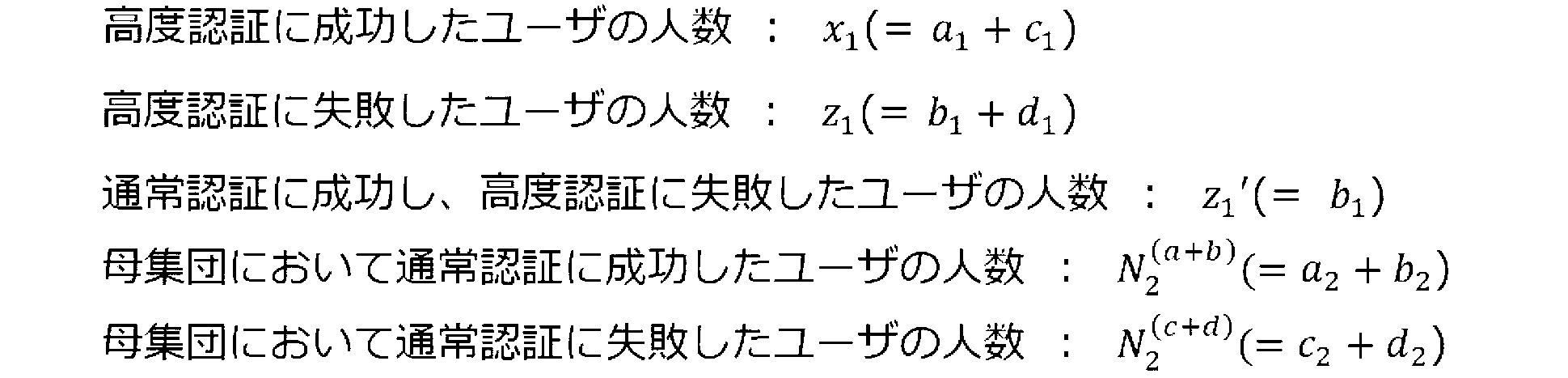
そして、本人性認証システム1は、母集団における、「非本人が通常認証に成功する割合β2」、および、「全ユーザに対する非本人の割合γ2」を、以下の式(1)および式(2)に基づき算出する。

この「非本人が通常認証に成功する割合β2」(式(1))は、全アカウントを対象にして、所定期間内にアクセスしてきた非本人のうち、通常認証に成功する割合である。これは、1アカウント当たりで非本人が乗っ取った(認証に成功した)割合を示している。
また「全ユーザに対する非本人の割合γ2」(式(2))は、1アカウント当たりの攻撃の割合を示している。
この式(1)、式(2)と、上記した観測可能なN2 (a+b)=a2+b2 …式(3)、および、N2 (c+d)=c2+d2 …式(4)とを用いて、連立方程式を解くことにより、a2、b2、c2、d2を求めることができる。
また「全ユーザに対する非本人の割合γ2」(式(2))は、1アカウント当たりの攻撃の割合を示している。
この式(1)、式(2)と、上記した観測可能なN2 (a+b)=a2+b2 …式(3)、および、N2 (c+d)=c2+d2 …式(4)とを用いて、連立方程式を解くことにより、a2、b2、c2、d2を求めることができる。
具体的には、本人性認証システム1は、母集団における、「通常認証に成功する本人の数a2」、「通常認証に成功する非本人の数b2」、「通常認証に失敗する本人の数c2」、「通常認証に失敗する非本人の数d2」を次の式により算出する。

そして、本人性認証システム1は、所定期間に通常認証に成功したユーザにおいては、本人である確率(PS
P)(式(5))を用いて本人性を推定し、本人ではない確率(PS
n)(式(6))を用いて本人性を推定する。
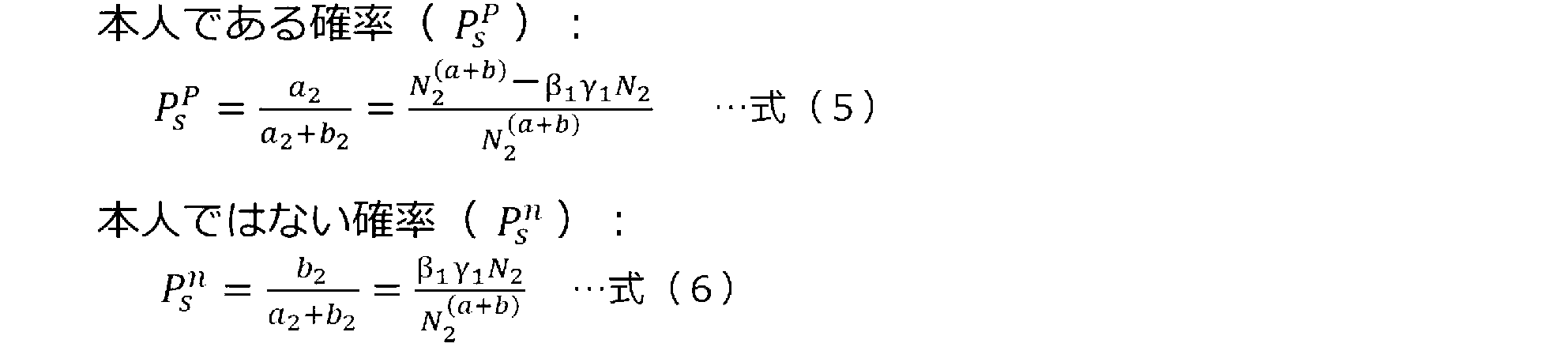
また、本人性認証システム1は、所定期間に通常認証に失敗したユーザにおいては、本人である確率(Pf
P)(式(7))を用いて本人性を推定し、本人ではない確率(Pf
n)(式(8))を用いて本人性を推定する。
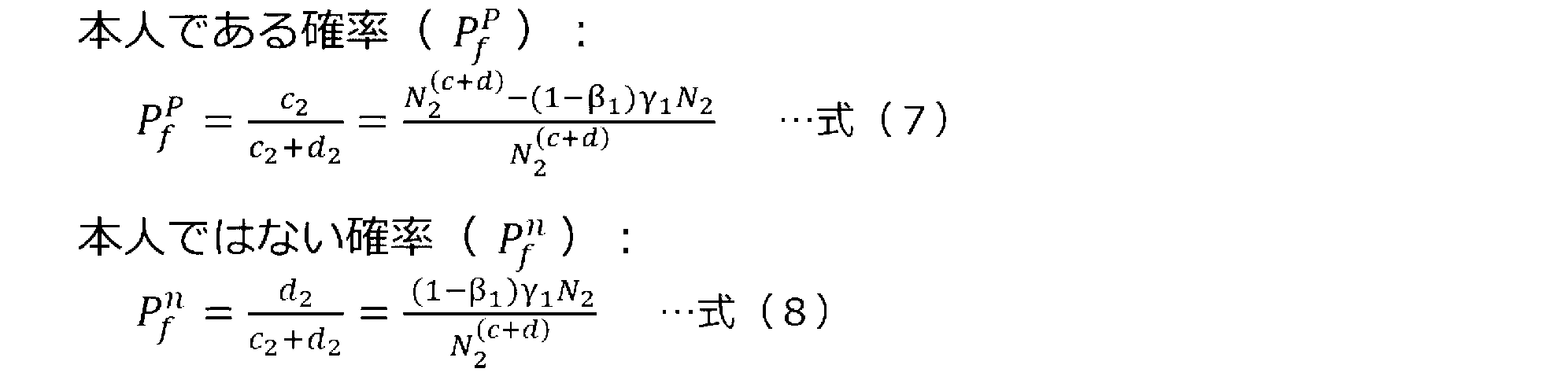
本人性認証システム1は、所定期間にアクセスしてきた全ユーザにおいては、次の式(9)を用いて、本人である確率(Pt)を推定する。

このように、本人性認証システム1では、所定期間に通常認証に成功したユーザにおいては、本人である確率(PS
P)を、式(5)を用いて本人性を推定することができる。
また、本人性認証システム1では、通常認証に失敗した場合も含めた本人である確率(Pt)を、式(9)を用いて本人性を推定することができる。
以上、本人の割合を推定(点推定)について説明した。
また、本人性認証システム1では、通常認証に失敗した場合も含めた本人である確率(Pt)を、式(9)を用いて本人性を推定することができる。
以上、本人の割合を推定(点推定)について説明した。
ここで、本人の割合を推定(点推定)できたとしても、(a)本人の割合の推定値が、どの程度の確からしさなのかが分からない。また、(b)本人の割合が動的に変化する運用環境では、標本数(この場合、高度認証を行うユーザ数)の最適な制御ができない、ことが着眼点として挙げられる。
上記(a)については、推定値の確からしさを定量的に可視化する[本人推定値の確からしさを評価する区間推定]により対応する。
上記(b)については、本人の割合の変化に推定値が追従するために、限られた期間で標本を収集する[高度認証を行うユーザをサンプリングする処理]により対応する。このサンプリング処理は、運用時に求められる推定値の精度の範囲で、高度認証を行うユーザ数の割合を最適化するものである。高度認証を行うユーザ数の割合が多い場合、推定値の精度は高く、その割合が少ない場合、推定値の精度は低いものとなる。
以下、[本人推定値の確からしさを評価する区間推定]および[高度認証を行うユーザをサンプリングする処理]について説明する。
以下、[本人推定値の確からしさを評価する区間推定]および[高度認証を行うユーザをサンプリングする処理]について説明する。
[技術思想4:本人推定値の確からしさを評価する区間推定]
本人性認証システム1は、本人の割合を推定(点推定)した処理の後に、区間推定を行う処理を行う。
区間推定については、本人の割合を推定(点推定)する機能と連携して、本人である比率と、高度認証に成功した比率の視点を組み合わせることを特徴とする。
区間推定により、本人推定値の確からしさを評価することができ、本人が高度認証に失敗することによる影響を考慮することができる。
本人性認証システム1は、本人の割合を推定(点推定)した処理の後に、区間推定を行う処理を行う。
区間推定については、本人の割合を推定(点推定)する機能と連携して、本人である比率と、高度認証に成功した比率の視点を組み合わせることを特徴とする。
区間推定により、本人推定値の確からしさを評価することができ、本人が高度認証に失敗することによる影響を考慮することができる。
図4は、標本比率の分布関数と区間推定を説明する図である。横軸に標本比率を示し、縦軸に確率密度を示している。
図4に示すように、標本比率(ここでは、本人の割合)の分布は、標本数(ここでは、高度認証を行うユーザ数)が大きくなると、母集団の分布に関わらず、正規分布に近似していく。図4に示す信頼区間(例えば95%)の範囲を推定する。
図4に示すように、標本比率(ここでは、本人の割合)の分布は、標本数(ここでは、高度認証を行うユーザ数)が大きくなると、母集団の分布に関わらず、正規分布に近似していく。図4に示す信頼区間(例えば95%)の範囲を推定する。
本人の割合を推定(点推定)した処理の後に、区間推定を行う処理を追加する。
また、高度認証を行うユーザをサンプリングする処理に、本人の割合の点推定値が基準値以下の場合に、本人の割合の変化量に基準を設けて、基準に従った割合と抽出期間でサンプリングする処理(図33)を追加する。基準値を設ける理由は、ユーザの利便性を考慮したためである。
また、高度認証を行うユーザをサンプリングする処理に、本人の割合の点推定値が基準値以下の場合に、本人の割合の変化量に基準を設けて、基準に従った割合と抽出期間でサンプリングする処理(図33)を追加する。基準値を設ける理由は、ユーザの利便性を考慮したためである。
<本人の割合を区間推定する手法の詳細>
本人の割合を区間推定する手法の詳細について説明する。
・本人の割合pの区間推定式
本人の割合pの区間推定式は、式(10)で示される。
本人の割合を区間推定する手法の詳細について説明する。
・本人の割合pの区間推定式
本人の割合pの区間推定式は、式(10)で示される。
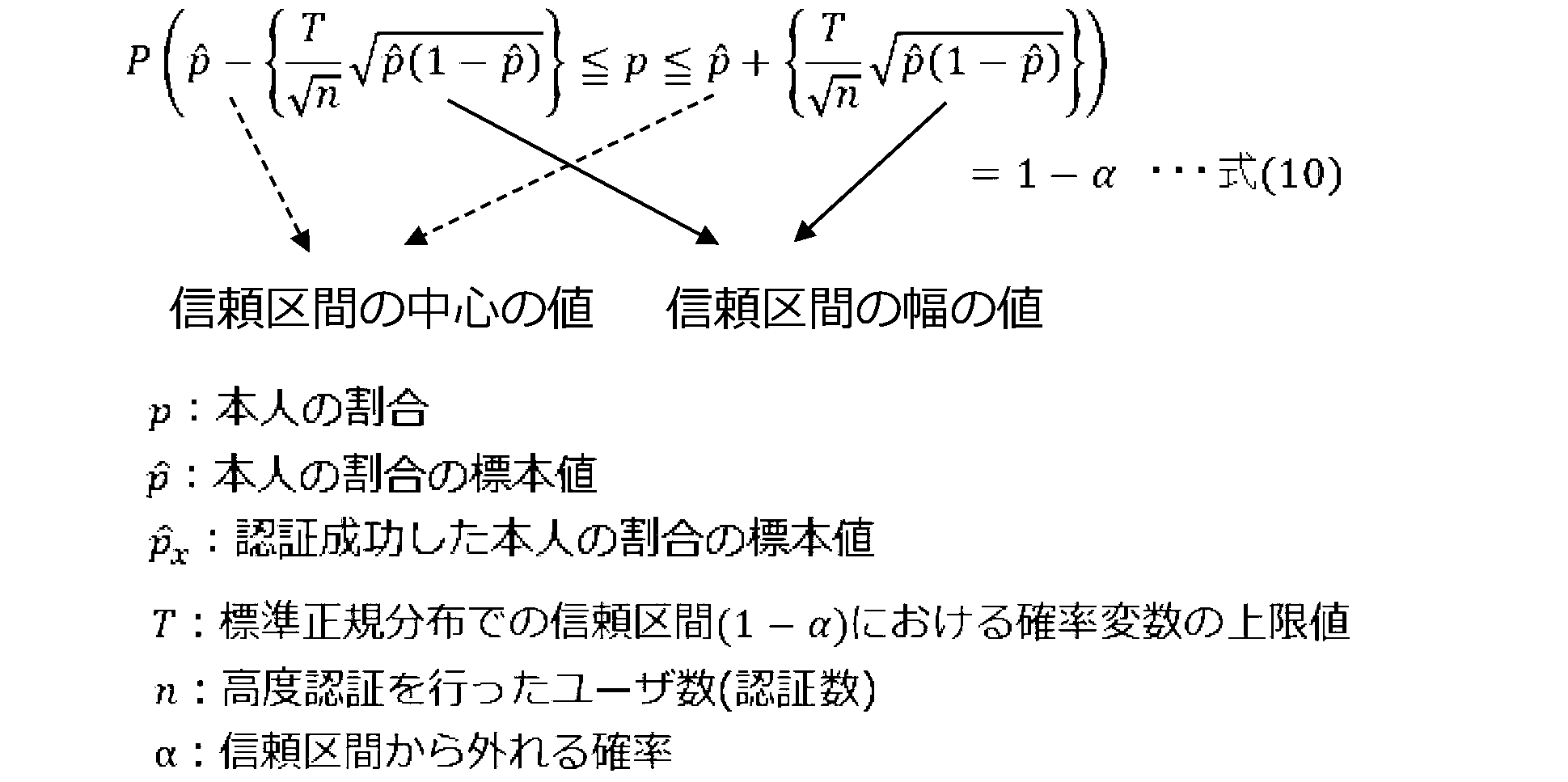
上記式(10)について、図5を参照して説明する。
図5は、標本比率(ここでは、本人の割合p)の分布関数と区間推定を説明する図である。横軸に標本比率を示し、縦軸に確率密度を示している。
本人の割合p、本人の割合の標本値p^(「pハット」)とした場合、式(10)のP()内において、pの右辺と左辺のp^は、図5に示す分布関数の「信頼区間(1-α)の中心の値」である。また、式(10)のpの右辺と左辺における{}内は、図5に示す分布関数の「信頼区間(1-α)の幅の値」である。αは、信頼区間から外れる確率であり、正規分布の場合、α=α/2+α/2である。
図5は、標本比率(ここでは、本人の割合p)の分布関数と区間推定を説明する図である。横軸に標本比率を示し、縦軸に確率密度を示している。
本人の割合p、本人の割合の標本値p^(「pハット」)とした場合、式(10)のP()内において、pの右辺と左辺のp^は、図5に示す分布関数の「信頼区間(1-α)の中心の値」である。また、式(10)のpの右辺と左辺における{}内は、図5に示す分布関数の「信頼区間(1-α)の幅の値」である。αは、信頼区間から外れる確率であり、正規分布の場合、α=α/2+α/2である。
・高度認証に失敗する本人がいない場合の、本人の割合pの区間推定式
高度認証に失敗する本人がいない場合の、本人の割合pの区間推定式は、高度認証成功した本人の割合の標本値p^xとすると、式(10)から、式(11)で示される。
高度認証に失敗する本人がいない場合の、本人の割合pの区間推定式は、高度認証成功した本人の割合の標本値p^xとすると、式(10)から、式(11)で示される。
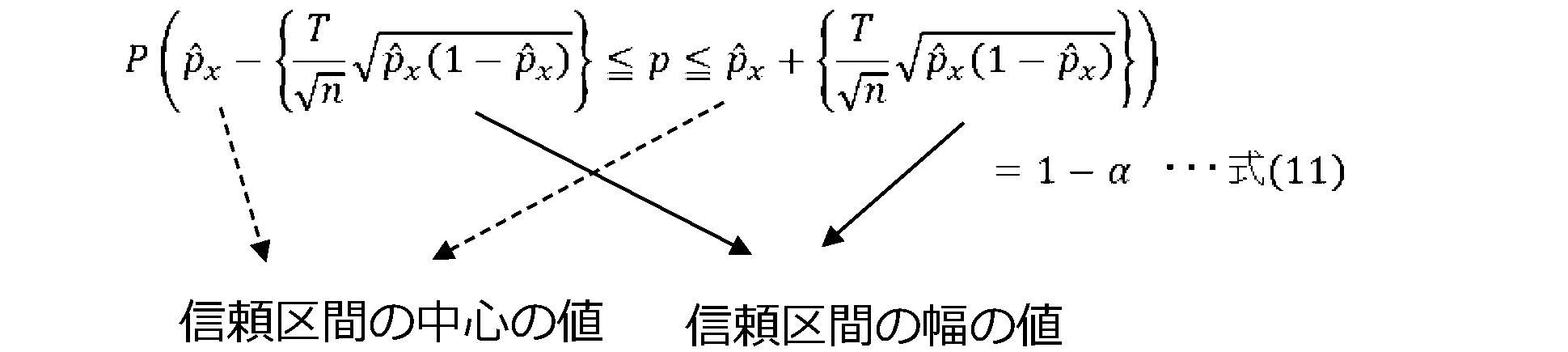
・高度認証に失敗する本人がいる場合の、本人の割合pの区間推定式
本人の割合pの区間推定式の算出には、高度認証に成功したユーザ数だけではなく、高度認証に失敗した本人数(本人であっても高度認証には失敗する場合がある)を加算する必要がある。
高度認証に失敗する本人がいる場合、本人の割合の標本値は、高度認証に成功したユーザ数と高度認証に失敗した本人数をカウントして、式(12)に従って算出する。すなわち、式(12)は、高度認証成功した本人の割合の標本値p^xに高度認証失敗した本人の割合の標本値p^yを加えた場合の式であり、具体的には、式(11)のp^xを(p^x+p^x)に置き換えている。
本人の割合pの区間推定式の算出には、高度認証に成功したユーザ数だけではなく、高度認証に失敗した本人数(本人であっても高度認証には失敗する場合がある)を加算する必要がある。
高度認証に失敗する本人がいる場合、本人の割合の標本値は、高度認証に成功したユーザ数と高度認証に失敗した本人数をカウントして、式(12)に従って算出する。すなわち、式(12)は、高度認証成功した本人の割合の標本値p^xに高度認証失敗した本人の割合の標本値p^yを加えた場合の式であり、具体的には、式(11)のp^xを(p^x+p^x)に置き換えている。

・高度認証に失敗する本人がいる場合の、本人の割合pの区間推定式に補正項を追加した式
式(13)は、式(12)の区間推定式に、補正項(図6で後述)を追加して安全側に配慮した区間推定式である。信頼区間の中心の値と、信頼区間の幅の値にそれぞれ補正項(式(13)参照)を追加する。
式(13)は、式(12)の区間推定式に、補正項(図6で後述)を追加して安全側に配慮した区間推定式である。信頼区間の中心の値と、信頼区間の幅の値にそれぞれ補正項(式(13)参照)を追加する。

上記式(13)が、[本人推定値の確からしさを評価する区間推定]に用いる式である。
高度認証を行った結果(認証成功/認証失敗)を観測(標本抽出)し、式(13)を適用して、本人の割合pを区間推定する。
高度認証を行った結果(認証成功/認証失敗)を観測(標本抽出)し、式(13)を適用して、本人の割合pを区間推定する。
・信頼区間の中心の値の補正項
信頼区間の中心の値の補正項(中心値補正項)について説明する。
(1)補正項がない場合、信頼区間の中心の値に誤差を発生させるものの、値を小さく見積もることになる。このことから、本人の割合をNWセキュリティ上安全側に評価することになる。
信頼区間の中心の値の補正項(中心値補正項)について説明する。
(1)補正項がない場合、信頼区間の中心の値に誤差を発生させるものの、値を小さく見積もることになる。このことから、本人の割合をNWセキュリティ上安全側に評価することになる。
(2)高度認証失敗した本人の割合p^yが小さいほど、補正項の値は小さくなる。
(3)高度認証失敗した本人の割合p^yの観測が困難(認証失敗したユーザには非本人が含まれる)場合、信頼区間の中心の値の補正項については算出困難である。このため、上記(1),(2)を踏まえて補正項は省略し、ユーザの振る舞いにもとづいて最適な高度認証を選択して、認証失敗する確率を抑止する。
・信頼区間の幅の値の補正項
信頼区間の幅の値の補正項(幅値補正項)について説明する。
(1)補正項(<0)がない場合、信頼区間の幅の値に誤差を発生させるものの、値を大きく見積もる(幅を広げる)ことになる。このため、NWセキュリティ上安全側に評価することになる。
信頼区間の幅の値の補正項(幅値補正項)について説明する。
(1)補正項(<0)がない場合、信頼区間の幅の値に誤差を発生させるものの、値を大きく見積もる(幅を広げる)ことになる。このため、NWセキュリティ上安全側に評価することになる。
(2)高度認証失敗した本人の割合p^yが大きいほど、補正項の値は小さくなる(絶対値は大きくなる)が、ネットワークの実運用上の範囲で、最大で約-0.1%~-1%程度と想定できる。
(3)高度認証失敗した本人の割合p^yの観測が困難(認証失敗したユーザには非本人が含まれる)場合、信頼区間の中心の幅の補正項については算出困難である。このため、上記(1),(2)を踏まえて補正項は省略し、ユーザの振る舞いにもとづいて最適な超強力認証を選択して、認証失敗する確率を抑止する。
・信頼区間の幅の値の補正項
信頼区間の幅の値の補正項について説明する。
図6は、高度認証失敗した本人の割合を0.01~0.5まで変化させた時の補正項の値を示す図である。横軸に高度認証失敗した本人の割合をとり、縦軸に信頼区間(図5の分布関数の片側)の観測誤差の最大値をとる。縦軸の信頼区間の観測誤差は、補正項の値である。図6の補正項の値は、その絶対値が最大になるような条件で算出した。
図6中の黒丸(●印)は観測点を示し、これらを結ぶ実線は、ユーザ全体における本人の割合を表わしている。全ユーザのうち、高度認証成功したユーザと認証失敗した本人の割合の合計を1とした(絶対値が最大になる条件)。認証を行ったユーザ数(認証数)n=10,000,標準正規分布での信頼区間(1-α)における確率変数の上限値T=3とした。
信頼区間の幅の値の補正項は、図6に示す補正項の値を用いることができる。
信頼区間の幅の値の補正項について説明する。
図6は、高度認証失敗した本人の割合を0.01~0.5まで変化させた時の補正項の値を示す図である。横軸に高度認証失敗した本人の割合をとり、縦軸に信頼区間(図5の分布関数の片側)の観測誤差の最大値をとる。縦軸の信頼区間の観測誤差は、補正項の値である。図6の補正項の値は、その絶対値が最大になるような条件で算出した。
図6中の黒丸(●印)は観測点を示し、これらを結ぶ実線は、ユーザ全体における本人の割合を表わしている。全ユーザのうち、高度認証成功したユーザと認証失敗した本人の割合の合計を1とした(絶対値が最大になる条件)。認証を行ったユーザ数(認証数)n=10,000,標準正規分布での信頼区間(1-α)における確率変数の上限値T=3とした。
信頼区間の幅の値の補正項は、図6に示す補正項の値を用いることができる。
以上、本人の割合を推定(点推定)後に、式(13)を適用した区間推定を連携させることにより、本人推定値の確からしさを評価することができ、本人が高度認証に失敗することによる影響を考慮することができる。
[技術思想5:高度認証を行うユーザをサンプリングする処理]
加えて、本人性認証システム1は、本人の割合の推定値の精度を維持しつつ、運用時の本人の割合の変化に追従するために、推定値算出の即時性を担保する。そのために、本人性認証システム1は、標本(高度認証を行うユーザ)を抽出する割合と抽出期間を制御する。具体的には、本人性認証システム1は、本人の割合の推定値と前回測定時の推定値の値との差分にもとづいて、標本を抽出する割合と抽出期間を動的に設定する。推定値には、点推定値、または区間推定値(例えば、推定値の下限値)を用いる。
加えて、本人性認証システム1は、本人の割合の推定値の精度を維持しつつ、運用時の本人の割合の変化に追従するために、推定値算出の即時性を担保する。そのために、本人性認証システム1は、標本(高度認証を行うユーザ)を抽出する割合と抽出期間を制御する。具体的には、本人性認証システム1は、本人の割合の推定値と前回測定時の推定値の値との差分にもとづいて、標本を抽出する割合と抽出期間を動的に設定する。推定値には、点推定値、または区間推定値(例えば、推定値の下限値)を用いる。
図7は、サンプリングの割合と抽出期間の動的制御を説明する図である。本フィードバック制御は、図17の本人性スコア算出装置10の制御部11により実行される。
図7に示すように、本人の割合の推定値を入力し、前回測定時の推定値の値との差分をとる(ステップS101)。ステップS102では、前回測定時の推定値の値との差分を入力し、サンプリングの抽出期間を算出する。ステップS103では、算出されたサンプリングの抽出期間をもとに、サンプリングの割合を算出し、サンプリングの割合およびサンプリングの抽出期間を、本人の割合の推定値として出力する。ステップS104では、出力した本人の割合の推定値を前回の推定値として保存する。
図7に示すように、本人の割合の推定値を入力し、前回測定時の推定値の値との差分をとる(ステップS101)。ステップS102では、前回測定時の推定値の値との差分を入力し、サンプリングの抽出期間を算出する。ステップS103では、算出されたサンプリングの抽出期間をもとに、サンプリングの割合を算出し、サンプリングの割合およびサンプリングの抽出期間を、本人の割合の推定値として出力する。ステップS104では、出力した本人の割合の推定値を前回の推定値として保存する。
このように、本人性認証システム1は、高度認証を行うユーザをサンプリングする処理において、本人の割合の点推定値が基準値以下の場合に、本人の割合の変化量に基準を設けて、基準に従った割合と抽出期間でサンプリングする処理を行う。
本人の割合の変化への追従については、点推定あるいは区間推定する機能と連携して、標本の割合と抽出期間を制御することを特徴とする。
点推定値を用いて標本(高度認証を行うユーザ)の割合と抽出期間を制御することで、運用時の本人の割合の変化に追従することができる。
本人の割合の変化への追従については、点推定あるいは区間推定する機能と連携して、標本の割合と抽出期間を制御することを特徴とする。
点推定値を用いて標本(高度認証を行うユーザ)の割合と抽出期間を制御することで、運用時の本人の割合の変化に追従することができる。
[技術思想6:false negative 評価のための高度認証]
高度認証では、ユーザの振る舞いを観察して、本人であれば認証成功する可能性の高い高度認証手法が選択される。しかしながら、ユーザの振る舞いによっては、本人であっても、高度認証に成功できない場合も考えられる。
例えば、高度認証に認証トークンを用いる場合において、以下のケースが考えられる。認証トークンには、専用のデバイスやスマートフォンのアプリケーションが用いられる。ユーザ(本人)が外出先でサービスを利用する際、専用のデバイスを持参していなかった場合には、高度認証に失敗する。また、スマートフォンの電波が一時的に届かなくなったり、スマートフォンのバッテリが切れた場合にも、高度認証に失敗する。
また、高度認証にマイナンバーカード等のICカードを用いる場合において、以下のケースが考えられる。ICカードリーダが手元になかったり、故障したりした場合に、ICカードからユーザ情報を読み取ることができず、高度認証に失敗してしまう。ICカードのPINを失念した場合にも、高度認証に失敗してしまう。
高度認証では、ユーザの振る舞いを観察して、本人であれば認証成功する可能性の高い高度認証手法が選択される。しかしながら、ユーザの振る舞いによっては、本人であっても、高度認証に成功できない場合も考えられる。
例えば、高度認証に認証トークンを用いる場合において、以下のケースが考えられる。認証トークンには、専用のデバイスやスマートフォンのアプリケーションが用いられる。ユーザ(本人)が外出先でサービスを利用する際、専用のデバイスを持参していなかった場合には、高度認証に失敗する。また、スマートフォンの電波が一時的に届かなくなったり、スマートフォンのバッテリが切れた場合にも、高度認証に失敗する。
また、高度認証にマイナンバーカード等のICカードを用いる場合において、以下のケースが考えられる。ICカードリーダが手元になかったり、故障したりした場合に、ICカードからユーザ情報を読み取ることができず、高度認証に失敗してしまう。ICカードのPINを失念した場合にも、高度認証に失敗してしまう。
高度認証では、非本人が認証成功することとほぼ抑止できる一方で、上記の例のように、実際には、本人も認証失敗する場合(false negative)もあり、図8で示すように、本人が高度認証を失敗する場合(false negative)が増えると、本人の割合の推定値の精度が低下してしまう。
そこで、所定期間にアクセスしてきたユーザの中から、高度認証に失敗した本人の数(false negativeのユーザ数)を推定する。
高度認証に失敗した本人は、アカウントにログインできないため、再度ログインを試みると想定し、同じアカウントにログインを試みたユーザに対して、従来の通常認証に加えて、高度認証に失敗した本人(false negative)かどうかを評価するための高度認証を行う。そして、高度認証に成功したユーザの振る舞い(振る舞い情報)と、所定期間遡って、過去(前回)に同じアカウントにアクセスして高度認証に失敗したユーザの振る舞い(振る舞い情報)を比較し、その振る舞いが類似しているかによって、これらのユーザの同一性を推定して、false negativeの評価を行う。
高度認証に失敗した本人は、アカウントにログインできないため、再度ログインを試みると想定し、同じアカウントにログインを試みたユーザに対して、従来の通常認証に加えて、高度認証に失敗した本人(false negative)かどうかを評価するための高度認証を行う。そして、高度認証に成功したユーザの振る舞い(振る舞い情報)と、所定期間遡って、過去(前回)に同じアカウントにアクセスして高度認証に失敗したユーザの振る舞い(振る舞い情報)を比較し、その振る舞いが類似しているかによって、これらのユーザの同一性を推定して、false negativeの評価を行う。
図9は、本実施形態に係る本人性認証システム1によるfalse negative評価のための高度認証を含む全体概要を説明するための図である。
図9で示すように、ユーザがアカウントにログインを試みると、通常認証を行ったあと、サンプリングを行い、一部のユーザに対して高度認証を行う(図9の<本人の割合推定のための認証>)。これに加えて、本人性認証システム1では、前回高度認証に失敗したアカウントにアクセスするユーザに対しても高度認証を行う(図9の<false negative評価のための認証>)。
高度認証に失敗したユーザと、高度認証に成功したユーザの同一性の推定は、以下に示す方針で行う。
図9で示すように、ユーザがアカウントにログインを試みると、通常認証を行ったあと、サンプリングを行い、一部のユーザに対して高度認証を行う(図9の<本人の割合推定のための認証>)。これに加えて、本人性認証システム1では、前回高度認証に失敗したアカウントにアクセスするユーザに対しても高度認証を行う(図9の<false negative評価のための認証>)。
高度認証に失敗したユーザと、高度認証に成功したユーザの同一性の推定は、以下に示す方針で行う。
(同一性推定の方針1:端末情報による推定)
「ユーザとユーザ端末とを紐づける情報」(例えば、端末に登録される生体認証による生体情報)を高信頼で確認できる場合、過去(前回)と今回の高度認証実施時の端末が同一であれば、同一ユーザの可能性が高いと推定する。端末が同一であるかは、例えば、端末識別子、IMSI(International Mobile Subscription Identity:加入者識別番号)、ブラウザフィンガープリントなどで判断する。
「ユーザとユーザ端末とを紐づける情報」(例えば、端末に登録される生体認証による生体情報)を高信頼で確認できる場合、過去(前回)と今回の高度認証実施時の端末が同一であれば、同一ユーザの可能性が高いと推定する。端末が同一であるかは、例えば、端末識別子、IMSI(International Mobile Subscription Identity:加入者識別番号)、ブラウザフィンガープリントなどで判断する。
図10で示すように、時刻(t-α)において、ユーザとユーザ端末との紐づけが生体認証(顔認証)で行われており、時刻tにおけるユーザとユーザ端末との紐づけが同じく生体認証(顔認証)で行われている場合において、両時刻の端末識別子が同じであれば、同一ユーザの可能性が高いと推定する。これにより、時刻(t-α)での高度認証の結果を<失敗>から<成功>に修正(変更)する。
(同一性推定の方針2:サービス環境や行動履歴による推定)
端末情報で同一性を確認できない場合でも、「ネットワークサービスの利用環境」および「行動履歴」を含むユーザの振る舞いを補完的に用いて、ユーザの同一性を推定する。
ネットワークサービスの利用環境は、ユーザの利用端末に関する情報や、ネットワークキャリアが備える情報を含み、例えば、アカウントへのアクセス情報や、生体認証の登録情報、基地局情報、回線番号、通知ログ等である。
行動履歴は、ユーザの利用端末やネットワークキャリアから得られる、位置情報(GPS)や、端末にダウンロードされたアプリケーションの利用履歴(決済情報、駅改札入退場情報、電子マネー利用情報)、アウトオブバンドにより外部装置から得られる、入退出管理情報、カード決済情報、スケジューラ(予定表)、SNSなどである。
なお、アウトオブバンドとは、本人性認証システム1とは異なる手段(システム)で管理されることを意味する。
端末情報で同一性を確認できない場合でも、「ネットワークサービスの利用環境」および「行動履歴」を含むユーザの振る舞いを補完的に用いて、ユーザの同一性を推定する。
ネットワークサービスの利用環境は、ユーザの利用端末に関する情報や、ネットワークキャリアが備える情報を含み、例えば、アカウントへのアクセス情報や、生体認証の登録情報、基地局情報、回線番号、通知ログ等である。
行動履歴は、ユーザの利用端末やネットワークキャリアから得られる、位置情報(GPS)や、端末にダウンロードされたアプリケーションの利用履歴(決済情報、駅改札入退場情報、電子マネー利用情報)、アウトオブバンドにより外部装置から得られる、入退出管理情報、カード決済情報、スケジューラ(予定表)、SNSなどである。
なお、アウトオブバンドとは、本人性認証システム1とは異なる手段(システム)で管理されることを意味する。
図11で示すように、時刻(t-α)におけるユーザの振る舞い(ネットワークサービスの利用環境および行動履歴)と、時刻tにおけるユーザの振る舞い(ネットワークサービスの利用環境および行動履歴)が類似している場合には、同一ユーザの可能性が高いと推定する。これにより、時刻(t-α)での高度認証の結果を<失敗>から<成功>に修正する。
なお、ユーザとユーザ端末とを紐づける利用形態として、図12で示すような端末の利用形態が想定される。
端末を「1台利用」する場合と「複数台利用」する場合のそれぞれにおいて、その台数を一人のユーザが占有する場合(端末専有)、複数台のうちの一部を複数のユーザで共有する場合(一部端末共有)、1台または複数台の端末のすべてを複数人で共有する場合(全端末共有)が想定される。
それぞれの端末の利用形態に応じて、上記の同一性推定の方針1または方針2を用いる。それぞれの利用形態の概要を図12で示すように概要1,2,3とし、その具体例として、ユーザの同一性の推定を行うロジックを、所定のユーザ同一性推定ロジックとして説明する。
なお、ユーザ端末3が「ユーザとユーザ端末とを紐づける情報」(以下においては生体認証機能により得られる「生体情報」を例とする。)を利用する各形態の概要1,2、3に対応するロジックを、ユーザ同一性推定ロジック1,2,3とする。また、ユーザ端末3が生体認証機能を備えない場合の利用形態でのロジックを、ユーザ同一性推定ロジック4として、以下説明する。
端末を「1台利用」する場合と「複数台利用」する場合のそれぞれにおいて、その台数を一人のユーザが占有する場合(端末専有)、複数台のうちの一部を複数のユーザで共有する場合(一部端末共有)、1台または複数台の端末のすべてを複数人で共有する場合(全端末共有)が想定される。
それぞれの端末の利用形態に応じて、上記の同一性推定の方針1または方針2を用いる。それぞれの利用形態の概要を図12で示すように概要1,2,3とし、その具体例として、ユーザの同一性の推定を行うロジックを、所定のユーザ同一性推定ロジックとして説明する。
なお、ユーザ端末3が「ユーザとユーザ端末とを紐づける情報」(以下においては生体認証機能により得られる「生体情報」を例とする。)を利用する各形態の概要1,2、3に対応するロジックを、ユーザ同一性推定ロジック1,2,3とする。また、ユーザ端末3が生体認証機能を備えない場合の利用形態でのロジックを、ユーザ同一性推定ロジック4として、以下説明する。
≪ユーザ同一性推定ロジック1≫
図13は、ユーザ同一性推定ロジック1を説明するための図である。
ユーザ同一性推定ロジック1では、ユーザとユーザ端末とを紐づける情報として生体認証(顔認証など)を用いた確認を行い、端末に生体情報を識別子として登録しているものとする。また、複数のユーザで同一端末を共有している場合、端末に登録してあるどの生体情報と照合したかを確認することで、ユーザを識別する。なお、一人のユーザが登録されている場合も同様である。端末に登録する生体情報には、登録時刻を付与して、ユーザと生体情報の紐づけの継続期間を管理する。
図13は、ユーザ同一性推定ロジック1を説明するための図である。
ユーザ同一性推定ロジック1では、ユーザとユーザ端末とを紐づける情報として生体認証(顔認証など)を用いた確認を行い、端末に生体情報を識別子として登録しているものとする。また、複数のユーザで同一端末を共有している場合、端末に登録してあるどの生体情報と照合したかを確認することで、ユーザを識別する。なお、一人のユーザが登録されている場合も同様である。端末に登録する生体情報には、登録時刻を付与して、ユーザと生体情報の紐づけの継続期間を管理する。
図13で示すように、時刻(t-α)でユーザAが生体情報「#a」で端末との紐づけに成功した上で、高度認証に<失敗>する。その後時刻tで、仮にユーザBとするユーザが生体情報「#a」で端末との紐づけに成功した上で、高度認証に<成功>したとする。
この場合、生体情報「#a」が両時刻で同一であり、生体情報「#a」が時刻(t-α)より前に登録されていれば、ユーザAとユーザBは、(同一性推定の方針1:端末情報による推定)により、同一である可能性が高いと推定する。
この場合、生体情報「#a」が両時刻で同一であり、生体情報「#a」が時刻(t-α)より前に登録されていれば、ユーザAとユーザBは、(同一性推定の方針1:端末情報による推定)により、同一である可能性が高いと推定する。
≪ユーザ同一性推定ロジック2≫
図14は、ユーザ同一性推定ロジック2を説明するための図である。
ユーザ同一性推定ロジック2は、ユーザ同一性推定ロジック1と同様に、ユーザと端末間の紐づけを生体認証(顔認証など)で確認を行い、端末に生体情報を識別子として登録しているものとする。ユーザ同一性推定ロジック1と異なる点は、時刻(t-α)と時刻tとの間に、端末に登録した生体情報が更新されることであり、この場合には、同一ユーザと推定できない可能性がある。
図14は、ユーザ同一性推定ロジック2を説明するための図である。
ユーザ同一性推定ロジック2は、ユーザ同一性推定ロジック1と同様に、ユーザと端末間の紐づけを生体認証(顔認証など)で確認を行い、端末に生体情報を識別子として登録しているものとする。ユーザ同一性推定ロジック1と異なる点は、時刻(t-α)と時刻tとの間に、端末に登録した生体情報が更新されることであり、この場合には、同一ユーザと推定できない可能性がある。
図14で示すように、時刻(t-α)でユーザAが生体情報「#a」で端末との紐づけに成功した上で、高度認証に<失敗>する。その後時刻tで、仮にユーザBとするユーザが生体情報「#a」で端末との紐づけに成功した上で、高度認証に<成功>したとする。ただし、時刻(t-α)~時刻tの間の時刻(t-β)において、生体情報「#a」が更新された場合、同一端末に紐づくユーザAとユーザBが同一のユーザであるとは推定できない。
この場合、生体情報が更新される前後のユーザの他の振る舞いの類似性から、生体情報が更新する前後でのユーザが同一かを推定する。具体的には、時刻(t-β)以前の生体情報「#a」で認証したユーザの振る舞い情報(時刻(t-α)でのネットワークサービスの利用環境および行動履歴)と、時刻(t-β)以降の生体情報「#α」で認証したユーザの振る舞い情報(時刻tでのネットワークサービスの利用環境および行動履歴)とを比較し類似性が高ければ、同一端末に紐づくユーザAとユーザBは、(同一性推定の方針2:サービス環境や行動履歴による推定)により、同一である可能性が高いと推定する。
この場合、生体情報が更新される前後のユーザの他の振る舞いの類似性から、生体情報が更新する前後でのユーザが同一かを推定する。具体的には、時刻(t-β)以前の生体情報「#a」で認証したユーザの振る舞い情報(時刻(t-α)でのネットワークサービスの利用環境および行動履歴)と、時刻(t-β)以降の生体情報「#α」で認証したユーザの振る舞い情報(時刻tでのネットワークサービスの利用環境および行動履歴)とを比較し類似性が高ければ、同一端末に紐づくユーザAとユーザBは、(同一性推定の方針2:サービス環境や行動履歴による推定)により、同一である可能性が高いと推定する。
≪ユーザ同一性推定ロジック3≫
図15は、ユーザ同一性推定ロジック3を説明するための図である。
ユーザ同一性推定ロジック3は、ユーザが複数端末を利用している場合であり、このときは、端末それぞれにおいて、ユーザとユーザ端末とを紐づける情報として生体認証による生体情報(顔認証など)で確認を行っても、複数の端末の端末識別子が異なる場合には、同一ユーザとみなせない可能性がある。
図15は、ユーザ同一性推定ロジック3を説明するための図である。
ユーザ同一性推定ロジック3は、ユーザが複数端末を利用している場合であり、このときは、端末それぞれにおいて、ユーザとユーザ端末とを紐づける情報として生体認証による生体情報(顔認証など)で確認を行っても、複数の端末の端末識別子が異なる場合には、同一ユーザとみなせない可能性がある。
図15で示すように、時刻(t-α)でユーザAが生体情報「#a」で端末xとの紐づけに成功した上で、高度認証に<失敗>する。その後時刻tで、ユーザAが生体情報「#a」で端末yとの紐づけに成功した上で、高度認証に<成功>したとする。この場合には、端末情報が異なるため、(同一性推定の方針1:端末情報による推定)ではなく、(同一性推定の方針2:サービス環境や行動履歴による推定)により、ユーザの振る舞い情報(ネットワークサービスの利用環境および行動履歴)を用いて、ユーザが同一かを推定する。
例えば、時刻(t-α)と時刻tにアクセスしたユーザの振る舞い情報として、所定期間の位置情報やスケジュール情報などの履歴の集合を補完的用いて、ユーザの同一性を推定する。
例えば、時刻(t-α)と時刻tにアクセスしたユーザの振る舞い情報として、所定期間の位置情報やスケジュール情報などの履歴の集合を補完的用いて、ユーザの同一性を推定する。
≪ユーザ同一性推定ロジック4≫
図16は、ユーザ同一性推定ロジック4を説明するための図である。
ユーザ同一性推定ロジック4は、端末に生体認証機能がない場合に、(同一性推定の方針2:サービス環境や行動履歴による推定)により、ユーザの振る舞い情報(ネットワークサービスの利用環境および行動履歴)を用いて、ユーザが同一かを推定する。
端末に生体認証機能がない場合、PINやパターン認証の他に、ユーザの振る舞い情報として、所定期間の位置情報やスケジュール情報などの履歴の集合を補完的用いて、時刻(t-α)にアクセスしてきたユーザと、時刻tにアクセスしてきたユーザの同一性を推定する。
図16は、ユーザ同一性推定ロジック4を説明するための図である。
ユーザ同一性推定ロジック4は、端末に生体認証機能がない場合に、(同一性推定の方針2:サービス環境や行動履歴による推定)により、ユーザの振る舞い情報(ネットワークサービスの利用環境および行動履歴)を用いて、ユーザが同一かを推定する。
端末に生体認証機能がない場合、PINやパターン認証の他に、ユーザの振る舞い情報として、所定期間の位置情報やスケジュール情報などの履歴の集合を補完的用いて、時刻(t-α)にアクセスしてきたユーザと、時刻tにアクセスしてきたユーザの同一性を推定する。
この振る舞い情報を、スケジューラや入退室管理サーバなどのアウトオブバンドからも収集する。端末からは、端末識別子やネットワーク種別などの通信利用状況や、位置情報や駅改札通過履歴などのアプリケーションから収集可能な振る舞い情報を収集する。振る舞い情報の項目数を多くし、履歴の収集時間を長くとることで、ユーザの同一性の精度をあげることができる。
次に、本実施形態に係る本人性認証システム1を構成する、本人性スコア算出装置10および認証装置20について、具体的に説明する。
<本人性スコア算出装置>
図17は、本実施形態に係る本人性スコア算出装置10の構成例を示す機能ブロック図である。
本人性スコア算出装置10は、ユーザがユーザ端末3により、Webサーバ51等のアカウントにアクセスした際の通常認証および高度認証の結果を、認証装置20から取得し、アクセスしてきたユーザの本人性の確率を算出する。この本人性スコア算出装置10は、アクセスするアカウントに紐づくヒト(ユーザ)の振る舞いに関する情報として、サービス利用環境(位置情報、利用時間、回線情報、ID情報など)や、行動履歴等を、「振る舞い情報」として収集し、本人が認証失敗するのを抑止できる、高度認証の手法を選択する。また、本人性スコア算出装置10は、所定期間内にアクセスしてきたユーザの中から、高度認証に失敗したアカウントにアクセスするユーザを対象にして、false negative(高度認証に失敗した本人)の評価を行うための高度認証を行う。そして、前回の高度認証に失敗したユーザと、今回の高度認証に成功したユーザの振る舞い(振る舞い情報)が類似している場合に、これらのユーザは同一の可能性が高いと推定し、前回の認証結果(認証失敗)を今回の認証結果(認証成功)に修正する。これにより、本人性認証システム1は、本人の割合の推定値の精度を向上させる。
この本人性スコア算出装置10は、制御部11と、入出力部12と、記憶部13と、を備えるコンピュータにより構成される。
図17は、本実施形態に係る本人性スコア算出装置10の構成例を示す機能ブロック図である。
本人性スコア算出装置10は、ユーザがユーザ端末3により、Webサーバ51等のアカウントにアクセスした際の通常認証および高度認証の結果を、認証装置20から取得し、アクセスしてきたユーザの本人性の確率を算出する。この本人性スコア算出装置10は、アクセスするアカウントに紐づくヒト(ユーザ)の振る舞いに関する情報として、サービス利用環境(位置情報、利用時間、回線情報、ID情報など)や、行動履歴等を、「振る舞い情報」として収集し、本人が認証失敗するのを抑止できる、高度認証の手法を選択する。また、本人性スコア算出装置10は、所定期間内にアクセスしてきたユーザの中から、高度認証に失敗したアカウントにアクセスするユーザを対象にして、false negative(高度認証に失敗した本人)の評価を行うための高度認証を行う。そして、前回の高度認証に失敗したユーザと、今回の高度認証に成功したユーザの振る舞い(振る舞い情報)が類似している場合に、これらのユーザは同一の可能性が高いと推定し、前回の認証結果(認証失敗)を今回の認証結果(認証成功)に修正する。これにより、本人性認証システム1は、本人の割合の推定値の精度を向上させる。
この本人性スコア算出装置10は、制御部11と、入出力部12と、記憶部13と、を備えるコンピュータにより構成される。
入出力部12は、認証装置20や、振る舞い情報を取得するための外部サーバ40等との間の情報について入出力を行う。この入出力部12は、通信回線を介して情報の送受信を行う通信インタフェースと、図示を省略したキーボード等の入力装置やモニタ等の出力装置との間で情報の入出力を行う入出力インタフェースとから構成される。
記憶部13は、ハードディスクやフラッシュメモリ、RAM(Random Access Memory)等により構成される。
この記憶部13には、通常認証および高度認証の認証結果を格納する認証結果DB100(詳細は後記する図18参照)と、ユーザの振る舞いに関する情報(振る舞い情報)を格納する振る舞い情報DB200(詳細は後記する、図19,図20および図26参照)と、通常認証および高度認証の結果を用いて算出された統計情報を格納する統計情報DB300(詳細は後記する図21参照)と、サンプリング情報DB400(詳細は後記する図35~図37参照)と、を備える。
また、記憶部13には、制御部11の各機能を実行させるためのプログラムや、制御部11の処理に必要な情報が一時的に記憶される。
この記憶部13には、通常認証および高度認証の認証結果を格納する認証結果DB100(詳細は後記する図18参照)と、ユーザの振る舞いに関する情報(振る舞い情報)を格納する振る舞い情報DB200(詳細は後記する、図19,図20および図26参照)と、通常認証および高度認証の結果を用いて算出された統計情報を格納する統計情報DB300(詳細は後記する図21参照)と、サンプリング情報DB400(詳細は後記する図35~図37参照)と、を備える。
また、記憶部13には、制御部11の各機能を実行させるためのプログラムや、制御部11の処理に必要な情報が一時的に記憶される。
制御部11は、本人性スコア算出装置10が実行する処理の全般を司り、図17で示すように、認証結果収集部111と、振る舞い情報収集部112と、外部サーバ連携部113と、高度認証制御部114と、高度認証結果評価部115と、統計処理部116と、確率算出部117と、サンプリング制御部118と、を含んで構成される。
認証結果収集部111は、ユーザがアカウントにアクセスした際に、認証装置20により行われる通常認証、および、高度認証が行われた場合には、その高度認証の結果を、認証装置20から取得し、その認証結果の情報(認証結果情報110)を認証結果DB100に格納する。
図18は、本実施形態に係る認証結果DB100に格納される認証結果情報110のデータ構成例を示す図である。
認証結果情報110には、図18で示すように、各ユーザに固有なIDであるアカウント名に対応付けて、アカウントへのアクセス時刻、通常認証が成功か失敗かを示す通常認証結果、および、高度認証の結果を示す高度認証結果が格納される。
なお、高度認証結果は、高度認証が実行された場合に、「成功」または「失敗」が格納され、高度認証の対象とならたかった場合には、「未実施」が格納される。
認証結果情報110には、図18で示すように、各ユーザに固有なIDであるアカウント名に対応付けて、アカウントへのアクセス時刻、通常認証が成功か失敗かを示す通常認証結果、および、高度認証の結果を示す高度認証結果が格納される。
なお、高度認証結果は、高度認証が実行された場合に、「成功」または「失敗」が格納され、高度認証の対象とならたかった場合には、「未実施」が格納される。
図17に戻り、振る舞い情報収集部112は、ユーザのサービス利用環境に関する情報(アクセス情報)や、ユーザの行動履歴に関する情報(行動履歴情報)を取得し、振る舞い情報220として振る舞い情報DB200に格納する。
図19は、本実施形態に係る振る舞い情報DB200に格納される振る舞い情報220(ネットワークサービスの利用環境および行動履歴)を説明するための図である。
振る舞い情報収集部122は、ネットワークサービスの利用環境の情報(サービス利用環境)と行動履歴(行動履歴情報)を収集する。
ネットワークサービスの利用環境は、ユーザの利用端末に関する情報や、ネットワークキャリアが備える情報を含み、例えば、ユーザの利用端末から取得する情報(ユーザ端末関連情報)として、アカウントへのアクセス情報221(後記する図20)や、端末識別子、生体認証の登録情報、基地局情報、回線番号、通知ログ等がある。また、ユーザの利用端末から取得する行動履歴として、位置情報(GPS)や、端末にダウンロードされたアプリケーション(アプリ)の利用履歴(決済情報、駅改札入退場情報、電子マネー利用情報)等がある。
また、アウトオブバンドにより外部装置から得られる行動履歴として、入退室管理情報222(後記する図20)、カード決済情報、スケジューラ(予定表)、SNS等がある。
振る舞い情報収集部122は、ネットワークサービスの利用環境の情報(サービス利用環境)と行動履歴(行動履歴情報)を収集する。
ネットワークサービスの利用環境は、ユーザの利用端末に関する情報や、ネットワークキャリアが備える情報を含み、例えば、ユーザの利用端末から取得する情報(ユーザ端末関連情報)として、アカウントへのアクセス情報221(後記する図20)や、端末識別子、生体認証の登録情報、基地局情報、回線番号、通知ログ等がある。また、ユーザの利用端末から取得する行動履歴として、位置情報(GPS)や、端末にダウンロードされたアプリケーション(アプリ)の利用履歴(決済情報、駅改札入退場情報、電子マネー利用情報)等がある。
また、アウトオブバンドにより外部装置から得られる行動履歴として、入退室管理情報222(後記する図20)、カード決済情報、スケジューラ(予定表)、SNS等がある。
図20は、本実施形態に係る振る舞い情報DB200に格納される振る舞い情報220のうち、アクセス情報221および入退室管理情報222のデータ構成例を示す図である。
図20で示すように、アクセス情報221には、ユーザがアカウントへアクセスした際のサービス利用環境に関する情報として、各ユーザに固有なIDであるアカウント名に対応付けて、アクセス時刻、端末種別、位置等の情報が格納される。これ以外にも、端末種別が「スマホ」であれば、SMS認証に必要なスマホのアドレス情報や、端末種別が「PC」であり、在宅勤務であれば回線情報等が、ユーザのアカウント名に紐づけられて格納される。
なお、振る舞い情報収集部112は、このアクセス情報221含むユーザの利用端末からの情報(サービス利用環境および行動履歴)を、認証装置20がユーザ端末3から収集した情報(ユーザ端末関連情報)を受け取ることにより取得する。
図20で示すように、アクセス情報221には、ユーザがアカウントへアクセスした際のサービス利用環境に関する情報として、各ユーザに固有なIDであるアカウント名に対応付けて、アクセス時刻、端末種別、位置等の情報が格納される。これ以外にも、端末種別が「スマホ」であれば、SMS認証に必要なスマホのアドレス情報や、端末種別が「PC」であり、在宅勤務であれば回線情報等が、ユーザのアカウント名に紐づけられて格納される。
なお、振る舞い情報収集部112は、このアクセス情報221含むユーザの利用端末からの情報(サービス利用環境および行動履歴)を、認証装置20がユーザ端末3から収集した情報(ユーザ端末関連情報)を受け取ることにより取得する。
また、振る舞い情報収集部112は、アウトオブバンドのシステムとしての外部サーバ40から、ユーザの行動履歴に関する情報を取得する。例えば、アウトオブバンドのシステムが、オフィス等の入退室管理システムである場合、外部サーバ連携部113を介して、外部サーバ40である入退室管理サーバから、図20で示すように、アカウントに紐づいたヒトの入退室時刻の情報(入退室管理情報222)を取得し、振る舞い情報DB200に格納する。
外部サーバ連携部113は、ユーザ端末3とのチャネル(情報伝達経路)以外のチャネルから、ユーザの行動履歴を取得するための各種外部サーバ40との連携処理(アウトオブバンド連携処理)を行う。例えば、上記のように、入退室管理サーバとの間で、アカウントに紐づくヒトの入退室時間等の送受信を行うための要求メッセージや応答メッセージの生成処理等を行う。
高度認証制御部114は、所定期間内にアクセスしてきたユーザに対して、高度認証を行うか否かを判定する。高度認証制御部114は、上記した技術思想3の(前提2)を担保するため、通常認証を行ったユーザからランダムに高度認証を行うユーザを選択する。
また、高度認証制御部114は、高度認証を行うとしたユーザに関し、振る舞い情報220(図19,図20,図26)を用いて、サービス利用環境に関する情報であるアクセス情報221や行動履歴(例えば、入退室管理情報222)と、複数の高度認証のうちのユーザが認証に成功する高度認証との対応関係を、所定のロジックに基づくプロファイル(分析結果)として保持しておく。
例えば、直前に、スマホからアクセスがあった場合には、高度認証として、SMS認証を用いるとのプロファイルが作成される。直前に、オフィスの入退室記録がある場合には、オフィスビル等の入退室管理情報に基づき、社員証等のスマートカードによる認証を用いるとのプロファイルが作成される。
例えば、直前に、スマホからアクセスがあった場合には、高度認証として、SMS認証を用いるとのプロファイルが作成される。直前に、オフィスの入退室記録がある場合には、オフィスビル等の入退室管理情報に基づき、社員証等のスマートカードによる認証を用いるとのプロファイルが作成される。
高度認証制御部114は、高度認証を行うことを決定したユーザに対し、当該プロファイルを用いて、アカウントに紐づくヒト(ユーザ)であれば認証成功する高度認証の手法を決定する。
そして、高度認証制御部114は、そのアカウントに紐づくユーザについて決定した高度認証手法を、認証装置20に通知する。
そして、高度認証制御部114は、そのアカウントに紐づくユーザについて決定した高度認証手法を、認証装置20に通知する。
高度認証結果評価部115は、所定期間にアクセスしてきたユーザの中から、高度認証に失敗したユーザに対し、高度認証に失敗した本人であるか否を評価するための高度認証(以下、「false negative評価のための高度認証」という。)を行うと決定する。そして、高度認証結果評価部115は、false negative評価のための高度認証に成功したユーザと、過去に同じアカウントにアクセスして高度認証に失敗したユーザの振る舞い情報220を比較し、その振る舞いが類似しているかによって、これらのユーザの同一性を推定する。
そして、高度認証結果評価部115は、ユーザの同一性を推定した結果、同一ユーザの可能性が高いと判定した場合に、そのユーザの過去(前回)の高度認証の結果を<失敗>から<成功>に修正する。
なお、高度認証結果評価部115の処理の詳細は、後記する図24および図25を用いて詳細に説明する。
そして、高度認証結果評価部115は、ユーザの同一性を推定した結果、同一ユーザの可能性が高いと判定した場合に、そのユーザの過去(前回)の高度認証の結果を<失敗>から<成功>に修正する。
なお、高度認証結果評価部115の処理の詳細は、後記する図24および図25を用いて詳細に説明する。
統計処理部116は、所定期間にアクセスしてきた全ユーザについて、通常認証や各種の高度認証を行った結果としての統計値(ユーザ数)を算出し、統計情報310として、統計情報DB300に格納する。
図21は、本実施形態に係る統計情報DB300に格納される統計情報310のデータ構成例を示す図である。
図21で示すように、統計情報310は、各高度認証の手法ごとに、その高度認証の結果(成功/失敗)と、その高度認証を行ったユーザの通常認証の結果が対応付けられて格納される。また、高度認証が未実施のユーザについての通常認証の結果(成功/失敗)のユーザ数が格納される。
図21で示すように、統計情報310は、各高度認証の手法ごとに、その高度認証の結果(成功/失敗)と、その高度認証を行ったユーザの通常認証の結果が対応付けられて格納される。また、高度認証が未実施のユーザについての通常認証の結果(成功/失敗)のユーザ数が格納される。
図17に戻り、確率算出部117は、統計情報DB300に格納された統計情報310を参照して、アカウントにアクセスしてきたユーザの本人性の割合(ユーザの本人性の確率)を点推定し、サンプリング情報DB400に保管する。
確率算出部117は、所定期間に通常認証に成功したユーザにおいては、本人である確率(PS P)を、上記した式(5)を用いて算出する。
なお、確率算出部117は、通常認証に失敗した場合も含めた本人である確率(Pt)を、式(9)を用いて算出してもよい。
確率算出部117は、所定期間に通常認証に成功したユーザにおいては、本人である確率(PS P)を、上記した式(5)を用いて算出する。
なお、確率算出部117は、通常認証に失敗した場合も含めた本人である確率(Pt)を、式(9)を用いて算出してもよい。
確率算出部117が、アカウントにアクセスしてきたユーザの本人性の確率の計算式として、式(5)および式(9)のどちらを用いるかは、予め決定しておく。そして、確率算出部117は、算出した本人の割合を点推定した結果を認証装置20に送信する。
確率算出部117は、点推定した結果を用いて、運用開始時にあらかじめ設定した信頼区間で、区間推定を行う(詳細は後記)。
サンプリング制御部118は、確率算出部117が算出した点推定値、または区間推定値(例えば下限値)を用いて、高度認証を行うユーザを抽出する割合と抽出期間を決定する。また、サンプリング制御部118は、高度認証を行うユーザを抽出する割合と抽出期間をサンプリング情報DB400に保管する。
<認証装置>
次に、本実施形態に係る認証装置20について説明する。
図22は、本実施形態に係る認証装置20の構成例を示す機能ブロック図である。
認証装置20は、強度の異なる複数種類の通常認証の手法(通常認証手法)と、複数種類の高度認証の手法(高度認証手法)とを備える。認証装置20は、ユーザ端末3からの認証要求を受け付け、予め設定しておいた通常認証を行うとともに、ユーザのサービス利用環境に関する情報(例えばアクセス情報221等)や行動履歴を含むユーザ端末関連情報を、ユーザ端末3やネットワークキャリアから取得する。そして、認証装置20は、サービス利用環境に関する情報や行動履歴(ユーザ端末関連情報)を、本人性スコア算出装置10へ送信する。また、認証装置20は、本人性スコア算出装置10から、高度認証を行うことに決定したユーザについて、決定した高度認証手法の情報を受け取り、その高度認証手法を行った上でその認証結果を本人性スコア算出装置10に送信する。
また、認証装置20は、本人性スコア算出装置10から、ユーザの本人性確率(推定値)の情報を取得し、非本人の割合の増加による脅威とユーザの利便性を考慮した、最適な通常認証手法を選択する。
この本人性スコア算出装置10は、制御部21と、入出力部22と、記憶部23とを備えるコンピュータにより構成される。
次に、本実施形態に係る認証装置20について説明する。
図22は、本実施形態に係る認証装置20の構成例を示す機能ブロック図である。
認証装置20は、強度の異なる複数種類の通常認証の手法(通常認証手法)と、複数種類の高度認証の手法(高度認証手法)とを備える。認証装置20は、ユーザ端末3からの認証要求を受け付け、予め設定しておいた通常認証を行うとともに、ユーザのサービス利用環境に関する情報(例えばアクセス情報221等)や行動履歴を含むユーザ端末関連情報を、ユーザ端末3やネットワークキャリアから取得する。そして、認証装置20は、サービス利用環境に関する情報や行動履歴(ユーザ端末関連情報)を、本人性スコア算出装置10へ送信する。また、認証装置20は、本人性スコア算出装置10から、高度認証を行うことに決定したユーザについて、決定した高度認証手法の情報を受け取り、その高度認証手法を行った上でその認証結果を本人性スコア算出装置10に送信する。
また、認証装置20は、本人性スコア算出装置10から、ユーザの本人性確率(推定値)の情報を取得し、非本人の割合の増加による脅威とユーザの利便性を考慮した、最適な通常認証手法を選択する。
この本人性スコア算出装置10は、制御部21と、入出力部22と、記憶部23とを備えるコンピュータにより構成される。
入出力部22は、本人性スコア算出装置10や、ユーザ端末3、Webサーバ51,社内システム52、クラウドサービス53等との間の情報について入出力を行う。この入出力部22は、通信回線を介して情報の送受信を行う通信インタフェースと、図示を省略したキーボード等の入力装置やモニタ等の出力装置との間で情報の入出力を行う入出力インタフェースとから構成される。
記憶部23は、ハードディスクやフラッシュメモリ、RAM(Random Access Memory)等により構成される。
この記憶部23には、アクセスしてきたユーザの通常認証に必要な情報がユーザ情報DB500に格納される。例えば、アクセスしてきたユーザのアカウント名(ユーザID)とパスワードの情報や、ユーザ端末3のアドレス情報等が格納される。また、このユーザ情報DB500には、高度認証を行った際に認証のために必要な情報も格納される。なお、この高度認証のために必要な情報は、本人性スコア算出装置10の外部サーバ連携部113(図17)を介して外部サーバ40等から取得し、ユーザ情報DB500に格納しておいてもよい。
また、記憶部23には、制御部21の各機能を実行させるためのプログラムや、制御部21の処理に必要な情報が一時的に記憶される。
この記憶部23には、アクセスしてきたユーザの通常認証に必要な情報がユーザ情報DB500に格納される。例えば、アクセスしてきたユーザのアカウント名(ユーザID)とパスワードの情報や、ユーザ端末3のアドレス情報等が格納される。また、このユーザ情報DB500には、高度認証を行った際に認証のために必要な情報も格納される。なお、この高度認証のために必要な情報は、本人性スコア算出装置10の外部サーバ連携部113(図17)を介して外部サーバ40等から取得し、ユーザ情報DB500に格納しておいてもよい。
また、記憶部23には、制御部21の各機能を実行させるためのプログラムや、制御部21の処理に必要な情報が一時的に記憶される。
制御部21は、認証装置20が実行する処理の全般を司り、図22で示すように、ユーザ端末関連情報取得部211と、認証処理部212と、通常認証選択部213と、認証制御部214と、一元情報管理部215とを含んで構成される。
ユーザ端末関連情報取得部211は、ログイン要求を受け付けたユーザ端末3に関するアクセス情報221を取得し、本人性スコア算出装置10へ送信する。なお、アクセス情報221については、ログイン要求を受信した時刻をアクセス時刻としてアクセス情報221に含める。
また、ユーザ端末関連情報取得部211は、ユーザ端末3やネットワークサービスキャリアから、ユーザのサービス利用環境に関する情報(例えば、端末識別子、生体認証の登録情報など)や行動履歴(位置情報、アプリ利用履歴など)を、ユーザ端末関連情報として取得する。
そして、ユーザ端末関連情報取得部211は、取得したユーザ端末関連情報を、本人性スコア算出装置10へ送信する。
なお、ユーザ端末関連情報取得部211が本人性スコア算出装置10へ送信した、アクセス情報221を含むユーザ端末関連情報は、振る舞い情報220を構成する情報の一部となる。
また、ユーザ端末関連情報取得部211は、ユーザ端末3やネットワークサービスキャリアから、ユーザのサービス利用環境に関する情報(例えば、端末識別子、生体認証の登録情報など)や行動履歴(位置情報、アプリ利用履歴など)を、ユーザ端末関連情報として取得する。
そして、ユーザ端末関連情報取得部211は、取得したユーザ端末関連情報を、本人性スコア算出装置10へ送信する。
なお、ユーザ端末関連情報取得部211が本人性スコア算出装置10へ送信した、アクセス情報221を含むユーザ端末関連情報は、振る舞い情報220を構成する情報の一部となる。
認証処理部212は、アカウントにアクセスしてきたユーザに対する、複数種類の通常認証手法と、複数種類の高度認証手法とを保持する。
認証処理部212は、アクセスしてきたユーザに対し、設定された通常認証手法により認証を行う。また、認証処理部212は、本人性スコア算出装置10から、高度認証を行うことに決定したユーザについて、決定した高度認証手法の情報を受け取り、複数の高度認証手段の中から、その高度認証手法を選択して認証を行う。
認証処理部212は、通常認証および高度認証の結果(成功/失敗)を、本人性スコア算出装置10へ送信する。
認証処理部212は、アクセスしてきたユーザに対し、設定された通常認証手法により認証を行う。また、認証処理部212は、本人性スコア算出装置10から、高度認証を行うことに決定したユーザについて、決定した高度認証手法の情報を受け取り、複数の高度認証手段の中から、その高度認証手法を選択して認証を行う。
認証処理部212は、通常認証および高度認証の結果(成功/失敗)を、本人性スコア算出装置10へ送信する。
通常認証選択部213は、本人性スコア算出装置10から、ユーザの本人性の確率(推定値)を、所定期間ごとに取得する。そして、通常認証選択部213は、取得したユーザの本人性の確率に応じて、非本人の割合の増加による脅威と、ユーザの利便性を考慮して、複数の通常認証手法から最適な通常認証手法を選択する。
図23で示すように、通常認証手法は、強度の高い通常認証手法「1」~強度の低い(標準の)通常認証手法「n」まで、段階的に設定されている。そして、通常認証選択部213は、本人性スコア算出装置10から、ユーザの本人性の確率の推定値を取得すると、例えば、ユーザの本人性の確率の推定値が、所定の閾値以上である場合には、ユーザの利便性を考慮した標準的な通常認証手法(例えば、通常認証手法「n」)を選択する。標準的な通常認証手法「n」は、例えば、ユーザIDとパスワードによる認証である。一方、通常認証選択部213は、ユーザの本人性の確率の推定値が、所定の閾値よりも低い場合には、ユーザの利便性を犠牲にして、比較的強度の高い通常認証手法(例えば、通常認証手法「1」)を選択する。比較的強度の高い通常認証手法「1」は、例えば、生体認証や2段階認証である。
通常認証選択部213は、選択した通常認証手法の情報を、認証処理部212に通知することにより、通常認証手法の設定を行う。
通常認証選択部213は、選択した通常認証手法の情報を、認証処理部212に通知することにより、通常認証手法の設定を行う。
図22に戻り、認証制御部214は、例えば、RADIUS(Remote Authentication Dial In User Service)等のユーザ認証プロトコルに基づき、ユーザ端末3との間で認証処理を実行する。
一元情報管理部215は、例えば、LDAP(Lightweight Directory Access Protocol)を用いることにより、1つのIDとパスワードで、複数のサービスを利用可能にするシングルサインオン(SSO)を実現する。
≪処理の流れ≫
次に、本実施形態に係る本人性認証システム1が実行する処理の流れについて説明する。
図24および図25は、本人性認証システム1が実行する処理の流れを示すシーケンス図である。
なお、ここでは、外部サーバ40から取得する行動履歴として、オフィス等の入退室管理システムからの情報を取得するものとして説明する。つまり、外部サーバ40である入退室管理サーバから、本人性スコア算出装置10が、図20で示すような、アカウントに紐づいたヒトの入退室時刻の情報(入退室管理情報222)やスケジュール情報を取得するものとして説明する。
次に、本実施形態に係る本人性認証システム1が実行する処理の流れについて説明する。
図24および図25は、本人性認証システム1が実行する処理の流れを示すシーケンス図である。
なお、ここでは、外部サーバ40から取得する行動履歴として、オフィス等の入退室管理システムからの情報を取得するものとして説明する。つまり、外部サーバ40である入退室管理サーバから、本人性スコア算出装置10が、図20で示すような、アカウントに紐づいたヒトの入退室時刻の情報(入退室管理情報222)やスケジュール情報を取得するものとして説明する。
入退室管理システムでは、例えば次のように、ユーザの入退出を管理している。
アカウントに紐づくヒトがオフィスに出社すると、ICカード機能を持つ社員証(スマートカード)を用いてフラッパーゲート等を通過することにより入室する。入退室管理サーバは、社員証から、入室したユーザのIDと入出時刻を取得して、自サーバに記録する。このようにして、入退室管理サーバでは、ユーザの入退室管理情報222を記録しておく。
アカウントに紐づくヒトがオフィスに出社すると、ICカード機能を持つ社員証(スマートカード)を用いてフラッパーゲート等を通過することにより入室する。入退室管理サーバは、社員証から、入室したユーザのIDと入出時刻を取得して、自サーバに記録する。このようにして、入退室管理サーバでは、ユーザの入退室管理情報222を記録しておく。
そして、先ず、ユーザがユーザ端末3(例えば、PC)を用いて、Webサービスを利用するために、Webサーバ51にアクセスしてログイン要求を行う。
Webサーバ51は、ユーザを認証するために、ユーザ端末3を経由して、認証装置20にリダイレクトする。
Webサーバ51は、ユーザを認証するために、ユーザ端末3を経由して、認証装置20にリダイレクトする。
認証装置20は、ログイン要求のリダイレクトを受け取ると(ステップS10)、ユーザ端末関連情報取得部211は、アクセス時間を含むアクセス情報221や、端末識別子や端末種別、位置情報等を含むユーザ端末関連情報を取得する(ステップS11)。
そして、ユーザ端末関連情報取得部211は、ユーザ端末関連情報を、本人性スコア算出装置10へ送信する。
そして、ユーザ端末関連情報取得部211は、ユーザ端末関連情報を、本人性スコア算出装置10へ送信する。
続いて、認証装置20の認証処理部212は、所定(初期設定)の通常認証手法により、アクセスしてきたユーザに関する通常認証を実行する(ステップS12)。そして、認証処理部212は、その通常認証の結果(成功/失敗)を、本人性スコア算出装置10へ送信する。
本人性スコア算出装置10の認証結果収集部111は、その通常認証の結果を取得すると、認証結果DB100に、認証結果情報110(図18)として格納する(ステップS13)。
本人性スコア算出装置10の認証結果収集部111は、その通常認証の結果を取得すると、認証結果DB100に、認証結果情報110(図18)として格納する(ステップS13)。
次に、本人性スコア算出装置10の高度認証制御部114は、所定期間内にアクセスしてきたユーザに対して、通常認証に加えて、高度認証を行うか否かを決定する。つまり、高度認証制御部114は、高度認証を行うユーザをサンプリングする(ステップS14)。
なお、高度認証制御部114は、高度認証を行うユーザか否かを、例えばランダムに決定する。
なお、高度認証制御部114は、高度認証を行うユーザか否かを、例えばランダムに決定する。
ここで、ログイン要求をしたユーザが、高度認証を行うユーザのサンプリングで抽出されたか否かを判定する(ステップS15)。サンプリングで抽出されなかった場合には(ステップS15→No)、図25のステップS21へ進む。一方、高度認証を行うユーザとして抽出された場合には(ステップS15→Yes)、ステップS16へ進む。
ステップS16において、本人性スコア算出装置10の振る舞い情報収集部112は、外部サーバから行動履歴の情報を取得し、認証装置20から取得したユーザ端末関連情報とともに、振る舞い情報220(図19、図20,図26)として、振る舞い情報DB200(図17)に格納する。
図26は、ユーザ端末3から取得したユーザ端末関連情報に基づく振る舞い情報220aの例と、アウトバンドから取得した振る舞い情報220bの例を示している。
振る舞い情報220aには、例えば、端末識別子や、生体情報識別子・その生体情報の登録時刻、ユーザ端末3の位置情報、ユーザ端末3のアプリケーションから取得可能な改札の入退場情報などが格納される。
振る舞い情報220bには、例えば、入退室管理サーバから習得した、入室時刻の情報や、勤務予定や勤務報告等のスケジューラから取得できる情報などが格納される。
振る舞い情報220aには、例えば、端末識別子や、生体情報識別子・その生体情報の登録時刻、ユーザ端末3の位置情報、ユーザ端末3のアプリケーションから取得可能な改札の入退場情報などが格納される。
振る舞い情報220bには、例えば、入退室管理サーバから習得した、入室時刻の情報や、勤務予定や勤務報告等のスケジューラから取得できる情報などが格納される。
次に、本人性スコア算出装置10の高度認証制御部114は、高度認証を行うとしたユーザに関し、振る舞い情報220(図19,図20,図26)を参照し、アカウントに紐づくヒト(ユーザ)であれば認証成功する高度認証の手法を決定する(ステップS17)。そして、高度認証制御部114は、そのユーザに関する高度認証の要否(ここでは、「要」)と、決定した高度認証手法とを、認証装置20へ通知する。
ここで、高度認証制御部114は、振る舞い情報220を参照し、振る舞い情報220で示される各情報(サービス利用環境や行動履歴)と、複数の高度認証のうちのユーザ認証に成功する高度認証との対応関係を示すプロファイルを用いて、アカウントに紐づくヒト(ユーザ)であれば認証成功する高度認証の手法を決定する。
例えば、図26の符号yで示すように、入室時刻はあるが、退室時刻の記録がない場合、つまり、オフィス内にユーザがいると推定される場合に、アカウントに紐づくヒトであれば成功する高度認証手法として、社員証(スマートカード)を用いた高度認証に決定する。
例えば、図26の符号yで示すように、入室時刻はあるが、退室時刻の記録がない場合、つまり、オフィス内にユーザがいると推定される場合に、アカウントに紐づくヒトであれば成功する高度認証手法として、社員証(スマートカード)を用いた高度認証に決定する。
認証装置20の認証処理部212は、該当するユーザに対し、通知された高度認証手法により、高度認証を実行する(ステップS18)。ここでは、認証処理部212は、ユーザに対し社員証を用いた高度認証を行う。
そして、認証処理部212による高度認証が成功したユーザに対して、認証制御部214および一元情報管理部215による制御により、Webサーバ51に対して、アカウントのログインを許可する。
続いて、認証装置20の認証処理部212は、その高度認証の結果(成功/失敗)を、本人性スコア算出装置10へ送信する。
そして、本人性スコア算出装置10の認証結果収集部111は、その高度認証の結果を取得すると、認証結果DB100に、認証結果情報110(図18)として格納する(ステップS19)。
そして、本人性スコア算出装置10の認証結果収集部111は、その高度認証の結果を取得すると、認証結果DB100に、認証結果情報110(図18)として格納する(ステップS19)。
図25へ進み、本人性スコア算出装置10の高度認証結果評価部115は、取得した高度認証の結果から、各ユーザについて高度認証に成功したか否かを判定する(ステップS20)。
そして、高度認証に失敗していた場合には、ステップS30へ進む。一方、高度認証に成功していた場合には、次のステップS21へ進む。
そして、高度認証に失敗していた場合には、ステップS30へ進む。一方、高度認証に成功していた場合には、次のステップS21へ進む。
ステップS21において、高度認証結果評価部115は、今回と同じアカウントに対し過去に(前回)アクセスしてきたユーザの高度認証の結果を、認証結果DB100の認証結果情報110(図18)を参照して確認する。
そして、高度認証結果評価部115は、前回の高度認証が成功か否かを判定する(ステップS22)。ここで、前回の高度認証が成功であれば(ステップS22→Yes)、false negative評価のための高度認証を行わず、ステップS32へ進む。一方、前回の高度認証が失敗であれば(ステップS22→No)、次のステップS23へ進む。
そして、高度認証結果評価部115は、前回の高度認証が成功か否かを判定する(ステップS22)。ここで、前回の高度認証が成功であれば(ステップS22→Yes)、false negative評価のための高度認証を行わず、ステップS32へ進む。一方、前回の高度認証が失敗であれば(ステップS22→No)、次のステップS23へ進む。
ステップS23において、高度認証結果評価部115は、アカウントにアクセスしてきたユーザが、ステップS14で高度認証のためのサンプリングで抽出されたユーザか否かを判定する。そして、ステップS14でサンプリングされたユーザであれば、ステップS27へ進む。一方、ステップS14でサンプリングされたユーザでなければ、ステップS24へ進む。
ステップS24において、高度認証結果評価部115は、振る舞い情報収集部112を介して、外部サーバから行動履歴の情報を取得し、認証装置20から取得したユーザ端末関連情報とともに、振る舞い情報220(図19、図20、図26)として、振る舞い情報DB200(図17)に格納する。
次に、高度認証結果評価部115は、高度認証制御部114を介して、高度認証を行うとしたユーザに関し、振る舞い情報220(図19,図20、図26)を参照し、アカウントに紐づくヒト(ユーザ)であれば認証成功する高度認証の手法を決定する(ステップS25)。
ここで、高度認証制御部114は、振る舞い情報220を参照し、振る舞い情報220で示される各情報(サービス利用環境や行動履歴)と、複数の高度認証のうちのユーザ認証に成功する高度認証との対応関係を示すプロファイルを用いて、アカウントに紐づくヒト(ユーザ)であれば認証成功する高度認証の手法を決定する。
そして、高度認証結果評価部115は、決定した高度認証手法を、認証装置20へ通知する。
ここで、高度認証制御部114は、振る舞い情報220を参照し、振る舞い情報220で示される各情報(サービス利用環境や行動履歴)と、複数の高度認証のうちのユーザ認証に成功する高度認証との対応関係を示すプロファイルを用いて、アカウントに紐づくヒト(ユーザ)であれば認証成功する高度認証の手法を決定する。
そして、高度認証結果評価部115は、決定した高度認証手法を、認証装置20へ通知する。
認証装置20の認証処理部212は、該当するユーザに対し、通知された高度認証手法により、高度認証を実行する(ステップS26)。ここでは、認証処理部212は、ユーザに対し社員証を用いた高度認証を行う。
そして、認証装置20の認証処理部212は、その高度認証の結果(成功/失敗)を、本人性スコア算出装置10へ送信する。
そして、認証装置20の認証処理部212は、その高度認証の結果(成功/失敗)を、本人性スコア算出装置10へ送信する。
次に、高度認証結果評価部115は、取得した高度認証の結果から、各ユーザについて今回高度認証に成功したか否かを判定する(ステップS27)。
そして、高度認証に失敗していた場合には(ステップS27→No)、ステップS30へ進む。一方、高度認証に成功していた場合には(ステップS27→Yes)、次のステップS28へ進む。
そして、高度認証に失敗していた場合には(ステップS27→No)、ステップS30へ進む。一方、高度認証に成功していた場合には(ステップS27→Yes)、次のステップS28へ進む。
続いて、高度認証結果評価部115は、高度認証に成功した今回のユーザの振る舞い情報220と、高度認証に失敗した前回のユーザの振る舞い情報220とを比較し、その振る舞いが類似するか否かを判定する、ユーザの同一性推定処理を行う(ステップS28)。なお、このユーザの同一性推定処理の詳細については、図29を参照して後記する。
ステップS28のユーザの同一性推定処理において、振る舞いが類似しないと判定された場合には(ステップS28→No)、ステップS30へ進む。一方、振る舞いが類似すると判定された場合には(ステップS28→Yes)、ステップS29へ進む。
ステップS29において、高度認証結果評価部115は、今回と前回の各ユーザで振る舞い情報220が類似している場合、前回のユーザの高度認証の失敗は、false negativeであると評価する。そして、高度認証結果評価部115は、認証結果DB100の認証結果情報110の今回のユーザの通常認証および高度認証の結果を、前回のユーザの認証結果にそれぞれ上書きして、認証結果DB100に保管する。
図27は、ユーザの同一性推定処理により、振る舞いが類似すると判定された場合の認証結果情報110の修正を説明する図である。
図27で示すように、高度認証結果評価部115は、前回(2023年2月16日18時)において、通常認証結果が「成功」、高度認証結果が「失敗」であった認証結果について、今回の高度認証結果が「成功」であり、例えば、ユーザの入退室時刻と端末情報に基づき類似すると判定された場合に、今回の通常認証結果「成功」、高度認証結果「成功」を、前回の認証結果情報に上書きする。
図27で示すように、高度認証結果評価部115は、前回(2023年2月16日18時)において、通常認証結果が「成功」、高度認証結果が「失敗」であった認証結果について、今回の高度認証結果が「成功」であり、例えば、ユーザの入退室時刻と端末情報に基づき類似すると判定された場合に、今回の通常認証結果「成功」、高度認証結果「成功」を、前回の認証結果情報に上書きする。
図28は、ユーザの同一性推定処理により、振る舞いが類似しないと判定された場合の認証結果情報110を説明する図である。
図28で示すように、前回の高度認証結果が「失敗」であった認証結果について、今回の高度認証結果が「成功」であるが、例えば、ユーザの入退室時刻と端末情報に基づき類似しないと判定された場合に、false negativeと評価せず、今回の通常認証結果と、高度認証結果が追加で登録される。
図28で示すように、前回の高度認証結果が「失敗」であった認証結果について、今回の高度認証結果が「成功」であるが、例えば、ユーザの入退室時刻と端末情報に基づき類似しないと判定された場合に、false negativeと評価せず、今回の通常認証結果と、高度認証結果が追加で登録される。
図15へ戻り、ステップS30において、本人性スコア算出装置10の統計処理部116は、所定期間にアクセスしてきた全ユーザについて、通常認証や各種の高度認証を行った結果としての統計値(ユーザ数)を算出し、統計情報310(図21)として、統計情報DB300に格納する。
続いて、本人性スコア算出装置10の確率算出部117は、統計情報310(図21)を用いて、高度認証未実施を含む全ユーザにおける本人の割合の推定(点推定)を行う(ステップS31)。本人の割合の推定(点推定)は、本人性の確率の計算である。
ここで、確率算出部117は、所定期間に通常認証に成功したユーザにおいては、本人である確率(PS
P)を、上記した式(5)を用いて算出する。
確率算出部117は、例として、図21で示す統計情報310を参照することにより、本人である確率(PS P)を、式(5)を用いて計算すると、以下のスコア(点推定値)となる。例えば、アカウントにアクセスしてきた複数のユーザが通常認証に成功した場合、統計情報DB300を用いて計算して、これらのユーザのうち、アクセスしてきたアカウントに紐づくヒトと同一である割合を約0.96と推定する(点推定値)。
確率算出部117は、例として、図21で示す統計情報310を参照することにより、本人である確率(PS P)を、式(5)を用いて計算すると、以下のスコア(点推定値)となる。例えば、アカウントにアクセスしてきた複数のユーザが通常認証に成功した場合、統計情報DB300を用いて計算して、これらのユーザのうち、アクセスしてきたアカウントに紐づくヒトと同一である割合を約0.96と推定する(点推定値)。

ここで、β1=(2+3)/(2+10+3+9)=5/24である。γ1=(2+10+3+9)/(80+50)=24/130である。N2=80+50+1000=1130である。
また、他の例として、確率算出部117は、通常認証に失敗した場合も含めた本人である確率(Pt)を、式(9)を用いて算出する。
確率算出部117は、例として、図21で示す統計情報310を参照することにより、本人である確率(Pt)を、式(9)を用いて計算すると、以下のスコアとなる。
すなわち、通常認証に失敗したユーザも含めた、アカウントにアクセスしてきた全てのユーザのうち、アカウントに紐づくヒトと同一である割合については、約0.82(=1-24/130)と推定する(点推定値)。
確率算出部117は、例として、図21で示す統計情報310を参照することにより、本人である確率(Pt)を、式(9)を用いて計算すると、以下のスコアとなる。
すなわち、通常認証に失敗したユーザも含めた、アカウントにアクセスしてきた全てのユーザのうち、アカウントに紐づくヒトと同一である割合については、約0.82(=1-24/130)と推定する(点推定値)。

そして、確率算出部117は、算出したアカウントにアクセスしてきたユーザの本人性の確率(本人の割合の推定(点推定))を、認証装置20に送信する。
さらに、本人性認証システム1は、本人の割合を推定(点推定)した処理の後に、区間推定を行う処理およびサンプリング制御を行う(ステップS32)。ステップS32の詳細フローについては、図33を参照して後記する。
認証装置20の通常認証選択部213は、本人性スコア算出装置10から、ユーザの本人性の確率の推定値を、所定期間ごとに取得する。そして、通常認証選択部213は、取得したユーザの本人性の確率の推定値に応じて、複数種類の通常認証手法から最適な通常認証手法を選択する(ステップS33)。
例えば、通常認証選択部213は、ユーザの本人性の確率の推定値が、所定の閾値以上である場合には、ユーザの利便性を考慮した標準的な通常認証手法(例えば、通常認証手法「n」)を選択する。一方、通常認証選択部213は、ユーザの本人性の確率の推定値が、所定の閾値よりも低い場合には、ユーザの利便性を犠牲にして、比較的強度の高い通常認証手法(例えば、通常認証手法「1」)を選択する。
通常認証選択部213は、選択した通常認証手法の情報を、認証処理部212に通知することにより、通常認証手法の設定を行う(ステップS34)。
通常認証選択部213は、選択した通常認証手法の情報を、認証処理部212に通知することにより、通常認証手法の設定を行う(ステップS34)。
なお、通常認証選択部213は、「通常認証に成功したユーザの本人性の確率」(式(5))により算出された推定値を用いる場合には、通常認証に成功したユーザの中に非本人が含まれる割合から脅威を評価して通常認証を選択する。一方、「通常認証に失敗したユーザも含めた場合の本人性の確率」(式(9))により算出された推定値を用いる場合において、通常認証に失敗したユーザの中に本人が含まれる割合が多いときには、ユーザの利便性の観点から、上記脅威を考慮しつつ、強度が比較的高い通常認証手法から標準的な強度の通常認証手法に変更する。
<ユーザの同一性推定処理>
次に、ユーザの同一性推定処理について、詳細に説明する。
図29は、ユーザの同一性推定処理の流れを示すフローチャートである。このユーザの同一性推定処理は、上記した所定のユーザ同一性推定ロジックに対応し、図25のステップS28において実行される処理である。
次に、ユーザの同一性推定処理について、詳細に説明する。
図29は、ユーザの同一性推定処理の流れを示すフローチャートである。このユーザの同一性推定処理は、上記した所定のユーザ同一性推定ロジックに対応し、図25のステップS28において実行される処理である。
まず、本人性スコア算出装置10の高度認証結果評価部115は、振る舞い情報DB200に格納された振る舞い情報220を参照し、高度認証に成功した今回のユーザの振る舞い情報220と、高度認証に失敗した前回のユーザの振る舞い情報220とを取得する(ステップS40)。
次に、高度認証結果評価部115は、今回のユーザの振る舞い情報220に含まれる生体情報の登録時刻が、前回の高度認証時より前か否かを判定する(ステップS41)。
ここで、生体情報の登録時刻が前回の高度認証時より前でなければ(ステップS41→No)、ステップS43へ進む。なお、生体情報の登録時刻が前回の高度認証時より前でない場合には、ユーザ端末3が生体認証に対応しておらず、生体認証の情報を保持していない場合も含む。一方、生体情報の登録時刻が前回の高度認証時より前であれば(ステップS41→Yes)、次のステップS42へ進む。
ここで、生体情報の登録時刻が前回の高度認証時より前でなければ(ステップS41→No)、ステップS43へ進む。なお、生体情報の登録時刻が前回の高度認証時より前でない場合には、ユーザ端末3が生体認証に対応しておらず、生体認証の情報を保持していない場合も含む。一方、生体情報の登録時刻が前回の高度認証時より前であれば(ステップS41→Yes)、次のステップS42へ進む。
ステップS42において、高度認証結果評価部115は、今回と前回の振る舞い情報220を参照し、今回と前回の端末識別子が同じか否かを判定する。
そして、今回と前回の端末識別子が同じであれば(ステップS42→Yes)、ステップS44へ進む。一方、今回と前回の端末識別子が同じでなければ(ステップS42→No)、ステップS43へ進む。
そして、今回と前回の端末識別子が同じであれば(ステップS42→Yes)、ステップS44へ進む。一方、今回と前回の端末識別子が同じでなければ(ステップS42→No)、ステップS43へ進む。
ステップS43において、高度認証結果評価部115は、端末識別子以外の振る舞い情報220(ネットワークサービス利用環境や行動履歴)が、今回と前回で類似するか否かを判定する。
ここで、端末識別子以外の振る舞い情報220が類似すると判定された場合には(ステップS43→Yes)、ステップS44へ進む。
ここで、端末識別子以外の振る舞い情報220が類似すると判定された場合には(ステップS43→Yes)、ステップS44へ進む。
ステップS44において、高度認証結果評価部115は、前回の高度認証に失敗したユーザは、今回のユーザと同一であると推定する。つまり、高度認証結果評価部115は、前回の高度認証の結果は、false negative(認証に失敗した本人)であると評価する。
図30は、今回と前回の振る舞い情報において、端末識別子(0x123abc)が同じであり、生体情報の登録時刻(2023年2月1日13時)が前回の高度認証時(2023年3月1日15時)より前のケースを示している。この場合、高度認証結果評価部115は、前回の高度認証に失敗したユーザは、今回のユーザと同一であると推定する。
図31は、今回と前回の振る舞い情報において、今回の端末識別子が「Ox123abc」であり、前回の端末識別子が「0x123def」であるため異なっており、生体情報の登録時刻(2023年3月1日17時)が前回の高度認証時(2023年3月2日15時)より前のケースを示している。この場合、高度認証結果評価部115は、端末識別子以外の振る舞い情報の類似性を判定する。
具体的には、例えば、ユーザ端末3の地図アプリから取得した位置情報では、朝(9時)の位置情報が今回と前回で10メートル程度の誤差であり、スケジューラと社内SNSから両日とも午前中は在宅勤務であることがわかれば、今回と前回にアクセスしてきたユーザは同じ場所(自宅)で在宅勤務しており、同一ユーザであると推定する。
具体的には、例えば、ユーザ端末3の地図アプリから取得した位置情報では、朝(9時)の位置情報が今回と前回で10メートル程度の誤差であり、スケジューラと社内SNSから両日とも午前中は在宅勤務であることがわかれば、今回と前回にアクセスしてきたユーザは同じ場所(自宅)で在宅勤務しており、同一ユーザであると推定する。
図32は、今回アクセスしてきたユーザに紐づく生体情報の登録時刻(2023年3月1日17時)が前回の高度認証時(2023年3月1日15時)よりも後に登録されたケースを示している。この場合、高度認証結果評価部115は、今回と前回にアクセスしてきたユーザの振る舞い情報の類似性を判定する。
具体的には、例えば、前回から今回のアクセスまでの期間において、ユーザ端末3のアプリケーションから得られた、改札の入退場情報が、毎日決まった時刻に同じ駅で乗車していたり、勤務予定や勤務報告から在宅勤務中の時刻の位置情報が同じ場合には、当該生体情報と過去のアクセスしてきたユーザは紐づいていて、今回と前回にアクセスしてきたユーザは同一と推定する。
具体的には、例えば、前回から今回のアクセスまでの期間において、ユーザ端末3のアプリケーションから得られた、改札の入退場情報が、毎日決まった時刻に同じ駅で乗車していたり、勤務予定や勤務報告から在宅勤務中の時刻の位置情報が同じ場合には、当該生体情報と過去のアクセスしてきたユーザは紐づいていて、今回と前回にアクセスしてきたユーザは同一と推定する。
図29に戻り、ステップS44において、高度認証結果評価部115が、前回の高度認証に失敗したユーザが今回のユーザと同一であると推定すると、図25のステップS29へ進み、今回のユーザの認証結果を、過去のユーザの認証結果に上書きする。
一方、ステップS43において、端末識別子以外の振る舞い情報220が類似しないと判定された場合には(ステップS43→No)、ステップS45へ進む。
ステップS45において、高度認証結果評価部115は、前回の高度認証に失敗したユーザは、今回高度認証に成功したユーザとは異なると推定する。つまり、高度認証結果評価部115は、true negative(認証に失敗した非本人)であると評価する。そして、図25のステップS30へ進む。
このようにして、高度認証結果評価部115は、今回と過去(前回)のユーザの振る舞い情報220を参照して、ユーザの同一性を推定することができる。
<区間推定およびサンプリング制御>
次に、区間推定およびサンプリング制御処理について、詳細に説明する。
図33は、区間推定およびサンプリング制御処理の流れを示すフローチャートである。この区間推定およびサンプリング制御処理は、図25のステップS32において実行される処理である。
次に、区間推定およびサンプリング制御処理について、詳細に説明する。
図33は、区間推定およびサンプリング制御処理の流れを示すフローチャートである。この区間推定およびサンプリング制御処理は、図25のステップS32において実行される処理である。
図25のステップS31において、本人の割合の推定(点推定)を行った後、確率算出部117は、ユーザの本人性の割合を点推定した結果を用いて、運用開始時にあらかじめ設定した信頼区間で、区間推定を行う(ステップS50)。なお、このステップS50は、上記[技術思想4:本人推定値の確からしさを評価する区間推定]の具体例である。区間推定を実行することで、推定値の確からしさを評価することができる。
ユーザの本人性の割合推定(区間推定)の適用例について説明する。
図34は、本実施形態に係る統計情報DB300(図17)に格納される統計情報310のデータ構成例を示す図である。
本人性スコア算出装置10(図17)は、統計情報310(図34)を用いて、アカウントにアクセスしてきたユーザのうち、アクセスしてきたアカウントに紐づくヒトと同一である割合(pとおく)を用いて、この割合の信頼区間を推定する。
例えば、アカウントにアクセスしてきたユーザが通常認証に成功した場合において、信頼区間を約0.95(T≒1.96)とすると、点推定値が、前述したように約0.96であるため、下記となる。なお、Tは、標準正規分布での信頼区間(1-α)における確率変数の上限値である。
図34は、本実施形態に係る統計情報DB300(図17)に格納される統計情報310のデータ構成例を示す図である。
本人性スコア算出装置10(図17)は、統計情報310(図34)を用いて、アカウントにアクセスしてきたユーザのうち、アクセスしてきたアカウントに紐づくヒトと同一である割合(pとおく)を用いて、この割合の信頼区間を推定する。
例えば、アカウントにアクセスしてきたユーザが通常認証に成功した場合において、信頼区間を約0.95(T≒1.96)とすると、点推定値が、前述したように約0.96であるため、下記となる。なお、Tは、標準正規分布での信頼区間(1-α)における確率変数の上限値である。

各辺を計算して、
0.923≦p≦0.997
と推定する(補正項を省略した式(12)を用いる)。
0.923≦p≦0.997
と推定する(補正項を省略した式(12)を用いる)。
また、通常認証に失敗したユーザも含めた場合(高度認証を行った全ユーザの場合)において、信頼区間を約0.95(T≒1.96)とすると、点推定値が約0.82であるため、下記となる。

各辺を計算して、
0.753≦p≦0.887
と推定する(補正項を省略した式(12)を用いる)。
0.753≦p≦0.887
と推定する(補正項を省略した式(12)を用いる)。
以下、ステップS51~ステップS54は、上記[技術思想5:高度認証を行うユーザをサンプリングする処理]の具体例である。
ステップS51でサンプリング制御部118は、点推定値が基準値以下か否かを判別する。点推定値が基準値より大きい場合(ステップS51→No)、本フローの処理を終了する。
ステップS51でサンプリング制御部118は、点推定値が基準値以下か否かを判別する。点推定値が基準値より大きい場合(ステップS51→No)、本フローの処理を終了する。
点推定値が基準値以下の場合(ステップS51→Yes)、ステップS52でサンプリング制御部118は、前回の点推定値と比較する。
ステップS53でサンプリング制御部118は、前回との差分が基準値以上か否かを判別する(図7のステップS101参照)。前回との差分が基準値より小さい場合(ステップS53→No)、本フローの処理を終了する。
前回との差分が基準値以上の場合(ステップS53→Yes)、ステップS54でサンプリング制御部118は、サンプリングの割合と抽出期間を変更して本フローの処理を終了する。サンプリングの割合と抽出期間の詳細については、図35~図37により後記する。
このように、ステップS51~ステップS54では、推定値を用いて標本(高度認証を行うユーザ)の割合と抽出期間を制御して、運用時の本人の割合の変化に追従させる。
以下、高度認証を行うユーザのサンプリングの制御の適用例について説明する。
図35は、本実施形態に係るサンプリング情報DB400(図17)に格納されるサンプリング履歴情報410のデータ構成例を示す図である。図36は、本実施形態に係るサンプリング情報DB400に格納される点推定値の差分ごとの抽出割合と抽出期間の一覧情報420のデータ構成例を示す図である。図37は、本実施形態に係るサンプリング情報DB400に格納される閾値情報430を示す図である。
図35は、本実施形態に係るサンプリング情報DB400(図17)に格納されるサンプリング履歴情報410のデータ構成例を示す図である。図36は、本実施形態に係るサンプリング情報DB400に格納される点推定値の差分ごとの抽出割合と抽出期間の一覧情報420のデータ構成例を示す図である。図37は、本実施形態に係るサンプリング情報DB400に格納される閾値情報430を示す図である。
<手順1>
本人性スコア算出装置10(図17)は、一定期間にアクセスしてきた全ユーザにおける本人性の割合の点推定値が、あらかじめ設定していた基準値(図37の閾値情報430から0.65)以下の場合、前回の点推定値と比較して、その差分を算出する。
本人性スコア算出装置10(図17)は、一定期間にアクセスしてきた全ユーザにおける本人性の割合の点推定値が、あらかじめ設定していた基準値(図37の閾値情報430から0.65)以下の場合、前回の点推定値と比較して、その差分を算出する。
<手順2>
本人性スコア算出装置10は、算出した差分に対応する、高度認証を行うユーザを抽出する割合と抽出期間を、あらかじめ設定していた(図36の点推定値の差分ごとの抽出割合と抽出期間の一覧情報420)から取得して、次回の抽出割合、抽出期間とする。なお、図36のデフォルトは、本人性の割合の点推定値の下限値(図37の閾値情報430参照)を下回らない場合に適用する。
本人性スコア算出装置10は、算出した差分に対応する、高度認証を行うユーザを抽出する割合と抽出期間を、あらかじめ設定していた(図36の点推定値の差分ごとの抽出割合と抽出期間の一覧情報420)から取得して、次回の抽出割合、抽出期間とする。なお、図36のデフォルトは、本人性の割合の点推定値の下限値(図37の閾値情報430参照)を下回らない場合に適用する。
<手順3>
本人性スコア算出装置10は、次回、本人性の割合を点推定するアクセス期間、抽出割合、および抽出期間をサンプリング情報DB400(図17)の(図35のサンプリング履歴情報410)に保管する。また、本人性スコア算出装置10は、次回のアクセス期間の後に、確率算出部117(図17)が算出した、該当するアクセス期間における、本人性の割合の点推定値をサンプリング情報DB400の(図35のサンプリング履歴情報410)に保管する。
本人性スコア算出装置10は、次回、本人性の割合を点推定するアクセス期間、抽出割合、および抽出期間をサンプリング情報DB400(図17)の(図35のサンプリング履歴情報410)に保管する。また、本人性スコア算出装置10は、次回のアクセス期間の後に、確率算出部117(図17)が算出した、該当するアクセス期間における、本人性の割合の点推定値をサンプリング情報DB400の(図35のサンプリング履歴情報410)に保管する。
なお、ユーザのアクセス量に応じて、(図36の点推定値の差分ごとの抽出割合と抽出期間の一覧情報420)の抽出割合と抽出期間の値を動的に変えてもよい。例えば、深夜などのアクセス量が少ない場合には、デフォルトの抽出期間を長くしたり、点推定値の差分が0.3以上では抽出割合をより大きくするなどである。
<ハードウェア構成>
本実施形態に係る本人性スコア算出装置10および認証装置20は、例えば図38に示すような構成のコンピュータ900によって実現される。
図38は、本実施形態に係る本人性スコア算出装置10および認証装置20の機能を実現するコンピュータ900の一例を示すハードウェア構成図である。コンピュータ900は、CPU(Central Processing Unit)901、ROM(Read Only Memory)902、RAM903、HDD(Hard Disk Drive)904、入出力I/F(Interface)905、通信I/F906およびメディアI/F907を有する。
本実施形態に係る本人性スコア算出装置10および認証装置20は、例えば図38に示すような構成のコンピュータ900によって実現される。
図38は、本実施形態に係る本人性スコア算出装置10および認証装置20の機能を実現するコンピュータ900の一例を示すハードウェア構成図である。コンピュータ900は、CPU(Central Processing Unit)901、ROM(Read Only Memory)902、RAM903、HDD(Hard Disk Drive)904、入出力I/F(Interface)905、通信I/F906およびメディアI/F907を有する。
CPU901は、ROM902またはHDD904に記憶されたプログラムに基づき作動し、制御部による制御を行う。ROM902は、コンピュータ900の起動時にCPU901により実行されるブートプログラムや、コンピュータ900のハードウェアに係るプログラム等を記憶する。
CPU901は、入出力I/F905を介して、マウスやキーボード等の入力装置910、および、ディスプレイやプリンタ等の出力装置911を制御する。CPU901は、入出力I/F905を介して、入力装置910からデータを取得するともに、生成したデータを出力装置911へ出力する。なお、プロセッサとしてCPU901とともに、GPU(Graphics Processing Unit)等を用いても良い。
HDD904は、CPU901により実行されるプログラムおよび当該プログラムによって使用されるデータ等を記憶する。通信I/F906は、通信網(例えば、NW(Network)920)を介して他の装置からデータを受信してCPU901へ出力し、また、CPU901が生成したデータを、通信網を介して他の装置へ送信する。
メディアI/F907は、記録媒体912に格納されたプログラムまたはデータを読み取り、RAM903を介してCPU901へ出力する。CPU901は、目的の処理に係るプログラムを、メディアI/F907を介して記録媒体912からRAM903上にロードし、ロードしたプログラムを実行する。記録媒体912は、DVD(Digital Versatile Disc)、PD(Phase change rewritable Disk)等の光学記録媒体、MO(Magneto Optical disk)等の光磁気記録媒体、磁気記録媒体、半導体メモリ等である。
例えば、コンピュータ900が本発明の本人性スコア算出装置10および認証装置20として機能する場合、コンピュータ900のCPU901は、RAM903上にロードされたプログラムを実行することにより、本人性スコア算出装置10および認証装置20の機能を実現する。また、HDD904には、RAM903内のデータが記憶される。CPU901は、目的の処理に係るプログラムを記録媒体912から読み取って実行する。この他、CPU901は、他の装置から通信網(NW920)を介して目的の処理に係るプログラムを読み込んでもよい。
<効果>
以下、本発明に係る本人性スコア算出装置10等の効果について説明する。
本発明に係る本人性スコア算出装置は、本人性スコア算出装置10は、ユーザ認証を行う認証装置20に接続され、ユーザの本人性を示すスコアを算出する本人性スコア算出装置10であって、認証装置20は、標準的な認証強度の認証を行う通常認証について複数種類の通常認証手段を有するとともに、ユーザ本人であれば認証失敗することを第1の所定レベル以下に抑止し、ユーザ本人でない非本人であれば認証成功することを第2の所定レベル以下に抑止する認証強度の認証を行う高度認証について複数種類の高度認証手段を有しており、本人性スコア算出装置10が、ユーザがユーザ端末によりアカウントにアクセスしたサービス利用環境および当該ユーザ端末から得られる行動履歴を、振る舞い情報として収集する振る舞い情報収集部112と、認証装置20から、アカウントにアクセスしたユーザの通常認証および高度認証の成功または失敗を示す認証結果を収集し、アカウント毎の認証結果を認証結果情報として記憶部13に格納する認証結果収集部111と、所定期間内にアカウントにアクセスしてきたユーザに対して、通常認証に加えて高度認証を実行するか否かを判定し、高度認証を実行すると判定したユーザに関し、複数種類の高度認証手段のうち、当該ユーザ本人であれば認証失敗することを第1の所定レベル以下に抑止する高度認証手段を、振る舞い情報を参照して決定し、高度認証を実行すると判定したユーザについて決定した高度認証手段を、認証装置20に通知する高度認証制御部114と、所定期間内にアカウントへアクセスしてきたユーザに対し、認証結果情報を参照して、過去に同一アカウントにアクセスして高度認証の結果が失敗であるユーザを抽出し、高度認証に失敗した本人であるかを評価するための高度認証を実行すると決定して認証装置20による高度認証を行わせ、当該高度認証の認証結果が成功である場合に、今回と過去のユーザの振る舞い情報を比較する所定のユーザ同一性推定ロジックにより、当該アカウントへアクセスしてきた今回と過去のユーザが同一であると推定されるときに、アカウントにアクセスしてきた際の過去の認証結果情報を、今回成功した認証結果情報に変更する高度認証結果評価部115と、認証結果情報から得られる、通常認証の成功および失敗のユーザ数、高度認証の成功および失敗のユーザ数を用いた統計値に基づき、アカウントにアクセスしてきたユーザの本人性の確率を算出する確率算出部117と、を備えることを特徴とする。
以下、本発明に係る本人性スコア算出装置10等の効果について説明する。
本発明に係る本人性スコア算出装置は、本人性スコア算出装置10は、ユーザ認証を行う認証装置20に接続され、ユーザの本人性を示すスコアを算出する本人性スコア算出装置10であって、認証装置20は、標準的な認証強度の認証を行う通常認証について複数種類の通常認証手段を有するとともに、ユーザ本人であれば認証失敗することを第1の所定レベル以下に抑止し、ユーザ本人でない非本人であれば認証成功することを第2の所定レベル以下に抑止する認証強度の認証を行う高度認証について複数種類の高度認証手段を有しており、本人性スコア算出装置10が、ユーザがユーザ端末によりアカウントにアクセスしたサービス利用環境および当該ユーザ端末から得られる行動履歴を、振る舞い情報として収集する振る舞い情報収集部112と、認証装置20から、アカウントにアクセスしたユーザの通常認証および高度認証の成功または失敗を示す認証結果を収集し、アカウント毎の認証結果を認証結果情報として記憶部13に格納する認証結果収集部111と、所定期間内にアカウントにアクセスしてきたユーザに対して、通常認証に加えて高度認証を実行するか否かを判定し、高度認証を実行すると判定したユーザに関し、複数種類の高度認証手段のうち、当該ユーザ本人であれば認証失敗することを第1の所定レベル以下に抑止する高度認証手段を、振る舞い情報を参照して決定し、高度認証を実行すると判定したユーザについて決定した高度認証手段を、認証装置20に通知する高度認証制御部114と、所定期間内にアカウントへアクセスしてきたユーザに対し、認証結果情報を参照して、過去に同一アカウントにアクセスして高度認証の結果が失敗であるユーザを抽出し、高度認証に失敗した本人であるかを評価するための高度認証を実行すると決定して認証装置20による高度認証を行わせ、当該高度認証の認証結果が成功である場合に、今回と過去のユーザの振る舞い情報を比較する所定のユーザ同一性推定ロジックにより、当該アカウントへアクセスしてきた今回と過去のユーザが同一であると推定されるときに、アカウントにアクセスしてきた際の過去の認証結果情報を、今回成功した認証結果情報に変更する高度認証結果評価部115と、認証結果情報から得られる、通常認証の成功および失敗のユーザ数、高度認証の成功および失敗のユーザ数を用いた統計値に基づき、アカウントにアクセスしてきたユーザの本人性の確率を算出する確率算出部117と、を備えることを特徴とする。
このようにすることにより、本人性スコア算出装置10は、ユーザ本人が高度認証に失敗した場合(false negative)であっても、そのfalse negativeのユーザを可視化することができる。具体的には、本人性スコア算出装置は、過去に高度認証に失敗した本人であっても、高度認証に失敗した本人であるかを評価するための高度認証を実行し、その高度認証が成功した場合には、所定のユーザ同一性推定ロジックに基づき、今回と過去のユーザが同一であると推定して、過去の認証結果情報を変更することができる。
よって、本人の割合の推定の精度を、より向上させることができる。
よって、本人の割合の推定の精度を、より向上させることができる。
また、本人性スコア算出装置10において、振る舞い情報には、アクセス時のユーザ端末の端末識別子、および、ユーザとユーザ端末とを紐づける情報を含み、高度認証結果評価部115は、所定のユーザ同一性推定ロジックとして、今回と過去のアクセス時において、端末識別子が同じであり、ユーザとユーザ端末とを紐づける情報が同じであれば、今回と過去のアクセス時のユーザが同一であると推定することを特徴とする。
このようにすることで、本人性スコア算出装置10は、高度認証に失敗したユーザを特定しなくても、過去に高度認証に失敗したユーザと、今回高度認証に成功したユーザとが同一であると推定することで、false negativeの評価が可能となる。
また、本人性スコア算出装置10において、ユーザとユーザ端末とを紐づける情報は、ユーザ端末に登録した生体情報の識別子と登録時刻であることを特徴とする。
このようにすることで、本人性スコア算出装置10は、端末を複数のユーザで共有している場合であっても、生体情報によりユーザと特定し、過去に高度認証に失敗したユーザと、今回高度認証に成功したユーザとが同一であることを推定することができる。
また、本人性スコア算出装置10において、振る舞い情報には、ユーザ端末の位置情報、ユーザ端末が備えるアプリケーションの利用履歴を含むユーザ端末関連情報、および、アウトオブバンドの外部装置から取得した行動履歴を、さらに含み、高度認証結果評価部115は、所定のユーザ同一性推定ロジックとして、今回のアクセスと過去のアクセスとの間で、生体情報が更新されている場合に、今回と過去のアクセス時における、振る舞い情報を比較し、類似している場合にユーザが同一であると推定することを特徴とする。
このようにすることで、本人性スコア算出装置10は、過去に高度認証に失敗した後に、生体情報が更新されている場合であっても、ユーザ端末から取得したユーザ端末関連情報や、アウトオブバンドの外部装置から取得した行動履歴を含む振る舞い情報を、今回と過去とで比較し、類似している場合に、ユーザが同一であると推定することができる。
また、本人性スコア算出装置10において、振る舞い情報には、アクセス時のユーザ端末の端末識別子、ユーザ端末の位置情報、ユーザ端末が備えるアプリケーションの利用履歴を含むユーザ端末関連情報、および、アウトオブバンドの外部装置から取得した行動履歴を含み、高度認証結果評価部115は、所定のユーザ同一性推定ロジックとして、今回と過去のアクセス時における、振る舞い情報を比較し、類似している場合にユーザが同一であると推定することを特徴とする。
このようにすることで、本人性スコア算出装置10は、ユーザが複数の端末(ユーザ端末)を所有(利用)していて、高度認証に失敗した時と、成功した時とで、異なる端末を利用した場合であっても、今回と過去の振る舞い情報を比較して類似していれば、ユーザが同一であると推定することができる。
なお、本発明は、以上説明した実施形態に限定されるものではなく、多くの変形が本発明の技術的思想内で当分野において通常の知識を有する者により可能である。
1 本人性認証システム
3 ユーザ端末
10 本人性スコア算出装置
20 認証装置
40 外部サーバ
51 Webサーバ
52 社内システム
53 クラウドサービス
11,21 制御部
12,22 入出力部
13,23 記憶部
100 認証結果DB
110 認証結果情報
111 認証結果収集部
112 振る舞い情報収集部
113 外部サーバ連携部
114 高度認証制御部
115 高度認証結果評価部
116 統計処理部
117 確率算出部
118 サンプリング制御部
200 振る舞い情報DB
211 ユーザ端末関連情報取得部
212 認証処理部
213 通常認証選択部
214 認証制御部
215 一元情報管理部
220 振る舞い情報
221 アクセス情報
222 入退室管理情報
300 統計情報DB
310 統計情報
400 サンプリング情報DB
410 サンプリング履歴情報
420 点推定値の差分ごとの抽出割合と抽出期間の一覧情報
430 閾値情報
500 ユーザ情報DB
3 ユーザ端末
10 本人性スコア算出装置
20 認証装置
40 外部サーバ
51 Webサーバ
52 社内システム
53 クラウドサービス
11,21 制御部
12,22 入出力部
13,23 記憶部
100 認証結果DB
110 認証結果情報
111 認証結果収集部
112 振る舞い情報収集部
113 外部サーバ連携部
114 高度認証制御部
115 高度認証結果評価部
116 統計処理部
117 確率算出部
118 サンプリング制御部
200 振る舞い情報DB
211 ユーザ端末関連情報取得部
212 認証処理部
213 通常認証選択部
214 認証制御部
215 一元情報管理部
220 振る舞い情報
221 アクセス情報
222 入退室管理情報
300 統計情報DB
310 統計情報
400 サンプリング情報DB
410 サンプリング履歴情報
420 点推定値の差分ごとの抽出割合と抽出期間の一覧情報
430 閾値情報
500 ユーザ情報DB
Claims (8)
- ユーザ認証を行う認証装置に接続され、ユーザの本人性を示すスコアを算出する本人性スコア算出装置であって、
前記認証装置は、標準的な認証強度の認証を行う通常認証について複数種類の通常認証手段を有するとともに、ユーザ本人であれば認証失敗することを第1の所定レベル以下に抑止し、ユーザ本人でない非本人であれば認証成功することを第2の所定レベル以下に抑止する認証強度の認証を行う高度認証について複数種類の高度認証手段を有しており、
前記本人性スコア算出装置は、
ユーザがユーザ端末によりアカウントにアクセスしたサービス利用環境および当該ユーザ端末から得られる行動履歴を、振る舞い情報として収集する振る舞い情報収集部と、
前記認証装置から、前記アカウントにアクセスしたユーザの前記通常認証および前記高度認証の成功または失敗を示す認証結果を収集し、前記アカウント毎の認証結果を認証結果情報として記憶部に格納する認証結果収集部と、
所定期間内にアカウントにアクセスしてきたユーザに対して、前記通常認証に加えて前記高度認証を実行するか否かを判定し、前記高度認証を実行すると判定したユーザに関し、前記複数種類の高度認証手段のうち、当該ユーザ本人であれば認証失敗することを第1の所定レベル以下に抑止する前記高度認証手段を、前記振る舞い情報を参照して決定し、前記高度認証を実行すると判定したユーザについて決定した高度認証手段を、前記認証装置に通知する高度認証制御部と、
前記所定期間内にアカウントへアクセスしてきたユーザに対し、前記認証結果情報を参照して、過去に同一アカウントにアクセスして高度認証の結果が失敗であるユーザを抽出し、高度認証に失敗した本人であるかを評価するための高度認証を実行すると決定して前記認証装置による高度認証を行わせ、当該高度認証の認証結果が成功である場合に、今回と過去のユーザの前記振る舞い情報を比較する所定のユーザ同一性推定ロジックにより、当該アカウントへアクセスしてきた今回と過去のユーザが同一であると推定されるときに、前記アカウントにアクセスしてきた際の過去の認証結果情報を、今回成功した認証結果情報に変更する高度認証結果評価部と、
前記認証結果情報から得られる、前記通常認証の成功および失敗のユーザ数、前記高度認証の成功および失敗のユーザ数を用いた統計値に基づき、アカウントにアクセスしてきたユーザの本人性の確率を算出する確率算出部と、
を備えることを特徴とする本人性スコア算出装置。 - 前記振る舞い情報には、アクセス時の前記ユーザ端末の端末識別子、および、ユーザとユーザ端末とを紐づける情報を含み、
前記高度認証結果評価部は、前記所定のユーザ同一性推定ロジックとして、今回と過去のアクセス時において、前記端末識別子が同じであり、前記ユーザとユーザ端末とを紐づける情報が同じであれば、今回と過去のアクセス時のユーザが同一であると推定すること
を特徴とする請求項1に記載の本人性スコア算出装置。 - 前記ユーザとユーザ端末とを紐づける情報は、前記ユーザ端末に登録した生体情報の識別子と登録時刻であること
を特徴とする請求項2に記載の本人性スコア算出装置。 - 前記振る舞い情報には、前記ユーザ端末の位置情報、前記ユーザ端末が備えるアプリケーションの利用履歴を含むユーザ端末関連情報、および、アウトオブバンドの外部装置から取得した行動履歴を、さらに含み、
前記高度認証結果評価部は、前記所定のユーザ同一性推定ロジックとして、今回のアクセスと過去のアクセスとの間で、前記生体情報が更新されている場合に、今回と過去のアクセス時における、前記振る舞い情報を比較し、類似している場合にユーザが同一であると推定すること
を特徴とする請求項3に記載の本人性スコア算出装置。 - 前記振る舞い情報には、アクセス時の前記ユーザ端末の端末識別子、前記ユーザ端末の位置情報、前記ユーザ端末が備えるアプリケーションの利用履歴を含むユーザ端末関連情報、および、アウトオブバンドの外部装置から取得した行動履歴を含み、
前記高度認証結果評価部は、前記所定のユーザ同一性推定ロジックとして、今回と過去のアクセス時における、前記振る舞い情報を比較し、類似している場合にユーザが同一であると推定すること
を特徴とする請求項1に記載の本人性スコア算出装置。 - ユーザ認証を行う認証装置に接続され、ユーザの本人性を示すスコアを算出する本人性スコア算出装置の本人性認証方法であって、
前記認証装置は、標準的な認証強度の認証を行う通常認証について複数種類の通常認証手段を有するとともに、ユーザ本人であれば認証失敗することを第1の所定レベル以下に抑止し、ユーザ本人でない非本人であれば認証成功することを第2の所定レベル以下に抑止する認証強度の認証を行う高度認証について複数種類の高度認証手段を有しており、
前記本人性スコア算出装置は、
ユーザがユーザ端末によりアカウントにアクセスしたサービス利用環境および当該ユーザ端末から得られる行動履歴を、振る舞い情報として収集するステップと、
前記認証装置から、前記アカウントにアクセスしたユーザの前記通常認証および前記高度認証の成功または失敗を示す認証結果を収集し、前記アカウント毎の認証結果を認証結果情報として記憶部に格納するステップと、
所定期間内にアカウントにアクセスしてきたユーザに対して、前記通常認証に加えて前記高度認証を実行するか否かを判定し、前記高度認証を実行すると判定したユーザに関し、前記複数種類の高度認証手段のうち、当該ユーザ本人であれば認証失敗することを第1の所定レベル以下に抑止する前記高度認証手段を、前記振る舞い情報を参照して決定し、前記高度認証を実行すると判定したユーザについて決定した高度認証手段を、前記認証装置に通知するステップと、
前記所定期間内にアカウントへアクセスしてきたユーザに対し、前記認証結果情報を参照して、過去に同一アカウントにアクセスして高度認証の結果が失敗であるユーザを抽出し、高度認証に失敗した本人であるかを評価するための高度認証を実行すると決定して前記認証装置による高度認証を行わせ、当該高度認証の認証結果が成功である場合に、今回と過去のユーザの前記振る舞い情報を比較する所定のユーザ同一性推定ロジックにより、当該アカウントへアクセスしてきた今回と過去のユーザが同一であると推定されるときに、前記アカウントにアクセスしてきた際の過去の認証結果情報を、今回成功した認証結果情報に変更するステップと、
前記認証結果情報から得られる、前記通常認証の成功および失敗のユーザ数、前記高度認証の成功および失敗のユーザ数を用いた統計値に基づき、アカウントにアクセスしてきたユーザの本人性の確率を算出するステップと、
を実行することを特徴とする本人性認証方法。 - ユーザの本人性を示すスコアを算出する本人性スコア算出装置と、ユーザ認証を行う認証装置とを備える本人性認証システムであって、
前記認証装置は、標準的な認証強度の認証を行う通常認証について複数種類の通常認証手段を有するとともに、ユーザ本人であれば認証失敗することを第1の所定レベル以下に抑止し、ユーザ本人でない非本人であれば認証成功することを第2の所定レベル以下に抑止する認証強度の認証を行う高度認証について複数種類の高度認証手段を有しており、
前記本人性スコア算出装置は、
ユーザがユーザ端末によりアカウントにアクセスしたサービス利用環境および当該ユーザ端末から得られる行動履歴を、振る舞い情報として収集する振る舞い情報収集部と、
前記認証装置から、前記アカウントにアクセスしたユーザの前記通常認証および前記高度認証の成功または失敗を示す認証結果を収集し、前記アカウント毎の認証結果を認証結果情報として記憶部に格納する認証結果収集部と、
所定期間内にアカウントにアクセスしてきたユーザに対して、前記通常認証に加えて前記高度認証を実行するか否かを判定し、前記高度認証を実行すると判定したユーザに関し、前記複数種類の高度認証手段のうち、当該ユーザ本人であれば認証失敗することを第1の所定レベル以下に抑止する前記高度認証手段を、前記振る舞い情報を参照して決定し、前記高度認証を実行すると判定したユーザについて決定した高度認証手段を、前記認証装置に通知する高度認証制御部と、
前記所定期間内にアカウントへアクセスしてきたユーザに対し、前記認証結果情報を参照して、過去に同一アカウントにアクセスして高度認証の結果が失敗であるユーザを抽出し、高度認証に失敗した本人であるかを評価するための高度認証を実行すると決定して前記認証装置による高度認証を行わせ、当該高度認証の認証結果が成功である場合に、今回と過去のユーザの前記振る舞い情報を比較する所定のユーザ同一性推定ロジックにより、当該アカウントへアクセスしてきた今回と過去のユーザが同一であると推定されるときに、前記アカウントにアクセスしてきた際の過去の認証結果情報を、今回成功した認証結果情報に変更する高度認証結果評価部と、
前記認証結果情報から得られる、前記通常認証の成功および失敗のユーザ数、前記高度認証の成功および失敗のユーザ数を用いた統計値に基づき、アカウントにアクセスしてきたユーザの本人性の確率を算出する確率算出部と、を備え、
前記認証装置は、
前記アカウントにアクセスしてきたユーザに対して、所定の通常認証手段による通常認証を実行するとともに、前記本人性スコア算出装置から通知された高度認証手段により、前記高度認証を実行すると判定したユーザに対し高度認証を実行し、前記通常認証および前記高度認証の前記認証結果情報を前記本人性スコア算出装置に送信する認証処理部を備えること
を特徴とする本人性認証システム。 - コンピュータを、請求項1乃至請求項5の何れか一項に記載の本人性スコア算出装置として機能させるためのプログラム。
Priority Applications (2)
| Application Number | Priority Date | Filing Date | Title |
|---|---|---|---|
| JP2025525471A JPWO2024252497A1 (ja) | 2023-06-05 | 2023-06-05 | |
| PCT/JP2023/020879 WO2024252497A1 (ja) | 2023-06-05 | 2023-06-05 | 本人性スコア算出装置、本人性認証方法、本人性認証システム、および、プログラム |
Applications Claiming Priority (1)
| Application Number | Priority Date | Filing Date | Title |
|---|---|---|---|
| PCT/JP2023/020879 WO2024252497A1 (ja) | 2023-06-05 | 2023-06-05 | 本人性スコア算出装置、本人性認証方法、本人性認証システム、および、プログラム |
Publications (1)
| Publication Number | Publication Date |
|---|---|
| WO2024252497A1 true WO2024252497A1 (ja) | 2024-12-12 |
Family
ID=93795315
Family Applications (1)
| Application Number | Title | Priority Date | Filing Date |
|---|---|---|---|
| PCT/JP2023/020879 Ceased WO2024252497A1 (ja) | 2023-06-05 | 2023-06-05 | 本人性スコア算出装置、本人性認証方法、本人性認証システム、および、プログラム |
Country Status (2)
| Country | Link |
|---|---|
| JP (1) | JPWO2024252497A1 (ja) |
| WO (1) | WO2024252497A1 (ja) |
-
2023
- 2023-06-05 JP JP2025525471A patent/JPWO2024252497A1/ja active Pending
- 2023-06-05 WO PCT/JP2023/020879 patent/WO2024252497A1/ja not_active Ceased
Non-Patent Citations (1)
| Title |
|---|
| OMORI, YOSHIHIKO: " A Study on the Method of Scoring Users’ Reliability in Authentication.", PROCEEDINGS OF DICOMO 2022 SYMPOSIUM, 6 July 2022 (2022-07-06), pages 1 - 10, XP093246619 * |
Also Published As
| Publication number | Publication date |
|---|---|
| JPWO2024252497A1 (ja) | 2024-12-12 |
Similar Documents
| Publication | Publication Date | Title |
|---|---|---|
| US10356099B2 (en) | Systems and methods to authenticate users and/or control access made by users on a computer network using identity services | |
| US10965668B2 (en) | Systems and methods to authenticate users and/or control access made by users based on enhanced digital identity verification | |
| US10187369B2 (en) | Systems and methods to authenticate users and/or control access made by users on a computer network based on scanning elements for inspection according to changes made in a relation graph | |
| US10250583B2 (en) | Systems and methods to authenticate users and/or control access made by users on a computer network using a graph score | |
| US10600055B2 (en) | Authentication and interaction tracking system and method | |
| US11367323B1 (en) | System and method for secure pair and unpair processing using a dynamic level of assurance (LOA) score | |
| US11818126B2 (en) | Using common identifiers related to location to link fraud across mobile devices | |
| US11399045B2 (en) | Detecting fraudulent logins | |
| RU2635275C1 (ru) | Система и способ выявления подозрительной активности пользователя при взаимодействии пользователя с различными банковскими сервисами | |
| US11050769B2 (en) | Controlling dynamic user interface functionality using a machine learning control engine | |
| CN111754237B (zh) | 一种转账交易的验证方法及装置 | |
| EP2515496A1 (en) | System and method for generating trust among data network users | |
| US9754209B1 (en) | Managing knowledge-based authentication systems | |
| US11379591B2 (en) | Methods and devices for user authorization | |
| US11575670B2 (en) | Adaptive user authentication | |
| CN109784031A (zh) | 一种账户身份验证处理方法及装置 | |
| CN115758398A (zh) | 门禁数据处理方法、装置、门禁系统及存储介质 | |
| CN111756721B (zh) | 一种关联认证方法、装置、iam服务器及可读存储介质 | |
| US10255558B1 (en) | Managing knowledge-based authentication systems | |
| JP7740552B2 (ja) | 本人性認証システム、本人性認証方法、本人性スコア算出装置、認証装置、および、プログラム | |
| CN108183906B (zh) | 时间银行管理方法、服务器、终端、存储介质及电子设备 | |
| WO2024116394A1 (ja) | 本人性スコア算出装置、本人性認証システム、本人性認証方法、および、プログラム | |
| RU2830390C1 (ru) | Способ сеансовой аутентификации пользователей по изображениям их лиц | |
| CN118432931B (zh) | 一种登录的安全控制方法、装置、设备及介质 | |
| US20190372982A1 (en) | Alternate user communication routing utilizing a unique user identification |
Legal Events
| Date | Code | Title | Description |
|---|---|---|---|
| 121 | Ep: the epo has been informed by wipo that ep was designated in this application |
Ref document number: 23940604 Country of ref document: EP Kind code of ref document: A1 |
|
| ENP | Entry into the national phase |
Ref document number: 2025525471 Country of ref document: JP Kind code of ref document: A |
|
| NENP | Non-entry into the national phase |
Ref country code: DE |