WO2024242172A1 - 子宮の着床能の予測及び分娩時期の推定のための装置及び方法 - Google Patents
子宮の着床能の予測及び分娩時期の推定のための装置及び方法 Download PDFInfo
- Publication number
- WO2024242172A1 WO2024242172A1 PCT/JP2024/019026 JP2024019026W WO2024242172A1 WO 2024242172 A1 WO2024242172 A1 WO 2024242172A1 JP 2024019026 W JP2024019026 W JP 2024019026W WO 2024242172 A1 WO2024242172 A1 WO 2024242172A1
- Authority
- WO
- WIPO (PCT)
- Prior art keywords
- value
- subject
- bioelectrical impedance
- measured
- implantation
- Prior art date
- Legal status (The legal status is an assumption and is not a legal conclusion. Google has not performed a legal analysis and makes no representation as to the accuracy of the status listed.)
- Ceased
Links
Images

Classifications
-
- A—HUMAN NECESSITIES
- A61—MEDICAL OR VETERINARY SCIENCE; HYGIENE
- A61B—DIAGNOSIS; SURGERY; IDENTIFICATION
- A61B10/00—Instruments for taking body samples for diagnostic purposes; Other methods or instruments for diagnosis, e.g. for vaccination diagnosis, sex determination or ovulation-period determination; Throat striking implements
-
- A—HUMAN NECESSITIES
- A61—MEDICAL OR VETERINARY SCIENCE; HYGIENE
- A61B—DIAGNOSIS; SURGERY; IDENTIFICATION
- A61B5/00—Measuring for diagnostic purposes; Identification of persons
- A61B5/05—Detecting, measuring or recording for diagnosis by means of electric currents or magnetic fields; Measuring using microwaves or radio waves
- A61B5/053—Measuring electrical impedance or conductance of a portion of the body
- A61B5/0538—Measuring electrical impedance or conductance of a portion of the body invasively, e.g. using a catheter
Definitions
- the present invention relates to an apparatus and method for predicting the maternal receptive capacity of a fertilized egg to implant in the uterus (implantation capacity of the uterus), and an apparatus and method for estimating the time of delivery.
- infertility Human infertility is defined as the failure to conceive after one year of unprotected sexual intercourse. It is said that currently, 10-15% of all couples of reproductive age suffer from infertility. In recent years, infertility is thought to be on the rise due to factors such as women entering the workforce later in life, leading to later marriage and childbirth, and the spread of sexually transmitted diseases.
- the causes of female infertility include those with problems in the ovaries (ovulation), those with problems in the fallopian tubes (transportation of eggs), and those with unknown causes. Most cases of unknown causes are thought to be due to implantation failure.
- implantation refers to the process in which the fertilized egg (embryo) adheres to and infiltrates the endometrium, and is medically defined as when pregnancy has been established. If there is some problem with the receiving endometrium during this implantation process, and implantation does not occur as a result, this is called “implantation failure.” In other words, “implantation failure” refers to a state in which fertilization is established and the normally developed embryo moves to the uterine cavity, but implantation does not occur normally.
- Non-Patent Document 1 vaginal mucosal impedance in rats is high during proestrus when not pregnant. It has also been reported that vaginal mucosal impedance in mice is high during estrus (Non-Patent Documents 2 and 3). However, there have been no attempts to use this parameter to evaluate the implantation ability of the uterus.
- the inventors therefore conducted extensive experiments using a mouse model of human implantation failure, and from the results developed a method and device for measuring the implantation ability of the endometrium of a subject using at least one of the following indicators: potential difference in the uterine cavity (e.g., oxidation-reduction potential (ORP)), local impedance in the uterine cavity, and vaginal mucosa impedance obtained from the subject (Patent Document 1).
- potential difference in the uterine cavity e.g., oxidation-reduction potential (ORP)
- ORP oxidation-reduction potential
- an object of the present invention is to provide an apparatus and method for predicting the implantation capacity of the mother's uterus. It is also an object of the present invention to provide an apparatus and method for estimating the time of delivery.
- the first aspect of the present invention is A device for predicting the implantation potential of a uterus of a subject, comprising: An electrode that is inserted into either the uterine cavity or the vaginal cavity of the subject; a measuring means for measuring a local bioelectrical impedance at the position; and a prediction means for predicting the implantation ability using the measured local bioelectrical impedance as an index.
- the present invention provides an apparatus characterized by the above.
- the prediction means A comparison means for comparing the measured value with at least one of a predetermined threshold value and a control value which is a value of local bioelectrical impedance at a position in the uterine cavity or the vaginal cavity previously measured in a fertile woman; It is preferable that the measurement device further includes a determination means for determining that the implantation ability in the corresponding menstrual cycle is poor when the measurement value is higher than the corresponding threshold value or control value, and for determining that the implantation ability in the corresponding menstrual cycle is good when the measurement value is the same as or lower than the corresponding threshold value or control value.
- the device according to the first aspect of the present invention further comprises an output means for outputting the predicted implantation ability.
- a second aspect of the present invention is a method for producing a composition
- a composition comprising the steps of: Inserting an electrode into either the uterine cavity or the vaginal cavity of the subject; measuring local bioelectrical impedance at said location; The method includes a step of predicting the implantation ability using the measured local bioelectrical impedance as an index.
- the present invention provides a method comprising:
- a third aspect of the present invention is a method for producing a composition
- a method for producing a composition comprising the steps of: 1.
- An apparatus for estimating the time of delivery (or predicting the likelihood of premature birth) of a subject comprising: an electrode that is in contact with a mucosal epithelium at a location in the uterine cavity or vaginal cavity of the subject; a measuring means for measuring a bioelectrical impedance generated between the electrode and the mucosal epithelium; and an estimation (or prediction) means for estimating the time of delivery of the subject (predicting the possibility of premature birth) using the measured value of the bioelectrical impedance as an index.
- the present invention provides an apparatus characterized by the above.
- the estimation (or prediction) means A comparison means for comparing the measured value with at least one of a predetermined threshold value and a control value which is a value of local bioelectrical impedance at a position in the uterine cavity or the vaginal cavity previously measured in a fertile woman; It is preferable that the method further comprises a determination means for determining that the subject's timing of delivery is relatively early (or that the possibility of premature delivery is relatively high) when the measurement value is lower than the corresponding threshold value or control value, and for determining that the subject's timing of delivery is normal or relatively late (or that the possibility of premature delivery is relatively low) when the measurement value is the same as or higher than the corresponding threshold value or control value.
- the device according to the third aspect of the present invention preferably further comprises an output means for outputting the estimated time of delivery.
- a fourth aspect of the present invention is a method for producing a composition
- a composition comprising the steps of: Contacting the electrodes with the mucosal epithelium at any location in the uterine cavity or vaginal cavity of the subject; measuring local bioelectrical impedance at said location; using the measured value of the bioelectrical impedance as an index to estimate the time of delivery of the subject (or predict the possibility of premature birth);
- the present invention provides a method comprising:
- an apparatus and method for predicting the implantation ability of a mother's uterus can be provided, which allows for efficient infertility treatment by prospectively evaluating the implantation ability of the uterus.
- couples will be able to conceive sooner than they currently do, and the cost of infertility treatment required to conceive will be reduced. Therefore, couples who have not been able to receive infertility treatment for financial reasons will be able to receive treatment. This will ultimately lead to an increase in the birth rate, and is expected to help secure the economic and social foundations of Japan, which is currently struggling with the problem of a declining birthrate.
- infertility treatment by increasing the success rate of infertility treatment, it will be possible to reduce the number of ovarian stimulation and egg collection procedures, which are expensive and place a great burden on the mother. Furthermore, by improving the pregnancy rate per embryo transfer, it is expected that the number of transferred embryos can be limited to one, and iatrogenic multiple pregnancies resulting from infertility treatment, which is currently a problem in perinatal medicine, can be eliminated.
- an apparatus and method for estimating the time of delivery can be provided.
- the predictive parameters for premature birth have a high negative predictive rate.
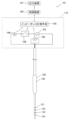
- FIG. 1 is a block diagram showing a schematic configuration of an apparatus 1 according to a first embodiment of the present invention.
- FIG. 13 is a block diagram showing a schematic configuration of an apparatus 101 according to a modified example of the first embodiment of the present invention.
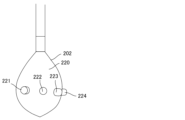
- 11 is a schematic diagram of a measuring electrode 202 that can be used in embodiment 2 of the present invention.
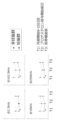
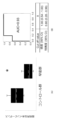
- FIG. 1 is a graph showing the results of measuring bioelectrical impedance in the uterine cavity at three different times in Experimental Example 1.
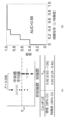
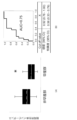
- FIG. 1 shows (A) a comparison of two groups, a group that ultimately achieved pregnancy and a group that did not, for bioelectrical impedance values measured locally in the uterine cavity in Experimental Example 1, and (B) an ROC curve (Receiver Operating Characteristic curve) and an AUC curve (Area Under the ROC Curve) for whether the measured bioelectrical impedance values locally in the uterine cavity can predict whether pregnancy will not occur in this menstrual cycle.
- FIG. 1 shows (A) a comparison of vaginal local bioelectrical impedance measured in Experimental Example 2 between mice in which premature birth was induced by administration of Mifepristone and control mice, and (B) the results of ROC analysis.
- FIG. 1 shows (A) a comparison of vaginal local bioelectrical impedance measured in Experimental Example 2 between mice in which premature birth was induced by administration of Mifepristone and control mice, and (B) the results of ROC analysis.
- FIG. 13 shows (A) a comparison of vaginal local bioelectrical impedance measured in Experimental Example 2 between mice in which premature birth was induced by administration of LPS and control mice, and (B) the results of ROC analysis.
- This figure shows the comparative results of vaginal local bioelectrical impedance measured using frequencies of 5 kHz, 10 kHz, 50 kHz, 125 kHz or 250 kHz in mice in which premature birth was induced by administration of Mifepristone and control mice in Experimental Example 2-3.
- FIG. 9 is a diagram showing the results of ROC analysis of the measurement results in FIG. 8 .
- FIG. 11 is a diagram showing the results of ROC analysis of the measurement results in FIG. 10 .
- FIG. 13 is a graph showing the relationship between successive frequencies and AUC for mice in which premature birth was induced by administration of LPS in Experimental Example 2-4.
- Embodiment 1 As one embodiment of the present invention, embodiment 1 will be described below. Embodiment 1 relates to prediction of the implantation ability of the uterus.
- the method for predicting uterine implantation ability according to the present embodiment uses bioelectrical impedance in the uterine cavity of a subject as an index.
- the subject here is assumed to be a woman who wishes to have a child, particularly a woman who is undergoing treatment for in vitro fertilization and embryo transfer.
- the bioelectrical impedance (AC electrical resistance value) in the uterine cavity can be detected by inserting at least two electrodes into the uterine cavity and contacting the endometrium, applying an AC voltage of a predetermined frequency between the electrodes, and passing an AC current.
- the current value of the current flowing between each electrode and the endometrium and the potential generated in the endometrium (potential difference (voltage value) between the electrodes) are measured, and the bioelectrical impedance in the uterine cavity can be detected based on the current value and voltage value.
- the electrodes platinum electrodes or tungsten electrodes can be suitably used.
- the electrodes are preferably shaped (probe-shaped) so that they can be inserted into the uterine cavity.
- the electrodes may be arranged in either a two-terminal method in which two electrodes are arranged in the uterine cavity or a four-terminal method in which four electrodes are arranged.
- the prediction method of this embodiment can be carried out by comparing the bioelectrical impedance values in the uterine cavity obtained in this manner (these values are collectively referred to as "subject values") with the bioelectrical impedance values in the uterine cavity obtained from a fertile woman (hereinafter referred to as a "control subject”) (these values are collectively referred to as "control values").
- subject values bioelectrical impedance values in the uterine cavity obtained in this manner
- control subject bioelectrical impedance values in the uterine cavity obtained from a fertile woman
- control values control values
- the test value is higher than the corresponding control value, it can be judged and determined that the implantation capacity of the subject's uterus during that menstrual cycle is not sufficient for embryo implantation, i.e., "poor implantation capacity.”
- the test value is the same as or lower than the corresponding control value, it can be judged and determined that the implantation capacity of the subject's uterus during that menstrual cycle is sufficient for embryo implantation, i.e., "good implantation capacity.”
- the embryo transfer can be canceled and the embryo can be frozen or stored without using an already frozen embryo. The embryo transfer can then be postponed until the menstrual cycle in which good implantation potential is identified, thereby avoiding a futile embryo transfer.
- the woman is judged and determined to have "good implantation capacity,” the implantation capacity of the uterus during that menstrual cycle is deemed appropriate, and therefore an embryo transfer using a fresh embryo or a thawed and frozen embryo is performed. In this way, it is possible to provide an efficient infertility treatment, and reduce the financial and physical burden on patients.
- the prediction method of this embodiment can be performed by comparing the test value with a preset threshold value.
- test value is higher than the corresponding threshold value, it can be judged and determined that the implantation ability in the subject's uterus during that menstrual cycle is not sufficient for embryo implantation, i.e., "poor implantation ability.”
- test value is the same as or lower than the corresponding threshold value, it can be judged and determined that the implantation ability in the subject's uterus during that menstrual cycle is sufficient for embryo implantation, i.e., "good implantation ability.”
- FIG. 1 is a block diagram showing the configuration of an apparatus 1 according to one embodiment of the present invention.
- the apparatus 1 is composed of a measurement electrode 2, an impedance measuring device 10, a control device 6, and an output device 7.
- the measurement electrode 2 is formed in a needle shape (probe type) as a whole so that it can be inserted into the uterine cavity of the subject.
- the measurement electrode 2 includes a body part 20 and electrodes 21, 22 arranged at a predetermined interval at the tip of the body part 20.
- the tip of the body part 20 is rounded to prevent damage to the utero-vaginal cavity of the subject.
- the impedance measuring device 10 includes a power source 3, an ammeter 4 that measures the current flowing through the current path, a voltmeter 9 that measures the potential difference (voltage value) between the electrodes 21 and 22, and an impedance measuring means 5.
- the power source 3, the ammeter 4, and the voltmeter 5 are electrically connected to the electrodes 21 and 22 via lead wires.
- the power supply 3 is a power supply for applying an AC voltage of a predetermined frequency (e.g., 2.5-250 kHz) between the electrodes 21 and 22, and the switching element 8 controls the ON/OFF of the voltage applied to the electrodes 21 and 22.
- the ON/OFF operation of the switching element 8 is controlled by the impedance measuring means 5.
- the impedance measuring means 5 performs processes such as controlling the current flow to the electrodes 21, 22 and controlling the ammeter 4 and voltmeter 9. Upon receiving an operation signal from the subject, the impedance measuring means 5 controls the current flow to the electrodes 21, 22 by controlling the switching element 8 to turn on and off, and calculates the bioelectrical impedance from the voltage value measured by the voltmeter 5 and the current value measured by the ammeter 4.
- a known method can be used as a method for measuring the bioelectrical impedance.
- the control device 6 is a semiconductor integrated circuit that performs processing including prediction of the implantation ability of the subject's uterus using the bioelectrical impedance value measured by the impedance measuring device 10.
- the control device 6 can be configured as a microcomputer including a CPU, ROM, and RAM.
- the ROM stores bioelectrical impedance measurements (control values) in the uterine cavity of a fertile woman.
- the RAM temporarily stores the endometrial impedance of the subject measured by the impedance measuring device 10.
- the CPU reads out the test value of the subject stored in the RAM and compares it with the control value of fertile women stored in the ROM. If the test value is higher than the corresponding control value, the subject's receptive ability in that menstrual cycle is judged to be poor. On the other hand, if the test value is the same as or lower than the corresponding control value, the subject's receptive ability in that menstrual cycle is judged to be good.
- the output device 7 is a display device such as a liquid crystal display, and displays the measured value (subject value) of the endometrial impedance measured by the impedance measuring device 10, the assessment result of the subject's uterine implantation ability obtained by the control device 6, etc.
- the output device 7 is not necessarily limited to a display device, and various types of devices such as a projector, printer, speaker, etc. can be used as long as they are capable of outputting to the outside the measured value (subject value) of the intrauterine bioelectrical impedance measured by the impedance measuring device 10, the measurement result of the subject's uterine implantation ability obtained by the control device 6, etc.
- the electrodes 21, 22 are brought into contact with the inside of the uterine cavity of the subject to detect the electrical potential generated in the subject's endometrium.
- the detected electrical potential is used to calculate the subject's endometrial impedance, making it possible to evaluate the implantation ability of the uterus in real time. This evaluation makes it possible to prospectively evaluate the implantation ability of the uterus for each menstrual cycle and provide treatment based on the result.
- the subject's uterine implantation ability in a certain menstrual cycle is measured by comparing the test value (measured value of bioelectrical impedance in the uterine cavity) with the measured value of bioelectrical impedance in the uterine cavity of a fertile woman (control value).
- the test value may be compared with each of the preset threshold values instead of or together with the control value.
- the bioelectrical impedance in the uterine cavity is measured by the two-terminal method, but the bioelectrical impedance may be measured by the four-terminal method.
- 2 is formed in a needle-like (probe-shaped) shape as a whole so that it can be inserted into the uterine cavity of a subject.
- the measurement electrode 102 includes a body portion 120 and electrodes 121 to 124 arranged at a predetermined interval on the tip of the body portion 120.
- Electrodes 121 to 124 are each electrically connected to impedance measuring device 110 by a lead wire. Specifically, they are divided into two electrodes that pass current and two electrodes that measure voltage, with electrodes 121 and 124 at both ends electrically connected to ammeter 104, while electrodes 122 and 123 are electrically connected to voltmeter 109.
- the impedance measuring means 105 performs processes such as controlling the current flow to the electrodes 121-124, and controlling the ammeter 104 and voltmeter 109. Upon receiving an operation signal from the subject, the impedance measuring means 105 controls the current flow to the electrodes 121, 124 by controlling the switching element 108 to turn on and off, and passes a current through the current path formed between the electrodes 121, 124 and the endometrium. Then, the bioelectrical impedance can be calculated from the current value measured by the ammeter 104 and the voltage value measured by the voltmeter 109.
- Embodiment 2 As another embodiment of the present invention, embodiment 2 will be described below. Embodiment 2 relates to estimating the time of delivery or predicting the possibility of premature birth.
- the method for estimating the time of delivery uses the bioelectrical impedance of the subject's vaginal cavity, i.e., vaginal mucosa impedance, as one index. It has previously been reported that the composition of mucus on the cervical and vaginal mucosal epithelium changes during parturition. The inventors focused on an increase in sulfate and sialic acid modifications in the glycocalyx and came to believe that it may be possible to estimate the time of parturition by measuring local bioelectrical impedance based on these material foundations.
- the method for estimating the timing of delivery in this embodiment includes the step of (a) comparing a local bioelectrical impedance measurement value (subject value) in the vaginal cavity measured in a subject with a vaginal mucosal impedance value (control value) previously measured in a fertile woman or with a previously set threshold value.
- the vaginal mucosal impedance is measured by contacting electrodes with the vaginal mucosal epithelium and measuring the voltage and current between the electrodes under an AC voltage of a specific frequency band.
- the prediction method includes the steps of (b) predicting that the timing of delivery in the subject will be relatively early (or that the likelihood of preterm delivery is relatively high) if the test value is lower than the corresponding control value or threshold value, and determining that the timing of delivery in the subject will be normal or relatively late (or that the likelihood of preterm delivery is relatively low) if the test value is the same as or higher than the corresponding control value or threshold value.
- glycocalyx glycoproteins and polysaccharides that coat cell surfaces
- the above-described device 1 can be used as a delivery time estimation device. However, the control value or threshold to which the test value is compared may be changed as appropriate.
- the electrodes are inserted into the vagina. Therefore, as the electrodes, a measuring electrode 202 including a substantially disk-shaped body portion 220 and electrodes 221-224 arranged at predetermined intervals on one side of the body portion 220 as shown in FIG. 3 is preferably used.
- the present invention is not limited to this embodiment.
- the bioelectrical impedance in the uterine cavity was measured to predict the implantation ability of the uterus, but instead of or in addition to this, the bioelectrical impedance in the vaginal cavity may be measured and compared with a control value or threshold value.
- the bioelectrical impedance of the vaginal cavity is measured to estimate the time of delivery, but instead of or in addition to this, the bioelectrical impedance of the uterine cavity may be measured and compared with a control value or threshold value.
- Example 1 Measurement of bioelectrical impedance in the uterine cavity of humans
- a body composition analyzer that utilizes multi-frequency bioelectrical impedance method (body composition analyzer MLT-550N manufactured by SK Medical Electronics Co., Ltd.) was prepared by attaching a sensor-equipped intrauterine catheter (manufactured by TSS Healthcare Co., Ltd.) as an electrode to the body composition analyzer (body composition analyzer MLT-550N manufactured by SK Medical Electronics Co., Ltd.).
- the electrodes of this device were inserted into the uterine cavity of the subject, and an AC voltage of 2.5-250 kHz and up to 20 mV was generated between the electrodes to measure bioelectrical impedance.
- the measurement times were T1: before ovulation after the end of menstruation (e.g., the 9th-10th day after the start of menstruation), T2: at the time of ovulation (e.g., the day before the start of progesterone administration in a hormone replacement cycle), and T3: immediately before embryo transfer. No adverse events such as bleeding, infection, or abdominal pain were observed. In addition, the pregnancy rate after the measurement was 36.2%, suggesting that this measurement does not clearly inhibit pregnancy.
- Figure 4 shows a comparison of the measurement results between the group that achieved pregnancy and the group that did not.
- Figure 5 shows the ROC (Receiver Operating Characteristic) analysis of the measurement results in Figure 4.
- the AUC Absolute Under the ROC Curve was 0.88, suggesting that the measurement values can be used to predict whether pregnancy will not occur during this menstrual cycle.
- Example 2-1 In Experimental Example 2-1, a first premature birth model mouse (progesterone-blocked premature birth model) administered with Mifepristone was used as the premature birth model mouse, and the bioelectrical impedance of the vaginal area was measured 15 hours after administration.
- Figure 6(A) shows a comparison of regional bioelectrical impedance measurements between the two groups, those that ended up in preterm birth (right) and those that did not (left).
- Figure 6(B) shows the results of ROC analysis of the measurements in (A). The AUC was 0.93.
- Example 2-2 In Experimental Example 2-2, a second premature birth model mouse (infectious disease premature birth model) administered with LPS was used as the premature birth model mouse.
- the bioelectrical impedance of the vaginal area was measured 10 hours after administration of LPS.
- Figure 7(A) shows a comparison between the ratio of local bioelectrical impedance measurements between the group that ended up with preterm birth (right side) and the group that did not end up with preterm birth (left side).
- Figure 7(B) shows the results of ROC analysis for the measurement results in (A). The AUC was 0.75.
- FIGS. 6 and 7 confirm that the vaginal bioelectrical impedance measurements in the premature birth model mice were significantly lower than those in the control mice. In this way, it was confirmed that when premature birth occurs, the vaginal bioelectrical impedance measurements show significantly lower values. This suggests that the vaginal bioelectrical impedance measurements can be used as a parameter for estimating the time of delivery (or premature birth).
- Example 2-3 a first premature birth model mouse (progesterone-blocked premature birth model) administered with Mifepristone was prepared. Parturition occurred in all of the first premature birth mice 16 to 20 hours after administration of Mifepristone. Using these first premature birth mice, the bioelectrical impedance of the vaginal local area 15 hours after administration of Mifepristone was measured at multiple frequencies of 33 points in the same manner as above, and the measured values at five of the frequencies were examined.
- Figure 8 shows a comparison of local bioelectrical impedance measurements at frequencies of 5 kHz, 10 kHz, 50 kHz, 125 kHz, and 250 kHz between two groups, a group that ended up with premature birth (right side) and a group that did not end up with premature birth (left side).
- Figure 9 shows the results of ROC analysis of the measurement results in Figure 8. In Experimental Example 2-3, the AUC was close to 1.00 even in relation to continuous frequencies (33 points).
- Example 2-4 Furthermore, a second premature birth model mouse (infectious disease premature birth model) administered with LPS was prepared as Experimental Example 2-4.
- the bioelectrical impedance of the vaginal region 10 hours after administration of LPS was measured at 33 multiple frequencies, and the measured values at five of those frequencies were examined in the same manner as above.
- Figure 10 shows a comparison of local bioelectrical impedance measurements at frequencies of 5 kHz, 10 kHz, 50 kHz, 125 kHz, and 250 kHz between two groups, a group that ended up with premature birth (right side) and a group that did not end up with premature birth (left side).
- Figure 11 shows the results of ROC analysis of the measurement results in Figure 10.
- Figure 12 shows a graph showing the relationship between successive frequencies and AUC in Experimental Example 2-4.
- vaginal bioelectrical impedance measurement values in the premature birth model mice were significantly lower than those in the control mice.
- the vaginal bioelectrical impedance measurement values show significantly lower values when premature birth occurs.
- the vaginal bioelectrical impedance measurement values can be used as a parameter for estimating the time of delivery (or premature birth).
- Figures 9 and 11 confirm that when premature birth occurs, the measured vaginal bioelectrical impedance values are significantly lower when the second premature birth model mouse (infectious disease premature birth model) is used than when the first premature birth model mouse (progesterone blockade premature birth model).
- Figure 11 confirms that when the second premature birth model mouse (infectious disease premature birth model) was used and a high frequency in the range of 50 kHz to 250 KHz was used, the measured bioelectrical impedance of the vaginal area showed a significantly lower value when premature birth occurred, i.e., there was frequency dependence (50 kHz to 250 KHz was preferred). From FIG. 12, when a high frequency of 100 kHz or more or 125 kHz or more was used, the AUC value became almost constant and a plateau was confirmed, and it was confirmed that there was a significant frequency dependency (100 kHz to 250 KHz or 125 kHz to 250 KHz being preferable).
- mice administered Mifepristone were analyzed at two doses, 0 ⁇ g and 250 ⁇ g.
- LPS was administered directly into the uterine cavity.
- 100% of mice administered 20 ⁇ g achieved preterm birth within 24 hours after administration.
- preterm birth was predicted by the measured parameters even under conditions where some mice achieve preterm birth and others do not at a dose lower than the dose at which 100% preterm birth is induced.
- a group was added to which the dose was 1/10 that of LPS, 2 ⁇ g, and the mice were divided into two groups, those that achieved preterm birth within 24 hours after administration and those that did not, and preterm birth was predicted retrospectively based on the measured values 10 hours after administration.
- the condition is a temporary imbalance, and therefore can be treated. For this reason, prospective diagnosis for each menstrual cycle and treatment adapted to the condition are effective. Therefore, by measuring the uterine implantation ability prospectively in real time, the results can be reflected in infertility treatment. Specifically, if the measurement results show that the uterine implantation capacity is good (the uterus is sufficiently prepared for implantation), then an embryo transfer will be performed using either a fresh embryo or a frozen embryo. If the uterine implantation capacity is determined to be poor (the uterus is not prepared for implantation), then the embryo will not be transferred for that cycle, but will be frozen and stored, and no embryo transfer will be performed for that cycle.
Landscapes
- Health & Medical Sciences (AREA)
- Life Sciences & Earth Sciences (AREA)
- Surgery (AREA)
- Animal Behavior & Ethology (AREA)
- Biomedical Technology (AREA)
- Heart & Thoracic Surgery (AREA)
- Medical Informatics (AREA)
- Molecular Biology (AREA)
- Pathology (AREA)
- Engineering & Computer Science (AREA)
- General Health & Medical Sciences (AREA)
- Public Health (AREA)
- Veterinary Medicine (AREA)
- Nuclear Medicine, Radiotherapy & Molecular Imaging (AREA)
- Radiology & Medical Imaging (AREA)
- Physics & Mathematics (AREA)
- Biophysics (AREA)
- Measurement And Recording Of Electrical Phenomena And Electrical Characteristics Of The Living Body (AREA)
Priority Applications (1)
| Application Number | Priority Date | Filing Date | Title |
|---|---|---|---|
| JP2025522451A JPWO2024242172A1 (https=) | 2023-05-23 | 2024-05-23 |
Applications Claiming Priority (2)
| Application Number | Priority Date | Filing Date | Title |
|---|---|---|---|
| JP2023084900 | 2023-05-23 | ||
| JP2023-084900 | 2023-05-23 |
Publications (1)
| Publication Number | Publication Date |
|---|---|
| WO2024242172A1 true WO2024242172A1 (ja) | 2024-11-28 |
Family
ID=93589564
Family Applications (1)
| Application Number | Title | Priority Date | Filing Date |
|---|---|---|---|
| PCT/JP2024/019026 Ceased WO2024242172A1 (ja) | 2023-05-23 | 2024-05-23 | 子宮の着床能の予測及び分娩時期の推定のための装置及び方法 |
Country Status (2)
| Country | Link |
|---|---|
| JP (1) | JPWO2024242172A1 (https=) |
| WO (1) | WO2024242172A1 (https=) |
Citations (5)
| Publication number | Priority date | Publication date | Assignee | Title |
|---|---|---|---|---|
| JP2006525099A (ja) * | 2003-05-02 | 2006-11-09 | ザ ジョンズ ホプキンス ユニバーシティ | 子宮頚部組織のバイオインピーダンス測定のためのデバイス、システムおよび方法、並びにヒト子宮頚部の診断および処置のための方法 |
| WO2012070569A1 (ja) * | 2010-11-22 | 2012-05-31 | 国立大学法人大阪大学 | 子宮着床能の測定方法、測定装置及び測定装置の作動方法 |
| WO2015146172A1 (ja) * | 2014-03-28 | 2015-10-01 | 国立大学法人大阪大学 | 膣評価装置及び子宮評価装置 |
| US20190000388A1 (en) * | 2015-12-22 | 2019-01-03 | The University Of Sheffield | Apparatus and methods for determining force applied to the tip of a probe |
| US20220296221A1 (en) * | 2019-09-22 | 2022-09-22 | Ecole Polytechnique Federale De Lausanne (Epfl) | Device and Method for Pre-Term Birth Risk Assessment |
-
2024
- 2024-05-23 JP JP2025522451A patent/JPWO2024242172A1/ja active Pending
- 2024-05-23 WO PCT/JP2024/019026 patent/WO2024242172A1/ja not_active Ceased
Patent Citations (5)
| Publication number | Priority date | Publication date | Assignee | Title |
|---|---|---|---|---|
| JP2006525099A (ja) * | 2003-05-02 | 2006-11-09 | ザ ジョンズ ホプキンス ユニバーシティ | 子宮頚部組織のバイオインピーダンス測定のためのデバイス、システムおよび方法、並びにヒト子宮頚部の診断および処置のための方法 |
| WO2012070569A1 (ja) * | 2010-11-22 | 2012-05-31 | 国立大学法人大阪大学 | 子宮着床能の測定方法、測定装置及び測定装置の作動方法 |
| WO2015146172A1 (ja) * | 2014-03-28 | 2015-10-01 | 国立大学法人大阪大学 | 膣評価装置及び子宮評価装置 |
| US20190000388A1 (en) * | 2015-12-22 | 2019-01-03 | The University Of Sheffield | Apparatus and methods for determining force applied to the tip of a probe |
| US20220296221A1 (en) * | 2019-09-22 | 2022-09-22 | Ecole Polytechnique Federale De Lausanne (Epfl) | Device and Method for Pre-Term Birth Risk Assessment |
Non-Patent Citations (5)
| Title |
|---|
| KOMATSU REINA, NAKAMURA HITOMI, HOSONO TAKAYOSHI, MIMURA KAZUYA, ENDO MASAYUKI, KIMURA TADASHI: "IS-WS-4-8 A new electrophysiological parameter to predict preterm birth", JOURNAL OF JAPAN SOCIETY OF OBSTETRICS AND GYNECOLOGY, NIHON-SANKA-FUJINKA-GAKKAI, JP, vol. 76, no. Spec. Iss, 1 February 2024 (2024-02-01) - 21 April 2024 (2024-04-21), JP , pages S248, XP009559740, ISSN: 0300-9165 * |
| KOMATSU, REINA ET AL.: "Review of the prediction of preterm birth by bioimpedance measurement of the vaginal region in a mouse model", PROGRAMS AND ABSTRACTS OF THE 15TH ACADEMIC CONFERENCE OF JAPANESE ORGANIZATION OF PREVENTION OF PRETERM DELIVERY, 8 October 2022 (2022-10-08) * |
| NAKAMURA HITOMI, HOSONO TAKAYOSHI, KUMASAWA KEIICHI, JONES CAROLYN J P, APLIN JOHN D, KIMURA TADASHI: "Vaginal bioelectrical impedance determines uterine receptivity in mice", HUMAN REPRODUCTION, OXFORD JOURNALS, GB, GB , XP093243100, ISSN: 0268-1161, DOI: 10.1093/humrep/dey313 * |
| NAKAMURA, HITOMI ET AL.: "Development of a system for prospective evaluation of uterine implantation potential", JOURNAL OF JAPAN SOCIETY FOR REPRODUCTIVE MEDICINE, JAPAN SOCIETY FOR REPRODUCTIVE MEDICINE, JP, vol. 64, no. 4, 1 October 2019 (2019-10-01), JP , pages 334, XP009559152, ISSN: 1881-0098 * |
| SUEHIRO, YOKO: "Tax targeting dendritic cell vaccine for ATL", CELL / SAIBO, NYU SAIENSUSHA - NEW SCIENCE COMP., JP, vol. 51, no. 10, 1 January 2019 (2019-01-01), JP , pages 488 - 491, XP009559155, ISSN: 1346-7557 * |
Also Published As
| Publication number | Publication date |
|---|---|
| JPWO2024242172A1 (https=) | 2024-11-28 |
Similar Documents
| Publication | Publication Date | Title |
|---|---|---|
| Vercellini et al. | Adenomyosis: epidemiological factors | |
| US5916173A (en) | Methods and apparatus for monitoring fertility status in the mammalian vagina | |
| Shaaban et al. | Levonorgestrel-releasing intrauterine system versus a low-dose combined oral contraceptive for treatment of adenomyotic uteri: a randomized clinical trial | |
| Kunz et al. | Adenomyosis as a disorder of the early and late human reproductive period | |
| JP2006525099A (ja) | 子宮頚部組織のバイオインピーダンス測定のためのデバイス、システムおよび方法、並びにヒト子宮頚部の診断および処置のための方法 | |
| Garfield et al. | Uterine electromyography and light-induced fluorescence in the management of term and preterm labor | |
| Amer et al. | Subendometrial blood flow changes by 3-dimensional power Doppler ultrasound after hysteroscopic lysis of severe intrauterine adhesions: preliminary study | |
| Seyhan et al. | Prevalence of T-shaped uterus among fertile women based on ESHRE/ESGE and Congenital Uterine Malformation by Experts (CUME) criteria | |
| Jordans et al. | Increased amplitude of subendometrial contractions identified by ultrasound speckle tracking in women with a caesarean scar defect | |
| Sørensen | Infertility factors: their relative importance and share in an unselected material of infertility patients | |
| JP5923760B2 (ja) | 子宮着床能の測定装置 | |
| Bibby et al. | The effect of cervical encerclage on plasma prostaglandin concentrations during early human pregnancy | |
| WO2024242172A1 (ja) | 子宮の着床能の予測及び分娩時期の推定のための装置及び方法 | |
| Cetin et al. | The role of transvaginal sonography in predicting recurrent preterm labour in patients with intact membranes | |
| Habiba et al. | The incidence and clinical significance of adenomyosis | |
| Izhar et al. | Fertility outcome after saline sonography guided removal of intrauterine polyps in women with unexplained infertility | |
| Cheng et al. | Preservation of the fallopian tube in ectopic tubal pregnancy. An analysis of the outcome of two laparoscopic surgical approaches | |
| Ombelet et al. | Endometrial ossification and infertility: the diagnostic value of different imaging techniques | |
| Mansour et al. | Intrauterine insemination with washed capacitated sperm cells in the treatment of male factor, cervical factor and unexplained infertility | |
| Stanica et al. | The role of risk factors in the incidence and recurrence of ectopic pregnancy | |
| Sandhyarani et al. | Post salpingectomy intraluminal endometriosis in a premenopausal lady-an incidental finding often paid less attention to | |
| Ling et al. | Clinical analysis on IVF-ET treatment of 9 cases of post-cesarean section uterine diverticulum | |
| Hizkiyahu et al. | Initial Investigation of the Infertile Couple | |
| M Al Hindawi | Estimation of Endometrial Thickness by Ultrasound in Infertile Women During Secretory Phase | |
| Li et al. | P-337 Melatonin exerts a therapeutic effect on endometriosis by suppressing estrogen receptors mediated angiogenesis pathway |
Legal Events
| Date | Code | Title | Description |
|---|---|---|---|
| 121 | Ep: the epo has been informed by wipo that ep was designated in this application |
Ref document number: 24811177 Country of ref document: EP Kind code of ref document: A1 |
|
| ENP | Entry into the national phase |
Ref document number: 2025522451 Country of ref document: JP Kind code of ref document: A |
|
| NENP | Non-entry into the national phase |
Ref country code: DE |