WO2024237230A1 - 車両制御システム - Google Patents
車両制御システム Download PDFInfo
- Publication number
- WO2024237230A1 WO2024237230A1 PCT/JP2024/017625 JP2024017625W WO2024237230A1 WO 2024237230 A1 WO2024237230 A1 WO 2024237230A1 JP 2024017625 W JP2024017625 W JP 2024017625W WO 2024237230 A1 WO2024237230 A1 WO 2024237230A1
- Authority
- WO
- WIPO (PCT)
- Prior art keywords
- command
- unit
- vehicle
- determination unit
- application
- Prior art date
- Legal status (The legal status is an assumption and is not a legal conclusion. Google has not performed a legal analysis and makes no representation as to the accuracy of the status listed.)
- Ceased
Links
Images




Classifications
-
- B—PERFORMING OPERATIONS; TRANSPORTING
- B60—VEHICLES IN GENERAL
- B60R—VEHICLES, VEHICLE FITTINGS, OR VEHICLE PARTS, NOT OTHERWISE PROVIDED FOR
- B60R16/00—Electric or fluid circuits specially adapted for vehicles and not otherwise provided for; Arrangement of elements of electric or fluid circuits specially adapted for vehicles and not otherwise provided for
- B60R16/02—Electric or fluid circuits specially adapted for vehicles and not otherwise provided for; Arrangement of elements of electric or fluid circuits specially adapted for vehicles and not otherwise provided for electric constitutive elements
- B60R16/023—Electric or fluid circuits specially adapted for vehicles and not otherwise provided for; Arrangement of elements of electric or fluid circuits specially adapted for vehicles and not otherwise provided for electric constitutive elements for transmission of signals between vehicle parts or subsystems
- B60R16/0231—Circuits relating to the driving or the functioning of the vehicle
-
- B—PERFORMING OPERATIONS; TRANSPORTING
- B60—VEHICLES IN GENERAL
- B60W—CONJOINT CONTROL OF VEHICLE SUB-UNITS OF DIFFERENT TYPE OR DIFFERENT FUNCTION; CONTROL SYSTEMS SPECIALLY ADAPTED FOR HYBRID VEHICLES; ROAD VEHICLE DRIVE CONTROL SYSTEMS FOR PURPOSES NOT RELATED TO THE CONTROL OF A PARTICULAR SUB-UNIT
- B60W50/00—Details of control systems for road vehicle drive control not related to the control of a particular sub-unit, e.g. process diagnostic or vehicle driver interfaces
- B60W50/0097—Predicting future conditions
-
- G—PHYSICS
- G06—COMPUTING OR CALCULATING; COUNTING
- G06F—ELECTRIC DIGITAL DATA PROCESSING
- G06F9/00—Arrangements for program control, e.g. control units
- G06F9/06—Arrangements for program control, e.g. control units using stored programs, i.e. using an internal store of processing equipment to receive or retain programs
- G06F9/46—Multiprogramming arrangements
- G06F9/48—Program initiating; Program switching, e.g. by interrupt
Definitions
- This disclosure relates to technology for processing requests from application software that realizes services that utilize vehicle functions.
- Patent Document 1 describes a technology for collecting information only under circumstances specified by the server in a vehicle data collection system that collects various vehicle data from multiple vehicles, the data being acquired via sensors mounted on the vehicles, in order to make effective use of system resources.
- a vehicle API is an interface that provides vehicle functions to applications implemented inside or outside the vehicle.
- each application accesses the vehicle at its own timing, resulting in contention for access to the same vehicle.
- the conventional technology is a technology for controlling the load within a single system, and therefore is unable to control the load when there is contention with other systems.
- One aspect of the present disclosure is to provide a technology that suppresses conflicts between requests for access to vehicle functions from multiple applications.
- One aspect of the present disclosure is a vehicle control system that is mounted on a vehicle and includes at least one vehicle control device and an operation control device.
- the vehicle control system includes a first reception/determination unit, a first output unit, a second reception/determination unit, and a second output unit.
- the first reception determination unit is configured to, when a first command is input from an application, determine whether or not the first command can be received by using resource information related to the processing capacity of resources used in the first command.
- the first output unit is configured to output a second command based on the first command to an operation control program installed in the operation control device, the operation control program being for controlling a controlled object.
- the second reception determination unit is configured to use the resource information to determine whether the first command will be acceptable within a set predetermined time when the first reception determination unit determines that the command cannot be accepted.
- the second output unit is configured to wait until the first command is acceptable and then output the second command to the operation control program when the second reception determination unit determines that the command will be acceptable within the predetermined time.
- FIG. 1 is a block diagram showing a configuration of a vehicle control system.
- FIG. 2 is a block diagram showing the configuration of an ECU.
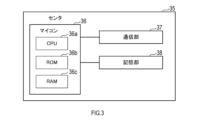
- FIG. 2 is a block diagram showing the configuration of a center.
- FIG. 2 is a block diagram showing a functional configuration of the vehicle control system.
- FIG. 11 is an explanatory diagram illustrating an example of the content of required resource information.
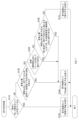
- FIG. 13 is a sequence diagram showing the flow of processing corresponding to request A. 13 is a flowchart showing an acceptance determination process.
- ECUs 10, 15, 20, 25, and 30 in the embodiments correspond to vehicle control devices in the present disclosure
- ECUs 41 to 48 in the embodiments correspond to operation control devices in the present disclosure
- each control unit 91 to 99 in the embodiments corresponds to an operation control program in the present disclosure.
- the process of S110 corresponds to the function of the first reception determination unit in this disclosure
- the process of S255 in the embodiment corresponds to the function of the first output unit in this disclosure
- the process of S150 in the embodiment corresponds to the function of the second reception determination unit in this disclosure
- the process of S410 in the embodiment corresponds to the function of the second output unit in this disclosure
- the processes of S260 and S360 in the embodiment correspond to the function of the determination transmission unit in this disclosure
- the process of S130 in the embodiment corresponds to the function of the third reception determination unit in this disclosure.
- the vehicle control system 1 shown in Fig. 1 includes an electronic control unit (hereinafter, ECU) group 100 mounted on a vehicle such as an automobile, and a center 35.
- the ECU group 100 includes a plurality of ECUs.
- the ECU group 100 includes a first ECU 10, a second ECU 15, a third ECU 20, a fourth ECU 25, a fifth ECU 30, and sixth to thirteenth ECUs 41 to 48.
- the ECUs belonging to the ECU group 100 are connected to each other by in-vehicle communication (i.e., wired communication or wireless communication).
- the center 35 is provided outside the vehicle, and is connected to the ECU group 100 by out-of-vehicle communication (i.e., wireless communication).
- the first ECU 10 has a relay function for in-vehicle communications, and by controlling the second through fifth ECUs 15 through 30, achieves coordinated control of the entire vehicle.
- the first ECU 10 also controls communications with the center 35, achieving coordinated control of the entire system including the center 35.
- the first ECU 10 and the third to fifth ECUs 20-30 are provided for each domain that is divided according to the vehicle's function, and mainly control the multiple ECUs that exist within that domain (i.e., any of the sixth to thirteenth ECUs 41-48).
- the domains are, for example, the powertrain, body, chassis, and cockpit.
- the sixth to thirteenth ECUs 41 to 48 control the vehicle equipment that is installed in the vehicle.
- Vehicle equipment may include hardware such as sensors and actuators, as well as various storage devices for storing data and software for implementing certain functions.
- the first ECU 10 and the third to fifth ECUs 20-30 are connected to the sixth to thirteenth ECUs 41-48 via lower-level networks (e.g., CAN) that are provided individually.
- CAN is an abbreviation for Controller Area Network and is a registered trademark.
- the first ECU 10 and the third to fifth ECUs 20-30 have the function of centrally managing access rights to the sixth to thirteenth ECUs 41-48 and authenticating users.
- the vehicle control system 1 may include an ECU group 100, and the center 35 may be omitted.
- the number of ECUs belonging to the ECU group 100 may be 14 or more, or 13 or less. In another embodiment, there may be multiple centers 35.
- the first ECU 10 includes a microcomputer 11, a vehicle interface (hereinafter, I/F) 12, and a communication unit 13.
- the microcomputer 11 includes a CPU 11a, a ROM 11b, and a RAM 11c.
- the various functions of the first ECU 10 are realized by the CPU 11a executing a program stored in a non-transitive physical recording medium.
- the ROM 11b corresponds to the non-transitive physical recording medium that stores the program. Furthermore, the execution of this program causes a method corresponding to the program to be performed.
- the vehicle I/F 12 connects to other ECUs and in-vehicle devices via an in-vehicle network, etc., and acquires various information from the other ECUs and in-vehicle devices.
- In-vehicle networks may include CAN and Ethernet. Ethernet is a registered trademark.
- the communication unit 13 communicates data with the center 35 and the like via a wide area communication network using wireless communication. However, it is not necessary for all ECUs belonging to the ECU group 100 to have the communication unit 13, and only one or some of the ECUs may have the communication unit 13.
- the method of realizing the various functions of the first ECU 10 is not limited to software, and some or all of the elements may be realized using one or more pieces of hardware.
- the electronic circuits may be realized by digital circuits that include multiple logic circuits, or analog circuits, or a combination of these.
- the center 35 includes a microcomputer 36, a communication unit 37, and a storage unit 38.
- the microcomputer 36 includes a CPU 36a, a ROM 36b, and a RAM 36c.
- the various functions of the center 35 are realized by the CPU 36a executing a program stored in a non-transitive physical recording medium.
- the ROM 36b corresponds to the non-transitive physical recording medium that stores the program. Furthermore, the execution of this program causes a method corresponding to the program to be performed.
- the communication unit 37 communicates data with the ECU group 100 via a wide area communication network.
- the memory unit 38 is a storage device for storing vehicle data and the like provided by the ECU group 100.
- the method of realizing the various functions of center 35 is not limited to software, and some or all of the elements may be realized using one or more pieces of hardware.
- the electronic circuits may be realized by digital circuits that include multiple logic circuits, or analog circuits, or a combination of these.
- the vehicle control system 1 has the functions of an equipment management unit 9 in a first layer, a state management unit 8 in a second layer, a vehicle service unit 7 in a third layer, and a service provision unit 6 in a fourth layer.
- the software architecture of the vehicle control system 1 is hierarchical in these four layers. These functions of the vehicle control system 1 are shared by each ECU belonging to the ECU group 100 and the center 35.
- the equipment management unit 9 includes a plurality of control units 91 to 99 corresponding to a plurality of types of vehicle equipment, such as an on-board camera, an on-board millimeter wave radar, brakes, a steering wheel, a display, a speaker, various lights, an on-board air conditioner, an electric power seat, and the like.
- vehicle equipment such as an on-board camera, an on-board millimeter wave radar, brakes, a steering wheel, a display, a speaker, various lights, an on-board air conditioner, an electric power seat, and the like.
- the equipment management unit 9 includes a camera control unit 91, a millimeter wave control unit 92, a brake control unit 93, a steering control unit 94, a display control unit 95, a sound control unit 96, a light control unit 97, a heating
- the vehicle includes a ventilation and air-conditioning (hereinafter, referred to as HVAC) control unit 98, and a seat control unit 99.
- HVAC ventilation and air-conditioning
- the camera control unit 91 controls the exposure of the vehicle-mounted camera (e.g., camera 91A shown in FIG. 6) and acquires images captured by the vehicle-mounted camera.
- the sixth ECU 91 includes the camera control unit 91.
- the millimeter wave control unit 92 controls the vehicle-mounted millimeter wave radar and acquires the detection results detected by the millimeter wave radar.
- the seventh ECU 92 includes the millimeter wave control unit 92.
- the brake control unit 93 controls the brakes.
- the eighth ECU 93 is equipped with the brake control unit 93.
- the steering control unit 94 controls the steering.
- the ninth ECU 44 is equipped with the steering control unit 94.
- the display control unit 95 controls displays (e.g., meters, warning lights, etc.).
- the tenth ECU 45 includes the display control unit 95.
- the sound control unit 96 controls the speaker to output sounds such as warning sounds and voices from the speaker.
- the 11th ECU 46 is equipped with the sound control unit 96.
- the light control unit 97 controls various lights mounted on the vehicle.
- the fifth ECU 30 includes the light control unit 97.
- the HAVC control unit 98 controls the vehicle air conditioner.
- the 12th ECU 47 is equipped with the HAVC control unit 98.
- the seat control unit 99 controls the electric power seat of the vehicle.
- the 13th ECU 48 is equipped with the seat control unit 99.
- the equipment management unit 9 operates the vehicle equipment according to the operation instructions from the status management unit 8, and notifies the status management unit 8 of the operation result.
- the operation result may indicate that the actuator has completed normally or abnormally.
- the operation result may indicate data detected by the sensor.
- the result notification may indicate data read from the storage device.
- the equipment management unit 9 may be configured to autonomously detect the status of the vehicle equipment and notify the status management unit 8.
- the service providing unit 6 executes the applications 61 to 64 to realize various functions, such as information gathering, anti-theft, and remote control, by utilizing the vehicle equipment managed by the equipment management unit 9.
- the first ECU 10, the second ECU 15, and the center 35 each include a service providing unit 6.
- the ROM 11b of the first ECU 10 stores apps 61 and 62.
- the ROM 11b of the second ECU 15 stores an app 63.
- the ROM 36b of the center 35 stores an app 64.
- the apps 61 to 64 are basically configured to realize the desired services by using the functions of the vehicle equipment via the API unit 71 that constitutes the vehicle service unit 7.
- API is an abbreviation for Application Programming Interface.
- Apps 61-64 are not dedicated programs for executing processes suited to a specific vehicle model, specific grade, etc., but general-purpose programs for executing processes suited to many vehicle models, many grades, etc. Therefore, apps 61-64 are written using modeled vehicle functions that are publicly available so that they can be created without having to consider the vehicle equipment and performance of each individual vehicle. In other words, apps 61-64 can be easily developed by third parties who are app providers other than OEMs, and the developed products can be widely released. Therefore, a vehicle user who is the owner of a vehicle equipped with ECU group 100 can install an app released by a third party into any of ECU group 100 via a wide area communication network, etc. Furthermore, the vehicle user can add or change apps 61-64 as desired.
- the service provider who provides the app may install the app in one of the ECU group 100 with the permission of the vehicle user.
- the access rights to individual APIs belonging to the API unit 71 from an app installed in the center 35 by the service provider or the like may be restricted by the vehicle user for each service provider or each app.
- the vehicle service unit 7 includes an API unit 71.
- the first ECU 10 includes the API unit 71.
- the API unit 71 includes a plurality of vehicle APIs.
- the vehicle APIs are interfaces provided to the applications 61 to 64 belonging to the service providing unit 6 for accessing subdivided vehicle functions.
- the vehicle API has a standardized syntax that allows requests to be written without depending on a specific vehicle model or grade.
- apps 61 to 64 send a first command using the vehicle API.
- the first command is a command that indicates the information required when using the vehicle API.
- the first command may include a command indicating the requested content, a command such as an argument, a function call, etc.
- the first command may also include priority information indicating which command should be given priority for processing.
- the priority may be set, for example, depending on whether the manufacturer of the application requesting the first command is an OEM or a third party other than an OEM.
- OEM stands for Original Equipment Manufacturer. Specifically, OEMs may be given a higher priority than third parties. Among OEMs, vehicle manufacturers may be given a higher priority than parts/app manufacturers.
- the priority may also be set according to the type of control.
- the syntax of the vehicle API i.e., the format of the first command
- the first command describes the function to be realized abstractly, without specifying the vehicle equipment or using expressions that depend on the performance of the vehicle equipment.
- the first command describes the content to turn on the car finder, but does not specify specific matters that depend on each individual vehicle, such as how to control which vehicle equipment, such as specifying which lights to turn on out of the multiple lights installed in the vehicle.
- the API unit 71 When the API unit 71 receives the first command, it judges whether or not the first command can be accepted from a formal standpoint, such as the format of the first command and the access rights of the requester of the first command. If the API unit 71 judges that the first command can be accepted, it converts the first command into a second command written in a format suitable for the model and grade of the target vehicle, and transmits it to the status management unit 8. In other words, the API unit 71 has a function of converting the first command written in a standard format handled by the service provision unit 6 into a second command written in a format specific to the vehicle handled by the status management unit 8 and the equipment management unit 9. The second command is assigned an application ID that identifies the application that sent the first command (hereinafter, the requesting application). The API unit 71 also has a function of transferring a result notification, which is a response from the status management unit 8 to the second command, to the requesting application.
- a formal standpoint such as the format of the first command and the access rights of
- the API unit 71 includes a function API 72, a confirmation API 73, and a reservation API 74.
- Function API 72 is a vehicle API used when requesting control of vehicle equipment.
- the confirmation API 73 is a vehicle API used to confirm the available time periods, etc., for the specified function API 72.
- the reservation API 74 is a vehicle API used when reserving the use of a specified function API 72 by specifying start and end conditions, etc.
- the state management unit 8 includes a process execution unit 80 and a reservation management unit 85 .
- the processing execution unit 80 processes requests from the service providing unit 6 via the function API 72.
- the reservation management unit 85 processes requests from the service provision unit 6 via the confirmation API 73 and reservation API 74.
- the process execution unit 80 includes a state recognition unit 81 , a motor system equipment control unit 82 , a Human Machine Interface (hereinafter, referred to as HMI) system state recognition unit 83 , and a body system control unit 84 .
- HMI Human Machine Interface
- the units 81-84 belonging to the processing execution unit 80 are classified according to the vehicle operations that are likely to be requested by the service provision unit 6, rather than according to the implementation means (e.g., control units 91-99) that are likely to depend on the vehicle variations.
- the units 81-84 belonging to the processing execution unit 80 are provided in either the first ECU 10 or the third to fifth ECUs 30 that manage each domain of the vehicle, as shown in FIG. 1.
- the state recognition unit 81 is responsible for recognizing the vehicle itself and the situation around the vehicle, such as the positions of the vehicle and pedestrians.
- the state recognition unit 81 controls, for example, vehicle equipment belonging to the camera control unit 91 and the millimeter wave control unit 92.
- the third ECU 20 is equipped with the state recognition unit 81.
- the motor system equipment control unit 82 corresponds to the vehicle's driving operations such as turning, running, and stopping.
- the motor system equipment control unit 82 controls, for example, vehicle equipment belonging to the brake control unit 93 and the steering control unit 94.
- the first ECU 10 is equipped with the motor system equipment control unit 82.
- the HMI system status recognition unit 83 corresponds to vehicle operations related to the presentation of information to the user.
- the HMI system status recognition unit 83 controls, for example, vehicle equipment belonging to the display control unit 95 and the sound control unit 96.
- the fourth ECU 25 includes the HMI system status recognition unit 83.
- the body system control unit 84 corresponds to the operation of the vehicle's body system related to the vehicle environment.
- the body system control unit 84 controls, for example, vehicle equipment belonging to the light control unit 97, the HVAC control unit 98, and the seat control unit 99.
- the fifth ECU 30 is equipped with the body system control unit 84.
- the process execution unit 80 When the process execution unit 80 receives a request (i.e., the second command) from the vehicle service unit 7, it determines whether the vehicle state is suitable for executing the second command, and if so, instructs the equipment management unit 9 to operate the target equipment.
- the vehicle state suitable for executing the second command may include the target equipment being capable of realizing the function required by the second command, the execution of the second command not being prohibited in the scene estimated from the vehicle state, etc.
- the processing execution unit 80 has a function of outputting an operation instruction for the target equipment to the equipment management unit 9, and providing the operation result returned from the equipment management unit 9 to the vehicle service unit 7 as a result notification for the second command.
- the result notification may use each operation result as is, or may be used after integrating multiple operation results and converting them into data with a high level of abstraction.
- the process execution unit 80 may receive a request from the vehicle service unit 7 to collect information to understand the vehicle's condition, and may obtain data from multiple vehicle equipment from the equipment management unit 9 as the operation result. If the operation result data obtained is "vehicle speed 0 km/h,” “shift position P,” and “driver not in the vehicle,” the process execution unit 80 may convert the data into data indicating that "the vehicle is parked,” and send the converted data to the vehicle service unit 7 as a result notification.
- the reservation management unit 85 is provided in, for example, the third ECU 20. However, the reservation management unit 85 may be provided in an ECU other than the third ECU 20. As shown in FIG. 4 , the reservation management unit 85 includes a reservation arbitration unit 851, a state prediction unit 852, and an information storage unit 853.
- the information storage unit 853 stores resource information and reservation information.
- the resource information is information that associates an API-ID that identifies a function API 72 with a resource required to execute a process associated with that function API 72.
- the resource information includes the processing capacity of the operation control device (e.g., various ECUs) in response to requests from the apps 61 to 64. Note that there may be multiple resources, and in this case they will also be referred to as resources.
- the resource may be the processing capacity of resources (e.g., devices, equipment) installed in the vehicle. Examples of resources include a CPU, storage, memory, battery, communication equipment, sensors, actuators, etc.
- the resource information may include the past, present, and future usage status of these resources.
- the resource information includes characteristic information that differs depending on the vehicle model or individual vehicle. Specifically, as shown in FIG. 5, the resource information for vehicle X and the resource information for vehicle Y as characteristic information can be set to different values.
- Resource information is stored for each vehicle, for example, in the information storage unit 853.
- the information storage unit 853 stores the past, present, and future (future) usage status of each resource as characteristic information or as a table separate from the characteristic information.
- the past, present, and future usage status of each resource can be read and rewritten by the reservation arbitration unit 851, etc.
- resource information required to execute the process includes information such as "ECUs, actuators, and sensors to be used,” “current usage rate,” “processing content,” “resource usage rate required for processing,” “execution time required for processing,” “waiting time prediction,” and “maximum processing time.”
- the "ECUs, actuators, and sensors to be used,” "processing content,” “resource usage rate required for processing,” and “execution time required for processing” are static objects or values that are determined in advance. However, the "execution time required for processing” may be a value that is calculated each time.
- ECUs, actuators, and sensors used indicates the ECUs executing the process, and the actuators and sensors to be processed (hereinafter also referred to as “equipment in use”).
- Current usage rate indicates the usage rate of each piece of equipment in use. In other words, the usage rate is the resource usage rate, or the proportion at which the resource is being used. The usage rate mainly indicates the usage rate of the ECUs installed in each control unit 91-99, and may also include the status of the ECUs in the entire vehicle.
- Processing content indicates the processing that can be executed for each piece of equipment used.
- Resource utilization rate required for processing indicates the utilization rate of resources required for each process that can be executed.
- Executecution time required for processing indicates the time required from the start to the end of each process that can be executed.
- Wash time prediction indicates when in the future the processing is likely to start for each process that can be executed, specifically, how many milliseconds after which the processing is likely to be executed. In other words, future resource information is included.
- Processing upper limit time indicates the upper limit of the time that the processing should be completed for each process that can be executed. The processing upper limit time is a time specified for each request.
- Current utilization rate is obtained periodically, for example, and updated each time.
- the reservation information is information relating to a reservation for use of the function API 72.
- the reservation information is set in accordance with a request from the service providing unit 6 using the reservation API 74.
- the reservation information includes the function API 72 that identifies the function API 72 that is the subject of the reservation, an app ID that identifies the app that made the reservation, the start time and end time of the reservation, etc.
- the status prediction unit 852 responds to an inquiry from the reservation arbitration unit 851 by responding with a prediction of the usage status of the vehicle equipment (i.e., resources).
- the period to be predicted may be a specified time range from the current time when the request is received (e.g., 24 hours), or may be a time range specified by instructions from the reservation arbitration unit 851.
- the resource information to be predicted includes the aforementioned "standby time prediction,” and may further include "power status,” “future usage prediction,” “battery level,” “free data capacity,” “equipment availability,” “communication availability,” etc.
- the "power supply state” may include information indicating whether the IG is ON, ACC, or OFF, as well as information indicating the connection state of the charging plug.
- the "future utilization prediction” may include the utilization of the CPU.
- the "standby time prediction” is obtained by the state prediction unit 852 receiving an inquiry from the reservation arbitration unit 851, referring to the information storage unit 853, and calculating, for example, based on the sum of the execution times required for one or more other processes that should be on standby.
- the "future utilization prediction” is, for example, information expressing the utilization of the CPU mounted in each control unit 91 to 99 as a percentage.
- the “future utilization prediction” may also include information on the utilization of the CPU mounted in each ECU other than each control unit 91 to 99.
- the “battery remaining capacity” is information expressing the remaining capacity of the vehicle battery as a percentage.
- the “free data capacity” is information indicating the free capacity of memory that can be used for processing.
- the “equipment availability” is information indicating the result of determining whether the equipment is available or not, including whether the equipment is broken or not, and whether the equipment is in operation or not.
- the equipment for which "equipment usability” is indicated may include special image processing that has a high processing load.
- “Communication availability” is information that indicates the communication status with an external server. For example, the occupancy rate of the communication channel used for communication with an external server for each application may be indicated.
- the status prediction unit 852 repeatedly obtains the status of the in-vehicle equipment from the equipment management unit 9 and accumulates the results compiled in a predetermined manner.
- the compilation method uses the on/off timing of the vehicle's IG switch as a starting point and compiles the elapsed time from the starting point as an index.
- the compiled values may be compiled individually for each day of the week, each season, or each driver, for example.
- the state prediction unit 852 When the state prediction unit 852 receives an inquiry from the reservation arbitration unit 851, it predicts the usage status of each resource and returns the prediction result to the reservation arbitration unit 851.
- the prediction of the usage status of each resource takes into consideration the aggregated value of past usage status and the reservation information stored in the information storage unit 853.
- the prediction of the usage status of each resource may use information such as whether each application has access authority to each API, the driving route set by the navigation device, the distance to the destination, and the estimated arrival time.
- the prediction of the usage status of each resource may also use information such as a drop-off prediction extracted from an image captured by a camera showing the inside of the vehicle, and information on the driver's schedule obtained by linking with the calendar of the mobile terminal.
- the prediction of the usage status of each resource may also use past prediction results, whether the air conditioner is used, etc.
- the first table value f1(t) may be set based on a past history.
- the first table value f1(t) is, for example, the value from when the IG-ON is turned on to when the IG-ON is turned off.
- the average time may be calculated from the past history, and the first table value f1(t) may be set to monotonically decrease until it becomes substantially zero over the calculated average time.
- the first table value f1(t) may be set to a small value up to the estimated arrival time in the route guidance of the navigation device, and to a large value after the estimated arrival time.
- the first table value f1(t) may be set to a small value until the scheduled charging completion time according to the charging plan, and to a large value after the scheduled charging completion time.
- the predicted value S2 of "future usage forecast” may be calculated according to formula (3) using the second table value f2(t) that represents the CPU usage predicted from the application's usage history or application usage plan.
- the second table value f2(t) takes a value between 0 and 1.
- the second table value f2(t) may also be set using the app usage plan instead of the app usage record.
- the predicted value S3 of "battery remaining capacity” may be calculated according to formula (4) using the third table value f3(t) that is set based on the current battery remaining capacity Qc [%], the usage record of the app, or the usage plan of the app, and the power consumption required by each app.
- the third table value f3(t) is set so that, for example, the higher the probability that an application will be used at each time and the greater the power consumption of the application being used, the greater the amount of attenuation. Furthermore, when the driving route is set by a navigation device, the third table value f3(t) may be set in consideration of the usage status of the application predicted from the driving route, etc.
- the predicted value S4 of "data capacity” may be calculated according to formula (5) using a fourth table value f4(t) that is set based on the usage record or usage plan of the app and the data capacity required by each app when executing a process, with the maximum free data capacity being Dm.
- the fourth table value f4(t) is calculated from the result of tallying up the application usage record on a time axis representing the elapsed time from the timing when the IG was turned on.
- the time period is set based on the probability of the application being used and the data capacity required for execution of each application. Instead of the application usage record, the application usage plan may be used.
- the predicted values S5 and S6 of "equipment usability" may be calculated using the fifth table value f5(t) and the sixth table value f6(t) that are set from the usage record or usage plan of equipment that may be accessed by multiple apps (e.g., a camera, special image processing, etc.).
- the predicted value S5 is the probability that the equipment is not in use and can be used, and may be calculated according to formula (6).
- the predicted value S6 is the probability that the equipment is in use and cannot be used, and may be calculated according to formula (7).
- the predicted value S7 of "communication availability" may be calculated using the formula (8) with the current communication state being C [%], or may be calculated using the seventh table showing the communication state estimated from the vehicle travel plan.
- the current communication state C may be calculated using the value f7(t) and the formula (9). For example, the ratio of the measured actual communication speed to the maximum communication speed may be used as the current communication state C.
- the table value f7(t) takes values from 0 to 1.
- the seventh table value f7(t) is set according to the surrounding environment of the driving route, for example, when the communication state deteriorates at the scheduled time of passing through a tunnel or a group of buildings. Therefore, the seventh table value f7(t) may be set to a small value.
- the first to seventh table values f1(t) to f7(t) may be prepared separately for each season, each time period, and each driver.
- the reservation arbitration unit 851 executes an acceptance determination process to process requests from the service provision unit 6 via the confirmation API 73 or reservation API 74 of the API unit 71.
- Fig. 6 describes, as a specific operation example, an example in which apps A and B send request A to the API unit 71 and cause the camera control unit 91 to execute processing a using the camera 91A.
- the service providing unit 6 sends request A (i.e., the first command in this disclosure) to the vehicle service unit 7 (API unit 71). Then, in S220, the vehicle service unit 7 performs a request acceptance determination by the vehicle service unit 7.
- the request acceptance determination by the vehicle service unit 7 is a process of determining whether or not each of the control units 91 to 99 is capable of accepting the first command.
- the vehicle service unit 7 determines whether or not the first command can be accepted based on at least one of the vehicle equipment, vehicle state, and command syntax included in the first command.
- vehicle equipment and vehicle state indicate the equipment and state of the vehicle in which the vehicle control system 1 is installed.
- the vehicle service unit 7 determines whether or not the operation request from the service providing unit 6 can be accepted based on, for example, the following six items.
- Equipment information whether the vehicle is equipped with the controlled object to be operated.
- Operable level whether the equipment to be operated can currently accept an operation request.
- Authentication/authorization whether the service providing unit 6 that is the request source is authenticated, and whether there is access to the vehicle service unit 7.
- Abnormality of the vehicle service unit 7 whether an abnormality (e.g., data or communication abnormality, operation outside normal regulations, etc.) has occurred in the vehicle service unit 7.
- Cache status whether or not a time has passed since the status management unit 8 determined that the command cannot be accepted, during which the command can be accepted.
- equipment can accept means that the operation request range and the number of requests that can be made within a certain period of time are within a range. However, the number of requests that can be made within a range refers to the number of requests received within a specified time, etc.
- an operation request that does not match the vehicle state is rejected. For example, an operation request to open a door is rejected while traveling at 100 km/h.
- the system changes whether to cache the refusal for each request source or to cache it regardless of the request source.
- judgment items may be set for each vehicle API 71 in the vehicle service unit 7. In other words, there may be items for which judgment is not performed.
- equipment information on the vehicle, the authentication status and access rights of the service provision unit 6, the current vehicle status related to the equipment, and abnormality information on the car and both service units are stored in RAM 11c.
- Information referenced by the vehicle service unit 7 when judging whether or not to accept, such as cache status information, is also stored in RAM 11c.
- the vehicle service unit 7 transmits the result of the determination as to whether or not the first command can be accepted to the service provision unit 6.
- the vehicle service unit 7 transmits a processing a request to the status management unit 8.
- the processing a request is a request to carry out processing a.
- the processing a request is transmitted only when the first command can be accepted.
- the state management unit 8 When the state management unit 8 receives a request for processing a from the vehicle service unit 7, in S250 the state management unit 8 performs a request acceptance determination.
- the request acceptance determination by the state management unit 8 includes a conflict determination in S250A and a resource determination in S250B.
- the state management unit 8 determines whether the first command can be accepted in consideration of conflict between other commands and the first command.
- the other commands are commands that are different from the first command and the second command, and are commands sent from an application different from the application that sent the first command.
- the state management unit 8 may determine whether the request can be accepted in consideration of conflict with requests received by other APIs (e.g., other vehicle APIs) different from the API that received the request (e.g., vehicle API 71).
- the previously described action request acceptance judgment refers to the vehicle state, etc., and judges whether or not the action request can be accepted regardless of other commands, but the conflict judgment in this process determines whether or not the action request can be accepted taking into account conflicts with other commands, etc.
- the status management unit 8 determines whether an operation request can be accepted based on, for example, the following five items.
- Request priority arbitration whether the first command has a higher priority than requests based on other applications or user operations
- Requester cancellation request whether the requester has requested a request cancellation and the request is being processed
- User cancellation request whether a user has requested an operation interruption
- Request processing overload whether the controlled object has received more requests than it can process
- Abnormality in the state management unit 8/equipment management unit 9 whether an abnormality (e.g. data or communication abnormality, operation outside normal regulations) has occurred in the state management unit 8 or the equipment management unit 9
- the priority is specified by the application, and the operation based on the priority is determined by the receiving side. However, the receiving side may process ignoring the priority specified by the application.
- the state management unit 8 determines that the request is not acceptable.
- the state management unit 8 receives a request regarding acceleration and a request regarding steering, if the vehicle drive control amount that satisfies both requests may cause the vehicle to deviate from the road, the state management unit 8 determines that the request is not acceptable.
- priority information for the request, information regarding request source cancellation, information regarding user cancellation, and thresholds that can be processed by the controlled object are stored in the RAM 11c or other memory.
- information that the state management unit 8 refers to when determining whether or not to accept the request is also stored in the RAM 11c or other memory. If it is determined that the request is not acceptable by the conflict judgment, a message indicating that the request is not acceptable is transmitted in S260 shown in FIG. 6.
- the state management unit 8 After the conflict determination in S250A, the state management unit 8 performs a resource determination in S250B.
- the conflict determination and resource determination may be selectively performed depending on the process being executed. Furthermore, the resource determination may be performed only when the conflict determination determines that the process a can be accepted.
- the state management unit 8 determines that the process a can be executed in the resource determination, it generates and transmits a second command that embodies the abstracted first command as an operation instruction.
- the resource determination is a process executed by the reservation arbitration unit 851 of the status management unit 8, and is shown as the reception determination process in FIG. 7.
- the reception determination process will be explained with reference to the flowchart in FIG. 7.
- the reception determination process is started by receiving a second command from the vehicle service unit 7.
- the reservation arbitration unit 851 determines whether or not the current resources are sufficient to execute the command received in S240 (hereinafter also referred to as the "request"). For example, it determines whether or not the processing capacity of the operation control device (e.g., control units 91 to 99) is sufficient for the request from the application.
- the operation control device e.g., control units 91 to 99
- the reservation arbitration unit 851 refers to the required resource information stored in the information storage unit 853 to obtain information on the resources required to execute the API to be confirmed (hereinafter, required resources).
- the required resources here are the "current utilization rate” and the “resource usage rate required for processing", and if the sum of these does not exceed 100%, it is determined that there are sufficient current resources. Also, if the sum of these exceeds 100%, it is determined that there are insufficient current resources.
- the reservation arbitration unit 851 determines that the current resources are sufficient, it transitions the process to S120, and if it determines that the current resources are insufficient, it transitions the process to S130.
- the reservation arbitration unit 851 sends a notification that the request can be executed immediately as a reception result to the request source application of this request via the API unit 71 (see, for example, S260 in FIG. 6). In this case, the reservation arbitration unit 851 requests the equipment management unit 9 to execute the process immediately, as in S255 in FIG. 6. After the processing of S120, this processing ends.
- the reservation arbitration unit 851 determines whether the processing for this request is scheduled to be executed within the processing upper limit time based on a request from another app.
- the reservation arbitration unit 851 is configured to determine whether or not the same type of first command (meaning, for example, that the second command will be the same) has been received from a second app while waiting for a first command to be accepted.
- the second app is an app that is different from the first app when the app that sent the first command is the first app. In other words, when this request and a request from another app overlap, it is determined whether these requests can be integrated and executed as a single process in order to conserve resources and improve efficiency.
- the reservation arbitration unit 851 reads out from the information storage unit 853 the fact that the process is waiting to be executed and the upper limit processing time.
- the reservation arbitration unit 851 proceeds to S140. At this time, the reservation arbitration unit 851 calculates the time from the current time until the processing is started based on the request from the other app, and sets this time as the standby time (X ms). On the other hand, if the processing for this request is not scheduled to be executed within the upper processing limit based on a request from another app, the reservation arbitration unit 851 proceeds to S150.
- the reservation arbitration unit 851 sends a notification to the requesting application of this request via the API unit 71 as a result of the acceptance, indicating that "execution is possible after X ms" (see, for example, S260 in FIG. 6).
- information indicating the time until the first command can be accepted is sent to the requesting application of this request.
- the wait time calculated by the reservation arbitration unit 851 is used as the content of the information indicating the time.
- a request is made to the equipment management unit 9 to execute the process. After the processing of S140, this processing ends.
- the reservation arbitration unit 851 determines whether or not there is a surplus of resources within the processing limit time and the processing can be executed. For example, an example of a surplus of resources is when another process ends and the process corresponding to the request can be executed. In addition, there may be cases where there is a surplus of resources due to a change in the environment, such as improved radio wave conditions.
- the reservation arbitration unit 851 makes a positive judgment when all the processes to be executed for the request (e.g., request A) can be executed, and makes a negative judgment when some of the processes to be executed for the request cannot be executed.
- the reservation arbitration unit 851 queries the state prediction unit 852 to obtain a "waiting time prediction.” If there is a surplus of resources within the processing limit time and processing for this request can be executed, the reservation arbitration unit 851 proceeds to S140. At this time, the reservation arbitration unit 851 calculates the time from the current time until there is a surplus of resources and processing for this request can be started, and sets this time as the waiting time (X ms). On the other hand, if there is no surplus of resources within the processing limit time and processing for this request cannot be executed, the reservation arbitration unit 851 proceeds to S160.
- the reservation arbitration unit 851 determines whether the processing for this request can be executed within the upper processing limit time by delaying the start of a separate process that is currently on hold. Note that the condition for delaying the start of a separate process on hold is that the separate process on hold is executed within the upper processing limit time.
- the reservation arbitration unit 851 determines that the processing for this request can be executed within the processing limit time by delaying the start of another process that is currently on hold, it proceeds to S140. At this time, the reservation arbitration unit 851 calculates the time from the current time until there is a surplus of resources and the processing for this request is started, and sets this time as the waiting time (X ms). Note that for other processes whose start times have been changed, the changed start times are notified. If the reservation arbitration unit 851 determines that the processing for this request cannot be executed within the processing limit time even if the start of another process that is currently on hold is delayed, it proceeds to S170.
- the reservation arbitration unit 851 sends a notification that the request is "unacceptable” as the acceptance result to the application that sent the request via the API unit 71 (see, for example, S260 in FIG. 6). After processing in S170, this process ends.
- steps S310 to S360 in FIG. 6 show an example in which request A is sent from app B.
- request A is sent from a different app to execute the same process a.
- steps S310 to S360 the same process as in steps S210 to S260 above is carried out.
- request A from app B is integrated with request A from app A that is waiting for process a, and they are executed as one process a.
- the waiting time in the reservation arbitration unit 851 for request A from app A is X ms
- the waiting time in the reservation arbitration unit 851 for request A from app B is Y ms, which is shorter than X ms.
- the reservation arbitration unit 851 outputs a second command based on the first command in S255 or S410 to each of the control units 91 to 99 of the equipment management unit 9.
- Each of the control units 91-99 is equipped with an operation control program for operating the controlled object, and upon receiving an operation instruction, each of the control units 91-99 of the equipment management unit 9 executes the operation control program. Upon receiving a request, each of the control units 91-99 transmits an operation instruction to the controlled object.
- the camera control unit 91 of the equipment management unit 9 receives a process a request and transmits a sensor information transmission instruction to the camera 91A in S420.
- the camera 91A Upon receiving the sensor information transmission instruction, the camera 91A returns sensor information such as an image captured by the camera 91A to the camera control unit 91.
- the camera control unit 91 executes process a using the sensor information in S440.
- process a is executed, the execution result is transmitted to the requesting app. In this case, since request A is received from both app A and app B, the execution result is transmitted to both app A and app B in S450 and S460.
- the first reception determination unit (S110) is configured to, when a first command is input from an application, determine whether or not the first command can be received by using resource information.
- the first output unit (S255) is configured to output a second command based on the first command to an operation control program (91-99) mounted on the operation control device and for controlling a controlled object when the first reception determination unit determines that the first command can be received.
- the second reception determination unit (S150) is configured to determine whether the first command can be received by completing other processing within a set predetermined time when the first reception determination unit determines that the command cannot be received.
- the second output unit (S410) is configured to wait until the first command can be received and then output the second command to the operation control program when the second reception determination unit determines that the command can be received within the predetermined time.
- the system can wait until the requests become available within a specified time. This allows the system to control the vehicle's resources so that they do not become insufficient, within the range that the system can tolerate.
- One aspect of the present disclosure further includes a determination sending unit (S260, S360) configured to send the determination results by the first reception determination unit and the second reception determination unit to the application.
- the determination sending unit (S260, S360) is configured to send information indicating the time until the first command becomes acceptable to the application when the second reception determination unit determines that the first command becomes acceptable.
- This configuration allows the application to recognize the time until the first command can be accepted.
- the first reception determination unit and the second reception determination unit are configured to determine whether or not the first command can be received based on whether or not the operation of the operation control device corresponding to the first command conflicts with an operation based on another process, in addition to the determination using the resource information.
- One aspect of the present disclosure further includes a third reception determination unit (S130).
- the third reception determination unit (S130) is configured to determine whether or not a first command of the same type has been received from a second application when the second output unit is waiting until it is able to receive the first command.
- the second application is an application different from the first application, which is the application that transmitted the first command.
- the second output unit is configured to output one second command based on the first command from the first application and the first command from the second application when the third reception/determination unit determines that the same type of first command has been received.
- One aspect of the present disclosure further includes a state prediction unit 852 configured to predict future resources by calculation.
- the first reception determination unit is configured to use, as resource information, the current resources stored in the memory and the future resources predicted by the state prediction unit 852.
- the resource information includes characteristic information that varies depending on the vehicle model or individual vehicle.
- the conversion from the first command to the second command is performed by the vehicle service unit 7, but it may also be performed by, for example, the status management unit 8.
- a waiting time prediction is generated each time a request is made, but it may also be possible to prepare a waiting time prediction in advance by periodically generating it, and to use this prepared waiting time prediction to determine whether processing can be executed.
- the first ECU 10, the second ECU 15, and the center 35 are equipped with a service providing unit 6, the first ECU 10 is equipped with a vehicle service unit 7, the first ECU 10 and the third ECU 20 to the fifth ECU 30 are equipped with a status management unit 8, and the fifth ECU 30 to the thirteenth ECU 48 are equipped with an equipment management unit 9.
- the number of ECUs belonging to the ECU group 100 and the allocation of the functions of the service providing unit 6, vehicle service unit 7, status management unit 8, and equipment management unit 9 to each ECU are not limited to those exemplified in the embodiment, and are arbitrary.
- Multiple functions possessed by one component in the above embodiments may be realized by multiple components, or one function possessed by one component may be realized by multiple components. Also, multiple functions possessed by multiple components may be realized by one component, or one function realized by multiple components may be realized by one component. Also, part of the configuration of the above embodiments may be omitted. Also, at least part of the configuration of the above embodiments may be added to or substituted for the configuration of another of the above embodiments.
- the present disclosure can also be realized in various forms, such as a program for causing a computer to function as a vehicle control device, a non-transient physical recording medium such as a semiconductor memory on which this program is recorded, and a vehicle control method.
- a determination sending unit (S260, S360) configured to send a determination result by the first reception determination unit and the second reception determination unit to the application;
- the vehicle control system is configured such that, when the second reception/determination unit determines that the first command will be acceptable, the determination transmission unit transmits, to the application, information indicating a time until the first command will be acceptable.
- the vehicle control system according to claim 1 or 2,
- the first reception determination unit and the second reception determination unit are configured to determine whether or not the first command can be received depending on whether or not operation of an operation control device corresponding to the first command conflicts with operation based on another process, in addition to the determination using the resource information.
- a vehicle control system according to any one of claims 1 to 3, a third reception determination unit (S130) configured to determine whether or not the second output unit has received a first command of the same type from a second application different from a first application that is an application that has transmitted the first command, when the second output unit is on standby until the second output unit is able to receive the first command; Further equipped with The second output unit is configured to output one second command based on the first command from the first application and the first command from the second application to the operation control program when the third reception determination unit determines that the same type of first command has been received.
- S130 third reception determination unit
- a vehicle control system according to any one of claims 1 to 4, a state predictor (852) configured to predict future resources by computation;
- the second reception/determination unit is configured to utilize, as the resource information, a current resource usage status stored in a memory and the future resource predicted by the status prediction unit.
- the resource information includes characteristic information that varies depending on the vehicle model or individual vehicle.
- a vehicle control system configured as follows.
Landscapes
- Engineering & Computer Science (AREA)
- Automation & Control Theory (AREA)
- Mechanical Engineering (AREA)
- Human Computer Interaction (AREA)
- Transportation (AREA)
- Software Systems (AREA)
- Theoretical Computer Science (AREA)
- Physics & Mathematics (AREA)
- General Engineering & Computer Science (AREA)
- General Physics & Mathematics (AREA)
- Traffic Control Systems (AREA)
Priority Applications (3)
| Application Number | Priority Date | Filing Date | Title |
|---|---|---|---|
| CN202480031229.3A CN121079667A (zh) | 2023-05-15 | 2024-05-13 | 车辆控制系统 |
| JP2025520582A JPWO2024237230A1 (https=) | 2023-05-15 | 2024-05-13 | |
| US19/386,008 US20260062011A1 (en) | 2023-05-15 | 2025-11-11 | Vehicle control system |
Applications Claiming Priority (2)
| Application Number | Priority Date | Filing Date | Title |
|---|---|---|---|
| JP2023-080017 | 2023-05-15 | ||
| JP2023080017 | 2023-05-15 |
Related Child Applications (1)
| Application Number | Title | Priority Date | Filing Date |
|---|---|---|---|
| US19/386,008 Continuation US20260062011A1 (en) | 2023-05-15 | 2025-11-11 | Vehicle control system |
Publications (1)
| Publication Number | Publication Date |
|---|---|
| WO2024237230A1 true WO2024237230A1 (ja) | 2024-11-21 |
Family
ID=93519724
Family Applications (1)
| Application Number | Title | Priority Date | Filing Date |
|---|---|---|---|
| PCT/JP2024/017625 Ceased WO2024237230A1 (ja) | 2023-05-15 | 2024-05-13 | 車両制御システム |
Country Status (4)
| Country | Link |
|---|---|
| US (1) | US20260062011A1 (https=) |
| JP (1) | JPWO2024237230A1 (https=) |
| CN (1) | CN121079667A (https=) |
| WO (1) | WO2024237230A1 (https=) |
Citations (5)
| Publication number | Priority date | Publication date | Assignee | Title |
|---|---|---|---|---|
| JP2013120526A (ja) * | 2011-12-08 | 2013-06-17 | Toyota Central R&D Labs Inc | 車両分散処理システム及び車両分散処理方法 |
| JP2017091214A (ja) * | 2015-11-10 | 2017-05-25 | 株式会社デンソー | 電子制御装置 |
| JP2018101944A (ja) * | 2016-12-21 | 2018-06-28 | 株式会社デンソー | 通信中継装置及びプログラム |
| JP2022109053A (ja) * | 2021-01-14 | 2022-07-27 | トヨタ自動車株式会社 | 車両の制御装置、制御方法、制御プログラム、マネージャ、及び車両 |
| WO2022260010A1 (ja) * | 2021-06-07 | 2022-12-15 | 株式会社デンソー | 車両制御装置、車両制御プログラム、及び車両制御システム |
-
2024
- 2024-05-13 CN CN202480031229.3A patent/CN121079667A/zh active Pending
- 2024-05-13 JP JP2025520582A patent/JPWO2024237230A1/ja active Pending
- 2024-05-13 WO PCT/JP2024/017625 patent/WO2024237230A1/ja not_active Ceased
-
2025
- 2025-11-11 US US19/386,008 patent/US20260062011A1/en active Pending
Patent Citations (5)
| Publication number | Priority date | Publication date | Assignee | Title |
|---|---|---|---|---|
| JP2013120526A (ja) * | 2011-12-08 | 2013-06-17 | Toyota Central R&D Labs Inc | 車両分散処理システム及び車両分散処理方法 |
| JP2017091214A (ja) * | 2015-11-10 | 2017-05-25 | 株式会社デンソー | 電子制御装置 |
| JP2018101944A (ja) * | 2016-12-21 | 2018-06-28 | 株式会社デンソー | 通信中継装置及びプログラム |
| JP2022109053A (ja) * | 2021-01-14 | 2022-07-27 | トヨタ自動車株式会社 | 車両の制御装置、制御方法、制御プログラム、マネージャ、及び車両 |
| WO2022260010A1 (ja) * | 2021-06-07 | 2022-12-15 | 株式会社デンソー | 車両制御装置、車両制御プログラム、及び車両制御システム |
Also Published As
| Publication number | Publication date |
|---|---|
| US20260062011A1 (en) | 2026-03-05 |
| CN121079667A (zh) | 2025-12-05 |
| JPWO2024237230A1 (https=) | 2024-11-21 |
Similar Documents
| Publication | Publication Date | Title |
|---|---|---|
| CN110324806B (zh) | 控制装置、记录介质以及控制方法 | |
| EP3547607A1 (en) | Controller, control method, and non-transitory storage medium storing program | |
| US20240101049A1 (en) | Vehicle control device, non-transitory computer-readable storage medium storing vehicle control program, and vehicle control system | |
| US20250191038A1 (en) | Service providing system, server, on-vehicle device, storage medium storing service providing program, and service providing method | |
| US11377056B2 (en) | In-vehicle system | |
| US12528430B2 (en) | Vehicle control device and vehicle control system | |
| CN115294779B (zh) | 道路交通信号的控制方法、终端设备以及计算机存储介质 | |
| WO2024237230A1 (ja) | 車両制御システム | |
| WO2024237242A1 (ja) | 車両制御装置、及び車両制御方法 | |
| JP7708316B2 (ja) | 車載システム、電子制御装置、アクセス認可ポリシー更新方法、及びプログラム | |
| CN119137029A (zh) | 一种整车控制方法及装置 | |
| US20250187554A1 (en) | Onboard device, center device, storage medium storing vehicle control program, and vehicle control method | |
| WO2024204024A1 (ja) | 車両制御装置、及び車両制御方法 | |
| US20260044868A1 (en) | Service provision system, in-vehicle device, server, storage medium storing service provision program, and service provision method | |
| RU2782004C1 (ru) | Способ и система управления группой самоуправляемых транспортных средств | |
| JP7533094B2 (ja) | 情報処理装置、情報処理システム、プログラム、及び車両 | |
| WO2024257859A1 (ja) | 車両制御システム、調停方法、及びプログラム | |
| CN120226005A (zh) | 识别用于装置、尤其是用于运输工具的具有区分隔的计算机系统中的外部干预 | |
| CN120803644A (zh) | 数据的分发控制方法、电子设备及车辆 | |
| WO2024105946A1 (ja) | 車両データ収集装置及び車両データ収集システム | |
| WO2024257706A1 (ja) | 車載装置、サービス提供方法およびサービス提供プログラム | |
| WO2025191321A1 (en) | Method and system for providing regeneration energy to load systems in a vehicle | |
| CN117424859A (zh) | 一种车载中间件请求指令处理方法及装置 |
Legal Events
| Date | Code | Title | Description |
|---|---|---|---|
| 121 | Ep: the epo has been informed by wipo that ep was designated in this application |
Ref document number: 24807182 Country of ref document: EP Kind code of ref document: A1 |
|
| ENP | Entry into the national phase |
Ref document number: 2025520582 Country of ref document: JP Kind code of ref document: A |
|
| WWE | Wipo information: entry into national phase |
Ref document number: 2025520582 Country of ref document: JP |