WO2024219329A1 - 情報処理装置、情報処理方法及びプログラム - Google Patents
情報処理装置、情報処理方法及びプログラム Download PDFInfo
- Publication number
- WO2024219329A1 WO2024219329A1 PCT/JP2024/014816 JP2024014816W WO2024219329A1 WO 2024219329 A1 WO2024219329 A1 WO 2024219329A1 JP 2024014816 W JP2024014816 W JP 2024014816W WO 2024219329 A1 WO2024219329 A1 WO 2024219329A1
- Authority
- WO
- WIPO (PCT)
- Prior art keywords
- information
- search
- user
- generated
- context
- Prior art date
- Legal status (The legal status is an assumption and is not a legal conclusion. Google has not performed a legal analysis and makes no representation as to the accuracy of the status listed.)
- Ceased
Links
Images







Classifications
-
- G—PHYSICS
- G06—COMPUTING OR CALCULATING; COUNTING
- G06F—ELECTRIC DIGITAL DATA PROCESSING
- G06F16/00—Information retrieval; Database structures therefor; File system structures therefor
- G06F16/90—Details of database functions independent of the retrieved data types
- G06F16/903—Querying
-
- G—PHYSICS
- G06—COMPUTING OR CALCULATING; COUNTING
- G06F—ELECTRIC DIGITAL DATA PROCESSING
- G06F40/00—Handling natural language data
- G06F40/40—Processing or translation of natural language
- G06F40/55—Rule-based translation
- G06F40/56—Natural language generation
-
- G—PHYSICS
- G06—COMPUTING OR CALCULATING; COUNTING
- G06N—COMPUTING ARRANGEMENTS BASED ON SPECIFIC COMPUTATIONAL MODELS
- G06N3/00—Computing arrangements based on biological models
- G06N3/02—Neural networks
- G06N3/04—Architecture, e.g. interconnection topology
- G06N3/0475—Generative networks
Definitions
- the present invention relates to an information processing device, an information processing method, and a program.
- the present invention was made in light of these circumstances, and aims to ensure that responses from AI systems are appropriate for users.
- an information processing device comprises: A search control means for acquiring information input by a user and executing control for searching one or more pieces of information as search results according to search conditions based on the acquired information; an information generation system communication control means for controlling communication with an information generation system that executes a predetermined task using context information and outputs the execution result as generated information, the information generation system transmitting at least a part of the search results as the context information to the information generation system and receiving the generated information output from the information generation system in response to the transmission; an information presenting means for presenting the acquired generated information or information based thereon to the user as provided information; Equipped with.
- the information processing method and program of one aspect of the present invention are methods and programs corresponding to an information processing device of one aspect of the present invention.
- the present invention makes it possible to ensure that responses from an AI system are appropriate for the user.
- FIG. 1 is a diagram showing an overview of a service to which an information processing system including a server according to an embodiment of the information processing device of the present invention is applied;
- FIG. 2 is a diagram showing an example of the configuration of an information processing system that realizes the provision of the present service in FIG. 1, that is, an information processing system including a server according to an embodiment of an information device of the present invention.
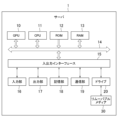
- 3 is a block diagram showing an example of a hardware configuration of a server in the information processing system shown in FIG. 2.
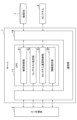
- 4 is a functional block diagram showing an example of a functional configuration of the server of FIG. 3 in the information processing system of FIG. 2 .
- FIG. 2 is a diagram showing a first embodiment of a user interface applied to the present service of FIG. 1.
- FIG. 1 is a diagram showing an overview of a service to which an information processing system including a server according to an embodiment of the information processing device of the present invention is applied
- FIG. 2 is a diagram showing an example of the configuration of an information processing system that realizes
- FIG. 2 is a diagram showing a second embodiment of a user interface applied to the present service of FIG. 1.
- FIG. 13 is a diagram showing a third embodiment of a user interface applied to the present service of FIG. 1.
- FIG. 8 is a diagram showing a third embodiment of a user interface applied to the present service of FIG. 1, which is a continuation of the example of FIG. 7.
- FIG. 13 is a diagram showing a fourth embodiment of a user interface applied to the present service of FIG. 1.
- FIG. 13 is a diagram showing an example of a user interface applied to the present service of FIG. 1 and adopted in a fifth embodiment.
- FIG. 13 is a diagram showing a fifth embodiment of a user interface applied to the present service of FIG. 1.
- FIG. 13 is a supplementary diagram of the fifth embodiment of the user interface applied to the present service of FIG.
- FIG. 13 is a diagram showing a sixth embodiment of a user interface applied to the present service of FIG. 1.
- 13A and 13B are diagrams showing a seventh embodiment of a user interface applied to the present service of FIG. 1.
- FIG. 1 is a diagram showing an outline of this service to which an information processing system including a server according to an embodiment of the information processing device of the present invention is applied.
- This service is provided by a service provider who manages the server 1 to a user who operates the user terminal 2.
- a user inputs search criteria in the user interface 1G, and search results based on the search criteria are displayed.
- information suitable for the user is provided, which is generated by an AI system 4 such as a text generation AI using the search results.
- the user interface 1 G is displayed on the display unit of the user terminal 2 under the control of the server 1 , and includes an input panel 11 G, an output panel 12 G, and a discussion panel 13 .
- the input panel 11G is an area where the user inputs search conditions or information that is the basis of the search conditions.
- the output panel 12G is an area where the results of a search performed according to the search conditions (search results) are displayed.
- the discussion panel 13G is an area used when a user leaves notes, when the user chats with other users (including chatbots), and when files, URLs, etc. are shared.
- step S1 the server 1 acquires information input by the user to the input panel 11G of the user interface 1G, performs a search using the search DB 3 according to search conditions based on the acquired information, and displays the search results on the output panel 12G of the user interface 1G.
- the AI system 4 is configured as, for example, a text generation AI that executes a specified task (for example, writing a text) using context information and outputs the result of the execution as generated information.
- the server 1 acquires at least a part of the search results displayed on the output panel 12G of the user interface 1G as context information, and transmits it together with a prompt for executing a predetermined task to the AI system 4.
- the server 1 receives the generated information output from the AI system 4 as a response to the transmission.
- step S3 the server 1 presents the acquired generated information or information based on it as provided information on the user interface 1G.
- the location where the provided information is presented is not particularly limited as long as it is within the screen of the display unit of the user terminal 2. In other words, the provided information is presented in an arbitrary location suitable for the content and type of the provided information.
- the user's input information itself is not used as context information, but the search results based on the user's search conditions are used as context information, and generated information is generated by the AI system 4, and the generated information is provided to the user as a response. That is, in the past, the user's input information itself was used as context information, but the response from the AI system was often inappropriate for the user. Therefore, the user had to think hard about the input information so that the response from the AI system would be suitable context information for the user. In contrast, with this service, users can simply input desired search conditions (or information based on those conditions) to obtain highly accurate search results that match the search conditions, and at least a portion of the search results are used as context information.
- the AI system 4 automatically generates context information that allows the AI system 4 to generate information appropriate for the user.
- the user does not have to go to great lengths to generate context information by himself, but only needs to input desired search conditions (or information based thereon), and the AI system 4 will provide a response appropriate for the user.
- the user's input information contains highly confidential information, it is inappropriate from a security perspective for the user's input itself to be sent to the AI system 4 as context information.
- public information that is, search results, rather than the highly confidential information itself, is sent to the AI system 4 as context information, so that highly confidential information is not leaked to the outside, which is extremely advantageous from a security perspective.
- the response from the AI system 4 becomes even more appropriate for the user.
- the point where the user specifies a portion of the search results as context information will be described later, for example, in the second embodiment of FIG. 6.
- FIG. 2 is a diagram showing an example of the configuration of an information processing system that realizes the provision of the present service in FIG. 1, that is, an information processing system including a server according to an embodiment of an information device of the present invention.
- the information processing system shown in FIG. 2 is configured to include a server 1, a user terminal 2, a search DB 3, and an AI system 4.
- the server 1, the user terminal 2, the search DB 3, and the AI system 4 are connected to each other via a network such as the Internet.
- the server 1 is an information processing device managed by the service provider of this service ( Figure 1).
- the server 1 executes various processes to realize this service while communicating appropriately with the user terminal 2, the search DB 3, and the AI system 4.
- the user terminal 2 is an information processing device operated by a user, and is composed of a smartphone, tablet, personal computer, etc.
- the search DB 3 outputs search results to the search request source (server 1 in this embodiment) based on specified search conditions, and in this example is configured as a database that stores various information that may be the search results. However, this is merely an example, and various forms can be adopted, such as a third-party search engine, as long as the search results are output to the search requester (server 1 in this embodiment) based on specified search conditions.
- the administrator of the search DB 3 may be the service provider of the service, or a third party (as viewed from the service provider).
- the AI system 4 is a third-party system (from the service provider's perspective) that executes a specific task using context information, such as a sentence generation AI, and outputs the execution results as generated information.
- context information such as a sentence generation AI
- LLM Large Language Models
- FIG. 3 is a block diagram showing an example of the hardware configuration of a server in the information processing system shown in FIG. 2.
- the server 1 includes a GPU (Graphics Processing Unit) 10, a CPU (Central Processing Unit) 11, a ROM (Read Only Memory) 12, a RAM (Random Access Memory) 13, a bus 14, an input/output interface 15, an input unit 16, an output unit 17, a memory unit 18, a communication unit 19, and a drive 20.
- GPU Graphics Processing Unit
- CPU Central Processing Unit
- ROM Read Only Memory
- RAM Random Access Memory
- the GPU 10 executes various processes (e.g., processes using a neural network not shown) using data recorded in the memory unit 18 or data recorded in a database including the search DB 63 in accordance with a program recorded in the ROM 12 or a program loaded from the memory unit 18 to the RAM 13.
- the CPU 11 executes various processes according to a program recorded in the ROM 12 or a program loaded from the storage unit 18 to the RAM 13 .
- the RAM 13 also stores data and the like necessary for the CPU 11 to execute various processes.
- the CPU 11, ROM 12, and RAM 13 are interconnected via a bus 14.
- An input/output interface 15 is also connected to this bus 14.
- An input unit 16, an output unit 17, a memory unit 18, a communication unit 19, and a drive 20 are connected to the input/output interface 15.
- the input unit 16 is configured with, for example, a keyboard, and is used to input various information.
- the output unit 17 is configured with a display such as a liquid crystal display, a speaker, etc., and outputs various information as images and sounds.
- the storage unit 18 is configured with a dynamic random access memory (DRAM) or the like, and stores various data.
- the communication unit 19 communicates with other devices (for example, the server 1 and the third-party system server 5 in FIG. 3) via a network N including the Internet.
- Removable media 30, such as a magnetic disk, an optical disk, a magneto-optical disk, or a semiconductor memory, is appropriately loaded into the drive 20.
- Programs read from the removable media 30 by the drive 20 are installed in the storage unit 18 as necessary. Further, the removable medium 30 can store various data stored in the storage unit 18 in the same manner as the storage unit 18 .
- the user terminal 2 also has the hardware configuration shown in FIG. 3. Therefore, a description of the hardware configuration of the user terminal 2 will be omitted.
- FIG. 3 The various hardware (FIG. 3) and software constituting the information processing system of FIG. 2, which includes the server 1, user terminal 2, search DB 3, and AI system 4, work together to execute various processes for providing the present service of FIG. 1.
- FIG. 4 is a functional block diagram showing an example of the functional configuration of the server in FIG. 3 in the information processing system in FIG. 2.
- a search control unit 51 As shown in FIG. 4, a search control unit 51, a context designation unit 52, an AI system communication control unit 53, and an information presentation unit 54 function in the CPU 11 of the server 1.
- the search control unit 51 acquires information input by the user (in the example of Figure 1, information input into the input panel 11G of the user interface 1G) from the user terminal 2, performs a search using the search DB 3 in accordance with search conditions based on the acquired information, and executes control to acquire one or more pieces of information from the search DB 3 as the search results.
- the search control unit 51 causes the search results to be displayed on the user terminal 2 (the output panel 12G of the user interface 1G in the example of FIG. 1).
- the AI system 4 is a system that executes a specified task using context information and outputs the results of that execution as generated information, as described above.
- the AI system communication control unit 53 controls communication with the AI system 4 by transmitting at least a portion of the search results to the AI system 4 as context information, and receiving generated information output from the AI system 4 in response to that transmission.
- the context information sent to the AI system 4 is described as "at least a part of the search results" because it may be all of the search results or only a part of the search results. Furthermore, in the case where part of the search results becomes context information, which part of the search results is adopted as the context information may be determined autonomously by the server 1 or may be specified by the user. In the latter case, that is, when the user operates the user terminal 2 to specify a portion of the search results that the user wishes to use as context information, the context specification unit 52 in the server 1 functions.
- the context designation unit 52 presents the search results to the user on the user terminal 2 (in the example of FIG. 1, the output panel 12G of the user interface 1G) and accepts an operation by the user to designate a part of the search results to be used as context information.
- the AI system communication control unit 54 executes control to transmit the part of the search results specified by the user as context information to the AI system 4, and to receive generated information output from the AI system 4 in response to that transmission.
- the information presentation unit 54 presents the acquired generated information or information based on it as provided information to the user via the user terminal 2 (user interface 1G in the example of FIG. 1).
- FIG. 5 is a diagram showing a first embodiment of a user interface applied to the present service of FIG.
- the user inputs a sentence into a sentence input area 211G of the input panel 21G as a search condition, or inputs a keyword into a keyword input area 212G of the input panel 21G.
- the search control unit 51 of the server 1 acquires sentences or keywords as search conditions from the user terminal 2, performs a search using the search DB 3 according to the search conditions, and acquires one or more pieces of information as the search results from the search DB 3.
- the search control unit 51 displays the search results on the output panel 22G of the user interface 1G.
- the AI system communication control unit 53 transmits the text and drawings of the search results displayed on output panel 22G to the AI system 4 as context information.
- the AI system 4 uses the context information to generate better search text for a specified task, and transmits the "better search text" to the server 1 as generated information.
- the AI system communication control unit 53 receives the "better search text” that is the generated information of the AI system 4.
- the information presentation unit 54 presents the "better search text" to the user as provided information via the user interface 1G of the user terminal 2.
- the AI system communication control unit 53 transmits the text and drawings of the search results displayed on the output panel 22G to the AI system 4 as context information.
- the AI system 4 uses the context information to generate "keywords appropriate for search” as a predetermined task (when searching again), and transmits the "keywords appropriate for search” to the server 1 as generated information.
- the AI system communication control unit 53 receives the "keywords appropriate for search” as generated information by the AI system 4.
- the information presentation unit 54 presents the "keywords appropriate for search” to the user as provided information via the keyword input area 212 of the input panel 21G of the user interface 1G of the user terminal 2.
- FIG. 6 is a diagram showing a second embodiment of a user interface applied to the present service of FIG.
- the user inputs a sentence into a sentence input area 211G of the input panel 21G as a search condition, or inputs a keyword into a keyword input area 212G of the input panel 21G.
- the search control unit 51 of the server 1 acquires sentences or keywords as search conditions from the user terminal 2, performs a search using the search DB 3 according to the search conditions, and acquires one or more pieces of information as the search results from the search DB 3.
- the search control unit 51 displays the search results on the output panel 22G of the user interface 1G.
- the user performs an operation to specify the search results (part of the search results) that suit his/her purpose from the search results displayed on the output panel 22G.
- the context specification unit 52 accepts such a specification operation by the user. For example, when a user presses button 213G in input panel 21G, the AI system communication control unit 53 transmits the sentences or drawings specified by the user from the search results displayed on the output panel 22G to the AI system 4 as context information.
- the AI system 4 uses the context information to generate better search sentences for a specified task, and transmits the "better search sentences" to the server 1 as generated information.
- the AI system communication control unit 53 receives the "better search sentences" that are generated information by the AI system 4.
- the information presentation unit 54 presents the "better search sentences" to the user as provided information via the user interface 1G of the user terminal 2. For example, when the user presses the button 214G in the input panel 21G, the AI system communication control unit 53 transmits the sentences or drawings specified by the user from the search results displayed on the output panel 22G to the AI system 4 as context information.
- the AI system 4 uses the context information to generate "keywords appropriate for search” as a predetermined task (when searching again), and transmits the "keywords appropriate for search” to the server 1 as generated information.
- the AI system communication control unit 53 receives the "keywords appropriate for search” as generated information of the AI system 4.
- the information presentation unit 54 presents the "keywords appropriate for search” to the user as provided information via the keyword input area 212 of the input panel 21G of the user interface 1G of the user terminal 2.
- FIG. 7 is a diagram showing a third embodiment of a user interface applied to the present service of FIG.
- a user can use a discussion panel 33G of a user interface 1G to leave notes, chat with other users, and share files and URLs.
- the user inputs text into an area 34G below the discussion panel 33G.
- the text may be freely entered using the input unit (keywords) of the user terminal 2 or may be entered by pressing a button 35G.
- the button 35G is for inputting a standard question prepared by the server 1 (system). When the button 35G is pressed, a question from the user to the AI system 4 is input in the area 34. That is, in the example of Fig.
- the AI system 4 generates an answer to the question as a predetermined task, and outputs the answer as generated information. Therefore, when the user presses the button 35G in the discussion panel 33G, the AI system communication control unit 53 transmits the question associated with the button 35G to the AI system 4, and transmits the information held in the discussion panel 33G (e.g., the contents of the chat between the user and other users, information on the shared URL destination, etc.) as context information to the AI system 4.
- the AI system 4 uses the context information to generate an answer to the above-mentioned question as a predetermined task, and transmits the "answer" to the server 1 as generated information.
- the AI system communication control unit 53 receives the "answer” as generated information of the AI system 4.
- the information presentation unit 54 presents the "answer" to the user as provided information via the user interface 1G of the user terminal 2.
- FIG. 8 is a diagram showing a third embodiment of a user interface applied to the present service of FIG. 1, which is a continuation of the example of FIG.
- a portion of the search results displayed on the output panel 32G specified by the user is also used as the context information to be sent to the AI system 4. That is, when the user presses the button 35G in the discussion panel 33G, the AI system communication control unit 53 transmits the question associated with the button 35G to the AI system 4, and transmits the information held in the discussion panel 33G and a part of the search results specified by the user (in the example of FIG.
- the AI system 4 uses the context information to generate an answer to the above-mentioned question as a predetermined task, and transmits the "answer" to the server 1 as generated information.
- the AI system communication control unit 53 receives the "answer” as generated information of the AI system 4.
- the information presentation unit 54 presents the "answer" to the user as provided information via the user interface 1G of the user terminal 2.
- the question associated with button 35G is not particularly limited.
- a question such as generating a search input sentence (a sentence to be input into the sentence input area 311G of the input panel 31G) that is in line with the context can be adopted.
- a question such as generating search keywords keywords to be input in the keyword input area 312G of the input panel 31G) that are in line with the context can be adopted.
- a question such as "Can highly relevant documents be extracted from the search results displayed on the output panel 32G?" can be adopted.
- FIG. 9 is a diagram showing a fourth embodiment of a user interface applied to the present service of FIG.
- a user can use a discussion panel 43G of a user interface 1G to leave notes, chat with other users, and share files and URLs.
- the user inputs text into an area 44G below the discussion panel 43G.
- the text may be freely entered using the input unit (keywords) of the user terminal 2, or may be entered by pressing a button 45G.
- the user can input text in area 44 to request the AI system 4 to search external sources.
- the AI system communication control unit 53 transmits the request input in the area 44 to the AI system 4, and also transmits information held in the discussion panel 33G (e.g., chat content between the user and other users, information on shared URL destinations, etc.) as context information to the AI system 4.
- the AI system 4 uses the context information to perform a search for external resources according to the above-mentioned request as a specified task, and transmits the "results of the search for external resources" to the server 1 as generated information.
- the AI system communication control unit 53 receives the "results of the search for external resources" which is the generated information of the AI system 4.
- the information presentation unit 54 presents the "results of the search for external resources" as provided information to the user via the user interface 1G of the user terminal 2.
- the external resources are not particularly limited, but may include, for example, internet searches, API-linked data services, file servers within an organization, and the like.
- FIG. 10 is a diagram showing an example of a user interface applied to the present service of FIG. 1 and adopted in the fifth embodiment.
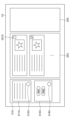
- the user interface 2G employed in the fifth embodiment of Figure 10 (and Figures 11 to 13 described below) is displayed on the display unit of the user terminal 2 under the control of the server 1, and has a text panel 22G, a discussion panel 23G, and a text creation panel 24G.
- the text panel 22G is an area where the full text of documents etc. obtained as a result of a search by the AI system 4 using the user interface 1G such as FIG. 1 is displayed.
- the discussion panel 23G is an area used when a user leaves notes, chats between the user and other users (including chatbots), and shares files, URLs, etc.
- the writing panel 24G is an area where the user writes writing such as reports and essays.
- FIG. 11 is a diagram showing a fifth embodiment of a user interface applied to the present service of FIG.
- the user can add annotations 222G to portions of the text of a document or the like displayed on the text panel 22G of the user interface 2G that the user considers important.
- the user can request processing such as writing, adding, proofreading, and translation by pressing a button 241G in the writing panel 24G.
- the AI system communication control unit 53 transmits the request to the AI system 4, and transmits the text input to the text creation panel 24G, the information held in the discussion panel 23G (for example, the contents of the chat between the user and other users, the information of the shared URL destination, etc.), and the information of the part of the text panel 222G to which the annotation 222G is attached as context information to the AI system 4.
- the AI system 4 uses the context information to perform processing such as creating, adding, proofreading, and translating the text according to the above-mentioned request as a predetermined task, and transmits the "result of the processing such as creating, adding, proofreading, and translating the text" to the server 1 as generated information.
- the AI system communication control unit 53 receives the "result of the processing such as creating, adding, proofreading, and translating the text" which is the generated information of the AI system 4.
- the information presentation unit 54 presents the "result of the processing such as creating, adding, proofreading, and translating the text" to the user via the user interface 1G of the user terminal 2 as provided information.
- the user can press the page forward button 221G of the text panel 22G to change the text (document) to be displayed in the text panel 22G, add annotations 222G as necessary, and press the button 241G to repeat the above-mentioned series of processes. That is, the user can create a text appropriate for the user in the text creation panel 24G while reading various texts by pressing the page forward button 221G.
- FIG. 12 is a supplementary diagram of the fifth embodiment of the user interface applied to the present service of FIG.
- a user can request the AI system 4 to explain or interpret the portion to which annotation 222G has been added, using the entire text of a document or the like displayed on the text panel 22G as context.
- the AI system communication control unit 53 transmits the request to the AI system 4, and transmits the entire text of the document or the like displayed on the text panel 22G to the AI system 4 as context information.
- the AI system 4 uses the context information to create a text of "explanation or interpretation of the part with annotation 222G" according to the request as a predetermined task, and transmits the text of "explanation or interpretation of the part with annotation 222G" to the server 1 as generated information.
- the AI system communication control unit 53 receives the text of "explanation or interpretation of the part with annotation 222G" which is generated information of the AI system 4.
- the information presenting unit 54 presents the text of "explanation or interpretation of the part with annotation 222G" to the user as provided information via the user interface 1G of the user terminal 2. Specifically, for example, in the example of FIG. 12, the text of "explanation or interpretation of the part with annotation 222G" is displayed in the speech bubble 223G for the annotation 222G.
- the user can request the AI system 4 to extract other highly relevant parts of the document or the like displayed on the text panel 22G with respect to the part to which the annotation 222G has been added.
- the AI system communication control unit 53 transmits the request to the AI system 4, and transmits the entire text of the document or the like displayed on the text panel 22G to the AI system 4 as context information.
- the AI system 4 uses the context information to extract "other parts highly related to the part with the annotation 222G" according to the request as a predetermined task, and transmits the "other parts highly related to the part with the annotation 222G" to the server 1 as generated information.
- the AI system communication control unit 53 receives the "other parts highly related to the part with the annotation 222G" which is the generated information of the AI system 4.
- the information presenting unit 54 presents the "other parts highly related to the part with the annotation 222G" to the user as provided information via the user interface 1G of the user terminal 2. Specifically, for example, in the example of FIG. 12, an instruction 224G is displayed for the "other parts highly related to the part with the annotation 222G" in the text of the document or the like displayed on the text panel 22G.
- FIG. 13 is a diagram showing a sixth embodiment of a user interface applied to the present service of FIG.
- the user interface 2G shown in FIG. 10 is adopted, as in the fifth embodiment.
- a user can request extraction of passages similar to text 342G created by that user (hereinafter referred to as "user-created text 342G") from within the text of a document or the like displayed on text panel 22G.
- the AI system communication control unit 53 transmits the request (including the user-created text 342G) to the AI system 4, and also transmits the entire text of the document or the like displayed on the text panel 22G to the AI system 4 as context information.
- the AI system 4 uses the context information to extract "parts similar to the user-created text 342G" according to the request described above as a predetermined task, and transmits the "parts similar to the user-created text 342G" to the server 1 as generated information.
- the AI system communication control unit 53 receives the "parts similar to the user-created text 342G” that is generated information by the AI system 4.
- the information presentation unit 54 presents the "parts similar to the user-created text 342G" to the user via the user interface 1G of the user terminal 2 as provided information.
- FIG. 14 is a diagram showing a seventh embodiment of a user interface applied to the present service of FIG.
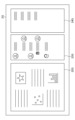
- the input panel is omitted, and instead, a text creation panel 36G is provided.
- the user performs an operation to specify the search results (plurality of documents) displayed on the output panel 32G that suit his/her purpose (one or more documents that are part of the search results).
- the context specification unit 52 accepts such a specification operation by the user.
- the user can request the AI system 4 to extract passages similar to the user-created text 342G from the text of one or more specified documents, etc.
- the AI system communication control unit 53 transmits the request (including the user-created text 342G) to the AI system 4, and transmits one or more texts of the literature etc. specified by the user from among the literature etc. displayed on the output panel 32G as context information to the AI system 4.
- the AI system 4 uses the context information to extract "parts similar to the user-created text 342G" according to the above-mentioned request as a predetermined task, and transmits the "parts similar to the user-created text 342G" to the server 1 as generated information.
- the AI system communication control unit 53 receives the "parts similar to the user-created text 342G" as generated information of the AI system 4.
- the information presentation unit 54 presents the "parts similar to the user-created text 342G" to the user as provided information via the user interface 1G of the user terminal 2. Specifically, in the example of Figure 14, in the text creation panel 36G, text 343G that is a "section similar to user-created text 342G" is displayed next to the user-created text 342G so that it can be compared with the user-created text 342G, and an instruction 321G is displayed for the "section similar to user-created text 342G" in the text of the document or the like displayed on the output panel 32G.
- an eighth embodiment will be described.
- a plurality of documents eg, about 10,000 documents
- the AI system 4 generates summaries and answers to questions (e.g., questions to point out important points) for each of a plurality of sentences as generated information in bulk.
- the AI system communication control unit 53 transmits each sentence of the multiple documents, etc. displayed as the search results on the output panel 32G as context information to the AI system 4.
- the AI system 4 executes the above-mentioned predetermined task using the context information, and transmits "each summary sentence of the multiple documents, etc.
- the AI system communication control unit 53 receives "each summary sentence of the multiple documents, etc. that are the search results and answers to questions (e.g., questions to point out important parts)" as generated information from the AI system 4.
- the information presentation unit 54 returns the information generated by the AI system 4, which is "search results such as summaries of multiple documents, etc. and answers to questions (for example, questions to point out important points),” to the search system (search DB 3 in the above embodiment) in a searchable form.
- search results of the documents, etc.” are data that were originally stored in a database (search DB 3 in the above embodiment).
- the "summaries of the documents, etc., that are the search results, and answers to questions (e.g., questions asking to point out important points)" that are generated by the AI system 4 can be understood as "extended data according to the user's search purpose.” That is, the server 1 causes the AI system 4 to generate extended data according to the user's search purpose as generated information based on the contents of the specified data among the data stored in a specified database (e.g., the search DB 3), and returns the extended data to the specified database. This makes it possible to execute a search that includes the extended data.
- a specified database e.g., the search DB 3
- the server 1 indexes "resulting summaries of multiple documents and answers to questions (e.g., questions to point out important parts)" which are information generated by the AI system 4 in a predetermined database (e.g., search DB 3), in addition to normal word-level indexing, it may also index using vector expressions based on a large-scale language model or a neural network specific to this service.
- the server 1 can execute distributed processing not only on the CPU 11 but also on the GPU 10, etc., so that the information generated by the AI system 4 can be searched with almost no time lag after it is generated.
- the target for executing the distributed processing may be a locally owned GPU such as the GPU 10 in the server 1, but is not limited to this. For example, a GPU on the cloud may be borrowed.
- the search control unit 51 in FIG. 4 executes the search process by itself, but it is sufficient if the search control unit 51 executes the search process by itself.
- the concept of search control includes not only the information processing device (server 1) itself executing the search process, but also having another device, such as a search engine, perform a search and obtain the search results.
- the AI system 4 (the AI system 4 on the cloud) is used as another service for the sentence generation AI, but the AI of the service provider of this service may be used.
- the sentence generation AI may be provided in the server 1. Therefore, the control of communication by the AI system communication control unit 53 in Figure 4 is a concept that includes not only communication between devices via the Internet, etc., as in the above-mentioned embodiment, but also communication within the device (server 1).
- system configuration shown in FIG. 2 and the hardware configuration of the server 1 and the user terminal 2 shown in FIG. 3 are merely examples for achieving the object of the present invention and are not particularly limited.
- FIG. 4 is merely an example and is not particularly limited. In other words, it is sufficient that the information processing system in FIG. 4 is provided with the functionality to execute the various processes described above as a whole, and the functional blocks and databases used to realize this functionality are not particularly limited to the example in FIG. 5.
- the locations of the functional blocks and databases are not limited to those shown in FIG. 4 and may be arbitrary.
- at least some of the functional blocks and databases arranged in the server 1 may be provided in another information processing device.
- one functional block may be configured as a single piece of hardware, a single piece of software, or a combination of both.
- the program constituting the software is installed into a computer or the like from a network or a recording medium.
- the computer may be a computer implemented with dedicated hardware.
- the computer may be a computer capable of executing various functions by installing various programs, such as a service provider server, a general-purpose smartphone, or a personal computer.
- the recording medium containing such a program may be configured not only as a removable medium (not shown) that is distributed separately from the device body in order to provide the program to the user, but also as a recording medium that is provided to the user in a state where it is already installed in the device body.
- the steps describing the program to be recorded on the recording medium include not only processes that are performed chronologically according to the order, but also processes that are not necessarily performed chronologically but are executed in parallel or individually.
- an information processing device to which the present invention is applied for example, the server 1 in FIGS. 1 to 4) a search control means (e.g., the search control unit 51 in FIG. 4 ) that executes control to acquire information input by a user (e.g., information input to the input panel 11G in FIG. 1 ) and search for one or more pieces of information as search results according to search conditions based on the acquired information (e.g., searching using the search DB 3 in FIGS. 1 , 2 , and 4 ); an information generation system communication control means (e.g., the AI system 4 in FIG. 1, FIG. 2, and FIG.
- the information generation system communication control means e.g., the AI system communication control unit 54 in FIG. 4 that controls communication between the information generation system and the information generation system by transmitting at least a part of the search results (e.g., the search results of documents, etc. displayed on the output panel 12G in FIG. 1) to the information generation system as the context information, and receiving the generated information output from the information generation system in response to the transmission; an information presenting unit (e.g., an information presenting unit 54 in FIG. 4 ) that presents the acquired generated information or information based thereon to the user as provided information; It will be enough to have this.
- “information based on it” that can become provided information means information obtained as a result of modifying, processing (changing some information, adding information, or reducing information, etc.), amending, translating, etc. the generated information, or information newly generated using the generated information.
- a context designation means (e.g., the context designation unit 52 in FIG. 4 ) for presenting the search results to the user and accepting an operation by the user to designate a part of the search results to be used as the context information (e.g., an operation to designate a part (one or more documents) that suits the user's purpose from the search results (a plurality of documents) displayed on the output panel 22G in FIG. 6 ).
- the information generation system communication control means transmits the portion of the search results designated by the user as the context information to the information generation system; It is possible.
- the information generation system generates, as the predetermined task, information related to the search results, and outputs the generated related information as the generated information.
- related information refers to, for example, the “better search sentence” generated when button 213 in Figure 5 or Figure 6 is pressed, but is not limited to this, and various kinds of information related to the search results, such as the summary of the search results (for example, a specified document), can be used.
- the information generation system generates, as the predetermined task, information to be used as the search conditions when the search control means performs a re-search (for example, "keywords appropriate for the search (synonyms of the keywords used in the initial search, etc.)" when the button 214 in FIG. 5 or FIG. 6 is pressed), and outputs the generated information as the generated information. It is possible.
- a re-search for example, "keywords appropriate for the search (synonyms of the keywords used in the initial search, etc.)" when the button 214 in FIG. 5 or FIG. 6 is pressed
- the information generating means transmits, to the information generating system, information based on an input by the user to a predetermined display area of a predetermined screen in addition to the portion of the search result specified by the user, as the context information.
- a specific document with a check mark in check box 321G is used as "the portion of the search results specified by the user”
- information held in discussion panel 33G is used as "information based on the user's input to a specified display area of a specified screen”.
- the information of the portion of the search result designated by the user in the fifth embodiment is the information of the portion of the text panel 222G to which the annotation 222G is added.
- the information held in the discussion panel 23G and the text input to the text creation panel 24G are used as the information based on the user's input to the predetermined display area of the predetermined screen.
- the information generation system generates an answer to a predetermined question (for example, in the third embodiment of FIG. 7, a question associated with button 35G in discussion panel 33G) as the predetermined task, and outputs the generated answer as the generated information;
- the information generating system communication control means executes control to transmit information indicating the predetermined question together with the context information to the information generating system; It is possible.
- the information generation system executes at least one of creating, adding, proofreading, and translating a specified text as the specified task (for example, in the fifth embodiment of FIG. 11, a button 241G in a text creation panel 24G is pressed, and a request for processing such as creating, adding, proofreading, and translating a text is executed), and outputs the execution result as the generated information. It is possible.
- the information generation system extracts, as the predetermined task, one or more pieces of similar information to the predetermined information from the context information (see, for example, a sixth embodiment of FIG. 13 and a seventh embodiment of FIG. 14 ), and outputs the one or more pieces of similar information extracted as the generated information;
- the information generation system communication control means executes control to transmit the predetermined information together with the context information to the information generation system. It is possible.
- 1 Server, 2: User terminal, 3: Search DB, 4: AI system, 11: CPU, 12: ROM, 13: RAM, 14: Bus, 15: Input/output interface, 16: Input unit, 17: Output unit, 18: Storage unit, 19: Communication unit, 20: Drive, 30: Removable media, 51: Search control unit, 52: Context designation unit, 53: AI system communication control unit, 54: Information presentation unit
Landscapes
- Engineering & Computer Science (AREA)
- Theoretical Computer Science (AREA)
- Physics & Mathematics (AREA)
- General Physics & Mathematics (AREA)
- Computational Linguistics (AREA)
- General Engineering & Computer Science (AREA)
- Artificial Intelligence (AREA)
- Data Mining & Analysis (AREA)
- Health & Medical Sciences (AREA)
- General Health & Medical Sciences (AREA)
- Databases & Information Systems (AREA)
- Evolutionary Computation (AREA)
- Biophysics (AREA)
- Biomedical Technology (AREA)
- Life Sciences & Earth Sciences (AREA)
- Molecular Biology (AREA)
- Computing Systems (AREA)
- Mathematical Physics (AREA)
- Software Systems (AREA)
- Audiology, Speech & Language Pathology (AREA)
- Information Transfer Between Computers (AREA)
Priority Applications (1)
| Application Number | Priority Date | Filing Date | Title |
|---|---|---|---|
| JP2025515203A JPWO2024219329A1 (https=) | 2023-04-20 | 2024-04-12 |
Applications Claiming Priority (2)
| Application Number | Priority Date | Filing Date | Title |
|---|---|---|---|
| JP2023069570 | 2023-04-20 | ||
| JP2023-069570 | 2023-04-20 |
Publications (1)
| Publication Number | Publication Date |
|---|---|
| WO2024219329A1 true WO2024219329A1 (ja) | 2024-10-24 |
Family
ID=93152436
Family Applications (1)
| Application Number | Title | Priority Date | Filing Date |
|---|---|---|---|
| PCT/JP2024/014816 Ceased WO2024219329A1 (ja) | 2023-04-20 | 2024-04-12 | 情報処理装置、情報処理方法及びプログラム |
Country Status (2)
| Country | Link |
|---|---|
| JP (1) | JPWO2024219329A1 (https=) |
| WO (1) | WO2024219329A1 (https=) |
Citations (1)
| Publication number | Priority date | Publication date | Assignee | Title |
|---|---|---|---|---|
| WO2022124338A1 (ja) * | 2020-12-08 | 2022-06-16 | Nota株式会社 | 情報処理装置、情報処理方法及びプログラム |
-
2024
- 2024-04-12 JP JP2025515203A patent/JPWO2024219329A1/ja active Pending
- 2024-04-12 WO PCT/JP2024/014816 patent/WO2024219329A1/ja not_active Ceased
Patent Citations (1)
| Publication number | Priority date | Publication date | Assignee | Title |
|---|---|---|---|---|
| WO2022124338A1 (ja) * | 2020-12-08 | 2022-06-16 | Nota株式会社 | 情報処理装置、情報処理方法及びプログラム |
Non-Patent Citations (1)
| Title |
|---|
| AOSHIMA, ITTO ET AL.: "Special Feature: 11 Questions about ChatGPT", NIKKEI KONPYUTA - NIKKEI COMPUTER, NIKKEI MAGUROUHIRUSHA, TOKYO,, JP, no. 1092, 13 April 2023 (2023-04-13), JP , pages 042 - 051, XP009558163, ISSN: 0285-4619 * |
Also Published As
| Publication number | Publication date |
|---|---|
| JPWO2024219329A1 (https=) | 2024-10-24 |
Similar Documents
| Publication | Publication Date | Title |
|---|---|---|
| US10579657B2 (en) | Answering questions via a persona-based natural language processing (NLP) system | |
| JP6414956B2 (ja) | 質問文生成装置及びコンピュータプログラム | |
| US6498921B1 (en) | Method and system to answer a natural-language question | |
| US9471601B2 (en) | Images for a question answering system | |
| JP7338839B1 (ja) | サーバ仲介システム、仲介サーバ、学習済モデルアシストシステム、及びアシストサーバ | |
| JP7788121B1 (ja) | プログラム、方法、情報処理装置、システム | |
| JP7667611B1 (ja) | プログラム、方法、情報処理装置、システム | |
| JP2025060386A (ja) | プログラム、方法、情報処理装置、システム | |
| JP7611621B1 (ja) | プログラム、方法、情報処理装置、システム | |
| RU2698405C2 (ru) | Способ поиска в базе данных | |
| JP7688440B2 (ja) | プログラム、方法、情報処理装置、システム | |
| WO2024219329A1 (ja) | 情報処理装置、情報処理方法及びプログラム | |
| US20030103069A1 (en) | Navigator | |
| Spiteri | Managing metadata in web-scale discovery systems | |
| JP7761190B1 (ja) | 方法、プログラム、情報処理装置及び情報処理システム | |
| Mathew et al. | User Study for Improving Tools for Bible Translation | |
| JP2012243130A (ja) | 情報検索装置、方法、及びプログラム | |
| Kapitsaki et al. | Representation with Word Clouds at the PHD UNS Digital Library | |
| Soules et al. | Navigating the MLA bibliography—Redux: Performance across vendor platforms and discovery tools | |
| Zhou et al. | Multimodal RAG for cultural heritage: a technical exploration based on Jino traditional knowledge | |
| Trang et al. | A Customized AI Chatbot for Educational Environments: Integrating Retrieval-Augmented Generation with Curriculum-Aligned Responses | |
| Ухов | THE USE OF ONLINE DICTIONARIES FOR SPECIFIC TERMINOLOGY UNDERSTANDING ON THE EXAMPLE OF ‘WORDPRESS’SYSTEM | |
| HK40083852A (en) | Courseware generation method, courseware display method, device, equipment and storage medium | |
| TOOLS | 5 Students’ Experiences with AI Tools in Project Work | |
| WO2001065412A2 (en) | Automatically determining a response to an inquiry using structured information |
Legal Events
| Date | Code | Title | Description |
|---|---|---|---|
| 121 | Ep: the epo has been informed by wipo that ep was designated in this application |
Ref document number: 24792604 Country of ref document: EP Kind code of ref document: A1 |
|
| ENP | Entry into the national phase |
Ref document number: 2025515203 Country of ref document: JP Kind code of ref document: A |
|
| WWE | Wipo information: entry into national phase |
Ref document number: 2025515203 Country of ref document: JP |
|
| NENP | Non-entry into the national phase |
Ref country code: DE |