WO2024214679A1 - 情報処理システムおよびコンピュータプログラム - Google Patents
情報処理システムおよびコンピュータプログラム Download PDFInfo
- Publication number
- WO2024214679A1 WO2024214679A1 PCT/JP2024/014322 JP2024014322W WO2024214679A1 WO 2024214679 A1 WO2024214679 A1 WO 2024214679A1 JP 2024014322 W JP2024014322 W JP 2024014322W WO 2024214679 A1 WO2024214679 A1 WO 2024214679A1
- Authority
- WO
- WIPO (PCT)
- Prior art keywords
- class
- information
- dataset
- classification
- input data
- Prior art date
- Legal status (The legal status is an assumption and is not a legal conclusion. Google has not performed a legal analysis and makes no representation as to the accuracy of the status listed.)
- Ceased
Links
Images


Classifications
-
- G—PHYSICS
- G06—COMPUTING OR CALCULATING; COUNTING
- G06F—ELECTRIC DIGITAL DATA PROCESSING
- G06F16/00—Information retrieval; Database structures therefor; File system structures therefor
- G06F16/50—Information retrieval; Database structures therefor; File system structures therefor of still image data
- G06F16/55—Clustering; Classification
-
- G—PHYSICS
- G06—COMPUTING OR CALCULATING; COUNTING
- G06F—ELECTRIC DIGITAL DATA PROCESSING
- G06F18/00—Pattern recognition
- G06F18/20—Analysing
- G06F18/21—Design or setup of recognition systems or techniques; Extraction of features in feature space; Blind source separation
- G06F18/214—Generating training patterns; Bootstrap methods, e.g. bagging or boosting
-
- G—PHYSICS
- G06—COMPUTING OR CALCULATING; COUNTING
- G06N—COMPUTING ARRANGEMENTS BASED ON SPECIFIC COMPUTATIONAL MODELS
- G06N20/00—Machine learning
Definitions
- This disclosure relates to data processing technology, and in particular to information processing systems and computer programs.
- a video surveillance system has been proposed that has a display control means for displaying a category setting screen for setting categories for events contained in video data, accumulates category information set in response to an operator's operation as learning data, and performs learning processing using the learning data (see, for example, Patent Document 1).
- the present disclosure has been made based on the inventor's above-mentioned recognition, and one objective is to provide a technology that supports the correction of classes assigned to training data in a machine learning dataset.
- an information processing system includes a storage unit that stores a dataset for constructing a classification model, the dataset associating input data with a class into which the data is to be classified; a model generation unit that executes machine learning based on the dataset and generates a classification model; a classification result providing unit that provides a user with information regarding the results of the classification of the input data of the dataset into a plurality of classes by the classification model; and a modification unit that modifies the class associated with the input data in the dataset in response to a user operation.
- any combination of the above components, or any conversion of the expressions of this disclosure between an apparatus, a method, a computer program, or a recording medium having a computer program recorded thereon, is also valid as an aspect of this disclosure.
- the technology disclosed herein can assist in correcting the classes assigned to training data in a machine learning dataset.
- FIG. 1 is a diagram illustrating a configuration of an information processing system according to an embodiment.
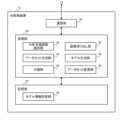
- FIG. 2 is a block diagram showing functional blocks of the AI processing device of FIG. 1.
- FIG. 11 is a diagram illustrating an example of model information.
- 1 is a flowchart showing the operation of an AI processing device of an embodiment.
- FIG. 13 is a diagram showing an example of a data set confirmation screen.
- FIG. 13 is a diagram showing an example of a data set confirmation screen.
- the subject of the device or method disclosed herein is equipped with a computer.
- the computer executes a program to realize the functions of the subject of the device or method disclosed herein.
- the computer has a processor that operates according to a program as its main hardware configuration.
- the type of processor is not important as long as it can realize the functions by executing the program.
- the processor is composed of one or more electronic circuits including an integrated circuit (IC) or an LSI (Large Scale Integration).
- IC integrated circuit
- LSI Large Scale Integration
- FPGAs Field Programmable Gate Arrays
- FPGAs which are programmed after the LSI is manufactured, or reconfigurable logic devices that can reconfigure the connections within the LSI or set up circuit partitions within the LSI, can also be used for the same purpose.
- Multiple electronic circuits may be integrated into one chip or may be provided on multiple chips. Multiple chips may be integrated into one device or may be provided on multiple devices.
- the program may be recorded on a non-transitory recording medium such as a computer-readable Read Only Memory (ROM), optical disk, or hard disk drive, or may be recorded on a temporary storage medium such as a computer-readable Random Access Memory (RAM).
- the program may be pre-stored in the recording medium or may be supplied to the recording medium or storage medium via a wide area communication network including the Internet.
- the information processing system of the embodiment provides a user interface that assists in the correction of the classes assigned to the training data.
- the AI model can be said to be a mathematical model created by machine learning, and can also be said to be a function approximator.
- Figure 1 shows the configuration of an information processing system 10 according to the embodiment.
- the information processing system 10 includes an AI processing device 12 and multiple user terminals 14.
- Each device shown in Figure 1 is connected via a communication network 16, which may include a LAN, a WAN, the Internet, etc.
- the AI processing device 12 is an information processing device that executes processes related to the generation of an AI model based on machine learning and also manages information related to the AI model.
- the AI model of the embodiment analyzes an input image and classifies the content of the image (one or more areas within the image) into one of multiple classes (also called categories) specified in advance by the user, and is hereinafter also referred to as a "classification model.”
- the AI processing device 12 of the embodiment is a cloud server that provides a data processing service as a cloud service.
- the processing executed by the AI processing device 12 includes processing for cutting out images for training a classification model (hereinafter also referred to as "learning images”) from the original image (hereinafter also referred to as "original image”) as learning data in response to user operation.
- a learning image can also be considered an image for training a classification model.
- the processing executed by the AI processing device 12 also includes processing for cutting out images for verifying a classification model (hereinafter also referred to as "verification images”) from the original image in response to user operation. Unless otherwise specified, processing performed on learning images can also be applied to verification images. Learning images and verification images can also be considered “cut-out images” cut out from the original image.
- the multiple user terminals 14 are information processing devices operated by multiple users who use the services of the AI processing device 12, and are, for example, information processing devices operated by a developer of an inspection system that uses a classification model.
- the multiple user terminals 14 include user terminal 14a, user terminal 14b, and user terminal 14c that are operated by different users.
- the user terminal 14 may be a PC, a tablet terminal, or a smartphone.
- the AI processing device 12 has a web server function.
- the AI processing device 12 provides web content (HTML data, etc.) related to the development of the classification model to the user terminal 14.
- the user terminal 14 accesses the AI processing device 12 via a web browser.
- the web browser of the user terminal 14 displays the web content provided by the AI processing device 12 on a specified display.
- FIG. 2 is a block diagram showing the functional blocks of the AI processing device 12 in FIG. 1.
- Each block shown in the block diagram of this disclosure can be realized in hardware terms by elements and mechanical devices such as a computer's CPU and memory, and in software terms by a computer program, etc., but here we depict the functional blocks realized by the cooperation of these. Those skilled in the art will understand that these functional blocks can be realized in various ways by combining hardware and software.
- the AI processing device 12 comprises a processing unit 20, a memory unit 22, and a communication unit 24.
- the processing unit 20 executes various data processing related to the development of a classification model.
- the memory unit 22 stores data referenced or updated by the processing unit 20.
- the communication unit 24 communicates with an external device according to a predetermined communication protocol.
- the processing unit 20 transmits and receives data to and from the user terminal 14 via the communication unit 24.
- the storage unit 22 includes a model information storage unit 26 that stores model information.
- the model information includes information related to the classification model.
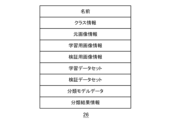
- FIG. 3 shows an example of model information, and shows multiple items that are associated and stored as model information.
- the model information includes a name, class information, original image information, learning image information, validation image information, learning dataset, validation dataset, classification model data, and classification result information.
- “Name” an identification name for the model information is set.
- Class information information on multiple classes predetermined by the user is set. Classes are candidates for classification according to a classification model, and are also called categories.
- Olecial image information information on the original image is set. The original image information may include a path name for accessing the original image.
- Training image information is information about a learning image cut out from an original image, and includes data about the learning image and information about the position of the learning image on the original image.
- Verification image information is information about a verification image cut out from an original image, and includes data about the verification image and information about the position of the verification image on the original image.
- the position of the learning image on the original image can also be said to be the cut-out position from the original image, and may be the coordinate values of the top left and bottom right of the learning image in the original image. The same applies to the position of the verification image on the original image.
- the model information of the embodiment includes a training dataset and a validation dataset as datasets related to the construction of a classification model.
- the "training dataset” is data in which class information has been added to training images, in other words, a set of training images and class information.
- the "validation dataset” is data in which class information has been added to validation images, in other words, a set of validation images and class information.
- the "classification model data” is data of the generated classification model. It may be data in a file in which the classification model is saved.
- Classification result information includes information regarding the results of the classification model classifying each of the training images in the training dataset and the validation images in the validation dataset into multiple classes defined by the class information.
- the classification result information includes a predicted value (also called a "predicted probability") of the probability that each of the training images and validation images matches each of the multiple classes defined by the class information.
- the classification result information may include the result of classifying each of the training images and validation images into one of the multiple classes defined by the class information.
- the functions of the multiple functional blocks of the processing unit 20 may be implemented in a computer program (herein referred to as an "AI analysis support program").
- the AI analysis support program may be stored in a non-temporary recording medium and installed in the storage of the AI processing device 12 via the recording medium.
- the AI analysis support program may also be downloaded via a network and installed in the storage of the AI processing device 12.
- the processor (CPU, etc.) of the AI processing device 12 may perform the functions of the multiple functional blocks of the processing unit 20 by reading the AI analysis support program into main memory and executing it.
- the analysis support screen providing unit 30 transmits data of the analysis support screen, which is a user interface for information processing by the AI processing device 12, to the user terminal 14.
- the analysis support screen includes a dataset confirmation screen, which will be described later.
- the analysis support screen is a web page.
- the web browser of the user terminal 14 displays the analysis support screen provided by the AI processing device 12 on a specified display device.
- the image cutout unit 32 generates training images and verification images by cutting out training images and verification images from original images previously uploaded from the user terminal 14 in response to user operations input on the analysis support screen.
- the dataset generation unit 34 generates a training dataset in which the training images generated by the image cutout unit 32 are associated with a class specified on the analysis support screen, and stores the training dataset in the model information storage unit 26.
- the dataset generation unit 34 also generates a verification dataset in which the verification images generated by the image cutout unit 32 are associated with a class specified on the analysis support screen, and stores the verification dataset in the model information storage unit 26.
- the model generation unit 36 performs machine learning based on the training data set stored in the model information storage unit 26, and generates a classification model as a trained model.
- the model generation unit 36 also verifies the classification model based on the validation data set stored in the model information storage unit 26.
- Publicly known techniques may be used for creating and validating the classification model.
- the classification model may be a neural network, or may be a type of mathematical model different from a neural network (such as a decision tree).
- the model generation unit 36 stores data of the generated classification model in the model information storage unit 26.
- the classification unit 38 inputs each of the training images in the training dataset and the validation images in the validation dataset into the classification model.
- the classification unit 38 stores in the model information storage unit 26 classification result information indicating the results of the classification model classifying each of the training images and validation images into multiple classes defined by the class information.
- the analysis support screen providing unit 30, as a classification result providing unit provides the classification result information stored in the model information storage unit 26 to the user terminal 14.
- the dataset modification unit 40 changes the class associated with the training image in the training dataset in response to a user operation entered on the analysis support screen.
- the dataset modification unit 40 also changes the class associated with the verification image in the verification dataset in response to a user operation entered on the analysis support screen.
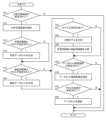
- FIG. 4 is a flowchart showing the operation of the AI processing device 12 of the embodiment. The process in FIG. 4 is executed in parallel for each user terminal 14. The operation of the information processing system 10 will be described below with reference to FIG. 4.
- the user terminal 14 requests the web page of the analysis support screen from the AI processing device 12 in response to user operation.
- the analysis support screen is requested (Y in S10)
- the analysis support screen providing unit 30 of the AI processing device 12 provides the web page of the analysis support screen to the user terminal 14 (S12).
- the user terminal 14 displays the web page of the analysis support screen on the display.
- the user terminal 14 transmits a registration request for an original image, with model information specified, to the AI processing device 12 in response to the user's operation on the analysis support screen.
- the user terminal 14 also transmits class information, with model information specified, to the AI processing device 12 in response to the user's operation on the analysis support screen.
- the AI processing device 12 stores the original image and class information transmitted from the user terminal 14 in the specified model information in the model information storage unit 26.
- the processing from S14 onwards is carried out for each piece of model information specified by the user on the analysis support screen.
- the processing from S14 onwards is related to the specific model information specified by the user (hereinafter also referred to as "target model information").
- the user terminal 14 transmits to the AI processing device 12 information regarding the user's operation on the original image displayed on the analysis support screen, the information specifying the cut-out area of the learning image and the class to which the learning image is associated.
- the image cut-out unit 32 of the AI processing device 12 When the above-mentioned specified information is accepted (Y in S14), the image cut-out unit 32 of the AI processing device 12 generates a learning image cut out from the original image, and stores information regarding the generated learning image (such as information on the cut-out position) in the target model information of the model information storage unit 26.
- the dataset generation unit 34 of the AI processing device 12 generates a learning dataset that associates the learning image generated by the image cut-out unit 32 with the specified class, and stores the learning dataset in the target model information of the model information storage unit 26 (S16). If the above-mentioned specified information is not accepted (N in S14), the processing of S16 is skipped.
- the user terminal 14 transmits to the AI processing device 12 information regarding the user's operation on the original image displayed on the analysis support screen, the information specifying the cut-out area of the verification image and the class to which the verification image is to be associated.
- the image cut-out unit 32 of the AI processing device 12 When the above-mentioned specified information is accepted (Y in S18), the image cut-out unit 32 of the AI processing device 12 generates a verification image cut out from the original image.
- the dataset generation unit 34 of the AI processing device 12 generates a verification dataset that associates the generated verification image with the specified class, and stores it in the target model information of the model information storage unit 26 (S20). If the above-mentioned specified information is not accepted (N in S18), the processing of S20 is skipped.
- the user terminal 14 transmits an instruction to generate a classification model, including the specification of target model information, to the AI processing device 12 in response to a user's operation on the analysis support screen.
- the model generation unit 36 of the AI processing device 12 executes machine learning based on the learning dataset and validation dataset of the specified model information to generate a classification model (S24).
- the model generation unit 36 stores data of the generated classification model in the target model information of the model information storage unit 26.
- the classification unit 38 of the AI processing device 12 inputs multiple training images included in the training dataset to the classification model generated in S24.
- the classification unit 38 obtains, as an output of the classification model, classification result information indicating the result of the classification model classifying each training image into multiple classes indicated by the class information.
- the classification unit 38 also inputs multiple validation images included in the validation dataset to the classification model generated in S24.
- the classification unit 38 obtains, as an output of the classification model, classification result information indicating the result of the classification model classifying each validation image into multiple classes indicated by the class information (S26).
- the classification result information in this embodiment includes the predicted probability for each class derived by the classification model for each of the multiple training images and multiple validation images.
- the predicted probability can also be considered as a predicted value of the probability that each class falls into.
- the classification unit 38 stores the classification result information for each training image and the classification result information for each validation image in the target model information of the model information storage unit 26. If an instruction to generate a classification model is not received (N in S22), the processes of S24 and S26 are skipped.
- the user terminal 14 transmits data requesting a dataset confirmation screen for the target model information to the AI processing device 12.
- the analysis support screen providing unit 30 of the AI processing device 12 generates data for a dataset confirmation screen, which is one of the analysis support screens, based on the target model information and transmits it to the user terminal 14 (S30).
- the user terminal 14 displays the dataset confirmation screen on the display.
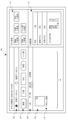
- FIG. 5 shows an example of a dataset confirmation screen 100.
- the dataset confirmation screen 100 includes classification result information by a classification model for each image of the dataset included in the target model information. Furthermore, the dataset confirmation screen 100 includes a user interface for changing the class associated with each image.
- the entire dataset confirmation screen 100 may be updated, or a portion of the dataset confirmation screen 100 may be dynamically rewritten using a publicly known technology such as Ajax (Asynchronous Javascript And XML) ("Javascript" is a registered trademark).
- the dataset confirmation screen 100 includes a dataset selection area 102, a class selection area 104, a condition selection area 106, an image area 108, a classification result information area 112, and a change destination designation area 114.
- the image area 108 is an area for displaying images of the dataset (in the embodiment, training images or validation images).
- the images displayed in the image area 108 are also called target images 110.
- the dataset selection area 102 is an area for selecting the type of target image 110 to be displayed in the image area 108. In FIG. 5, a training dataset is selected.
- the class selection area 104 is an area for selecting the class of the target image 110. In FIG. 5, a foreign object class is selected.
- the condition selection area 106 is an area for selecting conditions for narrowing down the target images 110.
- "Match” means that the target image 110 is one in which the class assigned to the image in the dataset (i.e. the class assigned to the image by the user) matches the class assigned to the image by the classification model.
- “Mismatch” means that the target image 110 is one in which the class assigned to the image in the dataset does not match the class assigned to the image by the classification model.
- “Corrected” means that the target image 110 is an image whose class has been changed in the dataset.
- “All Images” means that all images included in the dataset are the target images 110, i.e. no narrowing down is performed. In Figure 5, “Mismatch” is selected.
- a target image 110 is displayed, which is a training image of a foreign object class in the training dataset, and which has been classified into a class different from the foreign object class by the classification model.
- the classification result information stored in the target model information is set.
- the user terminal 14 transmits identification information of the selected image to the AI processing device 12.
- the target image 110 in the upper left of the image area 108 is selected, and the user terminal 14 transmits the identification information of the target image 110 in the upper left to the AI processing device 12 as identification information of the selected image.
- the analysis support screen providing unit 30 of the AI processing device 12 transmits analysis result information regarding the selected image to the user terminal 14.
- the analysis result information includes (1) predicted probability values by class, (2) predicted classes, (3) registered classes, and (4) judgments.
- the analysis support screen providing unit 30 (1) sets the predicted probability values of each class derived by the classification model for the selected image stored in the target model information as the predicted probability values by class.
- the analysis support screen providing unit 30 (2) selects the class with the largest predicted probability value as the predicted class.
- the analysis support screen providing unit 30 (3) sets the class assigned to the selected image in the class information stored in the target model information as the registered class.
- Judgment is information indicating whether or not the class associated with the image in the dataset matches the class into which the classification model has classified the image.
- the analysis support screen providing unit 30 sets (4) judgment to whether the registered class matches or does not match the predicted class. This allows the user to intuitively grasp whether the class associated with the image in the dataset is correct or not.
- analysis result information is displayed indicating that the registered class and predicted class for the selected image do not match, and that the predicted probability value of the dirt class is the highest in the class-specific prediction.
- the dataset confirmation screen 100 displays classification result information based on a classification model for a training dataset and classification result information based on a classification model for a validation dataset in a switchable manner.
- the dataset to be displayed is switched from the training dataset to the validation dataset.
- the user switches from a state in which a training dataset is selected in the dataset selection area 102 to a state in which a validation dataset is selected.
- the user terminal 14 notifies the AI processing device 12 that a validation dataset has been selected on the dataset confirmation screen 100.
- the analysis support screen providing unit 30 of the AI processing device 12 transmits to the user terminal 14 data of a new dataset confirmation screen 100 in which a verification image that matches the selection results in the class selection area 104 and the condition selection area 106 is set in the image area 108 among the verification images of the verification dataset. This updates the content of the dataset confirmation screen 100 displayed on the user terminal 14. When the user selects a specific verification image in the image area 108, classification result information related to that verification image is displayed in the classification result information area 112.
- the dataset confirmation screen 100 includes an image area 108 that displays images (training images or validation images) for which the class associated with the image in the dataset (hereinafter also referred to as the "registered class”) does not match the class into which the classification model has classified the image (hereinafter also referred to as the "predicted class").
- the analysis support screen providing unit 30 of the AI processing device 12 identifies images that match the selections in the dataset selection area 102 and class selection area 104 as candidate images.
- the analysis support screen providing unit 30 refers to the class information and classification result information of the candidate images, and determines the candidate images whose registered class and predicted class do not match as target images 110.
- the analysis support screen providing unit 30 transmits data of one or more target images 110 to the user terminal 14 and displays them in the image area 108.
- the image area 108 of the dataset confirmation screen 100 switches between displaying information about whether the registered class and predicted class for each of the training image and the verification image match, for each registered class. For example, as shown in FIG. 5, when a training image from the training dataset whose registered class is a foreign object class and whose registered class and predicted class do not match is displayed in the image area 108, the user may switch the selection in the class selection area 104 to dent.
- the analysis support screen providing unit 30 of the AI processing device 12 selects a learning image from the learning dataset whose registered class is a dent class and whose registered class and predicted class do not match as a new target image 110.
- the analysis support screen providing unit 30 transmits one or more new target images 110 to the user terminal 14 and displays them in the image area 108.
- screen elements for changing the class assigned to the selected image in the image area 108 from the previous class to another class are arranged.
- a user who has checked the dataset confirmation screen 100 in FIG. 5 selects a button (the "change to dirt" button in FIG. 5) that changes the target image 110 in the upper left of the image area 108 from the foreign object class, which was the previously registered class, to the dirt class shown as the predicted class.
- the user terminal 14 transmits a class change instruction specifying the selected image and the changed class to the AI processing device 12 in response to the user's class change operation for the selected image.
- the dataset change unit 40 of the AI processing device 12 receives the class change instruction transmitted from the user terminal 14 (Y in S32), it updates the class information of the target model information so as to change the class assigned to the selected image specified in the class change instruction to the changed class specified in the class change instruction (S34).
- the image area 108 of the dataset confirmation screen 100 displays the changed class newly associated with the training image. Also, if the class associated with the validation image in the validation dataset is changed, the image area 108 displays the changed class newly associated with the validation image.
- FIG. 6 also shows an example of the dataset confirmation screen 100.
- FIG. 6 shows the display content when "corrected” is selected in the condition selection area 106 after the class of the selected image is changed from “foreign matter” to "dirt” in the dataset confirmation screen 100 of FIG. 5.
- the image area 108 contains the target image 110 whose class has been changed and change destination information 116 relating to the new class.
- the model information of the AI processing device 12 may record the progress of the change in the class assigned to each image, and when "corrected" is selected in the class selection area 104, the analysis support screen providing unit 30 may transmit one or more images whose class has been changed and information on the latest class assigned to each image to the user terminal 14 and display them in the image area 108.
- the information in the classification result information area 112 has also been updated.
- the analysis support screen providing unit 30 of the AI processing device 12 may generate new classification result information for the selected image based on the latest registered class (changed class) of the selected image, and transmit the new classification result information to the user terminal 14 to be displayed in the classification result information area 112.
- the registered class has been changed to "dirt” and the judgment result has been changed to "match.”
- the information processing system 10 of the embodiment provides a user with classification results by a classification model for each of the training images in the training dataset and the validation images in the validation dataset. This can assist the user in associating each of the training images and validation images with an appropriate class. As a result, it can also assist in maintaining or improving the determination accuracy of the classification model.
- the AI processing device 12 is a cloud server, but in a modified example, the AI processing device 12 may be an on-premise server. Furthermore, the functions of the AI processing device 12 in the embodiment may be distributed and implemented in multiple information processing devices. In this case, the multiple information processing devices may communicate with each other and work together as a system to execute processing similar to that of the AI processing device 12 in the embodiment. Furthermore, at least a part of the functions of the AI processing device 12 in the embodiment may be implemented in an application running on the user terminal 14, and at least a part of the processing of the AI processing device 12 in the embodiment may be executed by the user terminal 14.
- the AI processing device 12 includes a model information storage unit 26, but as a modified example, a device other than the AI processing device 12 may include the model information storage unit 26. In this case, the model information storage unit 26 may access the data in the model information storage unit 26 by communicating with the other device.
- a storage unit that stores a data set for constructing a classification model, the data set associating input data with a class into which the input data is to be classified; a model generation unit that performs machine learning based on the dataset and generates the classification model; a classification result providing unit that provides a user with information regarding the result of the classification model classifying the input data of the dataset into a plurality of classes; a change unit that changes a class associated with the input data in the data set in response to a user operation;
- An information processing system comprising: According to this information processing system, by providing a user with a classification result of the classification model for input data of a dataset, it is possible to assist the user in associating the input data of the dataset with an appropriate class, and as a result, it is possible to assist the user in maintaining or improving the determination accuracy of the classification model.
- the datasets include a training dataset used for training and a validation dataset used for validating the classification model.
- the information processing system according to claim 1.
- the information processing system can assist in associating input data in each of the training and validation data sets with appropriate classes.
- a screen providing unit that provides a screen that switchably displays information about a classification result by the classification model for the training dataset and information about a classification result by the classification model for the validation dataset;
- the information processing system can assist in associating input data in each of the training and validation data sets with appropriate classes.
- the information regarding the classification result includes information regarding whether a first class associated with the input data in the dataset matches a second class into which the classification model classified the input data.
- the information processing system according to any one of techniques 1 to 3. According to this information processing system, it is possible to clearly show the user the input data for which the associated class should be modified.
- the classification result providing unit provides a screen displaying input data in which the first class and the second class do not match, as information on the classification result.
- the classification result providing unit provides a screen capable of switching and displaying information regarding whether the first class and the second class match each other for each of the first classes;
- Information Processing System According to Technique 4 or 5: According to this information processing system, for each class associated with input data by the user, input data that does not match the classification result by the classification model can be shown to the user in an easily understandable manner.
- the information about the classification result includes a predicted probability for each class derived by the classification model for the input data.
- the information processing system according to any one of techniques 1 to 6. This information processing system can assist a user in appropriately determining, from among a plurality of classes, a class to which input data should be associated.
- the classification result providing unit provides a screen showing information about the classification result;
- the changed class associated with the input data is displayed on the screen.
- the change destination of the class associated with the input data can be presented to the user in an easily understandable manner.
- a computer that can access a storage unit that stores a data set for constructing a classification model, the data set associating input data with a class to be classified, performing machine learning based on the dataset to generate the classification model; providing a user with information regarding the classification results of the input data of the dataset into a plurality of classes by the classification model; changing a class associated with the input data in the dataset in response to a user operation; A computer program to make something happen.
- a computer can be realized that supports a user in associating input data of a dataset with an appropriate class by providing the user with a classification result of the classification model for the input data of the dataset, and as a result, can support the maintenance or improvement of the judgment accuracy of the classification model.
- the technology disclosed herein can be applied to information processing systems and information processing devices.
Landscapes
- Engineering & Computer Science (AREA)
- Theoretical Computer Science (AREA)
- Data Mining & Analysis (AREA)
- Physics & Mathematics (AREA)
- General Physics & Mathematics (AREA)
- General Engineering & Computer Science (AREA)
- Evolutionary Computation (AREA)
- Software Systems (AREA)
- Computer Vision & Pattern Recognition (AREA)
- Artificial Intelligence (AREA)
- Computing Systems (AREA)
- Medical Informatics (AREA)
- Mathematical Physics (AREA)
- Life Sciences & Earth Sciences (AREA)
- Bioinformatics & Cheminformatics (AREA)
- Bioinformatics & Computational Biology (AREA)
- Evolutionary Biology (AREA)
- Databases & Information Systems (AREA)
- Information Retrieval, Db Structures And Fs Structures Therefor (AREA)
Priority Applications (1)
| Application Number | Priority Date | Filing Date | Title |
|---|---|---|---|
| JP2025513951A JPWO2024214679A1 (https=) | 2023-04-13 | 2024-04-08 |
Applications Claiming Priority (2)
| Application Number | Priority Date | Filing Date | Title |
|---|---|---|---|
| JP2023-065628 | 2023-04-13 | ||
| JP2023065628 | 2023-04-13 |
Publications (1)
| Publication Number | Publication Date |
|---|---|
| WO2024214679A1 true WO2024214679A1 (ja) | 2024-10-17 |
Family
ID=93059368
Family Applications (1)
| Application Number | Title | Priority Date | Filing Date |
|---|---|---|---|
| PCT/JP2024/014322 Ceased WO2024214679A1 (ja) | 2023-04-13 | 2024-04-08 | 情報処理システムおよびコンピュータプログラム |
Country Status (2)
| Country | Link |
|---|---|
| JP (1) | JPWO2024214679A1 (https=) |
| WO (1) | WO2024214679A1 (https=) |
Citations (6)
| Publication number | Priority date | Publication date | Assignee | Title |
|---|---|---|---|---|
| JP2017225122A (ja) * | 2013-06-28 | 2017-12-21 | 日本電気株式会社 | 映像監視システム、映像処理装置、映像処理方法および映像処理プログラム |
| JP2020042737A (ja) * | 2018-09-13 | 2020-03-19 | 株式会社東芝 | モデル更新支援システム |
| JP2021060692A (ja) * | 2019-10-03 | 2021-04-15 | 株式会社東芝 | 推論結果評価システム、推論結果評価装置及びその方法 |
| JP2021140739A (ja) * | 2020-02-28 | 2021-09-16 | 株式会社Pros Cons | プログラム、学習済みモデルの生成方法、情報処理方法及び情報処理装置 |
| JP2022088886A (ja) * | 2020-12-03 | 2022-06-15 | セイコーエプソン株式会社 | ラベル付き検査データのラベルの正誤を推定する方法、情報処理装置、及び、コンピュータープログラム |
| JP2023019291A (ja) * | 2021-07-29 | 2023-02-09 | 株式会社日立製作所 | 画像識別システム及び画像識別方法 |
-
2024
- 2024-04-08 JP JP2025513951A patent/JPWO2024214679A1/ja active Pending
- 2024-04-08 WO PCT/JP2024/014322 patent/WO2024214679A1/ja not_active Ceased
Patent Citations (6)
| Publication number | Priority date | Publication date | Assignee | Title |
|---|---|---|---|---|
| JP2017225122A (ja) * | 2013-06-28 | 2017-12-21 | 日本電気株式会社 | 映像監視システム、映像処理装置、映像処理方法および映像処理プログラム |
| JP2020042737A (ja) * | 2018-09-13 | 2020-03-19 | 株式会社東芝 | モデル更新支援システム |
| JP2021060692A (ja) * | 2019-10-03 | 2021-04-15 | 株式会社東芝 | 推論結果評価システム、推論結果評価装置及びその方法 |
| JP2021140739A (ja) * | 2020-02-28 | 2021-09-16 | 株式会社Pros Cons | プログラム、学習済みモデルの生成方法、情報処理方法及び情報処理装置 |
| JP2022088886A (ja) * | 2020-12-03 | 2022-06-15 | セイコーエプソン株式会社 | ラベル付き検査データのラベルの正誤を推定する方法、情報処理装置、及び、コンピュータープログラム |
| JP2023019291A (ja) * | 2021-07-29 | 2023-02-09 | 株式会社日立製作所 | 画像識別システム及び画像識別方法 |
Also Published As
| Publication number | Publication date |
|---|---|
| JPWO2024214679A1 (https=) | 2024-10-17 |
Similar Documents
| Publication | Publication Date | Title |
|---|---|---|
| CN113597618B (zh) | 推理计算装置、模型训练装置、推理计算系统 | |
| US11526653B1 (en) | System and method for optimizing electronic document layouts | |
| CN111767051B (zh) | 一种网络页面的渲染方法及设备 | |
| US8564846B2 (en) | Form processing apparatus, form processing method, and storage medium for updating definition data | |
| US11335107B2 (en) | Generating file name using machine-learned model that relearns | |
| KR20220085313A (ko) | 손글씨 폰트 생성 서비스를 제공하는 방법 및 시스템 | |
| WO2020202572A1 (ja) | 画像処理システム、推定装置、処理方法及びプログラム | |
| JP7344501B1 (ja) | プログラム、方法、情報処理装置、システム | |
| WO2024214679A1 (ja) | 情報処理システムおよびコンピュータプログラム | |
| US11900249B2 (en) | Mini-batch learning apparatus, operation program of mini-batch learning apparatus, operation method of mini-batch learning apparatus, and image processing apparatus | |
| JP7045103B1 (ja) | データ拡張装置、データ拡張システム、及びデータ拡張プログラム | |
| CN113994378B (zh) | 检查装置、检查方法及检查程序、以及学习装置、学习方法及学习程序 | |
| WO2024214680A1 (ja) | 情報処理システムおよびコンピュータプログラム | |
| EP3627313A1 (en) | Method and system for operating a software application on a processor of a mobile device | |
| US20210209466A1 (en) | Information processing apparatus, information processing method, and program | |
| CN111821688A (zh) | 虚拟现实游戏画面处理方法及相关设备 | |
| US11743396B2 (en) | Electronic album generating apparatus, electronic album generating method, and non-transitory computer-readable storage medium | |
| JP7118364B2 (ja) | 画像検査装置 | |
| US20210248206A1 (en) | Systems and methods for generating data retrieval steps | |
| US20260037771A1 (en) | Graph Neural Network Based Conflict Mitigation | |
| JP7632190B2 (ja) | 情報処理装置、情報処理方法、及び情報処理プログラム | |
| CN120725054B (zh) | 动作执行优化方法、装置、设备及存储介质 | |
| US20260104860A1 (en) | Information processing apparatus, information processing method, and non-transitory computer-readable storage medium | |
| CN116301754B (zh) | 基于云服务器的嵌入式设备固件开发方法、装置及系统 | |
| JP7718513B2 (ja) | 分析装置、分析方法及びプログラム |
Legal Events
| Date | Code | Title | Description |
|---|---|---|---|
| 121 | Ep: the epo has been informed by wipo that ep was designated in this application |
Ref document number: 24788703 Country of ref document: EP Kind code of ref document: A1 |
|
| ENP | Entry into the national phase |
Ref document number: 2025513951 Country of ref document: JP Kind code of ref document: A |
|
| WWE | Wipo information: entry into national phase |
Ref document number: 2025513951 Country of ref document: JP |
|
| NENP | Non-entry into the national phase |
Ref country code: DE |
|
| 122 | Ep: pct application non-entry in european phase |
Ref document number: 24788703 Country of ref document: EP Kind code of ref document: A1 |