WO2024203369A1 - 粘着シート付き偏光フィルム、光学積層体及び画像表示装置 - Google Patents
粘着シート付き偏光フィルム、光学積層体及び画像表示装置 Download PDFInfo
- Publication number
- WO2024203369A1 WO2024203369A1 PCT/JP2024/009905 JP2024009905W WO2024203369A1 WO 2024203369 A1 WO2024203369 A1 WO 2024203369A1 JP 2024009905 W JP2024009905 W JP 2024009905W WO 2024203369 A1 WO2024203369 A1 WO 2024203369A1
- Authority
- WO
- WIPO (PCT)
- Prior art keywords
- adhesive sheet
- meth
- weight
- group
- less
- Prior art date
- Legal status (The legal status is an assumption and is not a legal conclusion. Google has not performed a legal analysis and makes no representation as to the accuracy of the status listed.)
- Ceased
Links
Images


Classifications
-
- C—CHEMISTRY; METALLURGY
- C09—DYES; PAINTS; POLISHES; NATURAL RESINS; ADHESIVES; COMPOSITIONS NOT OTHERWISE PROVIDED FOR; APPLICATIONS OF MATERIALS NOT OTHERWISE PROVIDED FOR
- C09J—ADHESIVES; NON-MECHANICAL ASPECTS OF ADHESIVE PROCESSES IN GENERAL; ADHESIVE PROCESSES NOT PROVIDED FOR ELSEWHERE; USE OF MATERIALS AS ADHESIVES
- C09J7/00—Adhesives in the form of films or foils
- C09J7/30—Adhesives in the form of films or foils characterised by the adhesive composition
- C09J7/38—Pressure-sensitive adhesives [PSA]
- C09J7/381—Pressure-sensitive adhesives [PSA] based on macromolecular compounds obtained by reactions involving only carbon-to-carbon unsaturated bonds
- C09J7/385—Acrylic polymers
-
- B—PERFORMING OPERATIONS; TRANSPORTING
- B32—LAYERED PRODUCTS
- B32B—LAYERED PRODUCTS, i.e. PRODUCTS BUILT-UP OF STRATA OF FLAT OR NON-FLAT, e.g. CELLULAR OR HONEYCOMB, FORM
- B32B27/00—Layered products comprising a layer of synthetic resin
-
- B—PERFORMING OPERATIONS; TRANSPORTING
- B32—LAYERED PRODUCTS
- B32B—LAYERED PRODUCTS, i.e. PRODUCTS BUILT-UP OF STRATA OF FLAT OR NON-FLAT, e.g. CELLULAR OR HONEYCOMB, FORM
- B32B27/00—Layered products comprising a layer of synthetic resin
- B32B27/30—Layered products comprising a layer of synthetic resin comprising vinyl (co)polymers; comprising acrylic (co)polymers
-
- B—PERFORMING OPERATIONS; TRANSPORTING
- B32—LAYERED PRODUCTS
- B32B—LAYERED PRODUCTS, i.e. PRODUCTS BUILT-UP OF STRATA OF FLAT OR NON-FLAT, e.g. CELLULAR OR HONEYCOMB, FORM
- B32B7/00—Layered products characterised by the relation between layers; Layered products characterised by the relative orientation of features between layers, or by the relative values of a measurable parameter between layers, i.e. products comprising layers having different physical, chemical or physicochemical properties; Layered products characterised by the interconnection of layers
- B32B7/02—Physical, chemical or physicochemical properties
- B32B7/023—Optical properties
-
- C—CHEMISTRY; METALLURGY
- C08—ORGANIC MACROMOLECULAR COMPOUNDS; THEIR PREPARATION OR CHEMICAL WORKING-UP; COMPOSITIONS BASED THEREON
- C08F—MACROMOLECULAR COMPOUNDS OBTAINED BY REACTIONS ONLY INVOLVING CARBON-TO-CARBON UNSATURATED BONDS
- C08F220/00—Copolymers of compounds having one or more unsaturated aliphatic radicals, each having only one carbon-to-carbon double bond, and only one being terminated by only one carboxyl radical or a salt, anhydride ester, amide, imide or nitrile thereof
- C08F220/02—Monocarboxylic acids having less than ten carbon atoms; Derivatives thereof
- C08F220/04—Acids; Metal salts or ammonium salts thereof
- C08F220/06—Acrylic acid; Methacrylic acid; Metal salts or ammonium salts thereof
-
- C—CHEMISTRY; METALLURGY
- C08—ORGANIC MACROMOLECULAR COMPOUNDS; THEIR PREPARATION OR CHEMICAL WORKING-UP; COMPOSITIONS BASED THEREON
- C08F—MACROMOLECULAR COMPOUNDS OBTAINED BY REACTIONS ONLY INVOLVING CARBON-TO-CARBON UNSATURATED BONDS
- C08F220/00—Copolymers of compounds having one or more unsaturated aliphatic radicals, each having only one carbon-to-carbon double bond, and only one being terminated by only one carboxyl radical or a salt, anhydride ester, amide, imide or nitrile thereof
- C08F220/02—Monocarboxylic acids having less than ten carbon atoms; Derivatives thereof
- C08F220/10—Esters
- C08F220/12—Esters of monohydric alcohols or phenols
- C08F220/16—Esters of monohydric alcohols or phenols of phenols or of alcohols containing two or more carbon atoms
- C08F220/18—Esters of monohydric alcohols or phenols of phenols or of alcohols containing two or more carbon atoms with acrylic or methacrylic acids
- C08F220/1804—C4-(meth)acrylate, e.g. butyl (meth)acrylate, isobutyl (meth)acrylate or tert-butyl (meth)acrylate
-
- C—CHEMISTRY; METALLURGY
- C08—ORGANIC MACROMOLECULAR COMPOUNDS; THEIR PREPARATION OR CHEMICAL WORKING-UP; COMPOSITIONS BASED THEREON
- C08F—MACROMOLECULAR COMPOUNDS OBTAINED BY REACTIONS ONLY INVOLVING CARBON-TO-CARBON UNSATURATED BONDS
- C08F220/00—Copolymers of compounds having one or more unsaturated aliphatic radicals, each having only one carbon-to-carbon double bond, and only one being terminated by only one carboxyl radical or a salt, anhydride ester, amide, imide or nitrile thereof
- C08F220/02—Monocarboxylic acids having less than ten carbon atoms; Derivatives thereof
- C08F220/10—Esters
- C08F220/20—Esters of polyhydric alcohols or phenols, e.g. 2-hydroxyethyl (meth)acrylate or glycerol mono-(meth)acrylate
-
- C—CHEMISTRY; METALLURGY
- C08—ORGANIC MACROMOLECULAR COMPOUNDS; THEIR PREPARATION OR CHEMICAL WORKING-UP; COMPOSITIONS BASED THEREON
- C08F—MACROMOLECULAR COMPOUNDS OBTAINED BY REACTIONS ONLY INVOLVING CARBON-TO-CARBON UNSATURATED BONDS
- C08F226/00—Copolymers of compounds having one or more unsaturated aliphatic radicals, each having only one carbon-to-carbon double bond, and at least one being terminated by a single or double bond to nitrogen or by a heterocyclic ring containing nitrogen
- C08F226/06—Copolymers of compounds having one or more unsaturated aliphatic radicals, each having only one carbon-to-carbon double bond, and at least one being terminated by a single or double bond to nitrogen or by a heterocyclic ring containing nitrogen by a heterocyclic ring containing nitrogen
- C08F226/10—N-Vinyl-pyrrolidone
-
- C—CHEMISTRY; METALLURGY
- C09—DYES; PAINTS; POLISHES; NATURAL RESINS; ADHESIVES; COMPOSITIONS NOT OTHERWISE PROVIDED FOR; APPLICATIONS OF MATERIALS NOT OTHERWISE PROVIDED FOR
- C09J—ADHESIVES; NON-MECHANICAL ASPECTS OF ADHESIVE PROCESSES IN GENERAL; ADHESIVE PROCESSES NOT PROVIDED FOR ELSEWHERE; USE OF MATERIALS AS ADHESIVES
- C09J11/00—Features of adhesives not provided for in group C09J9/00, e.g. additives
- C09J11/02—Non-macromolecular additives
- C09J11/06—Non-macromolecular additives organic
-
- C—CHEMISTRY; METALLURGY
- C09—DYES; PAINTS; POLISHES; NATURAL RESINS; ADHESIVES; COMPOSITIONS NOT OTHERWISE PROVIDED FOR; APPLICATIONS OF MATERIALS NOT OTHERWISE PROVIDED FOR
- C09J—ADHESIVES; NON-MECHANICAL ASPECTS OF ADHESIVE PROCESSES IN GENERAL; ADHESIVE PROCESSES NOT PROVIDED FOR ELSEWHERE; USE OF MATERIALS AS ADHESIVES
- C09J133/00—Adhesives based on homopolymers or copolymers of compounds having one or more unsaturated aliphatic radicals, each having only one carbon-to-carbon double bond, and at least one being terminated by only one carboxyl radical, or of salts, anhydrides, esters, amides, imides, or nitriles thereof; Adhesives based on derivatives of such polymers
-
- C—CHEMISTRY; METALLURGY
- C09—DYES; PAINTS; POLISHES; NATURAL RESINS; ADHESIVES; COMPOSITIONS NOT OTHERWISE PROVIDED FOR; APPLICATIONS OF MATERIALS NOT OTHERWISE PROVIDED FOR
- C09J—ADHESIVES; NON-MECHANICAL ASPECTS OF ADHESIVE PROCESSES IN GENERAL; ADHESIVE PROCESSES NOT PROVIDED FOR ELSEWHERE; USE OF MATERIALS AS ADHESIVES
- C09J201/00—Adhesives based on unspecified macromolecular compounds
- C09J201/02—Adhesives based on unspecified macromolecular compounds characterised by the presence of specified groups, e.g. terminal or pendant functional groups
-
- C—CHEMISTRY; METALLURGY
- C09—DYES; PAINTS; POLISHES; NATURAL RESINS; ADHESIVES; COMPOSITIONS NOT OTHERWISE PROVIDED FOR; APPLICATIONS OF MATERIALS NOT OTHERWISE PROVIDED FOR
- C09J—ADHESIVES; NON-MECHANICAL ASPECTS OF ADHESIVE PROCESSES IN GENERAL; ADHESIVE PROCESSES NOT PROVIDED FOR ELSEWHERE; USE OF MATERIALS AS ADHESIVES
- C09J4/00—Adhesives based on organic non-macromolecular compounds having at least one polymerisable carbon-to-carbon unsaturated bond ; adhesives, based on monomers of macromolecular compounds of groups C09J183/00 - C09J183/16
- C09J4/06—Organic non-macromolecular compounds having at least one polymerisable carbon-to-carbon unsaturated bond in combination with a macromolecular compound other than an unsaturated polymer of groups C09J159/00 - C09J187/00
-
- C—CHEMISTRY; METALLURGY
- C09—DYES; PAINTS; POLISHES; NATURAL RESINS; ADHESIVES; COMPOSITIONS NOT OTHERWISE PROVIDED FOR; APPLICATIONS OF MATERIALS NOT OTHERWISE PROVIDED FOR
- C09J—ADHESIVES; NON-MECHANICAL ASPECTS OF ADHESIVE PROCESSES IN GENERAL; ADHESIVE PROCESSES NOT PROVIDED FOR ELSEWHERE; USE OF MATERIALS AS ADHESIVES
- C09J7/00—Adhesives in the form of films or foils
- C09J7/30—Adhesives in the form of films or foils characterised by the adhesive composition
- C09J7/38—Pressure-sensitive adhesives [PSA]
-
- G—PHYSICS
- G02—OPTICS
- G02B—OPTICAL ELEMENTS, SYSTEMS OR APPARATUS
- G02B5/00—Optical elements other than lenses
- G02B5/30—Polarising elements
-
- G—PHYSICS
- G09—EDUCATION; CRYPTOGRAPHY; DISPLAY; ADVERTISING; SEALS
- G09F—DISPLAYING; ADVERTISING; SIGNS; LABELS OR NAME-PLATES; SEALS
- G09F9/00—Indicating arrangements for variable information in which the information is built-up on a support by selection or combination of individual elements
-
- C—CHEMISTRY; METALLURGY
- C09—DYES; PAINTS; POLISHES; NATURAL RESINS; ADHESIVES; COMPOSITIONS NOT OTHERWISE PROVIDED FOR; APPLICATIONS OF MATERIALS NOT OTHERWISE PROVIDED FOR
- C09J—ADHESIVES; NON-MECHANICAL ASPECTS OF ADHESIVE PROCESSES IN GENERAL; ADHESIVE PROCESSES NOT PROVIDED FOR ELSEWHERE; USE OF MATERIALS AS ADHESIVES
- C09J2301/00—Additional features of adhesives in the form of films or foils
- C09J2301/40—Additional features of adhesives in the form of films or foils characterized by the presence of essential components
- C09J2301/416—Additional features of adhesives in the form of films or foils characterized by the presence of essential components use of irradiation
Definitions
- the present invention relates to a polarizing film with an adhesive sheet, an optical laminate, and an image display device.
- Various image display devices such as liquid crystal display devices and electroluminescence (EL) display devices, generally include an optical laminate that includes an optical film, such as a polarizing film, and an adhesive sheet.
- Adhesive sheets are usually used to bond the optical films included in the optical laminate and to bond the optical laminate to an image display panel.
- a typical adhesive sheet is a sheet in which a monomer group including an acrylic monomer, a silicone monomer, etc. is cured by polymerization and crosslinking.
- Patent Document 1 discloses a polarizing film with an adhesive sheet that includes an adhesive sheet formed from a photocurable composition (hereinafter referred to as a photocurable adhesive sheet) and a polarizing film as an optical film.
- a type of adhesive sheet different from the photocurable type is a heat-curable adhesive sheet formed by thermally curing a layer containing an adhesive composition and a solvent.
- the present invention aims to provide an optical film with an adhesive sheet that is suitable for use in image display devices that may be exposed to high-temperature environments, while still having a photocurable adhesive sheet.
- the present invention relates to
- the optical film is a photocurable adhesive sheet.
- the pressure-sensitive adhesive sheet comprises an optical film with a pressure-sensitive adhesive sheet, the optical film comprising a polymer having a structural unit derived from a nitrogen atom-containing monomer; to provide.
- the present invention relates to There is provided an optical laminate comprising the above-mentioned optical film with a pressure-sensitive adhesive sheet.
- the present invention relates to The present invention provides an image display device including the above-mentioned optical film with a pressure-sensitive adhesive sheet.
- the present invention provides an optical film with a photocurable adhesive sheet that is suitable for use in image display devices that may be exposed to high-temperature environments.
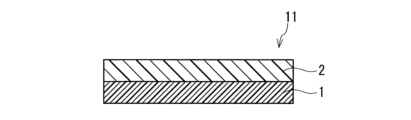
- FIG. 1 is a cross-sectional view illustrating a schematic example of an optical film with a pressure-sensitive adhesive sheet of the present invention.
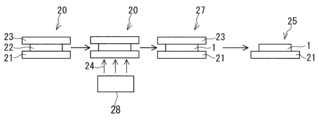
- FIG. 2 is a schematic diagram for explaining one example of a method for forming a pressure-sensitive adhesive sheet that can be provided in the pressure-sensitive adhesive sheet-attached optical film of the present invention.
- FIG. 1 is a cross-sectional view illustrating an example of an optical laminate of the present invention.
- FIG. 1 is a cross-sectional view illustrating an example of an optical laminate of the present invention.
- FIG. 1 is a cross-sectional view illustrating an example of an optical laminate of the present invention.
- FIG. 1 is a cross-sectional view that illustrates an example of an image display device of the present invention.
- the optical film with a pressure-sensitive adhesive sheet according to the first aspect of the present invention is
- the optical film is a photocurable adhesive sheet.
- the pressure-sensitive adhesive sheet contains a polymer having a structural unit derived from a nitrogen atom-containing monomer.
- the polymer is a (meth)acrylic polymer.
- the polymer further has a structural unit derived from a carboxyl group-containing monomer.
- the weight-average molecular weight of the polymer is 600,000 or more, and the polymerization rate of the polymer in the pressure-sensitive adhesive sheet is 98% or more.
- the pressure-sensitive adhesive sheet contains a silane coupling agent.
- the thickness of the adhesive sheet is 30 ⁇ m or less.
- the solvent content in the pressure-sensitive adhesive sheet is 5% by weight or less.
- the adhesive sheet and the optical film are in contact with each other.
- the optical film is a polarizing film.
- the optical laminate according to the tenth aspect of the present invention comprises an optical film with a pressure-sensitive adhesive sheet according to any one of the first to ninth aspects.
- the image display device includes an optical film with a pressure-sensitive adhesive sheet according to any one of the first to ninth aspects.
- FIG. 1 An example of an optical film with a pressure-sensitive adhesive sheet according to the present embodiment is shown in Fig. 1.
- the optical film with a pressure-sensitive adhesive sheet 11 in Fig. 1 includes a pressure-sensitive adhesive sheet 1 and an optical film 2.
- the pressure-sensitive adhesive sheet 1 and the optical film 2 are in contact with each other.
- the pressure-sensitive adhesive sheet 1 is a photocurable pressure-sensitive adhesive sheet formed from a photocurable composition.
- the pressure-sensitive adhesive sheet 1 contains a polymer A having a structural unit derived from a nitrogen atom-containing monomer.
- the adhesive sheet in the optical laminate and the adherend (object to be adhered) in contact therewith tend to peel off at high temperatures.
- Another factor may be the deterioration of visibility due to the foaming of the monomer remaining in the adhesive sheet at high temperatures.
- the photocurable adhesive sheet 1 containing polymer A is suitable for improving the polymerization rate during formation, and that the balance of its stress relaxation properties and cohesive force is suitable for suppressing the above-mentioned peeling at high temperatures.
- Polymer A is formed by photopolymerization of a photocurable composition containing a nitrogen atom-containing monomer.
- the polymerization rate When a nitrogen atom-containing monomer is present in the photopolymerization system, there is a tendency for the polymerization rate to improve and the molecular weight of the polymer to increase, even when, for example, the cumulative light amount of the irradiated light is small.
- the above tendency may be contributed to by the fact that the viscosity of the polymerization system increases due to the formation of hydrogen bonds, which suppresses the termination reaction between the growing ends of the polymer, making it easier for the monomer to remain at the end of the growing chain. It is also presumed that the increase in molecular weight contributes to an excellent balance between stress relaxation properties and cohesive strength.
- the molecular weight will not increase easily due to the increased number of radicals generated at the same time.
- the monomer is dispersed in the solvent, making it difficult for hydrogen bonds to form, and there is also a lot of chain transfer of radicals to the solvent, so the above-mentioned effect of the nitrogen atom-containing monomer is not observed.
- the adhesive sheet 1 is formed from a photocurable composition.
- the photocurable composition usually contains a monomer group and/or a partial polymer of the monomer group. By irradiating the photocurable composition with light, a polymer A is generated from the monomer group and/or the partial polymer, and the adhesive sheet 1 is formed.
- the monomer group may contain a (meth)acrylic monomer.
- the content of the (meth)acrylic component in the photocurable composition, i.e., the (meth)acrylic monomer and its partial polymer may be 50% by weight or more, 60% by weight or more, 70% by weight or more, or even 80% by weight or more.
- an acrylic adhesive sheet containing a (meth)acrylic polymer as a main component can be formed.
- the polymer A may be a (meth)acrylic polymer.
- the photocurable composition contains a nitrogen atom-containing monomer, the photocurable composition is not limited to the above examples.
- (meth)acrylic means acrylic and methacrylic.
- (Meth)acrylate means acrylate and methacrylate.
- the term "main component" refers to the component having the largest content. The content of the main component is, for example, 50% by weight or more, and may be 60% by weight or more, 70% by weight or more, or even 80% by weight or more.
- An example of a (meth)acrylic monomer is a (meth)acrylic acid alkyl ester having an alkyl group having 1 to 20 carbon atoms on the side chain.
- the number of carbon atoms in the alkyl group may be 7 or less, 6 or less, 5 or less, or even 4 or less.
- the alkyl group may be linear or branched.
- Examples of (meth)acrylic acid alkyl esters are methyl (meth)acrylate, ethyl (meth)acrylate, propyl (meth)acrylate, isopropyl (meth)acrylate, n-butyl (meth)acrylate, s-butyl (meth)acrylate, t-butyl (meth)acrylate, isobutyl (meth)acrylate, n-pentyl (meth)acrylate, isopentyl (meth)acrylate, n-hexyl (meth)acrylate, isohexyl (meth)acrylate, isoheptyl (meth)acrylate, 2-ethylhexyl (meth)acrylate, and 2-ethylhexyl (meth)acrylate.
- the (meth)acrylic acid alkyl ester may be n-butyl (meth)acrylate.
- the content of (meth)acrylic acid alkyl ester in the monomer group is, for example, 40% by weight or more, and may be 50% by weight or more, 60% by weight or more, 70% by weight or more, 80% by weight or more, 85% by weight or more, 90% by weight or more, or even 95% by weight or more.
- the weight of the partially polymerized product is converted into the weight of each monomer before polymerization.
- the monomer group may contain a carboxyl group-containing monomer.
- polymer A further has a constituent unit derived from the carboxyl group-containing monomer.
- the carboxyl group-containing monomer contributes to improving the viscosity of the photopolymerization system by being present together with the nitrogen atom-containing monomer.
- the carboxyl group-containing monomer may be a (meth)acrylic monomer, in other words, the (meth)acrylic monomer may contain a carboxyl group-containing monomer.
- Examples of the carboxyl group-containing monomer are (meth)acrylic acid, carboxyethyl (meth)acrylate, carboxypentyl (meth)acrylate, itaconic acid, maleic acid, fumaric acid, and crotonic acid.
- the content of the carboxyl group-containing monomer in the monomer group may be, for example, 10% by weight or less, 9% by weight or less, 8% by weight or less, 7% by weight or less, 6% by weight or less, 5.5% by weight or less, or even 5% by weight or less.
- the lower limit of the content is, for example, 0.1% by weight or more, and may be 0.5% by weight or more, 1% by weight or more, 1.5% by weight or more, 2% by weight or more, 2.5% by weight or more, 3% by weight or more, 3.5% by weight or more, 4% by weight or more, or even 4.5% by weight or more.
- the monomer group may not include a carboxyl group-containing monomer.
- the monomer group may contain a hydroxy group-containing monomer.
- polymer A further has a structural unit derived from the hydroxy group-containing monomer.
- the hydroxy group-containing monomer may be a (meth)acrylic monomer, in other words, the (meth)acrylic monomer may contain a hydroxy group-containing monomer.
- hydroxy group-containing monomer examples include 2-hydroxyethyl (meth)acrylate, 2-hydroxypropyl (meth)acrylate, 4-hydroxybutyl (meth)acrylate, 6-hydroxyhexyl (meth)acrylate, 8-hydroxyoctyl (meth)acrylate, 10-hydroxydecyl (meth)acrylate, 12-hydroxylauryl (meth)acrylate, and (4-hydroxymethylcyclohexyl)-methyl acrylate.
- the hydroxy group-containing monomer is preferably 2-hydroxyethyl (meth)acrylate or 4-hydroxybutyl (meth)acrylate.
- the content of the hydroxyl group-containing monomer in the monomer group is, for example, 10% by weight or less, and may be 5% by weight or less, 4% by weight or less, 3% by weight or less, 2% by weight or less, 1% by weight or less, 0.8% by weight or less, 0.5% by weight or less, 0.3% by weight or less, 0.2% by weight or less, or even 0.1% by weight or less.
- the lower limit of the content may be, for example, 0.01% by weight or more, 0.03% by weight or more, or even 0.05% by weight or more.
- the monomer group may not contain a hydroxyl group-containing monomer.
- the monomer group includes nitrogen atom-containing monomers.
- Nitrogen atom-containing monomers refer to monomers that have at least one nitrogen atom in the molecule (per molecule). In this specification, monomers that have a hydroxyl group and a nitrogen atom in the molecule are classified as nitrogen atom-containing monomers. Monomers that have a carboxyl group and a nitrogen atom in the molecule are classified as carboxyl group-containing monomers.
- N-vinyl cyclic amide and (meth)acrylamide Preferred examples of the nitrogen atom-containing monomer include N-vinyl cyclic amide and (meth)acrylamide.
- the nitrogen atom-containing monomer may be used alone or in combination of two or more kinds.
- the N-vinyl cyclic amide is preferably one represented by the following formula (A).
- R 1 is a divalent organic group, preferably a divalent saturated or unsaturated hydrocarbon group, more preferably a divalent saturated hydrocarbon group (e.g., an alkylene group having 3 to 5 carbon atoms). Note that formula (A) shows that N and R 1 are directly bonded to each other via a single bond to form a ring structure.
- N-vinyl cyclic amide represented by formula (A) N-vinyl-2-pyrrolidone (NVP), N-vinyl-2-piperidone, N-vinyl-2-caprolactam, N-vinyl-3-morpholinone, N-vinyl-1,3-oxazin-2-one, N-vinyl-3,5-morpholinedione, etc. are preferred, more preferably N-vinyl-2-pyrrolidone, N-vinyl-2-caprolactam, and even more preferably N-vinyl-2-pyrrolidone.
- Examples of (meth)acrylamides include (meth)acrylamide, N-alkyl (meth)acrylamide, and N,N-dialkyl (meth)acrylamide.
- Examples of N-alkyl (meth)acrylamide include N-ethyl (meth)acrylamide, N-isopropyl (meth)acrylamide, N-n-butyl (meth)acrylamide, and N-octyl acrylamide.
- Examples of N-alkyl (meth)acrylamides include (meth)acrylamides having an amino group, such as dimethylaminoethyl (meth)acrylamide, diethylaminoethyl (meth)acrylamide, and dimethylaminopropyl (meth)acrylamide.
- N,N-dialkyl(meth)acrylamides include N,N-dimethyl(meth)acrylamide, N,N-diethyl(meth)acrylamide, N,N-dipropyl(meth)acrylamide, N,N-diisopropyl(meth)acrylamide, N,N-di(n-butyl)(meth)acrylamide, and N,N-di(t-butyl)(meth)acrylamide.
- (Meth)acrylamides also include, for example, various N-hydroxyalkyl(meth)acrylamides.
- N-hydroxyalkyl(meth)acrylamides include N-methylol(meth)acrylamide, N-(2-hydroxyethyl)(meth)acrylamide, N-(2-hydroxypropyl)(meth)acrylamide, N-(1-hydroxypropyl)(meth)acrylamide, N-(3-hydroxypropyl)(meth)acrylamide, N-(2-hydroxybutyl)(meth)acrylamide, N-(3-hydroxybutyl)(meth)acrylamide, N-(4-hydroxybutyl)(meth)acrylamide, and N-methyl-N-2-hydroxyethyl(meth)acrylamide.
- (Meth)acrylamides also include, for example, various N-alkoxyalkyl(meth)acrylamides.
- N-alkoxyalkyl(meth)acrylamides include N-methoxymethyl(meth)acrylamide and N-butoxymethyl(meth)acrylamide.
- Nitrogen atom-containing monomers other than N-vinyl cyclic amide and (meth)acrylamide include, for example, amino group-containing monomers such as aminoethyl (meth)acrylate, dimethylaminoethyl (meth)acrylate, dimethylaminopropyl (meth)acrylate, and t-butylaminoethyl (meth)acrylate; cyano group-containing monomers such as acrylonitrile and methacrylonitrile; (meth)acryloylmorpholine, N-vinylpiperazine, N-vinylpyrrole, N-vinylimidazole, N-vinylpyrazine, N-vinylmorpholine, N-vinylpyrazole, vinylpyridine, vinylpyrimidine, vinyloxazole, vinylisoxazole, vinylthiazole, vinylisothiazole, vinylpyridazine, (meth)acryloylpyrrolidone, (meth)
- the content of the nitrogen atom-containing monomer in the monomer group is, for example, 40% by weight or less, and may be 35% by weight or less, 30% by weight or less, 25% by weight or less, 20% by weight or less, 18% by weight or less, 15% by weight or less, 13% by weight or less, 12% by weight or less, or even 11% by weight or less.
- the lower limit of the content is, for example, 5% by weight or more, and may be 7% by weight or more, 8% by weight or more, 9% by weight or more, or even 10% by weight or more.
- the monomer group preferably further includes a carboxyl group-containing monomer.
- each of the above-mentioned monomers may be contained as a partial polymer.
- the partial polymer may be either a homopolymer or a copolymer.
- the photocurable composition does not have to contain a partial polymer.
- the photocurable composition usually contains a photopolymerization initiator.
- a photopolymerization initiator is a photoradical generator that generates radicals when irradiated with light.
- the photopolymerization initiator has an absorption coefficient for light with a wavelength of 340 nm of, for example, 0.1 L/(g cm) or more, and may be 0.5 L/(g cm) or more, 1.0 L/(g cm) or more, 3.0 L/(g cm) or more, or even 5.0 L/(g cm) or more. There is no particular upper limit to this absorption coefficient, and it is, for example, 50 L/(g cm) or less.
- the absorption coefficient of the photopolymerization initiator is a calculated value from the absorbance of a 0.01 mg/mL methanol solution measured with a visible-ultraviolet spectrophotometer using a quartz cell with an optical path length of 1 cm.
- photopolymerization initiators include benzoin ethers such as benzoin methyl ether, benzoin isopropyl ether, and benzil dimethyl ketal; substituted benzoin ethers such as anisole methyl ether; substituted acetophenones such as 2,2-diethoxyacetophenone and 2,2-dimethoxy-2-phenylacetophenone; ⁇ -hydroxyalkylphenones such as 1-hydroxycyclohexyl-phenyl ketone, 2-hydroxy-2-methylpropiophenone, 2-hydroxy-4'-(2-hydroxyethoxy)-2-methylpropiophenone, and 2,2'-dihydroxy-2,2'-dimethyl-1,1'-[methylenebis(4,1-phenylene)]bis(propan-1-one); 2-methyl-2-hydroxypropiophenone substituted alpha-ketols such as 2-naphthalenesulfonyl chloride; aromatic sulfonyl chlorides such as 2-naphthalene
- photopolymerization initiator is a compound having a chemical structure shown in the following formula (1) (hereinafter, referred to as chemical structure X) in the molecule.
- R 1 and R 2 in the formula (1) are each independently a C1 to C8 alkyl group; a C1 to C4 alkyl group in which a hydrogen atom is substituted by -OH, a C1 to C4 alkoxy group, -CN, -COOR 51 , -OOCR 52 , or -NR 53 R 54 ; a C3 to C6 alkenyl group; or -CH 2 -C 6 H 4 -R 55.
- R 1 and R 2 may be bonded to each other to form a C2 to C9 alkylene group, a C3 to C6 oxyalkylene group, or an azaalkylene group.
- R 51 is a C1 to C8 alkyl group.
- R 52 is a C1 to C4 alkyl group.
- R 53 and R 54 are each independently a hydrogen atom, a C1-C12 alkyl group, a C2-C4 alkyl group in which a hydrogen atom is substituted with at least one group selected from the group consisting of -OH, a C1-C4 alkoxy group, -CN and -COOR 59 , a C3-C5 alkenyl group, or a cyclohexyl group.
- R 53 and R 54 may be bonded to each other to form a C3-C9 alkylene group which may be interrupted by -O- or -N(R 60 )-.
- R 55 is a C1-C4 alkyl group.
- R 59 is a C1-C4 alkyl group.
- R 60 is a hydrogen atom, a C1-C4 alkyl group, an allyl group, a C1-C4 hydroxyalkyl group, -CH 2 CH 2 -COOR 61 or -CH 2 CH 2 CN.
- R 61 is a C1 to C4 alkyl group.
- X is -OR 56 or -NR 57 R 58.
- R 56 is a hydrogen atom, -SiR 62 3 , a C1-C8 alkyl group, or a C3-C6 alkenyl group.
- R 57 and R 58 are a C1-C12 alkyl group; a C2-C4 alkyl group in which a hydrogen atom is substituted with at least one group selected from the group consisting of -OH, a C1-C4 alkoxy group, -CN, and -COOR 63 ; a C3-C5 alkenyl group; or a cyclohexyl group.
- R 57 and R 58 may be bonded to each other to form a C3-C9 alkylene group which may be interrupted by -O- or -N(R 64 )-.
- R 62 is a C1-C6 alkyl group.
- R 63 is a C1-C4 alkyl group.
- R 64 is a hydrogen atom, a C1 to C4 alkyl group, an allyl group, a C1 to C4 hydroxyalkyl group, --CH 2 CH 2 --COOR 65 or --CH 2 CH 2 CN.
- R 65 is a C1 to C4 alkyl group.
- Chemical structure X can be bonded to a hydrogen atom or a hydrogen atom substitution structure via the carbon atom indicated by * in formula (1).
- alkyl group, alkoxy group, alkenyl group, alkylene group, oxyalkylene group, azaalkylene group, and hydroxyalkyl group described in the explanation of formula (1) may be unbranched or branched.
- description of "Cn1-Cn2" (n1 and n2 are natural numbers) in this specification, including the explanation of formula (1), means that the number of carbon atoms is in the range of n1 to n2.
- R 1 and R 2 may be, independently of each other, a C1 to C8 alkyl group, a C3 to C6 alkenyl group, or a C1 to C8 alkyl group.
- R 1 and R 2 may be, independently of each other, a C1 to C4 alkyl group, a C1 to C3 alkyl group, or a C1 to C2 alkyl group.
- R 1 and R 2 may be a methyl group.
- R 1 and R 2 may be the same.
- X may be -OR 56.
- R 56 may be a hydrogen atom or a C1 to C8 alkyl group, or may be a hydrogen atom. In other words, X may be -OH.
- R 1 , R 2 and X may be any combination of the preferred examples given above.
- Chemical structure X may be a structure shown in the following formula (2): In the chemical structure X of formula (2), when a hydrogen atom substitution structure is bonded to the carbon atom marked with *, the substitution structure and the -COCR1XR2 group in formula ( 2 ) are in a para-position relationship with respect to the benzene ring of chemical structure X.
- the photopolymerization initiator may be a compound having two or more chemical structures X in one molecule.
- the photopolymerization initiator may be a compound represented by the following formula (3).
- the compound of formula (3) has two chemical structures X in one molecule.
- the two chemical structures X are located at both ends of the molecule of the photopolymerization initiator, respectively. More specifically, the two chemical structures X are bonded to each other via -A- at the carbon atom of the phenylene group represented by * above.
- R 1 ' and R 2 ' in formula (3) are possible groups for R 1 and R 2 , independently of each other and of R 1 and R 2.
- R 1 ' and/or R 2 ' may be the same as R 1 and/or R 2.
- R 1 , R 2 , R 1 ' and R 2 ' may all be the same.
- X' in formula (3) is a group that can be X, independent of X in formula (1).
- X' and X may be the same.
- A is --O--, --CYR 3 --, or --C(CH 3 )R 4 .
- Y is a hydrogen atom, -Cl, -Br, -O-R 71 , -NR 72 R 73 or -S-R 74.
- R 3 is a hydrogen atom, a C1 to C8 alkyl group, a C3 to C6 alkenyl group, a benzyl group, -CH 2 -C 6 H 4 -R 75 or a phenyl group.
- R 4 is a C1 to C6 alkyl group or alkylene group, and this alkylene group is bonded to a carbon atom of the phenylene group of the compound of formula (3).
- R 71 is a hydrogen atom, --Si(R 76 ) 3 , a C1 to C12 alkyl group, a C2 to C18 acyl group, --CO-NH-R 77 , a C2 to C20 hydroxyalkyl group, a C2 to C20 methoxyalkyl group, 3-R 78 -2-hydroxypropyl group, 3-[1,3,3,3-tetramethyl-1-[(trimethylsilyl)oxy]disiloxanyl]-propyl group, a 2,3-dihydroxypropyl group, a C2 to C21 hydroxyalkyl group in which the carbon chain is interrupted by 1 to 9 oxygen atoms, or a C3 to C25 alkyl group.
- R 72 and R 73 are each independently a C1 to C12 alkyl group, a C2 to C4 alkyl group in which a hydrogen atom is substituted with at least one group selected from the group consisting of -OH, a C1 to C4 alkoxy group, -CN, and -COOR 79 , a C3 to C5 alkenyl group, a cyclohexyl group, or a C7 to C9 phenylalkyl group.
- R 72 and R 73 may be bonded to each other to form a C3 to C9 alkylene group which may be interrupted by -O- or -N(R 80 )-.
- R 74 is a C1 to C18 alkyl group, a hydroxyethyl group, a 2,3-dihydroxypropyl group, a cyclohexyl group, a benzyl group, a phenyl group, a C1 to C12 alkylphenyl group, -CH 2 -COOR 81 -CH 2 CH 2 -COOR 82 or -CH(CH 3 )-COOR 83.
- R 75 is a C1 to C4 alkyl group.
- R 76 is a C1 to C6 alkyl group.
- R 77 is a C1 to C12 alkyl group.
- R 78 is a C1 to C18 alkoxy group.
- R 79 is a C1 to C4 alkyl group.
- R 80 is a hydrogen atom, a C1 to C4 alkyl group, an allyl group, a benzyl group, a C1 to C4 hydroxyalkyl group, -CH 2 CH 2 -COOR 84 , or -CH 2 CH 2 CN.
- R 81 , R 82 and R 83 are each independently a C1 to C18 alkyl group.
- R 84 is a C1 to C4 alkyl group.
- alkyl group, alkenyl group, acyl group, hydroxyalkyl group, methoxyalkyl group, alkoxy group, alkyl portion of the phenylalkyl group, and alkylene group described in the explanation of formula (3) may be unbranched or branched.
- R 1 , R 2 , R 1 ' and R 2 ' in formula (3) are the same as the preferred examples of R 1 and R 2 described above in the explanation of formula (1).
- Preferred examples of X' in formula (3) are the same as the preferred examples of X described above in the explanation of formula (1).
- A may be -CYR 3 -.
- Y may be a hydrogen atom.
- R 3 may be a hydrogen atom.
- A may be -CYR 3 - and Y and R 3 may both be hydrogen atoms. In other words, A may be -CH 2 -.
- R 1 , R 2 , R 1 ', R 2 ', X, X' and A in formula (3) may be any combination of the preferred examples given above.
- the photopolymerization initiator may be a compound represented by the following formula (4):
- the compound of formula (4) is a type of compound of formula (3).
- the photopolymerization initiator may be a compound represented by at least one formula selected from the group consisting of formulas (5) to (9), a compound represented by at least one formula selected from the group consisting of formulas (5) to (8), a compound represented by at least one formula selected from the group consisting of formulas (5) to (7), or a compound represented by formula (5).
- the compound represented by formula (8) is derived from a vinyl compound having the chemical structure X in its side chain. More specifically, it is an oligomer of the vinyl compound.
- the photopolymerization initiators shown in formulas (5) to (9) are commercially available as Omnirad 127, Esacure KIP 160, Esacure one, Esacure KIP 150, and Omnirad 1173 (all manufactured by IGM Resins).
- the photopolymerization initiator may be at least one selected from this group.
- photopolymerization initiators are 1-hydroxycyclohexyl-phenyl ketone, bis(2,4,6-trimethylbenzoyl)phenylphosphine oxide, and 2-hydroxy-1-(4-(4-(2-hydroxy-2-methylpropionyl)benzyl)phenyl)2-methylpropan-1-one. Of these, 2-hydroxy-1-(4-(4-(2-hydroxy-2-methylpropionyl)benzyl)phenyl)2-methylpropan-1-one is preferred.
- Each of the above photopolymerization initiators is commercially available as Omnirad 184, Omnirad 819, and Omnirad 127 (all manufactured by IGM Resin).
- the amount of the photopolymerization initiator in the photocurable composition is, for example, 20 parts by weight or less, and may be 10 parts by weight or less, 5.0 parts by weight or less, 3.0 parts by weight or less, 1.0 parts by weight or less, 0.5 parts by weight or less, 0.3 parts by weight or less, 0.25 parts by weight or less, or even 0.2 parts by weight or less, based on 100 parts by weight of the total of the monomer group and its partial polymers.
- the lower limit of the amount of the photopolymerization initiator is, for example, 0.01 parts by weight or more, and may be 0.03 parts by weight or more, 0.05 parts by weight or more, or even 0.06 parts by weight or more, based on 100 parts by weight of the total of the monomer group and its partial polymers.
- the photocurable composition may contain a crosslinking agent.
- a crosslinking agent is a polyfunctional monomer having two or more polymerizable functional groups in one molecule.
- the polyfunctional monomer may be a (meth)acrylic monomer.
- polyfunctional monomers examples include (poly)ethylene glycol di(meth)acrylate, (poly)propylene glycol di(meth)acrylate, neopentyl glycol di(meth)acrylate, pentaerythritol di(meth)acrylate, pentaerythritol tri(meth)acrylate, dipentaerythritol hexa(meth)acrylate, 1,2-ethylene glycol di(meth)acrylate, 1,6-hexanediol di(meth)acrylate, 1,9-nonanediol diacrylate ( Polyfunctional acrylates (such as ester compounds of polyhydric alcohols and (meth)acrylic acid) such as 1,12-dodecanediol di(meth)acrylate, trimethylolpropane tri(meth)acrylate, and tetramethylolmethane tri(meth)acrylate; allyl (meth)acrylate, vinyl (meth)acryl
- the polyfunctional monomer is preferably a polyfunctional acrylate, and more preferably 1,9-nonanediol diacrylate, trimethylolpropane tri(meth)acrylate, hexanediol di(meth)acrylate, and dipentaerythritol hexa(meth)acrylate.
- the amount of the crosslinking agent varies depending on the molecular weight, the number of functional groups, etc., but may be, for example, 5 parts by weight or less, 3 parts by weight or less, 2 parts by weight or less, 1 part by weight or less, 0.5 parts by weight or less, 0.3 parts by weight or less, 0.2 parts by weight or less, or even 0.15 parts by weight or less, relative to 100 parts by weight of the total of the monomer group and its partial polymers.
- the lower limit of the amount may be, for example, 0.01 parts by weight or more, 0.03 parts by weight or more, 0.05 parts by weight or more, 0.06 parts by weight or more, 0.08 parts by weight or more, or even 0.1 parts by weight or more.
- the photocurable composition may not contain a crosslinking agent.
- the photocurable composition may contain additives other than those mentioned above.
- additives are chain transfer agents, silane coupling agents, viscosity modifiers, tackifiers, plasticizers, softeners, antiaging agents, fillers, colorants, antioxidants, surfactants, antistatic agents, and ultraviolet absorbers.
- the photocurable composition may not contain additives.
- silane coupling agents include epoxy group-containing silane coupling agents such as 3-glycidoxypropyltrimethoxysilane, 3-glycidoxypropyltriethoxysilane, 3-glycidoxypropylmethyldiethoxysilane, and 2-(3,4-epoxycyclohexyl)ethyltrimethoxysilane; amino group-containing silane coupling agents such as 3-aminopropyltrimethoxysilane, N-2-(aminoethyl)-3-aminopropylmethyldimethoxysilane, 3-triethoxysilyl-N-(1,3-dimethylbutylidene)propylamine, and N-phenyl- ⁇ -aminopropyltrimethoxysilane; (meth)acrylic group-containing silane coupling agents such as 3-acryloxypropyltrimethoxysilane and 3-methacryloxypropyltriethoxysilane; and isocyanate group-
- the silane coupling agent may be an oligomeric silane coupling agent.
- An oligomeric silane coupling agent usually has multiple alkoxysilyl groups in one molecule.
- Specific examples of oligomeric silane coupling agents are the product names "X-41-1053”, “X-41-1056", “X-41-1059A”, “X-41-1805”, “X-41-1810", “X-41-1818", “X-40-2651” and "X-24-9591F” manufactured by Shin-Etsu Silicones Co., Ltd.
- the oligomeric silane coupling agent may have a reactive functional group. Examples of reactive functional groups are an epoxy group, a mercapto group, an acid anhydride group and an amino group.
- oligomeric silane coupling agents having an epoxy group are the above-mentioned "X-41-1053”, “X-41-1056” and “X-41-1059A”.
- oligomeric silane coupling agents having a mercapto group are the above-mentioned "X-41-1805”, “X-41-1810” and "X-41-1818”.
- An example of an oligomeric silane coupling agent having an acid anhydride group is the above-mentioned "X-24-9591F”.
- An example of an oligomeric silane coupling agent having an amino group is the above-mentioned "X-40-2651”.
- the silane coupling agent may be an acetoacetyl group-containing silane coupling agent (e.g., product name "A-100” manufactured by Soken Chemical Industries, Ltd.).
- the amount of the silane coupling agent is, for example, 5 parts by weight or less, and may be 3 parts by weight or less, 1 part by weight or less, 0.5 parts by weight or less, 0.2 parts by weight or less, 0.1 parts by weight or less, or even 0.05 parts by weight or less, based on 100 parts by weight of the total of the monomer group and its partial polymer.
- the photocurable composition does not have to contain a silane coupling agent.
- the viscosity of the photocurable composition is preferably 5 to 100 poise. Photocurable compositions having a viscosity in the above range are particularly suitable for forming the adhesive sheet 1.
- the solvent content in the photocurable composition may be, for example, 5% by weight or less, and may be 4% by weight or less, 3% by weight or less, 2% by weight or less, 1% by weight or less, or even 0.5% by weight or less.
- the photocurable composition may be substantially free of solvent. "Substantially free of solvent” means that solvents derived from additives and the like are permitted at a content of, for example, 0.1% by weight or less, preferably 0.05% by weight or less, and more preferably 0.01% by weight or less.
- the solvent content in the adhesive sheet 1 may be within the above range.
- the adhesive sheet 1 may be substantially free of solvent.
- the pressure-sensitive adhesive sheet 1 can be formed, for example, by irradiating light 24 onto a first laminate 20 including, in this order, a base sheet 21, a coating layer 22 containing a photocurable composition, and a release liner 23 (see FIG. 2).
- the coating layer 22 is irradiated with light 24 and hardened to become the pressure-sensitive adhesive sheet 1.
- Irradiation with light 24 is typically performed from the side of the base sheet 21. At this time, the light 24 passes through the base sheet 21 and reaches the coating layer 22, hardening the coating layer 22.
- irradiation with light 24 may be performed from the side of the release liner 23, or may be performed from both the side of the release liner 23 and the side of the base sheet 21.
- the formed adhesive sheet 1 is sandwiched between the base sheet 21 and the release liner 23 until the release liner 23 is peeled off, forming part of the second laminate 27.
- a third laminate 25 including the base sheet 21 and the adhesive sheet 1 is obtained.
- the surface of the adhesive sheet 1 is exposed to the outside.
- An optical film can be laminated onto the exposed surface of the adhesive sheet 1 directly or via another layer.
- the light 24 is, for example, visible light or ultraviolet light having a wavelength shorter than 450 nm.
- the light may contain light having a wavelength in the same region as the absorption wavelength of the photopolymerization initiator contained in the photocurable composition.
- Light with a short wavelength of 300 nm or less may be cut using a filter or the like, and cutting short wavelength light is suitable for suppressing deterioration of the base sheet 21 and/or the release liner 23 caused by the light 24.
- the light source 28 of the light 24 is, for example, a light irradiation device equipped with an ultraviolet irradiation lamp.
- ultraviolet irradiation lamps examples include ultraviolet LEDs, low pressure mercury lamps, medium pressure mercury lamps, high pressure mercury lamps, extra high pressure mercury lamps, metal halide lamps, xenon lamps, microwave excited mercury lamps, black light lamps, chemical lamps, germicidal lamps, low pressure discharge mercury lamps, and excimer lasers. Two or more ultraviolet irradiation lamps may be combined. With ultraviolet LEDs, the band of ultraviolet light to be irradiated can be narrower than when other light sources are used.
- the light source 28 may be an LED. Compared to a black light source, an LED not only has an easily adjustable illuminance, but also tends to have a longer light source life. Compared to a black light source that uses mercury, an LED is also superior in terms of reducing the environmental load. When using an ultraviolet LED as the light source, an LED having a peak wavelength of 325 to 350 nm may be selected.
- the use of an LED having a peak wavelength of 325 to 350 nm may contribute to at least one of the following: an improvement in the polymerization rate of the monomer group in the adhesive sheet 1, an improvement in the molecular weight of the polymer A, and a reduction in the amount of remaining photopolymerization initiator, compared to, for example, the use of a black light source.
- an LED that emits light 14 with a peak wavelength of 325 nm to 350 nm tends to generate less heat and to control the temperature of the coating layer 22 more easily than an LED that emits light with a peak wavelength of about 365 nm.
- LED340 an LED having a peak wavelength of 325 to 350 nm
- LED340 an LED having a peak wavelength of 340 ⁇ 10 nm
- the peak wavelength of the light 24 irradiated to the first laminate 20 may be 325 nm to 350 nm.
- the peak wavelength of the light 24 is preferably 340 ⁇ 10 nm (330 nm to 350 nm), may be 340 ⁇ 5 nm (335 nm to 345 nm), may be 340 ⁇ 2 nm (338 nm to 342 nm), or may be 340 nm.
- the peak wavelength means the wavelength at which the intensity is at a maximum value in the spectrum showing the relationship between the wavelength and intensity of the light 24.
- the light 24 may further have a peak wavelength in a wavelength range other than 325 nm to 350 nm, but it is preferable that it does not have such a peak wavelength.
- the illuminance of the light 24 irradiated to the first laminate 20 is, for example, 2.0 to 30 mW/cm 2.
- the illuminance may be 2.5 mW/cm 2 or more, 3.0 mW/cm 2 or more, 3.5 mW/cm 2 or more, 4.0 mW/cm 2 or more, 5.0 mW/cm 2 or more, 6.0 mW/cm 2 or more, 7.0 mW/cm 2 or more, 8.0 mW/cm 2 or more, 9.0 mW/cm 2 or more, or even 10 mW/cm 2 or more.
- the upper limit of the illuminance is, for example, 25 mW/cm 2 or less, 20 mW/cm 2 or less, or even 15 mW/cm 2 or less.
- the integrated light amount of the light 24 on the first laminate 20 is, for example, 25 mJ/cm 2 or more, 100 mJ/cm 2 or more, 250 mJ/cm 2 or more, 500 mJ/cm 2 or more, 750 mJ/cm 2 or more, 850 mJ/cm 2 or more, 1000 mJ/cm 2 or more, 1250 mJ/cm 2 or more, or even 1500 mJ/cm 2 or more.
- the upper limit of the integrated light amount is not particularly limited, and may be, for example, 3000 mJ/cm 2 or less, 2500 mJ/cm 2 or less, 2000 mJ/cm 2 or less, 1750 mJ/cm 2 or less, 1500 mJ/cm 2 or less, 1250 mJ/cm 2 or less, or even 1000 mJ/cm 2 or less.
- the pressure-sensitive adhesive sheet 1 is suitable for formation with a low integrated light amount, and therefore the pressure-sensitive adhesive sheet-attached optical film 11 has excellent productivity.
- liner substrate is a resin film.
- resins that may be contained in the liner substrate are polyesters such as polyethylene terephthalate and polyethylene naphthalate, acetate resins, polyethersulfone, polycarbonate, polyamide, polyimide, polyolefin, (meth)acrylic resins, polyvinyl chloride, polyvinylidene chloride, polystyrene, polyvinyl alcohol, polyarylate, and polyphenylene sulfide.
- the resin is preferably a polyester such as polyethylene terephthalate.
- the release liner 23 may have a layer other than the liner substrate.
- the release liner 23 may have a release layer.
- the release liner 23 has, for example, a liner substrate and a release layer formed on one side of the liner substrate. This release liner 23 can be used such that the release layer is on the coating layer 22 side.
- the release layer is typically a cured layer of a release agent composition containing a release agent.
- various release agents such as silicone-based release agents, fluorine-based release agents, long-chain alkyl-based release agents, fatty acid amide-based release agents, and silica powder can be used.
- the release liner 23 may be in the form of a sheet or a long piece.
- An example of the base sheet 21 is a resin film.
- Examples of resins contained in the base sheet 21 are the same as the examples of resins that can be contained in the liner base material.
- the thickness of the base sheet 21 is, for example, 10 to 200 ⁇ m, and may be 25 to 150 ⁇ m.
- the base sheet 21 may have a release layer on the surface on the side of the coating layer 22.
- Examples of the release layer that may be provided on the base sheet 21 are the same as the examples of the release layer that may be provided on the release liner 23. Both the release liner 23 and the base sheet 21 may have a release layer.
- a sheet that has a greater peel strength with respect to the adhesive sheet 1 than the release liner 23 can usually be selected.
- the base sheet 21 may be in the form of a sheet or a long piece.
- the first laminate 20 can be formed, for example, by forming a coating layer 22 on a base sheet 21 (or a release liner 23) and then placing the release liner 23 (or base sheet 21) on the formed coating layer 22.
- the first laminate 20 can also be formed by applying a photocurable composition in a poured manner into the space between the base sheet 21 and the release liner 23, which are held at a predetermined distance so that their main surfaces face each other.
- a variety of coating methods can be used to form the coating layer 22, including roll coating, kiss roll coating, gravure coating, reverse coating, roll brushing, spray coating, dip roll coating, bar coating, knife coating, air knife coating, curtain coating, lip coating, and die coating.
- the thickness of the coating layer 22 can be adjusted according to the desired thickness of the adhesive sheet 1, and may be, for example, 5 to 100 ⁇ m, 5 to 50 ⁇ m, 5 to 25 ⁇ m, or even 5 to 20 ⁇ m.
- the first laminate 20 may include a long base sheet 21, a long coating layer 22, and a long release liner 23, in other words, may be long.
- the long first laminate 20 can be obtained, for example, by forming the coating layer 22 between the base sheet 21 and the release liner 23 while transporting them, which are unwound from a roll.
- the Mw of polymer A contained in adhesive sheet 1 is, for example, 600,000 or more, and may be 650,000 or more, 700,000 or more, 750,000 or more, 800,000 or more, 850,000 or more, 900,000 or more, 950,000 or more, 1 million or more, 1.1 million or more, 1.2 million or more, 1.3 million or more, or even 1.4 million or more. There is no particular limit to the upper limit of Mw, and it is, for example, 3 million or less.
- the Mw of polymer A is determined from the value measured by GPC (gel permeation chromatography) and calculated in terms of polystyrene.
- the polymerization rate of the monomer group in the adhesive sheet 1 may be 97.5% or more, 98% or more, or even 98.5% or more.
- the upper limit of the polymerization rate is, for example, 99.99% or less.
- a high polymerization rate can contribute, for example, to suppressing the odor of the adhesive sheet 1.
- both the molecular weight of the polymer and the polymerization rate of the monomer group can be increased.
- the weight average molecular weight (Mw) of the polymer contained in the adhesive sheet 1 may be 600,000 or more, and the polymerization rate of the monomer group in the adhesive sheet 1 may be 98% or more.
- the Mw and polymerization rate may each be within the numerical ranges described above.
- the gel fraction of the adhesive sheet 1 is, for example, 55% or more, and may be 60% or more, 65% or more, 70% or more, 75% or more, 78% or more, 80% or more, more than 80%, 81% or more, 82% or more, 83% or more, 84% or more, or even 85% or more.
- the upper limit of the gel fraction may be 95% or less, 94% or less, 93% or less, 92% or less, 91% or less, 90% or less, or even 89% or less.
- the gel fraction of the adhesive sheet 1 can be evaluated as follows. A test piece of about 0.1 g is taken from the adhesive sheet 1, wrapped in a polytetrafluoroethylene porous sheet (average pore size 0.2 ⁇ m, product name "NTF1122", manufactured by Nitto Denko Corporation), and then tied with a kite string to obtain a measurement sample. Next, the weight of the obtained measurement sample (weight C before immersion) is measured. The weight C before immersion is the total weight of the test piece, the polytetrafluoroethylene porous sheet, and the kite string. Separately from this, the bag weight B, which is the total weight of the polytetrafluoroethylene porous sheet and the kite string, is measured.
- the thickness of the adhesive sheet 1 is, for example, 2 to 70 ⁇ m.
- the thickness may be 50 ⁇ m or less, 40 ⁇ m or less, 30 ⁇ m or less, 25 ⁇ m or less, or even 20 ⁇ m or less.
- the lower limit of the thickness may be 5 ⁇ m or more, 10 ⁇ m or more, or even 15 ⁇ m or more.
- a thin adhesive sheet 1, for example, an adhesive sheet 1 having a thickness of 30 ⁇ m or less, is susceptible to polymerization inhibition due to oxygen in the environment when formed by photocuring.
- the adhesive sheet 1 is suitable for formation with a low integrated light amount, in other words, suitable for formation by photocuring in a short time.
- the adhesive sheet 1 is thin, the influence of polymerization inhibition can be suppressed. Furthermore, even when the adhesive sheet 1 has a thickness of, for example, 30 ⁇ m or less, it is suitable for suppressing foaming and peeling from the adherend in a high-temperature environment.
- the adherend is, for example, a glass substrate.
- optical film 2 examples include a polarizing film, a retardation film, and a laminated film including a polarizing film and/or a retardation film.
- the optical film 2 is not limited to the above examples.
- the optical film 2 may include a film made of glass.
- the optical film 2 may be a polarizing film, and the adhesive sheet 1 may be in contact with the polarizing film.
- polarizing films tend to have a large tendency to undergo dimensional change due to heat. Dimensional change in the polarizing film may cause peeling from the adhesive film. For this reason, the present invention is particularly advantageous when the optical laminate further comprises a polarizing film.
- the polarizing film includes a polarizer.
- the polarizing film typically includes a polarizer and a protective film (transparent protective film).
- the protective film is, for example, disposed in contact with the main surface (the surface having the widest area) of the polarizer.
- the polarizer may be disposed between two protective films.
- the protective film may be disposed on at least one surface of the polarizer.
- the polarizer is not particularly limited, and examples include hydrophilic polymer films such as polyvinyl alcohol films, partially formalized polyvinyl alcohol films, and partially saponified ethylene-vinyl acetate copolymer films, which have been uniaxially stretched after adsorbing dichroic substances such as iodine and dichroic dyes; and polyene-based oriented films such as dehydrated polyvinyl alcohol and dehydrochlorinated polyvinyl chloride.
- Polarizers are typically made of polyvinyl alcohol films (polyvinyl alcohol films include partially saponified ethylene-vinyl acetate copolymer films) and a dichroic substance such as iodine.
- the thickness of the polarizer is not particularly limited, and may be, for example, 80 ⁇ m or less, 50 ⁇ m or less, 30 ⁇ m or less, 25 ⁇ m or less, or even 20 ⁇ m or less.
- the lower limit of the polarizer thickness is not particularly limited, and may be, for example, 1 ⁇ m or more, 5 ⁇ m or more, 10 ⁇ m or more, or even 15 ⁇ m or more.
- a thin polarizer (for example, a thickness of 20 ⁇ m or less) suppresses dimensional changes and can contribute to improving the durability of the optical laminate, particularly its durability at high temperatures.
- thermoplastic resins excellent in transparency, mechanical strength, thermal stability, moisture blocking property, isotropy, etc.
- thermoplastic resins include cellulose resins such as triacetyl cellulose, polyester resins, polyethersulfone resins, polysulfone resins, polycarbonate resins, polyamide resins, polyimide resins, polyolefin resins, (meth)acrylic resins, cyclic polyolefin resins (norbornene resins), polyarylate resins, polystyrene resins, polyvinyl alcohol resins, and mixtures thereof.
- cellulose resins such as triacetyl cellulose, polyester resins, polyethersulfone resins, polysulfone resins, polycarbonate resins, polyamide resins, polyimide resins, polyolefin resins, (meth)acrylic resins, cyclic polyolefin resins (norbornene resins), polyarylate resins, polystyrene resins, poly
- the material of the protective film may be a thermosetting resin or an ultraviolet-curing resin such as a (meth)acrylic, urethane, acrylic urethane, epoxy, or silicone.
- a protective film made of a thermoplastic resin may be attached to one main surface of the polarizer via an adhesive
- a protective film made of a thermosetting resin or an ultraviolet-curing resin may be attached to the other main surface of the polarizer.
- the protective film may contain one or more types of additives. Examples of additives include ultraviolet absorbers, antioxidants, lubricants, plasticizers, release agents, color inhibitors, flame retardants, nucleating agents, antistatic agents, pigments, colorants, etc.
- the thickness of the protective film can be determined as appropriate, but is generally around 5 to 200 ⁇ m, taking into consideration strength, ease of handling, thinness, etc.
- the polarizer and protective film are usually attached to each other via a water-based adhesive or the like.
- water-based adhesives include isocyanate-based adhesives, polyvinyl alcohol-based adhesives, gelatin-based adhesives, vinyl latex, water-based polyurethane, and water-based polyester.
- adhesives other than the above-mentioned adhesives include ultraviolet-curable adhesives and electron beam-curable adhesives.
- Electron beam-curable polarizing film adhesives exhibit suitable adhesion to various protective films.
- the adhesive may contain a metal compound filler.
- polarizing films instead of a protective film, a phase difference film or the like can be formed on the polarizer.
- Another protective film can be further provided on the protective film, or a phase difference film or the like can be provided.
- the protective film may have a hard coat layer on the surface opposite to the surface attached to the polarizer, and may also be treated for the purposes of anti-reflection, anti-sticking, diffusion, anti-glare, etc.
- the polarizing film may be a circular polarizing film.
- the thickness of the polarizing film is, for example, 500 ⁇ m or less, and may be 300 ⁇ m or less, 200 ⁇ m or less, 100 ⁇ m or less, or even 60 ⁇ m or less.
- the lower limit of the thickness is, for example, 10 ⁇ m or more, 25 ⁇ m or more, or even 40 ⁇ m or more.
- a retardation film is a film that has birefringence in the in-plane direction and/or thickness direction.
- Retardation films are, for example, stretched resin films, or films in which liquid crystal material is oriented and fixed.
- the retardation film may be a ⁇ /4 plate, a ⁇ /2 plate, an anti-reflection retardation film (see, for example, paragraphs 0221, 0222, and 0228 of JP 2012-133303 A), a retardation film for compensating the viewing angle (see, for example, paragraphs 0225 and 0226 of JP 2012-133303 A), or an inclined orientation retardation film for compensating the viewing angle (see, for example, paragraph 0227 of JP 2012-133303 A).
- the retardation film is not limited to the above examples as long as it has birefringence in the in-plane direction and/or the thickness direction. There are also no limitations on the retardation value, arrangement angle, three-dimensional birefringence, whether it is a single layer or a multilayer, and the like, of the retardation film. Any known film can be used for the retardation film.
- the thickness of the optical film 2 is, for example, 1 to 200 ⁇ m.
- the optical film 2 may be a single layer or a laminated film composed of two or more layers.
- the adhesive sheet 1 may be used to bond the layers.
- the optical film 11 with adhesive sheet may have layers other than the adhesive sheet 1 and the optical film 2. Other layers may be disposed between the adhesive sheet 1 and the optical film 2, but it is preferable that the adhesive sheet 1 and the optical film 2 are in contact with each other.
- the optical film 11 with adhesive sheet can be used, for example, in an optical laminate or an image display device.
- the uses of the optical film 11 with adhesive sheet are not limited to the above examples.
- optical laminate 30A in Fig. 3 includes the optical film 11 with the adhesive sheet of this embodiment.
- the optical laminate 30A has a layered structure in which a release liner 3, an adhesive sheet 1, and an optical film 2 are layered in this order.
- the optical laminate 30A can be used as the optical film 11 with the adhesive sheet by peeling off the release liner 3.
- the release liner 3 is typically a resin film.
- resins constituting the release liner 3 include polyesters such as polyethylene terephthalate (PET), polyolefins such as polyethylene and polypropylene, polycarbonate, acrylic, polystyrene, polyamide, and polyimide.
- PET polyethylene terephthalate
- the surface of the release liner 3 that comes into contact with the adhesive sheet 1 may be subjected to a release treatment.
- the release treatment is, for example, a treatment using a silicone compound.
- the release liner 3 is not limited to the above example.
- the release liner 3 is peeled off when the optical laminate 30A is used, for example, when it is attached to the image forming layer.
- the optical laminate 30B in FIG. 4 includes the optical film 11 with the adhesive sheet of this embodiment.
- the optical laminate 30B has a layered structure in which a release liner 3, an adhesive sheet 4, a retardation film 2B, an adhesive sheet 1, and a polarizing film 2A are layered in this order. After the release liner 3 is peeled off, the optical laminate 30B can be used by, for example, attaching it to an image forming layer.
- Adhesive sheet 1 may also be used for adhesive sheet 4.
- the optical laminate 30C in FIG. 5 includes the optical film 11 with the adhesive sheet of this embodiment.
- the optical laminate 30C has a layered structure in which a release liner 3, an adhesive sheet 4, a retardation film 2B, an adhesive sheet 1, a polarizing film 2A, and a protective film 5 are layered in this order. After the release liner 3 is peeled off, the optical laminate 30C can be used by, for example, attaching it to an image forming layer.
- the protective film 5 has a function of protecting the optical film 2 (polarizing film 2A), which is the outermost layer, during distribution and storage of the optical laminate 30C and when the optical laminate 30C is incorporated into an image display device.
- the protective film 5 may also function as a window to the external space when incorporated into an image display device.
- the protective film 5 is typically a resin film. Resins constituting the protective film 5 include, for example, polyesters such as PET, polyolefins such as polyethylene and polypropylene, acrylics, cycloolefins, polyimides, and polyamides, with polyesters being preferred.
- the protective film 5 is not limited to the above examples.
- the protective film 5 may be a glass film or a laminated film including a glass film.
- the protective film 5 may be subjected to surface treatments such as anti-glare, anti-reflection, and anti-static.
- the protective film 5 may be bonded to the optical film 2 with any adhesive. Bonding with an adhesive sheet 1 is also possible.
- the optical laminate of this embodiment may include any layer other than the layers described above.
- the optical laminate of this embodiment may have any configuration as long as it includes the optical film 11 with the adhesive sheet.
- the optical laminate of this embodiment can be distributed and stored, for example, as a rolled body obtained by rolling up a strip-shaped optical laminate, or as a sheet-shaped optical laminate.
- the optical laminate of this embodiment is typically used in image display devices.
- Image display devices are, for example, EL displays such as liquid crystal displays, organic EL displays, and inorganic EL displays.
- the image display device 31 of Fig. 6 has a laminated structure in which a substrate 7, an image forming layer (e.g., an organic EL layer or a liquid crystal layer) 6, an adhesive sheet 4, a retardation film 2B, an adhesive sheet 1, a polarizing film 2A, and a protective film 5 are laminated in this order.
- the image display device 31 includes the adhesive sheet-attached optical film 11 of Fig. 1, and the optical laminates 30A, 30B, and 30C of Figs. 3 to 5 (excluding the release liner 3).
- the substrate 7 and the image forming layer 6 may have the same configurations as the substrate and the image forming layer of a known image display device, respectively.
- the image display device 31 in FIG. 6 may be an organic EL display or a liquid crystal display. However, the image display device 31 is not limited to this example.
- the image display device 31 may be an electroluminescence (EL) display, a plasma display (PD), a field emission display (FED: Field Emission Display), etc.
- EL electroluminescence
- PD plasma display
- FED field emission display
- the image display device 31 may be used for home appliance applications, in-vehicle applications, public information display (PID) applications, etc.
- the image display device 31 may have any configuration as long as it includes an optical film 11 with an adhesive sheet and/or the optical laminate of this embodiment.
- n-butyl acrylate HBA 4-hydroxybutyl acrylate AA: acrylic acid
- Omnirad 184 1-hydroxycyclohexyl-phenyl ketone (Omnirad 184, manufactured by IGM Resin)
- Omnirad 819 bis(2,4,6-trimethylbenzoyl)phenylphosphine oxide (Omnirad 819, manufactured by IGM Resins)
- Omnirad 127 2-hydroxy-1-(4-(4-(2-hydroxy-2-methylpropionyl)benzyl)phenyl)2-methylpropan-1-one (Omnirad 127, manufactured by IGM Resin)
- Example 1 (Preparation of release liner) Addition reaction curing type silicone (LTC761 containing hexenyl group-containing polyorganosiloxane, 30 wt% toluene solution, manufactured by Toray Dow Corning) 30 parts by weight, release control agent (BY24-850 containing unreactive silicone resin, manufactured by Toray Dow Corning) 0.9 parts by weight, and curing catalyst (SRX212 containing platinum catalyst, manufactured by Toray Dow Corning) 2 parts by weight, and toluene / hexane mixed solvent (volume ratio 1: 1) as a dilution solvent were mixed to obtain a silicone-based release agent composition.
- LTC761 containing hexenyl group-containing polyorganosiloxane, 30 wt% toluene solution, manufactured by Toray Dow Corning
- release control agent BY24-850 containing unreactive silicone resin, manufactured by Toray Dow Corning
- curing catalyst SRX212 containing platinum catalyst, manufactured by To
- the concentration of silicone solids in the release agent composition was 1.0 wt%.
- the release agent composition was applied to one side of a liner substrate (Lumirror XD500P, a polyester film, thickness 75 ⁇ m) with a wire bar, and heated at 130 ° C. for 1 minute to produce a release liner having a release layer (thickness 60 nm) on one side.
- a liner substrate Limirror XD500P, a polyester film, thickness 75 ⁇ m
- Monomer syrup C1 was applied to one side of a base sheet (PET separator, manufactured by Mitsubishi Plastics, MRF38) with an applicator to form a coating layer (thickness 20 ⁇ m).
- a release liner was placed on the formed coating layer to obtain a first laminate.
- the release liner was placed so that the release layer was in contact with the coating layer.
- light was irradiated from the side of the base sheet in the first laminate under conditions of an illuminance of 8.8 mW/cm 2 and an irradiation time of 60 seconds (accumulated light amount 528 mJ/cm 2 ).
- An LED was used as the light source, and the peak wavelength of the irradiated light was 340 nm.
- the coating layer was photocured, and the pressure-sensitive adhesive sheet (thickness 20 ⁇ m) of Example 1 sandwiched between the base sheet and the release liner was obtained.
- the illuminance of the light was measured using an illuminometer (manufactured by Topcon Technohouse, UD-T3040T2) at a position near the ultraviolet ray incidence surface of the base sheet.
- Examples 2 to 8 Comparative Examples 1 and 2> Pressure-sensitive adhesive sheets of Examples 2 to 8 and Comparative Examples 1 and 2 were obtained in the same manner as in Example 1, except that the photocurable composition and light irradiation conditions used were changed as shown in Table 3.
- NDP-free composition Analytical equipment: Tosoh Corporation, HLC-8320GPC Column: Tosoh Corporation, TSKgel GMH-H (S) x 2 Column size: 7.8 mm diameter x 30 cm each, total 60 cm Column temperature: 40°C ⁇ Flow rate: 0.5mL/min Injection volume: 100 ⁇ L Eluent: Tetrahydrofuran Detector: Differential refractometer (RI) ⁇ Standard sample: polystyrene
- NDP-containing composition Analytical equipment: Agilent Technologies, Agilent 1200 Column: Tosoh Corporation, TSKgel SuperAWM-H + superAW4000 + superAW2500 Column size: 6.0 mm diameter x 15 cm, total 45 cm Column temperature: 40°C ⁇ Flow rate: 0.4mL/min Injection volume: 40 ⁇ L Eluent: N,N-dimethylformamide (DMF) Detector: differential refractometer (RI) ⁇ Standard sample: polystyrene
- ⁇ Reliability test> (Preparation of Polarizing Film) A polyvinyl alcohol film having a thickness of 80 ⁇ m was stretched to 3 times while being dyed for 1 minute in an iodine solution having a concentration of 0.3% at a temperature of 30° C. between rolls having different speed ratios. Next, the film was stretched to a total stretch ratio of 6 times while being immersed for 0.5 minutes in an aqueous solution having a temperature of 60° C. and containing boric acid at a concentration of 4% and potassium iodide at a concentration of 10%. Next, the film was immersed for 10 seconds in an aqueous solution having a temperature of 30° C.
- a polarizer having a thickness of 28 ⁇ m A transparent protective film having a thickness of 30 ⁇ m and made of a modified acrylic polymer having a lactone ring structure was attached to one side of the polarizer with a polyvinyl alcohol adhesive. Furthermore, a 47 ⁇ m-thick transparent protective film made of a triacetyl cellulose film (Konica Minolta, product name "KC4UY”) with a hard coat layer (HC) was attached to the other surface of the polarizer using a polyvinyl alcohol adhesive.
- KC4UY triacetyl cellulose film
- a polarizing film was produced by heating and drying for 5 minutes in an oven set at 70°C. Furthermore, a corona treatment was performed with a discharge amount of 63 W/ m2 ⁇ min on the surface of the polarizing film on the transparent protective film side made of modified acrylic polymer.
- the prepared polarizing film with adhesive sheet was evaluated for reliability (85°C reliability) by the following method. First, the polarizing film with adhesive sheet was cut into a strip of 228 mm length x 128 mm width to prepare a test piece. Next, the test piece was attached to the surface of alkali-free glass (manufactured by Corning, product name "EG-XG") with a thickness of 0.7 mm with an adhesive sheet. The test piece was attached to the alkali-free glass using a laminator.
- alkali-free glass manufactured by Corning, product name "EG-XG”
- test piece After the test piece was attached, it was placed in an autoclave at 50°C and 0.5 MPa for 15 minutes to homogenize the bonding between the alkali-free glass and the adhesive sheet, and the adhesive sheet was adhered to the alkali-free glass.
- the test piece was subjected to a heat treatment at 85°C under atmospheric pressure for 500 hours. The vicinity of the end of the test piece was observed with an optical microscope to confirm the presence or absence of peeling from the end of the test piece and foaming near the end.
- A No peeling or foaming that would affect the image display was observed.
- B Slight foaming at the edge, but not to the extent that would affect the image display.
- C Multiple bubbles at the edge, but not to the extent that would affect the image display.
- D Peeling and/or foaming that would affect the image display.
- E Peeling and/or foaming that would significantly affect the image display.
- ⁇ Adhesive slippage (85°C)> The polarizing film with the adhesive sheet prepared in the reliability test evaluation was cut into a rectangular shape of 228 mm long x 128 mm wide to prepare a test sample. Next, the test sample was subjected to a heating test at 85°C for 500 hours, and the amount of the adhesive sheet protruding from the end face of the polarizing film was measured based on observation with an optical microscope using a 20x objective lens, and this was defined as the amount of adhesive slippage (85°C). For the observation, the transmitted light was set to 0 (zero) and adjustment was made so that only reflected light was observed.
- the evaluation results are shown in Table 4 below.
- the polymerization rate is shown along with the evaluation results A to D.
- the adhesive sheet of the embodiment had a higher polymerization rate and improved reliability in high-temperature environments compared to the adhesive sheet of the comparative example.
- optical film with a pressure-sensitive adhesive sheet of the present invention can be used in optical laminates and image display devices.
Landscapes
- Chemical & Material Sciences (AREA)
- Organic Chemistry (AREA)
- Chemical Kinetics & Catalysis (AREA)
- Physics & Mathematics (AREA)
- Polymers & Plastics (AREA)
- Medicinal Chemistry (AREA)
- Health & Medical Sciences (AREA)
- General Physics & Mathematics (AREA)
- Optics & Photonics (AREA)
- Theoretical Computer Science (AREA)
- Engineering & Computer Science (AREA)
- Adhesives Or Adhesive Processes (AREA)
- Adhesive Tapes (AREA)
- Addition Polymer Or Copolymer, Post-Treatments, Or Chemical Modifications (AREA)
- Polarising Elements (AREA)
- Laminated Bodies (AREA)
Abstract
Description
光硬化型の粘着シートと、光学フィルムと、を備え、
前記粘着シートは、窒素原子含有単量体に由来する構成単位を有する重合体を含む、粘着シート付き光学フィルム、
を提供する。
上記の粘着シート付き光学フィルムを備える光学積層体を提供する。
上記の粘着シート付き光学フィルムを備える画像表示装置を提供する。
光硬化型の粘着シートと、光学フィルムと、を備え、
前記粘着シートは、窒素原子含有単量体に由来する構成単位を有する重合体を含む。
本実施形態の粘着シート付き光学フィルムの一例を図1に示す。図1の粘着シート付き光学フィルム11は、粘着シート1と光学フィルム2とを備える。粘着シート1と光学フィルム2とは接している。粘着シート1は、光硬化性組成物から形成された光硬化型の粘着シートである。粘着シート1は、窒素原子含有単量体に由来する構成単位を有する重合体Aを含む。
(光硬化性組成物)
粘着シート1は、光硬化性組成物から形成される。光硬化性組成物は、通常、単量体群及び/又は当該単量体群の部分重合物を含む。光硬化性組成物に光を照射することで、単量体群及び/又は部分重合物から重合体Aが生成し、粘着シート1が形成される。単量体群は、(メタ)アクリル系単量体を含んでいてもよい。光硬化性組成物における(メタ)アクリル系成分、すなわち(メタ)アクリル系単量体及びその部分重合物、の含有率は、50重量%以上、60重量%以上、70重量%以上、さらには80重量%以上であってもよく、この場合、(メタ)アクリル重合体を主成分とするアクリル系の粘着シートを形成できる。換言すれば、重合体Aは(メタ)アクリル重合体であってもよい。ただし、窒素原子含有単量体を含む限り、光硬化性組成物は上記例に限定されない。本明細書において(メタ)アクリルとは、アクリル及びメタクリルを意味する。(メタ)アクリレートとは、アクリレート及びメタクリレートを意味する。本明細書において主成分とは、含有率の最も大きな成分を意味する。主成分の含有率は、例えば50重量%以上であり、60重量%以上、70重量%以上、さらには80重量%以上であってもよい。

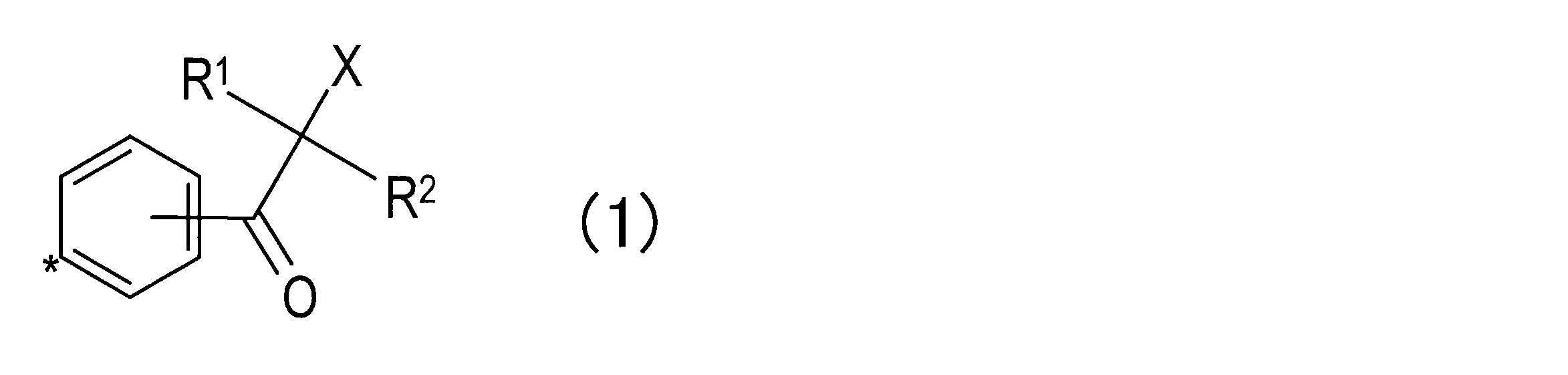
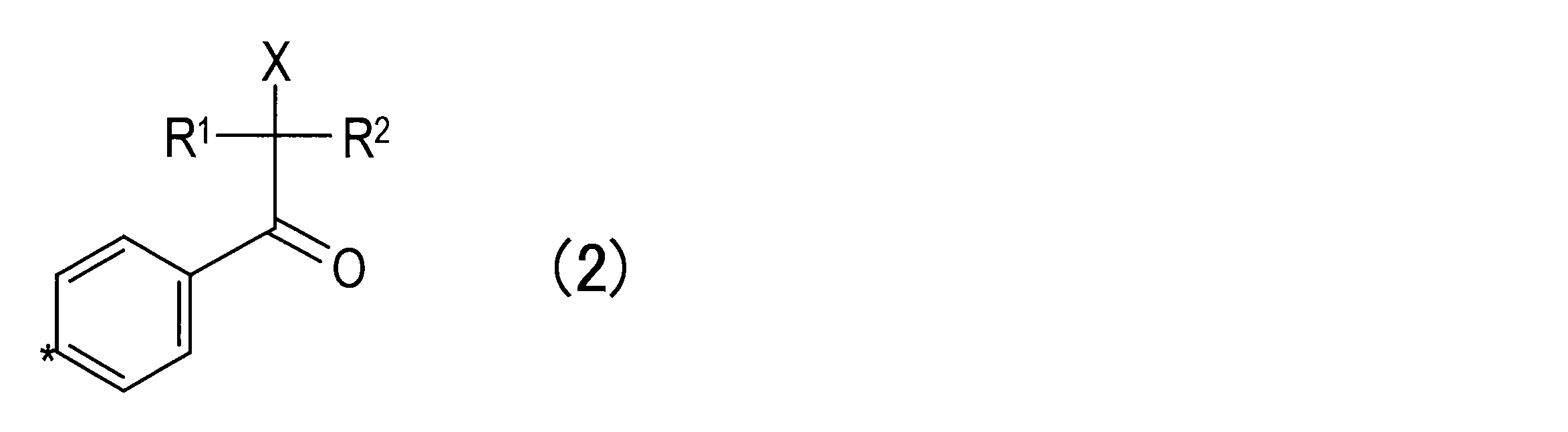
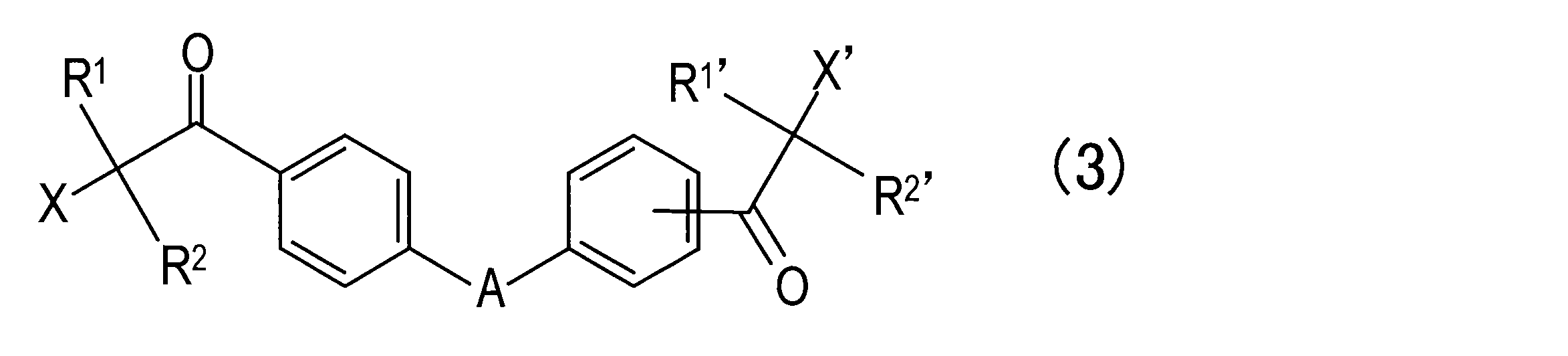
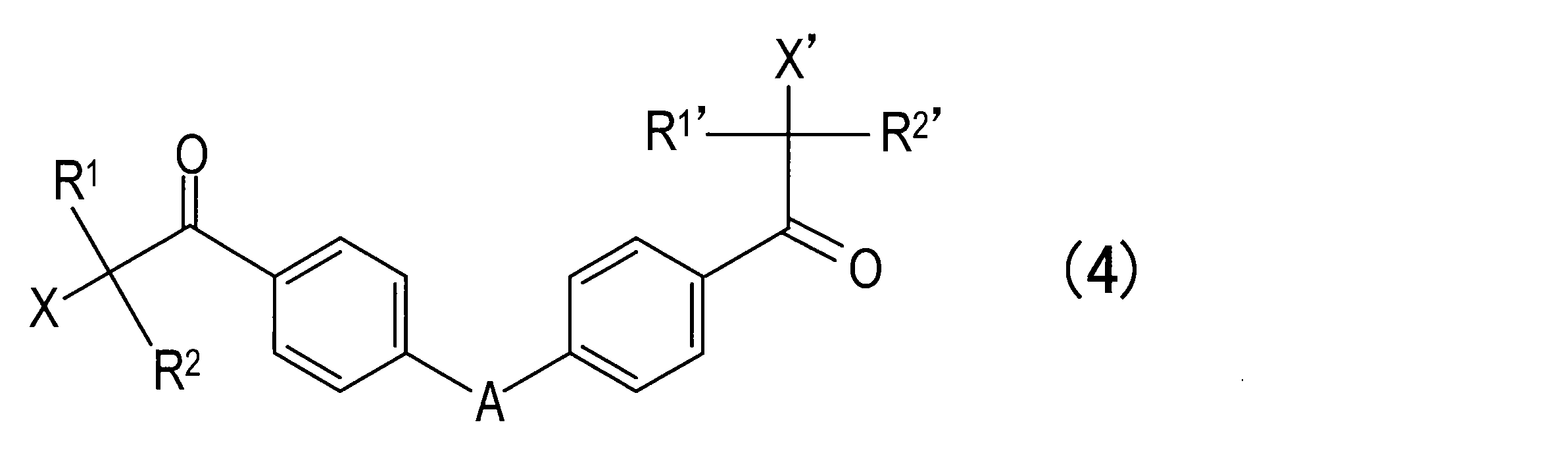
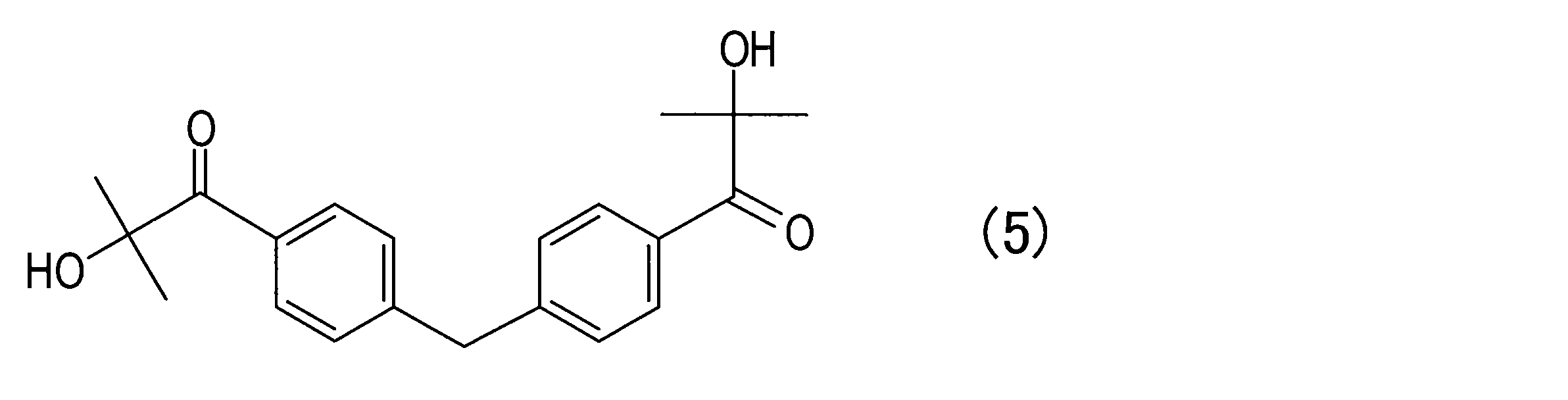
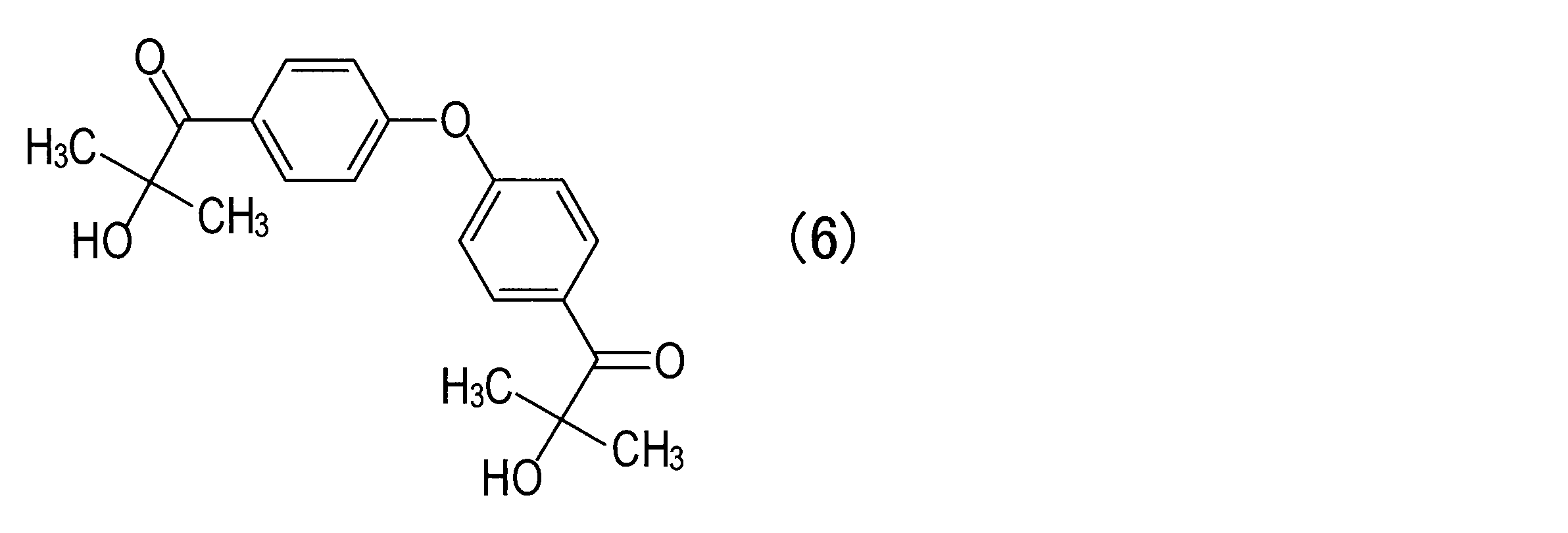
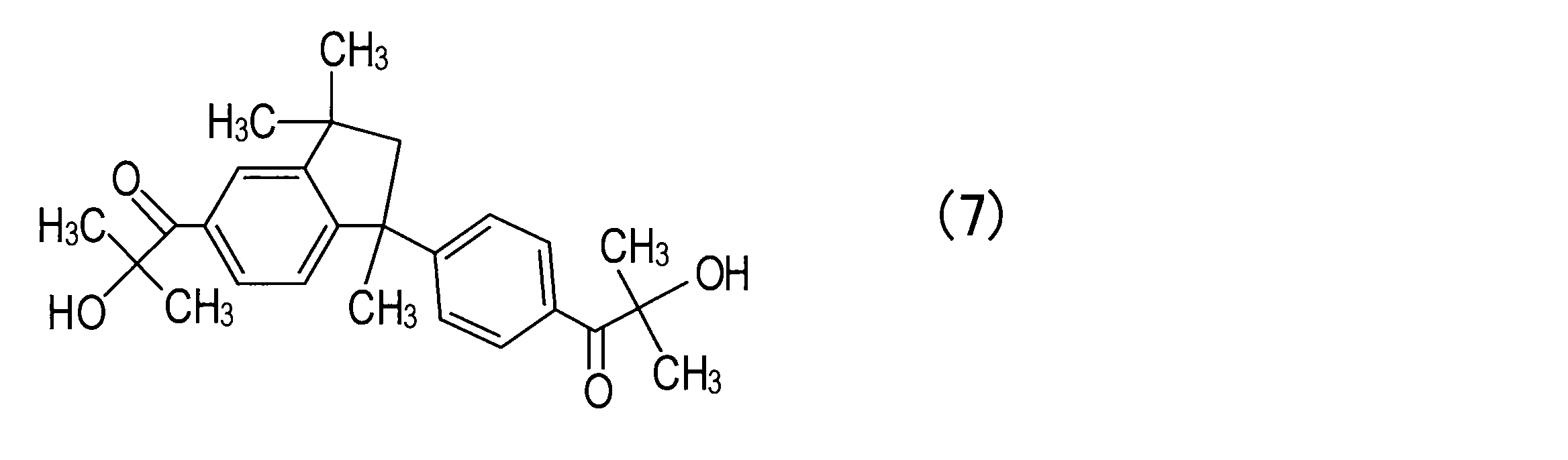


粘着シート1は、例えば、基材シート21、光硬化性組成物を含む塗布層22及びはく離ライナー23をこの順に含む第1の積層体20に光24を照射して形成できる(図2参照)。塗布層22は、光24の照射を受けて硬化し、粘着シート1となる。光24の照射は、典型的には、基材シート21の側から実施する。このとき、光24は、基材シート21を透過して塗布層22に到達し、塗布層22を硬化させる。ただし、光24の照射は、はく離ライナー23の側から実施してもよいし、はく離ライナー23及び基材シート21の双方の側から実施してもよい。
ゲル分率(%)=(A-B)/(C-B)×100
光学フィルム2の例は、偏光フィルム、位相差フィルム、並びに偏光フィルム及び/又は位相差フィルムを含む積層フィルムである。ただし、光学フィルム2は、上記例に限定されない。光学フィルム2は、ガラス製のフィルムを含んでいてもよい。
本実施形態の光学積層体の一例を図3に示す。図3の光学積層体30Aは、本実施形態の粘着シート付き光学フィルム11を備える。光学積層体30Aは、はく離ライナー3、粘着シート1及び光学フィルム2がこの順に積層された積層構造を有する。光学積層体30Aは、はく離ライナー3を剥離することで、粘着シート付き光学フィルム11として使用できる。
本実施形態の画像表示装置の一例を図6に示す。図6の画像表示装置31は、基板7、画像形成層(例えば有機EL層又は液晶層)6、粘着シート4、位相差フィルム2B、粘着シート1、偏光フィルム2A及び保護フィルム5がこの順に積層された積層構造を有している。画像表示装置31は、図1の粘着シート付き光学フィルム11、及び、図3~5の光学積層体30A,30B,30Cを備えている(ただし、はく離ライナー3を除く)。基板7及び画像形成層6は、公知の画像表示装置が備える基板及び画像形成層と、それぞれ同様の構成を有していればよい。
(モノマーシロップA1)
n-ブチルアクリレート(BA)99.0重量部、及び4-ヒドロキシブチルアクリレート(HBA)1.0重量部と、光重合開始剤としてOmnirad184(IGM Resin社製)0.16重量部及びOmnirad819(IGM Resin社製)0.04重量部とを4つ口フラスコに投入した。次に、フラスコ内の液体に対して窒素雰囲気下で紫外線を照射することによって、単量体を部分的に光重合させたモノマーシロップA1を得た。紫外線の照射は、フラスコ内の液体の粘度(計測条件:BH粘度計No.5ローター、10rpm、測定温度30℃)が20Pa・sになるまで実施した。
単量体及び光重合開始剤を表1のように変更したことを除き、モノマーシロップA1と同じ方法によって、モノマーシロップA2~A4を調製した。

BA:n-ブチルアクリレート
HBA:4-ヒドロキシブチルアクリレート
AA:アクリル酸
Omnirad184:1-ヒドロキシシクロヘキシル-フェニルケトン(Omnirad184、IGM Resin社製)
Omnirad819:ビス(2,4,6-トリメチルベンゾイル)フェニルホスフィンオキサイド(Omnirad819、IGM Resins社製)
Omnirad127:2-ヒドロキシ-1-(4-(4-(2-ヒドロキシ-2-メチルプロピオニル)ベンジル)フェニル)2-メチルプロパン-1-オン(Omnirad127、IGM Resin社製)
次に、以下の表2に示す組成となるように、モノマーシロップ、単量体、架橋剤及びシランカップリング剤を混合して、光硬化性組成物C1~C10を得た。

AA:アクリル酸
NVP:N-ビニル-2-ピロリドン
NDDA:1,9-ノナンジオールジアクリレート
KBM403::3-グリシドキシプロピルトリメトキシシラン(信越シリコーン社製、商品名「KBM-403」)
X-41-1056:エポキシ基含有オリゴマー型シランカップリング剤(信越シリコーン社製、商品名「X-41-1056」)
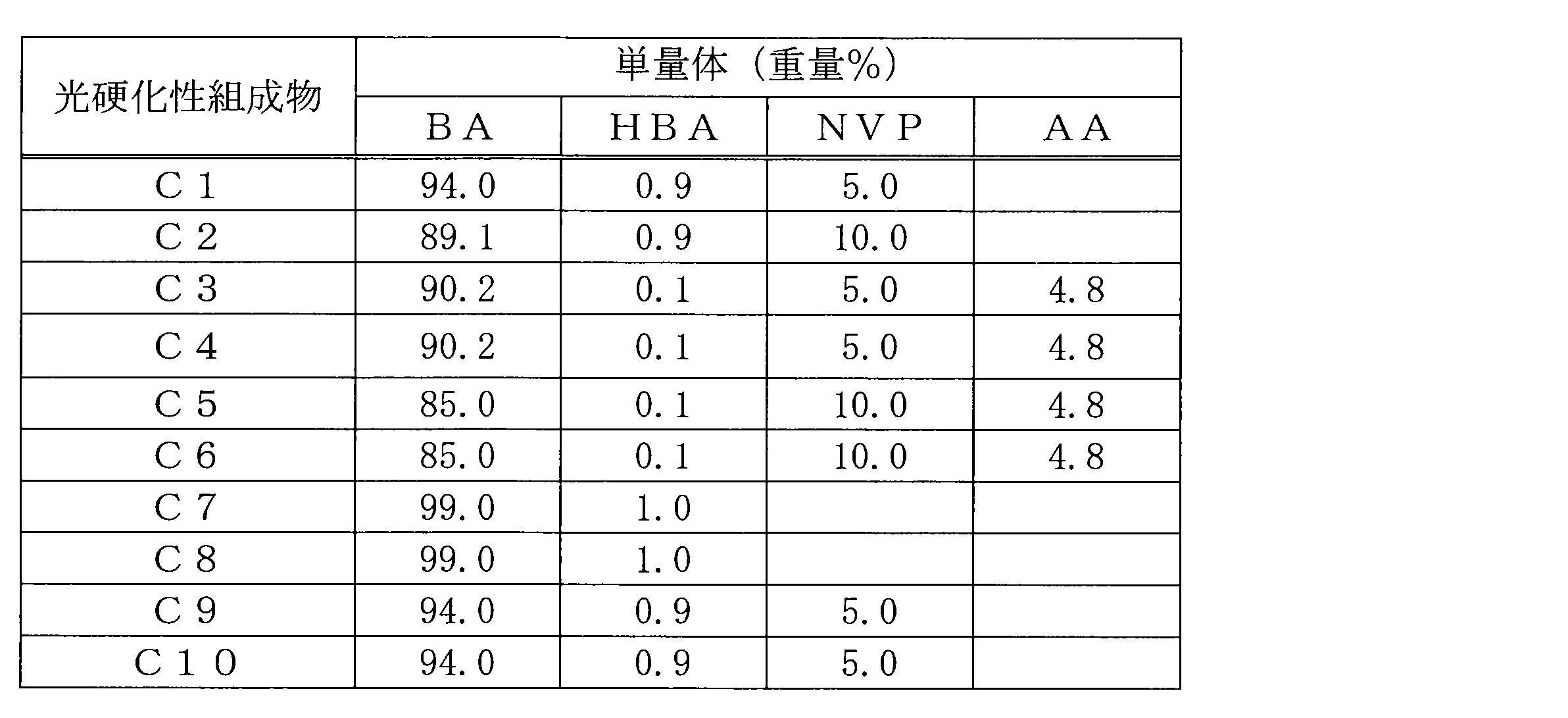
<実施例1>
(はく離ライナーの作製)
付加反応硬化型シリコーン(ヘキセニル基含有ポリオルガノシロキサンを含むLTC761、30重量%トルエン溶液、東レ・ダウコーニング製)30重量部、剥離コントロール剤(未反応性シリコーン樹脂を含むBY24-850、東レ・ダウコーニング製)0.9重量部、及び硬化触媒(白金触媒を含むSRX212、東レ・ダウコーニング製)2重量部、及び希釈溶媒としてトルエン/ヘキサン混合溶媒(体積比1:1)を混合して、シリコーン系離型剤組成物を得た。離型剤組成物におけるシリコーン固形分の濃度は、1.0重量%であった。次に、ライナー基材(ポリエステルフィルムであるルミラーXD500P、厚さ75μm)の片面に離型剤組成物をワイヤーバーにより塗布し、130℃で1分間加熱して、離型層(厚さ60nm)を片面に備えるはく離ライナーを作製した。
基材シート(PETセパレータ、三菱樹脂製、MRF38)の片面に、モノマーシロップC1をアプリケーターにより塗布し、塗布層(厚さ20μm)を形成した。次に、形成した塗布層の上にはく離ライナーを配置して第1の積層体を得た。はく離ライナーは、離型層が塗布層に接するように配置した。次に、第1の積層体における基材シートの側から、照度8.8mW/cm2及び照射時間60秒の条件で光を照射した(積算光量は528mJ/cm2)。光源にはLEDを使用し、照射した光のピーク波長は340nmであった。これにより、塗布層が光硬化し、基材シート及びはく離ライナーに挟持された実施例1の粘着シート(厚さ20μm)を得た。なお、光の照度は、照度計(トプコンテクノハウス社製、UD-T3040T2)を用い、基材シートにおける紫外線の入射面の近傍にあたる位置での照度を測定した。
使用する光硬化性組成物及び光の照射条件を表3に示すように変更したことを除き、実施例1と同じ方法によって、実施例2~8及び比較例1~2の粘着シートを得た。
<重合体のMw>
架橋剤を含まないことを除き、実施例1~8及び比較例1~2で用いた光硬化性組成物と同じ組成を有する試料を準備した。試料に対して、対応する実施例及び比較例の条件で光を照射した。これにより、試料に含まれる単量体群が重合し、重合体が形成された。この重合体についてMwを測定した。Mwは、GPCにより測定した。測定装置及び測定条件は、以下のとおりとした。なお、測定装置及び測定条件は、NVP含有組成及びNVP非含有組成で異なるものとした。
・分析装置:東ソー社製、HLC-8320GPC
・カラム:東ソー社製、TSKgel GMH-H(S)×2
・カラムサイズ:各7.8mmφ×30cm 計60cm
・カラム温度:40℃
・流量:0.5mL/min
・注入量:100μL
・溶離液:テトラヒドロフラン
・検出器:示差屈折計(RI)
・標準試料:ポリスチレン
・分析装置:アジレント・テクノロジー製、Agilent 1200
・カラム:東ソー社製、TSKgel SuperAWM-H+superAW4000+superAW2500
・カラムサイズ:各6.0mmφ×15cm 計45cm
・カラム温度:40℃
・流量:0.4mL/min
・注入量:40μL
・溶離液:N,N-ジメチルホルムアミド(DMF)
・検出器:示差屈折計(RI)
・標準試料:ポリスチレン
実施例及び比較例の各粘着シートのゲル分率は、上記の方法により測定した。
実施例及び比較例の各粘着シートの重合率は、130℃及び2時間の加熱乾燥の前後における粘着シートの重量の変化より算出した。具体的には、基材シート及びはく離ライナーを剥離した直後の粘着シートの重量をW0(乾燥前重量)とし、上記加熱の後、常温(23℃)で約20分冷却した時点での粘着シートの重量をW1(乾燥後重量)として、式:重合率(%)=W1/W0×100により求めた。また、求めた重合率に基づき、以下の判定を実施した。
A:重合率98.5%以上
B:重合率98.0%以上98.5%未満
C:重合率97.5%以上98.0%未満
D:重合率97.5%未満
(偏光フィルムの作製)
厚さ80μmのポリビニルアルコールフィルムを、速度比の異なるロール間において、温度30℃、濃度0.3%のヨウ素溶液中で1分間染色しながら、3倍まで延伸した。次に、濃度4%でホウ酸を含み、かつ濃度10%でヨウ化カリウムを含む、温度60℃の水溶液中に0.5分間浸漬しながら、総合延伸倍率が6倍になるまで延伸した。次に、濃度1.5%でヨウ化カリウムを含む、温度30℃の水溶液中に10秒間浸漬させて洗浄した後、50℃で4分間乾燥を行うことによって、厚さ28μmの偏光子を得た。当該偏光子の片面に、ラクトン環構造を有する変性アクリル系ポリマーからなる厚さ30μmの透明保護フィルムをポリビニルアルコール系接着剤により貼り合せた。さらに、偏光子の他方の面に、トリアセチルセルロースフィルム(コニカミノルタ製、商品名「KC4UY」)にハードコート層(HC)を形成した厚さ47μmの透明保護フィルムをポリビニルアルコール系接着剤により貼り合せた。70℃に設定されたオーブン内で5分間加熱乾燥させることによって偏光フィルムを作製した。さらに、変性アクリル系ポリマーからなる透明保護フィルム側の偏光フィルムの表面に対して、放電量63W/m2・minでコロナ処理を行った。
実施例及び比較例で作製した各粘着シートの露出面に、上述の偏光フィルムを配置することによって粘着シート付き偏光フィルムを作製した。なお、偏光フィルムは、変性アクリル系ポリマーからなる透明保護フィルム側の表面が粘着シートに接するように配置した。
作製した粘着シート付き偏光フィルムについて、次の方法によって信頼性(85℃信頼性)を評価した。まず、粘着シート付き偏光フィルムを縦228mm×横128mmの短冊状に切り出して試験片とした。次に、厚さ0.7mmの無アルカリガラス(コーニング社製、商品名「EG-XG」)の表面に試験片を粘着シートにより貼り付けた。無アルカリガラスへの試験片の貼り付けは、ラミネーターを用いて行った。試験片を貼り付けた後、50℃及び0.5MPaのオートクレーブ内に15分収容して無アルカリガラスと粘着シートとの接合を均質化させ、粘着シートを無アルカリガラスに密着させた。次に、試験片について、大気圧下、85℃で500時間加熱処理を行った。試験片の端部付近を光学顕微鏡で観察し、試験片の端部からの剥がれ及び端部付近における発泡の有無を確認した。
A:画像表示に影響を与える剥がれ及び発泡は確認されない
B:端部にわずかな発泡があるが、画像表示に影響を与えるレベルではない
C:端部に複数の気泡があるが、画像表示に影響を与えるレベルではない
D:画像表示に影響を与える剥がれ及び/又は発泡がある
E:画像表示に著しい影響を与える剥がれ及び/又は発泡がある
加熱処理の温度を85℃から95℃に変更したことを除き、85℃信頼性と同じ方法によって95℃信頼性を評価した。評価項目の分類A~Eは、85℃信頼性と同一とした。
信頼性試験の評価において作製した粘着シート付き偏光フィルムを縦228mm×横128mmの短冊状に切り出して試験サンプルとした。次に、試験サンプルを85℃及び500時間の加熱試験に供した後、偏光フィルムの端面からの粘着シートのはみ出し量を、20倍の対物レンズを用いた光学顕微鏡による観察に基づいて測定し、これを糊ずれ量(85℃)とした。観察にあたっては、透過光を0(ゼロ)とし、反射光のみとなるように調整した。
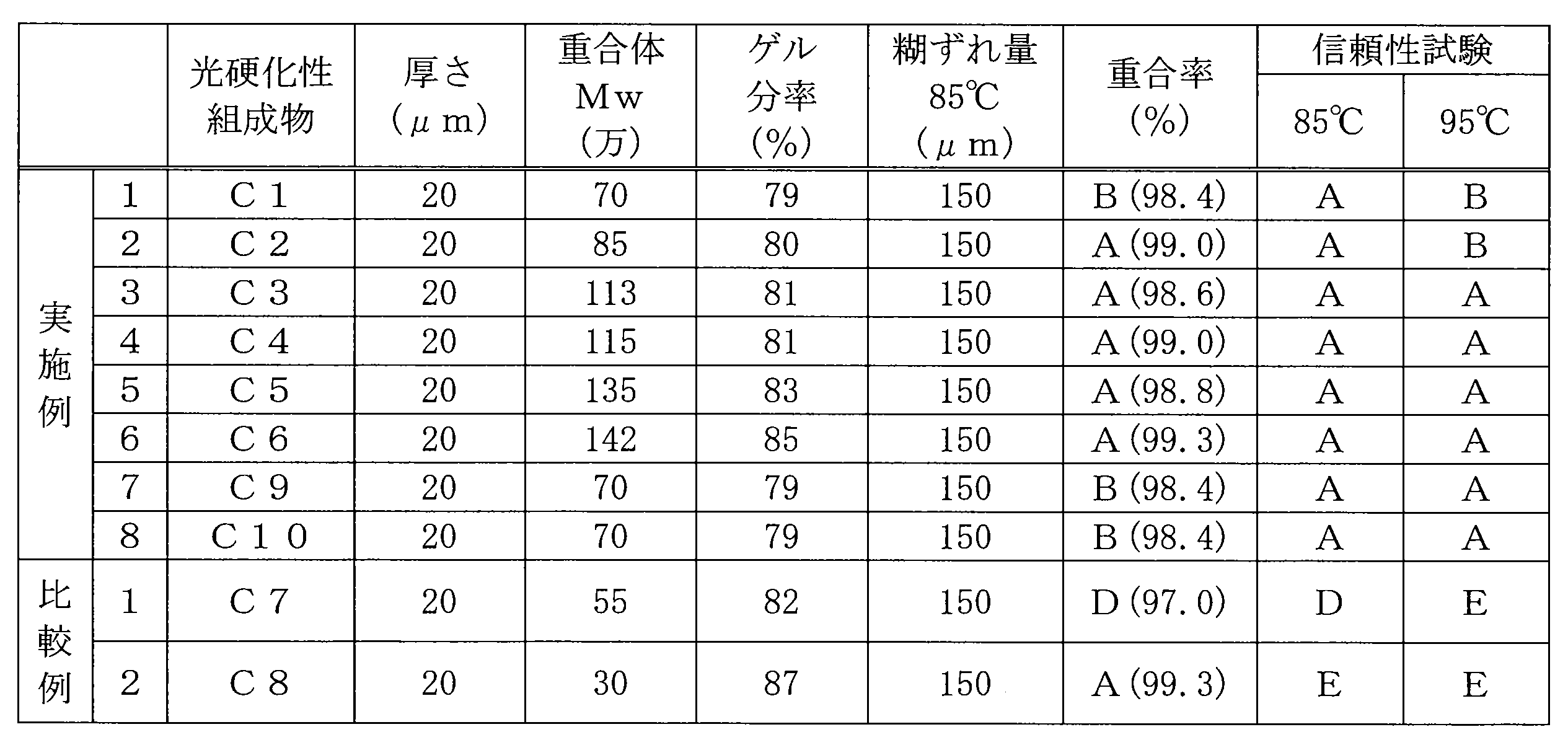
Claims (11)
- 光硬化型の粘着シートと、光学フィルムと、を備え、
前記粘着シートは、窒素原子含有単量体に由来する構成単位を有する重合体を含む、粘着シート付き光学フィルム。 - 前記重合体は(メタ)アクリル重合体である、請求項1に記載の粘着シート付き光学フィルム。
- 前記重合体は、カルボキシル基含有単量体に由来する構成単位をさらに有する、請求項1に記載の粘着シート付き光学フィルム。
- 前記重合体の重量平均分子量が60万以上であり、前記粘着シートにおける前記重合体の重合率が98%以上である、請求項1に記載の粘着シート付き光学フィルム。
- 前記粘着シートは、シランカップリング剤を含む、請求項1に記載の粘着シート付き光学フィルム。
- 前記粘着シートの厚さが30μm以下である、請求項1に記載の粘着シート付き光学フィルム。
- 前記粘着シートにおける溶剤の含有率が5重量%以下である、請求項1に記載の粘着シート付き光学フィルム。
- 前記粘着シートと、前記光学フィルムとが接している、請求項1に記載の粘着シート付き光学フィルム。
- 前記光学フィルムが偏光フィルムである、請求項1に記載の粘着シート付き光学フィルム。
- 請求項1~9のいずれか1項に記載の粘着シート付き光学フィルムを備える光学積層体。
- 請求項1~9のいずれか1項に記載の粘着シート付き光学フィルムを備える画像表示装置。
Priority Applications (2)
| Application Number | Priority Date | Filing Date | Title |
|---|---|---|---|
| KR1020257036025A KR20250169245A (ko) | 2023-03-31 | 2024-03-13 | 점착 시트 구비 편광 필름, 광학 적층체 및 화상 표시 장치 |
| CN202480021528.9A CN120917115A (zh) | 2023-03-31 | 2024-03-13 | 带粘合片的偏振膜、光学层叠体以及图像显示装置 |
Applications Claiming Priority (2)
| Application Number | Priority Date | Filing Date | Title |
|---|---|---|---|
| JP2023059589 | 2023-03-31 | ||
| JP2023-059589 | 2023-03-31 |
Publications (1)
| Publication Number | Publication Date |
|---|---|
| WO2024203369A1 true WO2024203369A1 (ja) | 2024-10-03 |
Family
ID=92906028
Family Applications (1)
| Application Number | Title | Priority Date | Filing Date |
|---|---|---|---|
| PCT/JP2024/009905 Ceased WO2024203369A1 (ja) | 2023-03-31 | 2024-03-13 | 粘着シート付き偏光フィルム、光学積層体及び画像表示装置 |
Country Status (5)
| Country | Link |
|---|---|
| JP (1) | JP2024146808A (ja) |
| KR (1) | KR20250169245A (ja) |
| CN (1) | CN120917115A (ja) |
| TW (1) | TW202444850A (ja) |
| WO (1) | WO2024203369A1 (ja) |
Citations (5)
| Publication number | Priority date | Publication date | Assignee | Title |
|---|---|---|---|---|
| JP2016017113A (ja) * | 2014-07-07 | 2016-02-01 | 日東電工株式会社 | 粘着シート |
| JP2020128470A (ja) * | 2019-02-07 | 2020-08-27 | 日東電工株式会社 | 粘着シート、光学積層体、および画像表示装置 |
| WO2020184155A1 (ja) * | 2019-03-08 | 2020-09-17 | 日東電工株式会社 | 粘着シートおよびその製造方法、ならびに画像表示装置 |
| WO2023022185A1 (ja) * | 2021-08-20 | 2023-02-23 | 日東電工株式会社 | 粘着シート |
| JP2023146401A (ja) * | 2022-03-29 | 2023-10-12 | リンテック株式会社 | ウィンドウフィルム |
Family Cites Families (1)
| Publication number | Priority date | Publication date | Assignee | Title |
|---|---|---|---|---|
| JP7563081B2 (ja) | 2019-10-01 | 2024-10-08 | 三菱ケミカル株式会社 | 粘着剤層付き偏光フィルム、粘着シート、積層部材及び画像表示装置 |
-
2024
- 2024-03-13 JP JP2024039513A patent/JP2024146808A/ja active Pending
- 2024-03-13 KR KR1020257036025A patent/KR20250169245A/ko active Pending
- 2024-03-13 WO PCT/JP2024/009905 patent/WO2024203369A1/ja not_active Ceased
- 2024-03-13 CN CN202480021528.9A patent/CN120917115A/zh active Pending
- 2024-03-20 TW TW113110288A patent/TW202444850A/zh unknown
Patent Citations (5)
| Publication number | Priority date | Publication date | Assignee | Title |
|---|---|---|---|---|
| JP2016017113A (ja) * | 2014-07-07 | 2016-02-01 | 日東電工株式会社 | 粘着シート |
| JP2020128470A (ja) * | 2019-02-07 | 2020-08-27 | 日東電工株式会社 | 粘着シート、光学積層体、および画像表示装置 |
| WO2020184155A1 (ja) * | 2019-03-08 | 2020-09-17 | 日東電工株式会社 | 粘着シートおよびその製造方法、ならびに画像表示装置 |
| WO2023022185A1 (ja) * | 2021-08-20 | 2023-02-23 | 日東電工株式会社 | 粘着シート |
| JP2023146401A (ja) * | 2022-03-29 | 2023-10-12 | リンテック株式会社 | ウィンドウフィルム |
Also Published As
| Publication number | Publication date |
|---|---|
| JP2024146808A (ja) | 2024-10-15 |
| CN120917115A (zh) | 2025-11-07 |
| TW202444850A (zh) | 2024-11-16 |
| KR20250169245A (ko) | 2025-12-02 |
Similar Documents
| Publication | Publication Date | Title |
|---|---|---|
| WO2024019160A1 (ja) | 光学積層体及び画像表示装置 | |
| WO2024203366A1 (ja) | 粘着シート用光硬化性組成物、粘着シート、光学積層体及び画像表示装置 | |
| WO2024203364A1 (ja) | 粘着シートの製造方法、粘着シート付き光学フィルムの製造方法及び画像表示装置の製造方法 | |
| JP2024146808A (ja) | 粘着シート付き偏光フィルム、光学積層体及び画像表示装置 | |
| WO2024203368A1 (ja) | 粘着シート付き偏光フィルム、光学積層体及び画像表示装置 | |
| WO2025041761A1 (ja) | 粘着シート用光硬化性組成物、粘着シート、光学積層体及び画像表示装置 | |
| JP7620749B2 (ja) | 粘着シートの製造方法、粘着シート付き光学フィルムの製造方法及び画像表示装置の製造方法 | |
| JP7688771B2 (ja) | 粘着シート、光学積層体、及び画像表示装置 | |
| WO2025154422A1 (ja) | 粘着剤組成物、粘着シート、光学積層体、及び画像表示装置 | |
| WO2024106486A1 (ja) | 粘着剤組成物、粘着シート、光学積層体、及び画像表示装置 | |
| WO2024203367A1 (ja) | 粘着シート用光硬化性組成物、粘着シート、光学積層体及び画像表示装置 | |
| JP2025144544A (ja) | 粘着剤組成物、粘着シート、光学積層体及び画像表示装置 | |
| JP2025143665A (ja) | 重合物、粘着付与剤、粘着剤組成物、粘着シート、光学積層体及び画像表示装置 | |
| WO2025197869A1 (ja) | 粘着剤組成物、粘着シート、光学積層体及び画像表示装置 | |
| JP2026027203A (ja) | 粘着シート、光学積層体、画像表示装置、部分重合物、モノマーシロップ、光硬化性粘着剤組成物、及び粘着シートの製造方法 | |
| WO2025197872A1 (ja) | 粘着シート、光学積層体及び画像表示装置 | |
| WO2026034439A1 (ja) | 粘着シート、光学積層体、画像表示装置、部分重合物、モノマーシロップ、光硬化性粘着剤組成物、及び粘着シートの製造方法 | |
| JP2025143663A (ja) | 粘着剤組成物、粘着シート、光学積層体、及び画像表示装置 |
Legal Events
| Date | Code | Title | Description |
|---|---|---|---|
| 121 | Ep: the epo has been informed by wipo that ep was designated in this application |
Ref document number: 24779498 Country of ref document: EP Kind code of ref document: A1 |
|
| WWE | Wipo information: entry into national phase |
Ref document number: CN2024800215289 Country of ref document: CN Ref document number: 202480021528.9 Country of ref document: CN |
|
| ENP | Entry into the national phase |
Ref document number: 1020257036025 Country of ref document: KR Free format text: ST27 STATUS EVENT CODE: A-0-1-A10-A15-NAP-PA0105 (AS PROVIDED BY THE NATIONAL OFFICE) |
|
| WWE | Wipo information: entry into national phase |
Ref document number: KR1020257036025 Country of ref document: KR |
|
| NENP | Non-entry into the national phase |
Ref country code: DE |
|
| WWP | Wipo information: published in national office |
Ref document number: 202480021528.9 Country of ref document: CN |
|
| 122 | Ep: pct application non-entry in european phase |
Ref document number: 24779498 Country of ref document: EP Kind code of ref document: A1 |