WO2024201799A1 - 情報処理装置、情報処理システム、情報処理方法及びプログラムが格納された非一時的なコンピュータ可読媒体 - Google Patents
情報処理装置、情報処理システム、情報処理方法及びプログラムが格納された非一時的なコンピュータ可読媒体 Download PDFInfo
- Publication number
- WO2024201799A1 WO2024201799A1 PCT/JP2023/012859 JP2023012859W WO2024201799A1 WO 2024201799 A1 WO2024201799 A1 WO 2024201799A1 JP 2023012859 W JP2023012859 W JP 2023012859W WO 2024201799 A1 WO2024201799 A1 WO 2024201799A1
- Authority
- WO
- WIPO (PCT)
- Prior art keywords
- shelf
- information
- notification
- worker
- target
- Prior art date
- Legal status (The legal status is an assumption and is not a legal conclusion. Google has not performed a legal analysis and makes no representation as to the accuracy of the status listed.)
- Ceased
Links
Images





Classifications
-
- G—PHYSICS
- G06—COMPUTING OR CALCULATING; COUNTING
- G06Q—INFORMATION AND COMMUNICATION TECHNOLOGY [ICT] SPECIALLY ADAPTED FOR ADMINISTRATIVE, COMMERCIAL, FINANCIAL, MANAGERIAL OR SUPERVISORY PURPOSES; SYSTEMS OR METHODS SPECIALLY ADAPTED FOR ADMINISTRATIVE, COMMERCIAL, FINANCIAL, MANAGERIAL OR SUPERVISORY PURPOSES, NOT OTHERWISE PROVIDED FOR
- G06Q10/00—Administration; Management
- G06Q10/06—Resources, workflows, human or project management; Enterprise or organisation planning; Enterprise or organisation modelling
-
- G—PHYSICS
- G06—COMPUTING OR CALCULATING; COUNTING
- G06Q—INFORMATION AND COMMUNICATION TECHNOLOGY [ICT] SPECIALLY ADAPTED FOR ADMINISTRATIVE, COMMERCIAL, FINANCIAL, MANAGERIAL OR SUPERVISORY PURPOSES; SYSTEMS OR METHODS SPECIALLY ADAPTED FOR ADMINISTRATIVE, COMMERCIAL, FINANCIAL, MANAGERIAL OR SUPERVISORY PURPOSES, NOT OTHERWISE PROVIDED FOR
- G06Q30/00—Commerce
- G06Q30/06—Buying, selling or leasing transactions
-
- G—PHYSICS
- G06—COMPUTING OR CALCULATING; COUNTING
- G06Q—INFORMATION AND COMMUNICATION TECHNOLOGY [ICT] SPECIALLY ADAPTED FOR ADMINISTRATIVE, COMMERCIAL, FINANCIAL, MANAGERIAL OR SUPERVISORY PURPOSES; SYSTEMS OR METHODS SPECIALLY ADAPTED FOR ADMINISTRATIVE, COMMERCIAL, FINANCIAL, MANAGERIAL OR SUPERVISORY PURPOSES, NOT OTHERWISE PROVIDED FOR
- G06Q50/00—Information and communication technology [ICT] specially adapted for implementation of business processes of specific business sectors, e.g. utilities or tourism
- G06Q50/10—Services
Definitions
- the present disclosure relates to an information processing device, an information processing system, an information processing method, and a non-transitory computer-readable medium on which a program is stored.
- Patent Document 1 discloses an information processing system configured to enable store clerks to properly determine which tasks should be prioritized from among the tasks that arise successively.
- This information processing system uses cameras and sensors to detect specific events related to the tasks performed by the store clerk and generates specific alert information, and identifies the tasks that the store clerk is instructed to perform based on the alert information and determines the priority of each task.
- Tasks that the store clerk needs to perform are output with a priority order, allowing the store clerk to properly determine which tasks should be prioritized.
- the purpose of this disclosure is to provide an information processing device, an information processing system, an information processing method, and a program that can improve the work efficiency of workers.
- An information processing device includes an identification means, a notification target determination means, a notification method determination means, and a notification output means.
- the identification means identifies a shelf that requires action regarding the display of products.
- the notification target determination means determines a target to which a request for action is to be notified based on the identified shelf or the products displayed on the shelf, and information on the worker.
- the notification method determination means determines a notification method that enables the target to recognize the shelf or the products, based on at least one of the identified shelf or the products displayed on the shelf, and the determined target.
- the notification output means outputs notification information according to the determined notification method to the determined target.
- An information processing system includes an identification means, a notification target determination means, a notification method determination means, and a notification output means.
- the identification means identifies a shelf that requires action regarding the display of products.
- the notification target determination means determines a target to which a request for action is to be notified based on the identified shelf or the products displayed on the shelf, and information on the worker.
- the notification method determination means determines a notification method that enables the target to recognize the shelf or the products, based on at least one of the identified shelf or the products displayed on the shelf, and the determined target.
- the notification output means outputs notification information according to the determined notification method to the determined target.
- a computer executes the following processes.
- the processes include a process of identifying a shelf that requires a response regarding the display of products, a process of determining a target person to be notified of a response request based on the identified shelf or the products displayed on the shelf and information on the worker, a process of determining a notification method that enables the target person to recognize the shelf or the products based on at least one of the identified shelf or the products displayed on the shelf and the determined target person, and a process of outputting notification information to the determined target person using the determined notification method.
- a non-transitory computer-readable medium stores a program that causes a computer to execute the following processes.
- the processes include a process of identifying a shelf that requires a response regarding the display of products, a process of determining a target person to be notified of a response request based on the identified shelf or the products displayed on the shelf and information on the worker, a process of determining a notification method that enables the target person to recognize the shelf or the products based on at least one of the identified shelf or the products displayed on the shelf and the determined target person, and a process of outputting notification information to the determined target person using the determined notification method.
- This disclosure can improve the work efficiency of workers.
- FIG. 1 is a block diagram showing a configuration of an information processing device according to a first embodiment.
- 4 is a flowchart illustrating a flow of an information processing method according to the first embodiment.
- 1 is a block diagram showing a configuration of an information processing system according to a first embodiment.
- FIG. 11 is a block diagram showing the overall configuration of an information processing system according to a second embodiment.
- FIG. 11 is a diagram illustrating an example of a store to which an information processing system according to a second embodiment is applied.
- FIG. 5 is a block diagram showing a functional configuration of the worker terminal of FIG. 4 .
- FIG. 5 is a block diagram showing a functional configuration of the server in FIG. 4 .
- FIG. 11 is a diagram illustrating an example of identifying a shelf that stores a product that requires attention based on a captured image of the display shelf.
- FIG. 13 is a diagram illustrating an example of a table that associates worker IDs with products.
- FIG. 11 is a diagram showing a flow of an information processing method by an information processing system according to a second embodiment.
- FIG. 11 is a diagram showing a flow of an information processing method by an information processing system according to a second embodiment.
- the embodiment relates to a technology that improves the efficiency of work performed by workers when displaying products on display shelves in sales areas of stores such as convenience stores and supermarkets.
- multiple display shelves are installed in a store.
- Each display shelf has multiple shelves arranged vertically for displaying products.
- display shelves are not limited to those with multiple shelves.
- a display shelf can be any place where products are displayed; for example, when products are stacked flat on a table, the table can be treated as a display shelf.
- shelf allocation The allocation of products to display shelves (shelf allocation) is an important factor that stimulates customers' purchasing desire and influences product sales. Shelf allocation specifies in advance how products should be displayed on a display shelf (display position, number of displays, number of faces, etc.). The number of faces indicates how many rows of products are lined up on a display shelf. Shelf allocation may change depending on sales and the season. Products are displayed on each shelf according to the predetermined shelf allocation.
- a first-in, first-out operation is used, whereby the first products purchased are put out first, and a front-loading operation is used to ensure that products are easily accessible to customers.
- a front-loading operation involves moving products at the back to the front when an item at the front of a shelf is sold. In this way, products are always placed on a first-in, first-out basis, preventing old products from remaining and allowing the display shelves to be managed in a tidy state at all times.
- FIG. 1 is a block diagram showing a configuration of an information processing device 1 according to the first embodiment.
- the information processing device 1 includes a specification unit 2, a notification target determination unit 3, a notification method determination unit 4, and a notification output unit 5.
- the information processing device 1 can perform various communications with external devices via a network.
- the information processing device 1 can be connected to a worker terminal carried by a worker via a communication line such as the Internet.
- the communication line is not limited to the Internet, and may be a combination of the Internet and another communication line, or may be a communication line other than the Internet.
- wireless communication or wired communication such as 4G (Generation), 5G, local 5G, Wi-Fi (registered trademark), and LTE (Long Term Evolution) may be used. Note that the communication method is not limited to these examples.
- the identification unit 2 identifies the display shelf on which the product requiring attention is displayed (hereinafter referred to as the target display shelf).
- the identification unit 2 can identify the target display shelf, for example, based on a shelf image captured of the display shelf on which the product is displayed. Specifically, the identification unit 2 can identify the target display shelf by comparing actual display information obtained by image analysis of the shelf image with reference display information that indicates the display criteria for the products on the display shelf.
- the reference display information indicates information related to the position of each product on the display shelf, the number of products displayed, etc., as determined by the above-mentioned shelf allocation.
- the identification unit 2 does not only identify the target display shelf based on the shelf image, but may also use any other method to identify the target display shelf. For example, the identification unit 2 can identify the target display shelf based on the detection results of a pressure sensor or weight sensor attached to the display shelf. The identification unit 2 can also identify physically moved products and identify the target display shelf by receiving a transmission signal from a wireless tag attached to the product.
- the notification target determination unit 3 determines the target person to notify of the response request based on the identified shelf or the products displayed on that shelf, and information about the worker.
- the information about the worker may be, for example, identification information of the worker, such as an ID that uniquely identifies the worker and is linked to the product or shelf. For example, a table that holds the correspondence between the identification information of the worker and the shelf or product for which the worker is responsible may be stored in a storage device (not shown).
- the information about the worker may be the location information, behavioral information, or behavioral history of the worker. The method of determining the target person to notify of the response request will be described in detail later.
- the notification method determination unit 4 determines a notification method that enables the target person to recognize the shelf or product based on at least one of the identified shelf or the product displayed on that shelf and the determined target person. For example, the notification method determination unit 4 can determine a different notification method depending on the identified shelf.
- the notification method may include voice, sound, vibration, and display. For example, any one or a combination of voice patterns, sound patterns, and vibration patterns that differ for each display shelf may be adopted.
- the notification method may include a pop-up display in which the notification content is displayed large in the center of the screen of the worker terminal, or a banner display in which the notification content is displayed small at the top of the screen. In this way, the target worker can recognize which shelf requires action just by receiving the notification.
- the notification method determination unit 4 may also determine different types of notification methods depending on the determined target persons. For example, the notification method determination unit 4 can determine different types of notification methods depending on the number of target persons. The notification method determination unit 4 can display differently on the worker terminals carried by the target persons when there is one target person and when there are multiple targets. In other words, the notification method determination unit 4 can change the notification method depending on the magnitude of the response request for the target persons.
- the target person if there is only one target person, the target person must always perform the specified task for the product on the specified shelf, and the target person's responsibility for the task becomes heavy.
- the target person's worker terminal can display the information in a larger font size or in a color that calls attention, such as red or yellow.
- the brightness of the screen of the worker terminal when notifying one person may be brighter than when notifying multiple people.
- the notification output unit 5 outputs notification information to the worker terminal for the determined target person using the determined notification method.
- the worker terminal that receives the notification information can notify the worker who owns the worker terminal of a response request using the determined notification method.
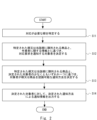
- FIG. 2 is a flowchart showing an information processing method performed by the information processing device 1 according to the first embodiment.
- the information processing device 1 identifies a shelf on which a product requiring a response is displayed (S11).
- the information processing device 1 determines a person to whom a response request is to be notified based on the identified shelf or the product displayed on that shelf, and information on the worker (S12).
- a notification method that enables the target person to recognize the shelf or product is determined based on at least one of the identified shelf or the product displayed on the shelf and the determined target person (S13). Notification information is then output to the determined target person using the determined notification method (S14).
- the information processing device 1 of embodiment 1 it is possible to ensure that the worker performing the work related to the shelf displaying the product that requires attention is aware of the work, thereby improving the efficiency of the work.
- the information processing device 1 includes a processor, a memory, and a storage device, which are not shown in the figure.
- the storage device stores a program that causes a computer to execute each process of the management method according to the first embodiment.
- the processor loads the program from the storage device into the memory and executes the program. In this way, the processor realizes the functions of the identification unit 2, notification target determination unit 3, notification method determination unit 4, and notification output unit 5.
- Each of the components of the information processing device 1 may be realized by dedicated hardware.
- some or all of the components of each device may be realized by general-purpose or wired circuits, processors, etc., or a combination of these. These may be configured by a single chip, or by multiple chips connected via a bus. Some or all of the components of each device may be realized by a combination of the above-mentioned circuits, etc., and programs.
- a CPU Central Processing Unit
- GPU Graphics Processing Unit
- FPGA Field-Programmable Gate Array
- quantum processor quantum computer control chip
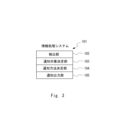
- FIG. 3 is a block diagram showing the configuration of an information processing system 101 according to the first embodiment.
- the information processing system 101 includes an identification unit 102, a notification target determination unit 103, a notification method determination unit 104, and a notification output unit 105.
- the detailed operation of each component of the information processing system 101 corresponds to the operation of each component of the information processing device 1.
- the devices, circuits, etc. that realize each component of FIG. 3 may be realized as a client-server system, a cloud computing system, or the like, each connected via a communication network.
- the functions of the information processing device 1 may be provided in a SaaS (Software as a Service) format.
- SaaS Software as a Service
- Embodiment 2 is a specific example of the first embodiment described above.
- Fig. 4 is a block diagram showing an overall configuration of an information processing system 100 according to the second embodiment.
- the information processing system 100 includes a server 10 and a worker terminal 20.
- the server 10 and the worker terminal 20 are connected to each other via a network N.
- the network N is a wired or wireless communication line, for example, the Internet.
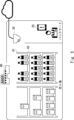
- FIG. 5 is a diagram showing an example of a store to which the information processing system 100 according to the second embodiment is applied.
- an example is described in which shelves on which products requiring attention are displayed are identified based on shelf images captured by a camera 30 installed in a store 40.
- a technology for identifying display shelves based on shelf images for example, the technology disclosed in International Publication No. WO 2019/065212 can be adopted.
- the store 40 is roughly divided into a sales floor and a back yard.
- a number of display shelves 41 are installed in the sales floor.
- Each of the display shelves 41 has a number of shelves 42 arranged vertically for displaying products.
- the camera 30 is installed so that it can photograph all of the products displayed on the display shelves 41.
- the camera 30 is a photographing device that can take photographs and generate photographed images.
- multiple cameras 30 may be placed in different positions within the store 40 so as to capture multiple display shelves 41 respectively. Furthermore, the shooting direction of one camera may be changed at predetermined time intervals to capture multiple display shelves respectively. Furthermore, the camera 30 may capture one display shelf 41 by dividing it into multiple areas. In other words, one display shelf 41 may be captured in its entirety using multiple shelf images.
- the camera 30 may be a surveillance camera, or a camera installed in a smartphone, tablet terminal, etc.
- the worker manages the display shelves while holding the worker terminal 20. For example, the worker displays products on the display shelves 41 according to a predetermined shelf allocation. As an example, if there is a shortage or out-of-stock of products on the display shelves 41, the worker performs a stocking operation, bringing new products from the back yard where the products are in stock and replenishing the products on the display shelves 41. The worker also performs tidying operations, such as aligning the products so that their faces face forward and returning products that have been left in a position different from the shelf allocation to their correct positions. Furthermore, the worker performs first-in, first-out operations and front-out operations so that older products are at the front of the shelf boards 42. The worker recognizes the shelves on which products that require such attention are displayed via the worker terminal 20.
- the worker terminal 20 is an information terminal used by a worker to transmit and receive data to and from the server 10 via the network N by wireless communication.
- the worker terminal 20 is, for example, a smartphone or a tablet, and outputs information about shelves on which products requiring attention are displayed to the worker.
- Fig. 6 is a block diagram showing the configuration of the worker terminal 20 in Fig. 4 .
- the worker terminal 20 includes a storage unit 21, a memory 22, a communication unit 23, an input/output unit 24, and a processing unit 25.
- the worker terminal 20 may include a positioning means such as a GPS antenna or a beacon, an acceleration sensor, a gyro sensor, etc.
- the storage unit 21 is an example of a storage device including a non-volatile memory such as a flash memory or SSD (Solid State Drive).
- the storage unit 21 stores a program that implements processes including a process of notifying a determined target person by a determined notification method based on the notification information output from the server 10.
- the memory 22 is a volatile storage device such as a RAM (Random Access Memory), and is a storage area for temporarily holding information when the processing unit 25 is operating.
- the communication unit 23 is a communication interface with the network N.
- the communication unit 23 may establish a short-range wireless communication connection and perform communication.
- various standards such as Bluetooth (registered trademark), BLE (Bluetooth Low Energy), and UWB (Ultra-Wide Band) can be applied to the short-range wireless communication.
- the input/output unit 24 may include a display device such as a screen, and an input device such as a keyboard.
- the input/output unit 24 may be a touch panel in which the display device and the input device are integrated.
- the display device can display information about the display shelves 41 in the store 40 that require attention, based on notification information from the server 10. By visually checking the screen displayed on the display device, the worker can confirm which tasks related to the target display shelves they need to perform.
- the method of presenting information about work on the target display shelf is not limited to visual methods such as displaying it on a display device, and may be presented, for example, by vibration, voice, warning sound, etc. Therefore, the input/output unit 24 may include a speaker, a vibrator, etc.
- the worker can use the input device to input information regarding the work he or she has performed on the target display shelf, as necessary. For example, when the worker completes work on the target display shelf, the worker can input information indicating that the work has been completed. For example, a check box for inputting whether the work has been completed may be displayed on the touch panel screen.
- the processing unit 25 is a processor that controls the hardware of the worker terminal 20.
- the processing unit 25 loads a program from the storage unit 21 into the memory 22 and executes it. In this way, the processing unit 25 realizes the functions of the transmission/reception processing unit 251 and the notification processing unit 252.
- the transmission/reception processing unit 251 receives notification information from the server 10 for notifying the determined target person of a response request using the determined notification method.
- the notification processing unit 252 notifies the worker of information related to the target display shelf using the determined notification method based on the notification information.
- the notification processing unit 252 can display a screen generated by executing a program on the input/output unit 24.
- the notification processing unit 252 can display, for example, information related to the product that requires attention, the position of the display shelf on which the product is displayed, and the number of workers who received this notification at the same time.
- the transmission/reception processing unit 251 can transmit location information of the worker terminal 20 and behavior information of the worker to the server 10 as necessary.
- the server 10 is an information processing device that realizes a display shelf identification function, a notification target determination function, and a notification method determination function.
- the server 10 may be composed of a plurality of servers, and each functional block may be realized by a plurality of computers.
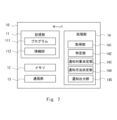
- Fig. 7 is a block diagram showing the configuration of the server 10 in Fig. 4. As shown in Fig. 7, the server 10 includes a storage unit 11, a memory 12, a communication unit 13, and a processing unit 14.
- the storage unit 11 is an example of a storage device such as a hard disk or a flash memory.
- the storage unit 11 stores a program 111 and an information DB 112.
- the program 111 is a computer program that implements some of the functions of identifying the display shelf, determining the notification target, and determining the notification method.
- the information DB 112 is a database that manages various information related to workers.
- the information DB 112 stores worker information including at least one of the worker ID, the worker's location information, behavioral information, and behavioral history. The worker information will be described in detail later.
- the information DB 112 also stores reference display information for comparison with actual display information obtained from the shelf image.
- the reference display information can be, for example, identification information such as the product name and JAN (Japanese Article Number) code of each product displayed on the display shelf 41, the location information of each product on the display shelf 41, the number of faces, the number of displays, etc.
- the memory 12 is a volatile storage device such as a RAM, and is a storage area for temporarily holding information when the processing unit 14 is operating.
- the communication unit 13 is a communication interface with the network N.
- the processing unit 14 is a processor that controls each component of the server 10.
- the processing unit 14 loads the program 111 from the storage unit 11 into the memory 12, and executes the program 111. In this way, the processing unit 14 realizes the functions of an acquisition unit 141, an identification unit 142, a notification target determination unit 143, a notification method determination unit 144, and a notification output unit 145.
- the acquisition unit 141 acquires shelf images taken by the camera 30 of shelves on which products are displayed.
- the acquisition unit 141 may acquire shelf images taken by a camera provided in the worker terminal 20, for example.
- the acquisition unit 141 can also acquire location information and behavior information of workers from the worker terminal 20, etc., as necessary.
- the identification unit 142 identifies the target display shelf where the product requiring attention is displayed.
- the identification unit 142 generates actual display information by performing image analysis on the shelf image, and identifies the target display shelf by comparing the actual display information with reference display information based on the shelf allocation.
- the identification unit 142 extracts image areas representing each product from the shelf image and generates actual display information by performing known image analysis. The identification unit 142 then compares the actual display information with the reference display information to determine whether the display shelves 41 included in the shelf image meet the criteria, i.e., whether the products are arranged according to the specified shelf layout.
- the notification target determination unit 143 determines the target person to notify of the response request based on the identified shelf or the products displayed on that shelf, and information about the worker. There may be one target person or multiple targets.
- the information about the worker may be at least one of the identification information of the worker linked to the product or shelf, the behavioral history of the worker, and the location information or behavioral information of the worker. Therefore, the method of determining the target person may include the following examples.
- FIG. 9 is a diagram showing an example of this table.
- a product classification such as milk or bread may be linked to the worker in charge of that product.
- This table may be set in advance by a manager of the store 40, for example, based on the capabilities of the workers, and stored in the memory 12. For example, products that require time-consuming attention may be assigned to a worker with high work efficiency.
- the table may also be created by having the worker specify the display shelf that he or she is responsible for, using an application program stored in the worker terminal 20.
- the notification target determination unit 143 may determine the target person based on the location information of the worker.
- the worker terminal 20 carried by the worker includes a positioning means such as a GPS antenna or a beacon, and can transmit the location information of the worker terminal 20 to the server 10.
- the notification target determination unit 143 acquires the location information of the worker terminal 20, and can determine the target person based on, for example, the distance to a display shelf on which the product requiring attention is displayed, or the distance to a back yard where the product inventory is stored, or the like.
- the notification target determination unit 143 may determine a target based on behavioral information of a worker.
- the worker terminal 20 carried by the worker includes an acceleration sensor, a gyro sensor, etc., and can detect the operation of the worker terminal 20.
- the behavioral information of the worker may be acquired by another device.
- the worker may wear a motion sensor that detects his/her own movement.
- Such a device can transmit various acquired data to the server 10 by, for example, short-range wireless communication or the like.
- the behavioral information of the worker may be generated by analyzing video data captured by a camera installed in the store 40.
- the notification target determination unit 143 may determine, for example, as the target worker, a worker who is not performing other tasks or a worker who is performing a small amount of other tasks.
- the notification target determination unit 3 may determine the target person based on the behavioral history of the worker.
- the notification target determination unit 143 may determine K people (K is an integer of 1 or more) as the target people in order of the number of times they have performed stocking work on the target display shelf in the past.
- the notification target determination unit 143 may determine K people as the target people in order of the number of times they have performed stocking work, not limited to the target display shelf.
- the notification method determination unit 144 determines a notification method that enables the target person to recognize the shelf or product based on at least one of the identified shelf or the product displayed on that shelf, and the determined target person. For example, the notification method determination unit 144 can determine a different notification method depending on the identified shelf. The notification method determination unit 144 can determine one or a combination of voice patterns, sound patterns, and vibration patterns that are set for each display shelf. This allows the target person, who is a worker, to recognize which shelf requires attention just by receiving the notification.
- the notification method determination unit 144 may also determine different types of notification methods depending on the determined target person. For example, the notification method determination unit 144 can determine different types of notification methods depending on the number of targets. The notification method determination unit 144 may display different information on the worker terminals held by the targets depending on whether there is one target person or multiple targets.
- the notification method determination unit 144 can determine the notification method to be a louder volume, a shorter vibration interval in the vibration pattern, a brighter display screen, and a larger font size when there are fewer than the specified number of target persons than when there are more than the specified number of target persons. This allows the target workers to receive the notification and recognize the importance of the task.
- the notification output unit 145 outputs notification information to the worker terminal 20 of the determined target person using the determined notification method.
- the worker terminal 20 can notify the worker of information related to the target display shelf by voice, sound, vibration, display, etc. based on this notification information.
- the information processing device 1 of embodiment 2 can ensure that the worker performing the work related to the shelves on which products requiring attention are displayed is aware of the work, making it possible to improve the efficiency of the work.
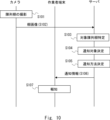
- FIG. 10 is a diagram showing the flow of an information processing method by the information processing system according to the second embodiment.
- the camera 30 photographs the display shelves 41 (S101) and transmits the shelf image to the server 10 (S102).
- the server 10 Based on the shelf image, the server 10 identifies the display shelf (target display shelf) that stores the product that needs attention (S103).
- the server 10 determines the target to be notified of the response request (S104). The server 10 then determines a notification method that enables the target to recognize the shelf or products, based on at least one of the identified shelf or the products displayed on that shelf, and the determined target (S105). The server 10 then outputs notification information according to the determined notification method to the worker terminal 20 held by the determined target (S106).
- the worker terminal 20 notifies the worker of information about the target display shelf using the notification method determined based on the notification information (S107). The worker can quickly perform work on the target display shelf according to the notification content from the worker terminal 20.
- the notification target determination unit 143 may further include a process of changing the target person depending on the amount of time that has elapsed since the time the notification information was output.
- Whether or not work on the target display shelf has been completed can be determined, for example, based on information indicating whether or not work has been completed, which is input by a worker using the input device of the worker terminal 20.
- whether or not work on the target display shelf has been completed can also be determined, for example, based on whether or not the target display shelf has been arranged in accordance with the shelf allocation, using images captured by a camera that captures images of the display shelf, or detection results from a pressure sensor or the like provided on the shelf 42.
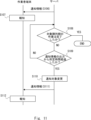
- FIG. 11 is a flow diagram showing the process following S107 in FIG. 10. As shown in FIG. 11, after the worker terminal 20 notifies the worker of information regarding the target display shelf (S107), the notification target determination unit 143 determines whether or not the work regarding the target display shelf has been completed (S108). If the work regarding the target display shelf has been completed (S108 YES), the process ends.
- the notification target determination unit 143 determines whether or not a predetermined time has passed since the notification information was output (S109). If the predetermined time has not passed in S109 (NO), the process returns to S108 and repeats the process. If the predetermined time has passed in S109 (YES), the notification target determination unit 143 changes the target person to whom the response request is to be notified (S110). Note that if the predetermined time has passed in S109 (YES), in addition to or instead of changing the target person to whom the response request is to be notified (S110), the notification method may be changed.
- the notification target determination unit 143 can expand the target persons. As one example, if a worker in charge of each display shelf has been set in advance, the notification target determination unit 143 includes the workers in charge of the display shelves adjacent to the target display shelf in the target persons. This makes it possible to notify information about the target display shelf to more workers than the number of targets determined in the previous notification information.
- notification information is output to the worker terminal 20 held by the changed target person using the determined notification method (S111).
- the worker terminal 20 notifies the worker of information related to the target display shelf using the notification method determined based on the notification information (S112).
- workers can be reliably made aware of the work of stocking and tidying products.
- notification information is output only to the worker terminal 20 that is the target of the notification, workers will not be stopped from working due to unrelated notifications. This makes it possible to improve work efficiency.
- the display state of products on each display shelf can be kept in accordance with the shelf allocation, which improves customer purchasing motivation and increases sales opportunities for products.
- the program includes instructions (or software code) that, when loaded into a computer, cause the computer to perform one or more functions described in the embodiments.
- the program may be stored on a non-transitory computer-readable medium or a tangible storage medium.
- computer-readable medium or tangible storage medium includes RAM, read-only memory (ROM), flash memory, SSD or other memory technology, CD-ROM, digital versatile disc (DVD), Blu-ray® disk or other optical disk storage, magnetic cassette, magnetic tape, magnetic disk storage or other magnetic storage device.
- the program may be transmitted on a transitory computer-readable medium or a communication medium.
- the transitory computer-readable medium or communication medium includes electrical, optical, acoustic, or other forms of propagated signals.
- a part or all of the above-described embodiments can be described as, but is not limited to, the following supplementary notes.
- Appendix A1 A means for identifying a shelf on which a product requiring attention is displayed; a notification target determination means for determining a target to notify of a response request based on the identified shelf or the product displayed on the shelf and information about the worker; A notification method determination means for determining a notification method by which the target person can recognize the shelf or the product based on at least one of the specified shelf or the product displayed on the shelf and the determined target person; a notification output means for outputting notification information by the determined notification method to the determined target person;
- An information processing device comprising: (Appendix A2) The notification method determination means determines a notification method according to the number of the target persons.
- the information processing device is at least one of identification information of the worker associated with the product or the shelf, a behavior history of the worker, location information or behavior information of the worker. 2. The information processing device according to claim 1 . (Appendix A4) the notification target determination means changes the target person in accordance with the elapsed time from the time when the notification information is output. 2. The information processing device according to claim 1 .
- (Appendix B1) A means for identifying a shelf on which a product requiring attention is displayed; a notification target determination means for determining a target to notify of a response request based on the identified shelf or the product displayed on the shelf and information about the worker; A notification method determination means for determining a notification method by which the target person can recognize the shelf or the product based on at least one of the specified shelf or the product displayed on the shelf and the determined target person; a notification output means for outputting notification information by the determined notification method to the determined target person;
- An information processing system comprising: (Appendix B2) The notification method determination means determines a notification method according to the number of the target persons. 2. An information processing system according to claim 1 .
- the information about the worker is at least one of identification information of the worker associated with the product or the shelf, a behavior history of the worker, location information or behavior information of the worker. 2. An information processing system according to claim 1 .
- the notification target determination means changes the target person in accordance with the elapsed time from the time when the notification information is output. 2. An information processing system according to claim 1 .
- the computer A process of identifying shelves on which products requiring attention are displayed; A process of determining a person to whom a response request is to be notified based on the identified shelf or the product displayed on the shelf and information about the worker; A process of determining a notification method that enables the target person to recognize the shelf or the product based on at least one of the specified shelf or the product displayed on the shelf and the determined target person; outputting notification information to the determined target person by the determined notification method; Execute Information processing methods.
- the process of determining the notification method includes a process of determining the notification method depending on the number of the target persons. 2. The information processing method according to claim 1 .
- the information about the worker is at least one of identification information of the worker associated with the product or the shelf, a behavior history of the worker, location information or behavior information of the worker. 2. The information processing method according to claim 1 .
- the process of determining the target person includes a process of changing the target person according to an elapsed time from a time when the notification information is output. 2. The information processing method according to claim 1 .
- (Appendix D1) A process of identifying shelves on which products requiring attention are displayed; A process of determining a person to whom a response request is to be notified based on the identified shelf or the product displayed on the shelf and information about the worker; A process of determining a notification method that enables the target person to recognize the shelf or the product based on at least one of the specified shelf or the product displayed on the shelf and the determined target person; outputting notification information to the determined target person by the determined notification method; A non-transitory computer-readable medium on which a program for causing a computer to execute the program is stored.
- the process of determining the notification method includes a process of determining the notification method depending on the number of the target persons.
- the information about the worker is at least one of identification information of the worker associated with the product or the shelf, a behavior history of the worker, location information or behavior information of the worker.
- the process of determining the target person includes a process of changing the target person according to an elapsed time from a time when the notification information is output.
Landscapes
- Business, Economics & Management (AREA)
- Engineering & Computer Science (AREA)
- Economics (AREA)
- Strategic Management (AREA)
- Tourism & Hospitality (AREA)
- Theoretical Computer Science (AREA)
- General Physics & Mathematics (AREA)
- General Business, Economics & Management (AREA)
- Human Resources & Organizations (AREA)
- Marketing (AREA)
- Physics & Mathematics (AREA)
- Entrepreneurship & Innovation (AREA)
- Development Economics (AREA)
- Accounting & Taxation (AREA)
- Finance (AREA)
- Quality & Reliability (AREA)
- Operations Research (AREA)
- Game Theory and Decision Science (AREA)
- Educational Administration (AREA)
- Health & Medical Sciences (AREA)
- General Health & Medical Sciences (AREA)
- Primary Health Care (AREA)
- Management, Administration, Business Operations System, And Electronic Commerce (AREA)
Abstract
Description
図1は、実施形態1に係る情報処理装置1の構成を示すブロック図である。図1に示すように、情報処理装置1は、特定部2、通知対象決定部3、通知方法決定部4、通知出力部5を備える。情報処理装置1は、ネットワークを介して外部の装置と種々の通信を行うことができる。具体的には、情報処理装置1は、作業者が所持する作業者端末等にインターネット等の通信回線を介して接続され得る。ただし、通信回線は、インターネットに限定されず、インターネットと他の通信回線との組み合わせであってもよいし、インターネット以外の通信回線であってもよい。通信方式としては、例えば、4G(Generation)、5G、ローカル5G、Wi-Fi(登録商標)、LTE(Long Term Evolution)等の無線通信又は有線通信が用いられ得る。なお、通信方式は、これらの例に限られるものではない。
実施形態2は、上述した実施形態1の具体例である。図4は、実施形態2にかかる情報処理システム100の全体構成を示すブロック図である。情報処理システム100は、サーバ10、作業者端末20を含む。サーバ10、作業者端末20は、それぞれネットワークNを介して接続される。ここで、ネットワークNは、有線又は無線の通信回線、例えばインターネットである。
作業者端末20は、作業者が使用し、無線通信によりネットワークNを介しサーバ10とデータの送受信を行う情報端末である。作業者端末20は、例えば、スマートフォンやタブレット等であり、作業者に対応が必要な商品が陳列された棚に関する情報を出力する。図6は、図4の作業者端末20の構成を示すブロック図である。
サーバ10は、陳列棚の特定機能、通知対象決定機能、通知方法決定機能を実現する情報処理装置である。なお、サーバ10は複数台のサーバで構成されていてもよく、各機能ブロックは複数台のコンピュータで実現されてもよい。図7は、図4のサーバ10の構成を示すブロック図である。図7に示すように、サーバ10は、記憶部11、メモリ12、通信部13、処理部14を含む。記憶部11は、ハードディスク、フラッシュメモリ等の記憶装置の一例である。
通知対象決定部143は、陳列棚又は商品のいずれかと、作業者又は作業者端末20との対応関係を規定したテーブルを用いて、対象要求を通知する対象者を決定することができる。すなわち、この例では、各陳列棚又は商品を担当する作業者が予め設定されている。例えば、店舗40において販売される各商品と、作業者ID、又は各作業者がそれぞれ所持する作業者端末20を識別する端末IDとを対応付けた情報を保持するテーブルを用いることができる。作業者IDや端末IDは、作業者の識別情報の一例である。
通知対象決定部143は、作業者の位置情報を基づいて対象者を決定してもよい。例えば、作業者が所持する作業者端末20が、GPSアンテナ、ビーコン等の測位手段を含み、作業者端末20の位置情報をサーバ10に送信することができる。通知対象決定部143は、作業者端末20の位置情報を取得し、例えば、対応が必要な商品を陳列する陳列棚との距離、又は、商品の在庫を保管するバックヤードとの距離等に基づいて対象者を決定することができる。
通知対象決定部143は、作業者の行動情報を基づいて対象者を決定してもよい。例えば、作業者が所持する作業者端末20が、加速度センサ、ジャイロセンサ等を含み、作業者端末20の動作を検知することができる。なお、作業者の行動情報は、他の機器により取得されてもよい。例えば、作業者が、自身の動きを検知するモーションセンサを装着してもよい。このような機器は、例えば、近距離無線通信等によってサーバ10に対して取得した各種データを送信することができる。
作業を実施した作業者を、カメラ30の映像から識別が可能な場合や、作業者端末20からの入力により特定することが可能な場合、サーバ10は、各作業者の行動履歴を生成することができる。通知対象決定部3は、作業者の行動履歴に基づいて、対象者を決定してもよい。例えば、通知対象決定部143は、過去に対象陳列棚への品出し作業を行ったことが多い順にK人(Kは1以上の整数)を対象者として決定することができる。又は、通知対象決定部143は、対象陳列棚に限らず、品出し作業を行った回数が少ない順にK人を対象者として決定してもよい。
(付記A1)
対応が必要な商品が陳列される棚を特定する特定手段と、
特定された前記棚又は当該棚に陳列される商品と、作業者に関する情報とに基づき、対応要求を通知する対象者を決定する通知対象決定手段と、
特定された前記棚又は当該棚に陳列される商品と、決定された前記対象者の少なくともいずれか一つに基づき、前記対象者が前記棚又は前記商品を認識可能な通知方法を決定する通知方法決定手段と、
決定された前記対象者に対して、決定された前記通知方法による通知情報を出力する通知出力手段と、
を備える、情報処理装置。
(付記A2)
前記通知方法決定手段は、前記対象者の人数に応じて通知方法を決定する、
付記A1に記載の情報処理装置。
(付記A3)
前記作業者に関する情報は、前記商品又は前記棚と紐づけられた前記作業者の識別情報、前記作業者の行動履歴、前記作業者の位置情報又は行動情報の少なくとも1つである、
付記A1に記載の情報処理装置。
(付記A4)
前記通知対象決定手段は、前記通知情報が出力された時刻からの経過時間に応じて、前記対象者を変更する、
付記A1に記載の情報処理装置。
(付記B1)
対応が必要な商品が陳列される棚を特定する特定手段と、
特定された前記棚又は当該棚に陳列される商品と、作業者に関する情報とに基づき、対応要求を通知する対象者を決定する通知対象決定手段と、
特定された前記棚又は当該棚に陳列される商品と、決定された前記対象者の少なくともいずれか一つに基づき、前記対象者が前記棚又は前記商品を認識可能な通知方法を決定する通知方法決定手段と、
決定された前記対象者に対して、決定された前記通知方法による通知情報を出力する通知出力手段と、
を備える、情報処理システム。
(付記B2)
前記通知方法決定手段は、前記対象者の人数に応じて通知方法を決定する、
付記B1に記載の情報処理システム。
(付記B3)
前記作業者に関する情報は、前記商品又は前記棚と紐づけられた前記作業者の識別情報、前記作業者の行動履歴、前記作業者の位置情報又は行動情報の少なくとも1つである、
付記B1に記載の情報処理システム。
(付記B4)
前記通知対象決定手段は、前記通知情報が出力された時刻からの経過時間に応じて、前記対象者を変更する、
付記B1に記載の情報処理システム。
(付記C1)
コンピュータが、
対応が必要な商品が陳列される棚を特定する処理と、
特定された前記棚又は当該棚に陳列される商品と、作業者に関する情報とに基づき、対応要求を通知する対象者を決定する処理と、
特定された前記棚又は当該棚に陳列される商品と、決定された前記対象者の少なくともいずれか一つに基づき、前記対象者が前記棚又は前記商品を認識可能な通知方法を決定する処理と、
決定された前記対象者に対して、決定された前記通知方法による通知情報を出力する処理と、
を実行する、
情報処理方法。
(付記C2)
前記通知方法を決定する処理は、前記対象者の人数に応じて通知方法を決定する処理を含む、
付記C1に記載の情報処理方法。
(付記C3)
前記作業者に関する情報は、前記商品又は前記棚と紐づけられた前記作業者の識別情報、前記作業者の行動履歴、前記作業者の位置情報又は行動情報の少なくとも1つである、
付記C1に記載の情報処理方法。
(付記C4)
前記対象者を決定する処理は、前記通知情報が出力された時刻からの経過時間に応じて、前記対象者を変更する処理を含む、
付記C1に記載の情報処理方法。
(付記D1)
対応が必要な商品が陳列される棚を特定する処理と、
特定された前記棚又は当該棚に陳列される商品と、作業者に関する情報とに基づき、対応要求を通知する対象者を決定する処理と、
特定された前記棚又は当該棚に陳列される商品と、決定された前記対象者の少なくともいずれか一つに基づき、前記対象者が前記棚又は前記商品を認識可能な通知方法を決定する処理と、
決定された前記対象者に対して、決定された前記通知方法による通知情報を出力する処理と、
をコンピュータに実行させるプログラムが格納された非一時的なコンピュータ可読媒体。
(付記D2)
前記通知方法を決定する処理は、前記対象者の人数に応じて通知方法を決定する処理を含む、
付記D1に記載のプログラムが格納された非一時的なコンピュータ可読媒体。
(付記D3)
前記作業者に関する情報は、前記商品又は前記棚と紐づけられた前記作業者の識別情報、前記作業者の行動履歴、前記作業者の位置情報又は行動情報の少なくとも1つである、
付記D1に記載のプログラムが格納された非一時的なコンピュータ可読媒体。
(付記D4)
前記対象者を決定する処理は、前記通知情報が出力された時刻からの経過時間に応じて、前記対象者を変更する処理を含む、
付記D1に記載のプログラムが格納された非一時的なコンピュータ可読媒体。
2 特定部
3 通知対象決定部
4 通知方法決定部
5 通知出力部
10 サーバ
11記憶部
111 プログラム
112 情報DB
12 メモリ
13 通信部
14 処理部
141 取得部
142 特定部
143 通知対象決定部
144 通知方法決定部
145 通知出力部
20 作業者端末
21 記憶部
22 メモリ
23 通信部
24 入出力部
25 処理部
251 送受信処理部
252 報知処理部
30 カメラ
40 店舗
41 陳列棚
42 棚板
100 情報処理システム
101 情報処理システム
102 特定部
103 通知対象決定部
104 通知方法決定部
105 通知出力部
N ネットワーク
Claims (16)
- 商品の陳列に関する対応が必要な棚を特定する特定手段と、
特定された前記棚又は当該棚に陳列される商品と、作業者に関する情報とに基づき、対応要求を通知する対象者を決定する通知対象決定手段と、
特定された前記棚又は当該棚に陳列される商品と、決定された前記対象者の少なくともいずれか一つに基づき、前記対象者が前記棚又は前記商品を認識可能な通知方法を決定する通知方法決定手段と、
決定された前記対象者に対して、決定された前記通知方法による通知情報を出力する通知出力手段と、
を備える、情報処理装置。 - 前記通知方法決定手段は、前記対象者の人数に応じて通知方法を決定する、
請求項1に記載の情報処理装置。 - 前記作業者に関する情報は、前記商品又は前記棚と紐づけられた前記作業者の識別情報、前記作業者の行動履歴、前記作業者の位置情報又は行動情報の少なくとも1つである、
請求項1に記載の情報処理装置。 - 前記通知対象決定手段は、前記通知情報が出力された時刻からの経過時間に応じて、前記対象者を変更する、
請求項1に記載の情報処理装置。 - 商品の陳列に関する対応が必要な棚を特定する特定手段と、
特定された前記棚又は当該棚に陳列される商品と、作業者に関する情報とに基づき、対応要求を通知する対象者を決定する通知対象決定手段と、
特定された前記棚又は当該棚に陳列される商品と、決定された前記対象者の少なくともいずれか一つに基づき、前記対象者が前記棚又は前記商品を認識可能な通知方法を決定する通知方法決定手段と、
決定された前記対象者に対して、決定された前記通知方法による通知情報を出力する通知出力手段と、
を備える、情報処理システム。 - 前記通知方法決定手段は、前記対象者の人数に応じて通知方法を決定する、
請求項5に記載の情報処理システム。 - 前記作業者に関する情報は、前記商品又は前記棚と紐づけられた前記作業者の識別情報、前記作業者の行動履歴、前記作業者の位置情報又は行動情報の少なくとも1つである、
請求項5に記載の情報処理システム。 - 前記通知対象決定手段は、前記通知情報が出力された時刻からの経過時間に応じて、前記対象者を変更する、
請求項5に記載の情報処理システム。 - コンピュータが、
商品の陳列に関する対応が必要な棚を特定する処理と、
特定された前記棚又は当該棚に陳列される商品と、作業者に関する情報とに基づき、対応要求を通知する対象者を決定する処理と、
特定された前記棚又は当該棚に陳列される商品と、決定された前記対象者の少なくともいずれか一つに基づき、前記対象者が前記棚又は前記商品を認識可能な通知方法を決定する処理と、
決定された前記対象者に対して、決定された前記通知方法による通知情報を出力する処理と、
を実行する、
情報処理方法。 - 前記通知方法を決定する処理は、前記対象者の人数に応じて通知方法を決定する処理を含む、
請求項9に記載の情報処理方法。 - 前記作業者に関する情報は、前記商品又は前記棚と紐づけられた前記作業者の識別情報、前記作業者の行動履歴、前記作業者の位置情報又は行動情報の少なくとも1つである、
請求項9に記載の情報処理方法。 - 前記対象者を決定する処理は、前記通知情報が出力された時刻からの経過時間に応じて、前記対象者を変更する処理を含む、
請求項9に記載の情報処理方法。 - 商品の陳列に関する対応が必要な棚を特定する処理と、
特定された前記棚又は当該棚に陳列される商品と、作業者に関する情報とに基づき、対応要求を通知する対象者を決定する処理と、
特定された前記棚又は当該棚に陳列される商品と、決定された前記対象者の少なくともいずれか一つに基づき、前記対象者が前記棚又は前記商品を認識可能な通知方法を決定する処理と、
決定された前記対象者に対して、決定された前記通知方法による通知情報を出力する処理と、
をコンピュータに実行させるプログラムが格納された非一時的なコンピュータ可読媒体。 - 前記通知方法を決定する処理は、前記対象者の人数に応じて通知方法を決定する処理を含む、
請求項13に記載のプログラムが格納された非一時的なコンピュータ可読媒体。 - 前記作業者に関する情報は、前記商品又は前記棚と紐づけられた前記作業者の識別情報、前記作業者の行動履歴、前記作業者の位置情報又は行動情報の少なくとも1つである、
請求項13に記載のプログラムが格納された非一時的なコンピュータ可読媒体。 - 前記対象者を決定する処理は、前記通知情報が出力された時刻からの経過時間に応じて、前記対象者を変更する処理を含む、
請求項13に記載のプログラムが格納された非一時的なコンピュータ可読媒体。
Priority Applications (2)
| Application Number | Priority Date | Filing Date | Title |
|---|---|---|---|
| JP2025509413A JPWO2024201799A5 (ja) | 2023-03-29 | 情報処理装置、情報処理方法及びプログラム | |
| PCT/JP2023/012859 WO2024201799A1 (ja) | 2023-03-29 | 2023-03-29 | 情報処理装置、情報処理システム、情報処理方法及びプログラムが格納された非一時的なコンピュータ可読媒体 |
Applications Claiming Priority (1)
| Application Number | Priority Date | Filing Date | Title |
|---|---|---|---|
| PCT/JP2023/012859 WO2024201799A1 (ja) | 2023-03-29 | 2023-03-29 | 情報処理装置、情報処理システム、情報処理方法及びプログラムが格納された非一時的なコンピュータ可読媒体 |
Publications (1)
| Publication Number | Publication Date |
|---|---|
| WO2024201799A1 true WO2024201799A1 (ja) | 2024-10-03 |
Family
ID=92903610
Family Applications (1)
| Application Number | Title | Priority Date | Filing Date |
|---|---|---|---|
| PCT/JP2023/012859 Ceased WO2024201799A1 (ja) | 2023-03-29 | 2023-03-29 | 情報処理装置、情報処理システム、情報処理方法及びプログラムが格納された非一時的なコンピュータ可読媒体 |
Country Status (1)
| Country | Link |
|---|---|
| WO (1) | WO2024201799A1 (ja) |
Citations (5)
| Publication number | Priority date | Publication date | Assignee | Title |
|---|---|---|---|---|
| JP2016004384A (ja) * | 2014-06-16 | 2016-01-12 | パナソニックIpマネジメント株式会社 | 店舗管理システムおよび店舗管理方法 |
| WO2016148027A1 (ja) * | 2015-03-18 | 2016-09-22 | 日本電気株式会社 | 情報処理装置、発注支援方法及び支援方法 |
| JP2020113042A (ja) * | 2019-01-11 | 2020-07-27 | 東芝テック株式会社 | 支援システム、支援装置及び情報処理プログラム |
| WO2022024364A1 (ja) * | 2020-07-31 | 2022-02-03 | 日本電気株式会社 | 商品検知装置、商品検知システム、商品検知方法および記録媒体 |
| US20220122023A1 (en) * | 2019-07-21 | 2022-04-21 | Trax Technology Solutions Pte Ltd. | Customized Presentation of Items on Electronic Visual Displays in Retail Stores Based on Condition of Products |
-
2023
- 2023-03-29 WO PCT/JP2023/012859 patent/WO2024201799A1/ja not_active Ceased
Patent Citations (5)
| Publication number | Priority date | Publication date | Assignee | Title |
|---|---|---|---|---|
| JP2016004384A (ja) * | 2014-06-16 | 2016-01-12 | パナソニックIpマネジメント株式会社 | 店舗管理システムおよび店舗管理方法 |
| WO2016148027A1 (ja) * | 2015-03-18 | 2016-09-22 | 日本電気株式会社 | 情報処理装置、発注支援方法及び支援方法 |
| JP2020113042A (ja) * | 2019-01-11 | 2020-07-27 | 東芝テック株式会社 | 支援システム、支援装置及び情報処理プログラム |
| US20220122023A1 (en) * | 2019-07-21 | 2022-04-21 | Trax Technology Solutions Pte Ltd. | Customized Presentation of Items on Electronic Visual Displays in Retail Stores Based on Condition of Products |
| WO2022024364A1 (ja) * | 2020-07-31 | 2022-02-03 | 日本電気株式会社 | 商品検知装置、商品検知システム、商品検知方法および記録媒体 |
Also Published As
| Publication number | Publication date |
|---|---|
| JPWO2024201799A1 (ja) | 2024-10-03 |
Similar Documents
| Publication | Publication Date | Title |
|---|---|---|
| JP6463804B2 (ja) | 物品の相互作用及び移動検出方法 | |
| US11863869B1 (en) | Event detection using motion extracted image comparison | |
| CN111295684A (zh) | 货架监视装置、货架监视方法及货架监视程序 | |
| US10040628B1 (en) | Item replacement assistance | |
| JP7435587B2 (ja) | 物品推定装置、物品推定方法、及びプログラム | |
| CN111315670A (zh) | 货架标签检测装置、货架标签检测方法及货架标签检测程序 | |
| WO2019123714A1 (ja) | 情報処理装置、商品推薦方法、およびプログラム | |
| WO2019065286A1 (ja) | 購入支援装置、購入支援端末及び購入支援システム | |
| US20180157917A1 (en) | Image auditing method and system | |
| JP7673841B2 (ja) | 棚札管理システム、棚札管理方法、およびプログラム | |
| US20220292445A1 (en) | Work assistance system, work assistance device, work assistance method, and program | |
| TWI897184B (zh) | 管理物品之出庫之方法及其裝置 | |
| JP2021080087A (ja) | 情報処理システムと情報処理装置と情報処理プログラムと情報処理方法 | |
| US11556891B2 (en) | Operations system for combining independent product monitoring systems to automatically manage product inventory and product pricing and automate store processes | |
| CN118414624A (zh) | 信息处理装置和信息处理方法 | |
| WO2024201799A1 (ja) | 情報処理装置、情報処理システム、情報処理方法及びプログラムが格納された非一時的なコンピュータ可読媒体 | |
| US10372753B2 (en) | System for verifying physical object absences from assigned regions using video analytics | |
| JP7576782B2 (ja) | 業務支援システム、業務支援装置、業務支援方法、及び、コンピュータプログラム | |
| US20250245716A1 (en) | Systems and methods for assessing items for sale | |
| WO2020195763A1 (ja) | 情報処理装置、情報処理方法と記録媒体 | |
| US10943465B1 (en) | Device notification and aggregation | |
| US10489269B2 (en) | Systems, devices, and methods for generating terminal resource recommendations | |
| CN107209559A (zh) | 交互分析 | |
| JP6877806B6 (ja) | 情報処理装置、プログラム及び情報処理方法 | |
| WO2025196895A1 (ja) | 情報処理装置、情報処理システム、情報処理方法及びプログラム |
Legal Events
| Date | Code | Title | Description |
|---|---|---|---|
| 121 | Ep: the epo has been informed by wipo that ep was designated in this application |
Ref document number: 23930437 Country of ref document: EP Kind code of ref document: A1 |
|
| ENP | Entry into the national phase |
Ref document number: 2025509413 Country of ref document: JP Kind code of ref document: A |
|
| WWE | Wipo information: entry into national phase |
Ref document number: 2025509413 Country of ref document: JP |
|
| NENP | Non-entry into the national phase |
Ref country code: DE |
|
| 122 | Ep: pct application non-entry in european phase |
Ref document number: 23930437 Country of ref document: EP Kind code of ref document: A1 |