WO2024201692A1 - 購買率算出装置、購買率算出方法、及びコンピュータ可読媒体 - Google Patents
購買率算出装置、購買率算出方法、及びコンピュータ可読媒体 Download PDFInfo
- Publication number
- WO2024201692A1 WO2024201692A1 PCT/JP2023/012420 JP2023012420W WO2024201692A1 WO 2024201692 A1 WO2024201692 A1 WO 2024201692A1 JP 2023012420 W JP2023012420 W JP 2023012420W WO 2024201692 A1 WO2024201692 A1 WO 2024201692A1
- Authority
- WO
- WIPO (PCT)
- Prior art keywords
- group
- customers
- customer
- store
- rate calculation
- Prior art date
- Legal status (The legal status is an assumption and is not a legal conclusion. Google has not performed a legal analysis and makes no representation as to the accuracy of the status listed.)
- Ceased
Links
Images




Classifications
-
- G—PHYSICS
- G06—COMPUTING OR CALCULATING; COUNTING
- G06Q—INFORMATION AND COMMUNICATION TECHNOLOGY [ICT] SPECIALLY ADAPTED FOR ADMINISTRATIVE, COMMERCIAL, FINANCIAL, MANAGERIAL OR SUPERVISORY PURPOSES; SYSTEMS OR METHODS SPECIALLY ADAPTED FOR ADMINISTRATIVE, COMMERCIAL, FINANCIAL, MANAGERIAL OR SUPERVISORY PURPOSES, NOT OTHERWISE PROVIDED FOR
- G06Q30/00—Commerce
- G06Q30/02—Marketing; Price estimation or determination; Fundraising
- G06Q30/0201—Market modelling; Market analysis; Collecting market data
Definitions
- the present disclosure relates to a purchase rate calculation device, a purchase rate calculation method, and a computer-readable medium.
- Patent Document 1 discloses an assistance device that supports an increase in sales at a retail store.
- the assistance device described in Patent Document 1 acquires video data from within the store from a camera installed in the retail store.
- the assistance device also acquires POS (Point of Sales) data from a POS register.
- the assistance device generates report information to support an increase in sales based on the video data from within the store and the POS data.
- the report information includes visitor count information indicating the number of customers who visited the store during business hours for one day, and purchase count information indicating the number of customers who purchased products during business hours for one day.
- the report information also includes purchase rate information indicating the proportion of customers who purchased products among customers who visited the store during business hours for one day.
- the report information includes a purchase rate that indicates how many payments were made relative to the number of people entering the store.
- the purchase rate can be used for product display and sales promotion planning.
- customers who visit a store are not limited to individuals; there are also cases where several customers visit the store as a group, such as family, friends, or a partner. In such cases, one person in the group may make the payment on behalf of the group.
- the purchase rate calculated in Patent Document 1 is 1/5.
- the purchase rate calculated in Patent Document 1 is also 1/5.
- the actual meaning of the purchase rate differs between when one of five separate people makes the payment and when one of five people makes the payment.
- the present disclosure aims to provide a purchase rate calculation device, a purchase rate calculation method, and a computer-readable medium that can calculate the purchase rate on a group basis, even when customers visit a store in groups.
- the present disclosure provides, as a first aspect, a purchase rate calculation device.
- the purchase rate calculation device includes a grouping unit that groups a plurality of customers entering a store into a plurality of groups, each group including one or more customers, based on an image of the customers entering the store; a group identification unit that, when the customer makes a payment at a POS device in the store, identifies the group to which the customer belongs based on the image of the customer who made the payment and determines the identified group as a group that has made a purchase; and a purchase rate calculation unit that calculates the purchase rate of the group based on the number of groups that enter the store in a specified period and the number of groups determined to be groups that have made a purchase in the specified period.
- the present disclosure provides, as a second aspect, a purchase rate calculation method.
- the purchase rate calculation method includes grouping a plurality of customers entering a store into a plurality of groups each including one or more customers based on an image of the customers entering the store, identifying the group to which the customer belongs based on the image of the customer who made the payment when the customer makes a payment at a POS device in the store, determining the identified group as a group that has made a purchase, and calculating the group purchase rate based on the number of groups that enter the store in a specified period and the number of groups determined as groups that have made a purchase in the specified period.
- the present disclosure provides a computer-readable medium as a third aspect.
- the computer-readable medium stores a program for causing a computer to execute a process including grouping a plurality of customers entering a store into a plurality of groups, each group including one or more customers, based on an image of the customers entering the store, identifying the group to which the customer belongs when the customer makes a payment at a POS device in the store based on the image of the customer who made the payment, determining the identified group as a group that has made a purchase, and calculating a purchasing rate of the group based on the number of groups that enter the store in a specified period and the number of groups determined as groups that have made a purchase in the specified period.
- the purchasing rate calculation device, purchasing rate calculation method, and computer-readable medium disclosed herein can calculate the purchasing rate on a group basis, even when customers visit a store in groups.
- FIG. 1 is a block diagram showing an example of a schematic configuration of a purchase rate calculation device according to the present disclosure.
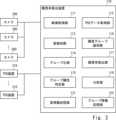
- FIG. 1 is a block diagram showing an example configuration of a purchase rate calculation device according to an embodiment of the present disclosure.
- FIG. 11 is a diagram showing a specific example of customer information.
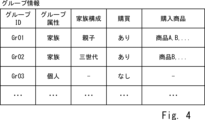
- FIG. 11 is a diagram showing a specific example of group information.
- 10 is a flowchart showing an operation procedure for determining the attributes of a group.
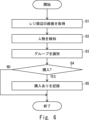
- 11 is a flowchart showing an operation procedure for determining whether or not a purchase has been made.
- 11 is a flowchart showing an operation procedure for calculating a group purchase rate.
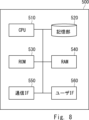
- FIG. 1 is a block diagram showing an example of the configuration of a computer device.
- FIG. 1 shows an example of a schematic configuration of a purchase rate calculation device according to the present disclosure.
- the purchase rate calculation device 10 has a grouping unit 11, a group identification unit 12, and a purchase rate calculation unit 13.
- the grouping unit 11 groups multiple customers who enter the store into multiple groups, each containing one or more customers, based on an image of the customers entering the store.
- the group identification unit 12 identifies the group to which the customer belongs based on an image of the customer who made the payment.
- the group identification unit 12 determines the identified group as one that has made a purchase.
- the purchase rate calculation unit 13 calculates the group purchase rate based on the number of groups that entered the store in a specified period and the number of groups determined to have made a purchase in the specified period.
- the grouping unit 11 groups customers who enter a store, and the group identification unit 12 determines the group to which a customer who has made a payment belongs as the group that has made a purchase.
- the purchase rate calculation unit 13 calculates the group purchase rate based on the number of groups that entered the store and the number of groups that have made a purchase. In the present disclosure, for example, if five people enter a store as a group and one of the five people makes a payment, the group is determined to be the group that has made a purchase. Therefore, the purchase rate calculation device 10 according to the present disclosure can calculate the purchase rate on a group basis even when customers come to the store in groups.
- FIG. 2 shows an example of the configuration of a purchasing rate calculation device according to an embodiment of the present disclosure.
- the purchasing rate calculation device 110 has an image acquisition unit 111, a POS data acquisition unit 112, a customer detection unit 113, a grouping unit 114, a group attribute determination unit 115, a purchasing group identification unit 116, a purchasing rate calculation unit 117, and an analysis unit 118.
- the purchasing rate calculation device 110 can be physically configured as a device having one or more processors and one or more memories. For example, at least a part of the functions of each unit in the purchasing rate calculation device 110 can be realized by the processor executing processing in accordance with instructions read from the memory.
- the purchasing rate calculation device 100 corresponds to the purchasing rate calculation device 10 shown in FIG. 1.
- the purchase rate calculation device 110 is connected to multiple cameras 200 and one or more POS devices 210.
- the multiple cameras 200 are placed in a store and capture images of a specific area within the store.
- the multiple cameras 200 include a camera near the store entrance that captures images or videos of customers visiting the store.
- the multiple cameras 200 also include a camera that captures images or videos of the area of the cash register counter where the POS device 210 is installed.
- the multiple cameras 200 may include one or more cameras that capture images or videos of the aisle area within the store.
- the multiple cameras 200 may also include a camera placed in a parking lot.
- the camera 200 may be a camera that captures images or videos within a specific angle of view, or may be a spherical camera that can capture 360-degree images in all directions up, down, left, and right.
- the POS device 210 is a device that performs sales processing and the like in a store.
- the POS device 210 is also called a POS terminal or a cash register.
- the POS device 210 may be a normal cash register where an employee registers purchased items and performs settlement.
- the POS device 210 may be a semi-self-service cash register where an employee registers purchased items and the customer pays at a settlement machine.
- the POS device 210 does not need to be a manned cash register that requires the involvement of an employee, and the POS device 210 may be an unmanned cash register or a self-service cash register where the customer performs everything from registering purchased items to settlement.
- the video acquisition unit 111 acquires from the camera 200 the image or video acquired by the camera 200.
- the video acquisition unit 111 may acquire the image or video acquired by the camera 200 in real time, or may acquire the image or video from a video storage device that stores the image or video acquired by the camera 200.
- the camera 200 may include a microphone, and the video acquisition unit 111 may acquire audio in addition to the image or video.
- the customer detection unit 113 detects customers from images of the inside of the store acquired by the video acquisition unit 111.
- the customer detection unit 113 detects customers from images acquired by the camera 200 that captures the area at the entrance of the store, for example.
- the customer detection unit 113 detects a person walking through the entrance of the store toward the inside of the store as a customer.
- the customer detection unit 113 assigns a customer ID (identifier) to each customer detected at the entrance of the store.
- the customer detection unit 113 may detect customers from images acquired by the camera 200 that captures an area of the store other than the entrance.
- the customer detection unit 113 may estimate attributes of the detected customers based on the images of the customers.
- the customer attributes include, for example, gender, age, and whether or not the customer is pregnant.
- the customer detection unit 113 will not detect the person as a customer if the person is a store employee.
- the customer detection unit 113 may detect a person entering or leaving an area where customers are not allowed, such as the area where the cash register is operated or the back room, as an employee rather than a customer.
- the customer detection unit 113 may detect a person wearing a store uniform, a person wearing a store employee ID card, or a person wearing an intercom as an employee. If facial information of employees is registered, the customer detection unit 113 may detect a person as an employee if the face of the person detected in the image matches or is similar to the registered facial information.
- the grouping unit 114 groups multiple customers detected by the customer detection unit 113 into multiple groups each including one or more customers based on the image acquired by the camera 200. For example, the grouping unit 114 groups customers entering the store based on the distance between customers detected by the customer detection unit 113 in the image acquired by the camera 200 capturing the area at the entrance to the store. The grouping unit 114 may also group customers entering the store based on the orientation of the customers detected by the customer detection unit 113 in the image acquired by the camera 200. When the grouping unit 114 can acquire images from a camera installed in the parking lot, it may group customers exiting the same car in the parking lot into the same group.
- the grouping unit 114 groups customers whose distance between them is within a predetermined value into the same group.
- the predetermined value that serves as the criterion for determining whether they are in the same group may be changed depending on the degree of congestion in the surrounding area, for example, the number of people per unit area.
- the grouping unit 114 groups the customers who are holding hands into the same group.
- the grouping unit 114 may measure the time that the customers face each other. When the measured time is equal to or longer than a certain time, the grouping unit 114 may group the customers into the same group. Note that when only one customer is detected from an image, the grouping unit 114 groups the customer into a group to which only that person belongs.
- the grouping unit 114 may group the customers based on the presence or absence of conversation between the customers, in addition to the distance or direction. For example, when the distance between multiple customers is within a predetermined value and the customers who are within the predetermined value are talking to each other, the grouping unit 114 groups the customers into the same group. The grouping unit 114 may count the number of times that the customers have talked to each other, and group the customers into the same group if the customers have talked to each other two or more times. In that case, when a customer has only one conversation with an unknown person, such as when the customers bump into each other, it is possible to prevent the customer and the unknown person from being grouped into the same group. The grouping unit 114 may group the customers by applying the images acquired by the camera 200 and the voices of the customers to the trained model. The grouping unit 114 corresponds to the grouping unit 11 shown in FIG. 1.
- the customer information storage unit 121 stores information about each customer detected by the customer detection unit 113.
- the information stored in the customer information storage unit 121 is also called customer information.
- Figure 3 shows a specific example of customer information stored in the customer information storage unit 121.
- a customer ID indicates an identifier given to a customer.
- the entry time indicates the time when the customer identified by the customer ID entered the store.
- the customer attributes indicate the estimated attributes of the customer identified by the customer ID.
- the group ID indicates the identifier of the group to which the customer identified by the customer ID belongs.
- the customer detection unit 113 assigns a customer ID to the detected customer and records the assigned customer ID in the customer information.
- the customer detection unit 113 also records the time the customer was detected at the store entrance in the customer information as the customer's entry time.
- the customer detection unit 113 estimates the attributes of the customer and records the estimated customer attributes in the customer information.
- the grouping unit 114 records the group ID of the group to which each customer belongs in the group ID.
- the grouping unit 114 records the same group ID for customers belonging to the same group.
- the grouping unit 114 may regroup depending on the customer's subsequent behavior. For example, the grouping unit 114 determines whether a customer to be added to a group is detected based on an image of the customer acquired at a location other than the store entrance. As one example, the grouping unit 114 tracks the movement of customers within the store using images from cameras installed at multiple locations within the store. The grouping unit 114 determines whether two or more customers who were grouped into separate groups when they entered the store are moving together within the store after entering. If the grouping unit 114 determines that they are moving together, it determines that a customer to be added to a group has been detected. In that case, if the grouping unit 114 determines that a customer to be added has been detected, it adds that customer to that group.
- a customer with customer ID "001” is grouped into a group with group ID "Gr01" when entering the store, and a customer with customer ID "004" is grouped into a group with group ID "Gr04".
- the grouping unit 114 may add the customer with customer ID "004" to the group with group ID "Gr01”.
- the grouping unit 114 may add the customer with customer ID "004" to the group with group ID "Gr01” by changing the group ID of the customer with customer ID "004" from “Gr04" to "Gr01" in the customer information stored in the customer information storage unit 121.
- the group attribute determination unit 115 determines or estimates the attributes of the group for each group.
- Group attributes include, for example, family, couple, lover, and friend.
- the group attribute determination unit 115 determines the attributes of the group based on, for example, at least one of the distance between customers included in an image of customers entering a store, the number of customers belonging to the group, and the attributes of each of the customers belonging to the group. Instead of or in addition to the distance, number of customers, and attributes, the group attribute determination unit 115 may determine the attributes of a group based on the presence or absence of conversation between customers belonging to the group and the content of such conversation.
- the group attribute determination unit 115 may further determine or estimate the family structure of the group based on the attributes of each customer belonging to the group. For example, the group attribute determination unit 115 may determine the number of generations of a family. Specifically, the group attribute determination unit 115 may determine whether a family is made up of adults only, whether it includes adults and children, or whether it includes two generations of adults and children. The group attribute determination unit 115 may determine whether a pregnant customer is included in the group.
- the POS data acquisition unit 112 acquires POS data from the POS device 210.
- the POS data includes the time when the customer made the payment and information about the product purchased by the customer. If multiple POS devices 210 are installed in a store, the POS data includes information identifying the POS device 210 at which the customer made the payment.
- the purchasing group identification unit 116 identifies the group to which the customer belongs based on an image of the customer who made the payment. For example, the purchasing group identification unit 116 detects the customer from an image acquired from the camera 200 that captures the area of the POS device 210, and identifies the detected customer. The purchasing group identification unit 116 refers to the customer information storage unit 121 and identifies the group to which the identified customer belongs. The purchasing group identification unit 116 determines that the identified group is a group in which a purchase has been made. If even one of multiple customers belonging to a group has made a payment, the purchasing group identification unit 116 determines that the group is a group in which a purchase has been made.
- the purchasing group identification unit 116 may determine whether or not a customer has made a payment based on an image of the area of the POS device 210. For example, the purchasing group identification unit 116 may determine that a customer has made a payment when it is detected from the image that a receipt has been issued by the POS device 210 or that the customer has received a receipt. Alternatively, the purchasing group identification unit 116 may determine that a customer has made a payment when it is detected from the image that change or a card serving as a payment medium has been discharged from the POS device 210 or that the customer has received change or a card.
- the purchasing group identification unit 116 may determine that a customer has made a payment when it is detected from the image that the customer has held a card or a terminal device over the POS device 210. If a customer is detected in the image of the area of the POS device 210 but a payment is not detected, the purchasing group identification unit 116 determines that the customer has not made a payment.
- the purchasing group identification unit 116 may obtain the time of payment from an image acquired from the camera 200 capturing the area of the POS device 210. For example, the purchasing group identification unit 116 may obtain the time at which it is detected in the image that a receipt has been issued as the time of payment. Alternatively, the purchasing group identification unit 116 may obtain the time at which it is detected in the POS device 210 that change or the payment medium presented by the customer has been dispensed as the time of payment. Furthermore, the purchasing group identification unit 116 may obtain the time at which it is detected in the image that the customer has moved the payment medium to a specified position as the time of payment.
- the purchasing group identification unit 116 may associate the group in which a purchase has been made with the POS data based on the time of the payment acquired above and the time of the payment included in the POS data acquired by the POS data acquisition unit 112. For example, the purchasing group identification unit 116 may associate, with the group in which a purchase has been made, the POS data acquired from the POS device 210 at which the customer has made a payment, which has the smallest difference between the time of the payment included in the POS data and the time of the payment acquired from the image. If one image contains multiple POS devices 210, the purchasing group identification unit 116 may determine at which of the multiple POS devices 210 the customer has made a payment, depending on the customer's position on the image. The purchasing group identification unit 116 corresponds to the group identification unit 12 shown in FIG. 1.
- the group information storage unit 122 stores information about each group.
- the information stored in the group information storage unit 122 is also called group information.
- Figure 4 shows a specific example of group information stored in the group information storage unit 122.
- group ID indicates an identifier for the group.
- Group attributes indicate the attributes of the group identified by the group ID.
- Family structure indicates the family structure of the group identified by the group ID.
- Purchase indicates whether or not a purchase has been made in the group identified by the group ID.
- Purchased items indicate items purchased by customers belonging to the group identified by the group ID.
- the group attribute determination unit 115 records the determined or estimated attributes for the group in the group information. Furthermore, if the group attribute determination unit 115 determines or estimates the family structure, it records the estimated family structure in the group information.
- the purchasing group identification unit 116 records "Yes" indicating that a purchase was made in the group information for groups that have made a purchase. For example, in the group information, the initial value of the information indicating whether or not a purchase was made for each group is "No" indicating that no purchase was made.
- the purchasing group identification unit 116 changes the information indicating whether or not a purchase was made from “No" to "Yes" for groups that have made a purchase. If the purchasing group identification unit 116 associates POS data with a group that has made a purchase, it records the products purchased by the customers included in the POS data in the group information.
- the purchasing rate calculation unit 117 calculates the group purchasing rate based on the number of groups that enter the store in a specified period and the number of groups that are determined to have made a purchase in the specified period.
- the purchasing rate calculated by the purchasing rate calculation unit 117 is also called the group purchasing rate.
- the purchasing rate calculation unit 117 refers to the customer information storage unit 121 and the group information storage unit 122, for example, to obtain the total number of groups that entered the store in a specified period and the number of groups that entered the store in a specified period and made a purchase.
- the purchasing rate calculation unit 117 calculates the ratio of groups that made a purchase to the total number of groups that entered the store as the group purchasing rate.
- the purchasing rate calculation unit 117 may calculate a group purchasing rate for each group attribute.
- the purchasing rate calculation unit 117 may obtain, for a specific attribute, the total number of groups of the specific attribute that entered the store and the number of groups of the specific attribute that made a purchase.
- the purchasing rate calculation unit 117 may calculate the ratio of the number of groups of the specific attribute that made a purchase to the total number of groups of the specific attribute that entered the store as the group purchasing rate for that characteristic attribute.
- the purchasing rate calculation unit 117 may also calculate a group purchasing rate for one or more products selected from a plurality of products sold in the store.
- the purchasing rate calculation unit 117 refers to the group information storage unit 122 and obtains the number of groups that have made a purchase and whose purchased products include the selected specific product.
- the purchasing rate calculation unit 117 may calculate the ratio of the number of groups whose purchased products include the specific product to the total number of groups that entered the store during a specified period as the group purchasing rate for the specific product.
- the purchasing rate calculation unit 117 outputs the group purchasing rate to a person such as a store manager.
- the purchasing rate calculation unit 117 displays the group purchasing rate on a display device, for example.
- the store manager can use the group purchasing rate when displaying products and planning sales promotion measures.
- the purchasing rate calculation unit 117 corresponds to the purchasing rate calculation unit 13 shown in FIG. 1.
- the group attribute determination unit 115 may determine or estimate a resale group, which indicates a group of customers who are interested in reselling, as an attribute of the group.
- the group attribute determination unit 115 acquires the voices of customers and determines whether customers belonging to the group are speaking a foreign language.
- a foreign language may mean a language other than the official language of the country in which the store is located, or a language that is different from one or more languages used by residents of the area in which the store is located.
- the group attribute determination unit 115 determines that customers belonging to a group are speaking a foreign language, it may determine or estimate that the group is a resale group.
- the group attribute determination unit 115 may measure the stay time of customers belonging to a group and determine whether or not the group is a reselling group based on the stay time. For example, the group attribute determination unit 115 may determine that a group whose stay time is shorter than the expected stay time of a standard customer is a reselling group.
- the group attribute determination unit 115 may determine whether or not a group is a resale group based on the number of products purchased in each group. For example, the group attribute determination unit 115 may determine whether or not customers belonging to a group have purchased a predetermined number or more of a specific product. When the group attribute determination unit 115 determines that customers belonging to a certain group have purchased a predetermined number or more of a specific product, it may determine or estimate that the group is a resale group.
- the group attribute determination unit 115 may also determine whether or not a group is a resale group based on the type or category of purchased items. When the types or categories of purchased items in a certain group are biased toward a specific type or category, the group attribute determination unit 115 may determine or estimate that the group is a resale group.
- the analysis unit 118 analyzes purchasing trends for each group attribute based on the group information stored in the group information storage unit 122 and the POS data associated with the group that made a purchase. For example, the analysis unit 118 analyzes the purchase amount, popular items, popular item categories, and store visit time for each group attribute. The analysis unit 118 outputs the results of the analysis to a person such as the store operations manager. The store operations manager can use the results of the analysis by the analysis unit 118 to consider, for example, which people to target with promotional measures. In addition, the store operations manager can recognize the appropriate stocking order and purchase quantity for a certain item from the results of the analysis by the analysis unit 118.
- the operating procedure of the purchase rate calculation device 110 corresponds to the purchase rate calculation method.
- the operating procedure of determining group attributes in the purchase rate calculation device 110 will be described.
- Figure 5 shows the operating procedure of determining group attributes.
- the video acquisition unit 111 acquires images and audio from the camera 200 at the store entrance and other locations (step A1).
- the customer detection unit 113 detects customers from the images acquired in step A1 (step A2).
- the customer detection unit 113 detects multiple customers from images acquired by the camera 200 capturing an image of the store entrance area, for example.
- the grouping unit 114 calculates the distance between the multiple customers detected in step A2 (step A3). The grouping unit 114 determines whether the distance is within a predetermined value (step A4). If the grouping unit 114 determines in step A4 that the distance is within the predetermined value, it determines whether there is a conversation between the customers who are within the predetermined distance (step A5). If the grouping unit 114 determines in step A5 that there is a conversation, it groups the customers who are within the predetermined distance into the same group (step A6).
- step A4 If it is determined in step A4 that the distance exceeds a predetermined value, or if it is determined in step A5 that there is no conversation, the grouping unit 114 groups the multiple customers into separate groups.
- the group attribute determination unit 115 determines the group attributes for each group (step A7).
- FIG. 6 shows the operational procedure for determining whether or not a purchase has been made.
- the video acquisition unit 111 acquires, from the camera 200, an image of the area in the store where the POS device 210 is installed (step B1).
- the purchasing group identification unit 116 detects people, i.e., customers, from the image acquired in step B1 (step B2).
- the purchasing group identification unit 116 identifies the group to which the customer detected in step B2 belongs (step B3).
- the purchasing group identification unit 116 acquires, for example, a group ID associated with the customer ID of the customer detected in step B2 from the customer information stored in the customer information storage unit 121.
- the purchasing group identification unit 116 determines whether the customer has purchased a product (step B4). In other words, the purchasing group identification unit 116 determines whether the customer has made a payment at the POS device 210. If the purchasing group identification unit 116 determines in step B4 that the customer has purchased a product, it determines the group identified in step B3 as a group that has made a purchase. In that case, the purchasing group identification unit 116 records information indicating a purchase for the group identified in step B3 (step B5). If the purchasing group identification unit 116 determines in step B4 that the customer has not purchased a product, it does not record information indicating a purchase for the group identified in step B3 in the group information storage unit 122.
- the purchase rate calculation unit 117 refers to the customer information storage unit 121 and the group information storage unit 122, and obtains the number of groups that entered the store during a specified period, i.e., the number of visiting groups (step C1). In addition, the purchase rate calculation unit 117 obtains the number of groups that made a purchase among the groups that entered the store during the specified period (step C2).
- the purchasing rate calculation unit 117 calculates the group purchasing rate based on the number of visiting groups obtained in step C1 and the number of groups that made a purchase obtained in step C2 (step C3). In step C3, the purchasing rate calculation unit 117 calculates the group purchasing rate, for example, by dividing the number of groups that made a purchase by the number of visiting groups.
- the purchasing rate calculation unit 117 may calculate the group purchasing rate in a specified time period, such as a time period outside the store's business hours. Alternatively, the purchasing rate calculation unit 117 may calculate the group purchasing rate each time a specified period of time has passed.
- the grouping unit 114 groups customers who enter the store.
- the purchasing group identification unit 116 determines that the group to which the customer who made the payment belongs is the group that made a purchase.
- the purchasing rate calculation unit 117 calculates the group purchasing rate based on the number of groups that entered the store and the number of groups that made a purchase. In this embodiment, when many customers enter the store as one group, if one of the customers belonging to that group makes a payment, the group is determined to be a group that made a purchase. If the purchasing rate is calculated on an individual basis, the more customers belong to one group, the lower the purchasing rate is calculated.
- the purchasing rate calculation device 110 can calculate the purchasing rate on a group basis even if customers come to the store in a group, and therefore, it is possible to prevent the purchasing rate from being calculated low relative to the number of customers.
- the purchasing rate calculation device 110 according to this embodiment is particularly useful in stores where customers are expected to visit the store in groups rather than individually.
- the purchasing rate calculation device 110 may be configured using a computer device or a server device.
- FIG. 8 shows an example configuration of a computer device that may be used in the purchasing rate calculation device 110.
- the computer device 500 has a control unit (CPU: Central Processing Unit) 510, a memory unit 520, a ROM (Read Only Memory) 530, a RAM (Random Access Memory) 540, a communication interface (IF: Interface) 550, and a user interface 560.
- the communication interface 550 is an interface for connecting the computer device 500 to a communication network via a wired communication means or a wireless communication means.
- the user interface 560 includes a display unit such as a display.
- the user interface 560 also includes an input unit such as a keyboard, a mouse, and a touch panel.
- the storage unit 520 is an auxiliary storage device that can hold various types of data.
- the storage unit 520 does not necessarily have to be a part of the computer device 500, but may be an external storage device or cloud storage connected to the computer device 500 via a network.
- ROM 530 is a non-volatile storage device.
- a semiconductor storage device with a relatively small capacity, such as a flash memory is used for ROM 530.
- the programs executed by CPU 510 can be stored in storage unit 520 or ROM 530.
- Storage unit 520 or ROM 530 stores various programs for implementing the functions of each unit in purchase rate calculation device 110, for example.
- the program includes instructions (or software code) that, when loaded into a computer, cause the computer to perform one or more functions described in the embodiments.
- the program may be stored on a non-transitory computer-readable medium or a tangible storage medium.
- computer-readable media or tangible storage media include RAM, ROM, flash memory, solid-state drive (SSD) or other memory technology, Compact Disc (CD), digital versatile disc (DVD), Blu-ray (registered trademark) disc or other optical disk storage, magnetic cassette, magnetic tape, magnetic disk storage or other magnetic storage devices.
- the program may be transmitted on a transitory computer-readable medium or a communication medium.
- transitory computer-readable media or communication media include electrical, optical, acoustic, or other forms of propagated signals.
- RAM 540 is a volatile storage device. Various semiconductor memory devices such as DRAM (Dynamic Random Access Memory) or SRAM (Static Random Access Memory) are used for RAM 540. RAM 540 can be used as an internal buffer for temporarily storing data, etc.
- CPU 510 deploys a program stored in storage unit 520 or ROM 530 into RAM 540 and executes it. By CPU 510 executing a program, the functions of each part in purchase rate calculation device 110 can be realized.
- CPU 510 may have an internal buffer for temporarily storing data, etc.
- the purchase rate calculation device 110 does not necessarily have to be configured as a single device.
- the purchase rate calculation device 110 may be configured using multiple physically separated devices.
- a grouping unit that groups a plurality of customers entering the store into a plurality of groups, each group including one or more customers, based on images of the customers entering the store; a group identification unit that, when the customer makes a payment at a Point of Sales (POS) device in the store, identifies a group to which the customer belongs based on an image of the customer who made the payment and determines the identified group as a group that has made a purchase;
- a purchasing rate calculation device comprising: a purchasing rate calculation unit that calculates the purchasing rate of a group based on the number of groups that enter the store in a specified period and the number of groups that are determined to have made a purchase in the specified period.
- Appendix 2 The purchasing rate calculation device described in Appendix 1, wherein the grouping unit groups the multiple customers into the multiple groups based on at least one of the distance between the customers and the orientation of the customers included in images of the customers entering the store.
- Appendix 3 The purchasing rate calculation device described in Appendix 2, wherein the grouping unit groups the multiple customers into the multiple groups based on the presence or absence of conversation between the customers in addition to the distance.
- Appendix 4 The purchasing rate calculation device described in any one of appendix 1 to 3, further comprising a group attribute determination unit that determines the attributes of the group based on at least one of the distance between customers included in images of customers entering the store, the number of customers belonging to the group, the attributes of each of the customers belonging to the group, and conversations between the customers belonging to the group.
- the group attributes include family; The purchase rate calculation device described in Appendix 4, wherein the group attribute determination unit, when determining that the attribute of the group is family, further determines the family structure of the group based on the attributes of each of the customers belonging to the group.
- Appendix 7 A purchasing rate calculation device described in any one of appendix 4 to 6, wherein the attributes of the group include a resale group indicating a group of customers who intend to resell.
- Appendix 8 The purchasing rate calculation device described in Appendix 7, wherein the group attribute determination unit determines whether customers belonging to the group have purchased a specific product in a predetermined number or more, and if it is determined that customers belonging to the group have purchased a specific product in a predetermined number or more, determines the attribute of the group to be a resale group.
- Appendix 9 The purchasing rate calculation device described in Appendix 7 or 8, wherein the group attribute determination unit acquires the voice of the customers, determines whether the customers belonging to the group are speaking in a foreign language, and if it is determined that the customers belonging to the group are speaking in a foreign language, determines the attribute of the group to be a resale group.
- the grouping unit determines whether a customer to be added to the group has been detected based on an image of the customer acquired at a location other than the store entrance, and if it determines that a customer to be added has been detected, adds the customer to the group of customers.
- a purchasing rate calculation device as described in any one of Appendices 1 to 9.
- the method further includes a data acquisition unit that acquires POS data including a time when a payment is made at the POS device, A purchasing rate calculation device described in any one of Appendices 1 to 10, wherein the group identification unit associates the POS data with the identified group based on the time of payment obtained from an image of the customer who made the payment and the time of payment included in the POS data.
- Appendix 12 The purchasing rate calculation device described in Appendix 11, wherein the group identification unit, based on the image of the customer who made the payment, identifies at least one of the time when a receipt was issued in the image, the time when change or payment medium was ejected from the POS device, or the time when the customer moved the payment medium to a specified position, and uses the identified time as the time of payment obtained from the image of the customer who made the payment.
- POS Point of Sales
- a group to which the customer belongs is identified based on an image of the customer who made the payment, and the identified group is determined to be a group that made a purchase;
- a purchasing rate calculation method comprising: calculating a group purchasing rate based on the number of groups entering the store in a specified period and the number of groups determined to have made a purchase in the specified period.
- POS Point of Sales
- a group to which the customer belongs is identified based on an image of the customer who made the payment, and the identified group is determined to be a group that made a purchase;
- a non-transitory computer-readable medium storing a program for causing a computer to execute a process including calculating a group purchasing rate based on the number of groups entering the store in a specified period and the number of groups determined to have made a purchase in the specified period.
Landscapes
- Business, Economics & Management (AREA)
- Strategic Management (AREA)
- Engineering & Computer Science (AREA)
- Accounting & Taxation (AREA)
- Development Economics (AREA)
- Finance (AREA)
- Entrepreneurship & Innovation (AREA)
- Game Theory and Decision Science (AREA)
- Data Mining & Analysis (AREA)
- Economics (AREA)
- Marketing (AREA)
- Physics & Mathematics (AREA)
- General Business, Economics & Management (AREA)
- General Physics & Mathematics (AREA)
- Theoretical Computer Science (AREA)
- Management, Administration, Business Operations System, And Electronic Commerce (AREA)
Abstract
Description
店舗に入店する客の画像に基づいて、前記店舗にする複数の客を、それぞれが1以上の客を含む複数のグループにグループ化するグループ化部と、
前記店舗において前記客がPOS(Point of Sales)装置において決済を行った場合、前記決済を行った客の画像に基づいて当該客が所属するグループを識別し、該識別したグループを購買があったグループとして判定するグループ識別部と、
所定期間において前記店舗に入店するグループの数と、前記所定期間において前記購買があったグループとして判定されたグループの数とに基づいて、グループの購買率を算出する購買率算出部とを備える購買率算出装置。
前記グループ化部は、前記店舗に入店する客の画像に含まれる前記客の間の距離、及び前記客の向きの少なくとも一方に基づいて、前記複数の客を前記複数のグループにグループ化する、付記1に記載の購買率算出装置。
前記グループ化部は、前記距離に加えて、前記客の間の会話の有無に基づいて、前記複数の客を前記複数のグループにグループ化する、付記2に記載の購買率算出装置。
前記店舗に入店する客の画像に含まれる客の間の距離、前記グループに所属する前記客の数、前記グループに所属する前記客それぞれの属性、及び前記グループに所属する前記客の間の会話のうちの少なくとも1つに基づいて、前記グループの属性を判定するグループ属性判定部を更に有する、付記1から3何れか1項に記載の購買率算出装置。
前記グループの属性は家族を含み、
前記グループ属性判定部は、前記グループの属性が家族と判定した場合、前記グループに所属する前記客それぞれの属性に基づいて、前記グループにおける家族構成を更に判定する、付記4に記載の購買率算出装置。
前記購買率算出部は、前記グループの属性ごとに、前記購買率を算出する、付記4又は5に記載の購買率算出装置。
前記グループの属性は転売を目的とした客のグループを示す転売グループを含む、付記4から6何れか1項に記載の購買率算出装置。
前記グループ属性判定部は、前記グループに所属する客が特定の商品を所定数以上購入しているか否かを判断し、前記グループに所属する客が特定の商品を所定数以上購入していると判断した場合、当該グループの属性を転売グループと判定する、付記7に記載の購買率算出装置。
前記グループ属性判定部は、前記客の音声を取得し、前記グループに所属する客が外国語で会話しているか否かを判断し、前記グループに所属する客が外国語で会話していると判断した場合、当該グループの属性を転売グループと判定する、付記7又は8に記載の購買率算出装置。
前記グループ化部は、前記店舗の入口とは異なる場所で取得される前記客の画像に基づいて、前記グループに追加する客が検出されるか否かを判断し、追加する客が検出されたと判断した場合、前記客のグループに当該客を追加する、付記1から9何れか1項に記載の購買率算出装置。
前記POS装置において決済が行われた時刻を含むPOSデータを取得するデータ取得部を更に有し、
前記グループ識別部は、前記決済を行った客の画像から取得される決済の時刻と、前記POSデータに含まれる決済が行われた時刻とに基づいて、前記POSデータを、前記識別したグループに関連付ける、付記1から10何れか1項に記載の購買率算出装置。
前記グループ識別部は、前記決済を行った客の画像に基づいて、該画像においてレシートが発行された時刻、前記POS装置において釣銭若しくは決済媒体が排出された時刻、又は前記客が決済媒体を所定の位置に動かした時刻の少なくとも1つを特定し、該特定した時刻を、前記決済を行った客の画像から取得される決済の時刻として使用する、付記11に記載の購買率算出装置。
前記購買率算出部は、前記店舗で販売される複数の商品から選択される1以上の商品について、前記購買率を算出する、付記1から12何れか1項に記載の購買率算出装置。
店舗に入店する客の画像に基づいて、前記店舗に入店する複数の客を、それぞれが1以上の客を含む複数のグループにグループ化し、
前記店舗において前記客がPOS(Point of Sales)装置において決済を行った場合、前記決済を行った客の画像に基づいて当該客が所属するグループを識別し、該識別したグループを購買があったグループとして判定し、
所定期間において前記店舗に入店するグループの数と、前記所定期間において前記購買があったグループとして判定されたグループの数とに基づいて、グループの購買率を算出することを有する購買率算出方法。
店舗に入店する客の画像に基づいて、前記店舗に入店する複数の客を、それぞれが1以上の客を含む複数のグループにグループ化し、
前記店舗において前記客がPOS(Point of Sales)装置において決済を行った場合、前記決済を行った客の画像に基づいて当該客が所属するグループを識別し、該識別したグループを購買があったグループとして判定し、
所定期間において前記店舗に入店するグループの数と、前記所定期間において前記購買があったグループとして判定されたグループの数とに基づいて、グループの購買率を算出することを含む処理をコンピュータに実行させるためのプログラムを格納する非一時的なコンピュータ可読媒体。
11:グループ化部
12:グループ識別部
13:購買率算出部
110:購買率算出装置
111:映像取得部
112:POSデータ取得部
113:客検知部
114:グループ化部
115:グループ属性判定部
116:購買グループ識別部
117:購買率算出部
118:分析部
121;客情報記憶部
122:グループ情報記憶部
200:カメラ
210:POS装置
500:コンピュータ装置
510:制御部
520:記憶部
530:ROM
540:RAM
550:通信IF
560:ユーザIF
Claims (15)
- 店舗に入店する客の画像に基づいて、前記店舗にする複数の客を、それぞれが1以上の客を含む複数のグループにグループ化するグループ化部と、
前記店舗において前記客がPOS(Point of Sales)装置において決済を行った場合、前記決済を行った客の画像に基づいて当該客が所属するグループを識別し、該識別したグループを購買があったグループとして判定するグループ識別部と、
所定期間において前記店舗に入店するグループの数と、前記所定期間において前記購買があったグループとして判定されたグループの数とに基づいて、グループの購買率を算出する購買率算出部とを備える購買率算出装置。 - 前記グループ化部は、前記店舗に入店する客の画像に含まれる前記客の間の距離、及び前記客の向きの少なくとも一方に基づいて、前記複数の客を前記複数のグループにグループ化する、請求項1に記載の購買率算出装置。
- 前記グループ化部は、前記距離に加えて、前記客の間の会話の有無に基づいて、前記複数の客を前記複数のグループにグループ化する、請求項2に記載の購買率算出装置。
- 前記店舗に入店する客の画像に含まれる客の間の距離、前記グループに所属する前記客の数、前記グループに所属する前記客それぞれの属性、及び前記グループに所属する前記客の間の会話のうちの少なくとも1つに基づいて、前記グループの属性を判定するグループ属性判定部を更に有する、請求項1から3何れか1項に記載の購買率算出装置。
- 前記グループの属性は家族を含み、
前記グループ属性判定部は、前記グループの属性が家族と判定した場合、前記グループに所属する前記客それぞれの属性に基づいて、前記グループにおける家族構成を更に判定する、請求項4に記載の購買率算出装置。 - 前記購買率算出部は、前記グループの属性ごとに、前記購買率を算出する、請求項4又は5に記載の購買率算出装置。
- 前記グループの属性は転売を目的とした客のグループを示す転売グループを含む、請求項4から6何れか1項に記載の購買率算出装置。
- 前記グループ属性判定部は、前記グループに所属する客が特定の商品を所定数以上購入しているか否かを判断し、前記グループに所属する客が特定の商品を所定数以上購入していると判断した場合、当該グループの属性を転売グループと判定する、請求項7に記載の購買率算出装置。
- 前記グループ属性判定部は、前記客の音声を取得し、前記グループに所属する客が外国語で会話しているか否かを判断し、前記グループに所属する客が外国語で会話していると判断した場合、当該グループの属性を転売グループと判定する、請求項7又は8に記載の購買率算出装置。
- 前記グループ化部は、前記店舗の入口とは異なる場所で取得される前記客の画像に基づいて、前記グループに追加する客が検出されるか否かを判断し、追加する客が検出されたと判断した場合、前記客のグループに当該客を追加する、請求項1から9何れか1項に記載の購買率算出装置。
- 前記POS装置において決済が行われた時刻を含むPOSデータを取得するデータ取得部を更に有し、
前記グループ識別部は、前記決済を行った客の画像から取得される決済の時刻と、前記POSデータに含まれる決済が行われた時刻とに基づいて、前記POSデータを、前記識別したグループに関連付ける、請求項1から10何れか1項に記載の購買率算出装置。 - 前記グループ識別部は、前記決済を行った客の画像に基づいて、該画像においてレシートが発行された時刻、前記POS装置において釣銭若しくは決済媒体が排出された時刻、又は前記客が決済媒体を所定の位置に動かした時刻の少なくとも1つを特定し、該特定した時刻を、前記決済を行った客の画像から取得される決済の時刻として使用する、請求項11に記載の購買率算出装置。
- 前記購買率算出部は、前記店舗で販売される複数の商品から選択される1以上の商品について、前記購買率を算出する、請求項1から12何れか1項に記載の購買率算出装置。
- 店舗に入店する客の画像に基づいて、前記店舗に入店する複数の客を、それぞれが1以上の客を含む複数のグループにグループ化し、
前記店舗において前記客がPOS(Point of Sales)装置において決済を行った場合、前記決済を行った客の画像に基づいて当該客が所属するグループを識別し、該識別したグループを購買があったグループとして判定し、
所定期間において前記店舗に入店するグループの数と、前記所定期間において前記購買があったグループとして判定されたグループの数とに基づいて、グループの購買率を算出することを有する購買率算出方法。 - 店舗に入店する客の画像に基づいて、前記店舗に入店する複数の客を、それぞれが1以上の客を含む複数のグループにグループ化し、
前記店舗において前記客がPOS(Point of Sales)装置において決済を行った場合、前記決済を行った客の画像に基づいて当該客が所属するグループを識別し、該識別したグループを購買があったグループとして判定し、
所定期間において前記店舗に入店するグループの数と、前記所定期間において前記購買があったグループとして判定されたグループの数とに基づいて、グループの購買率を算出することを含む処理をコンピュータに実行させるためのプログラムを格納する非一時的なコンピュータ可読媒体。
Priority Applications (2)
| Application Number | Priority Date | Filing Date | Title |
|---|---|---|---|
| JP2025509315A JPWO2024201692A5 (ja) | 2023-03-28 | 購買率算出装置、購買率算出方法、及びプログラム | |
| PCT/JP2023/012420 WO2024201692A1 (ja) | 2023-03-28 | 2023-03-28 | 購買率算出装置、購買率算出方法、及びコンピュータ可読媒体 |
Applications Claiming Priority (1)
| Application Number | Priority Date | Filing Date | Title |
|---|---|---|---|
| PCT/JP2023/012420 WO2024201692A1 (ja) | 2023-03-28 | 2023-03-28 | 購買率算出装置、購買率算出方法、及びコンピュータ可読媒体 |
Publications (1)
| Publication Number | Publication Date |
|---|---|
| WO2024201692A1 true WO2024201692A1 (ja) | 2024-10-03 |
Family
ID=92904287
Family Applications (1)
| Application Number | Title | Priority Date | Filing Date |
|---|---|---|---|
| PCT/JP2023/012420 Ceased WO2024201692A1 (ja) | 2023-03-28 | 2023-03-28 | 購買率算出装置、購買率算出方法、及びコンピュータ可読媒体 |
Country Status (1)
| Country | Link |
|---|---|
| WO (1) | WO2024201692A1 (ja) |
Citations (3)
| Publication number | Priority date | Publication date | Assignee | Title |
|---|---|---|---|---|
| JP2016051207A (ja) * | 2014-08-28 | 2016-04-11 | 株式会社Nttドコモ | 購入商品予測装置及び購入商品予測方法 |
| JP2016167172A (ja) * | 2015-03-10 | 2016-09-15 | パナソニックIpマネジメント株式会社 | 情報処理方法、情報処理システム、情報処理装置、およびそのプログラム |
| JP2017130061A (ja) * | 2016-01-20 | 2017-07-27 | キヤノン株式会社 | 画像処理システム、画像処理方法およびプログラム |
-
2023
- 2023-03-28 WO PCT/JP2023/012420 patent/WO2024201692A1/ja not_active Ceased
Patent Citations (3)
| Publication number | Priority date | Publication date | Assignee | Title |
|---|---|---|---|---|
| JP2016051207A (ja) * | 2014-08-28 | 2016-04-11 | 株式会社Nttドコモ | 購入商品予測装置及び購入商品予測方法 |
| JP2016167172A (ja) * | 2015-03-10 | 2016-09-15 | パナソニックIpマネジメント株式会社 | 情報処理方法、情報処理システム、情報処理装置、およびそのプログラム |
| JP2017130061A (ja) * | 2016-01-20 | 2017-07-27 | キヤノン株式会社 | 画像処理システム、画像処理方法およびプログラム |
Also Published As
| Publication number | Publication date |
|---|---|
| JPWO2024201692A1 (ja) | 2024-10-03 |
Similar Documents
| Publication | Publication Date | Title |
|---|---|---|
| US8429016B2 (en) | Generating an alert based on absence of a given person in a transaction | |
| US9836755B2 (en) | Determining a user's event experience through user actions | |
| JP7298594B2 (ja) | 店舗管理装置および店舗管理方法、プログラム | |
| JP4991440B2 (ja) | 商品販売装置、商品販売管理システム、商品販売管理方法およびプログラム | |
| JP5974312B1 (ja) | 販売管理装置、販売管理システムおよび販売管理方法 | |
| JP6596899B2 (ja) | 接客データ処理装置及び接客データ処理方法 | |
| JP5704279B1 (ja) | 関連付プログラム及び情報処理装置 | |
| WO2016088369A1 (ja) | 情報処理装置、言動評価方法およびプログラム記憶媒体 | |
| US11734958B2 (en) | Predicting behavior from surveillance data | |
| JPWO2019123714A1 (ja) | 情報処理装置、商品推薦方法、およびプログラム | |
| JP7819734B2 (ja) | 決済処理装置、決済処理方法、プログラム、決済処理システム | |
| CN112200631A (zh) | 一种行业分类模型的训练方法及装置 | |
| US20200226632A1 (en) | Methods and systems for providing contextualized, personalized pricing, offers, and recommendations | |
| JP7679897B2 (ja) | 情報処理装置、情報処理システム、販売促進方法及びプログラム | |
| CN109978668A (zh) | 基于时间戳匹配的交易顾客识别方法、系统、设备及介质 | |
| JP2025000739A (ja) | 情報処理装置、情報処理方法、及び、プログラム | |
| JP2023183546A (ja) | 推奨支援システム、推奨支援方法、およびプログラム | |
| CN109102324B (zh) | 模型训练方法、基于模型的红包物料铺设预测方法及装置 | |
| US12254458B2 (en) | Payment processing system, payment processing method, and recording medium | |
| WO2024201692A1 (ja) | 購買率算出装置、購買率算出方法、及びコンピュータ可読媒体 | |
| JP7091604B2 (ja) | カート管理装置、カート管理方法及びプログラム | |
| JP2016081498A (ja) | 関連付プログラム及び情報処理装置 | |
| JP2023021348A (ja) | 情報提供装置及びその制御プログラム | |
| CN114943846A (zh) | 一种订单申诉的处理方法及装置 | |
| US20220318868A1 (en) | Auditing mobile transactions based on symbol cues and transaction data |
Legal Events
| Date | Code | Title | Description |
|---|---|---|---|
| 121 | Ep: the epo has been informed by wipo that ep was designated in this application |
Ref document number: 23930332 Country of ref document: EP Kind code of ref document: A1 |
|
| ENP | Entry into the national phase |
Ref document number: 2025509315 Country of ref document: JP Kind code of ref document: A |
|
| WWE | Wipo information: entry into national phase |
Ref document number: 2025509315 Country of ref document: JP |
|
| NENP | Non-entry into the national phase |
Ref country code: DE |
|
| 122 | Ep: pct application non-entry in european phase |
Ref document number: 23930332 Country of ref document: EP Kind code of ref document: A1 |