WO2024201643A1 - 知的財産評価装置、知的財産評価方法、およびプログラム - Google Patents
知的財産評価装置、知的財産評価方法、およびプログラム Download PDFInfo
- Publication number
- WO2024201643A1 WO2024201643A1 PCT/JP2023/012140 JP2023012140W WO2024201643A1 WO 2024201643 A1 WO2024201643 A1 WO 2024201643A1 JP 2023012140 W JP2023012140 W JP 2023012140W WO 2024201643 A1 WO2024201643 A1 WO 2024201643A1
- Authority
- WO
- WIPO (PCT)
- Prior art keywords
- attribute information
- evaluation
- model
- unit
- information
- Prior art date
- Legal status (The legal status is an assumption and is not a legal conclusion. Google has not performed a legal analysis and makes no representation as to the accuracy of the status listed.)
- Ceased
Links
Images








Classifications
-
- G—PHYSICS
- G06—COMPUTING OR CALCULATING; COUNTING
- G06Q—INFORMATION AND COMMUNICATION TECHNOLOGY [ICT] SPECIALLY ADAPTED FOR ADMINISTRATIVE, COMMERCIAL, FINANCIAL, MANAGERIAL OR SUPERVISORY PURPOSES; SYSTEMS OR METHODS SPECIALLY ADAPTED FOR ADMINISTRATIVE, COMMERCIAL, FINANCIAL, MANAGERIAL OR SUPERVISORY PURPOSES, NOT OTHERWISE PROVIDED FOR
- G06Q50/00—Information and communication technology [ICT] specially adapted for implementation of business processes of specific business sectors, e.g. utilities or tourism
- G06Q50/10—Services
- G06Q50/18—Legal services
Definitions
- This disclosure relates to technology for assessing the value of intellectual property.
- patents When considering a company's intellectual property strategy, represented by patent applications or patent rights (hereinafter collectively referred to as "patents"), evaluating the value of intellectual property is not only useful for identifying patents of competitors that should be watched out for, but is also extremely effective in determining whether to allocate resources to maintaining a company's own patents or to licensing activities. Conventionally, patents were evaluated by building a model that calculates an evaluation score for each patent one by one based on information about the patent, such as bibliographic information such as the number of years the patent right has been in existence, content information such as the number of claims, and historical information such as whether an invalidation trial has been filed (see Patent Document 1, for example).
- the information used to calculate the evaluation score in the conventional method includes information of different positions, such as elements that make up the effectiveness of the patent itself, such as the breadth of the claims, and elements that are caused by the patent being effective, such as whether or not an invalidation trial has been filed. Mixing such information of different positions and consolidating it into a single evaluation score may undermine the implications that can be gained from the evaluation score. In other words, the conventional method has the problem of not necessarily being able to provide an indicative evaluation of intellectual property.
- This disclosure has been made to address the above-mentioned issues, and aims to provide a more suggestive evaluation of intellectual property.
- an intellectual property evaluation device evaluates a patent, utility model, or design (patent, etc.) that is the subject of evaluation using a first evaluation that depends at least on attribute information that represents the characteristics of the application documents for the patent, utility model, or design (patent, etc.), and a second evaluation that depends at least on attribute information that may arise as a prerequisite for the registration of the patent, etc.
- the patent evaluation device disclosed herein can provide a more suggestive evaluation of intellectual property.
- FIG. 1 is a diagram showing an example of the functional configuration of a patent evaluation device according to this embodiment.
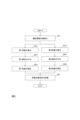
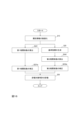
- FIG. 2 is a diagram showing an example of a process flow of the patent evaluation method according to this embodiment.
- FIG. 3 is a diagram for assisting in the explanation of the processing of the first coefficient calculation unit 211, the first coefficient correction unit 231, the second coefficient calculation unit 212, and the second coefficient correction unit 232 in FIG.
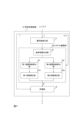
- FIG. 4 is a diagram showing an example of the functional configuration of a patent evaluation device according to the first modified example of this embodiment.
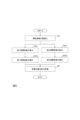
- FIG. 5 is a diagram showing an example of a process flow of the patent evaluation method according to the first modified example of this embodiment.
- FIG. 1 is a diagram showing an example of the functional configuration of a patent evaluation device according to this embodiment.
- FIG. 2 is a diagram showing an example of a process flow of the patent evaluation method according to this embodiment.
- FIG. 3 is a diagram for assisting in the explanation of the processing of the first coefficient calculation unit 211, the first coefficient correction
- FIG. 6 is a diagram for assisting in the explanation of the processing of the first correlation coefficient calculation unit 241 and the second correlation coefficient calculation unit 242 in FIG.
- FIG. 7 is a diagram showing an example of the functional configuration of a patent evaluation device according to the second modified example of this embodiment.
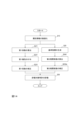
- FIG. 8 is a diagram showing an example of a process flow of a patent evaluation method according to the second modification of this embodiment.
- FIG. 9 is a diagram for assisting in the explanation of the process of the reference indicator generating unit 25 in FIG.
- FIG. 10 is a diagram for assisting in the explanation of the process of the reference indicator generating unit 25 in FIG.
- FIG. 11 is a diagram showing an example of the functional configuration of a patent evaluation device according to the third modified example of this embodiment.
- FIG. 12 is a diagram showing an example of a process flow of a patent evaluation method according to the modified example 3 of this embodiment.
- FIG. 13 is a diagram showing an example of the functional configuration of a patent evaluation device according to the fourth modified example of this embodiment.
- FIG. 14 is a diagram showing an example of a process flow of a patent evaluation method according to the fourth modified example of this embodiment.
- FIG. 15 is a diagram showing an example of the functional configuration of a patent evaluation device according to the fifth modified example of this embodiment.
- FIG. 16 is a diagram showing an example of a process flow of a patent evaluation method according to the fifth modified example of this embodiment.
- FIG. 17 is a diagram illustrating an example of the functional configuration of a computer.
- the patent evaluation device which is an example of an embodiment of the present disclosure, performs evaluation using a first evaluation that depends on attribute information representing at least one feature of the specification, claims, or drawings of a patent, and a second evaluation that depends on attribute information that may occur as a necessary condition for the registration of a patent.
- the patent evaluation device 1 of the present disclosure constructs two types of models for calculating evaluation points from attribute information on multiple patents in advance (first model M1, second model M2), and calculates an evaluation point for a specified patent (evaluation target patent T) using each of the constructed models.
- the first model M1 is a model for calculating a potential point X described later
- the second model M2 is a model for calculating a performance point Y described later.
- the two models change the input attribute information (first attribute information ⁇ 1, second attribute information ⁇ 2) and the degree to which they affect the evaluation point (first weight W1, second weight W2).
- the patent evaluation device 1 presents two types of evaluations of positioning: the first evaluation information V1 that takes into account the potential point (hereinafter also referred to as the "potential point X") X that evaluates the elements for constituting a high-value patent, and the second evaluation information V2 that takes into account the performance point (hereinafter also referred to as the "performance point Y”) that evaluates the elements that may arise due to the high value of the patent.
- the first evaluation information V1 that takes into account the potential point (hereinafter also referred to as the "potential point X") X that evaluates the elements for constituting a high-value patent
- the second evaluation information V2 that takes into account the performance point (hereinafter also referred to as the "performance point Y”) that evaluates the elements that may arise due to the high value of the patent.
- the first evaluation information V1 that takes into account the potential point X can be used as feedback to improve the patent
- the second evaluation information V2 that takes into account the performance point Y can be used to measure the degree of attention and effort that oneself and others are putting into the patent T that is being evaluated. Therefore, a more suggestive evaluation can be provided compared to conventional methods.
- the patent evaluation device 1 includes an attribute quantification unit 10, a model construction unit 20, and an evaluation unit 30.
- the model construction unit 20 includes a first coefficient calculation unit 211, a first polarity assignment unit 221, and a first coefficient correction unit 231 to construct a first model M1.
- the model construction unit 20 includes a second coefficient calculation unit 212, a second polarity assignment unit 222, and a second coefficient correction unit 232 to construct a second model M2.
- the patent evaluation device 1 performs the patent evaluation method of this embodiment by implementing the processing flow shown in FIG. 2.
- the patent evaluation device 1 receives attribute information ⁇ for multiple patents and a patent T to be evaluated.
- the attribute information ⁇ is input, for example, from a database not shown, and the patent T to be evaluated is specified by the user.
- the attribute information ⁇ includes first attribute information ⁇ 1 and second attribute information ⁇ 2, which will be described later.
- An input reception unit (not shown) is configured to send the attribute information ⁇ to the attribute quantification unit 10, and send the evaluation target patent T to the evaluation unit 30.
- the evaluation target patent T may be sent to the evaluation unit 30 via the attribute quantification unit 10, or may be sent to the evaluation unit 30 via the attribute quantification unit 10 and the model construction unit 20.
- the attribute information ⁇ includes at least attribute items indicating the attribute information items of the patent (for example, types of information such as "application number” and “registration number” described later) and attribute data that is data corresponding to the attribute items (for example, data such as "20230315", “2023/03/15", and "2023-03-15" when the application date is March 15, 2023).
- the attribute information ⁇ may include public information and non-public information. Public information may include information published by the Patent Office and information that can be objectively known from that information. Specific examples of public information include (i) to (iii) below, but are not limited to these.
- bibliographic information such as application number, registration number, technical field information, application date information, priority date information, and whether or not exceptions to lack of novelty are applied;
- content information corresponding to the number of claims, the number of independent claims, the average number of characters per claim, the number of pages of the specification, and the number of drawings;
- history information such as whether or not divisional applications have been filed and the number of times, whether or not an accelerated examination has been requested, whether or not a patent decision has been made in an appeal against a decision of refusal, whether or not a decision to maintain a patent in an opposition, whether or not a decision to maintain a patent in an invalidation trial, whether or not a priority claim has been made, whether or not a PCT application has been filed, the country in transition, the number of countries in transition, whether or not the file wrapper has been viewed, and the number of times cited.
- the information may be obtained from the database to supplement the information input by the user. For example, if only a registration number is input, attribute information ⁇ such as the number of claims for the patent corresponding to the registration number may be obtained from a database (not shown) and used for subsequent processing.
- Non-public information refers to information about patents other than information made public by the Japan Patent Office.
- Specific examples of non-public information include, but are not limited to, the following (iv) to (vii): (iv) income information such as license revenues, claims for damages in patent infringement lawsuits, and settlement payments; (v) rights utilization information such as the presence or absence of licenses and the number of licenses, the presence or absence of licenses to group companies, the presence or absence of licenses to other companies, and the presence or absence and number of license negotiations; (vi) background information such as the presence or absence of in-house implementation, the presence or absence and priority of development related to the patented invention, and the investment costs leading up to the invention; and (vii) subjective information such as the assessment of the patentability of claims and the possibility of proving implementation, manually evaluated by personnel in charge.
- the attribute information ⁇ includes first attribute information ⁇ 1 and second attribute information ⁇ 2.
- the first attribute information ⁇ 1 is used to construct a first model M1 that calculates the potential point X.
- the second attribute information ⁇ 2 is , are used to construct a second model M2 which calculates the performance point Y.
- the second attribute information ⁇ 2 include at least one of the following that may arise as a prerequisite for patent registration: (c) among historical information, whether or not a patent opposition has been filed, whether or not a trial for invalidation has been requested, (d) the amount of license income, the amount of damages claimed in a patent infringement lawsuit, and income information such as settlement money, and (e) the presence or absence and number of licenses granted, the presence or absence of licenses granted to group companies, the presence or absence of licenses granted to other companies, and the presence or absence and number of license negotiations.
- the second attribute information ⁇ 2 is mainly an element that results in the effective effect of the patent, and by constructing an evaluation model that includes this attribute information, it is possible to obtain an indication of the extent to which the value of the patent has influenced the market. For example, the fact that an invalidation trial has been requested means that there are others whose business is hindered by the patent, and this can be said to be a kind of manifestation of the effectiveness of the patent.
- the performance point Y allows such actual influence to be evaluated.
- attribute information there is no overlapping attribute information between the first attribute information ⁇ 1 and the second attribute information ⁇ 2. However, there may be overlapping attribute information between the first attribute information ⁇ 1 and the second attribute information ⁇ 2. If there is overlapping attribute information, it is desirable that at least for potential point X, attribute information that represents the characteristics of the specification, etc. has a greater impact on the evaluation score than attribute information that may arise with patent registration as a necessary condition. On the other hand, it is desirable that at least for performance point Y, attribute information that may arise with patent registration as a necessary condition has a greater impact on the evaluation score than attribute information that represents the characteristics of the specification, etc.
- the attribute quantification unit 10 quantifies the attribute data included in the attribute information ⁇ of the received multiple patents (step S10).
- the attribute data of the attribute information ⁇ is converted into a numerical value based on, for example, the following ideas (1) to (5), but is not limited to these.
- (2) For information such as presence or absence, "presence" and "absence” are expressed by two arbitrary different values such as 1 and 0, or 1 and -1.
- the attribute quantification unit 10 transmits the converted value corresponding to each quantified attribute information ⁇ to the model construction unit 20.
- the model construction unit 20 calculates a weight (first weight W1) for each piece of first attribute information ⁇ 1 from the converted value of the received quantified attribute information ⁇ , and constructs a model (first model M1) for evaluating the patent (calculating the potential point X) using the first weight W1.
- the process of constructing the first model M1 is performed by the first coefficient calculation unit 211, the first polarity assignment unit 221, and the first coefficient correction unit 231.
- the model construction unit 20 calculates a weight (second weight W2) for each piece of second attribute information ⁇ 2 from the conversion value of the received quantified attribute information ⁇ , and constructs a model (second model M2) for evaluating the patent (calculating the performance score Y) using the second weight W2.
- the process of constructing the second model M2 is performed by the second coefficient calculation unit 212, the second polarity assignment unit 222, and the second coefficient correction unit 232.
- the first coefficient calculation unit 211 calculates a predetermined first coefficient for each of the converted values of the received digitized first attribute information ⁇ 1 (step S211).
- a standard deviation is calculated among the input multiple patents (hereinafter also referred to as a "patent group"), and the reciprocal is set as the first coefficient.
- a pattern group the input multiple patents
- the attribute data of the first attribute information ⁇ 1 of two patents input from a database is expressed in the order of (C, D, R)
- the information input will be (c 1 , d 1 , r 1 ) and (c 2 , d 2 , r 2 ).
- the first coefficient a C for the number of claim characters C, the first coefficient a D for the number of specification characters D, and the first coefficient a R for the number of citations R are calculated as follows:
- a is a coefficient that can be corrected by the first coefficient correction unit 231 described later.
- the above-mentioned standard deviation may be calculated by the square root of the mean square of each data as calculated by the above formula (1) or (2), or may be calculated by the square root of the mean absolute value as calculated by the above formula (3).
- the calculated first coefficients aC , aD , and aR are transmitted to the first polarity assigning unit 221.
- the first polarity assigning unit 221 assigns a predetermined polarity to each of the received first coefficients (step S221).
- the assignment of polarity means that a positive or negative sign is assigned to the first coefficient of each of the first attribute information ⁇ 1 calculated by the first coefficient calculation unit 211.
- assigning polarity when considering the value evaluation of a patent, a positive sign is assigned if it is considered that the value is improved, and a negative sign is assigned if it is considered that the value is decreased.
- the item of the attribute information ⁇ is the number of claim characters C, generally, the shorter the number of claim characters, the wider the scope of rights.
- the first coefficient correction unit 231 corrects the first coefficient in consideration of the received first coefficient and polarity (step S231).
- the method of correcting the first coefficient is, for example, to multiply the obtained first coefficient (here, the first coefficient including polarity) by the digitized converted value of each first attribute information ⁇ 1 for each patent in the input patent group, and calculate the raw score by taking the sum of each value.
- the first coefficient including polarity is corrected by calculating the above-mentioned constant a and the later-described constant b so that the average value, variance value, or maximum and minimum values become predetermined values, as in the case of deviation value calculation.
- the above-mentioned correction method is one example and is not limited to this.
- whether or not to perform this correction is a matter of choice, and if correction is not performed, the process of step S231 is not necessarily required.
- the above-mentioned correction method will be described in the case where the patent group received by the attribute quantification unit 10 is two patents, patent 1 and patent 2, shown in Fig. 3.
- the first model M1 to be constructed is defined as the following formula (4).
- formula (4) the evaluation points of the patent value for the two patents given in advance as described above are expressed by the following formula (5) for patent 1 and by the following formula (6) for patent 2.
- the first coefficient correction unit 231 performs a process of correcting a and b so that the average value of the above formulas (5) and (6) becomes 50 and the variance value becomes 1.
- the first coefficients aC , aD , aR , and b in formula (4) after the values of a and b are determined correspond to the above-mentioned first weight W1
- formula (4) itself after the values of a and b are determined corresponds to the first model M1 constructed by the model construction unit 20.
- formula (4) is merely an example. The definition formula is not limited to this. That is, the first weight W1 may be defined by other expressions without being limited to a linear model.
- the constructed first model M1 is transmitted to the evaluation unit 30. In the above example, the first model M1 dependent on the number of claim characters C, the number of specification characters D, and the number of citations R is constructed and transmitted to the evaluation unit 30.
- the second coefficient calculation unit 212 performs a process similar to that in the case where the first attribute information ⁇ 1 is replaced with the second attribute information ⁇ 2 in the process of step S211 (step S212). That is, the second coefficient calculation unit 212 calculates a predetermined second coefficient for each of the converted values of the received quantified second attribute information ⁇ 2.
- the second polarity assignment unit 222 performs a process similar to that in the case where the first attribute information ⁇ 1 is replaced with the second attribute information ⁇ 2 in the process of step S221 (step S222). That is, the second polarity assignment unit 222 assigns a predetermined polarity to each of the received second coefficients.
- the second coefficient correction unit 232 performs a process similar to that in the case where the first attribute information ⁇ 1 is replaced with the second attribute information ⁇ 2 in the process of step S231 (step S232). That is, the second coefficient correction unit 232 corrects the second coefficient in consideration of the received second coefficient and polarity.
- steps S212, S222, and S232 a second model M2 for calculating the performance point Y is constructed.
- a model may be constructed in a similar manner based on information on each patent in the database (whether or not there is a license agreement (whether or not there is a license agreement A), whether or not there is an invalidation trial (whether or not there is an invalidation trial I), whether or not there is in-house implementation (whether or not there is in-house implementation II)).
- a second model M2 dependent on whether or not there is a license agreement A, whether or not there is an invalidation trial I, and whether or not there is in-house implementation II is constructed and transmitted to the evaluation unit 30.
- the coefficient obtained from a predetermined group of patents determines the weight (first weight W1, second weight W2) for each attribute information ⁇ (first attribute information ⁇ 1, second attribute information ⁇ 2).
- the weight (first weight W1, second weight W2) depends on the attribute information ⁇ .
- the weight (first weight W1, second weight W2) indicates the degree of change in the evaluation score of the value of the patent when the quantified conversion value of the attribute information ⁇ changes.
- Building a model means determining the weight (first weight W1, second weight W2) for each attribute information ⁇ . For example, if the amount of change in the evaluation score of the value of the patent when the quantified conversion value of the attribute information ⁇ changes from 0 to 1 differs between patent 1 and patent 2, the weight (first weight W1, second weight W2) changes taking that difference into account. In addition, when determining the weights (second weight W2, second weight W2), the polarity of each coefficient is qualitatively determined.
- the converted value of the attribute information ⁇ is evaluated as 1 or 0, it can be said that the model places more weight on the less frequent occurrence. In other words, in this case, it can be said that a method is adopted in which a higher score is assigned to an event that is less likely to actually occur.
- the evaluation unit 30 uses the received first model M1 and second model M2 to generate information regarding the evaluation of the patent (first evaluation information V1, second evaluation information V2) for the patent to be evaluated, which is the specified patent to be evaluated (step S30).
- the patent evaluation device 1 does not necessarily need to be configured so that one evaluation target patent T, which is the designated patent to be evaluated, is input; multiple patents may be designated.
- the method of inputting the evaluation target patent T may be selected from the group of patents for which the attribute information ⁇ has been input, or a new patent separate from this group of patents may be designated.
- the attribute information ⁇ may be input, for example, from a database (not shown) when the new evaluation target patent T is designated so that the attribute information ⁇ of the patent is also input into the patent evaluation device 1.
- the patent evaluation device 1 may be configured so that when information that can identify the evaluation target patent T is obtained, the attribute information ⁇ can be obtained by accessing a specific database (not shown).
- the patent evaluation device provides the user with information on the two types of evaluation points (first evaluation information V1, second evaluation information V2).
- Specific examples of information on evaluation points include, but are not limited to, the following (1) to (3).
- first evaluation information V1 that depends on attribute information that represents at least one feature of the patent specification, claims, or drawings
- second evaluation information V2 that depends on attribute information that may arise as a prerequisite for patent registration.
- the patent evaluation device 1 may be configured as a patent evaluation device 1a having a model construction unit 20a instead of the model construction unit 20.
- the patent evaluation device 1a is a device that can handle such a case.
- the model construction unit 20a does not have the coefficient calculation unit (first coefficient calculation unit 211, second coefficient calculation unit 212) and polarity assignment unit (first polarity assignment unit 221, second polarity assignment unit 222) in the model construction unit 20, but instead has a correlation coefficient calculation unit (first correlation coefficient calculation unit 241, second correlation coefficient calculation unit 242).
- the coefficient correction units (first coefficient correction unit 231, second coefficient correction unit 232) have been changed to new coefficient correction units (first coefficient correction unit 231a, second coefficient correction unit 232a).
- the weights (first weight W1, second weight W2) in the model construction unit 20a are calculated by using one piece of attribute information ⁇ designated from the accepted (hereinafter also referred to as "received") attribute information ⁇ as a reference index (reference index ⁇ ) and taking into consideration the degree of correlation between the other attribute information ⁇ (first attribute information ⁇ 1, second attribute information ⁇ 2) and the reference index ⁇ .
- the patent evaluation device 1a performs the process flow shown in Figure 5 to perform the patent evaluation method of this modified example 1.
- step S241 is added instead of steps S211 and S221 in Figure 2, and step S231 is changed to step S231a.
- step S242 is added instead of steps S212 and S222, and step S232 is changed to step S232a. Therefore, the following explanation will focus on the processes of steps S241, S231a, S242, and S232a, and other explanations will be omitted.
- the patent evaluation device 1a receives, for example, attribute information ⁇ (first attribute information ⁇ 1, second attribute information ⁇ 2) for multiple patents from a database, the patent to be evaluated, and one type of reference indicator ⁇ , which is information on the reference attribute information ⁇ .
- the attribute information ⁇ is sent to the attribute quantification unit 10
- the reference indicator ⁇ is sent to the model construction unit 20a
- the patent to be evaluated T is sent to the evaluation unit 30 by an input reception unit (not shown).
- the patent to be evaluated T may be sent to the evaluation unit 30 via the attribute quantification unit 10, or may be sent to the evaluation unit 30 via the attribute quantification unit 10 and the model construction unit 20a.
- the reference indicator ⁇ may be sent to the model construction unit 20a via the attribute quantification unit 10.
- the license income amount (license income amount L) is specified as the reference indicator ⁇ . That is, the model construction in the model construction unit 20a of this modified example 1 constructs a model in which the linear sum of each attribute information ⁇ (first attribute information ⁇ 1, second attribute information ⁇ 2) is used as the evaluation point for the value of the patent, based on the license income amount L for a given group of patents.
- the first correlation coefficient calculation unit 241 calculates the first correlation coefficient by considering the degree of correlation between each attribute data of the specified reference indicator ⁇ and the attribute data of each attribute information ⁇ (step S241). As an example of a method for calculating the first correlation coefficient, for each first attribute information ⁇ 1, the standard deviation other than the reference indicator ⁇ is calculated in the input patent group, and the reciprocal is set as the first coefficient. In addition, the first correlation coefficient is calculated by multiplying the correlation coefficient (correlation coefficient F) between each first attribute information ⁇ 1 and the license income amount L, which is the reference indicator ⁇ , by the first coefficient.
- correlation coefficient F correlation coefficient
- the correlation coefficient between the number of claim characters C and the license revenue amount L is correlation coefficient F C
- the correlation coefficient between the number of description characters D and the license revenue amount L is correlation coefficient F D
- the first correlation coefficient a C taking into account correlation coefficient F C and the first correlation coefficient a D taking into account first correlation coefficient F D are calculated as shown in the following formulas (7) and (8).
- the correlation coefficient r can be calculated by the following formula (9): where n is the number of data (x, y), xi is the i-th value of x, yi is the i-th value of y, ⁇ x is the average value of x, and ⁇ y is the average value of y.
- the correlation coefficients F C and F D may be calculated with reference to formula (9).
- a is a coefficient that can be corrected by the first coefficient correction unit 231a.
- the standard deviation may be calculated by the square root of the mean square of each data as calculated by the above formulas (7) and (8), or may be calculated by the square root of the mean absolute value as in the above formula (3).
- the calculated first coefficients aC and aD are transmitted to the first coefficient correction unit 231a.
- the first coefficient correction unit 231a corrects the first correlation coefficient in consideration of the received first correlation coefficient (step S231a).
- the correction method is, for example, to multiply the obtained first correlation coefficient by the quantified converted value of each first attribute information ⁇ 1 for each patent in the input patent group, and calculate the raw score by taking the sum of each value. Then, the first correlation coefficient is corrected by obtaining the above-mentioned constant a and constant b so that the average, variance, or maximum and minimum values become predetermined values like a deviation value.
- the above-mentioned correction method is one example and is not limited to this. In addition, whether or not to perform this correction is a matter of choice, and if correction is not performed, the process of step S231a is not necessarily required.
- the first model M1 to be constructed is defined as the following equation (10).
- equation (10) the evaluation point (potential point V1) for the patent value assessment of the two patents given in advance as described above is expressed by the following equation (11) for patent 1 and by the following equation (12) for patent 2.
- the first coefficient correction unit 231a performs a process of correcting a and b so that the average value of the above formulas (11) and (12) becomes 50 and the variance value becomes 1.
- the first correlation coefficients aC , aD , and b in formula (10) after the values of a and b are determined correspond to the above-mentioned first weight W1
- formula (10) itself after the values of a and b are determined corresponds to the first model M1 constructed by the model construction unit 20a.
- formula (10) is merely an example. The definition formula is not limited to this. That is, the first weight W1 may be defined by other expressions without being limited to a linear model.
- the constructed first model M1 is transmitted to the evaluation unit 30.
- the second correlation coefficient calculation unit 242 performs the same process as when the first attribute information ⁇ 1 is replaced with the second attribute information ⁇ 2 in the process of step S241 (step S242). That is, the second correlation coefficient calculation unit 242 calculates the second correlation coefficient by considering the degree of correlation between each attribute data of the specified reference index ⁇ and the attribute data of each other attribute information ⁇ (second attribute information ⁇ 2).
- the second coefficient correction unit 232a performs the same process as when the first attribute information ⁇ 1 is replaced with the second attribute information ⁇ 2 in the process of step S231a (step S232a). That is, the second coefficient correction unit 232a corrects the second correlation coefficient by considering the received second correlation coefficient.
- the second model M2 is constructed as a model that outputs a performance point Y depending on these pieces of information.
- the first model M1 is constructed using the correlation between the number of claim characters C and the number of specification characters D and the license income amount L.
- the second model M2 is constructed using the correlation between the presence or absence of a license agreement A and the presence or absence of an invalidation trial I and the license income amount L.
- the absolute value of the correlation between the number of claim characters C and the number of specification characters D and the license income amount L is much smaller than the correlation between the presence or absence of a license agreement A and the presence or absence of an invalidation trial I and the license income amount L.
- the presence or absence of a license agreement A if there is a license agreement, it is more likely that license income will be obtained. Therefore, it is considered that the presence or absence of a license agreement A tends to have a much higher correlation with the license income amount L than the number of claim characters C.
- the coefficient related to the presence or absence of a license agreement A will be overwhelmingly large, and the number of claim characters C will hardly contribute to the evaluation score.
- the slope of the linear regression line of the number of claim characters against the license income L may be used instead of the ratio of the correlation coefficient F and the standard deviation.
- the calculation of the first correlation coefficient and the second correlation coefficient may be performed using a multivariate regression analysis with the license income L as the reference index ⁇ .
- the model (at least one of the first model M1 and the second model M2) may be a single-layer or multi-layer neural network instead of a linear sum model.
- the parameters of the neural network are updated an appropriate number of times using the backpropagation method or the like to construct a model so that the output of the neural network with the attribute information ⁇ as input and the actual license income L are close on a predetermined scale. If the group of patents given in advance changes, the parameters of the resulting neural network will change, and the weights of each attribute information (first weight W1 or second weight W2) in the calculation of the evaluation points for the value evaluation of the patent will change, and the degree of change in the evaluation points for the value of the patent when the value of the attribute information ⁇ changes during the actual evaluation will change.
- the patent evaluation device 1a may be configured as a patent evaluation device 1b having a model construction unit 20b instead of the model construction unit 20a, as shown in FIG. 7.
- the value of a patent is not necessarily measured by a single clear index such as the license income amount L.
- the relative merits of these milestones may vary depending on the company and the timing of the evaluation of the value of the patent.
- milestones are elements that may arise due to the high value of the patent, and can be evaluated as a performance point Y.
- a part of the attribute information is determined in advance as a milestone through a hearing with a user, and the relative merits of the determined milestones are also determined, thereby generating a reference index (corresponding to the reference index ⁇ in modified example 1) used in model construction of the evaluation points for the value evaluation of the patent.
- the model construction unit 20b has a reference index generation unit 25 as a process prior to the correlation coefficient calculation unit (first correlation coefficient calculation unit 241, second correlation coefficient calculation unit 242).
- the calculation of the weights (first weight W1, second weight W2) in the model construction unit 20b generates a reference index (reference index Q) that takes into account the merit K, which is a multiple attribute information item specified from the received attribute information ⁇ , and the order (order P) between the merit indexes K, and this reference index Q is used as the reference index ⁇ in the above-mentioned modified example 1.
- the patent evaluation device 1b performs the process flow shown in FIG. 8 to perform the patent evaluation method of this modified example 2.
- step S25 is added before steps S241 and S242 in FIG. 5. Therefore, the explanation will be centered on step S25, and the other steps will be omitted.
- the patent evaluation device 1b also receives information on the merit K, which is an attribute item of the multiple attribute information ⁇ that becomes a merit from the attribute information ⁇ , and its order (order P) specified by the user.
- the input reception unit (not shown) is configured to send the attribute information ⁇ to the attribute quantification unit 10, send the merit K and order P to the model construction unit 20b, and send the evaluation target patent T to the evaluation unit 30.
- the evaluation target patent T may be sent to the evaluation unit 30 via the attribute quantification unit 10, or may be configured to be sent to the evaluation unit 30 via the attribute quantification unit 10 and the model construction unit 20b.
- the merit K and order P may be configured to be sent to the model construction unit 20b via the attribute quantification unit 10.
- the merit K to be input is specified from the second attribute information ⁇ 2.
- Merkmal K is assumed to be input with attribute data that can be expressed as presence/absence or 1/0, such as contract history.
- the criterion indicator generating unit 25 quantifies each achieved merit K based on the received merit K and rank P to generate (calculate) a criterion indicator Q (step S25). For a company evaluating a patent, this is a numerical representation of the degree to which milestone K achieved by the patent T being evaluated affects the value of the patent.
- a specific example of a method for calculating the reference index Q based on the above rules (1) to (4) is as follows. For example, as shown in FIG. 9, assume that the attribute information ⁇ specified as the milestone K has two attribute items, "licensing history” and "in-house implementation,” and that the ranking P between these milestone Ks is input as “licensing history” in first place and "in-house implementation” in second place.
- the ceiling standard value CR is set to 120 and the point width standard value PR is set to 100 in advance.
- the final generated standard index Q is calculated as shown in FIG.
- the reference index Q calculated for all 500 input patents is sent to the first correlation coefficient calculation unit 241 and the second correlation coefficient calculation unit 242 together with the attribute information ⁇ .
- the calculation method of the above-mentioned standard index Q is based on the idea that the hurdle for achievement is high for a milestone K that is achieved with a low frequency, and the higher the hurdle for achievement, the greater the impact when achieved. It is possible to simply quantify the achievement rate of each milestone K, but it cannot necessarily be said that important milestone Ks will have a relatively low achievement rate. Therefore, as in rule (1) above, by using the cumulative number of achievements based on the rank P to calculate the quantification, a more intuitive index can be derived. Note that the number of patents and the number of achieved patents mentioned above may be logarithmic. Also, the ceiling reference value CR and the point width reference value PR may be set so that the average, variance, maximum value, minimum value, etc. of the values when a given group of patents is scored are predetermined values.
- the first correlation coefficient calculation unit 241 performs the above-mentioned process of step S241 using the received reference index Q and the first attribute information ⁇ 1. That is, the first correlation coefficient calculation unit 241 calculates the first correlation coefficient by considering the degree of correlation between each attribute data of the reference index Q and the attribute data of each other attribute information (first attribute information ⁇ 1). Specifically, it is assumed that the claim character count C, the specification character count D, and the reference index Q are input for two patents (Patent 1, Patent 2).
- the second correlation coefficient calculation unit 242 performs the same process as in step S241 when the first attribute information ⁇ 1 is replaced with the second attribute information ⁇ 2 (step S242). That is, the second correlation coefficient calculation unit 242 calculates the second correlation coefficient taking into account the degree of correlation between each attribute data of the reference index Q and the attribute data of each other attribute information (second attribute information ⁇ 2). Next, the processes of steps S232a and S30 are performed.
- step S30 in this modified example 2 when providing information in step S30 in this modified example 2, if it is possible to know whether or not the specified patent has achieved Merkmar K when presenting the evaluation score of the value of the patent, the score based on Merkmar K used in model construction (the score result in which the value of the reference index Q is regarded as the evaluation score) may be presented in parallel.
- the evaluation score of the patent's value output from the model (potential score X, performance score Y) and the score based on Merkmar K may be processed into an average, maximum, minimum, etc., and provided as a total score.
- the patent evaluation device 1 may be configured as a patent evaluation device 1c having a model construction unit 20c instead of the model construction unit 20, as shown in FIG. 11.
- the model construction unit 20c has the second correlation coefficient calculation unit 242 and the second coefficient correction unit 232a of the model construction unit 20a of the patent evaluation device 1a (FIG. 4) instead of the second coefficient calculation unit 212, the second polarity assignment unit 222, and the second coefficient correction unit 232 in the model construction unit 20.
- the patent evaluation device 1c performs the patent evaluation method of the present modified example 3 by implementing the processing flow shown in FIG. 12.
- FIG. 12 has steps S242 and S232a of FIG. 5 instead of steps S212, S222, and S232 of FIG. 2.
- the first model M1 and the second model M2 are constructed using the same processing method.
- the first model M1 is constructed using the method of the patent evaluation device 1
- the second model M2 is constructed using the method of the patent evaluation device 1a.
- the patent evaluation device 1 may be configured as a patent evaluation device 1d having a model construction unit 20d instead of the model construction unit 20, as shown in FIG. 13.
- the model construction unit 20d has the reference index generation unit 25, the second correlation coefficient calculation unit 242, and the second coefficient correction unit 232a of the model construction unit 20b of the patent evaluation device 1b (FIG. 7) instead of the second coefficient calculation unit 212, the second polarity assignment unit 222, and the second coefficient correction unit 232 in the model construction unit 20.
- the patent evaluation device 1d performs the patent evaluation method of this modified example 4 by implementing the processing flow shown in FIG. 14.
- FIG. 14 has steps S25, S242, and S232a of FIG.
- the first model M1 and the second model M2 are constructed using the same processing method.
- the first model M1 is constructed using the method of the patent evaluation device 1
- the second model M2 is constructed using the method of the patent evaluation device 1b.
- the patent evaluation device 1a may be configured as a patent evaluation device 1e having a model construction unit 20e instead of the model construction unit 20a, as shown in FIG. 15.
- the model construction unit 20e has the reference index generation unit 25, the second correlation coefficient calculation unit 242, and the second coefficient correction unit 232a of the model construction unit 20b of the patent evaluation device 1b (FIG. 7) instead of the second correlation coefficient calculation unit 242 and the second coefficient correction unit 232a in the model construction unit 20a.
- the patent evaluation device 1e performs the patent evaluation method of the present modified example 5 by implementing the processing flow shown in FIG. 16.
- FIG. 16 has steps S25, S242, and S232a of FIG. 8 instead of steps S242 and S232a of FIG. 5.
- the first model M1 and the second model M2 are constructed using the same processing method.
- the first model M1 is constructed using the method of the patent evaluation device 1a
- the second model M2 is constructed using the method of the patent evaluation device 1b.
- ⁇ Modification 6> When non-public information is received from a user, there is a high need to ensure security to prevent information leakage. On the other hand, if a program for creating an evaluation model is given to a user, there is a risk that the program may be copied. Therefore, the calculations in the above embodiment may be performed in an encrypted state using a secret calculation process that can perform calculations while keeping the data encrypted, so that even if the information received from the user is leaked, a third party cannot view the information. The above embodiment or modified examples 1 to 5 can be realized more safely.
- a cipher for which the user has a key is used.
- the user inputs the encrypted attribute information ⁇ (as well as the patent T to be evaluated, the reference index ⁇ , the merkmar K, and the rank P) to the patent evaluation device 2 having a secure calculation function (here, the patent evaluation device 1, the patent evaluation device 1a, or the patent evaluation device 1b, the patent evaluation device 1c, the patent evaluation device 1d, and the patent evaluation device 1e having a secure calculation function are collectively referred to as the "patent evaluation device 2").
- the patent evaluation device 2 performs a calculation equivalent to the above embodiment using secure calculation based on the received attribute information ⁇ to construct an encrypted model (first model M1, second model M2).
- the encrypted attribute information related to the patent specified by the user is input to the encrypted model (first model M1, second model M2), and the evaluation information encrypted by the secure calculation process (first evaluation information V1, second evaluation information V2) is obtained.
- the user uses the key he or she holds to decrypt the encrypted evaluation information to obtain the information.
- the patent evaluation device 2 and third parties cannot decipher the attribute information ⁇ input by the user (other, patent to be evaluated T, reference index ⁇ , milestone K, ranking P), the constructed model (first model M1, second model M2), and the evaluation information output from the model (first evaluation information V1, second evaluation information V2), so non-public information can be handled with peace of mind.
- the above-mentioned first attribute information ⁇ 1 will be as follows.
- the first attribute information ⁇ 1 corresponds to at least attribute information relating to the specification, utility model registration claims, and drawings.
- the first attribute information ⁇ 1 corresponds to at least attribute information relating to the design registration application (application) and drawings (or substitute photographs, templates, and samples).
- the first attribute information ⁇ 1 may be configured to include at least one feature of documents related to the application (hereinafter also referred to as "application documents").
- the program describing this processing can be recorded on a computer-readable recording medium.
- Examples of computer-readable recording media include magnetic recording devices, optical disks, magneto-optical recording media, and semiconductor memories.
- the program may be distributed, for example, by selling, transferring, or lending portable recording media such as DVDs or CD-ROMs on which the program is recorded. Furthermore, the program may be stored in a storage device of a server computer, and the program may be distributed by transferring the program from the server computer to other computers via a network.
- a computer that executes such a program for example, first stores in its own storage device the program recorded on a portable recording medium or the program transferred from a server computer. Then, when executing a process, the computer reads the program stored on its own recording medium and executes the process according to the read program. As another execution form of the program, the computer may read the program directly from the portable recording medium and execute the process according to the program, or may execute the process according to the received program each time a program is transferred from the server computer to the computer.
- the above-mentioned process may also be executed by a so-called ASP (Application Service Provider) type service that does not transfer the program from the server computer to the computer, but realizes the processing function only by issuing an execution instruction and obtaining the results.
- ASP Application Service Provider
- the program in this form includes information used for processing by an electronic computer that is equivalent to a program (such as data that is not a direct command to the computer but has properties that specify the processing of the computer).
- the device is configured by executing a specific program on a computer, but at least a portion of the processing may be realized by hardware.
Landscapes
- Business, Economics & Management (AREA)
- Tourism & Hospitality (AREA)
- Engineering & Computer Science (AREA)
- Marketing (AREA)
- Health & Medical Sciences (AREA)
- Economics (AREA)
- General Health & Medical Sciences (AREA)
- Human Resources & Organizations (AREA)
- Technology Law (AREA)
- Primary Health Care (AREA)
- Strategic Management (AREA)
- Physics & Mathematics (AREA)
- General Business, Economics & Management (AREA)
- General Physics & Mathematics (AREA)
- Theoretical Computer Science (AREA)
- Management, Administration, Business Operations System, And Electronic Commerce (AREA)
Abstract
Description
文中で使用する記号「 ̄」(オーバーライン)は、本来直後の文字の真上に記載されるべきものであるが、テキスト記法の制限により、当該文字の直前に記載する。数式中においてはこれらの記号は本来の位置、すなわち文字の真上に記述している。例えば、「 ̄x」は数式中では次式で表される。

本開示の実施形態の一例である特許評価装置は、特許の明細書、請求の範囲、または図面の少なくとも1つの特徴を表す属性情報に依存する第1評価と、特許の登録を必要条件として生じ得る属性情報に依存する第2評価とを用いて評価するものである。特許評価装置を上記のように構成することにより、特許の明細書、請求の範囲、または図面の少なくとも1つの特徴を表す属性情報に依存する評価と、特許の登録を必要条件として生じ得る属性情報に依存する評価の視点の異なる2種類の特許の価値の評価を提供できることから、より示唆的な特許評価を提供できる。以下、図を用いて本開示の実施形態の一例である特許評価装置1を詳細に説明する。また、以下、同じ機能を有する構成部には同じ番号を付し、重複説明を省略する。
属性情報αは、少なくとも当該特許の属性情報の項目(例えば、後述する「出願番号」や「登録番号」をという情報の種類)を示す属性項目と、属性項目に対応するデータ(例えば、出願日が2023年3月15日である場合の、「20230315」,「2023/03/15」,「2023-03-15」などのデータ)である属性データとを含む。属性情報αは、公開情報と非公開情報とを含み得る。公開情報とは、特許庁が公開している情報や、その情報から客観的に知り得る情報を含み得る。公開情報の具体例としては、以下のような(i)~(iii)が挙げられるが、これらに限定されない。(i)出願番号、登録番号、技術分野の情報、出願日の情報、優先日の情報、新規性喪失の例外適用の有無などの書誌情報、(ii)請求項数、独立請求項数、請求項あたりの平均文字数、明細書頁数、および図面枚数を対応付けた内容情報、(iii)分割出願の有無や回数、早期審査請求の有無、拒絶査定不服審判における特許審決の有無、特許異議申立てにおける維持決定の有無、無効審判における維持審決の有無、優先権主張の有無、PCT出願の有無、移行国、移行国数、および包袋閲覧の有無、被引用回数などの経過情報。公開情報のデータベースなどにアクセスができる場合には、データベースから取得してユーザによる入力を補完した情報であってもよい。例えば、登録番号のみ入力されている場合に、その登録番号に対応する特許についての請求項数などの属性情報αを、図示せぬデータベースから取得して以降の処理に用いてもよい。
属性情報αは、第1属性情報α1と第2属性情報α2とを含む。第1属性情報α1は、ポテンシャル点Xを算出する第1モデルM1の構築に使用される。第2属性情報α2は、パフォーマンス点Yを算出する第2モデルM2の構築に使用される。
属性数値化部10は、受信した複数の特許の属性情報αに含まれる属性データの数値化を行う(ステップS10)。属性情報αの属性データを数値に換算する場合には、例えば下記(1)~(5)のような考えに基づき行うが、これらに限定されない。(1)出願日のような日付であれば権利満了までの期間の長さ、その期間の長さに対して指数的に減衰する関数値や、日付が一意に判別可能な数値を割り当てて用いる。(2)有無のような情報は1と0や、1と-1など、任意の異なる2つの値で「有り」と「無し」を表現する。(3)移行国のようなパターンのあるものはパターン毎に有無に対応する1または0(日本移行有無、中国移行有無)を設ける。あるいは一意に判別可能な数値を割り当てて用いる。(4)回数はそのまま用いても対数値にしてもよい。(5)A,B,Cのような評定の場合、低い評定から順に1,2,3のように評定の序列に合わせた数値を用いる。
モデル構築部20は、受信した数値化された属性情報αの換算値から各第1属性情報α1についての重み(第1重みW1)を算出し、第1重みW1を用いた特許の評価(ポテンシャル点Xの算出)のためのモデル(第1モデルM1)を構築する。第1モデルM1の構築の処理は、第1係数算出部211、第1極性付与部221、第1係数補正部231が行う。
第1係数算出部211は、受信した数値化された第1属性情報α1の換算値の夫々について所定の第1係数を算出する(ステップS211)。第1係数の算出方法の一例としては、各第1属性情報α1について、入力された複数の特許(以下、「特許群」ともいう。)の中での標準偏差を求め、その逆数を第1係数とする。説明を単純化するために、ここでは、図3に示すように、第1属性情報α1の項目として、請求項の文字数(請求項文字数C)、明細書の文字数(明細書文字数D)、当該特許の被引用回数(被引用回数R)が入力された特許が2つあるとする。属性情報αの属性データを示す記号を小文字で表記することとする。また、2つの特許(特許1,特許2)を識別するために、属性情報αの属性データに下付き数字を表記することとする。即ち、例えば図示せぬデータベース上から入力された2つの特許の第1属性情報α1の属性データを(C,D,R)の順で表記すると、(c1,d1,r1)、(c2,d2,r2)という情報が入力されたこととなる。この場合、請求項文字数Cに対する第1係数aC、明細書文字数Dに対する第1係数aD、被引用回数Rに対する第1係数aRは以下のように算出される。
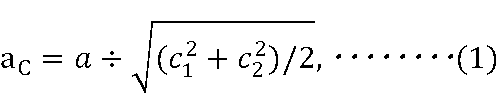


上記式(1)~(3)におけるaは、後述する第1係数補正部231により補正されうる係数である。また、上述した標準偏差の求め方は、上記式(1)や式(2)で算出したように、各データの二乗平均の平方根で算出してもよいし、上記式(3)で算出したように、絶対値平均の平方根で算出してもよい。算出した第1係数aC,aD,aRは、第1極性付与部221に送信される。
第1極性付与部221は、受信した第1係数の夫々に対して、予め定めた極性を付与する(ステップS221)。極性の付与とは、第1係数算出部211が算出した各第1属性情報α1の第1係数に対して正または負の符号を付与することである。極性の付与の考え方の一例としては、特許の価値評価を考える上で、その価値を向上させるとみなす場合には正の符号を付与し、その価値を低下させるとみなす場合には負の符号を付与する。具体例を用いて説明すると、属性情報αの項目が請求項文字数Cの場合、一般的には請求項文字数が短い方が、権利範囲が広くなりやすい。したがって、請求項文字数が多くなるほど特許の価値の評価点は下がるべきと考える場合には、負の符号を付与する。明細書文字数D(あるいは明細書の頁数)の場合、一般的にはその数が多い方が補正の根拠が多くなりやすく、特許性を主張しやすい。したがって、明細書文字数D(あるいは明細書頁数)が多くなるほど特許の価値の評価点は上がるべきと考える場合には、正の符号を付与する。

’


式(2)’と式(3)’は正の符号が付与されており、それぞれ式(2)と式(3)と同じものとなっている。但し、これらはあくまで例示であり、このルールに限定されない。即ち、各第1属性情報α1に、予め定性的に定めた極性を付与すればよい。極性を含んだ第1係数の情報は第1係数補正部231へ送信される。
第1係数補正部231は、受信した第1係数と極性とを考慮して第1係数を補正する(ステップS231)。第1係数の補正の手法は、例えば、入力された特許群の中の各特許に対して、得られた第1係数(ここでは、極性を含んだ第1係数)を各第1属性情報α1の数値化された換算値に乗算し、それぞれの値の和をとって素点を算出する。その上で、偏差値算出のようにその平均値や分散値、若しくは最大値・最小値が所定値になるように、上述した定数aと後述する定数bとを求めることにより、極性を含んだ第1係数を補正する。但し、上述した補正の手法は一例であり、これに限定されない。また、この補正を行うか否かは選択事項であり、補正を行わない場合には、必ずしもステップS231の処理は必須ではない。

式(4)を用いると、上述した予め与えられている2つの特許についての特許の価値の評価点は、特許1については次式(5)、特許2については次式(6)となる。


第1係数補正部231は、上記式(5)(6)の平均値が50、分散値が1となるようにa,bを補正する処理を行う。上記(4)の場合、a,bの値が決定された後の式(4)おける、第1係数aC,aD,aR、及びbが上述した第1重みW1に相当し、a,bの値が決定された後の式(4)自体がモデル構築部20により構築された第1モデルM1に相当することとなる。但し、式(4)はあくまで例示であり。定義式はこれに限られない。即ち、第1重みW1は線形モデルに限らず他の表現で定義してもよい。構築された第1モデルM1は、評価部30に送信される。上述の例では、請求項文字数C、明細書文字数D、被引用回数Rに依存した第1モデルM1が構築され、評価部30に送信される。
第2係数算出部212は、ステップS211の処理において、第1属性情報α1を第2属性情報α2に置き換えた場合と同様の処理を行う(ステップS212)。即ち、第2係数算出部212は、受信した数値化された第2属性情報α2の換算値の夫々について所定の第2係数を算出する。第2極性付与部222は、ステップS221の処理において、第1属性情報α1を第2属性情報α2に置き換えた場合と同様の処理を行う(ステップS222)。即ち、第2極性付与部222は、受信した第2係数の夫々に対して、予め定めた極性を付与する。第2係数補正部232は、ステップS231の処理において、第1属性情報α1を第2属性情報α2に置き換えた場合と同様の処理を行う(ステップS232)。即ち、第2係数補正部232は、受信した第2係数と極性とを考慮して第2係数を補正する。ステップS212とステップS222とステップS232を経て、パフォーマンス点Y算出のための第2モデルM2が構築される。例えば、データベース上にある各特許の(ライセンス契約の有無(ライセンス契約の有無A)、無効審判請求の有無(無効審判請求の有無I)、自社での実施の有無(自社での実施の有無II))の情報を基に同様の処理でモデルを構築すればよい。この場合、ライセンス契約の有無A、無効審判請求の有無I、及び自社での実施の有無IIに依存した第2モデルM2が構築され、評価部30に送信される。
モデル(第1モデルM1、第2モデルM2)の構築においては、データベース上にある属性情報の他に、ユーザから提供される属性情報を用いてもよい。
評価部30は、受信した第1モデルM1、第2モデルM2を用いて、指定された評価対象の特許である評価対象特許Tについて、特許の評価に関する情報(第1評価情報V1、第2評価情報V2)を生成する(ステップS30)。
特許評価装置1は、図4に示すように、モデル構築部20の代わりにモデル構築部20a有する特許評価装置1aとして構成してもよい。例えば、ライセンス収入が多く得られる可能性の高い特許を見極めるために特許の価値の評価を行いたいという場合、過去の特許のライセンス収入額を参考に、各属性情報αにおける重みをライセンス収入額の観点で適切に設定できた方が、示唆に富んだ特許評価を提供できる場合がある。特許評価装置1aは、上記のような場合に対応する装置である。
第1相関係数算出部241は、指定された基準指標βの各属性データに対する他の各属性情報αの属性データとの相関の度合いを考慮して第1相関係数を算出する(ステップS241)。第1相関係数算出方法の一例としては、各第1属性情報α1について、入力された特許群の中で、基準指標β以外の標準偏差を求め、その逆数を第1係数とする。また、各第1属性情報α1と、基準指標βであるライセンス収入額Lとの相関係数(相関係数F)を上記第1係数に乗算した第1相関係数を算出する。ここでは、図6に示すように、図示せぬデータベース上から、第1属性情報α1の項目として、2つの特許(特許1,特許2)の夫々について請求項文字数C、明細書文字数D、ライセンス収入額Lが入力され、基準指標βとしてライセンス収入額Lが指定されたとする。既述の実施形態と同様形式で表記すると、属性情報αの属性データとして(c1,d1,l1)、(c2,d2,l2)という情報が入力され、かつ基準指標βにライセンス収入額Lが指定されたとする。この場合、請求項文字数Cとライセンス収入額Lとの相関係数を相関係数FC、明細書文字数Dとライセンス収入額Lとの相関係数を相関係数FDとすると、相関係数FCを考慮した第1相関係数aC、第1相関係数FDを考慮した第1相関係数aDは次式(7)(8)のように算出される。


なお、一般に、x,yの間の相関係数をrとすると、相関係数rは、次式(9)で算出することができる。ここで、nはデータ(x、y)の個数、xiはxのi番目の数値、yiはyのi番目の数値、 ̄xはxの平均値、 ̄yはyの平均値を表す。相関係数FC,FDは式(9)を参考に算出してもよい。

上記式(7)~(8)のaは第1係数補正部231aにより補正されうる係数である。また、標準偏差の求め方は、上記式(7)(8)で算出したように、各データの二乗平均の平方根で算出してもよいし、既述した式(3)のように、絶対値平均の平方根で算出してもよい。算出した第1係数aC、aDは、第1係数補正部231aに送信される。
第1係数補正部231aは、受信した第1相関係数を考慮して第1相関係数を補正する(ステップS231a)。補正の手法は、例えば、入力された特許群の中の各特許に対して、得られた第1相関係数を各第1属性情報α1の数値化された換算値に乗算し、それぞれの値の和をとって素点を算出する。その上で、偏差値のようにその平均や分散、若しくは最大値・最小値が所定値になるように、上述した定数aと定数bとを求めることにより第1相関係数を補正する。但し、上述した補正の手法は一例でありこれに限定されない。また、この補正を行うか否かは選択事項であり、補正を行わない場合には、必ずしもステップS231aの処理が必須ではない。

式(10)を用いると、上述した予め与えられている2つの特許についての特許の価値評価の評価点(ポテンシャル点V1)は、特許1については次式(11)、特許2については次式(12)となる。


第1係数補正部231aは、上記式(11)(12)の平均値が50、分散値が1となるようにa,bを補正する処理を行う。上記式(10)の場合、a,bの値が決定された後の式(10)おける、第1相関係数aC,aD,及びbが上述した第1重みW1に相当し、a,bの値が決定された後の式(10)自体がモデル構築部20aにより構築された第1モデルM1に相当することとなる。但し、式(10)はあくまで例示であり。定義式はこれに限られない。即ち、第1重みW1は線形モデルに限らず他の表現で定義してもよい。構築された第1モデルM1は、評価部30に送信される。
第2相関係数算出部242は、ステップS241の処理において、第1属性情報α1を第2属性情報α2に置き換えた場合と同様の処理を行う(ステップS242)。即ち、第2相関係数算出部242は、指定された基準指標βの各属性データに対する他の各属性情報α(第2属性情報α2)の属性データとの相関の度合いを考慮して第2相関係数を算出する。第2係数補正部232aは、ステップS231aの処理において、第1属性情報α1を第2属性情報α2に置き換えた場合と同様の処理を行う(ステップS232a)。即ち、第2係数補正部232aは、受信した第2相関係数を考慮して第2相関係数を補正する。例えば、第2属性情報α2として、ライセンス契約の有無(ライセンス契約の有無A)、無効審判請求の有無(無効審判請求の有無I)、ライセンス収入額Lが入力された場合、これらの情報に依存したパフォーマンス点Yを出力するモデルとして第2モデルM2が構築されることとなる。
特許評価装置1aは、図7に示すように、モデル構築部20aの代わりにモデル構築部20b有する特許評価装置1bとして構成してもよい。特許の価値は必ずしもライセンス収入額Lのように一つの明確な指標によって測れるものばかりとも限らない。収入に依らず契約がとれたり、特許に係る発明が自社で実施されたり、営業活動において宣伝として使えたりする等、当該企業にとっての大目標ではないものの、特許に期待する実績についての中間的な目標ともいえるメルクマール(メルクマールK)が様々あり得る。その場合、それらのメルクマール同士の優劣は企業によって、また、特許の価値の評価をするタイミングによっても変わり得る。これらのメルクマールは特許の価値が高いことにより生じうる要素であり、パフォーマンス点Yとして評価することができるものである。本変形例2では、ユーザとのヒアリングなどを通じて、予め属性情報の一部をメルクマールとして定めておき、かつ、定めたメルクマール間の優劣も定めておくことで特許の価値評価の評価点のモデル構築で用いる基準指標(変形例1における基準指標βに相当するもの)を生成する。ユーザの社内事情なども加味した上でメルクマールの数値化を行って特許の価値評価のモデルを構築していくことで、よりユーザにとって示唆に富んだ特許評価を提供できるようになる。
基準指標生成部25は、受信したメルクマールKと序列Pとを元に達成した各メルクマールKを数値化して基準指標Qを生成(算出)する(ステップS25)。基準指標Qは、評価対象特許Tを評価する企業にとって、当該評価対象特許Tが達成したメルクマールKが、どれほど特許の価値に影響を与えるかの影響度を数値化したものである。
(2)任意の数値である天井基準値(天井基準値CR)と点幅基準値(点幅基準値PR)を設け、特許群中の全特許数に対する各メルクマールKの達成特許数の率に点幅基準値PRを乗じ、乗算で得られた値を天井基準値CRから減算した値を、そのメルクマールKの数値化された換算値とする。
(3)いずれのメルクマールKも達成していない特許については、天井基準値CRからリソースRを減算した値を換算値とする。
(4)各特許について、メルクマールの達成度で評価する場合は、その特許が達成できている最も高い序列PのメルクマールKの換算値で評価する。
特許評価装置1(図1)は、図11に示すように、モデル構築部20の代わりにモデル構築部20c有する特許評価装置1cとして構成してもよい。モデル構築部20cは、モデル構築部20における第2係数算出部212、第2極性付与部222、第2係数補正部232に代わり、特許評価装置1a(図4)のモデル構築部20aが有している第2相関係数算出部242と第2係数補正部232aを有する。特許評価装置1cが、図12に示した処理フローを実施することにより本変形例3の特許評価方法を行う。図12は、図2のステップS212,S222、S232の代わりに、図5のステップS242とステップS232aとを有する。特許評価装置1では、第1モデルM1と第2モデルM2は同じ処理手法を用いて構築される。特許評価装置1cでは、第1モデルM1は特許評価装置1の手法を用いて構築され、第2モデルM2は特許評価装置1aの手法を用いて構築される。本変形3を使用することによっても、従来の特許評価手法に比して、より示唆的な特許評価を提供できる。
特許評価装置1(図1)は、図13に示すように、モデル構築部20の代わりにモデル構築部20d有する特許評価装置1dとして構成してもよい。モデル構築部20dは、モデル構築部20における第2係数算出部212、第2極性付与部222、第2係数補正部232に代わり、特許評価装置1b(図7)のモデル構築部20bが有している基準指標生成部25、第2相関係数算出部242、第2係数補正部232aを有する。特許評価装置1dが、図14に示した処理フローを実施することにより本変形例4の特許評価方法を行う。図14は、図2のステップS212、ステップS222、S232の代わりに、図8のステップS25、ステップS242、ステップS232aを有する。特許評価装置1では、第1モデルM1と第2モデルM2は同じ処理手法を用いて構築される。特許評価装置1dでは、第1モデルM1は特許評価装置1の手法を用いて構築され、第2モデルM2は特許評価装置1bの手法を用いて構築される。本変形4を使用することによっても、従来の特許評価手法に比して、より示唆的な特許評価を提供できる。
特許評価装置1a(図4)は、図15に示すように、モデル構築部20aの代わりにモデル構築部20e有する特許評価装置1eとして構成してもよい。モデル構築部20eは、モデル構築部20aにおける第2相関係数算出部242、第2係数補正部232aに代わり、特許評価装置1b(図7)のモデル構築部20bが有している基準指標生成部25、第2相関係数算出部242、第2係数補正部232aを有する。特許評価装置1eが、図16に示した処理フローを実施することにより本変形例5の特許評価方法を行う。図16は、図5のステップS242、ステップS232aの代わりに、図8のステップS25、ステップS242、ステップS232aを有する。特許評価装置1では、第1モデルM1と第2モデルM2は同じ処理手法を用いて構築される。特許評価装置1eでは、第1モデルM1は特許評価装置1aの手法を用いて構築され、第2モデルM2は特許評価装置1bの手法を用いて構築される。本変形5を使用することによっても、従来の特許評価手法に比して、より示唆的な特許評価を提供できる。
ユーザから非公開情報を受け取ると、情報漏洩が起きないようにセキュリティを担保する必要性が高くなる。一方で、評価モデル作成のプログラムをユーザに渡すとコピーされてしまう危険性がある。そこで、データを暗号化したまま演算を行うことが可能な秘密計算の処理を用いて、上記の実施例の計算を暗号化したまま行い、ユーザから受け取った情報を漏洩させてしまっても、第三者がその情報を閲覧できないようにしてもよい。より安全に上記実施形態、あるいは変形例1~変形例5を実現することができる。
上述した実施形態、及び変形例では、特許(特許出願または特許権)を例に用いて説明した。本開示の適用は必ずしも特許に限定されない。実用新案登録出願または実用新案権(以下、まとめて「実用新案」ともいう。)においても適用できる。その場合、属性情報αには、実用技術評価書制度などの実用新案特有の属性情報も含まれ得る。また、意匠登録出願または意匠権(以下、まとめて「意匠」ともいう。)においても適用できる。その場合、属性情報αには、秘密意匠制度、動的意匠制度、関連意匠制度、組物の意匠制度、部分意匠制度、関連意匠制度などの意匠特有に関する属性情報も含まれ得る。即ち、本開示は特許評価装置としてだけではなく、特許、実用新案、意匠(以下、まとめて「特許等」)の評価を行う知的財産評価装置として構成してもよい。
上述の各種の処理は、図17に示すコンピュータ2000の記録部2020に、上記方法の各ステップを実行させるプログラムを読み込ませ、制御部2010、入力部2030、出力部2040、表示部2050などに動作させることで実施できる。
10 属性数値化部
20,20a,20b,20c,20d,20e モデル構築部
211 第1係数算出部
212 第2係数算出部
221 第1極性付与部
222 第2極性付与部
231,231a 第1係数補正部
232,232a 第2係数補正部
241 第1相関係数算出部
242 第2相関係数算出部
25 基準指標生成部
30 評価部
A ライセンス契約の有無
C 請求項文字数
CR 天井基準値
D 明細書文字数
F 相関係数
I 無効審判請求の有無
II 自社での実施の有無II
K メルクマール
L ライセンス収入額
M1 第1モデル
M2 第2モデル
P 序列
PR 点幅基準値
R 被引用回数
T 評価対象特許
X ポテンシャル点
Y パフォーマンス点
V1 第1評価情報
V2 第2評価情報
W1 第1重み
W2 第2重み
α1 第1属性情報
α2 第2属性情報
β,Q 基準指標
Claims (7)
- 特許、実用新案、または意匠(特許等)の出願書類の特徴を表す属性情報に少なくとも依存する第1評価と、
前記特許等の登録を必要条件として生じ得る属性情報に少なくとも依存する第2評価と、
を用いて評価対象の特許等を評価する、
知的財産評価装置。 - 複数の特許、実用新案、または意匠(特許等)の出願書類の少なくとも1つの特徴を表す第1属性情報の各第1属性情報についての第1重みを用いた特許等の評価のための第1モデルと、前記特許等の登録を必要条件として生じ得る第2属性情報の各第2属性情報についての第2重みを用いた特許等の評価のための第2モデルと、を構築するモデル構築部と、
前記第1モデル及び前記第2モデルを用いて、評価対象の特許等の評価に関する情報を生成する評価部と、
を有する知的財産評価装置。 - 前記モデル構築部による第1重みは、
前記第1属性情報の夫々について所定の第1係数を算出する第1係数算出部と、
前記第1係数の夫々に対して、予め定めた第1極性を付与する第1極性付与部と、
前記第1係数と、第1極性とを考慮して前記第1係数を補正する第1補正部と、
によって算出され、
前記モデル構築部による第2重みは、
前記第2属性情報の夫々について所定の第2係数を算出する第2係数算出部と、
前記第2係数の夫々に対して、予め定めた第2極性を付与する第2極性付与部と、
前記第2係数と、極性とを考慮して前記第2係数を補正する第2補正部と、
によって算出される、請求項2に記載の知的財産評価装置。 - 前記モデル構築部における前記第1重みは、指定された1つの属性情報を基準指標とし、前記基準指標に対する他の各第1属性情報の相関の度合いを考慮して算出され、
前記モデル構築部における前記第2重みは、前記基準指標に対する他の各第2属性情報の相関の度合いを考慮して算出される、
請求項2に記載の知的財産評価装置。 - 前記モデル構築部における前記第1重み、及び前記第2重みは、指定された複数の属性情報の項目であるメルクマールと、前記メルクマールの間の序列とを考慮した新たな基準指標を生成し、前記新たな基準指標が上記基準指標として用いられて算出される請求項4に記載の知的財産評価装置。
- 特許、実用新案、または意匠(特許等)の出願書類の特徴を表す属性情報に少なくとも依存する第1評価と、
前記特許等の登録を必要条件として生じ得る属性情報に少なくとも依存する第2評価と、
を用いて評価対象の特許等を評価する、
知的財産評価方法。 - 請求項1から5に記載の知的財産評価装置をコンピュータに機能させるためのプログラム。
Priority Applications (2)
| Application Number | Priority Date | Filing Date | Title |
|---|---|---|---|
| PCT/JP2023/012140 WO2024201643A1 (ja) | 2023-03-27 | 2023-03-27 | 知的財産評価装置、知的財産評価方法、およびプログラム |
| JP2025509274A JPWO2024201643A1 (ja) | 2023-03-27 | 2023-03-27 |
Applications Claiming Priority (1)
| Application Number | Priority Date | Filing Date | Title |
|---|---|---|---|
| PCT/JP2023/012140 WO2024201643A1 (ja) | 2023-03-27 | 2023-03-27 | 知的財産評価装置、知的財産評価方法、およびプログラム |
Publications (1)
| Publication Number | Publication Date |
|---|---|
| WO2024201643A1 true WO2024201643A1 (ja) | 2024-10-03 |
Family
ID=92904006
Family Applications (1)
| Application Number | Title | Priority Date | Filing Date |
|---|---|---|---|
| PCT/JP2023/012140 Ceased WO2024201643A1 (ja) | 2023-03-27 | 2023-03-27 | 知的財産評価装置、知的財産評価方法、およびプログラム |
Country Status (2)
| Country | Link |
|---|---|
| JP (1) | JPWO2024201643A1 (ja) |
| WO (1) | WO2024201643A1 (ja) |
Citations (4)
| Publication number | Priority date | Publication date | Assignee | Title |
|---|---|---|---|---|
| JP2019096308A (ja) * | 2017-11-27 | 2019-06-20 | コリア インベンション プロモーション アソシエーションKorea Invention Promotion Association | 構造方程式モデルを活用した特許評価方法およびその方法を実行するシステム |
| JP2020095669A (ja) * | 2019-05-28 | 2020-06-18 | 株式会社AI Samurai | 特許マップ表示装置及び特許マップ表示方法並びに特許マップ表示プログラム |
| JP2020149658A (ja) * | 2019-03-07 | 2020-09-17 | 株式会社鈴康 | 情報処理方法、プログラム及び情報処理装置 |
| JP2022108438A (ja) * | 2021-01-13 | 2022-07-26 | 株式会社博報堂Dyホールディングス | 産業財産権の年金納付年数に関する情報の理論値モデル生成プログラム、産業財産権の年金納付年数に関する情報の理論値算出プログラム、産業財産権の年金納付年数に関する情報の理論値モデル生成装置、及び産業財産権の年金納付年数に関する情報の理論値算出装置 |
-
2023
- 2023-03-27 WO PCT/JP2023/012140 patent/WO2024201643A1/ja not_active Ceased
- 2023-03-27 JP JP2025509274A patent/JPWO2024201643A1/ja active Pending
Patent Citations (4)
| Publication number | Priority date | Publication date | Assignee | Title |
|---|---|---|---|---|
| JP2019096308A (ja) * | 2017-11-27 | 2019-06-20 | コリア インベンション プロモーション アソシエーションKorea Invention Promotion Association | 構造方程式モデルを活用した特許評価方法およびその方法を実行するシステム |
| JP2020149658A (ja) * | 2019-03-07 | 2020-09-17 | 株式会社鈴康 | 情報処理方法、プログラム及び情報処理装置 |
| JP2020095669A (ja) * | 2019-05-28 | 2020-06-18 | 株式会社AI Samurai | 特許マップ表示装置及び特許マップ表示方法並びに特許マップ表示プログラム |
| JP2022108438A (ja) * | 2021-01-13 | 2022-07-26 | 株式会社博報堂Dyホールディングス | 産業財産権の年金納付年数に関する情報の理論値モデル生成プログラム、産業財産権の年金納付年数に関する情報の理論値算出プログラム、産業財産権の年金納付年数に関する情報の理論値モデル生成装置、及び産業財産権の年金納付年数に関する情報の理論値算出装置 |
Also Published As
| Publication number | Publication date |
|---|---|
| JPWO2024201643A1 (ja) | 2024-10-03 |
Similar Documents
| Publication | Publication Date | Title |
|---|---|---|
| Amin et al. | Malaysian consumers’ willingness to choose Islamic mortgage products: an extension of the theory of interpersonal behaviour | |
| Kern et al. | Supply risk management: model development and empirical analysis | |
| Chen et al. | An empirical analysis of contract structures in IT outsourcing | |
| Liu et al. | Chinese patients’ intention to use different types of internet hospitals: cross-sectional study on virtual visits | |
| Kurlychek et al. | Defensible decisions: Balancing employer and prospective employee rights in an era of criminal background checks | |
| Rhem | Ethical use of data in AI Applications | |
| Ogungbemi | Smart contracts management: The interplay of data privacy and blockchain for secure and efficient real estate transactions | |
| Olanrewaju et al. | Disputes and claim management during the COVID-19 crisis: The lessons learned | |
| Pokholkova et al. | Measuring adherence to AI ethics: a methodology for assessing adherence to ethical principles in the use case of AI-enabled credit scoring application | |
| El Emam | Risky Business: Sharing Health Data while Protecting Privacy | |
| Venunath et al. | RETRACTED ARTICLE: Efficient method for identifying prominent supplier in large-scale healthcare information networks in Medicare | |
| Lertsukkheerat et al. | Ethical Leadership, Ethical Organizational Culture, and Their Impact on Organizational Effectiveness in Modern Online Platform Businesses | |
| WO2024194948A1 (ja) | 特許評価装置、特許評価方法、およびプログラム | |
| Jeilani et al. | Understanding e-government adoption among government employees: the mediating role of perceived attitude across key predictors | |
| Riani et al. | Revisiting poverty alleviation in Muslim economies: the impact of zakat and Islamic human development | |
| Liang et al. | Algorithm characteristics, perceived credibility and verification of ChatGPT-generated content: a moderated nonlinear model | |
| Khanaki et al. | The effect of forensic accounting drivers on social distrust trauma to the accounting profession | |
| Anguelov | Outsourcing oversight and ARRA 2009: what factors explain state agencies’ decision to pursue collaborative monitoring? | |
| J Nair et al. | Self sovereign identity in e-governance: blockchain solutions for fintech compliance and citizen-centric financial services | |
| Chen et al. | Behind the length of contract during market transitions | |
| Sekwenz et al. | From Reports to Reality: Testing Consistency in Instagram's Digital Services Act Compliance Data | |
| Davis et al. | Examining discrimination in home improvement financing (Home Mortgage Disclosure Act 2012–2016) and neighborhood health in the United States | |
| Wolff | Measuring costs: What is counted and who is accountable? | |
| Alharbi et al. | Evaluating the Impacts of Security-Durability Characteristic: Data Science Perspective. | |
| Tumoro | The effect of information technology on the sustainable reduction of tax evasion with mediating role of innovation in Ethiopia |
Legal Events
| Date | Code | Title | Description |
|---|---|---|---|
| 121 | Ep: the epo has been informed by wipo that ep was designated in this application |
Ref document number: 23930283 Country of ref document: EP Kind code of ref document: A1 |
|
| ENP | Entry into the national phase |
Ref document number: 2025509274 Country of ref document: JP Kind code of ref document: A |
|
| WWE | Wipo information: entry into national phase |
Ref document number: 2025509274 Country of ref document: JP |
|
| NENP | Non-entry into the national phase |
Ref country code: DE |
|
| 122 | Ep: pct application non-entry in european phase |
Ref document number: 23930283 Country of ref document: EP Kind code of ref document: A1 |