WO2024185901A1 - 脂肪性肝疾患を処置することに用いるための組成物 - Google Patents
脂肪性肝疾患を処置することに用いるための組成物 Download PDFInfo
- Publication number
- WO2024185901A1 WO2024185901A1 PCT/JP2024/009300 JP2024009300W WO2024185901A1 WO 2024185901 A1 WO2024185901 A1 WO 2024185901A1 JP 2024009300 W JP2024009300 W JP 2024009300W WO 2024185901 A1 WO2024185901 A1 WO 2024185901A1
- Authority
- WO
- WIPO (PCT)
- Prior art keywords
- igfals
- subject
- protein
- blood
- fibrosis
- Prior art date
- Legal status (The legal status is an assumption and is not a legal conclusion. Google has not performed a legal analysis and makes no representation as to the accuracy of the status listed.)
- Ceased
Links
Images





Classifications
-
- A—HUMAN NECESSITIES
- A61—MEDICAL OR VETERINARY SCIENCE; HYGIENE
- A61K—PREPARATIONS FOR MEDICAL, DENTAL OR TOILETRY PURPOSES
- A61K31/00—Medicinal preparations containing organic active ingredients
- A61K31/70—Carbohydrates; Sugars; Derivatives thereof
- A61K31/7088—Compounds having three or more nucleosides or nucleotides
-
- A—HUMAN NECESSITIES
- A61—MEDICAL OR VETERINARY SCIENCE; HYGIENE
- A61K—PREPARATIONS FOR MEDICAL, DENTAL OR TOILETRY PURPOSES
- A61K31/00—Medicinal preparations containing organic active ingredients
- A61K31/70—Carbohydrates; Sugars; Derivatives thereof
- A61K31/7088—Compounds having three or more nucleosides or nucleotides
- A61K31/7105—Natural ribonucleic acids, i.e. containing only riboses attached to adenine, guanine, cytosine or uracil and having 3'-5' phosphodiester links
-
- A—HUMAN NECESSITIES
- A61—MEDICAL OR VETERINARY SCIENCE; HYGIENE
- A61K—PREPARATIONS FOR MEDICAL, DENTAL OR TOILETRY PURPOSES
- A61K35/00—Medicinal preparations containing materials or reaction products thereof with undetermined constitution
- A61K35/66—Microorganisms or materials therefrom
- A61K35/76—Viruses; Subviral particles; Bacteriophages
-
- A—HUMAN NECESSITIES
- A61—MEDICAL OR VETERINARY SCIENCE; HYGIENE
- A61K—PREPARATIONS FOR MEDICAL, DENTAL OR TOILETRY PURPOSES
- A61K38/00—Medicinal preparations containing peptides
- A61K38/16—Peptides having more than 20 amino acids; Gastrins; Somatostatins; Melanotropins; Derivatives thereof
- A61K38/17—Peptides having more than 20 amino acids; Gastrins; Somatostatins; Melanotropins; Derivatives thereof from animals; from humans
-
- A—HUMAN NECESSITIES
- A61—MEDICAL OR VETERINARY SCIENCE; HYGIENE
- A61K—PREPARATIONS FOR MEDICAL, DENTAL OR TOILETRY PURPOSES
- A61K48/00—Medicinal preparations containing genetic material which is inserted into cells of the living body to treat genetic diseases; Gene therapy
-
- A—HUMAN NECESSITIES
- A61—MEDICAL OR VETERINARY SCIENCE; HYGIENE
- A61P—SPECIFIC THERAPEUTIC ACTIVITY OF CHEMICAL COMPOUNDS OR MEDICINAL PREPARATIONS
- A61P1/00—Drugs for disorders of the alimentary tract or the digestive system
- A61P1/16—Drugs for disorders of the alimentary tract or the digestive system for liver or gallbladder disorders, e.g. hepatoprotective agents, cholagogues, litholytics
-
- C—CHEMISTRY; METALLURGY
- C07—ORGANIC CHEMISTRY
- C07K—PEPTIDES
- C07K14/00—Peptides having more than 20 amino acids; Gastrins; Somatostatins; Melanotropins; Derivatives thereof
- C07K14/435—Peptides having more than 20 amino acids; Gastrins; Somatostatins; Melanotropins; Derivatives thereof from animals; from humans
-
- C—CHEMISTRY; METALLURGY
- C07—ORGANIC CHEMISTRY
- C07K—PEPTIDES
- C07K14/00—Peptides having more than 20 amino acids; Gastrins; Somatostatins; Melanotropins; Derivatives thereof
- C07K14/435—Peptides having more than 20 amino acids; Gastrins; Somatostatins; Melanotropins; Derivatives thereof from animals; from humans
- C07K14/46—Peptides having more than 20 amino acids; Gastrins; Somatostatins; Melanotropins; Derivatives thereof from animals; from humans from vertebrates
- C07K14/47—Peptides having more than 20 amino acids; Gastrins; Somatostatins; Melanotropins; Derivatives thereof from animals; from humans from vertebrates from mammals
-
- C—CHEMISTRY; METALLURGY
- C12—BIOCHEMISTRY; BEER; SPIRITS; WINE; VINEGAR; MICROBIOLOGY; ENZYMOLOGY; MUTATION OR GENETIC ENGINEERING
- C12N—MICROORGANISMS OR ENZYMES; COMPOSITIONS THEREOF; PROPAGATING, PRESERVING, OR MAINTAINING MICROORGANISMS; MUTATION OR GENETIC ENGINEERING; CULTURE MEDIA
- C12N15/00—Mutation or genetic engineering; DNA or RNA concerning genetic engineering, vectors, e.g. plasmids, or their isolation, preparation or purification; Use of hosts therefor
- C12N15/09—Recombinant DNA-technology
- C12N15/63—Introduction of foreign genetic material using vectors; Vectors; Use of hosts therefor; Regulation of expression
- C12N15/79—Vectors or expression systems specially adapted for eukaryotic hosts
- C12N15/85—Vectors or expression systems specially adapted for eukaryotic hosts for animal cells
- C12N15/86—Viral vectors
- C12N15/864—Parvoviral vectors, e.g. parvovirus, densovirus
-
- G—PHYSICS
- G01—MEASURING; TESTING
- G01N—INVESTIGATING OR ANALYSING MATERIALS BY DETERMINING THEIR CHEMICAL OR PHYSICAL PROPERTIES
- G01N33/00—Investigating or analysing materials by specific methods not covered by groups G01N1/00 - G01N31/00
- G01N33/48—Biological material, e.g. blood, urine; Haemocytometers
- G01N33/50—Chemical analysis of biological material, e.g. blood, urine; Testing involving biospecific ligand binding methods; Immunological testing
- G01N33/68—Chemical analysis of biological material, e.g. blood, urine; Testing involving biospecific ligand binding methods; Immunological testing involving proteins, peptides or amino acids
Definitions
- the present disclosure relates to compositions for use in treating fatty liver disease.
- NASH nonalcoholic steatohepatitis
- NASH is diagnosed based on 1) the absence of a history of alcohol use, as well as liver biopsy findings of (i) macrodroplet/microdroplet fatty deposits, (ii) inflammatory cell infiltration, (iii) balloon-like swelling of hepatocytes, and (iv) perihepatocyte fibrosis in the centrilobular area, and 3) the absence of other liver diseases such as viral hepatitis (viruses such as HBV and HCV) or autoimmune hepatitis.
- viruses such as HBV and HCV
- Patent Document 1 discloses that blood insulin-like growth factor binding protein acid-labile subunit (IGFALS) levels are reduced in patients with liver fibrosis, and that the degree of liver fibrosis is predicted based on blood IGFALS levels.
- IGFALS blood insulin-like growth factor binding protein acid-labile subunit
- compositions for use in treating a subject having or at risk of developing fatty liver disease.
- a pharmaceutical composition for use in treating hepatitis and/or liver fibrosis in a subject having or at risk of developing fatty liver disease comprising an insulin-like growth factor binding protein acid-labile subunit (IGFALS) protein or a nucleic acid encoding IGFALS.
- IGFALS insulin-like growth factor binding protein acid-labile subunit
- NAFLD nonalcoholic fatty liver disease
- MAFLD metabolically associated fatty liver disease
- NASH nonalcoholic steatohepatitis
- the subject with fatty liver disease has a nonalcoholic fatty liver disease (NAFLD) activity score of 4 or more and a fibrosis grade of 2 or more.
- NAFLD nonalcoholic fatty liver disease
- a subject with fatty liver disease The pharmaceutical composition according to any one of (1) to (5) above, wherein the subject is a subject shown to be suitable for administration of IGFALS protein or a nucleic acid encoding IGFALS by a method for estimating the degree of progression of liver fibrosis in a subject having non-alcoholic fatty liver disease (NAFLD), the method comprising measuring the blood IGFALS level of the subject, comparing the blood IGFALS level with a reference value, and determining that the blood IGFALS level is lower than the reference value, indicating that the subject is suitable for administration of IGFALS protein or a nucleic acid encoding IGFALS.
- NAFLD non-alcoholic fatty liver disease
- nucleic acid encoding IGFALS is messenger RNA.
- nucleic acid encoding IGFALS is incorporated into a gene expression cassette of a viral vector, and within the expression cassette, the nucleic acid is operably linked to a control sequence, thereby enabling the IGFALS protein to be expressed in liver cells.
- viral vector is an adeno-associated viral vector (AAV).
- a pharmaceutical composition for use in treating hepatitis and/or liver fibrosis in a subject having NAFLD or MAFLD or a subject at risk for developing NAFLD or MAFLD comprising an insulin-like growth factor binding protein acid-labile subunit (IGFALS) protein or a nucleic acid encoding IGFALS.
- IGFALS insulin-like growth factor binding protein acid-labile subunit
- a subject having NAFLD or MAFLD The pharmaceutical composition according to any one of (101) to (105), wherein the subject is a subject shown to be suitable for administration of an IGFALS protein or a nucleic acid encoding IGFALS by a method for estimating the degree of progression of liver fibrosis in the subject, comprising measuring the blood IGFALS level of the subject, comparing the blood IGFALS level with a reference value, and finding that the blood IGFALS level is lower than the reference value indicates that the subject is suitable for administration of the IGFALS protein or a nucleic acid encoding IGFALS.
- the viral vector is an adeno-associated viral vector (AAV).
- a composition for use in treating a subject having or at risk for developing fatty liver disease (e.g., a subject having fatty liver), comprising an insulin-like growth factor binding protein acid-labile subunit (IGFALS) protein or a nucleic acid encoding IGFALS.
- IGFALS insulin-like growth factor binding protein acid-labile subunit
- 202 The composition (e.g., pharmaceutical composition) according to (201) above, wherein the subject having fatty liver disease is a subject having non-alcoholic fatty liver disease (NAFLD) or metabolically-associated fatty liver disease (MAFLD).
- NAFLD non-alcoholic fatty liver disease
- MAFLD metabolically-associated fatty liver disease
- the composition e.g., pharmaceutical composition according to (201) or (202) above, wherein the subject with fatty liver disease is a subject with nonalcoholic steatohepatitis (NASH).
- NASH nonalcoholic steatohepatitis
- composition e.g., pharmaceutical composition
- the subject with fatty liver disease is a subject with a nonalcoholic fatty liver disease (NAFLD) activity score of 4 or more and a fibrosis grade of 2 or more.
- NAFLD nonalcoholic fatty liver disease
- fibrosis grade of 2 or more.
- composition e.g, pharmaceutical composition according to any one of (201) to (204) above, wherein a subject having fatty liver disease has a blood IGFALS level below a reference value.
- a subject having fatty liver disease A method for estimating the progression of liver fibrosis in a subject with nonalcoholic fatty liver disease (NAFLD), comprising measuring the blood IGFALS level of the subject, comparing the blood IGFALS level with a reference value, and a blood IGFALS level lower than the reference value indicating that the subject is suitable for administration of the IGFALS protein or a nucleic acid encoding IGFALS.
- the subject is a subject that has been shown to be suitable for administration of the IGFALS protein or a nucleic acid encoding IGFALS by the method.
- the composition e.g., pharmaceutical composition described in any of (201) to (205) above.
- composition eg., pharmaceutical composition
- nucleic acid encoding IGFALS is messenger RNA.
- a composition e.g., a pharmaceutical composition according to any one of (201) to (207) above, in which a nucleic acid encoding IGFALS is incorporated into a gene expression cassette of a viral vector, and in the expression cassette, the nucleic acid is operably linked to a control sequence, thereby enabling the IGFALS protein to be expressed in liver cells.
- the composition e.g., pharmaceutical composition described in (208) above, wherein the viral vector is an adeno-associated viral vector (AAV).
- AAV adeno-associated viral vector
- a pharmaceutical composition for use in treating a subject having NAFLD or MAFLD or a subject at risk for developing NAFLD or MAFLD comprising an insulin-like growth factor binding protein acid-labile subunit (IGFALS) protein or a nucleic acid encoding IGFALS.
- IGFALS insulin-like growth factor binding protein acid-labile subunit
- a pharmaceutical composition for use in treating a subject having NAFLD or MAFLD or a subject at risk for developing NAFLD or MAFLD e.g., a subject having fatty liver
- IGFALS insulin-like growth factor binding protein acid-labile subunit
- the subject having NAFLD or MAFLD has a nonalcoholic fatty liver disease (NAFLD) activity score of 4 or more and a fibrosis grade of 2 or more.
- NAFLD nonalcoholic fatty liver disease
- (305) The pharmaceutical composition according to any one of (301) to (304) above, wherein a subject having NAFLD or MAFLD has a blood IGFALS level below the reference value.
- a subject having NAFLD or MAFLD The pharmaceutical composition according to any one of (301) to (305), wherein the subject is a subject shown to be suitable for administration of an IGFALS protein or a nucleic acid encoding IGFALS by a method for estimating the degree of progression of liver fibrosis in a subject, the method comprising measuring the blood IGFALS level of the subject, comparing the blood IGFALS level with a reference value, and finding that the blood IGFALS level is lower than the reference value, indicating that the subject is suitable for administration of an IGFALS protein or a nucleic acid encoding IGFALS.
- the nucleic acid encoding IGFALS is messenger RNA.
- the viral vector is an adeno-associated viral vector (AAV).
- FIG. 1 shows that blood IGFALS levels are lower in patients with active NASH than in patients with inactive NASH, and the relationship between blood IGFALS levels and the specificity and sensitivity of diagnosing active NASH.
- FIG. 2 shows the experimental scheme for the treatment of the NASH model.
- 3 shows the relative expression levels of each mRNA by treatment with an adeno-associated virus (AAV) vector containing a nucleic acid encoding IGFALS driven by a liver-specific promoter (human thyroxine-binding globulin (TBG) promoter) in a NASH model.
- AAV adeno-associated virus
- TBG human thyroxine-binding globulin
- FIG. 4 shows the blood IGFALS protein level and IGF1 protein level in a NASH model treated with an adeno-associated virus (AAV) vector containing a nucleic acid encoding IGFALS driven by a liver-specific promoter or a control vector (EGFP expression vector).
- the control group normal was healthy C57BL/6J mice of the same age.
- Figure 5 shows lipid droplets (hematoxylin-eosin staining) and liver fibrosis (Sirius Red staining) in liver tissue from NASH models treated with an adeno-associated virus (AAV) vector containing a nucleic acid encoding IGFALS driven by a liver-specific promoter or a control vector (EGFP-expressing vector). Bars indicate 100 ⁇ m.
- FIG. 6 shows triglyceride, cholesterol, and phospholipid levels in the liver of a NASH model treated with an adeno-associated virus (AAV) vector containing a nucleic acid encoding IGFALS driven by a liver-specific promoter or a control vector (EGFP-expressing vector).
- FIG. 7 shows the hepatic fibrosis effects in the liver of a NASH model treated with an adeno-associated virus (AAV) vector containing a nucleic acid encoding IGFALS driven by a liver-specific promoter or a control vector (EGFP-expressing vector).
- FIG. 6 shows triglyceride, cholesterol, and phospholipid levels in the liver of a NASH model treated with an adeno-associated virus (AAV) vector containing a nucleic acid encoding IGFALS driven by a liver-specific promoter or a control vector (EGFP-expressing vector).
- AAV adeno-associated virus
- FIG. 8 shows the survival rate of NASH models treated with an adeno-associated virus (AAV) vector containing a nucleic acid encoding IGFALS driven by a liver-specific promoter or a control vector (EGFP-expressing vector).
- FIG. 9 shows body weight (A), AST levels (B), ALT levels (C), fasting blood glucose (D), serum NEFA levels (E), and serum TG levels (F) in a NASH model after treatment with an adeno-associated virus (AAV) vector containing a nucleic acid encoding IGFALS driven by a liver-specific promoter or a control vector (EGFP expression vector).
- AAV adeno-associated virus
- FIG. 10 shows the results of ⁇ -smooth muscle actin ( ⁇ SMA) and F4/80 staining in NASH models after treatment with an adeno-associated virus (AAV) vector containing a nucleic acid encoding IGFALS driven by a liver-specific promoter or a control vector (EGFP-expressing vector). The bar indicates 100 ⁇ m.
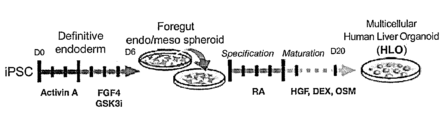
- FIG. 11 shows a preparation scheme of human liver organoids (HLOs) containing multiple cell types. iPSCs are treated with activin A to obtain definitive endoderm. Foregut spheroids containing both endoderm and mesoderm lineages are obtained by treatment with fibroblast growth factor 4 (FGF4) and glycogen synthase kinase 3 (GSK3) inhibitor.
- FGF4 fibroblast growth factor 4
- GSK3 glycogen synthase kinase 3
- FIG. 12 shows the time course of collagen deposition in the interstitial regions in sHLO.
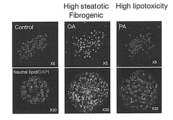
- Figure 13 shows the accumulation of neutral lipids in HLOs treated with oleic acid (OA) or palmitic acid (PA). Neutral lipids were stained with BODIPY 493/503.
- Figure 14 shows a heat map of gene expression in HLO treated with oleic acid (OA) or palmitic acid (PA), with the heat map showing relative expression levels.
- FIG. 12 shows the time course of collagen deposition in the interstitial regions in sHLO.
- Figure 13 shows the accumulation of neutral lipids in HLOs treated with oleic acid (OA) or palmitic acid (PA). Neutral lipids were stained with BODIPY 493/503.
- Figure 14 shows a heat map of gene expression in HLO treated with oleic acid (OA) or palmitic acid (PA), with the heat map showing relative expression levels.
- FIG. 12 shows the time course of collagen deposition in the interstitial regions in s
- a "subject” may be a mammal, for example, a primate such as a human or chimpanzee, a laboratory animal such as a rat, mouse, or rabbit, a livestock animal such as a pig, cow, horse, sheep, or goat, or a pet animal such as a dog or cat, and is preferably a human.
- a "patient” refers to a subject having a disease, preferably a human having a disease.
- treatment refers to therapeutic treatment and/or prophylactic treatment.
- Therapeutic treatment refers to treating a subject who has developed a condition
- prophylactic treatment refers to treating a subject before the subject develops a particular condition, thereby preventing the onset of that condition.
- Therapeutic treatment can include slowing the rate of progression of a condition, halting the progression of a condition, alleviating a condition, and curing a condition.
- fatty liver disease refers to a condition in which neutral fat accumulates in the liver. Clinically, patients with neutral fat accumulated in 30% or more of their liver cells are diagnosed as having fatty liver disease. Fatty liver disease is also known as hepatic steatosis.
- nonalcoholic fatty liver disease refers to a condition in which fat accumulates in the liver (fatty liver or hepatic steatosis) and occurs in people who have never drunk alcohol or who rarely drink alcohol (less than 30 g/day for men and less than 20 g/day (in ethanol equivalent) for women).
- the amount of alcohol consumed can be calculated by alcohol content (%) x alcohol amount (mL) x specific gravity of alcohol (0.8 g/mL).
- NAFLD is a general term for a series of diseases that include nonalcoholic fatty liver, steatohepatitis, and liver cirrhosis.
- NAFLD neurodegenerative disease 2019
- lifestyle-related diseases such as obesity, diabetes, dyslipidemia, and hypertension
- diseases such as sleep apnea syndrome, polycystic ovary syndrome, hypothyroidism, and hypopituitarism
- central parenteral nutrition after surgery such as pancreaticoduodenectomy and jejunoileal bypass surgery
- drugs such as tamoxifen, valproic acid, and amiodarone
- a diagnosis of NAFLD can be made based on 1) no history of alcohol consumption or little alcohol consumption (less than 30 g/day for men and less than 20 g/day for women), 2) liver biopsy findings showing (i) macrodroplet and/or microdroplet fatty deposits, (ii) inflammatory cell infiltration, (iii) hepatocyte ballooning, and (iv) perihepatocyte fibrosis in the centrilobular area, and 3) the absence of other liver diseases such as viral hepatitis (viruses include, for example, HBV and HCV) or autoimmune hepatitis.
- viruses include, for example, HBV and HCV
- autoimmune hepatitis include, for example, HBV and HCV
- MAFLD metabolic-associated fatty liver disease
- the diagnostic criteria for MAFLD are 1) a BMI value of 25 kg/ m2 or more, 2) the presence of type 2 diabetes, or 3) the presence of two or more of the following seven metabolic at-risk criteria: Seven metabolic risk criteria : Waist circumference 94 cm or more (men) or 80 cm or more (women) - Blood pressure 130/85 mmHg or higher - Plasma triglyceride level 150 mg/dL or higher - HDL cholesterol level less than 40 mg/dL (men) or less than 50 mg/dL (women) - Pre-diabetes - HOMA insulin resistance score of 2.5 or higher - Plasma hsCRP level of 2 mg/dL or higher
- NAFL nonalcoholic fatty liver
- Treatment of subjects with NAFL includes dietary and/or exercise therapy, and weight loss through these. Treatment of the underlying disease (e.g., diseases listed above) may also be effective.
- nonalcoholic steatohepatitis is a condition in which the liver becomes inflamed and liver fibrosis progresses due to NAFL.
- NASH nonalcoholic steatohepatitis
- the subject may develop cirrhosis and liver cancer. It can be diagnosed by liver biopsy, which examines liver tissue. NASH can be diagnosed when a patient has NAFLD and 2) liver biopsy findings show either (iii) ballooning of hepatocytes, or (iv) perihepatocyte fibrosis in the centrilobular area.
- ASH alcoholic steatohepatitis
- liver function abnormalities e.g., liver tissue lesions are mainly hepatocyte degeneration or necrosis, and 1) marked swelling (ballooning) of hepatocytes mainly in the centrilobular area, 2) various degrees of hepatocyte necrosis, and 3) Mallory bodies (alcohol vitreous bodies), or 4) infiltration of polymorphonuclear leukocytes), confirming the drinking history (e.g., drinking an average of 60 g (equivalent to ethanol) or more per day for 5 years or more), and excluding liver damage caused by causes other than alcohol (e.g., negative hepatitis virus markers, negative antimitochondrial antibodies, and negative antinuclear antibodies).
- liver damage caused by causes other than alcohol e.g., negative hepatitis virus markers, negative antimitochondrial antibodies, and negative antinuclear antibodies.
- hepatic fibrosis refers to a state in which connective tissue accumulates in the liver. Connective tissue accumulates, for example, due to repair of damage in the liver. In particular, when damage is chronic, repair occurs repeatedly, which results in the promotion of the accumulation of connective tissue and the progression of fibrosis.
- Pathologically fibrosis is initiated by the activation of stellate cells around the hepatic blood vessels. These cells participate in the inflammatory response and can produce fibrosis-inducing factors such as TGF- ⁇ while excessively producing extracellular matrix (such as collagen) and matrixellular proteins. Fibrosis grades can be determined, for example, based on Table 1 below (see NASH clinical research network histological scoring system (Keliner et al., Hepatology, 2005)).
- Fibrosis can be improved or prevented from progressing by removing the cause.
- Medications for treating fibrosis include PPAR agonists (e.g., thiazolidine derivatives), bile acid nuclear receptor agonists (e.g., bile acid analogs, e.g., obeticholic acid), CCR2 or CCR5 antagonists (e.g., cenicriviroc), kinase inhibitors (e.g., sorafenib), ASK1 antagonists (e.g., selonsertib), and collagen-specific chaperone inhibitors (e.g., siRNA or antisense oligos against HSP47).
- PPAR agonists e.g., thiazolidine derivatives
- bile acid nuclear receptor agonists e.g., bile acid analogs, e.g., obeticholic acid
- CCR2 or CCR5 antagonists e.g., cenicrivi
- IGFALS insulin-like growth factor binding protein acid-labile subunit
- IGF1 insulin-like growth factor 1
- IGFBP1-6 insulin-like growth factor-binding proteins
- Human IGFALS is registered with the National Center for Biotechnology Information (NCBI) under GENE ID: 3483, and its amino acid sequence may be, but is not limited to, the amino acid sequence registered in NCBI Reference Sequence: NP_001139478.1.
- a "blood sample” may be whole blood, serum, or plasma.
- Whole blood may contain an anticoagulant.
- Serum is a liquid component obtained by collecting blood in a container that does not contain an anticoagulant, clotting the blood, and then centrifuging the blood.
- Plasma is a supernatant obtained by centrifuging blood mixed with an anticoagulant to precipitate blood cell components.
- a "protein complex” is a complex that contains multiple proteins, each of which is associated with at least one other protein.
- An "antibody-protein complex” is a protein complex that contains an antibody and a protein, and the antibody binds to the protein. Protein complexes include protein complexes found in blood samples (protein complexes in blood samples), and are complexes that do not contain antibodies, for example, artificially produced antibodies (e.g., monoclonal antibodies, etc.) (antibody-free protein complexes).
- expression vector refers to a vector containing a target polynucleotide and equipped with a mechanism for expressing the target polynucleotide (mRNA) in a cell into which the vector has been introduced.
- a "polynucleotide expression vector” refers to a vector capable of expressing a polynucleotide in a cell into which the vector has been introduced.
- the polynucleotide is, for example, operably linked to a control sequence.
- the mRNA is translated into a protein in the cell. If the protein is a secreted protein, the protein can be secreted outside the cell.
- the subject may be a subject with fatty liver disease (e.g., fatty liver).
- the subject may be a subject with NAFLD or MAFLD.
- the subject may be a subject with NAFLD or MAFLD, preferably a subject with fibrosis grade 1 or more, 2 or more, 3 or more, or 4 or more, particularly a subject with fibrosis grade 2 or 3.
- the method may include administering an IGFALS protein or a nucleic acid encoding an IGFALS protein to the subject.
- the subject may be a subject with fatty liver disease (e.g., fatty liver) and not having fibrosis.
- a method of treating a subject the subject having NAFLD or MAFLD, preferably a subject having a fibrosis grade of 1 or more, 2 or more, 3 or more, or 4 or more, and in particular a subject having a fibrosis grade of 2 or 3.
- the subject may have cirrhosis.
- the subject may have compensated cirrhosis.
- the subject may have decompensated cirrhosis.
- the subject may have hepatocellular carcinoma (HCC).
- HCC hepatocellular carcinoma
- a method of preventing hepatitis and/or liver fibrosis in a subject the subject having NAFL or MAFL, e.g., a subject not having hepatitis.
- a method of preventing hepatitis and/or liver fibrosis in a subject the subject having NAFLD or MAFLD, e.g., a subject not having liver fibrosis.
- a method of preventing NASH in a subject, the subject having NAFLD or MAFLD e.g., a subject not having liver fibrosis.
- the IGFALS protein is isolated or purified.
- isolated means separated from one or more components that coexist in the expression environment.
- purified means further concentrating or improving the purity of the target product after isolation.
- the nucleic acid encoding the IGFALS protein is also isolated or purified.
- the IGFALS protein is originally a protein secreted into the blood.
- the IGFALS protein can be administered into the blood. Administration into the blood can be performed, for example, by intravenous administration or hepatic artery injection. Alternatively, the IGFALS protein can be administered into the liver.
- control sequence is a sequence that has the activity of driving a gene operably linked thereto and transcribing RNA from that gene.
- the control sequence is, for example, a promoter.
- promoters include class I promoters (which can be used to transcribe rRNA precursors), class II promoters (which include a core promoter and upstream promoter elements and can be used to transcribe mRNA), and class III promoters (further classified into types I, II, and III).
- a control sequence may be any promoter that can transcribe mRNA in a cell, such as an animal cell or a plant cell.
- various pol II promoters can be used as the first control sequence.
- pol II promoters include, but are not limited to, CMV promoter, EF1 promoter (EF1 ⁇ promoter), SV40 promoter, MSCV promoter, hTERT promoter, ⁇ -actin promoter, CAG promoter, and CBh promoter.
- the promoter may also include promoters that drive RNA polymerase derived from bacteriophage, such as the T7 promoter, T3 promoter, and SP6 promoter, and pol III promoters, such as the U6 promoter.
- the T7 promoter is preferably used for transcription from circular DNA, and the SP6 promoter is preferably used for transcription from linear DNA.
- the promoter may also be an inducible promoter.
- An inducible promoter is a promoter that can induce the expression of a polynucleotide operably linked to the promoter only in the presence of an inducer that drives the promoter. Some inducible promoters can induce the expression of a polynucleotide operably linked to the promoter only in the absence of an inhibitor that suppresses the activity of the promoter.
- Inducible promoters include, but are not limited to, promoters that induce gene expression by heating, such as heat shock promoters.
- Inducible promoters also include promoters that can be driven by drugs.
- Tetracycline-inducible promoters include, for example, promoters that drive gene expression in the presence of tetracycline or its derivatives (e.g., doxycycline) or reverse tetracycline-controlled transactivator (rtTA).
- a tetracycline-inducible promoter is the TRE3G promoter.
- the nucleic acid encoding the IGFALS protein operably linked to a regulatory sequence may be incorporated into a protein expression vector.
- the protein expression vector includes a gene expression cassette including the nucleic acid encoding the IGFALS protein operably linked to a regulatory sequence.
- the protein expression vector may be, but is not limited to, a plasmid vector or a viral vector. Examples of viral vectors include lentiviral vectors, vesicular stomatitis virus (VSV) vectors, adenoviral vectors, adeno-associated viral (AAV) vectors, or Sendai viral vectors. Each vector can be appropriately prepared by a person skilled in the art using a conventional method.
- the AAV vector may be any one selected from AAV1 to 10.
- the AAV vector has liver tropism.
- the AAV vector may be any one selected from the group consisting of AAV2, AAV3, AAV6, AAV7, AAV8, and AAV9.
- the protein expression vector may be an AAV8 vector.
- the control sequence may preferably be a liver-specific promoter.
- a liver-specific promoter can cause a gene operably linked thereto to be expressed in a liver-specific manner.
- liver-specific promoters include the human thyroxine-binding globulin (TBG) promoter, the albumin promoter, and the alpha-1-antitrypsin promoter.
- a gene encoding an IGFALS protein operably linked to a control sequence can be transcribed and translated in a mammalian cell to produce an IGFALS protein.
- the IGFALS protein can be, but is not limited to, a wild-type IGFALS, for example, an IGFALS having an amino acid sequence registered in the National Center for Biotechnology Information (NCBI) database, for example, as NCBI Reference Sequence: NP_001139478.1, or a sequence corresponding thereto (particularly a wild-type IGFALS or a functional IGFALS, particularly a functional IGFALS found in nature).
- IGFALS can also be a protein having 90% or more sequence identity with the above amino acid sequence and having the function of IGFALS.
- the function of IGFALS is not particularly limited, but may be, for example, the ability to bind to IGF1 and IGFBP to form a complex, the ability to dissociate from the complex, or the ability to stabilize IGF1 or IGFBP in the complex.
- a gene encoding an IGFALS protein operably linked to a regulatory sequence can be carried in a protein expression vector.
- the present disclosure provides a protein expression vector carrying an expressible gene encoding an IGFALS protein operably linked to a regulatory sequence.
- the protein expression vector can be, for example, a viral vector.
- the nucleic acid encoding the IGFALS protein may be messenger RNA (mRNA).
- mRNA messenger RNA
- at least one uridine in the mRNA may be changed to pseudouridine.
- the pseudouridine may be 1-methylpseudouridine.
- the mRNA may be transcribed from a cDNA, i.e., may not have an intron.
- the mRNA may also have a Cap structure at the 5' end (Furuichi Y & Miura K. Nature. 1975; 253 (5490): 374-5).
- the Cap structure can be added to the mRNA by the Anti-Reverse Cap Analogues (ARCA) method using a Cap analog (Stepinski J et al. RNA.
- ARCA Anti-Reverse Cap Analogues
- the Cap0 structure of the mRNA can be converted to a Cap1 structure.
- These can be performed by conventional methods, for example, using commercially available kits such as ScriptCap m7G Capping System and ScriptCap 2'-O-Methyltransferase Kit, or T7 mScript Standard mRNA Production System (AR Brown CO., LTD).
- the mRNA can have a polyA tail.
- the addition of the polyA tail can be performed by conventional methods, for example, using A-Plus Poly(A) Polymerase Tailing Kit (AR Brown CO., LTD).
- the mRNA may be an mRNA having a Cap structure at the 5' end and a polyA at the 3' end, and preferably having at least a portion of the uridines being pseudouridine (preferably 1-methylpseudouridine).
- the mRNA may be an isolated mRNA or a synthetic mRNA.
- the mRNA can be encapsulated in lipid nanoparticles (LNPs). This prevents degradation of mRNA in vivo and improves the efficiency of delivering mRNA into cells.
- the mRNA may be an mRNA having a Cap structure at the 5' end and polyA at the 3' end, and preferably at least a portion of the uridine is pseudouridine (preferably 1-methylpseudouridine).
- Lipid nanoparticles encapsulating such mRNA are also provided.
- the lipid nanoparticles are not particularly limited, but for example, lipid nanoparticles described in US9364435B, US8822668B, US8802644B, and US8058069B2 can be used.
- the mRNA may be encapsulated in a polyion complex micelle or a polyion complex type polymersome (Miyata et al., Chem. Soc. Rev., 2012, 41, 2562-2574).
- the subject may be a subject whose liver fibrosis level (or the progression of liver fibrosis, liver fibrosis grade, or liver fibrosis score) has been estimated by a method for estimating the liver fibrosis level (or the progression of liver fibrosis, liver fibrosis grade, or liver fibrosis score).
- the subject may be a subject who has been estimated to have grade 1A, preferably grade 2, or grade 3 fibrosis.
- the subject may be a subject at risk of developing fatty liver disease, for example, a subject determined to have a low blood IGF1 level and/or a low IGFALS protein level. Whether or not a subject has a low blood IGF1 level and/or a low IGFALS protein level can be determined by the method shown below.
- a subject at risk of developing fatty liver disease may be, for example, a subject with obesity (e.g., a body mass index (BMI) of 25 or more). BMI is calculated by weight (kg)/(height (m)) 2.
- a subject may exhibit a blood IGF1 protein level equivalent to that of a healthy subject (e.g., within ⁇ 30% of a healthy subject, preferably within ⁇ 20% of a healthy subject) by treatment.
- a subject may be treated to suppress the expansion of the hepatic fibrotic area or the amount of fibrosis accumulation after the treatment.
- a subject may be treated to suppress the expansion of the hepatic fibrotic area or the amount of fibrosis accumulation after the treatment, compared to a subject that has not received the treatment or the amount of hepatic fibrosis that would be expected if the subject had not received the treatment.
- a subject may be treated to improve the subject's survival rate after treatment.
- a subject may be treated to improve survival rate after treatment compared to a subject not receiving the treatment or the survival rate expected if the subject had not received the treatment.
- a subject may be treated to reduce or inhibit an increase in neutral lipid (triglyceride) levels after treatment in the subject, for example, to lower neutral lipid levels compared to pre-administration or compared to a subject not receiving the treatment or the survival rate expected if the subject had not received the treatment.
- neutral lipid triglyceride
- a subject may be treated to increase IGFALS in the subject after treatment. In one embodiment, a subject may be treated to increase IGFALS in the subject after treatment by about 50% to 300% (e.g., 100% to 200%).
- a method for estimating liver fibrosis level includes carrying out the estimation method described below. In one embodiment, a method is provided that includes carrying out the estimation method described below and then carrying out the treatment method described above.
- administration of IGFALS protein or a nucleic acid encoding IGFALS protein causes the subject's blood IGFALS protein level to exceed a predetermined cutoff value for blood IGFALS levels.
- the method of the present disclosure includes measuring the protein level (i.e., concentration) of IGFALS in a biological sample (e.g., a body fluid sample, preferably a blood sample) obtained from a subject (see WO2023/013764A).
- a biological sample e.g., a body fluid sample, preferably a blood sample
- the biological sample can preferably be a blood sample.
- the use of a blood sample can be beneficial in that it allows for less invasive testing and repeated testing in that it can avoid liver biopsy, which has been necessary for diagnosis until now. Measurements can be performed using either serum or plasma.
- the protein level of IGFALS in blood can be reduced.
- the average protein level of IGFALS in blood can be, for example, half or less of the average level of a healthy person.
- the subject may be a NASH patient with no fibrosis (having grade 0 fibrosis) or with the potential for fibrosis.
- the patient may be a NASH patient with or at risk for grade 1 fibrosis (e.g., a grade selected from the group consisting of grades 1A, 1B, and 1C).
- grade 1 fibrosis e.g., a grade selected from the group consisting of grades 1A, 1B, and 1C.
- the subject may be a NASH patient with or at risk for grade 2 fibrosis.
- the subject may be a NASH patient who has or is at risk of having grade 3 fibrosis.
- the subject may be a NASH patient with or at risk for grade 4 fibrosis.
- the subject may be one or more NASH patients selected from the group consisting of NASH patients with no fibrosis (having grade 0 fibrosis) or with the potential for fibrosis, NASH patients with grade 1 fibrosis (e.g., a grade selected from the group consisting of grades 1A, 1B, and 1C) or with the potential for fibrosis, and NASH patients with grade 2 fibrosis or with the potential for fibrosis.
- NASH patients with no fibrosis having grade 0 fibrosis
- grade 1 fibrosis e.g., a grade selected from the group consisting of grades 1A, 1B, and 1C
- NASH patients with grade 2 fibrosis or with the potential for fibrosis e.g., a grade selected from the group consisting of grades 1A, 1B, and 1C
- a subject having the above-mentioned grades of fibrosis may be a subject diagnosed with NASH or NAFL, for example, based on a history of alcohol use and a diagnosis based on a liver biopsy, as well as by excluding hepatitis due to other causes, such as viral hepatitis, as described above.
- the subject may be a subject whose fibrosis grade has been further determined.
- the liver fibrosis grade may be estimated by a body fluid biopsy.
- the method of the present disclosure may further include (i) comparing the blood IGFALS protein level of the subject (the measured value) with (ii) (a) a reference value for healthy individuals (a first reference value). If the measured value (the measured value) of (i) is lower than the first reference value, the subject is indicated to have or be likely to have fibrosis of fibrosis grade 2 or higher.
- the method of the present disclosure may further include inferring that a subject having a blood IGFALS protein level lower than the first reference value has or is likely to have fibrosis of fibrosis grade 2 or higher.
- the method of the present disclosure comprises: (i) comparing the blood IGFALS protein level (measured value) of the subject with (ii) (a) a reference value (first reference value) of a healthy individual; The method may further comprise estimating that a subject from a blood sample in which the ratio of the subject's blood IGFALS protein level (measured value) to a first reference value (the measured value/first reference value) is equal to or less than a first predetermined cutoff value has or is likely to have liver fibrosis of grade 2 or higher.
- the method of the present disclosure comprises: (i) comparing the blood IGFALS protein level (measured value) of the subject with (ii) (a) a reference value (first reference value) of a healthy individual; Presuming that a subject from whom a blood sample is derived in which the ratio of the measured value to a first reference value (the measured value/first reference value) is equal to or greater than a first predetermined cutoff value does not have fibrosis of liver fibrosis grade 2 or more, or has a possibility of having such fibrosis (i.e., a possibility of not having fibrosis of liver fibrosis grade 2 or more); It may further include.
- the first reference value may be, for example, the mean, first quartile, or minimum value of the IGFALS level (preferably, the blood IGFALS level) in a biological sample (e.g., a body fluid sample, preferably a blood sample) of a healthy individual.
- a biological sample e.g., a body fluid sample, preferably a blood sample
- the first predetermined cutoff value may be, for example, less than 1.0, 0.9 or less, 0.8 or less, 0.7 or less, 2/3 or less, 0.6 or less, 0.55 or less, 0.5 or less, 0.45 or less, or 0.4 or less.
- the first predetermined cutoff value may be 0.4 or more, 0.45 or more, 0.5 or more, or 0.55 or more.
- the first predetermined cutoff value may be a number in the range of 0.4 to 0.7, preferably 0.5 to 0.6.
- the first reference value may be the average blood IGFALS level of healthy subjects, and the first cutoff value may be a value of 2/3 or less, for example, a value in the range of 0.4 to 0.7, and preferably a value in the range of 0.5 to 0.6.
- the first reference value may be the first quartile of blood IGFALS level of healthy subjects, and the first cutoff value may be a value of 0.9 or less, 0.8 or less, 0.7 or less, or 2/3 or less.
- the first reference value may be the minimum blood IGFALS level of healthy subjects, and the first cutoff value may be a value less than 1.
- the method of the present disclosure comprises: This may include comparing (i) the blood IGFALS protein level (measured value) of the subject with (ii) (b) a reference value (second reference value) of subjects having liver fibrosis of fibrosis grade 2 to 3.
- the method of the present disclosure comprises: (i) comparing the blood IGFALS protein level (measured value) of the subject with (ii) (b) a reference value (second reference value) of subjects with liver fibrosis of fibrosis grade 2 to 3;
- the method may further include presuming that a subject from whom a blood sample is derived in which the ratio of the measured value to a second reference value (the measured value/second reference value) is less than a second predetermined cutoff value has or is likely to have liver fibrosis of grade 2 or higher.
- the method of the present disclosure comprises: (i) comparing the blood IGFALS protein level (measured value) of the subject with (ii) (b) a reference value (second reference value) of subjects with liver fibrosis of fibrosis grade 2 to 3;
- the method may further include estimating that a subject from a blood sample in which the ratio of the measured value to a second reference value (the measured value/second reference value) is equal to or greater than a second predetermined cutoff value does not have fibrosis of liver fibrosis grade 2 or higher, or is likely to have such fibrosis (i.e., is likely to not have fibrosis of liver fibrosis grade 2 or higher).
- the second reference value may be the mean, third quartile, or maximum blood IGFALS level in subjects with liver fibrosis grade 2-3.
- the second cutoff value may be a number equal to or less than 1.8, 1.7, 1.6, 1.5, 1.4, 1.3, 1.2, 1.1, or 1.
- the second cutoff value may be, for example, a number equal to or greater than 1, 1.1, 1.2, 1.3, or 1.4.
- the second cutoff value may be, for example, a number in the range of 1 to 1.8, or a number in the range of 1 to 1.5.
- the second reference value is the average blood IGFALS level in subjects with liver fibrosis grade 2-3
- the second cutoff value can be a value of 1.8 or less, a value of 1.5 or less, or a value in the range of 1 to 1.8, preferably a value in the range of 1 to 1.5.
- the method of the present disclosure comprises: This may include (i) comparing the subject's blood IGFALS protein level (measured) with (ii)(c) a pre-determined cut-off value for blood IGFALS level.
- the method of the present disclosure comprises: (i) comparing the subject's blood IGFALS protein level (measured) with (ii)(c) a pre-defined cut-off value for the blood IGFALS level; The method may further comprise presuming that a subject from whom a blood sample having a measured value below a predetermined cutoff value for blood IGFALS level is derived has or is likely to have liver fibrosis grade 2 or higher.
- the method of the present disclosure comprises: (i) comparing the subject's blood IGFALS protein level (measured) with (ii)(c) a pre-defined cut-off value for the blood IGFALS level;
- the method may further comprise presuming that a subject from a blood sample in which the measurement value is equal to or greater than a predetermined cutoff value for blood IGFALS level does not have or is likely to have liver fibrosis grade 2 or higher.
- the predetermined cutoff value for blood IGFALS levels may be, for example, a value of 7 ⁇ g/mL or less, a value of 6.9 ⁇ g/mL or less, a value of 6.8 ⁇ g/mL or less, a value of 6.7 ⁇ g/mL or less, a value of 6.6 ⁇ g/mL or less, a value of 6.5 ⁇ g/mL or less, a value of 6.4 ⁇ g/mL or less, a value of 6.3 ⁇ g/mL or less, a value of 6.2 ⁇ g/mL or less, a value of 6.1 ⁇ g/mL or less, a value of 6.0 ⁇ g/mL or less, a value of 5.9 ⁇ g/mL or less, a value of 5.8 ⁇ g/mL or less, a value of 5.7 ⁇ g/mL or less, a value of 5.6 ⁇ g/mL or less, a value of 5.5 ⁇ g/mL
- the predetermined cutoff value for the blood IGFALS level may be, for example, 5.0 ⁇ g/mL or more, 5.1 ⁇ g/mL or more, 5.2 ⁇ g/mL or more, 5.3 ⁇ g/mL or more, 5.4 ⁇ g/mL or more, 5.5 ⁇ g/mL or more, 5.6 ⁇ g/mL or more, 5.7 ⁇ g/mL or more, 5.8 ⁇ g/mL or more, 5.9 ⁇ g/mL or more, or 6.0 ⁇ g/mL or more.
- the predetermined cutoff value for the blood IGFALS level may be, for example, 4 ⁇ g/mL to 7 ⁇ g/mL, and more preferably, 5 ⁇ g/mL to 6 ⁇ g/mL.
- a method comprising the steps of: the subject has grade 0 or 1 liver fibrosis upon first administration of the method; carrying out the method of the present disclosure with each of the blood samples obtained from the subject at multiple time points; determining that a subject who is estimated to have liver fibrosis of grade 2 or higher in each blood sample obtained after a specific time point has liver fibrosis that has progressed from grade 0 or 1 to grade 2 or higher, and/or estimating the time when liver fibrosis has progressed from grade 0 or 1 to grade 2 or higher in a subject who is estimated to have liver fibrosis of grade 2 or higher; A method is provided.
- the method includes estimating that the subject does not have or may have fibrosis of liver fibrosis grade 2 or higher, and after the subject's fibrosis reaches grade 2 or higher, the method includes estimating that the subject has or may have fibrosis of liver fibrosis grade 2 or higher.
- the liver fibrosis grade of the subject progresses to 2 or higher, it can be determined that the subject's fibrosis has progressed to grade 2 or higher.
- the liver fibrosis grade of the subject progresses to 2 or higher, it can be estimated that the liver fibrosis has progressed from grade 0 or 1 to grade 2 or higher between the time when the last blood sample with liver fibrosis grade 0 or 1 was collected and the time when the first blood sample with liver fibrosis grade 2 was collected. In this way, it is possible to estimate the time when the liver fibrosis of the subject has progressed from grade 0 or 1 to grade 2 or higher.
- the method of the present disclosure uses blood samples and is less invasive, so it can be performed repeatedly. Therefore, the method of the present disclosure is suitable for monitoring the liver fibrosis grade over time.
- the blood IGFALS protein level can be estimated by the serum or plasma IGFALS protein level.
- the serum or plasma IGFALS protein level can be determined by enzyme-linked immunosorbent assay (ELISA).
- ELISA enzyme-linked immunosorbent assay
- the blood sample may be subjected to gel filtration or the like to separate IGFALS from other contaminants before measurement.
- ELISA includes direct, indirect, sandwich, and competitive methods.
- IGFALS is immobilized on a support (e.g., a plate surface), and after washing, the immobilized IGFALS is detected with a labeled antibody.
- IGFALS is immobilized on a support (e.g., a plate surface), and after washing, the immobilized IGFALS is bound to an antibody, and after further washing, the antibody bound to IGFALS is detected with a labeled secondary antibody.
- a first antibody is immobilized on a support (e.g., a plate surface), and after washing, IGFALS is bound to the immobilized first antibody, and after further washing, IGFALS is detected with a labeled second antibody.
- a support e.g., a plate surface
- an antibody is immobilized on a support (e.g., a plate surface)
- a sample containing a certain concentration of labeled IGFALS is contacted with the immobilized antibody, and after washing, the amount of label remaining on the support is measured to estimate the IGFALS concentration in the blood or sample.
- an antibody that binds to IGFALS can be used.
- the antibody that binds to IGFALS may be specific for IGFALS. In some preferred embodiments, the antibody that binds to IGFALS may bind to IGFALS with a K value of 10 ⁇ 7 M or less, 10 ⁇ 8 M or less, 10 ⁇ 9 M or less, 10 ⁇ 10 M or less, 10 ⁇ 11 M or less, or 10 ⁇ 12 M or less.
- the first antibody and the second antibody can bind to IGFALS simultaneously.
- the first antibody, the second antibody and IGFALS can form a complex (protein-antibody complex) that includes the first antibody, the second antibody and IGFALS.
- IGFALS may form a protein complex with IGF1 and/or IGFBP-3, particularly with IGF1 and IGFBP-3, in blood or a sample.
- IGFALS may form a protein complex with IGF1 and/or IGFBP-5, particularly with IGF1 and IGFBP-5, in blood or a sample. Therefore, IGFALS may be measured by detecting the above protein complex.
- the protein complex can be detected by an antibody that binds to IGFALS and an antibody that binds to IGF1 and/or an antibody that binds to IGFBP-3 (or IGFBP-5).
- the protein complex can be adsorbed to a solid surface by an antibody that binds to immobilized IGFALS, and then the protein complex can be detected by an antibody that binds to IGF1 and/or an antibody that binds to IGFBP-3 (or IGFBP-5).
- the protein complex can be adsorbed to the solid surface by an antibody that binds to IGF1 and/or an antibody that binds to IGFBP-3 (or IGFBP-5), and then the protein complex can be detected by an antibody that binds to IGFALS.
- the first antibody may include an antibody that binds to IGFALS
- the second antibody may include an antibody that binds to IGF1 and/or an antibody that binds to IGFBP-3 (or IGFBP-5)
- the first antibody may include an antibody that binds to IGF1 and/or an antibody that binds to IGFBP-3 (or IGFBP-5)
- the second antibody may include an antibody that binds to IGFALS.
- the protein complex may be detected by a sandwich assay using the above-mentioned antibody, or by the immunochromatography method described below using the above-mentioned antibody.
- IGFALS levels can be measured by chemiluminescent enzyme immunoassay (CLEIA).
- IGFALS or a protein complex containing IGFALS e.g., a protein complex with IGF1 and IGF3 (or IGFBP-5)
- the solid phase can be a plate surface or a bead (e.g., magnetic bead) surface.
- the solid-phase surface can be washed, and then IGFALS or a multimer containing IGFALS adsorbed on the solid-phase surface can be detected by a second antibody.
- the magnetic beads can be washed by contacting a magnet with the container from the outside of the container, capturing the magnetic beads on the inner surface of the contact portion, and performing a solution exchange.
- IGFALS can be captured on the solid phase directly by the first antibody, or by a non-immobilized first antibody and an additional antibody that recognizes the immobilized first antibody. In this case, a complex is formed in which the solid phase-further antibody-first antibody are bound in this order. When the first antibody binds to IGFALS or a protein complex containing IGFALS, the complex can become an antibody complex containing the solid phase-further antibody-first antibody-IGFALS or a protein complex containing IGFALS.
- the further antibody may recognize the first antibody via a labeling molecule bound to the first antibody.
- the labeling molecule can be dissociated from the bond with the further antibody, for example, by introducing an excess of a free labeling molecule into the system. In this way, the bond between the further antibody and the first antibody can be cleaved.
- the labeling molecule is not particularly limited, but may be, for example, 2,4-dinitrophenyl (DNP).
- the further antibody may be an antibody that recognizes DNP.
- the first and second antibodies may be monoclonal antibodies.
- the first antibody and the second antibody may be an antibody having the heavy chain CDR1-3 and light chain CDR1-3, respectively, of the anti-human IGFALS antibody produced from clone M6005C04 as heavy chain CDR1-3 and light chain CDR1-3, and an antibody having the heavy chain CDR1-3 and light chain CDR1-3, respectively, of the anti-human IGFALS antibody produced from clone M6001E07 as heavy chain CDR1-3 and light chain CDR1-3.
- the first antibody and the second antibody may be an antibody having the heavy chain CDR1-3 and light chain CDR1-3, respectively, of the anti-human IGFALS antibody produced from clone M6001E07, and an antibody having the heavy chain CDR1-3 and light chain CDR1-3, respectively, of the anti-human IGFALS antibody produced from clone M6005C04.
- CDRs can be determined based on the numbering of Kabat et al. (Kabat, E. A. et al., Sequences of Proteins of Immunological Interest, 5th ed., 1991, Bethesda: US Dept. of Health and Human Services, PHS, NIH.), Chothia, AbM, contact, IMGT, Aho, or Martin (Enhanced Chothia), etc.
- the first antibody and the second antibody may be an antibody having a heavy chain variable region and a light chain variable region of the anti-human IGFALS antibody produced from clone M6005C04, and an antibody having a heavy chain variable region and a light chain variable region of the anti-human IGFALS antibody produced from clone M6001E07, respectively.
- the first antibody and the second antibody may be an antibody having a heavy chain variable region and a light chain variable region of the anti-human IGFALS antibody produced from clone M6001E07, and an antibody having a heavy chain variable region and a light chain variable region of the anti-human IGFALS antibody produced from clone M6005C04, respectively.
- the first antibody and the second antibody can be an anti-human IGFALS antibody produced from clone M6005C04 and an anti-human IGFALS antibody produced from clone M6001E07, respectively. In one embodiment, the first antibody and the second antibody can be an anti-human IGFALS antibody produced from clone M6001E07 and an anti-human IGFALS antibody produced from clone M6005C04, respectively.
- an enzyme used in the enzyme antibody technique e.g., peroxidase, glucose oxidase, and alkaline phosphatase
- a substrate of the above enzyme a chromogenic substrate, a fluorescent substrate, and a luminescent substrate
- biotin can be used as the label
- an avidin-labeled enzyme can be used when detecting the biotinylated antibody.
- streptavidin, neutravidin, etc. can be used.
- the IGFALS level is measured or estimated based on the amount of substrate conversion by the enzyme linked to the antibody bound to IGFALS.
- a substance that is colored or discolored by the enzyme is preferably used. Calibration methods for the estimation and specific estimations can be performed by conventional methods.
- a person skilled in the art can label an antibody using standard methods. Labeling can be performed, for example, by covalent bonding. In this way, a labeled antibody can be obtained.
- horseradish peroxidase for example, horseradish peroxidase (HRP) can be used.
- HRP horseradish peroxidase
- Horseradish peroxidase produces color, fluorescence, or chemiluminescence when a chromogenic, fluorescent, or luminescent substrate is added. Therefore, the presence of a labeled capture molecule can be detected using color, fluorescence, or chemiluminescence as an indicator.
- chromogenic substrates for horseradish peroxidase examples include tetramethylbenzidine (TMB), o-phenylenediamine (OPD), 2,2-azinobis[3-ethylbenzo-thiazoline-6-sulfonic acid (ABTS), and Amplex (trademark) Red, which can be used to detect labeled molecules in the presence of hydrogen peroxide.
- TMB tetramethylbenzidine
- OPD o-phenylenediamine
- ABTS 2,2-azinobis[3-ethylbenzo-thiazoline-6-sulfonic acid
- Amplex trademark
- Glucose oxidase oxidizes glucose to produce gluconic acid and hydrogen peroxide.
- Hydrogen peroxide can be easily detected, for example, using a colorimetric probe for detecting hydrogen peroxide (e.g., peroxidase).
- Hydrogen peroxide can be colored, for example, in the presence of peroxidase and its color-developing substrate.
- the sensitivity and specificity may be 70% or more, 75% or more, 80% or more, 85% or more, or 90% or more, respectively.
- the levels of blood biomarkers other than blood IGFALS can be ignored. In other words, in the above method of the present disclosure, only blood IGFALS levels can be used for evaluation.
- the blood IGFALS level can be estimated from the serum IGFALS level.
- the blood IGFALS level can be determined by mass spectrometry.
- Mass spectrometry can be performed by those skilled in the art as appropriate. Examples of mass spectrometry include matrix-assisted laser desorption/ionization time-of-flight (MALDI-TOF) mass spectrometry, electrospray ionization (ESI) mass spectrometry, surface-enhanced laser desorption/ionization time-of-flight (SELDI-TOF) mass spectrometry, quadrupole time-of-flight (Q-TOF) mass spectrometry, atmospheric pressure photoionization mass spectrometry (APPI-MS), Fourier transform mass spectrometry (FTMS), matrix-assisted laser desorption/ionization Fourier transform ion cyclotron resonance mass spectrometry, and secondary ion mass spectrometry (SIMS).
- MALDI-TOF matrix-assisted laser desorption/ionization time-of-flight
- ESI electros
- the method of the present disclosure is an in vitro method.
- the term "method of estimating liver fibrosis level” may be read as “method for estimating liver fibrosis level,” "method for determining liver fibrosis level,” or "method for obtaining preliminary information for diagnosing liver fibrosis level.”
- the method of the present disclosure includes a step of diagnosing a human. In one embodiment, the method of the present disclosure does not include a step of diagnosing a human.
- compositions or pharmaceutical compositions of the present disclosure a composition (e.g., supplement) can be provided that contains an effective amount of IGFALS protein or a nucleic acid that codes for IGFALS protein.
- a pharmaceutical composition can be provided that contains a therapeutically effective amount of IGFALS protein or a nucleic acid that codes for IGFALS protein.
- a therapeutically effective amount is the amount of active ingredient that obtains therapeutic benefit and does not cause unacceptable side effects.
- a composition e.g., a pharmaceutical composition
- a composition that includes a gene encoding an IGFALS protein operably linked to such a control sequence.
- a composition e.g., a pharmaceutical composition
- a composition e.g., a pharmaceutical composition
- a nanovesicle is also provided that encapsulates an mRNA encoding an IGFALS protein.
- the nanovesicle may be a vesicle having a submicrometer particle size, and preferably a vesicle having a diameter of 100 nm or less.
- the nanovesicle may be a lipid nanovesicle.
- the nanovesicle may be a polyion complex type micelle.
- the present disclosure provides a composition (e.g., a pharmaceutical composition) containing an IGFALS protein.
- the IGFALS protein may not have a secretory signal sequence.
- the composition may further include a pharma- ceutically acceptable solvent, excipient, and/or additive.
- the solvent may be, for example, water, preferably water for injection.
- the additive may be, for example, an isotonic agent, a pH adjuster, a dispersant, a surfactant, and a salt.
- the composition may be, for example, a food or drink composition (e.g., a food or drink composition).
- the composition may be, for example, a supplement.
- the present disclosure also provides a composition (e.g., a pharmaceutical composition) that can be used in the above method.
- a composition e.g., a pharmaceutical composition
- the present disclosure provides a composition (e.g., a pharmaceutical composition) for use in the above method.
- the present disclosure provides for the use of an IGFALS protein in the manufacture of a composition (e.g., a pharmaceutical) for use in the above-described method.
- the present disclosure also provides for the use of a nucleic acid encoding an IGFALS protein in the manufacture of a composition (e.g., a pharmaceutical) for use in the above-described method.
- the present disclosure provides an IGFALS protein for use in the above-mentioned method. Also, the present disclosure provides a nucleic acid encoding an IGFALS protein for use in the above-mentioned method.
- the methods or compositions (e.g., pharmaceutical compositions) of the present invention may be used in combination with IGF1 or IGFBP or a nucleic acid encoding same. According to the present disclosure, the methods or compositions (e.g., pharmaceutical compositions) of the present invention may be used in combination with a pharmaceutical agent for treating fibrosis.
- mice C57BL/6J male mice were purchased from CLEA Japan or Sankyo Lab Services. All experiments using mice were approved by the Animal Experiment Committee of Tokyo Medical and Dental University and were performed in accordance with the guidelines for the care and use of laboratory animals. Mice were housed in a standard environment with a 12-hour light-dark cycle from 8:00 a.m. to 8:00 p.m. and were allowed free access to food and drinking water. Male, 6-week-old STAM mice were purchased from SMC Laboratories.
- NASH was induced in the STAM mouse model by a single subcutaneous injection of 200 ⁇ g streptozotocin (Sigma-Aldrich, JAPAN) on day 2 of life and by feeding High Fat Diet 32 (radiation sterilized, CLEA Japan) 4 weeks after birth. Survival rates, clinical symptoms, and behavior were monitored daily, and body weights were recorded weekly and before treatment. To measure fasting blood glucose levels, 11-week-old mice were fasted overnight (16 h). Blood glucose levels were measured from tail blood using LAB Gluco (Research & Innovation Japan, JAPAN).
- AAV8-TGB-IGFALS or AAV8-TGB-EGFP (VectorBuilder, VB210929-1133cnx and VB211004-1032kjx) containing mouse Igfals ORF (NM_001364896.1) were resuspended in 100 ⁇ l at 1.2 ⁇ 10 genome copies per mouse and intravenously injected into 7-week-old STAM mice via the tail vein. After viral transduction, mice were euthanized by exsanguination under isoflurane anesthesia at 13 weeks of age.
- IGF1 and IGFALS concentrations in mouse serum were measured by ELISA using the IGF1 ELISA Kit Mouse (Proteintech) and Mouse IGFALS ELISA Kit (CUSABIO), respectively.
- AST and ALT concentrations in serum were measured using the FUJI DRI-CHEM NX500V (FUJIFILM Corporation).
- FUJIFILM Corporation Blood biochemistry analysis
- HLO human iPS cell-derived liver organoids
- Liver organoids were created from human iPS cells according to the method of Ouchi et al., Cell Metab., 30(2):374-384, 2019. Specifically, human iPS cells were detached with Accutase (Innovative Cell Technologies) and then seeded at a density of 1 ⁇ 10 5 cells/cm 2 . The following day (day 1), the cells were cultured in RPMI 1640 medium (Nacalai Tesque) containing 100 ng/ml Activin A (R&D Systems), 50 ng/ml BMP4 (R&D Systems), and 1x NEAA (ThermoFisher Scientific).
- the cells were cultured in RPMI 1640 medium containing 100 ng/ml Activin A, 0.2% Hyclone dFBS (GE Healthcare), and 1x NEAA, and on day 3, the cells were cultured in RPMI 1640 medium containing 100 ng/ml Activin A, 2% Hyclone dFBS, and 1x NEAA to induce differentiation into definitive endoderm.
- the cells were cultured in Advanced DMEM/F12 medium (ThermoFisher Scientific) containing 500 ng/ml FGF4 (R&D Systems), 3 ⁇ M CHIR99021 (R&D Systems), 2% B27 (Life Technologies), 1% N2 (Life Technologies), 10 mM HEPES (Life Technologies), and 1% Glutamax (Life Technologies) to induce differentiation into foregut cells.
- the obtained foregut cells were embedded in Matrigel (Corning) and cultured in Advanced DMEM/F12 + 2% B27 + 1% N2 + 10 mM HEPES + 1% Glutamax medium containing 2 mM retinoic acid (Merck) for a total of 4 days, with medium changes every 2 days.
- HCM Longituar Cell Culture
- HLOs Oleic acid (Sigma Aldrich) or palmitic acid (Sigma Aldrich) was added to a final concentration of 400 ⁇ M to HLOs cultured up to day 20.
- HLOs were harvested 3 days after addition for analysis of fat accumulation, and 7 days after addition for analysis of fibrosis. Fat accumulation in HLOs was evaluated by staining with BODIPY 493/503 (ThermoFisher Scientific). The collected HLOs were washed with PBS and stained with 2 ⁇ M BODIPY 493/503 and NucBlue Live ReadyProbes Reagent (ThermoFisher Scientific).
- the stained HLOs were observed using an SP8 confocal laser microscope (Leica). Recombinant IGF1 (R&D Systems) and recombinant IGFALS (R&D Systems) were added together with oleic acid to analyze their effects on fibrosis. These factors were added once every 3 days by changing the medium, and HLOs cultured for up to 7 days were subjected to tissue analysis.
- liver and organoids Liver tissues and organoids were fixed overnight in 4% paraformaldehyde and then dehydrated in ethanol. Tissues were then embedded in paraffin, sectioned, and stained with hematoxylin and eosin (H&E) at the TMDU Research Core. Sirius red staining was performed using the Picro-Sirius Red Stain Kit (ScyTek Laboratories) according to the manufacturer's instructions. Samples were observed under a BZ-X800 microscope (Keyence). Pathological grade and stage classification of each sample and NAFLD activity score (NAS) were evaluated according to the methods of Brunet et al., J. Gastroenterol., 94: 2467-2474, 1999 and Kleiner et al., Hepatology, 41: 1313-1321, 2005.
- NAS NAFLD activity score
- the sections were deparaffinized, and antigen retrieval was performed for 20 minutes at 90°C using HistoVT One (Nacalai Tesque, JAPAN), followed by incubation with 3% hydrogen peroxide for 10 minutes.
- the sections were blocked in TBS containing 0.05% Tween-20 and 3% BSA for 1 hour at room temperature.
- the sections were incubated with primary antibodies (antibodies and dilutions are summarized in Table 2) overnight at 4°C. After washing with TBS + 0.1% Tween 20, the sections were incubated with Alexa 488, Alexa 555, or Alexa 647-conjugated secondary antibodies (Life Technologies) and Hoechst 33342 (DOJINDO) for 1 hour at room temperature.
- Lipid extraction was performed from mouse liver tissues using the Folch method (J. Biol. Chem. 226(1):497-509, 1957). The amount of lipid (mg) contained in 1 g of tissue was quantified using an enzymatic method at Immuno-Biological Laboratories Co., Ltd.
- RT-qPCR Total RNA was extracted from mouse liver tissues and organoids using the FastGene RNA Basic Kit (Nihon Genetics). Next, genomic DNA was removed and cDNA was synthesized using ReverTra Ace qPCR RT Master Mix with gDNA Remover (TOYOBO). Real-time PCR was performed using THUNDERBIRD Next SYBR qPCR Mix (TOYOBO) and the primer sets shown in Table 3 on a QuantStudio 3 Real-Time PCR System (ThermoFisher Scientific). Expression levels of target genes were normalized to the expression levels of B2m (mouse) or ACTB (human organoid).
- IGF1 insulin-like growth factor 1
- IGFBP acid-labile subunit
- IGFBP5 IGF binding protein 3 or IGFBP5
- AAV8 was administered at 7 weeks of age, and mice were observed and sampled until they were 13 weeks of age (see Figure 2).
- the gene expression levels in the liver induced by AAV8 were examined by RT-qPCR, a significant increase in IGFALS mRNA levels was observed in STAM mice administered AAV8-TGB-IGFALS compared to STAM mice administered AAV8-TGB-EGFP and healthy mice (when the expression level in healthy mice was set at 1.00 ( ⁇ 0.283 SD), the levels were 0.698 ⁇ 0.263 in the AAV8-TGB-EGFP group and 16.22 ⁇ 6.212 in the AAV8-TGB-IGFALS group) (see Figure 3).
- the AAV8-TGB-EGFP-administered group showed lower levels compared to healthy mice, while the AAV8-TGB-IGFALS-administered group showed higher levels of IGFALS than healthy mice (healthy mice 7.438 ⁇ 1.394 ⁇ g/ml, AAV8-TGB-EGFP-administered group 3.967 ⁇ 1.303 ⁇ g/ml, AAV8-TGB-IGFALS-administered group 10.79 ⁇ 3.137 ⁇ g/ml) (see Figure 4).
- NAFLD activity score The progression of NAFLD was evaluated histopathologically using the NAFLD activity score (NAS).
- the results showed that the NAS was lower in the AAV8-TGB-IGFALS-treated group than in the AAV8-TGB-EGFP-treated group (5.333 ⁇ 1.366 in the AAV8-TGB-EGFP-treated group, 3.111 ⁇ 1.537 in the AAV8-TGB-IGFALS-treated group) (see Figure 7). Consistent with this, F4/80-positive macrophage infiltration also tended to be suppressed in the AAV8-TGB-IGFALS-treated group (see Figure 10).
- liver fibrosis When the area of liver fibrosis was evaluated by Sirius Red staining, fibrosis was found to have formed not only around the portal vein but also within the liver lobule in the AAV8-TGB-EGFP group, whereas the extent of fibrosis was suppressed in the AAV8-TGB-IGFALS group (1.315 ⁇ 0.5413% in the AAV8-TGB-EGFP group, 0.8485 ⁇ 0.2671% in the AAV8-TGB-IGFALS group) (see Figures 5 and 7).
- the concentrations were estimated as the concentration required for 6.25 nM IGFALS to incorporate 2.0-12 nM IGF1 into the trimer in the presence of IGFBP3 (1.25-3.75 nM) in the presence of IGFBP3.
- IGFBP3 1.25-3.75 nM
- IGFBP3 1.25-3.75 nM
- the fibrotic area of COL1A1-positive cells was significantly increased in cells treated with oleic acid alone, whereas the fibrotic area was significantly decreased in cells treated with oleic acid together with IGF1 or IGFALS (OA+IGF1, OA+IGFALS) (COL1A1-positive area: control 1.338 ⁇ 0.304%, OA 7.063 ⁇ 1.728%, OA+IGF1 1.610 ⁇ 0.4024%, OA+IGFALS 3.073 ⁇ 1.152%) (see Figure 15).
- IGFALS which controls the formation of IGF1 complexes in the blood, has the activity of improving NASH.
- IGFALS can improve NASH pathology in both gene therapy using AAV8 in STAM mice, a model mouse for progressive NASH, and in the method of adding recombinant IGFALS to HLO, a human liver model.
- STAM mice have a diabetic background and are known as a model in which the disease progresses rapidly from fatty liver to hepatitis, liver fibrosis, and liver cancer (Pokorny et al., Radil. Diagn., 31(2):145-151, 1990). At approximately 5-6 weeks of age, mice develop fatty liver, at 7-8 weeks of age develop hepatitis, and from 9 weeks onwards, develop fibrosis. In this study, we demonstrated that liver-specific expression of IGFALS can improve fatty liver, hepatitis activity, liver fibrosis, and survival rate by administering AAV8 at 7 weeks of age.
- IGF1 acts on hepatic stellate cells to suppress fibrosis (Nishizawa et al., Sci. Rep., 6:34605, 2016, and Sanz et al., Gut., 54(1):134-141, 2005), and it is possible that a similar mechanism is at work in human liver organoids.
- IGFALS alone does not activate IGF1 signaling, suggesting that the anti-fibrotic effect observed in this study is mediated by endogenous IGF1.
- IGF1 and IGFBP3 are secreted from human liver organoids, and it is predicted that the association of recombinant IGFALS with these to form a complex stabilizes the ligand action of IGF1 in the organoid culture environment.
- the mechanism by which IGFALS activates IGF1 signaling in the liver and its target cells remain issues to be investigated in the future.
Landscapes
- Health & Medical Sciences (AREA)
- Life Sciences & Earth Sciences (AREA)
- Chemical & Material Sciences (AREA)
- General Health & Medical Sciences (AREA)
- Engineering & Computer Science (AREA)
- Medicinal Chemistry (AREA)
- Molecular Biology (AREA)
- Genetics & Genomics (AREA)
- Organic Chemistry (AREA)
- Veterinary Medicine (AREA)
- Public Health (AREA)
- Animal Behavior & Ethology (AREA)
- Pharmacology & Pharmacy (AREA)
- Biochemistry (AREA)
- Epidemiology (AREA)
- Zoology (AREA)
- Proteomics, Peptides & Aminoacids (AREA)
- Gastroenterology & Hepatology (AREA)
- Bioinformatics & Cheminformatics (AREA)
- Biomedical Technology (AREA)
- Biotechnology (AREA)
- Microbiology (AREA)
- Immunology (AREA)
- Biophysics (AREA)
- Toxicology (AREA)
- Physics & Mathematics (AREA)
- General Engineering & Computer Science (AREA)
- Wood Science & Technology (AREA)
- Virology (AREA)
- Hematology (AREA)
- Urology & Nephrology (AREA)
- Pathology (AREA)
- Chemical Kinetics & Catalysis (AREA)
- General Chemical & Material Sciences (AREA)
- Nuclear Medicine, Radiotherapy & Molecular Imaging (AREA)
- Analytical Chemistry (AREA)
- Food Science & Technology (AREA)
- General Physics & Mathematics (AREA)
- Plant Pathology (AREA)
- Cell Biology (AREA)
Priority Applications (1)
| Application Number | Priority Date | Filing Date | Title |
|---|---|---|---|
| JP2025505700A JPWO2024185901A1 (https=) | 2023-03-09 | 2024-03-11 |
Applications Claiming Priority (2)
| Application Number | Priority Date | Filing Date | Title |
|---|---|---|---|
| JP2023-036857 | 2023-03-09 | ||
| JP2023036857 | 2023-03-09 |
Publications (1)
| Publication Number | Publication Date |
|---|---|
| WO2024185901A1 true WO2024185901A1 (ja) | 2024-09-12 |
Family
ID=92675291
Family Applications (1)
| Application Number | Title | Priority Date | Filing Date |
|---|---|---|---|
| PCT/JP2024/009300 Ceased WO2024185901A1 (ja) | 2023-03-09 | 2024-03-11 | 脂肪性肝疾患を処置することに用いるための組成物 |
Country Status (2)
| Country | Link |
|---|---|
| JP (1) | JPWO2024185901A1 (https=) |
| WO (1) | WO2024185901A1 (https=) |
Citations (2)
| Publication number | Priority date | Publication date | Assignee | Title |
|---|---|---|---|---|
| JP2019534006A (ja) * | 2016-11-04 | 2019-11-28 | チルドレンズ ホスピタル メディカル センター | 肝臓オルガノイド疾患モデルおよびその作製方法 |
| WO2023013764A1 (ja) * | 2021-08-06 | 2023-02-09 | 国立大学法人 東京医科歯科大学 | 非アルコール性脂肪性肝炎における線維化進行度および/または前記肝疾患の活動性を推定する方法 |
-
2024
- 2024-03-11 JP JP2025505700A patent/JPWO2024185901A1/ja active Pending
- 2024-03-11 WO PCT/JP2024/009300 patent/WO2024185901A1/ja not_active Ceased
Patent Citations (2)
| Publication number | Priority date | Publication date | Assignee | Title |
|---|---|---|---|---|
| JP2019534006A (ja) * | 2016-11-04 | 2019-11-28 | チルドレンズ ホスピタル メディカル センター | 肝臓オルガノイド疾患モデルおよびその作製方法 |
| WO2023013764A1 (ja) * | 2021-08-06 | 2023-02-09 | 国立大学法人 東京医科歯科大学 | 非アルコール性脂肪性肝炎における線維化進行度および/または前記肝疾患の活動性を推定する方法 |
Non-Patent Citations (2)
| Title |
|---|
| BOISCLAIR YR, RHOADS RP, UEKI I, WANG J, OOI GT: "The acid-labile subunit (ALS) of the 150 kDa IGF-binding protein complex: an important but forgotten component of the circulating IGF system", JOURNAL OF ENDOCRINOLOGY, JOURNAL OF ENDOCRINOLOGY, vol. 170, no. 1, 1 July 2001 (2001-07-01), pages 63 - 70, XP093207477, ISSN: 0022-0795, DOI: 10.1677/joe.0.1700063 * |
| TAKAHASHI YUTAKA: "The Role of Growth Hormone and Insulin-Like Growth Factor-I in the Liver", INTERNATIONAL JOURNAL OF MOLECULAR SCIENCES, vol. 18, no. 7, pages 1447, XP055834322, DOI: 10.3390/ijms18071447 * |
Also Published As
| Publication number | Publication date |
|---|---|
| JPWO2024185901A1 (https=) | 2024-09-12 |
Similar Documents
| Publication | Publication Date | Title |
|---|---|---|
| Baumeier et al. | Elevated hepatic DPP4 activity promotes insulin resistance and non-alcoholic fatty liver disease | |
| Chang et al. | Effect of connective tissue growth factor on hypoxia-inducible factor 1α degradation and tumor angiogenesis | |
| Cai et al. | IL6 derived from macrophages under intermittent hypoxia exacerbates NAFLD by promoting ferroptosis via MARCH3‐led ubiquitylation of GPX4 | |
| Hung et al. | Up-regulation of microRNA-190b plays a role for decreased IGF-1 that induces insulin resistance in human hepatocellular carcinoma | |
| Li et al. | Pancreatic-derived factor promotes lipogenesis in the mouse liver: role of the Forkhead box 1 signaling pathway | |
| Schmidt et al. | Proinflammatory role of leukocyte-derived Egr-1 in the development of murine postoperative ileus | |
| Tsuchiya et al. | Liver sinusoidal endothelial cells link hyperinsulinemia to hepatic insulin resistance | |
| Zhou et al. | Liver regeneration and ethanol detoxification: a new link in YAP regulation of ALDH1A1 during alcohol‐related hepatocyte damage | |
| Li et al. | Gefitinib inhibits bleomycin‐induced pulmonary fibrosis via alleviating the oxidative damage in mice | |
| Du et al. | HGF secreted by menstrual blood-derived endometrial stem cells ameliorates non-alcoholic fatty liver disease through downregulation of hepatic Rnf186 | |
| Ni et al. | Circ_005077 accelerates myocardial lipotoxicity induced by high-fat diet via CyPA/p47PHOX mediated ferroptosis | |
| Jeong et al. | CX3CR1+ macrophages interact with HSCs to promote HCC through CD8+ T-cell suppression | |
| Cheng et al. | Transgenic overexpression of ephrin b1 in bone cells promotes bone formation and an anabolic response to mechanical loading in mice | |
| Zhang et al. | Nucleophosmin3 carried by small extracellular vesicles contribute to white adipose tissue browning | |
| Wang et al. | Hyperinsulinemia-induced KLF5 mediates endothelial angiogenic dysfunction in diabetic endothelial cells | |
| Chang et al. | Altered expression patterns of lipid metabolism genes in an animal model of HCV core-related, nonobese, modest hepatic steatosis | |
| Zeng et al. | Hepatic Steatosis Aggravates Vascular Calcification via Extracellular Vesicle‐Mediated Osteochondrogenic Switch of Vascular Smooth Muscle Cells | |
| Deng et al. | Pannexin1 via P2rx7/amphiregulin contributes to cardiac fibrosis post myocardial infarction | |
| Jiao et al. | Positive feedback between histone H4K16 lactylation and glycolysis promotes MAFLD progression | |
| Chen et al. | NONO-TFE3 fusion promotes aerobic glycolysis and angiogenesis by targeting HIF1A in NONO-TFE3 translocation renal cell carcinoma | |
| Luo et al. | Exosomal FABP5 drives HCC progression via macrophage lipid metabolism and immune microenvironment remodeling | |
| WO2024185901A1 (ja) | 脂肪性肝疾患を処置することに用いるための組成物 | |
| Ghadieh et al. | Loss of hepatic carcinoembryonic antigen‐related cell adhesion molecule 1 links nonalcoholic steatohepatitis to atherosclerosis | |
| Martini et al. | The polymorphic variant of SerpinB3 (SerpinB3‐PD) is associated with faster cirrhosis decompensation | |
| Masamune et al. | Connexins regulate cell functions in pancreatic stellate cells |
Legal Events
| Date | Code | Title | Description |
|---|---|---|---|
| 121 | Ep: the epo has been informed by wipo that ep was designated in this application |
Ref document number: 24767266 Country of ref document: EP Kind code of ref document: A1 |
|
| DPE1 | Request for preliminary examination filed after expiration of 19th month from priority date (pct application filed from 20040101) | ||
| ENP | Entry into the national phase |
Ref document number: 2025505700 Country of ref document: JP Kind code of ref document: A |
|
| WWE | Wipo information: entry into national phase |
Ref document number: 2025505700 Country of ref document: JP |
|
| NENP | Non-entry into the national phase |
Ref country code: DE |
|
| 122 | Ep: pct application non-entry in european phase |
Ref document number: 24767266 Country of ref document: EP Kind code of ref document: A1 |