WO2024185444A1 - 車両用制御システム、車両用制御方法、及び車両用制御プログラム - Google Patents
車両用制御システム、車両用制御方法、及び車両用制御プログラム Download PDFInfo
- Publication number
- WO2024185444A1 WO2024185444A1 PCT/JP2024/005293 JP2024005293W WO2024185444A1 WO 2024185444 A1 WO2024185444 A1 WO 2024185444A1 JP 2024005293 W JP2024005293 W JP 2024005293W WO 2024185444 A1 WO2024185444 A1 WO 2024185444A1
- Authority
- WO
- WIPO (PCT)
- Prior art keywords
- function
- authentication
- unit
- vehicle
- dcu
- Prior art date
- Legal status (The legal status is an assumption and is not a legal conclusion. Google has not performed a legal analysis and makes no representation as to the accuracy of the status listed.)
- Ceased
Links
Images











Classifications
-
- G—PHYSICS
- G06—COMPUTING OR CALCULATING; COUNTING
- G06Q—INFORMATION AND COMMUNICATION TECHNOLOGY [ICT] SPECIALLY ADAPTED FOR ADMINISTRATIVE, COMMERCIAL, FINANCIAL, MANAGERIAL OR SUPERVISORY PURPOSES; SYSTEMS OR METHODS SPECIALLY ADAPTED FOR ADMINISTRATIVE, COMMERCIAL, FINANCIAL, MANAGERIAL OR SUPERVISORY PURPOSES, NOT OTHERWISE PROVIDED FOR
- G06Q20/00—Payment architectures, schemes or protocols
- G06Q20/38—Payment protocols; Details thereof
- G06Q20/40—Authorisation, e.g. identification of payer or payee, verification of customer or shop credentials; Review and approval of payers, e.g. check credit lines or negative lists
-
- G—PHYSICS
- G06—COMPUTING OR CALCULATING; COUNTING
- G06F—ELECTRIC DIGITAL DATA PROCESSING
- G06F9/00—Arrangements for program control, e.g. control units
- G06F9/06—Arrangements for program control, e.g. control units using stored programs, i.e. using an internal store of processing equipment to receive or retain programs
- G06F9/44—Arrangements for executing specific programs
- G06F9/451—Execution arrangements for user interfaces
- G06F9/452—Remote windowing, e.g. X-Window System, desktop virtualisation
-
- G—PHYSICS
- G06—COMPUTING OR CALCULATING; COUNTING
- G06Q—INFORMATION AND COMMUNICATION TECHNOLOGY [ICT] SPECIALLY ADAPTED FOR ADMINISTRATIVE, COMMERCIAL, FINANCIAL, MANAGERIAL OR SUPERVISORY PURPOSES; SYSTEMS OR METHODS SPECIALLY ADAPTED FOR ADMINISTRATIVE, COMMERCIAL, FINANCIAL, MANAGERIAL OR SUPERVISORY PURPOSES, NOT OTHERWISE PROVIDED FOR
- G06Q20/00—Payment architectures, schemes or protocols
- G06Q20/08—Payment architectures
- G06Q20/12—Payment architectures specially adapted for electronic shopping systems
- G06Q20/127—Shopping or accessing services according to a time-limitation
-
- G—PHYSICS
- G06—COMPUTING OR CALCULATING; COUNTING
- G06Q—INFORMATION AND COMMUNICATION TECHNOLOGY [ICT] SPECIALLY ADAPTED FOR ADMINISTRATIVE, COMMERCIAL, FINANCIAL, MANAGERIAL OR SUPERVISORY PURPOSES; SYSTEMS OR METHODS SPECIALLY ADAPTED FOR ADMINISTRATIVE, COMMERCIAL, FINANCIAL, MANAGERIAL OR SUPERVISORY PURPOSES, NOT OTHERWISE PROVIDED FOR
- G06Q20/00—Payment architectures, schemes or protocols
- G06Q20/08—Payment architectures
- G06Q20/14—Payment architectures specially adapted for billing systems
-
- G—PHYSICS
- G06—COMPUTING OR CALCULATING; COUNTING
- G06Q—INFORMATION AND COMMUNICATION TECHNOLOGY [ICT] SPECIALLY ADAPTED FOR ADMINISTRATIVE, COMMERCIAL, FINANCIAL, MANAGERIAL OR SUPERVISORY PURPOSES; SYSTEMS OR METHODS SPECIALLY ADAPTED FOR ADMINISTRATIVE, COMMERCIAL, FINANCIAL, MANAGERIAL OR SUPERVISORY PURPOSES, NOT OTHERWISE PROVIDED FOR
- G06Q20/00—Payment architectures, schemes or protocols
- G06Q20/08—Payment architectures
- G06Q20/14—Payment architectures specially adapted for billing systems
- G06Q20/145—Payments according to the detected use or quantity
-
- G—PHYSICS
- G06—COMPUTING OR CALCULATING; COUNTING
- G06Q—INFORMATION AND COMMUNICATION TECHNOLOGY [ICT] SPECIALLY ADAPTED FOR ADMINISTRATIVE, COMMERCIAL, FINANCIAL, MANAGERIAL OR SUPERVISORY PURPOSES; SYSTEMS OR METHODS SPECIALLY ADAPTED FOR ADMINISTRATIVE, COMMERCIAL, FINANCIAL, MANAGERIAL OR SUPERVISORY PURPOSES, NOT OTHERWISE PROVIDED FOR
- G06Q20/00—Payment architectures, schemes or protocols
- G06Q20/38—Payment protocols; Details thereof
- G06Q20/42—Confirmation, e.g. check or permission by the legal debtor of payment
Definitions
- This disclosure relates to a vehicle control system, a vehicle control method, and a vehicle control program.
- Patent Document 1 proposes an authentication function for functions related to a moving body.
- Patent Document 1 The function described in Patent Document 1 is an alternative authentication method that assumes that the vehicle is connected to a network. When a vehicle is traveling, it may travel through places where radio waves are difficult to reach, such as tunnels or deep in the mountains, and even if the vehicle's onboard equipment communicates, there is a possibility that a network connection failure will occur and the vehicle will go offline. If authentication is not possible in an offline environment, this may cause anxiety to the passengers and may cause problems while driving.
- the objective of this disclosure is to provide a vehicle control system, a vehicle control method, and a vehicle control program that can improve passenger convenience.
- a vehicle control system includes an Internet communication unit, an authentication unit, and a control unit.
- the Internet communication unit communicates with a server that stores information on paid functions that can be implemented by a vehicle occupant via a network.
- the authentication unit determines whether or not the paid function can be implemented via the Internet communication unit.
- the control unit enables the paid function to be implemented. If the authentication by the authentication unit fails, the control unit determines whether the occupant intends to charge an additional fee for the corresponding paid function, and if the control unit determines that the occupant intends to charge an additional fee for the corresponding paid function, the control unit enables the corresponding paid function to be executed. This improves the convenience for the occupant.
- FIG. 1A is a block diagram of a vehicle authentication system according to a first embodiment
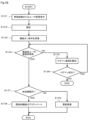
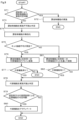
- FIG. 1B is a first flowchart outlining the process.
- FIG. 2 is a second flowchart outlining the process.
- FIG. 3 is a third flowchart outlining the process.
- FIG. 4 is a fourth flowchart outlining the process.
- FIG. 5 is a flowchart outlining the process.
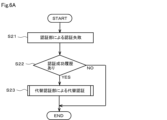
- FIG. 6A is a flowchart No. 6 for explaining the outline of the processing contents.
- FIG. 6B is a seventh flowchart outlining the process.
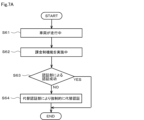
- FIG. 7A is a flowchart outlining the process.
- FIG. 1A is a block diagram of a vehicle authentication system according to a first embodiment
- FIG. 1B is a first flowchart outlining the process.
- FIG. 2 is a second flowchart outlining the process.
- FIG. 3 is a third flowchart outlining the process.
- FIG. 4 is a fourth flowchart outlining
- FIG. 7B is a flowchart No. 9 for explaining the outline of the processing contents.
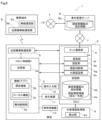
- FIG. 8 is a block diagram of a vehicle authentication system according to a second embodiment.
- FIG. 9 is a first flowchart outlining the process.
- FIG. 10A is a second flowchart outlining the process.
- FIG. 10B is a third flowchart outlining the process.
- FIG. 10C is a fourth flowchart outlining the process.
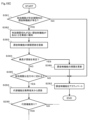
- FIG. 11A is a first flowchart for explaining the process contents in the third embodiment.
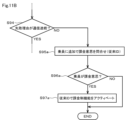
- FIG. 11B is a second flowchart outlining the process.
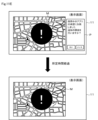
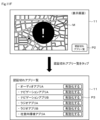
- FIG. 11C is an explanatory diagram of a display screen example No. 1.
- FIG. 11D is a third flowchart outlining the process.
- FIG. 11D is a third flowchart outlining the process.
- FIG. 11E is an explanatory diagram of a second example of a display screen.
- FIG. 11F is an explanatory diagram 3 of a display screen example.
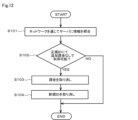
- FIG. 12 is a fourth flowchart outlining the process.
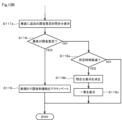
- FIG. 13A is a fifth flowchart outlining the process.
- FIG. 13B is a sixth flowchart outlining the processing contents.
- the vehicle system 1 shown in Figure 1A includes an HCU 3, a DCU 4, and other ECUs (not shown) installed inside a vehicle 2 and connected via a network, and also includes an external management server 8 outside the vehicle 2 as a server.
- a user may also carry a mobile terminal 9 such as a smartphone, tablet, or laptop computer inside or near the vehicle 2, and this mobile terminal 9 also constitutes the vehicle system 1.
- the vehicle system 1 is used as a vehicle authentication system and a vehicle control system.
- the HCU 3, DCU 4, external vehicle management server 8, and mobile terminal 9 can be connected for communication via a network 7, thereby forming the vehicle system 1.
- HCU stands for Human Machine Interface Control Unit.
- DCU stands for Domain Control Unit.
- the network 7 may be a wired communication network, a wireless communication network, etc.
- the HCU 3 constitutes a display system ECU.
- ECU is an abbreviation of Electronics Control Unit and is an electronic control device.
- the HCU 3 is equipped with a processor, a memory unit 3a, an I/O, and a bus connecting these, and functions as a control unit that executes various controls by executing programs stored in the memory unit 3a.
- the memory unit 3a indicates a non-transitory tangible storage medium that non-temporarily stores computer-readable programs and data.
- the non-transitory tangible storage medium is realized by a semiconductor memory or the like.
- a short-range wireless communication unit 5 is connected to the HCU 3, and the short-range wireless communication unit 5 enables communication with the short-range wireless communication unit 9b of the mobile terminal 9.
- the HCU 3 executes application programs (hereinafter, apps) stored in the storage unit 3a to realize various functions, such as a billing function 3b, a local function 3c, and a notification control unit 3d.
- apps application programs
- a display device 11 is connected to the HCU 3.
- the display device 11 is configured with a liquid crystal display or an organic EL display, etc., and is configured to be able to display content in monochrome or full graphics.
- the display device 11 is a center information display, etc.
- An operation input unit 12 is connected to the HCU 3.
- the operation input unit 12 is configured with a touch panel configured on the surface of the display device 11 or a mechanical switch configured to the side of the display device 11, and accepts operation input from the user and outputs an operation signal to the HCU 3.
- the HCU 3 is capable of executing various functions based on the operation signal from the operation input unit 12.
- Vehicle equipment 10 is connected to the HCU 3 or the DCU 4.
- the app functions that the HCU 3 can realize can be divided into billing functions 3b and local functions 3c.
- Billing functions 3b here refer to functions executed based on contract information for billing functions contracted with the user of the vehicle 2.
- the HCU 3 obtains a match with the contract information for the billing functions of the vehicle equipment 10, it becomes an execution unit that executes the contracted billing functions 3b.
- Local functions 3c refer to functions that are executed without charge by apps pre-installed in the memory unit 3a, and refer to functions that can be executed without a contract for the aforementioned billing functions.
- the DCU 4 is an abbreviation for Domain Control Unit, and is used to construct a centralized cockpit electronic system on an integrated software and hardware platform, and is configured with a storage unit 4d in which a database 4e is constructed.
- the DCU 4 is configured by connecting an external environment acquisition unit 6.
- the external environment acquisition unit 6 acquires environmental information outside the vehicle 2.
- the external environment acquisition unit 6 is connected to a detection unit 6a.
- the detection unit 6a is configured using sensors for acquiring environmental information outside the vehicle 2. For example, there can be mentioned a temperature sensor that detects the outside air temperature of the vehicle 2, an illuminance sensor that detects the sunlight illuminance outside the vehicle 2, a front view camera, a side view camera, a corner view camera, a rear view camera, an electronic mirror, a laser radar using LiDaR, a surrounding monitoring sensor that monitors the surroundings of the vehicle 2 using millimeter wave radar, etc.
- the detection unit 6a can also detect the status of the user by using an occupant monitor.
- the occupant monitor detects the status of occupants in the vehicle 2 or the operating status of various operating devices.
- the occupant monitor includes a camera that detects the status of an occupant in the driver's seat, passenger seat, or rear seat by capturing an image of the occupant using an image sensor and outputs an image signal.
- the driver's occupant status monitor is called a DSM.
- DSM is an abbreviation for Driver Status Monitor.
- the DCU 4 functions as a personal recognition unit that identifies the user in the vehicle 2 based on the detection results of the occupant monitor.
- the DCU 4 is connected to devices such as the HCU 3 and other ECUs (not shown) for communication, and can transmit and receive various information to and from each other.
- the electronic control device including the DCU 4, HCU 3, and other devices, has functions such as a driving control system unit that controls the driving of the vehicle 2, a surroundings monitoring system unit that monitors the surroundings of the vehicle 2, and a display system unit that presents information to the user through the display device 11.
- the driving control system unit controls the driving operation by manual driving or automatic driving using a gasoline engine, diesel engine, electric motor, etc.
- the driving control system unit realizes a manual driving control mode by manual driving, or an automatic driving mode according to various stages of automatic driving levels.
- the driving control system ECU for automatic driving executes a corresponding predetermined level of driving assistance and automatic driving by driving the driving actuator.
- level I driving assistance can perform automatic braking to avoid collisions with obstacles, following the vehicle ahead, or lane prevention driving to prevent the vehicle from going out of the lanes on either side.
- Level II autonomous driving can perform a combination of level I driving assistance, or autonomous driving under specific conditions, such as an autonomous driving mode that automatically overtakes a slow vehicle 2 on a highway or automatically merges into and out of the highway. Note that in level II autonomous driving, the driver is required to monitor.
- the driving control system performs all driving tasks while monitoring with the surrounding monitoring system in the vehicle 2, but detailed explanations are omitted. This makes it possible to realize driving control in each driving mode, whether manual driving or autonomous driving.
- the DCU 4 is configured to be connectable to a network 7 outside the vehicle through the network communication unit 4a.
- the network communication unit 4a is a block for communicating with devices inside and outside the vehicle 2.
- the network communication unit 4a communicates via the network 7 with an external management server 8 that stores information on pay-per-use functions that can be implemented by users who are passengers of the vehicle 2.
- the DCU 4 executes apps stored in the memory unit 4d to realize various functions, such as the functions of the authentication unit 4b and the alternative authentication unit 4c described below.
- the memory unit 4d represents a non-transitory tangible storage medium that non-temporarily stores computer-readable programs and data.
- the non-transitory tangible storage medium is realized by a semiconductor memory or the like.
- a database 4e is constructed in the memory unit 4d.
- the database 4e is used as an authentication history information storage unit that stores authentication history information indicating the results (success/failure) of authentication by the authentication unit 4b together with the date and time of authentication.
- the database 4e also stores and holds contract information for billing functions.
- the authentication unit 4b has the function of authenticating whether or not a billing function can be implemented through the network communication unit 4a.
- the alternative authentication unit 4c has the function of substituting the authentication of the authentication unit 4b when it is not possible to connect to the external vehicle management server 8 through the network communication unit 4a.
- a user who boards the vehicle 2 carries a mobile terminal 9.
- the mobile terminal 9 is a terminal that can be brought into the vehicle cabin and includes an interface for operation input, a display, etc.
- the mobile terminal 9 is a terminal that is capable of various operation inputs and notification processes.
- the mobile terminal 9 is configured with a processor, memory, and I/O (none of which are shown).
- the mobile terminal 9 is equipped with a wireless communication unit 9a for wirelessly communicating with the external vehicle management server 8, etc., via the network 7.
- the mobile terminal 9 is equipped with a short-range wireless communication unit 9b for short-range communication with the short-range wireless communication unit 5 using a wireless LAN such as WiFi (registered trademark) or a short-range communication technology such as Bluetooth (registered trademark).
- An app for the vehicle 2 is installed in the memory of the mobile terminal 9, and the mobile terminal 9 executes the vehicle app, allowing the user to issue control commands for the vehicle 2 and to obtain information about the vehicle 2 from the HCU 3 or DCU 4 on the vehicle 2 side.
- the user can set configuration information for the vehicle equipment 10 by operating the mobile terminal 9.
- the vehicle equipment 10 referred to here includes, but is not limited to, an air conditioner (air conditioning equipment), vehicle audiovisual equipment, etc.
- the user operates the operation input unit 12 or mobile terminal 9 to purchase or lease a subscription service related to the vehicle equipment 10.
- the subscription service will be abbreviated as "subscription.”
- the user inputs specified identification information as a new ID into a form provided by the management provider of a specified external management server 8 via the network 7 from the operation input unit 12 or mobile terminal 9.
- the user concludes a purchase contract or rental contract for the subscription service with the subscription provider using the legitimate new ID.
- Such subscription services may have a limited period of time or may be indefinite.
- contract information for the fee-based function related to the subscription service is registered in database 8a of the external management server 8 in association with the user.
- the external management server 8 stores the contract information for the fee-based function in database 8a.
- This contract information for the fee-based function is also registered in database 4e of the DCU 4.
- the contract information for the charged functions is information indicating the purchase status of subscription services for each user of the vehicle 2, such as an individual, corporation, or organization.
- the contract information for the charged functions includes purchase information or rental information for various functions purchased by the user, user identification information, billing information for a certain period or per use, and expiration date information indicating the period for which the subscription service is provided.
- Database 8a stores contract information for the charged functions for many users, linked to, for example, their names or their identification numbers.
- Subscription services for paid functions include a music distribution subscription service for vehicle audio equipment, and a video distribution subscription service that allows video to be displayed on the display device 11.
- Other examples include subscription services for comfort functions such as seat heaters to make the interior of the vehicle more comfortable, and a drive mode subscription service that allows the manual or autonomous driving performance of the vehicle 2 to be changed.
- Other examples include subscription services for functions of each level of driving assistance or autonomous driving in the autonomous driving mode, and a subscription service for lighting up the interior of the vehicle 2.
- the DCU 4 performs authentication by comparing the contract information for the billing function stored in the database 4e with the contract information for the billing function in the database 8a stored in the external management server 8 using the authentication unit 4b.
- authentication unit 4b is able to authenticate whether or not the billing function can be implemented as a result of communication processing between the DCU 4 and the external vehicle management server 8 via the network 7 from the network communication unit 4a, authentication history information indicating that authentication was successful is stored in the database 4e.
- the DCU 4 determines that the billing function can be implemented, the confirmation date and other information in the contract information for the billing function indicating that it can be implemented is updated in the database 4e as necessary.
- the contract information for the charged function stored in the database 8a by the external management server 8 and the contract information for the charged function stored in the database 4e of the DCU 4 inside the vehicle 2 are updated as needed.
- This contract information for the charged function is updated periodically, for example, every few days or once a month.
- the authentication operation by the authentication unit 4b to determine whether or not the charge system function can be implemented will be described with reference to FIG. 1B.
- the DCU 3 performs online authentication by the authentication unit 4b in S122.
- the authentication unit 4b performs online authentication when it receives a command to turn the function on in S122.
- Login information is required for online authentication with the external vehicle management server 8. If the occupant's (user's) login information has already been registered in the database 4e of the DCU 4, or if the identification information of the vehicle 2 has already been registered as login information in the database 4e of the DCU 4, the process proceeds to S127.
- the DCU 4 If it is determined in S124 that the occupant (user) is not a registered occupant and the identification number is not that of a registered vehicle 2, then in S125 the DCU 4 notifies the occupant of the vehicle 2 of a login request to log in. As a result of being notified of the login request, the occupant attempts to log in.
- Methods for authenticating the occupant's ID include authentication of the vehicle 2's identification information (such as the vehicle number), personal authentication using the occupant monitor of the detection unit 6a described above, and authentication by inputting an individual password. If the occupant succeeds in logging in, the process returns to S124 and a YES determination is made in S124.
- the DCU 4 references the contract information for the paid function of the logged-in occupant from database 4e, and determines in S127 whether the paid function is within its expiration date. If it is within its expiration date, the DCU 4 activates the paid function in S128. Conversely, if it is not within its expiration date, a notification is issued in S129 suggesting that the paid function contract be renewed. For example, it is advisable to notify the occupant of information such as "The subscription contract expired on XX/XX. would you like to renew it?" and encourage the renewal. If the renewal is approved, the DCU 4 communicates with the external management server 8, updates the contract information stored in database 4e or database 8a, and extends the expiration date.
- communication may be performed with the external management server 8 to compare and update the contract information for the fee-based function registered in the database 8a of the external management server 8.
- the authentication unit 4b If the network communication unit 4a performs communication processing with the external vehicle management server 8 via the network 7 and the network connection is interrupted due to reasons such as a weak radio reception environment, the authentication unit 4b is unable to authenticate whether or not the billing function can be implemented in S13 and determines that authentication has failed. In this case, the DCU 4 stores authentication history information indicating that authentication has failed in the database 4e.
- the DCU 4 fails to determine whether or not the charge system function can be implemented via the network communication unit 4a by the authentication unit 4b as a result of the disconnection of the network 7 in S14 (function of the alternative authentication unit 4c), the DCU 4 performs alternative authentication based on information stored in the memory unit 4d or memory unit 3a provided in the vehicle 2 (function of the alternative authentication unit 4c).
- the notification control unit 3d it is preferable for the notification control unit 3d to control notification of the result of the determination made by the alternative authentication unit 4c as to whether or not the charge system function can be implemented to the occupant. The occupant can then understand the result of the alternative authentication.
- the pay-per-use function may be allowed to continue unconditionally (function of the alternative authentication unit 4c). Also, if the DCU 4 is using a pay-per-use function when authentication by the authentication unit 4b fails and the DCU 4 makes a decision to stop the pay-per-use function, the pay-per-use function may be allowed to continue unconditionally without making a decision to stop the function (function of the alternative authentication unit 4c).
- the DCU 4 may determine that a paid function can be implemented and perform alternative authentication if the paid function to be determined whether it can be implemented falls into at least one of the following categories: a function necessary for the running of the vehicle 2, a function necessary for the safety of the user (passengers), or a function for making the internal environment of the vehicle 2 comfortable (function of the alternative authentication unit 4c). As will be explained individually below, the DCU 4 may determine that a paid function can be implemented if it falls into any two or more of these categories.
- the DCU 4 determines in S31 whether the charged function to be determined whether it can be implemented is a function necessary for the vehicle 2 to run, and if it determines that the function is necessary, the DCU 4 performs processing from S32 onwards using the function of the alternative authentication unit 4c.
- the user when driving the vehicle 2, the user sets the drive mode via the operation input unit 12 in order to change the driving performance of the vehicle 2.
- the driving control system ECU sets the driving performance to match this drive mode and controls the driving of the vehicle 2.
- This drive mode supports the operation when the user is driving manually, making it possible to control the driving.
- the standard normal mode is preset to a mode that emphasizes the balance between operability and comfort.
- the acceleration/deceleration response characteristics are set to be improved compared to normal mode.
- race drive mode the acceleration/deceleration response performance is improved even more actively than in sport mode.
- comfort mode the emphasis is on comfort.
- the snow mode is a mode that makes the driving performance of the vehicle 2 suitable for driving on snowy roads.
- the eco mode is a mode that improves fuel efficiency compared to the normal mode.
- These drive modes include functions necessary for driving the vehicle 2.
- the HCU 3 provides a service in which samples of gear shifting, accelerator work, and brake work are visually presented on the display device 11, and the user operates the gears, accelerator, and brakes in accordance with the samples.
- a service is provided that can adjust the driving performance of the vehicle 2 to performance suitable for driving on snowy roads.
- the DCU 4 Even if the DCU 4 cannot authenticate these drive modes as paid functions through the Internet communication unit 4a, if the DCU 4 determines in S31 that the functions are necessary for the vehicle 2 to travel, it determines in S32 that the target paid function can be implemented.
- the DCU 4 determines the importance of the target paid function in S33. This importance indicates the degree to which it is necessary for the vehicle 2 to run, and is set in advance in stages from necessary to high importance.
- the importance information is stored in advance in the memory unit 4d.
- the snow mode is one of the functions that is highly important for the vehicle 2 to run safely on snowy roads.
- the race drive mode is a relatively hobby-oriented mode, and is therefore one of the functions that is less important for the vehicle 2 to run.
- An example of setting the importance is given here, but the order of importance setting is not limited to this.
- the DCU 4 determines in S33 that the importance is lower than a predetermined level, then after obtaining consent through an operational instruction from the user in S34, it can activate the target paid function in S35 and make the subscription service of the paid function available. Conversely, if the DCU 4 determines that the importance of the target paid function is higher than a predetermined level, it can forcibly activate the target paid function in S35 without asking for instructions from the user and make the subscription service available. This allows the user to use the paid function in question.
- the vehicle 2 is provided with a manual driving mode and an automatic driving mode.
- the user changes the setting of the driving mode of the vehicle 2 by inputting an operation from the operation input unit 12.
- this driving mode is set, the driving control system ECU controls the driving of the vehicle 2 in accordance with this driving mode.
- the driving assistance or autonomous driving method differs according to each level.
- the user can select the driving mode by operating the operation input unit 12.
- each function such as a radar cruise control function (LCC), an emergency stop function for collision prevention, and an accelerator depression prevention function can be selectively implemented.
- the DCU 4 Even if the DCU 4 cannot authenticate these driving modes as paid functions through the Internet communication unit 4a, if the DCU 4 determines in S41 of FIG. 4 that the functions are necessary for the safety of the occupants, it determines in S42 that the paid function in question can be implemented.
- the DCU 4 determines the importance of the target paid function. This importance indicates the degree to which it is necessary for the safety of the occupants, and is preset in stages, with the importance increasing from the most necessary function.
- the importance information is pre-stored in the memory unit 4d.
- the emergency stop function for collision prevention is a necessary and important function for preventing collisions with other vehicles 2 or obstacles, taking safety into consideration. For this reason, the importance is set to be relatively high.
- the accelerator depression prevention function is an important function for preventing collisions with obstacles, taking safety into consideration, and therefore the importance is set to be relatively high.
- the radar cruise control function is a function for following a vehicle 2 traveling in front of the vehicle 2 while maintaining a certain distance, and the importance is set to be relatively low compared to the emergency stop function and the accelerator depression prevention function.
- the order of importance setting is not limited to this.
- DCU4 determines in S43 that the importance is lower than a predetermined level, it obtains consent through an operational instruction from the user in S44, and then activates the target paid function in S45. Conversely, if DCU4 determines that the importance of the target paid function is higher than a predetermined level, it forcibly activates the target paid function in S45 without asking for instructions from the user. This allows the user to use the paid function.
- the target paid function is a paid function related to safety and security and has a higher level of importance than a predetermined level may be stored in the external management server 8 or the memory unit 4d. If the paid function is related to safety and security, the DCU 4 may activate the paid function unconditionally using the alternative authentication unit 4c. In this way, when the license authentication of the paid function fails, the DCU 4 will be able to execute the paid function unconditionally if the paid function to be authenticated is a function related to the safety and security of the occupants.
- the DCU 4 determines whether the chargeable function to be determined in step S52 is a comfort function for making the environment in the vehicle comfortable by using the alternative authentication unit 4c. If the DCU 4 determines that the chargeable function is a comfort function, it determines in step S53 that the chargeable function can be executed.
- the DCU 4 determines that the outside air temperature is lower than a predetermined standard temperature, it determines that the heating function for the interior of the vehicle can be performed using vehicle equipment 10 for heating, such as an air conditioner or a seat heater (function of the alternative authentication unit 4c).
- vehicle equipment 10 for heating such as an air conditioner or a seat heater (function of the alternative authentication unit 4c).
- the DCU 4 determines that the outside air temperature is higher than a predetermined standard temperature, it determines that the cooling function can be performed using vehicle equipment 10 for cooling, such as an air conditioner (function of the alternative authentication unit 4c).
- comfort functions include music distribution services and video and movie distribution subscription services. Even if the DCU 4 cannot authenticate the paid functions of these comfort functions through the Internet communication unit 4a, if the DCU 4 determines in S52 of FIG. 5 that the functions are necessary for comfort, it determines in S53 that the paid function in question can be implemented (function of the alternative authentication unit 4c).
- the DCU 4 determines the importance of the target paid function. This importance indicates the degree to which it is necessary to make the internal environment of the vehicle 2 comfortable, and is preset in stages, with the importance of the most necessary function increasing.
- the importance information is pre-stored in the memory unit 4d.
- the cooling/heating function for the vehicle interior is set to a relatively high importance, whereas the function of turning on the lights in the vehicle interior of the vehicle 2 is set to a relatively low importance.
- the order of importance is not limited to this.
- the DCU 4 determines in S54 that the importance is lower than a predetermined level, it obtains consent through an operational instruction from the user in S55, and then activates the target paid function in S56. Conversely, if the DCU 4 determines that the importance of the target paid function is higher than a predetermined level, it forcibly activates the target paid function in S56 without asking for instructions from the user. This allows the user to use the paid function.
- the DCU 4 obtains the result of alternative authentication performed by the alternative authentication unit 4c in S14, and notifies the alternative authentication result in S14a.
- the DCU 4 may display "Alternative authentication has succeeded (or failed)" (first notification information) on the display device 11 via the HCU 3.
- the DCU 4 may also communicate with the mobile terminal 9 and display this on the display screen of the mobile terminal 9.
- the DCU 4 may display "The function will continue. It can be used until the vehicle is stopped and the engine is turned off" (second notification information) on the display device 11 or the mobile terminal 9.
- the first and second notification information may be sent and notified in chronological order, or may be sent simultaneously.
- the DCU 4 may also display a predetermined special icon representing this alternative function on the display device 11 or mobile terminal 9 only during the period in which the function is permitted by the alternative authentication unit 4c.
- the DCU 4 determines whether all authentications by the alternative authentication unit 4c have failed in S15. If all authentications by the alternative authentication unit 4c have failed, the DCU 4 disables the subscription service of the target pay function in S20. If both authentications by the authentication unit 4b and the alternative authentication unit 4c have failed, the HCU 3 may notify the user of the reason for the authentication failure in S14b. For example, the reason may be, "Authentication failed due to a network connection loss.” This allows the vehicle occupant to understand why the vehicle cannot be used, and supports the vehicle occupant to avoid feeling distrustful. Although a network connection loss has been exemplified here, it is also preferable to notify the user of the reason if authentication fails due to a cause other than a connection loss to the network 7.
- the DCU 4 enables the billing function to be continuously used through authentication by the alternative authentication unit 4c, as described above with reference to Figures 3 to 5. Even after authentication by the alternative authentication unit 4c is complete, the DCU 4 determines in S16 whether authentication is possible through the network 7 by the authentication unit 4b. In other words, the DCU 4 determines whether online authentication is possible.
- DCU4 activates the billing function in S18 by being authenticated or confirmed by authentication unit 4b in S17.
- the result of the determination by alternative authentication unit 4c as to whether or not the billing function can be implemented remains valid until authentication by authentication unit 4b becomes possible. This is because alternative authentication by alternative authentication unit 4c becomes unnecessary if confirmation is given by authentication unit 4b.
- DCU4 transitions to S16 and continues to wait until authentication becomes possible. In other words, DCU4 continues to wait until online authentication becomes possible.
- the DCU 4 detects that the power switch of the vehicle 2 has been turned off without being authenticated by the authentication unit 4b, it determines NO in S16 and YES in S19. As a result, even if alternative authentication by the alternative authentication unit 4c has been performed for the target chargeable function, the DCU 4 disables the alternative authentication by the alternative authentication unit 4c on the condition that the power switch has been turned off.
- the DCU 4 holds the result of the determination by the alternative authentication unit 4c as to whether or not to implement the billing function valid until the vehicle 2 stops and the power supply to the vehicle 2 is cut off while authentication by the authentication unit 4b is not possible.
- the billing function was valid before driving began, it is conceivable that the validity period may expire while driving.
- the DCU 4 may determine that the billing function can be implemented unconditionally while the vehicle 2 is in operation.
- the power switch is turned off, the unconditional permission by the alternative authentication unit 4c is cancelled.
- the power switch is turned on again, authentication by the authentication unit 4b is required.
- the authentication unit 4b or alternative authentication by the alternative authentication unit 4c is required again, so that the contract for the billing function can be complied with.
- the DCU 4 may notify through the HCU 3 and the display device 11 or the mobile terminal 3 that authentication by the authentication unit 4b has failed, and immediately stop the billing function.
- the DCU 4 may use the alternative authentication unit 4c to determine whether the validity period of the billing function has elapsed using GPS or a timer, and determine whether or not the billing function can be implemented. As shown in FIG. 6A, the alternative authentication unit 4c may also use authentication history information for the billing function stored in the database 4e to determine whether or not the function can be implemented.
- the DCU 4 determines NO in S22 and does not allow alternative authentication by the alternative authentication unit 4c. At this time, it is recommended that the DCU 4 only accepts authentication by the regular authentication unit 4b. If authentication has never been successful, the target paid function is a function for which no charges have been made in the past. For this reason, it is recommended that alternative authentication not be allowed. As a result, it is possible to prevent unauthorized use of paid functions that should not have been available in the first place.
- FIG. 6B shows a modified example of FIG. 6A.
- the DCU 4 may display the reason why the function cannot be used on the display device 11 in S24.
- the DCU 4 causes the display device 11 to display a message via the HCU 3.
- the message displayed in this case may be, for example, "This function has never been used and there is no history of past authentication, so it cannot be used.” This allows the vehicle occupant to understand why it cannot be used, and supports the vehicle occupant to avoid causing distrust.
- the DCU 4 may also display a message such as "Would you like to be charged after communication is restored?" in S25 of FIG. 6B and suggest that a charge be made.
- the DCU 4 may determine in S63 using the authentication unit 4b whether or not the charging function can be implemented. If the DCU 4 fails to determine whether or not the charging function can be implemented in S63, the DCU 4 may forcibly determine in S64 using the alternative authentication unit 4c that the charging function can be implemented even while the vehicle 2 is traveling.
- the DCU 4 may regard the failure to determine whether or not to implement the paid function as being due to a deterioration in the radio communication conditions, and may forcibly permit alternative authentication by the alternative authentication unit 4c and continue to activate the paid function. This allows the occupant to continue using the target paid function.
- the authentication unit 4b fails to determine whether or not the billing function can be implemented via the network communication unit 4a, alternative authentication is performed by the alternative authentication unit 4c. This allows alternative authentication even in an offline environment.
- Fig. 7B A modified example is shown in Fig. 7B.
- the process at the start of the vehicle 2 will be described.
- the DCU 4 performs authentication by the authentication unit 4b in S222, and determines whether the authentication is successful in S223. If the authentication is successful, the DCU 4 activates a pay-per-use function in S224, but if the authentication is not successful, the DCU 4 checks the authentication history of the alternative authentication unit 4c in S225.
- the DCU 4 checks the authentication history by the alternative authentication unit 4c at the time the ignition switch was last turned off. Specifically, it checks whether the usage period of the paid function that can be implemented by the alternative authentication unit 4c has expired. If, for example, the alternative authentication by the alternative authentication unit 4c is within the validity period, the DCU 4 executes the alternative authentication by the alternative authentication unit 4c in S227. This makes it possible to realize an alternative function for the paid function, improving the convenience of the occupants.
- the DCU 4 determines that the authentication has failed more than a predetermined number of times after several retries, it displays the reason for the authentication failure on the display device 11 via the HCU 3 in S230.
- the HCU 3 displays a message such as "Authentication failed the last time the power was turned off, so it is not in a state where it can be used unconditionally" on the display device 11 to inform the occupant of the reason for the authentication failure. This allows the occupant to understand why they cannot use the pay-per-use function.
- the DCU 4 may notify the occupant via the HCU 3 and the display device 11 of the function for which authentication by the authentication unit 4b has failed, together with the reason for the authentication failure, that the function cannot be used. In this case, the occupant can understand the reason why the pay function cannot be used.
- Second Embodiment The second embodiment will be described with reference to Fig. 8 to Fig. 10C.
- an alternative function that substitutes for the charged function is searched for and the alternative function is executed.
- the DCU 4 has an application function as a search unit 4f that searches for the alternative function.
- the DCU 4 also has an application function as an authentication judgment unit 4g.
- the HCU 3 has an application function as a notification control unit 3d.
- the other configurations are the same as those in the first embodiment, so the description will be omitted.
- the DCU 4 uses the authentication unit 4b to determine whether or not the target charged function can be implemented via the network communication unit 4a. If the DCU 4 determines that the charged function can be implemented, it determines YES in S71 and implements the target charged function in S72.
- the DCU 4 determines in S71 whether or not the paid function can be implemented and determines in S73 that the target paid function cannot be implemented, it disables the paid function in S74. After this, the DCU 4 searches in S76 or S81, using the search unit 4f, for an app that executes an alternative function that satisfies the same conditions as the paid function and the intended use, regardless of the reason for whether or not the connection to the network 7 can be established.
- the DCU 4 judges YES in S75 and the authentication unit 4b judges that the pay-per-use function cannot be implemented due to a loss of communication connection with the network 7, it determines that it cannot connect via the Internet communication unit 4a. In this case, the DCU 4 may search for an app with an alternative function that can be implemented in an offline state, i.e., in a local environment, in S76 using the search unit 4f.
- the DCU 4 judges in S75 that the cause is an inability to connect to the Internet, it searches offline in S76 for an app with an alternative function that has the same purpose as the pay-per-use function.
- the DCU4 searches for apps pre-installed in the local environment inside the vehicle 2, for example in the memory unit 4d of the DCU4. If an app with an alternative function is stored in the memory unit 4d, the DCU4 determines that the alternative function can be implemented. When performing an offline search, the DCU4 may search for apps installed in the memory unit 3a of the HCU3.
- the DCU 4 may use the search unit 4f in S81 to search for an app with an alternative function that can be implemented either free of charge or for a fee from the external management server 8, etc.
- the DCU 4 determines in S75 that the cause is not an inability to connect to the Internet but an expiration of the contract or a failure in personal authentication, then in S81 it searches through the network 7 for an app that has an alternative function with the same purpose as the paid function.
- the DCU 4 searches through the network 7 using the search unit 4f, it may search for an app from the external vehicle management server 8, or it may search for an app from another server (not shown) through the network 7.
- This app may be a non-paid app or an app with the same function as the one stored offline in the memory unit 4d.
- the DCU 4 may also use the search unit 4f to search for alternative functions from among functions provided in the portable terminal 4 as an external terminal.
- the communication method during the search may be a local communication connection via the short-range wireless communication units 5 and 9b, or a communication connection via the network communication unit 4a and a connection server (not shown) through the network 7.
- an app with a subscription service's paid function may be targeted if there is an app with the same purpose and corresponding function.
- the DCU 4 may determine whether or not the app with the subscription service's paid function can be used.
- the app that performs the alternative function may be an app that provides a subscription service with a paid function, an app that provides a one-time paid function (so-called shareware), or an app that provides a non-paid function (so-called freeware), etc.
- the DCU 4 uses the search unit 4f to search for a driving control app that has the same purpose as the driving assistance.
- the DCU 4 uses the search unit 4f to search for map display apps with different titles or apps with other navigation functions.
- Navigation functions include, for example, a pay-per-use function that displays high-resolution 3D maps and searches the network 7 for accurate guidance to locations where various services can be provided.
- a pay-per-use function that displays high-resolution 3D maps and searches the network 7 for accurate guidance to locations where various services can be provided.
- an alternative function is provided that displays high-resolution 2D maps and provides route guidance.
- a local function that displays simplified maps and gives geographic guidance using only simple symbols. In this way, functions can be divided into stages.
- the DCU 4 can search online for apps with other functions from the network 7 via the Internet communication unit 4a.
- the DCU 4 can also search offline for apps that have been pre-stored in the storage units 3a and 4d. In this way, functions can be searched for in stages.
- the DCU 4 may search for only the map portion from the local storage units 3a and 4d.
- the HCU 3 may read out only the map portion searched for by the DCU 4 from the storage units 3a and 4d, use it, and display it on the display screen of the display device 11.
- the DCU4 may explore the functions of an app that authenticates people in a step-by-step manner.
- a person authentication app may have a paid function with relatively high-resolution recognition accuracy, and a local function with low-resolution recognition accuracy. The same is true for such person recognition apps.
- the DCU 4 may also download and store in advance in the storage unit 4d an app that allows the implementation of an alternative function when authentication by the authentication unit 4b fails. This allows the DCU 4 to immediately search for an alternative function that is permitted to be implemented by the search unit 4f.
- the search unit 4f searches for apps with the same comfort function purpose.
- the DCU 4 may search within the same category or genre using the search unit 4f.
- the HCU 3 may implement the app with the alternative function searched for by the search unit 4f of the DCU 4.
- An alternative function to a paid function may be a 100% alternative to the target paid function, or it may be an alternative to only a portion of the function.
- paid functions tend to be much more powerful than free apps. For this reason, even if you try to realize an alternative function to a paid function using only free functions, it is unlikely that you will be able to reproduce it 100%.
- DCU4 When DCU4 is to completely replace a paid function, it is recommended that it search for and use another paid app. For example, by searching for and using another audio app as the paid app, it is possible to receive radio in addition to playing music. When the audio app's functions become unusable due to an expired certification, DCU4 should use a different music app. This music app should search for an app that is capable of both playing music and receiving radio.
- DCU4 may search for and use an app that only has a music playback function and cannot receive radio.
- DCU4 may search for and use an app that only has a music playback function and cannot receive radio from the beginning.
- DCU4 may first search for an audio app that has both a music playback function and a radio function, and then, when the audio app with both functions becomes unusable due to an expired certification, DCU4 may search for and use an app that only has a music playback function and cannot receive radio.
- the app with alternative functions being searched for is an app related to safety or security, it may be given a high priority, other low-priority apps may be stopped, and apps determined to be low-priority may be deleted (trimmed) to free up memory capacity.
- the DCU 4 may use multiple alternative functions to implement an alternative function to reproduce a paid function that has been determined to be impossible to implement.
- the alternative function may be implemented by combining apps that can substitute for some of the functions to reproduce the paid function.
- the application may link with an external mobile terminal 9 and further link with other applications.
- the HCU 3 may have a music playback function as a local function 3c
- the mobile terminal 9 may have a radio reception function
- the external management server 8 may have an audio setting function.
- the DCU 4 may send and receive apps and data that exist in various places within the system, and may execute an add-on function for further adjustment.
- apps with adjustment functions may also be searched for from external mobile terminals 9, app servers, etc.
- a mediation app with a mediation function that mediates between the volume adjustment function when the navigation app provides guidance to a destination and the music volume adjustment function of the audio app may be searched for.
- the HCU 3 may receive the searched app from the DCU 4 and execute this mediation app together with the navigation app and the audio app.
- the HCU 3 may then selectively notify the vehicle interior of route guidance or music, allowing passengers to comfortably obtain route guidance information and enjoy music.
- we have explained the linkage and mediation between the navigation app and the audio app but it is a good idea to search for apps that can adjust, link, and work together with various apps and acquire them as apps with alternative functions.
- the DCU 4 If the DCU 4 is unable to find an alternative function through the network 7 using the search unit 4f in S81, it should determine NO in S82 and return to S76 to search for an alternative function that can be implemented in an offline state.
- the authentication unit 4b determines in S79 through the network communication unit 4a whether the alternative function can be implemented. If the authentication unit 4b determines that the alternative function can be implemented and the result of S79 is YES, the DCU 4 activates the application with the alternative function in S80. The HCU 3 then implements the application with the alternative function. The user can use the alternative function, improving user convenience. If the authentication unit 4b cannot perform online authentication in S79, the DCU 4 may perform offline alternative authentication through the alternative authentication unit 4c.
- the DCU 4 executes the process shown in FIG. 10A.
- the DCU 4 executes the application with the alternative function searched for by the search unit 4f in S83.
- this alternative function is substituting for a paid function, it is advisable to notify the occupant that the paid function has been disabled due to an expired authentication, so that the occupant is made aware of this. Examples of methods for this include (1) graying out the icon of the corresponding function, (2) removing the icon of the corresponding function from the menu screen, and (3) displaying information indicating that the function has been disabled in part of the screen.
- the displayed information may be text information or a mark indicating that the function has been disabled.
- the amount of information that can be displayed on the display screen of the display device 11 is limited.
- the HCU 3 periodically checks the icons displayed on the display device 11, and if the number of icons increases beyond a predetermined amount, it organizes the displayed information by reducing the displayed information to secure the display area or by deleting less important displayed information.
- the HCU 3 may display link information for moving to the authentication registration site for the paid function app.
- the occupant can select a link to the contact information, thereby accessing the registration site for the paid function using the browser function of the HCU 3 or display device 11.
- the telephone number, URL, and QR code (registered trademark) of the contact information may also be displayed.
- the DCU 4 may determine in S84 whether or not the authentication unit 4b can authenticate the paid function, even while the app with the alternative function searched for by the search unit 4f in S83 is being executed. If the DCU 4 determines in S85 that authentication of the paid function is possible, the HCU 3 may stop execution of the app with the alternative function in S86, and activate the paid function in S87. The HCU 3 may then prioritize execution of the app with the paid function. As a result, even while the app with the alternative function is being executed, if authentication of the regular app with the paid function becomes possible during the execution of the app with the alternative function, the app with the paid function can be executed with priority, improving user convenience.
- the priority of implementing the alternative function may be increased over the chargeable function of the subscription service.
- the DCU 4 may store this change in priority in the memory unit 4d, and refer to the priority in the memory unit 4d to determine which function to implement. In this case, the HCU 3 may prioritize the implementation of the alternative function over the chargeable function.
- the HCU 3 implements the alternative function searched for by the search unit 4f. Therefore, even if license authentication for the paid function of the subscription service fails from within the vehicle 2, the alternative function can be used to implement functionality at the same level as the paid function of the subscription service, or at the minimum level required by the occupants.
- a modified example of the second embodiment will be described below with reference to FIGS. 10B and 10C.
- the DCU 4 uses the authentication unit 4b to determine whether or not to implement the billing function. If there is no section where the signal is interrupted when the navigation application is being executed (NO in S281), the billing function can be activated as usual (S282). However, there are cases where it is possible to recognize in advance that there is a section where the signal is interrupted on the route of the navigation (YES in S281). Here, the DCU 4 determines in advance the possibility of a network connection failure, thereby determining in advance that the authentication unit 4b will be unable to authenticate the billing function.
- the DCU 4 notifies the occupant in advance via the HCU 3 that there is a section on the route where radio waves are interrupted (S283), and then searches for an alternative function from the portable terminal 9 (S284).
- the DCU 4 determines in S285 whether or not an alternative function is available, and if so, suggests to the occupant in S286 that the alternative function be implemented in the specific section.
- the DCU 4 accepts an operation input from the operation input unit 12, it stores the occupant's response in the memory unit 4d.
- the DCU 4 determines in S285 that there is no alternative function, it notifies the occupant via the HCU 3 and the display device 11 in S288 that the pay function may become unavailable in the specific section. If the DCU 4 determines in S289 that the pay function can be authenticated even when approaching the specific section, it exits this routine and executes the pay function as usual. Conversely, if the DCU 4 determines in S289 that the pay function can no longer be authenticated by approaching the specific section, it takes action in S290 according to the occupant's response that was previously stored in the memory unit 4d.
- the DCU 4 can execute the paid function as normal when approaching the specific section mentioned above if authentication of the paid function is possible. Conversely, if the DCU 4 determines that authentication of the paid function is no longer possible when approaching the specific section, it will respond in S290 according to the response of the occupant that was previously stored in the memory unit 4d. At this time, even if the paid function becomes unavailable, an alternative function previously set by the occupant can be executed, improving occupant convenience.
- the processes of S381 to S386 may be executed before searching for an alternative function from the mobile terminal 9 in S284.
- the DCU 4 refers to the storage unit 4d and determines in S381 whether a charged function whose expiration date is within a predetermined period (e.g., one day, two days, one week, etc.) is registered. If the expiration date is set to be within the predetermined period in S381, the DCU 4 notifies the occupant that there is a charged function whose expiration date is about to expire by using the function of the notification control unit 3d of the HCU 3 in S382. Then, the DCU 4 proposes updating the expiration date of the charged function in S383. If the occupant confirms the update, i.e., does not deny the update, the DCU 4 communicates with the external management server 8 in S386 to update the expiration date of the charged function and stores the result in the storage unit 4d.
- a predetermined period e.g., one day, two days, one week,
- the HCU 3 searches for an alternative function from the mobile terminal 9 in S284.
- the subsequent processing is similar to the processing in S285 to S290 in FIG. 10B, and therefore a description thereof will be omitted.
- the network communication unit 4a communicates via the network 7 with an external management server 8 that stores information on paid functions that can be implemented by the occupants of the vehicle 2, and the authentication unit 4b judges whether or not a paid function can be implemented via the network communication unit 4a.
- the authentication judgment unit 4g judges in advance whether authentication of the paid function by the authentication unit 4b will be impossible by determining in advance the possibility of at least one of the following situations occurring: a poor network connection or the expiration of the paid function.
- the notification control unit 3d is configured to notify the occupants when the authentication judgment unit 4g judges that authentication by the authentication unit 4b will be impossible.
- the DCU 4 also uses the search unit 4f to search for an alternative function that has the same purpose of use as the charged function, and if the authentication judgment unit 4g determines that authentication by the authentication unit 4b will be impossible due to a poor network connection, the notification control unit 3d suggests implementing the searched alternative function. For example, if the DCU 4 determines that there is a high possibility that connection to the network 7 will not be possible due to a route setting that causes radio waves to be interrupted, it determines that the function will not be usable for a long period of time and suggests implementing the alternative function. This makes it possible to make a thoughtful suggestion to the occupants by suggesting the implementation of an alternative function even if the charged function will not be usable for a long period of time.
- the DCU 4 may add the preferences of the occupant as a condition for determining the alternative function. For example, in the case of audio applications, it may search for applications with alternative functions that are strong in deep bass or treble, or for applications with alternative functions that emphasize preferences for music genres such as J-pop or jazz. In addition, in the case of the navigation function, it may be possible to set the background color to pastel or vivid, have the occupant input these preferences in advance on an options screen, or learn the audio setting input by the occupant.
- the DCU 4 searches for an alternative function using the search unit 4f, but if it determines that the authentication unit 4b will be unable to authenticate due to the expiration of the paid function, it is advisable to suggest to the occupant that the paid function be extended using the notification control unit 3d. For example, if the expiration date is set to expire after midnight, or if the expiration date is set to expire while the vehicle 2 is traveling, it is advisable to suggest to the occupant that the expiration date of the paid function be extended. It is also desirable to suggest to the occupant that the expiration date be extended if the expiration date is set to expire relatively soon, such as within a week or two.
- the third embodiment will be described with reference to Fig. 11A to Fig. 13B. In the third embodiment, differences from the first and second embodiments will be described.
- the DCU 4 performs authentication via the network 7 using the authentication unit 4b.
- the DCU 4 determines whether the authentication is successful using the authentication unit 4b.
- the DCU4 activates the pay-per-use function using the authenticated valid ID (personal authentication identification information) in S93.
- the user can use the pay-per-use function as usual.
- the DCU 4 determines in S94 whether the reason for the failure is a communication interruption due to a deterioration in the communication environment. If the communication was not interrupted, the DCU 4 determines NO in S94 and determines that personal authentication has failed. However, if the reason for the failure is a communication interruption, the DCU 4 inquires of the user in S95 whether or not the user intends to make an additional charge for the corresponding charged function by displaying the information on the display device 11 through the HCU 3 or by communicating with the mobile terminal 9. For example, during a trial period of one month or the like, the charged function or other charged functions may be available free of charge.
- the user may be notified of this and asked whether or not the user intends to make an additional charge. If the DCU 4 does not accept an approval operation through the operation input unit 12 for a predetermined period of time, the display of whether or not the user intends to make an additional charge may be erased.
- the DCU 4 determines in S96 whether or not there is an intention to charge an additional fee.
- the DCU 4 receives input indicating an intention to charge from the operation input unit 12 or the mobile terminal 9, it determines YES in S96 and determines that the user intends to charge an additional fee for the corresponding paid function. For example, if identification information such as a credit card number is stored in advance in the memory units 3a, 4d in the vehicle 2, the DCU 4 may regard this as an intention by the user to charge and automatically determine that there is an intention to charge an additional fee.
- the DCU 4 performs additional charging via the short-range wireless communication unit 5 through the mobile terminal 9, for example by credit card payment, and activates the charging function using the personal authentication information of the new ID.
- the corresponding charging function may then be implemented by the HCU 3 or the like.
- the mobile terminal 9 may transmit the certificate to the vehicle 2, making authentication possible even offline.
- the routine may be terminated as shown in FIG. 11A, but as shown in S95a of FIG. 11B, the DCU 4 may inquire of the occupant as to whether or not they wish to add a charge by linking it to a conventional ID that has existed for a long time. Then, if the occupant indicates their intention to charge in S96a, the DCU 4 may activate the charge system function with the conventional ID in S97a.
- the DCU 4 If it is determined that the occupant intends to be charged, and even while the HCU 3 is performing the corresponding charging function, the DCU 4 performs online authentication via the network communication unit 4a in S101 of FIG. 12. When the communication environment of the network 7 improves, the DCU 4 checks the information stored in the database 8a of the external management server 8 in S101.
- the DCU 4 determines whether the corresponding paid function can be used without additional charge. If the DCU 4 determines in S102 that the corresponding paid function can be used without additional charge, it may cancel the additional charge for the corresponding paid function in S103 and cancel the occupant's decision to charge additional charges. Furthermore, the new ID may be canceled in S104. Canceling the new ID is optional, and it may be canceled after confirming the occupant's intention to cancel. Thereafter, the HCU 3 becomes able to execute the corresponding paid function using the existing legitimate ID. As a result, the occupant can effectively use the paid function using the existing legitimate ID. Also, for example, the period during which additional charges were applied and the expiration date before the authentication expired may be compared, and if it is outside the expiration date, additional charges may be implemented.
- the DCU 4 may perform a refund process.
- it may notify the passenger of this via the display device 11.
- the message at this time may be, for example, "A refund process will be performed as a double charge has occurred," or "No additional charge was made as a charge had already been made. The function is functioning without additional charge.”
- the passenger can confirm whether they ended up being charged in vain, whether a refund was made after charging, or whether they were not charged at all, which prevents the passenger from feeling uneasy.
- ⁇ Modification 1> ⁇ Regarding button operations by passengers and display screen contents of the display device 11 while the vehicle is stopped, during automatic driving, or while the vehicle is traveling> For example, if the authentication by the authentication unit 4b fails due to a communication interruption in S94 of Fig. 11A, the driver is asked whether he/she wishes to be charged. Even if the authentication by the authentication unit 4b fails due to a communication interruption in S94 of Fig. 11B, the driver is asked whether he/she wishes to be charged in S95a.
- the HCU 3 displays an inquiry display P on the display screen of the display device 11 to prompt the occupant to input an operation. For example, in the example shown in FIG. 11C, "Approval for the application in use has failed. would you like to make an additional charge? 'Yes', 'No'" is displayed to prompt the occupant to input an operation.
- the HCU 3 warns the occupant by displaying an exclamation mark in the center of the map screen M where the navigation application is running, and draws the occupant's attention to the inquiry display P. In this case, some kind of operation input is required by the operation input unit 12.
- the HCU 3 performs additional charging, activates the charging function, and then erases the inquiry display P from the display screen as shown in FIG. 11C.
- a list of expired chargeable functions may be notified by a pop-up on the display screen of the display device 11 in S96c of FIG. 11D.
- An example of the screen at this time is shown in FIG. 11F.
- the HCU 3 may prompt the occupant to input an operation by displaying a query display P2 of the "Expired App List” button while leaving a warning display of an exclamation mark on the map screen M.
- the DCU 4 refers to the database 4e, and the HCU 3 selects the expired chargeable functions stored in the database 4e and displays them on the display screen. See the lower column of FIG. 11F.
- the HCU 3 may directly display a list of expired applications on the display screen of the display device 11 as shown in the lower section of FIG. 11F, without displaying the inquiry display P2 for the list of expired applications as shown in the upper section of FIG. 11F.
- the HCU 3 may allow the occupant to selectively determine whether or not a paid function is necessary. At this time, the HCU 3 may display a question display P3 indicating "enable", and selectively enable, i.e., activate, the paid function if the question display P3 is pressed. Here, the period for which charges have been incurred and its history information may be displayed for each paid function.
- ⁇ Modification 2> Regard the display of charging intention while the vehicle is traveling and the display screen contents of the display device 11> In particular, it is difficult for the driver to indicate his/her intention to charge additional fees while the vehicle is being driven manually, etc. For example, if the DCU 4 needs to inquire in detail about the intention to charge additional fees from the occupant, it may be necessary for the driver to input operations multiple times.
- charging conditions such as credit card number information, expiration date (charging method), and expiration date and validity count required when adding a charging function.
- the charging method indicates, for example, credit card number and expiration date information.
- charging conditions can include conditions for a charging period in units of, for example, one day, one week, one month, three months, six months, or one year, and conditions for the number of times such as once or three times while vehicle 2 is running. In such cases, it is not desirable for passengers in vehicle 2, especially the driver, to input operations multiple times. Therefore, it is advisable to perform all authentication by accepting a single button operation input.
- the operation buttons of the operation input unit 12 at this time may be icons displayed on the display screen of the display device 11 or physical buttons installed on the steering wheel or the like. In the case of icons, they are not normally displayed on the display screen of the display device 11.
- the HCU 3 displays an icon on the display screen only in an emergency, and the occupant taps this icon to accept operation input via the touch panel. In particular, it is preferable that the icon is configured to be displayed only "when an emergency operation is required from the occupant while driving.”
- buttons installed around the steering wheel are not normally assigned functions. Only when the HCU 3 requests an emergency operation from the occupant while driving, can it display the role of a physical button on the display screen of the display device 11 and treat the result of pressing the physical button as the operation input result of the operation input unit 12, indicating the decision on the charging intention.
- the charging intention including the charging method and charging conditions described above may be set in advance in the memory unit 3a or the memory unit 4d of the DCU 4 via the HCU 3.
- the charging intention including the charging method and charging conditions may be set in the mobile terminal 9.
- the HCU 3 may display an option setting screen and allow the occupant to operate and input the charging method and charging conditions from the operation input unit 12.
- the mobile terminal 9 may display an option setting screen on the display screen and allow the occupant to operate and input the charging method and charging conditions.
- the DCU 4 can refer to this information on the intention to charge locally or through the network 7 and determine that there is an intention to charge without performing various authentication procedures.
- the intention to charge is set in advance in the storage unit 3a, 4d or the mobile terminal 9, for example, if the condition of S94 in FIG. 11A is met, the processing of S95 and S96 can be omitted and the charging function can be immediately activated in S97. Also, for example, if it is determined that the condition of S94 in FIG. 11B is not met, the processing of S95a and S96a can be omitted and the charging function can be immediately activated in S97a.
- the DCU 4 may determine whether or not the occupant intends to request additional charges for the relevant paid function not only when online authentication by the authentication unit 4b fails, but also when offline alternative authentication by the alternative authentication unit 4c fails.
- the DCU 4 performs authentication via the network 7 using the authentication unit 4b.
- the DCU 4 determines whether the authentication using the authentication unit 4b has been successful.
- DCU4 activates the pay-per-use function using the authenticated valid ID (personal authentication identification information) in S113.
- the user can use the pay-per-use function as usual.
- DCU 4 determines in S114 whether the reason for the failure is a communication interruption due to a deterioration in the communication environment. If there is no communication interruption, DCU 4 determines NO in S114, determines that personal authentication has failed, and exits the routine. However, if the reason for the failure is a communication interruption, DCU 4 substitutes the authentication by authentication unit 4b with alternative authentication unit 4c in S115. If authentication by alternative authentication unit 4c fails, DCU 4 asks the user in S117 whether he or she wishes to be charged for the corresponding fee-based function.
- the DCU 4 may make an inquiry from the mobile terminal 9 using communication of the short-range wireless communication unit 5, and in S118, it may determine whether or not there is an intention to make an additional charge.
- the DCU 4 receives an input indicating an intention to make a charge from the mobile terminal 9, it determines YES in S118 and determines that the user intends to make an additional charge for the corresponding charged function.
- the DCU 4 may make an additional charge using, for example, a credit card payment, and activate the charged function using a new ID (personal authentication information).
- the corresponding charged function may then be implemented by the HCU 3 or the like. Also, as shown in FIG.
- the DCU 4 may erase the inquiry display P in S118b and display a list of expired charged functions in S118c. It may also execute a process similar to that shown in ⁇ Modification 1>.
- the DCU 4 determines whether the occupant intends to make an additional payment for the corresponding paid function. Then, when the DCU 4 determines that the occupant intends to make an additional payment for the corresponding paid function, it enables the corresponding paid function to be implemented. This makes it possible to meet the occupant's requests and improve user convenience.
- the present disclosure is not limited to the above-described embodiment, but can be implemented in various modifications and can be applied to various embodiments without departing from the spirit of the present disclosure.
- the authentication process is mainly performed by the DCU 4, but some or all of the processes and functions may be performed by another vehicle-mounted device (e.g., the HCU 3). Conversely, the functions installed in the HCU 3 may be performed by another vehicle-mounted device (e.g., the DCU 4).
- the methods of the HCU 3 or other DCU 4 described in this disclosure may be realized by a dedicated computer provided by configuring a processor and memory programmed to execute one or more functions embodied in a computer program.
- the methods of the HCU 3 and DCU 4 described in this disclosure may be realized by a dedicated computer provided by configuring a processor with one or more dedicated hardware logic circuits.
- the control device and the methods thereof described in this disclosure may be realized by one or more dedicated computers configured by combining a processor and memory programmed to execute one or more functions with a processor configured with one or more hardware logic circuits.
- the computer program may be stored in a computer-readable non-transient tangible recording medium as instructions executed by the computer.
- the vehicle authentication system includes an internet communication unit (4a) that communicates via a network with a server (8) that stores information regarding chargeable functions that can be implemented by vehicle occupants, an authentication unit (4b) that authenticates whether or not the chargeable function can be implemented through the internet communication unit, and an alternative authentication unit (4c) that substitutes for the authentication unit's authentication when it is not possible to connect to the server through the internet communication unit, wherein the alternative authentication unit performs alternative authentication when the connection with the server is lost and as a result the authentication unit fails to determine whether or not the chargeable function can be implemented through the internet communication unit.
- an internet communication unit (4a) that communicates via a network with a server (8) that stores information regarding chargeable functions that can be implemented by vehicle occupants
- an authentication unit (4b) that authenticates whether or not the chargeable function can be implemented through the internet communication unit
- an alternative authentication unit (4c) that substitutes for the authentication unit's authentication when it is not possible to connect to the server through the internet communication unit, wherein the alternative authentication unit performs alternative
- the alternative authentication unit determines that a paid function can be implemented and performs alternative authentication when the paid function to be determined as to whether it can be implemented falls under at least one of a function necessary for the running of the vehicle, a function necessary for the safety of occupants, or a function for making the internal environment of the vehicle comfortable.
- a vehicle authentication system according to any one of [11] to [13], wherein when the vehicle is traveling and the authentication unit fails to determine whether or not the charging function can be implemented while the charging function is being implemented, the alternative authentication unit determines that the charging function can be implemented.
- a notification control unit (3d) that notifies the occupant The vehicle authentication system according to any one of [11] to [14], wherein when the alternative authentication unit determines whether or not the paid function can be implemented through the alternative authentication, the notification control unit controls to notify the occupant of the result of the determination made by the alternative authentication unit as to whether or not the paid function can be implemented.
- a vehicle authentication system according to any one of [11] to [15], wherein the result of the determination made by the alternative authentication unit as to whether or not a charge-based function can be implemented is valid until authentication by the authentication unit is possible, or until the vehicle is stopped and the power source of the vehicle is cut off while authentication by the authentication unit is not possible.
- the vehicle authentication system further comprises a notification control unit (3d) that notifies the occupant, and if the power is turned off while the authentication by the authentication unit has failed, and if authentication also fails the next time the power is turned on, the notification control unit notifies the occupant that the function for which the authentication by the authentication unit has failed cannot be used.
- a notification control unit (3d) that notifies the occupant, and if the power is turned off while the authentication by the authentication unit has failed, and if authentication also fails the next time the power is turned on, the notification control unit notifies the occupant that the function for which the authentication by the authentication unit has failed cannot be used.
- the vehicle authentication system according to any one of [11] to [17], further comprising an authentication history information storage unit that stores authentication history information of a paid function, and the alternative authentication unit uses the authentication history information of the paid function to determine whether or not to implement the function.
- the authentication method for a vehicle includes a process in which an internet communication unit (4a) communicates via a network with a server (8) that stores information regarding paid functions that can be performed by vehicle occupants, a process in which an authentication unit (4b) authenticates whether or not the paid function can be performed through the internet communication unit, and a process in which an alternative authentication unit (4c) substitutes for the authentication of the authentication unit when it is not possible to connect to the server through the internet communication unit, wherein the alternative authentication unit performs alternative authentication when the authentication unit fails to determine whether or not the paid function can be performed through the internet communication unit as a result of the network connection being interrupted.
- a vehicle authentication program comprising: a procedure for communicating via a network with a server (8) that stores information regarding chargeable functions that can be performed by vehicle occupants using an internet communication unit (4a); a procedure for authenticating whether or not the chargeable function can be performed via the internet communication unit using an authentication unit (4b); and a procedure for substituting the authentication of the authentication unit when it is not possible to connect to the server via the internet communication unit using an alternative authentication unit (4c), and which causes the vehicle authentication system to execute a procedure for substituting authentication by the alternative authentication unit when the authentication unit fails to determine whether or not the chargeable function can be performed via the internet communication unit as a result of the network connection being interrupted.
- a vehicle control system comprising: an internet communication unit (4a) that communicates via a network with a server that stores information on paid functions that can be implemented by vehicle occupants; an authentication unit (4b) that determines whether or not the paid function can be implemented via the internet communication unit; a search unit (4f) that searches for an alternative function that has the same purpose of use as the paid function; and a control unit (3) that implements the searched alternative function when the authentication unit determines that the paid function cannot be implemented.
- a vehicle control system according to [21] or [22], wherein, when the authentication unit determines that the pay-for-play function cannot be implemented even though a connection with the server via a network has been established, the search unit searches for executable alternative functions via the server.
- the authentication unit also determines whether the alternative function can be implemented, and the control unit implements the alternative function if the authentication unit determines that the alternative function can be implemented.
- the vehicle control system according to any one of [21] to [25], wherein the search unit searches for an alternative function from functions provided in an external terminal.
- the control unit of any one of the vehicle control systems [21] to [26] uses a plurality of the alternative functions and performs the alternative functions so as to reproduce the pay function that is determined to be infeasible.
- a vehicle control system according to any one of [21] to [27], wherein when the authentication unit is able to implement the paid function while the alternative function is being implemented, the control unit stops implementing the alternative function and prioritizes the implementation of the paid function.
- a vehicle control system according to any one of [21] to [28], wherein when the alternative function is implemented, the priority of implementing the alternative function is increased over the paid function, and the control unit prioritizes implementation of the alternative function over the paid function.
- a network communication unit (4a) for communicating with a server storing information on pay-per-use functions that can be executed by a vehicle occupant via a network
- an authentication unit (4b) for determining whether or not a billing function can be implemented via the network communication unit
- an authentication judgment unit (4) for judging in advance the possibility of occurrence of at least one of a network connection failure and an expiration of the term of validity of the billing function, thereby judging in advance that the authentication unit will be unable to authenticate the billing function
- the vehicle control system includes a notification control unit (3) that notifies an occupant when the authentication determination unit determines that authentication by the authentication unit will be impossible.
- a search unit (4f) for searching for an alternative function having the same purpose of use as the chargeable function The vehicle control system of claim 30, wherein when the authentication judgment unit determines that authentication by the authentication unit is impossible due to a poor network connection, the notification control unit proposes implementing the searched alternative function.
- a search unit (4f) for searching for an alternative function having the same purpose of use as the chargeable function When the authentication judgment unit judges that the authentication of the authentication unit becomes impossible due to the expiration of the term of validity of the charging function,
- the vehicle control system according to any one of [30] to [32], wherein the notification control unit proposes to an occupant to extend the pay function.
- a vehicle control method comprising the steps of: an internet communication unit communicating via a network with a server storing information on paid functions that can be implemented by vehicle occupants; an authentication unit determining whether or not the paid function can be implemented via the internet communication unit; a search unit searching for an alternative function that has the same purpose of use as the paid function; and a control unit implementing the searched alternative function when the authentication unit determines that the paid function cannot be implemented.
- a vehicle control program that causes a vehicle control system to execute the following steps: communicating via a network with a server that stores information on paid functions that can be implemented by vehicle occupants using an online communication unit; determining whether or not a paid function can be implemented via the online communication unit using an authentication unit; searching for an alternative function that has the same purpose of use as the paid function using a search unit; and, if the authentication unit determines that the paid function cannot be implemented, executing the searched alternative function using a control unit.
- a vehicle control system comprising: an internet communication unit (4a) that communicates via a network with a server (8) that stores information on paid functions that can be implemented by vehicle occupants; an authentication unit (4b) that determines whether or not a paid function can be implemented via the internet communication unit; and a control unit (3) that enables the implementation of the paid function, and when authentication by the authentication unit fails, determines whether or not the occupant intends to be charged for the corresponding paid function, and when the control unit determines that the occupant intends to be charged for the corresponding paid function, enables the implementation of the corresponding paid function.
- the control unit performs online authentication via the Internet communication unit, compares the information stored in the server, and when it determines that the corresponding charging function is available without additional charge, cancels the additional charge for the corresponding charging function and implements the corresponding charging function [41].
- a notification control unit for displaying whether or not there is an intention to charge the additional fee,
- the vehicle control system according to any one of [41] to [43], wherein the notification control unit erases the display indicating whether or not there is an intention to charge additionally when the approval operation is not accepted by the operation input unit for a predetermined period of time.
- a vehicle control system comprising: an internet communication unit (4a) that communicates via a network with a server (8) that stores information on paid functions that can be implemented by vehicle occupants; an authentication unit (4b) that determines whether or not a paid function can be implemented via the internet communication unit; and a control unit (3) that enables the implementation of the paid function, and an alternative authentication unit (4d) that substitutes for the authentication by the authentication unit when authentication by the authentication unit fails, wherein the alternative authentication unit determines whether or not the occupant intends to make an additional charge for a corresponding paid function when alternative authentication by the alternative authentication unit fails, and when the control unit determines that the occupant intends to make an additional charge for the corresponding paid function, enables the implementation of the corresponding paid function.
- a vehicle control method comprising the steps of: an internet communication unit communicating via a network with a server storing information on paid functions that can be implemented by vehicle occupants; an authentication unit determining whether or not a paid function can be implemented via the internet communication unit; and a control unit implementing the paid function, wherein the authentication unit determines whether or not the occupant intends to be charged for the corresponding paid function when authentication by the authentication unit fails, and the control unit enables the implementation of the corresponding paid function when it determines that the occupant intends to be charged for the corresponding paid function.
- a vehicle control program that causes a vehicle control system to execute the following steps: an online communication unit communicates via a network with a server that stores information on paid functions that can be implemented by vehicle occupants; an authentication unit determines whether or not a paid function can be implemented via the online communication unit; and a control unit implements a paid function, wherein the authentication unit determines whether or not the occupant intends to be charged for the corresponding paid function when authentication by the authentication unit fails, and the control unit enables the implementation of the corresponding paid function when it determines that the occupant intends to be charged for the corresponding paid function.
- 1 indicates a vehicle authentication system (vehicle control system)
- 3 indicates an HCU (control unit)
- 4 indicates a DCU
- 4a indicates a network communication unit
- 4b indicates an authentication unit
- 4c indicates an alternative authentication unit
- 4d indicates a memory unit
- 4f indicates a search unit
- 6 indicates an external information acquisition unit
- 8 indicates an external vehicle management server (server).
- server vehicle management server
Landscapes
- Engineering & Computer Science (AREA)
- Business, Economics & Management (AREA)
- Accounting & Taxation (AREA)
- Theoretical Computer Science (AREA)
- Physics & Mathematics (AREA)
- General Physics & Mathematics (AREA)
- Finance (AREA)
- Software Systems (AREA)
- Strategic Management (AREA)
- General Business, Economics & Management (AREA)
- General Engineering & Computer Science (AREA)
- Human Computer Interaction (AREA)
- Development Economics (AREA)
- Economics (AREA)
- Computer Security & Cryptography (AREA)
- Traffic Control Systems (AREA)
Abstract
Description
認証部による認証に失敗した場合に該当する課金制機能への乗員の追加の課金意思有無の判断を行い、制御部は、乗員が該当する課金制機能に対して追加の課金意思があると判断した場合、該当する課金制機能の実施を可能にしている。これにより乗員の利便性を向上できる。
第1実施形態について図1Aから図7Bを参照しながら説明する。図1Aに示す車両用システム1は、車両2の内部に設置されたHCU3、DCU4、及び、他のECU(図示せず)をネットワーク接続して備えると共に、車両2の外部に車外管理サーバ8をサーバ相当として備える。またユーザはスマートフォン、タブレット、又は、ノートパソコンなどの携帯端末9を車両2内又はその周辺で所持することがあり、この携帯端末9も車両用システム1を構成する。車両用システム1は、車両用認証システム及び車両用制御システムとして用いられる。
HCU3は表示系ECUを構成する。ECUはElectronics Control Unitの略であり電子制御装置である。HCU3は、プロセッサ、記憶部3a、I/O、これらを接続するバスを備えており、記憶部3aに記憶されたプログラムを実行することで各種の制御を実行する制御部として機能する。記憶部3aは、コンピュータによって読み取り可能なプログラム及びデータを非一時的に格納する非遷移的実体的記憶媒体(non-transitory tangible storage medium)を示す。非遷移的実体的記憶媒体は、半導体メモリなどにより実現される。HCU3には、近距離無線通信部5が接続されており、近距離無線通信部5により携帯端末9の近距離無線通信部9bとの間で通信可能になっている。
DCU4は、統合されたソフトウェアとハードウェアのプラットフォーム上で集中型のコックピット電子システムを構築するもので、データベース4eが構築された記憶部4dを搭載して構成されている。DCU4はDomain Control Unitの略を示す。
車両2に搭乗するユーザは携帯端末9を所持する。携帯端末9は、車室内に持ち込み可能な端末であり、操作入力用のインタフェース及び表示器等を備えている。携帯端末9は、各種の操作入力及び報知処理が可能な端末である。
<車外管理サーバ8との接続が良好な場合>
イグニッションスイッチや電源ボタンなどにより運転者が電源スイッチをオン操作すると、HCU3やDCU4などに電源投入される。DCU4のネット通信部4aはネットワーク7を通じて車外管理サーバ8との接続を確立し車外管理サーバ8との間でセッションを確立する。DCU4のネット通信部4aは車外管理サーバ8との接続が途切れていない限り、DCU4はネットワーク7を通じた通信状況が良好であると判断する。このときネット通信部4aは車外管理サーバ8との間で通信可能になる。
以下、車両2の走行中における処理動作について図2から図6Bを参照しながら説明する。図2のS11において、車両2が道路を走行中、ネット通信部4aはS12においてネットワーク7を通じて車外管理サーバ8との間の接続を持続できているか否かを定期的に判断する。
具体的には、図3に示すように、DCU4は、S31において実施可否を判断する対象となる課金制機能が車両2の走行に必要な機能であるか否かを判断した結果、必要であると判断した場合には、S32以降の処理を代替認証部4cの機能により実施する。
また図4に示すように、DCU4は、S41において実施可否を判断する対象となる課金制機能がユーザの安全のために必要な機能であるか否かを判断した結果、必要な機能であると判断した場合には、S42以降の処理を代替認証部4cにより実行する。
また図5に示すように、DCU4は、S52において実施可否を判断する対象となる課金制機能が車室内の環境を快適にするための快適機能か否かを代替認証部4cにより判断する。DCU4は、快適機能に該当すると判断した場合には、S53において対象の課金制機能を実施可能と判断する。
ここでは重要度の設定の一例を挙げたが、この重要度の順序設定に限られるものではない。
図7Bに変形例を示している。ここでは車両2の起動時の処理を説明する。車両2のイグニッションスイッチがオンされ車両2が起動すると、DCU4は、S222において認証部4bにより認証を行い、S223において認証成功したか否かを判定する。DCU4は、認証成功したときにはS224において課金制機能をアクティベートするが、認証成功しなければS225において代替認証部4cの認証履歴を確認する。
第2実施形態について図8から図10Cを参照しながら説明する。第2実施形態では、課金制機能を認証できない場合には、対象の課金制機能に代替する代替機能を探索して当該代替機能を実行する形態を説明する。
<第2実施形態の変形例その1>
第2実施形態の変形例その1について図10Bを参照して説明する。DCU4は、認証部4bにより課金制機能の実施可否を判断するが、ナビアプリが実行されているときに、電波の途切れる区間が存在しなければ(S281でNO)、通常通り課金制機能をアクティベートすればよい(S282)。しかし、ナビゲーションの道案内の経路上に電波の途切れる区間が存在することが予め認識できる場合がある(S281でYES)。ここでDCU4は、ネットワーク接続不良の発生可能性を事前に判断することで、認証部4bによる課金制機能の認証が不可能になることをあらかじめ判断している。
また、図10CのようにS284において代替機能を携帯端末9から探索する前にS381~S386のように処理を実行するようにしてもよい。DCU4は、記憶部4dを参照しS381において有効期限が所定期間内(例えば、1日、2日、一週間など)の課金制機能が登録されているか否かを判定する。DCU4は、S381において有効期限が所定期間内と設定されている場合、S382において有効期限切れが近い課金制機能があることをHCU3の報知制御部3dの機能により乗員に報知する。そしてDCU4は、S383において課金制機能の期限更新を提案する。乗員が更新を肯定、すなわち更新を否定しない場合には、DCU4はS386において課金制機能の期限を更新するように車外管理サーバ8と通信すると共に記憶部4dに記憶させる。
第3実施形態について図11Aから図13Bを参照しながら説明する。第3実施形態では、第1実施形態又は第2実施形態と異なる部分について説明する。図11Aに示すように、DCU4は、S91において認証部4bによりネットワーク7を通じて認証を行う。DCU4は、S92において認証部4bにより認証に成功したか否かを判断する。
<車両停車中、自動運転中、又は車両走行中における乗員によるボタン操作と表示装置11の表示画面内容について>
例えば、図11AのS94において認証部4bによる認証の失敗理由が通信途絶である場合には、乗員に追加で課金意思を問い合わせることになる。また、図11BのS94において認証部4bによる認証の失敗理由が通信途絶によらなかったとしても、S95aにおいて乗員に追加で課金意思を問い合わせることになる。
<特に車両走行中における課金意思表示と表示装置11の表示画面内容について>
特に運転手は、手動運転などで車両走行中に追加の課金の意思を示しにくい。例えば、DCU4が、乗員に対し追加の課金意思を問い合わせるときに詳細な問合せを必要としてしまう場合、何度も操作入力を必要とすることがある。
DCU4は、認証部4bによるオンライン認証に失敗した場合に限らず、代替認証部4cによるオフラインの代替認証に失敗した場合に、該当する課金制機能への乗員の追加の課金意思有無の判断を行ってもよい。
本開示は、前述した実施形態に限定されるものではなく、種々変形して実施することができ、その要旨を逸脱しない範囲で種々の実施形態に適用可能である。
前述実施形態では、DCU4が主体として認証処理を実行する形態を示したが、その一部又は全部の処理、機能を他の車載器(例えば、HCU3)が実行するようにしても良い。また逆に、HCU3に搭載されている機能を他の車載器(例えば、DCU4)が実行するようにしても良い。
その中でも、本開示の第1態様によれば、請求の範囲の記載内容に加え、以下の開示内容も含む。
[11]
車両の乗員が実施可能な課金制機能に関する情報を保存しているサーバ(8)との間でネットワークを介して通信するネット通信部(4a)と、前記ネット通信部を通じて前記課金制機能の実施可否について認証する認証部(4b)と、前記ネット通信部を通じて前記サーバに接続できない場合に前記認証部の認証を代替する代替認証部(4c)と、を備え、前記代替認証部は、前記サーバとの接続が途切れた結果、前記認証部が前記ネット通信部を介して前記課金制機能の実施可否の判断に失敗した場合に代替認証する車両用認証システム。
前記代替認証部は、実施可否を判断する対象となる課金制機能が、前記車両の走行に必要な機能、乗員の安全のために必要な機能、又は、前記車両の内部環境を快適にするための機能、のうち少なくとも1つに当てはまる場合に前記課金制機能を実施可能と判断して代替認証する[11]の車両用認証システム。
車両の外部の環境情報を取得する外部環境取得部(6)を備え、前記代替認証部は、前記車両の内部環境を快適にするための快適機能の実施可否を判断する場合には、前記課金制機能の実施可否の判断条件に前記車両の外部の環境情報を加えて代替認証する[11]又は[12]の車両用認証システム。
前記車両が走行中であり、前記課金制機能の実施中に前記認証部による前記課金制機能の実施可否の判断に失敗した場合、前記代替認証部は、前記課金制機能を実施可能と判定する[11]から[13]の何れかの車両用認証システム。
前記乗員へ報知を行う報知制御部(3d)をさらに備え、
前記代替認証部は、前記代替認証により前記課金制機能の実施可否を判断すると、前記報知制御部は、前記代替認証部による課金制機能の実施可否の判断結果を前記乗員へ報知制御する[11]から[14]の何れかの車両用認証システム。
前記代替認証部による課金制機能の実施可否の判断結果は、前記認証部による認証が可能となるまで、又は、前記認証部による認証が不可能なまま当該車両が停止して当該車両の電源が切断されるまで有効とする[11]から[15]の何れかの車両用認証システム。
前記乗員へ報知を行う報知制御部(3d)をさらに備え、前記認証部による認証が失敗したまま電源が切断され、且つ、次回、電源がオンされた時にも認証に失敗した場合には、前記報知制御部は、認証部による認証に失敗した機能について使用不可能であることを乗員に報知する[16]の車両用認証システム。
車両は課金制機能の認証履歴情報を保存する認証履歴情報保存部を備え、前記代替認証部は、前記課金制機能の認証履歴情報を実施可否の判断に使用する[11]から[17]の何れかの車両用認証システム。
ネット通信部(4a)が車両の乗員が実施可能な課金制機能に関する情報を保存しているサーバ(8)との間でネットワークを介して通信する過程と、認証部(4b)が前記ネット通信部を通じて前記課金制機能の実施可否について認証する過程と、代替認証部(4c)が、前記ネット通信部を通じて前記サーバに接続できない場合に前記認証部の認証を代替する過程と、を備え、前記代替認証部は、前記ネットワーク接続が途切れた結果、前記認証部が前記ネット通信部を介して前記課金制機能の実施可否の判断に失敗した場合に代替認証する車両用認証方法。
車両用認証システムに、ネット通信部(4a)により車両の乗員が実施可能な課金制機能に関する情報を保存しているサーバ(8)との間でネットワークを介して通信する手順と、認証部(4b)により前記ネット通信部を通じて前記課金制機能の実施可否について認証する手順と、代替認証部(4c)により前記ネット通信部を通じて前記サーバに接続できない場合に前記認証部の認証を代替する手順と、を備え、前記ネットワーク接続が途切れた結果、前記認証部が前記ネット通信部を介して前記課金制機能の実施可否の判断に失敗した場合に前記代替認証部により代替認証する手順、を実行させる車両用認証プログラム。
[21]
車両の乗員が実施可能な課金制機能の情報を保存しているサーバとの間でネットワークを介して通信するネット通信部(4a)と、前記ネット通信部を介して課金制機能の実施可否を判断する認証部(4b)と、前記課金制機能と使用目的と同一である代替機能を探索する探索部(4f)と、前記認証部により前記課金制機能が実施不可能であると判断された場合に、前記探索された代替機能を実施する制御部(3)と、を備える車両用制御システム。
前記認証部が、前記ネットワークの通信接続切れにより前記課金制機能の実施不可能と判断した場合、前記探索部は、オフライン状態で実施可能な前記代替機能を探索する[21]に記載の車両用制御システム。
前記認証部が、前記サーバとのネットワークを介した接続が成立しているにもかかわらず前記課金制機能の実施不可能と判断した場合、前記探索部は、実施可能な前記代替機能について前記サーバを通じて探索する[21]又は[22]の車両用制御システム。
前記探索部は、前記ネットワークを通じて探索しても前記代替機能を探索できない場合、オフライン状態で実施可能な前記代替機能を探索する[21]から[23]の何れかの車両用制御システム。
前記認証部は、前記代替機能の実施可否も判断し、前記制御部は、前記認証部により実施可能と判断された場合に前記代替機能を実施する[21]から[24]の何れかの車両用制御システム。
前記探索部は、外部端末に設けられた機能から代替機能を探索する[21]から[25]の何れかの車両用制御システム。
[27]
前記制御部は、前記代替機能を複数使用し、前記実施不可能と判断された前記課金制機能を再現するように代替機能を実施する[21]から[26]の何れかの車両用制御システム。
前記代替機能を実施中に、前記認証部による前記課金制機能の実施が可能となった場合、前記制御部は前記代替機能の実施を中止し、前記課金制機能の実施を優先する[21]から[27]の何れかの車両用制御システム。
前記代替機能が実施された場合には、前記課金制機能よりも前記代替機能を実施する優先度を上げ、前記制御部は前記課金制機能よりも前記代替機能の実施を優先する[21]から[28]の何れかの車両用制御システム。
車両の乗員が実施可能な課金制機能の情報を保存しているサーバとの間でネットワークを介して通信するネット通信部(4a)と、
前記ネット通信部を介して課金制機能の実施可否を判断する認証部(4b)と、
ネットワーク接続不良、前記課金制機能の有効期限切れ、の少なくとも何れか1つの状況の発生可能性を事前に判断することで、前記認証部による前記課金制機能の認証が不可能になることをあらかじめ判断する認証判断部(4)と、を備え、
前記認証判断部が、前記認証部による認証が不可能になると判断した場合に、乗員に報知を行う報知制御部(3)を備える車両用制御システム。
前記課金制機能と使用目的と同一である代替機能を探索する探索部(4f)、をさらに備え、
前記認証判断部が、前記ネットワーク接続不良により前記認証部の認証が不可能になると判断した場合に、前記報知制御部は前記探索された代替機能の実施を提案する[30]の車両用制御システム。
前記探索部は、前記代替機能の決定に乗員の嗜好を条件に加える[31]の車両用制御システム。
前記課金制機能と使用目的と同一である代替機能を探索する探索部(4f)、をさらに備え、
前記認証判断部が、前記課金制機能の有効期限切れにより前記認証部の認証が不可能になると判断した場合、
前記報知制御部は前記課金制機能の延長を乗員に提案する[30]から[32]の何れかの車両用制御システム。
[34]
ネット通信部が車両の乗員が実施可能な課金制機能の情報を保存しているサーバとの間でネットワークを介して通信する過程と、認証部が前記ネット通信部を介して課金制機能の実施可否を判断する過程と、探索部が前記課金制機能と使用目的と同一である代替機能を探索する過程と、制御部は、前記認証部により前記課金制機能が実施不可能であると判断された場合に、前記探索された代替機能を実施する過程と、を備える車両用制御方法。
車両用制御システムに、ネット通信部により車両の乗員が実施可能な課金制機能の情報を保存しているサーバとの間でネットワークを介して通信する手順と、認証部により前記ネット通信部を介して課金制機能の実施可否を判断する手順と、探索部により前記課金制機能と使用目的と同一である代替機能を探索する手順と、前記認証部により前記課金制機能が実施不可能であると判断された場合に、前記探索された代替機能を制御部により実施する手順と、実施させる車両用制御プログラム。
[41]
車両の乗員が実施可能な課金制機能の情報を保存しているサーバ(8)とネットワークを介して通信するネット通信部(4a)と、前記ネット通信部を介して課金制機能の実施可否を判断する認証部(4b)と、前記課金制機能を実施可能にする制御部(3)と、を備え、前記認証部による認証に失敗した場合に該当する課金制機能への乗員の追加の課金意思有無の判断を行い、前記制御部は、乗員が前記該当する課金制機能に対して追加の課金意思があると判断した場合、前記該当する課金制機能の実施を可能とする車両用制御システム。
前記認証部による乗員の課金意思があると判断され、前記該当する課金制機能を実施している場合、前記制御部は、前記ネット通信部を介してオンライン認証を行い前記サーバに保存されている情報を照合し、前記該当する課金制機能を追加課金なしで利用可能な状態であると判断した場合には、前記該当する前記課金制機能に対する追加の課金を取り消しつつ、前記該当する課金制機能を実施する[41]の車両用制御システム。
乗員により追加の課金意思がある旨の承認操作を受け付ける操作入力部を設ける請求項[41]又は[42]の車両用制御システム。
前記追加の課金意思があるか否かを表示する報知制御部を備え、
前記報知制御部は、前記操作入力部により前記承認操作を所定の時間受け付けないときに前記追加の課金意思があるか否かの表示を消去する[41]から[43]の何れかの車両用制御システム。
前記報知制御部は、前記操作入力部により前記承認操作を受け付けなかった一覧、又は、期限切れの課金制機能の一覧、をポップアップにより表示させる[41]から[44]の何れかの車両用制御システム。
車両の乗員が実施可能な課金制機能の情報を保存しているサーバ(8)とネットワークを介して通信するネット通信部(4a)と、前記ネット通信部を介して課金制機能の実施可否を判断する認証部(4b)と、前記課金制機能を実施可能にする制御部(3)と、を備え、前記認証部による認証に失敗した場合に前記認証部の認証を代替する代替認証部(4d)を備え、前記代替認証部は、前記代替認証部による代替認証に失敗した場合に該当する課金制機能への乗員の追加の課金意思有無の判断を行い、前記制御部は、乗員が前記該当する課金制機能に対して追加の課金意思があると判断した場合、前記該当する課金制機能の実施を可能とする車両用制御システム。
ネット通信部が車両の乗員が実施可能な課金制機能の情報を保存しているサーバとネットワークを介して通信する過程と、認証部が、前記ネット通信部を介して課金制機能の実施可否を判断する過程と、制御部が課金制機能を実施する過程と、を備え、前記認証部は、前記認証部による認証に失敗した場合に該当する課金制機能への乗員の追加の課金意思有無の判断を行い、前記制御部は、乗員が前記該当する課金制機能に対して追加の課金意思があると判断した場合、前記該当する課金制機能の実施を可能とする車両用制御方法。
車両用制御システムに、ネット通信部が車両の乗員が実施可能な課金制機能の情報を保存しているサーバとネットワークを介して通信する手順と、認証部が、前記ネット通信部を介して課金制機能の実施可否を判断する手順と、制御部が課金制機能を実施する手順と、を実行させる車両用制御プログラムであり、前記認証部は、前記認証部による認証に失敗した場合に該当する課金制機能への乗員の追加の課金意思有無の判断を行い、前記制御部は、乗員が前記該当する課金制機能に対して追加の課金意思があると判断した場合、前記該当する課金制機能の実施を可能とする車両用制御プログラム。
Claims (8)
- 車両の乗員が実施可能な課金制機能の情報を保存しているサーバ(8)とネットワークを介して通信するネット通信部(4a)と、
前記ネット通信部を介して課金制機能の実施可否を判断する認証部(4b)と、
前記課金制機能を実施可能にする制御部(3)と、を備え、
前記認証部による認証に失敗した場合に該当する課金制機能への乗員の追加の課金意思有無の判断を行い、
前記制御部は、乗員が前記該当する課金制機能に対して追加の課金意思があると判断した場合、前記該当する課金制機能の実施を可能とする車両用制御システム。 - 前記認証部による乗員の課金意思があると判断され、前記該当する課金制機能を実施している場合、
前記制御部は、前記ネット通信部を介してオンライン認証を行い前記サーバに保存されている情報を照合し、前記該当する課金制機能を追加課金なしで利用可能な状態であると判断した場合には、前記該当する前記課金制機能に対する追加の課金を取り消しつつ、前記該当する課金制機能を実施する請求項1に記載の車両用制御システム。 - 乗員により追加の課金意思がある旨の承認操作を受け付ける操作入力部を設けた請求項1記載の車両用制御システム。
- 前記追加の課金意思があるか否かを表示する報知制御部を備え、
前記報知制御部は、前記操作入力部により前記承認操作を所定の時間受け付けないときに前記追加の課金意思があるか否かの表示を消去する請求項3記載の車両用制御システム。 - 前記報知制御部は、前記操作入力部により前記承認操作を受け付けなかった一覧、又は、期限切れの課金制機能の一覧、をポップアップにより表示させる請求項4記載の車両用制御システム。
- 車両の乗員が実施可能な課金制機能の情報を保存しているサーバ(8)とネットワークを介して通信するネット通信部(4a)と、
前記ネット通信部を介して前記課金制機能の実施可否を判断する認証部(4b)と、
前記課金制機能を実施可能にする制御部(3)と、
前記認証部による認証に失敗した場合に前記認証部の認証を代替する代替認証部(4d)を備え、
前記代替認証部は、前記代替認証部による代替認証に失敗した場合に該当する課金制機能への乗員の追加の課金意思有無の判断を行い、
前記制御部は、乗員が前記該当する課金制機能に対して追加の課金意思があると判断した場合、前記該当する課金制機能の実施を可能とする車両用制御システム。 - ネット通信部が車両の乗員が実施可能な課金制機能の情報を保存しているサーバとネットワークを介して通信する過程と、
認証部が、前記ネット通信部を介して課金制機能の実施可否を判断する過程と、
制御部が課金制機能を実施する過程と、を備え、
前記認証部は、前記認証部による認証に失敗した場合に該当する課金制機能への乗員の追加の課金意思有無の判断を行い、
前記制御部は、乗員が前記該当する課金制機能に対して追加の課金意思があると判断した場合、前記該当する課金制機能の実施を可能とする車両用制御方法。 - 車両用制御システムに、
ネット通信部が車両の乗員が実施可能な課金制機能の情報を保存しているサーバとネットワークを介して通信する手順と、
認証部が、前記ネット通信部を介して課金制機能の実施可否を判断する手順と、
制御部が課金制機能を実施する手順と、を実行させる車両用制御プログラムであり、
前記認証部は、前記認証部による認証に失敗した場合に該当する課金制機能への乗員の追加の課金意思有無の判断を行い、
前記制御部は、乗員が前記該当する課金制機能に対して追加の課金意思があると判断した場合、前記該当する課金制機能の実施を可能とする車両用制御プログラム。
Priority Applications (2)
| Application Number | Priority Date | Filing Date | Title |
|---|---|---|---|
| CN202480017256.5A CN120826692A (zh) | 2023-03-08 | 2024-02-15 | 车辆用控制系统、车辆用控制方法、以及车辆用控制程序 |
| US19/304,088 US20250371534A1 (en) | 2023-03-08 | 2025-08-19 | Vehicle control system, vehicle control method, and storage medium thereof |
Applications Claiming Priority (4)
| Application Number | Priority Date | Filing Date | Title |
|---|---|---|---|
| JP2023035647 | 2023-03-08 | ||
| JP2023-035647 | 2023-03-08 | ||
| JP2024006123A JP2024127753A (ja) | 2023-03-08 | 2024-01-18 | 車両用制御システム、車両用制御方法、及び車両用制御プログラム |
| JP2024-006123 | 2024-01-18 |
Related Child Applications (1)
| Application Number | Title | Priority Date | Filing Date |
|---|---|---|---|
| US19/304,088 Continuation US20250371534A1 (en) | 2023-03-08 | 2025-08-19 | Vehicle control system, vehicle control method, and storage medium thereof |
Publications (1)
| Publication Number | Publication Date |
|---|---|
| WO2024185444A1 true WO2024185444A1 (ja) | 2024-09-12 |
Family
ID=92674572
Family Applications (1)
| Application Number | Title | Priority Date | Filing Date |
|---|---|---|---|
| PCT/JP2024/005293 Ceased WO2024185444A1 (ja) | 2023-03-08 | 2024-02-15 | 車両用制御システム、車両用制御方法、及び車両用制御プログラム |
Country Status (3)
| Country | Link |
|---|---|
| US (1) | US20250371534A1 (ja) |
| CN (1) | CN120826692A (ja) |
| WO (1) | WO2024185444A1 (ja) |
Citations (3)
| Publication number | Priority date | Publication date | Assignee | Title |
|---|---|---|---|---|
| JP2005202730A (ja) * | 2004-01-16 | 2005-07-28 | Toshiba Corp | 生体照合を用いた個人認証装置、個人認証方法、及び通行制御装置 |
| WO2008059559A1 (en) * | 2006-11-13 | 2008-05-22 | Pioneer Corporation | Content distributing apparatus, content reproducing apparatus, content distributing method, content reproducing method, content distributing program, content reproducing program and computer-readable recording medium |
| WO2008072284A1 (ja) * | 2006-12-08 | 2008-06-19 | Pioneer Corporation | コンテンツ配信装置、コンテンツ再生装置、コンテンツ配信方法、コンテンツ再生方法、コンテンツ配信プログラム、コンテンツ再生プログラムおよび記録媒体 |
-
2024
- 2024-02-15 WO PCT/JP2024/005293 patent/WO2024185444A1/ja not_active Ceased
- 2024-02-15 CN CN202480017256.5A patent/CN120826692A/zh active Pending
-
2025
- 2025-08-19 US US19/304,088 patent/US20250371534A1/en active Pending
Patent Citations (3)
| Publication number | Priority date | Publication date | Assignee | Title |
|---|---|---|---|---|
| JP2005202730A (ja) * | 2004-01-16 | 2005-07-28 | Toshiba Corp | 生体照合を用いた個人認証装置、個人認証方法、及び通行制御装置 |
| WO2008059559A1 (en) * | 2006-11-13 | 2008-05-22 | Pioneer Corporation | Content distributing apparatus, content reproducing apparatus, content distributing method, content reproducing method, content distributing program, content reproducing program and computer-readable recording medium |
| WO2008072284A1 (ja) * | 2006-12-08 | 2008-06-19 | Pioneer Corporation | コンテンツ配信装置、コンテンツ再生装置、コンテンツ配信方法、コンテンツ再生方法、コンテンツ配信プログラム、コンテンツ再生プログラムおよび記録媒体 |
Also Published As
| Publication number | Publication date |
|---|---|
| US20250371534A1 (en) | 2025-12-04 |
| CN120826692A (zh) | 2025-10-21 |
Similar Documents
| Publication | Publication Date | Title |
|---|---|---|
| JP7840601B2 (ja) | 車両及びプログラム | |
| US10150410B2 (en) | Apparatus and methods for providing vehicle driving information | |
| JP7608058B2 (ja) | ソフトウェア更新装置およびソフトウェア更新方法 | |
| US10218771B2 (en) | Methods and systems for processing user inputs to generate recommended vehicle settings and associated vehicle-cloud communication | |
| US10286919B2 (en) | Valet mode for restricted operation of a vehicle and cloud access of a history of use made during valet mode use | |
| CN101128345B (zh) | 车辆遥控装置和方法 | |
| US20140129053A1 (en) | Credential check and authorization solution for personal vehicle rental | |
| US20140129301A1 (en) | Mobile automotive wireless communication system enabled microbusinesses | |
| US20140129113A1 (en) | Hardware and controls for personal vehicle rental | |
| US11243754B2 (en) | Telematics system | |
| JP6702269B2 (ja) | 制御装置、制御方法、およびコンピュータプログラム | |
| JP2026066303A (ja) | 出力装置、出力方法、及びプログラム | |
| JP7819708B2 (ja) | 車両用制御システム、車両用制御方法、及び車両用制御プログラム | |
| WO2024185444A1 (ja) | 車両用制御システム、車両用制御方法、及び車両用制御プログラム | |
| WO2024185445A1 (ja) | 車両用認証システム、車両用認証方法、及び車両用認証プログラム | |
| JP2024127753A (ja) | 車両用制御システム、車両用制御方法、及び車両用制御プログラム | |
| JP2024127751A (ja) | 車両用認証システム、車両用認証方法、及び車両用認証プログラム | |
| CN116032957A (zh) | 服务器、信息处理系统以及信息处理方法 | |
| CN114364575B (zh) | 识别和认证用户档案以使用装载于机动车辆上的服务的方法 | |
| JP7731393B2 (ja) | 移動体設定システムおよび移動体設定方法 | |
| JP4228002B2 (ja) | 車両共同利用システム | |
| US20250136028A1 (en) | Method and apparatus for setting driving mode of vehicle | |
| JP4513489B2 (ja) | ナビゲーション装置およびプログラム | |
| JP7726156B2 (ja) | サーバ、プログラムおよびソフトウェア更新方法 | |
| JP2025139279A (ja) | 車両、及び、認証方法 |
Legal Events
| Date | Code | Title | Description |
|---|---|---|---|
| 121 | Ep: the epo has been informed by wipo that ep was designated in this application |
Ref document number: 24766815 Country of ref document: EP Kind code of ref document: A1 |
|
| WWE | Wipo information: entry into national phase |
Ref document number: 202480017256.5 Country of ref document: CN |
|
| NENP | Non-entry into the national phase |
Ref country code: DE |
|
| WWP | Wipo information: published in national office |
Ref document number: 202480017256.5 Country of ref document: CN |
|
| 122 | Ep: pct application non-entry in european phase |
Ref document number: 24766815 Country of ref document: EP Kind code of ref document: A1 |