WO2024180677A1 - 食品輸送支援システム、食品輸送支援方法および食品輸送システム - Google Patents
食品輸送支援システム、食品輸送支援方法および食品輸送システム Download PDFInfo
- Publication number
- WO2024180677A1 WO2024180677A1 PCT/JP2023/007379 JP2023007379W WO2024180677A1 WO 2024180677 A1 WO2024180677 A1 WO 2024180677A1 JP 2023007379 W JP2023007379 W JP 2023007379W WO 2024180677 A1 WO2024180677 A1 WO 2024180677A1
- Authority
- WO
- WIPO (PCT)
- Prior art keywords
- information
- shipping
- food
- transportation
- shipper
- Prior art date
- Legal status (The legal status is an assumption and is not a legal conclusion. Google has not performed a legal analysis and makes no representation as to the accuracy of the status listed.)
- Ceased
Links
Images










Classifications
-
- G—PHYSICS
- G06—COMPUTING OR CALCULATING; COUNTING
- G06Q—INFORMATION AND COMMUNICATION TECHNOLOGY [ICT] SPECIALLY ADAPTED FOR ADMINISTRATIVE, COMMERCIAL, FINANCIAL, MANAGERIAL OR SUPERVISORY PURPOSES; SYSTEMS OR METHODS SPECIALLY ADAPTED FOR ADMINISTRATIVE, COMMERCIAL, FINANCIAL, MANAGERIAL OR SUPERVISORY PURPOSES, NOT OTHERWISE PROVIDED FOR
- G06Q10/00—Administration; Management
- G06Q10/08—Logistics, e.g. warehousing, loading or distribution; Inventory or stock management
Definitions
- the present invention relates to a food transport support system, a food transport support method, and a food transport system.
- the present invention relates to a food transport support system that can be suitably used when transporting food from a shipping source, including a plant factory, to a shipping destination.
- plant factories have the advantage of being more flexible in terms of location compared to open-field cultivation, and the harvest time can be controlled.
- Patent Document 1 discloses a method for reducing loss during the production, distribution, and consumption of food and beverages. This method includes the steps of (A) providing or producing food and beverage raw materials, (B) collecting production, distribution, and consumption information of the food and beverage raw materials during the provision or production process, and residue non-standard information regarding non-standard products and/or residues during production, distribution, and consumption, (C) collecting needs information of the recipient consumer, and (D) providing necessary substances to the recipient consumer who is in short supply based on the production, distribution, and consumption information, the non-standard products and/or residue non-standard information, and the needs information, where the necessary substances are provided from the food and beverage raw materials or the non-standard products and/or residues.
- the present invention aims to provide a food transportation support system, a food transportation support method, and a food transportation system that can make food transportation more efficient when a plant factory is included as a shipping source.
- the present invention is a food transportation support system that has an input device that accepts shipper information including first location information, which is location information of multiple shippers including a plant factory, and information about food shipped by the shipper, and shipping destination information including second location information, which is location information of the shipping destination, and information about food requested by the shipping destination, a calculation device that calculates the degree of match between the information about food included in the shipper information and the information about food included in the shipping destination information, and transportation information for transporting food from the shipper to the shipping destination, and an output device that outputs candidate shippers from among the multiple shippers as candidate shipping information based on the degree of match and the transportation information.
- first location information which is location information of multiple shippers including a plant factory, and information about food shipped by the shipper
- shipping destination information including second location information, which is location information of the shipping destination, and information about food requested by the shipping destination
- a calculation device that calculates the degree of match between the information about food included in the shipper information and the information about food included in the shipping destination information, and transportation
- the shipping origin includes a virtual shipping location
- the output device can output the virtual shipping location as a candidate location for the plant factory.
- the input device can receive candidates for virtual shipping locations
- the output device can output a candidate location for the plant factory selected from the received candidates for virtual shipping locations.
- a location suitable as a candidate location for the plant factory can be specified.
- the output device can output the introduction efficiency when a plant factory is set in a candidate location, thereby making it possible to grasp how efficient food transportation can be.
- the introduction efficiency can be determined based on the cost required for transporting the food, which improves the accuracy of the calculation of the introduction efficiency.
- the output device can also output candidate delivery means, which are candidates for the means of transportation when shipping food from the shipper to the destination.
- a method for making the transportation of food, including the means of transportation, more efficient can be proposed.
- the candidate delivery means can be determined based on the distance between the shipping origin and the shipping destination and the weight of the food to be transported, which makes it easier to select the candidate delivery means.
- the calculation device can calculate the degree of coincidence based on the amount of food that can be shipped from the shipping source and the cost required to transport the food from the shipping source to the shipping destination, thereby improving the accuracy of the calculation of the degree of coincidence.
- the candidate shipping information can then be sent to the shipper for approval, thereby confirming the shipper's intent.
- the transportation information may be at least one of a transportation distance, a transportation means, and a transportation time from a shipper to a shipper destination. In this case, more appropriate information may be used as the transportation information.
- the present invention is also a food transportation support method in which a processor executes software recorded in memory to receive shipping source information including first location information, which is location information of multiple shipping sources including a plant factory, and information about food shipped by the shipping source, and shipping destination information including second location information, which is location information of the shipping destination, and information about food requested by the shipping destination, and determines the degree of match between the information about food included in the shipping source information and the information about food included in the shipping destination information, as well as transportation information for transporting the food from the shipping source to the shipping destination, and outputs candidate shipping sources from among the multiple shipping sources as candidate shipping information based on the degree of match and the transportation information.
- first location information which is location information of multiple shipping sources including a plant factory
- shipping destination information including second location information, which is location information of the shipping destination, and information about food requested by the shipping destination
- the present invention includes a first terminal device for inputting shipper information including first location information, which is location information of multiple shippers including a plant factory, and information on food shipped by the shipper; a second terminal device for inputting shipping destination information including second location information, which is location information of the shipping destination, and information on food requested by the shipping destination; and a food transportation support system that outputs shipping information candidates, which are shipper candidates when shipping food from the shipper to the shipping destination.
- first location information which is location information of multiple shippers including a plant factory, and information on food shipped by the shipper
- second terminal device for inputting shipping destination information including second location information, which is location information of the shipping destination, and information on food requested by the shipping destination
- a food transportation support system that outputs shipping information candidates, which are shipper candidates when shipping food from the shipper to the shipping destination.
- the food transportation support system is a food transportation system having an input device for accepting shipper information and shipping destination information, a calculation device for determining the degree of match between the information on food contained in the shipper information and the information on food contained in the shipping destination information, and transportation information when transporting food from the shipper to the shipping destination, and an output device for outputting the shipper candidates from among the multiple shippers as shipping information candidates based on the degree of match and the transportation information.
- a plant factory is included as a shipper, food transportation can be made more efficient.
- the present invention provides a food transport support system, a food transport support method, and a food transport system that can make food transport more efficient when a plant factory is included as a shipping source.
- FIG. 1 is a diagram showing an embodiment of a food transport system according to the present embodiment.
- FIG. 1 is a conceptual diagram showing a network of a shipper and a shipper destination.
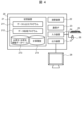
- FIG. 1 is a diagram showing the overall configuration of a food transportation system.
- FIG. 2 is a block diagram showing the functional configuration of the food transportation support system.
- 1 is a flowchart showing the basic operation of the food transportation support system.
- 11 is a flowchart showing the operation of the food transportation support system when a virtual plant factory is taken into consideration.
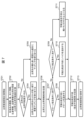
- 7 is a flowchart showing in more detail the shipping candidate search calculation in step S503 in FIG. 5 and step S603 in FIG. 6.
- 7 is a flowchart showing in further detail the efficiency calculation of the virtual plant factory in step S607 in FIG. 6 .
- FIG. 1A is a diagram showing shipping destination information
- FIG. 1B is a diagram showing shipping source information
- 1C is a diagram showing food information managed by a shipper
- FIG. 1D is a diagram showing virtual plant factory information.
- FIG. 13 is a diagram showing shipping information candidates and delivery means candidates. 13A to 13C are diagrams showing screens on which a shipper inputs shipper information. 13A to 13C are diagrams showing screens on which a shipping destination inputs shipping destination information.
- FIG. 12 is a diagram showing a case where the shipping information candidates and delivery means candidates shown in FIG. 11 are output to the shipper.
- 13A to 13B are diagrams showing a screen on which an administrator of the food transportation support system inputs or edits candidate locations for a virtual plant factory.
- FIG. 13 is a diagram illustrating a case in which introduction efficiency is associated as virtual plant factory information. 13 shows a case where information about a virtual plant factory is displayed.
- FIG. 1 is a diagram showing an embodiment of a food transport system 1 according to the present embodiment.
- the food transportation system 1 shown in Figure 1 illustrates the case where food is transported between a shipper and a destination.
- the "shipper" is the producer of the food, such as a farmer who cultivates food in an open field or a plant factory.
- these are exemplified as open field cultivation A, open field cultivation B, plant factory A, and plant factory B.
- the shipper provides shipping information, which is information related to the food to be shipped.
- the shipping information includes the type of food to be shipped, the shipping quantity, and the possible shipping time.
- the "shipping destination” is the consumer of the food.
- examples of the shipping destination include homes, schools, hospitals, and welfare facilities.
- the shipping destination provides demand information, which is information related to the demand for the requested food.
- the demand information includes the type of requested food, the shipping quantity, and the possible shipping time, etc.
- the wholesaler can be regarded as a shipping destination, but can also be regarded as a shipping source.
- the shipping destination may also include retailers such as supermarkets, department stores, and convenience stores.
- the food transport support system 20 which will be described later in FIG. 3, outputs potential shippers to the destination, providing information for more efficient food transport. Once the potential shippers are approved, the food is transported from the shipper to the destination.
- the form of transport There are no particular limitations on the form of transport, but the illustration shows a case where food is transported from the shipper to the destination via a wholesaler, and a case where food is sold directly from the shipper to the destination.
- FIG. 2 is a conceptual diagram showing a network of a shipper and a shipper destination.
- outdoor cultivation 1 to 6 are shown as shippers.
- plant factories not shown may also be included.
- homes 1 to 3, school 1, and welfare facilities 1 to 3 are shown as ship-to destinations.
- wholesaler 1 is shown.
- this embodiment presents candidate locations for a virtual plant factory (virtual plant factory) that will make food transportation more efficient.
- a "virtual plant factory” is a plant factory that does not currently exist, but is proposed to be installed in a candidate location in the future.
- the terminal devices 10 and 30 are computer devices such as, for example, PCs (Personal Computers), mobile computers, mobile phones, smartphones, and tablets.
- PCs Personal Computers
- mobile computers mobile phones, smartphones, and tablets.
- Food transportation support system 20 is, for example, a server computer that performs various processes handled by food transportation system 1 and manages various information such as shipper information and shipping destination information, which will be described in detail later.
- Food transportation support system 20 matches shippers and shipping destinations based on the shipper information and shipping destination information, and outputs shipping information candidates. "Shipping information candidates" is information about candidate shippers that will ship food to the shipping destination.
- the terminal devices 10, 30 and the food transport support system 20 each include a processor such as a central processing unit (CPU) serving as a computing means, and a storage such as a main memory and a hard disk drive (HDD).
- the processor executes various software such as an operating system (OS) and application programs.
- the main memory is a storage area for storing various software and data used for executing the software
- the storage is a storage area for storing input data for the various software and output data from the various software.
- the terminal devices 10, 30 and the food transport support system 20 each include a communication interface (hereinafter referred to as a "communication I/F") for communicating with the outside world, and an input/output port for inputting and outputting data to and from peripheral devices.
- the terminal devices 10, 30 and the food transport support system 20 may also include a display mechanism including a video memory, a display, and the like, and an input mechanism such as a touch panel.
- the storage device 21 also includes a shipper/shipper information database 213 that stores shipper information and shipping destination information, and a calculation history 214 that stores the history of the processing results of the data processing program 212.
- the "shipper information” is information about the shipper, including the location information of the shipper and information on food.
- the "shipper information” is information about the shipping destination, including the location information of the shipping destination and information on food.
- FIG. 5 is a flowchart showing the basic operation of the food transportation support system 20.
- the computing device 22 starts the basic operation of the food transportation support system 20 (step S501).
- the computing device 22 executes the data input/output program 211 to obtain the shipper information from the terminal device 10 and the shipping destination information from the terminal device 30.
- the shipper information and the shipping destination information are input to the food transportation support system 20 via the communication I/F 23 (step S502).
- the shipper information and the shipping destination information are stored in the shipper/shipper information database 213.
- FIG. 6 is a flowchart showing the operation of the food transportation support system 20 when taking into account the virtual plant factory. Steps S601 to S605 in FIG. 5 are similar to steps S501 to S505 in FIG. 4, and therefore the description thereof will be omitted.
- the food transportation support system 20 operates as follows.
- the computing device 22 determines whether or not to install a virtual plant factory (step S606).
- the administrator of the food transport support system 20 determines whether or not to install a virtual plant factory using the keyboard 25 or the mouse 26, and the input device 24 receives this input, whereby the determination is made. If the result of the determination is that the device is not to be installed (No in step S606), the series of processes ends. That is, the basic operations are the same as those shown in FIG. On the other hand, if the plant is to be installed (Yes in step S606), the efficiency of the virtual plant factory is calculated (step S607).
- the efficiency calculation of the virtual plant factory is determined based on the candidate location of the virtual plant factory, and is a process of calculating the efficiency of the cost required for transporting food, etc.
- the output device 27 outputs information about the virtual plant factory (step S608).
- the information about the virtual plant factory is, for example, information indicating candidate locations for the location of the plant factory to be installed.
- the information about the virtual plant factory is, for example, the result of the efficiency calculation calculated in step S607, and is the introduction efficiency of the candidate locations for the plant factory.
- the output information about the virtual plant factory is, for example, displayed on the display device 28.
- the arithmetic unit 22 ends the series of processes (step S609).
- FIG. 7 is a flowchart showing in more detail the shipping candidate search calculation in step S503 in FIG. 5 and step S603 in FIG.
- the calculation device 22 starts a shipping candidate search calculation (step S701).
- the computing device 22 calculates the destination's demand and the shippable amount of each food item for the type, amount, processing information, production information, quality information, etc. (step S702).
- the computing device 22 determines whether the available shipping amount of the shipper satisfies the demand of the destination (step S703).
- the calculation device 22 assigns the shipping origin in the order of lowest cost (step S703).
- the cost is calculated, for example, based on the transportation information when transporting the food from the shipping origin to the shipping destination.
- the "transportation information" is, for example, at least one of the transportation distance, transportation means, and transportation time from the shipping origin to the shipping destination. For example, the smaller the transportation distance, the lower the cost. That is, it can be determined that the closer the distance between the shipping origin and the shipping destination, the lower the cost. Also, the lower the transportation fee when the transportation means is used, the lower the cost. Furthermore, the shorter the transportation time, the lower the cost.
- the cost can also be calculated based on the size of the demand at the shipping destination. In this case, it can be determined that the cost is low when the demand at the shipping destination is high. That is, the higher the demand at the shipping destination, the more efficient the transportation can be, so the lower the cost.
- the calculation device 22 assigns shippers in descending order of the demand of the shipping destinations (step S705). After steps S704 and S705, the assigned shipper candidate is recorded in the calculation history 214 as a shipping information candidate (step S706).
- steps S703 to 705 can also be said to match information about food contained in the shipper information with information about food contained in the shipping destination information.
- the information about food corresponds to the destination's demand and the shipper's available shipping amount for each food item's type, quantity, processing information, production information, and quality information.
- This can also be said to calculate the degree of agreement between the information about food contained in the shipper information and the information about food contained in the shipping destination information.
- candidate shippers from among multiple shippers as shipping information candidates based on the degree of agreement and transportation information. In this manner, the computing device 22 assigns a shipper to the food item requested by the shipping destination, and creates shipping information candidates.
- the computing device 22 registers the delivery means candidates. This corresponds to the processes in steps S707 to S712.
- the calculation device 22 determines whether the drone delivery conditions are met (step S707). As a result, if the condition is met (Yes in step S707), the calculation device 22 adds a drone to the possible delivery means (step S708). On the other hand, if the conditions are not met (No in step S707), the calculation device 22 determines whether the bike delivery conditions are met (step S709). As a result, if the condition is met (Yes in step S709), the calculation device 22 adds the motorcycle to the available delivery means (step S710).
- the calculation device 22 determines that the possible delivery means is a light truck class or larger (step S711).
- the candidate delivery means is determined based on, for example, the distance between the shipping origin and the shipping destination, and the weight of the food to be transported. Note that the order of steps S707 and S709 may be either before or after each other.
- the computing device 22 records possible delivery means (candidate delivery means) (step S712). With the above, the calculation device 22 ends the shipment candidate search calculation (step S713).
- FIG. 8 is a flowchart showing in more detail the efficiency calculation of the virtual plant factory in step S607 in FIG.
- the arithmetic device 22 starts calculating the efficiency of the virtual plant factory (step S801).
- the calculation device 22 calculates the total delivery cost when the virtual plant factory is not present (step S802).
- the calculation device 22 calculates a pattern (N) for recommending a virtual plant factory from the shipping source candidates other than the plant factory (step S803).
- N a pattern for recommending a virtual plant factory from the shipping source candidates other than the plant factory.
- This is a calculation for determining a location where the virtual plant factory can be introduced.
- This location is a location other than the location where open-field cultivation or the plant factory is already installed. For example, it is a location on each vertex or edge of the network shown in FIG. 2.
- the calculation device 22 recommends that the virtual plant factory be installed at vertices 2 and 3.
- the pattern (N) 2.
- a list of possible locations for introducing the virtual plant factory can be prepared and registered in advance, and the location can be selected from this list. The list in advance is registered as virtual plant factory information.
- the calculation device 22 performs a loop calculation for the N patterns.
- the computing device 22 edits the shipper information based on the virtual plant factory information (step S804). That is, the shipper information includes the virtual plant factory.
- the calculation device 22 performs the shipping candidate search calculation described with reference to FIG. 7 (step S805).
- the calculation device 22 calculates the total delivery cost when the virtual plant factory is present (step S806).
- the arithmetic device 22 calculates the introduction efficiency of the virtual plant factory (step S807).
- the introduction efficiency of the virtual plant factory can be calculated, for example, by the following formula (1).
- Total delivery cost when there is a virtual plant factory - Total delivery cost when there is no virtual plant factory
- Total delivery cost when there is no virtual plant factory ...
- the calculation device 22 outputs the introduction efficiency of the virtual plant factory (step S808).
- the output introduction efficiency is recorded in the calculation history 214.
- the calculation device 22 completes the efficiency calculation of the virtual plant factory (step S809).
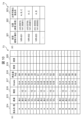
- 9A is a diagram showing the shipping destination information, which is shown in table T1.
- the shipping destination information includes the following information: shipping destination ID 901, demand ID 902, location (latitude, longitude) 903, food name/type 904, pesticides 905, sugar content 906, grade 907, product quantity 908, freshness 909, and germs 910.
- a shipping destination ID 901 and a demand ID 902 are the ID of a shipping destination and an ID given to a demand desired by the shipping destination, respectively.
- the location (latitude, longitude) 903 is an example of second location information, and is location information of the shipping destination expressed by latitude and longitude.
- the food name/category 904 is the name of the food.
- Pesticide 905 is information indicating whether or not pesticides are used, with “yes” or “no.” In the case of outdoor cultivation, pesticides may or may not be used, but in the case of plant factories, pesticides are usually not used.
- the sugar content 906 is information on the sugar content of the food.
- Grade 907 is information on the ranking of food items. Note that this can be changed depending on the food item, and may be information on the ranking of size, such as L (large), M (medium), S (small), etc.
- the product quantity 908 is the minimum unit for transporting food. Here, kg is used as the unit, but it may be, for example, a "box" or other unit.
- the freshness 909 is information that ranks the freshness of the food.
- the freshness 909 is ranked, for example, into three levels from 0 to 2.
- the contaminant bacteria 910 indicates the presence or absence of contaminant bacteria. In the case of a plant factory, it is generally considered that there is very little contaminant bacteria, and in this case, information such as "none" is given.
- the shipping destination ID 901 to the demand ID 902, the food name/type 904 to the germs 910 can be regarded as an example of demand information.
- the pesticides 905, sugar content 906, grade 907, freshness 909, and germs 910 can be regarded as information about the quality of the food.
- the shipper information includes a shipper ID 911, a location (latitude, longitude) 912, and a name of food that can be shipped 913.
- the shipper ID 911 is the ID of the shipper.
- the location (latitude, longitude) 912 is an example of first location information, and is information indicating the location information of the shipping source using latitude and longitude.
- Shippable food name 913 is the name of the food that can be shipped from the shipper.
- the shipper ID 911 and the name of shippable food 913 can be regarded as an example of shipping information.
- Table T2 may also include information about the shipping availability period indicating the period when the food product can be shipped.
- the 10C is a diagram showing food information managed by the shipper.
- the food information is an example of information about food, and includes information about the name and quality of the food to be shipped.
- the food information is shown in Table T3.
- the food information includes information on food name/type 914 , pesticides 915 , sugar content 916 , grade 917 , product quantity 918 , freshness 919 , and germs 920 .
- the food name/category 914, pesticides 915, sugar content 916, grade 917, product quantity 918, freshness 919, and germs 920 are the same as the food name/category 904, pesticides 905, sugar content 906, grade 907, product quantity 908, freshness 909, and germs 910 described above.
- the virtual plant factory information is shown in table T4.
- the virtual plant factory information includes each piece of information: a virtual plant factory ID 921, a location (latitude, longitude) 922, and a name of food that can be shipped 923.
- the virtual plant factory ID 921 is an ID given to the virtual plant factory.
- the position (latitude, longitude) 922 is information indicating the position information of the virtual plant factory using latitude and longitude.
- the shippable food name 923 is the name of the food that can be shipped from the virtual plant factory.
- Table T5 includes a shipping destination ID 1101, a demand ID 1102, a food name/type 1103, a pesticide 1104, a sugar content 1105, a grade 1106, a shipping amount 1107, and a delivery method 1108.
- the shipping destination ID 1101, demand ID 1102, food name/type 1103, pesticides 1104, sugar content 1105, and Grade 1106 are the same as the shipping destination ID 901, demand ID 902, food name/type 904, pesticides 905, sugar content 906, and Grade 907 described above.
- the shipping amount 1107 is the total amount of food to be shipped, and here, kg is used as the unit.
- the shipping destination ID 1101 to the shipping amount 1107 correspond to shipping information candidates.
- the delivery means 1108 is a candidate for a means for transporting food from a shipper to a destination, and corresponds to a candidate delivery means.
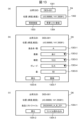
- FIG. 12A shows a dialogue D1 in which the shipper inputs the shipper ID 911 and the location (latitude, longitude) 912 shown in FIG. 9B.
- a shipper ID 911 is input in a shipper ID input field 1201.
- a location (latitude, longitude) 912 is input in a location input field 1202.
- FIG. 12(b) shows a dialogue D2 for the shipper to individually register the food items to be shipped.
- FIG. 12B shows a screen for the shipper to input the food name/type 904, pesticides 905, sugar content 906, grade 907, and product quantity 908 shown in FIG.
- the food name and category 904 is input into the food name and category input field 1203-1.
- the pesticide 905, sugar content 906 and grade 907 are input into the pesticide input field 1203-2, sugar content input field 1203-3 and grade input field 1203-4 by selecting them from the pull-down menus, respectively.
- the product quantity 908 is input into the product quantity input field 1203-5. Then, by pressing the back button 1203-6, the screen returns to that of Fig. 12(a), and by pressing the register button 1203-7, the food to be shipped is registered.
- FIG. 12(c) shows a screen for registering a list of food items to be shipped by a shipper.
- FIG. 12(c) shows a case where a shipper registers food items to be shipped based on information recorded in a food list file.
- the file name of the food list file is entered in a food list file input field 1204-1.
- the screen returns to the screen of Fig. 12(a) , and by pressing the file read button 1204-3, the food list file is read and the food to be shipped by the shipper is registered.
- FIG. 13A to 13C are diagrams showing screens on which the shipping destination inputs shipping destination information.
- FIG. 13A shows a dialogue D4 in which the shipping destination inputs the shipping destination ID 901 and the location (latitude, longitude) 902 shown in FIG. 9A.
- the shipping destination ID 901 is input in a shipping destination ID input field 1301.
- the location (latitude, longitude) 902 is input in a location input field 1302.
- FIG. 13(b) shows a dialogue D5 for individually registering food items requested by a shipping destination.
- FIG. 13B shows a screen for inputting the name and type of food 904, agricultural chemicals 905, sugar content 906, grade 907, and quantity of product 908 shown in FIG. 9 by the shipping destination.
- the food name and category 904 is input into the food name and category input field 1303-1.
- the pesticide 905, sugar content 906 and grade 907 are input into the pesticide input field 1303-2, sugar content input field 1303-3 and grade input field 1303-4 by selecting them from the pull-down menus, respectively.
- the product quantity 908 is input into the product quantity input field 1303-5. Then, by pressing the back button 1303-6, the screen returns to that of Fig. 13(a), and by pressing the register button 1303-7, the desired food item is registered.
- FIG. 13C is a diagram showing a screen for registering a list of requested foods.
- FIG. 13(c) shows a case where a shipping destination registers requested food items based on information recorded in the food list file.
- the file name of the food list file is entered in a food list file input field 1304-1.
- the screen returns to the screen of Fig. 13(a) , and by pressing the file read button 1304-3, the food list file is read and the food requested by the shipping destination is registered.
- Fig. 14 is a diagram showing the case where the shipping information candidates and delivery means candidates shown in Fig. 11 are output to the shipper. This is sent from the food transport support system 20 to the shipper for approval after step S506 in Fig. 5 or step S609 in Fig. 6, and is displayed on the terminal device 10.
- the illustrated screen G1 shows the case where shipping information candidates and delivery means candidates are output to a shipper with a shipper ID of SRC-001. Screen G1 displays the shipping information candidates and delivery means candidates in table 1401.
- Table 1401 also displays a check box 1402, and when the shipper checks check box 1402 and then presses accept button 1403, the shipping information candidates and delivery means candidates are approved, and the status column on the right side of table 1401 becomes "Accepted,” indicating that they have been approved. Note that when the shipper checks check box 1402 and then presses reject button 1404, the shipping information candidates and delivery means candidates are rejected.
- 15(a)-(b) are diagrams showing a screen on which the administrator of the food transport support system 20 inputs or edits candidate locations for the virtual plant factory.
- 15A shows a list of currently registered candidate locations for a plant factory.
- a table 1501 shows the virtual plant factory ID, the location (latitude, longitude), and whether shipping information is registered. Then, when the edit button 1502 is pressed, the screen moves to screen G3 shown in FIG.
- FIG. 15(b) is a diagram showing a screen G2 for inputting or editing candidate locations for the virtual plant factory.
- a virtual plant factory ID 1504 a location (latitude, longitude) 1505, and shipping information 1506.
- shipping information it is possible to input or edit the name and type of food, the presence or absence of pesticides, sugar content, grade, and quantity.
- the collective location registration button 1507 is pressed, the virtual plant factory ID 1504 and the location (latitude, longitude) 1505 of the candidate location of the virtual plant factory are registered.
- the collective shipping information registration button 1508 is pressed, the shipping information 1506 of the virtual plant factory is registered.
- the food information shown in FIG. 10(c) and the virtual plant factory information shown in FIG. 10(d) are generated for the virtual plant factory.
- FIG. 16 is a diagram showing a case in which introduction efficiency is associated as virtual plant factory information.
- the illustrated table T6 includes a virtual plant factory ID 1601, a location (latitude, longitude) 1602, and an introduction efficiency 1603.
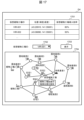
- FIG. 17 shows a case where information relating to the virtual plant factory is displayed.
- a table 1701 including a virtual plant factory ID 1601, a location (latitude, longitude) 1602, and an introduction efficiency 1603 is displayed at the top.
- a map showing the location of the virtual plant factory is displayed at the bottom.
- the virtual plant factory ID is selected from a pull-down menu 1702, and a display button 1703 is pressed, whereby a map 1704 is displayed.
- the input device 24 accepts shipper information (e.g., table T2 in FIG. 9(b)) including first location information (e.g., position (latitude, longitude) 912 in FIG. 9(b)) which is location information of multiple shippers including a plant factory, and information on foods shipped by the shippers (e.g., shippable food names 913 in FIG. 9(b) and food information in FIG. 10(c)).
- the input device 24 also accepts shipping destination information (e.g., table T1 in FIG. 9(a)) which includes second location information (e.g., position (latitude, longitude) 902 in FIG.
- the computing device 22 determines the degree of agreement between the information about the food contained in the shipper information and the information about the food contained in the destination information, and the transportation information for transporting the food from the shipper to the destination (for example, steps S703 to S705 in FIG. 7).
- the transportation information is at least one of the transportation distance, transportation means, and transportation time from the shipper to the destination.
- the calculation device 22 finds candidate shippers from among the multiple shippers as shipping information candidates based on the degree of match and the transportation information (e.g., step S603 in FIG. 6, and steps S703 to S705 in FIG. 7). At this time, the calculation device 22 can calculate the degree of match based on the amount of food that can be shipped from the shipper and the cost required to transport the food from the shipper to the shipping destination (e.g., steps S702 to S705 in FIG. 7). The output device 27 then outputs the shipper and the shipping information candidates (e.g., step S604 in FIG. 6).
- the food transport support system 20 can propose methods to make food transport more efficient when a plant factory is included as a shipper. Then, when the shipper or destination actually implements these methods, food transport becomes more efficient. This makes it less likely that food will have to be transported long distances, and reduces costs and environmental impact when transporting food.
- the shipping origin includes a virtual shipping location
- the output device 27 outputs the virtual shipping location as a candidate location for the plant factory (for example, step S608 in FIG. 6).
- the input device 24 accepts candidates for the virtual shipping location (for example, FIG. 15), and the output device 27 outputs a candidate location for the plant factory selected from the accepted candidates for the virtual shipping location (for example, FIG. 10(d), FIG. 16).
- the output device 27 may also output the introduction efficiency when the plant factory is set as the candidate location (for example, FIG. 16).
- the food transport support system 20 can propose potential locations for plant factories that can make food transport more efficient.
- plant factories When plant factories are actually established, they can be set up, for example, in urban areas where open-field cultivation is not possible, and serve to complement open-field cultivation.
- the food transport support system 20 can propose ways to make food transport more efficient, including the means of transport, and when the shipper or destination actually implements these proposals, food transport becomes more efficient.
- the above-described processing performed by food transport support system 20 is realized by the cooperation of software and hardware resources. That is, a processor in a computer provided in food transport support system 20 loads software for realizing each of the above-described functions into memory, executes the software, and realizes each of these functions.
- the processing performed by the food transportation support system 20 can therefore be considered as a food transportation support method in which a processor executes software recorded in memory to receive shipper information including first location information, which is location information of multiple shippers including plant factories, and information about food shipped by the shippers, and shipping destination information including second location information, which is location information of the shipping destination, and information about food requested by the shipping destination, to determine the degree of match between the information about food included in the shipper information and the information about food included in the shipping destination information, as well as transportation information for transporting food from the shipper to the shipping destination, and to output shipping information candidates that are candidate shippers from among the multiple shippers based on the degree of match and the transportation information.
- shipper information including first location information, which is location information of multiple shippers including plant factories, and information about food shipped by the shippers
- shipping destination information including second location information, which is location information of the shipping destination, and information about food requested by the shipping destination
- Reference Signs List 1 food transport system, 10a, 10b: terminal device, 20: food transport support system, 21: storage device, 22: arithmetic device, 23: communication I/F, 24: input device, 27: output device, 30a, 30b, 30c, 30: terminal device, T1 to T6: tables, D1 to D6: dialogues, G1 to G4: screens
Landscapes
- Business, Economics & Management (AREA)
- Engineering & Computer Science (AREA)
- Economics (AREA)
- Quality & Reliability (AREA)
- Entrepreneurship & Innovation (AREA)
- Human Resources & Organizations (AREA)
- Marketing (AREA)
- Operations Research (AREA)
- Development Economics (AREA)
- Strategic Management (AREA)
- Tourism & Hospitality (AREA)
- Physics & Mathematics (AREA)
- General Business, Economics & Management (AREA)
- General Physics & Mathematics (AREA)
- Theoretical Computer Science (AREA)
- Management, Administration, Business Operations System, And Electronic Commerce (AREA)
Priority Applications (2)
| Application Number | Priority Date | Filing Date | Title |
|---|---|---|---|
| JP2025503306A JPWO2024180677A1 (https=) | 2023-02-28 | 2023-02-28 | |
| PCT/JP2023/007379 WO2024180677A1 (ja) | 2023-02-28 | 2023-02-28 | 食品輸送支援システム、食品輸送支援方法および食品輸送システム |
Applications Claiming Priority (1)
| Application Number | Priority Date | Filing Date | Title |
|---|---|---|---|
| PCT/JP2023/007379 WO2024180677A1 (ja) | 2023-02-28 | 2023-02-28 | 食品輸送支援システム、食品輸送支援方法および食品輸送システム |
Publications (1)
| Publication Number | Publication Date |
|---|---|
| WO2024180677A1 true WO2024180677A1 (ja) | 2024-09-06 |
Family
ID=92589557
Family Applications (1)
| Application Number | Title | Priority Date | Filing Date |
|---|---|---|---|
| PCT/JP2023/007379 Ceased WO2024180677A1 (ja) | 2023-02-28 | 2023-02-28 | 食品輸送支援システム、食品輸送支援方法および食品輸送システム |
Country Status (2)
| Country | Link |
|---|---|
| JP (1) | JPWO2024180677A1 (https=) |
| WO (1) | WO2024180677A1 (https=) |
Citations (3)
| Publication number | Priority date | Publication date | Assignee | Title |
|---|---|---|---|---|
| JP2001202352A (ja) * | 2000-01-19 | 2001-07-27 | Shimizu Corp | 物流拠点立地計画支援システム |
| JP2003208549A (ja) * | 2002-01-17 | 2003-07-25 | Takakazu Shimazu | 商品配送手段選択システム、商品配送手段の選択方法、商品配送システム |
| JP2022125604A (ja) * | 2021-02-17 | 2022-08-29 | 株式会社東芝 | 情報処理装置、情報処理方法及びコンピュータプログラム |
-
2023
- 2023-02-28 WO PCT/JP2023/007379 patent/WO2024180677A1/ja not_active Ceased
- 2023-02-28 JP JP2025503306A patent/JPWO2024180677A1/ja active Pending
Patent Citations (3)
| Publication number | Priority date | Publication date | Assignee | Title |
|---|---|---|---|---|
| JP2001202352A (ja) * | 2000-01-19 | 2001-07-27 | Shimizu Corp | 物流拠点立地計画支援システム |
| JP2003208549A (ja) * | 2002-01-17 | 2003-07-25 | Takakazu Shimazu | 商品配送手段選択システム、商品配送手段の選択方法、商品配送システム |
| JP2022125604A (ja) * | 2021-02-17 | 2022-08-29 | 株式会社東芝 | 情報処理装置、情報処理方法及びコンピュータプログラム |
Also Published As
| Publication number | Publication date |
|---|---|
| JPWO2024180677A1 (https=) | 2024-09-06 |
Similar Documents
| Publication | Publication Date | Title |
|---|---|---|
| Ghelani et al. | A Perspective Review on Online Food Shop Management System and Impacts on Business | |
| KR20220012396A (ko) | 인공 지능을 이용한 제품 통합 및 중복제거를 위한 컴퓨터 시스템 및 방법 | |
| Meade et al. | A conceptual model for selecting and evaluating third‐party reverse logistics providers | |
| Li et al. | Internet-based geographical information systems system for E-commerce application in construction material procurement | |
| KR20220102551A (ko) | 인공지능을 사용하여 데이터베이스 파라미터를 최적화하기 위한 컴퓨터화된 시스템 및 방법 | |
| Liu | Network site optimization of reverse logistics for E-commerce based on genetic algorithm | |
| Vinod | Leveraging BIG DATA for competitive advantage in travel | |
| TWI912438B (zh) | 產生正文字串的系統以及方法 | |
| KR102459120B1 (ko) | 제품 타이틀을 이용한 지능적 제품 분류를 위한 시스템 및 방법 | |
| Wang et al. | Sustainable evaluation of major third-party logistics providers: a framework of an MCDM-based entropy objective weighting method | |
| KR20230100714A (ko) | 고 가용 분산형 하이브리드 트랜잭션 및 분석 데이터베이스를 관리하기 위한 시스템 및 방법 | |
| Onal et al. | Product flows and decision models in Internet fulfillment warehouses | |
| CN119003892B (zh) | 一种基于大数据的电商出口货物信息搜索云平台 | |
| Choi et al. | Investigating paradigm shift from price to value in the air cargo market | |
| Ou et al. | Hybrid genetic algorithms for order assignment and batching in picking system: A systematic literature review | |
| Wang et al. | A novel fuzzy neural network approach with triangular fuzzy information for the selection of logistics service providers | |
| TWI893341B (zh) | 用於產生搜尋的關鍵詞的方法以及系統 | |
| Zhan et al. | Integrated optimization of order allocation and last-mile multi-temperature joint distribution for fresh agriproduct community retail | |
| Milovanović et al. | THE ROLE OF INDUSTRY 4.0 IN DIGITALIZATION OF PRODUCTION AND SUPPLY CHAINS. | |
| KR20240073728A (ko) | 유사한 제품 추천을 위해 수정된 사용자 인터페이스를 동적으로 생성하는 시스템 및 방법 | |
| WO2024180677A1 (ja) | 食品輸送支援システム、食品輸送支援方法および食品輸送システム | |
| CN114620391A (zh) | 信息处理方法、装置、设备及存储介质 | |
| JP2009048594A (ja) | グローバル品目データ、品目管理プログラム、このプログラムにより動作する装置 | |
| US20240353228A1 (en) | Systems and Methods for Dynamic Mapping and Routing Using Machine Learning | |
| JPWO2017208922A1 (ja) | データ交換システム、データ交換方法、及びデータ交換プログラム |
Legal Events
| Date | Code | Title | Description |
|---|---|---|---|
| 121 | Ep: the epo has been informed by wipo that ep was designated in this application |
Ref document number: 23925234 Country of ref document: EP Kind code of ref document: A1 |
|
| ENP | Entry into the national phase |
Ref document number: 2025503306 Country of ref document: JP Kind code of ref document: A |
|
| WWE | Wipo information: entry into national phase |
Ref document number: 2025503306 Country of ref document: JP |
|
| NENP | Non-entry into the national phase |
Ref country code: DE |
|
| 122 | Ep: pct application non-entry in european phase |
Ref document number: 23925234 Country of ref document: EP Kind code of ref document: A1 |