WO2024176836A1 - 電子機器、電子機器の制御方法、及びプログラム - Google Patents
電子機器、電子機器の制御方法、及びプログラム Download PDFInfo
- Publication number
- WO2024176836A1 WO2024176836A1 PCT/JP2024/004172 JP2024004172W WO2024176836A1 WO 2024176836 A1 WO2024176836 A1 WO 2024176836A1 JP 2024004172 W JP2024004172 W JP 2024004172W WO 2024176836 A1 WO2024176836 A1 WO 2024176836A1
- Authority
- WO
- WIPO (PCT)
- Prior art keywords
- language
- characters
- display
- display area
- displayed
- Prior art date
- Legal status (The legal status is an assumption and is not a legal conclusion. Google has not performed a legal analysis and makes no representation as to the accuracy of the status listed.)
- Ceased
Links
Images








Classifications
-
- H—ELECTRICITY
- H04—ELECTRIC COMMUNICATION TECHNIQUE
- H04N—PICTORIAL COMMUNICATION, e.g. TELEVISION
- H04N9/00—Details of colour television systems
- H04N9/12—Picture reproducers
- H04N9/31—Projection devices for colour picture display, e.g. using electronic spatial light modulators [ESLM]
- H04N9/3179—Video signal processing therefor
-
- G—PHYSICS
- G10—MUSICAL INSTRUMENTS; ACOUSTICS
- G10L—SPEECH ANALYSIS TECHNIQUES OR SPEECH SYNTHESIS; SPEECH RECOGNITION; SPEECH OR VOICE PROCESSING TECHNIQUES; SPEECH OR AUDIO CODING OR DECODING
- G10L15/00—Speech recognition
- G10L15/22—Procedures used during a speech recognition process, e.g. man-machine dialogue
-
- H—ELECTRICITY
- H04—ELECTRIC COMMUNICATION TECHNIQUE
- H04N—PICTORIAL COMMUNICATION, e.g. TELEVISION
- H04N9/00—Details of colour television systems
- H04N9/12—Picture reproducers
- H04N9/31—Projection devices for colour picture display, e.g. using electronic spatial light modulators [ESLM]
- H04N9/3141—Constructional details thereof
-
- H—ELECTRICITY
- H04—ELECTRIC COMMUNICATION TECHNIQUE
- H04N—PICTORIAL COMMUNICATION, e.g. TELEVISION
- H04N9/00—Details of colour television systems
- H04N9/12—Picture reproducers
- H04N9/31—Projection devices for colour picture display, e.g. using electronic spatial light modulators [ESLM]
- H04N9/3191—Testing thereof
- H04N9/3194—Testing thereof including sensor feedback
-
- G—PHYSICS
- G06—COMPUTING OR CALCULATING; COUNTING
- G06F—ELECTRIC DIGITAL DATA PROCESSING
- G06F3/00—Input arrangements for transferring data to be processed into a form capable of being handled by the computer; Output arrangements for transferring data from processing unit to output unit, e.g. interface arrangements
- G06F3/14—Digital output to display device ; Cooperation and interconnection of the display device with other functional units
-
- G—PHYSICS
- G09—EDUCATION; CRYPTOGRAPHY; DISPLAY; ADVERTISING; SEALS
- G09G—ARRANGEMENTS OR CIRCUITS FOR CONTROL OF INDICATING DEVICES USING STATIC MEANS TO PRESENT VARIABLE INFORMATION
- G09G2340/00—Aspects of display data processing
- G09G2340/04—Changes in size, position or resolution of an image
- G09G2340/0492—Change of orientation of the displayed image, e.g. upside-down, mirrored
Definitions
- This disclosure relates to an electronic device, a control method for an electronic device, and a program.
- a display system has been proposed that automatically converts a speaker's voice into text and displays subtitles in real time on a transparent display placed between the speaker and a hearing-impaired listener (see, for example, Non-Patent Document 1).
- the correct characters for the listener's side are displayed at the top of the transparent display, and the correct characters for the speaker's side are displayed at the bottom of the transparent display.
- the characters at the bottom of the transparent display are displayed so that the speaker can check for misconversions made by the automatic speech recognition.
- a translation display device has also been proposed that can smoothly assist conversations between speakers who use different languages (see, for example, Patent Document 1). This device uses a single display means to display character strings in language A and character strings in language B in display areas A1 and B1 that are divided face-to-face, respectively, so that the characters are displayed in an orientation that is easy for each user to read.
- a program causes an electronic device that displays characters on a display unit having a first display area and a second display area to execute the following steps.
- the program of (1) above causes the electronic device to execute the following steps when the first language and the second language are different languages. Displaying the second language character as a translation of the first language character. Displaying the second language character based on the second language character being determined as a sentence.
- the program according to (1) or (2) above causes the electronic device to execute the following steps when the first language and the second language are different languages. displaying the second language characters as a translation of the first language characters; and not displaying the second language characters until the second language characters are finalized as a sentence.
- Any of the programs (1) to (3) above causes the electronic device to execute a step of adjusting at least one of the first display amount and the second display amount when the content of the first display amount does not correspond to the content of the second display amount.
- Any of the programs (1) to (4) above causes the electronic device to execute a step of adjusting at least one of the first display amount and the second display amount by changing the size of at least one of the characters of the first language and the characters of the second language.
- Any of the programs (1) to (5) above causes the electronic device to execute a step of adjusting at least one of the first display amount and the second display amount by changing at least one of the character spacing and the line spacing of at least one of the characters of the first language and the characters of the second language.
- the program of (1) above causes the electronic device to execute a step of adjusting the difference in timing at which phrases in characters in the first language and phrases in characters in the second language are displayed on the display unit within a predetermined time when the first language and the second language are the same language.
- Any of the programs (1) to (7) above causes an electronic device, in which the first display area of the display unit has a light-shielding section that at least partially blocks the transmission of light, to execute a step of displaying characters of the first language in the first display area so that the characters are blocked by the light-shielding section.
- the programs (1) to (8) above cause the electronic device to execute a step of erasing at least the characters of the second language that were displayed in the second display area when the second language is changed to a third language different from the second language.
- an electronic device includes a control unit configured to control a display unit having a first display area and a second display area to display characters.
- the control unit is Displaying characters of a first language in the first display area; Displaying characters of a second language in the second display area; displaying one of the characters of the first language and the characters of the second language in a reversed manner; At least one of the first display amount and the second display amount is adjusted based on a first display amount in which characters of the first language are displayed in the first display area, and a second display amount in which characters of the second language are displayed in the second display area.
- a control method (11) controls an electronic device to display characters on a display unit having a first display area and a second display area, the control method including the steps of: A step of displaying characters of a first language in the first display area; A step of displaying characters of a second language in the second display area; A step of displaying one of the characters of the first language and the characters of the second language by inverting the left and right sides; A step of adjusting at least one of the first display amount and the second display amount based on a first display amount in which the characters of the first language are displayed in the first display area and a second display amount in which the characters of the second language are displayed in the second display area.
- FIG. 1 is a perspective view illustrating a usage scene of a projector display system according to an embodiment.
- FIG. 2 is a schematic diagram of the projector display system of FIG. 1.
- FIG. 13 is a diagram showing an example of a display on a transparent screen as seen from the first user's side.
- FIG. 13 is a diagram showing an example of a display on a transparent screen as seen from the second user's side.
- 11A and 11B are diagrams illustrating a relationship between a light blocking portion and a position of a second user in an embodiment.
- 1A and 1B are diagrams illustrating examples of the arrangement of a screen portion and a light blocking portion.
- 1A and 1B are diagrams illustrating examples of the arrangement of a screen portion and a light blocking portion.
- FIG. 1A and 1B are diagrams illustrating examples of the arrangement of a screen portion and a light blocking portion. 1A and 1B are diagrams illustrating examples of the arrangement of a screen portion and a light blocking portion.
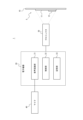
- FIG. 1 is a schematic diagram illustrating the configuration of a projector display system according to an embodiment that uses an external cloud server for voice recognition.
- FIG. 2 is a top view showing an example of the arrangement of each component of the projector display system.
- FIG. 1 is a diagram showing an example of operation of a conventional projector display system.
- FIG. 1 is a diagram showing an example of operation of a projector display system according to an embodiment.
- 10 is a flowchart illustrating an operation of a projector display system according to an embodiment.
- FIG. 1 is a schematic diagram illustrating the configuration of a projector display system according to an embodiment that uses an external cloud server for voice recognition.
- FIG. 2 is a top view showing an example of the arrangement of each component of the projector display system.
- FIG. 1 is a diagram showing an example of operation of a projector display system according to an embodiment.
- FIG. 1 is a diagram showing an example of operation of a projector display system according to an embodiment.
- 10 is a flowchart illustrating an operation of a projector display system according to an embodiment.
- FIG. 1 is a diagram showing an example of operation of a projector display system according to an embodiment.
- 10 is a flowchart illustrating an operation of a projector display system according to an embodiment.
- FIG. 1 is a diagram showing an example of operation of a projector display system according to an embodiment.
- FIG. 1 is a diagram showing an example of operation of a projector display system according to an embodiment.
- FIG. 1 is a diagram showing an example of operation of a projector display system according to an embodiment.
- FIG. 1 is a diagram showing an example of operation of a projector display system according to an embodiment.
- FIG. 1 is a diagram showing an example of operation of a projector display system according to an
- FIG. 1 is a diagram showing an example of operation of a projector display system according to an embodiment.
- FIG. 1 is a diagram showing an example of operation of a projector display system according to an embodiment.
- 10 is a flowchart illustrating an operation of a projector display system according to an embodiment.
- FIG. 1 is a diagram showing an example of operation of a projector display system according to an embodiment.
- FIG. 1 is a diagram showing an example of operation of a projector display system according to an embodiment.
- FIG. 1 is a diagram showing an example of operation of a projector display system according to an embodiment.
- An object of the present disclosure is to provide an electronic device, an electronic device control method, and a program that facilitate communication between interlocutors. According to an electronic device, an electronic device control method, and a program according to one embodiment, it is possible to facilitate communication between interlocutors.
- the projector display system 1 is a system that supports a dialogue between a first user U1 and a second user U2 who has, for example, a hearing impairment.
- the second user U2 is not necessarily limited to a user who has a hearing impairment, and may be, for example, a user who does not have a specific disability.
- the second user U2 may be, for example, a person who wishes to communicate in a language different from that of the first user U1.
- the first user U1 is an employee in charge of a counter at a government, a local government, or a public institution.
- the second user U2 is, for example, a person who visits a government, a local government, or a public institution.
- the scene in which the projector display system 1 is used is not limited to the above.
- the projector display system 1 may also be used at the counters of financial institutions, medical institutions, and public transportation facilities, at the business stores of private businesses, and in conference rooms in offices.
- the vinyl curtain or acrylic panel is used as the base material 10, and a transparent screen 5 is placed on this base material 10.
- the spoken content of the first user U1 is projected as text from the projector 30 onto this transparent screen 5. This allows the second user U2, who is positioned opposite the first user U1 across the transparent screen 5, to visually confirm the spoken content of the first user U1 even if he or she cannot hear what the first user U1 is saying.
- the transparent screen 5 can be placed anywhere on the base material 10.
- the transparent screen 5 may be placed in a position that does not prevent the first user U1 and the second user U2 from seeing each other's faces.
- the transparent screen 5 may be placed in a position where the first user U1 and the second user U2 lower their gazes downward from the horizontal.
- the projector display system 1 includes a transparent screen 5 and a projector 30, as well as an electronic device 20 and a microphone 40.
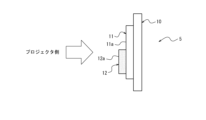
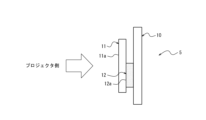
- the transparent screen 5 includes a screen portion 11 and a light-shielding portion 12 arranged on a substrate 10.
- the screen unit 11 is a film-, sheet-, or plate-like member for projector projection that can be attached to the base material 10.
- the screen unit 11 itself is sometimes called a "transparent screen.”
- the screen unit 11 diffuses a portion of the light incident from the projector 30 to the incident side and the exit side.
- the first user U1 and the second user U2 can recognize the image projected from the projector 30 when the light diffused by the screen unit 11 enters their field of vision.
- the shape of the screen unit 11 can be, for example, rectangular, but is not limited to this.
- the screen unit 11 can be in various shapes.
- the light blocking portion 12 at least partially blocks (blocks) the transmission of light emitted from the projector 30.
- the light blocking portion 12 is, for example, a dichroic film that suppresses light of a specific wavelength.
- a dichroic film that does not transmit red light can be used as the light blocking portion 12.
- the light blocking portion 12 can be disposed overlapping a portion of the screen portion 11.
- the light blocking portion 12 is disposed overlapping the surface of the screen portion 11.
- the shape of the light blocking portion 12 can be, for example, a rectangle, but is not limited to this.
- the light blocking portion 12 can be formed in various shapes.
- the microphone 40 is placed next to the first user U1.
- the microphone 40 may be placed on a desk in front of the first user U1.
- the microphone 40 may also be attached to a headset worn by the first user U1.
- the microphone 40 converts the voice emitted by the first user U1 into an electrical signal and outputs it to the electronic device 20.
- the electronic device 20 receives the output from the microphone 40, recognizes the speech content of the first user U1, and generates a display object based on the recognized speech content.
- the electronic device 20 converts the display object into an image signal and displays it on the projector 30.
- the display object is, for example, text (character string).
- the display object may also show a content (character string) in a first language recognized as the speech content of the first user U1 translated into a second language different from the first language.
- the electronic device 20 may be, for example, a general-purpose device such as a mobile phone, smartphone, tablet terminal, or personal computer, or a dedicated device.
- the electronic device 20 is configured to include a voice recognition unit 21, a control unit 22, and a memory unit 23.
- the voice recognition unit 21 performs voice recognition processing based on the voice signal output from the microphone 40.
- the voice recognition result is output as text data.
- Various known technologies can be adopted for the voice recognition processing.
- the voice recognition unit 21 has a voice recognition engine that performs the voice recognition processing using a voice recognition dictionary stored in the storage unit 23.
- the voice recognition dictionary includes an acoustic model, a language model, and a speech dictionary.
- the voice recognition unit 21 may include a dedicated or general-purpose processor. The processing of the voice recognition unit 21 may be executed by the same processor that executes the functions of the control unit 22 described below.
- the control unit 22 controls the entire electronic device 20, and causes the projector 30 to display the text of the speech of the first user U1 recognized by the voice recognition unit 21 as a display object.
- the control unit 22 can control the display position and display mode of the display object on the transparent screen 5. As described below, the control unit 22 can cause the projector 30 to project the text of the speech of the first user U1 as the first display object DO1 and the second display object DO2, which is a left-right inversion of the first display object DO1.
- the control unit 22 includes one or more processors.
- Processors include general-purpose processors that load specific programs to execute specific functions, and dedicated processors specialized for specific processing.
- Dedicated processors include application specific integrated circuits (ASICs).
- Processors include programmable logic devices (PLDs).
- PLDs include field-programmable gate arrays (FPGAs).
- the control unit 22 may be either a system-on-a-chip (SoC) in which one or more processors work together, or a system in a package (SiP).
- SoC system-on-a-chip
- SiP system in a package
- the memory unit 23 is configured to store the program executed by the control unit 22, information necessary for the processing executed by the control unit 22, and information obtained as a result of the execution by the control unit 22.
- the memory unit 23 may store the above-mentioned voice recognition dictionary.
- the memory unit 23 may store, for example, a dictionary necessary for converting recognized text information into kanji.
- the memory unit 23 may include at least one of a semiconductor memory device, a magnetic memory device, and an optical memory device.
- the semiconductor memory device may include volatile memory such as DRAM (Dynamic Random Access Memory) and SRAM (Static Random Access Memory), and non-volatile memory such as ROM (Read Only Memory) and flash memory.
- the semiconductor memory device includes an SSD (Solid State Drive) using flash memory.
- the magnetic memory device includes a magnetic tape, a floppy (registered trademark) disk, a hard disk, etc.
- optical storage devices include CDs (Compact Discs), DVDs (Digital Versatile Discs), and Blu-ray (registered trademark).
- the projector 30 is placed next to the first user U1 and projects display objects such as text, still images, and moving images onto the transparent screen 5.
- the area on the screen unit 11 is divided into a first display area A1 and a second display area A2.
- the first display area A1 is an area where the screen unit 11 and the light shielding unit 12 overlap.
- the second display area A2 is an area where the screen unit 11 and the light shielding unit 12 do not overlap.
- the second display area A2 is used to display the speech content of the first user U1 as text to the second user U2.
- the display object displayed in the second display area A2 by the projector 30 is called the second display object DO2.
- the first display area A1 is an area displayed to the first user U1 so that the first user U1 can confirm the content of the second display object DO2 displayed to the second user U2.
- the display object displayed in the first display area A1 by the projector 30 is called the first display object DO1.
- the second display object DO2 is a display object obtained by mirror-inverting the first display object DO1.
- the transparent screen 5 displays a first display object DO1 in the first display area A1.
- a second display object DO2 is displayed in the second display area A2.
- the second display object DO2 is displayed as a mirror image to the first user U1.
- the first display object DO1 is displayed as a normal image.
- a "mirror image” is a normal image with the left and right sides reversed.
- a "normal image” is a image displayed in a normal manner. A normal image may mean an upright image.
- “upright” means a state in which images, etc. are displayed correctly from the left to right side as viewed from the user.
- Upright is used in contrast to a state in which images, etc. are reversed left to right.
- the second display object DO2 is displayed as normal characters, as shown in FIG. 4.
- the first display object DO1 would be displayed as mirror writing if there was no light-shielding portion 12.
- the first display object DO1 is an unnecessary character that does not need to be displayed to the second user U2, and as it is mirror writing, it may be confusing to the second user U2.
- the first display object DO1 is not displayed to the second user U2.
- the projector 30 projects the first display object DO1 with red light.
- the image light of the first display object DO1 is reflected by the light-shielding portion 12 and is visible to the first user U1.
- the image light of the first display object DO1 is difficult to transmit through the light-shielding portion 12, so it is difficult for the second user U2 to see.
- the second user U2 has difficulty viewing the first display object DO1, which is a mirror image. Therefore, the second user U2 is less likely to be bothered by the first display object DO1.
- the images shown in Figures 3 and 4 are display examples of a projector display system, and the positions of the first display area A1 and the second display area A2 may be changed as appropriate.
- the light shielding unit 12 may be a film or member that limits the angle of propagation of transmitted light, rather than a dichroic film.
- a film that controls the propagation direction of transmitted light includes a viewing angle control film.
- the light shielding unit 12 may be configured to limit the range of propagation of transmitted light to a range of 0° to a predetermined angle ⁇ in the vertical direction with respect to the normal line of the transparent screen 5, and not to propagate light in other directions.
- the predetermined angle ⁇ may be, for example, 10° to 30°, but is not limited thereto.
- the light shielding unit 12 limits the viewing angle in the vertical direction to a range of 2 ⁇ . It can be said that the light shielding unit 12 has a blind effect. As shown in FIG. 5, if the eyes of the second user U2 are located outside this range, the second user U2 has difficulty viewing the second display object DO2 projected on the light shielding unit 12. Therefore, the second user U2 is less likely to be bothered by the first display object DO1.
- the light-shielding portion 12 may be a film or member having a light-shielding function of another type, instead of a dichroic film and a viewing angle control film.
- the screen portion 11 and the light-shielding portion 12 have projector projection surfaces 11a and 12a, and as long as these surfaces face the projector 30 side (i.e., the first user U1 side), the base material 10, the screen portion 11, and the light-shielding portion 12 can be arranged in any order.
- the projector projection surfaces 11a and 12a are surfaces that are predetermined as the side on which light from the projector 30 is projected.
- the transparent screen 5 is configured by arranging a screen portion 11 on the projector 30 side of the base material 10, and arranging a light-shielding portion 12 on the projector 30 side of the screen portion 11.
- the transparent screen 5 is configured by arranging a light-shielding portion 12 on the projector 30 side of the base material 10, and further arranging a screen portion 11 on the projector 30 side of the base material 10 and the light-shielding portion 12.
- the transparent screen 5 has a screen portion 11 arranged on the projector 30 side of the base material 10, and a light-shielding portion 12 arranged on the second user U2 side of the base material 10.
- the order of the base material 10, screen portion 11, and light-shielding portion 12 can also be reversed from left to right.
- a transparent adhesive can be used to attach the base material 10, screen portion 11, and light-shielding portion 12 to each other.
- the base material 10, screen portion 11, and light-shielding portion 12 can be attached to each other by charging one of the surfaces to be attached with static electricity. Using static electricity for attachment has the advantage that it can be easily removed and/or moved.
- the transparent screen 5 can be configured by attaching the light-shielding portion 12 to the screen portion 11, without using the base material 10 such as an acrylic plate or vinyl sheet.
- the screen portion 11 also functions as the base material 10.
- the transparent screen 5 and/or the light-shielding part 12 may have various configurations in addition to the above-mentioned configuration examples.
- the light-shielding part 12 may be configured so that its position relative to the screen part 11 can be changed or it can be attached and detached.
- the light-shielding part 12 may not be attached to the base material 10 and the screen part 11, but may be supported by something else and disposed opposite to an arbitrary position of the screen part 11.
- the light-shielding part 12 may be attached to a member such as a roll screen.
- the roll screen may be a transparent sheet wound in a roll shape that is hung from a ceiling or the like so that it can be pulled down and rolled up.
- the projector display system 1 can display the second display object DO2 based on text information obtained by voice recognition of the contents of speech of the first user U1 in various modes.
- the display mode of the second display object DO2 is controlled by the electronic device 20. For example, a specific word may be registered as an important word in the storage unit 23 of the electronic device 20.
- the control unit 22 of the electronic device 20 can change the word in the second display object DO2 displayed by the projector 30 to a highlighted display.
- the highlighting includes changing the color of the characters to, for example, red, changing the font of the characters, and changing the thickness of the characters.
- the storage unit 23 of the electronic device 20 may store a specific word to be converted into a specific illustration.
- the control unit 22 of the electronic device 20 may convert the word in the second display object DO2 to be displayed on the projector 30 into an illustration. By converting the specific word into an illustration, the second user U2 can more easily intuitively understand the second display object DO2.
- the voice recognition unit 21 or control unit 22 of the electronic device 20 may be configured to identify the first user U1 who is speaking from among multiple people, based on the pitch of the speaker's voice, voiceprint characteristics, and other voice characteristics of the speaker.
- the control unit 22 may change the display mode of the text in the second display object DO2 according to the identified speaker. Changing the display mode includes at least one of changing the display color and changing the display position. This allows the second user U2 to easily know who is speaking the content of the speech in the second display object DO2.
- the electronic device 20 may have a translation function for translating text into a foreign language.
- the control unit 22 may include a translation engine.
- the storage unit 23 stores dictionary information and the like required for translation.
- the control unit 22 translates the spoken content of the first user U1 obtained as a result of the voice recognition into a foreign language, and generates the text information as the second display object DO2. This makes it possible for the projector display system 1 to display the spoken content of the first user U1 in a foreign language that the second user U2 can understand, even if the second user U2 is a foreigner.
- a "cloud server” is a server that can be accessed via a network such as the Internet.
- the cloud server 60 in the following embodiment includes a server that executes a voice recognition service provided by a third party as a paid service. It is assumed that the use of the cloud server 60 is charged on a pay-per-use basis according to the connection time or the data volume of the audio signal transmitted.
- the projector display system is configured to transmit an audio signal to the cloud server 60 when a predetermined condition is met.
- the external cloud server 60 may provide a translation function for translating text into a foreign language instead of or in addition to the voice recognition process.
- the cloud server 60 may include a translation engine.
- the electronic device 20 can receive the result of the text being translated into a foreign language from the cloud server 60 even if the electronic device 20 does not have a function such as a translation engine.
- the projector display system 1A includes a transparent screen 5, an electronic device 20, a projector 30, and a microphone 40.
- the transparent screen 5 is shown in a simplified form in FIG. 10, but has a screen portion 11 and a light-shielding portion 12, similar to the transparent screen 5 shown in FIG. 2.
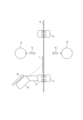
- the transparent screen 5, electronic device 20, and projector 30 may be arranged as shown in the top view of FIG. 11.
- the first user U1 faces the direction of the arrow d1, i.e., toward the second user U2 through the transparent screen 5.
- the second user U2 faces the direction of the arrow d2, i.e., toward the first user U1 through the transparent screen 5.
- the first user U1 and the second user U2 face each other through the transparent screen 5.
- the transparent screen 5 may be formed integrally with a transparent base material 10 such as an acrylic plate.
- the transparent screen 5 may be provided on the entire surface or part of one side of the base material.
- the transparent screen 5 is supported by one or more stands 61 and is arranged in a state of standing approximately vertically on a desk located between the first user U1 and the second user U2.
- the projector 30 is fixed to a positioning member 62 extending from one of the stands 61.
- the positioning member 62 fixes the distance and orientation of the projector 30 with respect to the transparent screen 5.
- the electronic device 20 is, for example, a smartphone or a portable information terminal.
- the microphone 40 may be built into the electronic device 20.
- the microphone 40 may be a separate device from the electronic device 20 that is electrically connected to the electronic device 20.
- the electronic device 20 has a control unit 22 and a storage unit 23, similar to the electronic device 20 of the projector display system 1 in FIG. 2, but does not need to have a voice recognition unit 21.
- the electronic device 20 further has a communication unit 27.
- the electronic device 20 may further have an input unit 28 and/or a timing unit 29.
- the control unit 22 includes one or more processors, similar to the control unit 22 of the projector display system 1.
- the control unit 22 controls the entire electronic device 20, and is configured to transmit the audio signal acquired by the microphone 40 to the cloud server 60 via the communication unit 27.
- the control unit 22 is configured to acquire text information (character information) converted from the audio signal by the cloud server 60 via the communication unit 27.
- the control unit 22 may be configured to acquire text information (character information) translated into a foreign language by the cloud server 60 via the communication unit 27.
- the control unit 22 causes the projector 30 to display the received text information as a display object, similar to the case of the projector display system 1.
- the storage unit 23 stores information necessary for the processing executed by the control unit 22, information obtained as a result of the execution by the control unit 22, etc.
- the control unit 22 includes a storage device such as a semiconductor memory.
- the communication unit 27 communicates with devices external to the electronic device 20 by wireless or wired communication means.
- the communication unit 27 may realize communication by various communication methods, such as a wired LAN (local area network) standard, a wireless LAN standard such as Wi-Fi, and mobile communication standards such as 4G (4th Generation) and 5G (5th Generation).
- the communication unit 27 transmits audio signals to the cloud server 60 and receives text data.
- the input unit 28 accepts inputs and operations from the first user U1.
- the input unit 28 may include a switch provided in the electronic device 20, or a switch electrically connected to the electronic device 20.
- the switch that is part of the input unit 28 may be attached to the microphone 40.
- the input unit 28 may be linked to the switch of the microphone 40.
- the input unit 28 may be, for example, a touch panel provided in the electronic device 20.
- the timekeeping unit 29 is configured to measure time.
- the timekeeping unit 29 may be realized, for example, by a real-time clock (RTC) built into the electronic device 20.
- the timekeeping unit 29 may be provided as one function of the control unit 22.
- the timekeeping unit 29 can function as one or more timers that can measure the elapsed time starting from one or more points in time.
- the technical problem that is solved by the projector display system 1 according to the embodiment of the present disclosure will be described.
- the first user U1 has Japanese as his native language
- the second user US has English as his native language.
- the projector display system 1 acquires Japanese voice data from the first user U1 via, for example, the microphone 40, and displays the voice data as text in a predetermined area (first display area A1) of the screen unit 11.
- first display area A1 a predetermined area of the screen unit 11.
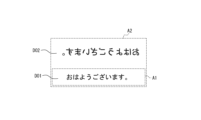
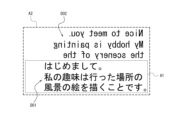
- FIG. 12A shows the display on the screen unit 11 as seen from the first user U1's side.
- the first user U1 can check the results of the speech recognition of the contents of his/her speech by visually checking the display (first display object DO1) in the first display area A1.
- the projector display system 1 translates the remarks of the first user U1 into English so that the second user U2 can understand the remarks of the first user U1, and further inverts the translated text and displays it in a predetermined area (second display area A2) of the screen unit 11.
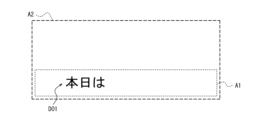
- second display area A2 the result of translating the remarks of the first user U1 (first display object DO1) into English is displayed in the second display area A2 as English text (second display object DO2).
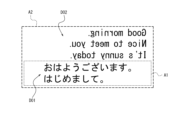
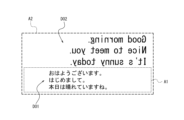
- FIG. 12A shows the display on the screen unit 11 as seen from the first user U1 side. When viewed from the first user U1 side, the English text (second display object DO2) displayed in the second display area A2 of the screen unit 11 is inverted left and right.
- the English text (second display object DO2) displayed in the second display area A2 of the screen unit 11 is displayed as upright text. Therefore, the second user U2 can visually confirm in English in the example shown in FIG. 12A by looking at the display in the second display area A2 (second display object DO2).
- the information displayed in each display area will not correspond appropriately.
- the first display object DO1 even if all of the Japanese characters (first display object DO1) displayed in the first display area A1 are translated into English and displayed in the second display area A2, the space in the second display area A2 is insufficient. Therefore, the content of the first display object DO1 does not correspond to the second display object DO2. That is, in the example shown in FIG. 12A, the second display object DO2, in which the remarks of the first user U1, who is the speaker, are translated into English, is cut off, and not all of the content of the first display object DO1 is displayed.
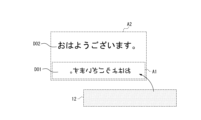
- the amount of characters displayed in the first display area A1 and the amount of characters displayed in the second display area A2 are appropriately controlled, so that the information displayed in each display area corresponds appropriately.
- the first display object DO1 displayed in the first display area A1
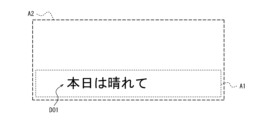
- the content of the first display object DO1 will correctly correspond to the second display object DO2.
- the second display object DO2 in which the remarks of the first user U1, who is the speaker, are translated into English is not interrupted, and all of the content of the first display object DO1 is displayed.
- the characters of each language are controlled to be appropriately displayed in each display area. That is, all of the Japanese characters (first display object DO1) displayed in the first display area A1 are correctly translated into English and displayed in the second display area A2, so that the remarks of the first user U1 are correctly conveyed to the second user U2. Therefore, the projector display system 1 according to one embodiment facilitates smooth communication between the interlocutors.
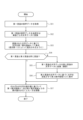
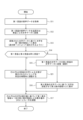
- FIG. 13 is a flowchart explaining the operation of the projector display system 1.
- the language used by the first user U1 is also referred to as the first language.
- the language used by the second user U2 is also referred to as the second language.
- the language used by the first user U1 is Japanese. That is, the first language is Japanese.
- the language used by the second user U2 is English. That is, the second language is English.
- the first and second languages may be set by the first user U1 and/or the second user U2, for example, at the start of or before the start of operation by the projector display system 1, or may be set at an appropriate timing.
- the first language may be automatically determined, for example, by voice recognition of the language of the first user.
- the projector display system 1 acquires voice data in the first language from the first user U1 (step S11). Thereafter, for example, the control unit 22 of the electronic device 20 may perform control related to the operation shown in FIG. 13. In step S11, the control unit 22 may acquire voice data in the first language from the first user U1 detected by the microphone 40, for example.
- the control unit 22 of the projector display system 1 converts the voice data in the first language into character data for each part of speech or word in the first language (step S12).
- the control unit 22 may cause the cloud server 60 to perform the operation of step S11.
- the control unit 22 transmits the voice data in the first language to the cloud server 60 via the communication unit 27.
- the cloud server 60 transmits the result of converting the voice data in the first language into character data for each part of speech or word in the first language to the electronic device 20.
- the electronic device 20 may receive the character data from the cloud server 60 via the communication unit 27.
- at least a part of the operation performed by the control unit 22 may be performed by the cloud server 60.
- the control unit 22 displays characters based on the character data in the first display area A1 of the screen unit 11 (step S13). For example, in step S13, the control unit 22 may display Japanese characters as a display object DO1 in the first display area A1 as shown in FIG. 12A or FIG. 12B. In step S12, the control unit 22 may display the characters shown in the first display area A1 so that they are blocked by the light blocking unit 12. For example, as shown in FIG. 12A or FIG. 12B, the Japanese characters displayed as the display object DO1 in the first display area A1 do not need to be visible to the second user U2. Therefore, by displaying the Japanese characters shown in the first display area A1 so that they are blocked by the light blocking unit 12, the Japanese characters shown in the first display area A1 become invisible or difficult to see for the second user US.
- the control unit 22 determines whether the first language and the second language are the same language (step S14). As described above, here we will explain the case where the first language (Japanese) and the second language (English) are different languages (No in step S14). If the first language and the second language are different languages, the control unit 22 converts the character data of the first language into character data of the second language (step S15). That is, in step S15, the control unit 22 translates the characters of the first language into characters of the second language. As described above, instead of the control unit 22, the cloud server 60 may convert the character data of the first language into character data of the second language.
- the control unit 22 Inverts the character data of the second language left to right and then displays it in the second display area A2 of the screen unit 11 (step S16). For example, at the time of step S16, the control unit 22 displays English characters as display object DO2 in the second display area A2, as shown in FIG. 12A or 12B.
- the control unit 22 adjusts at least one of the first display amount and the second display amount based on the first display amount in which characters in the first language are displayed in the first display area A1 and the second display amount in which characters in the second language are displayed in the second display area A2 (step S17).
- the first display amount may be the display amount (amount of characters) in which characters in the first language are displayed in the first display area A1.
- the second display amount may be the display amount (amount of characters) in which characters in the second language are displayed in the second display area A2.
- the control unit 22 may determine whether the content of the first display amount corresponds to the content of the second display amount. If the content of the first display amount corresponds to the content of the second display amount (i.e., the content of the characters in the first language is entirely displayed as the content of the characters in the second language), the control unit 22 does not need to adjust the first display amount and the second display amount. On the other hand, if the content of the first display amount does not correspond to the content of the second display amount (i.e., the content of the characters in the first language is not entirely displayed as the content of the characters in the second language), the control unit 22 may adjust at least one of the first display amount and the second display amount.
- the control unit 22 may adjust the second display amount by changing at least one of the size of characters, the spacing between characters, and the spacing between lines of characters in the second language. That is, as shown in FIG. 12A, when the area of the second display area A2 for displaying the second display amount of characters (English) into which the first display amount of characters (Japanese) is converted is insufficient, the control unit 22 may adjust the size of the display object DO2 displayed in the second display area A2, etc. By adjusting the size of the display object DO2 displayed in the second display area A2, the control unit 22 may make the content of the display object DO2 displayed in the second display area A2 correspond to the content of the display object DO1 displayed in the first display area A1, as shown in FIG. 12B.
- the control unit 22 may also adjust the first display amount by, for example, changing at least one of the size of the characters of the first language, the spacing between characters, and the spacing between lines of characters. That is, as shown in FIG. 14A, when the area of the first display area A1 for displaying the first display amount of characters (Japanese) before being converted into the second display amount of characters (English) is insufficient, the control unit 22 may adjust the size of the display object DO1 displayed in the first display area A1, etc. The control unit 22 may adjust the size of the display object DO1 displayed in the first display area A1, etc., so that the content of the display object DO1 displayed in the first display area A1 corresponds to the content of the display object DO2 displayed in the second display area A2, as shown in FIG. 14B.
- the electronic device 20 displays characters on a display unit (screen unit 11) having a first display area A1 and a second display area A2.
- the program according to one embodiment may cause the electronic device 20 to execute the following steps.
- the above-mentioned program may cause the electronic device 20 to execute a step of displaying characters of a first language (speaker's language) in the first display area A1 (step S13) and a step of displaying characters of a second language (listener's language) in the second display area A2 (step S16).
- the above-mentioned program may cause the electronic device 20 to execute a step of displaying one of the characters of the first language and the characters of the second language by inverting the left and right (step S16). Furthermore, the above-mentioned program may cause the electronic device 20 to execute a step of adjusting at least one of the first display amount and the second display amount (step S17).
- the step of adjusting at least one of the first display amount and the second display amount may be performed based on the first display amount in which characters in the first language are displayed in the first display area A1, and the second display amount in which characters in the second language are displayed in the second display area A2.
- the program according to one embodiment may cause the electronic device 20 to execute a step (step S17) of adjusting at least one of the first display amount and the second display amount.
- the program according to one embodiment may cause the electronic device 20 to execute a step of adjusting at least one of the first display amount and the second display amount by changing the size of at least one of the characters in the first language and the characters in the second language.
- the program may cause the electronic device 20 to execute a step of adjusting at least one of the first display amount and the second display amount by changing at least one of the character spacing and the line spacing of at least one of the characters in the first language and the characters in the second language.
- the first display area A1 of the display unit (screen unit 11) on which the electronic device 20 displays characters may include a light-shielding unit 12 that at least partially blocks the transmission of light.
- the program according to one embodiment may cause the electronic device 20 to execute a step of displaying characters in the first language in the first display area A1 so that the characters are blocked by the light-shielding unit 12.
- At least a portion of the control and processing described above may be executed by the projector display system 1 instead of the electronic device 20 or together with the electronic device 20, or may be executed by the cloud server 60.
- the amount of characters displayed in the first display area A1 and the amount of characters displayed in the second display area A2 are appropriately controlled, so that the information displayed in each display area corresponds appropriately. Furthermore, according to a projector display system 1 of one embodiment, characters in each language are controlled to be appropriately displayed in each display area. According to a projector display system 1 of one embodiment, the contents of the remarks made by the first user U1 are correctly conveyed to the second user U2. Therefore, according to a projector display system 1 of one embodiment, communication between the interlocutors becomes smoother.
- step S14 the case where the first language (Japanese) and the second language (English) are different languages (No in step S14 shown in FIG. 13) has been described.
- the case where the first language and the second language are the same language (for example, both are Japanese) will be described.
- the first display amount and the second display amount are basically the same, for example, if the first display area A1 and the second display area A2 are set as display areas of approximately the same area, there is no need to adjust the display amount in each display area. In such a case, (step S17 shown in FIG. 13) may be omitted.
- step S17 may be executed.
- the first and second languages are the same language (e.g., both are Japanese)
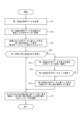
- step S21 the process of step S21 may be executed by proceeding to Yes in step S14 shown in FIG. 15.
- the control unit 22 may adjust the timing at which the phrases in the characters of the first language and the second language are displayed so that it is within a predetermined time.
- "within the predetermined time” may be, for example, a timing at which the time from when the phrase in the characters of the first language is displayed to when the phrase in the characters of the second language is displayed is within 0.2 seconds.
- the phrase in the characters of the second language may be displayed almost simultaneously or completely simultaneously with the phrase in the characters of the first language.
- the phrase in the characters of the first language (Japanese) (DO1) is displayed in the first display area A1
- the phrase in the characters of the second language (Japanese) (DO2) is displayed in the second display area A2 immediately. Therefore, according to the projector display system 1 according to one embodiment, communication between the interlocutors becomes smooth.
- the program may cause the electronic device 20 to execute a step of adjusting the timing at which a phrase in characters in the first language and a phrase in characters in the second language are displayed on the display unit (screen unit 11) within a predetermined time.
- the first language e.g., Japanese
- the second language e.g., English
- the second language e.g., Chinese
- a recognition result different from that after the sentence is finalized may be displayed.
- Japanese or the like is being translated into English or the like
- a translation result different from that after the sentence is finalized may be displayed. If characters in the second language are displayed in the second display area A2 based on such a processing result, this may cause confusion to the second user U2. In such a case, there is a risk that communication between the interlocutors will not be smooth.
- step S31 may be executed after step S15 shown in FIG. 17.
- the control unit 22 may determine whether the characters of the second language have been confirmed as a sentence. If the characters of the second language have not been confirmed as a sentence, the control unit 22 may return to step S15 and continue the process related to the translation (i.e., not display the characters in the second display area). On the other hand, if the characters of the second language have been confirmed as a sentence, the control unit 22 may proceed to step S16 and continue the process (display the characters in the second display area).
- step S16 By such control, as shown in, for example, FIG. 18A and FIG.
- the program according to one embodiment may cause the electronic device 20 to execute a step of displaying characters of the second language as a translation of characters of the first language, and a step of displaying characters of the second language based on the characters of the second language being confirmed as a sentence. Also, in this case, the program according to one embodiment may cause the electronic device 20 to execute a step of displaying characters of the second language as a translation of characters of the first language, and a step of not displaying characters of the second language until the characters of the second language are confirmed as a sentence.
- the program according to one embodiment may cause the electronic device 20 to execute a step of displaying characters of the second language as a translation of characters of the first language, and a step of not displaying characters of the second language until the characters of the second language are confirmed as a sentence.
- the second user U2 may take over as the third user U3, for example, and a conversation between the first user U1 and the third user U3 may begin.
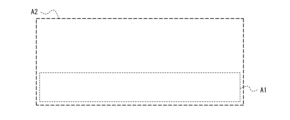
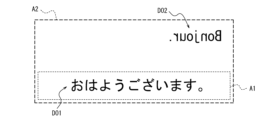
- the language used by the second user U2 is English and the language used by the third user U3 is French. If the language used by the second user U2 is still displayed in the second display area A2 at the time when the conversation between the first user U1 and the third user U3 begins, this may cause confusion to the third user U3.
- Japanese characters (DO1) which are the language used by the first user U1
- English characters (DO2) which are the language used by the second user U2
- Japanese characters (DO1) which are the language used by the first user U1
- DO2 which are the language used by the second user U2
- Japanese characters (DO1) which are the language used by the first user U1
- DO2 which are the language used by the second user U2
- FIG. 19B Japanese characters (DO1), which are the language used by the first user U1 are displayed in the first display area A1.
- the operation shown in FIG. 20 may be executed.
- the control unit 22 determines whether the second language (e.g., English) has been changed to a third language (e.g., French) different from the second language, for example, when the second user U2 is replaced by the third user U3 (step S41). If the second language has not been changed to the third language, the control unit 22 may end the process shown in FIG. 20. On the other hand, if the second language has been changed to the third language, the control unit 22 erases (or deletes) the characters of the second language displayed in the second display area A2 (step S42).
- the second language e.g., English
- a third language e.g., French
- the characters in the second language displayed in the second display area A2 are erased.
- the characters in the first language displayed in the first display area A1 may also be erased.
- Japanese characters (DO1) which is the language used by the first user U1
- French characters (DO2) which is the language used by the third user U3 are displayed in the second display area A2.
- the program may cause the electronic device 20 to execute a step of erasing at least the characters of the second language that were displayed in the second display area A2.
- references such as “first” and “second” are identifiers for distinguishing the configuration.
- Configurations distinguished by descriptions such as “first” and “second” in this disclosure may have their numbers exchanged.
- the first display object may exchange identifiers “first” and “second” with the second display object.
- the exchange of identifiers is performed simultaneously.
- the configurations remain distinguished even after the exchange of identifiers.
- Identifiers may be deleted.
- a configuration from which an identifier has been deleted is distinguished by a symbol. Descriptions of identifiers such as “first” and “second” in this disclosure should not be used solely to interpret the order of the configurations or to justify the existence of identifiers with smaller numbers.
- each embodiment of the present disclosure may be arranged in the same hardware or different hardware as appropriate. Some or all of the microphone, camera, and detection unit of each embodiment of the present disclosure may be included in the same hardware as the electronic device or projector. Some or all of the control unit, memory unit, communication unit, input unit, and timing unit of each embodiment of the present disclosure may be included in the projector as hardware or software.
- a projector display system using a cloud server of the present disclosure can also be used in a system that does not include a second display area and uses only the first display area to convert the speech content of a first user into text information (character information) and display it to a second user.
Landscapes
- Engineering & Computer Science (AREA)
- Multimedia (AREA)
- Signal Processing (AREA)
- Computational Linguistics (AREA)
- Health & Medical Sciences (AREA)
- Audiology, Speech & Language Pathology (AREA)
- Human Computer Interaction (AREA)
- Physics & Mathematics (AREA)
- Acoustics & Sound (AREA)
- Controls And Circuits For Display Device (AREA)
Priority Applications (3)
| Application Number | Priority Date | Filing Date | Title |
|---|---|---|---|
| CN202480008641.3A CN120569707A (zh) | 2023-02-20 | 2024-02-07 | 电子设备、电子设备的控制方法以及程序 |
| EP24760138.8A EP4671961A1 (en) | 2023-02-20 | 2024-02-07 | ELECTRONIC DEVICE, METHOD FOR CONTROLLING ELECTRONIC DEVICES AND PROGRAM |
| JP2025502258A JPWO2024176836A1 (https=) | 2023-02-20 | 2024-02-07 |
Applications Claiming Priority (2)
| Application Number | Priority Date | Filing Date | Title |
|---|---|---|---|
| JP2023-024726 | 2023-02-20 | ||
| JP2023024726 | 2023-02-20 |
Publications (1)
| Publication Number | Publication Date |
|---|---|
| WO2024176836A1 true WO2024176836A1 (ja) | 2024-08-29 |
Family
ID=92500615
Family Applications (1)
| Application Number | Title | Priority Date | Filing Date |
|---|---|---|---|
| PCT/JP2024/004172 Ceased WO2024176836A1 (ja) | 2023-02-20 | 2024-02-07 | 電子機器、電子機器の制御方法、及びプログラム |
Country Status (4)
| Country | Link |
|---|---|
| EP (1) | EP4671961A1 (https=) |
| JP (1) | JPWO2024176836A1 (https=) |
| CN (1) | CN120569707A (https=) |
| WO (1) | WO2024176836A1 (https=) |
Citations (4)
| Publication number | Priority date | Publication date | Assignee | Title |
|---|---|---|---|---|
| US20170139496A1 (en) * | 2015-11-16 | 2017-05-18 | Lg Electronics Inc. | Mobile terminal and method for controlling the same |
| JP2019070915A (ja) | 2017-10-06 | 2019-05-09 | 国立大学法人京都工芸繊維大学 | 翻訳表示装置 |
| WO2019150996A1 (ja) * | 2018-01-30 | 2019-08-08 | パナソニックIpマネジメント株式会社 | 言語提示装置、言語提示方法、及び言語提示プログラム |
| JP2019535059A (ja) * | 2016-09-13 | 2019-12-05 | マジック リープ, インコーポレイテッドMagic Leap,Inc. | 感覚式アイウェア |
-
2024
- 2024-02-07 JP JP2025502258A patent/JPWO2024176836A1/ja active Pending
- 2024-02-07 WO PCT/JP2024/004172 patent/WO2024176836A1/ja not_active Ceased
- 2024-02-07 EP EP24760138.8A patent/EP4671961A1/en active Pending
- 2024-02-07 CN CN202480008641.3A patent/CN120569707A/zh active Pending
Patent Citations (4)
| Publication number | Priority date | Publication date | Assignee | Title |
|---|---|---|---|---|
| US20170139496A1 (en) * | 2015-11-16 | 2017-05-18 | Lg Electronics Inc. | Mobile terminal and method for controlling the same |
| JP2019535059A (ja) * | 2016-09-13 | 2019-12-05 | マジック リープ, インコーポレイテッドMagic Leap,Inc. | 感覚式アイウェア |
| JP2019070915A (ja) | 2017-10-06 | 2019-05-09 | 国立大学法人京都工芸繊維大学 | 翻訳表示装置 |
| WO2019150996A1 (ja) * | 2018-01-30 | 2019-08-08 | パナソニックIpマネジメント株式会社 | 言語提示装置、言語提示方法、及び言語提示プログラム |
Non-Patent Citations (2)
| Title |
|---|
| ANONYMOUS: "[A translation system for service counters that uses a transparent display | VoiceBiz® UCDisplay: Universal communication service: (translation system) for service counters using transparent displays *Currently under development", TOPPAN NEWNORMAL WEBSITE, 31 January 2023 (2023-01-31), JP, XP009557774, Retrieved from the Internet <URL:https://web.archive.org/web/20230131060448/https://solution.toppan.co.jp/newnormal/service/voicebiz_ucdisplay.html> * |
| KENTA YAMAMOTOIPPEI SUZUKIAKIHISA SHITARAYOICHI OCHIAI, SEE-THROUGH CAPTIONS: REAL-TIME CAPTIONING ON TRANSPARENT DISPLAY FOR DEAF AND HARD-OF-HEARING PEOPLE, 27 January 2021 (2021-01-27), Retrieved from the Internet <URL:https://arxiv.org/abs/2101.11326>> |
Also Published As
| Publication number | Publication date |
|---|---|
| JPWO2024176836A1 (https=) | 2024-08-29 |
| CN120569707A (zh) | 2025-08-29 |
| EP4671961A1 (en) | 2025-12-31 |
Similar Documents
| Publication | Publication Date | Title |
|---|---|---|
| US10810912B2 (en) | Face recognition triggered digital assistant and LED light ring for a smart mirror | |
| CN111684410A (zh) | 语言呈现装置、语音呈现方法和语言呈现程序 | |
| JP2023050202A (ja) | 表示部材 | |
| TW201140340A (en) | Sign language translation system, sign language translation apparatus and method thereof | |
| KR100798153B1 (ko) | 부분 이미지 활용 부분 이미지 활용 언어 학습 콘텐츠 제공시스템 | |
| Mathew et al. | Access on demand: real-time, multi-modal accessibility for the deaf and hard-of-hearing based on augmented reality | |
| KR20230079846A (ko) | Ar 스마트 글래스 및 스마트 글래스의 출력 제어 방법 | |
| KR20170009295A (ko) | 동영상 제공 장치, 동영상 제공 방법, 및 컴퓨터 프로그램 | |
| WO2024176837A1 (ja) | 電子機器、電子機器の制御方法、及びプログラム | |
| CN115240681A (zh) | 生成会议纪要的方法及其设备 | |
| WO2024176836A1 (ja) | 電子機器、電子機器の制御方法、及びプログラム | |
| JP5340059B2 (ja) | 文字情報提示制御装置及びプログラム | |
| Messerli | Subtitled artefacts as communication–the case of Ocean’s Eleven Scene 12 | |
| CN108509430A (zh) | 智能眼镜及其翻译方法 | |
| Edwards et al. | Textual & visual selves: photography, film, and comic art in French autobiography | |
| Surace | Semiotics (of Cinema)'s not Dead | |
| JP2024110834A (ja) | 表示制御プログラム、表示制御装置、及び表示制御方法 | |
| Robinson | Voice, Liveness, Digital Video: The Talking Head in Contemporary Independent Chinese Documentary | |
| KR101832464B1 (ko) | 동영상 제공 장치, 동영상 제공 방법, 및 컴퓨터 프로그램 | |
| JP2024110835A (ja) | 表示制御プログラム、表示制御装置、及び表示制御方法 | |
| Andersen | I Am Not Who" I" Pretend to Be: The Autobiography of Alice B. Toklas and its Photographic Frontispiece | |
| WO2025182146A1 (ja) | 表示システム、表示制御装置及び表示制御プログラム | |
| Owens et al. | Lacan on the “Telly”: Psychoanalysis on the Small Screen | |
| KR20250048645A (ko) | 휴대용 화자 인식 및 통번역 it기기 | |
| CN111381688B (zh) | 实时转录的方法及装置、存储介质 |
Legal Events
| Date | Code | Title | Description |
|---|---|---|---|
| 121 | Ep: the epo has been informed by wipo that ep was designated in this application |
Ref document number: 24760138 Country of ref document: EP Kind code of ref document: A1 |
|
| ENP | Entry into the national phase |
Ref document number: 2025502258 Country of ref document: JP Kind code of ref document: A |
|
| WWE | Wipo information: entry into national phase |
Ref document number: 2025502258 Country of ref document: JP |
|
| WWE | Wipo information: entry into national phase |
Ref document number: 202480008641.3 Country of ref document: CN |
|
| WWP | Wipo information: published in national office |
Ref document number: 202480008641.3 Country of ref document: CN |
|
| WWE | Wipo information: entry into national phase |
Ref document number: 2024760138 Country of ref document: EP |
|
| NENP | Non-entry into the national phase |
Ref country code: DE |
|
| ENP | Entry into the national phase |
Ref document number: 2024760138 Country of ref document: EP Effective date: 20250922 |
|
| ENP | Entry into the national phase |
Ref document number: 2024760138 Country of ref document: EP Effective date: 20250922 |
|
| WWP | Wipo information: published in national office |
Ref document number: 2024760138 Country of ref document: EP |