WO2024176302A1 - 状態遷移管理装置、状態遷移管理方法および状態遷移管理プログラム - Google Patents
状態遷移管理装置、状態遷移管理方法および状態遷移管理プログラム Download PDFInfo
- Publication number
- WO2024176302A1 WO2024176302A1 PCT/JP2023/005999 JP2023005999W WO2024176302A1 WO 2024176302 A1 WO2024176302 A1 WO 2024176302A1 JP 2023005999 W JP2023005999 W JP 2023005999W WO 2024176302 A1 WO2024176302 A1 WO 2024176302A1
- Authority
- WO
- WIPO (PCT)
- Prior art keywords
- state
- registration
- rule
- information
- state transition
- Prior art date
- Legal status (The legal status is an assumption and is not a legal conclusion. Google has not performed a legal analysis and makes no representation as to the accuracy of the status listed.)
- Ceased
Links
Images








Classifications
-
- G—PHYSICS
- G06—COMPUTING OR CALCULATING; COUNTING
- G06Q—INFORMATION AND COMMUNICATION TECHNOLOGY [ICT] SPECIALLY ADAPTED FOR ADMINISTRATIVE, COMMERCIAL, FINANCIAL, MANAGERIAL OR SUPERVISORY PURPOSES; SYSTEMS OR METHODS SPECIALLY ADAPTED FOR ADMINISTRATIVE, COMMERCIAL, FINANCIAL, MANAGERIAL OR SUPERVISORY PURPOSES, NOT OTHERWISE PROVIDED FOR
- G06Q30/00—Commerce
- G06Q30/01—Customer relationship services
- G06Q30/012—Providing warranty services
-
- G—PHYSICS
- G06—COMPUTING OR CALCULATING; COUNTING
- G06Q—INFORMATION AND COMMUNICATION TECHNOLOGY [ICT] SPECIALLY ADAPTED FOR ADMINISTRATIVE, COMMERCIAL, FINANCIAL, MANAGERIAL OR SUPERVISORY PURPOSES; SYSTEMS OR METHODS SPECIALLY ADAPTED FOR ADMINISTRATIVE, COMMERCIAL, FINANCIAL, MANAGERIAL OR SUPERVISORY PURPOSES, NOT OTHERWISE PROVIDED FOR
- G06Q30/00—Commerce
- G06Q30/018—Certifying business or products
Definitions
- This disclosure relates to state transition definitions and state management.
- Patent document 1 discloses a method for workflow control.
- the method of Patent Document 1 is a method for workflow control, and is not a method for managing state transitions in product distribution. Furthermore, the method of Patent Document 1 does not perform version management. Even if the method of Patent Document 1 is applied to state transitions, it is not possible to add or delete states depending on the version. Furthermore, it is not possible to change the version while a state transition is in progress.
- the purpose of this disclosure is to enable version changes while a state transition is in progress.
- the state transition management device of the present disclosure comprises: a reception unit for receiving a state transition rule indicating a series of state transitions;
- the system further comprises a rule registration section which, if the accepted state transition rule is a rule for registration, sets an initial version number as an event for each of one or more state transitions in the series of state transitions, and registers the set rule for registration in a rule storage section.
- a version number can be set as an event for each state transition in the state transition specification. Then, by using such a state transition specification, the user can change the version of the state transition by specifying the version number of the state transition they wish to use for each state registered while the state transition is in progress. In other words, it becomes possible to change the version while the state transition is in progress.
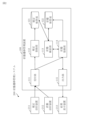
- FIG. 1 is a configuration diagram of a state transition management device 100 according to a first embodiment.
- FIG. 2 is a configuration diagram of a state transition management system 200 according to the first embodiment.
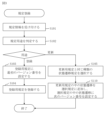
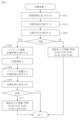
- 13 is a flowchart of a provision registration according to the first embodiment.
- FIG. 2 is a diagram showing registration rules 201 in the first embodiment.
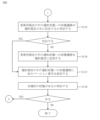
- 13 is a flowchart of step S110 in the first embodiment.
- 13 is a flowchart of step S110 in the first embodiment.
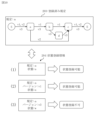
- FIG. 11 is a diagram showing a specific example of step S110 in the first embodiment. 4 is a flowchart of a status registration according to the first embodiment.
- 13 is a flowchart of step S130 in the first embodiment.
- FIG. 11 is a diagram showing a specific example of step S130 in the first embodiment.
- FIG. 11 is a diagram showing a specific example of step S124 in the first embodiment.
- 13 is a flowchart of step S140 in the first embodiment.
- FIG. 11 is a diagram showing a specific example of step S140 in the first embodiment.
- FIG. 11 is a diagram showing a specific example of step S127 in the first embodiment.
- FIG. 13 is a configuration diagram of a state transition management system 200 according to a second embodiment. 13 is a flowchart of status registration A in the second embodiment. 13 is a flowchart of status registration B in the second embodiment.
- FIG. 2 is a hardware configuration diagram of the state transition management device 100 according to the embodiment.
- Embodiment 1 The state transition management device 100 will be described with reference to FIGS.
- the configuration of a state transition management device 100 is a computer including hardware such as a processor 101, a memory 102, an auxiliary storage device 103, a communication device 104, and an input/output interface 105. These pieces of hardware are connected to each other via signal lines.
- the processor 101 is an IC that performs arithmetic processing and controls other hardware.
- the processor 101 is a CPU.
- IC is an abbreviation for Integrated Circuit.
- CPU is an abbreviation for Central Processing Unit.
- the memory 102 is a volatile or non-volatile storage device.
- the memory 102 is also called a primary storage device or a main memory.
- the memory 102 is a RAM.
- Data stored in the memory 102 is saved in the secondary storage device 103 as necessary.
- RAM is an abbreviation for Random Access Memory.
- the auxiliary storage device 103 is a non-volatile storage device.
- the auxiliary storage device 103 is a ROM, a HDD, a flash memory, or a combination of these. Data stored in the auxiliary storage device 103 is loaded into the memory 102 as needed.
- ROM is an abbreviation for Read Only Memory.
- HDD is an abbreviation for Hard Disk Drive.
- the communication device 104 is a receiver and a transmitter.
- the communication device 104 is a communication chip or a NIC.
- the communication of the state transition management device 100 is performed using the communication device 104.
- NIC is an abbreviation for Network Interface Card.
- the input/output interface 105 is a port to which an input device and an output device are connected.
- the input/output interface 105 is a USB terminal
- the input device is a keyboard and a mouse
- the output device is a display.
- Input and output of the state transition management device 100 is performed using the input/output interface 105.
- USB is an abbreviation for Universal Serial Bus.
- the state transition management device 100 includes elements such as a reception unit 111, a regulation registration unit 112, a state verification unit 113, a state registration unit 114, and an output unit 115. These elements are realized by software.
- the auxiliary storage device 103 stores a state transition management program for causing the computer to function as a reception unit 111, a rule registration unit 112, a state verification unit 113, a state registration unit 114, and an output unit 115.
- the state transition management program is loaded into the memory 102 and executed by the processor 101.
- the auxiliary storage device 103 further stores an OS. At least a part of the OS is loaded into the memory 102 and executed by the processor 101.
- the processor 101 executes a state transition management program while executing the OS.
- OS is an abbreviation for Operating System.
- the auxiliary storage device 103 functions as the storage unit 120.
- a storage device such as the memory 102, a register in the processor 101, or a cache memory in the processor 101 may function as the storage unit 120 instead of the auxiliary storage device 103 or together with the auxiliary storage device 103.
- the state transition management program can be recorded (stored) in a computer-readable manner on a non-volatile recording medium such as an optical disk or flash memory.
- the configuration of the state transition management system 200 will be described with reference to FIG.
- the state transition management system 200 includes a state transition management device 100 , a regulation transmission device 211 , a state transmission device 212 , and a result display device 213 .
- the regulation transmission device 211, the status transmission device 212, and the result display device 213 are computers used by the user.
- a single computer may function as the regulation transmission device 211, the status transmission device 212, and the result display device 213.
- the regulation storage unit 121 and the state storage unit 122 are part of the memory unit 120 .
- the operation procedure of state transition management device 100 corresponds to a state transition management method. Also, the operation procedure of state transition management device 100 corresponds to a processing procedure according to a state transition management program.
- the receiving unit 111 receives regulating information.
- the regulation information indicates a regulation type and a state transition regulation.
- the rule type is the type of state transition rule.
- the state transition rule indicates a series of state transitions from a first state to a final state.
- a sequence of state transitions includes one or more state transitions.
- a state transition is a transition between two states. State transitions are triggered by a specific event.
- Provision information is accepted as follows: The user inputs the regulation information into the regulation transmission device 211 .
- the regulation transmission device 211 transmits the input regulation information to the state transition management device 100 .
- the reception unit 111 receives the transmitted regulating information.
- the predefined registration unit 112 receives the predefined information from the reception unit 111 and determines the predefined purpose.
- the predefined purpose means the purpose of the predefined information.
- prescribed registration the regulation information is registered in the regulation storage unit 121 .
- rule update the rule information is used to update the registered rules.
- the registered rules are state transition rules registered in the rule storage unit 121.
- the prescribed use is determined as follows: The user can specify a prescribed use.
- the specified prescribed use is indicated in the prescribed information.
- the prescribed registration unit 112 refers to the prescribed information to determine the prescribed use.
- the rule registration unit 112 searches the rule storage unit 121 for a registered rule of the same type as the rule type in the rule information. If no rule is found, the rule registration unit 112 determines that the rule use is rule registration. If a rule is found, the rule registration unit 112 determines that the rule use is rule update.
- step S103 the state transition regulation in the regulation information is referred to as a registration regulation. If the prescribed use is prescribed update, the process proceeds to step S105. In this case, the state transition regulation in the regulation information is referred to as an update regulation.
- step S103 the rule registration unit 112 sets the first version number as an event for each of one or more state transitions in the registration rule.
- the registration rule 201 is an example of a registration rule.
- S indicates the start of a series of state transitions.
- E indicates the completion of a series of state transitions.
- the initial state is state a and the final state is state c.
- the series of state transitions in the registration rule 201 includes a state transition from state a to state b, and a state transition from state b to state c.
- the rule registration unit 112 sets a version number v1 to each state transition in the series of state transitions.
- v1" is the first version number.
- step S104 the registration rules 201 register the registration rules in which the first version number is set in the rules storage unit 121 together with the rule type in the rule information. After step S104, the process ends.
- the format of the registered regulations can be any format that identifies the regulation type, version number, one or more states, and transitions between states.
- step S105 the regulation registration unit 112 selects from the regulation storage unit 121 a registered regulation of the same type as the regulation type in the regulation information.
- step S110 the rule registration unit 112 adds, to the selected registered rule, each of the state transitions among the one or more state transitions of the update rule that do not exist in the selected registered rule. Then, the rule registration unit 112 sets the next version number as an event for each of the corresponding transitions in the selected registered rule.
- the relevant transition is a state transition that corresponds to a state transition in the update specification.
- the next version number means the version number following the most recent version number in the registered specification.
- step S110 The details of step S110 will be described with reference to FIG. 5 and FIG.
- the registered rule selected in step S105 is referred to as a selected rule.
- the rule registration unit 112 refers to the selection rule and identifies the latest version number in the selection rule. Then, the prescription registration unit 112 identifies the next version number based on the latest version number. For example, the prescription registration unit 112 specifies the latest version number plus 1 as the next version number.
- step S112 the rule registration unit 112 selects one unselected state in the update rule, starting from the top state.
- the selected state is called the selected state.
- step S113 the rule registration unit 112 determines whether the selected state exists in the selection rules. If the selected state exists in the selection definition, processing proceeds to step S115. If the selected state does not exist in the selection definition, the process proceeds to step S114.
- step S114 the rule registration unit 112 adds the selected state to the selection rule. If the selected state is the leading state, the rules registration unit 112 adds the selected state as the leading state to the selection rules. If the selected state is the second or subsequent state, the rule registration unit 112 adds the selected state to the selection rules as the state next to the previous state. If the selected state is the final state, the rules registration unit 112 adds the selected state as the final state to the selection rules.
- step S115 the rule registration unit 112 refers to the update rule to identify a state transition to the selected state.
- the identified state transition is called a target transition.
- the rule registration unit 112 refers to the selection rule and determines whether the target transition exists in the selection rule. If the target transition exists in the selection rule, the process proceeds to step S117. If the target transition does not exist in the selection rule, the process proceeds to step S116.
- step S116 the rule registration unit 112 adds the target transition to the selection rule.
- step S117 the rule registration unit 112 sets the next version number as an event for the target transition in the selected rule.
- step S118 the rule registration unit 112 determines whether or not there is an unselected state in the update rules. If there is an unselected state, the process proceeds to step S112. If there are no unselected states, the process ends.
- Update rule 202 is an example of an update rule.
- Registered rule 203 is an example of a registered rule of the same type as update rule 202.
- the latest version number in the registered specification 203 is v2.
- the next version number after the latest version number v2 is v3.
- the start state a of the update rule 202 exists in the registered rule 203.
- the rule registration unit 112 sets the next version number v3 to the state transition from the start to the state a in the registered rule 203.
- the second state b of the update rule 202 exists in the registered rule 203.
- the state transition from state a to state b in the update rule 202 exists in the registered rule 203.
- the rule registration unit 112 sets the next version number v3 to the state transition from state a to state b in the registered rule 203.
- the third state d in the update rule 202 does not exist in the registered rule 203.
- the rule registration unit 112 adds state d to the registered rule 203, and adds the state transition from state b to state d to the registered rule 203. Then, the rule registration unit 112 sets the next version number v3 to the state transition from state b to state d in the registered rule 203.
- the final state c in the update rule 202 exists in the registered rule 203. The state transition from state d to state c in the update rule 202 does not exist in the registered rule 203.
- the rule registration unit 112 adds the state transition from state d to state c to the registered rule 203. Then, the rule registration unit 112 sets the next version number v3 to the state transition from state d to state c in the registered rule 203. (5) The rule registration unit 112 sets the next version number v3 to the state transition from state c to completion in the registered rule 203.
- step S121 the receiving unit 111 receives state information.
- the state information indicates the new state.
- Status information is accepted as follows: A user inputs status information into the status transmission device 212 .
- the status transmission device 212 transmits the input status information to the status transition management device 100 .
- the receiving unit 111 receives the transmitted status information.
- the status registration unit 114 receives the status information from the reception unit 111 and determines the status use.
- the status use means the use of the status information.
- the state information for state registration is called “state registration information.”
- the state registration information is registered in the state saving unit 122.
- the state information for state update is called state update information.
- the state update information is used to update the registered state information.
- the registered state information is state information registered in the state storage unit 122.
- the status usage is determined as follows: The user can specify a status use.
- the specified status use is indicated in the status information.
- the status registration unit 114 refers to the status information to determine the status use.
- the status use is status registration
- the user specifies a prescribed type.
- the specified prescribed type is indicated in the status information.
- the status registration unit 114 determines that the status use is status registration.
- the status use is status update
- the user specifies a registration status identifier.
- the specified registration status identifier is indicated in the status information.
- the status registration unit 114 determines that the status use is status update.
- the status registration unit 114 can determine that the status use is status registration.
- step S130 If the status use is status registration, the process proceeds to step S130. If the status use is a status update, the process proceeds to step S140.
- step S130 the state verification unit 113 receives the state registration information from the state registration unit 114 and verifies the state registration information.
- step S131 the state verification unit 113 selects a registered rule of the same type as the rule type in the state registration information from the rule storage unit 121.
- the selected registered rule is referred to as a selected rule.
- step S132 the state verification unit 113 identifies a version number based on the state registration information.
- the identified version number is referred to as an identification number.
- the specific number is specified as follows: A user can specify a version number. The specified version number is indicated in the status registration information. If a version number is indicated in the status registration information, the status verification unit 113 identifies the version number indicated in the status registration information as the specific number. If a version number is not indicated in the status registration information, the status verification unit 113 identifies the latest version number in the selection provision as the specific number.
- step S133 the state verification unit 113 selects one or more state transitions to which a specific number is set from the selection rule. Next, the state verification unit 113 selects a leading state from among the one or more selected state transitions. Then, the state verification unit 113 compares the new state in the state registration information with the selected top state.
- step S134 If the new state in the state registration information matches the selected top state, the process proceeds to step S134. If the new state in the state registration information does not match the selected top state, the process proceeds to step S135.
- step S134 the state verification unit 113 determines that the state can be registered. Then, the state verification unit 113 outputs the verification result indicating information that state registration is possible and the identification number.
- step S135 the state verification unit 113 determines that state registration is not possible. Then, the state verification unit 113 outputs a verification result indicating that the state cannot be registered.
- Status registration information 204 is an example of status registration information.
- the registered rule 203 is a registered rule of the same rule type as the rule type ⁇ in the status registration information 204 .
- the version number is not indicated in the state registration information 204.
- the latest version number in the registered rules 203 is v3.
- the leading state of the version number v3 is state a.
- the leading state a of the version number v3 matches the new state a in the state registration information 204.
- the state verification unit 113 determines that the state can be registered.
- the version number in the status registration information 204 is v1.
- the initial state of the version number v1 is state a.
- the initial state a of the version number v1 matches the new state a in the status registration information 204.
- the status verification unit 113 determines that the status can be registered.
- the version number in the status registration information 204 is v3.
- the leading state of the version number v3 is state a.
- the leading state a of the version number v3 does not match the new state w in the status registration information 204. In this case, the status verification unit 113 determines that the status cannot be registered.
- step S130 the process proceeds to step S123.
- step S123 status registration unit 114 receives the verification result from status verification unit 113, and determines whether status registration is possible by referring to the verification result. If the status can be registered, the process proceeds to step S124. If the status cannot be registered, the process proceeds to step S125.
- step S124 the status registration unit 114 generates a new registration status identifier.
- the new registration status identifier is a registration status identifier that does not exist in the status saving unit 122. Then, the status registration unit 114 generates new registration status information based on the status registration information, and registers the new registration status information in the status saving unit 122 .
- the new registration status information indicates a new registration status identifier, a new status in the status registration information, a prescribed type in the status registration information, and a version number in the verification result.
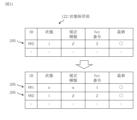
- the registration status information 205 has an ID column, a status column, a prescribed type column, a version number column, and a latest column.
- the ID column indicates a registration status identifier.
- the status column indicates the status.
- the provision type column indicates the provision type.
- the Ver. No. column indicates the version number.
- the latest column indicates whether the status in the status column is the latest status.
- the status registration unit 114 generates registration status information 205 for ID001 and registers the registration status information 205 for ID001 in the status storage unit 122.
- step S125 the output unit 115 receives the registration result from the status registration unit 114 and outputs the registration result. If it is determined in step S123 that the status can be registered, the registration result indicates information indicating that registration is complete and a registration status identifier. If it is determined in step S123 that the status cannot be registered, the registration result indicates information indicating a registration error and the verification result.
- the output unit 115 transmits the registration results to the result display device 213.
- the result display device 213 receives the registration results and displays them on a display. The user checks the displayed registration results.
- step S125 the process ends.
- step S140 the state verification unit 113 receives the state update information from the state registration unit 114 and verifies the state update information.
- step S141 the state verification unit 113 selects registration state information having the same registration state identifier as the registration state identifier in the state update information from the state storage unit 122.
- the state shown in the state column of the selected registration state information is the latest state.
- the selected registration state information is referred to as selected state information.
- the state verification unit 113 If the state storage unit 122 does not contain any registration state information with the same registration state identifier as the registration state identifier in the state update information, the state verification unit 113 outputs a verification result indicating that state registration is not possible because the corresponding registration state information does not exist. Then, the process ends.
- step S142 the state verification unit 113 selects a registered regulation of the same type as the regulation type in the selected state information from the regulation storage unit 121.
- the selected registered regulation is referred to as the selected regulation.
- step S143 the state verification unit 113 identifies a version number based on the state update information.
- the identified version number is referred to as an identification number.
- the specific number is specified as follows: A user can specify a version number. The specified version number is indicated in the status update information. If a version number is indicated in the status update information, the status verification unit 113 identifies the version number indicated in the status update information as the specific number. If a version number is not indicated in the status update information, the status verification unit 113 identifies the version number in the selected status information as the specific number.
- step S144 the state transition from the latest state in the selection state information to the new state in the state update information is referred to as a new state transition.
- the state verification unit 113 selects a state transition to which a specific number is set from the selection rule. Then, the state verification unit 113 compares the new state transition with each of the selected state transitions.
- step S145 If the new state transition matches any of the selected state transitions, processing proceeds to step S145. If the new state transition does not match any of the selected state transitions, processing proceeds to step S146.
- step S145 the state verification unit 113 determines that the state can be registered. Then, the state verification unit 113 outputs the information that the state can be registered and the verification result indicating the prescribed type and the specific number in the selection state information.
- step S146 the status verification unit 113 determines that status registration is not possible. Then, the state verification unit 113 outputs a verification result indicating that the state cannot be registered.
- Status update information 206 is an example of status update information.
- the registration state information 205 is registration state information having the same registration state identifier as the registration state identifier 001 in the state update information 206 .
- the registered rule 203 is a registered rule of the same rule type as the rule type ⁇ in the registration status information 205 .
- the version number is not indicated in the state update information 206.
- the version number in the selected state information is v1.
- the state transition from the latest state b in the registered state information 205 to the new state d in the state update information 206 is the new state transition.
- the new state transition (b -> d) does not match any state transition of version number v1 in the registered rules 203.
- the state verification unit 113 determines that the state cannot be registered.
- the version number in the status update information 206 is v3.
- the new status transition is from the latest status b in the registered status information 205 to the new status d in the status update information 206.
- the new status transition (b ⁇ d) matches the status transition (b ⁇ d) of version number v3 in the registered rules 203.
- the status verification unit 113 determines that the status can be registered.
- the version number in the status update information 206 is v3.
- the new status transition is from the latest status b in the registered status information 205 to the new status w in the status update information 206.
- the new status transition (b ⁇ w) does not match any of the status transitions of version number v3 in the registered rules 203. In this case, the status verification unit 113 determines that status registration is not possible.
- step S140 the process proceeds to step S126.
- step S126 the state registration unit 114 receives the verification result from the state verification unit 113, and determines whether the state can be updated by referring to the verification result. If the status can be updated, the process proceeds to step S127. If the status cannot be updated, the process proceeds to step S128.
- step S127 the status registration unit 114 updates the registration status information of the registration status identifier that is the same as the registration status identifier in the status update information, based on the status update information.
- the status registration unit 114 generates new registration status information based on the status update information, and adds the new registration status information to the status storage unit 122 .
- the new registration state information indicates the registration state identifier in the state update information, the new state in the state update information, the prescribed type in the verification result, and the version number in the verification result.
- step S127 A specific example of step S127 will be described with reference to FIG.
- the status registration unit 114 generates new registration status information 205 for ID001 and adds the new registration status information 205 for ID001 to the status storage unit 122.
- the status registration unit 114 changes the information in the latest column of the previous registration status information 205 for ID001 to information indicating that the status in the status column is not the latest status. As a result, the registration status information 205 for ID001 is updated.
- the registered state information 205 of ID001 indicates the previous state a and the latest state c.
- the previous state a and the latest state c have different version numbers for the state transition.
- the version number of a state transition may be the same for all states, or may be different for each state. In other words, the user can specify a different version number for each state registration.
- step S1208 the output unit 115 receives the update result from the status registration unit 114 and outputs the update result. If it is determined in step S126 that the status can be updated, the update result indicates information indicating that the update is complete and the registration status identifier. If it is determined in step S126 that the status cannot be updated, the update result indicates information indicating an update error and the verification result.
- the output unit 115 transmits the update results to the result display device 213.
- the result display device 213 receives the update results and displays them on the display. The user checks the displayed update results.
- step S1208 the process ends.
- the main features of the first embodiment are the rule registration unit 112 and the state verification unit 113.
- the feature is that state transition rules in which the version of the state transition is set as an event (action) are registered.
- action event
- the input state transition rule is added to the registered state transition rule as a rule of a new version.
- the first embodiment has an effect of being able to manage a version of a state transition in which a state has been added or deleted.
- the version of the state transition cannot be changed while the state transition is in progress.
- a state transition rule in which a version is set as an event (action) is referenced. Therefore, the first embodiment has an effect that, even if a state transition is in progress, it is possible to check whether an input state complies with the rule by using the state transition of a specified version.
- the registered rules and the registration state information may be managed by a plurality of state transition management devices 100 that communicate with each other via a network.
- the registered rules and the registration state information are managed using a distributed ledger technology or a blockchain technology.
- Embodiment 2 The embodiment utilizing a plurality of state transition management devices 100 will be described below with reference to Figs. 15 to 17, mainly with respect to the points that differ from the first embodiment.
- the state transition management system 200 includes a plurality of state transition management devices (100A, 100B).
- State transition management device 100A is a private state transition management device 100.
- State transition management device 100B is a public state transition management device 100. There may be two or more state transition management devices 100A and two or more state transition management devices 100B.
- the state transition information managed by state transition management device 100A is used only by a specific user or a specific system.
- the state transition information managed by state transition management device 100B is used by an unspecified number of users or other systems.
- state transition management device 100A to which the regulating information has been input is the same as the operation of state transition management device 100 in embodiment 1.
- the state transition regulations in the input regulating information are managed by state transition management device 100A.
- the operation of state transition management device 100B to which the regulating information has been input is the same as the operation of state transition management device 100 in embodiment 1.
- the state transition regulations in the input regulating information are managed by state transition management device 100B.
- Each state in the state transition rule is marked with whether it can be made public or not.
- the disclosure option indicates whether the status can be made public.
- the contents of the registration regulations are confirmed in advance to be correct.
- all or some of the businesses that use the state transition management system 200 confirm in advance that the registration regulations are correct state transition regulations.
- a user inputs state information to state transition management device 100A.
- the state information indicates the new state.
- State registration A is a state registration in state transition management device 100A.
- step S121 the receiving unit 111 receives state information.
- step S122 the status registration unit 114 determines the status use. Steps S121 and S122 are as described in the first embodiment. After step S122, the process proceeds to step S201.
- step S201 the state registration unit 114 determines whether the new state can be made public.
- the decision as to whether or not to publish is made as follows:
- the user can specify whether or not to make the information public.
- the specified public or private status is indicated in the status information.
- the state registration unit 114 refers to the state information to determine whether or not the content is publicly available. If the state information does not indicate whether or not the state can be made public, the state registration unit 114 transmits the state information and the purpose information to the state transition management device 100B to inquire whether or not the state can be made public.
- the purpose information indicates the purpose of the state.
- state registration unit 114 selects a state transition rule corresponding to state information according to the state use (similar to S131 or S142).
- State registration unit 114 selects a state corresponding to the new state from the selected state transition rule, and refers to the publication permission/non-permission attached to the selected state. Then, state registration unit 114 responds to state transition management device 100A regarding the publication permission/non-permission.
- the state transition management device 100A executes verification and registration/update. Specifically, if the state use is state registration, step S130 and steps S123 to S125 are executed, and if the state use is state update, step S140 and steps S126 to S128 are executed. Then, the process ends. If the new state is publicly available, processing proceeds to step S202.
- step S202 state registration unit 114 transmits the state information and the purpose information to state transition management device 100B.
- state registration B which will be described later, is executed in state transition management device 100B, and the process proceeds to step S203.
- step S203 state registration unit 114 receives the processing result (registration result or update result) from state transition management device 100B.
- the processing result becomes the processing result.
- the state usage is a state update
- the update result becomes the processing result.
- step S203 The explanation of step S203 will be continued.
- the output unit 115 outputs the processing result (similar to S125 or S128). After step S203, the process proceeds to step S204.
- step S204 the status registration unit 114 determines the processing result. If the processing result indicates that registration or update is complete, state transition management device 100A executes verification and registration/update, and then the processing ends. If the processing result indicates a registration or update error, the processing ends.
- State registration B is a state registration in state transition management device 100B.
- step S211 state registration unit 114 receives state information and purpose information from state transition management device 100A. After step S211, the process proceeds to step S122.
- step S122 the status registration unit 114 determines the status use. Step S122 is as described in the first embodiment.
- step S122 state transition management device 100B executes verification and registration/update. Specifically, if the state use is state registration, steps S130, S123, and S124 are executed, and if the state use is state update, steps S140, S126, and S127 are executed. The process then proceeds to step S212.
- step S212 state registration unit 114 transmits the processing result (the registration result or the update result) to state transition management device 100A. After step S212, the process ends.
- the second embodiment utilizes a plurality of state transition management devices 100 .
- multiple state transition management devices 100 for example, multiple businesses can each perform state transition management. Specifically, depending on the situation, it is possible to selectively use state transitions managed only by a specific business and state transitions managed jointly by multiple businesses. This makes it possible to manage shared state transitions while managing state transitions that are not disclosed to other businesses.
- State transition management system 200 may have a function of not registering a new state in state transition management device 100B if the processing result in state transition management device 100A is a registration error or an update error. For example, if the processing result in state transition management device 100A is a registration error or an update error, state registration unit 114 requests state transition management device 100B to delete the new state. In state transition management device 100B, state registration unit 114 deletes the registered state information of the new state upon receiving the request.
- the state transition management device 100 includes a processing circuit 109 .
- the processing circuit 109 is hardware that realizes a reception unit 111 , a rule registration unit 112 , a state verification unit 113 , a state registration unit 114 , and an output unit 115 .
- the processing circuitry 109 may be dedicated hardware, or may be a processor 101 that executes a program stored in the memory 102 .
- processing circuitry 109 When processing circuitry 109 is dedicated hardware, processing circuitry 109 may be, for example, a single circuit, multiple circuits, a programmed processor, parallel programmed processors, an ASIC, an FPGA, or a combination thereof.
- ASIC is an abbreviation for Application Specific Integrated Circuit.
- FPGA is an abbreviation for Field Programmable Gate Array.
- the state transition management device 100 may include multiple processing circuits that replace the processing circuit 109.
- processing circuit 109 some functions may be realized by dedicated hardware, and the remaining functions may be realized by software or firmware.
- the functions of the state transition management device 100 can be realized by hardware, software, firmware, or a combination of these.
- each element of the state transition management device 100 may be interpreted as a "process,” “step,” “circuit,” or “circuitry.”
Landscapes
- Business, Economics & Management (AREA)
- Physics & Mathematics (AREA)
- General Physics & Mathematics (AREA)
- Development Economics (AREA)
- Economics (AREA)
- Finance (AREA)
- Marketing (AREA)
- Accounting & Taxation (AREA)
- Strategic Management (AREA)
- General Business, Economics & Management (AREA)
- Theoretical Computer Science (AREA)
- Engineering & Computer Science (AREA)
- Entrepreneurship & Innovation (AREA)
- Stored Programmes (AREA)
- Exchange Systems With Centralized Control (AREA)
- Data Exchanges In Wide-Area Networks (AREA)
- Computer And Data Communications (AREA)
Abstract
Description
製品の証跡管理では、製品の状態が登録される。例えば、「製造」、「保管」または「輸送」などの状態が登録される。
状態の登録の際に状態の遷移があらかじめ定められた規定に則しているかを検証することで、誤った状態の登録を防ぐことができる。
一連の状態遷移を示す状態遷移規定を受け付ける受付部と、
受け付けられた状態遷移規定が登録用規定である場合に前記一連の状態遷移の中の1つ以上の状態遷移のそれぞれに最初のバージョン番号をイベントとして設定し、設定後の前記登録用規定を規定保管部に登録する規定登録部と、を備える。
状態遷移管理装置100について、図1から図14に基づいて説明する。
図1に基づいて、状態遷移管理装置100の構成を説明する。
状態遷移管理装置100は、プロセッサ101とメモリ102と補助記憶装置103と通信装置104と入出力インタフェース105といったハードウェアを備えるコンピュータである。これらのハードウェアは、信号線を介して互いに接続されている。
ICは、Integrated Circuitの略称である。
CPUは、Central Processing Unitの略称である。
RAMは、Random Access Memoryの略称である。
ROMは、Read Only Memoryの略称である。
HDDは、Hard Disk Driveの略称である。
NICは、Network Interface Cardの略称である。
USBは、Universal Serial Busの略称である。
補助記憶装置103には、さらに、OSが記憶されている。OSの少なくとも一部は、メモリ102にロードされて、プロセッサ101によって実行される。
プロセッサ101は、OSを実行しながら、状態遷移管理プログラムを実行する。
OSは、Operating Systemの略称である。
補助記憶装置103は記憶部120として機能する。但し、メモリ102、プロセッサ101内のレジスタおよびプロセッサ101内のキャッシュメモリなどの記憶装置が、補助記憶装置103の代わりに、又は、補助記憶装置103と共に、記憶部120として機能してもよい。
状態遷移管理システム200は、状態遷移管理装置100と規定送信装置211と状態送信装置212と結果表示装置213を備える。
規定送信装置211と状態送信装置212と結果表示装置213は、利用者によって利用されるコンピュータである。1台のコンピュータが規定送信装置211と状態送信装置212と結果表示装置213として機能してもよい。
規定保管部121と状態保管部122は、記憶部120の一部である。
状態遷移管理装置100の動作の手順は状態遷移管理方法に相当する。また、状態遷移管理装置100の動作の手順は状態遷移管理プログラムによる処理の手順に相当する。
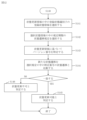
ステップS101において、受付部111は、規定情報を受け付ける。
規定情報は、規定種類と状態遷移規定を示す。
規定種類は、状態遷移規定の種類である。
状態遷移規定は、先頭状態から最終状態までの一連の状態遷移を示す。
一連の状態遷移は、1つ以上の状態遷移を含む。
状態遷移は、2つの状態の状態間の遷移である。状態遷移は、特定のイベントをきっかけにして発生する。
利用者は、規定情報を規定送信装置211に入力する。
規定送信装置211は、入力された規定情報を状態遷移管理装置100へ送信する。
受付部111は、送信された規定情報を受信する。
規定用途には、規定登録と規定更新という種類がある。
規定登録では、規定情報は規定保管部121に登録される。
規定更新では、規定情報は登録済み規定の更新に用いられる。登録済み規定は、規定保管部121に登録されている状態遷移規定である。
利用者は、規定用途を指定できる。指定された規定用途は規定情報に示される。規定用途が規定情報に示される場合、規定登録部112は、規定情報を参照して規定用途を判定する。
規定登録部112は、規定保管部121を検索して規定情報の中の規定種類と同じ種類の登録済み規定を探す。見つからなかった場合、規定登録部112は、規定用途を規定登録と判定する。見つかった場合、規定登録部112は、規定用途を規定更新と判定する。
規定用途が規定更新である場合、処理はステップS105へ進む。この場合、規定情報の中の状態遷移規定を、更新用規定と称する。
登録用規定201は、登録用規定の一例である。
「S」は、一連の状態遷移の開始を表す。「E」は、一連の状態遷移の完了を表す。
登録用規定201において、先頭状態は状態aであり、最終状態は状態cである。
登録用規定201の一連の状態遷移には、状態aから状態bへの状態遷移と、状態bから状態cへの状態遷移と、が含まれる。
規定登録部112は、一連の状態遷移の中のそれぞれの状態遷移にバージョン番号v1を設定する。「v1」は、最初のバージョン番号である。
ステップS104において、登録用規定201は、最初のバージョン番号が設定された登録用規定を規定情報の中の規定種類と共に規定保管部121に登録する。
ステップS104の後、処理は終了する。
そして、規定登録部112は、選択された登録済み規定の中の該当遷移のそれぞれに次のバージョン番号をイベントとして設定する。
該当遷移は、更新用規定の中の状態遷移に対応する状態遷移である。
次のバージョン番号は、登録済み規定の中の最新のバージョン番号の次のバージョン番号を意味する。
ステップS110の後、処理は終了する。
ステップS105で選択された登録済み規定を、選択規定と称する。
そして、規定登録部112は、最新のバージョン番号に基づいて、次のバージョン番号を特定する。
例えば、規定登録部112は、最新のバージョン番号に1を加えた番号を、次のバージョン番号に特定する。
選択状態が選択規定の中に存在する場合、処理はステップS115へ進む。
選択状態が選択規定の中に存在しない場合、処理はステップS114へ進む。
選択状態が先頭状態である場合、規定登録部112は、選択状態を先頭状態として選択規定に追加する。
選択状態が2番目以降の状態である場合、規定登録部112は、選択状態を1つ前の状態の次の状態として選択規定に追加する。
選択状態が最終状態である場合、規定登録部112は、選択状態を最終状態として選択規定に追加する。
そして、規定登録部112は、選択規定を参照し、対象遷移が選択規定の中に存在するか判定する。
対象遷移が選択規定の中に存在する場合、処理はステップS117へ進む。
対象遷移が選択規定の中に存在しない場合、処理はステップS116へ進む。
未選択の状態がある場合、処理はステップS112へ進む。
未選択の状態がない場合、処理は終了する。
更新用規定202は、更新用規定の一例である。登録済み規定203は、更新用規定202と同じ種類の登録済み規定の一例である。
登録済み規定203の中の最新のバージョン番号はv2である。最新のバージョン番号v2の次のバージョン番号はv3である。
(1)更新用規定202の先頭状態aは登録済み規定203に存在する。規定登録部112は、登録済み規定203の中の開始から状態aへの状態遷移に次のバージョン番号v3を設定する。
(2)更新用規定202の2番目の状態bは登録済み規定203に存在する。更新用規定202の中の状態aから状態bへの状態遷移は登録済み規定203に存在する。規定登録部112は、登録済み規定203の中の状態aから状態bへの状態遷移に次のバージョン番号v3を設定する。
(3)更新用規定202の中の3番目の状態dは登録済み規定203に存在しない。規定登録部112は、状態dを登録済み規定203に追加し、状態bから状態dへの状態遷移を登録済み規定203に追加する。そして、規定登録部112は、登録済み規定203の中の状態bから状態dへの状態遷移に次のバージョン番号v3を設定する。
(4)更新用規定202の中の最終の状態cは登録済み規定203に存在する。更新用規定202の中の状態dから状態cへの状態遷移は登録済み規定203に存在しない。規定登録部112は、状態dから状態cへの状態遷移を登録済み規定203に追加する。そして、規定登録部112は、登録済み規定203の中の状態dから状態cへの状態遷移に次のバージョン番号v3を設定する。
(5)規定登録部112は、登録済み規定203の中の状態cから完了への状態遷移に次のバージョン番号v3を設定する。
ステップS121において、受付部111は、状態情報を受け付ける。
状態情報は、新たな状態を示す。
利用者は、状態情報を状態送信装置212に入力する。
状態送信装置212は、入力された状態情報を状態遷移管理装置100へ送信する。
受付部111は、送信された状態情報を受信する。
状態用途には、状態登録と状態更新という種類がある。
状態登録用の状態情報を、状態登録情報と称する。状態登録情報は、状態保管部122に登録される。
状態更新用の状態情報を、状態更新情報と称する。状態更新情報は、登録状態情報の更新に用いられる。登録状態情報は、状態保管部122に登録されている状態情報である。
利用者は、状態用途を指定できる。指定された状態用途は状態情報に示される。状態用途が状態情報に示される場合、状態登録部114は、状態情報を参照して状態用途を判定する。
状態用途が状態登録である場合、利用者は規定種類を指定する。指定された規定種類は状態情報に示される。規定種類が状態情報に示される場合、状態登録部114は、状態用途を状態登録と判定する。
状態用途が状態更新である場合、利用者は登録状態識別子を指定する。指定された登録状態識別子は状態情報に示される。登録状態識別子が状態情報に示される場合、状態登録部114は、状態用途を状態更新と判定する。登録状態識別子が状態情報に示されない場合、状態登録部114は、状態用途を状態登録と判定することができる。
状態用途が状態更新である場合、処理はステップS140へ進む。
ステップS131において、状態検証部113は、状態登録情報の中の規定種類と同じ種類の登録済み規定を規定保管部121から選択する。選択された登録済み規定を、選択規定と称する。
利用者はバージョン番号を指定できる。指定されたバージョン番号は状態登録情報に示される。バージョン番号が状態登録情報に示される場合、状態検証部113は、状態登録情報に示されるバージョン番号を特定番号として特定する。バージョン番号が状態登録情報に示されない場合、状態検証部113は、選択規定の中の最新のバージョン番号を特定番号として特定する。
次に、状態検証部113は、選択された1つ以上の状態遷移の中の先頭状態を選択する。
そして、状態検証部113は、状態登録情報の中の新たな状態を選択された先頭状態と比較する。
状態登録情報の中の新たな状態が選択された先頭状態と一致しない場合、処理はステップS135へ進む。
そして、状態検証部113は、状態登録可能という情報と特定番号を示す検証結果を出力する。
そして、状態検証部113は、状態登録不可を示す検証結果を出力する。
状態登録情報204は、状態登録情報の一例である。
登録済み規定203は、状態登録情報204の中の規定種類αと同じ規定種類の登録済み規定である。
(1)バージョン番号は状態登録情報204に示されていない。登録済み規定203の中の最新のバージョン番号はv3である。登録済み規定203において、バージョン番号v3の先頭状態は状態aである。バージョン番号v3の先頭状態aと状態登録情報204の中の新たな状態aは一致する。この場合、状態検証部113は状態登録可能と判定する。
(2)状態登録情報204の中のバージョン番号はv1である。登録済み規定203において、バージョン番号v1の先頭状態は状態aである。バージョン番号v1の先頭状態aと状態登録情報204の中の新たな状態aは一致する。この場合、状態検証部113は状態登録可能と判定する。
(3)状態登録情報204の中のバージョン番号はv3である。登録済み規定203において、バージョン番号v3の先頭状態は状態aである。バージョン番号v3の先頭状態aと状態登録情報204の中の新たな状態wは一致しない。この場合、状態検証部113は状態登録不可と判定する。
ステップS130の後、処理はステップS123へ進む。
状態登録可能である場合、処理はステップS124へ進む。
状態登録不可である場合、処理はステップS125へ進む。
そして、状態登録部114は、状態登録情報に基づいて新たな登録状態情報を生成し、新たな登録状態情報を状態保管部122に登録する。
新たな登録状態情報は、新たな登録状態識別子と、状態登録情報の中の新たな状態と、状態登録情報の中の規定種類と、検証結果の中のバージョン番号と、を示す。
登録状態情報205は、ID欄と状態欄と規定種類欄とVer番号欄と最新欄を有する。
ID欄は、登録状態識別子を示す。
状態欄は、状態を示す。
規定種類欄は、規定種類を示す。
Ver番号欄は、バージョン番号を示す。
最新欄は、状態欄の状態が最新状態であるか否かを示す。
ステップS125において、出力部115は、登録結果を状態登録部114から受け取り、登録結果を出力する。
ステップS123で状態登録可能と判定された場合、登録結果は、登録完了という情報と登録状態識別子を示す。
ステップS123で状態登録不可と判定された場合、登録結果は、登録エラーという情報と検証結果を示す。
ステップS140において、状態検証部113は、状態更新情報を状態登録部114から受け取り、状態更新情報を検証する。
ステップS141において、状態検証部113は、状態更新情報の中の登録状態識別子と同じ登録状態識別子の登録状態情報を状態保管部122から選択する。選択される登録状態情報の状態欄に示される状態は最新状態である。選択された登録状態情報を、選択状態情報と称する。
利用者はバージョン番号を指定できる。指定されたバージョン番号は状態更新情報に示される。バージョン番号が状態更新情報に示される場合、状態検証部113は、状態更新情報に示されるバージョン番号を特定番号として特定する。バージョン番号が状態更新情報に示されない場合、状態検証部113は、選択状態情報の中のバージョン番号を特定番号として特定する。
まず、状態検証部113は、特定番号が設定された状態遷移を選択規定から選択する。
そして、状態検証部113は、新たな状態遷移を選択された状態遷移のそれぞれと比較する。
新たな状態遷移が選択された状態遷移のいずれかとも一致しない場合、処理はステップS146へ進む。
そして、状態検証部113は、状態登録可能という情報と選択状態情報の中の規定種類と特定番号を示す検証結果を出力する。
そして、状態検証部113は、状態登録不可を示す検証結果を出力する。
状態更新情報206は、状態更新情報の一例である。
登録状態情報205は、状態更新情報206の中の登録状態識別子001と同じ登録状態識別子の登録状態情報である。
登録済み規定203は、登録状態情報205の中の規定種類αと同じ規定種類の登録済み規定である。
(1)バージョン番号は状態更新情報206に示されていない。選択状態情報の中のバージョン番号はv1である。登録状態情報205の中の最新状態bから状態更新情報206の中の新たな状態dへの状態遷移が新たな状態遷移となる。新たな状態遷移(b→d)は、登録済み規定203の中のバージョン番号v1のいずれの状態遷移とも一致しない。この場合、状態検証部113は状態登録不可と判定する。
(2)状態更新情報206の中のバージョン番号はv3である。登録状態情報205の中の最新状態bから状態更新情報206の中の新たな状態dへの状態遷移が新たな状態遷移となる。新たな状態遷移(b→d)は、登録済み規定203の中のバージョン番号v3の状態遷移(b→d)と一致する。この場合、状態検証部113は状態登録可能と判定する。
(3)状態更新情報206の中のバージョン番号はv3である。登録状態情報205の中の最新状態bから状態更新情報206の中の新たな状態wへの状態遷移が新たな状態遷移となる。新たな状態遷移(b→w)は、登録済み規定203の中のバージョン番号v3の状態遷移のいずれとも一致しない。この場合、状態検証部113は状態登録不可と判定する。
ステップS140の後、処理はステップS126へ進む。
状態更新可能である場合、処理はステップS127へ進む。
状態更新不可である場合、処理はステップS128へ進む。
新たな登録状態情報は、状態更新情報の中の登録状態識別子と、状態更新情報の中の新たな状態と、検証結果の中の規定種類と、検証結果の中のバージョン番号と、を示す。
状態登録部114は、ID001の新たな登録状態情報205を生成し、ID001の新たな登録状態情報205を状態保管部122に追加している。
状態登録部114は、ID001の前回の登録状態情報205の最新欄の情報を状態欄の状態が最新状態でないことを示す情報に変更している。
これにより、ID001の登録状態情報205が更新されている。
状態遷移のバージョン番号は、全ての状態で同一であってもよいし、状態ごとに異なっても構わない。つまり、利用者は、状態登録ごとに異なるバージョン番号を指定することができる。
ステップS128において、出力部115は、更新結果を状態登録部114から受け取り、更新結果を出力する。
ステップS126で状態更新可能と判定された場合、更新結果は、更新完了という情報と登録状態識別子を示す。
ステップS126で状態更新不可と判定された場合、更新結果は、更新エラーという情報と検証結果を示す。
実施の形態1の主な特徴は、規定登録部112と状態検証部113である。特に、状態遷移のバージョンがイベント(アクション)として設定された状態遷移規定が登録されることが特徴である。また、新たな状態が入力された場合に新たな状態遷移が規定に則していることを確認した後に新たな状態が登録されることが特徴である。
従来、状態遷移のバージョンに応じて状態を追加したり状態を削除したりすることができなかった。
実施の形態1では、入力された状態遷移規定が新たなバージョンの規定として登録済みの状態遷移規定に追加される。つまり、実施の形態1は、状態の追加または状態の削除がなされた状態遷移のバージョンを管理できる、という効果を奏する。
状態が追加または状態が削除された状態遷移が別個の状態遷移規定として管理されると、状態遷移の進行中に状態遷移のバージョンを変更することができない。
実施の形態1では、バージョンがイベント(アクション)として設定された状態遷移規定が参照される。そのため、実施の形態1は、状態遷移の進行中であっても、指定されたバージョンの状態遷移を用いて、入力された状態が規定に則していることを確認できる、という効果を奏する。
登録済み規定および登録状態情報は、ネットワークを介して互いに通信する複数の状態遷移管理装置100によって管理されてもよい。例えば、登録済み規定および登録状態情報は、分散型台帳技術またはブロックチェーン技術を用いて管理される。
複数の状態遷移管理装置100を活用する形態について、主に実施の形態1と異なる点を図15から図17に基づいて説明する。
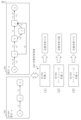
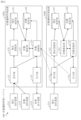
図15に基づいて、状態遷移管理システム200の構成を説明する。
状態遷移管理システム200は、複数の状態遷移管理装置(100A、100B)を備える。
状態遷移管理装置100Aは、プライベートの状態遷移管理装置100である。
状態遷移管理装置100Bは、パブリックの状態遷移管理装置100である。
状態遷移管理装置100Aと状態遷移管理装置100Bのそれぞれが、2台以上存在してもよい。
状態遷移管理装置100Bで管理される状態遷移情報は、不特定多数の利用者または別システムに利用される。
規定登録について説明する。
利用者は、登録用規定の規定情報を状態遷移管理装置100Aと状態遷移管理装置100Bのそれぞれに入力する。
利用者は、更新用規定の規定情報を状態遷移管理装置100Aまたは状態遷移管理装置100Bに入力する。
規定情報が入力された状態遷移管理装置100Bの動作は、実施の形態1における状態遷移管理装置100の動作と同じである。入力された規定情報の中の状態遷移規定は、状態遷移管理装置100Bで管理される。
公開可否は、状態を公開することが可能か否かを示す。
利用者は、状態情報を状態遷移管理装置100Aに入力する。
状態情報は、新たな状態を示す。
ステップS122において、状態登録部114は状態用途を判定する。
ステップS121およびステップS122は、実施の形態1で説明した通りである。
ステップS122の後、処理はステップS201へ進む。
利用者は、公開可否を指定できる。指定された公開可否は状態情報に示される。
公開可否が状態情報に示される場合、状態登録部114は、状態情報を参照して状態可否を判定する。
公開可否が状態情報に示されない場合、状態登録部114は、状態遷移管理装置100Bへ状態情報と用途情報を送信して、公開可否を問い合わせる。用途情報は状態用途を示す。
状態遷移管理装置100Bにおいて、状態登録部114は、状態用途に応じて状態情報に対応する状態遷移規定を選択する(S131またはS142と同様)。状態登録部114は、選択した状態遷移規定から新たな状態に対応する状態を選択し、選択した状態に付された公開可否を参照する。そして、状態登録部114は、状態遷移管理装置100Aに公開可否を応答する。
新たな状態が公開可能である場合、処理はステップS202へ進む。
ステップS202の後、後述する状態登録Bが状態遷移管理装置100Bにおいて実行され、処理はステップS203へ進む。
状態用途が状態登録である場合、登録結果が処理結果となる。
状態用途が状態更新である場合、更新結果が処理結果となる。
出力部115は、処理結果を出力する(S125またはS128と同様)。
ステップS203の後、処理はステップS204へ進む。
処理結果が登録完了または更新完了を示す場合、状態遷移管理装置100Aは検証および登録/更新を実行する。その後、処理は終了する。
処理結果が登録エラーまたは更新エラーを示す場合、処理は終了する。
ステップS211の後、処理はステップS122へ進む。
ステップS122は、実施の形態1で説明した通りである。
その後、処理はステップS212へ進む。
ステップS212の後、処理は終了する。
実施の形態2は、複数の状態遷移管理装置100を活用する。
複数の状態遷移管理装置100を活用することで、例えば、複数の事業者のそれぞれで状態遷移管理を行うことができる。具体的には、状況に応じて、特定の事業者のみが管理する状態遷移と、多数の事業者が共同で管理する状態遷移と、を使い分けることができる。これにより、共有される状態遷移を管理しつつ、他の事業者には公開されない状態遷移を管理できる。
状態遷移管理システム200は、状態遷移管理装置100Aにおける処理結果が登録エラーまたは更新エラーである場合に新たな状態が状態遷移管理装置100Bに登録されない、という機能を有してもよい。
例えば、状態遷移管理装置100Aにおいて処理結果が登録エラーまたは更新エラーである場合、状態登録部114は新たな状態の削除を状態遷移管理装置100Bに要求する。状態遷移管理装置100Bにおいて、状態登録部114は要求を受けると新たな状態の登録状態情報を削除する。
図18に基づいて、状態遷移管理装置100のハードウェア構成を説明する。
状態遷移管理装置100は処理回路109を備える。
処理回路109は、受付部111と規定登録部112と状態検証部113と状態登録部114と出力部115を実現するハードウェアである。
処理回路109は、専用のハードウェアであってもよいし、メモリ102に格納されるプログラムを実行するプロセッサ101であってもよい。
ASICは、Application Specific Integrated Circuitの略称である。
FPGAは、Field Programmable Gate Arrayの略称である。
Claims (14)
- 一連の状態遷移を示す状態遷移規定を受け付ける受付部と、
受け付けられた状態遷移規定が登録用規定である場合に前記一連の状態遷移の中の1つ以上の状態遷移のそれぞれに最初のバージョン番号をイベントとして設定し、設定後の前記登録用規定を規定保管部に登録する規定登録部と、
を備える状態遷移管理装置。 - 前記規定登録部は、前記受け付けられた状態遷移規定が更新用規定である場合に前記更新用規定と同じ種類の状態遷移規定を前記規定保管部から選択し、前記更新用規定の前記1つ以上の状態遷移のうち選択された状態遷移規定の中に存在しない状態遷移のそれぞれを前記選択された状態遷移規定に追加し、前記選択された状態遷移規定の中の最新のバージョン番号の次のバージョン番号を前記選択された状態遷移規定の中の前記1つ以上の状態遷移のそれぞれにイベントとして設定する
請求項1に記載の状態遷移管理装置。 - 前記状態遷移管理装置は、状態検証部と状態登録部を備え、
前記受付部は、新たな状態と規定種類とバージョン番号を示す状態登録情報を受け付け、
前記状態検証部は、前記状態登録情報の中の前記規定種類と同じ種類の状態遷移規定を前記規定保管部から選択し、選択された状態遷移規定の中の状態のうち前記状態登録情報の中の前記バージョン番号と同じバージョン番号が設定された1つ以上の状態遷移の先頭状態が前記状態登録情報の中の前記新たな状態と一致する場合に状態登録可能と判定し、
前記状態登録部は、前記状態登録可能と判定された場合に新たな登録状態識別子と前記状態登録情報を示す登録状態情報を状態保管部に登録する
請求項1または請求項2に記載の状態遷移管理装置。 - 前記受付部は、公開可能な新たな状態を示す状態登録情報を受け付け、
前記状態登録部は、受け付けられた状態登録情報をパブリックの状態遷移管理装置へ送信し、前記パブリックの状態遷移管理装置と前記状態検証部の両方で前記状態登録可能と判定された場合に前記受け付けられた状態登録情報を示す前記登録状態情報を前記状態保管部に登録する
請求項3に記載の状態遷移管理装置。 - 前記受付部は、登録状態識別子と新たな状態とバージョン番号を示す状態更新情報を受け付け、
前記状態検証部は、前記状態更新情報の中の前記登録状態識別子と同じ登録状態識別子の登録状態情報を前記状態保管部から選択し、選択された登録状態情報の中の規定種類と同じ種類の状態遷移規定を前記規定保管部から選択し、前記選択された登録状態情報の中の最新状態から前記状態更新情報の中の前記新たな状態への状態遷移が選択された状態遷移規定の中の状態遷移のうち前記状態更新情報の中の前記バージョン番号と同じバージョン番号が設定された状態遷移のいずれかと一致する場合に状態更新可能と判定し、
前記状態登録部は、前記状態更新可能と判定された場合に前記状態更新情報に基づいて前記選択された登録状態情報を更新する
請求項3または請求項4に記載の状態遷移管理装置。 - 前記受付部は、公開可能な新たな状態を示す状態更新情報を受け付け、
前記状態登録部は、受け付けられた状態更新情報をパブリックの状態遷移管理装置へ送信し、前記パブリックの状態遷移管理装置と前記状態検証部の両方で前記状態更新可能と判定された場合に前記受け付けられた状態更新情報に基づいて前記登録状態情報を更新する
請求項5に記載の状態遷移管理装置。 - 新たな状態と規定種類とバージョン番号を示す状態登録情報を受け付ける受付部と、
前記状態登録情報の中の前記規定種類と同じ種類の状態遷移規定を規定保管部から選択し、選択された状態遷移規定の中の状態のうち前記状態登録情報の中の前記バージョン番号と同じバージョン番号が設定された1つ以上の状態遷移の先頭状態が前記状態登録情報の中の前記新たな状態と一致する場合に状態登録可能と判定する状態検証部と、
前記状態登録可能と判定された場合に新たな登録状態識別子と前記状態登録情報を示す登録状態情報を状態保管部に登録する状態登録部と、
を備える状態遷移管理装置。 - 前記受付部は、公開可能な新たな状態を示す状態登録情報を受け付け、
前記状態登録部は、受け付けられた状態登録情報をパブリックの状態遷移管理装置へ送信し、前記パブリックの状態遷移管理装置と前記状態検証部の両方で前記状態登録可能と判定された場合に前記受け付けられた状態登録情報を示す前記登録状態情報を前記状態保管部に登録する
請求項7に記載の状態遷移管理装置。 - 前記受付部は、登録状態識別子と新たな状態とバージョン番号を示す状態更新情報を受け付け、
前記状態検証部は、前記状態更新情報の中の前記登録状態識別子と同じ登録状態識別子の登録状態情報を前記状態保管部から選択し、選択された登録状態情報の中の規定種類と同じ種類の状態遷移規定を前記規定保管部から選択し、前記選択された登録状態情報の中の最新状態から前記状態更新情報の中の前記新たな状態への状態遷移が選択された状態遷移規定の中の状態遷移のうち前記状態更新情報の中の前記バージョン番号と同じバージョン番号が設定された状態遷移のいずれかと一致する場合に状態更新可能と判定し、
前記状態登録部は、前記状態更新可能と判定された場合に前記状態更新情報に基づいて前記選択された登録状態情報を更新する
請求項7または請求項8に記載の状態遷移管理装置。 - 前記受付部は、公開可能な新たな状態を示す状態更新情報を受け付け、
前記状態登録部は、受け付けられた状態更新情報をパブリックの状態遷移管理装置へ送信し、前記パブリックの状態遷移管理装置と前記状態検証部の両方で前記状態更新可能と判定された場合に前記受け付けられた状態更新情報に基づいて前記登録状態情報を更新する
請求項9に記載の状態遷移管理装置。 - 一連の状態遷移を示す状態遷移規定を受け付け、
受け付けられた状態遷移規定が登録用規定である場合に前記一連の状態遷移の中の1つ以上の状態遷移のそれぞれに最初のバージョン番号をイベントとして設定し、設定後の前記登録用規定を規定保管部に登録する
状態遷移管理方法。 - 新たな状態と規定種類とバージョン番号を示す状態登録情報を受け付け、
前記状態登録情報の中の前記規定種類と同じ種類の状態遷移規定を規定保管部から選択し、選択された状態遷移規定の中の状態のうち前記状態登録情報の中の前記バージョン番号と同じバージョン番号が設定された1つ以上の状態遷移の先頭状態が前記状態登録情報の中の前記新たな状態と一致する場合に状態登録可能と判定し、
前記状態登録可能と判定された場合に新たな登録状態識別子と前記状態登録情報を示す登録状態情報を状態保管部に登録する
状態遷移管理方法。 - 一連の状態遷移を示す状態遷移規定を受け付ける受付処理と、
受け付けられた状態遷移規定が登録用規定である場合に前記一連の状態遷移の中の1つ以上の状態遷移のそれぞれに最初のバージョン番号をイベントとして設定し、設定後の前記登録用規定を規定保管部に登録する規定登録処理と、
をコンピュータに実行させるための状態遷移管理プログラム。 - 新たな状態と規定種類とバージョン番号を示す状態登録情報を受け付ける受付処理と、
前記状態登録情報の中の前記規定種類と同じ種類の状態遷移規定を規定保管部から選択し、選択された状態遷移規定の中の状態のうち前記状態登録情報の中の前記バージョン番号と同じバージョン番号が設定された1つ以上の状態遷移の先頭状態が前記状態登録情報の中の前記新たな状態と一致する場合に状態登録可能と判定する状態検証処理と、
前記状態登録可能と判定された場合に新たな登録状態識別子と前記状態登録情報を示す登録状態情報を状態保管部に登録する状態登録処理と、
をコンピュータに実行させるための状態遷移管理プログラム。
Priority Applications (7)
| Application Number | Priority Date | Filing Date | Title |
|---|---|---|---|
| KR1020257027144A KR102903438B1 (ko) | 2023-02-20 | 2023-02-20 | 상태 천이 관리 장치, 상태 천이 관리 방법, 및 기록 매체에 저장된 상태 천이 관리 프로그램 |
| PCT/JP2023/005999 WO2024176302A1 (ja) | 2023-02-20 | 2023-02-20 | 状態遷移管理装置、状態遷移管理方法および状態遷移管理プログラム |
| JP2024562273A JP7614467B1 (ja) | 2023-02-20 | 2023-02-20 | 状態遷移管理装置、状態遷移管理方法および状態遷移管理プログラム |
| DE112023005219.0T DE112023005219T5 (de) | 2023-02-20 | 2023-02-20 | Zustandsubergangsmanagementvorrichtung, Zustands-Übergangsmangementverfahren und Zustandsübergangsmanagementprogramm |
| CN202380093958.7A CN120731437A (zh) | 2023-02-20 | 2023-02-20 | 状态转移管理装置、状态转移管理方法以及状态转移管理程序 |
| TW112125985A TWI880267B (zh) | 2023-02-20 | 2023-07-12 | 狀態變遷管理裝置、狀態變遷管理方法及狀態變遷管理程式產品 |
| US19/265,514 US20250342486A1 (en) | 2023-02-20 | 2025-07-10 | State transition management apparatus, state transition management method, and computer readable medium |
Applications Claiming Priority (1)
| Application Number | Priority Date | Filing Date | Title |
|---|---|---|---|
| PCT/JP2023/005999 WO2024176302A1 (ja) | 2023-02-20 | 2023-02-20 | 状態遷移管理装置、状態遷移管理方法および状態遷移管理プログラム |
Related Child Applications (1)
| Application Number | Title | Priority Date | Filing Date |
|---|---|---|---|
| US19/265,514 Continuation US20250342486A1 (en) | 2023-02-20 | 2025-07-10 | State transition management apparatus, state transition management method, and computer readable medium |
Publications (1)
| Publication Number | Publication Date |
|---|---|
| WO2024176302A1 true WO2024176302A1 (ja) | 2024-08-29 |
Family
ID=92500439
Family Applications (1)
| Application Number | Title | Priority Date | Filing Date |
|---|---|---|---|
| PCT/JP2023/005999 Ceased WO2024176302A1 (ja) | 2023-02-20 | 2023-02-20 | 状態遷移管理装置、状態遷移管理方法および状態遷移管理プログラム |
Country Status (7)
| Country | Link |
|---|---|
| US (1) | US20250342486A1 (ja) |
| JP (1) | JP7614467B1 (ja) |
| KR (1) | KR102903438B1 (ja) |
| CN (1) | CN120731437A (ja) |
| DE (1) | DE112023005219T5 (ja) |
| TW (1) | TWI880267B (ja) |
| WO (1) | WO2024176302A1 (ja) |
Citations (5)
| Publication number | Priority date | Publication date | Assignee | Title |
|---|---|---|---|---|
| JPH05127882A (ja) * | 1991-11-07 | 1993-05-25 | Nec Corp | 状態遷移図差分抽出装置 |
| JP2000215165A (ja) * | 1999-01-26 | 2000-08-04 | Nippon Telegr & Teleph Corp <Ntt> | 情報アクセス制御方法および装置と情報アクセス制御プログラムを記録した記録媒体 |
| US20080164908A1 (en) * | 2007-01-04 | 2008-07-10 | Challenger James R | Data-Driven Finite State Machine Engine for Flow Control |
| US20180189096A1 (en) * | 2016-12-30 | 2018-07-05 | Troy Goode | System and method for state machine management |
| CN114461691A (zh) * | 2022-02-10 | 2022-05-10 | 北京金山云网络技术有限公司 | 状态机的控制方法、装置、电子设备及存储介质 |
Family Cites Families (6)
| Publication number | Priority date | Publication date | Assignee | Title |
|---|---|---|---|---|
| US7260818B1 (en) * | 2003-05-29 | 2007-08-21 | Sun Microsystems, Inc. | System and method for managing software version upgrades in a networked computer system |
| JP4999567B2 (ja) | 2007-06-15 | 2012-08-15 | キヤノンソフトウェア株式会社 | 情報処理装置および情報処理装置の制御方法およびプログラムおよび記録媒体 |
| JP5578021B2 (ja) * | 2010-10-25 | 2014-08-27 | マツダ株式会社 | 工程図作成支援システム |
| WO2016170641A1 (ja) * | 2015-04-23 | 2016-10-27 | 三菱電機株式会社 | プログラム更新装置、複合ユニット装置、更新判定プログラム及びプログラム更新方法 |
| US10839351B1 (en) * | 2017-09-18 | 2020-11-17 | Amazon Technologies, Inc. | Automated workflow validation using rule-based output mapping |
| CN110830279B (zh) * | 2018-08-09 | 2021-09-14 | 华为技术有限公司 | 管理服务的管理方法及装置 |
-
2023
- 2023-02-20 DE DE112023005219.0T patent/DE112023005219T5/de active Pending
- 2023-02-20 JP JP2024562273A patent/JP7614467B1/ja active Active
- 2023-02-20 KR KR1020257027144A patent/KR102903438B1/ko active Active
- 2023-02-20 CN CN202380093958.7A patent/CN120731437A/zh active Pending
- 2023-02-20 WO PCT/JP2023/005999 patent/WO2024176302A1/ja not_active Ceased
- 2023-07-12 TW TW112125985A patent/TWI880267B/zh active
-
2025
- 2025-07-10 US US19/265,514 patent/US20250342486A1/en active Pending
Patent Citations (5)
| Publication number | Priority date | Publication date | Assignee | Title |
|---|---|---|---|---|
| JPH05127882A (ja) * | 1991-11-07 | 1993-05-25 | Nec Corp | 状態遷移図差分抽出装置 |
| JP2000215165A (ja) * | 1999-01-26 | 2000-08-04 | Nippon Telegr & Teleph Corp <Ntt> | 情報アクセス制御方法および装置と情報アクセス制御プログラムを記録した記録媒体 |
| US20080164908A1 (en) * | 2007-01-04 | 2008-07-10 | Challenger James R | Data-Driven Finite State Machine Engine for Flow Control |
| US20180189096A1 (en) * | 2016-12-30 | 2018-07-05 | Troy Goode | System and method for state machine management |
| CN114461691A (zh) * | 2022-02-10 | 2022-05-10 | 北京金山云网络技术有限公司 | 状态机的控制方法、装置、电子设备及存储介质 |
Also Published As
| Publication number | Publication date |
|---|---|
| KR102903438B1 (ko) | 2025-12-22 |
| DE112023005219T5 (de) | 2025-10-09 |
| TW202435070A (zh) | 2024-09-01 |
| KR20250133437A (ko) | 2025-09-05 |
| CN120731437A (zh) | 2025-09-30 |
| JPWO2024176302A1 (ja) | 2024-08-29 |
| TWI880267B (zh) | 2025-04-11 |
| US20250342486A1 (en) | 2025-11-06 |
| JP7614467B1 (ja) | 2025-01-15 |
Similar Documents
| Publication | Publication Date | Title |
|---|---|---|
| JP6930949B2 (ja) | ソフトウェア配信システム、ソフトウェア配信サーバ、及びソフトウェア配信方法 | |
| KR100675518B1 (ko) | 모듈식 바이오스 업데이트 메커니즘 | |
| CN102804132B (zh) | 基于目录的软件组件管理 | |
| US9317275B2 (en) | Computer system and program restoring method thereof | |
| US10482219B2 (en) | License management server, license management system, and storage medium | |
| US10977053B2 (en) | Remote administration of initial computer operating system setup options | |
| CN107103210B (zh) | 许可证系统、许可证管理服务器和方法 | |
| CN110309228A (zh) | 用于管理区块链网络中的定时的方法和装置 | |
| US20150199196A1 (en) | Systems and methods for multi-tiered format registration for applications | |
| US20200184067A1 (en) | Information processing apparatus, information processing method, and computer program product | |
| WO2021135742A1 (zh) | 对账清算方法及装置 | |
| JP2019003275A (ja) | 確認システム、制御装置及び確認方法 | |
| US20100169879A1 (en) | Resource distribution system and method | |
| US8566288B1 (en) | Organized data removal or redirection from a cloning process to enable cloning a larger system to a smaller system | |
| JP7614467B1 (ja) | 状態遷移管理装置、状態遷移管理方法および状態遷移管理プログラム | |
| US12248591B2 (en) | Control server for sharing data using distributed ledger, data sharing system with distributed ledger, and control program for sharing data with distributed ledger | |
| US11983694B2 (en) | Information processing device for retail transaction processing systems | |
| CN113094048A (zh) | 数据显示规则确定方法、显示方法、装置、设备及介质 | |
| JP2006190278A (ja) | ファームウェア・アップグレードを許可または禁止するための方法、コンピュータ・システム、およびプログラム | |
| US20130063782A1 (en) | Image forming apparatus, method for controlling image forming apparatus, and storage medium | |
| JP7009852B2 (ja) | 電子装置 | |
| CN120277684A (zh) | 一种数字模型产品调用方法、装置及可读存储介质 | |
| JP2025154584A (ja) | ストレージコントローラにおいて実行されるソフトウェアの起動における改ざん検証のテストを行うシステム | |
| CN116348862A (zh) | 包含与区块链相关的对等网络的系统、辅助该对等网络的构建的方法、以及在对等节点执行的智能合约 | |
| CN118796310A (zh) | 一种数据处理方法及系统 |
Legal Events
| Date | Code | Title | Description |
|---|---|---|---|
| 121 | Ep: the epo has been informed by wipo that ep was designated in this application |
Ref document number: 23923958 Country of ref document: EP Kind code of ref document: A1 |
|
| WWE | Wipo information: entry into national phase |
Ref document number: 2024562273 Country of ref document: JP |
|
| WWE | Wipo information: entry into national phase |
Ref document number: 202517062668 Country of ref document: IN |
|
| WWP | Wipo information: published in national office |
Ref document number: 202517062668 Country of ref document: IN |
|
| WWE | Wipo information: entry into national phase |
Ref document number: 112023005219 Country of ref document: DE |
|
| WWE | Wipo information: entry into national phase |
Ref document number: 202380093958.7 Country of ref document: CN |
|
| ENP | Entry into the national phase |
Ref document number: 1020257027144 Country of ref document: KR Free format text: ST27 STATUS EVENT CODE: A-0-1-A10-A15-NAP-PA0105 (AS PROVIDED BY THE NATIONAL OFFICE) |
|
| WWE | Wipo information: entry into national phase |
Ref document number: 1020257027144 Country of ref document: KR |
|
| WWP | Wipo information: published in national office |
Ref document number: 202380093958.7 Country of ref document: CN |
|
| WWP | Wipo information: published in national office |
Ref document number: 112023005219 Country of ref document: DE |
|
| 122 | Ep: pct application non-entry in european phase |
Ref document number: 23923958 Country of ref document: EP Kind code of ref document: A1 |