WO2024176288A1 - モデル生成システムおよびモデル生成方法 - Google Patents
モデル生成システムおよびモデル生成方法 Download PDFInfo
- Publication number
- WO2024176288A1 WO2024176288A1 PCT/JP2023/005944 JP2023005944W WO2024176288A1 WO 2024176288 A1 WO2024176288 A1 WO 2024176288A1 JP 2023005944 W JP2023005944 W JP 2023005944W WO 2024176288 A1 WO2024176288 A1 WO 2024176288A1
- Authority
- WO
- WIPO (PCT)
- Prior art keywords
- model
- source
- input
- source model
- output
- Prior art date
- Legal status (The legal status is an assumption and is not a legal conclusion. Google has not performed a legal analysis and makes no representation as to the accuracy of the status listed.)
- Ceased
Links
Images




Classifications
-
- G—PHYSICS
- G06—COMPUTING OR CALCULATING; COUNTING
- G06N—COMPUTING ARRANGEMENTS BASED ON SPECIFIC COMPUTATIONAL MODELS
- G06N3/00—Computing arrangements based on biological models
- G06N3/02—Neural networks
- G06N3/10—Interfaces, programming languages or software development kits, e.g. for simulating neural networks
-
- G—PHYSICS
- G06—COMPUTING OR CALCULATING; COUNTING
- G06N—COMPUTING ARRANGEMENTS BASED ON SPECIFIC COMPUTATIONAL MODELS
- G06N20/00—Machine learning
-
- G—PHYSICS
- G06—COMPUTING OR CALCULATING; COUNTING
- G06F—ELECTRIC DIGITAL DATA PROCESSING
- G06F16/00—Information retrieval; Database structures therefor; File system structures therefor
- G06F16/90—Details of database functions independent of the retrieved data types
- G06F16/903—Querying
- G06F16/9032—Query formulation
-
- G—PHYSICS
- G06—COMPUTING OR CALCULATING; COUNTING
- G06F—ELECTRIC DIGITAL DATA PROCESSING
- G06F16/00—Information retrieval; Database structures therefor; File system structures therefor
- G06F16/90—Details of database functions independent of the retrieved data types
- G06F16/903—Querying
- G06F16/9038—Presentation of query results
-
- G—PHYSICS
- G06—COMPUTING OR CALCULATING; COUNTING
- G06F—ELECTRIC DIGITAL DATA PROCESSING
- G06F8/00—Arrangements for software engineering
- G06F8/30—Creation or generation of source code
- G06F8/36—Software reuse
-
- G—PHYSICS
- G06—COMPUTING OR CALCULATING; COUNTING
- G06F—ELECTRIC DIGITAL DATA PROCESSING
- G06F8/00—Arrangements for software engineering
- G06F8/30—Creation or generation of source code
- G06F8/38—Creation or generation of source code for implementing user interfaces
-
- G—PHYSICS
- G06—COMPUTING OR CALCULATING; COUNTING
- G06N—COMPUTING ARRANGEMENTS BASED ON SPECIFIC COMPUTATIONAL MODELS
- G06N3/00—Computing arrangements based on biological models
- G06N3/02—Neural networks
- G06N3/04—Architecture, e.g. interconnection topology
- G06N3/045—Combinations of networks
-
- G—PHYSICS
- G06—COMPUTING OR CALCULATING; COUNTING
- G06N—COMPUTING ARRANGEMENTS BASED ON SPECIFIC COMPUTATIONAL MODELS
- G06N3/00—Computing arrangements based on biological models
- G06N3/02—Neural networks
- G06N3/08—Learning methods
- G06N3/096—Transfer learning
Definitions
- the present invention relates to a model generation system and a model generation method.
- Machine learning is a method or technology that builds a learning model (also simply called a "model") from experience with large amounts of data or certain rules, and then uses that learning model to perform some kind of task.
- a learning model also simply called a "model”
- learning data the more data used for learning (called “learning data” or “training data”), the more accurate a learned model can be realized. Conversely, when there is little data, it is difficult to build a learned model with sufficient accuracy. Therefore, when building a learning model, if a lot of training data is obtained, a learned model with sufficient accuracy can be obtained, but if there is little training data, only a learned model with insufficient accuracy can be obtained.
- Transfer learning is a method for obtaining a highly accurate model with little data.
- Transfer learning is a general term for techniques that attempt to achieve sufficient accuracy even when there is little training data by utilizing (transferring) a trained model created using other training data.
- Transfer learning attempts to obtain a highly accurate model by reusing an existing trained model as is, re-training using a trained model as the initial value (such as "fine tuning"), or building a new model by incorporating a trained model as a partial model (source model) as part of the target model.
- Patent Document 1 discloses a method for selecting a trained model to be used in transfer learning.
- the objective of the present invention is to make it possible to generate learning models by efficiently utilizing similar past trained models, partial models, known physical equations, etc., without overlooking them, particularly in the development of new models using transfer learning methods.
- a model generation system is a model generation system for generating a target model, the model generation system including: a source model database for storing a source model; and a model generation unit for generating a target model by using a source model searched from the source model database; the model generation unit includes a database search unit that searches for a first source model including an output of the target model as its output and a second source model including an input of the target model as its input, and a combination determination unit that combines the input of the first source model with the output of the second source model when the input of the first source model can be associated with the output of the second source model;
- the source models stored in the source model database include trained machine learning models.
- FIG. 1 is a diagram for explaining a basic configuration of a model generation system.
- 1 is an example of a process of a processing device predicted by a machine learning model.
- 4 is an example of a model generated in the first embodiment.
- 2 is an example of a hardware configuration of an information processing device.
- 4 illustrates an example of programs and data stored in a storage device in the first embodiment.
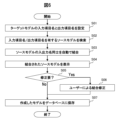
- 4 is a flowchart showing a process of generating a model by the model generation system in the first embodiment.
- 13 is an example of a model generated in the second embodiment. 13 is an example of programs and data stored in a storage device in the second embodiment.
- 13 is a flowchart showing a process of generating a model by a model generation system in a second embodiment.
- 13 is an example of a model generated in the third embodiment.
- 13 is an example of programs and data stored in a storage device in the third embodiment.
- the model generation system 10 has a model generation unit 11 and a source model database 12.
- the source model database 12 stores source models to be used for constructing a target model.
- the source models stored in the database 12 include trained machine learning models (hereinafter referred to as trained models) and equations and inequalities.
- the format of the machine learning model is not limited, and machine learning models such as neural networks (NN), gradient boosting trees, linear regression, and kernel ridge methods are included.
- the equations stored in the source model database 12 treat one parameter of the equation as output Y (objective variable) and all the remaining parameters as input X (explanatory variables or constants) so that the value of the objective variable is uniquely determined.
- the user can arbitrarily determine which parameter to set as output Y.
- all parameters of the inequality can be treated as input X, and information (Boolean value) of 1 or 0 indicating whether the inequality is satisfied or not can be treated as output Y. If an inequality has an equality condition, it can be treated the same as an equation, that is, one parameter can be treated as output Y.
- the model generation unit 11 combines trained models, equations, and inequalities stored in the source model database 12.
- a source model has one or more inputs X and outputs Y.
- the model generation unit 11 checks the item names of the inputs X and outputs Y of different source models, and combines the inputs X and outputs Y when it is possible to associate the item names with each other.
- FIG. 1 shows an example in which trained models 15 to 17 are stored in the source model database 12.
- the model generation unit 11 combines the output y 1,1 of the trained model 15 with the input x 2,1 of the trained model 16 because the output y 1,1 matches the input x 2,1 of the trained model 16.
- the model generation unit 11 does not combine the output y 1,1 of the trained model 15 with the input x 3,1 of the trained model 17 because the output y 1,1 cannot be associated with the input x 3,1 of the trained model 17.
- Cases in which the model generation unit 11 can associate item names with each other include cases in which the item names match and cases in which some correspondence is recognized between the item names. A specific method for determining whether or not to associate items with each other will be described later.
- the rule for combination by the model generation unit 11 is that one output Y of a source model can be combined with input X of multiple other source models, but one input X of a source model can only be combined with one output Y of other source models. Also, basically, it is not possible to combine inputs and outputs of multiple source models in a loop.
- Example 1 a machine learning model that predicts the processing results of a processing device is used.
- a first trained model is trained using data acquired by actually operating the processing device, and a second trained model is trained using the results obtained by simulating the physical phenomena occurring in the processing device using computer software.
- An example is shown in which one model is constructed using the model generation system of this example.
- raw materials 21 are fed into a processing device 22 to obtain a product 23.
- the state of product 23 depends on the processing conditions set for processing device 22 by control computer 24. Therefore, processing conditions that can be set for processing device 22 are comprehensively assigned, raw materials 21 are actually processed in processing device 22, and a large amount of learning data is obtained regarding the type of product 23 obtained under each processing condition, and a machine learning model (e.g., a neural network model) is trained to obtain a learned model that predicts the product state from the processing conditions with a certain degree of accuracy.
- a machine learning model e.g., a neural network model
- the user intends to construct a target model 33 in which five control parameters, namely, "gas pressure”, “coil current”, “power”, “element ratio”, and “voltage”, which are independent processing conditions of the processing device 22, are input as X, and the "product state" of the product 23 is output as Y.
- a first source model 31 and a second source model 32 are stored in the source model database 12.
- the first source model 31 is a learned model that has been trained using the product state of the product 23 obtained by processing the raw material 21 in the processing device 22 by comprehensively assigning three control parameters, "power", “element ratio”, and “voltage”, in addition to the "ion flow rate" in the processing device 22, as learning data.
- the ion flow rate in the device can be measured by installing a measuring device in the processing device 22. It is assumed that a first source model 31 has been constructed through past experiments, etc., in which four parameters, "ion flow rate”, “power”, “element ratio”, and “voltage”, are input as X, and the "product state” is output as Y, and stored in the source model database 12.
- the second source model 32 is constructed using a physical simulation technique for the physical phenomena occurring in the processing chamber of the processing device 22, and is stored in the source model database 12.
- the second source model 32 is a trained model in which the four control parameters of "gas pressure”, “coil current”, “power”, and “element ratio” are input X, and "ion flow rate” is output Y. In general, the calculation time required for the simulation is very short compared to the time required to actually process the raw material 21 in the processing device 22, and the cost associated with acquiring the training data can be reduced.
- the model generation system 10 obtains the desired target model 33 by combining the first source model 31 and the second source model 32.
- the model generation system 10 is realized by an information processing device 40 including a processor (CPU) 41, memory 42, storage device 43, input device 44, output device 45, communication device 46, and bus 47 as main components as shown in FIG. 4.
- the processor 41 functions as a functional unit (functional block) that provides a predetermined function by executing processing according to a program loaded in the memory 42.
- the storage device 43 stores data used in the functional unit as well as programs that cause the functional unit to function.
- the storage device 43 may be a non-volatile storage medium such as an HDD (Hard Disk Drive) or SSD (Solid State Drive).
- the input device 44 may be a keyboard, a pointing device, etc.
- the output device 45 may be a display, etc.
- the communication device 46 enables communication with other information processing devices via a network. These are connected to each other via the bus 47 so that they can communicate with each other.
- model generation system 10 does not have to be realized by a single information processing device, but may be realized by multiple information processing devices. In addition, some or all of the functions of the model generation system 10 may be realized as an application on the cloud.
- FIG. 5 shows the programs and data stored in the storage device 43.
- the model generation program 51 is loaded into the memory 42 and executed by the processor 41, causing the processor 41 to function as the model generation unit 11.
- the model generation program 51 includes a database (DB) search program 52, a bond judgment program 53, and a model determination program 54 as subprograms. These subprograms are also loaded into the memory 42 and executed by the processor 41, causing the processor 41 to function as a DB search unit, a bond judgment unit, and a model determination unit.
- the source model database 12 used by the model generation system is also stored in the storage device 43.
- FIG. 6 shows a flowchart illustrating the process of generating a target model 33 using the model generation system 10.
- the user sets the names of the input items and output items of the target model to be created (S01).
- the names of the five control parameters such as "gas pressure”
- the parameter (“product state") that will be the output X are set.
- the DB search unit searches the source model database 12 for a source model having an input item name equal to the set input item name and a source model having an output item name equal to the set output item name (S02). If there are multiple candidates, the user may be presented with options to select from, or the system may select the most recent model that is due for update. In the example of FIG. 3, it is assumed that a second source model 32 having an input item name such as "gas pressure" and an output item name such as "ion flow rate” and a first source model 31 having input item names such as "ion flow rate” and “electric power” and an output item name such as "product state” have been searched for.
- the join determination unit joins the input and output names of the source models together (S03).
- S03 the join determination unit joins the input and output names of the source models together.
- the output item name "ion flow rate" of the second source model 32 matches the input item name "ion flow rate” of the first source model 31, so these are joined.
- the model determination unit displays the combined source models on the output device 45 (S04).
- the output device 45 displays a model combination diagram 35 including model combination information.
- the model combination diagram 35 an input node indicating input X is displayed on the left side of each box indicating the source model, and an output node indicating output Y is displayed on the right side.
- an input node (processing condition) indicating input X of the target model is displayed further to the left of the source model, and the combination between the input node of the target model and the corresponding input node of the source model, and the combination between the corresponding nodes of the source model are displayed by edges.
- the user checks the model binding diagram 35 displayed on the GUI screen (S05), and if corrections are required, manually corrects the edges of the model binding diagram 35 on the GUI screen to correct the connections between the input nodes of the target model and the source model, or between source models (S06). Cases where corrections are required include, for example, cases where the connected nodes are judged to be inappropriate based on the user's domain knowledge.
- the completed target model 33 is then saved in the source model database 12 (S07).
- the model 33 created in this way is created using only trained models and does not necessarily require additional learning; however, if even a small amount of training data (here, a data set of processing conditions for the five control parameters of the target model 33 and the product state under those processing conditions) is available, it is recommended to perform additional training (called additional learning) using the training data.
- additional learning additional training
- fine tuning Using the weights of the original trained model as initial values and updating the weights through additional learning using a small amount of training data is called fine tuning. It is generally known that appropriate fine tuning increases the likelihood of a more accurate training model.
- the user should set the hyperparameters such as the learning rate of each model as appropriate.
- FIG. 8 shows programs and data stored in the storage device 43.
- a machine learning program 81 for performing machine learning is stored.
- the machine learning program 81 is loaded into the memory 42 and executed by the processor 41, causing the processor 41 to function as a machine learning unit.
- the machine learning program 81 includes a model setting program 82 and a learning (training) program 83 as subprograms. These subprograms are also loaded into the memory 42 and executed by the processor 41, causing the processor 41 to function as a model setting unit and a learning unit.
- the example in FIG. 7 shows how to create a target model 70 by increasing the input X (control parameters) in order to further improve the accuracy of model 33 created in Example 1, and an untrained machine learning model is used as the source model.
- the input X of target model 70 is obtained by adding two control parameters, "frequency" and "duty ratio", to the input X of model 33.
- FIG. 9 is a flowchart showing the process of generating a target model 70 using the model generation system 10.
- the same processes as in FIG. 6 are given the same reference numerals, and duplicate explanations are omitted, with the differences being mainly explained.
- the user sets the names of the input items and output items of the target model to be created (S01).
- the names of the seven control parameters such as "gas pressure”
- the parameter (“product state") that will be the output X are set.
- the user specifies the learning data to be used for model training (S11). Since this example is a regression problem, the seven control parameters that serve as the input X of the target model 70 are comprehensively assigned, and the product state of the product 23 obtained by processing the raw materials 21 with the processing device 22 is used as the learning data.
- the learning data which is a combination of the seven control parameters and the product state, is provided in the form of, for example, a csv file. Thereafter, steps S02 and S13 are performed in parallel.
- step S02 the DB search unit searches the source model database 12, and model 33 is found.
- step S03 the combination determination unit combines the input and output names of the source models. In this example, one model is searched from the source model database 12, but if two or more models are found, the same processing as in Example 1 is performed.
- the model determination unit displays the combined source models on the output device 45 (S04).
- a model combination diagram 75 including model combination information as shown in the dashed-dotted frame in FIG. 7 is also displayed on the output device 45, but at this point, only the searched source model 33 is displayed on the output device 45, and the "Frequency" node and the "Duty ratio” node are not connected anywhere.
- the user checks the model binding diagram 75 displayed on the GUI screen (S05), and since there are unconnected processing conditions, manually corrects the model binding diagram 75 on the GUI screen (S06).
- two unlearned models 71, 72 are added, and the source models are bound to the desired target model 70. Note that the method of adding and binding unlearned models is not limited to the example in FIG. 7.
- the machine learning unit uses the learning data specified in step S11 to learn a model that is a combination of the source model 33 and the unlearned models 71 and 72 (called the "combined model”) (S12).
- the model setting unit allows the user to define inputs and outputs and set hyperparameters for the untrained models 71, 72 added on the GUI screen.
- the user can directly set detailed settings for various hyperparameters including the number of layers and the number of nodes, or the hyperparameters can be automatically determined by a program that performs Bayesian optimization.
- Bayesian optimization detailed settings for the range of optimization are also possible.
- the learning unit trains the combined model using the training data.
- the learning rate of the source model 33 be set to 0 and that the weightings within the source model 33 not be updated during training in step S12.
- the user turns on the lock icon 73 displayed in the upper right corner of the corresponding source model on the GUI screen.
- the learning unit does not update the weightings. This state is called the "source fixed mode.”
- the learning unit updates the combined model including the weighting of the source model 33 during training. This state is called "fine tuning mode", and for example, the additional learning described in Example 1 is performed in fine tuning mode.
- the machine learning unit constructs a model (called the "standard model") with the desired seven control parameters as input X and the “product state” as output Y (S13).
- the model setting unit defines the input and output of the standard model and allows the user to set hyperparameters for the standard model, and the learning unit trains the standard model using the training data.
- learning the model using the training data may take several hours to several days depending on the amount of data and the specifications of the information processing device (computer).
- the model determination unit compares the cross-validation (CV) results for these two models that the training unit performed while training the models using a portion of the training data (S14).
- the model determination unit uses the CV value to determine which model enables more accurate predictions, selects the model determined to have the higher accuracy as the target model 70, and stores it in the source model database 12 (S07).
- Example 3 is an example of constructing a model that includes even more processing conditions as input X, and an example of utilizing physical equations stored in the source model database 12 will be described. Also, a method of combining nodes whose item names do not completely match will be described.
- the model generation system 10 of Example 3 is also realized by an information processing device 40 as shown in FIG. 4.
- FIG. 11 shows programs and data stored in the storage device 43.
- a synonym dictionary 112 and node combination history 113 are stored.
- the combination judgment program 53 includes a text mining program 111 as a subprogram.
- the text mining program 111 is also loaded into the memory 42 and executed by the processor 41, causing the processor 41 to function as a text mining unit.
- the example in FIG. 10 creates a model with more input X (control parameters) than the model created in Example 2 in order to further improve accuracy, and uses an untrained machine learning model and physical equations as the source model.
- the input X of the model created in Example 3 is obtained by adding two control parameters, "temperature” and "processing time", to the input X of model 70.
- control parameters are added based on the user's domain knowledge. For example, it is assumed that the longer the processing time, the more impact it will have on the product state that is proportional to the time. Furthermore, if the reaction rate of the chemical reaction assumed to be occurring during processing is known, it can be estimated that the product of the reaction rate and the processing time will have a large impact on the product state.
- the process of generating a model using the model generation system 10 is the same as the flowchart shown in FIG. 9.
- the user sets the input item names and output item names of the target model to be created (S01).
- the names of nine control parameters such as "gas pressure”
- the parameter ("product state") that will be the output X are set.
- the DB search unit searches the source model database 12 to search for the first source model 31 and the second source model 32.
- the combination determination unit combines the first source model 31 and the second source model 32.
- the model determination unit displays the combined source model on the output device 45.
- Example 3 a model combination diagram 105 including model combination information as shown in the dashed-dotted frame in FIG. 10 is also displayed on the output device 45, but at this point, only the searched source models 31 and 32 are displayed on the output device 45, and the "Temperature” node, "Processing time” node, "Frequency” node, and "Duty ratio” node are not connected anywhere.
- the user checks the model binding diagram 105 displayed on the GUI screen (S05), and since there are unconnected processing conditions, manually corrects the model binding diagram 105 on the GUI screen (S06).
- processing time is one of the processing conditions, and the “reaction rate” of the chemical reaction during processing, based on domain knowledge about the processing device 22. Therefore, two parameters, “reaction rate” and “processing time”, are manually fixed in the input items of the unlearned model 104 in the final stage in Figure 10.
- Processing time is one of the parameters that is the input X of the target model, but “reaction rate” is an intermediate node that is neither an input node nor an output node of the target model.
- the user searches for source models having these item names in the source model database 12.
- the Arrhenius equation is a general relational equation (formula) that expresses the correlation between the parameters of "reaction rate”, "temperature”, “concentration”, and "activation energy (activation E)".
- the source model 101 based on the Arrhenius equation is a source model in which "reaction rate” is the output Y and "temperature", “concentration”, and “activation E” are the input X.
- the connection determination unit connects the "temperature” node of the input X of the source model 101 to the "temperature” node, which is a processing condition, and the "reaction rate” node, which is the output Y of the source model 101, to the input node to which "reaction rate” of the unlearned model 104 is assigned.
- the "Concentration" node and the "Activation E" node of input X of source model 101 remain unconnected.
- the connection determination unit starts the text mining program 111.
- the text mining unit searches the synonym dictionary 112 or the node connection history 113, and automatically executes a search for "concentration” and "activation E".
- the node connection history 113 may contain a history of the "concentration” node and the "pressure” node being manually connected based on the domain knowledge that "the higher the pressure, the higher the frequency of collisions between gas molecules, and the local molecular concentration related to the chemical reaction is essentially increased”.
- the connection determination unit connects the "concentration” node and the "gas pressure” node based on the above information searched by the text mining unit.
- the "activation E" node of the source model 101 was not automatically connected by the connection determination unit, so a constant node 102 is set and a constant is input from the constant node 102 to the source model 101, thereby completing the connection correction between the source models.
- step S02 In addition to searching for join targets, it is also possible to search the source model database 12 including similarity in node names and join history (step S02). In this case, since a large number of source models will be searched, it is desirable to present them to the user in order of priority, for example, based on the number of corresponding variables.
Landscapes
- Engineering & Computer Science (AREA)
- Theoretical Computer Science (AREA)
- Software Systems (AREA)
- Physics & Mathematics (AREA)
- General Engineering & Computer Science (AREA)
- General Physics & Mathematics (AREA)
- Data Mining & Analysis (AREA)
- Mathematical Physics (AREA)
- Computing Systems (AREA)
- Computational Linguistics (AREA)
- Artificial Intelligence (AREA)
- Evolutionary Computation (AREA)
- Databases & Information Systems (AREA)
- Health & Medical Sciences (AREA)
- Life Sciences & Earth Sciences (AREA)
- Biomedical Technology (AREA)
- Biophysics (AREA)
- General Health & Medical Sciences (AREA)
- Molecular Biology (AREA)
- Medical Informatics (AREA)
- Computer Vision & Pattern Recognition (AREA)
- Human Computer Interaction (AREA)
- Feedback Control In General (AREA)
- Management, Administration, Business Operations System, And Electronic Commerce (AREA)
Priority Applications (6)
| Application Number | Priority Date | Filing Date | Title |
|---|---|---|---|
| CN202380013038.XA CN118891636A (zh) | 2023-02-20 | 2023-02-20 | 模型生成系统以及模型生成方法 |
| KR1020247002374A KR20240131985A (ko) | 2023-02-20 | 2023-02-20 | 모델 생성 시스템 및 모델 생성 방법 |
| JP2024503339A JP7644872B2 (ja) | 2023-02-20 | 2023-02-20 | モデル生成システムおよびモデル生成方法 |
| US18/690,540 US20250363410A1 (en) | 2023-02-20 | 2023-02-20 | Model generation system and model generation method |
| PCT/JP2023/005944 WO2024176288A1 (ja) | 2023-02-20 | 2023-02-20 | モデル生成システムおよびモデル生成方法 |
| TW113103288A TWI895955B (zh) | 2023-02-20 | 2024-01-29 | 模型生成系統及模型生成方法 |
Applications Claiming Priority (1)
| Application Number | Priority Date | Filing Date | Title |
|---|---|---|---|
| PCT/JP2023/005944 WO2024176288A1 (ja) | 2023-02-20 | 2023-02-20 | モデル生成システムおよびモデル生成方法 |
Publications (1)
| Publication Number | Publication Date |
|---|---|
| WO2024176288A1 true WO2024176288A1 (ja) | 2024-08-29 |
Family
ID=92500582
Family Applications (1)
| Application Number | Title | Priority Date | Filing Date |
|---|---|---|---|
| PCT/JP2023/005944 Ceased WO2024176288A1 (ja) | 2023-02-20 | 2023-02-20 | モデル生成システムおよびモデル生成方法 |
Country Status (6)
| Country | Link |
|---|---|
| US (1) | US20250363410A1 (https=) |
| JP (1) | JP7644872B2 (https=) |
| KR (1) | KR20240131985A (https=) |
| CN (1) | CN118891636A (https=) |
| TW (1) | TWI895955B (https=) |
| WO (1) | WO2024176288A1 (https=) |
Citations (4)
| Publication number | Priority date | Publication date | Assignee | Title |
|---|---|---|---|---|
| US10453165B1 (en) * | 2017-02-27 | 2019-10-22 | Amazon Technologies, Inc. | Computer vision machine learning model execution service |
| JP2020101860A (ja) * | 2018-12-19 | 2020-07-02 | キヤノンメディカルシステムズ株式会社 | 医用画像処理装置、システム及びプログラム |
| WO2022161624A1 (en) * | 2021-01-29 | 2022-08-04 | Telefonaktiebolaget Lm Ericsson (Publ) | Candidate machine learning model identification and selection |
| WO2022185437A1 (ja) * | 2021-03-03 | 2022-09-09 | 日本電気株式会社 | 音声認識装置、音声認識方法、学習装置、学習方法、及び、記録媒体 |
Family Cites Families (2)
| Publication number | Priority date | Publication date | Assignee | Title |
|---|---|---|---|---|
| WO2021149118A1 (ja) * | 2020-01-20 | 2021-07-29 | 楽天株式会社 | 情報処理装置、情報処理方法およびプログラム |
| JP2021182329A (ja) | 2020-05-20 | 2021-11-25 | 株式会社日立製作所 | 学習モデル選択方法 |
-
2023
- 2023-02-20 US US18/690,540 patent/US20250363410A1/en active Pending
- 2023-02-20 JP JP2024503339A patent/JP7644872B2/ja active Active
- 2023-02-20 WO PCT/JP2023/005944 patent/WO2024176288A1/ja not_active Ceased
- 2023-02-20 KR KR1020247002374A patent/KR20240131985A/ko active Pending
- 2023-02-20 CN CN202380013038.XA patent/CN118891636A/zh active Pending
-
2024
- 2024-01-29 TW TW113103288A patent/TWI895955B/zh active
Patent Citations (4)
| Publication number | Priority date | Publication date | Assignee | Title |
|---|---|---|---|---|
| US10453165B1 (en) * | 2017-02-27 | 2019-10-22 | Amazon Technologies, Inc. | Computer vision machine learning model execution service |
| JP2020101860A (ja) * | 2018-12-19 | 2020-07-02 | キヤノンメディカルシステムズ株式会社 | 医用画像処理装置、システム及びプログラム |
| WO2022161624A1 (en) * | 2021-01-29 | 2022-08-04 | Telefonaktiebolaget Lm Ericsson (Publ) | Candidate machine learning model identification and selection |
| WO2022185437A1 (ja) * | 2021-03-03 | 2022-09-09 | 日本電気株式会社 | 音声認識装置、音声認識方法、学習装置、学習方法、及び、記録媒体 |
Also Published As
| Publication number | Publication date |
|---|---|
| TW202435125A (zh) | 2024-09-01 |
| JP7644872B2 (ja) | 2025-03-12 |
| CN118891636A (zh) | 2024-11-01 |
| KR20240131985A (ko) | 2024-09-02 |
| US20250363410A1 (en) | 2025-11-27 |
| TWI895955B (zh) | 2025-09-01 |
| JPWO2024176288A1 (https=) | 2024-08-29 |
Similar Documents
| Publication | Publication Date | Title |
|---|---|---|
| JP6802870B2 (ja) | リアルタイムの検索調整 | |
| JP6955811B1 (ja) | 試験評価システム、プログラムおよび試験評価方法 | |
| US20220101093A1 (en) | Platform for selection of items used for the configuration of an industrial system | |
| CN115080587B (zh) | 一种基于知识图谱的电子元器件替代方法、装置及介质 | |
| WO2022166125A1 (en) | Recommendation system with adaptive weighted baysian personalized ranking loss | |
| US12400740B2 (en) | Chemical structure generating device, chemical structure generating program, and chemical structure generating method | |
| CN113377964A (zh) | 知识图谱链接预测方法、装置、设备及存储介质 | |
| US20240020445A1 (en) | Automated artificial intelligence based circuit and circuit board design | |
| Chen et al. | Incremental mechanism of attribute reduction based on discernible relations for dynamically increasing attribute: D. Chen et al. | |
| CN113988272A (zh) | 一种生成神经网络的方法、装置、计算机设备和存储介质 | |
| CN111967941B (zh) | 一种构建序列推荐模型的方法和序列推荐方法 | |
| EP4118658A1 (en) | Retrosynthesis using neural networks | |
| US20250225403A1 (en) | Framework for augmenting performance of language model-based copilot | |
| Sun et al. | The data-driven discovery of partial differential equations by symbolic genetic algorithm | |
| JP7644872B2 (ja) | モデル生成システムおよびモデル生成方法 | |
| JP2023075060A (ja) | グラフ機械学習ベースの回帰を用いた推奨 | |
| CN112905809B (zh) | 知识图谱学习方法和系统 | |
| Betin et al. | A mechanism for a solution search within the formalism of functional neural networks | |
| CN119356848A (zh) | 一种应用感知的配置参数自演化调优方法及系统 | |
| US12524703B2 (en) | Device for and method of automating machine learning based on a representation of a machine learning pipeline | |
| CN114613446A (zh) | 交互式/化学合成路线设计方法、系统、介质及电子设备 | |
| CN117391142A (zh) | 图神经网络模型设计方法和系统 | |
| US20240220910A1 (en) | Building and executing machine learning models via a no-code toolkit | |
| Liu et al. | Novel approaches to accelerating the convergence rate of markov decision process for search result diversification | |
| US20240256989A1 (en) | Combined Learner Forming Apparatus, Combined Learner Forming Program, and Non-Transitory Recording Medium Storing Combined Lerner Forming Program |
Legal Events
| Date | Code | Title | Description |
|---|---|---|---|
| WWE | Wipo information: entry into national phase |
Ref document number: 2024503339 Country of ref document: JP |
|
| WWE | Wipo information: entry into national phase |
Ref document number: 202380013038.X Country of ref document: CN |
|
| WWE | Wipo information: entry into national phase |
Ref document number: 18690540 Country of ref document: US |
|
| 121 | Ep: the epo has been informed by wipo that ep was designated in this application |
Ref document number: 23923944 Country of ref document: EP Kind code of ref document: A1 |
|
| NENP | Non-entry into the national phase |
Ref country code: DE |
|
| WWP | Wipo information: published in national office |
Ref document number: 18690540 Country of ref document: US |
|
| 122 | Ep: pct application non-entry in european phase |
Ref document number: 23923944 Country of ref document: EP Kind code of ref document: A1 |